Month: September 2025

  • Global Private Healthcare Market Forecast to Reach $6,600.56 Billion by 2029, Driven by 5.2% CAGR

    Global Private Healthcare Market Forecast to Reach $6,600.56 Billion by 2029, Driven by 5.2% CAGR

    Claim your 30% discount on Global Market Reports with code ONLINE30. Limited time only.

    Claim your 30% discount on Global Market Reports with code ONLINE30. Limited time only.

    How Large Is the Private Healthcare Market Expected to Be in 2029?

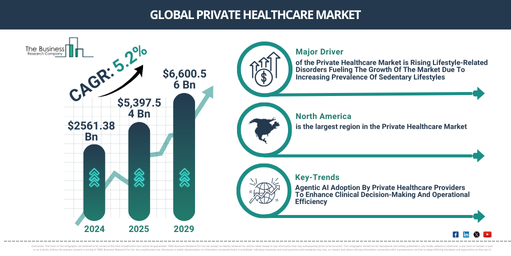
    The private healthcare sector has seen a significant rise in recent years. The market size is projected to surge from $2561.38 billion in 2024 to $5,397.54 billion in 2025, indicating a compound annual growth rate (CAGR) of 5.5%. The earlier growth can be credited to factors such as the escalated demand for more immediate access to medical services, a surge in chronic disease cases, growing acceptance of telemedicine and digital health platforms, increased penetration of private health insurance, and rising investments from private equity and institutional investors.

    There is a predicted robust expansion for the private healthcare market in the coming years. The market is anticipated to reach a size of $6,600.56 billion in 2029, increasing at a compound annual growth rate (CAGR) of 5.2%. The expansion in the expected time frame can be linked to rising contributions from private equity and institutional investors, an influx of medical tourism, a heightened emphasis on individualized and preventive healthcare, an increase in urbanization and the middle-class demographic, and the growing accessibility of superior medical technologies. Significant trends within this time frame encompass progression in telemedicine platforms, improvements in surgical procedures, implementation of artificial intelligence within diagnostics, the incorporation of electronic health records (EHRs), and technological adaptation in wearable health gadgets.

    Download The Free Sample Report Here:

    https://www.thebusinessresearchcompany.com/sample.aspx?id=27398&type=smp

    What Are The Contributors To Demand In The Private Healthcare Market?

    The escalating prevalence of disorders linked to lifestyle choices is anticipated to fuel the expansion of the private healthcare market. These disorders are primarily brought on by everyday habits such as unhealthy diet, lack of physical activity, stress, and damaging addictions. Urbanization-induced sedentary lifestyles are contributing to the increase in these disorders, with factors like prolonged working hours and minimal physical exercise leading to undesirable health results. With speedy access to specialist doctors and personalized treatment strategies, private healthcare proves effective in tackling lifestyle-related disorders, thereby resulting in a more timely intervention and improved long-term health outcomes. For instance, a patient healthcare professional and research charity in the UK, the British Diabetic Association (Diabetes UK), reported in May 2024 that an estimated 4.4 million people in the UK had a diagnosis of diabetes for the period 2022-2023. Of these diagnosed cases, about 8% have type 1 diabetes, with type 2 diabetes representing roughly 90%, and the remaining 2% comprising other rarer forms of diabetes. Consequently, the escalating rates of lifestyle-related disorders are bolstering the expansion of the private healthcare market.

    What Segmentation Categories Are Included In The Private Healthcare Market Analysis?

    The private healthcare market covered in this report is segmented

    1) By Service Type: Primary Care, Specialty Care, Diagnostic Services, Surgical Procedures, Wellness Services

    2) By Consumer Preferences: Complementary Medicine, Personalized Medicine

    3) By Application: Trauma And Orthopedics, General Surgery, Oncology, Maternity And OB-Gyn, Cardiology, Urology

    4) By End User: International Tourists, Private Medical Insurance Referrals And Private Medical Insurance, Self-pay Individuals

    Subsegments:

    1) By Primary Care: General Practitioner Consultations, Family Medicine, Pediatrics, Geriatric Care, Preventive Health Screenings

    2) By Specialty Care: Cardiology, Oncology, Neurology, Orthopedics, Dermatology

    3) By Diagnostic Services: Laboratory Testing, Imaging Services, Pathology Services, Genetic Testing, Point-of-Care Diagnostics

    4) By Surgical Procedures: Minimally Invasive Surgery, Orthopedic Surgery, Cardiovascular Surgery, Cosmetic Or Plastic Surgery, Transplant Surgery

    5) By Wellness Services: Nutrition And Diet Counseling, Physical Therapy And Rehabilitation, Mental Health And Counseling, Fitness And Exercise Programs, Alternative And Complementary Therapies

    What Upcoming Trends Are Expected To Impact The Private Healthcare Market Globally?

    Prominent firms within the private healthcare sector are dedicating efforts towards creating innovative solutions like agentic AI. The goal of these solutions is to offer improved clinical decision-making, streamline administrative duties and provide individualized care to patients, all while ensuring data privacy and meeting regulatory standards. Agentic AI refers to a form of artificial intelligence capable of independent decision-making and action-taking. For example, in April 2025, OneAdvanced, a UK-based leading provider of SaaS software with a sector-focused approach, introduced a private LLM designed for healthcare entities. This aims at facilitating secure, role based AI applications while simultaneously protecting sensitive patient information. OneAdvanced’s healthcare-exclusive LLM offers a wholly encrypted, closed AI system to keep sensitive patient information confidential. It is equipped with industry-specific intelligence, retrieval augmented generation and agentic AI to bolster decision-making and automation. The provision for customizable workspaces promotes secure teamwork while ensuring regulatory norms are adhered to.

    Who Are The Top-Ranked Companies In The Private Healthcare Market Today?

    Major companies operating in the private healthcare market are HCA Healthcare, Fresenius Medical Care, Tenet Healthcare Corporation, Mayo Clinic, Universal Health Services, Ramsay Health Care, Mediclinic International, Bupa, Apollo Hospitals, Manipal Hospitals, Thumbay Hospital, Spire Healthcare Group Plc, One Medical, Fortis Healthcare Limited, BMI Healthcare, Circle Health Group, Saudi German Health, The London Clinic Ltd., Pantai Holdings, Alivia Health, and Aspen Healthcare.

    Get The Full Report Here:

    https://www.thebusinessresearchcompany.com/report/private-healthcare-global-market-report

    How Is Private Healthcare Market Adoption Varying Across Different Regions And Sectors?

    North America was the largest region in the private healthcare market in 2024. Asia-Pacific is expected to be the fastest-growing region in the forecast period. The regions covered in the private healthcare market report are Asia-Pacific, Western Europe, Eastern Europe, North America, South America, Middle East, Africa.

    Request For A Customized Report:

    https://www.thebusinessresearchcompany.com/customise?id=27398&type=smp

    About The Business Research Company:

    With over 15000+ reports from 27 industries covering 60+ geographies, The Business Research Company has built a reputation for offering comprehensive, data-rich research and insights. Armed with 1,500,000 datasets, the optimistic contribution of in-depth secondary research, and unique insights from industry leaders, you can get the information you need to stay ahead in the game.

    Get in touch with us:

    The Business Research Company: https://www.thebusinessresearchcompany.com/

    Americas +1 310-496-7795

    Asia +44 7882 955267 & +91 8897263534

    Europe +44 7882 955267

    Email us at info@tbrc.info

    Follow us on:

    LinkedIn: https://in.linkedin.com/company/the-business-research-company

    YouTube: https://www.youtube.com/channel/UC24_fI0rV8cR5DxlCpgmyFQ

    Global Market Model: https://www.thebusinessresearchcompany.com/global-market-model
  • Outlook for Predictive Genetic Counselling Market: Key Developments and Future Strategies to 2029

    Outlook for Predictive Genetic Counselling Market: Key Developments and Future Strategies to 2029

    Claim your 30% discount on Global Market Reports with code ONLINE30. Limited time only.

    Claim your 30% discount on Global Market Reports with code ONLINE30. Limited time only.

    What Is the Outlook for the Predictive Genetic Counselling Market Heading Into 2029?

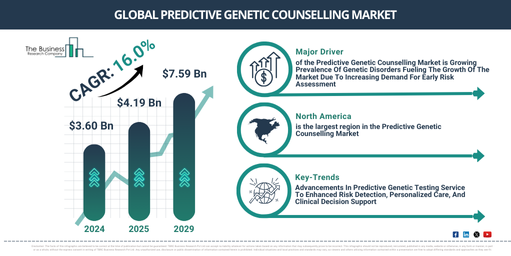
    In recent times, there has been a significant expansion in the market size of predictive genetic counselling. Its growth is projected to increase from $3.60 billion in 2024 to $4.19 billion in 2025 with a compound annual growth rate (CAGR) of 16.4%. Several factors have contributed to the growth experienced in the historic period, including the growing fascination with ancestry and genealogy services, increased use of genetic information for research objectives, surging demand for tests to verify paternity and relationships, a rise in the utilization of pharmacogenomics in the development of drugs, and a widening prevalence of private genetic counselling services.

    The market for predictive genetic counselling is predicted to experience a swift escalation in the forthcoming years. It is set to expand to $7.59 billion by 2029, boasting a compound annual growth rate (CAGR) of 16.0%. The predicted surge during the forecast period is driven by factors such as the enhancing role of artificial intelligence in estimating genetic risk, the upswing in employer-backed genetic health schemes, an upsurge in collaborations between genetic firms and healthcare providers, an increase in the access to at-home sample collection kits, and heightened demand for reproductive and preconception genetic counselling. Noteworthy trends in the forecasted period encompass progress in multi-omics methodologies for exhaustive risk evaluation, advanced chatbot-based genetic counselling interfaces, refinement of blockchain for safe sharing of genetic data, innovation in wearable technology associated with genetic health insights, and the development of multilingual platforms for genetic counselling.

    Download The Free Sample Report Here:

    https://www.thebusinessresearchcompany.com/sample.aspx?id=27397&type=smp

    Which Factors Are Pushing The Predictive Genetic Counselling Market Forward?

    The predictive genetic counselling market is expected to flourish, propelled by the increasing prevalence of genetic disorders. These disorders, stemming from changes or defects in an individual’s DNA, impact bodily growth, development, and overall functionality. The surge in these disorders can be attributed to the rising maternal and paternal age, as a later age of conception is generally associated with an increased probability of genetic mutations in the child. Genetic disorders contribute to the expansion of predictive genetic counseling by amplifying the demand for risk assessment services, which aid individuals in understanding their potential to inherit or pass on such disorders. In October 2024, the Cystic Fibrosis Trust, a charity based in the UK, reported that the number of registered cystic fibrosis patients had increased to 11,318 in 2023, a noticeable increase from 11,148 in 2022. Hence, the escalating prevalence of genetic disorders is certainly boosting the predictive genetic counselling market.

    Which Segment Held The Largest Share In The Predictive Genetic Counselling Market In 2025?

    The predictive genetic counselling market covered in this report is segmented

    1) By Service Type: Risk Assessment, Carrier Testing, Predictive Testing, Other Service Types

    2) By Mode Of Delivery: In-Person, Online

    3) By Application: Consumer Genomics, Breast And Ovarian Cancer, Cardiovascular Screening, Diabetic Screening And Monitoring, Colon Cancer, Parkinsonism Or Alzheimer’s Disease, Urologic Screening Or Prostate Cancer Screening, Orthopedic And Musculoskeletal, Other Applications

    4) By End-User: Hospitals And Clinics, Diagnostic Laboratories, Research And Academic Institutes, Other End-Users

    Subsegments:

    1) By Risk Assessment: Family History Evaluation, Lifestyle And Environmental Risk Analysis, Polygenic Risk Score Analysis, Hereditary Disease Susceptibility Screening

    2) By Carrier Testing: Cystic Fibrosis Carrier Testing, Tay-Sachs Carrier Testing, Fragile X Syndrome Testing, Sickle Cell Carrier Testing, Thalassemia Carrier Screening

    3) By Predictive Testing: Breast Cancer Gene 1 (BRCA1) Or Breast Cancer Gene 2 (BRCA2) Mutation Testing, Lynch Syndrome Testing, Huntington’s Disease Testing, Cardiovascular Genetic Risk Testing, Neurological Disorder Prediction Testing

    4) By Other Service Types: Pharmacogenomic Testing, Prenatal Genetic Testing, Newborn Genetic Screening, Direct-To-Consumer Genetic Testing, Whole Genome Sequencing For Prediction

    How Are Key Trends Driving Expansion In The Predictive Genetic Counselling Industry?

    Leading corporations in the predictive genetic counselling industry are directing their focus towards creating innovative solutions like predictive genetic testing services. These services aim to detect early risks of diseases and aid informed clinical decisions. This medical service examines an individual’s DNA to locate genetic variations linked to heightened chances of particular hereditary conditions or future diseases. For instance, Genetic Technologies Limited, a firm providing health testing based on genomics from Australia, rolled out the geneType Risk Assessment test in August 2024. This extraordinaryy genetic-screening tool assesses the chance of an individual developing major conditions like colorectal cancer, breast cancer, ovarian cancer, prostate cancer, coronary artery disease, and type 2 diabetes. The test fuses clinically approved polygenic risk scores with non-genetic elements such as age, clinical measurements, and family history to yield a personalised, actionable risk profile. It’s crafted for proactive health management and offers clear reports with customised recommendations to help guide preventive care and lifestyle decisions in over 42 nations.

    Which Organizations Are Driving Progress In The Predictive Genetic Counselling Industry?

    Major companies operating in the predictive genetic counselling market are Thermo Fisher Scientific Inc., Abbott Laboratories, Laboratory Corporation of America Holdings (LabCorp), Quest Diagnostics Inc., Agilent Technologies Inc., Illumina Inc., Bio-Rad Laboratories Inc., QIAGEN NV, Natera Inc, Myriad Genetics Inc., Fulgent Genetics Inc, Invitae Corporation, 23andMe Holding Co, Color Genomics Inc, deCODE genetics, Centogene NV, Admera Health LLC, Mapmygenome, Exact Sciences Corporation, BGI Group.

    Get The Full Report Here:

    https://www.thebusinessresearchcompany.com/report/predictive-genetic-counselling-global-market-report

    Which Region Is Expected To Experience The Highest Growth In The Predictive Genetic Counselling Industry?

    North America was the largest region in the predictive genetic counselling market in 2024. Asia-Pacific is expected to be the fastest-growing region in the forecast period. The regions covered in the predictive genetic counselling market report are Asia-Pacific, Western Europe, Eastern Europe, North America, South America, Middle East, Africa.

    Request For A Customized Report:

    https://www.thebusinessresearchcompany.com/customise?id=27397&type=smp

    About The Business Research Company:

    With over 15000+ reports from 27 industries covering 60+ geographies, The Business Research Company has built a reputation for offering comprehensive, data-rich research and insights. Armed with 1,500,000 datasets, the optimistic contribution of in-depth secondary research, and unique insights from industry leaders, you can get the information you need to stay ahead in the game.

    Get in touch with us:

    The Business Research Company: https://www.thebusinessresearchcompany.com/

    Americas +1 310-496-7795

    Asia +44 7882 955267 & +91 8897263534

    Europe +44 7882 955267

    Email us at info@tbrc.info

    Follow us on:

    LinkedIn: https://in.linkedin.com/company/the-business-research-company

    YouTube: https://www.youtube.com/channel/UC24_fI0rV8cR5DxlCpgmyFQ

    Global Market Model: https://www.thebusinessresearchcompany.com/global-market-model
  • Key Market Drivers, Trends, and Forecast for the Global Predictive Genetic Counseling Service Industry

    Key Market Drivers, Trends, and Forecast for the Global Predictive Genetic Counseling Service Industry

    Claim your 30% discount on Global Market Reports with code ONLINE30. Limited time only.

    Claim your 30% discount on Global Market Reports with code ONLINE30. Limited time only.

    What Does the Forecast Indicate for the Predictive Genetic Counseling Service Market From 2025 to 2029?

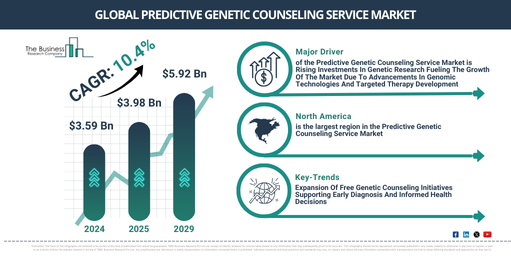
    In recent times, the predictive genetic counseling service market has experienced rapid expansion. The market size, which was at $3.59 billion in 2024, is projected to increase to $3.98 billion by 2025. This represents a compound annual growth rate (CAGR) of 10.8%. The factors contributing to the growth observed in the historical period include the increasing incidence of genetic disorders and inherited forms of cancer, a heightened emphasis on early detection and prevention of diseases, a surge in the global burden of chronic illnesses, more prevalent use of genetics in determining clinical outcomes, and the rising adoption of predictive analysis within the healthcare sector.

    In the forthcoming years, the market size for predictive genetic counseling services is set to experience swift expansion, reaching $5.92 billion in 2029, with a compound annual growth rate of 10.4%. Factors contributing to this growth during the predicted period include the broader application of pharmacogenomics in therapy planning, augmented public knowledge about hereditary diseases, increasing demand for proactive health care, improved genetic literacy among patients, and heightened need for support in family planning. The prediction period also anticipates significant trends such as the advancements in next-generation sequencing, the miniaturization of diagnostic apparatus, the utilization of AI in genetic risk forecasting, the amalgamation of genetic information with electronic health records, and the introduction of innovations in direct-to-consumer genetic testing.

    Download The Free Sample Report Here:

    https://www.thebusinessresearchcompany.com/sample.aspx?id=27396&type=smp

    What Elements Are Contributing To Growth In The Predictive Genetic Counseling Service Market?

    The growth of the predictive genetic counseling service market is expected to be driven by escalating financial inputs in genetic research. Genetic research, which involves a thorough exploration of genes and heredity, aids in understanding the passing of genetic traits and their influence on biological functions. The surge in genetic research investment is spurred by progress in genetic sequencing and precision medicine technologies; these advancements expedite the creation of targeted therapies and render biomedical research more viable and commercially rewarding. By unveiling new genetic markers for inherited diseases, genetic research investments bolster the need for predictive genetic counseling services. These initiatives require professionals to decipher these findings and guide individuals about their health risks. For example, in December 2022, the UK-based central executive authority, HM Government, reported that the government assigned $139 million (£105 million) to a significant research project. This project aims to investigate how whole genome sequencing could enhance the early recognition and treatment of rare genetic diseases in newborns, potentially offering life-saving benefits to thousands of babies. Hence, the rise in genetic research funding is propelling the predictive genetic counseling service market’s growth.

    Which Segments Are Detailed In The Global Predictive Genetic Counseling Service Market Report?

    The predictive genetic counseling service market covered in this report is segmented

    1) By Type: Premarital Examination Service, Parent Child Identification Service, Antenatal Examination Service, Single Gene Or Polygene Disease Diagnosis Service

    2) By Application: Adult, Child

    3) By End-User: Hospitals, Clinical Laboratories, Academic Institutions, Research Organizations, Pharmaceutical Companies

    Subsegments:

    1) By Premarital Examination Service: Genetic Carrier Screening, Chromosomal Abnormality Testing, Inherited Disorder Risk Assessment

    2) By Parent Child Identification Service: Paternity Testing, Maternity Testing, Kinship Analysis

    3) By Antenatal Examination Service: Non-Invasive Prenatal Testing (NIPT), Chorionic Villus Sampling (CVS), Amniocentesis, Fetal DNA Sequencing

    4) By Single Gene Or Polygene Disease Diagnosis Service: Monogenic Disorder Testing, Polygenic Risk Scoring, Pharmacogenomics Testing, Hereditary Cancer Risk Testing

    Which Emerging Trends And Strategic Shifts Are Shaping The Predictive Genetic Counseling Service Market?

    In the predictive genetic counseling service market, large corporations have started to emphasize the creation of innovative solutions such as free genetic counseling services. These complimentary services aim to facilitate timely risk evaluation and informed choices by offering individuals help in understanding their genetic health hazards, usually backed by public health programs, research schemes, and non-profit entities. Take for example Vigil Neuroscience Inc., a biotech company based in the U.S., which in May 2023 started a program named ALSPAware. This initiative provides U.S. adult residents access to free genetic testing and counseling for the diagnosis of adult-onset leukoencephalopathy with axonal spheroids and pigmented glia (ALSP). ALSPAware is meant to help both individuals and health practitioners by offering a single-gene test for those with a family history of ALSP and a personalized gene panel for the examination of adult-onset neurological conditions. Licensed genetic counselors support the testing process and assist in understanding the results. Furthermore, the project provides access to special resources tailored to decrease misdiagnosis and enhance disease control for those afflicted by ALSP.

    Who Are The Key Contributors To Growth In The Predictive Genetic Counseling Service Market?

    Major companies operating in the predictive genetic counseling service market are Roche Ltd., Thermo Fisher Scientific Inc., Agilent Technologies Inc., Illumina Inc., Natera Inc., Tempus AI Inc., Fulgent Genetics Inc., Invitae Corporation, Berry Genomics Co. Ltd., Color Genomics Inc., Decode Genetics Inc., Myriad Genetics Inc., Genpath Diagnostics, Genomic Medical Inc., GeneDx Inc., EasyDNA, Blueprint Genetics Inc., Veritas Genetics International Ltd., Abbott Pathology, Bgi Group Ltd.

    Get The Full Report Here:

    https://www.thebusinessresearchcompany.com/report/predictive-genetic-counseling-service-global-market-report

    Which Region Is Projected To Lead The Predictive Genetic Counseling Service Market By 2025?

    North America was the largest region in the predictive genetic counseling service market in 2024. Asia-Pacific is expected to be the fastest-growing region in the forecast period. The regions covered in the predictive genetic counseling service market report are Asia-Pacific, Western Europe, Eastern Europe, North America, South America, Middle East, Africa.

    Request For A Customized Report:

    https://www.thebusinessresearchcompany.com/customise?id=27396&type=smp

    About The Business Research Company:

    With over 15000+ reports from 27 industries covering 60+ geographies, The Business Research Company has built a reputation for offering comprehensive, data-rich research and insights. Armed with 1,500,000 datasets, the optimistic contribution of in-depth secondary research, and unique insights from industry leaders, you can get the information you need to stay ahead in the game.

    Get in touch with us:

    The Business Research Company: https://www.thebusinessresearchcompany.com/

    Americas +1 310-496-7795

    Asia +44 7882 955267 & +91 8897263534

    Europe +44 7882 955267

    Email us at info@tbrc.info

    Follow us on:

    LinkedIn: https://in.linkedin.com/company/the-business-research-company

    YouTube: https://www.youtube.com/channel/UC24_fI0rV8cR5DxlCpgmyFQ

    Global Market Model: https://www.thebusinessresearchcompany.com/global-market-model
  • Strategic Report on Precision Oncology Market: Growth Opportunities and Emerging Challenges

    Strategic Report on Precision Oncology Market: Growth Opportunities and Emerging Challenges

    Claim your 30% discount on Global Market Reports with code ONLINE30. Limited time only.

    Claim your 30% discount on Global Market Reports with code ONLINE30. Limited time only.

    How Much Is the Global Precision Oncology Market Valued at Present and by 2029?

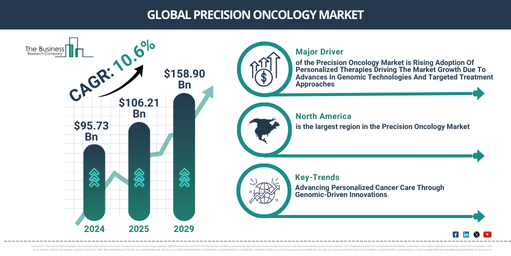
    In the past few years, the size of the precision oncology market has witnessed rapid expansion. The market, estimated at $95.73 billion in 2024, is anticipated to escalate to $106.21 billion in 2025, with a compound annual growth rate (CAGR) of 11.0%. Factors contributing to growth during the historic phase include an increase in the approval of companion diagnostics, emphasis on the discovery and validation of biomarkers, growth in funding for oncology research and innovation, a higher number of clinical trials related to precision oncology, and an increased inclination towards less invasive diagnostic methods.

    In the coming years, the precision oncology market is projected to witness substantial growth, with its size anticipated to reach $158.90 billion by 2029, progressing at a compound annual growth rate (CAGR) of 10.6%. Factors contributing to this predicted growth during the forecast period include the rising number of cancer cases, the surging acceptance of genomics-based diagnostics, increased awareness among patients and medical professionals, the expanding use of next-generation sequencing and the growing need for targeted cancer treatments. Key trends for the forecast period are advancements in liquid biopsy technologies, the sophisticated use of single-cell sequencing in tumour analysis, the creation of decentralized testing platforms, innovations in radio genomics for treatment planning and progress in personalised cancer vaccines.

    Download The Free Sample Report Here:

    https://www.thebusinessresearchcompany.com/sample.aspx?id=27395&type=smp

    #What Drivers Are Influencing Growth In The Precision Oncology Market?

    The growth of the precision oncology market is anticipated to surge due to the escalating comprehension and transition towards personalized therapies. These therapies are designed to fit a person’s genomic structure, biomarkers, and particular disease traits to amplify their efficacy and minimize their side effects. Progressions in genomic technologies are fostering the augmentation of personalized therapies by enabling the exact detection of mutations that cause diseases, which further permits the development of more successful and targeted treatments. Precision oncology bolsters personalized therapies through the utilization of genomic and molecular profiling, thereby calibrating cancer treatment to conform to a patient’s specific tumor genetics. As an example, according to GOV.UK, in February 2023, the Health and Social Care Secretary from a UK-based government bureau inked a Memorandum of Understanding (MoU) with BioNTech SE to boost cancer vaccine research in England with the goal to provide 10,000 personalized therapy doses to patients in the UK by 2030. Hence, the mounting comprehension and transition towards personalized therapies are propelling the expansion of the precision oncology market.

    What Are The Main Segments Identified In The Precision Oncology Market Research?

    The precision oncology market covered in this report is segmented

    1) By Type: Genomic Sequencing, Immunotherapy

    2) By Product Type: Genetic Tests, Biomarker-Based Tests, Therapeutics

    3) By Cancer Type: Breast Cancer, Lung Cancer, Colorectal Cancer, Prostate Cancer, Skin Cancer, Stomach Cancer, Other Cancers

    4) By Technology: Next-Generation Sequencing, Bioinformatics, Molecular Imaging, Liquid Biopsy

    5) By End-users: Hospitals, Research Laboratories, Pharmaceutical Companies, Diagnostic Centers

    Subsegments:

    1) By Genomic Sequencing: Whole Genome Sequencing, Whole Exome Sequencing, Targeted Gene Sequencing

    2) By Immunotherapy: Immune Checkpoint Inhibitors, Cancer Vaccines, Adoptive Cell Therapy

    What Are The Leading Trends And Opportunities In The Precision Oncology Sector?

    Leading firms in the precision oncology market are utilizing inventive strategies, such as the molecular tumor board, to facilitate bespoke treatment decisions—melding genomic data with clinical context. The molecular tumor board is essentially a group of specialists tasked with examining and interpreting intricate genomic and molecular test results to provide precision-guided cancer treatments tailored to each patient’s specific tumor traits. For example, in December 2024, Aster DM Healthcare Ltd., a healthcare provider in the UAE, launched a precision oncology clinic as part of three personalized cancer care initiatives aimed at revolutionizing treatment using data-driven, genomic-centric methods. This clinic offers tailored cancer treatments derived from the patient’s tumor genetic makeup, allowing for more accurate and potent therapies with fewer side effects. This strategy boosts treatment success rates, reduces toxicity, and enhances the patient’s quality of life by tailoring treatments to the unique molecular attributes of an individual’s cancer.

    Which Companies Play A Key Role In The Development Of The Precision Oncology Market?

    Major companies operating in the precision oncology market are Pfizer Inc., F. Hoffmann-La Roche Ltd., Bayer AG, Bristol Myers Squibb Company, Thermo Fisher Scientific Inc., AstraZeneca plc., Novartis AG, Eli Lilly and Company, Amgen Inc., Agilent Technologies Inc., Illumina Inc., Sysmex Corporation, Qiagen N.V., Exact Sciences Corporation, NeoGenomics Laboratories Inc., Myriad Genetics Inc., Invitae Corporation, Caris Life Sciences, Foundation Medicine Inc., NanoString Technologies Inc., Personalis Inc., Strata Oncology Inc.

    Get The Full Report Here:

    https://www.thebusinessresearchcompany.com/report/precision-oncology-global-market-report

    What Are The Key Regional Developments Shaping The Precision Oncology Market?

    North America was the largest region in the precision oncology market in 2024. Asia-Pacific is expected to be the fastest-growing region in the forecast period. The regions covered in the precision oncology market report are Asia-Pacific, Western Europe, Eastern Europe, North America, South America, Middle East, Africa.

    Request For A Customized Report:

    https://www.thebusinessresearchcompany.com/customise?id=27395&type=smp

    About The Business Research Company:

    With over 15000+ reports from 27 industries covering 60+ geographies, The Business Research Company has built a reputation for offering comprehensive, data-rich research and insights. Armed with 1,500,000 datasets, the optimistic contribution of in-depth secondary research, and unique insights from industry leaders, you can get the information you need to stay ahead in the game.

    Get in touch with us:

    The Business Research Company: https://www.thebusinessresearchcompany.com/

    Americas +1 310-496-7795

    Asia +44 7882 955267 & +91 8897263534

    Europe +44 7882 955267

    Email us at info@tbrc.info

    Follow us on:

    LinkedIn: https://in.linkedin.com/company/the-business-research-company

    YouTube: https://www.youtube.com/channel/UC24_fI0rV8cR5DxlCpgmyFQ

    Global Market Model: https://www.thebusinessresearchcompany.com/global-market-model

  • Industry Trends Show Precision Medicine Software Market Set to Expand at 15% CAGR Until 2029

    Industry Trends Show Precision Medicine Software Market Set to Expand at 15% CAGR Until 2029

    Claim your 30% discount on Global Market Reports with code ONLINE30. Limited time only.

    Claim your 30% discount on Global Market Reports with code ONLINE30. Limited time only.

    What Is the Current and Projected Market Size of the Precision Medicine Software Industry?

    The market for precision medicine software has experienced swift expansion in the past few years. The market is projected to enlarge from $2.12 billion in 2024 to $2.45 billion in 2025, indicating a compound annual growth rate (CAGR) of 15.4%. Factors contributing to this growth during the historical period include the increased use of electronic health records (EHRs), escalation in genomic sequencing initiatives, augmented investments in the biotechnology and personalized medicine sectors, advancement in cancer genomics and targeted therapy investigations, and amplified collaboration between the healthcare and technology industries.

    Expectations suggest substantial escalation in the precision medicine software market in the coming years, with estimated growth to $4.29 billion by 2029 at a Compound Annual Growth Rate (CAGR) of 15.0%. The impetus for this growth over the anticipated period arises from the increased demand for personalized treatment strategies, the heightened focus on rare disease studies and medication development, the surge in direct-to-consumer genetic testing, and the reinforced efforts towards regulatory support and data standardization. The projected growth period reveals prevailing trends such as the broadening partnership between multi-omics data, the transition towards cloud-based platforms, priority on real-time clinical decision assistance, progression of consolidated and privacy-securing data models, and the employment of digital twins for individualized treatment scheming.

    Download The Free Sample Report Here:

    https://www.thebusinessresearchcompany.com/sample.aspx?id=27394&type=smp

    #Which Factors Are Currently Driving The Growth Of The Precision Medicine Software Market?

    The burgeoning need for personalized therapeutic measures is anticipated to fuel the development of the precision medicine software market. Customized treatment involves customizing medical attention to suit an individual’s specific genetic constitution, lifestyle, and medical history to achieve better results. The escalating need for customized treatment stems from advancements in genomic technologies that accurately identify genetic variances and provide treatments tailored for individuals. Precision medicine software facilitates personalized therapy by analyzing data from genetics, clinical, and lifestyle factors to personalize healthcare strategies. It improves diagnostic precision and treatment efficacy, thereby facilitating more focused and effective care for patients. For example, in February 2024, the U.S. Food and Drug Administration (FDA) approved 26 new personalized medicines in 2023, as reported by the Personalized Medicine Coalition (PMC), an American nonprofit entity – a stark rise from the 12 approved in 2022. Thus, the swelling demand for personalized treatment is crucial in accelerating the expansion of the precision medicine software market.

    How Is The Global Precision Medicine Software Market Structured In Terms Of Segments?

    The precision medicine software market covered in this report is segmented

    1) By Software Type: Clinical Decision Support Systems (CDSS), Genomic Data Analysis Tools, Data Integration And Management Software, Patient Management Software, Bioinformatics Tools

    2) By Technology: Artificial Intelligence And Machine Learning, Big Data Analytics, Blockchain Technology, Internet of Medical Things (IoMT), Clustered Regularly Interspaced Short Palindromic Repeats (CRISPR) And Gene Editing Tools

    3) By Deployment: Cloud, On-Premise

    4) By Application: Oncology, Central Nervous System, Immunology, Cardiovascular, Other Applications

    5) By End User: Healthcare Providers, Research Centers And Government Institutes, Pharmaceutical And Biotechnology Companies, Other End Users

    Subsegments:

    1) By Clinical Decision Support Systems (CDSS): Diagnostic Decision Support, Therapeutic Decision Support, Clinical Guidelines And Protocols, Drug-Drug Interaction Alerts, Risk Assessment Modules

    2) By Genomic Data Analysis Tools: Variant Calling And Annotation Tools, Genome Alignment Software, Gene Expression Analysis, Next-Generation Sequencing (NGS) Data Analysis, Pathway Analysis Tools

    3) By Data Integration And Management Software: Electronic Health Record (EHR) Integration, Laboratory Information Management Systems (LIMS), Clinical Data Warehousing, Data Cleaning And Normalization, Metadata Management

    4) By Patient Management Software: Appointment Scheduling, Patient Registry Software, Care Coordination Tools, Patient Engagement Platforms, Remote Monitoring Systems

    5) By Bioinformatics Tools: Sequence Analysis Software, Structural Bioinformatics Tools, Functional Genomics Platforms, Molecular Modeling And Simulation, Proteomics And Metabolomics Tools

    What Trends Are Currently Influencing Growth In The Precision Medicine Software Market?

    Key players in the precision medicine software industry are prioritizing the creation of cutting-edge solutions, such as digital healthcare, to expedite the production of digital health products, subsequently reducing both expenditure and time. Digital healthcare pertains to deploying digital tools and technologies to enhance, administer, and optimize health services and results. For instance, Huma Therapeutics Ltd, a digital health firm based in the UK, in July 2024, unveiled Cloud Platform. This platform was constructed to universalize digital-centric healthcare by facilitating swift, code-free building and introduction of regulated healthcare applications powered by AI. This platform comes with pre-configured components, establishes connections with devices and complies with significant regulatory standards (FDA Class II, EU MDR IIb, Saudi FDA C), thereby empowering organizations of all sizes to offer efficient, economical digital health answers. The Huma cloud platform propels digital health progression, extends access, and backs preventative, AI-guided care and research.

    Who Are The Main Participants Shaping The Precision Medicine Software Market Landscape?

    Major companies operating in the precision medicine software market are Koninklijke Philips N.V., Palantir Technologies Inc., Tempus Labs Inc., Myriad Genetics Inc., Foundation Medicine Inc., Guardant Health Inc., Color Genomics Inc., NantHealth Inc., SOPHiA GENETICS SA, Aignostics GmbH, MVision AI Oy, Fabric Genomics Inc., QUIBIM S.L., Syapse Inc., PierianDx Inc., 2bPrecise LLC, SimBioSys Inc., Navignostics AG, xCures Inc., LifeOmic Holdings LLC.

    Get The Full Report Here:

    https://www.thebusinessresearchcompany.com/report/precision-medicine-software-global-market-report

    Which Region Currently Holds The Largest Share In The Precision Medicine Software Market?

    North America was the largest region in the precision medicine software market in 2024. The regions covered in the precision medicine software market report are Asia-Pacific, Western Europe, Eastern Europe, North America, South America, Middle East, Africa.

    Request For A Customized Report:

    https://www.thebusinessresearchcompany.com/customise?id=27394&type=smp

    About The Business Research Company:

    With over 15000+ reports from 27 industries covering 60+ geographies, The Business Research Company has built a reputation for offering comprehensive, data-rich research and insights. Armed with 1,500,000 datasets, the optimistic contribution of in-depth secondary research, and unique insights from industry leaders, you can get the information you need to stay ahead in the game.

    Get in touch with us:

    The Business Research Company: https://www.thebusinessresearchcompany.com/

    Americas +1 310-496-7795

    Asia +44 7882 955267 & +91 8897263534

    Europe +44 7882 955267

    Email us at info@tbrc.info

    Follow us on:

    LinkedIn: https://in.linkedin.com/company/the-business-research-company

    YouTube: https://www.youtube.com/channel/UC24_fI0rV8cR5DxlCpgmyFQ

    Global Market Model: https://www.thebusinessresearchcompany.com/global-market-model

  • Competitive and Market Trend Analysis of Post-Marketing Pharmacovigilance And Medical Information Industry Through 2029

    Competitive and Market Trend Analysis of Post-Marketing Pharmacovigilance And Medical Information Industry Through 2029

    Claim your 30% discount on Global Market Reports with code ONLINE30. Limited time only.

    Claim your 30% discount on Global Market Reports with code ONLINE30. Limited time only.

    How Will the Post-Marketing Pharmacovigilance And Medical Information Market Evolve in Terms of Growth and Size by 2029?

    The market size for post-marketing pharmacovigilance and medical information has seen significant growth in the past few years and is expected to increase from $6.16 billion in 2024 to $6.90 billion in 2025. This represents a compound annual growth rate (CAGR) of 11.9%. The historic growth of this sector is a result of the rising implementation of Artificial Intelligence in pharmacovigilance procedures, growing demand for contracted drug safety services, increased complexity in biopharmaceutical products, a heightened emphasis on patient-reported outcomes, and more collaborations between regulatory authorities and the industry.

    The market size for post-marketing pharmacovigilance and medical information is projected to experience accelerated growth in the coming years, swelling to $10.68 billion by 2029 at a compound annual growth rate of 11.6%. The growth foreseen in this period can be attributed to factors such as progress in drug safety analytics tools, increased usage of cloud-based pharmacovigilance solutions, frequent introductions of novel therapeutics, heightened focus on proactive risk management strategies, and an expansion in pharmacovigilance obligations in emerging markets. Key trends in the forecast period include the evolution in automated adverse event detection, the emergence of integrated pharmacovigilance platforms, breakthroughs in real-time safety data monitoring, advancements in patient engagement tools for safety reporting, and the development of predictive analytics for assessing drug risk.

    Download The Free Sample Report Here:

    https://www.thebusinessresearchcompany.com/sample.aspx?id=27393&type=smp

    What factors are expected to fuel Post-Marketing Pharmacovigilance And Medical Information market growth in the coming years?

    The escalating occurrence of negative effects from medications is anticipated to drive the expansion of the post-marketing pharmacovigilance and medical information market. When a drug is used at its prescribed level for prevention, diagnosis, or treatment, adverse drug reactions, essentially harmful or unintended effects, can occur. As the elderly population requiring treatment for multiple chronic conditions increases, so does the likelihood of adverse drug reactions due to the concurrent usage of various medications. This raises the probability of unexpected side effects and detrimental drug interactions. Through detection, tracking, and information sharing about possible side effects post-medication launch, post-marketing pharmacovigilance and medical information promote the management of these adverse effects, thereby ensuring the safety and efficacy of the medication. To illustrate, Navikenz, a US AI-focused IT services company, reported in January 2023 that the US sees an estimated 200,000 to 400,000 deaths annually due to adverse drug reactions, a toll higher than that of stroke and diabetes combined. Approximately 2.7 million cases each year result in over 100,000 hospitalizations and progress to more than 15,000 deaths. Hence, the escalating occurrence of adverse drug reactions is bolstering the expansion of the post-marketing pharmacovigilance and medical information market.

    What Are The Key Findings From The Segmentation Analysis Of The Post-Marketing Pharmacovigilance And Medical Information Market?

    The post-marketing pharmacovigilance and medical information market covered in this report is segmented

    1) By Type: Spontaneous Reporting, Intensified Adverse Drug Reaction (ADR) Reporting, Targeted Spontaneous Reporting, Cohort Event Monitoring, Electronic Health Record (EHR) Mining

    2) By Product: Books, Online Media, Journals

    3) By End User: Hospitals, Research Organizations, Other End-Users

    Subsegments:

    1) By Spontaneous Reporting: Consumer Reporting, Healthcare Professional Reporting, Regulatory Authority Reporting, Pharmaceutical Company Reporting, Digital App-Based Reporting

    2) By Intensified Adverse Drug Reaction (ADR) Reporting: Hospital-Based Surveillance, Program-Specific Monitoring, Disease-Specific Monitoring, Product-Specific Monitoring, Real-Time Monitoring Systems

    3) By Targeted Spontaneous Reporting: Risk Population-Based Reporting, Therapeutic Class-Based Reporting, Adverse Drug Reaction Focused Reporting, Region-Specific Reporting, Healthcare Setting-Specific Reporting

    4) By Cohort Event Monitoring: Prospective Cohort Monitoring, Retrospective Cohort Monitoring, Active Follow-Up Monitoring, New Drug User Monitoring, Disease Registry-Linked Monitoring

    5) By Electronic Health Record (EHR) Mining: Natural Language Processing-Based Mining, Artificial Intelligence (AI) And Machine Learning Algorithms, Rule-Based Signal Detection, Longitudinal Patient Data Analysis, Integrated Hospital Data Systems

    Which Trends Are Expected To Shape The Future Of The Post-Marketing Pharmacovigilance And Medical Information Market?

    Leading corporations in the post-marketing pharmacovigilance and medical information industry are concentrating on creating state-of-the-art solutions such as AI-powered pharmacovigilance workflows. These workflows are designed to increase the effectiveness of adverse event identification and provide real-time safety monitoring for improved patient results. They leverage artificial intelligence to mechanize drug safety monitoring, resulting in expedited event detection and better adherence to regulatory norms. For instance, in January 2024, PubHive Ltd., a UK-based cloud-based Software-as-a-service (SaaS) firm, rolled out a centralized Summary of Product Characteristics (SmPC) management intended for life science firms and research organizations. The platform amalgamates key drug safety data into a singular, accessible repository and mechanizes literature surveillance and regulatory reporting. It also encourages team synergy and seamless compliance through the application of advanced AI. This allows pharmacovigilance squads to run more productively and proactively, thereby guaranteeing patient safety and observance of regulatory requirements.

    What Are The Most Active Companies In The Post-Marketing Pharmacovigilance And Medical Information Market Today?

    Major companies operating in the post-marketing pharmacovigilance and medical information market are Cencora Inc., Cardinal Health Inc., Accenture plc, Sanofi S.A., Thermo Fisher Scientific Inc., Capgemini SE, Merck & Co. Inc., Cognizant Technology Solutions Corporation, IQVIA Holdings Inc., HCL Technologies Limited, Laboratory Corporation of America Holdings, ICON plc, WuXi AppTec Co. Ltd., Syneos Health Inc., Genpact Limited, Charles River Laboratories International Inc., Parexel International Corporation, Avalere Health LLC, Quanticate Limited, Inizio Consulting LLC.

    Get The Full Report Here:

    https://www.thebusinessresearchcompany.com/report/post-marketing-pharmacovigilance-and-medical-information-global-market-report

    Which Regional Markets Are Attracting The Most Investment In Post-Marketing Pharmacovigilance And Medical Information?

    North America was the largest region in the post-marketing pharmacovigilance and medical information market in 2024. Asia-Pacific is expected to be the fastest-growing region in the forecast period. The regions covered in the post-marketing pharmacovigilance and medical information market report are Asia-Pacific, Western Europe, Eastern Europe, North America, South America, Middle East, Africa.

    Request For A Customized Report:

    https://www.thebusinessresearchcompany.com/customise?id=27393&type=smp

    About The Business Research Company:

    With over 15000+ reports from 27 industries covering 60+ geographies, The Business Research Company has built a reputation for offering comprehensive, data-rich research and insights. Armed with 1,500,000 datasets, the optimistic contribution of in-depth secondary research, and unique insights from industry leaders, you can get the information you need to stay ahead in the game.

    Get in touch with us:

    The Business Research Company: https://www.thebusinessresearchcompany.com/

    Americas +1 310-496-7795

    Asia +44 7882 955267 & +91 8897263534

    Europe +44 7882 955267

    Email us at info@tbrc.info

    Follow us on:

    LinkedIn: https://in.linkedin.com/company/the-business-research-company

    YouTube: https://www.youtube.com/channel/UC24_fI0rV8cR5DxlCpgmyFQ

    Global Market Model: https://www.thebusinessresearchcompany.com/global-market-model

  • Global Portable Bioprocessing Bioreactors Market Landscape: Trends and Market Share to 2029

    Global Portable Bioprocessing Bioreactors Market Landscape: Trends and Market Share to 2029

    Claim your 30% discount on Global Market Reports with code ONLINE30. Limited time only.

    Claim your 30% discount on Global Market Reports with code ONLINE30. Limited time only.

    What CAGR Is Anticipated for the Portable Bioprocessing Bioreactors Market Through 2029?

    In recent years, there has been a swift expansion in the market size of portable bioprocessing bioreactors. It is estimated to rise from $2.49 billion in 2024 to a higher value of $2.80 billion in 2025, marking a compound annual growth rate (CAGR) of 12.8%. Factors such as the amplified requirement for on-site biopharmaceutical production, the growing inclination towards personalized medicine, the increasing requirement for decentralized and point-of-care bioprocessing, as well as escalated investments in biotechnology research and development have contributed to this historical growth. Additionally, the escalating prevalence of infectious diseases propelling bioprocessing innovations has also played a significant role.

    The market for portable bioprocessing bioreactors is anticipated to experience fast-paced growth in the forthcoming years, reaching $4.48 billion in 2029 with a compound annual growth rate (CAGR) of 12.4%. This expected growth within the prediction period is due to various factors such as the rising preference for continuous bioprocessing techniques, increasing need for portable bioprocessing in remote and less-resourced locations, and a greater focus on environmentally-friendly bioprocessing methods. Increasing investment in cell and gene therapy manufacturing and growing interest in sustainable bioprocessing techniques also contribute to this trend. Noteworthy trends during this forecast period involve the improvement of mobile biomanufacturing units, further miniaturization of bioreactor systems, progress in real-time tracking, and data analysis. Other trends include the incorporation of intelligent sensors for process improvement, and advancements in disposable bioreactor technologies.

    Download The Free Sample Report Here:

    https://www.thebusinessresearchcompany.com/sample.aspx?id=27392&type=smp

    What Market Forces Are Driving The Portable Bioprocessing Bioreactors Sector In 2025 And Beyond?

    The portable bioprocessing bioreactors market is predicted to witness a surge due to the escalating demand for gene therapies. Gene therapy is a revolutionary medical procedure that modifies or substitutes faulty genes to treat or avert diseases. The demand for this technique is climbing due to the progress in genetic sequencing and diagnostics that allows the precise pinpointing of genes that are the cause of diseases for specially designed treatment. Portable bioprocessing bioreactors contribute to the acceleration of gene therapies providing adaptable on-site manufacturing with scalable and controlled conditions. This minimizes processing time and complexity, enhancing the pace and effectiveness of generating customized treatments. For example, as mentioned by the American Society of Gene & Cell Therapy (ASGCT), a non-profit organization based in the US, the Food and Drug Administration (FDA) sanctioned six gene therapy products in 2023 which was an increase from five in 2022. Consequently, the escalating demand for gene therapies is fueling the expansion of the portable bioprocessing bioreactors market.

    How Is The Global Portable Bioprocessing Bioreactors Market Categorized By Segments?

    The portable bioprocessing bioreactors market covered in this report is segmented

    1) By Product Type: Single-Use Bioreactors, Stainless Steel Bioreactors, Glass Bioreactors, Multi-Use Bioreactors, Smart Bioreactors

    2) By Mode Of Operation: Batch Bioreactors, Fed-Batch Bioreactors, Continuous Bioreactors, Perfusion Bioreactors

    3) By Capacity: 100L–500L, 50L–100L, 10L–50L, 1L–10L

    4) By Application: Cell Therapy And Regenerative Medicine, Vaccine And Biologic Development, Biopharmaceutical Production, Biologics And Biosimilars Manufacturing, Tissue Engineering

    5) By End-User: Academic And Research Institutions, Biopharmaceutical Companies, Contract Research Organizations (CROs), Food And Beverage Manufacturers, Chemical And Petrochemical Industries

    Subsegments:

    1) By Single-Use Bioreactors: Disposable Bags, Stirred Tank, Rocking Motion, Fixed Bed, Wave Bioreactors

    2) By Stainless Steel Bioreactors: Jacketed, Half Pipe, Coil, External, Internal

    3) By Glass Bioreactors: Jacketed, Non-Jacketed, Double Jacketed

    4) By Multi-Use Bioreactors: Airlift, Bubble Column

    5) By Smart Bioreactors: Automated Control, Sensor Integrated, Remote Monitoring, Data Analytics Enabled

    What Long-Term Trends Are Likely To Affect The Portable Bioprocessing Bioreactors Market?

    Key players in the portable bioprocessing bioreactors market are concentrating their efforts on creating technology-forward products, including single-use bioreactors, to improve flexibility and optimize cell therapy production. Notably, single-use bioreactors are disposable units that utilize pre-sterilized plastic bags in place of reusable containers, thereby facilitating quicker setup, lower risk of contamination, and cheaper cleaning expenses in biomanufacturing processes. For instance, in April 2025, U.S. based biotech firm Thermo Fisher Scientific, introduced the 5L DynaDrive single-use bioreactor, an innovative portable bioprocessing system aimed at enhancing scalability and process control for cell culture applications. This bioreactor allows for smooth enlarging from 1 to 5,000 liters, all while retaining a consistent reactor design and film quality, leading to an increased productivity of 27% in comparison to traditional glass bioreactors. It presents a compact, easy-to-use benchtop design and incorporates biobased films in conjunction with BioTitan retention devices to minimize product loss and encourage green practices.

    Which Firms Are Considered Leaders In The Portable Bioprocessing Bioreactors Market Space?

    Major companies operating in the portable bioprocessing bioreactors market are Thermo Fisher Scientific Inc., Merck KGaA, GE Healthcare, Avantor Fluid Handling LLC, Cytiva Bioscience Holding Ltd., Sartorius AG, Getinge AB, Pall Corporation, ZETA Holding GmbH, Tecnic S.r.l., IKA-Werke GmbH & Co. KG, PBS Biotech Inc., Fabtech Technologies Ltd, Culture Biosciences Inc., Distek Inc., Solida Biotech Inc., Biosan Laboratories Ltd., CerCell A/S, FermEx Inc., Uma Pharmatech Machinery Pvt. Ltd.

    Get The Full Report Here:

    https://www.thebusinessresearchcompany.com/report/portable-bioprocessing-bioreactors-global-market-report

    What Role Do Regional Policies And Investments Play In Portable Bioprocessing Bioreactors Market Expansion?

    North America was the largest region in the portable bioprocessing bioreactors market in 2024. Asia-Pacific is expected to be the fastest-growing region in the forecast period. The regions covered in the portable bioprocessing bioreactors market report are Asia-Pacific, Western Europe, Eastern Europe, North America, South America, Middle East, Africa.

    Request For A Customized Report:

    https://www.thebusinessresearchcompany.com/customise?id=27392&type=smp

    About The Business Research Company:

    With over 15000+ reports from 27 industries covering 60+ geographies, The Business Research Company has built a reputation for offering comprehensive, data-rich research and insights. Armed with 1,500,000 datasets, the optimistic contribution of in-depth secondary research, and unique insights from industry leaders, you can get the information you need to stay ahead in the game.

    Get in touch with us:

    The Business Research Company: https://www.thebusinessresearchcompany.com/

    Americas +1 310-496-7795

    Asia +44 7882 955267 & +91 8897263534

    Europe +44 7882 955267

    Email us at info@tbrc.info

    Follow us on:

    LinkedIn: https://in.linkedin.com/company/the-business-research-company

    YouTube: https://www.youtube.com/channel/UC24_fI0rV8cR5DxlCpgmyFQ

    Global Market Model: https://www.thebusinessresearchcompany.com/global-market-model

  • Comprehensive Forecast: Point-Of-Care-Testing (POCT) Market Share, Growth, and Opportunities Through 2029

    Comprehensive Forecast: Point-Of-Care-Testing (POCT) Market Share, Growth, and Opportunities Through 2029

    Claim your 30% discount on Global Market Reports with code ONLINE30. Limited time only.

    Claim your 30% discount on Global Market Reports with code ONLINE30. Limited time only.

    What Are the Latest Market Insights for the Point-Of-Care-Testing (POCT) Industry?

    In recent times, there has been a significant expansion in the point-of-care-testing (POCT) market. The market is projected to swell from $45.45 billion in 2024 to about $50.79 billion in 2025, with a compound annual growth rate (CAGR) of 11.8%. The expansion of the market during the historical period is due to the growing emphasis on personalized medicine, escalating investments in healthcare infrastructure, an increase in emergency care instances, a surging application of point-of-care molecular testing, and the escalating integration of AI in diagnostics.

    Anticipated speedy expansion in the upcoming years is predicted for the point-of-care-testing (POCT) market, with projections placing its value at $78.19 billion by 2029, yielding a compound annual growth rate (CAGR) of 11.4%. This projected growth could be fueled by various factors such as a mounting demand for individualized healthcare, increasingly prevalent telehealth and remote monitoring, improved healthcare availability in developing markets, wider application in non-standard environments, and ascending popularity of wearable diagnostic tools. Notable trends forecasted for this period include advancements in multiplex testing platforms, the creation of portable molecular diagnostic devices, innovation in smartphone-dependent diagnostic instruments, progress in data connectivity and integration, and the emergence of AI-driven POCT solutions.

    Download The Free Sample Report Here:

    https://www.thebusinessresearchcompany.com/sample.aspx?id=27391&type=smp

    What Forces Are Driving The Growth Of The Point-Of-Care-Testing (POCT) Industry?

    The escalated uptake of telemedicine is anticipated to spur the expansion of the point-of-care-testing (POCT) market. Telemedicine pertains to the act of providing healthcare services remotely, utilizing digital communication technologies like video calls, phone calls, or secure messages. Telemedicine’s popularity is on the rise due to the growing need for accessible, quick, and contactless medical services, significantly sped up by the COVID-19 outbreak. Point-of-care testing (POCT) aids telemedicine by offering swift, trustworthy diagnostic outcomes that can be instantly communicated with remote health service providers. For example, a Rock Health survey in February 2023, involving 8,014 participants from July 12 to August 22, 2022, revealed that 76% of individuals above 55 years have utilized telemedicine, and 80% of all surveyed individuals admitted to accessing care through telemedicine at least once in their lives, an increase of 8% from 72% in 2021. Therefore, the skyrocketing uptake of telemedicine is propelling the point-of-care-testing (POCT) market’s growth.

    What Is The Overview Of Market Segmentation In The Point-Of-Care-Testing (POCT) Industry?

    The point-of-care-testing (POCT) market covered in this report is segmented

    1) By Type: Blood Glucose Testing, Infectious Diseases Testing, Cardiac Markers Testing, Coagulation Testing, Pregnancy And Fertility Testing, Blood Gas Or Electrolytes Testing, Urinalysis Testing, Other Types

    2) By Mode Of Purchase: Over-The-Counter Products, Prescribed Based Products

    3) By Technology: Immunoassays, Molecular Diagnostics, Microbial Detection, Polymerase Chain Reaction (PCR) Testing, Biochemical Testing

    4) By End-User: Clinical Laboratories, Ambulatory Care Facilities And Physician Offices, Pharmacies, Retail Clinics And E-Comm Platforms, Hospitals, Critical Care Centres, Urgent Care Centres, Home Care And Self-Testing, Other End-Users

    Subsegments:

    1) By Blood Glucose Testing: Self-Monitoring Blood Glucose Devices, Continuous Glucose Monitoring Devices, Flash Glucose Monitoring Devices

    2) By Infectious Diseases Testing: Human Immunodeficiency Virus (HIV) Testing, Hepatitis Testing, Influenza Testing, COVID-19 Testing, Other Infectious Diseases Testing

    3) By Cardiac Markers Testing: Troponin Testing, Creatine Kinase-MB (CK-MB) Testing, Myoglobin Testing, B-type Natriuretic Peptide (BNP) Testing

    4) By Coagulation Testing: Prothrombin Time (PT) Testing, Activated Partial Thromboplastin Time (aPTT) Testing, International Normalized Ratio (INR) Testing

    5) By Pregnancy And Fertility Testing: Pregnancy Test Kits, Ovulation Test Kits, Fertility Hormone Testing

    6) By Blood Gas Or Electrolytes Testing: Arterial Blood Gas Testing, Venous Blood Gas Testing, Electrolyte Testing

    7) By Urinalysis Testing: Urine Chemistry Analysis, Microscopic Urine Analysis, Urine Culture Testing

    8) By Other Types: Drug Abuse Testing, Allergy Testing, Cholesterol Testing, Thyroid Function Testing

    What Future Market Trends Are Projected For The Point-Of-Care-Testing (POCT) Industry?

    Leading businesses in the point-of-care-testing (POCT) industry are concentrating on introducing unique products like blood glucose control solutions to enhance diagnostic precision, swiftness, and patient outcomes in near-patient contexts. Blood glucose control solutions encompass systems, devices, and tools that monitor, manage, and adjust blood sugar levels to treat conditions such as diabetes. For example, F. Hoffmann-La Roche AG, a pharmaceutical organization based in Switzerland, introduced the Cobas pulse system in January 2022. This system is a revolutionary combined platform that merges cutting-edge point-of-care blood glucose tests with smart device capabilities. It seamlessly links with hospital IT systems for automatic result transmission and immediate clinical data access. This device incorporates healthcare apps to improve decision-making support and streamline workflow right at the patient’s bedside.

    Who Are The Primary Players Operating Across The Global Point-Of-Care-Testing (POCT) Market?

    Major companies operating in the point-of-care-testing (POCT) market are Johnson & Johnson, F. Hoffmann-La Roche Ltd., Thermo Fisher Scientific Inc., Abbott Laboratories, Danaher Corporation, Siemens Healthineers AG, Becton Dickinson and Company, Zoetis Inc., BioMérieux SA, QuidelOrtho Corporation, Sysmex Corporation, Bio-Rad Laboratories Inc., QIAGEN NV, Nova Biomedical Corporation, LifeScan Inc., Ascensia Diabetes Care Holdings AG, Trividia Health Inc., Trinity Biotech Plc, SiPhox Inc., and Sinocare Inc.

    Get The Full Report Here:

    https://www.thebusinessresearchcompany.com/report/point-of-care-testing-poct-global-market-report

    Which Region Offers The Most Growth Potential For The Point-Of-Care-Testing (POCT) Market Through 2029?

    North America was the largest region in the point-of-care testing (POCT) market in 2024. Asia-Pacific is expected to be the fastest-growing region in the forecast period. The regions covered in the point-of-care-testing (POCT) market report are Asia-Pacific, Western Europe, Eastern Europe, North America, South America, Middle East, Africa.

    Request For A Customized Report:

    https://www.thebusinessresearchcompany.com/customise?id=27391&type=smp

    About The Business Research Company:

    With over 15000+ reports from 27 industries covering 60+ geographies, The Business Research Company has built a reputation for offering comprehensive, data-rich research and insights. Armed with 1,500,000 datasets, the optimistic contribution of in-depth secondary research, and unique insights from industry leaders, you can get the information you need to stay ahead in the game.

    Get in touch with us:

    The Business Research Company: https://www.thebusinessresearchcompany.com/

    Americas +1 310-496-7795

    Asia +44 7882 955267 & +91 8897263534

    Europe +44 7882 955267

    Email us at info@tbrc.info

    Follow us on:

    LinkedIn: https://in.linkedin.com/company/the-business-research-company

    YouTube: https://www.youtube.com/channel/UC24_fI0rV8cR5DxlCpgmyFQ

    Global Market Model: https://www.thebusinessresearchcompany.com/global-market-model
  • Future Demand and Leading Companies Shaping the Point-of-Care Technology Market to 2029

    Future Demand and Leading Companies Shaping the Point-of-Care Technology Market to 2029

    Claim your 30% discount on Global Market Reports with code ONLINE30. Limited time only.

    Claim your 30% discount on Global Market Reports with code ONLINE30. Limited time only.

    What Are the Forecasted Growth Rate and Market Size of the Point-of-Care Technology Market?

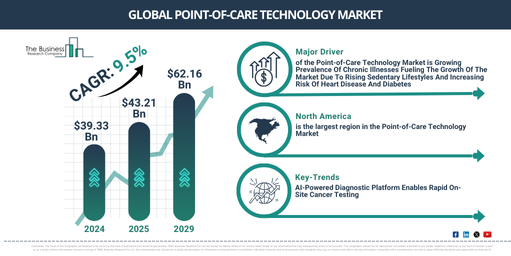
    There has been a notable expansion in the size of the point-of-care technology market in the past few years. It is estimated to jump from $39.33 billion in 2024 to $43.21 billion in 2025, marking a compound annual growth rate (CAGR) of 9.9%. Several factors have contributed to the growth in the historic period, including the steady decentralization of health service delivery, the escalating need for immediate diagnoses in emergency situations, the growing demand for quick infection tests, the increased deployment of mobile testing facilities, and the heightened attention given to cost-effective diagnostic procedures.

    Expectations are high for robust expansion of the point-of-care technology market in the forthcoming years, with projections looking at a significant increase to $62.16 billion in 2029. This growth, reflecting a compound annual growth rate (CAGR) of 9.5%, can be credited to several factors. These include the surge in telemedicine platforms, shift towards personalized and predictive healthcare, the expanding usage in home-based health monitoring, and growing government support for decentralized testing. The period of forecast also anticipates several significant trends, including the progression of artificial intelligence-augmented diagnostic algorithms, the introduction of portable multiplex testing tools, innovations in wearable health monitoring devices, advancements in integrating cloud-based data, and the creation of home-based telehealth ecosystems.

    Download The Free Sample Report Here:

    https://www.thebusinessresearchcompany.com/sample.aspx?id=27390&type=smp

    Which Factor Is Shaping The Future Of The Point-of-Care Technology Market?

    The increased incidence of chronic diseases is anticipated to fuel the expansion of the point-of-care technology market. Chronic diseases are long-lasting health issues that typically necessitate sustained care and lifestyle modifications. Sedentary living is escalating these diseases, as lengthy periods of sitting and lack of physical activity intensify the chances of heart ailments and diabetes. Point-of-care technology, with its quick, onsite diagnostic testing, is highly suitable for settings like clinics, homes, and remote care facilities in managing chronic diseases. Real-time results not only eliminate treatment delays but also enhance patient monitoring and general healthcare convenience. For example, the National Health Service, a UK governmente department, reported that in June 2024, 3,615,330 patients registered with a general practitioner (GP) were identified with non-diabetic hyperglycemia or pre-diabetes in 2023, witnessing an 18% jump from the 3,065,825 cases in 2022. Thus, the increasing prevalence of chronic diseases is driving the point-of-care technology market’s growth.

    What Is The Segment-Wise Breakdown Of The Point-of-Care Technology Market?

    The point-of-care technology market covered in this report is segmented

    1) By Product Type: Diagnostics Devices, Monitoring Devices, Therapeutic Devices, Data Management Systems

    2) By Ownership Model: Standalone Solutions, Integrated Solutions, Cloud-Based Solutions

    3) By Technology: Microfluidics, Polymerase Chain Reaction (PCR), Immunoassays

    4) By Application: Infectious Disease Testing, Glucose Monitoring, Cardiometabolic Monitoring, Pregnancy And Fertility Testing, Other Applications

    5) By End-User: Hospitals, Clinics, Homecare Settings, Ambulatory Surgical Centers

    Subsegments:

    1) By Diagnostics Devices: Blood Glucose Monitoring Devices, Infectious Disease Testing Devices, Cardiac Marker Testing Devices, Coagulation Testing Devices, Pregnancy And Fertility Testing Devices, Urinalysis Testing Devices, Hematology Testing Devices, Cholesterol Testing Devices

    2) By Monitoring Devices: Vital Signs Monitoring Devices, Continuous Glucose Monitoring Devices, Cardiac Monitoring Devices, Respiratory Monitoring Devices

    3) By Therapeutic Devices: Insulin Delivery Devices, Nebulizers, Dialysis Machines, Infusion Pumps

    4) By Data Management Systems: Point Of Care (POC) Data Integration Systems, Point Of Care (POC) Middleware Solutions, Point Of Care (POC) Data Analytics Platforms

    Which Trends Are Redefining The Future Landscape Of The Point-of-Care Technology Industry?

    Leading corporations within the point-of-care technology sector are orchestration strategies for the innovation and development of advanced technology solutions, specifically AI-powered diagnostic systems. These are designed to elevate the speed, precision and ease of access in detecting illnesses. The AI-powered diagnostics utilize artificial intelligence to swiftly evaluate medical data, thus facilitating instantaneous, on-site examination for critical conditions such as cancer. To illustrate, Avitia Inc., a point-of-care diagnostic firm based in Canada, introduced an AI-driven platform in February 2025 for rapid point-of-care testing for cancer. This platform merges machine learning algorithms with compact diagnostic equipment, empowering healthcare professionals to provide quick and accurate cancer screening beyond the conventional lab environment. As a result of this breakthrough, turnaround times have been slashed, early identification has improved, and the requirement for complex infrastructure has decreased, thereby facilitating easier access to advanced diagnostic facilities in rural or underserved locations.

    Which Companies Hold The Largest Market Share In The Point-of-Care Technology Sector?

    Major companies operating in the point-of-care technology market are F. Hoffmann-La Roche AG, Thermo Fisher Scientific Inc., Abbott Laboratories, Danaher Corporation, Siemens Healthineers AG, Hologic Inc., bioMérieux SA, Quidel Corporation, Sysmex Corporation, Cepheid Inc., Radiometer Medical ApS, Nova Biomedical, Sekisui Diagnostics LLC, Abaxis Inc., BHR Biosynex, EKF Diagnostics Holdings plc, Acon Laboratories Inc., Trinity Biotech plc, Chembio Diagnostics Inc., Arkray Inc., Orchard Software Corporation, Point of Care Biomedical Private Limited.

    Get The Full Report Here:

    https://www.thebusinessresearchcompany.com/report/point-of-care-technology-global-market-report

    How Does Regional Performance Compare Across The Point-of-Care Technology Industry?

    North America was the largest region in the point-of-care technology market in 2024. Asia-Pacific is expected to be the fastest-growing region in the forecast period. The regions covered in the point-of-care technology market report are Asia-Pacific, Western Europe, Eastern Europe, North America, South America, Middle East, Africa.

    Request For A Customized Report:

    https://www.thebusinessresearchcompany.com/customise?id=27390&type=smp

    About The Business Research Company:

    With over 15000+ reports from 27 industries covering 60+ geographies, The Business Research Company has built a reputation for offering comprehensive, data-rich research and insights. Armed with 1,500,000 datasets, the optimistic contribution of in-depth secondary research, and unique insights from industry leaders, you can get the information you need to stay ahead in the game.

    Get in touch with us:

    The Business Research Company: https://www.thebusinessresearchcompany.com/

    Americas +1 310-496-7795

    Asia +44 7882 955267 & +91 8897263534

    Europe +44 7882 955267

    Email us at info@tbrc.info

    Follow us on:

    LinkedIn: https://in.linkedin.com/company/the-business-research-company

    YouTube: https://www.youtube.com/channel/UC24_fI0rV8cR5DxlCpgmyFQ

    Global Market Model: https://www.thebusinessresearchcompany.com/global-market-model

  • 2025–2029 Point-Of-Care Data Management Software Market Outlook: Regional Trends and Growth Forecast

    2025–2029 Point-Of-Care Data Management Software Market Outlook: Regional Trends and Growth Forecast

    Claim your 30% discount on Global Market Reports with code ONLINE30. Limited time only.

    Claim your 30% discount on Global Market Reports with code ONLINE30. Limited time only.

    What Is the Estimated Industry Valuation for the Point-Of-Care Data Management Software Sector?

    In recent times, the market size of point-of-care data management software has seen swift development. The market is projected to increase from $1.81 billion in 2024 to $2.06 billion in 2025, exhibiting a compound annual growth rate (CAGR) of 13.4%. Factors such as an increased utilization of point-of-care testing within clinical procedures, a heightened requisition for quick diagnostic determinations, expanding use of electronic health profiles in primary healthcare, growing cognizance regarding the advantages of distributed diagnostics, and a surging requirement for remote observation systems in rural medical services have fuelled the growth observed during the historical timeframe.

    The size of the point-of-care data management software market is anticipated to expand rapidly in the upcoming years, reaching a value of $3.35 billion by 2029, with a CAGR of 13.0%. The expected increase during the predicted time frame can be connected to the escalating need for immediate access to patient data, a growing dependency on telemedicine for diagnostic purposes, a heightened emphasis on interoperability amongst healthcare systems, larger investments towards medical data security, and an urgent need for proactive diagnostics in preventative healthcare. Potential trends for this period are expected to showcase advancements in AI-powered point-of-care analytics, progress in creating interoperable data exchange standards, progress in blockchain technology for health data security, comprehensive real-time integration for diagnostics, and the development of wearable-compatible data management platforms.

    Download The Free Sample Report Here:

    https://www.thebusinessresearchcompany.com/sample.aspx?id=27389&type=smp

    What Forces Are Driving The Growth Of The Point-Of-Care Data Management Software Market?

    The spike in usage of digital health documentation is seen as a catalyst propelling the expansion of the point-of-care data management software market in the future. Electronic Health Records (EHRs), which are secure digital chronicles encompassing a patient’s medical history, interventions, and test results for effortless sharing among healthcare professionals, are seeing an upsurge in adoption. This rise can be attributed to an escalating demand for effective patient data management that encourages seamless accessibility, heightened precision, and superior coordination of care. Point-of-care data management software accentuates the functionality of electronic health record systems by facilitating real-time data collection and smooth integration, making it the perfect fit for clinics and bedside diagnostics. It eliminates the need for manually inputting data by automatically renewing patient records, thereby boosting clinical effectiveness and decision-making processes. As reported by the Department of Health and Social Care, a UK government department, as of June 2022, 90% of National Health Service (NHS) trusts had started using electronic health records by December 2023 and this number is projected to hit 100% by March 2025. As a result, the escalating adoption of electronic health records is fueling the expansion of the point-of-care data management software market.

    How Is The Point-Of-Care Data Management Software Industry Segmented Across Key Parameters?

    The point-of-care data management software market covered in this report is segmented

    1) By Type: Standalone Software, Integrated Software

    2) By Deployment Mode: Cloud-Based, On-Premises, Hybrid Solutions

    3) By Technology: Artificial Intelligence, Machine Learning, Blockchain, Internet Of Things (IoT), Big Data Analytics

    4) By Applications: Infectious Disease Devices, Glucose Monitoring, Coagulation Monitoring, Urinalysis, Cardiometabolic Monitoring, Cancer Markers, Hematology, Other Point-Of-Care Applications

    5) By End User: Hospitals, Clinics, Ambulatory Care Center, Home Healthcare, Diagnostic Laboratories

    Subsegments:

    1) By Standalone Software: Device-Specific Data Management Systems, Modular Clinical Information Systems, Laboratory Data Analysis Tools, Remote Patient Monitoring Software

    2) By Integrated Software: Hospital Information System Integrated Platforms, Electronic Health Record Embedded Solutions, Cloud-Based Interoperable Platforms, Multi-Device Connectivity And Data Integration Systems

    What Notable Trends Are Shaping The Direction Of The Point-Of-Care Data Management Software Market?

    Top firms in the point-of-care data management software market, such as EKF Diagnostics Holdings plc, are prioritizing the development of innovative technological platforms like middleware connectivity solutions. These advancements facilitate real-time clinical decision-making by flawlessly incorporating data from numerous diagnostic devices. These middleware platforms serve as liaisons between point-of-care apparatuses and hospital information management systems, enabling smooth exchange and integration of data. An example of these advancements was seen in May 2022, when EKF Diagnostics Holdings plc, a healthcare company based in the UK, introduced EKF Link. This innovative middleware connectivity solution enables secure management and centralized amalgamation of point-of-care analyzer data. Equipped with the ability to connect, supervise, and manage several POC analyzers in real-time from a single consolidated platform, EKF Link also offers features like remote configuration of instruments, management of operators and reports, quality control monitoring, and flawless integration with hospital or laboratory IT infrastructures using standard procedures like HL7 and LIS2A.

    Which Companies Currently Dominate The Competitive Landscape In The Point-Of-Care Data Management Software Industry?

    Major companies operating in the point-of-care data management software market are F. Hoffmann-La Roche Ltd., Oracle Health Inc., Thermo Fisher Scientific Inc., Abbott Point of Care Inc., Danaher Corporation, Siemens Healthineers AG, GE HealthCare Technologies Inc., Athenahealth Inc., InterSystems Corporation, eClinicalWorks LLC, Medical Information Technology Inc., NextGen Healthcare Inc., Randox Laboratories Ltd., Greenway Health LLC, Care Cloud Inc., CureMD.com Inc., Telcor Inc., Orchard Software Corporation, HealthEC LLC, Sunquest Information Systems Inc.

    Get The Full Report Here:

    https://www.thebusinessresearchcompany.com/report/point-of-care-data-management-software-global-market-report

    Which Geographic Regions Are Driving Demand In The Point-Of-Care Data Management Software Market?

    North America was the largest region in the point-of-care data management software market in 2024. Asia-Pacific is expected to be the fastest-growing region in the forecast period. The regions covered in the point-of-care data management software market report are Asia-Pacific, Western Europe, Eastern Europe, North America, South America, Middle East, Africa.

    Request For A Customized Report:

    https://www.thebusinessresearchcompany.com/customise?id=27389&type=smp

    About The Business Research Company:

    With over 15000+ reports from 27 industries covering 60+ geographies, The Business Research Company has built a reputation for offering comprehensive, data-rich research and insights. Armed with 1,500,000 datasets, the optimistic contribution of in-depth secondary research, and unique insights from industry leaders, you can get the information you need to stay ahead in the game.

    Get in touch with us:

    The Business Research Company: https://www.thebusinessresearchcompany.com/

    Americas +1 310-496-7795

    Asia +44 7882 955267 & +91 8897263534

    Europe +44 7882 955267

    Email us at info@tbrc.info

    Follow us on:

    LinkedIn: https://in.linkedin.com/company/the-business-research-company

    YouTube: https://www.youtube.com/channel/UC24_fI0rV8cR5DxlCpgmyFQ

    Global Market Model: https://www.thebusinessresearchcompany.com/global-market-model