Month: March 2026

  • Von Willebrand Disease Industry Growth Insights: Revenue Forecast to 2030

    Von Willebrand Disease Industry Growth Insights: Revenue Forecast to 2030

    Uncover key drivers, emerging technologies, and competitive movements shaping the von willebrand disease market from 2026–2035 with trusted insights from The Business Research Company

    What are the forecasted starting (2026) and ending (2030) market sizes for the Von Willebrand Disease Market?

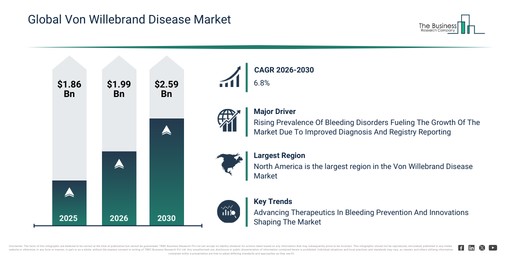
    The von willebrand disease market size has seen substantial growth over recent years. It is projected to expand from $1.86 billion in 2025 to $1.99 billion in 2026, achieving a compound annual growth rate (CAGR) of 6.9%. The increase observed in the past can be attributed to improved awareness of inherited bleeding disorders, availability of plasma-derived vwf therapies, expansion of diagnostic testing capabilities, increased hospital-based hematology care, and early clinical research in coagulation disorders.

    The von willebrand disease market is projected to experience substantial expansion over the coming years. By 2030, its valuation is anticipated to reach $2.59 billion, demonstrating a compound annual growth rate (CAGR) of 6.8%. This projected increase during the forecast period is driven by several factors, including heightened investments in gene-based therapies, the expanding use of precision medicine strategies, broader patient registries and screening initiatives, a growing need for long-acting treatments, and innovations in recombinant drug development. Key developments expected within this period involve the greater integration of recombinant von willebrand factor therapies, an increase in personalized treatment plans, a stronger emphasis on early genetic diagnosis, the availability of more home-based treatment solutions, and improved monitoring of bleeding disorders.

    Access Your Free Sample Report for In-Depth Market Insights:

    https://www.thebusinessresearchcompany.com/sample.aspx?id=22168&type=smp

    What Drivers Are Supporting Technological Adoption In The Von Willebrand Disease Market?

    An anticipated increase in the occurrence of bleeding disorders is projected to boost the expansion of the von Willebrand disease market moving forward. These disorders are medical conditions that impair the body’s capacity to form blood clots, leading to prolonged or profuse bleeding. The growing number of diagnosed bleeding disorders primarily stems from advancements in medical understanding and diagnostic instruments, enabling healthcare providers and hospitals to precisely identify previously undetected cases. Treatment for von Willebrand disease aids patients with bleeding disorders by enhancing blood clotting, mitigating excessive bleeding, and improving their general quality of life. For example, in April 2024, according to the World Federation of Hemophilia, a Canada-based government organization, data collection for individuals suffering from von Willebrand disease (VWD) commenced in February 2023. By December 31, 2023, a total of 999 people with VWD from 45 hemophilia treatment centers (HTCs) spanning 22 countries had been enrolled in the WBDR. In the same year, consolidated data were gathered for 13,343 people with hemophilia (PWH) from 119 HTCs situated in 44 countries. Consequently, the increased prevalence of bleeding disorders is fueling the expansion of the von Willebrand disease market.

    What Segment Types Are Examined In The Von Willebrand Disease Market?

    The von willebrand disease market covered in this report is segmented –

    1) By Type: Type 1, Type 2, Type 3

    2) By Drugs: Antihemophilic Factor, Coagulation Factor VIII Complex, Von Willebrand Factor, Desmopressin Acetate, Other Drugs

    3) By Severity: Mild, Moderate, Severe

    4) By Distribution Channel: Hospital Pharmacy, Retail Pharmacy, Online Pharmacy, Other Distribution Channels

    5) By End Users: Hospitals, Speciality Clinics, Homecare, Other End Users

    Subsegments:

    1) By Type 1: Mild Von Willebrand Disease, Moderate Von Willebrand Disease, Severe Von Willebrand Disease

    2) By Type 2: Type 2A, Type 2B, Type 2M, Type 2N

    3) By Type 3: Congenital Type 3, Acquired Type 3

    What Upcoming Trends Are Likely To Define The Future Path Of The Von Willebrand Disease Market?

    Leading firms within the von willebrand disease market are directing their efforts towards pioneering therapies, specifically von willebrand factor concentrate, aiming to boost treatment effectiveness, lessen occurrences of bleeding, and elevate patient well-being. Von willebrand factor (VWF) concentrate serves as a pharmaceutical agent employed to manage and avert hemorrhage in individuals afflicted with von willebrand disease (VWD), which is a hereditary bleeding condition stemming from insufficient or impaired von willebrand factor. As an illustration, in April 2024, Octapharma USA Inc., a pharmaceutical company based in the US, disclosed that Wilate received approval from the Food and Drug Administration, a US government body. This product, Wilate, is a von willebrand factor concentrate supplied as a lyophilized powder solution intended for intravenous injection, designed for regular prophylactic use to decrease the occurrence of bleeding episodes in adults and children aged 6 years and above. The Food and Drug Administration’s orphan drug designation grants Wilate a period of market exclusivity lasting up to seven years, a measure aimed at stimulating the creation of therapies for infrequent conditions.

    Who Are The Top-Performing Companies In The Von Willebrand Disease Market In Recent Years?

    Major companies operating in the von willebrand disease market are Pfizer Inc., Bayer AG, Sanofi S A, Takeda Pharmaceutical Company Limited, Novo Nordisk A S, CSL Behring, Grifols S A, Kedrion Biopharma Inc., Shanghai RAAS Blood Products Co Ltd, Biotest AG, LFB S A, Bio Products Laboratory Ltd BPL, Octapharma AG, Baxter International Inc, Biogen Inc, Swedish Orphan Biovitrum AB, Roche Holding AG, BioMarin Pharmaceutical Inc, Ferring Pharmaceuticals, Alnylam Pharmaceuticals, Star Therapeutics Inc, Hemab Therapeutics, HEMA Biologics

    Access The Complete Report For Deeper Market Insights:

    https://www.thebusinessresearchcompany.com/report/von-willebrand-disease-global-market-report

    Which Region Currently Holds The Largest Share Of The Von Willebrand Disease Market?

    North America was the largest region in the von willebrand disease market in 2025. Asia-Pacific is expected to be the fastest-growing region in the forecast period. The regions covered in the von willebrand disease market report are Asia-Pacific, South East Asia, Western Europe, Eastern Europe, North America, South America, Middle East, Africa.

    Request Your Customized Von Willebrand Disease Market Research Report for Competitive Advantage:

    https://www.thebusinessresearchcompany.com/customise?id=22168&type=smp

    Browse Through More Reports Similar to the Global Von Willebrand Disease Market 2026, By The Business Research Company

    Rare Disease Diagnostics Market Report 2026

    https://www.thebusinessresearchcompany.com/report/rare-disease-diagnostics-global-market-report

    Rare Neurological Disease Treatment Market Report 2026

    https://www.thebusinessresearchcompany.com/report/rare-neurological-disease-treatment-global-market-report

    Thrombophilia Market Report 2026

    https://www.thebusinessresearchcompany.com/report/thrombophilia-global-market-report

    Get in touch with us:

    The Business Research Company: https://www.thebusinessresearchcompany.com/

    Americas +1 310-496-7795

    Asia +44 7882 955267 & +91 8897263534

    Europe +44 7882 955267

    Email us at info@tbrc.info

    Follow us on:

    LinkedIn: https://in.linkedin.com/company/the-business-research-company

    YouTube: https://www.youtube.com/channel/UC24_fI0rV8cR5DxlCpgmyFQ

    Global Market Model: https://www.thebusinessresearchcompany.com/global-market-model
  • At-Home Lab Testing Market Outlook 2026–2035: Growth Drivers and Industry Forecast

    At-Home Lab Testing Market Outlook 2026–2035: Growth Drivers and Industry Forecast

    Uncover key drivers, emerging technologies, and competitive movements shaping the at-home lab testing market from 2026–2035 with trusted insights from The Business Research Company

    How much larger will the At-Home Lab Testing Market be in 2030 compared with 2026?

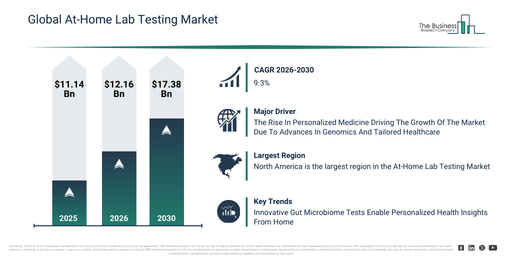
    The at-home lab testing market size has experienced significant growth over recent years. This market is projected to expand from $11.14 billion in 2025 to $12.16 billion in 2026, demonstrating a compound annual growth rate (CAGR) of 9.1%. Historically, this expansion can be ascribed to factors such as an increasing consumer preference for healthcare at home, the broader adoption of telehealth services, enhanced understanding of preventive diagnostics, the greater availability of mail-in testing kits, and advancements in laboratory processing technologies.

    The at-home lab testing market is projected to experience substantial expansion in the coming years. This market is anticipated to reach $17.38 billion by 2030, exhibiting a compound annual growth rate (CAGR) of 9.3%. This growth trajectory is attributable to several factors, including the escalating demand for tailored health insights, the increasing uptake of genetic and hormone testing, the broadening of digital diagnostics ecosystems, rising investments in home healthcare, and a heightened emphasis on health management driven by data. Key developments expected during this period encompass the growing acceptance of self-collection diagnostic kits, an increasing need for remote health monitoring solutions, the expanding integration of digital health platforms, the proliferation of direct-to-consumer testing options, and an elevated commitment to preventive healthcare.

    Access Your Free Sample Report for In-Depth Market Insights:

    https://www.thebusinessresearchcompany.com/sample.aspx?id=33029&type=smp

    What Drivers Are Guiding Growth Patterns In The At-Home Lab Testing Market?

    The increasing adoption of personalized medicine is anticipated to fuel the expansion of the at-home lab testing market moving forward. Personalized medicine defines a medical strategy that customizes disease prevention, diagnosis, and treatment according to an individual’s genetic, environmental, and lifestyle factors. This surge in personalized medicine is attributed to advancements in genomics, which facilitate the analysis of a person’s genetic blueprint to tailor medical treatments and interventions, resulting in more precise, effective, and targeted healthcare outcomes. Personalized medicine elevates at-home lab testing by adapting diagnostic methods and recommendations to an individual’s genetic, lifestyle, and health profile, thus providing more accurate, actionable, and convenient healthcare insights. For example, in February 2024, the Personalized Medicine Coalition, a US-based non-profit organization, reported that in 2023, the FDA approved 16 new personalized treatments for rare disease patients, an increase from six in 2022. The new personalized treatments authorized for 2023 additionally included seven cancer drugs and three for other diseases and conditions. As a result, the growth of personalized medicine is acting as a significant driver for the at-home lab testing market.

    Which Segments Are Driving Activity In The At-Home Lab Testing Market?

    The at-home lab testing market covered in this report is segmented –

    1) By Test Type: Glucose Test Kits; Infectious Disease Test Kits; Pregnancy And Fertility Test Kits; Cholesterol And Lipid Test Kits; Genetic Test Kits; Hormone Test Kits; Allergy Test Kits; Drug And Alcohol Test Kits; Coagulation And INR Test Kits; Other Test Kits

    2) By Sample Type: Blood; Saliva; Urine; Swab Samples; Other Sample Types

    3) By Distribution Channel: Hospital Pharmacies; Retail Pharmacies; Online Pharmacies

    4) By End User: Individuals; Healthcare Providers; Employers And Organizations; Other End Users

    Subsegments:

    1) By Glucose Test Kits: Blood Glucose Monitoring Kits; Continuous Glucose Monitoring Kits; Post Meal Glucose Test Kits; Fasting Glucose Test Kits

    2) By Infectious Disease Test Kits: Viral Infection Test Kits; Bacterial Infection Test Kits; Respiratory Infection Test Kits; Sexually Transmitted Infection Test Kits

    3) By Pregnancy And Fertility Test Kits: Pregnancy Detection Test Kits; Ovulation Prediction Test Kits; Fertility Hormone Test Kits; Early Pregnancy Confirmation Test Kits

    4) By Cholesterol And Lipid Test Kits: Total Cholesterol Test Kits; High Density Lipoprotein Cholesterol Test Kits; Low Density Lipoprotein Cholesterol Test Kits; Triglyceride Test Kits

    5) By Genetic Test Kits: Ancestry Genetic Test Kits; Health Risk Genetic Test Kits; Carrier Screening Test Kits; Personalized Genetic Wellness Test Kits

    6) By Hormone Test Kits: Thyroid Hormone Test Kits; Reproductive Hormone Test Kits; Stress Hormone Test Kits; Metabolic Hormone Test Kits

    7) By Allergy Test Kits: Food Allergy Test Kits; Environmental Allergy Test Kits; Pet Allergy Test Kits; Respiratory Allergy Test Kits

    8) By Drug And Alcohol Test Kits: Alcohol Detection Test Kits; Prescription Drug Test Kits; Illicit Drug Test Kits; Multi Substance Test Kits

    9) By Coagulation And INR Test Kits: Prothrombin Time Test Kits; International Normalized Ratio Monitoring Kits; Blood Clotting Function Test Kits; Anticoagulant Therapy Monitoring Test Kits

    10) By Other Test Kits: Vitamin Deficiency Test Kits; Metabolic Health Test Kits; Kidney Function Test Kits; Liver Function Test Kits

    How Are Emerging Trends Affecting The Progression Of The At-Home Lab Testing Market?

    Major companies in the at-home lab testing market are prioritizing the development of innovative solutions, including direct-to-consumer gut microbiome test kits, to deliver personalized health insights without the necessity of clinic visits. A direct-to-consumer gut microbiome test kit is a product that empowers individuals to gather a sample at home and receive an examination of their gut bacteria, along with customized health information, without requiring a doctor’s appointment. For instance, in January 2025, CJ Bioscience Inc., a biotech company located in South Korea, launched its gut microbiome testing service designed to enable personalized nutrition recommendations. The service, known as SMILE GUT, permits users to collect a stool sample from home and obtain a comprehensive analysis of their gut bacterial composition. Leveraging AI and an extensive database of over 140,000 profiles, the test generates a Gut Microbiome Index score and highlights areas suitable for dietary or probiotic modifications. The company further provides personalized food and supplement guidance, thereby supporting overall gut health and facilitating the creation of tailored functional food products.

    Which Key Market Players Are Investing In Expansion And Innovation Within The At-Home Lab Testing Market?

    Major companies operating in the at-home lab testing market are Roche Diagnostics AG, Abbott Laboratories, Siemens Healthineers AG, Becton, Dickinson and Company, Laboratory Corporation of America Holdings, Quest Diagnostics Incorporated, QuidelOrtho Corporation, OraSure Technologies Inc., 23andMe Holding Co., Everlywell Inc., Tiny Health Inc., Acon Laboratories Inc., Vault Health Inc., iHealth Labs Inc., Healthy.io Ltd., Getlabs Inc., Thriva Ltd., BioIQ Inc., myLAB Box LLC, Medichecks.com Ltd.

    Access The Complete Report For Deeper Market Insights:

    https://www.thebusinessresearchcompany.com/report/at-home-lab-testing-market-report

    Which Regions Are Poised For Strategic Growth In The At-Home Lab Testing Market?

    North America was the largest region in the at-home lab testings market in 2025. Asia-Pacific is expected to be the fastest-growing region in the forecast period. The regions covered in the at-home lab testing market report are Asia-Pacific, South East Asia, Western Europe, Eastern Europe, North America, South America, Middle East, Africa.

    Request Your Customized At-Home Lab Testing Market Research Report for Competitive Advantage:

    https://www.thebusinessresearchcompany.com/customise?id=33029&type=smp

    Browse Through More Reports Similar to the Global At-Home Lab Testing Market 2026, By The Business Research Company

    Laboratory Testing Services Market Report 2026

    https://www.thebusinessresearchcompany.com/report/laboratory-testing-services-global-market-report

    Direct To Consumer Dtc Laboratory Testing Market Report 2026

    https://www.thebusinessresearchcompany.com/report/direct-to-consumer-dtc-laboratory-testing-global-market-report

    Laboratory Testing Services Market Report 2026

    https://www.thebusinessresearchcompany.com/report/laboratory-testing-services-global-market-report

    Get in touch with us:

    The Business Research Company: https://www.thebusinessresearchcompany.com/

    Americas +1 310-496-7795

    Asia +44 7882 955267 & +91 8897263534

    Europe +44 7882 955267

    Email us at info@tbrc.info

    Follow us on:

    LinkedIn: https://in.linkedin.com/company/the-business-research-company

    YouTube: https://www.youtube.com/channel/UC24_fI0rV8cR5DxlCpgmyFQ

    Global Market Model: https://www.thebusinessresearchcompany.com/global-market-model
  • Artificial Intelligence (AI) In Disease Outbreak Prediction Market 2026–2030: Emerging Trends and Forecast Opportunities

    Artificial Intelligence (AI) In Disease Outbreak Prediction Market 2026–2030: Emerging Trends and Forecast Opportunities

    Uncover key drivers, emerging technologies, and competitive movements shaping the artificial intelligence (ai) in disease outbreak prediction market from 2026–2035 with trusted insights from The Business Research Company

    Starting from its 2026 valuation, what market size is the Artificial Intelligence (AI) In Disease Outbreak Prediction Market expected to reach by 2030?

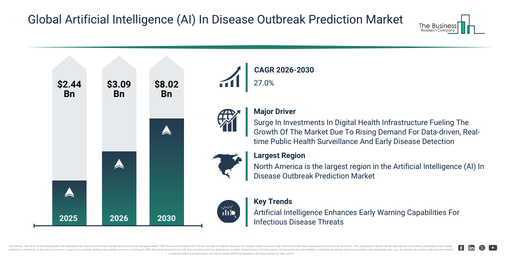
    The artificial intelligence (AI) in disease outbreak prediction market has experienced significant expansion in recent years. This market is projected to expand from $2.44 billion in 2025 to reach $3.09 billion by 2026, exhibiting a compound annual growth rate (CAGR) of 26.7%. Historically, this growth has been influenced by an increasing frequency of infectious disease outbreaks, the expansion of public health surveillance programs, the growth of health data digitization, the early adoption of AI analytics in epidemiology, and enhanced collaboration between health agencies.

    The artificial intelligence (AI) in disease outbreak prediction market size is anticipated to experience substantial growth in the coming years, reaching $8.02 billion by 2030 at a compound annual growth rate (CAGR) of 27.0%. This expansion during the forecast period is driven by factors such as the development of predictive public health infrastructure, increased investments in AI-powered disease preparedness, wider utilization of real-time health monitoring data, greater integration of climate and mobility analytics, and the broadening of global health intelligence networks. Prominent trends within this period include the rising adoption of real-time epidemiological modeling, enhanced integration of mobility and environmental data sources, the increasing deployment of AI-based surveillance dashboards, the proliferation of predictive risk assessment platforms, and a heightened focus on early warning systems.

    Access Your Free Sample Report for In-Depth Market Insights:

    https://www.thebusinessresearchcompany.com/sample.aspx?id=33023&type=smp

    What Drivers Are Driving Adoption Within The Artificial Intelligence (AI) In Disease Outbreak Prediction Market?

    Future expansion of the artificial intelligence in disease outbreak prediction market is anticipated, driven by rising investments in digital health infrastructure. This infrastructure encompasses integrated digital systems, platforms, data networks, and technologies crucial for securely gathering, sharing, analyzing, and utilizing health data to aid healthcare provision, public health monitoring, and decision-making processes. The growth in these investments stems from a demand for healthcare systems that are more efficient, interconnected, and data-centric, ultimately enhancing care delivery, accessibility, and overall operational effectiveness. Artificial intelligence applications in disease outbreak prediction rely on digital health infrastructure to process vast amounts of real-time health data, facilitating the early identification of disease patterns and prompt public health interventions, thereby establishing advanced digital systems as a fundamental basis for these AI tools. An illustrative example occurred in May 2023, when the Australian Department of Health and Aged Care, an Australian government body, revealed a significant investment of approximately $6.1 billion aimed at fortifying Medicare. This allocation included $2.2 billion for new and updated PBS listings, $259.5 million specifically for essential health infrastructure, and a dedicated $951.2 million package for digital health initiatives. Consequently, the rising financial commitments to digital health infrastructure are indeed propelling the expansion of the artificial intelligence in disease outbreak prediction market.

    How Is The Artificial Intelligence (AI) In Disease Outbreak Prediction Market Organized Into Various Segments?

    The artificial intelligence (AI) in disease outbreak prediction market covered in this report is segmented –

    1) By Component: Software; Hardware; Services

    2) By Deployment Mode: On-Premises; Cloud

    3) By Application: Healthcare Providers; Government Agencies; Research Institutes; Pharmaceutical Companies; Other Applications

    4) By End-User: Hospitals And Clinics; Public Health Organizations; Academic And Research Centers; Other End Users

    Subsegments:

    1) By Software: Machine Learning Platforms; Predictive Analytics Software; Data Visualization Software; Epidemiological Modeling Software; Cloud-Based Analytics Software

    2) By Hardware: Health Monitoring Device; Geographic Information System Devices; Wearable Health Trackers; Diagnostic Devices; Sensor Devices

    3) By Services: Disease Surveillance Services; Outbreak Modeling Services; Predictive Analytics Services; Public Health Consulting; Data Integration Services; Epidemiological Risk Assessment

    Which Innovation Trends Are Advancing Developments Within The Artificial Intelligence (AI) In Disease Outbreak Prediction Market?

    Leading companies operating in the artificial intelligence in disease outbreak prediction market are concentrating on developing advanced solutions, such as AI-powered global disease surveillance platforms, to enhance early outbreak detection, accelerate response times, and improve public health preparedness. These artificial intelligence–driven global disease surveillance platforms are systems that utilize artificial intelligence, machine learning, and natural language processing to analyze extensive global data sources, including news reports, public health records, airline travel data, and environmental indicators, enabling them to identify potential disease outbreaks sooner than traditional surveillance methods. For example, in August 2024, BlueDot, a Canada-based digital health and artificial intelligence company, launched its next-generation global infectious disease surveillance solution, designed to significantly reduce manual detection time. The platform employs advanced AI models to continuously scan and interpret global data in near real time, decreasing manual detection efforts by nearly 90%. This enhanced capability allows health authorities and organizations to identify emerging infectious threats more swiftly, assess risks more precisely, and implement timely containment measures.

    Who Are The Core Companies Influencing Trends In The Artificial Intelligence (AI) In Disease Outbreak Prediction Market?

    Major companies operating in the artificial intelligence (AI) in disease outbreak prediction market are Amazon Web Services Inc., Oracle Corporation, SAP SE, Siemens Healthineers AG, SAS Institute Inc., Clarivate Plc, Tempus AI Inc., Seegene Inc., Ginkgo Bioworks Inc., Dataminr Inc., Komodo Health Inc., H2O.ai, Evidation Health Inc., Qventus Inc., Airfinity Ltd., SparkBeyond Inc., Blue Dot Inc., GIDEON Informatics Inc., Hyfe Inc., EPIWATCH Pty Ltd., EpiDetect AI Inc.

    Access The Complete Report For Deeper Market Insights:

    https://www.thebusinessresearchcompany.com/report/artificial-intelligence-ai-in-disease-outbreak-prediction-market-report

    Which Regions Are Projected To Dominate The Artificial Intelligence (AI) In Disease Outbreak Prediction Market In The Coming Years?

    North America was the largest region in the artificial intelligence in disease outbreak prediction in 2025. Asia-Pacific is expected to be the fastest-growing region in the forecast period. The regions covered in the artificial intelligence (AI) in disease outbreak prediction market report are Asia-Pacific, South East Asia, Western Europe, Eastern Europe, North America, South America, Middle East, Africa.

    Request Your Customized Artificial Intelligence (AI) In Disease Outbreak Prediction Market Research Report for Competitive Advantage:

    https://www.thebusinessresearchcompany.com/customise?id=33023&type=smp

    Browse Through More Reports Similar to the Global Artificial Intelligence (AI) In Disease Outbreak Prediction Market 2026, By The Business Research Company

    Artificial Intelligence In Epidemiology Market Report 2026

    https://www.thebusinessresearchcompany.com/report/artificial-intelligence-in-epidemiology-global-market-report

    Artificial Intelligence Ai In Predictive Toxicology Market Report 2026

    https://www.thebusinessresearchcompany.com/report/artificial-intelligence-ai-in-predictive-toxicology-global-market-report

    Artificial Intelligence Ai In Respiratory Diseases Market Report 2026

    https://www.thebusinessresearchcompany.com/report/artificial-intelligence-ai-in-respiratory-diseases-global-market-report

    Get in touch with us:

    The Business Research Company: https://www.thebusinessresearchcompany.com/

    Americas +1 310-496-7795

    Asia +44 7882 955267 & +91 8897263534

    Europe +44 7882 955267

    Email us at info@tbrc.info

    Follow us on:

    LinkedIn: https://in.linkedin.com/company/the-business-research-company

    YouTube: https://www.youtube.com/channel/UC24_fI0rV8cR5DxlCpgmyFQ

    Global Market Model: https://www.thebusinessresearchcompany.com/global-market-model
  • Global Vocal Cord Paralysis Market Performance Report: Global Trends 2026–2030

    Global Vocal Cord Paralysis Market Performance Report: Global Trends 2026–2030

    Uncover key drivers, emerging technologies, and competitive movements shaping the vocal cord paralysis market from 2026–2035 with trusted insights from The Business Research Company

    What upper market value could the Vocal Cord Paralysis Market reach by 2030 starting from 2026 levels?

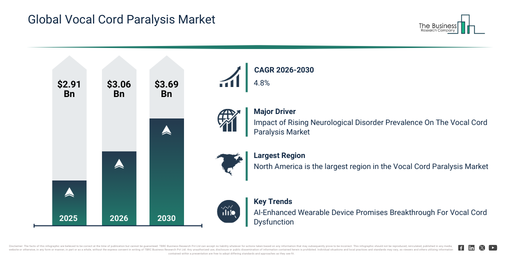
    The vocal cord paralysis market has demonstrated consistent expansion in recent years. It is projected to expand from $2.91 billion in 2025 to $3.06 billion in 2026, registering a compound annual growth rate (CAGR) of 5.0%. The historical growth in this market can be attributed to a rising occurrence of neurological and surgical complications, coupled with broader availability of otolaryngology services, the emergence of specialty voice clinics, enhancements in diagnostic imaging, and the expansion of speech therapy practices.

    The vocal cord paralysis market size is projected to experience consistent expansion over the upcoming years. Its valuation is anticipated to reach $3.69 billion by 2030, demonstrating a compound annual growth rate (CAGR) of 4.8%. This projected growth is driven by several factors, including the increasing uptake of minimally invasive surgical procedures, a heightened demand for customized voice rehabilitation, the expansion of specialized care facilities, an intensified focus on improving quality-of-life outcomes, and the greater incorporation of digital therapeutic instruments. Key trends observed during this period involve the increasing embrace of sophisticated surgical methods, a rise in the utilization of specialized voice therapy programs, a stronger emphasis on prompt diagnosis and early intervention, the broadening of multidisciplinary treatment strategies, and an increased focus on rehabilitation following treatment.

    Access Your Free Sample Report for In-Depth Market Insights:

    https://www.thebusinessresearchcompany.com/sample.aspx?id=18771&type=smp

    Which Drivers Are Influencing Long-Term Growth In The Vocal Cord Paralysis Market?

    The increasing prevalence of neurological disorders is anticipated to stimulate the expansion of the vocal cord paralysis market moving forward. These disorders are medical conditions that impact the nervous system, including the brain, spinal cord, and nerves. The rising occurrence of neurological disorders stems from various elements such as genetic predispositions, infections, trauma, toxins, autoimmune responses, and degeneration. Neurological conditions like stroke, multiple sclerosis, Parkinson’s disease, and other neuromuscular disorders frequently result in complications such as vocal cord paralysis due to their effect on nerve function and muscle control. As these disorders become more common globally, the number of individuals experiencing vocal cord paralysis is also likely to increase. For instance, in March 2023, according to the Alzheimer’s Association, a US-based nonprofit voluntary health organization, in 2023, approximately 6.7 million Americans aged 65 and older are living with Alzheimer’s dementia, and this figure is projected to rise to 13.8 million by 2060. Consequently, the widespread presence of neurological disorders acts as a significant driver for the growth of the vocal cord paralysis market.

    Which Segments Are Driving Activity In The Vocal Cord Paralysis Market?

    The vocal cord paralysis market covered in this report is segmented –

    1) By Type: Bilateral, Unilateral

    2) By Treatment: Surgery, Voice Therapy

    3) By End User: Hospital, Ambulatory Surgical Centers, Specialty Clinic, Other End Users

    Subsegments:

    1) By Bilateral: Acute Bilateral Vocal Cord Paralysis, Chronic Bilateral Vocal Cord Paralysis

    2) By Unilateral: Left-Sided Unilateral Vocal Cord Paralysis, Right-Sided Unilateral Vocal Cord Paralysis

    Which Trends Are Shaping Activity Within The Vocal Cord Paralysis Market?

    Key companies operating within the vocal cord paralysis market are focused on creating advanced technologies, like AI-assisted wearable devices, to improve the diagnosis, treatment, and management of the condition, ultimately enhancing patient outcomes and overall quality of life. An AI-assisted wearable device denotes a form of wearable technology that integrates artificial intelligence to boost its functionality. For instance, in March 2024, UCLA (University of California, Los Angeles), a US-based public research university, developed an adhesive neck patch, a soft, thin, stretchy device just over 1 square inch in size that can be attached to the skin on the outside of the throat to help individuals with dysfunctional vocal cords restore their voice function. This compact new patch-like device consists of two main parts. One, a self-powered sensing component, identifies and transforms signals generated by muscle movements into high-fidelity, analyzable electrical signals, and the other is an actuation component that converts these electrical signals into speech signals through the application of a machine-learning algorithm.

    Which Leading Companies Dominate The Vocal Cord Paralysis Market Share?

    Major companies operating in the vocal cord paralysis market are Medtronic plc, Siemens Healthineers AG, Stryker Corporation, Boston Scientific Corporation, Olympus Corporation, Intuitive Surgical Inc., Smith & Nephew plc, Shenzhen Mindray Bio-Medical Electronics Co. Ltd., Smiths Medical, Teleflex Incorporated, Karl Storz SE & Co. KG, Cook Medical, PENTAX Medical, Merz Therapeutics, Atos Medical AB, Coloplast A/S, InnoMed Technologies Inc., VocaLab Inc., APrevent Medical Inc., InHealth Technologies, Luminaud Inc., Servona GmbH, HEIMOMED Heinze GmbH & Co. KG, Orbisana Healthcare GmbH, William Demant Holding A/S, Acclarent Inc., ICU Medical Inc., Integra LifeSciences Holdings Corporation

    Access The Complete Report For Deeper Market Insights:

    https://www.thebusinessresearchcompany.com/report/vocal-cord-paralysis-global-market-report

    How Does The Vocal Cord Paralysis Market Perform Across Major Global Regions?

    North America was the largest region in the vocal cord paralysis market in 2025. Asia-Pacific is expected to be the fastest-growing region in the forecast period. The regions covered in the vocal cord paralysis market report are Asia-Pacific, South East Asia, Western Europe, Eastern Europe, North America, South America, Middle East, Africa.

    Request Your Customized Vocal Cord Paralysis Market Research Report for Competitive Advantage:

    https://www.thebusinessresearchcompany.com/customise?id=18771&type=smp

    Browse Through More Reports Similar to the Global Vocal Cord Paralysis Market 2026, By The Business Research Company

    Muscle Tension Dysphonia Treatment Market Report 2026

    https://www.thebusinessresearchcompany.com/report/muscle-tension-dysphonia-treatment-global-market-report

    Facial Paralysis Market Report 2026

    https://www.thebusinessresearchcompany.com/report/facial-paralysis-global-market-report

    Speech And Language Disorder Market Report 2026

    https://www.thebusinessresearchcompany.com/report/speech-and-language-disorder-global-market-report

    Get in touch with us:

    The Business Research Company: https://www.thebusinessresearchcompany.com/

    Americas +1 310-496-7795

    Asia +44 7882 955267 & +91 8897263534

    Europe +44 7882 955267

    Email us at info@tbrc.info

    Follow us on:

    LinkedIn: https://in.linkedin.com/company/the-business-research-company

    YouTube: https://www.youtube.com/channel/UC24_fI0rV8cR5DxlCpgmyFQ

    Global Market Model: https://www.thebusinessresearchcompany.com/global-market-model
  • Global Arrayed Clustered Regularly Interspaced Short Palindromic Repeats (CRISPR) Screening Market Forecast 2026–2035: Long-Term Growth Insights

    Global Arrayed Clustered Regularly Interspaced Short Palindromic Repeats (CRISPR) Screening Market Forecast 2026–2035: Long-Term Growth Insights

    Uncover key drivers, emerging technologies, and competitive movements shaping the arrayed clustered regularly interspaced short palindromic repeats (crispr) screening market from 2026–2035 with trusted insights from The Business Research Company

    Across 2026–2030, what is the expected market valuation path of the Arrayed Clustered Regularly Interspaced Short Palindromic Repeats (CRISPR) Screening Market?

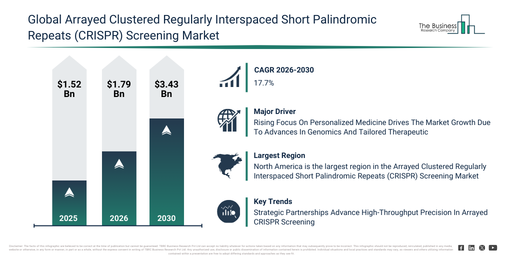
    The market size for arrayed clustered regularly interspaced short palindromic repeats (CRISPR) screening has expanded considerably over recent years. This market is forecasted to grow from $1.52 billion in 2025 to $1.79 billion in 2026, achieving a compound annual growth rate (CAGR) of 17.5%. The historical rise can be attributed to several factors including the expansion of functional genomics research, the availability of CRISPR editing reagents, the growth of academic screening programs, the early adoption of arrayed screening formats, and the increasing use of cell-based assays.

    The arrayed clustered regularly interspaced short palindromic repeats (crispr) screening market size is anticipated to undergo rapid expansion in the coming years. It is projected to reach $3.43 billion by 2030, growing at a compound annual growth rate (CAGR) of 17.7%. This growth during the forecast period can be attributed to several factors, including the increasing demand for precision drug discovery, rising investments in gene therapy research, the broadening scope of disease modeling applications, the growing use of bioinformatics-driven screening, and enhanced collaboration between academia and industry. Key trends expected in the forecast period involve an increasing demand for targeted gene validation screens, the rising adoption of high-throughput arrayed crispr assays, the expanding integration of phenotypic data analytics, the proliferation of custom crispr screening services, and a heightened focus on the accuracy of functional genomics.

    Access Your Free Sample Report for In-Depth Market Insights:

    https://www.thebusinessresearchcompany.com/sample.aspx?id=33018&type=smp

    Which Drivers Are Supporting The Rise Of The Arrayed Clustered Regularly Interspaced Short Palindromic Repeats (CRISPR) Screening Market?

    The growing emphasis on personalized medicine is projected to boost the expansion of the arrayed clustered regularly interspaced short palindromic repeats (CRISPR) screening market in the future. Personalized medicine involves a healthcare methodology where treatment and prevention plans are tailored to an individual’s distinct genetic makeup, biological traits, and lifestyle choices. Its uptake is expanding, driven by breakthroughs in genomics and molecular diagnostics, which enable therapies to be customized to an individual’s genetic profile for enhanced results. Arrayed CRISPR screening supports personalized medicine by methodically evaluating how particular gene modifications influence individual cellular reactions, thereby facilitating the discovery of patient-specific drug targets, forecasting treatment efficacy, and developing bespoke therapies based on an individual’s genetic and cellular blueprint. For example, in February 2024, as reported by the Personalized Medicine Coalition, a US-based non-profit organization, the FDA approved 16 new personalized treatments for rare disease patients in 2023, an increase from six in 2022. Among the personalized treatments approved in 2023 were also seven cancer drugs and three for other diseases and conditions. Consequently, the heightened focus on personalized medicine is a key factor propelling the growth of the arrayed clustered regularly interspaced short palindromic repeats (CRISPR) screening market.

    What Segments Are Identified Within The Structure Of The Arrayed Clustered Regularly Interspaced Short Palindromic Repeats (CRISPR) Screening Market?

    The arrayed clustered regularly interspaced short palindromic repeats (crispr) screening market covered in this report is segmented –

    1) By Product Type: Clustered Regularly Interspaced Short Palindromic Repeats Libraries; Reagents And Consumables; Instruments; Software And Services

    2) By Application: Functional Genomics; Drug Discovery; Disease Modeling; Gene Validation; Other Applications

    3) By End User: Pharmaceutical And Biotechnology Companies; Academic And Research Institutes; Contract Research Organizations; Other End Users

    Subsegments:

    1) By Clustered Regularly Interspaced Short Palindromic Repeats Libraries: Genome Wide Knockout Libraries; Targeted Gene Libraries; Activation Libraries; Repression Libraries; Custom Designed Libraries

    2) By Reagents And Consumables: Guide Ribonucleic Acid Reagents; Cas Enzyme Reagents; Transfection Reagents; Cell Culture Reagents; Assay And Detection Reagents

    3) By Instruments: Automated Liquid Handling Systems; High Throughput Screening Systems; Cell Imaging Systems; Flow Cytometry Instruments; Genomic Analysis Instruments

    4) By Software And Services: Screening Design Software; Data Analysis Software; Bioinformatics Services; Screening Execution Services; Custom Assay Development Services

    Which Competitive Trends Are Impacting The Structure Of The Arrayed Clustered Regularly Interspaced Short Palindromic Repeats (CRISPR) Screening Market?

    Leading companies active in the arrayed clustered regularly interspaced short palindromic repeats (CRISPR) screening market are increasingly pursuing strategic partnerships to improve the precision of high-throughput phenotypic screening. A strategic partnership involves a formal collaboration where organizations pool resources, knowledge, or technologies to achieve mutual objectives, fostering quicker innovation, reducing risk, and broadening market reach without necessitating a merger or acquisition. For instance, in November 2023, AstraZeneca Plc, a UK-based science-led biopharmaceutical company, collaborated with the Medical Research Council (MRC), a UK-based government agency, and the Milner Therapeutics Institute (MTI) at the University of Cambridge, a UK-based biomedical research institute, to establish a Functional Genomics Screening Laboratory (FGSL). This cutting-edge facility is dedicated to advancing drug discovery, specifically aiming to map gene-phenotype relationships in chronic conditions such as cardiovascular and metabolic disorders, thereby bolstering UK genomics leadership through open academic collaborations. Its benefits include high-throughput automation for precise imaging and phenotyping in organoids or iPSCs, which surpasses pooled methods, along with advantages like free access for researchers, quicker target validation, and shared expertise to accelerate therapeutic developments.

    Which Major Industry Participants Are Leading The Arrayed Clustered Regularly Interspaced Short Palindromic Repeats (CRISPR) Screening Market Growth?

    Major companies operating in the arrayed clustered regularly interspaced short palindromic repeats (crispr) screening market are Thermo Fisher Scientific Inc, Merck KGaA, GE HealthCare Technologies Inc, Applied Biological Materials Inc, Agilent Technologies Inc, Charles River Laboratories International Inc, Integrated DNA Technologies Inc, GenScript Biotech Corporation, Synthego Holdings LLC, Santa Cruz Biotechnology Inc, Creative Biolabs Inc, VectorBuilder Inc, Admera Health LLC, Addgene Inc, Ncardia, BioCat GmbH, Cellecta Inc, GeneCopoeia Inc, Creative Biogene Inc, and Aelian Biotechnology.

    Access The Complete Report For Deeper Market Insights:

    https://www.thebusinessresearchcompany.com/report/arrayed-clustered-regularly-interspaced-short-palindromic-repeats-crispr-screening-market-report

    Which Region Is Expected To Experience The Fastest Growth In The Arrayed Clustered Regularly Interspaced Short Palindromic Repeats (CRISPR) Screening Market?

    North America was the largest region in the arrayed clustered regularly interspaced short palindromic repeats (CRISPR) screening market in 2025. Asia-Pacific is expected to be the fastest-growing region in the forecast period. The regions covered in the arrayed clustered regularly interspaced short palindromic repeats (crispr) screening market report are Asia-Pacific, South East Asia, Western Europe, Eastern Europe, North America, South America, Middle East, Africa.

    Request Your Customized Arrayed Clustered Regularly Interspaced Short Palindromic Repeats (CRISPR) Screening Market Research Report for Competitive Advantage:

    https://www.thebusinessresearchcompany.com/customise?id=33018&type=smp

    Browse Through More Reports Similar to the Global Arrayed Clustered Regularly Interspaced Short Palindromic Repeats (CRISPR) Screening Market 2026, By The Business Research Company

    Crispr Technology Market 2026

    https://www.thebusinessresearchcompany.com/report/crispr-technology-market

    Crispr Gene Editing Market Report 2026

    https://www.thebusinessresearchcompany.com/report/crispr-gene-editing-global-market-report

    Crispr And Cas Gene Market Report 2026

    https://www.thebusinessresearchcompany.com/report/crispr-and-cas-gene-global-market-report

    Get in touch with us:

    The Business Research Company: https://www.thebusinessresearchcompany.com/

    Americas +1 310-496-7795

    Asia +44 7882 955267 & +91 8897263534

    Europe +44 7882 955267

    Email us at info@tbrc.info

    Follow us on:

    LinkedIn: https://in.linkedin.com/company/the-business-research-company

    YouTube: https://www.youtube.com/channel/UC24_fI0rV8cR5DxlCpgmyFQ

    Global Market Model: https://www.thebusinessresearchcompany.com/global-market-model
  • Aortic Valve Replacement Devices Market 2026–2030: Forecasting Business Opportunities Ahead

    Aortic Valve Replacement Devices Market 2026–2030: Forecasting Business Opportunities Ahead

    Uncover key drivers, emerging technologies, and competitive movements shaping the aortic valve replacement devices market from 2026–2035 with trusted insights from The Business Research Company

    What size range is anticipated for the Aortic Valve Replacement Devices Market from 2026 to 2030?

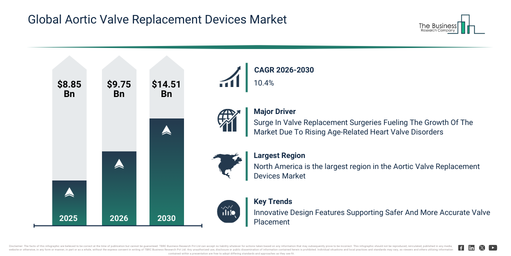
    The aortic valve replacement devices market has seen rapid expansion in recent years. It is anticipated to increase from $8.85 billion in 2025 to $9.75 billion in 2026, exhibiting a compound annual growth rate (CAGR) of 10.2%. This historical growth can be attributed to several factors including the rising aging population affected by valvular diseases, enhanced cardiac surgery capabilities, an increase in aortic stenosis diagnoses, the prompt adoption of surgical valve replacements, and improvements in cardiovascular imaging.

    The market for aortic valve replacement devices is projected to experience significant expansion in the coming years. This market is anticipated to reach $14.51 billion by 2030, demonstrating a compound annual growth rate (CAGR) of 10.4%. Key factors driving this growth during the forecast period include a heightened preference for transcatheter methods, increased investment in structural heart initiatives, a surge in demand for outpatient cardiac treatments, wider application of advanced biomaterials, and improved procedural success rates. Prominent trends expected over this period encompass the increased uptake of minimally invasive valve replacement techniques, a surge in the application of transcatheter valve technologies, an escalating demand for self-expandable valves, the evolution of patient-specific valve designs, and a stronger emphasis on the long-term durability of valves.

    Access Your Free Sample Report for In-Depth Market Insights:

    https://www.thebusinessresearchcompany.com/sample.aspx?id=33017&type=smp

    What Drivers Are Affecting Demand In The Aortic Valve Replacement Devices Market?

    The increasing volume of valve replacement procedures is projected to drive the expansion of the aortic valve replacement devices market moving forward. These surgeries are medical interventions that involve repairing or substituting damaged heart valves to restore normal blood flow and enhance cardiac function. The growing incidence of age-related heart valve disorders is leading to an uptick in valve replacement surgeries, thereby increasing the demand for surgical solutions to manage deteriorating valve function and prevent complications. Aortic valve replacement devices facilitate these procedures by enabling safer, more effective valve repair or replacement, which improves patient outcomes and encourages broader surgical adoption. As an illustration, the British Heart Foundation, a UK-based cardiovascular research charity, reported in June 2025 that in 2022/23, over 13,034 aortic valve replacement (AVR) and nearly 7,695 transcatheter aortic valve implantation (TAVI) procedures were carried out in the United Kingdom, with the rise in TAVI procedures signifying an increasing preference for less invasive valve replacement methods. Consequently, the increasing volume of valve replacement surgeries is propelling the growth of the aortic valve replacement devices market.

    Which Segments Are Gaining Traction In The Aortic Valve Replacement Devices Market?

    The aortic valve replacement devices market covered in this report is segmented –

    1) By Product: Balloon-Expandable; Self-Expandable; Mechanically Expandable; Aortic Regurgitation

    2) By Leaflet Material: Bovine Pericardium; Porcine Pericardium

    3) By Frame Material: Cobalt-Chromium; Nitinol

    4) By End-Use: Inpatient Facilities; Outpatient Facilities

    Subsegments:

    1) By Balloon-Expandable: Balloon Pre-Dilation; Balloon Post-Dilation; Balloon Valves

    2) By Self-Expandable: Supra-Annular Valves; Intra-Annular Valves; Resheathable Valves

    3) By Mechanically Expandable: Mechanically Adjustable Valves; Radial Force Valves; Repositionable Valves

    4) By Aortic Regurgitation: Surgical Valve Replacement; Transcatheter Valve Replacement; Repair Devices

    What Industry Trends Are Transforming The Aortic Valve Replacement Devices Market?

    Key players within the aortic valve replacement devices market are concentrating on advanced innovations, such as three radiopaque vision markers, to boost procedural visibility, enhance deployment accuracy, and facilitate precise valve positioning during transcatheter implantation procedures. These three radiopaque vision markers are distinct reference points integrated into a medical device that improve fluoroscopic visibility, aiding clinicians in accurately positioning and deploying the device during minimally invasive interventions. For instance, in January 2025, Abbott Laboratories, the US-based healthcare company, introduced Navitor Vision in India, representing the latest iteration of its transcatheter aortic valve implantation/replacement (TAVI/TAVR) system. This device is engineered to address patients with symptomatic severe aortic stenosis who carry a high or extreme surgical risk. Navitor Vision is equipped with three radiopaque vision markers for superior visibility during implantation, a dynamic sealing cuff to lessen blood leakage, and is delivered using Abbott’s FlexNav delivery system for accurate, minimally invasive valve placement. It presents a less intrusive alternative to surgical aortic valve replacement, thereby improving patient outcomes and accessibility for high-risk individuals.

    Who Are The Prominent Global Companies Shaping The Aortic Valve Replacement Devices Market Landscape?

    Major companies operating in the aortic valve replacement devices market are Abbott Laboratories, Medtronic Plc, Boston Scientific Corporation, Edwards Lifesciences Corporation, Bracco SpA, Biotronik SE & Co. KG, LivaNova Plc, Lepu Medical Technology Co. Ltd., MicroPort Scientific Corporation, Artivion Inc., LifeTech Scientific Corporation, TTK Healthcare Limited, Braile Biomedica, Venus Medtech Inc., SMT Pvt Ltd, JenaValve Technology Inc., Peijia Medical Limited, CryoLife Inc., CorLife, and Colibri Heart Valve LLC.

    Access The Complete Report For Deeper Market Insights:

    https://www.thebusinessresearchcompany.com/report/aortic-valve-replacement-devices-market-report

    Which Geographic Areas Are Emerging As Strong Markets For The Aortic Valve Replacement Devices Market?

    North America was the largest region in the aortic valve replacement devices market in 2025. Asia-Pacific is expected to be the fastest-growing region in the forecast period. The regions covered in the aortic valve replacement devices market report are Asia-Pacific, South East Asia, Western Europe, Eastern Europe, North America, South America, Middle East, Africa.

    Request Your Customized Aortic Valve Replacement Devices Market Research Report for Competitive Advantage:

    https://www.thebusinessresearchcompany.com/customise?id=33017&type=smp

    Browse Through More Reports Similar to the Global Aortic Valve Replacement Devices Market 2026, By The Business Research Company

    Transcatheter Aortic Valve Replacement Market Report 2026

    https://www.thebusinessresearchcompany.com/report/transcatheter-aortic-valve-replacement-global-market-report

    Prosthetic Heart Valve Devices And Equipment Market Report 2026

    https://www.thebusinessresearchcompany.com/report/prosthetic-heart-valve-devices-and-equipment-global-market-report

    Abdominal Aortic Aneurysm Aaa Repair Devices Market Report 2026

    https://www.thebusinessresearchcompany.com/report/abdominal-aortic-aneurysm-aaa-repair-devices-global-market-report

    Get in touch with us:

    The Business Research Company: https://www.thebusinessresearchcompany.com/

    Americas +1 310-496-7795

    Asia +44 7882 955267 & +91 8897263534

    Europe +44 7882 955267

    Email us at info@tbrc.info

    Follow us on:

    LinkedIn: https://in.linkedin.com/company/the-business-research-company

    YouTube: https://www.youtube.com/channel/UC24_fI0rV8cR5DxlCpgmyFQ

    Global Market Model: https://www.thebusinessresearchcompany.com/global-market-model
  • Vocal Biomarkers Market Future Outlook 2026: Key Drivers and Growth Potential

    Vocal Biomarkers Market Future Outlook 2026: Key Drivers and Growth Potential

    Uncover key drivers, emerging technologies, and competitive movements shaping the vocal biomarkers market from 2026–2035 with trusted insights from The Business Research Company

    What level of CAGR-driven expansion is anticipated in the Vocal Biomarkers Market between 2026 and 2030?

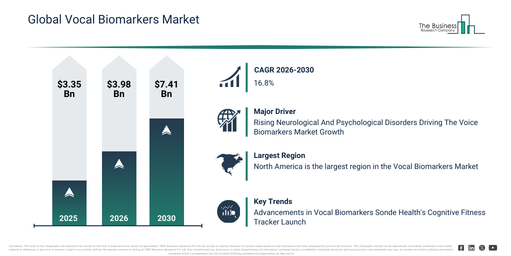
    The vocal biomarkers market size has seen rapid expansion in recent years. It is anticipated to grow from $3.35 billion in 2025 to $3.98 billion in 2026, achieving a compound annual growth rate (CAGR) of 18.8%. This historical growth can be linked to intensified research into digital health biomarkers, increased adoption of telemedicine, the availability of advanced speech analytics software, a heightened focus on mental health screening, and the broadening of academic research programs.

    The vocal biomarkers market size is projected for swift expansion over the coming years, with expectations to reach $7.41 billion in 2030, displaying a compound annual growth rate (CAGR) of 16.8%. The observed growth within this forecast period stems from factors such as increasing clinical validation of vocal biomarkers, their rising integration with wearable health platforms, the expansion of AI-powered diagnostics, a growing demand for non-invasive monitoring solutions, and increasing regulatory acceptance of digital biomarkers. Noteworthy trends anticipated during this period encompass the increasing use of AI-driven voice analysis platforms, the rising adoption of remote health monitoring tools, the growing integration of vocal biomarkers in mental health assessment, the expansion of voice-based diagnostic applications, and an enhanced focus on continuous patient monitoring.

    Access Your Free Sample Report for In-Depth Market Insights:

    https://www.thebusinessresearchcompany.com/sample.aspx?id=17294&type=smp

    What Drivers Are Affecting Demand-Supply Dynamics In The Vocal Biomarkers Market?

    The increasing incidence of neurological and psychological disorders is anticipated to drive the future expansion of the voice biomarkers market. Neurological disorders are defined as medical conditions impacting the nervous system, whereas psychological disorders represent conditions that influence an individual’s mood, thought processes, and behavior. The rise in cases of both neurological and psychological disorders can be attributed to factors such as elevated stress levels, an aging global population, shifts in lifestyle, and improved capabilities in awareness and diagnosis. Voice biomarkers are utilized in these conditions for the non-invasive detection and monitoring of disease-specific changes in speech patterns, pitch, and rhythm, thereby offering valuable insights into the presence and progression of these ailments. For instance, in April 2024, according to the data published by alzheimers.gov, a US-based Department of Health and Human Services (HHS), more than 6 million Americans aged 65 and older are living with Alzheimer’s disease in 2024, and it is predicted that this number will increase to more than 13 million people by 2060. This consistent growth in neurological and psychological disorders is thus propelling the expansion of the voice biomarkers market.

    How Is The Vocal Biomarkers Market Organized Into Various Segments?

    The vocal biomarkers market covered in this report is segmented –

    1) By Type: Frequency, Amplitude, Error Rate, Vocal Rise Or Fall Time, Phonation Time, Voice Tremor, Pitch, Other Types

    2) By Indications: Psychiatric Disorders, Neurological Disorders, Respiratory Disorders, Cardiovascular Disorders, Traumatic Brain Injury (TBI), Other Indications

    3) By Consumer: Children And Newborns, Adults

    4) By End Users: Hospitals And Clinics, Academic, Research, Other End-Users

    Subsegments:

    1) By Frequency: Fundamental Frequency (Pitch), Formant Frequencies

    2) By Amplitude: Intensity Levels, Amplitude Variation

    3) By Error Rate: Phonemic Errors, Prosodic Errors

    4) By Vocal Rise Or Fall Time: Rise Time Slope, Fall Time Slope

    5) By Phonation Time: Sustained Phonation Duration, Phonation Intervals

    6) By Voice Tremor: Frequency Modulation Tremor, Amplitude Modulation Tremor

    7) By Pitch: Mean Pitch, Pitch Variability

    8) By Other Types: Speech Rate, Jitter, Shimmer

    Which Trends Are Influencing The Development Of The Vocal Biomarkers Market?

    Leading companies in the vocal biomarkers market are prioritizing the creation of advanced technology, such as Monitor Vocal Biomarkers, to elevate the precision of disease detection, improve patient surveillance, and allow for early intervention across various health issues. Monitor Vocal Biomarkers signifies the application of voice analysis to pinpoint physiological and psychological health markers. For example, in November 2024, Sonde Health, a US-based digital health company, unveiled Sonde Cognitive Fitness, a voice-activated cognitive fitness tracker engineered to observe cognitive effort continuously. This tracker processes voice samples acquired through most smart devices, evaluating vocal biomarkers to determine cognitive effort.

    Who Are The Major Companies Operating In The Vocal Biomarkers Market?

    Major companies operating in the vocal biomarkers market are Beyond Verbal, AudEERING, Sonde Health Inc., Kintsugi Health, Ellipsis Health, Canary Speech, Vocalis Health, EVOCAL Health, Cogito Corporation, ConversationHealth, Veritone Inc., Cambridge Cognition Ltd., Neurotrack Technologies Inc., Winterlight Labs, Aural Analytics, PeakProfiling, Mindstrong Health, Sonic Cloud Health, NeuraMetrix, Aiva Health, Modality AI, VoiceSense, VoxMetrix

    Access The Complete Report For Deeper Market Insights:

    https://www.thebusinessresearchcompany.com/report/vocal-biomarkers-global-market-report

    Which Region Is Anticipated To See The Fastest Growth In The Vocal Biomarkers Market?

    North America was the largest region in the vocal biomarkers market in 2025. The regions covered in the vocal biomarkers market report are Asia-Pacific, South East Asia, Western Europe, Eastern Europe, North America, South America, Middle East, Africa.

    Request Your Customized Vocal Biomarkers Market Research Report for Competitive Advantage:

    https://www.thebusinessresearchcompany.com/customise?id=17294&type=smp

    Browse Through More Reports Similar to the Global Vocal Biomarkers Market 2026, By The Business Research Company

    Clinical Biomarkers Market Report 2026

    https://www.thebusinessresearchcompany.com/report/clinical-biomarkers-global-market-report

    Voice Biometrics Market Report 2026

    https://www.thebusinessresearchcompany.com/report/voice-biometrics-global-market-report

    Biomarkers Market Report 2026

    https://www.thebusinessresearchcompany.com/report/biomarkers-global-market-report

    Get in touch with us:

    The Business Research Company: https://www.thebusinessresearchcompany.com/

    Americas +1 310-496-7795

    Asia +44 7882 955267 & +91 8897263534

    Europe +44 7882 955267

    Email us at info@tbrc.info

    Follow us on:

    LinkedIn: https://in.linkedin.com/company/the-business-research-company

    YouTube: https://www.youtube.com/channel/UC24_fI0rV8cR5DxlCpgmyFQ

    Global Market Model: https://www.thebusinessresearchcompany.com/global-market-model

  • Global Antibiotics Active Pharmaceutical Ingredient (API) Market Report 2026–2035: Key Forecasts and Growth Areas

    Global Antibiotics Active Pharmaceutical Ingredient (API) Market Report 2026–2035: Key Forecasts and Growth Areas

    Uncover key drivers, emerging technologies, and competitive movements shaping the antibiotics active pharmaceutical ingredient (api) market from 2026–2035 with trusted insights from The Business Research Company

    How is the Antibiotics Active Pharmaceutical Ingredient (API) Market size predicted to change over the forecast window of 2026–2035?

    The antibiotics active pharmaceutical ingredient (api) market has experienced significant expansion in recent years. It is anticipated to increase from $26.4 billion in 2025 to $29.26 billion in 2026, exhibiting a compound annual growth rate (CAGR) of 10.8%. This historical growth can be linked to the rise in global antibiotic consumption, the presence of low-cost manufacturing areas, an increase in generic pharmaceutical production, the escalating incidence of bacterial infections, and the early outsourcing of api manufacturing.

    The antibiotics active pharmaceutical ingredient (api) market is projected to experience substantial expansion over the coming years. Its valuation is anticipated to reach $44.5 billion by 2030, exhibiting a compound annual growth rate (CAGR) of 11.1%. This projected market expansion during the forecast period stems from factors such as a heightened emphasis on antimicrobial resistance management, increased funding for domestic API manufacturing, a rising need for hospital-grade antibiotics, the broadening of regulated pharmaceutical sectors, and a greater focus on ensuring supply chain security. Significant developments expected in this period encompass the growing preference for fermentation-based API production, an increasing concentration on high-purity antibiotic APIs, a developing requirement for broad-spectrum antibiotics, the expansion of contract API manufacturing services, and a strengthened commitment to regulatory adherence.

    Access Your Free Sample Report for In-Depth Market Insights:

    https://www.thebusinessresearchcompany.com/sample.aspx?id=33016&type=smp

    Which Drivers Are Contributing To The Expansion Of The Antibiotics Active Pharmaceutical Ingredient (API) Market?

    The increasing occurrence of bacterial infections is projected to drive the expansion of the antibiotics active pharmaceutical ingredient (API) market in the future. Bacterial infections are health conditions resulting from harmful bacteria entering the body, necessitating antibacterial interventions. This increase in bacterial infection prevalence stems from rising levels of antibiotic-resistant bacteria, which complicate existing treatment methods and result in more frequent, serious, and prolonged infections. The antibiotics active pharmaceutical ingredient (API) is crucial for creating and producing effective antibiotic drugs that combat bacterial infections and address resistance trends, by providing the vital active drug components used in medications. As an illustration, in November 2024, the UK Health Security Agency, a UK-based government department, reported approximately 66,730 serious antibiotic-resistant infections in 2023, along with a 2.4% rise in antibiotic consumption compared to 2022. Consequently, the growing incidence of bacterial infections is fueling the growth of the antibiotic active pharmaceutical ingredient (API) market.

    What Segment Categories Are Covered In The Antibiotics Active Pharmaceutical Ingredient (API) Market?

    The antibiotics active pharmaceutical ingredient (api) market covered in this report is segmented –

    1) By Product Type: Beta-Lactams; Aminoglycosides; Macrolides; Tetracyclines; Glycopeptides; Quinolones; Polypeptides; Sulfonamides

    2) By Formulation Type: Injectable; Oral; Topical; Inhalation

    3) By Route of Administration: Oral Administration; Intravenous Administration; Intramuscular Administration; Topical Application; Inhalation Therapy

    4) By Therapeutic Application: Bacterial Infections; Respiratory Tract Infections; Skin Infections; Sepsis

    5) By End-User: Hospitals; Pharmacies; Clinics; Homecare Settings; Long-Term Care Facilities

    Subsegments:

    1) By Beta-Lactams: Penicillins; Cephalosporins; Carbapenems; Monobactams

    2) By Aminoglycosides: Streptomycin Based Antibiotics; Gentamicin Based Antibiotics; Amikacin Based Antibiotics; Tobramycin Based Antibiotics

    3) By Macrolides: Erythromycin Based Antibiotics; Azithromycin Based Antibiotics; Clarithromycin Based Antibiotics; Roxithromycin Based Antibiotics

    4) By Tetracyclines: Doxycycline Based Antibiotics; Minocycline Based Antibiotics; Oxytetracycline Based Antibiotics; Chlortetracycline Based Antibiotics

    5) By Glycopeptides: Vancomycin Based Antibiotics; Teicoplanin Based Antibiotics; Dalbavancin Based Antibiotics; Oritavancin Based Antibiotics

    6) By Quinolones: Ciprofloxacin Based Antibiotics; Levofloxacin Based Antibiotics; Moxifloxacin Based Antibiotics; Ofloxacin Based Antibiotics

    7) By Polypeptides: Bacitracin Based Antibiotics; Polymyxin Based Antibiotics; Colistin Based Antibiotics; Gramicidin Based Antibiotics

    8) By Sulfonamides: Sulfamethoxazole Based Antibiotics; Sulfadiazine Based Antibiotics; Sulfisoxazole Based Antibiotics; Sulfacetamide Based Antibiotics

    What Trends Are Reshaping The Dynamics Of The Antibiotics Active Pharmaceutical Ingredient (API) Market?

    Major companies in the antibiotic active pharmaceutical ingredient (API) market are concentrating on bolstering their manufacturing capabilities and regulatory compliance to ensure a consistent supply, high quality, and global market access for vital antibiotic drugs. Manufacturing capabilities refer to the capacity to produce antibiotic APIs at a substantial scale while upholding uniform quality, purity, and controlled processes, while regulatory compliance guarantees these APIs conform to global regulatory and GMP standards, supporting their safety, efficacy, and approval for commercial use. For instance, in March 2024, Zydus Lifesciences, an India-based pharmaceutical company, secured approval from the US Food and Drug Administration for commercial production at its Ahmedabad API manufacturing facility. This approval empowers the company to manufacture antibiotic APIs for regulated markets, supporting reliable supply chains and adherence to international quality standards. The facility utilizes stringent process controls, quality checks, and manufacturing methods that comply with regulations to ensure the APIs are consistently pure, safe, and effective. It is designed to facilitate large-volume production while meeting strict compliance requirements, thereby strengthening supply security for essential antibiotics and addressing the global demand for high-quality antimicrobial APIs.

    Which Key Players Are Driving Competition In The Antibiotics Active Pharmaceutical Ingredient (API) Market?

    Major companies operating in the antibiotics active pharmaceutical ingredient (api) market are Sanofi S.A., Sun Pharmaceutical Industries Limited, Zydus Lifesciences Limited, Zhejiang NHU Co Ltd, Almac Group Limited, Jubilant Pharmova Limited, Esteve Healthcare S L, Granules India Limited, Teva Pharmaceutical Industries Ltd, Neuland Laboratories Ltd, Fermion Oy, Century Pharmaceuticals Ltd, Sreepathi Lab Private Limited, Virchow Biotech Private Limited, AMGIS Lifescience Ltd., Midas Pharma GmbH, Sinoway Industrial ShanghAI Co Ltd, Penam Laboratories Limited, and Noreva Biotech.

    Access The Complete Report For Deeper Market Insights:

    https://www.thebusinessresearchcompany.com/report/antibiotics-active-pharmaceutical-ingredient-api-market-report

    Which Region Is Projected To Lead The Antibiotics Active Pharmaceutical Ingredient (API) Market During The Forecast Period?

    North America was the largest region in the antibiotics active pharmaceutical ingredient (API) market in 2025. Asia-Pacific is expected to be the fastest-growing region in the forecast period. The regions covered in the antibiotics active pharmaceutical ingredient (api) market report are Asia-Pacific, South East Asia, Western Europe, Eastern Europe, North America, South America, Middle East, Africa.

    Request Your Customized Antibiotics Active Pharmaceutical Ingredient (API) Market Research Report for Competitive Advantage:

    https://www.thebusinessresearchcompany.com/customise?id=33016&type=smp

    Browse Through More Reports Similar to the Global Antibiotics Active Pharmaceutical Ingredient (API) Market 2026, By The Business Research Company

    Pharmaceuticals Market 2026

    https://www.thebusinessresearchcompany.com/report/pharmaceuticals-market

    Antibiotics Market Report 2026

    https://www.thebusinessresearchcompany.com/report/antibiotics-global-market-report

    Peptide Antibiotics Market Report 2026

    https://www.thebusinessresearchcompany.com/report/peptide-antibiotics-global-market-report

    Get in touch with us:

    The Business Research Company: https://www.thebusinessresearchcompany.com/

    Americas +1 310-496-7795

    Asia +44 7882 955267 & +91 8897263534

    Europe +44 7882 955267

    Email us at info@tbrc.info

    Follow us on:

    LinkedIn: https://in.linkedin.com/company/the-business-research-company

    YouTube: https://www.youtube.com/channel/UC24_fI0rV8cR5DxlCpgmyFQ

    Global Market Model: https://www.thebusinessresearchcompany.com/global-market-model
  • Vitreoretinal Disorder Market Trends and Insights: Global Forecast to 2030

    Vitreoretinal Disorder Market Trends and Insights: Global Forecast to 2030

    Uncover key drivers, emerging technologies, and competitive movements shaping the vitreoretinal disorder market from 2026–2035 with trusted insights from The Business Research Company

    What long-term size projections exist for the Vitreoretinal Disorder Market covering 2026–2035?

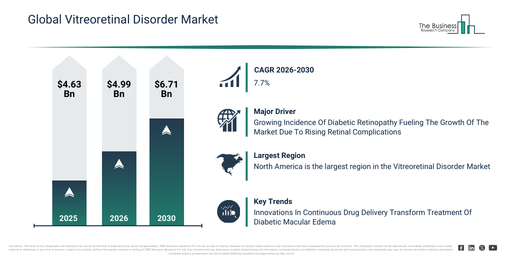
    The vitreoretinal disorder market size has demonstrated strong growth in recent years. It is anticipated to expand from $4.63 billion in 2025 to $4.99 billion in 2026, achieving a compound annual growth rate (CAGR) of 7.9%. This historical growth can be attributed to the rising prevalence of diabetic eye diseases, increased availability of optical coherence tomography, an uptick in ophthalmic surgical procedures, the expansion of specialty eye clinics, and enhanced diagnostic accuracy.

    The vitreoretinal disorder market size is anticipated to undergo significant expansion in the next few years, set to grow to $6.71 billion in 2030, exhibiting a compound annual growth rate (CAGR) of 7.7%. This projected growth throughout the forecast period stems from factors such as increasing demand for personalized retinal treatments, rising investments in ophthalmic innovation, the wider adoption of minimally invasive surgical techniques, the expanding utilization of AI-driven diagnostics, and a heightened focus on vision preservation therapies. Prominent trends for the forecast period include the increasing adoption of advanced retinal imaging techniques, a rise in minimally invasive vitreoretinal surgery, the growing integration of AI-based diagnostic tools, the expansion of targeted retinal therapies, and an enhanced emphasis on early disease detection.

    Access Your Free Sample Report for In-Depth Market Insights:

    https://www.thebusinessresearchcompany.com/sample.aspx?id=23574&type=smp

    Which Drivers Are Impacting The Competitive Landscape Of The Vitreoretinal Disorder Market?

    An increasing occurrence of diabetic retinopathy is anticipated to drive expansion in the vitreoretinal disorder market. This eye condition develops when elevated blood sugar levels in individuals with diabetes cause harm to the blood vessels of the retina. The incidence of diabetic retinopathy is on the rise, primarily due to the growing prevalence of diabetes itself, which is often linked to sedentary lifestyles and inadequate blood sugar control, ultimately leading to damage in the retinal blood vessels. Managing vitreoretinal disorders is crucial for treating diabetic retinopathy, as it addresses complications such as vitreous hemorrhage and tractional retinal detachment, thereby preserving vision and preventing further retinal damage. For instance, in October 2024, the Australian Institute of Health and Welfare, an Australia-based government agency, reported that during 2022–23, 1.8% of screened First Nations people in Australia received treatment for diabetic retinopathy, reflecting a lower age-standardized treatment rate (1.3%) than non-Indigenous Australians (1.5%). Therefore, the growing incidence of diabetic retinopathy is consequently fueling the growth of the vitreoretinal disorder market.

    What Segments Are Identified Within The Structure Of The Vitreoretinal Disorder Market?

    The vitreoretinal disorder market covered in this report is segmented –

    1) By Type: Retinal Tear, Retinal Detachment, Diabetic Retinopathy, Macular Degeneration, Macular Hole, Other Types

    2) By Diagnosis: Digital Fluorescein Angiography, Optical Coherence Tomography, Heidelberg Retinal Tomography, Indocyanine Green Angiography, Other Diagnosis

    3) By Treatment: Surgery, Medication, Other Treatments

    4) By Distribution Channel: Hospital Pharmacy, Online Pharmacy, Retail Pharmacy

    5) By End User: Hospitals, Homecare, Specialty Clinics, Other End Users

    Subsegments:

    1) By Retinal Tear: Atrophic Retinal Tear, Operculated Retinal Tear, Horseshoe Retinal Tear, Giant Retinal Tear

    2) By Retinal Detachment: Rhegmatogenous Retinal Detachment, Tractional Retinal Detachment, Exudative Retinal Detachment

    3) By Diabetic Retinopathy: Non-Proliferative Diabetic Retinopathy, Proliferative Diabetic Retinopathy, Diabetic Macular Edema

    4) By Macular Degeneration: Dry Macular Degeneration, Wet Macular Degeneration

    5) By Macular Hole: Full-Thickness Macular Hole, Lamellar Macular Hole, Tractional Macular Hole

    6) By Other Types: Epiretinal Membrane, Retinal Vein Occlusion, Retinal Artery Occlusion, Retinitis Pigmentosa, Uveitis, Vitreous Hemorrhage, Macular Edema, Central Serous Retinopathy, Proliferative Vitreoretinopathy

    What Trends Are Expected To Impact The Competitive Landscape Of The Vitreoretinal Disorder Market?

    Major companies within the vitreoretinal disorder market are prioritizing inventive offerings such as continuous delivery drug solutions to lessen injection frequency and improve patient outcomes. These continuous delivery drug solutions represent medical systems designed to provide a sustained, controlled release of medication directly to the eye, thereby diminishing the need for frequent injections, maintaining consistent therapeutic levels, and enhancing patient adherence and visual results. For example, in February 2025, Roche, a global pharmaceutical entity based in Switzerland, secured U.S. Food and Drug Administration (FDA) approval for its Susvimo (ranibizumab injection) 100 mg/mL, which is a Port Delivery System intended for diabetic macular edema (DME). Susvimo facilitates the continuous delivery of ranibizumab through a refillable implant, enabling patients to sustain their vision with merely two treatments per year, a considerable reduction compared to monthly eye injections. The system was put to the test in the Phase III Pagoda study, where it demonstrated persistent improvements in visual acuity and a safety profile consistent with previous approvals for neovascular age-related macular degeneration (nAMD). Susvimo’s innovative platform aims to reduce the burden of treatment, elevate patient convenience, and address the escalating global prevalence of DME.

    Which Major Firms Are Strengthening Their Position In The Vitreoretinal Disorder Market?

    Major companies operating in the vitreoretinal disorder market are F. Hoffmann-La Roche AG, Bayer AG, Novartis AG, Regeneron Pharmaceuticals Inc., Alcon Inc., Bausch Health Companies Inc., Santen Pharmaceutical Co. Ltd., Topcon Corporation, Carl Zeiss Meditec AG, Ocular Therapeutix Inc., EyePoint Pharmaceuticals Inc., Kodiak Sciences Inc., Clearside Biomedical, Apellis Pharmaceuticals Inc., Genentech Inc., Oxurion NV, Adverum Biotechnologies Inc., Opthea Limited, Graybug Vision Inc., Kiora Pharmaceuticals Inc., Allegro Ophthalmics Inc., Lineage Cell Therapeutics Inc., Ocugen Inc.

    Access The Complete Report For Deeper Market Insights:

    https://www.thebusinessresearchcompany.com/report/vitreoretinal-disorder-global-market-report

    Which Region Is Anticipated To See The Fastest Growth In The Vitreoretinal Disorder Market?

    North America was the largest region in the vitreoretinal disorder market in 2025. The regions covered in the vitreoretinal disorder market report are Asia-Pacific, South East Asia, Western Europe, Eastern Europe, North America, South America, Middle East, Africa.

    Request Your Customized Vitreoretinal Disorder Market Research Report for Competitive Advantage:

    https://www.thebusinessresearchcompany.com/customise?id=23574&type=smp

    Browse Through More Reports Similar to the Global Vitreoretinal Disorder Market 2026, By The Business Research Company

    Optic Nerve Disorders Treatment Market Report 2026

    https://www.thebusinessresearchcompany.com/report/optic-nerve-disorders-treatment-global-market-report

    Retinal Disorder Treatment Market Report 2026

    https://www.thebusinessresearchcompany.com/report/retinal-disorder-treatment-global-market-report

    Vitrectomy Devices Market Report 2026

    https://www.thebusinessresearchcompany.com/report/vitrectomy-devices-global-market-report

    Get in touch with us:

    The Business Research Company: https://www.thebusinessresearchcompany.com/

    Americas +1 310-496-7795

    Asia +44 7882 955267 & +91 8897263534

    Europe +44 7882 955267

    Email us at info@tbrc.info

    Follow us on:

    LinkedIn: https://in.linkedin.com/company/the-business-research-company

    YouTube: https://www.youtube.com/channel/UC24_fI0rV8cR5DxlCpgmyFQ

    Global Market Model: https://www.thebusinessresearchcompany.com/global-market-model
  • Adaptive Neuromodulation Therapy Devices Market 2026–2030: Forecast, Innovation, and Competitive Trends

    Adaptive Neuromodulation Therapy Devices Market 2026–2030: Forecast, Innovation, and Competitive Trends

    Uncover key drivers, emerging technologies, and competitive movements shaping the adaptive neuromodulation therapy devices market from 2026–2035 with trusted insights from The Business Research Company

    What market expansion outlook does the Adaptive Neuromodulation Therapy Devices Market show for the 2026–2030 period?

    The market for adaptive neuromodulation therapy devices has experienced rapid expansion in recent years. This market is projected to increase from $7.09 billion in 2025 to $7.82 billion in 2026, demonstrating a compound annual growth rate (CAGR) of 10.4%. The historical growth of this market can be attributed to advancements in implantable neuromodulation devices, an increasing prevalence of neurological disorders, the early adoption of deep brain stimulation therapies, improvements in neural signal processing, and the expansion of specialized neurology centers.

    The adaptive neuromodulation therapy devices market is set for considerable expansion in the coming years. It is projected to achieve a value of $11.7 billion by 2030, progressing at a compound annual growth rate (CAGR) of 10.6%. The anticipated growth within the forecast timeframe is primarily driven by increasing demand for personalized neuromodulation therapies, rising investments in brain-computer interface technologies, expansion of non-invasive neuromodulation applications, growing focus on long-term therapy management, and increasing integration of AI-driven adaptive stimulation. Key developments expected during this period involve increasing adoption of closed-loop neuromodulation systems, rising integration of real-time neural sensing, growing use of personalized stimulation algorithms, expansion of wearable and non-invasive neuromodulation devices, and enhanced focus on therapy optimization and side effect reduction.

    Access Your Free Sample Report for In-Depth Market Insights:

    https://www.thebusinessresearchcompany.com/sample.aspx?id=33007&type=smp

    What Drivers Are Shaping The Development Of The Adaptive Neuromodulation Therapy Devices Market?

    The adaptive neuromodulation therapy devices market is expected to experience growth due to the increasing occurrence of long-term neurological conditions. These conditions are chronic disorders that affect the brain, spinal cord, or nervous system, resulting in persistent impairments in movement, cognition, sensation, or behavior. The rising burden of these conditions is fueled by increased life expectancy, which contributes to a higher prevalence of age-related neurological degeneration and an extended disease burden. Adaptive neuromodulation therapy devices assist in managing long-term neurological conditions by delivering personalized, real-time electrical stimulation that dynamically adjusts to patient-specific neural activity, thereby improving symptom control and long-term neurological outcomes. For instance, in March 2023, the Alzheimer’s Association, a US-based nonprofit voluntary health organization, reported that 6.7 million Americans aged 65+ have Alzheimer’s, a figure projected to rise to 13.8 million by 2060. Thus, the increasing prevalence of long-term neurological conditions is a key factor driving the expansion of the adaptive neuromodulation therapy devices market.

    Which Segments Are Contributing To The Growth Of The Adaptive Neuromodulation Therapy Devices Market?

    The adaptive neuromodulation therapy devices market covered in this report is segmented –

    1) By Product Type: Implantable Adaptive Neuromodulation Devices; Non-Implantable Adaptive Neuromodulation Devices; Rechargeable Adaptive Neuromodulation Devices; Non-Rechargeable Adaptive Neuromodulation Devices

    2) By Device Type: Deep Brain Stimulation Systems; Spinal Cord Stimulation Systems; Vagus Nerve Stimulation Systems; Sacral Nerve Stimulation Systems; Responsive Neurostimulation Systems

    3) By Technology: Closed-Loop Electrical Neuromodulation Technology; Closed-Loop Magnetic Neuromodulation Technology; Responsive Neurostimulation Technology; Adaptive Deep Brain Stimulation Technology

    4) By Application: Epilepsy; Parkinson’s Disease (PD); Mixed Urinary Incontinence (MUI); Other Applications

    5) By End User: Hospitals; Neurology Clinics; Specialty Neurosurgical Centers; Research And Academic Institutes

    Subsegments:

    1) By Implantable Adaptive Neuromodulation Devices: Deep Brain Stimulation Systems; Spinal Cord Stimulation Systems; Vagus Nerve Stimulation Systems; Sacral Nerve Stimulation Systems; Peripheral Nerve Stimulation Systems

    2) By Non-Implantable Adaptive Neuromodulation Devices: Transcranial Magnetic Stimulation Devices; Transcranial Direct Current Stimulation Devices; External Vagus Nerve Stimulation Devices; Wearable Neurostimulation Systems

    3) By Rechargeable Adaptive Neuromodulation Devices: Rechargeable Implantable Pulse Generators; Wireless Rechargeable Neurostimulators; Long Life Rechargeable Stimulation Systems

    4) By Non-Rechargeable Adaptive Neuromodulation Devices: Primary Cell Implantable Neurostimulators; Single Use Implantable Stimulation Devices; Fixed Life Pulse Generator Systems

    How Are New Market Trends Shaping The Landscape Of The Adaptive Neuromodulation Therapy Devices Market?

    Major companies operating within the adaptive neuromodulation therapy devices market are concentrating on developing innovative solutions, such as flexible wireless charging, to allow patients to remain active during the recharging process and minimize therapy interruptions. This functionality enables patients to charge their neuromodulation devices wirelessly while continuing with their daily activities. For instance, in January 2024, Abbott Laboratories, a US-based medical device company, launched the Liberta RC DBS system. This rechargeable deep brain stimulation platform is engineered to treat movement disorders with improved flexibility and patient convenience. The system incorporates one of the smallest rechargeable implantable pulse generators available, which enhances patient comfort and supports minimally invasive implantation. It also offers remote programming and monitoring, empowering clinicians to adjust therapy settings without the need for frequent in-clinic visits. Moreover, Liberta RC supports adaptive stimulation capabilities that allow for personalized therapy optimization over time based on patient response, thereby improving treatment continuity and long-term disease management.

    Who Are The Top-Performing Companies In The Adaptive Neuromodulation Therapy Devices Market In Recent Years?

    Major companies operating in the adaptive neuromodulation therapy devices market are Abbott Laboratories, Medtronic Plc, Boston Scientific Corporation, Biotronik AG, LivaNova plc, Bioventus LLC, NEVRO Corp., Axonics, Inc, Neuronetics, Inc., NeuroPace, Inc., Cala Health Inc, BrainsWay Ltd, SPR Therapeutics, Inc., ElectroCore, Inc., Mainstay Medical Ltd., Blackrock Neurotech, Inc., Soterix Medical Inc., Synapse Biomedical Inc., NeuroSigma, Inc., Aleva Neurotherapeutics SA, Magstim Company Ltd.

    Access The Complete Report For Deeper Market Insights:

    https://www.thebusinessresearchcompany.com/report/adaptive-neuromodulation-therapy-devices-market-report

    Which Region Currently Holds The Largest Share Of The Adaptive Neuromodulation Therapy Devices Market?

    North America was the largest region in the adaptive neuromodulation therapy devices market in 2025. Asia-Pacific is expected to be the fastest-growing region in the forecast period. The regions covered in the adaptive neuromodulation therapy devices market report are Asia-Pacific, South East Asia, Western Europe, Eastern Europe, North America, South America, Middle East, Africa.

    Request Your Customized Adaptive Neuromodulation Therapy Devices Market Research Report for Competitive Advantage:

    https://www.thebusinessresearchcompany.com/customise?id=33007&type=smp

    Browse Through More Reports Similar to the Global Adaptive Neuromodulation Therapy Devices Market 2026, By The Business Research Company

    Internal Neuromodulation Devices Market Report 2026

    https://www.thebusinessresearchcompany.com/report/internal-neuromodulation-devices-global-market-report

    Implantable Neurostimulation Devices Market Report 2026

    https://www.thebusinessresearchcompany.com/report/implantable-neurostimulation-devices-global-market-report

    Neuromodulation Market Report 2026

    https://www.thebusinessresearchcompany.com/report/neuromodulation-global-market-report

    Get in touch with us:

    The Business Research Company: https://www.thebusinessresearchcompany.com/

    Americas +1 310-496-7795

    Asia +44 7882 955267 & +91 8897263534

    Europe +44 7882 955267

    Email us at info@tbrc.info

    Follow us on:

    LinkedIn: https://in.linkedin.com/company/the-business-research-company

    YouTube: https://www.youtube.com/channel/UC24_fI0rV8cR5DxlCpgmyFQ

    Global Market Model: https://www.thebusinessresearchcompany.com/global-market-model