Month: March 2026

  • Specific Immunoglobulin G Subclass 4 (IgG4) Testing Market Future Outlook: Strong Growth Expected Toward $2.43 Billion by 2030

    Specific Immunoglobulin G Subclass 4 (IgG4) Testing Market Future Outlook: Strong Growth Expected Toward $2.43 Billion by 2030

    Uncover key drivers, emerging technologies, and competitive movements shaping the specific immunoglobulin g subclass 4 (igg4) testing market from 2026–2035 with trusted insights from The Business Research Company

    What was the valuation of the Specific Immunoglobulin G Subclass 4 (IgG4) Testing Market in 2026, and what figure is it projected to hit by 2030?

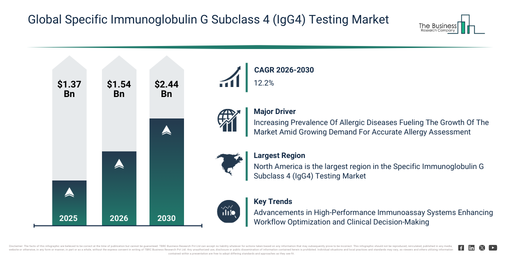
    The specific immunoglobulin g subclass 4 (igg4) testing market size has experienced rapid growth in recent years. It is projected to increase from $1.37 billion in 2025 to $1.54 billion in 2026, at a compound annual growth rate (CAGR) of 12.4%. The expansion observed in the past can be attributed to heightened awareness of igg4-related diseases, the expansion of diagnostic laboratory networks, the increasing utilization of antibody-based diagnostics, advancements in immunoassay technologies, and a rise in clinical research activity.

    The immunoglobulin g subclass 4 (igg4) testing market is projected for significant expansion over the coming years, reaching a valuation of $2.44 billion by 2030, exhibiting a compound annual growth rate (CAGR) of 12.2%. This anticipated growth during the forecast period is fueled by several factors, including a heightened need for accurate diagnostics, the proliferation of testing facilities within hospitals, increasing capital directed towards automating laboratories, a wider embrace of sophisticated immunology panels, and a greater emphasis on identifying diseases early. Key developments expected during this timeframe involve the growing use of specialized immunoassay techniques, an escalating need for diagnostic tools for autoimmune conditions, the increasing incorporation of igg4 testing into routine clinical procedures, the advancement of laboratory automation specifically in immunology, and a sharpened focus on the precision of diagnostic outcomes.

    Access Your Free Sample Report for In-Depth Market Insights:

    https://www.thebusinessresearchcompany.com/sample.aspx?id=30400&type=smp

    Which Drivers Are Affecting Market Participation In The Specific Immunoglobulin G Subclass 4 (IgG4) Testing Market?

    The growing incidence of allergic conditions is projected to boost the specific immunoglobulin G subclass 4 (IgG4) testing market. Allergic diseases are characterized as immune-mediated hypersensitivity disorders, such as food allergies, atopic dermatitis, asthma, and allergic rhinitis, which manifest when the immune system reacts unusually to typically harmless substances. The rise in allergic disease prevalence is linked to evolving dietary habits, as increased consumption of highly processed foods can alter gut microbiota and elevate the risk of developing allergic sensitization. Specific IgG4 testing is instrumental in evaluating immune responses tied to recurrent allergen exposure, assisting clinicians in discerning tolerance patterns and interpreting complex allergy-related immune activity. For example, in May 2024, data from the Food Standards Agency (FSA), a UK-based government body overseeing food safety and public health, indicated that approximately 6%, or 2.4 million, of the UK adult population had a clinically confirmed food allergy. Therefore, the increasing prevalence of allergic diseases is fueling the expansion of the specific immunoglobulin G subclass 4 (IgG4) testing market.

    What Segment Categories Are Covered In The Specific Immunoglobulin G Subclass 4 (IgG4) Testing Market?

    The specific immunoglobulin g subclass 4 (igg4) testing market covered in this report is segmented –

    1) By Product Type: Reagents And Kits, Instruments, Services

    2) By Application: Allergy Diagnosis, Autoimmune Disease Diagnosis, Research, Other Applications

    3) By End-User: Hospitals And Clinics, Diagnostic Laboratories, Research Institutes, Other End-Users

    Subsegments:

    1) By Reagents And Kits: Purification Reagents, Detection Reagents, Assay Kits, Calibrators, Controls

    2) By Instruments: Automated Analyzers, Enzyme Linked Immunoassay Readers, Microplate Washers, Sample Preparation Systems, Laboratory Automation Platforms

    3) By Services: Testing Services, Validation Services, Quality Assurance Services, Custom Assay Development Services, Technical Support Services

    What Trends Are Expected To Impact The Competitive Landscape Of The Specific Immunoglobulin G Subclass 4 (IgG4) Testing Market?

    Leading companies in the specific immunoglobulin G subclass 4 (IgG4) testing market are prioritizing the integration of innovation into testing platforms and methodologies, such as high-sensitivity immunoassay technology, to improve assay accuracy, analytical performance, and diagnostic reliability. High-sensitivity immunoassays are sophisticated detection systems that employ optimized antibodies, enhanced signal generation chemistries, and refined assay workflows to quantify extremely low analyte concentrations with great precision, offering capabilities like better detection limits, superior specificity, and consistent result reproducibility. For example, in September 2025, Alta DiagnoTech, a US-based developer of IVD immunoassay solutions, introduced its ELISA Kits for IVD Immunology Testing, a product line utilizing high-sensitivity immunoassay technology, designed for accurate biomarker quantification across a wide array of immunological applications. These kits provide enhanced assay sensitivity, robust manufacturing stability, and broad applicability in immunology test workflows. This platform consequently boosts test reliability, analytical precision, and overall diagnostic confidence in immunology testing settings.

    Which Key Market Players Are Investing In Expansion And Innovation Within The Specific Immunoglobulin G Subclass 4 (IgG4) Testing Market?

    Major companies operating in the specific immunoglobulin g subclass 4 (igg4) testing market are F Hoffmann La Roche Ltd., Thermo Fisher Scientific Inc., Abbott Laboratories, Siemens Healthineers AG, Mayo Clinic Laboratories, Laboratory Corporation of America Holdings, Quest Diagnostics Incorporated, Eurofins Scientific SE, Revvity, Randox Laboratories Ltd, NeoGenomics Laboratories Inc., ARUP Laboratories, Dr Lal PathLabs Limited, Metropolis Healthcare Ltd, ProSci Incorporated, Leinco Technologies Incorporated, MyBioSource Inc., Boster Biological Technology, PROTIA Inc., Creative Diagnostics LLC.

    Access The Complete Report For Deeper Market Insights:

    https://www.thebusinessresearchcompany.com/report/global-specific-immunoglobulin-g-subclass-4-igg4-testing-market-report

    Which Regions Are Poised For Strategic Growth In The Specific Immunoglobulin G Subclass 4 (IgG4) Testing Market?

    North America was the largest region in the specific immunoglobulin G subclass 4 (IgG4) testing market in 2025. Asia-Pacific is expected to be the fastest-growing region in the forecast period. The regions covered in the specific immunoglobulin g subclass 4 (igg4) testing market report are Asia-Pacific, South East Asia, Western Europe, Eastern Europe, North America, South America, Middle East, Africa.

    Request Your Customized Specific Immunoglobulin G Subclass 4 (IgG4) Testing Market Research Report for Competitive Advantage:

    https://www.thebusinessresearchcompany.com/customise?id=30400&type=smp

    Browse Through More Reports Similar to the Global Specific Immunoglobulin G Subclass 4 (IgG4) Testing Market 2026, By The Business Research Company

    Subcutaneous Immunoglobulin Scig Market Report 2026

    https://www.thebusinessresearchcompany.com/report/subcutaneous-immunoglobulin-scig-global-market-report

    Immunoglobulin E Ige Allergy Blood Tests Market Report 2026

    https://www.thebusinessresearchcompany.com/report/immunoglobulin-e-ige-allergy-blood-tests-global-market-report

    Immunoglobulins Market Report 2026

    https://www.thebusinessresearchcompany.com/report/immunoglobulins-global-market-report

    Get in touch with us:

    The Business Research Company: https://www.thebusinessresearchcompany.com/

    Americas +1 310-496-7795

    Asia +44 7882 955267 & +91 8897263534

    Europe +44 7882 955267

    Email us at info@tbrc.info

    Follow us on:

    LinkedIn: https://in.linkedin.com/company/the-business-research-company

    YouTube: https://www.youtube.com/channel/UC24_fI0rV8cR5DxlCpgmyFQ

    Global Market Model: https://www.thebusinessresearchcompany.com/global-market-model
  • Revenue of the Specialty PACS Market Predicted to Achieve $4.26 Billion by 2030, Driven by 5% CAGR

    Revenue of the Specialty PACS Market Predicted to Achieve $4.26 Billion by 2030, Driven by 5% CAGR

    Uncover key drivers, emerging technologies, and competitive movements shaping the specialty pacs market from 2026–2035 with trusted insights from The Business Research Company

    What are the forecasted starting (2026) and ending (2030) market sizes for the Specialty PACS Market?

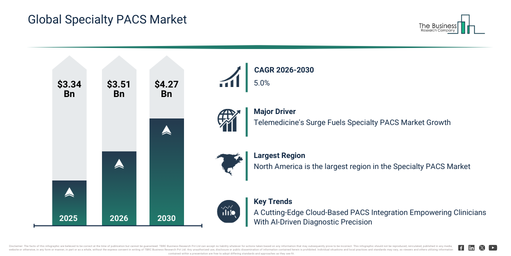
    The specialty pacs market has experienced robust expansion over recent years. Projections indicate its growth from $3.34 billion in 2025 to $3.51 billion in 2026, reflecting a compound annual growth rate (CAGR) of 5.1%. Historically, this market’s expansion can be attributed to growth in medical imaging volumes, hospital digitization initiatives, rising radiology workload, advancements in imaging modalities, and a regulatory push for digital records.

    The specialty pacs market size is projected to experience consistent growth over the next few years. It is forecast to reach $4.27 billion in 2030, exhibiting a compound annual growth rate (CAGR) of 5.0%. The expansion during the forecast period is attributable to the adoption of AI-enabled diagnostics, increased demand for subspecialty care, the migration of imaging systems to the cloud, the broadening of tele-radiology, and mandates for data interoperability. Key trends expected in the forecast period encompass subspecialty-focused imaging workflows, AI-assisted image interpretation, the deployment of cloud-based PACS, integration with EHR systems, and collaborative remote diagnostics.

    Access Your Free Sample Report for In-Depth Market Insights:

    https://www.thebusinessresearchcompany.com/sample.aspx?id=14209&type=smp

    What Drivers Are Supporting Technological Adoption In The Specialty PACS Market?

    The expanding emphasis on telemedicine is anticipated to drive the future expansion of the specialty PACS market. Telemedicine involves delivering healthcare services and patient care from a distance, utilizing various technological means such as phone calls, video conferencing, and other digital communications. There’s a strong connection between specialty PACS functionalities and the increasing adoption of telemedicine, as these systems are crucial for enabling remote viewing of medical images, supporting shared diagnostic efforts, and enhancing patient treatment across various medical fields, such as radiology. An example of this trend is seen in November 2023, when data from the Australian Bureau of Statistics, an Australian government body, indicated that 23.6% of individuals had a telehealth appointment with a general practitioner (GP). Consequently, the heightened attention on telemedicine is a key factor propelling the expansion of the specialty PACS market.

    Which Segments Are Contributing To The Growth Of The Specialty PACS Market?

    The specialty pacs market covered in this report is segmented –

    1) By Type: Radiology PACS, Cardiology PACS, Pathology PACS, Ophthalmology PACS, Orthopedics PACS, Oncology PACS, Dermatology PACS, Neurology PACS, Endoscopy PACS, Women’s Health PACS

    2) By Deployment Model: On-Premise, Cloud-Based

    3) By End-User: Hospitals, Ambulatory Surgery Centers And Clinics, Diagnostic Imaging Centers

    Subsegments:

    1) By Radiology PACS: Diagnostic Imaging PACS, Workflow Management PACS

    2) By Cardiology PACS: Cardiac Imaging PACS, Electrocardiogram (ECG) PACS

    3) By Pathology PACS: Digital Pathology PACS, Anatomic Pathology PACS

    4) By Ophthalmology PACS: Retinal Imaging PACS, Optical Coherence Tomography (OCT) PACS

    5) By Orthopedics PACS: Musculoskeletal Imaging PACS, Surgical PACS

    6) By Oncology PACS: Radiation Therapy PACS, Oncology Imaging PACS

    7) By Dermatology PACS: Skin Imaging PACS, Teledermatology PACS

    8) By Neurology PACS: Neuroimaging PACS, EEG And EMG PACS

    9) By Endoscopy PACS: Gastrointestinal Endoscopy PACS, Bronchoscopy PACS

    10) By Women’s Health PACS: Mammography PACS, Obstetric And Gynecological Imaging PACS

    Which Trends Are Guiding The Evolution Of The Specialty PACS Market?

    Leading companies within the specialty PACS market are concentrating on innovating their products by incorporating features like artificial intelligence (AI) and machine learning (ML) to boost their market earnings. The integration of AI and ML seeks to transition the subsequent iteration of Picture Archiving and Communication System (PACS) into cloud environments and further develop AI-powered instruments for clinicians’ assistance. As an example, in November 2023, Koninklijke Philips N.V., a technology firm from the Netherlands, introduced HealthSuite Imaging utilizing Amazon Web Services (AWS) with the goal of migrating the upcoming generation of picture archiving and communication systems (PACS) to the cloud and enhancing AI-driven tools to aid clinicians. This system, hosted on the cloud, is engineered to allow radiologists and clinicians to more rapidly embrace new functionalities, elevate operational effectiveness, and improve the quality of patient care. Through the utilization of AWS, Philips intends to deliver superior image access speeds, greater reliability, and streamlined data management for healthcare experts throughout the complete imaging process, encompassing treatment through follow-up. Furthermore, this partnership with AWS will propel AI forward in healthcare by deploying foundation models through Amazon Bedrock, leading to quicker, more precise diagnoses and the automation of administrative duties.

    Who Are The Core Companies Influencing Trends In The Specialty PACS Market?

    Major companies operating in the specialty pacs market are McKesson Corporation, Siemens AG, International Business Machines Corporation, Oracle Corporation, Canon Inc., Fujifilm Holdings Corporation, Koninklijke Philips N.V., Topcon Corporation, Neusoft Medical Systems Co. Ltd., Carestream Health Inc., Agfa HealthCare NV, Hitachi Healthcare Systems Inc., Sectra AB, Intelerad Medical Systems Inc., INFINITT Healthcare Co. Ltd., NantHealth Inc., Advanced Data Systems Inc., Mach7 Technologies Ltd., Novarad Corporation, Telemis S.A., Escalon Medical Corp., Sonomed Escalon Solutions Inc., EyePACS LLC, Visbion Limited

    Access The Complete Report For Deeper Market Insights:

    https://www.thebusinessresearchcompany.com/report/specialty-pacs-global-market-report

    Which Regions Are Projected To Dominate The Specialty PACS Market In The Coming Years?

    North America was the largest region in the specialty PACS market in 2025. Asia-Pacific is expected to be the fastest-growing region in the forecast period. The regions covered in the specialty pacs market report are Asia-Pacific, South East Asia, Western Europe, Eastern Europe, North America, South America, Middle East, Africa.

    Request Your Customized Specialty PACS Market Research Report for Competitive Advantage:

    https://www.thebusinessresearchcompany.com/customise?id=14209&type=smp

    Browse Through More Reports Similar to the Global Specialty PACS Market 2026, By The Business Research Company

    Hospitality Market Report 2026

    https://www.thebusinessresearchcompany.com/report/hospitality-global-market-report

    General Medical And Surgical Hospitals Market Report 2026

    https://www.thebusinessresearchcompany.com/report/general-medical-and-surgical-hospitals-global-market-report

    Residential Substance Abuse And Mental Health Facilities Market Report 2026

    https://www.thebusinessresearchcompany.com/report/residential-substance-abuse-and-mental-health-facilities-global-market-report

    Get in touch with us:

    The Business Research Company: https://www.thebusinessresearchcompany.com/

    Americas +1 310-496-7795

    Asia +44 7882 955267 & +91 8897263534

    Europe +44 7882 955267

    Email us at info@tbrc.info

    Follow us on:

    LinkedIn: https://in.linkedin.com/company/the-business-research-company

    YouTube: https://www.youtube.com/channel/UC24_fI0rV8cR5DxlCpgmyFQ

    Global Market Model: https://www.thebusinessresearchcompany.com/global-market-model
  • Spatial Genomics And Transcriptomics Sector Forecast Shows Robust Momentum, Climbing to $3.01 Billion With 12.1% CAGR

    Spatial Genomics And Transcriptomics Sector Forecast Shows Robust Momentum, Climbing to $3.01 Billion With 12.1% CAGR

    Uncover key drivers, emerging technologies, and competitive movements shaping the spatial genomics and transcriptomics market from 2026–2035 with trusted insights from The Business Research Company

    What upper market value could the Spatial Genomics And Transcriptomics Market reach by 2030 starting from 2026 levels?

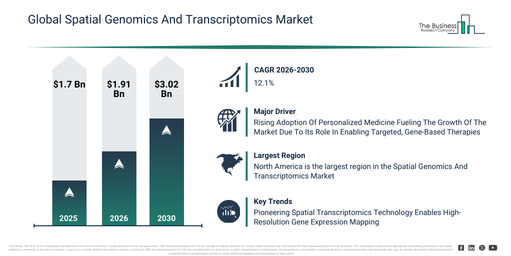
    The spatial genomics and transcriptomics market size has seen rapid expansion in recent years. Its valuation is anticipated to increase from $1.7 billion in 2025 to $1.91 billion in 2026, exhibiting a compound annual growth rate (CAGR) of 12.4%. Factors contributing to its historical growth include advancements in genomics, the expansion of transcriptomics research, the discovery of oncology biomarkers, a reduction in sequencing costs, and robust research funding.

    The spatial genomics and transcriptomics market size is expected to undergo substantial expansion in the coming years. It is predicted to attain a value of $3.02 billion by 2030, advancing at a compound annual growth rate (CAGR) of 12.1%. This growth during the forecast period can be linked to factors like the demand for personalized oncology, drug discovery applications, the rise of single-cell analysis, the broadening scope of computational biology, and a concentrated effort on clinical translation. Prominent trends observed in the forecast period encompass the progression of spatial mapping technologies, the integration of AI analytics, a surge in oncology research adoption, the proliferation of academic collaborations, and increased investment from the pharmaceutical industry.

    Access Your Free Sample Report for In-Depth Market Insights:

    https://www.thebusinessresearchcompany.com/sample.aspx?id=24405&type=smp

    Which Drivers Are Influencing Long-Term Growth In The Spatial Genomics And Transcriptomics Market?

    The spatial genomics and transcriptomics market is projected to expand due to the growing acceptance of personalized medicine. This healthcare methodology involves customizing treatment strategies for individual patients, considering their unique genetic composition, way of life, and environmental influences to boost treatment efficacy and reduce adverse reactions. The rising demand for personalized medicine stems from breakthroughs in genetic research, enabling more exact therapies designed for an individual’s distinct genetic profile, resulting in improved patient results. Spatial genomics and transcriptomics facilitate personalized medicine by identifying the exact position and function of genes inside tissues, thereby enabling specific, customized therapeutic approaches derived from a patient’s distinct molecular characteristics. As an illustration, in February 2024, the Personalized Medicine Coalition, a US-based non-profit organization, reported that the FDA granted approval for 16 new personalized treatments for individuals suffering from rare diseases in 2023, which marked a substantial rise from the six approvals recorded in 2022. Consequently, the expanding use of personalized medicine is fueling the growth of the spatial genomics and transcriptomics market.

    How Is The Spatial Genomics And Transcriptomics Market Divided Into Segments?

    The spatial genomics and transcriptomics market covered in this report is segmented –

    1) By Product: Instruments, Consumables, Software

    2) By Technology: Spatial Transcriptomics, Sequencing-Based Methods, Immunohistochemistry (IHC), Microscopy-Based RNA Imaging Techniques, Spatial Genomics

    3) By Application: Diagnostics, Translation Research, Drug Discovery And Development, Single Cell Analysis, Cell Biology, Other Applications

    4) By End-User: Pharmaceutical And Biotechnology Companies, Contract Research Organizations, Academic And Research Institutes

    Subsegments:

    1) By Instruments: Sequencing Platforms, Imaging Systems, Fluorescence Microscopes, Slide Scanners, Flow Cytometers

    2) By Consumables: Reagents And Kits, Slides And Coverslips, Probes And Tags, Sample Preparation Consumables

    3) By Software: Data Analysis And Visualization Tools, Image Analysis Software, Workflow Management Software, Cloud-Based Analytics Platforms

    What Trends Are Projected To Support The Growth Of The Spatial Genomics And Transcriptomics Market?

    Leading firms in the spatial genomics and transcriptomics market are prioritizing the creation of novel solutions, particularly spatial transcriptomics technologies, to deepen insights into gene expression within tissue structures. These advanced spatial transcriptomics techniques allow for the mapping of gene expression in tissue samples while maintaining their spatial arrangement, thus enabling scientists to examine the precise location and spread of RNA molecules. As an illustration, in February 2025, Illumina Inc., a US-based biotechnology company, unveiled a groundbreaking spatial transcriptomics technology. This innovation substantially improves the capacity to map and analyze gene expression in intricate tissues at a cellular level. It provides a capture area nine times larger and four times higher resolution compared to current approaches, facilitating unbiased, whole-transcriptome profiling with high sensitivity. The technology is compatible with Illumina’s NextSeq and NovaSeq sequencers and seamlessly integrated into the Illumina Connected Multiomics platform, thereby supporting extensive multiomic data analysis.

    Which Major Industry Participants Are Leading The Spatial Genomics And Transcriptomics Market Growth?

    Major companies operating in the spatial genomics and transcriptomics market are Thermo Fisher Scientific Inc., Danaher Corporation, Merck KGaA, Agilent Technologies Inc., Illumina Inc., Bio-Rad Laboratories Inc., Bruker Corporation, Bio-Techne Corporation, 10x Genomics Inc., Standard BioTools Inc., Akoya Biosciences Inc., Seven Bridges Genomics, Vizgen Inc., Lunaphore Technologies SA., Parse Biosciences, Indica Labs Inc., Resolve Biosciences GmbH., RareCyte Inc., Ionpath Inc., Dovetail Genomics, S2 Genomics Inc., BioSpyder Technologies Inc.

    Access The Complete Report For Deeper Market Insights:

    https://www.thebusinessresearchcompany.com/report/spatial-genomics-and-transcriptomics-global-market-report

    Which Region Is Expected To Experience The Fastest Growth In The Spatial Genomics And Transcriptomics Market?

    North America was the largest region in the spatial genomics and transcriptomics market in 2025. Asia-Pacific is expected to be the fastest-growing region in the forecast period. The regions covered in the spatial genomics and transcriptomics market report are Asia-Pacific, South East Asia, Western Europe, Eastern Europe, North America, South America, Middle East, Africa.

    Request Your Customized Spatial Genomics And Transcriptomics Market Research Report for Competitive Advantage:

    https://www.thebusinessresearchcompany.com/customise?id=24405&type=smp

    Browse Through More Reports Similar to the Global Spatial Genomics And Transcriptomics Market 2026, By The Business Research Company

    Optical Genome Mapping Market Report 2026

    https://www.thebusinessresearchcompany.com/report/optical-genome-mapping-global-market-report

    Rna Analysis Transcriptomics Market Report 2026

    https://www.thebusinessresearchcompany.com/report/rna-analysis-transcriptomics-global-market-report

    Plant Genomics Market Report 2026

    https://www.thebusinessresearchcompany.com/report/plant-genomics-global-market-report

    Get in touch with us:

    The Business Research Company: https://www.thebusinessresearchcompany.com/

    Americas +1 310-496-7795

    Asia +44 7882 955267 & +91 8897263534

    Europe +44 7882 955267

    Email us at info@tbrc.info

    Follow us on:

    LinkedIn: https://in.linkedin.com/company/the-business-research-company

    YouTube: https://www.youtube.com/channel/UC24_fI0rV8cR5DxlCpgmyFQ

    Global Market Model: https://www.thebusinessresearchcompany.com/global-market-model
  • Spasmodic Dysphonia Treatment Market Anticipated to Record Steady Gains, Advancing to $17.63 Billion by 2030

    Spasmodic Dysphonia Treatment Market Anticipated to Record Steady Gains, Advancing to $17.63 Billion by 2030

    Uncover key drivers, emerging technologies, and competitive movements shaping the spasmodic dysphonia treatment market from 2026–2035 with trusted insights from The Business Research Company

    What level of CAGR-driven expansion is anticipated in the Spasmodic Dysphonia Treatment Market between 2026 and 2030?

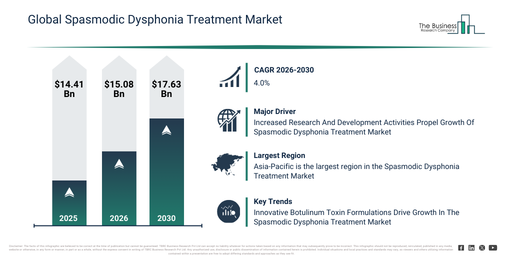
    The spasmodic dysphonia treatment market has exhibited consistent growth in its size over recent years. The market is anticipated to expand from $14.41 billion in 2025 to $15.08 billion in 2026, reflecting a compound annual growth rate (CAGR) of 4.6%. This historical expansion is attributable to several factors, including the availability of botulinum toxin, the progression of neurology research, enhancements in specialist diagnosis, the implementation of awareness programs, and the standardization of treatments.

    The spasmodic dysphonia treatment market is projected to experience consistent expansion in the coming years. This market is anticipated to reach $17.63 billion by 2030, exhibiting a compound annual growth rate (CAGR) of 4.0%. Factors contributing to this growth during the forecast period include efforts in early diagnosis, the evolution of new therapies, the increase in specialty clinics, the demographic shift towards an aging population, and the rise in patient advocacy. Key trends identified for the forecast period encompass a greater adoption of botulinum toxin, the growing incorporation of voice therapy, enhanced awareness in diagnostics, a wider network of specialty clinics, and various patient education programs.

    Access Your Free Sample Report for In-Depth Market Insights:

    https://www.thebusinessresearchcompany.com/sample.aspx?id=17261&type=smp

    What Drivers Are Affecting Demand-Supply Dynamics In The Spasmodic Dysphonia Treatment Market?

    The spasmodic dysphonia treatment market is projected to expand due to an uptick in research and development endeavors. These R&D efforts encompass systematic initiatives by entities or individuals to unearth novel insights, forge innovative technologies, or refine existing offerings, procedures, or services. Several factors contribute to the escalating R&D activities, including technological progress, governmental support, the creation of eco-friendly solutions, and virtual prototyping. For the treatment of spasmodic dysphonia, R&D is vital for advancing scientific understanding, enhancing therapeutic results, and improving the quality of life for those impacted by this complex voice ailment. As an illustration, the Office for National Statistics, a UK government agency, reported that the UK government’s net spending on R&D rose to £17.4 ($22.1 billion) billion in 2023, an increase from £16.1 billion ($20.45 billion) in 2022, marking an 8.2% growth. Consequently, the surge in research and development activities is fueling the expansion of the spasmodic dysphonia treatment market.

    What Segments Are Included Within The Spasmodic Dysphonia Treatment Market?

    The spasmodic dysphonia treatment market covered in this report is segmented –

    1) By Type: Drugs, Preventive Vaccines, Oxygen Therapy

    2) By Treatment: Therapy, Direct Microlaryngoscopy, Pulse Dye Laser, Botox Injections Or Injection Laryngoplasty, Minimally Invasive Approaches, Surgery, Voice therapy, Laryngeal Desensitization, Respiratory Re-training, Other Treatments

    3) By Route Of Administration: Oral, Parenteral, Other Routes Of Administration

    4) By Distribution Channel: Hospital Pharmacy, Online Pharmacy, Retail Pharmacy

    5) By End User: Hospitals, Homecare, Specialty Clinics, Other End Users

    Subsegments:

    1) By Drugs: Botulinum Toxin Injections, Anticholinergic Drugs, Muscle Relaxants

    2) By Preventive Vaccines: Botulinum Toxin Vaccine, Other Preventive Vaccines

    3) By Oxygen Therapy: Hyperbaric Oxygen Therapy, Normobaric Oxygen Therapy

    Which Trends Are Influencing The Performance And Direction Of The Spasmodic Dysphonia Treatment Market?

    Companies significantly involved in the spasmodic dysphonia treatment market are concentrating on developing effective formulations, such as botulinum toxin type A preparations, to address the distinct requirements of patients with this condition. Botulinum toxin type A formulations encompass various pharmaceutical compounds of botulinum toxin type A, a neurotoxic protein generated by the bacterium Clostridium botulinum. These formulations are utilized for both therapeutic and cosmetic applications to temporarily immobilize muscles or block nerve signals, primarily by hindering the release of acetylcholine at the neuromuscular junction. For example, in March 2024, Hugel Inc., a biopharmaceutical company headquartered in South Korea, introduced the botulinum toxin Letybo, which received approval from the Food and Drug Administration (FDA), a US-based federal agency. This newly FDA-approved botulinum toxin is characterized by a highly purified formulation that lessens adverse reactions and guarantees consistent results. Its distinctive molecular structure facilitates a quicker onset and sustained effects. This approval reinforces Hugel’s commitment to thorough clinical testing and quality, establishing Letybo as a robust participant in the aesthetic medicine market.

    Who Are The Prominent Global Companies Shaping The Spasmodic Dysphonia Treatment Market Landscape?

    Major companies operating in the spasmodic dysphonia treatment market are Johnson & Johnson Services Inc., AbbVie Inc., Mylan, Eisai Co. Ltd, GALDERMA, Ipsen Pharma, Daewoong Pharmaceutical Co. Ltd., Merz Pharma GmbH & Co. KGaA, Supernus Pharmaceuticals Inc., US WorldMeds, Candela Medical Corporation, HUGEL Inc., Evolus Inc., Revance Therapeutics Inc., Gufic Biosciences, Teijin Pharma, Suneva Medical, Healis Therapeutics, Medytox, ATGC Co. Ltd., Metabiologics Inc.

    Access The Complete Report For Deeper Market Insights:

    https://www.thebusinessresearchcompany.com/report/spasmodic-dysphonia-treatment-global-market-report

    Which Geographic Areas Are Emerging As Strong Markets For The Spasmodic Dysphonia Treatment Market?

    Asia-Pacific was the largest region in the spasmodic dysphonia treatment market in 2025. The regions covered in the spasmodic dysphonia treatment market report are Asia-Pacific, South East Asia, Western Europe, Eastern Europe, North America, South America, Middle East, Africa.

    Request Your Customized Spasmodic Dysphonia Treatment Market Research Report for Competitive Advantage:

    https://www.thebusinessresearchcompany.com/customise?id=17261&type=smp

    Browse Through More Reports Similar to the Global Spasmodic Dysphonia Treatment Market 2026, By The Business Research Company

    Dysphagia Supplement Market Report 2026

    https://www.thebusinessresearchcompany.com/report/dysphagia-supplement-global-market-report

    Muscle Tension Dysphonia Treatment Market Report 2026

    https://www.thebusinessresearchcompany.com/report/muscle-tension-dysphonia-treatment-global-market-report

    Dysphagia Management Market Report 2026

    https://www.thebusinessresearchcompany.com/report/dysphagia-management-global-market-report

    Get in touch with us:

    The Business Research Company: https://www.thebusinessresearchcompany.com/

    Americas +1 310-496-7795

    Asia +44 7882 955267 & +91 8897263534

    Europe +44 7882 955267

    Email us at info@tbrc.info

    Follow us on:

    LinkedIn: https://in.linkedin.com/company/the-business-research-company

    YouTube: https://www.youtube.com/channel/UC24_fI0rV8cR5DxlCpgmyFQ

    Global Market Model: https://www.thebusinessresearchcompany.com/global-market-model
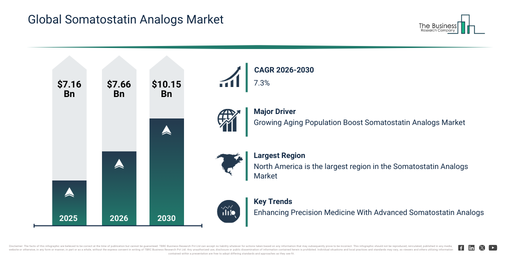
  • Somatostatin Analogs Industry Poised for Rapid Growth, Forecast to Touch $10.14 Billion by 2030 at 7.3% CAGR

    Somatostatin Analogs Industry Poised for Rapid Growth, Forecast to Touch $10.14 Billion by 2030 at 7.3% CAGR

    Uncover key drivers, emerging technologies, and competitive movements shaping the somatostatin analogs market from 2026–2035 with trusted insights from The Business Research Company

    What long-term size projections exist for the Somatostatin Analogs Market covering 2026–2035?

    The somatostatin analogs market has demonstrated robust growth over the past few years. It is projected to expand from $7.16 billion in 2025 to $7.66 billion in 2026, exhibiting a compound annual growth rate (CAGR) of 7.1%. This historical expansion is attributable to factors such as the rising incidence of neuroendocrine tumor diagnoses, the widespread prevalence of hormone disorders, compelling clinical efficacy evidence, targeted specialist prescribing, and enhanced hospital access.

    The somatostatin analogs market is projected to experience substantial expansion in the coming years. Its valuation is anticipated to reach $10.15 billion by 2030, exhibiting a compound annual growth rate (CAGR) of 7.3%. This expansion during the forecast period can be attributed to factors such as new biosimilar introductions, a broader range of approved uses, the increasing elderly demographic, enhanced diagnostic precision, and favorable reimbursement for specialty medications. Key developments anticipated within this timeframe involve the rising adoption of long-acting injectable formulations, an increase in indications for neuroendocrine tumors, a greater emphasis on improving patient adherence, continued biosimilar innovation, and the expansion of treatments administered in hospital settings.

    Access Your Free Sample Report for In-Depth Market Insights:

    https://www.thebusinessresearchcompany.com/sample.aspx?id=10840&type=smp

    Which Drivers Are Impacting The Competitive Landscape Of The Somatostatin Analogs Market?

    The expansion of the aging demographic is anticipated to stimulate future growth within the somatostatin analogs market. An aging population signifies a demographic change marked by a greater share or an escalating count of people aged 65 years and above in a community. An increase in the older age group is associated with a greater occurrence of medical conditions necessitating Somatostatin Analogs, thereby boosting the demand for these drugs. For example, data from July 2024, provided by the UK Parliament’s House of Commons Library, a government body based in the UK, indicated that in 2022, the UK had 12.7 million individuals aged 65 or over, making up 19% of its entire population. This figure is forecast to climb to 22.1 million by 2072, comprising 27% of the populace. Consequently, the expanding elderly population is fueling the market expansion for somatostatin analogs.

    What Leading Segments Are Studied In The Somatostatin Analogs Market?

    The somatostatin analogs market covered in this report is segmented –

    1) By Type: Octreotide, Lanreotide, Pasireotide

    2) By Treatment: Acromegaly, Cushing’s Syndrome, Neuroendocrine Tumors, Carcinoid Syndrome, Other Treatments

    3) By End User: Hospital, Pharmaceutical Companies

    Subsegments:

    1) By Octreotide: Long-Acting Release (LAR) Formulations, Short-Acting Formulations

    2) By Lanreotide: Depot Formulations, Injectable Formulations

    3) By Pasireotide: Long-Acting Injectable Formulations, Subcutaneous Formulations

    What Long-Term Trends Are Expected To Shape The Future Of The Somatostatin Analogs Market?

    Leading companies within the somatostatin analogs market are focusing on the development of advanced products, specifically targeted radiopharmaceuticals, to improve the precision and effectiveness of cancer treatments for patients with somatostatin receptor-positive tumors. Targeted radiopharmaceuticals are specialized medications that combine radiation-emitting isotopes with molecules designed to bind exclusively to cancer cells, facilitating the exact delivery of therapeutic radiation to tumor sites while minimizing exposure to surrounding healthy tissues. For instance, in January 2024, Lantheus, a US-based company focused on radiopharmaceuticals, introduced Lutetium Lu 177 Dotatate. Lutetium Lu-177 Dotatate is a radiolabeled somatostatin analog utilized in peptide receptor radionuclide therapy (PRRT) for treating advanced somatostatin receptor-positive neuroendocrine tumors. Clinical studies have demonstrated that it significantly enhances progression-free survival and response rates compared to traditional somatostatin analogs like octreotide, positioning it as a vital option for patients whose disease has progressed despite earlier treatments. Its targeted methodology allows for efficient tumor control while limiting systemic exposure, thereby improving the overall therapeutic profile in the management of neuroendocrine malignancies.

    Which Key Players Are Driving Competition In The Somatostatin Analogs Market?

    Major companies operating in the somatostatin analogs market are Novartis International AG, Pfizer Inc., Sun Pharmaceutical Industries Limited, Midatech Pharma plc, Crinetics Pharmaceuticals Inc., Peptron Inc., Teva Pharmaceutical Industries Ltd., Camurus AB, Bayer Aktiengesellschaft, Cadila Healthcare Limited, Amneal Pharmaceuticals Inc., Recordati S.p.A., Amryt Pharma plc, Ipsen Pharma SA, Fresenius Kabi AG, Chiasma Inc., Merck KGaA, Sanofi S.A., Sandoz International GmbH, Takeda Pharmaceutical Company Limited, Viatris Inc., AstraZeneca plc, Johnson & Johnson, Genentech Inc., OctreoPharm Sciences GmbH

    Access The Complete Report For Deeper Market Insights:

    https://www.thebusinessresearchcompany.com/report/somatostatin-analogs-global-market-report

    Which Region Is Projected To Lead The Somatostatin Analogs Market During The Forecast Period?

    North America was the largest region in the global somatostatin analogs treatment market in 2025.Asia-Pacific is expected to be the fastest-growing region in the forecast period. The regions covered in the somatostatin analogs market report are Asia-Pacific, South East Asia, Western Europe, Eastern Europe, North America, South America, Middle East, Africa.

    Request Your Customized Somatostatin Analogs Market Research Report for Competitive Advantage:

    https://www.thebusinessresearchcompany.com/customise?id=10840&type=smp

    Browse Through More Reports Similar to the Global Somatostatin Analogs Market 2026, By The Business Research Company

    Sorbates Market Report 2026

    https://www.thebusinessresearchcompany.com/report/sorbates-global-market-report

    Sorbitol Market Report 2026

    https://www.thebusinessresearchcompany.com/report/sorbitol-global-market-report

    Aspirin Market Report 2026

    https://www.thebusinessresearchcompany.com/report/aspirin-global-market-report

    Get in touch with us:

    The Business Research Company: https://www.thebusinessresearchcompany.com/

    Americas +1 310-496-7795

    Asia +44 7882 955267 & +91 8897263534

    Europe +44 7882 955267

    Email us at info@tbrc.info

    Follow us on:

    LinkedIn: https://in.linkedin.com/company/the-business-research-company

    YouTube: https://www.youtube.com/channel/UC24_fI0rV8cR5DxlCpgmyFQ

    Global Market Model: https://www.thebusinessresearchcompany.com/global-market-model
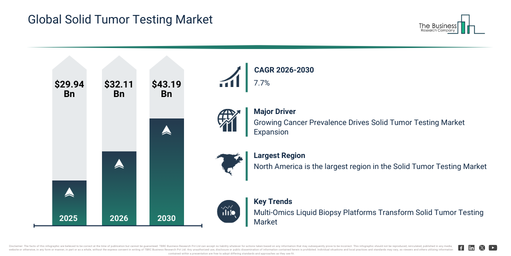
  • Solid Tumor Testing Market Performance Outlook 2026–2030: Revenue to Hit $43.19 Billion at 7.7% CAGR

    Solid Tumor Testing Market Performance Outlook 2026–2030: Revenue to Hit $43.19 Billion at 7.7% CAGR

    Uncover key drivers, emerging technologies, and competitive movements shaping the solid tumor testing market from 2026–2035 with trusted insights from The Business Research Company

    What total market size is anticipated for the Solid Tumor Testing Market in 2030?

    The solid tumor testing market has shown considerable expansion in recent years. It is anticipated to increase from $29.94 billion in 2025 to $32.11 billion in 2026, achieving a compound annual growth rate (CAGR) of 7.3%. Historically, this market’s growth has been fueled by progress in cancer diagnostics, the discovery of biomarkers, automation in pathology, increased oncology awareness, and various screening programs.

    The market for solid tumor testing is projected to experience robust expansion over the coming years. This market is anticipated to reach $43.19 billion by 2030, demonstrating a compound annual growth rate (CAGR) of 7.7%. Factors contributing to this growth during the projected period include the rising demand for personalized treatments, a greater emphasis on early detection, the broader application of genomic testing, the emergence of AI-driven diagnostics, and the expansion of oncology research. Key trends expected within the forecast timeframe encompass the proliferation of liquid biopsy testing, the uptake of next-generation sequencing, the wider availability of companion diagnostics, the incorporation of AI into pathology, and an increase in screening initiatives.

    Access Your Free Sample Report for In-Depth Market Insights:

    https://www.thebusinessresearchcompany.com/sample.aspx?id=12658&type=smp

    What Drivers Are Influencing Production Trends In The Solid Tumor Testing Market?

    The escalating incidence of cancer is anticipated to propel the expansion of the solid tumor testing market in the future. Cancer is a medical condition defined by the uncontrolled proliferation and spread of abnormal cells throughout the body. These aberrant cells, known as cancer cells, possess the ability to invade adjacent tissues and organs and, in certain instances, to disseminate to other parts of the body via the bloodstream or lymphatic system. A significant majority, approximately 90%, of adult cancers are classified as solid tumors. Solid tumor testing is employed to detect cancer cells in the blood of patients diagnosed with solid tumors, even before the cancer becomes visible on imaging scans. For instance, in July 2024, data from the Australian Institute of Health and Welfare, an Australia-based government agency, revealed that an estimated 165,000 Australians were newly diagnosed with cancer in 2023, which corresponds to over 450 cases each day, with males constituting about 55% of these diagnoses. Therefore, the rising prevalence of cancer is a primary driver for the growth of the solid tumor testing market.

    Which Segment Groups Are Influencing The Solid Tumor Testing Market?

    The solid tumor testing market covered in this report is segmented –

    1) By Type: Genetic Testing, Conventional Testing

    2) By Cancer Type: Breast Cancer, Lung Cancer, Colorectal Cancer, Prostate Cancer, Cervical Cancer

    3) By Application: Clinical, Research

    4) By End-Users: Hospitals, Pharmaceutical And Biotechnology Companies, Contract Research Organizations, Academic Research Institutions

    Subsegments:

    1) By Genetic Testing: Next-Generation Sequencing (NGS), Polymerase Chain Reaction (PCR), Fluorescence In Situ Hybridization (FISH)

    2) By Conventional Testing: Histopathology, Cytology, Imaging Techniques

    Which Market Trends Are Opening Growth Opportunities In The Solid Tumor Testing Market?

    Major companies engaged in the solid tumor testing market are prioritizing advancements, specifically liquid biopsy platforms for solid tumor analysis. A liquid biopsy platform utilizes diverse technologies and systems to examine bodily fluids, typically blood, for biomarkers associated with cancer. For example, in January 2023, PrognomiQ, a US-based healthcare firm, unveiled its multi-omics liquid biopsy platform. PrognomiQ has advanced its product development with the launch of a 15,000-subject prospective clinical program, which has already welcomed its first patient. This effort was motivated by the potential of multi-omics markers to differentiate between cancer cases and control groups.

    Who Are The Top-Performing Companies In The Solid Tumor Testing Market In Recent Years?

    Major companies operating in the solid tumor testing market are Johnson & Johnson Ltd, Roche Diagnostics Corporation, Thermo Fisher Scientific Inc., Abbott Molecular Inc., Becton Dickinson And Company BD, Quest Diagnostics Incorporated, Tosoh Corporation, Agilent Technologies Inc., bioMerieux Inc., Beckman Coulter Inc., Bio-Rad Laboratories Inc., QIAGEN GmbH, Miltenyi Biotec GmbH, Natera Inc., Myriad Genetics Inc., Invitae Corporation, Guardant Health Inc., Foundation Medicine Inc., Epic Sciences Inc., Biocare Medical LLC, Agena Bioscience Inc., Caris Life Sciences Inc., 20/20 Gene Systems Inc., Grail Inc., Avant Diagnostics Inc., Genomic Testing Cooperative, Anixa Biosciences Inc., Cellular Biomedicine Group

    Access The Complete Report For Deeper Market Insights:

    https://www.thebusinessresearchcompany.com/report/solid-tumor-testing-global-market-report

    Which Region Currently Holds The Largest Share Of The Solid Tumor Testing Market?

    North America was the largest region in the solid tumor testing market in 2025. Asia-Pacific is expected to be the fastest-growing region in the forecast period. The regions covered in the solid tumor testing market report are Asia-Pacific, South East Asia, Western Europe, Eastern Europe, North America, South America, Middle East, Africa.

    Request Your Customized Solid Tumor Testing Market Research Report for Competitive Advantage:

    https://www.thebusinessresearchcompany.com/customise?id=12658&type=smp

    Browse Through More Reports Similar to the Global Solid Tumor Testing Market 2026, By The Business Research Company

    Hemato Oncology Testing Market Report 2026

    https://www.thebusinessresearchcompany.com/report/hemato-oncology-testing-global-market-report

    Cancer Diagnostics Market Report 2026

    https://www.thebusinessresearchcompany.com/report/cancer-diagnostics-global-market-report

    Solid Tumor Cancer Treatment Market Report 2026

    https://www.thebusinessresearchcompany.com/report/solid-tumor-cancer-treatment-global-market-report

    Get in touch with us:

    The Business Research Company: https://www.thebusinessresearchcompany.com/

    Americas +1 310-496-7795

    Asia +44 7882 955267 & +91 8897263534

    Europe +44 7882 955267

    Email us at info@tbrc.info

    Follow us on:

    LinkedIn: https://in.linkedin.com/company/the-business-research-company

    YouTube: https://www.youtube.com/channel/UC24_fI0rV8cR5DxlCpgmyFQ

    Global Market Model: https://www.thebusinessresearchcompany.com/global-market-model
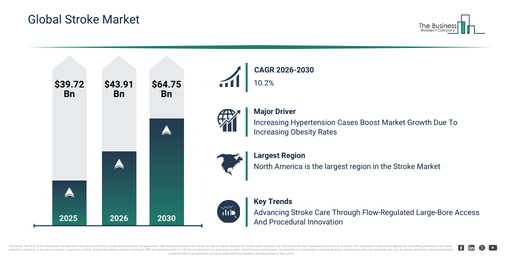
  • Stroke Management Market Report 2026: Strategic Insights and Revenue Outlook

    Stroke Management Market Report 2026: Strategic Insights and Revenue Outlook

    Uncover key drivers, emerging technologies, and competitive movements shaping the stroke management market from 2026–2035 with trusted insights from The Business Research Company

    What market expansion outlook does the Stroke Management Market show for the 2026–2030 period?

    The stroke management market has shown robust expansion over recent years. It is forecast to grow from $43.15 billion in 2025 to $46.38 billion in 2026, achieving a compound annual growth rate (CAGR) of 7.5%. The market’s historical growth can be attributed to an increasing prevalence of ischemic stroke cases, enhanced access to diagnostic imaging systems, the establishment of more specialized stroke units, rising public awareness of stroke symptoms, and continuous advancements in thrombolytic drug therapies.

    The stroke management market is projected to experience robust expansion over the coming years. Its valuation is set to reach $62.55 billion by 2030, exhibiting a compound annual growth rate (CAGR) of 7.8%. This anticipated growth during the forecast timeframe is primarily driven by the increasing integration of AI-based imaging analytics, higher financial commitments towards comprehensive stroke centers, the broadening of tele-stroke networks, a surging need for sophisticated clot retrieval devices, and a dedicated emphasis on enhancing rehabilitation results post-stroke. Key developments expected within this period encompass a greater utilization of AI-assisted stroke diagnosis, the increasing integration of minimally invasive interventional devices, the wider implementation of advanced neuroimaging systems, the extension of integrated stroke care pathways, and an amplified focus on optimizing rapid treatment times.

    Access Your Free Sample Report for In-Depth Market Insights:

    https://www.thebusinessresearchcompany.com/sample.aspx?id=9988&type=smp

    What Drivers Are Shaping The Development Of The Stroke Management Market?

    The expanding occurrence of chronic illnesses is anticipated to fuel the expansion of the stroke management market moving ahead. Such conditions are defined as health issues enduring for a year or more, hindering daily life, requiring ongoing medical attention, or a combination of these factors. Stroke management aids individuals afflicted with numerous chronic ailments, including cancer and cardiovascular diseases, by offering prompt attention to preventative, care, and supportive needs through empowering and educating patients, alongside establishing care delivery models that incorporate both primary and secondary care. As an illustration, the Centers for Disease Control and Prevention (CDC), a US-based federal agency, reported in April 2025 that in 2023, around 194 million U.S. adults, representing 76.4%, stated they had at least one chronic condition. This prevalence stood at 59.5% for young adults, 78.4% for midlife adults, and 93.0% for older adults. Consequently, the rising prevalence of chronic diseases is boosting the expansion of the stroke management market in the future.

    What Segment Types Are Examined In The Stroke Management Market?

    The stroke management market covered in this report is segmented –

    1) By Product Type: Diagnostics, Drug Therapy Products, Interventional Stroke Management Systems

    2) By Application: Ischemic Stroke, Hemorrhagic Stroke

    3) By End-User: Hospitals, Clinics, Ambulatory Surgery Centers, Diagnostic Centers, Retail Pharmacies, Online Pharmacies, Other End Users

    Subsegments:

    1) By Diagnostics: Imaging Systems, Diagnostic Software, Blood Tests

    2) By Drug Therapy Products: Anticoagulants, Antiplatelet Drugs, Thrombolytic Agents, Antihypertensive Drugs

    3) By Interventional Stroke Management Systems: Clot Retrieval Devices, Stent Retrievers, Embolic Protection Devices, Carotid Artery Stenting Systems

    What Trends Are Reshaping The Dynamics Of The Stroke Management Market?

    Leading companies operating in the stroke management market are concentrating on introducing innovative products, such as a portfolio of Ischemic stroke solutions, to achieve a competitive advantage. An ischemic stoke solution device is a medical instrument designed to retrieve or destroy blood clots in the cerebral vasculature to restore blood flow to the brain during an acute ischemic stroke. For instance, in June 2023, MicroVention Inc., a US-based neuroendovascular medical device company, launched its Eric retrieval device for treating ischemic stroke in the US. Eric is a self-expanding, laser-cut clot retriever equipped with multiple retrieval cages located on a pusher wire delivery system. According to MicroVention, the device’s atraumatic design adheres to the natural vessel’s guidelines, delivering mild outward radial force, limited vessel wall contact, and impressive flexibility.

    Who Are The Primary Competitors In The Global Stroke Management Market?

    Major companies operating in the stroke management market are GE HealthCare Technologies Inc., Abbott Laboratories, Medtronic plc, Boston Scientific Corporation, B Braun Melsungen AG, Bristol Myers Squibb Co., Cardinal Health Inc., Siemens Healthineers, Merck And Co. Inc., Asahi Intech Co. Ltd., Johnson & Johnson, Penumbra Inc., Teleflex Inc., Stryker Corporation, Biogen Inc., Bayer AG, Philips Healthcare, AstraZeneca Plc., F. Hoffmann-la Roche, Novartis AG, Takeda Pharmaceutical Company Ltd., Sanofi SA, Daiichi Sankyo Company Limited, Boehringer Ingelheim International GmbH, Pfizer Inc.

    Access The Complete Report For Deeper Market Insights:

    https://www.thebusinessresearchcompany.com/report/stroke-management-global-market-report

    Which Global Regions Are Shaping The Competitive Landscape Of The Stroke Management Market?

    North America was the largest region in the stroke management market in 2025.Asia-Pacific is expected to be the fastest-growing region in the global stroke management market report during the forecast period. The regions covered in the stroke management market report are Asia-Pacific, South East Asia, Western Europe, Eastern Europe, North America, South America, Middle East, Africa.

    Request Your Customized Stroke Management Market Research Report for Competitive Advantage:

    https://www.thebusinessresearchcompany.com/customise?id=9988&type=smp

    Browse Through More Reports Similar to the Global Stroke Management Market 2026, By The Business Research Company

    Cerebral Palsy Treatment Market Report 2026

    https://www.thebusinessresearchcompany.com/report/cerebral-palsy-treatment-global-market-report

    Acute Ischemic Stroke Diagnosis Market Report 2026

    https://www.thebusinessresearchcompany.com/report/acute-ischemic-stroke-diagnosis-global-market-report

    Acute Ischemic Stroke Drugs Market Report 2026

    https://www.thebusinessresearchcompany.com/report/acute-ischemic-stroke-drugs-global-market-report

    Get in touch with us:

    The Business Research Company: https://www.thebusinessresearchcompany.com/

    Americas +1 310-496-7795

    Asia +44 7882 955267 & +91 8897263534

    Europe +44 7882 955267

    Email us at info@tbrc.info

    Follow us on:

    LinkedIn: https://in.linkedin.com/company/the-business-research-company

    YouTube: https://www.youtube.com/channel/UC24_fI0rV8cR5DxlCpgmyFQ

    Global Market Model: https://www.thebusinessresearchcompany.com/global-market-model
  • Global Stroke Diagnostic And Therapeutic Industry Trends and Market Forecast 2026–2030

    Global Stroke Diagnostic And Therapeutic Industry Trends and Market Forecast 2026–2030

    Uncover key drivers, emerging technologies, and competitive movements shaping the stroke diagnostic and therapeutic market from 2026–2035 with trusted insights from The Business Research Company

    What level of growth is expected in the Stroke Diagnostic And Therapeutic Market between 2026 and 2030?

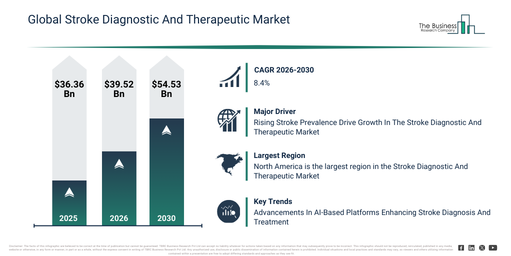
    The stroke diagnostic and therapeutic market size has shown robust growth in recent years. It is projected to expand from $36.36 billion in 2025 to $39.52 billion in 2026, demonstrating a compound annual growth rate (CAGR) of 8.7%. The growth observed in the historic period stems from the increasing prevalence of ischemic and hemorrhagic strokes, rising awareness of early stroke diagnosis, the expansion of hospital-based stroke units, broader availability of neuroimaging technologies, and refined clinical stroke protocols.

    The stroke diagnostic and therapeutic market is projected to experience substantial expansion over the coming years. This sector is forecast to reach a valuation of $54.53 billion by 2030, demonstrating an 8.4% compound annual growth rate (CAGR). This anticipated growth during the forecast period can be attributed to several factors, including an expanding elderly population facing elevated stroke risk, an increasing need for prompt diagnostic methods, the broadening of tele-stroke networks, the rising acceptance of customized stroke treatments, and greater investment in advanced rehabilitation technologies. Key trends anticipated during this period include the wider implementation of AI-assisted tools for stroke imaging, an increase in the utilization of sophisticated neuroimaging techniques, the growing incorporation of remote monitoring systems for stroke patients, the development of minimally invasive stroke interventions, and an intensified focus on assessing stroke risk early.

    Access Your Free Sample Report for In-Depth Market Insights:

    https://www.thebusinessresearchcompany.com/sample.aspx?id=20654&type=smp

    Which Drivers Are Expected To Impact The Stroke Diagnostic And Therapeutic Market During The Forecast Period?

    The rising incidence of stroke cases is anticipated to drive expansion in the stroke diagnostic and therapeutic market. Stroke is a critical medical condition resulting from interrupted or diminished blood flow to a brain region, which deprives brain tissue of vital oxygen and nutrients, potentially causing damage or death of brain cells. Hypertension elevates stroke risk by compromising blood vessels, rendering them more prone to rupture or obstruction. The efficacy of stroke diagnostics and therapeutics profoundly impacts patient prognoses, given that rapid identification and prompt intervention can significantly lessen brain damage, functional impairment, and fatalities. For example, as reported by the Australia-based Stroke Foundation in 2024, approximately 440,481 Australians were living with stroke in 2023, with 45,785 new stroke events documented in that period. Projections indicate that annual incident strokes will climb to 72,000 by 2050, representing an approximate 57.3% increase, which points to a significant rise in future demand for services and associated long-term care expenditures. Consequently, the growing occurrence of stroke cases is stimulating the growth of the stroke diagnostic and therapeutic market.

    Which Segments Are Driving Activity In The Stroke Diagnostic And Therapeutic Market?

    The stroke diagnostic and therapeutic market covered in this report is segmented –

    1) By Type: Diagnostics, Therapeutics

    2) By Stroke Prevention Strategies: Medication Management, Lifestyle Modifications, Surgical Interventions

    3) By Application: Hemorrhagic Stroke, Ischemic Stroke

    Subsegments:

    1) By Diagnostics: Imaging Techniques, Blood Tests And Biomarker Analysis, Ultrasound Imaging, Neuroimaging Devices, Stroke Risk Assessment Tools

    2) By Therapeutics: Thrombolytic Medications, Antiplatelet Agents, Anticoagulants, Surgical Interventions, Rehabilitation Devices And Therapy Solutions, Neuromodulation Therapies

    How Are New Market Trends Shaping The Landscape Of The Stroke Diagnostic And Therapeutic Market?

    Leading companies in the stroke diagnostic and therapeutic sector are actively developing advanced AI-driven healthcare platforms aimed at enhancing the precision and efficiency of stroke diagnosis and treatment. An AI-based healthcare platform leverages artificial intelligence to analyze extensive patient data, identify patterns, and provide valuable insights, thereby striving to improve diagnostic accuracy, optimize treatment effectiveness, and deliver personalized care. For instance, in November 2023, RapidAI, a US-based provider of artificial intelligence (AI) and technology, introduced Rapid Edge Cloud. This platform features a hybrid structure, combining cloud and on-premise technologies to boost speed, strengthen security, and increase flexibility. It seamlessly connects with hospital and third-party applications and has secured Class III Shonin clearance in Japan, recognized as the world’s second-largest stroke market. Rapid represents Japan’s inaugural advanced stroke imaging platform that supports mechanical thrombectomy determination, offering unique MR-based perfusion capabilities. Its AI-powered non-contrast CT solutions, such as Rapid NCCT Stroke, Rapid ASPECTS, Rapid Hypodensity, Rapid Hyperdensity, and Rapid SDH, are uniquely designed to detect suspected stroke cases during the initial CT scan, which considerably reduces decision and treatment times and improves patient outcomes.

    Which Key Market Players Are Investing In Expansion And Innovation Within The Stroke Diagnostic And Therapeutic Market?

    Major companies operating in the stroke diagnostic and therapeutic market are Johnson & Johnson Service Inc, Bayer AG, Abbott Laboratories, Medtronic plc, Boehringer Ingelheim International GmbH, Siemens Healthineers AG, Koninklijke Philips N. V., Stryker Corporation, GE HealthCare Technologies Inc., Boston Scientific Corporation, Terumo Corporation, Genentech Inc., Nihon Kohden Corporation, MicroPort Scientific Corporation, Penumbra Inc., ASAHI INTECC CO. LTD., Silk Road Medical Inc., RapidAI, Pharmazz Inc., Medfield Diagnostics AB, Perfuze Limited, Qure.ai Technologies Private limited

    Access The Complete Report For Deeper Market Insights:

    https://www.thebusinessresearchcompany.com/report/stroke-diagnostic-and-therapeutic-global-market-report

    Which Regions Are Poised For Strategic Growth In The Stroke Diagnostic And Therapeutic Market?

    North America was the largest region in the stroke diagnostic and therapeutic market in 2025. Asia-Pacific is expected to be the fastest-growing region in the forecast period. The regions covered in the stroke diagnostic and therapeutic market report are Asia-Pacific, South East Asia, Western Europe, Eastern Europe, North America, South America, Middle East, Africa.

    Request Your Customized Stroke Diagnostic And Therapeutic Market Research Report for Competitive Advantage:

    https://www.thebusinessresearchcompany.com/customise?id=20654&type=smp

    Browse Through More Reports Similar to the Global Stroke Diagnostic And Therapeutic Market 2026, By The Business Research Company

    Therapeutic Proteins Market Report 2026

    https://www.thebusinessresearchcompany.com/report/therapeutic-proteins-global-market-report

    Acute Ischemic Stroke Drugs Market Report 2026

    https://www.thebusinessresearchcompany.com/report/acute-ischemic-stroke-drugs-global-market-report

    Acute Ischemic Stroke Diagnosis Market Report 2026

    https://www.thebusinessresearchcompany.com/report/acute-ischemic-stroke-diagnosis-global-market-report

    Get in touch with us:

    The Business Research Company: https://www.thebusinessresearchcompany.com/

    Americas +1 310-496-7795

    Asia +44 7882 955267 & +91 8897263534

    Europe +44 7882 955267

    Email us at info@tbrc.info

    Follow us on:

    LinkedIn: https://in.linkedin.com/company/the-business-research-company

    YouTube: https://www.youtube.com/channel/UC24_fI0rV8cR5DxlCpgmyFQ

    Global Market Model: https://www.thebusinessresearchcompany.com/global-market-model
  • Stroke Market Size and Demand Forecast 2026–2030

    Stroke Market Size and Demand Forecast 2026–2030

    Uncover key drivers, emerging technologies, and competitive movements shaping the stroke market from 2026–2035 with trusted insights from The Business Research Company

    How much is the Stroke Market valued at in 2026, and what valuation is forecast for 2030?

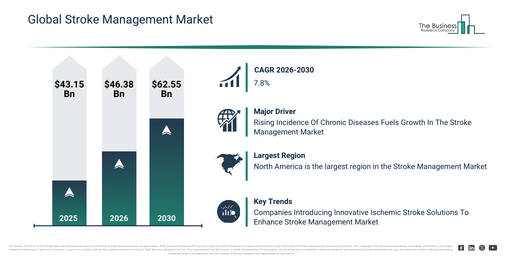
    The stroke market size has demonstrated rapid expansion in recent years. This market is anticipated to expand from $39.72 billion in 2025 to $43.91 billion in 2026, reflecting a compound annual growth rate (CAGR) of 10.5%. The historical growth of this market can be ascribed to an increasing prevalence of cardiovascular diseases, the demographic shift towards an aging population, improvements in hospital stroke care infrastructure, a wider availability of diagnostic imaging, and increased public awareness of stroke symptoms.

    The stroke market is poised for significant growth in the upcoming years, with its size expected to reach $64.75 billion by 2030, exhibiting a compound annual growth rate (CAGR) of 10.2%. This expansion throughout the forecast period is fueled by factors such as the wider availability of AI-assisted clinical decision tools, increased investment in minimally invasive stroke treatments, a rising adoption of remote stroke monitoring, a greater focus on preventive stroke care, and the proliferation of advanced neurovascular devices. Moreover, major trends anticipated during this period include the increasing integration of AI-based stroke diagnostics, a surge in the use of thrombolytic and thrombectomy procedures, a heightened emphasis on rapid emergency response systems, the growth of tele-stroke networks, and an enhanced application of advanced neuroimaging.

    Access Your Free Sample Report for In-Depth Market Insights:

    https://www.thebusinessresearchcompany.com/sample.aspx?id=25914&type=smp

    What Drivers Are Influencing The Growth Of The Stroke Market?

    The rising prevalence of hypertension cases is projected to stimulate growth in the stroke market moving forward. Hypertension, commonly referred to as high blood pressure, is a medical state where the pressure of blood against the inner walls of arteries remains consistently elevated. The increase in hypertension cases stems from the escalating rate of obesity, as excess body weight imposes greater strain on the heart and blood vessels, leading to a gradual rise in blood pressure. Hypertension contributes to stroke by exerting excessive force on the walls of blood vessels, which can result in the weakening, narrowing, or rupture of arteries within the brain. For instance, in January 2025, according to the Centers for Disease Control and Prevention, a US-based organisation, in 2023, high blood pressure played a primary or contributing role in 664,470 deaths in the United States. Thus, the growing number of hypertension cases is a significant driver for the expansion of the stroke market.

    How Is The Stroke Market Organized Into Various Segments?

    The stroke market covered in this report is segmented –

    1) By Type: Ischemic Stroke, Transient Ischemic Attack (TIA), Hemorrhagic Stroke

    2) By Diagnosis And Treatment: Diagnosis, Treatment

    3) By Gender: Female, Male

    4) By Distribution Channel: Direct, Retail, Online

    5) By End User: Hospitals, Clinics

    Subsegments:

    1) By Ischemic Stroke: Thrombotic Stroke, Embolic Stroke, Cryptogenic Stroke, Lacunar Stroke

    2) By Transient Ischemic Attack (TIA): Carotid Artery Transient Ischemic Attack (TIA), Cardiac Source Transient Ischemic Attack (TIA), Undetermined Cause Transient Ischemic Attack (TIA)

    3) By Hemorrhagic Stroke: Intracerebral Hemorrhage (ICH), Subarachnoid Hemorrhage (SAH), Subdural Hemorrhage, Epidural Hemorrhage

    Which Trends Are Expected To Influence The Stroke Market In The Upcoming Years?

    Leading companies within the stroke market are directing their efforts towards developing advanced stroke intervention devices, including flow-regulated large-bore access, to elevate procedural precision and optimize outcomes in intricate neurovascular interventions like mechanical thrombectomy. Flow-regulated large-bore access refers to a catheter architecture that integrates a wide internal diameter for device placement with built-in blood flow control, allowing for safer and more effective navigation during neurovascular procedures. For example, in February 2025, Johnson & Johnson MedTech, a US-based medical technology company, launched the CEREGLIDE 92 Catheter System, a subsequent generation .092” catheter that enhances access and flow management during mechanical thrombectomy for acute ischemic stroke, aiding physicians in navigating brain anatomy and re-establishing blood flow more efficiently. This device features the INNERGLIDE 9 delivery aid for smooth catheter insertion and BRITE-LINE technology for clear visualization during procedures. Its TruCourse flexible tip improves navigation through complex brain vessels, thereby increasing treatment success and patient outcomes, additionally, it supports sustainability by utilizing electronic instructions for use, which lessens its environmental footprint.

    Who Are The Core Companies Influencing Trends In The Stroke Market?

    Major companies operating in the stroke market are Pfizer Inc., Johnson & Johnson Services Inc., F. Hoffmann-La Roche Ltd., Bayer AG, Sanofi S.A., Bristol-Myers Squibb Company, AstraZeneca plc, Abbott Laboratories, Medtronic plc, Fresenius SE & Co. KGaA, Stryker Corporation, Boehringer Ingelheim International GmbH, Viatris Inc., Teva Pharmaceuticals USA Inc., Daiichi Sankyo Company Limited, Amneal Pharmaceuticals LLC, Lupin Limited, MicroPort Scientific Corporation, Penumbra Inc., NeuroVasc Technologies Inc.

    Access The Complete Report For Deeper Market Insights:

    https://www.thebusinessresearchcompany.com/report/stroke-global-market-report

    Which Regions Are Projected To Dominate The Stroke Market In The Coming Years?

    North America was the largest region in the stroke market in 2025, and it is expected to be the fastest-growing region in the forecast period. The regions covered in the stroke market report are Asia-Pacific, South East Asia, Western Europe, Eastern Europe, North America, South America, Middle East, Africa.

    Request Your Customized Stroke Market Research Report for Competitive Advantage:

    https://www.thebusinessresearchcompany.com/customise?id=25914&type=smp

    Browse Through More Reports Similar to the Global Stroke Market 2026, By The Business Research Company

    Concussion Market Report 2026

    https://www.thebusinessresearchcompany.com/report/concussion-global-market-report

    Acute Ischemic Stroke Diagnosis Market Report 2026

    https://www.thebusinessresearchcompany.com/report/acute-ischemic-stroke-diagnosis-global-market-report

    Acute Ischemic Stroke Drugs Market Report 2026

    https://www.thebusinessresearchcompany.com/report/acute-ischemic-stroke-drugs-global-market-report

    Get in touch with us:

    The Business Research Company: https://www.thebusinessresearchcompany.com/

    Americas +1 310-496-7795

    Asia +44 7882 955267 & +91 8897263534

    Europe +44 7882 955267

    Email us at info@tbrc.info

    Follow us on:

    LinkedIn: https://in.linkedin.com/company/the-business-research-company

    YouTube: https://www.youtube.com/channel/UC24_fI0rV8cR5DxlCpgmyFQ

    Global Market Model: https://www.thebusinessresearchcompany.com/global-market-model
  • Strep Throat Treatment Market Outlook: Growth and Forecast Highlights 2030

    Strep Throat Treatment Market Outlook: Growth and Forecast Highlights 2030

    Uncover key drivers, emerging technologies, and competitive movements shaping the strep throat treatment market from 2026–2035 with trusted insights from The Business Research Company

    By how much is the Strep Throat Treatment Market expected to grow between 2026 and 2030?

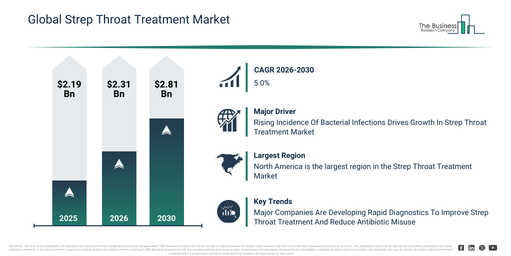
    The strep throat treatment market has shown substantial growth in recent years. Its value is projected to increase from $2.19 billion in 2025 to $2.31 billion in 2026, achieving a compound annual growth rate (CAGR) of 5.5%. This historical growth can be attributed to factors such as the increasing prevalence of bacterial throat infections, the widespread availability of penicillin-based antibiotics, the expansion of primary healthcare access, a growing pediatric patient population, and established clinical treatment guidelines.

    The strep throat treatment market is projected to experience robust expansion in the upcoming years. By 2030, its value is anticipated to reach $2.81 billion, growing at a compound annual growth rate (CAGR) of 5.0%. This expansion during the forecast period is driven by several factors, including an increased emphasis on antimicrobial resistance management, a wider adoption of rapid point-of-care diagnostics, the broadening of telehealth consultations, a greater need for accurate early diagnosis, and heightened investments in infectious disease research. Key trends foreseen for this period encompass a growing uptake of rapid diagnostic testing, a heightened concentration on antibiotic stewardship programs, the increasing application of combination therapy approaches, the widening scope of telemedicine-based diagnosis, and improved patient awareness leading to earlier treatment.

    Access Your Free Sample Report for In-Depth Market Insights:

    https://www.thebusinessresearchcompany.com/sample.aspx?id=17263&type=smp

    Which Drivers Are Influencing Market Acceleration In The Strep Throat Treatment Market?

    The increasing frequency of bacterial infections is projected to boost the strep throat treatment market in the future. Bacterial infections are illnesses resulting from harmful bacteria that infiltrate the body, multiply, and generate toxins. The rise in these infections can be attributed to factors such as excessive antibiotic use, increased global travel, urbanization, inadequate hygiene, and healthcare-associated infections. Strep throat treatment addresses bacterial infections by offering effective medication and care, thereby alleviating symptoms, shortening the duration of illness, and preventing complications, while also assisting healthcare providers in managing patient outcomes and curbing the spread of infections. For example, in June 2023, a report from the Office for Health Improvement and Disparities, a UK governmental body, indicated that 4,622 notifications of scarlet fever Group A Streptococcus bacteria were received from week 37 to week 46 during the 2022-2023 season in England, with 851 notifications specifically in week 46. This figure is considerably higher than the average of 1,294 notifications (ranging from 258 to 2,008) for the same period (weeks 37 to 46) over the preceding five years. Consequently, the growing incidence of bacterial infections is propelling the strep throat treatment market.

    What Segments Are Identified Within The Structure Of The Strep Throat Treatment Market?

    The strep throat treatment market covered in this report is segmented –

    1) By Treatment Type: Antibiotics, Pain Relievers, Other Treatment Type

    2) By Diagnosis: Antibody Test, Physical Examination, Throat Culture, Other Diagnosis

    3) By Route Of Administration: Oral, Topical, Injectable

    4) By Disease Type: Acute Strep Throat, Pharyngitis, Tonsillitis, Laryngitis, Other Disease Type

    5) By End-Users: Hospitals, Specialty Clinics, Diagnostic Laboratories, Other End-Users

    Subsegments:

    1) By Antibiotics: Penicillin-Based Antibiotics, Amoxicillin-Based Antibiotics, Cephalosporins, Macrolides

    2) By Pain Relievers: Non-Steroidal Anti-Inflammatory Drugs (Nsaids), Acetaminophen, Topical Throat Sprays Or Lozenges

    3) By Other Treatment Types: Corticosteroids, Herbal Remedies, Saltwater Gargles And Other Home Remedies

    What Trends Are Driving The Growth Trajectory Of The Strep Throat Treatment Market?

    Major companies within the strep throat treatment market are actively developing novel solutions, such as rapid throat infection diagnostics, to offer quick, accurate, and multi-target diagnostic testing for respiratory and sore throat infections directly at the patient’s care location, thereby improving patient care and reducing the misuse of antibiotics. Rapid throat infection diagnostics include tests, like the rapid strep test, which swiftly identify group A streptococcus bacteria in the throat, facilitating timely diagnosis and treatment of strep throat. For instance, in June 2024, bioMérieux, a France-based in vitro diagnostics company, announced the launch of its BIOFIRE SPOTFIRE Respiratory/Sore Throat (R/ST) Panel Mini, a rapid diagnostic test designed to detect five common viral and bacterial causes of respiratory and sore throat infections, providing quick, actionable results at the point of care.

    Which Major Industry Participants Are Leading The Strep Throat Treatment Market Growth?

    Major companies operating in the strep throat treatment market are Pfizer Inc., Johnson And Johnson, Merck And Co. Inc., AbbVie Inc., Bayer AG, Sanofi SA, Bristol-Myers Squibb Company, AstraZeneca plc, Abbott Laboratories, Novartis AG, F. Hoffmann-La Roche AG, Takeda Pharmaceutical Company Limited, GlaxoSmithKline plc GSK, C.H. Boehringer Sohn AG And Co. KG, Eli Lilly and Company, Amgen Inc., Reckitt Benckiser Pharmaceuticals Inc., Teva Pharmaceutical Industries Ltd., Eisai Co. Ltd., Mylan N.V

    Access The Complete Report For Deeper Market Insights:

    https://www.thebusinessresearchcompany.com/report/strep-throat-treatment-global-market-report

    Which Region Is Expected To Experience The Fastest Growth In The Strep Throat Treatment Market?

    North America was the largest region in the strep throat treatment market in 2025. Asia-Pacific is expected to be the fastest-growing region in the forecast period. The regions covered in the strep throat treatment market report are Asia-Pacific, South East Asia, Western Europe, Eastern Europe, North America, South America, Middle East, Africa.

    Request Your Customized Strep Throat Treatment Market Research Report for Competitive Advantage:

    https://www.thebusinessresearchcompany.com/customise?id=17263&type=smp

    Browse Through More Reports Similar to the Global Strep Throat Treatment Market 2026, By The Business Research Company

    Surgical Stapling Products Market Report 2026

    https://www.thebusinessresearchcompany.com/report/surgical-stapling-products-global-market-report

    Pharyngitis Treatment Market Report 2026

    https://www.thebusinessresearchcompany.com/report/pharyngitis-treatment-global-market-report

    Bronchitis Treatment Market Report 2026

    https://www.thebusinessresearchcompany.com/report/bronchitis-treatment-global-market-report

    Get in touch with us:

    The Business Research Company: https://www.thebusinessresearchcompany.com/

    Americas +1 310-496-7795

    Asia +44 7882 955267 & +91 8897263534

    Europe +44 7882 955267

    Email us at info@tbrc.info

    Follow us on:

    LinkedIn: https://in.linkedin.com/company/the-business-research-company

    YouTube: https://www.youtube.com/channel/UC24_fI0rV8cR5DxlCpgmyFQ

    Global Market Model: https://www.thebusinessresearchcompany.com/global-market-model