Month: March 2026

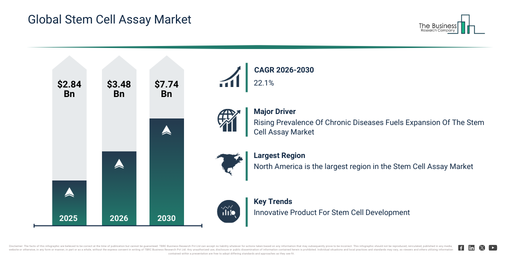
  • Global Stem Cell Antibody Market Report 2026: Emerging Trends and Growth Scenarios

    Global Stem Cell Antibody Market Report 2026: Emerging Trends and Growth Scenarios

    Uncover key drivers, emerging technologies, and competitive movements shaping the stem cell antibody market from 2026–2035 with trusted insights from The Business Research Company

    What are the forecasted starting (2026) and ending (2030) market sizes for the Stem Cell Antibody Market?

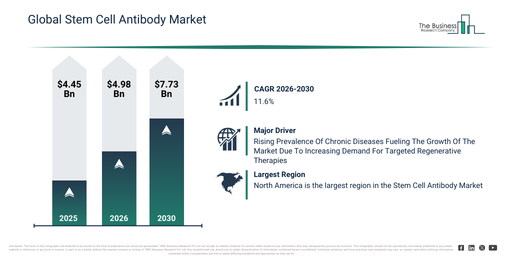
    The market for stem cell antibodies has experienced significant expansion in recent years. It is anticipated to grow from $4.45 billion in 2025 to $4.98 billion in 2026, reaching a compound annual growth rate (CAGR) of 11.9%. The historical growth can be attributed to factors such as the broadening of stem cell research endeavors, the wider availability of monoclonal antibody technologies, an increase in academic and clinical research funding, the heightened need for cell identification instruments, and advancements in antibody engineering.

    The stem cell antibody market is anticipated to undergo significant expansion in the coming years. It is projected to reach $7.73 billion by 2030, exhibiting a compound annual growth rate (CAGR) of 11.6%. The anticipated growth over this period is driven by factors such as the increasing adoption of advanced regenerative therapies, a growing demand for precision research tools, the expansion of biopharmaceutical research pipelines, rising investments in antibody innovation, and the increasing use of stem cell-based diagnostics. Notable trends during the forecast period include the expanding use of monoclonal antibodies in stem cell research, a rising demand for recombinant antibodies, their growing application in regenerative medicine development, the expansion of custom antibody production, and an enhanced focus on marker-specific targeting.

    Access Your Free Sample Report for In-Depth Market Insights:

    https://www.thebusinessresearchcompany.com/sample.aspx?id=30403&type=smp

    What Drivers Are Supporting Technological Adoption In The Stem Cell Antibody Market?

    The increasing incidence of chronic diseases is anticipated to drive the expansion of the stem cell antibody market. These are long-lasting health issues that progress slowly and often demand ongoing medical attention, with their growing occurrence partly attributed to sedentary lifestyles, which heighten the risk of conditions like heart disease and diabetes. Stem cell antibodies assist in managing chronic diseases by facilitating the accurate identification and isolation of stem cells, thereby proving valuable for research and therapeutic innovation. They enhance targeted treatments by helping oversee and adjust stem cell activity, boosting the efficacy of regenerative medicine and customized therapies. A relevant example from June 2024 indicates that the National Health Service reported 3,615,330 individuals registered with a general practitioner (GP) were diagnosed with pre-diabetes in 2023, representing an 18% rise from 3,065,825 cases recorded in 2022. Consequently, the growing prevalence of chronic diseases is a key factor propelling the stem cell antibody market’s growth. Stem Cell Antibody Market Driver: Rise In Demand For Personalized Medicine Fueling The Growth Of The Market Due To Advancements In Genomic Technologies And Targeted Therapies

    What Segment Types Are Examined In The Stem Cell Antibody Market?

    The stem cell antibody market covered in this report is segmented –

    1) By Type of Antibody: Monoclonal Antibodies, Polyclonal Antibodies, Recombinant Antibodies, Bispecific Antibodies

    2) By Product Formulation: Liquid Formulations, Lyophilized Formulations, Conjugated Antibodies, Unconjugated Antibodies

    3) By Application: Research, Clinical Diagnostics, Therapeutic Use, Protein Purification

    4) By End User: Academic Institutions, Pharmaceutical Companies, Biotechnology Firms, Hospitals and Diagnostic Laboratories

    Subsegments:

    1) By Monoclonal Antibodies: Humanized Monoclonal Antibodies, Chimeric Monoclonal Antibodies, Murine Monoclonal Antibodies, Fully Human Monoclonal Antibodies

    2) By Polyclonal Antibodies: Animal-Derived Polyclonal Antibodies, Recombinant Polyclonal Antibodies, Affinity-Purified Polyclonal Antibodies, Secondary Polyclonal Antibodies

    3) By Recombinant Antibodies: Single-Chain Variable Fragment Antibodies, Fragment Antigen-Binding Antibodies, Nanobodies, Chimeric Recombinant Antibodies

    4) By Bispecific Antibodies: Stem Cell Marker–Dual Targeting Bispecific Antibodies, Stem Cell Marker–Reporter Conjugatable Bispecific Antibodies, Stem Cell–Microenvironment Interaction Bispecific Antibodies, Stem Cell Isolation and Enrichment Bispecific Antibodies

    Who Are The Prominent Global Companies Shaping The Stem Cell Antibody Market Landscape?

    Major companies operating in the stem cell antibody market are Thermo Fisher Scientific Inc., Merck KGaA, Bio-Rad Laboratories Inc., Bio-Techne Corporation, STEMCELL Technologies Inc., Miltenyi Biotec GmbH, Cell Signaling Technology Inc., OriGene Technologies Inc., Enzo Life Sciences Inc., GeneTex Inc., Proteintech Group Inc., Rockland Immunochemicals Inc., Bioss Antibodies Inc., ReproCELL Inc., Jackson ImmunoResearch Laboratories Inc., Lucerna-Chem AG, LifeSpan BioSciences Inc., Creative Biogene Inc., MyBioSource Inc., Imgenex Inc., Amsbio LLC

    Access The Complete Report For Deeper Market Insights:

    https://www.thebusinessresearchcompany.com/report/global-stem-cell-antibody-market-report

    Which Geographic Areas Are Emerging As Strong Markets For The Stem Cell Antibody Market?

    North America was the largest region in the stem cell antibody market in 2025. Asia-Pacific is expected to be the fastest-growing region in the forecast period. The regions covered in the stem cell antibody market report are Asia-Pacific, South East Asia, Western Europe, Eastern Europe, North America, South America, Middle East, Africa.

    Request Your Customized Stem Cell Antibody Market Research Report for Competitive Advantage:

    https://www.thebusinessresearchcompany.com/customise?id=30403&type=smp

    Browse Through More Reports Similar to the Global Stem Cell Antibody Market 2026, By The Business Research Company

    Human Embryonic Stem Cells Market Report 2026

    https://www.thebusinessresearchcompany.com/report/human-embryonic-stem-cells-global-market-report

    Stem Cells Therapy Market Report 2026

    https://www.thebusinessresearchcompany.com/report/stem-cells-therapy-global-market-report

    Next Generation Antibody Therapeutics Market Report 2026

    https://www.thebusinessresearchcompany.com/report/next-generation-antibody-therapeutics-global-market-report

    Get in touch with us:

    The Business Research Company: https://www.thebusinessresearchcompany.com/

    Americas +1 310-496-7795

    Asia +44 7882 955267 & +91 8897263534

    Europe +44 7882 955267

    Email us at info@tbrc.info

    Follow us on:

    LinkedIn: https://in.linkedin.com/company/the-business-research-company

    YouTube: https://www.youtube.com/channel/UC24_fI0rV8cR5DxlCpgmyFQ

    Global Market Model: https://www.thebusinessresearchcompany.com/global-market-model
  • Stem Cell Market Forecast 2026: Where the Industry Is Headed

    Stem Cell Market Forecast 2026: Where the Industry Is Headed

    Uncover key drivers, emerging technologies, and competitive movements shaping the stem cell market from 2026–2035 with trusted insights from The Business Research Company

    What upper market value could the Stem Cell Market reach by 2030 starting from 2026 levels?

    The stem cell market has demonstrated strong growth over recent years. Its size is expected to increase from $16.85 billion in 2025 to $18.51 billion in 2026, at a compound annual growth rate (CAGR) of 9.9%. This past growth is attributable to several factors, including advancements in cell biology research, an expansion of clinical trials in regenerative medicine, the growing application of stem cells in drug discovery, the development of biobanking infrastructure, and increased investment in life sciences research.

    The stem cell market is anticipated to experience rapid expansion in the coming years, projected to reach $29.1 billion by 2030, with a compound annual growth rate (CAGR) of 12.0%. This growth throughout the forecast period is attributable to several factors, including the increasing approval of stem cell-based therapies, a rising demand for personalized medicine, the expansion of large-scale stem cell manufacturing, the growing integration of automation in cell processing, and increasing global healthcare investment. Major trends expected during this forecast period involve the increasing advancement of regenerative medicine therapies, the rising adoption of induced pluripotent stem cells, the growing integration of AI in cell research and development, the expansion of stem cell banking services, and an enhanced focus on standardized manufacturing processes.

    Access Your Free Sample Report for In-Depth Market Insights:

    https://www.thebusinessresearchcompany.com/sample.aspx?id=2584&type=smp

    Which Drivers Are Influencing Long-Term Growth In The Stem Cell Market?

    The worldwide increase in the occurrence of chronic diseases is a significant driver for the stem cell market. Stem-cell therapy is defined as the application of stem cells to treat or avert a disease or condition. Bone marrow transplant stands as the most widespread stem-cell therapy, though some treatments originating from umbilical cord blood are also in use. Presently, a commonly employed stem cell treatment involves the transplantation of blood stem cells to address blood and immune system diseases and conditions, or to facilitate the restoration of the blood system after treatments for specific cancers. As an illustration, in July 2024, the Australian Institute of Health and Welfare (AIHW), an Australia-based government health statistics agency, noted that chronic conditions were responsible for 78% of the fatal burden, marking an increase from previous years. Therefore, the rising global prevalence of chronic diseases is boosting the growth of the stem cell market.

    Which Segments Are Driving Activity In The Stem Cell Market?

    The stem cell market covered in this report is segmented –

    1) By Source: Autologous, Allogeneic

    2) By Product Type: Adult Stem Cell, Human Embryonic Stem Cell, Induced Pluripotent Stem Cell, Other Products

    3) By Application: Regenerative Medicine, Drug Discovery And Development

    Subsegments:

    1) By Autologous: Bone Marrow-Derived Stem Cells, Adipose Tissue-Derived Stem Cells, Peripheral Blood Stem Cells

    2) By Allogeneic: Bone Marrow-Derived Stem Cells, Umbilical Cord Blood Stem Cells, Peripheral Blood Stem Cells From Donors

    Which Trends Are Guiding The Evolution Of The Stem Cell Market?

    Leading firms within the stem cell market are concentrating their efforts on creating sophisticated treatments, including allogeneic cord blood and mesenchymal stem cell (MSC) therapies, with the goal of achieving a competitive edge. These allogeneic cord blood treatments utilize hematopoietic stem cells sourced from donor umbilical cord blood to rebuild or restore the blood and immune systems of individuals suffering from hematologic or immunologic conditions. An example of this is StemCyte Inc., a US-based biotech firm, which introduced REGENECYTE in November 2024; this product is an allogeneic cord blood stem cell therapy designed for transplantation in patients afflicted with blood and immune system ailments. REGENECYTE provides progenitor cells originating from donors, which are preserved and immediately available, thus allowing for immediate treatment and shortening the time typically spent on donor matching and cell procurement. This development increases access for patients without suitable donors and facilitates the expansion of treatment capacity, although it could present difficulties in managing the supply chain and ensuring consistent long-term engraftment.

    Which Key Players Are Driving Competition In The Stem Cell Market?

    Major companies operating in the stem cell market are Danaher Corporation, Cryo-Cell International Inc., Daiichi Sankyo Company Limited, Lonza Group Ltd, PerkinElmer Inc., CellGenix GmbH, China Cord Blood Corporation, Organogenesis Holdings Inc., LifeCell International, Cord Blood America Inc., StemCyte Inc., Cryoviva India, Cordlife Group Limited, Thermo Fisher Scientific Inc., CordVida, Cryo Stemcell Inc., Pluristem Therapeutics Inc., Mesoblast Limited, Americord Registry LLC, Smart Cells International, Athersys Inc., ReeLabs Pvt. Ltd., Cytori Therapeutics Inc., Esperite N.V., Stemade Biotech, ViaCord, Aldagen Inc, Isto Biologics, Brainstorm Cell Therapeutics Inc.

    Access The Complete Report For Deeper Market Insights:

    https://www.thebusinessresearchcompany.com/report/stem-cell-global-market-report

    Which Region Is Projected To Lead The Stem Cell Market During The Forecast Period?

    North America was the largest region in the stem cell market in 2025. Western Europe was the second largest region in the global stem cell market share. The regions covered in the stem cell market report are Asia-Pacific, South East Asia, Western Europe, Eastern Europe, North America, South America, Middle East, Africa.

    Request Your Customized Stem Cell Market Research Report for Competitive Advantage:

    https://www.thebusinessresearchcompany.com/customise?id=2584&type=smp

    Browse Through More Reports Similar to the Global Stem Cell Market 2026, By The Business Research Company

    Induced Pluripotent Stem Cell Market Report 2026

    https://www.thebusinessresearchcompany.com/report/induced-pluripotent-stem-cell-global-market-report

    Stem Cells Therapy Market Report 2026

    https://www.thebusinessresearchcompany.com/report/stem-cells-therapy-global-market-report

    Stem Cell Assay Market Report 2026

    https://www.thebusinessresearchcompany.com/report/stem-cell-assay-global-market-report

    Get in touch with us:

    The Business Research Company: https://www.thebusinessresearchcompany.com/

    Americas +1 310-496-7795

    Asia +44 7882 955267 & +91 8897263534

    Europe +44 7882 955267

    Email us at info@tbrc.info

    Follow us on:

    LinkedIn: https://in.linkedin.com/company/the-business-research-company

    YouTube: https://www.youtube.com/channel/UC24_fI0rV8cR5DxlCpgmyFQ

    Global Market Model: https://www.thebusinessresearchcompany.com/global-market-model
  • Status Epilepticus Industry Growth Insights: Revenue Forecast to 2030

    Status Epilepticus Industry Growth Insights: Revenue Forecast to 2030

    Uncover key drivers, emerging technologies, and competitive movements shaping the status epilepticus market from 2026–2035 with trusted insights from The Business Research Company

    What level of CAGR-driven expansion is anticipated in the Status Epilepticus Market between 2026 and 2030?

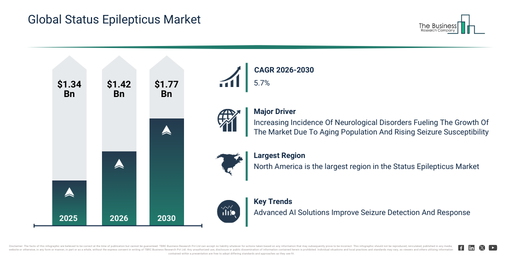
    The status epilepticus market size has experienced robust expansion in recent years. Projections indicate it will grow from $1.34 billion in 2025 to $1.42 billion in 2026, demonstrating a compound annual growth rate (CAGR) of 6.0%. The growth observed in the historic period is attributable to the increasing prevalence of epilepsy disorders, the expansion of emergency neurological care services, the availability of first- and second-generation antiepileptic drugs, rising hospital admission rates for seizures, and enhanced clinician awareness of status epilepticus.

    The status epilepticus market size is anticipated to undergo significant expansion in the coming years. It is projected to achieve a value of $1.77 billion by 2030, exhibiting a compound annual growth rate (CAGR) of 5.7%. This projected growth can be attributed to the escalating development of new anticonvulsant drugs, increased investments in neuromodulation technologies, the wider availability of digital seizure monitoring tools, an intensifying focus on tailored epilepsy treatment, and a greater emphasis on swift-response treatment pathways. Prominent trends observed during the forecast period involve a heightened focus on rapid emergency seizure management, the increasing adoption of advanced antiepileptic therapies, the expanding deployment of hospital-based neuromodulation devices, the broader implementation of early diagnosis and monitoring tools, and an enhanced emphasis on optimizing critical care protocols.

    Access Your Free Sample Report for In-Depth Market Insights:

    https://www.thebusinessresearchcompany.com/sample.aspx?id=25911&type=smp

    What Drivers Are Affecting Demand-Supply Dynamics In The Status Epilepticus Market?

    The expansion of the status epilepticus market is anticipated to be fueled by the rising occurrence of neurological disorders. These conditions are medical ailments impacting the brain, spinal cord, and nerves, leading to diverse symptoms such as cognitive, motor, and sensory impairments. The heightened prevalence of neurological disorders is connected to the aging worldwide population, given that aging progressively impairs neuronal function, diminishes brain plasticity, and heightens oxidative stress, thereby fostering the development and progression of these conditions. Neurological conditions contribute to status epilepticus by disrupting typical brain activity, rendering individuals more prone to prolonged seizures. They escalate the risk of seizure recurrence by influencing neuronal stability, underscoring the necessity for swift diagnosis and effective management approaches. For instance, in July 2024, according to the National Health Service, a UK-based government agency, there were 487,432 patients diagnosed with dementia (a progressive brain disorder affecting memory, thinking, and daily activities) by June 30, 2024, an increase of 3,155 cases compared to May 31, 2024. Consequently, the increasing incidence of neurological disorders is propelling the growth of the status epilepticus market.

    How Is The Status Epilepticus Market Organized Into Various Segments?

    The status epilepticus market covered in this report is segmented –

    1) By Type: Convulsive Status Epileptics, Non-Convulsive Status Epileptics

    2) By Medication: First Generation, Second Generation, Third Generation

    3) By Drug: Ganaxolone, Diazepam, Phenobarbital, Phenytoin And Fosphenytoin, Valproate, Other Drugs

    4) By Distribution Channel: Hospital Pharmacies, Online Pharmacies, Retail Pharmacies

    Subsegments:

    1) By Convulsive Status Epilepticus: Generalized Tonic–Clonic Status Epilepticus (GTCS SE), Focal Onset With Bilateral Tonic–Clonic Generalization, Myoclonic Status Epilepticus

    2) By Non-Convulsive Status Epilepticus (NCSE): Absence Status Epilepticus, Complex Partial Status Epilepticus, Subtle Status Epilepticus

    What Trends Are Projected To Support The Growth Of The Status Epilepticus Market?

    Major companies operating within the status epilepticus market are concentrating on developing technologically advanced solutions, such as artificial intelligence (AI)-powered diagnostic tools, to enhance seizure detection, accelerate clinical decision-making, and improve the efficiency of neurological care. These AI-powered diagnostic solutions are integrated software platforms that utilize artificial intelligence to analyze real-time brain activity data, enabling the rapid identification of seizure patterns and facilitating early intervention in critical care settings. For instance, in October 2023, Ceribell Inc., a US-based medical technology company, launched ClarityPro AI, an artificial intelligence (AI)-driven diagnostic software designed for the detection and monitoring of status epilepticus. The platform integrates seamlessly with Ceribell’s EEG systems to provide continuous, real-time seizure analysis at the bedside, and it also assists healthcare providers in delivering timely treatment and improving patient outcomes in emergency neurological care.

    Who Are The Top-Performing Companies In The Status Epilepticus Market In Recent Years?

    Major companies operating in the status epilepticus market are Pfizer Inc., Novartis AG, Takeda Pharmaceutical Company Limited, Bausch Health Companies Inc., Eisai Co. Ltd., Dr. Reddy’s Laboratories, Hikma Pharmaceuticals plc, Mylan N.V., Lupin Pharmaceuticals Limited, Torrent Pharmaceuticals Ltd., Neuraxpharm, Ligand Pharmaceuticals Incorporated, Rafa Laboratories Ltd., Aquestive Therapeutics, Nobelpharma Co. Ltd., Neurelis Inc., SAGE Therapeutics, Immedica Pharma AB, Sedor Pharmaceuticals, Crossject SA.

    Access The Complete Report For Deeper Market Insights:

    https://www.thebusinessresearchcompany.com/report/status-epilepticus-global-market-report

    Which Region Currently Holds The Largest Share Of The Status Epilepticus Market?

    North America was the largest region in the status epilepticus market in 2025. The regions covered in the status epilepticus market report are Asia-Pacific, South East Asia, Western Europe, Eastern Europe, North America, South America, Middle East, Africa.

    Request Your Customized Status Epilepticus Market Research Report for Competitive Advantage:

    https://www.thebusinessresearchcompany.com/customise?id=25911&type=smp

    Browse Through More Reports Similar to the Global Status Epilepticus Market 2026, By The Business Research Company

    Penile Prosthesis Market Report 2026

    https://www.thebusinessresearchcompany.com/report/penile-prosthesis-global-market-report

    Antiepileptic Drugs Market Report 2026

    https://www.thebusinessresearchcompany.com/report/antiepileptic-drugs-global-market-report

    Epilepsy Drugs Market Report 2026

    https://www.thebusinessresearchcompany.com/report/epilepsy-drugs-global-market-report

    Get in touch with us:

    The Business Research Company: https://www.thebusinessresearchcompany.com/

    Americas +1 310-496-7795

    Asia +44 7882 955267 & +91 8897263534

    Europe +44 7882 955267

    Email us at info@tbrc.info

    Follow us on:

    LinkedIn: https://in.linkedin.com/company/the-business-research-company

    YouTube: https://www.youtube.com/channel/UC24_fI0rV8cR5DxlCpgmyFQ

    Global Market Model: https://www.thebusinessresearchcompany.com/global-market-model
  • Global Starter Cultures Market Performance Report: Global Trends 2026–2030

    Global Starter Cultures Market Performance Report: Global Trends 2026–2030

    Uncover key drivers, emerging technologies, and competitive movements shaping the starter cultures market from 2026–2035 with trusted insights from The Business Research Company

    What long-term size projections exist for the Starter Cultures Market covering 2026–2035?

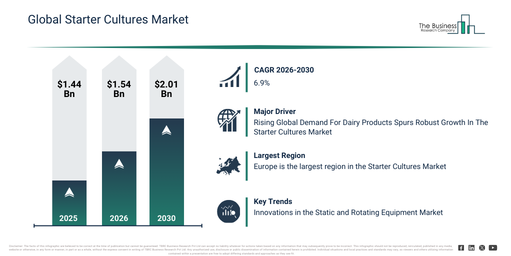
    The starter cultures market has seen strong expansion in recent years. It is forecast to increase from $1.44 billion in 2025 to $1.54 billion in 2026, exhibiting a compound annual growth rate (CAGR) of 6.6%. The historical growth of this market is attributable to the rise in dairy consumption, the increased adoption of industrial fermentation, the demand for processed food, developments in microbial research, and the need for food standardization.

    The starter cultures market size is projected to experience robust expansion in the coming years, with its valuation reaching $2.01 billion by 2030, at a compound annual growth rate (CAGR) of 6.9%. This anticipated growth during the forecast period is primarily driven by factors such as plant-based food fermentation, increasing demand for functional foods, advancements in precision fermentation, evolving food processing in emerging markets, and sustainable culture production. Significant trends expected during this period include the development of customized microbial blends, non-dairy fermentation cultures, shelf-stable starter solutions, flavor-enhancing cultures, and the greater integration of probiotics.

    Access Your Free Sample Report for In-Depth Market Insights:

    https://www.thebusinessresearchcompany.com/sample.aspx?id=8200&type=smp

    Which Drivers Are Impacting The Competitive Landscape Of The Starter Cultures Market?

    The growing demand for dairy products is poised to boost the expansion of the starter cultures market. Dairy products, encompassing any food items made from milk, are increasingly favored by consumers due to a rising preference for protein-rich foods and greater awareness of their nutritional benefits. Given that starter cultures are vital for crafting fermented dairy foods like cheese and yogurt, the heightened demand for dairy products directly influences their market growth. As an illustration, the United States Of Department Of Agriculture reported in April 2025 that total cheese production, excluding cottage cheeses, reached 14.2 billion pounds, representing a 0.7 percent increase from 2023 production. Consequently, the sustained increase in dairy product demand will act as a significant driver for the starter cultures market.

    What Segments Are Identified Within The Structure Of The Starter Cultures Market?

    The starter cultures market covered in this report is segmented –

    1) By Microorganism: Bacteria, Yeast, Molds

    2) By Composition: Multi-Strain Mix, Single Strain, Multi-Strain

    3) By Form: Freeze-Dried, Frozen

    4) By Application: Dairy And Dairy Products, Meat And Seafood, Alcoholic Beverages, Other Applications

    Subsegments:

    1) By Bacteria: Lactic Acid Bacteria (LAB), Non-Lactic Acid Bacteria

    2) By Yeast: Baker’s Yeast, Brewer’s Yeast, Other Yeasts

    3) By Molds: Filamentous Fungi, Other Molds

    Which Trends Are Influencing The Performance And Direction Of The Starter Cultures Market?

    Leading companies active in the static and rotating equipment market are introducing innovative products, such as smart rotating equipment monitoring, to address several crucial demands. This smart rotating equipment monitoring refers to a system that continuously observes the performance of rotating machinery, including pumps and motors, by tracking key parameters. For example, in June 2024, Henkel, a Germany-based chemicals company, introduced Henkel’s Loctite Pulse Smart Rotating Equipment Monitoring. Henkel’s Loctite Pulse Smart Rotating Equipment Monitoring provides a plug-and-play sensor system that monitors six critical data parameters for improved equipment reliability. Additionally, the Smart Pipes and Tanks Leak Detection employs carbon nanotube sensors for early hydrocarbon leak detection, thereby enhancing safety and sustainability.

    Which Leading Companies Dominate The Starter Cultures Market Share?

    Major companies operating in the starter cultures market are Chr. Hansen Holding A/S, Lallemand Inc., Koninklijke DSM N.V., Sacco System S.r.l., LB Bulgaricum AD, International Flavors & Fragrances Inc., Biochem Srl, Wyeast Laboratories Inc., Mad Millie Pty Ltd, Futura Ingredients AB, Angel Yeast Co. Ltd., Benebios Inc., Benny Impex, Mediterranea Biotecnologie Srl, Bioprox Healthcare SAS, Codex-ing Biotech Ingredients Inc., CSK Food Enrichment B.V., Danisco A/S, Lesaffre et Compagnie, DSM Food Specialties B.V., Abiasa Corporativo S.A. de C.V.

    Access The Complete Report For Deeper Market Insights:

    https://www.thebusinessresearchcompany.com/report/starter-cultures-global-market-report

    How Does The Starter Cultures Market Perform Across Major Global Regions?

    Europe was the largest region in the starter cultures market in 2025. Asia-Pacific is expected to be the fastest-growing region in the forecast period. The regions covered in the starter cultures market report are Asia-Pacific, South East Asia, Western Europe, Eastern Europe, North America, South America, Middle East, Africa.

    Request Your Customized Starter Cultures Market Research Report for Competitive Advantage:

    https://www.thebusinessresearchcompany.com/customise?id=8200&type=smp

    Browse Through More Reports Similar to the Global Starter Cultures Market 2026, By The Business Research Company

    Cultured Meat Market Report 2026

    https://www.thebusinessresearchcompany.com/report/cultured-meat-global-market-report

    Food Cultures Market Report 2026

    https://www.thebusinessresearchcompany.com/report/food-cultures-global-market-report

    Starter Feed Market Report 2026

    https://www.thebusinessresearchcompany.com/report/starter-feed-global-market-report

    Get in touch with us:

    The Business Research Company: https://www.thebusinessresearchcompany.com/

    Americas +1 310-496-7795

    Asia +44 7882 955267 & +91 8897263534

    Europe +44 7882 955267

    Email us at info@tbrc.info

    Follow us on:

    LinkedIn: https://in.linkedin.com/company/the-business-research-company

    YouTube: https://www.youtube.com/channel/UC24_fI0rV8cR5DxlCpgmyFQ

    Global Market Model: https://www.thebusinessresearchcompany.com/global-market-model
  • Sports Medicine Devices Market Future Outlook 2026: Key Drivers and Growth Potential

    Sports Medicine Devices Market Future Outlook 2026: Key Drivers and Growth Potential

    Uncover key drivers, emerging technologies, and competitive movements shaping the sports medicine devices market from 2026–2035 with trusted insights from The Business Research Company

    What total market size is anticipated for the Sports Medicine Devices Market in 2030?

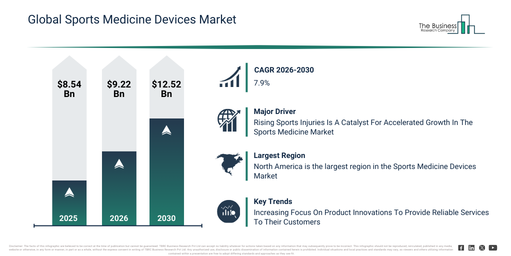
    The sports medicine devices market size has shown strong expansion in recent years. It is anticipated to grow from $8.54 billion in 2025 to $9.22 billion in 2026, reflecting a compound annual growth rate (CAGR) of 8.0%. The market’s historical growth can be attributed to a rise in sports participation, innovation in orthopedic devices, investments in professional sports, increased awareness of injury prevention, and the expansion of rehabilitation infrastructure.

    Strong growth is anticipated for the sports medicine devices market size in the upcoming years. It is forecasted to achieve a value of $12.52 billion in 2030, with a compound annual growth rate (CAGR) of 7.9%. Factors contributing to this growth in the forecast period include wearable injury monitoring, outpatient sports surgeries, personalized rehabilitation programs, emerging athlete markets, and technological miniaturization. Significant trends expected during the forecast period cover arthroscopy device innovation, smart rehabilitation equipment, lightweight implant materials, rapid recovery solutions, and performance monitoring integration.

    Access Your Free Sample Report for In-Depth Market Insights:

    https://www.thebusinessresearchcompany.com/sample.aspx?id=9162&type=smp

    What Drivers Are Influencing Production Trends In The Sports Medicine Devices Market?

    The sports medicine market is projected to grow due to the increasing frequency of sports injuries. These injuries, which are not exclusive to athletes, happen during sports or exercise and are commonly caused by direct impact, overuse, or the application of force. As sports medicine provides treatment and support for these conditions, a rise in sports injuries will inevitably drive market expansion. For instance, in October 2024, Insideworldfootball, a UK-based web-based news-driven service, reported that sports injuries amounted to 4,123 during the 2023-24 season, indicating a 4% increase compared to the 2022-23. Therefore, the escalating number of sports injuries is a key driver for the growth of the sports medicine market.

    Which Segments Are Gaining Traction In The Sports Medicine Devices Market?

    The sports medicine devices market covered in this report is segmented –

    1) By Product: Implants, Fracture And Ligament Repair Products, Arthroscopy Devices, Prosthetics, Other Products

    2) By Injury Type: Knee Injuries, Shoulder Injuries, Foot And Ankle Injuries, Back And Spine Injuries, Hip And Groin Injuries

    3) By End User: Hospitals, Ambulatory Surgery Centers, Physiotherapy Centers And Clinics

    Subsegments:

    1) By Implants: Joint Implants, Soft Tissue Implants, Bone Implants

    2) By Fracture And Ligament Repair Products: Plates And Screws, Pins And Wires, Ligament Grafts

    3) By Arthroscopy Devices: Arthroscopes, Surgical Instruments, Visualization Systems

    4) By Prosthetics: Lower Limb Prosthetics, Upper Limb Prosthetics, Adaptive Devices

    5) By Other Products: Braces And Supports, Rehabilitation Equipment, Diagnostic Tools

    What Long-Term Trends Are Expected To Shape The Future Of The Sports Medicine Devices Market?

    Leading companies in the sports medicine market are increasingly leveraging digital distribution channels, such as dedicated product websites, to boost their revenue. An updated website serves to display Maruho Medical’s product range and highlights the company’s innovative focus on soft tissue fixation within sports medicine. For instance, in March 2023, Maruho Co. Ltd., a pharmaceutical company based in Japan, unveiled a new website to support its subsequent phase of expansion. The recently introduced apollo knotless anchor is showcased on the company’s redesigned website along with its complete product line. This initiative aims to facilitate future technological improvements Maruho intends to add to its soft tissue repair portfolio and to provide essential resources to its customers and sales team alike. The anchor’s knotless fixation characteristic can be beneficial in certain surgical procedures, aligning with the objective of introducing innovative soft tissue fixation techniques for sports medicine.

    Who Are The Major Companies Operating In The Sports Medicine Devices Market?

    Major companies operating in the sports medicine devices market are Arthrex Inc., Conmed Corporation, DJO LLC, Johnson & Johnson Services Inc., Stryker Corp., Smith & Nephew plc, Breg Inc., Mueller Sports Inc., Wright Medical Group NV, Medtronic Inc., RTI Surgical Holdings Inc., Performance Health International Limited, Karl Storz SE & Co. KG, Bauerfeind AG, MedShape Inc., Cramer Products Inc., RôG Sports Medicine, Zimmer Biomet Holdings Inc., Mitek Sports Medicine, DonJoy Orthopedics, Össur public limited company, Otto Bock HealthCare GmbH, Bledsoe Brace Systems, Acumed LLC

    Access The Complete Report For Deeper Market Insights:

    https://www.thebusinessresearchcompany.com/report/sports-medicine-global-market-report

    Which Region Is Anticipated To See The Fastest Growth In The Sports Medicine Devices Market?

    North America was the largest region in the sports medicine market in 2025. The regions covered in the sports medicine devices market report are Asia-Pacific, South East Asia, Western Europe, Eastern Europe, North America, South America, Middle East, Africa.

    Request Your Customized Sports Medicine Devices Market Research Report for Competitive Advantage:

    https://www.thebusinessresearchcompany.com/customise?id=9162&type=smp

    Browse Through More Reports Similar to the Global Sports Medicine Devices Market 2026, By The Business Research Company

    Sports Technology Market Report 2026

    https://www.thebusinessresearchcompany.com/report/sports-technology-global-market-report

    Sports Medicine Market Report 2026

    https://www.thebusinessresearchcompany.com/report/sports-medicine-global-market-report

    Smarts Sports Equipment Market Report 2026

    https://www.thebusinessresearchcompany.com/report/smarts-sports-equipment-global-market-report

    Get in touch with us:

    The Business Research Company: https://www.thebusinessresearchcompany.com/

    Americas +1 310-496-7795

    Asia +44 7882 955267 & +91 8897263534

    Europe +44 7882 955267

    Email us at info@tbrc.info

    Follow us on:

    LinkedIn: https://in.linkedin.com/company/the-business-research-company

    YouTube: https://www.youtube.com/channel/UC24_fI0rV8cR5DxlCpgmyFQ

    Global Market Model: https://www.thebusinessresearchcompany.com/global-market-model

  • Sports Injury Prediction Market Trends and Insights: Global Forecast to 2030

    Sports Injury Prediction Market Trends and Insights: Global Forecast to 2030

    Uncover key drivers, emerging technologies, and competitive movements shaping the sports injury prediction market from 2026–2035 with trusted insights from The Business Research Company

    What is the expected shift in the Sports Injury Prediction Market’s size between 2026 and 2030?

    The sports injury prediction market has experienced robust expansion over recent years. Its valuation is projected to rise from $2.1 billion in 2025 to $2.25 billion in 2026, demonstrating a compound annual growth rate (CAGR) of 7.1%. Historically, this growth has been driven by factors such as the increasing professionalization of sports, advancements in athlete performance analytics, heightened awareness regarding injury prevention, the expansion of sports science research, and the widespread availability of wearable monitoring technologies.

    The sports injury prediction market is projected to experience substantial expansion over the upcoming years. By 2030, its valuation is anticipated to reach $2.92 billion, expanding at a compound annual growth rate (CAGR) of 6.7%. This projected growth is fueled by factors such as a heightened need for customized injury prevention solutions, greater uptake across amateur and youth sports, the spread of AI-powered predictive modeling, deeper integration with rehabilitation technologies, and increased funding in sports health platforms. Key trends anticipated during this period encompass a rise in the deployment of wearable sensors for athlete monitoring, a surge in the use of AI-driven injury risk analytics, greater incorporation of real-time performance tracking systems, the development of data-informed training optimization tools, and a stronger emphasis on proactive sports healthcare.

    Access Your Free Sample Report for In-Depth Market Insights:

    https://www.thebusinessresearchcompany.com/sample.aspx?id=20649&type=smp

    Which Drivers Are Shaping Strategic Decisions In The Sports Injury Prediction Market?

    The increasing engagement in sports and recreational activities is projected to drive the expansion of the sports injury prediction market in the coming years. Sports and recreation encompasses pursuits undertaken for enjoyment and physical exercise, including both competitive sports and casual leisure activities. The rise in participation in sports and recreational activities is fueled by greater health awareness, enhanced access to facilities, and the desire for stress reduction and pleasure. Sports injury prediction helps to avoid injuries, enhance training, and ensure more secure and quicker recovery, making activities safer and more enjoyable. For instance, in March 2024, as reported by the Sports & Fitness Industry Association, a U.S.-based trade association, 242 million Americans, accounting for approximately 79% of the U.S. population aged six and older, participated in at least one sport, fitness, or outdoor activity, indicating a 2.2% rise versus 2022. Thus, the growing involvement in sports and recreational activities is propelling the growth of the sports injury prediction market.

    What Segment Categories Are Covered In The Sports Injury Prediction Market?

    The sports injury prediction market covered in this report is segmented –

    1) By Systems: Hardware, Software

    2) By Technology: Motion Capture, Player Activity Tracking, Vital Sign Monitoring, Sensor Based Technology, Image Based Technology, Machine Learning, Other Technologies

    3) By Sports Type: Cricket, Football, Soccer, Rugby, Basketball, Baseball, Racing, Other Sport Types

    4) By Application: Performance Assessment, Injury Risk Analysis, Activity Monitoring, Recovery And Post Injury Care, Biomechanics, Other Applications

    Subsegments:

    1) By Hardware: Wearable Sensors And Devices, Smart Clothing With Embedded Sensors, Monitoring Devices (e.g., Heart Rate Monitors, Motion Sensors), Video Analysis Systems, Biomechanical Measurement Tools

    2) By Software: Injury Prediction Analytics Platforms, Machine Learning And AI-Based Solutions, Data Management Software For Athlete Monitoring, Mobile Applications For Injury Tracking, Performance Analysis And Risk Assessment Tools

    Which Market Trends Are Opening Growth Opportunities In The Sports Injury Prediction Market?

    Leading firms within the sports injury prediction market are prioritizing technological innovations, including predictive analytics and machine learning algorithms, to secure a competitive edge. These technologies utilize data-driven methodologies to forecast future events by analyzing past information. An example of this is Players Health, a US-based sports technology and healthcare company, which introduced NIL Insurance for Collectives in February 2024. This offering incorporates predictive analytics to evaluate risk factors and deliver customized insurance coverage for athletes. The goal of this novel service is to safeguard athletes against financial setbacks resulting from injuries, illustrating an increasing focus on proactive injury prevention in sports. Implementing these kinds of technologies not only improves athlete well-being but also boosts team efficiency by minimizing injury-related breaks, although questions regarding data privacy and the precision of forecasts remain.

    Which Major Firms Are Strengthening Their Position In The Sports Injury Prediction Market?

    Major companies operating in the sports injury prediction market are Microsoft Corporation, International Business Machines Corporation, Zebra Technologies Inc., CA Technologies, Firstbeat, Xsens Technologies, Kitman Labs, PlayerMaker, Sparta Science, Fusion Sport’s, Zephyr Technologies, Catapult Sports, STATSports, Orreco Ltd, PhysiMax Technologies, Hawkin Dynamics Inc., Simi Reality Motion Systems, Vald Performance, Beyond Pulse, DorsaVi Ltd, Plantiga, Protxx Inc., Motus Global

    Access The Complete Report For Deeper Market Insights:

    https://www.thebusinessresearchcompany.com/report/sports-injury-prediction-global-market-report

    Which Region Is Anticipated To See The Fastest Growth In The Sports Injury Prediction Market?

    North America was the largest region in the sports injury prediction market in 2025. Asia-Pacific is expected to be the fastest-growing region in the forecast period. The regions covered in the sports injury prediction market report are Asia-Pacific, South East Asia, Western Europe, Eastern Europe, North America, South America, Middle East, Africa.

    Request Your Customized Sports Injury Prediction Market Research Report for Competitive Advantage:

    https://www.thebusinessresearchcompany.com/customise?id=20649&type=smp

    Browse Through More Reports Similar to the Global Sports Injury Prediction Market 2026, By The Business Research Company

    Sports Nutrition Ingredients Market Report 2026

    https://www.thebusinessresearchcompany.com/report/sports-nutrition-ingredients-global-market-report

    Sports Protective Gear Market Report 2026

    https://www.thebusinessresearchcompany.com/report/sports-protective-gear-global-market-report

    Sports Gun Market Report 2026

    https://www.thebusinessresearchcompany.com/report/sports-gun-global-market-report

    Get in touch with us:

    The Business Research Company: https://www.thebusinessresearchcompany.com/

    Americas +1 310-496-7795

    Asia +44 7882 955267 & +91 8897263534

    Europe +44 7882 955267

    Email us at info@tbrc.info

    Follow us on:

    LinkedIn: https://in.linkedin.com/company/the-business-research-company

    YouTube: https://www.youtube.com/channel/UC24_fI0rV8cR5DxlCpgmyFQ

    Global Market Model: https://www.thebusinessresearchcompany.com/global-market-model
  • Global Spondylolisthesis Market Report 2026–2030: Data-Driven Growth Insights

    Global Spondylolisthesis Market Report 2026–2030: Data-Driven Growth Insights

    Uncover key drivers, emerging technologies, and competitive movements shaping the spondylolisthesis market from 2026–2035 with trusted insights from The Business Research Company

    What growth pattern is forecast for the Spondylolisthesis Market size between 2026 and 2035?

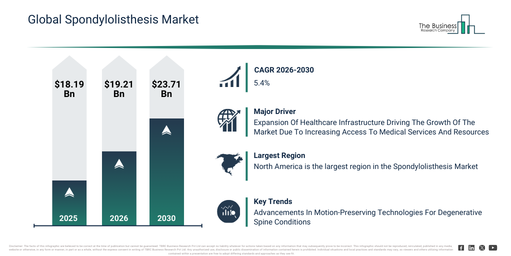
    The spondylolisthesis market has experienced robust expansion over recent years. It is anticipated to increase from $18.19 billion in 2025 to $19.21 billion in 2026, reflecting a compound annual growth rate (CAGR) of 5.6%. This growth observed in the past can be attributed to several factors including an uptick in spinal instability cases, advancements in imaging techniques, the growth of orthopedic surgery, increased utilization of physical therapy, and the prevalence of sports injuries.

    The spondylolisthesis market is projected to undergo significant expansion in the coming years, with its size anticipated to reach $23.71 billion by 2030, demonstrating a compound annual growth rate (CAGR) of 5.4%. This expected growth during the forecast period is driven by technological advancements in fixation, the availability of personalized surgical solutions, the broader expansion of outpatient spine care, enhanced diagnostic accuracy, and the increasing geriatric population. Prominent trends for this period include an increased emphasis on early-stage diagnosis, the widespread adoption of minimally invasive spinal fixation, improved utilization of imaging techniques, patient-specific surgical planning, and the greater integration of conservative care.

    Access Your Free Sample Report for In-Depth Market Insights:

    https://www.thebusinessresearchcompany.com/sample.aspx?id=23527&type=smp

    Which Drivers Are Impacting Market Performance In The Spondylolisthesis Market?

    The spondylolisthesis market is anticipated to experience growth, propelled by the ongoing expansion of healthcare infrastructure. This infrastructure encompasses the vital physical facilities, operational systems, and various resources necessary for delivering effective healthcare services. The expansion of healthcare infrastructure arises from the increasing demand for accessible and advanced medical services, as existing facilities often prove insufficient to handle the growing patient load and complexity of required care. For spondylolisthesis treatment, healthcare infrastructure is crucial, ensuring the availability of medical facilities, trained professionals, and proper distribution channels, which are all essential for effective administration and patient access to treatment. For instance, in December 2024, the Centers for Medicare & Medicaid Services, a US-based agency responsible for administering the Medicare and Medicaid programs, reported that U.S. health care expenditures in 2023 increased by 7.5%, climbing to $4.9 trillion, or roughly $14,570 for each individual. Consequently, the expanding healthcare infrastructure is driving the growth of the spondylolisthesis market.

    Which Segments Are Contributing To The Growth Of The Spondylolisthesis Market?

    The spondylolisthesis market covered in this report is segmented –

    1) By Type: Degenerative Spondylolisthesis, Isthmic Spondylolisthesis, Congenital Spondylolisthesis, Traumatic Spondylolisthesis, Pathological Spondylolisthesis

    2) By Treatment: Non-Surgical, Surgical

    3) By Diagnosis: X-Ray, MRI (Magnetic Resonance Imaging), CT Scan (Computed Tomography), Physical Examination

    4) By End User: Hospitals, Ambulatory Surgical Centers (ASCs), Specialty Clinics, Rehabilitation Centers

    Subsegments:

    1) By Degenerative Spondylolisthesis: Mild (Grade I), Moderate (Grade II), Severe (Grade III and above)

    2) By Isthmic Spondylolisthesis: Lytic Isthmic Spondylolisthesis, Elongated Isthmic Spondylolisthesis, Acute Fracture Isthmic Spondylolisthesis

    3) By Congenital Spondylolisthesis: Dysplastic Spondylolisthesis, Sacral Dome Abnormalities

    4) By Traumatic Spondylolisthesis: Acute Traumatic Spondylolisthesis, Post-surgical Traumatic Spondylolisthesis

    5) By Pathological Spondylolisthesis: Tumor-related Spondylolisthesis, Infection-related Spondylolisthesis, Osteoporosis-related Spondylolisthesis

    How Are Emerging Trends Affecting The Progression Of The Spondylolisthesis Market?

    Leading companies operating in the spondylolisthesis market are increasingly focusing on integrating emerging technologies, such as advanced spinal implant systems, to enhance surgical outcomes, maintain mobility, and improve patients’ quality of life. An advanced spinal implant system represents an innovative solution crafted to stabilize the spine while concurrently preserving motion, thereby offering a superior alternative to conventional spinal fusion procedures. For instance, in June, 2023, Premia Spine, a US-based medical device company, obtained FDA approval for the TOPS System, marking it as the first lumbar spine implant to secure a superiority claim over lumbar fusion for the treatment of grade I degenerative spondylolisthesis with spinal stenosis. This breakthrough technology fundamentally transforms spinal surgery by replacing the diseased facet joint and lamina with a mechanical implant that permits controlled movement in flexion, extension, lateral bending, and axial rotation. By sustaining motion and stability, the TOPS System substantially reduces post-operative complications and shortens recovery time. A crucial attribute of this system is its motion-preserving design, which negates the requirement for spinal fusion, thus presenting patients with an effective and less invasive treatment option that leads to improved long-term mobility and functional outcomes.

    Who Are The Primary Competitors In The Global Spondylolisthesis Market?

    Major companies operating in the spondylolisthesis market are Johnson & Johnson, Medtronic? plc, Stryker? Corporation, Zimmer Biomet?, Globus Medical?, Orthofix? Medical Inc., Alphatec Holdings?, RTI Surgical?, B. Braun AG, SeaSpine?, SI-Bone?, Spinal Elements?, Surgalign?, Sharma Orthopedic?, Saluda Medical?, Wenzel Spine?, Premia Spine?, Innovasis?, SpineNet?, VySpine?

    Access The Complete Report For Deeper Market Insights:

    https://www.thebusinessresearchcompany.com/report/spondylolisthesis-global-market-report

    Which Global Regions Are Shaping The Competitive Landscape Of The Spondylolisthesis Market?

    North America was the largest region in the spondylolisthesis market in 2025. The regions covered in the spondylolisthesis market report are Asia-Pacific, South East Asia, Western Europe, Eastern Europe, North America, South America, Middle East, Africa.

    Request Your Customized Spondylolisthesis Market Research Report for Competitive Advantage:

    https://www.thebusinessresearchcompany.com/customise?id=23527&type=smp

    Browse Through More Reports Similar to the Global Spondylolisthesis Market 2026, By The Business Research Company

    Spine Biologics Market Report 2026

    https://www.thebusinessresearchcompany.com/report/spine-biologics-global-market-report

    Ankylosing Spondylitis Market Report 2026

    https://www.thebusinessresearchcompany.com/report/ankylosing-spondylitis-global-market-report

    Axial Spondyloarthritis Axspa Market Report 2026

    https://www.thebusinessresearchcompany.com/report/axial-spondyloarthritis-axspa-global-market-report

    Get in touch with us:

    The Business Research Company: https://www.thebusinessresearchcompany.com/

    Americas +1 310-496-7795

    Asia +44 7882 955267 & +91 8897263534

    Europe +44 7882 955267

    Email us at info@tbrc.info

    Follow us on:

    LinkedIn: https://in.linkedin.com/company/the-business-research-company

    YouTube: https://www.youtube.com/channel/UC24_fI0rV8cR5DxlCpgmyFQ

    Global Market Model: https://www.thebusinessresearchcompany.com/global-market-model
  • Spinal Stenosis Treatment Market Dynamics 2026: Future Outlook and Key Insights

    Spinal Stenosis Treatment Market Dynamics 2026: Future Outlook and Key Insights

    Uncover key drivers, emerging technologies, and competitive movements shaping the spinal stenosis treatment market from 2026–2035 with trusted insights from The Business Research Company

    How much larger will the Spinal Stenosis Treatment Market be in 2030 compared with 2026?

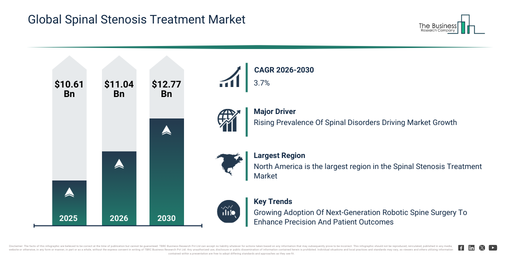
    The spinal stenosis treatment market size has demonstrated consistent expansion in recent years. It is anticipated to increase from $10.61 billion in 2025 to $11.04 billion in 2026, exhibiting a compound annual growth rate (CAGR) of 4.0%. This historical growth can be ascribed to a rise in degenerative spine disorders, the expansion of physical therapy, growth in pharmaceutical pain management, improvements in diagnostics, and greater awareness of non-surgical care.

    The spinal stenosis treatment market is projected to experience consistent expansion in the coming years. Its valuation is anticipated to reach $12.77 billion by 2030, exhibiting a compound annual growth rate (CAGR) of 3.7%. This anticipated growth during the forecast period is fueled by factors such as advanced interventional pain therapies, personalized treatment algorithms, tele-rehabilitation services, a decrease in reliance on surgery, and the adoption of long-term care models. Key trends expected in the forecast period encompass combination therapy approaches, image-guided interventions, increased adoption of non-surgical treatments, personalized rehabilitation plans, and the prevalence of outpatient treatment models.

    Access Your Free Sample Report for In-Depth Market Insights:

    https://www.thebusinessresearchcompany.com/sample.aspx?id=21289&type=smp

    What Drivers Are Guiding Growth Patterns In The Spinal Stenosis Treatment Market?

    The escalating occurrence of spinal disorders is projected to fuel the expansion of the spinal stenosis treatment market in the foreseeable future. These disorders encompass conditions impacting the spinal bones, intervertebral discs, nerves, or surrounding soft tissues, leading to pain, restricted movement, or neurological manifestations. Factors such as an aging population, inactive lifestyles, increased obesity rates, inadequate posture, specific occupational hazards, and advancements in diagnostic methods are contributing to their growing prevalence. Treatment for spinal stenosis is applied in the context of spinal disorders to ease nerve compression, lessen discomfort, and enhance mobility in conditions such as degenerative disc disease and herniated discs. As an illustration, data from May 2023, shared by Spinal Cord, Inc., a US-based medical device company, indicated that 18,000 new cases of spinal cord injury (SCI) are reported each year in the United States in 2023, with approximately 302,000 people living with SCI across the nation. Consequently, the expanding prevalence of spinal disorders is propelling the growth of the spinal stenosis treatment market.

    How Is The Spinal Stenosis Treatment Market Divided Into Segments?

    The spinal stenosis treatment market covered in this report is segmented –

    1) By Type: Cervical Stenosis, Lumbar Stenosis

    2) By Treatment: Medication, Physical Therapy, Surgery, Other Treatments

    3) By End Users: Hospitals, Homecare, Specialty Clinics, Other End-Users

    Subsegments:

    1) By Cervical Stenosis: Physical Therapy, Medications, Spinal Injections, Decompression Surgery, Spinal Fusion

    2) By Lumbar Stenosis: Pain Management, Epidural Steroid Injections, Minimally Invasive Procedures, Laminectomy, Artificial Disc Replacement

    Which Innovation Trends Are Advancing Developments Within The Spinal Stenosis Treatment Market?

    Major companies within the spinal stenosis treatment market are concentrating on technological advancements, such as robotic-assisted minimally invasive spine surgeries. This endeavor seeks to boost surgical accuracy, reduce post-operative complications, and speed up recovery times for patients experiencing spinal disorders. Robotic surgical systems enable enhanced navigation, real-time imaging, and highly precise implant placement, leading to improved clinical outcomes and greater operational efficiency. For instance, in July 2025, Yas Clinic, a research-driven healthcare provider based in the UAE, launched an advanced robotic spine surgery programme. This program is designed to treat complex spinal conditions, including lumbar and cervical stenosis, by offering enhanced safety, minimized tissue damage, and faster rehabilitation. The integration of next-generation robotics into surgical workflows through this program reinforces the adoption of minimally invasive techniques and highlights the growing shift towards precision-based and patient-centric interventions in spinal stenosis treatment.

    Which Key Market Players Are Investing In Expansion And Innovation Within The Spinal Stenosis Treatment Market?

    Major companies operating in the spinal stenosis treatment market are Johnson & Johnson, Medtronic plc, Zimmer Biomet Holdings Inc., Sumitomo Dainippon Pharma Co. Ltd, Ono Pharmaceutical Co. Ltd, Stryker Corporation, Globus Medical Inc., Orthofix Holdings Inc., Aesculap Implant Systems LLC, Alphatec Spine Inc, RTI Surgical Holdings Inc, B. Braun Melsungen AG, Spinal Elements Inc., Xtant Medical Holdings Inc., Precision Spine Inc., Spineart SA, Yungjin Pharm Co. Ltd, Zavation Medical Products LLC, Aurora Spine Corporation, Empirical Spine Inc.

    Access The Complete Report For Deeper Market Insights:

    https://www.thebusinessresearchcompany.com/report/spinal-stenosis-treatment-global-market-report

    Which Regions Are Poised For Strategic Growth In The Spinal Stenosis Treatment Market?

    North America was the largest region in the spinal stenosis treatment market in 2025. Asia-Pacific is expected to be the fastest-growing region in the forecast period. The regions covered in the spinal stenosis treatment market report are Asia-Pacific, South East Asia, Western Europe, Eastern Europe, North America, South America, Middle East, Africa.

    Request Your Customized Spinal Stenosis Treatment Market Research Report for Competitive Advantage:

    https://www.thebusinessresearchcompany.com/customise?id=21289&type=smp

    Browse Through More Reports Similar to the Global Spinal Stenosis Treatment Market 2026, By The Business Research Company

    Spinal Surgery Devices And Equipment Market Report 2026

    https://www.thebusinessresearchcompany.com/report/spinal-surgery-devices-and-equipment-global-market-report

    Spinal Imaging Market Report 2026

    https://www.thebusinessresearchcompany.com/report/spinal-imaging-global-market-report

    Spinal Cord Stimulation Market Report 2026

    https://www.thebusinessresearchcompany.com/report/spinal-cord-stimulation-global-market-report

    Get in touch with us:

    The Business Research Company: https://www.thebusinessresearchcompany.com/

    Americas +1 310-496-7795

    Asia +44 7882 955267 & +91 8897263534

    Europe +44 7882 955267

    Email us at info@tbrc.info

    Follow us on:

    LinkedIn: https://in.linkedin.com/company/the-business-research-company

    YouTube: https://www.youtube.com/channel/UC24_fI0rV8cR5DxlCpgmyFQ

    Global Market Model: https://www.thebusinessresearchcompany.com/global-market-model
  • Spinal Stenosis Devices Market Research: Growth Projections and Trends 2030

    Spinal Stenosis Devices Market Research: Growth Projections and Trends 2030

    Uncover key drivers, emerging technologies, and competitive movements shaping the spinal stenosis devices market from 2026–2035 with trusted insights from The Business Research Company

    Starting from its 2026 valuation, what market size is the Spinal Stenosis Devices Market expected to reach by 2030?

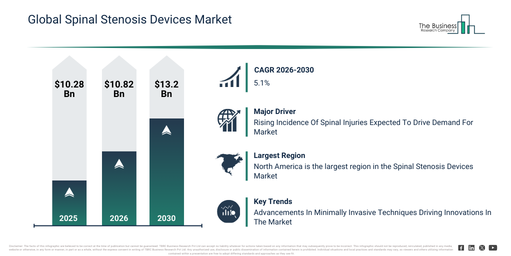
    The spinal stenosis devices market has seen substantial growth over recent years. It is projected to expand from $10.28 billion in 2025 to $10.82 billion in 2026, achieving a compound annual growth rate (CAGR) of 5.2%. This historical expansion can be attributed to an increase in lumbar stenosis cases, an aging population, advancements in surgical techniques, innovation in orthopedic devices, and the development of hospital spine programs.

    The spinal stenosis devices market is anticipated to show significant expansion in the upcoming years. It is forecast to achieve a valuation of $13.2 billion by 2030, progressing at a compound annual growth rate (CAGR) of 5.1%. This expansion during the projection period stems from advancements in next-generation implant designs, a rising demand for non-fusion devices, the broadening scope of ambulatory surgery, improvements in technological materials, and patient preference for minimally invasive options. Key developments expected in this timeframe include motion-preserving implants, minimally invasive decompression devices, enhanced biocompatible materials, procedures offering shorter recovery, and outpatient spine interventions.

    Access Your Free Sample Report for In-Depth Market Insights:

    https://www.thebusinessresearchcompany.com/sample.aspx?id=20966&type=smp

    What Drivers Are Driving Adoption Within The Spinal Stenosis Devices Market?

    An increase in the occurrence of spinal injuries is projected to stimulate the expansion of the spinal stenosis devices market in the future. These injuries involve harm to the spinal cord or adjacent structures, specifically referring to traumatic damage that disrupts the transmission of sensory and motor signals, potentially resulting in impaired movement, function, and feeling below the area of injury. The heightened frequency of spinal injuries primarily stems from a rise in traumatic incidents like car accidents and falls, especially prevalent in elderly populations, alongside a growing presence of non-traumatic factors such as age-related degenerative conditions and diseases. Spinal stenosis devices offer specific relief and structural stability by easing nerve compression, correcting spinal alignment, and boosting mobility, consequently elevating the life quality for those suffering from spinal injuries. For example, data from May 2023, provided by the National Spinal Cord Injury Statistical Center, a US-based organization dedicated to spinal cord information, indicates that 18,000 new spinal injuries are documented annually, with an incidence rate of 54 per 1 million individuals. Furthermore, approximately 302,000 people in the USA are estimated to have sustained a traumatic spinal cord injury. Consequently, the increasing occurrence of spinal injuries is fueling the expansion of the spinal stenosis devices market.

    What Segments Are Included Within The Spinal Stenosis Devices Market?

    The spinal stenosis devices market covered in this report is segmented –

    1) By Product Type: Interspinous Spacers, Stabilization Systems, Spinal Arthroplasty System, Interbody Fusion Devices

    2) By Application: Lumbar Spinal Stenosis, Cervical Spinal Stenosis, Thoracic Spinal Stenosis

    3) By End User: Hospitals, Ambulatory Surgical Centres, Others End Users

    Subsegments:

    1) By Interspinous Spacers: Single-Level Spacers, Multi-Level Spacers, Expandable Spacers

    2) By Stabilization Systems: Pedicle Screw Systems, Lateral Screw Systems, Dynamic Stabilization Systems

    3) By Spinal Arthroplasty System: Cervical Arthroplasty Systems, Lumbar Arthroplasty Systems, Artificial Disc Replacements

    4) By Interbody Fusion Devices: PEEK (Polyetheretherketone) Devices, Titanium Interbody Devices, Bioactive And Biocompatible Devices

    Which Competitive Trends Are Impacting The Structure Of The Spinal Stenosis Devices Market?

    Leading companies in the spinal stenosis devices market are increasingly concentrating on technological advancements, such as minimally invasive surgical techniques, to boost surgical precision and shorten recovery periods. These techniques involve medical procedures that use small incisions, often called ports, to access internal organs, substantially lessening physical trauma. Specialized instruments, including cameras and trocars, are utilized in these methods, allowing surgeons to perform operations with less discomfort, faster recovery times, and lower complication rates compared to traditional open surgery. For instance, in January 2024, Accelus, a US-based medical technology company delivering innovative solutions for spinal surgery, launched its linesider modular-cortical system. This technology empowers surgeons to place screw shanks early in spinal implant procedures and customize constructs with modular tulips and rods. It offers both open modular and cortical modular sets to accommodate diverse surgical approaches. Spinal implants are vital for providing stability and support to the spine during surgeries, aiding in the correction of deformities, fractures, or degenerative diseases while improving patient function and their quality of life.

    Who Are The Core Companies Influencing Trends In The Spinal Stenosis Devices Market?

    Major companies operating in the spinal stenosis devices market are Johnson & Johnson, Medtronic plc, Stryker Corporation, Boston Scientific Corporation, Zimmer Biomet Holdings Inc., Globus Medical Inc., NuVasive Inc., Orthofix Medical Inc., B. Braun Melsungen AG, Xtant Medical, Alphatec Holdings Inc., Vertos Medical Inc., Spineart SA, Spine Wave Inc., Spinal Simplicity LLC, Premia Spine, Meril Life Sciences Pvt. Ltd., Empirical Spine Inc., K2M Group Holdings Inc., RTI Surgical Inc., Camber Spine, SeaSpine Holdings Corporation

    Access The Complete Report For Deeper Market Insights:

    https://www.thebusinessresearchcompany.com/report/spinal-stenosis-devices-global-market-report

    Which Regions Are Projected To Dominate The Spinal Stenosis Devices Market In The Coming Years?

    North America was the largest region in the spinal stenosis devices market in 2025. Asia-Pacific is expected to be the fastest-growing region in the forecast period. The regions covered in the spinal stenosis devices market report are Asia-Pacific, South East Asia, Western Europe, Eastern Europe, North America, South America, Middle East, Africa.

    Request Your Customized Spinal Stenosis Devices Market Research Report for Competitive Advantage:

    https://www.thebusinessresearchcompany.com/customise?id=20966&type=smp

    Browse Through More Reports Similar to the Global Spinal Stenosis Devices Market 2026, By The Business Research Company

    Sacral Nerve Stimulation Devices Market Report 2026

    https://www.thebusinessresearchcompany.com/report/sacral-nerve-stimulation-devices-global-market-report

    Spinal Cord Stimulation Market Report 2026

    https://www.thebusinessresearchcompany.com/report/spinal-cord-stimulation-global-market-report

    Minimally Invasive Spine Surgery Devices Market Report 2026

    https://www.thebusinessresearchcompany.com/report/minimally-invasive-spine-surgery-devices-global-market-report

    Get in touch with us:

    The Business Research Company: https://www.thebusinessresearchcompany.com/

    Americas +1 310-496-7795

    Asia +44 7882 955267 & +91 8897263534

    Europe +44 7882 955267

    Email us at info@tbrc.info

    Follow us on:

    LinkedIn: https://in.linkedin.com/company/the-business-research-company

    YouTube: https://www.youtube.com/channel/UC24_fI0rV8cR5DxlCpgmyFQ

    Global Market Model: https://www.thebusinessresearchcompany.com/global-market-model
  • Global Spinal Muscular Atrophy Industry Insights: Key Trends and Growth Estimates

    Global Spinal Muscular Atrophy Industry Insights: Key Trends and Growth Estimates

    Uncover key drivers, emerging technologies, and competitive movements shaping the spinal muscular atrophy market from 2026–2035 with trusted insights from The Business Research Company

    Across 2026–2030, what is the expected market valuation path of the Spinal Muscular Atrophy Market?

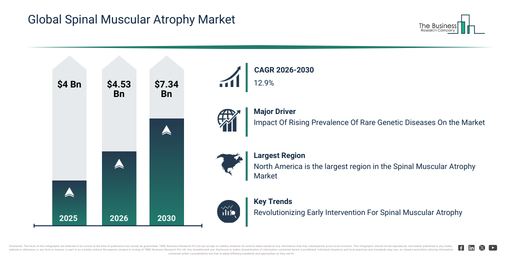
    The market for spinal muscular atrophy has experienced swift expansion recently. Projections indicate its value will escalate from $4 billion in 2025 to $4.53 billion by 2026, demonstrating a compound annual growth rate (CAGR) of 13.2%. Historically, this expansion has been driven by the introduction of innovative SMA therapies, a rise in genetic testing, heightened awareness from advocacy groups, significant investments in clinical trials, and dedicated funding for rare diseases.

    The spinal muscular atrophy market is expected to witness substantial expansion in the upcoming years, projected to achieve a value of $7.34 billion by 2030, advancing at a compound annual growth rate (CAGR) of 12.9%. This predicted rise is attributed to innovations in next-generation gene therapies, widespread adoption of global screening, broader availability of treatment options, improved patient survival, and ongoing pipeline drug development. Significant trends anticipated during this period include earlier genetic diagnosis, the proliferation of disease-modifying therapies, the introduction of newborn screening initiatives, tailored treatment approaches, and comprehensive long-term disease management strategies.

    Access Your Free Sample Report for In-Depth Market Insights:

    https://www.thebusinessresearchcompany.com/sample.aspx?id=20965&type=smp

    Which Drivers Are Supporting The Rise Of The Spinal Muscular Atrophy Market?

    The anticipated increase in the occurrence of rare genetic diseases is set to boost the expansion of the spinal muscular atrophy market in the future. These disorders stem from gene mutations, impacting a small portion of people and frequently leading to serious, long-term health issues. This growing prevalence is linked to advancements in diagnostic methods, greater public understanding, and enhanced availability of genetic testing, all contributing to the detection and reporting of more cases. Spinal muscular atrophy (SMA) serves as a prime example of a rare genetic disorder, illustrating both the difficulties and possibilities in comprehending inherited illnesses and underscoring the necessity of progressing research into genetic conditions. To illustrate, a report from the UK’s Office for National Statistics in July 2023 indicated that specific epidemiological studies, made possible by SMN1 genetic testing, showed SMA affects 1 of 10,000 to 20,000 live births, with more than 95% of patients having homozygous SMN1 deletion. Consequently, the increasing occurrence of rare genetic diseases is projected to fuel the expansion of the spinal muscular atrophy market.

    What Leading Segments Are Studied In The Spinal Muscular Atrophy Market?

    The spinal muscular atrophy market covered in this report is segmented –

    1) By Type: Type 1 (Severe), Type 2 (Intermediate), Type 3 (Mild), Type 4 (Adult)

    2) By Age: Pediatric, Adults

    3) By Treatment: Drug Therapy, Gene Therapy

    4) By End User: Hospital pharmacy, Online pharmacy, Retail pharmacy

    Subsegments:

    1) By Type 1 (Severe): Infantile-Onset SMA, Severe Progressive SMA

    2) By Type 2 (Intermediate): Early-Onset SMA, Non-progressive SMA

    3) By Type 3 (Mild): Juvenile-Onset SMA, Mild Progressive SMA

    4) By Type 4 (Adult): Adult-Onset SMA, Late-Onset SMA

    What Industry Trends Are Transforming The Spinal Muscular Atrophy Market?

    Leading companies in the spinal muscular atrophy market are actively developing innovative products, such as dry syrup, to enhance medication adherence and simplify administration for pediatric and other patient groups facing swallowing difficulties. Dry syrup is a powdered medication that requires reconstitution with water before use, commonly prescribed for children and patients who struggle to swallow tablets or capsules. For instance, in September 2024, Chugai Pharmaceutical Co., Ltd., a Japan-based pharmaceutical company, announced the receipt of regulatory approval from Japan’s Ministry of Health, Labour and Welfare for an expanded indication of its drug Evrysdi (risdiplam). This approval allows its application in pre-symptomatic spinal muscular atrophy (SMA) and extends dosing to infants under two months old. This development is vital as it enables the start of treatment before symptoms emerge, potentially improving therapeutic outcomes for affected infants. The decision was substantiated by data from the RAINBOWFISH study, which assessed Evrysdi’s safety and efficacy in infants diagnosed with SMA but not yet symptomatic. Results indicated that treated infants achieved key developmental milestones, such as unsupported sitting and enhanced motor skills, by 12 months, thereby emphasizing the drug’s potential to significantly alter the disease’s progression when administered at an early stage.

    Which Major Industry Participants Are Leading The Spinal Muscular Atrophy Market Growth?

    Major companies operating in the spinal muscular atrophy market are Pfizer Inc., F. Hoffmann-La Roche Ltd, Bayer AG, Novartis AG, Biogen Inc., Chugai Pharmaceutical Co. Ltd., Genentech Inc., PTC Therapeutics Inc., Ionis Pharmaceuticals Inc., RegenXBio Inc., Cytokinetics Inc., AveXis Inc., Scholar Rock Inc., Genethon, CANbridge Pharmaceuticals Inc., NMD Pharma A/S, Hanugen Therapeutics Inc., Beijing Jinlan Gene Technology Co. Ltd, Sarepta Therapeutics, Amicus Therapeutics, Audentes Therapeutics, Solid Biosciences

    Access The Complete Report For Deeper Market Insights:

    https://www.thebusinessresearchcompany.com/report/spinal-muscular-atrophy-global-market-report

    Which Region Is Expected To Experience The Fastest Growth In The Spinal Muscular Atrophy Market?

    North America was the largest region in the spinal muscular atrophy market in 2025. Asia-Pacific is expected to be the fastest-growing region in the forecast period. The regions covered in the spinal muscular atrophy market report are Asia-Pacific, South East Asia, Western Europe, Eastern Europe, North America, South America, Middle East, Africa.

    Request Your Customized Spinal Muscular Atrophy Market Research Report for Competitive Advantage:

    https://www.thebusinessresearchcompany.com/customise?id=20965&type=smp

    Browse Through More Reports Similar to the Global Spinal Muscular Atrophy Market 2026, By The Business Research Company

    Duchenne Muscular Dystrophy Dmd Therapeutics Market Report 2026

    https://www.thebusinessresearchcompany.com/report/duchenne-muscular-dystrophy-dmd-therapeutics-global-market-report

    Spine Biologics Market Report 2026

    https://www.thebusinessresearchcompany.com/report/spine-biologics-global-market-report

    Muscle Wasting Disorders Market Report 2026

    https://www.thebusinessresearchcompany.com/report/muscle-wasting-disorders-global-market-report

    Get in touch with us:

    The Business Research Company: https://www.thebusinessresearchcompany.com/

    Americas +1 310-496-7795

    Asia +44 7882 955267 & +91 8897263534

    Europe +44 7882 955267

    Email us at info@tbrc.info

    Follow us on:

    LinkedIn: https://in.linkedin.com/company/the-business-research-company

    YouTube: https://www.youtube.com/channel/UC24_fI0rV8cR5DxlCpgmyFQ

    Global Market Model: https://www.thebusinessresearchcompany.com/global-market-model