Month: March 2026

  • Recurrent Head And Neck Cancer Squamous Cell Carcinoma Market Future Outlook 2026: Key Drivers and Growth Potential

    Recurrent Head And Neck Cancer Squamous Cell Carcinoma Market Future Outlook 2026: Key Drivers and Growth Potential

    Uncover key drivers, emerging technologies, and competitive movements shaping the recurrent head and neck cancer squamous cell carcinoma market from 2026–2035 with trusted insights from The Business Research Company

    What long-term size projections exist for the Recurrent Head And Neck Cancer Squamous Cell Carcinoma Market covering 2026–2035?

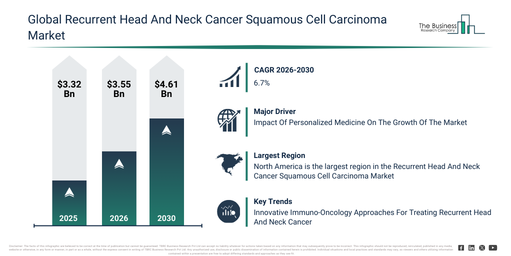
    The recurrent head and neck cancer squamous cell carcinoma market size has recently experienced significant expansion. It is projected to expand from $3.32 billion in 2025 to $3.55 billion in 2026, reflecting a compound annual growth rate (CAGR) of 7.0%. The expansion observed in previous periods is attributable to factors like the escalating incidence of head and neck cancers, the constrained effectiveness of initial therapeutic approaches, the rising adoption of platinum-based chemotherapy, the swift integration of targeted therapies, and the broadened scope of oncology clinical trials.

    The market size for recurrent head and neck cancer squamous cell carcinoma is anticipated to demonstrate robust growth over the coming years. This market is projected to reach $4.61 billion by 2030, exhibiting a compound annual growth rate (CAGR) of 6.7%. The expansion foreseen in this period is primarily driven by the evolution of next-generation immunotherapies, increased investments in precision oncology research, the growing utilization of combination regimens, the proliferation of companion diagnostics, and a heightened focus on improving patient survival outcomes. Significant trends expected during this forecast period include the increasing adoption of immunotherapy combinations, a rising application of targeted drug therapies, an expanding emphasis on biomarker-based treatment selection, the broadening of multimodal treatment approaches, and an enhanced commitment to personalized oncology.

    Access Your Free Sample Report for In-Depth Market Insights:

    https://www.thebusinessresearchcompany.com/sample.aspx?id=21269&type=smp

    Which Drivers Are Impacting The Competitive Landscape Of The Recurrent Head And Neck Cancer Squamous Cell Carcinoma Market?

    The future expansion of the recurrent head and neck cancer squamous cell carcinoma market is anticipated to be fueled by the advancements in personalized medicine. This medical strategy customizes treatments and healthcare choices according to each patient’s unique attributes, including their genetic profile, surroundings, and way of life. Its increasing prevalence stems from progress in genomic studies, enhanced diagnostic tools, a rising need for customized therapies, and greater funding in precision healthcare, all of which facilitate more potent and patient-specific treatments. For recurrent head and neck cancer squamous cell carcinoma, personalized medicine offers advantages by allowing genetic profiling and targeted interventions to develop treatment strategies that more effectively address the distinct molecular features of individual patient tumors. An example of this is seen in February 2024, when the U.S. Food and Drug Administration, as reported by the Personalized Medicine Coalition, a US-based organization promoting the adoption of personalized medicine, sanctioned 16 new personalized treatments for rare disease patients, a notable increase from the 6 approvals in 2022. Consequently, the expansion of personalized medicine is propelling the growth of the recurrent head and neck cancer squamous cell carcinoma market.

    What Segments Are Identified Within The Structure Of The Recurrent Head And Neck Cancer Squamous Cell Carcinoma Market?

    The recurrent head and neck cancer squamous cell carcinoma market covered in this report is segmented –

    1) By Treatment Type: Chemotherapy, Immunotherapy, Targeted Drug Therapy, Other Treatment Types

    2) By Route Of Administration: Oral, Parenteral, Other Route Of Administrations

    3) By End User: Hospitals, Clinics, Diagnostic Centers, Research Laboratories, Other End-Users

    Subsegments:

    1) By Chemotherapy: Cisplatin, Carboplatin, 5-Fluorouracil (5-FU), Paclitaxel, Docetaxel

    2) By Immunotherapy: Pembrolizumab, Nivolumab, Ipilimumab, Atezolizumab, Durvalumab

    3) By Targeted Drug Therapy: Cetuximab, Afatinib, Erlotinib, Panitumumab, Lapatinib

    4) By Other Treatment Types: Radiation Therapy, Surgery, Combination Therapies, Palliative Care

    Which Trends Are Influencing The Development Of The Recurrent Head And Neck Cancer Squamous Cell Carcinoma Market?

    Major companies operating in the recurrent head and neck cancer squamous cell carcinoma market are concentrating on developing innovative technologies, such as immuno-oncology drugs, to boost treatment effectiveness, improve patient outcomes, and address the unmet medical needs associated with this aggressive form of cancer. Immuno-oncology drugs are a class of cancer treatments that leverage the body’s immune system to identify and attack cancer cells. These drugs function by stimulating or enhancing the immune response, either by activating immune cells or by blocking immune checkpoints that prevent immune cells from targeting tumors. For instance, in August 2024, Aveta Biomics Inc., a US-based pharmaceutical company, was granted fast-track designation by the US Food and Drug Administration (FDA) for APG-157, an investigational immune-oncology agent derived from turmeric, for head and neck cancer treatment. Its dual mechanism seeks to selectively target cancer cells while reshaping the immune environment, potentially offering a less invasive alternative to surgery and intensive therapies.

    Which Major Industry Participants Are Leading The Recurrent Head And Neck Cancer Squamous Cell Carcinoma Market Growth?

    Major companies operating in the recurrent head and neck cancer squamous cell carcinoma market are Roche Holding AG, Merck KGaA, AbbVie Inc., Bristol Myers Squibb Company, AstraZeneca plc, Eli Lilly And Company, Amgen Inc., Regeneron Pharmaceuticals Inc., Eisai Co. Ltd., Incyte Corporation, BeiGene Ltd., BioNTech SE, Exelixis Inc., CytomX Therapeutics Inc., Zymeworks Inc., MacroGenics Inc., Kura Oncology Inc., Genexine Inc., Pfizer Inc., Novartis AG, Sanofi S.A., Merck And Co Inc., Johnson And Johnson, Takeda Pharmaceutical Company Limited

    Access The Complete Report For Deeper Market Insights:

    https://www.thebusinessresearchcompany.com/report/recurrent-head-and-neck-cancer-squamous-cell-carcinoma-global-market-report

    Which Region Is Expected To Experience The Fastest Growth In The Recurrent Head And Neck Cancer Squamous Cell Carcinoma Market?

    North America was the largest region in the recurrent head and neck cancer squamous cell carcinoma market in 2025. The regions covered in the recurrent head and neck cancer squamous cell carcinoma market report are Asia-Pacific, South East Asia, Western Europe, Eastern Europe, North America, South America, Middle East, Africa.

    Request Your Customized Recurrent Head And Neck Cancer Squamous Cell Carcinoma Market Research Report for Competitive Advantage:

    https://www.thebusinessresearchcompany.com/customise?id=21269&type=smp

    Browse Through More Reports Similar to the Global Recurrent Head And Neck Cancer Squamous Cell Carcinoma Market 2026, By The Business Research Company

    Non Small Cell Lung Cancer Nsclc Market Report 2026

    https://www.thebusinessresearchcompany.com/report/non-small-cell-lung-cancer-nsclc-global-market-report

    Head And Neck Cancer Therapeutics Market Report 2026

    https://www.thebusinessresearchcompany.com/report/head-and-neck-cancer-therapeutics-global-market-report

    Oral Cancer Treatment Market Report 2026

    https://www.thebusinessresearchcompany.com/report/oral-cancer-treatment-global-market-report

    Get in touch with us:

    The Business Research Company: https://www.thebusinessresearchcompany.com/

    Americas +1 310-496-7795

    Asia +44 7882 955267 & +91 8897263534

    Europe +44 7882 955267

    Email us at info@tbrc.info

    Follow us on:

    LinkedIn: https://in.linkedin.com/company/the-business-research-company

    YouTube: https://www.youtube.com/channel/UC24_fI0rV8cR5DxlCpgmyFQ

    Global Market Model: https://www.thebusinessresearchcompany.com/global-market-model

  • Real-Time PCR, Digital PCR And End-Point PCR Market Trends and Insights: Global Forecast to 2030

    Real-Time PCR, Digital PCR And End-Point PCR Market Trends and Insights: Global Forecast to 2030

    Uncover key drivers, emerging technologies, and competitive movements shaping the real-time pcr, digital pcr and end-point pcr market from 2026–2035 with trusted insights from The Business Research Company

    What total market size is anticipated for the Real-Time PCR, Digital PCR And End-Point PCR Market in 2030?

    The real-time pcr, digital pcr and end-point pcr market has experienced robust expansion in recent years. This market is set to grow from $41.55 billion in 2025 to $45.46 billion in 2026, achieving a compound annual growth rate (CAGR) of 9.4%. The increase observed in previous periods is largely due to the expanded use of molecular diagnostics applications, a rising prevalence of infectious diseases, more widespread adoption of pcr in clinical research, the establishment of additional genetic testing laboratories, and the introduction of advanced pcr instruments.

    The market for real-time pcr, digital pcr, and end-point pcr is anticipated to achieve rapid growth over the coming years. It is projected to expand to $67.76 billion in 2030, demonstrating a compound annual growth rate (CAGR) of 10.5%. This growth during the forecast period is attributable to factors such as the increasing adoption of personalized medicine diagnostics, rising investments in genomics research, the expansion of point-of-care molecular testing, a growing demand for ultra-sensitive detection methods, and increased automation in molecular laboratories. Significant trends expected in the forecast period include the increasing adoption of digital pcr for precision quantification, a rising demand for high-throughput pcr systems, the growing use of multiplex pcr assays, the expansion of automated pcr workflows, and an enhanced focus on data accuracy and sensitivity.

    Access Your Free Sample Report for In-Depth Market Insights:

    https://www.thebusinessresearchcompany.com/sample.aspx?id=13296&type=smp

    What Drivers Are Influencing Production Trends In The Real-Time PCR, Digital PCR And End-Point PCR Market?

    The rising occurrence of infectious diseases is projected to boost the expansion of the real-time PCR, digital PCR, and end-point PCR markets in the future. These diseases are defined as conditions resulting from the entry and proliferation of disease-causing microorganisms such as bacteria, viruses, fungi, and parasites. For infectious diseases, real-time PCR, digital PCR, and end-point PCR are employed to measure specific pathogens or their genetic components, track disease development, and quickly identify infections like HIV, hepatitis, respiratory viruses, and tuberculosis. An example is the data from March 2024 by the US government agency, the Centers for Disease Control and Prevention, which showed that tuberculosis cases grew from 8,320 in 2022 to 9,615 in 2023, an increase of 1,295 cases. Consequently, the heightened prevalence of infectious diseases is set to stimulate the growth of the cephalosporin market.

    Which Segments Are Gaining Traction In The Real-Time PCR, Digital PCR And End-Point PCR Market?

    The real-time pcr, digital pcr and end-point pcr market covered in this report is segmented –

    1) By Product: Instruments, Consumables And Reagents, Software And Services

    2) By Technology: Quantitative, End-Point Polymerase Chain Reaction (PCR), Digital

    3) By Applications: Clinical, Research, Forensic, Other Applications

    4) By End User: Hospital, Diagnostic Labs, Pharma, Biotech, Contract Research Organizations

    Subsegments:

    1) By Instruments: Real-Time PCR Systems, Digital PCR Systems, End-Point PCR Systems

    2) By Consumables And Reagents: PCR Plates And Tubes, Primers And Probes, PCR Master Mix, DNA Polymerases And Nucleotides

    3) By Software And Services: Analysis Software, Data Management Software, Calibration And Maintenance Services, Training And Support Services

    What Trends Are Expected To Impact The Competitive Landscape Of The Real-Time PCR, Digital PCR And End-Point PCR Market?

    Leading companies active in the real-time PCR, digital PCR, and end-point PCR markets are concentrating on developing next-generation platforms to enhance assay sensitivity, improve precision, and elevate overall clinical performance. These advancements are designed to enable highly accurate detection of low-abundance nucleic acids, rare mutations, and copy number variations (CNVs), supporting both research and clinical diagnostic applications. Digital PCR, specifically, offers absolute quantification capabilities, making it valuable for applications that require high sensitivity and reproducibility. For instance, in September 2024, QIAGEN N.V., a Germany-based provider of sample and assay technologies for molecular diagnostics, launched the QIAcuityDx Digital PCR System for clinical oncology diagnostics, along with over 100 newly validated assays through its GeneGlobe platform. The system integrates sample partitioning, thermocycling, and imaging into a single automated workflow, facilitating streamlined operations for clinical and research laboratories. Designed to support applications such as non-invasive liquid biopsy testing, the QIAcuityDx platform underscores QIAGEN’s commitment to advancing diagnostic accuracy and improving clinical outcomes.

    Who Are The Prominent Global Companies Shaping The Real-Time PCR, Digital PCR And End-Point PCR Market Landscape?

    Major companies operating in the real-time pcr, digital pcr and end-point pcr market are F. Hoffmann La Roche Ltd., Merck & Co. Inc., Thermo Fisher Scientific Inc., Abbott Laboratories, Danaher Corporation, Becton Dickinson and Co., Agilent Technologies Inc., bioMérieux S.A., Bio-Rad Laboratories Inc., QIAGEN N.V., Eppendorf Group, Promega Corporation, Meridian Bioscience Inc., Takara Bio Inc. , Cole-Parmer Instrument Company LLC, Bioneer Corporation, Enzo Life Sciences Inc., Analytik Jena AG , Fluidigm Corporation, Elitech Group SAS, Microsynth AG, Stilla Technologies SAS, HTG Molecular Diagnostics Inc., AITbiotech Pte Ltd., Bio Molecular Systems, JN Medsys Pte Ltd., Biomeme Inc.

    Access The Complete Report For Deeper Market Insights:

    https://www.thebusinessresearchcompany.com/report/real-time-pcr-digital-pcr-and-end-point-pcr-global-market-report

    Which Geographic Areas Are Emerging As Strong Markets For The Real-Time PCR, Digital PCR And End-Point PCR Market?

    North America was the largest region in the real-time PCR, digital PCR, and end-point PCR market in 2025. Asia-Pacific is expected to be the fastest-growing region in the forecast period. The regions covered in the real-time pcr, digital pcr and end-point pcr market report are Asia-Pacific, South East Asia, Western Europe, Eastern Europe, North America, South America, Middle East, Africa.

    Request Your Customized Real-Time PCR, Digital PCR And End-Point PCR Market Research Report for Competitive Advantage:

    https://www.thebusinessresearchcompany.com/customise?id=13296&type=smp

    Browse Through More Reports Similar to the Global Real-Time PCR, Digital PCR And End-Point PCR Market 2026, By The Business Research Company

    Polymerase Chain Reaction Pcr Technologies Market Report 2026

    https://www.thebusinessresearchcompany.com/report/polymerase-chain-reaction-pcr-technologies-global-market-report

    Pcr And Realtime Pcr Testing Market Report 2026

    https://www.thebusinessresearchcompany.com/report/pcr-and-realtime-pcr-testing-global-market-report

    Extended Reality Xr Hardware Market Report 2026

    https://www.thebusinessresearchcompany.com/report/extended-reality-xr-hardware-global-market-report

    Get in touch with us:

    The Business Research Company: https://www.thebusinessresearchcompany.com/

    Americas +1 310-496-7795

    Asia +44 7882 955267 & +91 8897263534

    Europe +44 7882 955267

    Email us at info@tbrc.info

    Follow us on:

    LinkedIn: https://in.linkedin.com/company/the-business-research-company

    YouTube: https://www.youtube.com/channel/UC24_fI0rV8cR5DxlCpgmyFQ

    Global Market Model: https://www.thebusinessresearchcompany.com/global-market-model

  • Global Real-Time Biomechanics Extended Reality (XR) Tool Market Report 2026–2030: Data-Driven Growth Insights

    Global Real-Time Biomechanics Extended Reality (XR) Tool Market Report 2026–2030: Data-Driven Growth Insights

    Uncover key drivers, emerging technologies, and competitive movements shaping the real-time biomechanics extended reality (xr) tool market from 2026–2035 with trusted insights from The Business Research Company

    What is the expected shift in the Real-Time Biomechanics Extended Reality (XR) Tool Market’s size between 2026 and 2030?

    The real-time biomechanics extended reality (xr) tool market has seen substantial growth in recent years. It is forecast to expand from $2.28 billion in 2025 to $2.8 billion in 2026, achieving a compound annual growth rate (CAGR) of 22.9%. This historical expansion can be attributed to factors such as the increasing application of motion analysis in sports science, the wider adoption of rehabilitation technology, the rise of biomechanics research programs, a growing demand for ergonomic assessment tools, and the accessibility of advanced sensing hardware.

    The real-time biomechanics extended reality (xr) tool market is anticipated to experience substantial growth over the coming years. This sector is projected to expand to $6.34 billion by 2030, driven by a robust compound annual growth rate (CAGR) of 22.6%. Key factors contributing to this expansion during the forecast period include the increasing uptake of immersive healthcare training tools, a rising demand for real-time rehabilitation monitoring, the broader application of XR in sports analytics, the growing integration with AI-based performance models, and increased investments in immersive analytics platforms. Prominent trends expected in this period encompass a greater adoption of real-time motion capture systems, the rising integration of XR-based biomechanical visualization, the expanding use of wearable sensor technologies, the development of data-driven movement analysis platforms, and an enhanced focus on performance optimization.

    Access Your Free Sample Report for In-Depth Market Insights:

    https://www.thebusinessresearchcompany.com/sample.aspx?id=29164&type=smp

    Which Drivers Are Shaping Strategic Decisions In The Real-Time Biomechanics Extended Reality (XR) Tool Market?

    The increasing engagement in sports activities is projected to drive the expansion of the real-time biomechanics extended reality (XR) tool market moving forward. Sports participation refers to individuals’ involvement in structured or casual athletic pursuits aimed at enhancing physical well-being, developing skills, and fostering social bonds. This increase in sports participation is attributed to heightened health awareness, as more individuals engage in physical exercise to maintain fitness and prevent lifestyle-related health conditions. The real-time biomechanics extended reality (XR) tool supports sports participation and consumption by offering athletes and coaches immersive, data-driven insights that improve training effectiveness, elevate performance, and encourage greater involvement in sports activities. For example, in February 2024, the Sports & Fitness Industry Association (SFIA), a US-based non-profit trade association, reported that in 2023, 242 million Americans, equivalent to 78.8% of the population, participated in at least one sport or fitness activity, indicating a 2.2% increase from the previous year. Therefore, the growing sports participation is fueling the growth of the real-time biomechanics extended reality (XR) tool market.

    What Segment Categories Are Covered In The Real-Time Biomechanics Extended Reality (XR) Tool Market?

    The real-time biomechanics extended reality (xr) tool market covered in this report is segmented –

    1) By Component: Hardware, Software, Services

    2) By Deployment Mode: On-Premises, Cloud-Based

    3) By Application: Sports And Fitness, Healthcare And Rehabilitation, Research And Education, Industrial Ergonomics, Other Applications

    4) By End-User: Hospitals And Clinics, Sports Institutes, Research Centers, Enterprises, Other End-Users

    Subsegments:

    1) By Hardware: Motion Capture Cameras, Inertial Measurement Units, Force Plates, Depth Sensors, Head-Mounted Displays, Wearable Motion Sensors, Processing Units

    2) By Software: Biomechanics Analysis Software, Simulation And Visualization Tools, Data Integration Platforms, Motion Tracking Algorithms, Performance Monitoring Software, User Interface Applications

    3) By Services: Installation And Calibration Services, Training And Support Services, System Integration Services, Data Analytics And Consultation Services, Maintenance And Upgradation Services, Customization Services

    Which Trends Are Guiding The Evolution Of The Real-Time Biomechanics Extended Reality (XR) Tool Market?

    Leading firms within the real-time biomechanics extended reality (XR) tool market are concentrating on crafting groundbreaking solutions, including biomechanics analysis software, to facilitate accurate human movement tracking. Such software is defined as a digital instrument designed to record, model, and scrutinize human body movements for assessing physical performance, posture, and musculoskeletal function instantly. An example is Movella Holdings Inc., a US-based technology company, which in May 2025, unveiled Xsens Analyze 2025, bringing forth the industry’s initial male- and female-specific anatomical models for inertial motion capture. This revision facilitates a more precise biomechanical analysis through considering variations in center of mass, limb length, and body proportions. Furthermore, an improved spine model offers exact posture tracking, depicting S-shape standing and C-curve bending, whereas auto sensor mapping (ASM) streamlines the configuration process by automatically discerning sensor locations.

    Which Key Players Are Driving Competition In The Real-Time Biomechanics Extended Reality (XR) Tool Market?

    Major companies operating in the real-time biomechanics extended reality (xr) tool market are STT Systems, OptiTrack Inc., Leap Motion, Arqus 3D, Northern Digital Inc., Reallusion Inc., Xsens Technologies B.V., MindMaze SA, Vicon Motion Systems Ltd., Delsys Inc., Motus Global, Polhemus Inc., Motion Analysis Corporation, Qualisys AB, Simi Reality Motion Systems GmbH, Noraxon USA Inc., Codamotion Ltd., PhaseSpace Inc., Perception Neuron, Meta Platforms Inc.

    Access The Complete Report For Deeper Market Insights:

    https://www.thebusinessresearchcompany.com/report/real-time-biomechanics-extended-reality-xr-tool-global-market-report

    Which Region Is Projected To Lead The Real-Time Biomechanics Extended Reality (XR) Tool Market During The Forecast Period?

    North America was the largest region in the real-time biomechanics extended reality (XR) tool market in 2025. Asia-Pacific is expected to be the fastest-growing region in the forecast period. The regions covered in the real-time biomechanics extended reality (xr) tool market report are Asia-Pacific, South East Asia, Western Europe, Eastern Europe, North America, South America, Middle East, Africa.

    Request Your Customized Real-Time Biomechanics Extended Reality (XR) Tool Market Research Report for Competitive Advantage:

    https://www.thebusinessresearchcompany.com/customise?id=29164&type=smp

    Browse Through More Reports Similar to the Global Real-Time Biomechanics Extended Reality (XR) Tool Market 2026, By The Business Research Company

    Full Body Motion Capture Software Market Report 2026

    https://www.thebusinessresearchcompany.com/report/full-body-motion-capture-software-global-market-report

    Gait Analyzer Market Report 2026

    https://www.thebusinessresearchcompany.com/report/gait-analyzer-global-market-report

    Extended Reality Display Market Report 2026

    https://www.thebusinessresearchcompany.com/report/extended-reality-display-global-market-report

    Get in touch with us:

    The Business Research Company: https://www.thebusinessresearchcompany.com/

    Americas +1 310-496-7795

    Asia +44 7882 955267 & +91 8897263534

    Europe +44 7882 955267

    Email us at info@tbrc.info

    Follow us on:

    LinkedIn: https://in.linkedin.com/company/the-business-research-company

    YouTube: https://www.youtube.com/channel/UC24_fI0rV8cR5DxlCpgmyFQ

    Global Market Model: https://www.thebusinessresearchcompany.com/global-market-model

  • Real World Evidence Solutions Market Dynamics 2026: Future Outlook and Key Insights

    Real World Evidence Solutions Market Dynamics 2026: Future Outlook and Key Insights

    Uncover key drivers, emerging technologies, and competitive movements shaping the real world evidence solutions market from 2026–2035 with trusted insights from The Business Research Company

    What growth pattern is forecast for the Real World Evidence Solutions Market size between 2026 and 2035?

    The real world evidence solutions market has experienced significant expansion in recent years. This market is projected to expand from $2.33 billion in 2025 to $2.7 billion in 2026, demonstrating a compound annual growth rate (CAGR) of 15.9%. Factors contributing to this historical growth include the greater accessibility of real-world healthcare data, an increased need for post-approval evidence, an intensified focus on drug safety monitoring, the broader adoption of electronic health records, and the initial regulatory acceptance of rwe.

    The real world evidence solutions market is projected to experience substantial expansion in the coming years. This market is anticipated to reach $4.81 billion by 2030, exhibiting a compound annual growth rate (CAGR) of 15.6%. Key drivers for this anticipated growth include data-driven approaches to regulatory decision-making, the expanding application of RWE in reimbursement determinations, the proliferation of precision medicine programs, enhanced integration of real-time healthcare information, and the increasing uptake of AI-powered evidence platforms. Significant trends observed during this period encompass a greater reliance on advanced analytics within RWE studies, the increasing merging of EHR and claims data, the rising acceptance of AI-powered evidence generation, the broadened application of RWE in regulatory filings, and a heightened emphasis on post-market safety surveillance.

    Access Your Free Sample Report for In-Depth Market Insights:

    https://www.thebusinessresearchcompany.com/sample.aspx?id=6930&type=smp

    Which Drivers Are Impacting Market Performance In The Real World Evidence Solutions Market?

    The increasing elderly population is anticipated to drive the expansion of the real-world evidence solutions market. This demographic, defined as individuals aged 65 and over, is at a higher risk of experiencing falls due to factors such as postural hypotension, or difficulties with balance and gait. Moreover, aging significantly elevates the risk of chronic conditions like strokes, cardiovascular diseases, type 2 diabetes, arthritis, and cancer. For instance, data published in January 2024 by the Population Reference Bureau, a US-based nonprofit organization, indicates that the population of Americans aged 65 and older is projected to rise from 58 million in 2022 to 82 million by 2050, marking a 47% increase. Additionally, their representation within the total population is expected to grow from 17% to 23%. Thus, the expanding geriatric population is a primary catalyst for the growth of the real-world evidence solutions market.

    Which Segments Are Contributing To The Growth Of The Real World Evidence Solutions Market?

    The real world evidence solutions market covered in this report is segmented –

    1) By Component: Services, Data Sets, Clinical Setting Data, Claims Data, Pharmacy Data, Patient Powered Data

    2) By Therapeutic Area: Oncology, Cardiovascular, Neurology, Immunology, Other Therapeutic Areas

    3) By Application: Drug Development And Approvals, Medical Device Development And Approvals, Reimbursement/Coverage And Regulatory Decision Making, Post Market Safety And Adverse Events Monitoring

    4) By End-Users: Pharmaceutical And Medical Devices Companies, Healthcare Providers, Healthcare Payers, Other End-Users

    Subsegments:

    1) By Services: Consulting Services, Data Management Services, Regulatory Services, Analytics Services

    2) By Data Sets: Electronic Health Records (EHR), Patient Registries, Clinical Trials Data, Observational Study Data

    3) By Clinical Setting Data: Hospital Data, Outpatient Data, Specialty Care Data, Claims Data

    4) By Insurance Claims Data: Medicare/Medicaid Data, Commercial Claims Data, Pharmacy Data

    5) By Prescription Data: Pharmacy Claims Data, Drug Utilization Data

    6) By Patient Powered Data: Patient Surveys, Patient-Reported Outcomes (PRO), Wearable Device Data

    What Trends Are Projected To Support The Growth Of The Real World Evidence Solutions Market?

    Leading companies in the real-world evidence solutions market are developing innovative products, such as a new real-world evidence (RWE) solutions service, intended to optimize evidence-based medicine. Real-world evidence (RWE) solutions services are designed to produce and examine clinical evidence regarding the utilization, potential advantages, and risks of medical products, employing real-world data (RWD) obtained from routine healthcare delivery. For instance, in October 2023, Maxis Clinical Sciences, a US-based clinical research consultancy serving small to medium-sized pharmaceutical and life sciences companies globally, introduced its new Real-World Evidence (RWE) Solutions service. Maxis Clinical Sciences’ RWE Solutions has been established to consolidate multiple RWD sources, including patient-reported outcomes and data from wearable devices, which were created to enhance patient participation and data quality.

    Who Are The Top-Performing Companies In The Real World Evidence Solutions Market In Recent Years?

    Major companies operating in the real world evidence solutions market are Anthem Inc., Cegedim Health Data, Clarivate PLC, Cognizant Technology Solutions Corporation, Flatiron Health Inc., International Business Machines Corporation, ICON plc, IQVIA Holdings Inc., Medpace Holdings Inc., Optum Inc., Oracle Corporation, PAREXEL International Corporation, PPD Inc., SAS Institute Inc., Syneos Health, Symphony Innovation LLC, UnitedHealth Group Incorporated, Deloitte Touche Tohmatsu Limited, Informa PLC, Palantir Technologies, UDG Healthcare PLC, Elevance Health Inc., Covance Consulting Ltd., Clinipace Worldwide, Evidera Inc., Pharmerit International, Analysis Group Inc., HealthCore Inc., Inovalon Holdings Inc., KMK Consulting Inc.

    Access The Complete Report For Deeper Market Insights:

    https://www.thebusinessresearchcompany.com/report/real-world-evidence-solutions-global-market-report

    Which Region Currently Holds The Largest Share Of The Real World Evidence Solutions Market?

    North America was the largest region in the real world evidence solutions market in 2025. Asia-Pacific is expected to be the fastest-growing region in the real world evidence solutions market share during the forecast period. The regions covered in the real world evidence solutions market report are Asia-Pacific, South East Asia, Western Europe, Eastern Europe, North America, South America, Middle East, Africa.

    Request Your Customized Real World Evidence Solutions Market Research Report for Competitive Advantage:

    https://www.thebusinessresearchcompany.com/customise?id=6930&type=smp

    Browse Through More Reports Similar to the Global Real World Evidence Solutions Market 2026, By The Business Research Company

    Digital Forensics Market Report 2026

    https://www.thebusinessresearchcompany.com/report/digital-forensics-global-market-report

    Digital Evidence Management Market Report 2026

    https://www.thebusinessresearchcompany.com/report/digital-evidence-management-global-market-report

    Investigation And Security Services Market Report 2026

    https://www.thebusinessresearchcompany.com/report/investigation-and-security-services-global-market-report

    Get in touch with us:

    The Business Research Company: https://www.thebusinessresearchcompany.com/

    Americas +1 310-496-7795

    Asia +44 7882 955267 & +91 8897263534

    Europe +44 7882 955267

    Email us at info@tbrc.info

    Follow us on:

    LinkedIn: https://in.linkedin.com/company/the-business-research-company

    YouTube: https://www.youtube.com/channel/UC24_fI0rV8cR5DxlCpgmyFQ

    Global Market Model: https://www.thebusinessresearchcompany.com/global-market-model

  • Real Time Health Monitoring Devices Market Research: Growth Projections and Trends 2030

    Real Time Health Monitoring Devices Market Research: Growth Projections and Trends 2030

    Uncover key drivers, emerging technologies, and competitive movements shaping the real time health monitoring devices market from 2026–2035 with trusted insights from The Business Research Company

    How much larger will the Real Time Health Monitoring Devices Market be in 2030 compared with 2026?

    The market size for real time health monitoring devices has experienced substantial growth in recent years. It is projected to expand from $15.57 billion in 2025 to $19.09 billion in 2026, demonstrating a compound annual growth rate (CAGR) of 22.6%. The historical expansion can be attributed to factors such as the increasing adoption of wearable technology, the rising prevalence of chronic diseases, the development of home healthcare models, the expansion of mobile health applications, and increasing consumer health awareness.

    The real time health monitoring devices market size is projected to experience swift expansion over the coming years. This market is anticipated to reach $38.34 billion by 2030, exhibiting a compound annual growth rate (CAGR) of 19.0%. This projected growth is driven by factors such as the broader adoption of remote patient monitoring, an increasing need for real-time health data, enhanced integration with telehealth platforms, a greater emphasis on personalized health management, and the expansion of smart healthcare ecosystems. Key trends for the forecast duration encompass the growing use of wearable health monitoring devices, increased incorporation of AI-based health analytics, expanded utilization of connected home health devices, broader implementation of continuous vital sign monitoring, and a heightened emphasis on preventive healthcare solutions.

    Access Your Free Sample Report for In-Depth Market Insights:

    https://www.thebusinessresearchcompany.com/sample.aspx?id=14985&type=smp

    What Drivers Are Guiding Growth Patterns In The Real Time Health Monitoring Devices Market?

    The burgeoning incidence of chronic diseases is anticipated to drive the real time health monitoring device market in the future. These conditions are defined as persistent, long-duration health issues that typically progress slowly, necessitating ongoing management and medical attention. An increase in chronic illnesses is associated with the global aging demographic, as physiological transformations make older individuals inherently more susceptible to conditions like heart disease, diabetes, and particular cancers. Real-time continuous health monitoring systems assist in managing chronic disorders through constant observation of vital signs, symptoms, and relevant health data. As an illustration, in July 2024, the American Kidney Fund, a US-based nonprofit organization, reported that 1,35,000 US citizens were diagnosed with kidney failure in 2023. With kidney diseases growing at a rate of 14%, this implies that the total US citizens diagnosed with kidney failure in 2024 will be 1,53,900. Consequently, the increasing prevalence of chronic diseases is propelling the expansion of the real-time health monitoring device market.

    How Is The Real Time Health Monitoring Devices Market Divided Into Segments?

    The real time health monitoring devices market covered in this report is segmented –

    1) By Type: Wearable Devices, Connected Home Health Medical Devices

    2) By Application: Cardiovascular Diseases, Diabetes, Cancer, Hypertension, Infections, Bronchitis, Dehydration, Sleep Disorder Weight Management And Fitness Monitoring, Other Applications

    3) By End User: Hospitals, Clinics, Ambulatory Surgical Centers, Homecare Settings, Other End Users

    Subsegments:

    1) By Wearable Devices: Smartwatches, Fitness Trackers, Wearable ECG Monitors, Wearable Blood Pressure Monitors, Wearable Pulse Oximeters, Other Wearable Devices

    2) By Connected Home Health Medical Devices: Connected Blood Pressure Monitors, Connected Glucometers, Connected Thermometers, Connected Weight Scales, Connected Pulse Oximeters, Other Connected Home Health Devices

    Which Trends Are Influencing The Performance And Direction Of The Real Time Health Monitoring Devices Market?

    Leading firms within the real time health monitoring devices market are concentrating on creating sophisticated solutions that utilize cutting-edge technologies, including advanced sensing technology, to secure a competitive advantage. Advanced sensing technology denotes a capability that allows real-time health monitoring devices to offer exact and accurate readings of crucial vital signs and health metrics. As an illustration, in April 2023, Honeywell, an electrical and electronics manufacturer based in the US, introduced a real-time health monitoring system (RTHMS). This RTHMS functions as a smart connection between patients and their caregivers, employing both hardware and software integration to improve healthcare provision, increase the productivity of healthcare personnel, and optimize operational workflows. Designed for continuous patient connectivity, the system alerts doctors to alterations in patients’ vital signs and considerably reduces the duration needed to collect, examine, and transform patient data into practical insights. With its advanced sensing technology, this remote monitoring system has the potential to lighten clinician responsibilities and potentially eliminate many hours spent on error-prone administrative tasks by automating essential functions.

    Which Leading Companies Dominate The Real Time Health Monitoring Devices Market Share?

    Major companies operating in the real time health monitoring devices market are Apple Inc., Samsung Electronics Co. Ltd., Huawei Technologies Co. Ltd., Abbott Laboratories, Xiaomi Corporation, Medtronic plc, Koninklijke Philips N.V., GE Healthcare, Omron Corporation, Garmin Ltd., ResMed Inc., Hill Rom Holdings Inc., Dexcom Inc., Masimo Corporation, Nihon Kohden Corporation, Fitbit Inc., Polar Electro Oy, BioTelemetry Inc., iRhythm Technologies Inc., Verily Life Sciences LLC, Withings S.A.S., Empatica Inc., TempTraq, LifeSense Group B.V., Oura Health Ltd., Biofourmis Healthcare PLC, Oxitone Medical Ltd.

    Access The Complete Report For Deeper Market Insights:

    https://www.thebusinessresearchcompany.com/report/real-time-health-monitoring-devices-global-market-report

    How Does The Real Time Health Monitoring Devices Market Perform Across Major Global Regions?

    North America was the largest region in the real time health monitoring devices market in 2025. Asia-Pacific is expected to be the fastest-growing region in the forecast period. The regions covered in the real time health monitoring devices market report are Asia-Pacific, South East Asia, Western Europe, Eastern Europe, North America, South America, Middle East, Africa.

    Request Your Customized Real Time Health Monitoring Devices Market Research Report for Competitive Advantage:

    https://www.thebusinessresearchcompany.com/customise?id=14985&type=smp

    Browse Through More Reports Similar to the Global Real Time Health Monitoring Devices Market 2026, By The Business Research Company

    Remote Health Monitoring Market Report 2026

    https://www.thebusinessresearchcompany.com/report/remote-health-monitoring-global-market-report

    Digital Health Monitoring Devices Market Report 2026

    https://www.thebusinessresearchcompany.com/report/digital-health-monitoring-devices-global-market-report

    Patient Monitoring Devices Market 2026

    https://www.thebusinessresearchcompany.com/report/patient-monitoring-devices-market

    Get in touch with us:

    The Business Research Company: https://www.thebusinessresearchcompany.com/

    Americas +1 310-496-7795

    Asia +44 7882 955267 & +91 8897263534

    Europe +44 7882 955267

    Email us at info@tbrc.info

    Follow us on:

    LinkedIn: https://in.linkedin.com/company/the-business-research-company

    YouTube: https://www.youtube.com/channel/UC24_fI0rV8cR5DxlCpgmyFQ

    Global Market Model: https://www.thebusinessresearchcompany.com/global-market-model
  • Global Ready-To-Use Luria-Bertani (LB) Liquid Medium Industry Insights: Key Trends and Growth Estimates

    Global Ready-To-Use Luria-Bertani (LB) Liquid Medium Industry Insights: Key Trends and Growth Estimates

    Uncover key drivers, emerging technologies, and competitive movements shaping the ready-to-use luria-bertani (lb) liquid medium market from 2026–2035 with trusted insights from The Business Research Company

    Starting from its 2026 valuation, what market size is the Ready-To-Use Luria-Bertani (LB) Liquid Medium Market expected to reach by 2030?

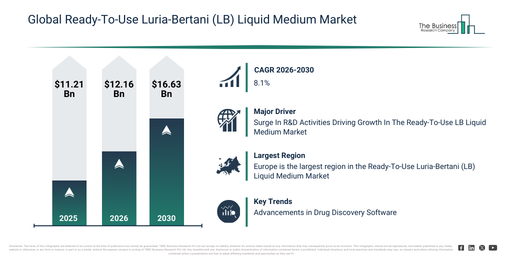
    The ready-to-use luria-bertani (lb) liquid medium market has seen significant expansion in recent years. It is forecast to increase from $11.21 billion in 2025 to $12.16 billion in 2026, achieving a compound annual growth rate (CAGR) of 8.4%. This historical growth can be attributed to the proliferation of microbiology research laboratories, the advancement of academic life sciences programs, the heightened utilization of bacterial cultures in research, the widespread availability of standardized laboratory consumables, and the escalating demand for reproducible experiments.

    The market for ready-to-use luria-bertani (lb) liquid medium is projected for substantial expansion in the coming years, reaching $16.63 billion by 2030, demonstrating an 8.1% compound annual growth rate (CAGR). This projected growth is driven by factors such as the wider adoption of automated microbiology workflows, increasing demand from biopharmaceutical research, the expanding use of synthetic biology applications, a greater emphasis on contamination-free media, and the rise in outsourced laboratory research. Key trends anticipated during this period encompass the growing acceptance of ready-to-use culture media, a heightened need for reliable microbial growth solutions, increased application in high-throughput laboratories, a broader range of pre-sterilized media products, and an intensified focus on laboratory workflows that save time.

    Access Your Free Sample Report for In-Depth Market Insights:

    https://www.thebusinessresearchcompany.com/sample.aspx?id=20611&type=smp

    What Drivers Are Driving Adoption Within The Ready-To-Use Luria-Bertani (LB) Liquid Medium Market?

    A growth in research and development endeavors is projected to propel the expansion of the ready-to-use Luria-Bertani (LB) liquid medium market moving forward. These activities involve exploring novel concepts or technologies and utilizing the outcomes to innovate or enhance products and processes through methodical design, rigorous testing, and continuous refinement. The imperative for ongoing innovation compels businesses to invest in R&D, enabling them to introduce new products, improve existing ones, and maintain a competitive edge by adapting to changing consumer requirements. Ready-to-use LB liquid medium plays a vital role in R&D by facilitating bacterial growth, gene cloning, protein expression, and various genetic modifications. Its user-friendliness and consistency render it indispensable for a wide range of experimental protocols and extensive research applications. For instance, as per the National Science Foundation (NSF), a U.S.-based government agency, U.S. businesses consistently elevated their research and development (R&D) investments in 2023, allocating $722 billion to R&D, which represented a 4.4% increase compared to 2022. Consequently, the uptick in research and development activities significantly drives the ready-to-use Luria-Bertani (LB) liquid medium market.

    What Segments Are Included Within The Ready-To-Use Luria-Bertani (LB) Liquid Medium Market?

    The ready-to-use luria-bertani (lb) liquid medium market covered in this report is segmented –

    1) By Type: Contains Antibiotics, Antibiotic-Free

    2) By Application: Drug Discovery, Stem Cell Technologies, Regenerative Medicine And Tissue Engineering, Bio-Pharmaceuticals, Cancer Research, Other Applications

    3) By End-User: Research Laboratories, Academic Institutes, Biotechnology And Pharmaceutical Sector, Other End-Users

    Subsegments:

    1) By Contains Antibiotics: LB Medium With Ampicillin, LB Medium With Kanamycin, LB Medium With Tetracycline, LB Medium With Chloramphenicol, LB Medium With Streptomycin

    2) By Antibiotic Free: Standard LB Liquid Medium, LB Liquid Medium With Supplementary Nutrients, LB Liquid Medium For Fast-Growing Bacteria, LB Liquid Medium For Low-Temperature Growth

    What Long-Term Trends Are Expected To Shape The Future Of The Ready-To-Use Luria-Bertani (LB) Liquid Medium Market?

    Key players within the ready-to-use Luria-Bertani (LB) liquid medium market are concentrating on advancements in drug discovery software to gain a competitive advantage. As an illustration, in December 2023, Merck, a Germany-based pharmaceuticals and biotechnology products company, unveiled AIDDISON. This cutting-edge drug discovery software utilizes artificial intelligence and machine learning algorithms to accelerate the identification of potential drug candidates. AIDDISON features a user-friendly interface and advanced data analysis capabilities, enabling researchers to efficiently process and interpret large volumes of data. This innovative software has the potential to revolutionize the drug discovery process, ultimately leading to faster and more cost-effective development of new therapeutics.

    Who Are The Major Companies Operating In The Ready-To-Use Luria-Bertani (LB) Liquid Medium Market?

    Major companies operating in the ready-to-use luria-bertani (lb) liquid medium market are Thermo Fisher Scientific Inc., Avantor Inc., Lonza Group AG, Sigma Aldrich Chemicals Pvt. Ltd., Bio-Rad Laboratories Inc., Neogen Corporation, Hardy Diagnostics Inc., MP Biomedicals LLC, Alpha Teknova Inc., HiMedia Laboratories Pvt. Ltd., Scharlab S.L., Interchim, Condalab, Quality Biological Inc., Thomas Scientific LLC, Geno Technology Inc., Central Drug House (P) Ltd., Citotest Labware Manufacturing Co. Ltd., Research Products International, NZYTech Lda

    Access The Complete Report For Deeper Market Insights:

    https://www.thebusinessresearchcompany.com/report/ready-to-use-luria-bertani-lb-liquid-medium-global-market-report

    Which Region Is Anticipated To See The Fastest Growth In The Ready-To-Use Luria-Bertani (LB) Liquid Medium Market?

    Europe was the largest region in the ready-to-use Luria-Bertani (LB) liquid medium market in 2025. Asia-Pacific is expected to be the fastest-growing region in the forecast period. The regions covered in the ready-to-use luria-bertani (lb) liquid medium market report are Asia-Pacific, South East Asia, Western Europe, Eastern Europe, North America, South America, Middle East, Africa.

    Request Your Customized Ready-To-Use Luria-Bertani (LB) Liquid Medium Market Research Report for Competitive Advantage:

    https://www.thebusinessresearchcompany.com/customise?id=20611&type=smp

    Browse Through More Reports Similar to the Global Ready-To-Use Luria-Bertani (LB) Liquid Medium Market 2026, By The Business Research Company

    Construction Chemicals Market Report 2026

    https://www.thebusinessresearchcompany.com/report/construction-chemicals-global-market-report

    Electronic Wet Chemicals Market Report 2026

    https://www.thebusinessresearchcompany.com/report/electronic-wet-chemicals-global-market-report

    Chemical Logistics Market Report 2026

    https://www.thebusinessresearchcompany.com/report/chemical-logistics-global-market-report

    Get in touch with us:

    The Business Research Company: https://www.thebusinessresearchcompany.com/

    Americas +1 310-496-7795

    Asia +44 7882 955267 & +91 8897263534

    Europe +44 7882 955267

    Email us at info@tbrc.info

    Follow us on:

    LinkedIn: https://in.linkedin.com/company/the-business-research-company

    YouTube: https://www.youtube.com/channel/UC24_fI0rV8cR5DxlCpgmyFQ

    Global Market Model: https://www.thebusinessresearchcompany.com/global-market-model

  • Ready-To-Use Antibodies Market Forecast: How Big Will It Be by 2030?

    Ready-To-Use Antibodies Market Forecast: How Big Will It Be by 2030?

    Uncover key drivers, emerging technologies, and competitive movements shaping the ready-to-use antibodies market from 2026–2035 with trusted insights from The Business Research Company

    Across 2026–2030, what is the expected market valuation path of the Ready-To-Use Antibodies Market?

    The market for ready-to-use antibodies has demonstrated strong growth in recent years. It is forecast to increase from $5.39 billion in 2025 to $5.91 billion in 2026, achieving a compound annual growth rate (CAGR) of 9.6%. This historical growth can be primarily attributed to the expansion of diagnostic testing volumes, the rising use of immunoassays in clinical labs, the growth of contract research activities, the increasing need for standardized protocols, and the availability of pre-formulated reagents.

    The ready-to-use antibodies market size is anticipated to experience robust growth in the upcoming years, with projections indicating it will expand to $8.47 billion by 2030, achieving a compound annual growth rate (CAGR) of 9.4%. This expansion during the forecast period is primarily driven by an escalating demand for rapid diagnostic workflows, the increasing adoption of automated laboratory systems, the broadening of decentralized testing environments, a growing focus on minimizing errors in diagnostics, and rising investments in laboratory efficiency tools. Key trends expected in this period include an increasing demand for standardized antibody reagents, the rising uptake of ready-to-use diagnostic solutions, a stronger emphasis on workflow efficiency in laboratories, the expansion of pre-validated antibody panels, and an enhanced focus on reproducibility.

    Access Your Free Sample Report for In-Depth Market Insights:

    https://www.thebusinessresearchcompany.com/sample.aspx?id=30365&type=smp

    Which Drivers Are Supporting The Rise Of The Ready-To-Use Antibodies Market?

    The escalating need for swift diagnostic tests and tailored medical treatments is projected to fuel the expansion of the ready-to-use antibodies market in the future. These healthcare approaches, encompassing rapid diagnostic tests and personalized medicine, facilitate the prompt identification of diseases and the customization of medical care based on an individual’s genetic, molecular, or clinical profile, thereby improving diagnostic accuracy and treatment outcomes. A key catalyst for the growing adoption of these methods is the global movement towards early disease detection and precision therapy, as healthcare systems and clinicians continually seek quicker and more accurate diagnostic tools to enhance patient management and treatment effectiveness. Ready-to-use antibodies meet this demand by offering validated, high-quality reagents that ensure reproducibility, reliability, and efficiency in both diagnostic testing and personalized therapeutic applications. For instance, in April 2024, Gavi, the Vaccine Alliance, a Switzerland-based international organization, reported that over 1.2 million rapid diagnostic tests were dispatched to 14 lower-income countries, with the first deliveries arriving in Malawi on April 5, 2024. Many of these diagnostic platforms rely on antibody-based technologies, emphasizing the rising demand for ready-to-use antibody reagents. Consequently, the increasing demand for rapid diagnostic tests and personalized medicine is propelling the growth of the ready-to-use antibodies market.

    What Leading Segments Are Studied In The Ready-To-Use Antibodies Market?

    The ready-to-use antibodies market covered in this report is segmented –

    1) By Type: Antibacterial Antibody, Antiviral Antibody, Antitoxin, Other Types

    2) By Source: Animal-Based, Human-Based, Synthetic

    3) By End Use: Pharmaceutical Companies, Academic Institutions, Contract Research Organizations

    Subsegments:

    1) By Antibacterial Antibody: Gram-Positive Targeting Antibodies, Gram-Negative Targeting Antibodies, Broad-Spectrum Antibacterial Antibodies, Antibiotic-Resistance Targeting Antibodies

    2) By Antiviral Antibody: Coronavirus Neutralizing Antibodies, Influenza Virus Neutralizing Antibodies, Human Immunodeficiency Virus Neutralizing Antibodies, Hepatitis Virus Neutralizing Antibodies

    3) By Antitoxin: Bacterial Toxin Neutralizing Antibodies, Snake Venom Neutralizing Antibodies, Botulinum Toxin Neutralizing Antibodies, Diphtheria Toxin Neutralizing Antibodies

    4) By Other Types: Anti-Parasitic Antibodies, Autoimmune Disease Targeting Antibodies, Allergy Neutralizing Antibodies, Inflammatory Disease Targeting Antibodies

    Which Market Trends Are Opening Growth Opportunities In The Ready-To-Use Antibodies Market?

    Leading companies active in the ready-to-use antibodies market are concentrating on advancements in monoclonal antibody production to boost scalability, purity, and consistency in antibody yield for both research and diagnostic applications. Monoclonal antibody production is defined as the biotechnological process of generating identical antibodies derived from a single B lymphocyte clone, ensuring uniform structure, high specificity, and reliable performance across diagnostic, therapeutic, and research uses. In March 2023, Aptamer Group, a UK-based life sciences tools company, unveiled Optimer-Fc, an innovative reagent developed for automated immunohistochemistry (IHC) workflows to replace traditional primary detecting antibodies. The platform incorporates an Optimer binder with an antibody Fc domain, delivering high selectivity, adjustable binding characteristics, and minimal variability. This innovation addresses the increasing requirement for novel, patentable, and reproducible IHC reagents that improve diagnostic precision and advance antibody replacement technologies within the ready-to-use antibodies market.

    Which Major Firms Are Strengthening Their Position In The Ready-To-Use Antibodies Market?

    Major companies operating in the ready-to-use antibodies market are Roche Diagnostics, Merck, Thermo Fisher Scientific, Becton Dickinson (BD), Agilent Technologies, Bio-Rad Laboratories, Bio-Techne, Leica Biosystems, Elabscience, GenScript, Cell Signaling Technology, RayBiotech Life, Santa Cruz Biotechnology, Rockland Immunochemicals, Creative Diagnostics, Jackson ImmunoResearch, Abnova Corporation, Southern Biotech, Diagnostic Biosystems, Boster Biological Technology

    Access The Complete Report For Deeper Market Insights:

    https://www.thebusinessresearchcompany.com/report/global-ready-to-use-antibodies-market-report

    Which Region Is Anticipated To See The Fastest Growth In The Ready-To-Use Antibodies Market?

    North America was the largest region in the ready-to-use antibodies market in 2025. Asia-Pacific is expected to be the fastest-growing region in the forecast period. The regions covered in the ready-to-use antibodies market report are Asia-Pacific, South East Asia, Western Europe, Eastern Europe, North America, South America, Middle East, Africa.

    Request Your Customized Ready-To-Use Antibodies Market Research Report for Competitive Advantage:

    https://www.thebusinessresearchcompany.com/customise?id=30365&type=smp

    Browse Through More Reports Similar to the Global Ready-To-Use Antibodies Market 2026, By The Business Research Company

    Diagnostic Specialty Antibodies Market Report 2026

    https://www.thebusinessresearchcompany.com/report/diagnostic-specialty-antibodies-global-market-report

    Antibody Discovery Market Report 2026

    https://www.thebusinessresearchcompany.com/report/antibody-discovery-global-market-report

    Research Antibodie And Reagent Market Report 2026

    https://www.thebusinessresearchcompany.com/report/research-antibodie-and-reagent-global-market-report

    Get in touch with us:

    The Business Research Company: https://www.thebusinessresearchcompany.com/

    Americas +1 310-496-7795

    Asia +44 7882 955267 & +91 8897263534

    Europe +44 7882 955267

    Email us at info@tbrc.info

    Follow us on:

    LinkedIn: https://in.linkedin.com/company/the-business-research-company

    YouTube: https://www.youtube.com/channel/UC24_fI0rV8cR5DxlCpgmyFQ

    Global Market Model: https://www.thebusinessresearchcompany.com/global-market-model
  • Reading Glasses Market Report 2026: Strategic Insights and Revenue Outlook

    Reading Glasses Market Report 2026: Strategic Insights and Revenue Outlook

    Uncover key drivers, emerging technologies, and competitive movements shaping the reading glasses market from 2026–2035 with trusted insights from The Business Research Company

    What size range is anticipated for the Reading Glasses Market from 2026 to 2030?

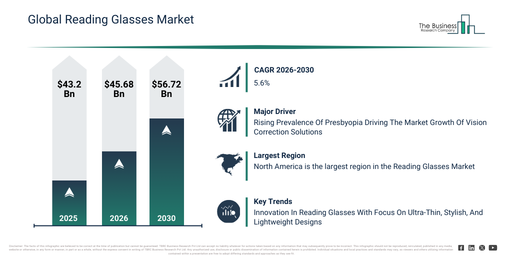
    The reading glasses market has experienced substantial growth in recent years. It is forecast to increase from $43.2 billion in 2025 to $45.68 billion in 2026, demonstrating a compound annual growth rate (CAGR) of 5.7%. This historic expansion can be attributed to factors such as the rising prevalence of presbyopia, the increase in the aging population, the development of optical retail networks, greater screen exposure among consumers, and the availability of inexpensive eyewear materials.

    The reading glasses market is projected to experience substantial expansion over the upcoming years, with its size forecast to reach $56.72 billion by 2030, demonstrating a compound annual growth rate (CAGR) of 5.6%. This growth during the forecast period is primarily attributed to the expansion of e-commerce eyewear sales, an increasing demand for customizable reading glasses, a growing emphasis on eye health awareness, the rising adoption of sustainable eyewear materials, and the broadening integration of smart eyewear. Furthermore, key trends anticipated within this period include a rising demand for affordable over-the-counter vision correction, the increasing uptake of blue light filtering lenses, a developing preference for lightweight frame materials, the expansion of online reading glasses retail, and an enhanced focus on ergonomic eyewear designs.

    Access Your Free Sample Report for In-Depth Market Insights:

    https://www.thebusinessresearchcompany.com/sample.aspx?id=22122&type=smp

    What Drivers Are Affecting Demand In The Reading Glasses Market?

    The anticipated expansion of the reading glasses market is set to be driven by the growing incidence of presbyopia. Presbyopia, a vision disorder linked to aging, typically affects those over 40 years old, making it challenging to focus on nearby items. This increase in presbyopia cases stems from the natural aging process, which gradually decreases the elasticity of the eye’s lens, thereby impairing its capacity to focus on close objects. Furthermore, contemporary lifestyle changes, including prolonged screen exposure and reduced outdoor engagement, could lead to an earlier onset or more pronounced symptoms. For individuals with presbyopia, reading glasses offer assistance by counteracting the eye’s diminished close-focusing ability, delivering essential magnification to improve visual clarity and lessen eye strain. As an illustration, information from the Ophthalmology Times Europe, a UK-based journal, indicated in September 2023 that an estimated 1.8 billion individuals globally suffered from presbyopia in 2022. Moreover, forecasts suggest that the number of people with presbyopia will climb to approximately 2.1 billion by 2030. Consequently, the increasing prevalence of presbyopia is a key factor propelling the expansion of the reading glasses market.

    Which Segment Groups Are Influencing The Reading Glasses Market?

    The reading glasses market covered in this report is segmented –

    1) By Type: Prescription Reading Glasses, Over-The-Counter (OTC) Reading Glasses

    2) By Material: Plastic, Metal, Hybrid, Other Materials

    3) By Age Group: 40–54 Years, 65 Years And Greater, 18-64 Years

    4) By Distribution Channel: Online Retail, Optical Stores, Supermarkets, Pharmacies, Other Distribution Channels

    Subsegments:

    1) By Prescription Reading Glasses: Single Vision Prescription Reading Glasses, Bifocal Prescription Reading Glasses, Progressive Prescription Reading Glasses, Blue Light Blocking Prescription Reading Glasses, Custom-Tinted Prescription Reading Glasses

    2) By Over-The-Counter (OTC) Reading Glasses: Full-Frame OTC Reading Glasses, Half-Frame OTC Reading Glasses, Rimless OTC Reading Glasses, Foldable OTC Reading Glasses, Multi-Strength OTC Reading Glasses

    How Are Emerging Trends Affecting The Progression Of The Reading Glasses Market?

    Leading companies in the reading glasses market are concentrating on developing advanced products, such as ultra-thin reading glasses, to satisfy consumer demand for eyewear options that are lightweight, comfortable, and stylish. Ultra-thin reading glasses are designed for close-up vision and employ advanced materials and technology to minimize thickness and weight while maintaining optical clarity and durability. For instance, in February 2024, Read On, a Switzerland-based eyewear company, introduced Read On Light, which are lightweight and extremely flexible reading glasses. These glasses are crafted from premium TR90 eyewear material. They are designed for maximum comfort and style, and the glasses come with a matching hard case and are available in five fashionable colors. The glasses feature extra-long temples for easy adjustment and fold flat for storage. This innovation addresses the need for stylish yet functional reading glasses without requiring integration into a smartphone case, a characteristic of their earlier products.

    Who Are The Primary Competitors In The Global Reading Glasses Market?

    Major companies operating in the reading glasses market are Bausch And Lomb, Specsavers, Carl Zeiss, Vision Express, Rodenstock GmbH, Warby Parker, JINS Eyewear, De Rigo Vision S.p.A., Maui Jim Inc., Zenni Optical Inc., Izipizi, Foster Grant, Clic Eyewear, Peepers, Prive Revaux, Gunnar Optiks, Felix Gray, ThinkOptic Inc., Nooz Optics, EyeBuyDirect, Readers.com, EssilorLuxottica Readers

    Access The Complete Report For Deeper Market Insights:

    https://www.thebusinessresearchcompany.com/report/reading-glasses-global-market-report

    Which Global Regions Are Shaping The Competitive Landscape Of The Reading Glasses Market?

    North America was the largest region in the reading glasses market in 2025. Asia-Pacific is expected to be the fastest-growing region in the forecast period. The regions covered in the reading glasses market report are Asia-Pacific, South East Asia, Western Europe, Eastern Europe, North America, South America, Middle East, Africa.

    Request Your Customized Reading Glasses Market Research Report for Competitive Advantage:

    https://www.thebusinessresearchcompany.com/customise?id=22122&type=smp

    Browse Through More Reports Similar to the Global Reading Glasses Market 2026, By The Business Research Company

    Binoculars Market Report 2026

    https://www.thebusinessresearchcompany.com/report/binoculars-global-market-report

    Sunglasses Market Report 2026

    https://www.thebusinessresearchcompany.com/report/sunglasses-global-market-report

    Spectacle Lens Market Report 2026

    https://www.thebusinessresearchcompany.com/report/spectacle-lens-global-market-report

    Get in touch with us:

    The Business Research Company: https://www.thebusinessresearchcompany.com/

    Americas +1 310-496-7795

    Asia +44 7882 955267 & +91 8897263534

    Europe +44 7882 955267

    Email us at info@tbrc.info

    Follow us on:

    LinkedIn: https://in.linkedin.com/company/the-business-research-company

    YouTube: https://www.youtube.com/channel/UC24_fI0rV8cR5DxlCpgmyFQ

    Global Market Model: https://www.thebusinessresearchcompany.com/global-market-model
  • Global Rare Neurological Disease Treatment Industry Trends and Market Forecast 2026–2030

    Global Rare Neurological Disease Treatment Industry Trends and Market Forecast 2026–2030

    Uncover key drivers, emerging technologies, and competitive movements shaping the rare neurological disease treatment market from 2026–2035 with trusted insights from The Business Research Company

    How is the Rare Neurological Disease Treatment Market size predicted to change over the forecast window of 2026–2035?

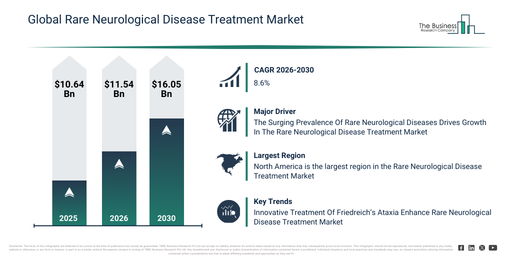
    The rare neurological disease treatment market has experienced significant expansion in recent years. It is projected to grow from $10.64 billion in 2025 to $11.54 billion in 2026, exhibiting a compound annual growth rate (CAGR) of 8.4%. The market’s historical growth can be attributed to the expansion of neuroscience research funding, increasing diagnosis of rare neurological disorders, growth of specialty neurology centers, rising availability of neuroimaging technologies, and advancement in biologic drug development.

    The rare neurological disease treatment market is poised for substantial growth over the next few years. It is forecast to expand to $16.05 billion by 2030, achieving a compound annual growth rate (CAGR) of 8.6%. This anticipated growth is driven by several factors, including the expanding scope of gene therapy pipelines, a heightened demand for personalized neurological treatments, increased investments in neurodegenerative research, the growing adoption of digital therapeutics, and the expansion of rare neurology clinical trials. Prominent trends expected throughout this period encompass the escalating development of gene and cell therapies, the increasing acceptance of targeted neurological drugs, the broader implementation of advanced neuroimaging techniques, the widening of multidisciplinary treatment approaches, and an intensified focus on solutions for symptom management.

    Access Your Free Sample Report for In-Depth Market Insights:

    https://www.thebusinessresearchcompany.com/sample.aspx?id=12146&type=smp

    Which Drivers Are Contributing To The Expansion Of The Rare Neurological Disease Treatment Market?

    The anticipated rise in the occurrence of rare neurological conditions is projected to fuel the expansion of the rare neurological disease treatment market. These conditions are characterized as neurological disorders with a low incidence, encompassing illnesses such as Huntington’s disease, amyotrophic lateral sclerosis (ALS), Rett syndrome, and various types of muscular dystrophy. Management of rare neurological diseases involves diverse strategies aimed at alleviating symptoms, retarding the progression of the illness, and enhancing the overall well-being of affected individuals. For example, in January 2023, an article from BioMed Central Ltd., a UK-based publisher of open-access scientific journals, reported that the collective prevalence of Rett syndrome was found to be 7.1 per 100,000 females within a combined sample size of 9.57 million women, totaling 673 confirmed cases. Consequently, the widespread presence of rare neurological diseases is a key factor driving growth in their respective treatment market.

    What Segment Classifications Make Up The Rare Neurological Disease Treatment Market?

    The rare neurological disease treatment market covered in this report is segmented –

    1) By Drug Type: Biologics, Small Molecules

    2) By Therapy: Cognitive Behavioral Therapy, Interpersonal Psychotherapy, Disease-Modifying Neurological Therapies, Other Therapies

    3) By Mode Of Administration: Oral, Injectable, Other Modes Of Administration

    4) By Disorders: Aicardi Syndrome, Aicardi-Goutières Syndrome, Reflex Sympathetic Dystrophy Syndrome, Battaglia-Neri Syndrome, Creutzfeldt Jakob Disease, Agnosia, Other Disorders

    5) By Distribution Channel: Hospital Pharmacies, Retail Pharmacies And Drug Store, Online Pharmacies

    Subsegments:

    1) By Biologics: Monoclonal Antibodies, Gene Therapies, Recombinant Proteins

    2) By Small Molecules: Targeted Small Molecules, Neuroprotective Agents, Anti-inflammatory Small Molecules

    Which Innovation Trends Are Advancing Developments Within The Rare Neurological Disease Treatment Market?

    Major companies operating in the rare neurological disease treatment market are emphasizing product innovation, such as the development of rare disease drugs, to enhance therapeutic solutions and improve the quality of life for patients affected by rare neurological diseases. Crafting treatments for rare neurological diseases demands targeted research into specific disease mechanisms and the pursuit of innovative therapeutic strategies, including gene therapies or personalized medicine, to tackle the complex nature of these conditions. For instance, in February 2023, Reata Pharmaceuticals Inc., a US-based pharmaceutical company, obtained United States Food and Drug Administration (USFDA) approval for its Skyclarys drug, intended for the treatment of Friedreich’s ataxia, a rare neurological disease. This experimental medication is designed to address unmet needs in treating rare neurological conditions by targeting intricate disease mechanisms, potentially offering novel therapeutic approaches to improve patient outcomes, and has undergone rigorous clinical evaluation for its efficacy and safety profiles.

    Which Key Market Players Are Investing In Expansion And Innovation Within The Rare Neurological Disease Treatment Market?

    Major companies operating in the rare neurological disease treatment market are Pfizer Inc., Johnson And Johnson Services Inc., F Hoffmann La Roche Ltd, Bayer AG, Merck And Co Inc., AbbVie Inc., Novartis AG, Sanofi Aventis SA, Bristol Myers Squibb Company, AstraZeneca PLC, GlaxoSmithKline PLC, Takeda Pharmaceutical Company Limited, Teva Pharmaceutical Industries Ltd., CSL Limited, Biogen Inc., UCB S.A., Eisai Co. Ltd., Otsuka Pharmaceutical Co. Ltd., Mitsubishi Tanabe Pharma Corporation, Neurocrine Biosciences Inc., Kedrion Biopharma Inc., Merz Pharma GmbH And Co. KGaA, Harmony Biosciences Holdings Inc., Amicus Therapeutics Inc., Aquestive Therapeutics Inc., US WorldMeds LLC, Stoke Therapeutics Inc., Retrotope Inc.

    Access The Complete Report For Deeper Market Insights:

    https://www.thebusinessresearchcompany.com/report/rare-neurological-disease-treatment-global-market-report

    Which Regions Are Poised For Strategic Growth In The Rare Neurological Disease Treatment Market?

    North America was the largest region in the rare neurological diseases treatment market in 2025. Asia-Pacific is expected to be the fastest-growing region in the forecast period. The regions covered in the rare neurological disease treatment market report are Asia-Pacific, South East Asia, Western Europe, Eastern Europe, North America, South America, Middle East, Africa.

    Request Your Customized Rare Neurological Disease Treatment Market Research Report for Competitive Advantage:

    https://www.thebusinessresearchcompany.com/customise?id=12146&type=smp

    Browse Through More Reports Similar to the Global Rare Neurological Disease Treatment Market 2026, By The Business Research Company

    Rare Inflammatory Disease Treatment Market Report 2026

    https://www.thebusinessresearchcompany.com/report/rare-inflammatory-disease-treatment-global-market-report

    Rare Diseases Treatment Market Report 2026

    https://www.thebusinessresearchcompany.com/report/rare-diseases-treatment-global-market-report

    Neurological Disorder Drugs Market Report 2026

    https://www.thebusinessresearchcompany.com/report/neurological-disorder-drugs-global-market-report

    Get in touch with us:

    The Business Research Company: https://www.thebusinessresearchcompany.com/

    Americas +1 310-496-7795

    Asia +44 7882 955267 & +91 8897263534

    Europe +44 7882 955267

    Email us at info@tbrc.info

    Follow us on:

    LinkedIn: https://in.linkedin.com/company/the-business-research-company

    YouTube: https://www.youtube.com/channel/UC24_fI0rV8cR5DxlCpgmyFQ

    Global Market Model: https://www.thebusinessresearchcompany.com/global-market-model

  • Rare Inflammatory Disease Treatment Market Size and Demand Forecast 2026–2030

    Rare Inflammatory Disease Treatment Market Size and Demand Forecast 2026–2030

    Uncover key drivers, emerging technologies, and competitive movements shaping the rare inflammatory disease treatment market from 2026–2035 with trusted insights from The Business Research Company

    What market expansion outlook does the Rare Inflammatory Disease Treatment Market show for the 2026–2030 period?

    The rare inflammatory disease treatment market has experienced robust expansion in recent years. It is anticipated to grow from $14.67 billion in 2025 to $15.55 billion in 2026, exhibiting a compound annual growth rate (CAGR) of 6.0%. This historical growth can be linked to the broadening of biologics development pipelines, an increase in diagnosis rates for rare inflammatory conditions, the progress in specialty pharmaceutical research, the wider adoption of immunomodulatory therapies, and improved access to specialty care centers.

    The rare inflammatory disease treatment market size is projected to experience robust expansion over the next few years. It is forecast to climb to $18.98 billion by 2030, driven by a compound annual growth rate (CAGR) of 5.1%. This projected growth during the forecast period is fueled by the broadening of precision immunology methods, increasing investments in the development of orphan drugs, a rise in the adoption of advanced biologics, a stronger focus on disease-modifying therapies, and the proliferation of digital platforms for patient monitoring. Significant trends anticipated for the forecast period encompass the escalating development of targeted biologic treatments, a growing acceptance of personalized treatment approaches, the expanding utilization of combination drug regimens, wider access to treatment through clinical trials, and an intensified commitment to long-term disease management.

    Access Your Free Sample Report for In-Depth Market Insights:

    https://www.thebusinessresearchcompany.com/sample.aspx?id=15656&type=smp

    What Drivers Are Shaping The Development Of The Rare Inflammatory Disease Treatment Market?

    The increasing occurrence of autoimmune disorders is projected to propel the expansion of the rare inflammatory disease treatment market moving forward. Autoimmune disorders develop when the immune system mistakenly attacks healthy cells and tissues, resulting in inflammation and tissue damage. The rise in these conditions is linked to genetic predispositions, environmental triggers, lifestyle modifications, and improved diagnostic capabilities, which allow for earlier detection and better recognition of diseases. Treatments for rare inflammatory diseases help manage these conditions by reducing inflammation and preventing the immune system from targeting healthy tissues. For example, in February 2024, according to Arthritis Australia, an Australia-based charitable not-for-profit organisation advocating for people with arthritis and musculoskeletal conditions, it is estimated that by 2025, approximately 562,378 Australians will be living with rheumatoid arthritis (RA), comprising 14% of the total arthritis population. Thus, the growing prevalence of autoimmune disorders is driving the growth within the rare inflammatory disease treatment market.

    What Segment Types Are Examined In The Rare Inflammatory Disease Treatment Market?

    The rare inflammatory disease treatment market covered in this report is segmented –

    1) By Drug Class: Biologics, Organic Compounds

    2) By Mode Of Administration: Injectables, Oral, Other Administration Modes

    3) By Indication: Ulcerative Colitis, Juvenile Rheumatoid Arthritis, Psoriatic Arthritis, Other Indications

    4) By Distribution Channel: Hospital Pharmacies, Retail Pharmacies, Online Pharmacies

    Subsegments:

    1) By Biologics: Monoclonal Antibodies, Cytokine Inhibitors, Growth Factors, Enzyme Replacement Therapies

    2) By Organic Compounds: Non-Steroidal Anti-Inflammatory Drugs (Nsaids), Immunosuppressants, Corticosteroids, Disease-Modifying Antirheumatic Drugs (Dmards)

    Which Competitive Trends Are Impacting The Structure Of The Rare Inflammatory Disease Treatment Market?

    Leading companies in the rare inflammatory disease treatment market are concentrating on developing sophisticated solutions, such as precision-targeted monoclonal antibodies, to improve disease management, lessen immune-driven harm, and enhance patient outcomes. These precision-targeted monoclonal antibodies are therapeutic agents engineered to selectively bind to and eliminate specific immune cell populations involved in disease progression, thereby helping to minimize systemic inflammation while preserving healthy immune function. For instance, in November 2024, Amgen, a US-based biopharmaceutical company, unveiled new data at the American College of Rheumatology (ACR) Convergence 2024. This data demonstrated that its monoclonal antibody UPLIZNA (inebilizumab-cdon) significantly reduces disease activity in IgG4-related disease (IgG4-RD) by selectively depleting CD19+ B cells implicated in its pathogenesis. UPLIZNA serves as an illustration of the advancement of targeted biologics in rare inflammatory disease management, underscoring industry efforts toward more effective and personalized therapeutic approaches.

    Who Are The Core Companies Influencing Trends In The Rare Inflammatory Disease Treatment Market?

    Major companies operating in the rare inflammatory disease treatment market are Pfizer Inc., Johnson And Johnson, Roche Holding AG, Merck And Co Inc., AbbVie Inc., Bayer AG, Sanofi S.A., Bristol Myers Squibb, AstraZeneca Plc, Novartis AG, GlaxoSmithKline plc, Eli Lilly And Company, Gilead Sciences Inc., Amgen Inc., Regeneron Pharmaceuticals Inc., Biogen Inc., UCB S.A., Horizon Therapeutics plc, Kyowa Kirin Co. Ltd., Mallinckrodt Pharmaceuticals, Takeda Pharmaceutical Company Limited, Boehringer Ingelheim International GmbH, CSL Behring GmbH, Sobi Swedish Orphan Biovitrum AB

    Access The Complete Report For Deeper Market Insights:

    https://www.thebusinessresearchcompany.com/report/rare-inflammatory-disease-treatment-global-market-report

    Which Regions Are Projected To Dominate The Rare Inflammatory Disease Treatment Market In The Coming Years?

    North America was the largest region in the rare inflammatory disease treatment market in 2025. Asia-Pacific is expected to be the fastest-growing region in the forecast period. The regions covered in the rare inflammatory disease treatment market report are Asia-Pacific, South East Asia, Western Europe, Eastern Europe, North America, South America, Middle East, Africa.

    Request Your Customized Rare Inflammatory Disease Treatment Market Research Report for Competitive Advantage:

    https://www.thebusinessresearchcompany.com/customise?id=15656&type=smp

    Browse Through More Reports Similar to the Global Rare Inflammatory Disease Treatment Market 2026, By The Business Research Company

    Anti Inflammatory Therapeutics Market Report 2026

    https://www.thebusinessresearchcompany.com/report/anti-inflammatory-therapeutics-global-market-report

    Rare Diseases Treatment Market Report 2026

    https://www.thebusinessresearchcompany.com/report/rare-diseases-treatment-global-market-report

    Inflammatory Bowel Disease Treatment Market Report 2026

    https://www.thebusinessresearchcompany.com/report/inflammatory-bowel-disease-treatment-global-market-report

    Get in touch with us:

    The Business Research Company: https://www.thebusinessresearchcompany.com/

    Americas +1 310-496-7795

    Asia +44 7882 955267 & +91 8897263534

    Europe +44 7882 955267

    Email us at info@tbrc.info

    Follow us on:

    LinkedIn: https://in.linkedin.com/company/the-business-research-company

    YouTube: https://www.youtube.com/channel/UC24_fI0rV8cR5DxlCpgmyFQ

    Global Market Model: https://www.thebusinessresearchcompany.com/global-market-model