Month: March 2026

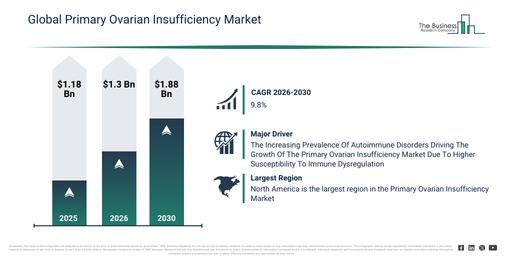
  • Primary Ovarian Insufficiency Market Performance Outlook 2026–2030: Revenue to Hit $1.88 Billion at 9.8% CAGR

    Primary Ovarian Insufficiency Market Performance Outlook 2026–2030: Revenue to Hit $1.88 Billion at 9.8% CAGR

    Uncover key drivers, emerging technologies, and competitive movements shaping the primary ovarian insufficiency market from 2026–2035 with trusted insights from The Business Research Company

    What growth pattern is forecast for the Primary Ovarian Insufficiency Market size between 2026 and 2035?

    The primary ovarian insufficiency market size has experienced significant expansion in recent years. It is projected to climb from $1.18 billion in 2025 to $1.3 billion in 2026, achieving a compound annual growth rate (CAGR) of 10.0%. The past growth in this market can be linked to heightened awareness of female reproductive health, the broader application of hormone replacement therapy, an increase in demand for infertility treatment, enhanced diagnostic capabilities for hormonal disorders, and the expansion of specialty fertility clinics.

    The primary ovarian insufficiency market is projected for significant expansion in the coming years. This market is set to reach $1.88 billion by 2030, exhibiting a compound annual growth rate (CAGR) of 9.8%. Factors driving this growth during the forecast period include greater investment in regenerative medicine research, a growing need for early diagnostic solutions, the broadening of precision medicine strategies, an increasing emphasis on non-invasive fertility procedures, and the wider availability of advanced reproductive technologies. Key trends anticipated in the same period involve the increasing uptake of personalized hormone therapies, expanded application of advanced diagnostic tests, a heightened focus on solutions for fertility preservation, the development of regenerative and stem cell-based treatments, and improved incorporation of multidisciplinary care approaches.

    Access Your Free Sample Report for In-Depth Market Insights:

    https://www.thebusinessresearchcompany.com/sample.aspx?id=24387&type=smp

    Which Drivers Are Impacting Market Performance In The Primary Ovarian Insufficiency Market?

    The primary ovarian insufficiency market is projected to expand due to the rising occurrence of autoimmune conditions. These are diseases where the immune system erroneously targets and harms healthy cells and tissues within the body. This rise in prevalence largely stems from genetic factors, as certain inherited genes can heighten an individual’s vulnerability to immune system dysfunctions. Primary ovarian insufficiency (POI) offers insights into autoimmune disorders by demonstrating the interplay between hormonal imbalances and immune system irregularities, which contributes to an elevated risk of autoimmune diseases in those affected. For example, an estimate by the UK-based embedded insurance platform WeCovr suggests that by the close of 2025, over 3.5 million individuals in the UK will be living with an autoimmune disease. This marks an increase of nearly 40% since the early 2000s, surpassing previous estimates of 3% to 9%. Consequently, the growing occurrence of autoimmune disorders is fueling the expansion of the primary ovarian insufficiency market.

    What Segment Types Are Examined In The Primary Ovarian Insufficiency Market?

    The primary ovarian insufficiency market covered in this report is segmented –

    1) By Type: Hormone Replacement Therapy (HRT), Calcium and Vitamin D Supplements, In Vitro Fertilization (IVF), Stem Cell Therapy, Other Types

    2) By Diagnosis Method: Blood Tests, Ultrasound Imaging, Genetic Testing

    3) By Application: Less Than 20 Years Old, 20 To 30 Years Old, 30 To 45 Years Old, Perimenopausal Age Group Exclusion As POI Occurs Before 40

    4) By End-Users: Hospitals And Clinics, Specialty Fertility Centers

    Subsegments:

    1) By Hormone Replacement Therapy: Estrogen Therapy, Estrogen-Progestin Therapy, Transdermal Patches, Vaginal Estrogen Products, Oral Hormone Therapy

    2) By Calcium And Vitamin D Supplements: Calcium Carbonate, Calcium Citrate, Vitamin D2 (Ergocalciferol), Vitamin D3 (Cholecalciferol), Combined Calcium + Vitamin D Formulations

    3) By In Vitro Fertilization: Conventional In Vitro Fertilization, Intracytoplasmic Sperm Injection (ICSI), Egg Donation In Vitro Fertilization, Embryo Freezing And Transfer, Preimplantation Genetic Testing (PGT)

    4) By Stem Cell Therapy: Autologous Stem Cell Therapy, Allogeneic Stem Cell Therapy, Mesenchymal Stem Cell (MSC) Therapy, Ovarian Stem Cell Transplantation

    5) By Other Types: Psychological Counseling And Support Therapies, Assisted Reproductive Technologies (other than IVF), Immunomodulatory Therapies, Lifestyle And Dietary Interventions

    Who Are The Top-Performing Companies In The Primary Ovarian Insufficiency Market In Recent Years?

    Major companies operating in the primary ovarian insufficiency market are Mayo Clinic, Johns Hopkins Medicine, Baptist Health, Ferring Pharmaceuticals AS, PreventionGenetics LLC, The Fertility Partnership UK, Celmatix Inc, IVIRMA Global, Bioscience Institute SpA, Sparsh Diagnostics Pvt Ltd, Bristol Menopause Clinic, Indira IVF Hospital Private Limited, Lawley Pharmaceuticals Pty Ltd, OvaScience Inc, Merck KGaA, Roche Holding AG, Pfizer Inc, Novartis AG, AbbVie Inc, Eli Lilly And Company, Bayer AG, Takeda Pharmaceutical Company Limited

    Access The Complete Report For Deeper Market Insights:

    https://www.thebusinessresearchcompany.com/report/primary-ovarian-insufficiency-global-market-report

    Which Region Currently Holds The Largest Share Of The Primary Ovarian Insufficiency Market?

    North America was the largest region in the primary ovarian insufficiency market in 2025. The regions covered in the primary ovarian insufficiency market report are Asia-Pacific, South East Asia, Western Europe, Eastern Europe, North America, South America, Middle East, Africa.

    Request Your Customized Primary Ovarian Insufficiency Market Research Report for Competitive Advantage:

    https://www.thebusinessresearchcompany.com/customise?id=24387&type=smp

    Browse Through More Reports Similar to the Global Primary Ovarian Insufficiency Market 2026, By The Business Research Company

    Endometriosis Market Report 2026

    https://www.thebusinessresearchcompany.com/report/endometriosis-global-market-report

    Ovarian Cancer Diagnostics Market Report 2026

    https://www.thebusinessresearchcompany.com/report/ovarian-cancer-diagnostics-global-market-report

    Ovarian Cancer Drugs Market Report 2026

    https://www.thebusinessresearchcompany.com/report/ovarian-cancer-drugs-global-market-report

    Get in touch with us:

    The Business Research Company: https://www.thebusinessresearchcompany.com/

    Americas +1 310-496-7795

    Asia +44 7882 955267 & +91 8897263534

    Europe +44 7882 955267

    Email us at info@tbrc.info

    Follow us on:

    LinkedIn: https://in.linkedin.com/company/the-business-research-company

    YouTube: https://www.youtube.com/channel/UC24_fI0rV8cR5DxlCpgmyFQ

    Global Market Model: https://www.thebusinessresearchcompany.com/global-market-model
  • Global Primary Immunodeficiency Disorders Market Set for Strong Expansion, Reaching $10.01 Billion With 6.5% CAGR by 2030

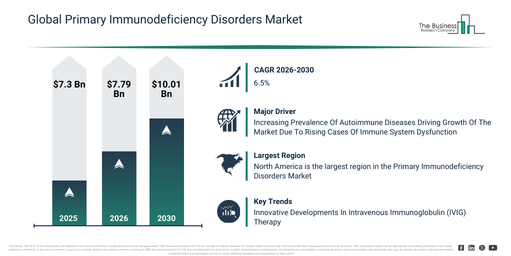
    Global Primary Immunodeficiency Disorders Market Set for Strong Expansion, Reaching $10.01 Billion With 6.5% CAGR by 2030

    Uncover key drivers, emerging technologies, and competitive movements shaping the primary immunodeficiency disorders market from 2026–2035 with trusted insights from The Business Research Company

    How much larger will the Primary Immunodeficiency Disorders Market be in 2030 compared with 2026?

    The primary immunodeficiency disorders market size has experienced substantial expansion in recent years. It is projected to increase from $7.3 billion in 2025 to $7.79 billion in 2026, progressing at a compound annual growth rate (CAGR) of 6.8%. This historical growth can be ascribed to several factors, including enhanced clinical identification of immunodeficiency disorders, broadened diagnostic testing capabilities, greater awareness among healthcare professionals, the provision of immunoglobulin therapies, and the establishment of more specialized treatment centers.

    The market for primary immunodeficiency disorders is projected to experience substantial expansion in the coming years. This market is anticipated to reach a valuation of $10.01 billion by 2030, exhibiting a compound annual growth rate (CAGR) of 6.5%. Key drivers for this expansion during the forecast period include greater progress in gene therapy research, an escalating need for timely and precise diagnosis, the broadening availability of precision immunology treatments, increased funding for rare disease research, and the expanding incorporation of AI within diagnostic processes. Significant trends anticipated over the same period encompass the wider embrace of genetic testing for early detection, the increasing application of immunoglobulin replacement therapies, a heightened emphasis on individualized treatment strategies, the scaling up of newborn screening initiatives, and the improved integration of sophisticated diagnostic platforms.

    Access Your Free Sample Report for In-Depth Market Insights:

    https://www.thebusinessresearchcompany.com/sample.aspx?id=23483&type=smp

    What Drivers Are Guiding Growth Patterns In The Primary Immunodeficiency Disorders Market?

    The increasing occurrence of autoimmune conditions is anticipated to fuel the expansion of the primary immunodeficiency disorders market in the future. Autoimmune diseases manifest when the body’s immune system erroneously attacks its own healthy cells and tissues, perceiving them as threats. This aberrant reaction results in inflammation and damage across various organs and bodily systems. The surge in autoimmune diseases is linked to a complex combination of environmental factors, genetic predispositions, and shifts in lifestyle. These conditions can lead to primary immunodeficiency disorders by disrupting immune regulation and targeting immune cells, which weakens or impairs immune responses. For instance, in February 2024, according to Arthritis Australia, an Australia-based charitable not-for-profit organisation advocating for people with arthritis and musculoskeletal conditions, by 2025, approximately 562,378 Australians are living with rheumatoid arthritis (RA), accounting for 14% of the total arthritis population. Consequently, the growing prevalence of autoimmune diseases is driving the growth of the primary immunodeficiency disorders market.

    Which Segments Are Driving Activity In The Primary Immunodeficiency Disorders Market?

    The primary immunodeficiency disorders market covered in this report is segmented –

    1) By Disease: Antibody Deficiency, Cellular Immunodeficiency, Innate Immune Disorders, Other Diseases

    2) By Treatment: Immunoglobulin Replacement Therapy, Antibiotic Therapy, Stem Cell And Bone Marrow Transplantation, Gene Therapy, Other Treatments

    3) By Diagnostic Type: Genetic Testing, Blood Testing, Flow Cytometry, Other Diagnostic Types

    4) By End-User: Hospitals, Specialty Clinics, Homecare Settings, Research Institutions

    Subsegments:

    1) By Antibody Deficiency: Common Variable Immune Deficiency (CVID), IgA Deficiency, IgG Subclass Deficiency, Specific Antibody Deficiency

    2) By Cellular Immunodeficiency: Severe Combined Immunodeficiency (SCID), T-Cell Deficiency, DiGeorge Syndrome, Wiskott-Aldrich Syndrome

    3) By Innate Immune Disorders: Chronic Granulomatous Disease (CGD), Complement Deficiencies, Toll-like Receptor Deficiencies, Chediak-Higashi Syndrome

    4) By Other Diseases: Hyper IgM Syndrome, Hyper IgE Syndrome, Ataxia-Telangiectasia, Combined Immunodeficiencies With Syndromic Features

    Which Trends Are Shaping Activity Within The Primary Immunodeficiency Disorders Market?

    Leading companies in the primary immunodeficiency disorders market are concentrating on developing advanced treatments, such as intravenous immunoglobulin therapy, to improve patient outcomes by enhancing immune function. Intravenous immunoglobulin (IVIG) therapy is a medical procedure where immunoglobulin (antibodies) obtained from donor plasma is directly administered into a patient’s bloodstream via an IV. For example, in June 2024, Grifols, a Spain-based healthcare firm, gained FDA approval for Yimmugo, an intravenous immunoglobulin (IVIg) therapy. This new, sugar-free, ready-to-use IgG solution is derived from human blood plasma and designed for intravenous application. Approved in the U.S. for substitution therapy in individuals with primary antibody deficiency syndromes, Yimmugo delivers antibody replacement to assist those with immune system deficiencies. It expands Grifols’ range of plasma-based treatments by providing a safer and more effective choice to aid in protection against infections.

    Which Leading Companies Dominate The Primary Immunodeficiency Disorders Market Share?

    Major companies operating in the primary immunodeficiency disorders market are Pfizer Inc, Takeda Pharmaceuticals, CSL Behring, Baxter International Inc, Grifols SA, Octapharma, Kedrion Biopharma, LFB Group, ADMA Biologics Inc, Bio Products Laboratory Ltd, Miltenyi Biotec, BD Biosciences, Cellectis SA, X4 Pharmaceuticals Inc, bluebird bio Inc, Chengdu Rongsheng Pharmaceutical Co Ltd, Sanofi SA, Roche Holding AG, Novartis AG, AbbVie Inc, AstraZeneca plc, Gilead Sciences Inc

    Access The Complete Report For Deeper Market Insights:

    https://www.thebusinessresearchcompany.com/report/primary-immunodeficiency-disorders-global-market-report

    How Does The Primary Immunodeficiency Disorders Market Perform Across Major Global Regions?

    North America was the largest region in the primary immunodeficiency disorders market in 2025. Asia-Pacific is expected to be the fastest-growing region in the forecast period. The regions covered in the primary immunodeficiency disorders market report are Asia-Pacific, South East Asia, Western Europe, Eastern Europe, North America, South America, Middle East, Africa.

    Request Your Customized Primary Immunodeficiency Disorders Market Research Report for Competitive Advantage:

    https://www.thebusinessresearchcompany.com/customise?id=23483&type=smp

    Browse Through More Reports Similar to the Global Primary Immunodeficiency Disorders Market 2026, By The Business Research Company

    Immunodiagnostics Market Report 2026

    https://www.thebusinessresearchcompany.com/report/immunodiagnostics-global-market-report

    Immunoassay Market Report 2026

    https://www.thebusinessresearchcompany.com/report/immunoassay-global-market-report

    Acne Drugs Market Report 2026

    https://www.thebusinessresearchcompany.com/report/acne-drugs-global-market-report

    Get in touch with us:

    The Business Research Company: https://www.thebusinessresearchcompany.com/

    Americas +1 310-496-7795

    Asia +44 7882 955267 & +91 8897263534

    Europe +44 7882 955267

    Email us at info@tbrc.info

    Follow us on:

    LinkedIn: https://in.linkedin.com/company/the-business-research-company

    YouTube: https://www.youtube.com/channel/UC24_fI0rV8cR5DxlCpgmyFQ

    Global Market Model: https://www.thebusinessresearchcompany.com/global-market-model
  • Primary Health Care Service Market Growth Projection: Expected to Surpass $585.84 Billion by 2030 at 5% CAGR

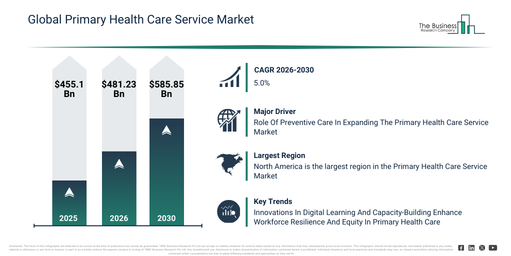
    Primary Health Care Service Market Growth Projection: Expected to Surpass $585.84 Billion by 2030 at 5% CAGR

    Uncover key drivers, emerging technologies, and competitive movements shaping the primary health care service market from 2026–2035 with trusted insights from The Business Research Company

    Starting from its 2026 valuation, what market size is the Primary Health Care Service Market expected to reach by 2030?

    The primary health care service market size has experienced robust expansion in recent years. It is anticipated to grow from $455.1 billion in 2025 to $481.23 billion in 2026, achieving a compound annual growth rate (CAGR) of 5.7%. The observed growth in the historical period can be largely attributed to the expansion of public health infrastructure, increasing access to basic healthcare services, growth in outpatient and clinic-based care, rising demand for preventive healthcare, and wider deployment of community health programs.

    The primary health care service market is projected to experience robust expansion over the coming years, with its size anticipated to reach $585.85 billion in 2030, exhibiting a compound annual growth rate (CAGR) of 5.0%. This growth during the forecast period can be attributed to heightened investments in digital primary care platforms, a surging demand for value-based care delivery, the expansion of home-based healthcare services, increasing integration of remote monitoring tools, and a growing emphasis on population health outcomes. Significant trends expected over this period include the broadening of integrated primary care networks, increased uptake of virtual care models, a heightened focus on preventive and community health services, improved coordination throughout the care continuum, and a more extensive utilization of digital health records.

    Access Your Free Sample Report for In-Depth Market Insights:

    https://www.thebusinessresearchcompany.com/sample.aspx?id=15904&type=smp

    What Drivers Are Driving Adoption Within The Primary Health Care Service Market?

    An increasing focus on preventive care is anticipated to drive the expansion of the primary health care service market in the future. This type of care includes medical services and actions designed to avert illness, identify health issues at an early stage, and foster comprehensive health and wellness. This growing emphasis on preventive measures within primary health care services signifies a conscious shift towards proactive health management, intended to decrease healthcare costs and improve long-term health outcomes. Such investment in preventive care within primary health care is crucial for cost reduction, better health results, and sustaining health systems over time. As an illustration, a March 2024 report from the Government of the United Kingdom, an information website based in the UK, indicated that in March 2023, the proportion of individuals in England with type 1 diabetes who received 8 care processes at GP practices involved in the NDA increased to 43.8%, an advance from 35.2% in the preceding year. Consequently, the heightened focus on preventive care is fueling the expansion of the primary health care service market.

    How Is The Primary Health Care Service Market Organized Into Various Segments?

    The primary health care service market covered in this report is segmented –

    1) By Service: Injury, Preventive Care, Chronic Conditions, Acute Conditions, Pre Or Post-Surgery

    2) By Mode Of Consultation: Virtual, Physical

    3) By Age Group: Infants, Pediatrics, Adults, Geriatrics

    4) By Provider: Hospitals, Clinics, Outpatient Department, Other Providers

    Subsegments:

    1) By Injury: Treatment Of Minor Injuries, Emergency Care Services

    2) By Rehabilitation: Physical Rehabilitation, Occupational Rehabilitation

    3) By Preventive Care: Health Screenings, Vaccination Services, Health Education And Counseling

    4) By Chronic Conditions: Diabetes Management, Hypertension Management, Asthma And Respiratory Disease Care

    5) By Acute Conditions: Short-Term Illnesses Treatment, Infections And Injuries, Immediate Care Services

    6) By Pre Or Post-Surgery: Pre-Surgical Consultation And Preparation, Post-Surgical Monitoring And Rehabilitation

    Which Trends Are Influencing The Development Of The Primary Health Care Service Market?

    Leading organizations within the primary health care service market are prioritizing the creation of advanced digital learning and skill-enhancement solutions to bolster workforce resilience, foster collaboration, and ensure equitable health service delivery. Digital capacity-building offers a scalable method to strengthen the expertise and capabilities of healthcare professionals across various regions by integrating online courses, workshops, and interactive communities. For instance, in August 2025, the Pan American Health Organization (PAHO), an international public health agency based in the US, unveiled the Primary Health Care Learning Pathway, alongside the virtual course “Introduction to PHC in the 21st Century: Principles and Implementation.” This course spans approximately 16 hours across five modules, addressing foundational and strategic dimensions of PHC with practical regional examples. It highlights people-centred care, community involvement, social determinants, and teamwork across sectors. Aimed at interprofessional teams, managers, and decision-makers, the learning path endeavors to deepen understanding of PHC as a transformative approach for developing more equitable and resilient health systems. Participants receive certification through PAHO’s Virtual Campus for Public Health upon successful completion of the evaluation and survey.

    Who Are The Major Companies Operating In The Primary Health Care Service Market?

    Major companies operating in the primary health care service market are UnitedHealth Group, CVS Health Corporation, Centene Corporation, Kaiser Permanente, Humana Inc, HCA Healthcare, Ascension Health, Providence Health And Services, Tenet Healthcare, Mayo Clinic, AdventHealth, Sutter Health, Intermountain Healthcare, Mount Sinai Health System, Cleveland Clinic Foundation, Dignity Health, Baylor Scott And White Health, Cedars Sinai Medical Center, Trinity Health Corporation, Massachusetts General Hospital, Apollo Hospitals Enterprise Limited, UCSF Health, Primary Health Care Corporation, Ramsay Health Care Limited

    Access The Complete Report For Deeper Market Insights:

    https://www.thebusinessresearchcompany.com/report/primary-health-care-service-global-market-report

    Which Region Is Anticipated To See The Fastest Growth In The Primary Health Care Service Market?

    North America was the largest region in the primary health care service market in 2025. The regions covered in the primary health care service market report are Asia-Pacific, South East Asia, Western Europe, Eastern Europe, North America, South America, Middle East, Africa.

    Request Your Customized Primary Health Care Service Market Research Report for Competitive Advantage:

    https://www.thebusinessresearchcompany.com/customise?id=15904&type=smp

    Browse Through More Reports Similar to the Global Primary Health Care Service Market 2026, By The Business Research Company

    Direct Primary Care Market Report 2026

    https://www.thebusinessresearchcompany.com/report/direct-primary-care-global-market-report

    Direct Primary Care Market Report 2026

    https://www.thebusinessresearchcompany.com/report/direct-primary-care-global-market-report

    Primary Care Physicians Market Report 2026

    https://www.thebusinessresearchcompany.com/report/primary-care-physicians-global-market-report

    Get in touch with us:

    The Business Research Company: https://www.thebusinessresearchcompany.com/

    Americas +1 310-496-7795

    Asia +44 7882 955267 & +91 8897263534

    Europe +44 7882 955267

    Email us at info@tbrc.info

    Follow us on:

    LinkedIn: https://in.linkedin.com/company/the-business-research-company

    YouTube: https://www.youtube.com/channel/UC24_fI0rV8cR5DxlCpgmyFQ

    Global Market Model: https://www.thebusinessresearchcompany.com/global-market-model
  • Primary Cells Market Forecast 2026–2035: How to Leverage Market Growth

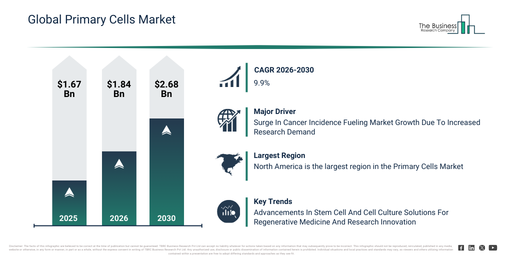
    Primary Cells Market Forecast 2026–2035: How to Leverage Market Growth

    Uncover key drivers, emerging technologies, and competitive movements shaping the primary cells market from 2026–2035 with trusted insights from The Business Research Company

    Across 2026–2030, what is the expected market valuation path of the Primary Cells Market?

    The primary cells market has experienced rapid expansion in its size over recent years. This market is projected to expand from $1.67 billion in 2025 to $1.84 billion in 2026, demonstrating a compound annual growth rate (CAGR) of 10.2%. Historically, this growth can be attributed to several factors, including the expansion of biomedical research activities, the increased adoption of cell-based disease models, a rise in investment in cancer research, the development of virology and immunology studies, and the availability of sophisticated cell isolation techniques.

    The primary cells market is anticipated to show robust expansion in the upcoming years, with its size projected to reach $2.68 billion by 2030, exhibiting a compound annual growth rate (CAGR) of 9.9%. This expansion during the forecast period is fueled by several factors, including the increasing demand for precision medicine applications, the rising adoption of primary cells in drug discovery, the broadening of regenerative medicine research, the growing utilization of AI-driven cell analytics, and increased investment in advanced cell therapies. Significant trends influencing the market in this period involve the expanding use of primary cells in translational research, the increasing uptake of 3D cell culture models, a heightened demand for human-derived primary cells, the wider development of personalized cell-based assays, and a stronger focus on cell quality and traceability.

    Access Your Free Sample Report for In-Depth Market Insights:

    https://www.thebusinessresearchcompany.com/sample.aspx?id=14165&type=smp

    Which Drivers Are Supporting The Rise Of The Primary Cells Market?

    An increase in cancer occurrences is projected to drive the expansion of the primary cells market moving ahead. This condition, known as cancer, involves specific bodily cells multiplying without regulation, migrating to different areas, and interfering with typical physiological processes. The escalation in cancer incidents stems from increased life expectancy, resulting in a greater number of individuals attaining ages at which cancer naturally occurs more frequently, thus contributing to a heightened overall prevalence within the population. Primary cells offer assistance in managing cancer cases by supplying biologically precise cell models, which enable researchers to examine tumor characteristics and evaluate prospective therapies with enhanced reliability. As an illustration, the World Health Organization, an international health body situated in Switzerland, reported in February 2024 that forecasts suggest more than 35 million new cancer cases by 2050, representing a 77% surge from the approximate 20 million cases in 2022. Regarding the total impact, high HDI countries are anticipated to observe the largest absolute rise in incidence, with an additional 4.8 million new cases projected in 2050 when contrasted with the 2022 estimations. Consequently, the increasing number of cancer cases is anticipated to stimulate the expansion of the primary cell market.

    What Segments Are Identified Within The Structure Of The Primary Cells Market?

    The primary cells market covered in this report is segmented –

    1) By Type: Hematopoietic Cells, Dermatophytes, Gastrointestinal Cells, Hepatocytes, Lung Cells, Renal Cells, Heart Cells, Musculoskeletal Cells, Other Primary Cells

    2) By Origin: Human Primary Cells, Animal Primary Cells

    3) By End User: Pharmaceuticals, Biotechnology Companies, Contract Research Organizations (CRO), Academic And Research Institutes, Other End Users

    Subsegments:

    1) By Hematopoietic Cells: Bone Marrow-Derived Cells, Peripheral Blood-Derived Cells

    2) By Dermatophytes: Keratinocytes, Fibroblasts

    3) By Gastrointestinal Cells: Enterocytes, Goblet Cells, Paneth Cells

    4) By Hepatocytes: Liver Parenchymal Cells, Hepatic Stellate Cells

    5) By Lung Cells: Alveolar Epithelial Cells, Bronchial Epithelial Cells

    6) By Renal Cells: Proximal Tubular Cells, Glomerular Cells

    7) By Heart Cells: Cardiomyocytes, Cardiac Fibroblasts

    8) By Musculoskeletal Cells: Myoblasts, Chondrocytes

    9) By Other Primary Cells: Endothelial Cells, Adipocytes

    What Trends Are Expected To Impact The Competitive Landscape Of The Primary Cells Market?

    Key companies active in the primary cell market are prioritizing enhancements in cell products, such as cell culture and stem cell offerings, to strengthen research applications and therapeutic breakthroughs. A novel serum-free medium refers to a culture or growth medium employed in cell culture or tissue culture that does not incorporate serum, specifically fetal bovine serum (FBS) or other animal-derived sera. For illustration, in July 2024, Bioserve Biotechnologies (India) Private Ltd., an India-based provider of biotechnology and life sciences solutions, launched advanced stem cell products in India. These new products from REPROCELL are designed to stimulate innovation in scientific research and drug development, thereby supporting progress in regenerative medicine and therapeutic discovery within the Indian region.

    Which Major Firms Are Strengthening Their Position In The Primary Cells Market?

    Major companies operating in the primary cells market are Thermo Fisher Scientific Inc, Merck KGaA, BD Biosciences, Corning Incorporated, Cytiva, Lonza Group Ltd, Charles River Laboratories Inc, STEMCELL Technologies Inc, American Type Culture Collection, BioIVT, InvivoGen, HemaCare Corporation, Creative Bioarray Inc, PromoCell GmbH, CellGenix, AllCells LLC, Axol Bioscience Ltd, AnaBios Corporation, ReachBio Research Labs, PELOBIOTECH GmbH, Cell Biologics Inc, ZenBio Inc, StemBioSys Inc, MatTek Corporation

    Access The Complete Report For Deeper Market Insights:

    https://www.thebusinessresearchcompany.com/report/primary-cells-global-market-report

    Which Region Is Anticipated To See The Fastest Growth In The Primary Cells Market?

    North America was the largest region in the primary cells market in 2025. The regions covered in the primary cells market report are Asia-Pacific, South East Asia, Western Europe, Eastern Europe, North America, South America, Middle East, Africa.

    Request Your Customized Primary Cells Market Research Report for Competitive Advantage:

    https://www.thebusinessresearchcompany.com/customise?id=14165&type=smp

    Browse Through More Reports Similar to the Global Primary Cells Market 2026, By The Business Research Company

    Cell Cultures Market Report 2026

    https://www.thebusinessresearchcompany.com/report/cell-cultures-global-market-report

    Primary Cell Culture Market Report 2026

    https://www.thebusinessresearchcompany.com/report/primary-cell-culture-global-market-report

    Competent Cells Market Report 2026

    https://www.thebusinessresearchcompany.com/report/competent-cells-global-market-report

    Get in touch with us:

    The Business Research Company: https://www.thebusinessresearchcompany.com/

    Americas +1 310-496-7795

    Asia +44 7882 955267 & +91 8897263534

    Europe +44 7882 955267

    Email us at info@tbrc.info

    Follow us on:

    LinkedIn: https://in.linkedin.com/company/the-business-research-company

    YouTube: https://www.youtube.com/channel/UC24_fI0rV8cR5DxlCpgmyFQ

    Global Market Model: https://www.thebusinessresearchcompany.com/global-market-model
  • Cell Culture Media Storage Containers Market Trends and Insights: Global Forecast to 2030

    Cell Culture Media Storage Containers Market Trends and Insights: Global Forecast to 2030

    Uncover key drivers, emerging technologies, and competitive movements shaping the wearable cardiac monitor patch market from 2026–2035 with trusted insights from The Business Research Company

    What growth pattern is forecast for the Cell Culture Media Storage Containers Market size between 2026 and 2035?

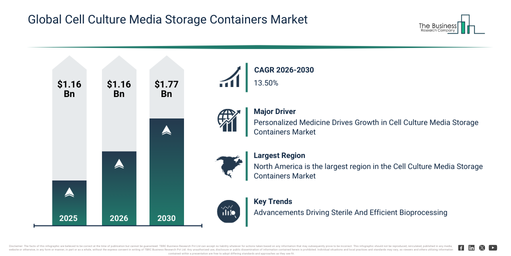
    The market size for cell culture media storage containers has experienced rapid expansion over recent years. Projections indicate it will expand from $2.88 billion in 2025 to $3.32 billion in 2026, demonstrating a compound annual growth rate (CAGR) of 15.1%. Historically, this growth is primarily attributable to several factors, including the increase in cell-based research activities, the expansion of biopharmaceutical production, the rising use of in vitro testing methods, increased investment in academic life sciences research, and the growing adoption of tissue culture techniques.

    The cell culture media storage containers market size is projected to experience substantial growth over the next few years, reaching $5.51 billion in 2030, with a compound annual growth rate (CAGR) of 13.5%. This growth during the forecast period can be attributed to the escalating demand for biologics and biosimilars, the expanding scope of regenerative medicine research, increased outsourcing to CROs and CMOs, a stronger emphasis on scalable cell culture processes, and growing investment in advanced laboratory infrastructure. Concurrently, significant trends for the forecast period include the rising need for sterile and contamination-free media storage, the increasing adoption of single-use cell culture storage solutions, a greater preference for high-durability and leak-proof containers, the expansion of media storage requirements in biopharmaceutical manufacturing, and improved standardization of storage containers across laboratories.

    Access Your Free Sample Report for In-Depth Market Insights:

    https://www.thebusinessresearchcompany.com/sample.aspx?id=15756&type=smp

    Which Drivers Are Impacting Market Performance In The Cell Culture Media Storage Containers Market?

    An increased emphasis on personalized medicine is projected to drive the cell culture media storage containers market in the future. Personalized medicine, also known as precision medicine, represents a medical approach that customizes treatments and healthcare practices based on the unique characteristics of each patient. The growing attention to personalized medicine stems from the demand for more targeted and effective treatments, alongside advancements in genomics and precision healthcare technologies. Cell culture media storage containers find use in the development of personalized medicine to maintain and preserve cell cultures, thereby enabling the production of patient-specific therapies and tailored treatments. For instance, in February 2024, the Personalized Medicine Coalition, a US-based organization advocating for personalized medicine, reported that the U.S. Food and Drug Administration approved 16 new personalized treatments for rare disease patients, an increase from 6 in 2022. Consequently, the growing focus on personalized medicine fuels the expansion of the cell culture media storage containers market.

    Which Segments Are Contributing To The Growth Of The Cell Culture Media Storage Containers Market?

    The cell culture media storage containers market covered in this report is segmented –

    1) By Product: Storage Bag, Storage Bottle, Storage Bin And Drum

    2) By Application: Biopharmaceutical Production, Tissue Engineering, Diagnostic, Regenerative Medicine

    3) By End Use: Pharmaceutical And Biotechnology Companies, Contract Research Organizations And Contract Manufacturing Organizations, Academic And Research Institutes

    Subsegments:

    1) By Storage Bag: Single-Use Storage Bags, Biopharmaceutical Storage Bags, Sterile Storage Bags

    2) By Storage Bottle: Polycarbonate Storage Bottles, Plastic Storage Bottles, Glass Storage Bottles

    3) By Storage Bin And Drum: Plastic Storage Bins, Metal Storage Drums, Food-Grade Storage Bins

    Which Trends Are Shaping Activity Within The Cell Culture Media Storage Containers Market?

    Leading companies in the cell culture media storage containers market are concentrating on creating advanced solutions, including next-generation single-use mixing technologies, with the aim of boosting media homogeneity, improving sterility, and facilitating streamlined bioprocessing workflows. These next-generation single-use mixing technologies are defined as contact-free, magnetically driven systems engineered to provide consistent and aseptic blending of cell culture media, buffers, and other process liquids. An illustrative example occurred in April 2024 when Cytiva, a US-based technology firm, unveiled its Xcellerex Magnetic Mixer at Interphex. This particular solution was designed to offer scalable, efficient, and contamination-free mixing, thereby assisting biomanufacturers in upholding consistent media quality and enhancing both upstream and downstream processing performance. Such an innovation contributes to increased operational flexibility and aligns well with the evolving industry preference for single-use bioprocessing technologies.

    Who Are The Prominent Global Companies Shaping The Cell Culture Media Storage Containers Market Landscape?

    Major companies operating in the cell culture media storage containers market are Merck KGaA, Thermo Fisher Scientific Inc, FUJIFILM Holdings Corporation, Becton Dickinson and Company, Corning Incorporated, Avantor Inc, Danaher Life Sciences LLC, Lonza Group AG, Sartorius AG, Bio-Rad Laboratories Inc, Eppendorf AG, STEMCELL Technologies Inc, Greiner Bio-One International GmbH, SARSTEDT AG & Co KG, Cole-Parmer Instrument Company LLC, BioLife Solutions Inc, DWK Life Sciences, MP Biomedicals LLC, HiMedia Laboratories Pvt Ltd, OriGen Biomedical Inc, ThermoGenesis Holdings Inc, CELLTREAT Scientific Products, TPP Techno Plastic Products AG

    Access The Complete Report For Deeper Market Insights:

    https://www.thebusinessresearchcompany.com/report/cell-culture-media-storage-containers-global-market-report

    Which Geographic Areas Are Emerging As Strong Markets For The Cell Culture Media Storage Containers Market?

    North America was the largest region in the cell culture media storage containers market in 2025. Asia-Pacific is expected to be the fastest-growing region in the forecast period. The regions covered in the cell culture media storage containers market report are Asia-Pacific, South East Asia, Western Europe, Eastern Europe, North America, South America, Middle East, Africa.

    Request Your Customized Cell Culture Media Storage Containers Market Research Report for Competitive Advantage:

    https://www.thebusinessresearchcompany.com/customise?id=15756&type=smp

    Browse Through More Reports Similar to the Global Cell Culture Media Storage Containers Market 2026, By The Business Research Company

    Cells Therapy Global Market Report 2026

    https://www.thebusinessresearchcompany.com/report/cells-therapy-global-market-report

    Cellulars Immunotherapy Global Market Report 2026

    https://www.thebusinessresearchcompany.com/report/cellulars-immunotherapy-global-market-report

    Cell And Genes Therapy Global Market Report 2026

    https://www.thebusinessresearchcompany.com/report/cell-and-genes-therapy-global-market-report

    Get in touch with us:

    The Business Research Company: https://www.thebusinessresearchcompany.com/

    Americas +1 310-496-7795

    Asia +44 7882 955267 & +91 8897263534

    Europe +44 7882 955267

    Email us at info@tbrc.info

    Follow us on:

    LinkedIn: https://in.linkedin.com/company/the-business-research-company

  • Artificial Intelligence In Radiology Market Performance Outlook 2026–2030: Revenue to Hit $10.69 Billion at 30.3% CAGR

    Uncover key drivers, emerging technologies, and competitive movements shaping the artificial intelligence in radiology market from 2026–2035 with trusted insights from The Business Research Company

    What long-term size projections exist for the Artificial Intelligence In Radiology Market covering 2026–2035?

    The artificial intelligence in radiology market has experienced remarkable growth in recent times. This market is forecast to expand from $2.85 billion in 2025 to $3.71 billion in 2026, at a compound annual growth rate (CAGR) of 30.2%. In the historical period, this growth was primarily fueled by factors such as an escalating demand for diagnostic imaging services, a scarcity of radiology professionals, the broadening of digital radiology systems, increasing complexity of imaging data, and the widespread adoption of picture archiving systems.

    The artificial intelligence in radiology market size is projected to undergo significant expansion in the coming years. It is forecast to reach $10.7 billion by 2030, exhibiting a compound annual growth rate (CAGR) of 30.3%. This growth during the forecast period is propelled by factors such as the increasing acceptance of AI-assisted radiology platforms, a heightened emphasis on optimizing productivity within imaging departments, the proliferation of cloud-based radiology AI solutions, the expanding application of predictive imaging analytics, and greater integration with hospital IT systems. Noteworthy trends anticipated in this period include the rising integration of AI in radiology reporting workflows, increased use of computer vision for interpreting images, the broadening deployment of AI for workflow optimization, the expansion of real-time decision support tools, and an intensified focus on enhancing diagnostic accuracy.

    Access Your Free Sample Report for In-Depth Market Insights:

    https://www.thebusinessresearchcompany.com/sample.aspx?id=13591&type=smp

    Which Drivers Are Impacting The Competitive Landscape Of The Artificial Intelligence In Radiology Market?

    The increasing adoption of artificial intelligence (AI) in healthcare is anticipated to drive the expansion of artificial intelligence (AI) in the radiology market moving forward. AI-powered algorithms demonstrate a significant capacity to precisely analyze and interpret medical images, assisting radiologists in detecting subtle irregularities and enhancing overall diagnostic outcomes. The efficiency and speed offered by AI technologies not only streamline radiological workflows but also lead to quicker and more precise diagnoses. For instance, in July 2024, according to The Health Foundation, a UK-based independent charity, more than half of the UK public (54%) and three-quarters of surveyed NHS staff (76%) expressed support for the use of AI in patient care, while an even larger percentage endorsed its use for administrative tasks (61% of the public and 81% of NHS staff). As a result, the expanding application of AI in healthcare is propelling the growth of artificial intelligence (AI) in the radiology market.

    What Leading Segments Are Studied In The Artificial Intelligence In Radiology Market?

    The artificial intelligence in radiology market covered in this report is segmented –

    1) By Solution Type: AI Software, AI Hardware

    2) By Modality: Computed Tomography (CT), Magnetic Resonance (MR), X-Ray, Mammography, Ultrasound (US), Other Modalities

    3) By Application: Neurology, Chest And Lung, Musculoskeletal, Abdomen, Cardiology, Other Applications

    4) By End-User: Hospitals, Diagnostic Imaging Centers, Other End-Users

    Subsegments:

    1) By AI Software: Image Analysis Software, Workflow Optimization Software, Radiology Reporting Software, Decision Support Systems, Predictive Analytics Tools

    2) By AI Hardware: Imaging Devices, Servers And Computing Infrastructure, Robotics For Automated Imaging, Workstations For Radiologists

    What Trends Are Expected To Impact The Competitive Landscape Of The Artificial Intelligence In Radiology Market?

    Leading companies in the artificial intelligence in radiology market are concentrating on creating cutting-edge cloud-native radiology informatics platforms, such as AI-orchestrated diagnostic workspaces. Their aim is to improve imaging workflow efficiency, facilitate quicker clinical decision-making, and handle increasing imaging volumes. Such a cloud-native AI radiology platform merges conventional PACS or RIS functionalities with scalable cloud infrastructure, allowing for real-time AI model deployment, sophisticated image streaming, automated reporting, and smooth interoperability among different clinical systems. As an illustration, in February 2025, DeepHealth, Inc., a U.S.-based health informatics company, introduced Diagnostic Suite, which is an AI-powered cloud-native radiology workspace. This platform consolidates worklist management, patient briefs, high-speed streaming viewers, AI orchestration, and intelligent reporting into one unified interface. It boasts high scalability, incorporates various AI diagnostic models covering lung, prostate, brain, and breast imaging, and boosts efficiency through seamless interoperability with current radiology IT infrastructure.

    Which Key Market Players Are Investing In Expansion And Innovation Within The Artificial Intelligence In Radiology Market?

    Major companies operating in the artificial intelligence in radiology market are Microsoft Corporation, IBM Corporation, NVIDIA Corporation, Siemens Healthineers AG, Koninklijke Philips N.V, GE Healthcare Technologies Inc., Canon Medical Systems Corporation, HeartFlow Inc., Viz.ai Inc., Aidoc Medical Ltd., EnvoyAI, Butterfly Network Inc., Digital Diagnostics Inc., Caption Health, Enlitic Inc., Arterys, Nano X Imaging Ltd., Subtle Medical Inc., CureMetrix Inc., DiA Imaging Analysis Ltd., Imagen Technologies, Gleamer Ltd., Quibim, Behold.ai, Intel Corporation

    Access The Complete Report For Deeper Market Insights:

    https://www.thebusinessresearchcompany.com/report/artificial-intelligence-in-radiology-global-market-report

    Which Regions Are Poised For Strategic Growth In The Artificial Intelligence In Radiology Market?

    North America was the largest region in the artificial intelligence in radiology market in 2025. The regions covered in the artificial intelligence in radiology market report are Asia-Pacific, South East Asia, Western Europe, Eastern Europe, North America, South America, Middle East, Africa.

    Request Your Customized Artificial Intelligence In Radiology Market Research Report for Competitive Advantage:

    https://www.thebusinessresearchcompany.com/customise?id=13591&type=smp

    Browse Through More Reports Similar to the Global Artificial Intelligence In Radiology Market 2026, By The Business Research Company

    Artificial Intelligence In The Diagnostic Market Report 2026

    https://www.thebusinessresearchcompany.com/report/artificial-intelligence-in-the-diagnostic-global-market-report

    Artificial Intelligence Ai Radiology Tool Market Report 2026

    https://www.thebusinessresearchcompany.com/report/artificial-intelligence-ai-radiology-tool-global-market-report

    Artificial Intelligence In Medical Imaging Market Report 2026

    https://www.thebusinessresearchcompany.com/report/artificial-intelligence-in-medical-imaging-global-market-report

    Get in touch with us:

    The Business Research Company: https://www.thebusinessresearchcompany.com/

    Americas +1 310-496-7795

    Asia +44 7882 955267 & +91 8897263534

    Europe +44 7882 955267

    Email us at info@tbrc.info

    Follow us on:

    LinkedIn: https://in.linkedin.com/company/the-business-research-company

    YouTube: https://www.youtube.com/channel/UC24_fI0rV8cR5DxlCpgmyFQ

    Global Market Model: https://www.thebusinessresearchcompany.com/global-market-model

  • Global Artificial Intelligence In Oncology Market Set for Strong Expansion, Reaching $10.24 Billion With 34.5% CAGR by 2030

    Uncover key drivers, emerging technologies, and competitive movements shaping the artificial intelligence in oncology market from 2026–2035 with trusted insights from The Business Research Company

    What total market size is anticipated for the Artificial Intelligence In Oncology Market in 2030?

    The artificial intelligence in oncology market has experienced significant expansion in its size over recent years. It is forecast to grow from $2.35 billion in 2025 to $3.13 billion in 2026, registering a compound annual growth rate (CAGR) of 33.4%. The increase observed historically can be linked to factors such as rising global cancer incidence rates, the proliferation of oncology research initiatives, broader adoption of digital pathology, increasing reliance on data-driven cancer diagnostics, and substantial investments in advanced oncology infrastructure.

    The artificial intelligence in oncology market is projected to experience substantial growth over the coming years. This market is predicted to reach $10.25 billion by 2030, exhibiting a compound annual growth rate (CAGR) of 34.5%. Key drivers for this growth during the forecast period include the increasing uptake of precision oncology solutions, a rising need for personalized cancer treatments, broader utilization of AI in clinical oncology trials, enhanced integration of genomics with AI platforms, and a surge in investments directed towards oncology-focused AI startups. Prominent trends anticipated within this period encompass the growing adoption of AI-based tools for cancer detection, increased application of AI in optimizing treatment plans, greater integration of AI in drug discovery and development processes, the expansion of predictive oncology analytics, and an intensified focus on precision oncology applications.

    Access Your Free Sample Report for In-Depth Market Insights:

    https://www.thebusinessresearchcompany.com/sample.aspx?id=13130&type=smp

    What Drivers Are Influencing Production Trends In The Artificial Intelligence In Oncology Market?

    The increasing frequency of cancer occurrences is anticipated to drive the expansion of the AI in oncology market going forward. Cancer constitutes an intricate array of illnesses marked by the unregulated proliferation and division of anomalous cells within the body. The adoption of AI in oncology possesses the capacity to fundamentally change cancer care, making it more accurate, individualized, and effective. For example, in 2023, a report from the American Cancer Society Inc., a US-based voluntary health organization, indicated that the estimated number of new cancer cases climbed from 1.8 million to 1.9 million. Hence, the escalating incidence of cancer cases is propelling the growth of the AI in oncology market.

    Which Segment Groups Are Influencing The Artificial Intelligence In Oncology Market?

    The artificial intelligence in oncology market covered in this report is segmented –

    1) By Component: Software Solutions, Hardware, Services

    2) By Treatment Type: Chemotherapy, Radiotherapy, Immunotherapy, Other Treatment Types

    3) By Cancer Type: Breast Cancer, Lung Cancer, Prostate Cancer, Colorectal Cancer, Brain Tumor, Other Cancer Types

    4) By Application: Cancer Detection, Drug Discovery, Drug Development, Other Applications

    5) By End-Users: Hospitals, Diagnostic Centers, Pharmaceutical Companies, Research Institutes, Other End Users

    Subsegments:

    1) By Software Solutions: Diagnostic Software, Treatment Planning Software, Patient Management Software, Data Analytics Platforms

    2) By Hardware: AI-Enabled Imaging Devices, High-Performance Computing Systems

    3) By Services: Consulting Services, Integration Services, Maintenance And Support Services

    Which Trends Are Guiding The Evolution Of The Artificial Intelligence In Oncology Market?

    Leading companies active in the AI in the oncology market are concentrating on developing advanced software, including cloud-based solutions, to improve their effectiveness and offer enhanced solutions. Cloud-based software is essential for AI applications in oncology, delivering a scalable, adaptable, and accessible platform for processing and analyzing extensive medical data. For example, in March 2023, Illumina Inc., a US-based biotechnology company, introduced Connected Insights, a new cloud-based software designed for tertiary analysis in oncology applications. Through the incorporation of external knowledge bases, Connected Insights optimizes the interpretation and reporting of outcomes from various assay types, empowering labs to broaden their utilization of NGS (Next-Generation Sequencing) and expedite the clinical reporting turnaround time.

    Who Are The Core Companies Influencing Trends In The Artificial Intelligence In Oncology Market?

    Major companies operating in the artificial intelligence in oncology market are Azra AI, IBM Corporation, Siemens Healthcare GmbH, GE HealthCare, NVIDIA Corporation, Digital Diagnostics Inc., ConcertAI Inc., PathAI Inc., Median Technologies SA, Kheiron Medical Technologies Ltd, Tempus Labs Inc., Paige AI Inc., Prognos Health Inc., Enlitic, Inspirata Inc., Proscia Inc., Deep 6 AI Inc., Intel Corporation, Zebra Medical Vision, Ibex Medical Analytics, Nanox Imaging Ltd., Berg LLC

    Access The Complete Report For Deeper Market Insights:

    https://www.thebusinessresearchcompany.com/report/artificial-intelligence-in-oncology-global-market-report

    Which Regions Are Projected To Dominate The Artificial Intelligence In Oncology Market In The Coming Years?

    North America was the largest region in the AI in oncology market in 2025. Asia-Pacific is expected to be the fastest-growing region in the forecast period. The regions covered in the artificial intelligence in oncology market report are Asia-Pacific, South East Asia, Western Europe, Eastern Europe, North America, South America, Middle East, Africa.

    Request Your Customized Artificial Intelligence In Oncology Market Research Report for Competitive Advantage:

    https://www.thebusinessresearchcompany.com/customise?id=13130&type=smp

    Browse Through More Reports Similar to the Global Artificial Intelligence In Oncology Market 2026, By The Business Research Company

    Ai In Cancer Diagnostics Market Report 2026

    https://www.thebusinessresearchcompany.com/report/ai-in-cancer-diagnostics-global-market-report

    Artificial Intelligence In Cancer Diagnostics Market Report 2026

    https://www.thebusinessresearchcompany.com/report/artificial-intelligence-in-cancer-diagnostics-global-market-report

    Artificial Intelligence In Medicine Market Report 2026

    https://www.thebusinessresearchcompany.com/report/artificial-intelligence-in-medicine-global-market-report

    Get in touch with us:

    The Business Research Company: https://www.thebusinessresearchcompany.com/

    Americas +1 310-496-7795

    Asia +44 7882 955267 & +91 8897263534

    Europe +44 7882 955267

    Email us at info@tbrc.info

    Follow us on:

    LinkedIn: https://in.linkedin.com/company/the-business-research-company

    YouTube: https://www.youtube.com/channel/UC24_fI0rV8cR5DxlCpgmyFQ

    Global Market Model: https://www.thebusinessresearchcompany.com/global-market-model

  • Artificial Intelligence In Medicine Market Growth Projection: Expected to Surpass $80.58 Billion by 2030 at 38.8% CAGR

    Uncover key drivers, emerging technologies, and competitive movements shaping the artificial intelligence in medicine market from 2026–2035 with trusted insights from The Business Research Company

    What is the expected shift in the Artificial Intelligence In Medicine Market’s size between 2026 and 2030?

    The artificial intelligence in medicine market has experienced significant expansion in recent years. This sector is anticipated to grow from $15.6 billion in 2025 to $21.7 billion in 2026, progressing at a compound annual growth rate (CAGR) of 39.1%. The historical development of this market is attributable to the increasing digitization of healthcare records, a rising demand for improved clinical outcomes, broader utilization of healthcare data analytics, the escalating complexity of treatment pathways, and the accessibility of advanced computing resources.

    The artificial intelligence in medicine market is set for significant expansion over the coming years. Its valuation is forecast to climb to $80.59 billion by 2030, demonstrating a compound annual growth rate (CAGR) of 38.8%. This projected growth throughout the forecast period stems from factors such as the increasing embrace of AI-enabled personalized medicine, escalating investments in healthcare AI platforms, the proliferation of remote and digital care models, the expanding use of predictive analytics in population health, and the deeper integration of AI across various clinical workflows. Prominent trends within this period involve the rising implementation of AI-based clinical decision support systems, a growing adoption of personalized treatment algorithms, the increased application of AI for disease risk prediction, the broadening of AI uses in hospital operations, and an amplified focus on data-driven patient management.

    Access Your Free Sample Report for In-Depth Market Insights:

    https://www.thebusinessresearchcompany.com/sample.aspx?id=13590&type=smp

    Which Drivers Are Shaping Strategic Decisions In The Artificial Intelligence In Medicine Market?

    The escalating interest in real-time remote patient monitoring (RPM) systems is anticipated to propel the expansion of artificial intelligence in the medicine market moving forward. A remote patient monitoring system represents a technology-driven healthcare solution specifically engineered to oversee patients’ health beyond traditional healthcare environments. Artificial intelligence (AI) in medicine has profoundly transformed remote patient monitoring by utilizing advanced algorithms to analyze extensive patient data, thereby offering predictive insights and enabling personalized care. For instance, in November 2025, Statistics Canada, a Canada-based government agency, reported that Canadians residing in Newfoundland and Labrador (13.2%), British Columbia (10.6%), and Nova Scotia (10.4%) showed the highest proportions of individuals who had virtual appointments only. Conversely, Saskatchewan (2.1%), Alberta (2.4%), and Manitoba (3.3%) recorded the smallest proportions of those who exclusively utilized virtual appointments. Therefore, the increasing interest in real-time remote patient monitoring (RPM) systems is driving the growth of artificial intelligence in the medicine market.

    What Segment Classifications Make Up The Artificial Intelligence In Medicine Market?

    The artificial intelligence in medicine market covered in this report is segmented –

    1) By Type: Hardware, Software, Services

    2) By Technology: Machine Learning, Natural Language Processing, Context-Aware Processing, Computer Vision

    3) By Application: Medical Administration And Support, Patient Management, Research And Development, Other Applications

    4) By End User: Hospitals, Clinics, Research Institutions

    Subsegments:

    1) By Hardware: AI-Powered Imaging Devices, Robotics And Automation Devices, Wearable Health Devices, Servers And Computing Systems

    2) By Software: Machine Learning Algorithms, Natural Language Processing (NLP) Tools, Image Analysis Software, Predictive Analytics Software, Clinical Decision Support Systems

    3) By Services: AI Consulting Services, Integration Services, Maintenance And Support Services, Data Management Services, Training And Education Services

    What Trends Are Projected To Support The Growth Of The Artificial Intelligence In Medicine Market?

    Leading companies within the artificial intelligence in the medicine market are dedicated to crafting innovative solutions, such as AI-powered platforms, to offer dependable services to their clientele. An AI-powered platform represents a software innovation that integrates artificial intelligence (AI) technologies to automate processes, scrutinize data, and formulate predictions. For example, in April 2023, OM1 Inc., a US-based digital health firm, introduced PhenOM. This platform leverages real-world data and sophisticated analytics to pinpoint distinct digital phenotypes linked to various conditions and outcomes, thereby establishing unique profiles for different patient cohorts. PhenOM possesses the capability to examine individual patient information to forecast potential risks, identify suitable intervention avenues, and guide decisions regarding treatment.

    Which Major Industry Participants Are Leading The Artificial Intelligence In Medicine Market Growth?

    Major companies operating in the artificial intelligence in medicine market are Google LLC, Microsoft Corporation, Intel Corporation, IBM Corporation, Medtronic PLC, Nvidia Corporation, Siemens Healthineers AG, Philips Healthcare, Babylon Healthcare Services Ltd., Komodo Health Inc., Modernizing Medicine Inc., Viz.ai Inc., Butterfly Network Inc., Augmedix, AiCure LLC, HealthTap Inc., Welltok Inc., Enlitic Inc., PathAI Inc., Nano-X Imaging Ltd., Berg LLC, Insitro, Sense.ly Inc., Subtle Medical Inc., Medasense Biometrics Limited, Immunai, Atomwise Inc., Freenome Holdings Inc., CloudMedX Inc.

    Access The Complete Report For Deeper Market Insights:

    https://www.thebusinessresearchcompany.com/report/artificial-intelligence-in-medicine-global-market-report

    Which Region Is Expected To Experience The Fastest Growth In The Artificial Intelligence In Medicine Market?

    North America was the largest region in the artificial intelligence in medicine market in 2025. Asia-Pacific is expected to be the fastest-growing region in the forecast period. The regions covered in the artificial intelligence in medicine market report are Asia-Pacific, South East Asia, Western Europe, Eastern Europe, North America, South America, Middle East, Africa.

    Request Your Customized Artificial Intelligence In Medicine Market Research Report for Competitive Advantage:

    https://www.thebusinessresearchcompany.com/customise?id=13590&type=smp

    Browse Through More Reports Similar to the Global Artificial Intelligence In Medicine Market 2026, By The Business Research Company

    Artificial Intelligence In Healthcare Diagnosis Market Report 2026

    https://www.thebusinessresearchcompany.com/report/artificial-intelligence-in-healthcare-diagnosis-global-market-report

    Artificial Intelligence In Healthcare Market 2026

    https://www.thebusinessresearchcompany.com/report/artificial-intelligence-in-healthcare-market

    Artificial Intelligence Ai In Precision Medicine Market Report 2026

    https://www.thebusinessresearchcompany.com/report/artificial-intelligence-ai-in-precision-medicine-global-market-report

    Get in touch with us:

    The Business Research Company: https://www.thebusinessresearchcompany.com/

    Americas +1 310-496-7795

    Asia +44 7882 955267 & +91 8897263534

    Europe +44 7882 955267

    Email us at info@tbrc.info

    Follow us on:

    LinkedIn: https://in.linkedin.com/company/the-business-research-company

    YouTube: https://www.youtube.com/channel/UC24_fI0rV8cR5DxlCpgmyFQ

    Global Market Model: https://www.thebusinessresearchcompany.com/global-market-model

  • Artificial Intelligence in Medical Imaging Market Forecast 2026–2035: How to Leverage Market Growth

    Uncover key drivers, emerging technologies, and competitive movements shaping the artificial intelligence in medical imaging market from 2026–2035 with trusted insights from The Business Research Company

    What growth pattern is forecast for the Artificial Intelligence in Medical Imaging Market size between 2026 and 2035?

    The artificial intelligence in medical imaging market has experienced substantial growth in recent years. It is anticipated to expand from $4.44 billion in 2025 to $5.82 billion in 2026, exhibiting a compound annual growth rate (CAGR) of 31.0%. The historical increase in this market can be linked to several factors, including a rise in medical imaging procedure volumes, a shortage of skilled radiologists, the growing prevalence of chronic and complex diseases, the expansion of digital imaging infrastructure, and the development of hospital imaging departments.

    The artificial intelligence in medical imaging market size is forecast to experience significant expansion in the coming years. It is projected to achieve a value of $17.19 billion by 2030, growing at a compound annual growth rate (CAGR) of 31.1%. This anticipated growth during the forecast period is driven by factors such as the increasing adoption of AI-powered clinical decision support, rising investments in precision diagnostics, the expansion of AI utilization across various imaging modalities, a growing demand for faster diagnostic turnaround times, and the increasing integration of AI with hospital information systems. Prominent trends expected in this period include the rising uptake of AI-assisted diagnostic imaging tools, the increased use of deep learning for image interpretation, the growing integration of AI into radiology workflow automation, the expansion of AI-based predictive diagnostic models, and an enhanced focus on the accuracy of early disease detection.

    Access Your Free Sample Report for In-Depth Market Insights:

    https://www.thebusinessresearchcompany.com/sample.aspx?id=13589&type=smp

    Which Drivers Are Impacting Market Performance In The Artificial Intelligence in Medical Imaging Market?

    The expansion of imaging modalities is anticipated to drive the advancement of AI in the medical imaging market going forward. Imaging modalities are defined as the various medical imaging methods utilized to visualize the body for diagnostic and therapeutic purposes. AI algorithms find application within medical techniques to aid in image reconstruction, noise reduction, and artifact correction, resulting in sharper and more precise CT images. As an example, in June 2025, according to the National Health Service, a UK-based government department, 47.2 million imaging tests were reported in England in the year to March 2024, compared with 45.0 million in the previous year, an increase of 4.8%. Consequently, the expanding use of imaging modalities is boosting the progression of AI in the medical imaging market.

    What Segment Types Are Examined In The Artificial Intelligence in Medical Imaging Market?

    The artificial intelligence in medical imaging market covered in this report is segmented –

    1) By Modality: Computed Tomography (CT) Scan, Magnetic Resonance Imaging (MRI), X-rays, Ultrasound, Nuclear Imaging

    2) By Technology: Deep Learning, Natural Language Processing (NLP), Other Technologies

    3) By Application: Neurology, Respiratory And Pulmonary, Cardiology, Breast Screening, Orthopedics

    4) By End-Use: Hospitals, Diagnostic Imaging Centers, Other End-Users

    Subsegments:

    1) By Computed Tomography (CT) Scan: Cardiac CT, CT Angiography, Lung CT, Abdominal CT, Head CT

    2) By Magnetic Resonance Imaging (MRI): Brain MRI, Spine MRI, Musculoskeletal MRI, Abdominal MRI, Functional MRI

    3) By X-rays: Chest X-rays, Dental X-rays, Mammography, Bone X-rays, Fluoroscopy

    4) By Ultrasound: Abdominal Ultrasound, Cardiac Ultrasound, Obstetric And Gynecological Ultrasound, Vascular Ultrasound, Musculoskeletal Ultrasound

    5) By Nuclear Imaging: Positron Emission Tomography (PET), Single Photon Emission Computed Tomography (SPECT), Bone Scans, Thyroid Scans, Cardiac Scans

    Which Trends Are Influencing The Performance And Direction Of The Artificial Intelligence in Medical Imaging Market?

    Leading firms in the AI in the medical imaging market are creating new solutions, including AI-integrated MRI systems, with the goal of improving patient care. These AI-enabled MRI systems are essentially conventional Magnetic Resonance Imaging (MRI) devices enhanced with artificial intelligence (AI) technology. As an illustration, in December 2023, GE Healthcare, a US-based medical technology enterprise, introduced SIGNA Champion, an MRI system featuring AI capabilities. The SIGNA Champion is engineered to provide multiple AI-powered workflow functionalities such as AIR Recon DL and Sonic DL, enhancing operational efficiency and ensuring superior image quality for users across all levels of expertise. A distinctive aspect of SIGNA Champion is its blend of ample patient clearance within the bore and reduced scan durations.

    Who Are The Prominent Global Companies Shaping The Artificial Intelligence in Medical Imaging Market Landscape?

    Major companies operating in the artificial intelligence in medical imaging market are Google LLC, Microsoft Corporation, IBM Watson Health, Intel Corporation, NVIDIA Corporation, Siemens Healthineers, Koninklijke Philips N.V, GE Healthcare, Agfa-Gevaert Group/Agfa HealthCare, Aidoc Medical, Arterys Inc., Lunit Inc., Butterfly Network Inc., Digital Diagnostics Inc., Caption Health Inc., EchoNous Inc., Covera Health Inc., Nanox Imaging LTD., AZmed, InformAI LLC, Avicenna AI, ImageBiopsy Lab, Nucleai, Icometrix NV., Gleamer

    Access The Complete Report For Deeper Market Insights:

    https://www.thebusinessresearchcompany.com/report/artificial-intelligence-in-medical-imaging-global-market-report

    Which Geographic Areas Are Emerging As Strong Markets For The Artificial Intelligence in Medical Imaging Market?

    North America was the largest region in the AI in medical imaging market in 2025. Asia-Pacific is expected to be the fastest-growing region in the forecast period. The regions covered in the artificial intelligence in medical imaging market report are Asia-Pacific, South East Asia, Western Europe, Eastern Europe, North America, South America, Middle East, Africa.

    Request Your Customized Artificial Intelligence in Medical Imaging Market Research Report for Competitive Advantage:

    https://www.thebusinessresearchcompany.com/customise?id=13589&type=smp

    Browse Through More Reports Similar to the Global Artificial Intelligence in Medical Imaging Market 2026, By The Business Research Company

    Artificial Intelligence In Radiology Market Report 2026

    https://www.thebusinessresearchcompany.com/report/artificial-intelligence-in-radiology-global-market-report

    Ai In Medical Imaging Market Report 2026

    https://www.thebusinessresearchcompany.com/report/ai-in-medical-imaging-global-market-report

    Artificial Intelligence In Magnetic Resonance Imaging Mri Market Report 2026

    https://www.thebusinessresearchcompany.com/report/artificial-intelligence-in-magnetic-resonance-imaging-mri-global-market-report

    Get in touch with us:

    The Business Research Company: https://www.thebusinessresearchcompany.com/

    Americas +1 310-496-7795

    Asia +44 7882 955267 & +91 8897263534

    Europe +44 7882 955267

    Email us at info@tbrc.info

    Follow us on:

    LinkedIn: https://in.linkedin.com/company/the-business-research-company

    YouTube: https://www.youtube.com/channel/UC24_fI0rV8cR5DxlCpgmyFQ

    Global Market Model: https://www.thebusinessresearchcompany.com/global-market-model

  • Global Artificial Intelligence In Medical Coding Market 2026–2030: Forecast Insights for Business Planning

    Uncover key drivers, emerging technologies, and competitive movements shaping the artificial intelligence in medical coding market from 2026–2035 with trusted insights from The Business Research Company

    How much larger will the Artificial Intelligence In Medical Coding Market be in 2030 compared with 2026?

    The artificial intelligence in medical coding market size has expanded rapidly in recent years. It is forecast to grow from $3.12 billion in 2025 to $3.56 billion in 2026, achieving a compound annual growth rate (CAGR) of 14.0%. This historical growth can be linked to factors such as increasing volumes of healthcare data, the escalating complexity of medical coding standards, a rising administrative burden on healthcare providers, the wider adoption of electronic health record systems, and the need for improved revenue cycle efficiency.

    The artificial intelligence in medical coding market size is projected to experience substantial expansion over the coming years. This market is predicted to reach $6 billion by 2030, exhibiting a compound annual growth rate (CAGR) of 14.0%. This anticipated growth during the forecast period stems from several factors, including the increased uptake of fully automated coding platforms, heightened regulatory scrutiny concerning billing accuracy, the expanding utilization of AI-assisted clinical documentation, the spread of outsourced AI-powered coding services, and a rise in investments dedicated to healthcare automation technologies. Key trends anticipated for this period encompass the growing adoption of AI-driven automated coding solutions, increasing integration of NLP-based clinical documentation analysis, the expanding application of generative AI for enhancing code accuracy, the proliferation of AI-enabled compliance and audit tools, and a sharpened focus on minimizing coding errors and denials.

    Access Your Free Sample Report for In-Depth Market Insights:

    https://www.thebusinessresearchcompany.com/sample.aspx?id=13588&type=smp

    What Drivers Are Guiding Growth Patterns In The Artificial Intelligence In Medical Coding Market?

    The escalating need for coding services is set to propel the expansion of artificial intelligence in the medical coding market moving forward. Coding services involve the conversion of healthcare diagnoses, procedures, and medical services into universal medical alphanumeric codes. This conversion is vital for precise billing, smooth insurance claim processing, and effective reimbursement. Artificial intelligence in medical coding improves the efficiency, accuracy, and adaptability of these services, ultimately benefiting healthcare organizations, medical coders, and patient care. For example, in 2024, the American Bureau of Labor Statistics, a US-based government agency, forecasted that the employment of medical records specialists would grow 7 percent from 2024 to 2034. Thus, the increasing demand for coding services is fueling the growth of artificial intelligence in the medical coding market.

    Which Segments Are Driving Activity In The Artificial Intelligence In Medical Coding Market?

    The artificial intelligence in medical coding market covered in this report is segmented –

    1) By Component: In-House, Outsourced

    2) By Technology: Machine Learning, Natural Language Processing (NLP), Generative AI

    3) By End-User: Healthcare Providers, Medical Billing Companies, Payers

    Subsegments:

    1) By In-House: Internal Coding Teams, AI-Enhanced Coding Solutions, Integration With Existing Systems

    2) By Outsourced: Third-Party Coding Services, AI-Powered Outsourcing Solutions, Vendor Management For Coding Services

    What Long-Term Trends Are Expected To Shape The Future Of The Artificial Intelligence In Medical Coding Market?

    Leading companies operating in artificial intelligence in the medical coding sector are developing advanced technology like Natural Language Processing (NLP) to understand the context in which words are used. This innovation enables a more accurate interpretation of patient conversations and captures the subtle nuances of a patient’s medical condition. Natural Language Processing (NLP) is a specialized branch of Artificial Intelligence (AI) that allows machines to comprehend and interpret human-generated spoken or written information. For example, in March 2023, Liguamatics, a software company based in the UK, launched its Healthcare Product Suite, designed to convert unstructured electronic health record data into actionable patient insights. This suite leverages natural language processing (NLP) to extract valuable information from various unstructured data sources, including EHRs, patient portals, and call center notes. The NLP Data Factory offered by Linguamatics provides scalable and automated NLP transformation for key applications, supporting a wide array of healthcare data. Furthermore, the Health Language Data Interoperability Solution from Wolters Kluwer facilitates organizations in harmonizing structured, semi-structured, and unstructured data from multiple sources within the healthcare domain.

    Which Key Players Are Driving Competition In The Artificial Intelligence In Medical Coding Market?

    Major companies operating in the artificial intelligence in medical coding market are CodaMetrix Inc., Fathom, Inc., AKASA, Inc., Aideo Technologies, Inc., M-Scribe Technologies, LLC, Dolbey Systems, Inc., Streamline Health Solutions, Inc., Talix, Inc., Health Record Services Corporation, Saince, Inc., Diagnoss, Inc., BUDDI AI, Inc., Oncora Medical, Inc., Epic Systems Corporation, CorroHealth, Inc., nThrive, Inc., Waystar Technologies, Inc., Thoughtful Automation, Inc., Solventum Corporation, Exponential AI, Inc.

    Access The Complete Report For Deeper Market Insights:

    https://www.thebusinessresearchcompany.com/report/artificial-intelligence-in-medical-coding-global-market-report

    Which Region Is Projected To Lead The Artificial Intelligence In Medical Coding Market During The Forecast Period?

    North America was the largest region in the artificial intelligence in medical coding market in 2025. The regions covered in the artificial intelligence in medical coding market report are Asia-Pacific, South East Asia, Western Europe, Eastern Europe, North America, South America, Middle East, Africa.

    Request Your Customized Artificial Intelligence In Medical Coding Market Research Report for Competitive Advantage:

    https://www.thebusinessresearchcompany.com/customise?id=13588&type=smp

    Browse Through More Reports Similar to the Global Artificial Intelligence In Medical Coding Market 2026, By The Business Research Company

    Artificial Intelligence In Healthcare Market 2026

    https://www.thebusinessresearchcompany.com/report/artificial-intelligence-in-healthcare-market

    Artificial Intelligence In Medicine Market Report 2026

    https://www.thebusinessresearchcompany.com/report/artificial-intelligence-in-medicine-global-market-report

    Medical Coding Market Report 2026

    https://www.thebusinessresearchcompany.com/report/medical-coding-global-market-report

    Get in touch with us:

    The Business Research Company: https://www.thebusinessresearchcompany.com/

    Americas +1 310-496-7795

    Asia +44 7882 955267 & +91 8897263534

    Europe +44 7882 955267

    Email us at info@tbrc.info

    Follow us on:

    LinkedIn: https://in.linkedin.com/company/the-business-research-company

    YouTube: https://www.youtube.com/channel/UC24_fI0rV8cR5DxlCpgmyFQ

    Global Market Model: https://www.thebusinessresearchcompany.com/global-market-model