Month: March 2026

  • Protein Microarray Market Anticipated to Record Steady Gains, Advancing to $6.69 Billion by 2030

    Protein Microarray Market Anticipated to Record Steady Gains, Advancing to $6.69 Billion by 2030

    Uncover key drivers, emerging technologies, and competitive movements shaping the protein microarray market from 2026–2035 with trusted insights from The Business Research Company

    What are the forecasted starting (2026) and ending (2030) market sizes for the Protein Microarray Market?

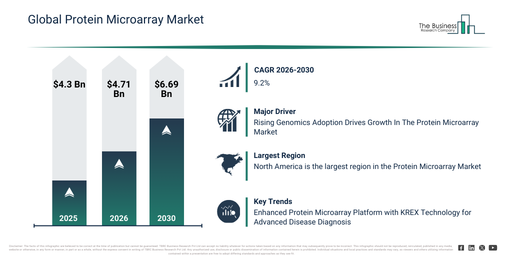
    The protein microarray market has demonstrated significant expansion in recent years. It is anticipated to grow from $4.3 billion in 2025 to $4.71 billion in 2026, reflecting a compound annual growth rate (CAGR) of 9.5%. This historical rise can be attributed to various factors, including the increasing number of proteomics research initiatives, the wider adoption of microarrays in disease research, the expansion of academic and clinical research facilities, improvements in surface chemistry technologies, and the accessibility of high-density microarray platforms.

    The protein microarray market size is anticipated to experience robust expansion in the coming years. This market is projected to reach $6.69 billion by 2030, reflecting a compound annual growth rate (CAGR) of 9.2%. The expansion during the forecast period is primarily attributable to several factors, including the escalating demand for personalized diagnostics, the increasing integration with AI-based protein analytics, the broadening of translational research activities, the expanding application in drug target validation, and the rising investment in precision medicine research. Furthermore, key trends anticipated over the forecast period encompass the growing adoption of high-throughput protein microarrays, their increasing utilization in biomarker discovery programs, the expanding integration with automated sample processing, the proliferation of multiplex protein profiling applications, and a heightened emphasis on data-rich proteomic analysis.

    Access Your Free Sample Report for In-Depth Market Insights:

    https://www.thebusinessresearchcompany.com/sample.aspx?id=20605&type=smp

    What Drivers Are Supporting Technological Adoption In The Protein Microarray Market?

    The increasing integration of genomics is projected to stimulate the expansion of the protein microarray market moving forward. Genomics involves the comprehensive examination of an organism’s complete genetic material, including its structure, function, and evolutionary transformations. The surge in genomics adoption stems from technological advancements, decreased sequencing expenses, and the promise of personalized medical therapies. Genomics aids protein microarrays by delivering extensive genetic information that assists in identifying and analyzing proteins, their interactions, and functions, thus facilitating more targeted and high-throughput protein profiling. For example, in December 2023, the World Health Organization, a public health agency situated in Switzerland, indicated that 163 of 194 countries surveyed, roughly 84%, reported maintaining national capacity for pathogen genomic sequencing. Hence, the rising adoption of genomics is a significant factor propelling the protein microarray market.

    Which Segments Are Contributing To The Growth Of The Protein Microarray Market?

    The protein microarray market covered in this report is segmented –

    1) By Type: Lab On Chips, Protein Chips, Arrayers, Integrated Systems, Microarray Systems

    2) By Technology: Functional Protein Microarrays, Analytical Microarrays, Reverse Phase Protein Microarrays

    3) By Application: Proteomics, Diagnostics, Antibody Characterization, Protein Functional Analysis

    4) By End User: Hospitals And Clinics, Research Centers, Academic Institutes, Diagnostic Centers

    Subsegments:

    1) By Lab On Chips: Diagnostic Lab-on-Chip, Analytical Lab-on-Chip, Microfluidic Chips

    2) By Protein Chips: Analytical Protein Microarrays, Functional Protein Microarrays, Reverse Phase Protein Microarrays

    3) By Arrayers: Contact Spotting Arrayers, Non-contact Spotting Arrayers

    4) By Integrated Systems: Automated Sample Processing Systems, Integrated Analysis Systems

    5) By Microarray Systems: High-density Microarray Systems, Low-density Microarray Systems, Multiplex Microarray Systems

    Which Trends Are Influencing The Development Of The Protein Microarray Market?

    Leading companies operating within the protein microarray market are developing innovative platforms by utilizing advanced technologies, such as KREX technology, to enable high-throughput analysis of protein interactions, biomarker discovery, and disease diagnostics. KREX technology ensures that only correctly folded, full-length proteins are immobilized on the protein microarray surface, while misfolded proteins are washed away. For instance, in October 2023, Sengenics Corporation LLC, a US-based biotechnology company, launched i-ome discovery. This comprehensive protein microarray platform enhances disease diagnosis and therapeutic interventions by analyzing over 1,800 autoantigens. Utilizing patented KREX technology and an advanced AI-based pipeline offers susceptible and precise autoantibody detection, marking a significant advancement in the protein microarray market.

    Who Are The Prominent Global Companies Shaping The Protein Microarray Market Landscape?

    Major companies operating in the protein microarray market are PerkinElmer Inc., Merck Group, Thermo Fisher Scientific Inc., Agilent Technologies Inc., Bio-Rad Laboratories Inc., GenScript Biotech Corporation, Quanterix Corporation, Standard BioTools Inc., RayBiotech Life Inc., Sengenics Corporation LLC, PepperPrint GmbH, Quansys Biosciences Inc., Sciomics GmbH, Arrayit Corporation, LC Sciences, Full Moon BioSystems Inc., Meso Scale Diagnostics LLC, CDI Laboratories Inc., Grace Bio-Labs Inc., Zyomyx Inc.

    Access The Complete Report For Deeper Market Insights:

    https://www.thebusinessresearchcompany.com/report/protein-microarray-global-market-report

    Which Geographic Areas Are Emerging As Strong Markets For The Protein Microarray Market?

    North America was the largest region in the protein microarray market in 2025. Asia-Pacific is expected to be the fastest-growing region in the forecast period. The regions covered in the protein microarray market report are Asia-Pacific, South East Asia, Western Europe, Eastern Europe, North America, South America, Middle East, Africa.

    Request Your Customized Protein Microarray Market Research Report for Competitive Advantage:

    https://www.thebusinessresearchcompany.com/customise?id=20605&type=smp

    Browse Through More Reports Similar to the Global Protein Microarray Market 2026, By The Business Research Company

    Egg Protein Powder Market Report 2026

    https://www.thebusinessresearchcompany.com/report/egg-protein-powder-global-market-report

    Soy Protein Market 2026

    https://www.thebusinessresearchcompany.com/report/soy-protein-market

    C Reactive Protein Testing Market Report 2026

    https://www.thebusinessresearchcompany.com/report/c-reactive-protein-testing-global-market-report

    Get in touch with us:

    The Business Research Company: https://www.thebusinessresearchcompany.com/

    Americas +1 310-496-7795

    Asia +44 7882 955267 & +91 8897263534

    Europe +44 7882 955267

    Email us at info@tbrc.info

    Follow us on:

    LinkedIn: https://in.linkedin.com/company/the-business-research-company

    YouTube: https://www.youtube.com/channel/UC24_fI0rV8cR5DxlCpgmyFQ

    Global Market Model: https://www.thebusinessresearchcompany.com/global-market-model
  • Protein Extracts From Single Cell Protein And Other Conventional Sources Industry Poised for Rapid Growth, Forecast to Touch $42.8 Billion by 2030 at 8.4% CAGR

    Protein Extracts From Single Cell Protein And Other Conventional Sources Industry Poised for Rapid Growth, Forecast to Touch $42.8 Billion by 2030 at 8.4% CAGR

    Uncover key drivers, emerging technologies, and competitive movements shaping the protein extracts from single cell protein and other conventional sources market from 2026–2035 with trusted insights from The Business Research Company

    What upper market value could the Protein Extracts From Single Cell Protein And Other Conventional Sources Market reach by 2030 starting from 2026 levels?

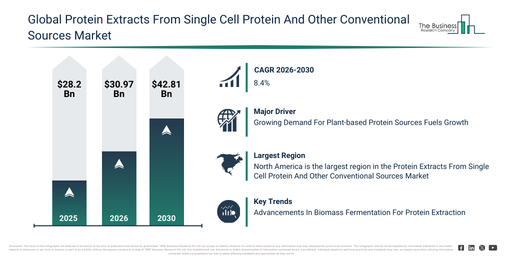
    The market size for protein extracts derived from single cell protein and other conventional sources has experienced significant growth in recent years. It is projected to expand from $28.2 billion in 2025 to $30.97 billion in 2026, achieving a compound annual growth rate (CAGR) of 9.8%. The historical growth in this market can be attributed to several factors, including an increasing demand for alternative protein sources, the expansion of animal nutrition industries, a rising use of protein supplements, the availability of large-scale fermentation infrastructure, and the growth of food and feed processing industries.

    The market size for protein extracts from single cell protein and other conventional sources is anticipated to show robust expansion over the next few years. It is projected to reach $42.81 billion by 2030, exhibiting a compound annual growth rate (CAGR) of 8.4%. This growth during the forecast period can be primarily linked to a growing emphasis on sustainable protein manufacturing, increased investment in microbial fermentation technologies, the broadening of alternative protein applications, a surging demand for high-quality protein ingredients, and enhanced regulatory support for new protein sources. Significant trends expected during this period include the increased uptake of single cell protein sources, a rising appetite for plant-based protein extracts, the expanding application of fermentation-based protein production, the advancement of high-purity protein extraction processes, and an intensified focus on functional protein applications.

    Access Your Free Sample Report for In-Depth Market Insights:

    https://www.thebusinessresearchcompany.com/sample.aspx?id=15644&type=smp

    Which Drivers Are Influencing Long-Term Growth In The Protein Extracts From Single Cell Protein And Other Conventional Sources Market?

    The increasing consumer demand for plant-derived protein sources is projected to stimulate the growth of protein extracts from single-cell protein and other traditional origins. Plant-based protein sources refer to edible items derived from protein-rich plants, such as legumes (like beans and lentils), nuts, seeds, tofu, tempeh, and whole grains including quinoa and buckwheat. This escalating demand for plant-based proteins is fueled by growing understanding of environmental sustainability, various health benefits, and ethical concerns surrounding animal agriculture. As a result, consumers are actively seeking alternative protein options derived from plants. Protein extracts from single-cell sources, alongside conventional options, are increasingly adopted as plant-based protein sources due to their rich nutritional content and sustainability. These extracts offer diverse amino acid profiles, satisfying dietary needs while supporting eco-friendly food production methods. For example, a July 2025 assessment by the Good Food Institute, a US-based non-profit organization, indicated that in the United States, the retail plant-based food market was worth approximately $8.1 billion in 2024. Therefore, the rising demand for plant-based protein sources is a key driver for the expansion of protein extracts from single-cell protein and other conventional sources.

    How Is The Protein Extracts From Single Cell Protein And Other Conventional Sources Market Divided Into Segments?

    The protein extracts from single cell protein and other conventional sources market covered in this report is segmented –

    1) By Source: Plant Protein Extract Sources, Microbial Sources – Single Cell Proteins, Microbial Sources – Direct Use

    2) By Feedstock: Organic, Conventional

    3) By Application: Biotechnology, Animal Feed, Agriculture And Fertilizers, Other Applications

    Subsegments:

    1) By Plant Protein Extract Sources: Soy Protein Extracts, Pea Protein Extracts, Rice Protein Extracts, Hemp Protein Extracts, Wheat Protein Extracts, Chickpea Protein Extracts, Potato Protein Extracts, Algae Protein Extracts, Other Plant-Based Protein Extracts

    2) By Microbial Sources – Single Cell Proteins: Yeast-Based Proteins, Bacterial Proteins, Fungal Proteins, Algal Proteins, Protozoan Proteins, Other Single-cell Proteins

    3) By Microbial Sources – Direct Use: Bacterial Protein Extracts, Fungal Protein Extracts, Algal Protein Extracts, Bacteriophage Proteins, Enzyme-Based Proteins

    What Trends Are Expected To Impact The Competitive Landscape Of The Protein Extracts From Single Cell Protein And Other Conventional Sources Market?

    Leading companies active in the market for protein extracts from single-cell protein and other conventional sources are concentrating on establishing swift production methods employing biomass fermentation technology to secure their standing in the market. The expedited production process for single-cell protein ingredients entails utilizing biomass fermentation technology to grow microorganisms such as bacteria or yeast, enabling the effective conversion of organic material into protein-dense biomass for various uses. As an illustration, in November 2023, MicroHarvest GmbH, a biotechnology company based in Germany, unveiled a pilot facility in Lisbon to speed up the commercialization of its single-cell protein ingredients. This plant allows the company to optimize its technology, develop new prototypes, and conduct trial production runs in preparation for launching its initial commercial product in early 2024. It is designed to generate sustainable, high-quality protein ingredients with more than 60% raw protein within 24 hours, by means of biomass fermentation technology.

    Which Key Players Are Driving Competition In The Protein Extracts From Single Cell Protein And Other Conventional Sources Market?

    Major companies operating in the protein extracts from single cell protein and other conventional sources market are Cargill Incorporated, The Archer-Daniels-Midland Company, BASF SE, DuPont de Nemours Inc., International Flavors & Fragrances Inc., Koninklijke DSM N.V., Ajinomoto Co. Inc., Kerry Group plc, Ingredion Inc., Lonza Group AG, Glanbia plc, Symrise AG, Roquette Frères, Novozymes A/S, Ashland Global Holdings Inc., Bioproton Pty Ltd., CP Kelco ApS, Omega Protein Corporation, Axiom Foods, Fermentalg SA, Cellana LLC

    Access The Complete Report For Deeper Market Insights:

    https://www.thebusinessresearchcompany.com/report/protein-extracts-from-single-cell-protein-and-other-conventional-sources-global-market-report

    Which Region Is Projected To Lead The Protein Extracts From Single Cell Protein And Other Conventional Sources Market During The Forecast Period?

    North America was the largest region in the protein extracts from single cell protein and other conventional sources market in 2025. The regions covered in the protein extracts from single cell protein and other conventional sources market report are Asia-Pacific, South East Asia, Western Europe, Eastern Europe, North America, South America, Middle East, Africa.

    Request Your Customized Protein Extracts From Single Cell Protein And Other Conventional Sources Market Research Report for Competitive Advantage:

    https://www.thebusinessresearchcompany.com/customise?id=15644&type=smp

    Browse Through More Reports Similar to the Global Protein Extracts From Single Cell Protein And Other Conventional Sources Market 2026, By The Business Research Company

    Alternative Protein Market Report 2026

    https://www.thebusinessresearchcompany.com/report/alternative-protein-global-market-report

    Protein Purification And Isolation Market Report 2026

    https://www.thebusinessresearchcompany.com/report/protein-purification-and-isolation-global-market-report

    Animal Based Protein Supplements Market Report 2026

    https://www.thebusinessresearchcompany.com/report/animal-based-protein-supplements-global-market-report

    Get in touch with us:

    The Business Research Company: https://www.thebusinessresearchcompany.com/

    Americas +1 310-496-7795

    Asia +44 7882 955267 & +91 8897263534

    Europe +44 7882 955267

    Email us at info@tbrc.info

    Follow us on:

    LinkedIn: https://in.linkedin.com/company/the-business-research-company

    YouTube: https://www.youtube.com/channel/UC24_fI0rV8cR5DxlCpgmyFQ

    Global Market Model: https://www.thebusinessresearchcompany.com/global-market-model
  • Protein Expression Market Performance Outlook 2026–2030: Revenue to Hit $7.36 Billion at 13.2% CAGR

    Protein Expression Market Performance Outlook 2026–2030: Revenue to Hit $7.36 Billion at 13.2% CAGR

    Uncover key drivers, emerging technologies, and competitive movements shaping the protein expression market from 2026–2035 with trusted insights from The Business Research Company

    What level of CAGR-driven expansion is anticipated in the Protein Expression Market between 2026 and 2030?

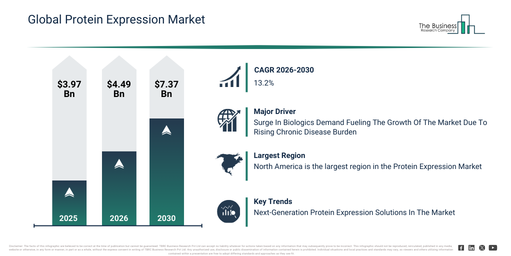
    The protein expression market has seen considerable growth in recent years. It is projected to increase from $3.97 billion in 2025 to $4.49 billion in 2026, demonstrating a compound annual growth rate (CAGR) of 13.3%. Historically, this expansion has been driven by the broadening of biologics development programs, a heightened demand for recombinant proteins, the advancement of academic protein research, the presence of various expression host systems, and the increased utilization of contract research services.

    The protein expression market is projected for substantial expansion over the coming years, with an anticipated value of $7.37 billion in 2030, exhibiting a compound annual growth rate (CAGR) of 13.2%. This growth in the forecast period is fueled by factors such as the escalating demand for therapeutic protein production, the increasing adoption of cell-free expression technologies, the expansion of industrial enzyme applications, growing investment in synthetic biology, and a heightened focus on rapid protein production platforms. Noteworthy trends for the forecast period include a greater integration of mammalian and cell-free expression systems, a rising utilization of recombinant protein production, an increasing need for scalable expression platforms, an expansion of custom protein expression services, and an enhanced emphasis on optimizing expression yields.

    Access Your Free Sample Report for In-Depth Market Insights:

    https://www.thebusinessresearchcompany.com/sample.aspx?id=2493&type=smp

    What Drivers Are Affecting Demand-Supply Dynamics In The Protein Expression Market?

    The increasing need for biologics is anticipated to stimulate expansion within the protein expression market. Biologics, which are medications derived from living organisms or contain components like proteins, tissues, genes, cells, and blood derivatives, offer highly precise and effective treatment options. The heightened demand for these substances stems from the rising occurrence of chronic and complex illnesses, which necessitates more tailored and advanced therapeutic approaches. Protein expression is crucial in this scenario, as it facilitates the efficient creation of therapeutic proteins vital for the development and manufacturing of biologic drugs. For example, Cardinal Health Inc., a US-based healthcare company, reported in January 2023 that the US had 33 biosimilar products approved by the FDA as of January 2022, with 21 already on the market. This figure increased to 40 FDA-approved biosimilars by 2023, with 25 commercially available. Consequently, the escalating demand for biologics is a significant driver for the growth of the protein expression market.

    What Segments Are Included Within The Protein Expression Market?

    The protein expression market covered in this report is segmented –

    1) By Protein Expression: Yeast Expression, Mammalian Expression, Algae Expression, Insect Expression, Bacterial Expression, Cell-free Expression

    2) By Product: Reagents, Competent Cells, Expression vectors, Services, Instruments

    3) By Application: Therapeutic, Industrial, Research

    4) By End Use: Pharmaceutical And Biotechnological Companies, Academic Research, Contract Research Organizations

    Subsegments:

    1) By Yeast Expression: Saccharomyces Cerevisiae, Pichia Pastoris, Kluyveromyces Lactis

    2) By Mammalian Expression: Chinese Hamster Ovary (CHO) Cells, Human Embryonic Kidney (HEK) Cells, Vero Cells

    3) By Algae Expression: Green Algae, Blue-green Algae (Cyanobacteria)

    4) By Insect Expression: Sf9 Cells, Hi5 Cells

    5) By Bacterial Expression: Escherichia Coli (E. coli), Bacillus Subtilis

    6) By Cell-free Expression: Wheat germ Extract, Rabbit Reticulocyte Lysate

    Which Trends Are Guiding The Evolution Of The Protein Expression Market?

    Leading companies in the protein expression market are increasingly focused on introducing advanced solutions, such as Visium CytAssist Gene and Protein Expression Assay, to maximize their revenue in the sector. Next-generation solutions involve the application of sophisticated technologies and techniques to enhance the efficiency, accuracy, and speed of protein expression. For example, in May 2023, 10x Genomics Inc., a US-based biotechnology company, introduced the Visium CytAssist Gene and Protein Expression Assay, enabling researchers to investigate the relative expression patterns of proteins within the human immune system. Thanks to Visium’s distinct morphology-first method, H&E (Hematoxylin and Eosin) staining can be conducted before any chemical treatments are applied to the tissue section. This facilitates three-dimensional spatial analysis on the identical sample, allowing researchers to study the morphology of their tissue on the same slice used for more profound spatial multiomic inquiry. Utilizing a sequencing-based readout, Visium CytAssist Gene and Protein Expression allows for the simultaneous collection of protein and entire transcriptome gene expression, along with histological analysis, in a single experiment from one tissue section.

    Who Are The Top-Performing Companies In The Protein Expression Market In Recent Years?

    Major companies operating in the protein expression market are Agilent Technologies Inc., Bio-Rad Laboratories Inc., Thermo Fisher Scientific Inc., New England Biolabs Inc., Promega Corporation, Qiagen NV, Takara Bio Inc., Merck KGaA, GenScript Biotech Corporation, Sigma-Aldrich Corporation, Lucigen Corporation, Lonza Group Ltd., Viva Biotech Holdings, ARTES Biotechnology GmbH, Addgene Inc., Profacgen, ProteoGenix Inc., Oxford Expression Technologies Ltd., Creative Biolabs Inc., Abnova Taiwan Corp., Accelagen Inc., Jena Bioscience GmbH

    Access The Complete Report For Deeper Market Insights:

    https://www.thebusinessresearchcompany.com/report/protein-expression-global-market-report

    Which Region Currently Holds The Largest Share Of The Protein Expression Market?

    North America was the largest region in the protein expression market in 2025. Western Europe was the second largest region in the protein expression market. The regions covered in the protein expression market report are Asia-Pacific, South East Asia, Western Europe, Eastern Europe, North America, South America, Middle East, Africa.

    Request Your Customized Protein Expression Market Research Report for Competitive Advantage:

    https://www.thebusinessresearchcompany.com/customise?id=2493&type=smp

    Browse Through More Reports Similar to the Global Protein Expression Market 2026, By The Business Research Company

    Protein Engineering Market Report 2026

    https://www.thebusinessresearchcompany.com/report/protein-engineering-global-market-report

    Gene Expression Market Report 2026

    https://www.thebusinessresearchcompany.com/report/gene-expression-global-market-report

    Difficult To Express Proteins Market Report 2026

    https://www.thebusinessresearchcompany.com/report/difficult-to-express-proteins-global-market-report

    Get in touch with us:

    The Business Research Company: https://www.thebusinessresearchcompany.com/

    Americas +1 310-496-7795

    Asia +44 7882 955267 & +91 8897263534

    Europe +44 7882 955267

    Email us at info@tbrc.info

    Follow us on:

    LinkedIn: https://in.linkedin.com/company/the-business-research-company

    YouTube: https://www.youtube.com/channel/UC24_fI0rV8cR5DxlCpgmyFQ

    Global Market Model: https://www.thebusinessresearchcompany.com/global-market-model
  • Global Protein Electrophoresis Market Set for Strong Expansion, Reaching $4.26 Billion With 6.3% CAGR by 2030

    Global Protein Electrophoresis Market Set for Strong Expansion, Reaching $4.26 Billion With 6.3% CAGR by 2030

    Uncover key drivers, emerging technologies, and competitive movements shaping the protein electrophoresis market from 2026–2035 with trusted insights from The Business Research Company

    What long-term size projections exist for the Protein Electrophoresis Market covering 2026–2035?

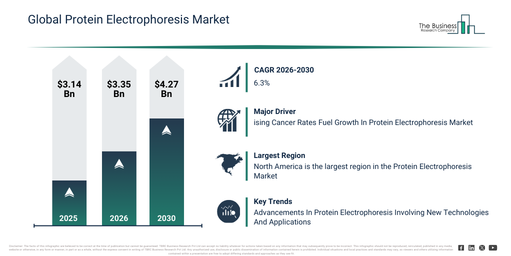
    The protein electrophoresis market has experienced robust growth in recent years. It is projected to expand from $3.14 billion in 2025 to $3.35 billion in 2026, driven by a compound annual growth rate (CAGR) of 6.6%. The market’s historical growth can be attributed to the increasing number of clinical diagnostic laboratories, the rising incidence of protein-related disorders, advancements in academic proteomics research, the broader application of electrophoresis in molecular biology, and the availability of standardized electrophoresis reagents.

    The protein electrophoresis market is projected to experience substantial growth in the upcoming years, reaching $4.27 billion by 2030, driven by a compound annual growth rate (CAGR) of 6.3%. This anticipated expansion is fueled by factors such as the increasing demand for personalized medicine diagnostics, the growing integration of electrophoresis with digital imaging systems, the broadening of hospital-based diagnostic testing, its expanding application in therapeutic monitoring, and rising investments in proteomics research. Key trends during this period are expected to encompass the increased adoption of automated electrophoresis systems, the growing utilization of high-resolution gel technologies, a rising need for clinical protein diagnostics, the expansion of multiplex protein analysis applications, and an intensified emphasis on reproducibility and accuracy.

    Access Your Free Sample Report for In-Depth Market Insights:

    https://www.thebusinessresearchcompany.com/sample.aspx?id=20604&type=smp

    Which Drivers Are Impacting The Competitive Landscape Of The Protein Electrophoresis Market?

    The expanding incidence of cancer is anticipated to drive the future expansion of the protein electrophoresis market. This increase in cancer cases stems from factors including aging populations, shifts in lifestyle, environmental exposures, and advancements in diagnostic techniques. Protein electrophoresis assists cancer patients by identifying unusual proteins in the bloodstream, thereby supporting the diagnosis, monitoring, and treatment of specific cancers. For example, in April 2024, data from the International Agency for Research on Cancer (IARC), a France-based intergovernmental organization, and the American Cancer Society (ACS), a US-based non-profit focused on cancer prevention and awareness, indicated that around 20 million new cancer diagnoses occurred worldwide in 2022. This report also forecasted a 77% increase, predicting that annual cases would reach 35 million by 2050. Lung cancer emerged as the most frequent diagnosis, making up 12.4% of all cases, trailed by breast cancer at 11.6% and colorectal cancer at 9.6%. Furthermore, Lung cancer was responsible for the highest number of deaths, totaling 1.8 million fatalities (18.7%), with colorectal cancer following at 9.3% and liver cancer at 7.8%. Consequently, the growing incidence of cancer is set to fuel the expansion of the protein electrophoresis market.

    What Leading Segments Are Studied In The Protein Electrophoresis Market?

    The protein electrophoresis market covered in this report is segmented –

    1) By Type: Serum Protein Electrophoresis, Immunostationary Electrophoresis, Isoenzyme Electrophoresis, Lipoprotein Electrophoresis, Hemoglobin Electrophoresis, Glycosylated Hemoglobin Electrophoresis, Non-Concentrated Urine Protein Electrophoresis, Cerebrospinal Fluid Electrophoresis

    2) By Technique: Sodium Dodecyl Sulfate Polyacrylamide Gel Electrophoresis (SDS-Page), Native Page, 1-D Page, 2-D Page

    3) By Gel: Agarose Gel Electrophoresis, Polyacrylamide Gel Electrophoresis

    4) By Application: Protein Analysis, Molecular Biology, Clinical Diagnostics

    5) By End-User: Hospitals And Diagnostics, Academic And Research Institutes, Pharmaceutical And Biotechnology Companies, Other End Users

    Subsegments:

    1) By Serum Protein Electrophoresis (SPEP): Albumin Electrophoresis, Globulin Electrophoresis (Alpha-1, Alpha-2, Beta, And Gamma), Monoclonal Gammopathy Identification, Serum-Free Light Chain Assay (sFLC), Paraprotein Detection, Protein Fractions Analysis

    2) By Immunostationary Electrophoresis (Immunoelectrophoresis): Immunofixation Electrophoresis (IFE), Rocket Immunoelectrophoresis, Counter Immunoelectrophoresis, Two-Dimensional Immunoelectrophoresis, Immunoblotting Techniques, Western Blotting

    3) By Isoenzyme Electrophoresis: Lactate Dehydrogenase (LDH) Isoenzyme Electrophoresis, Creatine Kinase (CK) Isoenzyme Electrophoresis, Alkaline Phosphatase Isoenzyme Electrophoresis, Amylase Isoenzyme Electrophoresis, Glutamate Dehydrogenase (GDH) Isoenzyme Electrophoresis, Malate Dehydrogenase (MDH) Isoenzyme Electrophoresis

    4) By Lipoprotein Electrophoresis: High-Density Lipoproteins (HDL), Low-Density Lipoproteins (LDL), Very Low-Density Lipoproteins (VLDL), Chylomicrons, Intermediate-Density Lipoproteins (IDL)

    5) By Hemoglobin Electrophoresis: Normal Hemoglobin (HbA, HbA2), Sickle Cell Hemoglobin (HbS), Hemoglobin C (HbC), Hemoglobin D (HbD), Thalassemia (HbF, HbH, Hb Bart’s), Hemoglobin E (HbE)

    6) By Glycosylated Hemoglobin Electrophoresis (HbA1c Electrophoresis): Glycated Hemoglobin A1c (HbA1c), Hemoglobin A1a And A1b, Non-Glycated Hemoglobin, Assessment Of Glycemic Control (For Diabetes)

    7) By Non-Concentrated Urine Protein Electrophoresis: Albumin Detection, Bence Jones Proteins Detection, Tubular Proteinuria, Glomerular Proteinuria, Tamm-Horsfall Protein, Urinary Monoclonal Free Light Chains (κ And λ)

    8) By Cerebrospinal Fluid (CSF) Electrophoresis: Oligoclonal Bands Detection (For Multiple Sclerosis Diagnosis), CSF IgG Index, CSF Albumin, CSF/Serum Albumin Ratio, CSF Total Protein Fractionation, CSF Free Light Chain Assay (FLC)

    What Trends Are Projected To Support The Growth Of The Protein Electrophoresis Market?

    Leading companies in the protein electrophoresis market are focused on creating advanced products, such as vertical electrophoresis systems, to gain a competitive advantage. A vertical electrophoresis system is laboratory apparatus used for the separation of biomolecules, including proteins or nucleic acids, according to their size, charge, or other characteristics through gel electrophoresis. As an illustration, in November 2023, TransGen Biotech Co. Ltd., a France-based producer of molecular and cellular biology reagents, launched the TSE-P Mini Vertical Electrophoresis System. This particular system is designed to enable efficient protein separation and transfer, allowing researchers to explore protein composition, diversity, and interactions within samples. The vertical electrophoresis unit facilitates the separation of proteins or nucleic acids based on their size and charge. The system is compatible with either precast or hand-cast gels and can accommodate various gel thicknesses and well sizes. Its transfer system ensures the efficient movement of separated proteins or nucleic acids from the gel to a membrane, such as nitrocellulose, for subsequent analysis or detection.

    Which Leading Companies Dominate The Protein Electrophoresis Market Share?

    Major companies operating in the protein electrophoresis market are Bio-Rad Laboratories Inc., Thermo Fisher Scientific Inc., Agilent Technologies Inc., Merck KGaA, Danaher Corporation, Beckman Coulter Inc., Sebia Group, Helena Laboratories Corporation, Shimadzu Corporation, PerkinElmer Inc., Cleaver Scientific Ltd., C.B.S. Scientific Company, Analytik Jena, Serva Electrophoresis GmbH, Takara Bio Inc., Lonza Group Ltd, Promega Corporation, Abcam plc, GE Healthcare, Hoefer Inc.

    Access The Complete Report For Deeper Market Insights:

    https://www.thebusinessresearchcompany.com/report/protein-electrophoresis-global-market-report

    How Does The Protein Electrophoresis Market Perform Across Major Global Regions?

    North America was the largest region in the protein electrophoresis market in 2025. The regions covered in the protein electrophoresis market report are Asia-Pacific, South East Asia, Western Europe, Eastern Europe, North America, South America, Middle East, Africa.

    Request Your Customized Protein Electrophoresis Market Research Report for Competitive Advantage:

    https://www.thebusinessresearchcompany.com/customise?id=20604&type=smp

    Browse Through More Reports Similar to the Global Protein Electrophoresis Market 2026, By The Business Research Company

    Protein Ingredients In Infant Nutrition Market Report 2026

    https://www.thebusinessresearchcompany.com/report/protein-ingredients-in-infant-nutrition-global-market-report

    Protein Hydrolysis Enzymes Market Report 2026

    https://www.thebusinessresearchcompany.com/report/protein-hydrolysis-enzymes-global-market-report

    Protein Assays Market Report 2026

    https://www.thebusinessresearchcompany.com/report/protein-assays-global-market-report

    Get in touch with us:

    The Business Research Company: https://www.thebusinessresearchcompany.com/

    Americas +1 310-496-7795

    Asia +44 7882 955267 & +91 8897263534

    Europe +44 7882 955267

    Email us at info@tbrc.info

    Follow us on:

    LinkedIn: https://in.linkedin.com/company/the-business-research-company

    YouTube: https://www.youtube.com/channel/UC24_fI0rV8cR5DxlCpgmyFQ

    Global Market Model: https://www.thebusinessresearchcompany.com/global-market-model
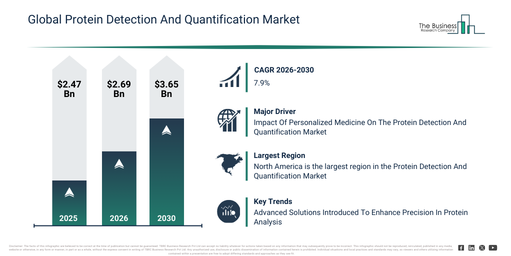
  • Protein Detection And Quantification Market Growth Projection: Expected to Surpass $3.65 Billion by 2030 at 7.9% CAGR

    Protein Detection And Quantification Market Growth Projection: Expected to Surpass $3.65 Billion by 2030 at 7.9% CAGR

    Uncover key drivers, emerging technologies, and competitive movements shaping the protein detection and quantification market from 2026–2035 with trusted insights from The Business Research Company

    What total market size is anticipated for the Protein Detection And Quantification Market in 2030?

    The protein detection and quantification market has experienced robust expansion in recent years. The market is anticipated to expand from $2.47 billion in 2025 to $2.69 billion in 2026, achieving a compound annual growth rate (CAGR) of 8.9%. Key drivers behind the historical growth involve an increase in proteomics research activities, greater demand for biomarker discovery, an expansion of clinical diagnostic testing, the application of chromatography and spectroscopy techniques, and the availability of advanced protein reagents.

    The market for protein detection and quantification is projected to experience substantial expansion over the upcoming years. This market is forecast to reach a value of $3.65 billion by 2030, exhibiting a compound annual growth rate (CAGR) of 7.9%. This anticipated growth is driven by factors such as the expanding application of proteomics in personalized medicine, a heightened need for rapid diagnostic instruments, the broadening scope of quality control in biopharmaceutical manufacturing, the increasing incorporation of artificial intelligence into protein analytics, and greater investment in clinical research facilities. Key trends anticipated during this period encompass the growing acceptance of multiplex protein detection systems, an increase in mass spectrometry-based quantification, the broader integration of automated sample handling, the development of more sensitive detection methods, and a stronger emphasis on protein analysis guided by data.

    Access Your Free Sample Report for In-Depth Market Insights:

    https://www.thebusinessresearchcompany.com/sample.aspx?id=16519&type=smp

    What Drivers Are Influencing Production Trends In The Protein Detection And Quantification Market?

    The rising need for personalized medicine is projected to drive the expansion of the protein detection and quantification market. Personalized medicine represents a healthcare philosophy centered on adapting treatments and interventions to the specific requirements of each individual patient. Its development is fueled by the rapid progress in omics technology, data integration, genetics, and a heightened awareness of the importance of tailored patient-specific medications and preventative strategies. Protein detection and quantification are crucial for personalized medicine, enabling the identification and measurement of specific proteins that can act as biomarkers for customized patient care. For example, in February 2024, the Personalised Medicine Coalition, a US-based hospital and health care organization, reported that the FDA approved 16 new personalized treatments for rare disease patients in 2023, an increase from six in 2022. Thus, the escalating demand for personalized medicine significantly contributes to the growth of the protein detection and quantification market.

    Which Segment Groups Are Influencing The Protein Detection And Quantification Market?

    The protein detection and quantification market covered in this report is segmented –

    1) By Products: Kits And Reagents Or Consumables, Instruments, Services

    2) By Technology: Colorimetric Assays, Immunological Methods, Chromatography, Mass Spectrometry, Spectroscopy Instruments, Other Technologies

    3) By Application: Drug Discovery And Development, Clinical Diagnosis, Other Applications

    4) By End User: Academic Research Institutes, Biotechnology And Pharmaceutical Companies, Contract Research Organization, Other End-Users

    Subsegments:

    1) By Kits And Reagents Or Consumables: Protein Assay Kits, Enzyme-Linked Immunosorbent Assay (ELISA) Kits, Western Blotting Reagents, Protein Extraction Kits, Antibodies And Probes

    2) By Instruments: Spectrophotometers, Microplate Readers, Mass Spectrometers, Fluorometers, Chromatography Systems

    3) By Services: Protein Analysis Services, Custom Protein Assay Services, Protein Quantification Testing Services, Data Analysis And Interpretation Services

    Which Trends Are Influencing The Performance And Direction Of The Protein Detection And Quantification Market?

    Major companies operating in the protein detection and quantification market are actively pursuing the development of advanced solutions, such as next-generation mass spectrometry technologies, to improve the sensitivity, speed, and depth of biological analysis. A next-generation mass spectrometry solution signifies an innovative analytical instrument designed to offer expanded proteome coverage, higher throughput, and enhanced quantitative accuracy, thereby empowering researchers to detect and measure proteins with unparalleled precision. For example, in June 2023, Thermo Fisher Scientific Inc., a US-based life science instrumentation company, unveiled the Orbitrap Astral mass spectrometer, a groundbreaking system engineered to transform biological discovery. This innovation combines ultra-high-resolution Orbitrap technology with Astral mass analysis to achieve up to ten times more peptide identifications, furnishing researchers with faster, deeper, and more accurate protein characterization. Integrated with Thermo Fisher’s comprehensive proteomics workflows, including sample preparation, chromatography, and data analysis tools, it ensures a seamless analytical experience. The Orbitrap Astral system accelerates scientific insights, simplifies complex proteomic processes, and supports significant advancements in biomarker discovery, translational research, and precision medicine.

    Who Are The Major Companies Operating In The Protein Detection And Quantification Market?

    Major companies operating in the protein detection and quantification market are Roche Diagnostics, Thermo Fisher Scientific Inc., Danaher Corporation, Merck KGaA, GE HealthCare, Agilent Technologies Inc., Illumina Inc., Sartorius AG, PerkinElmer Inc., Shimadzu Corporation, Waters Corporation, Bio-Rad Laboratories Inc., Bruker Corporation, Qiagen N.V., Horiba ltd., Bio-Techne Corporation, Promega Corporation, Abcam Plc, Molecular Devices LLC, Olink Proteomics, RayBiotech Life Inc., Bio Scientific Research Laboratories

    Access The Complete Report For Deeper Market Insights:

    https://www.thebusinessresearchcompany.com/report/protein-detection-and-quantification-global-market-report

    Which Region Is Anticipated To See The Fastest Growth In The Protein Detection And Quantification Market?

    North America was the largest region in the protein detection and quantification market in 2025. Asia-Pacific is expected to be the fastest-growing region in the forecast period. The regions covered in the protein detection and quantification market report are Asia-Pacific, South East Asia, Western Europe, Eastern Europe, North America, South America, Middle East, Africa.

    Request Your Customized Protein Detection And Quantification Market Research Report for Competitive Advantage:

    https://www.thebusinessresearchcompany.com/customise?id=16519&type=smp

    Browse Through More Reports Similar to the Global Protein Detection And Quantification Market 2026, By The Business Research Company

    Protein Assays Market Report 2026

    https://www.thebusinessresearchcompany.com/report/protein-assays-global-market-report

    Protein Characterization And Identification Market Report 2026

    https://www.thebusinessresearchcompany.com/report/protein-characterization-and-identification-global-market-report

    Protein Analyzer Market Report 2026

    https://www.thebusinessresearchcompany.com/report/protein-analyzer-global-market-report

    Get in touch with us:

    The Business Research Company: https://www.thebusinessresearchcompany.com/

    Americas +1 310-496-7795

    Asia +44 7882 955267 & +91 8897263534

    Europe +44 7882 955267

    Email us at info@tbrc.info

    Follow us on:

    LinkedIn: https://in.linkedin.com/company/the-business-research-company

    YouTube: https://www.youtube.com/channel/UC24_fI0rV8cR5DxlCpgmyFQ

    Global Market Model: https://www.thebusinessresearchcompany.com/global-market-model
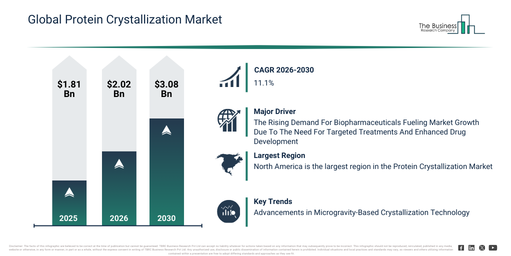
  • Protein Crystallization Market Forecast 2026–2035: How to Leverage Market Growth

    Protein Crystallization Market Forecast 2026–2035: How to Leverage Market Growth

    Uncover key drivers, emerging technologies, and competitive movements shaping the protein crystallization market from 2026–2035 with trusted insights from The Business Research Company

    What is the expected shift in the Protein Crystallization Market’s size between 2026 and 2030?

    The protein crystallization market size has experienced significant expansion recently. Projections indicate an increase from $1.81 billion in 2025 to $2.02 billion in 2026, demonstrating a compound annual growth rate (CAGR) of 11.4%. Historically, this growth was driven by factors such as the broadening of structural biology research, an increasing need for protein structure identification, the expansion of pharmaceutical drug discovery initiatives, more widespread application of x-ray crystallography, and the availability of advanced laboratory equipment.

    The protein crystallization market size is anticipated to undergo significant expansion in the coming years, with expectations to grow to $3.08 billion by 2030, achieving a compound annual growth rate (CAGR) of 11.1%. This projected growth is largely driven by the increasing adoption of cryo-electron microscopy workflows, rising investment in protein structure-based drug design, the expansion of AI-assisted crystallography, a growing emphasis on complex protein analysis, and increasing collaboration between academia and industry. Prominent trends for the forecast period include the increasing use of automated crystallization systems, rising adoption of microfluidic crystallization techniques, the growing integration of AI-based structure prediction tools, the expansion of high-resolution structural analysis, and an enhanced focus on reproducible crystal formation.

    Access Your Free Sample Report for In-Depth Market Insights:

    https://www.thebusinessresearchcompany.com/sample.aspx?id=22117&type=smp

    Which Drivers Are Shaping Strategic Decisions In The Protein Crystallization Market?

    The increasing need for biopharmaceuticals is anticipated to drive the expansion of the protein crystallization market moving forward. Biopharmaceuticals are defined as medicinal agents created using biological sources or techniques, including proteins, vaccines, and gene therapies, aimed at treating various diseases and conditions. The escalating demand for biopharmaceuticals is attributed to their capability to offer targeted treatments, enhance patient outcomes, and address a wide array of chronic and complex diseases by providing personalized solutions more effective than conventional therapies. Protein crystallization improves biopharmaceuticals through enabling the precise determination of protein structures, which supports the development of targeted therapies and ensures greater efficacy and stability in biopharmaceutical products. For example, in January 2023, Cardinal Health Inc., a US-based healthcare company, stated that as of January 2022, the U.S. had 33 biosimilar products approved by the FDA, with 21 of them available on the market. By 2023, the count of FDA-approved biosimilars had increased to 40, with 25 commercially available. Thus, the growing demand for biopharmaceuticals is a key driver for the growth of the protein crystallization market.

    What Segment Classifications Make Up The Protein Crystallization Market?

    The protein crystallization market covered in this report is segmented –

    1) By Product: Instruments, Consumables, Software And Services

    2) By Technology: X-Ray Crystallography, Cryo-electron Microscopy, NMR Spectroscopy, Other Technologies

    3) By End-User: Pharmaceutical And Biotechnology Companies, Academic And Research Institutes

    Subsegments:

    1) By Instruments Type: X-ray Diffractometers, Liquid Handling Systems, Crystallization Imaging Systems, Microfluidic Systems, Incubators & Temperature Control Devices

    2) By Consumables Type: Crystallization Reagents, Microplates & Crystallization Plates, Screens & Buffers, Cryoprotectants, Protein Purification Kits

    3) By Software and Services Type: Crystallography Data Analysis Software, Molecular Modeling Software, AI-Based Structure Prediction Tools, Custom Crystallization Services, Training & Consulting Services

    What Long-Term Trends Are Expected To Shape The Future Of The Protein Crystallization Market?

    Major companies operating in the protein crystallization market are focusing on developing advanced solutions such as microfluidic platforms to enhance crystal quality and throughput. These specialized devices enable precise control of protein crystallization in small volumes and under regulated conditions, thereby improving the likelihood of forming high-quality crystals suitable for X-ray crystallography. For instance, in April 2024, a U.S.-based research team from Arizona State University (ASU) successfully launched microfluidic protein crystallization devices into space via SpaceX’s Cargo Dragon Capsule, designed to operate in microgravity conditions. This platform facilitates the simultaneous screening of multiple proteins and supports high-throughput crystallization experiments. It allows crystals to grow under reduced gravitational forces, which enhances structural quality and enables the crystallization of proteins that are difficult to crystallize on Earth. The devices are compatible with X-ray diffraction analysis, allowing researchers to obtain three-dimensional protein structures directly from the crystallization hardware.

    Which Major Firms Are Strengthening Their Position In The Protein Crystallization Market?

    Major companies operating in the protein crystallization market are Thermo Fisher Scientific, Corning Incorporated, Charles River Laboratories, Mettler-Toledo International Inc., Douglas Instruments Limited, Bruker Corporation, Tecan Group, Greiner Bio-One International GmbH, Rigaku Corporation, Viva Biotech, Formulatrix Inc., Creative Biostructure, Calibre Scientific Inc., Creative Biolabs, Molecular Dimensions, Creative Proteomics, Jena Bioscience GmbH, Saromics Biostructures, Art Robbins Instruments, Mitegen

    Access The Complete Report For Deeper Market Insights:

    https://www.thebusinessresearchcompany.com/report/protein-crystallization-global-market-report

    Which Region Is Anticipated To See The Fastest Growth In The Protein Crystallization Market?

    North America was the largest region in the protein crystallization market in 2025. Asia-Pacific is expected to be the fastest-growing region in the forecast period. The regions covered in the protein crystallization market report are Asia-Pacific, South East Asia, Western Europe, Eastern Europe, North America, South America, Middle East, Africa.

    Request Your Customized Protein Crystallization Market Research Report for Competitive Advantage:

    https://www.thebusinessresearchcompany.com/customise?id=22117&type=smp

    Browse Through More Reports Similar to the Global Protein Crystallization Market 2026, By The Business Research Company

    Egg Protein Powder Market Report 2026

    https://www.thebusinessresearchcompany.com/report/egg-protein-powder-global-market-report

    Protein Powder Market Report 2026

    https://www.thebusinessresearchcompany.com/report/protein-powder-global-market-report

    Protein Engineering Market Report 2026

    https://www.thebusinessresearchcompany.com/report/protein-engineering-global-market-report

    Get in touch with us:

    The Business Research Company: https://www.thebusinessresearchcompany.com/

    Americas +1 310-496-7795

    Asia +44 7882 955267 & +91 8897263534

    Europe +44 7882 955267

    Email us at info@tbrc.info

    Follow us on:

    LinkedIn: https://in.linkedin.com/company/the-business-research-company

    YouTube: https://www.youtube.com/channel/UC24_fI0rV8cR5DxlCpgmyFQ

    Global Market Model: https://www.thebusinessresearchcompany.com/global-market-model
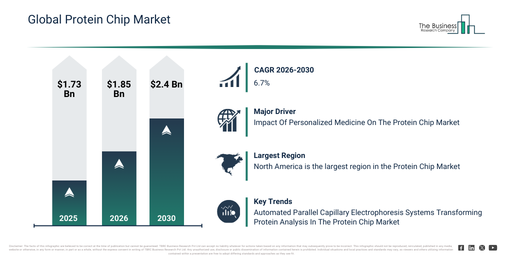
  • Global Protein Chip Market 2026–2030: Forecast Insights for Business Planning

    Global Protein Chip Market 2026–2030: Forecast Insights for Business Planning

    Uncover key drivers, emerging technologies, and competitive movements shaping the protein chip market from 2026–2035 with trusted insights from The Business Research Company

    What growth pattern is forecast for the Protein Chip Market size between 2026 and 2035?

    The protein chip market has exhibited considerable growth in recent years. Its value is expected to climb from $1.73 billion in 2025 to $1.85 billion in 2026, at a compound annual growth rate (CAGR) of 7.4%. This past growth was driven by several factors, including the expansion of proteomics research programs, a heightened demand for high-throughput analytical tools, the proliferation of academic and clinical research laboratories, the increasing adoption of microarray technologies, and the advancement of surface chemistry techniques.

    The protein chip market is anticipated to undergo significant expansion in the coming years, with its valuation expected to climb to $2.4 billion by 2030, reflecting a compound annual growth rate (CAGR) of 6.7%. This projected growth over the forecast period stems from the escalating adoption of protein chips in diagnostic applications, increased investment in precision medicine frameworks, the proliferation of point-of-care testing innovations, enhanced integration of AI-powered data analysis, and a rising requirement for scalable proteomic instruments. Key developments defining this period include the heightened implementation of high-density protein microarrays, the expanded use of lab-on-chip protein platforms, the progressive integration of automated detection mechanisms, the broadening scope of multiplexed protein interaction analysis, and a sharpened emphasis on miniaturized diagnostic chips.

    Access Your Free Sample Report for In-Depth Market Insights:

    https://www.thebusinessresearchcompany.com/sample.aspx?id=16163&type=smp

    Which Drivers Are Impacting Market Performance In The Protein Chip Market?

    The increasing need for personalized medicine is projected to stimulate the expansion of the protein chip market. Personalized medicine represents a healthcare philosophy dedicated to adapting treatments and interventions to the unique requirements of each patient. Its emergence stems from the rapid advancements in ‘omics’ technology, data integration, genetics, and an elevated awareness of the significance of patient-specific medications and preventive measures. Protein chips offer a robust platform to advance personalized medicine through comprehensive proteomic analysis, facilitating the discovery of biomarkers, enhancing drug development and the comprehension of treatment responses, and supporting the creation of tailored therapeutic strategies. For instance, in February 2024, the Personalised Medicine Coalition, a US-based hospital and health care organization, stated that the FDA approved 16 new personalized treatments for rare disease patients in 2023, an increase from six in 2022. Therefore, the escalating demand for personalized medicine is a key driver for the growth of the protein chip market.

    What Segment Types Are Examined In The Protein Chip Market?

    The protein chip market covered in this report is segmented –

    1) By Product: Lab-On-Chip, Integrated System, Arrays, Microarrays System

    2) By Technology: Analytical Microarrays, Functional Protein Microarrays, Reverse Phase Protein Microarrays

    3) By Application: Diagnostics, Proteomics, Antibody Characterization

    4) By End User: Hospitals And Clinics, Academic And Research Institutes, Diagnostic Laboratories, Pharmaceutical And Biotechnology Companies

    Subsegments:

    1) By Lab-On-Chip: Diagnostic Lab-On-Chip, Point-Of-Care Lab-On-Chip, Drug Discovery Lab-On-Chip, Clinical Lab-On-Chip

    2) By Integrated System: Automated Integrated Systems, Benchtop Integrated Systems, Portable Integrated Systems, Multi-Functional Integrated Systems

    3) By Arrays: Protein Arrays, Peptide Arrays, Antibody Arrays, Antigen Arrays

    4) By Microarrays System: Dna Microarrays, Rna Microarrays, Protein Microarrays, Antibody Microarrays, Cell-Based Microarrays

    Which Market Trends Are Opening Growth Opportunities In The Protein Chip Market?

    Leading companies in the protein chip market are developing novel products, such as automated parallel capillary electrophoresis systems, to enhance their market standing. Automated parallel capillary electrophoresis systems are advanced analytical instruments utilized for the high-throughput separation and analysis of biomolecules, specifically proteins and nucleic acids. For example, in January 2024, Agilent Technologies Inc., a US-based manufacturer specializing in advanced analytical, research, and diagnostic tools for laboratories, launched the new ProteoAnalyzer system, an automated parallel capillary electrophoresis device for protein analysis. Its unique attributes include cutting-edge algorithms for accurate protein identification and characterization, enabling researchers to investigate complex biological systems with unparalleled precision and effectiveness. The system also features enhanced data visualization tools, which aid in the intuitive interpretation of results and accelerate insights into cellular processes. Furthermore, it offers effortless integration with existing workflows, ensuring smooth implementation and maximizing productivity in proteomics laboratories.

    Who Are The Primary Competitors In The Global Protein Chip Market?

    Major companies operating in the protein chip market are Thermo Fisher Scientific Inc, GE Healthcare LLC, Roche Diagnostics GmbH, Agilent Technologies Inc, Sigma Aldrich Corporation Merck, PerkinElmer Inc, Shimadzu Corporation, Bio Rad Laboratories Inc, Bruker Corporation, Surmodics Inc, OriGene Technologies Inc, RayBiotech Inc, Sengenics Corporation Pte Ltd, Gyros Protein Technologies AB, Innova Biosciences Limited, Innopsys SA, CDI Laboratories Inc, Microarrays Inc, Full Moon BioSystems Inc, Arrayit Corporation

    Access The Complete Report For Deeper Market Insights:

    https://www.thebusinessresearchcompany.com/report/protein-chip-global-market-report

    Which Global Regions Are Shaping The Competitive Landscape Of The Protein Chip Market?

    North America was the largest region in the global protein chip market in 2025. Asia-Pacific is expected to be the fastest-growing region in the forecast period. The regions covered in the protein chip market report are Asia-Pacific, South East Asia, Western Europe, Eastern Europe, North America, South America, Middle East, Africa.

    Request Your Customized Protein Chip Market Research Report for Competitive Advantage:

    https://www.thebusinessresearchcompany.com/customise?id=16163&type=smp

    Browse Through More Reports Similar to the Global Protein Chip Market 2026, By The Business Research Company

    Protein Engineering Market Report 2026

    https://www.thebusinessresearchcompany.com/report/protein-engineering-global-market-report

    Organ On Chip Market 2026

    https://www.thebusinessresearchcompany.com/report/organ-on-chip-market

    Dna And Gene Chip Market Report 2026

    https://www.thebusinessresearchcompany.com/report/dna-and-gene-chip-global-market-report

    Get in touch with us:

    The Business Research Company: https://www.thebusinessresearchcompany.com/

    Americas +1 310-496-7795

    Asia +44 7882 955267 & +91 8897263534

    Europe +44 7882 955267

    Email us at info@tbrc.info

    Follow us on:

    LinkedIn: https://in.linkedin.com/company/the-business-research-company

    YouTube: https://www.youtube.com/channel/UC24_fI0rV8cR5DxlCpgmyFQ

    Global Market Model: https://www.thebusinessresearchcompany.com/global-market-model
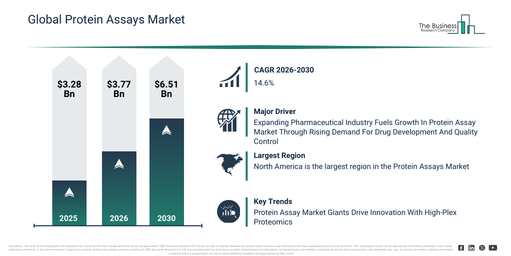
  • Protein Assays Market Outlook 2026–2035: Growth Drivers and Industry Forecast

    Protein Assays Market Outlook 2026–2035: Growth Drivers and Industry Forecast

    Uncover key drivers, emerging technologies, and competitive movements shaping the protein assays market from 2026–2035 with trusted insights from The Business Research Company

    How much larger will the Protein Assays Market be in 2030 compared with 2026?

    The protein assays market has experienced rapid growth in recent years. It is anticipated to expand from $3.28 billion in 2025 to $3.77 billion in 2026, demonstrating a compound annual growth rate (CAGR) of 14.9%. The historical expansion of this market can be linked to the increase in biomedical research activities, the growing application of proteins in drug development, the rising integration of laboratory automation, the advancement in clinical diagnostics testing, and the accessibility of standardized protein reagents.

    The protein assays market is projected for substantial expansion in the coming years, anticipated to reach $6.51 billion by 2030, driven by a compound annual growth rate (CAGR) of 14.6%. Key drivers for this growth during the forecast period include a heightened emphasis on personalized medicine research, an escalating need for sophisticated proteomics instruments, the broadening of pharmaceutical research and development pipelines, the increasing integration of automated laboratory processes, and amplified investments in life sciences research infrastructure. Noteworthy trends during this period encompass the greater uptake of high-sensitivity assay kits, increased deployment of automated instruments for protein quantification, a burgeoning requirement for multiplex protein analysis, the broadening scope of high-throughput screening applications, and a reinforced commitment to the precision and consistency of assays.

    Access Your Free Sample Report for In-Depth Market Insights:

    https://www.thebusinessresearchcompany.com/sample.aspx?id=9173&type=smp

    What Drivers Are Guiding Growth Patterns In The Protein Assays Market?

    The expansion within the pharmaceutical industries is anticipated to propel the protein assay market forward. This industry segment focuses on the research, development, manufacturing, and distribution of drugs and medications for the prevention, diagnosis, and treatment of diseases. The growth of the pharmaceutical industry is attributable to various factors, including increasing global health demand, enhanced healthcare spending, and a greater need for preventive care. Protein assays play a crucial role in the pharmaceutical industry by enabling accurate measurement of protein concentration and activity, which is vital for drug discovery, development, and quality control. For instance, in June 2023, data from the European Federation of Pharmaceutical Industries and Associations (EFPIA), a Belgium-based trade association representing the pharmaceutical industry in Europe, indicated that the total pharmaceutical production in Europe amounted to €390,000 million ($422,803 million) in 2023, an increase from €363,300 million ($393,857 million) in 2022. Thus, the growth in the pharmaceutical industry is a key driver for the protein assay market.

    Which Segments Are Driving Activity In The Protein Assays Market?

    The protein assays market covered in this report is segmented –

    1) By Product Type: Reagents And Kits, Instruments

    2) By Technology Type: Absorbance Based Protein Assays, Colorimetric Protein Assays, Fluorescence Based Protein Assays

    3) By End User: Pharmaceutical Industry, Biotechnology Industry, Clinical Laboratories, Hospitals, Academic Research Institutes

    Subsegments:

    1) By Reagents And Kits: Colorimetric Assay Kits, Fluorescent Assay Kits, Luminescent Assay Kits, Other Assay Kits

    2) By Instruments: Spectrophotometers, Microplate Readers, Other Analytical Instruments

    How Are Emerging Trends Affecting The Progression Of The Protein Assays Market?

    Leading companies operating within the protein assay market are focusing their efforts on creating innovative solutions, such as high-plex proteomics platforms. A high-plex proteomics platform refers to a proteomic technology or system designed to analyze a large quantity of proteins simultaneously in a single experiment. For instance, in November 2023, SomaLogic Inc., a US-based proteomics technology company, introduced the ‘SomaScan 11K Platform’. This platform offers 11,000 total protein measurements, providing researchers with a substantial advantage in identifying biomarkers and determining potential drug targets for translational medicine. The addition of 3,500 proteins to the 11K assay is expected to uncover new biomarkers that were previously beyond measurement. This advancement has the potential to contribute to the development of diagnostics with increased accuracy.

    Which Key Market Players Are Investing In Expansion And Innovation Within The Protein Assays Market?

    Major companies operating in the protein assays market are F Hoffmann La Roche AG, Thermo Fisher Scientific Inc, Roche Diagnostics International AG, Danaher Corporation, Merck KGaA, Siemens Healthineers AG, R And D Systems Inc, Lonza Group AG, PerkinElmer Inc, Bio Rad Laboratories Inc, Takara Bio Inc, Qiagen NV, Promega Corporation, Abcam plc, BioVision Inc, Cayman Chemical Company, Enzo Life Sciences Inc, Novus Biologicals LLC, Abnova Corporation, Elabscience Biotechnology Co Ltd, Geno Technology Inc, Cytoskeleton Inc

    Access The Complete Report For Deeper Market Insights:

    https://www.thebusinessresearchcompany.com/report/protein-assays-global-market-report

    Which Regions Are Poised For Strategic Growth In The Protein Assays Market?

    North America was the largest region in the protein assays market in 2025. Asia-Pacific is expected to be the fastest-growing region in the global protein assays market report during the forecast period. The regions covered in the protein assays market report are Asia-Pacific, South East Asia, Western Europe, Eastern Europe, North America, South America, Middle East, Africa.

    Request Your Customized Protein Assays Market Research Report for Competitive Advantage:

    https://www.thebusinessresearchcompany.com/customise?id=9173&type=smp

    Browse Through More Reports Similar to the Global Protein Assays Market 2026, By The Business Research Company

    Research Grade Proteins Market Report 2026

    https://www.thebusinessresearchcompany.com/report/research-grade-proteins-global-market-report

    Protein Analyzer Market Report 2026

    https://www.thebusinessresearchcompany.com/report/protein-analyzer-global-market-report

    Protein Detection And Quantification Market Report 2026

    https://www.thebusinessresearchcompany.com/report/protein-detection-and-quantification-global-market-report

    Get in touch with us:

    The Business Research Company: https://www.thebusinessresearchcompany.com/

    Americas +1 310-496-7795

    Asia +44 7882 955267 & +91 8897263534

    Europe +44 7882 955267

    Email us at info@tbrc.info

    Follow us on:

    LinkedIn: https://in.linkedin.com/company/the-business-research-company

    YouTube: https://www.youtube.com/channel/UC24_fI0rV8cR5DxlCpgmyFQ

    Global Market Model: https://www.thebusinessresearchcompany.com/global-market-model

  • Prostate-Specific Membrane Antigen (PSMA) Theranostic Kits Market 2026–2030: Emerging Trends and Forecast Opportunities

    Prostate-Specific Membrane Antigen (PSMA) Theranostic Kits Market 2026–2030: Emerging Trends and Forecast Opportunities

    Uncover key drivers, emerging technologies, and competitive movements shaping the prostate-specific membrane antigen (psma) theranostic kits market from 2026–2035 with trusted insights from The Business Research Company

    Starting from its 2026 valuation, what market size is the Prostate-Specific Membrane Antigen (PSMA) Theranostic Kits Market expected to reach by 2030?

    In recent years, the market for prostate-specific membrane antigen (psma) theranostic kits has seen substantial growth. This market is projected to expand from $1.05 billion in 2025 to $1.19 billion in 2026, demonstrating a compound annual growth rate (CAGR) of 13.9%. Historically, this growth has been driven by factors such as the increasing prevalence of prostate cancer, progress in nuclear medicine imaging techniques, wider acceptance of molecular diagnostics, initial successful clinical validation of PSMA targeting strategies, and the broadening of oncology research initiatives.

    The prostate-specific membrane antigen (psma) theranostic kits market is anticipated to experience substantial expansion in the coming years. By 2030, this market is projected to reach a valuation of $1.99 billion, demonstrating a compound annual growth rate (CAGR) of 13.5%. This growth can be attributed to several factors such as the increasing demand for personalized cancer treatments, rising investments in theranostics, the expansion of nuclear medicine infrastructure, the growing use of precision oncology diagnostics, and increasing regulatory approvals for targeted therapies. Major trends expected during this forecast period include the increasing adoption of targeted radioligand therapies, the rising use of psma-based precision diagnostics, the growing integration of imaging and therapy workflows, the expansion of personalized oncology treatment kits, and an enhanced focus on companion diagnostics.

    Access Your Free Sample Report for In-Depth Market Insights:

    https://www.thebusinessresearchcompany.com/sample.aspx?id=30362&type=smp

    What Drivers Are Driving Adoption Within The Prostate-Specific Membrane Antigen (PSMA) Theranostic Kits Market?

    The increasing occurrence of prostate cancer is projected to stimulate the expansion of the prostate-specific membrane antigen (PSMA) theranostic kits market moving forward. Prostate cancer is defined as a form of malignancy that develops within the prostate gland, a small male gland located beneath the bladder and anterior to the rectum. The rising incidence of prostate cancer is attributable to the aging population, as the risk of acquiring this disease escalates significantly with age. Prostate-specific membrane antigen (PSMA) theranostic kits enhance prostate cancer management by delivering targeted diagnostic solutions, making them effective for early detection and personalized treatment planning. They improve the precision of diagnosis by combining PSMA-specific ligands with radiotracers, thereby supporting superior disease monitoring and treatment guidance. For instance, in November 2023, according to the American Cancer Society, a US-based non-profit organization, an estimated 313,780 new cases of prostate cancer and 35,770 deaths were anticipated in the United States in 2025. Hence, the growing incidence of prostate cancer is driving the growth of the prostate-specific membrane antigen (PSMA) theranostic kits market.

    How Is The Prostate-Specific Membrane Antigen (PSMA) Theranostic Kits Market Organized Into Various Segments?

    The prostate-specific membrane antigen (psma) theranostic kits market covered in this report is segmented –

    1) By Product Type: Diagnostic Kits, Therapeutic Kits, Combined Theranostic Kits

    2) By Application: Prostate Cancer, Other Cancers

    3) By End-User: Hospitals, Diagnostic Centers, Research Institutes, Specialty Clinics, Other End-Users

    Subsegments:

    1) By Diagnostic Kits: Prostate-Specific Membrane Antigen (PSMA) Positron Emission Tomography Imaging Kits, Single Photon Emission Computed Tomography Imaging Kits, Companion Diagnostic Kits, Liquid Biopsy Kits

    2) By Therapeutic Kits: Radioligand Therapy Kits, Antibody-Based Therapy Kits, Peptide-Based Therapy Kits, Small Molecule Therapy Kits

    3) By Combined Theranostic Kits: Integrated Imaging And Therapy Kits, Dual Function Radiopharmaceutical Kits, Prostate-Specific Membrane Antigen (PSMA) Ligand-Based Theranostic Kits, Personalized Treatment Kits

    Which Innovation Trends Are Advancing Developments Within The Prostate-Specific Membrane Antigen (PSMA) Theranostic Kits Market?

    Leading companies operating in the prostate-specific membrane antigen (PSMA) theranostic kits market are concentrating on developing innovative solutions, such as PSMA-targeted radioligand kits, to address the increasing demand for precision oncology, targeted prostate cancer diagnosis, and treatment. PSMA-targeted radioligand kits are medical products that combine a ligand specifically designed to bind to Prostate-Specific Membrane Antigen (PSMA) with a radioactive isotope for diagnostic imaging or directed therapy of prostate cancer. For instance, in March 2025, Telix Pharmaceuticals Limited, an Australia-based radiopharmaceutical company, launched Illuccix, a novel kit for the preparation of Gallium-68 gozetotide injection. This kit allows hospitals and nuclear medicine facilities to label the radionuclide immediately before injection for PET imaging of PSMA-positive prostate cancer lesions. The kit’s unique features include a ready-to-use preparation format, disease-specific targeting, rapid imaging capability, and compatibility with theranostic workflows, facilitating improved detection of metastatic lesions, treatment planning, and monitoring therapy response. Its applications include the diagnosis of recurrent or metastatic prostate cancer and guiding personalized treatment decisions, marking a significant advancement over conventional imaging or non-targeted therapies.

    Who Are The Core Companies Influencing Trends In The Prostate-Specific Membrane Antigen (PSMA) Theranostic Kits Market?

    Major companies operating in the prostate-specific membrane antigen (psma) theranostic kits market are Cyclotek (Aust) Pty Ltd, Telix Pharmaceuticals Ltd, Curium Pharma, SOFIE Biosciences Inc., Lantheus Holdings Inc., Eckert & Ziegler SE, NorthStar Medical Radioisotopes, Isotopia Molecular Imaging Ltd, ITM Isotope Technologies Munich SE, AdvanCell Pty Ltd, Alpha‑9 Theranostics Inc., ABX Advanced Biochemical Compounds GmbH, Clarity Pharmaceuticals Ltd, Ariceum Therapeutics GmbH, RadioMedix Inc., Scintomics GmbH, Novartis AG, Bayer AG, POINT Biopharma Inc., Blue Earth Diagnostics

    Access The Complete Report For Deeper Market Insights:

    https://www.thebusinessresearchcompany.com/report/global-prostate-specific-membrane-antigen-psma-theranostic-kits-market-report

    Which Regions Are Projected To Dominate The Prostate-Specific Membrane Antigen (PSMA) Theranostic Kits Market In The Coming Years?

    North America was the largest region in the prostate-specific membrane antigen (PSMA) theranostic kits market in 2025. The regions covered in the prostate-specific membrane antigen (psma) theranostic kits market report are Asia-Pacific, South East Asia, Western Europe, Eastern Europe, North America, South America, Middle East, Africa.

    Request Your Customized Prostate-Specific Membrane Antigen (PSMA) Theranostic Kits Market Research Report for Competitive Advantage:

    https://www.thebusinessresearchcompany.com/customise?id=30362&type=smp

    Browse Through More Reports Similar to the Global Prostate-Specific Membrane Antigen (PSMA) Theranostic Kits Market 2026, By The Business Research Company

    Prostate Cancer Drugs Market Report 2026

    https://www.thebusinessresearchcompany.com/report/prostate-cancer-drugs-global-market-report

    Prostate Cancer Diagnostics Market Report 2026

    https://www.thebusinessresearchcompany.com/report/prostate-cancer-diagnostics-global-market-report

    Prostate Cancer Nuclear Medicine Diagnostics Market Report 2026

    https://www.thebusinessresearchcompany.com/report/prostate-cancer-nuclear-medicine-diagnostics-global-market-report

    Get in touch with us:

    The Business Research Company: https://www.thebusinessresearchcompany.com/

    Americas +1 310-496-7795

    Asia +44 7882 955267 & +91 8897263534

    Europe +44 7882 955267

    Email us at info@tbrc.info

    Follow us on:

    LinkedIn: https://in.linkedin.com/company/the-business-research-company

    YouTube: https://www.youtube.com/channel/UC24_fI0rV8cR5DxlCpgmyFQ

    Global Market Model: https://www.thebusinessresearchcompany.com/global-market-model
  • Global Prostate Specific Antigen (PSA) Test Market Forecast 2026–2035: Long-Term Growth Insights

    Global Prostate Specific Antigen (PSA) Test Market Forecast 2026–2035: Long-Term Growth Insights

    Uncover key drivers, emerging technologies, and competitive movements shaping the prostate specific antigen (psa) test market from 2026–2035 with trusted insights from The Business Research Company

    Across 2026–2030, what is the expected market valuation path of the Prostate Specific Antigen (PSA) Test Market?

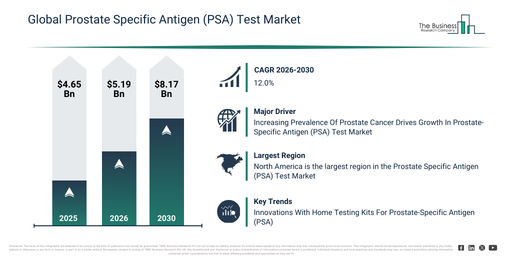
    The prostate specific antigen (psa) test market has seen substantial expansion over recent years. This market is set to increase from $4.65 billion in 2025 to $5.19 billion in 2026, achieving a compound annual growth rate (CAGR) of 11.7%. The historical growth of the market can be linked to the growing application of psa testing in clinical practice, the development of laboratory diagnostic services, increased public understanding regarding prostate cancer screening, the supply of immunoassay-based test kits, and the inclusion of psa testing in standard health examinations.

    The market for prostate specific antigen (psa) tests is expected to demonstrate swift expansion over the coming years. This market is projected to grow to $8.17 billion in 2030, driven by a compound annual growth rate (CAGR) of 12.0%. This anticipated growth is attributed to advancements in high-precision psa assay technologies, the increasing adoption of decentralized diagnostic testing, the broadening of preventive cancer screening initiatives, greater investments in diagnostic automation, and a rising demand for cost-effective screening solutions. Significant trends for the forecast period include the increasing uptake of routine psa screening programs, a growing demand for point-of-care psa testing, the expanding use of high-sensitivity immunoassays, the extension of post-treatment monitoring applications, and an enhanced focus on early cancer detection.

    Access Your Free Sample Report for In-Depth Market Insights:

    https://www.thebusinessresearchcompany.com/sample.aspx?id=12576&type=smp

    Which Drivers Are Supporting The Rise Of The Prostate Specific Antigen (PSA) Test Market?

    The rising prevalence of prostate cancer is anticipated to drive the expansion of the prostate-specific antigen (PSA) test market moving forward. Prostate cancer is a medical condition where malignant cells develop in the prostate gland, which is identified as a component of the male and female reproductive systems. The prostate-specific antigen (PSA) test is frequently utilized as a screening tool for prostate cancer in men, measuring the concentration of PSA in the bloodstream to assist in early identification and risk evaluation. For example, in March 2023, reports from the American Society of Clinical Oncology (ASCO), a US-based professional oncology organization, indicated that approximately 288,300 men in the US were diagnosed with prostate cancer, and around 34,700 people died in 2023. Consequently, the increase in prostate cancer cases is stimulating growth in the prostate-specific antigen (PSA) test market.

    What Segments Are Identified Within The Structure Of The Prostate Specific Antigen (PSA) Test Market?

    The prostate specific antigen (psa) test market covered in this report is segmented –

    1) By Type: Clinical Laboratory Improvement Amendments (CLIA), Enzyme-Linked Immunosorbent Assay (ELISA), Fluorescence Immunoassay (FIA), Other Types

    2) By Application: Screening, Post-Treatment Monitoring, Other Applications

    3) By End User: Hospitals, Diagnostic Centers, Research Institutes, Other End Users

    Subsegments:

    1) By Clinical Laboratory Improvement Amendments (CLIA): CLIA Waived Tests, Non-CLIA Tests

    2) By Enzyme-Linked Immunosorbent Assay (ELISA): Sandwich ELISA Kits, Competitive ELISA Kits

    3) By Fluorescence Immunoassay (FIA): Point-Of-Care FIA, Laboratory-Based FIA

    4) By Other Types: Chemiluminescent Immunoassay (CLIA), Radioimmunoassay (RIA)

    Which Competitive Trends Are Impacting The Structure Of The Prostate Specific Antigen (PSA) Test Market?

    Leading companies in the prostate-specific antigen (PSA) test market are concentrating on developing and introducing products, particularly home testing kits for prostate-specific antigen (PSA), to maintain their market presence. These home testing kits are self-administered diagnostic tools that empower individuals to collect samples, perform tests, and receive results without needing to visit a healthcare facility. For example, in September 2023, Randox, an Ireland-based health and toxicology company, launched an at-home testing kit for prostate-specific antigen (PSA). The PSA home test aims to measure PSA levels in the blood, indicating potential prostate abnormalities. PSA is a protein generated by prostate gland cells, and elevated levels can suggest various conditions, including an enlarged prostate, prostatitis, or a urinary tract infection, in addition to the possible existence of prostate cancer.

    Which Major Industry Participants Are Leading The Prostate Specific Antigen (PSA) Test Market Growth?

    Major companies operating in the prostate specific antigen (psa) test market are Siemens AG, F Hoffmann La Roche AG, Abbott Laboratories, Becton Dickinson And Company, PerkinElmer Inc, Beckman Coulter Inc, Bio Rad Laboratories Inc, Ortho Clinical Diagnostics Inc, DiaSorin SpA, OPKO Health Inc, R And D Systems Inc, Meso Scale Diagnostics LLC, Tosoh America Inc, Fujirebio Europe NV, Boditech Med Inc, DRG International Inc, Enzo Life Sciences Inc, RayBiotech Inc, Novus Biologicals LLC, Creative Diagnostics Inc, Elabscience, LifeSpan BioSciences Inc, Accuquik Inc

    Access The Complete Report For Deeper Market Insights:

    https://www.thebusinessresearchcompany.com/report/prostate-specific-antigen-psa-test-global-market-report

    Which Region Is Expected To Experience The Fastest Growth In The Prostate Specific Antigen (PSA) Test Market?

    North America was the largest region in the prostate specific antigen (PSA) test market in 2025. Asia-Pacific is expected to be the fastest-growing region in the forecast period. The regions covered in the prostate specific antigen (psa) test market report are Asia-Pacific, South East Asia, Western Europe, Eastern Europe, North America, South America, Middle East, Africa.

    Request Your Customized Prostate Specific Antigen (PSA) Test Market Research Report for Competitive Advantage:

    https://www.thebusinessresearchcompany.com/customise?id=12576&type=smp

    Browse Through More Reports Similar to the Global Prostate Specific Antigen (PSA) Test Market 2026, By The Business Research Company

    Endocrine Peptide Test Market Report 2026

    https://www.thebusinessresearchcompany.com/report/endocrine-peptide-test-global-market-report

    Prostate Cancer Diagnostics Market Report 2026

    https://www.thebusinessresearchcompany.com/report/prostate-cancer-diagnostics-global-market-report

    Prostate Cancer Nuclear Medicine Diagnostics Market Report 2026

    https://www.thebusinessresearchcompany.com/report/prostate-cancer-nuclear-medicine-diagnostics-global-market-report

    Get in touch with us:

    The Business Research Company: https://www.thebusinessresearchcompany.com/

    Americas +1 310-496-7795

    Asia +44 7882 955267 & +91 8897263534

    Europe +44 7882 955267

    Email us at info@tbrc.info

    Follow us on:

    LinkedIn: https://in.linkedin.com/company/the-business-research-company

    YouTube: https://www.youtube.com/channel/UC24_fI0rV8cR5DxlCpgmyFQ

    Global Market Model: https://www.thebusinessresearchcompany.com/global-market-model