Month: May 2026

  • Avian Flu Treatment Market Forecast Through 2030 Featuring Industry Drivers And Opportunities

    Avian Flu Treatment Market Forecast Through 2030 Featuring Industry Drivers And Opportunities

    The Business Research Company’s 2026 market reports feature enhanced tools like market attractiveness analysis, TAM assessment, and company scoring matrices, along with interactive dashboards, deeper supply chain insights, and startup coverage strengthening the depth, usability, and strategic value of insights.

    What Is The Expected Market Value Outlook For The Avian Flu Treatment Market Through 2030?

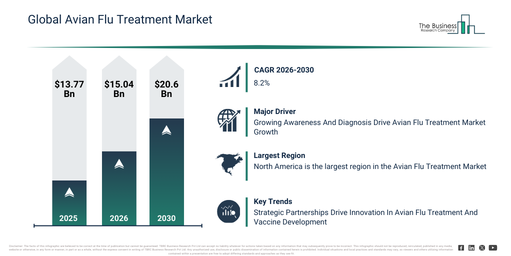
    The avian flu treatment market has experienced substantial growth in its size over recent years. It is anticipated to increase from $13.77 billion in 2025 to $15.04 billion in 2026, demonstrating a compound annual growth rate (CAGR) of 9.3%. This historical expansion can be attributed to factors such as the rising occurrence of avian influenza outbreaks, the strategic use of antiviral stockpiling, government initiatives for disease control, the expansion of infectious disease treatment within hospitals, and heightened public health awareness.

    The avian flu treatment market is projected to experience robust expansion over the coming years. By 2030, its value is anticipated to reach $20.6 billion, expanding at a compound annual growth rate (CAGR) of 8.2%. This anticipated growth during the forecast period stems from factors such as heightened investments in zoonotic disease research, the accelerating development of next-generation vaccines, an enlargement of global disease surveillance networks, a concentrated effort on swift response therapeutics, and strengthened international collaboration for pandemic readiness. Prominent trends identified for this period encompass the wider adoption of advanced antiviral therapies, an intensified focus on platforms for rapid vaccine development, the increasing application of monoclonal antibody treatments, the broadening of early diagnosis and surveillance initiatives, and an elevated emphasis on pandemic preparedness.

    Download A Free Sample Report For Comprehensive Market Insights:

    https://www.thebusinessresearchcompany.com/sample.aspx?id=16352&type=smp

    What Are The Main Drivers Accelerating The Growth Of The Avian Flu Treatment Market?

    Increased awareness and improved diagnosis are projected to fuel the expansion of the avian flu treatment market in the coming period. Awareness refers to acknowledging a condition, whereas diagnosis involves pinpointing a particular problem stemming from that awareness. The imperative for avian flu treatment stems from the critical necessity to protect public health, avert potential pandemics, and shield poultry populations from substantial financial impacts. Effective avian flu treatment relies heavily on awareness and timely diagnosis, facilitating rapid intervention and containment measures to halt its dissemination. For example, according to the World Health Organization (WHO), a Switzerland-based intergovernmental body, in April 2024, over 8000 individuals in the US were under active observation between February 9, 2022, and March 29, 2024, following exposure to animals suspected of carrying the HPAI A (H5N1) virus. Consequently, the expanding awareness and improved diagnostic capabilities are propelling the growth within the avian flu treatment market.

    What Are The Core Segment Classifications In The Avian Flu Treatment Market?

    The avian flu treatment market covered in this report is segmented –

    1) By Type: Vaccines, Antiviral Agents, Immunoglobulins

    2) By Distribution Channel: Online Pharmacies, Offline Pharmacies

    3) By End User: Hospital, Institutional Health Centers, Clinics

    Subsegments:

    1) By Vaccines: Inactivated Vaccines, Live Attenuated Vaccines, Recombinant Vaccines, Subunit Vaccines, Dna Vaccines, Bivalent And Multivalent Vaccines

    2) By Antiviral Agents: Neuraminidase Inhibitors (Oseltamivir, Zanamivir), Polymerase Inhibitors, Antiviral Combination Therapies

    3) By Immunoglobulins: Human Immunoglobulin (Ivig), Monoclonal Antibodies, Hyperimmune Serum, Polyvalent Immunoglobulins, Avian Flu-Specific Immunoglobulins

    Which Trends Are Contributing To Changes In The Avian Flu Treatment Market?

    Leading entities within the avian flu treatment market are prioritizing the establishment of partnerships to improve effectiveness and accelerate the creation of novel therapies. These collaborations typically involve pharmaceutical firms, research organizations, and government bodies uniting to combine assets, exchange specialized knowledge, and conduct pioneering clinical studies. An illustrative example occurred in April 2024, when CureVac N.V., a biotechnology company based in Germany, collaborated with GSK plc, a pharmaceutical company from the UK, to develop an investigational influenza A (H5N1) pre-pandemic vaccine candidate. This initiative aims to counter the potential future pandemic danger presented by the H5N1 avian influenza virus. The objective of this joint venture is to assess the safety, reactogenicity, and immunogenicity of the monovalent vaccine candidate, which encodes an influenza A H5 antigen utilizing CureVac’s proprietary second-generation mRNA backbone. The integrated Phase 1/2 study will evaluate the vaccine candidate’s safety and efficacy among healthy adults ranging from 18 to 64 years old, as well as in older adults aged 65 to 85.

    Which Industry Players Are Present In The Avian Flu Treatment Market?

    Major companies operating in the avian flu treatment market are Pfizer Inc., F. Hoffmann-La Roche Ltd., Merck & Co. Inc., Sanofi S.A., GlaxoSmithKline Plc, Novartis AG, AstraZeneca Plc, Gilead Sciences Inc., CSL Limited, Moderna Inc., Shionogi & Co. Ltd., Cipla Ltd., Seqirus, Novavax Inc., Sinovac Biotech Ltd., Valneva SE, CureVac AG, BioCryst Pharmaceuticals Inc., Emergent BioSolutions Inc., Dynavax Technologies Corporation, Baxter International Inc., Takeda Pharmaceutical Company Limited

    Access The Complete Avian Flu Treatment Market Report:

    https://www.thebusinessresearchcompany.com/report/avian-flu-treatment-global-market-report

    Which Region Contributes The Most To The Avian Flu Treatment Market?

    North America was the largest region in the avian flu treatment market in 2025. Asia-Pacific is expected to be the fastest growing region in the market. The regions covered in the avian flu treatment market report are Asia-Pacific, South East Asia, Western Europe, Eastern Europe, North America, South America, Middle East, Africa.

    Access Avian Flu Treatment Market Report for Deeper Competitive Insights

    https://www.thebusinessresearchcompany.com/customise?id=16352&type=smp

    Browse Through More Reports Similar to the Global Avian Flu Treatment Market 2026, By The Business Research Company

    Influenza Treatment Global Market Report 2026

    https://www.thebusinessresearchcompany.com/report/influenza-treatment-global-market-report

    Swine Flu Vaccination Global Market Report 2026

    https://www.thebusinessresearchcompany.com/report/swine-flu-vaccination-global-market-report

    Influenza Vaccines Global Market Report 2026

    https://www.thebusinessresearchcompany.com/report/influenza-vaccines-global-market-report

    Get in touch with us:

    The Business Research Company: https://www.thebusinessresearchcompany.com/

    Americas: +1 310-496-7795

    Asia: +44 7882 955267 & +91 8897263534

    Europe: +44 7882 955267

    Email us at: marketing@tbrc.info

    Follow us on:

    LinkedIn: https://in.linkedin.com/company/the-business-research-company

    YouTube: https://www.youtube.com/channel/UC24_fI0rV8cR5DxlCpgmyFQ

    Global Market Model: https://www.thebusinessresearchcompany.com/global-market-model
  • Rising Vision Diseases Drive Growth In The Autorefractor Market Is Supporting Development Across The Autorefractor Market

    Rising Vision Diseases Drive Growth In The Autorefractor Market Is Supporting Development Across The Autorefractor Market

    The Business Research Company’s 2026 market reports feature enhanced tools like market attractiveness analysis, TAM assessment, and company scoring matrices, along with interactive dashboards, deeper supply chain insights, and startup coverage strengthening the depth, usability, and strategic value of insights.

    How Will The Market Value Of The Autorefractor Market Increase Between 2026 And 2030?

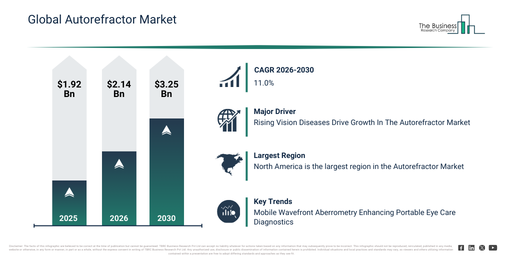
    The autorefractor market size has shown substantial growth over recent years. It is anticipated to increase from $1.92 billion in 2025 to $2.14 billion in 2026, achieving a compound annual growth rate (CAGR) of 11.2%. This historical market expansion is primarily due to the broadening of ophthalmic diagnostic services, an increasing incidence of refractive errors, greater uptake of automated eye testing, the proliferation of optometry clinics, and enhanced access to vision care.

    The autorefractor market is anticipated to experience substantial growth in the coming years, with its size projected to reach $3.25 billion by 2030, achieving a compound annual growth rate (CAGR) of 11.0%. This expansion during the forecast period can be attributed to factors such as increasing demand for point-of-care eye diagnostics, the expansion of tele-optometry services, a rising focus on early detection of vision disorders, the growing adoption of smart ophthalmic devices, and increasing investments in eye care infrastructure. Key trends influencing this period include the increasing adoption of portable automatic autorefractors, the rising integration of AI-based refraction analysis, the growing use of multi-function diagnostic devices, the expansion of vision screening programs, and an enhanced focus on rapid eye examinations.

    Download A Free Sample Report For Comprehensive Market Insights:

    https://www.thebusinessresearchcompany.com/sample.aspx?id=18242&type=smp

    Which Growth Drivers Are Expected To Support The Autorefractor Market Forward?

    An increasing occurrence of vision-related illnesses is projected to fuel the expansion of the autorefractor market. A vision disease refers to a medical condition hindering clear sight, impacting various parts of the visual system such as the eyes, optic nerves, or the brain. Factors contributing to the rise in vision diseases include an aging demographic, extended screen exposure, unhealthy lifestyle habits, and a greater incidence of chronic ailments. For the diagnosis of vision diseases, an autorefractor serves to rapidly and precisely gauge refractive errors, thereby aiding in the selection of suitable corrective lenses. As an illustration, a report released by the Centers for Disease Control and Prevention, a US-based government agency, in August 2023 indicated that the count of people with vision impairment in the United States is predicted to reach 8.96 million by 2050. Furthermore, it’s noted that approximately 6.8% of children younger than 18 in the U.S. have been identified with eye and vision problems, and nearly 3% suffer from blindness or visual impairment that remains even with corrective eyewear. Consequently, the growing incidence of vision diseases is propelling the growth of the autorefractor market.

    How Is The Autorefractor Market Structured Across Different Market Segments?

    The autorefractor market covered in this report is segmented –

    1) By Type: Manual Autorefractor, Automatic Autorefractor

    2) By Application: Hyperopia, Myopia, Other Applications

    3) By End-User: Hospitals, Ophthalmic Clinics, Diagnostic Centers

    Subsegments:

    1) By Manual Autorefractor: Tabletop Manual Autorefractor, Handheld Manual Autorefractor

    2) By Automatic Autorefractor: Desktop Automatic Autorefractor, Portable Automatic Autorefractor

    What Trends Are Shaping The Autorefractor Market Structure?

    Major companies within the autorefractor market are prioritizing the development of mobile wavefront aberrometry systems, which integrate handheld autorefractors with advanced software to obtain precise eye measurements, keratometry data, and thorough wavefront analysis in a portable and user-friendly format, enhancing accessibility and efficiency in eye care diagnostics. Mobile wavefront aberrometry systems denote portable diagnostic solutions that combine a handheld autorefractor with sophisticated wavefront analysis software. For example, in February 2025, PlenOptika, a US-based ophthalmic technology company, unveiled the QuickSee Free Pro Companion App, a mobile platform that allows eye care professionals to generate intricate wavefront maps, simulate visual acuity, and compile professional patient reports. This platform consolidates keratometry and autorefractor readings into a unified interface, presents real-time data visualization, and provides patient-friendly reports to improve communication and decision-making. This innovation optimizes clinical workflows, extends access to high-quality refraction diagnostics in remote environments, and strengthens patient engagement.

    Which Organizations Are Involved In The Autorefractor Market?

    Major companies operating in the autorefractor market are Topcon Corporation, Nidek Co. Ltd., Canon Medical Systems Corporation, Carl Zeiss Meditec, Rexxam Co. Ltd., Huvitz Co. Ltd., CSO Italia, Righton, Takagi Seiko Co. Ltd., Tomey Corporation, Oculus Optikgeräte GmbH, Kowa Company Ltd., Marco Ophthalmic Inc., Reichert Inc., Visionix Ltd., Luneau Technology GmbH, URK Corporation, Medizs Inc., Optopol Technology, Essilor Instruments, Sonomed Escalon

    Access The Complete Autorefractor Market Report:

    https://www.thebusinessresearchcompany.com/report/autorefractor-global-market-report

    Which Regional Market Leads The Autorefractor Market?

    North America was the largest region in the autorefractor market in 2025. Asia-Pacific is expected to be the fastest-growing region in the forecast period. The regions covered in the autorefractor market report are Asia-Pacific, South East Asia, Western Europe, Eastern Europe, North America, South America, Middle East, Africa.

    Access Autorefractor Market Report for Deeper Competitive Insights

    https://www.thebusinessresearchcompany.com/customise?id=18242&type=smp

    Browse Through More Reports Similar to the Global Autorefractor Market 2026, By The Business Research Company

    Autoinjectors Global Market Report 2026

    https://www.thebusinessresearchcompany.com/report/autoinjectors-global-market-report

    Automatic Weapons Global Market Report 2026

    https://www.thebusinessresearchcompany.com/report/automatic-weapons-global-market-report

    Automation Components Global Market Report 2026

    https://www.thebusinessresearchcompany.com/report/automation-components-global-market-report

    Get in touch with us:

    The Business Research Company: https://www.thebusinessresearchcompany.com/

    Americas: +1 310-496-7795

    Asia: +44 7882 955267 & +91 8897263534

    Europe: +44 7882 955267

    Email us at: marketing@tbrc.info

    Follow us on:

    LinkedIn: https://in.linkedin.com/company/the-business-research-company

    YouTube: https://www.youtube.com/channel/UC24_fI0rV8cR5DxlCpgmyFQ

    Global Market Model: https://www.thebusinessresearchcompany.com/global-market-model
  • Adoption Of Robotic Automation Platforms In Biopharma Manufacturing To Enhance Efficiency Is Affecting The Direction Of The Automation In Biopharma Industry Market

    Adoption Of Robotic Automation Platforms In Biopharma Manufacturing To Enhance Efficiency Is Affecting The Direction Of The Automation In Biopharma Industry Market

    The Business Research Company’s 2026 market reports feature enhanced tools like market attractiveness analysis, TAM assessment, and company scoring matrices, along with interactive dashboards, deeper supply chain insights, and startup coverage strengthening the depth, usability, and strategic value of insights.

    What Will Be The Estimated Market Size Of The Automation In Biopharma Industry Market By 2030?

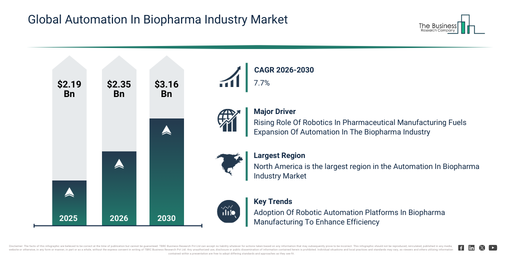
    Strong growth has been observed in the automation in biopharma industry market size in recent years. This market is projected to increase from $2.19 billion in 2025 to $2.35 billion in 2026, achieving a compound annual growth rate (CAGR) of 7.1%. Key factors contributing to this historical expansion include the escalating complexity of biologic drug production, rising demand for scalable biopharma manufacturing, early adoption of laboratory automation, the expansion of contract manufacturing services, and advancements in process control technologies.

    The automation in biopharma industry market size is projected to undergo robust expansion over the next few years. It is forecast to reach $3.16 billion in 2030, exhibiting a compound annual growth rate (CAGR) of 7.7%. The growth anticipated during this forecast period can be attributed to several factors, including increasing investments in smart biomanufacturing facilities, the growing adoption of continuous manufacturing processes, the expansion of personalized biologics production, a rising demand for regulatory-compliant automation, and an increasing focus on optimizing manufacturing efficiency. Key trends for the forecast period encompass the increasing adoption of robotic manufacturing platforms, the rising integration of digital twin technologies, the growing use of automated quality control systems, the expansion of end-to-end bioprocess automation, and an enhanced focus on data-driven manufacturing.

    Download A Free Sample Report For Comprehensive Market Insights:

    https://www.thebusinessresearchcompany.com/sample.aspx?id=12704&type=smp

    What Influential Factors Are Boosting The Automation In Biopharma Industry Market Demand?

    The expanding integration of robots within pharmaceutical production is projected to boost the expansion of the automation in biopharma industry market. These robots, utilized in pharmaceutical manufacturing, are sophisticated automated systems and machinery designed to execute diverse functions in the fabrication and packaging of pharmaceutical goods. Their widespread application in pharmaceutical production encompasses areas like secondary packaging, intralogistics, laboratory automation, pick and place operations, the automation of pharmacy processes, and personalized medicine, leading to benefits such as increased productivity, improved precision, a lower risk of contamination, and enhanced safety for workers. As an illustration, in September 2024, the International Federation of Robotics, a professional non-profit organization based in Germany, reported that industrial robot installations across the manufacturing sector in Europe rose by 9%, reaching an unprecedented total of 92,393 units. Among these, 80% were deployed within the European Union, amounting to 73,534 units, which signifies a 2% increase compared to the prior year. Consequently, the growing integration of robots in pharmaceutical production will propel the expansion of the automation in biopharma industry market.

    Which Segment-Based Categories Are Covered In The Automation In Biopharma Industry Market?

    The automation in biopharma industry market covered in this report is segmented –

    1) By Technology: Automation Technology, Digitization Technology

    2) By Component: Automation Hardware, Automation Software, Services Project Phase, Services Operation Phase

    3) By Application: Clinical Phase, Drug Discovery Phase, Production Phase

    Subsegments:

    1) By Automation Technology: Process Automation, Laboratory Automation, Robotics And Artificial Intelligence, Control Systems, Programmable Logic Controllers (PLCs)

    2) By Digitization Technology: Data Analytics And Visualization, Electronic Lab Notebooks (ELN), Cloud Computing, Internet Of Things (IoT) In Pharma, Digital Twin Technology

    Which Trends Are Supporting The Evolution Of The Automation In Biopharma Industry Market?

    Significant companies are driving automation in the biopharma industry market, concentrating on creating technological advancements such as robotic platforms for cell-therapy manufacturing, designed to enable scalable, efficient, and less error-prone production of advanced therapies. Such a robotic cell-therapy manufacturing platform integrates mobile robotics, aseptic fluid-handling systems, automated tube welding, and digital process control within a completely closed and modular system. This innovation supersedes conventional manual bioprocessing, which heavily depends on labor and open setups. For example, in May 2023, Cellular Origins, a UK-based life sciences automation company, introduced Constellation, a configurable robotic platform tailored for advanced therapy manufacture. This particular platform incorporates autonomous mobile robots, sterile fluid-transfer technology, and modular processing consoles, facilitating smooth integration into existing bioprocessing workflows. It significantly enhances space efficiency by 30 times, decreases labor requirements by 16-fold, and lowers production costs by 51%, concurrently providing comprehensive digital interconnection for quality control and remote monitoring.

    Who Are The Firms Contributing To The Automation In Biopharma Industry Market Ecosystem?

    Major companies operating in the automation in biopharma industry market are F. Hoffmann-La Roche Ltd., Thermo Fisher Scientific Inc., Danaher Corporation, ABB Ltd, Siemens Healthineers AG, Emerson Electric Co., Becton Dickinson and Company (BD), Corning Incorporated, Rockwell Automation Inc., Agilent Technologies Inc., PerkinElmer Inc., Sartorius AG, bioMérieux SA, Mettler-Toledo International Inc., Beckman Coulter Inc., Waters Corporation, Pall Corporation, Bruker Corporation, Qiagen N.V., Eppendorf AG, Tecan Group Ltd., Promega Corporation, Brooks Automation Inc., Omron Automation, Hamilton Company, Integra Biosciences AG, Gilson Inc., Analytik Jena AG, BioTek Instruments Inc.

    Access The Complete Automation In Biopharma Industry Market Report:

    https://www.thebusinessresearchcompany.com/report/automation-in-biopharma-industry-global-market-report

    Which Region Holds The Largest Share In The Automation In Biopharma Industry Market?

    North America was the largest region in the automation in biopharma industry market in 2025. The regions covered in the automation in biopharma industry market report are Asia-Pacific, South East Asia, Western Europe, Eastern Europe, North America, South America, Middle East, Africa.

    Access Automation In Biopharma Industry Market Report for Deeper Competitive Insights

    https://www.thebusinessresearchcompany.com/customise?id=12704&type=smp

    Browse Through More Reports Similar to the Global Automation In Biopharma Industry Market 2026, By The Business Research Company

    Bioprocess Automation Global Market Report 2026

    https://www.thebusinessresearchcompany.com/report/bioprocess-automation-global-market-report

    Pharmacy Automation Global Market Report 2026

    https://www.thebusinessresearchcompany.com/report/pharmacy-automation-global-market-report

    Pharmacy Automation Systems Global Market Report 2026

    https://www.thebusinessresearchcompany.com/report/pharmacy-automation-systems-global-market-report

    Get in touch with us:

    The Business Research Company: https://www.thebusinessresearchcompany.com/

    Americas: +1 310-496-7795

    Asia: +44 7882 955267 & +91 8897263534

    Europe: +44 7882 955267

    Email us at: marketing@tbrc.info

    Follow us on:

    LinkedIn: https://in.linkedin.com/company/the-business-research-company

    YouTube: https://www.youtube.com/channel/UC24_fI0rV8cR5DxlCpgmyFQ

    Global Market Model: https://www.thebusinessresearchcompany.com/global-market-model
  • The Automated Sample Preparation Market Is Advancing With Support From Increasing Prevalence Of Infectious Diseases Driving Growth In The Automated Sample Preparation Market

    The Automated Sample Preparation Market Is Advancing With Support From Increasing Prevalence Of Infectious Diseases Driving Growth In The Automated Sample Preparation Market

    The Business Research Company’s 2026 market reports feature enhanced tools like market attractiveness analysis, TAM assessment, and company scoring matrices, along with interactive dashboards, deeper supply chain insights, and startup coverage strengthening the depth, usability, and strategic value of insights.

    What Is The Estimated Growth In Market Size Of The Automated Sample Preparation Market During 2026–2030?

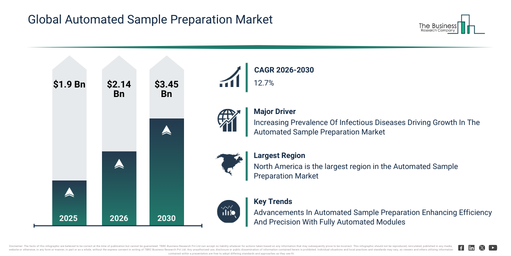
    The automated sample preparation market has experienced substantial growth in recent years. This market is projected to expand from $1.9 billion in 2025 to $2.14 billion in 2026, achieving a compound annual growth rate (CAGR) of 13.0%. Historically, this growth can be ascribed to several factors, including the proliferation of laboratory automation initiatives, the increasing volume of clinical and research samples, a heightened emphasis on reproducibility in testing, the expansion of pharmaceutical R&D activities, and the availability of advanced laboratory instruments.

    The automated sample preparation market size is expected to demonstrate substantial expansion in the upcoming years, with projections indicating it will reach $3.45 billion by 2030, achieving a compound annual growth rate (CAGR) of 12.7%. This anticipated growth over the forecast period can be attributed to several factors, including the increasing implementation of fully automated laboratories, a surging demand for precision diagnostics, the broadening scope of personalized medicine research, rising capital allocation towards smart laboratory infrastructure, and the enhanced integration of AI-driven analytics into sample preparation processes. Significant trends characterizing this period encompass the greater adoption of robotic liquid handling systems, an escalating need for high-throughput sample processing, the progressive incorporation of automated workstations into laboratory environments, the expansion of sample handling techniques designed for error reduction, and improved standardization of laboratory workflows.

    Download A Free Sample Report For Comprehensive Market Insights:

    https://www.thebusinessresearchcompany.com/sample.aspx?id=19325&type=smp

    Which Drivers Are Advancing The Automated Sample Preparation Market Growth?

    The expanding occurrence of infectious diseases is anticipated to boost the future expansion of the automated sample preparation market. These diseases are defined as sicknesses resulting from pathogens like bacteria, viruses, fungi, or parasites, capable of transmission between individuals or via tainted sources. The growing number of infectious disease cases stems from elements such as poor hygiene, insufficient healthcare availability, shifts in climate, and the emergence of drug-resistant microbes. Automated sample preparation improves the precision and effectiveness of diagnosing infectious diseases by speeding up and standardizing how biological samples are processed. This minimizes human error and guarantees uniform outcomes in extensive testing. For example, in March 2024, the Centers for Disease Control and Prevention (CDC), a US-based public health agency, reported that tuberculosis cases climbed from 8,320 in 2022 to 9,615 in 2023, marking a rise of 1,295 cases. Furthermore, the rate per 100,000 people increased from 2.5 in 2022 to 2.9 in 2023. Consequently, the rising occurrence of infectious diseases is fueling the expansion of the automated sample preparation market.

    What Are The Major Segment Categories Within The Automated Sample Preparation Market?

    The automated sample preparation market covered in this report is segmented –

    1) By Product Type: Kits And Consumables, Instruments

    2) By Application: Research And Development, Diagnostics

    3) By End User: Biotechnology And Pharmaceutical Companies, Clinical And Diagnostic Laboratories, Academic And Research Institutions

    Subsegments:

    1) By Kits And Consumables: DNA/RNA Extraction Kits, Protein Purification Kits, Sample Collection Consumables, Reagents And Buffers, Assay Kits

    2) By Instruments: Automated Liquid Handling Systems, Magnetic Bead Separation Systems, Centrifuges, Robotically Controlled Pipetting Systems, Workstations For Sample Preparation

    What Trends Are Affecting The Growth Of The Automated Sample Preparation Market?

    Key players in the automated sample preparation market are prioritizing the development of advanced solutions, including fully automated sample preparation modules, to elevate efficiency, reduce manual errors, and improve reproducibility in laboratory settings. Fully automated sample preparation modules are sophisticated systems crafted to manage every phase of sample processing with minimal human intervention. For instance, in July 2024, Shimadzu Corporation, a Japan-based producer of precision instruments and medical equipment, unveiled the MUP-3100, a fully automated sample preparation module tailored for glycan analysis, which streamlines the pretreatment of antibody glycans. This system leverages a 6-axis robot to automate functions such as reagent dispensing and sample processing, thereby decreasing labor, minimizing procedural errors, and enhancing safety. The MUP-3100 can process up to 24 samples in six hours, significantly accelerating workflows compared to conventional methods that can take over two days. This advanced system offers considerable advantages to pharmaceutical companies and contract manufacturing organizations (CMOs) engaged in biosimilars and antibody drug development.

    Which Key Players Are Active In The Automated Sample Preparation Market?

    Major companies operating in the automated sample preparation market are F. Hoffmann-La Roche Ltd., Thermo Fisher Scientific Inc., Danaher Corporation, Agilent Technologies, Hitachi High-Technologies Corp, Sartorius AG, Mettler-Toledo International Inc., Shimadzu Corporation, PerkinElmer, Waters Corporation, Bio-Rad Laboratories, Bruker Corporation, QIAGEN NV, Eppendorf, Tecan Group, Hamilton Company, Malvern Panalytical, Promega Corporation, Biotage AB, Gilson Inc., Aurora Biomed

    Access The Complete Automated Sample Preparation Market Report:

    https://www.thebusinessresearchcompany.com/report/automated-sample-preparation-global-market-report

    Which Region Is The Dominant Market In The Automated Sample Preparation Market?

    North America was the largest region in the automated sample preparation market in 2025. The regions covered in the automated sample preparation market report are Asia-Pacific, South East Asia, Western Europe, Eastern Europe, North America, South America, Middle East, Africa.

    Access Automated Sample Preparation Market Report for Deeper Competitive Insights

    https://www.thebusinessresearchcompany.com/customise?id=19325&type=smp

    Browse Through More Reports Similar to the Global Automated Sample Preparation Market 2026, By The Business Research Company

    Automated Breach And Attack Simulation Global Market Report 2026

    https://www.thebusinessresearchcompany.com/report/automated-breach-and-attack-simulation-global-market-report

    Automated Test Equipment Global Market Report 2026

    https://www.thebusinessresearchcompany.com/report/automated-test-equipment-global-market-report

    Automated Storage And Retrieval System Global Market Report 2026

    https://www.thebusinessresearchcompany.com/report/automated-storage-and-retrieval-system-global-market-report

    Get in touch with us:

    The Business Research Company: https://www.thebusinessresearchcompany.com/

    Americas: +1 310-496-7795

    Asia: +44 7882 955267 & +91 8897263534

    Europe: +44 7882 955267

    Email us at: marketing@tbrc.info

    Follow us on:

    LinkedIn: https://in.linkedin.com/company/the-business-research-company

    YouTube: https://www.youtube.com/channel/UC24_fI0rV8cR5DxlCpgmyFQ

    Global Market Model: https://www.thebusinessresearchcompany.com/global-market-model
  • Increasing Adoption Of Rise In Gene Therapy Fueling The Growth Of The Market Due To Increasing Need For Accurate Genetic Analysis And Validation Is Influencing The Automated Next-Generation Sequencing (NGS) Library Preparation Market

    Increasing Adoption Of Rise In Gene Therapy Fueling The Growth Of The Market Due To Increasing Need For Accurate Genetic Analysis And Validation Is Influencing The Automated Next-Generation Sequencing (NGS) Library Preparation Market

    The Business Research Company’s 2026 market reports feature enhanced tools like market attractiveness analysis, TAM assessment, and company scoring matrices, along with interactive dashboards, deeper supply chain insights, and startup coverage strengthening the depth, usability, and strategic value of insights.

    What Market Value Expansion Is Expected For The Automated Next-Generation Sequencing (NGS) Library Preparation Market Over The Forecast Period?

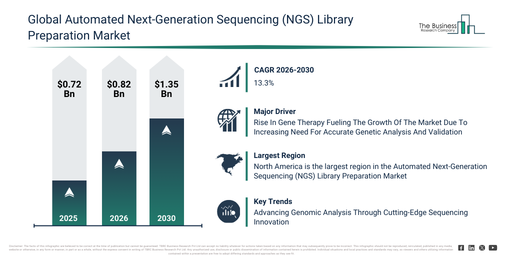
    The automated next-generation sequencing (ngs) library preparation market size has seen rapid growth in recent years. It is anticipated to increase from $0.72 billion in 2025 to $0.82 billion in 2026, achieving a compound annual growth rate (CAGR) of 13.9%. Historically, this expansion can be linked to the broadening of genomic research activities, the rising acceptance of NGS in clinical research, the evolution of precision medicine initiatives, an escalating demand for scalable sequencing workflows, and enhancements in sequencing chemistry technologies.

    The automated next-generation sequencing (ngs) library preparation market is projected to experience substantial growth in the coming years. This market is anticipated to reach $1.35 billion by 2030, exhibiting a compound annual growth rate (CAGR) of 13.3%. Key drivers for this expansion during the forecast period include the expanding application of NGS in diagnostics, increased capital allocation for automated laboratory setups, the broadening scope of population genomics initiatives, a heightened need for quicker sequencing results, and the wider integration of single-cell sequencing protocols. Significant trends projected for this period encompass the accelerated embrace of entirely automated library preparation systems, a surging requirement for high-throughput sequencing methods, the deeper embedding of robotics into sample handling, the proliferation of standardized and reliable NGS pipelines, and an intensified concentration on minimizing errors and ensuring consistent workflow execution.

    Download A Free Sample Report For Comprehensive Market Insights:

    https://www.thebusinessresearchcompany.com/sample.aspx?id=27216&type=smp

    What Primary Factors Are Fueling The Expansion Of The Automated Next-Generation Sequencing (NGS) Library Preparation Market?

    The expanding field of gene therapy is anticipated to boost the automated next-generation sequencing (NGS) library preparation market going forward. This therapeutic approach involves modifying an individual’s genes to treat or avert illnesses. Its growth is fueled by the growing occurrence of genetic conditions necessitating specific and enduring treatment options. Within gene therapy, automated NGS library preparation facilitates the precise analysis and validation of genetic changes by preparing high-quality DNA or RNA samples for subsequent sequencing. As an illustration, in April 2024, data from the American Society of Gene and Cell Therapy, a US-based non-profit medical and scientific organization, revealed a 10% increase in phase III gene therapy clinical trials during the fourth quarter of 2023. This marked the initial quarterly surge observed since the third quarter of 2022. Consequently, the expansion of gene therapy is a key factor propelling the automated next-generation sequencing (NGS) library preparation market forward.

    How Is The Automated Next-Generation Sequencing (NGS) Library Preparation Market Distributed Across Key Segments?

    The automated next-generation sequencing (ngs) library preparation market covered in this report is segmented –

    1) By Type: Targeted Genome Sequencing, Whole Genome Sequencing, Whole Exome Sequencing, Other Sequencing Types

    2) By Workflow: Nucleic Acid Extraction, Fragmentation, Adapter Ligation, Purification And Quantification

    3) By Application: Drug And Biomarker Discovery, Disease Diagnostics, Other Applications

    4) By End-Use: Hospitals And Clinics, Academic And Research Institutions, Pharmaceutical And Biotechnology Companies, Other End-Users

    Subsegments:

    1) By Targeted Genome Sequencing: Amplicon-Based Targeted Sequencing, Hybridization Capture-Based Targeted Sequencing, Custom Targeted Panels, Pre-designed Gene Panels

    2) By Whole Genome Sequencing: Human Whole Genome Sequencing, Animal Whole Genome Sequencing, Plant Whole Genome Sequencing, Microbial Whole Genome Sequencing

    3) By Whole Exome Sequencing: Standard Exome Sequencing, Clinical Exome Sequencing, Custom Exome Panels, Ultra-Rapid Exome Sequencing

    4) By Other Sequencing Types: RNA Sequencing (RNA-Seq), Epigenome Sequencing, Metagenomic Sequencing, Single-Cell Sequencing

    Which Trends Are Influencing The Direction Of The Automated Next-Generation Sequencing (NGS) Library Preparation Market?

    Major companies operating in the automated next-generation sequencing (NGS) library preparation market are directing their efforts toward developing sophisticated technologies, like Xpandomer technology, to increase sequencing speed, improve data accuracy, and enhance scalability, thereby streamlining workflows and enabling more efficient and reliable genomic analysis. Xpandomer technology represents an advanced deoxyribonucleic acid (DNA) or ribonucleic acid (RNA) sequencing technique that converts a target nucleic acid molecule into a synthetic, expanded polymer called an Xpandomer, which is approximately 50 times longer than the original deoxyribonucleic acid (DNA) or ribonucleic acid (RNA) strand. As an illustration, in February 2025, Roche AG, a biotechnology company based in Switzerland, launched Sequencing by Expansion, a cutting-edge sequencing platform designed to boost genomic resolution for advanced diagnostics, disease research, and precision medicine applications. This innovative automated next-generation sequencing (NGS) library preparation system facilitates complex workflows, elevates data quality, and accelerates genomic analysis to support advanced research and personalized medicine initiatives. The Sequencing by Expansion platform is notably versatile, allowing for the precise analysis of diverse genomic alterations across a wide array of diseases, such as cancer and rare genetic disorders, by improving resolution and accuracy to gain deeper biological insights.

    Who Are The Leading Firms Participating In The Automated Next-Generation Sequencing (NGS) Library Preparation Market?

    Major companies operating in the automated next-generation sequencing (ngs) library preparation market are F. Hoffmann-La Roche Ltd., Thermo Fisher Scientific Inc., Agilent Technologies India Private Limited, Illumina Inc., Beckman Coulter Inc., Bio-Rad Laboratories Inc., IDT Corporation, Tecan Group AG, Hamilton Company, Takara Bio Inc., 10x Genomics Inc., Oxford Nanopore Technologies plc, Twist Bioscience Corporation, New England Biolabs Inc., SPT Labtech Limited, Watchmaker Genomics Inc., Pillar Biosciences Inc., Aurora Biomed Inc., BGI Group, SEQWELL INC., Hudson Robotics Inc.

    Access The Complete Automated Next-Generation Sequencing (NGS) Library Preparation Market Report:

    https://www.thebusinessresearchcompany.com/report/automated-next-generation-sequencing-ngs-library-preparation-global-market-report

    Which Area Represents The Largest Portion Of The Automated Next-Generation Sequencing (NGS) Library Preparation Market?

    North America was the largest region in the automated next-generation sequencing (NGS) library preparation market in 2025. Asia-Pacific is expected to be the fastest-growing region in the forecast period. The regions covered in the automated next-generation sequencing (ngs) library preparation market report are Asia-Pacific, South East Asia, Western Europe, Eastern Europe, North America, South America, Middle East, Africa.

    Access Automated Next-Generation Sequencing (NGS) Library Preparation Market Report for Deeper Competitive Insights

    https://www.thebusinessresearchcompany.com/customise?id=27216&type=smp

    Browse Through More Reports Similar to the Global Automated Next-Generation Sequencing (NGS) Library Preparation Market 2026, By The Business Research Company

    Insurance Global Market Report 2026

    https://www.thebusinessresearchcompany.com/report/insurance-global-market-report

    Rideshare Insurance Global Market Report 2026

    https://www.thebusinessresearchcompany.com/report/rideshare-insurance-global-market-report

    Equine Healthcare Global Market Report 2026

    https://www.thebusinessresearchcompany.com/report/equine-healthcare-global-market-report

    Get in touch with us:

    The Business Research Company: https://www.thebusinessresearchcompany.com/

    Americas: +1 310-496-7795

    Asia: +44 7882 955267 & +91 8897263534

    Europe: +44 7882 955267

    Email us at: marketing@tbrc.info

    Follow us on:

    LinkedIn: https://in.linkedin.com/company/the-business-research-company

    YouTube: https://www.youtube.com/channel/UC24_fI0rV8cR5DxlCpgmyFQ

    Global Market Model: https://www.thebusinessresearchcompany.com/global-market-model
  • Impact Of Personalized Medicine On The Automated Microscopy Market Continues To Impact The Growth Of The Automated Microscopy Market

    Impact Of Personalized Medicine On The Automated Microscopy Market Continues To Impact The Growth Of The Automated Microscopy Market

    The Business Research Company’s 2026 market reports feature enhanced tools like market attractiveness analysis, TAM assessment, and company scoring matrices, along with interactive dashboards, deeper supply chain insights, and startup coverage strengthening the depth, usability, and strategic value of insights.

    How Will The Market Value Of The Automated Microscopy Market Change Between 2026 And 2030?

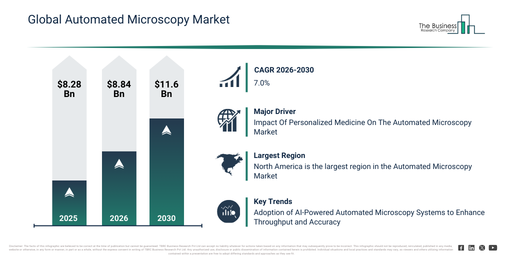
    The automated microscopy market size has seen substantial growth over recent years. It is forecast to rise from $8.28 billion in 2025 to $8.84 billion in 2026, exhibiting a compound annual growth rate (CAGR) of 6.8%. This historical growth can be linked to the expanding use of microscopy in life sciences research, the widening scope of clinical diagnostics imaging, continuous advancements in optical and electron microscopy, the expansion of materials science research, and the increasing requirement for reproducible imaging outcomes.

    The automated microscopy market is anticipated to experience substantial expansion in the coming years, reaching a valuation of $11.6 billion by 2030, driven by a compound annual growth rate (CAGR) of 7.0%. This projected growth throughout the forecast period stems from several factors, including the rising adoption of AI-assisted diagnostics, the broadening of semiconductor inspection applications, increasing investments in automated research laboratories, a greater demand for scalable imaging solutions, and the enhanced integration of cloud-based microscopy platforms. Key trends defining this period are the expanding deployment of AI-based image analysis, the growing adoption of high-throughput imaging platforms, increased integration of automated sample handling, the broadening scope of remote and digital microscopy, and an intensified focus on high-resolution imaging accuracy.

    Download A Free Sample Report For Comprehensive Market Insights:

    https://www.thebusinessresearchcompany.com/sample.aspx?id=14259&type=smp

    Which Strategic Drivers Are Supporting The Automated Microscopy Market Development?

    The increasing need for individualized medicine is anticipated to fuel the expansion of the automated microscopy market in the future. This medical approach considers each person’s unique variations in genes, environmental factors, and lifestyle choices. Its adoption is increasing, driven by factors such as greater understanding of genetic differences, progress in genomics, and the rising incidence of chronic illnesses. Automated microscopy equips researchers and medical professionals with the necessary tools and technologies to further personalized medicine, enabling them to elucidate disease mechanisms, pinpoint predictive biomarkers, and refine treatment approaches. For example, in February 2024, the Personalized Medicine Coalition, a US-based advocacy group supporting customized medical treatments, reported that the FDA sanctioned 16 novel personalized therapies for rare disease patients in 2023, an increase from six in 2022. Consequently, the expanding demand for personalized medicine is a key driver for the growth of the automated microscopy market.

    How Does Segment Analysis Break Down The Automated Microscopy Market Structure?

    The automated microscopy market covered in this report is segmented –

    1) By Product Type: Optical Microscopes, Electron Microscopes, Scanning Probe Microscopes

    2) By Application: Medical Diagnostics, Nanotechnology, Material Science, Life Sciences, Semiconductors

    3) By End User: Hospitals, Research Facilities, Diagnostic Clinics

    Subsegments:

    1) By Optical Microscopes: Automated Light Microscopes, Confocal Microscopes, Fluorescence Microscopes

    2) By Electron Microscopes: Scanning Electron Microscopes (SEM), Transmission Electron Microscopes (TEM), Scanning Transmission Electron Microscopes (STEM)

    3) By Scanning Probe Microscopes: Atomic Force Microscopes (AFM), Scanning Tunneling Microscopes (STM)

    What Trends Are Driving Changes In The Automated Microscopy Market?

    Leading companies in the automated microscopy market are concentrating on developing technological advancements, such as AI-powered automated fluorescence microscopes, to boost throughput, enhance image accuracy, and decrease manual effort in cell analysis and drug discovery workflows. An AI-powered automated microscope integrates motorized stages, autofocus, multi-channel imaging, and intelligent image analysis software, allowing for automated cell counting, confluency assessment, and time-lapse imaging with minimal human intervention. For instance, in August 2024, Leica Microsystems, a Germany-based scientific instrumentation company, introduced the Mateo FL, an AI-powered digital fluorescence microscope specifically designed for automated cell-culture analysis. This product combines transmitted-light imaging for label-free monitoring with multi-channel fluorescence imaging, employs AI algorithms for automated confluency checks and cell counting, and delivers high reproducibility alongside faster experimental workflows compared to traditional manual microscopes.

    Which Companies Are Engaged In The Automated Microscopy Market Environment?

    Major companies operating in the automated microscopy market are Thermo Fisher Scientific Inc., Zeiss Group, Agilent Technologies Inc., Keyence Corporation, Hitachi High-Tech Corporation, PerkinElmer Inc., Nikon Corporation, Bruker Corporation, Hamamatsu Photonics K.K., Jenoptik AG, HORIBA Scientific, Molecular Devices LLC, JEOL Ltd., Olympus Corporation, Prior Scientific Instruments Ltd., Phase Holographic Imaging PHI AB, Andor Technology Ltd., Crest Optics S.p.A, Delmic B.V., Nanolive SA, Nanosurf AG, Photometrics

    Access The Complete Automated Microscopy Market Report:

    https://www.thebusinessresearchcompany.com/report/automated-microscopy-global-market-report

    Which Region Commands The Largest Share Of The Automated Microscopy Market?

    North America was the largest region in the automated microscopy market in 2025. Asia-Pacific is expected to be the fastest-growing region in the forecast period. The regions covered in the automated microscopy market report are Asia-Pacific, South East Asia, Western Europe, Eastern Europe, North America, South America, Middle East, Africa.

    Access Automated Microscopy Market Report for Deeper Competitive Insights

    https://www.thebusinessresearchcompany.com/customise?id=14259&type=smp

    Browse Through More Reports Similar to the Global Automated Microscopy Market 2026, By The Business Research Company

    Microscopy Global Market Report 2026

    https://www.thebusinessresearchcompany.com/report/microscopy-global-market-report

    Biological Microscope Global Market Report 2026

    https://www.thebusinessresearchcompany.com/report/biological-microscope-global-market-report

    Optical Microscopes Global Market Report 2026

    https://www.thebusinessresearchcompany.com/report/optical-microscopes-global-market-report

    Get in touch with us:

    The Business Research Company: https://www.thebusinessresearchcompany.com/

    Americas: +1 310-496-7795

    Asia: +44 7882 955267 & +91 8897263534

    Europe: +44 7882 955267

    Email us at: marketing@tbrc.info

    Follow us on:

    LinkedIn: https://in.linkedin.com/company/the-business-research-company

    YouTube: https://www.youtube.com/channel/UC24_fI0rV8cR5DxlCpgmyFQ

    Global Market Model: https://www.thebusinessresearchcompany.com/global-market-model
  • Automated Microbiology Market Outlook Through 2030 With Analysis Of Industry Trends And Developments

    Automated Microbiology Market Outlook Through 2030 With Analysis Of Industry Trends And Developments

    The Business Research Company’s 2026 market reports feature enhanced tools like market attractiveness analysis, TAM assessment, and company scoring matrices, along with interactive dashboards, deeper supply chain insights, and startup coverage strengthening the depth, usability, and strategic value of insights.

    What Is The Forecasted Rise In Market Size Of The Automated Microbiology Market During The Forecast Period?

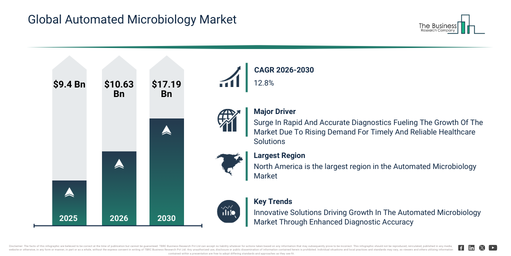
    The automated microbiology market has experienced rapid growth in recent years. This market is projected to expand from $9.4 billion in 2025 to $10.63 billion in 2026, at a compound annual growth rate (CAGR) of 13.0%. Historically, this expansion has been influenced by factors such as increasing clinical testing volumes, a rising demand for quicker diagnostic results, the expansion of hospital laboratory infrastructure, a scarcity of skilled lab personnel, and the adoption of standardized diagnostic protocols.

    The automated microbiology market is projected to experience substantial expansion in the coming years. This market is set to reach a valuation of $17.19 billion by 2030, exhibiting a compound annual growth rate (CAGR) of 12.8%. This anticipated growth during the forecast period stems from factors such as increasing investments into smart laboratories, a rising demand for swift infectious disease diagnostics, the broadening of molecular microbiology applications, the increasing integration of data-integrated laboratory systems, and a heightened emphasis on diagnostic accuracy. Key trends characterizing the forecast period encompass the increasing embrace of fully automated microbiology systems, the growing utilization of AI-driven pathogen identification, the expanding integration of LIMS platforms, the spread of high-throughput diagnostic testing, and an intensified focus on automating laboratory workflows.

    Download A Free Sample Report For Comprehensive Market Insights:

    https://www.thebusinessresearchcompany.com/sample.aspx?id=24163&type=smp

    What Major Growth Factors Are Impacting The Automated Microbiology Market?

    The increasing need for quick and precise diagnostic methods is anticipated to fuel expansion within the automated microbiology market. These quick and precise diagnostics involve medical testing approaches that swiftly and accurately pinpoint infections or illnesses, allowing for prompt and effective therapeutic interventions. The heightened requirement for such diagnostics stems from a growing necessity for early disease identification to avert complications and enhance patient prognoses, all while reducing wait times for results. In response, automated microbiology facilitates this need through high-volume, standardized, and error-reduced testing processes, ensuring quicker outcomes and superior patient care. As an illustration, the World Health Organization, a Switzerland-based national agency, indicated that in 2024, the initial diagnostic test was performed for 54% (4.5 million) of the 8.3 million individuals newly diagnosed with TB. This marked an increase from 48% (out of a total of 8.2 million) in 2023. Consequently, the escalating demand for rapid and accurate diagnostics is a primary factor propelling growth in the automated microbiology market.

    What Segment Types Are Included In The Automated Microbiology Market Analysis?

    The automated microbiology market covered in this report is segmented –

    1) By Product: Instruments, Reagents And Kits, Software

    2) By Automation Type: Fully Automated, Semi-Automated

    3) By Diagnostic Technology: DNA And RNA Probe Technology, Detection Techniques

    4) By Application: Biopharmaceutical Production, Clinical Diagnostics, Environmental And Water Testing, Food And Beverage Testing, Other Applications

    5) By End Use: Pharmaceutical And Biotechnology Companies, Hospitals And Diagnostic Laboratories, Academic And Research Institutes, Other End Uses

    Subsegments:

    1) By Instruments: Automated Gram Stainers, Microbial Detection Systems, Automated ID/AST Systems, Blood Culture Systems, Sample Preparation Systems

    2) By Reagents And Kits: Culture Media, Identification Kits, Susceptibility Testing Kits, Staining Reagents, Molecular Diagnostic Reagents

    3) By Software: Data Analysis And Interpretation Tools, Laboratory Workflow Management Software, Integration And Connectivity Solutions, Quality Control And Compliance Software

    Which Trends Are Shaping The Automated Microbiology Market Landscape?

    Leading companies in the automated microbiology market are concentrating on developing sophisticated solutions, such as matrix-assisted laser desorption or ionization (MALDI) biotyper systems, to enhance the speed and precision of microbial identification. This technique utilizes mass spectrometry to identify microorganisms, including bacteria and fungi, by analyzing their unique protein profiles. For example, in April 2024, Bruker Corporation, a US-based manufacturer of scientific instruments for molecular and materials research, introduced the MBT Pathfinder IVD robot for automated MALDI Biotyper target preparation. This innovation automates the preparation of targets for matrix-assisted laser desorption or ionization (MALDI) biotyper analysis, thereby improving efficiency in clinical workflows. It streamlines sample loading, matrix application, and plate preparation, facilitating quicker and more precise identification of microorganisms.

    Who Are The Prominent Players Across The Automated Microbiology Market?

    Major companies operating in the automated microbiology market are Thermo Fisher Scientific Inc, Danaher Corporation, Becton Dickinson and Company, bioMérieux SA, Abbott Laboratories, Merck KGaA, Agilent Technologies Inc, Sysmex Corporation, Bio-Rad Laboratories Inc, PerkinElmer Inc, HORIBA Ltd, DiaSorin SpA, Neogen Corporation, Rapid Micro Biosystems Inc, Bruker Corporation, Tecan Group AG, Roche Diagnostics International AG, QIAGEN NV, Illumina Inc, Luminex Corporation

    Access The Complete Automated Microbiology Market Report:

    https://www.thebusinessresearchcompany.com/report/automated-microbiology-global-market-report

    Which Region Accounts For The Highest Share Of The Automated Microbiology Market?

    North America was the largest region in the automated microbiology market in 2025. The regions covered in the automated microbiology market report are Asia-Pacific, South East Asia, Western Europe, Eastern Europe, North America, South America, Middle East, Africa.

    Access Automated Microbiology Market Report for Deeper Competitive Insights

    https://www.thebusinessresearchcompany.com/customise?id=24163&type=smp

    Browse Through More Reports Similar to the Global Automated Microbiology Market 2026, By The Business Research Company

    Clinical Microbiology Global Market Report 2026

    https://www.thebusinessresearchcompany.com/report/clinical-microbiology-global-market-report

    Bioprocess Automation Global Market Report 2026

    https://www.thebusinessresearchcompany.com/report/bioprocess-automation-global-market-report

    Microbial Api Global Market Report 2026

    https://www.thebusinessresearchcompany.com/report/microbial-api-global-market-report

    Get in touch with us:

    The Business Research Company: https://www.thebusinessresearchcompany.com/

    Americas: +1 310-496-7795

    Asia: +44 7882 955267 & +91 8897263534

    Europe: +44 7882 955267

    Email us at: marketing@tbrc.info

    Follow us on:

    LinkedIn: https://in.linkedin.com/company/the-business-research-company

    YouTube: https://www.youtube.com/channel/UC24_fI0rV8cR5DxlCpgmyFQ

    Global Market Model: https://www.thebusinessresearchcompany.com/global-market-model
  • Automated Cell Cultures Market Revenue Anticipated To Reach $11.57 Billion By 2030 With 10.5% CAGR

    Automated Cell Cultures Market Revenue Anticipated To Reach $11.57 Billion By 2030 With 10.5% CAGR

    The Business Research Company’s 2026 market reports feature enhanced tools like market attractiveness analysis, TAM assessment, and company scoring matrices, along with interactive dashboards, deeper supply chain insights, and startup coverage strengthening the depth, usability, and strategic value of insights.

    How Is The Automated Cell Cultures Market’s Market Value Anticipated To Evolve From 2026 To 2030?

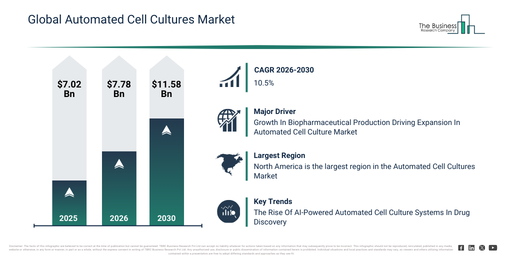
    The automated cell cultures market size has shown significant development recently. It is forecast to rise from $7.02 billion in 2025 to $7.78 billion in 2026, achieving a compound annual growth rate (CAGR) of 10.8%. The increase observed in previous periods can be linked to intensified biopharmaceutical research, a growing requirement for consistent cell culture methods, the expansion of initiatives for discovering new drugs, the introduction of adaptable automation solutions, and an uplift in academic life science studies.

    The automated cell cultures market is projected to experience substantial expansion over the coming years. This market is forecast to reach $11.58 billion by 2030, exhibiting a compound annual growth rate (CAGR) of 10.5%. This anticipated growth during the forecast period is driven by factors such as increased investments in cell and gene therapy manufacturing, an escalating demand for high-throughput screening, the broadening scope of personalized medicine research, the increasing integration of automation within laboratories, and a heightened emphasis on scalable biologics production. Key trends shaping the market during this period involve the increasing implementation of fully automated cell culture platforms, a rise in the adoption of robotic liquid handling systems, expanding applications of scalable cell culture automation, the widening use of closed-system cell processing, and an intensified focus on ensuring reproducibility and stringent sterility control.

    Download A Free Sample Report For Comprehensive Market Insights:

    https://www.thebusinessresearchcompany.com/sample.aspx?id=20499&type=smp

    What Market Drivers Are Helping Shape The Automated Cell Cultures Market Expansion?

    Increased biopharmaceutical production is anticipated to drive the expansion of the automated cell cultures market in the future. Biopharmaceuticals are defined as medical drugs manufactured through biotechnology, encompassing methods such as recombinant DNA technology and cell culture techniques. The rising demand for biopharmaceuticals stems from their capacity to provide targeted and effective treatments with reduced side effects when contrasted with conventional therapies. Automated cell culture improves efficiency and consistency in biopharmaceutical manufacturing by optimizing cell growth, monitoring, and harvesting procedures. As an illustration, Sartorius, an international life science technology firm based in Germany, reported that global sales of biopharmaceutical drugs climbed by approximately 9% to attain USD 458 billion in 2024 by July 2025, marking an increase from the prior year and representing 41% of the total pharmaceutical market, a rise from 40% in 2023. Consequently, the expanding production of biopharmaceuticals is fueling the growth of the automated cell cultures market.

    Which Segment Divisions Form The Structure Of The Automated Cell Cultures Market?

    The automated cell cultures market covered in this report is segmented –

    1) By Type: Modular Automation, Whole Label Automation

    2) By Equipment Type: Automated Liquid Handling Systems, Microplate Readers, Robotic Systems, Automated Storage And Retrieval Systems, Other Equipment Types

    3) By Application: Biopharmaceuticals Production, Diagnostics, Gene Therapy, Drug Screening And Development, Toxicity Testing, Stem Cell Research, Tissue Engineering And Regenerative Medicine, Personalized Medicine, Other Applications

    4) By End User: Pharmaceuticals And Biotechnology Companies, Hospital And Diagnostic Laboratories, Research Institutes, Cell Banks

    Subsegments:

    1) By Modular Automation: Automated Cell Culture Systems, Robotic Workstations, Modular Bioreactors

    2) By Whole Label Automation: Fully Automated Cell Culture Systems, Integrated Cell Culture Platforms, Automated Cell Handling Solutions

    What Trends Are Influencing The Automated Cell Cultures Market Outlook?

    Companies prominent in the automated cell cultures market are strategically investing in technological advancements, such as integrated artificial intelligence (AI)-powered software, to gain a competitive edge. This integrated AI-powered software in automated cell culture optimizes experimental conditions and enhances operational efficiency by analyzing real-time data to foster better cell growth and productivity. For example, in October 2023, Molecular Devices LLC, a US-based biotechnology company, unveiled the CellXpress.ai Automated Cell Culture System, a significant innovation aimed at streamlining drug discovery processes through advanced automation and artificial intelligence. This system is engineered to simplify complex cell culture workflows, allowing researchers to allocate their attention to more critical tasks while simultaneously boosting efficiency and reliability.

    Which Companies Form The Competitive Landscape Of The Automated Cell Cultures Market?

    Major companies operating in the automated cell cultures market are Hitachi Ltd., Panasonic Holdings Corporation, Thermo Fisher Scientific Inc., Danaher Corporation, Corning Incorporated, Lonza Group AG, Nikon healthcare, Sartorius AG, Beckman Coulter Inc., Celltrio Inc., Eppendorf AG, Tecan Trading AG, Shibuya Corp, Hamilton Company, Molecular Devices LLC, FORMULATRIX, Highres Biosolutions, Biotron Healthcare, Agilent Technologies, Miltenyi Biotec

    Access The Complete Automated Cell Cultures Market Report:

    https://www.thebusinessresearchcompany.com/report/automated-cell-cultures-global-market-report

    Which Region Is The Primary Market For The Automated Cell Cultures Market?

    North America was the largest region in the automated cell cultures market in 2025. Asia-Pacific is expected to be the fastest-growing region in the forecast period. The regions covered in the automated cell cultures market report are Asia-Pacific, South East Asia, Western Europe, Eastern Europe, North America, South America, Middle East, Africa.

    Access Automated Cell Cultures Market Report for Deeper Competitive Insights

    https://www.thebusinessresearchcompany.com/customise?id=20499&type=smp

    Browse Through More Reports Similar to the Global Automated Cell Cultures Market 2026, By The Business Research Company

    Cellular Telephone Global Market Report 2026

    https://www.thebusinessresearchcompany.com/report/cellular-telephone-global-market-report

    Cell Cultures Global Market Report 2026

    https://www.thebusinessresearchcompany.com/report/cell-cultures-global-market-report

    Cells Therapy Global Market Report 2026

    https://www.thebusinessresearchcompany.com/report/cells-therapy-global-market-report

    Get in touch with us:

    The Business Research Company: https://www.thebusinessresearchcompany.com/

    Americas: +1 310-496-7795

    Asia: +44 7882 955267 & +91 8897263534

    Europe: +44 7882 955267

    Email us at: marketing@tbrc.info

    Follow us on:

    LinkedIn: https://in.linkedin.com/company/the-business-research-company

    YouTube: https://www.youtube.com/channel/UC24_fI0rV8cR5DxlCpgmyFQ

    Global Market Model: https://www.thebusinessresearchcompany.com/global-market-model
  • Automated Cell Culture Equipment Market Outlook Assessing Future Opportunities And Growth Prospects

    Automated Cell Culture Equipment Market Outlook Assessing Future Opportunities And Growth Prospects

    The Business Research Company’s 2026 market reports feature enhanced tools like market attractiveness analysis, TAM assessment, and company scoring matrices, along with interactive dashboards, deeper supply chain insights, and startup coverage strengthening the depth, usability, and strategic value of insights.

    By 2030, How Much Growth In Market Size Is Expected For The Automated Cell Culture Equipment Market?

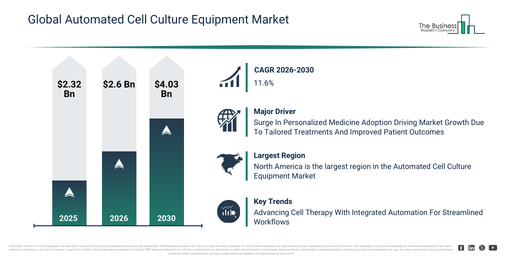
    The automated cell culture equipment market has seen considerable growth in recent years. It is forecast to grow from $2.32 billion in 2025 to $2.6 billion in 2026, demonstrating a compound annual growth rate (CAGR) of 11.9%. The historical expansion of this market can be attributed to several factors, including the surge in pharmaceutical and biologics research, an increasing requirement for consistent cell culture outcomes, the expansion of drug discovery pipelines, the rising complexity of cell-based assays, and the early adoption of laboratory automation.

    The automated cell culture equipment market is anticipated to experience substantial growth in the upcoming years. It is forecast to achieve a valuation of $4.03 billion by 2030, expanding at a compound annual growth rate (CAGR) of 11.6%. This projected growth can be attributed to increased investments in regenerative medicine, the widening scope of cell and gene therapy pipelines, a rising demand for scalable cell culture solutions, an enhanced focus on reducing laboratory variability, and the increasing incorporation of AI-driven lab automation. Significant trends expected during this period include the expanded deployment of fully automated cell culture platforms, a greater adoption of high-throughput cell processing systems, the growing integration of robotics and imaging technologies, the expansion of closed-system and contamination-controlled workflows, and an intensified emphasis on reproducibility and process standardization.

    Download A Free Sample Report For Comprehensive Market Insights:

    https://www.thebusinessresearchcompany.com/sample.aspx?id=30201&type=smp

    Which Significant Factors Are Encouraging Growth In The Automated Cell Culture Equipment Market?

    The increasing acceptance of personalized medicine is anticipated to drive the expansion of the automated cell culture equipment market in the future. Personalized medicine customizes healthcare interventions according to an individual’s genetic makeup, lifestyle choices, and environmental influences, leading to more accurate and impactful treatment. The growing uptake of personalized medicine is fueled by its capacity to deliver more efficacious treatments, given that therapies are specifically designed for a patient’s unique genetic and biological characteristics, thereby enhancing patient results. Automated cell culture devices facilitate personalized medicine through the provision of accurate, rapid, and consistent cell culture procedures, which are crucial for developing therapies tailored to individual patients and for bespoke drug screening. As an illustration, in February 2024, the Personalized Medicine Coalition, a US-based non-profit body, disclosed that during 2023, the FDA authorized 16 novel personalized treatments for individuals suffering from rare diseases, marking a substantial rise from the six treatments approved in 2022. Consequently, the increased embracing of personalized medicine is stimulating the expansion of the automated cell culture equipment market.

    How Are Different Segment Groups Identified Within The Automated Cell Culture Equipment Market?

    The automated cell culture equipment market covered in this report is segmented –

    1) By Product Type: Instruments, Consumables, Software

    2) By Automation Level: Fully Automated Systems, Semi-Automated Systems, Manual Systems With Automation Features

    3) By Application: Drug Discovery And Development, Regenerative Medicine, Toxicology Testing, Vaccine Development, Stem Cell Research

    4) By End-User: Pharmaceutical Companies, Biotechnology Companies, Academic And Research Institutions, Contract Research Organizations (CROs), Diagnostics And Testing Laboratories

    Subsegments:

    1) By Instruments: Automated Cell Culture Systems, Bioreactors, Incubators, Centrifuges, Cell Counters And Analyzers, Liquid Handling Systems, Cell Imaging Systems, Robotic Arms And Manipulators, Cell Harvesting Systems, Filtration And Separation Devices

    2) By Consumables: Culture Media, Reagents And Supplements, Microplates And Culture Dishes, Flasks And Bottles, Single-Use Bags And Tubing, Filters And Membranes, Pipette Tips And Cartridges, Cell Culture Inserts, Sterile Connectors And Clamps

    3) By Software: Data Management Software, Process Control And Monitoring Software, Laboratory Information Management Systems (LIMS), Image Analysis Software, Workflow Automation Software, Quality Control And Compliance Software, Remote Monitoring And Cloud Integration Tools

    Which Trends Are Expected To Shape The Automated Cell Culture Equipment Market?

    Major companies operating in the automated cell culture equipment market are focusing on innovations in seamless workflow integration, such as closed single-use consumable systems, to improve process standardization, reduce contamination risks, minimize manual handling, and enable efficient scaling from research to clinical manufacturing. A closed single-use consumable system is a sterile, disposable setup that integrates multiple cell culture processes within one unit, effectively lowering contamination risks and enabling scalable, reproducible workflows. For instance, in March 2025, Limula SA, a Switzerland-based biotechnology company specializing in automated cell therapy manufacturing solutions, launched LimONE. This integrated system unifies hardware, software, and single-use consumables to simplify and standardize cell culture and processing workflows. This launch represents the introduction of a commercial product catering to both research and GMP-compliant manufacturing sectors. LimONE facilitates faster technology transfer, lowers labor and infrastructure costs, and supports the scalable production of advanced cell therapies, including CAR-T and gene-edited stem cells. The system enhances workflow efficiency and ensures reproducibility across different cell therapy processes. Overall, this product launch strengthens Limula’s presence in the automated cell culture equipment market while simultaneously supporting regulatory compliance.

    Who Are The Key Market Participants In The Automated Cell Culture Equipment Market?

    Major companies operating in the automated cell culture equipment market are F. Hoffmann-La Roche Ltd, Hitachi Ltd., Merck KGaA, Panasonic Holdings Corporation, Thermo Fisher Scientific Inc., Danaher Corporation, Becton Dickinson and Company, Corning Incorporated, Lonza Group AG, Olympus Corporation, Sartorius AG, Eppendorf SE, Tecan Group Ltd., STEMCELL Technologies Inc., Miltenyi Biotec B.V. & Co. KG, Hamilton Company, Greiner Bio-One International GmbH, Solida Biotech GmbH, Biostream International B.V., HiMedia Laboratories Pvt. Ltd., Kuhner Shaker AG, Cellexus International Ltd.

    Access The Complete Automated Cell Culture Equipment Market Report:

    https://www.thebusinessresearchcompany.com/report/global-automated-cell-culture-equipment-market-report

    Which Geographic Region Represents The Largest Automated Cell Culture Equipment Market Share?

    North America was the largest region in the automated cell culture equipment market in 2025. Asia-Pacific is expected to be the fastest-growing region in the forecast period. The regions covered in the automated cell culture equipment market report are Asia-Pacific, South East Asia, Western Europe, Eastern Europe, North America, South America, Middle East, Africa.

    Access Automated Cell Culture Equipment Market Report for Deeper Competitive Insights

    https://www.thebusinessresearchcompany.com/customise?id=30201&type=smp

    Browse Through More Reports Similar to the Global Automated Cell Culture Equipment Market 2026, By The Business Research Company

    Cell Cultures Global Market Report 2026

    https://www.thebusinessresearchcompany.com/report/cell-cultures-global-market-report

    Cell Cultures Global Market Report 2026

    https://www.thebusinessresearchcompany.com/report/cell-cultures-global-market-report

    Cell Culture Media Global Market Report 2026

    https://www.thebusinessresearchcompany.com/report/cell-culture-media-global-market-report

    Get in touch with us:

    The Business Research Company: https://www.thebusinessresearchcompany.com/

    Americas: +1 310-496-7795

    Asia: +44 7882 955267 & +91 8897263534

    Europe: +44 7882 955267

    Email us at: marketing@tbrc.info

    Follow us on:

    LinkedIn: https://in.linkedin.com/company/the-business-research-company

    YouTube: https://www.youtube.com/channel/UC24_fI0rV8cR5DxlCpgmyFQ

    Global Market Model: https://www.thebusinessresearchcompany.com/global-market-model

  • Autologous Cell Therapy Market Industry Forecast Reflecting Growth To $27.3 Billion By 2030

    Autologous Cell Therapy Market Industry Forecast Reflecting Growth To $27.3 Billion By 2030

    The Business Research Company’s 2026 market reports feature enhanced tools like market attractiveness analysis, TAM assessment, and company scoring matrices, along with interactive dashboards, deeper supply chain insights, and startup coverage strengthening the depth, usability, and strategic value of insights.

    What Market Value Trend Is Expected For The Autologous Cell Therapy Market From 2026 To 2030?

    The autologous cell therapy market has expanded swiftly in recent years. Its value is projected to climb from $12.14 billion in 2025 to $14.28 billion in 2026, demonstrating a compound annual growth rate (CAGR) of 17.6%. The expansion observed in the historic period can be ascribed to progress in stem cell research, the initial clinical triumphs of autologous therapies, an uptick in the prevalence of chronic diseases, the broadening array of oncology treatment choices, and increasing investments directed towards regenerative medicine.

    The autologous cell therapy market is projected for substantial expansion in the coming years, with its valuation anticipated to reach $27.31 billion by 2030, exhibiting a compound annual growth rate (CAGR) of 17.6%. This projected growth is driven by factors such as a rise in approvals for cell-based therapies, an escalating demand for personalized medicine, the broadening of manufacturing automation within cell therapy, heightened clinical trial activity, and increased healthcare expenditure on advanced therapies. Key trends anticipated during this period encompass the growing uptake of CAR T-cell therapies, an increase in the application of personalized regenerative treatments, greater incorporation of automated cell processing systems, the wider expansion of autologous stem cell applications, and a strengthened emphasis on therapeutic outcomes tailored to individual patients.

    Download A Free Sample Report For Comprehensive Market Insights:

    https://www.thebusinessresearchcompany.com/sample.aspx?id=10771&type=smp

    What Core Drivers Are Transforming The Autologous Cell Therapy Market?

    The increasing incidence of chronic diseases is projected to stimulate the growth of autologous cell therapy. A chronic disease is an ailment or medical state that persists for more than a year and necessitates ongoing medical attention. Autologous cell therapy presents a promising strategy for managing and treating these conditions by using an individual’s own cells, which are cultured and expanded outside the body before being reintroduced into the donor. For instance, in January 2023, according to the National Library of Medicine, a US-based agency, the number of individuals in the US aged 50 and older with at least 1 chronic condition is expected to reach 142.66 million by 2050. Therefore, the high prevalence of chronic diseases is a significant driver for the expansion of the autologous cell therapy market.

    What Segment Categories Are Evaluated In The Autologous Cell Therapy Market Study?

    The autologous cell therapy market covered in this report is segmented –

    1) By Therapy: Autologous Stem Cell Therapy, Autologous Cellular Immunotherapies

    2) By Source: Bone Marrow, Epidermis, Mesenchymal Stem Cells, Hematopoietic Stem Cells, Chondrocytes, Other Sources

    3) By Application: Cancer, Neurodegenerative Disorders, Cardiovascular Disorders, Autoimmune Disorders, Orthopedics, Wound Healing, Other Applications

    4) By End User: Hospitals And Clinics, Ambulatory Centers, Academics And Research, Other End-Users

    Subsegments:

    1) By Autologous Stem Cell Therapy: Hematopoietic Stem Cell Transplantation, Mesenchymal Stem Cell Therapy, Adipose-Derived Stem Cell Therapy

    2) By Autologous Cellular Immunotherapies: Chimeric Antigen Receptor (CAR) T-Cell Therapy, Tumor-Infiltrating Lymphocyte (TIL) Therapy, Dendritic Cell Therapy

    What Trends Are Affecting The Autologous Cell Therapy Market Dynamics?

    Major companies are actively involved in the autologous cell therapy market, focusing on developing technological advancements such as robotic, end-to-end manufacturing platforms for patient-specific therapies to improve process consistency, reduce contamination risk, and accelerate time-to-patient. An end-to-end manufacturing platform integrates multiple cell-processing steps, including isolation, activation, transduction, expansion, formulation, and harvest within a single closed system, thereby reducing manual intervention compared to traditional open flask- or bag-based methods. For instance, in April 2025, Cellares, a US-based integrated development and manufacturing organization, introduced the Cell Shuttle system, specifically designed for autologous cell therapies. This product automates the entire workflow in a functionally closed cassette, enhances reproducibility, minimizes contamination risk, and enables scalable, patient-specific manufacturing, ultimately supporting faster development and delivery of personalized therapies.

    Which Organizations Are Operating Within The Autologous Cell Therapy Market?

    Major companies operating in the autologous cell therapy market are Novartis AG, Bristol-Myers Squibb Company, Gilead Sciences Inc., Johnson & Johnson, F. Hoffmann-La Roche Ltd., Vericel Corporation, Dendreon Pharmaceuticals LLC, Brainstorm Cell Therapeutics Inc., Caladrius Biosciences Inc., Castle Creek Biosciences Inc., Pharmicell Co. Ltd., Medipost Co. Ltd., Tego Science AB, Holostem Terapie Avanzate S.r.l., Opexa Therapeutics Inc., CORESTEM Inc., Takeda Pharmaceutical Company Limited, CSL Limited, AstraZeneca plc, Iovance Biotherapeutics Inc., Adaptimmune Therapeutics plc, Autolus Therapeutics plc

    Access The Complete Autologous Cell Therapy Market Report:

    https://www.thebusinessresearchcompany.com/report/autologous-cell-therapy-global-market-report

    Which Region Leads The Autologous Cell Therapy Market By Size?

    North America was the largest region in the autologous cell therapy market in 2025.Asia-pacific is expected to be the fastest-growing region in the forecast period. The regions covered in the autologous cell therapy market report are Asia-Pacific, South East Asia, Western Europe, Eastern Europe, North America, South America, Middle East, Africa.

    Access Autologous Cell Therapy Market Report for Deeper Competitive Insights

    https://www.thebusinessresearchcompany.com/customise?id=10771&type=smp

    Browse Through More Reports Similar to the Global Autologous Cell Therapy Market 2026, By The Business Research Company

    Cells Therapy Global Market Report 2026

    https://www.thebusinessresearchcompany.com/report/cells-therapy-global-market-report

    Autologous Stem Cell And Non Stem Cell Based Therapies Global Market Report 2026

    https://www.thebusinessresearchcompany.com/report/autologous-stem-cell-and-non-stem-cell-based-therapies-global-market-report

    Cell Therapy Technologies Global Market Report 2026

    https://www.thebusinessresearchcompany.com/report/cell-therapy-technologies-global-market-report

    Get in touch with us:

    The Business Research Company: https://www.thebusinessresearchcompany.com/

    Americas: +1 310-496-7795

    Asia: +44 7882 955267 & +91 8897263534

    Europe: +44 7882 955267

    Email us at: marketing@tbrc.info

    Follow us on:

    LinkedIn: https://in.linkedin.com/company/the-business-research-company

    YouTube: https://www.youtube.com/channel/UC24_fI0rV8cR5DxlCpgmyFQ

    Global Market Model: https://www.thebusinessresearchcompany.com/global-market-model