Month: May 2026

  • Atrial Fibrillation (Afib) Alert Wearable App Market Trends And Growth Outlook Across The 2026–2030 Forecast Period

    Atrial Fibrillation (Afib) Alert Wearable App Market Trends And Growth Outlook Across The 2026–2030 Forecast Period

    The Business Research Company’s 2026 market reports feature enhanced tools like market attractiveness analysis, TAM assessment, and company scoring matrices, along with interactive dashboards, deeper supply chain insights, and startup coverage strengthening the depth, usability, and strategic value of insights.

    How Will The Market Value Of The Atrial Fibrillation (Afib) Alert Wearable App Market Increase Between 2026 And 2030?

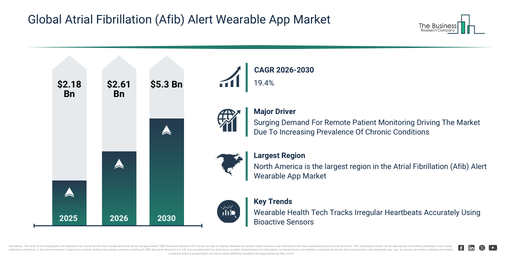
    The market for atrial fibrillation (afib) alert wearable apps has experienced rapid expansion in recent years. This market is projected to expand from $2.18 billion in 2025 to $2.61 billion in 2026, demonstrating a compound annual growth rate (CAGR) of 19.7%. Historically, this growth has been driven by factors such as the increasing prevalence of cardiovascular disorders, the widespread adoption of wearable health devices, a rising consumer awareness regarding heart health, the growth in mobile health application usage, and the expansion of remote patient monitoring programs.

    The atrial fibrillation (afib) alert wearable app market is projected for rapid expansion over the next few years, with its size expected to reach $5.3 billion by 2030, growing at a compound annual growth rate (CAGR) of 19.4%. This growth during the forecast period stems from the increasing need for proactive cardiac care solutions, the rising adoption of AI-powered wearable analytics, the expansion of telecardiology services, greater integration with electronic health records, and a heightened focus on early afib detection. Key trends anticipated in this period include the increasing use of continuous heart rhythm monitoring, growing integration with smartwatches and fitness bands, the expanding application of AI-based arrhythmia detection algorithms, the development of remote cardiac care platforms, and a stronger emphasis on preventive heart health.

    Download A Free Sample Report For Comprehensive Market Insights:

    https://www.thebusinessresearchcompany.com/sample.aspx?id=28941&type=smp

    Which Strategic Drivers Are Supporting The Atrial Fibrillation (Afib) Alert Wearable App Market Development?

    The escalating need for remote patient monitoring is anticipated to drive the expansion of the atrial fibrillation (Afib) alert wearable app market in the future. Remote patient monitoring (RPM) involves employing digital technologies and electronic gadgets to gather health information from patients beyond conventional medical environments, thereby enabling healthcare professionals to oversee, track, and manage their health from a distance. The increasing uptake of remote patient monitoring stems from a growing population afflicted with chronic ailments like heart disease, diabetes, and hypertension, all of which necessitate continuous oversight and prompt medical actions for effective management. An atrial fibrillation (Afib) alert wearable app aids remote patient monitoring by persistently monitoring heart rhythms, identifying anomalies instantaneously, and securely relaying this information to healthcare providers. This facilitates prompt medical intervention and efficient management of a patient’s condition, reducing the need for numerous in-person appointments. Illustratively, in August 2023, data from Vivalink, a US-based healthcare technology company, indicated that a recent survey showed 84% of current RPM users intend to boost their usage in 2024. Furthermore, 45% of providers leverage RPM for critical monitoring, including hospital-at-home initiatives, and 77% foresee RPM-based care surpassing conventional in-patient hospital care within the next five years. Consequently, the heightened demand for remote patient monitoring is fueling the expansion of the atrial fibrillation (Afib) alert wearable app market.

    What Segment Types Are Included In The Atrial Fibrillation (Afib) Alert Wearable App Market Analysis?

    The atrial fibrillation (afib) alert wearable app market covered in this report is segmented –

    1) By Product Type: Standalone Apps, Integrated Wearable Devices

    2) By Platform: iPhone Operating System (iOS), Android, Other Platforms

    3) By Distribution Channel: App Stores, Direct Sales, Third-Party Vendors

    4) By Application: Remote Patient Monitoring, Personal Health Tracking, Clinical Use, Other Applications

    5) By End-User: Hospitals And Clinics, Homecare, Individuals, Other End-Users

    Subsegments:

    1) By Standalone Apps: Mobile Standalone Atrial Fibrillation (AFib) Alert Apps, Cloud-Connected Standalone Atrial Fibrillation (AFib) Alert Apps, Subscription-Based Standalone Atrial Fibrillation (AFib) Alert Apps, Personalized Standalone Atrial Fibrillation (AFib) Alert Apps

    2) By Integrated Wearable Devices: Smartwatch-Integrated Atrial Fibrillation (AFib) Alert Apps, Fitness Band-Integrated Atrial Fibrillation (AFib) Alert Apps, Medical-Grade Wearable Integrated Atrial Fibrillation (AFib) Alert Apps, Continuous Monitoring Integrated Atrial Fibrillation (AFib) Alert Apps

    Which Trends Are Influencing The Direction Of The Atrial Fibrillation (Afib) Alert Wearable App Market?

    Leading companies in the atrial fibrillation (AFib) alert wearable app market are prioritizing the development of innovative products, such as smartwatches featuring real-time electrocardiogram (ECG) monitoring, to enable early detection of irregular heart rhythms and help prevent severe cardiovascular events. These smartwatches are wearable devices that constantly track the heart’s electrical activity to identify inconsistencies, assisting users in recognizing potential atrial fibrillation (AFib) or other heart issues early on for timely medical action. For instance, in May 2023, Samsung Electronics Co. Ltd., a South Korea-based computer and electronics manufacturing company, secured U.S. Food and Drug Administration (FDA) clearance for its Irregular Heart Rhythm Notification (IHRN) feature on the Samsung Health Monitor app. This feature, alongside the on-demand ECG function, proactively monitors heart rhythms indicative of atrial fibrillation (AFib), alerts users to possible irregularities, and prompts them to seek medical attention promptly. The feature leverages the Galaxy Watch’s BioActive Sensor to continuously track heart activity in the background, providing users with real-time insights into their cardiovascular well-being. Early identification of abnormal heart rhythms allows individuals who might be asymptomatic or unaware of their condition to take preventative steps and consult healthcare professionals swiftly. This innovation reflects a wider trend within the wearable technology market, where companies are increasingly integrating advanced health monitoring capabilities into consumer devices to empower users with actionable health data and support the proactive management of chronic conditions like AFib.

    Which Companies Are Engaged In The Atrial Fibrillation (Afib) Alert Wearable App Market Environment?

    Major companies operating in the atrial fibrillation (afib) alert wearable app market are Apple Inc., Google LLC, Samsung Electronics Co. Ltd., Huawei Technologies Co. Ltd., Koninklijke Philips N.V., Omron Healthcare Inc., Garmin Ltd., iRhythm Technologies Inc., Beurer GmbH, Bittium Corporation, Eko Devices Inc., AliveCor Inc., VitalConnect Inc., VivaLNK Inc., Biotricity Inc., Preventicus GmbH, cardiacSense Ltd., HeartBeam Inc., FibriCheck BV, CardioSignal Inc.

    Access The Complete Atrial Fibrillation (Afib) Alert Wearable App Market Report:

    https://www.thebusinessresearchcompany.com/report/atrial-fibrillation-afib-alert-wearable-app-global-market-report

    Which Region Is The Primary Market For The Atrial Fibrillation (Afib) Alert Wearable App Market?

    North America was the largest region in the atrial fibrillation (Afib) alert wearable app market in 2025. Asia-Pacific is expected to be the fastest-growing region in the forecast period. The regions covered in the atrial fibrillation (afib) alert wearable app market report are Asia-Pacific, South East Asia, Western Europe, Eastern Europe, North America, South America, Middle East, Africa.

    Access Atrial Fibrillation (Afib) Alert Wearable App Market Report for Deeper Competitive Insights

    https://www.thebusinessresearchcompany.com/customise?id=28941&type=smp

    Browse Through More Reports Similar to the Global Atrial Fibrillation (Afib) Alert Wearable App Market 2026, By The Business Research Company

    Ventricular Fibrillation Global Market Report 2026

    https://www.thebusinessresearchcompany.com/report/ventricular-fibrillation-global-market-report

    Arrhythmia Global Market Report 2026

    https://www.thebusinessresearchcompany.com/report/arrhythmia-global-market-report

    Atrial Septal Defect Global Market Report 2026

    https://www.thebusinessresearchcompany.com/report/atrial-septal-defect-global-market-report

    Get in touch with us:

    The Business Research Company: https://www.thebusinessresearchcompany.com/

    Americas: +1 310-496-7795

    Asia: +44 7882 955267 & +91 8897263534

    Europe: +44 7882 955267

    Email us at: marketing@tbrc.info

    Follow us on:

    LinkedIn: https://in.linkedin.com/company/the-business-research-company

    YouTube: https://www.youtube.com/channel/UC24_fI0rV8cR5DxlCpgmyFQ

    Global Market Model: https://www.thebusinessresearchcompany.com/global-market-model
  • Atrial Fibrillation Market Expansion Outlook Through 2030 With Revenue Growth Insights

    Atrial Fibrillation Market Expansion Outlook Through 2030 With Revenue Growth Insights

    The Business Research Company’s 2026 market reports feature enhanced tools like market attractiveness analysis, TAM assessment, and company scoring matrices, along with interactive dashboards, deeper supply chain insights, and startup coverage strengthening the depth, usability, and strategic value of insights.

    What Will Be The Estimated Market Size Of The Atrial Fibrillation Market By 2030?

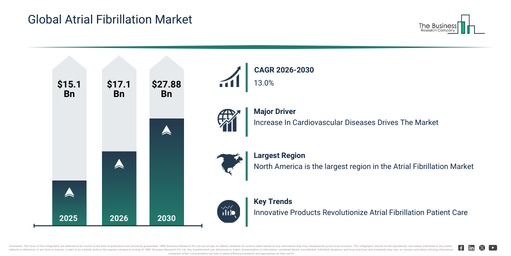
    The atrial fibrillation market size has experienced rapid expansion in recent years. It is projected to grow from $15.1 billion in 2025 to $17.1 billion in 2026, demonstrating a compound annual growth rate (CAGR) of 13.2%. The increase observed in the historic period is attributable to the rising prevalence of atrial fibrillation in aging populations, enhanced access to cardiac diagnostic technologies, the broader availability of anticoagulant therapies, the expansion of electrophysiology labs, and increasing awareness of stroke prevention.

    The atrial fibrillation market is projected to experience substantial expansion over the coming years. By 2030, this market is anticipated to reach $27.88 billion, demonstrating a compound annual growth rate (CAGR) of 13.0%. This projected growth is driven by several factors, including a heightened demand for customized arrhythmia treatments, the increasing uptake of wearable cardiac monitoring technology, the broadening scope of hybrid treatment methods, escalating investments in electrophysiology infrastructure, and a sharpened focus on long-term rhythm management results. Key trends anticipated during this period encompass the growing prevalence of catheter ablation procedures, the expanding utilization of sophisticated cardiac mapping systems, a stronger inclination towards minimally invasive interventions, the proliferation of pharmacological rhythm control treatments, and an intensified emphasis on early detection and continuous monitoring.

    Download A Free Sample Report For Comprehensive Market Insights:

    https://www.thebusinessresearchcompany.com/sample.aspx?id=8007&type=smp

    What Major Growth Factors Are Impacting The Atrial Fibrillation Market?

    The growing prevalence of cardiovascular diseases is projected to propel the atrial fibrillation market. These diseases represent a category of ailments impacting the heart and blood vessels, encompassing conditions such as coronary artery disease, heart failure, and arrhythmias, which present a substantial threat to overall cardiovascular well-being. This rise in cardiovascular conditions highlights an increasing need for advanced diagnostic and therapeutic approaches, thus advancing the atrial fibrillation market as healthcare providers and relevant sectors address the escalating issues linked to the rising occurrence of these illnesses. Illustratively, in October 2024, the CDC (Centers for Disease Control and Prevention), a U.S-based government agency, stated that in 2023, cardiovascular disease was responsible for 919,032 deaths. This figure accounts for 1 in every 3 deaths. Additionally, approximately 805,000 individuals in the United States experience a heart attack annually. Consequently, the substantial global burden of cardiovascular diseases is set to stimulate the atrial fibrillation market.

    Which Segment Divisions Form The Structure Of The Atrial Fibrillation Market?

    The atrial fibrillation market covered in this report is segmented –

    1) By Type: Surgical, Non-Surgical

    2) By Technology: Radiofrequency, Laser, Cryotherapy, Other Technologies

    3) By Treatment Type: Pharmacological Treatment, Non-pharmacological Treatment, Maze Surgery, Electric Cardioversion

    4) By End User: Hospitals, Electrophysiology Labs, Ambulatory Surgical Centers

    Subsegments:

    1) By Surgical: Catheter Ablation, Maze Procedure, Hybrid Ablation Procedures

    2) By Non-Surgical: Antiarrhythmic Drugs, Anticoagulants, Cardioversion Procedures

    What Trends Are Driving Changes In The Atrial Fibrillation Market?

    Leading companies in the atrial fibrillation market are introducing innovative products and solutions, such as patient-centric clinical decision support tools, to strengthen their market standing. Clinical decision support tools (CDST) are software or electronic systems designed to assist healthcare professionals in making informed and timely decisions concerning patient care. These tools are developed to integrate relevant clinical information from various sources. For instance, in August 2023, GE HealthCare, a US-based multinational medical technology company, launched CardioVisio. This patient-centered clinical decision support tool aims to help doctors implement evidence-based clinical guidance, adhering to current atrial fibrillation guidelines, and to visualize longitudinal data from multiple sources pertinent to illness progression. CardioVisio for atrial fibrillation can aid cardiologists by streamlining clinician image interpretation and offering a view of the patient’s cardiac history and their entire healthcare journey, including previous diagnoses, prescribed medications, interventions, and comorbidities.

    Who Are The Prominent Players Across The Atrial Fibrillation Market?

    Major companies operating in the atrial fibrillation market are AtriCure Inc, Abbott Laboratories, Medtronic PLC, Boston Scientific Corporation, Johnson & Johnson, Boehringer Ingelheim International GmbH, Bristol-Myers Squibb Company, Sanofi SA, Bayer AG, Pfizer Inc, Daiichi Sankyo Company Limited, AstraZeneca PLC, Biotronik SE & Co KG, Kardium Inc, Acutus Medical Inc, Apama Medical Inc, CardioFocus Inc, AliveCor Inc, iRhythm Technologies Inc, BioSig Technologies Inc

    Access The Complete Atrial Fibrillation Market Report:

    https://www.thebusinessresearchcompany.com/report/atrial-fibrillation-global-market-report

    Which Geographic Region Represents The Largest Atrial Fibrillation Market Share?

    North America was the largest region in the atrial fibrillation market in 2025. Asia-Pacific is expected to be the fastest-growing region in the atrial fibrillation market report forecast period. The regions covered in the atrial fibrillation market report are Asia-Pacific, South East Asia, Western Europe, Eastern Europe, North America, South America, Middle East, Africa.

    Access Atrial Fibrillation Market Report for Deeper Competitive Insights

    https://www.thebusinessresearchcompany.com/customise?id=8007&type=smp

    Browse Through More Reports Similar to the Global Atrial Fibrillation Market 2026, By The Business Research Company

    Wearable Heart Monitoring Devices Global Market Report 2026

    https://www.thebusinessresearchcompany.com/report/wearable-heart-monitoring-devices-global-market-report

    Cardiac Arrhythmia Monitoring Devices Global Market Report 2026

    https://www.thebusinessresearchcompany.com/report/cardiac-arrhythmia-monitoring-devices-global-market-report

    Arrhythmia Monitoring Devices Global Market Report 2026

    https://www.thebusinessresearchcompany.com/report/arrhythmia-monitoring-devices-global-market-report

    Get in touch with us:

    The Business Research Company: https://www.thebusinessresearchcompany.com/

    Americas: +1 310-496-7795

    Asia: +44 7882 955267 & +91 8897263534

    Europe: +44 7882 955267

    Email us at: marketing@tbrc.info

    Follow us on:

    LinkedIn: https://in.linkedin.com/company/the-business-research-company

    YouTube: https://www.youtube.com/channel/UC24_fI0rV8cR5DxlCpgmyFQ

    Global Market Model: https://www.thebusinessresearchcompany.com/global-market-model
  • Atorvastatin Market Industry Analysis Covering Trends, Drivers, And Future Outlook

    Atorvastatin Market Industry Analysis Covering Trends, Drivers, And Future Outlook

    The Business Research Company’s 2026 market reports feature enhanced tools like market attractiveness analysis, TAM assessment, and company scoring matrices, along with interactive dashboards, deeper supply chain insights, and startup coverage strengthening the depth, usability, and strategic value of insights.

    What Is The Estimated Growth In Market Size Of The Atorvastatin Market During 2026–2030?

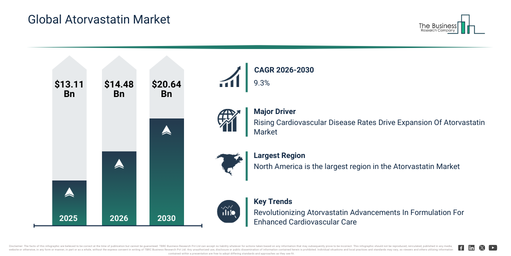
    The atorvastatin market size has seen swift expansion in recent years. It is projected to grow from $13.11 billion in 2025 to $14.48 billion in 2026, achieving a compound annual growth rate (CAGR) of 10.5%. This historical growth is primarily due to the increasing global prevalence of cardiovascular diseases, broad clinical acceptance of statin therapy, expanding rates of lipid disorder diagnosis, the availability of mature chemical synthesis pathways, and strong market penetration of generic atorvastatin products.

    The atorvastatin market is projected to experience robust expansion over the coming years, with its size anticipated to reach $20.64 billion by 2030, exhibiting a compound annual growth rate (CAGR) of 9.3%. This forecasted growth is attributed to factors such as an increasing aging population with cardiovascular risks, a growing emphasis on preventive cardiology, the rising adoption of combination lipid-lowering therapies, the expansion of pharmaceutical manufacturing in emerging markets, and an increasing focus on green chemistry approaches in drug production. Major trends expected during this period include the increasing adoption of biocatalytic manufacturing processes, a rising demand for generic statin formulations, a growing focus on high-purity active pharmaceutical ingredients, the expansion of large-scale commercial production capacities, and an enhanced emphasis on cost-optimized drug manufacturing.

    Download A Free Sample Report For Comprehensive Market Insights:

    https://www.thebusinessresearchcompany.com/sample.aspx?id=16344&type=smp

    What Market Drivers Are Helping Shape The Atorvastatin Market Expansion?

    The increasing incidence of cardiovascular diseases is projected to boost the expansion of the atorvastatin market in the future. These conditions, known as CVDs, encompass various disorders affecting the heart and blood vessels. The rise in cardiovascular disease prevalence is attributed to a combination of evolving lifestyles, demographic shifts, and environmental factors. Atorvastatin plays a crucial role in substantially lowering the risk of major cardiovascular events such as heart attacks and strokes by addressing these key issues. Its widespread adoption among patients with high cholesterol and other risk factors for CVDs has been instrumental in mitigating the overall burden of cardiovascular diseases. For instance, in January 2024, the American Heart Association, a US-based nonprofit organization, reported a slight increase in the total number of deaths in the cardiovascular sector this year, reaching 931,578. This marked a marginal rise of 3,000 fatalities compared to the previous year’s figure of 928,741. Therefore, the growing prevalence of cardiovascular diseases is stimulating the growth of the atorvastatin market.

    How Are Different Segment Groups Identified Within The Atorvastatin Market?

    The atorvastatin market covered in this report is segmented –

    1) By Type: Chemical Synthesis, Biocatalysis

    2) By Therapeutic Indication: Hypercholesterolemia, Dyslipidemia, Cardiovascular Disease Prevention, Other Therapeutic Indications

    3) By Application: Hospital Pharmacy, Retail Pharmacy, Online Pharmacy

    Subsegments:

    1) By Chemical Synthesis: Traditional Chemical Synthesis Of Atorvastatin, Semi-Synthetic Atorvastatin Production, Large-Scale Chemical Synthesis For Commercial Production

    2) By Biocatalysis: Enzyme-Catalyzed Synthesis Of Atorvastatin, Biocatalytic Pathways For Efficient Production, Green Chemistry Approaches In Atorvastatin Manufacturing, Biocatalysis For Higher Yield And Purity

    Which Trends Are Shaping The Atorvastatin Market Landscape?

    Leading companies active in the atorvastatin market are focused on developing innovative products, such as ready-made liquid oral suspension, to improve the treatment of high cholesterol and certain risk factors for heart disease or stroke. A ready-made liquid oral suspension offers a convenient and effective pharmaceutical formulation that simplifies the administration of medications, especially for patients who experience difficulty with solid dosage forms. For instance, in June 2023, CMP Pharma, Inc., a US-based pharmaceutical company, launched Atorvaliq (atorvastatin calcium) Oral Suspension, 20 mg/5 mL, which received approval from the Food and Drug Administration, a US-based government agency. Atorvaliq is specifically designed for a subset of patients who require atorvastatin but suffer from dysphagia or difficulty swallowing tablets. Its availability provides healthcare providers and suitable patients with a convenient, safe, and FDA-approved liquid formulation option.

    Which Companies Form The Competitive Landscape Of The Atorvastatin Market?

    Major companies operating in the atorvastatin market are Zydus Lifesciences, Pfizer Inc., Viatris Inc., Teva Pharmaceutical Industries Ltd., Hetero Ltd., Sun Pharmaceutical Industries Ltd., Dr. Reddy’s Laboratories Ltd., Cadila Pharmaceuticals Ltd., Apotex Pharmachem Inc., Glenmark Pharmaceuticals Ltd., Alembic Pharmaceuticals Ltd., Centrient Pharmaceuticals, Accord Healthcare Ltd., Wockhardt Ltd., Zhejiang Hisun Pharmaceutical Co. Ltd., Unichem Laboratories Ltd., Morepen, Ind-Swift Labs Ltd., Smilax Laboratories Limited, Saneca Pharmaceuticals AS, Srini Pharmaceuticals Pvt. Ltd., Suvan Lifesciences Ltd., Zenfold Sustainable Technologies

    Access The Complete Atorvastatin Market Report:

    https://www.thebusinessresearchcompany.com/report/atorvastatin-global-market-report

    Which Region Leads The Atorvastatin Market By Size?

    North America was the largest region in the atorvastatin market in 2025. Asia-Pacific is expected to be the fastest-growing region in the forecast period. The regions covered in the atorvastatin market report are Asia-Pacific, South East Asia, Western Europe, Eastern Europe, North America, South America, Middle East, Africa.

    Access Atorvastatin Market Report for Deeper Competitive Insights

    https://www.thebusinessresearchcompany.com/customise?id=16344&type=smp

    Browse Through More Reports Similar to the Global Atorvastatin Market 2026, By The Business Research Company

    Atherosclerosis Drugs Global Market Report 2026

    https://www.thebusinessresearchcompany.com/report/atherosclerosis-drugs-global-market-report

    Aspirin Global Market Report 2026

    https://www.thebusinessresearchcompany.com/report/aspirin-global-market-report

    Oleoresin Global Market Report 2026

    https://www.thebusinessresearchcompany.com/report/oleoresin-global-market-report

    Get in touch with us:

    The Business Research Company: https://www.thebusinessresearchcompany.com/

    Americas: +1 310-496-7795

    Asia: +44 7882 955267 & +91 8897263534

    Europe: +44 7882 955267

    Email us at: marketing@tbrc.info

    Follow us on:

    LinkedIn: https://in.linkedin.com/company/the-business-research-company

    YouTube: https://www.youtube.com/channel/UC24_fI0rV8cR5DxlCpgmyFQ

    Global Market Model: https://www.thebusinessresearchcompany.com/global-market-model
  • Atopic Dermatitis Clinical Trials Market Forecast Assessing Growth Potential And Industry Direction

    Atopic Dermatitis Clinical Trials Market Forecast Assessing Growth Potential And Industry Direction

    The Business Research Company’s 2026 market reports feature enhanced tools like market attractiveness analysis, TAM assessment, and company scoring matrices, along with interactive dashboards, deeper supply chain insights, and startup coverage strengthening the depth, usability, and strategic value of insights.

    What Market Value Expansion Is Expected For The Atopic Dermatitis Clinical Trials Market Over The Forecast Period?

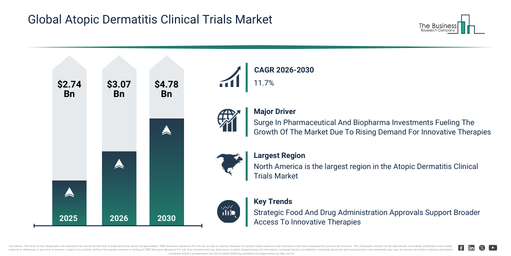
    The atopic dermatitis clinical trials market size has experienced rapid growth in recent years. It is anticipated to expand from $2.74 billion in 2025 to $3.07 billion in 2026, demonstrating a compound annual growth rate (CAGR) of 12.0%. The expansion observed in the past can be attributed to several factors, including the increasing prevalence of atopic dermatitis, the expansion of dermatology-focused drug pipelines, rising clinical research investments, the growing participation of CROs in dermatology trials, and improvements in trial design methodologies.

    The market for atopic dermatitis clinical trials is anticipated to experience significant expansion in the coming years. This market is projected to reach $4.78 billion by 2030, exhibiting a compound annual growth rate (CAGR) of 11.7%. Factors driving this growth during the forecast period include an increasing demand for innovative biologics and JAK inhibitors, the wider adoption of decentralized clinical trials, a greater reliance on real-world evidence studies, the broadening of personalized treatment methodologies, and more regulatory approvals for advanced therapeutic options. Key trends anticipated for the forecast period encompass a growing integration of biologic and targeted therapies into trials, an uptick in the utilization of digital tools for patient monitoring, a stronger focus on trial designs that prioritize patients, the expansion of multicenter studies in their late phases, and an increased emphasis on endpoints related to long-term safety and quality of life.

    Download A Free Sample Report For Comprehensive Market Insights:

    https://www.thebusinessresearchcompany.com/sample.aspx?id=27213&type=smp

    Which Significant Factors Are Encouraging Growth In The Atopic Dermatitis Clinical Trials Market?

    Growing investments within the pharmaceutical and biopharma sectors are anticipated to boost the expansion of the atopic dermatitis clinical trials market in the future. These investments represent the allocation of capital and funding for the research, development, production, and marketing of drugs and biological therapies. The surge in pharmaceutical and biopharma investments stems from a heightened demand for novel therapies, which provide targeted treatment solutions and enhance patient outcomes. Such investments are crucial for supporting atopic dermatitis clinical trials by financing the investigation and evaluation of new treatments, enabling scientists to conduct thorough studies that verify their safety and efficacy. For instance, in December 2024, the Association of Australian Medical Research Institutes (AAMRI), an Australia-based nonprofit organization, reported that in 2023, Australian medical-research institutes collectively received approximately AUD 2.5 billion (~ USD 1.65 billion) in total revenue. Consequently, the expanding pharmaceutical and biopharma investments are propelling the growth of the atopic dermatitis clinical trials market.

    What Segment Categories Are Evaluated In The Atopic Dermatitis Clinical Trials Market Study?

    The atopic dermatitis clinical trials market covered in this report is segmented –

    1) By Phase: Phase I, Phase II, Phase III, Phase IV

    2) By Molecule Type: Small Molecules, Large Molecules

    3) By Study Designs: Interventional, Observational

    4) By Mode: Outsourced, In-House

    5) By Industry: Contract Research Organizations, Pharmaceutical And Biotechnology Companies, Research And Academic Institutes

    Subsegments:

    1) By Phase I: Safety And tolerability studies, Dose-Escalation studies, Pharmacokinetics (PK) And Pharmacodynamics (PD) Studies

    2) By Phase II: Dose-Ranging Studies, Efficacy And Safety Studies, Randomized Controlled Trials (RCTs), Biomarker Identification Studies

    3) By Phase III: Large-Scale Efficacy Studies, Comparative Effectiveness Trials, Multicenter Randomized Trials, Long-Term Safety Assessment

    4) By Phase IV: Post-Marketing Surveillance, Real-World Evidence Studies, Drug Utilization Studies, Health Outcomes And Quality Of Life Studies

    What Trends Are Influencing The Atopic Dermatitis Clinical Trials Market Outlook?

    Leading companies operating in the atopic dermatitis clinical trials market are prioritizing the development of innovative products, such as oral inhibitors, to ensure lasting therapeutic effects. Oral inhibitors are medications taken orally that function by obstructing specific enzymes or signaling pathways implicated in disease progression. For example, in February 2023, Pfizer Inc., a US-based pharmaceutical and biotechnology company, announced that the US Food and Drug Administration had approved its supplemental New Drug Application for CIBINQO (abrocitinib). This approval broadened the drug’s application to adolescents aged 12 to under 18 who have moderate-to-severe atopic dermatitis not adequately managed by other systemic treatments or biologics. Previously, CIBINQO was approved solely for adults 18 and older. This expansion introduces a new treatment choice for younger patients suffering from difficult-to-treat AD. The decision is founded on clinical trial evidence confirming its safety and effectiveness within this age group.

    Who Are The Key Market Participants In The Atopic Dermatitis Clinical Trials Market?

    Major companies operating in the atopic dermatitis clinical trials market are Pfizer Inc., Johnson & Johnson, AbbVie Inc., Novartis International AG, Sanofi S.A., GlaxoSmithKline Plc, Eli Lilly and Company, Amgen Inc., Regeneron Pharmaceuticals Inc., Organon & Co., Charles River Laboratories International Inc., LEO Pharma A/S, QIMA Limited, Medpace Holdings Inc., Novotech Health Holdings Pte Ltd., Biocytogen Pharmaceuticals Co. Ltd., REPROCELL Inc., AnaptysBio Inc., Imavita S.A.S., Oncodesign Services S.A.S.

    Access The Complete Atopic Dermatitis Clinical Trials Market Report:

    https://www.thebusinessresearchcompany.com/report/atopic-dermatitis-clinical-trials-global-market-report

    Which Region Has The Strongest Presence In The Atopic Dermatitis Clinical Trials Market?

    North America was the largest region in the atopic dermatitis clinical trials market in 2025. Asia-Pacific is expected to be the fastest-growing region in the forecast period. The regions covered in the atopic dermatitis clinical trials market report are Asia-Pacific, South East Asia, Western Europe, Eastern Europe, North America, South America, Middle East, Africa.

    Access Atopic Dermatitis Clinical Trials Market Report for Deeper Competitive Insights

    https://www.thebusinessresearchcompany.com/customise?id=27213&type=smp

    Browse Through More Reports Similar to the Global Atopic Dermatitis Clinical Trials Market 2026, By The Business Research Company

    Dermatitis Drugs Global Market Report 2026

    https://www.thebusinessresearchcompany.com/report/dermatitis-drugs-global-market-report

    Dermatology Global Market Report 2026

    https://www.thebusinessresearchcompany.com/report/dermatology-global-market-report

    Allergic Rhinitis Global Market Report 2026

    https://www.thebusinessresearchcompany.com/report/allergic-rhinitis-global-market-report

    Get in touch with us:

    The Business Research Company: https://www.thebusinessresearchcompany.com/

    Americas: +1 310-496-7795

    Asia: +44 7882 955267 & +91 8897263534

    Europe: +44 7882 955267

    Email us at: marketing@tbrc.info

    Follow us on:

    LinkedIn: https://in.linkedin.com/company/the-business-research-company

    YouTube: https://www.youtube.com/channel/UC24_fI0rV8cR5DxlCpgmyFQ

    Global Market Model: https://www.thebusinessresearchcompany.com/global-market-model
  • Atopic Dermatitis Market Expected To Witness Revenue Growth Toward $19.53 Billion By 2030

    Atopic Dermatitis Market Expected To Witness Revenue Growth Toward $19.53 Billion By 2030

    The Business Research Company’s 2026 market reports feature enhanced tools like market attractiveness analysis, TAM assessment, and company scoring matrices, along with interactive dashboards, deeper supply chain insights, and startup coverage strengthening the depth, usability, and strategic value of insights.

    How Will The Market Value Of The Atopic Dermatitis Market Change Between 2026 And 2030?

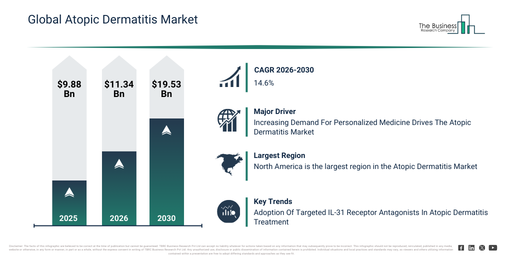
    The atopic dermatitis market has seen substantial growth in its size over recent years. Projections indicate it will expand from $9.88 billion in 2025 to $11.34 billion in 2026, achieving a compound annual growth rate (CAGR) of 14.8%. Historically, this expansion has been driven by factors such as the increasing prevalence of chronic skin conditions, the wider availability of topical corticosteroids, the expansion of dermatology care services, growing awareness of eczema management, and improved diagnostic accuracy.

    The atopic dermatitis market size is expected to show substantial growth over the next few years, projected to reach $19.53 billion by 2030, exhibiting a compound annual growth rate (CAGR) of 14.6%. This expansion during the forecast period is driven by factors such as the increasing adoption of biologics and JAK inhibitors, a heightened focus on personalized dermatology treatments, the broadening of injectable therapy options, rising investment in dermatology research, and a growing demand for long-term symptom control. Significant trends for the forecast period include the increasing uptake of biologic therapies, an elevated demand for targeted immunomodulators, an intensified focus on long-term disease management, the expansion of advanced topical formulations, and an enhanced emphasis on patient-centric treatment approaches.

    Download A Free Sample Report For Comprehensive Market Insights:

    https://www.thebusinessresearchcompany.com/sample.aspx?id=8285&type=smp

    What Core Drivers Are Transforming The Atopic Dermatitis Market?

    The rising need for personalized medicine is anticipated to boost the atopic dermatitis market in the coming years. Personalized medicine signifies a novel approach to healthcare and medical treatment, adapting medical choices, practices, interventions, and drug regimens to suit each individual patient. In the context of atopic dermatitis, personalized medicine entails pinpointing specific genetic and molecular elements that influence the condition, facilitating the creation of targeted therapies that cater to the distinct attributes of every patient. This methodology not only improves the effectiveness of treatment but also reduces unwanted side effects. As an example, the Personalized Medicine Coalition, a US-based advocacy organization for customized medical therapies, reported in February 2024 that the FDA cleared 16 new personalized treatments for individuals with rare diseases in 2023, an increase from six in 2022. Consequently, the growing demand for personalized medicine is fueling the expansion of the atopic dermatitis market.

    How Is The Atopic Dermatitis Market Examined Through Segment Analysis?

    The atopic dermatitis market covered in this report is segmented –

    1) By Drug Class: Corticosteroids, Emollients Or Moisturizers, IL-4 And PDE4 Inhibitors, Calcineurin Inhibitors, Other Drug Classes

    2) By Mode of Administration: Topical, Injectable, Oral

    3) By Distribution Channel: Hospital Pharmacies, Retail Pharmacies, Online Pharmacies

    Subsegments:

    1) By Corticosteroids: Topical Corticosteroids, Systemic Corticosteroids

    2) By Emollients Or Moisturizers: Creams and Lotions, Ointments and Balms, Barrier Repair Creams

    3) By IL-4 And PDE4 Inhibitors: Dupilumab (IL-4 Inhibitor), Apremilast (PDE4 Inhibitor)

    4) By Calcineurin Inhibitors: Tacrolimus Ointment, Pimecrolimus Cream

    5) By Other Drug Classes: Biologics, JAK Inhibitors

    Which Trends Are Expected To Shape The Atopic Dermatitis Market?

    Major companies within the atopic dermatitis market are concentrating on developing innovative treatments, such as IL-31 receptor antagonists, with the goal of addressing persistent itching, improving the management of skin symptoms, and reducing systemic side effects compared to traditional corticosteroids or immunosuppressants. An IL-31 receptor antagonist operates by impeding the IL-31 signaling pathway, which is directly implicated in both itch sensation and inflammation, providing a more targeted method than widespread immune suppression. For instance, in December 2024, Galderma, a dermatology firm based in Switzerland, obtained FDA approval for Nemluvio (nemolizumab), marking it as the inaugural monoclonal antibody specifically designed to target the IL-31 receptor alpha to block IL-31 signaling in moderate-to-severe atopic dermatitis. This therapy is given through subcutaneous injection, where it binds to the IL-31 receptor to prevent its activation by the IL-31 cytokine, and clinical studies have indicated its effectiveness in delivering rapid itch relief and significant betterment in skin symptoms when used in conjunction with topical treatments.

    Which Organizations Are Operating Within The Atopic Dermatitis Market?

    Major companies operating in the atopic dermatitis market are Sanofi SA, Regeneron Pharmaceuticals Inc., Novartis International AG, Pfizer Inc., AbbVie Inc., Astellas Pharma Inc., Arcutis Biotherapeutics Inc., Asana Biosciences LLC, Dermavant Sciences Inc., Eli Lilly and Company, Galderma SA, Incyte Corporation, Bayer AG, Bausch Health Companies Inc., GlaxoSmithKline PLC, LEO Pharma A/S, Teva Pharmaceutical Industries Ltd., Allergan PLC, Menlo Therapeutics Inc., Johnson & Johnson, Merck & Co Inc., Amgen Inc., AstraZeneca PLC, Bristol-Myers Squibb Company, Eisai Co. Ltd., Kyowa Kirin Co. Ltd., Mallinckrodt Pharmaceuticals Limited

    Access The Complete Atopic Dermatitis Market Report:

    https://www.thebusinessresearchcompany.com/report/atopic-dermatitis-global-market-report

    Which Region Stands As The Largest Contributor To The Atopic Dermatitis Market?

    North America was the largest region in the atopic dermatitis market in 2025. Asia-Pacific is expected to be the fastest-growing region in the forecast period. The regions covered in the atopic dermatitis market report are Asia-Pacific, South East Asia, Western Europe, Eastern Europe, North America, South America, Middle East, Africa.

    Access Atopic Dermatitis Market Report for Deeper Competitive Insights

    https://www.thebusinessresearchcompany.com/customise?id=8285&type=smp

    Browse Through More Reports Similar to the Global Atopic Dermatitis Market 2026, By The Business Research Company

    Plastic Pipes And Pipe Fittings Global Market Report 2026

    https://www.thebusinessresearchcompany.com/report/plastic-pipes-and-pipe-fittings-global-market-report

    Hot Dip Galvanizing Global Market Report 2026

    https://www.thebusinessresearchcompany.com/report/hot-dip-galvanizing-global-market-report

    Drill Pipe Global Market Report 2026

    https://www.thebusinessresearchcompany.com/report/drill-pipe-global-market-report

    Get in touch with us:

    The Business Research Company: https://www.thebusinessresearchcompany.com/

    Americas: +1 310-496-7795

    Asia: +44 7882 955267 & +91 8897263534

    Europe: +44 7882 955267

    Email us at: marketing@tbrc.info

    Follow us on:

    LinkedIn: https://in.linkedin.com/company/the-business-research-company

    YouTube: https://www.youtube.com/channel/UC24_fI0rV8cR5DxlCpgmyFQ

    Global Market Model: https://www.thebusinessresearchcompany.com/global-market-model
  • At-Home Genetic Testing Market Industry Outlook 2026–2030 Highlighting Growth Momentum And Market Trends

    At-Home Genetic Testing Market Industry Outlook 2026–2030 Highlighting Growth Momentum And Market Trends

    The Business Research Company’s 2026 market reports feature enhanced tools like market attractiveness analysis, TAM assessment, and company scoring matrices, along with interactive dashboards, deeper supply chain insights, and startup coverage strengthening the depth, usability, and strategic value of insights.

    What Is The Forecasted Rise In Market Size Of The At-Home Genetic Testing Market During The Forecast Period?

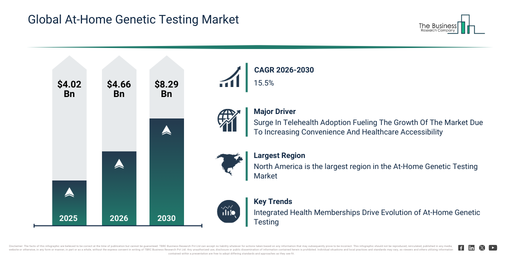
    The at-home genetic testing market size has witnessed swift expansion in recent years. It is forecast to increase from $4.02 billion in 2025 to $4.66 billion in 2026, achieving a compound annual growth rate (CAGR) of 15.8%. The historical rise can be attributed to several factors including rising consumer demand for personalized health insights, decreasing expenses of genetic sequencing, the proliferation of online health platforms, greater understanding of hereditary disease risks, and the widespread availability of user-friendly home sampling kits.

    The at-home genetic testing market size is projected to experience substantial expansion in the coming years. Its value is anticipated to reach $8.29 billion by 2030, demonstrating a compound annual growth rate (CAGR) of 15.5%. This projected increase can be attributed to several factors, including the greater integration of genetic information with digital health systems, a surge in the need for preventative healthcare solutions, the expansion of customized nutrition and exercise programs, clearer regulations surrounding direct-to-consumer testing, and ongoing progress in genomic data analysis. Key trends expected during this period involve the wider acceptance of direct-to-consumer genetic health kits, an increasing interest in ancestry and ethnicity evaluations, the expanded application of pharmacogenomic testing, the development of more personalized wellness insights, and a heightened emphasis on protecting data privacy and ensuring consent.

    Download A Free Sample Report For Comprehensive Market Insights:

    https://www.thebusinessresearchcompany.com/sample.aspx?id=24473&type=smp

    Which Growth Factors Are Strengthening The At-Home Genetic Testing Market Landscape?

    The increasing uptake of telehealth is anticipated to boost the expansion of the at-home genetic testing market going forward. Telehealth involves employing digital communication tools, such as computers, smartphones, and video conferencing, to remotely deliver and manage healthcare services. Its rising embrace stems from its ease of use and enhanced healthcare accessibility, particularly for individuals in isolated, rural, or underserved regions. At-home genetic testing aids telehealth by supplying individualized genetic data that medical professionals can utilize during virtual consultations. This information allows doctors to customize treatment plans, manage chronic ailments, and provide accurate health advice from a distance. For example, in November 2025, according to the Australian Bureau of Statistics (ABS), an Australia-based government statistical agency, 22.5% of Australians availed telehealth services in 2024–25. Of those who had a telehealth consultation, 90.3% indicated they would use telehealth again if available, an increase from 89.2% in 2023–24, reflecting growing acceptance and ongoing integration. Consequently, the expanding adoption of telehealth fuels the growth of the at-home genetic testing market.

    Which Segment Groups Define The At-Home Genetic Testing Market Landscape?

    The at-home genetic testing market covered in this report is segmented –

    1) By Test Type: Ancestry Testing, Health And Wellness Testing, Disease Risk Assessment, Carrier Testing, Other Test Types

    2) By Sample Type: Saliva, Blood, Cheek Swab, Urine, Other Specimens

    3) By Technology: Next-Generation Sequencing, Polymerase Chain Reaction, Microarray, Other Technologies

    4) By Application: Personal Use, Clinical Use, Research Use, Pharmaceutical Use, Nutritional Use

    5) By Distribution Channel: Online Platforms, Retail Pharmacies, Other Distribution Channels

    Subsegments:

    1) By Ancestry Testing: Ethnicity Estimation, Genetic Heritage Mapping, Migration Pattern Analysis, Deep Ancestry Tracing

    2) By Health And Wellness Testing: Nutrigenomics, Fitness and Exercise Response, Sleep Pattern Analysis, Stress and Behavioral Traits, Skin and Aging Traits

    3) By Disease Risk Assessment: Cardiovascular Disease Risk, Cancer Risk Assessment, Neurological Disorder Risk, Autoimmune Disease Risk, Metabolic Disorder Risk

    4) By Carrier Testing: Cystic Fibrosis Carrier Screening, Tay-Sachs Disease Screening, Sickle Cell Anemia Carrier Testing, Thalassemia Carrier Testing, Fragile X Syndrome Screening

    5) By Other Test Types: Pharmacogenomics (Drug Response), Prenatal Genetic Testing, Pediatric Genetic Testing, Rare Disease Screening, Behavioral Trait Testing

    What Trends Are Affecting The At-Home Genetic Testing Market Dynamics?

    Leading companies in the at-home genetic testing market are increasingly adopting novel approaches, such as health membership models, to deliver ongoing, tailored preventive healthcare. These subscription-based health membership models offer continuous access to various services, including sophisticated genetic testing, consistent biomarker tracking, and online consultations with clinicians, thereby assisting individuals in continuously monitoring health risks and obtaining customized prevention strategies. As an illustration, in November 2023, 23andMe, a personal genomics firm based in the US, introduced 23andMe+ Total Health. This membership initiative provides clinical-grade exome sequencing for more than 100 medically significant genes associated with over 55 health conditions, biannual assessments for 55+ blood biomarkers, and remote consultations with genetics-trained medical professionals. The aim of this offering is to facilitate personalized prevention through the combination of advanced genetic information with continuous monitoring and telehealth services, thereby transforming at-home genetic testing from a singular product into an ongoing preventive health solution.

    Who Are The Businesses Driving Activity In The At-Home Genetic Testing Market?

    Major companies operating in the at-home genetic testing market are AncestryDNA, LetsGetChecked, Helix OpCo LLC, Everlywell Inc., Genos Inc., Vitagene Inc., Orig3n Inc., Mapmygenome India Limited, CircleDNA, EasyDNA Limited, African Ancestry Inc., Futura Genetics Ltd., Living DNA Ltd., Nebula Genomics Inc., TellmeGen S.L., Xcode Life Sciences Pvt Ltd., Color Health Inc., MyHeritage Ltd, FamilyTreeDNA (Gene By Gene Ltd), Color Genomics Inc, DNAfit, Pathway Genomics Inc.

    Access The Complete At-Home Genetic Testing Market Report:

    https://www.thebusinessresearchcompany.com/report/at-home-genetic-testing-global-market-report

    What Is The Largest Regional Market In The At-Home Genetic Testing Market?

    North America was the largest region in the at-home genetic testing market in 2025. Asia-Pacific is expected to be the fastest-growing region in the forecast period. The regions covered in the at-home genetic testing market report are Asia-Pacific, South East Asia, Western Europe, Eastern Europe, North America, South America, Middle East, Africa.

    Access At-Home Genetic Testing Market Report for Deeper Competitive Insights

    https://www.thebusinessresearchcompany.com/customise?id=24473&type=smp

    Browse Through More Reports Similar to the Global At-Home Genetic Testing Market 2026, By The Business Research Company

    Oryzanol Global Market Report 2026

    https://www.thebusinessresearchcompany.com/report/oryzanol-global-market-report

    Kaempferol Global Market Report 2026

    https://www.thebusinessresearchcompany.com/report/kaempferol-global-market-report

    N Butanol Global Market Report 2026

    https://www.thebusinessresearchcompany.com/report/n-butanol-global-market-report

    Get in touch with us:

    The Business Research Company: https://www.thebusinessresearchcompany.com/

    Americas: +1 310-496-7795

    Asia: +44 7882 955267 & +91 8897263534

    Europe: +44 7882 955267

    Email us at: marketing@tbrc.info

    Follow us on:

    LinkedIn: https://in.linkedin.com/company/the-business-research-company

    YouTube: https://www.youtube.com/channel/UC24_fI0rV8cR5DxlCpgmyFQ

    Global Market Model: https://www.thebusinessresearchcompany.com/global-market-model
  • Atenolol Market Growth Forecast With Analysis Of Industry Progress Through 2030

    Atenolol Market Growth Forecast With Analysis Of Industry Progress Through 2030

    The Business Research Company’s 2026 market reports feature enhanced tools like market attractiveness analysis, TAM assessment, and company scoring matrices, along with interactive dashboards, deeper supply chain insights, and startup coverage strengthening the depth, usability, and strategic value of insights.

    How Is The Atenolol Market’s Market Value Anticipated To Evolve From 2026 To 2030?

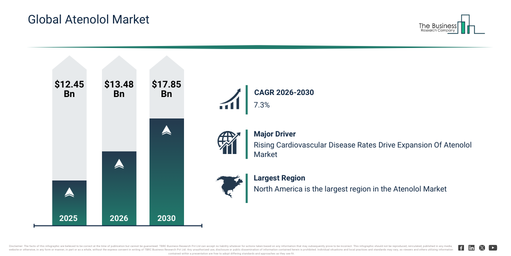
    The atenolol market size has experienced significant expansion in recent years. It is anticipated to increase from $12.45 billion in 2025 to $13.48 billion in 2026, registering a compound annual growth rate (CAGR) of 8.2%. The historical growth of the market is primarily due to factors such as the rising incidence of hypertension and heart disease, the growing acceptance of generic drugs, the availability of various beta-blocker therapies, an increase in pharmaceutical manufacturing capacity, and improved access to cardiovascular medications.

    The atenolol market size is anticipated to undergo significant expansion in the coming years, with projections indicating it will reach $17.85 billion by 2030, exhibiting a compound annual growth rate (CAGR) of 7.3%. This expected increase during the forecast period is largely attributable to the rising need for affordable chronic disease treatments, augmented investments in enhancing pharmaceutical quality, the widening scope of branded-generic drug markets, a heightened focus on the durability of supply chains, and the increased integration of advanced drug formulation technologies. Noteworthy trends predicted for this period include a surge in demand for generic cardiovascular drugs, a greater emphasis on pharmaceutical ingredients of high purity, an increasing preference for oral solid dosage forms, the growth of economical drug manufacturing processes, and a stronger adherence to quality compliance.

    Download A Free Sample Report For Comprehensive Market Insights:

    https://www.thebusinessresearchcompany.com/sample.aspx?id=16343&type=smp

    What Important Drivers Are Powering The Atenolol Market Growth?

    The expansion of the atenolol market is anticipated to be fueled by the increasing occurrence of cardiovascular diseases. These conditions, known as CVDs, involve various ailments impacting the heart and blood vessels. Factors such as an expanding and aging population, various risk factors, and insufficient execution of established prevention and treatment protocols contribute to the rising incidence of CVDs. Atenolol is vital in addressing diverse cardiovascular conditions through its ability to decrease heart rate, reduce blood pressure, ease angina, avert heart attacks, and control irregular heart rhythms. This medication aids in stabilizing cardiac activity, regulating blood pressure, and averting complications, thus fostering improved long-term heart health. As an illustration, the American Heart Association, a US-based nonprofit organization, reported in January 2024 that the overall number of deaths in the cardiovascular domain saw a minor uptick, totaling 931,578, representing a slight increase of 3,000 deaths from the prior year’s count of 928,741. Consequently, the expanding prevalence of cardiovascular diseases is a significant impetus behind the growth of the atenolol market.

    What Key Segment Areas Are Included In The Atenolol Market Assessment?

    The atenolol market covered in this report is segmented –

    1) By Type: 98% Purity, 99% Purity

    2) By Distribution Channel: Hospital Pharmacies, Drug Stores, Online Pharmacies, Other Distribution Channels

    3) By Application: Hypertension, Angina, Arrhythmia, Other Applications

    Subsegments:

    1) By 98% Purity: Atenolol With 98% Purity For Pharmaceutical Formulations, Atenolol 98% Purity For Generic Drug Production, Atenolol 98% Purity For Bulk Production And Manufacturing

    2) By 99% Purity: Atenolol With 99% Purity For High-Quality Pharmaceutical Products, Atenolol 99% Purity For Branded Drug Formulations

    Which Firms Are Competing In The Atenolol Market?

    Major companies operating in the atenolol market are AstraZeneca Plc, Abbott Laboratories Inc., Shanghai Pharmaceuticals Holding Co. Ltd., LGM Pharma, Torrent Pharmaceuticals GmbH, Cipla Inc., Intas Pharmaceuticals Limited, Lupin Limited, Macleods Pharmaceuticals Ltd., Ipca Laboratories Limited, Aristo Pharmaceuticals Pvt. Ltd., Medley Pharmaceuticals Ltd., Micro Labs Ltd., Unichem Laboratories Limited, Harman Finochem Ltd., Axplora, Erregierre SpA, Darou Pakhsh Pharma Chem Co., Zydus Pharmaceuticals (USA) Inc., Anant Pharmaceuticals Pvt. Ltd., Enomark LLC, Hairui Chemical, Octavius Pharma Pvt. Ltd., Hoventa Pharma

    Access The Complete Atenolol Market Report:

    https://www.thebusinessresearchcompany.com/report/atenolol-global-market-report

    Which Region Contributes The Most To The Atenolol Market?

    North America was the largest region in the atenolol market in 2025. Asia-Pacific is expected to be the fastest-growing region in the forecast period. The regions covered in the atenolol market report are Asia-Pacific, South East Asia, Western Europe, Eastern Europe, North America, South America, Middle East, Africa.

    Access Atenolol Market Report for Deeper Competitive Insights

    https://www.thebusinessresearchcompany.com/customise?id=16343&type=smp

    Browse Through More Reports Similar to the Global Atenolol Market 2026, By The Business Research Company

    Progressive Ataxia And Weakness Disorders Global Market Report 2026

    https://www.thebusinessresearchcompany.com/report/progressive-ataxia-and-weakness-disorders-global-market-report

    Episodic Ataxia Treatment Global Market Report 2026

    https://www.thebusinessresearchcompany.com/report/episodic-ataxia-treatment-global-market-report

    Sciatica Global Market Report 2026

    https://www.thebusinessresearchcompany.com/report/sciatica-global-market-report

    Get in touch with us:

    The Business Research Company: https://www.thebusinessresearchcompany.com/

    Americas: +1 310-496-7795

    Asia: +44 7882 955267 & +91 8897263534

    Europe: +44 7882 955267

    Email us at: marketing@tbrc.info

    Follow us on:

    LinkedIn: https://in.linkedin.com/company/the-business-research-company

    YouTube: https://www.youtube.com/channel/UC24_fI0rV8cR5DxlCpgmyFQ

    Global Market Model: https://www.thebusinessresearchcompany.com/global-market-model
  • Global Ataxia Market Forecast Highlighting Expansion And Competitive Dynamics

    Global Ataxia Market Forecast Highlighting Expansion And Competitive Dynamics

    The Business Research Company’s 2026 market reports feature enhanced tools like market attractiveness analysis, TAM assessment, and company scoring matrices, along with interactive dashboards, deeper supply chain insights, and startup coverage strengthening the depth, usability, and strategic value of insights.

    By 2030, How Much Growth In Market Size Is Expected For The Ataxia Market?

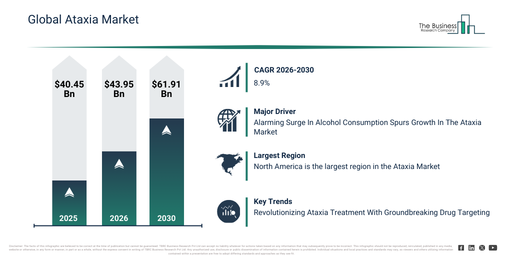
    The ataxia market has witnessed substantial growth over recent years. Its size is anticipated to expand from $40.45 billion in 2025 to $43.95 billion by 2026, progressing at a compound annual growth rate (CAGR) of 8.6%. This historical growth can be attributed to several factors such as improved identification of neurological disorders, the spread of diagnostic imaging accessibility, intensified research into rare neurological ailments, heightened clinical understanding of ataxia subtypes, and the provision of supportive care alternatives.

    The ataxia market is projected to experience substantial expansion in the coming years. Its valuation is anticipated to reach $61.91 billion by 2030, demonstrating a compound annual growth rate (CAGR) of 8.9%. This anticipated growth throughout the forecast period stems from factors such as heightened investments in gene-based therapies, an uptick in the adoption of personalized neurology treatments, the expansion of digital monitoring tools for neurological conditions, a magnified focus on developing drugs for rare diseases, and increased collaborative efforts in neurological research. Key trends expected during this period involve a heightened emphasis on genetic testing and counseling, a greater embrace of symptomatic treatment approaches, an increasing deployment of advanced neurodiagnostic tools, the broadening of long-term disease management strategies, and a stronger focus on early diagnosis.

    Download A Free Sample Report For Comprehensive Market Insights:

    https://www.thebusinessresearchcompany.com/sample.aspx?id=12218&type=smp

    Which Major Factors Are Contributing To The Development Of The Ataxia Market?

    An anticipated increase in alcohol consumption is projected to drive the expansion of the ataxia market in the future. This refers to the oral intake of beverages containing ethanol. Chronic alcohol misuse leads to cerebellar degeneration, a common type of acquired toxic ataxia. Individuals suffering from alcoholism often exhibit gait ataxia and postural tremors in their lower limbs. As an illustration, GOV.UK, a UK government body, reported in August 2024 that provisional alcohol duty receipts from wine and other fermented products reached $1,523 million (£1,154 million) between May and July 2024. This figure represents an increase of $42 million (£32 million), or 2.9%, compared to the corresponding period in the previous year. Consequently, the growing prevalence of alcohol consumption is propelling the expansion of the ataxia market.

    How Is Segment Classification Applied In The Ataxia Market?

    The ataxia market covered in this report is segmented –

    1) By Disease Type: Friedreich’s Ataxia, Ataxia-telangiectasia, Episodic Ataxia, Other Disease Types

    2) By Product: Treatment, Diagnosis

    3) By Dosage Form: Solid, Liquids, Other Dosage Forms

    4) By Route Of Administration: Oral, Parenteral, Other Routes Of Administration

    5) By End User: Hospital, Clinics, Home Healthcare, Other End-Users

    Subsegments:

    1) By Friedreich’s Ataxia: Genetic Counseling And Testing, Symptomatic Treatments

    2) By Ataxia-telangiectasia: Immunotherapy, Supportive Care

    3) By Episodic Ataxia: Medications For Episodes, Long-term Management Strategies

    4) By Other Disease Types: Spinocerebellar Ataxias (SCAs), Ataxia Due To Vitamin Deficiencies Or Toxins

    Which Trends Are Expected To Shape The Ataxia Market?

    Leading companies in the ataxia market are concentrating on developing novel solutions, such as pioneering oral drug therapies, to address the increasing demand for effective treatment options that can decelerate disease progression and enhance functional outcomes in rare neurodegenerative disorders. These oral treatments present a convenient, non-invasive alternative to traditional supportive care methods, which primarily manage symptoms without modifying the underlying disease pathways. For instance, in February 2023, Reata Pharmaceuticals, a US-based biotechnology company, announced the U.S. Food and Drug Administration’s (FDA) approval of SKYCLARYS (omavaloxolone). This is the first and only drug indicated for patients with Friedreich’s ataxia in adults and adolescents aged 16. By Week 48, treatment with the oral, once-daily medication SKYCLARYS led to statistically significant lower mFARS (modified Friedreich’s Ataxia Rating Scale) scores (indicating reduced impairment) compared to placebo. Friedreich’s ataxia, an extremely rare inherited neurological condition, is typically diagnosed around adolescence.

    Who Are The Major Companies Operating In The Ataxia Market?

    Major companies operating in the ataxia market are Pfizer Inc., Johnson & Johnson Services Inc., Eisai Co. Ltd., Genentech Inc., CRISPR Therapeutics AG, Eli Lilly & Company, GlaxoSmithKline Plc, Larimar Therapeutics Inc., Capsida Biotherapeutics Inc., Intellia Therapeutics Inc., Bluebird bio Inc., Editas Medicine Inc., Healx, Acorda Therapeutics Inc., H. Lundbeck A/S, Reata Pharmaceuticals Inc., PTC Therapeutics, Ionis Pharmaceuticals Inc., IntraBio, Biogen Inc., Novartis AG, Sanofi, Roche Holding Ltd., Teva Pharmaceuticals, Zydus Lifesciences Ltd

    Access The Complete Ataxia Market Report:

    https://www.thebusinessresearchcompany.com/report/ataxia-global-market-report

    Which Regional Market Leads The Ataxia Market?

    North America was the largest region in the ataxia market in 2025. Asia-Pacific is expected to be the fastest-growing region in the ataxia market report during the forecast period. The regions covered in the ataxia market report are Asia-Pacific, South East Asia, Western Europe, Eastern Europe, North America, South America, Middle East, Africa.

    Access Ataxia Market Report for Deeper Competitive Insights

    https://www.thebusinessresearchcompany.com/customise?id=12218&type=smp

    Browse Through More Reports Similar to the Global Ataxia Market 2026, By The Business Research Company

    Molecular Breeding Global Market Report 2026

    https://www.thebusinessresearchcompany.com/report/molecular-breeding-global-market-report

    Genetic Testing Services Global Market Report 2026

    https://www.thebusinessresearchcompany.com/report/genetic-testing-services-global-market-report

    Prenatal And Newborn Genetic Testing Global Market Report 2026

    https://www.thebusinessresearchcompany.com/report/prenatal-and-newborn-genetic-testing-global-market-report

    Get in touch with us:

    The Business Research Company: https://www.thebusinessresearchcompany.com/

    Americas: +1 310-496-7795

    Asia: +44 7882 955267 & +91 8897263534

    Europe: +44 7882 955267

    Email us at: marketing@tbrc.info

    Follow us on:

    LinkedIn: https://in.linkedin.com/company/the-business-research-company

    YouTube: https://www.youtube.com/channel/UC24_fI0rV8cR5DxlCpgmyFQ

    Global Market Model: https://www.thebusinessresearchcompany.com/global-market-model
  • Astigmatism Market Analysis Through 2030 Focusing On Demand Trends And Growth Drivers

    Astigmatism Market Analysis Through 2030 Focusing On Demand Trends And Growth Drivers

    The Business Research Company’s 2026 market reports feature enhanced tools like market attractiveness analysis, TAM assessment, and company scoring matrices, along with interactive dashboards, deeper supply chain insights, and startup coverage strengthening the depth, usability, and strategic value of insights.

    What Market Value Trend Is Expected For The Astigmatism Market From 2026 To 2030?

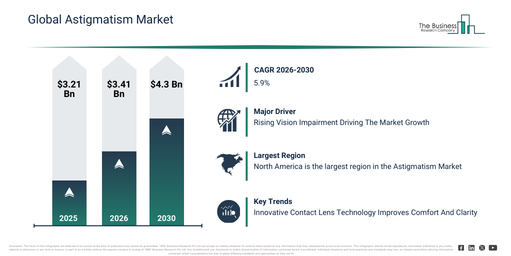
    The astigmatism market has experienced substantial growth in recent years. It is projected to expand from $3.21 billion in 2025 to $3.41 billion in 2026, demonstrating a compound annual growth rate (CAGR) of 6.2%. The expansion observed in the historical period is attributable to the increasing prevalence of refractive errors, heightened awareness of vision correction options, the expansion of ophthalmic clinics, the availability of affordable corrective lenses, and improvements in diagnostic accuracy.

    The astigmatism market is anticipated to experience substantial expansion in the coming years. It is projected to reach $4.3 billion by 2030, demonstrating a compound annual growth rate (CAGR) of 5.9%. This growth throughout the forecast period is attributed to several factors, including the increasing demand for personalized vision care, a rising adoption of laser-based corrective procedures, the expansion of tele-ophthalmology services, a growing emphasis on preventive eye care, and the increased utilization of AI-assisted diagnostics. Major trends anticipated during this period involve the increasing adoption of customized corrective lenses, a rising use of advanced diagnostic imaging tools, a growing preference for minimally invasive vision correction, the expansion of digital eye testing solutions, and an enhanced focus on early vision screening.

    Download A Free Sample Report For Comprehensive Market Insights:

    https://www.thebusinessresearchcompany.com/sample.aspx?id=21107&type=smp

    What Key Growth Drivers Are Influencing The Astigmatism Market?

    The increasing prevalence of vision impairment is expected to drive the growth of the astigmatism market in the foreseeable future. Vision impairment describes a condition where an individual experiences either a partial or complete loss of vision that cannot be entirely corrected using corrective lenses or medical treatments. The rising occurrence of vision impairment stems from an aging population, an increase in diabetes and various eye diseases, excessive time spent looking at screens, and insufficient access to eye care services in some areas. Astigmatism itself contributes to vision impairment by causing blurry or distorted vision, resulting from an irregular shape of the cornea or lens that prevents light from focusing properly on the retina. For instance, in August 2024, the World Health Organization, a U.S.-based national agency, reported that at least 2.2 billion people globally experience near or distance vision impairment. Moreover, estimates indicate that worldwide, only 36% of individuals with distance vision impairment due to refractive error and merely 17% of those with vision impairment due to cataract have accessed appropriate interventions. Therefore, the growing prevalence of vision impairment is a key driver for the expansion of the astigmatism market.

    What Are The Core Segment Classifications In The Astigmatism Market?

    The astigmatism market covered in this report is segmented –

    1) By Type: Myopic Astigmatism, Hyperopic Astigmatism, Other Types

    2) By Treatments: Corrective Lenses, Orthokeratology, Surgeries, Other Treatments

    3) By End User: Hospitals, Clinics, Other End Users

    Subsegments:

    1) By Myopic Astigmatism: Simple Myopic Astigmatism, Compound Myopic Astigmatism

    2) By Hyperopic Astigmatism: Simple Hyperopic Astigmatism, Compound Hyperopic Astigmatism

    3) By Other Types: Regular Astigmatism, Irregular Astigmatism, Congenital Astigmatism, Post-surgical Astigmatism

    Which Trends Are Affecting The Astigmatism Market Framework?

    Major companies in the astigmatism market are concentrating on developing advanced technologies, such as water gradient technology, to enhance contact lens comfort, improve moisture retention, and provide clearer vision for individuals with astigmatism. Water gradient technology refers to a contact lens design where water content gradually increases from the core to the surface, thereby improving moisture retention and comfort. For instance, in January 2023, Alcon Inc., a Switzerland-based pharmaceutical and medical device company, launched TOTAL30 for Astigmatism. This innovative product marks the first reusable contact lens made with water gradient material, specifically designed for astigmatic wearers. Research indicates that comfort is a significant factor in both the lens-wearing experience and customer loyalty.

    Which Companies Are Influencing The Astigmatism Market?

    Major companies operating in the astigmatism market are EssilorLuxottica SA, Novartis AG, HOYA Corporation, Alcon Inc, STAAR Surgical Company, Menicon Co Ltd, Rayner Intraocular Lenses Limited, Ophtec BV, Shamir Optical Industry Ltd, SEED Co Ltd, Visionary Optics LLC, Santen Pharmaceutical Co Ltd, Carl Zeiss AG, NIDEK Co Ltd, Topcon Corporation, Ziemer Ophthalmic Systems AG, SCHWIND eye-tech-solutions GmbH, BVI Medical, LENSAR Inc, Avedro Inc

    Access The Complete Astigmatism Market Report:

    https://www.thebusinessresearchcompany.com/report/astigmatism-global-market-report

    Which Region Holds The Largest Share In The Astigmatism Market?

    North America was the largest region in the astigmatism market in 2025. Asia-Pacific is expected to be the fastest-growing region in the forecast period. The regions covered in the astigmatism market report are Asia-Pacific, South East Asia, Western Europe, Eastern Europe, North America, South America, Middle East, Africa.

    Access Astigmatism Market Report for Deeper Competitive Insights

    https://www.thebusinessresearchcompany.com/customise?id=21107&type=smp

    Browse Through More Reports Similar to the Global Astigmatism Market 2026, By The Business Research Company

    Sigmoidoscope Global Market Report 2026

    https://www.thebusinessresearchcompany.com/report/sigmoidoscope-global-market-report

    Hyperpigmentation Disorder Treatment Global Market Report 2026

    https://www.thebusinessresearchcompany.com/report/hyperpigmentation-disorder-treatment-global-market-report

    Amblyopia Global Market Report 2026

    https://www.thebusinessresearchcompany.com/report/amblyopia-global-market-report

    Get in touch with us:

    The Business Research Company: https://www.thebusinessresearchcompany.com/

    Americas: +1 310-496-7795

    Asia: +44 7882 955267 & +91 8897263534

    Europe: +44 7882 955267

    Email us at: marketing@tbrc.info

    Follow us on:

    LinkedIn: https://in.linkedin.com/company/the-business-research-company

    YouTube: https://www.youtube.com/channel/UC24_fI0rV8cR5DxlCpgmyFQ

    Global Market Model: https://www.thebusinessresearchcompany.com/global-market-model
  • Assistive Technology For Low Vision Market Projected To Surpass $1.71 Billion By 2030 At 8.4% CAGR

    Assistive Technology For Low Vision Market Projected To Surpass $1.71 Billion By 2030 At 8.4% CAGR

    The Business Research Company’s 2026 market reports feature enhanced tools like market attractiveness analysis, TAM assessment, and company scoring matrices, along with interactive dashboards, deeper supply chain insights, and startup coverage strengthening the depth, usability, and strategic value of insights.

    How Does The Forecasted Market Size Of The Assistive Technology For Low Vision Market Compare Between 2026 And 2030?

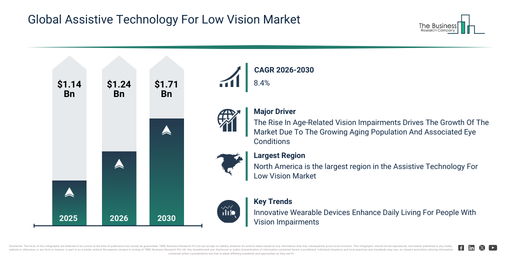
    The assistive technology for low vision market size has demonstrated strong growth in recent years. It is projected to increase from $1.14 billion in 2025 to $1.24 billion in 2026, exhibiting a compound annual growth rate (CAGR) of 8.8%. The expansion witnessed in previous periods is attributable to factors such as the rising incidence of age-related vision impairment, improved availability of optical magnification devices, increasing recognition of assistive technologies, the development of special education programs, and augmented institutional support for visual disabilities.

    The assistive technology for low vision market is anticipated to experience robust expansion over the next few years. It is projected to achieve a size of $1.71 billion by 2030, growing at a compound annual growth rate (CAGR) of 8.4%. This expected growth can be attributed to a worldwide increase in the aging population, the rising uptake of digital assistive devices, greater investment in inclusive healthcare technologies, the broadening availability of remote and home-based care options, and ongoing innovations in computer vision technologies. Significant trends during this forecast period include the increasing adoption of AI-enabled visual assistance tools, a rise in the use of wearable low vision devices, the expanding integration of audio-visual assistive solutions, the proliferation of smartphone-based vision assistance applications, and a stronger focus on personalized vision support.

    Download A Free Sample Report For Comprehensive Market Insights:

    https://www.thebusinessresearchcompany.com/sample.aspx?id=25700&type=smp

    Which Core Factors Are Supporting The Expansion Of The Assistive Technology For Low Vision Market?

    The rising occurrence of vision problems linked to aging is anticipated to fuel the expansion of the assistive technology for low-vision market in the future. These impairments describe the progressive decrease in sight quality that naturally accompanies the aging process, encompassing conditions like age-related macular degeneration, cataracts, glaucoma, and diabetic retinopathy. This growing incidence of age-related vision issues stems largely from the expanding elderly demographic, given that seniors are more prone to developing ocular conditions such as macular degeneration, cataracts, and glaucoma over time. Assistive technology for low vision addresses age-related vision impairments by improving residual sight and allowing older individuals to retain autonomy in their day-to-day lives. For example, data from August 2023, supplied by the World Health Organization, a specialized health agency of the United Nations situated in Switzerland, indicates that worldwide, a minimum of 2.2 billion individuals suffer from either near or distance vision impairment. Nevertheless, estimations reveal that only 36% of those experiencing distance vision impairment from refractive errors and merely 17% of individuals with vision impairment caused by cataracts have accessed suitable treatment. Consequently, the expanding occurrence of age-related vision impairments is propelling the expansion of the assistive technology for low-vision market.

    How Is The Assistive Technology For Low Vision Market Structured Across Different Market Segments?

    The assistive technology for low vision market covered in this report is segmented –

    1) By Product Type: Electronic Magnifiers, Screen Readers, Optical Magnifiers, Video Magnifiers, Smartphone Applications

    2) By Technology Type: Low-Tech Solutions, High-Tech Solutions, AI-Based Vision Assistance Systems, Wearable Technology, Augmented Reality Solutions

    3) By Application: Blind Schools, Enterprises And Social Organizations, Personal Use, Federations And Hospitals

    4) By Distribution Channel: Online Retail, Brick-And-Mortar Stores, Direct Sales, Third-Party Distributors, Wholesale Suppliers

    5) By End-User: Individuals, Educational Institutions, Healthcare Providers, Senior Care Facilities, Government Organizations

    Subsegments:

    1) By Electronic Magnifiers: Desktop Electronic Magnifiers, Portable Electronic Magnifiers, Wearable Electronic Magnifiers

    2) By Screen Readers: Windows-Based Screen Readers, Mac Operating System Based Screen Readers, Android-Based Screen Readers, Linux-Based Screen Readers

    3) By Optical Magnifiers: Handheld Magnifiers, Stand Magnifiers, Spectacle Magnifiers, Dome Magnifiers

    4) By Video Magnifiers: Closed-Circuit Television-Based Video Magnifiers, Head-Mounted Video Magnifiers, Portable Video Magnifiers

    5) By Smartphone Applications: Text-to-Speech Apps, Object Recognition Apps, Navigation And Wayfinding Apps, Magnification And Contrast Adjustment Apps

    What Trends Are Influencing The Assistive Technology For Low Vision Market?

    Leading companies operating within the assistive technology for low vision market are concentrating on devising innovative solutions, such as wearable electronic low vision devices, to improve visual assistance and enhance the quality of life for users. These wearable electronic low vision devices are portable gadgets worn by individuals that leverage technology like cameras and displays to boost visual clarity for those with vision impairments. For instance, in January 2023, eSight Corporation, a technology company based in Canada, launched its most recent assistive device, the eSight Go, designed for individuals who are legally blind. The device features full high definition organic light emitting diode screens, a high-resolution smart autofocus camera, and a wide 45° field of view, which helps preserve natural peripheral vision, enabling full mobility. Its lightweight, wireless design supports up to 24x magnification and offers customizable color and contrast settings, providing enhanced visual clarity and comfort for extended daily use, especially for those experiencing central vision loss.

    Who Are The Companies Shaping The Assistive Technology For Low Vision Market Landscape?

    Major companies operating in the assistive technology for low vision market are Vispero Holdings LLC, HumanWare Group, Freedom Scientific Inc., Aira Tech Corp., Low Vision International AB, IrisVision Global Inc., SELVAS Healthcare Inc., KAPSYS PTE. LTD., Sight and Sound Technology, Envision Technologies B.V., American Thermoform Corporation, Dot Incorporation Ltd, Optelec B.V., ViewPlus Technologies Inc., VisionAid Technologies Limited., Access Ingenuity LLC, Zoomax Technology Co. Limited, OrCam Technologies Ltd., Chuck Cohen Technology Inc., Quantum Reading Learning Vision.

    Access The Complete Assistive Technology For Low Vision Market Report:

    https://www.thebusinessresearchcompany.com/report/assistive-technology-for-low-vision-global-market-report

    Which Region Is The Dominant Market In The Assistive Technology For Low Vision Market?

    North America was the largest region in the assistive technology for low vision market in 2025. The regions covered in the assistive technology for low vision market report are Asia-Pacific, South East Asia, Western Europe, Eastern Europe, North America, South America, Middle East, Africa.

    Access Assistive Technology For Low Vision Market Report for Deeper Competitive Insights

    https://www.thebusinessresearchcompany.com/customise?id=25700&type=smp

    Browse Through More Reports Similar to the Global Assistive Technology For Low Vision Market 2026, By The Business Research Company

    Vision Care Devices And Equipment Global Market Report 2026

    https://www.thebusinessresearchcompany.com/report/vision-care-devices-and-equipment-global-market-report

    Robotic Vision Global Market Report 2026

    https://www.thebusinessresearchcompany.com/report/robotic-vision-global-market-report

    Disabled And Elderly Assistive Technology Global Market Report 2026

    https://www.thebusinessresearchcompany.com/report/disabled-and-elderly-assistive-technology-global-market-report

    Get in touch with us:

    The Business Research Company: https://www.thebusinessresearchcompany.com/

    Americas: +1 310-496-7795

    Asia: +44 7882 955267 & +91 8897263534

    Europe: +44 7882 955267

    Email us at: marketing@tbrc.info

    Follow us on:

    LinkedIn: https://in.linkedin.com/company/the-business-research-company

    YouTube: https://www.youtube.com/channel/UC24_fI0rV8cR5DxlCpgmyFQ

    Global Market Model: https://www.thebusinessresearchcompany.com/global-market-model