Month: May 2026

  • Artificial Intelligence (AI) in Hospital Management Market Analysis Through 2030 Focusing On Demand Trends And Growth Drivers

    Artificial Intelligence (AI) in Hospital Management Market Analysis Through 2030 Focusing On Demand Trends And Growth Drivers

    The Business Research Company’s 2026 market reports feature enhanced tools like market attractiveness analysis, TAM assessment, and company scoring matrices, along with interactive dashboards, deeper supply chain insights, and startup coverage strengthening the depth, usability, and strategic value of insights.

    How Will The Market Size Of The Artificial Intelligence (AI) in Hospital Management Market Progress Through 2030?

    The artificial intelligence (AI) in hospital management market has witnessed rapid expansion recently. It is projected to increase from $3.94 billion in 2025 to $4.68 billion in 2026, exhibiting a compound annual growth rate (CAGR) of 18.7%. Historically, this expansion has been driven by increasing hospital digitization initiatives, rising patient admission volumes, the adoption of electronic health records, growing pressure to reduce operational costs, and the early implementation of analytics tools in healthcare.

    The artificial intelligence (AI) in hospital management market size is projected to experience substantial growth in the coming years. It is expected to reach $9.19 billion by 2030, exhibiting a compound annual growth rate (CAGR) of 18.4%. This expansion during the forecast period can be attributed to several factors, including increasing investments in smart hospital infrastructure, a rising demand for optimizing operational efficiency, the expansion of AI-enabled patient care management, growing adoption of cloud-based hospital platforms, and an increasing focus on value-based healthcare delivery. Significant trends over the forecast period involve the increasing adoption of predictive analytics for hospital operations, a rising use of AI-based clinical decision support systems, the growing automation of administrative workflows, an expansion of AI-driven patient flow management, and enhanced integration of data-driven resource optimization.

    Download A Free Sample Report For Comprehensive Market Insights:

    https://www.thebusinessresearchcompany.com/sample.aspx?id=20474&type=smp

    What Key Growth Drivers Are Influencing The Artificial Intelligence (AI) in Hospital Management Market?

    The increasing implementation of remote patient monitoring systems is anticipated to fuel the expansion of the artificial intelligence (AI) in hospital management market in the future. A remote patient monitoring system represents a technology-driven method that allows healthcare providers to continuously track and manage patient health data from a distance. This system improves patient care by supplying real-time data, enabling timely interventions, and fostering greater patient engagement. Artificial intelligence in hospital management further strengthens remote patient monitoring by offering sophisticated data analytics, predictive insights, and tailored treatment recommendations, which enhance patient outcomes and operational efficiency. For example, in August 2025, the US Department of Health and Human Services, a US-based government administration, stated that in 2024, close to 1 million enrollees utilized remote patient monitoring, representing a 27% increase from 2023. Thus, the escalating adoption of remote patient monitoring systems is a significant driver for the artificial intelligence (AI) in the hospital management market.

    How Is The Artificial Intelligence (AI) in Hospital Management Market Distributed Across Key Segments?

    The artificial intelligence (AI) in hospital management market covered in this report is segmented –

    1) By Component: Software, Hardware, Services

    2) By Technology: Computer Vision, Context-Aware Computing, Machine Learning, Natural Language Processing

    3) By Deployment: Cloud-Based, On-Premises

    4) By Application: Patient Care Management, Administrative Processes, Diagnostic Imaging And Radiology, Drug Discovery, Other Applications

    5) By End-User: Healthcare Payers, Hospital And Healthcare Providers, Patients, Pharmaceuticals And Biotechnology Companies, Other End-Users

    Subsegments:

    1) By Software: AI-Based Clinical Decision Support Systems (CDSS), Patient Management Software, Medical Imaging Software, Natural Language Processing (NLP), Administrative Software, Population Health Management Software, AI-Driven Cybersecurity Tools

    2) By Hardware: AI Servers, Wearables and IoT Devices, Medical Imaging Devices, Robotics Systems, AI Chips and Processors, Healthcare Robotics Hardware

    3) By Services: AI Consulting Services, AI System Integration Services, AI Maintenance and Support Services, AI Training and Education Services, Managed AI Services, Analytics as a Service (AaaS)

    Which Trends Are Expected To Shape The Artificial Intelligence (AI) in Hospital Management Market?

    Leading companies operating within the artificial intelligence (AI) in the hospital management market are developing AI-enabled platforms with the goal of improving the accuracy and efficiency of hospital operations, patient care, and administrative tasks. These AI-powered platforms utilize artificial intelligence to analyze data and automate processes, assisting hospital management in boosting operational efficiency, enhancing patient care, and improving decision-making. As an illustration, in October 2023, ZS Associates, a US-based management consulting services company, launched ZAIDYN Connected Health. ZAIDYN Connected Health is an AI-powered platform engineered to strengthen patient engagement and elevate health outcomes through personalized interventions and data-driven insights. The solution integrates three core components: health insights, patient engagement, and connected research, which collectively function to address unmet needs and optimize care delivery.

    Which Companies Are Influencing The Artificial Intelligence (AI) in Hospital Management Market?

    Major companies operating in the artificial intelligence (AI) in hospital management market are Google LLC, McKesson Corporation, Microsoft Corporation, Amazon Web Service, Johnson & Johnson Services Inc., Intel Corporation, Accenture plc, International Business Machines Corporation, Oracle Corporation, Medtronic plc, SAP SE, Micron Technology Inc., Nvidia Corporation, Capgemini SE, Siemens Healthineers AG, Cognizant Technology Solutions Corporation, Koninklijke Philips N.V., GE HealthCare Technologies Inc., Zebra Medical Vision, Infor Inc., Change Healthcare, Epic Systems Corporation, Nuance Communications Inc., Veradigm Inc., Corti ApS

    Access The Complete Artificial Intelligence (AI) in Hospital Management Market Report:

    https://www.thebusinessresearchcompany.com/report/artificial-intelligence-ai-in-hospital-management-global-market-report

    Which Region Has The Strongest Presence In The Artificial Intelligence (AI) in Hospital Management Market?

    North America was the largest region in the artificial intelligence (AI) in hospital management market in 2025. The regions covered in the artificial intelligence (AI) in hospital management market report are Asia-Pacific, South East Asia, Western Europe, Eastern Europe, North America, South America, Middle East, Africa.

    Access Artificial Intelligence (AI) in Hospital Management Market Report for Deeper Competitive Insights

    https://www.thebusinessresearchcompany.com/customise?id=20474&type=smp

    Browse Through More Reports Similar to the Global Artificial Intelligence (AI) in Hospital Management Market 2026, By The Business Research Company

    Disposable Hospital Supplies Global Market Report 2026

    https://www.thebusinessresearchcompany.com/report/disposable-hospital-supplies-global-market-report

    Hospital Emr Systems Global Market Report 2026

    https://www.thebusinessresearchcompany.com/report/hospital-emr-systems-global-market-report

    Hospital Information System Global Market Report 2026

    https://www.thebusinessresearchcompany.com/report/hospital-information-system-global-market-report

    Get in touch with us:

    The Business Research Company: https://www.thebusinessresearchcompany.com/

    Americas: +1 310-496-7795

    Asia: +44 7882 955267 & +91 8897263534

    Europe: +44 7882 955267

    Email us at: marketing@tbrc.info

    Follow us on:

    LinkedIn: https://in.linkedin.com/company/the-business-research-company

    YouTube: https://www.youtube.com/channel/UC24_fI0rV8cR5DxlCpgmyFQ

    Global Market Model: https://www.thebusinessresearchcompany.com/global-market-model

  • Artificial Intelligence (AI) In Drug Discovery Market Projected To Surpass $7.42 Billion By 2030 At 26.2% CAGR

    Artificial Intelligence (AI) In Drug Discovery Market Projected To Surpass $7.42 Billion By 2030 At 26.2% CAGR

    The Business Research Company’s 2026 market reports feature enhanced tools like market attractiveness analysis, TAM assessment, and company scoring matrices, along with interactive dashboards, deeper supply chain insights, and startup coverage strengthening the depth, usability, and strategic value of insights.

    What Is The Expected Market Size Of The Artificial Intelligence (AI) In Drug Discovery Market In 2026 And How Much Will It Reach By 2030?

    The artificial intelligence (AI) in drug discovery market size has experienced significant expansion in recent years. It is forecast to increase from $2.33 billion in 2025 to $2.93 billion in 2026, achieving a compound annual growth rate (CAGR) of 25.9%. The market’s past growth can be attributed to several factors, including escalating pharmaceutical R&D spending, the increasing complexity of drug discovery pipelines, greater availability of biological and chemical datasets, the early adoption of machine learning in bioinformatics, and growing collaboration between pharmaceutical and technology firms.

    The artificial intelligence (AI) in drug discovery market size is projected to experience substantial expansion in the coming years. This market is anticipated to reach $7.42 billion by 2030, demonstrating a compound annual growth rate (CAGR) of 26.2%. The expansion during this forecast period is primarily driven by the increasing integration of generative AI models, a rising need for precision therapeutics, the broadening of AI-enabled clinical trial designs, expanding investments in cloud-based discovery platforms, and the regulatory acceptance of AI-assisted drug development. Noteworthy trends expected in the forecast period include a greater utilization of AI-driven target identification, increased adoption of deep learning for molecule screening, the growing integration of virtual drug screening platforms, the proliferation of AI-based lead optimization tools, and an enhanced focus on reducing drug development timelines.

    Download A Free Sample Report For Comprehensive Market Insights:

    https://www.thebusinessresearchcompany.com/sample.aspx?id=3411&type=smp

    Which Core Factors Are Supporting The Expansion Of The Artificial Intelligence (AI) In Drug Discovery Market?

    The increasing need for personalized medicine is anticipated to fuel the expansion of artificial intelligence (AI) within the drug discovery market in the future. Personalized medicine represents a focused strategy for preventing, diagnosing, and treating diseases, utilizing an individual’s unique genetic, proteomic, or biological makeup to inform medical choices. The greater uptake of personalized medicine stems from the growing requirement for accurate, tailored therapies that enhance treatment outcomes and minimize side effects. AI facilitates this transition by speeding up the discovery of molecular targets, refining drug compounds, and improving clinical judgment across the entire development process. As an illustration, in February 2024, data from the Personalized Medicine Coalition, a US-based advocacy and research body, indicated that the U.S. FDA sanctioned 26 novel personalized treatments in 2023, comprising 20 new molecular entities and 6 gene- or cell-based therapies. Consequently, the expanding demand for personalized medicine is stimulating the advancement of artificial intelligence (AI) in the drug discovery market.

    How Does Segment Analysis Break Down The Artificial Intelligence (AI) In Drug Discovery Market Structure?

    The artificial intelligence (AI) in drug discovery market covered in this report is segmented –

    1) By Technology: Context-Aware Processing, Natural Language Processing, Deep Learning

    2) By Drug Type: Small Molecules, Large Molecules

    3) By Therapeutic Type: Metabolic Disease, Cardiovascular Disease, Oncology, Neurodegenerative Diseases, Anti-Infective Diseases, Respiratory Diseases, Other Therapeutics

    4) By End User: Pharmaceutical Companies, Biopharmaceutical Companies, Academic And Research Institutes, Other End-Users

    Subsegments:

    1) By Context-Aware Processing: Contextual Data Integration, Predictive Modeling, Adaptive Learning Systems

    2) By Natural Language Processing (NLP): Text Mining And Analysis, Drug Interaction Extraction, Clinical Trial Data Analysis

    3) By Deep Learning: Neural Networks, Convolutional Neural Networks (CNNs), Recurrent Neural Networks (RNNs), Reinforcement Learning Applications

    What Trends Are Affecting The Artificial Intelligence (AI) In Drug Discovery Market Dynamics?

    Leading corporations are allocating capital to firms leveraging artificial intelligence (AI) within the drug discovery sector, aiming to pinpoint and develop novel treatments and provide these methodologies to other pharmaceutical manufacturers. Such calculated investments offer financial support for the research and development phases of novel pharmaceuticals, an endeavor often characterized by high expenses and extended timelines. This financial backing enables companies to accelerate their drug discovery initiatives and introduce innovative therapies to the market. A notable example occurred in July 2023, when Nvidia, a US-based software firm, committed $50 million to Recursion Pharmaceuticals, a US-based biotechnology enterprise utilizing artificial intelligence (AI) for drug discovery. This capital injection is intended to assist Recursion in speeding up the creation of its AI foundation models for biological and chemical applications, facilitated by leveraging Nvidia’s cloud infrastructure.

    Who Are The Companies Shaping The Artificial Intelligence (AI) In Drug Discovery Market Landscape?

    Major companies operating in the artificial intelligence (AI) in drug discovery market are Exscientia, Insilico Medicine, Owkin Inc., XtalPi Inc., Standigm Inc., Innoplexus AG, Atomwise, Inc., BenevolentAI, Deep Genomics Inc., NuMedii, Inc., Verge Genomics, Inc., Berg LLC, Cyclica Inc., Iktos, Quris, Adagene Inc., Gero Pte. Ltd., IBM Corporation, Microsoft Corporation, NVIDIA Corporation, Alphabet Inc., DeepMind Technologies Limited, IQVIA Holdings Inc., GNS Healthcare, Inc., GE HealthCare Technologies Inc., Novartis AG, Pfizer Inc., F. Hoffmann-La Roche Ltd., Merck & Co., Inc., AbbVie Inc., AstraZeneca PLC, Amgen Inc., GlaxoSmithKline plc, Johnson & Johnson, Takeda Pharmaceutical Company Limited, Ipsen S.A., Galderma S.A.

    Access The Complete Artificial Intelligence (AI) In Drug Discovery Market Report:

    https://www.thebusinessresearchcompany.com/report/artificial-intelligence-in-drug-discovery-global-market-report

    Which Region Stands As The Largest Contributor To The Artificial Intelligence (AI) In Drug Discovery Market?

    North America was the largest region in the artificial intelligence (AI) in drug discovery market in 2025. Western Europe was the second largest region in the global artificial intelligence (AI) in drug discovery market share. The regions covered in the artificial intelligence (AI) in drug discovery market report are Asia-Pacific, South East Asia, Western Europe, Eastern Europe, North America, South America, Middle East, Africa.

    Access Artificial Intelligence (AI) In Drug Discovery Market Report for Deeper Competitive Insights

    https://www.thebusinessresearchcompany.com/customise?id=3411&type=smp

    Browse Through More Reports Similar to the Global Artificial Intelligence (AI) In Drug Discovery Market 2026, By The Business Research Company

    Generative Artificial Intelligence Ai In Drug Discovery Global Market Report 2026

    https://www.thebusinessresearchcompany.com/report/generative-artificial-intelligence-ai-in-drug-discovery-global-market-report

    Artificial Intelligence Ai In Biopharmaceuticals Global Market Report 2026

    https://www.thebusinessresearchcompany.com/report/artificial-intelligence-ai-in-biopharmaceuticals-global-market-report

    Artificial Intelligence Ai In Predictive Toxicology Global Market Report 2026

    https://www.thebusinessresearchcompany.com/report/artificial-intelligence-ai-in-predictive-toxicology-global-market-report

    Get in touch with us:

    The Business Research Company: https://www.thebusinessresearchcompany.com/

    Americas: +1 310-496-7795

    Asia: +44 7882 955267 & +91 8897263534

    Europe: +44 7882 955267

    Email us at: marketing@tbrc.info

    Follow us on:

    LinkedIn: https://in.linkedin.com/company/the-business-research-company

    YouTube: https://www.youtube.com/channel/UC24_fI0rV8cR5DxlCpgmyFQ

    Global Market Model: https://www.thebusinessresearchcompany.com/global-market-model
  • Artificial Intelligence (AI) In Aging And Elderly Care Market Forecast Through 2030 Featuring Industry Drivers And Opportunities

    Artificial Intelligence (AI) In Aging And Elderly Care Market Forecast Through 2030 Featuring Industry Drivers And Opportunities

    The Business Research Company’s 2026 market reports feature enhanced tools like market attractiveness analysis, TAM assessment, and company scoring matrices, along with interactive dashboards, deeper supply chain insights, and startup coverage strengthening the depth, usability, and strategic value of insights.

    What Market Size Is Forecasted For The Artificial Intelligence (AI) In Aging And Elderly Care Market By 2030 Based On Its 2026 Value?

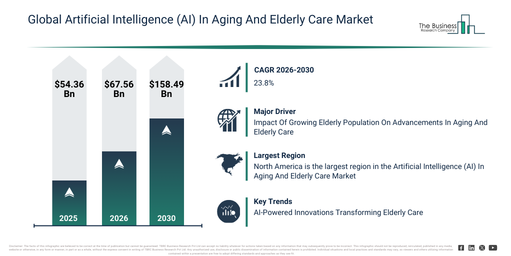
    The artificial intelligence (AI) in aging and elderly care market has experienced substantial growth in recent years. It is anticipated to increase from $54.36 billion in 2025 to $67.56 billion in 2026, at a compound annual growth rate (CAGR) of 24.3%. Historically, this growth can be ascribed to an aging global demographic, a higher prevalence of chronic conditions, the expansion of remote healthcare provisions, the increasing embrace of digital health instruments, and a growing need for assisted living arrangements.

    The artificial intelligence (AI) in aging and elderly care market is projected to experience substantial growth in the coming years, with its size anticipated to reach $158.49 billion by 2030, demonstrating a compound annual growth rate (CAGR) of 23.8%. This expansion during the forecast period is fueled by greater investments in AI-powered healthcare platforms, a growing need for tailored elderly care options, the wider embrace of smart home healthcare, an increased emphasis on preventive healthcare, and the deeper incorporation of robotics into eldercare services. Key trends anticipated for this period involve the increased implementation of AI-powered health monitoring systems, the growing use of wearable devices for senior care, expanded application of predictive analytics for managing health risks, the broadening of robotic assistance offerings, and a sharpened focus on remote care approaches.

    Download A Free Sample Report For Comprehensive Market Insights:

    https://www.thebusinessresearchcompany.com/sample.aspx?id=20714&type=smp

    What Are The Main Drivers Accelerating The Growth Of The Artificial Intelligence (AI) In Aging And Elderly Care Market?

    The expanding older demographic is projected to fuel the advancement of artificial intelligence (AI) within the aging and elderly care market moving ahead. This demographic consists of individuals 60 or 65 years and above, who require customized support and provisions because of health and lifestyle difficulties associated with aging. The increase in the senior population stems from extended lifespans attributed to progress in healthcare and decreasing birth rates, leading to a smaller percentage of younger people in the overall populace. Artificial intelligence (AI) is revolutionizing aging and elderly care through better healthcare, enhanced accessibility, and fostering independence for older adults. For example, a report from January 2024 by the US-based non-profit organization, the Population Reference Bureau, indicated that the count of Americans 65 and over is predicted to climb from 58 million in 2022 to 82 million by 2050, representing a 47% surge. Consequently, the share of this age bracket within the total U.S. population is set to expand from 17% to 23% over this timeframe. Thus, the increasing elderly population is propelling the expansion of artificial intelligence (AI) in the aging and elderly care market.

    What Segment Types Are Included In The Artificial Intelligence (AI) In Aging And Elderly Care Market Analysis?

    The artificial intelligence (AI) in aging and elderly care market covered in this report is segmented –

    1) By Type: Natural Language Processing (NLP) Systems, Robotics And Robotic Assistance, Smart Home Devices And IoT Solutions, Machine Learning And Predictive Analytics, Virtual Health Assistants

    2) By Technology: Wearable Devices, Smart Home Systems, Mobile Apps, Cloud Computing, Internet Of Things (IoT)

    3) By Applications: Fall Detection And Prevention, Medication Management, Remote Health Monitoring, Social Engagement And Companion AI, Cognitive Stimulation And Brain Training

    4) By End User: Home Care Settings, Assisted Living Facilities, Nursing Homes And Long-Term Care Centers, Hospitals And Healthcare Institutions

    Subsegments:

    1) By Natural Language Processing (NLP) Systems: Voice-Activated Assistants, AI-Powered Speech Recognition Systems, NLP for Cognitive Health Monitoring

    2) By Robotics And Robotic Assistance: Elderly Care Robots, Robotic Mobility Assistance Devices, Robotic Companions For Seniors

    3) By Smart Home Devices And IoT Solutions: Smart Sensors (Fall Detection, Monitoring), AI-Enabled Smart Home Automation Systems, Wearable IoT Devices For Health Monitoring

    4) By Machine Learning And Predictive Analytics: AI-Based Health Risk Prediction Models, Machine Learning For Personalized Care Plans, Predictive Analytics For Medication Management

    5) By Virtual Health Assistants: AI-Powered Virtual Care Assistants, Telemedicine Virtual Assistants, Virtual Health Coaching And Support Systems

    Which Trends Are Influencing The Expansion Of The Artificial Intelligence (AI) In Aging And Elderly Care Market?

    Major companies within the artificial intelligence (AI) in aging and elderly care market are prioritizing the creation of advanced technologies, including AI-powered virtual caregivers, with the goal of delivering tailored care solutions, improving monitoring functions, and elevating the overall well-being of older adults. Such an AI virtual caregiver functions as an intelligent digital assistant, assisting with health monitoring, medication reminders, companionship, and emergency response, thereby primarily supporting elderly individuals in preserving their autonomy and health. As an illustration, in November 2024, Electronic Caregiver Inc., a US-based medical equipment supplier, introduced Addison Care+ via the AWS marketplace. Addison Care+ represents an advanced AI-driven virtual caregiver designed to transform senior care by improving health management, fostering engagement, and boosting independence for aging adults and those living with chronic conditions. It provides 24/7 activity monitoring, detects health concerns early, and offers extensive care insights like medication management and emergency assistance. Furthermore, its integration with AI-powered telecare operations facilitates nationwide deployment, equipping caregivers with proactive instruments for managing client health and refining care provision.

    Which Industry Players Are Present In The Artificial Intelligence (AI) In Aging And Elderly Care Market?

    Major companies operating in the artificial intelligence (AI) in aging and elderly care market are Amazon.com Inc., Google LLC, Samsung Electronics Co. Ltd., Microsoft Corporation, Intel Corporation, General Electric Company, International Business Machines Corporation, Oracle Corporation, Medtronic plc, NVIDIA Corporation, Siemens Healthineers AG, Koninklijke Philips N.V., AARP Services Inc., Suki AI Inc., AiCure LLC, Sensi.AI, Orbita Inc., Sensely Inc., CarePredict Inc., Cognivue Corporation, Reemo Health Inc., Canary Health Technologies Inc., Somatix Inc.

    Access The Complete Artificial Intelligence (AI) In Aging And Elderly Care Market Report:

    https://www.thebusinessresearchcompany.com/report/artificial-intelligence-ai-in-aging-and-elderly-care-global-market-report

    What Is The Largest Regional Market In The Artificial Intelligence (AI) In Aging And Elderly Care Market?

    North America was the largest region in the artificial intelligence (AI) in aging and elderly care market in 2025. Asia-Pacific is expected to be the fastest-growing region in the forecast period. The regions covered in the artificial intelligence (AI) in aging and elderly care market report are Asia-Pacific, South East Asia, Western Europe, Eastern Europe, North America, South America, Middle East, Africa.

    Access Artificial Intelligence (AI) In Aging And Elderly Care Market Report for Deeper Competitive Insights

    https://www.thebusinessresearchcompany.com/customise?id=20714&type=smp

    Browse Through More Reports Similar to the Global Artificial Intelligence (AI) In Aging And Elderly Care Market 2026, By The Business Research Company

    Artificial Intelligence In Healthcare Diagnosis Global Market Report 2026

    https://www.thebusinessresearchcompany.com/report/artificial-intelligence-in-healthcare-diagnosis-global-market-report

    Artificial Intelligence In Diabetes Management Global Market Report 2026

    https://www.thebusinessresearchcompany.com/report/artificial-intelligence-in-diabetes-management-global-market-report

    Artificial Intelligence Ai In Precision Medicine Global Market Report 2026

    https://www.thebusinessresearchcompany.com/report/artificial-intelligence-ai-in-precision-medicine-global-market-report

    Get in touch with us:

    The Business Research Company: https://www.thebusinessresearchcompany.com/

    Americas: +1 310-496-7795

    Asia: +44 7882 955267 & +91 8897263534

    Europe: +44 7882 955267

    Email us at: marketing@tbrc.info

    Follow us on:

    LinkedIn: https://in.linkedin.com/company/the-business-research-company

    YouTube: https://www.youtube.com/channel/UC24_fI0rV8cR5DxlCpgmyFQ

    Global Market Model: https://www.thebusinessresearchcompany.com/global-market-model
  • Rising Prevalence Of Cardiovascular Diseases Fueling The Growth Of The Market Due To Increasing Risk Factors And Need For Early Diagnosis Is Supporting Development Across The Artificial Intelligence (AI) Heart Sound Digital Twin Analytics Market

    Rising Prevalence Of Cardiovascular Diseases Fueling The Growth Of The Market Due To Increasing Risk Factors And Need For Early Diagnosis Is Supporting Development Across The Artificial Intelligence (AI) Heart Sound Digital Twin Analytics Market

    The Business Research Company’s 2026 market reports feature enhanced tools like market attractiveness analysis, TAM assessment, and company scoring matrices, along with interactive dashboards, deeper supply chain insights, and startup coverage strengthening the depth, usability, and strategic value of insights.

    How Is The Market Value Of The Artificial Intelligence (AI) Heart Sound Digital Twin Analytics Market Projected To Expand During 2026–2030?

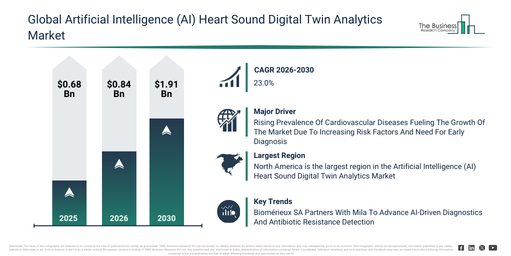
    The artificial intelligence (AI) heart sound digital twin analytics market has demonstrated substantial expansion in recent years. It is anticipated to increase from $0.68 billion in 2025 to $0.84 billion in 2026, achieving a compound annual growth rate (CAGR) of 23.3%. The market’s growth during the historical period was driven by factors such as the rising prevalence of cardiovascular disease, innovations in digital auscultation devices, the increased integration of AI in clinical diagnostics, the broadening of remote patient monitoring, and the availability of extensive cardiac datasets.

    The artificial intelligence (AI) heart sound digital twin analytics market size is poised for substantial growth over the next few years, with projections indicating it will reach $1.91 billion by 2030, demonstrating a compound annual growth rate (CAGR) of 23.0%. This expansion during the forecast period is fueled by an escalating demand for timely cardiac risk identification, the increasing uptake of customized cardiology solutions, the broader deployment of cloud-based clinical analytics, a heightened focus on continuous cardiac surveillance, and the greater incorporation of AI into clinical processes. Significant trends anticipated during this period involve the rising adoption of digital twin cardiac models, an increase in the use of AI-driven heart sound analytics, the expansion of remote cardiac monitoring applications, the growing integration of wearable cardiac sensors, and an intensified concentration on predictive cardiovascular diagnostics.

    Download A Free Sample Report For Comprehensive Market Insights:

    https://www.thebusinessresearchcompany.com/sample.aspx?id=28119&type=smp

    Which Growth Drivers Are Expected To Support The Artificial Intelligence (AI) Heart Sound Digital Twin Analytics Market Forward?

    The escalating occurrence of cardiovascular diseases is projected to fuel the expansion of the artificial intelligence (AI) heart sound digital twin analytics market moving forward. Cardiovascular diseases encompass various conditions affecting the heart and blood vessels, such as coronary heart disease, heart failure, stroke, and hypertension. The increasing frequency of these diseases is primarily linked to unhealthy diets, as excessive intake of saturated fats, trans fats, added sugars, and sodium contributes to high blood pressure, obesity, and elevated cholesterol, which are significant risk factors for cardiac conditions. Artificial intelligence (AI) heart sound digital twin analytics aid in diagnosing cardiovascular diseases by developing patient-specific digital heart models, making them highly effective for prompt detection and ongoing monitoring. They alleviate clinical burdens by offering real-time analysis of heart sounds, thereby enhancing diagnostic precision and tailored treatment plans. For instance, in September 2025, the American College of Cardiology (ACC), a US-based non-profit medical professional society, indicated that CVD remains the principal contributor to disability-adjusted life years (DALYs) and deaths globally according to the GBD, with 437 million CVD DALYs recorded in 2023. Consequently, the growing incidence of cardiovascular diseases is propelling the expansion of the artificial intelligence (AI) heart sound digital twin analytics market.

    Which Segment Divisions Form The Structure Of The Artificial Intelligence (AI) Heart Sound Digital Twin Analytics Market?

    The artificial intelligence (AI) heart sound digital twin analytics market covered in this report is segmented –

    1) By Component: Software, Hardware, Services

    2) By Deployment Mode: On-Premises, Cloud

    3) By Application: Cardiology, Remote Patient Monitoring, Clinical Diagnostics, Research, Other Applications

    4) By End-User: Hospitals, Clinics, Research Institutes, Diagnostic Centers, Other End-Users

    Subsegments:

    1) By Software: AI Algorithms And Models, Predictive Analytics Platforms, Simulation And Modeling Tools, Data Integration And Management Software, Visualization And Reporting Dashboards

    2) By Hardware: Sensors, Digital Stethoscopes, Wearable Devices, Edge Devices Or Processing Units, Cloud Or Server Infrastructure

    3) By Services: Implementation And Integration Services, Consulting And Advisory Services, Training And Education Services, Support And Maintenance Services, Data-As-A-Service (DaaS)

    Which Trends Are Expected To Shape The Artificial Intelligence (AI) Heart Sound Digital Twin Analytics Market?

    Leading companies operating within the artificial intelligence (AI) heart sound digital twin analytics market are concentrating on developing sophisticated products, such as digital stethoscopes, with the aim of analyzing heart sounds, enabling early diagnosis, and supporting personalized care. A digital stethoscope is an electronic device designed to amplify and record body sounds, offering noise reduction and connectivity with applications for improved diagnosis and data sharing. For instance, in April 2025, Eko Health Inc., a US-based digital health company, introduced its CORE 500 digital stethoscope and Eko+ membership in Canada. The CORE 500 digital stethoscope represents a highly advanced device, featuring patented audio technology with three listening modes, ECG and heart sound visualization, and active noise cancellation for precise auscultation, while also facilitating seamless data capture, sharing, and monitoring. The Eko+ membership enhances functionality by incorporating AI-powered murmur and arrhythmia detection, waveform visualization, guided exam flows, and secure sharing. This launch provides Canadian clinicians with advanced AI-driven tools intended to improve cardiac and pulmonary care and patient outcomes.

    Which Organizations Are Involved In The Artificial Intelligence (AI) Heart Sound Digital Twin Analytics Market?

    Major companies operating in the artificial intelligence (AI) heart sound digital twin analytics market are Medtronic plc, Tata Consultancy Services Limited (TCS), Siemens Healthineers AG, Fujifilm Healthcare Corporation, GE Healthcare Technologies Inc., Dassault Systemes SE, Synopsys Inc., Tempus Labs Inc., Biofourmis Inc., HeartFlow Inc., Viz.ai Inc., Aidoc Medical Ltd., Butterfly Network Inc., Eko Health Inc., Shenzhen Minttihealth Co. Ltd., Ultromics Limited, Thinklabs Medical LLC, Acorai AB, Sensydia Corporation, CardioSignal, Cardionics Inc., Ayu Devices Pvt. Ltd., Ai Health Highway India Pvt Ltd., Aevice Health Pte Ltd., CSD Labs, Sanolla Ltd., HeartTronics AI

    Access The Complete Artificial Intelligence (AI) Heart Sound Digital Twin Analytics Market Report:

    https://www.thebusinessresearchcompany.com/report/artificial-intelligence-ai-heart-sound-digital-twin-analytics-global-market-report

    Which Region Contributes The Most To The Artificial Intelligence (AI) Heart Sound Digital Twin Analytics Market?

    North America was the largest region in the artificial intelligence (AI) heart sound digital twin analytics market in 2025. The regions covered in the artificial intelligence (AI) heart sound digital twin analytics market report are Asia-Pacific, South East Asia, Western Europe, Eastern Europe, North America, South America, Middle East, Africa.

    Access Artificial Intelligence (AI) Heart Sound Digital Twin Analytics Market Report for Deeper Competitive Insights

    https://www.thebusinessresearchcompany.com/customise?id=28119&type=smp

    Browse Through More Reports Similar to the Global Artificial Intelligence (AI) Heart Sound Digital Twin Analytics Market 2026, By The Business Research Company

    Artificial Intelligence In Cardiology Global Market Report 2026

    https://www.thebusinessresearchcompany.com/report/artificial-intelligence-in-cardiology-global-market-report

    Ai In Life Science Analytics Global Market Report 2026

    https://www.thebusinessresearchcompany.com/report/ai-in-life-science-analytics-global-market-report

    Digital Twins In Healthcare Global Market Report 2026

    https://www.thebusinessresearchcompany.com/report/digital-twins-in-healthcare-global-market-report

    Get in touch with us:

    The Business Research Company: https://www.thebusinessresearchcompany.com/

    Americas: +1 310-496-7795

    Asia: +44 7882 955267 & +91 8897263534

    Europe: +44 7882 955267

    Email us at: marketing@tbrc.info

    Follow us on:

    LinkedIn: https://in.linkedin.com/company/the-business-research-company

    YouTube: https://www.youtube.com/channel/UC24_fI0rV8cR5DxlCpgmyFQ

    Global Market Model: https://www.thebusinessresearchcompany.com/global-market-model
  • Innovative AI- and AR-Powered Skin Analyzers Transforming Personalized Skincare Assessments And User Experience Is Affecting The Direction Of The Artificial Intelligence (AI) Facial Skin Analyzer Market

    Innovative AI- and AR-Powered Skin Analyzers Transforming Personalized Skincare Assessments And User Experience Is Affecting The Direction Of The Artificial Intelligence (AI) Facial Skin Analyzer Market

    The Business Research Company’s 2026 market reports feature enhanced tools like market attractiveness analysis, TAM assessment, and company scoring matrices, along with interactive dashboards, deeper supply chain insights, and startup coverage strengthening the depth, usability, and strategic value of insights.

    What Are The Forecasted Market Size Figures For The Artificial Intelligence (AI) Facial Skin Analyzer Market In 2026 And 2030?

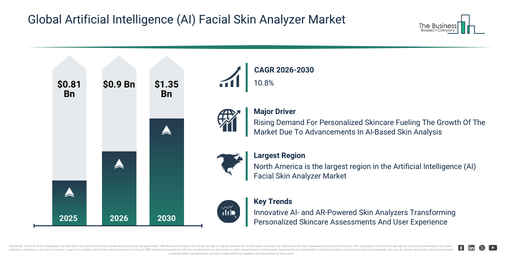
    The artificial intelligence (AI) facial skin analyzer market size has experienced rapid expansion over recent years. It is projected to increase from $0.81 billion in 2025 to $0.9 billion in 2026, achieving a compound annual growth rate (CAGR) of 11.2%. This historical growth can be attributed to a heightened consumer focus on skincare analysis, the expansion of digital dermatology tools, increasing adoption of cosmetic technology, the widespread availability of high-resolution imaging devices, and a rising demand for personalized beauty solutions.

    The artificial intelligence (AI) facial skin analyzer market is anticipated to experience significant expansion in the coming years. It is projected to reach $1.35 billion by 2030, demonstrating a compound annual growth rate (CAGR) of 10.8%. This projected growth is driven by factors such as the growing integration of AI in aesthetic medicine, the increased utilization of virtual skincare consultations, the broadening of data-driven cosmetic formulation, the expanding adoption within clinical dermatology settings, and the heightened demand for real-time skin monitoring solutions. Key trends during this period encompass the escalating embrace of AI-powered skin diagnostics, the increasing incorporation of mobile-based skin analysis platforms, the wider application of 3D facial imaging technologies, the proliferation of personalized skincare recommendation systems, and improved precision in multi-parameter skin evaluations.

    Download A Free Sample Report For Comprehensive Market Insights:

    https://www.thebusinessresearchcompany.com/sample.aspx?id=24469&type=smp

    What Influential Factors Are Boosting The Artificial Intelligence (AI) Facial Skin Analyzer Market Demand?

    The increasing demand for personalized skincare solutions is projected to boost the growth of the artificial intelligence (AI) facial skin analyzer market in the future. Personalized skincare involves adapting products and regimens to suit an individual’s specific skin characteristics and concerns. The rise in personalized skincare solutions stems from the expanding adoption of AI and skin analysis technologies, which enable customized product recommendations based on individual skin requirements. Artificial Intelligence (AI) facial skin analyzers facilitate personalized skincare by precisely evaluating individual skin conditions and delivering data-driven, tailored product and treatment suggestions. For instance, in December 2024, data from the Bureau of Labor Statistics, a US-based government agency, showed that consumer spending on personal care products and services climbed from USD 866 in 2022 to USD 950 in 2023, representing a 9.7% year-over-year increase after a 12.3% rise in 2022. Therefore, the rising preference for personalized skincare solutions is driving the expansion of the artificial intelligence (AI) facial skin analyzer market.

    How Are Different Segment Groups Identified Within The Artificial Intelligence (AI) Facial Skin Analyzer Market?

    The artificial intelligence (AI) facial skin analyzer market covered in this report is segmented –

    1) By Product Type: Portable, Desktop

    2) By Device Type: Mobile App, Web-Based Platform, Standalone Device

    3) By Technology: Artificial intelligence (AI)-Based, Machine Learning, Deep Learning

    4) By Application: Skincare, Aesthetic Treatments, Cosmetics, Medical Diagnosis

    5) By End User: Healthcare, Personal Care, Other End-Users

    Subsegments:

    1) By Portable: Handheld Skin Analyzers, Smartphone-Compatible Devices, Wearable Skin Analyzers

    2) By Desktop: Multi-Parameter Skin Analyzers, 3D Imaging Skin Analyzers, Clinical-Grade Skin Analyzers

    Which Trends Are Affecting The Artificial Intelligence (AI) Facial Skin Analyzer Market Framework?

    Leading companies within the artificial intelligence (AI) facial skin analyzer market are directing their efforts towards creating advanced solutions, such as AI and augmented reality (AR)-driven skin analyzers. These innovations aim to deliver immediate, tailored skincare evaluations, boost user interaction, and broaden availability for both everyday consumers and industry professionals. Such AI- and AR-enabled skin analyzers employ intelligent algorithms and augmented visual feedback to evaluate skin condition and present instantaneous skincare outcomes, thereby assisting users in making well-informed decisions through interactive, personalized analysis. As an illustration, in January 2024, Flipkart Private Limited, an India-based e-commerce firm, launched the ModiFace Powered Skin Analyzer. This AI-powered instrument seamlessly integrates into Flipkart’s mobile application, enabling individuals to conduct a facial skin analysis just by capturing a selfie and responding to a few fundamental queries. The underlying technology assesses critical skin attributes like pores, wrinkles, pigmentation, acne, and firmness, leveraging sophisticated artificial intelligence and augmented reality. Subsequently, it provides personalized skincare suggestions, precisely adapted to each user’s unique skin profile, spanning seven stages: cleanse, prepare, treat, moisturize, care, targeted, and protect.

    Who Are The Firms Contributing To The Artificial Intelligence (AI) Facial Skin Analyzer Market Ecosystem?

    Major companies operating in the artificial intelligence (AI) facial skin analyzer market are JANUS Pro, LUMINI LLC, FotoFinder Systems Inc., Revieve Inc., Canfield Scientific Inc., DermaCompare, HiMirror, SkinVision B.V., Haut.AI, Skintelligent, Perfect Corp, Quantificare, BeautyAI, SkinAI, Syensqo, OKKAMI, UVisio, Meicet Technology Co LTD, Coralai, Zemits, Aram Huvis Co Ltd, Courage + Khazaka Electronic GmbH, Microderm GLO, Pixience, BeautyBio

    Access The Complete Artificial Intelligence (AI) Facial Skin Analyzer Market Report:

    https://www.thebusinessresearchcompany.com/report/artificial-intelligence-ai-facial-skin-analyzer-global-market-report

    Which Regional Market Leads The Artificial Intelligence (AI) Facial Skin Analyzer Market?

    North America was the largest region in the artificial intelligence (AI) facial skin analyzer market in 2025. Asia-Pacific is expected to be the fastest-growing region in the forecast period. The regions covered in the artificial intelligence (AI) facial skin analyzer market report are Asia-Pacific, South East Asia, Western Europe, Eastern Europe, North America, South America, Middle East, Africa.

    Access Artificial Intelligence (AI) Facial Skin Analyzer Market Report for Deeper Competitive Insights

    https://www.thebusinessresearchcompany.com/customise?id=24469&type=smp

    Browse Through More Reports Similar to the Global Artificial Intelligence (AI) Facial Skin Analyzer Market 2026, By The Business Research Company

    Artificial Intelligence Server Global Market Report 2026

    https://www.thebusinessresearchcompany.com/report/artificial-intelligence-server-global-market-report

    Edge Ai Software Global Market Report 2026

    https://www.thebusinessresearchcompany.com/report/edge-ai-software-global-market-report

    Artificial Intelligence In Medicine Global Market Report 2026

    https://www.thebusinessresearchcompany.com/report/artificial-intelligence-in-medicine-global-market-report

    Get in touch with us:

    The Business Research Company: https://www.thebusinessresearchcompany.com/

    Americas: +1 310-496-7795

    Asia: +44 7882 955267 & +91 8897263534

    Europe: +44 7882 955267

    Email us at: marketing@tbrc.info

    Follow us on:

    LinkedIn: https://in.linkedin.com/company/the-business-research-company

    YouTube: https://www.youtube.com/channel/UC24_fI0rV8cR5DxlCpgmyFQ

    Global Market Model: https://www.thebusinessresearchcompany.com/global-market-model
  • The Artificial Intelligence (AI) Enhanced Remote Physiotherapy Market Is Advancing With Support From Rising Healthcare Expenditure Driving The Growth Of The Market Due To Increasing Investment In Advanced Digital Rehabilitation Technologies And Infrastructure

    The Artificial Intelligence (AI) Enhanced Remote Physiotherapy Market Is Advancing With Support From Rising Healthcare Expenditure Driving The Growth Of The Market Due To Increasing Investment In Advanced Digital Rehabilitation Technologies And Infrastructure

    The Business Research Company’s 2026 market reports feature enhanced tools like market attractiveness analysis, TAM assessment, and company scoring matrices, along with interactive dashboards, deeper supply chain insights, and startup coverage strengthening the depth, usability, and strategic value of insights.

    How Much Larger Will The Artificial Intelligence (AI) Enhanced Remote Physiotherapy Market Become By 2030 Compared To 2026?

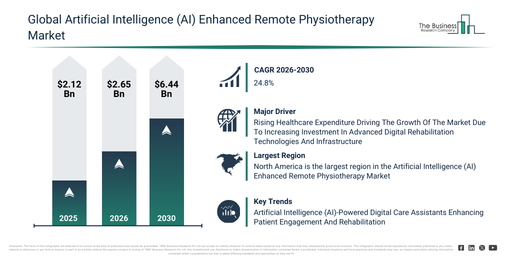
    The artificial intelligence (AI) enhanced remote physiotherapy market size has experienced substantial growth in recent years. This market is projected to expand from $2.12 billion in 2025 to $2.65 billion in 2026, reflecting a compound annual growth rate (CAGR) of 25.1%. Historically, this market’s expansion has been fueled by factors including the broader availability of telehealth services, a rise in musculoskeletal disorders, increased adoption of wearable health devices, the emergence of home-based care models, and advancements in remote monitoring technologies.

    The artificial intelligence (AI) enhanced remote physiotherapy market size is projected to experience substantial growth in the coming years. It is anticipated to expand to $6.44 billion by 2030, demonstrating a compound annual growth rate (CAGR) of 24.8%. This expansion over the forecast period stems from factors such as increasing investments in AI-driven rehabilitation platforms, a rising demand for continuous therapy monitoring, the broadening of geriatric and chronic care programs, the growing integration of physiotherapy within digital health ecosystems, and an increased focus on preventive rehabilitation. Noteworthy trends during this period include the rising adoption of AI-based motion tracking, increased use of wearable physiotherapy devices, a growing need for personalized exercise programs, the proliferation of remote rehabilitation platforms, and a strengthened emphasis on outcome-based therapy.

    Download A Free Sample Report For Comprehensive Market Insights:

    https://www.thebusinessresearchcompany.com/sample.aspx?id=28907&type=smp

    Which Drivers Are Advancing The Artificial Intelligence (AI) Enhanced Remote Physiotherapy Market Growth?

    The increasing healthcare expenditure is projected to advance the growth of the artificial intelligence (AI) enhanced remote physiotherapy market in the future. This expenditure refers to the total funds allocated for healthcare services, including medical treatments, equipment, infrastructure, and personnel, by governments, individuals, and private entities. Healthcare spending is rising due to the growing prevalence of chronic diseases, which necessitate long-term and expensive treatments. This investment in healthcare supports the adoption of artificial intelligence (AI)–enhanced remote physiotherapy by enabling greater funding for advanced technologies, digital infrastructure, and personalized rehabilitation solutions. For example, in May 2024, the Office for National Statistics, a UK-based government department, noted that total healthcare expenditure increased by 5.6% in nominal terms from 2022 to 2023, indicating a considerable acceleration compared to the 0.9% growth seen in 2022. Therefore, the expanding healthcare expenditure is a primary driver for the artificial intelligence (AI) enhanced remote physiotherapy market’s growth.

    What Segment Categories Are Evaluated In The Artificial Intelligence (AI) Enhanced Remote Physiotherapy Market Study?

    The artificial intelligence (AI) enhanced remote physiotherapy market covered in this report is segmented –

    1) By Component: Software, Hardware, Services

    2) By Therapy Type: Musculoskeletal, Neurological, Cardiopulmonary, Pediatric, Geriatric, Other Therapy Types

    3) By Deployment Mode: Cloud-Based, On-Premises

    4) By Application: Rehabilitation, Pain Management, Preventive Care, Other Applications

    5) By End-User: Hospitals And Clinics, Homecare Settings, Rehabilitation Centers, Other End-Users

    Subsegments:

    1) By Software: Virtual Therapy Platforms, Artificial Intelligence Analytics Software, Exercise Prescription Software, Patient Monitoring Software

    2) By Hardware: Wearable Devices, Motion Sensors, Rehabilitation Robotics, Mobile Devices

    3) By Services: Remote Consultation Services, Data Analysis Services, Therapy Session Management Services, Training And Support Services

    What Trends Are Influencing The Artificial Intelligence (AI) Enhanced Remote Physiotherapy Market?

    Leading firms within the artificial intelligence (AI) enhanced remote physiotherapy market are prioritizing the creation of sophisticated tools, like AI-driven digital care assistants, aimed at improving patient involvement and recovery results. Such an assistant is defined as a smart virtual companion utilizing artificial intelligence to deliver immediate guidance, encouragement, and tailored feedback during physical therapy sessions. As an illustration, in June 2023, the US-based digital therapeutics company, Kaia Health, introduced Angela, which stands as the sector’s inaugural AI-driven voice-enabled digital care assistant, designed to aid patients undergoing physiotherapy at home. This novel tool supports users via voice communication, providing instantaneous encouragement, exercise instructions, and educational content customized for each person’s requirements. Integrated into Kaia Health’s AI-based musculoskeletal (MSK) platform, it enables continuous remote assistance and monitors progress; moreover, this digital care assistant boosts therapy compliance, optimizes rehabilitation results, and delivers a more captivating, human-like digital physiotherapy journey.

    Which Key Players Are Active In The Artificial Intelligence (AI) Enhanced Remote Physiotherapy Market?

    Major companies operating in the artificial intelligence (AI) enhanced remote physiotherapy market are Hinge Health Inc., Sword Health, SPRY Inc., Kaia Health Technologies GmbH, XRHealth Inc., Moterum Technologies Inc., Physitrack Group AB., MIRA REHAB LIMITED, Band Connect Inc., CUREosity GmbH, BlueJay Mobile Health Inc., Kinomatic Pty Ltd., Vitrue Health Inc., BioSensics Inc., Wizecare Inc., Limber Health Inc., Akina Inc., Zerapy Inc., Preve Inc., Flok Health Inc.

    Access The Complete Artificial Intelligence (AI) Enhanced Remote Physiotherapy Market Report:

    https://www.thebusinessresearchcompany.com/report/artificial-intelligence-ai-enhanced-remote-physiotherapy-global-market-report

    Which Region Holds The Largest Share In The Artificial Intelligence (AI) Enhanced Remote Physiotherapy Market?

    North America was the largest region in the artificial intelligence (AI) enhanced remote physiotherapy market in 2025. Asia-Pacific is expected to be the fastest-growing region in the forecast period. The regions covered in the artificial intelligence (AI) enhanced remote physiotherapy market report are Asia-Pacific, South East Asia, Western Europe, Eastern Europe, North America, South America, Middle East, Africa.

    Access Artificial Intelligence (AI) Enhanced Remote Physiotherapy Market Report for Deeper Competitive Insights

    https://www.thebusinessresearchcompany.com/customise?id=28907&type=smp

    Browse Through More Reports Similar to the Global Artificial Intelligence (AI) Enhanced Remote Physiotherapy Market 2026, By The Business Research Company

    Physiotherapy Services Global Market Report 2026

    https://www.thebusinessresearchcompany.com/report/physiotherapy-services-global-market-report

    Ai In Medical Devices Global Market Report 2026

    https://www.thebusinessresearchcompany.com/report/ai-in-medical-devices-global-market-report

    Physiotherapy Equipment And Accessories Global Market Report 2026

    https://www.thebusinessresearchcompany.com/report/physiotherapy-equipment-and-accessories-global-market-report

    Get in touch with us:

    The Business Research Company: https://www.thebusinessresearchcompany.com/

    Americas: +1 310-496-7795

    Asia: +44 7882 955267 & +91 8897263534

    Europe: +44 7882 955267

    Email us at: marketing@tbrc.info

    Follow us on:

    LinkedIn: https://in.linkedin.com/company/the-business-research-company

    YouTube: https://www.youtube.com/channel/UC24_fI0rV8cR5DxlCpgmyFQ

    Global Market Model: https://www.thebusinessresearchcompany.com/global-market-model
  • Increasing Adoption Of Rising Prevalence Of Congenital Disorders Driving Growth In The Market Is Influencing The Arthrogryposis Market

    Increasing Adoption Of Rising Prevalence Of Congenital Disorders Driving Growth In The Market Is Influencing The Arthrogryposis Market

    The Business Research Company’s 2026 market reports feature enhanced tools like market attractiveness analysis, TAM assessment, and company scoring matrices, along with interactive dashboards, deeper supply chain insights, and startup coverage strengthening the depth, usability, and strategic value of insights.

    What Growth In Market Value Is Anticipated For The Arthrogryposis Market Between 2026 And 2030?

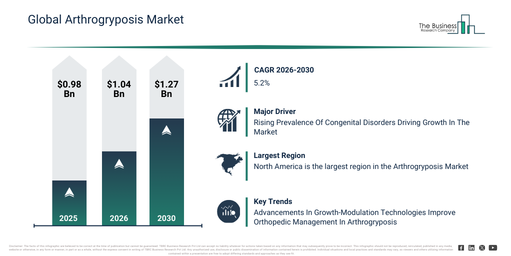
    The arthrogryposis market size has seen robust expansion in recent years. It is anticipated to climb from $0.98 billion in 2025 to $1.04 billion in 2026, exhibiting a compound annual growth rate (CAGR) of 5.5%. The market’s historical growth can be attributed to several factors, including an enhanced clinical understanding of congenital disorders, the expansion of pediatric orthopedic care, increased access to rehabilitation services, the adoption of various physical therapy interventions, and the establishment of specialized treatment centers.

    The arthrogryposis market size is projected to experience robust growth in the upcoming years. It is foreseen to expand to $1.27 billion by 2030, achieving a compound annual growth rate (CAGR) of 5.2%. This market expansion during the forecast period is primarily driven by heightened investments in rare disease research, an escalating demand for personalized rehabilitation programs, the scaling up of early screening initiatives, a greater concentration on improving long-term quality of life, and the rising adoption of sophisticated diagnostic technologies. Significant trends for this period involve an increased emphasis on timely diagnosis and intervention, a growing embrace of multidisciplinary treatment methods, expanded application of advanced imaging diagnostics, the broadening of long-term rehabilitation offerings, and strengthened supportive care strategies.

    Download A Free Sample Report For Comprehensive Market Insights:

    https://www.thebusinessresearchcompany.com/sample.aspx?id=21105&type=smp

    What Primary Factors Are Fueling The Expansion Of The Arthrogryposis Market?

    The increasing occurrence of congenital disorders is anticipated to fuel the expansion of the arthrogryposis market in the future. Congenital disorders are defined as structural or functional irregularities that emerge during fetal development and are evident at birth. The growing incidence of these disorders stems from factors such as improvements in prenatal diagnostic methods, environmental influences, genetic alterations, and evolving lifestyle choices. Arthrogryposis aids in comprehending congenital disorders by underscoring the significance of fetal movement, genetic elements, and neuromuscular progression in the context of musculoskeletal anomalies. For example, the World Health Organization, a Switzerland-based intergovernmental organization, stated in February 2023 that approximately 240,000 newborns worldwide die from congenital disorders within their first 28 days each year. Furthermore, congenital conditions account for an estimated 170,000 child deaths between 1 month and 5 years of age. Consequently, the rising prevalence of congenital disorders is a key factor boosting growth in the arthrogryposis market.

    How Is The Arthrogryposis Market Examined Through Segment Analysis?

    The arthrogryposis market covered in this report is segmented –

    1) By Type: Classic Arthrogryposis, Distal Arthrogryposis, Amyoplasia

    2) By Treatment Type: Occupational Therapists, Physical Therapy, Surgery, Imaging Diagnostics

    3) By Patient Age: Children, Adults

    Subsegments:

    1) By Classic Arthrogryposis: Multiple Joint Involvement, Flexion Contractures, Severe Muscle Weakness, Progressive Arthrogryposis, Intellectual Impairment

    2) By Distal Arthrogryposis: Isolated Limb Involvement, Contractures of Hands and Feet, Distal Joint Contractures, Autosomal Dominant Inheritance

    3) By Amyoplasia: Severe Limb Contractures, Muscle Hypotonia (low muscle tone), No Cognitive Impairment, Symmetric Joint Involvement, Lack Of Muscle Development In Affected Limbs

    Which Trends Are Guiding The Development Of The Arthrogryposis Market?

    Leading companies operating in the arthrogryposis treatment market are concentrating on developing advanced orthopedic solutions, such as guided-growth systems, to enhance deformity correction, reduce surgical burden, and support improved functional outcomes for affected patients. Guided-growth systems facilitate controlled adjustment of bone alignment during a child’s development, aiding clinicians in gradually rectifying joint contractures with minimal tissue disruption. For instance, in June 2023, OrthoPediatrics Corp., a US-based pediatric orthopedic company, launched a growth modulation system featuring guided implant technology. This technology offers precise intraoperative alignment control, enables minimally invasive implantation, provides patient-specific sizing options, ensures compatibility with standard surgical instruments, and allows for improved monitoring of growth progression. Designed to support targeted deformity correction, this innovation provides clinicians with a more controlled and less invasive approach to managing the joint abnormalities commonly observed in arthrogryposis.

    Who Are The Leading Firms Participating In The Arthrogryposis Market?

    Major companies operating in the arthrogryposis market are Boston Children’s Hospital, Seattle Children’s Hospital, Shriners Hospitals for Children, Texas Scottish Rite Hospital for Children, Gillette Children’s Specialty Healthcare, Cleveland Clinic, Johns Hopkins Hospital, Mayo Clinic, Children’s Hospital of Philadelphia, Nationwide Children’s Hospital, Children’s Healthcare of Atlanta, Nemours Children’s Health, Phoenix Children’s Hospital, Cincinnati Children’s Hospital Medical Center, St Jude Children’s Research Hospital, Rady Children’s Hospital San Diego, Children’s National Hospital, Great Ormond Street Hospital, SickKids Hospital Toronto, Royal Children’s Hospital Melbourne

    Access The Complete Arthrogryposis Market Report:

    https://www.thebusinessresearchcompany.com/report/arthrogryposis-global-market-report

    Which Region Is The Dominant Market In The Arthrogryposis Market?

    North America was the largest region in the arthrogryposis market in 2025. Asia-Pacific is expected to be the fastest-growing region in the forecast period. The regions covered in the arthrogryposis market report are Asia-Pacific, South East Asia, Western Europe, Eastern Europe, North America, South America, Middle East, Africa.

    Access Arthrogryposis Market Report for Deeper Competitive Insights

    https://www.thebusinessresearchcompany.com/customise?id=21105&type=smp

    Browse Through More Reports Similar to the Global Arthrogryposis Market 2026, By The Business Research Company

    Immunohematology Global Market Report 2026

    https://www.thebusinessresearchcompany.com/report/immunohematology-global-market-report

    Bioceramics Global Market Report 2026

    https://www.thebusinessresearchcompany.com/report/bioceramics-global-market-report

    Chondroplasty Global Market Report 2026

    https://www.thebusinessresearchcompany.com/report/chondroplasty-global-market-report

    Get in touch with us:

    The Business Research Company: https://www.thebusinessresearchcompany.com/

    Americas: +1 310-496-7795

    Asia: +44 7882 955267 & +91 8897263534

    Europe: +44 7882 955267

    Email us at: marketing@tbrc.info

    Follow us on:

    LinkedIn: https://in.linkedin.com/company/the-business-research-company

    YouTube: https://www.youtube.com/channel/UC24_fI0rV8cR5DxlCpgmyFQ

    Global Market Model: https://www.thebusinessresearchcompany.com/global-market-model
  • Rising Rheumatoid Arthritis Cases Driving The Market Growth Continues To Impact The Growth Of The Arthralgia Market

    Rising Rheumatoid Arthritis Cases Driving The Market Growth Continues To Impact The Growth Of The Arthralgia Market

    The Business Research Company’s 2026 market reports feature enhanced tools like market attractiveness analysis, TAM assessment, and company scoring matrices, along with interactive dashboards, deeper supply chain insights, and startup coverage strengthening the depth, usability, and strategic value of insights.

    What Is The Expected Market Value Outlook For The Arthralgia Market Through 2030?

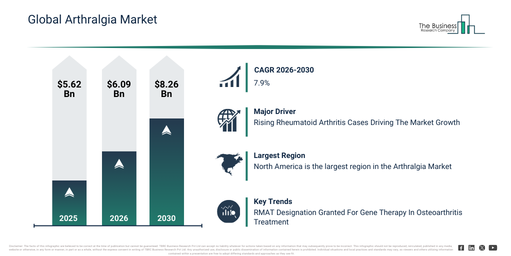
    The arthralgia market has experienced substantial growth in recent years. This market is projected to expand from $5.62 billion in 2025 to $6.09 billion in 2026, achieving a compound annual growth rate (CAGR) of 8.2%. The historical increase can be attributed to the rising occurrence of joint-related disorders, an aging demographic, heightened awareness of musculoskeletal health, the expanding range of pharmaceutical pain management options, and the growth in outpatient orthopedic care.

    The arthralgia market is projected to experience substantial expansion in the coming years. It is anticipated to reach $8.26 billion by 2030, exhibiting a compound annual growth rate (CAGR) of 7.9%. This expansion throughout the forecast period can be attributed to several factors, including a heightened demand for customized treatment plans, an increase in the use of biologic and targeted treatments, the broader availability of home-based options for pain relief, a stronger emphasis on managing symptoms over an extended duration, and increased funding for research into joint health. Key trends expected during this period involve a greater acceptance of individualized pain management strategies, an uptick in the utilization of combined treatment methods, an intensified focus on identifying joint disorders early, the proliferation of non-invasive options for pain alleviation, and improved models for patient-focused care.

    Download A Free Sample Report For Comprehensive Market Insights:

    https://www.thebusinessresearchcompany.com/sample.aspx?id=21104&type=smp

    Which Strategic Drivers Are Supporting The Arthralgia Market Development?

    The increasing prevalence of rheumatoid arthritis is projected to drive the expansion of the arthralgia market. Rheumatoid arthritis, a chronic autoimmune condition primarily affecting joints, leads to inflammation, pain, and potential joint damage. The rise in rheumatoid arthritis cases is linked to factors like aging populations, genetic predispositions, shifts in lifestyle, and environmental elements such as smoking and pollution. This condition triggers arthralgia through chronic joint inflammation, causing pain, stiffness, and progressive deterioration. For illustration, data from Arthritis Australia, an Australia-based non-profit organization, in February 2024, indicates that arthritis cases in Australia are expected to increase to 5.39 million by 2040 from 4.11 million in 2025. Within this, osteoarthritis is predicted to grow to 3.11 million from 2.35 million, and rheumatoid arthritis cases are anticipated to reach 748,721. Hence, the escalating number of rheumatoid arthritis cases is a significant driver for the growth of the arthralgia market.

    Which Segment Groups Define The Arthralgia Market Landscape?

    The arthralgia market covered in this report is segmented –

    1) By Cause: Osteoarthritis, Rheumatoid Arthritis, Gout, Psoriatic Arthritis, Lupus, Injuries, Infections, Other Causes

    2) By Treatment Type: Medications, Therapies, Surgical Interventions, Lifestyle And Home Remedies

    3) By Route Of Administration: Oral, Injectable, Topical, Transdermal

    4) By Distribution Channel: Hospital Pharmacies, Retail Pharmacies, Online Pharmacies

    5) By End User: Hospital, Clinics, Homecare Settings, Rehabilitation Centers

    Subsegments:

    1) By Osteoarthritis: Knee Osteoarthritis, Hip Osteoarthritis, Hand Osteoarthritis, Spine Osteoarthritis, Shoulder Osteoarthritis

    2) By Rheumatoid Arthritis: Seropositive Rheumatoid Arthritis, Seronegative Rheumatoid Arthritis, Juvenile Rheumatoid Arthritis, Early-Onset Rheumatoid Arthritis

    3) By Gout: Primary Gout, Secondary Gout, Gouty Arthritis

    4) By Psoriatic Arthritis: Symmetric Psoriatic Arthritis, Asymmetric Psoriatic Arthritis, Psoriatic Spondylitis, Distal Interphalangeal Predominant Psoriatic Arthritis

    5) By Lupus: Systemic Lupus Erythematosus (SLE), Discoid Lupus Erythematosus, Drug-induced Lupus, Neonatal Lupus

    6) By Injuries: Sports-related Injuries, Trauma and Fractures, Sprains and Strains, Tendon or Ligament Damage

    7) By Infections: Septic Arthritis, Viral Arthritis, Bacterial Infections, Fungal Infections

    8) By Other Causes: Fibromyalgia, Overuse Injuries, Sarcoidosis, Ankylosing Spondylitis, Crystal-induced Arthritis

    What Trends Are Influencing The Future Of The Arthralgia Market?

    Leading companies in the arthralgia market are concentrating on creating novel therapies, including RMAT-designated gene therapy, to deliver advanced solutions for patients, aiming for lasting pain relief and better joint mobility. RMAT-designated gene therapy denotes a treatment granted the Regenerative Medicine Advanced Therapy (RMAT) designation by the FDA, a status that accelerates the development and regulatory review process for groundbreaking gene therapies addressing severe or life-threatening ailments. An example of this is when, in March 2024, Pacira BioSciences Inc., a US-based pharmaceutical firm, was awarded Regenerative Medicine Advanced Therapy (RMAT) designation by the U.S. Food and Drug Administration (FDA) for its product PCRX-201 (enekinragene inzadenovec). This particular candidate is an innovative, intra-articular gene therapy, employing a helper-dependent adenovirus (HDAd) for the treatment of knee osteoarthritis. The design of this therapy aims to produce interleukin-1 receptor antagonists (IL-1Ra). Pacira conveyed its pride in securing the FDA’s initial RMAT designation for an osteoarthritis-focused gene therapy and highlighted encouraging preliminary clinical outcomes, indicating that PCRX-201 could potentially be a disease-modifying treatment.

    Which Companies Are Engaged In The Arthralgia Market Environment?

    Major companies operating in the arthralgia market are Pfizer Inc., Johnson & Johnson Services Inc., AbbVie Inc., Sanofi S.A., Bristol-Myers Squibb Company, AstraZeneca PLC, Novartis AG, GlaxoSmithKline PLC, Eli Lilly and Company, Amgen Inc., Teva Pharmaceutical Industries Ltd., Regeneron Pharmaceuticals Inc., Astellas Pharma Inc., Biogen Inc., UCB S.A., Hikma Pharmaceuticals PLC, Ferring Pharmaceuticals, KD Pharma Group S.A., SI-BONE Inc., Xalud Therapeutics Inc., Incannex Healthcare Limited, Cytonics Corporation

    Access The Complete Arthralgia Market Report:

    https://www.thebusinessresearchcompany.com/report/arthralgia-global-market-report

    Which Area Represents The Largest Portion Of The Arthralgia Market?

    North America was the largest region in the arthralgia market in 2025. The regions covered in the arthralgia market report are Asia-Pacific, South East Asia, Western Europe, Eastern Europe, North America, South America, Middle East, Africa.

    Access Arthralgia Market Report for Deeper Competitive Insights

    https://www.thebusinessresearchcompany.com/customise?id=21104&type=smp

    Browse Through More Reports Similar to the Global Arthralgia Market 2026, By The Business Research Company

    Anthracite Global Market Report 2026

    https://www.thebusinessresearchcompany.com/report/anthracite-global-market-report

    Artichokes Global Market Report 2026

    https://www.thebusinessresearchcompany.com/report/artichokes-global-market-report

    Lenalidomide Global Market Report 2026

    https://www.thebusinessresearchcompany.com/report/lenalidomide-global-market-report

    Get in touch with us:

    The Business Research Company: https://www.thebusinessresearchcompany.com/

    Americas: +1 310-496-7795

    Asia: +44 7882 955267 & +91 8897263534

    Europe: +44 7882 955267

    Email us at: marketing@tbrc.info

    Follow us on:

    LinkedIn: https://in.linkedin.com/company/the-business-research-company

    YouTube: https://www.youtube.com/channel/UC24_fI0rV8cR5DxlCpgmyFQ

    Global Market Model: https://www.thebusinessresearchcompany.com/global-market-model
  • Arteriovenous Malformations Market Outlook Through 2030 With Analysis Of Industry Trends And Developments

    Arteriovenous Malformations Market Outlook Through 2030 With Analysis Of Industry Trends And Developments

    The Business Research Company’s 2026 market reports feature enhanced tools like market attractiveness analysis, TAM assessment, and company scoring matrices, along with interactive dashboards, deeper supply chain insights, and startup coverage strengthening the depth, usability, and strategic value of insights.

    How Will The Market Value Of The Arteriovenous Malformations Market Increase Between 2026 And 2030?

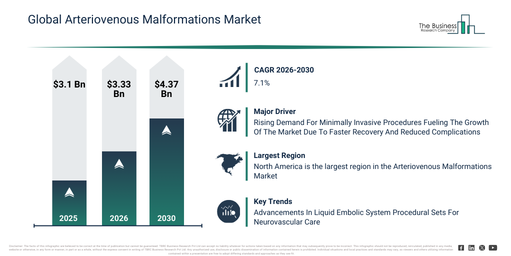
    The arteriovenous malformations market size has demonstrated significant expansion in recent years. It is anticipated to increase from $3.1 billion in 2025 to $3.33 billion in 2026, achieving a compound annual growth rate (CAGR) of 7.3%. The market’s past growth is attributable to enhancements in neuroimaging technologies, heightened clinical awareness of avm conditions, the proliferation of specialized neurosurgical centers, the adoption of endovascular embolization techniques, and the expansion of hospital-based neurological care.

    The market for arteriovenous malformations is projected to experience robust expansion over the coming years. This market is anticipated to reach a valuation of $4.37 billion by 2030, driven by a compound annual growth rate (CAGR) of 7.1%. Several factors are expected to fuel this growth during the projection period, including a heightened need for accurate diagnostics, greater financial input into neurovascular studies, a wider embrace of minimally invasive treatments, a stronger emphasis on individualized treatment strategies, and a broader supply of sophisticated interventional tools. Key developments expected within this timeframe involve a greater uptake of cutting-edge neuroimaging diagnostic methods, an increased application of minimally invasive endovascular therapies, a heightened priority on timely and precise diagnosis, the broadening of diverse treatment methodologies, and improved oversight of patient results after treatment.

    Download A Free Sample Report For Comprehensive Market Insights:

    https://www.thebusinessresearchcompany.com/sample.aspx?id=21888&type=smp

    What Major Growth Factors Are Impacting The Arteriovenous Malformations Market?

    The arteriovenous malformations market is expected to grow, driven by the increasing preference for minimally invasive procedures. These surgical or therapeutic methods employ small incisions or catheter-based approaches to minimize trauma, shorten recovery periods, and reduce complications. The rising demand for these procedures is linked to their faster recovery times, as smaller incisions cause less tissue damage and accelerate healing. This allows patients to return to their daily routines more quickly compared to traditional open surgeries, making them a favored option for both patients and healthcare providers. Arteriovenous malformations (AVMs) benefit from minimally invasive techniques, such as endovascular embolization, which utilizes catheters and image-guided interventions to correct abnormal blood flow without requiring open surgery, thereby lowering risks, reducing recovery times, and improving patient outcomes. For example, data from the American Society of Plastic Surgeons in September 2023 showed that 25,442,640 cosmetic minimally invasive procedures were performed in the US in 2023, an increase from 23,672,269 procedures in 2022, signifying a 7% growth in minimally invasive treatments across both genders in 2023. Consequently, the growing demand for minimally invasive procedures is fueling the expansion of the arteriovenous malformations market.

    Arteriovenous Malformations Market Driver: Increasing Investment In Biotechnology Fueling The Growth Of The Market Due To Advancements In Arteriovenous Malformations Treatment And Neurovascular Innovations

    What Key Segment Areas Are Included In The Arteriovenous Malformations Market Assessment?

    The arteriovenous malformations market covered in this report is segmented –

    1) By Type: True Arteriovenous Malformation, Occult Or Cryptic, Cavernous Malformations, Venous Malformation, Hemangioma, Dural Fistula, Other Types

    2) By Diagnosis: Physical examination, Brain Scans, Other Diagnosis

    3) By Treatment: Endovascular Embolization, Neurosurgery

    4) By Age Group: Adult Patients, Pediatric Patients

    5) By End-User: Hospitals And Clinics, Research laboratories, Other End-Users

    Subsegments:

    1) By True Arteriovenous Malformation: Pial AVMs, Spinal AVMs, Brain AVMs, Extremity AVMs, Visceral AVMs

    2) By Occult or Cryptic: Micro-AVMs, Hidden AVMs, Asymptomatic AVMs, Deep-Seated AVMs, Small-Scale AVMs

    3) By Cavernous Malformations: Cerebral Cavernous Malformations (CCMs), Spinal Cavernous Malformations, Familial Cavernous Malformations, Solitary Cavernous Malformations, Multiple Cavernous Malformations

    4) By Venous Malformation: Superficial Venous Malformations, Deep Venous Malformations, Mixed Venous Malformations, Syndromic Venous Malformations, Blue Rubber Bleb Nevus Syndrome

    5) By Hemangioma: Infantile Hemangiomas, Capillary Hemangiomas, Lobular Capillary Hemangiomas, Cavernous Hemangiomas, Compound Hemangiomas

    6) By Dural Fistula: Cranial Dural Arteriovenous Fistula (dAVF), Spinal Dural Arteriovenous Fistula, Direct Dural AV Fistula, Indirect Dural AV Fistula, High-Flow Dural Fistula

    7) By Other Types: Lymphatic Malformations, Mixed Vascular Malformations, Arteriovenous Aneurysms, Hereditary Hemorrhagic Telangiectasia (HHT)-Associated AVMs, Rare Congenital AVMs

    Which Trends Are Contributing To Changes In The Arteriovenous Malformations Market?

    Major companies in the arteriovenous malformations market are concentrating on technological innovations, such as liquid embolic system procedural sets, to improve treatment procedures and patient outcomes. A liquid embolic system procedural set is a pre-assembled, sterilized kit containing essential components for delivering liquid embolic agents to treat vascular abnormalities like arteriovenous malformations (AVMs). For instance, in March 2024, CERENOVUS Inc., a US-based neurovascular care company under Johnson and Johnson MedTech, introduced the TRUFILL n-BCA liquid embolic system procedural set. This new set features two configurations and the necessary accessories for preparing and delivering the n-BCA liquid embolic system in a single sterilized package, optimizing procedure preparation for treating cerebral arteriovenous malformations (AVMs).

    Who Are The Prominent Players Across The Arteriovenous Malformations Market?

    Major companies operating in the arteriovenous malformations market are Johnson And Johnson Services Inc, Medtronic Plc, Stryker Corporation, Terumo Corporation, Penumbra Inc, Cook Medical LLC, Elekta AB, Merit Medical Systems Inc, Balt LLC, Shape Memory Medical Inc, MicroVention Inc, Cerenovus, Brainlab AG, Boston Scientific Corporation, Abbott Laboratories, B Braun Melsungen AG, Siemens Healthineers AG, GE Healthcare Technologies Inc, Koninklijke Philips NV, Canon Medical Systems Corporation, Toshiba Medical Systems Corporation

    Access The Complete Arteriovenous Malformations Market Report:

    https://www.thebusinessresearchcompany.com/report/arteriovenous-malformations-global-market-report

    Which Region Commands The Largest Share Of The Arteriovenous Malformations Market?

    North America was the largest region in the arteriovenous malformations market in 2025. Asia-Pacific is expected to be the fastest-growing region in the forecast period. The regions covered in the arteriovenous malformations market report are Asia-Pacific, South East Asia, Western Europe, Eastern Europe, North America, South America, Middle East, Africa.

    Access Arteriovenous Malformations Market Report for Deeper Competitive Insights

    https://www.thebusinessresearchcompany.com/customise?id=21888&type=smp

    Browse Through More Reports Similar to the Global Arteriovenous Malformations Market 2026, By The Business Research Company

    Vascular Imaging Global Market Report 2026

    https://www.thebusinessresearchcompany.com/report/vascular-imaging-global-market-report

    Giant Cell Arteritis Global Market Report 2026

    https://www.thebusinessresearchcompany.com/report/giant-cell-arteritis-global-market-report

    Vascular Stent Global Market Report 2026

    https://www.thebusinessresearchcompany.com/report/vascular-stent-global-market-report

    Get in touch with us:

    The Business Research Company: https://www.thebusinessresearchcompany.com/

    Americas: +1 310-496-7795

    Asia: +44 7882 955267 & +91 8897263534

    Europe: +44 7882 955267

    Email us at: marketing@tbrc.info

    Follow us on:

    LinkedIn: https://in.linkedin.com/company/the-business-research-company

    YouTube: https://www.youtube.com/channel/UC24_fI0rV8cR5DxlCpgmyFQ

    Global Market Model: https://www.thebusinessresearchcompany.com/global-market-model

  • AR/VR Medical Simulation Market Revenue Anticipated To Reach $8.93 Billion By 2030 With 17.1% CAGR

    AR/VR Medical Simulation Market Revenue Anticipated To Reach $8.93 Billion By 2030 With 17.1% CAGR

    The Business Research Company’s 2026 market reports feature enhanced tools like market attractiveness analysis, TAM assessment, and company scoring matrices, along with interactive dashboards, deeper supply chain insights, and startup coverage strengthening the depth, usability, and strategic value of insights.

    What Will Be The Estimated Market Size Of The AR/VR Medical Simulation Market By 2030?

    The ar/vr medical simulation market has expanded exponentially in size over recent years. It is projected to increase from $3.96 billion in 2025 to $4.76 billion in 2026, achieving a compound annual growth rate (CAGR) of 20.3%. This historic growth is attributable to the expansion of medical education programs, a greater demand for standardized clinical training, the increasing integration of digital learning tools within healthcare, the rise of simulation-based education models, and the accessibility of advanced visualization technologies.

    The ar/vr medical simulation market is projected to experience substantial expansion in the coming years. Its value is forecast to reach $8.94 billion by 2030, growing at a compound annual rate (CAGR) of 17.1%. This anticipated growth during the forecast period stems from various factors, including heightened investments in virtual medical education and a growing need for remote and adaptable training options. Furthermore, the expansion of AI-driven medical simulation software, a stronger emphasis on patient safety outcomes, and the increased integration of VR-based surgical rehearsal contribute to this expansion. Key trends for the forecast period encompass a greater uptake of immersive clinical training platforms, increased utilization of virtual surgical simulation instruments, and a rising requirement for remote medical training offerings. Additionally, the proliferation of scenario-based medical education programs and an intensified focus on evaluating skills and providing feedback are significant developments.

    Download A Free Sample Report For Comprehensive Market Insights:

    https://www.thebusinessresearchcompany.com/sample.aspx?id=15117&type=smp

    What Market Drivers Are Helping Shape The AR/VR Medical Simulation Market Expansion?

    The expansion of the AR/VR medical simulation market is anticipated to be fueled by a rising volume of surgical procedures. Surgeries encompass medical interventions performed by a surgeon to address illnesses or conditions in a patient. Several factors contribute to the escalating number of surgeries, including an aging global populace, continuous advancements in medical technology, and the growing prevalence of chronic diseases. Within the surgical domain, augmented reality (AR) and virtual reality (VR) medical simulations serve to optimize training, elevate surgical outcomes, and enhance patient care by offering a secure and efficient environment for education, skill refinement, and planning before operations. For example, in June 2024, data from the American Society of Plastic Surgeons, a US-based professional medical organization, indicated that in 2023, liposuction remained the most popular plastic surgery procedure, with close to 350,000 procedures conducted, representing a 7% increase from 2022. Consequently, the increasing frequency of surgeries is acting as a key driver for the AR/VR medical simulation market.

    How Is Segment Classification Applied In The AR/VR Medical Simulation Market?

    The ar/vr medical simulation market covered in this report is segmented –

    1) By Product And Service: Medical Simulation Anatomical Models, Web Based Simulation, Medical Simulation Software, Simulation Training Services

    2) By Application: Medical Education, Patient Care Management, Other Applications

    3) By End-Users: Hospitals And Healthcare Institutions, Medical Schools And Universities

    Subsegments:

    1) By Medical Simulation Anatomical Models: Physical Models, AR Or VR Models

    2) By Web-Based Simulation: Online Training Platforms, Virtual Learning Modules

    3) By Medical Simulation Software: Patient Simulation Software, Surgical Simulation Software, Scenario-Based Training Software

    4) By Simulation Training Services: Instructor-Led Training, Remote Simulation Training, Technical Support And Maintenance

    What Trends Are Shaping The AR/VR Medical Simulation Market Structure?

    Key players in the AR/VR medical simulation market are prioritizing the development of sophisticated solutions, such as AI-integrated immersive training platforms, to elevate surgical precision, refine skill assessment, and bolster clinical preparedness. These AI-integrated immersive training platforms merge virtual reality environments with live feedback and intelligent analytics to simulate intricate surgical conditions and facilitate more effective training results. For example, in May 2024, FundamentalVR, a US-based provider specializing in immersive surgical training, introduced its Fundamental Surgery platform. This platform comes with advanced AI capabilities, allowing surgeons to practice procedures with accurate haptic feedback, continuous performance evaluation, and adaptable scenario adjustments based on their individual proficiency. The system offers extensive metrics on decision-making, speed, and accuracy; incorporates immersive 3D anatomical environments for authentic simulation; and features an AI-powered debriefing utility that identifies strengths and areas for enhancement. Additionally, it enables multi-user collaborative training, thereby improving communication and coordination in stressful surgical situations.

    Which Companies Form The Competitive Landscape Of The AR/VR Medical Simulation Market?

    Major companies operating in the ar/vr medical simulation market are Siemens AG, Koninklijke Philips N.V., GE HealthCare Technologies Inc., Intuitive Surgical Operations Inc., CAE Inc., 3D Systems Healthcare Inc., Surgical Science Sweden AB, Eon Reality Inc., Gaumard Scientific Co., Osso VR Inc., FundamentalVR, Mentice AB, Limbs & Things Ltd., Kyoto Kagaku Co. Ltd., VirtaMed AG, BioDigital Inc., Vuzix Corporation, Oxford Medical Simulation, Laerdal Medical AS, AppliedVR Inc., SimforHealth, Precision OS, Medical Realities, UbiSim Inc., GigXR, Virtual Education Systems (VRpatients), MedVR Education, PeriopSim, InfiVR.com

    Access The Complete AR/VR Medical Simulation Market Report:

    https://www.thebusinessresearchcompany.com/report/ar-or-vr-medical-simulation-global-market-report

    Which Region Accounts For The Highest Share Of The AR/VR Medical Simulation Market?

    North America was the largest region in the AR/VR medical simulation market in 2025. Asia-Pacific is expected to be the fastest growing region in the forecast period. The regions covered in the ar/vr medical simulation market report are Asia-Pacific, South East Asia, Western Europe, Eastern Europe, North America, South America, Middle East, Africa.

    Access AR/VR Medical Simulation Market Report for Deeper Competitive Insights

    https://www.thebusinessresearchcompany.com/customise?id=15117&type=smp

    Browse Through More Reports Similar to the Global AR/VR Medical Simulation Market 2026, By The Business Research Company

    Virtual Reality Vr In Medical Simulation Global Market Report 2026

    https://www.thebusinessresearchcompany.com/report/virtual-reality-vr-in-medical-simulation-global-market-report

    Healthcare Medical Simulation Global Market Report 2026

    https://www.thebusinessresearchcompany.com/report/healthcare-medical-simulation-global-market-report

    Patient Simulators Global Market Report 2026

    https://www.thebusinessresearchcompany.com/report/patient-simulators-global-market-report

    Get in touch with us:

    The Business Research Company: https://www.thebusinessresearchcompany.com/

    Americas: +1 310-496-7795

    Asia: +44 7882 955267 & +91 8897263534

    Europe: +44 7882 955267

    Email us at: marketing@tbrc.info

    Follow us on:

    LinkedIn: https://in.linkedin.com/company/the-business-research-company

    YouTube: https://www.youtube.com/channel/UC24_fI0rV8cR5DxlCpgmyFQ

    Global Market Model: https://www.thebusinessresearchcompany.com/global-market-model