Month: May 2026

  • Ribonucleic Acid (RNA) Splicing Modulators Market Forecast Covering Key Growth Drivers And Future Industry Trends

    Ribonucleic Acid (RNA) Splicing Modulators Market Forecast Covering Key Growth Drivers And Future Industry Trends

    The Business Research Company’s 2026 market reports feature enhanced tools like market attractiveness analysis, TAM assessment, and company scoring matrices, along with interactive dashboards, deeper supply chain insights, and startup coverage strengthening the depth, usability, and strategic value of insights.

    How Is The Market Size Of The Ribonucleic Acid (RNA) Splicing Modulators Market Expected To Change From 2026 To 2030?

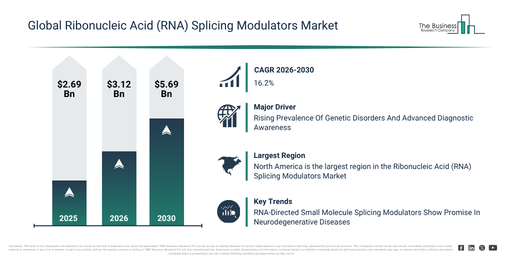
    The market for ribonucleic acid (RNA) splicing modulators has seen substantial growth in recent years. This market is anticipated to expand from $2.69 billion in 2025 to $3.12 billion in 2026, achieving a compound annual growth rate (CAGR) of 16.0%. The expansion observed historically is attributable to factors like the rising occurrence of genetic disorders, developments in molecular biology techniques, the proliferation of oncology therapeutics, increased research and development investments, and the adoption of antisense oligonucleotides.

    The ribonucleic acid (RNA) splicing modulators market size is projected to undergo significant expansion in the upcoming years. It is anticipated to grow to $5.69 billion by 2030, demonstrating a compound annual growth rate (CAGR) of 16.2%. This growth over the forecast period is fueled by the creation of AI-driven splicing modulators, the wider application of personalized medicine approaches, an increase in collaborations between pharmaceutical and biotechnology companies, enhancements in delivery mechanisms, and regulatory approvals for new therapies. Prominent trends for the forecast period include specific RNA splicing therapies, individualized genetic medicine, high-throughput screening platforms, the integration of bioinformatics tools, and advanced molecular modeling.

    Access Your Free Sample Report For In-Depth Market Analysis:

    https://www.thebusinessresearchcompany.com/sample_request?id=14237624&type=smp&name=Ribonucleic%20Acid%20%28RNA%29%20Splicing%20Modulators%20Market%20Report%202026

    What Major Factors Are Driving The Ribonucleic Acid (RNA) Splicing Modulators Market Forward?

    The escalating occurrence of genetic disorders is projected to propel the expansion of the ribonucleic acid (RNA) splicing modulators market in the future. Genetic disorders are conditions or illnesses resulting from irregularities in an individual’s DNA, encompassing mutations, deletions, or chromosomal alterations that impair normal biological functions. The increase in these disorders, attributed to heightened awareness and sophisticated diagnostic capabilities, facilitates the identification of more cases, enabling earlier detection and management of inherited conditions. RNA splicing modulators play a role in managing genetic disorders by targeting and rectifying aberrant RNA splicing events, thereby offering a therapeutic potential to address or control the genetic mutations responsible for these conditions. For example, in May 2024, the National Health Service, a UK-based government department, stated that 17,000 people live with sickle cell disease, an inherited genetic blood disorder, with roughly 250 new cases diagnosed each year. Thus, the rising prevalence of genetic disorders is a key factor driving the growth of the ribonucleic acid (RNA) splicing modulators market.

    Which Segments Define The Ribonucleic Acid (RNA) Splicing Modulators Market Segment Structure?

    The ribonucleic acid (RNA) splicing modulators market covered in this report is segmented –

    1) By Product Type: Small Molecule Modulators, Antisense Oligonucleotides, Small Interfering Ribonucleic Acid, Other Product Types

    2) By Route Of Administration: Subcutaneous, Intravenous, Intrathecal Central Nervous System Adjacent

    3) By Application: Cancer, Genetic Disorders, Neurological Disorders, Other Applications

    4) By End-User: Pharmaceutical Companies, Research Institutes, Hospitals And Clinics, Other End Users

    Subsegments:

    1) By Small Molecule Modulators: Splicing Factor Inhibitors, Ribonucleic Acid Binding Modulators, Kinase Modulators Affecting Splicing, Pre- Messenger Ribonucleic Acid Processing Modulators, Exon Skipping Enhancers

    2) By Antisense Oligonucleotides: Exon Skipping Antisense Oligonucleotides, Splice Site Modifying Antisense Oligonucleotides, Intronic Targeting Antisense Oligonucleotides, Messenger Ribonucleic Acid Degradation Inducing Antisense Oligonucleotides, Gene Expression Modulating Antisense Oligonucleotides

    3) By Small Interfering Ribonucleic Acid: Exon Skipping Small Interfering Ribonucleic Acid, Splice Site Small Interfering Ribonucleic Acid, Intronic Targeting Small Interfering Ribonucleic Acid, Pre- Messenger Ribonucleic Acid Processing Small Interfering Ribonucleic Acid, Gene Silencing Small Interfering Ribonucleic Acid

    4) By Other Product Types: Ribonucleoprotein Complex Modulators, Spliceosome Assembly Modulators, Ribonucleic Acid Editing Enzyme Modulators, Long Non-Coding Ribonucleic Acid Modulators, Messenger Ribonucleic Acid Modulators

    What Trends Are Affecting The Growth Of The Ribonucleic Acid (RNA) Splicing Modulators Market?

    Leading companies in the ribonucleic acid (RNA) splicing modulators market are concentrating on advancements in RNA-targeted drug discovery platforms, such as RNA-directed small molecule splicing modulators, with the goal of improving efficacy, enhancing safety, and addressing unmet needs in neurodegenerative diseases. RNA-directed small molecule splicing modulators are compact compounds that attach to RNA to modify pre-mRNA splicing, thereby correcting or adjusting splicing patterns to treat genetic diseases or cancers. For instance, in September 2025, Skyhawk Therapeutics, a US-based biotechnology company, released positive interim data from its Phase 1 clinical trial of SKY-0515 for Huntington’s disease. This is an orally administered, investigational small molecule RNA splicing modifier created through the company’s SKYSTAR platform. It exhibited dose-dependent reductions of mutant huntingtin protein (up to 62%) and PMS1 mRNA in patients, along with excellent brain penetration and a favorable safety profile, indicating a potential dual-mechanism strategy to target core pathogenic processes without operator intervention.

    Who Are The Established Players Within The Ribonucleic Acid (RNA) Splicing Modulators Market?

    Major companies operating in the ribonucleic acid (RNA) splicing modulators market are F. Hoffmann-La Roche Ltd, Pfizer Inc., Novartis AG, Biogen Inc., PTC Therapeutics Inc., Ionis Pharmaceuticals Inc., Abivax SA, Twist Bioscience Corporation, Wave Life Sciences Ltd, Arrakis Therapeutics Inc., Remix Therapeutics Inc., Anima Biotech Inc., Rgenta Therapeutics Inc., Avidity Biosciences Inc., Skyhawk Therapeutics Inc., Stoke Therapeutics Inc., Accent Therapeutics Inc., Chordia Therapeutics Inc., Panorama Medicine Inc., Serna Therapeutics Inc., Ribometrix Inc., Envisagenics Inc., Dyne Therapeutics Inc.

    Get The Full Ribonucleic Acid (RNA) Splicing Modulators Market Report:

    https://www.thebusinessresearchcompany.com/report/ribonucleic-acid-rna-splicing-modulators-market-report

    Which Region Accounts For The Largest Portion Of The Ribonucleic Acid (RNA) Splicing Modulators Market?

    North America was the largest region in the ribonucleic acid (RNA) splicing modulators market in 2025. Asia-Pacific is expected to be the fastest-growing region in the forecast period. The regions covered in the ribonucleic acid (RNA) splicing modulators market report are Asia-Pacific, South East Asia, Western Europe, Eastern Europe, North America, South America, Middle East, Africa.

    Request A Customized Ribonucleic Acid (RNA) Splicing Modulators Market Report For Competitive Insights:

    https://www.thebusinessresearchcompany.com/Customise?id=14237624&name=Ribonucleic%20Acid%20%28RNA%29%20Splicing%20Modulators%20Market%20Report%202026&type=smp

    Browse Through More Reports Similar to the Global Ribonucleic Acid (RNA) Splicing Modulators Market 2026, By The Business Research Company

    adeno-associated virus (avv) vectors in gene therapy market report 2026

    https://www.thebusinessresearchcompany.com/report/adeno-associated-virus-avv-vectors-in-gene-therapy-global-market-report

    gastric cancer therapy market report 2026

    https://www.thebusinessresearchcompany.com/report/gastric-cancer-therapy-global-market-report

    over the counter (otc) drugs market report 2026

    https://www.thebusinessresearchcompany.com/report/over-the-counter-otc-drugs-global-market-report

    Get in touch with us:

    The Business Research Company: https://www.thebusinessresearchcompany.com/

    Americas +1 310-496-7795

    Asia +44 7882 955267 & +91 8897263534

    Europe +44 7882 955267

    Email us at marketing@tbrc.info

    Follow us on:

    LinkedIn: https://in.linkedin.com/company/the-business-research-company

    YouTube: https://www.youtube.com/channel/UC24_fI0rV8cR5DxlCpgmyFQ

    Global Market Model: https://www.thebusinessresearchcompany.com/global-market-model
  • Reverse Transcription Kits Market Outlook Highlighting Emerging Opportunities Through 2030

    Reverse Transcription Kits Market Outlook Highlighting Emerging Opportunities Through 2030

    The Business Research Company’s 2026 market reports feature enhanced tools like market attractiveness analysis, TAM assessment, and company scoring matrices, along with interactive dashboards, deeper supply chain insights, and startup coverage strengthening the depth, usability, and strategic value of insights.

    From Its 2026 Market Size, What Value Is The Reverse Transcription Kits Market Projected To Reach By 2030?

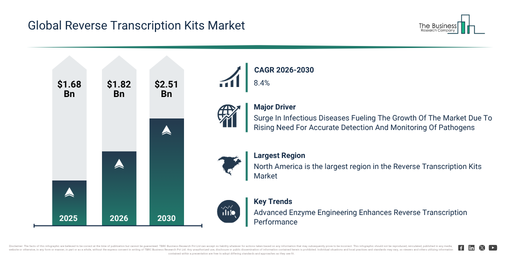
    The market for reverse transcription kits has experienced substantial growth in recent years. This market is projected to expand from $1.68 billion in 2025 to $1.82 billion in 2026, demonstrating a compound annual growth rate (CAGR) of 8.2%. Historically, this expansion has been driven by factors such as the expanding application of reverse transcription in molecular biology research, the proliferation of academic research endeavors, a heightened need for gene expression analysis, continuous improvements in enzyme technologies, and the continued implementation of conventional RT-PCR methods.

    The reverse transcription kits market is anticipated to show significant expansion over the next few years. It is projected to achieve a value of $2.51 billion by 2030, demonstrating a compound annual growth rate (CAGR) of 8.4%. This projected growth can be linked to an increasing need for high-throughput reverse transcription kits, their incorporation into automated laboratory systems, the expansion of pharmaceutical R&D initiatives, a wider application in cDNA library construction, and the evolution of multiplex and quantitative kits. Important trends expected in this timeframe involve high-fidelity reverse transcription kits, multiplex reverse transcription kits, quantitative cDNA analysis, automated reverse transcription workflows, and their integration with next-generation sequencing.

    Access Your Free Sample Report For In-Depth Market Analysis:

    https://www.thebusinessresearchcompany.com/sample_request?id=55758796&type=smp&name=Reverse%20Transcription%20Kits%20Market%20Report%202026

    Which Key Drivers Are Affecting The Reverse Transcription Kits Market Development?

    The future expansion of the reverse transcription kits market is anticipated to be driven by the rising occurrence of infectious diseases. These diseases are ailments caused by pathogenic microorganisms, including bacteria, viruses, parasites, or fungi, which can spread between individuals or organisms. The growing incidence of infectious diseases is fueled by worldwide population growth, as greater population density promotes quicker pathogen transmission and elevates the risk of epidemics. Reverse transcription kits are instrumental in managing infectious diseases by converting viral RNA into complementary DNA, thereby enabling precise detection, monitoring, and investigation of RNA-based pathogens for prompt diagnosis and treatment. An example highlighting this is the World Health Organization, a Switzerland-based intergovernmental organization, which reported in July 2023 that approximately 40-60 million doses of malaria vaccinations would be required yearly across the globe in 2026, with this figure projected to climb to 80-100 million doses annually by 2030. Consequently, the increasing prevalence of infectious diseases is propelling the growth of the reverse transcription kits market.

    How Is The Reverse Transcription Kits Market Segmented Across Different Segment Categories?

    The reverse transcription kits market covered in this report is segmented –

    1) By Product Type: One-Step Reverse Transcription Kits, Two-Step Reverse Transcription Kits, Other Product Types

    2) By Application: Gene Expression Analysis, Complementary DNA Library Construction, Reverse Transcription Polymerase Chain Reaction, Ribonucleic Acid Sequencing, Other Applications

    3) By End-User: Academic And Research Institutes, Pharmaceutical And Biotechnology Companies, Hospitals And Diagnostic Centers, Other End Users

    Subsegments:

    1) By One-Step Reverse Transcription Kits: Standard One-Step Reverse Transcription Kits, High Fidelity One-Step Reverse Transcription Kits, Quantitative One-Step Reverse Transcription Kits, Multiplex One-Step Reverse Transcription Kits

    2) By Two-Step Reverse Transcription Kits: Standard Two-Step Reverse Transcription Kits, High Efficiency Two-Step Reverse Transcription Kits, Quantitative Two-Step Reverse Transcription Kits, Multiplex Two-Step Reverse Transcription Kits

    3) By Other Product Types: Complementary Deoxyribonucleic Acid Synthesis Kits, Ribonucleic Acid Template Preparation Kits, Reverse Transcription Enzyme Kits, Specialized Nucleic Acid Kits

    Which Trends Are Shaping The Reverse Transcription Kits Market?

    Major companies in the reverse transcription kits market are concentrating on creating advanced products, such as high-fidelity reverse transcriptase, to ensure precise and effective cDNA synthesis for both research and diagnostic purposes. High-fidelity reverse transcription kits are comprehensive solutions that combine engineered enzymes, optimized buffers, and essential accessories, facilitating accurate RNA-to-cDNA conversion with impressive yield, sensitivity, and consistency for uses in genomics, transcriptomics, and molecular diagnostics. An example of this trend is RNAConnect, a US-based life sciences tools firm, which introduced UltraMarathonRT (uMRT) in May 2024, an ultra-processive next-generation reverse transcriptase engineered to boost cDNA synthesis efficiency, handle extended RNA templates, and improve subsequent assay performance. Such kits allow for quick, superior-quality reverse transcription with reduced errors, thereby supporting intensive laboratory operations, high-volume analyses, and delicate RNA detection in research, clinical diagnostics, and biotechnology fields.

    Which Organizations Play A Role In The Reverse Transcription Kits Market Landscape?

    Major companies operating in the reverse transcription kits market are Roche Holding AG, Thermo Fisher Scientific Inc., Merck KGaA, Agilent Technologies Inc., Illumina Inc., Bio-Rad Laboratories Inc., QIAGEN N.V., Promega Corporation, Bioline, Takara Bio Inc., Analytik Jena AG, Bioneer Corporation, New England Biolabs Inc., Biovendor a.s., Enzo Life Sciences Inc., Zymo Research Corporation, Lucigen Corporation, System Biosciences LLC, Norgen Biotek Corp., Jena Bioscience GmbH, Canvax Biotech S.L., GeneCopoeia Inc., Toyobo Co. Ltd.

    Get The Full Reverse Transcription Kits Market Report:

    https://www.thebusinessresearchcompany.com/report/reverse-transcription-kits-market-report

    Which Region Holds The Highest Market Share In The Reverse Transcription Kits Market?

    North America was the largest region in the reverse transcription kits market in 2025. Asia-Pacific is expected to be the fastest-growing region in the forecast period. The regions covered in the reverse transcription kits market report are Asia-Pacific, South East Asia, Western Europe, Eastern Europe, North America, South America, Middle East, Africa.

    Request A Customized Reverse Transcription Kits Market Report For Competitive Insights:

    https://www.thebusinessresearchcompany.com/Customise?id=55758796&name=Reverse%20Transcription%20Kits%20Market%20Report%202026&type=smp

    Browse Through More Reports Similar to the Global Reverse Transcription Kits Market 2026, By The Business Research Company

    connected health personal medical devices market report 2026

    https://www.thebusinessresearchcompany.com/report/connected-health-personal-medical-devices-global-market-report

    contract sterilization market report 2026

    https://www.thebusinessresearchcompany.com/report/contract-sterilization-global-market-report

    orthotic insole 3-d printer market report 2026

    https://www.thebusinessresearchcompany.com/report/orthotic-insole-3-d-printer-global-market-report

    Get in touch with us:

    The Business Research Company: https://www.thebusinessresearchcompany.com/

    Americas +1 310-496-7795

    Asia +44 7882 955267 & +91 8897263534

    Europe +44 7882 955267

    Email us at marketing@tbrc.info

    Follow us on:

    LinkedIn: https://in.linkedin.com/company/the-business-research-company

    YouTube: https://www.youtube.com/channel/UC24_fI0rV8cR5DxlCpgmyFQ

    Global Market Model: https://www.thebusinessresearchcompany.com/global-market-model
  • Global Revenue Cycle Copilots Market Expected To Reach $5.43 Billion By 2030 At 20.9% CAGR

    Global Revenue Cycle Copilots Market Expected To Reach $5.43 Billion By 2030 At 20.9% CAGR

    The Business Research Company’s 2026 market reports feature enhanced tools like market attractiveness analysis, TAM assessment, and company scoring matrices, along with interactive dashboards, deeper supply chain insights, and startup coverage strengthening the depth, usability, and strategic value of insights.

    How Much Growth In Market Value Is Expected For The Revenue Cycle Copilots Market Between 2026 And 2030?

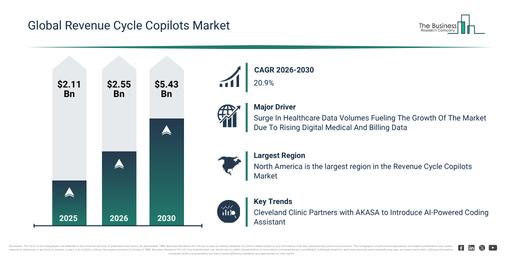
    The market size for revenue cycle copilots has seen significant expansion in recent years. It is anticipated to increase from $2.11 billion in 2025 to $2.55 billion in 2026, at a compound annual growth rate (CAGR) of 20.6%. This historical growth can be linked to several factors, including manual revenue cycle processes, the growing complexity of healthcare billing, the expansion of hospital and clinic networks, an increased focus on financial performance, and the adoption of standalone software solutions.

    The revenue cycle copilots market is projected for significant expansion over the coming years. By 2030, its valuation is anticipated to reach $5.43 billion, demonstrating a compound annual growth rate (CAGR) of 20.9%. This forecasted increase is driven by factors such as AI-driven automation within the revenue cycle, the expansion of cloud-based deployments, integration with electronic health records (EHR) systems, a rising need for predictive analytics in billing processes, and the growth of revenue cycle consulting services. Key developments expected during this timeframe involve automated billing and coding solutions, improved claims accuracy, enhancements to the patient financial experience, automation in revenue analytics and reporting, and greater efficiency in denial management.

    Access Your Free Sample Report For In-Depth Market Analysis:

    https://www.thebusinessresearchcompany.com/sample_request?id=27054941&type=smp&name=Revenue%20Cycle%20Copilots%20Market%20Report%202026

    What Factors Are Contributing To The Growth Of The Revenue Cycle Copilots Market?

    The significant increase in healthcare data volumes is projected to propel the expansion of the revenue cycle copilots market over the forecast period. Healthcare data volumes refer to the growing amount of digital information generated from electronic health records (EHRs), diagnostic systems, medical imaging, billing platforms, and interconnected healthcare technologies. The widespread adoption of EHRs and digital health solutions has resulted in a surge of both structured and unstructured clinical and financial data, creating an escalating need for sophisticated data processing and analytics capabilities. Revenue cycle copilots address this challenge by utilizing AI-driven automation to efficiently process, analyze, and manage complex billing and clinical datasets, thereby improving coding accuracy, operational efficiency, and overall revenue cycle performance. For example, in February 2025, according to Healthcare Asia Magazine, a Singapore-based healthcare industry publication, the healthcare sector accounted for nearly 30% of global data volume, with its data growth occurring at a compound annual growth rate approximately 6% higher than that of the manufacturing industry. Therefore, the increasing healthcare data volumes are driving the growth of the revenue cycle copilots market.

    What Are The Main Segments Within The Revenue Cycle Copilots Market Segment Structure?

    The revenue cycle copilots market covered in this report is segmented –

    1) By Component: Software, Services

    2) By Deployment Mode: On-Premises, Cloud-Based

    3) By Organization Size: Small And Medium Healthcare Providers, Large Hospitals Healthcare Systems

    4) By Application: Hospitals, Clinics, Ambulatory Surgical Centers, Specialty Practices, Other Applications

    5) By End-User: Healthcare Providers, Payers, Other End Users

    Subsegments:

    1) By Software: Billing And Coding Software, Claims Management Software, Patient Financial Experience Software, Revenue Analytics And Reporting Software, Payment Processing Software

    2) By Services: Revenue Cycle Consulting Services, Medical Coding And Billing Services, Payment Posting And Reconciliation Services, Denial Management Services, Training And Support Services

    What Trends Are Influencing The Revenue Cycle Copilots Market?

    Companies operating within the revenue cycle copilots market are directing their efforts toward advancing artificial intelligence-driven coding assistance, including generative AI tools that automatically interpret clinical documentation and suggest accurate medical codes to expedite billing and improve revenue cycle performance. These sophisticated platforms merge natural language understanding with health-specific coding logic to decrease manual work, heighten accuracy, and reduce claim denials, allowing staff to concentrate on more valuable responsibilities. For example, in April 2025, Cleveland Clinic, a US-based health system, collaborated with AKASA to introduce AI tools for the revenue cycle, which feature an AI-powered coding assistant capable of quickly analyzing clinical documents and processing large data volumes to support efficient, accurate mid-cycle coding. While these advancements broaden automation and financial results, ongoing challenges persist in confirming the accuracy of clinical context and integrating with various electronic health record systems.

    Who Are The Companies Participating In The Revenue Cycle Copilots Market?

    Major companies operating in the revenue cycle copilots market are UnitedHealth Group, Oracle Corporation, GE Healthcare, Cognizant Technology Solutions Corporation, Experian Health, Athenahealth Inc., Conifer Health Solutions, eClinicalWorks LLC, Waystar Inc., Meditech, NextGen Healthcare Inc., Infinx Healthcare, FinThrive Inc., Cedar, AKASA, CombineHealth, Epic Systems Corporation, RapidClaims, Allscripts Healthcare Solutions Inc., AGS Health, Olive AI Inc., nThrive Inc.

    Get The Full Revenue Cycle Copilots Market Report:

    https://www.thebusinessresearchcompany.com/report/revenue-cycle-copilots-market-report

    Where Is The Revenue Cycle Copilots Market Most Concentrated Geographically?

    North America was the largest region in the revenue cycle copilots market in 2025. Asia-Pacific is expected to be the fastest-growing region in the forecast period. The regions covered in the revenue cycle copilots market report are Asia-Pacific, South East Asia, Western Europe, Eastern Europe, North America, South America, Middle East, Africa.

    Request A Customized Revenue Cycle Copilots Market Report For Competitive Insights:

    https://www.thebusinessresearchcompany.com/Customise?id=27054941&name=Revenue%20Cycle%20Copilots%20Market%20Report%202026&type=smp

    Browse Through More Reports Similar to the Global Revenue Cycle Copilots Market 2026, By The Business Research Company

    pruritus therapeutic market report 2026

    https://www.thebusinessresearchcompany.com/report/pruritus-therapeutic-global-market-report

    genomic urine testing market report 2026

    https://www.thebusinessresearchcompany.com/report/genomic-urine-testing-global-market-report

    ocular genetic diagnostic market report 2026

    https://www.thebusinessresearchcompany.com/report/ocular-genetic-diagnostic-global-market-report

    Get in touch with us:

    The Business Research Company: https://www.thebusinessresearchcompany.com/

    Americas +1 310-496-7795

    Asia +44 7882 955267 & +91 8897263534

    Europe +44 7882 955267

    Email us at marketing@tbrc.info

    Follow us on:

    LinkedIn: https://in.linkedin.com/company/the-business-research-company

    YouTube: https://www.youtube.com/channel/UC24_fI0rV8cR5DxlCpgmyFQ

    Global Market Model: https://www.thebusinessresearchcompany.com/global-market-model
  • Respiratory Viral Load Quantification Market Forecast Highlighting Growth Toward $3.12 Billion By 2030

    Respiratory Viral Load Quantification Market Forecast Highlighting Growth Toward $3.12 Billion By 2030

    The Business Research Company’s 2026 market reports feature enhanced tools like market attractiveness analysis, TAM assessment, and company scoring matrices, along with interactive dashboards, deeper supply chain insights, and startup coverage strengthening the depth, usability, and strategic value of insights.

    What Is The Estimated Market Size Of The Respiratory Viral Load Quantification Market In 2026, And How Will Its Value Evolve By 2030?

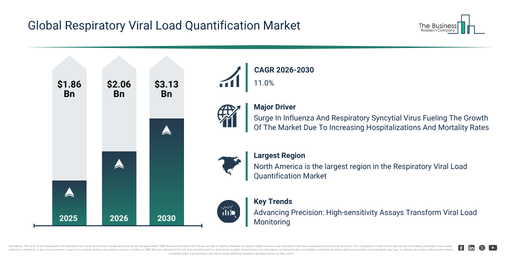
    The market size for respiratory viral load quantification has expanded rapidly in recent years. It is anticipated to increase from $1.86 billion in 2025 to $2.06 billion in 2026, achieving a compound annual growth rate (CAGR) of 10.8%. The historical growth of this market can be attributed to the rising prevalence of respiratory infections, the adoption of PCR-based diagnostics, an increasing demand for laboratory automation, government-funded disease surveillance programs, and the expansion of clinical research activities.

    The market for respiratory viral load quantification is projected to experience swift expansion over the coming years. This market is anticipated to reach a valuation of $3.13 billion by 2030, exhibiting a compound annual growth rate (CAGR) of 11.0%. Factors driving this expansion during the forecast period include the incorporation of next-generation sequencing, the increasing use of AI-enabled diagnostic platforms, a rising demand for multiplex assays, advancements in epidemiology and outbreak surveillance, and greater investment in rapid diagnostic technologies. Key trends anticipated for the forecast period encompass real-time viral load surveillance, seamless integration with laboratory information systems, streamlined automated sample processing, the development of high-sensitivity diagnostic assays, and predictive modeling for disease progression.

    Access Your Free Sample Report For In-Depth Market Analysis:

    https://www.thebusinessresearchcompany.com/sample_request?id=76884570&type=smp&name=Respiratory%20Viral%20Load%20Quantification%20Market%20Report%202026

    Which Strong Drivers Are Impacting The Respiratory Viral Load Quantification Market Growth?

    The increasing occurrence of influenza and respiratory syncytial virus (RSV) is projected to fuel expansion within the respiratory viral load quantification market throughout the forecast period. These infections, influenza and RSV, are highly transmissible respiratory illnesses stemming from viral agents, impacting the lungs and air passages, and presenting a spectrum of clinical manifestations from minor sickness to grave respiratory issues. The growing widespread nature of these infections is boosting the need for precise viral load measurement to aid prompt diagnosis, track treatment effectiveness, and bolster infection management initiatives. Respiratory viral load quantification facilitates accurate identification and continuous evaluation of the viral burden, assisting healthcare providers in making well-informed choices and enhancing patient care. As an illustration, in February 2026, data from the Centers for Disease Control and Prevention (CDC), a US-based government department, indicated that in 2026, influenza caused approximately 290,000–450,000 hospitalizations and 34,000–53,000 deaths annually in the United States, whereas RSV led to an estimated 190,000–350,000 hospitalizations and 10,000–23,000 deaths. Consequently, the increasing occurrence of influenza and respiratory syncytial virus is stimulating the expansion of the respiratory viral load quantification market.

    How Is Segmentation Applied In The Respiratory Viral Load Quantification Market Segment Analysis?

    The respiratory viral load quantification market covered in this report is segmented –

    1) By Technology: Polymerase Chain Reaction, Next-Generation Sequencing, Immunoassays, Other Technologies

    2) By Product Type: Instruments, Assays And Kits, Software

    3) By Pathogen: Influenza A And B, Respiratory Syncytial Virus, Human Metapneumovirus, Parainfluenza Viruses

    4) By Application: Clinical Diagnostics, Research, Epidemiology, Other Applications

    5) By End-User: Hospitals And Clinics, Diagnostic Laboratories, Research Institutes, Other End Users

    Subsegments:

    1) By Polymerase Chain Reaction: Real Time Polymerase Chain Reaction, Digital Polymerase Chain Reaction, Reverse Transcription Polymerase Chain Reaction, Multiplex Polymerase Chain Reaction

    2) By Next Generation Sequencing: Whole Genome Sequencing, Targeted Sequencing, RNA Sequencing, Metagenomic Sequencing

    3) By Immunoassays: Enzyme Linked Immunosorbent Assay, Chemiluminescent Immunoassay, Fluorescent Immunoassay, Lateral Flow Immunoassay

    4) By Other Technologies: Mass Spectrometry Based Quantification, Microarray Based Detection, Biosensor Based Analysis, Hybridization Based Assays

    What Market Trends Are Affecting The Respiratory Viral Load Quantification Market?

    Companies active in the respiratory viral load quantification market are prioritizing the development of innovative solutions, such as high-sensitivity quantitative assays, to enable precise viral load measurement and support enhanced patient monitoring and therapeutic decision-making. These high-sensitivity quantitative assays are platforms, either molecular- or immunoassay-based, designed to detect and quantify viral RNA or antigens with significant accuracy, speed, and reproducibility for respiratory pathogens including respiratory syncytial virus (RSV), influenza, and SARS-CoV-2. For example, in January 2025, Shionogi & Co., Ltd., a Japan-based pharmaceutical company, announced positive Phase 2 trial results for its oral antiviral candidate S-337395, where respiratory viral load quantification was utilized as a crucial endpoint to assess treatment efficacy and viral suppression. By employing advanced molecular detection technologies and optimized assay workflows, these diagnostic solutions facilitate rapid, reliable, and reproducible viral load measurements, thereby supporting clinical trials, therapeutic monitoring, and public health interventions across hospital and laboratory settings.

    Who Are The Companies Participating In The Respiratory Viral Load Quantification Market Environment?

    Major companies operating in the respiratory viral load quantification market are Cardinal Health, Johnson & Johnson Services Inc, Roche Diagnostics, Thermo Fisher Scientific, Abbott Laboratories, Siemens Healthineers AG, Danaher Corporation (Cepheid), Becton Dickinson Company (BD), Laboratory Corporation Of America Holdings (LabCorp), Quest Diagnostics Incorporated, Agilent Technologies, Illumina Inc, bioMérieux SA, Hologic Inc, PerkinElmer Inc, Sysmex Corporation, Bio-Rad Laboratories Inc, Qiagen NV, DiaSorin SpA, Seegene Inc, GC Diagnostics Corporation.

    Get The Full Respiratory Viral Load Quantification Market Report:

    https://www.thebusinessresearchcompany.com/report/respiratory-viral-load-quantification-market-report

    Which Region Dominates The Respiratory Viral Load Quantification Market By Market Share?

    North America was the largest region in the respiratory viral load quantification market in 2025. Asia-Pacific is expected to be the fastest-growing region in the forecast period. The regions covered in the respiratory viral load quantification market report are Asia-Pacific, South East Asia, Western Europe, Eastern Europe, North America, South America, Middle East, Africa.

    Request A Customized Respiratory Viral Load Quantification Market Report For Competitive Insights:

    https://www.thebusinessresearchcompany.com/Customise?id=76884570&name=Respiratory%20Viral%20Load%20Quantification%20Market%20Report%202026&type=smp

    Browse Through More Reports Similar to the Global Respiratory Viral Load Quantification Market 2026, By The Business Research Company

    connected health personal medical devices market report 2026

    https://www.thebusinessresearchcompany.com/report/connected-health-personal-medical-devices-global-market-report

    contract sterilization market report 2026

    https://www.thebusinessresearchcompany.com/report/contract-sterilization-global-market-report

    orthotic insole 3-d printer market report 2026

    https://www.thebusinessresearchcompany.com/report/orthotic-insole-3-d-printer-global-market-report

    Get in touch with us:

    The Business Research Company: https://www.thebusinessresearchcompany.com/

    Americas +1 310-496-7795

    Asia +44 7882 955267 & +91 8897263534

    Europe +44 7882 955267

    Email us at marketing@tbrc.info

    Follow us on:

    LinkedIn: https://in.linkedin.com/company/the-business-research-company

    YouTube: https://www.youtube.com/channel/UC24_fI0rV8cR5DxlCpgmyFQ

    Global Market Model: https://www.thebusinessresearchcompany.com/global-market-model
  • Recurrent Implantation Failure Panels Market Anticipated To Reach $1.3 Billion By 2030 With 9.8% CAGR

    Recurrent Implantation Failure Panels Market Anticipated To Reach $1.3 Billion By 2030 With 9.8% CAGR

    The Business Research Company’s 2026 market reports feature enhanced tools like market attractiveness analysis, TAM assessment, and company scoring matrices, along with interactive dashboards, deeper supply chain insights, and startup coverage strengthening the depth, usability, and strategic value of insights.

    How Does The Market Size Of The Recurrent Implantation Failure Panels Market Compare Between 2026 And 2030?

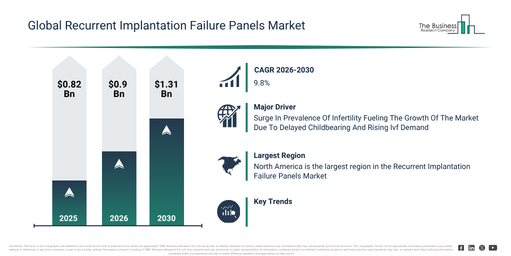
    The recurrent implantation failure panels market has experienced significant growth over recent years. Its value is anticipated to increase from $0.82 billion in 2025 to $0.9 billion in 2026, demonstrating a compound annual growth rate (CAGR) of 9.5%. This historical expansion can be attributed to factors like rising infertility awareness, the adoption of conventional IVF protocols, the proliferation of diagnostic laboratories, the increasing application of genetic testing, and the demand for endometrial evaluation.

    The recurrent implantation failure panels market is anticipated to experience robust expansion over the coming years. By 2030, its size is projected to reach $1.31 billion, demonstrating a compound annual growth rate (CAGR) of 9.8%. This projected increase during the forecast period stems from factors such as the incorporation of AI and machine learning, the proliferation of fertility clinics, the uptake of multi-omics strategies, the creation of automated testing platforms, and a rising patient need for customized fertility remedies. Key developments anticipated in this period encompass personalized implantation risk evaluations, the integration of multi-omics information, AI-driven predictive fertility modeling, continuous monitoring of endometrial receptivity, and heightened automation in genetic and immunological examinations.

    Access Your Free Sample Report For In-Depth Market Analysis:

    https://www.thebusinessresearchcompany.com/sample_request?id=67042694&type=smp&name=Recurrent%20Implantation%20Failure%20Panels%20Market%20Report%202026

    What Key Factors Are Shaping The Recurrent Implantation Failure Panels Market Landscape?

    The increasing global incidence of infertility is anticipated to propel the growth of the recurrent implantation failure (RIF) panels market during the projected period. Infertility is defined as the inability to achieve conception after 12 months of regular, unprotected intercourse. Elevated infertility rates are largely attributed to factors such as delaying parenthood, changes in lifestyle, and age-related reductions in reproductive potential, which heighten the probability of conception challenges and unsuccessful assisted reproductive outcomes. Recurrent implantation failure panels assist in infertility management by pinpointing genetic, immunological, and hormonal elements that could obstruct successful embryo implantation, thereby allowing clinicians to develop more individualized treatment approaches and improve in vitro fertilization (IVF) success rates. For instance, in June 2025, information from the Human Fertilisation and Embryology Authority (HFEA), a UK-based statutory regulator of fertility treatment, indicated that roughly 52,400 patients completed more than 77,500 IVF cycles at accredited fertility clinics in 2023. Therefore, the expanding worldwide prevalence of infertility is a key driver for the recurrent implantation failure panels market.

    What Segment Categories Shape The Recurrent Implantation Failure Panels Market Segment Landscape?

    The recurrent implantation failure panels market covered in this report is segmented –

    1) By Product Type: Genetic Panels, Immunological Panels, Endometrial Receptivity Panels, Combined Panels, Other Product Types

    2) By Technology: Polymerase Chain Reaction (PCR), Next-Generation Sequencing, Microarray, Immunoassay, Other Technologies

    3) By Sample Type: Blood, Tissue, Other Sample Types

    4) By End User: Hospitals And Clinics, Diagnostic Laboratories, Fertility Centers, Other End Users

    Subsegments:

    1) By Genetic Panels: Chromosomal Abnormality Panels, Gene Mutation Panels, Single Nucleotide Variation Panels, Epigenetic Marker Panels

    2) By Immunological Panels: Cytokine Profile Panels, Autoantibody Detection Panels, Natural Killer Cell Activity Panels, T Cell Subset Panels

    3) By Endometrial Receptivity Panels: Gene Expression Profiling Panels, Protein Marker Panels, Microbiome Analysis Panels, Histological Assessment Panels

    4) By Combined Panels: Genetic And Immunological Panels, Genetic And Endometrial Panels, Immunological And Endometrial Panels, Multi Parameter Comprehensive Panels

    5) By Other Product Types: Hormonal Assay Panels, Metabolic Function Panels, Inflammatory Marker Panels, Customized Research Panels

    Who Are The Companies Operating Across The Recurrent Implantation Failure Panels Market Value Chain?

    Major companies operating in the recurrent implantation failure panels market are Thermo Fisher Scientific Inc., Laboratory Corporation of America Holdings (LabCorp), Quest Diagnostics Incorporated, Illumina Inc., Natera Inc., Redcliffe Labs, MedGenome Labs Ltd., Mayo Clinic Laboratories, Fulgent Genetics Inc., LifeCell International, Kindbody Genetics, MapmyGenome, DNA Labs India, Shree IVF Clinic, Inti Labs, Vida Fertility Genetics, Cleveland Clinic, ReceptivaDx (CicloMed), MatriceLab, Reproductive Genetic Innovations (RGI), BGI Genomics Co. Ltd., Embryolab Next Gen IVF, Aksigen IVF, Progenesis IVF, Vani IVF.

    Get The Full Recurrent Implantation Failure Panels Market Report:

    https://www.thebusinessresearchcompany.com/report/recurrent-implantation-failure-panels-market-report

    Which Region Is The Largest In The Recurrent Implantation Failure Panels Market?

    North America was the largest region in the recurrent implantation failure panels market in 2025. Asia-Pacific is expected to be the fastest-growing region in the forecast period. The regions covered in the recurrent implantation failure panels market report are Asia-Pacific, South East Asia, Western Europe, Eastern Europe, North America, South America, Middle East, Africa.

    Request A Customized Recurrent Implantation Failure Panels Market Report For Competitive Insights:

    https://www.thebusinessresearchcompany.com/Customise?id=67042694&name=Recurrent%20Implantation%20Failure%20Panels%20Market%20Report%202026&type=smp

    Browse Through More Reports Similar to the Global Recurrent Implantation Failure Panels Market 2026, By The Business Research Company

    connected health personal medical devices market report 2026

    https://www.thebusinessresearchcompany.com/report/connected-health-personal-medical-devices-global-market-report

    contract sterilization market report 2026

    https://www.thebusinessresearchcompany.com/report/contract-sterilization-global-market-report

    orthotic insole 3-d printer market report 2026

    https://www.thebusinessresearchcompany.com/report/orthotic-insole-3-d-printer-global-market-report

    Get in touch with us:

    The Business Research Company: https://www.thebusinessresearchcompany.com/

    Americas +1 310-496-7795

    Asia +44 7882 955267 & +91 8897263534

    Europe +44 7882 955267

    Email us at marketing@tbrc.info

    Follow us on:

    LinkedIn: https://in.linkedin.com/company/the-business-research-company

    YouTube: https://www.youtube.com/channel/UC24_fI0rV8cR5DxlCpgmyFQ

    Global Market Model: https://www.thebusinessresearchcompany.com/global-market-model
  • Rare Disease Registries Market Forecast Indicating Stable Growth Toward $2.96 Billion By 2030

    Rare Disease Registries Market Forecast Indicating Stable Growth Toward $2.96 Billion By 2030

    The Business Research Company’s 2026 market reports feature enhanced tools like market attractiveness analysis, TAM assessment, and company scoring matrices, along with interactive dashboards, deeper supply chain insights, and startup coverage strengthening the depth, usability, and strategic value of insights.

    What Is The Forecasted Market Size Trajectory Of The Rare Disease Registries Market From 2026 To 2030?

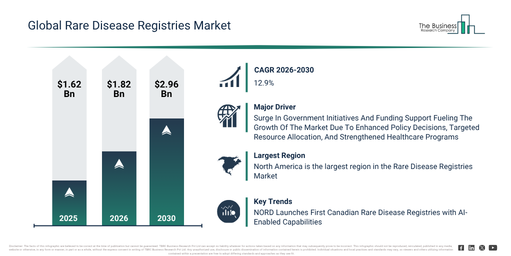
    The rare disease registries market has shown rapid expansion in recent years. It is anticipated to grow from $1.62 billion in 2025 to $1.82 billion in 2026, achieving a compound annual growth rate (CAGR) of 12.6%. This historical development can be attributed to factors such as heightened awareness of rare diseases, increased clinical research endeavors, the proliferation of hospital and population-based registries, regulatory encouragement for patient data collection, and the restricted availability of structured patient data.

    The rare disease registries market size is projected to experience swift expansion over the coming years, anticipated to reach $2.96 billion by 2030, exhibiting a compound annual growth rate (CAGR) of 12.9%. This anticipated expansion throughout the forecast period stems from factors such as the implementation of AI-driven registry solutions, the integration of genomic and omics data, the broadening of personalized medicine initiatives, increased investment in cloud-based and interoperable platforms, and enhanced patient engagement and data sharing. Key developments expected during this period involve the real-time gathering of patient information, seamless integration with electronic health records (EHR), sophisticated data analytics tailored for rare diseases, optimized strategies for patient recruitment and retention, and the widespread use of interoperable registry platforms.

    Access Your Free Sample Report For In-Depth Market Analysis:

    https://www.thebusinessresearchcompany.com/sample_request?id=71346142&type=smp&name=Rare%20Disease%20Registries%20Market%20Report%202026

    Which Factors Are Influencing The Growth Of The Rare Disease Registries Market?

    The expansion of the rare disease registries market is anticipated to be propelled by increasing government initiatives and funding assistance throughout the forecast period. These initiatives and financial backing include public-sector programs and monetary investments focused on enhancing healthcare infrastructure, fostering innovation, and elevating service provision. The rise in public funding signifies endeavors to bolster data-informed policymaking, streamline resource distribution, and better the results for marginalized patient groups, specifically those with rare diseases. Rare disease registries are instrumental in achieving these goals by collecting extensive patient data, which then guides policy formulation, aids in directing funds effectively, and allows for the creation and assessment of impactful healthcare and research programs. As an illustration, in February 2025, the UK government’s central executive body pledged around £26 billion ($35 billion) over two years to bolster the health and care system, thereby strengthening investments in data infrastructure and population health programs. Consequently, the increasing government initiatives and funding support are fueling the growth of the rare disease registries market.

    Which Segment Types Are Examined In The Rare Disease Registries Market Segment Study?

    The rare disease registries market covered in this report is segmented –

    1) By Type: Product Registries, Health Services Registries, Disease Registries

    2) By Database Type: Population-based, Hospital-based

    3) By Software: Standalone, Integrated

    4) By Function: Data Collection, Data Analysis, Patient Recruitment, Other Functions

    5) By End-User: Pharmaceutical Companies, Research Organizations, Hospitals, Government Agencies, Other End-Users

    Subsegments:

    1) By Product Registries: Drug Product Registries, Biologic Product Registries, Medical Device Registries, Gene Therapy Product Registries

    2) By Health Services Registries: Hospital Based Registries, Clinic Based Registries, National Health Program Registries, Insurance Claims Registries

    3) By Disease Registries: Genetic Disorder Registries, Metabolic Disorder Registries, Neurological Disorder Registries, Oncology Rare Disease Registries

    What Trends Are Transforming The Rare Disease Registries Market?

    Leading companies in the **rare disease registries market** are concentrating on creating sophisticated products, notably AI-enabled patient registry infrastructure, designed to improve real-time data capture, patient oversight, and research understanding across rare diseases. This AI-enabled patient registry infrastructure represents systems that utilize artificial intelligence to efficiently process, analyze, and interpret extensive patient and clinical information, thereby facilitating predictive analytics, natural history modeling, and the generation of real-world evidence. For instance, in **May 2024**, the **National Organization for Rare Disorders (NORD)**, a US-based non-profit advocacy organization dedicated to individuals with rare diseases and the organizations that serve them, introduced the inaugural Canadian rare disease patient registries on its **IAMRARE** platform for **phenylketonuria (PKU)** and **mucopolysaccharidoses (MPS)**. This initiative enables real-time cooperative data collection, accommodates various languages and regional consent requirements, and offers crucial insights for clinical trial eligibility, monitoring disease progression, and evaluating treatment effectiveness.

    Which Players Are Part Of The Competitive Landscape Of The Rare Disease Registries Market?

    Major companies operating in the rare disease registries market are disease registries market are Deloitte Touche Tohmatsu Limited, International Business Machines Corporation, Oracle Corporation, BC Platforms Ltd., IQVIA Holdings Inc., ICON plc, Veeva Systems Inc., Alira Health Inc., Phastar Ltd., HealthVerity Inc., OM1 Inc., Synapse Laboratory, Castor EDC, RedCap Cloud, Within3 Inc., Sage Bionetworks, National Organization for Rare Disorders Inc., RTI Health Solutions, ArborMetrix Inc., Evado Clinical Systems Ltd., ClinCapture LLC, Global Vision Technologies Inc., Genetic Alliance UK, Pulse Infoframe.

    Get The Full Rare Disease Registries Market Report:

    https://www.thebusinessresearchcompany.com/report/rare-disease-registries-market-report

    Which Region Leads The Rare Disease Registries Market In Terms Of Market Share?

    North America was the largest region in the rare disease registries market in 2025. Asia-Pacific is expected to be the fastest-growing region in the forecast period. The regions covered in the rare disease registries market report are Asia-Pacific, South East Asia, Western Europe, Eastern Europe, North America, South America, Middle East, Africa.

    Request A Customized Rare Disease Registries Market Report For Competitive Insights:

    https://www.thebusinessresearchcompany.com/Customise?id=71346142&name=Rare%20Disease%20Registries%20Market%20Report%202026&type=smp

    Browse Through More Reports Similar to the Global Rare Disease Registries Market 2026, By The Business Research Company

    pruritus therapeutic market report 2026

    https://www.thebusinessresearchcompany.com/report/pruritus-therapeutic-global-market-report

    genomic urine testing market report 2026

    https://www.thebusinessresearchcompany.com/report/genomic-urine-testing-global-market-report

    ocular genetic diagnostic market report 2026

    https://www.thebusinessresearchcompany.com/report/ocular-genetic-diagnostic-global-market-report

    Get in touch with us:

    The Business Research Company: https://www.thebusinessresearchcompany.com/

    Americas +1 310-496-7795

    Asia +44 7882 955267 & +91 8897263534

    Europe +44 7882 955267

    Email us at marketing@tbrc.info

    Follow us on:

    LinkedIn: https://in.linkedin.com/company/the-business-research-company

    YouTube: https://www.youtube.com/channel/UC24_fI0rV8cR5DxlCpgmyFQ

    Global Market Model: https://www.thebusinessresearchcompany.com/global-market-model
  • Rapid Molecular Flu Testing Platforms Market Outlook Showing Expansion To $4.46 Billion By 2030 At 10.6% CAGR

    Rapid Molecular Flu Testing Platforms Market Outlook Showing Expansion To $4.46 Billion By 2030 At 10.6% CAGR

    The Business Research Company’s 2026 market reports feature enhanced tools like market attractiveness analysis, TAM assessment, and company scoring matrices, along with interactive dashboards, deeper supply chain insights, and startup coverage strengthening the depth, usability, and strategic value of insights.

    How Much Will The Market Value Of The Rapid Molecular Flu Testing Platforms Market Grow Between 2026 And 2030?

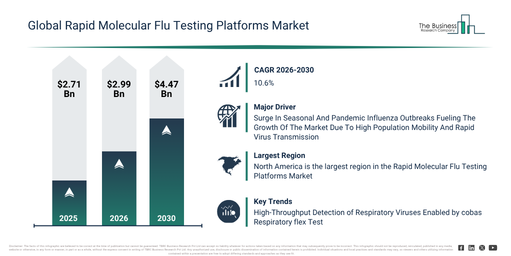
    The rapid molecular flu testing platforms market has demonstrated substantial growth in recent years. This market is anticipated to expand from $2.71 billion in 2025 to $2.99 billion in 2026, achieving a compound annual growth rate (CAGR) of 10.3%. Historically, this expansion has been driven by factors such as the increasing prevalence of influenza, the need for swift diagnostic results, the adoption of RT-PCR technologies, the development of hospital and clinical testing infrastructure, and a heightened awareness of infectious disease management.

    The rapid molecular flu testing platforms market size is anticipated to experience significant growth in the coming years. It is forecast to grow to $4.47 billion by 2030, achieving a compound annual growth rate (CAGR) of 10.6%. The expansion during the forecast period can be attributed to the incorporation of AI and IoT for rapid diagnostics, the increasing availability of portable and point-of-care platforms, the creation of multiplex and high-throughput testing systems, rising investment in molecular diagnostic technologies, and the uptake of home-based and decentralized testing. Prominent trends for the forecast period include the swift expansion of point-of-care testing, multiplex molecular diagnostics, integration with laboratory information systems, automated sample processing, and high-throughput testing platforms.

    Access Your Free Sample Report For In-Depth Market Analysis:

    https://www.thebusinessresearchcompany.com/sample_request?id=71086521&type=smp&name=Rapid%20Molecular%20Flu%20Testing%20Platforms%20Market%20Report%202026

    What Leading Drivers Are Supporting The Rapid Molecular Flu Testing Platforms Market Expansion?

    The increasing occurrence of seasonal and pandemic influenza outbreaks is anticipated to drive the expansion of the rapid molecular flu testing platforms market. These outbreaks refer to the recurring or widespread presence of influenza infections caused by existing or novel influenza viruses. The escalating frequency and intensity of these outbreaks are influenced by factors such as high population mobility, extensive international travel, urban density, viral mutations, and inadequate vaccination coverage, all of which facilitate the rapid transmission of the virus. Rapid molecular flu testing platforms are crucial in managing seasonal and pandemic influenza outbreaks by enabling swift and highly accurate detection of influenza viruses, thereby supporting timely clinical decisions, early treatment initiation, and effective infection control measures. For instance, in February 2026, according to the Centers for Disease Control and Prevention (CDC), a US-based government agency, for the 2025–2026 influenza season, influenza infections in the United States resulted in approximately 290,000–450,000 hospitalizations and 34,000–53,000 deaths, emphasizing the substantial public health and economic burden of the disease. Therefore, the rising global incidence of seasonal and pandemic influenza outbreaks is fostering the growth of the rapid molecular flu testing platforms market.

    How Are Different Segments Classified In The Rapid Molecular Flu Testing Platforms Market Segment Analysis?

    The rapid molecular flu testing platforms market covered in this report is segmented –

    1) By Product Type: Benchtop Platforms, Portable Platforms, Other Product Types

    2) By Sample Type: Nasopharyngeal Swabs, Throat Swabs, Saliva, Other Sample Types

    3) By Technology: Reverse Transcription Polymerase Chain Reaction (RT-PCR), Isothermal Nucleic Acid Amplification, Clustered Regularly Interspaced Short Palindromic Repeats (CRISPR) Based, Other Technologies

    4) By Distribution Channel: Direct Sales, Distributors, Online Sales, Other Distribution Channels

    5) By End User: Hospitals And Clinics, Diagnostic Laboratories, Research Institutes, Other End Users

    Subsegments:

    1) By Benchtop Platforms: Multiplex Testing Platform, High Throughput Platform, Automated Sample Processing Platform, Standard Laboratory Platform

    2) By Portable Platforms: Handheld Testing Platform, Point Of Care Testing Platform, Battery Operated Portable Platform, Field Deployable Platform

    3) By Other Product Types: Integrated Workflow Platform, Compact Diagnostic Platform, Rapid Screening Platform, Custom Configured Platform

    What Trends Are Shaping The Future Of The Rapid Molecular Flu Testing Platforms Market?

    Major companies operating in the rapid molecular flu testing platforms market are increasingly concentrating on developing advanced multiplex molecular solutions, like temperature-activated generation of signal (TAGS) technology, to allow for high-throughput and simultaneous identification of multiple respiratory pathogens, such as influenza A and B, from a single patient sample. TAGS technology, an advanced PCR innovation, enables the differentiation of multiple genetic targets within a single fluorescence channel, yielding up to 15 diagnostic results in one test well. For example, in September 2024, F. Hoffmann-La Roche Ltd., a Switzerland-based healthcare company, launched the cobas Respiratory flex test. This test permits the rapid detection of up to 12 respiratory viruses, including influenza A and B, when used on Roche’s cobas 5800, 6800, and 8800 high-throughput molecular systems. This solution aids flexible, syndromic panel testing with high throughput, optimizing laboratory workflows and resources while promoting accurate and timely diagnosis of respiratory infections.

    Who Are The Companies Driving Activity In The Rapid Molecular Flu Testing Platforms Market?

    Major companies operating in the rapid molecular flu testing platforms market are Roche Diagnostics, Thermo Fisher Scientific, Abbott Laboratories, Siemens Healthineers, Becton Dickinson (BD), bioMérieux, Bio-Rad Laboratories, Qiagen N.V., Seegene Inc., BioPerfectus, Fapon Biotech, Visby Medical, Vircell S.L., QuantuMDx Group, Altona Diagnostics, Creative Diagnostics, Princeton BioMeditech Corporation, Credo Diagnostics, Genetic Signatures Ltd, AccuBioTech, Kogene Co. Ltd., Ameritek Inc., Alpha Diagnostic Intl, Medlere Ltd, ProtonDx Ltd.

    Get The Full Rapid Molecular Flu Testing Platforms Market Report:

    https://www.thebusinessresearchcompany.com/report/rapid-molecular-flu-testing-platforms-market-report

    Which Region Leads The Rapid Molecular Flu Testing Platforms Market In Overall Market Size?

    North America was the largest region in the rapid molecular flu testing platforms market in 2025. Asia-Pacific is expected to be the fastest-growing region in the forecast period. The regions covered in the rapid molecular flu testing platforms market report are Asia-Pacific, South East Asia, Western Europe, Eastern Europe, North America, South America, Middle East, Africa.

    Request A Customized Rapid Molecular Flu Testing Platforms Market Report For Competitive Insights:

    https://www.thebusinessresearchcompany.com/Customise?id=71086521&name=Rapid%20Molecular%20Flu%20Testing%20Platforms%20Market%20Report%202026&type=smp

    Browse Through More Reports Similar to the Global Rapid Molecular Flu Testing Platforms Market 2026, By The Business Research Company

    connected health personal medical devices market report 2026

    https://www.thebusinessresearchcompany.com/report/connected-health-personal-medical-devices-global-market-report

    contract sterilization market report 2026

    https://www.thebusinessresearchcompany.com/report/contract-sterilization-global-market-report

    orthotic insole 3-d printer market report 2026

    https://www.thebusinessresearchcompany.com/report/orthotic-insole-3-d-printer-global-market-report

    Get in touch with us:

    The Business Research Company: https://www.thebusinessresearchcompany.com/

    Americas +1 310-496-7795

    Asia +44 7882 955267 & +91 8897263534

    Europe +44 7882 955267

    Email us at marketing@tbrc.info

    Follow us on:

    LinkedIn: https://in.linkedin.com/company/the-business-research-company

    YouTube: https://www.youtube.com/channel/UC24_fI0rV8cR5DxlCpgmyFQ

    Global Market Model: https://www.thebusinessresearchcompany.com/global-market-model
  • Radiation Dosimetry Badges Market Expected To Reach $1.5 Billion By 2030 Driven By 8.2% CAGR

    Radiation Dosimetry Badges Market Expected To Reach $1.5 Billion By 2030 Driven By 8.2% CAGR

    The Business Research Company’s 2026 market reports feature enhanced tools like market attractiveness analysis, TAM assessment, and company scoring matrices, along with interactive dashboards, deeper supply chain insights, and startup coverage strengthening the depth, usability, and strategic value of insights.

    What Changes In Market Value Are Expected For The Radiation Dosimetry Badges Market Over The 2026–2030 Period?

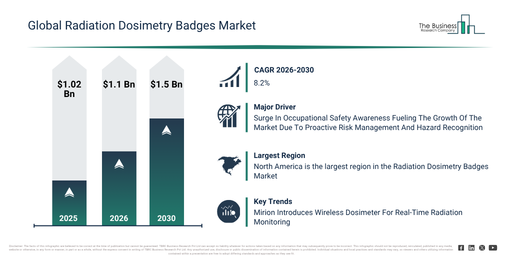
    The radiation dosimetry badges market has demonstrated substantial growth in recent years. It is anticipated to expand from $1.02 billion in 2025 to $1.1 billion in 2026, achieving a compound annual growth rate (CAGR) of 7.9%. The market’s past expansion can be ascribed to heightened awareness of radiation hazards, obligations for regulatory compliance, the uptake of film and thermoluminescent dosimeters, an increase in nuclear and medical facilities, and broader industrial radiation applications.

    The radiation dosimetry badges market is projected to experience robust expansion over the coming years. By 2030, its valuation is anticipated to reach $1.5 billion, demonstrating a compound annual growth rate (CAGR) of 8.2%. This projected growth during the forecast period is propelled by factors such as the adoption of electronic personal dosimeters, the integration with iot-enabled safety systems, an increasing demand for real-time exposure monitoring, the expansion of healthcare and nuclear infrastructure, and greater investment in predictive radiation analytics. Key developments shaping the market in the forecast period encompass real-time dosimetry monitoring, wearable radiation safety devices, integration with health & safety management systems, automated dose reporting & analytics, and predictive radiation exposure assessment.

    Access Your Free Sample Report For In-Depth Market Analysis:

    https://www.thebusinessresearchcompany.com/sample_request?id=95649109&type=smp&name=Radiation%20Dosimetry%20Badges%20Market%20Report%202026

    Which Key Factors Are Driving The Radiation Dosimetry Badges Market Growth?

    Increased understanding of workplace safety is anticipated to boost the expansion of the radiation dosimetry badges market. This awareness involves comprehending and identifying dangers in the workplace, especially in hazardous settings, and establishing protocols to avert incidents and safeguard worker well-being. The heightened focus on workplace safety stems from proactive approaches to risk management, more stringent regulations, and greater responsibility placed on employers, collectively promoting prompt detection of hazards and secure working conditions. Radiation dosimetry badges contribute to occupational safety efforts by continuously tracking individual exposure to ionizing radiation, thereby allowing both employees and employers to gauge risk, adhere to exposure thresholds, and institute necessary corrective safety actions. As an example, in June 2024, the European Agency for Safety and Health at Work (EU-OSHA) indicated that about 85–91% of workers in Spain recognized a greater understanding of workplace safety and occupational safety and health (OSH) risk reduction, marking a 7% rise from 2023. Consequently, the increased focus on occupational safety is propelling the expansion of the radiation dosimetry badges market.

    How Is The Radiation Dosimetry Badges Market Categorized Across Its Segment Groups?

    The radiation dosimetry badges market covered in this report is segmented –

    1) By Product Type: Thermoluminescent Dosimeter Badges, Film Badge Dosimeters, Optically Stimulated Luminescence Dosimeter Badges, Electronic Personal Dosimeters, Other Product Types

    2) By Detection Method: Passive Dosimetry, Active Dosimetry

    3) By Distribution Channel: Direct Sales, Distributors, Online Sales, Other Distribution Channels

    4) By End-User: Hospitals And Medical Institutions, Nuclear Facilities, Research Laboratories, Industrial Facilities, Other End-Users

    Subsegments:

    1) By Thermoluminescent Dosimeter Badges: Card Type Dosimeter, Pocket Dosimeter, Ring Dosimeter, Button Dosimeter

    2) By Film Badge Dosimeters: Single Film Badge, Dual Film Badge, Multi Film Badge, Special Purpose Film Badge

    3) By Optically Stimulated Luminescence Dosimeter Badges: Card Type Dosimeter, Finger Ring Dosimeter, Wearable Dosimeter, Environmental Dosimeter

    4) By Electronic Personal Dosimeters: Portable Dosimeter, Wearable Dosimeter, Real Time Monitoring Dosimeter, Multi Parameter Dosimeter

    5) By Other Product Types: Chemical Dosimeter, Solid State Dosimeter, Pocket Ionization Chamber, Neutron Dosimeter

    Which Trends Are Contributing To Changes In The Radiation Dosimetry Badges Market?

    Leading companies in the radiation dosimetry badges market are concentrating on developing technological advancements, such as electronic personal dosimeters with real-time monitoring, to provide continuous exposure tracking, enhance worker safety, and ensure regulatory compliance in radiation environments. These electronic personal dosimeters with real-time monitoring are advanced wearable devices that continuously measure and transmit radiation exposure data instantly, enabling proactive risk management, immediate alerts for hazardous doses, and seamless compliance reporting. For instance, in April 2024, Mirion Dosimetry Services, a US-based radiation safety solutions company, introduced the InstadoseVUE Wireless Dosimeter. This newly launched device allows for real-time monitoring of individual radiation exposure, enabling workers and supervisors to continuously track doses. It improves workplace safety and compliance through wireless data transmission and instant alerts, while also facilitating proactive radiation protection measures in high-risk environments.

    Which Firms Are Influencing Competition In The Radiation Dosimetry Badges Market?

    Major companies operating in the radiation dosimetry badges market are Thermo Fisher Scientific Inc., Honeywell International Inc, SGS SA, Fuji Electric Co. Ltd., CERN Dosimetry Service, Ludlum Measurements Inc., PTW Freiburg, Chiyoda Technol Corp., ECOTEST group, Seibersdorf Labor GmbH, Avanttec Medical Systems, Polimaster, Renentech Laboratories, Best Dosimetry Services Inc., Ultra-Tech Laboratories, RadPro International GmbH, RadPro Radiation Protection Services Limited, Laurus Systems, Atomic Energy Industrial Laboratories of the Southwest Inc. (AEIL), Xray Dose Company.

    Get The Full Radiation Dosimetry Badges Market Report:

    https://www.thebusinessresearchcompany.com/report/radiation-dosimetry-badges-market-report

    Which Region Is The Top Contributor To The Radiation Dosimetry Badges Market By Share?

    North America was the largest region in the radiation dosimetry badges market in 2025. Asia-Pacific is expected to be the fastest-growing region in the forecast period. The regions covered in the radiation dosimetry badges market report are Asia-Pacific, South East Asia, Western Europe, Eastern Europe, North America, South America, Middle East, Africa.

    Request A Customized Radiation Dosimetry Badges Market Report For Competitive Insights:

    https://www.thebusinessresearchcompany.com/Customise?id=95649109&name=Radiation%20Dosimetry%20Badges%20Market%20Report%202026&type=smp

    Browse Through More Reports Similar to the Global Radiation Dosimetry Badges Market 2026, By The Business Research Company

    connected health personal medical devices market report 2026

    https://www.thebusinessresearchcompany.com/report/connected-health-personal-medical-devices-global-market-report

    contract sterilization market report 2026

    https://www.thebusinessresearchcompany.com/report/contract-sterilization-global-market-report

    orthotic insole 3-d printer market report 2026

    https://www.thebusinessresearchcompany.com/report/orthotic-insole-3-d-printer-global-market-report

    Get in touch with us:

    The Business Research Company: https://www.thebusinessresearchcompany.com/

    Americas +1 310-496-7795

    Asia +44 7882 955267 & +91 8897263534

    Europe +44 7882 955267

    Email us at marketing@tbrc.info

    Follow us on:

    LinkedIn: https://in.linkedin.com/company/the-business-research-company

    YouTube: https://www.youtube.com/channel/UC24_fI0rV8cR5DxlCpgmyFQ

    Global Market Model: https://www.thebusinessresearchcompany.com/global-market-model
  • Global Quantum Dermatology Market Forecast To Achieve $5.07 Billion By 2030 At 13.5% CAGR

    Global Quantum Dermatology Market Forecast To Achieve $5.07 Billion By 2030 At 13.5% CAGR

    The Business Research Company’s 2026 market reports feature enhanced tools like market attractiveness analysis, TAM assessment, and company scoring matrices, along with interactive dashboards, deeper supply chain insights, and startup coverage strengthening the depth, usability, and strategic value of insights.

    By 2030, What Market Size Is The Quantum Dermatology Market Expected To Reach Based On Its 2026 Value?

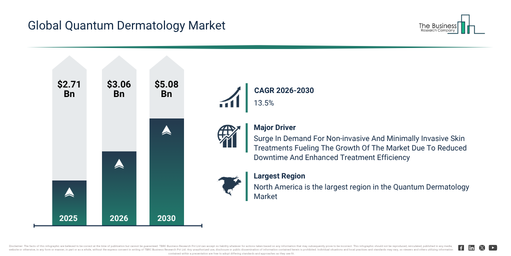
    The quantum dermatology market size has seen swift expansion in recent years. It is forecast to expand from $2.71 billion in 2025 to $3.06 billion in 2026, achieving a compound annual growth rate (CAGR) of 13.2%. This historical growth can be linked to factors such as a heightened demand for cosmetic procedures, breakthroughs in laser and IPL technologies, the emergence of more aesthetic clinics, greater awareness regarding skin health, and the implementation of multi-technology systems.

    The quantum dermatology market is anticipated to experience substantial expansion in the coming years. Projections indicate it will reach $5.08 billion by 2030, demonstrating a compound annual growth rate (CAGR) of 13.5%. This forecasted growth is linked to factors such as integration of AI in dermatology, expansion of dermatology clinics, increasing demand for personalized skin treatments, adoption of combination systems, and the rise of non-invasive rejuvenation therapies. Significant developments expected during this period involve minimally invasive treatment techniques, personalized dermatology solutions, AI-driven skin analysis, non-invasive skin rejuvenation therapies, and real-time treatment monitoring.

    Access Your Free Sample Report For In-Depth Market Analysis:

    https://www.thebusinessresearchcompany.com/sample_request?id=33666708&type=smp&name=Quantum%20Dermatology%20Market%20Report%202026

    What Primary Drivers Are Shaping The Quantum Dermatology Market?

    The expanding need for non-invasive and minimally invasive skin procedures is projected to fuel the advancement of the quantum dermatology market. These procedures aim to improve skin health or appearance without significant surgical intervention, leveraging techniques like laser therapy, energy-based devices, injectables, and light-based treatments. The increasing popularity of these methods stems from benefits such as reduced recovery time, minimal discomfort, lower risk of complications, and quicker healing, enabling individuals to swiftly return to their daily routines. Quantum dermatology supports this trend by employing sophisticated, precision-focused dermatological technologies and data-driven treatment strategies to enhance procedural accuracy, improve clinical results, and minimize tissue damage and recovery periods. For example, in September 2025, as reported by Hansard – UK Parliament, a UK-based government department, 7.7 million people in the UK underwent cosmetic and dermatological procedures, including minimally invasive treatments, representing a 12% increase from 2023. Consequently, the rising demand for non-invasive and minimally invasive skin treatments is a key factor propelling the quantum dermatology market forward. The escalating healthcare expenditure is anticipated to drive the growth of the quantum dermatology market. Healthcare expenditure encompasses all spending by both public and private sectors on medical services, goods, and programs designed to maintain and enhance health. This increase in healthcare spending is largely due to an aging population, as more elderly individuals necessitate frequent and complex medical care. Quantum Dermatology assists in managing healthcare expenditure by offering advanced, precise, and non-invasive skin treatments that reduce the need for extended therapies and hospital visits. For instance, in April 2025, according to the Office for National Statistics, a UK-based government department, healthcare spending grew by 6.5% nominally and 2.4% in real terms between 2023 and 2024. Therefore, increasing healthcare expenditure is contributing to the expansion of the quantum dermatology market.

    How Are Segments Identified Within The Quantum Dermatology Market Segment Framework?

    The quantum dermatology market covered in this report is segmented –

    1) By Technology: Laser-Based Systems, Intense Pulsed Light (IPL) Systems, Combination Systems, Other Technologies

    2) By Treatment Type: Hair Removal, Pigmented Lesions Treatment, Skin Firming And Tightening, Wrinkle Reduction And Rejuvenation, Vascular Lesion Treatment

    3) By Application: Aesthetic And Cosmetic Treatments, Dermatology Procedures, Skin Rejuvenation Therapies, Hair Reduction Treatments

    4) By End User: Dermatology Clinics, Professional Clinics And Aesthetic Practitioners, Beauty Salons And Spas, Hospitals And Medical Aesthetic Centers, Medical Institutions, Individual Consumers

    Subsegments:

    1) By Laser-Based Systems: Fractional Laser Systems, Ablative Laser Systems, Non Ablative Laser Systems, Pulsed Laser Systems

    2) By Intense Pulsed Light Systems: Hair Removal Systems, Skin Rejuvenation Systems, Vascular Lesion Treatment Systems, Pigmentation Treatment Systems

    3) By Combination Systems: Laser And Intense Pulsed Light Systems, Laser And Radio Frequency Systems, Intense Pulsed Light And Radio Frequency Systems, Other Multi Technology Systems

    4) By Other Technologies: Radio Frequency Systems, Ultrasound Based Systems, Cryotherapy Systems, Photodynamic Therapy Systems

    Who Are The Companies Competing Within The Quantum Dermatology Market?

    Major companies operating in the quantum dermatology market are Bruker Corporation, El.En. S.p.A., InMode Ltd., Shenzhen GSD Tech Co. Ltd., IDS Medical Systems (IDSMED), Sciton Inc., Strata Skin Sciences Inc., HONKON, Beijing ADSS Development Co. Ltd., Sharplight Technologies Ltd., Hironic Co. Ltd., Aerolase Corporation, Union Medical Co. Ltd., Zimmer MedizinSysteme GmbH, Wontech Co. Ltd., Lynton Lasers Ltd., DEKA M.E.L.A. Srl, DermaSensor Inc., Lasering USA, Telea Medical, Beijing Sincoheren, Eunsung Global Corp., Astiland Medical Aesthetics Technology Co. Ltd., BioWave Health Care.

    Get The Full Quantum Dermatology Market Report:

    https://www.thebusinessresearchcompany.com/report/quantum-dermatology-market-report

    Which Region Represents The Largest Share Of The Quantum Dermatology Market?

    North America was the largest region in the quantum dermatology market in 2025. Asia-Pacific is expected to be the fastest-growing region in the forecast period. The regions covered in the quantum dermatology market report are Asia-Pacific, South East Asia, Western Europe, Eastern Europe, North America, South America, Middle East, Africa.

    Request A Customized Quantum Dermatology Market Report For Competitive Insights:

    https://www.thebusinessresearchcompany.com/Customise?id=33666708&name=Quantum%20Dermatology%20Market%20Report%202026&type=smp

    Browse Through More Reports Similar to the Global Quantum Dermatology Market 2026, By The Business Research Company

    pruritus therapeutic market report 2026

    https://www.thebusinessresearchcompany.com/report/pruritus-therapeutic-global-market-report

    genomic urine testing market report 2026

    https://www.thebusinessresearchcompany.com/report/genomic-urine-testing-global-market-report

    ocular genetic diagnostic market report 2026

    https://www.thebusinessresearchcompany.com/report/ocular-genetic-diagnostic-global-market-report

    Get in touch with us:

    The Business Research Company: https://www.thebusinessresearchcompany.com/

    Americas +1 310-496-7795

    Asia +44 7882 955267 & +91 8897263534

    Europe +44 7882 955267

    Email us at marketing@tbrc.info

    Follow us on:

    LinkedIn: https://in.linkedin.com/company/the-business-research-company

    YouTube: https://www.youtube.com/channel/UC24_fI0rV8cR5DxlCpgmyFQ

    Global Market Model: https://www.thebusinessresearchcompany.com/global-market-model
  • Protein-Folding Artificial Intelligence (AI) Platform Market Projected To Reach $7.57 Billion By 2030 With 32.2% CAGR

    Protein-Folding Artificial Intelligence (AI) Platform Market Projected To Reach $7.57 Billion By 2030 With 32.2% CAGR

    The Business Research Company’s 2026 market reports feature enhanced tools like market attractiveness analysis, TAM assessment, and company scoring matrices, along with interactive dashboards, deeper supply chain insights, and startup coverage strengthening the depth, usability, and strategic value of insights.

    What Is The Anticipated Rise In Market Value Of The Protein-Folding Artificial Intelligence (AI) Platform Market During The Forecast Period?

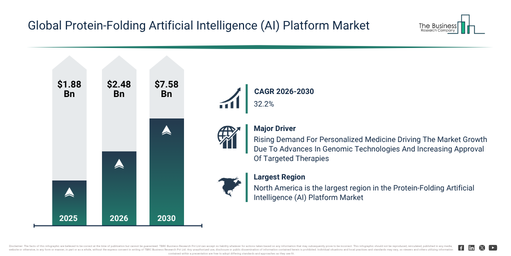
    The protein-folding artificial intelligence (AI) platform market has witnessed substantial growth in its size over recent years. It is anticipated to expand from $1.88 billion in 2025 to $2.48 billion in 2026, reflecting a compound annual growth rate (CAGR) of 32.0%. The expansion observed in the historic period stems from factors such as the increasing utilization of computational biology tools, an uptick in pharmaceutical research, the widespread availability of structural protein databases, a growing need for personalized medicine, and the advancement of high-performance computing systems.

    The protein-folding artificial intelligence (AI) platform market size is projected to experience significant expansion over the next few years. It is expected to reach $7.58 billion by 2030, demonstrating a compound annual growth rate (CAGR) of 32.2%. This projected growth is driven by the integration of AI and deep learning for protein folding, the expansion of cloud-based bioinformatics platforms, investments in specialized AI accelerators, increasing academic and biotech research initiatives, and the demand for faster drug discovery cycles. Key trends anticipated during the forecast period include AI-driven protein structure prediction, the incorporation of high-performance computing, automated molecular modeling, cloud-based bioinformatics platforms, and predictive drug discovery analytics.

    Access Your Free Sample Report For In-Depth Market Analysis:

    https://www.thebusinessresearchcompany.com/sample_request?id=35075992&type=smp&name=Protein-Folding%20Artificial%20Intelligence%20%28AI%29%20Platform%20Market%20Report%202026

    Which Major Drivers Are Influencing The Expansion Of The Protein-Folding Artificial Intelligence (AI) Platform Market?

    The increasing uptake of personalized medicine is set to fuel the expansion of the protein-folding artificial intelligence (AI) platform market. Personalized medicine offers a tailored healthcare approach, customizing treatments based on an individual’s unique biological and personal traits. Its rise is attributed to advancements in genomic technologies, which enable healthcare providers to swiftly and accurately analyze genetic data, facilitating more precise and effective therapies. Protein-folding AI platforms support personalized medicine by forecasting patient-specific protein structures, thereby guiding targeted drug choices and optimizing treatments. For example, the Personalized Medicine Coalition, a US-based non-profit organization, stated in February 2024 that the FDA approved 16 new personalized treatments for rare disease patients in 2023, an increase from six in 2022. These approvals for 2023 also encompassed seven cancer drugs and three for other conditions. Consequently, the expanding adoption of personalized medicine is a key driver for the protein-folding artificial intelligence (AI) platform market. Increased research and development (R&D) activities are anticipated to propel the growth of the protein-folding artificial intelligence (AI) platform market moving forward. R&D activities involve systematic endeavors to invent, enhance, or innovate products, processes, or services by applying scientific and technical knowledge. The surge in R&D is due to heightened global competition, prompting organizations to invest in innovation and advanced technologies for market differentiation and sustainable long-term growth. These activities benefit protein-folding AI platforms by facilitating the development and refinement of algorithms, enhancing protein structure predictions, and expediting the discovery of new therapeutics. For instance, the Office for National Statistics, a UK-based government agency, indicated in April 2025 that the UK government’s net expenditure on research and development (R&D) climbed to £17.4 billion ($22.1 billion) in 2023, representing an 8.2% increase from £16.1 billion ($20.45 billion) in 2022. Therefore, the expansion of research and development activities is a key factor boosting the protein-folding artificial intelligence (AI) platform market.

    What Are The Key Segment Divisions In The Protein-Folding Artificial Intelligence (AI) Platform Market Segment Structure?

    The protein-folding artificial intelligence (AI) platform market covered in this report is segmented –

    1) By Component: Software, Hardware, Services

    2) By Deployment Mode: On-Premises, Cloud

    3) By Application: Drug Discovery, Disease Research, Personalized Medicine, Biotechnology, Academic Research, Other Applications

    4) By End-User: Pharmaceutical And Biotechnology Companies, Research Institutes, Healthcare Providers, Other End Users

    Subsegments:

    1) By Software: Protein Structure Prediction Platforms, Molecular Modeling And Simulation Software, Bioinformatics Analysis Software, Data Visualization And Interpretation Tools, Machine Learning And Deep Learning Frameworks, Workflow Management And Automation Software

    2) By Hardware: High Performance Computing Systems, Graphics Processing Units, Central Processing Units, Data Storage Systems, High Speed Networking Infrastructure, Specialized Artificial Intelligence Accelerators

    3) By Services: Consulting And Advisory Services, System Integration Services, Cloud And Infrastructure Management Services, Model Development And Validation Services, Data Annotation And Curation Services, Maintenance And Technical Support Services

    Which Organizations Are Engaged In The Protein-Folding Artificial Intelligence (AI) Platform Market?

    Major companies operating in the protein-folding artificial intelligence (AI) platform market are Schrodinger Inc., XtalPi Inc., Isomorphic Labs Limited, Recursion Pharmaceuticals Inc., Nabla Bio Inc., Arzeda Corporation, Evozyne, ProteinQure Inc., Genesis Therapeutics Inc., Cradle Bio Inc., Profluent Inc., Evaxion Biotech A/S, Iambic Therapeutics Inc., Insilico Medicine Inc., Insitro Inc., Levitate Bio Inc., Shiru Inc., Tamarind Bio, Archon Biosciences, Neoncorte Bio, and Generate Biomedicines Inc.

    Get The Full Protein-Folding Artificial Intelligence (AI) Platform Market Report:

    https://www.thebusinessresearchcompany.com/report/protein-folding-artificial-intelligence-ai-platform-market-report

    Which Geographic Region Dominates The Protein-Folding Artificial Intelligence (AI) Platform Market?

    North America was the largest region in the protein-folding artificial intelligence (AI) platform market in 2025. Asia-Pacific is expected to be the fastest-growing region in the forecast period. The regions covered in the protein-folding artificial intelligence (AI) platform market report are Asia-Pacific, South East Asia, Western Europe, Eastern Europe, North America, South America, Middle East, Africa.

    Request A Customized Protein-Folding Artificial Intelligence (AI) Platform Market Report For Competitive Insights:

    https://www.thebusinessresearchcompany.com/Customise?id=35075992&name=Protein-Folding%20Artificial%20Intelligence%20%28AI%29%20Platform%20Market%20Report%202026&type=smp

    Browse Through More Reports Similar to the Global Protein-Folding Artificial Intelligence (AI) Platform Market 2026, By The Business Research Company

    adeno-associated virus (avv) vectors in gene therapy market report 2026

    https://www.thebusinessresearchcompany.com/report/adeno-associated-virus-avv-vectors-in-gene-therapy-global-market-report

    gastric cancer therapy market report 2026

    https://www.thebusinessresearchcompany.com/report/gastric-cancer-therapy-global-market-report

    over the counter (otc) drugs market report 2026

    https://www.thebusinessresearchcompany.com/report/over-the-counter-otc-drugs-global-market-report

    Get in touch with us:

    The Business Research Company: https://www.thebusinessresearchcompany.com/

    Americas +1 310-496-7795

    Asia +44 7882 955267 & +91 8897263534

    Europe +44 7882 955267

    Email us at marketing@tbrc.info

    Follow us on:

    LinkedIn: https://in.linkedin.com/company/the-business-research-company

    YouTube: https://www.youtube.com/channel/UC24_fI0rV8cR5DxlCpgmyFQ

    Global Market Model: https://www.thebusinessresearchcompany.com/global-market-model