Month: May 2026

  • Protein Structure Prediction Platforms Market Outlook Highlighting Expansion Trends Across Industries Through 2030

    Protein Structure Prediction Platforms Market Outlook Highlighting Expansion Trends Across Industries Through 2030

    The Business Research Company’s 2026 market reports feature enhanced tools like market attractiveness analysis, TAM assessment, and company scoring matrices, along with interactive dashboards, deeper supply chain insights, and startup coverage strengthening the depth, usability, and strategic value of insights.

    How Is The Market Size Of The Protein Structure Prediction Platforms Market Expected To Scale Between 2026 And 2030?

    The protein structure prediction platforms market has observed significant expansion in recent years. It is projected to climb from $1.75 billion in 2025 to $2.02 billion in 2026, exhibiting a compound annual growth rate (CAGR) of 15.5%. This growth in the past can be ascribed to reliance on experimental methods such as x-ray crystallography and nmr spectroscopy, limited computational resources, the early implementation of homology modeling techniques, increasing demand for drug discovery, and the development of academic research in proteomics.

    The protein structure prediction platforms market is anticipated to experience substantial expansion in the coming years. Its valuation is projected to reach $3.62 billion by 2030, demonstrating a robust compound annual growth rate (CAGR) of 15.7%. This projected expansion during the forecast period stems from factors such as the increasing adoption of advanced AI and ML algorithms, the proliferation of cloud-based platforms, deeper integration with biopharmaceutical pipelines, heightened investment in computational biology, and a growing demand for high-throughput protein modeling. Key developments anticipated within this timeframe encompass AI-driven protein structure prediction, the rise of cloud-based computational platforms, greater integration with drug discovery pipelines, advancements in real-time molecular modeling, and sophisticated predictive disease research analytics.

    Access Your Free Sample Report For In-Depth Market Analysis:

    https://www.thebusinessresearchcompany.com/sample_request?id=22824279&type=smp&name=Protein%20Structure%20Prediction%20Platforms%20Market%20Report%202026

    What Key Drivers Are Fueling The Growth Of The Protein Structure Prediction Platforms Market?

    The expansion of the protein structure prediction platforms market is anticipated, driven by the increasing need for personalized medicine. This medical strategy involves tailoring healthcare and therapeutic interventions to an individual’s distinct biological and personal traits. Its adoption is on the rise, primarily due to breakthroughs in genomic technologies that enable medical professionals to swiftly and precisely examine a patient’s genetic data, leading to more focused and potent treatments. Within the realms of research and drug development, protein structure prediction platforms facilitate personalized medicine by empowering scientists to model patient-specific protein variants, comprehend structural alterations caused by mutations, and formulate targeted therapies for genetically defined patient subgroups. A notable example is provided by the Personalized Medicine Coalition, a US-based non-profit organization, which reported in February 2024 that the U.S. Food and Drug Administration sanctioned 16 new personalized treatments for individuals with rare diseases in 2023, an increase from six approvals in 2022. Consequently, the escalating demand for personalized medicine serves as a significant impetus for the expansion of the protein structure prediction platforms market.

    Which Segment Categories Are Included In The Protein Structure Prediction Platforms Market Segment Analysis?

    The protein structure prediction platforms market covered in this report is segmented –

    1) By Component: Software, Services

    2) By Technology: Artificial Intelligence-based, Homology Modeling, Ab Initio, Threading, Hybrid Methods

    3) By Deployment Mode: Cloud-Based, On-Premises

    4) By Application: Drug Discovery, Disease Research, Academic Research, Biotechnology, Other Applications

    5) By End-User: Pharmaceutical And Biotechnology Companies, Academic And Research Institutes, Contract Research Organizations, Other End Users

    Subsegments:

    1) By Software: Structure Prediction Software, Molecular Modeling Software, Visualization And Analysis Software, Database Management Software, Workflow Automation And Simulation Software

    2) By Services: Consulting And Implementation Services, Integration And Customization Services, Training And Technical Support Services, Maintenance And Upgrade Services, Data Analysis And Computational Services

    What Emerging Trends Are Seen In The Protein Structure Prediction Platforms Market?

    Leading companies within the protein structure prediction platforms market are concentrating on developing innovative solutions, such as structure-based computational biology technologies, to accelerate drug discovery, enable accurate protein modeling, and enhance target identification through advanced molecular simulations and AI-driven structural analysis. These systems utilize three-dimensional protein structure data, molecular modeling, and simulation algorithms to analyze biomolecular interactions and support rational drug design. For instance, in March 2024, Basecamp Research, a UK-based AI-driven biotechnology company, launched BaseFold, a deep learning model designed to improve 3D protein structure prediction for large and complex proteins. By augmenting AlphaFold2 with its proprietary BaseGraph dataset derived from global biodiversity sources, BaseFold demonstrated up to six-fold improvements in predictive accuracy and three-fold enhancements in small-molecule docking performance in internal benchmarks. Such advances underpin next-generation protein structure prediction platforms by improving the modeling of protein classes that have been underrepresented in public datasets, thereby supporting AI-driven drug discovery efforts.

    Who Are The Active Companies Shaping The Protein Structure Prediction Platforms Market?

    Major companies operating in the protein structure prediction platforms market are IBM Corporation, Thermo Fisher Scientific Inc., Dassault Systèmes SE, Charles River Laboratories International Inc., Bruker Corporation, Revvity Inc., DeepMind Technologies Limited, Schrödinger Inc., BenevolentAI Limited, Nimbus Therapeutics Inc., Arzeda Corporation, Relay Therapeutics Inc., LabVantage Solutions Inc., Genesis Therapeutics Inc., Bioinformatics Solutions Inc., Chemical Computing Group ULC, Insilico Medicine Inc., Cloud Pharmaceuticals Inc., Peptone Ltd., Molecular Forecaster Inc., Acellera Ltd., CD BioSciences, and ProteinLab.ai Inc.

    Get The Full Protein Structure Prediction Platforms Market Report:

    https://www.thebusinessresearchcompany.com/report/protein-structure-prediction-platforms-market-report

    Which Region Is The Leading Market For The Protein Structure Prediction Platforms Market?

    North America was the largest region in the protein structure prediction platforms market in 2025. Asia-Pacific is expected to be the fastest-growing region in the forecast period. The regions covered in the protein structure prediction platforms market report are Asia-Pacific, South East Asia, Western Europe, Eastern Europe, North America, South America, Middle East, Africa.

    Request A Customized Protein Structure Prediction Platforms Market Report For Competitive Insights:

    https://www.thebusinessresearchcompany.com/Customise?id=22824279&name=Protein%20Structure%20Prediction%20Platforms%20Market%20Report%202026&type=smp

    Browse Through More Reports Similar to the Global Protein Structure Prediction Platforms Market 2026, By The Business Research Company

    pruritus therapeutic market report 2026

    https://www.thebusinessresearchcompany.com/report/pruritus-therapeutic-global-market-report

    genomic urine testing market report 2026

    https://www.thebusinessresearchcompany.com/report/genomic-urine-testing-global-market-report

    ocular genetic diagnostic market report 2026

    https://www.thebusinessresearchcompany.com/report/ocular-genetic-diagnostic-global-market-report

    Get in touch with us:

    The Business Research Company: https://www.thebusinessresearchcompany.com/

    Americas +1 310-496-7795

    Asia +44 7882 955267 & +91 8897263534

    Europe +44 7882 955267

    Email us at marketing@tbrc.info

    Follow us on:

    LinkedIn: https://in.linkedin.com/company/the-business-research-company

    YouTube: https://www.youtube.com/channel/UC24_fI0rV8cR5DxlCpgmyFQ

    Global Market Model: https://www.thebusinessresearchcompany.com/global-market-model
  • Global Protein Stability Screening Platforms Market Forecast Through 2030 With Strategic Industry Perspectives

    Global Protein Stability Screening Platforms Market Forecast Through 2030 With Strategic Industry Perspectives

    The Business Research Company’s 2026 market reports feature enhanced tools like market attractiveness analysis, TAM assessment, and company scoring matrices, along with interactive dashboards, deeper supply chain insights, and startup coverage strengthening the depth, usability, and strategic value of insights.

    What Level Of Market Value Growth Is Predicted For The Protein Stability Screening Platforms Market From 2026 To 2030?

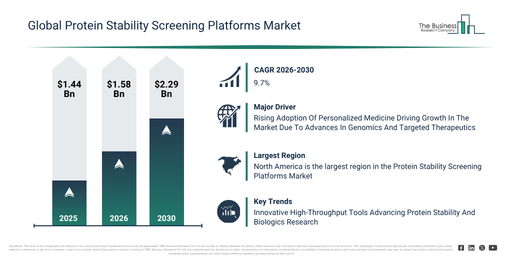
    The protein stability screening platforms market has experienced robust expansion in recent times. This market is projected to expand from $1.44 billion in 2025 to $1.58 billion in 2026, demonstrating a compound annual growth rate (CAGR) of 9.5%. Historically, this growth has been driven by factors such as the increasing demand for biologics, the widespread use of conventional stability testing methods, elevated investment in pharmaceutical research and development, the proliferation of monoclonal antibody therapies, and rigorous regulatory mandates.

    The market size for protein stability screening platforms is expected to experience robust growth in the upcoming years. It is anticipated to expand to $2.29 billion by 2030, demonstrating a compound annual growth rate (CAGR) of 9.7%. This expansion during the forecast period can be attributed to several factors, including the adoption of AI-driven protein stability platforms, their integration with IoT-enabled lab systems, the ongoing expansion of biopharmaceutical pipelines, a rising demand for real-time monitoring, and the development of predictive modeling software. Significant trends projected for the forecast period include high-throughput protein stability screening, automated formulation analysis, integration with laboratory information systems, real-time protein degradation monitoring, and predictive shelf-life modeling.

    Access Your Free Sample Report For In-Depth Market Analysis:

    https://www.thebusinessresearchcompany.com/sample_request?id=84127593&type=smp&name=Protein%20Stability%20Screening%20Platforms%20Market%20Report%202026

    Which Drivers Are Supporting The Protein Stability Screening Platforms Market Growth?

    The increasing acceptance and use of personalized medicine are anticipated to drive the expansion of the protein stability screening platforms market. Personalized medicine focuses on customizing medical interventions and health choices based on a person’s unique genetic makeup, molecular characteristics, and clinical data, aiming to enhance the effectiveness and safety of therapies. Its growth is primarily fueled by breakthroughs in genomics and molecular diagnostics, which allow for the detection of genetic differences and molecular indicators affecting disease development and drug reactions, thereby facilitating the creation of more precise treatments. Protein stability screening platforms are crucial in personalized medicine; they assess how proteins maintain stability, fold correctly, and interact in different environments, a process vital for refining the design of drugs and biologics. As an illustration, in February 2024, the Personalized Medicine Coalition, a U.S.-based non-profit organization, stated that the U.S. Food and Drug Administration (FDA) sanctioned 16 novel personalized treatments for patients with rare diseases in 2023, marking an increase from six approvals in 2022. Consequently, the increasing adoption of personalized medicine is indeed propelling the expansion of the protein stability screening platforms market.

    How Is The Protein Stability Screening Platforms Market Broken Down By Segment Categories?

    The protein stability screening platforms market covered in this report is segmented –

    1) By Protein Type: Monoclonal Antibodies, Recombinant Proteins, Vaccines And Antigens, Enzymes, Other Protein Types

    2) By Technology: Differential Scanning Calorimetry, Differential Scanning Fluorimetry, Spectroscopy, Chromatography, Other Technologies

    3) By Component Type: Instruments, Consumables, Software, Services

    4) By Application: Drug Discovery, Biopharmaceutical Development, Protein Engineering, Academic Research, Other Applications

    5) By End-User: Pharmaceutical & Biotechnology Companies, Academic And Research Institutes, Contract Research Organizations, Other End-Users

    Subsegments:

    1) By Monoclonal Antibodies: Human Monoclonal Antibodies, Chimeric Monoclonal Antibodies, Humanized Monoclonal Antibodies, Murine Monoclonal Antibodies

    2) By Recombinant Proteins: Recombinant Human Proteins, Recombinant Animal Proteins, Recombinant Microbial Proteins, Recombinant Plant Proteins

    3) By Vaccines and Antigens: Protein Subunit Vaccines, Conjugate Vaccines, Toxoid Vaccines, Virus Like Particle Vaccines

    4) By Enzymes: Hydrolases, Oxidoreductases, Transferases, Lyases, Isomerases, Ligases

    5) By Other Protein Types: Fusion Proteins, Cytokines, Hormones, Growth Factors

    Which Trends Are Guiding The Direction Of The Protein Stability Screening Platforms Market?

    Companies operating in the protein stability screening platforms market are increasingly concentrating on developing innovative high-throughput instruments that facilitate the rapid evaluation of protein stability, aggregation, and folding, thereby accelerating biopharmaceutical development and optimizing formulations. High-throughput tools are systems designed to perform a large number of experiments or analyses simultaneously, allowing researchers to efficiently generate robust datasets while reducing both time and sample consumption. For example, in January 2025, Unchained Labs Ltd., a U.S.-based life sciences tools company, introduced Aunty, a platform created to expedite biologics and gene therapy research. This system integrates full-spectrum fluorescence with static and dynamic light scattering, enabling the simultaneous assessment of thermal, aggregation, and colloidal stability. It operates with minimal sample volumes of approximately 8 µL in a 96-well plate format, supporting efficient, high-throughput protein characterization during the early stages of drug development.

    Which Players Are Present In The Protein Stability Screening Platforms Market Space?

    Major companies operating in the protein stability screening platforms market are Thermo Fisher Scientific Inc., GE Healthcare Life Sciences, Agilent Technologies Inc., Shimadzu Corporation, Bruker Corporation, Waters Corporation, Revvity Inc., Bio-Rad Laboratories Inc., Spectris plc., Malvern Panalytical Ltd., Promega Corporation, Unchained Labs Inc., NanoTemper Technologies GmbH, Creative Biostructure Inc., BMG LABTECH GmbH, Jasco Inc., Porvair Sciences Ltd., Zinsser Analytic GmbH, Jena Bioscience GmbH, Applied Photophysics Ltd., Enzo Life Sciences Inc.

    Get The Full Protein Stability Screening Platforms Market Report:

    https://www.thebusinessresearchcompany.com/report/protein-stability-screening-platforms-market-report

    Where Is The Protein Stability Screening Platforms Market Primarily Concentrated By Region?

    North America was the largest region in the protein stability screening platforms market in 2025. Asia-Pacific is expected to be the fastest-growing region in the forecast period. The regions covered in the protein stability screening platforms market report are Asia-Pacific, South East Asia, Western Europe, Eastern Europe, North America, South America, Middle East, Africa.

    Request A Customized Protein Stability Screening Platforms Market Report For Competitive Insights:

    https://www.thebusinessresearchcompany.com/Customise?id=84127593&name=Protein%20Stability%20Screening%20Platforms%20Market%20Report%202026&type=smp

    Browse Through More Reports Similar to the Global Protein Stability Screening Platforms Market 2026, By The Business Research Company

    adeno-associated virus (avv) vectors in gene therapy market report 2026

    https://www.thebusinessresearchcompany.com/report/adeno-associated-virus-avv-vectors-in-gene-therapy-global-market-report

    gastric cancer therapy market report 2026

    https://www.thebusinessresearchcompany.com/report/gastric-cancer-therapy-global-market-report

    over the counter (otc) drugs market report 2026

    https://www.thebusinessresearchcompany.com/report/over-the-counter-otc-drugs-global-market-report

    Get in touch with us:

    The Business Research Company: https://www.thebusinessresearchcompany.com/

    Americas +1 310-496-7795

    Asia +44 7882 955267 & +91 8897263534

    Europe +44 7882 955267

    Email us at marketing@tbrc.info

    Follow us on:

    LinkedIn: https://in.linkedin.com/company/the-business-research-company

    YouTube: https://www.youtube.com/channel/UC24_fI0rV8cR5DxlCpgmyFQ

    Global Market Model: https://www.thebusinessresearchcompany.com/global-market-model
  • Pre-Sterilized Nested Vials Market Analysis 2026–2030 Driven By Technological Advancements And Growth Factors

    Pre-Sterilized Nested Vials Market Analysis 2026–2030 Driven By Technological Advancements And Growth Factors

    The Business Research Company’s 2026 market reports feature enhanced tools like market attractiveness analysis, TAM assessment, and company scoring matrices, along with interactive dashboards, deeper supply chain insights, and startup coverage strengthening the depth, usability, and strategic value of insights.

    How Will The Market Value Of The Pre-Sterilized Nested Vials Market Progress Between 2026 And 2030?

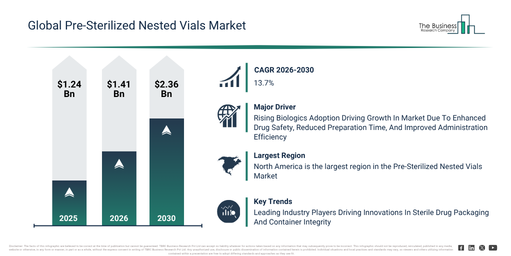
    The market for pre-sterilized nested vials has seen rapid expansion in recent years. This market is expected to expand from $1.24 billion in 2025 to $1.41 billion in 2026, achieving a compound annual growth rate (CAGR) of 13.5%. The historical growth of this market can be ascribed to factors such as increasing demand for injectable drugs, the adoption of pre-sterilized vials, the expansion of biologics and vaccines, a rise in contract manufacturing operations, and strict pharmaceutical packaging regulations.

    The pre-sterilized nested vials market is projected for significant expansion over the coming years, with its valuation anticipated to reach $2.36 billion by 2030, exhibiting a compound annual growth rate (CAGR) of 13.7%. This projected growth is driven by several factors, including the increasing automation of aseptic fill-finish processes, the emergence of sustainable nested vials, the scaling up of vaccine production, the incorporation of sophisticated polymer and glass materials, and the integration of digital tracking and monitoring systems. Key trends expected during this period involve the integration of automated aseptic filling, a wider embrace of pre-sterilized packaging, the automation of nested vial handling, advancements in material science, and the streamlining of regulatory compliance.

    Access Your Free Sample Report For In-Depth Market Analysis:

    https://www.thebusinessresearchcompany.com/sample_request?id=62313879&type=smp&name=Pre-Sterilized%20Nested%20Vials%20Market%20Report%202026

    What Key Factors Are Affecting The Pre-Sterilized Nested Vials Market Demand?

    The expanded use of biologics is projected to fuel the expansion of the pre-sterilized nested vials market. Biologics adoption signifies the increasing deployment of biologic treatments by healthcare providers and patients in regular clinical practice. This uptick is driven by the ability of biologics to offer targeted therapeutic outcomes, especially for chronic, autoimmune, and metabolic diseases where traditional small-molecule therapies frequently exhibit limited effectiveness. Pre-sterilized nested vials support the increasing application of biologics by supplying ready-to-use, contamination-free primary packaging options that guarantee product safety, uphold drug stability, and minimize preparation time during aseptic filling and administration. For instance, in October 2024, the Generics and Biosimilars Initiative (GaBI), a Belgium-based organization providing scientific information on generic and biosimilar medicines, reported that in addition to nine leading biologics, two other complex biologic drugs—Novo Nordisk’s Ozempic (semaglutide) and Eli Lilly’s Trulicity (dulaglutide), both prescribed for type 2 diabetes—recorded significant sales in 2023, totaling approximately US$14 billion and US$7.2 billion, respectively. Therefore, the growing adoption of biologics is a key driver for the pre-sterilized nested vials market.

    What Are The Different Segment Types In The Pre-Sterilized Nested Vials Market Segment Breakdown?

    The pre-sterilized nested vials market covered in this report is segmented –

    1) By Product Type: Glass Nested Vials, Plastic Nested Vials

    2) By Sterilization Method: Gamma Sterilization, Ethylene Oxide Sterilization, Steam Sterilization, Other Sterilization Methods

    3) By Capacity: 2R, 6R, 10R, 20R, Other Capacities

    4) By Application: Injectable Drugs Packaging, Biologics Packaging, Vaccine Packaging, Clinical Trial Packaging, Aseptic Fill-Finish Operations

    5) By End-User: Hospitals, Contract Manufacturing Organizations, Research Institutes, Other End-Users

    Subsegments:

    1) By Glass Nested Vials: Type I Borosilicate, Type II Soda Lime Treated, Type III Soda Lime, Neutral Glass

    2) By Plastic Nested Vials: Polypropylene, Polyethylene, Cyclo Olefin Polymer, Polycarbonate

    What Trends Are Affecting The Growth Of The Pre-Sterilized Nested Vials Market?

    Major companies operating in the pre-sterilized nested vials market are focusing on developing innovative solutions, such as container closure integrity, to ensure sterile drug delivery, prevent contamination, and maintain the stability and safety of pharmaceutical products. Container closure integrity refers to a packaging system’s ability to uphold a complete seal that prevents contamination, leakage, or loss of sterility. For instance, in May 2024, West Pharmaceutical Services Inc., a US-based manufacturing company, launched Daikyo Crystal Zenith (CZ) Nested Vials in a Tub. These are ready-to-use, pre-sterilized cyclic olefin polymer (COP) vials intended for sensitive therapies including cell/gene treatments and radiopharmaceuticals. Available in 2 mL (100 vials/tub) and 10 mL (48 vials/tub) sizes with ISO 8362-1 glass-like exterior dimensions, they guarantee cryogenic container closure integrity, low particulates (<2% USP <788>), high viral vector recovery, breakage resistance, and minimal chemical interactions.

    Who Are The Well-Known Companies In The Pre-Sterilized Nested Vials Market?

    Major companies operating in the pre-sterilized nested vials market are Corning Incorporated, Terumo Corporation, Nipro PharmaPackaging, West Pharmaceutical Services Inc., Gerresheimer AG, Datwyler Holding Inc., Stevanato Group, SCHOTT AG, Shandong Pharmaceutical Glass Co. Ltd., SGD Pharma, Bormioli Pharma, Adelphi Healthcare Packaging, DWK Life Sciences, Linuo Glassworks Group, SiO2 Materials Science, Jinan Youlyy Industrial Co. Ltd., Origin Pharma Packaging, Pacific Vial Manufacturing Inc., Daikyo Seiko Ltd., Qorpak, AptarGroup Inc., QCVIALZ LLC.

    Get The Full Pre-Sterilized Nested Vials Market Report:

    https://www.thebusinessresearchcompany.com/report/pre-sterilized-nested-vials-market-report

    Which Region Has The Greatest Market Share In The Pre-Sterilized Nested Vials Market?

    North America was the largest region in the pre-sterilized nested vials market in 2025. Asia-Pacific is expected to be the fastest-growing region in the forecast period. The regions covered in the pre-sterilized nested vials market report are Asia-Pacific, South East Asia, Western Europe, Eastern Europe, North America, South America, Middle East, Africa.

    Request A Customized Pre-Sterilized Nested Vials Market Report For Competitive Insights:

    https://www.thebusinessresearchcompany.com/Customise?id=62313879&name=Pre-Sterilized%20Nested%20Vials%20Market%20Report%202026&type=smp

    Browse Through More Reports Similar to the Global Pre-Sterilized Nested Vials Market 2026, By The Business Research Company

    adeno-associated virus (avv) vectors in gene therapy market report 2026

    https://www.thebusinessresearchcompany.com/report/adeno-associated-virus-avv-vectors-in-gene-therapy-global-market-report

    gastric cancer therapy market report 2026

    https://www.thebusinessresearchcompany.com/report/gastric-cancer-therapy-global-market-report

    over the counter (otc) drugs market report 2026

    https://www.thebusinessresearchcompany.com/report/over-the-counter-otc-drugs-global-market-report

    Get in touch with us:

    The Business Research Company: https://www.thebusinessresearchcompany.com/

    Americas +1 310-496-7795

    Asia +44 7882 955267 & +91 8897263534

    Europe +44 7882 955267

    Email us at marketing@tbrc.info

    Follow us on:

    LinkedIn: https://in.linkedin.com/company/the-business-research-company

    YouTube: https://www.youtube.com/channel/UC24_fI0rV8cR5DxlCpgmyFQ

    Global Market Model: https://www.thebusinessresearchcompany.com/global-market-model
  • Preclinical Antibody Development Market Forecast Highlighting Emerging Opportunities And Industry Developments Through 2030

    Preclinical Antibody Development Market Forecast Highlighting Emerging Opportunities And Industry Developments Through 2030

    The Business Research Company’s 2026 market reports feature enhanced tools like market attractiveness analysis, TAM assessment, and company scoring matrices, along with interactive dashboards, deeper supply chain insights, and startup coverage strengthening the depth, usability, and strategic value of insights.

    What Are The Market Size Estimates For The Preclinical Antibody Development Market In 2026 And 2030?

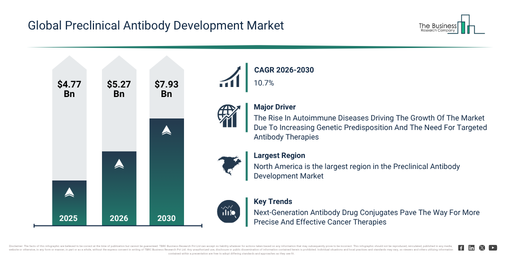
    The preclinical antibody development market has seen rapid expansion in recent years. This market is projected to increase from $4.77 billion in 2025 to $5.27 billion in 2026, at a compound annual growth rate (CAGR) of 10.5%. Historically, this growth was primarily fueled by the rising demand for therapeutic antibodies, advancements in monoclonal antibody technologies, the growth of research in oncology and infectious diseases, improvements in laboratory automation, and increased R&D investments by pharmaceutical companies.

    The preclinical antibody development market size is anticipated to undergo significant expansion in the coming years, with projections indicating a rise to $7.93 billion by 2030, exhibiting a compound annual growth rate (CAGR) of 10.7%. This expansion during the forecast period is attributable to factors such as the increasing adoption of AI-based antibody design platforms, the incorporation of predictive analytics into preclinical studies, the growing biotechnology research infrastructure, a heightened emphasis on personalized medicine, and a surge in collaborations between pharmaceutical and biotech companies. Notable trends expected during this period encompass high-throughput antibody screening, AI-driven candidate optimization, advanced in vitro assays, predictive toxicity modeling, and early-stage developability assessment.

    Access Your Free Sample Report For In-Depth Market Analysis:

    https://www.thebusinessresearchcompany.com/sample_request?id=73216258&type=smp&name=Preclinical%20Antibody%20Development%20Market%20Report%202026

    Which Primary Drivers Are Impacting The Preclinical Antibody Development Market Growth?

    The rising occurrence of autoimmune conditions is anticipated to fuel expansion in the preclinical antibody development market in the coming years. These disorders involve the immune system erroneously targeting healthy cells and tissues, resulting in persistent inflammation and cellular harm. The growing incidence of these conditions stems from a mix of genetic predispositions, environmental and lifestyle elements, shifts in immune-modulating influences, and enhanced understanding and diagnosis of diseases. The escalating impact of autoimmune ailments has created substantial unaddressed medical requirements, motivating pharmaceutical and biotech firms to intensify their research and development initiatives on specific biologic treatments. In this context, preclinical antibody development is crucial, facilitating the identification, testing, and refinement of antibodies intended to precisely regulate or suppress imbalanced immune reactions before they enter clinical trials. An illustrative example comes from February 2024, where Arthritis Australia, an Australia-based non-profit organization, reported that the population of males with rheumatoid arthritis (RA), an autoimmune disease, is 212,136 and females 362,137 in 2025. These figures are projected to climb by 2040, reaching approximately 280,040 males and 479,828 females. Consequently, the expanding occurrence of autoimmune diseases is indeed propelling the expansion of the preclinical antibody development market.

    Which Segment Classifications Are Used In The Preclinical Antibody Development Market Segment Analysis?

    The preclinical antibody development market covered in this report is segmented –

    1) By Type: Monoclonal Antibodies, Polyclonal Antibodies, Other Types

    2) By Service Type: Antibody Discovery, Humanization And Engineering, Affinity Maturation, Developability Assessment, Expression And Purification, In Vitro Functional Characterization

    3) By Application: Oncology, Infectious Diseases, Autoimmune Diseases, Other Applications

    4) By End-User: Pharmaceutical Companies, Biotechnology Companies, Research Institutes, Other End-Users

    Subsegments:

    1) By Monoclonal Antibodies: Murine Monoclonal Antibodies, Chimeric Monoclonal Antibodies, Humanized Monoclonal Antibodies, Fully Human Monoclonal Antibodies, Recombinant Monoclonal Antibodies

    2) By Polyclonal Antibodies: Primary Polyclonal Antibodies, Secondary Polyclonal Antibodies, Affinity Purified Polyclonal Antibodies, Antiserum Polyclonal Antibodies, Species Specific Polyclonal Antibodies

    3) By Other Types: Bispecific Antibodies, Single Domain Antibodies, Antibody Fragments, Conjugated Antibodies, Catalytic Antibodies

    Which Trends Are Shaping The Preclinical Antibody Development Market?

    Major companies operating in the preclinical antibody development market are increasingly concentrating on developing innovative modalities, such as antibody-drug conjugates (ADCs), to enhance targeted cancer treatments and improve their efficacy. ADCs represent a category of targeted therapeutics that merge the specific recognition of monoclonal antibodies with the powerful cytotoxic activity of small-molecule drugs. This enables the selective delivery of toxic payloads directly to cancer cells while reducing damage to healthy tissues. For instance, in November 2024, Celltrion Inc., a South Korea–based biopharmaceutical company, revealed the development of CT-P70 and CT-P71. These are two novel preclinical ADC candidates designed to target solid tumors, including non-small cell lung cancer and bladder cancer, respectively. Both ADCs comprise tumor-targeting antibodies conjugated to cytotoxic payloads, engineered to achieve precise tumor targeting with minimized off-target toxicity, potentially enhancing therapeutic indices compared to conventional monoclonal antibodies or chemotherapies. Such advanced ADC programs signify a broader industry shift from biosimilar manufacturing towards the creation of novel, differentiated biologic therapies.

    Which Firms Are Contributing To The Preclinical Antibody Development Market Ecosystem?

    Major companies operating in the preclinical antibody development market are Thermo Fisher Scientific Inc., WuXi AppTec Co Ltd., Charles River Laboratories International Inc., Sartorius Aktiengesellschaft, Samsung Biologics Co. Ltd., Evotec SE, KBI Biopharma Inc., GenScript Biotech Corporation, Abzena plc, Crown Bioscience Inc., AbCellera Biologics Inc., Adimab LLC, Creative Biolabs Inc., Boehringer Ingelheim BioXcellence GmbH, Integral Molecular Inc., ProMab Biotechnologies Inc., Eurofins Scientific SE, Ablexis Inc., Mabsilico Inc., Fujifilm Diosynth Biotechnologies Inc., Recipharm AB.

    Get The Full Preclinical Antibody Development Market Report:

    https://www.thebusinessresearchcompany.com/report/preclinical-antibody-development-market-report

    Which Region Accounts For The Largest Portion Of The Preclinical Antibody Development Market?

    North America was the largest region in the preclinical antibody development market in 2025. Asia-Pacific is expected to be the fastest-growing region in the forecast period. The regions covered in the preclinical antibody development market report are Asia-Pacific, South East Asia, Western Europe, Eastern Europe, North America, South America, Middle East, Africa.

    Request A Customized Preclinical Antibody Development Market Report For Competitive Insights:

    https://www.thebusinessresearchcompany.com/Customise?id=73216258&name=Preclinical%20Antibody%20Development%20Market%20Report%202026&type=smp

    Browse Through More Reports Similar to the Global Preclinical Antibody Development Market 2026, By The Business Research Company

    adeno-associated virus (avv) vectors in gene therapy market report 2026

    https://www.thebusinessresearchcompany.com/report/adeno-associated-virus-avv-vectors-in-gene-therapy-global-market-report

    gastric cancer therapy market report 2026

    https://www.thebusinessresearchcompany.com/report/gastric-cancer-therapy-global-market-report

    over the counter (otc) drugs market report 2026

    https://www.thebusinessresearchcompany.com/report/over-the-counter-otc-drugs-global-market-report

    Get in touch with us:

    The Business Research Company: https://www.thebusinessresearchcompany.com/

    Americas +1 310-496-7795

    Asia +44 7882 955267 & +91 8897263534

    Europe +44 7882 955267

    Email us at marketing@tbrc.info

    Follow us on:

    LinkedIn: https://in.linkedin.com/company/the-business-research-company

    YouTube: https://www.youtube.com/channel/UC24_fI0rV8cR5DxlCpgmyFQ

    Global Market Model: https://www.thebusinessresearchcompany.com/global-market-model
  • Portable Near-Infrared (NIR) Spectrometers Market Analysis Through 2030 Presenting Long-Term Industry Opportunities

    Portable Near-Infrared (NIR) Spectrometers Market Analysis Through 2030 Presenting Long-Term Industry Opportunities

    The Business Research Company’s 2026 market reports feature enhanced tools like market attractiveness analysis, TAM assessment, and company scoring matrices, along with interactive dashboards, deeper supply chain insights, and startup coverage strengthening the depth, usability, and strategic value of insights.

    What Expansion In Market Value Is Forecasted For The Portable Near-Infrared (NIR) Spectrometers Market Between 2026 And 2030?

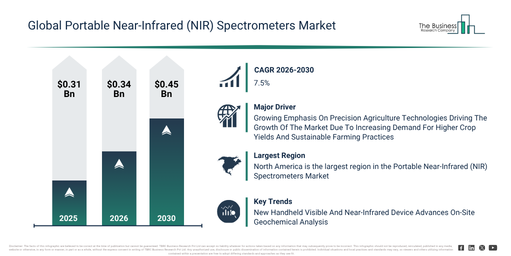
    The market for portable near-infrared (NIR) spectrometers has seen substantial growth in recent years. It is anticipated to expand from $0.31 billion in 2025 to $0.34 billion in 2026, with a compound annual growth rate (CAGR) of 7.3%. Historically, this expansion has been driven by an increasing need for rapid material analysis, the growth of agricultural testing, wider adoption in food quality testing, advancements in handheld detector technology, and the demand for on-site chemical analysis.

    The portable near-infrared (NIR) spectrometers market is projected to experience substantial expansion over the coming years. By 2030, this market is anticipated to reach a value of $0.45 billion, exhibiting a compound annual growth rate (CAGR) of 7.5%. Factors contributing to this growth during the forecast period include the incorporation of AI and cloud-based software, the reduction in size of spectrometer components, increased application in environmental and industrial testing, the creation of multi-wavelength spectrometers, and the embrace of portable NIR spectrometers within the pharmaceutical sector. Key trends for the same period encompass portable real-time analysis, material testing without destruction, seamless integration with mobile devices, AI-powered spectral interpretation, and quality control solutions that can be deployed in the field.

    Access Your Free Sample Report For In-Depth Market Analysis:

    https://www.thebusinessresearchcompany.com/sample_request?id=88998838&type=smp&name=Portable%20Near-Infrared%20%28NIR%29%20Spectrometers%20Market%20Report%202026

    What Significant Factors Are Influencing The Portable Near-Infrared (NIR) Spectrometers Market Expansion?

    The expanding focus on precision agriculture technologies is anticipated to propel the expansion of the portable near-infrared (NIR) spectrometers market throughout the forecast period. Precision agriculture incorporates sophisticated digital, sensor-reliant, and data-powered instruments that empower farmers to precisely oversee and handle soil and crop statuses, subsequently boosting yields, enhancing input efficiency, and diminishing environmental effects. The rising uptake of these innovations stems from the imperative to boost agricultural output, curb escalating input expenses, and foster sustainable farming methods via localized control of water, fertilizers, and pesticides informed by live field data. Given that precision agriculture significantly depends on swift, on-location analytical findings, portable NIR spectrometers are becoming more popular because they can provide instantaneous measurements of soil nutrients, moisture levels, and crop vitality right in the field. For example, in January 2024, data from the Government Accountability Office, a US-based government agency, revealed that approximately 27% of farms and ranches in the United States had implemented precision agriculture techniques for crop management in 2023. Consequently, the increased focus on precision agriculture technologies is fueling the expansion of the portable near-infrared (NIR) spectrometers market.

    How Is The Portable Near-Infrared (NIR) Spectrometers Market Organized By Segment Classification?

    The portable near-infrared (NIR) spectrometers market covered in this report is segmented –

    1) By Component: Detectors, Optical Components, Software

    2) By Wavelength Range: Short-Wave Near-Infrared, Long-Wave Near-Infrared

    3) By Technology: Transmission Near-Infrared Spectroscopy, Reflectance Near-Infrared Spectroscopy, Diffuse Reflectance Near-Infrared Spectroscopy

    4) By Application: Agriculture And Raw Material Testing, Pharmaceutical And Chemical Analysis, Food Quality And Composition Testing, Industrial Material Identification, Environmental And Field Testing

    5) By End-User: Research Laboratories, Manufacturing Industries, Food Processing Units

    Subsegments:

    1) By Detectors: Indium Gallium Arsenide Detectors, Lead Sulfide Detectors, Silicon Detectors, Extended Range Indium Gallium Arsenide Detectors, Thermoelectrically Cooled Detectors

    2) By Optical Components: Light Sources, Diffraction Gratings, Optical Filters, Sample Holders, Fiber Optic Probes

    3) By Software: Data Acquisition Software, Spectral Analysis Software, Calibration And Modeling Software, Instrument Control Software, Cloud Based Data Management Software

    What Trends Are Influencing The Portable Near-Infrared (NIR) Spectrometers Market?

    Major companies operating in the portable near-infrared (NIR) spectrometers market are focusing on developing innovative solutions, such as handheld visible and near-infrared analyzers, to enable swift, on-site mineral identification and real-time geochemical decision-making in field exploration environments. Handheld visible and near-infrared (Vis-NIR) analyzers are portable spectroscopic instruments that use reflected light in the visible and near-infrared wavelength range to rapidly identify and analyze material composition directly in the field, eliminating the need for laboratory testing. For instance, in January 2025, SciAps Inc., a US-based instrumentation company, launched reveNIR, a handheld Vis-NIR (Visible and Near-Infrared) analyzer designed to enhance real-time mineral identification and field-based decision-making in mineral exploration. This device is engineered to provide quick, direct analysis of rocks, soils, and drill cores without the necessity for laboratory testing. It operates across an extensive spectral range, facilitating the accurate detection of key alteration and ore-related minerals.

    Who Are The Industry Participants Involved In The Portable Near-Infrared (NIR) Spectrometers Market?

    Major companies operating in the portable near-infrared (NIR) spectrometers market are Thermo Fisher Scientific Inc., ABB Ltd., Agilent Technologies Inc., Yokogawa Electric Corporation, Sartorius AG, Shimadzu Corporation, Bruker Corporation, Carl Zeiss AG, HORIBA Ltd., Hamamatsu Photonics K.K., VIAVI Solutions Inc., Metrohm AG, KPM Analytics Inc., Unity Scientific Inc., Ocean Insight Inc., JASCO Corporation, Kett Electric Laboratory Co. Ltd., Nynomic AG, Wasatch Photonics Inc., Q-Interline A/S, StellarNet Inc., Polytec GmbH, Anton Paar GmbH.

    Get The Full Portable Near-Infrared (NIR) Spectrometers Market Report:

    https://www.thebusinessresearchcompany.com/report/portable-near-infrared-nir-spectrometers-market-report

    Which Region Holds The Highest Market Share In The Portable Near-Infrared (NIR) Spectrometers Market?

    North America was the largest region in the portable near-infrared (NIR) spectrometers market in 2025. Asia-Pacific is expected to be the fastest-growing region in the forecast period. The regions covered in the portable near-infrared (NIR) spectrometers market report are Asia-Pacific, South East Asia, Western Europe, Eastern Europe, North America, South America, Middle East, Africa.

    Request A Customized Portable Near-Infrared (NIR) Spectrometers Market Report For Competitive Insights:

    https://www.thebusinessresearchcompany.com/Customise?id=88998838&name=Portable%20Near-Infrared%20%28NIR%29%20Spectrometers%20Market%20Report%202026&type=smp

    Browse Through More Reports Similar to the Global Portable Near-Infrared (NIR) Spectrometers Market 2026, By The Business Research Company

    connected health personal medical devices market report 2026

    https://www.thebusinessresearchcompany.com/report/connected-health-personal-medical-devices-global-market-report

    contract sterilization market report 2026

    https://www.thebusinessresearchcompany.com/report/contract-sterilization-global-market-report

    orthotic insole 3-d printer market report 2026

    https://www.thebusinessresearchcompany.com/report/orthotic-insole-3-d-printer-global-market-report

    Get in touch with us:

    The Business Research Company: https://www.thebusinessresearchcompany.com/

    Americas +1 310-496-7795

    Asia +44 7882 955267 & +91 8897263534

    Europe +44 7882 955267

    Email us at marketing@tbrc.info

    Follow us on:

    LinkedIn: https://in.linkedin.com/company/the-business-research-company

    YouTube: https://www.youtube.com/channel/UC24_fI0rV8cR5DxlCpgmyFQ

    Global Market Model: https://www.thebusinessresearchcompany.com/global-market-model
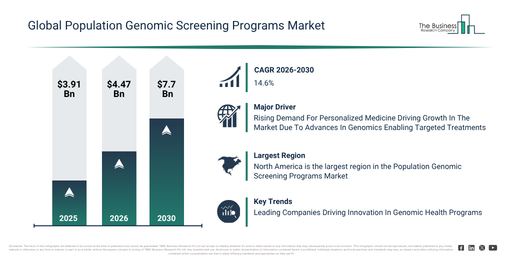
  • Population Genomic Screening Programs Market Forecast 2026–2030 Covering Innovation Trends And Competitive Insights

    Population Genomic Screening Programs Market Forecast 2026–2030 Covering Innovation Trends And Competitive Insights

    The Business Research Company’s 2026 market reports feature enhanced tools like market attractiveness analysis, TAM assessment, and company scoring matrices, along with interactive dashboards, deeper supply chain insights, and startup coverage strengthening the depth, usability, and strategic value of insights.

    How Large Will The Population Genomic Screening Programs Market Be By 2030 Compared To Its 2026 Market Size?

    The population genomic screening programs market has experienced substantial expansion in recent years. Projections indicate it will increase from $3.91 billion in 2025 to $4.47 billion in 2026, achieving a compound annual growth rate (CAGR) of 14.3%. Historically, this growth has been fueled by factors such as a rise in awareness regarding hereditary diseases, the implementation of newborn screening programs, significant advancements in sequencing technologies, escalating government health initiatives, and improvements in healthcare infrastructure.

    The population genomic screening programs market size is projected for substantial expansion over the next few years. It is expected to reach $7.7 billion by 2030, demonstrating a compound annual growth rate (CAGR) of 14.6%. This anticipated growth can be attributed to several factors, including the expansion of adult and carrier screening programs, the adoption of AI-based genomic interpretation tools, integration with digital health platforms, a rising demand for personalized medicine, and increased investment in population genomic research. Prominent trends throughout the forecast period involve population-wide genetic risk assessment, integration with electronic health records (EHR), AI-driven variant interpretation, personalized preventive health programs, and robust data security and privacy compliance.

    Access Your Free Sample Report For In-Depth Market Analysis:

    https://www.thebusinessresearchcompany.com/sample_request?id=91960620&type=smp&name=Population%20Genomic%20Screening%20Programs%20Market%20Report%202026

    Which Important Drivers Are Guiding The Population Genomic Screening Programs Market Growth?

    The increasing need for personalized medicine is anticipated to fuel the expansion of the population genomic screening programs market. This approach customizes medical care and health choices according to an individual’s genetic makeup, environment, and lifestyle traits, aiming to boost treatment efficacy and safety. Its rising acceptance is spurred by progress in genomics and molecular diagnostics, allowing healthcare providers to gain deeper insights into genetic differences and administer more accurate, focused treatments that improve patient results and lessen negative reactions. Crucially, population genomic screening programs support the advancement of personalized medicine by pinpointing genetic variations and risk factors linked to diseases within broad and varied populations. Such initiatives facilitate the early detection of disease risks, categorize patient groups, and enable the creation of customized prevention and treatment plans for both individuals and public health. As an example, in February 2024, the Personalized Medicine Coalition, a U.S.-based non-profit organization, announced that the U.S. Food and Drug Administration (FDA) sanctioned 16 novel personalized treatments for patients with rare diseases in 2023, an increase from six approvals in 2022. Consequently, the expanding need for personalized medicine is fueling the expansion of the population genomic screening programs market.

    Which Segments Define The Population Genomic Screening Programs Market Segment Structure?

    The population genomic screening programs market covered in this report is segmented –

    1) By Program Type: Newborn Screening, Adult Screening, Carrier Screening, Pharmacogenomics, Other Program Types

    2) By Program Model: National Screening Programs, Regional Screening Programs, Institution Based Screening, Direct To Consumer Screening

    3) By Technology: Next Generation Sequencing, Microarray, Polymerase Chain Reaction, Other Technologies

    4) By Application: Rare Disease Detection, Cancer Risk Assessment, Pharmacogenomics, Chronic Disease Prediction, Other Applications

    5) By End-User: Hospitals, Research Institutes, Government Agencies, Diagnostic Laboratories, Other End-Users

    Subsegments:

    1) By Newborn Screening: Rare Disease Screening, Metabolic Disorder Screening, Immunodeficiency Disorder Screening, Neurological Disorder Screening, Endocrine Disorder Screening

    2) By Adult Screening: Hereditary Cancer Risk Screening, Cardiovascular Genetic Risk Screening, Neurodegenerative Disease Risk Screening, Preventive Health Risk Screening, Late Onset Genetic Disorder Screening

    3) By Carrier Screening: Preconception Carrier Screening, Prenatal Carrier Screening, Expanded Carrier Screening, Recessive Disorder Carrier Screening, Population Based Carrier Screening

    4) By Pharmacogenomics: Drug Response Prediction Testing, Adverse Drug Reaction Risk Testing, Dose Optimization Testing, Therapeutic Selection Testing, Medication Safety Testing

    5) By Other Program Types: Polygenic Risk Assessment Programs, Predictive Genomic Health Programs, Preventive Genomic Screening Programs, Population Risk Stratification Programs, Research Based Genomic Screening Programs

    What Market Trends Are Affecting The Population Genomic Screening Programs Market?

    Major companies active within the population genomic screening programs market are dedicating efforts to creating innovative solutions, including hereditary risk assessment, to facilitate the early detection of genetic predispositions, inform personalized prevention strategies, and enhance long-term health outcomes. Hereditary risk assessment refers to the process of evaluating an individual’s likelihood of developing certain genetic disorders or diseases based on their inherited genetic variants and family medical history. As an example, in November 2023, Helix OpCo, LLC, a US-based population genomics and clinical technology company, collaborated with Cone Health, a US-based not-for-profit network of healthcare providers, to initiate a population genomics program aimed at advancing precision medicine in North Carolina. This program leverages Helix’s end-to-end platform to provide actionable precision medicine insights, thereby enabling earlier interventions, promoting community wellness efforts, and improving health equity throughout Alamance, Forsyth, Guilford, Rockingham, and Randolph counties and surrounding regions.

    Who Are The Established Players Within The Population Genomic Screening Programs Market?

    Major companies operating in the population genomic screening programs market are F. Hoffmann-La Roche AG, Thermo Fisher Scientific Inc., Quest Diagnostics Incorporated, Illumina Inc., Natera Inc., Myriad Genetics Inc., BGI Genomics Co. Ltd., Guardant Health Inc., Fulgent Genetics Inc., Ambry Genetics Corporation, Pacific Biosciences of California Inc., Color Genomics Inc., Helix OpCo Inc., Personalis Inc., CENTOGENE N.V., ProPhase Labs Inc., DNAnexus Inc., Genomics England Limited, Eurofins Genomics Germany GmbH, Sema4 Inc., Mapmygenome India Private Limited, Gencove Inc.

    Get The Full Population Genomic Screening Programs Market Report:

    https://www.thebusinessresearchcompany.com/report/population-genomic-screening-programs-market-report

    Where Is The Population Genomic Screening Programs Market Most Concentrated Geographically?

    North America was the largest region in the population genomic screening programs market in 2025. Asia-Pacific is expected to be the fastest-growing region in the forecast period. The regions covered in the population genomic screening programs market report are Asia-Pacific, South East Asia, Western Europe, Eastern Europe, North America, South America, Middle East, Africa.

    Request A Customized Population Genomic Screening Programs Market Report For Competitive Insights:

    https://www.thebusinessresearchcompany.com/Customise?id=91960620&name=Population%20Genomic%20Screening%20Programs%20Market%20Report%202026&type=smp

    Browse Through More Reports Similar to the Global Population Genomic Screening Programs Market 2026, By The Business Research Company

    pruritus therapeutic market report 2026

    https://www.thebusinessresearchcompany.com/report/pruritus-therapeutic-global-market-report

    genomic urine testing market report 2026

    https://www.thebusinessresearchcompany.com/report/genomic-urine-testing-global-market-report

    ocular genetic diagnostic market report 2026

    https://www.thebusinessresearchcompany.com/report/ocular-genetic-diagnostic-global-market-report

    Get in touch with us:

    The Business Research Company: https://www.thebusinessresearchcompany.com/

    Americas +1 310-496-7795

    Asia +44 7882 955267 & +91 8897263534

    Europe +44 7882 955267

    Email us at marketing@tbrc.info

    Follow us on:

    LinkedIn: https://in.linkedin.com/company/the-business-research-company

    YouTube: https://www.youtube.com/channel/UC24_fI0rV8cR5DxlCpgmyFQ

    Global Market Model: https://www.thebusinessresearchcompany.com/global-market-model
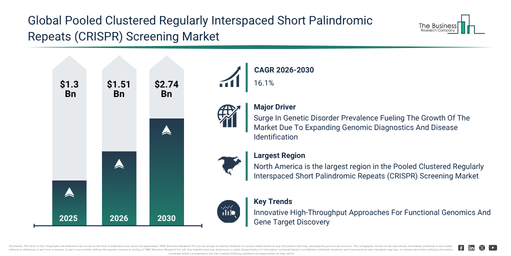
  • Pooled Clustered Regularly Interspaced Short Palindromic Repeats (CRISPR) Screening Market Outlook Through 2030 Featuring Market Trends And Industry Developments

    Pooled Clustered Regularly Interspaced Short Palindromic Repeats (CRISPR) Screening Market Outlook Through 2030 Featuring Market Trends And Industry Developments

    The Business Research Company’s 2026 market reports feature enhanced tools like market attractiveness analysis, TAM assessment, and company scoring matrices, along with interactive dashboards, deeper supply chain insights, and startup coverage strengthening the depth, usability, and strategic value of insights.

    What Is The Projected Increase In Market Value Of The Pooled Clustered Regularly Interspaced Short Palindromic Repeats (CRISPR) Screening Market During 2026–2030?

    The pooled clustered regularly interspaced short palindromic repeats (CRISPR) screening market size has seen rapid expansion in recent years. Its valuation is expected to increase from $1.3 billion in 2025 to $1.51 billion in 2026, achieving a compound annual growth rate (CAGR) of 15.9%. This historical development can be attributed to several factors including a growing need for functional genomics, increased uptake of CRISPR-Cas9 technology, advancements in pharmaceutical research and development, progress in gene editing tools, and the proliferation of academic research endeavors.

    The pooled clustered regularly interspaced short palindromic repeats (crispr) screening market size is expected to experience rapid growth in the next few years, projected to reach $2.74 billion by 2030, at a compound annual growth rate (CAGR) of 16.1%. This expansion during the forecast period is attributed to AI-enabled gene screening, the integration with cloud-based genomics platforms, increasing demand for personalized medicine applications, the expansion of biotech infrastructure, and automation in high-throughput screening. Major trends for this period include high-throughput screening techniques, integration with multi-omics data, automated crispr workflows, AI-driven gene target identification, and real-time functional genomics analysis.

    Access Your Free Sample Report For In-Depth Market Analysis:

    https://www.thebusinessresearchcompany.com/sample_request?id=56373934&type=smp&name=Pooled%20Clustered%20Regularly%20Interspaced%20Short%20Palindromic%20Repeats%20%28CRISPR%29%20Screening%20Market%20Report%202026

    What Major Factors Are Driving The Pooled Clustered Regularly Interspaced Short Palindromic Repeats (CRISPR) Screening Market Forward?

    The growing incidence of genetic conditions is anticipated to fuel expansion within the pooled clustered regularly interspaced short palindromic repeats (CRISPR) screening market. Genetic disorders originate from inherited or acquired DNA anomalies, impacting an individual’s normal development, metabolic processes, or physiological function. This increase in prevalence is partly due to factors like older parental age, enhanced diagnostic methods, and broader genetic screening, all contributing to elevated detection and reporting figures. Pooled CRISPR screening is vital for genetic disorder research, facilitating rapid, genome-wide identification of genes and pathways linked to diseases. An example is the Cystic Fibrosis Trust, a UK-based charity, which in October 2024, indicated that 11,148 cystic fibrosis patients were recorded in 2022, rising to 11,318 in 2023, marking an annual increase of approximately 1.5%. Consequently, the increasing occurrence of genetic disorders is boosting the growth of the pooled clustered regularly interspaced short palindromic repeats (CRISPR) screening market. Rising Research And Development Investments Driving Growth In The Market Due To Advancements In Real-Time Genomic Data Analysis

    Enhanced research and development funding is anticipated to stimulate the expansion of the pooled clustered regularly interspaced short palindromic repeats (CRISPR) screening market in the coming years. R&D investments involve dedicating resources to innovate new products, enhance current offerings, and advance technologies to foster innovation and sustainable business growth. Progressive technological breakthroughs are prompting greater R&D investments, as businesses are compelled to continually innovate and modernize their products and processes to keep pace with swift digital transformation and evolving industry benchmarks. These investments benefit CRISPR screening by facilitating the creation of sophisticated gene-editing instruments, refining protocols, and boosting precision and effectiveness for quicker identification of gene functions. For example, in 2023, the Office for National Statistics, a UK-based government body, reported that the UK government’s net expenditure on R&D climbed to £17.4 billion ($22.1 billion) in 2023, an increase from £16.1 billion ($20.45 billion) in 2022, indicating an 8.2% growth. Thus, the escalating research and development investments are a key factor in driving the growth of the pooled clustered regularly interspaced short palindromic repeats (CRISPR) screening market.

    How Is The Pooled Clustered Regularly Interspaced Short Palindromic Repeats (CRISPR) Screening Market Segmented Across Different Segment Categories?

    The pooled clustered regularly interspaced short palindromic repeats (crispr) screening market covered in this report is segmented –

    1) By Screening Type: Genome Wide Screening, Targeted Screening

    2) By Product Type: Libraries, Reagents And Kits, Instruments, Software, Services

    3) By Technology: Clustered Regularly Interspaced Short Palindromic Repeats (CRISPR) Cas9 Screening, Clustered Regularly Interspaced Short Palindromic Repeats (CRISPR) Interference Screening, Clustered Regularly Interspaced Short Palindromic Repeats (CRISPR) Activation Screening

    4) By Application: Functional Genomics, Drug Discovery, Cancer Research, Gene Regulation, Other Applications

    5) By End-User: Pharmaceutical And Biotechnology Companies, Academic And Research Institutes, Contract Research Organizations, Other End-Users

    Subsegments:

    1) By Genome Wide Screening: Knockout Screening, Activation Screening, Interference Screening

    2) By Targeted Screening: Gene Specific Knockout, Gene Specific Activation, Gene Specific Interference

    Which Trends Are Impacting The Progress Of The Pooled Clustered Regularly Interspaced Short Palindromic Repeats (CRISPR) Screening Market?

    Major companies operating in the pooled clustered regularly interspaced short palindromic repeats (CRISPR) screening market are actively developing innovative solutions like transcriptome-wide profiling to enable efficient high-throughput functional genomics and precise identification of gene targets for therapeutic and research applications. Transcriptome-wide profiling refers to the comprehensive analysis of all RNA transcripts expressed in a cell or tissue at a given time, providing valuable insights into gene activity, regulation, and cellular functions. As an illustration, in June 2023, Parse Biosciences Inc., a US-based biotechnology company, launched CRISPR Detect, a technology designed to facilitate high-scale single-cell pooled CRISPR screens. This innovation integrates with the company’s Evercode Whole Transcriptome platform to pair individual gene perturbations, using Cas12-based single guide ribonucleic acid (RNA) (sgRNAs), with whole-transcriptome expression profiles across up to one million cells per experiment, thereby overcoming previous throughput and cost barriers in droplet-based single-cell RNA-seq. This significantly broadens applications in genome-scale gene function analysis, regulatory networks, signaling pathways, and drug discovery, extending beyond targeted validation.

    Which Organizations Play A Role In The Pooled Clustered Regularly Interspaced Short Palindromic Repeats (CRISPR) Screening Market Landscape?

    Major companies operating in the pooled clustered regularly interspaced short palindromic repeats (crispr) screening market are Thermo Fisher Scientific Inc., Merck KGaA, Danaher Corporation, Applied Biological Materials Inc., Agilent Technologies Inc., Charles River Laboratories International Inc., QIAGEN N.V., GenScript Biotech Corporation, Twist Bioscience Corporation, Ginkgo Bioworks Inc., Element Biosciences Inc., Synthego Corporation, Bit.bio Limited, Bioneer Corporation, VectorBuilder Inc., Admera Health LLC, Addgene Inc., Creative Biogene Inc., Cellecta Inc., Vivlion Inc., GeneCopoeia Inc.

    Get The Full Pooled Clustered Regularly Interspaced Short Palindromic Repeats (CRISPR) Screening Market Report:

    https://www.thebusinessresearchcompany.com/report/pooled-clustered-regularly-interspaced-short-palindromic-repeats-crispr-screening-market-report

    Which Region Dominates The Pooled Clustered Regularly Interspaced Short Palindromic Repeats (CRISPR) Screening Market By Market Share?

    North America was the largest region in the pooled clustered regularly interspaced short palindromic repeats (CRISPR) screening market in 2025. Asia-Pacific is expected to be the fastest-growing region in the forecast period. The regions covered in the pooled clustered regularly interspaced short palindromic repeats (crispr) screening market report are Asia-Pacific, South East Asia, Western Europe, Eastern Europe, North America, South America, Middle East, Africa.

    Request A Customized Pooled Clustered Regularly Interspaced Short Palindromic Repeats (CRISPR) Screening Market Report For Competitive Insights:

    https://www.thebusinessresearchcompany.com/Customise?id=56373934&name=Pooled%20Clustered%20Regularly%20Interspaced%20Short%20Palindromic%20Repeats%20%28CRISPR%29%20Screening%20Market%20Report%202026&type=smp

    Browse Through More Reports Similar to the Global Pooled Clustered Regularly Interspaced Short Palindromic Repeats (CRISPR) Screening Market 2026, By The Business Research Company

    adeno-associated virus (avv) vectors in gene therapy market report 2026

    https://www.thebusinessresearchcompany.com/report/adeno-associated-virus-avv-vectors-in-gene-therapy-global-market-report

    gastric cancer therapy market report 2026

    https://www.thebusinessresearchcompany.com/report/gastric-cancer-therapy-global-market-report

    over the counter (otc) drugs market report 2026

    https://www.thebusinessresearchcompany.com/report/over-the-counter-otc-drugs-global-market-report

    Get in touch with us:

    The Business Research Company: https://www.thebusinessresearchcompany.com/

    Americas +1 310-496-7795

    Asia +44 7882 955267 & +91 8897263534

    Europe +44 7882 955267

    Email us at marketing@tbrc.info

    Follow us on:

    LinkedIn: https://in.linkedin.com/company/the-business-research-company

    YouTube: https://www.youtube.com/channel/UC24_fI0rV8cR5DxlCpgmyFQ

    Global Market Model: https://www.thebusinessresearchcompany.com/global-market-model
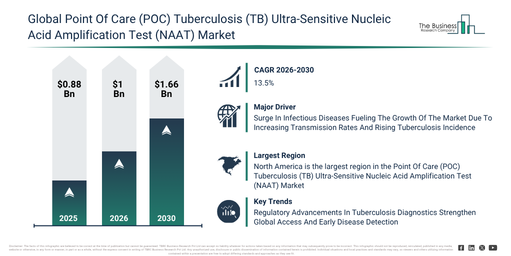
  • Point Of Care (POC) Tuberculosis (TB) Ultra-Sensitive Nucleic Acid Amplification Test (NAAT) Market Forecast 2026–2030 Highlighting Industry Drivers And Growth Trends

    Point Of Care (POC) Tuberculosis (TB) Ultra-Sensitive Nucleic Acid Amplification Test (NAAT) Market Forecast 2026–2030 Highlighting Industry Drivers And Growth Trends

    The Business Research Company’s 2026 market reports feature enhanced tools like market attractiveness analysis, TAM assessment, and company scoring matrices, along with interactive dashboards, deeper supply chain insights, and startup coverage strengthening the depth, usability, and strategic value of insights.

    How Is The Market Size Of The Point Of Care (POC) Tuberculosis (TB) Ultra-Sensitive Nucleic Acid Amplification Test (NAAT) Market Expected To Change From 2026 To 2030?

    The market size for the point of care (POC) tuberculosis (TB) ultra-sensitive nucleic acid amplification test (NAAT) has experienced swift expansion in recent years. This market is projected to expand from $0.88 billion in 2025 to reach $1 billion by 2026, demonstrating a compound annual growth rate (CAGR) of 13.3%. Historically, this growth can be ascribed to factors such as rising tuberculosis prevalence, the adoption of conventional molecular diagnostics, increasing government health initiatives, the expansion of hospital networks, and growing awareness of the benefits of early diagnosis.

    The market size for the point of care (POC) tuberculosis (TB) ultra-sensitive nucleic acid amplification test (NAAT) is poised for substantial growth in the upcoming years. It is anticipated to expand to $1.66 billion by 2030, demonstrating a compound annual growth rate (CAGR) of 13.5%. This projected growth can be attributed to the rising demand for ultra-sensitive point-of-care testing, the integration of AI with diagnostic assays, the expansion of decentralized healthcare, investments in rapid nucleic acid amplification technologies, and increased funding for tuberculosis control programs. Significant trends expected during the forecast period encompass rapid point-of-care testing, ultra-sensitive nucleic acid amplification, automated diagnostic platforms, compact and portable test devices, and their integration with electronic health records.

    Access Your Free Sample Report For In-Depth Market Analysis:

    https://www.thebusinessresearchcompany.com/sample_request?id=61723794&type=smp&name=Point%20Of%20Care%20%28POC%29%20Tuberculosis%20%28TB%29%20Ultra-Sensitive%20Nucleic%20Acid%20Amplification%20Test%20%28NAAT%29%20Market%20Report%202026

    Which Key Drivers Are Affecting The Point Of Care (POC) Tuberculosis (TB) Ultra-Sensitive Nucleic Acid Amplification Test (NAAT) Market Development?

    The increasing occurrence of infectious diseases is projected to stimulate the growth of the point of care (POC) tuberculosis (TB) ultra-sensitive nucleic acid amplification test (NAAT) market in the future. Infectious diseases are ailments resulting from pathogenic microorganisms such as bacteria, viruses, parasites, or fungi, which can spread among individuals through direct or indirect means. The escalating incidence of infectious diseases is fueled by the growing density of the global population, which intensifies transmission risks and the spread of illnesses. Point-of-care tuberculosis ultra-sensitive nucleic acid amplification testing supports the rising prevalence of infectious diseases by enabling swift, highly sensitive, and decentralized detection of infectious pathogens, thereby strengthening early diagnosis and disease control initiatives. As an illustration, in March 2025, according to the UK Health Security Agency, a UK-based government health authority, tuberculosis cases in England saw a 13% increase in 2024, reaching 5,480 cases compared to 4,850 cases in 2023. Thus, the increasing prevalence of infectious diseases is driving the expansion of the point of care (POC) tuberculosis (TB) ultra-sensitive nucleic acid amplification test (NAAT) market.

    What Are The Main Segments Within The Point Of Care (POC) Tuberculosis (TB) Ultra-Sensitive Nucleic Acid Amplification Test (NAAT) Market Segment Structure?

    The point of care (POC) tuberculosis (TB) ultra-sensitive nucleic acid amplification test (NAAT) market covered in this report is segmented –

    1) By Technology: Polymerase Chain Reaction Based Nucleic Acid Amplification Testing, Isothermal Amplification, Other Technologies

    2) By Product Type: Instruments, Reagents And Consumables, Software

    3) By Sample Type: Sputum, Blood, Urine, Other Sample Types

    4) By End User: Hospitals And Clinics, Diagnostic Laboratories, Research Institutes, Other End Users

    Subsegments:

    1) By Polymerase Chain Reaction Based Nucleic Acid Amplification Testing: Real Time Polymerase Chain Reaction, Digital Polymerase Chain Reaction, Multiplex Polymerase Chain Reaction, Nested Polymerase Chain Reaction

    2) By Isothermal Amplification: Loop Mediated Isothermal Amplification, Recombinase Polymerase Amplification, Nucleic Acid Sequence Based Amplification, Strand Displacement Amplification

    3) By Other Technologies: Transcription Mediated Amplification, Helicase Dependent Amplification, Rolling Circle Amplification, Branched DNA Amplification

    What Trends Are Transforming The Point Of Care (POC) Tuberculosis (TB) Ultra-Sensitive Nucleic Acid Amplification Test (NAAT) Market?

    Leading companies operating within the point of care (POC) tuberculosis (TB) ultra-sensitive nucleic acid amplification test (NAAT) market are focusing on achieving regulatory validation and participating in international prequalification programs. This strategic emphasis aims to bolster quality assurance, accelerate global adoption rates, and enhance access to highly sensitive diagnostic solutions. Prequalification itself is a regulatory assessment procedure that evaluates in vitro diagnostic products to ensure their compliance with international benchmarks for quality, safety, and performance, thereby making them eligible for procurement by global health organizations and deployment in settings with limited resources. For example, in December 2024, the World Health Organization, a Switzerland-based intergovernmental organization, announced the initial prequalification of an Xpert MTB/RIF, an ultra-tuberculosis diagnostic test, under its established regulatory assessment framework. This significant achievement supports the broader dissemination of reliable and rapid TB detection tools, particularly in low- and middle-income countries. Leveraging advanced nucleic acid amplification technology, automated cartridge-based systems, and swift result turnaround capabilities, this solution facilitates decentralized testing, improves the early identification of cases, and strengthens the detection of drug resistance. It is specifically engineered for deployment in primary healthcare facilities and remote areas with constrained laboratory infrastructure, consequently enhancing surveillance capacity, minimizing diagnostic delays, and supporting global tuberculosis control and antimicrobial resistance management initiatives.

    Who Are The Companies Participating In The Point Of Care (POC) Tuberculosis (TB) Ultra-Sensitive Nucleic Acid Amplification Test (NAAT) Market?

    Major companies operating in the point of care (POC) tuberculosis (TB) ultra-sensitive nucleic acid amplification test (NAAT) market are (POC) tuberculosis (TB) ultra-sensitive nucleic acid amplification test (NAAT) market are F. Hoffmann-La Roche AG, Abbott Laboratories, Danaher Corporation, QIAGEN N.V., SD BIOSENSOR Inc., Eiken Chemical Co. Ltd, Oxford Nanopore Technologies Ltd, Molbio Diagnostics Limited, Sansure Biotech Inc., CapitalBio Corporation, QuantuMDx Group Limited, Tata Medical Diagnostics Limited, Ustar Biotechnologies, Mylab Discovery Solutions Private Limited, GenoScreen SAS, Co-Diagnostics Inc., Longhorn Vaccines Diagnostics LLC, Akonni Biosystems Inc., Zeesan Biotech Co. Ltd, Redcliffe labs.

    Get The Full Point Of Care (POC) Tuberculosis (TB) Ultra-Sensitive Nucleic Acid Amplification Test (NAAT) Market Report:

    https://www.thebusinessresearchcompany.com/report/point-of-care-poc-tuberculosis-tb-ultra-sensitive-nucleic-acid-amplification-test-naat-market-report

    Which Region Is The Largest In The Point Of Care (POC) Tuberculosis (TB) Ultra-Sensitive Nucleic Acid Amplification Test (NAAT) Market?

    North America was the largest region in the point of care (POC) tuberculosis (TB) ultra-sensitive nucleic acid amplification test (NAAT) market in 2025. Asia-Pacific is expected to be the fastest-growing region in the forecast period. The regions covered in the point of care (POC) tuberculosis (TB) ultra-sensitive nucleic acid amplification test (NAAT) market report are Asia-Pacific, South East Asia, Western Europe, Eastern Europe, North America, South America, Middle East, Africa.

    Request A Customized Point Of Care (POC) Tuberculosis (TB) Ultra-Sensitive Nucleic Acid Amplification Test (NAAT) Market Report For Competitive Insights:

    https://www.thebusinessresearchcompany.com/Customise?id=61723794&name=Point%20Of%20Care%20%28POC%29%20Tuberculosis%20%28TB%29%20Ultra-Sensitive%20Nucleic%20Acid%20Amplification%20Test%20%28NAAT%29%20Market%20Report%202026&type=smp

    Browse Through More Reports Similar to the Global Point Of Care (POC) Tuberculosis (TB) Ultra-Sensitive Nucleic Acid Amplification Test (NAAT) Market 2026, By The Business Research Company

    connected health personal medical devices market report 2026

    https://www.thebusinessresearchcompany.com/report/connected-health-personal-medical-devices-global-market-report

    contract sterilization market report 2026

    https://www.thebusinessresearchcompany.com/report/contract-sterilization-global-market-report

    orthotic insole 3-d printer market report 2026

    https://www.thebusinessresearchcompany.com/report/orthotic-insole-3-d-printer-global-market-report

    Get in touch with us:

    The Business Research Company: https://www.thebusinessresearchcompany.com/

    Americas +1 310-496-7795

    Asia +44 7882 955267 & +91 8897263534

    Europe +44 7882 955267

    Email us at marketing@tbrc.info

    Follow us on:

    LinkedIn: https://in.linkedin.com/company/the-business-research-company

    YouTube: https://www.youtube.com/channel/UC24_fI0rV8cR5DxlCpgmyFQ

    Global Market Model: https://www.thebusinessresearchcompany.com/global-market-model

  • Photoaging Treatment Market Expansion Influenced By Rising Demand For Aesthetic Procedures And Growing Social Media Influence

    Photoaging Treatment Market Expansion Influenced By Rising Demand For Aesthetic Procedures And Growing Social Media Influence

    The Business Research Company’s 2026 market reports feature enhanced tools like market attractiveness analysis, TAM assessment, and company scoring matrices, along with interactive dashboards, deeper supply chain insights, and startup coverage strengthening the depth, usability, and strategic value of insights.

    From Its 2026 Market Size, What Value Is The Photoaging Treatment Market Projected To Reach By 2030?

    The photoaging treatment market has experienced substantial expansion in recent years. Its value is projected to grow from $6.24 billion in 2025 to $6.69 billion in 2026, demonstrating a compound annual growth rate (CAGR) of 7.3%. This historical rise can be ascribed to increasing awareness of photoaging effects, a growing demand for cosmetic dermatology, the adoption of laser and light therapies, the proliferation of aesthetic clinics, and elevated consumer spending on skincare.

    The photoaging treatment market is projected to experience significant growth in the upcoming years, with its size expected to reach $8.96 billion by 2030, demonstrating a compound annual growth rate (CAGR) of 7.6%. This expansion during the forecast period can be attributed to several factors, including the increasing adoption of AI-driven diagnostics, the development of home-use anti-photoaging products, the growing popularity of minimally invasive procedures, the integration of wearable skin monitoring devices, and the expansion of personalized treatment plans. Prominent trends anticipated within this period include AI-powered skin analysis, innovations in non-invasive treatments, personalized photoaging therapies, the integration with teledermatology platforms, and advanced collagen stimulation techniques.

    Access Your Free Sample Report For In-Depth Market Analysis:

    https://www.thebusinessresearchcompany.com/sample_request?id=42618706&type=smp&name=Photoaging%20Treatment%20Market%20Report%202026

    What Factors Are Contributing To The Growth Of The Photoaging Treatment Market?

    The increasing demand for aesthetic procedures is projected to fuel the expansion of the photoaging treatment market in the future. Aesthetic procedures encompass medical or cosmetic interventions aimed at enhancing an individual’s physical appearance and addressing visible signs of aging. The escalating need for these procedures is primarily fueled by the growing influence of social media and the emphasis on digital self-presentation, as individuals strive to present their best image in photos and video calls, thereby boosting interest in appearance-enhancing treatments. Greater awareness and acceptance of aesthetic procedures further stimulate the demand for photoaging treatment solutions designed to alleviate wrinkles, sun damage, and age spots. For example, in June 2024, data from the American Society of Plastic Surgeons, a US-based professional body for board-certified plastic surgeons, indicated that liposuction remained the most popular plastic surgery procedure in 2023, with 347,782 procedures performed, representing a 7% increase over 2022. Consequently, the rising demand for aesthetic procedures is a key driver for the growth of the photoaging treatment market. The escalating exposure to UV radiation is anticipated to drive the photoaging treatment market forward. Ultraviolet radiation exposure quantifies the amount of UV light from natural (sun) or artificial sources that impacts the skin and eyes. This surge in UV exposure is attributed to increased outdoor activities, where extended periods spent outside without adequate sun protection lead to higher cumulative exposure to ultraviolet radiation. Photoaging treatment plays a crucial role in mitigating the effects of ultraviolet radiation exposure by repairing and diminishing visible skin damage, such as wrinkles, pigmentation, and reduced elasticity, which results from prolonged UV exposure. For instance, in September 2024, the Australian Bureau of Statistics, an Australia-based government department, reported that approximately 60.6% of Australians spent more than 15 minutes outdoors during peak UV hours between November 2023 and February 2024. During these high-UV periods, men were more frequently exposed than women, with 64.8% of males spending time outdoors compared to 56.6% of females. Thus, the increasing UV radiation exposure is a significant factor propelling the growth of the photoaging treatment market.

    How Is Segmentation Applied In The Photoaging Treatment Market Segment Analysis?

    The photoaging treatment market covered in this report is segmented –

    1) By Treatment Type: Laser And Light Based Therapies, Chemical Peels And Exfoliation, Injectables And Fillers, Topical And Home Use Treatments, Microneedling And Energy Devices, Other Treatment Types

    2) By Target Concern: Fine Lines And Wrinkles, Hyperpigmentation And Melasma, Texture And Enlarged Pores, Actinic Damage And Roughness, Photo Induced Skin Laxity

    3) By Sales Channel: Retail And Electronic Commerce, Dermatology Clinics, Aesthetic Centers And Medical Spas, Pharmacies, Hospital Outpatient Departments

    4) By Application: Pigmentation, Wrinkles And Fine Lines, Laxity, Vascular Lesions

    5) By End User: Dermatology Clinics And Medical Spas, Hospitals And Cosmetic Surgery Centers, Beauty Salons And Wellness Centers, Home And Over The Counter Consumers, Other End Users

    Subsegments:

    1) By Laser And Light Based Therapies: Ablative Laser Treatments, Non Ablative Laser Treatments, Fractional Laser Treatments, Intense Pulsed Light Treatments, Photodynamic Light Treatments, Skin Resurfacing Laser Treatments

    2) By Chemical Peels And Exfoliation: Superficial Chemical Peels, Medium Depth Chemical Peels, Deep Chemical Peels, Enzyme Based Peels, Glycolic Acid Peels, Salicylic Acid Peels, Mechanical Exfoliation Treatments

    3) By Injectables And Fillers: Botulinum Toxin Treatments, Hyaluronic Acid Fillers, Collagen Stimulating Fillers, Calcium Based Fillers, Polymeric Dermal Fillers, Skin Booster Injections

    4) By Topical And Home Use Treatments: Retinoid Based Creams, Antioxidant Based Serums, Peptide Based Treatments, Growth Factor Based Creams, Sunscreen And Photoprotection Products, Moisturizing And Barrier Repair Creams, Pigmentation Correcting Treatments

    5) By Microneedling And Energy Devices: Traditional Microneedling Treatments, Radiofrequency Assisted Microneedling, Ultrasound Based Skin Tightening, Thermal Energy Based Devices, Home Use Microneedling Devices, Combination Energy Treatments

    6) By Other Treatment Types: Dermabrasion Treatments, Oxygen Based Facial Treatments, Platelet Rich Plasma Treatments, Cryotherapy Based Treatments, Skin Tightening Procedures, Combination Therapy Treatments

    Who Are The Companies Participating In The Photoaging Treatment Market Environment?

    Major companies operating in the photoaging treatment market are Johnson & Johnson, Procter & Gamble Company, Unilever PLC, L’Oréal S.A., Beiersdorf AG, The Estée Lauder Companies Inc., Shiseido Company Limited, Shanghai Fosun Pharmaceutical Group Co. Ltd., BTL Industries Inc., Merz Pharma GmbH & Co. KGaA, IBSA Institut Biochimique SA, InMode Ltd., ISDIN SA, Evolus Inc., Medytox Inc., Bain Capital LP, Sciton Inc., Venus Concept Inc., Aerolase Corp., Teoxane SA, Dermaceutic Laboratoire SA.

    Get The Full Photoaging Treatment Market Report:

    https://www.thebusinessresearchcompany.com/report/photoaging-treatment-market-report

    Which Region Leads The Photoaging Treatment Market In Terms Of Market Share?

    North America was the largest region in the photoaging treatment market in 2025. Asia-Pacific is expected to be the fastest-growing region in the forecast period. The regions covered in the photoaging treatment market report are Asia-Pacific, South East Asia, Western Europe, Eastern Europe, North America, South America, Middle East, Africa.

    Request A Customized Photoaging Treatment Market Report For Competitive Insights:

    https://www.thebusinessresearchcompany.com/Customise?id=42618706&name=Photoaging%20Treatment%20Market%20Report%202026&type=smp

    Browse Through More Reports Similar to the Global Photoaging Treatment Market 2026, By The Business Research Company

    pruritus therapeutic market report 2026

    https://www.thebusinessresearchcompany.com/report/pruritus-therapeutic-global-market-report

    genomic urine testing market report 2026

    https://www.thebusinessresearchcompany.com/report/genomic-urine-testing-global-market-report

    ocular genetic diagnostic market report 2026

    https://www.thebusinessresearchcompany.com/report/ocular-genetic-diagnostic-global-market-report

    Get in touch with us:

    The Business Research Company: https://www.thebusinessresearchcompany.com/

    Americas +1 310-496-7795

    Asia +44 7882 955267 & +91 8897263534

    Europe +44 7882 955267

    Email us at marketing@tbrc.info

    Follow us on:

    LinkedIn: https://in.linkedin.com/company/the-business-research-company

    YouTube: https://www.youtube.com/channel/UC24_fI0rV8cR5DxlCpgmyFQ

    Global Market Model: https://www.thebusinessresearchcompany.com/global-market-model
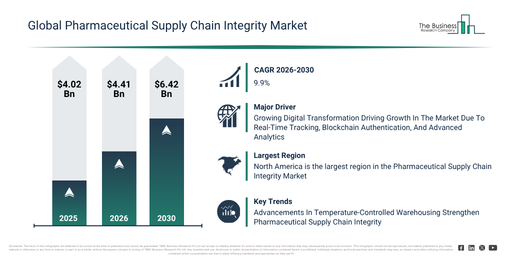
  • Pharmaceutical Supply Chain Integrity Market Growth Supported By Digital Transformation, Real-Time Tracking, And Blockchain Authentication Technologies

    Pharmaceutical Supply Chain Integrity Market Growth Supported By Digital Transformation, Real-Time Tracking, And Blockchain Authentication Technologies

    The Business Research Company’s 2026 market reports feature enhanced tools like market attractiveness analysis, TAM assessment, and company scoring matrices, along with interactive dashboards, deeper supply chain insights, and startup coverage strengthening the depth, usability, and strategic value of insights.

    How Much Growth In Market Value Is Expected For The Pharmaceutical Supply Chain Integrity Market Between 2026 And 2030?

    The pharmaceutical supply chain integrity market has shown strong growth in recent years. It is forecast to increase from $4.02 billion in 2025 to $4.41 billion in 2026, with a compound annual growth rate (CAGR) of 9.6%. This historical growth can be attributed to factors such as a rise in counterfeit drug incidents, mandates for regulatory compliance, the expansion of global pharmaceutical trade, the adoption of barcode and serialization technology, and the demand for greater supply chain transparency.

    The pharmaceutical supply chain integrity market is expected to demonstrate significant expansion in the next few years. It is projected to reach $6.42 billion by 2030, growing at a compound annual growth rate (CAGR) of 9.9%. This anticipated growth is driven by the adoption of AI-powered monitoring systems, the implementation of cloud-based track and trace technologies, the continued expansion of healthcare and pharmaceutical logistics, the integration of IoT-enabled devices, and the application of predictive analytics for ensuring supply chain integrity. Prominent trends throughout the forecast period include the development of real-time track and trace solutions, enhancements in cold chain monitoring, the establishment of automated serialization processes, integration with ERP and SCM systems, and the utilization of predictive risk management for the supply chain.

    Access Your Free Sample Report For In-Depth Market Analysis:

    https://www.thebusinessresearchcompany.com/sample_request?id=41928312&type=smp&name=Pharmaceutical%20Supply%20Chain%20Integrity%20Market%20Report%202026

    Which Strong Drivers Are Impacting The Pharmaceutical Supply Chain Integrity Market Growth?

    The expanding digital transformation is anticipated to boost the pharmaceutical supply chain integrity market’s growth. Digital transformation involves embedding digital technologies across business functions to enhance operations, improve customer experiences, and foster innovation. Its adoption is on the rise as businesses leverage these technologies for better efficiency, rapid response to market shifts, and sustained competitiveness. Specifically, for pharmaceutical supply chain integrity, it facilitates real-time tracking, blockchain authentication, and sophisticated analytics, which collectively help in preventing counterfeit drugs, ensuring compliance with regulations, and preserving product quality across the entire supply chain. An example highlighting this trend is a November 2023 report from the UK’s Central Digital and Data Office, which indicated a 9% increase in the Government Digital and Data profession over six months, reaching a total of 28,337 professionals, driven by the government’s emphasis on digital transformation. Consequently, the expansion of digital transformation is a key driver for the pharmaceutical supply chain integrity market.

    What Segment Categories Shape The Pharmaceutical Supply Chain Integrity Market Segment Landscape?

    The pharmaceutical supply chain integrity market covered in this report is segmented –

    1) By Component: Software, Hardware, Services

    2) By Technology: Serialization, Track And Trace Systems, Radio Frequency Identification Systems

    3) By Deployment Mode: Cloud-Based Solutions, On-Premises Solutions

    4) By Application: Manufacturers, Distributors, Wholesalers, Pharmacies, Hospitals, Other Applications

    5) By End-User: Pharmaceutical Companies, Healthcare Providers, Logistics Providers, Other End Users

    Subsegments:

    1) By Software: Track and Trace Software, Cold Chain Monitoring Software, Serialization Software

    2) By Hardware: Barcode Scanners, Serialization Printers, Trackers And IoT Devices

    3) By Services: Consulting Services, Maintenance And Support Services, Integration And Implementation Services

    Which Trends Are Contributing To Changes In The Pharmaceutical Supply Chain Integrity Market?

    Leading companies within the pharmaceutical supply chain integrity market are concentrating on developing sophisticated solutions, such as temperature-controlled warehousing, to safeguard drug safety, maintain product effectiveness, and ensure compliance with regulatory standards across the entire supply chain. Temperature-controlled warehousing refers to specialized storage facilities designed to uphold specific temperature ranges, thereby preserving the quality, safety, and efficacy of temperature-sensitive pharmaceutical products throughout their journey. For example, in August 2025, Celcius Logistics Solutions Private Limited, an India-based cold chain logistics company, unveiled Celcius+, a dedicated temperature-controlled pharma cold chain division, backed by an initial $0.006 billion (?50 crore) investment. This initiative underscores GDP compliance, real-time surveillance using telematics and CCTV, AI-driven optimized routes, and a fleet of 100 reefer vehicles, all intended to minimize spoilage and ensure supply chain integrity from the point of manufacture to the end-user.

    Who Are The Companies Operating Across The Pharmaceutical Supply Chain Integrity Market Value Chain?

    Major companies operating in the pharmaceutical supply chain integrity market are Avery Dennison Corporation, Zebra Technologies Corporation, Testo SE & Co. KGaA, Marchesini Group S.p.A., Uhlmann Pac-Systeme GmbH & Co. KG, WIPOTEC GmbH, Schreiner Group GmbH & Co. KG, Antares Vision S.p.A., Controlant hf., TraceLink Inc., Optel Group Inc., Tive Inc., Roambee Corporation, Digimarc Corporation, SEA Vision S.r.l., ParkourSC Inc., Aeologic Technologies Private Limited, Kezzler AS, ACVISS Technologies Private Limited, Ciphercode Technologies Private Limited, AlpVision SA, Covectra Inc., Veratrak Ltd., PharmaSecure Inc., and Tracekey Solutions GmbH.

    Get The Full Pharmaceutical Supply Chain Integrity Market Report:

    https://www.thebusinessresearchcompany.com/report/pharmaceutical-supply-chain-integrity-market-report

    Which Region Leads The Pharmaceutical Supply Chain Integrity Market In Overall Market Size?

    North America was the largest region in the pharmaceutical supply chain integrity market in 2025. Asia-Pacific is expected to be the fastest-growing region in the forecast period. The regions covered in the pharmaceutical supply chain integrity market report are Asia-Pacific, South East Asia, Western Europe, Eastern Europe, North America, South America, Middle East, Africa.

    Request A Customized Pharmaceutical Supply Chain Integrity Market Report For Competitive Insights:

    https://www.thebusinessresearchcompany.com/Customise?id=41928312&name=Pharmaceutical%20Supply%20Chain%20Integrity%20Market%20Report%202026&type=smp

    Browse Through More Reports Similar to the Global Pharmaceutical Supply Chain Integrity Market 2026, By The Business Research Company

    adeno-associated virus (avv) vectors in gene therapy market report 2026

    https://www.thebusinessresearchcompany.com/report/adeno-associated-virus-avv-vectors-in-gene-therapy-global-market-report

    gastric cancer therapy market report 2026

    https://www.thebusinessresearchcompany.com/report/gastric-cancer-therapy-global-market-report

    over the counter (otc) drugs market report 2026

    https://www.thebusinessresearchcompany.com/report/over-the-counter-otc-drugs-global-market-report

    Get in touch with us:

    The Business Research Company: https://www.thebusinessresearchcompany.com/

    Americas +1 310-496-7795

    Asia +44 7882 955267 & +91 8897263534

    Europe +44 7882 955267

    Email us at marketing@tbrc.info

    Follow us on:

    LinkedIn: https://in.linkedin.com/company/the-business-research-company

    YouTube: https://www.youtube.com/channel/UC24_fI0rV8cR5DxlCpgmyFQ

    Global Market Model: https://www.thebusinessresearchcompany.com/global-market-model