Month: May 2026

  • Synthetic Gene Circuits Market Forecast 2026–2030 Covering Innovation Trends And Competitive Insights

    Synthetic Gene Circuits Market Forecast 2026–2030 Covering Innovation Trends And Competitive Insights

    The Business Research Company’s 2026 market reports feature enhanced tools like market attractiveness analysis, TAM assessment, and company scoring matrices, along with interactive dashboards, deeper supply chain insights, and startup coverage strengthening the depth, usability, and strategic value of insights.

    From Its 2026 Market Size, What Value Is The Synthetic Gene Circuits Market Projected To Reach By 2030?

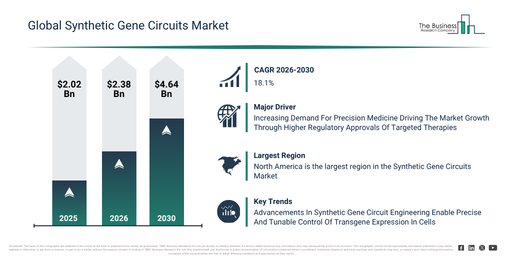
    The synthetic gene circuits market has experienced rapid expansion in recent years. It is anticipated to grow from $2.02 billion in 2025 to $2.38 billion in 2026, exhibiting a compound annual growth rate (CAGR) of 17.9%. Historically, this expansion can be ascribed to advancements in molecular biology techniques, increasing investment in biotechnology research, the adoption of synthetic gene circuits in academic studies, a rising demand for targeted therapeutics, and the development of industrial biotechnology.

    The synthetic gene circuits market is anticipated to experience substantial growth over the next few years, reaching a valuation of $4.64 billion by 2030, propelled by a compound annual growth rate (CAGR) of 18.1%. This projected expansion during the forecast period stems from the integration of AI in gene circuit design, the broadening application of synthetic biology in healthcare, an increased demand for programmable cellular therapies, advancements in environmental biosensing, and the adoption of automated high-throughput screening. Significant trends shaping the forecast period involve programmable gene expression circuits, synthetic biological oscillators, innovations in genetic toggle switches, cell-based biosensors, and metabolic pathway engineering.

    Access Your Free Sample Report For In-Depth Market Analysis:

    https://www.thebusinessresearchcompany.com/sample_request?id=98356159&type=smp&name=Synthetic%20Gene%20Circuits%20Market%20Report%202026

    What Primary Drivers Are Shaping The Synthetic Gene Circuits Market?

    The future expansion of the synthetic gene circuits market is anticipated to be fueled by the escalating requirement for precision medicine. This medical methodology involves tailoring disease prevention and treatment strategies to an individual’s unique genetic makeup, environment, and lifestyle, thereby enhancing therapeutic outcomes and safety. The surge in demand for precision medicine stems from the increasing prevalence of cancer and rare genetic disorders, which necessitate targeted and mutation-specific therapies. Synthetic gene circuits facilitate precision medicine by offering programmable control over gene expression and cellular reactions, empowering researchers and manufacturers to create highly specific and customized therapeutic solutions for patients. For instance, the Personalized Medicine Coalition, a US-based hospital and health care organization, stated in February 2024 that the Food and Drug Administration (FDA) sanctioned 16 novel personalized treatments for rare disease patients in 2023, a significant rise from six in 2022. Consequently, the increasing demand for precision medicine is propelling the growth of the synthetic gene circuits market.

    Which Segments Define The Synthetic Gene Circuits Market Segment Structure?

    The synthetic gene circuits market covered in this report is segmented –

    1) By Product Type: Toggle Switches, Oscillators, Logic Gates, Other Product Types

    2) By Application: Healthcare And Therapeutics, Industrial Biotechnology, Research And Development, Agriculture, Other Applications

    3) By End User: Pharmaceutical And Biotechnology Companies, Academic And Research Institutes, Other End Users

    Subsegments:

    1) By Toggle Switches: Single Input Toggle Switches, Double Input Toggle Switches, Inducible Toggle Switches, Bistable Genetic Toggle Switches, Reversible Genetic Toggle Switches

    2) By Oscillators: Repressilator Circuits, Feedback Loop Oscillators, Inducible Genetic Oscillators, Synthetic Biological Clocks, Multi Component Oscillators

    3) By Logic Gates: And Logic Gates, Or Logic Gates, Not Logic Gates, Nand Logic Gates, Nor Logic Gates, Exclusive Or Logic Gates

    4) By Other Product Types: Signal Amplifier Circuits, Memory Storage Circuits, Pattern Formation Circuits, Sensor Responsive Circuits, Programmable Gene Expression Circuits

    What Trends Are Influencing The Synthetic Gene Circuits Market?

    Leading companies in the synthetic gene circuits market are concentrating on developing advanced modular synthetic gene circuits to facilitate precise, programmable, and scalable regulation of cellular functions for both therapeutic and research applications. A modular synthetic gene circuit constitutes a customizable genetic framework, assembled from interchangeable DNA parts that integrate sensing, processing, and response elements to accurately regulate gene expression and control cellular behavior. For example, in October 2025, engineers at the Massachusetts Institute of Technology, a US-based private university, created DIAL. This modular synthetic gene circuit offers precise control over transgene expression in cells by incorporating an editable spacer between transcription factor binding sites and the promoter. These spacers are excised using recombinases such as Cre to fine-tune expression levels from off/low to high, thereby enabling heritable, tunable setpoints across a broad dynamic range for uses in gene therapy and cell reprogramming.

    Who Are The Established Players Within The Synthetic Gene Circuits Market?

    Major companies operating in the synthetic gene circuits market are Thermo Fisher Scientific Inc, Broad Institute of MIT Harvard, GenScript Biotech Corporation, Twist Bioscience Corporation, Ginkgo Bioworks Holdings Inc, Bioneer Corporation, Weizmann Institute of Science, Wyss Institute at Harvard University, Telesis Bio Inc, Asimov Inc, Addgene Inc, Precigen Inc, Massachusetts Institute of Technology, Blue Heron Biotech LLC, Synlogic Inc, Max Planck Gesellschaft, Senti Biosciences Inc, Boston University Khalil Lab, ETH Zurich Fussenegger Lab, Cello Biosciences Inc, Caltech Synthetic Biology Group.

    Get The Full Synthetic Gene Circuits Market Report:

    https://www.thebusinessresearchcompany.com/report/synthetic-gene-circuits-market-report

    Which Region Dominates The Synthetic Gene Circuits Market By Market Share?

    North America was the largest region in the synthetic gene circuits market in 2025. Asia-Pacific is expected to be the fastest-growing region in the forecast period. The regions covered in the synthetic gene circuits market report are Asia-Pacific, South East Asia, Western Europe, Eastern Europe, North America, South America, Middle East, Africa.

    Request A Customized Synthetic Gene Circuits Market Report For Competitive Insights:

    https://www.thebusinessresearchcompany.com/Customise?id=98356159&name=Synthetic%20Gene%20Circuits%20Market%20Report%202026&type=smp

    Browse Through More Reports Similar to the Global Synthetic Gene Circuits Market 2026, By The Business Research Company

    adeno-associated virus (avv) vectors in gene therapy market report 2026

    https://www.thebusinessresearchcompany.com/report/adeno-associated-virus-avv-vectors-in-gene-therapy-global-market-report

    gastric cancer therapy market report 2026

    https://www.thebusinessresearchcompany.com/report/gastric-cancer-therapy-global-market-report

    over the counter (otc) drugs market report 2026

    https://www.thebusinessresearchcompany.com/report/over-the-counter-otc-drugs-global-market-report

    Get in touch with us:

    The Business Research Company: https://www.thebusinessresearchcompany.com/

    Americas +1 310-496-7795

    Asia +44 7882 955267 & +91 8897263534

    Europe +44 7882 955267

    Email us at marketing@tbrc.info

    Follow us on:

    LinkedIn: https://in.linkedin.com/company/the-business-research-company

    YouTube: https://www.youtube.com/channel/UC24_fI0rV8cR5DxlCpgmyFQ

    Global Market Model: https://www.thebusinessresearchcompany.com/global-market-model
  • Synthetic Antibody Library Market Outlook Through 2030 Featuring Market Trends And Industry Developments

    Synthetic Antibody Library Market Outlook Through 2030 Featuring Market Trends And Industry Developments

    The Business Research Company’s 2026 market reports feature enhanced tools like market attractiveness analysis, TAM assessment, and company scoring matrices, along with interactive dashboards, deeper supply chain insights, and startup coverage strengthening the depth, usability, and strategic value of insights.

    How Much Growth In Market Value Is Expected For The Synthetic Antibody Library Market Between 2026 And 2030?

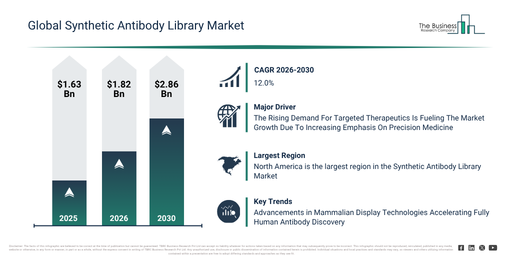
    The synthetic antibody library market size has demonstrated rapid expansion in recent years. This market is projected to expand from $1.63 billion in 2025 to $1.82 billion in 2026, exhibiting a compound annual growth rate (CAGR) of 11.7%. Historically, this expansion has been driven by several factors, including an escalating demand for therapeutic antibodies, the widespread adoption of phage and yeast display technologies, the advancement of biopharmaceutical research and development, a surge in academic research endeavors, and the broadening scope of diagnostic applications.

    The synthetic antibody library market is projected to experience substantial expansion in the coming years. It is set to reach $2.86 billion by 2030, exhibiting a compound annual growth rate (CAGR) of 12.0%. This anticipated growth during the forecast period stems from factors such as the integration of AI in antibody design, the rising demand for mRNA display libraries, the emergence of personalized medicine initiatives, increased investment in high-diversity libraries, and the expansion of contract research organizations. Key developments expected in this period encompass high-throughput antibody screening, automated library construction, the integration of next-generation sequencing, computational antibody design, and the availability of customizable antibody libraries.

    Access Your Free Sample Report For In-Depth Market Analysis:

    https://www.thebusinessresearchcompany.com/sample_request?id=12326902&type=smp&name=Synthetic%20Antibody%20Library%20Market%20Report%202026

    Which Major Drivers Are Influencing The Expansion Of The Synthetic Antibody Library Market?

    The future expansion of the synthetic antibody library market is anticipated to be propelled by the growing requirement for targeted therapeutics. Targeted therapeutics are defined as precision-based treatments that specifically act on disease-associated molecular targets to improve effectiveness while minimizing damage to healthy tissues. The adoption of these therapeutics is increasing due to a heightened focus on precision medicine and biologic drug development, particularly in oncology and immune disorders, alongside rising clinical trial activity for targeted treatment approaches. The synthetic antibody library supports targeted therapeutics by providing a robust platform for the rapid discovery and development of highly specific antibodies that precisely bind to defined disease-related molecular targets, facilitating the creation of more accurate, effective, and safer treatment strategies. For instance, according to the Global Oncology Trends 2024 report by IQVIA, a US-based healthcare analytics company, over 2,000 new oncology clinical trials were initiated in 2023, concentrating on innovative treatment modalities with strong potential for cancer care, including cell and gene therapies, antibody-drug conjugates, multispecific antibodies, and radioligand therapies. Therefore, the increasing demand for targeted therapeutics is driving the growth of the synthetic antibody library market.

    How Is The Synthetic Antibody Library Market Segmented Across Different Segment Categories?

    The synthetic antibody library market covered in this report is segmented –

    1) By Library Type: Phage Display Libraries, Yeast Display Libraries, Ribosome Display Libraries, Messenger Ribonucleic Acid (mRNA) Display Libraries, Other Library Types

    2) By Application: Therapeutic Development, Diagnostic Development, Research And Development, Other Applications

    3) By End-User: Pharmaceutical And Biotechnology Companies, Academic And Research Institutes, Contract Research Organizations, Other End-Users

    Subsegments:

    1) By Phage Display Libraries: Filamentous Phage Display Libraries, T7 Phage Display Libraries, Lambda Phage Display Libraries, Hybrid Phage Display Libraries

    2) By Yeast Display Libraries: Saccharomyces Cerevisiae Yeast Display Libraries, Pichia Pastoris Yeast Display Libraries, Surface-Displayed Yeast Libraries, Secreted Yeast Display Libraries

    3) By Ribosome Display Libraries: In Vitro Ribosome Display Libraries, Cell-Free Ribosome Display Libraries, High-Diversity Ribosome Display Libraries, Functional Ribosome Display Libraries

    4) By Messenger Ribonucleic Acid (mRNA) Display Libraries: In Vitro Messenger Ribonucleic Acid (mRNA) Display Libraries, Peptide-Messenger Ribonucleic Acid (mRNA) Fusion Libraries, Protein-Messenger Ribonucleic Acid (mRNA) Fusion Libraries, High-Throughput Messenger Ribonucleic Acid (mRNA) Display Libraries

    5) By Other Library Types: Phage Display Library, Yeast Display Library, Ribosome Display Library, mRNA Display Library, Bacterial Display Library, Mammalian Cell Display Library, Synthetic Peptide Library, Combinatorial Antibody Library, Single Domain Antibody Library, Nanobody Library

    What Market Trends Are Affecting The Synthetic Antibody Library Market?

    Leading companies within the synthetic antibody library market are dedicated to developing cutting-edge solutions, such as mammalian-display-based synthetic antibody discovery platforms, aimed at accelerating the identification of high-affinity, fully human antibodies and reducing the overall development timelines for biologics. These mammalian-display-based platforms are systems designed to present synthetic antibody libraries directly on mammalian cells, facilitating the rapid selection of fully human, high-affinity antibodies that possess enhanced functional relevance and require less development time compared to conventional display techniques. As an illustration, in December 2025, Fusion Antibodies plc, an Ireland-based contract research organization, launched its OptiMAL Human Antibody Discovery platform. This innovative mammalian-display-based synthetic antibody discovery platform integrates the company’s proprietary naive synthetic antibody library with mammalian display selection, thereby expediting the identification of fully human, high-affinity antibodies. The platform leverages a highly diverse, fully human synthetic antibody library directly expressed on mammalian cells, which enables the selection of candidates exhibiting native folding and appropriate post-translational modifications. This sophisticated combination of advanced cell-surface display and high-throughput screening technologies significantly improves binding specificity and functional relevance when contrasted with traditional phage display approaches. Furthermore, the platform eliminates the requirement for downstream humanization, leading to shorter development timelines and reduced costs.

    Which Organizations Play A Role In The Synthetic Antibody Library Market Landscape?

    Major companies operating in the synthetic antibody library market are Charles River Laboratories International Inc., Bio-Rad Laboratories Inc., Aragen Life Sciences Pvt. Ltd., Twist Bioscience Corporation, GenScript Biotech Corporation, Abzena plc, Harbour BioMed, Alector Inc., IRBM S.p.A., AbCellera Biologics Inc., Adimab LLC, Creative Biolabs Inc., ImmunoPrecise Antibodies Ltd., Eurofins Discovery Services Luxembourg Holding S.A., Isogenica Ltd., Ablexis LLC, AbDesign Labs LLC, Abwiz Bio Inc., Dynegene Inc., Hybrigenics Services SAS, ProSci Incorporated.

    Get The Full Synthetic Antibody Library Market Report:

    https://www.thebusinessresearchcompany.com/report/synthetic-antibody-library-market-report

    Which Region Is The Largest In The Synthetic Antibody Library Market?

    North America was the largest region in the Synthetic antibody library market in 2025. Asia-Pacific is expected to be the fastest-growing region in the forecast period. The regions covered in the synthetic antibody library market report are Asia-Pacific, South East Asia, Western Europe, Eastern Europe, North America, South America, Middle East, Africa.

    Request A Customized Synthetic Antibody Library Market Report For Competitive Insights:

    https://www.thebusinessresearchcompany.com/Customise?id=12326902&name=Synthetic%20Antibody%20Library%20Market%20Report%202026&type=smp

    Browse Through More Reports Similar to the Global Synthetic Antibody Library Market 2026, By The Business Research Company

    adeno-associated virus (avv) vectors in gene therapy market report 2026

    https://www.thebusinessresearchcompany.com/report/adeno-associated-virus-avv-vectors-in-gene-therapy-global-market-report

    gastric cancer therapy market report 2026

    https://www.thebusinessresearchcompany.com/report/gastric-cancer-therapy-global-market-report

    over the counter (otc) drugs market report 2026

    https://www.thebusinessresearchcompany.com/report/over-the-counter-otc-drugs-global-market-report

    Get in touch with us:

    The Business Research Company: https://www.thebusinessresearchcompany.com/

    Americas +1 310-496-7795

    Asia +44 7882 955267 & +91 8897263534

    Europe +44 7882 955267

    Email us at marketing@tbrc.info

    Follow us on:

    LinkedIn: https://in.linkedin.com/company/the-business-research-company

    YouTube: https://www.youtube.com/channel/UC24_fI0rV8cR5DxlCpgmyFQ

    Global Market Model: https://www.thebusinessresearchcompany.com/global-market-model
  • Sternal Closure Devices Market Forecast 2026–2030 Highlighting Industry Drivers And Growth Trends

    Sternal Closure Devices Market Forecast 2026–2030 Highlighting Industry Drivers And Growth Trends

    The Business Research Company’s 2026 market reports feature enhanced tools like market attractiveness analysis, TAM assessment, and company scoring matrices, along with interactive dashboards, deeper supply chain insights, and startup coverage strengthening the depth, usability, and strategic value of insights.

    What Is The Estimated Market Size Of The Sternal Closure Devices Market In 2026, And How Will Its Value Evolve By 2030?

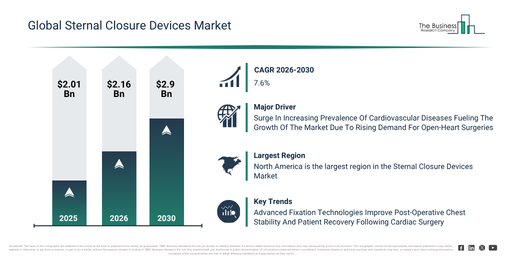
    The sternal closure devices market has observed strong expansion in recent years. Its value is forecast to increase from $2.01 billion in 2025 to $2.16 billion in 2026, demonstrating a compound annual growth rate (CAGR) of 7.4%. The growth witnessed historically is due to an escalating number of open-heart surgeries, the prevalent adoption of traditional wire cerclage techniques, greater awareness of postoperative complications, the development of cardiac care infrastructure, and a consistent demand for reliable sternal stabilization.

    The sternal closure devices market size is projected for substantial expansion in the coming years. This market is set to reach $2.9 billion by 2030, exhibiting a compound annual growth rate (CAGR) of 7.6%. This anticipated expansion during the forecast period is propelled by several factors, including pioneering developments in bioabsorbable and hybrid closure systems, the widespread adoption of patient-specific titanium and peek devices, their seamless integration with digital surgical planning tools, an increasing demand for improved postoperative recovery monitoring, and the ongoing expansion of ambulatory surgical centers. Key developments expected within the forecast period encompass minimally invasive sternal closure techniques, the emergence of patient-specific sternal fixation devices, the utilization of advanced biocompatible materials, integration with surgical navigation systems, and sophisticated postoperative monitoring and analytics.

    Access Your Free Sample Report For In-Depth Market Analysis:

    https://www.thebusinessresearchcompany.com/sample_request?id=98571702&type=smp&name=Sternal%20Closure%20Devices%20Market%20Report%202026

    What Key Drivers Are Fueling The Growth Of The Sternal Closure Devices Market?

    The expanding occurrence of cardiovascular diseases is projected to propel the growth of the sternal closure devices market in the coming years. Cardiovascular diseases encompass various disorders affecting the heart and blood vessels, including conditions like coronary artery disease, heart failure, and stroke, all of which impede normal circulatory function. The incidence of these diseases is rising due to increased exposure to unhealthy lifestyle patterns such as physical inactivity, which heightens cardiac risk and leads to more patients requiring surgical intervention. Sternal closure devices are essential for securing the sternum after open-heart procedures, facilitating proper bone healing, maintaining chest stability, and minimizing risks such as infection, instability, and delayed recovery, thereby enhancing overall postoperative outcomes for cardiovascular patients. For instance, in October 2024, data from the Centers for Disease Control and Prevention, a US-based government agency monitoring public health, indicated that cardiovascular disease deaths increased significantly from 371,506 cases in 2022 to 919,032 deaths in 2023. Consequently, this increasing prevalence of cardiovascular diseases is a key factor driving the sternal closure devices market. The rising number of cardiac surgery procedures is anticipated to propel the growth of the sternal closure devices market going forward. Cardiac surgery procedures refer to operative interventions performed on the heart and its surrounding structures to treat various conditions like coronary artery disease, valvular disorders, and congenital heart defects. The increasing volume of surgical procedures is primarily due to the growing prevalence of chronic diseases associated with aging populations and lifestyle-related health conditions. This surge in cardiac surgical procedures directly escalates the demand for sternal closure devices, as every open-heart surgery involving a median sternotomy requires secure and reliable sternal closure to ensure proper healing and prevent postoperative complications. For example, in March 2025, according to The Society of Thoracic Surgeons (STS) Adult Cardiac Surgery Database, a US-based clinical registry covering over 97% of cardiac surgery performed in the United States, overall cardiac surgical volumes increased by 4.2% in 2023 compared with 2022, reflecting a continued post-pandemic rebound in surgical activity across the country. Therefore, the rising cardiac surgery procedures are driving the growth of the sternal closure devices market.

    What Are The Main Segments Within The Sternal Closure Devices Market Segment Structure?

    The sternal closure devices market covered in this report is segmented –

    1) By Product Type: Wire Cerclage, Plate And Screw Systems, Cable Systems, Clips, Other Product Types

    2) By Material: Stainless Steel, Titanium, Polyether Ether Ketone (PEEK), Other Materials

    3) By Procedure: Median Sternotomy, Hemisternotomy, Bilateral Thoracosternotomy

    4) By End-User: Hospitals, Cardiac Centers, Ambulatory Surgical Centers, Other End Users

    Subsegments:

    1) By Wire Cerclage: Stainless Steel Wires, Double Loop Wires, Figure Eight Wires, Twisted Wires, Coated Surgical Wires

    2) By Plate And Screw Systems: Titanium Plates, Locking Plate Systems, Rigid Fixation Plates, Low Profile Plates, Self Tapping Screw Systems

    3) By Cable Systems: Titanium Cables, Stainless Steel Cables, Adjustable Tension Cable Systems, Crimped Cable Systems, Multi Strand Cable Systems

    4) By Clips: Titanium Sternal Clips, Stainless Steel Clips, Compression Clips, Locking Clips, Preloaded Clip Systems

    5) By Other Product Types: Bioabsorbable Fixation Systems, Hybrid Closure Systems, Polymer Based Devices, Composite Fixation Devices, Reinforced Closure Bands

    Which Trends Are Impacting The Progress Of The Sternal Closure Devices Market?

    Major companies in the sternal closure devices market are prioritizing the development of advanced rigid fixation solutions to improve chest stability, lessen postoperative complications, and accelerate patient recovery following cardiac procedures. Rigid sternal fixation systems are defined as implantable devices, utilizing plates and screws, that stabilize the sternum after median sternotomy, promoting bone healing and reducing the likelihood of sternal dehiscence. For instance, in August 2024, DePuy Synthes, a US-based medical device company, introduced the MatrixSTERNUM Fixation System to deliver enhanced sternal stability after open-heart surgery. This system features titanium plates and locking screw technology crafted to provide strong, reliable fixation, support bone healing, and limit movement at the surgical site, thereby enhancing clinical outcomes and patient safety after cardiac surgery.

    Who Are The Companies Participating In The Sternal Closure Devices Market?

    Major companies operating in the sternal closure devices market are Stryker Corporation, B. Braun, Zimmer Biomet Holdings Inc., Arthrex Inc., Teleflex Incorporated, KLS Martin SE & Co. KG, Acumed LLC, Peters Surgical, DePuy Synthes, J.J.A.C.E. Ltd, Medicon eG, Kinamed Incorporated, ABYRX Inc., Jeil Medical Corporation, Able Medical Devices, Neos Surgery S.L., Praesidia S.R.L., MedXpert GmbH, Investigaciones y Desarrollos Argentinos S.R.L., Changzhou Waston Medical Appliance Co. Ltd., Dispomedica GmbH.

    Get The Full Sternal Closure Devices Market Report:

    https://www.thebusinessresearchcompany.com/report/sternal-closure-devices-market-report

    Which Region Leads The Sternal Closure Devices Market In Terms Of Market Share?

    North America was the largest region in the sternal closure devices market in 2025. Asia-Pacific is expected to be the fastest-growing region in the forecast period. The regions covered in the sternal closure devices market report are Asia-Pacific, South East Asia, Western Europe, Eastern Europe, North America, South America, Middle East, Africa.

    Request A Customized Sternal Closure Devices Market Report For Competitive Insights:

    https://www.thebusinessresearchcompany.com/Customise?id=98571702&name=Sternal%20Closure%20Devices%20Market%20Report%202026&type=smp

    Browse Through More Reports Similar to the Global Sternal Closure Devices Market 2026, By The Business Research Company

    connected health personal medical devices market report 2026

    https://www.thebusinessresearchcompany.com/report/connected-health-personal-medical-devices-global-market-report

    contract sterilization market report 2026

    https://www.thebusinessresearchcompany.com/report/contract-sterilization-global-market-report

    orthotic insole 3-d printer market report 2026

    https://www.thebusinessresearchcompany.com/report/orthotic-insole-3-d-printer-global-market-report

    Get in touch with us:

    The Business Research Company: https://www.thebusinessresearchcompany.com/

    Americas +1 310-496-7795

    Asia +44 7882 955267 & +91 8897263534

    Europe +44 7882 955267

    Email us at marketing@tbrc.info

    Follow us on:

    LinkedIn: https://in.linkedin.com/company/the-business-research-company

    YouTube: https://www.youtube.com/channel/UC24_fI0rV8cR5DxlCpgmyFQ

    Global Market Model: https://www.thebusinessresearchcompany.com/global-market-model
  • Stair Climbing Wheelchairs Market Outlook And Future Growth Forecast Through 2030

    Stair Climbing Wheelchairs Market Outlook And Future Growth Forecast Through 2030

    The Business Research Company’s 2026 market reports feature enhanced tools like market attractiveness analysis, TAM assessment, and company scoring matrices, along with interactive dashboards, deeper supply chain insights, and startup coverage strengthening the depth, usability, and strategic value of insights.

    How Is The Market Size Of The Stair Climbing Wheelchairs Market Expected To Scale Between 2026 And 2030?

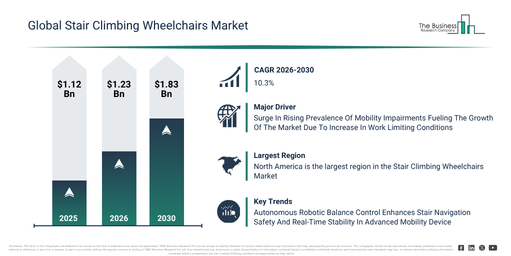
    In recent years, the market for stair climbing wheelchairs has experienced significant expansion. Projected figures indicate that it is set to increase from $1.12 billion in 2025 to $1.23 billion in 2026, demonstrating a compound annual growth rate (CAGR) of 10.1%. Historically, this growth can be ascribed to factors such as an increasing elderly population, the rising incidence of mobility impairments, the adoption of traditional wheelchairs, a heightened awareness of accessibility solutions, and the expansion of homecare services.

    The stair climbing wheelchairs market size is anticipated to experience significant expansion in the next few years. It is projected to increase to $1.83 billion by 2030, demonstrating a compound annual growth rate (CAGR) of 10.3%. This growth during the forecast period can be ascribed to factors like the incorporation of AI and intelligent sensors, a rising demand for powered stair climbing wheelchairs, the proliferation of rehabilitation centers, a concentrated effort on battery efficiency, and the advancement of hybrid wheel and track mobility systems. Noteworthy trends expected in the forecast period encompass smart sensor integration, remote controlled mobility, lightweight and foldable designs, enhanced battery efficiency leading to longer runtime, and AI-assisted navigation.

    Access Your Free Sample Report For In-Depth Market Analysis:

    https://www.thebusinessresearchcompany.com/sample_request?id=35713244&type=smp&name=Stair%20Climbing%20Wheelchairs%20Market%20Report%202026

    Which Major Drivers Are Influencing The Expansion Of The Stair Climbing Wheelchairs Market?

    The increasing occurrence of mobility impairments is anticipated to fuel the expansion of the stair-climbing wheelchairs market moving forward. Mobility impairments refer to significant challenges with walking or ascending stairs, which restrict daily activities. The prevalence of these impairments is rising as the elderly population experiences greater physical constraints with advancing age. Stair-climbing wheelchairs assist individuals with limited mobility by enabling them to securely traverse staircases and maintain their autonomy in everyday living. For example, in December 2025, the Bureau of Labor Statistics, a US-based independent federal statistical agency, reported that in July 2024, mobility impairment stood as the most common work-limiting health condition among employees, impacting 1.8 percent of the workforce. Consequently, the growing incidence of mobility impairments is stimulating the expansion of the stair-climbing wheelchairs market.

    How Are Segments Identified Within The Stair Climbing Wheelchairs Market Segment Framework?

    The stair climbing wheelchairs market covered in this report is segmented –

    1) By Product Type: Manual Stair Climbing Wheelchairs, Powered Stair Climbing Wheelchairs

    2) By Technology: Track-based, Wheel-based

    3) By Distribution Channel: Online, Offline

    4) By Application: Residential, Commercial, Healthcare Facilities, Other Applications

    5) By End-User: Hospitals, Homecare, Rehabilitation Centers, Other End-Users

    Subsegments:

    1) By Manual Stair Climbing Wheelchairs: Folding Frame Manual Stair Climbing Wheelchairs, Rigid Frame Manual Stair Climbing Wheelchairs, Lightweight Manual Stair Climbing Wheelchairs, Heavy Duty Manual Stair Climbing Wheelchairs, Track Based Manual Stair Climbing Wheelchairs, Lever Operated Manual Stair Climbing Wheelchairs

    2) By Powered Stair Climbing Wheelchairs: Battery Operated Stair Climbing Wheelchairs, Electric Motor Driven Stair Climbing Wheelchairs, Track Based Powered Stair Climbing Wheelchairs, Wheel And Track Hybrid Stair Climbing Wheelchairs, Remote Controlled Stair Climbing Wheelchairs, Smart Sensor Enabled Stair Climbing Wheelchairs

    What Trends Are Transforming The Stair Climbing Wheelchairs Market?

    Major companies operating in the stair-climbing wheelchair market are dedicating their efforts to crafting groundbreaking robotic balancing systems, such as autonomous stair-climbing wheelchairs, to elevate user safety and enhance movement across diverse multi-level environments. Autonomous stair-climbing wheelchairs function as intelligent mobility devices that leverage robotic mechanisms and sensors to independently traverse stairs and uneven ground, thereby increasing user safety and independence without the need for manual assistance. For instance, in October 2025, Toyota Motor Corporation, a Japan-based mobility technology company, introduced the Walk Me robotic mobility chair at the Japan Mobility Show 2025. This autonomous wheelchair features innovative foldable, tentacle-inspired legs that facilitate stair climbing, enable users to sit directly on the floor, and seamlessly adapt to challenging uneven terrain. It incorporates integrated LiDAR and radar sensors for continuous real-time environmental mapping, alongside advanced balance control software that constantly optimizes positioning to prevent tipping and maintain user stability.

    Who Are The Companies Competing Within The Stair Climbing Wheelchairs Market?

    Major companies operating in the stair climbing wheelchairs market are Evac+Chair International Limited, SANO Transportgeraete GmbH, MEYRA GmbH, Ostrich Mobility Instruments Private Limited, Guangzhou Topmedi Co Ltd, Caterwil LLC, Scewo AG, Mobius Mobility LLC, Zhangjiagang New Fellow Med Co Ltd, Antano Group S r l, Dragon Industry ZJG Co Ltd, XSTO Co Ltd, Anand International, VSM Enterprises, Neerja Group, Shanghai Brother Medical Manufacturer Co Ltd, SEEDEE WHEELCHAIRS LLP, Zhangjiagang Herui Medical Equipment Co Ltd, Ningbo Baichen Medical Devices Co Ltd, TopChair SAS.

    Get The Full Stair Climbing Wheelchairs Market Report:

    https://www.thebusinessresearchcompany.com/report/stair-climbing-wheelchairs-market-report

    Which Region Leads The Stair Climbing Wheelchairs Market In Overall Market Size?

    North America was the largest region in the stair climbing wheelchairs market in 2025. Asia-Pacific is expected to be the fastest-growing region in the forecast period. The regions covered in the stair climbing wheelchairs market report are Asia-Pacific, South East Asia, Western Europe, Eastern Europe, North America, South America, Middle East, Africa.

    Request A Customized Stair Climbing Wheelchairs Market Report For Competitive Insights:

    https://www.thebusinessresearchcompany.com/Customise?id=35713244&name=Stair%20Climbing%20Wheelchairs%20Market%20Report%202026&type=smp

    Browse Through More Reports Similar to the Global Stair Climbing Wheelchairs Market 2026, By The Business Research Company

    connected health personal medical devices market report 2026

    https://www.thebusinessresearchcompany.com/report/connected-health-personal-medical-devices-global-market-report

    contract sterilization market report 2026

    https://www.thebusinessresearchcompany.com/report/contract-sterilization-global-market-report

    orthotic insole 3-d printer market report 2026

    https://www.thebusinessresearchcompany.com/report/orthotic-insole-3-d-printer-global-market-report

    Get in touch with us:

    The Business Research Company: https://www.thebusinessresearchcompany.com/

    Americas +1 310-496-7795

    Asia +44 7882 955267 & +91 8897263534

    Europe +44 7882 955267

    Email us at marketing@tbrc.info

    Follow us on:

    LinkedIn: https://in.linkedin.com/company/the-business-research-company

    YouTube: https://www.youtube.com/channel/UC24_fI0rV8cR5DxlCpgmyFQ

    Global Market Model: https://www.thebusinessresearchcompany.com/global-market-model
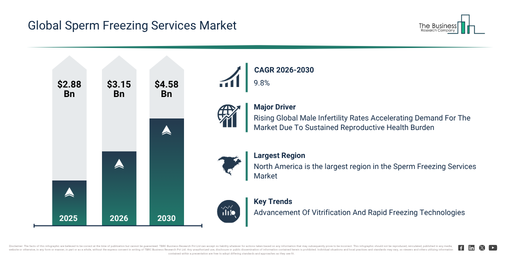
  • Sperm Freezing Services Market Analysis Covering Growth Trends, Industry Drivers, And Emerging Opportunities

    Sperm Freezing Services Market Analysis Covering Growth Trends, Industry Drivers, And Emerging Opportunities

    The Business Research Company’s 2026 market reports feature enhanced tools like market attractiveness analysis, TAM assessment, and company scoring matrices, along with interactive dashboards, deeper supply chain insights, and startup coverage strengthening the depth, usability, and strategic value of insights.

    What Level Of Market Value Growth Is Predicted For The Sperm Freezing Services Market From 2026 To 2030?

    The sperm freezing services market size has experienced strong growth in recent years. It is projected to increase from $2.88 billion in 2025 to $3.15 billion in 2026, at a compound annual growth rate (CAGR) of 9.5%. This growth observed in the historic period is attributable to increasing awareness of male fertility preservation, a rising number of fertility clinics, the adoption of conventional sperm freezing methods, an expansion in cancer treatment procedures, and the growing application of IVF procedures.

    The market for sperm freezing services is anticipated to experience substantial expansion over the upcoming years. This market is projected to reach $4.58 billion by 2030, exhibiting a compound annual growth rate (CAGR) of 9.8%. Several factors are driving this anticipated growth, including the integration of AI and automation into sperm processing, a growing need for home collection kits, advancements in cryogenic storage technology, an increased emphasis on personalized fertility treatments, and the global expansion of fertility preservation initiatives. Key trends anticipated during this period encompass automated systems for sperm collection, real-time tracking of samples, enhanced optimization of cryogenic storage, AI-powered fertility assessments, and the broadening availability of home collection kits.

    Access Your Free Sample Report For In-Depth Market Analysis:

    https://www.thebusinessresearchcompany.com/sample_request?id=27679393&type=smp&name=Sperm%20Freezing%20Services%20Market%20Report%202026

    What Key Drivers Are Fueling The Growth Of The Sperm Freezing Services Market?

    The increasing occurrence of male infertility is anticipated to propel the expansion of the sperm freezing services market in the coming years. Male infertility is defined as a medical condition where a man’s reproductive system prevents successful conception with a fertile partner after 12 months of regular unprotected intercourse, often due to impaired sperm production, function, or delivery. The uptick in male infertility incidence is attributed to increased exposure to various lifestyle and environmental risk factors that adversely affect sperm quality and overall reproductive health. Sperm freezing services offer a crucial solution by preserving viable sperm before further decline occurs, thereby supporting assisted reproductive procedures and long-term family planning. For illustration, data from April 2023 by the World Health Organization, a Switzerland-based global health authority, indicates that approximately 17.5% of adults worldwide experience infertility during their lifetime. Prevalence rates reach 17.8% in high-income countries compared to 16.5% in low- and middle-income countries, underscoring a consistently high reproductive health burden across all regions, inclusive of male factors. Hence, the rising incidence of male infertility is a key driver for the growth of the sperm freezing services market.

    What Are The Key Segment Divisions In The Sperm Freezing Services Market Segment Structure?

    The sperm freezing services market covered in this report is segmented –

    1) By Service Type: Onsite Sperm Freezing, Offsite Sperm Freezing, Home Collection Kits

    2) By Storage Duration: Short Term Storage, Long Term Storage

    3) By Age Group: Below 30 Years, 30 To 40 Years, Above 40 Years

    4) By Application: Fertility Preservation, Cancer Treatment, Donor Insemination, Other Applications

    5) By End User: Fertility Clinics, Hospitals, Cryobanks, Research Institutes, Other End Users

    Subsegments:

    1) By Onsite Sperm Freezing: Clinical Facility Collection, Hospital-Based Collection, Fertility Center Collection, Same Day Freezing Service, Emergency Fertility Preservation, Long Term Storage Service, Short Term Storage Service

    2) By Offsite Sperm Freezing: Partner Clinic Collection, Diagnostic Laboratory Collection, Mobile Collection Service, Satellite Center Collection, Physician Referred Collection, Cryogenic Transport Service, Centralized Storage Service

    3) By Home Collection Kits: Standard Home Collection Kit, Express Delivery Collection Kit, Temperature Controlled Shipping Kit, Discreet Packaging Collection Kit, Prepaid Return Shipping Kit, Extended Storage Option Kit, Instruction Assisted Collection Kit

    What Trends Are Shaping The Future Of The Sperm Freezing Services Market?

    Leading companies in the sperm freezing services market are concentrating on developing accessible and affordable solutions, such as establishing sperm banks, to support individuals facing infertility. A sperm bank is defined as a specialized facility that collects, screens, processes, stores, and distributes human sperm for use in assisted reproductive procedures, including artificial insemination or in vitro fertilization (IVF). For example, in November, Cama Hospital in India received permission to establish an ART bank, which includes facilities for sperm freezing. This service is intended to assist individuals with infertility, as well as cancer patients who wish to preserve their fertility before undergoing treatments that may impact it. The hospital offers these services under the state health insurance scheme, Mahatma Jyotiba Phule Jan Arogya Yojana, making them free for eligible patients, thereby significantly lessening the financial burden compared to private centers where costs can be substantial. This initiative aims to provide advanced reproductive care at nominal or no cost, increasing accessibility for those in need.

    Which Organizations Are Engaged In The Sperm Freezing Services Market?

    Major companies operating in the sperm freezing services market are New England Cryogenic Center Inc., Seattle Sperm Bank, Cryos International Sperm & Egg Bank, Fairfax Cryobank, California Cryobank, Xytex Corporation, Legacy (Digital Sperm Banking), Cryogenic Laboratories Inc., ReproTech Ltd., London Sperm Bank, European Sperm Bank, Androcryos, CryoGam Colorado, Indian Spermtech, Cryobank America LLC, Sperm Bank of California, Denmark Nordic Cryobank, Manhattan Cryobank, NW Cryobank, Shanghai Human Sperm Bank, SpermFreez, Baby Quest Cryobank Pvt. Ltd., Nordic Cryobank Group.

    Get The Full Sperm Freezing Services Market Report:

    https://www.thebusinessresearchcompany.com/report/sperm-freezing-services-market-report

    Which Region Is The Top Contributor To The Sperm Freezing Services Market By Share?

    North America was the largest region in the sperm freezing services market in 2025. Asia-Pacific is expected to be the fastest-growing region in the forecast period. The regions covered in the sperm freezing services market report are Asia-Pacific, South East Asia, Western Europe, Eastern Europe, North America, South America, Middle East, Africa.

    Request A Customized Sperm Freezing Services Market Report For Competitive Insights:

    https://www.thebusinessresearchcompany.com/Customise?id=27679393&name=Sperm%20Freezing%20Services%20Market%20Report%202026&type=smp

    Browse Through More Reports Similar to the Global Sperm Freezing Services Market 2026, By The Business Research Company

    pruritus therapeutic market report 2026

    https://www.thebusinessresearchcompany.com/report/pruritus-therapeutic-global-market-report

    genomic urine testing market report 2026

    https://www.thebusinessresearchcompany.com/report/genomic-urine-testing-global-market-report

    ocular genetic diagnostic market report 2026

    https://www.thebusinessresearchcompany.com/report/ocular-genetic-diagnostic-global-market-report

    Get in touch with us:

    The Business Research Company: https://www.thebusinessresearchcompany.com/

    Americas +1 310-496-7795

    Asia +44 7882 955267 & +91 8897263534

    Europe +44 7882 955267

    Email us at marketing@tbrc.info

    Follow us on:

    LinkedIn: https://in.linkedin.com/company/the-business-research-company

    YouTube: https://www.youtube.com/channel/UC24_fI0rV8cR5DxlCpgmyFQ

    Global Market Model: https://www.thebusinessresearchcompany.com/global-market-model
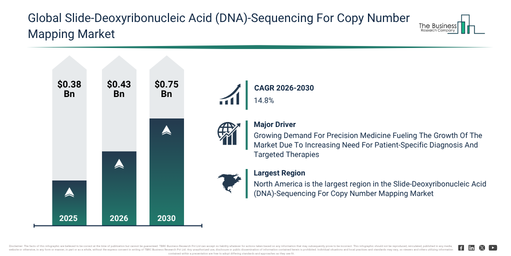
  • Slide-Deoxyribonucleic Acid (DNA)-Sequencing For Copy Number Mapping Market Forecast Highlighting Emerging Developments Across The Industry Through 2030

    Slide-Deoxyribonucleic Acid (DNA)-Sequencing For Copy Number Mapping Market Forecast Highlighting Emerging Developments Across The Industry Through 2030

    The Business Research Company’s 2026 market reports feature enhanced tools like market attractiveness analysis, TAM assessment, and company scoring matrices, along with interactive dashboards, deeper supply chain insights, and startup coverage strengthening the depth, usability, and strategic value of insights.

    How Will The Market Value Of The Slide-Deoxyribonucleic Acid (DNA)-Sequencing For Copy Number Mapping Market Progress Between 2026 And 2030?

    The slide-deoxyribonucleic acid (DNA)-sequencing for copy number mapping market has seen rapid expansion in recent years. This market is projected to increase from $0.38 billion in 2025 to $0.43 billion in 2026, achieving a compound annual growth rate (CAGR) of 14.6%. The historical growth can be ascribed to advancements in fluorescent labeling techniques, the uptake of optical mapping sequencing, escalating cancer genomics research, the rise in genetic disease studies, and the broader development of academic genomics infrastructure.

    The slide-deoxyribonucleic acid (DNA)-sequencing for copy number mapping market is anticipated to experience substantial expansion over the coming years. By 2030, its valuation is projected to reach $0.75 billion, expanding at a compound annual growth rate (CAGR) of 14.8%. This projected increase is largely driven by factors such as the integration with AI-driven variant calling, a rising demand for high-throughput imaging, the increasing adoption of single-molecule sequencing, the proliferation of personalized medicine applications, and the growth of genomic laboratories in developing markets. Throughout this period, key developments and trends will encompass high-resolution DNA mapping, the integration of single-cell sequencing, automated slide processing, advancements in spatial genomics analytics, and the modeling of predictive genomic variation.

    Access Your Free Sample Report For In-Depth Market Analysis:

    https://www.thebusinessresearchcompany.com/sample_request?id=70497191&type=smp&name=Slide-Deoxyribonucleic%20Acid%20%28DNA%29-Sequencing%20For%20Copy%20Number%20Mapping%20Market%20Report%202026

    Which Drivers Are Supporting The Slide-Deoxyribonucleic Acid (DNA)-Sequencing For Copy Number Mapping Market Growth?

    The expanding need for precision medicine is anticipated to drive forward the slide-deoxyribonucleic acid (DNA)-sequencing for copy number mapping market. Precision medicine defines a healthcare approach that leverages individual genetic and molecular characteristics to guide diagnosis and treatment decisions, aiming for improved clinical outcomes. Its adoption is increasing due to the rising global burden of complex and chronic diseases, which demand highly specific and individualized treatment strategies. Slide-deoxyribonucleic acid (DNA) sequencing for copy number mapping supports this growing demand by enabling detailed analysis of genomic variations, which are essential for informing patient-specific diagnosis and treatment. This technology facilitates targeted therapies, enhances risk assessment, and improves clinical decision-making, leading to more personalized and effective healthcare. For instance, in February 2024, according to the Personalized Medicine Coalition, a US-based educational and advocacy organization, in 2023, the FDA approved 16 new personalized treatments for rare disease patients, up from 6 in 2022. Therefore, the escalating demand for precision medicine is propelling the growth of the slide-deoxyribonucleic acid (DNA)-sequencing for copy number mapping market. The increasing prevalence of genetic disorders is projected to propel the growth of the slide-deoxyribonucleic acid (DNA)-sequencing for copy number mapping market. Genetic disorders are conditions stemming from abnormalities in an individual’s DNA, such as mutations, deletions, or chromosomal changes, which disrupt normal biological functions. The rise in these disorders, fueled by enhanced awareness and advanced diagnostic capabilities, leads to more identified cases, enabling earlier detection and management of inherited conditions. Slide-deoxyribonucleic acid (DNA) sequencing for copy number mapping supports the management of genetic disorders through precise detection of genomic variations, including duplications and deletions, that contribute to disease. It aids in early diagnosis, guides personalized treatment strategies, and improves the monitoring of disease progression, resulting in better patient outcomes. For instance, in May 2024, the National Health Service, a UK-based government department, reported that 17,000 people live with sickle cell disease, an inherited genetic blood disorder, with around 250 new cases diagnosed each year. Consequently, the rising occurrence of genetic disorders is driving the expansion of the slide-deoxyribonucleic acid (DNA)-sequencing for copy number mapping market.

    Which Segment Categories Are Included In The Slide-Deoxyribonucleic Acid (DNA)-Sequencing For Copy Number Mapping Market Segment Analysis?

    The slide-deoxyribonucleic acid (DNA)-sequencing for copy number mapping market covered in this report is segmented –

    1) By Workflow: Sample Preparation, Sequencing And Imaging, Data Analysis And Interpretation

    2) By Product Type: Instruments, Consumables, Software, Services

    3) By Sample Type: Fresh Frozen (FF) Tissues, Formalin-Fixed Paraffin-Embedded (FFPE) Tissues, Organoids And 3D Cell Cultures

    4) By Application: Cancer Genomics, Genetic Disease Research, Prenatal Diagnostics, Other Applications

    5) By End User: Hospitals And Diagnostic Centers, Academic And Research Institutes, Biotechnology And Pharmaceutical Companies, Contract Research Organizations, Genomic Laboratories

    Subsegments:

    1) By Sample Preparation: Deoxyribonucleic Acid Extraction, Library Preparation, Fragmentation And Shearing, Quality Control And Quantification

    2) By Sequencing And Imaging: Fluorescent Labeling Sequencing, Optical Mapping Sequencing, Single Molecule Sequencing, High Throughput Imaging

    3) By Data Analysis And Interpretation: Alignment And Mapping, Variant Calling, Copy Number Variation Analysis, Visualization And Reporting

    Who Are The Active Companies Shaping The Slide-Deoxyribonucleic Acid (DNA)-Sequencing For Copy Number Mapping Market?

    Major companies operating in the slide-deoxyribonucleic acid (DNA)-sequencing for copy number mapping market are Thermo Fisher Scientific, Becton Dickinson Company (BD), Agilent Technologies Inc., Illumina Inc., PerkinElmer Inc., Bruker Corporation, Bio-Rad Laboratories Inc., Qiagen N.V., 10x Genomics Inc., BGI Genomics Co. Ltd., Takara Bio Inc., Oxford Nanopore Technologies Ltd., Pacific Biosciences of California Inc., Fluidigm Corporation, Roche Sequencing Solutions, Mission Bio Inc., Twist Bioscience Corp., Genapsys Inc., Phase Genomics Inc., Singular Genomics Systems Inc.

    Get The Full Slide-Deoxyribonucleic Acid (DNA)-Sequencing For Copy Number Mapping Market Report:

    https://www.thebusinessresearchcompany.com/report/slide-deoxyribonucleic-acid-dna-sequencing-for-copy-number-mapping-market-report

    Which Region Represents The Largest Share Of The Slide-Deoxyribonucleic Acid (DNA)-Sequencing For Copy Number Mapping Market?

    North America was the largest region in the slide-deoxyribonucleic acid (DNA)-sequencing for copy number mapping market in 2025. Asia-Pacific is expected to be the fastest-growing region in the forecast period. The regions covered in the slide-deoxyribonucleic acid (DNA)-sequencing for copy number mapping market report are Asia-Pacific, South East Asia, Western Europe, Eastern Europe, North America, South America, Middle East, Africa.

    Request A Customized Slide-Deoxyribonucleic Acid (DNA)-Sequencing For Copy Number Mapping Market Report For Competitive Insights:

    https://www.thebusinessresearchcompany.com/Customise?id=70497191&name=Slide-Deoxyribonucleic%20Acid%20%28DNA%29-Sequencing%20For%20Copy%20Number%20Mapping%20Market%20Report%202026&type=smp

    Browse Through More Reports Similar to the Global Slide-Deoxyribonucleic Acid (DNA)-Sequencing For Copy Number Mapping Market 2026, By The Business Research Company

    connected health personal medical devices market report 2026

    https://www.thebusinessresearchcompany.com/report/connected-health-personal-medical-devices-global-market-report

    contract sterilization market report 2026

    https://www.thebusinessresearchcompany.com/report/contract-sterilization-global-market-report

    orthotic insole 3-d printer market report 2026

    https://www.thebusinessresearchcompany.com/report/orthotic-insole-3-d-printer-global-market-report

    Get in touch with us:

    The Business Research Company: https://www.thebusinessresearchcompany.com/

    Americas +1 310-496-7795

    Asia +44 7882 955267 & +91 8897263534

    Europe +44 7882 955267

    Email us at marketing@tbrc.info

    Follow us on:

    LinkedIn: https://in.linkedin.com/company/the-business-research-company

    YouTube: https://www.youtube.com/channel/UC24_fI0rV8cR5DxlCpgmyFQ

    Global Market Model: https://www.thebusinessresearchcompany.com/global-market-model
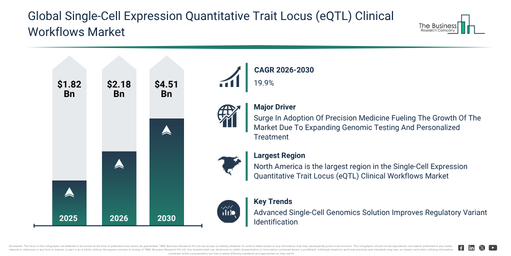
  • Single-Cell Expression Quantitative Trait Locus (eQTL) Clinical Workflows Market Outlook Featuring Demand Trends And Future Growth Potential

    Single-Cell Expression Quantitative Trait Locus (eQTL) Clinical Workflows Market Outlook Featuring Demand Trends And Future Growth Potential

    The Business Research Company’s 2026 market reports feature enhanced tools like market attractiveness analysis, TAM assessment, and company scoring matrices, along with interactive dashboards, deeper supply chain insights, and startup coverage strengthening the depth, usability, and strategic value of insights.

    What Are The Market Size Estimates For The Single-Cell Expression Quantitative Trait Locus (eQTL) Clinical Workflows Market In 2026 And 2030?

    The single-cell expression quantitative trait locus (eqtl) clinical workflows market has experienced rapid expansion in recent years. This market is projected to increase from $1.82 billion in 2025 to $2.18 billion in 2026, reflecting a compound annual growth rate (CAGR) of 19.6%. The historical growth of the market can be ascribed to several factors, including the adoption of bulk sequencing methods, a rise in investment within genomics research, the escalating demand for disease biomarker identification, the presence of limited automation in workflows, and a reliance on manual data analysis.

    The single-cell expression quantitative trait locus (eqtl) clinical workflows market size is anticipated to experience rapid expansion in the upcoming years. It is projected to increase to $4.51 billion by 2030, achieving a compound annual growth rate (CAGR) of 19.9%. This growth throughout the forecast period can be attributed to the rise of AI-driven analysis tools, the adoption of single-cell sequencing technologies, the expansion of personalized medicine initiatives, integration with cloud-based platforms, and the automation of sample and library preparation. Prominent trends for the forecast period include single-cell sequencing integration, advanced computational analysis, high-resolution gene expression mapping, automated workflow pipelines, and predictive biomarker discovery.

    Access Your Free Sample Report For In-Depth Market Analysis:

    https://www.thebusinessresearchcompany.com/sample_request?id=23389776&type=smp&name=Single-Cell%20Expression%20Quantitative%20Trait%20Locus%20%28eQTL%29%20Clinical%20Workflows%20Market%20Report%202026

    What Key Factors Are Affecting The Single-Cell Expression Quantitative Trait Locus (eQTL) Clinical Workflows Market Demand?

    The increasing acceptance of precision medicine is projected to stimulate the expansion of the single-cell expression quantitative trait locus (eQTL) clinical workflows market in the future. Precision medicine is a healthcare approach that customizes disease prevention, diagnosis, and treatment strategies to align with individual patient characteristics, including their genetic makeup, lifestyle, and environment. The growing integration of precision medicine is accelerating due to the escalating worldwide prevalence of complex and chronic illnesses that demand highly specific and individualized treatment methods. Single-cell expression quantitative trait locus (eQTL) clinical workflows support the rising adoption of precision medicine by enabling high-resolution analysis of gene expression variations at the individual cell level, which facilitates the identification of patient-specific therapeutic targets. They also streamline the processing and interpretation of complex genomic data, thereby reducing the time from sample collection to actionable insights, and consequently enhancing personalized treatment strategies and clinical decision-making. For instance, in February 2024, the Personalized Medicine Coalition, a US-based educational and advocacy organization, stated that in 2023, the FDA approved 16 new personalized treatments for rare disease patients, an increase from 6 in 2022. Therefore, the growing uptake of precision medicine is fueling the growth of the single-cell expression quantitative trait locus (eQTL) clinical workflows market.

    How Is The Single-Cell Expression Quantitative Trait Locus (eQTL) Clinical Workflows Market Broken Down By Segment Categories?

    The single-cell expression quantitative trait locus (eQTL) clinical workflows market covered in this report is segmented –

    1) By Workflow Type: Sample Preparation, Library Preparation, Sequencing, Data Analysis, Other Workflow Types

    2) By Technology: Ribonucleic Acid Sequencing, Microarray, Polymerase Chain Reaction (PCR)-Based, Other Technologies

    3) By Application: Disease Research, Drug Discovery And Development, Personalized Medicine, Other Applications

    4) By End-User: Hospitals And Clinics, Research Institutes, Pharmaceutical And Biotechnology Companies, Other End Users

    Subsegments:

    1) By Sample Preparation: Cell Isolation, Cell Sorting, Cell Lysis, Nucleic Acid Extraction, Quality Control Assessment

    2) By Library Preparation: Ribonucleic Acid Fragmentation, Complementary Deoxyribonucleic Acid Synthesis, Adapter Ligation, Amplification, Library Quality Control

    3) By Sequencing: Whole Transcriptome Sequencing, Targeted Sequencing, Single Cell Sequencing, High Throughput Sequencing, Paired End Sequencing

    4) By Data Analysis: Read Alignment, Expression Quantification, Variant Calling, Expression Quantitative Trait Loci Mapping, Statistical Analysis

    5) By Other Workflow Types: Data Integration, Validation Studies, Reporting And Documentation, Regulatory Compliance, Data Storage And Management

    What Market Trends Are Affecting The Single-Cell Expression Quantitative Trait Locus (eQTL) Clinical Workflows Market?

    Leading companies in the single-cell expression quantitative trait locus (eQTL) clinical workflows market are concentrating on developing advanced solutions, such as whole genome sequencing (WGS)-based eQTL workflows, to enable precise, cell-type-specific genetic analysis and advance personalized medicine. Whole genome sequencing (WGS)-based eQTL workflows are analytical approaches that integrate whole-genome sequencing data with gene expression data to pinpoint genetic variants that influence gene expression levels. For example, in January 2023, Singleron Biotechnologies Ltd., a Germany-based biotechnology company, unveiled a new single-cell eQTL analysis workflow as part of its sequencing service. This workflow is a bioinformatic pipeline that utilizes scRNA-seq and WGS data to predict cell-type-specific eQTLs, empowering researchers to study the link between genetic variation and gene expression levels with high resolution. This tool is perfectly suited for customers conducting population studies and requiring integrated wet lab and computational support, offering a streamlined solution to clarify the molecular mechanisms of disease and complement Singleron’s established single-cell multi-omics sequencing services.

    Which Players Are Present In The Single-Cell Expression Quantitative Trait Locus (eQTL) Clinical Workflows Market Space?

    Major companies operating in the single-cell expression quantitative trait locus (eQTL) clinical workflows market are Thermo Fisher Scientific Inc., Becton Dickinson Company, Illumina Inc., Bio-Rad Laboratories Inc., QIAGEN N.V., 10x Genomics Inc., BGI Genomics Co. Ltd., Novogene Co. Ltd., Takara Bio Inc., Standard BioTools Inc., Singleron Biotechnologies GmbH, Mission Bio Inc., Active Motif Inc., Admera Health LLC, Atrandi Biosciences UAB, SeqWell Inc., S2 Genomics Inc., Honeycomb Biotechnologies Inc., Roche Sequencing Solutions Inc., Cell Microsystems Inc.

    Get The Full Single-Cell Expression Quantitative Trait Locus (eQTL) Clinical Workflows Market Report:

    https://www.thebusinessresearchcompany.com/report/single-cell-expression-quantitative-trait-locus-eqtl-clinical-workflows-market-report

    Which Geographic Region Dominates The Single-Cell Expression Quantitative Trait Locus (eQTL) Clinical Workflows Market?

    North America was the largest region in the single-cell expression quantitative trait locus (eQTL) clinical workflows market in 2025. Asia-Pacific is expected to be the fastest-growing region in the forecast period. The regions covered in the single-cell expression quantitative trait locus (eQTL) clinical workflows market report are Asia-Pacific, South East Asia, Western Europe, Eastern Europe, North America, South America, Middle East, Africa.

    Request A Customized Single-Cell Expression Quantitative Trait Locus (eQTL) Clinical Workflows Market Report For Competitive Insights:

    https://www.thebusinessresearchcompany.com/Customise?id=23389776&name=Single-Cell%20Expression%20Quantitative%20Trait%20Locus%20%28eQTL%29%20Clinical%20Workflows%20Market%20Report%202026&type=smp

    Browse Through More Reports Similar to the Global Single-Cell Expression Quantitative Trait Locus (eQTL) Clinical Workflows Market 2026, By The Business Research Company

    pruritus therapeutic market report 2026

    https://www.thebusinessresearchcompany.com/report/pruritus-therapeutic-global-market-report

    genomic urine testing market report 2026

    https://www.thebusinessresearchcompany.com/report/genomic-urine-testing-global-market-report

    ocular genetic diagnostic market report 2026

    https://www.thebusinessresearchcompany.com/report/ocular-genetic-diagnostic-global-market-report

    Get in touch with us:

    The Business Research Company: https://www.thebusinessresearchcompany.com/

    Americas +1 310-496-7795

    Asia +44 7882 955267 & +91 8897263534

    Europe +44 7882 955267

    Email us at marketing@tbrc.info

    Follow us on:

    LinkedIn: https://in.linkedin.com/company/the-business-research-company

    YouTube: https://www.youtube.com/channel/UC24_fI0rV8cR5DxlCpgmyFQ

    Global Market Model: https://www.thebusinessresearchcompany.com/global-market-model
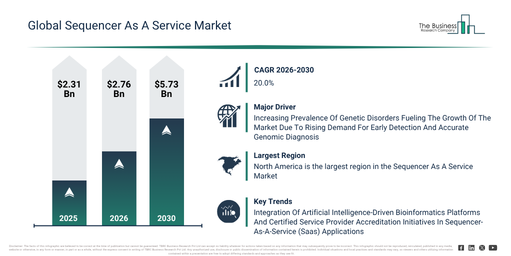
  • Sequencer As A Service Market Analysis Highlighting Key Drivers And Evolving Industry Trends

    Sequencer As A Service Market Analysis Highlighting Key Drivers And Evolving Industry Trends

    The Business Research Company’s 2026 market reports feature enhanced tools like market attractiveness analysis, TAM assessment, and company scoring matrices, along with interactive dashboards, deeper supply chain insights, and startup coverage strengthening the depth, usability, and strategic value of insights.

    What Expansion In Market Value Is Forecasted For The Sequencer As A Service Market Between 2026 And 2030?

    The sequencer as a service market size has demonstrated significant expansion in recent years. It is anticipated to expand from $2.31 billion in 2025 to $2.76 billion in 2026, achieving a compound annual growth rate (CAGR) of 19.8%. This historical growth can be ascribed to rising demand for genomic research, limited access to in-house sequencing platforms, high cost of sequencing instruments, growth in personalized medicine initiatives, and increasing collaborations between research institutes and sequencing providers.

    The sequencer as a service market size is projected to experience substantial growth in the upcoming years. Its valuation is anticipated to reach $5.73 billion by 2030, advancing at a compound annual growth rate (CAGR) of 20.0%. This expansion during the forecast period is fueled by the adoption of cloud-based sequencing solutions, the demand for high-throughput sequencing services, the integration of ai-driven bioinformatics analysis, the expansion of clinical genomics applications, and the increasing outsourcing of sequencing services. Key trends identified for the forecast period include cloud-based sequencing services, automated sample preparation, integrated bioinformatics solutions, pay-per-use sequencing models, and scalable genomic data management.

    Access Your Free Sample Report For In-Depth Market Analysis:

    https://www.thebusinessresearchcompany.com/sample_request?id=88275035&type=smp&name=Sequencer%20As%20A%20Service%20Market%20Report%202026

    Which Primary Drivers Are Impacting The Sequencer As A Service Market Growth?

    The escalating occurrence of genetic conditions is anticipated to drive the expansion of the sequencer as a service market in the future. These disorders are health issues resulting from irregularities in a person’s deoxyribonucleic acid, which can be inherited from either parent or stem from novel mutations. The rise in genetic disorders is partly attributed to increasing parental age, given that older parents face a greater likelihood of transmitting genetic mutations to their offspring. Sequencer as a service addresses genetic disorders by offering scalable, on-demand access to cutting-edge DNA and RNA sequencing capabilities, facilitating prompt detection and precise diagnosis. It alleviates the infrastructure and operational load for laboratories and healthcare entities through cloud-based data analysis and specialized assistance, thereby enhancing precision medicine results and research productivity. As an illustration, in May 2024, the National Health Service, a UK government department, reported 17,000 individuals living with sickle cell disease, an inherited genetic blood disorder, and approximately 250 new diagnoses annually. Consequently, the growing incidence of genetic disorders is a key impetus for the expansion of the sequencer as a service market.

    What Are The Different Segment Types In The Sequencer As A Service Market Segment Breakdown?

    The sequencer as a service market covered in this report is segmented –

    1) By Component: Software, Hardware, Services

    2) By Service Type: Sample Preparation Services, Library Preparation Services, Sequencing Execution Services, Bioinformatics Analysis Services, Data Storage And Management Services, Integrated End-to-End Sequencing Services

    3) By Deployment Mode: Cloud-Based, On-Premises

    4) By Application: Clinical Diagnostics, Oncology Research, Rare Disease Research, Infectious Disease Surveillance, Drug Discovery And Development, Agrigenomics, Forensic Genomics, Reproductive Health Testing, Personalized Medicine Research

    5) By End-User: Hospitals And Clinics, Research Institutes, Pharmaceutical And Biotechnology Companies, Academic Institutions, Other End Users

    Subsegments:

    1) By Software: Bioinformatics Analysis Platforms, Sequence Data Management Systems, Variant Interpretation Tools, Workflow Automation Software, Cloud-Based Data Processing Platforms

    2) By Hardware: High Throughput Sequencing Instruments, Sample Preparation Systems, Laboratory Automation Equipment, Data Storage Servers, High Performance Computing Infrastructure

    3) By Services: Sample Processing Services, Library Preparation Services, Sequencing Execution Services, Bioinformatics Interpretation Services, Data Storage And Management Services, Consulting And Technical Support Services

    Which Trends Are Influencing Demand In The Sequencer As A Service Market?

    Major companies in the sequencer as a service market are prioritizing the integration of artificial intelligence-driven bioinformatics platforms, such as certified provider accreditation initiative, to improve service quality, technical adherence, and standardized workflow efficiency across genomics and single-cell analysis applications. The certified provider accreditation initiative denotes a structured program where an organization formally acknowledges and permits external service providers or partners who meet predefined benchmarks for technical expertise, operational quality, and compliance. For instance, in July 2024, Parse Biosciences, a Seattle-based provider of single-cell sequencing solutions, unveiled its Certified Service Provider Program with the goal of expanding access to scalable single-cell analysis. This program allows researchers to partner with accredited providers like SeqMatic and Eurofins Clinical Enterprise, who offer complete end-to-end workflows including Evercode Whole Transcriptome, Evercode TCR, CRISPR Detect, Gene Capture, and Evercode BCR, which capture full-length BCR sequences along with gene expression at high throughput. This particular initiative ensures expert sample handling, uniform workflow practices, and high-quality outcomes, making it perfectly suitable for both initial pilot studies and regular large-scale single-cell projects.

    Who Are The Well-Known Companies In The Sequencer As A Service Market?

    Major companies operating in the sequencer as a service market are Admera Health, ArrayGen Technologies, BGI Genomics Co. Ltd., CD Genomics Inc., Element Biosciences, Eurofins Scientific SE, Gene by Gene, GENEWIZ Germany GmbH, Illumina Inc., Karkinos Healthcare, Lucigen, Macrogen Inc., MedGenome Labs Ltd., Novogene Co. Ltd., Quest Diagnostics, SeqMatic LLC, SeqWell, Strand Life Sciences Pvt. Ltd., Veritas Genetics, Yaazh Xenomics.

    Get The Full Sequencer As A Service Market Report:

    https://www.thebusinessresearchcompany.com/report/sequencer-as-a-service-market-report

    Which Region Is The Leading Market For The Sequencer As A Service Market?

    North America was the largest region in the sequencer as a service market in 2025. Asia-Pacific is expected to be the fastest-growing region in the forecast period. The regions covered in the sequencer as a service market report are Asia-Pacific, South East Asia, Western Europe, Eastern Europe, North America, South America, Middle East, Africa.

    Request A Customized Sequencer As A Service Market Report For Competitive Insights:

    https://www.thebusinessresearchcompany.com/Customise?id=88275035&name=Sequencer%20As%20A%20Service%20Market%20Report%202026&type=smp

    Browse Through More Reports Similar to the Global Sequencer As A Service Market 2026, By The Business Research Company

    pruritus therapeutic market report 2026

    https://www.thebusinessresearchcompany.com/report/pruritus-therapeutic-global-market-report

    genomic urine testing market report 2026

    https://www.thebusinessresearchcompany.com/report/genomic-urine-testing-global-market-report

    ocular genetic diagnostic market report 2026

    https://www.thebusinessresearchcompany.com/report/ocular-genetic-diagnostic-global-market-report

    Get in touch with us:

    The Business Research Company: https://www.thebusinessresearchcompany.com/

    Americas +1 310-496-7795

    Asia +44 7882 955267 & +91 8897263534

    Europe +44 7882 955267

    Email us at marketing@tbrc.info

    Follow us on:

    LinkedIn: https://in.linkedin.com/company/the-business-research-company

    YouTube: https://www.youtube.com/channel/UC24_fI0rV8cR5DxlCpgmyFQ

    Global Market Model: https://www.thebusinessresearchcompany.com/global-market-model
  • Self-Assembling Protein Nanoparticles Market Forecast 2026–2030 Featuring Industry Trends And Market Developments

    Self-Assembling Protein Nanoparticles Market Forecast 2026–2030 Featuring Industry Trends And Market Developments

    The Business Research Company’s 2026 market reports feature enhanced tools like market attractiveness analysis, TAM assessment, and company scoring matrices, along with interactive dashboards, deeper supply chain insights, and startup coverage strengthening the depth, usability, and strategic value of insights.

    How Large Will The Self-Assembling Protein Nanoparticles Market Be By 2030 Compared To Its 2026 Market Size?

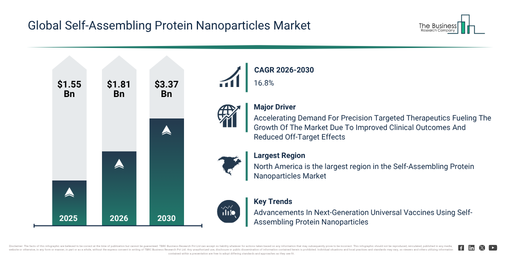
    The self-assembling protein nanoparticles market size has seen rapid expansion in recent years. Its valuation is anticipated to increase from $1.55 billion in 2025 to $1.81 billion in 2026, achieving a compound annual growth rate (CAGR) of 16.6%. The historical development of this market can be attributed to progress in recombinant protein technology, the rise of biopharmaceutical research, growing initiatives for vaccine development, an increasing need for cancer and gene therapies, and the adoption of structural biology engineering.

    The self-assembling protein nanoparticles market size is expected to show significant expansion in the coming years, with projections indicating growth to $3.37 billion by 2030 at a compound annual growth rate (CAGR) of 16.8%. The increase anticipated in the forecast period stems from factors such as the integration of computational protein design, the proliferation of immunotherapy applications, rising demand for personalized medicine, the adoption of self-assembly engineering platforms, and investments in modular nanoparticle platforms. Notable trends during this period are expected to include AI-driven protein design, advancements in modular nanoparticle engineering, enhanced targeted drug delivery, real-time tracking for diagnostic nanoparticles, and the development of scaffold customization platforms.

    Access Your Free Sample Report For In-Depth Market Analysis:

    https://www.thebusinessresearchcompany.com/sample_request?id=83727158&type=smp&name=Self-Assembling%20Protein%20Nanoparticles%20Market%20Report%202026

    What Significant Factors Are Influencing The Self-Assembling Protein Nanoparticles Market Expansion?

    The increasing need for precision targeted therapeutics is projected to fuel the expansion of the self-assembling protein nanoparticles market in the future. Precision targeted therapeutics define treatment strategies that precisely deliver therapeutic agents to particular cells, tissues, or molecular pathways, guided by unique disease attributes, thereby enhancing effectiveness and minimizing negative side effects. The heightened demand for these therapeutics stems from the growing worldwide prevalence of intricate and long-term illnesses, which necessitate highly tailored and personalized treatment plans. Self-assembling protein nanoparticles facilitate precision targeted therapeutics through their capacity to design uniform, programmable nanostructures capable of encapsulating and delivering drugs, antigens, or genetic material precisely to designated biological targets, complete with controlled release profiles. For example, in February 2024, data from the Personalized Medicine Coalition, a US-based nonprofit organization, indicated that personalized medicines constituted more-than one-third of new United States Food and Drug Administration drug approvals in 2023, amounting to 26 targeted therapies, a notable increase from a significantly lower share in 2022. Consequently, the escalating demand for precision targeted therapeutics is boosting the growth of the self-assembling protein nanoparticles market.

    Which Segment Classifications Are Used In The Self-Assembling Protein Nanoparticles Market Segment Analysis?

    The self-assembling protein nanoparticles market covered in this report is segmented –

    1) By Product Type: Vaccine Nanoparticles, Targeted Drug Delivery Nanoparticles, Diagnostic Nanoparticles, Protein-Based Nanocarriers, Research-Grade Nanoparticle Kits, Therapeutic Protein Nanoparticles, Imaging And Contrast Agent Nanoparticles

    2) By Design Approach: Virus-Like Particles, Ferritin-Based Nanoparticles, Encapsulin-Based Nanoparticles, Designed Oligomeric Proteins, Two-Component Co-Assembling Systems

    3) By Technology: Recombinant Protein Technology, Computational Protein Design, Structural Biology Engineering, Self-Assembly Engineering Platforms, Modular Nanoparticle Platforms

    4) By Application: Drug Delivery, Vaccine Development, Cancer Therapy, Gene Therapy, Diagnostics And Biosensing, Immunotherapy, Regenerative Medicine, Material Science Applications

    5) By End User: Biopharmaceutical Companies, Biotechnology Companies, Academic And Research Institutes, Contract Research Organizations, Diagnostic Laboratories

    Subsegments:

    1) By Vaccine Nanoparticles: Protein Cage Based Vaccine Nanoparticles, Virus Like Particle Vaccine Nanoparticles, Ferritin Scaffold Vaccine Nanoparticles, Encapsulin Derived Vaccine Nanoparticles

    2) By Targeted Drug Delivery Nanoparticles: Chemotherapeutic Loaded Protein Nanoparticles, Messenger Ribonucleic Acid Loaded Protein Nanoparticles, Small Molecule Encapsulated Protein Nanoparticles, Gene Editing Component Delivery Nanoparticles

    3) By Diagnostic Nanoparticles: Fluorescently Labeled Protein Nanoparticles, Enzyme Conjugated Protein Nanoparticles, Biomarker Targeted Detection Nanoparticles, Electrochemical Sensing Protein Nanoparticles

    4) By Protein-Based Nanocarriers: Surface Functionalized Protein Nanocarriers, Core Shell Structured Protein Nanocarriers, Stimuli Responsive Protein Nanocarriers, Ligand Targeted Protein Nanocarriers

    5) By Research-Grade Nanoparticle Kits: Pre Assembled Protein Nanoparticle Kits, Customizable Scaffold Nanoparticle Kits, Surface Modification Ready Nanoparticle Kits, Laboratory Validation Nanoparticle Kits

    6) By Therapeutic Protein Nanoparticles: Antibody Displaying Protein Nanoparticles, Cytokine Loaded Protein Nanoparticles, Peptide Functionalized Protein Nanoparticles, Enzyme Delivery Protein Nanoparticles

    7) By Imaging And Contrast Agent Nanoparticles: Magnetic Resonance Imaging Protein Nanoparticles, Fluorescent Imaging Protein Nanoparticles, Computed Tomography Contrast Protein Nanoparticles, Multimodal Imaging Protein Nanoparticles

    What Emerging Trends Are Seen In The Self-Assembling Protein Nanoparticles Market?

    Major companies operating in the self-assembling protein nanoparticles market are prioritizing the creation of innovative solutions, such as next-generation universal vaccine development, to strengthen broad-spectrum immunity and readiness for pandemics. Next-generation universal vaccine development refers to the conception, creation, and evaluation of advanced immunization strategies designed to offer wide and enduring protection against multiple strains or species within a viral family. For instance, in January 2026, SK Bioscience, a South Korea-based biopharmaceutical company, initiated a global Phase 1/2 clinical trial for GBP511, a vaccine aimed at the Sarbecovirus Family. GBP511 integrates SKYCovione’s recombinant protein-based platform with self-assembling nanoparticle technology developed by the Institute for Protein Design at the University of Washington School of Medicine. The trial enrolls approximately 368 adults and assesses safety, tolerability, and immunogenicity across several dose cohorts, with or without an adjuvant, including comparisons with Comirnaty. This strategy seeks to induce extensive immune responses against current and potential future SARS-like coronaviruses, thereby supporting universal vaccine development and pandemic preparedness.

    Which Firms Are Contributing To The Self-Assembling Protein Nanoparticles Market Ecosystem?

    Major companies operating in the self-assembling protein nanoparticles market are Novavax Inc., Mika Biologics, VBI Vaccines Inc., Clover Biopharmaceuticals, Virometix AG, Medicago Inc., TechnoVax Inc., VLP Therapeutics LLC, Osivax SAS, Expres2ion Biotechnologies, SpyBiotech, SpyBiotech Ltd., Uvax Bio Inc., SK Bioscience Co. Ltd., Mynvax Private Limited, Vaxine Pty Ltd, Ufovax LLC.

    Get The Full Self-Assembling Protein Nanoparticles Market Report:

    https://www.thebusinessresearchcompany.com/report/self-assembling-protein-nanoparticles-market-report

    Where Is The Self-Assembling Protein Nanoparticles Market Primarily Concentrated By Region?

    North America was the largest region in the self-assembling protein nanoparticles market in 2025. Asia-Pacific is expected to be the fastest-growing region in the forecast period. The regions covered in the self-assembling protein nanoparticles market report are Asia-Pacific, South East Asia, Western Europe, Eastern Europe, North America, South America, Middle East, Africa.

    Request A Customized Self-Assembling Protein Nanoparticles Market Report For Competitive Insights:

    https://www.thebusinessresearchcompany.com/Customise?id=83727158&name=Self-Assembling%20Protein%20Nanoparticles%20Market%20Report%202026&type=smp

    Browse Through More Reports Similar to the Global Self-Assembling Protein Nanoparticles Market 2026, By The Business Research Company

    adeno-associated virus (avv) vectors in gene therapy market report 2026

    https://www.thebusinessresearchcompany.com/report/adeno-associated-virus-avv-vectors-in-gene-therapy-global-market-report

    gastric cancer therapy market report 2026

    https://www.thebusinessresearchcompany.com/report/gastric-cancer-therapy-global-market-report

    over the counter (otc) drugs market report 2026

    https://www.thebusinessresearchcompany.com/report/over-the-counter-otc-drugs-global-market-report

    Get in touch with us:

    The Business Research Company: https://www.thebusinessresearchcompany.com/

    Americas +1 310-496-7795

    Asia +44 7882 955267 & +91 8897263534

    Europe +44 7882 955267

    Email us at marketing@tbrc.info

    Follow us on:

    LinkedIn: https://in.linkedin.com/company/the-business-research-company

    YouTube: https://www.youtube.com/channel/UC24_fI0rV8cR5DxlCpgmyFQ

    Global Market Model: https://www.thebusinessresearchcompany.com/global-market-model
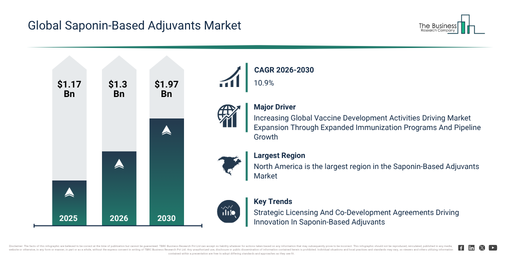
  • Saponin-Based Adjuvants Market Analysis Highlighting Key Drivers And Future Expansion Opportunities

    Saponin-Based Adjuvants Market Analysis Highlighting Key Drivers And Future Expansion Opportunities

    The Business Research Company’s 2026 market reports feature enhanced tools like market attractiveness analysis, TAM assessment, and company scoring matrices, along with interactive dashboards, deeper supply chain insights, and startup coverage strengthening the depth, usability, and strategic value of insights.

    What Is The Projected Increase In Market Value Of The Saponin-Based Adjuvants Market During 2026–2030?

    The saponin-based adjuvants market has seen substantial growth recently. It is anticipated to expand from $1.17 billion in 2025 to $1.3 billion in 2026, achieving a compound annual growth rate (CAGR) of 10.7%. Historically, this expansion has been driven by increased vaccine research, a greater need for effective adjuvants, the development of human and veterinary vaccines, improvements in plant-based extraction techniques, and regulatory backing for adjuvant creation.

    The market for saponin-based adjuvants is projected to experience substantial expansion over the coming years. This market is anticipated to reach a valuation of $1.97 billion by 2030, exhibiting a compound annual growth rate (CAGR) of 10.9%. This growth trajectory is driven by factors such as the increasing acceptance of synthetic and semi-synthetic saponin analogues, their incorporation into advanced vaccine technologies, the broadening scope of veterinary vaccine uses, rising research and development expenditures in immunology, and an emphasis on tailored and precise vaccine approaches. Key trends during this period encompass the creation of new saponin formulations, improvements in vaccine immunogenicity, techniques for sparing adjuvant doses, their integration with mRNA and protein-based vaccines, and advancements in standardization and quality control.

    Access Your Free Sample Report For In-Depth Market Analysis:

    https://www.thebusinessresearchcompany.com/sample_request?id=28725294&type=smp&name=Saponin-Based%20Adjuvants%20Market%20Report%202026

    Which Important Drivers Are Guiding The Saponin-Based Adjuvants Market Growth?

    The Saponin-Based Adjuvants market is anticipated to expand in the future, driven by the escalating need for vaccine development activities. These activities encompass the entire spectrum of research, clinical evaluation, regulatory approval, and commercialization processes involved in creating novel or enhanced vaccines for both infectious and non-infectious diseases. Governments and global health agencies are intensifying their vaccine development endeavors, backed by sustained financial commitments towards preventing infectious diseases and ensuring pandemic preparedness. Saponin-Based Adjuvants provide crucial support to these vaccine development efforts by improving antigen immunogenicity, enabling dose reduction, and boosting cellular immune responses in advanced vaccine formulations. For instance, in April 2025, the World Health Organization, a Switzerland-based international public health organization, reported that worldwide measles cases reached an estimated 10.3 million in 2023, representing an increase of approximately 20% compared to 2022, thereby emphasizing the growing requirement for broader vaccine development and immunization campaigns. Consequently, the rising demand for vaccine development activities is a key factor propelling the growth of the Saponin-Based Adjuvants market.

    How Is The Saponin-Based Adjuvants Market Organized By Segment Classification?

    The saponin-based adjuvants market covered in this report is segmented –

    1) By Product Type: Purified Quillaja Saponin Extracts, QS-21 Saponin Fractions, Crude Saponin Extracts, Semi-Purified Saponin Blends, Synthetic And Semi-Synthetic Saponin Analogues

    2) By Source: Quillaja Saponaria, Soybean, Other Sources

    3) By Formulation: Particulate, Emulsion, Liposomal, Other Formulations

    4) By Application: Human Vaccines, Veterinary Vaccines, Research Applications, Other Applications

    5) By End-User: Pharmaceutical Companies, Research Institutes, Contract Research Organizations, Other End-Users

    Subsegments:

    1) By Purified Quillaja Saponin Extracts: High Purity Quillaja Extracts, Standardized Quillaja Extracts, Pharmaceutical Grade Quillaja Extracts, Vaccine Grade Quillaja Extracts

    2) By QS-21 Saponin Fractions: Clinical Grade QS-21 Fractions, Research Grade QS-21 Fractions, High Purity QS-21 Fractions, Stabilized QS-21 Formulations

    3) By Crude Saponin Extracts: Raw Plant Derived Saponin Extracts, Aqueous Crude Saponin Extracts, Alcohol Extracted Crude Saponins, Unstandardized Botanical Saponin Extracts

    4) By Semi-Purified Saponin Blends: Partially Refined Saponin Blends, Standardized Semi-Purified Blends, Blended Botanical Saponin Mixtures, Vaccine Grade Semi-Purified Blends

    5) By Synthetic And Semi-Synthetic Saponin Analogues: Fully Synthetic Saponin Analogues, Chemically Modified Saponin Derivatives, Structure Optimized Saponin Analogues, Low Toxicity Saponin Analogues

    Which Trends Are Guiding The Direction Of The Saponin-Based Adjuvants Market?

    Key players in the saponin-based adjuvants market are increasingly focusing on establishing sustainable and scalable production alternatives, such as cultured plant cell-derived QS-21, to secure supply chain stability, achieve consistent product quality, and reduce dependence on natural resources. Cultured plant cell-derived QS-21 denotes an advanced manufacturing approach where this vital vaccine adjuvant is cultivated from plant cells in a controlled laboratory setting, as opposed to being extracted from the bark of rare trees. For example, in August 2024, SaponiQx, a US-based biomanufacturing company, introduced STIMULON cultured plant cell QS-21, a cpcQS-21 adjuvant, for commercial purchase through InvivoGen. This product is generated via plant cell culture instead of tree bark, ensuring a consistent and scalable supply while delivering high purity, lot-to-lot uniformity, and a reduced environmental impact. Functionally, STIMULON cpcQS-21 exhibits the same immunostimulatory power as tree-derived QS-21 in eliciting both humoral and cellular immune responses, rendering it suitable for application in vaccines for infectious diseases such as malaria, shingles, and RSV.

    Who Are The Industry Participants Involved In The Saponin-Based Adjuvants Market?

    Major companies operating in the saponin-based adjuvants market are GlaxoSmithKline plc, Croda International plc, HIPRA Human Health S.L, Novavax, Inc., Seppic S.A., Merck KGaA, Agenus Inc., PhytoLab GmbH & Co. KG, SPI Pharma Inc., InvivoGen, Desert King International, Adjuvatis S.A.S., Aphios Corporation, Vaxine Pty Ltd, Fatro S.p.A., Q-Vant Biosciences, AVT Pharmaceutical Inc., SaponiQx.

    Get The Full Saponin-Based Adjuvants Market Report:

    https://www.thebusinessresearchcompany.com/report/saponin-based-adjuvants-market-report

    Which Region Has The Greatest Market Share In The Saponin-Based Adjuvants Market?

    North America was the largest region in the saponin-based adjuvants market in 2025. Asia-Pacific is expected to be the fastest-growing region in the forecast period. The regions covered in the saponin-based adjuvants market report are Asia-Pacific, South East Asia, Western Europe, Eastern Europe, North America, South America, Middle East, Africa.

    Request A Customized Saponin-Based Adjuvants Market Report For Competitive Insights:

    https://www.thebusinessresearchcompany.com/Customise?id=28725294&name=Saponin-Based%20Adjuvants%20Market%20Report%202026&type=smp

    Browse Through More Reports Similar to the Global Saponin-Based Adjuvants Market 2026, By The Business Research Company

    adeno-associated virus (avv) vectors in gene therapy market report 2026

    https://www.thebusinessresearchcompany.com/report/adeno-associated-virus-avv-vectors-in-gene-therapy-global-market-report

    gastric cancer therapy market report 2026

    https://www.thebusinessresearchcompany.com/report/gastric-cancer-therapy-global-market-report

    over the counter (otc) drugs market report 2026

    https://www.thebusinessresearchcompany.com/report/over-the-counter-otc-drugs-global-market-report

    Get in touch with us:

    The Business Research Company: https://www.thebusinessresearchcompany.com/

    Americas +1 310-496-7795

    Asia +44 7882 955267 & +91 8897263534

    Europe +44 7882 955267

    Email us at marketing@tbrc.info

    Follow us on:

    LinkedIn: https://in.linkedin.com/company/the-business-research-company

    YouTube: https://www.youtube.com/channel/UC24_fI0rV8cR5DxlCpgmyFQ

    Global Market Model: https://www.thebusinessresearchcompany.com/global-market-model