Month: May 2026

  • Recurrent Pericarditis Market Forecast 2026–2030 Highlighting Expansion Across Industries

    Recurrent Pericarditis Market Forecast 2026–2030 Highlighting Expansion Across Industries

    The Business Research Company’s 2026 market reports feature enhanced tools like market attractiveness analysis, TAM assessment, and company scoring matrices, along with interactive dashboards, deeper supply chain insights, and startup coverage strengthening the depth, usability, and strategic value of insights.

    How Is The Market Size Of The Recurrent Pericarditis Market Expected To Scale Between 2026 And 2030?

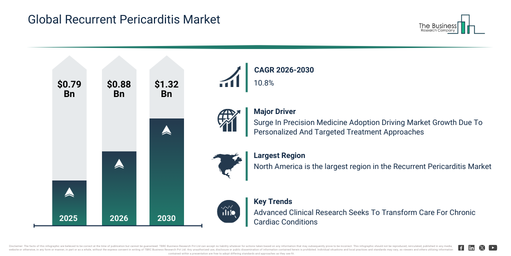
    The market size for recurrent pericarditis has expanded significantly in recent years. It is projected to increase from $0.79 billion in 2025 to $0.88 billion in 2026, achieving a compound annual growth rate (CAGR) of 10.6%. The historical growth can be attributed to historical reliance on NSAIDs and colchicine, rising diagnosis of inflammatory heart conditions, established cardiology care pathways, increased availability of echocardiography, and guideline driven anti inflammatory therapy use.

    The recurrent pericarditis market size is poised for substantial growth over the next few years. It is projected to expand to $1.32 billion in 2030, demonstrating a compound annual growth rate (CAGR) of 10.8%. This growth during the forecast period can be attributed to the rising adoption of biologic drugs, improved recurrence risk stratification, the expansion of specialty cardiology clinics, heightened awareness of immune-mediated pericarditis, and the increasing application of targeted cytokine inhibitors. Noteworthy trends anticipated in the forecast period encompass a greater reliance on targeted biologic therapies, the expansion of long-term disease monitoring, a rise in anti-inflammatory combination therapy, increased integration of IL-1 inhibitors, and the establishment of structured recurrence prevention protocols.

    Access Your Free Sample Report For In-Depth Market Analysis:

    https://www.thebusinessresearchcompany.com/sample.aspx?id=33288&type=smp

    What Key Drivers Are Fueling The Growth Of The Recurrent Pericarditis Market?

    The increasing focus on precision medicine approaches is anticipated to propel the growth of the recurrent pericarditis market going forward. Precision medicine is a medical strategy that customizes prevention and treatment plans for individual patients based on their genetic makeup, environment, and lifestyle. This rising emphasis on precision medicine is driven by enhanced treatment effectiveness, as therapies tailored to an individual’s genetic and biological profile lead to superior outcomes and a reduced risk of adverse effects. Recurrent pericarditis aids in advancing precision medicine by allowing targeted treatment approaches that concentrate on patient-specific inflammatory pathways, such as interleukin-1–mediated mechanisms, thereby enabling more personalized and effective disease management. For instance, in February 2025, according to the NHS England, a UK-based public healthcare body, in 2024 the NHS Genomic Medicine Service delivered over 810,000 genomic tests for patients across the life course in England. This has continued to increase year-on-year since the NHS Genomic Medicine Service was established, and increased by 8% compared to 2023. Therefore, the growing emphasis on precision medicine approaches is driving the growth of the recurrent pericarditis market.

    Which Segment Categories Are Included In The Recurrent Pericarditis Market Segment Analysis?

    The recurrent pericarditis market covered in this report is segmented –

    1) By Product Type: Non-Steroidal Anti-Inflammatory Drugs (NSAIDs); Corticosteroids; Colchicine; Biologics; Other Product Types

    2) By Diagnosis And Assessment: Electrocardiography (ECG); Echocardiography; Physical Examination

    3) By Route of Administration: Oral; Injectable

    4) By Application: Colchicine Therapy; Corticosteroids; Non-Steroidal Anti-Inflammatory Drugs (NSAIDs)

    5) By End-User: Hospitals; Ambulatory Surgical Centers; Clinics; Home Care Settings; Emergency Medical Services (EMS)

    Subsegments:

    1) By Non Steroidal Anti Inflammatory Drugs: Ibuprofen; Aspirin; Indomethacin; Naproxen

    2) By Corticosteroids: Prednisone; Methylprednisolone; Hydrocortisone; Dexamethasone

    3) By Colchicine: Oral Colchicine; Low Dose Colchicine; Extended Duration Colchicine Therapy

    4) By Biologics: Interleukin One Inhibitors; Monoclonal Antibody Therapies; Targeted Cytokine Inhibitors

    5) By Other Product Types: Immunosuppressive Agents; Analgesic Therapies; Supportive Combination Therapies

    What Trends Are Influencing The Recurrent Pericarditis Market?

    Leading firms within the recurrent pericarditis market are prioritizing the creation of treatments offering anti-inflammatory and anti-fibrotic benefits. These developments aim to alleviate pericardial inflammation, avert lasting heart damage, elevate patients’ quality of life, and lower instances of recurrence. Anti-inflammatory actions work by decreasing tissue inflammation, whereas anti-fibrotic actions either stop or reverse the development of scar tissue; collectively, these mechanisms aid in shielding organs from harm and sustaining their regular operation. An example of this strategy is seen in October 2024, when Cardiol Therapeutics Inc., a Canadian clinical-stage life sciences firm, progressed its CardiolRx program. CardiolRx provides a unique oral, non-immunosuppressive therapeutic method for recurrent pericarditis. It functions by targeting the NLRP3 inflammasome, which is a critical upstream activator of IL-1–driven inflammation. The drug is under development to avert disease recurrence, especially in individuals who experience a relapse following the cessation of IL-1 blocker treatments like rilonacept or anakinra. Through its advanced clinical trials, CardiolRx endeavors to diminish pericarditis flares, ease chest discomfort, and bring inflammatory markers (CRP) back to normal levels.

    Who Are The Active Companies Shaping The Recurrent Pericarditis Market?

    Major companies operating in the recurrent pericarditis market are Johnson & Johnson Services Inc., Roche Holding AG, Merck & Co. Inc., Pfizer Inc., AbbVie Inc., Sanofi S.A., Novartis AG, AstraZeneca PLC, Bristol-Myers Squibb Company, GlaxoSmithKline plc, Eli Lilly and Company, Novo Nordisk A/S, Takeda Pharmaceutical Company Limited, Amgen Inc., Gilead Sciences Inc., Boehringer Ingelheim International GmbH, Regeneron Pharmaceuticals Inc., Biogen Inc., Lonza Group AG, Moderna Inc., and WuXi Biologics (Cayman) Inc.

    Get The Full Recurrent Pericarditis Market Report:

    https://www.thebusinessresearchcompany.com/report/recurrent-pericarditis-market-report

    Which Region Is The Leading Market For The Recurrent Pericarditis Market?

    North America was the largest region in the recurrent pericarditis market in 2025. Asia-Pacific is expected to be the fastest-growing region in the forecast period. The regions covered in the recurrent pericarditis market report are Asia-Pacific, South East Asia, Western Europe, Eastern Europe, North America, South America, Middle East, Africa.

    Request A Customized Recurrent Pericarditis Market Report For Competitive Insights:

    https://www.thebusinessresearchcompany.com/customise?id=33288&type=smp

    Browse Through More Reports Similar to the Global Recurrent Pericarditis Market 2026, By The Business Research Company

    Pericarditis Market Report 2026

    https://www.thebusinessresearchcompany.com/report/pericarditis-global-market-report

    Pediatric Perfusion Market Report 2026

    https://www.thebusinessresearchcompany.com/report/pediatric-perfusion-global-market-report

    Cardiac Valve Market Report 2026

    https://www.thebusinessresearchcompany.com/report/cardiac-valve-global-market-report

    Get in touch with us:

    The Business Research Company: https://www.thebusinessresearchcompany.com/

    Americas +1 310-496-7795

    Asia +44 7882 955267 & +91 8897263534

    Europe +44 7882 955267

    Email us at info@tbrc.info

    Follow us on:

    LinkedIn: https://in.linkedin.com/company/the-business-research-company

    YouTube: https://www.youtube.com/channel/UC24_fI0rV8cR5DxlCpgmyFQ

    Global Market Model: https://www.thebusinessresearchcompany.com/global-market-model
  • Global Recombinant Vaccines Market Analysis For 2026–2030 With Strategic Insights

    Global Recombinant Vaccines Market Analysis For 2026–2030 With Strategic Insights

    The Business Research Company’s 2026 market reports feature enhanced tools like market attractiveness analysis, TAM assessment, and company scoring matrices, along with interactive dashboards, deeper supply chain insights, and startup coverage strengthening the depth, usability, and strategic value of insights.

    What Level Of Market Value Growth Is Predicted For The Recombinant Vaccines Market From 2026 To 2030?

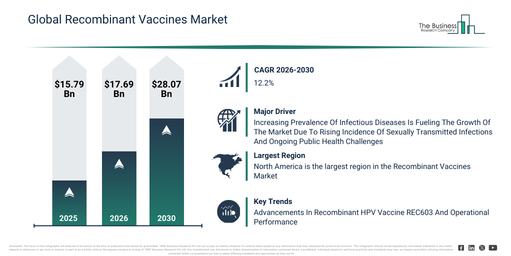
    The recombinant vaccines market size has experienced swift expansion in recent years. It is projected to increase from $15.79 billion in 2025 to $17.69 billion in 2026, demonstrating a compound annual growth rate (CAGR) of 12.0%. The growth observed in previous periods is largely due to the effectiveness of hepatitis B recombinant vaccines, established global vaccination programs, a rise in awareness concerning viral diseases, increased funding for immunization, and regulatory encouragement for safer vaccine platforms.

    The recombinant vaccines market size is projected to undergo significant expansion in the upcoming years. It is forecast to reach $28.07 billion by 2030, driven by a compound annual growth rate (CAGR) of 12.2%. This growth over the forecast period is primarily due to the increasing demand for precision vaccines, the expansion of vaccines for emerging diseases, a rise in adult booster programs, growing global immunization coverage, and a strong pipeline of recombinant candidates. Noteworthy trends during this period include an increase in recombinant subunit vaccines, the broadening of vector-based vaccine platforms, a rise in adult immunization initiatives, the growth of combination recombinant vaccines, and an enhanced focus on long-duration immunity.

    Access Your Free Sample Report For In-Depth Market Analysis:

    https://www.thebusinessresearchcompany.com/sample.aspx?id=33287&type=smp

    Which Drivers Are Supporting The Recombinant Vaccines Market Growth?

    The escalating occurrence of infectious diseases is anticipated to drive the recombinant vaccines market’s growth in the foreseeable future. An infectious disease is defined as an illness caused by various germs, including bacteria, viruses, fungi, or parasites, capable of spreading between individuals either directly or indirectly. The rise in infectious disease prevalence is attributed to poor sanitation and hygiene, where insufficient access to clean water, proper sanitation facilities, and effective waste management enables the facile transmission of harmful microorganisms through contaminated food, water, and personal interactions, thereby elevating the risk of infections. Recombinant vaccines work by utilizing biologically engineered genetic material derived from pathogens to elicit an immune response, thus preventing infectious diseases without inducing illness. For instance, in July 2024, according to the Australian Institute of Health and Welfare, an Australia-based national agency, the most frequently reported sexually transmitted infections in Australia in 2023 included over 109,000 notifications of chlamydia and more than 40,000 of gonorrhea, along with over 6,400 cases of infectious syphilis, underscoring the augmented incidence and ongoing public health challenges. Thus, the increasing prevalence of infectious diseases is a key factor propelling the expansion of the recombinant vaccines market.

    How Is The Recombinant Vaccines Market Broken Down By Segment Categories?

    The recombinant vaccines market covered in this report is segmented –

    1) By Type: Subunit Vaccines; Vector-Based Vaccines

    2) By Disease Indication: Human Papillomavirus (HPV); Herpes Zoster; Hepatitis B; Other Diseases

    3) By Route Of Administration: Parenteral; Other Route Of Administrations

    4) By End User: Pediatric; Adults

    Subsegments:

    1) By Subunit Vaccines: Protein Subunit Vaccines; Polysaccharide Subunit Vaccines; Conjugate Subunit Vaccines; Glycopeptide Subunit Vaccines; Recombinant Subunit Vaccines

    2) By Vector-Based Vaccines: Viral Vector Vaccines; Non Viral Vector Vaccines; Replicating Vector Vaccines; Non Replicating Vector Vaccines; Bacterial Vector Vaccines

    Which Trends Are Expected To Impact The Recombinant Vaccines Market?

    Major companies operating in the recombinant vaccines market are prioritizing the development of novel vaccines, exemplified by the recombinant 9-valent HPV vaccine, to gain a competitive edge. The recombinant 9-valent HPV vaccine is designed to protect against nine types of human papillomavirus (HPV) and is produced using recombinant DNA technology, meaning it is created in a laboratory setting without live virus and assists in preventing HPV-related diseases such as cervical cancer and genital warts. For instance, in August 2023, Jiangsu Recbio Technology Co. Ltd., a China-based biopharmaceutical company, advanced REC603, its recombinant 9-valent HPV vaccine, through Phase III clinical follow-up, with 24-month observations continuing. The vaccine demonstrated strong immunogenicity, a favorable safety profile, scalable manufacturing potential, and long-term efficacy, thereby supporting its potential for broad HPV prevention and commercialization.

    Which Players Are Present In The Recombinant Vaccines Market Space?

    Major companies operating in the recombinant vaccines market are Johnson And Johnson, Merck And Co Inc., Pfizer Inc., Sanofi S. A., Novartis AG, AstraZeneca Plc, GlaxoSmithKline Plc, Mitsubishi Chemical Group Corporation, CSL Limited, Sinovac Biotech Ltd., Boehringer Ingelheim International GmbH, Zoetis Services Llc, Elanco Animal Health, BioNTech Se, Green Cross Corporation (Gc Biopharma), Bavarian Nordic A S, VBI Vaccines Inc., Vaxart Inc., Biological E Limited, Novavax Inc., Serum Institute Of India Private Limited, Vaxcyte Inc., Bharat Biotech International Limited, and Transgene S A.

    Get The Full Recombinant Vaccines Market Report:

    https://www.thebusinessresearchcompany.com/report/recombinant-vaccines-market-report

    Where Is The Recombinant Vaccines Market Primarily Concentrated By Region?

    North America was the largest region in the recombinant vaccines market in 2025. Asia-Pacific is expected to be the fastest-growing region in the forecast period. The regions covered in the recombinant vaccines market report are Asia-Pacific, South East Asia, Western Europe, Eastern Europe, North America, South America, Middle East, Africa.

    Request A Customized Recombinant Vaccines Market Report For Competitive Insights:

    https://www.thebusinessresearchcompany.com/customise?id=33287&type=smp

    Browse Through More Reports Similar to the Global Recombinant Vaccines Market 2026, By The Business Research Company

    Therapeutic Bcg Vaccines Market Report 2026

    https://www.thebusinessresearchcompany.com/report/therapeutic-bcg-vaccines-global-market-report

    Ruminant Vaccines Market Report 2026

    https://www.thebusinessresearchcompany.com/report/ruminant-vaccines-global-market-report

    Vaccine Contract Manufacturing Market Report 2026

    https://www.thebusinessresearchcompany.com/report/vaccine-contract-manufacturing-global-market-report

    Get in touch with us:

    The Business Research Company: https://www.thebusinessresearchcompany.com/

    Americas +1 310-496-7795

    Asia +44 7882 955267 & +91 8897263534

    Europe +44 7882 955267

    Email us at info@tbrc.info

    Follow us on:

    LinkedIn: https://in.linkedin.com/company/the-business-research-company

    YouTube: https://www.youtube.com/channel/UC24_fI0rV8cR5DxlCpgmyFQ

    Global Market Model: https://www.thebusinessresearchcompany.com/global-market-model

  • Recombinant Proteins Manufacturing Services Market Outlook 2026–2030 Driven By Growth Factors And Projections

    Recombinant Proteins Manufacturing Services Market Outlook 2026–2030 Driven By Growth Factors And Projections

    The Business Research Company’s 2026 market reports feature enhanced tools like market attractiveness analysis, TAM assessment, and company scoring matrices, along with interactive dashboards, deeper supply chain insights, and startup coverage strengthening the depth, usability, and strategic value of insights.

    How Will The Market Value Of The Recombinant Proteins Manufacturing Services Market Progress Between 2026 And 2030?

    The recombinant proteins manufacturing services market has seen rapid expansion in recent years. It is anticipated to increase from $3.7 billion in 2025 to $4.21 billion in 2026, exhibiting a compound annual growth rate (CAGR) of 13.8%. The growth observed in the past can be ascribed to factors including the expansion of biologics research programs, a rise in academic protein studies, the development of contract manufacturing models, increasing monoclonal antibody development, and the historic growth of biotech startups.

    The recombinant proteins manufacturing services market size is projected to experience substantial growth in the upcoming years. It is forecasted to expand to $7.12 billion by 2030, achieving a compound annual growth rate (CAGR) of 14.0%. This anticipated growth is driven by factors such as an expanding pipeline of protein therapeutics, increased outsourcing by pharmaceutical firms, a heightened demand for scalable bioprocessing, the progression of clinical stage biologics, and a rising necessity for facilities that meet regulatory compliance. Significant trends during this forecast period include the broadening of outsourced protein production, an increase in custom expression services, a growing need for GMP protein manufacturing, the implementation of integrated end-to-end service models, and a greater adoption of single-use bioprocess systems.

    Access Your Free Sample Report For In-Depth Market Analysis:

    https://www.thebusinessresearchcompany.com/sample.aspx?id=33286&type=smp

    What Key Factors Are Affecting The Recombinant Proteins Manufacturing Services Market Demand?

    The increasing need for biopharmaceuticals and biosimilars is anticipated to drive the expansion of the recombinant proteins manufacturing services market in the future. Biopharmaceuticals and biosimilars are defined as biological medicines and their highly similar versions, which are employed to treat chronic, rare, and complex ailments, including cancer, autoimmune disorders, and metabolic conditions. The escalating demand for biopharmaceuticals and biosimilars is attributed to the rising prevalence of chronic and life-threatening diseases, advancements in biologic drug development, and expanded patient access to targeted therapies across significant healthcare markets. Recombinant proteins manufacturing services support the development and commercialization of biopharmaceuticals and biosimilars by offering scalable, high-quality, and regulatory-compliant production of protein-based drugs, thereby enabling pharmaceutical and biotechnology companies to accelerate development timelines and maintain a consistent supply. For instance, according to GOV.UK, a UK-based government website, businesses within the biopharmaceutical subsector reported a combined turnover of $135.5 billion (£98.9 billion) during the 2023/2024 period, representing a 15% increase from the previous year. Hence, the growing demand for biopharmaceuticals and biosimilars is propelling the growth of the recombinant proteins manufacturing services market.

    What Are The Different Segment Types In The Recombinant Proteins Manufacturing Services Market Segment Breakdown?

    The recombinant proteins manufacturing services market covered in this report is segmented –

    1) By Service Type: Process Development; Upstream Manufacturing; Downstream Manufacturing; Analytical Development and Quality Control; Finish And Lyophilization

    2) By Protein Type: Monoclonal Antibodies And Antibody Fragments; Vaccines And Viral Proteins; Enzymes And Growth Factors; Hormones And Cytokines; Other Therapeutic And Diagnostic Proteins

    3) By Host Cell: Mammalian Cells; Bacterial Cells; Insect Cells; Yeast And Fungi; Other Host Cell

    4) By Application: Therapeutics; Research And Development; Diagnostics; Other Applications

    5) By End-User: Pharmaceutical And Biotechnology Companies; Academic And Research Institutes

    Subsegments:

    1) By Process Development: Cell Line Development; Expression System Optimization; Process Scale Up; Process Validation

    2) By Upstream Manufacturing: Microbial Fermentation; Mammalian Cell Culture; Insect Cell Culture; Media And Feed Optimization

    3) By Downstream Manufacturing: Protein Purification; Chromatography Processing; Filtration And Concentration; Viral Clearance

    4) By Analytical Development And Quality Control: Method Development; Stability Testing; Purity And Potency Testing; Batch Release Testing

    5) By Finish And Lyophilization: Sterile Filling; Freeze Drying; Packaging And Labeling; Storage And Distribution Preparation

    What Trends Are Influencing Changes In The Recombinant Proteins Manufacturing Services Market?

    Major companies in the recombinant proteins manufacturing services market are increasingly concentrating on technological improvements in high-yield protein expression and optimization methods, such as research-grade and scalable mammalian recombinant protein manufacturing capabilities. This focus is intended to enhance production efficiency, elevate protein quality, shorten development timelines, and boost flexibility in addressing diverse biopharmaceutical development requirements. Research-grade and scalable mammalian recombinant protein manufacturing capabilities signify advancements in cell culture systems, expression technologies, and process controls that enable the efficient generation of high-quality recombinant proteins at small research scales, while also facilitating a seamless move to larger manufacturing volumes. For instance, in September 2024, Axio BioPharma, a U.S.-based biotechnology company, launched recombinant protein manufacturing services designed to support research-grade monoclonal antibody production and scalable mammalian protein expression solutions. This recombinant protein manufacturing services platform offers research-grade and scalable mammalian protein production capabilities, aiding in the expression of high-quality monoclonal antibodies and recombinant proteins for early-stage development. With adaptable production volumes, ranging from minimal laboratory-scale batches to extensive scalable systems, the platform guarantees reliable protein output while upholding consistency and biological activity.

    Who Are The Well-Known Companies In The Recombinant Proteins Manufacturing Services Market?

    Major companies operating in the recombinant proteins manufacturing services market are Thermo Fisher Scientific Inc., Lonza Group Ltd., Charles River Laboratories International Inc., Catalent Inc., Samsung Biologics Co. Ltd., Recipharm AB, Bio-Techne Corporation, FUJIFILM Diosynth Biotechnologies, AGC Biologics A/S, WuXi Biologics (Cayman) Inc., KBI Biopharma Inc., GenScript Biotech Corporation, Rentschler Biopharma SE, Abzena Ltd., ProBioGen AG, NorthX Biologics AB, Creative Biolabs Inc., evitria AG, Boster Biological Technology Co. Ltd., Icosagen Group AS

    Get The Full Recombinant Proteins Manufacturing Services Market Report:

    https://www.thebusinessresearchcompany.com/report/recombinant-proteins-manufacturing-services-market-report

    Which Region Has The Greatest Market Share In The Recombinant Proteins Manufacturing Services Market?

    North America was the largest region in the recombinant proteins manufacturing services market in 2025. Asia-Pacific is expected to be the fastest-growing region in the forecast period. The regions covered in the recombinant proteins manufacturing services market report are Asia-Pacific, South East Asia, Western Europe, Eastern Europe, North America, South America, Middle East, Africa.

    Request A Customized Recombinant Proteins Manufacturing Services Market Report For Competitive Insights:

    https://www.thebusinessresearchcompany.com/customise?id=33286&type=smp

    Browse Through More Reports Similar to the Global Recombinant Proteins Manufacturing Services Market 2026, By The Business Research Company

    Recombinant Proteins Market Report 2026

    https://www.thebusinessresearchcompany.com/report/recombinant-proteins-global-market-report

    Protein Engineering Market Report 2026

    https://www.thebusinessresearchcompany.com/report/protein-engineering-global-market-report

    Recombinant Dna Technology Market Report 2026

    https://www.thebusinessresearchcompany.com/report/recombinant-dna-technology-global-market-report

    Get in touch with us:

    The Business Research Company: https://www.thebusinessresearchcompany.com/

    Americas +1 310-496-7795

    Asia +44 7882 955267 & +91 8897263534

    Europe +44 7882 955267

    Email us at info@tbrc.info

    Follow us on:

    LinkedIn: https://in.linkedin.com/company/the-business-research-company

    YouTube: https://www.youtube.com/channel/UC24_fI0rV8cR5DxlCpgmyFQ

    Global Market Model: https://www.thebusinessresearchcompany.com/global-market-model

  • Recombinant Human Granulocyte Colonystimulating Factor Injection Rhgcsf Market Developments And Opportunities Across 2026–2030

    Recombinant Human Granulocyte Colonystimulating Factor Injection Rhgcsf Market Developments And Opportunities Across 2026–2030

    The Business Research Company’s 2026 market reports feature enhanced tools like market attractiveness analysis, TAM assessment, and company scoring matrices, along with interactive dashboards, deeper supply chain insights, and startup coverage strengthening the depth, usability, and strategic value of insights.

    What Are The Market Size Estimates For The Recombinant Human Granulocyte Colonystimulating Factor Injection Rhgcsf Market In 2026 And 2030?

    The recombinant human granulocyte colonystimulating factor injection rhgcsf market size has seen substantial growth recently. It is projected to expand from $3.89 billion in 2025 to $4.21 billion in 2026, exhibiting a compound annual growth rate (CAGR) of 8.3%. This historical growth can be attributed to several factors, including the increasing global volumes of chemotherapy treatments, a rise in neutropenia cases, the expansion of oncology treatment centers, the established adoption of colony stimulating factors, and strong clinical guideline support for GCSF use.

    The recombinant human granulocyte colonystimulating factor injection rhgcsf market is projected to experience robust expansion over the coming years. This market is anticipated to reach a valuation of $5.86 billion by 2030, demonstrating a compound annual growth rate (CAGR) of 8.6%. The projected growth during the forecast period can be attributed to factors such as increasing cancer prevalence rates, a greater demand for long-acting injectable formulations, the proliferation of biosimilar drug approvals, enhanced access to specialized biologics, and the expansion of supportive care protocols within hospitals. Key trends influencing this period encompass the rise of biosimilar GCSF injections, the wider availability of prefilled syringe formats, increased utilization in chemotherapy support care, a sustained demand for long-acting pegylated formulations, and the growing application of combination supportive therapies.

    Access Your Free Sample Report For In-Depth Market Analysis:

    https://www.thebusinessresearchcompany.com/sample.aspx?id=33285&type=smp

    Which Primary Drivers Are Impacting The Recombinant Human Granulocyte Colonystimulating Factor Injection Rhgcsf Market Growth?

    A growing occurrence of neutropenia is projected to boost the expansion of the recombinant human granulocyte colony-stimulating factor injection (rhG-CSF) market in the foreseeable future. Neutropenia is a medical state defined by unusually low levels of neutrophils, which are white blood cells vital for combating infections, consequently making individuals highly vulnerable to bacterial and fungal infections. The rising incidence of neutropenia stems primarily from the increased use of intensive chemotherapy regimens for cancer treatment. Modern oncology protocols often employ more aggressive dosing schedules to enhance patient survival rates, which in turn elevates the frequency and severity of chemotherapy-induced bone marrow suppression. Recombinant human granulocyte colony-stimulating factor injection (rhG-CSF) addresses neutropenia by stimulating the bone marrow to proliferate and differentiate neutrophil precursors, thereby accelerating the release of mature neutrophils into the bloodstream. This action reduces the duration and severity of neutropenia and lowers the infection risk in affected patients. For example, in February 2025, the UK Health Security Agency (UKHSA), a UK-based government agency, reported that febrile neutropenia (FN) or other manifestations of infection in immunocompromised hosts without a clear anatomical site comprised 206 cases, accounting for 1.4% of all diagnoses in the community setting. Therefore, the increasing incidence of neutropenia is driving the growth of the recombinant human granulocyte colony-stimulating factor injection (rhG-CSF) market.

    Which Segment Classifications Are Used In The Recombinant Human Granulocyte Colonystimulating Factor Injection Rhgcsf Market Segment Analysis?

    The recombinant human granulocyte colonystimulating factor injection rhgcsf market covered in this report is segmented –

    1) By Type: Filgrastim; Lenograstim

    2) By Route Of Administration: Subcutaneous Injection; Intravenous Injection

    3) By Patient Type: Pediatric Patients; Adult Patients

    4) By Application: Cancer; Bone Marrow Disorders

    5) By Distribution Channel: Hospital Pharmacies; Retail Pharmacies

    Subsegments:

    1) By Filgrastim: Neupogen; Zarxio; Accofil; Granix

    2) By Lenograstim: Neutrogin; Lenograstim Biosimilar; Lenograstim Standard Formulation; Lenograstim Lyophilized Powder

    Which Trends Are Shaping Growth In The Recombinant Human Granulocyte Colonystimulating Factor Injection Rhgcsf Market?

    Leading companies in the recombinant human granulocyte colony-stimulating factor injection (rhG-CSF) market are focused on developing advanced formulations, such as PEG-free recombinant G-CSF fusion proteins. This development aims to prolong drug half-life, decrease the frequency of injections, and enhance patient adherence, while also effectively preventing chemotherapy-induced neutropenia. These PEG-free recombinant G-CSF fusion proteins are engineered molecules that combine G-CSF with a human Fc fragment without incorporating polyethylene glycol (PEG). This design extends the drug’s half-life, boosts its stability, and reduces the need for frequent injections, thus improving patient compliance and efficiently stimulating neutrophil production to avert chemotherapy-induced neutropenia. For example, in November 2024, Evive Biotech Co. Ltd., a China-based biopharmaceutical company, alongside APOGEPHA Arzneimittel GmbH, a Germany-based pharmaceutical company, launched Ryzneuta (Efbemalenograstim alfa Injection), an innovative, long-acting, PEG-free rhG-CSF product in the German market. Ryzneuta is manufactured using Chinese Hamster Ovary (CHO) cells, which ensures a mammalian glycosylation pattern, and it functions by binding to the G-CSF receptor to stimulate the survival, proliferation, and differentiation of neutrophil precursors and mature neutrophils. Its distinct Fc-fusion design extends its half-life, lowers injection frequency, and strengthens immune function, helping to prevent reductions or delays in chemotherapy doses. This product has demonstrated both efficacy and safety in multi-center, randomized, active-controlled trials, representing a significant progression beyond conventional rhG-CSF injections.

    Which Firms Are Contributing To The Recombinant Human Granulocyte Colonystimulating Factor Injection Rhgcsf Market Ecosystem?

    Major companies operating in the recombinant human granulocyte colonystimulating factor injection rhgcsf market are Pfizer Inc., Novartis AG, Amgen Inc., Intas Pharmaceuticals Ltd., Kyowa Kirin Co. Ltd., Dr. Reddy’s Laboratories Ltd., Cadila Pharmaceuticals Ltd., Biocon Limited, North China Pharmaceutical Group Corporation, Shijiazhuang Pharmaceutical Group Co. Ltd., Emcure Pharmaceuticals Ltd., Harbin Pharmaceutical Group Co. Ltd., Reliance Life Sciences Pvt. Ltd., Jiuyuan Gene Engineering Co. Ltd., Qilu Pharmaceutical Co. Ltd., Amoytop Biotech Co. Ltd., Kexing Biopharm Co. Ltd., Sunway Biotech Co. Ltd., Apotex Inc., and Wuzhong Pharmaceutical Group Co. Ltd.

    Get The Full Recombinant Human Granulocyte Colonystimulating Factor Injection Rhgcsf Market Report:

    https://www.thebusinessresearchcompany.com/report/recombinant-human-granulocyte-colonystimulating-factor-injection-rhgcsf-market-report

    Which Region Accounts For The Largest Portion Of The Recombinant Human Granulocyte Colonystimulating Factor Injection Rhgcsf Market?

    North America was the largest region in the recombinant human granulocyte colony-stimulating factor injection (rhG-CSF) market in 2025. Asia-Pacific is expected to be the fastest-growing region in the forecast period. The regions covered in the recombinant human granulocyte colonystimulating factor injection rhgcsf market report are Asia-Pacific, South East Asia, Western Europe, Eastern Europe, North America, South America, Middle East, Africa.

    Request A Customized Recombinant Human Granulocyte Colonystimulating Factor Injection Rhgcsf Market Report For Competitive Insights:

    https://www.thebusinessresearchcompany.com/customise?id=33285&type=smp

    Browse Through More Reports Similar to the Global Recombinant Human Granulocyte Colonystimulating Factor Injection Rhgcsf Market 2026, By The Business Research Company

    Gmp Cell Therapy Consumables Market Report 2026

    https://www.thebusinessresearchcompany.com/report/gmp-cell-therapy-consumables-global-market-report

    Hemostasis Products Market Report 2026

    https://www.thebusinessresearchcompany.com/report/hemostasis-products-global-market-report

    Biopharmaceutical Cmo Market Report 2026

    https://www.thebusinessresearchcompany.com/report/biopharmaceutical-cmo-global-market-report

    Get in touch with us:

    The Business Research Company: https://www.thebusinessresearchcompany.com/

    Americas +1 310-496-7795

    Asia +44 7882 955267 & +91 8897263534

    Europe +44 7882 955267

    Email us at info@tbrc.info

    Follow us on:

    LinkedIn: https://in.linkedin.com/company/the-business-research-company

    YouTube: https://www.youtube.com/channel/UC24_fI0rV8cR5DxlCpgmyFQ

    Global Market Model: https://www.thebusinessresearchcompany.com/global-market-model

  • Quantitative Brain Function Imaging Device Market Forecast 2026–2030 Presenting Long-Term Industry Insights

    Quantitative Brain Function Imaging Device Market Forecast 2026–2030 Presenting Long-Term Industry Insights

    The Business Research Company’s 2026 market reports feature enhanced tools like market attractiveness analysis, TAM assessment, and company scoring matrices, along with interactive dashboards, deeper supply chain insights, and startup coverage strengthening the depth, usability, and strategic value of insights.

    What Expansion In Market Value Is Forecasted For The Quantitative Brain Function Imaging Device Market Between 2026 And 2030?

    The market for quantitative brain function imaging devices has experienced substantial expansion in recent years. This sector is anticipated to grow from $6.09 billion in 2025 to $6.62 billion in 2026, exhibiting a compound annual growth rate (CAGR) of 8.7%. The growth observed in the historic period can be attributed to several key drivers, including an increase in neurological disorder prevalence, expanded neuroscience research funding, enhanced hospital imaging infrastructure, greater adoption of EEG and PET systems, and the progression of brain mapping techniques.

    The quantitative brain function imaging device market is anticipated to experience robust expansion in the upcoming years, projected to reach $9.3 billion by 2030, exhibiting a compound annual growth rate (CAGR) of 8.9%. This projected growth throughout the forecast period stems from factors such as increasing demand for quantitative diagnostics, developments in precision neurology, the expansion of brain computer interface research, growing requirements for mental health diagnostics, and elevated investment in neurotechnology platforms. Significant trends for this period involve the embrace of multi modal brain imaging, an upsurge in functional brain mapping, the incorporation of advanced neuro signal software, an expanding role in psychiatric diagnostics, and the widespread adoption of portable brain monitoring systems.

    Access Your Free Sample Report For In-Depth Market Analysis:

    https://www.thebusinessresearchcompany.com/sample.aspx?id=33281&type=smp

    What Significant Factors Are Influencing The Quantitative Brain Function Imaging Device Market Expansion?

    The increasing occurrence of neurological disorders is anticipated to propel the growth of the quantitative brain function imaging device market going forward. Neurological disorders are defined as medical conditions that affect the brain, spinal cord, or nerves, resulting in impairments in movement, sensation, cognition, or other bodily functions. The escalating prevalence of these disorders is driven by aging populations, which raise the risk of conditions such as Alzheimer’s and Parkinson’s and contribute to a growing global healthcare burden. A quantitative brain function imaging device aids in managing neurological disorders by offering objective, data-driven measurements of brain activity, which facilitates earlier diagnosis, precise disease monitoring, and personalized treatment planning. For example, in March 2023, the Alzheimer’s Association, a US-based nonprofit voluntary health organization, reported that 6.7 million Americans aged 65+ have Alzheimer’s, with this figure projected to reach 13.8 million by 2060. Consequently, the expanding prevalence of neurological disorders is driving the growth of the quantitative brain function imaging device market.

    How Is The Quantitative Brain Function Imaging Device Market Organized By Segment Classification?

    The quantitative brain function imaging device market covered in this report is segmented –

    1) By Component: Imaging Hardware; Electrodes And Sensors; Data Acquisition Systems; Software Platforms; Accessories And Consumables; Maintenance And Service Kits

    2) By Device Type: Functional Magnetic Resonance Imaging (fMRI); Positron Emission Tomography (PET); Electroencephalography (EEG); Magnetoencephalography (MEG); Near Infrared Spectroscopy (NIRS)

    3) By Modality: Single Modal Imaging; Multi-Modal Imaging

    4) By Application: Neurological Research; Psychiatric Research; Clinical Diagnostics; Brain-Computer Interface (BCI); Cognitive Neuroscience

    5) By End-User: Hospitals; Research Laboratories; Academic Institutes; Diagnostic Centers; Pharmaceutical And Biotechnology Companies

    Subsegments:

    1) By Imaging Hardware: Functional Magnetic Resonance Imaging Systems; Quantitative Electroencephalography Systems; Magnetoencephalography Systems; Functional Near Infrared Spectroscopy Systems

    2) By Electrodes And Sensors: Electroencephalography Electrodes; Magnetoencephalography Sensors; Functional Near Infrared Spectroscopy Optodes; Multimodal Neural Sensors

    3) By Data Acquisition Systems: Signal Amplifiers; Analog To Digital Converters; Neural Signal Recorders; Synchronization And Timing Modules

    4) By Software Platforms: Brain Signal Processing Software; Quantitative Analysis And Visualization Software; Image Reconstruction Software; Data Management And Integration Software

    5) By Accessories And Consumables: Electrode Caps And Headgear; Conductive Gels And Pastes; Cables And Connectors; Disposable Sensors

    6) By Maintenance And Service Kits: Calibration Kits; System Diagnostics Tools; Replacement Parts And Spares; Software Updates And Technical Support Services

    What Trends Are Affecting The Direction Of The Quantitative Brain Function Imaging Device Market?

    Leading companies in the quantitative brain function imaging device market are prioritizing technological advancements, such as AI-based quantitative neuroimaging and imaging biomarkers. This focus aims to achieve more precise diagnoses, enhance clinical decision-making, and support precision neurology through objective, reproducible brain metrics. AI-based quantitative neuroimaging and imaging biomarkers involve the application of artificial intelligence algorithms to automatically extract, measure, and analyze objective, numerical indicators from brain imaging data. For example, in December 2023, Quibim, a Spain-based healthtech company, introduced QP-Brain, an AI-based quantitative brain imaging software designed for automated measurement of brain atrophy and lesion burden, thereby assisting in the early detection and monitoring of neurological diseases. This software facilitates the early identification of subtle brain changes associated with neurodegenerative and neurological disorders. It delivers objective, reproducible imaging biomarkers that contribute to earlier and more accurate diagnoses. Furthermore, by integrating directly into existing PACS workflows, it streamlines radiological reporting and lessens the reliance on subjective visual assessment.

    Who Are The Industry Participants Involved In The Quantitative Brain Function Imaging Device Market?

    Major companies operating in the quantitative brain function imaging device market are NeuroPace Inc., NeuroSky Inc, BrainsWay Ltd., Compumedics Limited, Brain Products GmbH, Emotiv Inc., Aspect Imaging Ltd., ANT Neuro/ANT North America Inc., Neuroelectrics Barcelona S.L.U., MR Solutions Ltd., Advanced Brain Monitoring Inc, Cerca Magnetics Limited, Cortech Solutions Inc., FieldLine Inc., Gowerlabs Ltd., Mitsar Co. Ltd, Mind Media B.V., Wearable Sensing LLC, Brain Vision LLC, CereHealth Corp.

    Get The Full Quantitative Brain Function Imaging Device Market Report:

    https://www.thebusinessresearchcompany.com/report/quantitative-brain-function-imaging-device-market-report

    Which Region Holds The Highest Market Share In The Quantitative Brain Function Imaging Device Market?

    North America was the largest region in the quantitative brain function dmaging device market in 2025. Asia-Pacific is expected to be the fastest-growing region in the forecast period. The regions covered in the quantitative brain function imaging device market report are Asia-Pacific, South East Asia, Western Europe, Eastern Europe, North America, South America, Middle East, Africa.

    Request A Customized Quantitative Brain Function Imaging Device Market Report For Competitive Insights:

    https://www.thebusinessresearchcompany.com/customise?id=33281&type=smp

    Browse Through More Reports Similar to the Global Quantitative Brain Function Imaging Device Market 2026, By The Business Research Company

    Brain And Neuroimaging Devices Market Report 2026

    https://www.thebusinessresearchcompany.com/report/brain-and-neuroimaging-devices-global-market-report

    Brain Mapping Instruments Market Report 2026

    https://www.thebusinessresearchcompany.com/report/brain-mapping-instruments-global-market-report

    Brain Monitoring Market Report 2026

    https://www.thebusinessresearchcompany.com/report/brain-monitoring-global-market-report

    Get in touch with us:

    The Business Research Company: https://www.thebusinessresearchcompany.com/

    Americas +1 310-496-7795

    Asia +44 7882 955267 & +91 8897263534

    Europe +44 7882 955267

    Email us at info@tbrc.info

    Follow us on:

    LinkedIn: https://in.linkedin.com/company/the-business-research-company

    YouTube: https://www.youtube.com/channel/UC24_fI0rV8cR5DxlCpgmyFQ

    Global Market Model: https://www.thebusinessresearchcompany.com/global-market-model
  • Pyoderma Gangrenosum Treatment Market Growth Analysis 2026–2030 Highlighting Innovation And Competitive Landscape

    Pyoderma Gangrenosum Treatment Market Growth Analysis 2026–2030 Highlighting Innovation And Competitive Landscape

    The Business Research Company’s 2026 market reports feature enhanced tools like market attractiveness analysis, TAM assessment, and company scoring matrices, along with interactive dashboards, deeper supply chain insights, and startup coverage strengthening the depth, usability, and strategic value of insights.

    How Large Will The Pyoderma Gangrenosum Treatment Market Be By 2030 Compared To Its 2026 Market Size?

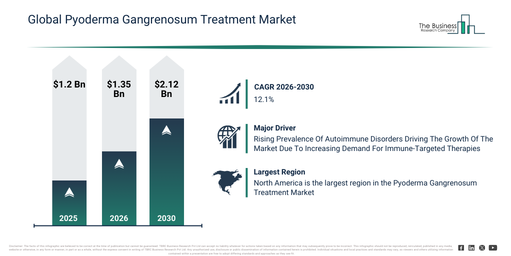
    The pyoderma gangrenosum treatment market has experienced rapid expansion in recent years. It is projected to grow from $1.2 billion in 2025 to $1.35 billion in 2026, exhibiting a compound annual growth rate (CAGR) of 11.8%. This historical growth can be attributed to an increase in the incidence of autoimmune diseases, the expansion of dermatology specialty care, growing awareness of rare skin disorders, the proliferation of hospital wound care units, and improved access to diagnostic testing.

    The pyoderma gangrenosum treatment market is projected to experience significant expansion over the next few years. It is expected to reach $2.12 billion by 2030, with a compound annual growth rate (CAGR) of 12.1%. This anticipated growth during the forecast period can be attributed to advancements in targeted immunotherapy development, the increasing availability of specialty biologic drugs, growing investment in treatments for rare diseases, a rise in outpatient dermatology centers, and expanded insurance coverage for advanced therapies. Key trends identified for the forecast period include the wider adoption of biologic therapies, an increase in the use of combination drug regimens, the growth of advanced wound care therapies, a rise in personalized treatment protocols, and more comprehensive clinical monitoring and follow-up programs.

    Access Your Free Sample Report For In-Depth Market Analysis:

    https://www.thebusinessresearchcompany.com/sample.aspx?id=33280&type=smp

    Which Important Drivers Are Guiding The Pyoderma Gangrenosum Treatment Market Growth?

    The increasing incidence of autoimmune conditions is anticipated to fuel the expansion of the pyoderma gangrenosum treatment market. These disorders involve the body’s immune system erroneously attacking its own tissues, leading to persistent inflammation and tissue damage. The rise in autoimmune disorders is attributed to aging populations, who are more prone to immune system irregularities. Pyoderma gangrenosum treatments offer advantages for these conditions by moderating the overactive immune response, thereby helping to manage inflammation and prevent harm to healthy tissues, addressing both dermatological ulcers and wider issues associated with autoimmune diseases. For instance, as of September 2025, the National Institutes of Health, a US-based medical research agency, estimated that 23.5 million to 50 million Americans, representing between 7% and 8% of the U.S. population, were affected by one or more autoimmune diseases, with this prevalence steadily increasing due to intricate genetic, environmental, and societal influences. Consequently, the growing occurrence of autoimmune disorders is propelling the pyoderma gangrenosum treatment market forward.

    Which Segments Define The Pyoderma Gangrenosum Treatment Market Segment Structure?

    The pyoderma gangrenosum treatment market covered in this report is segmented –

    1) By Treatment Type: Topical Treatments; Systemic Treatments; Surgical Treatments; Wound Care Therapies

    2) By Drug Class: Immunosuppressive Drugs; Tumour Necrosis Factor Inhibitors; Antibacterial Agents

    3) By Route of Administration: Oral; Injectable; Topical

    4) By Distribution Channel: Hospital Pharmacies; Retail Pharmacies; Other Distribution Channels

    5) By End User: Hospitals; Dermatology Clinics; Outpatient Care Centers

    Subsegments:

    1) By Topical Treatments: Topical Corticosteroids; Topical Immunomodulators; Topical Antibiotics; Topical Antiseptic Agents

    2) By Systemic Treatments: Systemic Corticosteroids; Systemic Immunosuppressive Drugs; Biologic Therapies; Anti Inflammatory Medications

    3) By Surgical Treatments: Surgical Debridement; Skin Grafting Procedures; Reconstructive Surgical Procedures

    4) By Wound Care Therapies: Advanced Wound Dressings; Negative Pressure Wound Therapy; Moist Wound Healing Solutions; Infection Control Wound Care

    Who Are The Established Players Within The Pyoderma Gangrenosum Treatment Market?

    Major companies operating in the pyoderma gangrenosum treatment market are Johnson & Johnson Services Inc., Roche Holding AG, Merck & Co. Inc., Pfizer Inc., AbbVie Inc., Sanofi SA, Novartis AG, Bristol-Myers Squibb Company, GlaxoSmithKline Plc, Amgen Inc., Boehringer Ingelheim Inc., Teva Pharmaceutical Industries Ltd., Biogen Inc., Fresenius Kabi AG, Intas Pharmaceuticals Ltd., UCB SA, Swedish Orphan Biovitrum AB, Celltrion Inc., InflaRx NV, and Aclaris Therapeutics Inc.

    Get The Full Pyoderma Gangrenosum Treatment Market Report:

    https://www.thebusinessresearchcompany.com/report/pyoderma-gangrenosum-treatment-market-report

    Where Is The Pyoderma Gangrenosum Treatment Market Most Concentrated Geographically?

    North America was the largest region in the pyoderma gangrenosum treatment market in 2025. Asia-Pacific is expected to be the fastest-growing region in the forecast period. The regions covered in the pyoderma gangrenosum treatment market report are Asia-Pacific, South East Asia, Western Europe, Eastern Europe, North America, South America, Middle East, Africa.

    Request A Customized Pyoderma Gangrenosum Treatment Market Report For Competitive Insights:

    https://www.thebusinessresearchcompany.com/customise?id=33280&type=smp

    Browse Through More Reports Similar to the Global Pyoderma Gangrenosum Treatment Market 2026, By The Business Research Company

    Monkey Pox Treatment Market Report 2026

    https://www.thebusinessresearchcompany.com/report/monkey-pox-treatment-global-market-report

    Rare Diseases Treatment Market Report 2026

    https://www.thebusinessresearchcompany.com/report/rare-diseases-treatment-global-market-report

    Rare Neurological Disease Treatment Market Report 2026

    https://www.thebusinessresearchcompany.com/report/rare-neurological-disease-treatment-global-market-report

    Get in touch with us:

    The Business Research Company: https://www.thebusinessresearchcompany.com/

    Americas +1 310-496-7795

    Asia +44 7882 955267 & +91 8897263534

    Europe +44 7882 955267

    Email us at info@tbrc.info

    Follow us on:

    LinkedIn: https://in.linkedin.com/company/the-business-research-company

    YouTube: https://www.youtube.com/channel/UC24_fI0rV8cR5DxlCpgmyFQ

    Global Market Model: https://www.thebusinessresearchcompany.com/global-market-model
  • Protein Language Models Market Forecast Through 2030 With Insights On Market Patterns And Developments

    Protein Language Models Market Forecast Through 2030 With Insights On Market Patterns And Developments

    The Business Research Company’s 2026 market reports feature enhanced tools like market attractiveness analysis, TAM assessment, and company scoring matrices, along with interactive dashboards, deeper supply chain insights, and startup coverage strengthening the depth, usability, and strategic value of insights.

    What Is The Projected Increase In Market Value Of The Protein Language Models Market During 2026–2030?

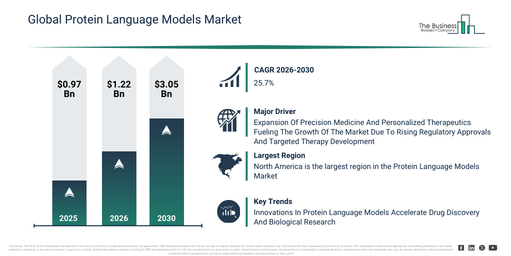
    The protein language models market size has experienced significant expansion in recent years. It is projected to expand from $0.97 billion in 2025 to $1.22 billion in 2026, achieving a compound annual growth rate (CAGR) of 25.5%. The market’s past growth is attributable to an increase in genomic sequencing data, greater biopharma research expenditure, the proliferation of bioinformatics platforms, enhanced protein database accessibility, and the early incorporation of machine learning within biology.

    The protein language models market size is anticipated to experience substantial growth in the coming years, with projections indicating it will reach $3.05 billion by 2030, displaying a compound annual growth rate (CAGR) of 25.7%. This expansion during the forecast period can be attributed to factors such as the heightened demand for computational protein design, the broadening of AI-driven drug pipelines, a greater imperative for swift target identification, increasing cross-industry collaborations in AI and biology, and elevated investments in AI life science startups. Key trends anticipated within the forecast timeframe encompass the increasing utilization of sequence-based protein representation models, the proliferation of cloud-hosted protein modeling platforms, an escalating demand for protein annotation services, a rise in API-based bioinformatics toolkits, and greater integration of AI-powered drug discovery workflows.

    Access Your Free Sample Report For In-Depth Market Analysis:

    https://www.thebusinessresearchcompany.com/sample.aspx?id=33275&type=smp

    What Major Factors Are Driving The Protein Language Models Market Forward?

    The protein language models market is anticipated to expand due to the increasing adoption of precision medicine and personalized therapeutics. These healthcare strategies involve customizing treatments for individual patients based on unique characteristics like genetic makeup, biomarkers, and disease profiles, with the aim of enhancing treatment efficacy and minimizing negative side effects. The growth of precision medicine is being stimulated by a rise in regulatory clearances and a research emphasis on targeted therapies that address specific biological pathways rather than universal solutions. Protein language models facilitate precision medicine by allowing in-depth examination of protein sequences and structures, assisting researchers in discovering therapeutic targets, forecasting drug responses, and devising customized biological treatments more effectively. For example, in February 2024, as reported by the Personalized Medicine Coalition, a US-based not-for-profit organization, the Food and Drug Administration (FDA) granted approval to 16 new personalized therapies for rare disease patients in 2023, a significant increase from six approvals in 2022. Consequently, the progress in precision medicine and personalized therapeutics is a key factor propelling the protein language models market.

    How Is The Protein Language Models Market Segmented Across Different Segment Categories?

    The protein language models market covered in this report is segmented –

    1) By Component: Software; Hardware; Services

    2) By Deployment Mode: On-Premises; Cloud

    3) By Application: Drug Discovery; Protein Engineering; Disease Diagnosis; Functional Annotation; Other Applications

    4) By End-User: Pharmaceutical And Biotechnology Companies; Academic And Research Institutes; Healthcare Providers; Other End-Users

    Subsegments:

    1) By Software: Protein Sequence Analysis Platforms; Model Training And Fine Tuning Tools; Protein Structure Prediction Software; Protein Function Annotation Tools; Bioinformatics Integration Platforms

    2) By Hardware: High Performance Computing Systems; Graphics Processing Hardware; Tensor Processing Hardware; Data Storage And Processing Systems; Cloud Based Computing Infrastructure

    3) By Services: Consulting And Advisory Services; Custom Model Development Services; System Integration Services; Managed And Support Services; Training And Knowledge Transfer Services

    Which Trends Are Impacting The Progress Of The Protein Language Models Market?

    Key companies active in the protein language models market are prioritizing the development of advanced AI-driven protein language models to refine protein sequence analysis and accelerate processes in drug discovery and biological research. An AI-driven protein language model utilizes artificial intelligence, which is trained on extensive protein sequences, to predict, interpret, and generate protein structures and functions. This capability hastens protein engineering, mutation assessment, and the creation of new therapeutic solutions. For example, in September 2024, Ginkgo Bioworks Holdings, Inc., a US-based biotechnology firm, launched a Protein Large Language Model and Model API built on Google Cloud technology. This solution, trained on Ginkgo’s proprietary protein dataset and hosted on Vertex AI, enables both enterprises and individual researchers to perform sophisticated protein sequence analysis and improve pattern recognition, thereby expediting drug development and biological research workflows.

    Which Organizations Play A Role In The Protein Language Models Market Landscape?

    Major companies operating in the protein language models market are Google LLC, Meta Platforms Inc., Pfizer Inc., Novartis AG, AstraZeneca PLC, NVIDIA Corporation, Owkin Inc., Generate Biomedicines Inc., Recursion Pharmaceuticals Inc., BenevolentAI Limited, Exscientia plc, Dyno Therapeutics Inc., Atomwise Inc., ProteinQure Inc., Cradle Bio B.V., Profluent Bio Inc., BioMap (Beijing) Intelligence Technology Co. Ltd., EvolutionaryScale Inc., Isomorphic Labs Limited, Insilico Medicine Inc., AbSci Corporation, Peptone Ltd., and Valence Labs Inc.

    Get The Full Protein Language Models Market Report:

    https://www.thebusinessresearchcompany.com/report/protein-language-models-market-report

    Which Region Dominates The Protein Language Models Market By Market Share?

    North America was the largest region in the protein language models market in 2025. Asia-Pacific is expected to be the fastest-growing region in the forecast period. The regions covered in the protein language models market report are Asia-Pacific, South East Asia, Western Europe, Eastern Europe, North America, South America, Middle East, Africa.

    Request A Customized Protein Language Models Market Report For Competitive Insights:

    https://www.thebusinessresearchcompany.com/customise?id=33275&type=smp

    Browse Through More Reports Similar to the Global Protein Language Models Market 2026, By The Business Research Company

    Large Language Model Llm Market 2026

    https://www.thebusinessresearchcompany.com/report/large-language-model-llm-market

    Protein Sequencing Market Report 2026

    https://www.thebusinessresearchcompany.com/report/protein-sequencing-global-market-report

    Research Grade Proteins Market Report 2026

    https://www.thebusinessresearchcompany.com/report/research-grade-proteins-global-market-report

    Get in touch with us:

    The Business Research Company: https://www.thebusinessresearchcompany.com/

    Americas +1 310-496-7795

    Asia +44 7882 955267 & +91 8897263534

    Europe +44 7882 955267

    Email us at info@tbrc.info

    Follow us on:

    LinkedIn: https://in.linkedin.com/company/the-business-research-company

    YouTube: https://www.youtube.com/channel/UC24_fI0rV8cR5DxlCpgmyFQ

    Global Market Model: https://www.thebusinessresearchcompany.com/global-market-model
  • Prion Disease Treatment Market Outlook For 2026–2030 Covering Growth Drivers And Industry Trends

    Prion Disease Treatment Market Outlook For 2026–2030 Covering Growth Drivers And Industry Trends

    The Business Research Company’s 2026 market reports feature enhanced tools like market attractiveness analysis, TAM assessment, and company scoring matrices, along with interactive dashboards, deeper supply chain insights, and startup coverage strengthening the depth, usability, and strategic value of insights.

    How Is The Market Size Of The Prion Disease Treatment Market Expected To Change From 2026 To 2030?

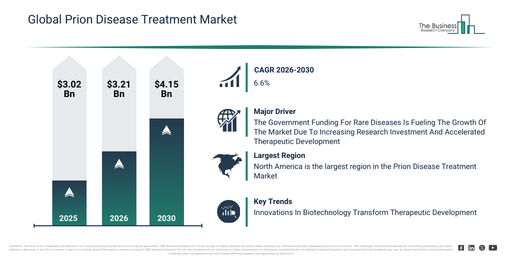
    The prion disease treatment market size has experienced substantial growth in recent years. It is projected to expand from $3.02 billion in 2025 to $3.21 billion in 2026, demonstrating a compound annual growth rate (CAGR) of 6.4%. The historic period’s growth can be attributed to factors like rare disease research funding, increased awareness of neurological disorders, the expansion of genetic testing, academic clinical studies, and the development of specialty neurology centers.

    The prion disease treatment market size is projected to experience substantial expansion in the coming years. This market is set to reach $4.15 billion by 2030, exhibiting a compound annual growth rate (CAGR) of 6.6%. This anticipated expansion during the forecast period is primarily driven by initiatives such as novel molecule discovery programs, precision neurology approaches, biomarker based diagnostics, expanded orphan drug incentives, and advanced neuro research collaborations. Furthermore, significant developments expected in this period encompass targeted neurodegenerative drug research, advanced prion diagnostic testing, genetic risk screening programs, compassionate use therapy trials, and integrated supportive care protocols.

    Access Your Free Sample Report For In-Depth Market Analysis:

    https://www.thebusinessresearchcompany.com/sample.aspx?id=33272&type=smp

    Which Key Drivers Are Affecting The Prion Disease Treatment Market Development?

    Increased government investment in rare diseases is anticipated to stimulate the expansion of the prion disease treatment market in the foreseeable future. Rare diseases are defined as health conditions impacting a small segment of the population, frequently characterized as chronic, worsening, and fatal. Funding for rare diseases is growing, driven by enhanced governmental and charitable contributions, which in turn speeds up research efforts, clinical investigations, and the creation of novel treatments for conditions where medical needs are largely unaddressed. Governmental financial backing for rare diseases advances prion disease treatment by sustaining foundational long-term research, upholding specialized labs and monitoring networks, fostering pharmaceutical breakthroughs despite minimal commercial motivation, and accelerating the conversion of findings into diagnostic tools and potential remedies. As an illustration, in February 2024, the Department of Health and Social Care, a UK-based government department, committed a $17.3 million (£14 million) investment. This funding is designated for the creation of the UK Rare Disease Research Platform, which will consist of 11 research nodes nationwide and a main coordinating center. Its purpose is to promote synchronized cooperation among academic, clinical, and industry researchers, individuals affected by rare diseases, research charities, and other interested parties, with the goal of expediting progress in comprehending, diagnosing, and treating rare diseases. Consequently, the increasing governmental financial support for rare diseases is fueling the expansion of the prion disease treatment market.

    What Are The Main Segments Within The Prion Disease Treatment Market Segment Structure?

    The prion disease treatment market covered in this report is segmented –

    1) By Disease Type: Creutzfeldt-Jakob Disease; Gerstmann-Sträussler-Scheinker Syndrome; Fatal Familial Insomnia; Kuru; Other Disease Types

    2) By Treatment Type: Medication; Supportive Care; Other Treatment Types

    3) By Route Of Administration: Oral; Parenteral

    4) By Distribution Channel: Hospital Pharmacies; Retail Pharmacies; Online Pharmacies

    5) By End-User: Hospitals; Specialty Clinics; Research Institutes; Other End-Users

    Subsegments:

    1) By Creutzfeldt-Jakob Disease: Sporadic Creutzfeldt-Jakob Disease; Familial Creutzfeldt-Jakob Disease; Iatrogenic Creutzfeldt-Jakob Disease; Variant Creutzfeldt-Jakob Disease

    2) By Gerstmann-Sträussler-Scheinker Syndrome: Early-Stage Gerstmann-Sträussler-Scheinker Syndrome; Progressive-Stage Gerstmann-Sträussler-Scheinker Syndrome; Advanced-Stage Gerstmann-Sträussler-Scheinker Syndrome

    3) By Fatal Familial Insomnia: Sleep Disorder Management; Autonomic Dysfunction Management; Psychiatric Symptom Management

    4) By Kuru: Motor Function Support; Cognitive Function Support; Symptomatic Neurological Care

    5) By Other Disease Types: Atypical Prion Disorders; Unclassified Prion Conditions

    What Trends Are Transforming The Prion Disease Treatment Market?

    Major companies operating in the prion disease treatment market are concentrating on developing innovative approaches, such as viral vector-based gene therapy, to deliver targeted treatments across the blood-brain barrier and slow the progression of the disease. Viral vector-based gene therapy is a treatment method that utilizes modified viruses to introduce therapeutic genes into specific cells, helping to correct or reduce disease-causing processes, like misfolded prion proteins, by enabling precise and long-lasting effects. For instance, in February 2025, Apertura Gene Therapy, a US-based biotechnology company, provided support to the Broad Institute in developing a gene therapy for prion disease that employs an engineered AAV capsid targeting TfR1. This therapy delivers therapeutic genes across the blood-brain barrier, allowing for widespread central nervous system (CNS) distribution and potentially slowing or preventing the accumulation of prion protein. It offers high specificity, reduced off-target effects, and sustained therapeutic expression, representing a significant advancement over conventional treatments that primarily manage symptoms rather than modify disease progression. Overall, it signifies a substantial step forward in shifting from symptomatic management towards disease-modifying interventions, with the potential to transform the treatment landscape for prion disorders.

    Who Are The Companies Participating In The Prion Disease Treatment Market?

    Major companies operating in the prion disease treatment market are Ionis Pharmaceuticals Inc., Broad Institute of MIT and Harvard, Sangamo Therapeutics Inc., Gate Bioscience, Apertura Gene Therapy, Sibylla Biotech, Case Western Reserve University, and National Prion Clinic.

    Get The Full Prion Disease Treatment Market Report:

    https://www.thebusinessresearchcompany.com/report/prion-disease-treatment-market-report

    Which Region Is The Largest In The Prion Disease Treatment Market?

    North America was the largest region in the prion disease treatment market in 2025. Asia-Pacific is expected to be the fastest-growing region in the forecast period. The regions covered in the prion disease treatment market report are Asia-Pacific, South East Asia, Western Europe, Eastern Europe, North America, South America, Middle East, Africa.

    Request A Customized Prion Disease Treatment Market Report For Competitive Insights:

    https://www.thebusinessresearchcompany.com/customise?id=33272&type=smp

    Browse Through More Reports Similar to the Global Prion Disease Treatment Market 2026, By The Business Research Company

    Rare Diseases Treatment Market Report 2026

    https://www.thebusinessresearchcompany.com/report/rare-diseases-treatment-global-market-report

    Rare Neurological Disease Treatment Market Report 2026

    https://www.thebusinessresearchcompany.com/report/rare-neurological-disease-treatment-global-market-report

    Pruritus Therapeutic Market Report 2026

    https://www.thebusinessresearchcompany.com/report/pruritus-therapeutic-global-market-report

    Get in touch with us:

    The Business Research Company: https://www.thebusinessresearchcompany.com/

    Americas +1 310-496-7795

    Asia +44 7882 955267 & +91 8897263534

    Europe +44 7882 955267

    Email us at info@tbrc.info

    Follow us on:

    LinkedIn: https://in.linkedin.com/company/the-business-research-company

    YouTube: https://www.youtube.com/channel/UC24_fI0rV8cR5DxlCpgmyFQ

    Global Market Model: https://www.thebusinessresearchcompany.com/global-market-model
  • Rising Threat Of Biological Hazards Fueling The Growth Of The Market Due To Increasing Zoonotic Outbreaks And Public Health Urgency Is Supporting Expansion In The Portable Biotoxicity Detectors Market

    Rising Threat Of Biological Hazards Fueling The Growth Of The Market Due To Increasing Zoonotic Outbreaks And Public Health Urgency Is Supporting Expansion In The Portable Biotoxicity Detectors Market

    The Business Research Company’s 2026 market reports feature enhanced tools like market attractiveness analysis, TAM assessment, and company scoring matrices, along with interactive dashboards, deeper supply chain insights, and startup coverage strengthening the depth, usability, and strategic value of insights.

    From Its 2026 Market Size, What Value Is The Portable Biotoxicity Detectors Market Projected To Reach By 2030?

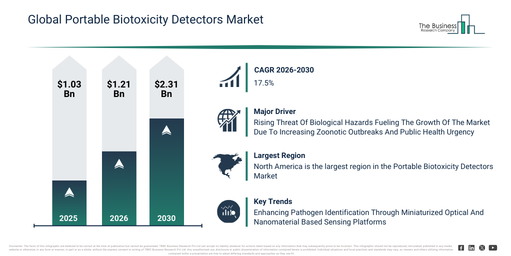
    The portable biotoxicity detectors market size has experienced swift expansion in recent years. This market is projected to increase from $1.03 billion in 2025 to $1.21 billion in 2026, achieving a compound annual growth rate (CAGR) of 17.3%. Historically, this growth has been fueled by an increase in environmental pollution monitoring needs, past biohazard and contamination incidents, the growth in industrial safety regulations, the expansion of water and air quality testing programs, and a rise in laboratory and field biosensor research.

    The portable biotoxicity detectors market is anticipated to experience significant expansion over the coming years. This market is projected to reach $2.31 billion by 2030, exhibiting a compound annual growth rate (CAGR) of 17.5%. Factors contributing to this growth during the forecast period include an increasing need for prompt on-field diagnostics, the broadening of smart environmental monitoring systems, stricter regulations for food and water safety compliance, increased funding in portable analytical instruments, and greater use in defense and homeland security sectors. Key developments expected in this period encompass portable multi parameter detection devices, swift field biohazard screening, miniaturized biosensor platforms, continuous environmental toxicity monitoring, and detection kits for emergency response.

    Access Your Free Sample Report For In-Depth Market Analysis:

    https://www.thebusinessresearchcompany.com/sample.aspx?id=33268&type=smp

    What Factors Are Contributing To The Growth Of The Portable Biotoxicity Detectors Market?

    The escalating danger from biological hazards is anticipated to drive the future expansion of the portable biotoxicity detectors market. Biological hazards are defined as pathogens and toxins from bacteria, viruses, or other organisms that endanger human health and the environment. The surge in these hazards arises from an increase in zoonotic spillover events, which are influenced by environmental changes and interactions between humans and animals. Portable biotoxicity detectors help manage these growing biological threats by allowing swift on-site identification and containment to prevent widespread contamination. As an illustration, in April 2024, the World Health Organization documented more than 7.6 million dengue cases globally by 30 April 2024, which included 3.4 million confirmed cases, over 16,000 severe cases, and more than 3,000 deaths. Notably, the Region of the Americas recorded over seven million cases, exceeding its 2023 annual total of 4.6 million cases. Hence, the increasing threat of biological hazards is a primary driver for the growth of the portable biotoxicity detectors market.

    How Is Segmentation Applied In The Portable Biotoxicity Detectors Market Segment Analysis?

    The portable biotoxicity detectors market covered in this report is segmented –

    1) By Product Type: Portable Biotoxicity Detectors; Stationary Biotoxicity Detectors; Handheld Detectors; Wearable Detectors

    2) By Deployment Mode: On-field; On-site; In-lab

    3) By Technology: Biosensors; Luminescent Microorganisms; Enzymatic Biosensors; Electrochemical Biosensors; Microfluidic Devices

    4) By Application: Water Quality Testing; Soil Monitoring; Air Quality Monitoring; Industrial Waste Monitoring; Food Safety Testing

    Subsegments:

    1) By Portable Biotoxicity Detectors: Battery Operated Portable Detectors; Smartphone Integrated Portable Detectors; Multi Parameter Portable Detectors; Field Deployable Rapid Detection Units

    2) By Stationary Biotoxicity Detectors: Bench Top Laboratory Detectors; Fixed Industrial Monitoring Systems; Continuous Monitoring Stationary Units; Automated High Throughput Detection Systems

    3) By Handheld Detectors: Single Use Handheld Detectors; Reusable Handheld Detection Devices; Real Time Handheld Detection Instruments; Compact Manual Sampling Detectors

    4) By Wearable Detectors: Clip On Wearable Detectors; Wrist Mounted Wearable Detectors; Body Mounted Continuous Monitoring Devices; Personal Safety Wearable Detection Systems

    What Trends Are Shaping The Future Of The Portable Biotoxicity Detectors Market?

    Major enterprises operating within the portable biotoxicity detectors market are concentrating on advancing field-deployable diagnostic solutions, such as aptamer-integrated colorimetric detection. This approach aims to facilitate highly sensitive, immediate, and economical identification of dangerous materials through sophisticated optical systems and enhanced signal amplification using nanomaterials. Aptamer-integrated colorimetric detection functions as a sensing technique employing artificial nucleic acid ligands, known as aptamers, which are designed to specifically attach to toxic substances. This binding triggers a noticeable color shift in gold nanoparticles, a change that can be electronically quantified without requiring intricate laboratory setups. For instance, in November 2025, the Indian Institute of Technology Madras, an India-based public technical and research university, unveiled the Smart Malathion Detection Device (Smart MDD). This smart malathion detection device ensures swift and precise identification of malathion residues across air, water, and agricultural goods. It incorporates real-time oversight with elevated sensitivity, guaranteeing prompt detection and heightened safety. The apparatus is conveniently portable, user-friendly, and adaptable for both on-site and laboratory applications. With its IoT capabilities and data recording features, it enables distant observation and immediate notifications.

    Who Are The Companies Participating In The Portable Biotoxicity Detectors Market Environment?

    Major companies operating in the portable biotoxicity detectors market are Abbott Laboratories, Siemens Healthineers AG, Merck KGaA, Agilent Technologies, Mettler-Toledo International Inc., Bruker Corporation, QIAGEN N.V., DiaSorin S.p.A., Tecan Group Ltd., Neogen Corporation, Smiths Detection Group Ltd., Yokogawa Electric Corporation, Quanterix Corporation, Envirologix Inc., BlueSense Diagnostics A/S, Optosky Technologies, Eurofins Technologies, Alexeter Technologies LLC, Biosensing Instrument Inc., Changsha Langshuo Technology Co. Ltd.

    Get The Full Portable Biotoxicity Detectors Market Report:

    https://www.thebusinessresearchcompany.com/report/portable-biotoxicity-detectors-market-report

    Which Region Leads The Portable Biotoxicity Detectors Market In Terms Of Market Share?

    North America was the largest region in the portable biotoxicity detectors market in 2025. Asia-Pacific is expected to be the fastest-growing region in the forecast period. The regions covered in the portable biotoxicity detectors market report are Asia-Pacific, South East Asia, Western Europe, Eastern Europe, North America, South America, Middle East, Africa.

    Request A Customized Portable Biotoxicity Detectors Market Report For Competitive Insights:

    https://www.thebusinessresearchcompany.com/customise?id=33268&type=smp

    Browse Through More Reports Similar to the Global Portable Biotoxicity Detectors Market 2026, By The Business Research Company

    Portable Food Safety Detectors Market Report 2026

    https://www.thebusinessresearchcompany.com/report/portable-food-safety-detectors-global-market-report

    Ecotoxicological Studies Market Report 2026

    https://www.thebusinessresearchcompany.com/report/ecotoxicological-studies-global-market-report

    Hand Held Chemical And Metal Detector Market Report 2026

    https://www.thebusinessresearchcompany.com/report/hand-held-chemical-and-metal-detector-global-market-report

    Get in touch with us:

    The Business Research Company: https://www.thebusinessresearchcompany.com/

    Americas +1 310-496-7795

    Asia +44 7882 955267 & +91 8897263534

    Europe +44 7882 955267

    Email us at info@tbrc.info

    Follow us on:

    LinkedIn: https://in.linkedin.com/company/the-business-research-company

    YouTube: https://www.youtube.com/channel/UC24_fI0rV8cR5DxlCpgmyFQ

    Global Market Model: https://www.thebusinessresearchcompany.com/global-market-model
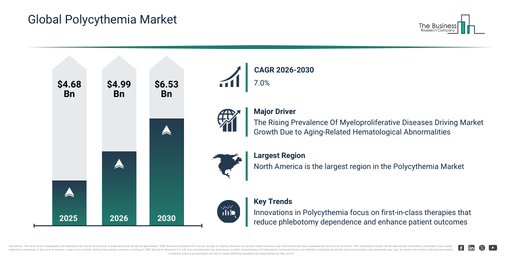
  • The Rising Prevalence Of Myeloproliferative Diseases Driving Market Growth Due to Aging-Related Hematological Abnormalities Is Contributing To Changes In The Polycythemia Market

    The Rising Prevalence Of Myeloproliferative Diseases Driving Market Growth Due to Aging-Related Hematological Abnormalities Is Contributing To Changes In The Polycythemia Market

    The Business Research Company’s 2026 market reports feature enhanced tools like market attractiveness analysis, TAM assessment, and company scoring matrices, along with interactive dashboards, deeper supply chain insights, and startup coverage strengthening the depth, usability, and strategic value of insights.

    How Much Growth In Market Value Is Expected For The Polycythemia Market Between 2026 And 2030?

    The polycythemia market has demonstrated significant expansion over recent years. Its value is anticipated to rise from $4.68 billion in 2025 to $4.99 billion in 2026, exhibiting a compound annual growth rate (CAGR) of 6.7%. This historical growth can be linked to the increasing occurrence of myeloproliferative disorders, greater public understanding of rare blood diseases, the establishment of more specialty hematology centers, an increase in diagnostic testing, and the expanded use of cytoreductive drugs.

    The polycythemia market is anticipated to show significant expansion in the coming years. It is projected to reach $6.53 billion by 2030, demonstrating a compound annual growth rate (CAGR) of 7.0%. This growth throughout the forecast period stems from progress in targeted JAK2 therapies, the increasing embrace of genetic screening, a surging requirement for personalized treatment strategies, enhanced accessibility to specialty biologics, and an expanding elderly demographic. Prominent trends expected during this period encompass the growing adoption of Janus Kinase inhibitors, the rising application of interferon-based injectable treatments, a heightened inclination towards therapeutic phlebotomy procedures, the broadening scope of hematocrit monitoring diagnostics, and a shift towards combination drug therapy approaches.

    Access Your Free Sample Report For In-Depth Market Analysis:

    https://www.thebusinessresearchcompany.com/sample.aspx?id=33266&type=smp

    Which Strong Drivers Are Impacting The Polycythemia Market Growth?

    The polycythemia market is anticipated to grow as a result of the increasing occurrence of myeloproliferative diseases. Myeloproliferative diseases represent a collection of uncommon blood conditions characterized by the abnormal overproduction of blood cells in the bone marrow, leading to impaired blood function and circulation. A primary factor contributing to the rising incidence of these disorders is the growing prevalence of age-related hematological abnormalities, as aging populations exhibit greater susceptibility to bone marrow dysfunction. Polycythemia, being a significant subtype of myeloproliferative diseases involving the excessive production of red blood cells, plays a vital role in enhancing clinical understanding, diagnosis, and ongoing monitoring of these conditions, thereby supporting market expansion. For instance, in September 2024, Blood Cancer United, a US-based nonprofit dedicated to curing blood cancers, reported that an estimated 120,000 people in the United States were living with or in remission from myeloproliferative neoplasms (MPNs) in 2023, highlighting an increased prevalence of these chronic hematologic disorders. Consequently, the rising incidence of myeloproliferative diseases is a key driver for the growth of the polycythemia market.

    What Segment Categories Shape The Polycythemia Market Segment Landscape?

    The polycythemia market covered in this report is segmented –

    1) By Type: Primary polycythemia; Secondary polycythemia; Pseudopolycythemia

    2) By Drug Class: Antimetabolites; Janus Kinase 2 Inhibitors; Myelosuppressive Agents; Selective Serotonin Reuptake Inhibitors; Folic Acid; Other Drug Classes

    3) By Route Of Administration: Oral; Intravenous; Intramuscular

    4) By End Users: Hospital Pharmacies; Retail Pharmacies; Online Pharmacies

    Subsegments:

    1) By Primary Polycythemia: Polycythemia Vera; Familial Primary Polycythemia

    2) By Secondary Polycythemia: Hypoxia Induced Polycythemia; Tumor Associated Polycythemia; Drug Induced Polycythemia; Hormone Induced Polycythemia

    3) By Pseudopolycythemia: Stress Related Polycythemia; Dehydration Related Polycythemia; Plasma Volume Contraction Related Polycythemia

    Which Trends Are Contributing To Changes In The Polycythemia Market?

    Major companies operating in the polycythemia market are concentrating on advanced innovations, with rusfertide standing out as a first-in-class hepcidin mimetic peptide. This innovation effectively lessens the requirement for frequent phlebotomies, simultaneously enhancing hematocrit control and the quality of life for patients. A hepcidin mimetic is defined as a drug or compound engineered to mimic hepcidin, which is the body’s chief hormone for regulating iron balance. As an example, in March 2025, Takeda Pharmaceutical Company Limited, a biopharmaceutical company based in Japan, disclosed positive topline findings from its Phase 3 VERIFY study of rusfertide in patients with polycythemia vera. The study results demonstrated a significant decrease in phlebotomy dependence, improved hematocrit control, and valuable patient-reported outcomes, all while sustaining a favorable safety profile.

    Who Are The Companies Operating Across The Polycythemia Market Value Chain?

    Major companies operating in the polycythemia market are Bristol Myers Squibb Company, Roche Holding AG, Merck And Company Inc., Bayer AG, Novartis AG, Takeda Pharmaceutical Company, Gilead Sciences Inc., Teva Pharmaceutical Industries Ltd., Incyte Corporation, Ionis Pharmaceuticals Inc., CTI BioPharma Corp., AOP Orphan Pharmaceuticals AG, Silence Therapeutics Plc, Italfarmaco S.p.A., PharmaEssentia Corporation, Karyopharm Therapeutics Inc., Protagonist Therapeutics Inc., Kartos Therapeutics Inc., Geron Corporation, and Perseus Proteomics Inc.

    Get The Full Polycythemia Market Report:

    https://www.thebusinessresearchcompany.com/report/polycythemia-market-report

    Which Region Leads The Polycythemia Market In Overall Market Size?

    North America was the largest region in the polycythemia market in 2025. Asia-Pacific is expected to be the fastest-growing region in the forecast period. The regions covered in the polycythemia market report are Asia-Pacific, South East Asia, Western Europe, Eastern Europe, North America, South America, Middle East, Africa.

    Request A Customized Polycythemia Market Report For Competitive Insights:

    https://www.thebusinessresearchcompany.com/customise?id=33266&type=smp

    Browse Through More Reports Similar to the Global Polycythemia Market 2026, By The Business Research Company

    Medical Polycarbonate Market Report 2026

    https://www.thebusinessresearchcompany.com/report/medical-polycarbonate-global-market-report

    Hyperlipidemia Market Report 2026

    https://www.thebusinessresearchcompany.com/report/hyperlipidemia-global-market-report

    Polycystic Ovarian Syndrome Treatment Market Report 2026

    https://www.thebusinessresearchcompany.com/report/polycystic-ovarian-syndrome-treatment-global-market-report

    Get in touch with us:

    The Business Research Company: https://www.thebusinessresearchcompany.com/

    Americas +1 310-496-7795

    Asia +44 7882 955267 & +91 8897263534

    Europe +44 7882 955267

    Email us at info@tbrc.info

    Follow us on:

    LinkedIn: https://in.linkedin.com/company/the-business-research-company

    YouTube: https://www.youtube.com/channel/UC24_fI0rV8cR5DxlCpgmyFQ

    Global Market Model: https://www.thebusinessresearchcompany.com/global-market-model