Month: May 2026

  • Medical Microfluidic Devices  Market Growth Analysis 2026–2030 Highlighting Innovation And Competitive Landscape

    Medical Microfluidic Devices Market Growth Analysis 2026–2030 Highlighting Innovation And Competitive Landscape

    The Business Research Company’s 2026 market reports feature enhanced tools like market attractiveness analysis, TAM assessment, and company scoring matrices, along with interactive dashboards, deeper supply chain insights, and startup coverage strengthening the depth, usability, and strategic value of insights.

    What Is The Projected Increase In Market Value Of The Medical Microfluidic Devices Market During 2026–2030?

    The medical microfluidic devices market size has experienced significant expansion recently. Looking ahead, this market is projected to expand from $6.35 billion in 2025 to reach $7.32 billion in 2026, demonstrating a compound annual growth rate (CAGR) of 15.3%. Historically, this market’s growth is largely due to factors such as the greater acceptance of point-of-care diagnostics, the expanding application of lab-on-a-chip technology in research settings, a heightened need for clinical testing based on microfluidics, the broadening scope of pharmaceutical and biotech R&D applications, and an increased preference for polymer-based microfluidic materials.

    The medical microfluidic devices market size is anticipated to undergo substantial expansion in the coming years. This market is projected to reach $12.79 billion by 2030, exhibiting a compound annual growth rate (CAGR) of 15.0%. The expansion during the forecast period is primarily driven by the escalating demand for personalized medicine and organ-on-chip models, the increasing integration of microfluidics into decentralized and home diagnostics, the growing adoption of microfluidic platforms for infectious disease monitoring, the broadening of microfluidic applications in high-throughput drug screening, and the rising penetration of microfluidic devices in burgeoning healthcare markets. Significant trends expected during this period involve technological advancements in integrated lab-on-a-chip platforms, innovations in droplet-based and paper-based microfluidics, the evolution of miniaturized biosensors and detectors, ongoing research and development in organ-on-chip and tissue engineering systems, and technological advancements in automated and AI-enabled microfluidic analysis.

    Access Your Free Sample Report For In-Depth Market Analysis:

    https://www.thebusinessresearchcompany.com/sample.aspx?id=30652&type=smp

    What Factors Are Contributing To The Growth Of The Medical Microfluidic Devices Market?

    The rising incidence of chronic illnesses is anticipated to fuel the expansion of the medical microfluidic devices market moving forward. These are enduring health conditions, such as diabetes, heart disease, and arthritis, that typically advance slowly and often necessitate ongoing medical care and lifestyle adjustments to manage symptoms and avert complications. The growth in chronic diseases is largely attributed to unhealthy lifestyle choices, including inadequate diet, lack of physical activity, and smoking, which elevate the risk of conditions like diabetes, heart disease, and obesity. Medical microfluidic devices contribute to the management of chronic diseases by allowing for accurate manipulation and examination of tiny fluid samples for consistent monitoring and diagnostic purposes. They enhance patient care through facilitating quick testing, customized treatment modifications, and less invasive long-term disease surveillance. For instance, in June 2024, the National Health Service, a UK-based government department, reported that 3,615,330 individuals registered with a general practitioner (GP) had been diagnosed with non-diabetic hyperglycemia or pre-diabetes (a state with elevated blood sugar levels, insufficient to be classified as diabetes) in 2023. This represented an 18% rise from 3,065,825 cases in 2022. Consequently, the growing occurrence of chronic diseases is boosting the development of the medical microfluidic devices market.

    Which Segment Types Are Examined In The Medical Microfluidic Devices Market Segment Study?

    The medical microfluidic devices market covered in this report is segmented –

    1) By Product Type: Lab-On-A-Chip (LOC) Systems, Microfluidic Chips And Cartridges, Droplet-Based Microfluidic Systems, Paper-Based Microfluidic Devices, Continuous-Flow Microfluidic Systems, Organ-On-A-Chip Platforms

    2) By Material: Glass, Polymer, Silicon, Metals, Ceramics

    3) By Application: Point-Of-Care Diagnostics, Drug Discovery And Development, Organ-On-Chip And Tissue Engineering, Infectious Disease Monitoring

    4) By End User: Hospitals And Diagnostic Clinics, Diagnostic And Research Laboratories, Pharmaceutical And Biotechnology Companies, Academic And Research Institutes, Home Care Settings

    Subsegments:

    1) By Lab-On-A-Chip Systems: Clinical Diagnostic Chips, Environmental Monitoring Chips, Biochemical Analysis Chips, Single-Cell Analysis Platforms

    2) By Microfluidic Chips And Cartridges: Point-Of-Care Diagnostic Cartridges, Sample Preparation Chips, Cell Culture And Assay Chips, Polymerase Chain Reaction Chips

    3) By Droplet-Based Microfluidic Systems: Water-In-Oil Emulsion Systems, Oil-In-Water Emulsion Systems, Digital Droplet Systems, High-Throughput Screening Platforms

    4) By Paper-Based Microfluidic Devices: Lateral Flow Assay Strips, Three-Dimensional Paper Networks, Multiplexed Detection Devices, Colorimetric Analysis Strips

    5) By Continuous-Flow Microfluidic Systems: Microreactor Systems, Cell Sorting And Separation Systems, Micromixer Devices, Chemical Synthesis Platforms

    6) By Organ-On-A-Chip Platforms: Liver-On-A-Chip Models, Lung-On-A-Chip Models, Heart-On-A-Chip Models, Multi-Organ System Models

    What Trends Are Shaping The Future Of The Medical Microfluidic Devices Market?

    Leading companies within the medical microfluidic devices market are prioritizing the creation of sophisticated platforms, such as fully integrated microfluidic chip-based systems, aiming to optimize the development of biopharmaceutical treatments for conditions like renal care. These fully integrated microfluidic chip-based platforms function as lab-on-a-chip systems, integrating numerous laboratory processes including sample preparation, fluid handling, chemical reactions, separations, and detection onto a single microscopic chip. An illustrative example occurred in June 2023 when AB Sciex LLC, a US-based analytical technology firm for life sciences, introduced its Intabio ZT system, which stands as the inaugural fully-integrated microfluidic chip-based platform combined with imaged capillary isoelectric focusing (icIEF) separation and UV detection. This platform is specifically designed to gather extensive data on charge isoforms relevant to biopharmaceuticals, seamlessly integrating with the ZenoTOF 7600 system. Furthermore, the solution offers advanced data processing capabilities through its Biologics Explorer software, facilitating deeper understanding of protein therapeutics and thereby speeding up the delivery of secure and efficacious biological treatments.

    Which Players Are Part Of The Competitive Landscape Of The Medical Microfluidic Devices Market?

    Major companies operating in the medical microfluidic devices market are Roche Diagnostics, Thermo Fisher Scientific Inc, Abbott Laboratories, Danaher Corporation, Agilent Technologies Inc., Illumina Inc., BioMérieux, PerkinElmer Inc., Bio-Rad Laboratories Inc., Fluidigm Corporation, Spectrum Fluidics, Biosurfit SA, Cellix Ltd., 3M Company, Dolomite Microfluidics, Micronit Microtechnologies B.V., Sphere Fluidics Ltd., BioFluidica Inc., uFluidix Inc., Elveflow, On-chip Biotechnologies, Achira Labs Pvt. Ltd., Akkonni Biosystems Inc.

    Get The Full Medical Microfluidic Devices Market Report:

    https://www.thebusinessresearchcompany.com/report/medical-microfluidic-devices-market-report

    Where Is The Medical Microfluidic Devices Market Primarily Concentrated By Region?

    North America was the largest region in the medical microfluidic devices market in 2025. Asia-Pacific is expected to be the fastest-growing region in the forecast period. The regions covered in the medical microfluidic devices market report are Asia-Pacific, South East Asia, Western Europe, Eastern Europe, North America, South America, Middle East, Africa.

    Request A Customized Medical Microfluidic Devices Market Report For Competitive Insights:

    https://www.thebusinessresearchcompany.com/customise?id=30652&type=smp

    Browse Through More Reports Similar to the Global Medical Microfluidic Devices Market 2026, By The Business Research Company

    Microfluidics Market Report 2026

    https://www.thebusinessresearchcompany.com/report/microfluidics-global-market-report

    Medical Device Technologies Market Report 2026

    https://www.thebusinessresearchcompany.com/report/medical-device-technologies-global-market-report

    nanotechnology based medical devices global market report

    https://www.thebusinessresearchcompany.com/report/nanotechnology-based-medical-devices-global-market-report

    Get in touch with us:

    The Business Research Company: https://www.thebusinessresearchcompany.com/

    Americas +1 310-496-7795

    Asia +44 7882 955267 & +91 8897263534

    Europe +44 7882 955267

    Email us at info@tbrc.info

    Follow us on:

    LinkedIn: https://in.linkedin.com/company/the-business-research-company

    YouTube: https://www.youtube.com/channel/UC24_fI0rV8cR5DxlCpgmyFQ

    Global Market Model: https://www.thebusinessresearchcompany.com/global-market-model

  • Medical Microbiology Testing Technology  Market Forecast Through 2030 With Insights On Market Patterns And Developments

    Medical Microbiology Testing Technology Market Forecast Through 2030 With Insights On Market Patterns And Developments

    The Business Research Company’s 2026 market reports feature enhanced tools like market attractiveness analysis, TAM assessment, and company scoring matrices, along with interactive dashboards, deeper supply chain insights, and startup coverage strengthening the depth, usability, and strategic value of insights.

    How Is The Market Size Of The Medical Microbiology Testing Technology Market Expected To Change From 2026 To 2030?

    The medical microbiology testing technology market size has experienced robust growth in recent years. It is anticipated to expand from $6.00 billion in 2025 to $6.50 billion in 2026, reflecting a compound annual growth rate (CAGR) of 8.2%. The expansion witnessed in previous periods can be linked to several factors, including the increasing occurrence of infectious diseases, a growing awareness of antimicrobial resistance, rising healthcare expenditure, the proliferation of clinical laboratories, and the increased integration of automated systems.

    The medical microbiology testing technology market size is anticipated to experience substantial expansion over the coming years. This market is projected to reach $8.82 billion by 2030, exhibiting a compound annual growth rate (CAGR) of 8.0%. The projected growth during this period is primarily driven by factors such as an increasing need for rapid and point-of-care testing, expanding government initiatives and public health programs, a heightened emphasis on food and pharmaceutical safety testing, market penetration into emerging economies, and the growing incorporation of laboratory information systems. Key trends anticipated in the forecast period encompass progress in molecular diagnostics, breakthroughs in high-throughput testing platforms, the evolution of multiplex and rapid diagnostic tests, heightened research and development activities in microbiology, and the technological merging with serological and immunological testing.

    Access Your Free Sample Report For In-Depth Market Analysis:

    https://www.thebusinessresearchcompany.com/sample.aspx?id=30651&type=smp

    Which Strong Drivers Are Impacting The Medical Microbiology Testing Technology Market Growth?

    The growing need for swift pathogen identification and detection is projected to fuel the expansion of the medical microbiology testing technology market. This refers to diagnostic tools that quickly and precisely identify microbes like bacteria, viruses, and other pathogens directly from patient samples, bypassing lengthy culture processes. This significantly shortens diagnostic times and enables quicker clinical decisions. Global public health systems and clinical laboratories are increasingly seeking rapid pathogen detection to enhance turnaround times and effectively manage infectious disease outbreaks and antimicrobial resistance challenges. Medical microbiology testing technology plays a crucial role in rapid pathogen detection by employing advanced diagnostic methods to swiftly and accurately pinpoint infectious agents, thereby facilitating prompt treatment and limiting disease transmission. For instance, the Infectious Disease Surveillance Center, a Japan-based public health organization, reported in November 2025, based on April 2025 data, that 2,104 to 2,153 respiratory pathogen tests were carried out per pathogen category within a single reporting period. During this time, positivity rates for severe acute respiratory syndrome coronavirus 2, influenza, respiratory syncytial virus, and parainfluenza varied from 5.7% to 11.5%. Consequently, the escalating demand for rapid pathogen detection and identification is a primary force behind the growth of the medical microbiology testing technology market.

    How Are Different Segments Classified In The Medical Microbiology Testing Technology Market Segment Analysis?

    The medical microbiology testing technology market covered in this report is segmented –

    1) By Product Type: Reagents, Instruments, Consumables, Software, Services

    2) By Testing Method: Culture Test, Polymerase Chain Reaction, Immunoassays, Deoxyribonucleic Acid Sequence

    3) By Technology: Cell Culture, Microscopy, Serology

    4) By Application: Infectious Diseases, Non-infectious Diseases, Research And Development, Clinical Trials

    5) By End Use: Hospitals, Diagnostic Laboratories, Pharmaceutical Companies, Research Institutes, Food And Beverage Industry

    Subsegments:

    1) By Reagents: Culture Media, Detection Reagents, Antigen And Antibody Reagents, Molecular Diagnostic Kits, Stains And Dyes, Antibiotic Or Susceptibility Testing Reagents

    2) By Instruments: Microscopes, Incubators, Automated Culture Systems Or Microbiology Analyzers, Spectrophotometers, Centrifuges, Colony Counters Or Plate Readers, Autoclaves Or Sterilizers, Bioreactors Or Environmental Monitoring Systems

    3) By Consumables: Petri Dishes, Test Tubes, Pipette Tips, Microplates, Sample Swabs Or Collection Containers, Slides And Cover Slips, Disposable Filters Or Membranes, Disposable Consumable Kits

    4) By Software: Laboratory Information Management Software, Data Analysis Or Result Reporting Software, Quality Control Or Workflow Management Software, Automated Instrument Control Software, Database Or Reference Strain Or Pathogen Registry Software

    5) By Services: Contract Testing Or Outsourced Microbiological Testing, Equipment Maintenance And Calibration, Training And Technical Support, Consulting And Compliance Services, Validation And Quality Assurance Services

    Which Trends Are Contributing To Changes In The Medical Microbiology Testing Technology Market?

    Major companies within the medical microbiology testing technology market are concentrating on creating advanced molecular analysis products, such as digital PCR (dPCR) assays. Their objective is to enhance research efficiency, improve detection accuracy, and strengthen public health surveillance. Digital PCR assays represent highly sensitive technologies capable of detecting and precisely quantifying specific DNA sequences, even in very low concentrations, thereby enabling accurate pathogen identification and monitoring. For instance, in June 2024, QIAGEN N.V., a molecular biology and life sciences solution provider from the Netherlands, introduced 35 new wet-lab tested digital PCR Microbial DNA Detection Assays designed for its QIAcuity digital PCR platform. These assays are accessible on QIAGEN’s GeneGlobe research platform and are engineered to target a wide array of pathogens responsible for tropical diseases (e.g., Dengue, Chikungunya, Malaria), sexually transmitted infections (STIs), and urinary tract infections (UTIs).

    Who Are The Companies Driving Activity In The Medical Microbiology Testing Technology Market?

    Major companies operating in the medical microbiology testing technology market are F. Hoffmann-La Roche Ltd., Thermo Fisher Scientific Inc., Siemens Healthineers AG, Danaher Corporation, Becton Dickinson and Company, bioMérieux SA, Hologic Inc., Sysmex Corporation, Bruker Corporation, Bio-Rad Laboratories Inc., QIAGEN N.V., Abbott Laboratories, Meridian Bioscience Inc., Fujirebio Diagnostics Inc., Seegene Inc., Oxford Nanopore Technologies plc, Molbio Diagnostics Pvt. Ltd., Hardy Diagnostics, HiMedia Laboratories Pvt. Ltd., Accelerate Diagnostics Inc., Liofilchem S.r.l.

    Get The Full Medical Microbiology Testing Technology Market Report:

    https://www.thebusinessresearchcompany.com/report/medical-microbiology-testing-technology-market-report

    Which Region Has The Greatest Market Share In The Medical Microbiology Testing Technology Market?

    North America was the largest region in the medical microbiology testing technology market in 2025. Asia-Pacific is expected to be the fastest-growing region in the forecast period. The regions covered in the medical microbiology testing technology market report are Asia-Pacific, South East Asia, Western Europe, Eastern Europe, North America, South America, Middle East, Africa.

    Request A Customized Medical Microbiology Testing Technology Market Report For Competitive Insights:

    https://www.thebusinessresearchcompany.com/customise?id=30651&type=smp

    Browse Through More Reports Similar to the Global Medical Microbiology Testing Technology Market 2026, By The Business Research Company

    Microbiology And Bacterial Culture For Industrial Testing Market Report 2026

    https://www.thebusinessresearchcompany.com/report/microbiology-and-bacterial-culture-for-industrial-testing-global-market-report

    Clinical Microbiology Market Report 2026

    https://www.thebusinessresearchcompany.com/report/clinical-microbiology-global-market-report

    hospital acquired infections testing kits global market report

    https://www.thebusinessresearchcompany.com/report/hospital-acquired-infections-testing-kits-global-market-report

    Get in touch with us:

    The Business Research Company: https://www.thebusinessresearchcompany.com/

    Americas +1 310-496-7795

    Asia +44 7882 955267 & +91 8897263534

    Europe +44 7882 955267

    Email us at info@tbrc.info

    Follow us on:

    LinkedIn: https://in.linkedin.com/company/the-business-research-company

    YouTube: https://www.youtube.com/channel/UC24_fI0rV8cR5DxlCpgmyFQ

    Global Market Model: https://www.thebusinessresearchcompany.com/global-market-model
  • Medical Magnets  Market Outlook For 2026–2030 Covering Growth Drivers And Industry Trends

    Medical Magnets Market Outlook For 2026–2030 Covering Growth Drivers And Industry Trends

    The Business Research Company’s 2026 market reports feature enhanced tools like market attractiveness analysis, TAM assessment, and company scoring matrices, along with interactive dashboards, deeper supply chain insights, and startup coverage strengthening the depth, usability, and strategic value of insights.

    From Its 2026 Market Size, What Value Is The Medical Magnets Market Projected To Reach By 2030?

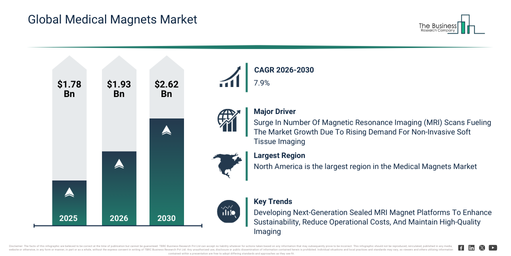
    The market for medical magnets has experienced significant growth over recent years. It is projected to grow from $1.78 billion in 2025 to $1.93 billion in 2026, exhibiting a compound annual growth rate (CAGR) of 8.2%. This historical growth can be attributed to several factors, including the increasing adoption of MRI systems, the growing prevalence of neurological disorders, rising investments in diagnostic infrastructure, the expansion of magnetic therapy usage, and the growing production of high-performance magnets.

    The medical magnets market size is projected to experience robust expansion over the coming years. By 2030, its valuation is anticipated to reach $2.62 billion, demonstrating a compound annual growth rate (CAGR) of 7.9%. This projected growth during the forecast period is primarily driven by an increasing demand for minimally invasive diagnostics, growing r&d in magnetic drug delivery, rising adoption of TMS devices, the expansion of hyperthermia cancer treatment applications, and growing dental applications using precision magnets. Key developments expected in this period include technological advancements in high-field MRI magnet systems, innovations in tms coil and magnet designs, the development of lightweight and high-strength magnets, research and development in magnetic hyperthermia therapy, and technological advancements in portable and compact magnetic devices.

    Access Your Free Sample Report For In-Depth Market Analysis:

    https://www.thebusinessresearchcompany.com/sample.aspx?id=30650&type=smp

    What Key Factors Are Shaping The Medical Magnets Market Landscape?

    The projected expansion of the medical magnets market is linked to the increasing frequency of magnetic resonance imaging (MRI) scans. MRI scans are non-invasive diagnostic procedures that utilize powerful magnets and radio waves to generate detailed images of the body’s internal organs and tissues. The rise in MRI scan usage is largely driven by a global increase in the geriatric population, which often presents with chronic conditions demanding thorough, non-invasive soft tissue imaging for accurate diagnosis and treatment strategies. Medical magnets are crucial for MRI scans, as they create the strong, consistent magnetic fields necessary for producing high-resolution images of internal structures. These magnets improve diagnostic precision and imaging quality, allowing for detailed visualization of soft tissues without reliance on ionizing radiation. An illustration of this trend is provided by NHS England, a UK-based publicly funded healthcare system, which reported in December 2024 that magnetic resonance imaging scans in England climbed from 361,705 in August 2023 to 365,270 in August 2024, with a cumulative 12-month total from September 2023 to August 2024 reaching 4,504,615 scans. Therefore, the expanding application of these devices in both therapeutic and diagnostic contexts is stimulating the growth of the medical magnets market. The rising occurrence of chronic illnesses is expected to further the expansion of the medical magnets market. Chronic diseases are long-term health issues, such as diabetes, heart disease, and arthritis, that typically progress gradually and often demand continuous medical oversight and lifestyle adjustments to control symptoms and avoid complications. The surge in chronic diseases is largely a consequence of unhealthy habits, including poor dietary choices, lack of physical activity, and smoking, which elevate the risk of conditions like diabetes, heart disease, and obesity. Medical magnets play a role in chronic disease management by backing targeted therapies and diagnostic imaging, thereby assisting in tracking and reducing symptoms over time. They contribute to improved patient care by offering non-invasive treatment options and enhancing the effectiveness of current medical interventions. For example, in June 2024, the National Health Service, a UK-based government department, indicated that 3,615,330 individuals registered with a general practitioner (GP) received a diagnosis of non-diabetic hyperglycemia or pre-diabetes in 2023, marking an 18% rise from 3,065,825 cases in 2022. This increasing prevalence of chronic diseases is consequently fostering the growth of the medical magnets market.

    How Is The Medical Magnets Market Categorized Across Its Segment Groups?

    The medical magnets market covered in this report is segmented –

    1) By Product Type: High-Performance Magnets, Lower-Performance Magnets, Superconducting Magnets, Electromagnets

    2) By Material Type: Neodymium Iron Boron, Ferrite, Samarium Cobalt, Other Materials

    3) By Technology: Permanent Magnet Technology, Electromagnetic Systems, Superconducting Magnet Technology, Hybrid Magnetic Systems

    4) By Application: Magnetic Resonance Imaging, Transcranial Magnetic Stimulation, Magnetic Therapy, Drug Delivery, Dentistry

    5) By End User: Hospitals, Diagnostic Imaging Centers, Specialty Neurology Centers, Research And Academic Institutions, Rehabilitation And Wellness Centers

    Subsegment:

    1) By High-Performance Magnets: Neodymium Iron Boron, Samarium Cobalt, Alnico

    2) By Lower-Performance Magnets: Ferrite, Ceramic

    3) By Superconducting Magnets: Niobium Titanium, Niobium Tin, Magnesium Diboride

    4) By Electromagnets: Solenoid, Toroidal, Helical

    What Market Trends Are Affecting The Medical Magnets Market?

    Leading companies within the medical magnets market are concentrating on developing advanced technologies, such as helium-efficient MRI magnet solutions, to minimize operational costs and boost sustainability without diminishing imaging performance. Helium-efficient MRI magnet technologies refer to next-generation superconducting magnet designs that use little or no liquid helium, achieved through sealed or cryogen-free cooling systems. This innovation aims to cut resource consumption, operating expenses, and environmental impact while upholding high-quality imaging capabilities. For instance, in February 2025, GE Healthcare Technologies Inc., a US-based medical technology company, launched the Freelium sealed magnet platform. This platform boasts a helium-free design, consuming less than 1% of the helium required by traditional MRI magnets. It also integrates intelligent sensor technology for remote monitoring and automated magnet recovery, alongside providing a permanent helium enclosure for enhanced sustainability. Additional features include compatibility with AI-enabled imaging solutions and a design optimized for installation in locations with limited helium access, thereby enabling broader deployment of high-performance MRI systems. This launch signifies a major leap forward in MRI technology, combining environmental efficiency, operational reliability, and superior diagnostic performance.

    Which Firms Are Influencing Competition In The Medical Magnets Market?

    Major companies operating in the medical magnets market are Hitachi Ltd., Siemens Healthineers AG, Koninklijke Philips N.V., GE HealthCare Technologies Inc., Shin-Etsu Chemical Co. Ltd., Canon Medical Systems Corporation, Neo Performance Materials Inc., Ningbo Tongchuang Magnetic Materials Co. Ltd., Stereotaxis Inc., MagnetsTek LLC, SM Magnetics Inc., Zhejiang Zhaobao Magnet Group Co. Ltd., Bunting-DuBois Magnetics, I.M.A. Industria Macchine Automatiche S.p.A., Magnetica Limited, VACUUMSCHMELZE GmbH & Co. KG, Newland Magnetics Europe Ltd., Noveon Magnetics Inc., Goudsmit Magnetics Group B.V., MainRich Magnetics Co. Ltd.

    Get The Full Medical Magnets Market Report:

    https://www.thebusinessresearchcompany.com/report/medical-magnets-market-report

    Which Region Accounts For The Largest Portion Of The Medical Magnets Market?

    North America was the largest region in the medical magnets market in 2025. Asia-Pacific is expected to be the fastest-growing region in the forecast period. The regions covered in the medical magnets market report are Asia-Pacific, South East Asia, Western Europe, Eastern Europe, North America, South America, Middle East, Africa.

    Request A Customized Medical Magnets Market Report For Competitive Insights:

    https://www.thebusinessresearchcompany.com/customise?id=30650&type=smp

    Browse Through More Reports Similar to the Global Medical Magnets Market 2026, By The Business Research Company

    Electronic Device Magnets Market Report 2026

    https://www.thebusinessresearchcompany.com/report/electronic-device-magnets-global-market-report

    Magnetic Materials Market Report 2026

    https://www.thebusinessresearchcompany.com/report/magnetic-materials-global-market-report

    magnetometer global market report

    https://www.thebusinessresearchcompany.com/report/magnetometer-global-market-report

    Get in touch with us:

    The Business Research Company: https://www.thebusinessresearchcompany.com/

    Americas +1 310-496-7795

    Asia +44 7882 955267 & +91 8897263534

    Europe +44 7882 955267

    Email us at info@tbrc.info

    Follow us on:

    LinkedIn: https://in.linkedin.com/company/the-business-research-company

    YouTube: https://www.youtube.com/channel/UC24_fI0rV8cR5DxlCpgmyFQ

    Global Market Model: https://www.thebusinessresearchcompany.com/global-market-model

  • Rising Demand For Digital Medical Imaging Fueling The Growth Of The Market Due To Need For High-Quality And Accurate Diagnostic Images Is Supporting Expansion In The Medical Imaging Reconstruction Artificial Intelligence (AI)  Market

    Rising Demand For Digital Medical Imaging Fueling The Growth Of The Market Due To Need For High-Quality And Accurate Diagnostic Images Is Supporting Expansion In The Medical Imaging Reconstruction Artificial Intelligence (AI) Market

    The Business Research Company’s 2026 market reports feature enhanced tools like market attractiveness analysis, TAM assessment, and company scoring matrices, along with interactive dashboards, deeper supply chain insights, and startup coverage strengthening the depth, usability, and strategic value of insights.

    How Much Growth In Market Value Is Expected For The Medical Imaging Reconstruction Artificial Intelligence (AI) Market Between 2026 And 2030?

    The size of the medical imaging reconstruction artificial intelligence (AI) market has experienced rapid growth in recent times. Projections indicate a growth from $1.80 billion in 2025 to $2.27 billion in 2026 for this market, with a compound annual growth rate (CAGR) of 26.0%. Historically, this growth stemmed from factors such as increasing medical imaging volumes, a rise in the adoption of digital radiology systems, a heightened requirement for faster image reconstruction, an increased focus on minimizing radiation doses, and the growing incorporation of deep learning techniques.

    The medical imaging reconstruction artificial intelligence (AI) market is projected to experience substantial growth in the coming years. It is expected to expand to $5.65 billion by 2030, demonstrating a compound annual growth rate (CAGR) of 25.7%. This expansion during the forecast period is propelled by factors such as the increasing demand for cloud-based imaging solutions, escalating investments in artificial intelligence healthcare innovation, the wider adoption of advanced reconstruction software, the broadening scope of hospital digital transformation initiatives, and the growing need for radiologist workflow automation. Prominent trends observed in this period include the increased acceptance of multimodal image reconstruction, the expanding application of real-time reconstruction algorithms, the rising incorporation of generative artificial intelligence models, the growth of hybrid cloud imaging platforms, and a notable transition towards fully automated imaging pipelines.

    Access Your Free Sample Report For In-Depth Market Analysis:

    https://www.thebusinessresearchcompany.com/sample.aspx?id=30649&type=smp

    Which Factors Are Influencing The Growth Of The Medical Imaging Reconstruction Artificial Intelligence (AI) Market?

    The anticipated expansion of the medical imaging reconstruction artificial intelligence (AI) market is significantly propelled by the rising need for digital medical imaging. Digital medical imaging involves employing digital technologies to acquire, save, process, and present medical images of the human body for purposes of diagnosis, monitoring, and treatment. This surge in demand stems from the increasing requirement for premium visual content and precise diagnostic images, given that digital technologies facilitate quicker processing, enhanced resolution, and streamlined data storage and sharing. Medical imaging reconstruction artificial intelligence (AI) plays a supportive role in digital medical imaging by improving image clarity, speeding up reconstruction processes, and allowing for more precise interpretation of diagnostic scans. It contributes to better patient care through enabling accurate diagnoses and more informed clinical decisions. As an illustration, NHS England, a government health authority located in the UK, reported in May 2025 that 48.9 million imaging tests were recorded throughout England from February 2024 to January 2025, with January 2025 alone accounting for 4.03 million imaging tests, which underscores the continuously high volume of diagnostic imaging procedures. Consequently, the escalating demand for digital medical imaging is fueling the growth of the medical imaging reconstruction artificial intelligence (AI) market.

    How Are Segments Identified Within The Medical Imaging Reconstruction Artificial Intelligence (AI) Market Segment Framework?

    The medical imaging reconstruction artificial intelligence (AI) market covered in this report is segmented –

    1) By Component: Software, Hardware, Services

    2) By Modality: Computed Tomography (CT), Magnetic Resonance Imaging (MRI), Positron Emission Tomography (PET), Ultrasound, X-Ray (X-Radiation), Other Modality

    3) By Deployment Mode: On-Premises, Cloud

    4) By Application: Oncology, Cardiology, Neurology, Orthopedics, Other Application

    5) By End-User: Hospitals, Diagnostic Imaging Centers, Research Institutes, Other End-User

    Subsegments:

    1) By Software: Image Reconstruction Software, Workflow Management Software, Cloud-Based Reconstruction Platforms, Artificial Intelligence Algorithm Software, Data Analytics And Visualization Software

    2) By Hardware: Imaging Processing Units, Medical Imaging Scanners, Storage And Server Systems, Graphics Processing Hardware, Edge Computing Devices

    3) By Services: Maintenance And Support Services, Training And Implementation Services, Consulting Services, Software As A Service, Research And Development Services

    Which Trends Are Influencing Demand In The Medical Imaging Reconstruction Artificial Intelligence (AI) Market?

    Leading enterprises within the medical imaging reconstruction artificial intelligence (AI) market are concentrating on creating technologically advanced solutions, including deep learning-based image processing software, with the aim of improving diagnostic accuracy, decreasing scan times, and boosting image quality across various modalities. Deep learning-based image processing software involves AI algorithms utilizing extensive data for training to produce clearer reconstructions of medical images, minimize image artifacts, and pinpoint anatomical structures with higher precision, thereby facilitating superior clinical judgments. As an illustration, in May 2023, GE HealthCare, a US-based medical technology company, was granted FDA 510(k) clearance for Precision DL, a deep learning image processing software designed for PET/CT scanners and integrated into the Omni Legend system. This solution utilizes deep learning-based image processing software to enhance image quality while preserving low radiation dosage, streamlining workflow, and providing clinicians with sharper diagnostic perspectives. It further seeks to advance small lesion detection, enhance measurement precision, and facilitate quicker imaging with reduced radiation, allowing practitioners to provide more precise and personalized patient care.

    Who Are The Companies Competing Within The Medical Imaging Reconstruction Artificial Intelligence (AI) Market?

    Major companies operating in the medical imaging reconstruction artificial intelligence (AI) market are NVIDIA Corporation, Siemens Healthineers AG, Fujifilm Holdings Corp., Philips International B.V., GE HealthCare Technologies Inc., United Imaging Healthcare Co. Ltd., Samsung Medison, Hitachi Medical Systems GmbH, Canon Medical Systems Corporation, Viz.ai Inc., Aidoc Medical Ltd., Lunit Inc., Infervision, Quibim SL, DeepHealth, Blackford Analysis Ltd., Airs Medical Inc., Subtle Medical Inc., Zebra Medical, Enlitic

    Get The Full Medical Imaging Reconstruction Artificial Intelligence (AI) Market Report:

    https://www.thebusinessresearchcompany.com/report/medical-imaging-reconstruction-artificial-intelligence-ai-market-report

    Which Region Holds The Highest Market Share In The Medical Imaging Reconstruction Artificial Intelligence (AI) Market?

    North America was the largest region in the medical imaging reconstruction artificial intelligence (AI) market in 2025. Asia-Pacific is expected to be the fastest-growing region in the forecast period. The regions covered in the medical imaging reconstruction artificial intelligence (AI) market report are Asia-Pacific, South East Asia, Western Europe, Eastern Europe, North America, South America, Middle East, Africa.

    Request A Customized Medical Imaging Reconstruction Artificial Intelligence (AI) Market Report For Competitive Insights:

    https://www.thebusinessresearchcompany.com/customise?id=30649&type=smp

    Browse Through More Reports Similar to the Global Medical Imaging Reconstruction Artificial Intelligence (AI) Market 2026, By The Business Research Company

    Artificial Intelligence In Medical Imaging Market Report 2026

    https://www.thebusinessresearchcompany.com/report/artificial-intelligence-in-medical-imaging-global-market-report

    Ai In Medical Imaging Market Report 2026

    https://www.thebusinessresearchcompany.com/report/ai-in-medical-imaging-global-market-report

    artificial intelligence in magnetic resonance imaging MRI global market report

    https://www.thebusinessresearchcompany.com/report/artificial-intelligence-in-magnetic-resonance-imaging-mri-global-market-report

    Get in touch with us:

    The Business Research Company: https://www.thebusinessresearchcompany.com/

    Americas +1 310-496-7795

    Asia +44 7882 955267 & +91 8897263534

    Europe +44 7882 955267

    Email us at info@tbrc.info

    Follow us on:

    LinkedIn: https://in.linkedin.com/company/the-business-research-company

    YouTube: https://www.youtube.com/channel/UC24_fI0rV8cR5DxlCpgmyFQ

    Global Market Model: https://www.thebusinessresearchcompany.com/global-market-model
  • Growing Demand For Efficient Ferrous Metal Separation Fueling Market Growth Due To Rising Mining And Recycling Activities Is Contributing To Changes In The Magnetic Overband Separator  Market

    Growing Demand For Efficient Ferrous Metal Separation Fueling Market Growth Due To Rising Mining And Recycling Activities Is Contributing To Changes In The Magnetic Overband Separator Market

    The Business Research Company’s 2026 market reports feature enhanced tools like market attractiveness analysis, TAM assessment, and company scoring matrices, along with interactive dashboards, deeper supply chain insights, and startup coverage strengthening the depth, usability, and strategic value of insights.

    What Is The Estimated Market Size Of The Magnetic Overband Separator Market In 2026, And How Will Its Value Evolve By 2030?

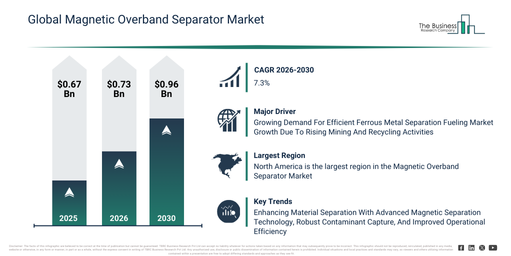
    The magnetic overband separator market has exhibited robust growth over recent years. It is forecast to increase from $0.67 billion in 2025 to $0.73 billion in 2026, registering a compound annual growth rate (CAGR) of 7.6%. This historical expansion can be attributed to an escalated demand within the mining industry, wider adoption in recycling processes, a greater necessity for equipment safeguarding, the proliferation of construction and manufacturing endeavors, and an increasing emphasis on product purity.

    The magnetic overband separator market size is anticipated to experience substantial growth in the upcoming years. It is projected to reach $0.96 billion by 2030, demonstrating a compound annual growth rate (CAGR) of 7.3%. This expansion during the forecast period is primarily driven by heightened automation in material handling processes, the increasing embrace of both permanent and electromagnets, a surge in investment towards smart separator technologies, the widening scope of applications in e-waste recycling, and an intensified regulatory focus on ensuring safety and controlling contamination. Significant trends expected during this period include improvements in magnetic separator design through technology, breakthroughs in self-cleaning and automated systems, the creation of separators that are both energy-efficient and durable, ongoing research into hybrid separation and sensor-based sorting techniques, and progress in integrating AI and IoT for enhanced predictive maintenance capabilities.

    Access Your Free Sample Report For In-Depth Market Analysis:

    https://www.thebusinessresearchcompany.com/sample.aspx?id=30644&type=smp

    What Leading Drivers Are Supporting The Magnetic Overband Separator Market Expansion?

    The magnetic overband separator market is anticipated to grow, driven by the increasing need for efficient ferrous metal separation. Efficient ferrous metal separation is a process that employs magnetic force to eliminate iron-based metallic contaminants from bulk materials and scrap streams, thus protecting equipment and maintaining material quality. The heightened demand for efficient ferrous metal separation stems from a global reliance on recycled ferrous scrap and increased mining throughput, which collectively boost the volume of metal-containing material requiring separation. Magnetic overband separators support efficient ferrous metal separation by enabling the continuous removal of ferrous contaminants, thereby improving process reliability and ensuring a cleaner material flow within mining and recycling facilities. For instance, in October 2024, the World Steel Association, a Belgium-based steel industry association, reported that global steel production in 2023 consumed approximately 630 million metric tons of recycled scrap, representing nearly 30% of the total crude steel output, a rise from about 28% in 2022. Therefore, the escalating demand for efficient ferrous metal separation is propelling the expansion of the magnetic overband separator market.

    What Are The Key Segment Divisions In The Magnetic Overband Separator Market Segment Structure?

    The magnetic overband separator market covered in this report is segmented –

    1) By Magnet Type: Permanent Magnet, Electromagnet

    2) By Separator Type: Cross-Belt Separator, Over-Belt Separator, Inline Separator

    3) By Cleaning Mechanism: Self-Cleaning, Manual Cleaning

    4) By Application: Mining, Recycling, Material Handling, Power Generation

    5) By End Use: Construction, Manufacturing, Waste Management

    Subsegments:

    1) By Permanent Magnet: Ceramic Magnet, Alnico Magnet, Neodymium Magnet, Ferrite Magnet

    2) By Electromagnet: Solenoid Electromagnet, Coil Wound Electromagnet, Electro Permanent Magnet, Laminated Core Electromagnet

    What Emerging Trends Are Seen In The Magnetic Overband Separator Market?

    Leading companies within the magnetic overband separator market are concentrating on the development of advanced solutions, such as magnetic separation technology, aimed at extracting tramp metal and ferrous contaminants from bulk materials and conveyor lines. This effort serves to protect downstream equipment and enhance product quality. Magnetic separation technology itself involves utilizing permanent magnets or electromagnets to attract and seize metallic particles from material streams, thereby ensuring continuous operation and minimizing wear on processing equipment. For example, in September 2023, Magnetic Products Inc., a US-based manufacturer specializing in industrial magnetic separation and material handling systems, introduced the Intell-I-Mag drawer magnet. This new product features two-inch-diameter magnetic tubes specifically engineered to boost magnetic field strength and the efficiency of contaminant extraction. The Intell-I-Mag cavity design facilitates the effective capture of fine ferrous particles, while also offering easy maintenance and removal, making it well-suited for high-throughput operations in sectors like recycling, quarrying, mining, and other bulk material processing. This introduction clearly emphasizes the industry’s increasing focus on magnetic overband separator systems that combine potent magnetic separation technology with user-friendly designs to improve material purity, reduce equipment downtime, and lower overall lifecycle costs.

    Which Organizations Are Engaged In The Magnetic Overband Separator Market?

    Major companies operating in the magnetic overband separator market are Metso Corporation, Multotec Group (Pty) Ltd, Eriez Manufacturing Co., Bunting Magnetics Co. Inc., Walker Magnetics Ltd., STEINERT GmbH, Saideep Magnetics Pvt. Ltd., Kumar Magnet Industries Pvt. Ltd., Jaykrishna Magnetics Pvt. Ltd., Vibromag Industries, Master Magnets Ltd., Goudsmit Magnetics Group B.V., Electro Flux Equipments Pvt. Ltd., IFE Aufbereitungstechnik GmbH, Excel Magnetics Pvt. Ltd., Dings Magnetics Group, Jaikar Magnet Equipments Pvt. Ltd., Shyam Magnet Pvt. Ltd., Magna Tronix Pvt. Ltd., Royal Magnetics Pvt. Ltd.

    Get The Full Magnetic Overband Separator Market Report:

    https://www.thebusinessresearchcompany.com/report/magnetic-overband-separator-market-report

    Where Is The Magnetic Overband Separator Market Most Concentrated Geographically?

    North America was the largest region in the magnetic overbend separator market in 2025. Asia-Pacific is expected to be the fastest-growing region in the forecast period. The regions covered in the magnetic overband separator market report are Asia-Pacific, South East Asia, Western Europe, Eastern Europe, North America, South America, Middle East, Africa.

    Request A Customized Magnetic Overband Separator Market Report For Competitive Insights:

    https://www.thebusinessresearchcompany.com/customise?id=30644&type=smp

    Browse Through More Reports Similar to the Global Magnetic Overband Separator Market 2026, By The Business Research Company

    Magnetic Beads Market 2026

    https://www.thebusinessresearchcompany.com/report/magnetic-beads-market

    Magnetic Sensor Market Report 2026

    https://www.thebusinessresearchcompany.com/report/magnetic-sensor-global-market-report

    ultra wideband global market report

    https://www.thebusinessresearchcompany.com/report/ultra-wideband-global-market-report

    Get in touch with us:

    The Business Research Company: https://www.thebusinessresearchcompany.com/

    Americas +1 310-496-7795

    Asia +44 7882 955267 & +91 8897263534

    Europe +44 7882 955267

    Email us at info@tbrc.info

    Follow us on:

    LinkedIn: https://in.linkedin.com/company/the-business-research-company

    YouTube: https://www.youtube.com/channel/UC24_fI0rV8cR5DxlCpgmyFQ

    Global Market Model: https://www.thebusinessresearchcompany.com/global-market-model
  • The Longevity Retreats  Market Is Evolving Due To Rising Health Consciousness Among Consumers Fueling The Growth Of The Market Due To Increasing Focus On Preventive Healthcare And Healthy Aging

    The Longevity Retreats Market Is Evolving Due To Rising Health Consciousness Among Consumers Fueling The Growth Of The Market Due To Increasing Focus On Preventive Healthcare And Healthy Aging

    The Business Research Company’s 2026 market reports feature enhanced tools like market attractiveness analysis, TAM assessment, and company scoring matrices, along with interactive dashboards, deeper supply chain insights, and startup coverage strengthening the depth, usability, and strategic value of insights.

    How Does The Market Size Of The Longevity Retreats Market Compare Between 2026 And 2030?

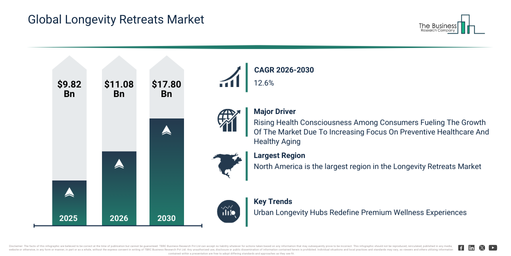
    The longevity retreats market has experienced swift expansion recently. This market is projected to expand from $9.82 billion in 2025 to $11.08 billion by 2026, demonstrating a compound annual growth rate (CAGR) of 12.9%. Historically, this expansion has been driven by increased awareness of preventive healthcare, a burgeoning demand for customized wellness programs, the rising incidence of lifestyle-related ailments, the growth of luxury wellness tourism, and an increase in both disposable income and the affluent demographic.

    The longevity retreats market size is projected for significant expansion in the upcoming years, expected to reach $17.80 billion in 2030, at a compound annual growth rate (CAGR) of 12.6%. This growth during the forecast period is attributed to the increasing adoption of digital health and wearable technology, a growing emphasis on mental health and stress management, the broadening of holistic and integrative wellness practices, a rising interest in anti-aging and longevity solutions, and the emergence of corporate wellness and preventive healthcare packages. Key trends anticipated in the forecast period include technological advancements in medical diagnostics, innovations in therapeutic treatments, ongoing research and developments in biohacking and performance enhancement, the establishment of sustainable and eco-friendly retreat practices, and advancements in virtual and hybrid wellness program offerings.

    Access Your Free Sample Report For In-Depth Market Analysis:

    https://www.thebusinessresearchcompany.com/sample.aspx?id=30642&type=smp

    Which Key Factors Are Driving The Longevity Retreats Market Growth?

    The increasing consumer focus on health is anticipated to stimulate the expansion of the longevity retreats market in the future. This awareness involves individuals actively seeking to preserve good health via their lifestyle choices and dietary habits. A growing understanding of illnesses linked to diet is prompting a surge in health-conscious eating, encouraging individuals to select healthier foods and lessen sugar consumption. Consumer health awareness boosts longevity retreats by fostering greater interest in preventative health measures, comprehensive wellness approaches, and forward-thinking anti-aging strategies. This trend fuels the need for comprehensive retreat experiences that integrate medical assessments, customized wellness plans, diet, physical activity, and healing treatments to ensure sustained health and vigor. An illustrative example is seen in June 2024, where the International Food Information Council, a US-based nonprofit organization, reported that a majority of Americans are increasingly prioritizing protein intake, growing from 59% in 2022 to 67% in 2023 and 71% in 2024. Consequently, the heightened health awareness among consumers is fueling the expansion of the longevity retreats market.

    Which Segment Categories Are Included In The Longevity Retreats Market Segment Analysis?

    The longevity retreats market covered in this report is segmented –

    1) By Type: Wellness Retreats, Medical Retreats, Holistic Retreats, Detox Retreats, Other Types

    2) By Service: Accommodation, Nutrition Programs, Fitness And Physical Activities, Spa And Therapies, Medical Consultations, Other Services

    3) By Age Group: Adults, Seniors, Others Age Groups

    4) By Booking Channel: Online, Offline

    Subsegments:

    1) By Wellness Retreats: Mindfulness Programs, Fitness Programs, Spa Treatments, Nutrition Plans, Yoga Sessions

    2) By Medical Retreats: Medical Assessments, Preventive Screenings, Therapeutic Treatments, Diagnostic Services, Lifestyle Counselling

    3) By Holistic Retreats: Meditation Programs, Energy Healing, Mind Body Therapy, Yoga And Breathing Sessions, Stress Management Programs

    4) By Detox Retreats: Detox Nutrition Plans, Cleansing Programs, Hydrotherapy Sessions, Body Detox Treatments, Digital Detox Programs

    5) By Other Types: Customized Wellness Packages, Corporate Wellness Programs, Family Wellness Programs, Adventure And Wellness Programs, Biohacking Programs

    Which Trends Are Guiding The Direction Of The Longevity Retreats Market?

    Leading companies active in the longevity retreats market are concentrating on experiential and wellness-driven innovations, such as urban Longevity Hubs, to address the increasing demand for preventive healthcare, personalized wellness, and premium holistic living. Urban Longevity Hubs seamlessly integrate multi-floor luxury wellness facilities within hotels and resorts, offering diagnostic assessments, AI-enabled health scoring, and customized interventions that include movement therapies, detoxification protocols, and aesthetic treatments to extend healthspan, all while providing accessible, premium wellness experiences in metropolitan settings. For instance, in March 2024, Clinique La Prairie S.A., a luxury health and wellness firm based in Switzerland, partnered with One&Only, an ultra-luxury hospitality company from the United Arab Emirates, to inaugurate a Longevity Hub at One&Only One Za’abeel in Dubai. This hub provides multi-level personalized assessments, cryotherapy, infrared therapies, and membership programs focused on five key health markers to customize interventions. These urban centers facilitate year-round revenue generation for wellness brands and attract health-conscious clients globally who are seeking data-driven, high-touch longevity services in major metropolitan markets.

    Who Are The Active Companies Shaping The Longevity Retreats Market?

    Major companies operating in the longevity retreats market are Six Senses Douro Valley, Champneys, Canyon Ranch Holdings LLC, Lanserhof Management GmbH, Clinique La Prairie Group, Pritikin Longevity Center + Spa, SHA Wellness Clinic, Grand Resort Bad Ragaz Group, Fiuggi Palace S.r.l., YO1 Longevity & Health Resorts, The Ranch, Red Mountain Resort, Chenot Palace Weggis AG, Swissmed Health, Euphoria Retreat S.A, MAYRLIFE Medical Health Resort Altaussee, My Longevity Retreat, Palasiet, Your Longevity Retreat, Seven Springs

    Get The Full Longevity Retreats Market Report:

    https://www.thebusinessresearchcompany.com/report/longevity-retreats-market-report

    Which Region Dominates The Longevity Retreats Market By Market Share?

    North America was the largest region in the longevity retreats market in 2025. Asia-Pacific is expected to be the fastest-growing region in the forecast period. The regions covered in the longevity retreats market report are Asia-Pacific, South East Asia, Western Europe, Eastern Europe, North America, South America, Middle East, Africa.

    Request A Customized Longevity Retreats Market Report For Competitive Insights:

    https://www.thebusinessresearchcompany.com/customise?id=30642&type=smp

    Browse Through More Reports Similar to the Global Longevity Retreats Market 2026, By The Business Research Company

    Nature Retreats Market Report 2026

    https://www.thebusinessresearchcompany.com/report/nature-retreats-global-market-report

    Wellness Retreat Market Report 2026

    https://www.thebusinessresearchcompany.com/report/wellness-retreat-global-market-report

    Retirement Communities Market

    https://www.thebusinessresearchcompany.com/report/retirement-communities-market

    Get in touch with us:

    The Business Research Company: https://www.thebusinessresearchcompany.com/

    Americas +1 310-496-7795

    Asia +44 7882 955267 & +91 8897263534

    Europe +44 7882 955267

    Email us at info@tbrc.info

    Follow us on:

    LinkedIn: https://in.linkedin.com/company/the-business-research-company

    YouTube: https://www.youtube.com/channel/UC24_fI0rV8cR5DxlCpgmyFQ

    Global Market Model: https://www.thebusinessresearchcompany.com/global-market-model
  • The Rise Of Advancing Longevity Biotech With DNA Methylation-Based Epigenetic Tests For Biological Age Assessment Is Influencing The Longevity BioTech  Market

    The Rise Of Advancing Longevity Biotech With DNA Methylation-Based Epigenetic Tests For Biological Age Assessment Is Influencing The Longevity BioTech Market

    The Business Research Company’s 2026 market reports feature enhanced tools like market attractiveness analysis, TAM assessment, and company scoring matrices, along with interactive dashboards, deeper supply chain insights, and startup coverage strengthening the depth, usability, and strategic value of insights.

    What Is The Forecasted Market Size Trajectory Of The Longevity BioTech Market From 2026 To 2030?

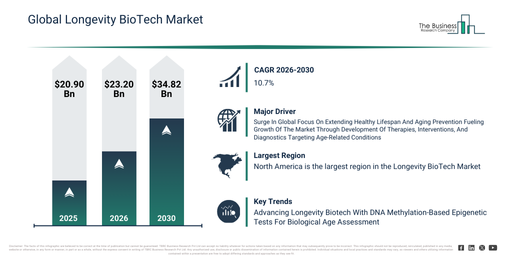
    The longevity biotech market has seen rapid expansion in recent years. It is projected to increase from $20.90 billion in 2025 to $23.20 billion in 2026, achieving a compound annual growth rate (CAGR) of 11.0%. Historically, this growth is largely attributable to greater investment in anti-aging research, an increasing prevalence of age-related chronic diseases, a developing interest in extending healthspan, enhanced funding from biotech venture capital, and the growing adoption of genetic and cellular therapies.

    The longevity biotech market size is expected to show significant expansion in the upcoming years. It is projected to reach $34.82 billion by 2030, growing at a compound annual growth rate (CAGR) of 10.7%. This forecasted growth can be linked to the broadening of regenerative medicine development, an increase in alliances between pharmaceutical companies and longevity biotech enterprises, the growing need for gene-based treatments, the rise of personalized wellness diagnostic tools, and improved cooperation among research institutions and biotech firms. Prominent trends expected in this period involve advancements in cellular rejuvenation therapies, progress in gene-editing technologies, breakthroughs in stem-cell-based regeneration, novel developments in senolytic drug formulation, and innovative approaches in epigenetic reprogramming tools.

    Access Your Free Sample Report For In-Depth Market Analysis:

    https://www.thebusinessresearchcompany.com/sample.aspx?id=30639&type=smp

    What Primary Drivers Are Shaping The Longevity BioTech Market?

    The longevity biotech market is expected to grow due to an increasing focus on extending healthy lifespans and preventing age-related decline. Healthy aging encompasses maintaining functional ability, delaying the onset of age-related diseases, and supporting physical and mental well-being across one’s life. This heightened emphasis on healthy aging is a result of demographic shifts, particularly rapidly expanding elderly populations, which have intensified the demand for medical innovation and preventive health solutions. Longevity biotechnology supports this goal by developing therapies, diagnostics, and preventative interventions that target the biological mechanisms of aging, improve cellular resilience, and reduce the risk of age-related conditions. For instance, in November 2023, according to the World Health Organization, a Geneva-based global health authority, the global population aged 60 years and older is projected to increase from 1.1 billion in 2023 to 1.4 billion by 2030 and reach 2.1 billion by 2050, highlighting the accelerating scale of aging-related health challenges. Therefore, the increasing global focus on extending healthy lifespan and preventing aging is driving the growth of the longevity biotech market.

    How Is The Longevity BioTech Market Broken Down By Segment Categories?

    The longevity biotech market covered in this report is segmented –

    1) By Service: Longevity Consultation, Biological Age Testing, Preventive Health Programs

    2) By Therapeutic Approach: Senolytics, Gene Therapies, Regenerative Medicine, Metabolic Modulators, Mitochondrial Therapies

    3) By Technology: Gene Editing Technology, Artificial Intelligence And Machine Learning, Stem Cell And Regenerative Medicine, Multi-Omics Analysis Platforms, Advanced Drug Screening

    4) By Application: Healthcare, Biotech, Pharmaceuticals, Wellness, Aging Population

    5) By End User: Clinics, Hospitals, Research Institutes, Direct-To-Consumer

    Subsegments:

    1) By Longevity Consultation: Initial Health Assessment, Personalized Longevity Planning, Lifestyle And Nutrition Counseling, Risk Assessment And Mitigation Planning, Follow-Up Longevity Monitoring, Genetic And Epigenetic Review

    2) By Biological Age Testing: DNA Methylation Age Testing, Telomere Length Testing, Metabolic Age Assessment, Inflammatory Biomarker Testing, Hormonal Age Profiling, Organ-Specific Aging Analysis

    3) By Preventive Health Programs: Chronic Disease Prevention Programs, Nutrition And Diet Optimization Plans, Fitness And Mobility Enhancement Programs, Stress And Sleep Management Programs, Immune Strengthening Protocols, Personalized Supplementation Programs

    What Trends Are Affecting The Growth Of The Longevity BioTech Market?

    Leading companies within the longevity biotech market are primarily engaged in creating biological-age diagnostic tools, such as DNA methylation-based epigenetic Index tests, which are designed to quantify biological age and aging rates specific to different systems. These epigenetic Index tests function by measuring DNA methylation patterns at CpG sites to provide a biological-age estimate. Companies then leverage this estimate as a crucial outcome measure for both product development and consumer feedback. An illustrative example occurred in March 2023, when Elysium Health, a U.S.-based life-science company, unveiled the TIME-A longitudinal research study, directly connected to its Index epigenetic test. This initiative involves enrolling current Index users, merging their survey and epigenetic data for longitudinal mapping, and granting participants access to system-level biological-age readouts.

    Which Players Are Present In The Longevity BioTech Market Space?

    Major companies operating in the longevity biotech market are Insilico Medicine Inc., Calico Life Sciences LLC, Retro Biosciences Inc., Altos Labs Inc., LyGenesis Inc., NewLimit Inc., Halia Therapeutics Inc., Life Biosciences Inc., BioAge Labs Inc., Rubedo Life Sciences Inc., Juvenescence Limited, Cambrian BioPharma Inc., Elevian Inc., Oisin Biotechnologies Inc., Rejuvenate Bio Inc., Unity Biotechnology Inc., Cleara Biotech B.V., Junevity Inc., Liv Longevity Labs, Genflow Biosciences plc, Centenara Labs AG

    Get The Full Longevity BioTech Market Report:

    https://www.thebusinessresearchcompany.com/report/longevity-biotech-market-report

    Which Region Is The Largest In The Longevity BioTech Market?

    North America was the largest region in the longevity biotech market in 2025. Asia-Pacific is expected to be the fastest-growing region in the forecast period. The regions covered in the longevity biotech market report are Asia-Pacific, South East Asia, Western Europe, Eastern Europe, North America, South America, Middle East, Africa.

    Request A Customized Longevity BioTech Market Report For Competitive Insights:

    https://www.thebusinessresearchcompany.com/customise?id=30639&type=smp

    Browse Through More Reports Similar to the Global Longevity BioTech Market 2026, By The Business Research Company

    Bioenergy Market Report 2026

    https://www.thebusinessresearchcompany.com/report/bioenergy-global-market-report

    Biotech Ingredient Market Report 2026

    https://www.thebusinessresearchcompany.com/report/biotech-ingredient-global-market-report

    bionics global market report

    https://www.thebusinessresearchcompany.com/report/bionics-global-market-report

    Get in touch with us:

    The Business Research Company: https://www.thebusinessresearchcompany.com/

    Americas +1 310-496-7795

    Asia +44 7882 955267 & +91 8897263534

    Europe +44 7882 955267

    Email us at info@tbrc.info

    Follow us on:

    LinkedIn: https://in.linkedin.com/company/the-business-research-company

    YouTube: https://www.youtube.com/channel/UC24_fI0rV8cR5DxlCpgmyFQ

    Global Market Model: https://www.thebusinessresearchcompany.com/global-market-model

  • Developing Plasticizer-Free Long-Chain Polyamides To Improve Performance And Supply Reliability Is Playing A Role In Shaping The Long-Chain Polyamide  Market

    Developing Plasticizer-Free Long-Chain Polyamides To Improve Performance And Supply Reliability Is Playing A Role In Shaping The Long-Chain Polyamide Market

    The Business Research Company’s 2026 market reports feature enhanced tools like market attractiveness analysis, TAM assessment, and company scoring matrices, along with interactive dashboards, deeper supply chain insights, and startup coverage strengthening the depth, usability, and strategic value of insights.

    How Much Will The Market Value Of The Long-Chain Polyamide Market Grow Between 2026 And 2030?

    The long-chain polyamide market size has experienced significant expansion over recent years. It is anticipated to ascend from $2.47 billion in 2025 to $2.65 billion in 2026, achieving a compound annual growth rate (CAGR) of 7.0%. Historically, this growth has been fueled by factors including the escalating demand for lightweight materials, the increased application of high-performance polymers, the broadening integration into automotive applications, a heightened concentration on fuel efficiency, and the continued innovation of durable plastic components.

    The market for long-chain polyamide is projected to experience robust expansion over the coming years. By 2030, its value is anticipated to reach $3.42 billion, demonstrating a compound annual growth rate (CAGR) of 6.7%. This projected growth is primarily driven by factors such as an increasing need for sustainable, high-performance polymers, a heightened emphasis on electric vehicle components, continuous progress in chemical processing technologies, an escalating demand for lightweight yet strong materials, and expanding investments in innovative materials. Key trends anticipated during this period encompass advancements in producing bio-based polyamides, novel developments in long-chain polymer formulations, the incorporation of high-performance materials into contemporary manufacturing processes, improvements in recycling technologies for engineered plastics, and new approaches in designing lightweight polymers.

    Access Your Free Sample Report For In-Depth Market Analysis:

    https://www.thebusinessresearchcompany.com/sample.aspx?id=30638&type=smp

    Which Major Drivers Are Influencing The Expansion Of The Long-Chain Polyamide Market?

    The long-chain polyamide market is projected to grow as the substitution of metals in engineering parts continues to increase. This substitution involves replacing traditional metallic components with high-performance polymers to achieve benefits such as weight reduction, enhanced corrosion resistance, and improved manufacturing efficiency. The escalating demand for lightweight and cost-efficient materials is driving this rise in metal substitution in engineering parts. Long-chain polyamide supports this trend by offering properties like high strength, durability, and a lightweight nature, thus enabling cost-effective and corrosion-resistant alternatives for mechanical and structural applications. For instance, according to the American Chemistry Council, a US-based trade association, an average automobile contained 429 pounds of plastics and polymer composites in December 2024, accounting for 9.7% of the vehicle’s total weight, with the polypropylene content per vehicle rising from 97 pounds in 2022 to 100 pounds in 2023. Therefore, the increasing substitution of metals in engineering parts is a significant factor driving the expansion of the long-chain polyamide market.

    What Are The Different Segment Types In The Long-Chain Polyamide Market Segment Breakdown?

    The long-chain polyamide market covered in this report is segmented –

    1) By Product Type: PA 12, PA 11, PA 610, PA 612, Other Product Types

    2) By Form: Chips, Powder, Other Forms

    3) By Application: Fuel Lines, Cooler Hoses, Corrugated Tubes, Oil And Gas Transportation, Sensors And Solenoids, Other Applications

    4) By End-User: Automotive, Electrical And Electronics, Consumer Goods, Industrial, Other End-Users

    Subsegments:

    1) By PA 12: Extrusion-Grade PA 12, Injection-Molding-Grade PA 12, Blow-Molding-Grade PA 12, High-Viscosity PA 12, Flame-Retardant PA 12, Reinforced PA 12 (Glass Fiber, Carbon Fiber), Flexible PA 12 Compounds

    2) By PA 11: Bio-Based PA 11 (100% Renewable Feedstock), Injection-Molding-Grade PA 11, Extrusion-Grade PA 11, High-Temperature PA 11, Impact-Modified PA 11, Reinforced PA 11 (Glass Fiber, Mineral Filled)

    3) By PA 610: Extrusion-Grade PA 610, Injection-Molding-Grade PA 610, Heat-Stabilized PA 610, Oil-Resistant PA 610, Lightweight PA 610 Compounds, Reinforced PA 610 (Glass Fiber, Carbon Fiber)

    4) By PA 612: Injection-Molding-Grade PA 612, Extrusion-Grade PA 612, Low-Moisture-Absorption PA 612, High-Fluidity PA 612, Reinforced PA 612 Compounds, Wear-Resistant PA 612 Grades

    5) By Other Product Types: PA 1010, PA 1012, PA 46/PA 410 Blends, Bio-Based Long-Chain Polyamides (Non-PA11), Specialty Copolyamides, Customized Performance LCPA Compounds

    Which Trends Are Shaping The Long-Chain Polyamide Market?

    Major companies operating within the long-chain polyamide materials market are concentrating on developing advanced substances, such as plasticizer-free long-chain polyamides. This initiative aims to enhance thermal performance, improve sustainability, and diminish reliance on imported specialty resins. Plasticizer-free long-chain polyamides are sophisticated nylon materials specifically engineered to offer high flexibility, chemical resistance, and elevated service temperatures without incorporating plasticizing additives, while also enabling a higher bio-based content and fostering more stable domestic supply chains. For example, in April 2024, Nylon Corporation of America Inc., a US-based manufacturer of engineered nylon resin, launched NXTamid L. This proprietary plasticizer-free long-chain polyamide was developed as a direct replacement for PA11 and PA12. The NXTamid L material provides a higher service temperature than PA12, demonstrates equivalent or improved mechanical performance, and allows for customizable formulations. Additionally, it eliminates plasticizers and, in select grades, incorporates bio content exceeding 50%, thereby addressing both sustainability objectives and challenges in supply chains.

    Who Are The Well-Known Companies In The Long-Chain Polyamide Market?

    Major companies operating in the long-chain polyamide market are BASF SE, LG Chem Ltd., Mitsubishi Chemical Group Corporation, Toray Industries Inc., Evonik Industries AG, DuPont de Nemours Inc., Arkema S.A., Nan Ya Plastics Corporation, Ningbo Kingfa Advanced Materials Co. Ltd., Solvay S.A, Huntsman Corporation, Kolon Industries Inc, Ascend Performance Materials LLC, Toyobo Co. Ltd, Sanyo Chemical Industries Ltd., Ensinger GmbH, RadiciGroup S.p.A., Domo Chemicals GmbH, Nylon Corporation of America Inc., UBE Corporation, Shenzhen Esun Industrial Co. Ltd.

    Get The Full Long-Chain Polyamide Market Report:

    https://www.thebusinessresearchcompany.com/report/long-chain-polyamide-market-report

    Which Region Leads The Long-Chain Polyamide Market In Terms Of Market Share?

    North America was the largest region in the long-chain polyamide market in 2025. Asia-Pacific is expected to be the fastest-growing region in the forecast period. The regions covered in the long-chain polyamide market report are Asia-Pacific, South East Asia, Western Europe, Eastern Europe, North America, South America, Middle East, Africa.

    Request A Customized Long-Chain Polyamide Market Report For Competitive Insights:

    https://www.thebusinessresearchcompany.com/customise?id=30638&type=smp

    Browse Through More Reports Similar to the Global Long-Chain Polyamide Market 2026, By The Business Research Company

    Polyacrylamide Market Report 2026

    https://www.thebusinessresearchcompany.com/report/polyacrylamide-global-market-report

    Polyphthalamide Resin Market Report 2026

    https://www.thebusinessresearchcompany.com/report/polyphthalamide-resin-global-market-report

    polylactic acid global market report

    https://www.thebusinessresearchcompany.com/report/polylactic-acid-global-market-report

    Get in touch with us:

    The Business Research Company: https://www.thebusinessresearchcompany.com/

    Americas +1 310-496-7795

    Asia +44 7882 955267 & +91 8897263534

    Europe +44 7882 955267

    Email us at info@tbrc.info

    Follow us on:

    LinkedIn: https://in.linkedin.com/company/the-business-research-company

    YouTube: https://www.youtube.com/channel/UC24_fI0rV8cR5DxlCpgmyFQ

    Global Market Model: https://www.thebusinessresearchcompany.com/global-market-model
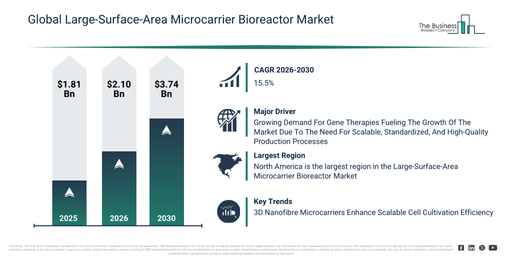
  • The Large-Surface-Area Microcarrier Bioreactor  Market Is Witnessing Impact From Growing Demand For Gene Therapies Fueling The Growth Of The Market Due To The Need For Scalable, Standardized, And High-Quality Production Processes

    The Large-Surface-Area Microcarrier Bioreactor Market Is Witnessing Impact From Growing Demand For Gene Therapies Fueling The Growth Of The Market Due To The Need For Scalable, Standardized, And High-Quality Production Processes

    The Business Research Company’s 2026 market reports feature enhanced tools like market attractiveness analysis, TAM assessment, and company scoring matrices, along with interactive dashboards, deeper supply chain insights, and startup coverage strengthening the depth, usability, and strategic value of insights.

    What Changes In Market Value Are Expected For The Large-Surface-Area Microcarrier Bioreactor Market Over The 2026–2030 Period?

    The large-surface-area microcarrier bioreactor market size has experienced rapid growth in recent years. This market is expected to increase from $1.81 billion in 2025 to $2.10 billion in 2026, exhibiting a compound annual growth rate (CAGR) of 15.8%. The expansion observed in the historic period is attributable to the increasing adoption of large-surface-area microcarrier bioreactors, a growing demand for high-density adherent cell cultures, rising investment in regenerative medicine research, the expansion of automated cell expansion technologies, and the increasing utilization of single-use microcarrier systems.

    The large-surface-area microcarrier bioreactor market is projected for significant expansion in the coming years. By 2030, this market is anticipated to reach $3.74 billion, expanding at a compound annual growth rate (CAGR) of 15.5%. This anticipated growth is driven by several factors, including an increased emphasis on scalable stem cell manufacturing, heightened investment in sophisticated microcarrier bioprocessing techniques, a rising need for clinical-grade cell amplification, the broadening scope of biotechnology and pharmaceutical research and development, and the robust adoption of automated and high-precision systems. Key trends during this period are expected to involve technological innovations in microcarrier bioreactors, new developments in automated platforms for cell expansion, progress in high-density adherent cell culture methodologies, ongoing research and development into single-use microcarrier systems, and improvements in real-time monitoring and process management.

    Access Your Free Sample Report For In-Depth Market Analysis:

    https://www.thebusinessresearchcompany.com/sample.aspx?id=30632&type=smp

    What Key Drivers Are Fueling The Growth Of The Large-Surface-Area Microcarrier Bioreactor Market?

    The expanding need for gene therapies is anticipated to drive the future expansion of the large-surface-area microcarrier bioreactor market. This medical approach involves altering or substituting faulty genes to address or avert illnesses. The rising interest in gene therapy stems from progress in genetic sequencing and diagnostic tools, allowing for accurate identification of disease-initiating genes for focused interventions. Large-surface-area microcarrier bioreactors play a crucial role in gene therapy by offering a broad area for the effective proliferation of adherent cells vital for gene-modified treatments. These bioreactors boost therapeutic progress by improving cell yield, maintaining uniformity, and facilitating the scalable manufacturing of gene therapy products. As an illustration, in December 2024, data from the American Society of Gene & Cell Therapy (ASGCT), a US-based non-profit medical and scientific body, indicated that the Food and Drug Administration (FDA) cleared six gene therapy products in 2023, an increase from five approvals in 2022. Consequently, the escalating requirement for gene therapies is fueling the expansion of the large-surface-area microcarrier bioreactor market.

    Which Segment Classifications Are Used In The Large-Surface-Area Microcarrier Bioreactor Market Segment Analysis?

    The large-surface-area microcarrier bioreactor market covered in this report is segmented –

    1) By Product Type: Single-Use Bioreactors, Multi-Use Bioreactors

    2) By Microcarrier Type: Synthetic Microcarriers, Natural Microcarriers, Hybrid Microcarriers

    3) By Distribution Channel: Hospital Pharmacy, Online Pharmacy, Retail Pharmacy

    4) By Application: Cell Therapy, Vaccine Production, Tissue Engineering, Stem Cell Research, Other Appplications

    5) By End User: Pharmaceutical And Biotechnology Companies, Research Institutes, Contract Manufacturing Organizations, Other End Users

    Subsegments:

    1) By Single-Use Bioreactors: Disposable Microcarrier Vessels, Pre-Sterilized Culture Chambers, Single-Cycle Expansion Units, Plug-And-Play Bioprocessing Modules, Disposable Agitation Systems

    2) By Multi-Use Bioreactors: Autoclavable Microcarrier Vessels, Cleanable Stainless Steel Chambers, Reusable Agitation Systems, Long-Term Operation Bioprocess Units, Reprocessable Culture Modules

    What Trends Are Influencing The Large-Surface-Area Microcarrier Bioreactor Market?

    Major companies operating within the large-surface-area microcarrier bioreactor market are prioritizing the creation of advanced products, such as 3D nanofibre scaffolds, to boost efficiency, enhance cell growth, and reduce process variability and development timelines. These 3D nanofibre microcarriers are described as advanced, biomimetic scaffolds that furnish a three-dimensional environment suitable for cell adhesion and proliferation, emulating the natural extracellular matrix. For instance, in February 2025, Cellevate AB, a Sweden-based cell culture materials innovator, introduced the Cellevat3D nanofibre microcarrier. This particular microcarrier is a customizable, synthetic product engineered for scalable cell cultivation, distinguished by its unique nanofibrous architecture that increases surface area for improved cell attachment and yield. It also features precise control over biochemical and physical parameters, which allows for optimal growth conditions for various cell types, including stem cells and therapeutic cells, without requiring extensive process re-development. Additionally, it offers xeno-free and animal-free material options, thereby enhancing product safety and regulatory compliance for biopharmaceutical and cultivated meat producers.

    Which Firms Are Contributing To The Large-Surface-Area Microcarrier Bioreactor Market Ecosystem?

    Major companies operating in the large-surface-area microcarrier bioreactor market are Thermo Fisher Scientific Inc., Merck KGaA, Corning Incorporated, Lonza Group AG, Cytiva Sweden AB, Sartorius AG, Bio-Rad Laboratories Inc., Eppendorf SE, Repligen Corporation, Pall Corporation, PBS Biotech Inc., Applikon Biotechnology B.V., Esco VacciXcell, Meissner Filtration Products Inc., Distek Inc., Infors HT AG, Adolf Kühner AG, Kuhner Shaker GmbH, Cellexus Ltd., Solaris Biotech S.r.l.

    Get The Full Large-Surface-Area Microcarrier Bioreactor Market Report:

    https://www.thebusinessresearchcompany.com/report/large-surface-area-microcarrier-bioreactor-market-report

    Which Region Leads The Large-Surface-Area Microcarrier Bioreactor Market In Overall Market Size?

    North America was the largest region in the large-surface-area microcarrier bioreactor market in 2025. Asia-Pacific is expected to be the fastest-growing region in the forecast period. The regions covered in the large-surface-area microcarrier bioreactor market report are Asia-Pacific, South East Asia, Western Europe, Eastern Europe, North America, South America, Middle East, Africa.

    Request A Customized Large-Surface-Area Microcarrier Bioreactor Market Report For Competitive Insights:

    https://www.thebusinessresearchcompany.com/customise?id=30632&type=smp

    Browse Through More Reports Similar to the Global Large-Surface-Area Microcarrier Bioreactor Market 2026, By The Business Research Company

    Microcarrier Market Report 2026

    https://www.thebusinessresearchcompany.com/report/microcarrier-global-market-report

    Small Scale Bioreactors Market Report 2026

    https://www.thebusinessresearchcompany.com/report/small-scale-bioreactors-global-market-report

    airlift bioreactors global market report

    https://www.thebusinessresearchcompany.com/report/airlift-bioreactors-global-market-report

    Get in touch with us:

    The Business Research Company: https://www.thebusinessresearchcompany.com/

    Americas +1 310-496-7795

    Asia +44 7882 955267 & +91 8897263534

    Europe +44 7882 955267

    Email us at info@tbrc.info

    Follow us on:

    LinkedIn: https://in.linkedin.com/company/the-business-research-company

    YouTube: https://www.youtube.com/channel/UC24_fI0rV8cR5DxlCpgmyFQ

    Global Market Model: https://www.thebusinessresearchcompany.com/global-market-model
  • Growth In The Kidulting Toys  Market Is Being Driven By Surge In Adult Demand For Nostalgic And Collectible Toys Driving Growth Of The Market Due To Increasing Need For Stress Relief

    Growth In The Kidulting Toys Market Is Being Driven By Surge In Adult Demand For Nostalgic And Collectible Toys Driving Growth Of The Market Due To Increasing Need For Stress Relief

    The Business Research Company’s 2026 market reports feature enhanced tools like market attractiveness analysis, TAM assessment, and company scoring matrices, along with interactive dashboards, deeper supply chain insights, and startup coverage strengthening the depth, usability, and strategic value of insights.

    By 2030, What Market Size Is The Kidulting Toys Market Expected To Reach Based On Its 2026 Value?

    The kidulting toys market has experienced substantial growth in recent years. This market is projected to expand from $38.71 billion in 2025 to $43.40 billion in 2026, achieving a compound annual growth rate (CAGR) of 12.1%. The historical increase can be ascribed to elements such as rising disposable income, an escalating demand for nostalgia, the growing popularity of pop culture franchises, the broadening of collectible product lines, and the increasing influence of social media.

    The kidulting toys market is projected to experience substantial expansion over the upcoming years. This market is predicted to reach $67.86 billion by 2030, demonstrating a compound annual growth rate (CAGR) of 11.8%. Factors driving this growth during the forecast period include the increasing adoption of online sales, a growing interest in limited-edition collectibles, rising investment in hybrid physical-digital toys, the expansion of licensing and IP partnerships, and the growing demand for stress relief and leisure activities. Key trends anticipated for the forecast period encompass technological advancements in virtual reality (VR) and augmented reality (AR) integration, innovations concerning sustainable and premium materials, the development of personalized customization platforms, ongoing research into mental health-focused product designs, and the integration of gamified retail and unboxing experiences.

    Access Your Free Sample Report For In-Depth Market Analysis:

    https://www.thebusinessresearchcompany.com/sample.aspx?id=30631&type=smp

    Which Drivers Are Supporting The Kidulting Toys Market Growth?

    The Kidulting Toys market is expected to grow, driven by the increasing trend of adults seeking nostalgic and collectible toys. This trend refers to the growing number of adult consumers purchasing and engaging with toys and collectibles that evoke past memories, provide playful experiences, and support mental well-being. The surge in adults seeking nostalgic and collectible toy interests is linked to a growing awareness of stress management and leisure activities. Kidulting toys support adults seeking nostalgic and collectible toys by offering playful, design-driven products that evoke childhood memories while appealing to mature tastes. They enhance consumer engagement by combining nostalgia, creativity, and collectability, which boosts demand among adult buyers. For instance, in September 2023, according to the US-based non-profit trade association Toy Association Inc., 89% of parents surveyed are buying toys for adults, with 43% shopping for their spouse or significant other. Additionally, 53% of men and 48% of millennial parents under 40 reported buying toys for themselves. Consequently, the rising trend of adults seeking nostalgic and collectible toys is propelling the growth of the Kidulting Toys market.

    How Is The Kidulting Toys Market Organized By Segment Classification?

    The kidulting toys market covered in this report is segmented –

    1) By Product Type: Collectible Figures And Statues, Building Sets, Plush And Soft Toys, Games And Puzzles, Model Kits And Vehicles

    2) By Price Point And Quality: Mass-Market Nostalgia, Premium And Limited Edition, Ultra-Premium And Art Objects

    3) By Application: Online Sales, Offline Sales

    4) By End-User Age Group: Young Kidults, Core Kidults, Mature Kidults

    Subsegments:

    1) By Collectible Figures And Statues: Action Figures, Anime Figures, Movie Statues, Video Game Characters, Limited Edition Collectibles

    2) By Building Sets: Construction Kits, Modular Building Sets, Architectural Models, Mechanical Building Sets, Themed Assembly Sets

    3) By Plush And Soft Toys: Character Plush Toys, Customized Soft Toys, Comfort Plush Toys, Premium Fabric Plush Toys, Collectible Plush Series

    4) By Games And Puzzles: Strategy Board Games, Card Games, Jigsaw Puzzles, Brain Teaser Puzzles, Cooperative Games

    5) By Model Kits And Vehicles: Scale Model Kits, Die-Cast Vehicles, Hobby Assembly Kits, Remote Control Models, Replica Vehicle Models

    Which Trends Are Expected To Impact The Kidulting Toys Market?

    Major companies operating within the kidulting toys market are concentrating on developing advanced offerings, such as hybrid physical-digital collectibles. These products aim to boost consumer engagement, enhance feelings of nostalgia, and minimize the divide between traditional collecting and digital ownership. Hybrid physical-digital collectibles are defined as integrated product strategies that combine intricate, tangible action figures with corresponding blockchain-based digital assets, thereby creating a new, interconnected form of fan culture. For example, in February 2024, McFarlane Toys, an action figure company from the US, collaborated with NBCUniversal Products & Experiences, a US-based media and entertainment enterprise, to expand its Movie Maniacs brand. This initiative introduced a new series of highly detailed 6-inch collectible figures inspired by iconic characters from films including The Blues Brothers, The Big Lebowski, and The 40-Year-Old Virgin. A core innovative characteristic is that each physical figure comes paired with a redeemable digital collectible, giving fans the ability to own and display their collections in both the physical and digital realms. This blended approach leverages McFarlane Toys Digital, the company’s new digital platform, to extend its classic brand beyond physical items and forge a fresh, integrated collecting experience for adult enthusiasts.

    Who Are The Industry Participants Involved In The Kidulting Toys Market?

    Major companies operating in the kidulting toys market are Bandai Namco Holdings Inc., Mattel Inc., Hasbro Inc., Spin Master Corp., Tomy Company Ltd., Funko Inc., Dream International Limited, JAKKS Pacific Inc., McFarlane Toys, Playmates Toys Limited, Playmobil, Ravensburger AG, Hot Toys Limited, Kidrobot Inc., Medicom Toy Corporation, Mezco Toyz LLC, Schmidt Spiele GmbH, Good Smile Company Inc., Super7, The LEGO Group, Sideshow Collectibles, Sonny Angel

    Get The Full Kidulting Toys Market Report:

    https://www.thebusinessresearchcompany.com/report/kidulting-toys-market-report

    Which Region Is The Top Contributor To The Kidulting Toys Market By Share?

    North America was the largest region in the kidulting toys market in 2025. Asia-Pacific is expected to be the fastest-growing region in the forecast period. The regions covered in the kidulting toys market report are Asia-Pacific, South East Asia, Western Europe, Eastern Europe, North America, South America, Middle East, Africa.

    Request A Customized Kidulting Toys Market Report For Competitive Insights:

    https://www.thebusinessresearchcompany.com/customise?id=30631&type=smp

    Browse Through More Reports Similar to the Global Kidulting Toys Market 2026, By The Business Research Company

    Wooden Toys Market Report 2026

    https://www.thebusinessresearchcompany.com/report/wooden-toys-global-market-report

    Learning And Education Toys Market Report 2026

    https://www.thebusinessresearchcompany.com/report/learning-and-education-toys-global-market-report

    construction toys global market report

    https://www.thebusinessresearchcompany.com/report/construction-toys-global-market-report

    Get in touch with us:

    The Business Research Company: https://www.thebusinessresearchcompany.com/

    Americas +1 310-496-7795

    Asia +44 7882 955267 & +91 8897263534

    Europe +44 7882 955267

    Email us at info@tbrc.info

    Follow us on:

    LinkedIn: https://in.linkedin.com/company/the-business-research-company

    YouTube: https://www.youtube.com/channel/UC24_fI0rV8cR5DxlCpgmyFQ

    Global Market Model: https://www.thebusinessresearchcompany.com/global-market-model