Month: May 2026

  • Intravenous (IV) Compounding Automation  Market Analysis With Focus On Growth Potential And Future Outlook

    Intravenous (IV) Compounding Automation Market Analysis With Focus On Growth Potential And Future Outlook

    The Business Research Company’s 2026 market reports feature enhanced tools like market attractiveness analysis, TAM assessment, and company scoring matrices, along with interactive dashboards, deeper supply chain insights, and startup coverage strengthening the depth, usability, and strategic value of insights.

    What Is The Anticipated Rise In Market Value Of The Intravenous (IV) Compounding Automation Market During The Forecast Period?

    The intravenous (IV) compounding automation market has seen swift expansion in recent years. Its value is expected to rise from $2.19 billion in 2025 to $2.45 billion by 2026, achieving a compound annual growth rate (CAGR) of 11.9%. Historically, this growth can be attributed to several factors such as the increasing embrace of robotic compounding systems, a surging need for chemotherapy automation, a heightened focus on ensuring medication safety, the broadening application of automation in hospitals and pharmacies, and a growing recognition of the benefits of workflow efficiency.

    The intravenous (IV) compounding automation market is set for substantial expansion in the upcoming years, with projections indicating it will reach $3.79 billion by 2030, growing at a compound annual growth rate (CAGR) of 11.6%. This projected growth throughout the forecast period stems from factors such as increasing investments in AI-enabled compounding solutions, the rising deployment of automated IV workstations, enhanced integration of software with hospital information systems, the expansion of remote monitoring and predictive maintenance capabilities, and the development of more modular and customizable compounding systems. Key trends anticipated during this period include breakthroughs in AI and machine learning for compounding, advancements in robotic and automated devices, the introduction of smart pump and monitoring technologies, innovations in sterile compounding isolators and safety cabinets, and the progress in compact and space-saving automation solutions.

    Access Your Free Sample Report For In-Depth Market Analysis:

    https://www.thebusinessresearchcompany.com/sample.aspx?id=30629&type=smp

    What Key Factors Are Affecting The Intravenous (IV) Compounding Automation Market Demand?

    The intravenous (IV) compounding automation market is expected to grow, propelled by the rising demand for pharmaceutical products. A pharmaceutical product refers to a substance or blend of substances created for diagnosing, treating, preventing, or relieving diseases and medical conditions in humans or animals. IV compounding automation enhances pharmaceutical product preparation by enabling the precise, safe, and efficient formulation of complex intravenous medications, ensuring exact dosing, reducing contamination risks, and allowing healthcare providers to fulfill the increasing need for high-quality therapies. For instance, in November 2023, according to the European Federation of Pharmaceutical Industries and Associations (EFPIA), a Belgium-based trade association, the total pharmaceutical production in Europe was €390,000 million ($422,803 million) in 2023, an increase from €363,300 million ($393,857 million) in 2022. Therefore, the escalating demand for pharmaceutical products is a primary force behind the growth of the intravenous (IV) compounding automation market.

    Which Segments Define The Intravenous (IV) Compounding Automation Market Segment Structure?

    The intravenous (iv) compounding automation market covered in this report is segmented –

    1) By Product Type: Robotic Compounding Systems, Automated Compounding Devices, Software Solutions, Other Product Types

    2) By Service: Installation, Maintenance, Training, Consulting, Support, System Integration, Validation, Software Updates, Calibration, Remote Monitoring

    3) By Application: Chemotherapy, Parenteral Nutrition, Antibiotics, Other Applications

    4) By End-User: Hospitals, Compounding Pharmacies, Oncology Centers, Other End-Users

    Subsegments:

    1) By Robotic Compounding Systems: Robotic Arm Based Systems, Closed System Robotic Compounding Units, Hazardous Drug Handling Robots, Sterile Preparation Robotic Platforms

    2) By Automated Compounding Devices: Volumetric Compounding Devices, Gravimetric Compounding Devices, Multi Chamber Compounding Units, Automated Parenteral Nutrition Compounding Devices

    3) By Software Solutions: Compounding Workflow Management Software, Dose Verification Software, Barcode Based Medication Safety Software, Compounding Data Analytics And Reporting Software

    4) By Other Product Types: Semi Automated Compounding Systems, Isolator Based Compounding Systems, Sterile Admixture Preparation Cabinets, Hybrid Compounding Assistance Devices

    Who Are The Established Players Within The Intravenous (IV) Compounding Automation Market?

    Major companies operating in the intravenous (iv) compounding automation market are Becton Dickinson and Company, Baxter International Inc., Grifols S.A., ICU Medical Inc., Omnicell Inc., Fresenius Kabi AG, Equashield Medical Ltd., Health Robotics S.r.l., Loccioni Group, Loccioni Group, OPTIMA pharma GmbH, Medimix Systems AG, ARxIUM Inc., General Healthy Co. Ltd., PharmaScope Onco Automation B.V., Comecer SpA, Syntegon Technology GmbH, Parata Pharmacy Automation, B. Braun SE, Aesynt Incorporated, Shenzhen Broadcare Robots Co. Ltd.

    Get The Full Intravenous (IV) Compounding Automation Market Report:

    https://www.thebusinessresearchcompany.com/report/intravenous-iv-compounding-automation-market-report

    Which Region Represents The Largest Share Of The Intravenous (IV) Compounding Automation Market?

    North America was the largest region in the intravenous (IV) compounding automation market in 2025. Asia-Pacific is expected to be the fastest-growing region in the forecast period. The regions covered in the intravenous (iv) compounding automation market report are Asia-Pacific, South East Asia, Western Europe, Eastern Europe, North America, South America, Middle East, Africa.

    Request A Customized Intravenous (IV) Compounding Automation Market Report For Competitive Insights:

    https://www.thebusinessresearchcompany.com/customise?id=30629&type=smp

    Browse Through More Reports Similar to the Global Intravenous (IV) Compounding Automation Market 2026, By The Business Research Company

    Automated Compounding Devices Market Report 2026

    https://www.thebusinessresearchcompany.com/report/automated-compounding-devices-global-market-report

    Intravenous Solutions Market Report 2026

    https://www.thebusinessresearchcompany.com/report/intravenous-solutions-global-market-report

    lab automation in drug discovery global market report

    https://www.thebusinessresearchcompany.com/report/lab-automation-in-drug-discovery-global-market-report

    Get in touch with us:

    The Business Research Company: https://www.thebusinessresearchcompany.com/

    Americas +1 310-496-7795

    Asia +44 7882 955267 & +91 8897263534

    Europe +44 7882 955267

    Email us at info@tbrc.info

    Follow us on:

    LinkedIn: https://in.linkedin.com/company/the-business-research-company

    YouTube: https://www.youtube.com/channel/UC24_fI0rV8cR5DxlCpgmyFQ

    Global Market Model: https://www.thebusinessresearchcompany.com/global-market-model

  • Intraoperative Neuromonitoring (IONM)  Market Forecast Showing Industry Progress And Growth Trends

    Intraoperative Neuromonitoring (IONM) Market Forecast Showing Industry Progress And Growth Trends

    The Business Research Company’s 2026 market reports feature enhanced tools like market attractiveness analysis, TAM assessment, and company scoring matrices, along with interactive dashboards, deeper supply chain insights, and startup coverage strengthening the depth, usability, and strategic value of insights.

    How Is The Market Size Of The Intraoperative Neuromonitoring (IONM) Market Expected To Scale Between 2026 And 2030?

    The intraoperative neuromonitoring market has shown significant growth in recent years. This market is expected to expand from $3.56 billion in 2025 to $3.84 billion in 2026, exhibiting a compound annual growth rate (CAGR) of 7.9%. This historical growth can be linked to factors such as an increasing need for safer surgical procedures, the greater implementation of intraoperative neuromonitoring in intricate surgeries, the rising occurrence of neurological and spinal disorders, the expansion of hospital facilities in developed areas, and a heightened commitment to patient safety during operations.

    The intraoperative neuromonitoring market is projected for significant expansion over the next few years, with its size expected to reach $5.14 billion by 2030, demonstrating a compound annual growth rate (CAGR) of 7.6%. This growth in the outlook period can be linked to the increasing uptake of multimodality neuromonitoring systems, the expanding application of artificial intelligence for signal interpretation, heightened investments in research and development for neuromonitoring technologies, the broader adoption of minimally invasive and robotic surgeries, and a greater availability of skilled neuromonitoring professionals. Prominent trends for the forecast period include enhancements in multimodality monitoring technologies, the deepening integration of artificial intelligence within neuromonitoring systems, the accelerating development of portable and cloud-connected devices, an expanding utilization of real-time data analytics in surgical procedures, and emerging innovations in wearable and intraoperative monitoring sensors.

    Access Your Free Sample Report For In-Depth Market Analysis:

    https://www.thebusinessresearchcompany.com/sample.aspx?id=30628&type=smp

    Which Primary Drivers Are Impacting The Intraoperative Neuromonitoring (IONM) Market Growth?

    An anticipated increase in complex surgical procedures is poised to drive expansion within the intraoperative neuromonitoring (IONM) market. These complex surgeries are defined as elaborate medical interventions characterized by significant risks, a demand for expert skills, and frequently targeting severe or systemic health issues. The frequency of complex surgeries is increasing because surgeons are more often operating on elderly individuals presenting with numerous chronic ailments such as diabetes, obesity, and heart disease, a trend supported by advancements in surgical methods that allow for the successful handling of high-risk scenarios. intraoperative neuromonitoring (IONM) assists complex surgical operations by delivering immediate information concerning neural activity, thereby reducing the likelihood of nerve injury throughout crucial interventions. As an illustration, information from January 2025 provided by the Organ Procurement and Transplantation Network (OPTN) – a US-based national network connecting American professionals in organ donation and transplantation – revealed that the total number of organ transplants performed in the United States reached 48,180 in 2024, marking a 3.3% rise from 46,632 in 2023. Consequently, the expanding number of complex surgical procedures is propelling the growth of the intraoperative neuromonitoring (IONM) market.

    How Is The Intraoperative Neuromonitoring (IONM) Market Segmented Across Different Segment Categories?

    The intraoperative neuromonitoring (ionm) market covered in this report is segmented –

    1) By Type: Systems, Accessories And Consumables, Services

    2) By Source Type: Insourced Monitoring, Outsourced Monitoring

    3) By Modality: Somatosensory Evoked Potentials, Motor Evoked Potentials, Electroencephalography, Electromyography, Brainstem Auditory Evoked Potentials, Visual Evoked Potentials, Other Modalities

    4) By Application: Neurosurgery, Spinal Surgery, Vascular Surgery, Cardiothoracic Surgery, Ear, Nose, Throat Surgery, Orthopedic Surgery

    5) By End-User: Hospitals, Ambulatory Surgical Centers, Specialty Clinics, Other End-Users

    Subsegments:

    1) By Systems: Electromyography Monitoring System, Electroencephalography Monitoring System, Somatosensory Evoked Potential Monitoring System, Motor Evoked Potential Monitoring System, Brainstem Auditory Evoked Potential Monitoring System

    2) By Accessories And Consumables: Electrodes And Probes, Cables And Connectors, Monitoring Software, Disposable Sensors, Stimulators And Pads

    3) By Services: Preoperative Assessment Services, Intraoperative Monitoring Services, Postoperative Analysis Services, Remote Neuromonitoring Services, Consulting And Training Services

    Which Trends Are Shaping Growth In The Intraoperative Neuromonitoring (IONM) Market?

    Key players in the intraoperative neuromonitoring (IONM) market are concentrating on creating product lines, specifically specialized disposable concentric needle families, to boost diagnostic accuracy and streamline workflow. These specialized disposable concentric needle families are designed as single-use needles that offer consistent signal quality and highly accurate recording, thereby removing the inconsistencies of reusable devices and ensuring high fidelity in electromyography (EMG) and nerve conduction velocity (NCV) studies. An example of this is Rhythmlink International LLC, a US-based firm specializing in intraoperative neuromonitoring medical devices, which introduced its Concentric Needle Family in October 2023. This product line features specialized disposable concentric needles available in four sizes, intended for use with a dedicated reusable cable tailored for the system. This solution equips clinicians with a high-quality, adaptable instrument for precise identification and recording from target muscle regions, consequently improving the dependability of both intraoperative and diagnostic neurological evaluations.

    Which Organizations Play A Role In The Intraoperative Neuromonitoring (IONM) Market Landscape?

    Major companies operating in the intraoperative neuromonitoring (ionm) market are Abbott Laboratories, Medtronic plc, Boston Scientific Corporation, Nihon Kohden Corporation, Nuvaise Inc., Natus Medical incorporated, Speciality care Inc., Brainlab AG, Neurosoft Ltd., Cadwell industries Inc., Neuromonitoring Associates LLC, Compummedics Ltd., Inomed medizintecknic Gmbh, Accurate Neuromonitoring Inc., Electrical Geodesics Inc., Blackrock NeuroTech LLC, Neuromonitoring Technologies Inc., Tucker Davis technologies Inc., Sentient Medical Systems Inc., Dr.Langer Medical Gmbh, Moller Wedel Gmbh, Ionm Solutions Inc., Axontronic GmbH & Co. KG, Alpha Omega Engineering Ltd.

    Get The Full Intraoperative Neuromonitoring (IONM) Market Report:

    https://www.thebusinessresearchcompany.com/report/intraoperative-neuromonitoring-ionm-market-report

    Which Geographic Region Dominates The Intraoperative Neuromonitoring (IONM) Market?

    North America was the largest region in the intraoperative neuromonitoring market in 2025. Asia-Pacific is expected to be the fastest-growing region in the forecast period. The regions covered in the intraoperative neuromonitoring (ionm) market report are Asia-Pacific, South East Asia, Western Europe, Eastern Europe, North America, South America, Middle East, Africa.

    Request A Customized Intraoperative Neuromonitoring (IONM) Market Report For Competitive Insights:

    https://www.thebusinessresearchcompany.com/customise?id=30628&type=smp

    Browse Through More Reports Similar to the Global Intraoperative Neuromonitoring (IONM) Market 2026, By The Business Research Company

    Intraoperative Neuromonitoring Market Report 2026

    https://www.thebusinessresearchcompany.com/report/intraoperative-neuromonitoring-global-market-report

    Home Health Monitoring Devices Market Report 2026

    https://www.thebusinessresearchcompany.com/report/home-health-monitoring-devices-global-market-report

    medical electrodes global market report

    https://www.thebusinessresearchcompany.com/report/medical-electrodes-global-market-report

    Get in touch with us:

    The Business Research Company: https://www.thebusinessresearchcompany.com/

    Americas +1 310-496-7795

    Asia +44 7882 955267 & +91 8897263534

    Europe +44 7882 955267

    Email us at info@tbrc.info

    Follow us on:

    LinkedIn: https://in.linkedin.com/company/the-business-research-company

    YouTube: https://www.youtube.com/channel/UC24_fI0rV8cR5DxlCpgmyFQ

    Global Market Model: https://www.thebusinessresearchcompany.com/global-market-model

  • Internet Of Things (IoT)-Based Dialysis Machine  Market Future Trends Influencing Growth Through 2030

    Internet Of Things (IoT)-Based Dialysis Machine Market Future Trends Influencing Growth Through 2030

    The Business Research Company’s 2026 market reports feature enhanced tools like market attractiveness analysis, TAM assessment, and company scoring matrices, along with interactive dashboards, deeper supply chain insights, and startup coverage strengthening the depth, usability, and strategic value of insights.

    What Level Of Market Value Growth Is Predicted For The Internet Of Things (IoT)-Based Dialysis Machine Market From 2026 To 2030?

    The IoT-based dialysis machine market has experienced significant expansion in recent years. Its valuation is set to climb from $1.75 billion in 2025 to $2.04 billion in 2026, at a compound annual growth rate (CAGR) of 16.8%. This growth observed in the past can be attributed to the increasing prevalence of chronic kidney disease, the growing acceptance of home-based dialysis, a rising need for remote patient monitoring, the expansion of digital health infrastructure, and increased healthcare expenditure dedicated to renal care.

    The IoT-based dialysis machine market size is projected to undergo rapid expansion in the coming years. It is expected to grow to $3.76 billion by 2030, exhibiting a compound annual growth rate (CAGR) of 16.5%. The anticipated growth during this forecast period can be attributed to the increasing penetration of IoT-enabled medical devices, a growing preference for home and portable dialysis solutions, the rising adoption of telehealth and connected care, the expansion of value-based renal care models, and increased government support for digital healthcare initiatives. Key trends for the forecast period encompass technological advancements in connected dialysis systems, innovations in sensor-based real-time monitoring, developments in artificial intelligence and data analytics, ongoing research and development into portable and wearable dialysis devices, and the integration of cloud platforms with electronic health records.

    Access Your Free Sample Report For In-Depth Market Analysis:

    https://www.thebusinessresearchcompany.com/sample.aspx?id=30627&type=smp

    What Significant Factors Are Influencing The Internet Of Things (IoT)-Based Dialysis Machine Market Expansion?

    The increasing incidence of chronic kidney disease is anticipated to fuel the expansion of the internet of things (IoT)-based dialysis machine market in the coming years. Chronic kidney disease describes an enduring condition where the kidneys are unable to function optimally, leading to the accumulation of waste materials and fluids within the body. The growing prevalence of chronic kidney disease is largely attributable to the rising cases of diabetes and high blood pressure, as these illnesses gradually damage kidney blood vessels and compromise the organs’ capacity to effectively filter waste. IoT-based dialysis machines contribute to managing chronic kidney disease by enabling constant monitoring of treatment settings and patient vital signs through remote data connectivity. These devices improve patient outcomes by facilitating customized therapy adjustments, prompt identification of complications, and more efficient long-term care delivery. For example, in June 2023, according to Kidney Research UK, a United Kingdom based non profit organization, approximately 7.2 million people in the United Kingdom were living with chronic kidney disease representing over 10% of the population, of which 3.25 million were in advanced stages and 3.9 million were in early stages, with the total number of affected individuals projected to rise to 7.61 million by 2033. Consequently, the rising prevalence of chronic kidney disease is a key driver for the growth of the internet of things (IoT)-based dialysis machine market.

    What Are The Main Segments Within The Internet Of Things (IoT)-Based Dialysis Machine Market Segment Structure?

    The internet of things (iot)-based dialysis machine market covered in this report is segmented –

    1) By Component: Hardware, Software, Services, Consumables

    2) By Product Type: IoT-Enabled Hemodialysis Machines, IoT-Enabled Peritoneal Dialysis Machines, Portable And Wearable IoT-Based Dialysis Devices, Software Platforms And Connectivity Solutions, Accessories And Consumables

    3) By Connectivity: Wi-Fi And Broadband-Connected Dialysis Machines, Cellular Enabled Dialysis Devices, Cloud-Based Data Management And Analytics Platforms, Decision-Support Modules

    4) By Application: Chronic Kidney Disease Management, End-Stage Renal Disease Treatment, Acute Kidney Injury Management, Remote Patient Monitoring And Therapy Optimization

    5) By End User: Hospitals, Dialysis Centers, Home Care Settings, Ambulatory Care Centers, Specialty Clinics

    Subsegments:

    1) By Hardware: Dialysis Machine Units, Sensors And Monitoring Devices, Connectivity Modules, Embedded Control Systems, Power Supply Components

    2) By Software: Remote Monitoring Platforms, Data Analytics Software, Treatment Management Systems, Device Management Applications, Cloud Based Control Dashboards

    3) By Services: Installation And Integration Services, Maintenance And Support Services, Remote Monitoring Services, Training And Education Services, Data Management Services

    4) By Consumables: Dialyzers, Blood Tubing Sets, Dialysis Solutions, Filters And Cartridges, Disposable Sensors

    What Trends Are Affecting The Direction Of The Internet Of Things (IoT)-Based Dialysis Machine Market?

    Leading companies operating in the internet of things (IoT)-based dialysis machine market are concentrating on developing advanced products, such as connected home hemodialysis systems, to enhance patient access and treatment adherence. Connected home hemodialysis systems integrate intelligent software that guides patients through setup and treatment processes, thereby simplifying the learning curve and enabling remote monitoring by healthcare providers, which fosters greater confidence and independence for patients managing kidney failure at home. For instance, in September 2024, Fresenius Medical Care, a Germany-based healthcare company, introduced its NxStage VersiHD with GuideMe Software. This platform is designed to streamline connected home hemodialysis treatment by offering visual guidance and ease of learning, incorporating features that allow patients to complete training 7 to 10 days sooner than traditional methods. The solution further provides connected capabilities that support a growing network of over 14,000 U.S. patients, aiming to accelerate the adoption of home therapies and improve the overall user experience for individuals requiring chronic renal replacement therapy.

    Who Are The Companies Participating In The Internet Of Things (IoT)-Based Dialysis Machine Market?

    Major companies operating in the internet of things (iot)-based dialysis machine market are Medtronic plc, Fresenius Medical Care AG & Co. KGaA, Toray Industries Inc., Toray Medical Co. Ltd., Baxter International Inc., B. Braun Melsungen AG, Nipro Corporation, Wego Group, Bellco S.p.A., Mar Cor Purification, Mozarc Medical Holding LLC, Poly Medicure Limited, Outset Medical Inc., Quanta Dialysis Technologies Ltd., Infomed SA, Allmed Medical Care Holdings Limited, Innovative Renal Care, Gambro, Nextkidney BV, Newsol Technologies

    Get The Full Internet Of Things (IoT)-Based Dialysis Machine Market Report:

    https://www.thebusinessresearchcompany.com/report/internet-of-things-iot-based-dialysis-machine-market-report

    Which Region Is The Leading Market For The Internet Of Things (IoT)-Based Dialysis Machine Market?

    North America was the largest region in the IoT-based dialysis machine market in 2025. Asia-Pacific is expected to be the fastest-growing region in the forecast period. The regions covered in the internet of things (iot)-based dialysis machine market report are Asia-Pacific, South East Asia, Western Europe, Eastern Europe, North America, South America, Middle East, Africa.

    Request A Customized Internet Of Things (IoT)-Based Dialysis Machine Market Report For Competitive Insights:

    https://www.thebusinessresearchcompany.com/customise?id=30627&type=smp

    Browse Through More Reports Similar to the Global Internet Of Things (IoT)-Based Dialysis Machine Market 2026, By The Business Research Company

    Portable Dialysis Machines Market Report 2026

    https://www.thebusinessresearchcompany.com/report/portable-dialysis-machines-global-market-report

    Dialysis Devices And Equipment Market 2026

    https://www.thebusinessresearchcompany.com/report/dialysis-devices-and-equipment-market

    Internet Of Things IoT In Healthcare market

    https://www.thebusinessresearchcompany.com/report/internet-of-things-iot-in-healthcare-market

    Get in touch with us:

    The Business Research Company: https://www.thebusinessresearchcompany.com/

    Americas +1 310-496-7795

    Asia +44 7882 955267 & +91 8897263534

    Europe +44 7882 955267

    Email us at info@tbrc.info

    Follow us on:

    LinkedIn: https://in.linkedin.com/company/the-business-research-company

    YouTube: https://www.youtube.com/channel/UC24_fI0rV8cR5DxlCpgmyFQ

    Global Market Model: https://www.thebusinessresearchcompany.com/global-market-model
  • International Normalized Ratio (INR) Test Meter  Market Growth Patterns And Forecast Outlook Through 2030

    International Normalized Ratio (INR) Test Meter Market Growth Patterns And Forecast Outlook Through 2030

    The Business Research Company’s 2026 market reports feature enhanced tools like market attractiveness analysis, TAM assessment, and company scoring matrices, along with interactive dashboards, deeper supply chain insights, and startup coverage strengthening the depth, usability, and strategic value of insights.

    How Will The Market Value Of The International Normalized Ratio (INR) Test Meter Market Progress Between 2026 And 2030?

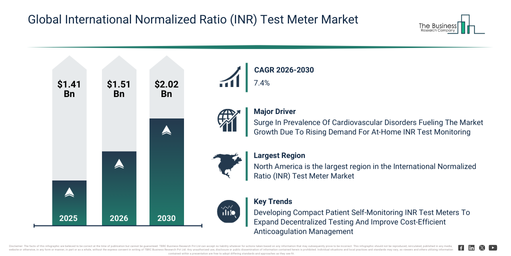
    The INR test meter market size has experienced robust growth in recent years. It is anticipated to increase from $1.41 billion in 2025 to $1.51 billion in 2026, achieving a compound annual growth rate (CAGR) of 7.7%. This historical expansion can be attributed to the rising prevalence of cardiovascular diseases, the growing adoption of point-of-care testing, an increasing geriatric population, a heightened awareness of anticoagulant therapy, and an increasing patient preference for home monitoring.

    The INR test meter market size is anticipated to experience significant expansion over the forthcoming years. It is projected to ascend to $2.02 billion by 2030, demonstrating a compound annual growth rate (CAGR) of 7.4%. This anticipated growth during the forecast period stems from the increasing demand for home-based self-testing, the rising adoption of telemedicine, growing healthcare expenditure, the enlargement of point-of-care networks, and an elevated focus on personalized patient care. Prominent trends expected in this period involve advancements in biosensor technology, the integration of technology with mobile applications, innovation in portable meter design, research and development efforts in non-invasive testing, and integration with electronic health records.

    Access Your Free Sample Report For In-Depth Market Analysis:

    https://www.thebusinessresearchcompany.com/sample.aspx?id=30626&type=smp

    Which Important Drivers Are Guiding The International Normalized Ratio (INR) Test Meter Market Growth?

    The escalating occurrence of cardiovascular disorders is anticipated to fuel the expansion of the International Normalized Ratio (INR) test meter market moving forward. These conditions, which impact the heart and blood vessels, compromise circulatory function and frequently necessitate prolonged management through anticoagulant therapies to avert severe events such as stroke and thrombosis. The rise in cardiovascular disorders is linked to poor dietary habits, as the excessive intake of saturated fats, trans fats, added sugars, and sodium contributes to high blood pressure, obesity, and elevated cholesterol levels—all significant risk factors for heart-related ailments. INR test meters facilitate the management of cardiovascular disorders by enabling regular at-home monitoring of coagulation status, thereby helping to ensure safer and more effective anticoagulant treatment. For instance, in August 2025, according to the Centers for Disease Control and Prevention, a Switzerland-based health agency, 90% of the nation’s 4.9 trillion dollars in annual health care spending is attributed to individuals with chronic and mental health conditions, with more than 84,000 Americans dying each year from heart disease or stroke, and the costs associated with cardiovascular diseases are projected to reach roughly $2 trillion by 2050. Therefore, the increasing prevalence of cardiovascular disorders is a key driver for the growth of the International Normalized Ratio (INR) test meter market.

    How Is Segmentation Applied In The International Normalized Ratio (INR) Test Meter Market Segment Analysis?

    The international normalized ratio (inr) test meter market covered in this report is segmented –

    1) By Product Type: Devices, Test Strips, Lancets, Reagents, Mobile App Integration

    2) By Technology: Electrochemical Biosensor-Based Meters, Photometric-Based Meters, Bluetooth, Non-Invasive

    3) By End User: Hospitals, Specialty Clinics, Ambulatory Surgical Centers, Homecare Settings

    Subsegments:

    1) By Devices: Handheld Meters, Portable Meters, Desktop Meters, Wireless Meters, Bluetooth Enabled Meters

    2) By Test Strips: Standard Test Strips, Ultra-Sensitive Test Strips, Fast-Acting Test Strips, Reusable Test Strips, Single-Use Test Strips

    3) By Lancets: Safety Lancets, Auto-Release Lancets, Adjustable Depth Lancets, Single-Use Lancets, Spring-Loaded Lancets

    4) By Reagents: Enzymatic Reagents, Chemical Reagents, Calibration Reagents, Buffer Solutions, Control Solutions

    5) By Mobile App Integration: iOS Applications, Android Applications, Cloud-Synced Applications, Real-Time Monitoring Applications, Personalized Health Recommendation Applications

    What Trends Are Influencing The Evolution Of The International Normalized Ratio (INR) Test Meter Market?

    Leading companies in the International Normalized Ratio (INR) test meter market are concentrating on developing advanced products, such as patient self-monitoring coagulation analyzers. This focus aims to expand decentralized testing and shift ongoing demand towards more cost-effective consumables. These patient self-monitoring coagulation analyzers are portable devices that empower patients to perform PT/INR testing at home using a small capillary blood sample, thereby facilitating frequent monitoring and reducing reliance on clinical visits. For instance, in March 2024, Universal Biosensors, an Australia-based medical device company, introduced the Xprecia Prime 4U Coagulation Analyzer for patient self-monitoring. This particular self-monitoring coagulation analyzer is designed to fit in the palm of the hand, delivers rapid PT/INR results from a single drop of capillary blood, and utilizes an electrochemical strip format that supports various regulatory approvals, including 510(k) clearance and CLIA waiver for the U.S. market. This launch marks a significant progression in INR testing, as it allows for broader access to home monitoring, increases the frequency of tests, and improves cost efficiency through higher consumable utilization, all while maintaining clinical accuracy.

    Who Are The Companies Participating In The International Normalized Ratio (INR) Test Meter Market Environment?

    Major companies operating in the international normalized ratio (inr) test meter market are Abbott Laboratories, Siemens Healthineers AG, Roche Diagnostics International Ltd., Guangzhou Wondfo Biotech Co. Ltd., Nova Biomedical Corporation, Agappe Diagnostics Ltd., Helena Laboratories Corporation, Getein Biotech Inc., Transasia Bio-Medicals Limited, ACON Laboratories Inc., ERBA Diagnostics Mannheim GmbH, ARKRAY USA Inc., Genrui Biotech Inc., i-SENS Inc., Accurex Biomedical Pvt. Ltd., Trivitron Healthcare Private Limited, iLine Microsystems S.L, Meril Life Sciences Private Limited, Micropoint Biotechnologies Co. Ltd., Universal Biosensors Inc.

    Get The Full International Normalized Ratio (INR) Test Meter Market Report:

    https://www.thebusinessresearchcompany.com/report/international-normalized-ratio-inr-test-meter-market-report

    Where Is The International Normalized Ratio (INR) Test Meter Market Primarily Concentrated By Region?

    North America was the largest region in the INR test meter market in 2025. Asia-Pacific is expected to be the fastest-growing region in the forecast period. The regions covered in the international normalized ratio (inr) test meter market report are Asia-Pacific, South East Asia, Western Europe, Eastern Europe, North America, South America, Middle East, Africa.

    Request A Customized International Normalized Ratio (INR) Test Meter Market Report For Competitive Insights:

    https://www.thebusinessresearchcompany.com/customise?id=30626&type=smp

    Browse Through More Reports Similar to the Global International Normalized Ratio (INR) Test Meter Market 2026, By The Business Research Company

    Gas Meter Market Report 2026

    https://www.thebusinessresearchcompany.com/report/gas-meter-global-market-report

    Water Meter Market Report 2026

    https://www.thebusinessresearchcompany.com/report/water-meter-global-market-report

    digital multimeter global market report

    https://www.thebusinessresearchcompany.com/report/digital-multimeter-global-market-report

    Get in touch with us:

    The Business Research Company: https://www.thebusinessresearchcompany.com/

    Americas +1 310-496-7795

    Asia +44 7882 955267 & +91 8897263534

    Europe +44 7882 955267

    Email us at info@tbrc.info

    Follow us on:

    LinkedIn: https://in.linkedin.com/company/the-business-research-company

    YouTube: https://www.youtube.com/channel/UC24_fI0rV8cR5DxlCpgmyFQ

    Global Market Model: https://www.thebusinessresearchcompany.com/global-market-model

  • Interactive Patient Care Systems  Market Insights On Growth Drivers, Trends, And Opportunities

    Interactive Patient Care Systems Market Insights On Growth Drivers, Trends, And Opportunities

    The Business Research Company’s 2026 market reports feature enhanced tools like market attractiveness analysis, TAM assessment, and company scoring matrices, along with interactive dashboards, deeper supply chain insights, and startup coverage strengthening the depth, usability, and strategic value of insights.

    What Are The Market Size Estimates For The Interactive Patient Care Systems Market In 2026 And 2030?

    The interactive patient care systems market has witnessed substantial expansion in recent years. It is projected to expand from $0.29 billion in 2025 to $0.34 billion in 2026, exhibiting a compound annual growth rate (CAGR) of 15.8%. This historic growth can be attributed to the increasing adoption of digital health platforms, growing investment in patient engagement solutions, rising integration of bedside terminals and mobile applications, the expansion of telehealth services, and an increasing focus on clinical workflow optimization.

    The interactive patient care systems market size is projected to undergo substantial expansion in the coming years. It is set to grow to $0.61 billion in 2030, demonstrating a compound annual growth rate (CAGR) of 15.5%. This growth throughout the forecast period is primarily driven by the increasing evolution of AI-powered analytics for personalized care, burgeoning innovation in cloud-based patient engagement platforms, escalating investment in remote patient monitoring devices, the proliferation of interactive kiosks and self-service terminals, and continuous progress in software interoperability and integration tools. Significant trends expected during this period involve breakthroughs in mobile care applications, enhancements in telehealth and virtual consultation platforms, the creation of integrated clinical workflow solutions, technological improvements in content management and educational modules, and dedicated research and development in hybrid deployment and scalable interactive patient care systems.

    Access Your Free Sample Report For In-Depth Market Analysis:

    https://www.thebusinessresearchcompany.com/sample.aspx?id=30625&type=smp

    What Major Factors Are Driving The Interactive Patient Care Systems Market Forward?

    A heightened emphasis on patient-centered care is anticipated to drive the expansion of the interactive patient care systems market moving ahead. Patient-centered care involves providing healthcare that respects and responds to individual patient preferences, needs, and values, ensuring that patient values guide medical decisions and service delivery. This increased attention on patient-centered care stems from hospitals and health systems making patient experience a strategic objective to enhance quality outcomes, patient satisfaction, and institutional standing. Interactive patient care systems facilitate patient-centered care and improved patient experience within hospitals by enabling real-time communication, tailored education, and engagement tools at the bedside, thereby boosting patient experience and operational efficiency. For instance, in November 2025, according to Chief Healthcare Executive, a US-based healthcare leadership publication, in 2023, 49% of hospital executives identified improving patient experience as their top strategic priority, up from 36% in 2023, marking a 36% rise compared to previous years. Consequently, the growing focus on patient-centered care is fueling the growth of the interactive patient care systems market.

    What Segment Categories Shape The Interactive Patient Care Systems Market Segment Landscape?

    The interactive patient care systems market covered in this report is segmented –

    1) By Component: Hardware, Software, Services

    2) By Product Type: Bedside Terminals, Interactive Displays, Patient Monitoring Devices, Mobile Care Applications, In-Room Entertainment Systems, Other Product Types

    3) By Deployment Mode: On-Premises, Cloud-Based, Hybrid Deployment Models

    4) By Application: Patient Education, Entertainment, Communication, Medication Management, Other Applications

    5) By End-User: Hospitals, Clinics, Ambulatory Surgical Centers, Long-Term Care Centers, Other End-Users

    Subsegments:

    1) By Hardware: Bedside Terminals, Interactive Displays, Patient Monitoring Devices, Mobile Care Applications, In Room Entertainment Systems, Other Product Types

    2) By Software: Patient Education, Entertainment, Communication, Medication Management, Other Applications

    3) By Services: Implementation Support, Training And Education, Maintenance And Support, Consulting Services, Integration Services

    Which Trends Are Impacting The Progress Of The Interactive Patient Care Systems Market?

    Leading companies in the interactive patient care systems market are concentrating on creating engagement applications, including mobile-first patient engagement platforms, with the aim of enhancing patient involvement, streamlining communication regarding care, and lessening reliance on dedicated bedside hardware. Mobile-first patient engagement platforms are cloud-based digital solutions that enable patients to access care information, educational materials, service requests, and communication functionalities directly through their personal mobile devices during a hospital stay. For instance, in February 2024, Oneview Healthcare PLC, an Ireland-based healthcare technology company, unveiled MyStay Mobile, a software-as-a-service patient engagement platform intended to broaden interactive care services beyond conventional in-room terminals. This mobile-first engagement platform allows patients to view personalized stay details, order meals, submit service requests, and offer real-time feedback using their own smartphones, without needing to install an application. Furthermore, it integrates with hospital electronic health record systems and supports multilingual content delivery, thereby assisting healthcare providers in elevating the patient experience while mitigating capital and maintenance expenditures associated with bedside hardware deployment.

    Who Are The Companies Operating Across The Interactive Patient Care Systems Market Value Chain?

    Major companies operating in the interactive patient care systems market are Epic Systems Corporation, Advantech Co. Ltd., Barco NV, HCI Group Inc., Vocera Communications Inc., PatientPoint Inc., Medhost Inc., CipherHealth Inc., Lincor Solutions Ltd., Sentrics, Aceso Interactive Inc., Aiva Health Inc., SONIFI Health Inc., BEWATEC ConnectedCare GmbH, GetWellNetwork Inc., Oneview Healthcare PLC, PDI Communications Inc., eVideon Inc., Onyx Healthcare Inc., ClinicAll

    Get The Full Interactive Patient Care Systems Market Report:

    https://www.thebusinessresearchcompany.com/report/interactive-patient-care-systems-market-report

    Which Region Has The Greatest Market Share In The Interactive Patient Care Systems Market?

    North America was the largest region in the interactive patient care systems market in 2025. Asia-Pacific is expected to be the fastest-growing region in the forecast period. The regions covered in the interactive patient care systems market report are Asia-Pacific, South East Asia, Western Europe, Eastern Europe, North America, South America, Middle East, Africa.

    Request A Customized Interactive Patient Care Systems Market Report For Competitive Insights:

    https://www.thebusinessresearchcompany.com/customise?id=30625&type=smp

    Browse Through More Reports Similar to the Global Interactive Patient Care Systems Market 2026, By The Business Research Company

    Integrated Patient Care Systems Market Report 2026

    https://www.thebusinessresearchcompany.com/report/integrated-patient-care-systems-global-market-report

    Patient Simulators Market Report 2026

    https://www.thebusinessresearchcompany.com/report/patient-simulators-global-market-report

    healthcare information system global market report

    https://www.thebusinessresearchcompany.com/report/healthcare-information-system-global-market-report

    Get in touch with us:

    The Business Research Company: https://www.thebusinessresearchcompany.com/

    Americas +1 310-496-7795

    Asia +44 7882 955267 & +91 8897263534

    Europe +44 7882 955267

    Email us at info@tbrc.info

    Follow us on:

    LinkedIn: https://in.linkedin.com/company/the-business-research-company

    YouTube: https://www.youtube.com/channel/UC24_fI0rV8cR5DxlCpgmyFQ

    Global Market Model: https://www.thebusinessresearchcompany.com/global-market-model
  • Intelligent Medical Guidance and Navigation System  Market Developments Shaping Growth Across The Forecast Period

    Intelligent Medical Guidance and Navigation System Market Developments Shaping Growth Across The Forecast Period

    The Business Research Company’s 2026 market reports feature enhanced tools like market attractiveness analysis, TAM assessment, and company scoring matrices, along with interactive dashboards, deeper supply chain insights, and startup coverage strengthening the depth, usability, and strategic value of insights.

    What Expansion In Market Value Is Forecasted For The Intelligent Medical Guidance and Navigation System Market Between 2026 And 2030?

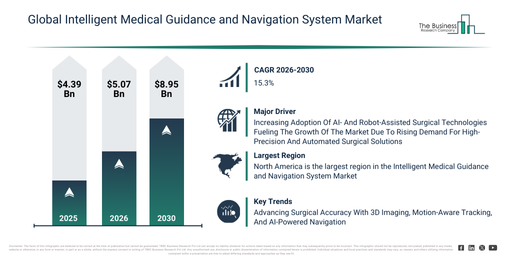
    The intelligent medical guidance and navigation system market has seen swift growth in recent years. This market is set to expand from $4.39 billion in 2025 to $5.07 billion in 2026, achieving a compound annual growth rate (CAGR) of 15.6%. Historically, this expansion can be attributed to the increasing uptake of medical imaging technologies, the rising demand for minimally invasive procedures, the progression of hospital digitalization, the early integration of artificial intelligence in clinical workflows, and the broader expansion of surgical navigation solutions.

    The market for intelligent medical guidance and navigation systems is projected to experience substantial expansion over the upcoming years. This market is anticipated to reach a valuation of $8.95 billion by 2030, demonstrating a compound annual growth rate (CAGR) of 15.3%. Factors contributing to this growth during the forecast period include the escalating demand for precision medicine, the wider implementation of artificial intelligence-powered clinical support solutions, increased funding for smart operating environments, a broadening emphasis on sustainable and carbon-neutral hospital facilities, and the accelerated uptake of real-time patient monitoring systems. Key trends identified for the forecast timeframe encompass the fusion of artificial intelligence with multimodal imaging techniques, the advancement of robotics-assisted navigation, the proliferation of cloud-based platforms for clinical decision-making, the growing application of digital twins in healthcare strategic planning, and a move towards medical systems that are energy-efficient and carbon-free.

    Access Your Free Sample Report For In-Depth Market Analysis:

    https://www.thebusinessresearchcompany.com/sample.aspx?id=30624&type=smp

    Which Key Drivers Are Affecting The Intelligent Medical Guidance and Navigation System Market Development?

    The rising implementation of robot-assisted surgical technologies is projected to drive the expansion of the intelligent medical guidance and navigation system market moving forward. These Artificial Intelligence (AI) and robot-assisted surgical technologies represent sophisticated systems that harness AI and robotic mechanisms to help surgeons execute intricate procedures with improved precision, control, and efficiency. Hospitals are increasingly embracing AI and robot-assisted surgical technologies as they strive for greater surgical accuracy, reduced complication rates, and faster patient recovery through minimally invasive, digitally guided interventions. The intelligent medical guidance and navigation system enhances robot-assisted surgical technologies by providing real-time surgical navigation, automated instrument guidance, and decision-support capabilities that optimize procedural exactness. For instance, in November 2024, information from the Private Healthcare Information Network, a UK-based government-mandated organisation, indicated that about 22,700 robot-assisted procedures were performed during the first quarter of 2024. This marked a 45% increase compared to the first quarter of 2023 and a 12% rise from the last quarter of 2023. Thus, the growing adoption of robot-assisted surgical technologies is fueling the growth of the intelligent medical guidance and navigation system market.

    Which Segment Types Are Examined In The Intelligent Medical Guidance and Navigation System Market Segment Study?

    The intelligent medical guidance and navigation system market covered in this report is segmented –

    1) By Component Or Product Type: Hardware, Software, Service

    2) By Technology: Robotics, Computer Vision, Artificial Intelligence, Augmented Reality, Navigation Software

    3) By Application: Surgical Navigation, Radiation Therapy, Diagnostic Imaging, Orthopedic Guidance, Neurological Guidance

    4) By End Use: Hospitals, Ambulatory Surgery Centers, Diagnostic Centers, Research Institutions

    Subsegments:

    1) By Hardware: Imaging Sensors, Tracking Sensors, Navigation Consoles, Robotic Arms, Display Monitors

    2) By Software: Imaging Analysis Software, Navigation Planning Software, Intraoperative Guidance Software, Workflow Integration Software, Data Management Software

    3) By Service: Installation Service, Maintenance Service, Training Service, Upgradation Service, Technical Support Service

    What Trends Are Transforming The Intelligent Medical Guidance and Navigation System Market?

    Leading companies within the intelligent medical guidance and navigation system market are concentrating on advancing technologies like 3D imaging and motion-aware tracking. This effort aims to boost precision during operations, minimize errors, and improve surgical results. 3D imaging and motion-aware tracking integrates three-dimensional visualization with real-time monitoring of surgical instruments and patient anatomy, enabling systems to dynamically adjust to movement and provide accurate direction during procedures. For example, in October 2025, Zeta Surgical Inc., a US-based medical technology company specializing in AI-enabled surgical solutions, obtained FDA 510(k) clearance for its AI-powered TMS Navigation System. This system incorporates 3D imaging and motion-aware tracking to offer real-time guidance during complex surgical procedures, allowing surgeons to navigate with enhanced spatial awareness and precision. Such a system facilitates safer, more efficient surgeries and contributes to better patient outcomes.

    Which Players Are Part Of The Competitive Landscape Of The Intelligent Medical Guidance and Navigation System Market?

    Major companies operating in the intelligent medical guidance and navigation system market are Johnson & Johnson, Medtronic Plc, Siemens Healthineers AG, Stryker Corporation, Koninklijke Philips N.V., GE Healthcare Technologies Inc., Smith & Nephew Plc, B. Braun Melsungen AG, Zimmer Biomet Holdings Inc., Intuitive Surgical, Olympus Corporation, Karl Storz SE & Co. KG, Brainlab AG, Amplitude Surgical, Northern Digital Inc., Augmedics, Synaptive Medical Inc., Proprio, Fiagon GmbH, Surgical Theater LLC, Orthofix Medical Inc., Naviswiss AG, SurgicEye GmbH

    Get The Full Intelligent Medical Guidance and Navigation System Market Report:

    https://www.thebusinessresearchcompany.com/report/intelligent-medical-guidance-and-navigation-system-market-report

    Which Region Accounts For The Largest Portion Of The Intelligent Medical Guidance and Navigation System Market?

    North America was the largest region in the intelligent medical guidance and navigation systems market in 2025. Asia-Pacific is expected to be the fastest-growing region in the forecast period. The regions covered in the intelligent medical guidance and navigation system market report are Asia-Pacific, South East Asia, Western Europe, Eastern Europe, North America, South America, Middle East, Africa.

    Request A Customized Intelligent Medical Guidance and Navigation System Market Report For Competitive Insights:

    https://www.thebusinessresearchcompany.com/customise?id=30624&type=smp

    Browse Through More Reports Similar to the Global Intelligent Medical Guidance and Navigation System Market 2026, By The Business Research Company

    Navigation System Market Report 2026

    https://www.thebusinessresearchcompany.com/report/navigation-system-global-market-report

    Healthcare Navigation Platform Market Report 2026

    https://www.thebusinessresearchcompany.com/report/healthcare-navigation-platform-global-market-report

    surgical navigation systems global market report

    https://www.thebusinessresearchcompany.com/report/surgical-navigation-systems-global-market-report

    Get in touch with us:

    The Business Research Company: https://www.thebusinessresearchcompany.com/

    Americas +1 310-496-7795

    Asia +44 7882 955267 & +91 8897263534

    Europe +44 7882 955267

    Email us at info@tbrc.info

    Follow us on:

    LinkedIn: https://in.linkedin.com/company/the-business-research-company

    YouTube: https://www.youtube.com/channel/UC24_fI0rV8cR5DxlCpgmyFQ

    Global Market Model: https://www.thebusinessresearchcompany.com/global-market-model
  • Insulated Shippers  Market Forecast With Insights On Demand And Industry Growth

    Insulated Shippers Market Forecast With Insights On Demand And Industry Growth

    The Business Research Company’s 2026 market reports feature enhanced tools like market attractiveness analysis, TAM assessment, and company scoring matrices, along with interactive dashboards, deeper supply chain insights, and startup coverage strengthening the depth, usability, and strategic value of insights.

    How Large Will The Insulated Shippers Market Be By 2030 Compared To Its 2026 Market Size?

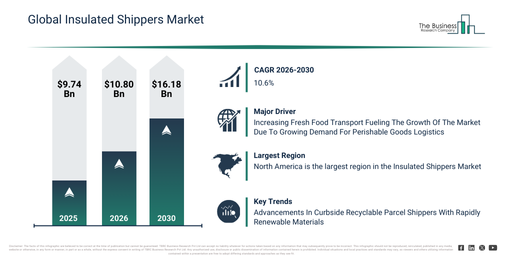
    The insulated shippers market has experienced rapid expansion in recent years. It is projected to increase from $9.74 billion in 2025 to $10.80 billion in 2026, demonstrating a compound annual growth rate (CAGR) of 10.9%. The growth observed in the past can be attributed to factors such as the increasing demand for temperature-sensitive pharmaceuticals, the growing adoption of cold chain logistics, a rising utilization of expanded polystyrene and polyurethane insulated packaging, the expansion of global food and beverage distribution networks, and an increasing regulatory focus on temperature-controlled shipping.

    The insulated shippers market is projected to experience substantial expansion over the upcoming years, reaching a valuation of $16.18 billion by 2030, demonstrating a compound annual growth rate (CAGR) of 10.6%. This projected growth is driven by several factors, including the increasing requirement for biologics and specialized pharmaceuticals, the rise in e-commerce deliveries of temperature-sensitive food items, a heightened preference for reusable insulated packaging solutions, the development of sophisticated cold chain infrastructure, and a greater uptake of high-performance insulation materials. Key trends anticipated during this period encompass technological progress in thermal packaging systems, novel approaches in smart temperature monitoring, the evolution of eco-friendly and reusable insulated shipper designs, intensive research and development into vacuum insulated panels and phase-change materials, and enhancements in modular and personalized insulated packaging options.

    Access Your Free Sample Report For In-Depth Market Analysis:

    https://www.thebusinessresearchcompany.com/sample.aspx?id=30623&type=smp

    What Factors Are Contributing To The Growth Of The Insulated Shippers Market?

    The expanding transportation of fresh food is anticipated to drive the future growth of the insulated shippers market. This involves moving delicate agricultural products, including items like fruits, vegetables, meat, and dairy, from producers to consumers, while upholding particular temperature conditions to maintain their freshness. The surge in fresh food transport stems from consumers’ growing desire for convenient home delivery of fresh produce and refrigerated items via e-commerce grocery platforms and quick delivery services. Insulated shippers play a crucial role in supporting this rise by providing precise temperature control, thereby guaranteeing that perishable goods remain safe and of high quality throughout transit. For example, data released in January 2025 by the United States Department of Agriculture (USDA), a US-based federal executive department, indicated that truck shipments of fresh produce in the United States totaled 11.21 million tons during the second quarter of 2024, marking a 14% increase compared with the same quarter in 2023. Consequently, the heightened transport of fresh food is propelling the expansion of the insulated shippers market.

    How Are Different Segments Classified In The Insulated Shippers Market Segment Analysis?

    The insulated shippers market covered in this report is segmented –

    1) By Product Type: Panel Shippers, Envelope Shippers, Box Shippers, Other Product Types

    2) By Material: Expanded Polystyrene (EPS), Polyurethane, Vacuum Insulated Panels, Other Materials

    3) By Distribution Channel: Direct Sales, Distributors, Online Retail

    4) By Application: Pharmaceuticals, Food And Beverages, Chemicals, Other Applications

    5) By End-User: Healthcare, Food Service, E-Commerce, Other End-Users

    Subsegments:

    1) By Panel Shippers: Single Wall Construction, Double Wall Construction, Multi-Layered Composite Construction

    2) By Envelope Shippers: Bubble Insulated Mailers, Foam Lined Padded Mailers, Reflective Foil Insulated Mailers

    3) By Box Shippers: Single-Use Corrugated Boxes, Reusable Plastic Containers, Insulated Dividers And Liners

    4) By Other Product Types: Insulated Totes And Bags, Hard-Sided Insulated Cases, Custom Molded Foam Containers

    What Trends Are Shaping The Future Of The Insulated Shippers Market?

    Leading companies in the insulated shippers market are concentrating on developing environmentally friendly packaging solutions, such as curbside-recyclable parcel shippers, to enhance thermal capabilities, operational effectiveness, and minimize environmental impact. Recyclable cold chain shippers combine robust insulation with rapidly renewable, single-use materials to preserve product integrity while facilitating effortless disposal and recycling. For instance, in May 2025, Cold Chain Technologies LLC, a US-based provider of temperature-controlled packaging solutions, launched its CCT TRUEtemp Naturals shipper, offering a cost-effective, single-use solution that meets customer demands for reliable cold chain performance and supports corporate sustainability goals. Qualified to the ISTA 7E RFG profile, the system maintains 2–8 °C conditions for up to 48 hours. Offered in extra small, small, medium, and large formats, it accommodates diverse payload requirements and is particularly suited to drug sampling programs, wholesale distribution, and overnight domestic shipments.

    Who Are The Companies Driving Activity In The Insulated Shippers Market?

    Major companies operating in the insulated shippers market are DS Smith PLC, Sonoco ThermoSafe, Sealed Air Corporation, Tower Cold Chain Solutions Limited, Ranpak Holdings Corp., CSafe Global, Cryoport Systems LLC, Cold Chain Technologies (CCT), Envirotainer AB, FEURER Group GmbH, TemperPack Technologies Inc., Peli BioThermal LLC, Cryopak Industries Inc., Polar Tech Industries Inc., Nordic Cold Chain Solutions, DGP Intelsius Limited, Inmark Packaging, Topa Thermal Packaging B.V., Sofrigam SA, Chill-Pak, Tempack Packaging Solutions S.L.

    Get The Full Insulated Shippers Market Report:

    https://www.thebusinessresearchcompany.com/report/insulated-shippers-market-report

    Which Region Holds The Highest Market Share In The Insulated Shippers Market?

    North America was the largest region in the insulated shippers market in 2025. Asia-Pacific is expected to be the fastest-growing region in the forecast period. The regions covered in the insulated shippers market report are Asia-Pacific, South East Asia, Western Europe, Eastern Europe, North America, South America, Middle East, Africa.

    Request A Customized Insulated Shippers Market Report For Competitive Insights:

    https://www.thebusinessresearchcompany.com/customise?id=30623&type=smp

    Browse Through More Reports Similar to the Global Insulated Shippers Market 2026, By The Business Research Company

    Insulated Shipping Packaging Market Report 2026

    https://www.thebusinessresearchcompany.com/report/insulated-shipping-packaging-global-market-report

    Insulation Products Market Report 2026

    https://www.thebusinessresearchcompany.com/report/insulation-products-global-market-report

    aircraft insulation global market report

    https://www.thebusinessresearchcompany.com/report/aircraft-insulation-global-market-report

    Get in touch with us:

    The Business Research Company: https://www.thebusinessresearchcompany.com/

    Americas +1 310-496-7795

    Asia +44 7882 955267 & +91 8897263534

    Europe +44 7882 955267

    Email us at info@tbrc.info

    Follow us on:

    LinkedIn: https://in.linkedin.com/company/the-business-research-company

    YouTube: https://www.youtube.com/channel/UC24_fI0rV8cR5DxlCpgmyFQ

    Global Market Model: https://www.thebusinessresearchcompany.com/global-market-model

  • Implantable Brain-Computer Interfaces  Market Outlook Highlighting Key Drivers And Market Evolution

    Implantable Brain-Computer Interfaces Market Outlook Highlighting Key Drivers And Market Evolution

    The Business Research Company’s 2026 market reports feature enhanced tools like market attractiveness analysis, TAM assessment, and company scoring matrices, along with interactive dashboards, deeper supply chain insights, and startup coverage strengthening the depth, usability, and strategic value of insights.

    What Is The Projected Increase In Market Value Of The Implantable Brain-Computer Interfaces Market During 2026–2030?

    The implantable brain–computer interface market has seen swift expansion in recent years. Its valuation is forecast to climb from $1.34 billion in 2025 to $1.53 billion in 2026, demonstrating a compound annual growth rate (CAGR) of 13.6%. The observed growth in earlier periods is linked to an elevated demand for neuroprosthetics, the rising occurrence of neurological disorders, increased adoption of non-invasive brain–computer interfaces, more extensive research funding within neuroscience, and a wider application of brain–computer interfaces in rehabilitation.

    The implantable brain–computer interface market size is projected for substantial expansion in the coming years. This market is anticipated to reach $2.52 billion by 2030, exhibiting a compound annual growth rate (CAGR) of 13.3%. The expansion during the forecast period stems from factors such as the increasing incorporation of artificial intelligence into brain–computer interfaces, a surge in investments directed towards neural interface advancement, greater uptake of minimally invasive brain–computer interface solutions, broadening uses in assistive communication, and a heightened need for brain–controlled robotic systems. Key trends projected for this forecast timeframe encompass progress in neural signal decoding technology, novelties in fully implantable brain–computer interfaces, advancements in wireless brain–computer interface apparatus, dedicated research and development for brain–controlled prosthetics, and enhancements in high-resolution neuroimaging methods.

    Access Your Free Sample Report For In-Depth Market Analysis:

    https://www.thebusinessresearchcompany.com/sample.aspx?id=30618&type=smp

    Which Strong Drivers Are Impacting The Implantable Brain-Computer Interfaces Market Growth?

    Future expansion of the implantable brain-computer interfaces market is anticipated to be driven by the rising incidence of spinal cord injury cases. These injuries involve either traumatic or non-traumatic damage to the spinal cord, which interferes with the brain-body communication and frequently leads to a partial or complete impairment of motor and sensory functions. An increase in spinal cord injury occurrences can be attributed to a greater frequency of falls within older populations, given that seniors are more susceptible to risks from osteoporosis, difficulties with mobility, and accidents at home. Implantable brain-computer interfaces help address the growing number of spinal cord injury cases by converting neural signals from the brain into commands capable of operating assistive devices, wheelchairs, or computers, thereby allowing paralyzed individuals to restore communication skills and autonomy. As an illustration, data from June 2025, provided by NeoMotion Assistive Solutions Private Limited, an India-based producer of assistive mobility devices, indicated that the estimated number of individuals with spinal cord injury in the United States grew from about 302,000 in 2023 to roughly 308,620 in 2024. Consequently, the expanding occurrence of spinal cord injuries is a significant factor in the growth of the implantable brain-computer interfaces market.

    How Is The Implantable Brain-Computer Interfaces Market Categorized Across Its Segment Groups?

    The implantable brain-computer interfaces market covered in this report is segmented –

    1) By Component: Hardware, Software

    2) By Type: Non-invasive Brain–Computer Interfaces, Partially Invasive Brain–Computer Interfaces, Fully Invasive Brain–Computer Interfaces

    3) By Application: Healthcare And Rehabilitation, Communication And Control, Gaming And Entertainment, Smart Home And Automotive Control

    4) By End User: Hospitals And Specialty Clinics, Research Centers And Academic Institutes, Home Care Settings, Other End Users

    Subsegments:

    1) By Hardware: Neural Electrodes, Signal Amplifiers, Data Acquisition Units, Wireless Transmitters, Power Supply Units

    2) By Software: Signal Processing Software, Neural Decoding Software, Data Analysis Software, Control Interface Software, Feedback And Visualization Software

    Which Trends Are Contributing To Changes In The Implantable Brain-Computer Interfaces Market?

    Major companies within the implantable brain-computer interfaces market are focusing on developing technologically advanced products, such as fully implantable, wireless brain-computer interface devices, to re-establish communication capabilities for individuals with severe neurological conditions. Implantable wireless brain-computer interface devices are medical or neurotechnology apparatuses surgically placed in the brain that wirelessly record neural activity and/or stimulate neural circuits, enabling direct communication between the brain and external devices. For instance, in January 2024, Neuralink Corp., a US-based neurotechnology company, launched the Telepathy in a human patient. The device is designed to interpret neural activity and allow individuals with quadriplegia or amyotrophic lateral sclerosis (ALS) to control a computer cursor or keyboard using their thoughts. The system also provides a pathway for restoring lost sensory and motor functions, marking a significant milestone in the clinical application of high-bandwidth brain-machine interfaces for medical rehabilitation.

    Which Firms Are Influencing Competition In The Implantable Brain-Computer Interfaces Market?

    Major companies operating in the implantable brain-computer interfaces market are Medtronic plc, NeuroPace Inc., PINS Medical Co. Ltd., Neurosoft Ltd., Precision Neuroscience Corporation, Onward Medical N.V., NeuroOne Medical Technologies Corporation, Emotiv Systems Inc., NextMind S.A., Neuralink Corp., CorTec GmbH, Microprobes for Life Science Inc., Synchron Inc., Shanghai Rishena Medical Instrument Co. Ltd., Paradromics Inc., SceneRay Corporation Ltd., Blackrock Neurotech LLC, NeuroXess Inc., Inbrain Neuroelectronics S.L., BrainGate Company Inc.

    Get The Full Implantable Brain-Computer Interfaces Market Report:

    https://www.thebusinessresearchcompany.com/report/implantable-brain-computer-interfaces-market-report

    Where Is The Implantable Brain-Computer Interfaces Market Most Concentrated Geographically?

    North America was the largest region in the implantable brain–computer interface market in 2025. Asia-Pacific is expected to be the fastest-growing region in the forecast period. The regions covered in the implantable brain-computer interfaces market report are Asia-Pacific, South East Asia, Western Europe, Eastern Europe, North America, South America, Middle East, Africa.

    Request A Customized Implantable Brain-Computer Interfaces Market Report For Competitive Insights:

    https://www.thebusinessresearchcompany.com/customise?id=30618&type=smp

    Browse Through More Reports Similar to the Global Implantable Brain-Computer Interfaces Market 2026, By The Business Research Company

    Brain Computer Interface Market Report 2026

    https://www.thebusinessresearchcompany.com/report/brain-computer-interface-global-market-report

    Brain And Neuroimaging Devices Market Report 2026

    https://www.thebusinessresearchcompany.com/report/brain-and-neuroimaging-devices-global-market-report

    human machine interface global market report

    https://www.thebusinessresearchcompany.com/report/human-machine-interface-global-market-report

    Get in touch with us:

    The Business Research Company: https://www.thebusinessresearchcompany.com/

    Americas +1 310-496-7795

    Asia +44 7882 955267 & +91 8897263534

    Europe +44 7882 955267

    Email us at info@tbrc.info

    Follow us on:

    LinkedIn: https://in.linkedin.com/company/the-business-research-company

    YouTube: https://www.youtube.com/channel/UC24_fI0rV8cR5DxlCpgmyFQ

    Global Market Model: https://www.thebusinessresearchcompany.com/global-market-model

  • Immersive Virtual Stores  Market Overview 2026–2030 With Insights On Industry Developments

    Immersive Virtual Stores Market Overview 2026–2030 With Insights On Industry Developments

    The Business Research Company’s 2026 market reports feature enhanced tools like market attractiveness analysis, TAM assessment, and company scoring matrices, along with interactive dashboards, deeper supply chain insights, and startup coverage strengthening the depth, usability, and strategic value of insights.

    How Is The Market Size Of The Immersive Virtual Stores Market Expected To Change From 2026 To 2030?

    The market size for immersive virtual stores has experienced substantial expansion in recent years. It is anticipated to grow from $4.32 billion in 2025 to $5.39 billion in 2026, exhibiting a compound annual growth rate (CAGR) of 24.7%. Historically, this growth can be attributed to increasing demand for interactive online shopping experiences, growing adoption of augmented reality tools in retail, rising use of three-dimensional product visualization, expansion of e-commerce platforms globally, and increasing retailer focus on digital customer engagement.

    The immersive virtual stores market is anticipated to experience significant growth in the coming years, projected to reach $12.91 billion by 2030 with a compound annual growth rate (CAGR) of 24.4%. This expansion during the forecast period is attributed to the increasing integration of virtual reality commerce into omnichannel strategies, the growing adoption of cloud-based immersive store platforms, the rising demand for personalized and immersive digital shopping journeys, the broadening of virtual real estate and showroom applications, and increased retailer investment in experiential digital branding. Key trends in the forecast period include technological advancements in real-time three-dimensional rendering, innovations in artificial intelligence-enabled virtual try-on systems, developments in web-based immersive environments, ongoing research and development in spatial computing and mixed reality, and improvements in three-dimensional content creation pipelines.

    Access Your Free Sample Report For In-Depth Market Analysis:

    https://www.thebusinessresearchcompany.com/sample.aspx?id=30617&type=smp

    What Key Factors Are Shaping The Immersive Virtual Stores Market Landscape?

    The increasing use of smartphones is expected to propel the growth of the immersive virtual stores market going forward. Smartphones are advanced mobile devices equipped with internet connectivity, app functionality, and real-time communication. The rise in smartphone usage is attributed to the rapid expansion of mobile internet connectivity, which allows consumers to access online platforms and shop globally anytime, anywhere. Smartphone usage enhances immersive virtual stores by offering a portable and interactive platform for augmented and virtual reality shopping experiences. It improves customer engagement and convenience by enabling real-time product visualization, personalized recommendations, and seamless online purchasing from any location. For instance, in November 2024, according to Eurostat, the Luxembourg-based official statistical office of the European Union (EU), approximately 89% of EU residents aged 16–74 living in cities utilized their smartphones to access the internet in 2023, compared with 86% in towns and suburbs and 82% in rural areas. Therefore, the increasing smartphone penetration is driving the expansion of the immersive virtual stores market.

    How Are Segments Identified Within The Immersive Virtual Stores Market Segment Framework?

    The immersive virtual stores market covered in this report is segmented –

    1) By Technology Platform: Virtual Reality Based Stores, Augmented Reality Based Stores, Mixed Reality Based Stores, Web-Based Three Dimensional Stores

    2) By Deployment Mode: Cloud-Based, On-Premises

    3) By Application: Retail And E-commerce, Fashion And Apparel, Real Estate, Other Applications

    5) By End User: Retailers, Electronic Commerce Companies, Fashion Brands, Real Estate Companies, Consumer Electronics Companies, Other End Users

    Subsegments:

    1) By Virtual Reality Based Stores: Headset Dependent Full Immersion Stores, Social Virtual Reality Platform Stores, Controller Based Navigation Stores, Room Scale Interactive Stores

    2) By Augmented Reality Based Stores: Marker Based Augmented Reality Stores, Markerless Augmented Reality Stores, Projection Based Augmented Reality Stores, Mobile Application Augmented Reality Stores

    3) By Mixed Reality Based Stores: Holographic Device Enabled Stores, Spatial Computing Platform Stores, Interactive Blended Reality Stores, Wearable Display Integrated Stores

    4) By Web-Based Three Dimensional Stores: Browser Rendered Three Dimensional Stores, Game Engine Powered Web Stores, E-Commerce Platform Integrated Three Dimensional Stores, No Download Instant Access Stores

    What Market Trends Are Affecting The Immersive Virtual Stores Market?

    Leading companies within the immersive virtual stores sector are prioritizing the creation of cutting-edge technologies, such as immersive AR-powered virtual closet environments, to boost customer engagement, improve digital shopping experiences, and bridge the gap between physical and virtual retail. These immersive AR-enabled virtual closet environments are defined as augmented reality and spatial computing platforms that allow users to explore products in lifelike 3D spaces, engage with merchandise effortlessly, and experience visuals that highly mimic in-store browsing digitally. For instance, in February 2024, the US-based fashion retailer J.Crew Group Inc. unveiled the J.Crew Virtual Closet app on Apple Vision Pro, thereby delivering an AR-enabled virtual closet experience to spatial computing devices. This setup enables users to browse and combine clothing items within a highly realistic 3D environment, scrutinize textures and materials up close, and communicate with stylists through SharePlay during FaceTime calls. Such an AR-enhanced virtual store not only enhances product discovery but also provides personalized styling and social shopping capabilities that exceed conventional e-commerce.

    Who Are The Companies Competing Within The Immersive Virtual Stores Market?

    Major companies operating in the immersive virtual stores market are Alibaba Group Holding Limited, Roblox Corporation, Unity Software Inc., HTC Corporation, Flexsin Technologies Pvt. Ltd., Vection Technologies Ltd., Trigma Solutions Inc., Decentraland Foundation, iCreative Technologies Pvt. Ltd., Esferasoft Solutions Pvt. Ltd., Pixelette Technologies Pvt. Ltd., Innowise Group, ByondXR Ltd., Emperia Ltd., rooom GmbH, KiXR Ltd., Digital Agents Interactive Inc., GlamAR Inc., VB Metaverse Ltd., Obsess Inc., Arimars Technologies Pvt. Ltd.

    Get The Full Immersive Virtual Stores Market Report:

    https://www.thebusinessresearchcompany.com/report/immersive-virtual-stores-market-report

    Which Region Dominates The Immersive Virtual Stores Market By Market Share?

    North America was the largest region in the immersive virtual stores market in 2025. Asia-Pacific is expected to be the fastest-growing region in the forecast period. The regions covered in the immersive virtual stores market report are Asia-Pacific, South East Asia, Western Europe, Eastern Europe, North America, South America, Middle East, Africa.

    Request A Customized Immersive Virtual Stores Market Report For Competitive Insights:

    https://www.thebusinessresearchcompany.com/customise?id=30617&type=smp

    Browse Through More Reports Similar to the Global Immersive Virtual Stores Market 2026, By The Business Research Company

    Virtual Reality Shopping Market Report 2026

    https://www.thebusinessresearchcompany.com/report/virtual-reality-shopping-global-market-report

    Immersive Technology Market Report 2026

    https://www.thebusinessresearchcompany.com/report/immersive-technology-global-market-report

    virtual data room global market report

    https://www.thebusinessresearchcompany.com/report/virtual-data-room-global-market-report

    Get in touch with us:

    The Business Research Company: https://www.thebusinessresearchcompany.com/

    Americas +1 310-496-7795

    Asia +44 7882 955267 & +91 8897263534

    Europe +44 7882 955267

    Email us at info@tbrc.info

    Follow us on:

    LinkedIn: https://in.linkedin.com/company/the-business-research-company

    YouTube: https://www.youtube.com/channel/UC24_fI0rV8cR5DxlCpgmyFQ

    Global Market Model: https://www.thebusinessresearchcompany.com/global-market-model

  • Human Behavior Tool  Market Forecast Highlighting Key Trends And Expansion Potential

    Human Behavior Tool Market Forecast Highlighting Key Trends And Expansion Potential

    The Business Research Company’s 2026 market reports feature enhanced tools like market attractiveness analysis, TAM assessment, and company scoring matrices, along with interactive dashboards, deeper supply chain insights, and startup coverage strengthening the depth, usability, and strategic value of insights.

    From Its 2026 Market Size, What Value Is The Human Behavior Tool Market Projected To Reach By 2030?

    The human behavior tool market size has demonstrated significant expansion in recent years. This market is projected to expand from $2.47 billion in 2025 to $2.68 billion in 2026, achieving a compound annual growth rate (CAGR) of 8.5%. The historical growth can be attributed to several factors, including the increasing demand for behavioral analytics, a growing focus on employee productivity, the rising adoption of sentiment and emotion analysis tools, the expanding use of user behavior tracking in enterprises, and the increasing need for predictive decision-making.

    The human behavior tool market is projected to experience robust expansion over the coming years. Its valuation is anticipated to reach $3.68 billion by 2030, exhibiting a compound annual growth rate (CAGR) of 8.2%. This expansion during the projection period stems from the increasing integration of AI and machine learning into behavior analysis, the wider uptake of real-time monitoring platforms, a surging need for cognitive assessment and predictive modeling, the broadened application of cloud-based behavior analytics solutions, and a heightened focus on optimizing human performance through data. Key trends anticipated for the forecast timeframe encompass technological progress in AI-driven behavioral insights, novel developments in predictive modeling platforms, advancements in real-time emotion and sentiment analysis, intensified research and development efforts in cognitive assessment algorithms, and progress within integrated human behavior analytics ecosystems.

    Access Your Free Sample Report For In-Depth Market Analysis:

    https://www.thebusinessresearchcompany.com/sample.aspx?id=30614&type=smp

    Which Factors Are Influencing The Growth Of The Human Behavior Tool Market?

    The increasing need for behavior analytics is anticipated to boost the expansion of the human behavior tool market in the future. Behavior analytics involves the organized application of data to comprehend, forecast, and shape human activities and interactions across diverse settings. The requirement for these analytics is growing due to the heightened need for data-informed choices in areas like healthcare, education, and corporate administration to enhance results and productivity. Human behavior tools facilitate behavior analytics by supplying the necessary software and technical framework for precise collection, visualization, and interpretation of intricate behavioral data. For instance, the Behavior Analyst Certification Board (BACB), a US-based nonprofit, reported in February 2025 that the United States saw a 131% rise in demand for assistant behavior analysts in 2024 compared to 2023. Consequently, the expanding demand for behavior analytics is fueling the development of the human behavior tool market.

    What Are The Key Segment Divisions In The Human Behavior Tool Market Segment Structure?

    The human behavior tool market covered in this report is segmented –

    1) By Component: Software, Services, Hardware

    2) By Deployment Mode: Cloud-Based Or Software as a Service (SaaS), On-Premises

    3) By Technology: Artificial Intelligence, Machine Learning, Data Analytics, Biometrics

    4) By Application Or Use Case: Cybersecurity And Fraud Detection, Customer Experience (CX) And Marketing Optimization, Human Resources (HR) And Talent Management, Psychological Or Clinical Assessment, Education And Training

    5) By End-User Industry: Retail And E-commerce, Banking, Financial Services And Insurance (BFSI), Healthcare And Life Sciences, Technology And Media, Education, Government And Public Sector, Manufacturing, Other Corporate Enterprises

    Subsegments:

    1) By Software: Behavioral Analytics Platforms, Emotion Recognition Software, User Interaction Monitoring Tools, Predictive Behavior Modeling Systems, Real Time Decision Analysis Solutions

    2) By Services: Implementation And Integration Services, Training And Support Services, Consulting And Behavioral Strategy Services, Managed Behavior Analysis Services, Maintenance And Optimization Services

    3) By Hardware: Sensor Enabled Behavior Tracking Devices, Biometric Monitoring Equipment, Wearable Interaction Measurement Tools, Environmental Behavior Capture Units, Cognitive Response Detection Devices

    Which Trends Are Influencing Demand In The Human Behavior Tool Market?

    Major companies operating in the human behavior tool market are concentrating on developing technologically advanced models, such as multimodal AI application programming interfaces (APIs), to enable more sophisticated behavioral interpretation and assistive capabilities. Multimodal AI application programming interfaces (APIs) allow developers to build applications that can process and comprehend multiple forms of input, including text, images, and audio, which can analyze real-world visual cues, assess emotional context, and perform complex assistive tasks for users with diverse needs. For instance, in November 2023, OpenAI, a US-based artificial intelligence (AI) research organization, launched GPT-4 Turbo with Vision API at its inaugural DevDay. This platform enables developers to integrate visual analysis capabilities directly into their applications, allowing the AI to caption images, analyze real-world scenes in detail, and read documents with figures. The solution also introduced the Assistants API, which empowers the creation of purpose-built AI agents capable of following specific instructions, utilizing tools, and maintaining persistent memory to support long-term behavioral interactions.

    Which Organizations Are Engaged In The Human Behavior Tool Market?

    Major companies operating in the human behavior tool market are International Business Machines Corporation, Qualtrics International Inc., SHL Group Limited, Gallup Inc., Culture Amp Pty Ltd., Predictive Index LLC, HireVue Inc., NeuroLeadership Institute Inc., Hogan Assessment Systems Inc., NeuroSky Inc., Cogito Corporation, Crystal Knows Inc., Neuro-Insight Pty Ltd., Plum.io Inc., iMotions A/S, Sensum Technologies Pvt. Ltd., Humantic AI Inc., Receptiviti Inc., Behavioral Signals Technologies Ltd., Plum Analytics Canada Inc., Emotional Intelligence Appraisal LLC, Finding Mastery Inc.

    Get The Full Human Behavior Tool Market Report:

    https://www.thebusinessresearchcompany.com/report/human-behavior-tool-market-report

    Which Region Is The Largest In The Human Behavior Tool Market?

    North America was the largest region in the human behaviour tool market in 2025. Asia-Pacific is expected to be the fastest-growing region in the forecast period. The regions covered in the human behavior tool market report are Asia-Pacific, South East Asia, Western Europe, Eastern Europe, North America, South America, Middle East, Africa.

    Request A Customized Human Behavior Tool Market Report For Competitive Insights:

    https://www.thebusinessresearchcompany.com/customise?id=30614&type=smp

    Browse Through More Reports Similar to the Global Human Behavior Tool Market 2026, By The Business Research Company

    Behavioral Health Software Market Report 2026

    https://www.thebusinessresearchcompany.com/report/behavioral-health-software-global-market-report

    Behavioral And Mental Health Software Market Report 2026

    https://www.thebusinessresearchcompany.com/report/behavioral-and-mental-health-software-global-market-report

    behavioral biometrics global market report

    https://www.thebusinessresearchcompany.com/report/behavioral-biometrics-global-market-report

    Get in touch with us:

    The Business Research Company: https://www.thebusinessresearchcompany.com/

    Americas +1 310-496-7795

    Asia +44 7882 955267 & +91 8897263534

    Europe +44 7882 955267

    Email us at info@tbrc.info

    Follow us on:

    LinkedIn: https://in.linkedin.com/company/the-business-research-company

    YouTube: https://www.youtube.com/channel/UC24_fI0rV8cR5DxlCpgmyFQ

    Global Market Model: https://www.thebusinessresearchcompany.com/global-market-model