Month: May 2026

  • Hospital Command Center Software  Market Analysis Covering Growth Drivers And Future Outlook

    Hospital Command Center Software Market Analysis Covering Growth Drivers And Future Outlook

    The Business Research Company’s 2026 market reports feature enhanced tools like market attractiveness analysis, TAM assessment, and company scoring matrices, along with interactive dashboards, deeper supply chain insights, and startup coverage strengthening the depth, usability, and strategic value of insights.

    How Much Growth In Market Value Is Expected For The Hospital Command Center Software Market Between 2026 And 2030?

    The hospital command center software market has seen rapid expansion in recent years. It is projected to increase from $1.83 billion in 2025 to $2.15 billion in 2026, exhibiting a compound annual growth rate (CAGR) of 17.7%. Historically, this growth can be attributed to the escalating need for real-time hospital visibility, the rising adoption of digital health systems, an increasing demand for patient flow optimization, the expansion of hospital capacity management initiatives, and a greater focus on reducing operational inefficiencies.

    The hospital command center software market is set to experience significant expansion in the coming years, with projections indicating it will reach a value of $4.10 billion in 2030, growing at a compound annual growth rate (CAGR) of 17.4%. This projected growth can be attributed to the increasing integration of AI and predictive analytics, rising investments in hospital automation, the growing demand for scalable cloud-based command centers, the expansion of telehealth and remote monitoring ecosystems, and a greater need for emergency preparedness and rapid response systems. Prominent trends expected during this forecast period include advancements in AI-driven workflow automation technology, innovations in unified hospital command platforms, developments in cloud-native healthcare orchestration tools, expanding research and development in real-time operational analytics, and a broader adoption of interoperability and data integration standards.

    Access Your Free Sample Report For In-Depth Market Analysis:

    https://www.thebusinessresearchcompany.com/sample.aspx?id=30610&type=smp

    What Leading Drivers Are Supporting The Hospital Command Center Software Market Expansion?

    The expanding emphasis on hospital capacity management is projected to fuel the expansion of the hospital command center software market moving ahead. Hospital capacity management involves the strategic planning and operational supervision of hospital resources, including beds and personnel, to effectively satisfy patient requirements. This heightened attention to hospital capacity management stems from rising patient numbers coupled with limited beds, staff, and financial resources, compelling hospitals to optimize their resource utilization for delivering timely, secure, and economical care. Hospital command center software aids hospital capacity management through the centralization of data from diverse departments, offering a comprehensive operational overview that facilitates improved decision-making and resource distribution. For instance, in January 2024, according to the National Health Service (NHS) England, a UK-based publicly funded healthcare system, the organization achieved its target of adding 5,000 permanent core beds by early 2024 against a 2022-23 baseline of 94,500 core beds, reaching an average of 99,750 core beds by the week ending January 21, 2024. Consequently, the advancement in hospital capacity management is propelling the expansion of the hospital command center software market.

    Which Segment Categories Are Included In The Hospital Command Center Software Market Segment Analysis?

    The hospital command center software market covered in this report is segmented –

    1) By Component: Software, Services

    2) By Deployment Mode: On-Premises, Cloud-Based

    3) By Application: Patient Flow Management, Resource Allocation, Bed Management, Emergency Response, Operational Analytics, Other Applications

    4) By End-User: Hospitals, Specialty Clinics, Ambulatory Surgical Centers, Other End-Users

    Subsegments:

    1) By Software: Hospital Information Management Software, Patient Flow Software, Resource Scheduling Software, Bed Management Software, Emergency Response Software, Operational Analytics Software

    2) By Services: Implementation Services, Training And Support Services, Maintenance Services, Cloud Hosting Services, Data Analytics Services, Telehealth Integration Services

    What Emerging Trends Are Seen In The Hospital Command Center Software Market?

    Leading companies within the hospital command center software market are concentrating on creating sophisticated solutions, such as real-time predictive analytics, to elevate operational effectiveness, patient movement, and clinical judgments throughout health systems. Real-time predictive analytics denotes software-powered functionalities that consistently compile and examine current hospital data to anticipate demand, pinpoint areas of congestion, and facilitate proactive operational responses. For example, in October 2024, GE HealthCare Technologies Inc., a US-based medical technology company, unveiled the Hospital Pulse Tile for its Command Center Software. This launch integrates real-time predictive analytics to offer system-wide clarity regarding capacity, staffing levels, patient throughput, and the efficacy of care delivery. The Command Center employs advanced analytics and AI to convert complex hospital data into practical insights, empowering leaders to predict surges, optimize resource deployment, and diminish delays in patient care.

    Who Are The Active Companies Shaping The Hospital Command Center Software Market?

    Major companies operating in the hospital command center software market are Oracle Corporation, GE HealthCare Technologies Inc., Koninklijke Philips N.V., Baxter International Inc., Palantir Technologies Inc., Epic Systems Corporation, Getinge AB, Dedalus Group S.p.A., Ascom Holding AG, Biofourmis Inc., TeleTracking Technologies Inc., Qmatic Group AB, LeanTaaS Inc., CenTrak Inc., Qventus Inc., Spok Holdings Inc., Alcidion Group Limited, Connexall Corporation, Q-nomy Inc., ABOUT Healthcare Inc., Zebra Technologies Corporation

    Get The Full Hospital Command Center Software Market Report:

    https://www.thebusinessresearchcompany.com/report/hospital-command-center-software-market-report

    Which Region Leads The Hospital Command Center Software Market In Terms Of Market Share?

    North America was the largest region in the hospital command center software market in 2025. Asia-Pacific is expected to be the fastest-growing region in the forecast period. The regions covered in the hospital command center software market report are Asia-Pacific, South East Asia, Western Europe, Eastern Europe, North America, South America, Middle East, Africa.

    Request A Customized Hospital Command Center Software Market Report For Competitive Insights:

    https://www.thebusinessresearchcompany.com/customise?id=30610&type=smp

    Browse Through More Reports Similar to the Global Hospital Command Center Software Market 2026, By The Business Research Company

    Hospital Information System Market Report 2026

    https://www.thebusinessresearchcompany.com/report/hospital-information-system-global-market-report

    Medical Software Market Report 2026

    https://www.thebusinessresearchcompany.com/report/medical-software-global-market-report

    healthcare quality management software global market report

    https://www.thebusinessresearchcompany.com/report/healthcare-quality-management-software-global-market-report

    Get in touch with us:

    The Business Research Company: https://www.thebusinessresearchcompany.com/

    Americas +1 310-496-7795

    Asia +44 7882 955267 & +91 8897263534

    Europe +44 7882 955267

    Email us at info@tbrc.info

    Follow us on:

    LinkedIn: https://in.linkedin.com/company/the-business-research-company

    YouTube: https://www.youtube.com/channel/UC24_fI0rV8cR5DxlCpgmyFQ

    Global Market Model: https://www.thebusinessresearchcompany.com/global-market-model
  • Horizontal Leg Flexion Trainer  Market Insights Highlighting Opportunities Supporting Growth To 2030

    Horizontal Leg Flexion Trainer Market Insights Highlighting Opportunities Supporting Growth To 2030

    The Business Research Company’s 2026 market reports feature enhanced tools like market attractiveness analysis, TAM assessment, and company scoring matrices, along with interactive dashboards, deeper supply chain insights, and startup coverage strengthening the depth, usability, and strategic value of insights.

    What Is The Estimated Market Size Of The Horizontal Leg Flexion Trainer Market In 2026, And How Will Its Value Evolve By 2030?

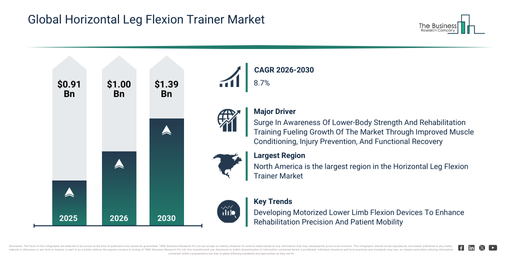
    The horizontal leg flexion trainer market has experienced significant growth in recent times. It is anticipated to expand from $0.91 billion in 2025 to $1.00 billion in 2026, demonstrating a compound annual growth rate (CAGR) of 9.0%. The historical increase can be ascribed to several factors, including the rising demand for fitness equipment in gyms, a burgeoning interest in lower-body strength training, enhanced awareness of injury prevention exercises, the increasing use of rehabilitation machines, and the growing appeal of sports conditioning programs.

    The market for horizontal leg flexion trainers is projected to experience substantial expansion in the coming years. This market is anticipated to reach a valuation of $1.39 billion by 2030, demonstrating a compound annual growth rate (CAGR) of 8.7%. Factors contributing to this growth during the forecast period include the expanding number of gym memberships, a heightened desire for enhanced leg strength, the integration of sophisticated rehabilitation tools, the rise of sports performance training programs, and greater capital expenditure on high-quality fitness machinery. Key developments expected over the forecast horizon involve progress in adjustable resistance technology, improvements in ergonomic machine aesthetics, advancements in durability and material science, novel compact training devices, and innovative tools for professional athletic preparation.

    Access Your Free Sample Report For In-Depth Market Analysis:

    https://www.thebusinessresearchcompany.com/sample.aspx?id=30609&type=smp

    Which Key Factors Are Driving The Horizontal Leg Flexion Trainer Market Growth?

    The expanding recognition of lower-body strength and rehabilitation training is anticipated to propel the horizontal leg flexion trainer market forward. This training involves structured exercises and programs aimed at enhancing the strength, flexibility, and functional recovery of leg muscles, including the quadriceps, hamstrings, and hip flexors. This heightened understanding is fueled by increasing public health initiatives and clinical recommendations that stress the importance of muscle-strengthening activities for injury prevention, improved mobility, and overall physical health. Horizontal leg flexion trainers support this development by providing a controlled, low-impact option for lower-body strengthening and rehabilitation, particularly in clinical, physiotherapy, and specialized fitness settings, aligning with broader exercise guidelines. For instance, in December 2023, according to the U.S. Centers for Disease Control and Prevention (CDC), a U.S.-based government public health authority, 24% of adults met the recommended muscle-strengthening activity guidelines in 2023, up from 21% in 2022—an increase of 3 percentage points, or approximately 14% year-over-year. Thus, the growing awareness surrounding lower-body strength and rehabilitation training is significantly contributing to the expansion of the horizontal leg flexion trainer market.

    How Is The Horizontal Leg Flexion Trainer Market Broken Down By Segment Categories?

    The horizontal leg flexion trainer market covered in this report is segmented –

    1) By Product Type: Standard Horizontal Leg Flexion Trainers, Smart Horizontal Leg Flexion Trainers, Adjustable Horizontal Leg Flexion Trainers

    2) By Distribution Channel: Online Stores, Specialty Stores, Supermarkets Or Hypermarkets, Other Distribution Channels

    3) By Application: Rehabilitation Centers, Fitness Centers, Home Use, Hospitals, Other Applications

    4) By End-User: Adults, Geriatric, Athletes, Other End-Users

    Subsegments:

    1) By Standard Horizontal Leg Flexion Trainers: Plate-loaded trainers, Pin-loaded (selectorized) trainers, Fixed-resistance trainers, Standard gym-grade benches, Basic home-use flexion trainers, Non-digital resistance trainers, Single-function flexion machines

    2) By Smart Horizontal Leg Flexion Trainers: App-connected trainers, Bluetooth-enabled trainers, AI-guided training systems, Smart resistance-adjusting machines, Performance-tracking trainers, Cloud-integrated fitness units, Interactive screen-based trainers

    3) By Adjustable Horizontal Leg Flexion Trainers: Multi-resistance adjustable trainers, Adjustable angle or seat-position trainers, Multi-function strength machines with flexion mode, Manual-adjust resistance models, Hydraulic-adjustable trainers, Commercial-grade adjustable units, Adjustable home-use trainers

    Which Trends Are Guiding The Direction Of The Horizontal Leg Flexion Trainer Market?

    Leading firms in the rehabilitation and therapeutic exercise equipment market are increasingly concentrating on creating motorized solutions for lower limb flexion, encompassing multifunction physiotherapy devices that feature powered leg flexion systems. The design intent behind these solutions is to provide accurate and consistent leg flexion movements, aid in enhancing patient strength and mobility, and lessen the physical burden on therapists during rehabilitation sessions. Specifically, powered leg flexion systems are technological components within rehabilitation equipment that employ electric motors or actuators to execute controlled flexion and extension of the lower limbs, thereby facilitating standardized therapy procedures and reliable treatment provision. An illustrative example is AGILIS, a U.S.-based medical device company, which introduced multifunction physiotherapy tables with powered lower limb flexion systems in January 2025, having received U.S. FDA 510(k)-clearance for clinical application. These devices, intended for postoperative rehabilitation support and enhancing mobility, incorporate 24 Vdc electric motors to ensure consistent powered flexion, provide choices for both manual and electrical adjustments, and permit configurations for linear and rotational lower limb movements to meet specific individualized therapy needs.

    Which Players Are Present In The Horizontal Leg Flexion Trainer Market Space?

    Major companies operating in the horizontal leg flexion trainer market are Johnson Health Tech, Technogym SpA, Life Fitness Inc., Rogue Fitness, Precor Inc., Cybex International, Impulse Health Tech, Matrix Fitness, SportsArt Inc., Shuhua Co. Ltd., Panatta Srl, Body-Solid Inc., TRUE Fitness Technology Inc., HOIST Fitness Systems Inc., BH Fitness, Yanre Fitness, DHZ Fitness GmbH, Nautilus Inc., Unique Gym Equipment Pvt. Ltd., Kraftathlet

    Get The Full Horizontal Leg Flexion Trainer Market Report:

    https://www.thebusinessresearchcompany.com/report/horizontal-leg-flexion-trainer-market-report

    Which Region Leads The Horizontal Leg Flexion Trainer Market In Overall Market Size?

    North America was the largest region in the horizontal leg flexion trainer market in 202. Asia-Pacific is expected to be the fastest-growing region in the forecast period. The regions covered in the horizontal leg flexion trainer market report are Asia-Pacific, South East Asia, Western Europe, Eastern Europe, North America, South America, Middle East, Africa.

    Request A Customized Horizontal Leg Flexion Trainer Market Report For Competitive Insights:

    https://www.thebusinessresearchcompany.com/customise?id=30609&type=smp

    Browse Through More Reports Similar to the Global Horizontal Leg Flexion Trainer Market 2026, By The Business Research Company

    Personal Fitness Trainer Market Report 2026

    https://www.thebusinessresearchcompany.com/report/personal-fitness-trainer-global-market-report

    Foot And Ankle Devices Market Report 2026

    https://www.thebusinessresearchcompany.com/report/foot-and-ankle-devices-global-market-report

    flexion tires global market report

    https://www.thebusinessresearchcompany.com/report/flexion-tires-global-market-report

    Get in touch with us:

    The Business Research Company: https://www.thebusinessresearchcompany.com/

    Americas +1 310-496-7795

    Asia +44 7882 955267 & +91 8897263534

    Europe +44 7882 955267

    Email us at info@tbrc.info

    Follow us on:

    LinkedIn: https://in.linkedin.com/company/the-business-research-company

    YouTube: https://www.youtube.com/channel/UC24_fI0rV8cR5DxlCpgmyFQ

    Global Market Model: https://www.thebusinessresearchcompany.com/global-market-model

  • Global Home Spirometry With Bluetooth Integration  Market Expected To Reach $2.85 Billion By 2030 With 11.9% CAGR

    Global Home Spirometry With Bluetooth Integration Market Expected To Reach $2.85 Billion By 2030 With 11.9% CAGR

    The Business Research Company’s 2026 market reports feature enhanced tools like market attractiveness analysis, TAM assessment, and company scoring matrices, along with interactive dashboards, deeper supply chain insights, and startup coverage strengthening the depth, usability, and strategic value of insights.

    How Does The Market Size Of The Home Spirometry With Bluetooth Integration Market Compare Between 2026 And 2030?

    The home spirometry with bluetooth integration market has shown rapid expansion in recent years. Its size is anticipated to increase from $1.62 billion in 2025 to $1.82 billion in 2026, achieving a compound annual growth rate (CAGR) of 12.1%. This historical growth can be attributed to several factors, including the increasing prevalence of respiratory diseases, the growing adoption of home healthcare devices, a rising awareness surrounding lung health monitoring, the expanding use of portable spirometers, and the increasing integration of wireless health monitoring systems.

    The home spirometry with bluetooth integration market size is anticipated to undergo significant expansion over the next few years. It is projected to climb to $2.85 billion in 2030, demonstrating a compound annual growth rate (CAGR) of 11.9%. The projected growth during this period can be attributed to the increasing demand for remote patient monitoring, the rising adoption of bluetooth-enabled medical devices, the growing integration of AI and predictive analytics in respiratory care, the expanding deployment of cloud-based health data platforms, and a heightened emphasis on patient-centric telehealth solutions. Noteworthy trends for the forecast period include technological advancements in bluetooth-enabled spirometry, innovations in AI-driven respiratory analytics, ongoing developments in cloud-based patient monitoring systems, continued research and development in portable diagnostic devices, and improvements in real-time health data integration and reporting.

    Access Your Free Sample Report For In-Depth Market Analysis:

    https://www.thebusinessresearchcompany.com/sample.aspx?id=30608&type=smp

    What Primary Drivers Are Shaping The Home Spirometry With Bluetooth Integration Market?

    The increasing use of remote patient monitoring is anticipated to drive the expansion of the home spirometry with Bluetooth integration market in the future. Remote patient monitoring involves utilizing interconnected medical devices and digital systems to gather, relay, and assess patient health information beyond conventional healthcare environments, thereby aiding in the ongoing care of chronic illnesses. The uptake of remote patient monitoring is increasing because of the growing incidence of chronic respiratory conditions, given that continuous observation assists in symptom management and averts hospital admissions. Home spirometry with Bluetooth integration facilitates remote patient monitoring by allowing individuals to monitor their lung function at home and send the data straight to medical professionals. This technology enhances disease management and patient results through its capacity for early detection of respiratory problems and prompt intervention. For example, Intuition Labs, a US-based healthcare technology company, reported in December 2025 that close to 50 million Americans were already employing some kind of remote patient monitoring device. Additionally, 80% of Americans expressed a positive attitude towards integrating remote patient monitoring into medical treatment. By 2025, it is anticipated that more than 71 million Americans, accounting for 26% of the population, will be utilizing some form of remote patient monitoring service. Consequently, the increasing embrace of remote patient monitoring is fueling the expansion of the home spirometry with Bluetooth integration market.

    What Are The Different Segment Types In The Home Spirometry With Bluetooth Integration Market Segment Breakdown?

    The home spirometry with bluetooth integration market covered in this report is segmented –

    1) By Product Type: Handheld Spirometers, Tabletop Spirometers, Wearable Spirometers

    2) By Connectivity: Bluetooth, Wi-Fi, Universal Serial Bus (USB)

    3) By Distribution Channel: Online, Offline

    4) By Application: Chronic Obstructive Pulmonary Disease (COPD), Asthma, Cystic Fibrosis, Other Applications

    5) By End-User: Hospitals And Clinics, Homecare Settings, Diagnostic Centers, Other End-Users

    Subsegments:

    1) By Handheld Spirometers: Portable Lung Function Measurement Devices, Battery Operated Spirometry Units, Compact Home Monitoring Spirometers, Bluetooth Enabled Handheld Spirometers, Real Time Data Transmission Spirometry Devices

    2) By Tabletop Spirometers: Desktop Pulmonary Function Testing Units, Clinical Grade Tabletop Spirometry Devices, Multi Parameter Respiratory Assessment Systems, Bluetooth Integrated Desktop Spirometers, High Accuracy Stationary Spirometry Units

    3) By Wearable Spirometers: Continuous Respiratory Monitoring Devices, Smart Wrist Or Chest Mounted Spirometers, Bluetooth Connected Wearable Spirometry Units, Daily Activity Integrated Respiratory Monitors, Lightweight Home Use Wearable Spirometers

    What Trends Are Affecting The Growth Of The Home Spirometry With Bluetooth Integration Market?

    Leading companies in the home spirometry with Bluetooth integration market are prioritizing the creation of advanced products, such as Bluetooth-capable spirometers, to improve at-home lung function monitoring, streamline data collection, and support remote clinical supervision. Bluetooth-enabled spirometers are devices designed to measure respiratory metrics like airflow and volume, subsequently transmitting the collected information wirelessly to smartphones, tablets, or cloud platforms for instant access by patients and healthcare providers. For instance, in June 2024, Clario, a US-based clinical technology company, obtained FDA 510(k) clearance for its SpiroSphere system, which is integrated with a wireless ECG device. This system offers simultaneous monitoring of both spirometry and cardiac data, features automated data upload via Bluetooth, and enables real-time tracking through mobile applications. These capabilities facilitate precise remote monitoring, the early detection of respiratory issues, and efficient clinical workflow management, signifying a major stride in at-home respiratory healthcare by blending usability, data integration, and clinical reliability.

    Who Are The Well-Known Companies In The Home Spirometry With Bluetooth Integration Market?

    Major companies operating in the home spirometry with bluetooth integration market are Contec Medical Systems Co. Ltd., Vyaire Medical Inc., Schiller AG, Vitalograph Ltd., COSMED S.r.l., SDI Diagnostics Inc., NDD Medizintechnik AG, Futuremed America Inc., NuvoAir AB, Cohero Health Inc., Smiths Medical International Ltd., Sibelmed S.L.U., Uscom Ltd., e-LinkCare Meditech Co. Ltd., CMI Health Inc., Medikro Oy, Icen Technology Co. Ltd., HealthUp S.A., Fukuda Sangyo Co. Ltd., Smart Respiratory Products Ltd.

    Get The Full Home Spirometry With Bluetooth Integration Market Report:

    https://www.thebusinessresearchcompany.com/report/home-spirometry-with-bluetooth-integration-market-report

    Which Region Is The Top Contributor To The Home Spirometry With Bluetooth Integration Market By Share?

    North America was the largest region in the home spirometry with bluetooth integration market in 2025. Asia-Pacific is expected to be the fastest-growing region in the forecast period. The regions covered in the home spirometry with bluetooth integration market report are Asia-Pacific, South East Asia, Western Europe, Eastern Europe, North America, South America, Middle East, Africa.

    Request A Customized Home Spirometry With Bluetooth Integration Market Report For Competitive Insights:

    https://www.thebusinessresearchcompany.com/customise?id=30608&type=smp

    Browse Through More Reports Similar to the Global Home Spirometry With Bluetooth Integration Market 2026, By The Business Research Company

    Spirometer Market Report 2026

    https://www.thebusinessresearchcompany.com/report/spirometer-global-market-report

    Respiratory Monitoring Devices Market Report 2026

    https://www.thebusinessresearchcompany.com/report/respiratory-monitoring-devices-global-market-report

    distance health technology global market report

    https://www.thebusinessresearchcompany.com/report/distance-health-technology-global-market-report

    Get in touch with us:

    The Business Research Company: https://www.thebusinessresearchcompany.com/

    Americas +1 310-496-7795

    Asia +44 7882 955267 & +91 8897263534

    Europe +44 7882 955267

    Email us at info@tbrc.info

    Follow us on:

    LinkedIn: https://in.linkedin.com/company/the-business-research-company

    YouTube: https://www.youtube.com/channel/UC24_fI0rV8cR5DxlCpgmyFQ

    Global Market Model: https://www.thebusinessresearchcompany.com/global-market-model

  • Hodgkin’s Lymphoma Treatment  Market Future Outlook Showing Growth Toward $5.07 Billion By 2030

    Hodgkin’s Lymphoma Treatment Market Future Outlook Showing Growth Toward $5.07 Billion By 2030

    The Business Research Company’s 2026 market reports feature enhanced tools like market attractiveness analysis, TAM assessment, and company scoring matrices, along with interactive dashboards, deeper supply chain insights, and startup coverage strengthening the depth, usability, and strategic value of insights.

    What Is The Forecasted Market Size Trajectory Of The Hodgkin’s Lymphoma Treatment Market From 2026 To 2030?

    The market for hodgkin’s lymphoma treatment has experienced significant expansion over recent years. Projections indicate its value will rise from $3.56 billion in 2025 to $3.83 billion by 2026, demonstrating a compound annual growth rate (CAGR) of 7.6%. This past growth is largely due to factors such as a greater occurrence of hodgkin’s lymphoma cases, enhanced awareness leading to earlier diagnosis, increased use of chemotherapy and radiation therapy, improvements in oncology healthcare infrastructure, and greater government investment in cancer research.

    The hodgkin’s lymphoma treatment market size is anticipated to experience robust expansion over the coming years, with projections indicating it will reach $5.08 billion by 2030, exhibiting a compound annual growth rate (CAGR) of 7.3%. This growth during the forecast period can be attributed to the increasing adoption of immunotherapy and targeted therapies, the growing availability of stem cell transplantation, a rising patient preference for personalized treatments, the expansion of cancer centers in emerging markets, and enhanced insurance coverage and reimbursement support. Major trends expected in this period include technological advancements in diagnostic imaging, innovations in immunotherapy and targeted therapies, the development of minimally invasive treatment options, continued research and developments in stem cell transplantation, and the integration of digital health and telemedicine in follow-up care.

    Access Your Free Sample Report For In-Depth Market Analysis:

    https://www.thebusinessresearchcompany.com/sample.aspx?id=30607&type=smp

    Which Major Drivers Are Influencing The Expansion Of The Hodgkin’s Lymphoma Treatment Market?

    The rising occurrence of Hodgkin’s lymphoma is anticipated to drive expansion in the Hodgkin’s lymphoma treatment market in the coming years. Hodgkin’s lymphoma is defined as a lymphatic system cancer identified by atypical Reed–Sternberg cells within lymph nodes, primarily impacting B-lymphocytes, and frequently manifests with non-tender enlarged glands, elevated body temperature, nocturnal perspiration, and diminished body mass. The frequency of Hodgkin’s lymphoma is increasing, attributed to greater exposure to risk elements like tobacco use, excessive weight, elevated blood pressure, and evolving socioeconomic circumstances across numerous areas, which collectively lead to a greater prevalence of the disease over time. Managing Hodgkin’s lymphoma is facilitated by its treatment, which works by targeting and eradicating malignant lymphocytes via interventions such as chemotherapy, radiation therapy, or immunotherapy. This treatment improves patient results by slowing disease advancement, attaining periods of remission, and boosting overall survival prospects. For example, in October 2025, the American Cancer Society, a US-based nonprofit organization, projected that Hodgkin lymphoma in the United States will lead to approximately 8,720 new cases, comprising 4,840 in males and 3,880 in females, alongside an estimated 1,150 deaths, involving 720 males and 430 females. Consequently, the rising occurrence of Hodgkin’s lymphoma is fueling the expansion of the Hodgkin’s lymphoma treatment market.

    Which Segment Classifications Are Used In The Hodgkin’s Lymphoma Treatment Market Segment Analysis?

    The hodgkin’s lymphoma treatment market covered in this report is segmented –

    1) By Type of Treatment: Chemotherapy, Radiation Therapy, Targeted Therapy, Immunotherapy

    2) By Disease Type: Classical Hodgkin Lymphoma (CHL), Nodular Lymphocyte-Predominant Hodgkin Lymphoma (NLPHL)

    3) By Treatment Stage: Early-Stage, Advanced-Stage, Relapsed

    4) By Stem Cell Transplantation: Autologous Stem Cell Transplant, Allogeneic Stem Cell Transplant

    5) By End-Use: Hospitals, Specialty Clinics, Cancer Centers, Ambulatory Care Centers, Home Healthcare Services

    Subsegments:

    1) By Chemotherapy: Combination Chemotherapy, Single Agent Chemotherapy, High Dose Chemotherapy with Stem Cell Transplantation

    2) By Radiation Therapy: External Beam Radiation Therapy, Proton Beam Radiation Therapy, Intensity Modulated Radiation Therapy

    3) By Targeted Therapy: Monoclonal Antibody Therapy, Antibody Drug Conjugate Therapy, Small Molecule Inhibitor Therapy

    4) By Immunotherapy: Immune Checkpoint Inhibitor Therapy, Chimeric Antigen Receptor T Cell Therapy, Cytokine Based Immunotherapy

    Which Trends Are Shaping The Hodgkin’s Lymphoma Treatment Market?

    Major companies within the Hodgkin’s lymphoma treatment market are concentrating on the development of sophisticated treatments, specifically front-line targeted combination therapies. Their aim is to enhance treatment effectiveness, mitigate treatment-related morbidity, and expand the initial treatment options available for patients suffering from advanced disease. Front-line targeted combination therapies involve the concurrent use of two or more precision medicines as the primary treatment. This approach is designed to simultaneously impact multiple disease-driving pathways, thereby improving response rates and delaying the development of resistance in patients who have been recently diagnosed. As an illustration, in June 2025, Takeda, a pharmaceutical firm based in Japan, obtained European Commission approval for its product ADCETRIS when used in conjunction with etoposide, cyclophosphamide, doxorubicin, dacarbazine and dexamethasone (ECADD). This approval is for adults diagnosed with Stage IIb (with risk factors), Stage III, or Stage IV Hodgkin lymphoma, and was granted following the results of the Phase 3 HD21 trial, which demonstrated improved safety and comparable progression-free survival against standard eBEACOPP chemotherapy. This particular front-line targeted combination therapy is characterized by a targeted ADC backbone, a regimen optimized for chemotherapy that aims to decrease acute toxicity, and expanded applications into frontline treatment, marking a considerable progression in Hodgkin’s lymphoma care.

    Which Firms Are Contributing To The Hodgkin’s Lymphoma Treatment Market Ecosystem?

    Major companies operating in the hodgkin’s lymphoma treatment market are F. Hoffmann-La Roche Ltd., Merck & Co. Inc., Pfizer Inc., Novartis AG, AstraZeneca plc, Bristol-Myers Squibb Company, Takeda Pharmaceutical Company Limited, Gilead Sciences Inc., Ono Pharmaceutical Co. Ltd., Jiangsu Hengrui Medicine Co. Ltd., Seagen Inc., Zhejiang Hisun Pharmaceutical Co. Ltd., BeiGene Ltd., Innovent Biologics Inc., HUTCHMED (China) Limited, Aurigene Discovery Technologies Limited, ADC Therapeutics SA, CStone Pharmaceuticals, Emcure Pharmaceuticals Ltd., Sorrento Therapeutics Inc.

    Get The Full Hodgkin’s Lymphoma Treatment Market Report:

    https://www.thebusinessresearchcompany.com/report/hodgkins-lymphoma-treatment-market-report

    Which Region Represents The Largest Share Of The Hodgkin’s Lymphoma Treatment Market?

    North America was the largest region in the hodgkin’s lymphoma treatment market in 2025. Asia-Pacific is expected to be the fastest-growing region in the forecast period. The regions covered in the hodgkin’s lymphoma treatment market report are Asia-Pacific, South East Asia, Western Europe, Eastern Europe, North America, South America, Middle East, Africa.

    Request A Customized Hodgkin’s Lymphoma Treatment Market Report For Competitive Insights:

    https://www.thebusinessresearchcompany.com/customise?id=30607&type=smp

    Browse Through More Reports Similar to the Global Hodgkin’s Lymphoma Treatment Market 2026, By The Business Research Company

    Non Hodgkin Lymphoma Nhl Market Report 2026

    https://www.thebusinessresearchcompany.com/report/non-hodgkin-lymphoma-nhl-global-market-report

    Non Hodgkin Lymphoma Nhl Market Report 2026

    https://www.thebusinessresearchcompany.com/report/non-hodgkin-lymphoma-nhl-global-market-report

    emphysema global market report

    https://www.thebusinessresearchcompany.com/report/emphysema-global-market-report

    Get in touch with us:

    The Business Research Company: https://www.thebusinessresearchcompany.com/

    Americas +1 310-496-7795

    Asia +44 7882 955267 & +91 8897263534

    Europe +44 7882 955267

    Email us at info@tbrc.info

    Follow us on:

    LinkedIn: https://in.linkedin.com/company/the-business-research-company

    YouTube: https://www.youtube.com/channel/UC24_fI0rV8cR5DxlCpgmyFQ

    Global Market Model: https://www.thebusinessresearchcompany.com/global-market-model
  • High-Throughput Slide Scanning-As-A-Service  Market Revenue Growth Forecast To Reach $3.19 Billion By 2030 At 16.4% CAGR

    High-Throughput Slide Scanning-As-A-Service Market Revenue Growth Forecast To Reach $3.19 Billion By 2030 At 16.4% CAGR

    The Business Research Company’s 2026 market reports feature enhanced tools like market attractiveness analysis, TAM assessment, and company scoring matrices, along with interactive dashboards, deeper supply chain insights, and startup coverage strengthening the depth, usability, and strategic value of insights.

    How Much Will The Market Value Of The High-Throughput Slide Scanning-As-A-Service Market Grow Between 2026 And 2030?

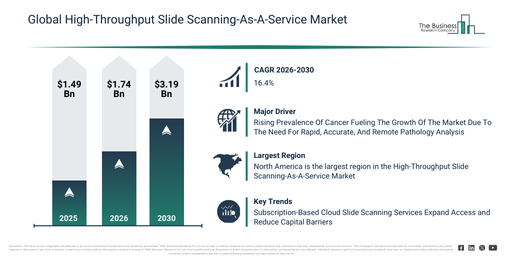
    The high-throughput slide scanning-as-a-service market has seen rapid expansion in recent years. It is anticipated to grow from $1.49 billion in 2025 to $1.74 billion in 2026, achieving a compound annual growth rate (CAGR) of 16.7%. The historical increase in this market can be attributed to several factors: the rising adoption of digital pathology, an escalating demand for high-throughput scanning, increased investment in pharmaceutical research, the broadening of academic and research applications, and the growing integration of AI into pathology workflows.

    The high-throughput slide scanning-as-a-service market is projected to experience substantial expansion over the upcoming years. This market is anticipated to reach a valuation of $3.19 billion by 2030, exhibiting a compound annual growth rate (CAGR) of 16.4%. Factors contributing to this growth during the forecast period include the escalating requirement for remote diagnostics, the increased uptake of telepathology services, the surging demand for multiplexed imaging, the expansion of cloud-based slide platforms, and a heightened emphasis on precision medicine applications. Additionally, key trends shaping the market over the forecast period encompass technological progress in AI-powered image analysis, novel developments in cloud-based digital slide platforms, the evolution of whole slide imaging for high-throughput scanning, significant research breakthroughs in automated pathology workflows, and enhancements in multiplexed fluorescence imaging techniques.

    Access Your Free Sample Report For In-Depth Market Analysis:

    https://www.thebusinessresearchcompany.com/sample.aspx?id=30606&type=smp

    What Key Drivers Are Fueling The Growth Of The High-Throughput Slide Scanning-As-A-Service Market?

    The increasing occurrence of cancer is projected to fuel the expansion of the high-throughput slide scanning-as-a-service market in the future. Cancer is defined by the unchecked proliferation and dissemination of atypical cells, which can harm adjacent tissues and organs without effective intervention. The rise in cancer cases stems from lifestyle factors like unhealthy eating, tobacco use, drinking alcohol, and exposure to environmental contaminants, which heighten the likelihood of developing different types of cancer. High-throughput slide scanning-as-a-service aids in cancer management through the swift digitization of numerous pathology slides, facilitating in-depth analysis and distant expert consultation. This service enhances diagnostic precision and operational speed, allowing for prompt treatment choices and improved results for patients. For example, in October 2025, data from NHS Digital, a UK government organisation, showed 354,820 new cancer diagnoses in England during 2023. This equated to an average of 972 diagnoses daily and marked an increase of 8,605 cases over 2022. Prostate cancer was the most frequently diagnosed, accounting for 58,137 new cases, which signifies a 6% rise in registrations compared to the prior year. Consequently, the growing incidence of cancer is propelling the expansion of the high-throughput slide scanning-as-a-service market.

    How Is The High-Throughput Slide Scanning-As-A-Service Market Organized By Segment Classification?

    The high-throughput slide scanning-as-a-service market covered in this report is segmented –

    1) By Service Type: Brightfield Scanning, Fluorescence Scanning, Multiplexed Imaging, Other Service Types

    2) By Technology: Optical System, Automation Level, Scanning Resolution

    3) By Application: Pathology, Research, Drug Discovery, Clinical Diagnostics, Other Applications

    4) By End User: Hospitals And Clinics, Research Institutes, Pharmaceutical And Biotechnology Companies, Other End Users

    Subsegments:

    1) By Brightfield Scanning: Single Channel Brightfield, Multi-Channel Brightfield, High-Resolution Brightfield

    2) By Fluorescence Scanning: Single Fluorescence Channel, Multi-Fluorescence Channel, High-Sensitivity Fluorescence

    3) By Multiplexed Imaging: Sequential Multiplexing, Simultaneous Multiplexing, High-Plex Imaging

    4) By Other Service Types: Slide Quality Control, Tissue Morphology Analysis, Custom Imaging Services

    What Trends Are Influencing The High-Throughput Slide Scanning-As-A-Service Market?

    Leading companies within the high-throughput slide scanning-as-a-service market are concentrating on creating subscription-based offerings, such as cloud-enabled slide scanning service models. These services aim to provide remote access to high-throughput whole slide imaging, thereby eliminating the need for on-site infrastructure investments. Cloud-enabled slide scanning service models involve outsourcing whole-slide imaging, where glass slides are digitized and securely stored on cloud platforms, facilitating remote viewing, sharing, and analysis without the necessity of on-premise scanners or dedicated IT infrastructure. For example, in March 2023, OptraSCAN Inc., a US-based digital pathology solutions provider, launched OnDemand Digital Pathology. This cloud-enabled slide scanning service model offers subscription-based access to whole slide scanners that can load 15–480 slides and perform rapid scanning. Specifically, it provides access to OptraSCAN whole-slide digital scanners (both brightfield and fluorescence) with a 15–480 slide capacity, capable of scanning a slide in approximately 58 seconds at 40x. The service also includes a high-end workstation preconfigured with workflow software, telepathology tools, and AI analysis modules for IHC, morphology, immunofluorescence, and cytology, complemented by Microsoft Azure–based cloud storage and continuous support.

    Who Are The Industry Participants Involved In The High-Throughput Slide Scanning-As-A-Service Market?

    Major companies operating in the high-throughput slide scanning-as-a-service market are Koninklijke Philips N.V., IQVIA Holdings Inc., Laboratory Corporation of America Holdings, Roche Diagnostics International AG, Iron Mountain Incorporated, WuXi AppTec Co. Ltd., PerkinElmer Inc., Leica Biosystems Nussloch GmbH, Medical Imaging Solutions Pvt. Ltd., Charles River Laboratories International Inc., OptraSCAN Inc., Scopio Labs Inc., Pramana Inc., Molecular Pathology Laboratory Network Inc., 3DHISTECH Ltd., Experimental Pathology Laboratories Inc., Labtron Equipment Ltd., Applied Spectral Imaging Ltd., HistoWiz Inc., iHisto LLC

    Get The Full High-Throughput Slide Scanning-As-A-Service Market Report:

    https://www.thebusinessresearchcompany.com/report/high-throughput-slide-scanning-as-a-service-market-report

    Which Geographic Region Dominates The High-Throughput Slide Scanning-As-A-Service Market?

    North America was the largest region in the high-throughput slide scanning-as-a-service market in 2025. Asia-Pacific is expected to be the fastest-growing region in the forecast period. The regions covered in the high-throughput slide scanning-as-a-service market report are Asia-Pacific, South East Asia, Western Europe, Eastern Europe, North America, South America, Middle East, Africa.

    Request A Customized High-Throughput Slide Scanning-As-A-Service Market Report For Competitive Insights:

    https://www.thebusinessresearchcompany.com/customise?id=30606&type=smp

    Browse Through More Reports Similar to the Global High-Throughput Slide Scanning-As-A-Service Market 2026, By The Business Research Company

    Plasticizers Market Report 2026

    https://www.thebusinessresearchcompany.com/report/plasticizers-global-market-report

    Bio Plasticizers Market Report 2026

    https://www.thebusinessresearchcompany.com/report/bio-plasticizers-global-market-report

    plastic products global market report

    https://www.thebusinessresearchcompany.com/report/plastic-products-global-market-report

    Get in touch with us:

    The Business Research Company: https://www.thebusinessresearchcompany.com/

    Americas +1 310-496-7795

    Asia +44 7882 955267 & +91 8897263534

    Europe +44 7882 955267

    Email us at info@tbrc.info

    Follow us on:

    LinkedIn: https://in.linkedin.com/company/the-business-research-company

    YouTube: https://www.youtube.com/channel/UC24_fI0rV8cR5DxlCpgmyFQ

    Global Market Model: https://www.thebusinessresearchcompany.com/global-market-model

  • Highly Functional Plasticizer  Market Expected To Grow Steadily And Approach $3.37 Billion By 2030

    Highly Functional Plasticizer Market Expected To Grow Steadily And Approach $3.37 Billion By 2030

    The Business Research Company’s 2026 market reports feature enhanced tools like market attractiveness analysis, TAM assessment, and company scoring matrices, along with interactive dashboards, deeper supply chain insights, and startup coverage strengthening the depth, usability, and strategic value of insights.

    What Changes In Market Value Are Expected For The Highly Functional Plasticizer Market Over The 2026–2030 Period?

    The market size for highly functional plasticizers has experienced significant expansion in recent years. It is anticipated to increase from $2.21 billion in 2025 to $2.41 billion in 2026, reflecting a compound annual growth rate (CAGR) of 9.1%. This historical growth can be ascribed to a surge in demand for flexible polymers, the increasing utilization of non-polyvinyl chloride resins, a heightened need for heat resistant materials, the broadening of the automotive and construction sectors, and a growing understanding of environmentally friendly plasticizers.

    The highly functional plasticizer market is projected to experience robust expansion in the coming years. This market is set to reach $3.38 billion by 2030, exhibiting a compound annual growth rate (CAGR) of 8.8%. Several factors are expected to drive this growth during the forecast period, including the increased use of high-performance plasticizers in developing economies, the rising need for lightweight materials across the automotive and aerospace sectors, the growing demand for sustainable and recyclable polymers, the expansion of the electronics and packaging industries, and evolving regulations that favor non-toxic plasticizers. Key trends anticipated during the same period encompass technological progress in polymer compatibility, breakthroughs in bio-based plasticizers, the evolution of high-temperature resistant formulations, advancements in multifunctional additives through research and development, and ongoing enhancements in flow and processing attributes.

    Access Your Free Sample Report For In-Depth Market Analysis:

    https://www.thebusinessresearchcompany.com/sample.aspx?id=30605&type=smp

    Which Drivers Are Supporting The Highly Functional Plasticizer Market Growth?

    The increasing need for lightweight vehicles is anticipated to boost the highly functional plasticizer market in the coming years. Such vehicles are automobiles constructed with lighter substances like aluminum, high-strength steel, carbon fiber, and composites to decrease their total mass. This demand stems from a greater emphasis on fuel economy and lower emissions. Highly functional plasticizers improve lightweight vehicles by enhancing the flexibility, strength, and durability of their polymer parts. These plasticizers allow for reduced material weight while upholding performance, thus contributing to improved fuel efficiency, handling, and overall vehicle effectiveness. As an illustration, in December 2024, data from the American Chemistry Council, a US-based trade association, indicated that an average automobile includes 429 pounds of plastics and polymer composites, making up 9.7% of the vehicle’s total weight, with polypropylene content per vehicle growing from 97 pounds in 2022 to 100 pounds in 2023. Consequently, the rising demand for lightweight vehicles is propelling the expansion of the highly functional plasticizer market. Increased construction activities are predicted to drive the expansion of the highly functional plasticizer market in the future. These activities encompass various actions involved in building, modifying, or removing structures, as well as site preparation. The surge in construction is a result of increasing urbanization, which fuels the need for new residential and commercial developments. Highly functional plasticizers enhance construction efforts by boosting the workability, durability, and strength of concrete and other construction substances. They contribute to greater efficiency and superior quality by facilitating simpler mixing, improved flow, and minimized cracking, thereby supporting quicker and more dependable construction methods. For example, in July 2023, data from the Australian Bureau of Statistics, an Australia-based government organization, showed that the number of dwellings under construction climbed to 240,813 in 2023, an increase from 240,065 in 2022. Thus, the escalating construction activities are propelling the growth of the highly functional plasticizer market.

    Which Segments Define The Highly Functional Plasticizer Market Segment Structure?

    The highly functional plasticizer market covered in this report is segmented –

    1) By Type: Oil Dosage Form, Solid Dosage Form, Liquid Dosage Form, Other Types

    2) By Application: Polyamide, Polyvinyl Chloride, Rubber, Urethane Based Materials, Acrylic Materials, Polyethylene Terephthalate, Polycarbonate, Other Applications

    3) By End User: Automotive, Construction, Electronics, Packaging, Consumer Goods, Industrial Equipment, Other End Users

    Subsegments:

    1) By Oil Dosage Form: Epoxidized Vegetable Oil Plasticizers, Aromatic Oil–Based Plasticizers, Naphthenic Oil–Based Plasticizers, Paraffinic Oil–Based Plasticizers

    2) By Solid Dosage Form: Tablets, Capsules, Granules, Powders

    3) By Liquid Dosage Form: Solutions, Suspensions, Emulsions, Syrups

    4) By Other Types: Gels, Pastes, Patches, Inhalable Formulations

    Which Trends Are Expected To Impact The Highly Functional Plasticizer Market?

    Major companies in the highly functional plasticizer market are concentrating on developing advanced products, such as next-generation high-temperature-resistant plasticizers, to improve thermal stability, decrease volatility, and minimize migration in polymer applications. These next-generation high-temperature resistant plasticizers refer to newer, often bio-based or non-phthalate additives, engineered to provide flexibility and processability in plastics while concurrently reducing toxicity, environmental impact, and migration compared to conventional plasticizers. For instance, in April 2023, Evonik Industries AG, a Germany-based specialty chemicals company, launched ELATUR TM, a high-temperature resistant plasticizer designed for dashboards, car seats, steering wheel trims, and high-temperature cabling. It offers superior thermal performance, extended service life, and enhanced product reliability, also supporting customers through the myFLEXINO® portal for technical information, samples, and application guidance.

    Who Are The Established Players Within The Highly Functional Plasticizer Market?

    Major companies operating in the highly functional plasticizer market are BASF SE, Dow Inc., LG Chem Ltd., Mitsubishi Chemical Corporation, Evonik Industries AG, Kao Corporation, Arkema S.A., Eastman Chemical Company, DIC Corporation, Stepan Company, Toagosei Co. Ltd., SONGWON Industrial Co. Ltd., LANXESS AG, Jiangsu Zhengdan Chemical Industry Co. Ltd., The HallStar Co., KLJ Group, Nishant Organics, Hebei Jingu Plasticizer Co. Ltd., Nayakem Organics Pvt Ltd.

    Get The Full Highly Functional Plasticizer Market Report:

    https://www.thebusinessresearchcompany.com/report/highly-functional-plasticizer-market-report

    Which Region Is The Leading Market For The Highly Functional Plasticizer Market?

    Asia-Pacific was the largest region in the highly functional plasticizer market in 2025. North America is expected to be the fastest-growing region in the forecast period. The regions covered in the highly functional plasticizer market report are Asia-Pacific, South East Asia, Western Europe, Eastern Europe, North America, South America, Middle East, Africa.

    Request A Customized Highly Functional Plasticizer Market Report For Competitive Insights:

    https://www.thebusinessresearchcompany.com/customise?id=30605&type=smp

    Browse Through More Reports Similar to the Global Highly Functional Plasticizer Market 2026, By The Business Research Company

    Whole Slide Imaging Market Report 2026

    https://www.thebusinessresearchcompany.com/report/whole-slide-imaging-global-market-report

    Document Scanning Services Market Report 2026

    https://www.thebusinessresearchcompany.com/report/document-scanning-services-global-market-report

    3D laser scanning services global market report

    https://www.thebusinessresearchcompany.com/report/3d-laser-scanning-services-global-market-report

    Get in touch with us:

    The Business Research Company: https://www.thebusinessresearchcompany.com/

    Americas +1 310-496-7795

    Asia +44 7882 955267 & +91 8897263534

    Europe +44 7882 955267

    Email us at info@tbrc.info

    Follow us on:

    LinkedIn: https://in.linkedin.com/company/the-business-research-company

    YouTube: https://www.youtube.com/channel/UC24_fI0rV8cR5DxlCpgmyFQ

    Global Market Model: https://www.thebusinessresearchcompany.com/global-market-model

  • Health Patch Hydration Sensor  Market Expansion Forecast Reaching $13.54 Billion By 2030 At 16% CAGR

    Health Patch Hydration Sensor Market Expansion Forecast Reaching $13.54 Billion By 2030 At 16% CAGR

    The Business Research Company’s 2026 market reports feature enhanced tools like market attractiveness analysis, TAM assessment, and company scoring matrices, along with interactive dashboards, deeper supply chain insights, and startup coverage strengthening the depth, usability, and strategic value of insights.

    By 2030, What Market Size Is The Health Patch Hydration Sensor Market Expected To Reach Based On Its 2026 Value?

    The health patch hydration sensor market size has expanded rapidly over recent years. It is expected to grow from $6.45 billion in 2025 to $7.50 billion in 2026, reflecting a compound annual growth rate (CAGR) of 16.2%. This past growth can be attributed to an increased awareness of health risks associated with dehydration, the growing acceptance of wearable health technologies, a rise in monitoring for sports and athletic performance, the expansion of personalized wellness tracking, and increasing digitization within healthcare.

    The health patch hydration sensor market is projected for significant expansion in the coming years. This market is anticipated to reach $13.55 billion by 2030, exhibiting a compound annual growth rate (CAGR) of 16.0%. This expansion during the forecast period is driven by factors such as the greater integration of AI and machine learning, increased uptake in remote patient monitoring, the growing emphasis on industrial and occupational safety monitoring, broader applications in military and defense, and intensified research and development efforts in wearable hydration sensors. Key trends expected over the forecast period encompass technological progress in biosensing and microfluidics, novel developments in flexible and stretchable electronics, the evolution of cloud-based analytics platforms, ongoing research and development in integrating multi-biomarker sensors, and advancements in mobile application-driven hydration insights.

    Access Your Free Sample Report For In-Depth Market Analysis:

    https://www.thebusinessresearchcompany.com/sample.aspx?id=30601&type=smp

    What Key Factors Are Affecting The Health Patch Hydration Sensor Market Demand?

    The health patch hydration sensor market is projected to expand due to the increasing integration of remote patient monitoring. Remote patient monitoring involves utilizing digital tools to track and collect medical and other health information from patients, which is then sent electronically to healthcare providers for evaluation and, if needed, guidance and instructions. The uptake of remote patient monitoring is on the rise as healthcare providers and payers increasingly depend on continuous data collected at home to manage chronic conditions more actively, decrease hospital readmissions, and reduce overall healthcare expenditures. Health patch hydration sensors facilitate remote patient monitoring by constantly monitoring hydration levels and transmitting real-time information to medical professionals. These sensors enhance patient care by enabling prompt identification of dehydration risks and supporting timely, individualized interventions. For example, in September 2025, the U.S. Department of Health and Human Services Office of Inspector General (OIG), a US-based government agency, reported that payments for remote patient monitoring amounted to $536 million across Original Medicare, also known as Medicare fee for service, and Medicare Advantage, showing a 31% increase from 2023. Concurrently, close to 1 million Medicare enrollees utilized remote patient monitoring services, reflecting a 27% increase compared with 2023. Consequently, the expanding application of remote patient monitoring is fostering the growth of the health patch hydration sensor market.

    How Is The Health Patch Hydration Sensor Market Segmented Across Different Segment Categories?

    The health patch hydration sensor market covered in this report is segmented –

    1) By Product Type: Wearable Hydration Sensors, Disposable Hydration Patches, Reusable Hydration Patches

    2) By Sensor Technology: Electrochemical, Optical, Bioimpedance, Other Technologies

    3) By Distribution Channel: Online Stores, Pharmacies, Specialty Stores, Other Channels

    4) By Application: Healthcare And Clinical Monitoring, Sports Performance And Athlete Training, Wellness And Fitness Tracking, Remote Patient Management

    5) By End-User: Hospitals And Clinics, Home Care, Athletes, Military Personnel, Other End Users

    Subsegments:

    1) By Wearable Hydration Sensors: Skin-Contact Sensor Units, Smart Hydration Monitoring Bands, Integrated Sweat-Analysis Sensors, Flexible Patch-Based Sensor Modules, Continuous Hydration Tracking Devices

    2) By Disposable Hydration Patches: Single-Use Sweat Measurement Patches, Adhesive Moisture-Sensing Patches, Biodegradable Hydration Monitoring Patches, Pre-Calibrated Disposable Sensor Patches, Short-Duration Wear Hydration Patches

    3) By Reusable Hydration Patches: Rechargeable Hydration Tracking Patches, Washable Sensor-Embedded Patches, Multi-Use Sweat-Analysis Patches, Long-Life Flexible Hydration Patches, Refillable Sensor Cartridge Patches

    What Trends Are Influencing Changes In The Health Patch Hydration Sensor Market?

    Major companies in the health patch hydration sensor market are concentrating on creating sophisticated products, such as advanced sweat-sensing biowearables, equipped with extended battery life and predictive analytics to enhance worker safety in extreme environments. These advanced sweat-sensing biowearables incorporate multiple biosensors to monitor sweat volume loss, electrolyte depletion, skin temperature, and motion. They leverage machine learning algorithms to provide real-time haptic alerts and personalized hydration strategies, thereby preventing dehydration and heat-related illnesses among industrial workforces. For instance, in April 2024, Epicore Biosystems Inc., a US-based digital health company specializing in advanced sweat-sensing wearables, introduced Connected Hydration. This sweat-sensing biowearable is designed to safeguard industrial athletes by delivering real-time insights on fluid and electrolyte intake via a flexible wearable patch and mobile app, incorporating a battery life of over 1,000 hours and a secure cloud engine trained on 420,000 data points. The solution also features intrinsically safe design certification (Class I, Div 2) and seamless data dashboarding to accelerate proactive safety management across the energy, construction, and manufacturing sectors.

    Which Organizations Play A Role In The Health Patch Hydration Sensor Market Landscape?

    Major companies operating in the health patch hydration sensor market are Henkel AG & Co. KGaA, TE Connectivity plc, Covestro AG, The Gatorade Co., Nitto Denko Corporation, Masimo Corporation, Linxens Holding SAS, Scapa Healthcare Limited, Quad Industries Inc., Biotricity Inc., Nix Inc., Mode Sensors, FLOWBIO LTD, Xsensio SA, ZANSORS LLC, Wearoptimo Pty Ltd., hDrop Technologies Inc., GraphWear Technologies, Grapheal SAS, EQUIVITAL LIMITED, GENTAG Inc., Kenzen Inc.

    Get The Full Health Patch Hydration Sensor Market Report:

    https://www.thebusinessresearchcompany.com/report/health-patch-hydration-sensor-market-report

    Where Is The Health Patch Hydration Sensor Market Primarily Concentrated By Region?

    North America was the largest region in the health patch hydration sensor market in 2025. Asia-Pacific is expected to be the fastest-growing region in the forecast period. The regions covered in the health patch hydration sensor market report are Asia-Pacific, South East Asia, Western Europe, Eastern Europe, North America, South America, Middle East, Africa.

    Request A Customized Health Patch Hydration Sensor Market Report For Competitive Insights:

    https://www.thebusinessresearchcompany.com/customise?id=30601&type=smp

    Browse Through More Reports Similar to the Global Health Patch Hydration Sensor Market 2026, By The Business Research Company

    Health Sensors Market Report 2026

    https://www.thebusinessresearchcompany.com/report/health-sensors-global-market-report

    Fluid Sensors Market Report 2026

    https://www.thebusinessresearchcompany.com/report/fluid-sensors-global-market-report

    disposable medical sensors global market report

    https://www.thebusinessresearchcompany.com/report/disposable-medical-sensors-global-market-report

    Get in touch with us:

    The Business Research Company: https://www.thebusinessresearchcompany.com/

    Americas +1 310-496-7795

    Asia +44 7882 955267 & +91 8897263534

    Europe +44 7882 955267

    Email us at info@tbrc.info

    Follow us on:

    LinkedIn: https://in.linkedin.com/company/the-business-research-company

    YouTube: https://www.youtube.com/channel/UC24_fI0rV8cR5DxlCpgmyFQ

    Global Market Model: https://www.thebusinessresearchcompany.com/global-market-model

  • Hazardous Drug Management Systems  Market Revenue Projected To Hit $2.09 Billion By 2030 With 8.6% CAGR

    Hazardous Drug Management Systems Market Revenue Projected To Hit $2.09 Billion By 2030 With 8.6% CAGR

    The Business Research Company’s 2026 market reports feature enhanced tools like market attractiveness analysis, TAM assessment, and company scoring matrices, along with interactive dashboards, deeper supply chain insights, and startup coverage strengthening the depth, usability, and strategic value of insights.

    What Is The Anticipated Rise In Market Value Of The Hazardous Drug Management Systems Market During The Forecast Period?

    The market size for hazardous drug management systems has demonstrated strong growth in recent years. This market is forecast to expand from $1.38 billion in 2025 to $1.50 billion in 2026, achieving a compound annual growth rate (CAGR) of 8.9%. The expansion observed historically can be ascribed to a heightened focus on healthcare worker safety, increased understanding of the dangers of hazardous drug exposure, the growing uptake of compliance-driven safety measures, the extension of hospital and pharmacy automation, and stronger implementation of occupational safety directives.

    The hazardous drug management systems market is projected to experience substantial expansion in the coming years, reaching $2.09 billion by 2030, with a compound annual growth rate (CAGR) of 8.6%. This growth during the forecast period is primarily driven by the increasing implementation of closed system drug transfer technologies, a growing demand for automated hazardous drug handling, rising investment in oncology safety infrastructure, the expansion of regulatory compliance requirements across healthcare facilities, and an increased focus on workplace contamination prevention. Significant trends expected in the forecast period include technology-driven innovations in closed system transfer devices, advancements in robotic and automated compounding safety solutions, developments in real-time contamination monitoring systems, rising research and development in exposure prevention technologies, and innovation in integrated hazardous drug tracking and reporting systems.

    Access Your Free Sample Report For In-Depth Market Analysis:

    https://www.thebusinessresearchcompany.com/sample.aspx?id=30600&type=smp

    Which Primary Drivers Are Impacting The Hazardous Drug Management Systems Market Growth?

    The expanding use of personalized medicine and complex infusion protocols is projected to boost the hazardous drug management systems market moving forward. This medical approach involves customizing treatments, including drug selection and dosage, based on unique patient attributes like genetics, biomarkers, and disease profiles. The increase in personalized medicine adoption stems from the rising approval and clinical integration of targeted therapies, which often demand highly customized intravenous dosing and preparation. Such systems are crucial for personalized medicine, facilitating the secure preparation, handling, and administration of potent and targeted therapies, thereby safeguarding healthcare personnel while enabling precise, patient-specific care. For example, in November 2025, the US Food and Drug Administration gave its nod to 18 new personalized medicines in 2024, representing over 25% of all new drug approvals, as per the Personalized Medicine Coalition, a US-based nonprofit. This follows 20 personalized medicine approvals in 2023, many necessitating individualized IV preparation. Consequently, the growing utilization of personalized medicine and intricate infusion protocols is fueling the expansion of the hazardous drug management systems market.

    What Are The Main Segments Within The Hazardous Drug Management Systems Market Segment Structure?

    The hazardous drug management systems market covered in this report is segmented –

    1) By Product Type: Closed System Transfer Devices, Drug Compounding Systems, Drug Storage And Transport Systems, Personal Protective Equipment, Other Product Types

    2) By Deployment Mode: On Premises, Cloud Based, Hybrid

    3) By Drug Type: Antineoplastic Drugs, Non Antineoplastic Hazardous Drugs, Reproductive Risk Only Drugs

    4) By Workflow Stage: Drug Procurement And Storage, Drug Preparation And Compounding, Drug Dispensing And Transportation, Drug Administration, Waste Handling And Disposal, Environmental Monitoring And Decontamination, Personnel Safety And Compliance Management

    5) By End User: Healthcare Providers, Pharmaceutical Companies, Research Institutes, Other End Users

    Subsegments:

    1) By Closed System Transfer Devices: Needle Free Connectors, Bag Spike Systems, Luer Lock Adapters, Vial Adapters

    2) By Drug Compounding Systems: Automated Compounding Devices, Manual Compounding Devices, Isolator Systems, Compounding Enclosures

    3) By Drug Storage And Transport Systems: Refrigerated Storage Units, Temperature Controlled Transport Carts, Lockable Cabinets, Portable Containment Units

    4) By Personal Protective Equipment:Gloves, Gowns, Respirators, Eye Protection

    5) By Other Product Types: Spill Containment Kits, Decontamination Systems, Waste Disposal Containers, Cleaning Supplies

    Who Are The Companies Participating In The Hazardous Drug Management Systems Market?

    Major companies operating in the hazardous drug management systems market are Particle Measuring Systems Inc., Baker Hughes Company, Becton Dickinson and Company, Baxter International Inc., B. Braun Melsungen AG, Terumo Corporation, West Pharmaceutical Services Inc., ICU Medical Inc., Esco Healthcare, JMS Co. Ltd., Vygon SA, CODAN Medizinische Geräte GmbH & Co. KG, NuAire Inc., Equashield LLC, Labconco Corporation, Germfree Laboratories Inc., Sentry Air Systems Inc., Simplivia Healthcare Ltd., Mecart Cleanrooms, Corvida Medical Inc.

    Get The Full Hazardous Drug Management Systems Market Report:

    https://www.thebusinessresearchcompany.com/report/hazardous-drug-management-systems-market-report

    Which Region Has The Greatest Market Share In The Hazardous Drug Management Systems Market?

    North America was the largest region in the hazardous drug management systems market in 2025. Asia-Pacific is expected to be the fastest-growing region in the forecast period. The regions covered in the hazardous drug management systems market report are Asia-Pacific, South East Asia, Western Europe, Eastern Europe, North America, South America, Middle East, Africa.

    Request A Customized Hazardous Drug Management Systems Market Report For Competitive Insights:

    https://www.thebusinessresearchcompany.com/customise?id=30600&type=smp

    Browse Through More Reports Similar to the Global Hazardous Drug Management Systems Market 2026, By The Business Research Company

    Medication Management System Market Report 2026

    https://www.thebusinessresearchcompany.com/report/medication-management-system-global-market-report

    Pharmacy Management System Market Report 2026

    https://www.thebusinessresearchcompany.com/report/pharmacy-management-system-global-market-report

    drug discovery services global market report

    https://www.thebusinessresearchcompany.com/report/drug-discovery-services-global-market-report

    Get in touch with us:

    The Business Research Company: https://www.thebusinessresearchcompany.com/

    Americas +1 310-496-7795

    Asia +44 7882 955267 & +91 8897263534

    Europe +44 7882 955267

    Email us at info@tbrc.info

    Follow us on:

    LinkedIn: https://in.linkedin.com/company/the-business-research-company

    YouTube: https://www.youtube.com/channel/UC24_fI0rV8cR5DxlCpgmyFQ

    Global Market Model: https://www.thebusinessresearchcompany.com/global-market-model

  • Global Hand Hygiene Stations  Market Set To Expand To $3.92 Billion By 2030 At 11.4% CAGR

    Global Hand Hygiene Stations Market Set To Expand To $3.92 Billion By 2030 At 11.4% CAGR

    The Business Research Company’s 2026 market reports feature enhanced tools like market attractiveness analysis, TAM assessment, and company scoring matrices, along with interactive dashboards, deeper supply chain insights, and startup coverage strengthening the depth, usability, and strategic value of insights.

    How Is The Market Size Of The Hand Hygiene Stations Market Expected To Scale Between 2026 And 2030?

    The hand hygiene stations market has experienced substantial expansion recently. It is forecast to increase from $2.29 billion in 2025 to $2.55 billion in 2026, driven by a compound annual growth rate (CAGR) of 11.6%. This historical growth can be credited to increasing public awareness about hand hygiene, the growing adoption of automatic dispensers, rising demand in healthcare facilities, the expansion of commercial and educational infrastructure, and a heightened focus on infection prevention.

    The hand hygiene stations market is projected to experience substantial growth in the upcoming years. Its size is expected to reach $3.92 billion by 2030, demonstrating a compound annual growth rate (CAGR) of 11.4%. This anticipated expansion over the forecast period stems from the increasing integration of touchless and smart hygiene stations, rising investments in sanitation infrastructure, a growing demand for portable and wall-mounted units, the broadening of hygiene compliance initiatives, and a significant uptick in the use of sensor-activated dispensers. Furthermore, prominent trends during this period include technological progress in automatic dispensers, inventive solutions in touchless and smart systems, the development of eco-friendly and refillable units, ongoing research and development for high-capacity sanitizer stations, and advancements in digital monitoring and usage tracking.

    Access Your Free Sample Report For In-Depth Market Analysis:

    https://www.thebusinessresearchcompany.com/sample.aspx?id=30599&type=smp

    What Significant Factors Are Influencing The Hand Hygiene Stations Market Expansion?

    The increasing adoption of automated, sensor-driven hand hygiene solutions is expected to propel the growth of the hand hygiene stations market going forward. These solutions encompass electronic dispensers equipped with motion sensors, badge-based tracking, and compliance analytics, which provide real-time monitoring and feedback on hand hygiene practices. The rising adoption of automated, sensor-driven hand hygiene solutions is due to a growing emphasis by healthcare systems and public health authorities on measurable, consistent hand hygiene to reduce healthcare-associated infections and improve patient safety. Hand hygiene stations support automated, sensor-driven hand hygiene solutions by integrating advanced technologies that enable accurate tracking, management, and reporting of hygiene behavior in clinical and public settings. For instance, in September 2024, according to The Leapfrog Group, a US-based nonprofit organization, the adoption of electronic hand hygiene monitoring systems in U.S. hospitals increased to 10% by 2023, reflecting a doubling in uptake of sensor-enabled compliance tools. Therefore, the growing adoption of automated, sensor-driven solutions is driving the growth of the hand hygiene stations market.

    How Is Segmentation Applied In The Hand Hygiene Stations Market Segment Analysis?

    The hand hygiene stations market covered in this report is segmented –

    1) By Product Type: Automatic Hand Sanitizer Dispensers, Manual Hand Sanitizer Dispensers, Touchless Hand Hygiene Stations, Wall-Mounted Hand Sanitizer Units, Portable Hand Hygiene Stations, Hand Sanitizer Kiosks

    2) By Portability And Installation: Permanent And Fixed Stations, Portable And Temporary Stations

    3) By Technology: Sensor-Activated Dispensers, Manual Dispensers, Smart And Connected Dispensers

    4) By Distribution Channel: Direct Sales From Manufacturers, Distributors And Wholesalers, Online Retail And E Commerce, Specialized Medical And Janitorial Suppliers

    5) By End User: Healthcare Facilities And Hospitals, Corporate Offices And Commercial Buildings, Educational Institutions, Hospitality And Food Service Establishments, Retail Stores And Shopping Malls

    Subsegments:

    1) By Automatic Hand Sanitizer Dispensers: Sensor-Activated Models, Foot-Pedal Models, Countertop Models, Rechargeable Battery Models, Large-Capacity Models

    2) By Manual Hand Sanitizer Dispensers: Lever-Operated Models, Push-Button Models, Countertop Manual Models, Wall-Mounted Manual Models, Refillable Cartridge Models

    3) By Touchless Hand Hygiene Stations: Infrared Sensor Stations, Ultrasonic Sensor Stations, Foot-Activated Touchless Stations, Fully Automated Hygiene Booths, Motion-Activated Stations

    4) By Wall-Mounted Hand Sanitizer Units: Plastic Wall-Mounted Units, Stainless Steel Wall-Mounted Units, Refillable Wall-Mounted Units, Lockable Wall-Mounted Units, Compact Wall-Mounted Units

    5) By Portable Hand Hygiene Stations: Mobile Stand Units, Outdoor Portable Stations, Battery-Powered Portable Stations, Foldable Portable Units, High-Capacity Portable Stations

    6) By Hand Sanitizer Kiosks: Digital Display Kiosks, Temperature Screening Kiosks, Advertising Panel Kiosks, Automated Refill Kiosks, Free-Standing Kiosks

    What Trends Are Affecting The Direction Of The Hand Hygiene Stations Market?

    Major companies in the hand hygiene stations market are concentrating on developing advanced solutions, such as real-time compliance monitoring and staff engagement tools. Their aim is to enhance infection control, boost adherence to hygiene protocols, and deliver actionable insights into healthcare workflows. Real-time compliance monitoring and staff engagement tools are defined as integrated systems that track hand hygiene behavior across facilities, provide immediate feedback to healthcare workers, and offer analytics to support continuous improvement and risk reduction. For instance, in July 2024, Kontakt.io Inc., a US-based healthcare technology company, unveiled a next-generation hand hygiene solution intended to revolutionize how hospitals manage compliance and engage staff. This fully cloud-based system, delivered as a managed service, employs a patented approach that leverages the Staff-Safe-enabled Smart Badge 3 wearable to provide gentle, proactive reminders before patient care without disrupting workflow. It also includes compliance gamification through a mobile app and automated dispenser management, allowing for seamless monitoring and maintenance without manual intervention. The solution further integrates interaction-based contact tracing and simplified audit reporting, thereby extending its value to infection prevention teams and assisting in reducing operational costs for healthcare systems.

    Who Are The Companies Participating In The Hand Hygiene Stations Market Environment?

    Major companies operating in the hand hygiene stations market are GOJO Industries Inc., American Specialties Inc., Hagleitner Hygiene International GmbH, Bobrick Washroom Equipment Inc., Frontmatec Group A/S, Kutol Products Company Inc., Dolphy India Pvt. Ltd., Elpress AB, NIEROS Group d.o.o., Hokwang Industries Co. Ltd., Technocrat Enterprises, Nexgen Machines Pvt. Ltd., Mohn GmbH, Meritech Systems LLC, Heim-EDT GmbH, Technsys Cleanroom Solutions Pvt. Ltd., Delta Pyramax Co. Ltd., SMIXIN AG, Sanair Systems Pvt. Ltd., Wone Hygiene Systems Pvt. Ltd.

    Get The Full Hand Hygiene Stations Market Report:

    https://www.thebusinessresearchcompany.com/report/hand-hygiene-stations-market-report

    Which Region Accounts For The Largest Portion Of The Hand Hygiene Stations Market?

    North America was the largest region in the hand hygiene stations market in 2025. Asia-Pacific is expected to be the fastest-growing region in the forecast period. The regions covered in the hand hygiene stations market report are Asia-Pacific, South East Asia, Western Europe, Eastern Europe, North America, South America, Middle East, Africa.

    Request A Customized Hand Hygiene Stations Market Report For Competitive Insights:

    https://www.thebusinessresearchcompany.com/customise?id=30599&type=smp

    Browse Through More Reports Similar to the Global Hand Hygiene Stations Market 2026, By The Business Research Company

    Hand Sanitizers Market Report 2026

    https://www.thebusinessresearchcompany.com/report/hand-sanitizers-global-market-report

    Hand Sanitizer Dispenser Market Report 2026

    https://www.thebusinessresearchcompany.com/report/hand-sanitizer-dispenser-global-market-report

    hand wash global market report

    https://www.thebusinessresearchcompany.com/report/hand-wash-global-market-report

    Get in touch with us:

    The Business Research Company: https://www.thebusinessresearchcompany.com/

    Americas +1 310-496-7795

    Asia +44 7882 955267 & +91 8897263534

    Europe +44 7882 955267

    Email us at info@tbrc.info

    Follow us on:

    LinkedIn: https://in.linkedin.com/company/the-business-research-company

    YouTube: https://www.youtube.com/channel/UC24_fI0rV8cR5DxlCpgmyFQ

    Global Market Model: https://www.thebusinessresearchcompany.com/global-market-model
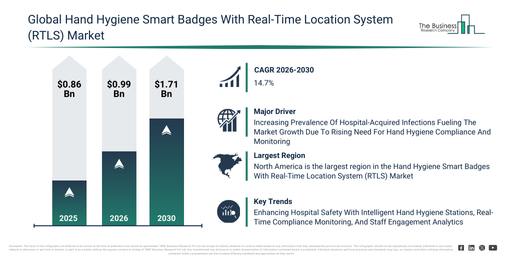
  • Hand Hygiene Smart Badges With Real-Time Location System (RTLS)  Market Growth Expected To Reach $1.7 Billion By 2030 At 14.7% CAGR

    Hand Hygiene Smart Badges With Real-Time Location System (RTLS) Market Growth Expected To Reach $1.7 Billion By 2030 At 14.7% CAGR

    The Business Research Company’s 2026 market reports feature enhanced tools like market attractiveness analysis, TAM assessment, and company scoring matrices, along with interactive dashboards, deeper supply chain insights, and startup coverage strengthening the depth, usability, and strategic value of insights.

    What Level Of Market Value Growth Is Predicted For The Hand Hygiene Smart Badges With Real-Time Location System (RTLS) Market From 2026 To 2030?

    The market size for hand hygiene smart badges with real-time location system (RTLS) has witnessed significant expansion in recent years. It is anticipated to grow from $0.86 billion in 2025 to $0.99 billion in 2026, exhibiting a compound annual growth rate (CAGR) of 15.0%. The expansion observed in the past can be credited to heightened infection control awareness, the increasing implementation of hospital hygiene protocols, a growing need for real-time compliance tracking, the broader rollout of healthcare digitalization programs, and an intensified emphasis on patient safety regulations.

    The market for hand hygiene smart badges equipped with real-time location systems (RTLS) is set for significant expansion in the coming years. This sector is forecast to expand to $1.71 billion by 2030, demonstrating a compound annual growth rate (CAGR) of 14.7%. The anticipated growth during this period is driven by the increasing integration of RTLS in hygiene monitoring, a rise in investments towards smart healthcare infrastructure, the broader adoption of wearable compliance solutions, a growing necessity for automated infection prevention systems, and the rising demand for data-driven hygiene analytics. Prominent trends throughout the forecast period include technological improvements in wearable hygiene devices, advancements in RTLS communication systems, progress in AI-enabled hygiene monitoring, ongoing research and development in sensor-based compliance tools, and enhancements in smart hospital automation systems.

    Access Your Free Sample Report For In-Depth Market Analysis:

    https://www.thebusinessresearchcompany.com/sample.aspx?id=30598&type=smp

    Which Important Drivers Are Guiding The Hand Hygiene Smart Badges With Real-Time Location System (RTLS) Market Growth?

    The growing occurrence of hospital-acquired infections (HAIs) is anticipated to propel the expansion of the hand hygiene smart badges with real-time location system (RTLS) market. These infections, contracted by patients while receiving care in hospitals or healthcare facilities, pose a substantial risk to patient safety and overall healthcare outcomes. The elevated prevalence of HAIs stems from persistent pathogen transmission in clinical settings and inconsistent hand hygiene practices among healthcare workers. Hand hygiene smart badges with RTLS aid in managing HAIs by providing continuous, automated monitoring of hand hygiene compliance, thereby reducing the spread of infections and enhancing accountability. For instance, in May 2024, the European Centre for Disease Prevention and Control (ECDC), a Sweden-based public health agency, reported that an estimated 4.3 million patients in acute care hospitals acquired at least one healthcare-associated infection during 2022–2023, reflecting a significant burden on healthcare systems. Consequently, the rising prevalence of hospital-acquired infections is driving the growth of the hand hygiene smart badges with real-time location system (RTLS) market.

    What Segment Categories Shape The Hand Hygiene Smart Badges With Real-Time Location System (RTLS) Market Segment Landscape?

    The hand hygiene smart badges with real-time location system (rtls) market covered in this report is segmented –

    1) By Product Type: Wearable Badges, Clip-On Badges, Wristbands, Other Product Types

    2) By Technology: Bluetooth, Radio Frequency Identification, Wi-Fi, Other Technologies

    3) By Distribution Channel: Direct Sales, Distributors, Online Stores, Other Distribution Channels

    4) By Application: Hospitals, Clinics, Long-Term Care Facilities, Laboratories, Other Applications

    5) By End-User: Healthcare Providers, Patients, Visitors, Other End-Users

    Subsegments:

    1) By Wearable Badges: Wrist Worn Badges, Arm Bands, Finger Bands

    2) By Clip-On Badges: Lanyard Clips, Badge Clips, Pocket Clips

    3) By Wristbands: Silicone Wristbands, Fabric Wristbands, Plastic Wristbands

    4) By Other Product Types: Keychain Badges, Badge Holders, Multifunctional Badges

    What Trends Are Influencing The Evolution Of The Hand Hygiene Smart Badges With Real-Time Location System (RTLS) Market?

    Major companies operating in the hand hygiene smart badges with real-time location system (RTLS) market are concentrating on developing sophisticated solutions, such as real-time compliance monitoring and staff engagement tools. These initiatives aim to enhance infection control, boost adherence to hygiene protocols, and provide actionable insights into healthcare workflows. Real-time compliance monitoring and staff engagement tools are defined as integrated systems designed to track hand hygiene behavior across facilities, offer immediate feedback to healthcare workers, and deliver analytics that support continuous improvement and risk reduction. For instance, in July 2024, Kontakt.io Inc., a US-based healthcare technology company, launched a next-generation hand hygiene solution intended to reimagine how hospitals manage compliance and engage staff. This fully cloud-based system, delivered as a managed service, features a patented approach employing the Staff-Safe-enabled Smart Badge 3 wearable to provide gentle, proactive reminders before patient care without disrupting workflow. It also includes compliance gamification via a mobile app and automated dispenser management, allowing for seamless monitoring and maintenance without manual intervention. Additionally, the solution incorporates interaction-based contact tracing and simplified audit reporting, which extends its value to infection prevention teams and aids in reducing operational costs for healthcare systems.

    Who Are The Companies Operating Across The Hand Hygiene Smart Badges With Real-Time Location System (RTLS) Market Value Chain?

    Major companies operating in the hand hygiene smart badges with real-time location system (rtls) market are Cisco Systems Inc., Ecolab Inc., GE Healthcare, Zebra Technologies Corporation, Halma plc, Midmark Corporation, GOJO Industries Inc., Ascom Holding AG, Versus Technology Inc., Vigilant Technologies Inc., CenTrak Inc., AeroScout Inc., Kontakt.io Inc., Elpas Solutions, SwipeSense Inc., AiRISTA Flow Inc., Proventix Systems Inc., Stanley Healthcare, BioVigil Hygiene Technologies Inc., HandGiene Corp.

    Get The Full Hand Hygiene Smart Badges With Real-Time Location System (RTLS) Market Report:

    https://www.thebusinessresearchcompany.com/report/hand-hygiene-smart-badges-with-real-time-location-system-rtls-market-report

    Which Region Holds The Highest Market Share In The Hand Hygiene Smart Badges With Real-Time Location System (RTLS) Market?

    North America was the largest region in the hand hygiene smart badges with real-time location system (RTLS) market in 2025. Asia-Pacific is expected to be the fastest-growing region in the forecast period. The regions covered in the hand hygiene smart badges with real-time location system (rtls) market report are Asia-Pacific, South East Asia, Western Europe, Eastern Europe, North America, South America, Middle East, Africa.

    Request A Customized Hand Hygiene Smart Badges With Real-Time Location System (RTLS) Market Report For Competitive Insights:

    https://www.thebusinessresearchcompany.com/customise?id=30598&type=smp

    Browse Through More Reports Similar to the Global Hand Hygiene Smart Badges With Real-Time Location System (RTLS) Market 2026, By The Business Research Company

    Real Time Location Systems Market Report 2026

    https://www.thebusinessresearchcompany.com/report/real-time-location-systems-global-market-report

    Real Time Location System In Healthcare Market Report 2026

    https://www.thebusinessresearchcompany.com/report/real-time-location-system-in-healthcare-global-market-report

    smart wearables global market report

    https://www.thebusinessresearchcompany.com/report/smart-wearables-global-market-report

    Get in touch with us:

    The Business Research Company: https://www.thebusinessresearchcompany.com/

    Americas +1 310-496-7795

    Asia +44 7882 955267 & +91 8897263534

    Europe +44 7882 955267

    Email us at info@tbrc.info

    Follow us on:

    LinkedIn: https://in.linkedin.com/company/the-business-research-company

    YouTube: https://www.youtube.com/channel/UC24_fI0rV8cR5DxlCpgmyFQ

    Global Market Model: https://www.thebusinessresearchcompany.com/global-market-model