Month: June 2026

  • Virtual Intensive Care Unit (ICU) Market Trends And Growth Drivers Point To Strong Future Potential

    Virtual Intensive Care Unit (ICU) Market Trends And Growth Drivers Point To Strong Future Potential

    Delivering more actionable and strategically valuable research, The Business Research Company’s 2026 market reports feature market attractiveness analysis, total addressable market evaluation, company benchmarking matrices, interactive Excel dashboards, expanded supply chain intelligence, emerging startup coverage, and detailed product insights.

    Virtual Intensive Care Unit (ICU) Market Value Expansion And Long-Term Growth Outlook

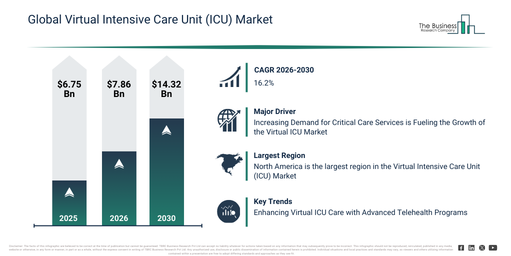
    The virtual intensive care unit (ICU) sector has experienced notable expansion lately, projecting an increase from $6.75 billion in 2025 to $7.86 billion by 2026, reflecting a compound annual growth rate (CAGR) of 16.5%. This historical growth trajectory is largely fueled by factors such as the growing scarcity of physicians specializing in critical care present at hospitals, the widespread development of telemedicine capabilities, an upward trend in the number of patients requiring ICU care, the integration of electronic health records, and the necessity for coordinated management of critical care services.

    The global virtual intensive care unit (ICU) market is poised for significant expansion, projected to reach a valuation of $14.32 billion by 2030, driven by a robust compound annual growth rate (CAGR) of 16.2%. This anticipated surge in market value throughout the forecast period is fueled by several key factors, including a heightened need for flexible and scalable critical care services, increased financial commitments to digital health technologies, broader implementation of artificial intelligence for clinical monitoring, a stronger emphasis on value-based healthcare approaches, and the growing acceptance of virtual hospital frameworks. Furthermore, prominent developments shaping this market’s trajectory include the escalating use of remote ICU monitoring systems, the greater incorporation of real-time patient data analysis, the wider deployment of tele-intensivist coverage models, the increasing application of predictive tools for clinical decision support, and a heightened focus on uninterrupted critical care supervision.

    Download A Free Sample Report For Comprehensive Market Insights:

    https://www.thebusinessresearchcompany.com/sample.aspx?id=19752&type=smp

    Virtual Intensive Care Unit (ICU) Market Opportunity Drivers: What Is Creating New Revenue Potential?

    The expansion of the virtual intensive care unit (ICU) market is anticipated to be fueled by an increasing requirement for critical care services. These services encompass specialized medical attention for individuals with conditions that pose a threat to life, necessitating close observation and intervention. Factors contributing to this heightened demand include the escalating incidence of long-term illnesses, an expanding elderly demographic, and increasingly intricate medical situations. Virtual ICUs augment critical care delivery through continuous remote monitoring and expert oversight from intensivists, leading to better patient results and more efficient use of resources, particularly in remote or underserved regions lacking immediate access to on-site specialists. Illustrating this, data from November 2025, shared by the Organisation for Economic Co operation and Development, indicated that in 2023, the average number of ICU beds across 31 OECD member nations was 17 per 100,000 individuals, with substantial variations observed, ranging from over 40 beds per 100,000 in the Czechia and Estonia to fewer than 5 beds per 100,000 in New Zealand and Sweden. Post-pandemic, many nations have bolstered their ICU capacities. Consequently, the escalating demand for critical care provisions is a primary driver for the virtual ICU market’s growth.

    Virtual Intensive Care Unit (ICU) Market Segment Landscape And Growth Potential

    The virtual intensive care unit (icu) market covered in this report is segmented –

    1) By Type: Traditional Medical Intensive Care Unit (ICU), Cardiac Care Unit, Neonatal Intensive Care Unit (ICU), Pediatric Intensive Care Unit (ICU), Trauma Intensive Care Unit (ICU), Psychiatric Intensive Care Unit (ICU), High-Dependency Unit, Other Types

    2) By Component: Software, Hardware

    3) By Technology: Machine Learning, Deep Learning, Artificial Intelligence, Other Technologies

    4) By End User: Payer, Patient, Provider

    Subsegments:

    1) By Traditional Medical Intensive Care Unit (ICU): General Medical ICU, Surgical ICU, Respiratory ICU

    2) By Cardiac Care Unit: Coronary Care Unit, Cardiac Surgery ICU

    3) By Neonatal Intensive Care Unit (ICU): Level I Neonatal ICU, Level II Neonatal ICU, Level III Neonatal ICU

    4) By Pediatric Intensive Care Unit (ICU): General Pediatric ICU, Cardiac Pediatric ICU, Neuro Pediatric ICU

    5) By Trauma Intensive Care Unit (ICU): Surgical Trauma ICU, Medical Trauma ICU

    6) By Psychiatric Intensive Care Unit (ICU): Adult Psychiatric ICU, Adolescent Psychiatric ICU

    7) By High-Dependency Unit: Step-Down Unit, Intermediate Care Unit

    8) By Other Types: Burn Unit, Post-Anesthesia Care Unit, Stroke Unit

    Virtual Intensive Care Unit (ICU) Market Innovation Trends Driving Future Development

    Leading participants within the virtual intensive care unit (ICU) sector are prioritizing the creation of sophisticated offerings, including telehealth initiatives, aimed at elevating the standard of ICU care. These initiatives facilitate continuous patient observation, access to specialist medical advice, and better health results. Through the application of digital communication tools, telehealth programs extend medical assistance and services beyond the confines of a physical location. This remote delivery permits medical practitioners to oversee individuals under their care, engage in consultative sessions, and prescribe therapeutic guidance without the necessity for direct, face-to-face interaction. As an illustration, in August of 2024, Aster DM Healthcare, a healthcare organization based in India, unveiled its Tele ICU service, which operates under the umbrella of Aster Connected Care. This Tele ICU service represents a cutting-edge virtual critical care program, empowering intensivists and critical care nurses located remotely to contribute to patient management through real-time surveillance, virtual patient visits, and systems designed to aid clinical judgment. Ultimately, it boosts the caliber and availability of intensive care proficiency by providing uninterrupted remote oversight and constant audio-visual connectivity with the medical staff present at the facility.

    Virtual Intensive Care Unit (ICU) Market Competitive Landscape: Who Are The Leading Companies?

    Major companies operating in the virtual intensive care unit (icu) market are Cisco Systems Inc., Oracle Corporation, Medtronic plc, Siemens Healthineers AG, Koninklijke Philips N.V., GE HealthCare Technologies Inc., ResMed Inc., Hill-Rom Holdings Inc., Teladoc Health Inc., Masimo Corporation, Nihon Kohden Corporation, American Well Corporation, Caregility Corporation, Hicuity Health Inc., Eagle Telemedicine, HealthNet Global, Apollo TeleHealth Services Private Limited, Philips Healthcare, Medsphere Systems Corporation, eCareManager

    Access The Complete Virtual Intensive Care Unit (ICU) Market Report:

    https://www.thebusinessresearchcompany.com/report/virtual-intensive-care-unit-icu-global-market-report

    Virtual Intensive Care Unit (ICU) Market Geographic Landscape: Which Region Dominates Industry Growth?

    North Americawas the largest region in the virtual intensive care unit (ICU) market in 2025. Asia-Pacificis expected to be the fastest-growing region in the forecast period. The regions covered in the virtual intensive care unit (icu) market report are Asia-Pacific, South East Asia, Western Europe, Eastern Europe, North America, South America, Middle East, Africa.

    Get in touch with us:

    The Business Research Company: https://www.thebusinessresearchcompany.com/

    Americas: +1 310-496-7795

    Asia: +44 7882 955267 & +91 8897263534

    Europe: +44 7882 955267

    Email us at: marketing@tbrc.info

    Follow us on:

    LinkedIn: https://in.linkedin.com/company/the-business-research-company

    YouTube: https://www.youtube.com/channel/UC24_fI0rV8cR5DxlCpgmyFQ

    Global Market Model: https://www.thebusinessresearchcompany.com/global-market-model
  • Virtual Human Anatomy Software Market Expansion Is Reshaping Competitive Dynamics Across The Industry

    Virtual Human Anatomy Software Market Expansion Is Reshaping Competitive Dynamics Across The Industry

    Enhanced with market attractiveness analysis, total addressable market evaluation, company benchmarking matrices, interactive Excel dashboards, expanded supply chain intelligence, emerging startup coverage, and detailed product insights, The Business Research Company’s 2026 market reports deliver more actionable and strategically valuable research.

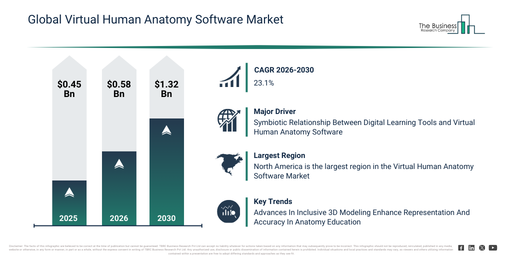
    Virtual Human Anatomy Software Market Expected To Reach $1.32 Billion By 2030 At 23.1% CAGR

    The digital realm of human anatomy software has experienced remarkable expansion recently. Projections indicate a surge from a valuation of $0.45 billion in 2025 to an anticipated $0.58 billion by 2026, reflecting a substantial compound annual growth rate (CAGR) of 27.5%. This upward trajectory is fueled by several key factors that have shaped the market’s recent development, including the escalating integration of digital technologies within medical pedagogy, the expanding application of three-dimensional visualization techniques in healthcare training programs, a broader embrace of anatomy software across educational institutions, augmented financial commitments towards medical simulation technologies, and the enhanced accessibility of robust computing infrastructure.

    The virtual human anatomy software sector is poised for remarkable expansion over the coming years, projecting a market valuation of $1.32 billion by 2030, spurred by a compound annual growth rate of 23.1%. This anticipated surge is largely fueled by the escalating embrace of immersive educational technologies, a heightened demand for distance-based medical learning, the broader implementation of virtual and augmented reality in healthcare training, a pronounced emphasis on individualized learning environments, and the increasing utilization of cloud-hosted medical software. Key developments shaping this period encompass a greater adoption of interactive 3D anatomical visualization tools, a rise in the utilization of virtual reality platforms for anatomy education, the growing integration of cloud-based anatomy software solutions, advancements in simulation-focused medical training instruments, and a sharpened focus on creating highly realistic anatomical models.

    Download A Free Sample Report For Comprehensive Market Insights:

    https://www.thebusinessresearchcompany.com/sample.aspx?id=15021&type=smp

    Virtual Human Anatomy Software Market Growth Momentum: Which Factors Are Influencing Demand?

    The expansion of virtual human anatomy software is anticipated to be significantly driven by the growing trend of online education. This educational approach, which leverages the internet and digital tools for remote learning delivery, has seen a surge in popularity owing to its convenience, adaptability, cost-effectiveness, technological progress, and suitability for contemporary societal and economic shifts. Virtual human anatomy software plays a crucial role in enhancing online learning environments by offering engaging, interactive, and readily available educational opportunities that deepen students’ comprehension and engagement with the complexities of human anatomy. Illustrating this trend, statistics from Eurostat, the statistical office of the European Union based in Luxembourg, revealed that in 2023, a notable 30% of EU internet users between the ages of 16 and 74 had engaged with online courses or utilized digital learning resources within the preceding three months. This figure represents a 2 percentage point rise compared to the 28% recorded in 2022. Consequently, the escalating participation in online education is set to fuel the development of the virtual human anatomy software market.

    Virtual Human Anatomy Software Market Categorization By Product Type And Application

    The virtual human anatomy software market covered in this report is segmented –

    1) By Type: 3D Anatomy Software, VR Anatomy Software

    2) By Technology: Cloud-Based, On-Premise

    3) By Application: Educational Institution, Hospitals And Clinics, Other Applications

    Subsegments:

    1) By 3D Anatomy Software: Interactive 3D Visualization, 3D Rendering And Simulation, Anatomical Modeling Tools

    2) By VR Anatomy Software: Virtual Reality-Based Anatomy Exploration, VR Simulation For Medical Training, Immersive 3D Anatomy Visualization

    Virtual Human Anatomy Software Market Trends Reshaping Industry Growth

    Within the virtual human anatomy software sector, key players are concentrating on crafting sophisticated offerings, notably 3D anatomical models enriched with diversity features, aiming to rectify historical deficiencies in racial representation and elevate the precision and inclusivity of medical instruction. This advancement in 3D modeling involves incorporating a spectrum of skin tones, diverse facial features, and anatomically precise variations within virtual anatomy systems, thereby equipping learners with models that more accurately reflect actual patient demographics. As an illustration, in early 2023, Elsevier, a Dutch entity renowned for its clinical content and medical education technology, unveiled Complete Anatomy 2023, an enhanced iteration of its leading 3D anatomy instruction tool, distinguished by an unprecedented array of skin tone selections for educational purposes. The platform integrates meticulously collected anthropological information, adaptable models that showcase varied physical attributes, and intricately detailed anatomical structures to mitigate implicit biases, bolster diagnostic readiness, and amplify the authenticity of virtual anatomical exploration. These enhancements serve to overcome the constraints of conventional anatomy education, which has predominantly utilized standardized, light-skinned representations, by providing an educational journey that is more equitable, precise, and reflective of global diversity.

    Virtual Human Anatomy Software Market Company Landscape And Strategic Competition

    Major companies operating in the virtual human anatomy software market are VirtaMed AG, Wolters Kluwer Health, Inc., Anatomage Inc., Biomax Informatics AG, Visible Body, BioDigital Inc., 3D4Medical Ltd., Primal Pictures Ltd., BodyViz LLC, Kenhub GmbH, Zygote Media Group Inc., Medicalholodeck GmbH, Lifeliqe, s.r.o., 3D Organon Ltd., Vrtual Medicine, 4D Interactive Anatomy, Anatomy 3D Atlas, Elsevier B.V., Anatronica, Anomalous Medical, LLC, Cyber-Anatomy, Inc., Brain Science Tools B.V., BodyParts3D/Anatomography, BodyMaps, Digiscope Ltd., Human Anatomy VR

    Access The Complete Virtual Human Anatomy Software Market Report:

    https://www.thebusinessresearchcompany.com/report/virtual-human-anatomy-software-global-market-report

    Virtual Human Anatomy Software Market Largest Region: Which Geography Holds The Highest Market Share?

    North Americawas the largest region in the virtual human anatomy market in 2025. The regions covered in the virtual human anatomy software market report are Asia-Pacific, South East Asia, Western Europe, Eastern Europe, North America, South America, Middle East, Africa.

    Get in touch with us:

    The Business Research Company: https://www.thebusinessresearchcompany.com/

    Americas: +1 310-496-7795

    Asia: +44 7882 955267 & +91 8897263534

    Europe: +44 7882 955267

    Email us at: marketing@tbrc.info

    Follow us on:

    LinkedIn: https://in.linkedin.com/company/the-business-research-company

    YouTube: https://www.youtube.com/channel/UC24_fI0rV8cR5DxlCpgmyFQ

    Global Market Model: https://www.thebusinessresearchcompany.com/global-market-model
  • Virtual Health Service Market Forecast Reveals Where Future Industry Value Will Be Created

    Virtual Health Service Market Forecast Reveals Where Future Industry Value Will Be Created

    Through market attractiveness analysis, total addressable market evaluation, company benchmarking matrices, interactive Excel dashboards, expanded supply chain intelligence, emerging startup coverage, and detailed product insights, The Business Research Company’s 2026 market reports provide more actionable and strategically valuable research.

    Virtual Health Service Market Size And Revenue Forecast Through 2030

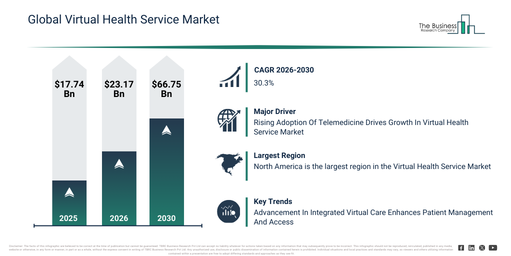
    Experiencing significant expansion, the virtual health service market is projected to climb from a valuation of $17.74 billion in 2025 to $23.17 billion by 2026, demonstrating a compelling compound annual growth rate of 30.6%. This surge in recent times is underpinned by several influential factors, including the widespread availability of the internet and smartphones, a growing embrace of telemedicine options, widening disparities in healthcare accessibility, the proactive integration of digital health solutions, and a mounting desire for easily obtainable medical attention.

    Experiencing substantial expansion over the coming years, the virtual health service market is projected to reach $66.75 billion by 2030, fueled by a compound annual growth rate (CAGR) of 30.3%. This upward trajectory during the forecast period is underpinned by escalating investments in virtual care infrastructure, a heightened need for remote chronic disease management, the proliferation of digital-first healthcare approaches, the increasing prevalence of employer-sponsored virtual health initiatives, and a greater synergy between virtual and conventional healthcare systems. Key developments shaping this period involve the wider adoption of teleconsultation platforms, the growing incorporation of remote patient monitoring technologies, the increased utilization of AI for clinical decision support, the expansion of app-driven healthcare services, and a heightened emphasis on maintaining the continuity of patient care.

    Download A Free Sample Report For Comprehensive Market Insights:

    https://www.thebusinessresearchcompany.com/sample.aspx?id=20691&type=smp

    Virtual Health Service Market Expansion Drivers: What Is Shaping Future Growth?

    The expansion of virtual health services is anticipated to be significantly driven by the escalating implementation of telemedicine, which involves leveraging electronic communication to deliver healthcare consultations and services, thereby enhancing remote patient access to medical attention. This surge in telemedicine utilization is primarily attributed to ongoing technological progress, a growing patient preference for accessible healthcare options, and broader initiatives aimed at improving healthcare accessibility. Essential to this trend, virtual health services furnish the necessary digital framework and instruments for conducting remote consultations, empowering medical professionals to diagnose, manage, and track patient conditions without requiring physical appointments. Specifically, the UK Ministry of Justice reported in July 2023 that by June 30, 2023, there were 8,028 individuals equipped with GPS location monitoring devices, marking a substantial 67% rise from the 4,799 individuals recorded as of June 30, 2022. Consequently, the growing acceptance and use of telemedicine are acting as a primary catalyst for the growth observed in the virtual health service market.

    Virtual Health Service Market Segment Analysis And Revenue Opportunities

    The virtual health service market covered in this report is segmented –

    1) By Component: Software And Services, Hardware

    2) By Consultation Mode: Video, Audio, Messaging, Kiosks

    3) By Specialty And Use Case: General Medicine, Mental Health, Dermatology, Chronic Condition Management, Remote Surgery Assistance, Nutrition And Fitness, Women’s Health, Pediatrics

    4) By Mode Of Delivery: Web Based, App Based, Phone Based

    5) By End User: Patients, Healthcare Providers, Payers, Employers, Other End Users

    Subsegments:

    1) By Software And Services: Telemedicine Software, Health Monitoring Software, Electronic Health Records (EHR) Systems, Mobile Health Applications, Remote Patient Monitoring Services, Consultation Services, Analytics And Reporting Services

    2) By Hardware: Telehealth Kits, Medical Devices for Remote Monitoring, Computers and Tablets, Wearable Health Devices, Video Conferencing Equipment

    Virtual Health Service Market Strategic Trends: What Is Defining The Next Phase Of Growth?

    The leading entities within the virtual health service sector are actively pursuing the creation of novel offerings, exemplified by unified virtual care systems, in an endeavor to satisfy the escalating need for healthcare that is synchronized, readily available, and guided by data. These comprehensive virtual care arrangements consolidate elements like distant medical consultations, ongoing patient monitoring from afar, electronic health documentation, and patient involvement instruments into a singular, well-integrated framework, presenting a smoother and more effective option compared to conventional face-to-face visits or disjointed digital health provisions. As a case in point, during March of 2023, Royal Philips, an acclaimed healthcare technology firm originating from the Netherlands, introduced its Virtual Care Management solution. This particular platform artfully melds internet-connected medical apparatus, cloud-hosted oversight functionalities, expert clinical supervision, and patient interaction instruments, all designed to assist healthcare institutions, medical provider groups, insurance providers, and employers throughout the United States. It significantly aids in the stewardship of persistent health conditions by facilitating perpetual data accrual, bolsters collaborative treatment across multidisciplinary medical teams, and refines decision-making processes in real-time. Through the seamless incorporation of virtual care into established operational procedures, this innovative solution demonstrably curtails hospital admissions and urgent care encounters, concurrently elevating patient prognoses, thereby signifying a substantial leap forward in the provision of care that is both scalable and powered by technology.

    Virtual Health Service Market Leading Players Shaping Industry Direction

    Major companies operating in the virtual health service market are Teladoc Health Inc., Babylon Health Limited, Allscripts Healthcare Solutions Inc., WELL Health Technologies Corp., American Well Corporation, MDLive Inc., Doctor On Demand Inc., HealthTap Inc., TytoCare Ltd, 98point6 Inc., Medici Inc., VSee Lab Inc., Doxy.me LLC, eVisit Inc., MDTech Inc., Lemonaid Health Inc., Epic Systems Corporation, Dell Technologies Inc., Cisco Systems Inc., Qualcomm Incorporated

    Access The Complete Virtual Health Service Market Report:

    https://www.thebusinessresearchcompany.com/report/virtual-health-service-global-market-report

    Virtual Health Service Market Regional Analysis: Which Region Leads By Revenue?

    North Americawas the largest region in the virtual health service market in 2025. The regions covered in the virtual health service market report are Asia-Pacific, South East Asia, Western Europe, Eastern Europe, North America, South America, Middle East, Africa.

    Get in touch with us:

    The Business Research Company: https://www.thebusinessresearchcompany.com/

    Americas: +1 310-496-7795

    Asia: +44 7882 955267 & +91 8897263534

    Europe: +44 7882 955267

    Email us at: marketing@tbrc.info

    Follow us on:

    LinkedIn: https://in.linkedin.com/company/the-business-research-company

    YouTube: https://www.youtube.com/channel/UC24_fI0rV8cR5DxlCpgmyFQ

    Global Market Model: https://www.thebusinessresearchcompany.com/global-market-model
  • Virtual Colonoscopy Software Market Growth Through 2030 Creates New Strategic Opportunities

    Virtual Colonoscopy Software Market Growth Through 2030 Creates New Strategic Opportunities

    Delivering more actionable and strategically valuable research, The Business Research Company’s 2026 market reports feature market attractiveness analysis, total addressable market evaluation, company benchmarking matrices, interactive Excel dashboards, expanded supply chain intelligence, emerging startup coverage, and detailed product insights.

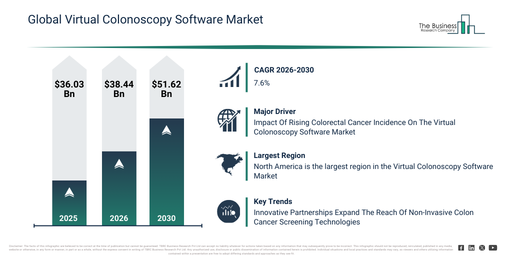
    Virtual Colonoscopy Software Market Growth From $38.44 Billion In 2026 To $51.61 Billion By 2030 At A CAGR Of 7.6%

    The market for virtual colonoscopy software experienced significant expansion historically, and this robust growth is projected to continue. Estimates indicate the market will expand from $36.03 billion in 2025 to $38.44 billion in 2026, reflecting a compound annual growth rate of 6.7%. Factors contributing to this upward trend in the past include a rise in efforts to detect colorectal cancer, an increase in the number of facilities offering diagnostic imaging, the wider adoption of CT scans for diagnostic purposes, enhanced public awareness regarding minimally invasive diagnostic methods, and advancements in the functionality of imaging software.

    The virtual colonoscopy software market is projected to grow steadily in the coming years, reaching $51.62 billion by 2030 at a compound annual growth rate (CAGR) of 7.6%. This growth is being driven by the increasing adoption of AI-powered diagnostic tools, rising investments in preventive healthcare, expansion of cloud-based medical imaging systems, growing demand for early cancer detection, and greater integration with hospital information systems. At the same time, the market is witnessing stronger adoption of 3D virtual colonoscopy imaging, increased use of AI-assisted polyp detection technologies, wider deployment of cloud-based imaging platforms, expansion of non-invasive screening programs, and a growing focus on improving diagnostic accuracy and clinical workflow efficiency.

    Download A Free Sample Report For Comprehensive Market Insights:

    https://www.thebusinessresearchcompany.com/sample.aspx?id=13002&type=smp

    Virtual Colonoscopy Software Market Development Factors: Which Trends Are Supporting Demand?

    The escalating prevalence of colorectal cancer is anticipated to be a key driver for the expansion of the virtual colonoscopy software market. Colorectal cancer, which originates in the colon or rectum, finds a valuable ally in virtual colonoscopy software owing to its capability to offer a less invasive approach for examining and identifying anomalies within the colon. Illustrating this trend, the National Cancer Institution, a UK governmental body, reported in June 2023 that instances of colorectal cancer among individuals younger than 50 have seen a significant and concerning upswing over recent decades, affecting over 5,000 individuals diagnosed before age 50, a condition known as early-onset colorectal cancer, compared to over 22,000 individuals without cancer who served as controls. Consequently, the rise in colorectal cancer cases directly fuels the market’s demand for virtual colonoscopy software.

    Virtual Colonoscopy Software Market Segmentation And Category Breakdown

    The virtual colonoscopy software market covered in this report is segmented –

    1) By Product Type: Two Dimensional (2D), Three Dimensional (3D)

    2) By Deployment: On-Premises, Cloud-based

    3) By Application: Polyps, Crohn’s Disease, Ulcerative Colitis, Colorectal Cancer (CRC), Diverticulosis, Stenosis

    4) By End-User: Hospitals, Clinics, Diagnostic Centers, Ambulatory Surgical Centers

    Subsegments:

    1) By Two Dimensional (2D): Standard 2D Imaging Software, Advanced 2D Visualization Tools

    2) By Three Dimensional (3D): Standard 3D Imaging Software, Enhanced 3D Reconstruction Software, Interactive 3D Analysis Tools

    Virtual Colonoscopy Software Market Transformation Trends: Which Innovations Are Driving Change?

    Key players in the virtual colonoscopy software sector are prioritizing the adoption of innovative approaches, like turnkey access frameworks, to broaden the reach of non-invasive colorectal cancer screenings and enhance patient results. These turnkey access frameworks represent complete, immediately deployable virtual colonoscopy systems that incorporate imaging capabilities, tools for managing clinical processes, and established protocols, thereby empowering healthcare organizations to roll out screening services with speed and effectiveness. For illustration, in November 2024, a notable diagnostic imaging firm from Italy, Bracco Diagnostics Inc., entered into a partnership with ColoWatch, a virtual colonoscopy service provider based in the US, with the objective of increasing the availability of virtual colonoscopies for the early identification of colon and rectal cancers. This alliance merges Bracco’s proficiency in imaging technology with ColoWatch’s systematic virtual colonoscopy techniques, creating a cohesive offering that permits medical centers to deliver adaptable, uniform, and patient-centric colorectal screening. Through simplifying the implementation process in imaging facilities, this partnership elevates the accessibility of early cancer detection, fosters streamlined clinical operations, and ensures a consistently high standard of patient care.

    Virtual Colonoscopy Software Market Competitive Analysis Of Major Industry Participants

    Major companies operating in the virtual colonoscopy software market are Hitachi Medical Corporation, Siemens Healthineers, Koninklijke Philips N.V., GE HealthCare Technologies Inc., Carestream Health, Agfa Healthcare, Intelerad Medical Systems Incorporated, Canon Medical Informatics Inc., TeraRecon Inc., iCAD Inc., Median Technologies, Pie Medical Imaging, Ziosoft USA Inc., Intrasense SA, Medweb, Viatronix Inc., Fujifilm Holdings Corporation, Infervision, Rendoscopy AG, Radi Insight 3D, Neusoft Medical Systems

    Access The Complete Virtual Colonoscopy Software Market Report:

    https://www.thebusinessresearchcompany.com/report/virtual-colonoscopy-software-global-market-report

    Virtual Colonoscopy Software Market Geographic Distribution And Regional Opportunities

    North Americawas the largest region in the virtual colonoscopy software market in 2025. The regions covered in the virtual colonoscopy software market report are Asia-Pacific, South East Asia, Western Europe, Eastern Europe, North America, South America, Middle East, Africa.

    Get in touch with us:

    The Business Research Company: https://www.thebusinessresearchcompany.com/

    Americas: +1 310-496-7795

    Asia: +44 7882 955267 & +91 8897263534

    Europe: +44 7882 955267

    Email us at: marketing@tbrc.info

    Follow us on:

    LinkedIn: https://in.linkedin.com/company/the-business-research-company

    YouTube: https://www.youtube.com/channel/UC24_fI0rV8cR5DxlCpgmyFQ

    Global Market Model: https://www.thebusinessresearchcompany.com/global-market-model
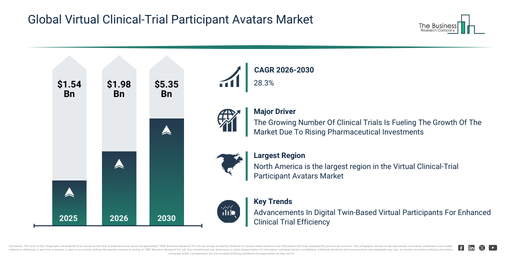
  • Virtual Clinical-Trial Participant Avatars Market Size Projected To Increase From $1.97 Billion To $5.35 Billion During The Forecast Period

    Virtual Clinical-Trial Participant Avatars Market Size Projected To Increase From $1.97 Billion To $5.35 Billion During The Forecast Period

    Enhanced with market attractiveness analysis, total addressable market evaluation, company benchmarking matrices, interactive Excel dashboards, expanded supply chain intelligence, emerging startup coverage, and detailed product insights, The Business Research Company’s 2026 market reports deliver more actionable and strategically valuable research.

    Virtual Clinical-Trial Participant Avatars Market Expansion Outlook: What Revenue Opportunities Lie Ahead?

    The market for virtual clinical-trial participant avatars has experienced remarkable expansion lately, projected to climb from $1.54 billion in 2025 to $1.98 billion in 2026, reflecting a compound annual growth rate of 28.6%. Factors contributing to this historic expansion include the inherent constraints of conventional clinical trial participant recruitment, escalating expenditures associated with conducting physical trials, significant progress in computational modeling techniques, a greater influx of health-related data, and the early embrace of simulation-driven trial technologies.

    The market for virtual clinical trial participant avatars is poised for exceptional expansion, projected to reach $5.35 billion by 2030, reflecting a compound annual growth rate of 28.3%. This accelerated trajectory is fueled by several key factors: the escalating need for expedited drug development processes, augmented investments in the infrastructure supporting virtual trials, the broadening scope of precision medicine studies, increasing validation of digital evidence by regulatory bodies, and the continually growing incorporation of avatar data with actual clinical information. Within this period, significant developments are anticipated to shape the landscape, including a greater reliance on AI-powered patient simulation models, wider implementation of digital twin technologies in clinical investigations, a surge in the use of predictive analytics for trial planning, the proliferation of combined avatar modeling methodologies, and a heightened emphasis on streamlining trial operations for optimal efficiency.

    Download A Free Sample Report For Comprehensive Market Insights:

    https://www.thebusinessresearchcompany.com/sample.aspx?id=28351&type=smp

    Virtual Clinical-Trial Participant Avatars Market Industry Drivers: What Is Driving Revenue Growth?

    The expansion of the virtual clinical-trial participant avatars market is anticipated to be fueled by the escalating volume of ongoing clinical trials, which are systematic investigations designed to test the safety and efficacy of medical treatments in individuals. This increase in clinical trials stems from augmented financial commitments by pharmaceutical entities toward drug discovery and development, as they strive to innovate treatments for challenging illnesses and advance personalized healthcare solutions. The virtual clinical-trial participant avatars market contributes to this trend by producing AI-driven digital patient representations that can mimic disease advancement, therapeutic reactions, and safety results, thereby facilitating quicker participant enrollment, more intelligent trial planning, and a reduction in both research expenditures and inherent risks. To illustrate, the Association of the British Pharmaceutical Industry (ABPI) reported in December 2024 that the United Kingdom witnessed a second consecutive year of growth in the launch of new pharmaceutical industry trials, with figures climbing from 411 in 2022 to 426 in 2023. Consequently, the increasing prevalence of clinical trials is directly stimulating the growth trajectory of the virtual clinical-trial participant avatars market.

    Virtual Clinical-Trial Participant Avatars Market Segment Outlook: Which Categories Are Expanding The Fastest?

    The virtual clinical-trial participant avatars market covered in this report is segmented –

    1) By Avatar Type: Artificial Intelligence-Generated Avatars, Digitally Modeled Human Avatars, Hybrid Avatars

    2) By Deployment Mode: Cloud-Based, On-Premises

    3) By Application: Drug Development, Patient Recruitment, Data Simulation, Remote Monitoring, Other Applications

    4) By End-User: Pharmaceutical Companies, Contract Research Organizations, Academic And Research Institutes, Other End-Users

    Subsegments:

    1) By Artificial Intelligence-Generated Avatars: Machine Learning-Based Avatars, Deep Learning-Based Avatars, Natural Language Processing (NLP)-Enabled Avatars, Generative Adversarial Network (GAN)-Based Avatars

    2) By Digitally Modeled Human Avatars: Three-Dimensional (3D) Scanned Human Avatars, Motion Capture Modeled Avatars, Photorealistic Rendered Avatars, Anatomically Accurate Human Avatars

    3) By Hybrid Avatars: Artificial Intelligence (AI)-Enhanced Digitally Modeled Avatars, Mixed Reality (MR) Enabled Avatars, Cognitive Simulation Avatars, Sensor-Integrated Virtual Avatars

    #Virtual Clinical-Trial Participant Avatars Market Growth Trends: What Is Influencing The Future Outlook?

    Major companies operating in the virtual clinical trial participant avatars market are focusing on developing advanced solutions such as digital twin-based clinical trial participants to improve trial efficiency and enhance predictive accuracy in drug development. These digital twin-based participants are virtual models of real patients that replicate physiological and behavioral responses, helping researchers forecast treatment outcomes, optimize trial designs, and reduce reliance on extensive physical testing. For instance, in July 2023, Unlearn.ai, Inc., a US-based AI clinical trial technology company, introduced an updated digital twin generator (DTG) for Alzheimer’s disease, version 3.1, which improved handling of missing baseline data by integrating a neural network imputation model within a Neural Boltzmann Machine architecture, resulting in reduced sensitivity to missing data and enhanced performance. The DTG uses diverse patient datasets to create personalized digital twins that reliably predict clinical and biomarker trajectories, thereby supporting more precise and robust modeling of Alzheimer’s disease progression in clinical trials.

    Virtual Clinical-Trial Participant Avatars Market Key Companies And Competitive Benchmarking

    Major companies operating in the virtual clinical-trial participant avatars market are NVIDIA Corporation, Dassault Systèmes SE, Signant Health Holding Corp., Owkin Inc, Medable Inc., Insilico Medicine Inc., Science 37 Inc., THREAD Inc., Lindus Health Limited, Obvio Health, Sano Genetics Limited, GNS Healthcare, Unlearn.ai Inc., Novadiscovery SAS, Deep 6 AI, Ai Cure Technologies, Altis Labs Inc., Physiomics Plc, OneThree Biotech, Aitia Bio

    Access The Complete Virtual Clinical-Trial Participant Avatars Market Report:

    https://www.thebusinessresearchcompany.com/report/virtual-clinical-trial-participant-avatars-global-market-report

    Virtual Clinical-Trial Participant Avatars Market Largest Region By Revenue And Market Share

    North Americawas the largest region in the virtual clinical-trial participant avatars market in 2025. Asia-Pacific is expected to be the fastest-growing region in the forecast period. The regions covered in the virtual clinical-trial participant avatars market report are Asia-Pacific, South East Asia, Western Europe, Eastern Europe, North America, South America, Middle East, Africa.

    Get in touch with us:

    The Business Research Company: https://www.thebusinessresearchcompany.com/

    Americas: +1 310-496-7795

    Asia: +44 7882 955267 & +91 8897263534

    Europe: +44 7882 955267

    Email us at: marketing@tbrc.info

    Follow us on:

    LinkedIn: https://in.linkedin.com/company/the-business-research-company

    YouTube: https://www.youtube.com/channel/UC24_fI0rV8cR5DxlCpgmyFQ

    Global Market Model: https://www.thebusinessresearchcompany.com/global-market-model
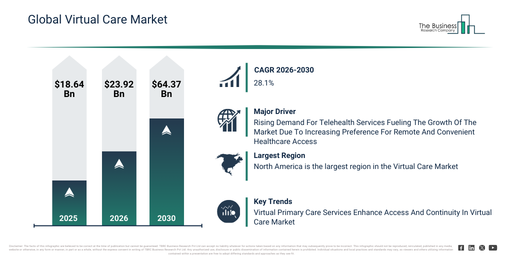
  • Virtual Care Market Growth Outlook Reveals A CAGR Of 28.1% And A Market Value Of $64.37 Billion By 2030

    Virtual Care Market Growth Outlook Reveals A CAGR Of 28.1% And A Market Value Of $64.37 Billion By 2030

    Through market attractiveness analysis, total addressable market evaluation, company benchmarking matrices, interactive Excel dashboards, expanded supply chain intelligence, emerging startup coverage, and detailed product insights, The Business Research Company’s 2026 market reports provide more actionable and strategically valuable research.

    Virtual Care Market Growth Potential: How Will Market Size Change Through 2030?

    The digital health sector has experienced remarkable expansion lately. Projections indicate a surge from $18.64 billion in 2025 to $23.92 billion in 2026, reflecting a substantial compound annual growth rate of 28.3%. This upward trajectory during the past period is underpinned by several key factors: the enhancement of digital health infrastructure, the increasing accessibility of smartphones and the internet, greater physician acceptance of telemedicine modalities, a rise in the incidence of chronic illnesses, and the early embrace of remote consultation platforms.

    The virtual care market is poised for remarkable expansion in the coming years, projecting a surge to $64.37 billion by 2030 with a compound annual growth rate (CAGR) of 28.1%. This anticipated growth trajectory is fueled by several key factors, including augmented investments in healthcare models prioritizing virtual access, a heightened demand for healthcare services delivered within the home environment, the broader integration of AI for diagnostic assistance, a more pronounced focus on value-based healthcare approaches, and increasing governmental backing for telehealth reimbursement policies. During this forecast period, significant trends are expected to shape the market, such as the escalating adoption of remote patient monitoring technologies, a greater reliance on video conferencing for medical appointments, the proliferation of comprehensive telehealth platforms that integrate various services, an intensified concentration on continuous patient care management strategies, and a push towards improved interoperability among different virtual care systems.

    Download A Free Sample Report For Comprehensive Market Insights:

    https://www.thebusinessresearchcompany.com/sample.aspx?id=25930&type=smp

    Virtual Care Market Growth Factors: Which Forces Are Supporting Market Expansion?

    The virtual care market’s expansion is anticipated to be significantly boosted by the escalating need for telehealth capabilities. This mode of healthcare delivery encompasses the utilization of digital innovations to provide medical services from a distance, facilitating virtual interactions between patients and practitioners for consultations, diagnostic assessments, health supervision, and therapeutic interventions. The heightened acceptance of telehealth stems from individuals desiring quicker, more accessible, and secure pathways to medical attention, particularly for remote consultations, ongoing health tracking, and minimizing travel burdens. By facilitating remote interactions with healthcare professionals, telehealth enhances accessibility, convenience, and the seamless continuation of care, thereby diminishing the necessity for physical appointments. Illustratively, Australian Bureau of Statistics data from September 2024 revealed that for the 2023–24 period, a substantial 83.5% of males utilized telehealth services, marking an upward trend from the 78.6% recorded in 2022–23. Consequently, the heightened preference for telehealth services is a primary catalyst for the virtual care market’s increasing momentum.

    Virtual Care Market Segment Landscape: Which Areas Lead Market Development?

    The virtual care market covered in this report is segmented –

    1) By Component: Hardware, Software, Services

    2) By Consultation Type: Video Consultation, Audio Consultation, Messaging

    3) By Technology Type: Video Conferencing, Wearable Devices, Mobile Health Applications, Health Information Systems, Remote Monitoring Devices

    4) By Application: Diagnostics, Therapeutics, Monitoring And Consultation, Preventive Care, Rehabilitation Services, Other Applications

    5) By End User: Patients, Healthcare Providers, Government Organizations, Corporate Wellness Programs, Other End Users

    Subsegments:

    1) By Hardware: Wearable Devices, Remote Patient Monitoring Devices, Telecommunication Devices, Diagnostic Devices

    2) By Software: Telehealth Platforms, Mobile Health Applications, Virtual Consultation Software, Remote Monitoring Software

    3) By Services: Remote Patient Monitoring Services, Teleconsultation Services, Technical Support And Maintenance, Training And Implementation Services

    Virtual Care Market Industry Trends: What Changes Are Reshaping Demand?

    Leading entities within the virtual care sector are actively deploying novel approaches, exemplified by virtual primary care offerings, with the objectives of elevating care standards, fostering greater patient involvement, and broadening healthcare accessibility. The concept of virtual primary care entails the remote provision of commonplace medical assistance, encompassing routine examinations and the ongoing management of long-term illnesses, facilitated via electronic means like telephonic or video consultations. As a concrete illustration, in January of 2023, CVS Health, an American healthcare provider, introduced its Virtual Primary Care service, a digital health ecosystem designed to provide remote primary care appointments and immediate access to care around the clock, thereby improving patient access, ease of use, and consistent healthcare delivery across the country. This pioneering virtual healthcare solution provides immediate availability of primary care services and smooth integration between remote and face-to-face healthcare options. Its adaptability allows for the adept handling of various health concerns, ranging from standard wellness checks to the care of persistent medical issues, by utilizing digital connections and coordinated medical teams to boost both reach and ongoing treatment.

    Virtual Care Market Industry Leaders And Market Competition

    Major companies operating in the virtual care market are Medtronic plc, Siemens Healthcare GmbH, Koninklijke Philips N.V., GE Healthcare Limited, Teladoc Health Inc., Comarch S.A., American Well Corporation, MDLive Inc., Doctor on Demand Inc., Talkspace Inc., AMC Health Inc., 98point6 Technologies, Altibbi Inc., GlobalMed Inc., Binah.ai Ltd., InTouch Health Inc., Vivify Health Inc., VSee Lab Inc., Biotricity Inc., eVisit Inc., Aerotel Medical Systems Ltd., Chiron Health Inc.

    Access The Complete Virtual Care Market Report:

    https://www.thebusinessresearchcompany.com/report/virtual-care-global-market-report

    Virtual Care Market Regional Analysis And Leading Geography

    North Americawas the largest region in the virtual care market in 2025. Asia-Pacificis expected to be the fastest-growing region in the forecast period. The regions covered in the virtual care market report are Asia-Pacific, South East Asia, Western Europe, Eastern Europe, North America, South America, Middle East, Africa.

    Get in touch with us:

    The Business Research Company: https://www.thebusinessresearchcompany.com/

    Americas: +1 310-496-7795

    Asia: +44 7882 955267 & +91 8897263534

    Europe: +44 7882 955267

    Email us at: marketing@tbrc.info

    Follow us on:

    LinkedIn: https://in.linkedin.com/company/the-business-research-company

    YouTube: https://www.youtube.com/channel/UC24_fI0rV8cR5DxlCpgmyFQ

    Global Market Model: https://www.thebusinessresearchcompany.com/global-market-model
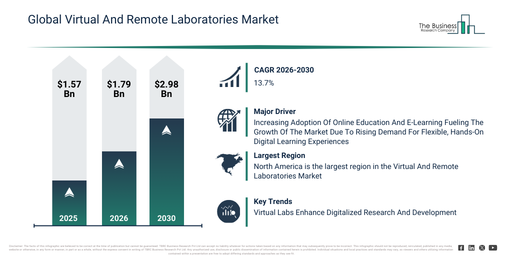
  • Virtual And Remote Laboratories Market Forecast Highlights Expansion From $1.78 Billion To $2.98 Billion Through 2030

    Virtual And Remote Laboratories Market Forecast Highlights Expansion From $1.78 Billion To $2.98 Billion Through 2030

    Delivering more actionable and strategically valuable research, The Business Research Company’s 2026 market reports feature market attractiveness analysis, total addressable market evaluation, company benchmarking matrices, interactive Excel dashboards, expanded supply chain intelligence, emerging startup coverage, and detailed product insights.

    Virtual And Remote Laboratories Market Value Analysis: What Growth Is Expected Over The Forecast Period?

    The expansion of online educational platforms, coupled with the surge in remote learning, has significantly propelled the virtual and remote laboratories market. Constraints on physical laboratory accessibility, alongside the proliferation of digital literacy programs and the early embrace of simulation software, have also played a crucial role in this market’s accelerated development. Projections indicate a considerable increase, with the market value set to climb from $1.57 billion in 2025 to $1.79 billion in 2026, reflecting a robust compound annual growth rate of 14.0%.

    The market for virtual and remote laboratories is poised for considerable expansion over the coming years, projected to reach $2.98 billion by 2030 with a compound annual growth rate of 13.7%. This anticipated expansion during the forecast period stems from several key factors, including heightened investments in digital educational infrastructure, a growing embrace of virtual and augmented reality within educational settings, the broadening scope of remote research collaborations, a greater need for economical laboratory access, and the increasing application of AI for learning analytics. Key developments expected to shape the market in this timeframe involve a greater uptake of cloud-based virtual lab solutions, a rise in simulation-driven experimental approaches, enhanced integration of hardware enabling remote access, the development of more immersive learning environments, and a stronger emphasis on scalable STEM education initiatives.

    Download A Free Sample Report For Comprehensive Market Insights:

    https://www.thebusinessresearchcompany.com/sample.aspx?id=23570&type=smp

    Virtual And Remote Laboratories Market Demand Drivers: What Is Fueling Industry Growth?

    The expansion of virtual and remote laboratories is anticipated to be significantly boosted by the growing trend of online education and e-learning. This form of education, characterized by the delivery of instructional material and content via internet-based platforms, enables students to pursue courses, skill development programs, or academic degrees from any location and according to their individual schedules. The surge in online and e-learning is attributable to a greater need for adaptable and readily available educational opportunities, empowering individuals to study conveniently, whenever and wherever they choose, and at a pace that suits them best. Virtual and remote laboratories play a crucial role in augmenting these digital learning environments by providing simulated, practical experiences in an electronic format, which is particularly beneficial for students learning remotely or for educational institutions lacking physical laboratory facilities. These digital labs contribute to better educational results by mirroring actual experiments, thereby enhancing student involvement and fostering a deeper comprehension of practical concepts. As an illustration, data from Eurostat, a European Union statistical office, indicated that in 2023, 30% of individuals in the European Union (within the 16–74 age bracket) utilized online learning resources, marking an increase from the 28% recorded in 2022. Consequently, the escalating use of online education and e-learning directly fuels the market development for virtual and remote laboratory solutions.

    Virtual And Remote Laboratories Market Segments: Where Are The Largest Growth Opportunities?

    The virtual and remote laboratories market covered in this report is segmented –

    1) By Component: Software, Hardware, Services

    2) By Deployment Mode: On-Premises, Cloud

    3) By Application: Education, Research And Development, Quality Control, Training, Other Application

    4) By End-User: Academic Institutions, Enterprises, Government, Other End-Users

    Subsegments:

    1) By Software: Lab Management Software, Simulation Software, Remote Access Software, Virtual Reality And Augmented Reality Software, Learning Management System Integration, Data Analytics And Reporting Tools

    2) By Hardware: Experimentation Devices, Remote Control Equipment, Data Acquisition Systems, Virtual Reality Headsets And Devices, Network And Communication Infrastructure, Cameras And Monitoring Equipment

    3) By Services: System Integration And Deployment, Technical Support And Maintenance, Training And Consulting Services, Content Development And Customization, Cloud Hosting And Infrastructure Services

    Virtual And Remote Laboratories Market Innovation Trends: Which Developments Are Transforming The Industry?

    Key players in the virtual and remote laboratories domain are concentrating their efforts on creating cutting-edge solutions like virtual labs, aiming to establish learning environments that are easily accessible, adaptable to various needs, and engaging for users. These virtual labs are essentially digital simulations, computer-driven spaces where individuals can conduct experiments and engage with educational or scientific materials from a distance, frequently mirroring hands-on laboratory tasks for educational or investigative goals. As an illustration, in June of 2023, HTE GmbH, a German firm specializing in technology and services, introduced a virtual laboratory designed for digitized research and development, intended to bolster R&D prowess in catalysis and materials science for sectors including energy, refining, chemicals, and battery manufacturing. This advanced facility incorporates sophisticated technologies and streamlined processes, combining reactor setups, software tools, and analytical capabilities to foster optimized laboratory operations specifically for the energy, refining, chemical, and battery industries. It boasts true-to-life 3D reactor models, flexible configurations for testing apparatus, and practical examples to tackle complex issues like carbon dioxide management, sustainable production methods, and the creation of battery components.

    Virtual And Remote Laboratories Market Major Participants And Competitive Dynamics

    Major companies operating in the virtual and remote laboratories market are HPE Virtual Labs, LabXchange, Immersive Labz, Immersive Labz Private Limited, Emerald Cloud Lab Inc., Labster ApS, Anatomage Inc., Fast Lane Institute for Knowledge Transfer GmbH, SimBiotic Software Inc., Beyond Labz, OpenLab VR, CorpAcademia iTechnovations Pvt. Ltd, VRLab Academy, Smart Science Labs, iXR Labs, MERLOT Virtual Labs, PraxiLabs, Amrita Virtual Labs, Inq-ITS

    Access The Complete Virtual And Remote Laboratories Market Report:

    https://www.thebusinessresearchcompany.com/report/virtual-and-remote-laboratories-global-market-report

    Virtual And Remote Laboratories Market Geographic Analysis: Where Is Demand Growing The Fastest?

    North Americawas the largest region in the virtual and remote laboratories market in 2025. Asia-Pacificis expected to be the fastest-growing region in the forecast period. The regions covered in the virtual and remote laboratories market report are Asia-Pacific, South East Asia, Western Europe, Eastern Europe, North America, South America, Middle East, Africa.

    Get in touch with us:

    The Business Research Company: https://www.thebusinessresearchcompany.com/

    Americas: +1 310-496-7795

    Asia: +44 7882 955267 & +91 8897263534

    Europe: +44 7882 955267

    Email us at: marketing@tbrc.info

    Follow us on:

    LinkedIn: https://in.linkedin.com/company/the-business-research-company

    YouTube: https://www.youtube.com/channel/UC24_fI0rV8cR5DxlCpgmyFQ

    Global Market Model: https://www.thebusinessresearchcompany.com/global-market-model
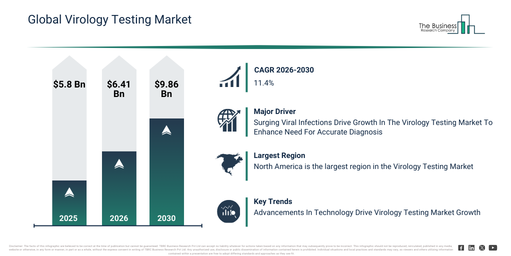
  • Virology Testing Market Expected To Reach $9.86 Billion By 2030 As Growth Accelerates At 11.4% CAGR

    Virology Testing Market Expected To Reach $9.86 Billion By 2030 As Growth Accelerates At 11.4% CAGR

    Enhanced with market attractiveness analysis, total addressable market evaluation, company benchmarking matrices, interactive Excel dashboards, expanded supply chain intelligence, emerging startup coverage, and detailed product insights, The Business Research Company’s 2026 market reports deliver more actionable and strategically valuable research.

    Virology Testing Market Size Forecast: How Large Could The Market Become By 2030?

    The market for virology testing has experienced substantial expansion lately, projecting a notable increase from $5.8 billion in 2025 to $6.41 billion by 2026, driven by a compound annual growth rate (CAGR) of 10.6%. Factors contributing to this growth during the preceding period include a heightened incidence of viral infections, a broader development of hospital diagnostic facilities, increased utilization of PCR testing methods, the proliferation of centralized diagnostic laboratories, and enhanced accessibility to assay kits.

    The virology testing sector is poised for substantial expansion in the upcoming years, projecting a market valuation of $9.86 billion by 2030, propelled by a CAGR of 11.4%. This projected increase is fueled by a confluence of factors, including heightened demand for point-of-care virology diagnostic solutions, amplified financial commitments within molecular diagnostics, the broadening application of personalized medicine strategies, increased utilization of multiplex testing technologies, and a heightened emphasis on identifying diseases at their earliest stages. Key developments anticipated during this period encompass a greater embrace of molecular diagnostic testing methodologies, expanded deployment of high-throughput PCR platforms, deeper integration of automated assay systems, a wider array of syndromic testing options, and an intensified pursuit of swift and precise diagnostic outcomes.

    Download A Free Sample Report For Comprehensive Market Insights:

    https://www.thebusinessresearchcompany.com/sample.aspx?id=12531&type=smp

    Virology Testing Market Growth Drivers: What Factors Are Accelerating Expansion?

    The increasing prevalence of viral infections is expected to drive growth in the virology testing market over the coming years. Viral infections are contagious diseases caused by viruses, which are microscopic pathogens made up of genetic material (DNA or RNA) enclosed in a protein coat. Virology testing plays a critical role in accurate diagnosis, disease surveillance, research activities, and public health preparedness. It helps identify viral pathogens, informs appropriate treatment decisions, monitors infection spread, and supports the development of new medical interventions. The growing need for virology testing is largely driven by the importance of effectively managing viral outbreaks and reducing their overall health impact. For example, in September 2024, according to GOV.UK, a UK-based government services and information provider, between week 40 of 2023 and week 14 of 2024 in England, virological testing results showed 708 incidents (53.3%) confirmed as SARS-CoV-2, followed by 472 incidents of influenza (35.5%), 68 incidents of RSV (5.1%), and 80 incidents (6.0%) involving other viruses. As a result, the rising incidence of viral infections is contributing to the expansion of the virology testing market.

    Virology Testing Market Segment Analysis: What Are The Major Market Categories?

    The virology testing market covered in this report is segmented –

    1) By Type: Instruments, Assay Kits And Consumables

    2) By Diagnostic Technique: Molecular Diagnostics Method, Immunoassay Based Method, Mass Spectroscopy Based Method, Other Techniques

    3) By Application: Skin And Soft Tissue Infections, Respiratory Tract Infections, Gastrointestinal Tract Infections, Urinary Tract Infection, Eye Infections, Sexually Transmitted Diseases, Perinatal Infections

    4) By End User: Hospitals, Clinics, Laboratories, Diagnostic Centers, Blood Banks, Pharmacies

    Subsegments:

    1) By Instruments: PCR Machines, Sequencers, Microplate Readers, Immunoassay Analyzers

    2) By Assay Kits And Consumables: PCR Assay Kits, ELISA Kits, Rapid Test Kits, Viral Culture Kits, Sample Collection Kits, Pipette Tips, Culture Media

    Virology Testing Market Trends: What Is Shaping Future Industry Growth?

    Major companies operating in the virology testing market are increasingly focusing on advanced solutions such as agar gel precipitation test systems to meet the growing demand for precise diagnostic tools. These advanced agar gel precipitation test solutions are specialized formulations used in complex immunological studies to identify and analyze antigen-antibody interactions.As diffusion occurs, a visible precipitate ring forms, marking the point of equilibrium between antigens and antibodies. By accurately measuring the diameter of this ring and comparing it with a standard curve, the service enables precise determination of antigen concentration, delivering reliable quantitative data for researchers.

    Virology Testing Market Leading Companies Driving Competitive Growth

    Major companies operating in the virology testing market are Johnson & Johnson Services Inc., F. Hoffmann-La Roche AG, Merck & Co. Inc., Thermo Fisher Scientific Inc., Abbott Laboratories, Siemens Healthineers AG, Eurofins Scientific SE, Agilent Technologies Inc., Grifols S.A., Hologic Inc., bioMerieux SA, Bio-Rad Laboratories Inc., Qiagen NV, Cepheid Inc., Eiken Chemical Co Ltd., DiaSorin SpA, Fujirebio Diagnostics Inc., Microbac Laboratories Inc., Trinity Biotech plc, Diamedix Corporation, Vircell SL

    Access The Complete Virology Testing Market Report:

    https://www.thebusinessresearchcompany.com/report/virology-testing-global-market-report

    Virology Testing Market Global Footprint: Which Region Holds Market Leadership?

    North Americawas the largest region in the virology testing market in 2025. Asia-Pacificis expected to be the fastest-growing region in the forecast period. The regions covered in the virology testing market report are Asia-Pacific, South East Asia, Western Europe, Eastern Europe, North America, South America, Middle East, Africa.

    Get in touch with us:

    The Business Research Company: https://www.thebusinessresearchcompany.com/

    Americas: +1 310-496-7795

    Asia: +44 7882 955267 & +91 8897263534

    Europe: +44 7882 955267

    Email us at: marketing@tbrc.info

    Follow us on:

    LinkedIn: https://in.linkedin.com/company/the-business-research-company

    YouTube: https://www.youtube.com/channel/UC24_fI0rV8cR5DxlCpgmyFQ

    Global Market Model: https://www.thebusinessresearchcompany.com/global-market-model
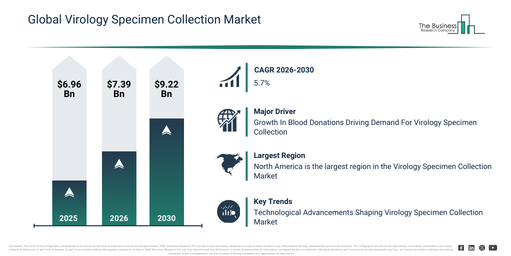
  • Virology Specimen Collection Market Set To Grow From $7.39 Billion In 2026 To $9.22 Billion By 2030 At A CAGR Of 5.7%

    Virology Specimen Collection Market Set To Grow From $7.39 Billion In 2026 To $9.22 Billion By 2030 At A CAGR Of 5.7%

    Through market attractiveness analysis, total addressable market evaluation, company benchmarking matrices, interactive Excel dashboards, expanded supply chain intelligence, emerging startup coverage, and detailed product insights, The Business Research Company’s 2026 market reports provide more actionable and strategically valuable research.

    Virology Specimen Collection Market Revenue Outlook: What CAGR Is Expected Through 2030?

    The global market for virology specimen collection experienced robust expansion recently, with projections indicating a rise from $6.96 billion in 2025 to $7.39 billion in 2026, reflecting a compound annual growth rate (CAGR) of 6.2%. This upward trend witnessed during the preceding years is largely attributable to several key factors, including the broadening scope of infectious disease testing initiatives, a surge in diagnostic procedures undertaken within healthcare facilities, heightened public and professional recognition of the importance of prompt viral detection, the increasing prevalence of centralized laboratory analyses, and the implementation of uniform standards for clinical sample collection methods.

    The virology specimen collection market is projected to reach $9.22 billion by 2030, growing at a compound annual growth rate (CAGR) of 5.7%. Market growth is expected to be supported by the increasing demand for decentralized diagnostic services, the rising adoption of home-based sample collection methods, the expansion of surveillance testing initiatives, growing investments in laboratory automation, and a stronger emphasis on achieving faster diagnostic turnaround times. Industry developments are likely to include greater demand for standardized specimen collection kits, increased use of viral transport media, wider adoption of automated sample handling technologies, expansion of point-of-care collection solutions, and a continued focus on maintaining sample integrity and stability throughout the testing process.

    Download A Free Sample Report For Comprehensive Market Insights:

    https://www.thebusinessresearchcompany.com/sample.aspx?id=6642&type=smp

    Virology Specimen Collection Market Growth Factors Supporting Long-Term Expansion

    The increase in blood donations is a key factor contributing to the expansion of the virology specimen collection market, as a greater volume of blood samples necessitates more thorough viral examination and detection. Evidence from the World Health Organization (WHO) indicates that approximately 118.54 million blood donations were facilitated globally in June 2023, with high-income nations accounting for 40% of these, despite representing only 16% of the global population. Furthermore, reports from 13,300 blood centers across 169 countries confirm the collection of 106 million donations, underscoring the direct correlation between the escalating number of blood collections and the anticipated surge in demand for specialized virology specimen collection services.

    Virology Specimen Collection Market Segment Breakdown: Which Categories Generate The Most Revenue?

    The virology specimen collection market covered in this report is segmented –

    1) By Product Type: Blood Collection Kits, Specimen Collection Tubes, Viral Transport Media, Swabs

    2) By Sample: Blood Samples, Nasopharyngeal Samples, Throat Samples, Nasal Samples, Cervical Samples, Oral Samples, Other Samples

    3) By Method: Manual, Automated

    4) By Application: Diagnostic, Therapeutic

    Subsegments:

    1) By Blood Collection Kits: Vacuum Blood Collection Tubes, Syringe Blood Collection Kits

    2) By Specimen Collection Tubes: EDTA Tubes, Serum Separation Tubes, Heparin Tubes

    3) By Viral Transport Media: Liquid Media, Dry Media

    4) By Swabs: Nasopharyngeal Swabs, Oropharyngeal Swabs, Urethral Swabs

    Virology Specimen Collection Market Industry Trends Shaping Future Revenue Growth

    Key players within the market are concentrating their efforts on pioneering advancements like automated sample isolation and real-time amplification technologies, aiming to elevate diagnostic precision and furnish crucial clinical data to guide effective antiviral therapies. These sophisticated technologies facilitate more rapid and accurate detection of clinically significant viruses, empowering medical professionals to customize antiviral treatments and ultimately improve patient results. Illustratively, in August of 2023, Nightingale Health Plc, a health technology firm headquartered in Finland, introduced a novel remote blood collection kit designed for its clientele involved in medical research and clinical trials. This Nightingale Kit, coupled with its user-friendly self-collection apparatus, empowers research subjects to procure their own blood samples by performing a simple finger prick. Such an innovation significantly broadens procedural flexibility and unlocks research avenues previously precluded by logistical and geographical limitations. Furthermore, the integration of remote blood collection into research initiatives is rendered both convenient and cost-effective by Nightingale Health’s comprehensive offering of both sample collection and subsequent analysis services.

    Virology Specimen Collection Market Key Players And Strategic Industry Positioning

    Major companies operating in the virology specimen collection market are Puritan Medical Products Co. LLC, Becton Dickinson and Company, Quidel Corporation, Trinity Biotech plc, DiaSorin S.p.A., Vircell S.L., Copan Italia S.p.A., Hardy Diagnostics, Laboratory Corporation of America Holdings, ZeptoMetrix Corporation, Copan Diagnostics Inc., Bionote Inc., F. Hoffmann-La Roche Ltd, Meridian Bioscience Inc., Hologic Inc., Cepheid Inc., Bio-Rad Laboratories Inc., GenMark Diagnostics Inc., Luminex Corporation, Abbott Laboratories, BioFire Diagnostics LLC, Randox Laboratories Ltd., Savyon Diagnostics Ltd., Seegene Inc., Serosep Ltd., SolGent Co. Ltd., TECOmedical AG, Vela Diagnostics, Zybio Inc.

    Access The Complete Virology Specimen Collection Market Report:

    https://www.thebusinessresearchcompany.com/report/virology-specimen-collection-global-market-report

    Virology Specimen Collection Market Regional Distribution: Which Areas Drive Market Expansion?

    North Americawas the largest region in the virology specimen collection market share in 2025. Asia-Pacificis expected to be the fastest-growing region in the forecast period. The regions covered in the virology specimen collection market report are Asia-Pacific, South East Asia, Western Europe, Eastern Europe, North America, South America, Middle East, Africa.

    Get in touch with us:

    The Business Research Company: https://www.thebusinessresearchcompany.com/

    Americas: +1 310-496-7795

    Asia: +44 7882 955267 & +91 8897263534

    Europe: +44 7882 955267

    Email us at: marketing@tbrc.info

    Follow us on:

    LinkedIn: https://in.linkedin.com/company/the-business-research-company

    YouTube: https://www.youtube.com/channel/UC24_fI0rV8cR5DxlCpgmyFQ

    Global Market Model: https://www.thebusinessresearchcompany.com/global-market-model

  • Virology And Bacteriology Market Opportunities Are Emerging Beyond Traditional Growth Areas

    Virology And Bacteriology Market Opportunities Are Emerging Beyond Traditional Growth Areas

    Delivering more actionable and strategically valuable research, The Business Research Company’s 2026 market reports feature market attractiveness analysis, total addressable market evaluation, company benchmarking matrices, interactive Excel dashboards, expanded supply chain intelligence, emerging startup coverage, and detailed product insights.

    Virology And Bacteriology Market Growth Analysis: How Will Revenue Expand During The Forecast Period?

    The market for virology and bacteriology experienced significant expansion lately, with projections indicating continued robust growth from $2.67 billion in 2025 to $2.92 billion in 2026, reflecting a compound annual growth rate of 9.3%. Historically, this growth was propelled by increased research into infectious diseases, a surge in the volume of clinical diagnostic tests performed, greater utilization of reagents for culturing and detection, heightened investment in hospital laboratories, and advancements in microbiology infrastructure.

    The field of virology and bacteriology is poised for significant expansion over the coming years, projecting a market value of $4.12 billion by 2030, driven by a compound annual growth rate of 9.0%. This anticipated surge is propelled by several key factors, including a heightened need for swift and easily accessible diagnostic tools, a greater emphasis on tracking antimicrobial resistance, the broadening scope of genomic sequencing, increased investment in automated laboratory equipment, and a stronger commitment to identifying diseases early. Furthermore, the forecast period is expected to witness several significant trends, such as the wider implementation of molecular diagnostic methods, a greater reliance on automated laboratory setups, an intensified focus on quickly identifying pathogens, the expansion of large-scale testing capacities, and improved connectivity within laboratory information systems.

    Download A Free Sample Report For Comprehensive Market Insights:

    https://www.thebusinessresearchcompany.com/sample.aspx?id=19751&type=smp

    Virology And Bacteriology Market Demand Drivers Creating New Revenue Opportunities

    The expanding landscape of infectious disease occurrences is anticipated to be a significant catalyst for the advancement of the virology and bacteriology market in the upcoming period. Such diseases, defined as ailments stemming from pathogenic microorganisms like viruses, bacteria, fungi, or parasites that infiltrate and proliferate within a host, encompass a range of conditions such as influenza, tuberculosis (TB), HIV/AIDS, and malaria, among others. The escalating frequency of these ailments can be attributed to the mounting hurdles presented by pathogens, potentially exacerbated by factors like global interconnectedness, increased urbanization, the emergence of antimicrobial resistance, and shifts in environmental conditions. Crucially, analyses within virology and bacteriology play a pivotal role in pinpointing infectious diseases through the identification of the precise causative pathogens, thereby enabling the implementation of tailored therapeutic strategies and effective disease management. As an illustration, data released in November 2024 by the Centers for Disease Control and Prevention (CDC), the leading federal public health body in the United States, indicated a total of 9,633 reported tuberculosis cases in 2023, marking a substantial increase of 15.6% compared to the 8,332 cases recorded in 2022. Consequently, the heightened prevalence of infectious diseases is poised to serve as a primary driver for the virology and bacteriology market.

    Virology And Bacteriology Market Segmentation: How Is The Market Structured Across Key Categories?

    The virology and bacteriology market covered in this report is segmented –

    1) By Product: Equipment, Reagents

    2) By Technology: Molecular Diagnostics, Immunoassays, Diagnostic Imaging

    3) By End User: Hospitals, Diagnostic Centers, Research Laboratories, Blood Banks

    Subsegments:

    1) By Equipment: Laboratory Equipment, Diagnostic Instruments

    2) By Reagents: Culture Media, Detection Kits

    Virology And Bacteriology Market Trends Driving Strategic Industry Expansion

    Global leaders in the virology and bacteriology sectors are actively engaged in pioneering new solutions, like specialized kits for bacterial identification, aiming to enhance diagnostic accuracy and confront the complexities of infectious disease outbreaks. These bacterial identification kits function as crucial tools for pinpointing and examining bacterial presence within diverse sample matrices, encompassing bodily fluids such as blood and urine, foodstuffs, and environmental specimens. As an illustration, during December of 2023, HiMedia Laboratories LLC, a bioscience entity headquartered in India, joined forces with NG Biotech, a French producer of in vitro diagnostic apparatus, to introduce their NG-Test CARBA 5 kits. These kits, which received endorsement from the Central Drugs Standard Control Organization (CDSCO), are specifically engineered for the identification of carbapenemase-producing bacteria. Underlying their efficacy is sophisticated technology enabling precise detection of a wide array of antibiotic-resistant bacterial strains, notably those that secrete enzymes like carbapenemases. The system provides accelerated and dependable findings, thereby promoting swift clinical judgments and offering ease of use while accommodating a variety of sample origins, from patient specimens to environmental sources.

    Virology And Bacteriology Market Competitive Landscape And Leading Companies

    Major companies operating in the virology and bacteriology market are F. Hoffmann-La Roche AG, Merck KGaA, Thermo Fisher Scientific Inc., Abbott Laboratories, Danaher Corporation, Siemens Healthineers AG, Becton Dickinson and Company, Agilent Technologies Inc., Hologic Inc., bioMérieux SA, Bio-Rad Laboratories Inc., Bruker Corporation, Cepheid Inc., Eiken Chemical Co. Ltd., NEOGEN Corporation, Cerba Research, Luminex Corporation, Fujirebio Diagnostics Inc., Trinity Biotech plc, Microbiologics Inc., Bionano Genomics Inc., Scienion GmbH, Quidel Corporation

    Access The Complete Virology And Bacteriology Market Report:

    https://www.thebusinessresearchcompany.com/report/virology-and-bacteriology-global-market-report

    Virology And Bacteriology Market Leading Geography: Which Region Generates The Most Revenue?

    North Americawas the largest region in the virology and bacteriology market in 2025. The regions covered in the virology and bacteriology market report are Asia-Pacific, South East Asia, Western Europe, Eastern Europe, North America, South America, Middle East, Africa.

    Get in touch with us:

    The Business Research Company: https://www.thebusinessresearchcompany.com/

    Americas: +1 310-496-7795

    Asia: +44 7882 955267 & +91 8897263534

    Europe: +44 7882 955267

    Email us at: marketing@tbrc.info

    Follow us on:

    LinkedIn: https://in.linkedin.com/company/the-business-research-company

    YouTube: https://www.youtube.com/channel/UC24_fI0rV8cR5DxlCpgmyFQ

    Global Market Model: https://www.thebusinessresearchcompany.com/global-market-model