Month: June 2026

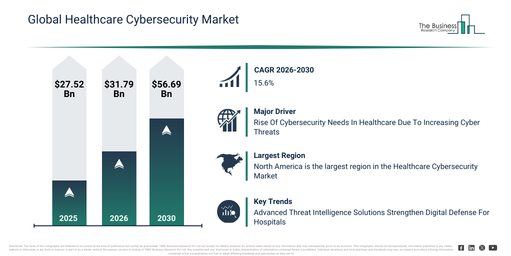
  • Healthcare Cybersecurity Market Growth Outlook Reveals A CAGR Of 15.6% And A Market Value Of $56.68 Billion By 2030

    Healthcare Cybersecurity Market Growth Outlook Reveals A CAGR Of 15.6% And A Market Value Of $56.68 Billion By 2030

    Through market attractiveness analysis, total addressable market evaluation, company benchmarking matrices, interactive Excel dashboards, expanded supply chain intelligence, emerging startup coverage, and detailed product insights, The Business Research Company’s 2026 market reports provide more actionable and strategically valuable research.

    Healthcare Cybersecurity Market Revenue Outlook: What CAGR Is Expected Through 2030?

    The sector focused on cybersecurity within healthcare has experienced significant expansion recently. Projections indicate this market will escalate from $27.52 billion in 2025 to $31.79 billion in 2026, reflecting a compound annual growth rate of 15.5%. Key factors fueling this expansion during the past period include the increasing digitalization of medical documentation, a surge in cyber threats targeting healthcare facilities, the widespread implementation of electronic health records, a broader use of interconnected medical equipment, and heightened regulatory emphasis on safeguarding patient information.

    The healthcare cybersecurity domain is poised for substantial expansion over the coming years, projected to reach a market valuation of $56.69 billion by 2030, driven by a compound annual growth rate of 15.6%. This anticipated surge is underpinned by several key factors, including heightened expenditures on healthcare IT security infrastructure, a growing need for continuous, real-time monitoring of potential threats, the widespread adoption of cloud-based healthcare solutions, a stronger emphasis on mitigating ransomware attacks, and the proactive embedding of cybersecurity measures into the development of medical devices. Notable developments expected during this period encompass the wider implementation of sophisticated threat detection technologies, increased adherence to zero-trust security principles, greater utilization of artificial intelligence for security data analysis, the proliferation of cybersecurity solutions specifically for medical devices, and a more rigorous approach to regulatory adherence and the safeguarding of private data.

    Download A Free Sample Report For Comprehensive Market Insights:

    https://www.thebusinessresearchcompany.com/sample.aspx?id=13964&type=smp

    Healthcare Cybersecurity Market Demand Drivers Creating New Revenue Opportunities

    The escalating frequency of cyber threats is poised to be a significant catalyst for the expansion of the healthcare cybersecurity sector. These cyberattacks, which involve illicit efforts to compromise, harm, or gain unauthorized entry into digital infrastructure, are on the rise due to cybercriminals’ focus on extracting valuable information, deploying ransomware, and exploiting system weaknesses for financial benefit. Healthcare cybersecurity solutions are instrumental in addressing this trend by offering sophisticated defenses that protect sensitive patient data, ensure the continuity of medical services, and avert breaches that could compromise patient care. As an illustration, the Australian Signals Directorate reported that in the fiscal year 2024-25, its Australian Cyber Security Centre handled more than 42,500 calls to its dedicated hotline, representing a 16% increase compared to the preceding year. Consequently, the growing prevalence of cyberattacks is a key factor stimulating the healthcare cybersecurity market’s growth.

    Healthcare Cybersecurity Market Segment Outlook: Which Categories Are Expanding The Fastest?

    The healthcare cybersecurity market covered in this report is segmented –

    1) By Solution: Identity And Access Management, Risk And Compliance Management, Antivirus And Antimalware, Distributed Denial Of Service (DDoS) Mitigation, Security Information And Event Management, Intrusion Detection System/ Intrusion Prevention System, Other Solutions

    2) By Security: Network Security, Endpoint Security, Application Security, Content Security

    3) By Threat: Malware, Distributed Denial Of Service (DDoS) Threats, Advanced Persistent Threat, Spyware, Lost Or Stolen Devices, Other Threats

    4) By End User: Pharma And Chemicals, Medical Devices, Health Insurance, Hospitals, Other End Users

    Subsegments:

    1) By Identity And Access Management: User Authentication, Role-Based Access Control, Single Sign-On

    2) By Risk And Compliance Management: Risk Assessment Tools, Compliance Management Solutions, Policy Management Software

    3) By Antivirus And Antimalware: Antivirus Software, Antimalware Solutions, Endpoint Protection

    4) By Distributed Denial Of Service (Ddos) Mitigation: Traffic Filtering, Rate Limiting, Ddos Protection Services

    5) By Security Information And Event Management (SIEM): Log Management, Security Monitoring, Incident Response

    6) By Intrusion Detection System Or Intrusion Prevention System (IDS Or IPS): Network-Based IDS Or IPS, Host-Based IDS Or IPS, Hybrid IDS Or IPS

    7) By Other Solutions: Data Encryption Solutions, Threat Intelligence Services, Security Training And Awareness Programs

    Healthcare Cybersecurity Market Trends Driving Strategic Industry Expansion

    Leading organizations within the healthcare cybersecurity sector are concentrating their efforts on creating sophisticated offerings, including specialized threat intelligence systems for healthcare, with the aim of bolstering the security of electronic patient data, networked medical equipment, and essential clinical infrastructure against ever-evolving and more complex cyber threats. These tailored threat intelligence systems are cybersecurity frameworks specifically designed for medical facilities, which gather intelligence feeds relevant to the industry, correlate evidence of potential breaches, and streamline operational procedures to aid security personnel in identifying, prioritizing, and addressing assaults on healthcare systems. As an illustration, in December 2024, Cyware Labs Inc., a software firm based in the United States, introduced its Healthcare Tuned Threat Intelligence Platform (HC-TIP), intended to furnish hospitals and medical networks with curated, industry-specific threat insights. This platform grants immediate insight into ransomware incidents, weaknesses in medical devices, and other cyber dangers pertinent to healthcare. Furthermore, it improves the handling of security incidents by providing ready-to-use operational blueprints and automated mechanisms for sharing threat information, all customized for the distinct security requirements of the healthcare industry.

    Healthcare Cybersecurity Market Key Companies And Competitive Benchmarking

    Major companies operating in the healthcare cybersecurity market are Microsoft Corporation, Intel Corporation, International Business Machines Corporation, Cisco Systems Inc., Broadcom Inc., Thales Group, Palo Alto Networks Inc., Juniper Networks Inc., Fortinet Inc., Gen Digital Inc., Splunk Inc., Checkpoint Software Technologies Ltd., Trend Micro Inc., Crowdstrike Holdings Inc., Fortra LLC, Tenable Inc., Rapid7 Inc., Qualys Inc., McAfee Corp., Forescout Technologies Inc., LogRhythm Inc., Claroty Ltd., Sophos Ltd., Fortified Health Security, Sensato Cybersecurity Solutions

    Access The Complete Healthcare Cybersecurity Market Report:

    https://www.thebusinessresearchcompany.com/report/healthcare-cybersecurity-global-market-report

    Healthcare Cybersecurity Market Regional Distribution: Which Areas Drive Market Expansion?

    North Americawas the largest region in the healthcare cybersecurity market in 2025. Asia-Pacificis expected to be the fastest-growing region in the forecast period. The regions covered in the healthcare cybersecurity market report are Asia-Pacific, South East Asia, Western Europe, Eastern Europe, North America, South America, Middle East, Africa.

    Get in touch with us:

    The Business Research Company: https://www.thebusinessresearchcompany.com/

    Americas: +1 310-496-7795

    Asia: +44 7882 955267 & +91 8897263534

    Europe: +44 7882 955267

    Email us at: marketing@tbrc.info

    Follow us on:

    LinkedIn: https://in.linkedin.com/company/the-business-research-company

    YouTube: https://www.youtube.com/channel/UC24_fI0rV8cR5DxlCpgmyFQ

    Global Market Model: https://www.thebusinessresearchcompany.com/global-market-model

  • Healthcare Cyber Security Market Forecast Highlights Expansion From $33.15 Billion To $69.91 Billion Through 2030

    Healthcare Cyber Security Market Forecast Highlights Expansion From $33.15 Billion To $69.91 Billion Through 2030

    Delivering more actionable and strategically valuable research, The Business Research Company’s 2026 market reports feature market attractiveness analysis, total addressable market evaluation, company benchmarking matrices, interactive Excel dashboards, expanded supply chain intelligence, emerging startup coverage, and detailed product insights.

    Healthcare Cyber Security Market Growth Analysis: How Will Revenue Expand During The Forecast Period?

    The market for cybersecurity solutions within the healthcare sector has experienced significant expansion lately. Projections indicate a rise from $27.46 billion in 2025 to $33.16 billion in 2026, reflecting a compound annual growth rate of 20.7%. This upward trajectory is fueled by a confluence of factors including the increasing digitalization of healthcare processes, a surge in reported breaches of sensitive health information, the proliferation of networked medical equipment, the widespread implementation of electronic health records, and intensified regulatory oversight concerning data privacy.

    The cybersecurity market within the healthcare sector is poised for substantial expansion over the coming years, projected to reach a valuation of $69.91 billion by 2030, driven by a compound annual growth rate of 20.5%. This anticipated surge is fueled by several key factors, including heightened commitments to sophisticated cybersecurity infrastructure, a greater embrace of artificial intelligence for analyzing threats, the broader integration of telehealth and remote patient care, a concentrated effort on mitigating ransomware attacks, and an escalating need for unified security management protocols. Furthermore, prominent developments anticipated during this period involve the wider implementation of zero-trust security architectures, an increased uptake of cloud-based security measures, a more rigorous focus on safeguarding medical devices, the advancement of AI-powered threat identification mechanisms, and a strengthened dedication to ensuring security compliance with regulations.

    Download A Free Sample Report For Comprehensive Market Insights:

    https://www.thebusinessresearchcompany.com/sample.aspx?id=7325&type=smp

    Healthcare Cyber Security Market Expansion Supported By Key Demand Factors

    An escalating frequency of cyber incidents within the healthcare sector is poised to catalyze the expansion of the healthcare cybersecurity market. The pervasive adoption of digital technologies across healthcare has inadvertently amplified the vulnerability to cyber threats, necessitating robust cybersecurity software solutions, thereby fueling the demand for such services. For example, the United States Department of Health and Human Services reported a substantial 104% escalation in data breaches affecting U.S. healthcare providers between mid-2022 and mid-2023, with incidents climbing from 160 to 327. This notable uptick compromised the information of over 40 million individuals, representing a 60% year-over-year increase in the first half of 2023. Consequently, the rising tide of cyberattacks targeting healthcare is a principal factor propelling the healthcare cybersecurity market’s growth trajectory in the foreseeable future.

    Healthcare Cyber Security Market Segment Landscape: Which Areas Lead Market Development?

    The healthcare cyber security market covered in this report is segmented –

    1) By Threat Type: Malware, Distributed Denial Of Service (DDoS), Advanced Persistent Threats (APT), Spyware, Other Threat Types

    2) By Solution: Identity And Access Management, Risk And Compliance Management, Antivirus and Antimalware, DDoS Mitigation, Security Information And Event Management, Intrusion Detection System And Intrusion Prevention System, Others Solutions

    3) By Security Measures: Application Security, Network Security, Device Security, Other Security Measures

    4) By Deployment: On-Premises, Cloud-Based

    5) By End User: Pharmaceutical Industries, Biotechnology Industries, Hospital, Medical Device Companies, Health Insurance Companies, Other End Users

    Subsegments:

    1) By Malware: Ransomware, Trojans, Viruses, Worms

    2) By Distributed Denial Of Service (DDoS): Volumetric Attacks, Protocol Attacks, Application Layer Attacks

    3) By Advanced Persistent Threats (APT): Targeted Attacks, Spear Phishing, Insider Threats

    4) By Spyware: Keyloggers, Adware, Tracking Cookies

    5) By Other Threat Types: Phishing Attacks, Credential Theft, Man-In-The-Middle Attacks, Data Breaches

    Healthcare Cyber Security Market Growth Trends Influencing Competitive Dynamics

    Healthcare cybersecurity market leaders are investing heavily in sophisticated security solutions, encompassing artificial intelligence, machine learning, and threat mitigation strategies, in response to the escalating number of cyberattacks directed at protected health information and critical healthcare infrastructure. The initiative intends to establish a system enabling medical facilities to replicate their digital infrastructures, thereby pinpointing potential weaknesses prior to exploitation by malicious actors. As an illustration, the Advanced Research Projects Agency for Health, an American entity dedicated to fostering biomedical and health advancements, initiated the UPGRADE program in May 2024, committing $50 million toward the creation of cybersecurity instruments for healthcare IT departments. This program prioritizes the automatic detection and remediation of software flaws with minimal interference to hospital workflows, aiming to resolve persistent security issues within the healthcare industry through proactive vulnerability analysis and threat management.

    Healthcare Cyber Security Market Industry Leaders And Market Competition

    Major companies operating in the healthcare cyber security market are Irdeto a Verizon company, Lockheed Martin Corporation, Intel Corporation, IBM Corporation, Cisco Systems Inc., Northrop Grumman Corporation, Broadcom Inc., Atos SE, Booz Allen Hamilton Inc., Palo Alto Networks Inc., McAfee LLC, Check Point Software Technologies Ltd., Trend Micro Incorporated, Kaspersky Lab, CyberArk Software Ltd., Imperva Inc., FireEye Inc., Imprivata Inc., Claroty Inc., Forescout Technologies Inc, Menlo Security Inc., Bitglass Inc., Medigate Ltd., Fortified Health Security Inc., Sensato Cybersecurity Solutions Inc., CybelAngel, Armis Inc., CrowdStrike Inc.

    Access The Complete Healthcare Cyber Security Market Report:

    https://www.thebusinessresearchcompany.com/report/healthcare-cyber-security-global-market-report

    Healthcare Cyber Security Market Leading Geography: Which Region Generates The Most Revenue?

    North Americawas the largest region in the healthcare cyber security market in 2025. The regions covered in the healthcare cyber security market report are Asia-Pacific, South East Asia, Western Europe, Eastern Europe, North America, South America, Middle East, Africa.

    Get in touch with us:

    The Business Research Company: https://www.thebusinessresearchcompany.com/

    Americas: +1 310-496-7795

    Asia: +44 7882 955267 & +91 8897263534

    Europe: +44 7882 955267

    Email us at: marketing@tbrc.info

    Follow us on:

    LinkedIn: https://in.linkedin.com/company/the-business-research-company

    YouTube: https://www.youtube.com/channel/UC24_fI0rV8cR5DxlCpgmyFQ

    Global Market Model: https://www.thebusinessresearchcompany.com/global-market-model
  • Healthcare CRO Services Market Expected To Reach $105.23 Billion By 2030 As Growth Accelerates At 9.6% CAGR

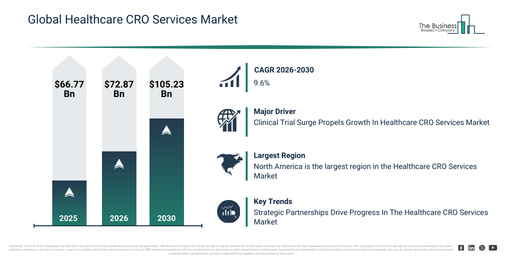
    Healthcare CRO Services Market Expected To Reach $105.23 Billion By 2030 As Growth Accelerates At 9.6% CAGR

    Enhanced with market attractiveness analysis, total addressable market evaluation, company benchmarking matrices, interactive Excel dashboards, expanded supply chain intelligence, emerging startup coverage, and detailed product insights, The Business Research Company’s 2026 market reports deliver more actionable and strategically valuable research.

    Healthcare CRO Services Market Forecast: What Market Value Is Expected By 2030?

    The global market for healthcare Contract Research Organization (CRO) services has experienced robust expansion. Projections indicate a continued upward trajectory, escalating from $66.77 billion in 2025 to $72.87 billion by 2026, reflecting a compound annual growth rate of 9.1%. Key factors underpinning this historical growth include the escalating volume of clinical trials worldwide, augmented investments in research and development, the intricate nature of regulatory approval pathways, an expanding pipeline of pharmaceutical products, and the readily available specialized knowledge offered by CROs.

    The market for healthcare Contract Research Organization (CRO) services is poised for significant expansion in the coming years, with projections indicating a rise to $105.23 billion by 2030, reflecting a compound annual growth rate (CAGR) of 9.6%. This anticipated growth is propelled by several key factors during the forecast period, including the escalating embrace of decentralized clinical trials, a heightened need for accelerated drug development schedules, the continuous expansion of research into biologics and biosimilar products, a greater emphasis on collecting and analyzing real-world evidence, and increasing financial commitments towards precision medicine research initiatives. Furthermore, prevailing trends shaping this market over the forecast horizon encompass a greater tendency for companies to outsource clinical trial operations, the increasing integration of data-driven approaches in managing trials, a growing preference for comprehensive, end-to-end CRO solutions, the further proliferation of decentralized and virtual clinical trial models, and a sharpened focus on providing robust support for regulatory compliance.

    Download A Free Sample Report For Comprehensive Market Insights:

    https://www.thebusinessresearchcompany.com/sample.aspx?id=12136&type=smp

    Healthcare CRO Services Market Growth Drivers And Industry Catalysts

    The expansion of clinical trials is anticipated to fuel the progression of the healthcare CRO services sector. Clinical trials are meticulously designed scientific investigations that involve human volunteers to evaluate how safe and effective new medical treatments, including medications, therapies, equipment, or methods, truly are. Contract research organizations (CROs) are instrumental in the execution of these trials, providing a comprehensive suite of services that empower pharmaceutical and biotech firms to plan, undertake, and oversee their research endeavors with optimal efficiency and successful outcomes. For example, data from the Association of the British Pharmaceutical Industry (ABPI) in December 2024 indicated a slight uptick in the UK, with the initiation of clinical trials increasing from 411 in 2022 to 426 in 2023, underscoring the upward trajectory that is consequently propelling the growth within the healthcare CRO services market.

    Healthcare CRO Services Market Segments: Where Are The Largest Growth Opportunities?

    The healthcare cro services market covered in this report is segmented –

    1) By Service Type: Early Phase Development, Clinical Development Services, Laboratory Services, Consulting Services

    2) By Therapeutic Area: Oncology, CNS Disorder, Cardiovascular Disease, Metabolic Disease, Infectious Disease, Diabetes, Other Therapeutic Areas

    3) By End User: Pharmaceutical Companies, Medical Device Companies, Academic Institutes

    Subsegments:

    1) By Early Phase Development: Preclinical Studies, Phase I Trials, Formulation Development

    2) By Clinical Development Services: Phase II Trials, Phase III Trials, Patient Recruitment And Retention, Site Management

    3) By Laboratory Services: Bioanalytical Testing, Clinical Laboratory Services, Safety And Toxicology Testing

    4) By Consulting Services: Regulatory Affairs Consulting, Market Access And Commercialization, Strategic Planning And Feasibility Studies

    #Healthcare CRO Services Market Trends Influencing Long-Term Demand

    To expand their reach and enhance their offerings in the global healthcare contract research organization (CRO) services sector, key players are increasingly engaging in strategic collaborations to provide sophisticated proteomics CRO solutions to biopharmaceutical firms and those involved in biomarker research. This strategic partnering involves entities pooling their respective expertise and assets for shared gains and accomplishments. As an illustration, consider the alliance formed in January 2023 between Bruker Corporation, an American maker of scientific equipment, and Biognosys AG, a healthcare CRO service provider based in Switzerland. This union is expected to yield unique advantages by combining Biognosys’ comprehensive suite of proprietary proteomics services, software, and kits with Bruker’s cutting-edge timsTOF platform, ultimately facilitating the launch of Biognosys’ first advanced proteomics CRO services laboratory in the United States.

    Healthcare CRO Services Market Major Participants And Competitive Dynamics

    Major companies operating in the healthcare cro services market are Laboratory Corporation of America Holdings., IQVIA Inc., Icon Plc., PPD Inc., Wuxi Apptec Co. Ltd., Syneos Health Inc., Parexel International Corporation, Charles River Laboratories International Inc., Covance Inc., Medpace Inc., Pharmaron Beijing Co. Ltd., BioClinica Inc., Chiltern International Ltd., Evotec SE, PSI CRO AG, Premier Research Group Ltd., Worldwide Clinical Trials Inc., Caidya, BioTelemetry Inc., Syngene International Limited, Novotech CRO, Celerion, GVK Biosciences Private Limited, Synteract Inc., Veristat LLC., ACM Global Laboratories, ClinTec Luxembourg SA, Clinlogix LLC

    Access The Complete Healthcare CRO Services Market Report:

    https://www.thebusinessresearchcompany.com/report/healthcare-cro-services-global-market-report

    Healthcare CRO Services Market Regional Outlook: Where Are The Largest Opportunities Located?

    North America was the largest region in the healthcare CRO services market in 2025. Asia-Pacific is expected to be the fastest-growing region in the forecast period. The regions covered in the healthcare cro services market report are Asia-Pacific, South East Asia, Western Europe, Eastern Europe, North America, South America, Middle East, Africa.

    Get in touch with us:

    The Business Research Company: https://www.thebusinessresearchcompany.com/

    Americas: +1 310-496-7795

    Asia: +44 7882 955267 & +91 8897263534

    Europe: +44 7882 955267

    Email us at: marketing@tbrc.info

    Follow us on:

    LinkedIn: https://in.linkedin.com/company/the-business-research-company

    YouTube: https://www.youtube.com/channel/UC24_fI0rV8cR5DxlCpgmyFQ

    Global Market Model: https://www.thebusinessresearchcompany.com/global-market-model
  • Healthcare CRM Market Set To Grow From $28.15 Billion In 2026 To $52.41 Billion By 2030 At A CAGR Of 16.8%

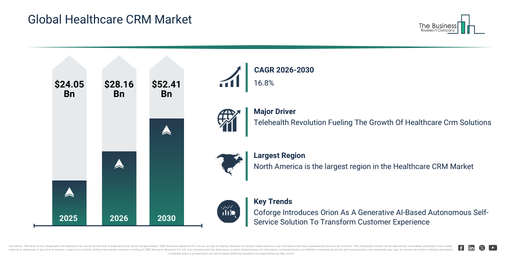
    Healthcare CRM Market Set To Grow From $28.15 Billion In 2026 To $52.41 Billion By 2030 At A CAGR Of 16.8%

    Through market attractiveness analysis, total addressable market evaluation, company benchmarking matrices, interactive Excel dashboards, expanded supply chain intelligence, emerging startup coverage, and detailed product insights, The Business Research Company’s 2026 market reports provide more actionable and strategically valuable research.

    Healthcare CRM Market Size Outlook: How Fast Will Revenue Grow Through 2030?

    The healthcare CRM market demonstrated robust expansion, projected to increase from $24.05 billion in 2025 to $28.16 billion in 2026, reflecting a compound annual growth rate of 17.1%. This upward trajectory during the historical period was propelled by several key factors, including the increasing digitization of medical records, a heightened demand for effective patient relationship management strategies, the proliferation of private healthcare facilities, a growing emphasis on enhancing the patient experience, and the ready availability of healthcare information technology infrastructure.

    The United States Healthcare CRM market is projected to experience substantial expansion, reaching an estimated value of $52.41 billion by the year 2030, fueled by a compound annual growth rate (CAGR) of 16.8%. This upward trajectory is largely propelled by several key factors, including the growing embrace of value-based healthcare frameworks, a rise in financial commitments towards digital health technologies, escalating consumer desire for tailored healthcare interactions, a broader implementation of cloud-based CRM systems, and an intensified governmental emphasis on the clarity of patient information. Furthermore, prominent developments anticipated during this expansion phase encompass a greater utilization of integrated patient data systems, increased application of predictive analysis to foster patient involvement, deeper synergy between CRM and Electronic Health Record (EHR) platforms, the proliferation of cloud-hosted healthcare CRM services, and a heightened concentration on customized patient outreach strategies.

    Download A Free Sample Report For Comprehensive Market Insights:

    https://www.thebusinessresearchcompany.com/sample.aspx?id=7324&type=smp

    Healthcare CRM Market Opportunity Drivers: What Is Creating New Revenue Potential?

    The increasing integration of telehealth services is anticipated to be a significant catalyst for the expansion of the healthcare CRM market going forward. Telehealth, encompassing the application of digital communication and information technologies across various healthcare domains including clinical care, patient and professional education, health administration, and public health initiatives, enables the remote provision of medical services by fostering digital connections between individuals seeking care and medical practitioners. Within this burgeoning telehealth landscape, healthcare CRM solutions are instrumental, offering essential functionalities for effective management of patient communications, appointment coordination, data consolidation, and seamless interaction, thereby enhancing patient involvement and the delivery of care from a distance. Supporting this trend, data from April 2024 revealed a substantial increase in virtual consultations, with 1,301,924 General Practitioner appointments conducted via video or online platforms in the UK, a marked rise from the 172,114 recorded in April 2023, as reported by Health-tech news in June 2024. Consequently, the escalating use of telehealth is a key driver for the healthcare CRM market.

    Healthcare CRM Market Segment Analysis: What Are The Major Market Categories?

    The healthcare crm market covered in this report is segmented –

    1) By Component: Software, Services

    2) By Technology: Predictive, Mobile, Social, Collaborative, Other Technologies

    3) By Deployment Model: On-Premise Model, Web or Cloud-based Model

    4) By Application: Community Outreach, Community Health Education, Service Outreach or Promotion, Financial Donor Management, Case Coordination, Patient Information Management, Pre-Authorizations or Eligibility, Other Applications

    5) By End-Users: Providers, Payers, Life Science Industry

    Subsegments:

    1) By Software: Patient Relationship Management Software, Marketing Automation Software, Analytics And Reporting Tools, Appointment Scheduling Software

    2) By Services: Consulting Services, Implementation Services, Training And Support Services, Maintenance Services

    Healthcare CRM Market Innovation Trends Driving Future Development

    Companies leading the healthcare CRM sector are actively developing cutting-edge solutions, including AI-powered autonomous self-service options, aimed at empowering individuals to manage their health requirements more effectively, thereby improving their overall journey. An AI-driven autonomous self-service capability is fundamentally a technological framework that leverages artificial intelligence to empower users to resolve problems or access data independently, bypassing the need for direct human assistance. Illustrating this, in March 2024, Coforge Limited, an IT firm originating from India, introduced Orion. Orion represents a generative AI-based autonomous self-service tool engineered to elevate customer interactions across a variety of sectors. This pioneering platform automates both outgoing and incoming customer calls, facilitating proactive engagement and delivering sophisticated answers to queries, which substantially surpasses the potential of conventional automated systems. Orion can be seamlessly incorporated with current CRM infrastructures and external application programming interfaces (APIs), tackling issues such as elevated error frequencies and diminishing the substantial resource investment typically required for training.

    Healthcare CRM Market Leading Companies Driving Competitive Growth

    Major companies operating in the healthcare crm market are Accenture plc, Allscripts Healthcare LLC, Amdocs, Cerner Corporation, Healthgrades Marketplace LLC, IBM Corporation, Infor Inc., Microsoft Corporation, NICE Systems Inc., Oracle Corporation, Pegasystems Inc., R1 RCM Inc., SAP SE, SugarCRM Inc., Veeva Systems Inc., Verint Systems Inc., Zoho Corporation Pvt. Ltd., Athenahealth, ChARM Health Pty Ltd., CureMD Inc., DocPlanner Group, DrChrono, eClinicalWorks, Epic Systems Corp., Evariant Co., Greenway Health, HubSpot Inc., Insightly Inc.

    Access The Complete Healthcare CRM Market Report:

    https://www.thebusinessresearchcompany.com/report/healthcare-crm-global-market-report

    Healthcare CRM Market Geographic Landscape: Which Region Dominates Industry Growth?

    North Americawas the largest region in the healthcare CRM market in 2025. The regions covered in the healthcare crm market report are Asia-Pacific, South East Asia, Western Europe, Eastern Europe, North America, South America, Middle East, Africa.

    Get in touch with us:

    The Business Research Company: https://www.thebusinessresearchcompany.com/

    Americas: +1 310-496-7795

    Asia: +44 7882 955267 & +91 8897263534

    Europe: +44 7882 955267

    Email us at: marketing@tbrc.info

    Follow us on:

    LinkedIn: https://in.linkedin.com/company/the-business-research-company

    YouTube: https://www.youtube.com/channel/UC24_fI0rV8cR5DxlCpgmyFQ

    Global Market Model: https://www.thebusinessresearchcompany.com/global-market-model

  • Healthcare Content Management System Market Opportunities Are Emerging Beyond Traditional Growth Areas

    Healthcare Content Management System Market Opportunities Are Emerging Beyond Traditional Growth Areas

    Delivering more actionable and strategically valuable research, The Business Research Company’s 2026 market reports feature market attractiveness analysis, total addressable market evaluation, company benchmarking matrices, interactive Excel dashboards, expanded supply chain intelligence, emerging startup coverage, and detailed product insights.

    Healthcare Content Management System Market Size, Value And Growth Trends Through 2030

    The market for healthcare content management systems has experienced substantial expansion recently, projecting a notable increase from $30.7 billion in 2025 to $34.43 billion in 2026, reflecting a compound annual growth rate of 12.2%. Key factors driving this growth during the preceding period include the widespread adoption of electronic health records, intensified efforts towards healthcare digitization, mounting demands for regulatory documentation, an ever-increasing volume of healthcare data, and the enhancement of information technology infrastructure within healthcare entities.

    The domain of healthcare content management systems is poised for substantial expansion over the coming years, projecting a market valuation of $53.96 billion by the year 2030, underpinned by a compound annual growth rate of 11.9%. This anticipated surge in the forecast period is driven by several key factors, including the accelerating shift towards cloud-native healthcare infrastructure, a heightened need for immediate access to content, the escalating requirements for documentation within telemedicine services, a strengthened commitment to data security and privacy regulations, and the growing incorporation of artificial intelligence for content analysis. Furthermore, prominent trends shaping this market include a greater embrace of cloud-based content management solutions, an increased demand for healthcare data systems capable of seamless interoperability, a heightened focus on managing documents in accordance with regulatory standards, the proliferation of AI tools that assist in content categorization, and an elevated importance placed on secure data access and collaborative functionalities.

    Download A Free Sample Report For Comprehensive Market Insights:

    https://www.thebusinessresearchcompany.com/sample.aspx?id=27300&type=smp

    Healthcare Content Management System Market Growth Momentum: Which Factors Are Influencing Demand?

    The increasing integration of electronic health records (EHRs) is poised to be a significant catalyst for the expansion of the healthcare content management system market. EHRs, which are digital repositories of patient medical histories, are instrumental in enhancing care coordination, accessibility, and overall quality. This surge in EHR implementation stems from the imperative to elevate patient care standards by providing immediate access to precise and exhaustive medical information. Healthcare content management systems play a crucial supporting role for EHRs, facilitating the efficient management of unstructured data, from its initial capture and long-term storage to its swift retrieval. These systems empower healthcare professionals by consolidating all pertinent patient data onto a singular, comprehensive interface. Illustratively, data from the European Commission indicated that in July 2024, Europe demonstrated considerable advancements in eHealth maturity during the year 2024, as evidenced by an increase in the EU27 average composite score from 72% to 79%. Consequently, the growing prevalence of EHRs directly fuels the growth trajectory of the healthcare content management system market.

    Healthcare Content Management System Market Segment Breakdown: Which Categories Generate The Most Revenue?

    The healthcare content management system market covered in this report is segmented –

    1) By Component: Software, Services

    2) By Distribution Channel: Direct Sales, Distributors, Online Platforms

    3) By Application: Telemedicine, Patient Data Management, Regulatory Compliance, Workflow Management

    4) By End User: Hospitals And Health Systems, Ambulatory Surgical Centers, Diagnostic And Imaging Centers, Payers Or Insurance Providers, Long-Term Care Facilities

    Subsegments:

    1) By Software: On-Premise, Cloud-Based

    2) By Services: Implementation And Integration, Support And Maintenance, Consulting

    Healthcare Content Management System Market Trends Reshaping Industry Growth

    Within the healthcare content management system sector, leading enterprises are dedicating resources to pioneering advancements like cloud-native architectures. This strategic direction aims to bolster data accessibility, improve system scalability, and facilitate seamless integration among diverse healthcare networks. Cloud-native architecture represents a contemporary methodology for application creation, utilizing cloud computing paradigms to construct systems that are robust, scalable, and readily deployable through contemporary technologies encompassing containers, microservices, and automated DevOps processes. As an illustration, in October of 2024, Oracle Corporation, a prominent software firm headquartered in the United States, introduced an advanced electronic health record (EHR) system designed to optimize clinical processes and elevate the standard of patient care. This innovation contributes to healthcare advancements by delivering complete, real-time patient data and artificial intelligence powered analytical tools, thereby enhancing clinical judgment and alleviating administrative workloads. Furthermore, these systems facilitate the secure exchange of information, foster improved coordination of care, and ultimately lead to better patient safety and more favorable health results.

    Healthcare Content Management System Market Key Players And Strategic Industry Positioning

    Major companies operating in the healthcare content management system market are Microsoft Corporation, Hitachi Ltd., IBM Corporation, Oracle Corporation, Capgemini SE, GE Healthcare Technologies Inc., CGI Inc., Xerox Holdings Corporation, Adobe Inc., Infor Inc., OpenText Corporation, Epic Systems Corporation, Veeva Systems Inc., NextGen Healthcare Inc., Sitecore Holding II A/S, M-Files Corporation, Laserfiche, Alfresco Software Inc., Samsung Healthcare, SoftTech Health LLC, Hyland Software Inc., InterSystems Corporation

    Access The Complete Healthcare Content Management System Market Report:

    https://www.thebusinessresearchcompany.com/report/healthcare-content-management-system-global-market-report

    Healthcare Content Management System Market Largest Region: Which Geography Holds The Highest Market Share?

    North Americawas the largest region in the healthcare content management system market in 2025. Asia-Pacificis expected to be the fastest-growing region in the forecast period. The regions covered in the healthcare content management system market report are Asia-Pacific, South East Asia, Western Europe, Eastern Europe, North America, South America, Middle East, Africa.

    Get in touch with us:

    The Business Research Company: https://www.thebusinessresearchcompany.com/

    Americas: +1 310-496-7795

    Asia: +44 7882 955267 & +91 8897263534

    Europe: +44 7882 955267

    Email us at: marketing@tbrc.info

    Follow us on:

    LinkedIn: https://in.linkedin.com/company/the-business-research-company

    YouTube: https://www.youtube.com/channel/UC24_fI0rV8cR5DxlCpgmyFQ

    Global Market Model: https://www.thebusinessresearchcompany.com/global-market-model
  • Healthcare Consumables Market Expansion Is Opening New Pathways For Strategic Investment

    Healthcare Consumables Market Expansion Is Opening New Pathways For Strategic Investment

    Enhanced with market attractiveness analysis, total addressable market evaluation, company benchmarking matrices, interactive Excel dashboards, expanded supply chain intelligence, emerging startup coverage, and detailed product insights, The Business Research Company’s 2026 market reports deliver more actionable and strategically valuable research.

    Healthcare Consumables Market CAGR Analysis And Future Market Development

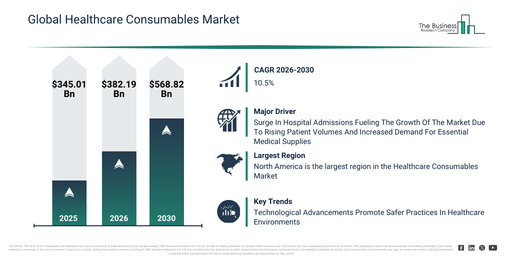
    The healthcare consumables sector has experienced significant expansion lately, with projections indicating a rise from $345.01 billion in 2025 to $382.19 billion in 2026. This growth trajectory represents a compound annual growth rate of 10.8%. Factors contributing to this historical surge include a greater number of hospital admissions, an increase in the frequency of surgical interventions, the broad adoption of single-use medical items, a proliferation of diagnostic evaluations, and the growing demand for managing long-term health conditions.

    The global healthcare consumables market is poised for significant expansion, projected to reach an impressive $568.82 billion by the year 2030, demonstrating a compound annual growth rate of 10.5%. This surge is anticipated due to several key factors: a greater need for supplies catering to at-home patient care, a heightened awareness and preference for environmentally conscious consumables, the proliferation of point-of-care diagnostic tools, augmented investments in strategies for infection control, and the increasing utilization of sophisticated sterilization consumables. During this projection period, prominent market trends are expected to include a greater demand for disposable medical products, an intensified focus on consumables designed for infection prevention, a broader embrace of home healthcare consumables, a rising trend towards adopting sustainable and biodegradable materials, and the implementation of more robust supply chain traceability for consumable products.

    Download A Free Sample Report For Comprehensive Market Insights:

    https://www.thebusinessresearchcompany.com/sample.aspx?id=19500&type=smp

    Healthcare Consumables Market Expansion Drivers: What Is Shaping Future Growth?

    An increase in hospitalizations is anticipated to drive the expansion of the healthcare consumables sector in the future. Hospital admissions, defined as the formal process of entering a hospital for medical attention or therapy, are seeing an upward trend attributed to factors like an aging demographic, a growing incidence of long-term illnesses, and progress in medical innovation. Within the context of hospital admissions, healthcare consumables encompass crucial supplies such as gloves, syringes, bandages, and surgical tools, which are indispensable for both patient treatment and medical interventions. As an illustration, England documented 17.6 million finished admission episodes (FAEs) during the twelve months concluding March 31, 2024, as reported by the National Health Service (NHS) in September 2024, signifying an elevated requirement for the consumables essential to patient management. Consequently, the escalating volume of hospital admissions serves as a key impetus for the growth of the healthcare consumables market.

    Healthcare Consumables Market Segmentation: How Is The Market Structured Across Key Categories?

    The healthcare consumables market covered in this report is segmented –

    1) By Product Type: Wound Care Consumables, Diagnostic Consumables, Respiratory Supplies, Drug Delivery Products, Dialysis Consumables, Sterilization Consumables, Incontinence Products, Hands Sanitizer, Other Product Types

    2) By Raw Materials: Rubber, Non-woven Materials, Glass, Metals, Plastic Resin, Paper, Other Raw Materials

    3) By End User: Hospitals, Specialty Clinics, Other End-Users

    Subsegments:

    1) By Wound Care Consumables: Dressings (Hydrocolloid, Foam, Alginate, etc.), Bandages, Gauze And Sponges, Antiseptic Solutions, Wound Closure Devices (Staples, Sutures), Burn Care Products, Surgical Drains

    2) By Diagnostic Consumables: Blood Glucose Test Strips, Pregnancy Test Kits, Urine Test Strips, Pregnancy & Ovulation Test Kits, Hematology Consumables, Point-of-Care Testing Kits, Diagnostic Reagents And Chemicals

    3) By Respiratory Supplies: Oxygen Masks and Nasal Cannulas, Nebulizer Masks and Tubing Sets, Ventilator Circuits and Consumables, Endotracheal and Tracheostomy Tubes, Breathing Filters, Disposable Respiratory Masks

    4) By Drug Delivery Products: Syringes and Needles, IV Catheters and Cannulas, IV Administration Sets, Insulin Pens and Pen Needles, Inhaler Consumables, Transdermal Drug Delivery Patches, Infusion Sets and Tubing

    5) By Dialysis Consumables: Dialysis Filters (Dialyzers), Dialysis Tubing Sets, Dialysis Solution (Dialysate), Bloodline Tubing, Peritoneal Dialysis Kits, Catheters For Dialysis Access

    6) By Sterilization Consumables: Sterilization Wraps And Pouches, Sterilization Indicators (Chemical And Biological), Autoclave Bags, Disinfectants And Sterilizing Solutions, Gas Sterilization Consumables

    7) By Incontinence Products: Adult Diapers and Briefs, Incontinence Pads and Liners, Protective Underpads, Disposable Bed Protectors, Incontinence Care Wipes

    8) By Hand Sanitizer: Alcohol-Based Hand Sanitizers, Non-Alcohol-Based Hand Sanitizers, Hand Sanitizing Wipes, Medical-Grade Hand Hygiene Solutions

    9) By Other Product Types: Surgical Gloves, Medical Masks and Face Shields, Surgical Drapes and Gowns, Disposable Medical Apparel, Single-Use Medical Accessories

    Healthcare Consumables Market Strategic Trends: What Is Defining The Next Phase Of Growth?

    Key players within the healthcare consumables sector are prioritizing the creation of novel advancements, exemplified by passive safety syringes, with the core objectives of elevating patient well-being, minimizing inadvertent needle-related injuries, and bolstering infection prevention protocols across both healthcare facilities and general hospital environments. These passive safety syringes represent disposable injection instruments engineered with integrated features that automatically deploy post-injection, either retracting or covering the needle to avert accidental re-exposure and needlestick incidents, all without the need for manual intervention from the user. A pertinent illustration of this innovation came in January 2024 when medmix Drug Delivery, a manufacturer of medical devices headquartered in Switzerland, introduced SicuroJect, a single-use device designed for subcutaneous injections that incorporates passive needle safety. SicuroJect offers two configurations suitable for conventional 1 mL or 2.25 mL pre-filled syringes, whether made of glass or plastic, and maintains the familiar injection methodology of conventional syringes, with the flexibility to be provided as a ready-to-use safety syringe or as a component of a comprehensive development service encompassing design validation, assembly, outer packaging, and serialization. The SicuroJect’s design serves to augment the safety of individuals, whether healthcare providers or patients themselves, who are involved in administering injections, thereby reflecting a significant overarching movement within the healthcare consumables market towards the development of devices that not only facilitate drug administration but also place paramount importance on safety, aseptic conditions, and adherence to regulatory standards.

    Healthcare Consumables Market Competitive Landscape And Leading Companies

    Major companies operating in the healthcare consumables market are Cardinal Health Inc., Johnson & Johnson, Abbott Laboratories, 3M Company, Siemens Healthineers, Becton Dickinson and Company (BD), Philips Healthcare, Stryker Corporation, GE HealthCare Technologies Inc, Boston Scientific Corporation, B. Braun Melsungen AG, Alcon Laboratories Inc., Fresenius Kabi AG, Zimmer Biomet Holdings Inc., Terumo Corporation, Smith & Nephew plc, Hologic Inc., Nipro Corporation, Coloplast A/S, Dexcom Inc., Hollister Incorporated, AngioDynamics Inc., Biolife Solutions Inc., Medi-Plast Ltd., Ortho Clinical Diagnostics

    Access The Complete Healthcare Consumables Market Report:

    https://www.thebusinessresearchcompany.com/report/healthcare-consumables-global-market-report

    Healthcare Consumables Market Regional Analysis: Which Region Leads By Revenue?

    North Americawas the largest region in the healthcare consumables market in 2025. The regions covered in the healthcare consumables market report are Asia-Pacific, South East Asia, Western Europe, Eastern Europe, North America, South America, Middle East, Africa.

    Get in touch with us:

    The Business Research Company: https://www.thebusinessresearchcompany.com/

    Americas: +1 310-496-7795

    Asia: +44 7882 955267 & +91 8897263534

    Europe: +44 7882 955267

    Email us at: marketing@tbrc.info

    Follow us on:

    LinkedIn: https://in.linkedin.com/company/the-business-research-company

    YouTube: https://www.youtube.com/channel/UC24_fI0rV8cR5DxlCpgmyFQ

    Global Market Model: https://www.thebusinessresearchcompany.com/global-market-model

  • Healthcare Consulting Services Market Trends Are Creating New Opportunities For Industry Leaders

    Healthcare Consulting Services Market Trends Are Creating New Opportunities For Industry Leaders

    Through market attractiveness analysis, total addressable market evaluation, company benchmarking matrices, interactive Excel dashboards, expanded supply chain intelligence, emerging startup coverage, and detailed product insights, The Business Research Company’s 2026 market reports provide more actionable and strategically valuable research.

    Healthcare Consulting Services Market Expansion From $37.1 Billion In 2026 To $63.1 Billion In 2030

    The healthcare consulting services market is experiencing significant expansion, projected to increase from 32.41 billion dollars in 2025 to 37.11 billion dollars in 2026, reflecting a compound annual growth rate of 14.5%. This upward trend in the historical period is fueled by factors such as the escalating intricacy of healthcare operations, mounting financial pressures on healthcare spending, the integration of health IT systems, evolving healthcare regulations, and a growing need for strategies aimed at optimizing costs.

    The healthcare consulting services industry is poised for substantial expansion in the upcoming years, projecting an increase to $63.11 billion by 2030, driven by a compound annual growth rate of 14.2%. This anticipated surge is fueled by several key factors, including escalating investments in healthcare digitalization, a burgeoning need for AI-powered consulting expertise, the wider implementation of value-based care frameworks, a heightened focus on coordinated care delivery systems, and the increasing utilization of sophisticated analytics in healthcare decision-making processes. Over the forecast period, notable trends will encompass a growing demand for services related to digital transformation, a more concentrated effort on optimizing revenue cycles, a greater embrace of data-centric healthcare strategies, the expansion of services in regulatory and compliance guidance, and an intensified emphasis on consulting aimed at improving operational effectiveness.

    Download A Free Sample Report For Comprehensive Market Insights:

    https://www.thebusinessresearchcompany.com/sample.aspx?id=7155&type=smp

    Healthcare Consulting Services Market Development Factors: Which Trends Are Supporting Demand?

    The ongoing expansion of healthcare infrastructure is anticipated to significantly boost the healthcare consulting services market in the foreseeable future. This term, ‘healthcare infrastructure,’ encompasses the fundamental physical and organizational elements, including facilities, equipment, and personnel, essential for delivering healthcare services. It represents all the necessary components for providing medical care and support to the population. Healthcare consulting firms are instrumental in enhancing healthcare infrastructure by offering strategic guidance, compliance support, and actionable recommendations to elevate the quality, efficiency, and overall impact of healthcare provision. These consultants help healthcare organizations navigate evolving market dynamics, technological advancements, and changing patient needs while ensuring adherence to regulations. A notable illustration of this trend is the 5.6% nominal increase in total healthcare expenditure from 2022 to 2023 reported by the Office for National Statistics in May 2024, a substantial upturn from the 0.9% growth recorded in the preceding year. Consequently, the growth of healthcare infrastructure is acting as a key catalyst for the healthcare consulting services market.

    Healthcare Consulting Services Market Segmentation Trends And Revenue Drivers

    The healthcare consulting services market covered in this report is segmented –

    1) By Consulting Type: Strategy and Transformation Consulting, Operational and Performance Improvement Consulting, Clinical and Care Delivery Consulting, Health Information Technology Consulting

    2) By Functional Area: Enterprise and Organizational Management, Clinical Operations and Quality Improvement, Information Technology and Digital Enablement

    3) By Engagement Model: Advisory and Assessment Services, Implementation and Integration Services, Managed and Outsourced Consulting Services

    4) By End User: Healthcare Providers, Government and Public Health Bodies, Health Insurance Payers, Pharmaceutical and Biotechnology Companies

    Subsegments:

    1) By Strategy and Transformation Consulting: Organizational Strategy and Road-Mapping, Business Model Transformation, Mergers, Acquisitions, and Integration Advisory, Value-Based Care and Population Health Strategy, Market Entry and Growth Strategy, Change Management and Leadership Advisory

    2) By Operational and Performance Improvement Consulting: Workflow and Process Optimization, Cost Reduction and Efficiency Improvement, Capacity, Throughput, and Resource Planning, Supply Chain and Procurement Optimization, Lean, Six Sigma, and Continuous Improvement Consulting, Performance Benchmarking and KPI Development

    3) By Clinical and Care Delivery Consulting: Care Pathway and Service Line Optimization, Clinical Quality and Patient Safety Improvement, Clinical Workforce and Productivity Optimization, Outcomes Measurement and Reporting, Patient Experience and Engagement Consulting, Clinical Governance and Standardization

    4) By Health Information Technology Consulting: Electronic Health Record (EHR) Advisory and Implementation, Health Information Exchange and Interoperability Consulting, Digital Health and Telehealth Strategy Consulting, Data Governance and Health IT Architecture Advisory, Cybersecurity, Privacy, and Compliance Consulting, Health IT Optimization and Modernization

    Healthcare Consulting Services Market Transformation Trends: Which Innovations Are Driving Change?

    Within the healthcare consulting services sector, prominent organizations are actively pursuing growth and advancement to address the dynamic demands of the industry, exemplified by the emergence of Soprav Healthcare Consulting in April 2024. This newly established, India-headquartered firm distinguishes itself as a leading advisory and acceleration entity, dedicated to offering extensive support across regulatory, investment, financial, organizational, and operational facets for a broad array of healthcare stakeholders globally. Its client base encompasses hospitals, medical professionals, pharmaceutical companies, med-tech providers, digital health innovators, wellness businesses, and other business-to-business-to-consumer markets, all within the expansive global healthcare ecosystem. Soprav’s operational philosophy centers on fostering close partnerships with healthcare pioneers to expedite the market introduction of new products and effectively manage intricate regulatory environments.

    Healthcare Consulting Services Market Industry Leaders: Which Organizations Are Driving Competition?

    Major companies operating in the healthcare consulting services market are Alvarez and Marsal Holdings LLC, Bain & Company Inc., Boston Consulting Group, Cognizant Technology Solutions Corp., Deloitte Consulting LLP, Ernst and Young Global Limited, FTI Consulting, Huron Consulting Group Inc., International Business Machines Corporation, IQVIA Holdings Inc., McKinsey and Company, PricewaterhouseCoopers International Limited, Accenture PLC, Advisory Board Company, Avalere Health LLC, Chartis Group, ECG Management Consultants, Health Catalyst Inc., L.E.K. Consulting, Leidos Holdings Inc., McBee Associates Inc., Navigant Technologies Private Limited, Nordic Consulting, Optum Inc., Pivot Point Consulting, Stax Inc., Vynamic LLC

    Access The Complete Healthcare Consulting Services Market Report:

    https://www.thebusinessresearchcompany.com/report/healthcare-consulting-services-global-market-report

    Healthcare Consulting Services Market Geographic Distribution And Regional Opportunities

    North Americawas the largest region in the healthcare consulting services market in 2025. Asia-Pacificis expected to be the fastest-growing region in the forecast period. The regions covered in the healthcare consulting services market report are Asia-Pacific, South East Asia, Western Europe, Eastern Europe, North America, South America, Middle East, Africa.

    Get in touch with us:

    The Business Research Company: https://www.thebusinessresearchcompany.com/

    Americas: +1 310-496-7795

    Asia: +44 7882 955267 & +91 8897263534

    Europe: +44 7882 955267

    Email us at: marketing@tbrc.info

    Follow us on:

    LinkedIn: https://in.linkedin.com/company/the-business-research-company

    YouTube: https://www.youtube.com/channel/UC24_fI0rV8cR5DxlCpgmyFQ

    Global Market Model: https://www.thebusinessresearchcompany.com/global-market-model

  • Healthcare Compliance Software Market Growth Is Reshaping Competitive Advantage Across The Industry

    Healthcare Compliance Software Market Growth Is Reshaping Competitive Advantage Across The Industry

    Delivering more actionable and strategically valuable research, The Business Research Company’s 2026 market reports feature market attractiveness analysis, total addressable market evaluation, company benchmarking matrices, interactive Excel dashboards, expanded supply chain intelligence, emerging startup coverage, and detailed product insights.

    Healthcare Compliance Software Market Forecast Highlighting Growth From $3.57 Billion To $5.62 Billion

    The market for healthcare compliance software has experienced substantial expansion lately, projecting a rise from $3.19 billion in 2025 to $3.58 billion in 2026, reflecting a compound annual growth rate of 12.1%. This upward trajectory during the past period is linked to several key factors, including intensifying regulatory oversight within the healthcare sector, the widespread implementation of electronic health records, a notable increase in data security breaches, the expansion of healthcare IT infrastructures, and a growing demand for consistent, standardized compliance methodologies.

    The healthcare compliance software sector is poised for substantial expansion in the coming years, with projections indicating a market valuation of $5.62 billion by the year 2030, reflecting a compound annual growth rate (CAGR) of 12.0%. This anticipated surge is largely fueled by an escalating need for perpetual compliance oversight, amplified investments in regulatory technology solutions, the burgeoning application of AI for compliance data analysis, a wider embrace of cloud-hosted governance instruments, and a discernible emphasis on preemptive risk reduction strategies, with key developments in this period including the greater utilization of cloud-based compliance systems, increased deployment of automated audit and reporting functionalities, deeper integration of risk management frameworks, broader implementation of real-time compliance tracking, and a heightened concentration on safeguarding data privacy.

    Download A Free Sample Report For Comprehensive Market Insights:

    https://www.thebusinessresearchcompany.com/sample.aspx?id=13450&type=smp

    Healthcare Compliance Software Market Industry Drivers: What Is Driving Revenue Growth?

    The escalating prevalence of fraudulent and abusive practices within the healthcare sector is anticipated to be a primary catalyst for the expansion of the healthcare compliance software market. Such misconduct encompasses intentional deceitful actions within healthcare operations, characterized by fabricated claims, misrepresentation of facts, or other unlawful conduct designed to secure unwarranted financial advantages, which consequently undermine the overall trustworthiness and operational efficiency of medical services. Compliance software in healthcare plays a crucial role by bolstering adherence to regulations, identifying unusual trends in billing procedures, and implementing robust oversight mechanisms, thus offering protection against illicit conduct and preserving the reliability of healthcare infrastructures. As an illustration, data from the United States Sentencing Commission (USSC), a federal agency, indicated that within the fiscal year 2024, 395 out of a total of 61,678 cases presented to the Commission involved healthcare fraud, underscoring the growing concern and thus fueling the demand for healthcare compliance solutions.

    Healthcare Compliance Software Market Segment Analysis Highlighting Growth Areas

    The healthcare compliance software market covered in this report is segmented –

    1) By Product Type: On-Premise, Cloud-Based

    2) By Application: Policy And Procedure Management, Auditing Tools, Training Management And Tracking, Medical Billing And Coding, License, Certificate, And Contract Tracking, Incident Management, Accreditation Management

    3) By End-User: Hospitals, Specialty Clinics, Other End Users

    Subsegments:

    1) By On-Premise: On-Premise Healthcare Compliance Management, On-Premise Regulatory Reporting Software, On-Premise Risk Management Software

    2) By Cloud-Based: Cloud-Based Healthcare Compliance Management, Cloud-Based Regulatory Reporting Software, Cloud-Based Risk Management Software

    #Healthcare Compliance Software Market Growth Trends: What Is Influencing The Future Outlook?

    In the healthcare compliance software sector, key players are prioritizing innovation, like developing integrated compliance platforms, to enhance the efficacy and streamlining of regulatory adherence. These platforms serve as all-encompassing software tools, aiding healthcare entities in overseeing and upholding their compliance obligations. As an illustration, in October of 2023, Compliancy Group, a company situated in the United States that offers cloud-based software solutions, introduced “The Guard.” This product functions as a unified center for overseeing every facet of compliance, encompassing everything from identifying risks and managing policies to preparing for audits and conducting staff training. Essentially, The Guard is a thorough, cloud-hosted software system engineered to assist healthcare providers in meeting and sustaining adherence to a multitude of regulations, most notably HIPAA, SOC 2, and OSHA standards.

    Healthcare Compliance Software Market Leading Companies: Who Holds Significant Market Presence?

    Major companies operating in the healthcare compliance software market are Wolters Kluwer, Cerner Corporation, Change Healthcare Inc., Beacon Healthcare Systems Inc., RLDatix Ltd., Accruent LLC, HealthStream Inc., Symplr, Intelex Technologies, AHM Holding Inc., iContracts, Sprinto Corporation, Healthicity LLC, Panacea Healthcare Solutions LLC, VigiLanz Corporation, Contract Guardian Inc., MedTraine LLC, Atlantic.net, Complete Medical SolutionsLLC, Verge Solutions LLC, HCS

    Access The Complete Healthcare Compliance Software Market Report:

    https://www.thebusinessresearchcompany.com/report/healthcare-compliance-software-global-market-report

    Healthcare Compliance Software Market Largest Region By Revenue And Market Share

    North Americawas the largest region in the healthcare compliance software market in 2025. Asia-Pacificis expected to be the fastest-growing region in the forecast period. The regions covered in the healthcare compliance software market report are Asia-Pacific, South East Asia, Western Europe, Eastern Europe, North America, South America, Middle East, Africa.

    Get in touch with us:

    The Business Research Company: https://www.thebusinessresearchcompany.com/

    Americas: +1 310-496-7795

    Asia: +44 7882 955267 & +91 8897263534

    Europe: +44 7882 955267

    Email us at: marketing@tbrc.info

    Follow us on:

    LinkedIn: https://in.linkedin.com/company/the-business-research-company

    YouTube: https://www.youtube.com/channel/UC24_fI0rV8cR5DxlCpgmyFQ

    Global Market Model: https://www.thebusinessresearchcompany.com/global-market-model

  • Healthcare Companion Robots Market Forecast Signals New Revenue Opportunities Through 2030

    Healthcare Companion Robots Market Forecast Signals New Revenue Opportunities Through 2030

    Enhanced with market attractiveness analysis, total addressable market evaluation, company benchmarking matrices, interactive Excel dashboards, expanded supply chain intelligence, emerging startup coverage, and detailed product insights, The Business Research Company’s 2026 market reports deliver more actionable and strategically valuable research.

    Healthcare Companion Robots Market Revenue Growth Supported By A CAGR Of 16.69% Through 2030

    The market for healthcare companion robots has experienced significant expansion lately, projected to increase from $7.33 billion in 2025 to $8.67 billion in 2026, reflecting an 18.3% compound annual growth rate. Factors underpinning this advancement during the past period include the expanding demographic of senior citizens, a heightened need for support services in residential care facilities, a scarcity of available healthcare professionals, the integration of robotic technology in therapeutic applications, and advancements in the sophistication of robotic sensing capabilities.

    The market for healthcare companion robots is poised for substantial expansion in the upcoming years, projected to reach $16.7 billion by 2030 with a compound annual growth rate of 17.8%. This upward trajectory is fueled by several key factors, including a greater number of socially assistive robots being put into service, increased financial backing for personalized healthcare robotics, the broadening scope of care provided within home settings, a growing comfort level with robotic companionship, and improvements in artificial intelligence for analyzing behavior. Within this projected period, significant developments are anticipated, such as a rise in AI-powered companion robots, increased reliance on robots to assist with the care of elderly individuals, deeper integration of algorithms for tailored patient care, enhanced abilities in recognizing emotions, and a heightened emphasis on how humans and robots interact.

    Download A Free Sample Report For Comprehensive Market Insights:

    https://www.thebusinessresearchcompany.com/sample.aspx?id=8225&type=smp

    Healthcare Companion Robots Market Growth Factors: Which Forces Are Supporting Market Expansion?

    The demographic shift towards an older population is anticipated to be a significant catalyst for expansion within the healthcare companion robot sector. As the number of elderly individuals grows, so does the need for companion robots, which offer domestic support and care for seniors. Furthermore, governmental bodies across nations are actively encouraging the adoption of these healthcare robots through various promotional efforts. For example, data from the Office for the National Statistics in the UK revealed that in 2024, the United Kingdom was home to 625,000 individuals aged 90 and above, a slight increase from the 612,000 recorded in mid-2023, representing a 2.2% growth. Consequently, the increasing elderly demographic is projected to fuel the advancement of the healthcare companion robot market throughout the specified projection timeframe.

    Healthcare Companion Robots Market Segment Performance And Strategic Opportunities

    The healthcare companion robots market covered in this report is segmented –

    1) By Type: Animal-like Robots, Humanoid Robots

    2) By Age Group: Children, Geriatric

    3) By Application: Emotional Support And Companionship, Therapy And Rehabilitation Assistance, Monitoring And Safety Assistance, Cognitive Stimulation And Dementia Care, Pediatric Support And Developmental Aid, Entertainment And Engagement

    Subsegments:

    1) By Animal-Like Robots: Robotic Pets, Interactive Animal Simulators

    2) By Humanoid Robots: Social Companion Robots, Assistance Robots For Elderly Care

    Healthcare Companion Robots Market Industry Trends: What Changes Are Reshaping Demand?

    Key players within the healthcare companion robot sector are heavily investing in cutting-edge sensor technologies aimed at refining patient oversight, amplifying interactive potential, and delivering bespoke care plans. These sophisticated sensors, capable of gathering and interpreting intricate environmental data, frequently incorporate artificial intelligence and the Internet of Things to boost their performance and precision. Illustrating this trend, in February of 2023, the Chinese high-tech firm Elephant Robotics Technology Co., Ltd., which specializes in robotic research and development, unveiled its MetaCat robot. This innovative device features an array of touch sensors, sophisticated voice recognition systems, and dynamic LED lighting elements, enabling it to convincingly mimic feline vocalizations, purrs, and ocular motions, thereby significantly increasing its realism and engagement factor.

    Healthcare Companion Robots Market Key Players: Which Companies Shape Industry Competition?

    Major companies operating in the healthcare companion robots market are Blue Frog Robotics SAS, Intuition Robotics Ltd., No Isolation AS, Honda Motor Co. Ltd., Hanson Robotics Limited, Ubtech Robotics Corp. Ltd., Emotix Inc., Catalia Health Inc., Care Coach Inc., F&P Robotics AG, Giraff Technologies AB, Leka SAS, SoftBank Robotics, Toyota, Paro Robots, PAL Robotics, Robosoft Systems, Sanbot Technology, Aldebaran Robotics, Mayfield Robotics

    Access The Complete Healthcare Companion Robots Market Report:

    https://www.thebusinessresearchcompany.com/report/healthcare-companion-robots-global-market-report

    Healthcare Companion Robots Market Regional Analysis And Leading Geography

    North Americawas the largest region in the healthcare companion robots market share in 2025. The regions covered in the healthcare companion robots market report are Asia-Pacific, South East Asia, Western Europe, Eastern Europe, North America, South America, Middle East, Africa.

    Get in touch with us:

    The Business Research Company: https://www.thebusinessresearchcompany.com/

    Americas: +1 310-496-7795

    Asia: +44 7882 955267 & +91 8897263534

    Europe: +44 7882 955267

    Email us at: marketing@tbrc.info

    Follow us on:

    LinkedIn: https://in.linkedin.com/company/the-business-research-company

    YouTube: https://www.youtube.com/channel/UC24_fI0rV8cR5DxlCpgmyFQ

    Global Market Model: https://www.thebusinessresearchcompany.com/global-market-model

  • Healthcare Command Centers Market Growth Is Accelerating As Industry Transformation Continues

    Healthcare Command Centers Market Growth Is Accelerating As Industry Transformation Continues

    Through market attractiveness analysis, total addressable market evaluation, company benchmarking matrices, interactive Excel dashboards, expanded supply chain intelligence, emerging startup coverage, and detailed product insights, The Business Research Company’s 2026 market reports provide more actionable and strategically valuable research.

    Healthcare Command Centers Market Value Expansion And Long-Term Growth Outlook

    The sector focused on healthcare command centers has witnessed substantial expansion lately; projections indicate a rise from $2.45 billion in 2025 to $2.81 billion by 2026, reflecting a compound annual growth rate of 14.9%. This historical upward trend is largely due to the escalating complexity inherent in hospital management, a surge in patient admissions within critical care settings, the early integration of hospital data analysis systems, a heightened emphasis on optimizing operational performance, and the broader implementation of integrated care coordination frameworks.

    The market for healthcare command centers is poised for significant expansion over the coming years, projecting to reach $4.86 billion by 2030 with a compound annual growth rate of 14.7%. This projected growth stems from a confluence of factors, including a heightened need for clinical decisions informed by data, escalating investments in smart hospital infrastructure, the broadening scope of telehealth coordination, increasing adoption of artificial intelligence in hospital management, and a greater emphasis on value-based healthcare. Key developments expected during this forecast period involve the greater implementation of real-time operational dashboards, expanded utilization of predictive analytics for managing patient flow, enhanced integration of diverse clinical data sources, the proliferation of virtual and hybrid command center models, and a reinforced commitment to optimizing resources proactively.

    Download A Free Sample Report For Comprehensive Market Insights:

    https://www.thebusinessresearchcompany.com/sample.aspx?id=30292&type=smp

    Healthcare Command Centers Market Demand Drivers: What Is Fueling Industry Growth?

    The escalating demand for immediate operational oversight is poised to be a significant catalyst for the expansion of the healthcare command centers market. This imperative for real-time management, characterized by the continuous observation and swift reaction to unfolding events and data streams, is crucial for facilitating prompt decision-making and maximizing performance. The heightened importance of such dynamic monitoring stems from the increasing pressure to expedite decision processes and boost operational effectiveness, especially within the intricate landscape of healthcare. Healthcare command centers are instrumental in fulfilling this requirement by consolidating information from diverse sources, including patient movement, bed availability, and resource allocation, thereby empowering ongoing surveillance, agile decision-making, and punctual interventions across all facets of healthcare services. To illustrate, BMA data from October 2025 indicated that in August 2025, roughly 6.26 million individuals in the UK were on waiting lists for treatment, comprising 7.41 million cases, with a substantial portion, approximately 2.89 million, experiencing waits exceeding 18 weeks, and close to 191,500 facing delays longer than a year. Consequently, the intensifying need for real-time management directly fuels the growth trajectory of the healthcare command centers market.

    Healthcare Command Centers Market Segment Landscape And Growth Potential

    The healthcare command centers market covered in this report is segmented –

    1) By Component: Software, Hardware, Services

    2) By Command Center Type: Capacity And Bed Management, Operations And Resource Centers, Clinical Command Centers, Emergency Operations Centers, Security Operations Centers

    3) By Deployment Mode: On-Premise, Cloud-Based, Hybrid

    4) By Application: Patient Flow And Capacity Management, Bed Management, Staff Allocation And Scheduling, Emergency Response And Crisis Management, Real-Time Decision Support, Telehealth And Remote Care Coordination

    5) By End User: Large Health Systems, Academic Medical Centers, Community And Regional Hospitals, Ambulatory Surgery Centers And Integrated Clinics, Managed Service Providers

    Subsegments:

    1) By Software: Real-Time Dashboards And Visualization, Predictive Analytics And Forecasting, Scheduling And Procedure Optimization, Event Or Alarm And Incident Management, Integrations And Middleware, Collaboration Or Communication Workspace

    2) By Hardware: Display Walls And Visualization Hardware, Networking And Edge Appliances, On-Site Monitoring Stations Or Consoles

    3) By Services: Implementation And Integration Services, Managed Services Or Virtual Command Center Operations, Consulting, Training And Continuous Optimization, Data Science Or Model Tuning

    Healthcare Command Centers Market Innovation Trends: Which Developments Are Transforming The Industry?

    Leading players within the healthcare command centers sector are prioritizing the establishment of strategic alliances to foster technological advancements, boost operational insights, and elevate the effectiveness of patient care via unified, data-centric approaches. These strategic alliances entail cooperative ventures between technology firms and healthcare organizations, designed to meld clinical knowledge with cutting-edge analytics, artificial intelligence, and immediate management functionalities, with the ultimate goal of optimizing hospital processes and patient results. As an illustration, in October 2025, GE HealthCare, a prominent U.S. entity in the medical technology sphere, joined forces with The Queen’s Health Systems, a U.S. healthcare network, and Duke Health, a U.S. academic medical center. This joint effort is directed towards the creation of cloud-based, AI-powered hospital operations software, part of GE HealthCare’s CareIntellect suite, emphasizing the application of predictive analytics for real-time enhancements in patient flow, staff allocation, and resource management, consequently improving operational efficiency, shortening patient hospital stays, and championing patient-focused, high-standard care.

    Healthcare Command Centers Market Competitive Landscape: Who Are The Leading Companies?

    Major companies operating in the healthcare command centers market are Deloitte Touche Tohmatsu Limited, Siemens Healthineers AG, Koninklijke Philips N.V., General Electric Company, Oracle Corporation, Epic Systems Corporation, Dedalus S.p.A., symplr, Inc., Columna Flow, Inc., Care Logistics, Inc., TeleTracking Technologies, Inc., LeanTaaS, Inc., Alcidion Pty Ltd, Qventus, Inc., ABOUT Healthcare, Inc., Pointcore, Inc., Hospital IQ, Inc., TAGNOS, Inc., WellSky Corporation, Cerner Corporation

    Access The Complete Healthcare Command Centers Market Report:

    https://www.thebusinessresearchcompany.com/report/global-healthcare-command-centers-market-report

    Healthcare Command Centers Market Geographic Analysis: Where Is Demand Growing The Fastest?

    North Americawas the largest region in the healthcare command centers market in 2025. Asia-Pacificis expected to be the fastest-growing region in the forecast period. The regions covered in the healthcare command centers market report are Asia-Pacific, South East Asia, Western Europe, Eastern Europe, North America, South America, Middle East, Africa.

    Get in touch with us:

    The Business Research Company: https://www.thebusinessresearchcompany.com/

    Americas: +1 310-496-7795

    Asia: +44 7882 955267 & +91 8897263534

    Europe: +44 7882 955267

    Email us at: marketing@tbrc.info

    Follow us on:

    LinkedIn: https://in.linkedin.com/company/the-business-research-company

    YouTube: https://www.youtube.com/channel/UC24_fI0rV8cR5DxlCpgmyFQ

    Global Market Model: https://www.thebusinessresearchcompany.com/global-market-model