Month: June 2026

  • Healthcare Education Market Trends Are Creating New Opportunities For Industry Leaders

    Healthcare Education Market Trends Are Creating New Opportunities For Industry Leaders

    Enhanced with market attractiveness analysis, total addressable market evaluation, company benchmarking matrices, interactive Excel dashboards, expanded supply chain intelligence, emerging startup coverage, and detailed product insights, The Business Research Company’s 2026 market reports deliver more actionable and strategically valuable research.

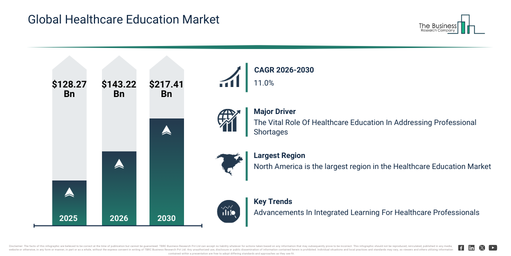
    Healthcare Education Market Forecast Highlighting Growth From $143.22 Billion To $217.41 Billion

    The healthcare education sector has experienced considerable expansion lately, projecting a leap from $128.27 billion in 2025 to $143.22 billion in 2026, driven by an 11.7% compound annual growth rate. This recent surge in growth can be linked to several key factors including a heightened focus on preventative health education, the proliferation of medical and nursing institutions, an escalating rate of chronic illnesses, the surge in professional development programs, and the increasing adoption of online learning methodologies.

    The healthcare education sector is poised for substantial expansion, projected to reach a valuation of $217.41 billion by 2030, demonstrating a robust compound annual growth rate of 11.0%. This anticipated surge is fueled by several key factors, including the growing integration of immersive learning technologies, an increasing need for healthcare professionals to receive training remotely, the widespread implementation of digital health literacy programs, augmented investments in medical simulation facilities, and a heightened emphasis on customized healthcare education pathways. During this forecast period, prominent trends expected to shape the market include a greater reliance on e-learning platforms, a surge in the utilization of medical simulation and virtual reality training methods, escalating demand for educational programs centered around patient needs, an amplification of continuing medical education opportunities, and a more pronounced focus on learning that is accessible remotely and via mobile devices.

    Download A Free Sample Report For Comprehensive Market Insights:

    https://www.thebusinessresearchcompany.com/sample.aspx?id=7327&type=smp

    Healthcare Education Market Growth Drivers And Industry Catalysts

    The anticipated scarcity of medical practitioners is poised to be a primary catalyst for the expansion of the healthcare education sector. These professionals, encompassing those skilled in medicine, nursing, and related health sciences, are fundamental to delivering medical services and assistance. The pressing need for more healthcare workers stimulates the advancement of educational offerings and establishments, manifesting in the establishment of new training centers, the implementation of digital learning solutions, and the tailoring of educational curricula to meet the evolving demands of the industry. Specifically, a report from the UAE-based healthcare staffing and recruitment firm, Dynamic Health Staff, indicated in September 2024 that the nursing field confronts a substantial deficit, projecting a requirement for an additional 177,400 Registered Nurses between 2023 and 2032, largely attributed to escalating healthcare needs and an aging populace. Reflecting this urgency, approximately 47.8% of hospitals, as of 2024, are experiencing nurse vacancy rates surpassing 10%, underscoring the critical demand for qualified nursing personnel. Consequently, this deficiency in healthcare professionals serves as a significant driver for the growth trajectory of the healthcare education market.

    Healthcare Education Market Segment Analysis: What Are The Major Market Categories?

    The healthcare education market covered in this report is segmented –

    1) By Provider: Universities And Academic Centers, Continuing Medical Education Providers, OEMs Or Pharmaceutical Companies, Learning Management Systems Providers, Educational Platforms, Medical Simulation

    2) By Delivery Mode: Classroom Based Courses, E-Learning Solutions

    3) By Application: Academic Education, Cardiology, Neurology, Radiology, Internal Medicine, Pediatrics, Other Applications

    4) By End-User: Students, Physicians, Non-Physicians.

    Subsegments:

    1) By Universities And Academic Centers: Medical Schools, Nursing Schools, Allied Health Programs

    2) By Continuing Medical Education (CME) Providers: Accredited CME Organizations, Online CME Platforms

    3) By OEMs Or Pharmaceutical Companies: In-House Training Programs, Sponsored Educational Initiatives

    4) By Learning Management Systems (LMS) Providers: Online Course Management Systems, Virtual Learning Environments

    5) By Educational Platforms: E-Learning Platforms, Mobile Learning Applications

    6) By Medical Simulation: Simulation Training Centers, Virtual Reality (VR) And Augmented Reality (AR) Simulations, Hands-On Simulation Equipment And Tools

    #Healthcare Education Market Trends Influencing Long-Term Demand

    Healthcare education market leaders are actively adopting digital avenues, incorporating both in-clinic patient encounters and technological solutions to elevate medical training and education. Their objective is to equip healthcare practitioners with contemporary resources that foster skill enhancement and ultimately lead to better patient care results. The fusion of in-clinic interactions involves merging direct patient consultations with digital materials and instruments to enrich the healthcare journey and broaden access to information during medical appointments. Illustrating this trend, in August 2023, Cipla, a pharmaceutical firm based in India, unveiled CiplaMed 2.0, a sophisticated knowledge platform designed for healthcare professionals, which synergizes in-clinic interactions with digital resources. This platform offers access to up-to-date medical information spanning 19 specialized fields, featuring scientific publications and online seminars, while utilizing sophisticated analytics to enhance knowledge dissemination within the pharmaceutical sector.

    Healthcare Education Market Leading Companies Driving Competitive Growth

    Major companies operating in the healthcare education market are Siemens Healthineers AG, FUJIFILM Holdings Corporation, Koninklijke Philips N.V., Stryker Corporation, GE Healthcare, Olympus Corporation, Medtronic plc, Zimmer Biomet Holdings Inc., Canon Medical Systems Corporation, Elsevier B.V., Johns Hopkins Medicine, Apollo Hospitals Enterprise Limited, McGraw-Hill Education, Harvard Medical School, Stanford University, Coursera Inc., HealthStream Inc., Symplr Inc., PeopleFluent, Articulate Global Inc., HealthcareSource, Trivantis Corporation, Gundersen Health System, Richmond Academy of Medicine Inc., Wolters Kluwer Health, EBSCO Information Services Inc.

    Access The Complete Healthcare Education Market Report:

    https://www.thebusinessresearchcompany.com/report/healthcare-education-global-market-report

    Healthcare Education Market Leading Geography: Which Region Generates The Most Revenue?

    North Americawas the largest region in the healthcare education market in 2025. The regions covered in the healthcare education market report are Asia-Pacific, South East Asia, Western Europe, Eastern Europe, North America, South America, Middle East, Africa.

    Get in touch with us:

    The Business Research Company: https://www.thebusinessresearchcompany.com/

    Americas: +1 310-496-7795

    Asia: +44 7882 955267 & +91 8897263534

    Europe: +44 7882 955267

    Email us at: marketing@tbrc.info

    Follow us on:

    LinkedIn: https://in.linkedin.com/company/the-business-research-company

    YouTube: https://www.youtube.com/channel/UC24_fI0rV8cR5DxlCpgmyFQ

    Global Market Model: https://www.thebusinessresearchcompany.com/global-market-model
  • Healthcare EDI Market Growth Is Reshaping Competitive Advantage Across The Industry

    Healthcare EDI Market Growth Is Reshaping Competitive Advantage Across The Industry

    Through market attractiveness analysis, total addressable market evaluation, company benchmarking matrices, interactive Excel dashboards, expanded supply chain intelligence, emerging startup coverage, and detailed product insights, The Business Research Company’s 2026 market reports provide more actionable and strategically valuable research.

    Healthcare EDI Market Revenue Growth Supported By A CAGR Of 9.92% Through 2030

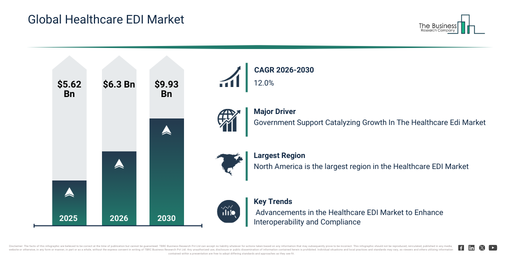
    The market for healthcare electronic data interchange (EDI) has experienced substantial expansion. Projections indicate a rise from its 2025 valuation of $5.62 billion to $6.3 billion by 2026, reflecting a compound annual growth rate of 12.2%. Key factors driving this growth during the earlier period included the proliferation of digitized healthcare billing mechanisms, a surge in insurance claim submissions, the widespread acceptance of uniform formats for healthcare transactions, the development of interconnected payer and provider systems, and an escalating demand for enhanced administrative effectiveness.

    A significant expansion is projected for the healthcare EDI market in the coming years, with its value anticipated to reach $9.93 billion by 2030, driven by a compound annual growth rate of 12.0%. This forecasted expansion is underpinned by several key factors, including heightened investments directed towards automated revenue cycle management, a growing need for immediate eligibility verification, the wider implementation of cloud-native EDI solutions, an intensified emphasis on interoperability adherence, and the increasing utilization of AI-powered tools for claims processing. Furthermore, prevailing trends shaping this period involve a greater embrace of cloud-based EDI platforms, the ongoing automation of claims and billing procedures, augmented integration of EDI with hospital information systems, an advancement in real-time transaction handling, and a reinforced commitment to regulatory compliance and data precision.

    Download A Free Sample Report For Comprehensive Market Insights:

    https://www.thebusinessresearchcompany.com/sample.aspx?id=6129&type=smp

    Healthcare EDI Market Opportunity Drivers: What Is Creating New Revenue Potential?

    The expanding governmental backing for the healthcare sector is anticipated to be a key catalyst, driving the advancement of the healthcare EDI market. This electronic data interchange is instrumental in facilitating the exchange of information across various departments and divisions within super-specialty hospitals. Healthcare EDI software streamlines the transmission of critical details such as benefit coordination, claim status updates, insurance particulars, payment information, and eligibility forms among healthcare entities. Enhanced government backing for healthcare not only aids the industry in developing novel equipment and delivering superior patient services but also fosters greater technological integration within public hospitals. Illustratively, data from the Office for National Statistics in the UK revealed that in May 2024, total healthcare spending experienced a substantial 5.6% nominal increase between 2022 and 2023, a considerable uptick from the 0.9% growth noted in the preceding year. Consequently, this heightened governmental commitment to healthcare directly fuels the demand for healthcare EDI solutions.

    Healthcare EDI Market Segment Breakdown: Which Categories Generate The Most Revenue?

    The healthcare edi market covered in this report is segmented –

    1) By Component: Software, Services

    2) By Transaction: Claim Management, Healthcare Supply Chain, Other Transactions

    3) By Mode of Delivery: VAN, Web And Cloud-based, Point-to-point

    4) By End User: Healthcare Provider, Payer, Pharmacies, Other End Users

    Subsegments:

    1) By Software: EDI Solutions, Integration Software, EDI Mapping And Translation Software

    2) By Services: EDI Consulting Services, Managed EDI Services, Technical Support And Maintenance Services

    Healthcare EDI Market Innovation Trends Driving Future Development

    Key players within the healthcare EDI sector are prioritizing innovation, particularly through the development of cloud-native interoperability solutions that consolidate EDI, FHIR, and HL7 standards, thereby addressing the escalating need for regulatory adherence, fluid data transmission, and adaptable networking capabilities for both payers and providers. These cloud-native interoperability platforms integrate established EDI formats such as HIPAA X12, contemporary healthcare APIs like FHIR, and clinical messaging standards including HL7, all within a unified, scalable, and secure framework, unlike older, on-premise EDI systems that tend to be isolated, inflexible, and expensive to expand. As an illustration, Edifecs, a prominent health information technology firm based in the United States, introduced its Healthcare Interoperability Cloud in February 2025, a cutting-edge platform developed for payers. This platform facilitates the smooth exchange of both administrative and clinical information across various formats like EDI, FHIR, HL7v2, and proprietary systems; it is engineered to meet regulatory mandates such as CMS-9115-F and CMS-0057-F, provides sophisticated workflow orchestration, allows for shared automation across different systems, and integrates artificial intelligence, encompassing machine learning and natural language processing, to yield richer insights and more rapid, perpetually up-to-date integration. Ultimately, this offering serves to minimize data transfer impediments, expedite collaborative efforts between payers and providers, and establish a forward-looking interoperability architecture.

    Healthcare EDI Market Key Players And Strategic Industry Positioning

    Major companies operating in the healthcare edi market are McKesson Corporation, Optum Inc, Allscripts, Cognizant Technology Solutions India Pvt Ltd, Cerner Corporation, The SSI Group, Quadax Inc, AthenaHealth, Change Healthcare Inc, Conduent Inc, Epic Systems Corporation, NextGen Healthcare, Edifecs Inc, Waystar Inc, Availity LLC, eClinicalWorks, Ability Network, PracticeSuite Inc, Jopari Solutions Inc, Alpha II LLC, TransUnion Healthcare, Healthpac Computer Systems

    Access The Complete Healthcare EDI Market Report:

    https://www.thebusinessresearchcompany.com/report/healthcare-edi-global-market-report

    Healthcare EDI Market Regional Outlook: Where Are The Largest Opportunities Located?

    North Americawas the largest region in the healthcare EDI market in 2025. Asia-Pacificis expected to be the fastest-growing region in the forecast period. The regions covered in the healthcare edi market report are Asia-Pacific, South East Asia, Western Europe, Eastern Europe, North America, South America, Middle East, Africa.

    Get in touch with us:

    The Business Research Company: https://www.thebusinessresearchcompany.com/

    Americas: +1 310-496-7795

    Asia: +44 7882 955267 & +91 8897263534

    Europe: +44 7882 955267

    Email us at: marketing@tbrc.info

    Follow us on:

    LinkedIn: https://in.linkedin.com/company/the-business-research-company

    YouTube: https://www.youtube.com/channel/UC24_fI0rV8cR5DxlCpgmyFQ

    Global Market Model: https://www.thebusinessresearchcompany.com/global-market-model
  • Healthcare Distribution Market Forecast Signals New Revenue Opportunities Through 2030

    Healthcare Distribution Market Forecast Signals New Revenue Opportunities Through 2030

    Delivering more actionable and strategically valuable research, The Business Research Company’s 2026 market reports feature market attractiveness analysis, total addressable market evaluation, company benchmarking matrices, interactive Excel dashboards, expanded supply chain intelligence, emerging startup coverage, and detailed product insights.

    Healthcare Distribution Market Value Expansion And Long-Term Growth Outlook

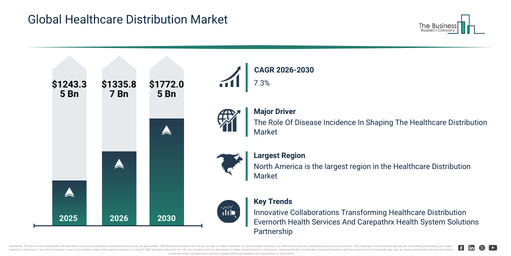
    The healthcare distribution sector has experienced substantial expansion recently and is projected to continue its upward trajectory, increasing from $1243.35 billion in 2025 to $1335.87 billion in 2026, reflecting a compound annual growth rate of 7.4%. During the historical period, this growth was fueled by several key factors, including the scaling up of pharmaceutical production, the proliferation of hospital networks, a heightened need for prompt delivery of medical supplies, the embrace of consolidated distribution strategies, and an overall rise in healthcare service utilization.

    The healthcare distribution sector is poised for substantial expansion, projecting a market value of $1772.05 billion by 2030, fueled by a compound annual growth rate of 7.3%. This anticipated surge is primarily driven by significant increases in funding for intelligent logistics systems, the broadening scope of specialty drug and biologic distribution networks, amplified requirements for final-stage healthcare delivery, a heightened emphasis on supply chain robustness, and the increasing integration of digital methods for tracking products. Key developments anticipated during this period include a greater embrace of automated healthcare supply chains, more comprehensive incorporation of digital tools for managing inventory, escalating calls for the ability to track orders in real-time, an expansion of cold chain logistics for temperature-sensitive products, and a more concentrated effort on optimizing distribution processes and adhering to regulations.

    Download A Free Sample Report For Comprehensive Market Insights:

    https://www.thebusinessresearchcompany.com/sample.aspx?id=7326&type=smp

    Healthcare Distribution Market Growth Momentum: Which Factors Are Influencing Demand?

    The escalating occurrence of illnesses is anticipated to be a primary catalyst in expanding the healthcare distribution sector in the foreseeable future. An illness, understood as a disorder or sickness impacting living organisms from humans to plants and animals, can stem from innate genetic anomalies, developmental issues, external infections, or various other factors. These conditions manifest through specific signs or symptoms that lead to distress, impaired function, suffering, social complications, or even mortality for the affected individual and those in close proximity. Consequently, the prevalence of diseases significantly influences healthcare distribution by demanding swift and effective delivery channels for medical treatments, immunizations, and healthcare interventions. This ensures efficient management of health crises, mitigation of their adverse effects, and ultimately, the improvement of overall public well-being. To effectively address the challenges posed by emerging health concerns and disease outbreaks, healthcare distribution systems must exhibit agility, promptness, and seamless coordination. For illustration, data from the Centers for Disease Control and Prevention, a governmental body in the United States, indicated a notable rise in reported tuberculosis cases, climbing from 8,320 in 2022 to 9,615 in 2023, marking a 16% increase with an additional 1,295 cases. Thus, the growing number of disease instances underscores the expanding healthcare distribution market.

    Healthcare Distribution Market Segmentation: How Is The Market Structured Across Key Categories?

    The healthcare distribution market covered in this report is segmented –

    1) By Type: Pharmaceutical Product Distribution Services, Biopharmaceutical Product Distribution Services, Medical Device Distribution Services

    2) By Distribution Model: Direct-to-Healthcare Provider Distribution, Wholesale Distribution, Third-Party Logistics (3PL) Distribution, Online and E-Distribution Channels

    3) By End User: Retail Pharmacies, Hospital Pharmacies, Other End-Users

    Subsegments:

    1) By Pharmaceutical Product Distribution Services: Prescription Drug Distribution, Over-The-Counter (OTC) Drug Distribution

    2) By Biopharmaceutical Product Distribution Services: Cold Chain Distribution, Specialty Drug Distribution

    3) By Medical Device Distribution Services: Surgical Instrument Distribution, Diagnostic Equipment Distribution, Consumables And Disposable Device Distribution

    Healthcare Distribution Market Trends Reshaping Industry Growth

    In the healthcare distribution arena, prominent entities like Evernorth Health Services are actively pursuing strategic alliances, exemplified by their collaboration with CarepathRx Health System Solutions, with the overarching goal of enhancing client satisfaction. This alliance between Evernorth Health Services and CarepathRx Health System Solutions is specifically designed to elevate the provision of patient-specific care. The objective of this venture is to refine, broaden, and accelerate the accessibility of pharmaceutical services for individuals managing long-term or complex health conditions. To illustrate this, Evernorth Health Services publicized its alliance with CarepathRx Health System Solutions in June of 2023. By merging the distinct capabilities of Evernorth and CarepathRx Health System Solutions, hospitals, healthcare networks, and their affiliated physicians will be better equipped to expand their service offerings while simultaneously reinforcing patient connections to critical specialized treatments for persistent and intricate ailments, including but not limited to rheumatoid arthritis, Crohn’s disease, and various cancers. Furthermore, Evernorth anticipates leveraging this partnership to facilitate increased connections to infusion services across a wider range of care settings, develop sophisticated value-based care strategies, improve the flow of information both within and between medical facilities to pinpoint optimal therapeutic approaches, and foster deeper engagement between healthcare providers and patients. CarepathRx Health System Solutions itself represents a fully integrated, top-to-bottom model for delivering hospital pharmacy care within the United States.

    Healthcare Distribution Market Competitive Landscape And Leading Companies

    Major companies operating in the healthcare distribution market are Alliance Healthcare UK, AmerisourceBergen Corporation, Cardinal Health Inc., CuraScript SD, Dakota Drug Inc., FFF Enterprises Inc., Henry Schein Inc., KeySource Medical Inc., Medline Industries LP, Morris and Dickson Co. LLC, Mutual Drug Company, Owens & Minor Inc., Patterson Companies Inc., PHOENIX Group, Rochester Drug Cooperative Inc., Shanghai Pharmaceutical Group Co. Ltd., Smith Drug Company, TTK Healthcare, Anda Inc., Associated Pharmacies Inc., Besse Medical, Gulf South Medical Supply, H.D. Smith LLC, Harvard Drug Group LLC, Kinray Inc., MasterPharm SA, McKesson Corporation, Metro Medical Supply, MMS – A Medical Supply Company, Oncology Supply Inc., PSS World Medical Inc., Seneca Medical Inc., TheraCom LLC

    Access The Complete Healthcare Distribution Market Report:

    https://www.thebusinessresearchcompany.com/report/healthcare-distribution-global-market-report

    Healthcare Distribution Market Geographic Landscape: Which Region Dominates Industry Growth?

    North Americawas the largest region in the healthcare distribution market in 2025. Asia-Pacificis expected to be the fastest-growing region in the forecast period. The regions covered in the healthcare distribution market report are Asia-Pacific, South East Asia, Western Europe, Eastern Europe, North America, South America, Middle East, Africa.

    Get in touch with us:

    The Business Research Company: https://www.thebusinessresearchcompany.com/

    Americas: +1 310-496-7795

    Asia: +44 7882 955267 & +91 8897263534

    Europe: +44 7882 955267

    Email us at: marketing@tbrc.info

    Follow us on:

    LinkedIn: https://in.linkedin.com/company/the-business-research-company

    YouTube: https://www.youtube.com/channel/UC24_fI0rV8cR5DxlCpgmyFQ

    Global Market Model: https://www.thebusinessresearchcompany.com/global-market-model

  • Healthcare Digital Payment Market Growth Is Accelerating As Industry Transformation Continues

    Healthcare Digital Payment Market Growth Is Accelerating As Industry Transformation Continues

    Enhanced with market attractiveness analysis, total addressable market evaluation, company benchmarking matrices, interactive Excel dashboards, expanded supply chain intelligence, emerging startup coverage, and detailed product insights, The Business Research Company’s 2026 market reports deliver more actionable and strategically valuable research.

    Healthcare Digital Payment Market Expected To Reach $62.71 Billion By 2030 At 22.1% CAGR

    Experiencing a significant surge, the digital payments sector within healthcare is projected to expand from $23.01 billion in 2025 to $28.18 billion by 2026, showcasing a robust compound annual growth rate (CAGR) of 22.5%. Several key factors have fueled this remarkable expansion during the preceding period, including the increasing integration of digital technologies across healthcare services, a growing inclination among patients towards non-cash transaction methods, the proliferation of electronic medical billing solutions, greater utilization of mobile financial services in healthcare settings, and advancements in the security of payment systems.

    The healthcare digital payment sector is poised for significant expansion over the coming years, with projections indicating it will reach $62.72 billion by 2030, experiencing a compound annual growth rate of 22.1%. This surge during the projected timeframe is fueled by several key factors, including heightened investment in healthcare fintech solutions, a growing need for payment systems that can seamlessly interact, the broadening availability of payment options for telemedicine services, greater acceptance of biometric identification methods, and an intensified regulatory emphasis on securing digital transactions. Key developments anticipated in this period involve a wider embrace of contactless payment methods in healthcare, a more profound integration of digital wallets into healthcare platforms, increased utilization of artificial intelligence for detecting fraud, the growth of payment systems for medical transactions powered by blockchain technology, and a heightened concentration on making payments more transparent and automated.

    Download A Free Sample Report For Comprehensive Market Insights:

    https://www.thebusinessresearchcompany.com/sample.aspx?id=28239&type=smp

    Healthcare Digital Payment Market Expansion Drivers: What Is Shaping Future Growth?

    The increasing preference for streamlined and touch-free payment methods is anticipated to be a key factor in the expansion of the healthcare digital payment sector. Such transactions, characterized by their speed and ease of completion without physical exchange of currency or cards, are gaining traction primarily due to a growing consumer desire for rapid, effortless, and germ-free payment experiences that bypass the need for physical contact or PIN entry. These types of payments significantly bolster healthcare digital payment infrastructures by providing swift and secure transaction capabilities, rendering them perfectly suited for deployment in settings like medical practices, drugstores, and virtual healthcare appointments. By facilitating smooth, contactless settlements, they minimize the need for manual handling and lengthy queues, thereby elevating the overall user experience for both patients and healthcare providers. A notable indicator of this trend is the surge in contactless payment usage observed in the United Kingdom; UK Finance reported that the nation recorded 18.3 billion contactless transactions in 2023, a 7% uptick from the 17 billion recorded in 2022, as per data from July 2024. Consequently, this escalating demand for convenient, contactless transaction options is positively influencing the trajectory of the healthcare digital payment market’s development.

    Healthcare Digital Payment Market Segmentation Trends And Revenue Drivers

    The healthcare digital payment market covered in this report is segmented –

    1) By Type: Mobile Wallets, Point-Of-Sale (POS) Systems, Internet Banking, Mobile Banking, Cryptocurrencies, Other Types

    2) By Solution: Application Program Interface, Payment Gateway, Payment Processing, Payment Security And Fraud Management, Transaction Risk Management, Other Solutions

    3) By Deployment: Cloud, On-Premise

    4) By Technology: Near Field Communication (NFC), Quick Response (QR) Code Payments, Blockchain, Biometric Authentication, Other Technologies

    5) By End-User: Hospitals, Medical Clinics, Pharmacies, Health Insurance Companies, Telemedicine And Remote Health Services, Other End-Users

    Subsegments:

    1) By Mobile Wallets: Near Field Communication Payments, Quick Response (QR) Code Payments, Mobile App Based Payments, Cloud Based Mobile Wallets, Peer To Peer Transfers

    2) By Point Of Sale Systems: Countertop Terminals, Mobile Point Of Sale Terminals, Smart Point Of Sale Terminals, Contactless Point Of Sale Terminals, Integrated Point Of Sale Solutions

    3) By Internet Banking: Web Based Fund Transfers, Online Bill Payments, Account Management Services, Loan And Credit Services, Online Investment Services

    4) By Mobile Banking: Mobile Check Deposits, Mobile Fund Transfers, Account Balance Inquiries, Bill Payments Through Apps, Personalized Financial Alerts

    5) By Cryptocurrencies: Bitcoin Payments, Ethereum Payments, Stablecoin Transactions, Blockchain Based Remittances, Decentralized Finance Payments

    6) By Other Types: Biometric Payment Systems, Voice Activated Payment Systems, Wearable Device Payments, Smart Card Payments, Contactless Payment Rings

    Healthcare Digital Payment Market Strategic Trends: What Is Defining The Next Phase Of Growth?

    The leading players within the healthcare digital payment sector are concentrating their efforts on innovating sophisticated systems, notably mobile-first payment infrastructures, aiming to boost transaction speeds, bolster security measures, and create a smoother process for both patients and healthcare professionals. These mobile-first payment systems are essentially digital payment frameworks meticulously designed for optimal performance on smartphones and tablets, facilitating fluid, secure, and contactless transactions through incorporated technologies like tokenization, biometric verification, and cloud-based processing. Illustrating this trend, April 2025 saw the UK-based mobile payment specialist, Alternative Payments Ltd. (operating as Judopay), introduce a new digital payment service tailored for UK pharmacies and healthcare providers, specifically engineered to simplify and secure payment handling in the medical field. This adaptable, fully compliant platform empowers providers to receive payments through various channels online, within applications, face-to-face, and via payment links, accommodating all prevalent payment types including cards, Apple Pay, Google Pay, and contactless options. It effectively tackles significant hurdles inherent in healthcare payments, such as stringent data privacy rules, the threat of fraudulent activity, and intricate underwriting processes, by providing rapid setup, robust fraud mitigation, and effortless integration with current healthcare IT infrastructures.

    Healthcare Digital Payment Market Industry Leaders: Which Organizations Are Driving Competition?

    Major companies operating in the healthcare digital payment market are American Express Company, Visa Inc., PayPal Holdings Inc., Mastercard Incorporated, HDFC Bank Limited, Fiserv Inc., Experian Health Inc., athenahealth Inc., Adyen N.V., Nets Group A/S, Cotiviti Inc., Waystar Inc., Paymentus Holdings Inc., Zelis Healthcare LLC, Flywire Corporation, Phreesia Inc., Availity L.L.C., RevSpring Inc., Rectangle Health Inc., AccessOne MedCard Inc., ClearBalance Healthcare Inc., PayZen Inc., PatientPay Inc.

    Access The Complete Healthcare Digital Payment Market Report:

    https://www.thebusinessresearchcompany.com/report/healthcare-digital-payment-global-market-report

    Healthcare Digital Payment Market Largest Region: Which Geography Holds The Highest Market Share?

    North Americawas the largest region in the healthcare digital payment market in 2025. Asia-Pacific is expected to be the fastest-growing region in the forecast period. The regions covered in the healthcare digital payment market report are Asia-Pacific, South East Asia, Western Europe, Eastern Europe, North America, South America, Middle East, Africa.

    Get in touch with us:

    The Business Research Company: https://www.thebusinessresearchcompany.com/

    Americas: +1 310-496-7795

    Asia: +44 7882 955267 & +91 8897263534

    Europe: +44 7882 955267

    Email us at: marketing@tbrc.info

    Follow us on:

    LinkedIn: https://in.linkedin.com/company/the-business-research-company

    YouTube: https://www.youtube.com/channel/UC24_fI0rV8cR5DxlCpgmyFQ

    Global Market Model: https://www.thebusinessresearchcompany.com/global-market-model

  • Healthcare Digital Experience Platform Market Outlook Highlights The Next Major Growth Opportunities

    Healthcare Digital Experience Platform Market Outlook Highlights The Next Major Growth Opportunities

    Through market attractiveness analysis, total addressable market evaluation, company benchmarking matrices, interactive Excel dashboards, expanded supply chain intelligence, emerging startup coverage, and detailed product insights, The Business Research Company’s 2026 market reports provide more actionable and strategically valuable research.

    Healthcare Digital Experience Platform Market Size And Revenue Forecast Through 2030

    Within the healthcare digital experience platform sector, a notable expansion has recently occurred. Projections indicate this market will surge from $2.23 billion in 2025 to $2.64 billion in 2026, demonstrating a compound annual growth rate of 18.4%. Factors contributing to this historical growth trajectory include the escalating digitalization of medical services, a greater uptake of patient portals, broader utilization of telemedicine, an increasing emphasis on patient-centered care models, and enhancements in the seamless exchange of healthcare data.

    The digital experience platform market within the healthcare sector is poised for substantial expansion, projecting a market value of $5.11 billion by 2030, driven by a compound annual growth rate of 18.0%. This anticipated surge is fueled by escalating investments in virtual care networks, a heightened demand for tailored digital health pathways, the broadened application of AI in coordinating patient care, the increasing use of mobile health solutions, and a greater focus on delivering healthcare centered around the patient experience. Key developments anticipated during this period involve a greater uptake of platforms facilitating omnichannel patient interaction, more widespread integration of AI for personalized healthcare services, increased implementation of telehealth capabilities within experience platforms, a wider availability of cloud-based solutions for healthcare experiences, and a stronger emphasis on creating cohesive interfaces for both healthcare providers and patients.

    Download A Free Sample Report For Comprehensive Market Insights:

    https://www.thebusinessresearchcompany.com/sample.aspx?id=25776&type=smp

    Healthcare Digital Experience Platform Market Development Factors: Which Trends Are Supporting Demand?

    The increasing embrace of telehealth is anticipated to be a significant catalyst for expansion within the healthcare digital experience platform market. Telehealth, defined as the remote provision of health services and consultations through digital communication tools, is seeing greater adoption due to its improved accessibility, enabling individuals to receive prompt medical advice and treatment conveniently from their residences, thereby eliminating the necessity of travel. Healthcare digital experience platforms play a crucial role in facilitating telehealth by offering intuitive, integrated digital environments that manage patient information, facilitate appointment bookings, and enable direct communication, thereby ensuring a fluid and tailored patient journey. Supporting this trend, data from the Australian Department of Health and Aged Care in March 2024 revealed that telehealth utilization in the 2022–23 period was most prevalent among general practitioners (at 20%) and allied health professionals (at 12%), with general practitioners and non-GP specialists constituting 75% and 48% of all video consultations, respectively. Consequently, the escalating use of telehealth is a key factor fueling the growth of the healthcare digital experience platform market.

    Healthcare Digital Experience Platform Market Segment Analysis Highlighting Growth Areas

    The healthcare digital experience platform market covered in this report is segmented –

    1) By Component: Platform, Services

    2) By Delivery Mode: On-Premises, Cloud Based

    3) By Technology: Mobile Technology, Artificial Intelligence And Machine Learning, Internet of Medical Things (IoMT), Telemedicine Solutions

    4) By Application: Business-To-Consumer (B2C), Business-To-Business (B2B), Other Applications

    5) By End Use: Hospitals And Clinics, Healthcare Payers, Other End Uses

    Subsegments:

    1) By Platform: Patient Engagement Platforms, Provider Engagement Platforms, Data Analytics Platforms, Cloud-Based Platforms, Mobile Health Platforms, Virtual Care Platforms

    2) By Services: Implementation And Integration Services, Consulting Services, Support And Maintenance Services, Training And Education Services, Managed Services, Custom Development Services

    Healthcare Digital Experience Platform Market Transformation Trends: Which Innovations Are Driving Change?

    Within the healthcare digital experience platform sector, leading entities are prioritizing the creation of sophisticated solutions, notably embracing generative AI for clinical documentation to optimize administrative processes and boost healthcare professionals’ efficiency. These AI-driven clinical documentation utilities leverage natural language processing and advanced AI to automatically record, condense, and produce medical records from patient-clinician dialogues, substantially cutting down on manual input. Illustratively, in October 2023, Microsoft Corporation, a prominent US tech firm, introduced its Dragon Ambient eXperience (DAX) Copilot. This generative AI tool is engineered to swiftly generate clinical summaries directly from consultations in examination rooms and via telehealth. Seamlessly integrated with electronic health record systems, this technology alleviates the daily documentation workload for clinicians by as much as 40 minutes. Its capacity to meticulously and safely capture medical exchanges contributes to better patient outcomes, mitigates professional exhaustion, and refines the patient-provider relationship, marking it as a groundbreaking advancement in the digital experience platform market for healthcare.

    Healthcare Digital Experience Platform Market Leading Companies: Who Holds Significant Market Presence?

    Major companies operating in the healthcare digital experience platform market are Optum Inc., Microsoft Corporation, Accenture plc, International Business Machines Corporation, Oracle Corporation, Salesforce Inc., Cognizant Technology Solutions Corporation, GE HealthCare Technologies Inc., Infosys Limited, Adobe Inc., DXC Technology Company, Wipro Limited, Open Text Corporation, SoftServe Inc., Veradigm Inc., Sitecore A/S, Optimizely Inc., Innovaccer Inc., Liferay Inc., Acquia Inc.

    Access The Complete Healthcare Digital Experience Platform Market Report:

    https://www.thebusinessresearchcompany.com/report/healthcare-digital-experience-platform-global-market-report

    Healthcare Digital Experience Platform Market Regional Analysis: Which Region Leads By Revenue?

    North Americawas the largest region in the healthcare digital experience platform market in 2025. Asia-Pacificis expected to be the fastest-growing region in the forecast period. The regions covered in the healthcare digital experience platform market report are Asia-Pacific, South East Asia, Western Europe, Eastern Europe, North America, South America, Middle East, Africa.

    Get in touch with us:

    The Business Research Company: https://www.thebusinessresearchcompany.com/

    Americas: +1 310-496-7795

    Asia: +44 7882 955267 & +91 8897263534

    Europe: +44 7882 955267

    Email us at: marketing@tbrc.info

    Follow us on:

    LinkedIn: https://in.linkedin.com/company/the-business-research-company

    YouTube: https://www.youtube.com/channel/UC24_fI0rV8cR5DxlCpgmyFQ

    Global Market Model: https://www.thebusinessresearchcompany.com/global-market-model

  • Healthcare Data Storage Market Trends And Growth Drivers Point To Strong Future Potential

    Healthcare Data Storage Market Trends And Growth Drivers Point To Strong Future Potential

    Delivering more actionable and strategically valuable research, The Business Research Company’s 2026 market reports feature market attractiveness analysis, total addressable market evaluation, company benchmarking matrices, interactive Excel dashboards, expanded supply chain intelligence, emerging startup coverage, and detailed product insights.

    Healthcare Data Storage Market Growth From $8.46 Billion In 2026 To $17.38 Billion By 2030 At A CAGR Of 19.7%

    Within the healthcare data storage sector, a notable upswing in market size has been observed lately. Projections indicate a rise from $7.08 billion in 2025 to $8.46 billion by 2026, reflecting a compound annual growth rate (CAGR) of 19.6%. Factors contributing to this expansion during the past period include the escalating quantity of digitized patient records, the broadening scope of medical imaging data, enhancements in hospital information technology frameworks, a growing demand for data storage solutions that adhere to regulatory mandates, and the widespread implementation of electronic health record systems.

    The healthcare data storage sector is poised for substantial expansion, projected to reach a value of $17.39 billion by 2030, reflecting a compound annual growth rate of 19.7%. This upturn in the upcoming years is anticipated due to the escalating utilization of AI for clinical analytics, augmented investments in cloud infrastructure for healthcare, the burgeoning volume of data from genomics and precision medicine, a greater need for flexible storage capacities, and a heightened emphasis on data security and regulatory adherence. Key developments likely to influence this period include a greater embrace of cloud-based storage in healthcare, a surge in demand for robust data storage systems, a more widespread adoption of hybrid storage models, the growth of secure, long-term archiving for medical records, and a reinforced commitment to data duplication and business continuity strategies.

    Download A Free Sample Report For Comprehensive Market Insights:

    https://www.thebusinessresearchcompany.com/sample.aspx?id=5845&type=smp

    Healthcare Data Storage Market Industry Drivers: What Is Driving Revenue Growth?

    The healthcare data storage market is poised for expansion, propelled by the escalating volume of digital information within healthcare institutions. This surge in data is a direct consequence of advancements in big data analytics, sophisticated medical imaging technologies, and the growing accessibility of real-time data crucial for informed clinical decisions. The systematic gathering and preservation of health data from diverse origins not only facilitate better doctor-patient communication and elevate the standard of patient care but also unlock profound insights into particular ailments. To illustrate this point, RBC Capital Markets, an investment firm based in Canada, reported that the healthcare sector was responsible for approximately 30% of the global data output. Furthermore, projections indicate that healthcare data will expand at a compound annual growth rate of 36% by the year 2025, underscoring the anticipated market growth driven by this increasing digital data storage.

    Healthcare Data Storage Market Segment Performance And Strategic Opportunities

    The healthcare data storage market covered in this report is segmented –

    1) By Type: Magnetic Storage, Flash Storage

    2) By Architecture: Block Storage, File Storage, Object Storage

    3) By Deployment: On-Premise Solutions, Hybrid Solutions

    4) By End User: Pharmaceutical, Hospitals, Other End-Users

    Subsegments:

    1) By Magnetic Storage: Hard Disk Drives (HDDs), Tape Storage Systems

    2) By Flash Storage: Solid-State Drives, NVMe-Based Flash Storage

    #Healthcare Data Storage Market Growth Trends: What Is Influencing The Future Outlook?

    A key trend among prominent healthcare data storage providers involves the creation of sophisticated platforms, specifically FHIR-native, AI-ready data lakehouse solutions, designed to manage escalating volumes of clinical information, foster effortless data exchange, and expedite data-driven healthcare advancements. These FHIR-native, AI-ready data lakehouse platforms are essentially cloud-based systems adept at absorbing, housing, and restructuring varied healthcare data, encompassing structured information, unstructured text, and imaging files, all while adhering to established standards like FHIR. To illustrate, in December 2024, Microsoft, a significant player in the technology sector based in the United States, made its DICOM (Digital Imaging and Communications in Medicine) data transformation capabilities generally accessible within its Healthcare Data Solutions integrated with Microsoft Fabric. This new functionality empowers users to import, store, modify, and scrutinize medical imaging data, including CT and MRI scans, within a lakehouse framework. This advancement facilitates the conversion of DICOM imaging data into structured formats compatible with FHIR or OMOP standards, supports extensive radiomics and imaging analysis, and integrates with robust AI services to yield insights from multiple data types. This transformation capability is integrated into Microsoft’s medallion-style Lakehouse, which consolidates clinical, claims, conversational, and imaging data into a singular, expansive repository, thereby simplifying the execution of advanced analytics, the deployment of AI models, and the acceleration of research and patient care processes.

    Healthcare Data Storage Market Key Players: Which Companies Shape Industry Competition?

    Major companies operating in the healthcare data storage market are Dell Technologies, International Business Machines Corporation, NetApp Inc., Hewlett Packard Enterprise Development LP, Pure Storage Inc., Hitachi Ltd., Western Digital Corporation, Huawei Technologies Co. Ltd., Toshiba Corporation, Scality, Fujitsu Limited, Cloudian Inc., Samsung, Tintri Inc., Cisco Systems, Nutanix Inc., Commvault Systems, Cohesity, Rubrik, Veeam Software, Zadara, Caringo, Infinidat, Nexenta Systems, DataCore Software, Qumulo, SwiftStack, StorPool, Panzura

    Access The Complete Healthcare Data Storage Market Report:

    https://www.thebusinessresearchcompany.com/report/healthcare-data-storage-global-market-report

    Healthcare Data Storage Market Geographic Distribution And Regional Opportunities

    North Americawas the largest region in the healthcare data storage market in 2025. The regions covered in the healthcare data storage market report are Asia-Pacific, South East Asia, Western Europe, Eastern Europe, North America, South America, Middle East, Africa.

    Get in touch with us:

    The Business Research Company: https://www.thebusinessresearchcompany.com/

    Americas: +1 310-496-7795

    Asia: +44 7882 955267 & +91 8897263534

    Europe: +44 7882 955267

    Email us at: marketing@tbrc.info

    Follow us on:

    LinkedIn: https://in.linkedin.com/company/the-business-research-company

    YouTube: https://www.youtube.com/channel/UC24_fI0rV8cR5DxlCpgmyFQ

    Global Market Model: https://www.thebusinessresearchcompany.com/global-market-model

  • Healthcare Data Monetization Market Expansion Is Reshaping Competitive Dynamics Across The Industry

    Healthcare Data Monetization Market Expansion Is Reshaping Competitive Dynamics Across The Industry

    Enhanced with market attractiveness analysis, total addressable market evaluation, company benchmarking matrices, interactive Excel dashboards, expanded supply chain intelligence, emerging startup coverage, and detailed product insights, The Business Research Company’s 2026 market reports deliver more actionable and strategically valuable research.

    Healthcare Data Monetization Market Expansion Outlook: What Revenue Opportunities Lie Ahead?

    The market for monetizing healthcare data has experienced considerable expansion recently. Projections indicate a rise from $0.99 billion in 2025 to $1.19 billion in 2026, reflecting a compound annual growth rate of 19.6%. This recent growth trajectory is a consequence of several factors. The increasing volume of digital health information, the wider implementation of electronic health records, heightened engagement from pharmaceutical research entities, advancements in real-world evidence research, and the early uptake of healthcare analytics solutions have collectively fueled this upward trend.

    The market for monetizing healthcare data is poised for significant expansion over the coming years, projected to reach $2.43 billion by 2030 with a compound annual growth rate (CAGR) of 19.6%. This upward trajectory is fueled by several key factors: heightened investments in artificial intelligence for healthcare analytics, a growing need for insights derived from personalized medicine, the broader implementation of value-based healthcare frameworks, greater regulatory certainty surrounding data utilization, and the increasing application of synthetic health data. During this forecast period, prominent market developments are anticipated to include a greater reliance on data licensing agreements within the healthcare sector, increased embrace of analytics to drive data commercialization efforts, a surge in demand for de-identified patient data repositories, the proliferation of platform-centric data marketplaces, and a more intense concentration on robust data governance and obtaining informed consent.

    Download A Free Sample Report For Comprehensive Market Insights:

    https://www.thebusinessresearchcompany.com/sample.aspx?id=13672&type=smp

    Healthcare Data Monetization Market Growth Factors: Which Forces Are Supporting Market Expansion?

    The increasing implementation of electronic health records is poised to be a significant catalyst for the expansion of the healthcare data monetization sector. Electronic health records, which are digitized patient medical charts encompassing details on health backgrounds, diagnoses, prescriptions, and therapies, are instrumental in healthcare data monetization efforts. These efforts aim to advance medical research, streamline drug development, and enhance clinical trials, ultimately leading to improved patient care and the realization of personalized medicine. A notable example is the Australian National Audit Office’s report from June 2024, which indicated that by March 2024, approximately 23.8 million Australians possessed a My Health Record, a system that saw an investment of roughly $2 billion. Consequently, the broad acceptance and use of electronic health records are a primary driver for the growth observed in the healthcare data monetization market.

    Healthcare Data Monetization Market Segment Landscape And Growth Potential

    The healthcare data monetization market covered in this report is segmented –

    1) By Type: Direct Data Monetization, Indirect Data Monetization

    2) By Deployment: On-Premise, Cloud

    3) By End User: Pharmaceutical And Biotechnology Companies, Healthcare Providers, Healthcare Payers, Medical Technology Companies

    Subsegments:

    1) By Direct Data Monetization: Data Licensing And Sales, Data Sharing Agreements, Subscription-Based Access To Data

    2) By Indirect Data Monetization: Targeted Marketing And Advertising, Research And Development Collaborations

    Healthcare Data Monetization Market Industry Trends: What Changes Are Reshaping Demand?

    Within the healthcare data monetization sector, leading firms are actively implementing digital transformation advancements, notably Software as a Service (SaaS) solutions, which empower healthcare providers to cultivate more individualized patient journeys. This SaaS model involves cloud-hosted applications accessible online, usually via web interfaces or mobile applications. Illustrative of this trend, Salesforce, a prominent US cloud software provider, unveiled expanded Customer 360 for Health functionalities in April 2023, specifically engineered to elevate patient engagement through personalization. The underlying objective of these technological enhancements is to optimize operational workflows, diminish expenses, and elevate the standard of patient care by harnessing the power of immediate data, artificial intelligence, and automated processes. Consequently, these new capabilities equip healthcare and life sciences entities to significantly enrich the patient experience, capitalizing on the comprehensive suite of Salesforce technologies, including the real-time data insights from Data Cloud, the predictive intelligence of Einstein AI, and the workflow automation provided by Flow.

    Healthcare Data Monetization Market Competitive Landscape: Who Are The Leading Companies?

    Major companies operating in the healthcare data monetization market are Google LLC, Microsoft Corporation, Oracle Corporation, SAP SE, Salesforce Inc., Snowflake Inc., Informatica Inc., TIBCO Software Inc., QlikTech International AB, SAS Institute Inc., OpenText Corporation, Innovaccer Inc., H1.Co, John Snow Labs Inc., Accenture Plc, Infosys Limited, Virtusa Corp., HTEC Group, Sisense Inc., Infor

    Access The Complete Healthcare Data Monetization Market Report:

    https://www.thebusinessresearchcompany.com/report/healthcare-data-monetization-global-market-report

    Healthcare Data Monetization Market Largest Region By Revenue And Market Share

    North Americawas the largest region in the healthcare data monetization market in 2025. The regions covered in the healthcare data monetization market report are Asia-Pacific, South East Asia, Western Europe, Eastern Europe, North America, South America, Middle East, Africa.

    Get in touch with us:

    The Business Research Company: https://www.thebusinessresearchcompany.com/

    Americas: +1 310-496-7795

    Asia: +44 7882 955267 & +91 8897263534

    Europe: +44 7882 955267

    Email us at: marketing@tbrc.info

    Follow us on:

    LinkedIn: https://in.linkedin.com/company/the-business-research-company

    YouTube: https://www.youtube.com/channel/UC24_fI0rV8cR5DxlCpgmyFQ

    Global Market Model: https://www.thebusinessresearchcompany.com/global-market-model

  • Healthcare Data Interoperability Market Forecast Reveals Where Future Industry Value Will Be Created

    Healthcare Data Interoperability Market Forecast Reveals Where Future Industry Value Will Be Created

    Through market attractiveness analysis, total addressable market evaluation, company benchmarking matrices, interactive Excel dashboards, expanded supply chain intelligence, emerging startup coverage, and detailed product insights, The Business Research Company’s 2026 market reports provide more actionable and strategically valuable research.

    Healthcare Data Interoperability Market Growth Potential: How Will Market Size Change Through 2030?

    The market for healthcare data interoperability experienced substantial expansion lately, projecting a rise from $7.33 billion in 2025 to $8.61 billion by 2026, reflecting a compound annual growth rate of 17.6%. Factors contributing to this growth during the preceding period included the escalating digitization of medical documentation, a broader implementation of electronic health record systems, an intensified demand for integrated patient care strategies, the proliferation of healthcare networks involving multiple providers, and regulatory efforts promoting uniformity in health data management.

    The global market for healthcare data interoperability is poised for substantial expansion in the upcoming years, projecting a surge to $14.98 billion by the year 2030, fueled by a compound annual growth rate (CAGR) of 14.8%. This anticipated growth throughout the forecast period is largely driven by the escalating implementation of value-based care approaches, increased financial commitments towards networked healthcare IT infrastructure, a heightened need for interoperable telehealth services, the broadening scope of national health information exchanges, and a strengthened emphasis on providing patients with direct access to their data. Key developments anticipated during this period encompass a greater embrace of standardized frameworks for health data exchange, more seamless integration of clinical systems across different platforms, a growing requirement for immediate access to patient information, the proliferation of secure API-driven interoperability solutions, and a more pronounced concentration on achieving semantic consistency in data harmonization.

    Download A Free Sample Report For Comprehensive Market Insights:

    https://www.thebusinessresearchcompany.com/sample.aspx?id=14925&type=smp

    Healthcare Data Interoperability Market Demand Drivers: What Is Fueling Industry Growth?

    The expansion of automated systems within the healthcare sector is poised to be a significant catalyst for the advancement of healthcare data interoperability. These automated solutions encompass technological instruments and frameworks aimed at optimizing and refining diverse facets of patient care and operational management. The increasing integration of these automated healthcare tools is primarily motivated by the pursuit of heightened efficiency, enhanced precision, and superior patient treatment. Seamless data exchange, a cornerstone of healthcare data interoperability, empowers automated healthcare solutions to effectively merge and share patient-specific data, thereby elevating the quality of care. Furthermore, interoperability facilitates the streamlining of clinical processes by automating recurring duties such as data input, record-keeping, and administrative functions. A pertinent example illustrating this trend is the March 2024 announcement by NHS England, which revealed a substantial investment of $148.21 million (£113 million) in 2024 to support 86 artificial intelligence initiatives in healthcare, now undergoing assessment across 408 locations nationwide, encompassing 466 active AI trials. Consequently, the burgeoning implementation of automated healthcare solutions directly correlates with the escalating demand and growth in the healthcare data interoperability market.

    Healthcare Data Interoperability Market Categorization By Product Type And Application

    The healthcare data interoperability market covered in this report is segmented –

    1) By Model: Centralized, Hybrid, Decentralized

    2) By Deployment: Cloud-Based, On-Premises

    3) By Level: Foundational, Structural, Semantic

    4) By Application: Diagnosis, Treatment, Other Applications

    5) By End User: Healthcare Providers, Healthcare Payers, Pharmacies

    Subsegments:

    1) By Centralized: Single Point Of Control, Unified Data Repository, Centralized Management And Storage

    2) By Hybrid: Combination Of Centralized And Decentralized Approaches, Distributed Data Management With Centralized Control, Flexible Data Exchange Models

    3) By Decentralized: Distributed Data Storage, Peer-To-Peer Data Sharing, Localized Control And Management

    Healthcare Data Interoperability Market Innovation Trends: Which Developments Are Transforming The Industry?

    Leading entities within the healthcare data interoperability sector are actively crafting novel solutions, specifically digital platforms, to fortify their market standing. These digital platforms function as internet-based systems or applications engineered to foster connections, exchanges, and the dissemination of information among diverse participants, akin to online marketplaces, social networking sites, or cloud-hosted services. Illustrating this trend, KMS Healthcare, a firm based in the United States, introduced its CONNECT interoperability solution in August 2023. This platform aims to simplify the process of exchanging data housed within electronic health records (EHRs). It incorporates adaptable, validated FHIR APIs alongside an HL7 conversion engine, working in concert to assist healthcare providers in overcoming interoperability hurdles and enhancing data assimilation. By granting swift entry to prominent EHR systems, the CONNECT platform empowers developers to accelerate the testing and creation of applications, thereby substantially diminishing the expenses and intricacies typically involved in setting up isolated testing environments.

    Healthcare Data Interoperability Market Company Landscape And Strategic Competition

    Major companies operating in the healthcare data interoperability market are Optum Inc., Oracle Corporation, Cognizant Technology Solutions, Koninklijke Philips NV, Wipro Limited, Epic Systems Corporation, Infor Inc, Virtusa Corp, Deevita LLC, Ciox Health, Veradigm LLC, ViSolve Inc., Change Healthcare, InterSystems Corporation, NextGen Healthcare Inc., eMids, Consensus Cloud Solutions Inc., Merative, Orion Health Group Limited, Teletracking Technologies, OSP Labs, Jitterbit, Nalashaa Solutions, Lyniate, MphRx, iNTERFACEWARE Inc

    Access The Complete Healthcare Data Interoperability Market Report:

    https://www.thebusinessresearchcompany.com/report/healthcare-data-interoperability-global-market-report

    Healthcare Data Interoperability Market Regional Analysis And Leading Geography

    North Americawas the largest region in the healthcare data interoperability market in 2025. Asia Pacificis expected to be the fastest-growing region in the forecast period. The regions covered in the healthcare data interoperability market report are Asia-Pacific, South East Asia, Western Europe, Eastern Europe, North America, South America, Middle East, Africa.

    Get in touch with us:

    The Business Research Company: https://www.thebusinessresearchcompany.com/

    Americas: +1 310-496-7795

    Asia: +44 7882 955267 & +91 8897263534

    Europe: +44 7882 955267

    Email us at: marketing@tbrc.info

    Follow us on:

    LinkedIn: https://in.linkedin.com/company/the-business-research-company

    YouTube: https://www.youtube.com/channel/UC24_fI0rV8cR5DxlCpgmyFQ

    Global Market Model: https://www.thebusinessresearchcompany.com/global-market-model

  • Healthcare Data Integration Market Growth Through 2030 Creates New Strategic Opportunities

    Healthcare Data Integration Market Growth Through 2030 Creates New Strategic Opportunities

    Delivering more actionable and strategically valuable research, The Business Research Company’s 2026 market reports feature market attractiveness analysis, total addressable market evaluation, company benchmarking matrices, interactive Excel dashboards, expanded supply chain intelligence, emerging startup coverage, and detailed product insights.

    Healthcare Data Integration Market Value Analysis: What Growth Is Expected Over The Forecast Period?

    The sector for integrating healthcare data has experienced substantial expansion. Projections indicate a significant rise from its valuation of $2.82 billion in 2025 to an estimated $3.32 billion by 2026, demonstrating a compound annual growth rate (CAGR) of 17.9%. This notable growth during the preceding period stems from several key factors: the increasing segmentation of healthcare data systems, the widespread implementation of electronic health records, the broadening of healthcare networks involving multiple providers, a heightened demand for operational analytics, and the increased availability of middleware tools designed for data integration.

    The healthcare data integration sector is poised for substantial expansion in the coming years, projecting a market valuation of $5.83 billion by 2030, driven by a compound annual growth rate of 15.1%. This anticipated surge is fueled by several key factors, including the escalating adoption of interoperable healthcare frameworks, amplified investments in data-centric care methodologies, a broader rollout of population health management programs, a heightened emphasis on automating regulatory reporting, and a growing requirement for adaptable cloud integration solutions. Furthermore, the forecast period will likely witness significant trends such as the increased utilization of integrated data platforms, a surge in demand for immediate access to clinical information, wider implementation of interoperability standards, the proliferation of cloud-based integration services, and a more rigorous approach to data governance and adherence to compliance.

    Download A Free Sample Report For Comprehensive Market Insights:

    https://www.thebusinessresearchcompany.com/sample.aspx?id=14729&type=smp

    Healthcare Data Integration Market Growth Drivers: What Factors Are Accelerating Expansion?

    The expansion of the healthcare data integration market is anticipated to be significantly bolstered by the widespread implementation of electronic health records (EHRs) in the future. EHRs, which are digital platforms designed for the secure storage and management of patient health data, facilitate streamlined access, sharing, and analysis for medical professionals. A growing need for EHR IT systems stems from their capacity to enhance operational effectiveness, consolidate and make data readily accessible, foster interoperability, and improve patient involvement. Crucially, healthcare data integration platforms are instrumental in realizing interoperability by linking EHR systems with various other healthcare IT infrastructures, including laboratory information systems (LIS), pharmacy management tools, and radiology informatics systems. Illustrating this trend, a publication in the Journal of Medical Internet Research in May 2024 indicated that 38.78% of U.S. adults had utilized telehealth services within the preceding twelve months. Consequently, the escalating use of EHRs directly fuels the advancement of the healthcare data integration market.

    Healthcare Data Integration Market Segment Analysis And Revenue Opportunities

    The healthcare data integration market covered in this report is segmented –

    1) By Component: Tools, Services

    2) By Type Of Integration: Application Integration, Data Integration, Device Integration, Healthcare Information Exchange (HIE), System Integration, Other Integrations

    3) By Deployment: Cloud, On-Premises

    4) By Business Application: Operations And Supply Chain, Finance

    5) By End-user: Hospital, Clinics, Laboratories, Other End-Users

    Subsegments:

    1) By Tools: Data Integration Software, Middleware Solutions, Data Mapping Tools, Etl (Extract, Transform, Load) Tools

    2) By Services: Data Integration Consulting, Implementation And Support Services, Cloud Integration Services, Managed Data Services

    Healthcare Data Integration Market Trends: What Is Shaping Future Industry Growth?

    In the healthcare data integration sector, leading entities are concentrating on creating novel solutions, exemplified by Clinical Data Studio and Health Record Connect, as a means to solidify their market positions. These offerings represent advanced data integration tools engineered to improve and expedite the management of clinical data throughout the course of clinical investigations. Specifically, in November of 2023, Medidata Solutions Inc., a prominent US technology firm specializing in software-as-a-service for clinical trials, introduced Clinical Data Studio and Health Record Connect. This integrated data solution is purposed to elevate and expedite the efficiency of clinical trials. Medidata’s suite of clinical data tools optimizes operational processes by seamlessly incorporating data from laboratory results, electronic health records, and various sensor inputs. The Clinical Data Studio is designed for the simplification of data standardization, whereas Health Record Connect facilitates the incorporation of clinical research data into broader healthcare data ecosystems, leveraging artificial intelligence for enhanced study management. Ultimately, these advancements contribute to superior trial results through the application of practical data insights and the refinement of data quality and oversight mechanisms, unifying diverse healthcare data streams to drive greater efficiency and better participant outcomes within the realm of clinical research.

    Healthcare Data Integration Market Leading Players Shaping Industry Direction

    Major companies operating in the healthcare data integration market are McKesson Corporation, International Business Machines Corporation, Oracle Corporation, Koninklijke Philips N.V, GE Healthcare, Cerner Corporation, SAS Institute Inc, Epic Systems Corporation, Allscripts Healthcare Solutions Inc, Informatica Inc, Siemens Healthineers AG, InterSystems Corporation, NXGN Management LLC, Optum Inc, Health Catalyst, Innovaccer Inc, Orion Health, Veradigm LLC, Denodo Technologies, 1upHealth

    Access The Complete Healthcare Data Integration Market Report:

    https://www.thebusinessresearchcompany.com/report/healthcare-data-integration-global-market-report

    Healthcare Data Integration Market Geographic Analysis: Where Is Demand Growing The Fastest?

    North Americawas the largest region in the healthcare data integration market in 2025. Asia-Pacificis expected to be the fastest-growing region in the forecast period. The regions covered in the healthcare data integration market report are Asia-Pacific, South East Asia, Western Europe, Eastern Europe, North America, South America, Middle East, Africa.

    Get in touch with us:

    The Business Research Company: https://www.thebusinessresearchcompany.com/

    Americas: +1 310-496-7795

    Asia: +44 7882 955267 & +91 8897263534

    Europe: +44 7882 955267

    Email us at: marketing@tbrc.info

    Follow us on:

    LinkedIn: https://in.linkedin.com/company/the-business-research-company

    YouTube: https://www.youtube.com/channel/UC24_fI0rV8cR5DxlCpgmyFQ

    Global Market Model: https://www.thebusinessresearchcompany.com/global-market-model

  • Healthcare Data Annotation Tools Market Size Projected To Increase From $0.4 Billion To $1.09 Billion During The Forecast Period

    Healthcare Data Annotation Tools Market Size Projected To Increase From $0.4 Billion To $1.09 Billion During The Forecast Period

    Enhanced with market attractiveness analysis, total addressable market evaluation, company benchmarking matrices, interactive Excel dashboards, expanded supply chain intelligence, emerging startup coverage, and detailed product insights, The Business Research Company’s 2026 market reports deliver more actionable and strategically valuable research.

    Healthcare Data Annotation Tools Market Size Forecast: How Large Could The Market Become By 2030?

    The market for healthcare data annotation tools has experienced a significant surge, projecting a rise from its 2025 valuation of $0.31 billion to an estimated $0.4 billion by 2026, indicating a robust compound annual growth rate of 28.3%. This expansion during the past period is largely fueled by the escalating integration of artificial intelligence within medical imaging, the burgeoning volume of digital pathology datasets, the wider deployment of clinical decision support systems, the ready accessibility of extensive healthcare data repositories, and the early embrace of machine learning techniques for diagnostic purposes.

    The market for healthcare data annotation tools is poised for significant expansion over the upcoming years, projected to reach $1.09 billion by 2030 with a compound annual growth rate of 28.4%. This anticipated growth is driven by several key factors including the wider implementation of AI-driven diagnostic solutions, a mounting need for adaptable annotation platforms, the increasing scope of personalized medicine, elevated investment in healthcare AI ventures, and stricter regulations concerning AI model verification. Within this forecast period, prevailing trends will include a heightened demand for meticulously labeled medical datasets, greater incorporation of automated annotation technologies, expanded utilization of multimodal data annotation, the development of more robust AI training data workflows, and a stronger emphasis on achieving precision and conformity in annotation processes.

    Download A Free Sample Report For Comprehensive Market Insights:

    https://www.thebusinessresearchcompany.com/sample.aspx?id=13852&type=smp

    Healthcare Data Annotation Tools Market Growth Factors Supporting Long-Term Expansion

    The expanding adoption of telehealth services is poised to significantly boost the healthcare data annotation tools market. Telehealth, which involves leveraging digital communication and information technologies to deliver healthcare remotely, educate patients and professionals, and manage public health initiatives, relies heavily on accurate data interpretation. Healthcare data annotation tools play a crucial role in this domain by enabling precise identification and classification of medical information, thereby enhancing diagnostic capabilities, optimizing treatment strategies, and facilitating effective remote patient oversight. As an illustration, data from the Australian Bureau of Statistics revealed that in the fiscal year 2023–24, a substantial 83.5% of Australian males utilized telehealth, marking a rise from the 78.6% recorded in the preceding year (2022–23), underscoring the growing trend that fuels demand for these essential annotation tools.

    Healthcare Data Annotation Tools Market Segmentation And Category Breakdown

    The healthcare data annotation tools market covered in this report is segmented –

    1) By Type: Text, Image And Video, Audio

    2) By Technology: Manual, Semi-Supervised, Automatic

    3) By End-User: Hospitals, Diagnostic Imaging Centers, Healthcare Technology Companies, Other End-Users

    Subsegments:

    1) By Text: Natural Language Processing (NLP) Annotation, Entity Recognition, Text Classification

    2) By Image and Video: Medical Image Labeling, Object Detection, Semantic Segmentation, Video Frame Annotation

    3) By Audio: Speech Recognition Annotation, Voice Data Labeling, Audio Transcription

    Healthcare Data Annotation Tools Market Industry Trends Shaping Future Revenue Growth

    Leading corporations within the healthcare data annotation sector are concentrating their efforts on pioneering innovative technological advancements, specifically AI-driven tools designed to accelerate the annotation process for video data essential for AI development. These AI-powered healthcare data annotation solutions utilize artificial intelligence capabilities to facilitate the labeling and classification of medical information. A notable development occurred in August 2023 when iMerit Technology, an American company specializing in artificial intelligence data solutions, introduced Ango Hub. This comprehensive, enterprise-level technology platform consolidates a complete range of data annotation tools for AI and analytics into a unified system. The platform is engineered to provide a full spectrum of data annotation services, integrating automation throughout the entire workflow, encompassing data preparation, selection, workflow planning, specialized annotation instruments, quality control, and performance tracking. Ango Hub has found application in the realm of medical image annotation, and it represents a novel, purpose-built application built upon a generative AI framework, intended to fast-track progress in critical fields like medical artificial intelligence.

    Healthcare Data Annotation Tools Market Competitive Analysis Of Major Industry Participants

    Major companies operating in the healthcare data annotation tools market are Infosys BPM, iMerit Technology, Appen Limited, Scale AI, CloudFactory Limited, Innodata, Cogito Tech LLC, Defined.ai, Shaip, Sama AI, Labelbox, SuperAnnotate LLC, Label Your Data, Playment, V7, NetraMark Corp, Keymakr Inc, Dataloop AI, Haidata, Hive AI, Turing, Capestart, Anolytics, Explorium, Alegion AI Inc, Lynxcare, Trillbit, Kotwel

    Access The Complete Healthcare Data Annotation Tools Market Report:

    https://www.thebusinessresearchcompany.com/report/healthcare-data-annotation-tools-global-market-report

    Healthcare Data Annotation Tools Market Global Footprint: Which Region Holds Market Leadership?

    Asia-Pacificwas the largest region in the healthcare data annotation tools market in 2025. The regions covered in the healthcare data annotation tools market report are Asia-Pacific, South East Asia, Western Europe, Eastern Europe, North America, South America, Middle East, Africa.

    Get in touch with us:

    The Business Research Company: https://www.thebusinessresearchcompany.com/

    Americas: +1 310-496-7795

    Asia: +44 7882 955267 & +91 8897263534

    Europe: +44 7882 955267

    Email us at: marketing@tbrc.info

    Follow us on:

    LinkedIn: https://in.linkedin.com/company/the-business-research-company

    YouTube: https://www.youtube.com/channel/UC24_fI0rV8cR5DxlCpgmyFQ

    Global Market Model: https://www.thebusinessresearchcompany.com/global-market-model