Month: June 2026

  • Healthcare Cloud Infrastructure Market Outlook Highlights The Next Major Growth Opportunities

    Healthcare Cloud Infrastructure Market Outlook Highlights The Next Major Growth Opportunities

    Delivering more actionable and strategically valuable research, The Business Research Company’s 2026 market reports feature market attractiveness analysis, total addressable market evaluation, company benchmarking matrices, interactive Excel dashboards, expanded supply chain intelligence, emerging startup coverage, and detailed product insights.

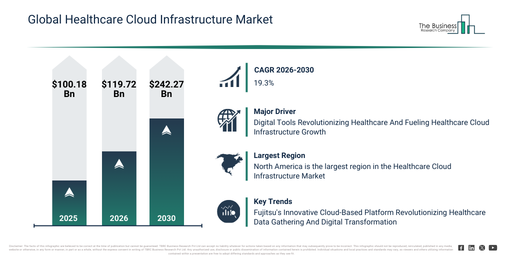
    Healthcare Cloud Infrastructure Market Expected To Reach $242.27 Billion By 2030 At 19.3% CAGR

    The digital backbone supporting healthcare services has experienced substantial expansion. Projected to increase from $100.18 billion in the year 2025 to $119.72 billion by 2026, this market is set to expand at a vigorous compound annual growth rate of 19.5%. Factors fueling this advancement historically include the escalating trend of digitizing patient information, the burgeoning use of remote healthcare services, a growing need for adaptable information technology frameworks, the widespread adoption of electronic health record systems, and the sheer increase in the quantity of healthcare-related data being generated.

    The global healthcare cloud infrastructure sector is poised for significant expansion, projecting an increase to $242.27 billion by 2030, fueled by a compound annual growth rate of 19.3%. This accelerated trajectory is largely propelled by a confluence of factors including the escalating shift towards cloud-native healthcare applications, heightened emphasis on adhering to stringent data privacy and security regulations, the proliferation of AI-driven analytics within the healthcare domain, burgeoning investments in hybrid cloud strategies, and a persistent need for economical IT infrastructure solutions in healthcare. Key developments anticipated during this period involve a greater embrace of hybrid cloud frameworks, a surge in the requirement for protected healthcare data repositories, amplified utilization of adaptable cloud computing capabilities, broader deployment of disaster recovery and backup services, and a more concentrated effort towards establishing interoperable infrastructure.

    Download A Free Sample Report For Comprehensive Market Insights:

    https://www.thebusinessresearchcompany.com/sample.aspx?id=7267&type=smp

    Healthcare Cloud Infrastructure Market Growth Drivers: What Factors Are Accelerating Expansion?

    The healthcare cloud infrastructure market’s expansion is anticipated to be significantly fueled by the growing integration of digital technologies within the medical field. These digital advancements encompass a range of software, hardware, and services that employ information and communication technology to empower both healthcare providers and patients in making informed decisions. Technologies such as electronic health records (EHRs), electronic medical records (EMRs), mHealth applications, wearable technology, telehealth and telemedicine solutions, and personalized medicine are instrumental in enhancing the quality of healthcare delivery. The operational backbone for many of these digital healthcare applications is the cloud infrastructure, which is essential for boosting efficiency, interoperability, and security. This cloud infrastructure serves as a foundational element for the healthcare industry’s digital evolution, paving the way for improved patient outcomes, streamlined operations, and innovation in both service delivery and technological advancements. Illustrating this trend, Deloitte Touche Tohmatsu Limited reported in January 2025 that approximately 70% of surveyed individuals consider investments in digital tools and platforms crucial, with 60% focusing on foundational technologies like EMRs and ERP systems, and close to 90% of senior executives anticipating an accelerated uptake of digital technologies in 2025. Consequently, the increasing embrace of digital tools across the healthcare industry is a primary driver for the growth of the healthcare cloud infrastructure market.

    Healthcare Cloud Infrastructure Market Categorization By Product Type And Application

    The healthcare cloud infrastructure market covered in this report is segmented –

    1) By Component: Hardware, Services

    2) By Deployment Model: Private Cloud, Hybrid Cloud, Public Cloud

    3) By End-User: Healthcare Providers, Healthcare Payers

    Subsegments:

    1) By Hardware: Servers, Storage Devices, Networking Equipment, Security Appliances

    2) By Services: Cloud Storage Services, Cloud Computing Services, Cloud Security Services, Consulting And Integration Services

    Healthcare Cloud Infrastructure Market Trends: What Is Shaping Future Industry Growth?

    Leading corporations within the healthcare cloud infrastructure sector are prioritizing advancements in their offerings, particularly through the development of internet-connected, server-based platforms that function as an operating system and hardware for data centers. These platforms facilitate the remote and scalable integration of both software and hardware. Rather than investing in and managing their own data centers or IT infrastructure, businesses can lease access to various computing resources, including servers, storage, databases, networking capabilities, software solutions, and intelligence services. As an illustration, in March of 2023, Fujitsu Limited, a Japanese firm specializing in information and communications technology, introduced a novel and distinct cloud-based platform. This cutting-edge platform empowers individuals to securely collect and leverage health-related information, thereby propelling digital innovation within the healthcare field. This new development aligns with Fujitsu’s ongoing commitment to fostering societal well-being, supporting its Fujitsu Uvance initiative focused on ‘healthy living’ and the creation of a sustainable global environment. Key features that set this platform apart include its capacity to automatically convert healthcare data into HL7 FHIR, the emerging standard for medical information, its ability to consolidate diverse health-related data sources, and its sophisticated security features designed to guarantee the secure utilization of information.

    Healthcare Cloud Infrastructure Market Company Landscape And Strategic Competition

    Major companies operating in the healthcare cloud infrastructure market are Amazon.com Inc., Microsoft Corporation, Google LLC, Oracle Corporation, International Business Machines Corporation, Hewlett Packard Enterprise, Dell Inc., NetApp Inc., Cisco Systems Inc., VMware Inc., SAP SE, Alibaba Group Holding Ltd, Tencent Holdings Ltd, NTT Ltd, Fujitsu Limited, Hitachi Ltd, Iron Mountain Incorporated, Equinix Inc., Digital Realty Trust Inc., ClearDATA Networks Inc.

    Access The Complete Healthcare Cloud Infrastructure Market Report:

    https://www.thebusinessresearchcompany.com/report/healthcare-cloud-infrastructure-global-market-report

    Healthcare Cloud Infrastructure Market Global Footprint: Which Region Holds Market Leadership?

    North Americawas the largest region in the healthcare cloud computing market in 2025. Asia-Pacificis expected to be the fastest-growing region in the forecast period. The regions covered in the healthcare cloud infrastructure market report are Asia-Pacific, South East Asia, Western Europe, Eastern Europe, North America, South America, Middle East, Africa.

    Get in touch with us:

    The Business Research Company: https://www.thebusinessresearchcompany.com/

    Americas: +1 310-496-7795

    Asia: +44 7882 955267 & +91 8897263534

    Europe: +44 7882 955267

    Email us at: marketing@tbrc.info

    Follow us on:

    LinkedIn: https://in.linkedin.com/company/the-business-research-company

    YouTube: https://www.youtube.com/channel/UC24_fI0rV8cR5DxlCpgmyFQ

    Global Market Model: https://www.thebusinessresearchcompany.com/global-market-model

  • Healthcare Claims Management Solutions Market Trends And Growth Drivers Point To Strong Future Potential

    Healthcare Claims Management Solutions Market Trends And Growth Drivers Point To Strong Future Potential

    Enhanced with market attractiveness analysis, total addressable market evaluation, company benchmarking matrices, interactive Excel dashboards, expanded supply chain intelligence, emerging startup coverage, and detailed product insights, The Business Research Company’s 2026 market reports deliver more actionable and strategically valuable research.

    Healthcare Claims Management Solutions Market Size And Revenue Forecast Through 2030

    The market for healthcare claims management solutions has experienced robust expansion lately, projecting a rise from $17.43 billion in 2025 to $18.7 billion in 2026, reflecting a compound annual growth rate of 7.3%. This upward trajectory in the observed period is largely due to heightened healthcare insurance penetration, an increase in submitted claims by healthcare providers, the wider implementation of electronic billing systems, the escalating intricacy of reimbursement procedures, and a growing need for expedited claim resolutions.

    The market for healthcare claims management solutions is poised for substantial expansion in the upcoming years, projecting a rise to $24.47 billion by 2030, driven by a compound annual growth rate (CAGR) of 7.0%. This anticipated upswing is fueled by several key factors, including the increasing adoption of artificial intelligence within claims processing platforms, a heightened concentration on reimbursement models that reward value-based care, the proliferation of cloud-based solutions for managing claims, a stronger emphasis on automating regulatory compliance, and a growing demand for immediate transparency in claims handling. Prominent trends shaping this market during the forecast period will encompass a greater embrace of automated claims processing systems, a more extensive utilization of predictive analytics to improve claims accuracy, the enhanced integration of real-time access to patient data, an expanded deployment of tools designed for fraud detection and prevention, and a more significant focus on data security and adherence to regulations.

    Download A Free Sample Report For Comprehensive Market Insights:

    https://www.thebusinessresearchcompany.com/sample.aspx?id=7298&type=smp

    Healthcare Claims Management Solutions Market Growth Factors Supporting Long-Term Expansion

    The expanding prevalence of long-term health conditions, known as chronic diseases, is anticipated to be a significant catalyst for the advancement of the healthcare claims management solutions market. These persistent health issues necessitate continuous medical attention, and claims management solutions play a vital role in streamlining the accurate and effective processing of associated claims, thereby facilitating prompt financial compensation for healthcare providers delivering chronic disease care. Illustratively, data from the US National Center for Biotechnology Information (NCBI), released in January 2023, forecasts a substantial rise, predicting that by 2050, the population aged 50 and above suffering from at least one chronic ailment will escalate by 99.5%, reaching a total of 142.66 million individuals. Consequently, this escalating burden of chronic diseases is poised to drive the expansion of the healthcare claims management solutions sector.

    Healthcare Claims Management Solutions Market Segment Analysis And Revenue Opportunities

    The healthcare claims management solutions market covered in this report is segmented –

    1) By Type: Software, Services

    2) By Deployment Mode: Web-Based, Cloud-Based, On-Premise

    3) By End-User: Healthcare Payers, Healthcare Providers, Other End-Users

    Subsegments:

    1) By Software: Claims Processing Software, Revenue Cycle Management Software, Medical Billing Software, Analytics And Reporting Tools

    2) By Services: Consulting Services, Implementation Services, Training And Support Services, Claims Auditing Services

    Healthcare Claims Management Solutions Market Industry Trends Shaping Future Revenue Growth

    Key players within the healthcare claims management solutions sector are prioritizing advancements in their product offerings, exemplified by the introduction of AI-powered tools like the Claims Data Activator Suite. This innovative solution is designed to foster data interoperability, deliver sophisticated analytical capabilities, and enable intelligent reporting through the integration of Document AI, the Healthcare Natural Language API, and the Healthcare API, effectively translating raw, unstructured data into a usable, structured format. A notable development occurred in April 2023 when Google LLC, a prominent US technology firm, unveiled its new Google Cloud AI-enabled claims data activator. This tool is specifically engineered to support health plans and healthcare providers by streamlining administrative burdens and reducing associated costs, facilitating the transformation of unstructured data into structured formats and equipping professionals with the means to render faster, more informed decisions, ultimately leading to improved patient outcomes.

    Healthcare Claims Management Solutions Market Leading Players Shaping Industry Direction

    Major companies operating in the healthcare claims management solutions market are Allscripts Healthcare Solutions Inc, Athenahealth, McKesson Corporation, Oracle Corporation, Availity LLC, Cerner Corporation, Change Healthcare, Conifer Health Solutions LLC, eClinicalWorks, Emdeon Inc, Epic Systems Corporation, Inovalon Co, InstaMed LLC, Kareo Co, NaviNet Inc, NTT Data Services, Optum Inc, SSI Group LLC, Cognizant Technology Ltd, TruBridge Co, Waystar Co, ZirMed Inc

    Access The Complete Healthcare Claims Management Solutions Market Report:

    https://www.thebusinessresearchcompany.com/report/healthcare-claims-management-solutions-global-market-report

    Healthcare Claims Management Solutions Market Regional Distribution: Which Areas Drive Market Expansion?

    North Americawas the largest region in the healthcare claim management solution market in 2025. Asia-Pacificis expected to be the fastest-growing region in the forecast period. The regions covered in the healthcare claims management solutions market report are Asia-Pacific, South East Asia, Western Europe, Eastern Europe, North America, South America, Middle East, Africa.

    Get in touch with us:

    The Business Research Company: https://www.thebusinessresearchcompany.com/

    Americas: +1 310-496-7795

    Asia: +44 7882 955267 & +91 8897263534

    Europe: +44 7882 955267

    Email us at: marketing@tbrc.info

    Follow us on:

    LinkedIn: https://in.linkedin.com/company/the-business-research-company

    YouTube: https://www.youtube.com/channel/UC24_fI0rV8cR5DxlCpgmyFQ

    Global Market Model: https://www.thebusinessresearchcompany.com/global-market-model

  • Healthcare Business Process Outsourcing (BPO) Market Expansion Is Reshaping Competitive Dynamics Across The Industry

    Healthcare Business Process Outsourcing (BPO) Market Expansion Is Reshaping Competitive Dynamics Across The Industry

    Through market attractiveness analysis, total addressable market evaluation, company benchmarking matrices, interactive Excel dashboards, expanded supply chain intelligence, emerging startup coverage, and detailed product insights, The Business Research Company’s 2026 market reports provide more actionable and strategically valuable research.

    Healthcare Business Process Outsourcing (BPO) Market Growth From $395.86 Billion In 2026 To $630.19 Billion By 2030 At A CAGR Of 12.3%

    The healthcare business process outsourcing sector has experienced significant expansion lately, with projections indicating a rise from $355.65 billion in 2025 to $395.87 billion in 2026, reflecting a compound annual growth rate of 11.3%. This past growth trajectory is linked to several factors, including the escalating administrative burden within healthcare systems, escalating expenses for both service providers and insurance companies, a broader reach of health insurance, more stringent regulatory adherence demands, and an early inclination toward outsourcing billing functions.

    The global healthcare business process outsourcing (BPO) market is projected for significant expansion, anticipated to reach $630.2 billion by 2030, exhibiting a compound annual growth rate (CAGR) of 12.3%. This upward trajectory is propelled by several key factors: a surge in the need for adaptable outsourcing solutions, augmented investments in AI-powered BPO services, the broadening scope of administrative support for value-based care models, a heightened emphasis on outsourcing cybersecurity and compliance functions, and the persistent pivot towards digitized healthcare operations. Throughout the forecasted period, prominent trends will include a greater embrace of comprehensive revenue cycle outsourcing, increased utilization of automation in managing claims and billing, escalating demand for regulatory adherence and data protection services, the expansion of IT infrastructure management outsourcing, and a more concentrated effort on achieving cost efficiencies.

    Download A Free Sample Report For Comprehensive Market Insights:

    https://www.thebusinessresearchcompany.com/sample.aspx?id=13290&type=smp

    Healthcare Business Process Outsourcing (BPO) Market Demand Drivers Creating New Revenue Opportunities

    The escalating frequency of data breaches is poised to significantly boost the healthcare business process outsourcing market. A data breach, characterized by the unauthorized access, revelation, acquisition, or dissemination of private or sensitive information, necessitates stronger protective measures. Healthcare BPO firms are instrumental in safeguarding patient data, employing stringent data management practices and advanced security systems to maintain its confidentiality and wholeness. Illustrating this trend, the Identity Theft Resource Center (ITRC), a US non-profit, reported that in 2023, the United States experienced 3,205 data compromises, a substantial surge of 78 percentage points from the 1,801 incidents recorded in 2022. Consequently, the persistent and growing threat of data insecurity is a primary catalyst for the expansion of the healthcare BPO sector.

    Healthcare Business Process Outsourcing (BPO) Market Segmentation And Category Breakdown

    The healthcare business process outsourcing (bpo) market covered in this report is segmented –

    1) By Service Type: Provider Outsourcing Services, Payer Outsourcing Services, Operational Outsourcing Services, Information Technology Infrastructure Management Services

    2) By Provider Service: Revenue Cycle Management, Patient Enrollment, Patient Care

    3) By Solution: Manufacturing, Research And Development, Non-Clinical Services

    4) By End User: Healthcare Providers, Healthcare Payers, Other End-Users

    Subsegments:

    1) By Provider Outsourcing Services: Medical Billing And Coding, Revenue Cycle Management, Patient Scheduling And Registration, Telehealth Services

    2) By Payer Outsourcing Services: Claims Processing, Member Enrollment And Eligibility Verification, Fraud Detection And Prevention, Customer Support Services

    3) By Operational Outsourcing Services: Human Resources Outsourcing, Procurement And Supply Chain Management, Facility Management Services, Administrative Support Services

    4) By Information Technology Infrastructure Management Services: IT Help Desk Support, Cloud Services Management, Network Management, Data Security And Compliance Services

    Healthcare Business Process Outsourcing (BPO) Market Trends Driving Strategic Industry Expansion

    The healthcare BPO sector is witnessing a significant trend where key players are prioritizing technological innovation, specifically adopting agentic AI-powered digital workforce platforms. This strategic shift is driven by the escalating need for diminished claim rejections, enhanced operational performance, and adaptable, economical revenue cycle management solutions. Unlike conventional BPO approaches that rely on manual labor and inflexible, rule-based systems, an agentic AI-powered digital workforce platform deploys intelligent AI-driven agents. These agents leverage advanced capabilities in natural language understanding, machine learning, and automation to independently handle or support intricate administrative tasks, including but not limited to verifying eligibility, managing claim denials, securing prior authorizations, and processing appeals. Illustrating this trend, AGS Health, a US provider of revenue cycle management and BPO services, launched its Agentic Digital Workforce Solutions in October 2025. This ensemble of AI agents, engineered for RCM, is capable of human-like reasoning and decision-making support. They can comprehend natural language, adjust to evolving payer regulations, and work collaboratively with human personnel, thereby automating high-volume, repetitive duties and presenting clear, actionable next steps. This integrated solution employs generative AI, robotic process automation (RPA), and workflow orchestration to decrease denial percentages, improve the rate of error-free claims, and increase cash flow, empowering RCM teams to concentrate on more strategic responsibilities.

    Healthcare Business Process Outsourcing (BPO) Market Competitive Analysis Of Major Industry Participants

    Major companies operating in the healthcare business process outsourcing (bpo) market are UnitedHealth Group Incorporated, Accenture plc, International Business Machines Corporation, Tata Consultancy Services Limited, Cognizant Technology Solutions Corporation, IQVIA Holdings Inc., Quintiles IMS Holdings Inc., HCL Technologies Limited, Infosys Limited, Wipro Limited, Sutherland Global Services Inc., Xerox Holdings Corporation, Genpact Limited, Access Healthcare Services Pvt. Ltd., Parexel International Corporation, R1 RCM Inc., NTT Data Corporation, EXLService Holdings Inc., Sykes Enterprises Incorporated, WNS Limited, Firstsource Solutions Limited, Invensis Technologies Pvt. Ltd., Hinduja Global Solutions Limited, Mphasis Limited, GeBBS Healthcare Solutions Inc., Akurate Management Solutions Pvt Ltd., Gevity Consulting Inc., Octopus Tech Solutions Pvt Ltd.

    Access The Complete Healthcare Business Process Outsourcing (BPO) Market Report:

    https://www.thebusinessresearchcompany.com/report/healthcare-business-process-outsourcing-bpo-global-market-report

    Healthcare Business Process Outsourcing (BPO) Market Leading Geography: Which Region Generates The Most Revenue?

    North Americawas the largest region in the healthcare business process outsourcing (BPO) market in 2025. Asia-Pacificis expected to be the fastest-growing region in the forecast period. The regions covered in the healthcare business process outsourcing (bpo) market report are Asia-Pacific, South East Asia, Western Europe, Eastern Europe, North America, South America, Middle East, Africa.

    Get in touch with us:

    The Business Research Company: https://www.thebusinessresearchcompany.com/

    Americas: +1 310-496-7795

    Asia: +44 7882 955267 & +91 8897263534

    Europe: +44 7882 955267

    Email us at: marketing@tbrc.info

    Follow us on:

    LinkedIn: https://in.linkedin.com/company/the-business-research-company

    YouTube: https://www.youtube.com/channel/UC24_fI0rV8cR5DxlCpgmyFQ

    Global Market Model: https://www.thebusinessresearchcompany.com/global-market-model
  • Healthcare Business Intelligence Market Forecast Reveals Where Future Industry Value Will Be Created

    Healthcare Business Intelligence Market Forecast Reveals Where Future Industry Value Will Be Created

    Delivering more actionable and strategically valuable research, The Business Research Company’s 2026 market reports feature market attractiveness analysis, total addressable market evaluation, company benchmarking matrices, interactive Excel dashboards, expanded supply chain intelligence, emerging startup coverage, and detailed product insights.

    Healthcare Business Intelligence Market Expansion Outlook: What Revenue Opportunities Lie Ahead?

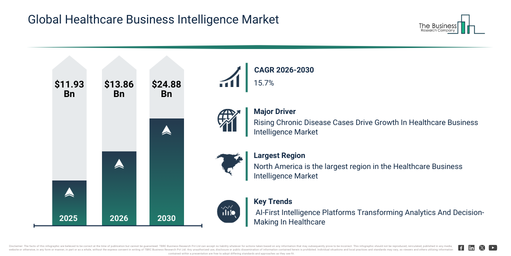
    Fueled by the expanding accessibility of digital health records, the early embrace of reporting and dashboard technologies, intensified pressures to curtail healthcare expenditures, the proliferation of performance assessment methodologies, and an increasing focus on operational clarity, the healthcare business intelligence market experienced considerable expansion. Projections indicate this market will surge from an estimated $11.93 billion in 2025 to $13.86 billion by 2026, demonstrating a robust compound annual growth rate of 16.2%.

    The healthcare business intelligence sector is poised for significant expansion, projecting a market valuation of $24.88 billion by the year 2030, fueled by a compound annual growth rate (CAGR) of 15.7%. This anticipated surge over the forecast period is largely driven by several key factors, including augmented investments in artificial intelligence-powered analytical tools, a heightened need for comprehensive population health insights, the expanding application of value-based care analytics, broader adoption of cloud-based business intelligence platforms, and ongoing improvements in the interoperability of healthcare data. Furthermore, prominent trends expected to shape this market include a greater uptake of sophisticated healthcare analytics platforms, an increased utilization of predictive and prescriptive analytical methods, the growing incorporation of real-time data visualization instruments, the proliferation of cloud-based business intelligence offerings, and an intensified emphasis on making decisions grounded in data.

    Download A Free Sample Report For Comprehensive Market Insights:

    https://www.thebusinessresearchcompany.com/sample.aspx?id=6928&type=smp

    Healthcare Business Intelligence Market Expansion Supported By Key Demand Factors

    A significant driver for the expansion of the healthcare business intelligence market is the escalating prevalence of chronic conditions, which are defined as ongoing health issues requiring sustained medical attention. This intelligence is instrumental in managing these long-term ailments by optimizing patient care strategies, refining the distribution of healthcare resources, mitigating expenditure, and enabling informed choices grounded in data analysis for superior patient prognoses over time. Illustrating this trend, data from January 2023 provided by the National Center for Biotechnology Information, a division of the U.S. National Library of Medicine, forecasts a substantial increase, predicting that by 2050, the cohort of individuals aged 50 and above afflicted with at least one chronic illness will dramatically rise by 99.5%, reaching a total of 142.66 million people. Consequently, this burgeoning rate of chronic diseases is poised to stimulate further development within the healthcare business intelligence sector.

    Healthcare Business Intelligence Market Segment Outlook: Which Categories Are Expanding The Fastest?

    The healthcare business intelligence market covered in this report is segmented –

    1) By Component: Platforms, Software, Services

    2) By Function: Query and Reporting, OLAP and Visualization, Performance Management

    3) By Mode of Delivery: On-Premise Model, Hybrid Model, Cloud-Based Model

    4) By Application: Financial Analysis, Clinical Data Analysis, Patient Care Analysis, Other Applications

    5) By End-User: Payers, Healthcare Providers, Other End-Users

    Subsegments:

    1) By Platforms: Cloud-Based Platforms, On-Premise Platforms

    2) By Software: Analytics Software, Reporting Software, Data Visualization Tools, Dashboard Software

    3) By Services: Consulting Services, Implementation Services, Training and Support Services, Maintenance Services

    Healthcare Business Intelligence Market Growth Trends Influencing Competitive Dynamics

    In the competitive healthcare business intelligence arena, leading entities are prioritizing cutting-edge developments, specifically AI-centric intelligence platforms, to address the escalating need for immediate predictive insights, seamless data consolidation across various fields, and adaptable decision-making capabilities. This trend is propelled by increasing adoption of electronic health records, escalating operational expenditures, and the imperative to adhere to value-based care frameworks. An AI-first healthcare intelligence platform represents a cloud-based solution designed to consolidate fragmented data from clinical, financial, operational, and human resources domains, employing machine learning and integrated AI assistants or copilots. It furnishes users with accessible tools for analysis and automated processes. Contrasting with conventional BI tools that often depend on static reports and isolated data sets, these advanced platforms deliver dynamic, forward-looking, and actionable intelligence, facilitating near real-time data utilization. As an illustration, Innovaccer, a US-based firm specializing in healthcare AI, introduced Innovaccer Gravity in May 2025. This platform, engineered with a contemporary, cloud-flexible architecture supporting platforms like AWS, Azure, Snowflake, and Databricks, and adhering to HIPAA, HITRUST, and SOC 2 standards, effectively merges data from electronic health records, claims, finance, operations, and supply chains through an extensive network of over 400 pre-built connections and more than 100 FHIR resources. It incorporates a data fabric layer, sophisticated AI models for tasks such as optical character recognition and speech analysis, alongside development environments that require minimal or no coding for creating bespoke AI agents and workflows. Ultimately, Gravity equips healthcare organizations with integrated, cross-domain intelligence, user-driven analytics, and expedited returns on investment, while concurrently lowering the overall cost of ownership, thereby fostering improvements in patient outcomes, operational effectiveness, and financial results.

    Healthcare Business Intelligence Market Key Companies And Competitive Benchmarking

    Major companies operating in the healthcare business intelligence market are Microsoft Corporation, Oracle Corporation, Tableau Software, SAP SE, IBM Corporation, QlikTech International AB, Sisense Inc, SAS Institute Inc, BOARD International, Yellowfin BI, MicroStrategy Incorporated, Infor Inc, Domo Inc., Information Builders, Perficient Inc., Tibco Software Inc., Panorama Software Inc, Definitive Healthcare, Dimensional Insight Inc., Looker Data Sciences Inc., GoodData Corporation, Phocas Software, Pyramid Analytics Inc., Dundas Data Visualization Inc., Alteryx Inc., ThoughtSpot Inc., Rapid Insight Inc., Aptean Inc., Health Catalyst Inc., Arcadia.io Inc., MedeAnalytics Inc., McKesson Corporation, Optum Inc., Cerner Corporation, Allscripts Healthcare Solutions Inc., Athenahealth Inc., Epic Systems Corporation, GE Healthcare, Philips Healthcare, Siemens Healthineers, Change Healthcare

    Access The Complete Healthcare Business Intelligence Market Report:

    https://www.thebusinessresearchcompany.com/report/healthcare-business-intelligence-global-market-report

    Healthcare Business Intelligence Market Regional Outlook: Where Are The Largest Opportunities Located?

    North Americawas the largest region in the healthcare business intelligence market in 2025. Asia-Pacificis expected to be the fastest-growing region in the forecast period. The regions covered in the healthcare business intelligence market report are Asia-Pacific, South East Asia, Western Europe, Eastern Europe, North America, South America, Middle East, Africa.

    Get in touch with us:

    The Business Research Company: https://www.thebusinessresearchcompany.com/

    Americas: +1 310-496-7795

    Asia: +44 7882 955267 & +91 8897263534

    Europe: +44 7882 955267

    Email us at: marketing@tbrc.info

    Follow us on:

    LinkedIn: https://in.linkedin.com/company/the-business-research-company

    YouTube: https://www.youtube.com/channel/UC24_fI0rV8cR5DxlCpgmyFQ

    Global Market Model: https://www.thebusinessresearchcompany.com/global-market-model

  • Healthcare Business Collaboration Tools Market Growth Through 2030 Creates New Strategic Opportunities

    Healthcare Business Collaboration Tools Market Growth Through 2030 Creates New Strategic Opportunities

    Enhanced with market attractiveness analysis, total addressable market evaluation, company benchmarking matrices, interactive Excel dashboards, expanded supply chain intelligence, emerging startup coverage, and detailed product insights, The Business Research Company’s 2026 market reports deliver more actionable and strategically valuable research.

    Healthcare Business Collaboration Tools Market Growth Potential: How Will Market Size Change Through 2030?

    The market for healthcare business collaboration tools has experienced remarkable expansion recently, projecting a rise from $40.35 billion in 2025 to $50.88 billion in 2026, reflecting a robust compound annual growth rate (CAGR) of 26.1%. Factors contributing to this significant growth during the past period include the escalating digitalization within healthcare administration, the broadening of healthcare networks across multiple sites, the early embrace of telehealth communication solutions, an increasing demand for coordinated patient care, and the mounting requirements for regulatory documentation.

    The global market for healthcare business collaboration tools is poised for substantial expansion, projected to reach $127.29 billion by 2030, reflecting a robust compound annual growth rate of 25.8%. This anticipated surge is propelled by several key factors, including a heightened requirement for seamless interoperability among collaboration platforms, escalating investments in digital healthcare infrastructure, the broadening adoption of remote care coordination strategies, an intensified emphasis on real-time clinical teamwork, and continuous improvements in data security measures. Furthermore, prevailing trends expected to shape this market include a greater reliance on cloud-based collaboration solutions, increased utilization of secure communication tools within the healthcare sector, deeper integration of workflow automation systems, the proliferation of virtual meeting and telecollaboration technologies, and a heightened commitment to safeguarding data privacy and regulatory compliance.

    Download A Free Sample Report For Comprehensive Market Insights:

    https://www.thebusinessresearchcompany.com/sample.aspx?id=24232&type=smp

    Healthcare Business Collaboration Tools Market Growth Drivers And Industry Catalysts

    The healthcare sector’s expanding adoption of remote patient monitoring solutions is anticipated to be a primary catalyst for the advancement of the market for business collaboration tools within the healthcare industry. Remote patient monitoring involves leveraging digital advancements to gather patient health information from afar, subsequently forwarding this data to medical professionals for expert analysis and recommendations. This heightened emphasis on monitoring patients remotely is largely attributable to the burgeoning elderly demographic and the consequent escalation in the prevalence of long-term health conditions, both of which necessitate persistent, ongoing care and immediate health surveillance. Collaboration tools for healthcare businesses significantly bolster remote patient monitoring capabilities through facilitating instantaneous data exchange and communication, thereby ensuring prompt medical responses and unified patient management. These tools ultimately contribute to better patient results by underpinning continuous health observation and promoting effective, swift decision-making among all members of the healthcare team. Illustrating this trend, data from the US Department of Health and Human Services revealed that in August 2025, approximately one million individuals benefited from remote patient monitoring in 2024, marking a substantial 27% surge compared to the previous year. Consequently, the escalating integration of remote patient monitoring directly fuels the expansion of the market for healthcare business collaboration tools.

    Healthcare Business Collaboration Tools Market Segment Landscape: Which Areas Lead Market Development?

    The healthcare business collaboration tools market covered in this report is segmented –

    1) By Type: Conferencing Software, Communication And Coordination Software

    2) By Deployment: Cloud, On-Premises

    3) By End-User: Large Facilities, Small And Medium Facilities

    Subsegments:

    1) By Conferencing Software: Video Conferencing, Audio Conferencing, Web Conferencing, Virtual Meeting Platforms

    2) By Communication And Coordination Software: Messaging Platforms, Patient Coordination Tools, Collaborative Care Solutions, Workflow Management Systems

    #Healthcare Business Collaboration Tools Market Trends Influencing Long-Term Demand

    Leading entities within the healthcare business collaboration tools market are concentrating their efforts on pioneering advancements, notably through the creation of healthcare artificial intelligence (AI) models. These sophisticated AI systems are designed to offer clients superior assistance, facilitate pain management, and foster improved coordination, all contributing to an elevated standard of healthcare delivery. The core functionality of healthcare AI models lies in their capacity to integrate and scrutinize diverse datasets within the medical field, thereby refining clinical judgment and positively impacting patient prognoses. A prime illustration of this trend occurred in October 2024 when Microsoft Corporation, a prominent technology firm based in the United States, introduced Microsoft Cloud for Healthcare. This comprehensive solution is engineered to elevate patient engagement, cultivate better team synergy, and generate deeper insights into healthcare operations. Functioning as an advanced healthcare business collaboration instrument powered by AI models, it optimizes communication channels, boosts the efficiency of work processes, and ensures smooth coordination among healthcare professionals, which collectively leads to better patient outcomes and heightened operational performance. Ultimately, Microsoft Cloud for Healthcare serves to advance patient treatment, strengthen interdisciplinary teamwork, and optimize operational frameworks through the application of AI-generated intelligence and robust data security protocols.

    Healthcare Business Collaboration Tools Market Industry Leaders And Market Competition

    Major companies operating in the healthcare business collaboration tools market are Microsoft Corporation, Google LLC, Salesforce Inc, Zoom Video Communications Inc, RingCentral Inc, Cisco Systems Inc, Verizon Communications Inc, Teladoc Health Inc, Doximity Inc, TigerConnect Inc, Zocdoc Inc, Health Catalyst Inc, Zoho Corporation, Slack Technologies, Asana Inc, Mondaycom Ltd, Smartsheet Inc, FlowForma Limited, OnPage Corporation, Gladinet Inc

    Access The Complete Healthcare Business Collaboration Tools Market Report:

    https://www.thebusinessresearchcompany.com/report/healthcare-business-collaboration-tools-global-market-report

    Healthcare Business Collaboration Tools Market Geographic Landscape: Which Region Dominates Industry Growth?

    Europewas the largest region in the healthcare business collaboration tools market in 2025. Asia-Pacificis expected to be the fastest-growing region in the forecast period. The regions covered in the healthcare business collaboration tools market report are Asia-Pacific, South East Asia, Western Europe, Eastern Europe, North America, South America, Middle East, Africa.

    Get in touch with us:

    The Business Research Company: https://www.thebusinessresearchcompany.com/

    Americas: +1 310-496-7795

    Asia: +44 7882 955267 & +91 8897263534

    Europe: +44 7882 955267

    Email us at: marketing@tbrc.info

    Follow us on:

    LinkedIn: https://in.linkedin.com/company/the-business-research-company

    YouTube: https://www.youtube.com/channel/UC24_fI0rV8cR5DxlCpgmyFQ

    Global Market Model: https://www.thebusinessresearchcompany.com/global-market-model
  • Healthcare Biometrics Market Size Projected To Increase From $12.59 Billion To $27.63 Billion During The Forecast Period

    Healthcare Biometrics Market Size Projected To Increase From $12.59 Billion To $27.63 Billion During The Forecast Period

    Through market attractiveness analysis, total addressable market evaluation, company benchmarking matrices, interactive Excel dashboards, expanded supply chain intelligence, emerging startup coverage, and detailed product insights, The Business Research Company’s 2026 market reports provide more actionable and strategically valuable research.

    Healthcare Biometrics Market Value Analysis: What Growth Is Expected Over The Forecast Period?

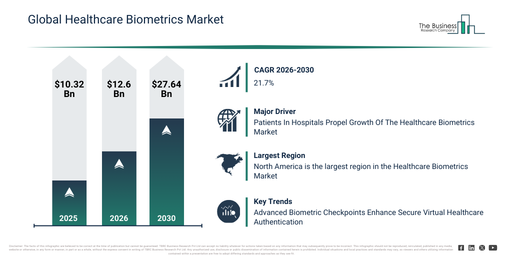
    The healthcare biometrics market has experienced significant expansion lately, projected to ascend from $10.32 billion in 2025 to $12.6 billion in 2026, reflecting a compound annual growth rate of 22.0%. Factors fueling this historical surge include the escalating digitalization of medical documentation, a rise in instances of patient identity deception, the early integration of fingerprint and facial recognition technologies, the proliferation of hospital information systems, and a heightened regulatory focus on safeguarding data.

    The healthcare biometrics sector is poised for remarkable expansion, with projections indicating a surge to $27.64 billion by 2030, driven by a compound annual growth rate of 21.7%. This upward trajectory is fueled by several key factors, including the burgeoning implementation of artificial intelligence within biometric analytics, the escalating use of telehealth and remote patient monitoring services, significant investments directed towards bolstering healthcare cybersecurity measures, a heightened demand for streamlined patient access control, and the increasing incorporation of biometric technologies into existing digital health frameworks. Emerging trends shaping the market’s future encompass a greater adoption of multi-modal biometric verification systems, a more widespread utilization of contactless methods for patient identification, deeper integration of biometrics with electronic health record (EHR) systems, the broader deployment of remote patient authentication solutions, and an intensified emphasis on safeguarding data security and user privacy.

    Download A Free Sample Report For Comprehensive Market Insights:

    https://www.thebusinessresearchcompany.com/sample.aspx?id=19499&type=smp

    Healthcare Biometrics Market Opportunity Drivers: What Is Creating New Revenue Potential?

    The expansion of the healthcare biometrics market is anticipated to be fueled by a growing patient population within hospitals, a trend attributed to demographic shifts like an aging populace, a higher incidence of long-term health conditions, and broadened availability of medical services; this technology bolsters patient safety and tailors treatments by ensuring precise identification and verification, with specifically, in the period of September 2024, data from Public Health, a UK entity, indicated that approximately 0.7 million individuals residing in Scotland, representing one in every eight people, were hospitalized during 2023/24, noting that three in ten of these individuals, precisely 31%, experienced multiple admissions, and overall hospital admissions reached just over 1.1 million in 2023/24, signifying a 4% uptick from the preceding year 2022/23, thus underscoring the direct correlation between rising hospital patient figures and the market’s upward trajectory for healthcare biometrics.

    Healthcare Biometrics Market Segments: Where Are The Largest Growth Opportunities?

    The healthcare biometrics market covered in this report is segmented –

    1) By Technology: Fingerprint Recognition, Face Recognition, Voice Recognition, Vein Recognition, Iris Recognition

    2) By Application: Medical Record And Data Center Security, Patient Identification And Tracking, Care Provider Authentication, Home Or Remote Patient Monitoring, Other Applications

    3) By End-User: Hospitals, Clinics, Clinical Laboratories, Healthcare Institutions

    Subsegments:

    1) By Fingerprint Recognition: Optical Fingerprint Recognition, Capacitive Fingerprint Recognition, Ultrasonic Fingerprint Recognition, Thermal Fingerprint Recognition, Multi-Factor Fingerprint Authentication Systems

    2) By Face Recognition: 2D Face Recognition, 3D Face Recognition, Infrared Face Recognition, Facial Thermography, Real-Time Face Recognition Systems

    3) By Voice Recognition: Speaker Identification Systems, Speaker Verification Systems, Voice Biometric Authentication, AI-Powered Voice Recognition For Healthcare, Multi-Modal Voice Recognition Systems

    4) By Vein Recognition: Palm Vein Recognition, Finger Vein Recognition, Infrared Vein Pattern Recognition, Near-Infrared Vein Imaging

    5) By Iris Recognition: Near-Infrared Iris Scanning, Multi-Spectral Iris Recognition, High-Speed Iris Recognition Systems, Real-Time Iris Recognition Solutions

    Healthcare Biometrics Market Innovation Trends Driving Future Development

    In the realm of healthcare biometrics, leading enterprises are dedicated to crafting novel patient identification methods, aimed at bolstering security and elevating the precision of medical treatments. These identification solutions embody sophisticated technologies engineered to reliably and securely confirm who a patient is, thereby augmenting both safety and operational effectiveness within medical environments. As an illustration, during February 2024, VerifiNow, a US entity specializing in biometric confirmation, introduced PatientVerifi. This particular biometric identity verification tool, tailored for telehealth services, leverages voice recognition, facial mapping, and live person detection to precisely validate individuals during remote consultations. Such advancements serve to mitigate the dangers associated with mistaking one patient for another, potential legal actions stemming from misdiagnoses, and the improper use of prescribed medications. Developed with the capability to integrate seamlessly with widely used video conferencing applications like Zoom and Microsoft Teams, PatientVerifi simultaneously strengthens adherence to healthcare regulations and provides robust protection for both those receiving care and those providing it.

    Healthcare Biometrics Market Major Participants And Competitive Dynamics

    Major companies operating in the healthcare biometrics market are Fujitsu Limited, NEC Corporation, Siemens Healthineers AG, Thales Group, IDEMIA SA, GoForward Inc., Zkteco Inc., Imprivata Inc, M2SYS LLC, Cross Match Technologies Inc., Daon Inc., Facephi, Aware Inc., Integrated Biometrics, Suprema Inc, eyeLock, Bio-Key International, Facetec Inc., RightPatient, Morpho Dys

    Access The Complete Healthcare Biometrics Market Report:

    https://www.thebusinessresearchcompany.com/report/healthcare-biometrics-global-market-report

    Healthcare Biometrics Market Largest Region: Which Geography Holds The Highest Market Share?

    North Americawas the largest region in the healthcare biometrics market in 2025. Asia-Pacificis expected to be the fastest-growing region in the forecast period. The regions covered in the healthcare biometrics market report are Asia-Pacific, South East Asia, Western Europe, Eastern Europe, North America, South America, Middle East, Africa.

    Get in touch with us:

    The Business Research Company: https://www.thebusinessresearchcompany.com/

    Americas: +1 310-496-7795

    Asia: +44 7882 955267 & +91 8897263534

    Europe: +44 7882 955267

    Email us at: marketing@tbrc.info

    Follow us on:

    LinkedIn: https://in.linkedin.com/company/the-business-research-company

    YouTube: https://www.youtube.com/channel/UC24_fI0rV8cR5DxlCpgmyFQ

    Global Market Model: https://www.thebusinessresearchcompany.com/global-market-model
  • Healthcare Automation Market Growth Outlook Reveals A CAGR Of 12.4% And A Market Value Of $144.03 Billion By 2030

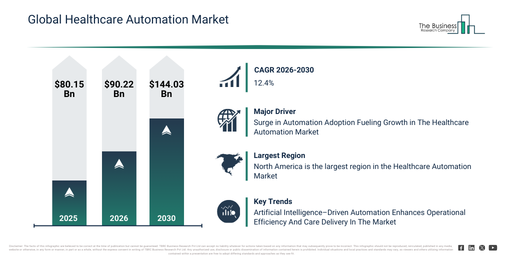
    Healthcare Automation Market Growth Outlook Reveals A CAGR Of 12.4% And A Market Value Of $144.03 Billion By 2030

    Delivering more actionable and strategically valuable research, The Business Research Company’s 2026 market reports feature market attractiveness analysis, total addressable market evaluation, company benchmarking matrices, interactive Excel dashboards, expanded supply chain intelligence, emerging startup coverage, and detailed product insights.

    Healthcare Automation Market Size Forecast: How Large Could The Market Become By 2030?

    Within the healthcare automation sector, a significant expansion in market value has been observed lately. Projections indicate this sector will escalate from $80.15 billion in 2025 to $90.22 billion by 2026, a trajectory marked by a compound annual growth rate (CAGR) of 12.6%. Key influences fueling this expansion during the preceding timeframe include the accelerating integration of digital technologies in medical practices, a mounting need to minimize inaccuracies in patient treatment, the early uptake of automated laboratory equipment, a broader implementation of electronic health records, and an amplified emphasis on patient well-being and security.

    The healthcare automation market is poised for substantial expansion in the coming years, projecting a rise to $144.03 billion by 2030 with a compound annual growth rate of 12.4%. This upward trajectory during the forecast period is fueled by several key factors, including augmented investments in smart hospital infrastructure, a surge in the utilization of AI-powered automation solutions, the broadening scope of remote patient monitoring technologies, a burgeoning demand for cohesive healthcare platforms, and ongoing progress in the interoperability of healthcare software. Prominent trends shaping this market include the increasing implementation of automated clinical processes, wider deployment of intelligent monitoring and alert mechanisms, greater incorporation of software-based care automation, expanded use of robotics in diagnostic procedures and pharmacy operations, and a heightened emphasis on optimizing operational efficiency.

    Download A Free Sample Report For Comprehensive Market Insights:

    https://www.thebusinessresearchcompany.com/sample.aspx?id=7323&type=smp

    Healthcare Automation Market Growth Momentum: Which Factors Are Influencing Demand?

    The expanding utilization of automation technologies is a key driver fueling the expansion of the healthcare automation sector. This increased adoption signifies a growing trend where healthcare organizations are integrating advanced automated solutions into their operations to boost operational efficiency and simplify various procedures. A clear illustration of this trend comes from the Future Health Index 2023 Australian report, released in July 2023 by Koninklijke Philips N.V, a prominent global conglomerate. This comprehensive survey revealed that a significant majority of healthcare leaders, specifically 47%, are employing automation to refine patient-related processes, such as automating appointment scheduling. Furthermore, an additional 43% are leveraging automation to streamline internal operations, including the automation of administrative duties and the enhancement of overall workflows. Consequently, the continued rise in automation adoption is projected to be a major catalyst for the growth of the healthcare automation market in the foreseeable future.

    Healthcare Automation Market Segment Analysis: What Are The Major Market Categories?

    The healthcare automation market covered in this report is segmented –

    1) By Component: Equipment, Software, Services

    2) By Application: Therapeutic Automation, Lab And Pharmacy Automation, Diagnostics And Monitoring Automation

    3) By End-User: Pharmacies, Research Institutes And Labs

    Subsegments:

    1) By Equipment: Automated Laboratory Equipment, Pharmacy Automation Systems, Surgical Robots, Point-Of-Care Testing Devices

    2) By Software: Laboratory Information Management Systems (LIMS), Electronic Health Records (EHR) Systems, Workflow Management Software, Clinical Decision Support Systems (CDSS)

    3) By Services: Consulting Services, Integration Services, Maintenance And Support Services

    Healthcare Automation Market Trends Reshaping Industry Growth

    Leading entities within the healthcare automation sector are prioritizing the creation of sophisticated offerings, like automation systems augmented by artificial intelligence, aimed at refining clinical judgments, optimizing back-office processes, and elevating the standard of patient treatment. The integration of AI in healthcare automation involves employing intelligent technologies equipped to process vast amounts of data, improve the management of health across populations, facilitate collaborative care efforts, and establish streamlined administrative functions, all while upholding rigorous standards of precision, regulatory adherence, and data protection. As an illustration, in August 2023, Innovaccer Inc., a prominent data platform provider in the United States healthcare industry, introduced its AI Automation Suite, named Sara for Healthcare. This collection of AI-powered tools is engineered to bolster population health initiatives, enhance customer engagement, support value-based care models, provide accessible analytical capabilities, and ensure thorough management and coordination of patient care. Constructed to satisfy the demanding criteria for safety, security, regulatory compliance, and scalability inherent in healthcare IT infrastructure, this platform exemplifies the transformative impact of AI on the healthcare automation landscape, driving gains in operational effectiveness and enhancing the calibre of delivered care.

    Healthcare Automation Market Leading Companies Driving Competitive Growth

    Major companies operating in the healthcare automation market are 3M Company, Accuray Inc, Allscripts Healthcare Solutions, Becton Dickinson and Company, Danaher Corporation, General Electric Company, International Business Machines Corporation, Intuitive Surgical Inc, Koninklijke Philips N.V, McKesson Corporation, MedeAnalytics, Medtronic plc, Oracle Corporation, Stryker Corporation, Tecan Group Ltd, Abbott Laboratories, Agilent Technologies, Athenahealth, Elekta, Epic Systems Corporation, Hologic Inc

    Access The Complete Healthcare Automation Market Report:

    https://www.thebusinessresearchcompany.com/report/healthcare-automation-global-market-report

    Healthcare Automation Market Regional Analysis: Which Region Leads By Revenue?

    North Americawas the largest region in the healthcare automation market in 2025. The regions covered in the healthcare automation market report are Asia-Pacific, South East Asia, Western Europe, Eastern Europe, North America, South America, Middle East, Africa.

    Get in touch with us:

    The Business Research Company: https://www.thebusinessresearchcompany.com/

    Americas: +1 310-496-7795

    Asia: +44 7882 955267 & +91 8897263534

    Europe: +44 7882 955267

    Email us at: marketing@tbrc.info

    Follow us on:

    LinkedIn: https://in.linkedin.com/company/the-business-research-company

    YouTube: https://www.youtube.com/channel/UC24_fI0rV8cR5DxlCpgmyFQ

    Global Market Model: https://www.thebusinessresearchcompany.com/global-market-model

  • Healthcare Assistive Robot Market Forecast Highlights Expansion From $1.9 Billion To $3.96 Billion Through 2030

    Healthcare Assistive Robot Market Forecast Highlights Expansion From $1.9 Billion To $3.96 Billion Through 2030

    Enhanced with market attractiveness analysis, total addressable market evaluation, company benchmarking matrices, interactive Excel dashboards, expanded supply chain intelligence, emerging startup coverage, and detailed product insights, The Business Research Company’s 2026 market reports deliver more actionable and strategically valuable research.

    Healthcare Assistive Robot Market Revenue Outlook: What CAGR Is Expected Through 2030?

    The market for assistive robots in healthcare has experienced remarkable expansion lately. Projections indicate a significant increase, with the market value anticipated to rise from $1.58 billion in 2025 to $1.9 billion in 2026, demonstrating a compound annual growth rate of 20.1%. This upward trend throughout the historical period is underpinned by several key factors, including an increasing elderly demographic in need of support, mounting pressure on healthcare professionals, the progressive adoption of robotic solutions for rehabilitation, the widening implementation of automation within hospitals, and a growing embrace of robotic aid in various care environments.

    The domain of healthcare assistive robots is poised for remarkable expansion in the coming years, projected to reach a valuation of $3.97 billion by 2030, exhibiting a compound annual growth rate of 20.2%. This considerable upswing during the forecast period is underpinned by several key factors, including a heightened preference for in-home healthcare services, escalating investments in sophisticated care technologies, the broader implementation of remote and virtual care paradigms, a significant emphasis on fostering patient autonomy and improving life quality, and continuous innovation in both robotics and artificial intelligence. Furthermore, the anticipated period will be characterized by prominent trends such as a greater acceptance of companion and socially interactive robots, a surge in the deployment of robots designed for mobility support and physical rehabilitation, the deeper integration of remote patient monitoring functionalities, an increased utilization of telepresence robots within medical facilities, and a sharpened focus on the principles of human-robot interaction design.

    Download A Free Sample Report For Comprehensive Market Insights:

    https://www.thebusinessresearchcompany.com/sample.aspx?id=14111&type=smp

    Healthcare Assistive Robot Market Expansion Drivers: What Is Shaping Future Growth?

    The expanding prevalence of orthopedic ailments is poised to fuel the advancement of the healthcare assistive robot sector in the foreseeable future. These orthopedic disorders encompass a wide array of conditions impacting the musculoskeletal framework, comprising bones, articulations, ligaments, tendons, musculature, and nerves. Assistive robots in healthcare designed for orthopedic conditions offer support for movement and recovery processes, in addition to executing highly accurate surgical interventions, thereby elevating the standard of patient care and facilitating recuperation. To illustrate, projections from the Institute for Health Metrics and Evaluation (IHME), a research entity based in the United States, indicated in August 2023 that approximately one billion individuals are expected to suffer from osteoarthritis by 2050, with a projected surge of 75% in knee-related cases and a 50% increase in hand-related cases. Consequently, the escalating occurrence of orthopedic disorders is a significant impetus behind the expansion of the healthcare assistive robot market.

    Healthcare Assistive Robot Market Segment Breakdown: Which Categories Generate The Most Revenue?

    The healthcare assistive robot market covered in this report is segmented –

    1) By Type: Care Robot, Surgical Assistive Robot

    2) By Portability: Fixed Base, Mobile

    3) By End User: Hospitals, Clinics, Ambulatory Surgical Centers, Other End Users

    Subsegments:

    1) By Care Robot: Companion Robots, Rehabilitation Robots, Mobility Assistance Robots, Telepresence Robots, Hygiene And Sanitation Robots

    2) By Surgical Assistive Robot: Robotic Surgical Systems, Robotic Endoscopic Systems, Robotic Orthopedic Systems, Robotic Assistance For Minimally Invasive Surgeries

    Healthcare Assistive Robot Market Strategic Trends: What Is Defining The Next Phase Of Growth?

    Leading players within the healthcare assistive robot sector are actively pursuing novel technological advancements, exemplified by the creation of gait therapy software, as a strategy to boost their market earnings. This specialized software functions by directing robotic devices in assisting individuals with their walking rehabilitation exercises, thereby enhancing their capacity to move and recover. A notable development occurred in January 2024 when Ekso Bionics Holdings Inc., a company situated in the USA renowned for its robotic exoskeleton production, introduced its GaitCoach Software, designed to complement the EksoNR, a wearable robotic system intended for clinical rehabilitation and exoskeletal support. This innovation has transformed the field of gait therapy by enabling personalized training sessions, offering immediate and adaptable feedback, and providing detailed instructions comparable to the presence of an extra therapist observing the patient. The success of this new software, which follows the earlier SmartAssist, underscores the growing role of robotics in rehabilitation, with data indicating that an impressive 96% of seasoned EksoNR users found it remarkably easy to understand, and 93% appreciated its supportive guidance for making the system more user-friendly.

    Healthcare Assistive Robot Market Key Players And Strategic Industry Positioning

    Major companies operating in the healthcare assistive robot market are HONDA Motor Co. Ltd., Johnson & Johnson, Medtronic PLC, ABB Ltd., Stryker Corporation, Zimmer Biomet Holdings Inc., Intuitive Surgical Inc., OmniCell Inc., Globus Medical Inc., SoftBank Robotics Group Corp., Kinova Inc., CMR Surgical Ltd., Diligent Robotics Inc., Cyberdyne Inc., Ekso Bionics Holdings Inc., Titan Medical Inc., ReWalk Robotics Ltd., Focal Meditech BV, Barrett Technology, Rex Bionics Ltd., Bionik Laboratories Corp.

    Access The Complete Healthcare Assistive Robot Market Report:

    https://www.thebusinessresearchcompany.com/report/healthcare-assistive-robot-global-market-report

    Healthcare Assistive Robot Market Geographic Distribution And Regional Opportunities

    North Americawas the largest region in the healthcare assistive robot market in 2025. The regions covered in the healthcare assistive robot market report are Asia-Pacific, South East Asia, Western Europe, Eastern Europe, North America, South America, Middle East, Africa.

    Get in touch with us:

    The Business Research Company: https://www.thebusinessresearchcompany.com/

    Americas: +1 310-496-7795

    Asia: +44 7882 955267 & +91 8897263534

    Europe: +44 7882 955267

    Email us at: marketing@tbrc.info

    Follow us on:

    LinkedIn: https://in.linkedin.com/company/the-business-research-company

    YouTube: https://www.youtube.com/channel/UC24_fI0rV8cR5DxlCpgmyFQ

    Global Market Model: https://www.thebusinessresearchcompany.com/global-market-model

  • Healthcare And Laboratory Labels Market Expected To Reach $13.52 Billion By 2030 As Growth Accelerates At 5% CAGR

    Healthcare And Laboratory Labels Market Expected To Reach $13.52 Billion By 2030 As Growth Accelerates At 5% CAGR

    Through market attractiveness analysis, total addressable market evaluation, company benchmarking matrices, interactive Excel dashboards, expanded supply chain intelligence, emerging startup coverage, and detailed product insights, The Business Research Company’s 2026 market reports provide more actionable and strategically valuable research.

    Healthcare And Laboratory Labels Market Growth Analysis: How Will Revenue Expand During The Forecast Period?

    The market for healthcare and laboratory labels has experienced robust expansion lately and is projected to continue this upward trajectory, increasing from $10.57 billion in 2025 to $11.12 billion in 2026, reflecting a compound annual growth rate of 5.3%. Significant drivers behind the historical growth have included the scaling up of pharmaceutical production, a surge in the quantity of laboratory samples processed, escalating demands for regulatory compliance in labeling, amplified use in hospital inventory management, and the broad acceptance of barcode technology for identification purposes.

    Anticipate a substantial expansion for the healthcare and laboratory labels market, projecting a rise to $13.53 billion by 2030, driven by a combined annual growth rate of 5.0%. This forward momentum is fueled by several key factors: the heightened integration of RFID technology in labeling, a growing emphasis on environmentally friendly labeling substances, the proliferation of automated labeling machinery, an escalating need for precise sample tracking to prevent errors, and increased financial commitments to intelligent healthcare systems. During this projected period, significant market currents include a greater preference for labels that are both durable and resistant to chemicals, a surge in the requirement for solutions that enable traceability and identification, expanded utilization of intelligent and barcode-equipped labels, the further development of labeling systems that adhere to regulatory standards, and a heightened concentration on ensuring the longevity and effectiveness of label performance.

    Download A Free Sample Report For Comprehensive Market Insights:

    https://www.thebusinessresearchcompany.com/sample.aspx?id=13449&type=smp

    Healthcare And Laboratory Labels Market Development Factors: Which Trends Are Supporting Demand?

    The burgeoning e-commerce sector is poised to be a significant catalyst for the expansion of the healthcare and laboratory label market. E-commerce, defined as the transaction of goods and services facilitated by the internet, encompasses diverse online endeavors such as digital purchasing, electronic financial transactions, and internet-based advertising. Within this digital marketplace, labels for healthcare and laboratory products are indispensable for conveying precise details about items, upholding adherence to legal requirements, and improving the trackability of medical and research materials. Illustrating this trend, data from the US Census Bureau, a branch of the US Department of Commerce, indicated that in Q3 2023, e-commerce retail sales in the United States amounted to approximately $271.7 billion, reflecting a 0.9% (±0.4%) gain over the previous quarter and a substantial 7.8% (±1.2%) surge from Q3 2022. For context, overall retail sales experienced a more modest 2.0% (±0.4%) growth during the same year-over-year period, with e-commerce sales accounting for 14.9% of all retail transactions in Q3 2023. Consequently, the proliferation of online commerce is directly fueling the demand within the healthcare and laboratory label industry.

    Healthcare And Laboratory Labels Market Segmentation: How Is The Market Structured Across Key Categories?

    The healthcare and laboratory labels market covered in this report is segmented –

    1) By Material: Nylon, Polyester, Polyolefin, Vinyl, Other Materials

    2) By Technology: Thermal Transfer, Direct Thermal, Laser

    3) By End-User: Pharmaceuticals, Medical Device, Blood Banks, Hospital Services, Laboratories

    Subsegments:

    1) By Nylon: Nylon-Based Medical Labels, Nylon-Based Laboratory Labels

    2) By Polyester: Polyester Medical Labels, Polyester Laboratory Labels

    3) By Polyolefin: Polyolefin Medical Labels, Polyolefin Laboratory Labels

    4) By Vinyl: Vinyl Medical Labels, Vinyl Laboratory Labels

    5) By Other Materials: Polyimide, Polyethylene, Specialty Materials

    Healthcare And Laboratory Labels Market Transformation Trends: Which Innovations Are Driving Change?

    The leading participants within the healthcare and laboratory labels sector are strategically enhancing their efforts to develop and release sophisticated laboratory labeling solutions, aiming to optimize their market earnings. These advanced laboratory labels are custom-made adhesive solutions engineered for the specific demands of a laboratory environment, serving a critical role in the accurate identification and systematic tracking of specimens, instrumentation, and other essential items. To illustrate, in the month of April 2023, Brady Corporation, an American manufacturer of industrial equipment, introduced the Matt White Polypropylene RFID petri dish label, specifically tailored for laboratory applications. This particular label, measuring 65 by 6 mm, offers straightforward application to sensitive and high-value laboratory apparatus, such as petri dishes, and is engineered to perform reliably under extreme thermal conditions and in the presence of various chemical agents, thereby facilitating the precise tracking of laboratory samples and equipment. Constructed from a robust polypropylene composition, this label demonstrates resilience to temperatures reaching up to 185°F and resistance to corrosive substances like acids and bases; it also possesses water-repellent qualities and is suitable for autoclaving procedures. Integrated within the label is an RFID chip, enabling rapid and effortless identification of the associated sample or equipment through a simple scan.

    Healthcare And Laboratory Labels Market Competitive Landscape And Leading Companies

    Major companies operating in the healthcare and laboratory labels market are Cardinal Health Inc., 3M Company, UPM Raflatac, Avery Dennison Corporation, CCL Industries Inc., Zebra Technologies Corporation, Multi-Color Corporation, Brady Corporation, Schreiner Group, Resource Label Group, General Data Company, Sato America LLC, Tekra Corporation, PlatinumCode, ID Technology, Shamrock Labels, Tapecon Inc., DuraFast Label Company, Weber Packaging Solutions Inc., LabTAG, Consolidated Label Co., Watson Label Products

    Access The Complete Healthcare And Laboratory Labels Market Report:

    https://www.thebusinessresearchcompany.com/report/healthcare-and-laboratory-labels-global-market-report

    Healthcare And Laboratory Labels Market Largest Region By Revenue And Market Share

    North Americawas the largest region in the healthcare and laboratory labels market in 2025. Asia-Pacificis expected to be the fastest-growing region in the forecast period. The regions covered in the healthcare and laboratory labels market report are Asia-Pacific, South East Asia, Western Europe, Eastern Europe, North America, South America, Middle East, Africa.

    Get in touch with us:

    The Business Research Company: https://www.thebusinessresearchcompany.com/

    Americas: +1 310-496-7795

    Asia: +44 7882 955267 & +91 8897263534

    Europe: +44 7882 955267

    Email us at: marketing@tbrc.info

    Follow us on:

    LinkedIn: https://in.linkedin.com/company/the-business-research-company

    YouTube: https://www.youtube.com/channel/UC24_fI0rV8cR5DxlCpgmyFQ

    Global Market Model: https://www.thebusinessresearchcompany.com/global-market-model

  • Healthcare Analytical Testing Services Market Set To Grow From $8.7 Billion In 2026 To $14.64 Billion By 2030 At A CAGR Of 13.9%

    Healthcare Analytical Testing Services Market Set To Grow From $8.7 Billion In 2026 To $14.64 Billion By 2030 At A CAGR Of 13.9%

    Delivering more actionable and strategically valuable research, The Business Research Company’s 2026 market reports feature market attractiveness analysis, total addressable market evaluation, company benchmarking matrices, interactive Excel dashboards, expanded supply chain intelligence, emerging startup coverage, and detailed product insights.

    Healthcare Analytical Testing Services Market Forecast: What Market Value Is Expected By 2030?

    The sector for healthcare analytical testing services has experienced substantial expansion lately and is projected to continue its upward trajectory. Following its valuation at $7.6 billion in 2025, this market is anticipated to reach $8.7 billion by 2026, demonstrating a compound annual growth rate of 14.6%. Key factors contributing to this growth during the preceding period include heightened research and development efforts within the pharmaceutical industry, the increasing intricacy of biological medications, a wider adoption of contract research organizations, more stringent regulatory testing mandates, and a greater emphasis placed on upholding quality assurance standards.

    The domain of healthcare analytical testing services is poised for substantial expansion in the upcoming years, projecting a market valuation of $14.64 billion by the year 2030. This growth trajectory is underpinned by a compound annual growth rate of 13.9%, propelled by several key factors including the escalating integration of AI-powered laboratory analytics, a heightened need for high-volume testing solutions, the progressive development of personalized medicine, an intensified emphasis on swift microbial identification, and a discernible trend towards outsourcing analytical validation processes. Furthermore, prominent developments anticipated during this forecast period encompass a greater need for sophisticated bioanalytical examinations, the wider implementation of automated laboratory infrastructures, a stronger concentration on validation services that adhere to regulatory standards, the continued growth of outsourced analytical testing capabilities, and a more profound integration of digital laboratory platforms.

    Download A Free Sample Report For Comprehensive Market Insights:

    https://www.thebusinessresearchcompany.com/sample.aspx?id=7448&type=smp

    Healthcare Analytical Testing Services Market Industry Drivers: What Is Driving Revenue Growth?

    The expansion of the healthcare analytical testing services market is anticipated to be propelled by a growing volume of clinical trials. These research endeavors, involving human subjects, are designed to meticulously assess the safety profiles and therapeutic effectiveness of various medical treatments and interventions. The heightened activity in clinical trials stems largely from the escalating incidence of both chronic and uncommon illnesses, which in turn fuels a persistent need for innovative and potent therapeutic solutions. Analytical testing services within the healthcare sector play a crucial role in these trials, contributing to the evaluation of drug safety, efficacy, optimal dosage and formulation, data reliability, and overall quality assurance. Illustratively, the Association of the British Pharmaceutical Industry (ABPI) reported in December 2024 that the United Kingdom witnessed a second consecutive year of growth in the launch of pharmaceutical industry trials, increasing from 411 in the year 2022 to 426 in 2023. Consequently, this upward trend in clinical trials is projected to significantly boost the healthcare analytical testing services market.

    Healthcare Analytical Testing Services Market Segmentation Trends And Revenue Drivers

    The healthcare analytical testing services market covered in this report is segmented –

    1) By Type: Bioanalytical Testing Services, Physical Characterization Services, Method Development And Validation Testing Services, Raw Material Testing Services, Batch-Release Testing Services, Stability Testing, Microbial Testing Services

    2) By Application: Drug Discovery And Preclinical Research, Clinical Trials (Phase I–III), Quality Control And Batch-Release Testing, Stability Studies And Shelf-Life Characterization, Regulatory Compliance And Submission Support, Manufacturing Process Support And Troubleshooting, Post-Market Surveillance And Pharmacovigilance Testing

    3) By End User: Pharmaceutical And Biopharmaceutical Companies, Medical Device Companies, Contract Research Organizations

    Subsegments:

    1) By Bioanalytical Testing Services: Pharmacokinetics Testing, Biomarker Analysis

    2) By Physical Characterization Services: Particle Size Analysis, Surface Area Analysis

    3) By Method Development and Validation Testing Services: Analytical Method Development, Method Validation

    4) By Raw Material Testing Services: Identity Testing, Purity Testing,

    5) By Batch-Release Testing Services: Quality Control Testing, Compliance Testing

    6) By Stability Testing: Accelerated Stability Testing, Long-Term Stability Testing

    7) By Microbial Testing Services: Sterility Testing, Endotoxin Testing

    #Healthcare Analytical Testing Services Market Growth Trends: What Is Influencing The Future Outlook?

    Leading entities within the healthcare analytical testing services sector are prioritizing the development of novel offerings, such as extensive bioanalytical capabilities designed to provide all-encompassing assistance throughout the drug development lifecycle, from initial research to advanced clinical phases, encompassing both pharmacokinetic and pharmacodynamic evaluations. This broad bioanalytical coverage signifies a service provider’s capacity to address diverse testing requirements across various molecular entities and drug development stages. As an illustration, in August 2024, SGS Life Science Services SA, a Swiss contract research organization (CRO) renowned for its expertise in analytical development and quality control laboratory services, unveiled a state-of-the-art bioanalytical testing facility. This specialized lab is equipped to quantify drugs, their metabolites, and other biologically significant compounds present in biological specimens, while also providing cell-based assays for cellular biomarkers and high-sensitivity quantification.

    Healthcare Analytical Testing Services Market Industry Leaders: Which Organizations Are Driving Competition?

    Major companies operating in the healthcare analytical testing services market are Almac Group, ALS Limited, Anacura Life Sciences, Charles River Laboratories International Inc., Element Materials Technology Group, Eurofins Scientific SE, ICON plc, Impact Analytical Testing Lab, Intertek Group plc, Pace Analytical Services LLC, PPD Inc., SourceBio International plc, Steris Corporation, Syneos Health Inc., WuXi AppTec, Analytical Bio-Chemistry Laboratories, Avance Biosciences, Avista Pharma Solutions, Avomeen Analytical Services, BioPharma Services Inc., Boston Analytical, Laboratory Corporation, MedPharm Inc., Micro Quality Labs, Microbac Laboratories, Nelson Laboratories LLC, Pacific Biolabs Inc.

    Access The Complete Healthcare Analytical Testing Services Market Report:

    https://www.thebusinessresearchcompany.com/report/healthcare-analytical-testing-services-global-market-report

    Healthcare Analytical Testing Services Market Regional Analysis And Leading Geography

    North Americawas the largest region in the healthcare analytical testing services market in 2025. Asia-Pacificis expected to be the fastest-growing region in the forecast period. The regions covered in the healthcare analytical testing services market report are Asia-Pacific, South East Asia, Western Europe, Eastern Europe, North America, South America, Middle East, Africa.

    Get in touch with us:

    The Business Research Company: https://www.thebusinessresearchcompany.com/

    Americas: +1 310-496-7795

    Asia: +44 7882 955267 & +91 8897263534

    Europe: +44 7882 955267

    Email us at: marketing@tbrc.info

    Follow us on:

    LinkedIn: https://in.linkedin.com/company/the-business-research-company

    YouTube: https://www.youtube.com/channel/UC24_fI0rV8cR5DxlCpgmyFQ

    Global Market Model: https://www.thebusinessresearchcompany.com/global-market-model