Month: June 2026

  • Clinical Next-Generation Sequencing (NGS) Data Analysis Market Outlook Highlights The Next Major Growth Opportunities

    Clinical Next-Generation Sequencing (NGS) Data Analysis Market Outlook Highlights The Next Major Growth Opportunities

    Enhanced with market attractiveness analysis, total addressable market evaluation, company benchmarking matrices, interactive Excel dashboards, expanded supply chain intelligence, emerging startup coverage, and detailed product insights, The Business Research Company’s 2026 market reports deliver more actionable and strategically valuable research.

    Clinical Next-Generation Sequencing (NGS) Data Analysis Market Growth Potential: How Will Market Size Change Through 2030?

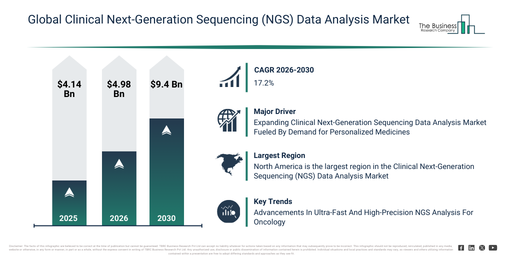
    The market for clinical next-generation sequencing (NGS) data analysis has experienced remarkable expansion recently, projected to climb from $4.14 billion in 2025 to $4.98 billion in 2026, reflecting a compound annual growth rate (CAGR) of 20.4%. This growth trajectory during the historical period is underpinned by several key factors, including the heightened utilization of NGS in clinical diagnostics, the broadening scope of precision medicine endeavors, advancements in genomic research initiatives, a reduction in sequencing expenses, and enhanced accessibility to bioinformatics resources.

    The arena of clinical next-generation sequencing data analysis is poised for substantial expansion, projecting an impressive ascent to $9.4 billion by the year 2030, driven by a compound annual growth rate of 17.2%. This surge in projected expansion throughout the anticipated timeframe is fueled by several key factors, including the escalating incorporation of artificial intelligence into the interpretation of genomic data, a heightened need for bespoke medical treatments, the broadening application of clinical genomics in tackling cancer and rare inherited conditions, a greater uptake of cloud-centric healthcare data infrastructures, and an amplified regulatory spotlight on the secure management of genomic information. Key developments shaping this market throughout the forecast period encompass the increasing reliance on cloud-based platforms for ngs data analysis, a more frequent utilization of AI-powered tools for identifying genetic variations, a growing requirement for unified bioinformatics workflows, the advancement of solutions for managing clinical genomic data, and a more dedicated emphasis on safeguarding data integrity and adhering to regulatory mandates.

    Download A Free Sample Report For Comprehensive Market Insights:

    https://www.thebusinessresearchcompany.com/sample.aspx?id=14877&type=smp

    Clinical Next-Generation Sequencing (NGS) Data Analysis Market Growth Drivers: What Factors Are Accelerating Expansion?

    The market for clinical next-generation sequencing data analysis is anticipated to expand, driven by an increasing need for customized medical treatments. This tailored medical strategy involves considering the unique genetic makeup, environmental influences, and lifestyle factors of each patient. The surge in demand for such individualized therapies stems from advancements in genomic technologies, the growing intricacy of diseases, enhanced effectiveness of treatments, and escalating healthcare expenditures. Next-generation sequencing data analysis plays a pivotal role in this personalized medicine paradigm, facilitating swift and precise sequencing of numerous genes simultaneously, thereby deepening our comprehension of an individual’s genetic blueprint. Illustrating this trend, the Personalized Medicine Coalition reported that in 2023, the FDA authorized 16 novel personalized therapies for individuals with rare diseases, a notable increase from the six approvals seen in 2022, with seven of these new approvals being cancer drugs and three targeting other ailments. Consequently, the growing preference for personalized medicine is a significant factor fueling the expansion of the clinical next-generation sequencing data analysis market.

    #Clinical Next-Generation Sequencing (NGS) Data Analysis Market Segment Landscape And Growth Potential

    The clinical next-generation sequencing (ngs) data analysis market covered in this report is segmented –

    1) By Solution And Services: NGS Data Analysis Tools, NGS Data Analysis And Sequencing Services, NGS Storage, Management And Cloud Computing Platform, Platforms

    2) By Technology: Sequencing By Synthesis (SBS), Nanopore Sequencing, Single-Molecule Real-Time (SMRT) Sequencing, Other Technologies

    3) By Application: Diagnostics, Drug Discovery And Designing, Medical Research, Other Applications

    4) By End User: Hospitals And Clinics, Academic Institutes And Research Centers, Biotechnology Companies, Life Science Technology Vendors, Other End Users

    Subsegments:

    1) By NGS Data Analysis Tools: Software Platforms, Data Interpretation Tools, Bioinformatics Tools, Data Analytics Solutions

    2) By NGS Data Analysis And Sequencing Services: Sequencing Services, Data Analysis Services, Consultation Services, Research And Diagnostic Services

    3) By NGS Storage, Management, And Cloud Computing Platform: Data Storage Solutions, Data Management Platforms, Cloud-Based Platforms, Cloud Storage Services

    4) By Platforms: Sequencing Platforms, NGS Instrumentation Platforms, Integrated NGS Platforms

    Clinical Next-Generation Sequencing (NGS) Data Analysis Market Trends: What Is Shaping Future Industry Growth?

    Leading entities within the clinical next-generation sequencing data analysis sector are prioritizing the creation of exceptionally rapid and rigorously accurate computational instruments designed to elevate the velocity, precision, and comprehensibility of genomic information specifically for oncological uses. To illustrate, in January of 2024, QIAGEN Digital Insights, a bioinformatics enterprise headquartered in the United States, introduced a cutting-edge, high-speed NGS analysis solution tailored for somatic cancers. This innovative platform significantly expedites the process of interpreting the genomic landscape of tumors, thereby facilitating the swift detection of mutations that warrant therapeutic intervention, ultimately refining clinical judgments and backing tailored approaches to cancer therapy. Through the strategic deployment of sophisticated algorithms and robust high-capacity computing, QIAGEN Digital Insights endeavors to optimize oncology-related workflows, diminish processing durations, and bolster the general exactness of diagnostics that rely on NGS technology.

    Clinical Next-Generation Sequencing (NGS) Data Analysis Market Competitive Landscape: Who Are The Leading Companies?

    Major companies operating in the clinical next-generation sequencing (ngs) data analysis market are Roche Diagnostics, Thermo Fisher Scientific Inc., Eurofins Scientific, Agilent Technologies Inc., Illumina Inc., PerkinElmer Inc., Bio-Rad Laboratories Inc., Qiagen, BGI Group, 10x Genomics, Genomic Health, Oxford Nanopore Technologies PLC., Pacific Biosciences of California Inc., Sophia Genetics, Genewiz, Partek Inc., DNAnexus, BioNano Genomics, PierianDx, GENAPSYS, Nugen Technologies, DNAStar Inc., Swift Biosciences, Basepair, BioDatomics, Congenica Ltd., Theragen Etex Inc., Golden Helix Inc.

    Access The Complete Clinical Next-Generation Sequencing (NGS) Data Analysis Market Report:

    https://www.thebusinessresearchcompany.com/report/clinical-next-generation-sequencing-ngs-data-analysis-global-market-report

    Clinical Next-Generation Sequencing (NGS) Data Analysis Market Geographic Distribution And Regional Opportunities

    North Americawas the largest region in the clinical next-generation sequencing (NGS) data analysis market in 2025. Asia-Pacificis expected to be the fastest-growing region in the forecast period. The regions covered in the clinical next-generation sequencing (ngs) data analysis market report are Asia-Pacific, South East Asia, Western Europe, Eastern Europe, North America, South America, Middle East, Africa.

    Get in touch with us:

    The Business Research Company: https://www.thebusinessresearchcompany.com/

    Americas: +1 310-496-7795

    Asia: +44 7882 955267 & +91 8897263534

    Europe: +44 7882 955267

    Email us at: marketing@tbrc.info

    Follow us on:

    LinkedIn: https://in.linkedin.com/company/the-business-research-company

    YouTube: https://www.youtube.com/channel/UC24_fI0rV8cR5DxlCpgmyFQ

    Global Market Model: https://www.thebusinessresearchcompany.com/global-market-model
  • Clinical Microbiology Market Trends And Growth Drivers Point To Strong Future Potential

    Clinical Microbiology Market Trends And Growth Drivers Point To Strong Future Potential

    Through market attractiveness analysis, total addressable market evaluation, company benchmarking matrices, interactive Excel dashboards, expanded supply chain intelligence, emerging startup coverage, and detailed product insights, The Business Research Company’s 2026 market reports provide more actionable and strategically valuable research.

    Clinical Microbiology Market Value Analysis: What Growth Is Expected Over The Forecast Period?

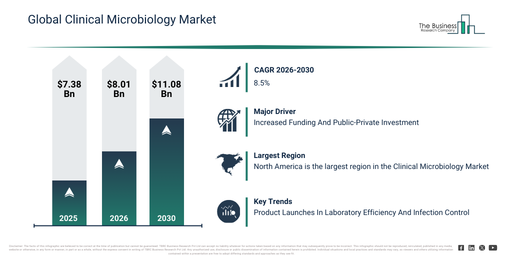
    The market for clinical microbiology has experienced robust expansion recently, with projections indicating continued growth from $7.38 billion in 2025 to $8.01 billion by 2026, reflecting an 8.5% compound annual growth rate. Factors contributing to this expansion during the past period include the heightened incidence of infectious diseases, the broadening of diagnostic capabilities within hospitals, a greater need for precise pathogen detection, an increase in the number of clinical laboratory tests performed, and advancements in automation within laboratory procedures.

    The clinical microbiology market anticipates considerable expansion in the upcoming years, projecting a valuation of $11.08 billion by 2030, driven by a compound annual growth rate of 8.5%. This anticipated increase stems from several key factors: the escalating utilization of swift diagnostic tools, augmented financial commitments toward sophisticated clinical laboratories, a heightened demand for tests detecting antimicrobial resistance, the broadening scope of molecular microbiology, and the incorporation of AI-enhanced diagnostics into microbiology processes. During this forecast period, prominent trends include a greater embrace of automated microbiology analyzers, a surge in the application of molecular diagnostic methodologies, increased integration of mass spectrometry for identifying pathogens, the proliferation of rapid microbial testing solutions, and a more pronounced emphasis on automating laboratory workflows.

    Download A Free Sample Report For Comprehensive Market Insights:

    https://www.thebusinessresearchcompany.com/sample.aspx?id=8327&type=smp

    Clinical Microbiology Market Growth Factors Supporting Long-Term Expansion

    The expansion of the clinical microbiology sector is anticipated to be spurred by augmented financial commitments from both public entities and private enterprises within the realm of clinical diagnostics. Such financial infusions, originating from diverse sources, actively foster innovation, technological breakthroughs, and enhancements within the clinical microbiology landscape, thereby bolstering the efficacy of diagnostic instruments, laboratory infrastructure, and the broader capacity to address infectious disease outbreaks. As an illustration, Cancer Research UK, a UK-based organization, allocated $0.0001737 billion towards fundraising initiatives during the 2023–2024 period, reflecting a notable increase of $0.0305 billion over the $0.136 billion invested in the preceding year, according to a September 2024 report by Civil Society Media Limited. Consequently, the bolstered public and private investment in clinical diagnostics is a significant driver for the growth observed in the clinical microbiology market.

    Clinical Microbiology Market Categorization By Product Type And Application

    The clinical microbiology market covered in this report is segmented –

    1) By Product: Laboratory Instruments, Microbiology Analyzers, Reagents

    2) By Indication: Respiratory Diseases, Sexually Transmitted Diseases, Urinary Tract Infections, Periodontal Diseases, Other Diseases

    3) By End-User: Hospitals, Diagnostic Laboratories, Other End-User

    Subsegments:

    1) By Laboratory Instruments: Incubators, Autoclaves, Microscopes, Culture Media Preparation Equipment

    2) By Microbiology Analyzers: Automated Analyzers, Mass Spectrometry Analyzers, PCR Analyzers

    3) By Reagents: Culture Media, Stains And Dyes, Antibodies, Diagnostic Kits

    Clinical Microbiology Market Industry Trends Shaping Future Revenue Growth

    Leading entities within the clinical microbiology sector are prioritizing inventive product advancements and the creation of novel solutions aimed at enhancing patient outcomes. These initiatives encompass improvements in workflow administration, biological proficiencies, and data handling, all intended to refine laboratory operations and solidify their market standing. As an illustration, in January 2023, bioMérieux, a prominent French biotechnology firm specializing in in vitro diagnostics, introduced MAESTRIA, a next-generation middleware designed to transform workflow management in clinical microbiology labs. This sophisticated middleware system is engineered to optimize the supervision of microbiology samples from their initial entry into the lab’s processes through to the issuance of final test findings. MAESTRIA provides a suite of capabilities, covering workflow optimization, biological knowledge integration, and data oversight, with the goals of simplifying laboratory procedures, improving surveillance reporting, and effectively detecting and combating multidrug-resistant organisms (MDROs). This middleware seamlessly integrates with current laboratory equipment and operational flows, offering a straightforward, plug-and-play solution for microbiology instruments and processes.

    Clinical Microbiology Market Company Landscape And Strategic Competition

    Major companies operating in the clinical microbiology market are bioMérieux SA, Danaher Corporation, Abbott Laboratories, F. Hoffmann-La Roche Ltd., Thermo Fisher Scientific Corporation, QIAGEN NV, 3M, Bio-Rad Laboratories Inc., Bruker Corporation, Hologic Inc., Agilent Technologies Inc., Merck Group, Shimadzu Corporation, Neogen Corporation, Vacutest Kima SRL, Arrow Diagnostics SRL, OpGen, Becton Dickinson and Company, Johnson & Johnson, Sanofi SA, Illumina Inc., Medtronic, Cepheid Inc., Quidel Corporation, Luminex Corporation, DiaSorin S.p.A., GenMark Diagnostics Inc., T2 Biosystems Inc., Nanosphere Health Sciences Inc.

    Access The Complete Clinical Microbiology Market Report:

    https://www.thebusinessresearchcompany.com/report/clinical-microbiology-global-market-report

    Clinical Microbiology Market Largest Region By Revenue And Market Share

    North Americawas the largest region in the clinical microbiology market in 2025. Asia-Pacificis expected to be the fastest-growing region in the forecast period. The regions covered in the clinical microbiology market report are Asia-Pacific, South East Asia, Western Europe, Eastern Europe, North America, South America, Middle East, Africa.

    Get in touch with us:

    The Business Research Company: https://www.thebusinessresearchcompany.com/

    Americas: +1 310-496-7795

    Asia: +44 7882 955267 & +91 8897263534

    Europe: +44 7882 955267

    Email us at: marketing@tbrc.info

    Follow us on:

    LinkedIn: https://in.linkedin.com/company/the-business-research-company

    YouTube: https://www.youtube.com/channel/UC24_fI0rV8cR5DxlCpgmyFQ

    Global Market Model: https://www.thebusinessresearchcompany.com/global-market-model
  • Clinical Laboratory Tests Market Expansion Is Reshaping Competitive Dynamics Across The Industry

    Clinical Laboratory Tests Market Expansion Is Reshaping Competitive Dynamics Across The Industry

    Delivering more actionable and strategically valuable research, The Business Research Company’s 2026 market reports feature market attractiveness analysis, total addressable market evaluation, company benchmarking matrices, interactive Excel dashboards, expanded supply chain intelligence, emerging startup coverage, and detailed product insights.

    Clinical Laboratory Tests Market Size Forecast: How Large Could The Market Become By 2030?

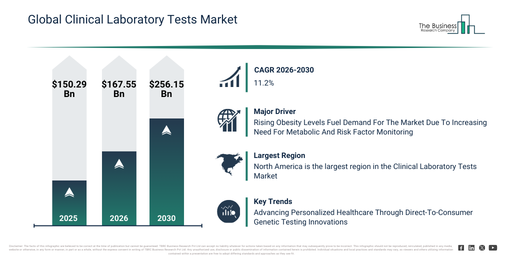
    The clinical laboratory tests market experienced substantial expansion lately, projecting an increase from $150.29 billion in 2025 to $167.55 billion by 2026, fueled by an 11.5% compound annual growth rate. This historical growth trajectory is largely credited to a confluence of factors, including the escalating incidence of both chronic and infectious illnesses, the broadening scope of regular health assessment initiatives, the proliferation of consolidated laboratory testing infrastructures, heightened physician dependence on diagnostic insights, and enhanced availability of diagnostic services.

    The worldwide market for clinical laboratory diagnostics is poised for significant expansion in the coming years, projecting a rise to $256.15 billion by 2030, fueled by a compound annual growth rate of 11.2%. This upward trajectory is largely propelled by several key factors: a surging need for individualized diagnostic approaches, the wider availability of decentralized and point-of-care testing solutions, the increasing incorporation of digital pathology techniques, substantial investments directed towards laboratory automation, and a growing reliance on predictive diagnostic methodologies. Within this projected growth period, several dominant trends are anticipated, including a greater embrace of automated diagnostic testing systems, escalating demand for high-volume laboratory analysis, increased utilization of artificial intelligence for test result interpretation, the broadening scope of preventive and screening initiatives, and a heightened emphasis on achieving superior test accuracy and consistent standardization.

    Download A Free Sample Report For Comprehensive Market Insights:

    https://www.thebusinessresearchcompany.com/sample.aspx?id=27260&type=smp

    #Clinical Laboratory Tests Market Demand Drivers Creating New Revenue Opportunities

    Anticipated increases in obesity rates are poised to significantly boost the expansion of the clinical laboratory tests sector moving ahead, as obesity, defined by metrics like body mass index, signifies the prevalence of excess weight within a populace. This escalating trend in obesity is largely attributable to predominantly inactive lifestyles where diminished physical exertion creates a caloric imbalance, leading to the accumulation of surplus body fat. Clinical examinations conducted in laboratories play a crucial role in overseeing and addressing obesity by detecting underlying conditions, including endocrine disruptions, metabolic irregularities, or nutritional shortfalls, and by monitoring markers associated with obesity-related health risks such as glycemic levels, lipid profiles, and hepatic function, thereby facilitating tailored therapeutic strategies. A pertinent example is the May 2024 disclosure from the Office for Health Improvement & Disparities, a governmental body in the United Kingdom, indicating that during the 2022–2023 period, an estimated 64.0% of adults aged 18 and older in England were classified as overweight or obese. Consequently, the expanding prevalence of obesity is a key catalyst for the growth observed in the clinical laboratory tests market.

    Clinical Laboratory Tests Market Segment Analysis And Revenue Opportunities

    The clinical laboratory tests market covered in this report is segmented –

    1) By Type: Complete Blood Count, Hemoglobin Or Hematocrit testing, Basic Metabolic Panel Testing, Blood Urea Nitrogen Creatinine Testing, Electrolytes Testing, HbA1c Testing, Comprehensive Metabolic Panel Testing, Liver Panel Testing, Renal Panel Testing, Other Types

    2) By Service Provider: Hospital Based Laboratories, Stand-Alone Laboratories, Clinic Based Laboratories

    3) By Application: Parasitology, Virology, Hematology, Toxicology, Immunology Or Serology, Histopathology And Urinalysis

    4) By End Use: Central laboratories, Primary Clinics, Hospitals, Other End Uses

    Subsegments:

    1) By Complete Blood Count: White Blood Cell (Wbc) Count, Red Blood Cell (Rbc) Count, Hemoglobin (Hgb)

    2) By Hemoglobin Or Hematocrit Testing: Hemoglobin Concentration (Hgb), Hematocrit Percentage (Hct), Reticulocyte Count

    3) By Basic Metabolic Panel (Bmp) Testing: Glucose, Calcium, Sodium

    4) By Blood Urea Nitrogen (Bun) And Creatinine Testing: Bun Level, Serum Creatinine, Bun-To-Creatinine Ratio

    5) By Electrolytes Testing: Sodium, Potassium, Chloride

    6) By Hba1c Testing: Hba1c (Glycated Hemoglobin), Estimated Average Glucose (Eag)

    7) By Comprehensive Metabolic Panel (Cmp) Testing: Alkaline Phosphatase (Alp), Alanine Aminotransferase (Alt), Aspartate Aminotransferase (Ast)

    8) By Liver Panel Testing: Total Bilirubin, Direct Bilirubin, Albumin

    9) By Renal Panel Testing: Creatinine, Uric Acid, Electrolytes

    10) By Other Types: Vitamin And Mineral Panels (Vitamin D, B12, Iron Studies), Infectious Disease Panels, Tumor Markers

    Clinical Laboratory Tests Market Trends Driving Strategic Industry Expansion

    Leading entities within the clinical laboratory tests landscape are prioritizing the creation of cutting-edge offerings, exemplified by direct-to-consumer genetic screening, with the aims of enhancing individualized medical care, increasing patient involvement, and expanding the availability of diagnostic tools. This style of genetic examination allows individuals to seek out information about their potential health predispositions, familial origins, or inherent characteristics by analyzing their DNA, bypassing the requirement for a doctor’s order. As an illustration, a notable development occurred in July 2023 when Quest Diagnostics Inc., a prominent American medical testing firm, launched a genetic insights service designed to provide bespoke health risk assessments derived from an individual’s genetic makeup. Through the utilization of advanced next-generation sequencing technology, this particular test analyzes a panel of 36 genes to ascertain predispositions to approximately two dozen hereditary ailments, subsequently furnishing customized, practical health summaries that incorporate medical supervision and complimentary genetic counseling, thereby equipping individuals with the means to proactively investigate their inherited health vulnerabilities.

    Clinical Laboratory Tests Market Leading Players Shaping Industry Direction

    Major companies operating in the clinical laboratory tests market are Roche Diagnostics, Abbott Laboratories, Danaher Corporation, Siemens Healthineers AG, Labcorp, Mayo Clinic Laboratories, Quest Diagnostics Incorporated, Eurofins Scientific SE, Agilent Technologies Inc., Sonic Healthcare Limited, bioMérieux SA, Bio-Rad Laboratories Inc., QIAGEN NV, Cepheid Inc., OPKO Health Inc., ARUP Laboratories, Thyrocare Technologies Limited, Unilabs Diagnostics AB, Ortho Clinical Diagnostics, Randox Laboratories Ltd, Sysmex Corporation

    Access The Complete Clinical Laboratory Tests Market Report:

    https://www.thebusinessresearchcompany.com/report/clinical-laboratory-tests-global-market-report

    Clinical Laboratory Tests Market Regional Analysis And Leading Geography

    North Americawas the largest region in the clinical laboratory tests market in 2025. Asia-Pacificis expected to be the fastest-growing region in the forecast period. The regions covered in the clinical laboratory tests market report are Asia-Pacific, South East Asia, Western Europe, Eastern Europe, North America, South America, Middle East, Africa.

    Get in touch with us:

    The Business Research Company: https://www.thebusinessresearchcompany.com/

    Americas: +1 310-496-7795

    Asia: +44 7882 955267 & +91 8897263534

    Europe: +44 7882 955267

    Email us at: marketing@tbrc.info

    Follow us on:

    LinkedIn: https://in.linkedin.com/company/the-business-research-company

    YouTube: https://www.youtube.com/channel/UC24_fI0rV8cR5DxlCpgmyFQ

    Global Market Model: https://www.thebusinessresearchcompany.com/global-market-model
  • Clinical Laboratory Services Market Forecast Reveals Where Future Industry Value Will Be Created

    Clinical Laboratory Services Market Forecast Reveals Where Future Industry Value Will Be Created

    Enhanced with market attractiveness analysis, total addressable market evaluation, company benchmarking matrices, interactive Excel dashboards, expanded supply chain intelligence, emerging startup coverage, and detailed product insights, The Business Research Company’s 2026 market reports deliver more actionable and strategically valuable research.

    Clinical Laboratory Services Market Revenue Outlook: What CAGR Is Expected Through 2030?

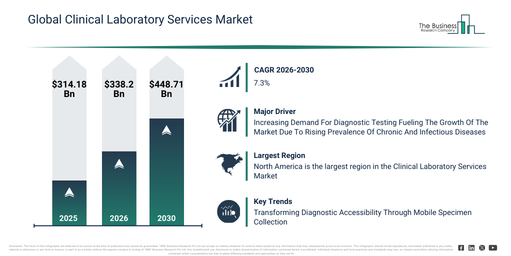
    The global marketplace for clinical laboratory services has experienced robust expansion lately, projecting a progression from $314.18 billion in 2025 to $338.2 billion by 2026, reflecting a compound annual growth rate of 7.6%. This upward trajectory in recent times is largely fueled by the escalating incidence of persistent and contagious ailments, the broadening scope of laboratory services within healthcare institutions, a greater reliance on diagnostic evaluations in patient management, increased adoption of proactive health assessments, and the establishment of consistent laboratory procedures.

    The clinical laboratory services sector is poised for substantial expansion in the coming years, projecting a market value of $448.71 billion by 2030, driven by a compound annual growth rate (CAGR) of 7.3%. This anticipated growth is fueled by several key factors including a heightened need for diagnostics tailored to individual patients, the increasing acceptance of point-of-care testing methods, a broader application of genetic and molecular diagnostic tools, augmented investments in laboratory automation technologies, and a greater tendency for outsourcing diagnostic procedures. During this forecast period, prominent trends expected to shape the market include the wider implementation of automated diagnostic systems, an escalation in the demand for high-volume testing services, enhanced collaboration between laboratory information systems and digital platforms, the proliferation of specialized molecular testing offerings, and an intensified focus on reducing the time required for test results.

    Download A Free Sample Report For Comprehensive Market Insights:

    https://www.thebusinessresearchcompany.com/sample.aspx?id=24506&type=smp

    Clinical Laboratory Services Market Expansion Supported By Key Demand Factors

    The clinical laboratory services market is poised for expansion, largely driven by the escalating need for diagnostic testing. These tests are crucial for identifying, confirming, or excluding diseases and medical conditions in individuals. Factors such as the growing incidence of chronic illnesses and infectious diseases contribute significantly to this demand, as precise and prompt diagnoses are fundamental for early identification, successful treatment, and managing health conditions. Clinical laboratory services play a pivotal role by furnishing accurate and swift analyses, which are indispensable for early disease detection and ongoing management, thereby diminishing diagnostic ambiguities and enhancing patient outcomes and therapeutic choices. Illustratively, data from the UK’s National Health Service indicated that diagnostic tests performed in December 2024 numbered 2,544,809, a rise from the 2,312,030 recorded in 2023, underscoring the upward trend in diagnostic testing and its subsequent influence on the clinical laboratory services sector.

    Clinical Laboratory Services Market Segmentation And Category Breakdown

    The clinical laboratory services market covered in this report is segmented –

    1) By Test Type: Genetic Testing, Clinical Chemistry, Medical Microbiology Testing, Hematology Testing, Immunology Testing, Cytology Testing, Drug Of Abuse Testing, Other Test Types

    2) By Service Type: Hospital-Based Laboratories, Stand-Alone Laboratories, Clinic-Based Laboratories

    3) By Technology: Conventional Laboratory Technology, Automated Laboratory Technology, Point-Of-Care Testing

    4) By Application: Bioanalytical And Lab Chemistry Services, Toxicology Testing Services, Cell And Gene Therapy Related Services, Preclinical And Clinical Trial Related Services, Drug Discovery And Development Related Services, Other Clinical Laboratory Services

    5) By End User: Hospitals, Diagnostic Laboratories, Clinics, Research Institutions

    Subsegments:

    1) By Genetic Testing: Carrier Testing, Prenatal And Newborn Screening, Pharmacogenomics Testing, Predictive And Presymptomatic Testing, Diagnostic Genetic Testing, Forensic Genetic Testing, Ancestry And Genealogy Testing

    2) By Clinical Chemistry: Electrolyte Testing, Enzyme Testing, Lipid Panel, Blood Glucose Testing, Hormone Testing, Protein Testing, Metabolite Testing

    3) By Medical Microbiology Testing: Bacteriology, Virology, Mycology, Parasitology, Antimicrobial Susceptibility Testing, Molecular Microbiology, Culture And Sensitivity Testing

    4) By Hematology Testing: Complete Blood Count, Coagulation Testing, Bone Marrow Analysis, Blood Typing And Crossmatching, Erythrocyte Sedimentation Rate, Reticulocyte Count, Hemoglobin Electrophoresis

    5) By Immunology Testing: Autoimmune Testing, Allergy Testing, Immunoglobulin Testing, Complement System Testing, Cytokine Testing, Immunophenotyping, Vaccine Response Testing

    6) By Cytology Testing: Pap Smear, Fine Needle Aspiration Cytology, Body Fluid Cytology, Urine Cytology, Bronchial Brush Cytology, Exfoliative Cytology, Liquid Based Cytology

    7) By Drug Of Abuse Testing: Urine Drug Screening, Blood Drug Testing, Saliva Drug Testing, Hair Follicle Testing, Sweat Patch Testing, Confirmatory Testing, Point Of Care Testing

    8) By Other Test Types: Histopathology, Flow Cytometry, Molecular Diagnostics, Toxicology Testing, Point Of Care Testing, Nutritional Testing, Metabolic Testing

    Clinical Laboratory Services Market Growth Trends Influencing Competitive Dynamics

    In the clinical laboratory services sector, leading organizations are prioritizing the development of novel service delivery mechanisms, including mobile phlebotomy and at-home sample collection, with the aim of improving patient accessibility, convenience, and overall reach. This approach of mobile phlebotomy sees qualified technicians traveling to a patient’s residence to procure necessary samples for laboratory analysis, thereby facilitating adaptable appointment scheduling, broader geographic access for those with mobility challenges, and expedited sample procurement. Illustrating this trend, Quest Diagnostics Inc., an American healthcare entity, introduced Quest Mobile in November 2023, a mobile phlebotomy service designed to allow patients to arrange for in-home specimen collection covering an extensive array of laboratory tests. This offering leverages a national infrastructure of skilled phlebotomists and provides access to over 800 distinct test categories, encompassing standard health checks, maternal and women’s health evaluations, and diagnostics for infectious diseases. Quest Mobile streamlines the process with direct online booking, clear disclosure of collection costs, and synchronized same-day or next-day collections in numerous regions, ultimately boosting patient convenience, extending services to immobile or underserved communities, aiding ongoing care through simplified follow-up testing, and broadening the availability of laboratory services beyond conventional sites.

    Clinical Laboratory Services Market Competitive Analysis Of Major Industry Participants

    Major companies operating in the clinical laboratory services market are Roche Diagnostics India Private Limited, Thermo Fisher Scientific Inc., Abbott Laboratories, Siemens Healthineers AG, IQVIA Laboratories, Labcorp , Quest Diagnostics Incorporated, Geisinger Health System, Eurofins Scientific, Sonic Healthcare Limited, Grifols S.A., BioMérieux SA, SYNLAB Group, Bio-Rad Laboratories Inc., OPKO Health Inc, NeoGenomics Laboratories, Ambry Genetics Corporation, Genova Diagnostics (GDX), Enzo Biochem Inc, Wildcat DX

    Access The Complete Clinical Laboratory Services Market Report:

    https://www.thebusinessresearchcompany.com/report/clinical-laboratory-services-global-market-report

    Clinical Laboratory Services Market Geographic Analysis: Where Is Demand Growing The Fastest?

    North Americawas the largest region in the clinical laboratory services market in 2025. Asia-Pacificis expected to be the fastest-growing region in the forecast period. The regions covered in the clinical laboratory services market report are Asia-Pacific, South East Asia, Western Europe, Eastern Europe, North America, South America, Middle East, Africa.

    Get in touch with us:

    The Business Research Company: https://www.thebusinessresearchcompany.com/

    Americas: +1 310-496-7795

    Asia: +44 7882 955267 & +91 8897263534

    Europe: +44 7882 955267

    Email us at: marketing@tbrc.info

    Follow us on:

    LinkedIn: https://in.linkedin.com/company/the-business-research-company

    YouTube: https://www.youtube.com/channel/UC24_fI0rV8cR5DxlCpgmyFQ

    Global Market Model: https://www.thebusinessresearchcompany.com/global-market-model
  • Clinical Intelligence Market Growth Through 2030 Creates New Strategic Opportunities

    Clinical Intelligence Market Growth Through 2030 Creates New Strategic Opportunities

    Through market attractiveness analysis, total addressable market evaluation, company benchmarking matrices, interactive Excel dashboards, expanded supply chain intelligence, emerging startup coverage, and detailed product insights, The Business Research Company’s 2026 market reports provide more actionable and strategically valuable research.

    Clinical Intelligence Market Growth Analysis: How Will Revenue Expand During The Forecast Period?

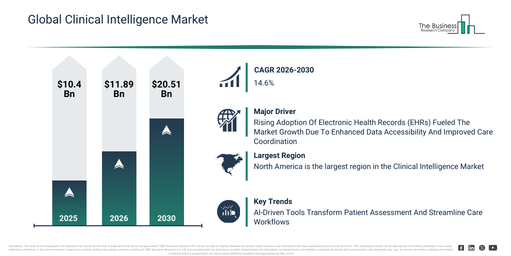
    The clinical intelligence market has experienced substantial expansion lately. Projections indicate a rise from $10.4 billion in 2025 to $11.89 billion by 2026, reflecting a compound annual growth rate (CAGR) of 14.3%. Factors contributing to this growth during the past period include the increased adoption of electronic health records, the burgeoning amount of healthcare data, a heightened emphasis on streamlining clinical workflows, escalating demand for decisions informed by data within the healthcare sector, and the development of advanced health analytics platforms.

    The global clinical intelligence market is poised for significant expansion, projected to reach $20.51 billion by 2030, exhibiting a compound annual growth rate of 14.6%. This surge is fueled by escalating investments in digital health transformation, a growing need for tailored and anticipatory patient care, the proliferation of cloud-based clinical intelligence solutions, a greater uptake of AI-powered diagnostic tools, and heightened regulatory attention on leveraging healthcare data. Key developments shaping this period include the increasing integration of AI-driven clinical decision support systems, the expanding application of predictive analytics within the healthcare sector, improved connectivity between electronic health records and clinical data platforms, the advancement of population health intelligence offerings, and a stronger emphasis on obtaining immediate clinical insights.

    Download A Free Sample Report For Comprehensive Market Insights:

    https://www.thebusinessresearchcompany.com/sample.aspx?id=30232&type=smp

    #Clinical Intelligence Market Growth Drivers And Industry Catalysts

    The historical expansion of the clinical intelligence market was largely propelled by the widespread integration of electronic health records (EHRs). These digital repositories of patient medical histories, which encompass details like diagnoses, prescribed treatments, medications, and laboratory findings, are made accessible to authorized medical professionals. The surge in EHR utilization stems from the broader digital transformation within the healthcare sector, as EHRs significantly improve data accessibility and foster enhanced collaboration among medical practitioners, ultimately leading to superior patient care. Clinical intelligence plays a crucial role in leveraging EHR data by processing vast quantities of patient information to extract valuable insights, thereby empowering healthcare providers to make informed decisions that elevate the standard of care, streamline operations, and enhance patient well-being. As a testament to this trend, the UK Parliament reported in June 2023 that, as of December 2023, 90% of NHS trusts had successfully implemented electronic health records, with complete integration slated for completion by March 2025. Consequently, the expanding footprint of electronic health records has been a primary driver for the growth observed in the clinical intelligence market.

    Clinical Intelligence Market Segment Outlook: Which Categories Are Expanding The Fastest?

    The clinical intelligence market covered in this report is segmented –

    1) By Component: Software, Hardware, Services

    2) By Technology: Artificial Intelligence, Machine Learning, Natural Language Processing, Predictive Analytics, Business Intelligence, Data Mining

    3) By Deployment Model: On-Premise, Cloud-Based

    4) By Application: Predictive Analytics, Clinical Decision Support, Population Health Management, Performance Management, Reporting And Dashboard, Risk Management

    5) By End User: Hospitals, Diagnostic Centers, Ambulatory Care Centers, Research Institutes, Pharmaceutical And Biotechnology Companies

    Subsegments:

    1) By Software: Clinical Data Analytics Software, Clinical Decision Support Software, Population Health Management Software, Data Integration And Management Software, Predictive Analytics Software, Data Visualization And Reporting Software, Electronic Health Record Analytics Software, Natural Language Processing Software

    2) By Hardware: Servers, Storage Devices, Networking Equipment, Workstations, Data Centers Infrastructure, Edge Computing Devices, Processing Units

    3) By Services: Consulting Services, Implementation And Integration Services, Managed Services, Support And Maintenance Services, Training And Education Services, Data Migration Services, Clinical Process Optimization Services

    #Clinical Intelligence Market Trends Influencing Long-Term Demand

    Within the realm of clinical intelligence, leading entities are prioritizing AI-powered innovations, including digital triage, to elevate patient evaluations, optimize operational processes, and refine clinical judgment. Digital triage involves employing AI-driven instruments or applications to evaluate patient symptoms, establish care priorities, and direct individuals toward suitable treatment paths with increased efficiency. As an illustration, in July of 2025, Experity Inc., a provider of software and services based in the United States, introduced Care Agent, representing the market’s inaugural clinical intelligence offering specifically tailored for urgent care settings. This platform harnesses artificial intelligence and smooth integration with electronic medical records to boost clinic efficiency and patient interaction. These AI agents facilitate secure interactions through web chat and SMS, delivering a customized, HIPAA-compliant encounter without the necessity for supplementary applications. Furthermore, its adaptable features empower clinics to choose functionalities like digital delivery of discharge instructions, communication of laboratory results, and future advancements such as triage evaluations and appointment notifications.

    Clinical Intelligence Market Key Companies And Competitive Benchmarking

    Major companies operating in the clinical intelligence market are Microsoft Corporation, Alphabet Inc. (Google LLC), Amazon Web Services (AWS), Optum (UnitedHealth Group), International Business Machines (IBM) Corporation, IQVIA, GE Healthcare Technologies, Inc., Koninklijke Philips N.V., Medtronic Plc, Medidata, AvoMD, Zebra Medical Vision, Teledoc Health, Health Catalyst, Tempus, PathAI, Biofourmis, Twin Health, BenevolentAI, Prometheus Biosciences, Abridge, Owkin, Insitro, Heidi Health, Pieces Technologies, Renalytix PLC, OpenEvidence, Bayesian Health, and SmarterDx

    Access The Complete Clinical Intelligence Market Report:

    https://www.thebusinessresearchcompany.com/report/global-clinical-intelligence-market-report

    Clinical Intelligence Market Global Footprint: Which Region Holds Market Leadership?

    North Americawas the largest region in the clinical intelligence market in 2025. Asia-Pacificis expected to be the fastest-growing region in the forecast period. The regions covered in the clinical intelligence market report are Asia-Pacific, South East Asia, Western Europe, Eastern Europe, North America, South America, Middle East, Africa.

    Get in touch with us:

    The Business Research Company: https://www.thebusinessresearchcompany.com/

    Americas: +1 310-496-7795

    Asia: +44 7882 955267 & +91 8897263534

    Europe: +44 7882 955267

    Email us at: marketing@tbrc.info

    Follow us on:

    LinkedIn: https://in.linkedin.com/company/the-business-research-company

    YouTube: https://www.youtube.com/channel/UC24_fI0rV8cR5DxlCpgmyFQ

    Global Market Model: https://www.thebusinessresearchcompany.com/global-market-model
  • Clinical Healthcare Analytics Services Market Size Projected To Increase From $19.85 Billion To $32.72 Billion During The Forecast Period

    Clinical Healthcare Analytics Services Market Size Projected To Increase From $19.85 Billion To $32.72 Billion During The Forecast Period

    Delivering more actionable and strategically valuable research, The Business Research Company’s 2026 market reports feature market attractiveness analysis, total addressable market evaluation, company benchmarking matrices, interactive Excel dashboards, expanded supply chain intelligence, emerging startup coverage, and detailed product insights.

    Clinical Healthcare Analytics Services Market Forecast: What Market Value Is Expected By 2030?

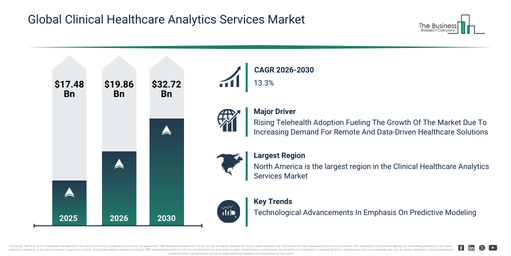
    The realm of clinical healthcare analytics services has experienced substantial expansion lately, with projections indicating its value will increase from $17.48 billion in 2025 to $19.86 billion in 2026, reflecting a compound annual growth rate of 13.6%. Factors fueling this expansion during the past period include the escalating digitization of medical documentation, the broad implementation of electronic health records, a heightened need for evidence-based medical choices, the augmentation of healthcare IT frameworks, and the increased utilization of analytical tools in managing hospital functions.

    The clinical healthcare analytics services market is poised for substantial expansion, projected to reach $32.72 billion by 2030, reflecting a compound annual growth rate of 13.3%. This upward trajectory is propelled by several key factors including a heightened need for tailored and value-driven patient care, increased financial commitments to AI-enhanced healthcare analytics, the proliferation of cloud-based healthcare solutions, a greater emphasis on proactive health management and population-level wellness strategies, and a growing regulatory push towards outcomes measured by data. Looking ahead, significant trends are expected to shape the market, such as broader adoption of predictive clinical analytics tools, increased utilization of continuous patient data monitoring, deeper integration of AI-driven diagnostic support systems, wider deployment of population health analysis tools, and a more concerted effort towards ensuring data compatibility and seamless integration across systems.

    Download A Free Sample Report For Comprehensive Market Insights:

    https://www.thebusinessresearchcompany.com/sample.aspx?id=27259&type=smp

    Clinical Healthcare Analytics Services Market Opportunity Drivers: What Is Creating New Revenue Potential?

    The expansion of the clinical healthcare analytics services sector is anticipated to be significantly boosted by the growing embrace of telehealth. Telehealth encompasses the utilization of digital tools for remote healthcare delivery, enabling patients to receive consultations from medical practitioners without the necessity of in-person visits to a clinic. This surge in telehealth is largely attributed to individuals favoring convenient and immediate access to medical care from their residences, bypassing travel burdens and mitigating contagion risks. Clinical healthcare analytics plays a crucial role in supporting telehealth by empowering providers to monitor patient information dynamically, facilitating informed choices, tailoring therapeutic approaches, and efficiently managing resources, all achieved without physical patient encounters. As an illustration, FAIR Health Inc., a US non-profit, reported that in January 2023, telehealth utilization nationwide saw an uptick to 5.9% of medical claim lines, climbing from 5.5% in December 2022, and further reaching 7.3% in April 2023. Consequently, the escalating preference for telehealth is a primary catalyst for the advancement of the clinical healthcare analytics services market.

    Clinical Healthcare Analytics Services Market Segment Landscape: Which Areas Lead Market Development?

    The clinical healthcare analytics services market covered in this report is segmented –

    1) By Component: Software, Services, Data Management Tools

    2) By Deployment Model: Cloud-Based, On-Premise, Hybrid

    3) By Technology: Artificial Intelligence (AI), Machine Learning (ML), Natural Language Processing (NLP), Big Data Analytics

    4) By Application: Patient Care Analytics, Operational Analytics, Financial Analytics, Population Health Management, Clinical Decision Support

    5) By End-User: Healthcare Providers, Healthcare Payers, Other End-Users

    Subsegments:

    1) By Software: Predictive Analytics, Descriptive Analytics, Prescriptive Analytics, Data Integration Tools, Reporting And Visualization Tools, Clinical Decision Support Systems (CDSS), Electronic Health Records (EHR) Analytics

    2) By Services: Implementation And Integration Services, Support And Maintenance Services, Consulting Services, Training And Education Services, Data Management And Governance Services, Outsourced Analytics Services

    3) By Data Management Tools: Data Warehousing Solutions, Master Data Management (MDM), Data Governance Tools, Data Quality Tools, Interoperability And Integration Tools

    Clinical Healthcare Analytics Services Market Innovation Trends Driving Future Development

    Within the clinical healthcare analytics services market, dominant players are increasingly emphasizing sophisticated tools like clinical predictive modeling as a means to elevate patient treatment standards, streamline operational workflows, and foster informed decision-making grounded in data. The essence of clinical predictive modeling lies in leveraging statistical methodologies, machine learning capabilities, and past healthcare information to anticipate upcoming clinical occurrences, results, or potential hazards for specific individuals or broader patient groups. As an illustration, in October 2024, Definitive Healthcare Corp., a commercial entity headquartered in the United States, introduced a predictive analytics platform designed to equip healthcare providers with the means to anticipate and strategize for forthcoming market dynamics. This advanced predictive analytics offering boasts distinctive functionalities, including the capacity for multi-year market demand forecasts spanning 3, 5, and 10-year horizons, AI-driven modeling that synthesizes historical claims data with demographic projections, and interactive instruments for scenario planning. Furthermore, it incorporates adaptable dashboards for continuous strategic assessment, detailed segmentation based on geographic location, service categories, and patient characteristics, alongside the capability to pinpoint burgeoning growth prospects ahead of their manifestation, thereby enabling healthcare organizations to adopt proactive, data-informed strategies for forward-looking planning and efficient resource allocation.

    Clinical Healthcare Analytics Services Market Industry Leaders And Market Competition

    Major companies operating in the clinical healthcare analytics services market are McKesson Corporation, Optum Inc., International Business Machines Corporation, Oracle Corporation, Siemens Healthineers AG, Cognizant Technology Solutions Corporation, Koninklijke Philips N.V., GE HealthCare Technologies Inc., RELX PLC, Epic Systems Corporation, SAS Institute Inc., athenahealth Inc., CitiusTech Inc., Inovalon Holdings Inc., NextGen Healthcare Inc., Veradigm Inc., Flatiron Health Inc., Health Catalyst Inc., MedeAnalytics Inc., Cerner Corporation, Allscripts Healthcare Solutions Inc., Change Healthcare Inc.

    Access The Complete Clinical Healthcare Analytics Services Market Report:

    https://www.thebusinessresearchcompany.com/report/clinical-healthcare-analytics-services-global-market-report

    Clinical Healthcare Analytics Services Market Regional Distribution: Which Areas Drive Market Expansion?

    North Americawas the largest region in the clinical healthcare analytics services market in 2025. Asia-Pacificis expected to be the fastest-growing region in the forecast period. The regions covered in the clinical healthcare analytics services market report are Asia-Pacific, South East Asia, Western Europe, Eastern Europe, North America, South America, Middle East, Africa.

    Get in touch with us:

    The Business Research Company: https://www.thebusinessresearchcompany.com/

    Americas: +1 310-496-7795

    Asia: +44 7882 955267 & +91 8897263534

    Europe: +44 7882 955267

    Email us at: marketing@tbrc.info

    Follow us on:

    LinkedIn: https://in.linkedin.com/company/the-business-research-company

    YouTube: https://www.youtube.com/channel/UC24_fI0rV8cR5DxlCpgmyFQ

    Global Market Model: https://www.thebusinessresearchcompany.com/global-market-model
  • Cell Transfection Market Trends And Growth Drivers Point To Strong Future Potential

    Cell Transfection Market Trends And Growth Drivers Point To Strong Future Potential

    Enhanced with market attractiveness analysis, total addressable market evaluation, company benchmarking matrices, interactive Excel dashboards, expanded supply chain intelligence, emerging startup coverage, and detailed product insights, The Business Research Company’s 2026 market reports deliver more actionable and strategically valuable research.

    Cell Transfection Market Expected To Reach $2.17 Billion By 2030 At 8.9% CAGR

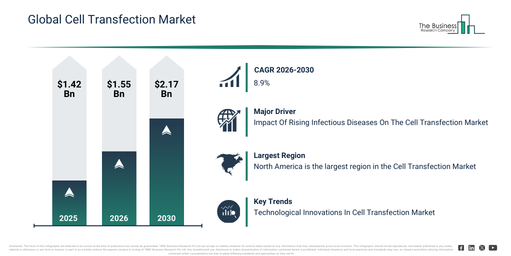
    The market for cell transfection witnessed robust expansion recently, projected to climb from $1.42 billion in 2025 to $1.55 billion in 2026, reflecting a compound annual growth rate of 9.2%. This surge in demand during the past period is linked to several key factors, including the broadening scope of molecular biology research, a greater reliance on gene expression studies, advancements in recombinant protein production, the escalating application of in vitro genetic manipulation techniques, and the availability of a wide array of transfection methodologies.

    The cell transfection market is poised for substantial expansion over the coming years, projecting a valuation of $2.17 billion by 2030, driven by an 8.9% compound annual growth rate. This anticipated growth trajectory is fueled by several key factors, including the burgeoning development of gene and cell therapies, increased financial commitment to genetic engineering research, a heightened demand for high-throughput screening methodologies, the broadening scope of personalized medicine initiatives, and the expanding utilization of non-viral delivery systems. Several significant trends are expected to shape this market during the forecast period, such as a greater embrace of highly effective transfection reagents, a rise in the application of viral vector-based transfection techniques, burgeoning demand for transfection methods that can be scaled up, the proliferation of automated transfection platforms, and a heightened emphasis on ensuring the reproducibility of transfection processes.

    Download A Free Sample Report For Comprehensive Market Insights:

    https://www.thebusinessresearchcompany.com/sample.aspx?id=19361&type=smp

    Cell Transfection Market Industry Drivers: What Is Driving Revenue Growth?

    The rising incidence of infectious diseases is anticipated to significantly boost the cell transfection market’s expansion. Infectious diseases, characterized by their transmission through various means, have seen an upsurge due to factors like underdeveloped public health systems, vaccine reluctance, and the proliferation of false information, which collectively enable pathogen dissemination and mutation. Cell transfection serves as an invaluable method in combating infectious diseases by enabling researchers to introduce genetic material into cells for the purpose of understanding infection mechanisms and evaluating novel therapeutic strategies. For example, as reported by the World Health Organization, a global public health entity based in Switzerland, approximately 8.2 million new tuberculosis diagnoses occurred in 2023, an increase from the roughly 7.5 million cases identified in 2022, underscoring tuberculosis’s position as the foremost cause of infectious disease mortality. Consequently, the escalating prevalence of infectious diseases is a key driver for the cell transfection market.

    Cell Transfection Market Segmentation And Category Breakdown

    The cell transfection market covered in this report is segmented –

    1) By Method: Electroporation, Lipofection, Calcium Phosphate, Viral Transfection, Other Methods

    2) By Application: Biomedical Research, Therapeutic Delivery, Protein Production

    3) By End User: Academic And Research Institutes, Pharmaceutical And Biotechnology Companies, Contract Research Organizations, Other End Users

    Subsegments:

    1) By Electroporation: Square Wave Electroporation, Pulsed Electric Field Electroporation, Multielectrode Array Electroporation

    2) By Lipofection: Cationic Lipid-Based Transfection, Lipid Nanoparticle-Based Transfection, Liposomal Transfection

    3) By Calcium Phosphate: Calcium Phosphate Co-precipitation, Modified Calcium Phosphate Methods

    4) By Viral Transfection: Lentiviral Transduction, Adenoviral Transduction, AAV (Adeno-Associated Virus) Transduction

    5) By Other Methods: Microinjection, Nanoparticle-Mediated Transfection, Sonoporation, Magnetofection

    #Cell Transfection Market Growth Trends: What Is Influencing The Future Outlook?

    Leading entities within the cell transfection sector are actively incorporating novel advancements into their transfection methodologies to facilitate meticulous regulation of genetic expression. Essentially, a transfection system represents a method or apparatus developed for the purpose of inserting exogenous nucleic acids into cellular structures, thereby facilitating the investigation of gene roles, the synthesis of proteins, or the modification of gene activity. As an illustration, during July of 2024, STEMCELL Technologies, a prominent biotechnology firm headquartered in Canada, introduced its Cellpore transfection system. This innovative instrument is engineered to bolster research endeavors in cell engineering. Leveraging cutting-edge microfluidic technology, the system streamlines the intracellular introduction of a wide spectrum of macromolecules into cells, effectively overcoming the shortcomings inherent in conventional transfection approaches. Its capacity to transfect as many as ten million cells each second renders it highly advantageous for operations requiring significant throughput. Furthermore, the system demonstrates versatility across a range of cell populations, including but not limited to T cells and hematopoietic stem cells. It possesses the capability to deliver a variety of payload types, encompassing small molecules, Ribonucleic Acid (RNA), proteins, and antibodies.

    Cell Transfection Market Competitive Analysis Of Major Industry Participants

    Major companies operating in the cell transfection market are Thermo Fisher Scientific Inc., Merck KGaA, Agilent Technologies Inc., Lonza Group AG, Sartorius AG, Sigma-Aldrich Corporation, Bio-Rad Laboratories Inc., QIAGEN N.V., Stemcell Technologies Inc., GenScript Biotech Corporation, Promega Corporation, Takara Bio Inc., Molecular Devices LLC, New England Biolabs Inc., CureVac SE, OriGene Technologies Inc., Tocris Bioscience, Vector Biolabs, Mirus Bio LLC, Addgene Inc., Altogen Biosystems, Cell Biolabs Inc., Cellecta Inc., ExCell Bio Inc., GeneCopoeia Inc.

    Access The Complete Cell Transfection Market Report:

    https://www.thebusinessresearchcompany.com/report/cell-transfection-global-market-report

    Cell Transfection Market Global Footprint: Which Region Holds Market Leadership?

    North Americawas the largest region in the cell transfection market in 2025. Asia-Pacificis expected to be the fastest-growing region in the forecast period. The regions covered in the cell transfection market report are Asia-Pacific, South East Asia, Western Europe, Eastern Europe, North America, South America, Middle East, Africa.

    Get in touch with us:

    The Business Research Company: https://www.thebusinessresearchcompany.com/

    Americas: +1 310-496-7795

    Asia: +44 7882 955267 & +91 8897263534

    Europe: +44 7882 955267

    Email us at: marketing@tbrc.info

    Follow us on:

    LinkedIn: https://in.linkedin.com/company/the-business-research-company

    YouTube: https://www.youtube.com/channel/UC24_fI0rV8cR5DxlCpgmyFQ

    Global Market Model: https://www.thebusinessresearchcompany.com/global-market-model
  • Cell Therapy Technologies Market Expansion Is Reshaping Competitive Dynamics Across The Industry

    Cell Therapy Technologies Market Expansion Is Reshaping Competitive Dynamics Across The Industry

    Through market attractiveness analysis, total addressable market evaluation, company benchmarking matrices, interactive Excel dashboards, expanded supply chain intelligence, emerging startup coverage, and detailed product insights, The Business Research Company’s 2026 market reports provide more actionable and strategically valuable research.

    #Cell Therapy Technologies Market Size And Revenue Forecast Through 2030

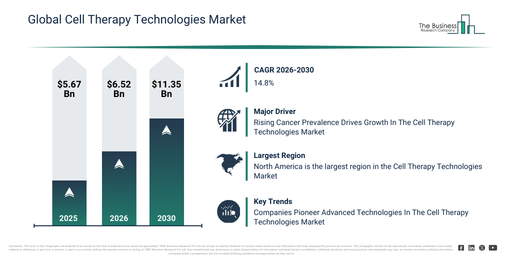
    The cell therapy technologies market experienced significant expansion recently, with projections indicating a rise from $5.67 billion in 2025 to $6.52 billion in 2026, reflecting a compound annual growth rate of 15.0%. During the preceding period, this expansion was fueled by a surge in clinical investigations for cell-based treatments, a greater acceptance of stem cell therapies, the broadening of research cell repositories, the accessibility of sophisticated bioprocessing tools, and advancements in translational medicine initiatives.

    The cell therapy technologies market is poised for substantial expansion, projected to reach $11.35 billion by 2030, demonstrating a robust compound annual growth rate of 14.8%. This upward trajectory in the upcoming years is fueled by several key factors: the escalating commercial availability of cell-based treatments, increased financial backing for regenerative medicine research, the proliferation of localized cell therapy systems, a heightened need for automated production processes, and a stronger emphasis from regulatory bodies on maintaining consistent manufacturing standards. Within this forecast period, significant market currents include the growing embrace of enclosed cell processing systems, greater utilization of automated cell cultivation equipment, an expanding requirement for manufacturing processes that can be scaled up effectively for cell therapies, advancements in tools for monitoring processes and ensuring quality, and a greater concentration on uniform methods for handling cells.

    Download A Free Sample Report For Comprehensive Market Insights:

    https://www.thebusinessresearchcompany.com/sample.aspx?id=4122&type=smp

    #Cell Therapy Technologies Market Growth Factors: Which Forces Are Supporting Market Expansion?

    The escalating incidence of cancer is anticipated to be a primary catalyst for the expansion of the cell therapy technologies market throughout the projected period, as cell therapy itself leverages living cells as therapeutic agents for disease intervention, specifically harnessing the body’s immune system to identify and eliminate aberrant cells when applied to oncological treatments; for example, data from the American Cancer Society, a US non-profit organization dedicated to cancer advocacy, revealed a rise from 1,958,310 cases in 2023 to 2,001,140 in January 2024, signifying a 2.19% increase, thus, this upward trend in cancer diagnoses is poised to fuel the future growth of the cell therapy technologies sector.

    Cell Therapy Technologies Market Segment Outlook: Which Categories Are Expanding The Fastest?

    The cell therapy technologies market covered in this report is segmented –

    1) By Product: Consumables, Equipment, Systems And Software

    2) By Cell Type: T-Cells, Stem Cells, Other Cell Types

    3) By Process: Cell Processing, Cell Preservation, Distribution And Handling, Process Monitoring And Quality Control

    4) By End User: Life Science Companies, Research Institutes And Cell Banks

    Subsegments:

    1) By Consumables: Cell Culture Media, Bioreactors And Cell Culture Vessels, Cell Separation And Processing Kits, Cryopreservation Bags And Vials

    2) By Equipment: Cell Counters, Centrifuges, Cell Sorting Equipment, Incubators

    3) By Systems And Software: Closed-System Cell Processing Systems, Automated Cell Culture Systems, Point-Of-Care Cell Therapy Systems, Laboratory Information Management Systems (LIMS), Data Management Software For Cell Therapies, Process Optimization And Tracking Software

    Cell Therapy Technologies Market Industry Trends: What Changes Are Reshaping Demand?

    Leading entities within the cell therapy sector are dedicated to pioneering technological progress, including the implementation of automated manufacturing systems aimed at enhancing the capacity, consistency, and productivity of cell-based therapeutic creation. These automated cell therapy solutions incorporate sophisticated robotics, real-time process oversight, and contained production environments to optimize output while upholding the integrity of cellular material and adhering to regulatory standards. As an illustration, the year 2025 witnessed Limula, a United States firm specializing in cell therapies, introduce a novel automated platform engineered to expedite the manufacturing of cell therapies, minimize human involvement, and elevate the uniformity and dependability of therapeutic cell products. This platform’s introduction signifies a crucial advancement towards achieving commercial-scale cell therapy manufacturing, thereby facilitating a more rapid transition from experimental stages to practical medical use.

    Cell Therapy Technologies Market Key Companies And Competitive Benchmarking

    Major companies operating in the cell therapy technologies market are Lonza Group AG, Thermo Fisher Scientific Inc, Merck KGaA, Terumo Corporation, Danaher Corporation, Fujifilm Holdings Corporation, Sartorius AG, Becton Dickinson and Company, Avantor Inc., Cellular Biomedicine Group, CORESTEM, Astellas Pharma Inc, Anterogen Co. Ltd, Arce Therapeutics, CARsgen Therapeutics, Co.Don AG, Neogene Therapeutics, GammaDelta Therapeutics Limited, SOTIO, Genestack, Novartis AG, Celgene Corporation, Gilead Sciences, Juno Therapeutics, Allogene Therapeutics, Bluebird Bio, Amgen, Regen BioPharma, Bellicum, Biotchpharma, BrainStorm Cell Therapeutics, Pluristem, Next BioSciences, CryoSave, BioHeart, Stem Cell Technologies

    Access The Complete Cell Therapy Technologies Market Report:

    https://www.thebusinessresearchcompany.com/report/cell-therapy-technologies-global-market-report

    Cell Therapy Technologies Market Regional Distribution: Which Areas Drive Market Expansion?

    North Americawas the largest region in the cell therapy technologies market in 2025. Asia-Pacificis predicted to record the fastest growth over the forecast period. The regions covered in the cell therapy technologies market report are Asia-Pacific, South East Asia, Western Europe, Eastern Europe, North America, South America, Middle East, Africa.

    Get in touch with us:

    The Business Research Company: https://www.thebusinessresearchcompany.com/

    Americas: +1 310-496-7795

    Asia: +44 7882 955267 & +91 8897263534

    Europe: +44 7882 955267

    Email us at: marketing@tbrc.info

    Follow us on:

    LinkedIn: https://in.linkedin.com/company/the-business-research-company

    YouTube: https://www.youtube.com/channel/UC24_fI0rV8cR5DxlCpgmyFQ

    Global Market Model: https://www.thebusinessresearchcompany.com/global-market-model
  • Cell Therapy Processing Market Forecast Reveals Where Future Industry Value Will Be Created

    Cell Therapy Processing Market Forecast Reveals Where Future Industry Value Will Be Created

    Delivering more actionable and strategically valuable research, The Business Research Company’s 2026 market reports feature market attractiveness analysis, total addressable market evaluation, company benchmarking matrices, interactive Excel dashboards, expanded supply chain intelligence, emerging startup coverage, and detailed product insights.

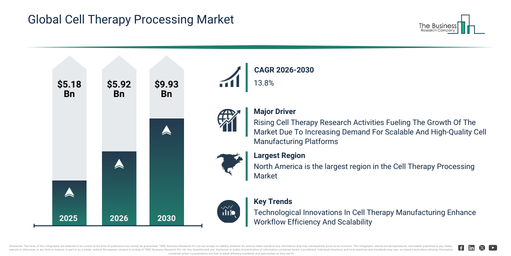
    Cell Therapy Processing Market Growth From $5.92 Billion In 2026 To $9.93 Billion By 2030 At A CAGR Of 13.8%

    The cell therapy processing sector has experienced substantial expansion recently, with its market value projected to increase from $5.18 billion in 2025 to $5.92 billion in 2026, reflecting a compound annual growth rate of 14.3%. This upward trajectory in the preceding timeframe was driven by a confluence of factors including a surge in clinical trials for cell-based treatments, enhancements in biopharmaceutical production capabilities, the proliferation of dedicated processing infrastructures, a heightened level of proficiency in good manufacturing practice (GMP) adherence, and escalating investments in cutting-edge therapeutic modalities.

    The cell therapy processing market is poised for substantial expansion over the next several years, projecting a rise to $9.93 billion by 2030 with a compound annual growth rate (CAGR) of 13.8%. This projected increase is fueled by several key factors, including the escalating commercial availability of gene and cell therapies, a heightened need for contract manufacturing solutions, the proliferation of distributed manufacturing approaches, wider implementation of digital quality management systems, and an uptick in regulatory endorsements for cell-based therapeutic interventions. Key developments anticipated during this forecast period encompass the greater utilization of GMP-compliant processing platforms, a surge in the demand for adaptable cell therapy production capabilities, increased integration of automated workflow software, the broadening of contract processing services, and a reinforced emphasis on maintaining sterility and assuring quality throughout the manufacturing process.

    Download A Free Sample Report For Comprehensive Market Insights:

    https://www.thebusinessresearchcompany.com/sample.aspx?id=27244&type=smp

    Cell Therapy Processing Market Demand Drivers: What Is Fueling Industry Growth?

    The proliferation of research endeavors in the realm of cell therapy is anticipated to be a significant catalyst for the expansion of the cell therapy processing market. Cell therapy itself is defined as the production of medicinal products utilizing live cells, aimed at addressing or alleviating a spectrum of ailments such as cancers, autoimmune diseases, and inherited disorders. A key driver behind the escalating demand for cell-based therapeutics is the pressing requirement for manufacturing systems that are both adaptable and dependable, capable of sustaining substantial cell concentrations while preserving the integrity of the final product. The processing of cells plays a crucial role in advancing cell therapy research by facilitating uniform preparation, rigorous quality assurance, and the large-scale production of superior quality cells, thereby guaranteeing dependable and repeatable results for both investigative activities and clinical trials. As an illustration, by December 2024, the International Federation of Pharmaceutical Manufacturers and Associations, an organization headquartered in Switzerland, reported that six novel cell and gene therapies, representing first-in-class innovations, were launched in 2023, a noteworthy increase of 50% compared to the three such treatments launched in 2022. Consequently, the heightened volume of research activities in cell therapy is directly fueling the growth trajectory of the cell therapy processing market.

    Cell Therapy Processing Market Segment Landscape: Which Areas Lead Market Development?

    The cell therapy processing market covered in this report is segmented –

    1) By Offering Type: Products, Services, Software

    2) By Applications: Cardiovascular Diseases Or Cardiac Regenerative Therapies, Bone Repair, Neurological Disorders, Skeletal Muscle Repair, Cancer, Other Applications

    3) By End-User: Research Institutes, Biopharmaceutical Companies, Contract Research Organizations, Other End-Users

    Subsegments:

    1) By Products: Cell Processing Systems, Cell Separation Devices, Cell Culture Equipment, Cell Preservation Systems, Consumables And Reagents

    2) By Services: Contract Manufacturing Services, Process Development Services, Quality Control And Testing Services, Logistics And Supply Chain Services, Regulatory Compliance And Documentation Services

    3) By Software: Cell Processing Workflow Management Software, Data Analysis And Reporting Software, Quality Management Software, Laboratory Information Management Systems (LIMS), Compliance And Audit Management Software

    Cell Therapy Processing Market Innovation Trends: Which Developments Are Transforming The Industry?

    The leading enterprises within the cell therapy processing sector are dedicated to creating sophisticated technologies, for example, combined bioreactor-centrifuge apparatuses, which serve to optimize production sequences and enhance the reliability, adaptability, and aseptic conditions of treatments derived from cells. This integrated bioreactor-centrifuge unit represents a singular piece of equipment merging cell cultivation and centrifugation for separation into one contained module, facilitating uninterrupted, automated cell treatment processes without the necessity of moving cells between different stages. As an illustration, in March of 2025, Limula SA, a firm based in Switzerland specializing in the production of cell and gene therapies (CGT), introduced LimONE, a fully automated, enclosed platform designed for cell therapy production. This pioneering system assimilates physical components, disposable supplies, and software guided by predetermined protocols to simplify intricate cell processing stages, including incubation, centrifugation, and the management of chemical agents, all within a solitary, space-efficient assembly, thereby allowing for uniform, scalable output of therapies like CAR-T and genetically modified stem cells, from initial research phases up to Good Manufacturing Practice (GMP) compliant industrial levels, while circumventing the complexities associated with technology transfers.

    Cell Therapy Processing Market Industry Leaders And Market Competition

    Major companies operating in the cell therapy processing market are Johnson & Johnson Services Inc., Bristol-Myers Squibb Company, Thermo Fisher Scientific Inc., Novartis AG, Gilead Sciences Inc., Danaher Corporation, Lonza Group AG, Anterogen Co. Ltd., Terumo Corporation, Sartorius AG, Bio-Techne Corporation, STEMCELL Technologies Inc., Miltenyi Biotec GmbH, AGC Biologics S.p.A., MaxCyte Inc., Cellares Corporation, Cellectis S.A., JW Cayman Therapeutics Company Limited, Cell Therapies Pty Ltd., InGeneron Inc., WuXi Advanced Therapies, Catalent Inc.

    Access The Complete Cell Therapy Processing Market Report:

    https://www.thebusinessresearchcompany.com/report/cell-therapy-processing-global-market-report

    Cell Therapy Processing Market Leading Geography: Which Region Generates The Most Revenue?

    North Americawas the largest region in the cell therapy processing market in 2025. Asia-Pacificis expected to be the fastest-growing region in the forecast period. The regions covered in the cell therapy processing market report are Asia-Pacific, South East Asia, Western Europe, Eastern Europe, North America, South America, Middle East, Africa.

    Get in touch with us:

    The Business Research Company: https://www.thebusinessresearchcompany.com/

    Americas: +1 310-496-7795

    Asia: +44 7882 955267 & +91 8897263534

    Europe: +44 7882 955267

    Email us at: marketing@tbrc.info

    Follow us on:

    LinkedIn: https://in.linkedin.com/company/the-business-research-company

    YouTube: https://www.youtube.com/channel/UC24_fI0rV8cR5DxlCpgmyFQ

    Global Market Model: https://www.thebusinessresearchcompany.com/global-market-model
  • Cell Signaling Market Growth Through 2030 Creates New Strategic Opportunities

    Cell Signaling Market Growth Through 2030 Creates New Strategic Opportunities

    Enhanced with market attractiveness analysis, total addressable market evaluation, company benchmarking matrices, interactive Excel dashboards, expanded supply chain intelligence, emerging startup coverage, and detailed product insights, The Business Research Company’s 2026 market reports deliver more actionable and strategically valuable research.

    Cell Signaling Market Expansion Outlook: What Revenue Opportunities Lie Ahead?

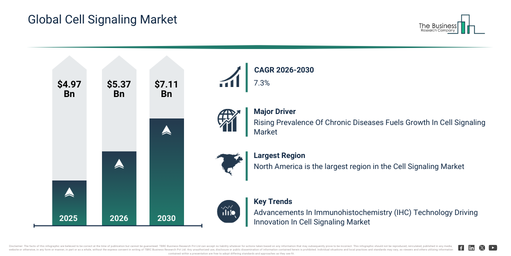
    The cell signaling market experienced robust expansion recently, projected to increase from $4.97 billion in 2025 to $5.37 billion in 2026, reflecting a compound annual growth rate (CAGR) of 8.2%. This upward trend in the historical period is fueled by advancements in molecular biology research, the escalating integration of immunoassays within research laboratories, burgeoning investigations into cancer signaling pathways, a greater reliance on western blotting methodologies, and the accessibility of sophisticated antibody products.

    The global cell signaling market is poised for significant expansion, projecting an impressive surge to $7.11 billion by 2030, driven by a compound annual growth rate of 7.3%. This anticipated increase over the forecast period is largely fueled by escalating investments in the research of targeted therapies, a heightened demand for precise signaling analysis, the broadening scope of translational research, the expanding utilization of high-throughput proteomics, and the growing incorporation of computational biology methodologies. Key developments shaping the market during this timeframe include a heightened emphasis on analyzing specific signaling pathways, a greater reliance on high-sensitivity detection reagents, increased adoption of multiplex signaling assays, advancements in quantitative cell communication studies, and the enhanced integration of sophisticated imaging techniques.

    Download A Free Sample Report For Comprehensive Market Insights:

    https://www.thebusinessresearchcompany.com/sample.aspx?id=15758&type=smp

    Cell Signaling Market Growth Drivers: What Factors Are Accelerating Expansion?

    The expanding occurrence of long-term illnesses is anticipated to fuel the cell signaling market’s expansion in the future. Such protracted health issues, which develop gradually and endure for considerable durations, frequently spanning years or even a lifetime, necessitate continuous attention and therapeutic interventions to manage symptoms, avert complications, and preserve well-being. Factors contributing to the rise in chronic conditions include an aging demographic, lifestyle choices detrimental to health, and the availability and systems within healthcare. Research into cell signaling offers crucial understanding and resources for comprehending, identifying, managing, and averting these persistent ailments, thereby presenting prospects for enhanced results and a better quality of life for those affected. Illustratively, data from January 2023, as reported by the National Library of Medicine, projects a substantial surge in individuals aged 50 and above experiencing at least one chronic malady, escalating from 71.522 million in 2020 to an estimated 142.66 million by 2050, marking a near doubling of cases. Consequently, this escalating trend in chronic diseases is a significant impetus for the cell signaling market’s growth.

    Cell Signaling Market Segments: Where Are The Largest Growth Opportunities?

    The cell signaling market covered in this report is segmented –

    1) By Product: Consumables, Instruments

    2) By Signaling Type: Endocrine Signaling, Paracrine Signaling, Autocrine Signaling, Synaptic Signaling Source, Other Signaling Types

    3) By Pathway: Akt Signaling Pathway, AMPK Signaling Pathway, ErbB Or HER Signaling Pathway, Other Signaling Pathways

    4) By Technology: Microscopy, Western Blotting, Flow Cytometry, Immunohistochemistry (IHC), Enzyme-Linked Immunosorbent Assay (ELISA), Mass Spectrometry, Other Technologies

    5) By Application: Research Applications, Medical Applications

    Subsegments:

    1) By Consumables: Reagents, Antibodies, Kits, Chemicals and Enzymes

    2) By Instruments: Flow Cytometers, Microplate Readers, Cell Counters, Western Blotting Systems, Real-Time PCR Systems

    Cell Signaling Market Trends: What Is Shaping Future Industry Growth?

    In the cell signaling market, leading enterprises are prioritizing the creation of cutting-edge solutions, exemplified by immunohistochemistry (IHC) assays, to enhance their market standing. These IHC assays represent sophisticated laboratory procedures designed for the identification and visual representation of particular proteins or antigens within biological tissue specimens. As an illustration, during September 2023, Cell Signaling Technology (CST), a prominent American firm specializing in life sciences discovery technologies, unveiled its SignalStar Multiplex IHC technology. This groundbreaking tool is specifically engineered for spatial biology investigations, facilitating high-throughput immunohistochemistry (IHC) assays that can analyze multiple targets. This advanced technology empowers scientists to simultaneously identify numerous targets within formalin-fixed, paraffin-embedded (FFPE) tissues, achieving remarkable sensitivity and precision. Its mechanism involves the synergistic application of antibodies, oligonucleotides, and fluorophores to amplify the antibody signal, thereby facilitating the detection of even low-expression targets, with the capability to analyze as many as eight proteins within a single tissue sample.

    Cell Signaling Market Major Participants And Competitive Dynamics

    Major companies operating in the cell signaling market are Johnson & Johnson, F. Hoffmann-La Roche Ltd., Pfizer Inc., Bayer AG, Bristol-Myers Squibb Company, Thermo Fisher Scientific Inc., Novartis AG, GlaxoSmithKline plc, Eli Lilly and Company, Gilead Sciences Inc., Danaher Corporation, Merck KGaA, Becton Dickinson and Company, Agilent Technologies Inc., PerkinElmer Inc., Beckman Coulter Inc., Bio-Rad Laboratories Inc., Qiagen N.V., Bio-Techne Corporation, Miltenyi Biotec, Promega Corporation, Janssen Pharmaceuticals Inc., Abcam plc, Horizon Discovery Ltd., Cell Signaling Technology Inc., Cisbio Bioassays, Rockland Immunochemicals Inc.

    Access The Complete Cell Signaling Market Report:

    https://www.thebusinessresearchcompany.com/report/cell-signaling-global-market-report

    Cell Signaling Market Regional Outlook: Where Are The Largest Opportunities Located?

    North Americawas the largest region in the cell signaling market in 2025. Asia-Pacificis expected to be the fastest-growing region in the forecast period. The regions covered in the cell signaling market report are Asia-Pacific, South East Asia, Western Europe, Eastern Europe, North America, South America, Middle East, Africa.

    Get in touch with us:

    The Business Research Company: https://www.thebusinessresearchcompany.com/

    Americas: +1 310-496-7795

    Asia: +44 7882 955267 & +91 8897263534

    Europe: +44 7882 955267

    Email us at: marketing@tbrc.info

    Follow us on:

    LinkedIn: https://in.linkedin.com/company/the-business-research-company

    YouTube: https://www.youtube.com/channel/UC24_fI0rV8cR5DxlCpgmyFQ

    Global Market Model: https://www.thebusinessresearchcompany.com/global-market-model