Month: June 2026

  • Cell Expansion Market Growth Is Accelerating As Industry Transformation Continues

    Cell Expansion Market Growth Is Accelerating As Industry Transformation Continues

    Delivering more actionable and strategically valuable research, The Business Research Company’s 2026 market reports feature market attractiveness analysis, total addressable market evaluation, company benchmarking matrices, interactive Excel dashboards, expanded supply chain intelligence, emerging startup coverage, and detailed product insights.

    Cell Expansion Market Forecast Highlighting Growth From $37.54 Billion To $69.41 Billion

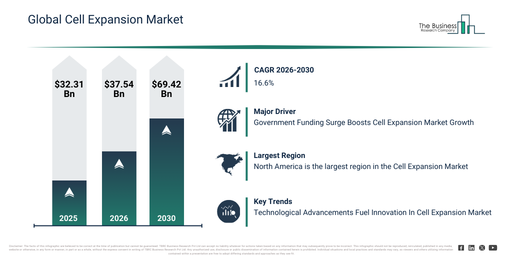
    The cell expansion market has experienced a significant surge, projected to expand from its 2025 valuation of $32.31 billion to $37.54 billion by 2026, reflecting a compound annual growth rate of 16.2%. This expansion during the earlier period was fueled by several key factors including the increased capacity in biopharmaceutical manufacturing, the growing reliance on mammalian cell cultures, the integration of cell expansion techniques into vaccine development, the proliferation of research-focused cell cultivation, and the increasing availability of disposable culture systems.

    The cell expansion market is poised for substantial expansion in the coming years, projected to reach $69.42 billion by 2030, demonstrating a compound annual growth rate of 16.6%. This upward trajectory during the forecast period is fueled by several key factors: the escalating demand for cell and gene therapies, augmented investments directed towards large-scale biopharmaceutical production, the broadening of regenerative medicine research and development, a heightened emphasis on developing cost-effective scaling solutions, and the increasing integration of closed-system expansion technologies. Furthermore, several significant trends are shaping this market, including a greater embrace of single-use cell expansion systems, a growing need for adaptable and scalable cell culture platforms, the expanding application of serum-free expansion media, the proliferation of automated bioreactor systems, and a stronger commitment to standardizing manufacturing processes.

    Download A Free Sample Report For Comprehensive Market Insights:

    https://www.thebusinessresearchcompany.com/sample.aspx?id=8264&type=smp

    Cell Expansion Market Demand Drivers: What Is Fueling Industry Growth?

    Enhanced government investment in research and development initiatives is anticipated to be a significant catalyst for the expansion of the cell expansion market. This government funding, defined as financial resources allocated by a governing body for specific objectives, is instrumental in nurturing novel ideas, propelling progress in cellular therapies, and expediting the evolution of regenerative medicine. As an illustration, the National Cancer Institute, a governmental entity in the United States, was allocated a budget of $7.3 billion for fiscal year 2023 by the U.S. Congress in September 2023, marking an augmentation of $408 million compared to the preceding year. Consequently, heightened government investment in R&D is acting as a key driver for the growth trajectory of the cell expansion market.

    Cell Expansion Market Segment Outlook: Which Categories Are Expanding The Fastest?

    The cell expansion market covered in this report is segmented –

    1) By Cell Type: Mammalian, Microbial, Other Cell Types

    2) By Product: Consumables, Reagents, Media, Serum, Disposables, Instruments

    3) By Application: Biopharmaceuticals, Tissue Culture And Engineering, Vaccine Production, Drug Development, Gene Therapy, Cancer Research, Stem Cell Research, Other Applications

    4) By End-User: Biopharmaceutical And Biotechnology Companies, Research Institutes, Cell Banks, Other End-Users

    Subsegments:

    1) By Mammalian: Adherent Cells, Suspension Cells, Stem Cells

    2) By Microbial: Bacterial Cells, Yeast Cells, Fungal Cells

    3) By Other Cell Types: Plant Cells, Insect Cells, Hybridoma Cells

    Cell Expansion Market Innovation Trends: Which Developments Are Transforming The Industry?

    Leading players within the cell expansion sector are focusing on enhancing bioprocessing methods, including sophisticated automated 3D bioreactor setups, to boost the effectiveness and expandability of cellular manufacturing for medical treatments; PluriCDMO, for example, specializes in high-volume, automated cell therapy production leveraging its proprietary 3D bioreactor technology, guaranteeing reliable, premium output from initial research phases right up to clinical evaluation, and as a demonstration of this commitment, Pluristem Therapeutics Inc., an Israeli biotech firm, introduced PluriCDMO in January 2024, a dedicated operational unit aimed at delivering cell therapy manufacturing services as a contract development and manufacturing organization, featuring a 47,000-square-foot facility compliant with good manufacturing practice (GMP) standards for cell therapy production, thereby enabling Pluri to deliver comprehensive support from preclinical research and development through to late-stage clinical trials and eventual market release.

    Cell Expansion Market Key Companies And Competitive Benchmarking

    Major companies operating in the cell expansion market are Thermo Fisher Scientific Inc., Becton Dickinson and Company, Lonza Group, Corning Inc., Merck KGaA, Sartorius Stedim Biotech SA, Terumo Corporation, Miltenyi Biotec GmbH, Danaher Corporation, Stemcell Technologies Inc., Beckman Coulter Inc., Takara Bio Inc., RepliCel Life Sciences, Neximmune Inc., Celltainer Biotech BV, GE HealthCare Technologies Inc., ReproCELL USA Inc., iXCells Biotechnologies Inc., Neuromics LLC, G&G Technologies Inc., Eppendorf AG, Avantor Inc., Bio-Techne Corporation, BioLife Solutions Inc., Cesca Therapeutics Inc., Core Dynamics Ltd., Lifeline Scientific Inc., Princeton Cryotech Inc., VWR International LLC, Azenta US Inc., MVE Biological Solutions LLC, BioCision LLC, BioSpherix Ltd.

    Access The Complete Cell Expansion Market Report:

    https://www.thebusinessresearchcompany.com/report/cell-expansion-global-market-report

    Cell Expansion Market Regional Outlook: Where Are The Largest Opportunities Located?

    North Americawas the largest region in the cell expansion market share in 2025. Asia-Pacificis expected to be the fastest-growing region in the forecast period. The regions covered in the cell expansion market report are Asia-Pacific, South East Asia, Western Europe, Eastern Europe, North America, South America, Middle East, Africa.

    Get in touch with us:

    The Business Research Company: https://www.thebusinessresearchcompany.com/

    Americas: +1 310-496-7795

    Asia: +44 7882 955267 & +91 8897263534

    Europe: +44 7882 955267

    Email us at: marketing@tbrc.info

    Follow us on:

    LinkedIn: https://in.linkedin.com/company/the-business-research-company

    YouTube: https://www.youtube.com/channel/UC24_fI0rV8cR5DxlCpgmyFQ

    Global Market Model: https://www.thebusinessresearchcompany.com/global-market-model
  • Cell Dissociation Market Outlook Highlights The Next Major Growth Opportunities

    Cell Dissociation Market Outlook Highlights The Next Major Growth Opportunities

    Enhanced with market attractiveness analysis, total addressable market evaluation, company benchmarking matrices, interactive Excel dashboards, expanded supply chain intelligence, emerging startup coverage, and detailed product insights, The Business Research Company’s 2026 market reports deliver more actionable and strategically valuable research.

    Cell Dissociation Market Revenue Growth Supported By A CAGR Of 0.77% Through 2030

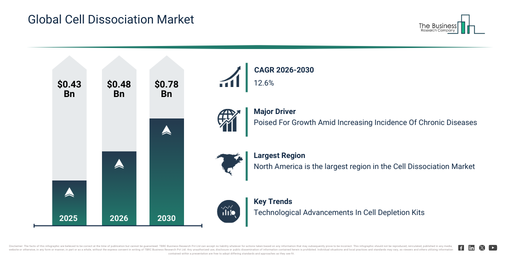
    The global cell dissociation market has experienced substantial expansion lately, exhibiting a projected increase from $0.43 billion in 2025 to $0.48 billion in 2026, driven by a compound annual growth rate of 12.9%. This historical growth trajectory is largely fueled by the proliferation of cell-based research endeavors, a heightened reliance on flow cytometry methods, an upswing in academic life sciences investigations, increased utilization of in vitro cell culture models, and the readily available commercial dissociation reagents.

    The market for cell dissociation techniques is projected for substantial expansion in the forthcoming years, anticipated to reach $0.78 billion by 2030, exhibiting a compounded annual growth rate of 12.6%. This projected increase over the forecast period is underpinned by several key drivers, including the escalating utilization of single-cell genomics, augmented investments directed towards cell therapy research, a heightened demand for reliable cell processing methodologies, the proliferation of precision medicine initiatives, and a greater reliance on automated laboratory instrumentation. Noteworthy trends expected to shape this market include a growing prevalence of standardized protocols for enzymatic dissociation, an increased need for methods that facilitate gentle cell separation, wider adoption of automated systems for tissue dissociation, the expansion of analytical workflows focused on single cells, and a pronounced emphasis on maintaining cell viability throughout dissociation processes.

    Download A Free Sample Report For Comprehensive Market Insights:

    https://www.thebusinessresearchcompany.com/sample.aspx?id=19360&type=smp

    Cell Dissociation Market Growth Drivers: What Factors Are Accelerating Expansion?

    The expanding prevalence of ongoing health conditions is anticipated to fuel the trajectory of the cell dissociation market. This rise in chronic ailments can be attributed to demographic shifts like an aging populace, alongside evolving lifestyles marked by increased obesity, reduced physical activity, and less healthy dietary patterns, all of which foster the onset and persistence of issues such as diabetes, cardiovascular diseases, and malignancies. Within the realm of chronic disease research, cell dissociation plays a vital role by facilitating the isolation and examination of individual cells, thereby contributing to a deeper comprehension of disease pathogenesis and the creation of precise therapeutic interventions. To illustrate, data from April 2025, as reported by the Centers for Disease Control and Prevention (CDC), indicated that in 2023, roughly 194 million adults in the United States (76.4%) managed at least one chronic condition, with approximately 130 million adults (51.4%) dealing with multiple such conditions. Consequently, the escalating occurrence of chronic diseases acts as a significant impetus for the cell dissociation market.

    Cell Dissociation Market Segment Landscape: Which Areas Lead Market Development?

    The cell dissociation market covered in this report is segmented –

    1) By Product: Enzymatic Dissociation, Non-enzymatic Dissociation, Instruments And Accessories

    2) By Tissue: Epithelial Tissue, Connective Tissue

    3) By Application: Tissue Dissociation, Cell Detachment

    4) By End-User: Pharmaceuticals And Biotechnology Companies, Research And Academic Institutes, Clinical Research Organizations (CRO), Other End-Users

    Subsegments:

    1) By Enzymatic Dissociation: Trypsin Solutions, Collagenase Solutions, Dispase Solutions, Other Enzymatic Dissociation Reagents

    2) By Non-Enzymatic Dissociation: Chemical Dissociation Solutions, Mechanical Dissociation Solutions, Hypotonic Solutions

    3) By Instruments and Accessories: Cell Dissociation Systems, Tissue Homogenizers, Centrifuges, Cell Culture Plates And Flasks

    Cell Dissociation Market Trends: What Is Shaping Future Industry Growth?

    Leading entities within the cell dissociation sector are prioritizing the creation of sophisticated product offerings, specifically cell depletion and enrichment kits, as a strategic move to enhance their market standing. The core design of these kits involves the targeted removal or isolation of particular cell groups, thereby boosting the overall effectiveness and reliability of subsequent procedures in both laboratory investigations and medical diagnostics. As an illustration, in February of 2023, LevitasBio, a biotechnology firm headquartered in the United States, introduced its LeviSelect Suite of Cell Depletion & Enrichment Kits. Characterized by distinctive capabilities such as rapid processing speeds and a negligible effect on cell survival rates, these kits elevate their applicability in delicate research contexts. Furthermore, the LeviSelect kits empower scientists with adaptable workflows, enabling the precise targeting of a broad spectrum of cellular entities.

    Cell Dissociation Market Industry Leaders And Market Competition

    Major companies operating in the cell dissociation market are Roche Holding AG, Danaher Corporation, Fujifilm Holdings Corporation, Becton Dickinson and Company, GE HealthCare Technologies Inc., Corning Incorporated, Lonza Group AG, Bio-Rad Laboratories Inc., Eppendorf AG, Bio-Techne Corporation, Miltenyi Biotec, BioLegend Inc., Cyagen Biosciences Inc., Cell Signaling Technology Inc., HiMedia Laboratories LLC, Gemini Bio-Products, Biological Industries USA Inc., BrainBits LLC, Biocompare Inc., AAT Bioquest Inc.

    Access The Complete Cell Dissociation Market Report:

    https://www.thebusinessresearchcompany.com/report/cell-dissociation-global-market-report

    Cell Dissociation Market Geographic Landscape: Which Region Dominates Industry Growth?

    North Americawas the largest region in the cell dissociation market in 2025. Asia-Pacificis expected to be the fastest-growing region in the forecast period. The regions covered in the cell dissociation market report are Asia-Pacific, South East Asia, Western Europe, Eastern Europe, North America, South America, Middle East, Africa.

    Get in touch with us:

    The Business Research Company: https://www.thebusinessresearchcompany.com/

    Americas: +1 310-496-7795

    Asia: +44 7882 955267 & +91 8897263534

    Europe: +44 7882 955267

    Email us at: marketing@tbrc.info

    Follow us on:

    LinkedIn: https://in.linkedin.com/company/the-business-research-company

    YouTube: https://www.youtube.com/channel/UC24_fI0rV8cR5DxlCpgmyFQ

    Global Market Model: https://www.thebusinessresearchcompany.com/global-market-model
  • Cell Cytometry Market Trends And Growth Drivers Point To Strong Future Potential

    Cell Cytometry Market Trends And Growth Drivers Point To Strong Future Potential

    Through market attractiveness analysis, total addressable market evaluation, company benchmarking matrices, interactive Excel dashboards, expanded supply chain intelligence, emerging startup coverage, and detailed product insights, The Business Research Company’s 2026 market reports provide more actionable and strategically valuable research.

    Cell Cytometry Market Value Expansion And Long-Term Growth Outlook

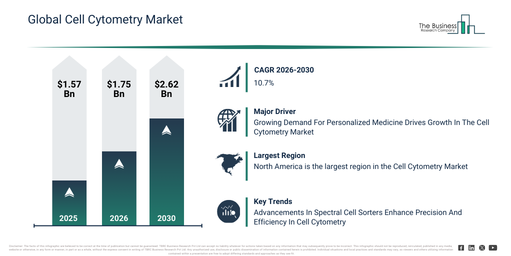
    The sector centered on cell cytometry has seen considerable expansion lately, projected to advance from a valuation of $1.57 billion in 2025 to $1.75 billion by 2026, reflecting a compound annual growth rate of 11.0%. This surge during the preceding period stems from heightened cancer research initiatives, a growing reliance on flow cytometry for diagnostic purposes, advancements in pharmaceutical drug discovery, greater integration of automated laboratory equipment, and the accessibility of sophisticated cytometry reagents.

    The market for cell cytometry is poised for substantial expansion over the coming years, projecting a valuation of $2.62 billion by 2030, underpinned by a compound annual growth rate of 10.7%. This anticipated growth trajectory is propelled by several key factors: the escalating integration of cell cytometry techniques within precision medicine initiatives, augmented investment in the field of immunotherapy research, the broadening scope of single-cell analysis applications, a surging demand for high-throughput cell analysis capabilities, and the increasing incorporation of digital analytics into cytometry platforms. Furthermore, prominent trends shaping the forecast period encompass a greater reliance on high-parameter flow cytometry, the burgeoning utilization of artificial intelligence-driven cell analysis software, a heightened demand for immune profiling applications, the development and expansion of automated cytometry workflows, and a reinforced emphasis on single-cell analysis methodologies.

    Download A Free Sample Report For Comprehensive Market Insights:

    https://www.thebusinessresearchcompany.com/sample.aspx?id=20527&type=smp

    Cell Cytometry Market Growth Factors Supporting Long-Term Expansion

    The increasing need for individualized medical care is anticipated to be a significant catalyst for the expansion of the cell cytometry treatment sector. This customized approach to healthcare, known as personalized medicine, involves adapting treatments and preventative measures to suit each person’s unique genetic makeup, lifestyle, and specific biological profile, thereby fostering more accurate and successful health interventions. Key drivers behind this surge in personalized medicine include its promise of delivering treatments that are not only more effective and precisely targeted but also associated with a reduction in adverse effects, ultimately leading to improved patient results. Cell cytometry plays an integral role within this framework by facilitating the examination of individual patient cells. This allows for the accurate detection of disease indicators, the tracking of immune system activity, and the fine-tuning of therapeutic strategies based on a patient’s distinct cellular attributes, thereby amplifying both the efficacy and the tailored nature of medical interventions. As a testament to this trend, data from February 2024, as reported by the Personalized Medicine Coalition, indicates a substantial rise in regulatory approvals, with the FDA greenlighting 16 new personalized therapies for individuals with rare conditions in 2023, a notable increase from the six approvals seen in 2022. Consequently, the escalating demand for personalized medicine is directly fueling the growth trajectory of the cell cytometry market.

    Cell Cytometry Market Segments: Where Are The Largest Growth Opportunities?

    The cell cytometry market covered in this report is segmented –

    1) By Product Type: Instrument, Kit And Reagent, Software And Services

    2) By Technology: Cell-Based Flow Cytometry, Bead-Based Flow Cytometry

    3) By Application: Oncology, Drug Discovery, Stem Cell Therapy, Organ Transplantation, Hematology, Other Applications

    4) By End-User: Hospitals And Clinics, Academia And Research Institutes, Pharmaceutical And Biotechnology Companies, Other End-Users

    Subsegments:

    1) By Instrument: Flow Cytometers, Imaging Cytometers, Mass Cytometers, Laser Scanning Cytometers

    2) By Kit and Reagent: Cell Staining Kits, Antibody Reagents, Isotype Controls, Cell Viability Assays

    3) By Software and Services: Data Analysis Software, Instrument Calibration Software, Consulting Services, Technical Support And Maintenance Services

    Cell Cytometry Market Industry Trends Shaping Future Revenue Growth

    Leading players within the cell cytometry sector are prioritizing the creation of novel technologies, exemplified by spectral cell sorters, with the aim of achieving objective outcomes and boosting workflow effectiveness. A spectral cell sorter represents a sophisticated cytometry instrument that segregates cells by analyzing the entire spectrum of light emitted, in contrast to relying on a limited set of specific wavelengths. To illustrate, Sony Corporation, a prominent Japanese electronics firm, introduced its FP7000 spectral cell sorter in October 2023. This device offers cutting-edge, full-spectrum analysis capabilities coupled with high-velocity sorting, facilitating the simultaneous identification of numerous fluorescent tags with enhanced precision. Incorporating Sony’s proprietary spectral technology, it enables the exact discernment of cells through comprehensive spectral capture and deconvolution, thereby augmenting both multiplexing capacity and resolution beyond that of conventional flow cytometers. The FP7000 has been engineered for user-friendliness, featuring intuitive software that renders it suitable for intricate research endeavors in fields such as immunology, oncology, and stem cell research.

    Cell Cytometry Market Major Participants And Competitive Dynamics

    Major companies operating in the cell cytometry market are Merck & Co. Inc., Thermo Fisher Scientific Inc., Danaher Corporation, Becton Dickinson and Company, Agilent Technologies Inc., Sartorius AG, Beckman Coulter Inc., Bio-Rad Laboratories Inc., Bruker Corporation, StemCell Technologies Canada Inc., PerkinElmer Inc., Molecular Devices LLC, Luminex Corporation, R&D Systems, Cytek Biosciences Inc., Cell Signaling Technology Inc., Sony Biotechnology Inc., Sysmex Partec GmbH, Nexcelom Bioscience, Vajra Biometrix Private Limited, Accellix, Amphasys

    Access The Complete Cell Cytometry Market Report:

    https://www.thebusinessresearchcompany.com/report/cell-cytometry-global-market-report

    #Cell Cytometry Market Largest Region: Which Geography Holds The Highest Market Share?

    North Americawas the largest region in the cell cytometry market in 2025. Asia-Pacificis expected to be the fastest-growing region in the forecast period. The regions covered in the cell cytometry market report are Asia-Pacific, South East Asia, Western Europe, Eastern Europe, North America, South America, Middle East, Africa.

    Get in touch with us:

    The Business Research Company: https://www.thebusinessresearchcompany.com/

    Americas: +1 310-496-7795

    Asia: +44 7882 955267 & +91 8897263534

    Europe: +44 7882 955267

    Email us at: marketing@tbrc.info

    Follow us on:

    LinkedIn: https://in.linkedin.com/company/the-business-research-company

    YouTube: https://www.youtube.com/channel/UC24_fI0rV8cR5DxlCpgmyFQ

    Global Market Model: https://www.thebusinessresearchcompany.com/global-market-model
  • Cell Culture Supplements Market Expansion Is Reshaping Competitive Dynamics Across The Industry

    Cell Culture Supplements Market Expansion Is Reshaping Competitive Dynamics Across The Industry

    Delivering more actionable and strategically valuable research, The Business Research Company’s 2026 market reports feature market attractiveness analysis, total addressable market evaluation, company benchmarking matrices, interactive Excel dashboards, expanded supply chain intelligence, emerging startup coverage, and detailed product insights.

    Cell Culture Supplements Market Expected To Reach $6.22 Billion By 2030 At 9.4% CAGR

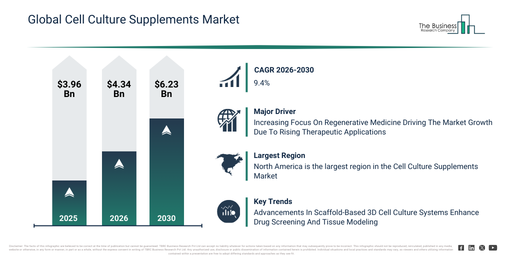
    The market for cell culture supplements has experienced robust expansion lately. Projections indicate a rise from $3.96 billion in 2025 to $4.34 billion in 2026, reflecting a compound annual growth rate of 9.7%. This historical growth trajectory was propelled by increased cell-based research initiatives, the burgeoning biopharmaceutical manufacturing sector, a greater incorporation of in vitro testing methodologies, amplified investments in life science research infrastructure, and a growing need for consistent cell culture results.

    The market for cell culture supplements is projected for substantial expansion over the upcoming years, anticipated to reach $6.23 billion by 2030 with a compound annual growth rate (CAGR) of 9.4%. This projected expansion is fueled by several key factors, including the escalating development of cell and gene therapies, a heightened emphasis on optimizing biologics production at scale, advancements in regenerative medicine research, a growing preference for xeno-free culture systems, and increasingly stringent regulatory requirements for quality-assured cell culture components. During this forecast period, prominent trends expected to shape the market include a greater uptake of serum-free and chemically defined supplements, a surge in the demand for high-purity growth factors, the expanding utilization of supplements free from animal origins, a wider offering of customized media formulations, and a more concentrated effort on ensuring consistent batch-to-batch quality.

    Download A Free Sample Report For Comprehensive Market Insights:

    https://www.thebusinessresearchcompany.com/sample.aspx?id=30226&type=smp

    #Cell Culture Supplements Market Demand Drivers Creating New Revenue Opportunities

    The cell culture supplements market is poised for expansion, largely driven by the advancing field of regenerative medicine. This specialized area extensively employs biological methods to mend, substitute, or regrow cellular tissues and organs, thereby reinstating proper bodily functions. The surge in interest surrounding regenerative medicine is fueled by increased funding from both public and private entities, dedicated to pushing forward research in stem cells, gene therapies, and tissue engineering to address previously untreatable ailments. Consequently, the heightened emphasis on regenerative medicine directly boosts the requirement for cell culture supplements, which are critical components for nurturing and preserving the diverse cell populations vital for creating regenerative treatments and conducting associated scientific investigations. A notable example, as reported by the American Society of Gene & Cell Therapy (ASGCT) in July 2023, indicates a substantial uptick in gene therapies, with the number of Phase II trials escalating from 247 at the close of Q1 2023 to 260 by the end of Q2 2023, marking a 5% increase. This upward trend in regenerative medicine initiatives underscores the robust growth trajectory for the cell culture supplements market.

    Cell Culture Supplements Market Segment Analysis: What Are The Major Market Categories?

    The cell culture supplements market covered in this report is segmented –

    1) By Product Type: Growth Factors And Cytokines, Amino Acids, Vitamins, Hormones, Attachment Factors, Other Product Types

    2) By Source: Animal-Based, Human-Based, Synthetic, Plant-Based

    3) By Application: Biopharmaceutical Production, Tissue Engineering And Regenerative Medicine, Diagnostics, Drug Development, Other Applications

    4) By End-User: Pharmaceutical And Biotechnology Companies, Academic And Research Institutes, Other End-Users

    Subsegments:

    1) By Growth Factors And Cytokines: Epidermal Growth Factor (EGF), Fibroblast Growth Factor (FGF), Vascular Endothelial Growth Factor (VEGF), Transforming Growth Factor Beta (TGF-ß), Interleukins (ILs)

    2) By Amino Acids: L-Glutamine, L-Arginine, L-Lysine, L-Leucine, L-Methionine

    3) By Vitamins: Vitamin A (Retinol), Vitamin B Complex, Vitamin C (Ascorbic Acid), Vitamin D, Vitamin E (Tocopherol), Vitamin K

    4) By Hormones: Insulin, Cortisol, Estrogen, Progesterone, Thyroid Hormones

    5) By Attachment Factors: Fibronectin, Laminin, Collagen, Vitronectin

    6) By Other Product Types: Trace Elements, Lipids, Nucleotides, Antioxidants

    Cell Culture Supplements Market Trends Driving Strategic Industry Expansion

    In the realm of cell culture supplements, leading enterprises are directing their efforts toward pioneering novel solutions, specifically scaffold-based 3D cell culture systems, with the objective of elevating drug screening precision and refining tissue modeling functionalities. These sophisticated 3D systems, by closely replicating native tissue structures, foster cell cultivation that is more attuned to physiological conditions, thereby facilitating superior disease simulation and more reliable forecasting of therapeutic agent efficacy. Illustratively, Bioserve India, a prominent biotechnology firm based in India, introduced an array of sophisticated stem cell products in July 2024. This comprehensive portfolio encompasses specialized culture mediums, growth factors, and essential instruments for the cultivation, differentiation, and disease modeling of induced pluripotent stem cells (iPSCs) and embryonic stem cells (ESCs). Furthermore, the product range includes convenient kits and meticulously designed small molecules instrumental in the efficient generation of iPSCs from somatic cells. It also features scaffold-based 3D cell culture systems tailored for drug efficacy and toxicity assessments, alongside cellular assays engineered to meticulously evaluate cell viability, proliferation rates, and metabolic functions. The company also provides preclinical services leveraging human tissue technology to accurately predict clinical outcomes. Beyond these, their global biorepository housing in excess of 600,000 biospecimens, coupled with research requisites such as antibodies, proteins, and genomic analysis kits, is designed to support a wide spectrum of scientific inquiry, ultimately aiming to accelerate progress in stem cell research and therapeutic advancements within the Indian context.

    Cell Culture Supplements Market Leading Companies Driving Competitive Growth

    Major companies operating in the cell culture supplements market are Thermo Fisher Scientific Inc., Danaher Corporation, Merck KGaA, Becton, Dickinson and Company, GE HealthCare, Corning Incorporated, Lonza Group AG, Sartorius AG, Bio-Techne Corporation, Repligen Corporation, Takara Bio Inc., HiMedia Laboratories, PromoCell GmbH, RoosterBio Inc., Capricorn Scientific GmbH, Genexis Biotech Pvt Ltd., PromoKine GmbH, BioProcess Technologies Ltd., Jin Kairui Biotechnology Co. Ltd., FUJIFILM Irvine Scientific, Athena Enzyme Systems.

    Access The Complete Cell Culture Supplements Market Report:

    https://www.thebusinessresearchcompany.com/report/global-cell-culture-supplements-market-report

    Cell Culture Supplements Market Regional Analysis: Which Region Leads By Revenue?

    North Americawas the largest region in the cell culture supplements market in 2025. Asia-Pacificis expected to be the fastest-growing region in the forecast period. The regions covered in the cell culture supplements market report are Asia-Pacific, South East Asia, Western Europe, Eastern Europe, North America, South America, Middle East, Africa.

    Get in touch with us:

    The Business Research Company: https://www.thebusinessresearchcompany.com/

    Americas: +1 310-496-7795

    Asia: +44 7882 955267 & +91 8897263534

    Europe: +44 7882 955267

    Email us at: marketing@tbrc.info

    Follow us on:

    LinkedIn: https://in.linkedin.com/company/the-business-research-company

    YouTube: https://www.youtube.com/channel/UC24_fI0rV8cR5DxlCpgmyFQ

    Global Market Model: https://www.thebusinessresearchcompany.com/global-market-model
  • Cell Culture Protein Surface Coating Market Forecast Reveals Where Future Industry Value Will Be Created

    Cell Culture Protein Surface Coating Market Forecast Reveals Where Future Industry Value Will Be Created

    Enhanced with market attractiveness analysis, total addressable market evaluation, company benchmarking matrices, interactive Excel dashboards, expanded supply chain intelligence, emerging startup coverage, and detailed product insights, The Business Research Company’s 2026 market reports deliver more actionable and strategically valuable research.

    #Cell Culture Protein Surface Coating Market Size And Revenue Forecast Through 2030

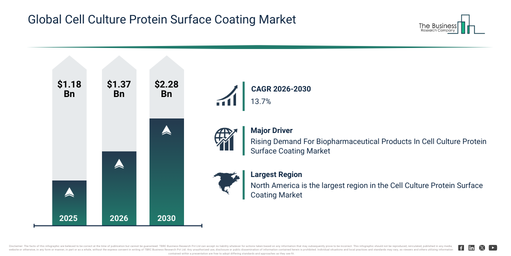
    The market for cell culture protein surface coatings experienced substantial expansion recently, projecting a rise from $1.18 billion in 2025 to $1.37 billion in 2026, fueled by an impressive compound annual growth rate of 15.4%. This upward trajectory during the preceding period was driven by amplified in vitro research pursuits, a broadening scope of cell-based studies, the integrating of specialized coated cultureware within laboratory settings, increased academic research contributions, and the accessibility of dependable coating substances.

    The market for cell culture protein surface coatings is poised for substantial expansion, projected to reach $2.28 billion by 2030, reflecting a compound annual growth rate of 13.7%. This anticipated growth stems from several key factors including a heightened demand for sophisticated cell culture methodologies, escalating financial commitments to regenerative medicine investigations, broader applications in stem cell and tissue engineering fields, a preference for coatings devoid of animal-derived components, and the increasing deployment of scalable culture platforms. Key developments anticipated during this period involve a greater incorporation of extracellular matrix-mimicking protein coatings, a surge in the need for conveniently pre-coated surfaces, a rise in the utilization of synthetic and recombinant protein options, the expansion of high-density cell culture techniques, and a strengthened emphasis on achieving consistent cell adhesion.

    Download A Free Sample Report For Comprehensive Market Insights:

    https://www.thebusinessresearchcompany.com/sample.aspx?id=16369&type=smp

    Cell Culture Protein Surface Coating Market Expansion Supported By Key Demand Factors

    Heightened demand for biopharmaceutical goods is poised to accelerate the expansion of the cell culture protein surface coating sector. Biopharmaceuticals, which are medicines derived from living organisms or created using biotech methods like recombinant DNA, cell cultures, and monoclonal antibodies, are seeing increased consumption for several reasons: progress in cell culture technology, a rise in chronic and age-related illnesses, improvements in bioprocessing, and advancements in genomics. Cell culture protein surface coatings play a vital role by enhancing cell proliferation, function, and manufacturing efficiency in biopharmaceutical production, thereby aiding in the creation of secure, potent, and high-caliber biopharmaceutical products. For illustration, the Alliance for Regenerative Medicine, a US nonprofit, indicated in an August 2023 report that the first quarter of 2023 saw 2,760 global developers of cell, gene, and tissue-engineered therapies, a significant surge from the 1,369 recorded in the first quarter of 2022. Consequently, the escalating need for biopharmaceutical products is fueling the growth of the cell culture protein surface coating market.

    The growing incidence of long-term health conditions is anticipated to stimulate growth within the cell culture protein surface coating market. Chronic diseases, defined as enduring health issues often requiring continuous medical care and potentially impacting daily life or well-being, are on the rise due to factors such as lifestyle changes, genetic predispositions, and environmental exposures to harmful substances. Protein surface coatings used in cell culture are crucial for research into these conditions, offering a reliable foundation for studying disease processes, evaluating potential drug candidates, and formulating novel treatments. As an illustration, the Centers for Disease Control and Prevention (CDC) reported in April 2025 that in 2023, an estimated 76.4% of US adults, totaling about 194 million, managed at least one chronic condition, with prevalence rates of 59.5% in younger adults, 78.4% in middle-aged adults, and 93.0% in older adults. Thus, the increasing burden of chronic diseases is acting as a catalyst for the expansion of the cell culture protein surface coating market.

    Cell Culture Protein Surface Coating Market Segment Breakdown: Which Categories Generate The Most Revenue?

    The cell culture protein surface coating market covered in this report is segmented –

    1) By Coating Type: Pre-Coating, Multiwall Or Microwell Plates, Flasks, Petri Dishes, Slides, Cover Slips, Self-Coating

    2) By Protein Source: Animal-Derived Protein, Human-Derived Protein, Synthetic Protein, Plant-Derived Protein

    3) By Application: Scientific Research, Industrial Production

    Subsegments:

    1) By Pre-Coating: Ready-To-Use Pre-Coated Plates, Pre-Coated Flasks, Pre-Coated Petri Dishes

    2) By Multiwall Or Microwell Plates: 96-Well Plates, 384-Well Plates, 1536-Well Plates

    3) By Flasks: Tissue Culture Flasks, Serum-Free Flasks, Spinner Flasks

    4) By Petri Dishes: Standard Petri Dishes, Disposable Petri Dishes, Specialized Coated Petri Dishes

    5) By Slides: Microscope Slides, Glass Slides With Coating, Poly-L-Lysine Coated Slides

    6) By Cover Slips: Standard Glass Cover Slips, Hydrophilic Cover Slips, Specially Coated Cover Slips

    7) By Self-Coating: Self-Coating Plates, Self-Coating Flasks, Self-Coating Dishes

    Cell Culture Protein Surface Coating Market Key Players And Strategic Industry Positioning

    Major companies operating in the cell culture protein surface coating market are Thermo Fisher Scientific Inc., Merck KGaA, Corning Incorporated, Avantor Inc., Agilent Technologies Inc., Lonza Group AG, Sartorius AG, Greiner AG, Eppendorf SE, Bio Techne Corporation, Promega Corporation, ReproCELL Inc., MoBiTec GmbH, Advanced Biomatrix Inc., AMS Biotechnology Europe Limited, Cell Guidance Systems, NeuVitro Corporation, ZenBio Inc., SPL Life Sciences Co. Ltd., Becton Dickinson and Company, MatTek Corporation, ScienCell Research Laboratories Inc., STEMCELL Technologies Inc., Takara Bio Inc.

    Access The Complete Cell Culture Protein Surface Coating Market Report:

    https://www.thebusinessresearchcompany.com/report/cell-culture-protein-surface-coating-global-market-report

    Cell Culture Protein Surface Coating Market Geographic Distribution And Regional Opportunities

    North Americawas the largest region in the cell culture protein surface coating market in 2025. Asia-Pacificis expected to be the fastest-growing region in the forecast period. The regions covered in the cell culture protein surface coating market report are Asia-Pacific, South East Asia, Western Europe, Eastern Europe, North America, South America, Middle East, Africa.

    Get in touch with us:

    The Business Research Company: https://www.thebusinessresearchcompany.com/

    Americas: +1 310-496-7795

    Asia: +44 7882 955267 & +91 8897263534

    Europe: +44 7882 955267

    Email us at: marketing@tbrc.info

    Follow us on:

    LinkedIn: https://in.linkedin.com/company/the-business-research-company

    YouTube: https://www.youtube.com/channel/UC24_fI0rV8cR5DxlCpgmyFQ

    Global Market Model: https://www.thebusinessresearchcompany.com/global-market-model
  • Cell Culture Plasticware Market Growth Through 2030 Creates New Strategic Opportunities

    Cell Culture Plasticware Market Growth Through 2030 Creates New Strategic Opportunities

    Through market attractiveness analysis, total addressable market evaluation, company benchmarking matrices, interactive Excel dashboards, expanded supply chain intelligence, emerging startup coverage, and detailed product insights, The Business Research Company’s 2026 market reports provide more actionable and strategically valuable research.

    Cell Culture Plasticware Market Growth From $4.35 Billion In 2026 To $5.95 Billion By 2030 At A CAGR Of 8.1%

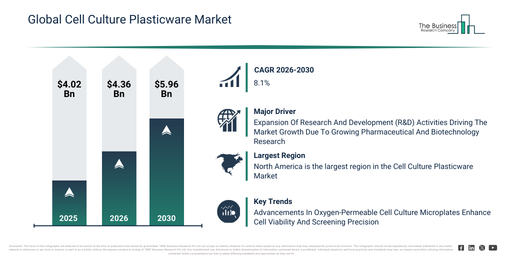
    The cell culture plasticware market experienced robust expansion historically and is projected to continue this upward trajectory, escalating from a valuation of $4.02 billion in 2025 to $4.36 billion by 2026, reflecting a compound annual growth rate (CAGR) of 8.4%. This notable growth during the preceding period was fueled by several key factors, including the burgeoning scope of academic and industrial life science investigations, advancements in cell biology research, a heightened demand for single-use laboratory consumables, enhancements in polymer molding techniques, and the increasing standardization of laboratory procedures.

    Anticipate robust expansion within the cell culture plasticware sector, projecting a market valuation of $5.96 billion by 2030, underpinned by an 8.1% compound annual growth rate. This anticipated surge in the forecast period is fueled by escalating research in gene and cell therapies, augmented investments in biopharmaceutical research and development, broader utilization of high-throughput screening methodologies, a heightened need for sterile laboratory conditions, and a growing inclination towards eco-friendly plastic solutions, alongside key trends such as a greater demand for premium, sterile plasticware, increased acceptance of disposable lab supplies, a stronger emphasis on ensuring experimental consistency, the proliferation of cell-based research, and a concerted effort to optimize laboratory workflows.

    Download A Free Sample Report For Comprehensive Market Insights:

    https://www.thebusinessresearchcompany.com/sample.aspx?id=30225&type=smp

    #Cell Culture Plasticware Market Growth Drivers And Industry Catalysts

    The cell culture plasticware market is poised for expansion, largely fueled by burgeoning research and development (R&D) initiatives. R&D, characterized by systematic efforts to advance scientific understanding and explore novel applications of current knowledge, is witnessing a significant upswing. This surge is predominantly attributable to amplified public and private sector investments in scientific research, as global governments and corporations increasingly emphasize innovation to tackle pressing issues in healthcare, technology, and other vital domains. Consequently, the heightened R&D activity directly stimulates demand for cell culture plasticware, indispensable tools for laboratory experimentation, cell cultivation, and the advancement of new therapeutic approaches. As an illustration, U.S. R&D expenditures escalated from $892 billion in 2022 to $940 billion in 2023, an increase of $48 billion, as reported by the National Center for Science and Engineering Statistics (NCSES) in February 2025. This upward trajectory in research and development directly underpins the growth observed in the cell culture plasticware sector.

    Cell Culture Plasticware Market Segmentation: How Is The Market Structured Across Key Categories?

    The cell culture plasticware market covered in this report is segmented –

    1) By Product Type: Dishes, Flasks, Plates, Tubes, Other Product Types

    2) By Material Type: Polystyrene, Polypropylene

    3) By Sterilization Type: Gamma Sterilization, Ethylene Oxide Sterilization, Steam Sterilization, Radiation Sterilization, Non-Sterile Products

    4) By Application: Tissue Culture And Engineering, Gene Therapy, Cytogenetics

    5) By End-User: Pharmaceutical And Biotechnology Companies, Academic And Research Institutes, Other End-Users

    Subsegments:

    1) By Dishes: Petri Dishes, Multiwell Dishes, Cell Culture Dishes

    2) By Flasks: Tissue Culture Flasks, Erlenmeyer Flasks, Spinner Flasks

    3) By Plates: 6-Well Plates, 12-Well Plates, 24-Well Plates, 48-Well Plates, 96-Well Plates, 384-Well Plates, Microplates

    4) By Tubes: Centrifuge Tubes, Conical Tubes, Cryogenic Tubes, Culture Tubes

    5) By Other Product Types: Reservoirs, Bottles, Pipette Tips, Cell Strainers

    #Cell Culture Plasticware Market Trends Influencing Long-Term Demand

    In the realm of cell culture plastics, leading enterprises are prioritizing the creation of novel solutions, exemplified by microplates boasting enhanced oxygen permeability. These advanced microplates are designed to facilitate increased oxygen passage, thereby more accurately replicating the physiological environment of living organisms and mitigating cell demise due to insufficient oxygen. A prime illustration of this innovation surfaced in June 2025 when Mitsui Chemicals, Inc., a prominent Japanese chemical producer, introduced its InnoCell microplate, distinguished by its superior oxygen transmission capabilities. This product line encompasses an untreated “N-type” variant, ideal for applications involving suspension cells, organoids, and spheroids, alongside a collagen-coated “C-type” version curated for hepatocytes and other adherent cell types used in assays. The InnoCell technology ensures a consistent and adequate oxygen supply to cellular cultures, promoting sustained viability and minimizing cell loss, particularly within three-dimensional spheroid models. Furthermore, these microplates exhibit minimal drug compound adsorption and possess excellent optical properties for fluorescence imaging, characterized by high resolution and low background fluorescence, rendering them exceptionally well-suited for sophisticated drug discovery processes such as high-content screening and phenotypic analyses.

    Cell Culture Plasticware Market Competitive Landscape And Leading Companies

    Major companies operating in the cell culture plasticware market are Thermo Fisher Scientific Inc., Corning Incorporated, Mitsui Chemicals Inc., Sarstedt AG & Co. KG, MP Biomedicals, SABEU GmbH & Co. KG, HiMedia Laboratories, Wuxi NEST Biotechnology Co. Ltd, RoosterBio Inc., Biologix Group Limited, Solution One, Captivate Bio, Allele Life Sciences (P) Ltd, D. Haridas and Company, Maxome Labsciences Pvt Ltd., Incelligence.de, Cotaus Co. Ltd., Zhejiang Peky Biotech Co. Ltd., BKMAM, Chongqing New World Trading Co. Ltd

    Access The Complete Cell Culture Plasticware Market Report:

    https://www.thebusinessresearchcompany.com/report/global-cell-culture-plasticware-market-report

    Cell Culture Plasticware Market Largest Region By Revenue And Market Share

    North Americawas the largest region in the cell culture plasticware market in 2025. Asia-Pacificis expected to be the fastest-growing region in the forecast period. The regions covered in the cell culture plasticware market report are Asia-Pacific, South East Asia, Western Europe, Eastern Europe, North America, South America, Middle East, Africa.

    Get in touch with us:

    The Business Research Company: https://www.thebusinessresearchcompany.com/

    Americas: +1 310-496-7795

    Asia: +44 7882 955267 & +91 8897263534

    Europe: +44 7882 955267

    Email us at: marketing@tbrc.info

    Follow us on:

    LinkedIn: https://in.linkedin.com/company/the-business-research-company

    YouTube: https://www.youtube.com/channel/UC24_fI0rV8cR5DxlCpgmyFQ

    Global Market Model: https://www.thebusinessresearchcompany.com/global-market-model
  • Cell Culture Media Bags Market Size Projected To Increase From $1.74 Billion To $2.6 Billion During The Forecast Period

    Cell Culture Media Bags Market Size Projected To Increase From $1.74 Billion To $2.6 Billion During The Forecast Period

    Delivering more actionable and strategically valuable research, The Business Research Company’s 2026 market reports feature market attractiveness analysis, total addressable market evaluation, company benchmarking matrices, interactive Excel dashboards, expanded supply chain intelligence, emerging startup coverage, and detailed product insights.

    Cell Culture Media Bags Market Expansion Outlook: What Revenue Opportunities Lie Ahead?

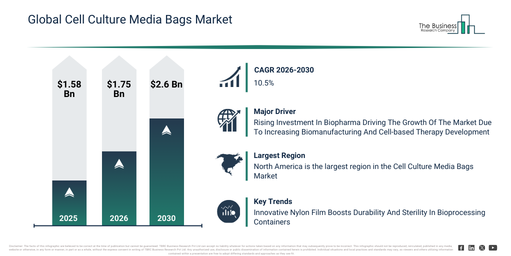
    Cell culture media bags experienced robust expansion recently, moving from $1.58 billion in 2025 to an projected $1.75 billion in 2026, reflecting a compound annual growth rate of 10.8%. This past growth surge was fueled by advancements in biopharmaceutical production, greater acceptance of disposable systems, heightened requirements for aseptic media management, broadened cell therapy investigations, and enhancements in polymer material standards.

    The cell culture media bags market is projected to undergo substantial expansion in the upcoming years, achieving a valuation of $2.6 billion by 2030, driven by a compound annual growth rate of 10.5%. This anticipated growth trajectory is underpinned by several key factors, including the expanding capacity for biologics manufacturing, an elevated need for adaptable and scalable production methods, a heightened emphasis on minimizing contamination risks, increased financial commitments towards cell and gene therapy production facilities, and the broader availability of tailored media preparation services. Furthermore, the forecast period is characterized by significant market trends such as the increasing integration of single-use systems for media management, a growing preference for personalized cell culture bags, a greater utilization of multi-compartment designs for media preparation, the proliferation of contamination-free solutions for media storage, and a strengthened focus on agile biomanufacturing processes.

    Download A Free Sample Report For Comprehensive Market Insights:

    https://www.thebusinessresearchcompany.com/sample.aspx?id=30224&type=smp

    Cell Culture Media Bags Market Opportunity Drivers: What Is Creating New Revenue Potential?

    Enhanced financial backing within the biopharmaceutical sector is poised to significantly boost the cell culture media bags market’s expansion. This surge in biopharma investment stems from a heightened need for novel treatments and individualized medical approaches to tackle prevailing health challenges. Such investment fuels the demand for cell culture media bags by facilitating the scaled production and processing of biological products and cell therapies. A notable example, reported by the BioIndustry Association (BIA) in January 2025, highlights the UK biotech industry’s exceptional performance in 2024, attracting $4.59 billion (£3.5 billion) in funding, a remarkable 94% jump compared to the previous year. Consequently, this upward trend in biopharma investment is a key catalyst for the cell culture media bags market’s growth.

    Cell Culture Media Bags Market Segmentation Trends And Revenue Drivers

    The cell culture media bags market covered in this report is segmented –

    1) By Product Type: Single Chamber Bags, Dual Chamber Bags, Multi-Chamber Bags, Customizable Bags

    2) By Material Type: Polyethylene (PE), Ethylene Vinyl Alcohol (EVOH), Fluorinated Ethylene Propylene (FEP), Polyolefin

    3) By Design: 2-D Bags, 3-D Bags, Hybrid Or Multilayer Bags

    4) By End-User: Biotechnology Companies, Pharmaceutical Companies, Academic And Research Institutions, Contract Research Organizations (CROs)

    Subsegments:

    1) By Single Chamber Bags: Standard Single-Use Media Bags, Gamma-Irradiated Bags, Sterile-Filtered Bags, Pre-Filled Media Bags, Storage And Transport Bags

    2) By Dual Chamber Bags: Media And Buffer Separation Bags, Powder-Liquid Mixing Bags, Media Supplement Integration Bags, Two-Phase Culture Preparation Bags

    3) By Multi-Chamber Bags: Three-Chamber Media Preparation Bags, Multi-Component Nutrient Mixing Bags, Cell Culture Media And Feed Compartment Bags, Sequential Mixing Bags

    4) By Customizable Bags: Volume-Configured Custom Bags, Port And Connector Customized Bags, Film Material Customized Bags, Labeling And Branding Custom Bags, Application-Specific Custom Bags

    Cell Culture Media Bags Market Innovation Trends Driving Future Development

    In the cell culture media bags sector, dominant enterprises are prioritizing advancements in bioprocessing technologies, exemplified by their development of unique woven nylon constructions designed to bolster the resilience, fluid containment, and dependable performance of disposable process vessels essential for sample preparation and the examination of biomarkers. The concept of a proprietary woven nylon structure signifies a distinct, safeguarded arrangement of nylon filaments interwoven to create a layer or barrier incorporated into disposable bioprocessing apparatus. As a case in point, in April of 2023, Merck & Co., Inc., a prominent American corporation with business interests in healthcare, life sciences, and electronics, introduced its Ultimus Single-Use Process Container Film. This highly resistant film is intended for disposable bioprocessing vessels, encompassing media bags and Mobius 3D containers, and its distinct woven nylon composition provides superior toughness, resistance to leaks, and defense against wear and material degradation. This advanced film exhibits a tenfold increase in resistance to abrasion, a tensile strength 2.8 times greater, and twice the puncture resistance when contrasted with traditional films. Furthermore, being free from animal-derived components and featuring minimal leachable substances, it promotes robust cell proliferation while ensuring aseptic conditions and the integrity of manufactured products, thereby elevating container dependability and streamlining operational effectiveness within cell cultivation and other biomanufacturing workflows.

    #Cell Culture Media Bags Market Industry Leaders: Which Organizations Are Driving Competition?

    Major companies operating in the cell culture media bags market are Saint-Gobain Life Sciences, Thermo Fisher Scientific, Merck KGaA, Fujifilm Holdings Corporation, Danaher Corporation, Parker Hannifin Corporation, GE Healthcare, Corning Incorporated, Lonza Group, Avantor Inc., Sartorius AG, Entegris Inc., Eppendorf, Miltenyi Biotec, Takara, Chemglass Life Sciences, Lampire Biological Laboratories, OriGen Biomedical Inc, LEPURE, Kuhner AG, BioLink

    Access The Complete Cell Culture Media Bags Market Report:

    https://www.thebusinessresearchcompany.com/report/global-cell-culture-media-bags-market-report

    Cell Culture Media Bags Market Regional Analysis And Leading Geography

    North Americawas the largest region in the cell culture media bags market in 2025. The regions covered in the cell culture media bags market report are Asia-Pacific, South East Asia, Western Europe, Eastern Europe, North America, South America, Middle East, Africa.

    Get in touch with us:

    The Business Research Company: https://www.thebusinessresearchcompany.com/

    Americas: +1 310-496-7795

    Asia: +44 7882 955267 & +91 8897263534

    Europe: +44 7882 955267

    Email us at: marketing@tbrc.info

    Follow us on:

    LinkedIn: https://in.linkedin.com/company/the-business-research-company

    YouTube: https://www.youtube.com/channel/UC24_fI0rV8cR5DxlCpgmyFQ

    Global Market Model: https://www.thebusinessresearchcompany.com/global-market-model
  • Cell Cryopreservation Market Growth Outlook Reveals A CAGR Of 21.1% And A Market Value Of $41.81 Billion By 2030

    Cell Cryopreservation Market Growth Outlook Reveals A CAGR Of 21.1% And A Market Value Of $41.81 Billion By 2030

    Enhanced with market attractiveness analysis, total addressable market evaluation, company benchmarking matrices, interactive Excel dashboards, expanded supply chain intelligence, emerging startup coverage, and detailed product insights, The Business Research Company’s 2026 market reports deliver more actionable and strategically valuable research.

    Cell Cryopreservation Market Growth Potential: How Will Market Size Change Through 2030?

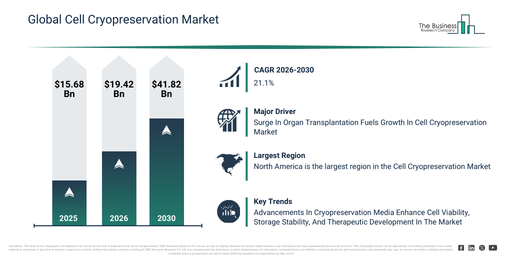
    The global cell cryopreservation market experienced substantial expansion recently and is projected to continue this upward trajectory, rising from $15.68 billion in 2025 to $19.42 billion in 2026, fueled by a compound annual growth rate of 23.9%. This expansion over the historical period was significantly driven by the burgeoning field of biobanking, the escalated utilization of cryopreserved cells in scientific investigations, the proliferation of IVF and fertility centers, the integration of cryopreservation techniques within regenerative medicine, and the widespread availability of liquid nitrogen storage solutions.

    The market for preserving cells at cryogenic temperatures is poised for remarkable expansion, projecting a valuation of $41.82 billion by 2030, reflecting a significant compound annual growth rate of 21.1%. This projected surge throughout the forecast period is underpinned by several key drivers, including a burgeoning demand for cell and gene therapies, augmented financial backing for biopharmaceutical production, advancements in stem cell investigation, an elevated emphasis on establishing consistent storage methodologies, and a greater embrace of automated cryopreservation solutions. Furthermore, prominent developments anticipated in the coming years encompass a wider acceptance of cryopreservation media that are free from serum, increased utilization of equipment designed for controlled-rate freezing, a greater need for enduring cell storage options, the broader development of cryobanking facilities, and a sharpened focus on ensuring the continued vitality of preserved cells.

    Download A Free Sample Report For Comprehensive Market Insights:

    https://www.thebusinessresearchcompany.com/sample.aspx?id=15755&type=smp

    Cell Cryopreservation Market Growth Momentum: Which Factors Are Influencing Demand?

    The expansion of the cell cryopreservation market is anticipated due to the rising volume of organ transplantation surgeries. This medical intervention involves substituting a compromised or non-functional organ with a healthy one donated by another individual. The trend of organ transplants is on the rise, driven by organ dysfunction stemming from genetic conditions, infectious diseases, injuries, and long-term illnesses. Within the context of organ transplantation, cell cryopreservation entails the process of freezing and preserving cells sourced from organs to maintain their vitality for subsequent transplantation, ultimately improving graft survival rates and mitigating the risk of immunological rejection. Illustrating this growth, the Health Resources and Services Administration, a US governmental body, reported that in 2023, a total of 46,632 organ transplants were successfully conducted using organs from both living and deceased donors, representing an 8.7% uptick compared to the previous year. Consequently, the escalating number of organ transplantations is a key factor fueling the advancement of the cell cryopreservation market.

    Cell Cryopreservation Market Segment Analysis Highlighting Growth Areas

    The cell cryopreservation market covered in this report is segmented –

    1) By Product: Cell Freezing Media, Equipment, Consumables

    2) By Application: Hepatocytes, Stem Cells, Oocytes And Embryotic cells, Sperm Cells, Other Applications

    3) By End-Use Channel: Biopharmaceutical And Pharmaceutical Companies, Research Institutes, Biobanks, In Vitro Fertilization (IVF) Clinics, Other End-Use Channels

    Subsegments:

    1) By Cell Freezing Media: Serum-Based Freezing Media, Serum-Free Freezing Media

    2) By Equipment: Cryopreservation Freezers, Cryo Storage Tanks, Controlled-Rate Freezers

    3) By Consumables: Cryovials, Cryo Storage Bags, Cryo Tubes

    Cell Cryopreservation Market Trends Reshaping Industry Growth

    Companies that are significant players in the cell cryopreservation market are concentrating their efforts on creating cutting-edge offerings, including specialized cryopreservation mediums, with the goal of enhancing the longevity of cell stability, facilitating superior storage conditions, and ultimately boosting therapeutic outcomes. These cryopreservation mediums are essentially meticulously crafted solutions formulated to preserve cells or tissues effectively at extremely low temperatures, ensuring their viability, functional capacity, and consistent performance for both research and clinical applications. An illustrative example occurred in April 2024 when Pluristyx Inc., a company based in the United States specializing in tools, technologies, and services for cellular therapies, introduced PluriFreeze, a novel cryopreservation medium solution proprietary to the company, designed to expedite the progression of stem cell therapies. The PluriFreeze Cryopreservation Media, designed for Research Use Only (RUO) and specifically engineered to foster the growth of induced pluripotent stem cells (iPSCs), presents a groundbreaking approach to augmenting both the efficiency and the caliber of iPSC therapy development, thereby contributing to advancements in the cell cryopreservation market by streamlining stem cell research and supporting the market introduction of advanced cell therapies.

    Cell Cryopreservation Market Leading Companies: Who Holds Significant Market Presence?

    Major companies operating in the cell cryopreservation market are Thermo Fisher Scientific Inc., Danaher Corporation, Merck KGaA, Corning Inc., STEMCELL Technologies, Cryoport Inc., ThermoGenesis Holdings Inc., Akron Biotech, X-Therma Inc., Acorn Biolabs Inc., PanTHERA CryoSolutions, CryoCrate LLC, Chart Industries Inc., Eppendorf SE, PHC Holdings Corporation, Helmer Scientific Inc., Brooks Automation Inc., Azenta Life Sciences Inc., Worthington Industries Inc., CBS Scientific, Planer PLC, Stirling Ultracold Inc.

    Access The Complete Cell Cryopreservation Market Report:

    https://www.thebusinessresearchcompany.com/report/cell-cryopreservation-global-market-report

    Cell Cryopreservation Market Geographic Analysis: Where Is Demand Growing The Fastest?

    North Americawas the largest region in the cell cryopreservation market in 2025. Asia-Pacificis expected to be the fastest-growing region in the forecast period. The regions covered in the cell cryopreservation market report are Asia-Pacific, South East Asia, Western Europe, Eastern Europe, North America, South America, Middle East, Africa.

    Get in touch with us:

    The Business Research Company: https://www.thebusinessresearchcompany.com/

    Americas: +1 310-496-7795

    Asia: +44 7882 955267 & +91 8897263534

    Europe: +44 7882 955267

    Email us at: marketing@tbrc.info

    Follow us on:

    LinkedIn: https://in.linkedin.com/company/the-business-research-company

    YouTube: https://www.youtube.com/channel/UC24_fI0rV8cR5DxlCpgmyFQ

    Global Market Model: https://www.thebusinessresearchcompany.com/global-market-model
  • Cell Based Assays Market Forecast Highlights Expansion From $33.21 Billion To $54.79 Billion Through 2030

    Cell Based Assays Market Forecast Highlights Expansion From $33.21 Billion To $54.79 Billion Through 2030

    Through market attractiveness analysis, total addressable market evaluation, company benchmarking matrices, interactive Excel dashboards, expanded supply chain intelligence, emerging startup coverage, and detailed product insights, The Business Research Company’s 2026 market reports provide more actionable and strategically valuable research.

    Cell Based Assays Market Value Analysis: What Growth Is Expected Over The Forecast Period?

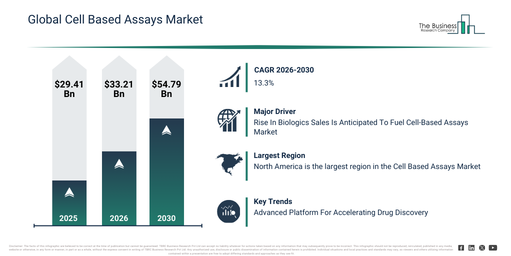
    The sector for cell-based assays has seen considerable expansion lately, with projections indicating a rise from $29.41 billion in 2025 to $33.21 billion in 2026, reflecting a compound annual growth rate of 12.9%. This upward trajectory over the preceding period is underpinned by several key factors, including the escalating pace of drug discovery initiatives, the broader adoption of in vitro research techniques, a greater reliance on cell-based models for foundational scientific inquiry, the widespread availability of sophisticated assay consumables, and increased investment in pharmaceutical research and development.

    The market for cell-based assays is poised for substantial expansion over the coming years, with projections indicating a reach of $54.79 billion by 2030, driven by a compound annual growth rate (CAGR) of 13.3%. This projected growth is fueled by several key factors, including the increasing integration of AI for analyzing assay results, a heightened need for sophisticated models to study complex diseases, the burgeoning field of personalized medicine, a greater reliance on automation within laboratory settings, and increased financial commitment to cutting-edge screening technologies. Furthermore, the forecast period is characterized by significant trends such as a surge in high-throughput cell-based screening techniques, the wider application of automated systems for managing cells, a growing requirement for toxicology assays capable of predicting outcomes, advancements in cell analysis that do not require labeling, and a sharper focus on developing cell models that more accurately mimic physiological conditions.

    Download A Free Sample Report For Comprehensive Market Insights:

    https://www.thebusinessresearchcompany.com/sample.aspx?id=2546&type=smp

    Cell Based Assays Market Expansion Drivers: What Is Shaping Future Growth?

    The market for cell-based assays is anticipated to experience growth due to increasing sales of biologics, which are therapeutic products sourced from living organisms. This category encompasses a wide array of medicinal items, including vaccines, blood products, allergenic treatments, somatic cell therapies, gene therapies, tissue grafts, and recombinant therapeutic proteins. Cell-based assays play a crucial role in the development and assessment of biologics, facilitating the evaluation of their efficacy, strength, safety profile, and similarity to existing products. To illustrate, a report from the Generics and Biosimilars Initiative, a scientific information provider based in Belgium, highlighted in October 2024 that beyond the top nine biologics, two other sophisticated medications achieved substantial sales in 2023. Specifically, Novo Nordisk’s Ozempic (semaglutide) and Eli Lilly’s Trulicity (dulaglutide), both utilized for managing type 2 diabetes, generated revenues of US$14 billion and US$7.2 billion respectively. Consequently, the expansion of electronic payment methods is contributing to market growth.

    Cell Based Assays Market Segment Performance And Strategic Opportunities

    The cell based assays market covered in this report is segmented –

    1) By Product And Service: Consumables, Instruments, Services, Software

    2) By Technology: Automated Handling, Flow Cytometry, Label-Free Detection, High-Throughput Screening, Other Technologies

    3) By Application: Drug Discovery, Basic Research, Adme Studies, Predictive Toxicology, Other Applications

    4) By End User: Pharmaceutical And Biotechnology Companies, Academic And Government Research Institutes, Contract Research Organizations (CRO), Other End Users

    Subsegments:

    1) By Consumables: Cell Culture Media, Reagents And Kits, Cell Lines, Microplates

    2) By Instruments: Microplate Readers, Flow Cytometers, Cell Imaging Systems, Automated Cell Culture Systems

    3) By Services: Custom Assay Development, Contract Research Services

    4) By Software: Data Analysis Software, Lab Management Software, Simulation And Modeling Software

    Cell Based Assays Market Strategic Trends: What Is Defining The Next Phase Of Growth?

    Leading entities within the cell-based assays sector are introducing novel systems, incorporating technologies like cell-based phenotypic assay platforms, to furnish enhanced offerings for the drug discovery landscape. A cell-based phenotypic assay platform functions as a crucial tool in drug discovery, evaluating cellular reactions to therapeutic substances through the fusion of sophisticated imaging and analytical capabilities, augmented by artificial intelligence. As an illustration of this innovation, Sphere Fluidics, a research and development firm situated in the UK, unveiled Cyto-Cellect PLUS in June 2024. This user-friendly Fluorescence Resonance Energy Transfer (FRET) assay enables scientists to precisely quantify IgG production with remarkable sensitivity. Expanding upon Sphere Fluidics’ initial Cyto-Cellect Human IgG? Detection Kit, this updated iteration possesses the ability to identify both IgG ? and ? light chains, thereby expanding its scope of use. The assay seamlessly integrates with existing Cyto-Mine® functionalities, simplifying the process of dispensing single cells into 96-well and 384-well plates. Furthermore, it adheres to pertinent regulatory requirements as it is devoid of animal-derived components, facilitating its straightforward incorporation into contemporary cell line development workflows.

    Cell Based Assays Market Key Players: Which Companies Shape Industry Competition?

    Major companies operating in the cell based assays market are Promega Corporation, Bio-Rad Laboratories Inc, PerkinElmer Inc, Abcam plc, Enzo Life Sciences Inc, Cell Signaling Technology Inc, Cisbio International LLC, Eurofins Scientific SE, Charles River Laboratories International Inc, Miltenyi Biotec GmbH, Lonza Group Ltd, Corning Incorporated, Becton Dickinson and Company, Danaher Corporation, GE HealthCare Technologies Inc, BioVision Inc, Biotium Inc, ProQinase GmbH, QGel SA, Cell Biolabs Inc

    Access The Complete Cell Based Assays Market Report:

    https://www.thebusinessresearchcompany.com/report/cell-based-assays-global-market-report

    Cell Based Assays Market Global Footprint: Which Region Holds Market Leadership?

    North Americawas the largest region in the cell-based assays market in 2025. Western Europewas the second largest region in the global cell-based assays market share. The regions covered in the cell based assays market report are Asia-Pacific, South East Asia, Western Europe, Eastern Europe, North America, South America, Middle East, Africa.

    Get in touch with us:

    The Business Research Company: https://www.thebusinessresearchcompany.com/

    Americas: +1 310-496-7795

    Asia: +44 7882 955267 & +91 8897263534

    Europe: +44 7882 955267

    Email us at: marketing@tbrc.info

    Follow us on:

    LinkedIn: https://in.linkedin.com/company/the-business-research-company

    YouTube: https://www.youtube.com/channel/UC24_fI0rV8cR5DxlCpgmyFQ

    Global Market Model: https://www.thebusinessresearchcompany.com/global-market-model
  • Cell And Gene Therapy Supply Chain/Logistics Market Expected To Reach $2.8 Billion By 2030 As Growth Accelerates At 12.1% CAGR

    Cell And Gene Therapy Supply Chain/Logistics Market Expected To Reach $2.8 Billion By 2030 As Growth Accelerates At 12.1% CAGR

    Delivering more actionable and strategically valuable research, The Business Research Company’s 2026 market reports feature market attractiveness analysis, total addressable market evaluation, company benchmarking matrices, interactive Excel dashboards, expanded supply chain intelligence, emerging startup coverage, and detailed product insights.

    Cell And Gene Therapy Supply Chain/Logistics Market Size Forecast: How Large Could The Market Become By 2030?

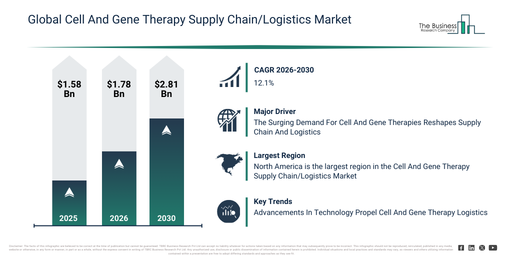
    The market for cell and gene therapy supply chain and logistics has experienced substantial expansion. Projections indicate a rise from $1.58 billion in 2025 to $1.78 billion in 2026, reflecting a compound annual growth rate of 12.2%. This trajectory of growth during the preceding period was influenced by several key factors: the escalating intricacy of transporting cell and gene therapies, the early embrace of cold chain shipping technologies, the proliferation of centralized production facilities, a heightened regulatory emphasis on tracking and tracing, and the increasing engagement of dedicated logistics companies.

    The market for cell and gene therapy supply chain and logistics is poised for substantial expansion in the coming years, anticipating a surge to $2.81 billion by 2030, fueled by a compound annual growth rate (CAGR) of 12.1%. This projected surge is largely due to the increasing commercialization of individualized treatments, a heightened need for comprehensive supply chain visibility, the widening of worldwide therapy distribution networks, greater utilization of cloud-based logistics solutions, and significant investments in advanced cold chain infrastructure. Key developments anticipated during this forecast period encompass the proliferation of unified cold chain management systems, increased implementation of real-time tracking and traceability technologies, a greater reliance on cryogenic logistics services, deeper integration of patient-focused supply chain frameworks, and an intensified commitment to ensuring chain of custody adherence.

    Download A Free Sample Report For Comprehensive Market Insights:

    https://www.thebusinessresearchcompany.com/sample.aspx?id=12631&type=smp

    Cell And Gene Therapy Supply Chain/Logistics Market Development Factors: Which Trends Are Supporting Demand?

    The expanding demand for sophisticated cell and gene therapies is acting as a catalyst for the growth of the cell and gene therapy supply chain and logistics sector. These cutting-edge medical approaches, which involve altered cells or genes to combat illnesses, hold immense promise for conditions previously considered incurable. Ensuring the integrity of these therapies necessitates precise temperature and storage management throughout their journey, a task expertly handled by specialized supply chain and logistics providers who oversee everything from procurement to final delivery and warehousing. A significant indicator of this trend is the reported 10% surge in gene therapies advancing to Phase III clinical trials in the third quarter of 2023, marking the first quarterly upturn since Q3 2022, according to data from the American Society of Gene & Cell Therapy. Consequently, the escalating requirements of cell and gene therapies are fueling the expansion of the associated supply chain and logistics market.

    #Cell And Gene Therapy Supply Chain/Logistics Market Segment Landscape And Growth Potential

    The cell and gene therapy supply chain/logistics market covered in this report is segmented –

    1) By Type Of Software Solution: Cell Orchestration Platform, Enterprise Manufacturing System, Inventory Management System, Laboratory Information Management System, Logistics Management System, Patient Management System, Quality Management System, Tracking And Tracing System

    2) By Mode Of Deployment: Cloud-Based Solution, On-Premises Solution

    3) By Component: Cryogenic Shippers, Cryogenic Storage Freezers, Ultra-Low Freezers, Cold Chain Management Systems, Shipment, Storage Medium, Cryogenic Packout Kits, Other Components

    4) By Application Area: Donor Eligibility Assessment, Sample Collection, Manufacturing, Logistics, Patient Verification, Treatment Follow-Up

    5) By End User: Biobank, Cell Therapy Lab, Hospital, Research Institute, Commercial Organization

    Subsegments:

    1) By Cell Orchestration Platform: Workflow Management, Scheduling And Coordination Tools

    2) By Enterprise Manufacturing System: Production Planning And Control, Manufacturing Execution Systems (MES)

    3) By Inventory Management System: Stock Tracking And Management, Inventory Forecasting And Optimization

    4) By Laboratory Information Management System (LIMS): Sample Tracking And Management, Data Management And Reporting

    5) By Logistics Management System: Route Optimization And Planning, Transportation Management

    6) By Patient Management System: Patient Scheduling And Coordination, Data Management And Tracking Of Patient Outcomes

    7) By Quality Management System: Compliance Tracking, Quality Assurance And Control

    8) By Tracking And Tracing System: Real-Time Tracking Of Shipments, Chain Of Custody Documentation

    Cell And Gene Therapy Supply Chain/Logistics Market Transformation Trends: Which Innovations Are Driving Change?

    The adoption of advanced technology platforms is a significant and growing phenomenon within the cell and gene therapy supply chain and logistics sectors. Leading organizations in this field are actively creating and implementing these cutting-edge platforms as a strategy to solidify their market standing. As an illustration, in April 2023, US-based healthcare firm AmerisourceBergen Corporation, which focuses on the logistics of cell and gene therapy supply chains, introduced its Cell and Gene Therapy (CGT) Integration Hub. This innovative hub leverages AmerisourceBergen’s proprietary customer relationship management (CRM) system and is designed for seamless integration with biopharmaceutical platforms, thereby enhancing the oversight of both the development and distribution processes for cell and gene therapies.

    Cell And Gene Therapy Supply Chain/Logistics Market Competitive Landscape: Who Are The Leading Companies?

    Major companies operating in the cell and gene therapy supply chain/logistics market are AmerisourceBergen Corporation, United Parcel Service, Thermo Fisher Scientific Inc., Avantor Sciences, Lonza Group AG, Arvato Group, Catalent Inc., Charles River Laboratories International, Parexel International Corporation, Cytiva, Almac Group, World Courier, Sharp Packaging Services, PCI Pharma Services, Cryoport Inc., Brooks Life Sciences, BioLife Solutions Inc., Biocair Inc., QuickSTAT, Clarkston Consulting Inc., Central Pharma, TrakCel limited, MAK-SYSTEM International Group, Hypertrust Patient Data Care GmbH, Atelerix Ltd., Polar Express Transportation, Be The Match BioTherapies Inc., Yourway Biopharma Services Company, Azenta Life Sciences Inc., Biostor Ltd.

    Access The Complete Cell And Gene Therapy Supply Chain/Logistics Market Report:

    https://www.thebusinessresearchcompany.com/report/cell-and-gene-therapy-supply-chain-or-logistics-global-market-report

    Cell And Gene Therapy Supply Chain/Logistics Market Regional Distribution: Which Areas Drive Market Expansion?

    North Americawas the largest region in the cell and gene therapy supply chain/logistics market in 2025. The regions covered in the cell and gene therapy supply chain/logistics market report are Asia-Pacific, South East Asia, Western Europe, Eastern Europe, North America, South America, Middle East, Africa.

    Get in touch with us:

    The Business Research Company: https://www.thebusinessresearchcompany.com/

    Americas: +1 310-496-7795

    Asia: +44 7882 955267 & +91 8897263534

    Europe: +44 7882 955267

    Email us at: marketing@tbrc.info

    Follow us on:

    LinkedIn: https://in.linkedin.com/company/the-business-research-company

    YouTube: https://www.youtube.com/channel/UC24_fI0rV8cR5DxlCpgmyFQ

    Global Market Model: https://www.thebusinessresearchcompany.com/global-market-model