Month: June 2026

  • Kidney Biopsy Market Forecast Reveals Where Future Industry Value Will Be Created

    Kidney Biopsy Market Forecast Reveals Where Future Industry Value Will Be Created

    Delivering more actionable and strategically valuable research, The Business Research Company’s 2026 market reports feature market attractiveness analysis, total addressable market evaluation, company benchmarking matrices, interactive Excel dashboards, expanded supply chain intelligence, emerging startup coverage, and detailed product insights.

    Kidney Biopsy Market Size And Revenue Forecast Through 2030

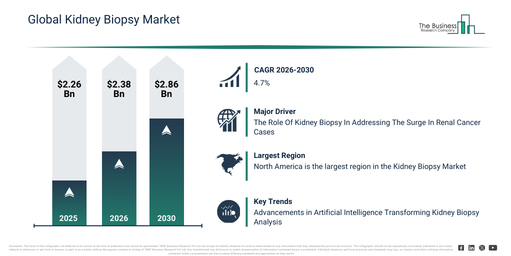
    The kidney biopsy sector has witnessed robust expansion lately, projecting an increase from $2.26 billion in 2025 to $2.38 billion in 2026, fueled by a compound annual growth rate of 5.4%. This historical upswing is attributable to a confluence of factors, including the escalating prevalence of chronic kidney disease, a rise in the incidence of glomerulonephritis and nephrotic syndrome, the continued diagnostic importance of renal biopsies in clinical practice, a growing number of kidney transplantations, and the proliferation of tertiary care facilities.

    The market for kidney biopsies is projected for consistent expansion over the upcoming years, reaching an estimated $2.86 billion by 2030, fueled by a compound annual growth rate of 4.7%. This anticipated expansion during the forecast period is largely attributable to the escalating prevalence of kidney issues linked to diabetes, the increasing acceptance of biopsy procedures guided by ultrasound and CT scans, a heightened need for prompt identification of kidney ailments, ongoing progress in imaging technologies, and broader availability of expert nephrology services. Key developments expected within this timeframe include a stronger inclination towards less invasive kidney biopsy methods, a greater utilization of percutaneous biopsies performed under image guidance, a growing requirement for precise diagnosis of kidney conditions, the wider application of biopsy procedures for monitoring transplanted kidneys, and enhancements in the safety and accuracy of renal tissue acquisition.

    Download A Free Sample Report For Comprehensive Market Insights:

    https://www.thebusinessresearchcompany.com/sample.aspx?id=16458&type=smp

    Kidney Biopsy Market Expansion Supported By Key Demand Factors

    The increasing occurrence of kidney cancer is anticipated to be a primary driver for the kidney biopsy market’s expansion. This type of cancer, marked by the aberrant proliferation of kidney cells, is becoming more prevalent due to elements like altered lifestyles, exposure to environmental contaminants, and enhanced diagnostic capabilities leading to a greater number of identified cases. Kidney biopsies are instrumental in the diagnosis and management of renal cancer, serving to verify malignant cells, establish a cancer’s stage, inform treatment strategies, track therapeutic efficacy, and offer insights into potential outcomes. For example, Cancer Research UK projects that new diagnoses of kidney cancer in the UK will climb from roughly 16,300 in 2023 to an estimated 21,900 by 2025, underscoring how the escalating rates of renal cancer are fueling the growth trajectory of the kidney biopsy market.

    Kidney Biopsy Market Segment Analysis Highlighting Growth Areas

    The kidney biopsy market covered in this report is segmented –

    1) By Type: Percutaneous Biopsy, Surgical Biopsy

    2) By Indication: Kidney Failure, Kidney Transplant, Hematuria, Proteinuria

    3) By End-User: Hospitals And Clinics, Tertiary Care Centers, Other End-Users

    Subsegments:

    1) By Percutaneous Biopsy: Ultrasound-Guided Biopsy, CT-Guided Biopsy

    2) By Surgical Biopsy: Open Kidney Biopsy, Laparoscopic Kidney Biopsy

    Kidney Biopsy Market Growth Trends Influencing Competitive Dynamics

    Leading entities within the kidney biopsy sector are actively engaged in creating cutting-edge systems by incorporating artificial intelligence (AI) to elevate diagnostic precision, optimize clinical workflows, and ultimately improve patient prognoses. The integration of AI offers a significant advantage to kidney biopsy procedures by refining image interpretation, furnishing diagnostic assistance, facilitating therapy design, delivering prognostic insights, and propelling kidney disease research forward. As a recent illustration, during March of 2024, Aiosyn, a software firm headquartered in the Netherlands, introduced its NephroPath platform. This NephroPath platform leverages advanced computational pathology algorithms designed to scrutinize histological markers present in kidney tissue samples, encompassing functions such as identifying distinct tissue classifications, quantifying interstitial fibrosis, and meticulously enumerating and evaluating glomeruli. Such AI-powered examination guarantees a uniform, thorough, and reliably repeatable evaluation of renal pathology indicators, thereby circumventing the limitations inherent in conventional scoring techniques and the variability introduced by individual observer interpretation.

    Kidney Biopsy Market Leading Companies: Who Holds Significant Market Presence?

    Major companies operating in the kidney biopsy market are Cardinal Health, Medtronic plc, Siemens Healthineers AG, GE HealthCare Technologies Inc., Koninklijke Philips N.V., Becton Dickinson and Company, Boston Scientific Corporation, Olympus Corporation, Hitachi Ltd., Canon Medical Systems Corporation, Cook Medical, B. Braun Melsungen AG, Merit Medical Systems Inc., Argon Medical Devices Inc., Stryker Corporation, Integra LifeSciences Corporation, Leica Biosystems, Hologic Inc., Samsung Medison Co. Ltd., Mindray Medical International Limited, Terumo Corporation, Fujifilm Holdings Corporation

    Access The Complete Kidney Biopsy Market Report:

    https://www.thebusinessresearchcompany.com/report/kidney-biopsy-global-market-report

    Kidney Biopsy Market Largest Region: Which Geography Holds The Highest Market Share?

    North Americawas the largest region in the kidney biopsy market in 2025. Asia-Pacificis expected to be the fastest-growing region in the forecast period. The regions covered in the kidney biopsy market report are Asia-Pacific, South East Asia, Western Europe, Eastern Europe, North America, South America, Middle East, Africa.

    Get in touch with us:

    The Business Research Company: https://www.thebusinessresearchcompany.com/

    Americas: +1 310-496-7795

    Asia: +44 7882 955267 & +91 8897263534

    Europe: +44 7882 955267

    Email us at: marketing@tbrc.info

    Follow us on:

    LinkedIn: https://in.linkedin.com/company/the-business-research-company

    YouTube: https://www.youtube.com/channel/UC24_fI0rV8cR5DxlCpgmyFQ

    Global Market Model: https://www.thebusinessresearchcompany.com/global-market-model
  • Keytruda Market Growth Through 2030 Creates New Strategic Opportunities

    Keytruda Market Growth Through 2030 Creates New Strategic Opportunities

    Enhanced with market attractiveness analysis, total addressable market evaluation, company benchmarking matrices, interactive Excel dashboards, expanded supply chain intelligence, emerging startup coverage, and detailed product insights, The Business Research Company’s 2026 market reports deliver more actionable and strategically valuable research.

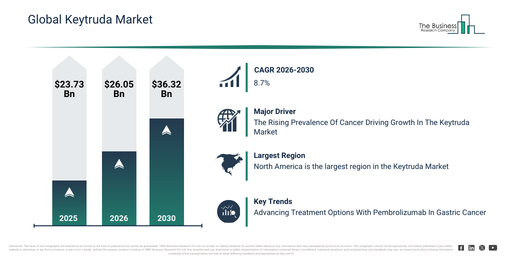
    Keytruda Market Growth From $26.04 Billion In 2026 To $36.32 Billion By 2030 At A CAGR Of 8.7%

    The Keytruda market experienced robust expansion recently, projecting a rise from $23.73 billion in 2025 to $26.05 billion in 2026, reflecting a compound annual growth rate of 9.8%. This growth trajectory in the past can be linked to several factors, including positive clinical trial results in various cancer types, the acquisition of regulatory clearances for new cancer treatment areas, an escalating worldwide prevalence of cancer, a growing preference for immunotherapy compared to traditional chemotherapy, and substantial financial backing through reimbursement policies in developed economies.

    The Keytruda market is poised for considerable expansion over the coming years, projected to reach a value of $36.32 billion by 2030, with an anticipated compound annual growth rate of 8.7%. This anticipated growth trajectory is fueled by several key factors including the drug’s approval for new cancer types, a greater emphasis on precision oncology diagnostics, escalating expenditure on cancer treatments, heightened understanding of immunotherapy’s advantages, and broader availability in developing economies. Furthermore, significant trends shaping the market’s future encompass the broadening of indications for immune checkpoint inhibitors, the increasing adoption of combination immunotherapy approaches, a growing reliance on biomarker-driven patient selection, the expanded use of Keytruda in earlier stages of cancer treatment, and an overall oncologist preference driven by enhanced clinical results.

    Download A Free Sample Report For Comprehensive Market Insights:

    https://www.thebusinessresearchcompany.com/sample.aspx?id=16457&type=smp

    Keytruda Market Growth Drivers And Industry Catalysts

    The rising incidence of cancer is anticipated to be a primary catalyst for the expansion of the Keytruda market. Cancer, a multifaceted condition defined by the uncontrolled proliferation and dissemination of cells, stems from a confluence of genetic predispositions, lifestyle choices, environmental exposures, and hormonal influences. Keytruda, known scientifically as pembrolizumab, contributes to cancer therapy by primarily leveraging the patient’s own immune defenses to combat cancerous cells with enhanced efficacy. This drug signifies a pivotal development in oncology, channeling the immune system’s capabilities to identify and assault cancer cells, thereby offering renewed optimism for individuals with advanced or metastatic forms of the disease. An illustrative example of this trend emerged in January 2024, when the American Cancer Society, a prominent US non-profit dedicated to cancer advocacy, reported an increase in cancer diagnoses to 2,001,140, a rise from the 1,958,310 cases recorded in 2023, indicating a 2.19% upswing. Consequently, the escalating burden of cancer directly fuels the growth trajectory of the Keytruda market.

    Keytruda Market Segment Performance And Strategic Opportunities

    The keytruda market covered in this report is segmented –

    1) By Cancer Type: Melanoma, Lung Cancer, Head And Neck Cancer, Hodgkin Lymphoma, Stomach Cancer, Urothelial Carcinoma

    2) By Payer Type: Commercial, Medicare, Medicaid

    3) By Distribution Channel: Hospital Pharmacies, Specialty Pharmacies

    Subsegments:

    1) By Melanoma: Advanced Or Unresectable Melanoma, Adjuvant Treatment For Melanoma

    2) By Lung Cancer: Non-Small Cell Lung Cancer (NSCLC), Small Cell Lung Cancer (SCLC)

    3) By Head And Neck Cancer: Squamous Cell Carcinoma Of The Head And Neck (SCCHN), Recurrent Or Metastatic Head And Neck Cancer

    4) By Hodgkin Lymphoma: Classical Hodgkin Lymphoma, Relapsed Or Refractory Hodgkin Lymphoma

    5) By Stomach Cancer: Advanced Or Metastatic Gastric Cancer, Esophagogastric Junction Cancer

    6) By Urothelial Carcinoma: Advanced Or Metastatic Urothelial Carcinoma, Muscle-Invasive Bladder Cancer

    #Keytruda Market Trends Influencing Long-Term Demand

    Leading entities within the Keytruda market are actively pursuing the creation of novel therapeutic agents, exemplified by pembrolizumab, with the aim of broadening their treatment portfolios. Pembrolizumab, functioning as a monoclonal antibody, falls under the category of immune checkpoint inhibitors and is commercially recognized as Keytruda. This drug functions by targeting and inhibiting the PD-1 protein, also known as programmed cell death protein 1, found on T cells, a crucial component of the immune system. As an illustration, in November of 2023, Merck, a prominent American pharmaceutical firm, secured FDA approval for KEYTRUDA (pembrolizumab) when administered alongside chemotherapy regimens that incorporate fluoropyrimidine and platinum agents. This combined therapeutic approach has exhibited marked enhancements in both overall survival and progression-free survival metrics when contrasted with chemotherapy administered independently, thereby representing a substantial step forward in the management of gastric cancer. Evidence from clinical investigations indicates that this combination therapy has yielded superior outcomes in terms of overall survival (OS), progression-free survival (PFS), and the overall response rate (ORR) compared to chemotherapy used as a singular treatment modality.

    Keytruda Market Key Players: Which Companies Shape Industry Competition?

    Major companies operating in the keytruda market are Merck & Co. Inc., Eisai Co. Ltd., Pfizer Inc., AstraZeneca plc, Roche Holding AG, Novartis AG, Sanofi S.A., Amgen Inc., Gilead Sciences Inc., AbbVie Inc., Bristol Myers Squibb, Eli Lilly and Company, Regeneron Pharmaceuticals Inc., BeiGene Ltd., Incyte Corporation, Takeda Pharmaceutical Company Limited, Chugai Pharmaceutical Co. Ltd., Bayer AG, Boehringer Ingelheim, Seagen Inc.

    Access The Complete Keytruda Market Report:

    https://www.thebusinessresearchcompany.com/report/keytruda-global-market-report

    Keytruda Market Regional Analysis: Which Region Leads By Revenue?

    North Americawas the largest region in the keytruda market in 2025. The regions covered in the keytruda market report are Asia-Pacific, South East Asia, Western Europe, Eastern Europe, North America, South America, Middle East, Africa.

    Get in touch with us:

    The Business Research Company: https://www.thebusinessresearchcompany.com/

    Americas: +1 310-496-7795

    Asia: +44 7882 955267 & +91 8897263534

    Europe: +44 7882 955267

    Email us at: marketing@tbrc.info

    Follow us on:

    LinkedIn: https://in.linkedin.com/company/the-business-research-company

    YouTube: https://www.youtube.com/channel/UC24_fI0rV8cR5DxlCpgmyFQ

    Global Market Model: https://www.thebusinessresearchcompany.com/global-market-model
  • Ketamine Clinic Market Size Projected To Increase From $1.45 Billion To $2.07 Billion During The Forecast Period

    Ketamine Clinic Market Size Projected To Increase From $1.45 Billion To $2.07 Billion During The Forecast Period

    Through market attractiveness analysis, total addressable market evaluation, company benchmarking matrices, interactive Excel dashboards, expanded supply chain intelligence, emerging startup coverage, and detailed product insights, The Business Research Company’s 2026 market reports provide more actionable and strategically valuable research.

    Ketamine Clinic Market Expansion Outlook: What Revenue Opportunities Lie Ahead?

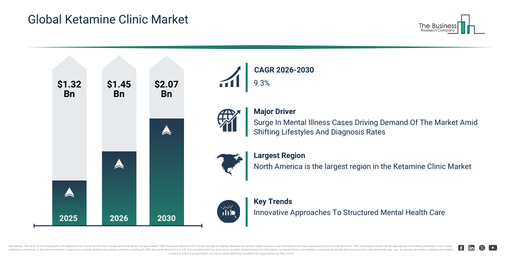
    The ketamine clinic market has experienced robust expansion lately, with a projected increase from its $1.32 billion valuation in 2025 to $1.45 billion in 2026, reflecting a compound annual growth rate of 9.8%. This notable growth during the preceding period is traceable to several key factors including the escalating occurrence of treatment-resistant depression, a heightened general understanding of the advantages offered by ketamine therapy, the broadening scope of accessible outpatient mental health provisions, a sufficient pool of qualified healthcare practitioners, and a continuously increasing patient interest in seeking novel therapeutic avenues.

    The market for ketamine clinics is poised for substantial expansion in the coming years, projected to reach $2.07 billion by 2030 with a compound annual growth rate of 9.3%. This upward trajectory is fueled by several key factors, including improved regulatory guidelines for ketamine therapies, increased funding for mental health services, the proliferation of digital mental health solutions, ongoing research into psychedelic-assisted therapies, and a greater openness to innovative psychiatric treatments. During this forecast period, significant developments are anticipated, such as the establishment of more dedicated ketamine treatment facilities, a broader embrace of ketamine for various mental health conditions, the synergistic combination of psychotherapy with pharmaceutical interventions, the wider availability of remote ketamine services through telehealth, and a heightened emphasis on ensuring patient safety and rigorous monitoring within clinical settings.

    Download A Free Sample Report For Comprehensive Market Insights:

    https://www.thebusinessresearchcompany.com/sample.aspx?id=25804&type=smp

    Ketamine Clinic Market Opportunity Drivers: What Is Creating New Revenue Potential?

    Anticipated expansion in the ketamine clinic market is directly linked to the escalating rates of mental health challenges. These conditions manifest as irregularities in an individual’s mood, cognitive processes, or conduct, potentially interfering with their daily activities and interpersonal relationships. A significant contributor to the surge in mental health issues is the pervasive feeling of social isolation, where diminished social engagement and diminished support networks exacerbate emotional and psychological strain. Ketamine clinics provide a vital service by offering rapid therapeutic interventions that alleviate symptoms associated with anxiety and depression, thereby averting the escalation of these conditions into more severe psychological afflictions. Illustratively, data from the Centers for Disease Control and Prevention, a federal body in the United States, indicated in June 2025 that between 2022 and 2023, 11% of children aged 3 to 17 years were diagnosed with anxiety, with boys experiencing a 9% rate and girls a 12% rate, while 8% were diagnosed with a behavioral disorder, impacting 10% of boys and 5% of girls. Consequently, the broadening incidence of mental health conditions is a key driver for the ketamine clinic market’s growth.

    Ketamine Clinic Market Segment Landscape And Growth Potential

    The ketamine clinic market covered in this report is segmented –

    1) By Therapy: Online Therapy, On-Site Therapy

    2) By Treatment: Anxiety, Depression, Post-Traumatic Stress Disorder (PTSD), Other Treatments

    3) By Referral Source: Primary Care Physicians, Online Advertising, Mental Health Professionals

    4) By Mode Of Administration: Injectables, Nasally Administered, Oral Tablets

    5) By End User: Individuals, Hospitals And Clinics, Specialized Ketamine Centers, Research Institutions

    Subsegments:

    1) By Online Therapy: Video Consultation, Phone-Based Therapy, Mobile App-Based Sessions, Virtual Reality-Assisted Therapy, Asynchronous Messaging Therapy

    2) By On-Site Therapy: Intravenous (IV) Infusion Therapy, Intramuscular (IM) Injection, Sublingual Or Buccal Administration, Nasal Spray Therapy, Oral Tablet Therapy, Group Therapy Sessions, One-On-One Psychotherapy Integration Sessions

    Ketamine Clinic Market Innovation Trends Driving Future Development

    Within the ketamine clinic landscape, key players are prioritizing the creation of sophisticated offerings, such as evidence-based therapeutic interventions, to implement methodical and validated strategies ensuring reproducible results. These evidence-based therapies represent treatment modalities that have demonstrated efficacy through rigorous investigation and clinical trials for tackling particular mental or behavioral health challenges. Illustratively, in the month of June for the year 2025, Rooted Rhythm Therapy, a firm providing mental health services within the United States, collaborated with Noma Therapy, another US-based entity specializing in ketamine-assisted psychotherapy, to initiate an insurance-reimbursed ketamine therapy initiative. This initiative artfully combines specialized somatic support with expert psychotherapy services, specifically designed for parents grappling with depression, anxiety, exhaustion, or trauma. It seamlessly integrates Noma’s ketamine-assisted treatment, underpinned by clinical oversight, with Rooted Rhythm’s methodology focused on parental guidance and emotional reinforcement. The offerings encompass ketamine interventions that are covered by insurance, complemented by professional support concerning dosage and the management of medication. Furthermore, parents gain access to personalized and group therapy sessions crafted to enhance emotional control, promote somatic awareness, and accommodate varied family schedules.

    Ketamine Clinic Market Competitive Landscape: Who Are The Leading Companies?

    Major companies operating in the ketamine clinic market are Mindbloom Inc., Mindful Health Solutions, Neuro Wellness Spa, The Ketamine Clinic, Clarity Clinic, Revitalist Lifestyle and Wellness Ltd., Nushama, Innerwell, Klarisana Health, NY Ketamine Infusions, Axon Therapies Inc., Alleviant Health Centers, Lone Peak Psychiatry, MindPeace Clinics, NeuroRelief Ketamine & Infusion Therapy, Choose Your Horizon Inc., Innerbloom Ketamine Therapy, Viking Psychiatry, Norcal Ketamine Infusion Centers, Pacific KLN Infusions.

    Access The Complete Ketamine Clinic Market Report:

    https://www.thebusinessresearchcompany.com/report/ketamine-clinic-global-market-report

    Ketamine Clinic Market Geographic Distribution And Regional Opportunities

    North Americawas the largest region in the ketamine clinic market in 2025. Asia-Pacificis expected to be the fastest-growing region in the forecast period. The regions covered in the ketamine clinic market report are Asia-Pacific, South East Asia, Western Europe, Eastern Europe, North America, South America, Middle East, Africa.

    Get in touch with us:

    The Business Research Company: https://www.thebusinessresearchcompany.com/

    Americas: +1 310-496-7795

    Asia: +44 7882 955267 & +91 8897263534

    Europe: +44 7882 955267

    Email us at: marketing@tbrc.info

    Follow us on:

    LinkedIn: https://in.linkedin.com/company/the-business-research-company

    YouTube: https://www.youtube.com/channel/UC24_fI0rV8cR5DxlCpgmyFQ

    Global Market Model: https://www.thebusinessresearchcompany.com/global-market-model
  • Kernicterus Treatment Market Growth Outlook Reveals A CAGR Of 2.2% And A Market Value Of $3.37 Billion By 2030

    Kernicterus Treatment Market Growth Outlook Reveals A CAGR Of 2.2% And A Market Value Of $3.37 Billion By 2030

    Delivering more actionable and strategically valuable research, The Business Research Company’s 2026 market reports feature market attractiveness analysis, total addressable market evaluation, company benchmarking matrices, interactive Excel dashboards, expanded supply chain intelligence, emerging startup coverage, and detailed product insights.

    Kernicterus Treatment Market Growth Potential: How Will Market Size Change Through 2030?

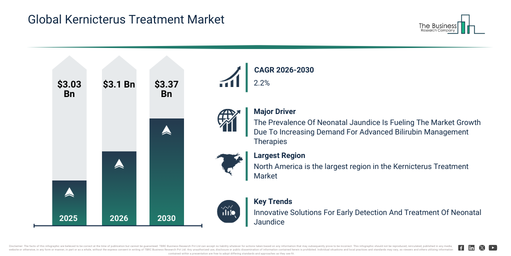
    The market for kernicterus treatment has experienced consistent expansion. Projections indicate a progression from $3.03 billion in 2025 to $3.1 billion in 2026, reflecting a compound annual growth rate of 2.1%. The growth observed during the historical period can be linked to a rise in surgical interventions and skin trauma, a greater incidence of keloid development within particular demographics, the widespread adoption of steroid injections in clinical practice, an escalating demand for cosmetic dermatology procedures, and the presence of diverse therapeutic options.

    The market for kernicterus treatment is poised for consistent expansion in the forthcoming years, projected to reach $3.37 billion by the year 2030, reflecting a compound annual growth rate of 2.2%. This anticipated growth during the forecast period is bolstered by several key factors, including significant progress in laser and phototherapy techniques, heightened public awareness concerning scar management strategies, a growing inclination towards non-invasive therapeutic options, the proliferation of dermatology practices in developing nations, and an increasing embrace of at-home scar treatment solutions. Key developments shaping the market landscape over the forecast period encompass a surging demand for minimally invasive keloid treatments, a greater utilization of combined therapeutic methodologies, augmented adoption of laser and phototherapy solutions, an expansion of homecare services and topical scar management products, and a dedicated focus on diminishing the recurrence rates of keloids.

    Download A Free Sample Report For Comprehensive Market Insights:

    https://www.thebusinessresearchcompany.com/sample.aspx?id=13470&type=smp

    Kernicterus Treatment Market Growth Momentum: Which Factors Are Influencing Demand?

    The increasing incidence of neonatal jaundice is a primary catalyst for the expansion of the kernicterus treatment market. Neonatal jaundice, a prevalent condition in newborns marked by yellowing of the skin and eyes, is on the rise, largely attributable to an uptick in premature births. Preterm infants often have immature liver functions, which impedes their ability to efficiently process and clear bilirubin. Kernicterus treatment, which encompasses interventions like exchange transfusions to replace the infant’s blood with blood containing lower bilirubin levels, plays a crucial role in managing symptoms and enhancing the child’s well-being. Data from the National Library of Medicine in October 2023 indicates that approximately 60% of full-term infants and 80% of premature infants develop jaundice within their first week, with about 10% of breastfed infants still exhibiting jaundice at one month. Consequently, the widespread occurrence of neonatal jaundice is projected to significantly boost the kernicterus treatment market.

    Augmented healthcare expenditures are propelling the expansion of the market for kernicterus treatment. This increased spending reflects a greater allocation of resources towards medical services, advanced equipment, and innovative technologies aimed at enhancing patient care and health results. The demand for sophisticated medical technologies, driving investments by healthcare facilities in state-of-the-art equipment and digital solutions, underpins this rise in healthcare spending. Furthermore, heightened healthcare expenditure facilitates improved early detection of neonatal jaundice and ensures prompt, effective medical interventions, thereby preventing serious neurological harm. Evidence from the Centers for Medicare & Medicaid Services in December 2024 reveals that national health expenditures in the US climbed by 7.5% in 2023, reaching $4.9 trillion, or $14,570 per capita, constituting 17.6% of the GDP. Medicare spending alone rose by 8.1% to $1,029.8 billion, accounting for 21% of total national health expenditures. Therefore, escalating healthcare spending is a key driver for the growth observed in the kernicterus treatment market.

    Kernicterus Treatment Market Categorization By Product Type And Application

    The kernicterus treatment market covered in this report is segmented –

    1) By Treatment Type: Phototherapy, Exchange Transfusion, Pharmacological Supportive Therapy, Supportive Neurological Care

    2) By Route of Administration: Non-Invasive, Phototherapy (light-based), Injectable, Blood Products, IVIG, Albumin

    3) By End User: Hospitals, Neonatal Intensive Care Units (NICUs), Specialty Neonatal Centers, Academic And Research Institutes

    Subsegments:

    1) By Phototherapy: Conventional Phototherapy, Intensive Phototherapy, LED-Based Phototherapy, Fiberoptic Phototherapy

    2) By Exchange Transfusion: Partial Exchange Transfusion, Double Volume Exchange Transfusion

    3) By Pharmacological Supportive Therapy: Intravenous Immunoglobulin (IVIG), Albumin Therapy

    4) By Supportive Neurological Care: Seizure Management, Respiratory Support, Nutritional and Fluid Management

    Kernicterus Treatment Market Trends Reshaping Industry Growth

    The kernicterus treatment sector sees leading entities concentrating their efforts on pioneering advancements like combined newborn jaundice screening and sophisticated phototherapy setups. These innovations aim to facilitate prompt identification, guarantee prompt interventions, and mitigate the neurological harm associated with kernicterus in infants. Such integrated systems serve as dual-purpose diagnostic and therapeutic tools, precisely gauging bilirubin concentrations and administering effective light-based treatment to preemptively address jaundice and avert lasting cerebral impairment in newborns. As an illustration, Project Oscar – Light For Life, initiated in December 2024 by the Nigerian non-profit Wellbeing Foundation Africa in partnership with the British firm Reckitt, represents a nationwide campaign dedicated to screening, treating, and preventing kernicterus in newborns. This initiative equips medical centers with cutting-edge phototherapy apparatus and bilirubinometers for precise and early jaundice detection and treatment, alongside training medical personnel and enlightening mothers to counteract detrimental misconceptions. Diverging from traditional piecemeal care, Project Oscar champions a comprehensive, prevention-oriented strategy that intertwines technological deployment, skill enhancement, and public sensitization to diminish infant fatalities and the permanent disabilities stemming from kernicterus.

    Kernicterus Treatment Market Company Landscape And Strategic Competition

    Major companies operating in the kernicterus treatment market are GE HealthCare, Philips Healthcare, Drägerwerk AG, Natus Medical Incorporated, Atom Medical Corporation, Phoenix Medical Systems, Fanem Ltda, Medela AG, Olympic Medical, Nice Neotech Medical Systems, Baxter International Inc., Fresenius Kabi, Grifols S.A, CSL Limited, Octapharma AG, Kedrion S.p.A, Biotest AG, Terumo Corporation, Haemonetics Corporation, Macopharma

    Access The Complete Kernicterus Treatment Market Report:

    https://www.thebusinessresearchcompany.com/report/kernicterus-treatment-global-market-report

    Kernicterus Treatment Market Largest Region By Revenue And Market Share

    North Americawas the largest region in the kernicterus treatment market in 2025. Asia-Pacificis expected to be the fastest-growing region in the forecast period. The regions covered in the kernicterus treatment market report are Asia-Pacific, South East Asia, Western Europe, Eastern Europe, North America, South America, Middle East, Africa.

    Get in touch with us:

    The Business Research Company: https://www.thebusinessresearchcompany.com/

    Americas: +1 310-496-7795

    Asia: +44 7882 955267 & +91 8897263534

    Europe: +44 7882 955267

    Email us at: marketing@tbrc.info

    Follow us on:

    LinkedIn: https://in.linkedin.com/company/the-business-research-company

    YouTube: https://www.youtube.com/channel/UC24_fI0rV8cR5DxlCpgmyFQ

    Global Market Model: https://www.thebusinessresearchcompany.com/global-market-model
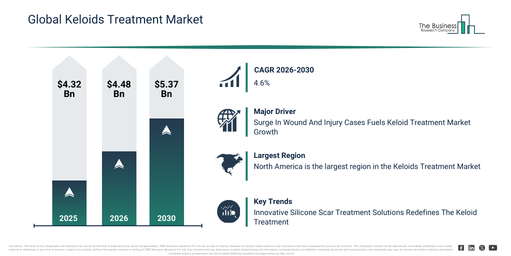
  • Keloids Treatment Market Forecast Highlights Expansion From $4.48 Billion To $5.36 Billion Through 2030

    Keloids Treatment Market Forecast Highlights Expansion From $4.48 Billion To $5.36 Billion Through 2030

    Enhanced with market attractiveness analysis, total addressable market evaluation, company benchmarking matrices, interactive Excel dashboards, expanded supply chain intelligence, emerging startup coverage, and detailed product insights, The Business Research Company’s 2026 market reports deliver more actionable and strategically valuable research.

    Keloids Treatment Market Value Analysis: What Growth Is Expected Over The Forecast Period?

    The market dedicated to keloid treatments has demonstrated consistent expansion. Projections indicate a progression from $4.32 billion in 2025 to $4.48 billion in 2026, reflecting a compound annual growth rate of 3.7%. Factors contributing to this expansion historically include the rising frequency of skin trauma and surgical procedures, an increasing number of individuals susceptible to keloids, the sustained effectiveness of steroid injections, a heightened demand for aesthetic dermatological interventions, and the availability of a diverse array of therapeutic options.

    The global market for keloid treatments is poised for consistent expansion over the coming years, with projections indicating a rise to $5.37 billion by 2030, reflecting a compound annual growth rate of 4.6%. This projected growth trajectory is supported by several key factors, including improvements in laser and cryotherapy techniques, heightened public awareness regarding scar management, a greater inclination towards less invasive treatment modalities, the proliferation of dermatology centers in developing economies, and an increasing uptake of at-home scar care products. During this forecast period, significant market currents are expected to include a surge in demand for non-invasive keloid remedies, a growing embrace of combined therapeutic strategies, expanded utilization of laser technology for scar management, a broader availability of at-home and topical treatments, and an intensified focus on individualized therapies aimed at preventing recurrence.

    Download A Free Sample Report For Comprehensive Market Insights:

    https://www.thebusinessresearchcompany.com/sample.aspx?id=12908&type=smp

    Keloids Treatment Market Expansion Drivers: What Is Shaping Future Growth?

    The escalation in occurrences of wounds and injuries presents a significant catalyst for the expansion of the keloid treatment market. A wound, defined as damage to bodily tissues often characterized by a skin breach stemming from incidents like accidents, surgeries, burns, or other traumas, can consequently lead to keloid development. This heightened prevalence of keloids, in turn, stimulates a greater need for successful treatment methodologies, fosters increased comprehension of keloid-related issues, encourages scientific progress, and cultivates partnerships within the medical community. Illustratively, the U.S. Bureau of Labor Statistics, a U.S. federal agency dedicated to generating crucial data on labor markets and workplace safety, reported in November 2024 that private industry employers documented approximately 2.6 million nonfatal workplace injuries and illnesses during 2023. Consequently, the increasing frequency of wound and injury cases is projected to be a key driver for the keloid treatment market’s growth.

    Keloids Treatment Market Driver: Growth Of Keloid Treatment Market Fueled By Increasing Demand For Non-Surgical Aesthetic Procedures

    Accelerating enthusiasm for non-surgical aesthetic interventions is poised to invigorate the keloid treatment market’s trajectory. These non-surgical aesthetic treatments, designed to refine appearance without resorting to surgical methods, target particular concerns to achieve a more youthful aesthetic. Medical practitioners employ techniques like laser therapy, cryotherapy, and dermal fillers in non-surgical aesthetic procedures to mitigate the visual impact and symptoms associated with keloid scars, effectively diminishing inflammation, redness, and vascularity. As an illustration, the International Society of Aesthetic Plastic Surgery (ISAPS), a US-based non-profit organization representing board-certified plastic surgeons, announced in June 2024 that the cumulative number of both surgical and non-surgical aesthetic procedures saw a 3.4% increase in 2023, reaching an approximate total of 34.9 million, with non-surgical treatments accounting for roughly 19.1 million. Therefore, the growing demand for non-surgical aesthetic procedures is set to fuel the expansion of the keloid treatment market.

    Keloids Treatment Market Segment Analysis And Revenue Opportunities

    The keloids treatment market covered in this report is segmented –

    1) By Product Type: Topical Products, Injectable Products, Medical Devices

    2) By Treatment: Radiation Therapy, Cryo Therapy, Surgical Treatment, Laser Treatment, Steroid Injections, Other Treatments

    3) By Route Of Administration: Topical Administration, Intralesional Administration

    4) By End User: Hospitals, Homecare, Dermatology Clinics, Other End Users

    Subsegments:

    1) By Topical Products: Silicone-Based Products, Steroid-Based Topical Products

    2) By Injectable Products: Corticosteroid Injections, Antimetabolite Injections

    3) By Medical Devices: Compression Therapy Devices, Silicone-Based Scar Management Devices

    Keloids Treatment Market Strategic Trends: What Is Defining The Next Phase Of Growth?

    In the competitive landscape of keloid treatment, leading entities are prioritizing the creation of novel scar management solutions, exemplified by silicone strips like Scar Erase, aiming to secure a stronger market position. Specifically, Scar Erase, a UK-based specialist in scar therapy, introduced its silicone strips in April of 2023, offering a new approach to scar management. These strips, composed of 3 mm medical-grade silicone, have undergone clinical validation confirming their efficacy in enhancing scar appearance and supporting the healing process. Designed for repeated use, and adhering to vegan and cruelty-free principles, this technology provides an accessible and user-friendly method for addressing various scar conditions at home, encompassing hypertrophic scars, keloids, post-operative scars, and stretch marks. The mechanism involves creating a hydrating silicone barrier around the scar, fostering an ideal environment for recovery. This process works to diminish collagen synthesis and refine the scar’s texture, color, and elevation, ensuring both therapeutic benefit and user ease.

    Keloids Treatment Market Leading Players Shaping Industry Direction

    Major companies operating in the keloids treatment market are Galderma S.A., Sun Pharmaceutical Industries Ltd., Stratpharma AG, Revance Therapeutics Inc., Sensus Healthcare Inc., Cynosure Inc., Cutera Inc., Lumenis Ltd., Candela Medical, Merz Pharma GmbH & Co. KGaA, AbbVie Inc., Teva Pharmaceutical Industries Ltd., Alliance Pharma plc, Sonoma Pharmaceuticals Inc., Strata Skin Sciences Inc., Avita Medical Limited, Biofrontera AG, Sinclair Pharma plc, Fotona d.o.o., Lutronic Corporation

    Access The Complete Keloids Treatment Market Report:

    https://www.thebusinessresearchcompany.com/report/keloids-treatment-global-market-report

    Keloids Treatment Market Regional Analysis And Leading Geography

    North Americawas the largest region in the keloids treatment market in 2025. Asia-Pacificis expected to be the fastest-growing region in the forecast period. The regions covered in the keloids treatment market report are Asia-Pacific, South East Asia, Western Europe, Eastern Europe, North America, South America, Middle East, Africa.

    Get in touch with us:

    The Business Research Company: https://www.thebusinessresearchcompany.com/

    Americas: +1 310-496-7795

    Asia: +44 7882 955267 & +91 8897263534

    Europe: +44 7882 955267

    Email us at: marketing@tbrc.info

    Follow us on:

    LinkedIn: https://in.linkedin.com/company/the-business-research-company

    YouTube: https://www.youtube.com/channel/UC24_fI0rV8cR5DxlCpgmyFQ

    Global Market Model: https://www.thebusinessresearchcompany.com/global-market-model
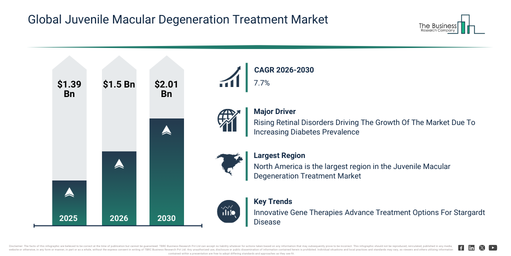
  • Juvenile Macular Degeneration Treatment Market Expected To Reach $2.01 Billion By 2030 As Growth Accelerates At 7.7% CAGR

    Juvenile Macular Degeneration Treatment Market Expected To Reach $2.01 Billion By 2030 As Growth Accelerates At 7.7% CAGR

    Through market attractiveness analysis, total addressable market evaluation, company benchmarking matrices, interactive Excel dashboards, expanded supply chain intelligence, emerging startup coverage, and detailed product insights, The Business Research Company’s 2026 market reports provide more actionable and strategically valuable research.

    Juvenile Macular Degeneration Treatment Market Size Forecast: How Large Could The Market Become By 2030?

    The market dedicated to treating juvenile macular degeneration has experienced robust expansion recently. Projections indicate a rise from $1.39 billion in 2025 to $1.5 billion in 2026, reflecting a compound annual growth rate of 7.9%. This historical growth trajectory has been influenced by factors such as a scarcity of therapeutic alternatives for this condition, heightened public understanding of hereditary retinal issues, significant progress in retinal imaging techniques, an upswing in specialized ophthalmic care, and an increasing frequency in the diagnosis of Stargardt disease.

    The market for treatments targeting juvenile macular degeneration is projected for substantial expansion in the upcoming years, reaching an estimated $2.01 billion by 2030 with a compound annual growth rate of 7.7%. This anticipated growth is primarily fueled by breakthroughs in gene and stem cell research, augmented investments in therapies for rare diseases, a heightened emphasis on early detection and management of pediatric eye conditions, the broadening scope of clinical research, and enhanced accessibility to specialized eye care. Key developments expected during this period include a more concentrated effort on managing genetic eye disorders, increased uptake of gene and stem cell-based treatments, wider utilization of devices aimed at preserving vision and providing assistance, an expansion of clinical trials for rare retinal conditions, and the enhancement of patient support networks alongside rehabilitation programs for those with low vision.

    Download A Free Sample Report For Comprehensive Market Insights:

    https://www.thebusinessresearchcompany.com/sample.aspx?id=23433&type=smp

    Juvenile Macular Degeneration Treatment Market Development Factors: Which Trends Are Supporting Demand?

    The rising incidence of various retinal conditions is poised to stimulate the expansion of the market for juvenile macular degeneration treatments. These retinal disorders, which encompass a range of ailments impacting the light-sensing retina at the back of the eye and potentially causing vision compromise or blindness, are becoming more common. This increase is largely attributed to the growing rates of diabetes, a condition that can result in diabetic retinopathy and progressive retinal damage. Treatments for juvenile macular degeneration are pivotal in managing these retinal disorders by safeguarding vision through prompt intervention, which is especially vital for younger individuals. For example, data from Retina Australia, a non-profit organization, indicated in November 2024 that an estimated 19,000 Australians, representing roughly 1 in every 1,380 individuals, currently experience inherited retinal diseases (IRDs). Concurrently, the National Eye Institute in the US projects that the number of Americans suffering from advanced age-related macular degeneration (AMD) will climb from 2.1 million to an estimated 3.7 million by the year 2030. Consequently, the escalating occurrence of retinal disorders is a key factor fueling the growth trajectory of the juvenile macular degeneration treatment market.

    Juvenile Macular Degeneration Treatment Market Segmentation And Category Breakdown

    The juvenile macular degeneration treatment market covered in this report is segmented –

    1) By Type: Stargardt Disease (ABCA4-Associated), X-Linked Juvenile Retinoschisis, Best Vitelliform Macular Dystrophy, Cone or Cone-Rod Dystrophy, Other Types

    2) By Treatment: Devices, Drugs, Surgery

    3) By Application: Vision Preservation, Disease Management, Symptom Relief, Preventive Care, Clinical Trials

    4) By Sales Channel: Hospitals, Ambulatory Surgical Centres, Other Sales Channels

    Subsegments:

    1) By Stargardt Disease (ABCA4-Associated): Juvenile Macular Degeneration, ABCA4 Gene Mutations, Visual Cycle Modulators, Stem Cell–Based Therapies

    2) By X-Linked Juvenile Retinoschisis: RS1 Gene Mutations, Pediatric-Onset Cases, Central Vision Impairment, Gene Therapy Programs

    3) By Best Vitelliform Macular Dystrophy: BEST1 Gene Mutations, Early-Onset BVMD, Late-Onset BVMD, Gene Therapy Approaches

    4) By Cone Or Cone-Rod Dystrophy: Cone-Dominant Disorders, Cone-Rod Progressive Disorders, Syndromic Forms, Non-Syndromic Forms

    5) By Other Types: Pattern Dystrophies, North Carolina Macular Dystrophy, Unclassified Juvenile Macular Dystrophies

    Juvenile Macular Degeneration Treatment Market Transformation Trends: Which Innovations Are Driving Change?

    Within the juvenile macular degeneration treatment arena, key players are actively pursuing pioneering approaches, notably employing dual adeno-associated viral (AAV) vectors, with the objective of refining gene therapy administration and boosting treatment outcomes for individuals afflicted with this condition. The concept behind a dual AAV vector involves a gene therapy strategy where two distinct AAV vectors are utilized to transport therapeutic genes that are too extensive to fit within a single AAV’s packaging limits. Illustrating this progress, in March 2025, SpliceBio, a biotechnology firm originating from Spain, reported the administration of the initial dose to a participant in their Phase 1/2 ASTRA trial for SB-007. This candidate is a gene therapy employing a dual AAV vector system engineered to re-establish the expression of the complete ABCA4 protein. The therapeutic intervention is intended to offer a prospective remedy for juvenile macular degeneration, also known as stargardt disease, a hereditary condition affecting the retina for which no treatments are currently approved, by targeting individuals irrespective of their specific genetic mutations, thereby representing a crucial advancement in the quest for effective gene therapies for uncommon retinal disorders.

    Juvenile Macular Degeneration Treatment Market Competitive Analysis Of Major Industry Participants

    Major companies operating in the juvenile macular degeneration treatment market are Alkeus Pharmaceuticals Inc., MeiraGTx Holdings plc, Ocugen Inc., ProQR Therapeutics N.V., Applied Genetic Technologies Corporation, Lineage Cell Therapeutics Inc., jCyte Inc., Nanoscope Therapeutics Inc., Editas Medicine Inc., Beam Therapeutics Inc., ReNeuron Group plc, Astellas Institute for Regenerative Medicine, Kubota Vision Inc., Ionis Pharmaceuticals Inc., Atsena Therapeutics Inc., Vedere Bio Inc., GenSight Biologics S.A., ViGeneron GmbH, Sanofi Gene Therapy, Neurotech Pharmaceuticals Inc.

    Access The Complete Juvenile Macular Degeneration Treatment Market Report:

    https://www.thebusinessresearchcompany.com/report/juvenile-macular-degeneration-treatment-global-market-report

    Juvenile Macular Degeneration Treatment Market Geographic Analysis: Where Is Demand Growing The Fastest?

    North Americawas the largest region in the juvenile macular degeneration treatment market in 2025. The regions covered in the juvenile macular degeneration treatment market report are Asia-Pacific, South East Asia, Western Europe, Eastern Europe, North America, South America, Middle East, Africa.

    Get in touch with us:

    The Business Research Company: https://www.thebusinessresearchcompany.com/

    Americas: +1 310-496-7795

    Asia: +44 7882 955267 & +91 8897263534

    Europe: +44 7882 955267

    Email us at: marketing@tbrc.info

    Follow us on:

    LinkedIn: https://in.linkedin.com/company/the-business-research-company

    YouTube: https://www.youtube.com/channel/UC24_fI0rV8cR5DxlCpgmyFQ

    Global Market Model: https://www.thebusinessresearchcompany.com/global-market-model
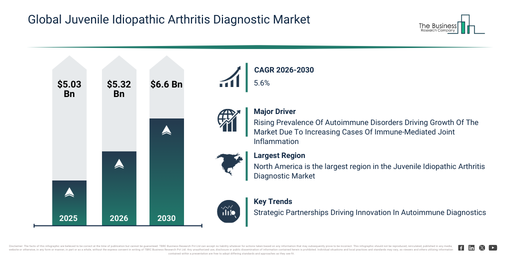
  • Juvenile Idiopathic Arthritis Diagnostic Market Set To Grow From $5.31 Billion In 2026 To $6.6 Billion By 2030 At A CAGR Of 5.6%

    Juvenile Idiopathic Arthritis Diagnostic Market Set To Grow From $5.31 Billion In 2026 To $6.6 Billion By 2030 At A CAGR Of 5.6%

    Delivering more actionable and strategically valuable research, The Business Research Company’s 2026 market reports feature market attractiveness analysis, total addressable market evaluation, company benchmarking matrices, interactive Excel dashboards, expanded supply chain intelligence, emerging startup coverage, and detailed product insights.

    Juvenile Idiopathic Arthritis Diagnostic Market Revenue Outlook: What CAGR Is Expected Through 2030?

    The market for diagnosing juvenile idiopathic arthritis has witnessed robust expansion lately. Projections indicate this sector will experience an increase from $5.03 billion in 2025 to $5.32 billion in 2026, reflecting a compound annual growth rate of 5.8%. Factors contributing to this expansion during the past period include a heightened incidence of autoimmune conditions among children, escalating awareness surrounding juvenile idiopathic arthritis, enhanced access to serological and imaging diagnostics, a broader reach of specialized pediatric care, and the increased utilization of laboratory-based diagnostic tools.

    The market for diagnosing juvenile idiopathic arthritis is poised for substantial expansion over the upcoming years, projected to reach $6.6 billion by 2030, reflecting a compound annual growth rate of 5.6%. This upward trajectory during the forecast period is anticipated to be fueled by several key factors including the evolution of molecular and genetic diagnostic technologies, a heightened emphasis on identifying the condition in its early stages, increased financial commitment to pediatric healthcare facilities, a burgeoning need for individualized treatment strategies, and the broader availability of diagnostic services in developing economies. Prominent developments expected within this timeframe encompass the early and precise identification of autoimmune conditions in children, the augmented utilization of sophisticated imaging techniques for detecting JIA, a greater embrace of genetic and biomarker-driven diagnostic methods, a growing preference for comprehensive diagnostic strategies, and the proliferation of specialized diagnostic services within pediatric rheumatology.

    Download A Free Sample Report For Comprehensive Market Insights:

    https://www.thebusinessresearchcompany.com/sample.aspx?id=23432&type=smp

    Juvenile Idiopathic Arthritis Diagnostic Market Industry Drivers: What Is Driving Revenue Growth?

    The burgeoning incidence of autoimmune conditions is anticipated to be a significant catalyst for the juvenile idiopathic arthritis diagnostic market’s expansion. Autoimmune disorders are characterized by the immune system’s erroneous targeting of the body’s own healthy tissues, resulting in inflammation, cellular damage, and persistent health issues. This escalation in autoimmune diseases stems from a multifaceted combination of environmental stimuli, inherent genetic susceptibilities, and shifts in habitual practices. These autoimmune conditions contribute to juvenile idiopathic arthritis through the immune system’s misguided assault on the synovial lining of the joints, instigating inflammation and subsequent damage. As a concrete illustration, by November 2023, the Multiple Sclerosis International Federation (MSIF), an international non-profit organization based in the UK dedicated to global research and advocacy for multiple sclerosis, reported that approximately 2.9 million individuals globally were affected by multiple sclerosis, a form of autoimmune disease, in the year 2023. Consequently, the growing prevalence of autoimmune disorders is a key factor fueling the development of the juvenile idiopathic arthritis diagnostic market.

    Juvenile Idiopathic Arthritis Diagnostic Market Segment Outlook: Which Categories Are Expanding The Fastest?

    The juvenile idiopathic arthritis diagnostic market covered in this report is segmented –

    1) By Type: Serological Tests, Imaging Tests, Genetic Tests

    2) By Technology: Molecular Diagnostics, Immunoassays

    3) By Application: Hospital Laboratories, Diagnostic Centres

    Subsegments:

    1) By Serological Tests: Rheumatoid Factor (RF) Test, Antinuclear Antibody (ANA) Test, Erythrocyte Sedimentation Rate (ESR) Test, C-Reactive Protein (CRP) Test, Complete Blood Count (CBC)

    2) By Imaging Tests: X-Ray, Magnetic Resonance Imaging (MRI), Ultrasound

    3) By Genetic Tests: HLA-B27 Genetic Marker Test, Polymerase Chain Reaction (PCR)-Based Testing

    #Juvenile Idiopathic Arthritis Diagnostic Market Growth Trends: What Is Influencing The Future Outlook?

    Within the juvenile idiopathic arthritis diagnostic sector, key players are engaging in strategic alliances to broaden their product portfolios, bolster their research expertise, and solidify their worldwide market standing. These strategic alliances signify cooperative efforts among entities focused on improving the early identification and diagnosis of the condition. A notable example occurred in November 2024 when Augurex Life Sciences Corp., a Canadian biotech firm, joined forces with Quest Diagnostics, a diagnostic services provider based in the US. This partnership aims to refine the diagnosis and treatment of rheumatoid arthritis (RA) through the utilization of the 14-3-3? (eta) biomarker. Consequently, Quest Diagnostics is set to validate and introduce a laboratory-developed test across the United States that leverages Augurex’s 14-3-3? biomarker, designed to identify heightened levels of the 14-3-3? protein, a marker associated with rheumatoid arthritis, more severe disease progression, and a greater likelihood of joint deterioration.

    Juvenile Idiopathic Arthritis Diagnostic Market Key Companies And Competitive Benchmarking

    Major companies operating in the juvenile idiopathic arthritis diagnostic market are Thermo Fisher Scientific Inc., Abbott Laboratories, Roche Diagnostics, Siemens Healthineers, Danaher Corporation, Bio-Rad Laboratories, DiaSorin S.p.A., Sysmex Corporation, Beckman Coulter Inc., BD Biosciences, Agilent Technologies, Merck KGaA, Illumina Inc., Qiagen N.V., Hologic Inc., PerkinElmer Inc., Ortho Clinical Diagnostics, Grifols S.A., Fujirebio, Randox Laboratories

    Access The Complete Juvenile Idiopathic Arthritis Diagnostic Market Report:

    https://www.thebusinessresearchcompany.com/report/juvenile-idiopathic-arthritis-diagnostic-global-market-report

    Juvenile Idiopathic Arthritis Diagnostic Market Global Footprint: Which Region Holds Market Leadership?

    North Americawas the largest region in the juvenile idiopathic arthritis diagnostic market in 2025. Asia-Pacificis expected to be the fastest-growing region in the forecast period. The regions covered in the juvenile idiopathic arthritis diagnostic market report are Asia-Pacific, South East Asia, Western Europe, Eastern Europe, North America, South America, Middle East, Africa.

    Get in touch with us:

    The Business Research Company: https://www.thebusinessresearchcompany.com/

    Americas: +1 310-496-7795

    Asia: +44 7882 955267 & +91 8897263534

    Europe: +44 7882 955267

    Email us at: marketing@tbrc.info

    Follow us on:

    LinkedIn: https://in.linkedin.com/company/the-business-research-company

    YouTube: https://www.youtube.com/channel/UC24_fI0rV8cR5DxlCpgmyFQ

    Global Market Model: https://www.thebusinessresearchcompany.com/global-market-model
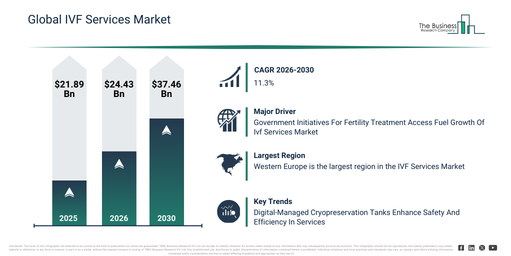
  • IVF Services Market Opportunities Are Emerging Beyond Traditional Growth Areas

    IVF Services Market Opportunities Are Emerging Beyond Traditional Growth Areas

    Enhanced with market attractiveness analysis, total addressable market evaluation, company benchmarking matrices, interactive Excel dashboards, expanded supply chain intelligence, emerging startup coverage, and detailed product insights, The Business Research Company’s 2026 market reports deliver more actionable and strategically valuable research.

    IVF Services Market Growth Analysis: How Will Revenue Expand During The Forecast Period?

    The in vitro fertilization (IVF) services sector has experienced significant expansion lately, projected to climb from $21.89 billion in 2025 to $24.43 billion in 2026, reflecting a compound annual growth rate (CAGR) of 11.6%. This accelerated growth during the past period is largely due to escalating infertility challenges, a societal shift towards later childbearing, heightened public knowledge regarding assisted reproductive technologies, and enhancements in embryological practices, alongside an increasing number of dedicated fertility centers becoming accessible.

    The assisted reproductive technology sector, specifically in vitro fertilization (IVF) services, is poised for substantial expansion over the ensuing years, projecting a market valuation of $37.46 billion by 2030, driven by a compound annual growth rate of 11.3%. This upswing is anticipated to be propelled by several key factors: a broader embrace of IVF treatments across diverse age demographics, escalating requirements for egg donation cycles, a notable increase in individuals seeking fertility treatments abroad, enhanced financial accessibility for IVF procedures, and an expanding scope of insurance provisions for reproductive healthcare. Furthermore, several significant trends are expected to shape this market during the forecast period, including a heightened demand for technologically advanced reproductive solutions, increased utilization of preimplantation genetic diagnosis, a growing inclination towards frozen embryo transfer cycles, the proliferation of IVF programs involving donor eggs, and the continuous improvement of success rates through sophisticated clinical methodologies.

    Download A Free Sample Report For Comprehensive Market Insights:

    https://www.thebusinessresearchcompany.com/sample.aspx?id=3348&type=smp

    IVF Services Market Growth Factors: Which Forces Are Supporting Market Expansion?

    Anticipated advancements in the IVF services sector are largely attributed to governmental efforts aimed at enhancing accessibility to fertility treatments. Such governmental endeavors encompass a range of deliberate actions, encompassing programs, policy frameworks, and targeted projects, all initiated by governmental bodies to tackle societal concerns, attain predetermined objectives, or foster specific societal results. A notable trend involves numerous governmental entities actively implementing diverse strategies to bolster the fertility services industry. Illustratively, in January of 2023, Australia’s New South Wales (NSW) government, through its Ministry of Health, pledged an investment of $80 million spanning from the 2022-23 to the 2025-26 fiscal years. This substantial financial commitment is designed to broaden the availability of cost-effective fertility treatments via the NSW Affordable IVF Program, directly contributing to the market’s expansion.

    IVF Services Market Segment Landscape: Which Areas Lead Market Development?

    The ivf services market covered in this report is segmented –

    1) By Cycle Type: Fresh IVF Cycles (Non-donor), Thawed IVF Cycles (Non-donor), Donor Egg IVF Cycles

    2) By Service Provider: Fertility Clinics, Hospitals

    3) By End User: Infertile Couples, Single Women, Same-Sex Couples

    Subsegments:

    1) By Fresh IVF Cycles (Non-donor): Standard Fresh IVF Cycles, IVF Cycles With Preimplantation Genetic Testing (PGT)

    2) By Thawed IVF Cycles (Non-donor): Thawed Embryo Transfer (TET) Cycles, Thawed Blastocyst Transfer Cycles

    3) By Donor Egg IVF Cycles: IVF Cycles Using Fresh Donor Eggs, IVF Cycles Using Frozen Donor Eggs

    IVF Services Market Industry Trends: What Changes Are Reshaping Demand?

    Leading participants within the IVF services sector are concentrating their efforts on pioneering novel advancements, exemplified by the creation of digitally managed cryopreservation units, with the primary goals of bolstering the security of biological samples, augmenting storage capacity, and guaranteeing precise record-keeping for ovulated eggs, embryos, and spermatozoa. A cryopreservation tank that incorporates digital management features merges conventional liquid nitrogen storage mechanisms with sophisticated digital tracking capabilities, specimen validation, and the ability for remote oversight, thereby uniting the dependability of traditional storage methods with the enhanced security and traceability offered by an automated infrastructure. As a pertinent example, in the month of March 2025, TMRW Life Sciences, a firm based in the United States specializing in fertility technology, introduced the TMRW Vault, which comprises a smart liquid nitrogen tank paired with a digital workstation; this system leverages RFID technology and its specialized ivfOS software to maintain continuous surveillance of cryopreserved specimens, ensuring complete chain-of-custody protocols. While accommodating manual retrieval of specimens, it simultaneously conducts numerous environmental assessments on a daily basis through its Overwatch system and can expand its storage capability to accommodate the equivalent volume of ten standard dewars within a solitary unit. This particular innovation empowers fertility treatment centers to mitigate potential risks, increase the precision of sample retrieval, and manage the expansion of their storage facilities with greater operational efficiency.

    IVF Services Market Industry Leaders And Market Competition

    Major companies operating in the ivf services market are Monash IVF Group, Virtus Health Limited, Genea Limited, Boston IVF, IVF Spain, Bourn Hall Clinic, Indira IVF, Cloudnine Fertility, Chelsea and Westminster Hospital NHS Foundation Trust, Bumrungrad International Hospital, CHA Fertility Center, CREATE Fertility, The Centre for Reproductive & Genetic Health, The Bridge Centre, UNICA Clinic – Prague, Repromeda s.r.o., Australian Concept Infertility Medical Center (ACIMC), Dubai Gynecology and Fertility Centre, Cairo Fertility Centre, Queens Fertility Centre (Egypt), Instituto de Fertilidad Humana

    Access The Complete IVF Services Market Report:

    https://www.thebusinessresearchcompany.com/report/ivf-services-global-market-report

    IVF Services Market Regional Distribution: Which Areas Drive Market Expansion?

    Western Europewas the largest region in the IVF services market in 2025. North Americawas the second largest region in global IVF services market share. The regions covered in the ivf services market report are Asia-Pacific, South East Asia, Western Europe, Eastern Europe, North America, South America, Middle East, Africa.

    Get in touch with us:

    The Business Research Company: https://www.thebusinessresearchcompany.com/

    Americas: +1 310-496-7795

    Asia: +44 7882 955267 & +91 8897263534

    Europe: +44 7882 955267

    Email us at: marketing@tbrc.info

    Follow us on:

    LinkedIn: https://in.linkedin.com/company/the-business-research-company

    YouTube: https://www.youtube.com/channel/UC24_fI0rV8cR5DxlCpgmyFQ

    Global Market Model: https://www.thebusinessresearchcompany.com/global-market-model
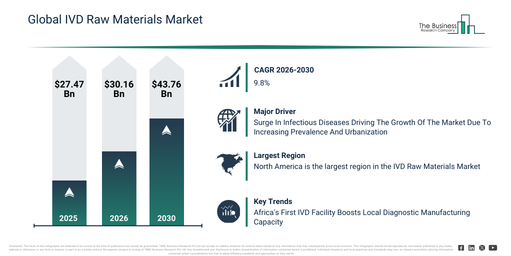
  • IVD Raw Materials Market Expansion Is Opening New Pathways For Strategic Investment

    IVD Raw Materials Market Expansion Is Opening New Pathways For Strategic Investment

    Through market attractiveness analysis, total addressable market evaluation, company benchmarking matrices, interactive Excel dashboards, expanded supply chain intelligence, emerging startup coverage, and detailed product insights, The Business Research Company’s 2026 market reports provide more actionable and strategically valuable research.

    IVD Raw Materials Market Forecast: What Market Value Is Expected By 2030?

    The market for in vitro diagnostic raw materials has experienced robust expansion recently. Projections indicate a rise from $27.47 billion in 2025 to $30.16 billion in 2026, reflecting a compound annual growth rate of 9.8%. This upward trajectory in the historical period has been fueled by several key factors, including a greater volume of clinical diagnostic tests being performed, a higher uptake of immunoassay technologies, the broader application of molecular diagnostics, an increasing need for detecting diseases at early stages, and the well-established use of enzymes and antibodies within in vitro diagnostic kits.

    The market for in-vitro diagnostic (IVD) raw materials is poised for substantial expansion in the upcoming years, projecting a reach of $43.76 billion by 2030, fueled by a compound annual growth rate (CAGR) of 9.8%. This anticipated growth trajectory over the forecast period is largely propelled by several key factors including the escalating incidence of both chronic and infectious diseases, augmented investments aimed at enhancing precision diagnostics, the expanding utilization of point-of-care testing solutions, a surge in biopharmaceutical research and development endeavors, and a discernible increase in the demand for bespoke IVD raw materials. Significant market trends anticipated within this timeframe encompass a heightened demand for diagnostic reagents characterized by exceptional purity levels, an increasing embrace of recombinant antibodies and proteins in IVD manufacturing, a broader application of materials for molecular diagnostics, a heightened emphasis on ensuring superior quality and consistent batch production, and strategic efforts toward diversifying the supply chain for essential IVD components.

    Download A Free Sample Report For Comprehensive Market Insights:

    https://www.thebusinessresearchcompany.com/sample.aspx?id=24270&type=smp

    IVD Raw Materials Market Demand Drivers: What Is Fueling Industry Growth?

    The expanding incidence of infectious diseases is poised to be a significant catalyst for the advancement of the IVD raw materials market. Infectious diseases, defined as ailments stemming from pathogenic microorganisms capable of transmission between individuals or other life forms, are becoming more widespread due to accelerating urbanization. This urban growth exacerbates disease transmission through heightened population density and places considerable strain on existing sanitation systems and healthcare facilities. Crucially, the components used in in-vitro diagnostics are instrumental in the fight against infectious diseases, facilitating the creation of precise diagnostic tools essential for early identification and proficient disease control. A notable illustration of this trend, as reported by the Centers for Disease Control and Prevention in March 2024, is the increase in tuberculosis cases within the United States, climbing from 8,320 in 2022 to 9,615 in 2023, marking an escalation of 1,295 instances. Consequently, the escalating rate of infectious diseases directly fuels the expansion of the IVD raw materials sector.

    IVD Raw Materials Market Segments: Where Are The Largest Growth Opportunities?

    The ivd raw materials market covered in this report is segmented –

    1) By Product: Antibodies, Antigens, Enzymes, Proteins, Biological Buffers

    2) By Technology: Molecular Diagnostics, Clinical Chemistry, Immunochemistry

    3) By End User: Pharmaceutical And Biotechnology Companies, Contract Research Organizations

    Subsegments:

    1) By Antibodies: Monoclonal Antibodies, Polyclonal Antibodies, Recombinant Antibodies

    2) By Antigens: Recombinant Antigens, Native Antigens, Synthetic Antigens

    3) By Enzymes: Polymerases, Reverse Transcriptases, Oxidases

    4) By Proteins: Carrier Proteins, Blocking Proteins, Recombinant Proteins

    5) By Biological Buffers: Tris Buffers, HEPES Buffers, Phosphate Buffers

    IVD Raw Materials Market Innovation Trends: Which Developments Are Transforming The Industry?

    In the realm of In Vitro Diagnostic (IVD) raw materials, leading corporations are channeling efforts into pioneering sophisticated offerings, specifically IVD production plants, with the dual aims of bolstering local diagnostic capacities and fostering healthcare autonomy. An IVD production facility is engineered for the conception, fabrication, and rigorous quality assurance of diagnostic tools and apparatus employed in analyzing bodily samples ex vivo to identify ailments and health states. Illustrating this trend, in January of 2024, Colexa Biosensor Limited, a Nigerian health innovation firm, joined forces with Codix Pharma Limited, a fellow Nigerian pharmaceutical entity, to inaugurate the inaugural in vitro diagnostics manufacturing establishment in Sub-Saharan Africa, situated in Lagos. This venture, responsible for manufacturing the onpoint blood glucose meter and accompanying strips, marks a pivotal advancement for healthcare across the African continent, specifically targeting the escalating incidence of diabetes and enhancing the accessibility of diagnostic services. The plant possesses an initial production output of 3.6 million units per annum, with a scalable capacity reaching up to 10.8 million units, and its immediate strategic objective is to satisfy the diagnostic needs within West Africa.

    IVD Raw Materials Market Major Participants And Competitive Dynamics

    Major companies operating in the ivd raw materials market are Merck KGaA, Thermo Fisher Scientific Inc., Bio-Rad Laboratories Inc., LGC Limited, Neogen Corporation, MP Biomedicals, CUSABIO Technology, Fujirebio, Fapon Biotech, ABclonal Technology, Creative Diagnostics, AIVD Biotech Inc., OPERON, Beijing Diagreat Biotechnology Co. Ltd., Biosynth, Aalto Bio Reagents, Angstrom Biotech, Eximio Biotech, Glentham Life Sciences Limited, OYC Americas Inc., NOVA Biologics Inc., Sino Biological Inc., ACROBiosystems, ProSpec-Tany TechnoGene Ltd.

    Access The Complete IVD Raw Materials Market Report:

    https://www.thebusinessresearchcompany.com/report/ivd-raw-materials-global-market-report

    IVD Raw Materials Market Leading Geography: Which Region Generates The Most Revenue?

    North Americawas the largest region in the IVD raw materials market in 2025. Asia-Pacificis expected to be the fastest-growing region in the forecast period. The regions covered in the ivd raw materials market report are Asia-Pacific, South East Asia, Western Europe, Eastern Europe, North America, South America, Middle East, Africa.

    Get in touch with us:

    The Business Research Company: https://www.thebusinessresearchcompany.com/

    Americas: +1 310-496-7795

    Asia: +44 7882 955267 & +91 8897263534

    Europe: +44 7882 955267

    Email us at: marketing@tbrc.info

    Follow us on:

    LinkedIn: https://in.linkedin.com/company/the-business-research-company

    YouTube: https://www.youtube.com/channel/UC24_fI0rV8cR5DxlCpgmyFQ

    Global Market Model: https://www.thebusinessresearchcompany.com/global-market-model
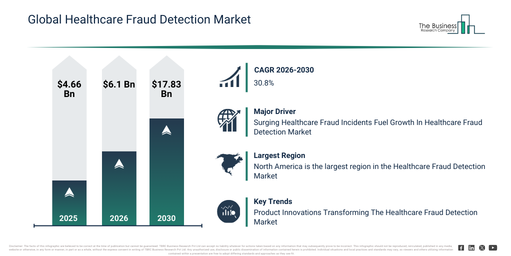
  • Healthcare Fraud Detection Market Size Projected To Increase From $6.09 Billion To $17.83 Billion During The Forecast Period

    Healthcare Fraud Detection Market Size Projected To Increase From $6.09 Billion To $17.83 Billion During The Forecast Period

    Delivering more actionable and strategically valuable research, The Business Research Company’s 2026 market reports feature market attractiveness analysis, total addressable market evaluation, company benchmarking matrices, interactive Excel dashboards, expanded supply chain intelligence, emerging startup coverage, and detailed product insights.

    Healthcare Fraud Detection Market Revenue Outlook: What CAGR Is Expected Through 2030?

    The market for healthcare fraud detection has experienced remarkable expansion recently, projected to surge from $4.66 billion in 2025 to $6.1 billion in 2026, reflecting a compound annual growth rate of 31.0%. This significant upward trend during the historical period is underpinned by several key factors, including the escalating volume of healthcare claims, a rise in fraudulent billing practices and abuse, the increasing integration of data analytics within healthcare financial operations, stricter regulatory scrutiny, and the ongoing digitization of healthcare payment mechanisms.

    The market dedicated to identifying healthcare fraud is poised for remarkable expansion in the coming years, projecting a significant rise to $17.83 billion by 2030, fueled by a robust compound annual growth rate of 30.8%. This upward trajectory in the anticipated period is largely propelled by augmented investments in sophisticated analytical solutions, a heightened need for automated tools to prevent fraudulent activities, the proliferation of cloud-based healthcare platforms, greater incorporation of machine learning into the claims processing workflow, and an intensified commitment to controlling expenses. Key developments expected during this forecast timeframe encompass the escalating adoption of artificial intelligence-driven fraud detection platforms, a more prominent utilization of predictive analytics for scrutinizing claims, broader implementation of real-time payment integrity solutions, the continued expansion of cloud-based systems for fraud detection, and a strengthened emphasis on data transparency and regulatory adherence.

    Download A Free Sample Report For Comprehensive Market Insights:

    https://www.thebusinessresearchcompany.com/sample.aspx?id=8191&type=smp

    Healthcare Fraud Detection Market Industry Drivers: What Is Driving Revenue Growth?

    The escalating incidence of deceptive practices within the healthcare sector is anticipated to serve as a significant catalyst for the expansion of the healthcare fraud detection market. Such fraudulent activities encompass the intentional falsification of patient records and insurance details, aiming to secure illicit benefits or unjustly deny an individual their rightful entitlements. As a concrete illustration, in June of 2024, the U.S. Department of Justice revealed a nationwide operation targeting healthcare fraud, resulting in charges against 193 individuals, among them 76 healthcare practitioners, with alleged intended losses amounting to approximately US$2.75 billion and actual losses reaching US$1.6 billion. Consequently, the increasing prevalence of fraudulent schemes in healthcare is projected to fuel the advancement of the market dedicated to detecting such fraud.

    Healthcare Fraud Detection Market Segment Landscape And Growth Potential

    The healthcare fraud detection market covered in this report is segmented –

    1) By Type: Descriptive Analytics, Predictive Analytics, Prescriptive Analytics

    2) By Model: On-Premise Delivery, On-Demand Delivery

    3) By Component: Services, Software

    4) By Application: Insurance Claims Review, Payment Integrity

    5) By End User: Healthcare Payers, Government Agencies, Other End-Users

    Subsegments:

    1) By Descriptive Analytics: Data Mining, Reporting Tools, Historical Data Analysis

    2) By Predictive Analytics: Risk Scoring Models, Machine Learning Algorithms, Trend Analysis

    3) By Prescriptive Analytics: Decision Support Systems, Optimization Algorithms, Scenario Analysis And Simulations

    #Healthcare Fraud Detection Market Growth Trends: What Is Influencing The Future Outlook?

    Leading entities within the healthcare fraud detection sector are concentrating their efforts on creating novel offerings, including sophisticated platforms specifically for insurance fraud detection. These platforms are engineered to enhance the real-time oversight of claims, bolster the verification processes for data, and ultimately diminish instances of fraudulent actions throughout both healthcare and insurance frameworks. The concept of insurance fraud detection platforms encompasses comprehensive technological systems that employ cutting-edge analytical tools, perpetual surveillance, and automated checks of data to pinpoint questionable actions, designate claims with elevated risk levels, and furnish investigators with pertinent intelligence. As a specific illustration, in the month of June in the year 2023, Verisk Analytics Inc., a firm based in the United States specializing in analytics, in partnership with Kyndryl Holdings, Inc., introduced a highly advanced technological suite intended to combat insurance fraud within Israel’s compulsory insurance sector. This integrated system, which capitalizes on Kyndryl’s robust high-performance computing power coupled with Verisk’s specialized industry knowledge, empowers the real-time scrutiny of automotive claims related to physical injuries. Facilitated by round-the-clock managed services and advanced analytical capabilities, the system rigorously verifies information provided by applicants, cross-references data against governmental and external databases, and simplifies the investigative process for claims adjusters. The overarching objective of this cooperative venture is to elevate the trustworthiness of claims, achieve more efficient fraud identification, and meet the escalating demands of consumers within an insurance environment that is undergoing rapid digitalization, thereby underscoring the technological advancements occurring in the market for healthcare fraud detection.

    Healthcare Fraud Detection Market Competitive Landscape: Who Are The Leading Companies?

    Major companies operating in the healthcare fraud detection market are International Business Machines Corporation, Cotiviti Inc., Fair Isaac Corporation, SAS Institute Inc., RELX Group PLC, LexisNexis Risk Solutions Group, EXL Service Holdings Inc., Qlarant Inc., Change Healthcare LLC, Codoxo Inc., Pondera Solutions Inc., HMS Holdings Corp., FraudLens Inc., FraudScope Inc., Healthcare Fraud Shield LLC, MultiPlan Corporation, CGI Inc., DXC Technology Company, Conduent Incorporated, HCL Technologies Limited, Wipro Limited, H2O.ai Inc., McKesson Corporation

    Access The Complete Healthcare Fraud Detection Market Report:

    https://www.thebusinessresearchcompany.com/report/healthcare-fraud-detection-global-market-report

    Healthcare Fraud Detection Market Regional Analysis: Which Region Leads By Revenue?

    North Americawas the largest region in the healthcare fraud detection market in 2025. The regions covered in the healthcare fraud detection market report are Asia-Pacific, South East Asia, Western Europe, Eastern Europe, North America, South America, Middle East, Africa.

    Get in touch with us:

    The Business Research Company: https://www.thebusinessresearchcompany.com/

    Americas: +1 310-496-7795

    Asia: +44 7882 955267 & +91 8897263534

    Europe: +44 7882 955267

    Email us at: marketing@tbrc.info

    Follow us on:

    LinkedIn: https://in.linkedin.com/company/the-business-research-company

    YouTube: https://www.youtube.com/channel/UC24_fI0rV8cR5DxlCpgmyFQ

    Global Market Model: https://www.thebusinessresearchcompany.com/global-market-model