Month: June 2026

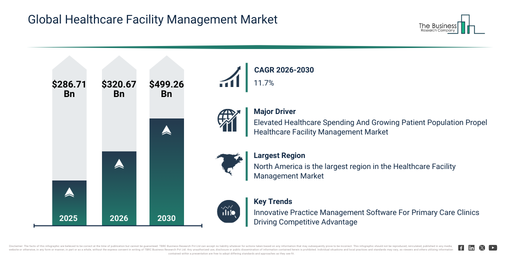
  • Healthcare Facility Management Market Growth Outlook Reveals A CAGR Of 11.7% And A Market Value Of $499.25 Billion By 2030

    Healthcare Facility Management Market Growth Outlook Reveals A CAGR Of 11.7% And A Market Value Of $499.25 Billion By 2030

    Enhanced with market attractiveness analysis, total addressable market evaluation, company benchmarking matrices, interactive Excel dashboards, expanded supply chain intelligence, emerging startup coverage, and detailed product insights, The Business Research Company’s 2026 market reports deliver more actionable and strategically valuable research.

    Healthcare Facility Management Market Growth Analysis: How Will Revenue Expand During The Forecast Period?

    The financial scope of the healthcare facility management sector has experienced substantial expansion lately, projecting a rise from $286.71 billion in 2025 to $320.67 billion in 2026, fueled by a compound annual growth rate of 11.8%. This upward trajectory during the previous period owes its momentum to several key factors: the proliferation of hospital infrastructure, a heightened emphasis on operational efficiency within healthcare settings, escalating demands for regulatory adherence, the burgeoning presence of multi-specialty hospitals, and the increasing implementation of integrated facility management solutions.

    The healthcare facility management industry is projected for substantial expansion over the coming years, reaching an estimated value of $499.26 billion by 2030, driven by a compound annual growth rate of 11.7%. This anticipated growth stems from several key factors, including escalating investments in the development of smart hospitals, a heightened demand for environmentally responsible healthcare infrastructure, broader implementation of IoT for facility oversight, a growing inclination towards outsourcing facility management functions, and an intensified focus on streamlining costs within healthcare operations. Primary market trends expected to shape this period involve the increasing integration of smart facility management solutions, greater utilization of predictive maintenance technologies, a significant emphasis on creating energy-efficient healthcare buildings, the continued expansion of external facility service providers, and an elevated focus on ensuring patient safety and adherence to regulatory standards.

    Download A Free Sample Report For Comprehensive Market Insights:

    https://www.thebusinessresearchcompany.com/sample.aspx?id=7903&type=smp

    Healthcare Facility Management Market Growth Factors: Which Forces Are Supporting Market Expansion?

    The expansion of the healthcare facility management market is primarily fueled by an escalating patient population coupled with heightened healthcare expenditures from both private and public entities within healthcare systems. This robust investment from governmental bodies and private organizations across nations underpins the advancement of healthcare infrastructures, leading to enhanced patient care and, consequently, a greater integration of facility management solutions within these systems. Illustrating this trend, data from the Office for National Statistics in May 2024 revealed a substantial 5.6% absolute increase in the UK’s total healthcare outlay between 2022 and 2023, a considerable leap from the 0.9% increment recorded in the preceding year. Consequently, the substantial financial commitments from both private and public stakeholders in the healthcare sector are instrumental in propelling the expansion of the healthcare facility management market.

    Healthcare Facility Management Market Categorization By Product Type And Application

    The healthcare facility management market covered in this report is segmented –

    1) By Type: Hard Services, Soft Services, Other Services

    2) By Business Model: Outsourced, In-House

    3) By End User: Hospitals And Clinics, Long-Term Healthcare Facilities

    Subsegments:

    1) By Hard Services: Building Maintenance, Mechanical And Electrical Services, Infrastructure Management

    2) By Soft Services: Cleaning And Sanitation, Security Services, Catering And Food Services

    3) By Other Services: Waste Management, Grounds Maintenance, Pest Control Services

    Healthcare Facility Management Market Industry Trends: What Changes Are Reshaping Demand?

    In the healthcare facility management sector, key players, including Kumo, a Malaysian firm, are introducing cutting-edge tools like practice management software specifically for primary care settings. This strategic move aims to sharpen their competitive edge and boost financial returns. The software in question, exemplified by Kumo’s KumoDoc launched in August 2023, is engineered to optimize and simplify the day-to-day administrative and operational workflow of primary care practices. KumoDoc boasts a comprehensive suite of functionalities, encompassing synchronized appointment booking with WhatsApp alerts for patients, effective management of medical supplies, a secure virtual care environment, sophisticated fraud detection mechanisms, and uncomplicated billing procedures. By consolidating electronic health records, it fosters immediate teamwork, thereby benefiting both healthcare providers and those they serve. This solution is built around the needs of the user, seeking to improve and simplify healthcare delivery. It crafts a more streamlined, individualized, and accessible healthcare journey, supporting medical professionals with its advanced technology and intuitive design in managing routine clinic tasks, ultimately serving primary care and wellness facilities.

    Healthcare Facility Management Market Company Landscape And Strategic Competition

    Major companies operating in the healthcare facility management market are ABM Industries Inc., ISS World Services A/S, Jones Lang LaSalle IP Inc., Medxcel Facility Management LLC, Mitie Group PLC, Aramark Corporation, Compass Group PLC, Ecolab Inc., Sodexo SVC India Pvt. Ltd., OCS Group Limited, Serco Group PLC, Vanguard Resources Inc., Arora Holdings Limited, Cushman & Wakefield, CBRE Group Inc., Johnson Controls International PLC, Crothall Healthcare, C&W Facility Services Inc., AM Facilities Management Service Ltd., Emcor Facilities Services Inc., Epic Facilities Management, Stericycle Inc.

    Access The Complete Healthcare Facility Management Market Report:

    https://www.thebusinessresearchcompany.com/report/healthcare-facility-management-global-market-report

    Healthcare Facility Management Market Geographic Distribution And Regional Opportunities

    North Americawas the largest region in the healthcare facility management market in 2025. The regions covered in the healthcare facility management market report are Asia-Pacific, South East Asia, Western Europe, Eastern Europe, North America, South America, Middle East, Africa.

    Get in touch with us:

    The Business Research Company: https://www.thebusinessresearchcompany.com/

    Americas: +1 310-496-7795

    Asia: +44 7882 955267 & +91 8897263534

    Europe: +44 7882 955267

    Email us at: marketing@tbrc.info

    Follow us on:

    LinkedIn: https://in.linkedin.com/company/the-business-research-company

    YouTube: https://www.youtube.com/channel/UC24_fI0rV8cR5DxlCpgmyFQ

    Global Market Model: https://www.thebusinessresearchcompany.com/global-market-model
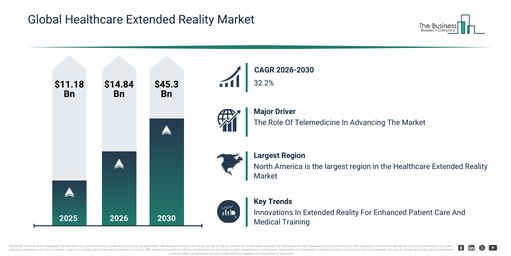
  • Healthcare Extended Reality Market Forecast Highlights Expansion From $14.84 Billion To $45.29 Billion Through 2030

    Healthcare Extended Reality Market Forecast Highlights Expansion From $14.84 Billion To $45.29 Billion Through 2030

    Through market attractiveness analysis, total addressable market evaluation, company benchmarking matrices, interactive Excel dashboards, expanded supply chain intelligence, emerging startup coverage, and detailed product insights, The Business Research Company’s 2026 market reports provide more actionable and strategically valuable research.

    Healthcare Extended Reality Market Forecast: What Market Value Is Expected By 2030?

    Expanding significantly, the healthcare extended reality market experienced robust expansion, projecting a substantial increase from $11.18 billion in 2025 to $14.84 billion in 2026, driven by a compound annual growth rate of 32.8%. This remarkable surge during the historical period was fueled by several key factors, including the increasing integration of simulation-based training in medical education, a rise in financial investments directed towards digital healthcare solutions, greater acceptance of minimally invasive surgical techniques, the widening reach of telemedicine, and the continuous availability of sophisticated visualization hardware.

    The extended reality sector within healthcare is poised for substantial expansion, projected to reach a valuation of $45.3 billion by 2030, exhibiting a compound annual growth rate of 32.2%. This anticipated surge is fueled by several key factors: the escalating fusion of extended reality technologies with artificial intelligence for diagnostic purposes, a heightened need for telehealth and engaging patient experiences delivered remotely, the broadening scope of personalized medicine, a greater emphasis on tailored patient involvement, and increased investment in pioneering digital health solutions. During this forecast period, prominent developments are expected to include a rise in the utilization of deeply engaging medical training simulations, augmented application of extended reality in planning and executing surgical procedures, wider implementation of virtual rehabilitation initiatives, the expanded use of extended reality tools for remote patient consultations, and a stronger concentration on patient-focused therapeutic immersion.

    Download A Free Sample Report For Comprehensive Market Insights:

    https://www.thebusinessresearchcompany.com/sample.aspx?id=21199&type=smp

    Healthcare Extended Reality Market Demand Drivers: What Is Fueling Industry Growth?

    The expanding utilization of telemedicine is a key catalyst anticipated to foster expansion within the healthcare extended reality (XR) sector. Telemedicine, which involves leveraging telecommunications technology for the remote delivery of medical care and services, empowers patients to engage with healthcare providers without the necessity of in-person clinic visits. This surge in telemedicine adoption is fueled by an escalating desire for accessible healthcare solutions and technological progress facilitating remote diagnostics and patient oversight. Healthcare XR significantly bolsters telemedicine by offering enhanced experiences such as immersive remote consultations, virtual patient assessments, and dynamic training modules, ultimately leading to heightened patient involvement, more precise diagnoses, and improved teamwork among medical practitioners. Illustrating this trend, UK health-tech news reported in June 2024 that in April 2024, video or online general practitioner appointments reached 1,301,924, a substantial increase from the 172,114 recorded in April 2023, underscoring how greater telemedicine uptake is propelling the healthcare XR market forward.

    Healthcare Extended Reality Market Segment Analysis And Revenue Opportunities

    The healthcare extended reality market covered in this report is segmented –

    1) By Component: Hardware, Software, Services

    2) By Technology: Augmented Reality, Virtual Reality, Mixed Reality

    3) By Application: Surgery, Therapy, Education And Training, Rehabilitation, Pain Management, Other Applications

    4) By End User: Hospitals, Clinics And Surgical Centers, Research Organizations, Diagnostics Laboratories, Other End Users

    Subsegments:

    1) By Hardware: Head-Mounted Displays (HMDs), Smart Glasses, Haptic Feedback Devices, Sensors and Cameras

    2) By Software: Virtual Reality (VR) Software, Augmented Reality (AR) Software, Mixed Reality (MR) Software, Simulation and Training Software

    3) By Services: Consulting Services, Integration And Deployment Services, Support And Maintenance Services, Training And Education Services

    Healthcare Extended Reality Market Innovation Trends: Which Developments Are Transforming The Industry?

    In the realm of healthcare extended reality, leading enterprises are concentrating their efforts on pioneering advancements, notably by merging virtual and augmented reality capabilities to elevate medical education, patient therapies, and the precision of surgical procedures. The fusion of these immersive technologies enriches user encounters by superimposing digital information onto physical environments, thereby cultivating deeply engaging and interactive settings. To illustrate, in April of 2024, SindyXR Inc., a company specializing in US-based telehealth platforms for group therapy, introduced its inaugural extended reality (XR) group health support system, a development designed to upgrade patient care via captivating educational modules that foster greater involvement and facilitate distant access to medical assistance, simultaneously contributing to mental health interventions, mitigating discomfort, and fostering synergy among medical practitioners, all leading to better overall health results.

    Healthcare Extended Reality Market Leading Players Shaping Industry Direction

    Major companies operating in the healthcare extended reality market are Microsoft Corporation, Meta Platforms Inc, NVIDIA Corporation, Medtronic plc, EON Reality Inc, Osso VR Inc, zSpace Inc, VirtaMed AG, Surgical Theater Inc, XRHealth, AppliedVR Inc, OramaVR Inc, Apprentice.io, GigXR Inc, PrecisionOS Technology Inc, SentiAR Inc, FundamentalVR, Medical Realities, ImmersiveTouch, Luxsonic Technologies, EchoPixel

    Access The Complete Healthcare Extended Reality Market Report:

    https://www.thebusinessresearchcompany.com/report/healthcare-extended-reality-global-market-report2024-

    Healthcare Extended Reality Market Largest Region By Revenue And Market Share

    North Americawas the largest region in the healthcare extended reality market in 2025. The regions covered in the healthcare extended reality market report are Asia-Pacific, South East Asia, Western Europe, Eastern Europe, North America, South America, Middle East, Africa.

    Get in touch with us:

    The Business Research Company: https://www.thebusinessresearchcompany.com/

    Americas: +1 310-496-7795

    Asia: +44 7882 955267 & +91 8897263534

    Europe: +44 7882 955267

    Email us at: marketing@tbrc.info

    Follow us on:

    LinkedIn: https://in.linkedin.com/company/the-business-research-company

    YouTube: https://www.youtube.com/channel/UC24_fI0rV8cR5DxlCpgmyFQ

    Global Market Model: https://www.thebusinessresearchcompany.com/global-market-model
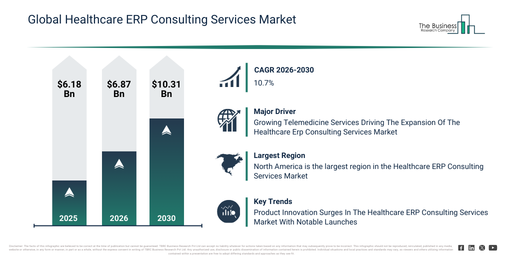
  • Healthcare ERP Consulting Services Market Expected To Reach $10.3 Billion By 2030 As Growth Accelerates At 10.7% CAGR

    Healthcare ERP Consulting Services Market Expected To Reach $10.3 Billion By 2030 As Growth Accelerates At 10.7% CAGR

    Delivering more actionable and strategically valuable research, The Business Research Company’s 2026 market reports feature market attractiveness analysis, total addressable market evaluation, company benchmarking matrices, interactive Excel dashboards, expanded supply chain intelligence, emerging startup coverage, and detailed product insights.

    Healthcare ERP Consulting Services Market Size Outlook: How Fast Will Revenue Grow Through 2030?

    The market for healthcare ERP consulting services has experienced substantial expansion. Projections indicate a rise from $6.18 billion in 2025 to $6.87 billion in 2026, reflecting a compound annual growth rate (CAGR) of 11.3%. Factors driving this historical growth include the increasing intricacy of healthcare management, the broadening of hospital infrastructures, a greater demand for financial accountability, the embrace of digitized hospital administration tools, and the escalating demands for regulatory compliance reporting.

    The healthcare ERP consulting services sector is poised for substantial expansion, projecting a market value of $10.31 billion by 2030, fueled by a compound annual growth rate of 10.7%. This upward trajectory is anticipated to be driven by several key factors, including heightened investments in cloud-native ERP solutions, a growing requirement for contemporary operational analytics, the proliferation of value-based healthcare arrangements, a heightened awareness of cybersecurity adherence, and the increasing integration of healthcare IT systems. Furthermore, the market will likely witness trends such as a greater embrace of cloud-based healthcare ERP, increased demand for ERP implementation and integration expertise, a stronger emphasis on managing hospitals through data insights, the expansion of services related to compliance and regulatory guidance, and a more significant focus on streamlining operational workflows.

    Download A Free Sample Report For Comprehensive Market Insights:

    https://www.thebusinessresearchcompany.com/sample.aspx?id=6931&type=smp

    Healthcare ERP Consulting Services Market Growth Drivers: What Factors Are Accelerating Expansion?

    The expanding adoption of telemedicine is poised to significantly propel the healthcare ERP consulting services market. Telemedicine, which involves the remote provision of medical advice, consultations, and treatments through digital communication channels like the internet and video conferencing, results in the creation of substantial patient data. Healthcare Enterprise Resource Planning (ERP) solutions are crucial for consolidating this information with existing medical documentation and for optimizing patient administration and financial operations. As an illustration, data from the Australian Bureau of Statistics indicated that in the fiscal year 2023–24, a notable 83.5% of men utilized telehealth services, marking an upward trend from the 78.6% observed in 2022–23. Consequently, the proliferation of telemedicine services directly fuels the expansion of the healthcare ERP consulting sector.

    Healthcare ERP Consulting Services Market Segmentation And Category Breakdown

    The healthcare erp consulting services market covered in this report is segmented –

    1) By Functionality: Implementation, Training And Education, Other Functionalities

    2) By Deployment: On-Premise ERP Consulting, Cloud-Based ERP Consulting, Hybrid ERP Consulting

    3) By End-User: Hospitals and Health Systems, Clinics and Ambulatory Care Centers, Diagnostic and Imaging Centers, Specialty Healthcare Providers, Other Healthcare Facilities

    Subsegments:

    1) By Implementation: System Integration, Configuration, Data Migration

    2) By Training and Education: User Training, Administrator Training, Ongoing Education Programs

    3) By Other Functionality: Process Optimization, Change Management, Compliance And Regulatory Support

    Healthcare ERP Consulting Services Market Trends: What Is Shaping Future Industry Growth?

    Key players in the healthcare ERP consulting services sector are actively developing cutting-edge offerings, incorporating features tailored for the medical field. These specialized functionalities empower healthcare organizations to streamline their processes and enhance patient outcomes by implementing customized enterprise resource planning systems. Oracle Corporation, a prominent US software firm, demonstrated this trend in September 2023 by introducing the Fusion Cloud Applications Suite, which now includes enhanced healthcare-specific features designed to boost operational effectiveness and elevate patient care standards. These advanced capabilities span areas such as financial consolidation and reporting, efficient procurement processes, intelligent replenishment planning, and robust recall management, and will be seamlessly integrated across Oracle’s Fusion Cloud Enterprise Resource Planning (ERP), Enterprise Performance Management (EPM), and Supply Chain & Manufacturing (SCM) solutions.

    Healthcare ERP Consulting Services Market Competitive Analysis Of Major Industry Participants

    Major companies operating in the healthcare erp consulting services market are Accenture plc, Deloitte Touche Tohmatsu, PricewaterhouseCoopers, Infosys Limited, Atos Information Technology GmbH, Avaap USA LLC, Wipro Limited, KPMG International Limited, Clarkston Consulting, JDC Systems Innovations, The RockWood Group INC., AIM Solutions, Alithya Group Inc., LeverX International LLC, Panorama Consulting Group, Traction Consulting Group, Cognizant Technology Solutions India Private Limited, HCL Technologies, IBM Corporation, Tata Consultancy Services Limited, Tech Mahindra Limited, Ernst & Young Global Limited

    Access The Complete Healthcare ERP Consulting Services Market Report:

    https://www.thebusinessresearchcompany.com/report/healthcare-erp-consulting-services-global-market-report

    Healthcare ERP Consulting Services Market Regional Analysis And Leading Geography

    North Americawas the largest region in the healthcare ERP consulting services market in 2025. The regions covered in the healthcare erp consulting services market report are Asia-Pacific, South East Asia, Western Europe, Eastern Europe, North America, South America, Middle East, Africa.

    Get in touch with us:

    The Business Research Company: https://www.thebusinessresearchcompany.com/

    Americas: +1 310-496-7795

    Asia: +44 7882 955267 & +91 8897263534

    Europe: +44 7882 955267

    Email us at: marketing@tbrc.info

    Follow us on:

    LinkedIn: https://in.linkedin.com/company/the-business-research-company

    YouTube: https://www.youtube.com/channel/UC24_fI0rV8cR5DxlCpgmyFQ

    Global Market Model: https://www.thebusinessresearchcompany.com/global-market-model
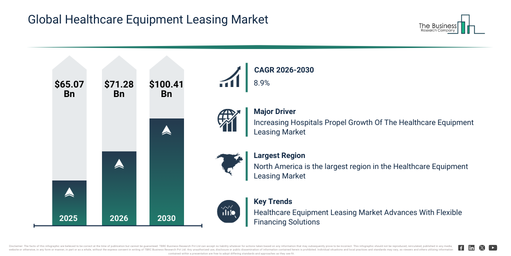
  • Healthcare Equipment Leasing Market Set To Grow From $71.27 Billion In 2026 To $100.4 Billion By 2030 At A CAGR Of 8.9%

    Healthcare Equipment Leasing Market Set To Grow From $71.27 Billion In 2026 To $100.4 Billion By 2030 At A CAGR Of 8.9%

    Enhanced with market attractiveness analysis, total addressable market evaluation, company benchmarking matrices, interactive Excel dashboards, expanded supply chain intelligence, emerging startup coverage, and detailed product insights, The Business Research Company’s 2026 market reports deliver more actionable and strategically valuable research.

    Healthcare Equipment Leasing Market Size, Value And Growth Trends Through 2030

    The rental market for medical apparatus has experienced robust expansion lately, projected to escalate from a valuation of $65.07 billion in 2025 to $71.28 billion in 2026, reflecting a compound annual growth rate of 9.5%. This upward trajectory in the recent past is fundamentally linked to the escalating expenses associated with acquiring medical devices, the proliferation of facilities dedicated to diagnosis and surgery, a heightened need for technological advancements, the burgeoning sector of outpatient care centers, and the prevailing financial limitations faced by healthcare providers.

    The market for leasing healthcare equipment is poised for considerable expansion in the upcoming years, projected to reach a value of $100.41 billion by 2030, consequently exhibiting a compound annual growth rate (CAGR) of 8.9%. This anticipated growth trajectory stems from several key drivers including a heightened embrace of subscription-based leasing arrangements, a burgeoning need for swift equipment modernization, the amplified availability of leasing options for homecare devices, a sharpened emphasis on cost-saving methodologies, and the increasing incorporation of digital platforms for lease administration. During this forecast period, prominent trends shaping the industry will involve a growing inclination towards leasing rather than outright purchasing of equipment, a greater demand for adaptable financial solutions, increased utilization of refurbished medical equipment for leasing purposes, the wider implementation of leasing agreements based on usage, and a more concentrated effort on managing the entire lifecycle of assets.

    Download A Free Sample Report For Comprehensive Market Insights:

    https://www.thebusinessresearchcompany.com/sample.aspx?id=16698&type=smp

    Healthcare Equipment Leasing Market Growth Factors Supporting Long-Term Expansion

    A growing number of healthcare facilities is anticipated to be a primary catalyst for the expansion of the healthcare equipment leasing sector. These institutions, which offer medical services and patient care, are experiencing increased demand fueled by evolving demographics, a surge in chronic illnesses, global population expansion, heightened public health consciousness, and broader access to medical insurance, collectively necessitating the acquisition of advanced medical technology. Consequently, this persistent need for cutting-edge equipment spurs the demand for leasing solutions within these facilities. For example, data from the American Hospital Association indicates that the United States saw a rise in its hospital count from 6,093 in 2022 to 6,120 in 2024, underscoring the upward trend in healthcare infrastructure and, by extension, the market for leased medical apparatus.

    Healthcare Equipment Leasing Market Segment Outlook: Which Categories Are Expanding The Fastest?

    The healthcare equipment leasing market covered in this report is segmented –

    1) By Device Type: Personal And Homecare Leasing Equipment, Digital And Electronic Equipment, Surgical And Therapy Leasing Equipment, Durable Medical Equipment (DME), Storage And Transport Leasing Equipment, Other Device Types

    2) By Device Finance Type: New Medical Equipment, Rental Equipment, Refurbished Equipment, Other Device Finance Types

    3) By End-User: Ambulatory Surgical Services, Hospitals, Homecare, Laboratory And Diagnostic Centers, Other End Users

    Subsegments:

    1) By Personal And Homecare Leasing Equipment: Home Oxygen Equipment, CPAP Machines, Mobility Aids (Wheelchairs, Walkers)

    2) By Digital And Electronic Equipment: Diagnostic Imaging Equipment (X-ray, MRI, CT scanners), Patient Monitoring Systems, Diagnostic And Lab Testing Equipment

    3) By Surgical and Therapy Leasing Equipment: Anesthesia Machines, Physiotherapy Equipment, Laser Therapy Equipment

    4) By Durable Medical Equipment (DME): Hospital Beds, Respiratory Equipment, Patient Lifts and Hoists

    5) By Storage And Transport Leasing Equipment: Refrigerators/Freezers for Medical Use, Patient Transport Stretchers

    6) By Other Device Types: Laboratory Equipment, Dialysis Machines, Defibrillators, Infusion Pumps

    Healthcare Equipment Leasing Market Industry Trends Shaping Future Revenue Growth

    Enterprises dominant in the healthcare equipment leasing sector are introducing adaptable financial arrangements to assist medical establishments in obtaining sophisticated machinery. These adaptable financing solutions encompass diverse financial structures and schemes designed for versatility and adjustability, catering to the specific requirements of those procuring equipment. As an illustration, in the month of June in the year 2024, Capital MBS, a U.S. entity functioning as a platform for funding opportunities, initiated such adaptable financing choices specifically for the medical and dental fields. This initiative involved collaboration with reputable financial institutions, thereby empowering healthcare providers to procure state-of-the-art equipment without necessitating substantial initial outlays or encountering protracted timelines. The available financing covers a spectrum of diagnostic apparatuses, including but not limited to MRI machines, CT scanners, X-ray units, surgical implements, dental apparatus, patient support devices, and laboratory instruments. An streamlined online application procedure ensures timely access to these funding avenues, thereby assisting medical practitioners in securing the necessary capital for indispensable healthcare technology.

    Healthcare Equipment Leasing Market Key Companies And Competitive Benchmarking

    Major companies operating in the healthcare equipment leasing market are McKesson Corporation, Stryker Corporation, Far East Horizon Limited, Hill-Rom Holdings Inc., Getinge AB, Genertec Universal Medical Group, Encore Medical Capital, Agiliti Inc., Meridian Group International Inc., Crossroads Equipment Lease and Finance, AvTech Capital LLC, United Leasing & Finance, Med One Group, Providence Capital Funding Inc., Lease Corporation of America, Dext Capital LLC, Crest Capital, Madison Capital LLC, National Technology Leasing Corp, Insight Financial Services, Liberty Capital Group

    Access The Complete Healthcare Equipment Leasing Market Report:

    https://www.thebusinessresearchcompany.com/report/healthcare-equipment-leasing-global-market-report

    Healthcare Equipment Leasing Market Geographic Analysis: Where Is Demand Growing The Fastest?

    North Americawas the largest region in the healthcare equipment leasing market in 2025. Asia-Pacificis expected to be the fastest-growing region in the forecast period. The regions covered in the healthcare equipment leasing market report are Asia-Pacific, South East Asia, Western Europe, Eastern Europe, North America, South America, Middle East, Africa.

    Get in touch with us:

    The Business Research Company: https://www.thebusinessresearchcompany.com/

    Americas: +1 310-496-7795

    Asia: +44 7882 955267 & +91 8897263534

    Europe: +44 7882 955267

    Email us at: marketing@tbrc.info

    Follow us on:

    LinkedIn: https://in.linkedin.com/company/the-business-research-company

    YouTube: https://www.youtube.com/channel/UC24_fI0rV8cR5DxlCpgmyFQ

    Global Market Model: https://www.thebusinessresearchcompany.com/global-market-model
  • Healthcare Environmental Services Market Opportunities Are Emerging Beyond Traditional Growth Areas

    Healthcare Environmental Services Market Opportunities Are Emerging Beyond Traditional Growth Areas

    Through market attractiveness analysis, total addressable market evaluation, company benchmarking matrices, interactive Excel dashboards, expanded supply chain intelligence, emerging startup coverage, and detailed product insights, The Business Research Company’s 2026 market reports provide more actionable and strategically valuable research.

    Healthcare Environmental Services Market CAGR Analysis And Future Market Development

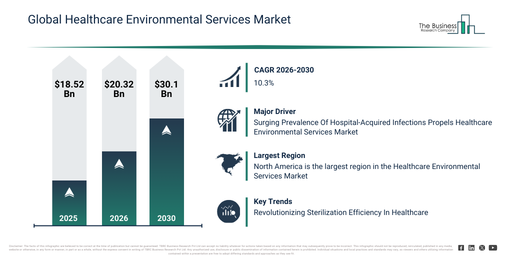
    The market for environmental services within the healthcare sector has experienced robust expansion, projecting a rise from $18.52 billion in 2025 to $20.32 billion in 2026, reflecting a compound annual growth rate of 9.8%. Factors contributing to this growth during the past period include heightened consciousness regarding hospital-acquired infections, the augmentation of healthcare facilities, escalating standards for regulatory hygiene, an increase in the utilization of outsourced cleaning solutions, and the implementation of consistent sanitation protocols.

    The healthcare environmental services sector is poised for considerable expansion over the coming years, projecting an increase to $30.1 billion by 2030, driven by a compound annual growth rate of 10.3%. This upswing is fueled by several key factors: substantial investments flowing into smart cleaning technologies, a heightened demand for eco-friendly sanitation solutions within healthcare settings, the broader implementation of automated service functions, an intensified focus on continuously monitoring cleanliness levels, and stricter regulatory oversight concerning infection control. During this projected period, significant market developments are anticipated, including a greater acceptance of cutting-edge disinfection methods, more widespread utilization of UV-C and electrostatic cleaning apparatus, a stronger commitment to infection prevention strategies, the proliferation of automated cleaning machinery, and an elevated importance placed on adhering to environmental hygiene standards.

    Download A Free Sample Report For Comprehensive Market Insights:

    https://www.thebusinessresearchcompany.com/sample.aspx?id=12190&type=smp

    Healthcare Environmental Services Market Demand Drivers Creating New Revenue Opportunities

    The escalating incidence of infections contracted within healthcare facilities is acting as a primary catalyst for the expansion of the market for healthcare environmental services. Hospital-acquired infections, also referred to as healthcare-associated infections (HAIs), represent illnesses that individuals contract during their medical treatment for unrelated ailments in environments like hospitals or other medical centers. The implementation of healthcare environmental services plays a crucial role in mitigating the risk of these HAIs by guaranteeing that surfaces are maintained in a sterile and pathogen-free condition. A tangible illustration of this trend can be observed in the figures released by the UK Health Security Agency in September 2024, which indicated a rise in hospital-onset healthcare-associated (HOHA) E. coli infections from 6,525 cases in fiscal year 2022–2023 to 7,881 cases. Consequently, the heightened occurrence of hospital-acquired infections is fueling the progression of the healthcare environmental services market.

    Healthcare Environmental Services Market Segment Landscape: Which Areas Lead Market Development?

    The healthcare environmental services market covered in this report is segmented –

    1) By Type: Janitorial Cleaning Services, Enhanced Cleaning Technology

    2) By Facility Type: Acute Care, Post-Acute-Care, Non-Acute Care

    3) By End User: Medical Device Companies, Hospitals And Clinics, Pharmaceutical And Biotechnology Companies, Other End Users

    Subsegments:

    1) By Janitorial Cleaning Services: Routine Cleaning, Disinfection Services, Waste Management And Disposal

    2) By Enhanced Cleaning Technology: Electrostatic Disinfection, UV-C Cleaning Technology, Advanced Cleaning Equipment And Tools

    Healthcare Environmental Services Market Trends Driving Strategic Industry Expansion

    In the healthcare environmental services sector, key players are focusing on profitability through the development of sterilization wrap, which is essential for safeguarding medical tools and equipment throughout the sterilization cycle. Demonstrating this trend, Ahlstrom-Munksjö Oyj, a Finnish firm specializing in fiber-based materials and sustainable innovations, introduced Reliance Fusion in May 2023. This advanced sterilization wrap is engineered to boost Central Sterilization efficiency, leading to increased output, conserved energy, and reduced manual effort, all while minimizing the occurrence of wet packs due to its novel fiber-based composition. The wrap’s design integrates a cellulose inner layer with a robust SMS nonwoven outer layer, thereby optimizing the sterilization of trays within hospital settings. Available in both Fusion Light and Fusion Heavy variants, the product streamlines the sterilization process, cuts down on drying periods, and significantly reduces instances of wet packs, thereby providing adaptable solutions tailored to diverse operational requirements.

    Healthcare Environmental Services Market Industry Leaders And Market Competition

    Major companies operating in the healthcare environmental services market are Veolia North America LLC, Sodexo Group, Aramark Corporation, ABM Industries Inc., Steris plc, Stericycle Inc., Hospital Housekeeping Systems LLC, Healthcare Services Group Inc., Crothall Healthcare Inc., Xanitos Inc., Daniels Health, Triumvirate Environmental Inc, Clean Earth LLC, Heritage Environmental Services LLC, Waste Management Inc., Republic Services Inc., Clean Harbors Inc., US Ecology Inc., Servicon Systems Inc., Jani-King International Inc., BioMedical Waste Solutions LLC, MedPro Disposal, EnviroMed Services Inc., Healthcare Medical Waste Services LLC, EcoMed Services LLC, BWS Inc.

    Access The Complete Healthcare Environmental Services Market Report:

    https://www.thebusinessresearchcompany.com/report/healthcare-environmental-services-global-market-report

    Healthcare Environmental Services Market Global Footprint: Which Region Holds Market Leadership?

    North America was the largest region in the healthcare environmental services market in 2025. The regions covered in the healthcare environmental services market report are Asia-Pacific, South East Asia, Western Europe, Eastern Europe, North America, South America, Middle East, Africa.

    Get in touch with us:

    The Business Research Company: https://www.thebusinessresearchcompany.com/

    Americas: +1 310-496-7795

    Asia: +44 7882 955267 & +91 8897263534

    Europe: +44 7882 955267

    Email us at: marketing@tbrc.info

    Follow us on:

    LinkedIn: https://in.linkedin.com/company/the-business-research-company

    YouTube: https://www.youtube.com/channel/UC24_fI0rV8cR5DxlCpgmyFQ

    Global Market Model: https://www.thebusinessresearchcompany.com/global-market-model
  • Healthcare Electronic Data Interchange Market Expansion Is Opening New Pathways For Strategic Investment

    Healthcare Electronic Data Interchange Market Expansion Is Opening New Pathways For Strategic Investment

    Delivering more actionable and strategically valuable research, The Business Research Company’s 2026 market reports feature market attractiveness analysis, total addressable market evaluation, company benchmarking matrices, interactive Excel dashboards, expanded supply chain intelligence, emerging startup coverage, and detailed product insights.

    Healthcare Electronic Data Interchange Market Expansion From $6.71 Billion In 2026 To $10.57 Billion In 2030

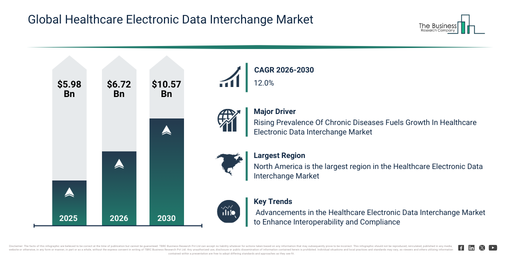
    The market for healthcare electronic data interchange has experienced substantial expansion lately, projecting a rise from $5.98 billion in 2025 to $6.72 billion in 2026, reflecting a compound annual growth rate (CAGR) of 12.3%. This upward trajectory during the historical period is fueled by several key factors, including the escalating digitization of medical records, broader access to health insurance coverage, the growing imperative for enhanced administrative efficiency, the widespread adoption of standardized methods for data exchange, and the increased use of electronic systems for managing claims.

    The healthcare electronic data interchange market is projected for substantial expansion, anticipated to reach $10.57 billion by 2030, driven by a compound annual growth rate of 12.0%. This surge in the projected timeframe is propelled by several key factors: a greater need for seamless, real-time data exchange, augmented investments directed towards updating healthcare information technology infrastructure, the broadening implementation of value-based care frameworks, an elevated emphasis on safeguarding healthcare data through robust cybersecurity measures, and a growing tendency towards utilizing mobile EDI technologies. In this same forecast period, significant developments are anticipated, including a more widespread adoption of cloud-based EDI services, increased integration of standardized, interoperable healthcare data formats, a rise in the utilization of automated processes for handling claims, the proliferation of secure platforms for data interchange, and a strengthened focus on automating adherence to regulatory requirements.

    Download A Free Sample Report For Comprehensive Market Insights:

    https://www.thebusinessresearchcompany.com/sample.aspx?id=6940&type=smp

    Healthcare Electronic Data Interchange Market Expansion Supported By Key Demand Factors

    The escalating incidence of long-term health conditions is anticipated to be a primary driver for the expansion of the healthcare electronic data interchange (EDI) sector. Such chronic ailments are persistent conditions that defy prevention through vaccination, cure through medication, or spontaneous resolution, lasting for a considerable duration, typically exceeding three months. Healthcare EDI significantly contributes to the holistic management of these chronic conditions by accelerating information exchange, streamlining administrative workflows, and fostering robust communication channels. This technological solution aids both medical providers and individuals in coordinating care plans, overseeing health statuses, and ultimately elevating the overall quality of healthcare for those managing chronic diseases. Pertinently, data from the Centers for Disease Control and Prevention, a US federal agency, indicated that in 2023, approximately 76.4% of American adults experienced at least one of twelve specified chronic conditions, with 51.4% managing multiple such conditions; consequently, this widespread prevalence of chronic diseases is fueling the growth of the healthcare EDI market.

    Healthcare Electronic Data Interchange Market Segments: Where Are The Largest Growth Opportunities?

    The healthcare electronic data interchange market covered in this report is segmented –

    1) By Component: Services, Solution

    2) By Delivery Mode: Web and Cloud-based EDI, EDI Value Added Network (VAN), Direct (Point-to-Point) EDI, Mobile EDI

    3) By End-Use: Healthcare Payers, Healthcare Providers, Pharmaceutical and Medical Device Industries, Other End-Uses

    Subsegments:

    1) By Services: Consulting Services, Implementation Services, Maintenance And Support Services

    2) By Solution: EDI Software, EDI Gateway Solutions, EDI Translation Tools

    Healthcare Electronic Data Interchange Market Growth Trends Influencing Competitive Dynamics

    Healthcare Electronic Data Interchange (EDI) market leaders are prioritizing innovation, specifically embracing cloud-native interoperability solutions that combine EDI and FHIR capabilities, in response to the escalating need for effortless data sharing, adherence to regulations like CMS mandates, and robust, adaptable connections between insurers and healthcare providers. These advanced cloud-native platforms consolidate established EDI formats such as HIPAA X12, contemporary FHIR APIs, and other communication protocols like HL7 within a unified, flexible, and secure framework, unlike older, on-premise EDI systems that typically lack flexibility, operate in isolation, and present scalability challenges. To illustrate, in February 2025, Edifecs, a prominent player in the US health IT sector, introduced its Healthcare Interoperability Cloud, a cutting-edge platform specifically designed for payers. This offering integrates Edifecs’ comprehensive EDI Gateway, FHIR Gateway, and smart-trading tools, enabling support for diverse data formats including EDI, FHIR, HL7v2, and proprietary standards, while simultaneously automating processes, overseeing trading partner interactions, and coordinating shared workflows. Engineered to comply with CMS-9115-F and CMS-0057-F requirements, the platform features a low-code integration engine and utilizes artificial intelligence, including machine learning and natural language processing, to extract valuable information, alleviate administrative tasks, and secure future interoperability capabilities, ultimately assisting payers in optimizing their operations, minimizing data-related obstacles, and advancing their interoperability strategies in a more deliberate manner.

    Healthcare Electronic Data Interchange Market Major Participants And Competitive Dynamics

    Major companies operating in the healthcare electronic data interchange market are McKesson Corporation, Optum Inc., Allscripts Healthcare Solutions Inc., Athenahealth Inc., NextGen Healthcare Inc., Experian plc, Cognizant Technology Solutions, Cerner Corporation, The SSI Group LLC, Waystar Health, Comarch SA., Axway Software, PLEXIS Healthcare Systems Inc., TrueCommerce B2BGateway, DiCentral Corporation, 123 EDI, Quadax Inc., Epic Systems Corporation, eClinicalWorks, Practice Fusion, MEDITECH Inc., Care360 Pty Ltd., Vitera Ltd., Quality Systems Inc., IBM Corporation, Oracle Corporation, Infor Global Solutions

    Access The Complete Healthcare Electronic Data Interchange Market Report:

    https://www.thebusinessresearchcompany.com/report/healthcare-electronic-data-interchange-global-market-report

    Healthcare Electronic Data Interchange Market Regional Distribution: Which Areas Drive Market Expansion?

    North Americawas the largest region in the healthcare electronic data interchange market in 2025. Asia-Pacificis expected to be the fastest-growing region in the forecast period. The regions covered in the healthcare electronic data interchange market report are Asia-Pacific, South East Asia, Western Europe, Eastern Europe, North America, South America, Middle East, Africa.

    Get in touch with us:

    The Business Research Company: https://www.thebusinessresearchcompany.com/

    Americas: +1 310-496-7795

    Asia: +44 7882 955267 & +91 8897263534

    Europe: +44 7882 955267

    Email us at: marketing@tbrc.info

    Follow us on:

    LinkedIn: https://in.linkedin.com/company/the-business-research-company

    YouTube: https://www.youtube.com/channel/UC24_fI0rV8cR5DxlCpgmyFQ

    Global Market Model: https://www.thebusinessresearchcompany.com/global-market-model
  • Healthcare Education Market Trends Are Creating New Opportunities For Industry Leaders

    Healthcare Education Market Trends Are Creating New Opportunities For Industry Leaders

    Enhanced with market attractiveness analysis, total addressable market evaluation, company benchmarking matrices, interactive Excel dashboards, expanded supply chain intelligence, emerging startup coverage, and detailed product insights, The Business Research Company’s 2026 market reports deliver more actionable and strategically valuable research.

    Healthcare Education Market Forecast Highlighting Growth From $143.22 Billion To $217.41 Billion

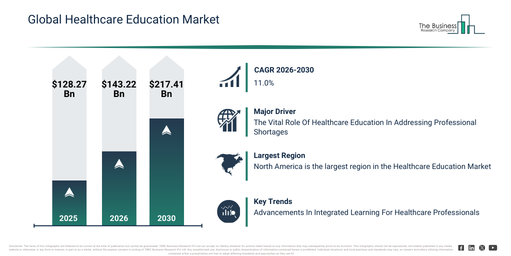
    The healthcare education sector has experienced considerable expansion lately, projecting a leap from $128.27 billion in 2025 to $143.22 billion in 2026, driven by an 11.7% compound annual growth rate. This recent surge in growth can be linked to several key factors including a heightened focus on preventative health education, the proliferation of medical and nursing institutions, an escalating rate of chronic illnesses, the surge in professional development programs, and the increasing adoption of online learning methodologies.

    The healthcare education sector is poised for substantial expansion, projected to reach a valuation of $217.41 billion by 2030, demonstrating a robust compound annual growth rate of 11.0%. This anticipated surge is fueled by several key factors, including the growing integration of immersive learning technologies, an increasing need for healthcare professionals to receive training remotely, the widespread implementation of digital health literacy programs, augmented investments in medical simulation facilities, and a heightened emphasis on customized healthcare education pathways. During this forecast period, prominent trends expected to shape the market include a greater reliance on e-learning platforms, a surge in the utilization of medical simulation and virtual reality training methods, escalating demand for educational programs centered around patient needs, an amplification of continuing medical education opportunities, and a more pronounced focus on learning that is accessible remotely and via mobile devices.

    Download A Free Sample Report For Comprehensive Market Insights:

    https://www.thebusinessresearchcompany.com/sample.aspx?id=7327&type=smp

    Healthcare Education Market Growth Drivers And Industry Catalysts

    The anticipated scarcity of medical practitioners is poised to be a primary catalyst for the expansion of the healthcare education sector. These professionals, encompassing those skilled in medicine, nursing, and related health sciences, are fundamental to delivering medical services and assistance. The pressing need for more healthcare workers stimulates the advancement of educational offerings and establishments, manifesting in the establishment of new training centers, the implementation of digital learning solutions, and the tailoring of educational curricula to meet the evolving demands of the industry. Specifically, a report from the UAE-based healthcare staffing and recruitment firm, Dynamic Health Staff, indicated in September 2024 that the nursing field confronts a substantial deficit, projecting a requirement for an additional 177,400 Registered Nurses between 2023 and 2032, largely attributed to escalating healthcare needs and an aging populace. Reflecting this urgency, approximately 47.8% of hospitals, as of 2024, are experiencing nurse vacancy rates surpassing 10%, underscoring the critical demand for qualified nursing personnel. Consequently, this deficiency in healthcare professionals serves as a significant driver for the growth trajectory of the healthcare education market.

    Healthcare Education Market Segment Analysis: What Are The Major Market Categories?

    The healthcare education market covered in this report is segmented –

    1) By Provider: Universities And Academic Centers, Continuing Medical Education Providers, OEMs Or Pharmaceutical Companies, Learning Management Systems Providers, Educational Platforms, Medical Simulation

    2) By Delivery Mode: Classroom Based Courses, E-Learning Solutions

    3) By Application: Academic Education, Cardiology, Neurology, Radiology, Internal Medicine, Pediatrics, Other Applications

    4) By End-User: Students, Physicians, Non-Physicians.

    Subsegments:

    1) By Universities And Academic Centers: Medical Schools, Nursing Schools, Allied Health Programs

    2) By Continuing Medical Education (CME) Providers: Accredited CME Organizations, Online CME Platforms

    3) By OEMs Or Pharmaceutical Companies: In-House Training Programs, Sponsored Educational Initiatives

    4) By Learning Management Systems (LMS) Providers: Online Course Management Systems, Virtual Learning Environments

    5) By Educational Platforms: E-Learning Platforms, Mobile Learning Applications

    6) By Medical Simulation: Simulation Training Centers, Virtual Reality (VR) And Augmented Reality (AR) Simulations, Hands-On Simulation Equipment And Tools

    #Healthcare Education Market Trends Influencing Long-Term Demand

    Healthcare education market leaders are actively adopting digital avenues, incorporating both in-clinic patient encounters and technological solutions to elevate medical training and education. Their objective is to equip healthcare practitioners with contemporary resources that foster skill enhancement and ultimately lead to better patient care results. The fusion of in-clinic interactions involves merging direct patient consultations with digital materials and instruments to enrich the healthcare journey and broaden access to information during medical appointments. Illustrating this trend, in August 2023, Cipla, a pharmaceutical firm based in India, unveiled CiplaMed 2.0, a sophisticated knowledge platform designed for healthcare professionals, which synergizes in-clinic interactions with digital resources. This platform offers access to up-to-date medical information spanning 19 specialized fields, featuring scientific publications and online seminars, while utilizing sophisticated analytics to enhance knowledge dissemination within the pharmaceutical sector.

    Healthcare Education Market Leading Companies Driving Competitive Growth

    Major companies operating in the healthcare education market are Siemens Healthineers AG, FUJIFILM Holdings Corporation, Koninklijke Philips N.V., Stryker Corporation, GE Healthcare, Olympus Corporation, Medtronic plc, Zimmer Biomet Holdings Inc., Canon Medical Systems Corporation, Elsevier B.V., Johns Hopkins Medicine, Apollo Hospitals Enterprise Limited, McGraw-Hill Education, Harvard Medical School, Stanford University, Coursera Inc., HealthStream Inc., Symplr Inc., PeopleFluent, Articulate Global Inc., HealthcareSource, Trivantis Corporation, Gundersen Health System, Richmond Academy of Medicine Inc., Wolters Kluwer Health, EBSCO Information Services Inc.

    Access The Complete Healthcare Education Market Report:

    https://www.thebusinessresearchcompany.com/report/healthcare-education-global-market-report

    Healthcare Education Market Leading Geography: Which Region Generates The Most Revenue?

    North Americawas the largest region in the healthcare education market in 2025. The regions covered in the healthcare education market report are Asia-Pacific, South East Asia, Western Europe, Eastern Europe, North America, South America, Middle East, Africa.

    Get in touch with us:

    The Business Research Company: https://www.thebusinessresearchcompany.com/

    Americas: +1 310-496-7795

    Asia: +44 7882 955267 & +91 8897263534

    Europe: +44 7882 955267

    Email us at: marketing@tbrc.info

    Follow us on:

    LinkedIn: https://in.linkedin.com/company/the-business-research-company

    YouTube: https://www.youtube.com/channel/UC24_fI0rV8cR5DxlCpgmyFQ

    Global Market Model: https://www.thebusinessresearchcompany.com/global-market-model
  • Healthcare EDI Market Growth Is Reshaping Competitive Advantage Across The Industry

    Healthcare EDI Market Growth Is Reshaping Competitive Advantage Across The Industry

    Through market attractiveness analysis, total addressable market evaluation, company benchmarking matrices, interactive Excel dashboards, expanded supply chain intelligence, emerging startup coverage, and detailed product insights, The Business Research Company’s 2026 market reports provide more actionable and strategically valuable research.

    Healthcare EDI Market Revenue Growth Supported By A CAGR Of 9.92% Through 2030

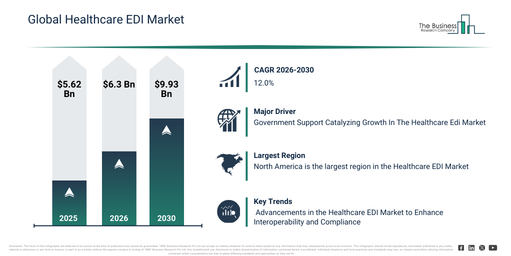
    The market for healthcare electronic data interchange (EDI) has experienced substantial expansion. Projections indicate a rise from its 2025 valuation of $5.62 billion to $6.3 billion by 2026, reflecting a compound annual growth rate of 12.2%. Key factors driving this growth during the earlier period included the proliferation of digitized healthcare billing mechanisms, a surge in insurance claim submissions, the widespread acceptance of uniform formats for healthcare transactions, the development of interconnected payer and provider systems, and an escalating demand for enhanced administrative effectiveness.

    A significant expansion is projected for the healthcare EDI market in the coming years, with its value anticipated to reach $9.93 billion by 2030, driven by a compound annual growth rate of 12.0%. This forecasted expansion is underpinned by several key factors, including heightened investments directed towards automated revenue cycle management, a growing need for immediate eligibility verification, the wider implementation of cloud-native EDI solutions, an intensified emphasis on interoperability adherence, and the increasing utilization of AI-powered tools for claims processing. Furthermore, prevailing trends shaping this period involve a greater embrace of cloud-based EDI platforms, the ongoing automation of claims and billing procedures, augmented integration of EDI with hospital information systems, an advancement in real-time transaction handling, and a reinforced commitment to regulatory compliance and data precision.

    Download A Free Sample Report For Comprehensive Market Insights:

    https://www.thebusinessresearchcompany.com/sample.aspx?id=6129&type=smp

    Healthcare EDI Market Opportunity Drivers: What Is Creating New Revenue Potential?

    The expanding governmental backing for the healthcare sector is anticipated to be a key catalyst, driving the advancement of the healthcare EDI market. This electronic data interchange is instrumental in facilitating the exchange of information across various departments and divisions within super-specialty hospitals. Healthcare EDI software streamlines the transmission of critical details such as benefit coordination, claim status updates, insurance particulars, payment information, and eligibility forms among healthcare entities. Enhanced government backing for healthcare not only aids the industry in developing novel equipment and delivering superior patient services but also fosters greater technological integration within public hospitals. Illustratively, data from the Office for National Statistics in the UK revealed that in May 2024, total healthcare spending experienced a substantial 5.6% nominal increase between 2022 and 2023, a considerable uptick from the 0.9% growth noted in the preceding year. Consequently, this heightened governmental commitment to healthcare directly fuels the demand for healthcare EDI solutions.

    Healthcare EDI Market Segment Breakdown: Which Categories Generate The Most Revenue?

    The healthcare edi market covered in this report is segmented –

    1) By Component: Software, Services

    2) By Transaction: Claim Management, Healthcare Supply Chain, Other Transactions

    3) By Mode of Delivery: VAN, Web And Cloud-based, Point-to-point

    4) By End User: Healthcare Provider, Payer, Pharmacies, Other End Users

    Subsegments:

    1) By Software: EDI Solutions, Integration Software, EDI Mapping And Translation Software

    2) By Services: EDI Consulting Services, Managed EDI Services, Technical Support And Maintenance Services

    Healthcare EDI Market Innovation Trends Driving Future Development

    Key players within the healthcare EDI sector are prioritizing innovation, particularly through the development of cloud-native interoperability solutions that consolidate EDI, FHIR, and HL7 standards, thereby addressing the escalating need for regulatory adherence, fluid data transmission, and adaptable networking capabilities for both payers and providers. These cloud-native interoperability platforms integrate established EDI formats such as HIPAA X12, contemporary healthcare APIs like FHIR, and clinical messaging standards including HL7, all within a unified, scalable, and secure framework, unlike older, on-premise EDI systems that tend to be isolated, inflexible, and expensive to expand. As an illustration, Edifecs, a prominent health information technology firm based in the United States, introduced its Healthcare Interoperability Cloud in February 2025, a cutting-edge platform developed for payers. This platform facilitates the smooth exchange of both administrative and clinical information across various formats like EDI, FHIR, HL7v2, and proprietary systems; it is engineered to meet regulatory mandates such as CMS-9115-F and CMS-0057-F, provides sophisticated workflow orchestration, allows for shared automation across different systems, and integrates artificial intelligence, encompassing machine learning and natural language processing, to yield richer insights and more rapid, perpetually up-to-date integration. Ultimately, this offering serves to minimize data transfer impediments, expedite collaborative efforts between payers and providers, and establish a forward-looking interoperability architecture.

    Healthcare EDI Market Key Players And Strategic Industry Positioning

    Major companies operating in the healthcare edi market are McKesson Corporation, Optum Inc, Allscripts, Cognizant Technology Solutions India Pvt Ltd, Cerner Corporation, The SSI Group, Quadax Inc, AthenaHealth, Change Healthcare Inc, Conduent Inc, Epic Systems Corporation, NextGen Healthcare, Edifecs Inc, Waystar Inc, Availity LLC, eClinicalWorks, Ability Network, PracticeSuite Inc, Jopari Solutions Inc, Alpha II LLC, TransUnion Healthcare, Healthpac Computer Systems

    Access The Complete Healthcare EDI Market Report:

    https://www.thebusinessresearchcompany.com/report/healthcare-edi-global-market-report

    Healthcare EDI Market Regional Outlook: Where Are The Largest Opportunities Located?

    North Americawas the largest region in the healthcare EDI market in 2025. Asia-Pacificis expected to be the fastest-growing region in the forecast period. The regions covered in the healthcare edi market report are Asia-Pacific, South East Asia, Western Europe, Eastern Europe, North America, South America, Middle East, Africa.

    Get in touch with us:

    The Business Research Company: https://www.thebusinessresearchcompany.com/

    Americas: +1 310-496-7795

    Asia: +44 7882 955267 & +91 8897263534

    Europe: +44 7882 955267

    Email us at: marketing@tbrc.info

    Follow us on:

    LinkedIn: https://in.linkedin.com/company/the-business-research-company

    YouTube: https://www.youtube.com/channel/UC24_fI0rV8cR5DxlCpgmyFQ

    Global Market Model: https://www.thebusinessresearchcompany.com/global-market-model
  • Healthcare Distribution Market Forecast Signals New Revenue Opportunities Through 2030

    Healthcare Distribution Market Forecast Signals New Revenue Opportunities Through 2030

    Delivering more actionable and strategically valuable research, The Business Research Company’s 2026 market reports feature market attractiveness analysis, total addressable market evaluation, company benchmarking matrices, interactive Excel dashboards, expanded supply chain intelligence, emerging startup coverage, and detailed product insights.

    Healthcare Distribution Market Value Expansion And Long-Term Growth Outlook

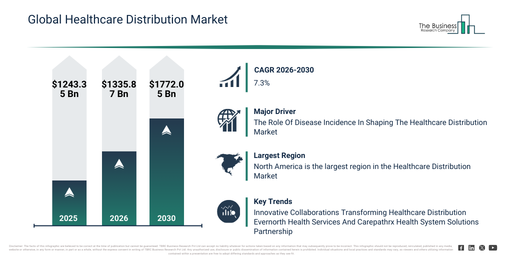
    The healthcare distribution sector has experienced substantial expansion recently and is projected to continue its upward trajectory, increasing from $1243.35 billion in 2025 to $1335.87 billion in 2026, reflecting a compound annual growth rate of 7.4%. During the historical period, this growth was fueled by several key factors, including the scaling up of pharmaceutical production, the proliferation of hospital networks, a heightened need for prompt delivery of medical supplies, the embrace of consolidated distribution strategies, and an overall rise in healthcare service utilization.

    The healthcare distribution sector is poised for substantial expansion, projecting a market value of $1772.05 billion by 2030, fueled by a compound annual growth rate of 7.3%. This anticipated surge is primarily driven by significant increases in funding for intelligent logistics systems, the broadening scope of specialty drug and biologic distribution networks, amplified requirements for final-stage healthcare delivery, a heightened emphasis on supply chain robustness, and the increasing integration of digital methods for tracking products. Key developments anticipated during this period include a greater embrace of automated healthcare supply chains, more comprehensive incorporation of digital tools for managing inventory, escalating calls for the ability to track orders in real-time, an expansion of cold chain logistics for temperature-sensitive products, and a more concentrated effort on optimizing distribution processes and adhering to regulations.

    Download A Free Sample Report For Comprehensive Market Insights:

    https://www.thebusinessresearchcompany.com/sample.aspx?id=7326&type=smp

    Healthcare Distribution Market Growth Momentum: Which Factors Are Influencing Demand?

    The escalating occurrence of illnesses is anticipated to be a primary catalyst in expanding the healthcare distribution sector in the foreseeable future. An illness, understood as a disorder or sickness impacting living organisms from humans to plants and animals, can stem from innate genetic anomalies, developmental issues, external infections, or various other factors. These conditions manifest through specific signs or symptoms that lead to distress, impaired function, suffering, social complications, or even mortality for the affected individual and those in close proximity. Consequently, the prevalence of diseases significantly influences healthcare distribution by demanding swift and effective delivery channels for medical treatments, immunizations, and healthcare interventions. This ensures efficient management of health crises, mitigation of their adverse effects, and ultimately, the improvement of overall public well-being. To effectively address the challenges posed by emerging health concerns and disease outbreaks, healthcare distribution systems must exhibit agility, promptness, and seamless coordination. For illustration, data from the Centers for Disease Control and Prevention, a governmental body in the United States, indicated a notable rise in reported tuberculosis cases, climbing from 8,320 in 2022 to 9,615 in 2023, marking a 16% increase with an additional 1,295 cases. Thus, the growing number of disease instances underscores the expanding healthcare distribution market.

    Healthcare Distribution Market Segmentation: How Is The Market Structured Across Key Categories?

    The healthcare distribution market covered in this report is segmented –

    1) By Type: Pharmaceutical Product Distribution Services, Biopharmaceutical Product Distribution Services, Medical Device Distribution Services

    2) By Distribution Model: Direct-to-Healthcare Provider Distribution, Wholesale Distribution, Third-Party Logistics (3PL) Distribution, Online and E-Distribution Channels

    3) By End User: Retail Pharmacies, Hospital Pharmacies, Other End-Users

    Subsegments:

    1) By Pharmaceutical Product Distribution Services: Prescription Drug Distribution, Over-The-Counter (OTC) Drug Distribution

    2) By Biopharmaceutical Product Distribution Services: Cold Chain Distribution, Specialty Drug Distribution

    3) By Medical Device Distribution Services: Surgical Instrument Distribution, Diagnostic Equipment Distribution, Consumables And Disposable Device Distribution

    Healthcare Distribution Market Trends Reshaping Industry Growth

    In the healthcare distribution arena, prominent entities like Evernorth Health Services are actively pursuing strategic alliances, exemplified by their collaboration with CarepathRx Health System Solutions, with the overarching goal of enhancing client satisfaction. This alliance between Evernorth Health Services and CarepathRx Health System Solutions is specifically designed to elevate the provision of patient-specific care. The objective of this venture is to refine, broaden, and accelerate the accessibility of pharmaceutical services for individuals managing long-term or complex health conditions. To illustrate this, Evernorth Health Services publicized its alliance with CarepathRx Health System Solutions in June of 2023. By merging the distinct capabilities of Evernorth and CarepathRx Health System Solutions, hospitals, healthcare networks, and their affiliated physicians will be better equipped to expand their service offerings while simultaneously reinforcing patient connections to critical specialized treatments for persistent and intricate ailments, including but not limited to rheumatoid arthritis, Crohn’s disease, and various cancers. Furthermore, Evernorth anticipates leveraging this partnership to facilitate increased connections to infusion services across a wider range of care settings, develop sophisticated value-based care strategies, improve the flow of information both within and between medical facilities to pinpoint optimal therapeutic approaches, and foster deeper engagement between healthcare providers and patients. CarepathRx Health System Solutions itself represents a fully integrated, top-to-bottom model for delivering hospital pharmacy care within the United States.

    Healthcare Distribution Market Competitive Landscape And Leading Companies

    Major companies operating in the healthcare distribution market are Alliance Healthcare UK, AmerisourceBergen Corporation, Cardinal Health Inc., CuraScript SD, Dakota Drug Inc., FFF Enterprises Inc., Henry Schein Inc., KeySource Medical Inc., Medline Industries LP, Morris and Dickson Co. LLC, Mutual Drug Company, Owens & Minor Inc., Patterson Companies Inc., PHOENIX Group, Rochester Drug Cooperative Inc., Shanghai Pharmaceutical Group Co. Ltd., Smith Drug Company, TTK Healthcare, Anda Inc., Associated Pharmacies Inc., Besse Medical, Gulf South Medical Supply, H.D. Smith LLC, Harvard Drug Group LLC, Kinray Inc., MasterPharm SA, McKesson Corporation, Metro Medical Supply, MMS – A Medical Supply Company, Oncology Supply Inc., PSS World Medical Inc., Seneca Medical Inc., TheraCom LLC

    Access The Complete Healthcare Distribution Market Report:

    https://www.thebusinessresearchcompany.com/report/healthcare-distribution-global-market-report

    Healthcare Distribution Market Geographic Landscape: Which Region Dominates Industry Growth?

    North Americawas the largest region in the healthcare distribution market in 2025. Asia-Pacificis expected to be the fastest-growing region in the forecast period. The regions covered in the healthcare distribution market report are Asia-Pacific, South East Asia, Western Europe, Eastern Europe, North America, South America, Middle East, Africa.

    Get in touch with us:

    The Business Research Company: https://www.thebusinessresearchcompany.com/

    Americas: +1 310-496-7795

    Asia: +44 7882 955267 & +91 8897263534

    Europe: +44 7882 955267

    Email us at: marketing@tbrc.info

    Follow us on:

    LinkedIn: https://in.linkedin.com/company/the-business-research-company

    YouTube: https://www.youtube.com/channel/UC24_fI0rV8cR5DxlCpgmyFQ

    Global Market Model: https://www.thebusinessresearchcompany.com/global-market-model
  • Healthcare Digital Payment Market Growth Is Accelerating As Industry Transformation Continues

    Healthcare Digital Payment Market Growth Is Accelerating As Industry Transformation Continues

    Enhanced with market attractiveness analysis, total addressable market evaluation, company benchmarking matrices, interactive Excel dashboards, expanded supply chain intelligence, emerging startup coverage, and detailed product insights, The Business Research Company’s 2026 market reports deliver more actionable and strategically valuable research.

    Healthcare Digital Payment Market Expected To Reach $62.71 Billion By 2030 At 22.1% CAGR

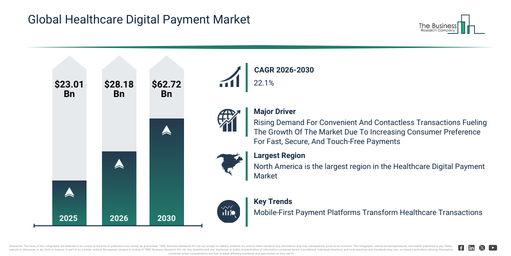
    Experiencing a significant surge, the digital payments sector within healthcare is projected to expand from $23.01 billion in 2025 to $28.18 billion by 2026, showcasing a robust compound annual growth rate (CAGR) of 22.5%. Several key factors have fueled this remarkable expansion during the preceding period, including the increasing integration of digital technologies across healthcare services, a growing inclination among patients towards non-cash transaction methods, the proliferation of electronic medical billing solutions, greater utilization of mobile financial services in healthcare settings, and advancements in the security of payment systems.

    The healthcare digital payment sector is poised for significant expansion over the coming years, with projections indicating it will reach $62.72 billion by 2030, experiencing a compound annual growth rate of 22.1%. This surge during the projected timeframe is fueled by several key factors, including heightened investment in healthcare fintech solutions, a growing need for payment systems that can seamlessly interact, the broadening availability of payment options for telemedicine services, greater acceptance of biometric identification methods, and an intensified regulatory emphasis on securing digital transactions. Key developments anticipated in this period involve a wider embrace of contactless payment methods in healthcare, a more profound integration of digital wallets into healthcare platforms, increased utilization of artificial intelligence for detecting fraud, the growth of payment systems for medical transactions powered by blockchain technology, and a heightened concentration on making payments more transparent and automated.

    Download A Free Sample Report For Comprehensive Market Insights:

    https://www.thebusinessresearchcompany.com/sample.aspx?id=28239&type=smp

    Healthcare Digital Payment Market Expansion Drivers: What Is Shaping Future Growth?

    The increasing preference for streamlined and touch-free payment methods is anticipated to be a key factor in the expansion of the healthcare digital payment sector. Such transactions, characterized by their speed and ease of completion without physical exchange of currency or cards, are gaining traction primarily due to a growing consumer desire for rapid, effortless, and germ-free payment experiences that bypass the need for physical contact or PIN entry. These types of payments significantly bolster healthcare digital payment infrastructures by providing swift and secure transaction capabilities, rendering them perfectly suited for deployment in settings like medical practices, drugstores, and virtual healthcare appointments. By facilitating smooth, contactless settlements, they minimize the need for manual handling and lengthy queues, thereby elevating the overall user experience for both patients and healthcare providers. A notable indicator of this trend is the surge in contactless payment usage observed in the United Kingdom; UK Finance reported that the nation recorded 18.3 billion contactless transactions in 2023, a 7% uptick from the 17 billion recorded in 2022, as per data from July 2024. Consequently, this escalating demand for convenient, contactless transaction options is positively influencing the trajectory of the healthcare digital payment market’s development.

    Healthcare Digital Payment Market Segmentation Trends And Revenue Drivers

    The healthcare digital payment market covered in this report is segmented –

    1) By Type: Mobile Wallets, Point-Of-Sale (POS) Systems, Internet Banking, Mobile Banking, Cryptocurrencies, Other Types

    2) By Solution: Application Program Interface, Payment Gateway, Payment Processing, Payment Security And Fraud Management, Transaction Risk Management, Other Solutions

    3) By Deployment: Cloud, On-Premise

    4) By Technology: Near Field Communication (NFC), Quick Response (QR) Code Payments, Blockchain, Biometric Authentication, Other Technologies

    5) By End-User: Hospitals, Medical Clinics, Pharmacies, Health Insurance Companies, Telemedicine And Remote Health Services, Other End-Users

    Subsegments:

    1) By Mobile Wallets: Near Field Communication Payments, Quick Response (QR) Code Payments, Mobile App Based Payments, Cloud Based Mobile Wallets, Peer To Peer Transfers

    2) By Point Of Sale Systems: Countertop Terminals, Mobile Point Of Sale Terminals, Smart Point Of Sale Terminals, Contactless Point Of Sale Terminals, Integrated Point Of Sale Solutions

    3) By Internet Banking: Web Based Fund Transfers, Online Bill Payments, Account Management Services, Loan And Credit Services, Online Investment Services

    4) By Mobile Banking: Mobile Check Deposits, Mobile Fund Transfers, Account Balance Inquiries, Bill Payments Through Apps, Personalized Financial Alerts

    5) By Cryptocurrencies: Bitcoin Payments, Ethereum Payments, Stablecoin Transactions, Blockchain Based Remittances, Decentralized Finance Payments

    6) By Other Types: Biometric Payment Systems, Voice Activated Payment Systems, Wearable Device Payments, Smart Card Payments, Contactless Payment Rings

    Healthcare Digital Payment Market Strategic Trends: What Is Defining The Next Phase Of Growth?

    The leading players within the healthcare digital payment sector are concentrating their efforts on innovating sophisticated systems, notably mobile-first payment infrastructures, aiming to boost transaction speeds, bolster security measures, and create a smoother process for both patients and healthcare professionals. These mobile-first payment systems are essentially digital payment frameworks meticulously designed for optimal performance on smartphones and tablets, facilitating fluid, secure, and contactless transactions through incorporated technologies like tokenization, biometric verification, and cloud-based processing. Illustrating this trend, April 2025 saw the UK-based mobile payment specialist, Alternative Payments Ltd. (operating as Judopay), introduce a new digital payment service tailored for UK pharmacies and healthcare providers, specifically engineered to simplify and secure payment handling in the medical field. This adaptable, fully compliant platform empowers providers to receive payments through various channels online, within applications, face-to-face, and via payment links, accommodating all prevalent payment types including cards, Apple Pay, Google Pay, and contactless options. It effectively tackles significant hurdles inherent in healthcare payments, such as stringent data privacy rules, the threat of fraudulent activity, and intricate underwriting processes, by providing rapid setup, robust fraud mitigation, and effortless integration with current healthcare IT infrastructures.

    Healthcare Digital Payment Market Industry Leaders: Which Organizations Are Driving Competition?

    Major companies operating in the healthcare digital payment market are American Express Company, Visa Inc., PayPal Holdings Inc., Mastercard Incorporated, HDFC Bank Limited, Fiserv Inc., Experian Health Inc., athenahealth Inc., Adyen N.V., Nets Group A/S, Cotiviti Inc., Waystar Inc., Paymentus Holdings Inc., Zelis Healthcare LLC, Flywire Corporation, Phreesia Inc., Availity L.L.C., RevSpring Inc., Rectangle Health Inc., AccessOne MedCard Inc., ClearBalance Healthcare Inc., PayZen Inc., PatientPay Inc.

    Access The Complete Healthcare Digital Payment Market Report:

    https://www.thebusinessresearchcompany.com/report/healthcare-digital-payment-global-market-report

    Healthcare Digital Payment Market Largest Region: Which Geography Holds The Highest Market Share?

    North Americawas the largest region in the healthcare digital payment market in 2025. Asia-Pacific is expected to be the fastest-growing region in the forecast period. The regions covered in the healthcare digital payment market report are Asia-Pacific, South East Asia, Western Europe, Eastern Europe, North America, South America, Middle East, Africa.

    Get in touch with us:

    The Business Research Company: https://www.thebusinessresearchcompany.com/

    Americas: +1 310-496-7795

    Asia: +44 7882 955267 & +91 8897263534

    Europe: +44 7882 955267

    Email us at: marketing@tbrc.info

    Follow us on:

    LinkedIn: https://in.linkedin.com/company/the-business-research-company

    YouTube: https://www.youtube.com/channel/UC24_fI0rV8cR5DxlCpgmyFQ

    Global Market Model: https://www.thebusinessresearchcompany.com/global-market-model