Month: June 2026

  • Healthcare Digital Experience Platform Market Outlook Highlights The Next Major Growth Opportunities

    Healthcare Digital Experience Platform Market Outlook Highlights The Next Major Growth Opportunities

    Through market attractiveness analysis, total addressable market evaluation, company benchmarking matrices, interactive Excel dashboards, expanded supply chain intelligence, emerging startup coverage, and detailed product insights, The Business Research Company’s 2026 market reports provide more actionable and strategically valuable research.

    Healthcare Digital Experience Platform Market Size And Revenue Forecast Through 2030

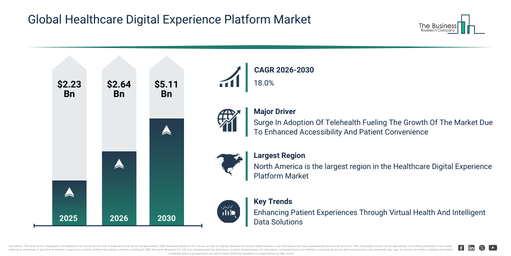
    Within the healthcare digital experience platform sector, a notable expansion has recently occurred. Projections indicate this market will surge from $2.23 billion in 2025 to $2.64 billion in 2026, demonstrating a compound annual growth rate of 18.4%. Factors contributing to this historical growth trajectory include the escalating digitalization of medical services, a greater uptake of patient portals, broader utilization of telemedicine, an increasing emphasis on patient-centered care models, and enhancements in the seamless exchange of healthcare data.

    The digital experience platform market within the healthcare sector is poised for substantial expansion, projecting a market value of $5.11 billion by 2030, driven by a compound annual growth rate of 18.0%. This anticipated surge is fueled by escalating investments in virtual care networks, a heightened demand for tailored digital health pathways, the broadened application of AI in coordinating patient care, the increasing use of mobile health solutions, and a greater focus on delivering healthcare centered around the patient experience. Key developments anticipated during this period involve a greater uptake of platforms facilitating omnichannel patient interaction, more widespread integration of AI for personalized healthcare services, increased implementation of telehealth capabilities within experience platforms, a wider availability of cloud-based solutions for healthcare experiences, and a stronger emphasis on creating cohesive interfaces for both healthcare providers and patients.

    Download A Free Sample Report For Comprehensive Market Insights:

    https://www.thebusinessresearchcompany.com/sample.aspx?id=25776&type=smp

    Healthcare Digital Experience Platform Market Development Factors: Which Trends Are Supporting Demand?

    The increasing embrace of telehealth is anticipated to be a significant catalyst for expansion within the healthcare digital experience platform market. Telehealth, defined as the remote provision of health services and consultations through digital communication tools, is seeing greater adoption due to its improved accessibility, enabling individuals to receive prompt medical advice and treatment conveniently from their residences, thereby eliminating the necessity of travel. Healthcare digital experience platforms play a crucial role in facilitating telehealth by offering intuitive, integrated digital environments that manage patient information, facilitate appointment bookings, and enable direct communication, thereby ensuring a fluid and tailored patient journey. Supporting this trend, data from the Australian Department of Health and Aged Care in March 2024 revealed that telehealth utilization in the 2022–23 period was most prevalent among general practitioners (at 20%) and allied health professionals (at 12%), with general practitioners and non-GP specialists constituting 75% and 48% of all video consultations, respectively. Consequently, the escalating use of telehealth is a key factor fueling the growth of the healthcare digital experience platform market.

    Healthcare Digital Experience Platform Market Segment Analysis Highlighting Growth Areas

    The healthcare digital experience platform market covered in this report is segmented –

    1) By Component: Platform, Services

    2) By Delivery Mode: On-Premises, Cloud Based

    3) By Technology: Mobile Technology, Artificial Intelligence And Machine Learning, Internet of Medical Things (IoMT), Telemedicine Solutions

    4) By Application: Business-To-Consumer (B2C), Business-To-Business (B2B), Other Applications

    5) By End Use: Hospitals And Clinics, Healthcare Payers, Other End Uses

    Subsegments:

    1) By Platform: Patient Engagement Platforms, Provider Engagement Platforms, Data Analytics Platforms, Cloud-Based Platforms, Mobile Health Platforms, Virtual Care Platforms

    2) By Services: Implementation And Integration Services, Consulting Services, Support And Maintenance Services, Training And Education Services, Managed Services, Custom Development Services

    Healthcare Digital Experience Platform Market Transformation Trends: Which Innovations Are Driving Change?

    Within the healthcare digital experience platform sector, leading entities are prioritizing the creation of sophisticated solutions, notably embracing generative AI for clinical documentation to optimize administrative processes and boost healthcare professionals’ efficiency. These AI-driven clinical documentation utilities leverage natural language processing and advanced AI to automatically record, condense, and produce medical records from patient-clinician dialogues, substantially cutting down on manual input. Illustratively, in October 2023, Microsoft Corporation, a prominent US tech firm, introduced its Dragon Ambient eXperience (DAX) Copilot. This generative AI tool is engineered to swiftly generate clinical summaries directly from consultations in examination rooms and via telehealth. Seamlessly integrated with electronic health record systems, this technology alleviates the daily documentation workload for clinicians by as much as 40 minutes. Its capacity to meticulously and safely capture medical exchanges contributes to better patient outcomes, mitigates professional exhaustion, and refines the patient-provider relationship, marking it as a groundbreaking advancement in the digital experience platform market for healthcare.

    Healthcare Digital Experience Platform Market Leading Companies: Who Holds Significant Market Presence?

    Major companies operating in the healthcare digital experience platform market are Optum Inc., Microsoft Corporation, Accenture plc, International Business Machines Corporation, Oracle Corporation, Salesforce Inc., Cognizant Technology Solutions Corporation, GE HealthCare Technologies Inc., Infosys Limited, Adobe Inc., DXC Technology Company, Wipro Limited, Open Text Corporation, SoftServe Inc., Veradigm Inc., Sitecore A/S, Optimizely Inc., Innovaccer Inc., Liferay Inc., Acquia Inc.

    Access The Complete Healthcare Digital Experience Platform Market Report:

    https://www.thebusinessresearchcompany.com/report/healthcare-digital-experience-platform-global-market-report

    Healthcare Digital Experience Platform Market Regional Analysis: Which Region Leads By Revenue?

    North Americawas the largest region in the healthcare digital experience platform market in 2025. Asia-Pacificis expected to be the fastest-growing region in the forecast period. The regions covered in the healthcare digital experience platform market report are Asia-Pacific, South East Asia, Western Europe, Eastern Europe, North America, South America, Middle East, Africa.

    Get in touch with us:

    The Business Research Company: https://www.thebusinessresearchcompany.com/

    Americas: +1 310-496-7795

    Asia: +44 7882 955267 & +91 8897263534

    Europe: +44 7882 955267

    Email us at: marketing@tbrc.info

    Follow us on:

    LinkedIn: https://in.linkedin.com/company/the-business-research-company

    YouTube: https://www.youtube.com/channel/UC24_fI0rV8cR5DxlCpgmyFQ

    Global Market Model: https://www.thebusinessresearchcompany.com/global-market-model
  • Healthcare Data Storage Market Trends And Growth Drivers Point To Strong Future Potential

    Healthcare Data Storage Market Trends And Growth Drivers Point To Strong Future Potential

    Delivering more actionable and strategically valuable research, The Business Research Company’s 2026 market reports feature market attractiveness analysis, total addressable market evaluation, company benchmarking matrices, interactive Excel dashboards, expanded supply chain intelligence, emerging startup coverage, and detailed product insights.

    Healthcare Data Storage Market Growth From $8.46 Billion In 2026 To $17.38 Billion By 2030 At A CAGR Of 19.7%

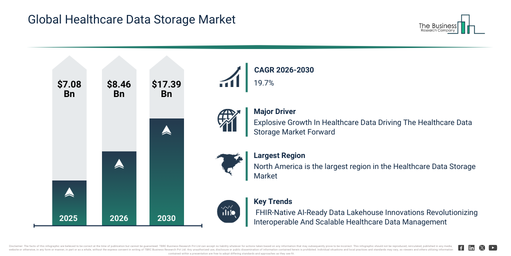
    Within the healthcare data storage sector, a notable upswing in market size has been observed lately. Projections indicate a rise from $7.08 billion in 2025 to $8.46 billion by 2026, reflecting a compound annual growth rate (CAGR) of 19.6%. Factors contributing to this expansion during the past period include the escalating quantity of digitized patient records, the broadening scope of medical imaging data, enhancements in hospital information technology frameworks, a growing demand for data storage solutions that adhere to regulatory mandates, and the widespread implementation of electronic health record systems.

    The healthcare data storage sector is poised for substantial expansion, projected to reach a value of $17.39 billion by 2030, reflecting a compound annual growth rate of 19.7%. This upturn in the upcoming years is anticipated due to the escalating utilization of AI for clinical analytics, augmented investments in cloud infrastructure for healthcare, the burgeoning volume of data from genomics and precision medicine, a greater need for flexible storage capacities, and a heightened emphasis on data security and regulatory adherence. Key developments likely to influence this period include a greater embrace of cloud-based storage in healthcare, a surge in demand for robust data storage systems, a more widespread adoption of hybrid storage models, the growth of secure, long-term archiving for medical records, and a reinforced commitment to data duplication and business continuity strategies.

    Download A Free Sample Report For Comprehensive Market Insights:

    https://www.thebusinessresearchcompany.com/sample.aspx?id=5845&type=smp

    Healthcare Data Storage Market Industry Drivers: What Is Driving Revenue Growth?

    The healthcare data storage market is poised for expansion, propelled by the escalating volume of digital information within healthcare institutions. This surge in data is a direct consequence of advancements in big data analytics, sophisticated medical imaging technologies, and the growing accessibility of real-time data crucial for informed clinical decisions. The systematic gathering and preservation of health data from diverse origins not only facilitate better doctor-patient communication and elevate the standard of patient care but also unlock profound insights into particular ailments. To illustrate this point, RBC Capital Markets, an investment firm based in Canada, reported that the healthcare sector was responsible for approximately 30% of the global data output. Furthermore, projections indicate that healthcare data will expand at a compound annual growth rate of 36% by the year 2025, underscoring the anticipated market growth driven by this increasing digital data storage.

    Healthcare Data Storage Market Segment Performance And Strategic Opportunities

    The healthcare data storage market covered in this report is segmented –

    1) By Type: Magnetic Storage, Flash Storage

    2) By Architecture: Block Storage, File Storage, Object Storage

    3) By Deployment: On-Premise Solutions, Hybrid Solutions

    4) By End User: Pharmaceutical, Hospitals, Other End-Users

    Subsegments:

    1) By Magnetic Storage: Hard Disk Drives (HDDs), Tape Storage Systems

    2) By Flash Storage: Solid-State Drives, NVMe-Based Flash Storage

    #Healthcare Data Storage Market Growth Trends: What Is Influencing The Future Outlook?

    A key trend among prominent healthcare data storage providers involves the creation of sophisticated platforms, specifically FHIR-native, AI-ready data lakehouse solutions, designed to manage escalating volumes of clinical information, foster effortless data exchange, and expedite data-driven healthcare advancements. These FHIR-native, AI-ready data lakehouse platforms are essentially cloud-based systems adept at absorbing, housing, and restructuring varied healthcare data, encompassing structured information, unstructured text, and imaging files, all while adhering to established standards like FHIR. To illustrate, in December 2024, Microsoft, a significant player in the technology sector based in the United States, made its DICOM (Digital Imaging and Communications in Medicine) data transformation capabilities generally accessible within its Healthcare Data Solutions integrated with Microsoft Fabric. This new functionality empowers users to import, store, modify, and scrutinize medical imaging data, including CT and MRI scans, within a lakehouse framework. This advancement facilitates the conversion of DICOM imaging data into structured formats compatible with FHIR or OMOP standards, supports extensive radiomics and imaging analysis, and integrates with robust AI services to yield insights from multiple data types. This transformation capability is integrated into Microsoft’s medallion-style Lakehouse, which consolidates clinical, claims, conversational, and imaging data into a singular, expansive repository, thereby simplifying the execution of advanced analytics, the deployment of AI models, and the acceleration of research and patient care processes.

    Healthcare Data Storage Market Key Players: Which Companies Shape Industry Competition?

    Major companies operating in the healthcare data storage market are Dell Technologies, International Business Machines Corporation, NetApp Inc., Hewlett Packard Enterprise Development LP, Pure Storage Inc., Hitachi Ltd., Western Digital Corporation, Huawei Technologies Co. Ltd., Toshiba Corporation, Scality, Fujitsu Limited, Cloudian Inc., Samsung, Tintri Inc., Cisco Systems, Nutanix Inc., Commvault Systems, Cohesity, Rubrik, Veeam Software, Zadara, Caringo, Infinidat, Nexenta Systems, DataCore Software, Qumulo, SwiftStack, StorPool, Panzura

    Access The Complete Healthcare Data Storage Market Report:

    https://www.thebusinessresearchcompany.com/report/healthcare-data-storage-global-market-report

    Healthcare Data Storage Market Geographic Distribution And Regional Opportunities

    North Americawas the largest region in the healthcare data storage market in 2025. The regions covered in the healthcare data storage market report are Asia-Pacific, South East Asia, Western Europe, Eastern Europe, North America, South America, Middle East, Africa.

    Get in touch with us:

    The Business Research Company: https://www.thebusinessresearchcompany.com/

    Americas: +1 310-496-7795

    Asia: +44 7882 955267 & +91 8897263534

    Europe: +44 7882 955267

    Email us at: marketing@tbrc.info

    Follow us on:

    LinkedIn: https://in.linkedin.com/company/the-business-research-company

    YouTube: https://www.youtube.com/channel/UC24_fI0rV8cR5DxlCpgmyFQ

    Global Market Model: https://www.thebusinessresearchcompany.com/global-market-model
  • Healthcare Data Monetization Market Expansion Is Reshaping Competitive Dynamics Across The Industry

    Healthcare Data Monetization Market Expansion Is Reshaping Competitive Dynamics Across The Industry

    Enhanced with market attractiveness analysis, total addressable market evaluation, company benchmarking matrices, interactive Excel dashboards, expanded supply chain intelligence, emerging startup coverage, and detailed product insights, The Business Research Company’s 2026 market reports deliver more actionable and strategically valuable research.

    Healthcare Data Monetization Market Expansion Outlook: What Revenue Opportunities Lie Ahead?

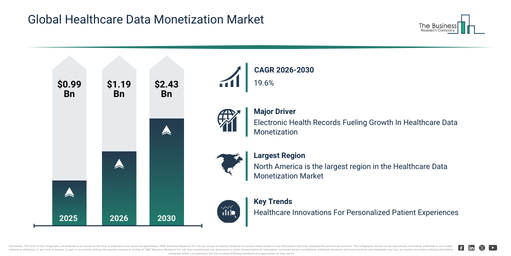
    The market for monetizing healthcare data has experienced considerable expansion recently. Projections indicate a rise from $0.99 billion in 2025 to $1.19 billion in 2026, reflecting a compound annual growth rate of 19.6%. This recent growth trajectory is a consequence of several factors. The increasing volume of digital health information, the wider implementation of electronic health records, heightened engagement from pharmaceutical research entities, advancements in real-world evidence research, and the early uptake of healthcare analytics solutions have collectively fueled this upward trend.

    The market for monetizing healthcare data is poised for significant expansion over the coming years, projected to reach $2.43 billion by 2030 with a compound annual growth rate (CAGR) of 19.6%. This upward trajectory is fueled by several key factors: heightened investments in artificial intelligence for healthcare analytics, a growing need for insights derived from personalized medicine, the broader implementation of value-based healthcare frameworks, greater regulatory certainty surrounding data utilization, and the increasing application of synthetic health data. During this forecast period, prominent market developments are anticipated to include a greater reliance on data licensing agreements within the healthcare sector, increased embrace of analytics to drive data commercialization efforts, a surge in demand for de-identified patient data repositories, the proliferation of platform-centric data marketplaces, and a more intense concentration on robust data governance and obtaining informed consent.

    Download A Free Sample Report For Comprehensive Market Insights:

    https://www.thebusinessresearchcompany.com/sample.aspx?id=13672&type=smp

    Healthcare Data Monetization Market Growth Factors: Which Forces Are Supporting Market Expansion?

    The increasing implementation of electronic health records is poised to be a significant catalyst for the expansion of the healthcare data monetization sector. Electronic health records, which are digitized patient medical charts encompassing details on health backgrounds, diagnoses, prescriptions, and therapies, are instrumental in healthcare data monetization efforts. These efforts aim to advance medical research, streamline drug development, and enhance clinical trials, ultimately leading to improved patient care and the realization of personalized medicine. A notable example is the Australian National Audit Office’s report from June 2024, which indicated that by March 2024, approximately 23.8 million Australians possessed a My Health Record, a system that saw an investment of roughly $2 billion. Consequently, the broad acceptance and use of electronic health records are a primary driver for the growth observed in the healthcare data monetization market.

    Healthcare Data Monetization Market Segment Landscape And Growth Potential

    The healthcare data monetization market covered in this report is segmented –

    1) By Type: Direct Data Monetization, Indirect Data Monetization

    2) By Deployment: On-Premise, Cloud

    3) By End User: Pharmaceutical And Biotechnology Companies, Healthcare Providers, Healthcare Payers, Medical Technology Companies

    Subsegments:

    1) By Direct Data Monetization: Data Licensing And Sales, Data Sharing Agreements, Subscription-Based Access To Data

    2) By Indirect Data Monetization: Targeted Marketing And Advertising, Research And Development Collaborations

    Healthcare Data Monetization Market Industry Trends: What Changes Are Reshaping Demand?

    Within the healthcare data monetization sector, leading firms are actively implementing digital transformation advancements, notably Software as a Service (SaaS) solutions, which empower healthcare providers to cultivate more individualized patient journeys. This SaaS model involves cloud-hosted applications accessible online, usually via web interfaces or mobile applications. Illustrative of this trend, Salesforce, a prominent US cloud software provider, unveiled expanded Customer 360 for Health functionalities in April 2023, specifically engineered to elevate patient engagement through personalization. The underlying objective of these technological enhancements is to optimize operational workflows, diminish expenses, and elevate the standard of patient care by harnessing the power of immediate data, artificial intelligence, and automated processes. Consequently, these new capabilities equip healthcare and life sciences entities to significantly enrich the patient experience, capitalizing on the comprehensive suite of Salesforce technologies, including the real-time data insights from Data Cloud, the predictive intelligence of Einstein AI, and the workflow automation provided by Flow.

    Healthcare Data Monetization Market Competitive Landscape: Who Are The Leading Companies?

    Major companies operating in the healthcare data monetization market are Google LLC, Microsoft Corporation, Oracle Corporation, SAP SE, Salesforce Inc., Snowflake Inc., Informatica Inc., TIBCO Software Inc., QlikTech International AB, SAS Institute Inc., OpenText Corporation, Innovaccer Inc., H1.Co, John Snow Labs Inc., Accenture Plc, Infosys Limited, Virtusa Corp., HTEC Group, Sisense Inc., Infor

    Access The Complete Healthcare Data Monetization Market Report:

    https://www.thebusinessresearchcompany.com/report/healthcare-data-monetization-global-market-report

    Healthcare Data Monetization Market Largest Region By Revenue And Market Share

    North Americawas the largest region in the healthcare data monetization market in 2025. The regions covered in the healthcare data monetization market report are Asia-Pacific, South East Asia, Western Europe, Eastern Europe, North America, South America, Middle East, Africa.

    Get in touch with us:

    The Business Research Company: https://www.thebusinessresearchcompany.com/

    Americas: +1 310-496-7795

    Asia: +44 7882 955267 & +91 8897263534

    Europe: +44 7882 955267

    Email us at: marketing@tbrc.info

    Follow us on:

    LinkedIn: https://in.linkedin.com/company/the-business-research-company

    YouTube: https://www.youtube.com/channel/UC24_fI0rV8cR5DxlCpgmyFQ

    Global Market Model: https://www.thebusinessresearchcompany.com/global-market-model
  • Healthcare Data Interoperability Market Forecast Reveals Where Future Industry Value Will Be Created

    Healthcare Data Interoperability Market Forecast Reveals Where Future Industry Value Will Be Created

    Through market attractiveness analysis, total addressable market evaluation, company benchmarking matrices, interactive Excel dashboards, expanded supply chain intelligence, emerging startup coverage, and detailed product insights, The Business Research Company’s 2026 market reports provide more actionable and strategically valuable research.

    Healthcare Data Interoperability Market Growth Potential: How Will Market Size Change Through 2030?

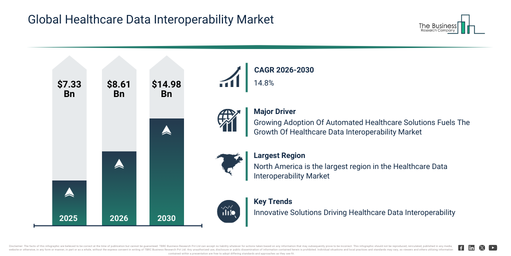
    The market for healthcare data interoperability experienced substantial expansion lately, projecting a rise from $7.33 billion in 2025 to $8.61 billion by 2026, reflecting a compound annual growth rate of 17.6%. Factors contributing to this growth during the preceding period included the escalating digitization of medical documentation, a broader implementation of electronic health record systems, an intensified demand for integrated patient care strategies, the proliferation of healthcare networks involving multiple providers, and regulatory efforts promoting uniformity in health data management.

    The global market for healthcare data interoperability is poised for substantial expansion in the upcoming years, projecting a surge to $14.98 billion by the year 2030, fueled by a compound annual growth rate (CAGR) of 14.8%. This anticipated growth throughout the forecast period is largely driven by the escalating implementation of value-based care approaches, increased financial commitments towards networked healthcare IT infrastructure, a heightened need for interoperable telehealth services, the broadening scope of national health information exchanges, and a strengthened emphasis on providing patients with direct access to their data. Key developments anticipated during this period encompass a greater embrace of standardized frameworks for health data exchange, more seamless integration of clinical systems across different platforms, a growing requirement for immediate access to patient information, the proliferation of secure API-driven interoperability solutions, and a more pronounced concentration on achieving semantic consistency in data harmonization.

    Download A Free Sample Report For Comprehensive Market Insights:

    https://www.thebusinessresearchcompany.com/sample.aspx?id=14925&type=smp

    Healthcare Data Interoperability Market Demand Drivers: What Is Fueling Industry Growth?

    The expansion of automated systems within the healthcare sector is poised to be a significant catalyst for the advancement of healthcare data interoperability. These automated solutions encompass technological instruments and frameworks aimed at optimizing and refining diverse facets of patient care and operational management. The increasing integration of these automated healthcare tools is primarily motivated by the pursuit of heightened efficiency, enhanced precision, and superior patient treatment. Seamless data exchange, a cornerstone of healthcare data interoperability, empowers automated healthcare solutions to effectively merge and share patient-specific data, thereby elevating the quality of care. Furthermore, interoperability facilitates the streamlining of clinical processes by automating recurring duties such as data input, record-keeping, and administrative functions. A pertinent example illustrating this trend is the March 2024 announcement by NHS England, which revealed a substantial investment of $148.21 million (£113 million) in 2024 to support 86 artificial intelligence initiatives in healthcare, now undergoing assessment across 408 locations nationwide, encompassing 466 active AI trials. Consequently, the burgeoning implementation of automated healthcare solutions directly correlates with the escalating demand and growth in the healthcare data interoperability market.

    Healthcare Data Interoperability Market Categorization By Product Type And Application

    The healthcare data interoperability market covered in this report is segmented –

    1) By Model: Centralized, Hybrid, Decentralized

    2) By Deployment: Cloud-Based, On-Premises

    3) By Level: Foundational, Structural, Semantic

    4) By Application: Diagnosis, Treatment, Other Applications

    5) By End User: Healthcare Providers, Healthcare Payers, Pharmacies

    Subsegments:

    1) By Centralized: Single Point Of Control, Unified Data Repository, Centralized Management And Storage

    2) By Hybrid: Combination Of Centralized And Decentralized Approaches, Distributed Data Management With Centralized Control, Flexible Data Exchange Models

    3) By Decentralized: Distributed Data Storage, Peer-To-Peer Data Sharing, Localized Control And Management

    Healthcare Data Interoperability Market Innovation Trends: Which Developments Are Transforming The Industry?

    Leading entities within the healthcare data interoperability sector are actively crafting novel solutions, specifically digital platforms, to fortify their market standing. These digital platforms function as internet-based systems or applications engineered to foster connections, exchanges, and the dissemination of information among diverse participants, akin to online marketplaces, social networking sites, or cloud-hosted services. Illustrating this trend, KMS Healthcare, a firm based in the United States, introduced its CONNECT interoperability solution in August 2023. This platform aims to simplify the process of exchanging data housed within electronic health records (EHRs). It incorporates adaptable, validated FHIR APIs alongside an HL7 conversion engine, working in concert to assist healthcare providers in overcoming interoperability hurdles and enhancing data assimilation. By granting swift entry to prominent EHR systems, the CONNECT platform empowers developers to accelerate the testing and creation of applications, thereby substantially diminishing the expenses and intricacies typically involved in setting up isolated testing environments.

    Healthcare Data Interoperability Market Company Landscape And Strategic Competition

    Major companies operating in the healthcare data interoperability market are Optum Inc., Oracle Corporation, Cognizant Technology Solutions, Koninklijke Philips NV, Wipro Limited, Epic Systems Corporation, Infor Inc, Virtusa Corp, Deevita LLC, Ciox Health, Veradigm LLC, ViSolve Inc., Change Healthcare, InterSystems Corporation, NextGen Healthcare Inc., eMids, Consensus Cloud Solutions Inc., Merative, Orion Health Group Limited, Teletracking Technologies, OSP Labs, Jitterbit, Nalashaa Solutions, Lyniate, MphRx, iNTERFACEWARE Inc

    Access The Complete Healthcare Data Interoperability Market Report:

    https://www.thebusinessresearchcompany.com/report/healthcare-data-interoperability-global-market-report

    Healthcare Data Interoperability Market Regional Analysis And Leading Geography

    North Americawas the largest region in the healthcare data interoperability market in 2025. Asia Pacificis expected to be the fastest-growing region in the forecast period. The regions covered in the healthcare data interoperability market report are Asia-Pacific, South East Asia, Western Europe, Eastern Europe, North America, South America, Middle East, Africa.

    Get in touch with us:

    The Business Research Company: https://www.thebusinessresearchcompany.com/

    Americas: +1 310-496-7795

    Asia: +44 7882 955267 & +91 8897263534

    Europe: +44 7882 955267

    Email us at: marketing@tbrc.info

    Follow us on:

    LinkedIn: https://in.linkedin.com/company/the-business-research-company

    YouTube: https://www.youtube.com/channel/UC24_fI0rV8cR5DxlCpgmyFQ

    Global Market Model: https://www.thebusinessresearchcompany.com/global-market-model
  • Healthcare Data Integration Market Growth Through 2030 Creates New Strategic Opportunities

    Healthcare Data Integration Market Growth Through 2030 Creates New Strategic Opportunities

    Delivering more actionable and strategically valuable research, The Business Research Company’s 2026 market reports feature market attractiveness analysis, total addressable market evaluation, company benchmarking matrices, interactive Excel dashboards, expanded supply chain intelligence, emerging startup coverage, and detailed product insights.

    Healthcare Data Integration Market Value Analysis: What Growth Is Expected Over The Forecast Period?

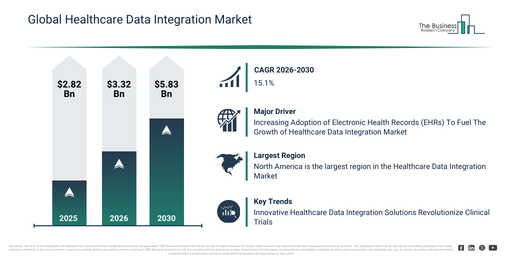
    The sector for integrating healthcare data has experienced substantial expansion. Projections indicate a significant rise from its valuation of $2.82 billion in 2025 to an estimated $3.32 billion by 2026, demonstrating a compound annual growth rate (CAGR) of 17.9%. This notable growth during the preceding period stems from several key factors: the increasing segmentation of healthcare data systems, the widespread implementation of electronic health records, the broadening of healthcare networks involving multiple providers, a heightened demand for operational analytics, and the increased availability of middleware tools designed for data integration.

    The healthcare data integration sector is poised for substantial expansion in the coming years, projecting a market valuation of $5.83 billion by 2030, driven by a compound annual growth rate of 15.1%. This anticipated surge is fueled by several key factors, including the escalating adoption of interoperable healthcare frameworks, amplified investments in data-centric care methodologies, a broader rollout of population health management programs, a heightened emphasis on automating regulatory reporting, and a growing requirement for adaptable cloud integration solutions. Furthermore, the forecast period will likely witness significant trends such as the increased utilization of integrated data platforms, a surge in demand for immediate access to clinical information, wider implementation of interoperability standards, the proliferation of cloud-based integration services, and a more rigorous approach to data governance and adherence to compliance.

    Download A Free Sample Report For Comprehensive Market Insights:

    https://www.thebusinessresearchcompany.com/sample.aspx?id=14729&type=smp

    Healthcare Data Integration Market Growth Drivers: What Factors Are Accelerating Expansion?

    The expansion of the healthcare data integration market is anticipated to be significantly bolstered by the widespread implementation of electronic health records (EHRs) in the future. EHRs, which are digital platforms designed for the secure storage and management of patient health data, facilitate streamlined access, sharing, and analysis for medical professionals. A growing need for EHR IT systems stems from their capacity to enhance operational effectiveness, consolidate and make data readily accessible, foster interoperability, and improve patient involvement. Crucially, healthcare data integration platforms are instrumental in realizing interoperability by linking EHR systems with various other healthcare IT infrastructures, including laboratory information systems (LIS), pharmacy management tools, and radiology informatics systems. Illustrating this trend, a publication in the Journal of Medical Internet Research in May 2024 indicated that 38.78% of U.S. adults had utilized telehealth services within the preceding twelve months. Consequently, the escalating use of EHRs directly fuels the advancement of the healthcare data integration market.

    Healthcare Data Integration Market Segment Analysis And Revenue Opportunities

    The healthcare data integration market covered in this report is segmented –

    1) By Component: Tools, Services

    2) By Type Of Integration: Application Integration, Data Integration, Device Integration, Healthcare Information Exchange (HIE), System Integration, Other Integrations

    3) By Deployment: Cloud, On-Premises

    4) By Business Application: Operations And Supply Chain, Finance

    5) By End-user: Hospital, Clinics, Laboratories, Other End-Users

    Subsegments:

    1) By Tools: Data Integration Software, Middleware Solutions, Data Mapping Tools, Etl (Extract, Transform, Load) Tools

    2) By Services: Data Integration Consulting, Implementation And Support Services, Cloud Integration Services, Managed Data Services

    Healthcare Data Integration Market Trends: What Is Shaping Future Industry Growth?

    In the healthcare data integration sector, leading entities are concentrating on creating novel solutions, exemplified by Clinical Data Studio and Health Record Connect, as a means to solidify their market positions. These offerings represent advanced data integration tools engineered to improve and expedite the management of clinical data throughout the course of clinical investigations. Specifically, in November of 2023, Medidata Solutions Inc., a prominent US technology firm specializing in software-as-a-service for clinical trials, introduced Clinical Data Studio and Health Record Connect. This integrated data solution is purposed to elevate and expedite the efficiency of clinical trials. Medidata’s suite of clinical data tools optimizes operational processes by seamlessly incorporating data from laboratory results, electronic health records, and various sensor inputs. The Clinical Data Studio is designed for the simplification of data standardization, whereas Health Record Connect facilitates the incorporation of clinical research data into broader healthcare data ecosystems, leveraging artificial intelligence for enhanced study management. Ultimately, these advancements contribute to superior trial results through the application of practical data insights and the refinement of data quality and oversight mechanisms, unifying diverse healthcare data streams to drive greater efficiency and better participant outcomes within the realm of clinical research.

    Healthcare Data Integration Market Leading Players Shaping Industry Direction

    Major companies operating in the healthcare data integration market are McKesson Corporation, International Business Machines Corporation, Oracle Corporation, Koninklijke Philips N.V, GE Healthcare, Cerner Corporation, SAS Institute Inc, Epic Systems Corporation, Allscripts Healthcare Solutions Inc, Informatica Inc, Siemens Healthineers AG, InterSystems Corporation, NXGN Management LLC, Optum Inc, Health Catalyst, Innovaccer Inc, Orion Health, Veradigm LLC, Denodo Technologies, 1upHealth

    Access The Complete Healthcare Data Integration Market Report:

    https://www.thebusinessresearchcompany.com/report/healthcare-data-integration-global-market-report

    Healthcare Data Integration Market Geographic Analysis: Where Is Demand Growing The Fastest?

    North Americawas the largest region in the healthcare data integration market in 2025. Asia-Pacificis expected to be the fastest-growing region in the forecast period. The regions covered in the healthcare data integration market report are Asia-Pacific, South East Asia, Western Europe, Eastern Europe, North America, South America, Middle East, Africa.

    Get in touch with us:

    The Business Research Company: https://www.thebusinessresearchcompany.com/

    Americas: +1 310-496-7795

    Asia: +44 7882 955267 & +91 8897263534

    Europe: +44 7882 955267

    Email us at: marketing@tbrc.info

    Follow us on:

    LinkedIn: https://in.linkedin.com/company/the-business-research-company

    YouTube: https://www.youtube.com/channel/UC24_fI0rV8cR5DxlCpgmyFQ

    Global Market Model: https://www.thebusinessresearchcompany.com/global-market-model
  • Healthcare Data Annotation Tools Market Size Projected To Increase From $0.4 Billion To $1.09 Billion During The Forecast Period

    Healthcare Data Annotation Tools Market Size Projected To Increase From $0.4 Billion To $1.09 Billion During The Forecast Period

    Enhanced with market attractiveness analysis, total addressable market evaluation, company benchmarking matrices, interactive Excel dashboards, expanded supply chain intelligence, emerging startup coverage, and detailed product insights, The Business Research Company’s 2026 market reports deliver more actionable and strategically valuable research.

    Healthcare Data Annotation Tools Market Size Forecast: How Large Could The Market Become By 2030?

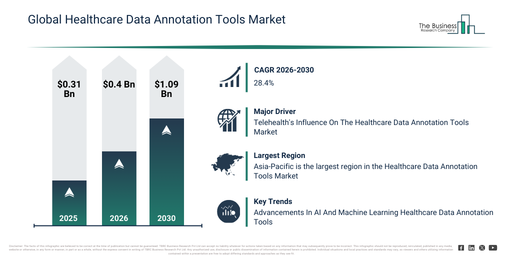
    The market for healthcare data annotation tools has experienced a significant surge, projecting a rise from its 2025 valuation of $0.31 billion to an estimated $0.4 billion by 2026, indicating a robust compound annual growth rate of 28.3%. This expansion during the past period is largely fueled by the escalating integration of artificial intelligence within medical imaging, the burgeoning volume of digital pathology datasets, the wider deployment of clinical decision support systems, the ready accessibility of extensive healthcare data repositories, and the early embrace of machine learning techniques for diagnostic purposes.

    The market for healthcare data annotation tools is poised for significant expansion over the upcoming years, projected to reach $1.09 billion by 2030 with a compound annual growth rate of 28.4%. This anticipated growth is driven by several key factors including the wider implementation of AI-driven diagnostic solutions, a mounting need for adaptable annotation platforms, the increasing scope of personalized medicine, elevated investment in healthcare AI ventures, and stricter regulations concerning AI model verification. Within this forecast period, prevailing trends will include a heightened demand for meticulously labeled medical datasets, greater incorporation of automated annotation technologies, expanded utilization of multimodal data annotation, the development of more robust AI training data workflows, and a stronger emphasis on achieving precision and conformity in annotation processes.

    Download A Free Sample Report For Comprehensive Market Insights:

    https://www.thebusinessresearchcompany.com/sample.aspx?id=13852&type=smp

    Healthcare Data Annotation Tools Market Growth Factors Supporting Long-Term Expansion

    The expanding adoption of telehealth services is poised to significantly boost the healthcare data annotation tools market. Telehealth, which involves leveraging digital communication and information technologies to deliver healthcare remotely, educate patients and professionals, and manage public health initiatives, relies heavily on accurate data interpretation. Healthcare data annotation tools play a crucial role in this domain by enabling precise identification and classification of medical information, thereby enhancing diagnostic capabilities, optimizing treatment strategies, and facilitating effective remote patient oversight. As an illustration, data from the Australian Bureau of Statistics revealed that in the fiscal year 2023–24, a substantial 83.5% of Australian males utilized telehealth, marking a rise from the 78.6% recorded in the preceding year (2022–23), underscoring the growing trend that fuels demand for these essential annotation tools.

    Healthcare Data Annotation Tools Market Segmentation And Category Breakdown

    The healthcare data annotation tools market covered in this report is segmented –

    1) By Type: Text, Image And Video, Audio

    2) By Technology: Manual, Semi-Supervised, Automatic

    3) By End-User: Hospitals, Diagnostic Imaging Centers, Healthcare Technology Companies, Other End-Users

    Subsegments:

    1) By Text: Natural Language Processing (NLP) Annotation, Entity Recognition, Text Classification

    2) By Image and Video: Medical Image Labeling, Object Detection, Semantic Segmentation, Video Frame Annotation

    3) By Audio: Speech Recognition Annotation, Voice Data Labeling, Audio Transcription

    Healthcare Data Annotation Tools Market Industry Trends Shaping Future Revenue Growth

    Leading corporations within the healthcare data annotation sector are concentrating their efforts on pioneering innovative technological advancements, specifically AI-driven tools designed to accelerate the annotation process for video data essential for AI development. These AI-powered healthcare data annotation solutions utilize artificial intelligence capabilities to facilitate the labeling and classification of medical information. A notable development occurred in August 2023 when iMerit Technology, an American company specializing in artificial intelligence data solutions, introduced Ango Hub. This comprehensive, enterprise-level technology platform consolidates a complete range of data annotation tools for AI and analytics into a unified system. The platform is engineered to provide a full spectrum of data annotation services, integrating automation throughout the entire workflow, encompassing data preparation, selection, workflow planning, specialized annotation instruments, quality control, and performance tracking. Ango Hub has found application in the realm of medical image annotation, and it represents a novel, purpose-built application built upon a generative AI framework, intended to fast-track progress in critical fields like medical artificial intelligence.

    Healthcare Data Annotation Tools Market Competitive Analysis Of Major Industry Participants

    Major companies operating in the healthcare data annotation tools market are Infosys BPM, iMerit Technology, Appen Limited, Scale AI, CloudFactory Limited, Innodata, Cogito Tech LLC, Defined.ai, Shaip, Sama AI, Labelbox, SuperAnnotate LLC, Label Your Data, Playment, V7, NetraMark Corp, Keymakr Inc, Dataloop AI, Haidata, Hive AI, Turing, Capestart, Anolytics, Explorium, Alegion AI Inc, Lynxcare, Trillbit, Kotwel

    Access The Complete Healthcare Data Annotation Tools Market Report:

    https://www.thebusinessresearchcompany.com/report/healthcare-data-annotation-tools-global-market-report

    Healthcare Data Annotation Tools Market Global Footprint: Which Region Holds Market Leadership?

    Asia-Pacificwas the largest region in the healthcare data annotation tools market in 2025. The regions covered in the healthcare data annotation tools market report are Asia-Pacific, South East Asia, Western Europe, Eastern Europe, North America, South America, Middle East, Africa.

    Get in touch with us:

    The Business Research Company: https://www.thebusinessresearchcompany.com/

    Americas: +1 310-496-7795

    Asia: +44 7882 955267 & +91 8897263534

    Europe: +44 7882 955267

    Email us at: marketing@tbrc.info

    Follow us on:

    LinkedIn: https://in.linkedin.com/company/the-business-research-company

    YouTube: https://www.youtube.com/channel/UC24_fI0rV8cR5DxlCpgmyFQ

    Global Market Model: https://www.thebusinessresearchcompany.com/global-market-model
  • Healthcare Cybersecurity Market Growth Outlook Reveals A CAGR Of 15.6% And A Market Value Of $56.68 Billion By 2030

    Healthcare Cybersecurity Market Growth Outlook Reveals A CAGR Of 15.6% And A Market Value Of $56.68 Billion By 2030

    Through market attractiveness analysis, total addressable market evaluation, company benchmarking matrices, interactive Excel dashboards, expanded supply chain intelligence, emerging startup coverage, and detailed product insights, The Business Research Company’s 2026 market reports provide more actionable and strategically valuable research.

    Healthcare Cybersecurity Market Revenue Outlook: What CAGR Is Expected Through 2030?

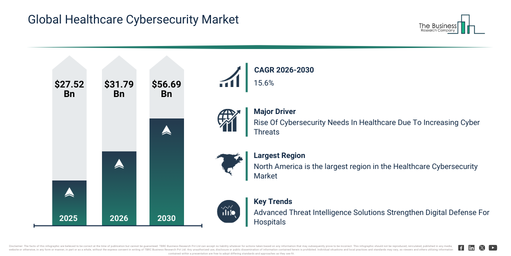
    The sector focused on cybersecurity within healthcare has experienced significant expansion recently. Projections indicate this market will escalate from $27.52 billion in 2025 to $31.79 billion in 2026, reflecting a compound annual growth rate of 15.5%. Key factors fueling this expansion during the past period include the increasing digitalization of medical documentation, a surge in cyber threats targeting healthcare facilities, the widespread implementation of electronic health records, a broader use of interconnected medical equipment, and heightened regulatory emphasis on safeguarding patient information.

    The healthcare cybersecurity domain is poised for substantial expansion over the coming years, projected to reach a market valuation of $56.69 billion by 2030, driven by a compound annual growth rate of 15.6%. This anticipated surge is underpinned by several key factors, including heightened expenditures on healthcare IT security infrastructure, a growing need for continuous, real-time monitoring of potential threats, the widespread adoption of cloud-based healthcare solutions, a stronger emphasis on mitigating ransomware attacks, and the proactive embedding of cybersecurity measures into the development of medical devices. Notable developments expected during this period encompass the wider implementation of sophisticated threat detection technologies, increased adherence to zero-trust security principles, greater utilization of artificial intelligence for security data analysis, the proliferation of cybersecurity solutions specifically for medical devices, and a more rigorous approach to regulatory adherence and the safeguarding of private data.

    Download A Free Sample Report For Comprehensive Market Insights:

    https://www.thebusinessresearchcompany.com/sample.aspx?id=13964&type=smp

    Healthcare Cybersecurity Market Demand Drivers Creating New Revenue Opportunities

    The escalating frequency of cyber threats is poised to be a significant catalyst for the expansion of the healthcare cybersecurity sector. These cyberattacks, which involve illicit efforts to compromise, harm, or gain unauthorized entry into digital infrastructure, are on the rise due to cybercriminals’ focus on extracting valuable information, deploying ransomware, and exploiting system weaknesses for financial benefit. Healthcare cybersecurity solutions are instrumental in addressing this trend by offering sophisticated defenses that protect sensitive patient data, ensure the continuity of medical services, and avert breaches that could compromise patient care. As an illustration, the Australian Signals Directorate reported that in the fiscal year 2024-25, its Australian Cyber Security Centre handled more than 42,500 calls to its dedicated hotline, representing a 16% increase compared to the preceding year. Consequently, the growing prevalence of cyberattacks is a key factor stimulating the healthcare cybersecurity market’s growth.

    Healthcare Cybersecurity Market Segment Outlook: Which Categories Are Expanding The Fastest?

    The healthcare cybersecurity market covered in this report is segmented –

    1) By Solution: Identity And Access Management, Risk And Compliance Management, Antivirus And Antimalware, Distributed Denial Of Service (DDoS) Mitigation, Security Information And Event Management, Intrusion Detection System/ Intrusion Prevention System, Other Solutions

    2) By Security: Network Security, Endpoint Security, Application Security, Content Security

    3) By Threat: Malware, Distributed Denial Of Service (DDoS) Threats, Advanced Persistent Threat, Spyware, Lost Or Stolen Devices, Other Threats

    4) By End User: Pharma And Chemicals, Medical Devices, Health Insurance, Hospitals, Other End Users

    Subsegments:

    1) By Identity And Access Management: User Authentication, Role-Based Access Control, Single Sign-On

    2) By Risk And Compliance Management: Risk Assessment Tools, Compliance Management Solutions, Policy Management Software

    3) By Antivirus And Antimalware: Antivirus Software, Antimalware Solutions, Endpoint Protection

    4) By Distributed Denial Of Service (Ddos) Mitigation: Traffic Filtering, Rate Limiting, Ddos Protection Services

    5) By Security Information And Event Management (SIEM): Log Management, Security Monitoring, Incident Response

    6) By Intrusion Detection System Or Intrusion Prevention System (IDS Or IPS): Network-Based IDS Or IPS, Host-Based IDS Or IPS, Hybrid IDS Or IPS

    7) By Other Solutions: Data Encryption Solutions, Threat Intelligence Services, Security Training And Awareness Programs

    Healthcare Cybersecurity Market Trends Driving Strategic Industry Expansion

    Leading organizations within the healthcare cybersecurity sector are concentrating their efforts on creating sophisticated offerings, including specialized threat intelligence systems for healthcare, with the aim of bolstering the security of electronic patient data, networked medical equipment, and essential clinical infrastructure against ever-evolving and more complex cyber threats. These tailored threat intelligence systems are cybersecurity frameworks specifically designed for medical facilities, which gather intelligence feeds relevant to the industry, correlate evidence of potential breaches, and streamline operational procedures to aid security personnel in identifying, prioritizing, and addressing assaults on healthcare systems. As an illustration, in December 2024, Cyware Labs Inc., a software firm based in the United States, introduced its Healthcare Tuned Threat Intelligence Platform (HC-TIP), intended to furnish hospitals and medical networks with curated, industry-specific threat insights. This platform grants immediate insight into ransomware incidents, weaknesses in medical devices, and other cyber dangers pertinent to healthcare. Furthermore, it improves the handling of security incidents by providing ready-to-use operational blueprints and automated mechanisms for sharing threat information, all customized for the distinct security requirements of the healthcare industry.

    Healthcare Cybersecurity Market Key Companies And Competitive Benchmarking

    Major companies operating in the healthcare cybersecurity market are Microsoft Corporation, Intel Corporation, International Business Machines Corporation, Cisco Systems Inc., Broadcom Inc., Thales Group, Palo Alto Networks Inc., Juniper Networks Inc., Fortinet Inc., Gen Digital Inc., Splunk Inc., Checkpoint Software Technologies Ltd., Trend Micro Inc., Crowdstrike Holdings Inc., Fortra LLC, Tenable Inc., Rapid7 Inc., Qualys Inc., McAfee Corp., Forescout Technologies Inc., LogRhythm Inc., Claroty Ltd., Sophos Ltd., Fortified Health Security, Sensato Cybersecurity Solutions

    Access The Complete Healthcare Cybersecurity Market Report:

    https://www.thebusinessresearchcompany.com/report/healthcare-cybersecurity-global-market-report

    Healthcare Cybersecurity Market Regional Distribution: Which Areas Drive Market Expansion?

    North Americawas the largest region in the healthcare cybersecurity market in 2025. Asia-Pacificis expected to be the fastest-growing region in the forecast period. The regions covered in the healthcare cybersecurity market report are Asia-Pacific, South East Asia, Western Europe, Eastern Europe, North America, South America, Middle East, Africa.

    Get in touch with us:

    The Business Research Company: https://www.thebusinessresearchcompany.com/

    Americas: +1 310-496-7795

    Asia: +44 7882 955267 & +91 8897263534

    Europe: +44 7882 955267

    Email us at: marketing@tbrc.info

    Follow us on:

    LinkedIn: https://in.linkedin.com/company/the-business-research-company

    YouTube: https://www.youtube.com/channel/UC24_fI0rV8cR5DxlCpgmyFQ

    Global Market Model: https://www.thebusinessresearchcompany.com/global-market-model
  • Healthcare Cyber Security Market Forecast Highlights Expansion From $33.15 Billion To $69.91 Billion Through 2030

    Healthcare Cyber Security Market Forecast Highlights Expansion From $33.15 Billion To $69.91 Billion Through 2030

    Delivering more actionable and strategically valuable research, The Business Research Company’s 2026 market reports feature market attractiveness analysis, total addressable market evaluation, company benchmarking matrices, interactive Excel dashboards, expanded supply chain intelligence, emerging startup coverage, and detailed product insights.

    Healthcare Cyber Security Market Growth Analysis: How Will Revenue Expand During The Forecast Period?

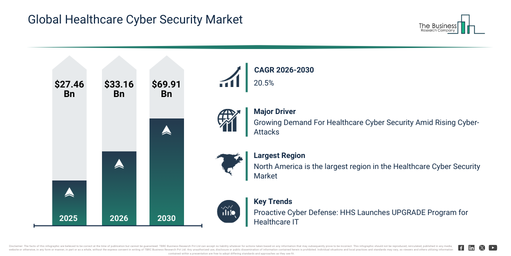
    The market for cybersecurity solutions within the healthcare sector has experienced significant expansion lately. Projections indicate a rise from $27.46 billion in 2025 to $33.16 billion in 2026, reflecting a compound annual growth rate of 20.7%. This upward trajectory is fueled by a confluence of factors including the increasing digitalization of healthcare processes, a surge in reported breaches of sensitive health information, the proliferation of networked medical equipment, the widespread implementation of electronic health records, and intensified regulatory oversight concerning data privacy.

    The cybersecurity market within the healthcare sector is poised for substantial expansion over the coming years, projected to reach a valuation of $69.91 billion by 2030, driven by a compound annual growth rate of 20.5%. This anticipated surge is fueled by several key factors, including heightened commitments to sophisticated cybersecurity infrastructure, a greater embrace of artificial intelligence for analyzing threats, the broader integration of telehealth and remote patient care, a concentrated effort on mitigating ransomware attacks, and an escalating need for unified security management protocols. Furthermore, prominent developments anticipated during this period involve the wider implementation of zero-trust security architectures, an increased uptake of cloud-based security measures, a more rigorous focus on safeguarding medical devices, the advancement of AI-powered threat identification mechanisms, and a strengthened dedication to ensuring security compliance with regulations.

    Download A Free Sample Report For Comprehensive Market Insights:

    https://www.thebusinessresearchcompany.com/sample.aspx?id=7325&type=smp

    Healthcare Cyber Security Market Expansion Supported By Key Demand Factors

    An escalating frequency of cyber incidents within the healthcare sector is poised to catalyze the expansion of the healthcare cybersecurity market. The pervasive adoption of digital technologies across healthcare has inadvertently amplified the vulnerability to cyber threats, necessitating robust cybersecurity software solutions, thereby fueling the demand for such services. For example, the United States Department of Health and Human Services reported a substantial 104% escalation in data breaches affecting U.S. healthcare providers between mid-2022 and mid-2023, with incidents climbing from 160 to 327. This notable uptick compromised the information of over 40 million individuals, representing a 60% year-over-year increase in the first half of 2023. Consequently, the rising tide of cyberattacks targeting healthcare is a principal factor propelling the healthcare cybersecurity market’s growth trajectory in the foreseeable future.

    Healthcare Cyber Security Market Segment Landscape: Which Areas Lead Market Development?

    The healthcare cyber security market covered in this report is segmented –

    1) By Threat Type: Malware, Distributed Denial Of Service (DDoS), Advanced Persistent Threats (APT), Spyware, Other Threat Types

    2) By Solution: Identity And Access Management, Risk And Compliance Management, Antivirus and Antimalware, DDoS Mitigation, Security Information And Event Management, Intrusion Detection System And Intrusion Prevention System, Others Solutions

    3) By Security Measures: Application Security, Network Security, Device Security, Other Security Measures

    4) By Deployment: On-Premises, Cloud-Based

    5) By End User: Pharmaceutical Industries, Biotechnology Industries, Hospital, Medical Device Companies, Health Insurance Companies, Other End Users

    Subsegments:

    1) By Malware: Ransomware, Trojans, Viruses, Worms

    2) By Distributed Denial Of Service (DDoS): Volumetric Attacks, Protocol Attacks, Application Layer Attacks

    3) By Advanced Persistent Threats (APT): Targeted Attacks, Spear Phishing, Insider Threats

    4) By Spyware: Keyloggers, Adware, Tracking Cookies

    5) By Other Threat Types: Phishing Attacks, Credential Theft, Man-In-The-Middle Attacks, Data Breaches

    Healthcare Cyber Security Market Growth Trends Influencing Competitive Dynamics

    Healthcare cybersecurity market leaders are investing heavily in sophisticated security solutions, encompassing artificial intelligence, machine learning, and threat mitigation strategies, in response to the escalating number of cyberattacks directed at protected health information and critical healthcare infrastructure. The initiative intends to establish a system enabling medical facilities to replicate their digital infrastructures, thereby pinpointing potential weaknesses prior to exploitation by malicious actors. As an illustration, the Advanced Research Projects Agency for Health, an American entity dedicated to fostering biomedical and health advancements, initiated the UPGRADE program in May 2024, committing $50 million toward the creation of cybersecurity instruments for healthcare IT departments. This program prioritizes the automatic detection and remediation of software flaws with minimal interference to hospital workflows, aiming to resolve persistent security issues within the healthcare industry through proactive vulnerability analysis and threat management.

    Healthcare Cyber Security Market Industry Leaders And Market Competition

    Major companies operating in the healthcare cyber security market are Irdeto a Verizon company, Lockheed Martin Corporation, Intel Corporation, IBM Corporation, Cisco Systems Inc., Northrop Grumman Corporation, Broadcom Inc., Atos SE, Booz Allen Hamilton Inc., Palo Alto Networks Inc., McAfee LLC, Check Point Software Technologies Ltd., Trend Micro Incorporated, Kaspersky Lab, CyberArk Software Ltd., Imperva Inc., FireEye Inc., Imprivata Inc., Claroty Inc., Forescout Technologies Inc, Menlo Security Inc., Bitglass Inc., Medigate Ltd., Fortified Health Security Inc., Sensato Cybersecurity Solutions Inc., CybelAngel, Armis Inc., CrowdStrike Inc.

    Access The Complete Healthcare Cyber Security Market Report:

    https://www.thebusinessresearchcompany.com/report/healthcare-cyber-security-global-market-report

    Healthcare Cyber Security Market Leading Geography: Which Region Generates The Most Revenue?

    North Americawas the largest region in the healthcare cyber security market in 2025. The regions covered in the healthcare cyber security market report are Asia-Pacific, South East Asia, Western Europe, Eastern Europe, North America, South America, Middle East, Africa.

    Get in touch with us:

    The Business Research Company: https://www.thebusinessresearchcompany.com/

    Americas: +1 310-496-7795

    Asia: +44 7882 955267 & +91 8897263534

    Europe: +44 7882 955267

    Email us at: marketing@tbrc.info

    Follow us on:

    LinkedIn: https://in.linkedin.com/company/the-business-research-company

    YouTube: https://www.youtube.com/channel/UC24_fI0rV8cR5DxlCpgmyFQ

    Global Market Model: https://www.thebusinessresearchcompany.com/global-market-model
  • Healthcare CRO Services Market Expected To Reach $105.23 Billion By 2030 As Growth Accelerates At 9.6% CAGR

    Healthcare CRO Services Market Expected To Reach $105.23 Billion By 2030 As Growth Accelerates At 9.6% CAGR

    Enhanced with market attractiveness analysis, total addressable market evaluation, company benchmarking matrices, interactive Excel dashboards, expanded supply chain intelligence, emerging startup coverage, and detailed product insights, The Business Research Company’s 2026 market reports deliver more actionable and strategically valuable research.

    Healthcare CRO Services Market Forecast: What Market Value Is Expected By 2030?

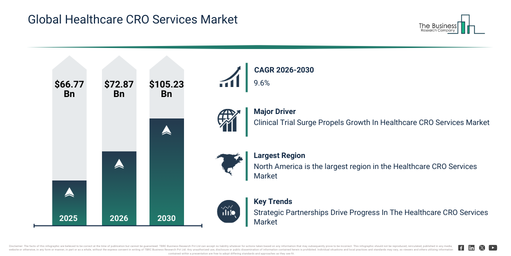
    The global market for healthcare Contract Research Organization (CRO) services has experienced robust expansion. Projections indicate a continued upward trajectory, escalating from $66.77 billion in 2025 to $72.87 billion by 2026, reflecting a compound annual growth rate of 9.1%. Key factors underpinning this historical growth include the escalating volume of clinical trials worldwide, augmented investments in research and development, the intricate nature of regulatory approval pathways, an expanding pipeline of pharmaceutical products, and the readily available specialized knowledge offered by CROs.

    The market for healthcare Contract Research Organization (CRO) services is poised for significant expansion in the coming years, with projections indicating a rise to $105.23 billion by 2030, reflecting a compound annual growth rate (CAGR) of 9.6%. This anticipated growth is propelled by several key factors during the forecast period, including the escalating embrace of decentralized clinical trials, a heightened need for accelerated drug development schedules, the continuous expansion of research into biologics and biosimilar products, a greater emphasis on collecting and analyzing real-world evidence, and increasing financial commitments towards precision medicine research initiatives. Furthermore, prevailing trends shaping this market over the forecast horizon encompass a greater tendency for companies to outsource clinical trial operations, the increasing integration of data-driven approaches in managing trials, a growing preference for comprehensive, end-to-end CRO solutions, the further proliferation of decentralized and virtual clinical trial models, and a sharpened focus on providing robust support for regulatory compliance.

    Download A Free Sample Report For Comprehensive Market Insights:

    https://www.thebusinessresearchcompany.com/sample.aspx?id=12136&type=smp

    Healthcare CRO Services Market Growth Drivers And Industry Catalysts

    The expansion of clinical trials is anticipated to fuel the progression of the healthcare CRO services sector. Clinical trials are meticulously designed scientific investigations that involve human volunteers to evaluate how safe and effective new medical treatments, including medications, therapies, equipment, or methods, truly are. Contract research organizations (CROs) are instrumental in the execution of these trials, providing a comprehensive suite of services that empower pharmaceutical and biotech firms to plan, undertake, and oversee their research endeavors with optimal efficiency and successful outcomes. For example, data from the Association of the British Pharmaceutical Industry (ABPI) in December 2024 indicated a slight uptick in the UK, with the initiation of clinical trials increasing from 411 in 2022 to 426 in 2023, underscoring the upward trajectory that is consequently propelling the growth within the healthcare CRO services market.

    Healthcare CRO Services Market Segments: Where Are The Largest Growth Opportunities?

    The healthcare cro services market covered in this report is segmented –

    1) By Service Type: Early Phase Development, Clinical Development Services, Laboratory Services, Consulting Services

    2) By Therapeutic Area: Oncology, CNS Disorder, Cardiovascular Disease, Metabolic Disease, Infectious Disease, Diabetes, Other Therapeutic Areas

    3) By End User: Pharmaceutical Companies, Medical Device Companies, Academic Institutes

    Subsegments:

    1) By Early Phase Development: Preclinical Studies, Phase I Trials, Formulation Development

    2) By Clinical Development Services: Phase II Trials, Phase III Trials, Patient Recruitment And Retention, Site Management

    3) By Laboratory Services: Bioanalytical Testing, Clinical Laboratory Services, Safety And Toxicology Testing

    4) By Consulting Services: Regulatory Affairs Consulting, Market Access And Commercialization, Strategic Planning And Feasibility Studies

    #Healthcare CRO Services Market Trends Influencing Long-Term Demand

    To expand their reach and enhance their offerings in the global healthcare contract research organization (CRO) services sector, key players are increasingly engaging in strategic collaborations to provide sophisticated proteomics CRO solutions to biopharmaceutical firms and those involved in biomarker research. This strategic partnering involves entities pooling their respective expertise and assets for shared gains and accomplishments. As an illustration, consider the alliance formed in January 2023 between Bruker Corporation, an American maker of scientific equipment, and Biognosys AG, a healthcare CRO service provider based in Switzerland. This union is expected to yield unique advantages by combining Biognosys’ comprehensive suite of proprietary proteomics services, software, and kits with Bruker’s cutting-edge timsTOF platform, ultimately facilitating the launch of Biognosys’ first advanced proteomics CRO services laboratory in the United States.

    Healthcare CRO Services Market Major Participants And Competitive Dynamics

    Major companies operating in the healthcare cro services market are Laboratory Corporation of America Holdings., IQVIA Inc., Icon Plc., PPD Inc., Wuxi Apptec Co. Ltd., Syneos Health Inc., Parexel International Corporation, Charles River Laboratories International Inc., Covance Inc., Medpace Inc., Pharmaron Beijing Co. Ltd., BioClinica Inc., Chiltern International Ltd., Evotec SE, PSI CRO AG, Premier Research Group Ltd., Worldwide Clinical Trials Inc., Caidya, BioTelemetry Inc., Syngene International Limited, Novotech CRO, Celerion, GVK Biosciences Private Limited, Synteract Inc., Veristat LLC., ACM Global Laboratories, ClinTec Luxembourg SA, Clinlogix LLC

    Access The Complete Healthcare CRO Services Market Report:

    https://www.thebusinessresearchcompany.com/report/healthcare-cro-services-global-market-report

    Healthcare CRO Services Market Regional Outlook: Where Are The Largest Opportunities Located?

    North America was the largest region in the healthcare CRO services market in 2025. Asia-Pacific is expected to be the fastest-growing region in the forecast period. The regions covered in the healthcare cro services market report are Asia-Pacific, South East Asia, Western Europe, Eastern Europe, North America, South America, Middle East, Africa.

    Get in touch with us:

    The Business Research Company: https://www.thebusinessresearchcompany.com/

    Americas: +1 310-496-7795

    Asia: +44 7882 955267 & +91 8897263534

    Europe: +44 7882 955267

    Email us at: marketing@tbrc.info

    Follow us on:

    LinkedIn: https://in.linkedin.com/company/the-business-research-company

    YouTube: https://www.youtube.com/channel/UC24_fI0rV8cR5DxlCpgmyFQ

    Global Market Model: https://www.thebusinessresearchcompany.com/global-market-model
  • Healthcare CRM Market Set To Grow From $28.15 Billion In 2026 To $52.41 Billion By 2030 At A CAGR Of 16.8%

    Healthcare CRM Market Set To Grow From $28.15 Billion In 2026 To $52.41 Billion By 2030 At A CAGR Of 16.8%

    Through market attractiveness analysis, total addressable market evaluation, company benchmarking matrices, interactive Excel dashboards, expanded supply chain intelligence, emerging startup coverage, and detailed product insights, The Business Research Company’s 2026 market reports provide more actionable and strategically valuable research.

    Healthcare CRM Market Size Outlook: How Fast Will Revenue Grow Through 2030?

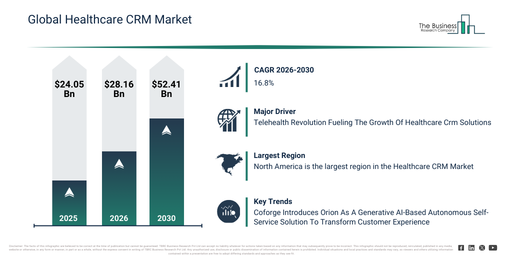
    The healthcare CRM market demonstrated robust expansion, projected to increase from $24.05 billion in 2025 to $28.16 billion in 2026, reflecting a compound annual growth rate of 17.1%. This upward trajectory during the historical period was propelled by several key factors, including the increasing digitization of medical records, a heightened demand for effective patient relationship management strategies, the proliferation of private healthcare facilities, a growing emphasis on enhancing the patient experience, and the ready availability of healthcare information technology infrastructure.

    The United States Healthcare CRM market is projected to experience substantial expansion, reaching an estimated value of $52.41 billion by the year 2030, fueled by a compound annual growth rate (CAGR) of 16.8%. This upward trajectory is largely propelled by several key factors, including the growing embrace of value-based healthcare frameworks, a rise in financial commitments towards digital health technologies, escalating consumer desire for tailored healthcare interactions, a broader implementation of cloud-based CRM systems, and an intensified governmental emphasis on the clarity of patient information. Furthermore, prominent developments anticipated during this expansion phase encompass a greater utilization of integrated patient data systems, increased application of predictive analysis to foster patient involvement, deeper synergy between CRM and Electronic Health Record (EHR) platforms, the proliferation of cloud-hosted healthcare CRM services, and a heightened concentration on customized patient outreach strategies.

    Download A Free Sample Report For Comprehensive Market Insights:

    https://www.thebusinessresearchcompany.com/sample.aspx?id=7324&type=smp

    Healthcare CRM Market Opportunity Drivers: What Is Creating New Revenue Potential?

    The increasing integration of telehealth services is anticipated to be a significant catalyst for the expansion of the healthcare CRM market going forward. Telehealth, encompassing the application of digital communication and information technologies across various healthcare domains including clinical care, patient and professional education, health administration, and public health initiatives, enables the remote provision of medical services by fostering digital connections between individuals seeking care and medical practitioners. Within this burgeoning telehealth landscape, healthcare CRM solutions are instrumental, offering essential functionalities for effective management of patient communications, appointment coordination, data consolidation, and seamless interaction, thereby enhancing patient involvement and the delivery of care from a distance. Supporting this trend, data from April 2024 revealed a substantial increase in virtual consultations, with 1,301,924 General Practitioner appointments conducted via video or online platforms in the UK, a marked rise from the 172,114 recorded in April 2023, as reported by Health-tech news in June 2024. Consequently, the escalating use of telehealth is a key driver for the healthcare CRM market.

    Healthcare CRM Market Segment Analysis: What Are The Major Market Categories?

    The healthcare crm market covered in this report is segmented –

    1) By Component: Software, Services

    2) By Technology: Predictive, Mobile, Social, Collaborative, Other Technologies

    3) By Deployment Model: On-Premise Model, Web or Cloud-based Model

    4) By Application: Community Outreach, Community Health Education, Service Outreach or Promotion, Financial Donor Management, Case Coordination, Patient Information Management, Pre-Authorizations or Eligibility, Other Applications

    5) By End-Users: Providers, Payers, Life Science Industry

    Subsegments:

    1) By Software: Patient Relationship Management Software, Marketing Automation Software, Analytics And Reporting Tools, Appointment Scheduling Software

    2) By Services: Consulting Services, Implementation Services, Training And Support Services, Maintenance Services

    Healthcare CRM Market Innovation Trends Driving Future Development

    Companies leading the healthcare CRM sector are actively developing cutting-edge solutions, including AI-powered autonomous self-service options, aimed at empowering individuals to manage their health requirements more effectively, thereby improving their overall journey. An AI-driven autonomous self-service capability is fundamentally a technological framework that leverages artificial intelligence to empower users to resolve problems or access data independently, bypassing the need for direct human assistance. Illustrating this, in March 2024, Coforge Limited, an IT firm originating from India, introduced Orion. Orion represents a generative AI-based autonomous self-service tool engineered to elevate customer interactions across a variety of sectors. This pioneering platform automates both outgoing and incoming customer calls, facilitating proactive engagement and delivering sophisticated answers to queries, which substantially surpasses the potential of conventional automated systems. Orion can be seamlessly incorporated with current CRM infrastructures and external application programming interfaces (APIs), tackling issues such as elevated error frequencies and diminishing the substantial resource investment typically required for training.

    Healthcare CRM Market Leading Companies Driving Competitive Growth

    Major companies operating in the healthcare crm market are Accenture plc, Allscripts Healthcare LLC, Amdocs, Cerner Corporation, Healthgrades Marketplace LLC, IBM Corporation, Infor Inc., Microsoft Corporation, NICE Systems Inc., Oracle Corporation, Pegasystems Inc., R1 RCM Inc., SAP SE, SugarCRM Inc., Veeva Systems Inc., Verint Systems Inc., Zoho Corporation Pvt. Ltd., Athenahealth, ChARM Health Pty Ltd., CureMD Inc., DocPlanner Group, DrChrono, eClinicalWorks, Epic Systems Corp., Evariant Co., Greenway Health, HubSpot Inc., Insightly Inc.

    Access The Complete Healthcare CRM Market Report:

    https://www.thebusinessresearchcompany.com/report/healthcare-crm-global-market-report

    Healthcare CRM Market Geographic Landscape: Which Region Dominates Industry Growth?

    North Americawas the largest region in the healthcare CRM market in 2025. The regions covered in the healthcare crm market report are Asia-Pacific, South East Asia, Western Europe, Eastern Europe, North America, South America, Middle East, Africa.

    Get in touch with us:

    The Business Research Company: https://www.thebusinessresearchcompany.com/

    Americas: +1 310-496-7795

    Asia: +44 7882 955267 & +91 8897263534

    Europe: +44 7882 955267

    Email us at: marketing@tbrc.info

    Follow us on:

    LinkedIn: https://in.linkedin.com/company/the-business-research-company

    YouTube: https://www.youtube.com/channel/UC24_fI0rV8cR5DxlCpgmyFQ

    Global Market Model: https://www.thebusinessresearchcompany.com/global-market-model