Month: June 2026

  • Health Economics and Outcomes Research (HEOR) Services Market Forecast Signals New Revenue Opportunities Through 2030

    Health Economics and Outcomes Research (HEOR) Services Market Forecast Signals New Revenue Opportunities Through 2030

    Through market attractiveness analysis, total addressable market evaluation, company benchmarking matrices, interactive Excel dashboards, expanded supply chain intelligence, emerging startup coverage, and detailed product insights, The Business Research Company’s 2026 market reports provide more actionable and strategically valuable research.

    Health Economics and Outcomes Research (HEOR) Services Market Forecast Highlighting Growth From $1.97 Billion To $3.11 Billion

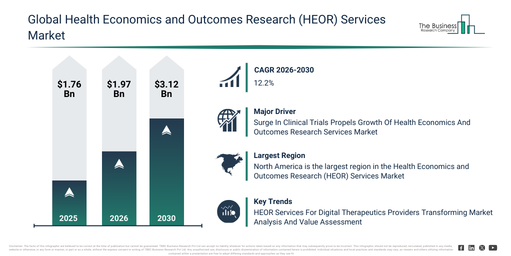
    The health economics and outcomes research (heor) services sector is experiencing a period of significant expansion. Projections indicate a market valuation escalating from $1.76 billion in 2025 to $1.97 billion in 2026, reflecting a compound annual growth rate of 12.1%. This upward trajectory observed during the historical period is largely a consequence of mounting pressures to control healthcare expenditures, a burgeoning need for evidence tailored to payer perspectives, advancements in pharmaceutical clinical investigations, the wider deployment of epidemiological data in research, and an amplified dependency on external research service providers.

    The health economics and outcomes research (HEOR) services sector is poised for significant expansion over the upcoming years, projecting a market value of $3.12 billion by 2030 with a compound annual growth rate (CAGR) of 12.2%. This anticipated growth is propelled by several key factors, including the escalating implementation of AI-powered health economic models, a heightened demand for evaluations supporting personalized medicine, the broader availability of real-world data, a greater emphasis on reimbursement structures tied to patient outcomes, and increased regulatory oversight concerning pricing methodologies. During this forecast period, several notable trends are expected to shape the market, such as the amplified utilization of real-world evidence analytics, a growing need for value-based healthcare assessments, the deeper integration of sophisticated economic modeling techniques, an expansion in market access consulting, and a more rigorous approach to outcomes research that adheres to regulatory standards.

    Download A Free Sample Report For Comprehensive Market Insights:

    https://www.thebusinessresearchcompany.com/sample.aspx?id=11933&type=smp

    Health Economics and Outcomes Research (HEOR) Services Market Demand Drivers Creating New Revenue Opportunities

    An increasing volume of clinical trials is anticipated to be the primary driver propelling the expansion of the health economics and outcomes research (HEOR) services market. These trials, which are investigative studies involving human subjects to assess the safety and efficacy of novel medical treatments, therapies, or diagnostic methods, increasingly integrate HEOR services. Such services focus on assessing the economic implications, cost-effectiveness, and actual-world results of medical interventions, thereby furnishing critical data for strategic decision-making and reimbursement policies. Illustrating this trend, the Association of the British Pharmaceutical Industry (ABPI) reported in December 2024 that the United Kingdom witnessed a second consecutive year of growth in pharmaceutical industry trials launched, escalating from 411 in 2022 to 426 in 2023. Consequently, this upswing in clinical trial activity directly fuels the growth trajectory of the HEOR services market.

    Health Economics and Outcomes Research (HEOR) Services Market Segment Analysis And Revenue Opportunities

    The health economics and outcomes research (heor) services market covered in this report is segmented –

    1) By Service: Real World Evidence, Payer Evidence, Pricing And Reimbursement, Epidemiology Studies, Market Access, Other Services

    2) By Offering: Outsourced, In-House

    3) By Service Provider: Consultancy, Contract Research Organizations (CRO)

    4) By End-Use: Healthcare Provider, Healthcare Payers, Biotechnology And Pharmaceutical Companies, Government Organization, Other End-Users

    Subsegments:

    1) By Real World Evidence: Data Analysis And Interpretation, Patient Registries, Observational Studies

    2) By Payer Evidence: Health Technology Assessments (HTAs): Value Dossier Development, Payer Engagement Strategies

    3) By Pricing And Reimbursement: Pricing Strategy Development: Reimbursement Submission Support, Economic Modeling

    4) By Epidemiology Studies: Disease Burden Analysis: Prevalence And Incidence Studies, Natural History Studies

    5) By Market Access: Market Assessment, Stakeholder Engagement, Health Economic Models

    6) By Other Services: Clinical Outcomes Assessment, Patient Reported Outcomes (PRO) Studies, Health Economic Consulting

    Health Economics and Outcomes Research (HEOR) Services Market Trends Driving Strategic Industry Expansion

    Leading entities within the health economics and outcomes research (HEOR) services sphere are directing their efforts toward creating HEOR solutions tailored for digital therapeutics enterprises. These organizations are exploring the application of HEOR services across a wider range of industries, specifically targeting digital therapeutics, to furnish vendors with enhanced market intelligence. A pertinent example occurred in November 2023 when Curavit, a research firm based in the United States, introduced HEOR services designed for digital therapeutic trials. The core of these services will revolve around ascertaining the health economic value proposition of digital therapeutics, with evaluations conducted at both the individual patient and broader population healthcare levels. To precisely measure the financial implications stemming from digital therapeutic interventions, HEOR methodologies will be integrated into clinical trial designs and subsequently analyzed upon the study’s conclusion.

    Health Economics and Outcomes Research (HEOR) Services Market Leading Players Shaping Industry Direction

    Major companies operating in the health economics and outcomes research (heor) services market are McKesson Corporation, Optum Inc., Cardinal Health, IQVIA Inc., ICON PLC, PPD Inc., Syneos Health, Medlior Health Outcomes Research Ltd., Axtria Inc., Parexel International, RTI Health Solutions, Wellth Inc., Westat, SidekickHealth, Analysis Group, Carelon Research, Precision Health Economics, Avalon Health Economics LLC, Lumanity Inc., Pharmerit BV, Epistemix Inc., Bohn Epidemiology LLC

    Access The Complete Health Economics and Outcomes Research (HEOR) Services Market Report:

    https://www.thebusinessresearchcompany.com/report/health-economics-and-outcomes-research-heor-services-global-market-report

    Health Economics and Outcomes Research (HEOR) Services Market Regional Outlook: Where Are The Largest Opportunities Located?

    North America was the largest region in the health economics and outcomes research (HEOR) services market in 2025. Asia-Pacific is expected to be the fastest-growing region in the forecast period. The regions covered in the health economics and outcomes research (heor) services market report are Asia-Pacific, South East Asia, Western Europe, Eastern Europe, North America, South America, Middle East, Africa.

    Get in touch with us:

    The Business Research Company: https://www.thebusinessresearchcompany.com/

    Americas: +1 310-496-7795

    Asia: +44 7882 955267 & +91 8897263534

    Europe: +44 7882 955267

    Email us at: marketing@tbrc.info

    Follow us on:

    LinkedIn: https://in.linkedin.com/company/the-business-research-company

    YouTube: https://www.youtube.com/channel/UC24_fI0rV8cR5DxlCpgmyFQ

    Global Market Model: https://www.thebusinessresearchcompany.com/global-market-model
  • Health Coach Market Growth Is Accelerating As Industry Transformation Continues

    Health Coach Market Growth Is Accelerating As Industry Transformation Continues

    Delivering more actionable and strategically valuable research, The Business Research Company’s 2026 market reports feature market attractiveness analysis, total addressable market evaluation, company benchmarking matrices, interactive Excel dashboards, expanded supply chain intelligence, emerging startup coverage, and detailed product insights.

    Health Coach Market Revenue Growth Supported By A CAGR Of 32.07% Through 2030

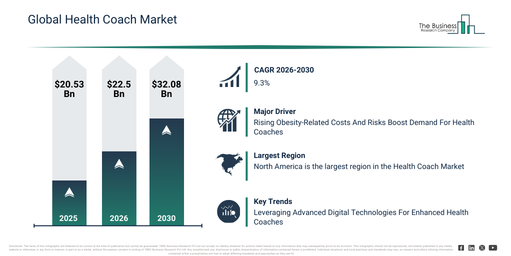
    The health coaching industry has experienced substantial expansion lately, with projections indicating continued robustness; it is anticipated to ascend from $20.53 billion in 2025 to $22.5 billion in 2026, reflecting a compound annual growth rate of 9.6%. This upward trajectory observed during the historical period is underpinned by several key factors, including a heightened public consciousness regarding health concerns tied to lifestyle choices, the proliferation of healthcare services dedicated to well-being, an escalating need for tailor-made health advice, the burgeoning implementation of corporate wellness initiatives, and a broader embrace of coaching methodologies in health interventions.

    The health coach sector is projected for significant expansion in the coming years, anticipating a market valuation of $32.08 billion by 2030, underpinned by a compound annual growth rate (CAGR) of 9.3%. This anticipated growth is propelled by several key factors, including the escalating acceptance of both virtual and hybrid coaching methodologies, a heightened emphasis on sustainable lifestyle alteration strategies, the broadening scope of employer-provided wellness programs, the increasing synergy between wearable technology and coaching, and a surge in capital directed towards digital health infrastructure. Key developments shaping this period encompass the wider integration of digital health coaching platforms, a growing appetite for bespoke wellness plans, the more prevalent application of artificial intelligence for monitoring behavioral patterns, the extension of workplace wellness programs, and a reinforced commitment to proactive health management approaches.

    Download A Free Sample Report For Comprehensive Market Insights:

    https://www.thebusinessresearchcompany.com/sample.aspx?id=19498&type=smp

    Health Coach Market Expansion Supported By Key Demand Factors

    The escalating prevalence of obesity, a condition marked by an unhealthy accumulation of body fat that escalates health hazards, is projected to act as a significant impetus for the expansion of the health coach market. This rise in obesity is largely attributed to a confluence of lifestyle factors including suboptimal dietary habits, insufficient physical exertion, and predominantly sedentary routines. Health coaches play a pivotal role in addressing obesity by offering tailored support and strategies focused on dietary adjustments, physical activity regimens, and habit modifications, thereby facilitating weight management and enhancing general well-being. As an illustration, data from England, as reported in May 2024 by the Office for Health Improvement and Disparities, indicated that during the 2022-2023 period, an estimated 64.0% of adults aged 18 and above were classified as overweight or obese, underscoring the substantial public health challenge and, consequently, the growing demand for health coaching services.

    Health Coach Market Segmentation And Category Breakdown

    The health coach market covered in this report is segmented –

    1) By Type: Holistic Health Coaching, Wellness Health Coaching, Primal Or Paleo Health Coaching

    2) By Service Type: Nutrition Coaching, Exercise And Fitness Coaching, Lifestyle Coaching, Weight Management Coaching, Chronic Condition Coaching, Stress Management Coaching, Other Service Types

    3) By Coach Type: Personal Coach, Family Coach, Corporate Coach

    4) By Mode: Online, Offline

    5) By End Users: Fitness Centre, Corporate Organizations, Individuals

    Subsegments:

    1) By Holistic Health Coaching: Mindfulness and Stress Management, Nutrition and Dietary Guidance, Lifestyle and Habit Change Coaching

    2) By Wellness Health Coaching: Fitness and Exercise Coaching, Preventive Health Coaching

    3) By Primal or Paleo Health Coaching: Paleo Diet Coaching, Primal Lifestyle Coaching, Fitness and Movement Guidance within Primal Framework

    Health Coach Market Growth Trends Influencing Competitive Dynamics

    Leading players in the health coaching sector are enhancing their services by incorporating sophisticated digital tools, including AI-driven hyper-personalization, to boost user interaction, deliver bespoke health guidance, and elevate client results through deeply customized, data-informed coaching. This AI-powered personalization leverages sophisticated data analysis and artificial intelligence to provide highly specific experiences and suggestions aligned with individual tastes, actions, and requirements. A prime example occurred in July 2024 when Thrive Global, a US-based technology firm focused on behavior modification, introduced its AI-powered Health Coach. This innovative solution utilizes AI-driven hyper-personalization to offer individualized health counsel derived from a user’s biometric information and personal preferences, with a particular focus on refining essential daily habits like sleep and dietary intake, aiming to boost overall wellness and ensure technology facilitates positive health changes.

    Health Coach Market Competitive Analysis Of Major Industry Participants

    Major companies operating in the health coach market are Noom Inc., Omada Health Inc., Vida Health Inc., Virta Health Corp., HealthifyMe Wellness Private Limited, BetterUp Inc., Precision Nutrition Inc., 8fit GmbH, Coach Me Healthy, Season Health, Lark Health, Wellcoaches Corporation, Naturally Slim, Wondr Health, Found Health, Second Nature, VidaFuel, AbleTo, Wellable, Nudge Health

    Access The Complete Health Coach Market Report:

    https://www.thebusinessresearchcompany.com/report/health-coach-global-market-report

    Health Coach Market Geographic Landscape: Which Region Dominates Industry Growth?

    North Americawas the largest region in the health coach market in 2025. Asia-Pacificis expected to be the fastest-growing region in the forecast period. The regions covered in the health coach market report are Asia-Pacific, South East Asia, Western Europe, Eastern Europe, North America, South America, Middle East, Africa.

    Get in touch with us:

    The Business Research Company: https://www.thebusinessresearchcompany.com/

    Americas: +1 310-496-7795

    Asia: +44 7882 955267 & +91 8897263534

    Europe: +44 7882 955267

    Email us at: marketing@tbrc.info

    Follow us on:

    LinkedIn: https://in.linkedin.com/company/the-business-research-company

    YouTube: https://www.youtube.com/channel/UC24_fI0rV8cR5DxlCpgmyFQ

    Global Market Model: https://www.thebusinessresearchcompany.com/global-market-model
  • Health Check-Up Market Outlook Highlights The Next Major Growth Opportunities

    Health Check-Up Market Outlook Highlights The Next Major Growth Opportunities

    Enhanced with market attractiveness analysis, total addressable market evaluation, company benchmarking matrices, interactive Excel dashboards, expanded supply chain intelligence, emerging startup coverage, and detailed product insights, The Business Research Company’s 2026 market reports deliver more actionable and strategically valuable research.

    Health Check-Up Market Value Expansion And Long-Term Growth Outlook

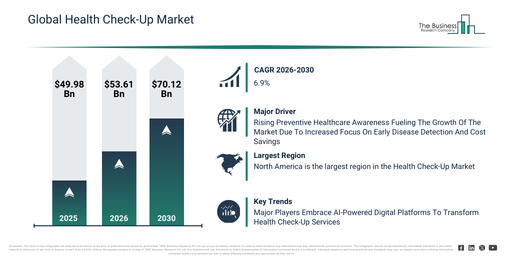
    The health check-up sector has experienced robust expansion lately, projecting a climb from $49.98 billion in 2025 to $53.61 billion in 2026, indicating a compound annual growth rate of 7.3%. This upward trajectory in the historical period stems from several key factors: a surge in lifestyle-induced ailments, the widening reach of diagnostic services, greater public consciousness regarding preventive care, a proliferation of corporate wellness initiatives, and the accessibility of cutting-edge diagnostic tools.

    The health check-up sector is poised for significant expansion over the coming years, projecting a market value of $70.12 billion by 2030, fueled by a compound annual growth rate of 6.9%. This projected growth is largely underpinned by a surge in demand for tailored health assessments, the increasing incorporation of AI-driven diagnostic tools, a broader availability of remote and at-home testing options, increased financial commitments to preventative healthcare infrastructure, and a heightened emphasis on managing the health of entire populations. Key developments anticipated during this forecast period encompass a greater embrace of preventative health screening initiatives, a more widespread application of automated diagnostic systems, a deeper integration of digital health records into routine check-ups, an expansion of health packages offered by corporations and for general wellness, and a more concentrated effort towards the early identification of diseases.

    Download A Free Sample Report For Comprehensive Market Insights:

    https://www.thebusinessresearchcompany.com/sample.aspx?id=25774&type=smp

    Health Check-Up Market Growth Drivers And Industry Catalysts

    The health check-up market is poised for expansion, fueled by a rising emphasis on preventive healthcare. This approach involves proactive health measures, including screenings, immunizations, and lifestyle adjustments, aimed at averting illness or identifying it in its nascent stages for enhanced well-being. Growing awareness among the populace regarding the substantial benefits of early disease detection, such as improved treatment efficacy and diminished long-term medical expenses, is amplifying the need for preventive services. Health check-ups play a crucial role in this paradigm by facilitating the identification of potential health concerns prior to the manifestation of symptoms, thereby mitigating the likelihood of severe conditions and fostering better long-term health. Illustratively, data from the UK Health Security Agency indicates that in England, by 2025, the 12-month uptake of the 6-in-1 vaccine reached 91.2%, a 0.1 percentage point increase, and similarly, the MenB vaccine coverage climbed by 0.1 percentage points to 91%, underscoring positive strides in preventive health initiatives. Consequently, the escalating need for preventive healthcare is a significant catalyst for the growth observed in the health check-up sector.

    Health Check-Up Market Segment Outlook: Which Categories Are Expanding The Fastest?

    The health check-up market covered in this report is segmented –

    1) By Type: General Health Check-Up, Preventive Health Check-Up, Specialized Health Check-Up, Routine And Wellness Health Check-Up

    2) By Age Group: 0-18 Years, 19-30 Years, 31-45 Years, 46-60 Years, 61 Years And Above

    3) By Technology: Automated Analyzers, Imaging Systems, Biomarkers

    4) By Application: Cardiovascular Diseases, Metabolic Disorders, Cancer, Inflammatory Conditions, Musculoskeletal Disorders, Neurological Conditions, Other Applications

    5) By End-User: Hospital-Based Laboratories, Standalone Laboratories, Central Laboratories, Ambulatory Care Centers, Other End-Users

    Subsegments:

    1) By General Health Check-Up: Basic Physical Examination, Vital Signs Monitoring, Blood Tests, Urine Analysis, Chest X-Ray, ECG (Electrocardiogram)

    2) By Preventive Health Check-Up: Cancer Screenings, Cardiovascular Risk Assessment, Diabetes Screening, Hypertension Screening, Obesity And BMI Evaluation, Immunization And Vaccination Review

    3) By Specialized Health Check-Up: Cardiac Health Check-Up, Neurological Health Check-Up, Renal Function Check-Up, Gastrointestinal Health Check-Up, Pulmonary Function Tests, Women’s And Men’s Health Packages

    4) By Routine And Wellness Health Check-Up: Annual Health Check-Up, Executive Health Packages, Corporate Or Employee Wellness Check-Up, Lifestyle Disease Screening, Nutritional Assessment, Fitness And Stress Assessment

    #Health Check-Up Market Trends Influencing Long-Term Demand

    Leading entities within the health assessment sector are prioritizing the creation of pioneering approaches, including AI-driven digital platforms for health checkups, with the objective of boosting diagnostic precision, optimizing testing workflows, and delivering tailored health evaluations. These AI-driven digital health checkup platforms encompass sophisticated systems leveraging artificial intelligence to interpret medical information, thereby facilitating quicker, more precise, and individualized health evaluations. As an illustration, in March 2024, Ubie Inc., a technology startup in the health sector based in the US, introduced its Checkup platform, an AI-enhanced digital health instrument engineered to assist individuals in independently monitoring their well-being, overseeing their medication regimens, and fostering improved interactions with their medical professionals. This platform empowers users to record symptoms, track vital signs, and monitor condition-specific indicators, commencing with asthma, facilitates automated prompts for medication adherence and scheduled appointments, and enables the direct transmission of health status updates to their respective care networks. Through the consolidation of health-related data and its integration with Ubie’s comprehensive digital environment, the Checkup platform seeks to simplify the administration of personal health maintenance, mitigate the dispersal of information across various health applications, and ultimately contribute to superior health results for both patients and the healthcare providers who serve them.

    Health Check-Up Market Key Companies And Competitive Benchmarking

    Major companies operating in the health check-up market are Kaiser Foundation Health Plan Inc, Laboratory Corporation Of America Holdings, Quest Diagnostics Incorporated, Eurofins Scientific SE, SYNLAB International GmbH, Nuffield Health, Unilabs International SA, Raffles Medical Group Ltd, ARUP Laboratories, Max Healthcare Institute Limited, Samsung Medical Center, Thyrocare Technologies Limited, Dr Lal PathLabs Limited, Acu Med Medical Group Inc, Metropolis Healthcare Limited, The Cooper Clinic Inc, Healthway Medical Group Limited, Mediway Medical Group, Sun Medical Center, Tokyo Midtown Medical Corporation, Apollo Hospitals Enterprise Limited, Fortis Healthcare Limited, Medanta The Medicity

    Access The Complete Health Check-Up Market Report:

    https://www.thebusinessresearchcompany.com/report/health-check-up-global-market-report

    Health Check-Up Market Largest Region: Which Geography Holds The Highest Market Share?

    North Americawas the largest region in the health check-up market in 2025. Asia-Pacificis expected to be the fastest-growing region in the forecast period. The regions covered in the health check-up market report are Asia-Pacific, South East Asia, Western Europe, Eastern Europe, North America, South America, Middle East, Africa.

    Get in touch with us:

    The Business Research Company: https://www.thebusinessresearchcompany.com/

    Americas: +1 310-496-7795

    Asia: +44 7882 955267 & +91 8897263534

    Europe: +44 7882 955267

    Email us at: marketing@tbrc.info

    Follow us on:

    LinkedIn: https://in.linkedin.com/company/the-business-research-company

    YouTube: https://www.youtube.com/channel/UC24_fI0rV8cR5DxlCpgmyFQ

    Global Market Model: https://www.thebusinessresearchcompany.com/global-market-model
  • Health Care Social Media Market Trends And Growth Drivers Point To Strong Future Potential

    Health Care Social Media Market Trends And Growth Drivers Point To Strong Future Potential

    Through market attractiveness analysis, total addressable market evaluation, company benchmarking matrices, interactive Excel dashboards, expanded supply chain intelligence, emerging startup coverage, and detailed product insights, The Business Research Company’s 2026 market reports provide more actionable and strategically valuable research.

    Health Care Social Media Market Expected To Reach $23.56 Billion By 2030 At 10% CAGR

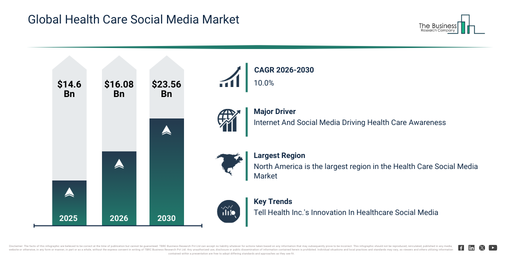
    Throughout recent periods, expansion within the healthcare sector’s social media market has been notable, projected to increase from a valuation of $14.6 billion in 2025 to $16.08 billion by 2026, indicating a compound annual growth rate of 10.1%. Factors contributing to this historical upward trajectory include the proliferation of digital avenues for healthcare communication, a surge in internet and smartphone accessibility, a heightened adoption of social platforms by medical practitioners, the development of virtual patient support networks, and the economic advantages over conventional promotional methods.

    Anticipate a significant expansion in the healthcare social media sector over the coming years, projecting a valuation of $23.56 billion by 2030, fueled by a compound annual growth rate of 10.0%. This projected surge is largely propelled by heightened requirements for customized patient interactions, a growing embrace of artificial intelligence for managing online content, the proliferation of engagement strategies centered on telehealth, an amplified concentration on digital communication that adheres to regulations, and increased financial commitments towards digital marketing within the healthcare industry. Key developments anticipated during this forecast period include a broader implementation of platforms designed to foster patient involvement, a greater reliance on content strategies informed by data analysis, a more pronounced emphasis on managing an organization’s online standing, the enlargement of healthcare networks built on community structures, and a reinforced commitment to safeguarding data privacy and ensuring regulatory adherence.

    Download A Free Sample Report For Comprehensive Market Insights:

    https://www.thebusinessresearchcompany.com/sample.aspx?id=7775&type=smp

    Health Care Social Media Market Opportunity Drivers: What Is Creating New Revenue Potential?

    The burgeoning utilization of the internet and social media platforms is poised to significantly boost the healthcare social media market. As internet accessibility broadens, novel business strategies and enhanced customer interactions are emerging to cater to evolving organizational and market demands. This surge in internet penetration, coupled with escalating social media subscriptions, heightened communication necessities, and other contributing factors, fuels the growing demand for social media services. The COVID-19 pandemic, characterized by extended lockdowns and remote work arrangements, witnessed a dramatic upswing in smartphone, social media, and internet consumption. This amplified engagement with digital platforms has, in turn, fostered greater adoption of healthcare social media, owing to its improved user experience, which equips medical professionals with mechanisms to disseminate information, deliberate on healthcare policies, and elevate public health awareness. Illustratively, reports from We Are Social Ltd, a UK-based media entity, indicate that social media usage escalated by 1.5% in January 2024, a notable increase from the 0.9% recorded in January 2023. Furthermore, data from the European Commission, a governing body based in Belgium responsible for implementing decisions and upholding EU treaties, revealed in April 2024 that 92% of surveyed individuals aged 16–74 had utilized the internet in the preceding year, with 70% engaging in online purchases, reflecting a 2% rise compared to 2022. Consequently, the expanding reach of the internet and social media is a primary driver for the healthcare social media market.

    Health Care Social Media Market Segment Landscape: Which Areas Lead Market Development?

    The health care social media market covered in this report is segmented –

    1) By Component: Software, Services

    2) By Product: YouTube, Twitter, Instagram, Facebook

    3) By End Users: Hospitals, Medical Professionals, Patients

    Subsegments:

    1) By Software: Social Media Management Tools, Analytics And Reporting Software, Content Creation And Editing Software

    2) By Services: Social Media Marketing Services, Consulting Services, Content Creation And Management Services, Community Management Services, Training And Support Services

    Health Care Social Media Market Innovation Trends Driving Future Development

    In the healthcare social media landscape, key players are prioritizing advancements in their offerings, exemplified by the development of a social media application aimed at curbing the proliferation of health-related falsehoods. Such an application represents a digital environment where individuals can generate, disseminate, and engage with content, thereby promoting digital interaction and community building between people or communities. As a case in point, in January of 2023, the US entity Tell Health Inc., which operates a health-focused social media service, introduced its Tell social media application. This debut is particularly noteworthy due to its novel characteristics, such as rigorous vetting processes for the credentials of health professionals and the establishment of a medical advisory panel composed of physicians from prestigious Ivy League institutions. These measures serve to guarantee that information is exclusively disseminated by competent experts, thereby tackling existing obstacles within the healthcare social media sector by furnishing a trustworthy repository of health data confirmed by physicians and actively countering the dissemination of inaccurate health claims.

    Health Care Social Media Market Industry Leaders And Market Competition

    Major companies operating in the health care social media market are Mayo Clinic, Cleveland Clinic, Johns Hopkins Medicine, WebMD Health Corp., Medici Health Corporation, CareHubs Inc., Doximity Inc., QuantiaMD Inc., Healthline Media Inc., HealthLoop Inc., PatientsLikeMe Inc., HealthTap Inc., WEGO Health Inc., MyHealthTeams Inc., MedHelp Inc., HealthBoards Inc., DailyStrength Inc., Sermo, Student Doctors Network Inc., Nurse Zone Inc., CureTogether Inc., MomMD LLC, HealthUnlocked, Orthomind LLC, All Nurses Inc., Medscape Inc., Doctella Inc., Inspire Health Network Inc., Smart Patients LLC

    Access The Complete Health Care Social Media Market Report:

    https://www.thebusinessresearchcompany.com/report/health-care-social-media-global-market-report

    Health Care Social Media Market Regional Analysis: Which Region Leads By Revenue?

    North Americawas the largest region in the healthcare social media market in 2025. The regions covered in the health care social media market report are Asia-Pacific, South East Asia, Western Europe, Eastern Europe, North America, South America, Middle East, Africa.

    Get in touch with us:

    The Business Research Company: https://www.thebusinessresearchcompany.com/

    Americas: +1 310-496-7795

    Asia: +44 7882 955267 & +91 8897263534

    Europe: +44 7882 955267

    Email us at: marketing@tbrc.info

    Follow us on:

    LinkedIn: https://in.linkedin.com/company/the-business-research-company

    YouTube: https://www.youtube.com/channel/UC24_fI0rV8cR5DxlCpgmyFQ

    Global Market Model: https://www.thebusinessresearchcompany.com/global-market-model
  • Head And Neck Squamous Cell Carcinoma Market Expansion Is Reshaping Competitive Dynamics Across The Industry

    Head And Neck Squamous Cell Carcinoma Market Expansion Is Reshaping Competitive Dynamics Across The Industry

    Delivering more actionable and strategically valuable research, The Business Research Company’s 2026 market reports feature market attractiveness analysis, total addressable market evaluation, company benchmarking matrices, interactive Excel dashboards, expanded supply chain intelligence, emerging startup coverage, and detailed product insights.

    Head And Neck Squamous Cell Carcinoma Market Size And Revenue Forecast Through 2030

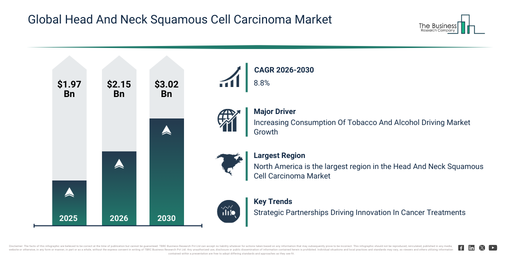
    Fueled by increasing tobacco and alcohol use, alongside higher squamous cell carcinoma diagnoses and a growing pipeline of oncological drugs, the head and neck squamous cell carcinoma market experienced robust expansion. Enhanced accuracy in pathological diagnostics and accessible hospital-based cancer therapies also contributed to this notable growth. Projections indicate continued strong performance, anticipating a market value increase from $1.97 billion in 2025 to $2.15 billion in 2026, reflecting a compound annual growth rate of 9.0%.

    The global market for head and neck squamous cell carcinoma is poised for significant expansion, projected to reach $3.02 billion by 2030, with a compound annual growth rate of 8.8%. This anticipated surge is fueled by several key drivers including elevated investments in immuno-oncology research, a heightened demand for tailored cancer treatments, the wider implementation of molecular diagnostics, a concentrated effort to enhance patient survival rates, and the increasing integration of AI for clinical decision support. During this projected period, the market will likely witness prominent trends such as a greater acceptance of immune checkpoint inhibitors, an intensified focus on selecting treatments based on specific biomarkers, a growing trend towards employing combination therapy approaches, advancements in precision drug delivery systems, and a strengthened emphasis on early molecular detection of the disease.

    Download A Free Sample Report For Comprehensive Market Insights:

    https://www.thebusinessresearchcompany.com/sample.aspx?id=20826&type=smp

    Head And Neck Squamous Cell Carcinoma Market Growth Momentum: Which Factors Are Influencing Demand?

    Anticipated expansion in the head and neck squamous cell carcinoma market is largely fueled by a growing trend in tobacco and alcohol consumption. This elevated use of these substances can be linked to a variety of societal and personal influences, including cultural traditions, established social expectations, stress management techniques, the impact of peer groups, aggressive marketing strategies, and the sheer accessibility of alcoholic beverages and tobacco products. Both alcohol and tobacco contribute significantly to the heightened risk of developing head and neck squamous cell carcinoma (HNSCC) through persistent irritation and disruption of the internal tissues, fostering harmful genetic alterations, and weakening the body’s defense mechanisms, all of which create an environment conducive to cancer development in the head and neck area. As an illustration, data from November 2024, provided by Action on Smoking and Health (ASH), a UK advocacy group dedicated to tobacco harm reduction, indicated that approximately 11.9% of adults in the United Kingdom identified as smokers in 2023, translating to roughly 6 million individuals across the country who regularly use cigarettes. Consequently, this escalating pattern of alcohol and tobacco intake serves as a primary catalyst for the expansion of the head and neck squamous cell carcinoma market.

    Head And Neck Squamous Cell Carcinoma Market Segments: Where Are The Largest Growth Opportunities?

    The head and neck squamous cell carcinoma market covered in this report is segmented –

    1) By Type: Oral And Oropharyngeal, Nasal Cavity And Paranasal Sinuses, Laryngeal, Hypopharyngeal

    2) By Drug Class: Epidermal Growth Factor Receptor (Egfr) Inhibitors, Immune Checkpoint Inhibitors

    3) By Route Of Administration: Intravenous, Oral

    4) By Treatment: Radiation Therapy, Chemotherapy, Immunotherapy

    5) By End-user: Hospitals, Specialty Clinics

    Subsegments:

    1) By Oral And Oropharyngeal: Oral Cavity Cancer, Oropharyngeal Cancer (Tonsils, Base Of Tongue)

    2) By Nasal Cavity And Paranasal Sinuses: Nasal Cavity Cancer, Paranasal Sinus Cancer

    3) By Laryngeal: Supraglottic Laryngeal Cancer, Glottic Laryngeal Cancer, Subglottic Laryngeal Cancer

    4) By Hypopharyngeal: Posterior Pharyngeal Wall Squamous Cell Carcinoma, Postcricoid Squamous Cell Carcinoma, Pyriform Sinus Squamous Cell Carcinoma

    Head And Neck Squamous Cell Carcinoma Market Trends Reshaping Industry Growth

    Key players within the head and neck squamous cell carcinoma market are increasingly embracing strategic alliances as a means to forge novel combination therapies. By entering into these cooperative ventures for head and neck squamous cell carcinoma, firms can pool their assets and specialized knowledge, thereby expediting research and development and stimulating groundbreaking progress. Such alliances are instrumental in hastening market entry by broadening distribution channels and reaching previously untapped patient groups. A notable illustration occurred in October 2024 when Exelixis Inc., a biotechnology firm headquartered in the United States, joined forces with Merck & Co. Inc., a pharmaceutical giant also based in the US, with the objective of improving cancer treatments. This particular alliance is focused on assessing the efficacy of pairing zanzalintinib with KEYTRUDA and WELIREG, with the ultimate goal of achieving superior results for individuals diagnosed with head and neck squamous cell carcinoma (HNSCC) and renal cell carcinoma (RCC).

    Head And Neck Squamous Cell Carcinoma Market Major Participants And Competitive Dynamics

    Major companies operating in the head and neck squamous cell carcinoma market are Pfizer Inc., F. Hoffmann-La Roche Ltd, Merck & Co. Inc., Bristol-Myers Squibb Company, AstraZeneca PLC, Novartis AG, GSK plc, Eli Lilly and Company, Bayer AG, Sanofi SA, Boehringer Ingelheim International GmbH, Rakuten Medical Inc., Exelixis Inc., Akeso Inc., MacroGenics Inc., Immutep Limited, Nykode Therapeutics AS, Checkpoint Therapeutics Inc., Hookipa Pharma Inc., Turnstone Biologics Inc.

    Access The Complete Head And Neck Squamous Cell Carcinoma Market Report:

    https://www.thebusinessresearchcompany.com/report/head-and-neck-squamous-cell-carcinoma-global-market-report

    Head And Neck Squamous Cell Carcinoma Market Geographic Distribution And Regional Opportunities

    North Americawas the largest region in the head and neck squamous cell carcinoma market in 2025. Asia-Pacificis expected to be the fastest-growing region in the forecast period. The regions covered in the head and neck squamous cell carcinoma market report are Asia-Pacific, South East Asia, Western Europe, Eastern Europe, North America, South America, Middle East, Africa.

    Get in touch with us:

    The Business Research Company: https://www.thebusinessresearchcompany.com/

    Americas: +1 310-496-7795

    Asia: +44 7882 955267 & +91 8897263534

    Europe: +44 7882 955267

    Email us at: marketing@tbrc.info

    Follow us on:

    LinkedIn: https://in.linkedin.com/company/the-business-research-company

    YouTube: https://www.youtube.com/channel/UC24_fI0rV8cR5DxlCpgmyFQ

    Global Market Model: https://www.thebusinessresearchcompany.com/global-market-model
  • Head And Neck Cancer (HNC) Market Forecast Reveals Where Future Industry Value Will Be Created

    Head And Neck Cancer (HNC) Market Forecast Reveals Where Future Industry Value Will Be Created

    Enhanced with market attractiveness analysis, total addressable market evaluation, company benchmarking matrices, interactive Excel dashboards, expanded supply chain intelligence, emerging startup coverage, and detailed product insights, The Business Research Company’s 2026 market reports deliver more actionable and strategically valuable research.

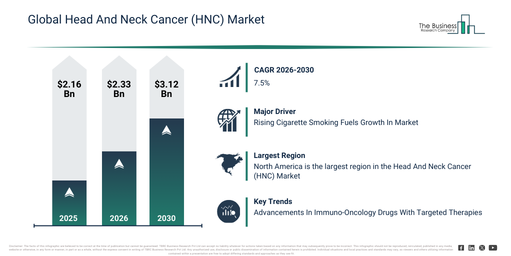
    Head And Neck Cancer (HNC) Market Growth From $2.33 Billion In 2026 To $3.11 Billion By 2030 At A CAGR Of 7.5%

    The global head and neck cancer (hnc) market has experienced robust expansion recently. Projections indicate a rise from $2.16 billion in 2025 to an estimated $2.33 billion by 2026, reflecting a compound annual growth rate (CAGR) of 7.8%. Key factors fueling this growth during the historical period include the escalating rates of tobacco and alcohol consumption, a concerning increase in HPV-associated cancers, the continuous development of cancer treatment facilities, enhanced diagnostic tools, and a heightened public understanding of head and neck cancer issues.

    The global market for head and neck cancer treatments is poised for significant expansion, projected to reach $3.12 billion by 2030 with a compound annual growth rate of 7.5%. This upward trajectory is anticipated to be fueled by several key factors, including heightened investment in precision oncology research, a growing preference for less invasive therapeutic options, the broadening scope of immunotherapy drug development, the increasing application of artificial intelligence in diagnostic processes, and a heightened emphasis on tailoring cancer care to individual patients. Furthermore, the coming years are expected to witness a greater embrace of targeted therapies and immunotherapies, more widespread utilization of sophisticated diagnostic imaging technologies, a stronger push towards early identification of cancer, the development of more comprehensive treatment strategies combining various modalities, and a deeper incorporation of precision oncology principles into clinical practice.

    Download A Free Sample Report For Comprehensive Market Insights:

    https://www.thebusinessresearchcompany.com/sample.aspx?id=20825&type=smp

    Head And Neck Cancer (HNC) Market Expansion Drivers: What Is Shaping Future Growth?

    The escalating rates of cigarette consumption are anticipated to be a primary catalyst for the expansion of the head and neck cancer (HNC) market. This rise in smoking, characterized by the inhalation and exhalation of tobacco smoke and frequently linked to addiction and adverse health consequences, can be attributed to a confluence of elements including societal pressures, promotional efforts, and the ease of obtaining tobacco products. Medications used in the treatment of head and neck cancers serve a dual purpose: they combat the oncological consequences of smoking by addressing tobacco-related cellular changes and treating existing malignancies, while simultaneously underscoring the critical importance of minimizing exposure to tobacco-derived carcinogens to enhance therapeutic effectiveness. As an illustration of this trend, data presented in October 2024 by the European Respiratory Society (ERS), a non-profit entity based in Switzerland, highlighted a concerning upward trajectory in youth smoking, indicating that 22.5% of surveyed individuals reported smoking in 2022, a figure that surged to 40.1% by 2024. Consequently, this growing prevalence of cigarette smoking directly fuels the momentum within the head and neck cancer (HNC) market.

    Head And Neck Cancer (HNC) Market Segment Analysis: What Are The Major Market Categories?

    The head and neck cancer (hnc) market covered in this report is segmented –

    1) By Type: Laryngeal Cancer, Pharyngeal Cancer, Salivary Gland Cancer, Lip And Oral Cavity Cancer, Nasopharyngeal Cancer

    2) By Treatment: Chemotherapy, Surgery, Radiation Therapy, Targeted Therapy, Other Treatments

    3) By Diagnosis: Bioscopy Screening Tests, Dental Diagnosis, Imaging, Endoscopy

    4) By Distribution Channel: Hospitals Pharmacies, Retail Pharmacies

    5) By End User: Hospital, Specialty Clinics

    Subsegments:

    1) By Laryngeal Cancer: Supraglottic Laryngeal Cancer, Glottic Laryngeal Cancer, Subglottic Laryngeal Cancer

    2) By Pharyngeal Cancer: Oropharyngeal Cancer, Nasopharyngeal Cancer, Hypopharyngeal Cancer

    3) By Salivary Gland Cancer: Parotid Gland Cancer, Sublingual Gland Cancer, Submandibular Gland Cancer, Minor Salivary Gland Cancer

    4) By Lip And Oral Cavity Cancer: Lip Cancer, Buccal Mucosa Cancer, Tongue Cancer, Gingival Cancer, Palate Cancer

    5) By Nasopharyngeal Cancer: Early-Stage Nasopharyngeal Cancer, Advanced-Stage Nasopharyngeal Cancer

    Head And Neck Cancer (HNC) Market Strategic Trends: What Is Defining The Next Phase Of Growth?

    Leading entities within the head and neck cancer (HNC) sector are dedicating resources to pioneering novel treatment modalities, specifically immune oncology agents, with the aim of elevating therapeutic effectiveness, bolstering patient longevity, and meeting critical requirements in the handling of challenging and advanced-stage oncological conditions. Immune oncology treatments function by leveraging the patient’s own defenses to identify and combat malignant cells, encompassing categories like checkpoint inhibitors, CAR-T cell therapies, and therapeutic vaccines designed for cancer. Illustrating this trend, a pharmaceutical firm based in India, Dr. Reddy’s Laboratories, introduced toripalimab in November 2024, an immune oncology medication intended for adult patients diagnosed with a specific, less common type of head and neck cancer originating in the nasopharynx. This therapeutic agent is specifically formulated for the management of nasopharyngeal carcinoma that has either returned or spread. Distributed under the brand name Zytorvi, this drug has shown a significant 48% decrease in the likelihood of disease progression or mortality when administered alongside conventional chemotherapy regimens, namely gemcitabine and cisplatin.

    Head And Neck Cancer (HNC) Market Leading Companies Driving Competitive Growth

    Major companies operating in the head and neck cancer (hnc) market are Pfizer Inc., Siemens Healthcare Private Limited, F. Hoffmann-La Roche Ltd., Merck KGaA, AbbVie Inc., Bayer Healthcare AG, Sanofi S.A., Bristol-Myers Squibb Company, AstraZeneca Plc, GlaxoSmithKline PLC, Takeda Pharmaceutical Company Limited, Eli Lilly and Company, Koninklijke Philips N.V., Boehringer Ingelheim, Fresenius Kabi AG, Incyte Corporation, Exelixis Inc., Astellas Pharma Inc., Rakuten Medical Inc., Merus N.V.

    Access The Complete Head And Neck Cancer (HNC) Market Report:

    https://www.thebusinessresearchcompany.com/report/head-and-neck-cancer-hnc-global-market-report

    Head And Neck Cancer (HNC) Market Largest Region By Revenue And Market Share

    North Americawas the largest region in the head and neck cancer (HNC) market in 2025. Asia-Pacificis expected to be the fastest-growing region in the forecast period. The regions covered in the head and neck cancer (hnc) market report are Asia-Pacific, South East Asia, Western Europe, Eastern Europe, North America, South America, Middle East, Africa.

    Get in touch with us:

    The Business Research Company: https://www.thebusinessresearchcompany.com/

    Americas: +1 310-496-7795

    Asia: +44 7882 955267 & +91 8897263534

    Europe: +44 7882 955267

    Email us at: marketing@tbrc.info

    Follow us on:

    LinkedIn: https://in.linkedin.com/company/the-business-research-company

    YouTube: https://www.youtube.com/channel/UC24_fI0rV8cR5DxlCpgmyFQ

    Global Market Model: https://www.thebusinessresearchcompany.com/global-market-model
  • Hashimotos Disease Market Growth Through 2030 Creates New Strategic Opportunities

    Hashimotos Disease Market Growth Through 2030 Creates New Strategic Opportunities

    Through market attractiveness analysis, total addressable market evaluation, company benchmarking matrices, interactive Excel dashboards, expanded supply chain intelligence, emerging startup coverage, and detailed product insights, The Business Research Company’s 2026 market reports provide more actionable and strategically valuable research.

    Hashimotos Disease Market Expansion Outlook: What Revenue Opportunities Lie Ahead?

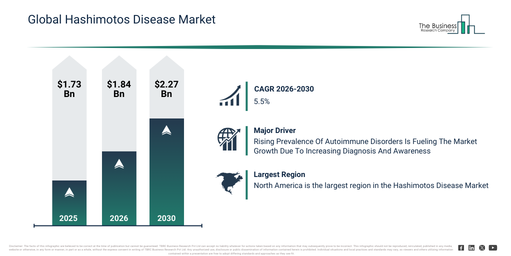
    The Hashimoto’s disease market experienced robust expansion lately, projected to increase from $1.73 billion in 2025 to $1.84 billion in 2026, reflecting a compound annual growth rate of 5.8%. This historical growth trajectory was fueled by heightened awareness surrounding autoimmune thyroid conditions, an uptick in hypothyroidism diagnoses, enhanced accessibility to specialized endocrine healthcare, the proliferation of regular thyroid screening initiatives, and a general increase in the incidence of chronic autoimmune ailments.

    The market for Hashimoto’s disease is poised for substantial expansion over the coming years, projected to reach $2.27 billion by 2030, reflecting a compound annual growth rate of 5.5%. This anticipated growth stems from several key factors, including a heightened demand for precision medicine, intensified research into therapies that modulate the immune system, the broader availability of digital health monitoring solutions, an increased emphasis on early intervention, and the persistent need for effective long-term disease management. Within this forecast period, significant trends are expected to emerge, such as a greater focus on identifying autoimmune diseases at an earlier stage, the expanding use of customized hormone replacement treatments, the growing incorporation of thyroid testing that utilizes biomarkers, the development of patient-focused approaches to managing the condition, and more thorough tracking of the long-term effects of hypothyroidism.

    Download A Free Sample Report For Comprehensive Market Insights:

    https://www.thebusinessresearchcompany.com/sample.aspx?id=24553&type=smp

    Hashimotos Disease Market Development Factors: Which Trends Are Supporting Demand?

    The increasing trend in autoimmune conditions is anticipated to fuel the expansion of the hashimoto’s disease market. Autoimmune disorders occur when the body’s defense mechanisms incorrectly target and attack its own healthy cells, resulting in inflammation and tissue damage. Factors such as inherited predispositions and environmental influences are believed to contribute to the surge in these conditions, potentially leading to immune system dysregulation. Hashimoto’s disease, a specific autoimmune ailment characterized by the immune system attacking the thyroid gland, serves as an illustration of the broader complexities of autoimmunity, demonstrating how the immune system can misidentify and harm healthy tissues. For example, the Arthritis Foundation reported in March 2025 that approximately 5.5 million Americans were projected to be diagnosed with psoriatic arthritis (PsA) in 2025, representing a 2% rise from the previous year. This figure is expected to climb by 3% to 5.6 million by 2030, indicating an increase of 100,000 individuals with PsA compared to 2025. Consequently, the escalating incidence of autoimmune diseases is a key driver for the hashimoto’s disease market.

    The growing investment in healthcare is projected to stimulate the hashimoto’s disease market’s progress. Healthcare expenditure encompasses all financial outlays for medical services, from preventive measures and diagnostic procedures to treatments and recovery support for illnesses. This rise in spending is largely driven by a heightened demand for sophisticated medical interventions that promise superior results, quicker recuperation, and an enhanced quality of life. Hashimoto’s disease necessitates ongoing medical supervision, hormone replacement therapies, and consistent healthcare engagement, which collectively elevate the demand for healthcare resources and associated expenses over time. To illustrate, global health spending reached an estimated $10.1 trillion in 2023, a 9.2% increase from 2022, according to the World Health Organization in May 2024. This upward trend in healthcare spending is therefore a significant catalyst for the hashimoto’s disease market.

    Hashimotos Disease Market Segment Breakdown: Which Categories Generate The Most Revenue?

    The hashimotos disease market covered in this report is segmented –

    1) By Type: Stress Related, Infection Related, Autoimmune Related, Environmental Related, Disease Related, Mixed, Other Types

    2) By Treatment Type: Hormone Replacement Therapy, Immunotherapy, Antithyroid Medication, Surgery, Dietary Supplements, Other Treatment Types

    3) By Route Of Administration: Oral Route, Injectable Route, Transdermal Route, Other Route Of Administrations

    4) By Distribution Channel: Hospital Pharmacy, Retail Pharmacy, Online Pharmacy, Other Distribution Channels

    5) By End User: Hospitals, Speciality Clinics, Homecare, Other End Users

    Subsegments:

    1) By Stress Related: Chronic Psychological Stress, Work-Related Stress, Post-Traumatic Stress, Lifestyle-Induced Stress, Anxiety And Depression-Induced Stress

    2) By Infection Related: Viral Infections, Bacterial Infections, Fungal Infections, Parasitic Infections, Chronic Inflammatory Infections

    3) By Autoimmune Related: Coexisting Autoimmune Thyroiditis, Type 1 Diabetes, Rheumatoid Arthritis, Systemic Lupus Erythematosus (SLE), Celiac Disease

    4) By Environmental Related: Exposure To Radiation, Iodine Imbalance, Chemical Exposure, Heavy Metal Toxicity, Endocrine Disruptors

    5) By Disease Related: Polycystic Ovary Syndrome (PCOS), Cardiovascular Disorders, Chronic Fatigue Syndrome, Fibromyalgia, Metabolic Syndrome

    6) By Mixed: Stress And Autoimmune Combined, Infection And Environmental Combined, Autoimmune And Disease Combined, Stress And Environmental Combined, Multiple Etiology Overlap

    7) By Other Types: Drug-induced Thyroiditis, Postpartum Thyroiditis, Silent Thyroiditis, Genetic Predisposition, Idiopathic Cases

    Hashimotos Disease Market Key Players And Strategic Industry Positioning

    Major companies operating in the hashimotos disease market are Pfizer Inc., Merck & Co. Inc., AbbVie Inc., Abbott Laboratories, GlaxoSmithKline plc, Viatris Inc., Teva Pharmaceutical Industries Ltd., Lupin Limited, Lannett Company Inc., Aurore Life Sciences Inc., Acella Pharmaceuticals LLC, Sigmapharm Laboratories LLC, Jerome Stevens Pharmaceuticals Inc., RLC Labs Inc., AdvaCare Pharma, GNH India Ltd., Clayman Thyroid Center P.C., Rakshit Pharmaceuticals Ltd., Lexicare Pharma Private Limited, Forest Pharmaceuticals Inc.

    Access The Complete Hashimotos Disease Market Report:

    https://www.thebusinessresearchcompany.com/report/hashimotos-disease-global-market-report

    Hashimotos Disease Market Regional Analysis And Leading Geography

    North Americawas the largest region in the hashimotos disease market in 2025. Asia-Pacificis expected to be the fastest-growing region in the forecast period. The regions covered in the hashimotos disease market report are Asia-Pacific, South East Asia, Western Europe, Eastern Europe, North America, South America, Middle East, Africa.

    Get in touch with us:

    The Business Research Company: https://www.thebusinessresearchcompany.com/

    Americas: +1 310-496-7795

    Asia: +44 7882 955267 & +91 8897263534

    Europe: +44 7882 955267

    Email us at: marketing@tbrc.info

    Follow us on:

    LinkedIn: https://in.linkedin.com/company/the-business-research-company

    YouTube: https://www.youtube.com/channel/UC24_fI0rV8cR5DxlCpgmyFQ

    Global Market Model: https://www.thebusinessresearchcompany.com/global-market-model
  • Haptic Virtual Reality (VR) Fitness Suit Market Size Projected To Increase From $2.04 Billion To $5.39 Billion During The Forecast Period

    Haptic Virtual Reality (VR) Fitness Suit Market Size Projected To Increase From $2.04 Billion To $5.39 Billion During The Forecast Period

    Delivering more actionable and strategically valuable research, The Business Research Company’s 2026 market reports feature market attractiveness analysis, total addressable market evaluation, company benchmarking matrices, interactive Excel dashboards, expanded supply chain intelligence, emerging startup coverage, and detailed product insights.

    Haptic Virtual Reality (VR) Fitness Suit Market Growth Potential: How Will Market Size Change Through 2030?

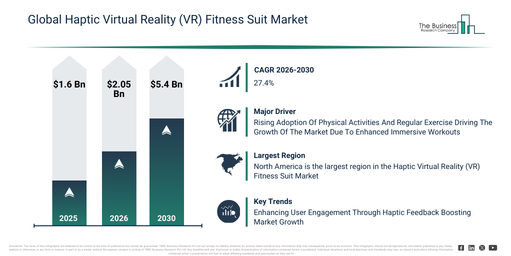
    The market for haptic virtual reality fitness suits has experienced substantial expansion lately, projecting a significant upswing from its 2025 valuation of $1.6 billion to $2.05 billion by 2026, fueled by a compound annual growth rate of 27.7%. This impressive growth trajectory during the past period has been bolstered by several key factors, including the surging popularity of virtual fitness applications, a heightened consumer appetite for deeply engaging workout experiences, advancements in wearable fitness technology, the widespread adoption of home fitness solutions, and continuous enhancements in the capabilities of haptic hardware.

    The market for haptic virtual reality (VR) fitness suits is poised for significant expansion, projected to reach $5.4 billion by 2030, reflecting a compound annual growth rate (CAGR) of 27.4% over the coming years. This surge is anticipated due to several key factors, including a greater embrace of AI-powered personalized fitness, an escalating need for remote and virtual training options, the broadening scope of VR in rehabilitation and therapy, the increasing incorporation of biometric feedback mechanisms, and innovations in developing lighter wearable materials. During this projected period, significant trends will shape the market, such as the growing popularity of immersive VR fitness experiences, the heightened integration of sophisticated haptic feedback systems, a greater demand for customized VR training programs, the further development of motion tracking and sensor fusion technologies, and an amplified emphasis on engaging gamified fitness solutions.

    Download A Free Sample Report For Comprehensive Market Insights:

    https://www.thebusinessresearchcompany.com/sample.aspx?id=28238&type=smp

    Haptic Virtual Reality (VR) Fitness Suit Market Industry Drivers: What Is Driving Revenue Growth?

    The increasing engagement in physical pursuits and consistent exercise routines is poised to be a significant catalyst for the expansion of the haptic virtual reality (VR) fitness suit sector. These activities, encompassing both organized training and spontaneous movements designed to boost physical condition, health, and general welfare, are seeing greater participation. This heightened involvement stems from a growing understanding of how these practices contribute to the prevention of chronic health issues, bolster mental wellness, and elevate overall quality of life. Haptic VR fitness suits serve to augment these physical endeavors by delivering immediate sensory feedback, thereby refining bodily alignment, precision in motion, and the depth of user immersion, ultimately leading to more impactful training sessions. Illustrating this trend, a report from PureGym Limited in November 2023 indicated a 2% year-over-year increase in UK gym memberships, with 16% of the populace now belonging to a gym, and an additional 16% planning to join in 2024. Consequently, the rising preference for active lifestyles and regular workouts directly fuels the market for haptic VR fitness suits.

    Haptic Virtual Reality (VR) Fitness Suit Market Segmentation: How Is The Market Structured Across Key Categories?

    The haptic virtual reality (vr) fitness suit market covered in this report is segmented –

    1) By Product Type: Full-Body Suits, Upper-Body Suits, Lower-Body Suits, Accessories

    2) By Technology: Force Feedback, Vibrotactile, Electroactive Polymers, Other Technologies

    3) By Distribution Channel: Online Stores, Specialty Stores, Retail Stores, Other Distribution Channels

    4) By Application: Personal Fitness, Professional Training, Rehabilitation, Gaming, Other Applications

    5) By End-User: Consumers, Fitness Centers, Rehabilitation Centers, Sports Institutes, Other End-Users

    Subsegments:

    1) By Full-Body Suits: Haptic Feedback Suits, Motion Capture Suits, Exoskeleton Suits

    2) By Upper-Body Suits: Haptic Vests, Haptic Arm Bands, Shoulder And Chest Harnesses

    3) By Lower-Body Suits: Haptic Leg Bands, Haptic Pants, Foot And Ankle Haptic Modules

    4) By Accessories: Haptic Gloves, Haptic Shoes Or Footwear, Wearable Sensors, Haptic Belts And Straps

    #Haptic Virtual Reality (VR) Fitness Suit Market Growth Trends: What Is Influencing The Future Outlook?

    Leading entities within the haptic virtual reality fitness suit industry are prioritizing innovation in areas like complete body tactile feedback systems to deepen user immersion during workouts, boost engagement, and accurately replicate physical feelings for more effective fitness regimens. This full-body approach utilizes numerous actuators woven into wearable fabrics, providing targeted force or vibrational responses that amplify movement and exercise guidance, thereby increasing the accuracy of live training. A notable example occurred in November 2024 when bHaptics Inc., a firm based in South Korea specializing in VR haptics, introduced the TactSuit Pro, a product designed to offer users engaging in virtual reality, fitness included, an enhanced blend of sensory immersion, user comfort, and ease of use. This suit incorporates thirty-two haptic motors engineered to produce localized tactile sensations, elevating the sense of reality during exercise or interactive virtual experiences. Additionally, a chest-mounted thumbwheel featuring an LED indicator ring gives users the ability to seamlessly modify the intensity of feedback in real time, catering to a spectrum of activities from vigorous training to more moderate routines.

    Haptic Virtual Reality (VR) Fitness Suit Market Competitive Landscape And Leading Companies

    Major companies operating in the haptic virtual reality (vr) fitness suit market are Shenzhen H&T Intelligent Control Co. Ltd, Ultraleap Limited, Dexta Robotics Inc., Woojer Ltd., Actronika SAS, HaptX Inc., SenseGlove B.V., Palladyne AI Inc., bHaptics Inc., Wave Company Inc., NeuroDigital Technologies S.L., AjnaLens Pvt. Ltd., Teslasuit Inc., SUBPAC Inc., VirZOOM Inc., AxonVR Inc., VRgluv Inc., Kaaya Tech Inc., Manus VR B.V., Valkyrie Industries Inc.

    Access The Complete Haptic Virtual Reality (VR) Fitness Suit Market Report:

    https://www.thebusinessresearchcompany.com/report/haptic-virtual-reality-vr-fitness-suit-global-market-report

    Haptic Virtual Reality (VR) Fitness Suit Market Geographic Analysis: Where Is Demand Growing The Fastest?

    North Americawas the largest region in the haptic virtual reality (VR) fitness suit market in 2025. Asia-Pacific is expected to be the fastest-growing region in the forecast period. The regions covered in the haptic virtual reality (vr) fitness suit market report are Asia-Pacific, South East Asia, Western Europe, Eastern Europe, North America, South America, Middle East, Africa.

    Get in touch with us:

    The Business Research Company: https://www.thebusinessresearchcompany.com/

    Americas: +1 310-496-7795

    Asia: +44 7882 955267 & +91 8897263534

    Europe: +44 7882 955267

    Email us at: marketing@tbrc.info

    Follow us on:

    LinkedIn: https://in.linkedin.com/company/the-business-research-company

    YouTube: https://www.youtube.com/channel/UC24_fI0rV8cR5DxlCpgmyFQ

    Global Market Model: https://www.thebusinessresearchcompany.com/global-market-model
  • Hand Foot Syndrome Market Growth Outlook Reveals A CAGR Of 6.4% And A Market Value Of $0.7 Billion By 2030

    Hand Foot Syndrome Market Growth Outlook Reveals A CAGR Of 6.4% And A Market Value Of $0.7 Billion By 2030

    Enhanced with market attractiveness analysis, total addressable market evaluation, company benchmarking matrices, interactive Excel dashboards, expanded supply chain intelligence, emerging startup coverage, and detailed product insights, The Business Research Company’s 2026 market reports deliver more actionable and strategically valuable research.

    Hand Foot Syndrome Market Value Analysis: What Growth Is Expected Over The Forecast Period?

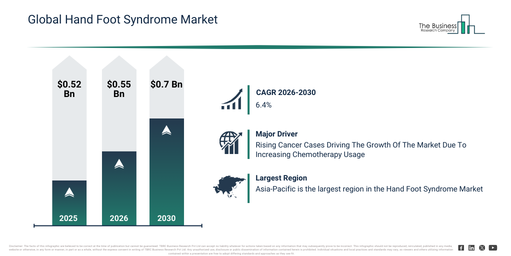
    The global market for hand-foot syndrome treatments experienced robust expansion historically, with projections indicating continued upward momentum. This sector is anticipated to expand from an estimated $0.52 billion in 2025 to $0.55 billion in 2026, reflecting a compound annual growth rate of 6.3%. The preceding growth phase was significantly influenced by factors such as the broader adoption of chemotherapy protocols, an escalating prevalence of side effects impacting the skin due to medication, the amplification of cancer treatment initiatives, greater recognition of supportive therapies in oncology, and the accessibility of over-the-counter remedies designed for topical application.

    The hand-foot syndrome market is projected for substantial expansion, aiming for a valuation of $0.7 billion by 2030 with a compound annual growth rate (CAGR) of 6.4%. This anticipated upswing during the forecast period stems from a confluence of factors, including a heightened need for supportive oncology care, escalated funding for treatments bridging dermatology and oncology, broader implementation of home-based symptom management strategies, a greater emphasis on enhancing patients’ quality of life, and the ongoing development of sophisticated topical preparations. Key developments anticipated within this timeframe involve the advancement of specific topical treatments, a sharpened focus on managing symptoms with the patient’s needs at the forefront, increased utilization of multifaceted treatment plans, the broader integration of supportive dermatological care guidelines, and a more pronounced attention to ensuring treatment adherence.

    Download A Free Sample Report For Comprehensive Market Insights:

    https://www.thebusinessresearchcompany.com/sample.aspx?id=21996&type=smp

    Hand Foot Syndrome Market Growth Factors: Which Forces Are Supporting Market Expansion?

    The upward trend in cancer occurrences is anticipated to stimulate the expansion of the hand-foot syndrome market in the future. Cancer, a condition defined by the uncontrolled proliferation and metastasis of cells, is witnessing a surge attributed to an aging global population, evolving lifestyles, environmental influences, and enhanced diagnostic capabilities. This escalating cancer rate directly correlates with increased chemotherapy utilization, consequently elevating the incidence of hand-foot syndrome as an adverse effect of such treatments. For illustration, Macmillan Cancer Support, a UK charity aiding cancer patients, noted in August 2024 that more than 3 million individuals in the UK were diagnosed with cancer, a figure expected to climb to 3.5 million by 2025, 4 million by 2030, and a substantial 5.3 million by 2040. Consequently, the growing prevalence of cancer is poised to be a key driver for the hand-foot syndrome market.

    The augmenting need for customized medical interventions is projected to be a significant catalyst for the forward progression of the hand-foot syndrome market. Personalized treatments, which involve therapies specifically adapted to an individual’s unique genetic makeup, environmental exposures, and lifestyle habits, aim to maximize treatment efficacy while minimizing adverse reactions. This growing preference for tailored approaches stems from breakthroughs in genetic science, heightened consciousness surrounding individualized healthcare, and the widespread acknowledgment that bespoke therapies yield superior results and fewer side effects than conventional generalized methods. In the context of hand-foot syndrome, personalized treatment strategies are employed to customize preventative measures and management plans based on the patient’s specific condition severity, observed symptoms, and ongoing therapeutic regimen, thereby alleviating discomfort and facilitating the uninterrupted continuation of their cancer treatment. As an example, the Personalized Medicine Coalition, a non-profit entity based in the US, reported in February 2024 that the FDA had approved 16 novel personalized treatments for individuals with rare conditions in 2023, marking a notable increase from the six approvals granted in 2022. Thus, the escalating demand for personalized treatments is expected to propel the hand-foot syndrome market’s growth.

    Hand Foot Syndrome Market Segmentation Trends And Revenue Drivers

    The hand foot syndrome market covered in this report is segmented –

    1) By Treatment: Systemic Treatment, Topical Treatment

    2) By Application: Oncology, Dermatology, Other Applications

    3) By End-User: Hospitals, Clinics, Homecare Settings

    Subsegments:

    1) By Systemic Treatment: Corticosteroids, Analgesics, Anti-Inflammatory Drugs

    2) By Topical Treatment: Urea-Based Creams, Corticosteroid Creams, Moisturizers, Cooling Gels

    Hand Foot Syndrome Market Industry Leaders: Which Organizations Are Driving Competition?

    Major companies operating in the hand foot syndrome market are Pfizer Inc., Johnson & Johnson, F. Hoffmann-La Roche Ltd., Merck & Co. Inc., AbbVie Inc., Bayer AG, Sanofi S.A., Bristol-Myers Squibb Company, AstraZeneca PLC, Novartis International AG, Fresenius Kabi AG, GlaxoSmithKline plc, Takeda Pharmaceutical Company Limited, Eli Lilly and Company, Gilead Sciences Inc., Amgen Inc., Regeneron Pharmaceuticals Inc., Astellas Pharma Inc., UCB Pharma SA, Eisai Co. Ltd.

    Access The Complete Hand Foot Syndrome Market Report:

    https://www.thebusinessresearchcompany.com/report/hand-foot-syndrome-global-market-report

    Hand Foot Syndrome Market Global Footprint: Which Region Holds Market Leadership?

    Asia-Pacificwas the largest region in the hand food syndrome market in 2025. The regions covered in the hand foot syndrome market report are Asia-Pacific, South East Asia, Western Europe, Eastern Europe, North America, South America, Middle East, Africa.

    Get in touch with us:

    The Business Research Company: https://www.thebusinessresearchcompany.com/

    Americas: +1 310-496-7795

    Asia: +44 7882 955267 & +91 8897263534

    Europe: +44 7882 955267

    Email us at: marketing@tbrc.info

    Follow us on:

    LinkedIn: https://in.linkedin.com/company/the-business-research-company

    YouTube: https://www.youtube.com/channel/UC24_fI0rV8cR5DxlCpgmyFQ

    Global Market Model: https://www.thebusinessresearchcompany.com/global-market-model
  • Hair Restoration Market Forecast Highlights Expansion From $8.26 Billion To $12.94 Billion Through 2030

    Hair Restoration Market Forecast Highlights Expansion From $8.26 Billion To $12.94 Billion Through 2030

    Through market attractiveness analysis, total addressable market evaluation, company benchmarking matrices, interactive Excel dashboards, expanded supply chain intelligence, emerging startup coverage, and detailed product insights, The Business Research Company’s 2026 market reports provide more actionable and strategically valuable research.

    Hair Restoration Market Size Forecast: How Large Could The Market Become By 2030?

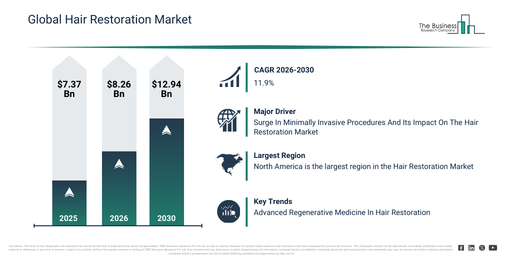
    The global marketplace for hair restoration solutions has experienced a significant upward trajectory lately, projecting a leap from $7.37 billion in 2025 to $8.26 billion by 2026, demonstrating a robust compound annual growth rate of 12.0%. This expansion during the preceding period was propelled by several key factors, including a greater societal embrace of cosmetic medical interventions, an escalating incidence of androgenetic alopecia (male and female pattern baldness), a proliferation of dedicated hair restoration facilities, advancements in the precision of surgical instruments, and heightened patient knowledge regarding available treatment modalities.

    The hair restoration sector is poised for significant expansion, projecting a market value of $12.94 billion by 2030, driven by an 11.9% compound annual growth rate. This anticipated surge is fueled by several key factors including the escalating demand for regenerative medicine, increased capital allocated to robotic-assisted treatments, the burgeoning medical tourism industry for hair restoration services, a growing inclination towards non-surgical solutions, and the enhanced utilization of data analytics in treatment strategy development. Prominent developments shaping this period involve a greater embrace of robotically-assisted hair transplant surgeries, a heightened need for less invasive restoration methods, the expanding application of stem cell and regenerative therapies, the proliferation of customized hair restoration plans, and a strengthened emphasis on achieving aesthetically natural results from transplant procedures.

    Download A Free Sample Report For Comprehensive Market Insights:

    https://www.thebusinessresearchcompany.com/sample.aspx?id=18384&type=smp

    Hair Restoration Market Demand Drivers: What Is Fueling Industry Growth?

    The increasing embrace of minimally invasive techniques is poised to significantly boost the hair restoration market. These procedures, characterized by small incisions or no cutting, offer patients quicker healing and reduced scarring. Key drivers behind this trend include shorter recovery periods and enhanced patient comfort, leading to greater patient satisfaction. Advanced techniques like follicular unit extraction exemplify the benefits of these methods, employing meticulous follicle transplantation with minimal scarring and delivering aesthetically pleasing, natural outcomes. Highlighting this trend, the Aesthetic Society reported that in August 2023, Americans allocated over $11.8 billion to aesthetic treatments, reflecting a 2% increase from the prior year. Consequently, the heightened demand for minimally invasive options is set to propel advancements and growth within the hair restoration sector.

    Hair Restoration Market Segment Analysis Highlighting Growth Areas

    The hair restoration market covered in this report is segmented –

    1) By Procedure: Follicular Unit Extraction, Follicular Unit Transplantation

    2) By Therapy: Low-Level Laser Therapy (LLLT), Stem Cell Hair Restoration, Platelet-Rich Plasma

    3) By Gender: Male, Female

    Subsegments:

    1) By Follicular Unit Extraction (FUE): Manual FUE, Automated FUE, Robotic FUE

    2) By Follicular Unit Transplantation (FUT): Strip Harvesting, Non-strip Harvesting

    Hair Restoration Market Innovation Trends: Which Developments Are Transforming The Industry?

    Leading enterprises within the hair restoration sector are actively pursuing cutting-edge regenerative therapies, including specialized scalp serums, aimed at revitalizing the scalp, stimulating hair regrowth, and addressing the issue of hair thinning. A scalp serum represents a targeted topical treatment meticulously crafted to bolster the well-being of both the scalp and the hair follicles. Illustratively, in March of 2024, BioPhotas Inc., a firm engaged in the manufacture of medical apparatus, introduced its Restore Hair Serum. This novel serum, developed as a complementary offering to their CellPhotas Inc. Celluma Light Therapy apparatus, provides a holistic approach to managing hair loss concerns. Presented in a convenient dropper bottle designed for seamless application and absorption into the scalp, the serum comprises a sophisticated mixture of peptides, essential vitamins, and bio-nutrients derived from plant sources. Among its principal components are recently, a substance that fortifies hair follicle stem cells and reinvigorates the growth process; capital, a peptide engineered to diminish DHT accumulation within follicles, thereby improving hair attachment and vitality; and energy, a proprietary plant-derived protein technology formulated to fortify and purify hair roots.

    Hair Restoration Market Leading Companies: Who Holds Significant Market Presence?

    Major companies operating in the hair restoration market are Johnson And Johnson, AbbVie Inc., Eli Lilly and Company, Shiseido Company Limited, NeoGraft Solutions, Bosley Inc., Venus Concept Inc, Advanced Hair Studio, Samumed LLC, Aclaris Therapeutics Inc., Capillus LLC, Eclipse Aesthetics, The Harley Street Hair Clinic, Theradome Inc., Lexington International, iRestore, Kintor Pharmaceuticals Ltd., Cassiopea S.p.A., Replicel Life Sciences Inc., Stemson Therapeutics, Follica Inc., Pfizer Inc., Merck And Co. Inc., RiverTown Therapeutics Inc., TissUse GmbH, Theracell Advanced Biotechnology Ltd.

    Access The Complete Hair Restoration Market Report:

    https://www.thebusinessresearchcompany.com/report/hair-restoration-global-market-report

    Hair Restoration Market Regional Distribution: Which Areas Drive Market Expansion?

    North Americawas the largest region in the hair restoration market in 2025. Asia-Pacificis expected to be the fastest-growing region in the forecast period. The regions covered in the hair restoration market report are Asia-Pacific, South East Asia, Western Europe, Eastern Europe, North America, South America, Middle East, Africa.

    Get in touch with us:

    The Business Research Company: https://www.thebusinessresearchcompany.com/

    Americas: +1 310-496-7795

    Asia: +44 7882 955267 & +91 8897263534

    Europe: +44 7882 955267

    Email us at: marketing@tbrc.info

    Follow us on:

    LinkedIn: https://in.linkedin.com/company/the-business-research-company

    YouTube: https://www.youtube.com/channel/UC24_fI0rV8cR5DxlCpgmyFQ

    Global Market Model: https://www.thebusinessresearchcompany.com/global-market-model