Month: June 2026

  • Healthcare Content Management System Market Opportunities Are Emerging Beyond Traditional Growth Areas

    Healthcare Content Management System Market Opportunities Are Emerging Beyond Traditional Growth Areas

    Delivering more actionable and strategically valuable research, The Business Research Company’s 2026 market reports feature market attractiveness analysis, total addressable market evaluation, company benchmarking matrices, interactive Excel dashboards, expanded supply chain intelligence, emerging startup coverage, and detailed product insights.

    Healthcare Content Management System Market Size, Value And Growth Trends Through 2030

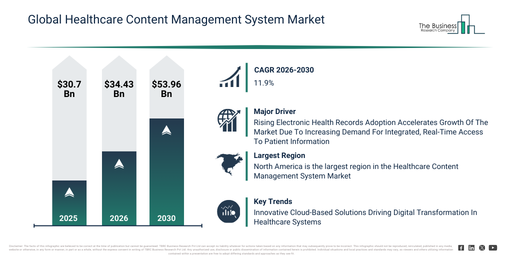
    The market for healthcare content management systems has experienced substantial expansion recently, projecting a notable increase from $30.7 billion in 2025 to $34.43 billion in 2026, reflecting a compound annual growth rate of 12.2%. Key factors driving this growth during the preceding period include the widespread adoption of electronic health records, intensified efforts towards healthcare digitization, mounting demands for regulatory documentation, an ever-increasing volume of healthcare data, and the enhancement of information technology infrastructure within healthcare entities.

    The domain of healthcare content management systems is poised for substantial expansion over the coming years, projecting a market valuation of $53.96 billion by the year 2030, underpinned by a compound annual growth rate of 11.9%. This anticipated surge in the forecast period is driven by several key factors, including the accelerating shift towards cloud-native healthcare infrastructure, a heightened need for immediate access to content, the escalating requirements for documentation within telemedicine services, a strengthened commitment to data security and privacy regulations, and the growing incorporation of artificial intelligence for content analysis. Furthermore, prominent trends shaping this market include a greater embrace of cloud-based content management solutions, an increased demand for healthcare data systems capable of seamless interoperability, a heightened focus on managing documents in accordance with regulatory standards, the proliferation of AI tools that assist in content categorization, and an elevated importance placed on secure data access and collaborative functionalities.

    Download A Free Sample Report For Comprehensive Market Insights:

    https://www.thebusinessresearchcompany.com/sample.aspx?id=27300&type=smp

    Healthcare Content Management System Market Growth Momentum: Which Factors Are Influencing Demand?

    The increasing integration of electronic health records (EHRs) is poised to be a significant catalyst for the expansion of the healthcare content management system market. EHRs, which are digital repositories of patient medical histories, are instrumental in enhancing care coordination, accessibility, and overall quality. This surge in EHR implementation stems from the imperative to elevate patient care standards by providing immediate access to precise and exhaustive medical information. Healthcare content management systems play a crucial supporting role for EHRs, facilitating the efficient management of unstructured data, from its initial capture and long-term storage to its swift retrieval. These systems empower healthcare professionals by consolidating all pertinent patient data onto a singular, comprehensive interface. Illustratively, data from the European Commission indicated that in July 2024, Europe demonstrated considerable advancements in eHealth maturity during the year 2024, as evidenced by an increase in the EU27 average composite score from 72% to 79%. Consequently, the growing prevalence of EHRs directly fuels the growth trajectory of the healthcare content management system market.

    Healthcare Content Management System Market Segment Breakdown: Which Categories Generate The Most Revenue?

    The healthcare content management system market covered in this report is segmented –

    1) By Component: Software, Services

    2) By Distribution Channel: Direct Sales, Distributors, Online Platforms

    3) By Application: Telemedicine, Patient Data Management, Regulatory Compliance, Workflow Management

    4) By End User: Hospitals And Health Systems, Ambulatory Surgical Centers, Diagnostic And Imaging Centers, Payers Or Insurance Providers, Long-Term Care Facilities

    Subsegments:

    1) By Software: On-Premise, Cloud-Based

    2) By Services: Implementation And Integration, Support And Maintenance, Consulting

    Healthcare Content Management System Market Trends Reshaping Industry Growth

    Within the healthcare content management system sector, leading enterprises are dedicating resources to pioneering advancements like cloud-native architectures. This strategic direction aims to bolster data accessibility, improve system scalability, and facilitate seamless integration among diverse healthcare networks. Cloud-native architecture represents a contemporary methodology for application creation, utilizing cloud computing paradigms to construct systems that are robust, scalable, and readily deployable through contemporary technologies encompassing containers, microservices, and automated DevOps processes. As an illustration, in October of 2024, Oracle Corporation, a prominent software firm headquartered in the United States, introduced an advanced electronic health record (EHR) system designed to optimize clinical processes and elevate the standard of patient care. This innovation contributes to healthcare advancements by delivering complete, real-time patient data and artificial intelligence powered analytical tools, thereby enhancing clinical judgment and alleviating administrative workloads. Furthermore, these systems facilitate the secure exchange of information, foster improved coordination of care, and ultimately lead to better patient safety and more favorable health results.

    Healthcare Content Management System Market Key Players And Strategic Industry Positioning

    Major companies operating in the healthcare content management system market are Microsoft Corporation, Hitachi Ltd., IBM Corporation, Oracle Corporation, Capgemini SE, GE Healthcare Technologies Inc., CGI Inc., Xerox Holdings Corporation, Adobe Inc., Infor Inc., OpenText Corporation, Epic Systems Corporation, Veeva Systems Inc., NextGen Healthcare Inc., Sitecore Holding II A/S, M-Files Corporation, Laserfiche, Alfresco Software Inc., Samsung Healthcare, SoftTech Health LLC, Hyland Software Inc., InterSystems Corporation

    Access The Complete Healthcare Content Management System Market Report:

    https://www.thebusinessresearchcompany.com/report/healthcare-content-management-system-global-market-report

    Healthcare Content Management System Market Largest Region: Which Geography Holds The Highest Market Share?

    North Americawas the largest region in the healthcare content management system market in 2025. Asia-Pacificis expected to be the fastest-growing region in the forecast period. The regions covered in the healthcare content management system market report are Asia-Pacific, South East Asia, Western Europe, Eastern Europe, North America, South America, Middle East, Africa.

    Get in touch with us:

    The Business Research Company: https://www.thebusinessresearchcompany.com/

    Americas: +1 310-496-7795

    Asia: +44 7882 955267 & +91 8897263534

    Europe: +44 7882 955267

    Email us at: marketing@tbrc.info

    Follow us on:

    LinkedIn: https://in.linkedin.com/company/the-business-research-company

    YouTube: https://www.youtube.com/channel/UC24_fI0rV8cR5DxlCpgmyFQ

    Global Market Model: https://www.thebusinessresearchcompany.com/global-market-model
  • Healthcare Consumables Market Expansion Is Opening New Pathways For Strategic Investment

    Healthcare Consumables Market Expansion Is Opening New Pathways For Strategic Investment

    Enhanced with market attractiveness analysis, total addressable market evaluation, company benchmarking matrices, interactive Excel dashboards, expanded supply chain intelligence, emerging startup coverage, and detailed product insights, The Business Research Company’s 2026 market reports deliver more actionable and strategically valuable research.

    Healthcare Consumables Market CAGR Analysis And Future Market Development

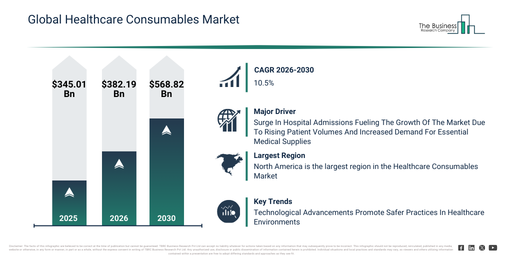
    The healthcare consumables sector has experienced significant expansion lately, with projections indicating a rise from $345.01 billion in 2025 to $382.19 billion in 2026. This growth trajectory represents a compound annual growth rate of 10.8%. Factors contributing to this historical surge include a greater number of hospital admissions, an increase in the frequency of surgical interventions, the broad adoption of single-use medical items, a proliferation of diagnostic evaluations, and the growing demand for managing long-term health conditions.

    The global healthcare consumables market is poised for significant expansion, projected to reach an impressive $568.82 billion by the year 2030, demonstrating a compound annual growth rate of 10.5%. This surge is anticipated due to several key factors: a greater need for supplies catering to at-home patient care, a heightened awareness and preference for environmentally conscious consumables, the proliferation of point-of-care diagnostic tools, augmented investments in strategies for infection control, and the increasing utilization of sophisticated sterilization consumables. During this projection period, prominent market trends are expected to include a greater demand for disposable medical products, an intensified focus on consumables designed for infection prevention, a broader embrace of home healthcare consumables, a rising trend towards adopting sustainable and biodegradable materials, and the implementation of more robust supply chain traceability for consumable products.

    Download A Free Sample Report For Comprehensive Market Insights:

    https://www.thebusinessresearchcompany.com/sample.aspx?id=19500&type=smp

    Healthcare Consumables Market Expansion Drivers: What Is Shaping Future Growth?

    An increase in hospitalizations is anticipated to drive the expansion of the healthcare consumables sector in the future. Hospital admissions, defined as the formal process of entering a hospital for medical attention or therapy, are seeing an upward trend attributed to factors like an aging demographic, a growing incidence of long-term illnesses, and progress in medical innovation. Within the context of hospital admissions, healthcare consumables encompass crucial supplies such as gloves, syringes, bandages, and surgical tools, which are indispensable for both patient treatment and medical interventions. As an illustration, England documented 17.6 million finished admission episodes (FAEs) during the twelve months concluding March 31, 2024, as reported by the National Health Service (NHS) in September 2024, signifying an elevated requirement for the consumables essential to patient management. Consequently, the escalating volume of hospital admissions serves as a key impetus for the growth of the healthcare consumables market.

    Healthcare Consumables Market Segmentation: How Is The Market Structured Across Key Categories?

    The healthcare consumables market covered in this report is segmented –

    1) By Product Type: Wound Care Consumables, Diagnostic Consumables, Respiratory Supplies, Drug Delivery Products, Dialysis Consumables, Sterilization Consumables, Incontinence Products, Hands Sanitizer, Other Product Types

    2) By Raw Materials: Rubber, Non-woven Materials, Glass, Metals, Plastic Resin, Paper, Other Raw Materials

    3) By End User: Hospitals, Specialty Clinics, Other End-Users

    Subsegments:

    1) By Wound Care Consumables: Dressings (Hydrocolloid, Foam, Alginate, etc.), Bandages, Gauze And Sponges, Antiseptic Solutions, Wound Closure Devices (Staples, Sutures), Burn Care Products, Surgical Drains

    2) By Diagnostic Consumables: Blood Glucose Test Strips, Pregnancy Test Kits, Urine Test Strips, Pregnancy & Ovulation Test Kits, Hematology Consumables, Point-of-Care Testing Kits, Diagnostic Reagents And Chemicals

    3) By Respiratory Supplies: Oxygen Masks and Nasal Cannulas, Nebulizer Masks and Tubing Sets, Ventilator Circuits and Consumables, Endotracheal and Tracheostomy Tubes, Breathing Filters, Disposable Respiratory Masks

    4) By Drug Delivery Products: Syringes and Needles, IV Catheters and Cannulas, IV Administration Sets, Insulin Pens and Pen Needles, Inhaler Consumables, Transdermal Drug Delivery Patches, Infusion Sets and Tubing

    5) By Dialysis Consumables: Dialysis Filters (Dialyzers), Dialysis Tubing Sets, Dialysis Solution (Dialysate), Bloodline Tubing, Peritoneal Dialysis Kits, Catheters For Dialysis Access

    6) By Sterilization Consumables: Sterilization Wraps And Pouches, Sterilization Indicators (Chemical And Biological), Autoclave Bags, Disinfectants And Sterilizing Solutions, Gas Sterilization Consumables

    7) By Incontinence Products: Adult Diapers and Briefs, Incontinence Pads and Liners, Protective Underpads, Disposable Bed Protectors, Incontinence Care Wipes

    8) By Hand Sanitizer: Alcohol-Based Hand Sanitizers, Non-Alcohol-Based Hand Sanitizers, Hand Sanitizing Wipes, Medical-Grade Hand Hygiene Solutions

    9) By Other Product Types: Surgical Gloves, Medical Masks and Face Shields, Surgical Drapes and Gowns, Disposable Medical Apparel, Single-Use Medical Accessories

    Healthcare Consumables Market Strategic Trends: What Is Defining The Next Phase Of Growth?

    Key players within the healthcare consumables sector are prioritizing the creation of novel advancements, exemplified by passive safety syringes, with the core objectives of elevating patient well-being, minimizing inadvertent needle-related injuries, and bolstering infection prevention protocols across both healthcare facilities and general hospital environments. These passive safety syringes represent disposable injection instruments engineered with integrated features that automatically deploy post-injection, either retracting or covering the needle to avert accidental re-exposure and needlestick incidents, all without the need for manual intervention from the user. A pertinent illustration of this innovation came in January 2024 when medmix Drug Delivery, a manufacturer of medical devices headquartered in Switzerland, introduced SicuroJect, a single-use device designed for subcutaneous injections that incorporates passive needle safety. SicuroJect offers two configurations suitable for conventional 1 mL or 2.25 mL pre-filled syringes, whether made of glass or plastic, and maintains the familiar injection methodology of conventional syringes, with the flexibility to be provided as a ready-to-use safety syringe or as a component of a comprehensive development service encompassing design validation, assembly, outer packaging, and serialization. The SicuroJect’s design serves to augment the safety of individuals, whether healthcare providers or patients themselves, who are involved in administering injections, thereby reflecting a significant overarching movement within the healthcare consumables market towards the development of devices that not only facilitate drug administration but also place paramount importance on safety, aseptic conditions, and adherence to regulatory standards.

    Healthcare Consumables Market Competitive Landscape And Leading Companies

    Major companies operating in the healthcare consumables market are Cardinal Health Inc., Johnson & Johnson, Abbott Laboratories, 3M Company, Siemens Healthineers, Becton Dickinson and Company (BD), Philips Healthcare, Stryker Corporation, GE HealthCare Technologies Inc, Boston Scientific Corporation, B. Braun Melsungen AG, Alcon Laboratories Inc., Fresenius Kabi AG, Zimmer Biomet Holdings Inc., Terumo Corporation, Smith & Nephew plc, Hologic Inc., Nipro Corporation, Coloplast A/S, Dexcom Inc., Hollister Incorporated, AngioDynamics Inc., Biolife Solutions Inc., Medi-Plast Ltd., Ortho Clinical Diagnostics

    Access The Complete Healthcare Consumables Market Report:

    https://www.thebusinessresearchcompany.com/report/healthcare-consumables-global-market-report

    Healthcare Consumables Market Regional Analysis: Which Region Leads By Revenue?

    North Americawas the largest region in the healthcare consumables market in 2025. The regions covered in the healthcare consumables market report are Asia-Pacific, South East Asia, Western Europe, Eastern Europe, North America, South America, Middle East, Africa.

    Get in touch with us:

    The Business Research Company: https://www.thebusinessresearchcompany.com/

    Americas: +1 310-496-7795

    Asia: +44 7882 955267 & +91 8897263534

    Europe: +44 7882 955267

    Email us at: marketing@tbrc.info

    Follow us on:

    LinkedIn: https://in.linkedin.com/company/the-business-research-company

    YouTube: https://www.youtube.com/channel/UC24_fI0rV8cR5DxlCpgmyFQ

    Global Market Model: https://www.thebusinessresearchcompany.com/global-market-model
  • Healthcare Consulting Services Market Trends Are Creating New Opportunities For Industry Leaders

    Healthcare Consulting Services Market Trends Are Creating New Opportunities For Industry Leaders

    Through market attractiveness analysis, total addressable market evaluation, company benchmarking matrices, interactive Excel dashboards, expanded supply chain intelligence, emerging startup coverage, and detailed product insights, The Business Research Company’s 2026 market reports provide more actionable and strategically valuable research.

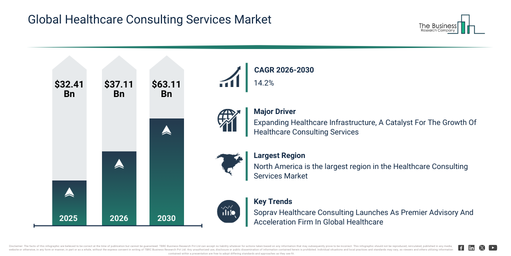
    Healthcare Consulting Services Market Expansion From $37.1 Billion In 2026 To $63.1 Billion In 2030

    The healthcare consulting services market is experiencing significant expansion, projected to increase from 32.41 billion dollars in 2025 to 37.11 billion dollars in 2026, reflecting a compound annual growth rate of 14.5%. This upward trend in the historical period is fueled by factors such as the escalating intricacy of healthcare operations, mounting financial pressures on healthcare spending, the integration of health IT systems, evolving healthcare regulations, and a growing need for strategies aimed at optimizing costs.

    The healthcare consulting services industry is poised for substantial expansion in the upcoming years, projecting an increase to $63.11 billion by 2030, driven by a compound annual growth rate of 14.2%. This anticipated surge is fueled by several key factors, including escalating investments in healthcare digitalization, a burgeoning need for AI-powered consulting expertise, the wider implementation of value-based care frameworks, a heightened focus on coordinated care delivery systems, and the increasing utilization of sophisticated analytics in healthcare decision-making processes. Over the forecast period, notable trends will encompass a growing demand for services related to digital transformation, a more concentrated effort on optimizing revenue cycles, a greater embrace of data-centric healthcare strategies, the expansion of services in regulatory and compliance guidance, and an intensified emphasis on consulting aimed at improving operational effectiveness.

    Download A Free Sample Report For Comprehensive Market Insights:

    https://www.thebusinessresearchcompany.com/sample.aspx?id=7155&type=smp

    Healthcare Consulting Services Market Development Factors: Which Trends Are Supporting Demand?

    The ongoing expansion of healthcare infrastructure is anticipated to significantly boost the healthcare consulting services market in the foreseeable future. This term, ‘healthcare infrastructure,’ encompasses the fundamental physical and organizational elements, including facilities, equipment, and personnel, essential for delivering healthcare services. It represents all the necessary components for providing medical care and support to the population. Healthcare consulting firms are instrumental in enhancing healthcare infrastructure by offering strategic guidance, compliance support, and actionable recommendations to elevate the quality, efficiency, and overall impact of healthcare provision. These consultants help healthcare organizations navigate evolving market dynamics, technological advancements, and changing patient needs while ensuring adherence to regulations. A notable illustration of this trend is the 5.6% nominal increase in total healthcare expenditure from 2022 to 2023 reported by the Office for National Statistics in May 2024, a substantial upturn from the 0.9% growth recorded in the preceding year. Consequently, the growth of healthcare infrastructure is acting as a key catalyst for the healthcare consulting services market.

    Healthcare Consulting Services Market Segmentation Trends And Revenue Drivers

    The healthcare consulting services market covered in this report is segmented –

    1) By Consulting Type: Strategy and Transformation Consulting, Operational and Performance Improvement Consulting, Clinical and Care Delivery Consulting, Health Information Technology Consulting

    2) By Functional Area: Enterprise and Organizational Management, Clinical Operations and Quality Improvement, Information Technology and Digital Enablement

    3) By Engagement Model: Advisory and Assessment Services, Implementation and Integration Services, Managed and Outsourced Consulting Services

    4) By End User: Healthcare Providers, Government and Public Health Bodies, Health Insurance Payers, Pharmaceutical and Biotechnology Companies

    Subsegments:

    1) By Strategy and Transformation Consulting: Organizational Strategy and Road-Mapping, Business Model Transformation, Mergers, Acquisitions, and Integration Advisory, Value-Based Care and Population Health Strategy, Market Entry and Growth Strategy, Change Management and Leadership Advisory

    2) By Operational and Performance Improvement Consulting: Workflow and Process Optimization, Cost Reduction and Efficiency Improvement, Capacity, Throughput, and Resource Planning, Supply Chain and Procurement Optimization, Lean, Six Sigma, and Continuous Improvement Consulting, Performance Benchmarking and KPI Development

    3) By Clinical and Care Delivery Consulting: Care Pathway and Service Line Optimization, Clinical Quality and Patient Safety Improvement, Clinical Workforce and Productivity Optimization, Outcomes Measurement and Reporting, Patient Experience and Engagement Consulting, Clinical Governance and Standardization

    4) By Health Information Technology Consulting: Electronic Health Record (EHR) Advisory and Implementation, Health Information Exchange and Interoperability Consulting, Digital Health and Telehealth Strategy Consulting, Data Governance and Health IT Architecture Advisory, Cybersecurity, Privacy, and Compliance Consulting, Health IT Optimization and Modernization

    Healthcare Consulting Services Market Transformation Trends: Which Innovations Are Driving Change?

    Within the healthcare consulting services sector, prominent organizations are actively pursuing growth and advancement to address the dynamic demands of the industry, exemplified by the emergence of Soprav Healthcare Consulting in April 2024. This newly established, India-headquartered firm distinguishes itself as a leading advisory and acceleration entity, dedicated to offering extensive support across regulatory, investment, financial, organizational, and operational facets for a broad array of healthcare stakeholders globally. Its client base encompasses hospitals, medical professionals, pharmaceutical companies, med-tech providers, digital health innovators, wellness businesses, and other business-to-business-to-consumer markets, all within the expansive global healthcare ecosystem. Soprav’s operational philosophy centers on fostering close partnerships with healthcare pioneers to expedite the market introduction of new products and effectively manage intricate regulatory environments.

    Healthcare Consulting Services Market Industry Leaders: Which Organizations Are Driving Competition?

    Major companies operating in the healthcare consulting services market are Alvarez and Marsal Holdings LLC, Bain & Company Inc., Boston Consulting Group, Cognizant Technology Solutions Corp., Deloitte Consulting LLP, Ernst and Young Global Limited, FTI Consulting, Huron Consulting Group Inc., International Business Machines Corporation, IQVIA Holdings Inc., McKinsey and Company, PricewaterhouseCoopers International Limited, Accenture PLC, Advisory Board Company, Avalere Health LLC, Chartis Group, ECG Management Consultants, Health Catalyst Inc., L.E.K. Consulting, Leidos Holdings Inc., McBee Associates Inc., Navigant Technologies Private Limited, Nordic Consulting, Optum Inc., Pivot Point Consulting, Stax Inc., Vynamic LLC

    Access The Complete Healthcare Consulting Services Market Report:

    https://www.thebusinessresearchcompany.com/report/healthcare-consulting-services-global-market-report

    Healthcare Consulting Services Market Geographic Distribution And Regional Opportunities

    North Americawas the largest region in the healthcare consulting services market in 2025. Asia-Pacificis expected to be the fastest-growing region in the forecast period. The regions covered in the healthcare consulting services market report are Asia-Pacific, South East Asia, Western Europe, Eastern Europe, North America, South America, Middle East, Africa.

    Get in touch with us:

    The Business Research Company: https://www.thebusinessresearchcompany.com/

    Americas: +1 310-496-7795

    Asia: +44 7882 955267 & +91 8897263534

    Europe: +44 7882 955267

    Email us at: marketing@tbrc.info

    Follow us on:

    LinkedIn: https://in.linkedin.com/company/the-business-research-company

    YouTube: https://www.youtube.com/channel/UC24_fI0rV8cR5DxlCpgmyFQ

    Global Market Model: https://www.thebusinessresearchcompany.com/global-market-model
  • Healthcare Compliance Software Market Growth Is Reshaping Competitive Advantage Across The Industry

    Healthcare Compliance Software Market Growth Is Reshaping Competitive Advantage Across The Industry

    Delivering more actionable and strategically valuable research, The Business Research Company’s 2026 market reports feature market attractiveness analysis, total addressable market evaluation, company benchmarking matrices, interactive Excel dashboards, expanded supply chain intelligence, emerging startup coverage, and detailed product insights.

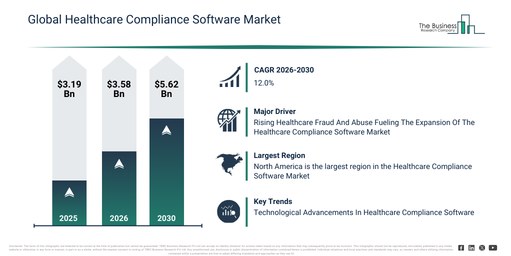
    Healthcare Compliance Software Market Forecast Highlighting Growth From $3.57 Billion To $5.62 Billion

    The market for healthcare compliance software has experienced substantial expansion lately, projecting a rise from $3.19 billion in 2025 to $3.58 billion in 2026, reflecting a compound annual growth rate of 12.1%. This upward trajectory during the past period is linked to several key factors, including intensifying regulatory oversight within the healthcare sector, the widespread implementation of electronic health records, a notable increase in data security breaches, the expansion of healthcare IT infrastructures, and a growing demand for consistent, standardized compliance methodologies.

    The healthcare compliance software sector is poised for substantial expansion in the coming years, with projections indicating a market valuation of $5.62 billion by the year 2030, reflecting a compound annual growth rate (CAGR) of 12.0%. This anticipated surge is largely fueled by an escalating need for perpetual compliance oversight, amplified investments in regulatory technology solutions, the burgeoning application of AI for compliance data analysis, a wider embrace of cloud-hosted governance instruments, and a discernible emphasis on preemptive risk reduction strategies, with key developments in this period including the greater utilization of cloud-based compliance systems, increased deployment of automated audit and reporting functionalities, deeper integration of risk management frameworks, broader implementation of real-time compliance tracking, and a heightened concentration on safeguarding data privacy.

    Download A Free Sample Report For Comprehensive Market Insights:

    https://www.thebusinessresearchcompany.com/sample.aspx?id=13450&type=smp

    Healthcare Compliance Software Market Industry Drivers: What Is Driving Revenue Growth?

    The escalating prevalence of fraudulent and abusive practices within the healthcare sector is anticipated to be a primary catalyst for the expansion of the healthcare compliance software market. Such misconduct encompasses intentional deceitful actions within healthcare operations, characterized by fabricated claims, misrepresentation of facts, or other unlawful conduct designed to secure unwarranted financial advantages, which consequently undermine the overall trustworthiness and operational efficiency of medical services. Compliance software in healthcare plays a crucial role by bolstering adherence to regulations, identifying unusual trends in billing procedures, and implementing robust oversight mechanisms, thus offering protection against illicit conduct and preserving the reliability of healthcare infrastructures. As an illustration, data from the United States Sentencing Commission (USSC), a federal agency, indicated that within the fiscal year 2024, 395 out of a total of 61,678 cases presented to the Commission involved healthcare fraud, underscoring the growing concern and thus fueling the demand for healthcare compliance solutions.

    Healthcare Compliance Software Market Segment Analysis Highlighting Growth Areas

    The healthcare compliance software market covered in this report is segmented –

    1) By Product Type: On-Premise, Cloud-Based

    2) By Application: Policy And Procedure Management, Auditing Tools, Training Management And Tracking, Medical Billing And Coding, License, Certificate, And Contract Tracking, Incident Management, Accreditation Management

    3) By End-User: Hospitals, Specialty Clinics, Other End Users

    Subsegments:

    1) By On-Premise: On-Premise Healthcare Compliance Management, On-Premise Regulatory Reporting Software, On-Premise Risk Management Software

    2) By Cloud-Based: Cloud-Based Healthcare Compliance Management, Cloud-Based Regulatory Reporting Software, Cloud-Based Risk Management Software

    #Healthcare Compliance Software Market Growth Trends: What Is Influencing The Future Outlook?

    In the healthcare compliance software sector, key players are prioritizing innovation, like developing integrated compliance platforms, to enhance the efficacy and streamlining of regulatory adherence. These platforms serve as all-encompassing software tools, aiding healthcare entities in overseeing and upholding their compliance obligations. As an illustration, in October of 2023, Compliancy Group, a company situated in the United States that offers cloud-based software solutions, introduced “The Guard.” This product functions as a unified center for overseeing every facet of compliance, encompassing everything from identifying risks and managing policies to preparing for audits and conducting staff training. Essentially, The Guard is a thorough, cloud-hosted software system engineered to assist healthcare providers in meeting and sustaining adherence to a multitude of regulations, most notably HIPAA, SOC 2, and OSHA standards.

    Healthcare Compliance Software Market Leading Companies: Who Holds Significant Market Presence?

    Major companies operating in the healthcare compliance software market are Wolters Kluwer, Cerner Corporation, Change Healthcare Inc., Beacon Healthcare Systems Inc., RLDatix Ltd., Accruent LLC, HealthStream Inc., Symplr, Intelex Technologies, AHM Holding Inc., iContracts, Sprinto Corporation, Healthicity LLC, Panacea Healthcare Solutions LLC, VigiLanz Corporation, Contract Guardian Inc., MedTraine LLC, Atlantic.net, Complete Medical SolutionsLLC, Verge Solutions LLC, HCS

    Access The Complete Healthcare Compliance Software Market Report:

    https://www.thebusinessresearchcompany.com/report/healthcare-compliance-software-global-market-report

    Healthcare Compliance Software Market Largest Region By Revenue And Market Share

    North Americawas the largest region in the healthcare compliance software market in 2025. Asia-Pacificis expected to be the fastest-growing region in the forecast period. The regions covered in the healthcare compliance software market report are Asia-Pacific, South East Asia, Western Europe, Eastern Europe, North America, South America, Middle East, Africa.

    Get in touch with us:

    The Business Research Company: https://www.thebusinessresearchcompany.com/

    Americas: +1 310-496-7795

    Asia: +44 7882 955267 & +91 8897263534

    Europe: +44 7882 955267

    Email us at: marketing@tbrc.info

    Follow us on:

    LinkedIn: https://in.linkedin.com/company/the-business-research-company

    YouTube: https://www.youtube.com/channel/UC24_fI0rV8cR5DxlCpgmyFQ

    Global Market Model: https://www.thebusinessresearchcompany.com/global-market-model
  • Healthcare Companion Robots Market Forecast Signals New Revenue Opportunities Through 2030

    Healthcare Companion Robots Market Forecast Signals New Revenue Opportunities Through 2030

    Enhanced with market attractiveness analysis, total addressable market evaluation, company benchmarking matrices, interactive Excel dashboards, expanded supply chain intelligence, emerging startup coverage, and detailed product insights, The Business Research Company’s 2026 market reports deliver more actionable and strategically valuable research.

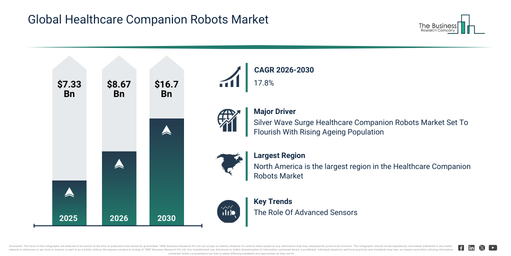
    Healthcare Companion Robots Market Revenue Growth Supported By A CAGR Of 16.69% Through 2030

    The market for healthcare companion robots has experienced significant expansion lately, projected to increase from $7.33 billion in 2025 to $8.67 billion in 2026, reflecting an 18.3% compound annual growth rate. Factors underpinning this advancement during the past period include the expanding demographic of senior citizens, a heightened need for support services in residential care facilities, a scarcity of available healthcare professionals, the integration of robotic technology in therapeutic applications, and advancements in the sophistication of robotic sensing capabilities.

    The market for healthcare companion robots is poised for substantial expansion in the upcoming years, projected to reach $16.7 billion by 2030 with a compound annual growth rate of 17.8%. This upward trajectory is fueled by several key factors, including a greater number of socially assistive robots being put into service, increased financial backing for personalized healthcare robotics, the broadening scope of care provided within home settings, a growing comfort level with robotic companionship, and improvements in artificial intelligence for analyzing behavior. Within this projected period, significant developments are anticipated, such as a rise in AI-powered companion robots, increased reliance on robots to assist with the care of elderly individuals, deeper integration of algorithms for tailored patient care, enhanced abilities in recognizing emotions, and a heightened emphasis on how humans and robots interact.

    Download A Free Sample Report For Comprehensive Market Insights:

    https://www.thebusinessresearchcompany.com/sample.aspx?id=8225&type=smp

    Healthcare Companion Robots Market Growth Factors: Which Forces Are Supporting Market Expansion?

    The demographic shift towards an older population is anticipated to be a significant catalyst for expansion within the healthcare companion robot sector. As the number of elderly individuals grows, so does the need for companion robots, which offer domestic support and care for seniors. Furthermore, governmental bodies across nations are actively encouraging the adoption of these healthcare robots through various promotional efforts. For example, data from the Office for the National Statistics in the UK revealed that in 2024, the United Kingdom was home to 625,000 individuals aged 90 and above, a slight increase from the 612,000 recorded in mid-2023, representing a 2.2% growth. Consequently, the increasing elderly demographic is projected to fuel the advancement of the healthcare companion robot market throughout the specified projection timeframe.

    Healthcare Companion Robots Market Segment Performance And Strategic Opportunities

    The healthcare companion robots market covered in this report is segmented –

    1) By Type: Animal-like Robots, Humanoid Robots

    2) By Age Group: Children, Geriatric

    3) By Application: Emotional Support And Companionship, Therapy And Rehabilitation Assistance, Monitoring And Safety Assistance, Cognitive Stimulation And Dementia Care, Pediatric Support And Developmental Aid, Entertainment And Engagement

    Subsegments:

    1) By Animal-Like Robots: Robotic Pets, Interactive Animal Simulators

    2) By Humanoid Robots: Social Companion Robots, Assistance Robots For Elderly Care

    Healthcare Companion Robots Market Industry Trends: What Changes Are Reshaping Demand?

    Key players within the healthcare companion robot sector are heavily investing in cutting-edge sensor technologies aimed at refining patient oversight, amplifying interactive potential, and delivering bespoke care plans. These sophisticated sensors, capable of gathering and interpreting intricate environmental data, frequently incorporate artificial intelligence and the Internet of Things to boost their performance and precision. Illustrating this trend, in February of 2023, the Chinese high-tech firm Elephant Robotics Technology Co., Ltd., which specializes in robotic research and development, unveiled its MetaCat robot. This innovative device features an array of touch sensors, sophisticated voice recognition systems, and dynamic LED lighting elements, enabling it to convincingly mimic feline vocalizations, purrs, and ocular motions, thereby significantly increasing its realism and engagement factor.

    Healthcare Companion Robots Market Key Players: Which Companies Shape Industry Competition?

    Major companies operating in the healthcare companion robots market are Blue Frog Robotics SAS, Intuition Robotics Ltd., No Isolation AS, Honda Motor Co. Ltd., Hanson Robotics Limited, Ubtech Robotics Corp. Ltd., Emotix Inc., Catalia Health Inc., Care Coach Inc., F&P Robotics AG, Giraff Technologies AB, Leka SAS, SoftBank Robotics, Toyota, Paro Robots, PAL Robotics, Robosoft Systems, Sanbot Technology, Aldebaran Robotics, Mayfield Robotics

    Access The Complete Healthcare Companion Robots Market Report:

    https://www.thebusinessresearchcompany.com/report/healthcare-companion-robots-global-market-report

    Healthcare Companion Robots Market Regional Analysis And Leading Geography

    North Americawas the largest region in the healthcare companion robots market share in 2025. The regions covered in the healthcare companion robots market report are Asia-Pacific, South East Asia, Western Europe, Eastern Europe, North America, South America, Middle East, Africa.

    Get in touch with us:

    The Business Research Company: https://www.thebusinessresearchcompany.com/

    Americas: +1 310-496-7795

    Asia: +44 7882 955267 & +91 8897263534

    Europe: +44 7882 955267

    Email us at: marketing@tbrc.info

    Follow us on:

    LinkedIn: https://in.linkedin.com/company/the-business-research-company

    YouTube: https://www.youtube.com/channel/UC24_fI0rV8cR5DxlCpgmyFQ

    Global Market Model: https://www.thebusinessresearchcompany.com/global-market-model
  • Healthcare Command Centers Market Growth Is Accelerating As Industry Transformation Continues

    Healthcare Command Centers Market Growth Is Accelerating As Industry Transformation Continues

    Through market attractiveness analysis, total addressable market evaluation, company benchmarking matrices, interactive Excel dashboards, expanded supply chain intelligence, emerging startup coverage, and detailed product insights, The Business Research Company’s 2026 market reports provide more actionable and strategically valuable research.

    Healthcare Command Centers Market Value Expansion And Long-Term Growth Outlook

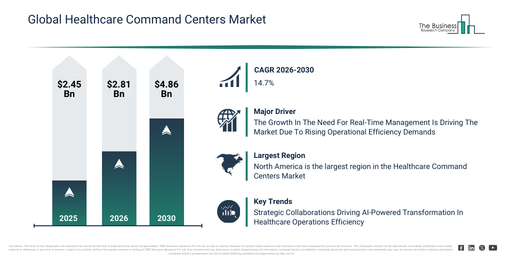
    The sector focused on healthcare command centers has witnessed substantial expansion lately; projections indicate a rise from $2.45 billion in 2025 to $2.81 billion by 2026, reflecting a compound annual growth rate of 14.9%. This historical upward trend is largely due to the escalating complexity inherent in hospital management, a surge in patient admissions within critical care settings, the early integration of hospital data analysis systems, a heightened emphasis on optimizing operational performance, and the broader implementation of integrated care coordination frameworks.

    The market for healthcare command centers is poised for significant expansion over the coming years, projecting to reach $4.86 billion by 2030 with a compound annual growth rate of 14.7%. This projected growth stems from a confluence of factors, including a heightened need for clinical decisions informed by data, escalating investments in smart hospital infrastructure, the broadening scope of telehealth coordination, increasing adoption of artificial intelligence in hospital management, and a greater emphasis on value-based healthcare. Key developments expected during this forecast period involve the greater implementation of real-time operational dashboards, expanded utilization of predictive analytics for managing patient flow, enhanced integration of diverse clinical data sources, the proliferation of virtual and hybrid command center models, and a reinforced commitment to optimizing resources proactively.

    Download A Free Sample Report For Comprehensive Market Insights:

    https://www.thebusinessresearchcompany.com/sample.aspx?id=30292&type=smp

    Healthcare Command Centers Market Demand Drivers: What Is Fueling Industry Growth?

    The escalating demand for immediate operational oversight is poised to be a significant catalyst for the expansion of the healthcare command centers market. This imperative for real-time management, characterized by the continuous observation and swift reaction to unfolding events and data streams, is crucial for facilitating prompt decision-making and maximizing performance. The heightened importance of such dynamic monitoring stems from the increasing pressure to expedite decision processes and boost operational effectiveness, especially within the intricate landscape of healthcare. Healthcare command centers are instrumental in fulfilling this requirement by consolidating information from diverse sources, including patient movement, bed availability, and resource allocation, thereby empowering ongoing surveillance, agile decision-making, and punctual interventions across all facets of healthcare services. To illustrate, BMA data from October 2025 indicated that in August 2025, roughly 6.26 million individuals in the UK were on waiting lists for treatment, comprising 7.41 million cases, with a substantial portion, approximately 2.89 million, experiencing waits exceeding 18 weeks, and close to 191,500 facing delays longer than a year. Consequently, the intensifying need for real-time management directly fuels the growth trajectory of the healthcare command centers market.

    Healthcare Command Centers Market Segment Landscape And Growth Potential

    The healthcare command centers market covered in this report is segmented –

    1) By Component: Software, Hardware, Services

    2) By Command Center Type: Capacity And Bed Management, Operations And Resource Centers, Clinical Command Centers, Emergency Operations Centers, Security Operations Centers

    3) By Deployment Mode: On-Premise, Cloud-Based, Hybrid

    4) By Application: Patient Flow And Capacity Management, Bed Management, Staff Allocation And Scheduling, Emergency Response And Crisis Management, Real-Time Decision Support, Telehealth And Remote Care Coordination

    5) By End User: Large Health Systems, Academic Medical Centers, Community And Regional Hospitals, Ambulatory Surgery Centers And Integrated Clinics, Managed Service Providers

    Subsegments:

    1) By Software: Real-Time Dashboards And Visualization, Predictive Analytics And Forecasting, Scheduling And Procedure Optimization, Event Or Alarm And Incident Management, Integrations And Middleware, Collaboration Or Communication Workspace

    2) By Hardware: Display Walls And Visualization Hardware, Networking And Edge Appliances, On-Site Monitoring Stations Or Consoles

    3) By Services: Implementation And Integration Services, Managed Services Or Virtual Command Center Operations, Consulting, Training And Continuous Optimization, Data Science Or Model Tuning

    Healthcare Command Centers Market Innovation Trends: Which Developments Are Transforming The Industry?

    Leading players within the healthcare command centers sector are prioritizing the establishment of strategic alliances to foster technological advancements, boost operational insights, and elevate the effectiveness of patient care via unified, data-centric approaches. These strategic alliances entail cooperative ventures between technology firms and healthcare organizations, designed to meld clinical knowledge with cutting-edge analytics, artificial intelligence, and immediate management functionalities, with the ultimate goal of optimizing hospital processes and patient results. As an illustration, in October 2025, GE HealthCare, a prominent U.S. entity in the medical technology sphere, joined forces with The Queen’s Health Systems, a U.S. healthcare network, and Duke Health, a U.S. academic medical center. This joint effort is directed towards the creation of cloud-based, AI-powered hospital operations software, part of GE HealthCare’s CareIntellect suite, emphasizing the application of predictive analytics for real-time enhancements in patient flow, staff allocation, and resource management, consequently improving operational efficiency, shortening patient hospital stays, and championing patient-focused, high-standard care.

    Healthcare Command Centers Market Competitive Landscape: Who Are The Leading Companies?

    Major companies operating in the healthcare command centers market are Deloitte Touche Tohmatsu Limited, Siemens Healthineers AG, Koninklijke Philips N.V., General Electric Company, Oracle Corporation, Epic Systems Corporation, Dedalus S.p.A., symplr, Inc., Columna Flow, Inc., Care Logistics, Inc., TeleTracking Technologies, Inc., LeanTaaS, Inc., Alcidion Pty Ltd, Qventus, Inc., ABOUT Healthcare, Inc., Pointcore, Inc., Hospital IQ, Inc., TAGNOS, Inc., WellSky Corporation, Cerner Corporation

    Access The Complete Healthcare Command Centers Market Report:

    https://www.thebusinessresearchcompany.com/report/global-healthcare-command-centers-market-report

    Healthcare Command Centers Market Geographic Analysis: Where Is Demand Growing The Fastest?

    North Americawas the largest region in the healthcare command centers market in 2025. Asia-Pacificis expected to be the fastest-growing region in the forecast period. The regions covered in the healthcare command centers market report are Asia-Pacific, South East Asia, Western Europe, Eastern Europe, North America, South America, Middle East, Africa.

    Get in touch with us:

    The Business Research Company: https://www.thebusinessresearchcompany.com/

    Americas: +1 310-496-7795

    Asia: +44 7882 955267 & +91 8897263534

    Europe: +44 7882 955267

    Email us at: marketing@tbrc.info

    Follow us on:

    LinkedIn: https://in.linkedin.com/company/the-business-research-company

    YouTube: https://www.youtube.com/channel/UC24_fI0rV8cR5DxlCpgmyFQ

    Global Market Model: https://www.thebusinessresearchcompany.com/global-market-model
  • Healthcare Cloud Infrastructure Market Outlook Highlights The Next Major Growth Opportunities

    Healthcare Cloud Infrastructure Market Outlook Highlights The Next Major Growth Opportunities

    Delivering more actionable and strategically valuable research, The Business Research Company’s 2026 market reports feature market attractiveness analysis, total addressable market evaluation, company benchmarking matrices, interactive Excel dashboards, expanded supply chain intelligence, emerging startup coverage, and detailed product insights.

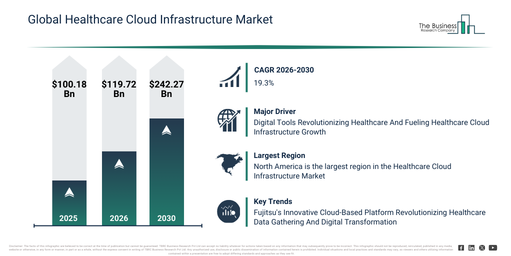
    Healthcare Cloud Infrastructure Market Expected To Reach $242.27 Billion By 2030 At 19.3% CAGR

    The digital backbone supporting healthcare services has experienced substantial expansion. Projected to increase from $100.18 billion in the year 2025 to $119.72 billion by 2026, this market is set to expand at a vigorous compound annual growth rate of 19.5%. Factors fueling this advancement historically include the escalating trend of digitizing patient information, the burgeoning use of remote healthcare services, a growing need for adaptable information technology frameworks, the widespread adoption of electronic health record systems, and the sheer increase in the quantity of healthcare-related data being generated.

    The global healthcare cloud infrastructure sector is poised for significant expansion, projecting an increase to $242.27 billion by 2030, fueled by a compound annual growth rate of 19.3%. This accelerated trajectory is largely propelled by a confluence of factors including the escalating shift towards cloud-native healthcare applications, heightened emphasis on adhering to stringent data privacy and security regulations, the proliferation of AI-driven analytics within the healthcare domain, burgeoning investments in hybrid cloud strategies, and a persistent need for economical IT infrastructure solutions in healthcare. Key developments anticipated during this period involve a greater embrace of hybrid cloud frameworks, a surge in the requirement for protected healthcare data repositories, amplified utilization of adaptable cloud computing capabilities, broader deployment of disaster recovery and backup services, and a more concentrated effort towards establishing interoperable infrastructure.

    Download A Free Sample Report For Comprehensive Market Insights:

    https://www.thebusinessresearchcompany.com/sample.aspx?id=7267&type=smp

    Healthcare Cloud Infrastructure Market Growth Drivers: What Factors Are Accelerating Expansion?

    The healthcare cloud infrastructure market’s expansion is anticipated to be significantly fueled by the growing integration of digital technologies within the medical field. These digital advancements encompass a range of software, hardware, and services that employ information and communication technology to empower both healthcare providers and patients in making informed decisions. Technologies such as electronic health records (EHRs), electronic medical records (EMRs), mHealth applications, wearable technology, telehealth and telemedicine solutions, and personalized medicine are instrumental in enhancing the quality of healthcare delivery. The operational backbone for many of these digital healthcare applications is the cloud infrastructure, which is essential for boosting efficiency, interoperability, and security. This cloud infrastructure serves as a foundational element for the healthcare industry’s digital evolution, paving the way for improved patient outcomes, streamlined operations, and innovation in both service delivery and technological advancements. Illustrating this trend, Deloitte Touche Tohmatsu Limited reported in January 2025 that approximately 70% of surveyed individuals consider investments in digital tools and platforms crucial, with 60% focusing on foundational technologies like EMRs and ERP systems, and close to 90% of senior executives anticipating an accelerated uptake of digital technologies in 2025. Consequently, the increasing embrace of digital tools across the healthcare industry is a primary driver for the growth of the healthcare cloud infrastructure market.

    Healthcare Cloud Infrastructure Market Categorization By Product Type And Application

    The healthcare cloud infrastructure market covered in this report is segmented –

    1) By Component: Hardware, Services

    2) By Deployment Model: Private Cloud, Hybrid Cloud, Public Cloud

    3) By End-User: Healthcare Providers, Healthcare Payers

    Subsegments:

    1) By Hardware: Servers, Storage Devices, Networking Equipment, Security Appliances

    2) By Services: Cloud Storage Services, Cloud Computing Services, Cloud Security Services, Consulting And Integration Services

    Healthcare Cloud Infrastructure Market Trends: What Is Shaping Future Industry Growth?

    Leading corporations within the healthcare cloud infrastructure sector are prioritizing advancements in their offerings, particularly through the development of internet-connected, server-based platforms that function as an operating system and hardware for data centers. These platforms facilitate the remote and scalable integration of both software and hardware. Rather than investing in and managing their own data centers or IT infrastructure, businesses can lease access to various computing resources, including servers, storage, databases, networking capabilities, software solutions, and intelligence services. As an illustration, in March of 2023, Fujitsu Limited, a Japanese firm specializing in information and communications technology, introduced a novel and distinct cloud-based platform. This cutting-edge platform empowers individuals to securely collect and leverage health-related information, thereby propelling digital innovation within the healthcare field. This new development aligns with Fujitsu’s ongoing commitment to fostering societal well-being, supporting its Fujitsu Uvance initiative focused on ‘healthy living’ and the creation of a sustainable global environment. Key features that set this platform apart include its capacity to automatically convert healthcare data into HL7 FHIR, the emerging standard for medical information, its ability to consolidate diverse health-related data sources, and its sophisticated security features designed to guarantee the secure utilization of information.

    Healthcare Cloud Infrastructure Market Company Landscape And Strategic Competition

    Major companies operating in the healthcare cloud infrastructure market are Amazon.com Inc., Microsoft Corporation, Google LLC, Oracle Corporation, International Business Machines Corporation, Hewlett Packard Enterprise, Dell Inc., NetApp Inc., Cisco Systems Inc., VMware Inc., SAP SE, Alibaba Group Holding Ltd, Tencent Holdings Ltd, NTT Ltd, Fujitsu Limited, Hitachi Ltd, Iron Mountain Incorporated, Equinix Inc., Digital Realty Trust Inc., ClearDATA Networks Inc.

    Access The Complete Healthcare Cloud Infrastructure Market Report:

    https://www.thebusinessresearchcompany.com/report/healthcare-cloud-infrastructure-global-market-report

    Healthcare Cloud Infrastructure Market Global Footprint: Which Region Holds Market Leadership?

    North Americawas the largest region in the healthcare cloud computing market in 2025. Asia-Pacificis expected to be the fastest-growing region in the forecast period. The regions covered in the healthcare cloud infrastructure market report are Asia-Pacific, South East Asia, Western Europe, Eastern Europe, North America, South America, Middle East, Africa.

    Get in touch with us:

    The Business Research Company: https://www.thebusinessresearchcompany.com/

    Americas: +1 310-496-7795

    Asia: +44 7882 955267 & +91 8897263534

    Europe: +44 7882 955267

    Email us at: marketing@tbrc.info

    Follow us on:

    LinkedIn: https://in.linkedin.com/company/the-business-research-company

    YouTube: https://www.youtube.com/channel/UC24_fI0rV8cR5DxlCpgmyFQ

    Global Market Model: https://www.thebusinessresearchcompany.com/global-market-model
  • Healthcare Claims Management Solutions Market Trends And Growth Drivers Point To Strong Future Potential

    Healthcare Claims Management Solutions Market Trends And Growth Drivers Point To Strong Future Potential

    Enhanced with market attractiveness analysis, total addressable market evaluation, company benchmarking matrices, interactive Excel dashboards, expanded supply chain intelligence, emerging startup coverage, and detailed product insights, The Business Research Company’s 2026 market reports deliver more actionable and strategically valuable research.

    Healthcare Claims Management Solutions Market Size And Revenue Forecast Through 2030

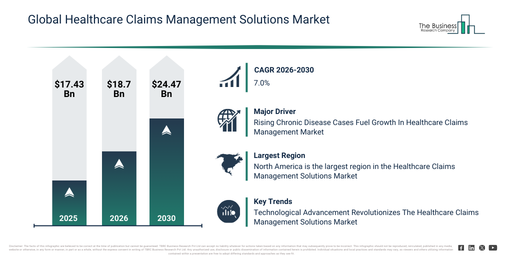
    The market for healthcare claims management solutions has experienced robust expansion lately, projecting a rise from $17.43 billion in 2025 to $18.7 billion in 2026, reflecting a compound annual growth rate of 7.3%. This upward trajectory in the observed period is largely due to heightened healthcare insurance penetration, an increase in submitted claims by healthcare providers, the wider implementation of electronic billing systems, the escalating intricacy of reimbursement procedures, and a growing need for expedited claim resolutions.

    The market for healthcare claims management solutions is poised for substantial expansion in the upcoming years, projecting a rise to $24.47 billion by 2030, driven by a compound annual growth rate (CAGR) of 7.0%. This anticipated upswing is fueled by several key factors, including the increasing adoption of artificial intelligence within claims processing platforms, a heightened concentration on reimbursement models that reward value-based care, the proliferation of cloud-based solutions for managing claims, a stronger emphasis on automating regulatory compliance, and a growing demand for immediate transparency in claims handling. Prominent trends shaping this market during the forecast period will encompass a greater embrace of automated claims processing systems, a more extensive utilization of predictive analytics to improve claims accuracy, the enhanced integration of real-time access to patient data, an expanded deployment of tools designed for fraud detection and prevention, and a more significant focus on data security and adherence to regulations.

    Download A Free Sample Report For Comprehensive Market Insights:

    https://www.thebusinessresearchcompany.com/sample.aspx?id=7298&type=smp

    Healthcare Claims Management Solutions Market Growth Factors Supporting Long-Term Expansion

    The expanding prevalence of long-term health conditions, known as chronic diseases, is anticipated to be a significant catalyst for the advancement of the healthcare claims management solutions market. These persistent health issues necessitate continuous medical attention, and claims management solutions play a vital role in streamlining the accurate and effective processing of associated claims, thereby facilitating prompt financial compensation for healthcare providers delivering chronic disease care. Illustratively, data from the US National Center for Biotechnology Information (NCBI), released in January 2023, forecasts a substantial rise, predicting that by 2050, the population aged 50 and above suffering from at least one chronic ailment will escalate by 99.5%, reaching a total of 142.66 million individuals. Consequently, this escalating burden of chronic diseases is poised to drive the expansion of the healthcare claims management solutions sector.

    Healthcare Claims Management Solutions Market Segment Analysis And Revenue Opportunities

    The healthcare claims management solutions market covered in this report is segmented –

    1) By Type: Software, Services

    2) By Deployment Mode: Web-Based, Cloud-Based, On-Premise

    3) By End-User: Healthcare Payers, Healthcare Providers, Other End-Users

    Subsegments:

    1) By Software: Claims Processing Software, Revenue Cycle Management Software, Medical Billing Software, Analytics And Reporting Tools

    2) By Services: Consulting Services, Implementation Services, Training And Support Services, Claims Auditing Services

    Healthcare Claims Management Solutions Market Industry Trends Shaping Future Revenue Growth

    Key players within the healthcare claims management solutions sector are prioritizing advancements in their product offerings, exemplified by the introduction of AI-powered tools like the Claims Data Activator Suite. This innovative solution is designed to foster data interoperability, deliver sophisticated analytical capabilities, and enable intelligent reporting through the integration of Document AI, the Healthcare Natural Language API, and the Healthcare API, effectively translating raw, unstructured data into a usable, structured format. A notable development occurred in April 2023 when Google LLC, a prominent US technology firm, unveiled its new Google Cloud AI-enabled claims data activator. This tool is specifically engineered to support health plans and healthcare providers by streamlining administrative burdens and reducing associated costs, facilitating the transformation of unstructured data into structured formats and equipping professionals with the means to render faster, more informed decisions, ultimately leading to improved patient outcomes.

    Healthcare Claims Management Solutions Market Leading Players Shaping Industry Direction

    Major companies operating in the healthcare claims management solutions market are Allscripts Healthcare Solutions Inc, Athenahealth, McKesson Corporation, Oracle Corporation, Availity LLC, Cerner Corporation, Change Healthcare, Conifer Health Solutions LLC, eClinicalWorks, Emdeon Inc, Epic Systems Corporation, Inovalon Co, InstaMed LLC, Kareo Co, NaviNet Inc, NTT Data Services, Optum Inc, SSI Group LLC, Cognizant Technology Ltd, TruBridge Co, Waystar Co, ZirMed Inc

    Access The Complete Healthcare Claims Management Solutions Market Report:

    https://www.thebusinessresearchcompany.com/report/healthcare-claims-management-solutions-global-market-report

    Healthcare Claims Management Solutions Market Regional Distribution: Which Areas Drive Market Expansion?

    North Americawas the largest region in the healthcare claim management solution market in 2025. Asia-Pacificis expected to be the fastest-growing region in the forecast period. The regions covered in the healthcare claims management solutions market report are Asia-Pacific, South East Asia, Western Europe, Eastern Europe, North America, South America, Middle East, Africa.

    Get in touch with us:

    The Business Research Company: https://www.thebusinessresearchcompany.com/

    Americas: +1 310-496-7795

    Asia: +44 7882 955267 & +91 8897263534

    Europe: +44 7882 955267

    Email us at: marketing@tbrc.info

    Follow us on:

    LinkedIn: https://in.linkedin.com/company/the-business-research-company

    YouTube: https://www.youtube.com/channel/UC24_fI0rV8cR5DxlCpgmyFQ

    Global Market Model: https://www.thebusinessresearchcompany.com/global-market-model
  • Healthcare Business Process Outsourcing (BPO) Market Expansion Is Reshaping Competitive Dynamics Across The Industry

    Healthcare Business Process Outsourcing (BPO) Market Expansion Is Reshaping Competitive Dynamics Across The Industry

    Through market attractiveness analysis, total addressable market evaluation, company benchmarking matrices, interactive Excel dashboards, expanded supply chain intelligence, emerging startup coverage, and detailed product insights, The Business Research Company’s 2026 market reports provide more actionable and strategically valuable research.

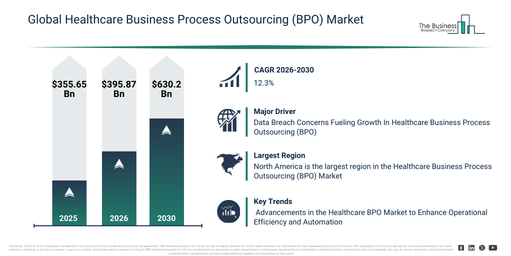
    Healthcare Business Process Outsourcing (BPO) Market Growth From $395.86 Billion In 2026 To $630.19 Billion By 2030 At A CAGR Of 12.3%

    The healthcare business process outsourcing sector has experienced significant expansion lately, with projections indicating a rise from $355.65 billion in 2025 to $395.87 billion in 2026, reflecting a compound annual growth rate of 11.3%. This past growth trajectory is linked to several factors, including the escalating administrative burden within healthcare systems, escalating expenses for both service providers and insurance companies, a broader reach of health insurance, more stringent regulatory adherence demands, and an early inclination toward outsourcing billing functions.

    The global healthcare business process outsourcing (BPO) market is projected for significant expansion, anticipated to reach $630.2 billion by 2030, exhibiting a compound annual growth rate (CAGR) of 12.3%. This upward trajectory is propelled by several key factors: a surge in the need for adaptable outsourcing solutions, augmented investments in AI-powered BPO services, the broadening scope of administrative support for value-based care models, a heightened emphasis on outsourcing cybersecurity and compliance functions, and the persistent pivot towards digitized healthcare operations. Throughout the forecasted period, prominent trends will include a greater embrace of comprehensive revenue cycle outsourcing, increased utilization of automation in managing claims and billing, escalating demand for regulatory adherence and data protection services, the expansion of IT infrastructure management outsourcing, and a more concentrated effort on achieving cost efficiencies.

    Download A Free Sample Report For Comprehensive Market Insights:

    https://www.thebusinessresearchcompany.com/sample.aspx?id=13290&type=smp

    Healthcare Business Process Outsourcing (BPO) Market Demand Drivers Creating New Revenue Opportunities

    The escalating frequency of data breaches is poised to significantly boost the healthcare business process outsourcing market. A data breach, characterized by the unauthorized access, revelation, acquisition, or dissemination of private or sensitive information, necessitates stronger protective measures. Healthcare BPO firms are instrumental in safeguarding patient data, employing stringent data management practices and advanced security systems to maintain its confidentiality and wholeness. Illustrating this trend, the Identity Theft Resource Center (ITRC), a US non-profit, reported that in 2023, the United States experienced 3,205 data compromises, a substantial surge of 78 percentage points from the 1,801 incidents recorded in 2022. Consequently, the persistent and growing threat of data insecurity is a primary catalyst for the expansion of the healthcare BPO sector.

    Healthcare Business Process Outsourcing (BPO) Market Segmentation And Category Breakdown

    The healthcare business process outsourcing (bpo) market covered in this report is segmented –

    1) By Service Type: Provider Outsourcing Services, Payer Outsourcing Services, Operational Outsourcing Services, Information Technology Infrastructure Management Services

    2) By Provider Service: Revenue Cycle Management, Patient Enrollment, Patient Care

    3) By Solution: Manufacturing, Research And Development, Non-Clinical Services

    4) By End User: Healthcare Providers, Healthcare Payers, Other End-Users

    Subsegments:

    1) By Provider Outsourcing Services: Medical Billing And Coding, Revenue Cycle Management, Patient Scheduling And Registration, Telehealth Services

    2) By Payer Outsourcing Services: Claims Processing, Member Enrollment And Eligibility Verification, Fraud Detection And Prevention, Customer Support Services

    3) By Operational Outsourcing Services: Human Resources Outsourcing, Procurement And Supply Chain Management, Facility Management Services, Administrative Support Services

    4) By Information Technology Infrastructure Management Services: IT Help Desk Support, Cloud Services Management, Network Management, Data Security And Compliance Services

    Healthcare Business Process Outsourcing (BPO) Market Trends Driving Strategic Industry Expansion

    The healthcare BPO sector is witnessing a significant trend where key players are prioritizing technological innovation, specifically adopting agentic AI-powered digital workforce platforms. This strategic shift is driven by the escalating need for diminished claim rejections, enhanced operational performance, and adaptable, economical revenue cycle management solutions. Unlike conventional BPO approaches that rely on manual labor and inflexible, rule-based systems, an agentic AI-powered digital workforce platform deploys intelligent AI-driven agents. These agents leverage advanced capabilities in natural language understanding, machine learning, and automation to independently handle or support intricate administrative tasks, including but not limited to verifying eligibility, managing claim denials, securing prior authorizations, and processing appeals. Illustrating this trend, AGS Health, a US provider of revenue cycle management and BPO services, launched its Agentic Digital Workforce Solutions in October 2025. This ensemble of AI agents, engineered for RCM, is capable of human-like reasoning and decision-making support. They can comprehend natural language, adjust to evolving payer regulations, and work collaboratively with human personnel, thereby automating high-volume, repetitive duties and presenting clear, actionable next steps. This integrated solution employs generative AI, robotic process automation (RPA), and workflow orchestration to decrease denial percentages, improve the rate of error-free claims, and increase cash flow, empowering RCM teams to concentrate on more strategic responsibilities.

    Healthcare Business Process Outsourcing (BPO) Market Competitive Analysis Of Major Industry Participants

    Major companies operating in the healthcare business process outsourcing (bpo) market are UnitedHealth Group Incorporated, Accenture plc, International Business Machines Corporation, Tata Consultancy Services Limited, Cognizant Technology Solutions Corporation, IQVIA Holdings Inc., Quintiles IMS Holdings Inc., HCL Technologies Limited, Infosys Limited, Wipro Limited, Sutherland Global Services Inc., Xerox Holdings Corporation, Genpact Limited, Access Healthcare Services Pvt. Ltd., Parexel International Corporation, R1 RCM Inc., NTT Data Corporation, EXLService Holdings Inc., Sykes Enterprises Incorporated, WNS Limited, Firstsource Solutions Limited, Invensis Technologies Pvt. Ltd., Hinduja Global Solutions Limited, Mphasis Limited, GeBBS Healthcare Solutions Inc., Akurate Management Solutions Pvt Ltd., Gevity Consulting Inc., Octopus Tech Solutions Pvt Ltd.

    Access The Complete Healthcare Business Process Outsourcing (BPO) Market Report:

    https://www.thebusinessresearchcompany.com/report/healthcare-business-process-outsourcing-bpo-global-market-report

    Healthcare Business Process Outsourcing (BPO) Market Leading Geography: Which Region Generates The Most Revenue?

    North Americawas the largest region in the healthcare business process outsourcing (BPO) market in 2025. Asia-Pacificis expected to be the fastest-growing region in the forecast period. The regions covered in the healthcare business process outsourcing (bpo) market report are Asia-Pacific, South East Asia, Western Europe, Eastern Europe, North America, South America, Middle East, Africa.

    Get in touch with us:

    The Business Research Company: https://www.thebusinessresearchcompany.com/

    Americas: +1 310-496-7795

    Asia: +44 7882 955267 & +91 8897263534

    Europe: +44 7882 955267

    Email us at: marketing@tbrc.info

    Follow us on:

    LinkedIn: https://in.linkedin.com/company/the-business-research-company

    YouTube: https://www.youtube.com/channel/UC24_fI0rV8cR5DxlCpgmyFQ

    Global Market Model: https://www.thebusinessresearchcompany.com/global-market-model
  • Healthcare Business Intelligence Market Forecast Reveals Where Future Industry Value Will Be Created

    Healthcare Business Intelligence Market Forecast Reveals Where Future Industry Value Will Be Created

    Delivering more actionable and strategically valuable research, The Business Research Company’s 2026 market reports feature market attractiveness analysis, total addressable market evaluation, company benchmarking matrices, interactive Excel dashboards, expanded supply chain intelligence, emerging startup coverage, and detailed product insights.

    Healthcare Business Intelligence Market Expansion Outlook: What Revenue Opportunities Lie Ahead?

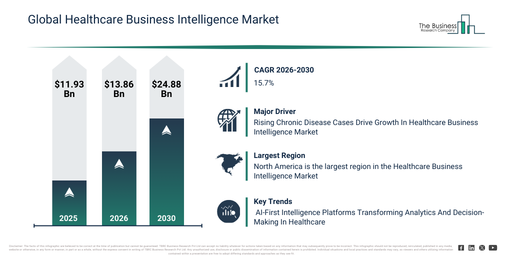
    Fueled by the expanding accessibility of digital health records, the early embrace of reporting and dashboard technologies, intensified pressures to curtail healthcare expenditures, the proliferation of performance assessment methodologies, and an increasing focus on operational clarity, the healthcare business intelligence market experienced considerable expansion. Projections indicate this market will surge from an estimated $11.93 billion in 2025 to $13.86 billion by 2026, demonstrating a robust compound annual growth rate of 16.2%.

    The healthcare business intelligence sector is poised for significant expansion, projecting a market valuation of $24.88 billion by the year 2030, fueled by a compound annual growth rate (CAGR) of 15.7%. This anticipated surge over the forecast period is largely driven by several key factors, including augmented investments in artificial intelligence-powered analytical tools, a heightened need for comprehensive population health insights, the expanding application of value-based care analytics, broader adoption of cloud-based business intelligence platforms, and ongoing improvements in the interoperability of healthcare data. Furthermore, prominent trends expected to shape this market include a greater uptake of sophisticated healthcare analytics platforms, an increased utilization of predictive and prescriptive analytical methods, the growing incorporation of real-time data visualization instruments, the proliferation of cloud-based business intelligence offerings, and an intensified emphasis on making decisions grounded in data.

    Download A Free Sample Report For Comprehensive Market Insights:

    https://www.thebusinessresearchcompany.com/sample.aspx?id=6928&type=smp

    Healthcare Business Intelligence Market Expansion Supported By Key Demand Factors

    A significant driver for the expansion of the healthcare business intelligence market is the escalating prevalence of chronic conditions, which are defined as ongoing health issues requiring sustained medical attention. This intelligence is instrumental in managing these long-term ailments by optimizing patient care strategies, refining the distribution of healthcare resources, mitigating expenditure, and enabling informed choices grounded in data analysis for superior patient prognoses over time. Illustrating this trend, data from January 2023 provided by the National Center for Biotechnology Information, a division of the U.S. National Library of Medicine, forecasts a substantial increase, predicting that by 2050, the cohort of individuals aged 50 and above afflicted with at least one chronic illness will dramatically rise by 99.5%, reaching a total of 142.66 million people. Consequently, this burgeoning rate of chronic diseases is poised to stimulate further development within the healthcare business intelligence sector.

    Healthcare Business Intelligence Market Segment Outlook: Which Categories Are Expanding The Fastest?

    The healthcare business intelligence market covered in this report is segmented –

    1) By Component: Platforms, Software, Services

    2) By Function: Query and Reporting, OLAP and Visualization, Performance Management

    3) By Mode of Delivery: On-Premise Model, Hybrid Model, Cloud-Based Model

    4) By Application: Financial Analysis, Clinical Data Analysis, Patient Care Analysis, Other Applications

    5) By End-User: Payers, Healthcare Providers, Other End-Users

    Subsegments:

    1) By Platforms: Cloud-Based Platforms, On-Premise Platforms

    2) By Software: Analytics Software, Reporting Software, Data Visualization Tools, Dashboard Software

    3) By Services: Consulting Services, Implementation Services, Training and Support Services, Maintenance Services

    Healthcare Business Intelligence Market Growth Trends Influencing Competitive Dynamics

    In the competitive healthcare business intelligence arena, leading entities are prioritizing cutting-edge developments, specifically AI-centric intelligence platforms, to address the escalating need for immediate predictive insights, seamless data consolidation across various fields, and adaptable decision-making capabilities. This trend is propelled by increasing adoption of electronic health records, escalating operational expenditures, and the imperative to adhere to value-based care frameworks. An AI-first healthcare intelligence platform represents a cloud-based solution designed to consolidate fragmented data from clinical, financial, operational, and human resources domains, employing machine learning and integrated AI assistants or copilots. It furnishes users with accessible tools for analysis and automated processes. Contrasting with conventional BI tools that often depend on static reports and isolated data sets, these advanced platforms deliver dynamic, forward-looking, and actionable intelligence, facilitating near real-time data utilization. As an illustration, Innovaccer, a US-based firm specializing in healthcare AI, introduced Innovaccer Gravity in May 2025. This platform, engineered with a contemporary, cloud-flexible architecture supporting platforms like AWS, Azure, Snowflake, and Databricks, and adhering to HIPAA, HITRUST, and SOC 2 standards, effectively merges data from electronic health records, claims, finance, operations, and supply chains through an extensive network of over 400 pre-built connections and more than 100 FHIR resources. It incorporates a data fabric layer, sophisticated AI models for tasks such as optical character recognition and speech analysis, alongside development environments that require minimal or no coding for creating bespoke AI agents and workflows. Ultimately, Gravity equips healthcare organizations with integrated, cross-domain intelligence, user-driven analytics, and expedited returns on investment, while concurrently lowering the overall cost of ownership, thereby fostering improvements in patient outcomes, operational effectiveness, and financial results.

    Healthcare Business Intelligence Market Key Companies And Competitive Benchmarking

    Major companies operating in the healthcare business intelligence market are Microsoft Corporation, Oracle Corporation, Tableau Software, SAP SE, IBM Corporation, QlikTech International AB, Sisense Inc, SAS Institute Inc, BOARD International, Yellowfin BI, MicroStrategy Incorporated, Infor Inc, Domo Inc., Information Builders, Perficient Inc., Tibco Software Inc., Panorama Software Inc, Definitive Healthcare, Dimensional Insight Inc., Looker Data Sciences Inc., GoodData Corporation, Phocas Software, Pyramid Analytics Inc., Dundas Data Visualization Inc., Alteryx Inc., ThoughtSpot Inc., Rapid Insight Inc., Aptean Inc., Health Catalyst Inc., Arcadia.io Inc., MedeAnalytics Inc., McKesson Corporation, Optum Inc., Cerner Corporation, Allscripts Healthcare Solutions Inc., Athenahealth Inc., Epic Systems Corporation, GE Healthcare, Philips Healthcare, Siemens Healthineers, Change Healthcare

    Access The Complete Healthcare Business Intelligence Market Report:

    https://www.thebusinessresearchcompany.com/report/healthcare-business-intelligence-global-market-report

    Healthcare Business Intelligence Market Regional Outlook: Where Are The Largest Opportunities Located?

    North Americawas the largest region in the healthcare business intelligence market in 2025. Asia-Pacificis expected to be the fastest-growing region in the forecast period. The regions covered in the healthcare business intelligence market report are Asia-Pacific, South East Asia, Western Europe, Eastern Europe, North America, South America, Middle East, Africa.

    Get in touch with us:

    The Business Research Company: https://www.thebusinessresearchcompany.com/

    Americas: +1 310-496-7795

    Asia: +44 7882 955267 & +91 8897263534

    Europe: +44 7882 955267

    Email us at: marketing@tbrc.info

    Follow us on:

    LinkedIn: https://in.linkedin.com/company/the-business-research-company

    YouTube: https://www.youtube.com/channel/UC24_fI0rV8cR5DxlCpgmyFQ

    Global Market Model: https://www.thebusinessresearchcompany.com/global-market-model