Month: June 2026

  • Tropical Spastic Paraparesis Market Outlook Highlights The Next Major Growth Opportunities

    Tropical Spastic Paraparesis Market Outlook Highlights The Next Major Growth Opportunities

    Through market attractiveness analysis, total addressable market evaluation, company benchmarking matrices, interactive Excel dashboards, expanded supply chain intelligence, emerging startup coverage, and detailed product insights, The Business Research Company’s 2026 market reports provide more actionable and strategically valuable research.

    Tropical Spastic Paraparesis Market Forecast: What Market Value Is Expected By 2030?

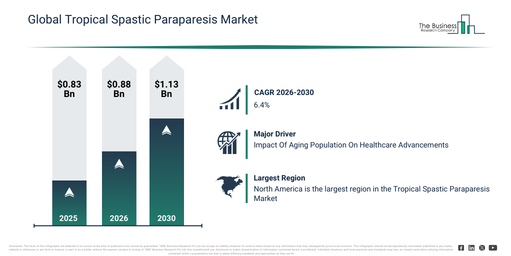
    In the realm of tropical spastic paraparesis, a robust expansion has been observed in market size recently. Projections indicate a rise from $0.83 billion in 2025 to $0.88 billion in 2026, reflecting a compound annual growth rate of 6.6%. Factors contributing to this historical growth trajectory include a heightened prevalence of HTLV-1 infections, a scarcity of treatments capable of modifying the disease’s course, escalating awareness surrounding neurological disorders, enhanced accessibility to diagnostic imaging technologies, and an increasing need for supportive care interventions.

    The market for tropical spastic paraparesis is projected for significant expansion over the upcoming years, anticipated to reach a valuation of $1.13 billion by the year 2030, reflecting a compound annual growth rate of 6.4%. This anticipated growth during the forecast period is bolstered by progress in antiviral research, increased funding for studies into rare neurological conditions, the broadening availability of precision diagnostic tools, a heightened emphasis on managing the condition over the long term, and enhanced patient access to specialized medical services. Key developments shaping the market in this period include a greater concentration on diagnostics specifically targeting HTLV-1, a rise in the utilization of comprehensive, multi-faceted treatment strategies, a growing priority placed on identifying the disease in its early stages, the expansion of rehabilitation programs focused on physiotherapy, and improved public understanding and screening efforts for the condition.

    Download A Free Sample Report For Comprehensive Market Insights:

    https://www.thebusinessresearchcompany.com/sample.aspx?id=21309&type=smp

    Tropical Spastic Paraparesis Market Growth Drivers And Industry Catalysts

    The expanding population of elderly individuals is predicted to fuel the expansion of the tropical spastic paraparesis market in the future. This demographic, typically aged 65 and above, often experiences heightened medical requirements due to age-related physical changes, persistent health conditions, and limitations in daily functioning. Factors contributing to this demographic shift include longer lifespans, advancements in medical science, declining birth rates, enhanced living conditions, more effective disease management strategies, reduced infant mortality, improved nutrition, and access to medical innovations. Tropical spastic paraparesis, a chronic condition affecting motor functions in the nervous system, highlights the amplified need for comprehensive healthcare for seniors by emphasizing the significance of early detection, specialized rehabilitation programs, and long-term care approaches aimed at enhancing mobility, fostering independence, and improving the overall quality of life for an aging populace. As an illustration, the World Health Organization, an intergovernmental body based in Switzerland, indicated in October 2024 that the global number of people aged 60 or older is anticipated to reach 1.4 billion by 2030, constituting one-sixth of the world’s population, with projections suggesting this figure will double to 2.1 billion by 2050, and the count of individuals aged 80 and above will more than triple to 426 million. Consequently, the growing elderly population is a primary catalyst for the tropical spastic paraparesis market’s advancement.

    The upward trend in healthcare expenditure is anticipated to act as a catalyst for the growth trajectory of the tropical spastic paraparesis market. This expenditure encompasses the entirety of financial resources allocated towards medical services, therapeutic interventions, pharmaceutical products, public health initiatives, and healthcare infrastructure development. An increasing global allocation of funds towards healthcare is instigated by factors such as an aging demographic, the escalating prevalence of both chronic and infectious diseases, the introduction of sophisticated medical technologies, and the broadened accessibility of healthcare services. Increased financial investment in the healthcare sector serves to bolster the management of tropical spastic paraparesis by facilitating the funding of research endeavors for novel treatment modalities, enhancing the precision of diagnostic capabilities, and improving the availability of specialized neurological care. For example, the Office for National Statistics, a governmental department within the U.K., reported in May 2024 that the United Kingdom’s healthcare expenditure reached $364 billion (£297.2 billion) in the year 2023, reflecting a consistent rise in national commitment to healthcare funding. Thus, the augmentation of healthcare spending is a significant driver propelling the tropical spastic paraparesis market forward.

    The enhancement of medical facilities is poised to stimulate the expansion of the tropical spastic paraparesis market. These facilities, encompassing institutions like hospitals, clinics, and diagnostic centers, are instrumental in the provision of medical care and services essential for patient treatment and support. The ongoing improvements in healthcare facilities are attributable to a confluence of elements, including heightened investments in healthcare infrastructure, a heightened emphasis on patient-centric care models, escalating population numbers, and the demographic shift towards an older population. The capacity of healthcare facilities to offer superior care, particularly for conditions like tropical spastic paraparesis, can be significantly elevated through the integration of specialized services and concerted research efforts. Addressing this relatively uncommon neurological disorder encourages the development of sophisticated diagnostic instruments, tailored treatment regimens, and the cultivation of multidisciplinary expertise, ultimately leading to improved patient outcomes, more efficient utilization of resources, and increased recognition of less prevalent diseases within healthcare systems. A case in point is the American Health Care Association, a non-profit organization in the U.S., which noted in May 2023 that the nation was home to 6,129 hospitals, a marginal increase of 0.591% from the preceding year when the count stood at 6,093. Therefore, the ongoing improvements in healthcare infrastructure are actively contributing to the growth of the tropical spastic paraparesis market.

    Tropical Spastic Paraparesis Market Segment Outlook: Which Categories Are Expanding The Fastest?

    The tropical spastic paraparesis market covered in this report is segmented –

    1) By Disease Type: Tropical Spastic Paraparesis, HIV Associated Myelopathy, Multiple Sclerosis

    2) By Treatment Modality: Pharmaceuticals, Physiotherapy, Surgical Interventions

    3) By Patient Demographics: Pediatric Patients, Adult Patients, Geriatric Patients

    4) By Diagnostic Technique: Magnetic Resonance Imaging (MRI), Lumbar Puncture

    5) By End Use Industry: Hospitals, Clinics, Diagnostic Centers, Other End Use Industries

    Subsegments:

    1) By Tropical Spastic Paraparesis: Early Stage Tropical Spastic Paraparesis, Late Stage Tropical Spastic Paraparesis

    2) By HIV Associated Myelopathy: Acute HIV Associated Myelopathy, Chronic HIV Associated Myelopathy

    3) By Multiple Sclerosis: Relapsing-Remitting Multiple Sclerosis, Primary Progressive Multiple Sclerosis, Secondary Progressive Multiple Sclerosis

    Tropical Spastic Paraparesis Market Key Companies And Competitive Benchmarking

    Major companies operating in the tropical spastic paraparesis market are Pfizer Inc., Merck & Co. Inc., Bayer AG, Sanofi SA, Bristol‑Myers Squibb Company, AstraZeneca Plc, Novartis AG, Eli Lilly and Company, Takeda Pharmaceutical Company Limited, Teva Pharmaceutical Industries Ltd., UCB S.A., Viatris Inc., Biogen Inc., Ionis Pharmaceuticals, H Lundbeck A/S, AC Immune, VectorY Therapeutics, Verge Genomics, ViroMed Co. Ltd., Coya Therapeutics Inc., AgeneBio

    Access The Complete Tropical Spastic Paraparesis Market Report:

    https://www.thebusinessresearchcompany.com/report/tropical-spastic-paraparesis-global-market-report

    Tropical Spastic Paraparesis Market Global Footprint: Which Region Holds Market Leadership?

    North Americawas the largest region in the tropical spastic paraparesis market in 2025. Asia-Pacificis expected to be the fastest-growing region in the forecast period. The regions covered in the tropical spastic paraparesis market report are Asia-Pacific, South East Asia, Western Europe, Eastern Europe, North America, South America, Middle East, Africa.

    Get in touch with us:

    The Business Research Company: https://www.thebusinessresearchcompany.com/

    Americas: +1 310-496-7795

    Asia: +44 7882 955267 & +91 8897263534

    Europe: +44 7882 955267

    Email us at: marketing@tbrc.info

    Follow us on:

    LinkedIn: https://in.linkedin.com/company/the-business-research-company

    YouTube: https://www.youtube.com/channel/UC24_fI0rV8cR5DxlCpgmyFQ

    Global Market Model: https://www.thebusinessresearchcompany.com/global-market-model
  • Triple Negative Breast Cancer Market Trends And Growth Drivers Point To Strong Future Potential

    Triple Negative Breast Cancer Market Trends And Growth Drivers Point To Strong Future Potential

    Delivering more actionable and strategically valuable research, The Business Research Company’s 2026 market reports feature market attractiveness analysis, total addressable market evaluation, company benchmarking matrices, interactive Excel dashboards, expanded supply chain intelligence, emerging startup coverage, and detailed product insights.

    Triple Negative Breast Cancer Market Size Outlook: How Fast Will Revenue Grow Through 2030?

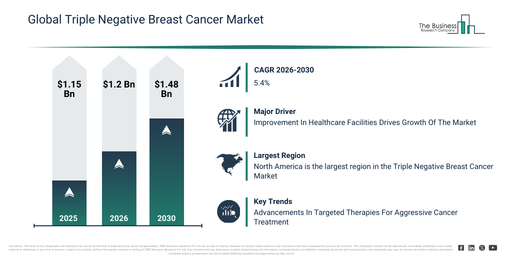
    In the realm of triple-negative breast cancer, a consistent upward trajectory in market valuation has been observed. Projections indicate a progression from an estimated $1.15 billion in 2025 to $1.2 billion by 2026, reflecting a compound annual growth rate of 4.4%. This advancement during the historical timeframe is demonstrably linked to a rising prevalence of more aggressive breast cancer classifications, the inherent limitations of hormonal treatments, heightened understanding of inherited predispositions, the proliferation of dedicated cancer care facilities, and improvements in medical imaging technology.

    The market for triple-negative breast cancer treatments is poised for significant expansion, projecting a reach of $1.48 billion by 2030, fueled by a compound annual growth rate of 5.4%. This anticipated surge is primarily driven by the ongoing development of innovative immunotherapies, a heightened emphasis on personalized cancer care, an increase in clinical trials for TNBC, the expanding application of biomarker-guided treatment choices, and progress in creating targeted medications. Key developments shaping this market over the forecast period involve a greater embrace of immunotherapy-based treatment plans, increased utilization of PARP and other targeted inhibitors, a stronger focus on genetic and biomarker assessments, the broader application of combination therapies, and a more pronounced effort towards early and assertive treatment strategies.

    Download A Free Sample Report For Comprehensive Market Insights:

    https://www.thebusinessresearchcompany.com/sample.aspx?id=21308&type=smp

    Triple Negative Breast Cancer Market Opportunity Drivers: What Is Creating New Revenue Potential?

    Advancements in medical establishments are anticipated to be a key driver for the expansion of the triple-negative breast cancer market. These establishments, encompassing hospitals, clinics, and diagnostic centers, are pivotal in delivering medical services and patient care. Their ongoing enhancement stems from increased financial commitments to healthcare infrastructure, a growing emphasis on patient-centric approaches, demographic shifts including population expansion and an aging populace. Enhanced medical facilities bolster the management of triple-negative breast cancer by facilitating access to sophisticated diagnostic tools, tailored therapeutic strategies, collaborative care from diverse medical professionals, and improved patient understanding, all contributing to earlier diagnosis, more effective treatments, and increased patient longevity. As an illustration, the American Health Care Association reported that in May 2023, the United States hosted 6,129 hospitals, marking a 0.591% rise from the preceding year’s count of 6,093. Consequently, the evolution of healthcare infrastructure is directly contributing to the growth observed in the triple-negative breast cancer market.

    Triple Negative Breast Cancer Market Segment Landscape: Which Areas Lead Market Development?

    The triple negative breast cancer market covered in this report is segmented –

    1) By Treatment Type: Chemotherapy, Immunotherapy, Targeted Therapy, Surgery, Radiation Therapy, Other Treatment Types

    2) By Type Of Test: Imaging Techniques, Assays, Breast Biopsy

    3) By End-User: Hospitals, Specialty Clinics, Ambulatory Surgical Centers, Other End-Users

    Subsegments:

    1) By Chemotherapy: Anthracyclines-based Chemotherapy, Taxane-based Chemotherapy, Platinum-based Chemotherapy

    2) By Immunotherapy: Checkpoint Inhibitors, Cancer Vaccines

    3) By Targeted Therapy: PARP Inhibitors, VEGF Inhibitors, CDK4 Or CDK6 Inhibitors

    4) By Surgery: Mastectomy, Lumpectomy, Lymph Node Dissection

    5) By Radiation Therapy: External Beam Radiation, Brachytherapy

    6) By Other Treatment Types: Hormone Therapy, Hyperthermia Therapy, Stem Cell Therapy

    Triple Negative Breast Cancer Market Innovation Trends Driving Future Development

    In the triple-negative breast cancer arena, leading corporations are dedicating efforts toward the creation of novel therapeutics, specifically small molecule drugs, aimed at addressing a broad spectrum of ailments with remarkable precision and efficacy. These compounds, characterized by their low molecular weight, readily penetrate cellular structures to influence biological functions, thereby proving valuable in targeting conditions like cancer and various infections. As an illustration, in December of 2024, Lantern Pharma Inc., a biotechnology firm based in the United States currently in its clinical stages, revealed its investigational drug candidate, LP-184, for the management of Triple Negative Breast Cancer (TNBC), a development that received Fast Track designation from the Food and Drug Administration (FDA), a regulatory body within the U.S. LP-184 represents an advanced form of acylfulvene and a small molecule drug designed to specifically inflict damage upon the DNA within malignant cells that exhibit overexpression of particular biomarkers or possess mutations affecting DNA repair mechanisms. The Lantern Pharma proprietary RADR AI platform facilitates the identification of patient cohorts and cancer variations that are most likely to benefit from this treatment. The drug candidate is presently undergoing assessment in various solid tumor types, showcasing potent activity in the nanomolar range and exhibiting encouraging results in cancers resistant to other treatments, thus positioning it as a potential paradigm shift in the field of targeted cancer treatment.

    Triple Negative Breast Cancer Market Industry Leaders And Market Competition

    Major companies operating in the triple negative breast cancer market are Pfizer Inc., F Hoffmann‑La Roche Ltd., Merck & Co Inc., AbbVie Inc., Bristol‑Myers Squibb Company, AstraZeneca Plc, GlaxoSmithKline plc, Eli Lilly and Company, Amgen Inc., Daiichi Sankyo Company Limited, Illumina Inc., Bio‑Rad Laboratories Inc., Seagen Inc., MacroGenics Inc., Immutep Limited, G1 Therapeutics Inc., BeOne Medicines, BioNTech SE, Akeso Inc, BriaCell Therapeutics Corp, Bicycle Therapeutics

    Access The Complete Triple Negative Breast Cancer Market Report:

    https://www.thebusinessresearchcompany.com/report/triple-negative-breast-cancer-global-market-report

    Triple Negative Breast Cancer Market Regional Distribution: Which Areas Drive Market Expansion?

    North Americawas the largest region in the triple negative breast cancer market in 2025. Asia-Pacificis expected to be the fastest-growing region in the forecast period. The regions covered in the triple negative breast cancer market report are Asia-Pacific, South East Asia, Western Europe, Eastern Europe, North America, South America, Middle East, Africa.

    Get in touch with us:

    The Business Research Company: https://www.thebusinessresearchcompany.com/

    Americas: +1 310-496-7795

    Asia: +44 7882 955267 & +91 8897263534

    Europe: +44 7882 955267

    Email us at: marketing@tbrc.info

    Follow us on:

    LinkedIn: https://in.linkedin.com/company/the-business-research-company

    YouTube: https://www.youtube.com/channel/UC24_fI0rV8cR5DxlCpgmyFQ

    Global Market Model: https://www.thebusinessresearchcompany.com/global-market-model
  • Triple Combination Therapy Market Expansion Is Reshaping Competitive Dynamics Across The Industry

    Triple Combination Therapy Market Expansion Is Reshaping Competitive Dynamics Across The Industry

    Enhanced with market attractiveness analysis, total addressable market evaluation, company benchmarking matrices, interactive Excel dashboards, expanded supply chain intelligence, emerging startup coverage, and detailed product insights, The Business Research Company’s 2026 market reports deliver more actionable and strategically valuable research.

    Triple Combination Therapy Market Size, Value And Growth Trends Through 2030

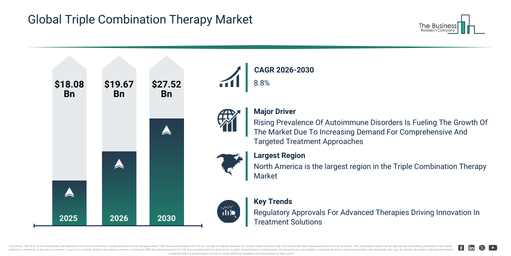
    The marketplace for triple combination therapies has experienced robust expansion, projected to advance from an estimated $18.08 billion in 2025 to $19.67 billion by the close of 2026, reflecting a compound annual growth rate of 8.8%. This notable increase over the preceding period is powered by several key factors, including the broadened application of treatment guidelines for ongoing illnesses, the pervasive adoption of antiretroviral treatments, the escalating intricacy involved in cancer treatment plans, the successful introduction of new combination drug approvals, and the general upswing observed in the specialty pharmaceutical sector.

    The market for triple combination therapies is poised for significant expansion, projecting a valuation of $27.52 billion by 2030 with a compound annual growth rate (CAGR) of 8.8%, driven by several key factors. This anticipated growth stems from a burgeoning demand for highly targeted combination treatments, alongside advancements in drugs that modify gene expression. Furthermore, the expanding pipelines for combination therapies in oncology, coupled with a heightened emphasis on improving patient adherence to treatment regimens and progress in pharmacogenomics, are critical contributors. During this forecast period, prominent trends are expected to shape the market landscape, including a greater embrace of fixed-dose combination therapies, increased utilization of individualized multi-drug treatment plans, a growing emphasis on therapeutic strategies that mitigate drug resistance, the broader application of combination therapies in both oncology and HIV treatment, and a more robust integration of tools that support clinical decision-making.

    Download A Free Sample Report For Comprehensive Market Insights:

    https://www.thebusinessresearchcompany.com/sample.aspx?id=23547&type=smp

    Triple Combination Therapy Market Growth Momentum: Which Factors Are Influencing Demand?

    The escalating incidence of autoimmune conditions is anticipated to propel the expansion of the triple combination therapy market in the foreseeable future. Autoimmune illnesses are characterized by the immune system’s erroneous assault on the body’s own healthy tissues and organs. This surge in autoimmune disorders is attributed to greater exposure to environmental influences, including pollution, which can provoke aberrant immune reactions in individuals with genetic predispositions. Triple combination therapy provides a multifaceted strategy for managing these conditions by concurrently addressing several immune pathways, thereby amplifying therapeutic effectiveness and diminishing disease progression. Specifically, as reported in February 2024 by Arthritis Australia, a non-profit organization based in Australia, it is projected that in 2025, approximately 212,136 males and 362,137 females will be affected by rheumatoid arthritis (RA), with these figures projected to climb by 2040 to around 280,040 males and 479,828 females. Consequently, the increasing prevalence of autoimmune disorders is a significant factor fueling the growth of the triple combination therapy market.

    Triple Combination Therapy Market Segments: Where Are The Largest Growth Opportunities?

    The triple combination therapy market covered in this report is segmented –

    1) By Drug Class: Antiretroviral Agents, Targeted Cancer Therapies, Immunomodulators, Anti-Inflammatory Drugs, Gene Modulators

    2) By Therapeutic Area: Infectious Diseases, Chronic Diseases, Cystic Fibrosis (CF), Cancer, Autoimmune Disorders, Neurological Disorders

    3) By Route Of Administration: Oral Therapies, Intravenous (IV), Subcutaneous (SC), Inhalation-Based Therapies, Topical Applications

    4) By Distribution Channel: Hospital Pharmacies, Retail Pharmacies, Online Pharmacies, Specialty Clinics

    Subsegments:

    1) By Antiretroviral Agents: Nucleoside Reverse Transcriptase Inhibitors (NRTIs), Non-Nucleoside Reverse Transcriptase Inhibitors (NNRTIs), Protease Inhibitors (PIs)

    2) By Targeted Cancer Therapies: Tyrosine Kinase Inhibitors (TKIs), Monoclonal Antibodies (mAbs), Immune Checkpoint Inhibitors

    3) By Immunomodulators: Interleukin Inhibitors, Tumor Necrosis Factor (TNF) Inhibitors, Janus Kinase (JAK) Inhibitors

    4) By Anti-Inflammatory Drugs: Non-Steroidal Anti-Inflammatory Drugs (NSAIDs), Corticosteroids, Selective COX-2 Inhibitors

    5) By Gene Modulators: Antisense Oligonucleotides, RNA Interference (RNAi) Agents, CRISPR-Based Gene Editing Therapies

    Triple Combination Therapy Market Trends Reshaping Industry Growth

    Leading firms within the triple combination therapy market are directing their efforts toward creating groundbreaking treatments, specifically next-generation cystic fibrosis triple therapies, with the objective of enhancing clinical results for cystic fibrosis patients by tackling the underlying pathology of the condition. These advanced next-generation cystic fibrosis triple therapies integrate three distinct modulators to boost the effectiveness of the compromised cystic fibrosis transmembrane conductance regulator (CFTR) protein, intending to yield better respiratory functions and more comprehensive disease management for individuals afflicted with cystic fibrosis. As a notable development, Vertex Pharmaceuticals Incorporated, a prominent US biotechnology enterprise, revealed in July 2024 that the U.S. Food and Drug Administration (FDA) had accepted its New Drug Application (NDA) for vanzacaftor/tezacaftor/deutivacaftor, a cutting-edge triple combination therapy designed for the treatment of cystic fibrosis in patients aged six years and above who possess at least one responsive cystic fibrosis transmembrane conductance regulator (CFTR) mutation. This daily-prescribed treatment, referred to as the “vanza triple,” is scientifically formulated to substantially elevate CFTR protein performance through the synergy of two correctors and a potentiator, thereby addressing both the quantity and surface-level activity of the protein. The significance of this therapeutic advancement is further highlighted by its designation for priority review by the FDA and endorsement by the European Medicines Agency (EMA), signifying its considerable promise in elevating treatment standards and enhancing the well-being of a wider demographic of the cystic fibrosis community.

    Triple Combination Therapy Market Major Participants And Competitive Dynamics

    Major companies operating in the triple combination therapy market are Merck & Co. Inc., AstraZeneca plc, Novartis AG, GlaxoSmithKline (GSK) plc, Boehringer Ingelheim International GmbH, Vertex Pharmaceuticals, Daiichi Sankyo US, Bausch Health Companies Inc., CHIESI Farmaceutici S.p.A., Cipla Ltd., Lupin Ltd., BeyondSpring Inc., Daewoong pharmaceutical Co. Ltd, Galapagos NV, George Medicines, Biocytogen, Healio, Laekna Therapeutics, PDS Biotechnology, TG Therapeutics Inc., Immutep

    Access The Complete Triple Combination Therapy Market Report:

    https://www.thebusinessresearchcompany.com/report/triple-combination-therapy-global-market-report

    Triple Combination Therapy Market Leading Geography: Which Region Generates The Most Revenue?

    North Americawas the largest region in the triple combination therapy market in 2025. Asia-Pacificis expected to be the fastest-growing region in the forecast period. The regions covered in the triple combination therapy market report are Asia-Pacific, South East Asia, Western Europe, Eastern Europe, North America, South America, Middle East, Africa.

    Get in touch with us:

    The Business Research Company: https://www.thebusinessresearchcompany.com/

    Americas: +1 310-496-7795

    Asia: +44 7882 955267 & +91 8897263534

    Europe: +44 7882 955267

    Email us at: marketing@tbrc.info

    Follow us on:

    LinkedIn: https://in.linkedin.com/company/the-business-research-company

    YouTube: https://www.youtube.com/channel/UC24_fI0rV8cR5DxlCpgmyFQ

    Global Market Model: https://www.thebusinessresearchcompany.com/global-market-model
  • Trigeminal Neuralgia Treatment Market Forecast Reveals Where Future Industry Value Will Be Created

    Trigeminal Neuralgia Treatment Market Forecast Reveals Where Future Industry Value Will Be Created

    Through market attractiveness analysis, total addressable market evaluation, company benchmarking matrices, interactive Excel dashboards, expanded supply chain intelligence, emerging startup coverage, and detailed product insights, The Business Research Company’s 2026 market reports provide more actionable and strategically valuable research.

    Trigeminal Neuralgia Treatment Market CAGR Analysis And Future Market Development

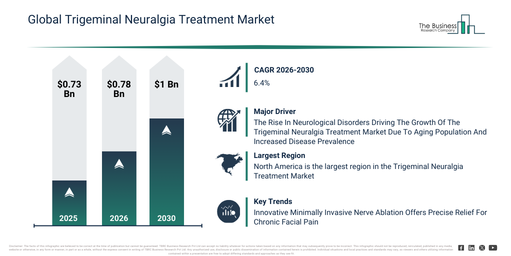
    The market for trigeminal neuralgia treatments has shown robust expansion recently, projected to increase from $0.73 billion in 2025 to $0.78 billion in 2026, reflecting a compound annual growth rate of 6.7%. Factors contributing to this historical growth include a rise in trigeminal neuralgia diagnoses, a continued dependence on medication for pain relief, the broadening scope of neurological care services, advancements in diagnostic imaging for nerve conditions, and an increasing accessibility to surgical interventions.

    The market for trigeminal neuralgia treatments is poised for substantial expansion in the coming years, projecting a reach of $1 billion by 2030, driven by a compound annual growth rate of 6.4%. This upward trajectory in the projected period is anticipated to be fueled by several key factors, including a greater need for lasting pain management solutions, a rise in the utilization of gamma knife radiosurgery, the proliferation of outpatient surgical facilities, an increased emphasis on improving patients’ quality of life, and ongoing innovations in neurosurgical methods. Notable trends expected to shape this market during the forecast horizon encompass the growing application of sophisticated anticonvulsant drugs, a heightened inclination towards minimally invasive surgical interventions, a stronger preference for stereotactic radiosurgery, the broader implementation of comprehensive pain management strategies, and a magnified concentration on achieving sustained symptom relief over the long term.

    Download A Free Sample Report For Comprehensive Market Insights:

    https://www.thebusinessresearchcompany.com/sample.aspx?id=21307&type=smp

    Trigeminal Neuralgia Treatment Market Expansion Drivers: What Is Shaping Future Growth?

    The expansion of the trigeminal neuralgia treatment sector is anticipated to be fueled by the increasing incidence of neurological conditions. These conditions encompass a variety of ailments that impact the central and peripheral nervous systems. A key factor contributing to the surge in neurological disorders is the aging demographic, as advancing age elevates the susceptibility to conditions such as Alzheimer’s, Parkinson’s, and stroke. Interventions for trigeminal neuralgia aid patients by mitigating extreme facial discomfort, easing nerve irritation, uplifting their standard of living, and preventing additional harm to the nervous system. For example, data from the Alzheimer’s Association, a US-based voluntary health organization, indicated in March 2023 that roughly 6.7 million Americans aged 65 and above were living with Alzheimer’s dementia in 2023, with projections suggesting this number could reach 13.8 million by 2060. Consequently, the escalating prevalence of neurological disorders is stimulating the growth of the trigeminal neuralgia treatment market.

    The expanding demographic of older adults is poised to stimulate advancements within the trigeminal neuralgia treatment market. The term “geriatric population” generally refers to individuals aged 65 and over, who frequently require increased healthcare services due to age-related physical changes, persistent health issues, and diminished functional capabilities. This demographic’s growth is attributed to extended life expectancies, medical progress, reduced birth rates, improved living conditions, more effective disease management, decreased infant mortality, better nutrition, and access to medical breakthroughs. Treatments for trigeminal neuralgia contribute to the well-being of older adults by offering relief from intense facial pain, facilitating daily activities, and enhancing their overall quality of life. Illustratively, the World Health Organization, an international body headquartered in Switzerland, reported in October 2024 that the global population aged 60 and above is expected to reach 1.4 billion by 2030, representing one in every six individuals worldwide, with an anticipated doubling to 2.1 billion by 2050, and a threefold increase in those aged 80 and over, reaching 426 million. Therefore, the growing elderly population is a significant driver for the trigeminal neuralgia treatment market.

    Trigeminal Neuralgia Treatment Market Segment Analysis: What Are The Major Market Categories?

    The trigeminal neuralgia treatment market covered in this report is segmented –

    1) By Treatment Type: Medications, Surgery, Other Treatment Types

    2) By Distribution Channel: Hospital Pharmacies, Retail Pharmacies, Online Pharmacies

    3) By End-User: Hospitals, Specialty Clinics, Ambulatory Surgical Centers, Other End-Users

    Subsegments:

    1) By Medications: Anticonvulsants, Muscle Relaxants, Antidepressants

    2) By Surgery: Microvascular Decompression Surgery, Gamma Knife Radiosurgery, Rhizotomy

    3) By Other Treatment Types: Nerve Blocks, Stereotactic Radiosurgery, Physical Therapy

    Trigeminal Neuralgia Treatment Market Strategic Trends: What Is Defining The Next Phase Of Growth?

    The trigeminal neuralgia treatment sector sees leading firms concentrating on pioneering approaches like minimally invasive nerve ablation. This strategy aims to elevate patient results, diminish complications associated with procedures, and generally improve the living standards for those afflicted with intense facial discomfort. Minimally invasive nerve ablation involves a medical technique where heat, cold, or chemical agents are employed to target and either destroy or deactivate the pain-inducing nerves while causing limited harm to adjacent tissues. Case in point, in August 2025, NeuroOne Medical Technologies Corporation, a medical technology entity based in the United States, secured endorsement from the U.S. Food and Drug Administration (FDA) for its OneRF Trigeminal Nerve Ablation System. This approval permits its application in managing trigeminal neuralgia, a persistent condition characterized by facial pain. The system is distinguished by a radiofrequency probe possessing multiple contact points, facilitating exact pain identification, stimulation, and tailored ablation through the use of a solitary electrode. Its operation incorporates temperature-regulated lesioning, thereby boosting precision and safety, potentially shortening operative duration and augmenting patient ease. This minimally invasive system directs focused radiofrequency energy to ablate the nerve fibers responsible for chronic facial pain, such as that experienced in trigeminal neuralgia.

    Trigeminal Neuralgia Treatment Market Leading Companies Driving Competitive Growth

    Major companies operating in the trigeminal neuralgia treatment market are Novartis AG, Sandoz, Sun Pharmaceutical Industries Ltd., Apotex Inc., Lupin Limited, Taro Pharmaceutical Industries Ltd., Torrent Pharmaceuticals Ltd., Kriya Therapeutics, Convergence Pharmaceuticals Limited, Noema Pharma AG, Max Healthcare, Oxford Cannabinoid Technologies Holdings Plc, NanoVibronix, Pfizer Inc., GlaxoSmithKline plc, Teva Pharmaceutical Industries Ltd., Medtronic plc, Boston Scientific Corporation, Abbott Laboratories, Elekta, Accuray Inc., UCB S.A., Eli Lilly and Company

    Access The Complete Trigeminal Neuralgia Treatment Market Report:

    https://www.thebusinessresearchcompany.com/report/trigeminal-neuralgia-treatment-global-market-report

    Trigeminal Neuralgia Treatment Market Regional Outlook: Where Are The Largest Opportunities Located?

    North Americawas the largest region in the trigeminal neuralgia treatment market in 2025. Asia-Pacificis expected to be the fastest-growing region in the forecast period. The regions covered in the trigeminal neuralgia treatment market report are Asia-Pacific, South East Asia, Western Europe, Eastern Europe, North America, South America, Middle East, Africa.

    Get in touch with us:

    The Business Research Company: https://www.thebusinessresearchcompany.com/

    Americas: +1 310-496-7795

    Asia: +44 7882 955267 & +91 8897263534

    Europe: +44 7882 955267

    Email us at: marketing@tbrc.info

    Follow us on:

    LinkedIn: https://in.linkedin.com/company/the-business-research-company

    YouTube: https://www.youtube.com/channel/UC24_fI0rV8cR5DxlCpgmyFQ

    Global Market Model: https://www.thebusinessresearchcompany.com/global-market-model
  • Treatment-Resistant Depression Market Growth Through 2030 Creates New Strategic Opportunities

    Treatment-Resistant Depression Market Growth Through 2030 Creates New Strategic Opportunities

    Delivering more actionable and strategically valuable research, The Business Research Company’s 2026 market reports feature market attractiveness analysis, total addressable market evaluation, company benchmarking matrices, interactive Excel dashboards, expanded supply chain intelligence, emerging startup coverage, and detailed product insights.

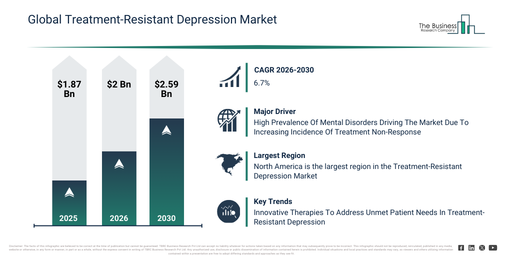
    Treatment-Resistant Depression Market Expansion From $2 Billion In 2026 To $2.59 Billion In 2030

    The market for treatment-resistant depression has experienced robust expansion recently, projected to increase from $1.87 billion in 2025 to $2 billion in 2026, reflecting a compound annual growth rate of 6.9%. This upward trend in the historical period stems from several factors, including the increasing incidence of major depressive disorder, the inadequacy of standard antidepressant treatments, a greater identification of therapy-resistant depression cases, the proliferation of specialized psychiatric facilities, and a growing embrace of innovative mental healthcare approaches.

    The realm of treatment-resistant depression is poised for significant expansion, with projections indicating a market valuation of $2.59 billion by 2030, expanding at a compound annual growth rate of 6.7%. This anticipated upward trajectory is fueled by several key factors, including heightened investment in personalized mental health approaches, the increasing regulatory endorsement and utilization of ketamine and esketamine for therapeutic purposes, a broader implementation of biomarker-informed treatment choices, an escalating need for sustained strategies to manage depression, and the augmented application of digital tools designed to support mental well-being. Over the projected timeframe, prominent market shifts are expected to involve a greater embrace of newly developed antidepressants that act swiftly, a rise in the application of neuromodulation techniques, a sharpening focus on tailoring psychiatric care to individual patient needs, advancements in research exploring psychedelic-assisted therapies, and a more profound incorporation of digital solutions within the mental health landscape.

    Download A Free Sample Report For Comprehensive Market Insights:

    https://www.thebusinessresearchcompany.com/sample.aspx?id=23546&type=smp

    Treatment-Resistant Depression Market Development Factors: Which Trends Are Supporting Demand?

    The escalating incidence of mental health conditions is poised to be a primary catalyst for the expansion of the treatment-resistant depression market. These conditions encompass a wide spectrum of ailments impacting an individual’s thinking, feelings, and actions, frequently resulting in considerable suffering and functional limitations. This widespread occurrence is influenced by elements including inherited predispositions, where genetic variations can alter brain chemistry, heightening vulnerability to conditions such as depression, anxiety, and schizophrenia. Treatment-resistant depression (TRD) plays a crucial role in supporting individuals with mental disorders by advocating for more tailored and cutting-edge therapeutic approaches when conventional treatments prove ineffective, thereby enhancing their prospects for recovery and overall well-being. For example, data from November 2023, as reported by the American Psychological Association (APA), a US-based professional and scientific body, revealed that among adults, the 18 to 34 age group exhibited the highest prevalence of mental illnesses at 50% in 2023, with the 35 to 44 age bracket experiencing the most substantial rise in diagnoses, showing 45% reporting a mental illness. Consequently, the significant presence of mental disorders serves as a key driver for the growth observed in the treatment-resistant depression market.

    Treatment-Resistant Depression Market Segment Breakdown: Which Categories Generate The Most Revenue?

    The treatment-resistant depression market covered in this report is segmented –

    1) By Drug Class: Selective Serotonin Reuptake Inhibitors (SSRIs), Monoamine Oxidase Inhibitors, Tricyclic Antidepressants, Psychedelics

    2) By Route Of Administration: Oral, Parenteral, Other Routes Of Administration

    3) By Distribution Channel: Hospital Pharmacies, Retail Pharmacies, Online Pharmacies

    4) By End-User: Hospitals, Homecare, Specialty Clinics, Other End-Users

    Subsegments:

    1) By Selective Serotonin Reuptake Inhibitors (SSRIs): Fluoxetine, Sertraline, Paroxetine, Citalopram, Escitalopram

    2) By Monoamine Oxidase Inhibitors (MAOIs): Phenelzine, Tranylcypromine, Isocarboxazid, Selegiline

    3) By Tricyclic Antidepressants (TCAs): Amitriptyline, Nortriptyline, Imipramine, Clomipramine, Doxepin

    4) By Psychedelics: Ketamine, Esketamine, Psilocybin, Lysergic Acid Diethylamide (LSD), 3,4-Methylenedioxymethamphetamine (MDMA)

    Treatment-Resistant Depression Market Transformation Trends: Which Innovations Are Driving Change?

    Companies active in the treatment-resistant depression sector are prioritizing the creation of novel therapeutic approaches, including monotherapy, aimed at fulfilling unmet patient demands, enhancing treatment effectiveness, and minimizing adverse reactions. Monotherapy entails employing a singular therapeutic agent or prescribed medicine for managing a condition, as opposed to a combination regimen. This strategy serves to combat treatment-resistant depression by providing a solitary, targeted intervention that may prove more successful for individuals who have not achieved satisfactory outcomes with a multiplicity of pharmacological options. As an illustration, in January 2025, Johnson & Johnson Services Inc., a prominent US-based entity involved in pharmaceuticals, biotechnology, and medical technology, revealed that the U.S. Food and Drug Administration (FDA), the nation’s governmental regulatory authority, had granted approval for SPRAVATO (esketamine) nasal spray, a swift-acting therapeutic agent for adult patients diagnosed with treatment-resistant depression (TRD). SPRAVATO is administered in conjunction with an oral antidepressant when patients have not demonstrated an adequate response to a minimum of two prior antidepressant treatments. The drug’s prompt onset of action addresses the inherent drawbacks of conventional antidepressants, which frequently require several weeks to manifest discernible benefits. Being a derivative of ketamine, esketamine functions by interacting with the brain’s NMDA receptors, thereby holding the potential to ameliorate mood within a matter of hours. This authorization signified a noteworthy stride forward in the domain of mental health therapeutics.

    Treatment-Resistant Depression Market Key Players And Strategic Industry Positioning

    Major companies operating in the treatment-resistant depression market are Pfizer Inc., Johnson & Johnson Services Inc., Neurocrine Biosciences Inc., Relmada Therapeutics Inc., Neuronetics Inc., COMPASS Pathways, BrainsWay Ltd., Magstim Company Limited, MindMed, Alto Neuroscience, Sage Therapeutics Inc., MindBio Therapeutics Ltd., Reunion Neuroscience

    Access The Complete Treatment-Resistant Depression Market Report:

    https://www.thebusinessresearchcompany.com/report/treatment-resistant-depression-global-market-report

    Treatment-Resistant Depression Market Geographic Landscape: Which Region Dominates Industry Growth?

    North Americawas the largest region in the treatment-resistant depression market in 2025. Asia-Pacificis expected to be the fastest-growing region in the forecast period. The regions covered in the treatment-resistant depression market report are Asia-Pacific, South East Asia, Western Europe, Eastern Europe, North America, South America, Middle East, Africa.

    Get in touch with us:

    The Business Research Company: https://www.thebusinessresearchcompany.com/

    Americas: +1 310-496-7795

    Asia: +44 7882 955267 & +91 8897263534

    Europe: +44 7882 955267

    Email us at: marketing@tbrc.info

    Follow us on:

    LinkedIn: https://in.linkedin.com/company/the-business-research-company

    YouTube: https://www.youtube.com/channel/UC24_fI0rV8cR5DxlCpgmyFQ

    Global Market Model: https://www.thebusinessresearchcompany.com/global-market-model
  • Traveler’s Diarrhea Treatment Market Size Projected To Increase From $1.71 Billion To $2.3 Billion During The Forecast Period

    Traveler’s Diarrhea Treatment Market Size Projected To Increase From $1.71 Billion To $2.3 Billion During The Forecast Period

    Enhanced with market attractiveness analysis, total addressable market evaluation, company benchmarking matrices, interactive Excel dashboards, expanded supply chain intelligence, emerging startup coverage, and detailed product insights, The Business Research Company’s 2026 market reports deliver more actionable and strategically valuable research.

    Traveler’s Diarrhea Treatment Market Forecast Highlighting Growth From $1.71 Billion To $2.3 Billion

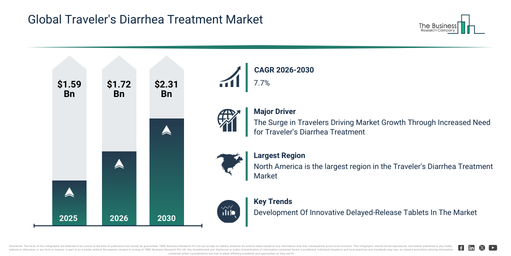
    Presently, the market for treating traveler’s diarrhea exhibits robust expansion, projected to ascend from $1.59 billion in 2025 to $1.72 billion in 2026, signifying a compound annual growth rate of 7.9%. This upward trajectory historically stemmed from a confluence of factors including burgeoning international travel, a corresponding rise in foodborne illnesses, the widespread accessibility of oral rehydration therapies, heightened consciousness regarding health hazards associated with travel, and the broader penetration of retail pharmacy services.

    Anticipated to experience significant expansion, the market for traveler’s diarrhea treatments is projected to reach $2.31 billion by 2030, demonstrating a compound annual growth rate (CAGR) of 7.7%. This projected growth through the forecast period is underpinned by several key factors, including an elevated emphasis on preventative healthcare for travelers, a burgeoning inclination towards probiotic and zinc supplementation, the proliferation of digital advisory services concerning travel health, a heightened demand for pediatric-specific treatment options, and enhanced accessibility to antibiotic medications within developing economies. Furthermore, the prevailing trends anticipated during this period encompass a greater utilization of combination drug regimens, an increasing desire for anti-diarrheal remedies offering swift relief, a rising consumption of oral rehydration solutions and probiotics, a wider availability of over-the-counter treatment options, and a more pronounced concentration on proactive measures to prevent travel-related illnesses.

    Download A Free Sample Report For Comprehensive Market Insights:

    https://www.thebusinessresearchcompany.com/sample.aspx?id=21305&type=smp

    Traveler’s Diarrhea Treatment Market Industry Drivers: What Is Driving Revenue Growth?

    An escalating number of individuals taking to the skies is anticipated to catalyze the expansion of the traveler’s diarrhea treatment market. Individuals who travel by airplane between various locations for professional, recreational, or other reasons are termed air travelers. The increase in air travel stems from greater flight availability, more affordable ticket prices, enhanced global movement, and a greater desire among consumers for international travel experiences. Treatments for traveler’s diarrhea contribute to this momentum by mitigating the severity of illness, averting dehydration, and permitting travelers to continue their planned activities with minimal interruption. As an illustration, the Transportation Security Administration (TSA), a United States government body, reported that 2.85 billion passengers passed through TSA checkpoints in 2023, an increase from the 2.73 billion screened in 2022, as noted in January 2024. Consequently, the burgeoning population of air travelers is serving as a significant impetus for the traveler’s diarrhea treatment market’s growth.

    An increased incidence of food poisoning incidents is projected to fuel the expansion of the traveler’s diarrhea treatment market. Food poisoning arises from consuming contaminated food or drinks harboring pathogens like bacteria, viruses, parasites, or their toxins. Several elements contribute to the growing frequency of food poisoning, including substandard food handling techniques, contamination by microbes such as Salmonella and E. coli, insufficient temperature control for food storage, and a greater reliance on pre-prepared or ready-to-consume food items. Interventions for traveler’s diarrhea aid in addressing this issue by providing rehydration solutions, antibiotic therapies, probiotic supplements, and symptomatic relief for those affected by foodborne ailments. For example, the U.S. Centers for Disease Control and Prevention, a governmental agency in the United States, estimated in July 2023 that approximately 0.48 billion Americans suffer from a foodborne illness annually, highlighting a persistent and considerable public health challenge posed by food-related infections. Therefore, the escalating rates of food poisoning are a key driver behind the growth observed in the traveler’s diarrhea treatment market.

    Traveler’s Diarrhea Treatment Market Segmentation: How Is The Market Structured Across Key Categories?

    The traveler’s diarrhea treatment market covered in this report is segmented –

    1) By Drug Type: Antibiotics, Anti-diarrheal, Other Drug Types

    2) By Route Of Administration: Oral, Parenteral

    3) By Application: Adult Traveler’s Diarrhea, Children Traveler’s Diarrhea

    4) By End-Users: Hospitals, Homecare, Specialty Clinics, Other End-Users

    Subsegments:

    1) By Antibiotics: Fluoroquinolones, Macrolides, Rifamycins

    2) By Anti-diarrheal: Loperamide, Bismuth Subsalicylate

    3) By Other Drug Types: Oral Rehydration Therapy, Probiotics, Zinc Supplements

    #Traveler’s Diarrhea Treatment Market Growth Trends: What Is Influencing The Future Outlook?

    Key players within the traveler’s diarrhea therapeutic sector are prioritizing the creation of novel pharmacological agents, exemplified by delayed-release formulations designed to extend therapeutic effects and decrease the necessity for frequent administration. These delayed-release tablets are engineered to dissolve their medicinal components at a predetermined point post-consumption, ensuring their arrival in the intestinal tract prior to disintegration, thereby facilitating effective management of traveler’s diarrhea while concurrently mitigating gastric discomfort. A pertinent illustration of this strategy occurred in September 2023 when Adalvo Ltd., a pharmaceutical entity headquartered in Malta, entered into a collaborative agreement with Cosmo Pharmaceuticals N.V., an Irish-based pharmaceutical firm, to introduce Rifamycin SV MMX 200 mg, marketed as Aemcolo. This intervention combats traveler’s diarrhea by channeling an unabsorbed antibiotic directly to the colon, which serves to alleviate symptoms and conserve the integrity of beneficial intestinal flora. The efficacy of this localized delivery mechanism lies in its capacity to provide substantial symptom relief with a diminished probability of adverse systemic reactions and the development of antimicrobial resistance.

    Traveler’s Diarrhea Treatment Market Competitive Landscape And Leading Companies

    Major companies operating in the traveler’s diarrhea treatment market are Johnson & Johnson Services Inc., Bayer AG, Sanofi SA, GlaxoSmithKline plc, Teva Pharmaceutical Industries Ltd., C.H. Boehringer Sohn AG & Co. KG, Aurobindo Pharma Limited, Lupin Pharmaceuticals Inc., Glenmark Pharmaceuticals Ltd., RedHill Biopharma Ltd., Immuron Limited, Cosmo Pharmaceuticals N.V., Scandinavian Biopharma Holding AB, Pfizer Inc., Merck & Co. Inc., Novartis AG, Biocodex, Cipla Ltd., Dr Reddys Laboratories Ltd., Takeda Pharmaceutical Company Ltd., AbbVie Inc., Shanghai United Cell Biotechnology Co Ltd, PaxVax Inc.

    Access The Complete Traveler’s Diarrhea Treatment Market Report:

    https://www.thebusinessresearchcompany.com/report/travelers-diarrhea-treatment-global-market-report

    Traveler’s Diarrhea Treatment Market Largest Region: Which Geography Holds The Highest Market Share?

    North Americawas the largest region in the traveler’s diarrhea treatment market in 2025. Asia-Pacificis expected to be the fastest-growing region in the forecast period. The regions covered in the traveler’s diarrhea treatment market report are Asia-Pacific, South East Asia, Western Europe, Eastern Europe, North America, South America, Middle East, Africa.

    Get in touch with us:

    The Business Research Company: https://www.thebusinessresearchcompany.com/

    Americas: +1 310-496-7795

    Asia: +44 7882 955267 & +91 8897263534

    Europe: +44 7882 955267

    Email us at: marketing@tbrc.info

    Follow us on:

    LinkedIn: https://in.linkedin.com/company/the-business-research-company

    YouTube: https://www.youtube.com/channel/UC24_fI0rV8cR5DxlCpgmyFQ

    Global Market Model: https://www.thebusinessresearchcompany.com/global-market-model
  • Traumatic Brain Injury Market Growth Outlook Reveals A CAGR Of 9.5% And A Market Value Of $4.6 Billion By 2030

    Traumatic Brain Injury Market Growth Outlook Reveals A CAGR Of 9.5% And A Market Value Of $4.6 Billion By 2030

    Through market attractiveness analysis, total addressable market evaluation, company benchmarking matrices, interactive Excel dashboards, expanded supply chain intelligence, emerging startup coverage, and detailed product insights, The Business Research Company’s 2026 market reports provide more actionable and strategically valuable research.

    Traumatic Brain Injury Market Revenue Growth Supported By A CAGR Of 4.6% Through 2030

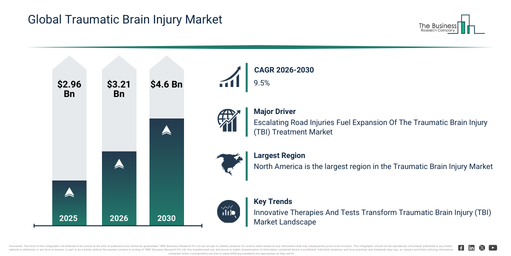
    The market for traumatic brain injury solutions has experienced robust expansion lately; it is projected to climb from $2.96 billion in 2025 to $3.21 billion in 2026, reflecting a compound annual growth rate of 8.5%. This expansion during the preceding period was fueled by several factors, including a rise in traumatic brain injuries stemming from sports incidents and accidents, the enhancement of neurosurgical techniques, the establishment and refinement of rehabilitation strategies, better outcomes for individuals with severe injuries, and the proliferation of specialized trauma care facilities.

    The market for traumatic brain injury treatments is poised for significant expansion, projected to reach a valuation of $4.6 billion by 2030, expanding at a consistent compound annual growth rate of 9.5%. This upward trajectory over the forecasted period is fueled by several key factors, including the development of neuroprotective treatments, increased funding allocated to rehabilitation technologies, a growing need for sustained TBI care, the proliferation of home-based rehabilitation options, and the increasing incorporation of digital therapeutic platforms. During this same period, prominent trends shaping the landscape include a greater embrace of comprehensive, multidisciplinary approaches to TBI management, the escalating utilization of cutting-edge neurorehabilitation techniques, enhanced integration of monitoring and imaging tools, broader implementation of extended cognitive rehabilitation programs, and a heightened emphasis on tailoring treatment plans to individual patient needs.

    Download A Free Sample Report For Comprehensive Market Insights:

    https://www.thebusinessresearchcompany.com/sample.aspx?id=13049&type=smp

    Traumatic Brain Injury Market Growth Factors: Which Forces Are Supporting Market Expansion?

    The increasing prevalence of road-related accidents is anticipated to significantly boost the traumatic brain injury (TBI) market. Road injuries, defined as physical harm sustained during incidents on public thoroughfares like streets and highways, contribute to a greater number of TBI cases due to the forceful impacts or jolts commonly experienced in such events, leading to brain damage. The medical interventions for TBI are designed to aid recovery by mitigating adverse effects, enhancing mental capabilities, and ultimately improving the quality of life for patients over the long term. Illustrating this trend, U.S. Department of Transportation data from April 2024 indicates that road traffic fatalities in the United States amounted to 40,990 in 2023, signifying a persistent high level of severity in road-related injuries, which in turn fuels the expansion of the TBI market.

    Traumatic Brain Injury Market Segmentation Trends And Revenue Drivers

    The traumatic brain injury market covered in this report is segmented –

    1) By Device: Computed Tomography, X-Ray, Imaging Devices, Magnetic Resonance Imaging Devices, Monitoring Devices, Other Devices

    2) By Technique: Intracranial Pressure (ICP) Monitoring, Partial Pressure Of Oxygen In Brain Tissue (PbrO2)

    3) By End-Use: Diagnostic Centers, Hospitals, Other End-Uses

    Subsegments:

    1) By Computed Tomography: Standard CT Scans, CT Angiography

    2) By X-Ray: Skull X-Ray, Cervical X-Ray

    3) By Imaging Devices: Ultrasound Imaging, PET Scans

    4) By Magnetic Resonance Imaging Devices: Closed MRI, Open MRI

    5) By Monitoring Devices: Intracranial Pressure Monitors, EEG Monitors

    6) By Other Devices: Neuropsychological Testing Devices, Portable Brain Injury Assessment Devices

    Traumatic Brain Injury Market Industry Trends: What Changes Are Reshaping Demand?

    Within the traumatic brain injury sector, leading corporations are actively engaged in pioneering new diagnostic tools and therapeutic interventions, exemplified by the VIDAS TBI test which utilizes GFAP and UCH-L1 biomarkers to address evolving consumer demands. The ongoing pursuit of advancements in both treatments and diagnostic methods for traumatic brain injury aims to enhance recovery trajectories and elevate the overall well-being of those impacted by such injuries. A notable development occurred in October of 2023 when bioMérieux, a global player in in vitro diagnostics headquartered in France, introduced VIDAS TBI (GFAP, UCH-L1). This innovative blood test, designed to aid in the evaluation of individuals experiencing mild traumatic brain injury, relies on a distinctive pairing of GFAP and UCH-L1, two key indicators originating from the brain. The introduction of this precise and objective diagnostic aid holds the potential to significantly reduce the frequency of unwarranted head CT scans for mTBI patients, while simultaneously alleviating congestion in emergency departments by accurately forecasting the absence of acute intracranial abnormalities post-head trauma.

    Traumatic Brain Injury Market Industry Leaders: Which Organizations Are Driving Competition?

    Major companies operating in the traumatic brain injury market are Medtronic plc, Stryker Corporation, Elekta AB, Integra LifeSciences Holdings Corp., Natus Medical Inc., Nihon Kohden Corporation, Raumedic AG, Qure.ai, Compumedics Ltd., Synaptive Medical Inc., BrainScope Company Inc., Soterix Medical Inc., Neural Analytics Inc., InfraScan Inc., NanoDx Inc., NeuroTrauma Sciences, Oculogica Inc., PathMaker Neurosystems Inc., Pinteon Therapeutics Inc., Abliva AB, QuesGen Systems Inc., Neural Analytics Inc.

    Access The Complete Traumatic Brain Injury Market Report:

    https://www.thebusinessresearchcompany.com/report/traumatic-brain-injury-global-market-report

    Traumatic Brain Injury Market Regional Analysis: Which Region Leads By Revenue?

    North Americawas the largest region in the traumatic brain injury market in 2025. Asia-Pacificis expected to be the fastest-growing region in the forecast period. The regions covered in the traumatic brain injury market report are Asia-Pacific, South East Asia, Western Europe, Eastern Europe, North America, South America, Middle East, Africa.

    Get in touch with us:

    The Business Research Company: https://www.thebusinessresearchcompany.com/

    Americas: +1 310-496-7795

    Asia: +44 7882 955267 & +91 8897263534

    Europe: +44 7882 955267

    Email us at: marketing@tbrc.info

    Follow us on:

    LinkedIn: https://in.linkedin.com/company/the-business-research-company

    YouTube: https://www.youtube.com/channel/UC24_fI0rV8cR5DxlCpgmyFQ

    Global Market Model: https://www.thebusinessresearchcompany.com/global-market-model
  • Traumatic Brain Injuries Assessment Market Forecast Highlights Expansion From $12.44 Billion To $15.89 Billion Through 2030

    Traumatic Brain Injuries Assessment Market Forecast Highlights Expansion From $12.44 Billion To $15.89 Billion Through 2030

    Delivering more actionable and strategically valuable research, The Business Research Company’s 2026 market reports feature market attractiveness analysis, total addressable market evaluation, company benchmarking matrices, interactive Excel dashboards, expanded supply chain intelligence, emerging startup coverage, and detailed product insights.

    Traumatic Brain Injuries Assessment Market Value Expansion And Long-Term Growth Outlook

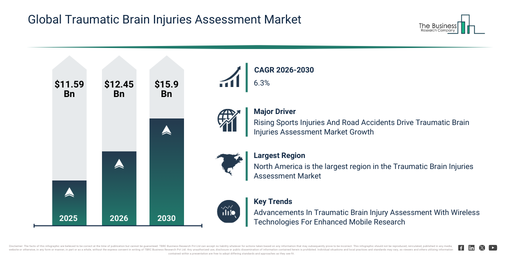
    The market dedicated to assessing traumatic brain injuries has experienced robust expansion lately, projecting a rise from $11.59 billion in 2025 to $12.45 billion in 2026, driven by a compound annual growth rate of 7.4%. This historical growth trajectory is underpinned by a confluence of factors, including a rise in head injury occurrences, the broadening availability of emergency neurology services, enhanced access to CT and MRI diagnostic capabilities, the establishment of standardized assessment methodologies, and a heightened general awareness concerning the diagnosis of brain injuries.

    The market for assessing traumatic brain injuries is poised for substantial expansion over the coming years, with projections indicating a rise to $15.9 billion by 2030, driven by a compound annual growth rate of 6.3%. This anticipated growth throughout the forecast period is largely fueled by the development of AI-powered diagnostic platforms, a heightened embrace of point-of-care assessment tools, the incorporation of digital neuro-monitoring solutions, increased financial backing for brain injury research, and a growing need for swift and precise assessment methodologies. Key developments shaping the market in the coming years include a greater utilization of sophisticated neuroimaging techniques, a surge in the adoption of portable TBI assessment devices, expanded integration of multimodal monitoring systems, a wider availability of early-stage injury detection tools, and a stronger emphasis on quantifiable diagnostic indicators.

    Download A Free Sample Report For Comprehensive Market Insights:

    https://www.thebusinessresearchcompany.com/sample.aspx?id=15688&type=smp

    Traumatic Brain Injuries Assessment Market Demand Drivers: What Is Fueling Industry Growth?

    The expanding prevalence of sports-related injuries and vehicular collisions is anticipated to be a significant catalyst for the traumatic brain injury assessment market’s advancement. Sports injuries, defined as physical harm incurred during athletic pursuits, and road accidents, encompassing incidents on roadways that lead to bodily harm or property damage, are on the rise. This upward trend in sports-related injuries and traffic incidents can be attributed to factors such as greater engagement in sports, heightened traffic density, prevalent instances of distracted driving, and insufficient safety protocols. In scenarios involving sports injuries and road accidents, traumatic brain injury assessments play a crucial role in gauging the intensity of head trauma, informing treatment strategies, and overseeing the rehabilitation process to achieve the best possible results for those impacted. As an illustration, data from the International Transport Forum indicates that in August 2025, Australia registered 1,297 road fatalities in 2024, a 4% escalation from the previous year. Consequently, the escalating rates of sports injuries and road accidents are directly fueling the expansion of the traumatic brain injury assessment market.

    Traumatic Brain Injuries Assessment Market Segment Analysis Highlighting Growth Areas

    The traumatic brain injuries assessment market covered in this report is segmented –

    1) By Product: Screening Devices, Monitoring Devices

    2) By Technique: Intracranial Pressure (ICP) Monitoring, Partial Pressure Of Oxygen In Brain Tissue (pBrO2)

    3) By End-User: Hospital, Diagnostics Center, Other End Users

    Subsegments:

    1) By Screening Devices: CT Scanners, MRI Scanners, Portable Screening Devices

    2) By Monitoring Devices: Intracranial Pressure (ICP) Monitors, Electroencephalogram (EEG) Monitors, Neuromonitoring Systems

    Traumatic Brain Injuries Assessment Market Innovation Trends: Which Developments Are Transforming The Industry?

    Companies that are prominent players in the traumatic brain injury assessment sector are prioritizing the incorporation of cutting-edge non-invasive brain stimulation (NIBS) technologies with portable devices, specifically opting for wire-free configurations to enhance their market position. The advantage of wire-free setups lies in their capacity to offer increased freedom of movement and simpler operation by removing the necessity of cumbersome physical linkages, thereby rendering the devices more adaptable and practical for deployment in diverse, real-world scenarios. As an illustration, Soterix Medical Inc., a medical technology firm headquartered in the United States, introduced its MxN-GO EEG system in April 2024. This novel offering integrates High Definition Transcranial Electrical Stimulation (HD-tES) alongside EEG capabilities, distinguished by its distinctive wire-free architecture. Developed with research in mobile and natural environments in mind, the MxN-GO EEG system presents a light and user-friendly design facilitating rapid deployment. It is equipped to handle 33 stimulation channels and 32 recording channels, allowing for accurate and tailored targeting specific to particular applications. HD-tES, a proprietary neuromodulation technique pioneered by Soterix Medical, employs sophisticated electrode configurations, personalized brain current flow simulations, and patented algorithms to safely direct electrical current through high-definition electrode placements.

    Traumatic Brain Injuries Assessment Market Leading Companies: Who Holds Significant Market Presence?

    Major companies operating in the traumatic brain injuries assessment market are Medtronic Inc, Koninklijke Philips NV, Stryker Corporation, GE Healthcare Inc, Canon Medical Systems Corporation, Carestream Health Inc, Nihon Kohden Corp, Integra Lifesciences Corporation, Natus Medical Inc, Raumedic AG, Compumedics Limited, BrainScope Company Inc, Advanced Brain Monitoring Inc, InfraScan Inc, Siemens Healthineers AG, NovaSignal Corporation, SyncThink Inc, Imeka Solutions Inc, Elekta AB, Cadwell Industries Inc, Neurosoft SA, Boston Scientific Corporation, ESAOTE SPA

    Access The Complete Traumatic Brain Injuries Assessment Market Report:

    https://www.thebusinessresearchcompany.com/report/traumatic-brain-injuries-assessment-global-market-report

    Traumatic Brain Injuries Assessment Market Geographic Distribution And Regional Opportunities

    North Americawas the largest region in the traumatic brain injuries assessment market in 2025. The regions covered in the traumatic brain injuries assessment market report are Asia-Pacific, South East Asia, Western Europe, Eastern Europe, North America, South America, Middle East, Africa.

    Get in touch with us:

    The Business Research Company: https://www.thebusinessresearchcompany.com/

    Americas: +1 310-496-7795

    Asia: +44 7882 955267 & +91 8897263534

    Europe: +44 7882 955267

    Email us at: marketing@tbrc.info

    Follow us on:

    LinkedIn: https://in.linkedin.com/company/the-business-research-company

    YouTube: https://www.youtube.com/channel/UC24_fI0rV8cR5DxlCpgmyFQ

    Global Market Model: https://www.thebusinessresearchcompany.com/global-market-model
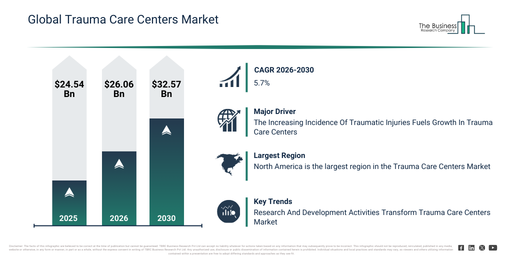
  • Trauma Care Centers Market Expected To Reach $32.56 Billion By 2030 As Growth Accelerates At 5.7% CAGR

    Trauma Care Centers Market Expected To Reach $32.56 Billion By 2030 As Growth Accelerates At 5.7% CAGR

    Enhanced with market attractiveness analysis, total addressable market evaluation, company benchmarking matrices, interactive Excel dashboards, expanded supply chain intelligence, emerging startup coverage, and detailed product insights, The Business Research Company’s 2026 market reports deliver more actionable and strategically valuable research.

    Trauma Care Centers Market Expected To Reach $32.56 Billion By 2030 At 5.7% CAGR

    The global trauma care centers market has experienced robust expansion, projected to ascend from $24.54 billion in 2025 to $26.06 billion by 2026, reflecting a compound annual growth rate (CAGR) of 6.2%. This historical growth trajectory has been propelled by several key factors, including a rise in road traffic accidents, the augmentation of emergency medical infrastructure, advancements in trauma care system protocols, the proliferation of urban healthcare facilities, and an increasing prevalence of injuries resulting from falls.

    The global trauma care centers market is poised for substantial expansion over the upcoming years, projecting a reach of $32.57 billion by 2030, driven by a compound annual growth rate of 5.7%. This predicted surge in the forecast period is fueled by several key factors, including the proliferation of smart hospital infrastructure, escalated investments directed towards specialized trauma facilities, the integration of AI-powered triage solutions, a heightened emphasis on comprehensive rehabilitation services, and an increasing need for acute emergency care. Furthermore, significant trends anticipated within this timeframe encompass the development of interconnected trauma care networks, greater utilization of sophisticated diagnostic imaging technologies, a stronger focus on swift response and triage mechanisms, the refinement of multidisciplinary trauma management approaches, and a growing embrace of tele-trauma services.

    Download A Free Sample Report For Comprehensive Market Insights:

    https://www.thebusinessresearchcompany.com/sample.aspx?id=7540&type=smp

    Trauma Care Centers Market Growth Drivers: What Factors Are Accelerating Expansion?

    The increasing incidence of emergency department visits stemming from traumatic injuries is anticipated to be a significant catalyst for the expansion of the trauma care center market. Traumatic injuries, characterized by their acute and severe physical nature demanding prompt medical intervention, are contributing to a surge in patient arrivals at emergency facilities. This heightened volume necessitates advancements in the quality of care provided by trauma centers, consequently stimulating greater demand for these specialized facilities. Illustratively, data from the Wisconsin Department of Health Services, a US governmental body, indicated a 3% uptick in assault-related traumatic injuries during 2023 compared to the prior year, with case numbers escalating from 1,544 in 2022 to 1,584 in 2023. Consequently, the rising trend in emergency room admissions due to traumatic injuries is directly fueling the growth trajectory of the trauma care center market.

    Trauma Care Centers Market Segment Performance And Strategic Opportunities

    The trauma care centers market covered in this report is segmented –

    1) By Facility: In-house, Standalone

    2) By Trauma: Falls, Traffic-Related Injuries, Stab or Wound or Cut, Burn Injury, Brain Injury, Other Injuries

    3) By Service: Inpatient, Outpatient, Rehabilitation

    Subsegments:

    1) By In-house: Hospital-Based Trauma Units, Emergency departments With Trauma Services, Specialized Trauma Surgical Centers

    2) By Standalone: Independent Trauma Care Clinics, Urgent Care Facilities With Trauma Capabilities, Freestanding Emergency Medical Centers

    Trauma Care Centers Market Trends: What Is Shaping Future Industry Growth?

    In their pursuit of enhancing their standing within the trauma care centers sector and delivering optimal patient outcomes, numerous enterprises actively engage in research and development initiatives. Illustratively, a significant development occurred in April 2023 when the Boston University School of Public Health established the Center for Trauma and Mental Health (CTMH), an institution specifically focused on advancing public health strategies to mitigate the health consequences of trauma through rigorous investigation and innovation. The core objective of the CTMH is to foster an in-depth comprehension of diverse stressful and traumatic experiences and their subsequent effects, functioning as an interdisciplinary nexus for academic pursuits that encourages school-wide cooperation in confronting the profound societal issues stemming from trauma and nurturing a collective of scholars, instructors, and professionals committed to tackling trauma in its multifaceted manifestations.

    Trauma Care Centers Market Key Players: Which Companies Shape Industry Competition?

    Major companies operating in the trauma care centers market are University of Alabama at Birmingham, Banner Good Samaritan Medical Center, St. Joseph’s Hospital and Medical Center, Albany Medical Center, Ascension St. John Hospital, Baylor University Medical Center, Bellevue Hospital Center, China Medical University Hospital, Boston Medical Center, Brigham and Women’s Hospital, Cedars-Sinai Medical Center, Children’s Hospital of Philadelphia, Cleveland Clinic Foundation, Duke University Hospital, Emory University Hospital, Harborview Medical Center, Hospital of the University of Pennsylvania, Indiana University Health, Johns Hopkins Hospital, Massachusetts General Hospital, Mayo Clinic, Memorial Hermann-Texas Medical Center, Mount Sinai Hospital, New York-Presbyterian Hospital, Northwestern Memorial Hospital, Ohio State University Wexner Medical Center, Oregon Health & Science University Hospital, Parkland Memorial Hospital, Penn State Health Milton S. Hershey Medical Center, Ronald Reagan UCLA Medical Center, Stanford Health Care

    Access The Complete Trauma Care Centers Market Report:

    https://www.thebusinessresearchcompany.com/report/trauma-care-centers-global-market-report

    Trauma Care Centers Market Largest Region By Revenue And Market Share

    North Americawas the largest region in the trauma care centers market in 2025. Asia-Pacificis expected to be the fastest-growing region in the forecast period. The regions covered in the trauma care centers market report are Asia-Pacific, South East Asia, Western Europe, Eastern Europe, North America, South America, Middle East, Africa.

    Get in touch with us:

    The Business Research Company: https://www.thebusinessresearchcompany.com/

    Americas: +1 310-496-7795

    Asia: +44 7882 955267 & +91 8897263534

    Europe: +44 7882 955267

    Email us at: marketing@tbrc.info

    Follow us on:

    LinkedIn: https://in.linkedin.com/company/the-business-research-company

    YouTube: https://www.youtube.com/channel/UC24_fI0rV8cR5DxlCpgmyFQ

    Global Market Model: https://www.thebusinessresearchcompany.com/global-market-model
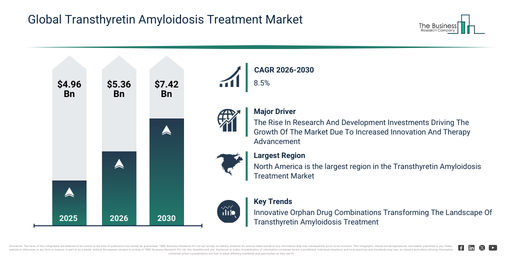
  • Transthyretin Amyloidosis Treatment Market Set To Grow From $5.36 Billion In 2026 To $7.42 Billion By 2030 At A CAGR Of 8.5%

    Transthyretin Amyloidosis Treatment Market Set To Grow From $5.36 Billion In 2026 To $7.42 Billion By 2030 At A CAGR Of 8.5%

    Delivering more actionable and strategically valuable research, The Business Research Company’s 2026 market reports feature market attractiveness analysis, total addressable market evaluation, company benchmarking matrices, interactive Excel dashboards, expanded supply chain intelligence, emerging startup coverage, and detailed product insights.

    Transthyretin Amyloidosis Treatment Market Size And Revenue Forecast Through 2030

    The market for transthyretin amyloidosis therapies has experienced robust expansion lately, with projections indicating further growth from $4.96 billion in 2025 to $5.36 billion in 2026, reflecting a compound annual growth rate (CAGR) of 8.1%. Historical growth drivers for this market include heightened awareness of hereditary forms of the condition, broader accessibility to genetic diagnostic tools, the emergence of therapies capable of modifying disease progression, enhanced collaboration among medical specialists, and the development of patient registries for rare diseases.

    The market for transthyretin amyloidosis treatments is poised for substantial expansion in the coming years, projected to reach $7.42 billion by 2030, reflecting a compound annual growth rate of 8.5%. This projected expansion over the forecast period is anticipated to be driven by several key factors, including the ongoing development of advanced next-generation therapies for ATTR, increased financial backing for both pipeline treatments and combination therapies, enhanced accessibility through specialized pharmacies, a growing need for tailored treatment selection, and sustained growth in clinical trial endeavors. Significant trends expected to shape this market during the forecast period encompass the escalating development of precisely targeted ATTR therapies, a greater uptake of gene silencing medications, a heightened emphasis on managing the multisystemic aspects of the disease, the broadening of pipeline treatment options for various ATTR variants, and improvements in patient categorization and ongoing health monitoring.

    Download A Free Sample Report For Comprehensive Market Insights:

    https://www.thebusinessresearchcompany.com/sample.aspx?id=13129&type=smp

    Transthyretin Amyloidosis Treatment Market Growth Factors Supporting Long-Term Expansion

    A significant driver for the transthyretin amyloidosis treatment market’s expansion is the increasing allocation of funds towards research and development initiatives. This dedication of financial capital aims to uncover novel treatment methodologies, enhance current therapeutic approaches, and deepen the scientific comprehension of various diseases. The surge in R&D funding stems from a heightened emphasis by both governmental bodies and private enterprises on addressing rare conditions, pioneering personalized medicine, and developing cutting-edge treatment modalities. Consequently, these amplified R&D expenditures hasten the identification and progression of groundbreaking therapies, thereby enhancing therapeutic alternatives and improving patient results for those afflicted with transthyretin amyloidosis. To illustrate, a report released in November 2023 by the European Federation of Pharmaceutical Industries and Associations, a trade organization headquartered in Belgium, indicated that pharmaceutical industry spending on research and development climbed to 50,000 million in 2023, a notable increase from the 47,010 million recorded in 2022. This sustained increase in investment in research and development is thus a key factor propelling the growth trajectory of the transthyretin amyloidosis treatment market.

    Transthyretin Amyloidosis Treatment Market Segment Landscape And Growth Potential

    The transthyretin amyloidosis treatment market covered in this report is segmented –

    1) By Type: Transthyretin Amyloidosis With Polyneuropathy (ATTR-PN), Transthyretin Amyloidosis With Cardiomyopathy (ATTR-CM)

    2) By Drug: Tafamidis, Patisiran, Inotersen, Other Drugs

    3) By Therapy: Targeted Therapy, Supportive Therapy, Pipeline Therapy

    4) By Distribution Channel: Hospital Pharmacies, Specialty Pharmacies, Retail Pharmacies, Online Pharmacies

    Subsegments:

    1) By Transthyretin Amyloidosis With Polyneuropathy (ATTR-PN): Early-Stage ATTR-PN, Advanced-Stage ATTR-PN

    2) By Transthyretin Amyloidosis With Cardiomyopathy (ATTR-CM): Mild ATTR-CM, Moderate ATTR-CM, Severe ATTR-CM

    Transthyretin Amyloidosis Treatment Market Industry Trends Shaping Future Revenue Growth

    Within the transthyretin amyloidosis therapeutics sector, leading pharmaceutical entities are concentrating their efforts on pioneering novel and targeted interventions, including orphan medications, with the dual objectives of improving patient prognoses and broadening therapeutic availabilities. Eplontersen stands out as an orphan drug, precisely engineered for the management of transthyretin amyloidosis, frequently benefiting from expedited regulatory pathways that facilitate its progress, as exemplified in March 2023 when Ionis Pharmaceuticals, Inc., a Canadian life sciences enterprise, secured FDA approval for Eplontersen’s new drug application, an investigational orphan drug aimed at combating familial transthyretin-mediated amyloidosis that results in debilitating polyneuropathy, a potent pharmaceutical compound conceived to curb the production of transthyretin protein, thereby addressing both inherited and sporadic forms of ATTR amyloidosis.

    Transthyretin Amyloidosis Treatment Market Competitive Landscape: Who Are The Leading Companies?

    Major companies operating in the transthyretin amyloidosis treatment market are Pfizer Inc, Alnylam Pharmaceuticals Inc, Ionis Pharmaceuticals, Prothena Corporation plc, Eidos Therapeutics Inc, BridgeBio Pharma Inc, Neurimmune AG, AstraZeneca plc, Intellia Therapeutics Inc, Novo Nordisk A/S, YolTech Therapeutics Co Ltd, Life Molecular Imaging GmbH, Attralus Inc, Regeneron Pharmaceuticals, Silence Therapeutics, Proclara Biosciences, Corino Therapeutics, SOM Biotech, Oncopeptides AB, Takeda Pharmaceutical Company Limited, Horizon Therapeutics, Roche Holding AG, SOM Innovation Biotech SA

    Access The Complete Transthyretin Amyloidosis Treatment Market Report:

    https://www.thebusinessresearchcompany.com/report/transthyretin-amyloidosis-treatment-global-market-report

    Transthyretin Amyloidosis Treatment Market Regional Analysis And Leading Geography

    North Americawas the largest region in the transthyretin amyloidosis treatment market in 2025. The regions covered in the transthyretin amyloidosis treatment market report are Asia-Pacific, South East Asia, Western Europe, Eastern Europe, North America, South America, Middle East, Africa.

    Get in touch with us:

    The Business Research Company: https://www.thebusinessresearchcompany.com/

    Americas: +1 310-496-7795

    Asia: +44 7882 955267 & +91 8897263534

    Europe: +44 7882 955267

    Email us at: marketing@tbrc.info

    Follow us on:

    LinkedIn: https://in.linkedin.com/company/the-business-research-company

    YouTube: https://www.youtube.com/channel/UC24_fI0rV8cR5DxlCpgmyFQ

    Global Market Model: https://www.thebusinessresearchcompany.com/global-market-model