Month: June 2026

  • Tokenized Health Loyalty Programs Market Growth Through 2030 Creates New Strategic Opportunities

    Tokenized Health Loyalty Programs Market Growth Through 2030 Creates New Strategic Opportunities

    Through market attractiveness analysis, total addressable market evaluation, company benchmarking matrices, interactive Excel dashboards, expanded supply chain intelligence, emerging startup coverage, and detailed product insights, The Business Research Company’s 2026 market reports provide more actionable and strategically valuable research.

    Tokenized Health Loyalty Programs Market CAGR Analysis And Future Market Development

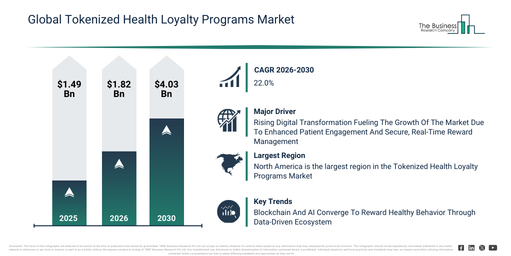
    The market for tokenized health loyalty programs has experienced significant expansion recently, with projections indicating continued robust growth. Currently valued at $1.49 billion in 2025, this sector is anticipated to reach $1.82 billion by 2026, demonstrating a compound annual growth rate of 22.3%. Key factors fueling this upward trajectory during the historical period have included an increasing demand for solutions that enhance patient engagement, the early integration of blockchain technology within healthcare infrastructures, a greater emphasis on preventative health initiatives, the proliferation of digital health platforms, and the broader adoption of wellness incentive schemes.

    The market for tokenized health loyalty programs is poised for substantial expansion, projecting a reach of $4.03 billion by 2030, signifying a robust compound annual growth rate of 22.0%. This anticipated surge is underpinned by several key drivers, including the escalating adoption of decentralized healthcare applications, the deepening integration with insurance and payer systems, the broadening of interoperable digital health ecosystems, increasing regulatory clarity concerning blockchain technology, and a heightened focus on fostering long-term patient engagement. Furthermore, prevailing trends shaping this landscape encompass the rising implementation of blockchain-based reward platforms, augmented integration with patient engagement tools, a greater utilization of smart contracts for managing incentives, the expansion of secure tokenized wellness environments, and an intensified commitment to data transparency and trust, all contributing to the market’s upward trajectory.

    Download A Free Sample Report For Comprehensive Market Insights:

    https://www.thebusinessresearchcompany.com/sample.aspx?id=28342&type=smp

    Tokenized Health Loyalty Programs Market Growth Drivers: What Factors Are Accelerating Expansion?

    Accelerated digital transformation is poised to be a significant catalyst for the expansion of the tokenized health loyalty programs sector. This trend of digital transformation, characterized by the infusion of digital technologies across all business facets to refine operations, elevate customer interactions, and generate increased value, is gaining momentum driven by a burgeoning consumer appetite for swift, tailored, and user-friendly digital services underpinned by advancements in areas like artificial intelligence, cloud computing, and sophisticated analytical tools. Within this context, tokenized health loyalty programs play a crucial role by facilitating the secure, transparent, and immediate administration of rewards, thereby fostering greater patient involvement and confidence in digital health environments. Underscoring this shift, data from the European Central Bank indicated a 16% surge in contactless card payments during the latter half of 2023 compared to the corresponding period in 2022, totaling 23.2 billion, illustrating a clear inclination towards digital transactions. Consequently, the pervasive digital transformation wave is directly contributing to the upward trajectory of the tokenized health loyalty programs market.

    Tokenized Health Loyalty Programs Market Segment Analysis Highlighting Growth Areas

    The tokenized health loyalty programs market covered in this report is segmented –

    1) By Component: Platform, Services

    2) By Technology: Blockchain, Smart Contracts, Tokenization Platforms

    3) By Application: Patient Engagement, Wellness Programs, Prescription Management, Insurance Claims, Other Applications

    4) By End-User: Hospitals And Clinics, Pharmacies, Insurance Providers, Wellness Centers, Other End-Users

    Subsegments:

    1) By Platform: Patient Engagement Platform, Reward Management Platform, Data Analytics Platform, Blockchain-Based Platform

    2) By Services: Consulting Services, Implementation Services, Support And Maintenance Services, Integration Services

    Tokenized Health Loyalty Programs Market Trends: What Is Shaping Future Industry Growth?

    Leading entities within the tokenized health loyalty program sector are concentrating their efforts on pioneering advancements, notably the creation of blockchain-powered health data ecosystems. These systems aim to incentivize healthy habits, bolster individual control over personal information, and foster tailored wellness rewards. Essentially, a blockchain-based health data ecosystem constitutes a protected, distributed framework empowering individuals to securely store, oversee, and disseminate their health-related information while preserving both ownership and confidentiality. As an illustration, in June 2025, CUDIS, a Web3 and AI-driven wellness enterprise situated on an island, introduced its proprietary digital currency, the $CUDIS token, operating on the Solana blockchain. This token serves as a cornerstone of CUDIS’s decentralized healthcare infrastructure, engineered to remunerate participants for verifiable health statistics obtained via their AI-integrated smart ring and associated application. It facilitates the earning of rewards by users for confirmed biometric data derived from the CUDIS smart ring, encompassing metrics such as physical activity, sleep patterns, and heart rate, thereby establishing a tokenized loyalty framework directly linked to tangible health behaviors. Its utility extends to unlocking access to superior AI coaching services, a marketplace for health data, decentralized science applications (dApps), and participation in governance through staking mechanisms and community polls. The introduction of this token is accompanied by a substantial airdrop campaign distributing 50 million tokens across various tiers, prominent listings on trading platforms including Bybit and Bitget, and the incorporation of the Longevity Hub to accommodate external wellness applications.

    Tokenized Health Loyalty Programs Market Leading Companies: Who Holds Significant Market Presence?

    Major companies operating in the tokenized health loyalty programs market are TELUS Health, Health Hero, Calo, Vitality Group Inc., Brave Software, Wellable Inc., Sweatco Ltd., Solve.Care Inc., Sprout at Work, IncentFit Corp., VitaDAO, StepN, qiibee, Lympo, Genopets, Actifit Inc., Ocean Protocol, Streamr, Loyyal Corp., Dotmoovs, IOTA, Healthereum LLC, Healthcoin, Clinicoin, Coinhealth, Dentacoin

    Access The Complete Tokenized Health Loyalty Programs Market Report:

    https://www.thebusinessresearchcompany.com/report/tokenized-health-loyalty-programs-global-market-report

    Tokenized Health Loyalty Programs Market Regional Analysis And Leading Geography

    North Americawas the largest region in the tokenized health loyalty programs market in 2025. Asia-Pacific is expected to be the fastest-growing region in the forecast period. The regions covered in the tokenized health loyalty programs market report are Asia-Pacific, South East Asia, Western Europe, Eastern Europe, North America, South America, Middle East, Africa.

    Get in touch with us:

    The Business Research Company: https://www.thebusinessresearchcompany.com/

    Americas: +1 310-496-7795

    Asia: +44 7882 955267 & +91 8897263534

    Europe: +44 7882 955267

    Email us at: marketing@tbrc.info

    Follow us on:

    LinkedIn: https://in.linkedin.com/company/the-business-research-company

    YouTube: https://www.youtube.com/channel/UC24_fI0rV8cR5DxlCpgmyFQ

    Global Market Model: https://www.thebusinessresearchcompany.com/global-market-model
  • Tobramycin Eye Drop Market Size Projected To Increase From $1.07 Billion To $1.6 Billion During The Forecast Period

    Tobramycin Eye Drop Market Size Projected To Increase From $1.07 Billion To $1.6 Billion During The Forecast Period

    Delivering more actionable and strategically valuable research, The Business Research Company’s 2026 market reports feature market attractiveness analysis, total addressable market evaluation, company benchmarking matrices, interactive Excel dashboards, expanded supply chain intelligence, emerging startup coverage, and detailed product insights.

    Tobramycin Eye Drop Market Expansion From $1.07 Billion In 2026 To $1.6 Billion In 2030

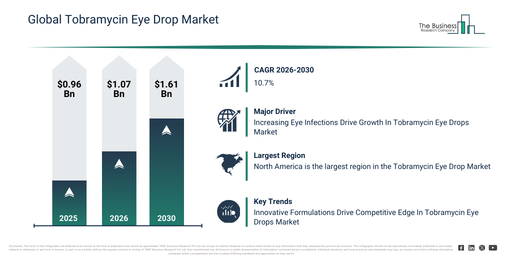
    The market for tobramycin eye drops has experienced significant expansion lately, with projections indicating a rise from $0.96 billion in 2025 to $1.07 billion in 2026, reflecting a compound annual growth rate of 11.9%. This past growth trajectory has been influenced by factors such as the escalating occurrence of bacterial eye infections, the extensive application of antibiotic treatments in ophthalmology, the broader availability of outpatient eye care, enhanced accessibility to prescribed eye medications, and an increase in dispensing by hospital pharmacies.

    The market for tobramycin eye drops is projected for significant expansion over the forthcoming years, anticipated to reach a valuation of $1.61 billion by 2030, exhibiting a compound annual growth rate of 10.7%. This anticipated growth trajectory during the forecast period is propelled by several key factors: a rising demand for economical solutions in ophthalmic treatment, increased public consciousness regarding the effective management of eye infections, the proliferation of specialized eye care facilities, a growing inclination towards multifaceted treatment approaches, and heightened regulatory oversight concerning the quality of ophthalmic medications. Furthermore, notable trends expected to shape this market include the expanding accessibility of generic tobramycin products, a surge in the utilization of combined antibiotic and steroid eye drops, a greater emphasis on producing sterile and preservative-free formulations, the broadening application within pediatric and geriatric patient groups, and a strengthened commitment to regulatory adherence and stringent quality assurance protocols.

    Download A Free Sample Report For Comprehensive Market Insights:

    https://www.thebusinessresearchcompany.com/sample.aspx?id=16556&type=smp

    Tobramycin Eye Drop Market Growth Factors Supporting Long-Term Expansion

    The global rise in eye infections is anticipated to stimulate the expansion of the tobramycin eye drops market. These infections, characterized by inflammation or irritation stemming from bacterial, viral, fungal, or other microbial agents impacting ocular structures like the conjunctiva, cornea, or eyelids, are becoming more common worldwide due to escalating urbanization, heightened pollution levels, and increased digital device usage. Tobramycin eye drops function by combating bacterial eye infections through the inhibition of bacterial protein synthesis, thereby mitigating both the infection and associated inflammation. Illustratively, data from the Centers for Disease Control and Prevention, a US public health organization, indicated in January 2024 that over 3.4 million Americans over 40 years old were experiencing blindness or vision impairment, a figure projected to double by 2030. Consequently, the escalating incidence of eye infections serves as a primary catalyst for the tobramycin eye drops market’s growth.

    Tobramycin Eye Drop Market Segment Performance And Strategic Opportunities

    The tobramycin eye drop market covered in this report is segmented –

    1) By Product Type: Tobramycin Ophthalmic Suspension, Tobramycin And Dexamethasone Ophthalmic Suspension, Other Product Types

    2) By Indication: Bacterial Eye Infections, Keratitis, Pre Or Post Ocular Surgery Prophylaxis, Other Indications

    3) By Application: Adult, Children

    4) By End User: Hospitals, Homecare, Specialty Clinics, Other End Users

    Subsegments:

    1) By Tobramycin Ophthalmic Suspension: Standard Tobramycin Ophthalmic Suspension, High-Concentration Tobramycin Ophthalmic Suspension

    2) By Tobramycin And Dexamethasone Ophthalmic Suspension: Fixed-Dose Combination (Tobramycin And Dexamethasone)

    3) By Other Product Types: Tobramycin Ophthalmic Ointment, Tobramycin Eye Drops (Non-Suspension Forms), Generic Tobramycin Ophthalmic Products

    Tobramycin Eye Drop Market Industry Trends Shaping Future Revenue Growth

    Within the tobramycin eye drops market, key players are prioritizing inventive advancements, like sophisticated formulation methods, to secure a leading position. These include upgrading drug conveyance mechanisms and boosting treatment effectiveness to satisfy the increasing need for potent remedies from consumers. As an illustration, in October 2023, Harrow Health Inc., an American firm specializing in ophthalmic pharmaceuticals, introduced TOBRADEX ST (tobramycin and dexamethasone ophthalmic suspension) 0.3%/0.05%. This product integrates an antibiotic with a corticosteroid, designed for the management of steroid-responsive inflammatory eye conditions where there’s a risk of bacterial infection. The distinct suspension composition of TOBRADEX ST is engineered to elevate drug absorption and permit less frequent administration, thereby providing a more convenient and therapeutically beneficial experience for individuals using it.

    Tobramycin Eye Drop Market Key Players: Which Companies Shape Industry Competition?

    Major companies operating in the tobramycin eye drop market are Novartis AG, Teva Pharmaceuticals Industries Ltd., Alcon Vision LLC, Bausch Health Companies Inc., Sun Pharmaceutical Industries Ltd., Hikma Pharmaceuticals Plc, Apotex Inc., Alembic Pharmaceuticals Limited, Incepta Pharmaceuticals Ltd., Jubilant Cadista Pharmaceuticals Inc., Zydus Lifesciences, Cipla Limited, Lupin Limited, Glenmark Pharmaceuticals Limited, Santen Pharmaceutical Co Ltd, FDC Limited, Micro Labs Limited, Alkem Laboratories Limited, Intas Pharmaceuticals Limited, Wockhardt Limited, Pfizer Inc, Abbott Laboratories

    Access The Complete Tobramycin Eye Drop Market Report:

    https://www.thebusinessresearchcompany.com/report/tobramycin-eye-drop-global-market-report

    Tobramycin Eye Drop Market Geographic Analysis: Where Is Demand Growing The Fastest?

    North Americawas the largest region in the tobramycin eye drops market in 2025. Asia-Pacificis expected to be the fastest-growing region in the forecast period. The regions covered in the tobramycin eye drop market report are Asia-Pacific, South East Asia, Western Europe, Eastern Europe, North America, South America, Middle East, Africa.

    Get in touch with us:

    The Business Research Company: https://www.thebusinessresearchcompany.com/

    Americas: +1 310-496-7795

    Asia: +44 7882 955267 & +91 8897263534

    Europe: +44 7882 955267

    Email us at: marketing@tbrc.info

    Follow us on:

    LinkedIn: https://in.linkedin.com/company/the-business-research-company

    YouTube: https://www.youtube.com/channel/UC24_fI0rV8cR5DxlCpgmyFQ

    Global Market Model: https://www.thebusinessresearchcompany.com/global-market-model
  • Tissue Sectioning Market Growth Outlook Reveals A CAGR Of 9% And A Market Value Of $1.28 Billion By 2030

    Tissue Sectioning Market Growth Outlook Reveals A CAGR Of 9% And A Market Value Of $1.28 Billion By 2030

    Enhanced with market attractiveness analysis, total addressable market evaluation, company benchmarking matrices, interactive Excel dashboards, expanded supply chain intelligence, emerging startup coverage, and detailed product insights, The Business Research Company’s 2026 market reports deliver more actionable and strategically valuable research.

    Tissue Sectioning Market Forecast Highlighting Growth From $0.9 Billion To $1.28 Billion

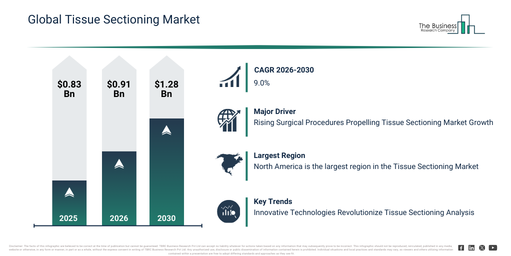
    The market for tissue sectioning has experienced robust expansion lately, projected to advance from $0.83 billion in 2025 to $0.91 billion in 2026, reflecting a compound annual growth rate (CAGR) of 9.9%. This historical expansion is demonstrably linked to a surge in diagnostic pathology procedures, the enhancement of hospital laboratory facilities, escalating needs for cancer diagnosis, increased biomedical research endeavors, and the broader acceptance of testing methodologies rooted in histology.

    The tissue sectioning sector is poised for significant expansion over the upcoming years, projecting a rise to $1.28 billion by 2030, driven by a compound annual growth rate (CAGR) of 9.0%. This anticipated growth during the forecast period is fueled by several key factors, including escalating investments in state-of-the-art diagnostic laboratories, a growing embrace of digital pathology processes, surging demand for diagnostics in personalized medicine, the broadening scope of academic and clinical research initiatives, and a heightened emphasis on automating laboratory operations. Prominent trends expected to shape this market in the coming years encompass the increasing implementation of automated tissue sectioning equipment, a greater need for highly precise microtomes and cryostats, the escalating utilization of disposable and standardized consumables, the wider integration of workflows within histopathology laboratories, and an intensified focus on ensuring the reproducibility and superior quality of tissue sections.

    Download A Free Sample Report For Comprehensive Market Insights:

    https://www.thebusinessresearchcompany.com/sample.aspx?id=16555&type=smp

    Tissue Sectioning Market Demand Drivers Creating New Revenue Opportunities

    An upward trend in surgical interventions is anticipated to be a significant catalyst for the expansion of the tissue sectioning market. Surgical procedures, which encompass medical operations utilizing instruments for diagnosis, treatment, or repair of bodily conditions, are experiencing an increase driven by technological progress in medicine, evolving demographic profiles, and changes in healthcare delivery models. The role of tissue sectioning is crucial in supporting these surgical endeavors by facilitating the creation of extremely thin, accurate tissue specimens essential for histological examination, thereby underpinning precise diagnoses, strategic treatment approaches, and successful transplantation outcomes. For illustration, data published in April 2025 by the Australian Institute of Health and Welfare, a governmental body in Australia, indicated that during the 2023–24 period, public hospitals admitted 778,500 patients from elective surgery waiting lists, representing a 5.8% increase from the 735,500 admissions recorded in 2022–23. Consequently, the growing volume of surgical procedures is directly contributing to the momentum of the tissue sectioning market.

    Tissue Sectioning Market Segment Landscape And Growth Potential

    The tissue sectioning market covered in this report is segmented –

    1) By Product: Accessories And Consumables, Instruments, Services

    2) By Technology: Automatic, Manual, Semi-Automatic

    3) By Application: Diagnosis, Research

    4) By End-User: Clinics, Diagnostic Laboratories, Hospitals, Research Centers

    Subsegments:

    1) By Accessories And Consumables: Microtome Blades, Staining Reagents, Tissue Embedding Media, Mounting Media, Disposable Consumables (Slides, Coverslips)

    2) By Instruments: Microtomes (Manual, Semi-Automated, Fully Automated), Cryostats, Tissue Processors, Tissue Embedding Stations, Sectioning Systems

    3) By Services: Maintenance And Repair Services, Calibration Services, Installation Services, Training Services

    Tissue Sectioning Market Trends Driving Strategic Industry Expansion

    Within the tissue sectioning sector, leading enterprises are actively innovating with sophisticated advancements, notably next-generation spatial gene expression technology, with the aim of improving tissue examination and diagnostic capabilities. This cutting-edge technology facilitates the intricate mapping of gene activity directly within tissue samples, thereby offering profound understanding of how genes are expressed in their physical context and how tissue structures are organized. As an illustration, in March of 2024, 10x Genomics, a prominent biotechnology firm based in the United States, introduced Visium HD. This particular next-generation spatial gene expression platform is engineered to render highly precise maps of gene expression across intricate anatomical regions, delivering data with single-cell level resolution from tissue sections preserved in formalin-fixed, paraffin-embedded (FFPE) formats. Consequently, this capability empowers a thorough evaluation of FFPE tissue sections by enabling the measurement of entire transcriptomes’ spatial gene expression patterns at the resolution of individual cells.

    Tissue Sectioning Market Competitive Landscape: Who Are The Leading Companies?

    Major companies operating in the tissue sectioning market are Thermo Fisher Scientific Inc., Danaher Corporation, Leica Biosystems Nussloch GmbH, Sakura Finetek USA Inc., Ted Pella Inc., Milestone Srl, Diapath S.p.A., Bio‑Optica Milano S.p.A, MEDITE Medical GmbH, PathnSitu Biotechnologies Pvt Ltd, Tanner Scientific Inc., Boeckeler Instruments Inc., SLEE Medical GmbH, Amos Scientific PTY. LTD., SM Scientific Instruments Pvt. Ltd., Bright Instrument Co. Ltd., RWD Life Science Co. Ltd., Hacker Instruments & Industries Inc., MICROM International GmbH, Epredia Inc, Histo‑Line Laboratories, PHC Holdings Co. Ltd, AGD Biomedicals Pvt Ltd, Avantik Labs

    Access The Complete Tissue Sectioning Market Report:

    https://www.thebusinessresearchcompany.com/report/tissue-sectioning-global-market-report

    Tissue Sectioning Market Global Footprint: Which Region Holds Market Leadership?

    North Americawas the largest region in the tissue sectioning market in 2025. Asia-Pacificis expected to be the fastest-growing region in the forecast period. The regions covered in the tissue sectioning market report are Asia-Pacific, South East Asia, Western Europe, Eastern Europe, North America, South America, Middle East, Africa.

    Get in touch with us:

    The Business Research Company: https://www.thebusinessresearchcompany.com/

    Americas: +1 310-496-7795

    Asia: +44 7882 955267 & +91 8897263534

    Europe: +44 7882 955267

    Email us at: marketing@tbrc.info

    Follow us on:

    LinkedIn: https://in.linkedin.com/company/the-business-research-company

    YouTube: https://www.youtube.com/channel/UC24_fI0rV8cR5DxlCpgmyFQ

    Global Market Model: https://www.thebusinessresearchcompany.com/global-market-model
  • Tissue Engineering Market Forecast Highlights Expansion From $19.77 Billion To $33.3 Billion Through 2030

    Tissue Engineering Market Forecast Highlights Expansion From $19.77 Billion To $33.3 Billion Through 2030

    Through market attractiveness analysis, total addressable market evaluation, company benchmarking matrices, interactive Excel dashboards, expanded supply chain intelligence, emerging startup coverage, and detailed product insights, The Business Research Company’s 2026 market reports provide more actionable and strategically valuable research.

    Tissue Engineering Market Revenue Growth Supported By A CAGR Of 33.3% Through 2030

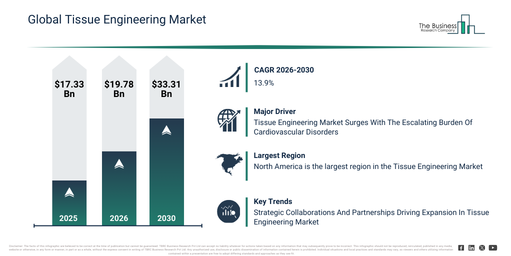
    Tissue engineering is a burgeoning field that has witnessed substantial expansion recently; it is projected to ascend from $17.33 billion in 2025 to $19.78 billion by 2026, reflecting a compound annual growth rate of 14.1%. The momentum observed during the past period can be credited to breakthroughs in biomaterial science, a surge in academic research within tissue engineering, escalating requirements for organ repair alternatives, the accessibility of scaffolds that are compatible with biological systems, and the proliferation of clinical studies focused on regeneration.

    Anticipating a swift expansion in the coming years, the tissue engineering sector is projected to reach a valuation of $33.31 billion by 2030, exhibiting a compound annual growth rate of 13.9%. This projected increase stems from amplified investments in regenerative medicine, a growing acceptance of individualized tissue treatments, the wider clinical application of engineered tissues, the increasing incorporation of AI in tissue design, and a heightened need for sophisticated organ replacement options. Key developments anticipated during this period include a greater embrace of novel scaffold materials, a heightened focus on regenerative medicine applications, the expanding use of 3D bioprinting technologies, the proliferation of cell-based tissue therapies, and a strengthened commitment to restoring tissue functionality.

    Download A Free Sample Report For Comprehensive Market Insights:

    https://www.thebusinessresearchcompany.com/sample.aspx?id=9535&type=smp

    Tissue Engineering Market Expansion Supported By Key Demand Factors

    The escalating incidence of heart and blood vessel conditions is anticipated to be a primary driver for the expansion of the tissue engineering sector. These cardiovascular ailments, broadly termed cardiovascular diseases (CVD), represent a group of health issues impacting the heart and its associated vessels. Tissue engineering presents compelling avenues for addressing these conditions by facilitating the repair and regeneration of compromised cardiac and vascular tissues. Highlighting this trend, data from the American Heart Association in January 2024 revealed a rise in the age-adjusted mortality rate due to cardiovascular disease, reaching 233.3 per 100,000 individuals in 2024, which signifies a 4.0% increase from the 2023 figure of 224.4 per 100,000. Consequently, the growing burden of cardiovascular disorders is directly contributing to the market’s advancement in tissue engineering.

    Tissue Engineering Market Categorization By Product Type And Application

    The tissue engineering market covered in this report is segmented –

    1) By Type: Synthetic Scaffold Material, Biologically Derived Scaffold Material, Other Types

    2) By Application: Orthopedics And Musculoskeletal, Neurology, Cardiovascular, Skin And Integumentary, Dental, Other Applications

    3) By End-User: Hospitals And Clinics, Ambulatory Facilities

    Subsegments:

    1) By Synthetic Scaffold Material: Polymeric Scaffolds, Ceramic Scaffolds, Composite Scaffolds

    2) By Biologically Derived Scaffold Material: Natural Polymers, Decellularized Tissues, Hydrogels

    3) By Other Types: Self-Healing Scaffolds, Smart Scaffolds

    Tissue Engineering Market Growth Trends Influencing Competitive Dynamics

    To enhance their product and service offerings within the tissue engineering market, leading corporations are actively pursuing alliances and joint ventures with emerging and established firms. These strategic partnerships facilitate the expansion of a company’s current product lines and extend its global presence. A noteworthy example is Regen Lab, a Swiss firm focused on commercializing patented tissue engineering solutions, which in June 2023, inked a collaborative pact with Long Island University (LIU) and the Dassault Systèmes Group (3DS). This initiative involves LIU and RegenLab USA pooling resources to establish an industrial innovation accelerator, a novel center of excellence designated for regenerative medicine and tissue engineering, with LIU being an American university and Dassault Systèmes Group a French software entity.

    Tissue Engineering Market Company Landscape And Strategic Competition

    Major companies operating in the tissue engineering market are Medtronic plc, Zimmer Biomet, Organogenesis Holdings Inc., Integra LifeSciences, Stryker Corporation, DePuy Synthes Companies, RTI Surgical Inc., Vericel Corporation, Athersys Inc., Tissue Regenix Group plc, Xeltis AG, Prellis Biologics, Bit Bio, Be Biopharma Inc., TELA Bio Inc., Orthocell Limited, Organovo Holdings Inc., EpiBone, TissueLabs, CollPlant Biotechnologies Ltd., Osiris Therapeutics Inc.

    Access The Complete Tissue Engineering Market Report:

    https://www.thebusinessresearchcompany.com/report/tissue-engineering-global-market-report

    Tissue Engineering Market Regional Distribution: Which Areas Drive Market Expansion?

    North Americawas the largest region in the tissue engineering market in 2025. Asia-Pacificis expected to be the fastest-growing region in the tissue engineering market during the forecast period. The regions covered in the tissue engineering market report are Asia-Pacific, South East Asia, Western Europe, Eastern Europe, North America, South America, Middle East, Africa.

    Get in touch with us:

    The Business Research Company: https://www.thebusinessresearchcompany.com/

    Americas: +1 310-496-7795

    Asia: +44 7882 955267 & +91 8897263534

    Europe: +44 7882 955267

    Email us at: marketing@tbrc.info

    Follow us on:

    LinkedIn: https://in.linkedin.com/company/the-business-research-company

    YouTube: https://www.youtube.com/channel/UC24_fI0rV8cR5DxlCpgmyFQ

    Global Market Model: https://www.thebusinessresearchcompany.com/global-market-model
  • Tissue Engineered Skin Substitute Market Expected To Reach $3.05 Billion By 2030 As Growth Accelerates At 8.5% CAGR

    Tissue Engineered Skin Substitute Market Expected To Reach $3.05 Billion By 2030 As Growth Accelerates At 8.5% CAGR

    Delivering more actionable and strategically valuable research, The Business Research Company’s 2026 market reports feature market attractiveness analysis, total addressable market evaluation, company benchmarking matrices, interactive Excel dashboards, expanded supply chain intelligence, emerging startup coverage, and detailed product insights.

    Tissue Engineered Skin Substitute Market Value Expansion And Long-Term Growth Outlook

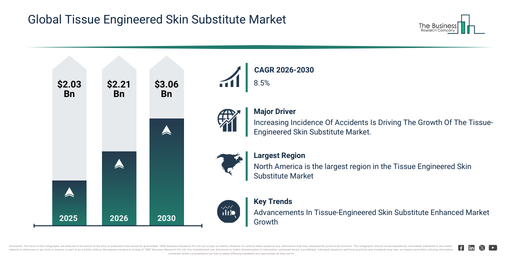
    The global market for tissue-engineered skin substitutes has experienced robust expansion, with projections indicating continued strong performance from its 2025 valuation of $2.03 billion. This segment is expected to reach $2.21 billion by 2026, reflecting a compound annual growth rate of 8.8%. Key drivers behind the historical growth trajectory include a rising prevalence of chronic wounds and burn injuries, an increase in the number of reconstructive surgical interventions, a growing preference for biologic wound care solutions, advancements in clinical research focused on skin regeneration, and the wider availability of sophisticated biomaterials.

    The market for engineered skin substitutes is poised for substantial expansion in the coming years, projecting a reach of $3.06 billion by 2030, driven by an 8.5% compound annual growth rate. This anticipated surge is fueled by several key factors, including an expanding elderly demographic experiencing heightened wound care requirements, a burgeoning demand for innovative regenerative medicine approaches, a widening array of personalized tissue engineering possibilities, increased investment in bioprinting advancements, and an intensifying emphasis on expediting wound healing while minimizing scar formation. Key developments shaping this market during the forecast period involve the growing utilization of 3D bioprinted skin substitutes, a rise in stem cell-derived skin replacement options, greater incorporation of sophisticated biomaterials, the proliferation of customized wound management strategies, and a concentrated effort towards developing accelerated skin regeneration techniques.

    Download A Free Sample Report For Comprehensive Market Insights:

    https://www.thebusinessresearchcompany.com/sample.aspx?id=20664&type=smp

    Tissue Engineered Skin Substitute Market Growth Drivers And Industry Catalysts

    The heightened frequency of accidents, potentially attributable to escalating traffic density, driver distraction, suboptimal road conditions, and increased mobile device usage behind the wheel, is anticipated to stimulate expansion within the tissue-engineered skin substitute sector. These advanced substitutes offer a functional and biologically compatible alternative for skin compromised by injury, thereby facilitating accelerated wound closure and mitigating risks of secondary issues like infections and persistent scarring. Illustratively, official data from the National Highway Traffic Safety Administration (NHTSA) in the United States indicated that in November 2025, an estimated 2,442,581 individuals sustained injuries in traffic collisions during 2023, marking a 2.5% uptick from the 2.38 million injuries recorded in the preceding year. Consequently, the rising occurrence of accidents directly correlates with and fuels the market’s upward trajectory for tissue-engineered skin substitutes.

    Tissue Engineered Skin Substitute Market Segment Analysis And Revenue Opportunities

    The tissue engineered skin substitute market covered in this report is segmented –

    1) By Product: Acellular Skin Substitutes, Biologic Skin Substitute, Cellular Skin Substitutes, Synthetic Skin Substitutes

    2) By Material: Synthetic, Natural

    3) By Technology: Laser Assisted Bio-Printing, Robotic Technology, Other Technologies

    4) By Application: Chronic Wounds, Acute Wounds, Other Applications

    5) By End User: Hospital, Specialty Clinics, Ambulatory Surgical Centers, Research Laboratory

    Subsegments:

    1) By Acellular Skin Substitutes: Decellularized Dermis, Collagen-Based Scaffolds, Amniotic Membrane

    2) By Biologic Skin Substitutes: Living Cell-Containing Substitutes, Allogeneic Skin Grafts, Xenogeneic Skin Grafts

    3) By Cellular Skin Substitutes: Cultured Epithelial Autografts (CEA), Dermal Substitutes with Cells, Stem Cell-Derived Skin Constructs

    4) By Synthetic Skin Substitutes: Polymer-Based Scaffolds, Biodegradable Scaffolds, Hydrogel-Based Substitutes

    #Tissue Engineered Skin Substitute Market Trends Influencing Long-Term Demand

    Companies dominating the tissue-engineered skin substitute sector are prioritizing advancements in laser technology, specifically exploring novel wavelengths and developing sophisticated biofabricated dermo-epidermal graft systems as a strategy to enhance their market position. These bio-fabricated systems integrate viable skin cells with a supportive scaffold, enabling the creation of full-thickness skin replacements that closely replicate human skin’s architecture and foster successful integration post-transplantation. As an illustration, CUTISS AG, a Swiss regenerative medicine firm, unveiled its latest graft system, DenovoSkin, in July 2024; this personalized, bioengineered skin graft is cultivated from a patient’s small biopsy sample, yielding a substantial dermo-epidermal skin substitute that offers advantages such as better preservation of the donor site, superior graft integration, and diminished scar formation, ultimately leading to accelerated healing and improved aesthetic results. While this development aligns with the increasing use of sophisticated wound management and reconstructive treatments, challenges related to cost and the ability to scale up production persist as limiting factors.

    Tissue Engineered Skin Substitute Market Leading Players Shaping Industry Direction

    Major companies operating in the tissue engineered skin substitute market are Stryker Corporation, DePuy Synthes, Smith & Nephew Plc, ConvaTec Group PLC, Mallinckrodt Pharmaceuticals plc, Integra LifeSciences Holdings Corporation, Gunze Limited, Organogenesis Inc., LifeNet Health Inc., MiMedx Group Inc., Vericel Corporation, AlloSource Inc., Sientra Inc., PolyNovo Limited, Avita Medical Limited, Tissue Regenix Group, PolarityTE, Promethean LifeSciences Inc., Regenicin Inc., Kerecis Ltd.

    Access The Complete Tissue Engineered Skin Substitute Market Report:

    https://www.thebusinessresearchcompany.com/report/tissue-engineered-skin-substitute-global-market-report

    Tissue Engineered Skin Substitute Market Leading Geography: Which Region Generates The Most Revenue?

    North Americawas the largest region in the tissue engineered skin substitute market in 2025. The regions covered in the tissue engineered skin substitute market report are Asia-Pacific, South East Asia, Western Europe, Eastern Europe, North America, South America, Middle East, Africa.

    Get in touch with us:

    The Business Research Company: https://www.thebusinessresearchcompany.com/

    Americas: +1 310-496-7795

    Asia: +44 7882 955267 & +91 8897263534

    Europe: +44 7882 955267

    Email us at: marketing@tbrc.info

    Follow us on:

    LinkedIn: https://in.linkedin.com/company/the-business-research-company

    YouTube: https://www.youtube.com/channel/UC24_fI0rV8cR5DxlCpgmyFQ

    Global Market Model: https://www.thebusinessresearchcompany.com/global-market-model
  • Tinea Pedis Treatment Market Set To Grow From $1.51 Billion In 2026 To $1.83 Billion By 2030 At A CAGR Of 4.9%

    Tinea Pedis Treatment Market Set To Grow From $1.51 Billion In 2026 To $1.83 Billion By 2030 At A CAGR Of 4.9%

    Enhanced with market attractiveness analysis, total addressable market evaluation, company benchmarking matrices, interactive Excel dashboards, expanded supply chain intelligence, emerging startup coverage, and detailed product insights, The Business Research Company’s 2026 market reports deliver more actionable and strategically valuable research.

    Tinea Pedis Treatment Market Expected To Reach $1.83 Billion By 2030 At 4.9% CAGR

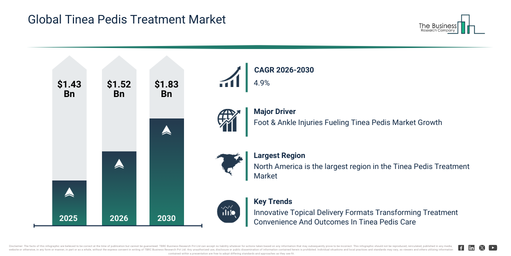
    The market for treating athlete’s foot has experienced robust expansion lately, projected to advance from an estimated $1.43 billion in 2025 to $1.52 billion in 2026, reflecting a compound annual growth rate of 5.7%. Factors contributing to this historical growth trajectory include a rise in the occurrences of fungal skin ailments, the prevalent use of footwear that traps moisture, the accessibility of antifungal creams and ointments, the proliferation of drugstores, and an increased emphasis on personal cleanliness.

    Antifungal foot treatment sales are projected for consistent expansion over the upcoming years, reaching an estimated $1.83 billion by the year 2030, reflecting a compound annual growth rate of 4.9%. This anticipated increase is propelled by several key factors, including a heightened need for antifungal solutions that provide swift relief, the burgeoning accessibility of pharmaceuticals through online platforms, an increasing emphasis on therapeutic strategies that combine different treatments, a greater inclination towards proactive antifungal care measures, and a growing consumer inclination towards managing their health through self-administered remedies. Significant market shifts anticipated during this projection period involve a greater demand for topical antifungal applications, a rising preference for drug formulations that combine active ingredients, augmented availability of non-prescription therapeutic options, the expanding reach of e-commerce within the pharmaceutical sector, and a more pronounced focus on ensuring patients adhere to their prescribed treatment regimens.

    Download A Free Sample Report For Comprehensive Market Insights:

    https://www.thebusinessresearchcompany.com/sample.aspx?id=15684&type=smp

    Tinea Pedis Treatment Market Opportunity Drivers: What Is Creating New Revenue Potential?

    The escalating number of foot and ankle injuries is anticipated to stimulate expansion within the tinea pedis treatment sector, as such injuries can create conditions conducive to fungal development and extend recovery times, thereby necessitating more extensive treatment. These injuries encompass any harm to the bones, ligaments, tendons, muscles, or other tissues of the foot or ankle, frequently stemming from accidents, athletic endeavors, or sustained stress. Contributing factors include evolving lifestyles, heightened engagement in sports and physical activities, improper footwear, flawed training methodologies, a greater susceptibility to falls, and degenerative conditions. Furthermore, the pervasive issues of obesity and chronic ailments like diabetes amplify the likelihood of foot and ankle complications. An illustration of this trend is the reported 170% surge in the severity of ankle injuries within the English Premier League between October 2022 and January 2023, as noted by Howden Group Holdings Ltd. in November 2023, following the FIFA World Cup Qatar 2022. Consequently, the rising frequency of foot and ankle injuries serves as a key impetus for the tinea pedis treatment market.

    The growing occurrence of fungal infections is poised to be a significant catalyst for the tinea pedis treatment market. Fungal infections, which are ailments instigated by fungi affecting diverse bodily regions, are often attributed to compromised immune systems, environmental settings that foster fungal proliferation, direct exposure to fungi, pre-existing health issues, work-related exposures, and personal hygiene habits. The objective of treating tinea pedis is to eradicate the fungal infection and alleviate its accompanying symptoms. As an example, the UK Health Security Agency reported in 2023 that yeast-related bloodstream infections across England saw a 4% increase in 2023 compared to the preceding year. Therefore, the heightened prevalence of fungal infections is a primary driver for the tinea pedis treatment market.

    Tinea Pedis Treatment Market Segmentation And Category Breakdown

    The tinea pedis treatment market covered in this report is segmented –

    1) By Drug Class: Antifungals, Combinations

    2) By Route of Administration: Oral, Topical

    3) By Disease Indication: Interdigital Tinea Pedis, Plantar Tinea pedis, Vesicular Tinea Pedis

    4) By Distribution Channel: Hospital Pharmacies, Retail Pharmacies, E-commerce

    Subsegments:

    1) By Antifungals: Topical Antifungal Drugs, Oral Antifungal Drugs

    2) By Combinations: Antifungal And Corticosteroid Combinations, Antifungal And Antiseptic Combinations

    Tinea Pedis Treatment Market Innovation Trends Driving Future Development

    The tinea pedis treatment market is witnessing a strategic shift, as key players are concentrating on pioneering innovative topical delivery systems, including dry stick applicators and nano-formulated sprays, to enhance their market standing. These dry stick applicators offer a solid means of topical application, providing a smooth and fuss-free method of delivering treatment without the inconvenience of liquids or residue, thereby ensuring ease and cleanliness during use. A noteworthy advancement occurred in September 2025 when Propedix, a US-based entity specializing in dermatology, launched Dryello, the inaugural dry-stick antifungal medication for Athlete’s Foot, representing a substantial breakthrough in dermatological topical treatments. Dryello, which contains 1% tolnaftate, leverages Propedix’s proprietary DryStik Technology Platform to administer the medication in a neat, manageable, and mess-free stick form that applies and sets as a dry layer, contrasting with conventional creams and sprays. This formulation, conceived in collaboration with dermatologists, aims to boost patient adherence and improve the efficacy of treatment. Clinical evaluations demonstrated a cure rate of 90% among participants within a four-week period, with the majority also noting a decrease in foot perspiration. As the inaugural commercial offering from Propedix’s DryStik platform, Dryello indicates the forthcoming introduction of a wider array of sophisticated anti-infective dermatological solutions.

    Tinea Pedis Treatment Market Competitive Analysis Of Major Industry Participants

    Major companies operating in the tinea pedis treatment market are Pfizer Inc., Bayer AG, GlaxoSmithKline plc, Sandoz International GmbH, Perrigo Company plc, Aurobindo Pharma, Dr. Reddy’s Laboratories Ltd., Cipla Ltd., Lupin Limited, Glenmark Pharmaceuticals Ltd., Almirall S.A., Taro Pharmaceutical Industries Ltd., Ego Pharmaceuticals Pty. Ltd., Fougera Pharmaceuticals Inc., Sun Pharmaceutical Industries Ltd., Blueberry Therapeutics Ltd., Johnson & Johnson, Merck & Co. Inc., Sanofi S.A., Teva Pharmaceutical Industries Ltd., Astellas Pharma Inc.

    Access The Complete Tinea Pedis Treatment Market Report:

    https://www.thebusinessresearchcompany.com/report/tinea-pedis-treatment-global-market-report

    Tinea Pedis Treatment Market Regional Outlook: Where Are The Largest Opportunities Located?

    North Americawas the largest region in the tinea pedis treatment market in 2025. Asia-Pacificis expected to be the fastest-growing region in the forecast period. The regions covered in the tinea pedis treatment market report are Asia-Pacific, South East Asia, Western Europe, Eastern Europe, North America, South America, Middle East, Africa.

    Get in touch with us:

    The Business Research Company: https://www.thebusinessresearchcompany.com/

    Americas: +1 310-496-7795

    Asia: +44 7882 955267 & +91 8897263534

    Europe: +44 7882 955267

    Email us at: marketing@tbrc.info

    Follow us on:

    LinkedIn: https://in.linkedin.com/company/the-business-research-company

    YouTube: https://www.youtube.com/channel/UC24_fI0rV8cR5DxlCpgmyFQ

    Global Market Model: https://www.thebusinessresearchcompany.com/global-market-model
  • Tildrakizumab Market Opportunities Are Emerging Beyond Traditional Growth Areas

    Tildrakizumab Market Opportunities Are Emerging Beyond Traditional Growth Areas

    Through market attractiveness analysis, total addressable market evaluation, company benchmarking matrices, interactive Excel dashboards, expanded supply chain intelligence, emerging startup coverage, and detailed product insights, The Business Research Company’s 2026 market reports provide more actionable and strategically valuable research.

    Tildrakizumab Market Size And Revenue Forecast Through 2030

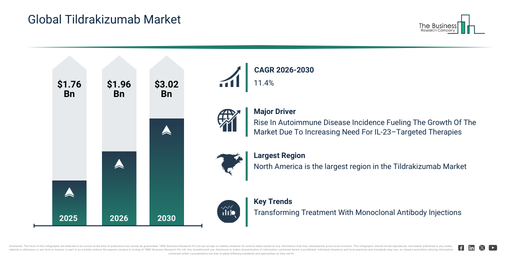
    The market for tildrakizumab has experienced substantial expansion lately, projected to increase from $1.76 billion in 2025 to $1.96 billion the following year, reflecting a compound annual growth rate of 11.7%. This past growth trajectory is largely attributable to the escalating incidence of plaque psoriasis, reinforced by clinical evidence confirming the effectiveness of biologics, the proliferation of specialized dermatology centers, greater patient acceptance of injectable biologic treatments, and the presence of financial assistance programs for these medications.

    The market for tildrakizumab is poised for substantial expansion over the coming years, projecting a valuation of $3.02 billion by 2030, driven by a compound annual growth rate of 11.4%. This anticipated growth trajectory is fueled by a confluence of factors, including a burgeoning demand for tailored autoimmune treatments, the broadening scope of indications for biologic therapies, an intensified emphasis on sustained disease management, a greater acceptance of self-administered biologic treatments at home, and escalating investments in immunological research. Key developments shaping the market during this forecast period encompass the increasing utilization of targeted biologic interventions, a growing embrace of IL-23 inhibitors, a heightened preference for extended-release injectable medications, the expansion of specialized distribution networks for biologics, and a more pronounced focus on treatment plans centered around the patient.

    Download A Free Sample Report For Comprehensive Market Insights:

    https://www.thebusinessresearchcompany.com/sample.aspx?id=21301&type=smp

    Tildrakizumab Market Growth Momentum: Which Factors Are Influencing Demand?

    The expanding prevalence of autoimmune conditions is anticipated to be a key catalyst for the tildrakizumab market’s upward trajectory. Such conditions arise when the body’s immune defenses erroneously target its own healthy tissues, with their increasing occurrence linked to heightened environmental factors like pollution and chemical exposure. Tildrakizumab intervenes in autoimmune disease by inhibiting the IL-23 pathway, thereby mitigating inflammation and managing associated symptoms. For illustrative purposes, Public Health Scotland disclosed in August 2024 that the Scottish Multiple Sclerosis Register (SMSR) documented 455 new cases of multiple sclerosis in 2023, underscoring the rise in autoimmune diagnoses and consequently fueling demand for tildrakizumab.

    Advancements in medical infrastructure are poised to significantly contribute to the expansion of the tildrakizumab market. These facilities, encompassing hospitals, clinics, and diagnostic centers, are experiencing enhancements driven by factors including augmented investments in infrastructure, a greater emphasis on patient-centric approaches, demographic shifts, and an aging population. Enhanced medical facilities facilitate improved patient access to cutting-edge biologic therapies, optimize diagnostic processes and specialist referrals, ensure more robust cold chain logistics for biologics, and broaden the knowledge base of healthcare professionals, all of which collectively bolster the utilization and effectiveness of tildrakizumab in managing chronic inflammatory conditions like psoriasis. As an example, the American Hospital Association reported that in 2024, the United States was home to 6,120 hospitals, a rise from the 6,093 facilities recorded in 2022, illustrating the growth in healthcare capacity and, by extension, supporting the market’s expansion for tildrakizumab.

    Tildrakizumab Market Segment Outlook: Which Categories Are Expanding The Fastest?

    The tildrakizumab market covered in this report is segmented –

    1) By Indication: Plaque Psoriasis, Psoriatic Arthritis, Other Indications

    2) By Dosage Form: Injectable, Oral

    3) By Distribution Channel: Hospital Pharmacies, Retail Pharmacies, Online Pharmacies

    4) By End-User: Hospitals, Specialty Clinics, Homecare

    Subsegments:

    1) By Plaque Psoriasis: Moderate Plaque Psoriasis, Severe Plaque Psoriasis, Treatment-Resistant Plaque Psoriasis

    2) By Psoriatic Arthritis: Peripheral Psoriatic Arthritis, Axial Psoriatic Arthritis, Enthesitis-related Psoriatic Arthritis

    3) By Other Indications: Inflammatory Skin Disorders, Off-Label Autoimmune Conditions, Emerging Therapeutic Applications

    Tildrakizumab Market Trends Reshaping Industry Growth

    In the tildrakizumab market, key players are prioritizing the creation of novel drug delivery methods, exemplified by monoclonal antibody injections, to boost treatment success and positively impact patient health. This sophisticated method involves administering engineered antibodies, developed in laboratories, to precisely target specific molecules within the body for medicinal or protective benefits. A notable development occurred in May 2023 when Sun Pharmaceutical Industries Ltd., headquartered in India, secured clearance from China’s National Medical Products Administration (NMPA) for its tildrakizumab injection, a treatment for plaque psoriasis. By specifically inhibiting interleukin-23 (IL-23), a key inflammatory protein contributing to psoriasis development, tildrakizumab effectively mitigates inflammation and curtails the rapid proliferation of skin cells, thereby alleviating symptoms like redness, scaling, and plaque buildup.

    Tildrakizumab Market Key Companies And Competitive Benchmarking

    Major companies operating in the tildrakizumab market are Almirall S.A., Sun Pharmaceutical Industries Ltd., Novartis, Pfizer, Eli Lilly, Bristol Myers Squibb, Roche, Merck & Co, Janssen Biotech (Johnson & Johnson), Amgen, GSK, AbbVie, Sanofi, AstraZeneca, Innovent Biologics, Boehringer Ingelheim, LEO Pharma, Kyowa Kirin, Takeda Pharmaceutical, Regeneron Pharmaceuticals, Biocon Ltd.

    Access The Complete Tildrakizumab Market Report:

    https://www.thebusinessresearchcompany.com/report/tildrakizumab-global-market-report

    Tildrakizumab Market Geographic Landscape: Which Region Dominates Industry Growth?

    North Americawas the largest region in the tildrakizumab market in 2025. Asia-Pacificexpected to be the fastest-growing region in the forecast period. The regions covered in the tildrakizumab market report are Asia-Pacific, South East Asia, Western Europe, Eastern Europe, North America, South America, Middle East, Africa.

    Get in touch with us:

    The Business Research Company: https://www.thebusinessresearchcompany.com/

    Americas: +1 310-496-7795

    Asia: +44 7882 955267 & +91 8897263534

    Europe: +44 7882 955267

    Email us at: marketing@tbrc.info

    Follow us on:

    LinkedIn: https://in.linkedin.com/company/the-business-research-company

    YouTube: https://www.youtube.com/channel/UC24_fI0rV8cR5DxlCpgmyFQ

    Global Market Model: https://www.thebusinessresearchcompany.com/global-market-model
  • Tick Borne Encephalitis Market Expansion Is Opening New Pathways For Strategic Investment

    Tick Borne Encephalitis Market Expansion Is Opening New Pathways For Strategic Investment

    Delivering more actionable and strategically valuable research, The Business Research Company’s 2026 market reports feature market attractiveness analysis, total addressable market evaluation, company benchmarking matrices, interactive Excel dashboards, expanded supply chain intelligence, emerging startup coverage, and detailed product insights.

    Tick Borne Encephalitis Market Growth From $11.33 Billion In 2026 To $15.08 Billion By 2030 At A CAGR Of 7.4%

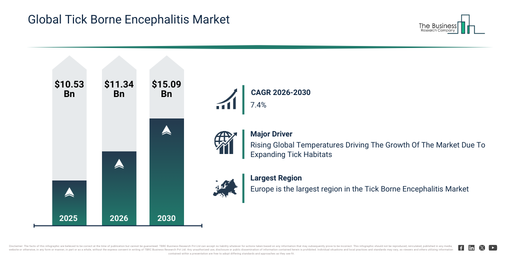
    The prevalence of tick-borne encephalitis has experienced considerable expansion recently. Projections indicate a rise from $10.53 billion in 2025 to $11.34 billion in 2026, reflecting a compound annual growth rate of 7.7%. Factors contributing to this historical market surge include the enlargement of tick-infested territories driven by climate shifts, an increase in the occurrence of diseases transmitted by vectors, the accessibility of vaccines in areas where the illness is prevalent, heightened public health education initiatives, and advancements in diagnostic testing.

    The market for tick-borne encephalitis is projected for substantial expansion in the coming years, reaching an estimated $15.09 billion by 2030, fueled by a compound annual growth rate of 7.4%. This upswing during the projected period is anticipated to be driven by heightened investment in vaccine research and development, escalating consumer interest in immunizations for travel purposes, the broader implementation of early diagnostic screening initiatives, increased utilization of comprehensive disease monitoring solutions, and a heightened emphasis on infectious disease prevention strategies. Key developments anticipated in this timeframe encompass a greater uptake of vaccination programs aimed at prevention, a surge in demand for swift diagnostic tests, enhanced public knowledge regarding tick-borne illnesses, the wider deployment of interconnected disease surveillance networks, and a more concentrated effort on bolstering public health readiness.

    Download A Free Sample Report For Comprehensive Market Insights:

    https://www.thebusinessresearchcompany.com/sample.aspx?id=23542&type=smp

    Tick Borne Encephalitis Market Expansion Drivers: What Is Shaping Future Growth?

    Anticipated escalation of climate change is poised to stimulate expansion within the tick-borne encephalitis market. Climate change, characterized by long-term alterations in global temperatures and weather patterns, is fundamentally driven by human actions like the burning of fossil fuels and widespread deforestation. The intensification of climate change stems from the excessive combustion of fossil fuels, which liberates substantial quantities of greenhouse gases such as carbon dioxide and methane into the atmosphere, thereby trapping heat and elevating global temperatures. This environmental shift fosters greater demand for tick-borne encephalitis treatments by expanding the geographical range of ticks that carry diseases, owing to warming temperatures and less severe winters, leading to higher infection rates and a consequent surge in the need for diagnostic tools, vaccines, and antiviral therapies. Illustratively, data from the World Meteorological Organization (WMO), a United Nations specialized agency headquartered in Switzerland, indicated that from January to September 2024, the global average surface air temperature was 1.54°C above the pre-industrial baseline (with a margin of uncertainty of ±0.13°C), largely influenced by a warming El Niño phenomenon. Consequently, the ongoing progression of climate change is a significant factor driving the growth of the tick-borne encephalitis market.

    The surge in international travel is projected to be a key catalyst for the expansion of the tick-borne encephalitis market. This trend encompasses the movement of individuals across national borders for various reasons including tourism, business engagements, educational pursuits, or relocation. Factors contributing to this increase in global mobility include rising disposable incomes, which enable a greater number of people to undertake leisure trips, attend business meetings, or pursue educational opportunities abroad. As more travelers venture into regions where tick-borne encephalitis is endemic, their exposure to infected ticks escalates, thereby heightening the demand for preventive vaccinations and medical attention following potential exposure. A pertinent example is the United Nations World Tourism Organization’s estimate that approximately 1.4 billion people traveled internationally in 2024, nearing a full recovery to pre-pandemic levels and representing a significant increase from the previous year. This highlights the growing interconnectedness facilitated by travel and its direct implication for public health concerns like tick-borne encephalitis.

    Elevated government investment in healthcare infrastructure is anticipated to fuel the advancement of the tick-borne encephalitis market. This increased governmental financial commitment involves directing greater resources towards public health services, infrastructural improvements, and initiatives aimed at fostering economic development and research. Such robust funding plays a crucial role in bolstering tick-borne encephalitis control by supporting widespread vaccination campaigns, thereby enhancing immunization coverage in affected areas, contributing to a reduction in disease incidence, and improving public accessibility to essential preventive healthcare measures. For instance, official statistics from the United Kingdom revealed that government expenditure constituted the predominant source of healthcare financing in a recent year, representing a substantial portion of the total healthcare spending. This underscores the significant impact of public financial support on strengthening healthcare systems and addressing specific health challenges like tick-borne encephalitis.

    Tick Borne Encephalitis Market Segment Landscape: Which Areas Lead Market Development?

    The tick borne encephalitis market covered in this report is segmented –

    1) By Product Type: Tick-Borne Encephalitis (TBE) Vaccines, Tick Repellents, Diagnostic Tests, Antiviral Drugs

    2) By Virus Type: European Tick Borne Encephalitis Virus, Siberian Tick Borne Encephalitis Virus, Far Eastern Tick Borne Encephalitis Virus

    3) By Route of Administration: Parenteral, Other Routes Of Administration

    4) By Distribution Channel: Online, Offline

    5) By End-User: Travelers, Outdoor Enthusiasts, Healthcare Providers, Research Institutions

    Subsegments:

    1) By Tick-Borne Encephalitis (TBE) Vaccines: Inactivated (Killed) Vaccines, Live Attenuated Vaccines

    2) By Tick Repellents: DEET-Based Repellents, Picaridin-Based Repellents, Natural Or Plant-Based Repellents, Permethrin-Treated Clothing And Gear

    3) By Diagnostic Tests: ELISA (Enzyme-Linked Immunosorbent Assay), PCR (Polymerase Chain Reaction), Rapid Diagnostic Tests (RDTs), Neutralization Tests

    4) By Antiviral Drugs: Nucleoside Analogs, Interferons, Immunoglobulin Therapy, Supportive Therapy (Symptomatic Treatment)

    Tick Borne Encephalitis Market Industry Leaders And Market Competition

    Major companies operating in the tick borne encephalitis market are Pfizer Inc., Sanofi Pasteur, Novartis AG, GlaxoSmithKline (GSK) Plc, Bavarian Nordic, Valneva SE, Microgen, DIESSE Diagnostica Senese S.p.A., QED Bioscience Inc., Serion Immunologics, Chumakov Federal Scientific Center, Merck & Co. Inc., AstraZeneca Plc, Johnson & Johnson (Janssen Pharmaceuticals), CSL Limited, Takeda Pharmaceutical Company Limited, Serum Institute of India Pvt Ltd, BioNTech SE, Zydus Cadila, Bharat Biotech International Limited, Walvax Biotechnology Co Ltd

    Access The Complete Tick Borne Encephalitis Market Report:

    https://www.thebusinessresearchcompany.com/report/tick-borne-encephalitis-global-market-report

    Tick Borne Encephalitis Market Largest Region: Which Geography Holds The Highest Market Share?

    Europewas the largest region in the tick borne encephalitis market in 2025. North Americais expected to be the fastest-growing region in the forecast period. The regions covered in the tick borne encephalitis market report are Asia-Pacific, South East Asia, Western Europe, Eastern Europe, North America, South America, Middle East, Africa.

    Get in touch with us:

    The Business Research Company: https://www.thebusinessresearchcompany.com/

    Americas: +1 310-496-7795

    Asia: +44 7882 955267 & +91 8897263534

    Europe: +44 7882 955267

    Email us at: marketing@tbrc.info

    Follow us on:

    LinkedIn: https://in.linkedin.com/company/the-business-research-company

    YouTube: https://www.youtube.com/channel/UC24_fI0rV8cR5DxlCpgmyFQ

    Global Market Model: https://www.thebusinessresearchcompany.com/global-market-model
  • Thyroid Function Test Market Trends Are Creating New Opportunities For Industry Leaders

    Thyroid Function Test Market Trends Are Creating New Opportunities For Industry Leaders

    Enhanced with market attractiveness analysis, total addressable market evaluation, company benchmarking matrices, interactive Excel dashboards, expanded supply chain intelligence, emerging startup coverage, and detailed product insights, The Business Research Company’s 2026 market reports deliver more actionable and strategically valuable research.

    Thyroid Function Test Market Expansion Outlook: What Revenue Opportunities Lie Ahead?

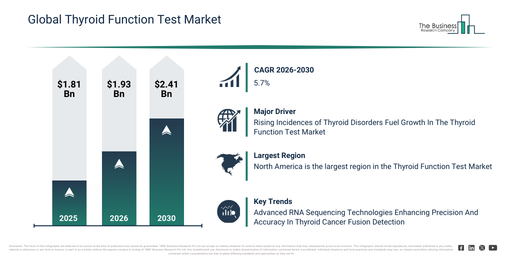
    The market for thyroid function tests has experienced robust expansion recently, projected to increase from $1.81 billion in 2025 to $1.93 billion in 2026, reflecting a compound annual growth rate of 6.5%. Factors contributing to this historical growth include a surge in thyroid disorder instances, heightened consciousness regarding endocrine well-being, the broadening of diagnostic laboratory infrastructure, the accessibility of validated thyroid testing kits, and the consistent incorporation of TSH measurements into general health screenings.

    Anticipating robust expansion in the upcoming years, the market for thyroid function tests is projected to reach a valuation of $2.41 billion by 2030, exhibiting a compound annual growth rate of 5.7%. This anticipated surge is fueled by several key factors, including the heightened embrace of personalized medicine strategies, a growing preference for thyroid testing at the point of care, the broader implementation of automated laboratory processes, a greater emphasis on identifying diseases in their initial stages, and the increasing incorporation of digital diagnostic tools. Key developments expected to shape this market during the forecast period involve the wider adoption of highly sensitive immunoassays, an escalating need for preliminary screening of thyroid disorders, augmented utilization of automated diagnostic systems, the broadening scope of extensive thyroid testing panels, and a heightened commitment to ensuring diagnostic precision and consistency.

    Download A Free Sample Report For Comprehensive Market Insights:

    https://www.thebusinessresearchcompany.com/sample.aspx?id=16553&type=smp

    Thyroid Function Test Market Development Factors: Which Trends Are Supporting Demand?

    An increasing number of thyroid disorder cases is anticipated to be a key driver for the expansion of the thyroid function test market in the future. These disorders, which impact the thyroid gland’s operation, are becoming more common due to factors such as altered diets, radiation exposure, hormonal shifts, environmental influences, and autoimmune conditions, with the thyroid gland itself situated at the front of the neck in a distinctive butterfly shape. Essential for identifying and managing these thyroid-related ailments, thyroid function tests supply critical data on thyroid hormone levels and antibody indicators. This diagnostic information is instrumental in shaping treatment plans, assessing how well therapies are working, and averting potential health complications. For example, projections from the Journal of Global Health (JoGH) in April 2024 indicated that thyroid cancer cases could approach 305,078 by the year 2030. Consequently, the rising incidence of thyroid disorders directly fuels the growth observed in the thyroid function test market.

    Thyroid Function Test Market Segments: Where Are The Largest Growth Opportunities?

    The thyroid function test market covered in this report is segmented –

    1) By Test Type: Thyroid Stimulating Hormone (TSH), Triiodothyronine (T3), Thyroxine (T4), Free Triiodothyronine (FT3), Free Thyroxine (FT4)

    2) By Indication: Hypothyroidism, Hyperthyroidism, Thyroid Cancer, Other Indications

    3) By End User: Clinics, Research Organizations, Diagnostic Laboratories, Hospitals

    Subsegments:

    1) By Thyroid Stimulating Hormone (TSH): TSH Assay (Immunoassay, Electrochemiluminescence), TSH-Based Diagnostic Kits

    2) By Triiodothyronine (T3): Total T3, Free T3, T3-Based Diagnostic Kits

    3) By Thyroxine (T4): Total T4, Free T4, T4-Based Diagnostic Kits

    4) By Free Triiodothyronine (FT3): FT3 Immunoassay, FT3 Electrochemiluminescence (ECL), FT3-Based Diagnostic Kits

    5) By Free Thyroxine (FT4): FT4 Immunoassay, FT4 Electrochemiluminescence (ECL), FT4-Based Diagnostic Kits

    Thyroid Function Test Market Transformation Trends: Which Innovations Are Driving Change?

    Key players within the thyroid function test sector are actively producing cutting-edge options like RNA sequencing for improved precision in identifying cancer fusions across various solid tumors, encompassing thyroid malignancies. RNA sequencing, a sophisticated methodology, allows for the examination of both the amount and the genetic sequence of RNA within a given sample, thereby illuminating gene expression patterns and the complete transcriptome. As an illustration, in May of 2024, Foundation Medicine, Inc., a prominent American biotechnology firm, unveiled the U.S. release of FoundationOne RNA, a diagnostic test utilizing tissue samples and RNA sequencing technology to pinpoint cancer-associated gene fusions within a panel of 318 genes. This particular test offers comprehensive fusion detection for all types of solid tumors and demonstrates significant potential for the identification of fusions in conditions such as non-small cell lung cancer, sarcomas, pancreatic cancers, thyroid cancers, cholangiocarcinomas, and bladder cancers.

    Thyroid Function Test Market Major Participants And Competitive Dynamics

    Major companies operating in the thyroid function test market are F. Hoffmann-La Roche Ltd., Abbott Laboratories Inc., Thermo Fisher Scientific Inc., Danaher Corporation, Siemens Healthineers AG, Merck KGaA, BioMérieux Inc., WerfenLife SA, DiaSorin SpA, Beckman Coulter Life Sciences, Autobio Diagnostics Co. Ltd., Quidel Corporation, Boditech Med Inc., Cortez Diagnostics, Qualigen Inc., Ortho Clinical Diagnostics, Bio‑Rad Laboratories Inc., Sysmex Corporation, Randox Laboratories Ltd., Tosoh Corporation, Fujirebio

    Access The Complete Thyroid Function Test Market Report:

    https://www.thebusinessresearchcompany.com/report/thyroid-function-test-global-market-report

    Thyroid Function Test Market Regional Analysis: Which Region Leads By Revenue?

    North Americawas the largest region in the thyroid function test market in 2025. Asia-Pacificis expected to be the fastest-growing region in the forecast period. The regions covered in the thyroid function test market report are Asia-Pacific, South East Asia, Western Europe, Eastern Europe, North America, South America, Middle East, Africa.

    Get in touch with us:

    The Business Research Company: https://www.thebusinessresearchcompany.com/

    Americas: +1 310-496-7795

    Asia: +44 7882 955267 & +91 8897263534

    Europe: +44 7882 955267

    Email us at: marketing@tbrc.info

    Follow us on:

    LinkedIn: https://in.linkedin.com/company/the-business-research-company

    YouTube: https://www.youtube.com/channel/UC24_fI0rV8cR5DxlCpgmyFQ

    Global Market Model: https://www.thebusinessresearchcompany.com/global-market-model
  • Thyroid Eye Disease (TED) Market Growth Is Reshaping Competitive Advantage Across The Industry

    Thyroid Eye Disease (TED) Market Growth Is Reshaping Competitive Advantage Across The Industry

    Through market attractiveness analysis, total addressable market evaluation, company benchmarking matrices, interactive Excel dashboards, expanded supply chain intelligence, emerging startup coverage, and detailed product insights, The Business Research Company’s 2026 market reports provide more actionable and strategically valuable research.

    Thyroid Eye Disease (TED) Market Growth Potential: How Will Market Size Change Through 2030?

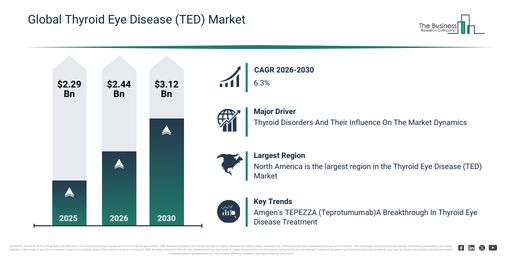
    The market for thyroid eye disease (ted) has experienced robust expansion recently, projected to increase from $2.29 billion in 2025 to $2.44 billion in 2026, reflecting a compound annual growth rate (CAGR) of 6.6%. This past growth trajectory is a consequence of several factors, including a rise in the incidence of autoimmune thyroid conditions, enhanced diagnostic awareness of ted manifestations, greater adoption of corticosteroid treatments, the expansion of eye care services, and an uptick in patient referrals from endocrinology practices.

    The market for thyroid eye disease (ted) is poised for substantial advancement in the upcoming years, projected to reach $3.12 billion by 2030, reflecting a compound annual growth rate (CAGR) of 6.3%. This anticipated expansion is fueled by several key factors, including the wider acceptance of innovative biologic treatments like teprotumumab, augmented funding for research into autoimmune conditions, the proliferation of less invasive surgical procedures, a greater emphasis on improving patients’ quality of life, and a growing need for individualized ted treatment plans. Throughout the forecast horizon, prominent developments are expected to include a greater embrace of specific biologic therapies, increased application of combined treatment strategies, a heightened focus on intervening in the early stages of the disease, the broadening of specialized eye care services, and the refinement of patient-centric therapeutic approaches.

    Download A Free Sample Report For Comprehensive Market Insights:

    https://www.thebusinessresearchcompany.com/sample.aspx?id=21300&type=smp

    Thyroid Eye Disease (TED) Market Industry Drivers: What Is Driving Revenue Growth?

    The increasing prevalence of thyroid-related ailments is anticipated to be a primary catalyst for the expansion of the thyroid eye disease (TED) market. Thyroid disorders encompass a range of conditions impacting the thyroid gland’s functionality, leading to hormonal dysregulation and manifesting as issues like hypothyroidism, hyperthyroidism, goiter, and indeed, thyroid eye disease. Several factors contribute to this rise, including elevated iodine consumption, the presence of autoimmune diseases, inherent genetic susceptibilities, and heightened public awareness coupled with more accurate diagnostic processes. Thyroid Eye Disease (TED) itself plays a role in the overall increase in thyroid disorder statistics, being a frequent and severe complication of Graves’ disease, thereby amplifying both the collective impact and recognition of thyroid-related health concerns. As an illustration, by May 2024, projections from the Canadian Cancer Society indicated that approximately 6,600 individuals in Canada would be diagnosed with thyroid cancer in 2024, with an estimated 280 deaths foreseen. Consequently, the growing incidence of thyroid disorders is directly fueling the market’s progression in the realm of thyroid eye disease (TED).

    Thyroid Eye Disease (TED) Market Segment Analysis: What Are The Major Market Categories?

    The thyroid eye disease (ted) market covered in this report is segmented –

    1) By Treatment Type: Medical, Surgical, Combination Of Medical And Surgical

    2) By Disease Severity: Mild, Moderate, Severe

    3) By Drug Type: Biologics, Small Molecules, Other Drug Types

    4) By Route Of Administration: Oral, Intravenous, Subcutaneous

    5) By End User: Hospitals, Clinics, Other End Users

    Subsegments:

    1) By Medical: Corticosteroids, Teprotumumab, Antithyroid Medications

    2) By Surgical: Orbital Decompression Surgery, Eyelid Surgery, Strabismus Surgery

    3) By Combination Of Medical and Surgical: Combination of Corticosteroids and Orbital Decompression, Combination of Teprotumumab and Eyelid Surgery

    #Thyroid Eye Disease (TED) Market Growth Trends: What Is Influencing The Future Outlook?

    Enterprises active within the thyroid eye disease (TED) market are prioritizing the creation of novel therapeutics, notably monoclonal antibody-based treatments, to engineer more potent and precise interventions aimed at mitigating inflammation, alleviating proptosis, and ultimately elevating patient well-being. These monoclonal antibody therapies involve the utilization of antibodies manufactured artificially, engineered to replicate the immune system’s capacity for identifying and neutralizing particular disease agents or aberrant cells. A prime example of this innovation occurred in September 2024 when Amgen Inc., a prominent American biotechnology firm, revealed that the Japanese Ministry of Health, Labour and Welfare (MHLW) granted approval for TEPEZZA (teprotumumab) as a treatment for active thyroid eye disease (TED), a rare and potentially vision-jeopardizing autoimmune condition. This groundbreaking medication holds the distinction of being the inaugural and sole FDA-endorsed therapy specifically developed for TED, presenting a focused therapeutic approach that effectively diminishes inflammation, swelling, and other incapacitating symptoms linked to the disorder. This regulatory milestone is of considerable significance for individuals in Japan, furnishing them with a novel and efficacious avenue for managing TED—a condition characterized by its rarity, progressive nature, and the resultant distressing eye protrusion, visual disturbances, and ocular discomfort.

    Thyroid Eye Disease (TED) Market Leading Companies Driving Competitive Growth

    Major companies operating in the thyroid eye disease (ted) market are Viridian Therapeutics Inc, Tourmaline Bio Inc, Sling Therapeutics Inc, Immunovant Inc, Hoffmann‑La Roche AG, H Lundbeck A S, Alumis Inc, Changchun GeneScience Pharmaceutical Co Ltd, Minghui Pharmaceutical Inc, Amgen Inc, Crinetics Pharmaceuticals Inc, Ollin Biosciences Inc, Lycia Therapeutics Inc, Inflammasome Therapeutics Inc, Novartis Pharmaceuticals Corp, AdvanceCOR Inc, Worg Pharmaceuticals Inc, AV7 Limited, EVOQ Therapeutics Inc, ValenzaBio Inc, Regeneron Pharmaceuticals Inc, Santen Pharmaceutical Co Ltd, Sanofi SA, Alexion Pharmaceuticals Inc, Septerna Corporation

    Access The Complete Thyroid Eye Disease (TED) Market Report:

    https://www.thebusinessresearchcompany.com/report/thyroid-eye-disease-ted-global-market-report

    Thyroid Eye Disease (TED) Market Geographic Distribution And Regional Opportunities

    North Americawas the largest region in the thyroid eye disease (TED) market in 2025. Asia-Pacificis expected to be the fastest-growing region in the forecast period. The regions covered in the thyroid eye disease (ted) market report are Asia-Pacific, South East Asia, Western Europe, Eastern Europe, North America, South America, Middle East, Africa.

    Get in touch with us:

    The Business Research Company: https://www.thebusinessresearchcompany.com/

    Americas: +1 310-496-7795

    Asia: +44 7882 955267 & +91 8897263534

    Europe: +44 7882 955267

    Email us at: marketing@tbrc.info

    Follow us on:

    LinkedIn: https://in.linkedin.com/company/the-business-research-company

    YouTube: https://www.youtube.com/channel/UC24_fI0rV8cR5DxlCpgmyFQ

    Global Market Model: https://www.thebusinessresearchcompany.com/global-market-model