Month: June 2026

  • Clinical Diagnostics Market Forecast Highlights Expansion From $87.69 Billion To $115.39 Billion Through 2030

    Clinical Diagnostics Market Forecast Highlights Expansion From $87.69 Billion To $115.39 Billion Through 2030

    Through market attractiveness analysis, total addressable market evaluation, company benchmarking matrices, interactive Excel dashboards, expanded supply chain intelligence, emerging startup coverage, and detailed product insights, The Business Research Company’s 2026 market reports provide more actionable and strategically valuable research.

    Clinical Diagnostics Market Size, Value And Growth Trends Through 2030

    The clinical diagnostics market demonstrated robust expansion recently, projecting a rise from $81.74 billion in 2025 to $87.7 billion by 2026, driven by a compound annual growth rate (CAGR) of 7.3%. The surge observed during the historical period can be attributed to several key factors, including an expanded network of diagnostic laboratories, intensified disease screening initiatives, a growing incidence of both infectious and chronic illnesses, advancements in medical imaging technology, and increased reliance on laboratory-based testing procedures.

    The global clinical diagnostics market anticipates robust expansion over the coming years, projected to reach a value of $115.39 billion by 2030, accelerating at a compound annual growth rate (CAGR) of 7.1%. This anticipated surge is propelled by several key factors, including the wider acceptance of personalized diagnostic approaches, increased capital allocation towards state-of-the-art imaging technologies, the proliferation of at-home diagnostic solutions, a heightened need for swift and precise diagnostic outcomes, and the growing incorporation of artificial intelligence within diagnostic processes. Key developments anticipated during this forecast interval encompass a greater utilization of molecular and genetic diagnostic tools, a mounting requirement for accelerated point-of-care testing, deeper integration between imaging and laboratory diagnostics, the broader deployment of automated diagnostic systems, and a more pronounced emphasis on the early identification of diseases.

    Download A Free Sample Report For Comprehensive Market Insights:

    https://www.thebusinessresearchcompany.com/sample.aspx?id=18537&type=smp

    Clinical Diagnostics Market Expansion Drivers: What Is Shaping Future Growth?

    The increasing number of long-term illnesses, which are conditions that typically need continuous care and can significantly impact daily life, is anticipated to fuel the expansion of the clinical diagnostics industry. The growing occurrence of these persistent health issues is largely due to factors including sedentary habits, societal inequities, and an aging demographic, all of which heighten the likelihood of developing ailments like cardiovascular issues, diabetes, and malignancies. Clinical diagnostic tools play a crucial role in managing chronic diseases by enabling precise identification of conditions, tracking their advancement, guiding treatment strategies, facilitating early detection of complications, tailoring medical interventions, evaluating risk elements, and aiding in patient education and independent management. For example, data from the Centers for Disease Control and Prevention (CDC) indicated that in 2023, a substantial 76.4% of U.S. adults, totaling approximately 194 million individuals, indicated they had at least one chronic condition, with prevalence rates of 59.5% in younger adults, 78.4% in middle-aged individuals, and an elevated 93.0% among older adults. Consequently, the escalating rate of chronic disease presents a significant impetus for the clinical diagnostics market.

    Clinical Diagnostics Market Segment Analysis: What Are The Major Market Categories?

    The clinical diagnostics market covered in this report is segmented –

    1) By Test: Lab Test, Imaging Test, Other Tests

    2) By Product: Instruments, Reagents, Other Products

    3) By End User: Hospital Laboratory, Diagnostic Laboratory, Point-Of-Care Testing, Other End Users

    Subsegments:

    1) By Lab Test: Blood Tests, Urine Tests, Genetic Tests, Biopsy And Cytology Tests

    2) By Imaging Test: X-Ray, MRI (Magnetic Resonance Imaging), CT Scan (Computed Tomography), Ultrasound, PET (Positron Emission Tomography) Scan

    3) By Other Tests: Molecular Diagnostics, Point-Of-Care Tests, Pregnancy Tests, Allergy Tests

    Clinical Diagnostics Market Strategic Trends: What Is Defining The Next Phase Of Growth?

    Leading players within the clinical diagnostics sector are concentrating their efforts on conceiving novel offerings, including sophisticated liquid biopsy methodologies, aimed at facilitating thorough genomic assessment of solid malignancies. A liquid biopsy serves as a procedure with minimal invasiveness, examining blood specimens to identify cancer-indicative markers, such as circulating tumor cells (CTCs) and circulating tumor DNA (ctDNA), thereby furnishing valuable information for diagnostic purposes, tracking treatment efficacy, and tailoring medical interventions. Illustratively, back in November 2023, Illumina Inc., an American biotechnology firm, introduced TruSight Oncology 500 ctDNA v2, a state-of-the-art liquid biopsy test engineered for comprehensive genomic profiling of solid tumors. This pioneering test possesses the capability to identify genetic mutations and abnormalities within tumors with exceptional accuracy, offering in-depth understanding of the tumor’s molecular composition. The test elevates the capacity to observe tumor evolution and adjust therapeutic regimens in response, consequently refining personalized treatment approaches. Its design prioritizes the delivery of swift and dependable outcomes, thereby promoting prompt clinical decision-making and propelling progress in the realm of cancer detection.

    Clinical Diagnostics Market Leading Companies Driving Competitive Growth

    Major companies operating in the clinical diagnostics market are Siemens Healthineers, F. Hoffmann-La Roche AG, Thermo Fisher Scientific Inc., Abbott Laboratories, Danaher Corporation, FUJIFILM Corporation, Becton, Dickinson and Company, Laboratory Corporation of America Holdings, Quest Diagnostics Incorporated, Grifols S.A., Sonic Healthcare Limited, Hologic Inc., Illumina Inc., PerkinElmer Inc., bioMérieux S.A., Sysmex Corporation, Bio-Rad Laboratories Inc., Bruker Corporation, QIAGEN N.V., Ortho Clinical Diagnostics, BioReference Laboratories Inc., NeoGenomics Laboratories Inc.

    Access The Complete Clinical Diagnostics Market Report:

    https://www.thebusinessresearchcompany.com/report/clinical-diagnostics-global-market-report

    Clinical Diagnostics Market Regional Outlook: Where Are The Largest Opportunities Located?

    North Americawas the largest region in the clinical diagnostics market in 2025. Asia-Pacificis expected to be the fastest-growing region in the forecast period. The regions covered in the clinical diagnostics market report are Asia-Pacific, South East Asia, Western Europe, Eastern Europe, North America, South America, Middle East, Africa.

    Get in touch with us:

    The Business Research Company: https://www.thebusinessresearchcompany.com/

    Americas: +1 310-496-7795

    Asia: +44 7882 955267 & +91 8897263534

    Europe: +44 7882 955267

    Email us at: marketing@tbrc.info

    Follow us on:

    LinkedIn: https://in.linkedin.com/company/the-business-research-company

    YouTube: https://www.youtube.com/channel/UC24_fI0rV8cR5DxlCpgmyFQ

    Global Market Model: https://www.thebusinessresearchcompany.com/global-market-model

  • Clinical Decision Support Systems Market Expected To Reach $6.48 Billion By 2030 As Growth Accelerates At 13.1% CAGR

    Clinical Decision Support Systems Market Expected To Reach $6.48 Billion By 2030 As Growth Accelerates At 13.1% CAGR

    Delivering more actionable and strategically valuable research, The Business Research Company’s 2026 market reports feature market attractiveness analysis, total addressable market evaluation, company benchmarking matrices, interactive Excel dashboards, expanded supply chain intelligence, emerging startup coverage, and detailed product insights.

    Clinical Decision Support Systems Market CAGR Analysis And Future Market Development

    The market for clinical decision support systems has experienced substantial expansion recently. Projections indicate a surge from $3.51 billion in 2025 to $3.96 billion in 2026, reflecting a compound annual growth rate (CAGR) of 12.9%. Key factors driving this growth during the preceding period include the escalating implementation of electronic health records, the increasing intricacy of clinical data, a heightened focus on evidence-based medicine, the proliferation of digital hospital infrastructure, and the early embrace of rule-based decision systems.

    The clinical decision support systems sector is poised for substantial expansion in the upcoming years, anticipating a market valuation of $6.49 billion by 2030, fueled by a compound annual growth rate of 13.1%. This projected increase stems from a confluence of factors including the escalating need for individualized medical decision-making, amplified contributions of AI within healthcare innovation, the broader adoption of virtual and remote patient care frameworks, a heightened emphasis on minimizing diagnostic inaccuracies, and more seamless incorporation with population health management systems. Key developments anticipated within this timeframe involve the progressive integration of AI-powered clinical guidance, a greater prevalence of EHR-compatible CDSS deployments, expanded utilization of predictive analytics in shaping treatment strategies, the proliferation of cloud-based decision support technologies, and a reinforced emphasis on immediate clinical alerts.

    Download A Free Sample Report For Comprehensive Market Insights:

    https://www.thebusinessresearchcompany.com/sample.aspx?id=7151&type=smp

    Clinical Decision Support Systems Market Development Factors: Which Trends Are Supporting Demand?

    The increasing adoption of cloud computing is poised to be a significant catalyst for the expansion of the clinical decision support systems market. This technology, which facilitates the provision of computing resources via the internet, allows both organizations and individuals to bypass the need for localized investment in and management of physical hardware and software. Within the realm of clinical decision support systems, cloud computing offers healthcare providers the capability to house extensive patient data, medical histories, and pertinent information on shared, centralized cloud servers. Illustratively, by 2025, as indicated by Eurostat, businesses within the European Union saw 45% of them procuring cloud computing services in 2023. Larger corporations demonstrated a marked preference for cloud adoption, with 78% of major firms leveraging cloud services in contrast to 44% of small and medium-sized enterprises. Consequently, this escalating demand for cloud computing services directly fuels the advancement of the clinical decision support systems market.

    Clinical Decision Support Systems Market Segment Breakdown: Which Categories Generate The Most Revenue?

    The clinical decision support systems market covered in this report is segmented –

    1) By Component: Services, Software, Hardware

    2) By Model: Knowledge-Based CDSS, Non-Knowledge CDSS

    3) By Delivery Mode: On Premise, Cloud Based

    4) By Application: Medical Diagnosis, Alerts And Reminders, Prescription Decision Support, Information Retrieval, Other Applications

    5) By End-User: Clinics, Hospitals, Ambulatory Surgical Centers, Other End Users

    Subsegments:

    1) By Services: Implementation Services, Maintenance And Support Services, Consulting Services

    2) By Software: Standalone Software Solutions, Integrated Software Solutions, Cloud-based Software

    3) By Hardware: Servers, Workstations, Mobile Devices And Peripherals

    Clinical Decision Support Systems Market Transformation Trends: Which Innovations Are Driving Change?

    Companies leading the clinical decision support systems sector are actively developing sophisticated tools, including insulin dosing software, to enhance their market position. This specialized software functions as a clinical decision support system, aiding medical professionals in determining and dispensing precise insulin amounts for individuals, thereby ensuring safe and tailored blood sugar regulation. A prime example is the release in April 2023 of an updated version of Glytec’s Glucommander insulin dosing platform. Developed by the US company Glytec, Glucommander is a web-based application engineered to deliver customized insulin dosages, both intravenously and subcutaneously, for all patient types managing their diabetes. Its integration capabilities with electronic health record systems are intended to streamline clinical processes and elevate patient safety in the context of blood glucose control.

    Clinical Decision Support Systems Market Key Players And Strategic Industry Positioning

    Major companies operating in the clinical decision support systems market are McKesson Corporation, Siemens Healthineers AG, Koninklijke Philips N.V., GE Healthcare, Hera-MI LLC, Cerner Corporation, Epic Systems Corporation, Elsevier B.V., Change Healthcare Corporation, Allscripts Healthcare Solutions Inc., Athenahealth Inc., Wolters Kluwer Health, Premier Inc., eClinicalWorks Inc., Veradigm Inc., NextGen Healthcare Inc., Medical Information Technology Inc., Meditech Systems Network Inc., Health Catalyst, CareCloud Inc., CureMD Inc., Strata Decision Technology, Zynx Health, First Databank Inc., Clinical Architecture Inc., VisualDx Group Inc., Apervita Inc., IBM Watson Health, The Medical Algorithms Company LP, RAMPmedical Inc.

    Access The Complete Clinical Decision Support Systems Market Report:

    https://www.thebusinessresearchcompany.com/report/clinical-decision-support-systems-global-market-report

    Clinical Decision Support Systems Market Geographic Landscape: Which Region Dominates Industry Growth?

    North Americawas the largest region in the clinical decision support systems market in 2025. Asia-Pacificis expected to be the fastest-growing region in the forecast period. The regions covered in the clinical decision support systems market report are Asia-Pacific, South East Asia, Western Europe, Eastern Europe, North America, South America, Middle East, Africa.

    Get in touch with us:

    The Business Research Company: https://www.thebusinessresearchcompany.com/

    Americas: +1 310-496-7795

    Asia: +44 7882 955267 & +91 8897263534

    Europe: +44 7882 955267

    Email us at: marketing@tbrc.info

    Follow us on:

    LinkedIn: https://in.linkedin.com/company/the-business-research-company

    YouTube: https://www.youtube.com/channel/UC24_fI0rV8cR5DxlCpgmyFQ

    Global Market Model: https://www.thebusinessresearchcompany.com/global-market-model

  • Clinical Data Management Systems (CDMS) Market Set To Grow From $3.69 Billion In 2026 To $6.03 Billion By 2030 At A CAGR Of 13%

    Clinical Data Management Systems (CDMS) Market Set To Grow From $3.69 Billion In 2026 To $6.03 Billion By 2030 At A CAGR Of 13%

    Enhanced with market attractiveness analysis, total addressable market evaluation, company benchmarking matrices, interactive Excel dashboards, expanded supply chain intelligence, emerging startup coverage, and detailed product insights, The Business Research Company’s 2026 market reports deliver more actionable and strategically valuable research.

    Clinical Data Management Systems (CDMS) Market Expansion From $3.69 Billion In 2026 To $6.03 Billion In 2030

    The market for clinical data management systems (CDMS) has experienced significant expansion lately. Projections indicate a rise from $3.27 billion in 2025 to $3.7 billion in 2026, reflecting a compound annual growth rate (CAGR) of 13.1%. This upward trajectory during the historical period is closely linked to escalating global clinical trial volumes, a shift away from traditional paper-based data collection methods, heightened regulatory demands concerning trial data integrity, the increasing prevalence of international clinical studies, and a growing need for consolidated data monitoring.

    The global market for clinical data management systems (CDMS) is poised for substantial expansion in the upcoming years, projecting a rise to $6.04 billion by the year 2030, propelled by a compound annual growth rate (CAGR) of 13.0%. This projected expansion over the forecast period is largely fueled by several key factors, including the escalating embrace of decentralized clinical trials, a heightened demand for immediate insights from trial analytics, the proliferation of AI-powered data oversight instruments, an intensified emphasis on maintaining data integrity and security, and a growing inclination to delegate tasks to contract research organizations. Furthermore, significant trends anticipated within this timeframe encompass the increasing adoption of cloud-accessible CDMS solutions, a greater degree of integration with comprehensive clinical trial management systems, the expanding utilization of tools for real-time data validation, a broader implementation of remote approaches to managing trial data, and an elevated concentration on managing data in a manner that adheres to regulatory standards.

    Download A Free Sample Report For Comprehensive Market Insights:

    https://www.thebusinessresearchcompany.com/sample.aspx?id=13961&type=smp

    Clinical Data Management Systems (CDMS) Market Industry Drivers: What Is Driving Revenue Growth?

    The expansion and intricate nature of clinical research initiatives are anticipated to be the primary catalysts for the advancement of the clinical data management systems (CDMS) sector in the upcoming period. Clinical trials serve as crucial investigations designed to assess the efficacy and safety of medical, surgical, or behavioral treatments. Within the framework of these trials, CDMS plays an indispensable role by guaranteeing the precise gathering, consolidation, and accessibility of data for subsequent analysis, ultimately bolstering the dependability and expediting the dissemination of research outcomes. Illustrating this trend, data from ClinicalTrials.gov, a United States government repository, reveals a notable increase: 4,024 clinical trials reported their findings in 2022, a figure that escalated to 5,063 in 2023. Consequently, the escalating quantity and sophistication of participants and protocols within clinical trials are directly fueling the market’s expansion for clinical data management systems.

    Clinical Data Management Systems (CDMS) Market Segmentation: How Is The Market Structured Across Key Categories?

    The clinical data management systems (cdms) market covered in this report is segmented –

    1) By Type: Paper-Based Systems, Electronic Data Capturing Systems, Hybrid Systems

    2) By Component: Software, Services

    3) By Deployment: On-Premise, Cloud-Based

    4) By End Use: Contract Research Organization (CROs), Medical Device Companies, Pharma Or Biotech Companies, Other End Uses

    Subsegments:

    1) By Paper-Based Systems: Manual Data Entry, Paper Forms

    2) By Electronic Data Capturing Systems: Clinical Trial Management Systems (CTMS), Electronic Case Report Forms (eCRFs), Data Management Software

    3) By Hybrid Systems: Combination Of Paper And Electronic Systems, Cloud-Based Solutions

    #Clinical Data Management Systems (CDMS) Market Growth Trends: What Is Influencing The Future Outlook?

    To boost their market presence and financial gains within the clinical data management systems (CDMS) sector, leading enterprises are prioritizing the creation of innovative solutions like health intelligence platforms. These platforms represent a cohesive technological framework designed to harness data analysis and artificial intelligence, thereby improving the operational effectiveness, precision, and depth of understanding derived from clinical trial data handling. As an illustration, in April of 2023, Orion Health Group Limited, a software provider for the healthcare industry based in New Zealand, introduced Orchestral. This offering transforms the way healthcare data is managed through a flexible system compatible with both cloud-based and on-site installations, incorporating sophisticated capabilities such as machine learning, natural language processing, and effortless data consolidation, thereby signifying a substantial leap forward in health data analytics and enabling more informed healthcare decisions with remarkable speed and adaptability.

    Clinical Data Management Systems (CDMS) Market Competitive Landscape And Leading Companies

    Major companies operating in the clinical data management systems (cdms) market are Oracle Corporation, IQVIA Inc., Dassault Systèmes SE, PAREXEL International Corporation, Epic Systems Corporation, Veeva Systems Inc., Medical Information Technology Inc., Clario, Merative L.P., Medrio Inc., Forte Research Systems Inc., Ennov Group, Axiom Real-Time Metrics Inc., MedNet Solutions, eClinical Solutions LLC, Deep 6 AI, Applied Clinical Intelligence LLC, ClinCapture LLC, OpenClinica LLC, Datatrak International Inc., CIMS Global LLC, Novaseek Research Inc., Ofni Systems, OmniComm Systems Inc., EvidentIQ

    Access The Complete Clinical Data Management Systems (CDMS) Market Report:

    https://www.thebusinessresearchcompany.com/report/clinical-data-management-systems-cdms-global-market-report

    #Clinical Data Management Systems (CDMS) Market Largest Region: Which Geography Holds The Highest Market Share?

    North Americawas the largest region in the clinical data management systems market in 2025. The regions covered in the clinical data management systems (cdms) market report are Asia-Pacific, South East Asia, Western Europe, Eastern Europe, North America, South America, Middle East, Africa.

    Get in touch with us:

    The Business Research Company: https://www.thebusinessresearchcompany.com/

    Americas: +1 310-496-7795

    Asia: +44 7882 955267 & +91 8897263534

    Europe: +44 7882 955267

    Email us at: marketing@tbrc.info

    Follow us on:

    LinkedIn: https://in.linkedin.com/company/the-business-research-company

    YouTube: https://www.youtube.com/channel/UC24_fI0rV8cR5DxlCpgmyFQ

    Global Market Model: https://www.thebusinessresearchcompany.com/global-market-model

  • Clinical Communication And Collaboration Software Market Opportunities Are Emerging Beyond Traditional Growth Areas

    Clinical Communication And Collaboration Software Market Opportunities Are Emerging Beyond Traditional Growth Areas

    Through market attractiveness analysis, total addressable market evaluation, company benchmarking matrices, interactive Excel dashboards, expanded supply chain intelligence, emerging startup coverage, and detailed product insights, The Business Research Company’s 2026 market reports provide more actionable and strategically valuable research.

    Clinical Communication And Collaboration Software Market Forecast Highlighting Growth From $2.73 Billion To $5.38 Billion

    The market for clinical communication and collaboration software has experienced significant expansion recently. Projections indicate a rise from $2.3 billion in 2025 to $2.74 billion in 2026, demonstrating a compound annual growth rate (CAGR) of 18.7%. This accelerated growth throughout the historical period can be attributed to several key factors, including the development of digital health infrastructure, a greater uptake of electronic health records, the escalating demand for integrated clinical processes, advancements in hospital information systems, and the accessibility of secure communication solutions.

    The market for clinical communication and collaboration software is poised for substantial expansion, projected to reach $5.38 billion by 2030, fueled by an impressive CAGR of 18.4% over the forecast period. This anticipated surge in growth is underpinned by several key factors, including the escalating need for immediate clinical teamwork, a greater embrace of artificial intelligence for making informed clinical decisions, the broader implementation of remote patient care solutions, a heightened emphasis on streamlining care coordination, and a growing governmental and institutional focus on safeguarding data. Throughout this forecast horizon, significant market shifts are expected, such as a more widespread uptake of cloud-hosted communication platforms within healthcare settings, increased incorporation of secure messaging functionalities, a greater reliance on mobile health tools for collaborative purposes, the continued proliferation of interconnected healthcare communication systems, and an intensified focus on optimizing operational processes.

    Download A Free Sample Report For Comprehensive Market Insights:

    https://www.thebusinessresearchcompany.com/sample.aspx?id=19370&type=smp

    #Clinical Communication And Collaboration Software Market Growth Factors: Which Forces Are Supporting Market Expansion?

    The expanding integration of digital technologies is poised to be a significant catalyst for the advancement of the clinical communication and collaboration software sectors in the foreseeable future. These digital technologies, which include a spectrum of electronic instruments and frameworks designed for data handling, storage, and processing such as computing devices, mobile applications, cloud-based solutions, and artificial intelligence (AI), are experiencing increased uptake. This heightened adoption is primarily fueled by the imperative for organizations to enhance their operational agility and maintain a competitive edge, facilitating smoother workflows and more informed strategic choices. Within the clinical sphere, digital technologies significantly contribute to communication and collaboration software by enabling immediate data exchange, fostering the integration of diverse digital systems, and refining the management of patient records. This, in turn, empowers healthcare practitioners to collaborate more effectively and elevate the standard of patient care. As a case in point, in July 2024, the European Commission reported that Europe demonstrated notable advancements in eHealth maturity during 2024, with the EU27 average for the overall composite score escalating from 72% in the prior year to 79%. Consequently, the growing embrace of digital technologies is a key driver for the expansion of the clinical communication and collaboration software market.

    Clinical Communication And Collaboration Software Market Segmentation Trends And Revenue Drivers

    The clinical communication and collaboration software market covered in this report is segmented –

    1) By Type: Cloud Based, Web Based

    2) By Functionality: Secure Messaging, Medical Alerts And Alarms, Mobile Health Integration

    3) By Application: Clinical Workflows, Administrative Workflows

    4) By End User: Hospitals, Clinics And Ambulatory Settings, Long-Term Care Facilities

    Subsegments:

    1) By Cloud Based: SaaS (Software as a Service) Solutions, Cloud Messaging Platforms, Cloud Storage and File Sharing Solutions

    2) By Web Based: Web-Based Communication Portals, Online Collaboration Tools, Web-Based Telemedicine Platforms

    Clinical Communication And Collaboration Software Market Industry Trends: What Changes Are Reshaping Demand?

    Within the clinical communication and collaboration software sector, key players are concentrating their efforts on creating advanced solutions for patient oversight, decentralized healthcare delivery, and the application of augmented reality, all with the objective of improving immediate patient care and overall health results. An integrated system for patient monitoring, community care, and augmented reality represents a comprehensive digital framework that facilitates continuous health observation, promotes coordinated health interventions within communities, and leverages AR capabilities to boost patient involvement and streamline medical processes. As an illustration of this trend, in June 2024, Mitel Networks Corporation, an American entity specializing in cloud-based software solutions, introduced its Virtual Care and Collaboration Service (VCCS), a technology engineered to advance digital health offerings. This service debuted across seven European nations, the UK, France, and Italy among them, with aspirations for a worldwide rollout before the year concludes. VCCS is purposed to optimize care centered on the patient through secure, digital consultations supported by built-in communication functionalities like voice and video calls, messaging, screen sharing, and document exchange. These simplified tools necessitate no extra software setup. Through its smooth incorporation into current healthcare procedures, the platform contributes to enhanced operational effectiveness and better patient results for healthcare providers.

    #Clinical Communication And Collaboration Software Market Industry Leaders: Which Organizations Are Driving Competition?

    Major companies operating in the clinical communication and collaboration software market are Microsoft Corporation, Oracle Corporation, Hillrom Holdings Inc., Everbridge Inc., Ascom Holding AG, Vocera Communications Inc., Spok Holdings Inc., Imprivata Inc., Symplr, PerfectServe Inc., QliqSOFT Inc., Voalte Inc., Agnity Inc., Telmediq Inc., AMTELCO, PatientSafe Solutions Inc., OnPage Corporation, TigerConnect Inc., NHSmail, Pulsara Inc., Mobile Heartbeat Inc.

    Access The Complete Clinical Communication And Collaboration Software Market Report:

    https://www.thebusinessresearchcompany.com/report/clinical-communication-and-collaboration-software-global-market-report

    Clinical Communication And Collaboration Software Market Regional Analysis: Which Region Leads By Revenue?

    North Americawas the largest region in the clinical communication and collaboration software market in 2025. Asia-Pacificis expected to be the fastest-growing region in the forecast period. The regions covered in the clinical communication and collaboration software market report are Asia-Pacific, South East Asia, Western Europe, Eastern Europe, North America, South America, Middle East, Africa.

    Get in touch with us:

    The Business Research Company: https://www.thebusinessresearchcompany.com/

    Americas: +1 310-496-7795

    Asia: +44 7882 955267 & +91 8897263534

    Europe: +44 7882 955267

    Email us at: marketing@tbrc.info

    Follow us on:

    LinkedIn: https://in.linkedin.com/company/the-business-research-company

    YouTube: https://www.youtube.com/channel/UC24_fI0rV8cR5DxlCpgmyFQ

    Global Market Model: https://www.thebusinessresearchcompany.com/global-market-model
  • Clinical Chemistry Market Expansion Is Opening New Pathways For Strategic Investment

    Clinical Chemistry Market Expansion Is Opening New Pathways For Strategic Investment

    Delivering more actionable and strategically valuable research, The Business Research Company’s 2026 market reports feature market attractiveness analysis, total addressable market evaluation, company benchmarking matrices, interactive Excel dashboards, expanded supply chain intelligence, emerging startup coverage, and detailed product insights.

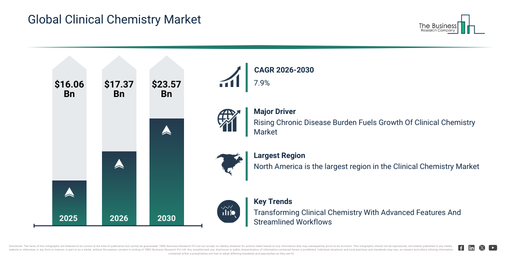
    Clinical Chemistry Market Revenue Growth Supported By A CAGR Of 23.56% Through 2030

    The clinical chemistry market has experienced robust expansion lately. Projections indicate a rise from $16.06 billion in 2025 to $17.37 billion in 2026, achieving a compound annual growth rate of 8.1%. Factors contributing to its growth during the earlier period included the enhancement of hospital laboratory facilities, an increasing incidence of chronic illnesses, a greater frequency of standard blood and urine testing, the development of large-scale diagnostic laboratories, and advancements in biochemical testing methodologies.

    The clinical chemistry market is poised for significant expansion over the upcoming years, projecting a rise to $23.57 billion by the year 2030, with an anticipated compound annual growth rate (CAGR) of 7.9%. Several factors are fueling this growth during the projected period, including an escalating need for prompt diagnostic results, a greater acceptance of distributed testing methodologies, the continuous development of diagnostics for personalized medicine, increased capital injections into automated laboratory technologies, and a heightened emphasis on adhering to quality and regulatory standards. Key developments anticipated within this timeframe involve a broader integration of completely automated chemistry analyzers, a surge in the requirement for high-volume diagnostic evaluations, expanding utilization of point-of-care chemistry devices, further development of combined analyzer and reagent systems, and an elevated concentration on precision and uniform analytical practices.

    Download A Free Sample Report For Comprehensive Market Insights:

    https://www.thebusinessresearchcompany.com/sample.aspx?id=7630&type=smp

    Clinical Chemistry Market Demand Drivers: What Is Fueling Industry Growth?

    The escalating incidence of chronic illnesses is anticipated to be a significant catalyst for the expansion of the clinical chemistry market in the future. Conditions that persist for a year or more, require ongoing medical attention, limit everyday activities, or a combination of these factors are defined as chronic diseases. These conditions, such as heart disease, cancer, and diabetes, stand as leading contributors to mortality and disability worldwide. Clinical chemistry plays a crucial role in developing and refining methodologies for assessing the health status and susceptibility to various chronic ailments, including endocrine disorders, diabetes, and cardiovascular disease. Furthermore, it provides laboratory backing for initiatives targeting specific infectious diseases and influenza. For illustration, data from the Centers for Disease Control and Prevention (CDC), a US federal agency, indicated that in 2023, an estimated 194 million adults in the United States, representing 76.4%, reported managing at least one chronic condition. This prevalence varied by age group, affecting 59.5% of young adults, 78.4% of middle-aged adults, and a substantial 93.0% of older adults. Consequently, the rising rates of chronic disease are fueling the growth trajectory of the clinical chemistry market.

    Clinical Chemistry Market Segment Analysis Highlighting Growth Areas

    The clinical chemistry market covered in this report is segmented –

    1) By Product: Analyzers, Reagents And Consumables

    2) By Application: General Chemistry Test, Liver Function Test, Kidney Function Test, Urinalysis, Electrolyte Panel, Lipid Profile, Specialty Chemical Test, Other Applications

    3) By End User: Hospitals, Diagnostic Or Pathology Centers, Ambulatory Surgery Centers, Other End Users

    Subsegments:

    1) By Analyzers: Automated Clinical Chemistry Analyzers, Semi-Automated Clinical Chemistry Analyzers, Point-Of-Care (POC) Analyzers

    2) By Reagents And Consumables: Chemical Reagents, Enzymatic Reagents, Quality Control Materials, Calibration Standards

    Clinical Chemistry Market Innovation Trends: Which Developments Are Transforming The Industry?

    In the clinical chemistry sector, leading players are prioritizing the development and release of intuitive cleaning robots, exemplified by the Atellica CI Analyzer, as a strategy to enhance their market standing. This particular Atellica CI Analyzer functions as a space-saving diagnostic tool, specifically engineered to assist laboratories in overcoming hurdles related to delivering accurate testing while simultaneously contributing to better public health outcomes. As a concrete illustration, during July of 2023, Siemens Healthineers, a prominent German healthcare firm, introduced the Atellica CI Analyzer, a device notable for its inclusion of sophisticated capabilities like microvolume technology, an IMT sensor, and seamless integration facilities. These integrated elements are instrumental in optimizing the quantity of tests performed, guaranteeing the veracity of outcomes, and sustaining a high pace of operational capacity. Furthermore, the Atellica CI Analyzer boasts an extensive and expanding portfolio that encompasses more than 200 distinct assays covering 20 different disease categories, thereby facilitating the standardization of diagnostic readings and the optimization of operational processes across interconnected laboratory systems.

    Clinical Chemistry Market Leading Companies: Who Holds Significant Market Presence?

    Major companies operating in the clinical chemistry market are Abbott Laboratories, F. Hoffmann-La Roche Ltd., ELITechGroup SAS, Beckman Coulter Inc., Thermo Fisher Scientific Inc., Siemens AG, Ortho Clinical Diagnostics Holdings plc, Diatron Mi Apac Private Limited, Nova Biomedical Corporation, Alfa Wassermann USA Inc., HORIBA Ltd., Mindray Medical International Limited, Randox Laboratories Limited, SYNLAB International GmbH, Agilent Technologies Inc., ARUP Laboratories Inc., Bio-Rad Laboratories Inc., Bruker Corporation, Danaher Corporation, Eurofins Scientific SE, GE Healthcare Technologies Ltd., Laboratory Corporation, Luminex Corporation, PerkinElmer Inc., Quest Diagnostics Incorporated, Sysmex Corporation, Tosoh Corporation, Trinity Biotech plc, Waters Corporation, Werfen S.A.

    Access The Complete Clinical Chemistry Market Report:

    https://www.thebusinessresearchcompany.com/report/clinical-chemistry-global-market-report

    Clinical Chemistry Market Geographic Distribution And Regional Opportunities

    North Americawas the largest region in the chemical chemistry market in 2025. Asia-Pacificis expected to be the fastest-growing region in the forecast period. The regions covered in the clinical chemistry market report are Asia-Pacific, South East Asia, Western Europe, Eastern Europe, North America, South America, Middle East, Africa.

    Get in touch with us:

    The Business Research Company: https://www.thebusinessresearchcompany.com/

    Americas: +1 310-496-7795

    Asia: +44 7882 955267 & +91 8897263534

    Europe: +44 7882 955267

    Email us at: marketing@tbrc.info

    Follow us on:

    LinkedIn: https://in.linkedin.com/company/the-business-research-company

    YouTube: https://www.youtube.com/channel/UC24_fI0rV8cR5DxlCpgmyFQ

    Global Market Model: https://www.thebusinessresearchcompany.com/global-market-model
  • Clinical Biomarkers Market Trends Are Creating New Opportunities For Industry Leaders

    Clinical Biomarkers Market Trends Are Creating New Opportunities For Industry Leaders

    Enhanced with market attractiveness analysis, total addressable market evaluation, company benchmarking matrices, interactive Excel dashboards, expanded supply chain intelligence, emerging startup coverage, and detailed product insights, The Business Research Company’s 2026 market reports deliver more actionable and strategically valuable research.

    Clinical Biomarkers Market Value Expansion And Long-Term Growth Outlook

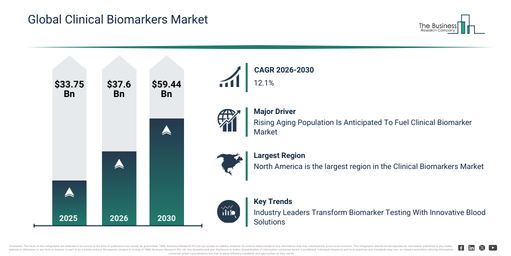
    The global market for clinical biomarkers has experienced substantial expansion, projected to increase from $33.75 billion in 2025 to $37.6 billion in 2026, demonstrating a compound annual growth rate of 11.4%. Key factors fueling this historical growth trajectory include heightened engagement in biomedical research endeavors, a rise in the number of clinical trials conducted, the broadening scope of diagnostic testing services, increased utilization of molecular diagnostic approaches, and advancements in analytical instrumentation.

    The market for clinical biomarkers is projected for significant expansion in the upcoming years, anticipated to reach $59.44 billion by 2030, demonstrating a compound annual growth rate of 12.1%. This projected growth is fueled by several key factors, including a surge in the need for tailored medical treatments, heightened investment in the development of drugs guided by biomarkers, the broadening scope of translational research, the growing utilization of real-world clinical data, and the increasing embrace of sophisticated sequencing technologies. Key developments expected during this forecast period involve a greater adoption of biomarkers for precision medicine, a rise in the use of multi-omics platforms for biomarker identification, a deeper integration of artificial intelligence for biomarker data analysis, an expansion in the development of companion diagnostic tools, and a stronger emphasis on detecting diseases in their earliest stages.

    Download A Free Sample Report For Comprehensive Market Insights:

    https://www.thebusinessresearchcompany.com/sample.aspx?id=12670&type=smp

    Clinical Biomarkers Market Growth Drivers: What Factors Are Accelerating Expansion?

    The increasing elderly demographic is anticipated to be a primary driver for the expansion of the clinical biomarker market. This demographic trend, marked by a growing segment of older adults in the population, correlates with a higher incidence of diseases linked to aging. Consequently, there is an escalating demand for biomarkers that facilitate earlier detection and more effective management of these conditions. As an illustration, data from the World Health Organization indicates that by 2030, the global count of individuals aged sixty and above is projected to reach 1.4 billion, an increase from the 1.1 billion recorded in 2023. This demographic shift underscores the influential role of the aging population in shaping the trajectory of the clinical biomarker market.

    Clinical Biomarkers Market Segment Performance And Strategic Opportunities

    The clinical biomarkers market covered in this report is segmented –

    1) By Offering: Product, Service

    2) By Technology: Next-Generation Sequencing (NGS), Polymerase Chain Reaction (PCR), Immunohistochemistry (IHC), Enzyme-Linked Immunosorbent Assay (ELISA), Other Technologies

    3) By Clinical Area: Cancer Biomarker, Cardiac Biomarker, Neurological Biomarker, Infectious Disease Biomarker, Immunological Biomarker, Non-Invasive Prenatal Testing, Other Clinical Areas

    4) By Application: Clinical Diagnostic, Translational Research

    5) By End User: Contract Research Organizations (CROs), Research And Academic Laboratories, Biopharmaceutical And Biotech Companies, Diagnostic Centers, Other End Users

    Subsegments:

    1) By Product: Diagnostic Kits, Reagents, Assay Kits, Instruments

    2) By Service: Biomarker Discovery Services, Analytical Services, Clinical Trial Services, Data Analysis Services

    Clinical Biomarkers Market Trends: What Is Shaping Future Industry Growth?

    Leading players within the clinical biomarkers sector are actively pursuing the creation of novel diagnostic tools, exemplified by the advent of biomarker blood tests. These specialized blood analyses function by detecting particular biomolecules circulating in the bloodstream, thereby offering insights into the body’s diverse physiological states or disease processes. Illustrating this trend, Quanterix Corporation, a prominent American entity specializing in ultra-sensitive digital immunoassay platforms, introduced ‘LucentAD’ in July 2023. This particular biomarker blood test aims to facilitate the evaluation of individuals presenting with cognitive impairments that align with the early signs of Alzheimer’s disease (AD). The efficacy of LucentAD is underpinned by the well-established Simoa p-Tau 181 assay, a methodology that has been rigorously validated through extensive studies involving both large cohorts followed over time and cross-sectional patient groups.

    Clinical Biomarkers Market Key Players: Which Companies Shape Industry Competition?

    Major companies operating in the clinical biomarkers market are Johnson and Johnson Services Inc., F. Hoffmann-La Roche Ltd., Thermo Fisher Scientific Inc., Abbott Laboratories, Danaher Corporation, Merck KGaA, Becton Dickinson and Company, Eurofins Scientific, Agilent Technologies Inc., Epigenomics AG, Grifols S.A., Illumina Inc., BioMerieux SA., Charles River Laboratories International Inc., PerkinElmer Inc., Sartorius AG, Sysmex Corporation, Waters Corporation, Bio-Rad Laboratories Inc., Bruker Corporation, Qiagen N.V., Myriad Genetics Inc., Luminex Corporation, Veracyte Inc., Centogene N.V., NanoString Technologies Inc., Enzo Biochem Inc., Biocartis Group NV, Agendia Inc., Siemens Healthcare Private Limited.

    Access The Complete Clinical Biomarkers Market Report:

    https://www.thebusinessresearchcompany.com/report/clinical-biomarkers-global-market-report

    Clinical Biomarkers Market Largest Region By Revenue And Market Share

    North Americawas the largest region in the clinical biomakers market in 2025. The regions covered in the clinical biomarkers market report are Asia-Pacific, South East Asia, Western Europe, Eastern Europe, North America, South America, Middle East, Africa.

    Get in touch with us:

    The Business Research Company: https://www.thebusinessresearchcompany.com/

    Americas: +1 310-496-7795

    Asia: +44 7882 955267 & +91 8897263534

    Europe: +44 7882 955267

    Email us at: marketing@tbrc.info

    Follow us on:

    LinkedIn: https://in.linkedin.com/company/the-business-research-company

    YouTube: https://www.youtube.com/channel/UC24_fI0rV8cR5DxlCpgmyFQ

    Global Market Model: https://www.thebusinessresearchcompany.com/global-market-model
  • Clinical Alarm Management Market Growth Is Reshaping Competitive Advantage Across The Industry

    Clinical Alarm Management Market Growth Is Reshaping Competitive Advantage Across The Industry

    Through market attractiveness analysis, total addressable market evaluation, company benchmarking matrices, interactive Excel dashboards, expanded supply chain intelligence, emerging startup coverage, and detailed product insights, The Business Research Company’s 2026 market reports provide more actionable and strategically valuable research.

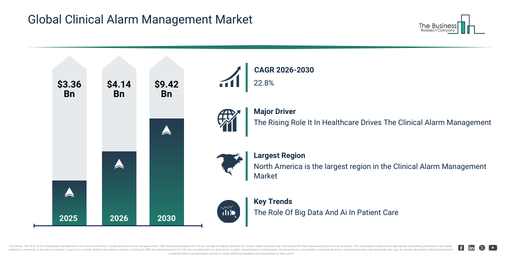
    Clinical Alarm Management Market Expected To Reach $9.41 Billion By 2030 At 22.8% CAGR

    The market for clinical alarm management solutions has experienced remarkable expansion lately, with projections indicating continued robust growth. This sector is anticipated to escalate from $3.36 billion in 2025 to $4.14 billion by 2026, showcasing a substantial compound annual growth rate of 23.1%. The surge observed in prior periods stems from several key factors, including the broadened adoption of patient monitoring technologies, the augmentation of critical care facilities, a heightened understanding of the adverse effects of alarm fatigue, the acceleration of digital transformation within hospitals, and the more widespread implementation of telemetry systems.

    The global market for clinical alarm management is poised for substantial expansion, projected to reach $9.42 billion by the year 2030, exhibiting a compound annual growth rate of 22.8%. This anticipated surge in the coming years is underpinned by several key drivers including the escalating integration of interconnected healthcare systems, a heightened concentration on refining patient safety protocols, the broadening scope of home healthcare monitoring, augmented investments in digital health infrastructure, and a growing emphasis from regulatory bodies on establishing robust alarm management standards. Furthermore, significant trends shaping this market’s trajectory during the forecast period encompass the increasing integration of intelligent alarm management software solutions, a rising trend towards employing AI for prioritizing alarms, the expanding utilization of remote patient monitoring technologies, the development of interoperable clinical alarm platforms, and a more pronounced focus on mitigating the impact of alarm fatigue on healthcare professionals.

    Download A Free Sample Report For Comprehensive Market Insights:

    https://www.thebusinessresearchcompany.com/sample.aspx?id=7876&type=smp

    Clinical Alarm Management Market Growth Factors Supporting Long-Term Expansion

    The increasing integration of information technology within the healthcare sector is anticipated to be a significant growth driver for the clinical alarm management market. This IT integration encompasses the utilization of digital frameworks and advanced technologies for the effective management, storage, and exchange of health-related data, ultimately enhancing patient outcomes and operational effectiveness. Within this healthcare IT landscape, clinical alarm management plays a crucial role, focusing on bolstering patient safety and optimizing the efficiency of healthcare delivery. It facilitates the seamless connection of medical equipment and systems, enabling continuous patient monitoring, intelligent alarm prioritization and filtering, and ensuring prompt interventions during critical situations. Illustrating this trend, a January 2025 report by Deloitte Touche Tohmatsu Limited indicated that approximately 70% of surveyed entities consider investments in digital tools and platforms essential, while 60% place a high priority on foundational technologies such as Electronic Medical Records (EMRs) and Enterprise Resource Planning (ERP) systems, with close to 90% of C-suite executives anticipating an accelerated adoption of digital technologies in 2025. Consequently, the expanding influence of digital solutions in healthcare is fostering expansion within the clinical alarm management market.

    #Clinical Alarm Management Market Segment Landscape And Growth Potential

    The clinical alarm management market covered in this report is segmented –

    1) By Product: Physiological Monitors, Nurse Call Systems, Ventilators, Bed Alarms, Anesthesia Machines, Telemetry Monitors, Feeding Pumps, Other Products

    2) By Component: Solutions, Services

    3) By End-User: Hospitals And Clinics, Home Care Settings, Ambulatory Care Centers, Long-Term Care Facilities, Specialty Centers

    Subsegments:

    1) By Physiological Monitors: Heart Rate Monitors, Blood Pressure Monitors, Pulse Oximeters, Multi-parameter Monitors

    2) By Nurse Call Systems: Wired Nurse Call Systems, Wireless Nurse Call Systems, Integrated Nurse Call Systems

    3) By Ventilators: Mechanical Ventilators, Portable Ventilators, Non-invasive Ventilators

    4) By Bed Alarms: Pressure-Sensitive Bed Alarms, Motion Detection Bed Alarms

    5) By Anesthesia Machines: General Anesthesia Machines, Regional Anesthesia Machines

    6) By Telemetry Monitors: Cardiac Telemetry Monitors, Remote Patient Monitoring Systems

    7) By Feeding Pumps: Enteral Feeding Pumps, Syringe Feeding Pumps

    8) By Other Products: Smart Wearables, Alarm Management Software

    Clinical Alarm Management Market Industry Trends Shaping Future Revenue Growth

    Within the clinical alarm management sector, leading corporations are prioritizing innovation in technology, including the implementation of real-time monitoring and predictive analytics, aiming to elevate patient welfare and optimize alarm communications within medical facilities. CENTEGIX, a firm dedicated to crisis alert solutions, notably through its CrisisAlert system, bolsters security in both educational and healthcare environments, facilitating immediate communication and emergency notifications via wearable technology. Demonstrating this commitment, CENTEGIX, a prominent provider of safety solutions based in the United States, unveiled its CENTEGIX Safety Platform for hospitals and health systems in April 2024; this cloud-based, integrated offering is designed to expedite incident response. A multitude of health systems and numerous facilities depend on CENTEGIX’s digital mapping, instantaneous location tracking, and user-friendly wearable panic buttons, which empower healthcare management to devise strategies and react with heightened speed during emergencies.

    Clinical Alarm Management Market Competitive Landscape: Who Are The Leading Companies?

    Major companies operating in the clinical alarm management market are Koninklijke Philips NV, GE Healthcare Technologies Inc., Ascom Holdings AG, Spok Holdings Inc., Masimo Corp., Vocera Communications Inc., Medtronic Inc., Dragerwerk AG, Connexall Inc., Mobile Heartbeat LLC, Hill-Rom Services Inc., Cornell Communications Inc., Intercall Systems Inc., Critical Alert Systems LLC, Capsule Technologies Inc., Shenzhen Mindray Bio-Medical Electronics Co. Ltd., West-Com Nurse Call Systems Inc., Csinc Inc., Live Sentinel Ltd., Amplion Clinical Communications Inc., Cerner Corporation, Alpha Communications Ltd., Tunstall Group Holdings Ltd., Midmark Corporation, Stanley Healthcare Inc., Bernoulli Health Corp., Extension Healthcare, Alertus Technologies LLC, Intego Systems LLC

    Access The Complete Clinical Alarm Management Market Report:

    https://www.thebusinessresearchcompany.com/report/clinical-alarm-management-global-market-report

    Clinical Alarm Management Market Regional Analysis And Leading Geography

    North Americawas the largest region in the clinical alarm management market in 2025. The regions covered in the clinical alarm management market report are Asia-Pacific, South East Asia, Western Europe, Eastern Europe, North America, South America, Middle East, Africa.

    Get in touch with us:

    The Business Research Company: https://www.thebusinessresearchcompany.com/

    Americas: +1 310-496-7795

    Asia: +44 7882 955267 & +91 8897263534

    Europe: +44 7882 955267

    Email us at: marketing@tbrc.info

    Follow us on:

    LinkedIn: https://in.linkedin.com/company/the-business-research-company

    YouTube: https://www.youtube.com/channel/UC24_fI0rV8cR5DxlCpgmyFQ

    Global Market Model: https://www.thebusinessresearchcompany.com/global-market-model

  • Cleanroom Transfer Hatches Market Forecast Signals New Revenue Opportunities Through 2030

    Cleanroom Transfer Hatches Market Forecast Signals New Revenue Opportunities Through 2030

    Delivering more actionable and strategically valuable research, The Business Research Company’s 2026 market reports feature market attractiveness analysis, total addressable market evaluation, company benchmarking matrices, interactive Excel dashboards, expanded supply chain intelligence, emerging startup coverage, and detailed product insights.

    #Cleanroom Transfer Hatches Market Size And Revenue Forecast Through 2030

    The market for cleanroom transfer hatches has experienced robust expansion recently, with projections indicating a rise from $0.84 billion in 2025 to $0.91 billion in 2026, representing a compound annual growth rate (CAGR) of 7.8%. This historical growth trajectory is largely attributable to a greater number of pharmaceutical manufacturing plants, a growing preference for cleanroom settings, stricter regulations for preventing contamination, increased investment in laboratory facilities, and the broader implementation of controlled environments within the electronics production sector.

    The market for cleanroom transfer hatches is poised for significant expansion over the coming years, projected to reach $1.22 billion by 2030 with a compound annual growth rate of 7.6%. This anticipated surge is fueled by several key factors, including heightened investments in biologics and sterile pharmaceutical manufacturing, a growing need for adaptable cleanroom configurations, the proliferation of semiconductor manufacturing plants, a greater emphasis on automated material handling processes, and the stricter enforcement of cleanroom regulatory requirements. During this growth phase, several notable trends are expected to shape the market. These include a broader acceptance of transfer hatches equipped with electronic interlocking mechanisms, an increased demand for pass boxes featuring HEPA filtration, a more widespread utilization of UV-sterilization technologies for transfer systems, the expansion of bespoke cleanroom transfer solutions, and a heightened focus on strategies for preventing contamination.

    Download A Free Sample Report For Comprehensive Market Insights:

    https://www.thebusinessresearchcompany.com/sample.aspx?id=30231&type=smp

    #Cleanroom Transfer Hatches Market Demand Drivers Creating New Revenue Opportunities

    Anticipated advancements within the pharmaceutical sector are poised to be a significant catalyst for the expansion of the cleanroom transfer hatches market. This vital segment of healthcare centers on the discovery, creation, manufacturing, and distribution of therapeutic agents designed for the diagnosis, alleviation, management, and prevention of ailments affecting both human and animal populations. The increasing global incidence of both long-term and communicable diseases fuels the demand for innovative and potent medications, thereby intensifying the requirement for manufacturing settings that uphold sterility and prevent contamination. Cleanroom transfer hatches play a crucial role by facilitating the secure transit of items, parts, and machinery between zones of varying contamination control standards, while rigorously preventing the ingress of unwanted substances into pristine areas. Illustratively, as reported by the International Federation of Pharmaceutical Manufacturers & Associations (IFPMA), a Geneva-headquartered non-profit organization representing research-driven pharmaceutical firms and their associated national bodies, the global output from pharmaceutical manufacturing has shown consistent upward movement, with the total production value exceeding $1.5 trillion in 2024, underscoring escalating investments in extensive, high-grade drug production facilities. Consequently, the progressive development of the pharmaceutical industry is directly stimulating the growth trajectory of the cleanroom transfer hatches market.

    Cleanroom Transfer Hatches Market Categorization By Product Type And Application

    The cleanroom transfer hatches market covered in this report is segmented –

    1) By Type: Mechanical Interlock, Electronic Interlock, Other Types

    2) By Material: Stainless Steel, Powder Coated Mild Steel, Other Materials

    3) By End-User: Pharmaceutical Companies, Research Laboratories, Hospitals, Electronic Manufacturers, Other End-Users

    Subsegments:

    1) By Mechanical Interlock: Spring Loaded Door Mechanism, Pneumatic Door Mechanism, Manual Latch Mechanism

    2) By Electronic Interlock: Sensor Controlled Door, Keypad Access Door, Radio Frequency Identification (RFID) Controlled Door

    3) By Other Types: Ultraviolet (UV) Sterilization Pass Box, High Efficiency Particulate Air (HEPA) Filtered Pass Box, Custom Automated Pass Box

    Cleanroom Transfer Hatches Market Trends Driving Strategic Industry Expansion

    Key players within the cleanroom transfer hatches sector are prioritizing the creation of sophisticated offerings, exemplified by pulsed-light decontamination pass boxes, aimed at bolstering contamination prevention and refining workflow effectiveness. Pulsed-light decontamination technology represents an environmentally conscious, chemical-free approach that employs brief, intense light bursts to purify surfaces, effectively lowering microbial presence while lessening ecological footprints. A notable development occurred in June 2024 when Claranor, a sterilization technology firm based in France, introduced its Pulsed Light Pass Box specifically for the pharmaceutical sector. This cutting-edge pass box facilitates the movement of items between zones of varying purity levels without allowing for cross-contamination. It achieves swift and effective decontamination by utilizing pulsed light, superseding conventional chemical or heat-based treatments, which substantially curtails processing durations and resource utilization. The system guarantees that materials enter cleanrooms and isolators in a sterile state, thereby elevating operational safety and dependability. Leveraging Claranor’s proficiency in light-based sterilization, this Pulsed Light Pass Box delivers a sustainable, high-caliber solution that strengthens contamination oversight, assists in meeting regulatory mandates, and champions environmentally sound cleanroom practices.

    Cleanroom Transfer Hatches Market Company Landscape And Strategic Competition

    Major companies operating in the cleanroom transfer hatches market are Terra Universal Inc, Dortek Limited, Sun Engineering Private Limited, Albian Group Plc, Shinryo Corporation, Willson Cleanroom Equipment Co. Ltd., Franz Ziel GmbH, Clean Air Products, De Lama S.p.A, Tanco Engineering (Pty) Ltd, Amcaremed (Suzhou) Medical Science & Technology Co. Ltd., Shenzhen Sunnyda Electric Co. Ltd., Alpha Linear Private Limited, V-Mac Engineers Private Limited, Stericox India Private Limited, Envirotech Industrial Products Limited, Kambic d.o.o, Brinda Pharma Private Limited, Szindair Kft., Guangzhou Amcaremed Co. Ltd.

    Access The Complete Cleanroom Transfer Hatches Market Report:

    https://www.thebusinessresearchcompany.com/report/global-cleanroom-transfer-hatches-market-report

    Cleanroom Transfer Hatches Market Geographic Analysis: Where Is Demand Growing The Fastest?

    Asia-Pacificwas the largest region in the cleanroom transfer hatches market in 2025. North Americais expected to be the fastest-growing region in the forecast period. The regions covered in the cleanroom transfer hatches market report are Asia-Pacific, South East Asia, Western Europe, Eastern Europe, North America, South America, Middle East, Africa.

    Get in touch with us:

    The Business Research Company: https://www.thebusinessresearchcompany.com/

    Americas: +1 310-496-7795

    Asia: +44 7882 955267 & +91 8897263534

    Europe: +44 7882 955267

    Email us at: marketing@tbrc.info

    Follow us on:

    LinkedIn: https://in.linkedin.com/company/the-business-research-company

    YouTube: https://www.youtube.com/channel/UC24_fI0rV8cR5DxlCpgmyFQ

    Global Market Model: https://www.thebusinessresearchcompany.com/global-market-model
  • Cleanroom Technologies Market Growth Is Accelerating As Industry Transformation Continues

    Cleanroom Technologies Market Growth Is Accelerating As Industry Transformation Continues

    Enhanced with market attractiveness analysis, total addressable market evaluation, company benchmarking matrices, interactive Excel dashboards, expanded supply chain intelligence, emerging startup coverage, and detailed product insights, The Business Research Company’s 2026 market reports deliver more actionable and strategically valuable research.

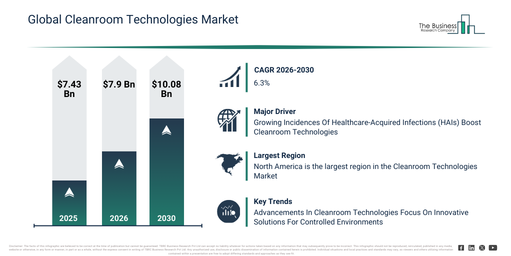
    Cleanroom Technologies Market Growth From $7.89 Billion In 2026 To $10.07 Billion By 2030 At A CAGR Of 6.3%

    The global market for cleanroom technologies experienced robust expansion recently and is projected to continue this upward trend, increasing from $7.43 billion in 2025 to an estimated $7.9 billion in 2026, reflecting a compound annual growth rate (CAGR) of 6.3%. This historical growth was largely fueled by the burgeoning pharmaceutical manufacturing sector, the proliferation of biotechnology research facilities, an escalating need for environments free from contaminants, heightened regulatory scrutiny, and a broader embrace of controlled production settings.

    The global market for cleanroom technologies is poised for considerable expansion over the coming years, projecting a valuation of $10.08 billion by 2030, driven by a compound annual growth rate of 6.3%. This anticipated growth trajectory is underpinned by several key factors: substantial investments flowing into sophisticated pharmaceutical development programs, a growing requirement for the production of medical devices, the widening application of cleanrooms within the electronics sector, a heightened emphasis on developing environmentally responsible cleanroom designs, and the increasing incorporation of automated systems for oversight and control. Furthermore, significant trends shaping this market landscape during the forecast period encompass the broader implementation of modular cleanroom constructions, a growing trend towards embedding intelligent environmental monitoring capabilities, a greater need for HVAC solutions designed for optimal energy efficiency, the expansion of facilities dedicated to sterile manufacturing processes, and a more rigorous adherence to regulatory standards.

    Download A Free Sample Report For Comprehensive Market Insights:

    https://www.thebusinessresearchcompany.com/sample.aspx?id=13617&type=smp

    Cleanroom Technologies Market Expansion Supported By Key Demand Factors

    The increasing prevalence of infections contracted in healthcare settings, commonly referred to as healthcare-acquired infections (HAIs), is a significant factor propelling the demand for cleanroom equipment. These HAIs are contracted by patients during medical treatment for unrelated conditions within facilities like hospitals and clinics. Critical for minimizing the risk of these infections and safeguarding both patients and pharmaceutical products, cleanroom technologies play a vital role in healthcare environments. Illustrating this trend, data from the UK Health Security Agency revealed a rise in hospital-onset healthcare-associated E. coli infections, escalating from 6,525 to 7,881 cases during the fiscal year 2022–2023. Consequently, the escalating rate of HAIs is directly fueling the growth of the cleanroom equipment market.

    Cleanroom Technologies Market Segment Analysis And Revenue Opportunities

    The cleanroom technologies market covered in this report is segmented –

    1) By Product: Equipment, Consumables

    2) By Construction Type: Standard Or Drywall Cleanrooms, Hardwall Cleanrooms, Softwall Cleanrooms, Terminal Boxes Or Pass-Through Cabinets

    3) By End-Use Outlook: Pharmaceutical Industry, Medical Device Industry, Biotechnology Industry, Hospitals And Diagnostic Centers

    Subsegments:

    1) By Equipment: HVAC Systems, Cleanroom Air Filters, Laminar Flow Cabinets, Cleanroom Monitors And Sensors, Pass-Through Chambers

    2) By Consumables: Cleanroom Garments, Cleanroom Wipes, Adhesive Mats, Disinfectants And Cleaners, Sterile Packaging Materials

    Cleanroom Technologies Market Growth Trends Influencing Competitive Dynamics

    Within the cleanroom technologies sector, leading businesses are actively innovating, introducing sophisticated systems designed to offer enhanced functionalities and improved customer service. These cleanroom solutions encompass integrated approaches, methodologies, and procedures aimed at establishing and preserving environments that are meticulously controlled to minimize airborne particulates, impurities, and other environmental disturbances. As an illustration, in April of 2023, ABN Cleanroom Technology, a Belgian firm specializing in pre-designed cleanroom setups, unveiled a self-contained cleanroom system capable of achieving low dewpoint conditions. The core principle behind this dayroom technology involves the removal of atmospheric moisture to precisely manage humidity levels within a given space, thereby bolstering the company’s competitive position in the market. The critical necessity for stringent moisture management in this specific manufacturing stage leads to considerable energy consumption, consequently exerting a significant influence on the financial success of any battery production enterprise.

    Cleanroom Technologies Market Leading Players Shaping Industry Direction

    Major companies operating in the cleanroom technologies market are Kimberly-Clark Corporation, DuPont, Clean Air Products, M+W Group, Exyte AG, Taikisha Global Limited, Azbil Corporation, Ardmac Ltd, Airtech Japan Ltd., Labconco Corporation, AES Clean Technology, Terra Universal Inc, AdvanceTec Industries Inc, Allied Cleanrooms, COLANDIS GmbH, Clean Rooms International, Inc., Integrated Cleanroom Technologies Private Limited, Simplex Isolation Systems, CRT Cleanroom-Technology GmbH, Nicomac Srl, ABN Cleanroom Technology

    Access The Complete Cleanroom Technologies Market Report:

    https://www.thebusinessresearchcompany.com/report/cleanroom-technologies-global-market-report

    Cleanroom Technologies Market Global Footprint: Which Region Holds Market Leadership?

    North Americawas the largest region in the cleanroom technologies market in 2025. Asia-Pacificis expected to be the fastest-growing region in the forecast period. The regions covered in the cleanroom technologies market report are Asia-Pacific, South East Asia, Western Europe, Eastern Europe, North America, South America, Middle East, Africa.

    Get in touch with us:

    The Business Research Company: https://www.thebusinessresearchcompany.com/

    Americas: +1 310-496-7795

    Asia: +44 7882 955267 & +91 8897263534

    Europe: +44 7882 955267

    Email us at: marketing@tbrc.info

    Follow us on:

    LinkedIn: https://in.linkedin.com/company/the-business-research-company

    YouTube: https://www.youtube.com/channel/UC24_fI0rV8cR5DxlCpgmyFQ

    Global Market Model: https://www.thebusinessresearchcompany.com/global-market-model
  • Chronic Wound Care Market Outlook Highlights The Next Major Growth Opportunities

    Chronic Wound Care Market Outlook Highlights The Next Major Growth Opportunities

    Through market attractiveness analysis, total addressable market evaluation, company benchmarking matrices, interactive Excel dashboards, expanded supply chain intelligence, emerging startup coverage, and detailed product insights, The Business Research Company’s 2026 market reports provide more actionable and strategically valuable research.

    Chronic Wound Care Market Expansion Outlook: What Revenue Opportunities Lie Ahead?

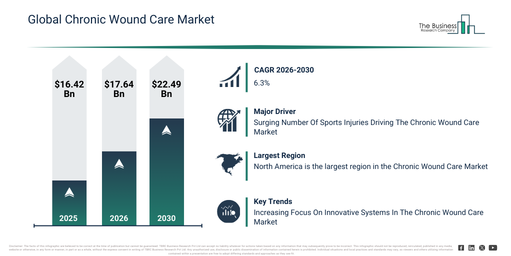
    The chronic wound care sector has experienced robust expansion lately, projecting a leap from $16.42 billion in 2025 to $17.64 billion in 2026, driven by a compound annual growth rate of 7.4%. This upward trajectory observed historically can be linked to a surge in chronic wound occurrences, a heightened prevalence of diabetes complications, the proliferation of hospital-based wound care initiatives, greater adoption of surgical wound management tools, and enhanced accessibility to various wound care treatments.

    The global market for chronic wound care is slated for significant expansion, projecting a rise to $22.49 billion by 2030, driven by a compound annual growth rate (CAGR) of 6.3%. This anticipated surge in growth over the coming years is largely fueled by a confluence of factors including the expanding elderly demographic, escalating demand for accessible home healthcare solutions for wound management, a heightened emphasis on accelerating the healing process, the proliferation of digital tools for wound evaluation, and the increasing uptake of sophisticated therapeutic devices. Key developments poised to shape this market during the forecast period encompass the broader adoption of cutting-edge wound dressing technologies, a greater utilization of negative pressure wound therapy systems, the ongoing integration of intelligent wound monitoring solutions, the advancement and distribution of bioactive and antimicrobial dressings, and a more concentrated effort towards tailoring wound care strategies to individual patient needs.

    Download A Free Sample Report For Comprehensive Market Insights:

    https://www.thebusinessresearchcompany.com/sample.aspx?id=15539&type=smp

    #Chronic Wound Care Market Growth Drivers And Industry Catalysts

    The increasing incidence of sports-related injuries is anticipated to be a significant factor propelling the chronic wound care market forward. These injuries encompass any physical damage or trauma incurred while engaging in athletic pursuits or leisure activities. Factors contributing to the growing trend of sports injuries include more rigorous training regimens, insufficient warm-up routines, the use of suboptimal protective equipment, and flawed execution techniques. Chronic wound care solutions play a crucial role in managing this rise in sports injuries by fostering accelerated healing processes, averting infections, and mitigating the likelihood of adverse outcomes, ultimately enabling individuals to resume their athletic endeavors sooner. By way of illustration, data from the Australian Institute of Health and Welfare, a governmental body in Australia, indicated that for the 2023–24 period, rugby (encompassing both league and union codes) registered the highest rate of sports injury hospitalizations relative to its participant base, with approximately 1,400 hospitalizations per 100,000 individuals involved in the sport. Consequently, this escalating prevalence of sports injuries is serving as a key driver for the expansion of the chronic wound care market.

    Chronic Wound Care Market Segmentation And Category Breakdown

    The chronic wound care market covered in this report is segmented –

    1) By Product: Advanced Wound Dressing, Surgical Wound Care, Suture And Staples, Tissue Adhesive And Sealants, Anti-infective Dressing, Traditional Wound Care, Wound Therapy Devices

    2) By Application: Diabetic Foot Ulcers, Pressure Ulcers, Venous Leg Ulcers, Other Applications

    3) By End-User: Hospitals, Clinics, Homecare Settings, Other End-Users

    Subsegments:

    1) By Advanced Wound Dressing: Hydrocolloid Dressings, Foam Dressings, Alginate Dressings, Hydrofiber Dressings, Collagen Dressings, Film Dressings, Silicone Dressings, Composite Dressings

    2) By Surgical Wound Care: Post-operative Dressings, Surgical Drapes, Surgical Sponges, Adhesive Bandages, Hemostatic Agents

    3) By Suture And Staples: Absorbable Sutures, Non-Absorbable Sutures, Surgical Staples, Suture Kits

    4) By Tissue Adhesive And Sealants: Cyanoacrylate Adhesives, Fibrin Sealants, Collagen-Based Adhesives, Synthetic Polymers

    5) By Anti-Infective Dressing: Silver-Based Dressings, Honey-Based Dressings, Iodine-Based Dressings, Antibiotic-Impregnated Dressings

    6) By Traditional Wound Care: Gauze Dressings, Bandages, Cotton Wool, Adhesive Plasters, Antiseptic Creams And Ointments

    7) By Wound Therapy Devices: Negative Pressure Wound Therapy (NPWT) Devices, Electrical Stimulation Devices, Oxygen Therapy Devices, Infrared Therapy Devices, Ultrasound Therapy Devices

    #Chronic Wound Care Market Trends Influencing Long-Term Demand

    Within the chronic wound care sector, leading enterprises are prioritizing the innovation of sophisticated treatments, including negative pressure wound therapy (NPWT) devices, to facilitate easier and more accessible therapeutic interventions within a domestic setting. NPWT technology involves a medical apparatus designed to deliver regulated suction to a wound site, thereby fostering recuperation by drawing out surplus exudate, mitigating swelling, and augmenting localized blood flow to the tissues. As an illustration, in April 2024, Smith & Nephew, a United Kingdom-based manufacturer of medical instruments, introduced the RENASYS EDGE in the United States, presenting it as a patient-focused alternative for managing persistent wounds. This particular device is distinguished by its lightweight, compact construction and a straightforward operational interface for healthcare professionals. The design incorporates guided instructions for therapeutic implementation, and immediate technical assistance for setup is accessible through the system’s near-field communication capability. Furthermore, Smith+Nephew extends round-the-clock patient assistance and a dedicated clinical support line. Such technological progress, encompassing enhanced mobility and the integration of near-field communication, not only elevates patient comfort but also adequately responds to the escalating need for efficacious home-based treatment strategies, potentially leading to reduced expenditures in managing chronic wounds within the broader wound care market.

    Chronic Wound Care Market Competitive Analysis Of Major Industry Participants

    Major companies operating in the chronic wound care market are Cardinal Health Inc., Johnson & Johnson, 3M Company, Medtronic PLC, Becton Dickinson and Company, Stryker Corporation, Baxter International Inc., Essity AB (BSN Medical), Medline Industries Inc., Smith & Nephew PLC, Ethicon Inc., Coloplast AS, B. Braun Holding GmbH & Co. KG, Paul Hartmann AG, ConvaTec Group PLC, Mölnlycke Health Care AB, Integra LifeSciences Holdings Corporation, Acelity L.P. Inc., MTF Biologics, MIMEDX Group Inc., Vericel Corporation, Anika Therapeutics Inc., Oneness Biotech Co. Ltd., Marine Polymer Technologies Inc., Tissue Regenix Group PLC, Alleva Medical Ltd.

    Access The Complete Chronic Wound Care Market Report:

    https://www.thebusinessresearchcompany.com/report/chronic-wound-care-global-market-report

    Chronic Wound Care Market Regional Distribution: Which Areas Drive Market Expansion?

    North Americawas the largest region in the chronic wound care market in 2025. Asia-Pacificis expected to be the fastest-growing region in the forecast period. The regions covered in the chronic wound care market report are Asia-Pacific, South East Asia, Western Europe, Eastern Europe, North America, South America, Middle East, Africa.

    Get in touch with us:

    The Business Research Company: https://www.thebusinessresearchcompany.com/

    Americas: +1 310-496-7795

    Asia: +44 7882 955267 & +91 8897263534

    Europe: +44 7882 955267

    Email us at: marketing@tbrc.info

    Follow us on:

    LinkedIn: https://in.linkedin.com/company/the-business-research-company

    YouTube: https://www.youtube.com/channel/UC24_fI0rV8cR5DxlCpgmyFQ

    Global Market Model: https://www.thebusinessresearchcompany.com/global-market-model