Month: June 2026

  • Chronic Venous Occlusions Treatment Market Trends And Growth Drivers Point To Strong Future Potential

    Chronic Venous Occlusions Treatment Market Trends And Growth Drivers Point To Strong Future Potential

    Delivering more actionable and strategically valuable research, The Business Research Company’s 2026 market reports feature market attractiveness analysis, total addressable market evaluation, company benchmarking matrices, interactive Excel dashboards, expanded supply chain intelligence, emerging startup coverage, and detailed product insights.

    Chronic Venous Occlusions Treatment Market Growth Potential: How Will Market Size Change Through 2030?

    The market for treating chronic venous occlusions has experienced robust expansion historically, projecting a rise from $7.15 billion in 2025 to $7.6 billion by 2026, reflecting a compound annual growth rate of 6.3%. This recent surge can be attributed to several key factors including the increasing incidence of venous disorders, a greater accessibility to endovascular treatment methods, an uptick in hospital-based interventional procedures, heightened public and professional awareness of chronic venous diseases, and the broader application of anticoagulant therapies.

    The market for treating chronic venous occlusions is poised for substantial expansion in the upcoming years, projected to reach $10.08 billion by 2030, exhibiting a compound annual growth rate of 7.3%. This anticipated growth over the forecast period is fueled by several key factors, including a demographic shift towards an older population, escalating demand for outpatient procedures addressing venous conditions, a heightened emphasis on early disease detection, the proliferation of advanced imaging techniques aiding treatment, and a greater uptake of next-generation venous devices. Significant trends shaping this market’s trajectory include a rising inclination towards less invasive venous interventions, increased utilization of sophisticated venous stenting technologies, a growing preference for integrated therapeutic approaches combining devices and pharmaceuticals, the broader application of image-guided endovascular procedures, and a reinforced focus on managing occlusions over the long term.

    Download A Free Sample Report For Comprehensive Market Insights:

    https://www.thebusinessresearchcompany.com/sample.aspx?id=13286&type=smp

    Chronic Venous Occlusions Treatment Market Opportunity Drivers: What Is Creating New Revenue Potential?

    The escalating prevalence of obesity is poised to be a significant catalyst for the expansion of the chronic venous occlusion treatment market. Obesity, defined as an unhealthy buildup of body fat leading to a BMI of 30 or more, presents complications that chronic venous occlusion treatments can address. By enhancing circulatory function and mitigating inflammatory responses, these treatments can effectively manage obesity-related issues such as swelling and skin afflictions, thereby facilitating better overall weight management. Illustrating this trend, in March 2023, the World Heart Federation reported that approximately 2.3 billion adults and children worldwide were classified as obese or overweight, with projections indicating this figure could climb to 2.7 billion by 2025 if current trends persist. Consequently, the increasing number of individuals affected by obesity directly fuels the market demand for chronic venous occlusion treatments.

    Chronic Venous Occlusions Treatment Market Segment Outlook: Which Categories Are Expanding The Fastest?

    The chronic venous occlusions treatment market covered in this report is segmented –

    1) By Product: Devices, Drugs

    2) By Application: Varicose Veins, Venous Stasis Ulcers, Edema, Deep Vein Thrombosis, Other Applications

    3) By End User: Hospitals, Clinics, Ambulatory Surgery Centers, Trauma centers, Other End-Users

    Subsegments:

    1) By Devices: Venous Stents, Catheters, Endovenous Laser Therapy (EVLT) Devices, Angioplasty Balloons

    2) By Drugs: Anticoagulants, Thrombolytics, Anti-inflammatory Medications, Pain Management Drugs

    Chronic Venous Occlusions Treatment Market Innovation Trends Driving Future Development

    Leading entities within the chronic venous occlusion therapeutics sector are prioritizing the creation of novel approaches, exemplified by implantable medical apparatus designed to address the symptomatic impediments to venous blood flow experienced by individuals suffering from chronic venous insufficiency. These surgically inserted devices are intended for long-term residence within the body, serving purposes of diagnosis, treatment, or ongoing health monitoring. A relevant illustration from June 2024 is the introduction of the Duo Venous Stent System, an implantable medical device brought to market by the Dutch technology firm Koninklijke Philips N.V. This particular system from Koninklijke Philips N.V. distinguishes itself with a bifold architecture that concurrently boosts suppleness and circumferential resilience, thereby providing superior support to the affected veins. Furthermore, its sophisticated surface treatment contributes to improved biological compatibility and a reduced likelihood of clot formation, complemented by a meticulously engineered deployment mechanism that guarantees exact positioning even in complex anatomical scenarios.

    Chronic Venous Occlusions Treatment Market Key Companies And Competitive Benchmarking

    Major companies operating in the chronic venous occlusions treatment market are Cardinal Health Inc., Bayer AG, Sanofi S.A., 3M Company, Bristol-Myers Squibb Company, Medtronic PLC, Becton, Dickinson and Company (BD), Stryker Corporation, Boston Scientific Corporation, Terumo Corporation, Ethicon Inc., Philips Medical Systems, Teleflex Incorporated, Cook Group Incorporated, Merit Medical Systems Inc., Integer Holdings Corporation, Penumbra Inc., Inari Medical, Argon Medical Devices Inc., AngioDynamics Inc., Rontis Corporation, Endologix, Richard Wolf GmbH, SIGVARIS AG, enVVeno Medical Corporation, LimFlow SA

    Access The Complete Chronic Venous Occlusions Treatment Market Report:

    https://www.thebusinessresearchcompany.com/report/chronic-venous-occlusions-treatment-global-market-report

    Chronic Venous Occlusions Treatment Market Leading Geography: Which Region Generates The Most Revenue?

    North Americawas the largest region in the chronic venous occlusions treatment market in 2025. Asia-Pacificis expected to be the fastest-growing region in the forecast period. The regions covered in the chronic venous occlusions treatment market report are Asia-Pacific, South East Asia, Western Europe, Eastern Europe, North America, South America, Middle East, Africa.

    Get in touch with us:

    The Business Research Company: https://www.thebusinessresearchcompany.com/

    Americas: +1 310-496-7795

    Asia: +44 7882 955267 & +91 8897263534

    Europe: +44 7882 955267

    Email us at: marketing@tbrc.info

    Follow us on:

    LinkedIn: https://in.linkedin.com/company/the-business-research-company

    YouTube: https://www.youtube.com/channel/UC24_fI0rV8cR5DxlCpgmyFQ

    Global Market Model: https://www.thebusinessresearchcompany.com/global-market-model

  • Chronic Spontaneous Urticaria Market Expansion Is Reshaping Competitive Dynamics Across The Industry

    Chronic Spontaneous Urticaria Market Expansion Is Reshaping Competitive Dynamics Across The Industry

    Enhanced with market attractiveness analysis, total addressable market evaluation, company benchmarking matrices, interactive Excel dashboards, expanded supply chain intelligence, emerging startup coverage, and detailed product insights, The Business Research Company’s 2026 market reports deliver more actionable and strategically valuable research.

    Chronic Spontaneous Urticaria Market Value Analysis: What Growth Is Expected Over The Forecast Period?

    In the historical timeframe, the market for chronic spontaneous urticaria experienced robust expansion, projected to advance from $2.23 billion in 2025 to $2.41 billion in 2026, reflecting a compound annual growth rate (CAGR) of 8.4%. This surge in the past can be ascribed to a rise in the incidence of persistent skin allergies, enhanced accessibility to newer antihistamine medications, advancements in diagnostic methodologies, an uptick in dermatology consultations, and heightened public understanding of urticaria-related ailments.

    The chronic spontaneous urticaria market is poised for significant expansion, projecting a market size of $3.21 billion by 2030, driven by a CAGR of 7.4%. This projected growth throughout the forecast period is fueled by a robust pipeline of biologic drug development, escalating investments in research for autoimmune dermatological conditions, a broader application of targeted monoclonal antibody therapies, an intensified emphasis on achieving symptom-free disease management, and a greater acceptance of protracted maintenance treatment strategies. Key developments anticipated within this timeframe encompass a heightened uptake of biologic interventions for CSU, amplified utilization of sophisticated antihistamine regimens, a deepening understanding of autoimmune disease underlying mechanisms, the proliferation of individualized treatment plans, and more rigorous oversight of long-term condition control.

    Download A Free Sample Report For Comprehensive Market Insights:

    https://www.thebusinessresearchcompany.com/sample.aspx?id=16651&type=smp

    Chronic Spontaneous Urticaria Market Growth Momentum: Which Factors Are Influencing Demand?

    The escalating intake of alcoholic beverages is poised to be a significant catalyst for the expansion of the chronic spontaneous urticaria market. This surge in alcohol consumption can be attributed to a confluence of influences including societal customs, stress levels, marketing efforts, economic accessibility, and widespread availability. For some individuals, consuming alcohol may intensify chronic spontaneous urticaria symptoms, resulting in a greater prevalence of hives and edema. Illustrating a generational trend, a 2023 survey by the Priory Group, a UK entity offering mental health, addiction, and specialized educational services, indicated that 25% of UK residents aged 18 to 24 are now completely abstaining from alcohol, signaling a distinct move towards sobriety in younger demographics. Consequently, the upward trend in alcohol consumption is fueling the growth trajectory of the chronic spontaneous urticaria market.

    Chronic Spontaneous Urticaria Market Segment Landscape: Which Areas Lead Market Development?

    The chronic spontaneous urticaria market covered in this report is segmented –

    1) By Treatment: Medication, Phototherapy, Other Treatments

    2) By Route Of Administration: Oral, Topical, Parenteral, Other Routes Of Administrations

    3) By Diagnosis: Physical Examination, Blood Test, Allergy Test, Other Diagnosis

    4) By End-Users: Hospitals, Specialty Clinics, Homecare, Other End-Users

    Subsegments:

    1) By Medication: Antihistamines, Leukotriene Receptor Antagonists, Monoclonal Antibodies, Immunosuppressants, Corticosteroids

    2) By Phototherapy: UVB Phototherapy, UVA Phototherapy, Narrowband UVB Therapy

    3) By Other Treatments: Alternative Therapies, Dietary Modifications, Psychotherapy

    Chronic Spontaneous Urticaria Market Trends Reshaping Industry Growth

    Leading entities within the chronic spontaneous urticaria sector are actively innovating with next-generation Briquilimab (JSP191), aiming for superior treatment outcomes and less frequent administration. This advanced form of Briquilimab (JSP191) represents a monoclonal antibody engineered to identify and eliminate particular immune cells, specifically those expressing CD47, which are implicated in chronic spontaneous urticaria. Demonstrating this commitment, Jasper Therapeutics Inc., a US clinical-stage biotechnology firm, reported in November 2023 the enrollment of its inaugural participant in a Phase 1b/2a clinical trial evaluating Briquilimab for chronic spontaneous urticaria (CSU). This milestone marks significant progress in evaluating the safety profile and therapeutic benefits of Briquilimab, a cutting-edge monoclonal antibody targeting CD47, for managing this persistent condition characterized by hives and itching. The objective of this research is to ascertain the extent to which Briquilimab can provide relief from symptoms and enhance the overall well-being of individuals affected by CSU.

    Chronic Spontaneous Urticaria Market Industry Leaders And Market Competition

    Major companies operating in the chronic spontaneous urticaria market are F. Hoffmann-La Roche Ltd., Merck & Co. Inc., AbbVie Inc., Bayer AG, Sanofi SA, AstraZeneca plc, Novartis AG, GlaxoSmithKline plc, Eli Lilly and Company, Amgen Inc., Teva Pharmaceutical Industries Ltd., Sun Pharmaceutical Industries Ltd., Aurobindo Pharma Limited, Cipla Limited, Genentech Inc., Dr. Reddy’s Laboratories Ltd., Hikma Pharmaceuticals plc, Celltrion Inc., Allakos Inc., United BioPharma Inc.

    Access The Complete Chronic Spontaneous Urticaria Market Report:

    https://www.thebusinessresearchcompany.com/report/chronic-spontaneous-urticaria-global-market-report

    Chronic Spontaneous Urticaria Market Regional Outlook: Where Are The Largest Opportunities Located?

    North Americawas the largest region in the chronic spontaneous urticaria market in 2025. The regions covered in the chronic spontaneous urticaria market report are Asia-Pacific, South East Asia, Western Europe, Eastern Europe, North America, South America, Middle East, Africa.

    Get in touch with us:

    The Business Research Company: https://www.thebusinessresearchcompany.com/

    Americas: +1 310-496-7795

    Asia: +44 7882 955267 & +91 8897263534

    Europe: +44 7882 955267

    Email us at: marketing@tbrc.info

    Follow us on:

    LinkedIn: https://in.linkedin.com/company/the-business-research-company

    YouTube: https://www.youtube.com/channel/UC24_fI0rV8cR5DxlCpgmyFQ

    Global Market Model: https://www.thebusinessresearchcompany.com/global-market-model

  • Chronic Smell And Flavor Loss Treatment Market Forecast Reveals Where Future Industry Value Will Be Created

    Chronic Smell And Flavor Loss Treatment Market Forecast Reveals Where Future Industry Value Will Be Created

    Through market attractiveness analysis, total addressable market evaluation, company benchmarking matrices, interactive Excel dashboards, expanded supply chain intelligence, emerging startup coverage, and detailed product insights, The Business Research Company’s 2026 market reports provide more actionable and strategically valuable research.

    Chronic Smell And Flavor Loss Treatment Market Size Forecast: How Large Could The Market Become By 2030?

    The market dedicated to treating persistent scent and taste impairment has experienced robust expansion throughout recent years, with projections indicating a rise from $2.64 billion in 2025 to $2.85 billion in 2026, demonstrating a compound annual growth rate of 7.9%. This historical growth trajectory has been fueled by several key factors, including a higher prevalence of smell and taste disturbances following viral infections, augmented public consciousness regarding sensory health issues, the proliferation of specialized Ear, Nose, and Throat (ENT) clinics, elevated rates of diagnosing persistent olfactory dysfunction, and the increasing accessibility of therapeutic pharmacological interventions.

    The market dedicated to addressing chronic smell and flavor loss is projected for substantial expansion in the forthcoming years, anticipating a surge to $3.83 billion by 2030, driven by a compound annual growth rate of 7.6%. This projected advancement is bolstered by escalating investigations into neural regeneration treatments, a greater embrace of tailored medical strategies, the proliferation of at-home therapeutic initiatives, a heightened emphasis on interventions aimed at enhancing life quality, and a growing number of clinical trials focused on sensory impairments. Key developments anticipated during this period involve a rise in regenerative medicine and stem cell applications, increased utilization of systematic olfactory training regimens, a burgeoning desire for customized sensory restoration solutions, the broader implementation of multifaceted therapeutic methodologies, and a more pronounced dedication to sustained sensory rehabilitation.

    Download A Free Sample Report For Comprehensive Market Insights:

    https://www.thebusinessresearchcompany.com/sample.aspx?id=27256&type=smp

    Chronic Smell And Flavor Loss Treatment Market Expansion Drivers: What Is Shaping Future Growth?

    A surge in the prevalence of neurological conditions is anticipated to be a key driver for the expansion of the market focused on treating chronic loss of smell and taste. These neurological conditions encompass a range of ailments that impact the brain, spinal cord, or nervous system, resulting in manifestations like diminished muscle strength, difficulties with coordination, epileptic episodes, or alterations in conduct and cognitive function. The rise in these neurological disorders is largely attributed to the growing elderly demographic, as seniors face a higher risk for conditions such as Alzheimer’s disease, Parkinson’s disease, and stroke. Treatments for persistent smell and taste impairment play a crucial role in managing neurological disorders by targeting sensory deficiencies that frequently serve as early warnings or outcomes of neurodegenerative diseases, thus facilitating earlier detection and enhancing the quality of patient management. Illustratively, as reported by the Alzheimer’s Association, a US non-profit health organization, in March 2023, an estimated 6.7 million individuals in the United States aged 65 and over were affected by Alzheimer’s dementia in 2023, with projections indicating this figure could reach 13.8 million by 2060. Consequently, the escalating occurrence of neurological disorders serves as a catalyst for the growth of the chronic smell and flavor loss treatment sector.

    Chronic Smell And Flavor Loss Treatment Market Segments: Where Are The Largest Growth Opportunities?

    The chronic smell and flavor loss treatment market covered in this report is segmented –

    1) By Type: Smell Disorder Therapeutics, Taste Disorder Therapeutics

    2) By Treatment Type: Pharmacological Treatments, Nutritional Supplements, Cognitive Behavioral Therapy, Olfactory Training, Alteative Therapies

    3) By Symptoms: Anosmia Or Hyposmia, Dysgeusia, Ageusia

    4) By Mode Of Administration: Oral Administration, Nasal Administration, Inhalation, Topical Application

    5) By End User: Hospitals, Homecare, Specialty ENT Clinics

    Subsegments:

    1) By Smell Disorder Therapeutics: Intranasal Corticosteroids, Intranasal Nitric Oxide-Based Therapeutics, Phosphodiesterase Inhibitors, Olfactory Training Therapy, Stem Cell-Based Therapies

    2) By Taste Disorder Therapeutics: Zinc Gluconate Or Zinc Sulfate Formulations, Pilocarpine And Other Salivary Stimulants, Alpha-Lipoic Acid Therapy, Anti-Inflammatory Medications, Nutritional Support Therapies

    Chronic Smell And Flavor Loss Treatment Market Strategic Trends: What Is Defining The Next Phase Of Growth?

    Within the chronic smell and flavor loss treatment sector, key players are prioritizing the advancement of novel therapeutic approaches, including those administered via the nasal cavity, with the objective of fostering olfactory nerve regrowth and enhancing the effectiveness of smell restoration. These intranasal therapies are administered directly into the nasal passages to invigorate olfactory nerve activity, mitigate inflammation, and facilitate the regaining of smell for individuals experiencing olfactory dysfunctions. Illustratively, in February 2025, Cyrano Therapeutics, Inc., a US entity engaged in clinical-stage regenerative medicine, initiated a clinical investigation, prompted by researchers, to evaluate CYR-064, a proprietary intranasal formulation of theophylline. This compound, recognized as a broad-spectrum phosphodiesterase (PDE) inhibitor, is engineered to boost the responsiveness of olfactory neurons and hold the potential to reinstate the sense of smell. The therapeutic’s delivery mechanism involves a gentle mist spray system, characterized by controlled droplet size and a subdued spray velocity, aimed at optimizing its deposit within the olfactory zone, thereby potentially boosting its therapeutic benefits and user accessibility.

    Chronic Smell And Flavor Loss Treatment Market Major Participants And Competitive Dynamics

    Major companies operating in the chronic smell and flavor loss treatment market are Pfizer Inc., Sanofi S.A., Novartis AG, GlaxoSmithKline plc, Viatris Inc, Hetero Labs Ltd, Sun Pharmaceutical Industries Limited, Aurobindo Pharma Limited, Cipla Ltd, Hikma Pharmaceuticals PLC, Lupin Limited, Zydus Lifesciences Ltd, Alkem Laboratories Ltd, Alembic Pharmaceuticals Limited, Granules India Ltd, Strides Pharma Science Limited, Tris Pharma Inc., Cyrano Therapeutics Incorporated, Teva Pharmaceutical Industries Ltd, Dr Reddys Laboratories Ltd, Mylan Pharmaceuticals Inc

    Access The Complete Chronic Smell And Flavor Loss Treatment Market Report:

    https://www.thebusinessresearchcompany.com/report/chronic-smell-and-flavor-loss-treatment-global-market-report

    Chronic Smell And Flavor Loss Treatment Market Geographic Landscape: Which Region Dominates Industry Growth?

    North Americawas the largest region in the chronic smell and flavor loss treatment market in 2025. Asia-Pacificis expected to be the fastest-growing region in the forecast period. The regions covered in the chronic smell and flavor loss treatment market report are Asia-Pacific, South East Asia, Western Europe, Eastern Europe, North America, South America, Middle East, Africa.

    Get in touch with us:

    The Business Research Company: https://www.thebusinessresearchcompany.com/

    Americas: +1 310-496-7795

    Asia: +44 7882 955267 & +91 8897263534

    Europe: +44 7882 955267

    Email us at: marketing@tbrc.info

    Follow us on:

    LinkedIn: https://in.linkedin.com/company/the-business-research-company

    YouTube: https://www.youtube.com/channel/UC24_fI0rV8cR5DxlCpgmyFQ

    Global Market Model: https://www.thebusinessresearchcompany.com/global-market-model

  • Chronic Sialorrhea Market Growth Through 2030 Creates New Strategic Opportunities

    Chronic Sialorrhea Market Growth Through 2030 Creates New Strategic Opportunities

    Delivering more actionable and strategically valuable research, The Business Research Company’s 2026 market reports feature market attractiveness analysis, total addressable market evaluation, company benchmarking matrices, interactive Excel dashboards, expanded supply chain intelligence, emerging startup coverage, and detailed product insights.

    Chronic Sialorrhea Market Revenue Outlook: What CAGR Is Expected Through 2030?

    The market for chronic sialorrhea has experienced robust expansion recently, projecting an increase from $0.76 billion in 2025 to $0.81 billion in 2026, reflecting a compound annual growth rate of 6.2%. Historically, this growth can be linked to a rise in the incidence of neurological conditions, broader application of anticholinergic drugs in clinical settings, an increase in rehabilitation service offerings, enhanced diagnostic capabilities for salivary issues, and a growing trend in specialized clinic-based treatments.

    The market for chronic sialorrhea is poised for significant expansion over the coming years, projected to reach $1.02 billion by 2030 with a compound annual growth rate of 6.0%. This anticipated growth stems from a confluence of factors including the burgeoning approval of novel injectable treatments, a heightened emphasis on care within the home environment, broader availability of assistive oral devices, an expanding elderly demographic, and augmented investment directed toward managing neurological disorders. Key trends anticipated during this period involve a greater utilization of botulinum toxin therapies, increased adoption of less invasive management strategies, a more pronounced focus on sialorrhea care associated with neurological conditions, the proliferation of assistive medical devices, and an elevated emphasis on enhancing the overall quality of life for affected individuals.

    Download A Free Sample Report For Comprehensive Market Insights:

    https://www.thebusinessresearchcompany.com/sample.aspx?id=21149&type=smp

    Chronic Sialorrhea Market Development Factors: Which Trends Are Supporting Demand?

    Advancements in research and development initiatives are anticipated to significantly boost the expansion of the chronic sialorrhea market. These initiatives, encompassing systematic endeavors to generate novel concepts or enhance existing products, technologies, and methodologies through scientific inquiry and practical application, are spurred by the perpetual demand for cutting-edge solutions essential for maintaining organizational competitiveness in dynamic marketplaces. By facilitating the identification and refinement of specialized treatments, administration methods, and diagnostic tools, R&D plays a crucial role in mitigating excessive salivation and elevating the quality of life for individuals affected by chronic sialorrhea. As an illustration, the UK government’s net expenditure on research and development saw an upward trend, reaching £17.4 billion ($22.1 billion) in 2023, a notable increase from £16.1 billion ($20.45 billion) in 2022, translating to an 8.2% surge, as reported by the Office for National Statistics in 2023. Consequently, the heightened focus on research and development is a key contributor to the burgeoning chronic sialorrhea market.

    The escalating incidence of neurodegenerative conditions is poised to be a primary catalyst for the expansion of the chronic sialorrhea market. Neurodegenerative disorders are characterized by the gradual deterioration or loss of nerve cells within the brain and spinal cord, attributable to a confluence of genetic predispositions, environmental influences, a more profound comprehension of disease pathways, persistent underlying health issues, and psychosocial elements. Chronic sialorrhea frequently accompanies neurodegenerative conditions such as Parkinson’s disease and ALS, thereby underscoring the need for specific therapeutic interventions aimed at averting aspiration, optimizing oral functionalities, and enhancing patient well-being. For perspective, Parkinson’s UK indicated in September 2023 that around 153,000 people in the United Kingdom are presently living with Parkinson’s disease, a figure expected to rise by 20% to approximately 172,000 by 2030, partly due to an aging demographic. Therefore, the increasing prevalence of neurodegenerative disorders serves as a significant driver for market growth in the chronic sialorrhea sector.

    Chronic Sialorrhea Market Segment Analysis: What Are The Major Market Categories?

    The chronic sialorrhea market covered in this report is segmented –

    1) By Treatment Type: Pharmacological Treatments, Botulinum Toxin Injections, Surgical Interventions, Medical Devices And Assistive Therapies

    2) By Route Of Administration: Oral Medications, Injectable Treatments, Topical Applications

    3) By Patient Population: Pediatric Patients, Adult Patients

    4) By End-User: Hospitals And Specialty Clinics, Rehabilitation Centers, Homecare Settings

    Subsegments:

    1) By Pharmacological Treatments: Anticholinergic Medications, Antidepressants, Alpha-Adrenergic Agonists, Salivary Gland Modulators

    2) By Botulinum Toxin Injections: Botulinum Toxin Type A (Botox), Botulinum Toxin Type B (Myobloc), Localized Salivary Gland Injections

    3) By Surgical Interventions: Sialendoscopy, Salivary Gland Duct Dilation Or Stenting, Parotid Duct Surgery, Submandibular Gland Removal (Sialadenectomy)

    4) By Medical Devices And Assistive Therapies: Oral Dryness Devices, Salivary Stimulation Devices, Lip And Mouth Exercises, Artificial Salivary Glands

    Chronic Sialorrhea Market Transformation Trends: Which Innovations Are Driving Change?

    In the realm of the chronic sialorrhea market, leading pharmaceutical entities are dedicating their efforts toward pioneering novel therapeutic approaches, a testament to which are the development of oral solutions engineered to elevate patient adherence and provide supplementary non-invasive methods for managing this condition in pediatric cases, thereby augmenting both safety and therapeutic outcomes while concurrently mitigating adverse reactions. An oral solution essentially constitutes a liquid pharmaceutical preparation devised for consumption via the mouth, wherein the principal active compound is fully dissolved within a suitable solvent, thereby facilitating straightforward intake. As an illustrative example, during February of 2023, Proveca Pharma Ltd., a pharmaceutical enterprise situated in the United Kingdom, introduced Sialanar, an agent containing glycopyrronium bromide, to the French market, specifically targeting the treatment of severe, persistent sialorrhea observed in children afflicted with neurological impairments. A distinguishing characteristic of this particular therapeutic is its liquid modality, which is intentionally crafted to simplify administration and ensure precise dosage, a feature of immense value for young patients who encounter difficulties in swallowing solid pharmaceuticals. This treatment boasts a thoroughly validated profile concerning both safety and efficacy, contributing significantly to an enhanced quality of life by curtailing the issue of excessive saliva leakage, a prevalent difficulty encountered in neurodevelopmental disorders such as cerebral palsy.

    Chronic Sialorrhea Market Leading Companies Driving Competitive Growth

    Major companies operating in the chronic sialorrhea market are Pfizer Inc, Ipsen Pharmaceuticals Inc, Aurobindo Pharma Limited, Hugel Inc, Medy‑Tox Inc, Granules India Limited, US WorldMeds LLC, Merz Therapeutics GmbH, Taj Pharma India Limited, Teva Pharmaceutical Industries Ltd, Bayer AG, Boehringer Ingelheim International GmbH, GlaxoSmithKline plc, Hikma Pharmaceuticals PLC, Lundbeck A/S, Sun Pharmaceutical Industries Ltd, AstraZeneca plc, Novartis AG, Astellas Pharma Inc, Viatris Inc, Sandoz International GmbH, Proveca Limited, NeuroHealing Pharmaceuticals Inc, Solstice Neurosciences Inc, Gufic Biosciences Limited

    Access The Complete Chronic Sialorrhea Market Report:

    https://www.thebusinessresearchcompany.com/report/chronic-sialorrhea-global-market-report

    #Chronic Sialorrhea Market Largest Region: Which Geography Holds The Highest Market Share?

    North Americawas the largest region in the chronic sialorrhea market in 2025. Asia-Pacificis expected to be the fastest-growing region in the forecast period. The regions covered in the chronic sialorrhea market report are Asia-Pacific, South East Asia, Western Europe, Eastern Europe, North America, South America, Middle East, Africa.

    Get in touch with us:

    The Business Research Company: https://www.thebusinessresearchcompany.com/

    Americas: +1 310-496-7795

    Asia: +44 7882 955267 & +91 8897263534

    Europe: +44 7882 955267

    Email us at: marketing@tbrc.info

    Follow us on:

    LinkedIn: https://in.linkedin.com/company/the-business-research-company

    YouTube: https://www.youtube.com/channel/UC24_fI0rV8cR5DxlCpgmyFQ

    Global Market Model: https://www.thebusinessresearchcompany.com/global-market-model

  • Chronic Rhinosinusitis With Nasal Polyps Market Size Projected To Increase From $4.78 Billion To $6.49 Billion During The Forecast Period

    Chronic Rhinosinusitis With Nasal Polyps Market Size Projected To Increase From $4.78 Billion To $6.49 Billion During The Forecast Period

    Enhanced with market attractiveness analysis, total addressable market evaluation, company benchmarking matrices, interactive Excel dashboards, expanded supply chain intelligence, emerging startup coverage, and detailed product insights, The Business Research Company’s 2026 market reports deliver more actionable and strategically valuable research.

    Chronic Rhinosinusitis With Nasal Polyps Market Growth Analysis: How Will Revenue Expand During The Forecast Period?

    The market for chronic rhinosinusitis with nasal polyps has experienced robust expansion recently. Projections indicate a substantial increase from $4.38 billion in 2025 to $4.78 billion in 2026, reflecting a compound annual growth rate of 9.0%. Factors contributing to this historical growth trajectory include a rise in the incidence of chronic sinus conditions, a greater adoption of corticosteroid nasal sprays, an increase in visits to ENT specialists, enhanced accessibility to diagnostic imaging technologies, and a heightened public and medical understanding of inflammatory sinus diseases.

    The market for chronic rhinosinusitis with nasal polyps is poised for significant expansion over the coming years, projecting a valuation of $6.5 billion by 2030, driven by a compound annual growth rate of 8.0%. This projected growth through the forecast period is underpinned by several key factors, including a rise in the approval of monoclonal antibody treatments, increased funding allocated to research in ENT biologics, a surge in outpatient sinus surgery procedures, a heightened emphasis on mitigating recurrence, and a discernible shift in patient inclination towards non-surgical interventions. Within this same forecast period, prominent trends are expected to shape the market, such as the growing acceptance of biologic therapies for crswnp, the escalating utilization of minimally invasive surgical approaches, a greater concentration on achieving sustained inflammation control, the broadening scope of personalized treatment plans, and the more thorough incorporation of diagnostic imaging alongside biomarkers.

    Download A Free Sample Report For Comprehensive Market Insights:

    https://www.thebusinessresearchcompany.com/sample.aspx?id=17113&type=smp

    Chronic Rhinosinusitis With Nasal Polyps Market Industry Drivers: What Is Driving Revenue Growth?

    The upward trend in respiratory ailments is anticipated to be a significant catalyst for the expansion of the chronic rhinosinusitis with nasal polyps market, according to projections. These respiratory conditions, which impact organs like the lungs and airways, are on the rise due to a confluence of escalating environmental factors such as pollution and the impacts of climate change, alongside lifestyle choices like smoking, occupational hazards, and increasing allergen sensitivities. As a consequence of the heightened occurrence of conditions like asthma and COPD, there is a corresponding escalation in related conditions such as chronic rhinosinusitis with nasal polyps, thereby fueling the need for diagnostic aids, therapeutic options, and surgical procedures. To illustrate, a study by the National Center for Biotechnology Information in December 2023 indicated that the global burden of COPD is estimated to reach close to 600 million individuals by the year 2050, underscoring the substantial impact. Consequently, the growing incidence of respiratory system infections is poised to drive the market for chronic rhinosinusitis with nasal polyps.

    Chronic Rhinosinusitis With Nasal Polyps Market Segment Breakdown: Which Categories Generate The Most Revenue?

    The chronic rhinosinusitis with nasal polyps market covered in this report is segmented –

    1) By Treatment: Medications, Surgical Methods

    2) By Route Of Administration: Nasal, Oral, Other Routes Of Administrations

    3) By Distribution Channel: Hospital Pharmacies, Retail Pharmacies, Online Pharmacies

    Subsegments:

    1) By Medications: Corticosteroids (Nasal Sprays, Oral Steroids), Biologics (Monoclonal Antibodies Like Dupilumab)

    2) By Surgical Methods: Endoscopic Sinus Surgery (ESS), Polypectomy (Polyps Removal), Balloon Sinuplasty

    #Chronic Rhinosinusitis With Nasal Polyps Market Growth Trends: What Is Influencing The Future Outlook?

    Key players within the chronic rhinosinusitis with nasal polyps market are increasingly prioritizing innovative treatments, including anti-IL-5 biologics, seeking to enhance patient well-being and secure a stronger market position. These advanced biologics provide precise therapeutic intervention by mitigating the eosinophilic inflammation characteristic of conditions such as severe asthma and other eosinophilic ailments, thereby leading to better symptom management and an improved quality of life for affected individuals. A notable development occurred in March 2024 when Optinose, a pharmaceutical firm based in the United States dedicated to developing and marketing novel healthcare solutions, secured approval from the U.S. Food and Drug Administration (FDA) for its XHANCE, a prescription nasal spray designed for the therapeutic management of chronic rhinosinusitis (CRS) in adults, encompassing both forms with nasal polyps (CRSwNP) and without (CRSsNP). This product incorporates fluticasone propionate, a corticosteroid recognized for its anti-inflammatory properties within the nasal pathways. A distinctive aspect of XHANCE is its specialized Exhalation Delivery System (EDS), engineered to facilitate a user-driven intranasal drug administration where the patient exhales into the device while spraying, optimizing the deep delivery of medication into the nasal cavities and effectively reaching the sites of polyp formation and sinus drainage.

    Chronic Rhinosinusitis With Nasal Polyps Market Key Players And Strategic Industry Positioning

    Major companies operating in the chronic rhinosinusitis with nasal polyps market are Pfizer Inc., Roche Holding AG, Merck & Co Inc, Bayer AG, Sanofi SA, Bristol-Myers Squibb Company, AstraZeneca PLC, Novartis AG, GlaxoSmithKline plc, Takeda Pharmaceutical Company Limited, Medtronic plc, Boehringer Ingelheim International GmbH, Amgen Inc, Teva Pharmaceutical Industries Ltd, Regeneron Pharmaceuticals Inc, Daiichi Sankyo Company Limited, Olympus Corporation, Eisai Co Ltd, Smith & Nephew PLC, Genentech USA Inc, Mallinckrodt Pharmaceuticals, Lyra Therapeutics Inc, Sunovion Pharmaceuticals, Acclarent Inc., Optinose US Inc, SinuSys Corporation, Biohaven Pharmaceuticals

    Access The Complete Chronic Rhinosinusitis With Nasal Polyps Market Report:

    https://www.thebusinessresearchcompany.com/report/chronic-rhinosinusitis-with-nasal-polyps-global-market-report

    Chronic Rhinosinusitis With Nasal Polyps Market Regional Analysis: Which Region Leads By Revenue?

    North Americawas the largest region in the chronic rhinosinusitis with nasal polyps market in 2025. The regions covered in the chronic rhinosinusitis with nasal polyps market report are Asia-Pacific, South East Asia, Western Europe, Eastern Europe, North America, South America, Middle East, Africa.

    Get in touch with us:

    The Business Research Company: https://www.thebusinessresearchcompany.com/

    Americas: +1 310-496-7795

    Asia: +44 7882 955267 & +91 8897263534

    Europe: +44 7882 955267

    Email us at: marketing@tbrc.info

    Follow us on:

    LinkedIn: https://in.linkedin.com/company/the-business-research-company

    YouTube: https://www.youtube.com/channel/UC24_fI0rV8cR5DxlCpgmyFQ

    Global Market Model: https://www.thebusinessresearchcompany.com/global-market-model

  • Chronic Pulmonary Hypertension Treatment Market Growth Outlook Reveals A CAGR Of 5.3% And A Market Value Of $9.33 Billion By 2030

    Chronic Pulmonary Hypertension Treatment Market Growth Outlook Reveals A CAGR Of 5.3% And A Market Value Of $9.33 Billion By 2030

    Through market attractiveness analysis, total addressable market evaluation, company benchmarking matrices, interactive Excel dashboards, expanded supply chain intelligence, emerging startup coverage, and detailed product insights, The Business Research Company’s 2026 market reports provide more actionable and strategically valuable research.

    Chronic Pulmonary Hypertension Treatment Market Forecast: What Market Value Is Expected By 2030?

    The market for treating chronic pulmonary hypertension has experienced robust expansion lately, projecting a rise from $7.19 billion in 2025 to $7.59 billion in 2026, a compound annual growth rate of 5.6%. This historical growth trajectory has been influenced by factors such as the escalating incidence of cardiovascular and respiratory conditions, heightened understanding of pulmonary hypertension, broader accessibility to oral PDE-5 inhibitors, the proliferation of specialized treatment facilities, and augmented utilization of diagnostic imaging techniques.

    The chronic pulmonary hypertension treatment market is poised for substantial expansion, projected to reach $9.34 billion by 2030, exhibiting a compound annual growth rate of 5.3%. This expansion over the forecast period is anticipated to be driven by several key factors, including the growing number of newly approved pharmaceutical treatments for pulmonary hypertension (PH), increased financial backing for therapies targeting rare diseases, a wider acceptance of inhaled medication delivery methods, the broader implementation of telehealth for managing this condition, and a heightened emphasis on care models centered around the patient’s needs. Significant developments expected within this timeframe involve a greater utilization of precision-targeted drugs for PH, an increased preference for combined treatment approaches, a stronger focus on identifying PH early and diligently monitoring its progression, the expanded availability of at-home oxygen and supplementary therapies, and an elevated commitment to tailoring treatment plans to individual patients.

    Download A Free Sample Report For Comprehensive Market Insights:

    https://www.thebusinessresearchcompany.com/sample.aspx?id=21148&type=smp

    #Chronic Pulmonary Hypertension Treatment Market Growth Factors: Which Forces Are Supporting Market Expansion?

    The escalating prevalence of cardiovascular ailments is poised to be a significant catalyst for the expansion of the market dedicated to treating chronic pulmonary hypertension. These cardiovascular conditions encompass a spectrum of heart and blood vessel disorders like coronary artery disease, heart failure, and cerebrovascular incidents, and their substantial impact stems from lifestyle choices and demographic shifts including poor nutrition, sedentary habits, tobacco and excessive alcohol intake, obesity, elevated blood pressure, diabetes, and an aging populace. Interventions for chronic pulmonary hypertension contribute positively to cardiovascular well-being by alleviating pressure in the pulmonary arteries, improving cardiac performance, and mitigating the likelihood of heart failure and associated adversities. Illustratively, projections from the National Institutes of Health in August 2025 indicate that from 2025 to 2050, the incidence of cardiovascular diseases is anticipated to surge by 90%, leading to a 73% increase in mortality and a 55% rise in Disability-Adjusted Life Years (DALYs), with fatalities expected to climb from 20.5 million to 35.6 million. Consequently, the considerable load imposed by cardiovascular diseases is fueling the growth trajectory of the chronic pulmonary hypertension treatment sector.

    Chronic Pulmonary Hypertension Treatment Market Segmentation: How Is The Market Structured Across Key Categories?

    The chronic pulmonary hypertension treatment market covered in this report is segmented –

    1) By Drug Type: Endothelin Receptor Antagonists, Phosphodiesterase (PDE-5) Inhibitors, Prostacyclin Analogs, Soluble Guanylate Cyclase (SGC) Stimulators

    2) By Route Of Administration: Oral, Intravenous Or Subcutaneous, Inhalational

    3) By Distribution Channel: Hospital Pharmacies, Retail Pharmacies, Online Pharmacies

    Subsegments:

    1) By Endothelin Receptor Antagonists: Bosentan, Ambrisentan, Macitentan

    2) By Phosphodiesterase (PDE-5) Inhibitors: Sildenafil, Tadalafil, Vardenafil

    3) By Prostacyclin Analogs: Epoprostenol, Treprostinil, Iloprost

    4) By Soluble Guanylate Cyclase (SGC) Stimulators: Riociguat

    Chronic Pulmonary Hypertension Treatment Market Industry Trends: What Changes Are Reshaping Demand?

    In the realm of the chronic pulmonary hypertension treatment sector, leading entities are prioritizing novel approaches, exemplified by subcutaneous administration, aiming to bolster patient adherence, streamline user experience, and deliver more precise therapeutic interventions. This method facilitates ongoing drug delivery beneath the skin, effectively assisting in reducing pulmonary artery pressure and augmenting blood circulation for individuals afflicted with pulmonary hypertension. As a case in point, March 2024 witnessed Merck & Co Inc., a prominent American pharmaceutical firm, disclosing the U.S. Food and Drug Administration’s (FDA) endorsement of Winrevair (sotatercept-csrk), a development signifying a considerable leap forward in managing pulmonary arterial hypertension (PAH). This novel therapeutic agent presents distinct advantages, thereby positioning it as a pioneering choice for PAH sufferers. Evidence from clinical investigations indicates that Winrevair resulted in a 29% improvement in WHO functional class among participants, whereas the placebo cohort saw only a 14% improvement, collectively contributing to a superior standard of living.

    Chronic Pulmonary Hypertension Treatment Market Competitive Landscape And Leading Companies

    Major companies operating in the chronic pulmonary hypertension treatment market are Pfizer Inc., Johnson & Johnson, Merck & Co. Inc., Bayer AG, Sanofi SA, AstraZeneca PLC, Novartis AG, GSK (GlaxoSmithKline), Eli Lilly and Company, Amgen Inc., Gilead Sciences Inc., Boehringer Ingelheim, Viatris Inc., Teva Pharmaceutical Industries Ltd., Regeneron Pharmaceuticals Inc., Sumitomo Pharma Co. Ltd., Insmed, Cereno Scientific, Roivant Sciences, LGM Pharma, Liquidia Technologies

    Access The Complete Chronic Pulmonary Hypertension Treatment Market Report:

    https://www.thebusinessresearchcompany.com/report/chronic-pulmonary-hypertension-treatment-global-market-report

    Chronic Pulmonary Hypertension Treatment Market Geographic Distribution And Regional Opportunities

    North Americawas the largest region in the chronic pulmonary hypertension treatment market in 2025. The regions covered in the chronic pulmonary hypertension treatment market report are Asia-Pacific, South East Asia, Western Europe, Eastern Europe, North America, South America, Middle East, Africa.

    Get in touch with us:

    The Business Research Company: https://www.thebusinessresearchcompany.com/

    Americas: +1 310-496-7795

    Asia: +44 7882 955267 & +91 8897263534

    Europe: +44 7882 955267

    Email us at: marketing@tbrc.info

    Follow us on:

    LinkedIn: https://in.linkedin.com/company/the-business-research-company

    YouTube: https://www.youtube.com/channel/UC24_fI0rV8cR5DxlCpgmyFQ

    Global Market Model: https://www.thebusinessresearchcompany.com/global-market-model

  • Chronic Pruritus Therapeutics Market Forecast Highlights Expansion From $11.7 Billion To $15.33 Billion Through 2030

    Chronic Pruritus Therapeutics Market Forecast Highlights Expansion From $11.7 Billion To $15.33 Billion Through 2030

    Delivering more actionable and strategically valuable research, The Business Research Company’s 2026 market reports feature market attractiveness analysis, total addressable market evaluation, company benchmarking matrices, interactive Excel dashboards, expanded supply chain intelligence, emerging startup coverage, and detailed product insights.

    Chronic Pruritus Therapeutics Market Size Outlook: How Fast Will Revenue Grow Through 2030?

    The market for chronic pruritus treatments has experienced robust expansion lately, projecting an increase from $10.91 billion in 2025 to $11.7 billion in 2026, reflecting a compound annual growth rate of 7.2%. This historical growth trajectory is largely thanks to the rising incidence of long-term skin ailments, the more extensive application of topical corticosteroids, enhanced abilities to pinpoint the specific origins of itching, an upswing in appointments with dermatology professionals, and a greater accessibility to antihistamine medications.

    The market for chronic pruritus treatments is poised for substantial expansion, projecting an increase to $15.33 billion by 2030, with a compound annual growth rate of 7.0%. This anticipated growth throughout the forecast period is fueled by a confluence of factors: a greater number of biologic drug approvals, augmented investment in dermatological research and development, an intensified focus on the immunological underpinnings of itch, broader availability through online pharmacies, and escalating patient desire for enduring relief. Key developments shaping this market include a rising preference for highly specific biologic treatments, a growing tendency towards customized approaches to pruritus care, the active development of innovative anti-itch compounds, the broader implementation of multi-drug therapeutic regimens, and a strengthened commitment to managing symptoms over extended durations.

    Download A Free Sample Report For Comprehensive Market Insights:

    https://www.thebusinessresearchcompany.com/sample.aspx?id=21147&type=smp

    Chronic Pruritus Therapeutics Market Demand Drivers: What Is Fueling Industry Growth?

    Anticipated increases in healthcare spending are projected to stimulate expansion within the chronic pruritus therapeutics sector. This healthcare spending encompasses all funds allocated by individuals, entities, or governmental bodies towards health preservation, illness management, and treatment. Escalating healthcare costs are a consequence of technological progress in medicine, whereby novel diagnostic methods, therapeutic interventions, and groundbreaking treatments frequently incur higher price tags, thereby inflating total health-related expenditures. A surge in healthcare outlays benefits chronic pruritus therapies by enhancing patient accessibility to dermatological services, fostering the uptake of sophisticated treatment modalities, and encouraging augmented investment in pioneering remedies. As an illustration, data from the Centers for Medicare & Medicaid Services revealed that in 2023, US healthcare expenses rose by 7.5%, reaching $4.9 trillion, which equates to approximately $14,570 per person. Consequently, this upward trend in healthcare expenditure serves as a key driver for the chronic pruritus therapeutics market’s growth.

    Chronic Pruritus Therapeutics Market Segmentation Trends And Revenue Drivers

    The chronic pruritus therapeutics market covered in this report is segmented –

    1) By Product Type: Corticosteroid, Antihistamine, Local Anesthetic, Counterirritant, Immunosuppressant, Calcineurin Inhibitors, Other Product Types

    2) By Disease Type: Atopic Dermatitis, Allergic Contact Dermatitis, Urticaria, Other Disease Types

    3) By Distribution Channel: Hospital Pharmacies, Drug stores And Retail Pharmacies, Online Providers

    Subsegments:

    1) By Corticosteroid: Topical Corticosteroids, Oral Corticosteroids, Injectable Corticosteroids

    2) By Antihistamine: First-Generation Antihistamines, Second-Generation Antihistamines

    3) By Local Anesthetic: Topical Local Anesthetics, Injectable Local Anesthetics

    4) By Counterirritant: Menthol-Based Counterirritants, Camphor-Based Counterirritants

    5) By Immunosuppressant: Systemic Immunosuppressants, Topical Immunosuppressants

    6) By Calcineurin Inhibitors: Tacrolimus-Based Therapy, Pimecrolimus-Based Therapy

    7) By Other Product Types: Biologic Therapies, Emerging Novel Therapies

    Chronic Pruritus Therapeutics Market Innovation Trends: Which Developments Are Transforming The Industry?

    In the realm of chronic pruritus treatments, leading pharmaceutical entities are actively pursuing novel delivery methods, including intravenous (IV) injections, with the primary aim of boosting therapeutic effectiveness and expediting symptom relief for individuals suffering from this condition. This method of administration facilitates the management of pruritus by introducing therapeutic agents, such as antihistamines or corticosteroids, directly into the circulatory system, thereby achieving prompt alleviation of itching and diminution of inflammatory responses. A notable example occurred in September 2023 when Cara Therapeutics Inc., an American pharmaceutical firm, disclosed that its collaborator, Maruishi Pharmaceutical Co. Ltd. of Japan, secured regulatory clearance from the Japanese Ministry of Health, Labour and Welfare for Korsuva IV injection syringe, a therapeutic solution designed for pruritus associated with hemodialysis. This regulatory endorsement stemmed from the successful outcomes of Phase 3 clinical investigations undertaken by Maruishi in partnership with Kissei Pharmaceutical Co., Ltd., which demonstrated a statistically significant reduction in itching severity relative to a placebo control group, alongside a favorable patient tolerability profile. Furthermore, this approval activated a $1.5 million milestone remuneration for Cara Therapeutics, the originator of Korsuva, in accordance with the stipulations of their existing licensing accord with Maruishi.

    #Chronic Pruritus Therapeutics Market Industry Leaders: Which Organizations Are Driving Competition?

    Major companies operating in the chronic pruritus therapeutics market are Pfizer Incorporated, AbbVie Inc., Sanofi S.A., Novartis Aktiengesellschaft, GlaxoSmithKline plc, CSL Behring LLC, Regeneron Pharmaceuticals Inc., Astellas Pharma Inc., Incyte Corporation, Cipla Limited, Sumitomo Pharma Co. Ltd., Mallinckrodt Pharmaceuticals plc, Kissei Pharmaceutical Co. Ltd., Asana BioSciences LLC, Vanda Pharmaceuticals Inc., Dermavant Sciences Inc., Galderma Laboratories L.P., Cara Therapeutics Inc., Avior Bio Inc., Trevi Therapeutics Inc.

    Access The Complete Chronic Pruritus Therapeutics Market Report:

    https://www.thebusinessresearchcompany.com/report/chronic-pruritus-therapeutics-global-market-report

    Chronic Pruritus Therapeutics Market Largest Region By Revenue And Market Share

    North Americawas the largest region in the chronic pruritus therapeutics market in 2025. Asia-Pacificis expected to be the fastest-growing region in the forecast period. The regions covered in the chronic pruritus therapeutics market report are Asia-Pacific, South East Asia, Western Europe, Eastern Europe, North America, South America, Middle East, Africa.

    Get in touch with us:

    The Business Research Company: https://www.thebusinessresearchcompany.com/

    Americas: +1 310-496-7795

    Asia: +44 7882 955267 & +91 8897263534

    Europe: +44 7882 955267

    Email us at: marketing@tbrc.info

    Follow us on:

    LinkedIn: https://in.linkedin.com/company/the-business-research-company

    YouTube: https://www.youtube.com/channel/UC24_fI0rV8cR5DxlCpgmyFQ

    Global Market Model: https://www.thebusinessresearchcompany.com/global-market-model
  • Chronic Plaque Psoriasis Market Expected To Reach $30.99 Billion By 2030 As Growth Accelerates At 6.8% CAGR

    Chronic Plaque Psoriasis Market Expected To Reach $30.99 Billion By 2030 As Growth Accelerates At 6.8% CAGR

    Enhanced with market attractiveness analysis, total addressable market evaluation, company benchmarking matrices, interactive Excel dashboards, expanded supply chain intelligence, emerging startup coverage, and detailed product insights, The Business Research Company’s 2026 market reports deliver more actionable and strategically valuable research.

    Chronic Plaque Psoriasis Market Size, Value And Growth Trends Through 2030

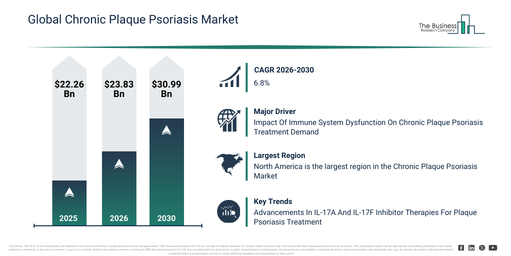
    The global market for chronic plaque psoriasis experienced robust expansion lately, projected to advance from $22.26 billion in 2025 to $23.83 billion in 2026, reflecting a compound annual growth rate of 7.1%. This historical growth trajectory was fueled by enhanced identification of autoimmune skin conditions, greater accessibility to topical treatments, heightened understanding of psoriasis management strategies, an increase in dermatology centers, and improved access to specialized pharmaceutical options.

    The market for chronic plaque psoriasis is projected for substantial expansion in the upcoming years, anticipating a reach of $30.99 billion by 2030, reflecting a compound annual growth rate of 6.8%. This anticipated growth trajectory is fueled by several key factors including the accelerated development of advanced biologics, a greater uptake of oral immunomodulatory agents, the proliferation of precision dermatology methodologies, an elevated emphasis on treatment strategies centered around the patient, and increased financial backing for autoimmune disease investigations. Furthermore, within this forecast period, significant market dynamics will be shaped by the expanding utilization of biologic therapies, a surge in the application of targeted small molecule pharmaceuticals, a heightened focus on bespoke dermatological care, the broadening availability of oral treatment modalities, and an intensified commitment to achieving enduring disease management.

    Download A Free Sample Report For Comprehensive Market Insights:

    https://www.thebusinessresearchcompany.com/sample.aspx?id=20726&type=smp

    Chronic Plaque Psoriasis Market Growth Drivers: What Factors Are Accelerating Expansion?

    The chronic plaque psoriasis market is poised for expansion due to a surge in immune system malfunctions. Such dysfunctions occur when the body’s natural defenses operate improperly, making individuals more vulnerable to illnesses including infections, autoimmune conditions, and cancers. Contributing factors to this rise in immune system issues include inherited traits, environmental influences, inadequate nutrition, persistent stress, and a growing incidence of conditions like HIV and other autoimmune disorders. Managing chronic plaque psoriasis becomes crucial for addressing these immune system irregularities, as an overzealous immune response can lead to accelerated skin cell production, resulting in inflammation and the characteristic plaque formations. For illustration, as of February 2024, Arthritis Australia reported projections indicating that in 2025, approximately 212,136 males and 362,137 females will be affected by rheumatoid arthritis, with anticipations for these figures to ascend by 2040 to roughly 280,040 males and 479,828 females. Consequently, the escalating prevalence of immune system disorders is directly fueling the advancement of the chronic plaque psoriasis market.

    Chronic Plaque Psoriasis Market Segment Analysis Highlighting Growth Areas

    The chronic plaque psoriasis market covered in this report is segmented –

    1) By Drug Class: Biologics, Small Molecule Drugs

    2) By Route Of Administration: Injectable, Oral, Topical

    3) By Distribution Channel: Hospital Pharmacy, Online Pharmacy, Retail Pharmacy

    Subsegments:

    1) By Biologics: Tumor Necrosis Factor (TNF) Inhibitors, Interleukin Inhibitors (IL-12, IL-23, IL-17, IL-22), T-Cell Inhibitors

    2) By Small Molecule Drugs: Phosphodiesterase 4 (PDE4) Inhibitors, Janus Kinase (JAK) Inhibitors, Retinoids

    Chronic Plaque Psoriasis Market Trends: What Is Shaping Future Industry Growth?

    Key players within the chronic plaque psoriasis market are concentrating their efforts on pioneering therapeutic solutions, including IL-17A and IL-17F inhibitors, aiming to achieve progress in managing chronic plaque psoriasis. Therapies that specifically target IL-17A and IL-17F function by intercepting these pro-inflammatory cytokines, which are integral to the immune system’s response, thereby diminishing inflammation associated with autoimmune conditions like chronic plaque psoriasis. A significant development occurred in October 2023 when UCB S.A., a biopharmaceutical firm based in Belgium, revealed that the U.S. Food and Drug Administration (FDA) had granted approval for BIMZELX (bimekizumab-bkzx) to treat adult patients experiencing moderate to severe plaque psoriasis who are candidates for systemic or phototherapy. Bimekizumab stands out as the inaugural approved therapy for psoriasis engineered to specifically target and inhibit both interleukin 17A (IL-17A) and interleukin 17F (IL-17F), two crucial cytokines implicated in inflammatory pathways. This approval was substantiated by findings from three main Phase 3 studies—BE READY, BE VIVID, and BE SURE—which collectively evaluated the safety and effectiveness of bimekizumab in a cohort of 1,480 individuals diagnosed with moderate to severe plaque psoriasis.

    Chronic Plaque Psoriasis Market Leading Companies: Who Holds Significant Market Presence?

    Major companies operating in the chronic plaque psoriasis market are Pfizer Inc., Johnson & Johnson, AbbVie Inc., Bristol‑Myers Squibb Company, Novartis AG, Eli Lilly and Company, Amgen Inc., Dr Reddy’s Laboratories, Innovent Biologics Inc., Bio‑Thera Solutions, Celgene Corporation, Arcutis Biotherapeutics, LEO Pharma A/S, Sun Pharmaceutical Industries Ltd, AstraZeneca plc, Takeda Pharmaceutical Company Limited, Biocon Ltd, Stiefel Laboratories Inc, Regeneron Pharmaceuticals, Sanofi S.A., GSK plc, Merck & Co. Inc., UCB S.A., Roche Holding AG, Evelo Biosciences Inc, Biogen Inc.

    Access The Complete Chronic Plaque Psoriasis Market Report:

    https://www.thebusinessresearchcompany.com/report/chronic-plaque-psoriasis-global-market-report

    Chronic Plaque Psoriasis Market Regional Analysis And Leading Geography

    North Americawas the largest region in the chronic plaque psoriasis market in 2025. Asia-Pacificis expected to be the fastest-growing region in the forecast period. The regions covered in the chronic plaque psoriasis market report are Asia-Pacific, South East Asia, Western Europe, Eastern Europe, North America, South America, Middle East, Africa.

    Get in touch with us:

    The Business Research Company: https://www.thebusinessresearchcompany.com/

    Americas: +1 310-496-7795

    Asia: +44 7882 955267 & +91 8897263534

    Europe: +44 7882 955267

    Email us at: marketing@tbrc.info

    Follow us on:

    LinkedIn: https://in.linkedin.com/company/the-business-research-company

    YouTube: https://www.youtube.com/channel/UC24_fI0rV8cR5DxlCpgmyFQ

    Global Market Model: https://www.thebusinessresearchcompany.com/global-market-model

  • Chronic Pancreatitis (CP) Market Set To Grow From $5.56 Billion In 2026 To $7.04 Billion By 2030 At A CAGR Of 6.1%

    Chronic Pancreatitis (CP) Market Set To Grow From $5.56 Billion In 2026 To $7.04 Billion By 2030 At A CAGR Of 6.1%

    Through market attractiveness analysis, total addressable market evaluation, company benchmarking matrices, interactive Excel dashboards, expanded supply chain intelligence, emerging startup coverage, and detailed product insights, The Business Research Company’s 2026 market reports provide more actionable and strategically valuable research.

    Chronic Pancreatitis (CP) Market CAGR Analysis And Future Market Development

    The market for chronic pancreatitis experienced robust expansion recently, with projections indicating a rise from $5.23 billion in 2025 to $5.56 billion in 2026, reflecting a compound annual growth rate of 6.4%. Factors contributing to this historical growth trajectory include greater accessibility of advanced diagnostic imaging, heightened public and professional understanding of pancreatic conditions, broader application of pain management strategies, the proliferation of gastroenterology services, and advancements in supportive care.

    Anticipating a robust expansion over the coming years, the chronic pancreatitis market is projected to reach a valuation of $7.05 billion by the year 2030, fueled by a compound annual growth rate of 6.1%. This upward trajectory is underpinned by several key factors, including the ongoing refinement of sophisticated enzyme therapies, a heightened emphasis on intervening in the early stages of the disease, the broader implementation of outpatient care strategies, the greater incorporation of nutritional interventions, and augmented investments in the scientific investigation of pancreatic disorders. During the projected timeframe, prominent developments are expected to include a greater reliance on enzyme replacement therapies, a surge in the adoption of endoscopic procedures that involve minimal invasion, a more pronounced concentration on dietary management, the proliferation of tailored treatment regimens, and a strengthened commitment to achieving timely diagnoses.

    Download A Free Sample Report For Comprehensive Market Insights:

    https://www.thebusinessresearchcompany.com/sample.aspx?id=21146&type=smp

    Chronic Pancreatitis (CP) Market Growth Factors Supporting Long-Term Expansion

    The escalating intake of alcoholic beverages is anticipated to be a significant catalyst for the expansion of the chronic pancreatitis market. This elevated alcohol consumption, frequently undertaken for social or recreational reasons, can sadly foster dependency and adverse health outcomes when indulged in excessively. Such trends are fueled by factors including greater societal acceptance, rapid urbanization, evolving personal habits, and the use of alcohol as a coping mechanism for stress, particularly prevalent within younger demographics. The pathogenic mechanism involves alcohol-induced pancreatic inflammation and cellular injury, resulting in fibrotic changes, obstructed pancreatic ducts, and persistent impaired function stemming from harmful metabolic byproducts. Contrasting this trend, a 2023 survey by the Priory Group, a UK-based entity focused on mental health, addiction, and specialized education, revealed that in 2025, a quarter of UK adults aged 18–24 are choosing complete abstinence from alcohol, indicating a discernible move towards sobriety among the youth. Consequently, the upward trajectory in alcohol consumption is directly contributing to the growth observed in the chronic pancreatitis market.

    Chronic Pancreatitis (CP) Market Segment Performance And Strategic Opportunities

    The chronic pancreatitis (cp) market covered in this report is segmented –

    1) By Treatment: Analgesic, Artificial Digestive Enzyme, Protein Supplements, Other Treatments

    2) By Diagnosis: Computed Tomography (CT) Scan, Magnetic Resonance Cholangiopancreatography, Ultrasound Sonography, Other Diagnosis

    3) By Route Of Administration: Oral, Parenteral

    4) By End User: Hospitals, Homecare, Other End Users

    Subsegments:

    1) By Analgesic: Nonsteroidal Anti-Inflammatory Drugs (NSAIDs), Opioids

    2) By Artificial Digestive Enzyme: Pancrelipase, Pancreatin

    3) By Protein Supplements: Branched-Chain Amino Acids (BCAA), Whey Protein

    4) By Other Treatments: Endoscopic Treatment, Surgery

    Chronic Pancreatitis (CP) Market Industry Trends Shaping Future Revenue Growth

    Entities prominently engaged within the chronic pancreatitis market are channeling their efforts into pioneering technological innovations, notably enzyme replacement therapy, as a means to manage exocrine pancreatic insufficiency (EPI) linked to chronic pancreatitis. This therapeutic approach entails the oral administration of pancreatic enzymes to facilitate digestion for individuals with compromised pancreatic function. As an illustration, in July of 2023, First Wave BioPharma Inc., a biopharmaceutical enterprise situated in the United States operating at the clinical stage, disclosed findings from the Phase 2 SPAN clinical trial. This trial evaluated an advanced enteric microgranule delivery system for adrulipase, a treatment intended for EPI in patients affected by cystic fibrosis (CF) and chronic pancreatitis. Adrulipase itself is a lipase enzyme produced through recombinant DNA technology using Yarrowia lipolytica yeast. Administered orally in a non-systemic biologic capsule formulation, its function is to disrupt fat molecules within the digestive tract of EPI patients, thereby enabling nutrient absorption.

    Chronic Pancreatitis (CP) Market Key Players: Which Companies Shape Industry Competition?

    Major companies operating in the chronic pancreatitis (cp) market are Pfizer, Johnson & Johnson, Merck & Co Inc, AbbVie Inc, Sanofi, Bristol-Myers Squibb, Abbott Laboratories, Novartis AG, GlaxoSmithKline plc, Baxter, CSL Behring, Octapharma AG, Dr. Reddy’s Laboratories, Nestle Health Science, Cerata Pharmaceuticals, Unichem Laboratories Ltd, LGM Pharma, Aptalis Pharmaceutical Technologies, Digestive Care Inc, Akron Biotech

    Access The Complete Chronic Pancreatitis (CP) Market Report:

    https://www.thebusinessresearchcompany.com/report/chronic-pancreatitis-cp-global-market-report

    Chronic Pancreatitis (CP) Market Geographic Analysis: Where Is Demand Growing The Fastest?

    North Americawas the largest region in the chronic pancreatitis (CP) market in 2025. The regions covered in the chronic pancreatitis (cp) market report are Asia-Pacific, South East Asia, Western Europe, Eastern Europe, North America, South America, Middle East, Africa.

    Get in touch with us:

    The Business Research Company: https://www.thebusinessresearchcompany.com/

    Americas: +1 310-496-7795

    Asia: +44 7882 955267 & +91 8897263534

    Europe: +44 7882 955267

    Email us at: marketing@tbrc.info

    Follow us on:

    LinkedIn: https://in.linkedin.com/company/the-business-research-company

    YouTube: https://www.youtube.com/channel/UC24_fI0rV8cR5DxlCpgmyFQ

    Global Market Model: https://www.thebusinessresearchcompany.com/global-market-model

  • Chronic Pain Virtual Reality Therapy Market Opportunities Are Emerging Beyond Traditional Growth Areas

    Chronic Pain Virtual Reality Therapy Market Opportunities Are Emerging Beyond Traditional Growth Areas

    Delivering more actionable and strategically valuable research, The Business Research Company’s 2026 market reports feature market attractiveness analysis, total addressable market evaluation, company benchmarking matrices, interactive Excel dashboards, expanded supply chain intelligence, emerging startup coverage, and detailed product insights.

    Chronic Pain Virtual Reality Therapy Market Expansion From $6.09 Billion In 2026 To $18.81 Billion In 2030

    The market for virtual reality therapy targeting chronic pain has experienced substantial growth. Projections indicate a significant increase from $4.58 billion in 2025 to $6.09 billion by 2026, reflecting a compound annual growth rate of 32.9%. This upward trend in the historical period is largely due to the increasing incidence of chronic pain issues, the diminishing effectiveness and growing concerns surrounding opioid treatments, the wider adoption of digital therapeutics, the proliferation of rehabilitation facilities, and the increased accessibility of virtual reality equipment for consumers.

    The virtual reality therapy market for chronic pain is poised for substantial expansion in the upcoming years, projecting a valuation of $18.82 billion by 2030. This impressive growth, driven by a compound annual growth rate of 32.6%, is fueled by several key factors. Among these are the escalating preference for pain management methods that avoid medication, increased financial backing for digital therapeutic solutions, a broader acceptance of at-home pain management techniques, the growing application of artificial intelligence to tailor therapy, and a greater incorporation of telehealth services. Significant developments anticipated during this forecast period include a wider embrace of virtual reality therapies designed to distract from pain, a greater utilization of virtual reality cognitive behavioral programs, enhanced integration of remote pain management systems, the development of individualized virtual reality therapy content, and a heightened emphasis on pain control strategies that do not involve pharmaceuticals.

    Download A Free Sample Report For Comprehensive Market Insights:

    https://www.thebusinessresearchcompany.com/sample.aspx?id=28166&type=smp

    #Chronic Pain Virtual Reality Therapy Market Demand Drivers Creating New Revenue Opportunities

    The expansion of the chronic pain virtual reality therapy sector is anticipated due to the growing recognition and embrace of VR as a therapeutic modality. Virtual reality therapy involves employing cutting-edge immersive VR technology to create simulated interactive settings beneficial for care and recovery processes. This heightened awareness and acceptance stem from the demonstrated efficacy of VR in alleviating pain and anxiety, presenting individuals with a non-pharmacological, non-intrusive option that elevates both the therapeutic journey and the resulting health improvements. Enhanced familiarity with virtual reality therapy, both among patients and healthcare providers, contributes to greater adoption within the chronic pain VR therapy market by making these simulated treatment approaches more familiar. Furthermore, showcasing the advantages of VR interventions boosts patient involvement, thereby facilitating more effective pain management and contributing to an improved state of overall patient health. An illustrative development occurred in July 2024 when the U.S. Department of Veterans Affairs reported the deployment of approximately 3,500 VR headsets across over 170 of its medical facilities and clinics, marking a threefold increase in headsets available for therapeutic applications. Consequently, the expanding consciousness and adoption of virtual reality therapy are acting as significant catalysts for the growth observed in the chronic pain virtual reality therapy market.

    #Chronic Pain Virtual Reality Therapy Market Segment Landscape And Growth Potential

    The chronic pain virtual reality therapy market covered in this report is segmented –

    1) By Component: Hardware, Software, Services

    2) By Technology: Non-Immersive Virtual Reality, Semi-Immersive Virtual Reality, Fully Immersive Virtual Reality

    3) By Application: Hospitals, Clinics, Homecare, Rehabilitation Centers, Other Applications

    4) By End-User: Adults, Pediatrics, Geriatrics

    Subsegments:

    1) By Hardware: Virtual Reality Headsets, Motion Tracking Devices, Haptic Feedback Devices, Sensors And Wearables, Display Screens

    2) By Software: Pain Management Applications, Cognitive Behavioral Therapy Programs, Meditation And Relaxation Software, Biofeedback Integration Software, Gamified Therapy Platforms

    3) By Services: Installation And Setup Services, Training And Education Services, Technical Support And Maintenance Services, Subscription Based Therapy Services, Remote Monitoring And Teletherapy Services

    Chronic Pain Virtual Reality Therapy Market Trends Driving Strategic Industry Expansion

    Leading entities within the chronic pain virtual reality therapy sector are prioritizing forward-thinking developments, notably the adoption of an immersive at-home therapy paradigm. This strategic shift aims to broaden patient reach, foster sustained engagement with treatment protocols, and establish economical, non-medicinal pain relief strategies that can be widely implemented. The concept of immersive at-home therapy involves a virtual reality treatment modality enabling individuals to participate in organized, interactive pain alleviation exercises conveniently from their residences. As an illustration, May 2024 saw AppliedVR, a United States medical technology producer, unveil RelieVRx, a virtual reality therapy program designed for home use and specifically targeting individuals within the workers’ compensation system experiencing persistent lower back discomfort. This offering constitutes a non-pharmacological, federally approved therapeutic option obtainable via prescription, thereby extending the availability of cutting-edge pain management solutions directly into patients’ living spaces. RelieVRx delivers structured, skill-building therapeutic sessions meticulously crafted to mitigate both the severity of pain and its detrimental impact on everyday activities. By concentrating on the workers’ compensation demographic, this program is specially designed to facilitate quicker recuperation, enhanced physical functionality, and a more efficient return to employment. This introduction highlights the increasing significance of virtual reality in therapy as a secure, efficacious, and broadly applicable substitute for pain management through pharmaceuticals.

    Chronic Pain Virtual Reality Therapy Market Competitive Landscape: Who Are The Leading Companies?

    Major companies operating in the chronic pain virtual reality therapy market are XRHealth Inc., AppliedVR Inc., Mieron VR, HypnoVR, KindVR, Waya Health, Flowly, CUREosity, Healium, Shine VR, Neuro Rehab VR Inc., Broomx Technologies, SyncVR Medical, Newel Health, Rocket VR Health, Corpus VR, Verity Technologies Inc., Karuna Labs Inc., Meta Platforms Inc., MediVR Inc., Immersive Health Solutions Inc.

    Access The Complete Chronic Pain Virtual Reality Therapy Market Report:

    https://www.thebusinessresearchcompany.com/report/chronic-pain-virtual-reality-therapy-global-market-report

    Chronic Pain Virtual Reality Therapy Market Global Footprint: Which Region Holds Market Leadership?

    North Americawas the largest region in the chronic pain virtual reality therapy market in 2025. The regions covered in the chronic pain virtual reality therapy market report are Asia-Pacific, South East Asia, Western Europe, Eastern Europe, North America, South America, Middle East, Africa.

    Get in touch with us:

    The Business Research Company: https://www.thebusinessresearchcompany.com/

    Americas: +1 310-496-7795

    Asia: +44 7882 955267 & +91 8897263534

    Europe: +44 7882 955267

    Email us at: marketing@tbrc.info

    Follow us on:

    LinkedIn: https://in.linkedin.com/company/the-business-research-company

    YouTube: https://www.youtube.com/channel/UC24_fI0rV8cR5DxlCpgmyFQ

    Global Market Model: https://www.thebusinessresearchcompany.com/global-market-model