Month: June 2026

  • Rheumatic Heart Disease Market Set To Grow From $2.87 Billion In 2026 To $3.6 Billion By 2030 At A CAGR Of 5.8%

    Rheumatic Heart Disease Market Set To Grow From $2.87 Billion In 2026 To $3.6 Billion By 2030 At A CAGR Of 5.8%

    Delivering more actionable and strategically valuable research, The Business Research Company’s 2026 market reports feature market attractiveness analysis, total addressable market evaluation, company benchmarking matrices, interactive Excel dashboards, expanded supply chain intelligence, emerging startup coverage, and detailed product insights.

    Rheumatic Heart Disease Market Expansion Outlook: What Revenue Opportunities Lie Ahead?

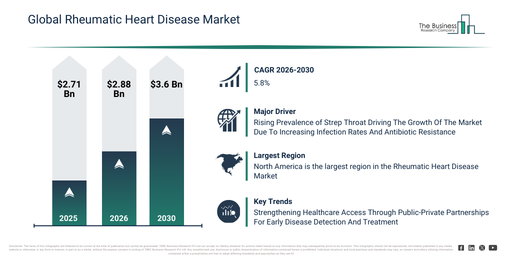
    The market for rheumatic heart disease experienced robust expansion recently and is projected to increase from $2.71 billion in 2025 to $2.88 billion in 2026, reflecting a compound annual growth rate of 6.1%. Factors contributing to this past growth include the widespread occurrence of untreated streptococcal infections, restricted access to prompt medical attention in developing nations, the enduring impact of rheumatic fever, reliance on diagnostic methods based on clinical observation, and the limited availability of sophisticated cardiac treatment options.

    The market for rheumatic heart disease is poised for substantial expansion, projected to reach $3.6 billion by 2030, reflecting a compound annual growth rate of 5.8% throughout the forecast period. This upward trajectory is anticipated due to a confluence of factors, including augmented investments in public health screening initiatives, a greater embrace of digital technologies for cardiac diagnostics, escalating awareness concerning the advantages of early intervention, the broadening of cardiac surgical capabilities, and an intensified emphasis on strategies for disease prevention. Key developments anticipated during this timeframe encompass a rise in the implementation of early diagnostic screening programs, increased utilization of echocardiography and other imaging modalities, a growing emphasis on preventive antibiotic treatments, an expansion in valve repair and replacement surgeries, and more diligent monitoring of pediatric and adolescent populations afflicted with the condition.

    Download A Free Sample Report For Comprehensive Market Insights:

    https://www.thebusinessresearchcompany.com/sample.aspx?id=23502&type=smp

    Rheumatic Heart Disease Market Growth Factors Supporting Long-Term Expansion

    The expanding incidence of strep throat is anticipated to be a significant catalyst for the advancement of the rheumatic heart disease market. Strep throat, a bacterial ailment stemming from streptococcus pyogenes (group a streptococcus), culminates in throat inflammation and discomfort, frequently accompanied by indicators like fever, enlarged lymph nodes, and challenges with ingestion. The growing challenge of antibiotic resistance is complicating the effective management of streptococcal infections, thereby contributing to extended periods of illness and elevated transmission rates within populations. Rheumatic heart disease emerges as a chronic consequence of insufficiently treated or recurring instances of strep throat, underscoring the critical need for prompt identification and therapeutic intervention for streptococcal infections to avert serious cardiac impairment. Reflecting this issue, data from the Centers for Disease Control and Prevention in April 2023 indicated that strep throat is responsible for approximately 5.2 million annual outpatient consultations among individuals under the age of 65 in the United States, resulting in 2.8 million antibiotic prescriptions being issued each year. Consequently, the escalating occurrence of strep throat is directly fueling the expansion of the rheumatic heart disease sector.

    Rheumatic Heart Disease Market Segments: Where Are The Largest Growth Opportunities?

    The rheumatic heart disease market covered in this report is segmented –

    1) By Type: Valve, Myocarditis, Pericarditis

    2) By Age Group: Pediatric, Adolescent, Adult, Geriatric

    3) By Application: Hospital, Diagnostic Centre, Research Centre

    4) By Distribution Channel: Hospital Pharmacies, Retail Pharmacies, Online Pharmacies, Direct Sales

    Subsegments:

    1) By Valve: Mitral Valve Disease, Aortic Valve Disease, Tricuspid Valve Disease, Pulmonary Valve Disease

    2) By Myocarditis: Acute Myocarditis, Chronic Myocarditis, Fulminant Myocarditis

    3) By Pericarditis: Acute Pericarditis, Chronic Pericarditis, Constrictive Pericarditis, Effusive Pericarditis

    Rheumatic Heart Disease Market Industry Trends Shaping Future Revenue Growth

    Key participants within the rheumatic heart disease market are actively pursuing collaborations to foster the creation of novel therapeutic interventions and diagnostic methodologies. These strategic alliances in rheumatic heart disease (RHD) management serve to consolidate capabilities and knowledge bases, thereby propelling research and development endeavors, refining diagnostic and treatment breakthroughs, broadening market reach, and accelerating the journey to market. A pertinent example occurred in July of 2023, when the World Heart Federation (WHF), a non-governmental entity headquartered in Switzerland, joined forces with the Philips Foundation, a charitable organization based in the Netherlands. Their shared objective was to elevate awareness, bolster medical education, and improve the early identification of rheumatic heart disease (RHD) throughout the Asia-Pacific (APAC) region. This undertaking, initiated in the Philippines, aims to improve healthcare accessibility for more than 500,000 Filipino children susceptible to the condition, by furnishing healthcare sites with proficient personnel and sophisticated diagnostic equipment. Such a partnership highlights a collective dedication to reinforcing healthcare systems and facilitating prompt care for individuals afflicted with RHD.

    Rheumatic Heart Disease Market Major Participants And Competitive Dynamics

    Major companies operating in the rheumatic heart disease market are Pfizer Inc., Merck And Co Inc., Bayer AG, Sanofi SA, AstraZeneca plc, Novartis AG, Abbott Laboratories, GlaxoSmithKline plc, Medtronic plc, Siemens Healthineers AG, Becton Dickinson And Company, GE HealthCare Technologies Inc., Boston Scientific Corporation, Terumo Corporation, Apollo Hospitals Enterprise Limited, Fortis Healthcare Limited, Medanta, Johnson And Johnson Services Inc., Roche Holding AG, Bristol Myers Squibb Company, Takeda Pharmaceutical Company Limited, Daiichi Sankyo Company, Boehringer Ingelheim International GmbH, Edwards Lifesciences Corporation

    Access The Complete Rheumatic Heart Disease Market Report:

    https://www.thebusinessresearchcompany.com/report/rheumatic-heart-disease-global-market-report

    Rheumatic Heart Disease Market Geographic Distribution And Regional Opportunities

    North Americawas the largest region in the rheumatic heart disease market in 2025. The regions covered in the rheumatic heart disease market report are Asia-Pacific, South East Asia, Western Europe, Eastern Europe, North America, South America, Middle East, Africa.

    Get in touch with us:

    The Business Research Company: https://www.thebusinessresearchcompany.com/

    Americas: +1 310-496-7795

    Asia: +44 7882 955267 & +91 8897263534

    Europe: +44 7882 955267

    Email us at: marketing@tbrc.info

    Follow us on:

    LinkedIn: https://in.linkedin.com/company/the-business-research-company

    YouTube: https://www.youtube.com/channel/UC24_fI0rV8cR5DxlCpgmyFQ

    Global Market Model: https://www.thebusinessresearchcompany.com/global-market-model
  • Rhabdomyosarcoma Market Opportunities Are Emerging Beyond Traditional Growth Areas

    Rhabdomyosarcoma Market Opportunities Are Emerging Beyond Traditional Growth Areas

    Enhanced with market attractiveness analysis, total addressable market evaluation, company benchmarking matrices, interactive Excel dashboards, expanded supply chain intelligence, emerging startup coverage, and detailed product insights, The Business Research Company’s 2026 market reports deliver more actionable and strategically valuable research.

    Rhabdomyosarcoma Market Growth Potential: How Will Market Size Change Through 2030?

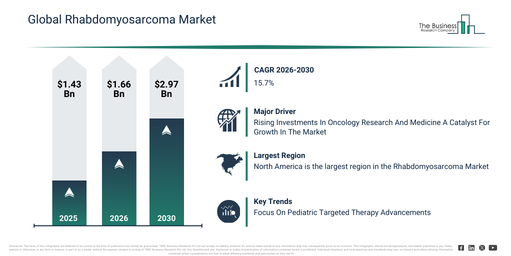
    The rhabdomyosarcoma market experienced significant expansion recently; projections indicate a rise from $1.43 billion in 2025 to $1.66 billion by 2026, reflecting a compound annual growth rate (CAGR) of 16.1%. Key factors contributing to this historical growth include enhanced cancer diagnostic imaging technologies, the proliferation of oncology treatment facilities, the widespread adoption of multifaceted chemotherapy regimens, heightened public and professional awareness regarding pediatric cancers, and progress in surgical oncology methodologies.

    The rhabdomyosarcoma market is poised for substantial expansion, projected to reach $2.97 billion by 2030 with a compound annual growth rate of 15.7%. This upward trajectory is fueled by escalating investments in precision oncology therapeutics, a greater embrace of immunotherapy and targeted treatment modalities, the broader scope of clinical investigations into uncommon cancers, the amplified utilization of AI-driven diagnostic tools, and a heightened emphasis on identifying cancer at its nascent stages. Key developments anticipated during this forecast period involve the progressive creation of highly specific cancer treatments, the increased deployment of sophisticated imaging technologies for earlier detection, a more widespread adoption of treatment plans incorporating multiple therapeutic strategies, the acceleration of research within pediatric oncology, and a more concentrated effort on precision oncology approaches.

    Download A Free Sample Report For Comprehensive Market Insights:

    https://www.thebusinessresearchcompany.com/sample.aspx?id=21276&type=smp

    Rhabdomyosarcoma Market Demand Drivers Creating New Revenue Opportunities

    Anticipated growth in the rhabdomyosarcoma market is set to be fueled by escalating financial commitments toward oncology research and medical advancements. Such financial allocations, encompassing those from governmental bodies, pharmaceutical entities, academic institutions, and private financiers, aim to deepen our comprehension of, and enhance the prevention, detection, and treatment of, various cancers. This surge in investment stems from a confluence of factors including the escalating global prevalence of cancer, breakthroughs in personalized medicine, a rising demand for novel therapeutic strategies, an expansion of conducted clinical trials, supportive government and private funding initiatives, and the progression of targeted therapies and immunotherapies. These investments specifically benefit the rhabdomyosarcoma landscape by advancing early diagnostic capabilities, refining treatment modalities such as targeted and immunotherapies, financing trials for more efficacious drug development, bolstering the infrastructure for pediatric cancer care, and stimulating pioneering research into the disease’s fundamental biology and its progression. Illustratively, global expenditures on cancer medications reached $223 billion in 2023, a substantial increase of $25 billion from the prior year, and are projected to climb to $409 billion by 2028, according to IQVIA data from May 2024. Consequently, this heightened investment in oncology research and medicine acts as a significant catalyst for the rhabdomyosarcoma market.

    Enhancements in medical infrastructure are poised to be a key driver for the expansion of the rhabdomyosarcoma market. Medical infrastructure encompasses the physical settings and resources, like hospitals, specialized clinics, and diagnostic centers, dedicated to providing medical services and patient care. Progress in this domain is being spurred by factors such as augmented investment in healthcare facilities, a stronger emphasis on patient-centric care models, demographic shifts including population growth, and an aging populace. The specific demands of rhabdomyosarcoma contribute to improvements in medical facilities by necessitating the adoption of advanced diagnostic equipment, the implementation of cutting-edge treatment protocols, and the cultivation of integrated, multidisciplinary care teams, thereby fostering progress in cancer research, pediatric oncology management, and the development of precision therapies. As an example, productivity within UK NHS acute trusts saw a 2.7% increase over the preceding year, exceeding the government’s objective for the April 2024 to March 2025 fiscal period, as reported by the Department of Health and Social Care in September 2025. Therefore, the ongoing betterment of healthcare facilities is instrumental in propelling the rhabdomyosarcoma market forward.

    Rhabdomyosarcoma Market Segment Analysis: What Are The Major Market Categories?

    The rhabdomyosarcoma market covered in this report is segmented –

    1) By Type: Embryonal Rhabdomyosarcoma, Alveolar Rhabdomyosarcoma, Other Types

    2) By Treatment: Surgery, Radiation Therapy, Chemotherapy, Stem Cell Therapy

    3) By Diagnosis: Imaging Tests, X-Ray, Computed Tomography Scan, Magnetic Resonance Imaging Scan, Positron Emission Tomography Scan, Bone Scan, Biopsy, Needle Biopsy, Surgical Biopsy

    Subsegments:

    1) By Embryonal Rhabdomyosarcoma: Botryoid Rhabdomyosarcoma, Spindle Cell Rhabdomyosarcoma

    2) By Alveolar Rhabdomyosarcoma (ARMS): Fusion-Positive ARMS, Fusion-Negative ARMS

    3) By Other Types of Rhabdomyosarcoma: Pleomorphic Rhabdomyosarcoma, Mixed-Type Rhabdomyosarcoma, Sclerosing Rhabdomyosarcoma

    Rhabdomyosarcoma Market Trends Driving Strategic Industry Expansion

    Key players within the rhabdomyosarcoma sector are concentrating their efforts on pioneering sophisticated targeted therapy options to elevate treatment effectiveness and augment patient results. This approach utilizes medications engineered to selectively disrupt the molecular pathways essential for cancer cell proliferation and survival, thereby minimizing harm to healthy cells and refining treatment accuracy. As an illustration, in October of 2023, Oncoheroes Biosciences, Inc., a biotechnology firm headquartered in the United States, secured authorization from the U.S. Food and Drug Administration (FDA) to commence clinical investigations for both volasertib and dovitinib. Volasertib operates as an inhibitor of Polo-like-kinase 1, initially conceived for acute myeloid leukemia, and displays considerable promise in the treatment of rhabdomyosarcoma and various other childhood cancers. Dovitinib functions as a broad-spectrum tyrosine kinase inhibitor, focusing on FGFR, VEGFR, and additional receptor tyrosine kinases, presenting potential benefits for pediatric bone sarcomas and employing exploratory biomarkers to pinpoint suitable candidates for treatment. The overarching objective of both agents is to provide highly specific interventions, mitigate adverse effects, and ultimately yield superior results for young patients. These trials incorporate rigorous selection criteria for participants, strategies guided by biomarkers, and diligent oversight to assess both safety and efficacy, marking a significant stride in pediatric oncology and instilling renewed optimism for children confronting rhabdomyosarcoma.

    Rhabdomyosarcoma Market Leading Companies Driving Competitive Growth

    Major companies operating in the rhabdomyosarcoma market are Pfizer Inc., Merck And Co Inc., Bristol Myers Squibb Company, AstraZeneca PLC, Novartis AG, Eli Lilly And Company, Eisai Co Ltd, Ipsen SA, Elekta AB, Acrivon Therapeutics Inc., Oasmia Pharmaceutical AB, Immix Biopharma Inc., Cellectar Biosciences Inc., Lantern Pharma Inc., Oncoheroes Biosciences Inc., Roche Holding AG, Sanofi SA, Bayer AG, Johnson And Johnson Services Inc., Takeda Pharmaceutical Company Limited, Amgen Inc., Daiichi Sankyo Company, GlaxoSmithKline Plc, Teva Pharmaceutical Industries Ltd

    Access The Complete Rhabdomyosarcoma Market Report:

    https://www.thebusinessresearchcompany.com/report/rhabdomyosarcoma-global-market-report

    Rhabdomyosarcoma Market Largest Region By Revenue And Market Share

    North Americawas the largest region in the rhabdomyosarcoma market in 2025. Asia-Pacificis expected to be the fastest-growing region in the forecast period. The regions covered in the rhabdomyosarcoma market report are Asia-Pacific, South East Asia, Western Europe, Eastern Europe, North America, South America, Middle East, Africa.

    Get in touch with us:

    The Business Research Company: https://www.thebusinessresearchcompany.com/

    Americas: +1 310-496-7795

    Asia: +44 7882 955267 & +91 8897263534

    Europe: +44 7882 955267

    Email us at: marketing@tbrc.info

    Follow us on:

    LinkedIn: https://in.linkedin.com/company/the-business-research-company

    YouTube: https://www.youtube.com/channel/UC24_fI0rV8cR5DxlCpgmyFQ

    Global Market Model: https://www.thebusinessresearchcompany.com/global-market-model
  • Reversible Airway Diseases Treatment Market Expansion Is Opening New Pathways For Strategic Investment

    Reversible Airway Diseases Treatment Market Expansion Is Opening New Pathways For Strategic Investment

    Through market attractiveness analysis, total addressable market evaluation, company benchmarking matrices, interactive Excel dashboards, expanded supply chain intelligence, emerging startup coverage, and detailed product insights, The Business Research Company’s 2026 market reports provide more actionable and strategically valuable research.

    Reversible Airway Diseases Treatment Market Value Analysis: What Growth Is Expected Over The Forecast Period?

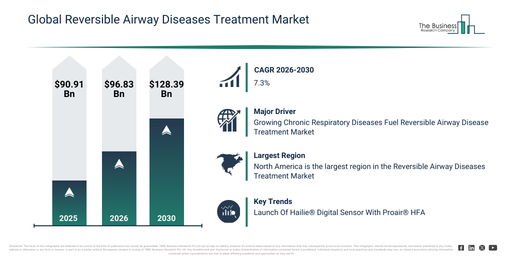
    Market data reveals a robust expansion in the treatment sector for reversible airway diseases, projecting a significant increase from its $90.91 billion valuation in 2025 to an estimated $96.83 billion by 2026, indicating a compound annual growth rate of 6.5%. This historical growth trajectory has been fueled by a confluence of factors including a greater incidence of asthma and bronchitis, the enhancement of respiratory care facilities, the widespread availability of inhaled medications, escalating concerns regarding environmental pollution, and enhanced accessibility to diagnostic imaging technologies.

    The market for treating reversible airway diseases is poised for substantial expansion over the coming years, projected to reach $128.39 billion by 2030, exhibiting a compound annual growth rate of 7.3%. This anticipated growth is fueled by several key factors, including a heightened emphasis on biologic treatments for respiratory conditions, a greater uptake of remote patient monitoring systems, the proliferation of minimally invasive pulmonary interventions, a stronger commitment to proactive respiratory care, and escalating investments in research concerning respiratory ailments. During this forecast period, significant trends are expected to shape the market, such as the increasing adoption of customized respiratory therapies, a rise in the utilization of sophisticated diagnostic imaging techniques, a growing focus on identifying diseases at an earlier stage, the expansion of combination drug therapies, and a more robust integration of digital tools for pulmonary monitoring.

    Download A Free Sample Report For Comprehensive Market Insights:

    https://www.thebusinessresearchcompany.com/sample.aspx?id=12944&type=smp

    Reversible Airway Diseases Treatment Market Expansion Supported By Key Demand Factors

    The increasing prevalence of chronic respiratory conditions is anticipated to drive the expansion of the reversible airway disease treatment sector. Respiratory illnesses encompass a range of ailments affecting the respiratory tract, including the lungs and airways. Early identification and management of these chronic conditions facilitate prompt diagnosis of issues like acute respiratory distress syndrome, thereby mitigating disease advancement and lowering the likelihood of adverse outcomes. For example, data from the UK Health Security Agency revealed a 10.7% surge in tuberculosis cases in England during 2023, escalating from 4,380 cases in the preceding year to 4,850, signifying a considerable rise in TB occurrences annually. Consequently, the escalating burden of chronic respiratory diseases is poised to fuel the growth trajectory of the reversible airway disease treatment market.

    Reversible Airway Diseases Treatment Market Segment Breakdown: Which Categories Generate The Most Revenue?

    The reversible airway diseases treatment market covered in this report is segmented –

    1) By Treatment: Chest X Ray, Computed Tomography (CT) Scan, Lung Therapies, Surgery Transplant, Medications

    2) By Diseases: Asthma, Chronic Bronchitis, Allergic Rhinitis, Bronchiolitis, Other Diseases

    3) By End-Users: Hospitals, Specialty Clinics, Other End-Users

    Subsegments:

    1) By Chest X-Ray: Standard Chest X-Ray, Digital Chest X-Ray

    2) By Computed Tomography (CT) Scan: High-Resolution CT Scan, Spiral CT Scan

    3) By Lung Therapies: Inhalation Therapy, Pulmonary Rehabilitation, Oxygen Therapy

    4) By Surgery Transplant: Lung Transplant, Bronchoscopic Procedures, Other Surgical Interventions

    5) By Medications: Bronchodilators, Corticosteroids, Anticholinergics, Other Medications

    Reversible Airway Diseases Treatment Market Growth Trends Influencing Competitive Dynamics

    In the realm of reversible airway disease treatments, leading market players are prioritizing the creation of sophisticated digital sensor technologies designed to elevate patient monitoring and management. These digital sensors are instrumental in gathering immediate physiological data and information on medication consumption, thereby empowering healthcare professionals with the capability to oversee patient adherence to inhaler usage and proper technique from a distance. As an illustration, Adherium Limited, a digital health firm based in Australia, secured U.S. FDA 510(k) approval in March 2023 for its advanced Hailie sensor, now coupled with Teva’s ProAir HFA and Albuterol Sulphate inhalers. This Hailie sensor furnishes detailed perspectives on inhaler utilization and key physiological metrics, equipping physicians to oversee both ongoing and emergency medication regimens. It offers instant evaluations of inhaler application, aids in clinical judgment, and supports remote patient supervision through U.S. CMS reimbursement pathways. The technology enables physicians to retain oversight of therapeutic choices while benefiting from practical data to foster improved patient results. Adherium’s offering supports a variety of inhalers, encompasses many leading U.S. branded pharmaceuticals, and integrates smoothly with mobile and desktop interfaces, presenting a versatile platform independent of specific drugs for superior management of respiratory conditions.

    Reversible Airway Diseases Treatment Market Key Players And Strategic Industry Positioning

    Major companies operating in the reversible airway diseases treatment market are Pfizer Inc., F Hoffmann La Roche AG, Merck And Co Inc., AbbVie Inc., Novartis AG, Sanofi SA, GlaxoSmithKline Plc, Medtronic plc, Eli Lilly And Company, Boehringer Ingelheim International GmbH, Viatris Inc., Teva Pharmaceutical Industries Ltd, Sumitomo Dainippon Pharma Co Ltd, Sun Pharmaceutical Industries Ltd, Drägerwerk AG And Co KGaA, Dr Reddys Laboratories Ltd, Cipla Limited, Getinge AB, Hikma Pharmaceuticals plc, Amneal Pharmaceuticals LLC, Lupin Limited, Fisher And Paykel Healthcare Corporation Limited, AstraZeneca Plc, Chiesi Farmaceutici SpA

    Access The Complete Reversible Airway Diseases Treatment Market Report:

    https://www.thebusinessresearchcompany.com/report/reversible-airway-diseases-treatment-global-market-report

    Reversible Airway Diseases Treatment Market Regional Analysis And Leading Geography

    North Americawas the largest region in the reversible airway diseases treatment market in 2025. Asia-Pacificis expected to be the fastest-growing region in the forecast period. The regions covered in the reversible airway diseases treatment market report are Asia-Pacific, South East Asia, Western Europe, Eastern Europe, North America, South America, Middle East, Africa.

    Get in touch with us:

    The Business Research Company: https://www.thebusinessresearchcompany.com/

    Americas: +1 310-496-7795

    Asia: +44 7882 955267 & +91 8897263534

    Europe: +44 7882 955267

    Email us at: marketing@tbrc.info

    Follow us on:

    LinkedIn: https://in.linkedin.com/company/the-business-research-company

    YouTube: https://www.youtube.com/channel/UC24_fI0rV8cR5DxlCpgmyFQ

    Global Market Model: https://www.thebusinessresearchcompany.com/global-market-model
  • Revenue Cycle Management Software Market Trends Are Creating New Opportunities For Industry Leaders

    Revenue Cycle Management Software Market Trends Are Creating New Opportunities For Industry Leaders

    Delivering more actionable and strategically valuable research, The Business Research Company’s 2026 market reports feature market attractiveness analysis, total addressable market evaluation, company benchmarking matrices, interactive Excel dashboards, expanded supply chain intelligence, emerging startup coverage, and detailed product insights.

    Revenue Cycle Management Software Market Size Forecast: How Large Could The Market Become By 2030?

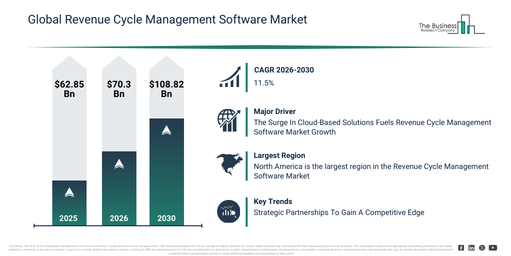
    The market for revenue cycle management software has experienced substantial expansion. Projections indicate this sector will expand from $62.85 billion in 2025 to $70.3 billion in 2026, reflecting a compound annual growth rate of 11.8%. Key factors fueling this growth during the preceding period include the escalating digitization of healthcare documentation, widespread adoption of practice management systems, an increase in outpatient care settings, growing complexities within the insurance landscape, and a persistent demand for enhanced operational efficiency.

    The sector dedicated to revenue cycle management software is poised for considerable expansion in the upcoming years, projecting a market valuation of $108.82 billion by 2030, driven by a compound annual growth rate of 11.5%. This anticipated surge is fueled by several key factors including a heightened need for adaptable, cloud-based RCM solutions, a greater emphasis on achieving immediate financial transparency, the proliferation of software offered on a subscription basis, the increasing incorporation of artificial intelligence for analytical purposes, and a growing governmental focus on safeguarding data. Throughout the forecast period, prominent developments are expected to include a wider embrace of AI-enhanced billing applications, increased utilization of RCM platforms hosted in the cloud, deeper integration with electronic health record (EHR) systems, broader implementation of automated payment and reconciliation tools, and a more pronounced concentration on data security and regulatory adherence.

    Download A Free Sample Report For Comprehensive Market Insights:

    https://www.thebusinessresearchcompany.com/sample.aspx?id=3377&type=smp

    Revenue Cycle Management Software Market Growth Drivers And Industry Catalysts

    The increasing embrace of cloud-based services is anticipated to fuel the expansion of the revenue cycle management software market. Cloud-based solutions encompass a range of programs, storage capabilities, on-demand services, and networked resources facilitated by a third-party cloud computing infrastructure, all accessible via an internet connection. Implementing these cloud-based solutions within revenue cycle management software offers advantages such as improved scalability, greater accessibility, and heightened cost-effectiveness for the financial aspects of healthcare operations. As an illustration, data from AAG IT Services, a non-governmental entity based in the UK, indicates that revenue from public cloud services reached more than $415 billion in 2022 and climbed to $526 billion in 2023, as reported in June 2024. Consequently, this growing trend in adopting cloud-based solutions is a key factor contributing to the revenue cycle management software market’s growth.

    Revenue Cycle Management Software Market Segmentation: How Is The Market Structured Across Key Categories?

    The revenue cycle management software market covered in this report is segmented –

    1) By Product: Integrated, Standalone

    2) By Function: Claim And Denial, Medical Biling And Coding, Patient Insurance Eligibility Check, Payment Remittance, Electronic Health Record (EHR), Clinical Documentation Improvement (CDI), Other Functions

    3) By Deployment: Web based, On premise, Cloud based

    Subsegments:

    1) By Integrated: Hospital-Integrated, Physician-Integrated, Payer-Integrated

    2) By Standalone: Billing And Coding Software, Payment Processing Software, Denial Management Software, Accounts Receivable Management Software, Others (Reporting And Analytics Software)

    #Revenue Cycle Management Software Market Trends Influencing Long-Term Demand

    Within the revenue cycle management software sector, prominent entities are prioritizing the cultivation of strategic alliances as a means to boost their market earnings. These inter-company collaborations offer a spectrum of benefits, such as gaining entry to novel technological advancements, expanding consumer options, enhancing worldwide service delivery, fostering a unified global operational framework, and streamlining service integration. As an illustration, by April 2023, Accenture PLC, a professional services firm headquartered in Ireland, joined forces with Conga, a United States-based entity offering solutions for managing the entire revenue lifecycle, with the objective of assisting organizations in modernizing their revenue lifecycle management (RLM) procedures. This partnership synergizes Accenture’s extensive delivery, consulting, and industry expertise with Conga’s sophisticated revenue lifecycle management solutions, specifically targeting sectors like healthcare, life sciences, financial services, high-tech, and industrial markets.

    Revenue Cycle Management Software Market Competitive Landscape And Leading Companies

    Major companies operating in the revenue cycle management software market are Accretive Health Inc., 3M Health Information Systems, QWay Healthcare, R1 RCM, Epic Systems, McKesson Corporation, Cerner Corporation, Allscripts Healthcare Solutions, Waystar, Kareo, DrChrono, Availity, Optum360 Solutions LLC, Care Cloud Concierge, TriZetto Provider Solutions, Athenahealth, EclinicalWorks, AdvantEdge Healthcare Solutions, AGS Health, BillingParadise, Change Healthcare, Conifer Health Solutions, Craneware, Experian Health

    Access The Complete Revenue Cycle Management Software Market Report:

    https://www.thebusinessresearchcompany.com/report/revenue-cycle-management-software-global-market-report

    Revenue Cycle Management Software Market Geographic Analysis: Where Is Demand Growing The Fastest?

    North Americawas the largest region in the revenue cycle management software market in 2025. Western Europewas the second-largest region in the revenue cycle management software market report. The regions covered in the revenue cycle management software market report are Asia-Pacific, South East Asia, Western Europe, Eastern Europe, North America, South America, Middle East, Africa.

    Get in touch with us:

    The Business Research Company: https://www.thebusinessresearchcompany.com/

    Americas: +1 310-496-7795

    Asia: +44 7882 955267 & +91 8897263534

    Europe: +44 7882 955267

    Email us at: marketing@tbrc.info

    Follow us on:

    LinkedIn: https://in.linkedin.com/company/the-business-research-company

    YouTube: https://www.youtube.com/channel/UC24_fI0rV8cR5DxlCpgmyFQ

    Global Market Model: https://www.thebusinessresearchcompany.com/global-market-model
  • Revenue Cycle Management (RCM) Market Growth Is Reshaping Competitive Advantage Across The Industry

    Revenue Cycle Management (RCM) Market Growth Is Reshaping Competitive Advantage Across The Industry

    Enhanced with market attractiveness analysis, total addressable market evaluation, company benchmarking matrices, interactive Excel dashboards, expanded supply chain intelligence, emerging startup coverage, and detailed product insights, The Business Research Company’s 2026 market reports deliver more actionable and strategically valuable research.

    Revenue Cycle Management (RCM) Market Revenue Outlook: What CAGR Is Expected Through 2030?

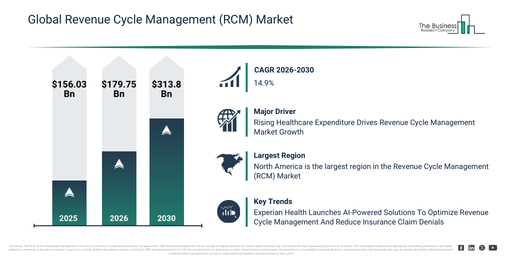
    The revenue cycle management sector has experienced accelerated expansion recently, with a projected increase from $156.03 billion in 2025 to $179.75 billion in 2026, reflecting a compound annual growth rate of 15.2%. Factors contributing to this robust growth during the preceding period include escalating complexities in healthcare administration, a surge in insurance claim submissions, the widespread implementation of electronic health records, a rise in outsourced billing solutions, and a critical need to minimize revenue losses.

    The revenue cycle management (rcm) sector is poised for substantial expansion over the forthcoming years, projecting a market valuation of $313.8 billion by 2030, driven by a compound annual growth rate (CAGR) of 14.9%. This projected growth is underpinned by several key factors, including a heightened need for immediate revenue insights, a greater embrace of comprehensive digital rcm solutions, the proliferation of value-based healthcare arrangements, an intensified emphasis on seamless data exchange among healthcare providers, and the escalating utilization of predictive financial analytics. Furthermore, prominent trends anticipated during this forecast period encompass the increasing integration of artificial intelligence in coding and billing processes, a discernible migration towards rcm platforms hosted in the cloud, escalating demand for automated claims handling, a broader application of data-driven strategies for revenue enhancement, and a more rigorous attention to regulatory adherence and accuracy.

    Download A Free Sample Report For Comprehensive Market Insights:

    https://www.thebusinessresearchcompany.com/sample.aspx?id=7712&type=smp

    Revenue Cycle Management (RCM) Market Opportunity Drivers: What Is Creating New Revenue Potential?

    Rising healthcare expenditures are anticipated to be the primary catalyst for the revenue cycle management market’s expansion. This surge in health spending encompasses all costs related to healthcare provision, family planning, nutritional initiatives, and health-focused emergency assistance. In response to escalating healthcare costs, medical institutions are increasingly implementing sophisticated revenue cycle management systems to oversee both their administrative and clinical operations, thereby streamlining processes like claims handling, payment collection, and overall revenue generation. To illustrate, signify data from April 2025 released by the American Medical Association, a professional body in the United States, indicating that US health expenditure experienced a significant 7.5% escalation in 2023, culminating in a total of $4.9 trillion, which breaks down to approximately $14,570 per individual, a substantial acceleration from the 4.6% growth observed in the preceding year. Consequently, the upward trend in healthcare spending directly fuels the expansion of the revenue cycle management sector.

    Revenue Cycle Management (RCM) Market Segmentation Trends And Revenue Drivers

    The revenue cycle management (rcm) market covered in this report is segmented –

    1) By Product: Integrated, Standalone

    2) By Component: Software, Services

    3) By Function: Claims And Denial Management, Medical Coding And Billing, Electronic Health Record (EHR), Clinical Documentation Improvement (CDI), Insurance, Other Functions

    4) By Deployment: Web-Based, Cloud-Based, On-Premises

    5) By End User: Hospitals, General Physicians, Labs, Other End Users

    Subsegments:

    1) By Integrated RCM: Comprehensive Solutions, Multi-Function Platforms, End-to-End Solutions

    2) By Standalone RCM: Billing and Invoicing Solutions, Claims Management Solutions, Payment Processing Solutions, Revenue Analytics Tools

    Revenue Cycle Management (RCM) Market Innovation Trends Driving Future Development

    Revenue cycle management (RCM) market leaders are concentrating on innovating sophisticated tools, notably predictive analytics, with the aim of boosting financial gains and operational performance. This predictive analytics technology leverages artificial intelligence to scrutinize historical claim information, forecast the probability of rejections, and inform strategic choices to preempt or reverse troublesome claims. As an illustration, Experian Health, a United States entity involved in healthcare RCM, unveiled its AI Advantage suite in February 2023, incorporating predictive modeling and up-to-the-minute insights. This offering includes two components: AI Advantage Predictive Denials, which gauges the risk associated with each claim’s potential denial and pinpoints elements likely to cause rejection prior to submission, and AI Advantage Denial Triage, designed to prioritize post-denial recovery efforts by assigning scores to denials based on their likelihood of a successful appeal. This system continuously improves by learning from extensive historical payment data, seamlessly integrates with current operational processes and task lists, and offers complete adaptability according to specific criteria such as denial codes, payers, financial values, or likelihood scores. When deployed through Experian’s ClaimSource® claims administration platform, AI Advantage assists healthcare providers in minimizing preventable denials, expediting payments, and enhancing their cash flow.

    Revenue Cycle Management (RCM) Market Industry Leaders: Which Organizations Are Driving Competition?

    Major companies operating in the revenue cycle management (rcm) market are The SSI Group LLC, Allscripts Healthcare Solutions Inc., Experian Health Inc., R1 RCM Inc., McKesson Corporation, Athenahealth Inc., Epic Systems Corporation, Cerner Corporation, eClinicalWorks India Private Limited, NXGN Management LLC, CareCloud Corporation, AdvantEdge Healthcare Solutions, Huron Consulting Group, Optum Inc., 3M Company, Cognizant Technology Solutions Corp., GeBBS Healthcare Solutions, Infosys Limited, Oracle Corporation, Accenture plc, Conifer Health Solutions LLC, Access Healthcare Services Pvt Ltd, CareStack, Dental Revenue Group Inc., eAssist Dental Solutions, Med Healthcare Revenue Cycle Management, Medusind Solutions, Drchrono Inc.

    Access The Complete Revenue Cycle Management (RCM) Market Report:

    https://www.thebusinessresearchcompany.com/report/revenue-cycle-management-rcm-global-market-report

    Revenue Cycle Management (RCM) Market Global Footprint: Which Region Holds Market Leadership?

    North Americawas the largest region in the revenue cycle management (RCM) market in 2025. Asia-Pacificis expected to be the fastest-growing region in the forecast period. The regions covered in the revenue cycle management (rcm) market report are Asia-Pacific, South East Asia, Western Europe, Eastern Europe, North America, South America, Middle East, Africa.

    Get in touch with us:

    The Business Research Company: https://www.thebusinessresearchcompany.com/

    Americas: +1 310-496-7795

    Asia: +44 7882 955267 & +91 8897263534

    Europe: +44 7882 955267

    Email us at: marketing@tbrc.info

    Follow us on:

    LinkedIn: https://in.linkedin.com/company/the-business-research-company

    YouTube: https://www.youtube.com/channel/UC24_fI0rV8cR5DxlCpgmyFQ

    Global Market Model: https://www.thebusinessresearchcompany.com/global-market-model
  • Rett Syndrome Market Forecast Signals New Revenue Opportunities Through 2030

    Rett Syndrome Market Forecast Signals New Revenue Opportunities Through 2030

    Through market attractiveness analysis, total addressable market evaluation, company benchmarking matrices, interactive Excel dashboards, expanded supply chain intelligence, emerging startup coverage, and detailed product insights, The Business Research Company’s 2026 market reports provide more actionable and strategically valuable research.

    Rett Syndrome Market Growth Analysis: How Will Revenue Expand During The Forecast Period?

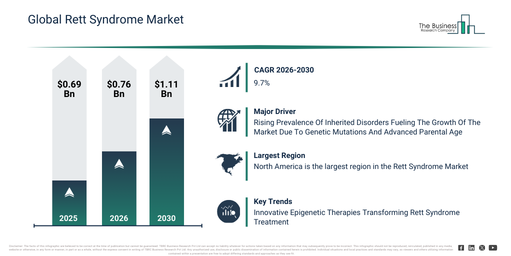
    In the past few years, the Rett syndrome market has experienced substantial expansion. Projections indicate a continued upward trend, with the market poised to increase from $0.69 billion in 2025 to $0.76 billion in 2026, reflecting a compound annual growth rate (CAGR) of 9.9%. This historical growth trajectory can be linked to several key factors, including heightened awareness surrounding rare neurological conditions, the accessibility of genetic testing for MECP2 mutations, the development of dedicated care facilities, the proliferation of supportive therapeutic interventions, and the increasing impact of advocacy and patient support groups.

    Anticipate a robust expansion within the Rett syndrome market over the upcoming years, projecting a valuation of $1.11 billion by 2030, propelled by a compound annual growth rate of 9.7%. This upward trajectory is fueled by a confluence of factors including sophisticated advancements in gene therapy, escalating financial commitments to rare disease therapeutics, the broadening scope of personalized medicine, increased reliance on digital health solutions within neurology, and a heightened emphasis on early detection and management strategies. Key developments shaping this market during the forecast period encompass intensified research into gene-based treatments, a greater focus on diagnostic tools offering enhanced precision, wider acceptance of collaborative, multi-specialty patient care models, the progressive development of therapies targeting specific symptoms, and more seamless integration of digital tools for patient health monitoring.

    Download A Free Sample Report For Comprehensive Market Insights:

    https://www.thebusinessresearchcompany.com/sample.aspx?id=24391&type=smp

    Rett Syndrome Market Growth Momentum: Which Factors Are Influencing Demand?

    The escalating incidence of genetic conditions is anticipated to be a primary driver for the expansion of the rett syndrome market. These inherited disorders, stemming from genetic alterations transmitted from parents to their offspring, encompass conditions such as cystic fibrosis, sickle cell anemia, hemophilia, and Huntington’s disease. A contributing factor to the increase in these inherited disorders is the advanced age of parents, which elevates the probability of genetic mutations being passed on. Rett syndrome itself contributes to a deeper comprehension of inherited disorders by illuminating the significance of genetic mutations, especially within the MECP2 gene. This deepened understanding facilitates advancements in neurodevelopmental research and spurs the exploration of gene-based treatments and therapies applicable to other related conditions. For illustrative purposes, as of February 2024, Genetic Alliance UK reported that rare conditions, affecting less than one in 2,000 individuals, impact more than 3.5 million people in the UK, with approximately one in seventeen individuals encountering such conditions during their lifetime. Of the 7,000 documented rare conditions, a substantial 70% affect children, and tragically, over 30% of these affected children succumb before their fifth birthday due to the severity of these disorders; consequently, the growing prevalence of inherited disorders is fueling the growth of the rett syndrome market.

    Rett Syndrome Market Segment Analysis Highlighting Growth Areas

    The rett syndrome market covered in this report is segmented –

    1) By Type: Classic Rett Syndrome, Atypical Rett Syndrome

    2) By Stages: Stage IV Late Motor Deterioration, Stage III Plateau, Stage II Rapid Destruction, Stage I Early Onset

    3) By Treatment: Medication, Physical Therapy, Occupational Therapy, Speech Language Therapy, Other Treatments

    4) By Diagnosis: Blood Test, Genetic Testing, Other Diagnosis

    5) By End-Users: Hospitals, Specialty Clinics, Homecare, Other End Users

    Subsegments:

    1) By Classic Rett Syndrome: Early-Onset Classic Rett Syndrome, Late-Onset Classic Rett Syndrome

    2) By Atypical Rett Syndrome: Rett-Like Syndrome, Syndrome With Neurodevelopmental Delays, Sporadic Atypical Rett Syndrome

    Rett Syndrome Market Trends Reshaping Industry Growth

    Within the rett syndrome marketplace, key players are concentrating efforts on pioneering novel solutions, including advanced epigenetic treatments designed to address the fundamental genetic origins of the condition, re-establish normal methyl-CpG-binding protein 2 (MECP2) activity, and possibly alleviate or even reverse presenting symptoms. These epigenetic therapies represent a class of interventions intended to adjust how genes are expressed, not by changing the actual deoxyribonucleic acid (DNA) sequence, but rather by influencing gene function through modulation of processes like DNA methylation, histone alterations, or ribonucleic acid (RNA) control. As an illustration, noteworthy developments include Unravel Biosciences Inc., a biotechnology firm based in the United States, securing U.S. Food and Drug Administration (FDA) authorization in May 2024 for vorinostat (RVL-001) as a promising therapeutic option for rett syndrome. RVL-001, characterized as an epigenetic therapy, functions by blocking histone deacetylases (HDACs), thereby facilitating the restoration of correct gene expression within neuronal cells. This form of epigenetic modification aids in counteracting the effects of the MECP2 mutation, potentially leading to enhanced neurological function.

    Rett Syndrome Market Leading Companies: Who Holds Significant Market Presence?

    Major companies operating in the rett syndrome market are Sarepta Therapeutics Inc., Ionis Pharmaceuticals Inc., Acadia Pharmaceuticals Inc., Regenxbio Inc., Beam Therapeutics Inc., Shape Therapeutics Inc., Unravel Biosciences Inc., Neuren Pharmaceuticals Limited, Taysha Gene Therapies, Prilenia Therapeutics Inc., Anavex Life Sciences Corp, Neurogene Inc., Neurolixis Inc., Neurotech International Limited, PTC Therapeutics Inc., Ultragenyx Pharmaceutical Inc., Zogenix Inc., Bluebird Bio Inc., Astellas Gene Therapies Inc., Rocket Pharmaceuticals Inc., Passage Bio Inc., Homology Medicines Inc., Abeona Therapeutics Inc., Orchard Therapeutics plc

    Access The Complete Rett Syndrome Market Report:

    https://www.thebusinessresearchcompany.com/report/rett-syndrome-global-market-report

    Rett Syndrome Market Regional Distribution: Which Areas Drive Market Expansion?

    North Americawas the largest region in the rett syndrome market in 2025. Asia-Pacificis expected to be the fastest-growing region in the forecast period. The regions covered in the rett syndrome market report are Asia-Pacific, South East Asia, Western Europe, Eastern Europe, North America, South America, Middle East, Africa.

    Get in touch with us:

    The Business Research Company: https://www.thebusinessresearchcompany.com/

    Americas: +1 310-496-7795

    Asia: +44 7882 955267 & +91 8897263534

    Europe: +44 7882 955267

    Email us at: marketing@tbrc.info

    Follow us on:

    LinkedIn: https://in.linkedin.com/company/the-business-research-company

    YouTube: https://www.youtube.com/channel/UC24_fI0rV8cR5DxlCpgmyFQ

    Global Market Model: https://www.thebusinessresearchcompany.com/global-market-model
  • Retinoblastoma Treatment Market Growth Is Accelerating As Industry Transformation Continues

    Retinoblastoma Treatment Market Growth Is Accelerating As Industry Transformation Continues

    Delivering more actionable and strategically valuable research, The Business Research Company’s 2026 market reports feature market attractiveness analysis, total addressable market evaluation, company benchmarking matrices, interactive Excel dashboards, expanded supply chain intelligence, emerging startup coverage, and detailed product insights.

    Retinoblastoma Treatment Market Forecast: What Market Value Is Expected By 2030?

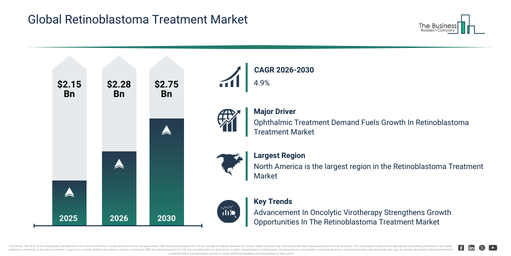
    The market for retinoblastoma treatments has experienced significant expansion lately, projecting a rise from $2.15 billion in 2025 to $2.28 billion in 2026, propelled by a compound annual growth rate of 5.8%. This historical growth trajectory is largely attributable to enhanced diagnostic capabilities for pediatric cancers, the proliferation of dedicated oncology facilities, elevated survival rates achieved via prompt interventions, the accessibility of sophisticated imaging technologies, and heightened public consciousness regarding childhood eye cancers.

    The market for retinoblastoma treatments is projected to experience consistent expansion, reaching an estimated $2.75 billion by 2030 with a compound annual growth rate of 4.9%. This projected growth throughout the forecast period is fueled by several key factors, including augmented investments in pediatric oncology research, a growing preference for minimally invasive therapeutic approaches, the broader integration of precision medicine within oncology, an increasing emphasis on long-term quality of life for patients, and the wider implementation of sophisticated treatment delivery systems. Prominent trends expected during this timeframe encompass a greater utilization of targeted chemotherapy, an increased application of intra-arterial drug administration, a heightened focus on treatments that preserve vision, the expansion of comprehensive multidisciplinary care for pediatric cancer, and more robust efforts in early detection and screening.

    Download A Free Sample Report For Comprehensive Market Insights:

    https://www.thebusinessresearchcompany.com/sample.aspx?id=15664&type=smp

    Retinoblastoma Treatment Market Expansion Drivers: What Is Shaping Future Growth?

    The projected expansion of the retinoblastoma treatment sector is anticipated to be fueled by a rising need for eye care therapies and surgical procedures. These eye treatments and surgeries involve a range of medical interventions and operations designed to identify, handle, and rectify ailments and issues impacting the eyes and the entire visual apparatus. The surge in ophthalmic treatments and surgeries can be attributed to several factors, including an aging global population, a greater incidence of eye conditions like cataracts and age-related macular degeneration, technological innovations that permit more efficient and accessible interventions, and increased public awareness, which encourages earlier diagnosis and management. Retinoblastoma treatment is integral to ophthalmic surgeries aimed at combating cancerous tumors within the eye, preventing their spread or return, and maintaining visual capability and ocular function. To illustrate, as reported in October 2023 by the RNIB, a charitable organization in the UK dedicated to assisting individuals with visual impairments, outpatient appointments for eye care in the UK surpassed eight million in 2022, making it the most frequent specialty; concurrently, the number of individuals experiencing sight loss, already over two million, is forecasted to double to more than four million by the year 2050. Consequently, the escalating demand for ophthalmic treatments and surgeries is acting as a catalyst for the growth within the retinoblastoma treatment market.

    Retinoblastoma Treatment Market Segment Performance And Strategic Opportunities

    The retinoblastoma treatment market covered in this report is segmented –

    1) By Type: Non-Hereditary Retinoblastoma, Hereditary Retinoblastoma

    2) By Treatment Type: Surgery, Radiation Therapy, Laser Therapy (Photocoagulation), Cryotherapy, Thermotherapy, Chemotherapy, Ophthalmic Artery Infusion Chemotherapy, High-Dose Chemotherapy And Stem Cell Transplant

    3) By Disease Stage: Intraocular Retinoblastoma, Extraocular Retinoblastoma

    4) By Application: Hospitals, Cancer Institutes, Other Applications

    Subsegments:

    1) By Non-Hereditary Retinoblastoma: Unilateral Non-Hereditary Retinoblastoma, Bilateral Non-Hereditary Retinoblastoma

    2) By Hereditary Retinoblastoma: Bilateral Hereditary Retinoblastoma, Unilateral Hereditary Retinoblastoma

    Retinoblastoma Treatment Market Strategic Trends: What Is Defining The Next Phase Of Growth?

    Leading participants in the retinoblastoma treatment sector are channeling their efforts into the creation of sophisticated oncolytic virotherapies, aiming to bolster therapeutic effectiveness and safeguard the sight of young individuals diagnosed with this condition. This therapeutic approach harnesses genetically modified viruses designed to target and eliminate malignant cells exclusively, leaving healthy tissues unharmed, which in turn contributes to a safer treatment experience and fewer adverse reactions. As an illustration, in the month of July in 2024, Theriva Biologics, a clinical development firm situated in the United States, was granted the designation of a Rare Pediatric Disease by the Food and Drug Administration for its primary experimental treatment, VCN-01, an oncolytic adenovirus administered systemically and characterized by its stroma-degrading properties. VCN-01’s mechanism involves selective proliferation within neoplastic cells, a breakdown of the adjacent stromal tissue to facilitate enhanced chemotherapy distribution, and the stimulation of an anti-tumor immune response. Preliminary findings from a Phase 1 trial, sponsored by an investigator and conducted on pediatric patients afflicted with treatment-resistant retinoblastoma, indicated a commendable safety profile and promising therapeutic results following intravitreal administration of VCN-01.

    Retinoblastoma Treatment Market Key Players: Which Companies Shape Industry Competition?

    Major companies operating in the retinoblastoma treatment market are Johnson And Johnson Services Inc., F Hoffmann La Roche AG, Merck And Co Inc., Sanofi SA, Bristol Myers Squibb Company, Novartis AG, Pfizer Inc., GlaxoSmithKline Plc, Takeda Pharmaceutical Company Limited, Eli Lilly And Company, Teva Pharmaceutical Industries Ltd, Regeneron Pharmaceuticals Inc., Astellas Pharma Inc., Otsuka Pharmaceutical, Daiichi Sankyo Company, Taiho Pharmaceutical Co Ltd, Icon Bioscience Inc., Ono Pharmaceutical Co Ltd, Nippon Shinyaku Co Ltd, Cadila Pharmaceuticals, Phio Pharmaceuticals Inc., Bayer AG, AstraZeneca Plc, Sun Pharmaceutical Industries Ltd

    Access The Complete Retinoblastoma Treatment Market Report:

    https://www.thebusinessresearchcompany.com/report/retinoblastoma-treatment-global-market-report

    Retinoblastoma Treatment Market Leading Geography: Which Region Generates The Most Revenue?

    North Americawas the largest region in the retinoblastoma treatment market in 2025. Asia-Pacificis expected to be the fastest-growing region in the forecast period. The regions covered in the retinoblastoma treatment market report are Asia-Pacific, South East Asia, Western Europe, Eastern Europe, North America, South America, Middle East, Africa.

    Get in touch with us:

    The Business Research Company: https://www.thebusinessresearchcompany.com/

    Americas: +1 310-496-7795

    Asia: +44 7882 955267 & +91 8897263534

    Europe: +44 7882 955267

    Email us at: marketing@tbrc.info

    Follow us on:

    LinkedIn: https://in.linkedin.com/company/the-business-research-company

    YouTube: https://www.youtube.com/channel/UC24_fI0rV8cR5DxlCpgmyFQ

    Global Market Model: https://www.thebusinessresearchcompany.com/global-market-model
  • Retinitis Pigmentosa Market Outlook Highlights The Next Major Growth Opportunities

    Retinitis Pigmentosa Market Outlook Highlights The Next Major Growth Opportunities

    Enhanced with market attractiveness analysis, total addressable market evaluation, company benchmarking matrices, interactive Excel dashboards, expanded supply chain intelligence, emerging startup coverage, and detailed product insights, The Business Research Company’s 2026 market reports deliver more actionable and strategically valuable research.

    Retinitis Pigmentosa Market Size Outlook: How Fast Will Revenue Grow Through 2030?

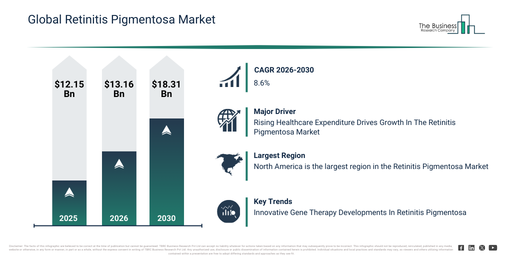
    The market for retinitis pigmentosa treatments has experienced robust expansion, projected to surge from $12.15 billion in 2025 to $13.16 billion in 2026, reflecting an 8.3% compound annual growth rate. This upward trajectory during the examined period is attributable to several factors, including a deeper comprehension of genetic eye conditions, wider accessibility to genetic diagnostic testing, heightened patient advocacy and awareness initiatives, the availability of supportive therapies centered on vitamins, and the proliferation of research facilities dedicated to ophthalmology.

    The market for retinitis pigmentosa is poised for significant expansion over the upcoming years, with projections indicating a rise to $18.31 billion by 2030, driven by a compound annual growth rate (CAGR) of 8.6%. This predicted growth is fueled by several key factors, including augmented financial commitments to gene therapy research and development, a surge in the need for treatments that alter the disease’s progression, the proliferation of tailored medical strategies, the increasing incorporation of visual aid technologies, and a heightened emphasis on identifying the condition through genetic testing at an early stage. During this forecast period, prominent trends are anticipated to include a greater concentration on gene-centric therapeutic interventions, wider acceptance of retinal implant devices, expanded utilization of genetic analysis for diagnostic purposes, a broader offering of solutions aimed at improving vision support, and intensified scientific inquiry into treatments capable of modifying the disease’s course.

    Download A Free Sample Report For Comprehensive Market Insights:

    https://www.thebusinessresearchcompany.com/sample.aspx?id=16528&type=smp

    Retinitis Pigmentosa Market Development Factors: Which Trends Are Supporting Demand?

    Anticipated growth in the retinitis pigmentosa market is largely attributable to escalating healthcare spending. This spending encompasses the totality of resources allocated to healthcare goods and services, such as medical interventions, pharmaceuticals, hospital stays, and preventative health measures, over a defined timeframe, thereby indicating the comprehensive expense of healthcare delivery within a given populace. Factors contributing to this upward trend in healthcare expenditure include the rising costs associated with sophisticated medical innovations, an expanding elderly demographic, and a greater incidence of long-term health conditions. Within the realm of retinitis pigmentosa care, financial outlays are directed towards enhancing diagnostic capabilities, formulating efficacious therapeutic interventions, and delivering essential supportive services to mitigate the impact of vision impairment. To illustrate, the American Medical Association, a professional body in the United States, reported in April 2025 that U.S. healthcare expenditures climbed by 7.5% in 2023, totaling $4.9 trillion and averaging approximately $14,570 per inhabitant, a significant acceleration compared to the 4.6% increase observed in 2022; consequently, this augmentation in healthcare expenditure is a primary catalyst for the expansion of the retinitis pigmentosa market.

    Retinitis Pigmentosa Market Segment Landscape And Growth Potential

    The retinitis pigmentosa market covered in this report is segmented –

    1) By Type: Autosomal Recessive, Autosomal Dominant, X-Linked

    2) By Treatment: Vitamin A, Docosahexaenoic Acid (DHA), Calcium Channel Blockers, Gene Therapy, Retinal Eye Prosthetics, Other Treatments

    3) By Diagnosis: Electroretinogram, Visual Field Testing, Genetic Testing, Other Diagnosis

    4) By Distribution Channel: Hospital Pharmacy, Retail Pharmacy, Online Pharmacy, Other Distribution Channels

    5) By End-users: Hospitals, Specialty Clinics, Homecare, Other End-users

    Subsegments:

    1) By Autosomal Recessive: Early-Onset Autosomal Recessive Retinitis Pigmentosa, Late-Onset Autosomal Recessive Retinitis Pigmentosa

    2) By Autosomal Dominant: Early-Onset Autosomal Dominant Retinitis Pigmentosa, Late-Onset Autosomal Dominant Retinitis Pigmentosa

    3) By X-Linked: X-Linked Recessive Retinitis Pigmentosa, X-Linked Dominant Retinitis Pigmentosa

    Retinitis Pigmentosa Market Transformation Trends: Which Innovations Are Driving Change?

    The landscape of the retinitis pigmentosa market is being shaped by leading entities who are placing significant emphasis on pioneering novel therapeutic approaches, with gene therapy standing out as a promising avenue for more effective and precise interventions aimed at managing and possibly eradicating this severe visual impairment. The core principle behind gene therapy for RP entails introducing corrected or functional genes to substitute for or amend the aberrant genes responsible for the condition. This cutting-edge therapeutic strategy is designed to reinstate normative functionality in the retina’s compromised photoreceptor cells, thereby mitigating or potentially arresting the decline in vision. Illustrating this progress, in April of 2024, ViGeneron GmbH, a biopharmaceutical firm headquartered in Germany, initiated a Phase Ib clinical study to assess the safety, patient tolerance, and therapeutic effectiveness of VG901, a gene therapy specifically developed to address retinitis pigmentosa arising from defects in the CNGA1 gene. This particular investigation is structured as an open-label, single-arm trial focused on dose escalation, and it will examine the outcomes of administering VG901 via intravitreal injection to individuals diagnosed with autosomal recessive RP stemming from homologous CNGA1 gene mutations.

    Retinitis Pigmentosa Market Competitive Landscape: Who Are The Leading Companies?

    Major companies operating in the retinitis pigmentosa market are Johnson And Johnson, Novartis AG, AbbVie Inc., Astellas Pharma Inc., Sun Pharmaceutical Industries Ltd, Spark Therapeutics, REGENXBIO Inc., Editas Medicine, IVERIC bio, MeiraGTx Holdings, Gensight Biologics, Second Sight Medical Products, Copernicus Therapeutics Inc., Kiora Pharmaceuticals, 4D Molecular Therapeutics, Acucela Inc., AGTC Applied Genetic Technologies Corporation, ProQR Therapeutics NV, Nanoscope Therapeutics Inc, Beacon Therapeutics Ltd, Horama SA, ViGeneron GmbH

    Access The Complete Retinitis Pigmentosa Market Report:

    https://www.thebusinessresearchcompany.com/report/retinitis-pigmentosa-global-market-report

    Retinitis Pigmentosa Market Regional Outlook: Where Are The Largest Opportunities Located?

    North Americawas the largest region in the retinitis pigmentosa market in 2025. The regions covered in the retinitis pigmentosa market report are Asia-Pacific, South East Asia, Western Europe, Eastern Europe, North America, South America, Middle East, Africa.

    Get in touch with us:

    The Business Research Company: https://www.thebusinessresearchcompany.com/

    Americas: +1 310-496-7795

    Asia: +44 7882 955267 & +91 8897263534

    Europe: +44 7882 955267

    Email us at: marketing@tbrc.info

    Follow us on:

    LinkedIn: https://in.linkedin.com/company/the-business-research-company

    YouTube: https://www.youtube.com/channel/UC24_fI0rV8cR5DxlCpgmyFQ

    Global Market Model: https://www.thebusinessresearchcompany.com/global-market-model
  • Retinal Vein Occlusion Treatment Market Trends And Growth Drivers Point To Strong Future Potential

    Retinal Vein Occlusion Treatment Market Trends And Growth Drivers Point To Strong Future Potential

    Through market attractiveness analysis, total addressable market evaluation, company benchmarking matrices, interactive Excel dashboards, expanded supply chain intelligence, emerging startup coverage, and detailed product insights, The Business Research Company’s 2026 market reports provide more actionable and strategically valuable research.

    Retinal Vein Occlusion Treatment Market Size, Value And Growth Trends Through 2030

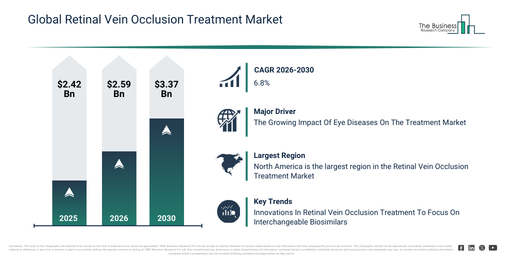
    In the realm of retinal vein occlusion treatments, a robust expansion has been witnessed lately, with projections indicating continued advancement. This market, valued at $2.42 billion in 2025, is anticipated to reach $2.59 billion by 2026, reflecting a compounded annual growth rate of 7.0%. Factors contributing to this historical momentum include a rise in the occurrence of retinal vascular conditions, increased adoption of anti-VEGF medications within clinical settings, the proliferation of ambulatory eye care services, a surge in clinical research endeavors, and enhanced insurance coverage.

    The market for treating retinal vein occlusion is poised for significant expansion, projected to reach $3.37 billion by 2030, reflecting a compound annual growth rate of 6.8%. This anticipated surge is fueled by several key factors: a heightened need for sustained treatment efficacy, escalating investments in innovative drug delivery mechanisms, broader acceptance of biosimilar alternatives, a pronounced shift towards patient-focused therapeutic approaches, and a greater reliance on real-world data to guide treatment choices. During this same forecast period, prevailing market trends will include a greater utilization of combination drug therapies, increased uptake of long-acting injectable treatments, deeper integration of precision diagnostic tools, the advancement of tailored treatment plans, and a strengthened emphasis on maintaining visual acuity.

    Download A Free Sample Report For Comprehensive Market Insights:

    https://www.thebusinessresearchcompany.com/sample.aspx?id=18453&type=smp

    Retinal Vein Occlusion Treatment Market Industry Drivers: What Is Driving Revenue Growth?

    The expanding incidence of ocular ailments is poised to stimulate the expansion of the market for retinal vein occlusion therapies in the foreseeable future. Ocular ailments encompass a spectrum of disorders and diseases impacting sight or the eyes, ranging from minor irritations and infections to more severe conditions such as glaucoma, cataracts, macular degeneration, and diabetic retinopathy. This surge in ocular conditions can be linked to demographic shifts like an aging global population and the escalating rates of diabetes and hypertension. Treatments for retinal vein occlusion are designed to re-establish circulation and mitigate swelling, thereby preventing vision impairment and addressing complications linked to this specific eye disorder. As an illustration, data from January 2024 revealed that the Centers for Disease Control and Prevention reported more than 3.4 million Americans over the age of 40 were experiencing blindness or visual impairment, a figure projected to double by 2030. Consequently, the heightened occurrence of eye conditions is a key driver for the growth trajectory of the retinal vein occlusion treatment market.

    Retinal Vein Occlusion Treatment Market Categorization By Product Type And Application

    The retinal vein occlusion treatment market covered in this report is segmented –

    1) By Disease Type: Central Retinal Vein Occlusion (CRVO), Branch Retinal Vein Occlusion (BRVO)

    2) By Diagnosis: Optical Coherence Tomography, Fundoscopic Examination, Fluorescein Angiography

    3) By Treatment: Anti-Vascular Endothelial Growth Factor (Anti-VEGF), Corticosteroid Drugs, Other Treatments

    4) By End-User: Hospital And Clinics, Research And Academics, Other End-Users

    Subsegments:

    1) By Central Retinal Vein Occlusion (CRVO): Non-Ischemic CRVO, Ischemic CRVO

    2) By Branch Retinal Vein Occlusion (BRVO): Non-Ischemic BRVO, Ischemic BRVO

    #Retinal Vein Occlusion Treatment Market Growth Trends: What Is Influencing The Future Outlook?

    The primary corporations engaged in the retinal vein occlusion therapy sector are dedicating their efforts to pioneering novel therapeutic agents, notably interchangeable biosimilars, with the objective of expanding treatment modalities and bolstering patient access. An interchangeable biosimilar represents a biological medication closely mirroring an established reference biologic, rendering it a viable substitute for the efficient management of ocular inflammation and fluid accumulation. As a case in point, in May of 2024, Biocon Biologics Limited, an entity specializing in biosimilar production headquartered in India, secured approval from the US Food and Drug Administration for Yesafili (aflibercept-jbvf), an interchangeable biosimilar counterpart to EYLEA (aflibercept). This agent operates as an inhibitor of vascular endothelial growth factor (VEGF), addressing a spectrum of ophthalmological ailments including neovascular age-related macular degeneration (wet AMD), macular edema resulting from retinal vein occlusion (whether branch RVO or central RVO), diabetic macular edema (DME), and myopic choroidal neovascularization (myopic CNV).

    Retinal Vein Occlusion Treatment Market Company Landscape And Strategic Competition

    Major companies operating in the retinal vein occlusion treatment market are Roche Holding AG, Bayer AG, Novartis International AG, Regeneron Pharmaceuticals Inc., Bausch Health Companies Inc., Santen Pharmaceutical Co Ltd, Chengdu Kanghong Pharmaceutical Group Co Ltd, Genentech Inc, Apellis Pharmaceuticals Inc, Alimera Sciences Inc, Ocular Therapeutix Inc, EyePoint Pharmaceuticals Inc, Aerpio Pharmaceuticals Inc, REGENXBIO Inc, Adverum Biotechnologies Inc, Graybug Vision Inc, Oxurion NV, PanOptica Inc, Clearside Biomedical Inc, Kodiak Sciences Inc, Outlook Therapeutics Inc, Annexin Pharmaceuticals AB

    Access The Complete Retinal Vein Occlusion Treatment Market Report:

    https://www.thebusinessresearchcompany.com/report/retinal-vein-occlusion-treatment-global-market-report

    Retinal Vein Occlusion Treatment Market Geographic Landscape: Which Region Dominates Industry Growth?

    North Americawas the largest region in the retinal vein occlusion treatment market in 2025. Asia-Pacificis expected to be the fastest-growing region in the forecast period. The regions covered in the retinal vein occlusion treatment market report are Asia-Pacific, South East Asia, Western Europe, Eastern Europe, North America, South America, Middle East, Africa.

    Get in touch with us:

    The Business Research Company: https://www.thebusinessresearchcompany.com/

    Americas: +1 310-496-7795

    Asia: +44 7882 955267 & +91 8897263534

    Europe: +44 7882 955267

    Email us at: marketing@tbrc.info

    Follow us on:

    LinkedIn: https://in.linkedin.com/company/the-business-research-company

    YouTube: https://www.youtube.com/channel/UC24_fI0rV8cR5DxlCpgmyFQ

    Global Market Model: https://www.thebusinessresearchcompany.com/global-market-model
  • Retinal Vein Occlusion Market Expansion Is Reshaping Competitive Dynamics Across The Industry

    Retinal Vein Occlusion Market Expansion Is Reshaping Competitive Dynamics Across The Industry

    Delivering more actionable and strategically valuable research, The Business Research Company’s 2026 market reports feature market attractiveness analysis, total addressable market evaluation, company benchmarking matrices, interactive Excel dashboards, expanded supply chain intelligence, emerging startup coverage, and detailed product insights.

    Retinal Vein Occlusion Market CAGR Analysis And Future Market Development

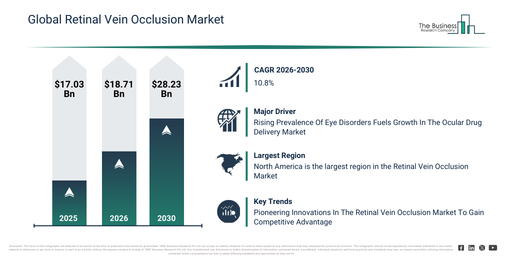
    The market for retinal vein occlusion treatments experienced robust expansion lately, projected to ascend from $17.03 billion in 2025 to $18.71 billion in 2026, reflecting a compound annual growth rate of 9.9%. This upward trajectory during the past period is largely attributable to a confluence of factors including the heightened incidence of hypertension and diabetes, augmented public knowledge regarding retinal vascular conditions, enhanced accessibility to advanced diagnostic imaging technologies, the proliferation of ophthalmology services, and an increase in clinical investigations within the field.

    The market for retinal vein occlusion is poised for substantial expansion over the coming years, with projections indicating a valuation of $28.23 billion by the year 2030, driven by a compound annual growth rate of 10.8%. This projected growth is underpinned by several key factors, including an escalating elderly demographic, a heightened preference for less invasive therapeutic options, the advancement of individualized eye care solutions, amplified investment in research concerning retinal conditions, and a greater embrace of combined treatment strategies. During this forecast period, significant trends are anticipated to shape the market, such as the increased utilization of anti-VEGF therapies, a surge in the adoption of sophisticated retinal imaging for diagnostic purposes, a growing emphasis on the early identification of vascular abnormalities, the broader implementation of outpatient eye treatment frameworks, and more refined methods for tracking disease progression.

    Download A Free Sample Report For Comprehensive Market Insights:

    https://www.thebusinessresearchcompany.com/sample.aspx?id=13058&type=smp

    Retinal Vein Occlusion Market Growth Factors: Which Forces Are Supporting Market Expansion?

    Forward, the expansion of the ocular drug delivery sector is anticipated to be driven by a rise in the occurrence of eye conditions. Such conditions encompass a broad spectrum of ailments impacting the eyes, one’s sight, or the ocular vicinity. Similarly, a surge in renal vein occlusion cases is fueling the expansion of its respective market, thereby stimulating the need for pioneering diagnostic tools and therapeutic interventions. For example, data from the UK’s Royal National Institute of Blind People (RNIB) indicated that by October 2023, outpatient eye care appointments in the UK had surpassed eight million during the 2021/22 period, representing the highest figure across all medical specialties. Moreover, it is projected that the current population of over two million individuals experiencing sight loss will escalate to more than four million by 2050. Consequently, the growing incidence of ocular disorders is set to be a significant catalyst for the retinal vein occlusion market.

    Retinal Vein Occlusion Market Segment Analysis And Revenue Opportunities

    The retinal vein occlusion market covered in this report is segmented –

    1) By Type: Branch Retinal Vein Occlusion, Central Retinal Vein Occlusion

    2) By Condition: Non-Ischemic, Ischemic

    3) By Diagnosis: Optical Coherence Tomography, Fundoscopic Examination, Fluorescein Angiography

    4) By Treatment: Antivascular Endothelial Growth Factor, Corticosteroid Drugs, Laser Retinal Photocoagulation

    5) By End User: Hospitals And Clinics, Research And Academics Centers, Other End-Users

    Subsegments:

    1) By Branch Retinal Vein Occlusion: Non-Ischemic Branch Retinal Vein Occlusion, Ischemic Branch Retinal Vein Occlusion

    2) By Central Retinal Vein Occlusion: Non-ischemic Central Retinal Vein Occlusion, Ischemic Central Retinal Vein Occlusion

    Retinal Vein Occlusion Market Industry Trends: What Changes Are Reshaping Demand?

    Within the dynamic market for retinal vein occlusion treatments, leading enterprises are prioritizing the creation of novel solutions, exemplified by the advent of next-generation pattern-scanning laser platforms. These advanced systems aim to elevate treatment accuracy, streamline procedures, and tailor disease management to individual patient needs. The term “next-generation pattern-scanning laser platforms” denotes sophisticated ophthalmic laser apparatuses equipped with high-speed pattern projection, energy modulation designed to preserve delicate tissues, and versatile laser functionalities, all intended to refine therapeutic results for conditions affecting retinal blood vessels. A pertinent illustration of this trend is the introduction of the Iridex PASCAL in April 2023 by Iridex Corporation, a US entity specializing in ophthalmic medical technology. This recently unveiled platform showcases pioneering technology, integrating rapid and precise pattern scanning capabilities, advanced endpoint management features, a pattern scanning laser trabeculoplasty along with micropulse technology, all housed within a more compact and ergonomically crafted, unified laser system engineered to deliver personalized care to individuals afflicted with retinal pathologies.

    Retinal Vein Occlusion Market Leading Players Shaping Industry Direction

    Major companies operating in the retinal vein occlusion market are Pfizer Inc., Roche Holding AG, Merck And Co Inc., Bayer AG, Novartis AG, Allergan PLC, Regeneron Pharmaceuticals Inc., Bausch Health Companies Inc., Carl Zeiss AG, Santen Pharmaceutical Co Ltd, Lumenis Ltd, Coherus Biosciences Inc., Genentech Inc., Topcon Corporation, Nidek Co Ltd, IRIDEX Corporation, Alimera Sciences Inc., Ocular Therapeutix Inc., EyePoint Pharmaceuticals Inc., Kodiak Sciences Inc., Ellex Medical Lasers Ltd, Adverum Biotechnologies Inc., Outlook Therapeutics Inc., Annexin Pharmaceuticals AB, Ingenia Therapeutics Inc., Samsung Bioepis

    Access The Complete Retinal Vein Occlusion Market Report:

    https://www.thebusinessresearchcompany.com/report/retinal-vein-occlusion-global-market-report

    Retinal Vein Occlusion Market Largest Region: Which Geography Holds The Highest Market Share?

    North Americawas the largest region in the retinal vein occlusion market in 2025. Asia-Pacificis expected to be the fastest-growing region in the forecast period. The regions covered in the retinal vein occlusion market report are Asia-Pacific, South East Asia, Western Europe, Eastern Europe, North America, South America, Middle East, Africa.

    Get in touch with us:

    The Business Research Company: https://www.thebusinessresearchcompany.com/

    Americas: +1 310-496-7795

    Asia: +44 7882 955267 & +91 8897263534

    Europe: +44 7882 955267

    Email us at: marketing@tbrc.info

    Follow us on:

    LinkedIn: https://in.linkedin.com/company/the-business-research-company

    YouTube: https://www.youtube.com/channel/UC24_fI0rV8cR5DxlCpgmyFQ

    Global Market Model: https://www.thebusinessresearchcompany.com/global-market-model