Month: June 2026

  • Routine Health Screening Market Size Projected To Increase From $62.9 Billion To $83.34 Billion During The Forecast Period

    Routine Health Screening Market Size Projected To Increase From $62.9 Billion To $83.34 Billion During The Forecast Period

    Enhanced with market attractiveness analysis, total addressable market evaluation, company benchmarking matrices, interactive Excel dashboards, expanded supply chain intelligence, emerging startup coverage, and detailed product insights, The Business Research Company’s 2026 market reports deliver more actionable and strategically valuable research.

    Routine Health Screening Market Expected To Reach $83.34 Billion By 2030 At 7.3% CAGR

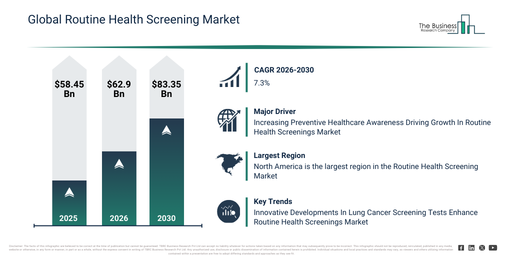
    The market for routine health screenings has experienced robust expansion lately, projected to increase from $58.45 billion in 2025 to $62.9 billion by 2026, reflecting a compound annual growth rate of 7.6%. This growth trajectory during the preceding period was fueled by heightened public consciousness regarding health matters, an enlarging footprint of diagnostic testing facilities, an escalating prevalence of long-term health conditions, better availability of fundamental healthcare provisions, and an upswing in corporate-backed health assessment programs.

    The global market for routine health screenings is poised for substantial expansion in the upcoming years, projected to reach $83.35 billion by 2030, exhibiting a compound annual growth rate of 7.3%. This anticipated growth is fueled by several key factors, including the increasing embrace of individualized preventive healthcare strategies, a surge in demand for diagnostic solutions that can be deployed remotely or within the home environment, the proliferation of digital health platforms, wider utilization of sophisticated screening technologies, and a heightened focus on managing the health of entire populations. Throughout this forecast period, significant trends expected to shape the market include a greater uptake of preventive health screening initiatives, expanded use of at-home diagnostic testing, broader integration of digital health records, a stronger emphasis on the early detection of diseases, and improved accessibility to routine screening services.

    Download A Free Sample Report For Comprehensive Market Insights:

    https://www.thebusinessresearchcompany.com/sample.aspx?id=20618&type=smp

    Routine Health Screening Market Opportunity Drivers: What Is Creating New Revenue Potential?

    The expanding consciousness surrounding proactive health management is anticipated to be a significant catalyst for the expansion of the routine health screenings sector in the future. This proactive health approach encompasses strategies and actions designed to preempt the emergence or advancement of illnesses and health complications via early identification, lifestyle adjustments, and preemptive interventions. Heightened understanding of preventive healthcare is gaining traction owing to its advantages in facilitating early disease diagnosis, leading to improved health results and financial efficiencies, largely propelled by enhanced public awareness campaigns and medical innovations. Routine health assessments play a crucial role in supporting preventive healthcare by pinpointing potential health concerns at their nascent stages, thereby enabling prompt treatments and mitigating the likelihood of serious ailments. By way of illustration, data from the National Health Service (NHS) in the UK revealed that by May 2023, a total of 2,302,400 diagnostic procedures were completed in March 2023, representing a rise of 223,100 tests when contrasted with March 2022. Furthermore, by the conclusion of March 2023, the backlog of individuals awaiting a critical diagnostic examination stood at 1,628,300, a figure that had augmented by 59,400 from the previous year’s March figures. Consequently, this mounting awareness of preventive healthcare practices is directly fueling the growth trajectory of the routine health screenings market.

    Routine Health Screening Market Segment Performance And Strategic Opportunities

    The routine health screening market covered in this report is segmented –

    1) By Test Type: Blood Glucose Test, Kidney Function Test, Bone Profile Test, Electrolyte Test, Liver Function Test, Lipid Profile Test, Other Test Types

    2) By Sample Type: Blood, Urine, Serum, Saliva, Other Sample Types

    3) By Technology: Quantitative Polymerase Chain Reaction (QPCR), Quantitative Fluorescence In Situ Hybridization (Q-FISH), Immunoassays, Medical Imaging, Single Telomere Length Analysis (STELA), Other Technologies

    4) By Sample Collection Sites: Hospitals, Homes, Diagnostic Laboratories, Offices, Other Sample Collection Sites

    Subsegments:

    1) By Blood Glucose Test: Fasting Blood Glucose Test, HbA1c Test, Continuous Glucose Monitoring

    2) By Kidney Function Test: Serum Creatinine Test, Blood Urea Nitrogen (BUN) Test, Urinalysis

    3) By Bone Profile Test: Serum Calcium Test, Phosphate Test, Bone Mineral Density (BMD) Test

    4) By Electrolyte Test: Serum Sodium Test, Serum Potassium Test, Serum Chloride Test

    5) By Liver Function Test: Alanine Aminotransferase (ALT) Test, Aspartate Aminotransferase (AST) Test, Bilirubin Test

    6) By Lipid Profile Test: Total Cholesterol Test, Low-Density Lipoprotein (LDL) Test, High-Density Lipoprotein (HDL) Test

    7) By Other Test Types: Thyroid Function Test, Complete Blood Count (CBC), Prostate-Specific Antigen (PSA) Test

    Routine Health Screening Market Innovation Trends Driving Future Development

    Key players within the routine health screenings sector are actively pursuing the creation of sophisticated offerings, exemplified by the development of lung cancer screening tests, as a strategic move to enhance their market standing. These lung cancer screening tests represent medical assessments intended for the early identification of lung cancer in individuals deemed high-risk, occurring even prior to the manifestation of any symptoms. To illustrate, in October of 2023, DELFI Diagnostics Inc., a US-based enterprise specializing in diagnostic technology, introduced FirstLook Lung, a pioneering blood-based test engineered to refine the process of lung cancer screening. This test employs fragmentomics, examining cellular-free DNA (cfDNA) patterns within blood specimens, and leverages sophisticated machine learning algorithms to distinguish between malignant and benign indicators. Boasting a negative predictive value (NPV) of 99.7%, the test accurately flags probable lung cancer occurrences, thereby reducing the reliance on potentially superfluous low-dose CT (LDCT) examinations. Designed for seamless integration with standard blood work, FirstLook Lung endeavors to elevate screening participation rates, with a particular focus on reaching populations that are typically underserved, and is underpinned by a scalable genome-wide machine learning architecture poised for worldwide deployment in the detection of additional cancers and the oversight of therapeutic interventions.

    Routine Health Screening Market Key Players: Which Companies Shape Industry Competition?

    Major companies operating in the routine health screening market are Roche Holding AG, Thermo Fisher Scientific Inc., Siemens Healthineers, Laboratory Corporation, Quest Diagnostics Incorporated, Eurofins Scientific SE, Agilent Technologies Inc., Sonic Healthcare Limited, Hologic Inc., Illumina Inc., SYNLAB International GmbH, Sysmex Corporation, QIAGEN N.V., Exact Sciences Corporation, RadNet Inc., Opko Health Inc., UNILABS, Amedes Holding GmbH, Natera Inc., Grail Inc., Trinity Biotech PLC, Cerba HealthCare S.A.S., Quidel Corporation, Innova Medical Group

    Access The Complete Routine Health Screening Market Report:

    https://www.thebusinessresearchcompany.com/report/routine-health-screening-global-market-report

    Routine Health Screening Market Regional Analysis And Leading Geography

    North Americawas the largest region in the routine health screening market in 2025. Asia-Pacificis expected to be the fastest-growing region in the forecast period. The regions covered in the routine health screening market report are Asia-Pacific, South East Asia, Western Europe, Eastern Europe, North America, South America, Middle East, Africa.

    Get in touch with us:

    The Business Research Company: https://www.thebusinessresearchcompany.com/

    Americas: +1 310-496-7795

    Asia: +44 7882 955267 & +91 8897263534

    Europe: +44 7882 955267

    Email us at: marketing@tbrc.info

    Follow us on:

    LinkedIn: https://in.linkedin.com/company/the-business-research-company

    YouTube: https://www.youtube.com/channel/UC24_fI0rV8cR5DxlCpgmyFQ

    Global Market Model: https://www.thebusinessresearchcompany.com/global-market-model
  • Rotavirus Prophylaxis Market Growth Outlook Reveals A CAGR Of 10.3% And A Market Value Of $16.07 Billion By 2030

    Rotavirus Prophylaxis Market Growth Outlook Reveals A CAGR Of 10.3% And A Market Value Of $16.07 Billion By 2030

    Through market attractiveness analysis, total addressable market evaluation, company benchmarking matrices, interactive Excel dashboards, expanded supply chain intelligence, emerging startup coverage, and detailed product insights, The Business Research Company’s 2026 market reports provide more actionable and strategically valuable research.

    Rotavirus Prophylaxis Market Size And Revenue Forecast Through 2030

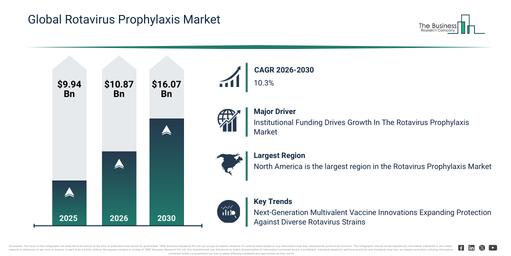
    The market for rotavirus prophylaxis demonstrated robust expansion lately and is projected to climb from $9.94 billion in 2025 to $10.87 billion in 2026, reflecting a compound annual growth rate of 9.3%. Key factors contributing to this past growth include decreasing child mortality via vaccination initiatives, enhanced worldwide immunization efforts, greater accessibility to oral rotavirus vaccines, amplified endorsement from international health bodies, and the proliferation of hospital-based immunization schemes.

    The market for rotavirus preventative measures is poised for significant expansion in the coming years, projecting a reach of $16.07 billion by 2030, fueled by a compound annual growth rate of 10.3%. This anticipated growth trajectory is underpinned by several key drivers, including a heightened emphasis on achieving comprehensive vaccine coverage for all, increased financial backing for the creation of pediatric vaccines, the broadening scope of immunization initiatives in developing nations, a greater demand for cost-effective vaccine options, and the continuous reinforcement of immunization infrastructure. Within this projected growth phase, prominent trends are expected to emerge, such as the wider integration of rotavirus vaccines into national immunization schedules, a greater preference for oral rotavirus vaccines, an escalating concentration on preventative healthcare for children, improvements in the management of cold chain logistics for vaccine distribution, and the proliferation of collaborative vaccination efforts between public and private entities.

    Download A Free Sample Report For Comprehensive Market Insights:

    https://www.thebusinessresearchcompany.com/sample.aspx?id=13045&type=smp

    Rotavirus Prophylaxis Market Growth Momentum: Which Factors Are Influencing Demand?

    The expansion of the rotavirus prophylaxis sector is anticipated due to institutional funding, which involves the allocation of financial, temporal, or labor resources to underwrite specific needs, initiatives, or endeavors. The escalating incidence of rotavirus has successfully attracted financial backing from both governmental bodies and private entities, consequently furnishing essential monetary and technical support throughout the various stages of developing rotavirus vaccines and oral treatments. Illustrating this trend, the American Medical Association reported in April 2025 that healthcare expenditures in the United States saw a 7.5% rise in 2023, reaching a total of $4.9 trillion, equivalent to $14,570 per person. Consequently, an augmented flow of financial resources is poised to stimulate the rotavirus prophylaxis market.

    Rotavirus Prophylaxis Market Segment Landscape And Growth Potential

    The rotavirus prophylaxis market covered in this report is segmented –

    1) By Treatment: Rotarix, Rotavac, Rotavin-M1, Oral Rehydration Fluid, Other Treatments

    2) By Route of Administration: Oral, Other Route of Administrations

    3) By Distribution Channel: Hospital Pharmacy, Retail Pharmacy, Online Pharmacy, Other Distribution Channels

    4) By End-Users: Hospitals, Specialty Clinics, Homecare, Other End-Users

    Subsegments:

    1) By Rotarix: Single Dose, Multi-Dose

    2) By Rotavac: Liquid Formulation, Freeze-Dried Formulation

    3) By Rotavin-M1: Liquid Formulation, Freeze-Dried Formulation

    4) By Oral Rehydration Fluid: Electrolyte Solutions, Glucose-Based Solutions

    5) By Other Treatments: Supportive Care, Antidiarrheal Medications

    Rotavirus Prophylaxis Market Trends Reshaping Industry Growth

    In the realm of rotavirus prevention, leading entities are prioritizing innovative solutions, notably the development of reassortant hexavalent oral vaccines, in response to escalating demand stemming from the necessity for wider serotype coverage and improved defense against various rotavirus strains found worldwide. These advanced hexavalent vaccines are engineered through sophisticated viral reassortment techniques to address the six most common rotavirus serotypes (G1, G2, G3, G4, G9, and P1A), offering comprehensive protection that surpasses that of conventional monovalent or pentavalent vaccines. As an illustration, Sinovac Biotech Ltd., a biopharmaceutical firm headquartered in China, commenced Phase 1 clinical studies in March 2024 for its live, oral reassortant hexavalent rotavirus vaccine, with the objective of assessing its safety, tolerability, and immunogenicity in adults, children, and infants. This vaccine’s formulation employs Vero cell technology and is designed to elicit strong immune responses against numerous strains, thereby confronting evolving epidemiological patterns and prevalent serotypes with superior efficacy, and facilitating enhanced global immunization reach, particularly in areas where rotavirus exhibits significant genetic variability.

    Rotavirus Prophylaxis Market Competitive Landscape: Who Are The Leading Companies?

    Major companies operating in the rotavirus prophylaxis market are Merck And Co, GlaxoSmithKline plc, Bharat Biotech International Limited, Serum Institute Of India Pvt Ltd, Zydus Lifesciences Ltd, Sinovac Biotech Ltd, Hualan Biological Engineering Inc, Biological E Limited, PT Bio Farma, Panacea Biotec Ltd, Shanghai Institute Of Biological Products, Wuhan Institute Of Biological Products, Lanzhou Institute Of Biological Products, Changchun Institute Of Biological Products, Beijing Institute Of Biological Products, Shenzhen Kangtai Biological Products Co Ltd, Minhai Biotechnology Co Ltd, CanSino Biologics Inc, Bharat Serums And Vaccines Limited, Walvax Biotechnology Co Ltd, Clover Biopharmaceuticals Ltd, SK Bioscience Co Ltd

    Access The Complete Rotavirus Prophylaxis Market Report:

    https://www.thebusinessresearchcompany.com/report/rotavirus-prophylaxis-global-market-report

    Rotavirus Prophylaxis Market Geographic Analysis: Where Is Demand Growing The Fastest?

    North Americawas the largest region in the rotavirus prophylaxis market in 2025. The regions covered in the rotavirus prophylaxis market report are Asia-Pacific, South East Asia, Western Europe, Eastern Europe, North America, South America, Middle East, Africa.

    Get in touch with us:

    The Business Research Company: https://www.thebusinessresearchcompany.com/

    Americas: +1 310-496-7795

    Asia: +44 7882 955267 & +91 8897263534

    Europe: +44 7882 955267

    Email us at: marketing@tbrc.info

    Follow us on:

    LinkedIn: https://in.linkedin.com/company/the-business-research-company

    YouTube: https://www.youtube.com/channel/UC24_fI0rV8cR5DxlCpgmyFQ

    Global Market Model: https://www.thebusinessresearchcompany.com/global-market-model
  • Rotator Cuff Repair Market Forecast Highlights Expansion From $1.66 Billion To $2.09 Billion Through 2030

    Rotator Cuff Repair Market Forecast Highlights Expansion From $1.66 Billion To $2.09 Billion Through 2030

    Delivering more actionable and strategically valuable research, The Business Research Company’s 2026 market reports feature market attractiveness analysis, total addressable market evaluation, company benchmarking matrices, interactive Excel dashboards, expanded supply chain intelligence, emerging startup coverage, and detailed product insights.

    Rotator Cuff Repair Market Growth From $1.66 Billion In 2026 To $2.09 Billion By 2030 At A CAGR Of 5.9%

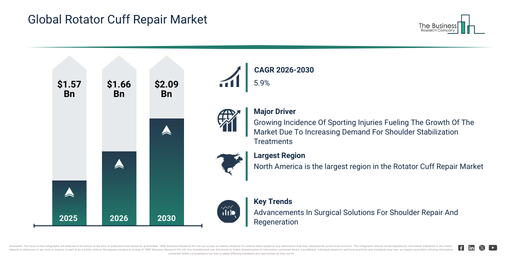
    The global market for rotator cuff repair procedures has experienced robust expansion. Projections indicate a continued upward trend, with the market value anticipated to climb from $1.57 billion in 2025 to $1.66 billion in 2026, reflecting a compound annual growth rate of 6.2%. Key factors driving this historical growth include a higher prevalence of shoulder injuries, a surge in sports-induced musculoskeletal conditions, enhanced accessibility to orthopedic surgical centers, greater recognition of the benefits of timely surgical intervention, and advancements in surgical tools and equipment.

    The market for rotator cuff repair procedures is projected for substantial expansion over the upcoming years, anticipated to reach a value of $2.09 billion by 2030. This growth trajectory is underpinned by a compound annual growth rate (CAGR) of 5.9%, driven by several key factors including the increasing prevalence of age-related degenerative conditions, a heightened demand for less invasive orthopedic interventions, the broader integration of robotic assistance in orthopedic surgeries, a greater utilization of orthobiologic treatments for tendon repair, and escalating healthcare spending allocated to sports medicine initiatives. Key developments expected to shape this market during the forecast period encompass a greater adoption of arthroscopic repair methods, a higher utilization rate of bioabsorbable implants and sutures, a discernible shift towards less invasive shoulder surgery options, the expanding application of robotic systems in rotator cuff operations, and an intensified emphasis on improving outcomes associated with post-operative rehabilitation.

    Download A Free Sample Report For Comprehensive Market Insights:

    https://www.thebusinessresearchcompany.com/sample.aspx?id=24687&type=smp

    Rotator Cuff Repair Market Expansion Drivers: What Is Shaping Future Growth?

    An increasing number of sports-related injuries is anticipated to fuel the expansion of the rotator cuff repair market. These athletic injuries, which impact muscles, bones, and joints during physical activity, are becoming more common due to increased engagement in demanding and competitive sports. Rotator cuff repair procedures are employed in managing these athletic injuries to reinstate shoulder functionality and resilience by mending damaged tendons resulting from overuse or sudden trauma. Illustratively, the National Safety Council reported that in 2023, around 3.7 million people sought emergency care for injuries linked to sports and recreational gear, marking a 2% rise in these occurrences, thereby confirming that the escalating frequency of sports injuries will propel the rotator cuff repair market forward.

    Rotator Cuff Repair Market Categorization By Product Type And Application

    The rotator cuff repair market covered in this report is segmented –

    1) By Type: Surgery, Preventive Treatment, Physiotherapy Or Palliative Treatment, Orthobiologics

    2) By Surgical Techniques: Arthroscopic Rotator Cuff Repair, Open Rotator Cuff Repair, Mini-Open Rotator Cuff Repair

    3) By Injury Severity: Partial Thickness, Full Thickness

    4) By Application: Sports Injuries, Age-Related Degeneration, Traumatic Injuries

    5) By End-User: Hospitals, Ambulatory Surgical Centers (ASCs), Orthopedic Clinics

    Subsegments:

    1) By Surgery: Arthroscopic Rotator Cuff Repair, Open Rotator Cuff Repair, Mini-Open Rotator Cuff Repair, Revision Rotator Cuff Surgery, Robotic-Assisted Rotator Cuff Surgery

    2) By Preventive Treatment: Activity Modification Programs, Ergonomic Training And Workplace Adjustments, Strengthening And Conditioning Programs, Patient Education And Lifestyle Counseling, Early Screening And Diagnostic Assessments

    3) By Physiotherapy Or Palliative Treatment: Manual Therapy, Therapeutic Ultrasound, Cryotherapy And Heat Therapy, Electrical Stimulation, Guided Range Of Motion (ROM) Exercises

    4) By Orthobiologics: Platelet-Rich Plasma (PRP) Therapy, Stem Cell Therapy, Hyaluronic Acid Injections, Bone Morphogenetic Proteins (BMPs), Amniotic Tissue And Allograft Products

    Rotator Cuff Repair Market Strategic Trends: What Is Defining The Next Phase Of Growth?

    Companies prominent in the rotator cuff repair sector are prioritizing cutting-edge advancements, including the integrity implant system, aimed at boosting tendon regeneration, fostering the repair of damaged tissues, and elevating surgical results via less invasive procedures. This integrity implant system is a scaffold derived from hyaluronic acid and reinforced with PET, engineered to aid in the natural healing and repair of tendons during rotator cuff operations. An illustration of this progress emerged in February 2024 when Anika Therapeutics Inc., an American entity concentrating on joint preservation, introduced the RevoMotion Reverse Shoulder Arthroplasty System, intended to reconstruct shoulder functionality and conserve bone. Its design incorporates the smallest threaded baseplate in the industry, further enhanced by the AIM surgical planning software, which facilitates tailored pre-operative strategies to refine implant placement and maximize the potential for movement recovery. This particular system is crafted to manage ailments like cuff tear arthropathy, a severe condition characterized by significant or unfixable damage to the rotator cuff.

    Rotator Cuff Repair Market Company Landscape And Strategic Competition

    Major companies operating in the rotator cuff repair market are Johnson And Johnson, Stryker Corporation, Zimmer Biomet Holdings Inc., Smith And Nephew plc, Arthrex Inc., CONMED Corporation, Bioventus LLC, Organogenesis Inc., Breg Inc., Exactech Inc., Paragon 28 Inc., Acumed LLC, Anika Therapeutics Inc., Xiros Ltd., Pega Medical Inc., Sawbones Worldwide, Biotek Orthopaedics Pvt. Ltd., Shoulder Innovations Inc., Atreon Orthopedics Inc., Regenexx LLC, Embody Inc.

    Access The Complete Rotator Cuff Repair Market Report:

    https://www.thebusinessresearchcompany.com/report/rotator-cuff-repair-global-market-report

    Rotator Cuff Repair Market Global Footprint: Which Region Holds Market Leadership?

    North Americawas the largest region in the rotator cuff repair market in 2025. Asia-Pacificis expected to be the fastest-growing region in the forecast period. The regions covered in the rotator cuff repair market report are Asia-Pacific, South East Asia, Western Europe, Eastern Europe, North America, South America, Middle East, Africa.

    Get in touch with us:

    The Business Research Company: https://www.thebusinessresearchcompany.com/

    Americas: +1 310-496-7795

    Asia: +44 7882 955267 & +91 8897263534

    Europe: +44 7882 955267

    Email us at: marketing@tbrc.info

    Follow us on:

    LinkedIn: https://in.linkedin.com/company/the-business-research-company

    YouTube: https://www.youtube.com/channel/UC24_fI0rV8cR5DxlCpgmyFQ

    Global Market Model: https://www.thebusinessresearchcompany.com/global-market-model
  • Rosacea Market Expected To Reach $3.34 Billion By 2030 As Growth Accelerates At 9.5% CAGR

    Rosacea Market Expected To Reach $3.34 Billion By 2030 As Growth Accelerates At 9.5% CAGR

    Enhanced with market attractiveness analysis, total addressable market evaluation, company benchmarking matrices, interactive Excel dashboards, expanded supply chain intelligence, emerging startup coverage, and detailed product insights, The Business Research Company’s 2026 market reports deliver more actionable and strategically valuable research.

    Rosacea Market Expansion Outlook: What Revenue Opportunities Lie Ahead?

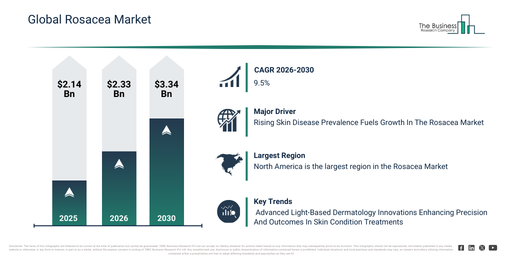
    The rosacea market has experienced robust expansion lately, projected to advance from $2.14 billion in 2025 to $2.33 billion in 2026, reflecting a compound annual growth rate of 8.7%. Factors contributing to this growth during the past period include a rise in persistent inflammatory skin ailments, an increase in visits to dermatologists, greater accessibility to topical antibiotics and alpha agonists, enhanced understanding of rosacea symptoms, and improved access to dermatological services.

    The rosacea market is poised for substantial expansion in the coming years, projecting a reach of $3.34 billion by 2030, driven by a robust compound annual growth rate of 9.5%. This upward trajectory during the forecast period is largely fueled by a confluence of factors, including a heightened demand for tailored treatment plans, intensified research efforts into inflammatory skin conditions, the increasing embrace of innovative pharmaceutical categories, the broadening accessibility of teledermatology, and a greater emphasis on enhancing patients’ quality of life. Key developments anticipated within this timeframe encompass a greater utilization of specific topical treatments, a heightened focus on sustained management strategies for the condition, a rising need for combination therapies, the advancement of individualized dermatological approaches, and a strengthened commitment to early detection and effective symptom management.

    Download A Free Sample Report For Comprehensive Market Insights:

    https://www.thebusinessresearchcompany.com/sample.aspx?id=12945&type=smp

    Rosacea Market Development Factors: Which Trends Are Supporting Demand?

    With the rising incidence of dermatological conditions, the rosacea market is poised for expansion. Skin diseases, encompassing illnesses affecting the skin’s appearance, structure, and functionality, can impact the skin itself, alongside hair, nails, and associated tissues. Rosacea, characterized by inflammatory skin issues, may stem from various fungal infections, such as an overabundance of Candida. Furthermore, a statistically notable elevated risk of skin cancers, including hepatic, non-melanoma skin, and breast cancers, is linked to rosacea. Illustratively, Cancer Research UK reported in February 2023 that the annual count of new melanoma skin cancer diagnoses in the UK anticipates an increase from an estimated 20,800 during 2023-2025 to roughly 26,500 by 2038-2040, indicating a projected 9% surge in melanoma occurrence to 33 per 100,000 individuals annually within that later period. Consequently, the escalating rates of skin diseases are fueling the rosacea market’s growth.

    Rosacea Market Segment Analysis And Revenue Opportunities

    The rosacea market covered in this report is segmented –

    1) By Type: Erythematotelangiectatic Rosacea, Papulopustular Rosacea, Ocular Rosacea, Phymatous Rosacea

    2) By Drug Class: Antibiotics, Alpha Agonists, Retinoid, Corticosteroids, Immunosuppressants, Other Drug Classes

    3) By Mode of Administration: Topical, Oral

    4) By End-User: Hospitals, Clinics, Retail pharmacies, Online pharmacies

    Subsegments:

    1) By Erythematotelangiectatic Rosacea: Persistent Facial Redness, Visible Blood Vessels

    2) By Papulopustular Rosacea: Red Bumps, Pus-Filled Pimples

    3) By Ocular Rosacea: Eye Irritation, Inflammation Of Eyelids, Dry Eyes

    4) By Phymatous Rosacea: Rhinophyma, Thickened Skin On The Face

    Rosacea Market Transformation Trends: Which Innovations Are Driving Change?

    Leading entities within the rosacea sector are prioritizing innovative technological developments, including Expert Pulsed Light (XPL) systems, to satisfy the escalating need for treatments that are non-invasive, highly effective, and adaptable, fueled by patients increasingly favoring minimal recovery periods and suitability across a wider range of skin tones. XPL technology marks the forefront of advancements in pulsed light therapy, incorporating sophisticated pulse shaping, a variety of specialized filters, and sub-puling capabilities, which allow for superior management of energy application and treatment procedures when contrasted with traditional intense pulsed light (IPL) devices that frequently yield less personalized results. An illustrative example occurred in November 2025 when Lumenis Be. Ltd., an Israeli firm specializing in energy-based medical devices, introduced the Stellar M22 platform, incorporating XPL technology; this state-of-the-art multi-application aesthetic system is engineered to address more than 30 dermatological issues, rosacea among them. The Stellar M22 consolidates four cutting-edge technologies, provides an innovative XPL Glide Mode for swifter, on-the-move treatments, and includes over 850 pre-programmed protocols aimed at delivering reproducible and uniform clinical outcomes for varied patient groups. Its combined treatment approaches, such as PhotoFABULOUS and SmoothGlo, facilitate customized skin rejuvenation plans, effectively targeting the vascular and pigmentary abnormalities frequently seen in rosacea, demonstrating validated effectiveness for prompt lesion reduction and enhanced patient comfort in comparison to older technologies.

    Rosacea Market Leading Players Shaping Industry Direction

    Major companies operating in the rosacea market are Pfizer Inc., Johnson & Johnson, Merck & Co. Inc., AbbVie Inc., Bayer AG, Sanofi S.A., GlaxoSmithKline plc, Eli Lilly and Company, Viatris Inc., Teva Pharmaceutical Industries Ltd., Bausch Health Companies Inc., Sun Pharmaceutical Industries Ltd., Perrigo Company PLC, Galderma S.A., Dr. Reddy’s Laboratories Ltd., Lupin Limited, LEO Pharma A/S, Almirall S.A., Taro Pharmaceuticals, Mayne Pharma, Aclaris Therapeutics Inc., Sol-Gel Technologies Ltd., Nestle Skin Health S.A., Foamix Pharmaceuticals.

    Access The Complete Rosacea Market Report:

    https://www.thebusinessresearchcompany.com/report/rosacea-global-market-report

    Rosacea Market Regional Distribution: Which Areas Drive Market Expansion?

    North Americawas the largest region in the rosacea market in 2025. Asia-Pacific is expected to the fastest-growing region in the forecast period. The regions covered in the rosacea market report are Asia-Pacific, South East Asia, Western Europe, Eastern Europe, North America, South America, Middle East, Africa.

    Get in touch with us:

    The Business Research Company: https://www.thebusinessresearchcompany.com/

    Americas: +1 310-496-7795

    Asia: +44 7882 955267 & +91 8897263534

    Europe: +44 7882 955267

    Email us at: marketing@tbrc.info

    Follow us on:

    LinkedIn: https://in.linkedin.com/company/the-business-research-company

    YouTube: https://www.youtube.com/channel/UC24_fI0rV8cR5DxlCpgmyFQ

    Global Market Model: https://www.thebusinessresearchcompany.com/global-market-model
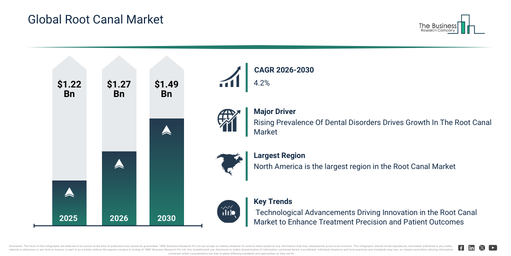
  • Root Canal Market Set To Grow From $1.26 Billion In 2026 To $1.49 Billion By 2030 At A CAGR Of 4.2%

    Root Canal Market Set To Grow From $1.26 Billion In 2026 To $1.49 Billion By 2030 At A CAGR Of 4.2%

    Through market attractiveness analysis, total addressable market evaluation, company benchmarking matrices, interactive Excel dashboards, expanded supply chain intelligence, emerging startup coverage, and detailed product insights, The Business Research Company’s 2026 market reports provide more actionable and strategically valuable research.

    Root Canal Market Growth Potential: How Will Market Size Change Through 2030?

    The endodontic treatment sector has experienced consistent expansion, projected to increase from its $1.22 billion valuation in 2025 to $1.27 billion in 2026, reflecting a compound annual growth rate of 4.2%. This growth during the preceding period was fueled by several factors including a greater incidence of tooth decay and infections, heightened public consciousness regarding oral hygiene, the broadening of dental facility networks, advancements in the tools used for root canal procedures, and a rising number of dental professionals specializing in this area.

    The root canal market is poised for consistent expansion over the coming years, projecting a rise to $1.49 billion by 2030 with a compound annual growth rate (CAGR) of 4.2%. This anticipated growth during the forecast period is fueled by several key factors, including the escalating use of digital dentistry technologies, a heightened demand for precise endodontic treatments, the broader application of laser-assisted dental procedures, greater incorporation of AI for diagnostics, and an intensified concentration on patient-centered dental care. Significant developments anticipated within this timeframe involve the increasing adoption of sophisticated endodontic imaging systems, a greater reliance on machine-driven instruments for root canal procedures, a growing requirement for highly accurate endodontic interventions, the advancement of minimally invasive dental techniques, and a heightened emphasis on minimizing patient discomfort and maximizing treatment precision.

    Download A Free Sample Report For Comprehensive Market Insights:

    https://www.thebusinessresearchcompany.com/sample.aspx?id=13529&type=smp

    Root Canal Market Industry Drivers: What Is Driving Revenue Growth?

    The increasing incidence of oral health conditions is anticipated to be a significant catalyst for the expansion of the root canal market. These oral health conditions encompass a variety of ailments impacting the teeth, gums, and supporting oral structures, including but not limited to cavities, periodontal disease, and improper bite alignment. A root canal procedure is a specialized dental intervention where the compromised or diseased interior of a tooth is meticulously cleaned and then filled with a restorative material. As an illustrative example, data presented in the 2022–23 Annual Report by the UK’s National Health Service, released in August 2023, highlighted that 32.5 million dental disorder treatments were delivered during the 2022-23 fiscal year. This figure represents a substantial 23.2% surge from the 26.4 million treatments recorded in the preceding fiscal year of 2021-22. Consequently, the escalating worldwide occurrence of dental problems is directly fueling the upward trajectory of the root canal market.

    Root Canal Market Segmentation And Category Breakdown

    The root canal market covered in this report is segmented –

    1) By Type: Nonsurgical Root Canal, Secondary Root Canal, Apicoectomy, Pulpotomy, Pulpectomy

    2) By Drug: Anesthetics, Painkillers, Antibiotics

    3) By Instrument: Scalers, Apex Locators, Motors, Handpiece, Lasers, Machine Assisted Obturation Systems, Other Instruments

    4) By End Users: Hospitals, Dental Clinics, Other End Users

    Subsegments:

    1) By Nonsurgical Root Canal: Root Canal Therapy, Endodontic Retreatment

    2) By Secondary Root Canal: Re-Root Canal Procedure, Post-Treatment Procedures

    3) By Apicoectomy: Surgical Apicoectomy, Microsurgical Apicoectomy

    4) By Pulpotomy: Partial Pulpotomy, Full Pulpotomy

    5) By Pulpectomy: Primary Pulpectomy, Permanent Pulpectomy

    #Root Canal Market Growth Trends: What Is Influencing The Future Outlook?

    Leading entities within the endodontic instrument sector are centering their efforts on pioneering innovations, specifically in the realm of thermallly processed nickel-titanium (NiTi) rotary instrumentation, in response to the escalating need for less invasive, highly effective, and accurate root canal treatments, a trend fueled by heightened patient understanding of oral hygiene and the increasing incidence of tooth decay. These advanced heat-treated NiTi rotary instruments are meticulously designed to offer superior suppleness, robustness, and resilience against fatigue fractures when contrasted with conventional stainless-steel instruments, thereby facilitating more effective contouring and debridement of intricate root canal structures while simultaneously minimizing the potential for instrument separation and procedural complications. Illustrating this, in October 2024, Envista Holdings Corporation, a prominent American provider of dental solutions, via its Kerr division, introduced ZenFlex CM, a thermally enhanced NiTi rotary file engineered for exceptional suppleness and longevity throughout the root canal shaping process, thereby elevating treatment results by enabling more fluid instrumentation and the conservation of healthy tooth tissue. ZenFlex CM incorporates cutting-edge material science characteristics that bolster its resistance to fatigue and its capacity to adapt to canal curvatures, promoting endodontic interventions that are both safer and more predictable, with a reduced likelihood of microfracture expansion. This groundbreaking development empowers endodontists to execute treatments more expeditiously and comfortably, while effectively managing the intricate nature of root canal anatomy.

    Root Canal Market Competitive Analysis Of Major Industry Participants

    Major companies operating in the root canal market are 3M Corporation, Dentsply Sirona Inc., Envista Holdings Corporation, NSK-Nakanishi International, W&H UK Ltd., KaVo Kerr, Ultradent Products Inc., Septodont Inc., Coltene Group, Hu-Friedy Group, Shofu Dental India Private Limited, Acteon Group, Mani Inc., Brasseler USA, GC Dental America, SS White Dental, Zest Dental Solutions, Sonendo Inc., Komet USA, Sultan Healthcare, Ivoclar Vivadent Group, Premier Dental Product Inc., Vista Dental, Zyris Isolite, J. Morita Corporation, FKG Dentaire Inc., Diadent Group International, EdgeEndo Inc., RTD Dental

    Access The Complete Root Canal Market Report:

    https://www.thebusinessresearchcompany.com/report/root-canal-global-market-report

    Root Canal Market Leading Geography: Which Region Generates The Most Revenue?

    North Americawas the largest region in the root canal market in 2025. Asia-Pacificis expected to be the fastest-growing region in the forecast period. The regions covered in the root canal market report are Asia-Pacific, South East Asia, Western Europe, Eastern Europe, North America, South America, Middle East, Africa.

    Get in touch with us:

    The Business Research Company: https://www.thebusinessresearchcompany.com/

    Americas: +1 310-496-7795

    Asia: +44 7882 955267 & +91 8897263534

    Europe: +44 7882 955267

    Email us at: marketing@tbrc.info

    Follow us on:

    LinkedIn: https://in.linkedin.com/company/the-business-research-company

    YouTube: https://www.youtube.com/channel/UC24_fI0rV8cR5DxlCpgmyFQ

    Global Market Model: https://www.thebusinessresearchcompany.com/global-market-model
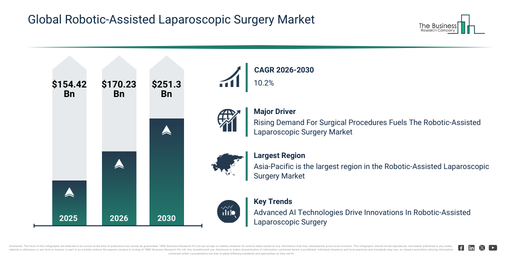
  • Robotic-Assisted Laparoscopic Surgery Market Opportunities Are Emerging Beyond Traditional Growth Areas

    Robotic-Assisted Laparoscopic Surgery Market Opportunities Are Emerging Beyond Traditional Growth Areas

    Delivering more actionable and strategically valuable research, The Business Research Company’s 2026 market reports feature market attractiveness analysis, total addressable market evaluation, company benchmarking matrices, interactive Excel dashboards, expanded supply chain intelligence, emerging startup coverage, and detailed product insights.

    Robotic-Assisted Laparoscopic Surgery Market Value Analysis: What Growth Is Expected Over The Forecast Period?

    The market for robotic-assisted laparoscopic surgery is experiencing robust expansion, projected to increase from $154.42 billion in 2025 to $170.23 billion in 2026, representing a compound annual growth rate of 10.2%. This upward trend in the historical period is fueled by several key factors including a broader acceptance of laparoscopic techniques, growing expertise among surgeons utilizing robotic platforms, an increase in intricate abdominal surgeries performed, greater financial commitments by healthcare facilities towards surgical robotics, and advancements in surgical procedures guided by imaging technologies.

    The domain of robotic-assisted laparoscopic surgery is poised for substantial expansion, projecting a market valuation of $251.3 billion by the year 2030, reflecting a compound annual growth rate of 10.2%. This anticipated surge is underpinned by several key factors: a heightened requirement for outpatient minimally invasive interventions, the progressive integration of robotic systems within community healthcare facilities, the proliferation of robotic applications in urological and gynecological procedures, the increasing incorporation of artificial intelligence for surgical strategy formulation, and an amplified emphasis on expediting patient convalescence. Furthermore, significant trends anticipated within this timeframe encompass a greater uptake of intricate laparoscopic procedures assisted by robotics, the escalating utilization of advanced 3D high-definition visualization apparatuses, a growing need for sophisticated surgical manipulation instruments, the broadening deployment of robotic platforms in the realm of minimally invasive interventions, and a concentrated effort towards minimizing surgical trauma.

    Download A Free Sample Report For Comprehensive Market Insights:

    https://www.thebusinessresearchcompany.com/sample.aspx?id=19174&type=smp

    Robotic-Assisted Laparoscopic Surgery Market Growth Factors: Which Forces Are Supporting Market Expansion?

    The increasing need for surgical interventions is anticipated to fuel the expansion of the robotic-assisted laparoscopic surgery sector. Surgical interventions, defined as medical actions altering body tissues and organs, are experiencing heightened demand driven by greater health and aesthetic awareness along with a surge in chronic and age-related ailments. Robotic-assisted laparoscopic surgery, a sophisticated evolution in surgical techniques, provides superior accuracy and command, thereby simplifying intricate operations while concurrently reducing patient recuperation periods and operative hazards. Illustrating this trend, the Australian Institute of Health and Welfare, a governmental body in Australia, noted that public hospitals experienced 778,500 admissions from elective surgery waitlists during 2023–24, an increase of 5.8% from the 735,500 admissions recorded in 2022–23. Consequently, the escalating demand for surgical interventions is the primary catalyst for the robotic-assisted laparoscopic surgery market’s growth.

    Robotic-Assisted Laparoscopic Surgery Market Segment Outlook: Which Categories Are Expanding The Fastest?

    The robotic-assisted laparoscopic surgery market covered in this report is segmented –

    1) By Type: Robotic-Assisted Radical Prostatectomy, Robotic-Assisted Partial Nephrectomy, Robotic-Assisted Nephrectomy, Other Type

    2) By Application: Hospitals, Ambulatory Surgical Center, Other Applications

    3) By End-Use: Inpatient, Outpatient

    Subsegments:

    1) By Robotic-Assisted Radical Prostatectomy: Robotic Prostatectomy Systems, Surgical Instruments For Prostatectomy, Training And Simulation Tools, Consumables And Accessories

    2) By Robotic-Assisted Partial Nephrectomy: Robotic Surgical Systems, Specialized Instruments For Partial Nephrectomy, Software Solutions For Planning And Simulation, Support And Maintenance Services

    3) By Robotic-Assisted Nephrectomy: Robotic Nephrectomy Platforms, Instrument Sets For Nephrectomy Procedures, Imaging And Navigation Tools, Training Programs For Surgeons

    4) By Other Types: Robotic-Assisted Cholecystectomy, Robotic-Assisted Hysterectomy, Robotic-Assisted Bariatric Surgery, Robotic-Assisted Colorectal Surgery

    Robotic-Assisted Laparoscopic Surgery Market Industry Trends: What Changes Are Reshaping Demand?

    In the landscape of robotic-assisted laparoscopic surgery, prominent entities are channeling their efforts toward pioneering sophisticated technologies, notably AI platforms for robotic surgery, designed to empower surgeons in assessing and refining their methodologies. These AI platforms represent a fusion of cutting-edge artificial intelligence and robotic surgical apparatus, intended to elevate surgical accuracy, mechanize particular steps, and bolster decision-making during operative procedures, thereby striving to optimize surgical results by equipping surgeons with immediate analytical tools, data, and control mechanisms. Illustrating this trend, Medtronic, a medical device firm headquartered in the United States, introduced its Live Stream capability within the Touch Surgery digital technology ecosystem in July 2024. This innovative function facilitates the secure transmission of live surgical proceedings, establishing a virtual educational environment that permits healthcare professionals to remotely witness expert techniques, thereby mimicking the experience of being present in the operating room. This technology further refines post-surgery evaluation through the application of 14 sophisticated AI algorithms, extracting valuable intelligence from surgical recordings, particularly those pertaining to laparoscopic and robotically aided interventions, underscoring a broader global initiative to incorporate advanced computational power into surgical suites for the betterment of surgical education, operational effectiveness, and ultimately, patient well-being.

    Robotic-Assisted Laparoscopic Surgery Market Key Companies And Competitive Benchmarking

    Major companies operating in the robotic-assisted laparoscopic surgery market are Johnson And Johnson, Medtronic PLC, Intuitive Surgical Inc, Vicarious Surgical Inc, Meril Life Sciences Pvt Ltd, MicroPort Scientific Corporation, Corza Medical, CMR Surgical Ltd, Distalmotion SA, Titan Medical Inc, Medrobotics Corporation, Asensus Surgical Inc, SS Innovations China Co Ltd, Moon Surgical Inc, Levita Magnetics, EndoQuest Robotics, FreeHand Surgeon, Shandong Weigao Surgical Robot, Zimmer Biomet Robotics, Stryker Corporation, Renishaw Plc, Smith And Nephew Robotics, Johnson And Johnson Ethicon Robotics, Olympus Surgical Robotics

    Access The Complete Robotic-Assisted Laparoscopic Surgery Market Report:

    https://www.thebusinessresearchcompany.com/report/robotic-assisted-laparoscopic-surgery-global-market-report

    Robotic-Assisted Laparoscopic Surgery Market Regional Outlook: Where Are The Largest Opportunities Located?

    Asia-Pacificwas the largest region in the robotic-assisted laparoscopic surgery market in 2025. North Americais expected to be the fastest-growing region in the forecast period. The regions covered in the robotic-assisted laparoscopic surgery market report are Asia-Pacific, South East Asia, Western Europe, Eastern Europe, North America, South America, Middle East, Africa.

    Get in touch with us:

    The Business Research Company: https://www.thebusinessresearchcompany.com/

    Americas: +1 310-496-7795

    Asia: +44 7882 955267 & +91 8897263534

    Europe: +44 7882 955267

    Email us at: marketing@tbrc.info

    Follow us on:

    LinkedIn: https://in.linkedin.com/company/the-business-research-company

    YouTube: https://www.youtube.com/channel/UC24_fI0rV8cR5DxlCpgmyFQ

    Global Market Model: https://www.thebusinessresearchcompany.com/global-market-model
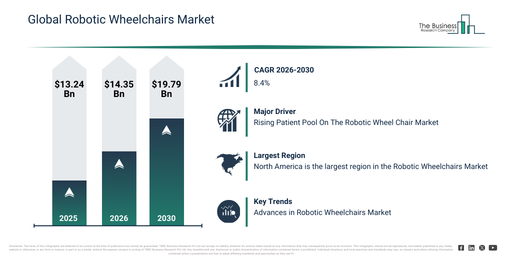
  • Robotic Wheelchairs Market Expansion Is Opening New Pathways For Strategic Investment

    Robotic Wheelchairs Market Expansion Is Opening New Pathways For Strategic Investment

    Enhanced with market attractiveness analysis, total addressable market evaluation, company benchmarking matrices, interactive Excel dashboards, expanded supply chain intelligence, emerging startup coverage, and detailed product insights, The Business Research Company’s 2026 market reports deliver more actionable and strategically valuable research.

    Robotic Wheelchairs Market Size Forecast: How Large Could The Market Become By 2030?

    Revenue for the robotic wheelchairs sector has experienced robust expansion historically and is projected to continue this upward trajectory. This market, valued at $13.24 billion in 2025, is anticipated to reach $14.35 billion by 2026, reflecting a compound annual growth rate (CAGR) of 8.4%. Factors contributing to this expansion throughout the past period include a greater incidence of mobility limitations, a burgeoning elderly demographic, elevated demand for supportive mobility equipment, technological progress in powered wheelchairs, and enhanced access to rehabilitative care.

    The market for robotic wheelchairs is projected for substantial expansion over the upcoming period, reaching an estimated $19.79 billion by 2030, driven by a compound annual growth rate of 8.4%. This anticipated growth is fueled by several key factors, including the greater integration of intelligent assistive technologies, increased funding for artificial intelligence-powered mobility solutions, the broadening of in-home care facilities, a rising need for customized assistive equipment, and the incorporation of cloud-based mobility systems. Prevailing trends expected to shape this market during the forecast interval encompass the increasing use of wheelchairs with autonomous navigation capabilities, the amplified inclusion of sensors for obstacle detection, a growing preference for adaptive control systems that leverage artificial intelligence, the proliferation of connected assistive devices for mobility, and a heightened emphasis on empowering users with greater independence and ensuring their safety.

    Download A Free Sample Report For Comprehensive Market Insights:

    https://www.thebusinessresearchcompany.com/sample.aspx?id=18456&type=smp

    Robotic Wheelchairs Market Demand Drivers: What Is Fueling Industry Growth?

    The expanding number of individuals requiring medical assistance is anticipated to fuel the advancement of the robotic wheelchair sector. This growing patient demographic, characterized by an increasing population, an aging society, and broader accessibility to healthcare, directly benefits from the enhanced autonomy and mobility offered by robotic wheelchairs. These sophisticated devices utilize adaptive technology to overcome physical challenges, empowering users to move more freely. A relevant statistic from the Australian Institute of Health and Welfare in April 2025 highlights this trend, indicating that Australian public hospitals saw 778,500 elective surgery admissions from waitlists in 2023–24, an uptick from the 735,500 recorded in 2022–23, which represents a 5.8% increase, consequently underscoring the positive impact of a growing patient base on the robotic wheelchair market’s trajectory.

    Robotic Wheelchairs Market Segment Landscape: Which Areas Lead Market Development?

    The robotic wheelchairs market covered in this report is segmented –

    1) By Wheelchair: Rear-Wheel Drive, Front-Wheel Drive, Mid-Wheel Drive

    2) By Application: Personal Use, Commercial Use

    3) By Distribution Channel: Home Care Settings, Rehabilitation Centers, Online Sales Channel, Other Channels

    Subsegments:

    1) By Rear-Wheel Drive: Standard Rear-Wheel Drive Wheelchairs, Robotic Rear-Wheel Drive Wheelchairs

    2) By Front-Wheel Drive: Standard Front-Wheel Drive Wheelchairs, Robotic Front-Wheel Drive Wheelchairs

    3) By Mid-Wheel Drive: Standard Mid-Wheel Drive Wheelchairs, Robotic Mid-Wheel Drive Wheelchairs

    Robotic Wheelchairs Market Innovation Trends: Which Developments Are Transforming The Industry?

    Leading players in the robotic wheelchairs sector are actively innovating, equipping power wheelchairs with sophisticated capabilities like artificial intelligence and self-driving technology to enhance the autonomy and freedom of disabled individuals. These electrically propelled mobility aids empower people with movement limitations by offering them personal mobility. As an illustration, in January 2024, Robooter, a medical equipment producer based in the United States, unveiled its cutting-edge X40 power wheelchair at the Consumer Electronics Show (CES 2024) held in Las Vegas. This X40 model is a foldable electric wheelchair, suitable for both indoor and semi-outdoor use, engineered to overcome the difficulties associated with lower limb mobility. It distinguishes itself with omnidirectional wheels, remote operation functionality, and adjustable maximum speed settings for enhanced safety. The design ensures generous leg space and delivers a fluid user experience across diverse surfaces while maintaining a compact turning circle. Furthermore, it boasts an extended battery life and an intuitive control panel.

    Robotic Wheelchairs Market Industry Leaders And Market Competition

    Major companies operating in the robotic wheelchairs market are Honda Motor Co Ltd, Panasonic Corporation, Ottobock SE And Company, Invacare Corporation, Permobil Inc, Sunrise Medical Inc, Pride Mobility Products Corporation, DEKA Research And Development Corporation, Kinova Inc, Hoveround Corporation, Whill Inc, Merits Health Products Co Ltd, Shanghai Bangbang Robotics Co Ltd, Matia Mobility Inc, Karma Medical Products Co Ltd, Cyberworks Robotics Inc, Airwheel Holding Limited, Karman Healthcare Inc, Centaur Robotics Limited, Meyra GmbH, Upnride Robotics, Nino Robotics, LUCI Mobility, Robooter Technology Co Ltd

    Access The Complete Robotic Wheelchairs Market Report:

    https://www.thebusinessresearchcompany.com/report/robotic-wheelchairs-global-market-report

    Robotic Wheelchairs Market Geographic Landscape: Which Region Dominates Industry Growth?

    North Americawas the largest region in the robotic wheelchairs market in 2025. Asia-Pacificis expected to be the fastest-growing region in the forecast period. The regions covered in the robotic wheelchairs market report are Asia-Pacific, South East Asia, Western Europe, Eastern Europe, North America, South America, Middle East, Africa.

    Get in touch with us:

    The Business Research Company: https://www.thebusinessresearchcompany.com/

    Americas: +1 310-496-7795

    Asia: +44 7882 955267 & +91 8897263534

    Europe: +44 7882 955267

    Email us at: marketing@tbrc.info

    Follow us on:

    LinkedIn: https://in.linkedin.com/company/the-business-research-company

    YouTube: https://www.youtube.com/channel/UC24_fI0rV8cR5DxlCpgmyFQ

    Global Market Model: https://www.thebusinessresearchcompany.com/global-market-model
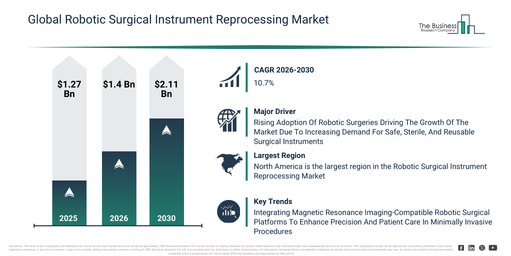
  • Robotic Surgical Instrument Reprocessing Market Trends Are Creating New Opportunities For Industry Leaders

    Robotic Surgical Instrument Reprocessing Market Trends Are Creating New Opportunities For Industry Leaders

    Through market attractiveness analysis, total addressable market evaluation, company benchmarking matrices, interactive Excel dashboards, expanded supply chain intelligence, emerging startup coverage, and detailed product insights, The Business Research Company’s 2026 market reports provide more actionable and strategically valuable research.

    Robotic Surgical Instrument Reprocessing Market Revenue Outlook: What CAGR Is Expected Through 2030?

    The market for reprocessing robotic surgical instruments has experienced significant expansion lately, projecting a rise from $1.27 billion in 2025 to $1.4 billion in 2026, fueled by an 11.0% compound annual growth rate. This upward trend in the past is largely due to the increased adoption of robotic-assisted surgeries, stricter mandates for hospital infection control, the development of central sterile processing departments, a greater reliance on reusable robotic instruments, and the availability of dedicated reprocessing equipment.

    The market for reprocessing robotic surgical instruments is poised for substantial expansion in the coming years, projected to reach $2.11 billion by 2030 with a compound annual growth rate of 10.7%. This anticipated growth is fueled by several key factors: the expanding number of minimally invasive procedures being performed, increased funding directed towards robotic surgery infrastructure, the proliferation of ambulatory surgical facilities, a greater demand for economical instrument reprocessing solutions, and heightened regulatory oversight concerning sterilization protocols. During this forecast period, prominent trends include a growing need for sophisticated instrument cleaning technologies, a noticeable uptick in the utilization of automated sterilization methods, a concentrated effort towards standardizing reprocessing workflows, the increasing integration of single-use instruments, and an elevated importance placed on adhering to infection control standards.

    Download A Free Sample Report For Comprehensive Market Insights:

    https://www.thebusinessresearchcompany.com/sample.aspx?id=29183&type=smp

    Robotic Surgical Instrument Reprocessing Market Growth Drivers: What Factors Are Accelerating Expansion?

    The expanding utilization of robot-assisted surgical procedures is slated to fuel the advancement of the market for reprocessing robotic surgical instruments. This surge is attributed to robotic surgeries, which employ automated systems to augment surgeon dexterity, accuracy, and adaptability during minimally invasive interventions. The heightened use of these procedures stems from their capacity to improve surgical exactitude and shorten patient recuperation periods. Consequently, the reprocessing of robotic surgical instruments becomes crucial for ensuring these sophisticated tools are meticulously cleansed, sterilized, and made safe for repeated surgical applications. A relevant projection from Digital Health Intelligence Limited, a UK entity focused on health information, indicates that by 2035, the annual volume of surgeries facilitated by robotic assistance is anticipated to approach 500,000, a substantial leap from the roughly 70,000 procedures observed in the 2023-24 timeframe. This escalating trend in robotic surgery adoption directly supports the expansion of the market dedicated to the reprocessing of associated surgical instruments.

    Robotic Surgical Instrument Reprocessing Market Segments: Where Are The Largest Growth Opportunities?

    The robotic surgical instrument reprocessing market covered in this report is segmented –

    1) By Product Type: Reusable Instruments, Single-Use Instruments, Reprocessing Equipment, Consumables

    2) By Process: Cleaning, Disinfection, Sterilization, Inspection And Packaging, Other Processes

    3) By End-User: Hospitals, Ambulatory Surgical Centers, Specialty Clinics, Other End-Users

    Subsegments:

    1) By Reusable Instruments: Surgical Forceps, Scissors, Graspers, Needle Holders, Trocars, Clamps

    2) By Single-Use Instruments: Disposable Scalpels, Single-Use Forceps, Disposable Scissors, Suction Tips, Disposable Trocars, Electrocautery Devices

    3) By Reprocessing Equipment: Cleaning Systems, Disinfection Units, Sterilization Equipment, Inspection Systems, Drying Cabinets, Packaging Machines

    4) By Consumables: Cleaning Agents, Disinfectants, Sterilization Wraps, Indicator Tapes, Lubricants, Biological Indicators

    Robotic Surgical Instrument Reprocessing Market Trends: What Is Shaping Future Industry Growth?

    Leading entities within the robotic surgical instrument reprocessing sector are prioritizing innovations, exemplified by the development of MRI-compatible robotic surgery platforms aimed at elevating accuracy, ensuring safety, and facilitating real-time imaging during operations requiring minimal invasion. Such a platform represents a sophisticated surgical apparatus engineered for use or as an aid in minimally invasive interventions within the magnetic field of an MRI machine, thereby guaranteeing operational security, exact instrument manipulation, and immediate visual feedback for superior patient results. As a concrete illustration, in the month of September in the year 2025, Insight Medbotics, a firm originating from Canada with a focus on interventional oncology, introduced Glenn, a robotic surgery system compatible with MRI technology, created to surmount significant hurdles encountered in prostate cancer interventions. Glenn’s design allows for effortless integration with MRI scanners, delivering live imaging capabilities, exacting control over surgical tools, and straightforward access for both diagnostic biopsies and targeted therapeutic treatments. This system obviates the necessity for conventional ultrasound guidance and transrectal probes, thereby boosting patient ease, refining the precision of procedures, and enabling less invasive interventions, positioning it as a cutting-edge instrument for highly accurate prostate cancer management.

    Robotic Surgical Instrument Reprocessing Market Major Participants And Competitive Dynamics

    Major companies operating in the robotic surgical instrument reprocessing market are Ecolab Inc., B. Braun Melsungen SE, Zimmer Biomet Holdings Inc., STERIS plc, Getinge AB, Miele & Cie. KG, Acrotec Medtech, Belimed AG, SteraTek, Primo Medical Group, Matachana, Innovative Health, Restore Robotics, MMM Group, Vanguard AG, Medisafe International, Pure Processing, Steelco, ASP (Advanced Sterilization Products), Tuttnauer Ltd.

    Access The Complete Robotic Surgical Instrument Reprocessing Market Report:

    https://www.thebusinessresearchcompany.com/report/robotic-surgical-instrument-reprocessing-global-market-report

    Robotic Surgical Instrument Reprocessing Market Largest Region: Which Geography Holds The Highest Market Share?

    North Americawas the largest region in the robotic surgical instrument reprocessing market in 2025. Asia-Pacificis expected to be the fastest-growing region in the forecast period. The regions covered in the robotic surgical instrument reprocessing market report are Asia-Pacific, South East Asia, Western Europe, Eastern Europe, North America, South America, Middle East, Africa.

    Get in touch with us:

    The Business Research Company: https://www.thebusinessresearchcompany.com/

    Americas: +1 310-496-7795

    Asia: +44 7882 955267 & +91 8897263534

    Europe: +44 7882 955267

    Email us at: marketing@tbrc.info

    Follow us on:

    LinkedIn: https://in.linkedin.com/company/the-business-research-company

    YouTube: https://www.youtube.com/channel/UC24_fI0rV8cR5DxlCpgmyFQ

    Global Market Model: https://www.thebusinessresearchcompany.com/global-market-model
  • Robotic Surgery Services Market Growth Is Reshaping Competitive Advantage Across The Industry

    Robotic Surgery Services Market Growth Is Reshaping Competitive Advantage Across The Industry

    Delivering more actionable and strategically valuable research, The Business Research Company’s 2026 market reports feature market attractiveness analysis, total addressable market evaluation, company benchmarking matrices, interactive Excel dashboards, expanded supply chain intelligence, emerging startup coverage, and detailed product insights.

    Robotic Surgery Services Market Growth Analysis: How Will Revenue Expand During The Forecast Period?

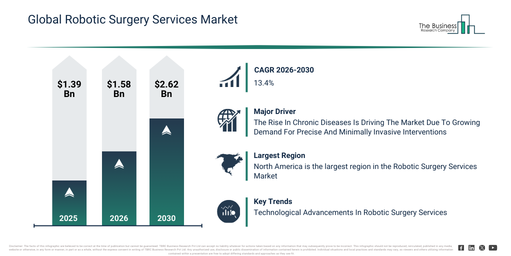
    The market for robotic surgery services has experienced significant expansion recently, with projections indicating a rise from $1.39 billion in 2025 to $1.58 billion in 2026, reflecting a compound annual growth rate (CAGR) of 13.8%. This historical growth trajectory has been fueled by several key factors, including the expanding adoption of minimally invasive surgical techniques, a growing willingness among surgeons to integrate robotic systems into their practice, an increase in the complexity of surgical procedures being performed, greater financial commitment from hospitals towards equipping advanced operating theaters, and continuous enhancements in the design of robotic surgical instruments.

    The market for robotic surgery services is poised for substantial expansion in the coming years, projected to reach $2.62 billion by 2030 with a compound annual growth rate of 13.4%. This anticipated growth trajectory is fueled by several key factors, including an escalating demand for outpatient robotic procedures, increased financial backing directed towards cutting-edge surgical robotics, the broadening application of robotic techniques across diverse medical specialties, a greater emphasis on incorporating AI for surgical plan development, and a heightened concentration on achieving superior patient outcomes through surgical interventions. During this forecast period, significant trends are anticipated to shape the market, such as a greater uptake of minimally invasive robotic procedures, a surge in the need for specialized robotic systems tailored to specific operations, the seamless incorporation of sophisticated surgical imaging technologies, an expansion of educational initiatives for robotic surgery, and an intensified focus on achieving greater precision and improved results in surgical interventions.

    Download A Free Sample Report For Comprehensive Market Insights:

    https://www.thebusinessresearchcompany.com/sample.aspx?id=3168&type=smp

    Robotic Surgery Services Market Growth Factors Supporting Long-Term Expansion

    Anticipated expansion in the robotic surgery services sector is directly linked to the escalating incidence of chronic illnesses. Chronic conditions, characterized by their prolonged duration and gradual onset, necessitate ongoing medical attention and management, encompassing ailments like heart disease, diabetes, respiratory issues, and specific forms of cancer. A significant factor contributing to the prevalence of these long-term health problems is the widespread adoption of inactive lifestyles, which negatively impacts metabolic function, diminishes physical fortitude, and increases susceptibility to enduring health challenges that demand persistent intervention. Robotic surgery solutions offer a valuable approach to mitigating this mounting health concern by facilitating highly accurate, minimally invasive operations, thereby enhancing therapeutic results, shortening recuperation periods, and optimizing the management of chronic disease complications. To illustrate, the British Heart Foundation reported in September 2025 that over 7.6 million individuals in the UK, comprising more than 4 million men and over 3.6 million women, suffer from cardiovascular disease, with forecasts suggesting that due to an expanding elderly population and improved survival rates, this figure could increase by approximately 1 million by 2030 and by roughly 2 million by 2040. Consequently, the increasing prevalence of chronic diseases serves as a key catalyst for the expansion of the robotic surgery services market.

    Robotic Surgery Services Market Segment Analysis: What Are The Major Market Categories?

    The robotic surgery services market covered in this report is segmented –

    1) By Component: Systems, Accessories, Services

    2) By Application: General Surgery, Urological Surgery, Gynecological Surgery, Orthopaedics Surgery, Neurosurgery And Other Applications.

    3) By End-Use: Hospitals, Ambulatory Surgery Centers (Ascs)

    Subsegments:

    1) By Systems: Surgical Robotic Systems, Robotic Surgical Platforms For Specific Procedures

    2) By Accessories: Surgical Instruments, Disposable And Reusable Accessories, Vision And Imaging Systems

    3) By Services: Maintenance And Repair Services, Training And Education Services, Technical Support Services, Consulting Services

    Robotic Surgery Services Market Industry Trends Shaping Future Revenue Growth

    Leading entities within the robotic surgery services sector are prioritizing technological advancements like the Da Vinci Xi Robotic Surgical System to enhance service delivery and customer satisfaction. This sophisticated system offers a compelling, minimally invasive option for patients, standing as a viable replacement for traditional open procedures and laparoscopic surgery. A notable instance of its adoption occurred in June 2023 when Apollo Hospitals Enterprise Limited, a prominent healthcare provider in India, integrated the Da Vinci Xi into its offerings. This specialized surgical robot is instrumental in addressing a wide spectrum of medical conditions, encompassing oncological cases, gastrointestinal and gynecological issues, cardiac ailments, head and neck disorders, thoracic conditions, and various urological problems. Its advanced features include high-definition cameras for exceptional visual clarity during operations and enhanced maneuverability exceeding that of the human hand, capable of a full 360-degree rotation.

    Robotic Surgery Services Market Leading Companies Driving Competitive Growth

    Major companies operating in the robotic surgery services market are Tenet Healthcare Corporation, HCA Healthcare Inc, Asklepios Kliniken Verwaltungsgesellschaft Mbh, Apollo Hospitals Enterprise Ltd, Bumrungrad International Hospital, Fortis Healthcare, Bangkok Hospital, Spire Healthcare Group plc, Saudi German Hospitals Group, Raffles Medical Group, Medtronic Australasia, Zimmer Biomet Robotics, Asensus Surgical, Intuitive, Medrobotics Corporation, Smith And Nephew, Restoration Robotics, Hansen Medical, Stryker Corporation, Mazor Robotics, Renishaw Plc, Stereotaxis Inc, Corindus, CMR Surgical Ltd, Johnson And Johnson MedTech

    Access The Complete Robotic Surgery Services Market Report:

    https://www.thebusinessresearchcompany.com/report/robotic-surgery-services-global-market-report

    Robotic Surgery Services Market Regional Analysis: Which Region Leads By Revenue?

    North Americawas the largest region in the robotic surgery services market in 2025. Western Europewas the second largest region in the global robotic surgery services market share. The regions covered in the robotic surgery services market report are Asia-Pacific, South East Asia, Western Europe, Eastern Europe, North America, South America, Middle East, Africa.

    Get in touch with us:

    The Business Research Company: https://www.thebusinessresearchcompany.com/

    Americas: +1 310-496-7795

    Asia: +44 7882 955267 & +91 8897263534

    Europe: +44 7882 955267

    Email us at: marketing@tbrc.info

    Follow us on:

    LinkedIn: https://in.linkedin.com/company/the-business-research-company

    YouTube: https://www.youtube.com/channel/UC24_fI0rV8cR5DxlCpgmyFQ

    Global Market Model: https://www.thebusinessresearchcompany.com/global-market-model
  • Robotic Radiotherapy Market Forecast Signals New Revenue Opportunities Through 2030

    Robotic Radiotherapy Market Forecast Signals New Revenue Opportunities Through 2030

    Enhanced with market attractiveness analysis, total addressable market evaluation, company benchmarking matrices, interactive Excel dashboards, expanded supply chain intelligence, emerging startup coverage, and detailed product insights, The Business Research Company’s 2026 market reports deliver more actionable and strategically valuable research.

    Robotic Radiotherapy Market Forecast: What Market Value Is Expected By 2030?

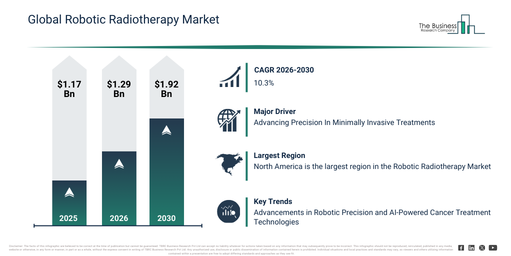
    Experiencing substantial expansion, the robotic radiotherapy sector is projected to advance from a valuation of $1.17 billion in 2025 to $1.29 billion by 2026, showcasing a compound annual growth rate of 10.7%. This upward trajectory during the past period is underpinned by several key factors, including a higher prevalence of cancer diagnoses, the broadened deployment of radiotherapy facilities within healthcare institutions, progressive developments in linear accelerator technology, a growing inclination towards less invasive therapeutic modalities for cancer management, and enhanced accessibility to sophisticated imaging apparatus.

    The market for robotic radiotherapy is projected to experience swift expansion in the coming years, anticipated to reach $1.92 billion by 2030 with a compound annual growth rate (CAGR) of 10.3%. This projected expansion is primarily driven by the increasing embrace of individualized cancer treatment approaches, elevated financial commitments towards advanced robotic infrastructure for cancer care, surge in the need for radiotherapy techniques that adapt to patient movement, proliferation of proton and particle therapy facilities, and ongoing innovations in artificial intelligence-powered treatment strategy development. Key developments anticipated during this forecast span the escalating integration of real-time tracking for tumor motion, greater utilization of robotic radiation systems guided by imaging, growing requirements for patient-specific radiotherapy planning, broader implementation of non-surgical cancer intervention methods, and an intensified emphasis on achieving radiation precision within fractions of a millimeter.

    Download A Free Sample Report For Comprehensive Market Insights:

    https://www.thebusinessresearchcompany.com/sample.aspx?id=20946&type=smp

    Robotic Radiotherapy Market Demand Drivers Creating New Revenue Opportunities

    Increased demand for less invasive medical interventions is anticipated to fuel the expansion of the robotic radiotherapy sector. This trend towards minimally invasive approaches is fueled by technological progress in the medical field, a rising patient inclination towards swifter recovery periods and fewer complications, and a broader acceptance by healthcare institutions due to potential cost savings and enhanced patient results. Robotic radiotherapy significantly boosts the accuracy and efficacy of these procedures by precisely directing radiation to cancerous growths while preserving adjacent healthy tissue, leading to fewer complications, accelerated healing, and a better fit with the escalating need for sophisticated, patient-focused treatment modalities. To illustrate, data from the American Society of Plastic Surgeons in June 2024 indicated that minimally invasive procedures saw a 7 percent increase in 2023, outperforming traditional surgeries by 2 percent, with neuromodulator injections and hyaluronic acid fillers each surpassing 9 million and 5 million applications respectively. Consequently, the growing preference for minimally invasive techniques is a key driver for the robotic radiotherapy market’s development.

    Robotic Radiotherapy Market Segment Breakdown: Which Categories Generate The Most Revenue?

    The robotic radiotherapy market covered in this report is segmented –

    1) By Product: Radiotherapy Systems, Softwares, 3D Cameras (Surface Guided)

    2) By Technology: Linear Accelerators, Conventional Linear Accelerators, Magnetic Resonance Imaging (MRI) – Linear Accelerators, Stereotactic Radiation Therapy Systems, Cyberknife, Gamma Knife, Particle Therapy, Proton Beam Therapy

    3) By Application: Prostate Cancer, Breast Cancer, Lung Cancer, Head & Neck Cancer, Colorectal Cancer

    4) By End User: Hospitals, Independent Radiotherapy Centers

    Subsegments:

    1) By Radiotherapy Systems: Robotic Linear Accelerators, Proton Therapy Systems, Stereotactic Radiosurgery Systems, Image-Guided Radiotherapy (IGRT) Systems, Intensity-Modulated Radiotherapy (IMRT) Systems

    2) By Softwares: Treatment Planning Software, Radiation Therapy Management Software, Robotic Radiotherapy Control Software, Integration Software For Robotic Systems

    3) By 3D Cameras (Surface Guided): 3D Optical Surface Imaging Systems, 3D Camera Systems For Patient Positioning, 3D Motion Tracking Cameras For Radiotherapy, Real-Time 3D Surface Imaging For Tumor Localization

    Robotic Radiotherapy Market Trends Driving Strategic Industry Expansion

    Key players within the robotic radiotherapy sector are prioritizing the creation of groundbreaking solutions incorporating cutting-edge technologies, notably artificial intelligence (AI), to achieve unparalleled levels of precision, steadfastness, and a reduction in mistakes. This robotic accuracy sharpens precision, mitigates human fallibility, boosts uniformity, lessens harm to surrounding tissues, and expedites patient recuperation through the sophisticated integration of sensors, actuators, and computational processes. Demonstrating this advancement, Tampa General Hospital, a prominent US cancer treatment center, introduced the AI-driven CyberKnife S7 system in January 2024. This technological leap forward represents a considerable stride in oncology, providing a non-surgical and remarkably accurate treatment modality suitable for a spectrum of ailments, encompassing both malignant and non-cancerous growths, alongside neurological conditions, by facilitating highly focused radiation delivery while safeguarding healthy tissue and offering a less intrusive option compared to conventional surgery.

    Robotic Radiotherapy Market Key Players And Strategic Industry Positioning

    Major companies operating in the robotic radiotherapy market are Siemens Healthineers AG, GE Healthcare Technologies Inc, Varian Medical Systems, Elekta AB, Accuray Incorporated, Brainlab AG, Mevion Medical Systems Inc, ViewRay Technologies Inc, RaySearch Laboratories AB, VisionRT Ltd, MIM Software Inc, CIVCO Radiotherapy, ProNova Solutions, IBA Group, Xcision Medical Systems LLC, C RAD AB, RefleXion Medical Inc, Zap Surgical Systems Inc, Hitachi High Tech Corporation, Toshiba Medical Systems Corporation, Philips Radiation Oncology Systems, Shinva Medical Instrument Co Ltd, Neusoft Medical Systems Co Ltd, United Imaging Healthcare Radiotherapy

    Access The Complete Robotic Radiotherapy Market Report:

    https://www.thebusinessresearchcompany.com/report/robotic-radiotherapy-global-market-report

    Robotic Radiotherapy Market Geographic Distribution And Regional Opportunities

    North Americawas the largest region in the robotic radiotherapy market in 2025. Asia-Pacificis expected to be the fastest-growing region in the forecast period. The regions covered in the robotic radiotherapy market report are Asia-Pacific, South East Asia, Western Europe, Eastern Europe, North America, South America, Middle East, Africa.

    Get in touch with us:

    The Business Research Company: https://www.thebusinessresearchcompany.com/

    Americas: +1 310-496-7795

    Asia: +44 7882 955267 & +91 8897263534

    Europe: +44 7882 955267

    Email us at: marketing@tbrc.info

    Follow us on:

    LinkedIn: https://in.linkedin.com/company/the-business-research-company

    YouTube: https://www.youtube.com/channel/UC24_fI0rV8cR5DxlCpgmyFQ

    Global Market Model: https://www.thebusinessresearchcompany.com/global-market-model