Month: June 2026

  • Adult Stem Cell Assay Market Size Projected To Increase From $13.83 Billion To $24.75 Billion During The Forecast Period

    Adult Stem Cell Assay Market Size Projected To Increase From $13.83 Billion To $24.75 Billion During The Forecast Period

    Enhanced with market attractiveness analysis, total addressable market evaluation, company benchmarking matrices, interactive Excel dashboards, expanded supply chain intelligence, emerging startup coverage, and detailed product insights, The Business Research Company’s 2026 market reports deliver more actionable and strategically valuable research.

    Adult Stem Cell Assay Market Revenue Growth Supported By A CAGR Of 24.75% Through 2030

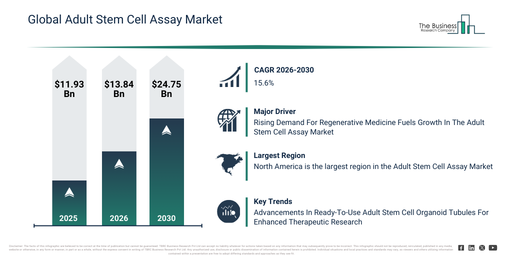
    The market for adult stem cell assays has experienced a significant surge recently, projected to expand from $11.93 billion in 2025 to $13.84 billion by 2026, reflecting a compound annual growth rate of 16.0%. This robust growth over the historical period can be attributed to several key factors, including the proliferation of stem cell research initiatives, elevated financial investment in regenerative medicine, an increase in both academic and clinical research endeavors, the accessibility of sophisticated laboratory equipment, and a rise in partnerships between academic institutions and commercial entities.

    The adult stem cell assay market is poised for substantial expansion, projected to reach $24.75 billion by 2030, reflecting a compound annual growth rate of 15.6%. This surge is anticipated due to several key factors: the advancing clinical application of stem cell treatments, a heightened need for sophisticated precision medicine research instruments, the broadening scope of cell-based drug discovery, the increasing automation prevalent in laboratory processes, and a stronger regulatory emphasis on the validation of assays. During this projected period, notable trends are expected to shape the market, including greater utilization of high-throughput assay platforms, a rise in the adoption of multiparametric stem cell analysis techniques, an escalating demand for regenerative medicine testing solutions, the expanded deployment of automated cell sorting technologies, and a reinforced concentration on standardizing assays and ensuring their reproducibility.

    Download A Free Sample Report For Comprehensive Market Insights:

    https://www.thebusinessresearchcompany.com/sample.aspx?id=19269&type=smp

    Adult Stem Cell Assay Market Industry Drivers: What Is Driving Revenue Growth?

    The escalating interest in regenerative medicine is poised to be a significant catalyst for the expansion of the adult stem cell assay market. Regenerative medicine, a field dedicated to restoring bodily functions through cell and tissue repair or replacement, addresses impairments stemming from natural aging, illness, injury, or genetic conditions. A key factor fueling the need for regenerative medicine is the increasing worldwide elderly population, which heightens the demand for treatments targeting age-related ailments like arthritis and heart disease. Within this context, adult stem cell assays play a crucial role by assessing characteristics such as cell differentiation into targeted types, their growth rate, movement capabilities, and intercellular communication, all to confirm the health and effectiveness of stem cells. These assessments are indispensable for the development of secure and efficacious regenerative treatments, including those involving stem cell therapies. Illustrating this trend, a report from the American Society of Gene & Cell Therapy and Citeline revealed that as of the first quarter of 2023, 247 gene therapies were in Phase II clinical trials, a figure that subsequently climbed by 5% to 260 by the end of the second quarter of 2023. Consequently, the increasing reliance on regenerative medicine directly correlates with the growth trajectory of the adult stem cell assay market.

    Adult Stem Cell Assay Market Segment Analysis Highlighting Growth Areas

    The adult stem cell assay market covered in this report is segmented –

    1) By Type: Viability Or Cytotoxicity, Isolation And Purification, Cell Identification, Proliferation, Differentiation, Function, Apoptosis

    2) By Application: Regenerative Medicine And Therapy Development, Drug Discovery And Development, Clinical Research

    3) By End-User: Government Research Institutes, Private Research Institutes, Industry Research

    Subsegments:

    1) By Viability or Cytotoxicity: Cell Viability Assays, Cytotoxicity Assays, Live Or Dead Cell Staining Assays

    2) By Isolation and Purification: Magnetic-Activated Cell Sorting (MACS), Fluorescence-Activated Cell Sorting (FACS), Density Gradient Centrifugation, Enzymatic Digestion Methods

    3) By Cell Identification: Surface Marker Analysis, Immunocytochemistry, Gene Expression Profiling

    4) By Proliferation: Cell Proliferation Assays, CFSE Dilution Assays, Colony-Forming Unit (CFU) Assays

    5) By Differentiation: Lineage Tracing Assays, Differentiation Marker Analysis, Multipotent Differentiation Assays

    6) By Function: Functional Assays, In Vitro Functional Assays, Metabolic Activity Assays

    7) By Apoptosis: Caspase Activity Assays, TUNEL Assay (Terminal deoxynucleotidyl transferase dUTP nick end labeling), Annexin V/Propidium Iodide Staining

    #Adult Stem Cell Assay Market Growth Trends: What Is Influencing The Future Outlook?

    Leading players within the adult stem cell assay sector are concentrating on the creation of an sophisticated, pre-packaged adult stem cell organoid tubule assay system to enhance the accuracy of predicting treatment effectiveness and expedite the advancement of tailored therapies. This ready-to-use model, derived from adult stem cells, is engineered as a self-contained unit for immediate use in scientific investigation. Demonstrating this trend, MIMETAS, a Dutch firm specializing in organ-on-a-chip disease simulations, introduced its OrganoReady product range in March of 2023. This offering presents a completely assembled assay model based on adult stem cell (ASC)-generated organoid tubules, thereby simplifying the intricate processes of cell cultivation and tissue generation for rapid research applications. Contained within this system are colon and kidney organoid tubules sourced from ASCs, specifically refined for investigations into mechanistic toxicology and drug-induced organ damage. The plates, each housing 64 organoids, are well-suited for screening operations ranging from moderate to high throughput, establishing a dependable framework for adult stem cell assay methodologies.

    Adult Stem Cell Assay Market Leading Companies: Who Holds Significant Market Presence?

    Major companies operating in the adult stem cell assay market are Thermo Fisher Scientific Inc., Becton, Dickinson and Company, Lonza Group AG, Sartorius AG, Sigma Aldrich Chemicals Pvt. Ltd., STEMCELL Technologies Inc., Miltenyi Biotec B.V. & Co. KG, Promega Corporation, Abcam Plc, R&D Systems Inc., BioLegend Inc., Sino Biological Inc., Cell Signaling Technology, Inc., Enzo Biochem Inc., Creative Bioarray, ScienCell Research Laboratories Inc., Cell Biolabs Inc., Abnova Corporation, American Type Culture Collection, AMSBIO LLC

    Access The Complete Adult Stem Cell Assay Market Report:

    https://www.thebusinessresearchcompany.com/report/adult-stem-cell-assay-global-market-report

    Adult Stem Cell Assay Market Regional Analysis And Leading Geography

    North Americawas the largest region in the adult stem cell assay market in 2025. Asia-Pacificis expected to be the fastest-growing region in the forecast period. The regions covered in the adult stem cell assay market report are Asia-Pacific, South East Asia, Western Europe, Eastern Europe, North America, South America, Middle East, Africa.

    Get in touch with us:

    The Business Research Company: https://www.thebusinessresearchcompany.com/

    Americas: +1 310-496-7795

    Asia: +44 7882 955267 & +91 8897263534

    Europe: +44 7882 955267

    Email us at: marketing@tbrc.info

    Follow us on:

    LinkedIn: https://in.linkedin.com/company/the-business-research-company

    YouTube: https://www.youtube.com/channel/UC24_fI0rV8cR5DxlCpgmyFQ

    Global Market Model: https://www.thebusinessresearchcompany.com/global-market-model

  • Adult Spinal Deformity Market Growth Outlook Reveals A CAGR Of 5.4% And A Market Value Of $3.36 Billion By 2030

    Adult Spinal Deformity Market Growth Outlook Reveals A CAGR Of 5.4% And A Market Value Of $3.36 Billion By 2030

    Through market attractiveness analysis, total addressable market evaluation, company benchmarking matrices, interactive Excel dashboards, expanded supply chain intelligence, emerging startup coverage, and detailed product insights, The Business Research Company’s 2026 market reports provide more actionable and strategically valuable research.

    Adult Spinal Deformity Market Value Expansion And Long-Term Growth Outlook

    The market for adult spinal deformity treatments has experienced considerable expansion lately. Projections indicate a rise from a value of $2.57 billion in 2025 to $2.73 billion in 2026, reflecting a compound annual growth rate of 6.1%. During the preceding period, key factors contributing to this growth included the increasing incidence of spinal deformities in adults, a greater number of spinal surgeries and fusion interventions, an aging demographic, the utilization of conventional spinal fixation equipment, and the development of hospital-based spine care services.

    The adult spinal deformity sector is poised for significant expansion over the upcoming years, projecting a market value of $3.37 billion by 2030, driven by a compound annual growth rate of 5.4%. This anticipated expansion is fueled by several key advancements and trends, including the creation of sophisticated, less invasive spinal instrumentation, heightened public understanding of spinal deformity treatment choices, an increase in outpatient surgical facilities, greater utilization of robotically-assisted and image-guided spinal interventions, and the broadening availability of post-surgical recovery programs. Critical developments expected during this forecast period encompass a greater embrace of minimally invasive spinal surgery techniques, a surge in the need for spinal fusion and deformity correction interventions, advancements in cervical and thoracolumbar stabilization implants, the proliferation of ambulatory surgical centers dedicated to spinal care, and a stronger emphasis on post-operative recovery and optimizing patient results.

    Download A Free Sample Report For Comprehensive Market Insights:

    https://www.thebusinessresearchcompany.com/sample.aspx?id=17052&type=smp

    #Adult Spinal Deformity Market Growth Factors: Which Forces Are Supporting Market Expansion?

    The escalating prevalence of obesity is poised to be a significant catalyst for the expansion of the adult spinal deformity market. This trend of increasing obesity, characterized by a rising percentage of individuals with a body mass index (BMI) of 30 or greater, stems from dietary shifts toward calorie-dense processed foods and a decline in physical activity. Additionally, constraints on accessing nutritious food options and external environmental influences further exacerbate these figures. Consequently, treatments for adult spinal deformities are seeing greater application in individuals with obesity, aiming to alleviate the increased biomechanical strain on the vertebral column and to curb the onset and worsening of spinal conditions linked to excess weight. Illustrating this projected impact, the World Obesity Federation anticipates that by 2030, approximately half of the world’s adult population, nearing 3 billion individuals, will be classified as overweight or obese, thereby underscoring the direct correlation between burgeoning obesity rates and the projected growth trajectory of the adult spinal deformity market.

    Adult Spinal Deformity Market Segment Performance And Strategic Opportunities

    The adult spinal deformity market covered in this report is segmented –

    1) By Deformity Type: Scoliosis, Kyphosis, Lordosis

    2) By Product Type: Interbody Fusion Devices, Thoracolumbar Devices

    3) By Procedure: Spinal Fusion Surgery, Osteotomy, Spinal Deformity Correction, Spinal Arthrodesis, Spinal Fixation, Minimally Invasive Spinal Surgeries, Other Procedures

    Subsegments:

    1) By Scoliosis: Degenerative And Adult-Onset Scoliosis, Adult Idiopathic Scoliosis, Adult Neuromuscular Scoliosis, Residual And Progressive Congenital Scoliosis in Adults

    2) By Kyphosis: Degenerative Kyphosis, Postural Kyphosis in Adults, Adult Scheuermann’s Kyphosis, Post-Traumatic Kyphosis

    3) By Lordosis: Hyperlordosis And Excessive Lumbar Curvature, Hypolordosis Or Flatback Syndrome, Iatrogenic Lordosis

    Adult Spinal Deformity Market Industry Trends: What Changes Are Reshaping Demand?

    Manufacturers prominent in the adult spinal deformity sector are prioritizing the creation of customized patient solutions, including implant innovations, to classify and evaluate congenital irregularities of the upper extremities, especially deformities affecting the hand and wrist. Spinal deformity instrumentation integrates sophisticated implant technologies such as titanium compounds and polymer blends to bolster structural integrity and support correction processes. For example, Orthofix Medical Inc., a U.S.-based medical technology firm, introduced the mariner deformity pedicle screw system in January 2023, subsequent to its acquisition of SeaSpine. This system is specifically engineered for intricate adult spinal deformity diagnoses and includes state-of-the-art reduction instruments, specialized implants, and durable osteotomy tools. It capitalizes on Mariner’s adaptable technology to deliver a complete implant option, thereby minimizing the number of surgical instrument sets required and boosting hospital operational efficiency by streamlining workflows and lowering expenses.

    Adult Spinal Deformity Market Key Players: Which Companies Shape Industry Competition?

    Major companies operating in the adult spinal deformity market are Abbott Laboratories, Medtronic plc, Johnson & Johnson MedTech, Stryker Corporation, B Braun Melsungen AG, Zimmer Biomet Holdings Inc, NuVasive Inc, Globus Medical Inc, Medacta International, Orthofix Medical Inc, Alphatec Holdings Inc, Exactech Inc, RTI Surgical Holdings Inc, SeaSpine Holdings Corporation, Centinel Spine LLC, Spine Wave Inc, Zavation Medical Products LLC., Spinal Elements Holdings Inc., Simplify Medical Inc, Aurora Spine Corporation, Premia Spine Ltd, Innovasis Inc, Osseus Fusion Systems, SpineGuard SA

    Access The Complete Adult Spinal Deformity Market Report:

    https://www.thebusinessresearchcompany.com/report/adult-spinal-deformity-global-market-report

    Adult Spinal Deformity Market Geographic Analysis: Where Is Demand Growing The Fastest?

    North Americawas the largest region in the adult spinal deformity market in 2025. Asia-Pacificis expected to be the fastest-growing region in the forecast period The regions covered in the adult spinal deformity market report are Asia-Pacific, South East Asia, Western Europe, Eastern Europe, North America, South America, Middle East, Africa.

    Get in touch with us:

    The Business Research Company: https://www.thebusinessresearchcompany.com/

    Americas: +1 310-496-7795

    Asia: +44 7882 955267 & +91 8897263534

    Europe: +44 7882 955267

    Email us at: marketing@tbrc.info

    Follow us on:

    LinkedIn: https://in.linkedin.com/company/the-business-research-company

    YouTube: https://www.youtube.com/channel/UC24_fI0rV8cR5DxlCpgmyFQ

    Global Market Model: https://www.thebusinessresearchcompany.com/global-market-model
  • Adult Malignant Glioma Therapeutics Market Forecast Highlights Expansion From $2.69 Billion To $3.94 Billion Through 2030

    Adult Malignant Glioma Therapeutics Market Forecast Highlights Expansion From $2.69 Billion To $3.94 Billion Through 2030

    Delivering more actionable and strategically valuable research, The Business Research Company’s 2026 market reports feature market attractiveness analysis, total addressable market evaluation, company benchmarking matrices, interactive Excel dashboards, expanded supply chain intelligence, emerging startup coverage, and detailed product insights.

    Adult Malignant Glioma Therapeutics Market Expected To Reach $3.94 Billion By 2030 At 9.9% CAGR

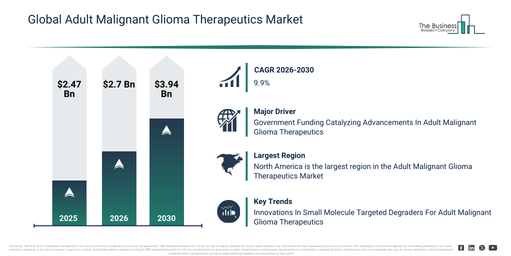
    The market for adult malignant glioma therapeutics experienced robust expansion lately, with projections indicating a rise from $2.47 billion in 2025 to $2.7 billion in 2026, reflecting a compound annual growth rate of 9.1%. This historical growth was propelled by several key factors: the scarcity of alternative treatment approaches for malignant gliomas, a continued dependence on conventional chemotherapy and radiotherapy, a documented increase in the incidence of adult brain tumors, the expansion of hospital-based oncology services, and an elevated level of consciousness regarding the necessity for effective glioma treatments.

    The market for adult malignant glioma therapeutics is poised for substantial expansion over the coming years, projecting a valuation of $3.94 billion by 2030, driven by a compound annual growth rate of 9.9%. This anticipated growth trajectory is underpinned by several key factors, including advancements in targeted molecular therapies, a broadening scope of clinical investigations into innovative glioma treatments, amplified investments in precision oncology, and fostering collaborations between biotechnology firms and healthcare institutions, alongside the increasing embrace of sophisticated radiotherapy and combination therapy methodologies. Furthermore, significant market trends shaping this forecast period involve a heightened emphasis on developing targeted therapies for glioma, a greater inclination towards adopting combination treatment strategies, the proliferation of experimental and personalized therapeutic options, a dedicated focus on enhancing the quality of life for patients, and a more widespread application of cutting-edge radiotherapy techniques.

    Download A Free Sample Report For Comprehensive Market Insights:

    https://www.thebusinessresearchcompany.com/sample.aspx?id=13178&type=smp

    Adult Malignant Glioma Therapeutics Market Demand Drivers: What Is Fueling Industry Growth?

    Anticipated government financial backing aimed at advancing brain cancer studies is poised to be a significant catalyst for the expansion of the adult malignant glioma therapeutics market. This governmental financial assistance, encompassing support from federal, state, or local bodies, is channeled towards diverse entities such as organizations, projects, programs, and individuals. Such financial contributions are instrumental in accelerating the adult malignant glioma therapeutics sector by fostering the creation of innovative therapies, facilitating personalized drug development, enabling targeted approaches like the inhibition of pyrimidine synthesis, and expediting the approval processes for orphan drugs. A notable illustration is the Australian Brain Cancer Mission, launched in June 2023 by the Australian Department of Health and Aged Care, which committed $136.66 million to brain cancer research. This endeavor is specifically designed to enhance patient survival rates and consequently elevate the well-being of individuals affected by brain cancers, including conditions like anaplastic astrocytoma. Consequently, the robust infusion of government funds into brain cancer research directly stimulates the growth trajectory of the adult malignant glioma therapeutics market.

    #Adult Malignant Glioma Therapeutics Market Segment Landscape And Growth Potential

    The adult malignant glioma therapeutics market covered in this report is segmented –

    1) By Type Of Disease: Glioblastoma Multiforme, Anaplastic Astrocytoma, Anaplastic Oligodendroglioma, Anaplastic Oligoastrocytoma, Other Types

    2) By Therapy: Chemotherapy, Targeted Therapy, Radiotherapy, Other Therapies

    3) By End-User: Hospitals, Specialty Clinics, Cancer And Radiation Therapy Centers, Other End Users

    Subsegments:

    1) By Glioblastoma Multiforme: Standard Treatments, Experimental Therapies

    2) By Anaplastic Astrocytoma: Chemotherapy Options, Targeted Therapies

    3) By Anaplastic Oligodendroglioma: Radiation Therapy, Combination Therapies

    4) By Anaplastic Oligoastrocytoma: Surgical Interventions, Adjuvant Therapies

    5) By Other Types: Rare Gliomas, Emerging Therapies

    Adult Malignant Glioma Therapeutics Market Innovation Trends: Which Developments Are Transforming The Industry?

    In the realm of the adult malignant glioma therapeutics market, key players are focusing on the introduction of novel offerings, exemplified by small molecule targeted degraders, to ensure exceptional customer support. These small-molecule targeted degraders are pharmaceuticals designed to facilitate the elimination of particular proteins by linking a protein of interest with an E3 ubiquitin ligase. As an illustration, in February of 2023, Beactica Therapeutics AB, a Swedish firm specializing in precision oncology, secured orphan drug designation from the U.S. Food and Drug Administration (FDA) for BEA-17, a treatment intended for glioblastoma (GBM). This therapy functions as a small-molecule targeted degrader, specifically targeting the epigenetic enzymes LSD1 and its associated cofactor CoREST, both of which are implicated in the development of diverse cancers, including GBM. The mechanism of BEA-17 involves the degradation of LSD1 and CoREST, thereby restoring the activity of tumor suppressor genes and impeding the proliferation of cancerous cells.

    Adult Malignant Glioma Therapeutics Market Competitive Landscape: Who Are The Leading Companies?

    Major companies operating in the adult malignant glioma therapeutics market are Johnson & Johnson Private Limited, Pfizer Inc., F. Hoffmann-La Roche Ltd., Allergan plc, AbbVie Inc., Novartis AG, Bayer AG, Merck & Co Inc., GlaxoSmithKline plc, Bristol-Myers Squibb Company, AstraZeneca plc, Eli Lilly and Company, Amgen Inc., Teva Pharmaceutical Industries Ltd., GT Medical Technologies Inc., Lupin Limited, Mylan NV, Sanofi SA, Bausch Health Companies Inc., Sun Pharmaceutical Industries Ltd., Aurobindo Pharma Limited, Genentech Inc., Amneal Pharmaceuticals LLC, Emcure Pharmaceuticals Limited, Novocure Ltd., Arbour Pharmaceuticals LLC, Basilea Pharmaceuticals Ltd.

    Access The Complete Adult Malignant Glioma Therapeutics Market Report:

    https://www.thebusinessresearchcompany.com/report/adult-malignant-glioma-therapeutics-global-market-report

    Adult Malignant Glioma Therapeutics Market Global Footprint: Which Region Holds Market Leadership?

    North Americawas the largest region in the adult malignant glioma therapeutics market in 2025. Asia Pacificis expected to be the fastest-growing region in the forecast period. The regions covered in the adult malignant glioma therapeutics market report are Asia-Pacific, South East Asia, Western Europe, Eastern Europe, North America, South America, Middle East, Africa.

    Get in touch with us:

    The Business Research Company: https://www.thebusinessresearchcompany.com/

    Americas: +1 310-496-7795

    Asia: +44 7882 955267 & +91 8897263534

    Europe: +44 7882 955267

    Email us at: marketing@tbrc.info

    Follow us on:

    LinkedIn: https://in.linkedin.com/company/the-business-research-company

    YouTube: https://www.youtube.com/channel/UC24_fI0rV8cR5DxlCpgmyFQ

    Global Market Model: https://www.thebusinessresearchcompany.com/global-market-model
  • Adult Intraventricular Hemorrhage Market Expected To Reach $2.9 Billion By 2030 As Growth Accelerates At 5.4% CAGR

    Adult Intraventricular Hemorrhage Market Expected To Reach $2.9 Billion By 2030 As Growth Accelerates At 5.4% CAGR

    Enhanced with market attractiveness analysis, total addressable market evaluation, company benchmarking matrices, interactive Excel dashboards, expanded supply chain intelligence, emerging startup coverage, and detailed product insights, The Business Research Company’s 2026 market reports deliver more actionable and strategically valuable research.

    #Adult Intraventricular Hemorrhage Market Size And Revenue Forecast Through 2030

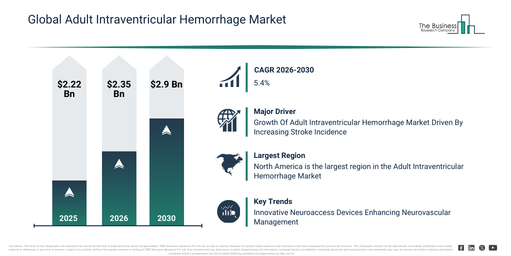
    The market for adult intraventricular hemorrhage treatments has experienced robust expansion in recent times. Projections indicate a continued upward trajectory, with the market poised to increase from $2.22 billion in 2025 to $2.35 billion in 2026, reflecting a compound annual growth rate of 6.1%. This historical growth momentum is largely attributable to a confluence of factors including the escalating occurrence of stroke and brain injuries, heightened public consciousness regarding neurological conditions, the constrained access to cutting-edge neurosurgical technologies, the adherence to established intraventricular hemorrhage management practices, and the expanding healthcare infrastructure within hospitals and specialized clinics.

    The market for adult intraventricular hemorrhage treatments is poised for substantial expansion over the coming years, with projections indicating a rise to $2.9 billion by 2030, reflecting a compound annual growth rate of 5.4%. This anticipated growth is propelled by several key factors including advancements in minimally invasive surgical equipment, the escalating integration of smart monitoring technologies, a greater uptake of innovative hemostatic and neuroprotective medications, a proliferation of clinical studies dedicated to IVH, and a growing need for home-based care and ambulatory intervention strategies. Notable trends shaping this market during the forecast period encompass an increased adoption of external ventricular drainage (EVD) systems, the expanding utility of minimally invasive neurosurgical instruments, heightened demand for both hemostatic and antihypertensive pharmaceuticals, the development and deployment of sophisticated intracranial monitoring devices, and an increased emphasis on prompt diagnosis and early intervention for IVH cases.

    Download A Free Sample Report For Comprehensive Market Insights:

    https://www.thebusinessresearchcompany.com/sample.aspx?id=17051&type=smp

    Adult Intraventricular Hemorrhage Market Growth Drivers: What Factors Are Accelerating Expansion?

    The market for adult intraventricular hemorrhage treatments is poised for expansion, driven by a rise in stroke occurrences. A stroke, a critical medical condition, arises when the brain’s blood supply is compromised, resulting in damage to brain tissue. This escalating stroke rate can be attributed to a confluence of factors, including an increasing elderly demographic, the prevalence of conditions like hypertension, diabetes, and obesity, alongside lifestyle choices such as smoking and a lack of physical activity. Adult IVH can be a direct consequence of strokes, as bleeding into the brain’s ventricular spaces, frequently caused by ruptured blood vessels, can ensue. To illustrate, Australia documented around 41,100 stroke events in 2023, as reported by the Australian Institute of Health and Welfare in October 2025, which translates to roughly 113 daily incidents. Consequently, the augmented frequency of strokes is a key factor fueling the growth of the adult intraventricular hemorrhage market.

    Adult Intraventricular Hemorrhage Market Categorization By Product Type And Application

    The adult intraventricular hemorrhage market covered in this report is segmented –

    1) By Product Type: Surgical Devices, Drugs, Monitoring Devices

    2) By Distribution Channel: Direct Sales, Distributors, Online Platforms, Other Distribution Channels

    3) By Application: Primary Intraventricular Hemorrhage, Secondary Intraventricular Hemorrhage, Post-Traumatic Intraventricular Hemorrhage, IVH with Hydrocephalus, Other Applications

    4) By End-User: Hospitals, Specialty Clinics, Diagnostic Centers, Other End-Users

    Subsegments:

    1) By Surgical Devices: Craniotomy Instruments, External Ventricular Drainage (EVD) Systems, Surgical Clips And Staples, Endoscopic Tools

    2) By Drugs: Hemostatic Agents, Antihypertensive Drugs, Sedatives And Analgesics

    3) By Monitoring Devices: Intracranial Pressure (ICP) Monitors, Brain Oxygenation Monitors, Cerebral Blood Flow (CBF) Monitors, Neuroimaging Devices

    Adult Intraventricular Hemorrhage Market Trends: What Is Shaping Future Industry Growth?

    Enterprises dominating the adult intraventricular hemorrhage sector are prioritizing the creation of groundbreaking solutions, exemplified by neuroaccess instruments aimed at the neurovascular treatment of both ischemic and hemorrhagic strokes. These neuroaccess instruments serve as medical apparatus facilitating access to the brain or spinal cord for procedures involving diagnosis or therapy. Illustratively, in June 2024, Penumbra Inc., a medical device manufacturer headquartered in the United States, made public the achievement of CE Mark accreditation and the subsequent European introduction of its BMX81 and BMX96 neuroaccess instruments, intended for the management of ischemic and hemorrhagic stroke conditions. These particular instruments represent Penumbra’s leading-edge neuroaccess technologies, specifically engineered for the neurovascular care of ischemic and hemorrhagic strokes. Diverging from conventional access catheters, the BMX81 and BMX96 incorporate laser-cut stainless steel hypo tube engineering, thereby furnishing enhanced stability and maneuverability, enabling clinicians to effortlessly traverse the intricate neural landscape.

    Adult Intraventricular Hemorrhage Market Company Landscape And Strategic Competition

    Major companies operating in the adult intraventricular hemorrhage market are Johnson and Johnson, Abbott Laboratories, Medtronic Plc, Siemens Healthineers, Medline Industries, Philips Healthcare Inc., Stryker Corporation, GE HealthCare Technologies Inc., Teva Pharmaceutical Industries Ltd., Boston Scientific Corporation, B. Braun Melsungen AG, Alcon Inc., Zimmer Biomet Holdings Inc., Olympus Corporation, Smith and Nephew, Kaneka Corporation, Karl Storz SE and Co. KG, Carl Zeiss Meditec AG, Integra Lifesciences Holdings Corp, Elekta AB, Leica Microsystems GmbH, KLS Martin Group, Natus Medical Incorporated, Aesculap Inc., NeuroPace Inc., Sophysa USA Inc, Spiegelberg GmbH and Co. KG, Vivonics Inc.

    Access The Complete Adult Intraventricular Hemorrhage Market Report:

    https://www.thebusinessresearchcompany.com/report/adult-intraventricular-hemorrhage-global-market-report

    Adult Intraventricular Hemorrhage Market Regional Distribution: Which Areas Drive Market Expansion?

    North Americawas the largest region in the adult intraventricular hemorrhage market in 2025. Asia-Pacificis expected to be the fastest-growing region in the forecast period. The regions covered in the adult intraventricular hemorrhage market report are Asia-Pacific, South East Asia, Western Europe, Eastern Europe, North America, South America, Middle East, Africa.

    Get in touch with us:

    The Business Research Company: https://www.thebusinessresearchcompany.com/

    Americas: +1 310-496-7795

    Asia: +44 7882 955267 & +91 8897263534

    Europe: +44 7882 955267

    Email us at: marketing@tbrc.info

    Follow us on:

    LinkedIn: https://in.linkedin.com/company/the-business-research-company

    YouTube: https://www.youtube.com/channel/UC24_fI0rV8cR5DxlCpgmyFQ

    Global Market Model: https://www.thebusinessresearchcompany.com/global-market-model
  • Adult Day Care Market Set To Grow From $19.31 Billion In 2026 To $24.73 Billion By 2030 At A CAGR Of 6.4%

    Adult Day Care Market Set To Grow From $19.31 Billion In 2026 To $24.73 Billion By 2030 At A CAGR Of 6.4%

    Through market attractiveness analysis, total addressable market evaluation, company benchmarking matrices, interactive Excel dashboards, expanded supply chain intelligence, emerging startup coverage, and detailed product insights, The Business Research Company’s 2026 market reports provide more actionable and strategically valuable research.

    Adult Day Care Market Growth From $19.31 Billion In 2026 To $24.73 Billion By 2030 At A CAGR Of 6.4%

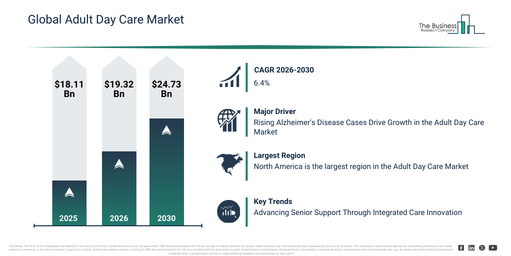
    The market for adult day care programs has experienced robust expansion lately, projecting a rise from $18.11 billion in 2025 to $19.32 billion in 2026, reflecting a compound annual growth rate of 6.7%. This historical growth trajectory is underpinned by several key factors, including an increasing aging demographic, a greater incidence of long-term health conditions, the proliferation of localized care solutions, enhanced engagement from caregivers in available support networks, and the provision of governmental financial assistance for adult care initiatives.

    The adult day care sector is poised for substantial expansion in the upcoming years, projecting a market value of $24.73 billion by 2030, driven by a compound annual growth rate (CAGR) of 6.4%. This forward momentum is fueled by several key factors, including a heightened need for specialized dementia and memory care, the proliferation of integrated medical and social care approaches, greater embrace of digital health monitoring technologies, increased capital allocation towards senior care facilities, and a growing emphasis on proactive and health-focused services. During this projected period, prominent industry shifts will involve the development of more medically oriented day care programs, escalating demand for services tailored to individuals with dementia, a more comprehensive integration of therapeutic and leisure pursuits, a stronger focus on providing support for informal caregivers, and a more pronounced dedication to crafting individualized care strategies.

    Download A Free Sample Report For Comprehensive Market Insights:

    https://www.thebusinessresearchcompany.com/sample.aspx?id=19268&type=smp

    Adult Day Care Market Growth Factors Supporting Long-Term Expansion

    The rising prevalence of Alzheimer’s disease is anticipated to be a key catalyst for the expansion of the adult day care sector. Alzheimer’s, a degenerative neurological condition, results in diminished memory, impaired cognitive abilities, and eventually, a loss of capacity for everyday tasks. This disease emerges from a complex interplay of biological mechanisms, such as the buildup of amyloid plaques and tau tangles, inherited genetic factors, inflammatory reactions, and other contributors to neuronal deterioration and cognitive decline. Adult day care programs offer valuable support to individuals with Alzheimer’s through organized activities, tailored care, and opportunities for social engagement within a secure setting, thereby aiding in symptom management, enhancing life quality, and providing respite for family members and professional caregivers. As an illustration, data from the Office for National Statistics Census in May 2024 revealed that in England and Wales during 2023, dementia and Alzheimer’s disease were identified as the primary causes of mortality, contributing to 66,876 deaths (11.5% of the total), a slight increase from the 65,967 deaths (11.4%) recorded in 2022. Consequently, the escalating number of individuals affected by Alzheimer’s disease is directly stimulating growth within the adult day care market.

    Adult Day Care Market Segment Analysis And Revenue Opportunities

    The adult day care market covered in this report is segmented –

    1) By Type: Medical Focused, Dementia Specific, Respite Care, Recreational, Other Types

    2) By Service: Adult Social Day Services, Adult Day Healthcare Services, Specialized Day Care Services

    3) By Funding: Private, Public

    4) By End-User: Elderly, Disabled Individuals, Other End-Users

    Subsegments:

    1) By Medical Focused: Chronic Disease Management, Post-Surgical Care, Medication Management, Pain Management, Physical Therapy And Rehabilitation

    2) By Dementia Specific: Alzheimer’s Care, Parkinson’s Disease Care, Memory Care Services, Cognitive Support Programs, Behavior Management Programs

    3) By Respite Care: Short-Term Care, Family Caregiver Support, Emergency Respite Services, Overnight Respite Services

    4) By Recreational: Social And Group Activities, Arts And Crafts Programs, Fitness and Wellness Programs, Outdoor Activities and Excursions, Music And Therapy Programs

    5) By Other Types: Hospice Care, Palliative Care, Multi-Disciplinary Services, Spiritual Or Religious Services

    Adult Day Care Market Industry Trends Shaping Future Revenue Growth

    Leading entities within the adult day care sector are increasingly prioritizing the integration of comprehensive care frameworks, exemplified by the Program of All-Inclusive Care for the Elderly (PACE), with the aim of bolstering advantages such as streamlined healthcare coordination, more effective observation, and heightened social interaction. This PACE model represents a holistic approach to care, merging adult day provisions with essential services like primary medical attention, rehabilitative therapies, travel assistance, nutritional support, and tailored individual aid, all designed to empower elderly individuals to maintain their autonomy within their own neighborhoods while benefiting from consistent oversight and medical management. As an illustration, in October 2025, ArchCare, a non-profit elder care provider based in the United States, inaugurated the Senior Life Harlem PACE Center, a community-centric facility built on the principles of integrated care, offering older adults opportunities for social engagement, dining, and medical assistance, complete with specialized areas for recreation, therapeutic activities, and readily available clinical services on-site. The Senior Life Harlem PACE Center elevates the standard of care and fosters greater independence through its consolidated service offerings, perpetual supervision, and a more stimulating communal atmosphere for individuals participating in the adult day care programs.

    Adult Day Care Market Leading Players Shaping Industry Direction

    Major companies operating in the adult day care market are Orpea Group, Home Instead Inc., Trinity Health Corporation, Encompass Health Corporation, Bayada Home Health Care Inc., Interim HealthCare Inc., Brookdale Senior Living Inc., BrightStar Care, Amedisys Inc., LHC Group Inc., FC Compassus LLC, Extendicare Inc., Exceptional Living Centers, Age U.K., Rosewood Care Group, St Luke’s ElderCare Ltd., Living Assistance Services Inc., Caring People Inc., Right at Home LLC, Senior Care Centers of America, Ascension Living Saint Joseph, SH Town Square Franchising Inc., United Medicare Pte Ltd,

    Access The Complete Adult Day Care Market Report:

    https://www.thebusinessresearchcompany.com/report/adult-day-care-global-market-report

    Adult Day Care Market Leading Geography: Which Region Generates The Most Revenue?

    North Americawas the largest region in the adult day care market in 2025. Asia-Pacificis expected to be the fastest-growing region in the forecast period. The regions covered in the adult day care market report are Asia-Pacific, South East Asia, Western Europe, Eastern Europe, North America, South America, Middle East, Africa.

    Get in touch with us:

    The Business Research Company: https://www.thebusinessresearchcompany.com/

    Americas: +1 310-496-7795

    Asia: +44 7882 955267 & +91 8897263534

    Europe: +44 7882 955267

    Email us at: marketing@tbrc.info

    Follow us on:

    LinkedIn: https://in.linkedin.com/company/the-business-research-company

    YouTube: https://www.youtube.com/channel/UC24_fI0rV8cR5DxlCpgmyFQ

    Global Market Model: https://www.thebusinessresearchcompany.com/global-market-model
  • Adrenogenital Syndrome Treatment Market Opportunities Are Emerging Beyond Traditional Growth Areas

    Adrenogenital Syndrome Treatment Market Opportunities Are Emerging Beyond Traditional Growth Areas

    Delivering more actionable and strategically valuable research, The Business Research Company’s 2026 market reports feature market attractiveness analysis, total addressable market evaluation, company benchmarking matrices, interactive Excel dashboards, expanded supply chain intelligence, emerging startup coverage, and detailed product insights.

    Adrenogenital Syndrome Treatment Market Expansion Outlook: What Revenue Opportunities Lie Ahead?

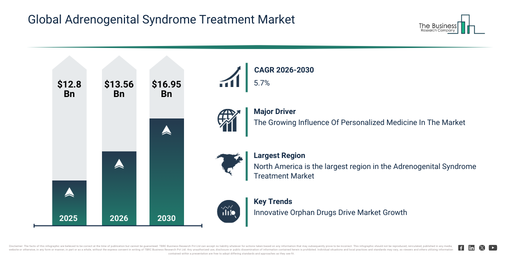
    The market for adrenogenital syndrome treatments experienced robust expansion lately. Projections indicate a rise from $12.8 billion in 2025 to $13.56 billion in 2026, reflecting a compound annual growth rate of 6.0%. This upward trajectory throughout the historical period is linked to factors such as the constrained supply of synthetic corticosteroids, heightened public understanding of adrenogenital syndrome, the development of medical facilities like hospitals and clinics, a growing incidence of congenital adrenal hyperplasia, and the increasing utilization of both oral and parenteral administration methods.

    The market for adrenogenital syndrome treatments is poised for significant expansion in the coming years, projected to reach $16.95 billion by 2030 with a compound annual growth rate of 5.7%. This anticipated growth is driven by several key factors, including progress in genetic testing capabilities, an increasing need for tailored hormone therapies, a greater acceptance of home-based treatment approaches, the creation of novel corticosteroid formulations, and the broadening reach of hospital and retail pharmacy services. During this forecast period, prominent trends are expected to include a wider uptake of hormone replacement therapies, escalating utilization of genetic testing for prompt identification of the condition, an increase in both mineralocorticoid and glucocorticoid treatments, a rise in home care and customized treatment solutions, and a heightened emphasis on patient monitoring and safety measures.

    Download A Free Sample Report For Comprehensive Market Insights:

    https://www.thebusinessresearchcompany.com/sample.aspx?id=21086&type=smp

    #Adrenogenital Syndrome Treatment Market Demand Drivers Creating New Revenue Opportunities

    The growing trend of adopting personalized medical treatments is anticipated to be a significant driver for the expansion of the adrenogenital syndrome treatment market. Personalized medicine, which involves treatments specifically designed for an individual’s genetic makeup, lifestyle, and health requirements to enhance both effectiveness and safety, is seeing increased utilization. This rise is fueled by progress in genetic research, a growing patient desire for individualized care, and enhancements in medical technology. When applied to adrenogenital syndrome, personalized medicine allows for treatment plans tailored to a patient’s unique genetic blueprint and hormone concentrations, thereby maximizing therapeutic benefits while reducing adverse reactions. As an illustration, the Personalized Medicine Coalition, a non-profit entity based in the U.S., indicated in February 2024 that the Food and Drug Administration (FDA) approved 16 personalized therapies in 2023, encompassing seven for oncological ailments and three for other diseases, a notable increase from the six approvals recorded in 2022. Consequently, the escalating use of personalized medicine is poised to stimulate growth within the adrenogenital syndrome treatment sector.

    Adrenogenital Syndrome Treatment Market Segmentation And Category Breakdown

    The adrenogenital syndrome treatment market covered in this report is segmented –

    1) By Drug Type: Mineralocorticoids, Glucocorticoids

    2) By Route of Administration: Oral, Parenteral, Intravenous

    3) By Distribution Channel: Hospital Pharmacies, Retail Pharmacies, Other Distribution Channels

    4) By End-User: Hospitals, Clinics, Home Care Settings

    Subsegments:

    1) By Mineralocorticoids: Fludrocortisone, Desoxycorticosterone Pivalate

    2) By Glucocorticoids: Hydrocortisone, Prednisolone, Dexamethasone

    Adrenogenital Syndrome Treatment Market Trends Driving Strategic Industry Expansion

    Leading players within the adrenogenital syndrome treatment sector are prioritizing the creation of sophisticated therapeutic solutions, including novel orphan drugs, with the dual aims of fulfilling significant unmet medical requirements and enhancing patient results, thus strengthening their foothold in the market by delivering specialized treatments for uncommon and intricate conditions. Orphan drugs are specifically formulated for rare, frequently critical illnesses impacting limited patient populations where available treatment avenues are scarce or nonexistent. Illustrating this, in December 2024, Neurocrine Biosciences, a biotechnology firm headquartered in the United States, revealed that the U.S. Food and Drug Administration (FDA) had granted approval for CRENESSITY (crinecerfont), a groundbreaking therapy designed for both pediatric and adult individuals diagnosed with classic Congenital Adrenal Hyperplasia (CAH), a form of adrenogenital syndrome. This regulatory clearance represents a pivotal advancement, ushering in the first novel therapeutic choice for CAH in seven decades and effectively addressing a substantial deficiency in managing this infrequent endocrine ailment.

    Adrenogenital Syndrome Treatment Market Competitive Analysis Of Major Industry Participants

    Major companies operating in the adrenogenital syndrome treatment market are Pfizer Inc, Novartis AG, Sanofi SA, Merck KGaA, Bayer AG, GlaxoSmithKline plc, AstraZeneca plc, Eli Lilly and Company, AbbVie Inc, Bristol Myers Squibb Company, Takeda Pharmaceutical Company Limited, Boehringer Ingelheim GmbH, Teva Pharmaceutical Industries Ltd, Viatris Inc, Sun Pharmaceutical Industries Limited, Dr Reddy’s Laboratories Ltd, Cipla Limited, Lupin Limited, Aurobindo Pharma Limited, Zydus Lifesciences Limited, Hikma Pharmaceuticals plc, Amneal Pharmaceuticals Inc, Endo International plc, Alkermes plc, Neurocrine Biosciences Inc.

    Access The Complete Adrenogenital Syndrome Treatment Market Report:

    https://www.thebusinessresearchcompany.com/report/adrenogenital-syndrome-treatment-global-market-report

    Adrenogenital Syndrome Treatment Market Regional Outlook: Where Are The Largest Opportunities Located?

    North Americawas the largest region in the adrenogenital syndrome treatment market in 2025. The regions covered in the adrenogenital syndrome treatment market report are Asia-Pacific, South East Asia, Western Europe, Eastern Europe, North America, South America, Middle East, Africa.

    Get in touch with us:

    The Business Research Company: https://www.thebusinessresearchcompany.com/

    Americas: +1 310-496-7795

    Asia: +44 7882 955267 & +91 8897263534

    Europe: +44 7882 955267

    Email us at: marketing@tbrc.info

    Follow us on:

    LinkedIn: https://in.linkedin.com/company/the-business-research-company

    YouTube: https://www.youtube.com/channel/UC24_fI0rV8cR5DxlCpgmyFQ

    Global Market Model: https://www.thebusinessresearchcompany.com/global-market-model
  • Adrenocortical Carcinoma Market Expansion Is Opening New Pathways For Strategic Investment

    Adrenocortical Carcinoma Market Expansion Is Opening New Pathways For Strategic Investment

    Enhanced with market attractiveness analysis, total addressable market evaluation, company benchmarking matrices, interactive Excel dashboards, expanded supply chain intelligence, emerging startup coverage, and detailed product insights, The Business Research Company’s 2026 market reports deliver more actionable and strategically valuable research.

    Adrenocortical Carcinoma Market Growth Potential: How Will Market Size Change Through 2030?

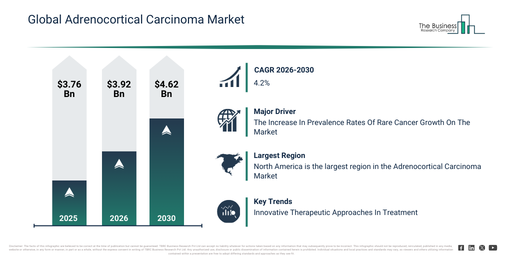
    The market for adrenocortical carcinoma experienced consistent expansion historically, with projections indicating continued growth from $3.76 billion in 2025 to $3.92 billion by 2026, reflecting a compound annual growth rate of 4.4%. This expansion during the earlier period was influenced by several factors, including a lack of widespread knowledge regarding adrenocortical carcinoma symptoms, a prevalent reliance on conventional surgical interventions, the rarity of the condition limiting research investment, the absence of dedicated treatment facilities, and enhanced diagnostic capabilities stemming from advancements in imaging technologies.

    The market for adrenocortical carcinoma is projected to experience consistent expansion in the coming years, reaching an estimated $4.62 billion by 2030 with a compound annual growth rate (CAGR) of 4.2%. This anticipated growth in the forecast period is propelled by several key factors, including breakthroughs in targeted therapeutic approaches, an increase in minimally invasive and laparoscopic surgical techniques, the proliferation of dedicated cancer research institutions, heightened patient awareness leading to earlier diagnoses, and a growing acceptance of combined treatment strategies. Significant trends expected to shape this market during the forecast period involve an intensified emphasis on early detection and screening methodologies, a greater utilization of minimally invasive surgical operations, the broadening application of targeted and adjuvant therapies, increased recognition of hormonal imbalance indicators, and intensified research efforts focused on both localized and metastatic adrenocortical carcinoma.

    Download A Free Sample Report For Comprehensive Market Insights:

    https://www.thebusinessresearchcompany.com/sample.aspx?id=20705&type=smp

    Adrenocortical Carcinoma Market Expansion Supported By Key Demand Factors

    The market for adrenocortical carcinoma is anticipated to expand due to the rising incidence of rare cancers. These rare conditions, characterized by their infrequent occurrence and substantial impact on patient prognoses, necessitate specialized diagnostic and therapeutic approaches. A key factor contributing to the higher prevalence rates observed in rare cancers is the advancement of diagnostic technologies, which has significantly improved the detection capabilities for adrenocortical carcinoma, allowing for the identification of cases that might have previously gone unnoticed. Adrenocortical carcinoma itself plays a role in this trend of increasing rare cancer prevalence, as it stands out as a comparatively infrequent but aggressive form of cancer, underscoring the critical need for enhanced diagnostic and treatment methodologies. For illustrative purposes, a report published in February 2024 by the International Agency for Research on Cancer, an entity under the World Health Organization based in Switzerland, defines rare cancers as those with an annual incidence of less than six new cases per 100,000 individuals. Collectively, these rare cancer types account for roughly a quarter of all cancer diagnoses, reinforcing the notion that their increasing prevalence will serve as a catalyst for the growth within the adrenocortical carcinoma market.

    Adrenocortical Carcinoma Market Segment Outlook: Which Categories Are Expanding The Fastest?

    The adrenocortical carcinoma market covered in this report is segmented –

    1) By Type: Localized Adrenocortical Carcinoma, Metastatic Adrenocortical Carcinoma

    2) By Therapy: Surgery, Laparoscopic Surgery, Open Surgery, Chemotherapy, Targeted Therapy, Radiation Therapy, External Beam Radiation Therapy, Adjuvant Therapy

    3) By End User: Hospitals And Clinics, Specialized Oncology & Endocrine Cancer Centers, Academic Medical Centers

    Subsegments:

    1) By Localized Adrenocortical Carcinoma: Early-Stage Localized Adrenocortical Carcinoma, Advanced Localized Adrenocortical Carcinoma

    2) By Metastatic Adrenocortical Carcinoma: Metastasis To Distant Organs, Local Regional Metastasis

    Adrenocortical Carcinoma Market Growth Trends Influencing Competitive Dynamics

    Within the adrenocortical carcinoma market, leading entities are concentrating efforts on pioneering novel therapeutic approaches, including small-molecule medications, designed to precisely target particular tumor signaling routes, thereby enhancing patient prognoses. A small-molecule therapeutic is characterized by its low molecular weight, enabling it to infiltrate cells to engage with specific proteins or enzymes, consequently modulating physiological functions and addressing conditions like adrenocortical carcinoma through the suppression of tumor proliferation pathways. Illustrating this trend, Orphagen Pharmaceuticals, Inc., a pharmaceutical enterprise situated in the United States, disclosed in January 2023 that the U.S. Food and Drug Administration (FDA) bestowed Rare Pediatric Disease Designation (RPDD) upon its experimental compound, OR-449, which is undergoing development for the treatment of adrenocortical carcinoma in pediatric patients. This particular therapeutic is intended to combat pediatric ACC, a rare and aggressive malignancy predominantly affecting children, often manifesting with symptoms associated with excessive hormone production, such as virilization and Cushing syndrome. The diagnostic process typically incorporates imaging techniques and hormonal evaluations, while the outlook for patients is contingent upon determinants like the age at the time of diagnosis and the extent to which the tumor can be surgically removed.

    Adrenocortical Carcinoma Market Key Companies And Competitive Benchmarking

    Major companies operating in the adrenocortical carcinoma market are HRA Pharma S.A., Servier Laboratories, Roche Holding AG, Merck & Co. Inc., Bristol-Myers Squibb Company, AstraZeneca PLC, Eli Lilly and Company, Sanofi S.A., Ipsen S.A., Exelixis Inc., Tempest Therapeutics Inc., Orphagen Pharmaceuticals Inc., Millendo Therapeutics Inc., Pfizer Inc, Novartis AG, Bayer AG, Takeda Pharmaceutical Company, Astellas Pharma Inc., Johnson & Johnson, Gilead Sciences

    Access The Complete Adrenocortical Carcinoma Market Report:

    https://www.thebusinessresearchcompany.com/report/adrenocortical-carcinoma-global-market-report

    Adrenocortical Carcinoma Market Geographic Landscape: Which Region Dominates Industry Growth?

    North Americawas the largest region in the adrenocortical carcinoma market in 2025. Asia-Pacificis expected to be the fastest-growing region in the forecast period. The regions covered in the adrenocortical carcinoma market report are Asia-Pacific, South East Asia, Western Europe, Eastern Europe, North America, South America, Middle East, Africa.

    Get in touch with us:

    The Business Research Company: https://www.thebusinessresearchcompany.com/

    Americas: +1 310-496-7795

    Asia: +44 7882 955267 & +91 8897263534

    Europe: +44 7882 955267

    Email us at: marketing@tbrc.info

    Follow us on:

    LinkedIn: https://in.linkedin.com/company/the-business-research-company

    YouTube: https://www.youtube.com/channel/UC24_fI0rV8cR5DxlCpgmyFQ

    Global Market Model: https://www.thebusinessresearchcompany.com/global-market-model
  • ADME Toxicology Testing Market Growth Is Reshaping Competitive Advantage Across The Industry

    ADME Toxicology Testing Market Growth Is Reshaping Competitive Advantage Across The Industry

    Delivering more actionable and strategically valuable research, The Business Research Company’s 2026 market reports feature market attractiveness analysis, total addressable market evaluation, company benchmarking matrices, interactive Excel dashboards, expanded supply chain intelligence, emerging startup coverage, and detailed product insights.

    ADME Toxicology Testing Market Size Forecast: How Large Could The Market Become By 2030?

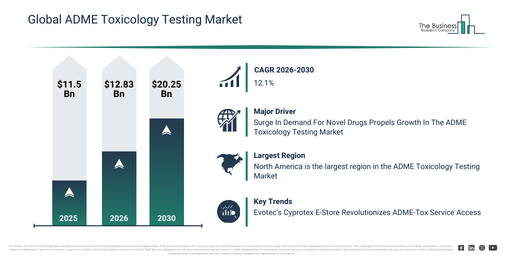
    In the realm of adme toxicology testing, a significant upswing in market valuation has been observed lately. Projections indicate a substantial increase from its $11.5 billion standing in 2025 to $12.83 billion by 2026, fueled by a compound annual growth rate (CAGR) of 11.6%. The expansion witnessed during the preceding period was propelled by several key factors, including the restricted accessibility of automated adme testing methodologies, a continued dependency on conventional biochemical analyses, an intensified regulatory emphasis on the safety of pharmaceutical products, escalating investments in drug discovery research, and the widespread integration of sophisticated analytical tools like lc-ms and hplc.

    The adme toxicology testing market is on a trajectory for substantial expansion, projected to reach $20.25 billion by the year 2030, fueled by a compound annual growth rate of 12.1%. This anticipated growth throughout the forecast period is largely driven by advancements such as the ongoing development of comprehensive adme platforms, the increasing utilization of omics and molecular imaging technologies, augmented investments in predictive toxicology software, the broadening application of adme testing within the cosmetics and food sectors, and the widespread adoption of AI-powered solutions for risk assessment. Key trends shaping this market landscape include a heightened embrace of high-throughput screening instruments, a greater reliance on cell-based and in vitro assays, a surge in demand for omics-driven toxicology methodologies, the expanding role of adme testing in pharmaceutical research and development, and the seamless integration of simulation and modeling software into risk assessment procedures.

    Download A Free Sample Report For Comprehensive Market Insights:

    https://www.thebusinessresearchcompany.com/sample.aspx?id=11922&type=smp

    ADME Toxicology Testing Market Opportunity Drivers: What Is Creating New Revenue Potential?

    The expanding pharmaceutical sector is anticipated to fuel the expansion of the ADME toxicology testing market in the future, as this industry framework encompasses the identification, creation, and manufacturing of medications. ADME toxicology assessments are employed within this industry to scrutinize the absorption, distribution, metabolism, and excretion (ADME) characteristics of potential drug compounds and to gauge their associated risks of toxicity. Such evaluations are paramount for forecasting a drug’s behavior within the human system, encompassing its uptake speed, movement to specific tissues, metabolic transformation, and eventual clearance. Illustrating this trend, data from June 2023, provided by the European Federation of Pharmaceutical Industries and Associations (EFPIA), indicated that the overall pharmaceutical output in Europe reached €390,000 million ($422,803 million) for 2023, an increase from the €363,300 million ($393,857 million) recorded in 2022; consequently, the flourishing pharmaceutical industry is a key impetus for the growth observed in the ADME toxicology testing market.

    ADME Toxicology Testing Market Segments: Where Are The Largest Growth Opportunities?

    The adme toxicology testing market covered in this report is segmented –

    1) By Product Type: Instruments, Software Solutions, Assays Systems, Reagents, Other Product Types

    2) By Method: Cellular Assay, Biochemical Assay, In Silica, Ex-Vivo

    3) By Technology: Cell Culture, High Throughput, Molecular Imaging, OMICS Technology, Other Technologies

    4) By Application: Systemic Toxicity, Renal Toxicity, Hepatotoxicity, Neurotoxicity, Other Applications

    5) By End-User: Cosmetics And Household Products, Pharmaceutical Industry, Animal Industry, Food Industry, Other End Users

    Subsegments:

    1) By Instruments: High-Throughput Screening Instruments, LC-MS Or MS (Liquid Chromatography-Mass Spectrometry), HPLC (High-Performance Liquid Chromatography), Automated Workstations

    2) By Software Solutions: Data Management Software, Simulation And Modeling Software, Risk Assessment Software

    3) By Assay Systems: Cell-Based Assays, In Vitro Assays, Bioanalytical Assays

    4) By Reagents: Biochemicals, Buffer Solutions, Culture Media

    5) By Other Products: Kits And Consumables, Analytical Standards

    ADME Toxicology Testing Market Innovation Trends Driving Future Development

    The ADME toxicology testing market, driven by key players, is witnessing the deployment of cutting-edge solutions like the Cyprotex e-Store, facilitating online procurement of ADME-Tox services. These services are designed to curtail both financial expenditure and development timelines, minimize the probability of late-stage setbacks, and ensure the selection of optimal drug candidates for clinical progression. A prime illustration of this trend is Evotec SE’s introduction in October 2023 of the Cyprotex e-Store, a digital marketplace offering streamlined online access to their extensive portfolio of ADME-Tox services. This e-commerce initiative expedites and simplifies the acquisition process, granting authenticated users the capability to review and order Cyprotex’s services at any time, day or night. The platform provides immediate online visibility into pricing and detailed procedural information, enabling users to effortlessly place orders, monitor their status, and efficiently reorder as required. Consequently, this optimized system shortens the turnaround time for services, thereby accelerating data delivery to users.

    ADME Toxicology Testing Market Major Participants And Competitive Dynamics

    Major companies operating in the adme toxicology testing market are AbbVie Inc., Thermo Fisher Scientific Inc., Boehringer Ingelheim GmbH, Laboratory Corporation of America Holdings, Corning Incorporated, Eurofins Scientific SE, Agilent Technologies Inc., Lonza Group AG, Dassault Systèmes SE, Catalent Inc., Charles River Laboratories International Inc., Beckman Coulter Inc., PerkinElmer Inc., Bio-Rad Laboratories Inc., Curia Global Inc, Promega Corporation, Takara Bio Inc, AB Sciex LLC, QPS Holdings LLC, Simulations Plus Inc., Cyprotex, XenoTech LLC, BioIVT LLC, Absorption Systems, Creative Bioarray, SOLVO Biotechnology Rt., Creative Biolabs Inc, Gentronix Limited, Admecell Inc., Molecular Discovery Ltd.

    Access The Complete ADME Toxicology Testing Market Report:

    https://www.thebusinessresearchcompany.com/report/adme-toxicology-testing-global-market-report

    ADME Toxicology Testing Market Regional Analysis: Which Region Leads By Revenue?

    North America was the largest region in the ADME toxicology testing market in 2025. Asia-Pacific is expected to be the fastest-growing region in the forecast period. The regions covered in the adme toxicology testing market report are Asia-Pacific, South East Asia, Western Europe, Eastern Europe, North America, South America, Middle East, Africa.

    Get in touch with us:

    The Business Research Company: https://www.thebusinessresearchcompany.com/

    Americas: +1 310-496-7795

    Asia: +44 7882 955267 & +91 8897263534

    Europe: +44 7882 955267

    Email us at: marketing@tbrc.info

    Follow us on:

    LinkedIn: https://in.linkedin.com/company/the-business-research-company

    YouTube: https://www.youtube.com/channel/UC24_fI0rV8cR5DxlCpgmyFQ

    Global Market Model: https://www.thebusinessresearchcompany.com/global-market-model
  • Adipose Tissue Derived Stem Cell Market Forecast Signals New Revenue Opportunities Through 2030

    Adipose Tissue Derived Stem Cell Market Forecast Signals New Revenue Opportunities Through 2030

    Enhanced with market attractiveness analysis, total addressable market evaluation, company benchmarking matrices, interactive Excel dashboards, expanded supply chain intelligence, emerging startup coverage, and detailed product insights, The Business Research Company’s 2026 market reports deliver more actionable and strategically valuable research.

    Adipose Tissue Derived Stem Cell Market Revenue Outlook: What CAGR Is Expected Through 2030?

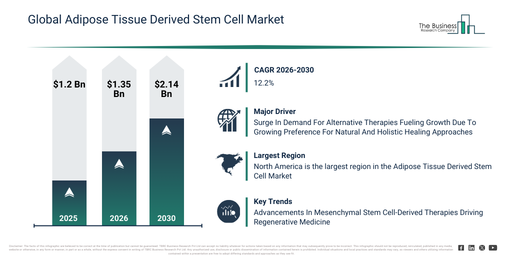
    The market for stem cells sourced from adipose tissue has experienced significant expansion lately, projecting a rise from $1.2 billion in 2025 to $1.35 billion in 2026, demonstrating a compound annual growth rate of 12.5%. Factors contributing to this past growth include improvements in methods for isolating stem cells, a surge in clinical investigations within regenerative medicine, greater accessibility to less invasive methods for collecting cells, an increase in clinical trials for cell therapies, and augmented funding for academic research.

    The market for stem cells derived from adipose tissue is poised for substantial expansion in the coming years, projected to reach $2.14 billion by 2030, driven by a compound annual growth rate of 12.2%. This anticipated growth is fueled by several key factors, including escalating investments in regenerative and personalized medicine approaches, the increasing commercial viability of cell-based therapeutic interventions, the broadening scope of indications treatable with stem cell therapies, a rise in regulatory endorsements for sophisticated treatments, and ongoing advancements in cell processing technologies. Furthermore, significant trends expected to shape this market during the forecast period involve a greater embrace of autologous stem cell therapies, a more widespread utilization of adipose-derived cells within regenerative medicine, the progressive standardization of procedures for isolating cells, an expansion of research applications in clinical settings, and a heightened emphasis on ensuring the quality and viability of these cells.

    Download A Free Sample Report For Comprehensive Market Insights:

    https://www.thebusinessresearchcompany.com/sample.aspx?id=30187&type=smp

    Adipose Tissue Derived Stem Cell Market Growth Momentum: Which Factors Are Influencing Demand?

    The expanding interest in alternative healing methods is poised to be a key factor in propelling the adipose tissue-derived stem cell market forward. Alternative therapies, which encompass non-traditional interventions employed either as substitutes for or adjuncts to conventional medical care to foster recovery and general wellness, are experiencing heightened demand. This surge is attributable to increased public consciousness regarding the potential adverse effects linked to conventional pharmaceuticals, motivating individuals to pursue organic and comprehensive treatment avenues that bolster enduring health. Adipose tissue-derived stem cells are a perfect fit for this evolving landscape, facilitating the body’s inherent tissue repair and regeneration processes and presenting a less invasive, holistic modality for managing a spectrum of persistent and degenerative ailments. As an illustration, data released in December 2023 by Complementary Medicines Australia (CMA), a recognized industry body in Australia, highlighted the significant contribution of the complementary medicines sector to both public health and the nation’s financial standing, achieving an estimated $6.4 billion in annual revenue for 2023, a 7 percent rise compared to the preceding year. Consequently, the escalating preference for alternative treatments is anticipated to fuel the growth trajectory of the adipose tissue-derived stem cell market.

    Adipose Tissue Derived Stem Cell Market Segment Analysis: What Are The Major Market Categories?

    The adipose tissue derived stem cell market covered in this report is segmented –

    1) By Cell Type: Mesenchymal Stem Cells (MSCS), Adipose-Derived Stem Cells (ADSCS), Adipose-Stromal Cells (ASCS)

    2) By Type: Autologous Stem Cells, Allogeneic Stem Cells

    3) By Application: Regenerative Medicine, Tissue Engineering, Cell Therapy, Other Applications

    4) By End-User: Biotechnology Companies, Academic And Research Institutes

    Subsegments:

    1) By Mesenchymal Stem Cells: Bone Marrow Derived Mesenchymal Stem Cells, Umbilical Cord Derived Mesenchymal Stem Cells, Placenta Derived Mesenchymal Stem Cells, Dental Pulp Derived Mesenchymal Stem Cells

    2) By Adipose-Derived Stem Cells: Subcutaneous Adipose Derived Stem Cells, Visceral Adipose Derived Stem Cells, Perivascular Adipose Derived Stem Cells, Brown Adipose Derived Stem Cells

    3) By Adipose-Stromal Cells: Stromal Vascular Fraction Cells, Preadipocyte Stromal Cells, Endothelial Progenitor Stromal Cells, Pericyte Stromal Cells

    Adipose Tissue Derived Stem Cell Market Trends Reshaping Industry Growth

    Leading entities within the adipose tissue-derived stem cell sector are prioritizing the enhancement of stem cell methodologies, particularly concerning mesenchymal stem cells, with the objective of boosting therapeutic effectiveness, ensuring safety, and improving clinical results in the realm of regenerative medicine. Mesenchymal stem cells, often abbreviated as MSCs, are identified as multipotent stromal cells possessing the inherent ability to transform into a variety of distinct cell lineages, encompassing bone, cartilage, and adipocytes. Their fundamental function involves facilitating tissue repair, promoting regeneration, and modulating immune responses, thereby establishing their significance in both regenerative medicine and therapeutic contexts. Illustrating this, in the month of April in 2023, Celltex Therapeutics Corporation, a biotechnology firm based in the United States with a specialization in the banking and therapeutic utilization of adipose-derived stem cells, disclosed progress in its proprietary cell expansion techniques, specifically engineered to amplify the viability and therapeutic promise of these cells for an array of clinical uses. This particular advancement signified a crucial stride in reinforcing the company’s standing within the regenerative medicine landscape and underscored its dedication to spearheading the development of secure and potent adipose-derived stem cell treatments intended to ameliorate patient prognoses for a spectrum of chronic and degenerative ailments.

    Adipose Tissue Derived Stem Cell Market Leading Companies Driving Competitive Growth

    Major companies operating in the adipose tissue derived stem cell market are Thermo Fisher Scientific Inc., Takeda Pharmaceutical Company Limited, Merck KGaA, Lonza Group AG, STEMCELL Technologies Inc., CYAGEN US INC., TELA Bio Inc., RoosterBio Inc., AdipoSeeds Inc., Celltex Therapeutics Corporation, Yocon Biology Technology Company, iXCells Biotechnologies Inc., LIFELINE CELL TECHNOLOGY LLC, BioRestorative Therapies Inc., Lipogems International S.p.A., Cell Applications Inc., R3 Stem Cell LLC, Stem Cells Care (india) Private Limited, InGeneron Inc., MITAKY High-Tech Corporation

    Access The Complete Adipose Tissue Derived Stem Cell Market Report:

    https://www.thebusinessresearchcompany.com/report/global-adipose-tissue-derived-stem-cell-market-report

    Adipose Tissue Derived Stem Cell Market Geographic Distribution And Regional Opportunities

    North Americawas the largest region in the adipose tissue derived stem cell market in 2025. Asia-Pacificis expected to be the fastest-growing region in the forecast period. The regions covered in the adipose tissue derived stem cell market report are Asia-Pacific, South East Asia, Western Europe, Eastern Europe, North America, South America, Middle East, Africa.

    Get in touch with us:

    The Business Research Company: https://www.thebusinessresearchcompany.com/

    Americas: +1 310-496-7795

    Asia: +44 7882 955267 & +91 8897263534

    Europe: +44 7882 955267

    Email us at: marketing@tbrc.info

    Follow us on:

    LinkedIn: https://in.linkedin.com/company/the-business-research-company

    YouTube: https://www.youtube.com/channel/UC24_fI0rV8cR5DxlCpgmyFQ

    Global Market Model: https://www.thebusinessresearchcompany.com/global-market-model
  • Adenosine Triphosphate (ATP) Assays Market Growth Is Accelerating As Industry Transformation Continues

    Adenosine Triphosphate (ATP) Assays Market Growth Is Accelerating As Industry Transformation Continues

    Through market attractiveness analysis, total addressable market evaluation, company benchmarking matrices, interactive Excel dashboards, expanded supply chain intelligence, emerging startup coverage, and detailed product insights, The Business Research Company’s 2026 market reports provide more actionable and strategically valuable research.

    Adenosine Triphosphate (ATP) Assays Market Growth Analysis: How Will Revenue Expand During The Forecast Period?

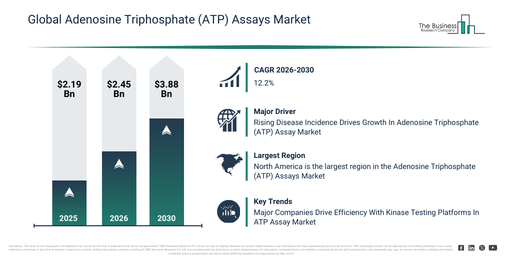
    The market for adenosine triphosphate (ATP) assays is experiencing substantial expansion, projected to increase from $2.19 billion in 2025 to $2.45 billion in 2026, reflecting a compound annual growth rate of 11.6%. This past growth was fueled by factors including the constrained supply of highly sensitive ATP assay kits, a prevailing dependence on conventional biochemical testing methods, escalating endeavors in pharmaceutical research, broadened utilization of molecular biology approaches, and a heightened emphasis on food safety and environmental surveillance.

    The worldwide market for adenosine triphosphate (ATP) assays is poised for substantial expansion, projected to reach $3.88 billion by 2030, reflecting a compound annual growth rate of 12.2%. This anticipated surge is fueled by a confluence of factors, including the creation of advanced high-throughput ATP assay systems, their enhanced integration with automated laboratory equipment, a growing footprint in clinical diagnostics and the realm of personalized medicine, the burgeoning biotechnology research and drug development sectors, and significant progress in fluorescent and luminescent assay methodologies. Key dynamics shaping the market’s trajectory encompass the escalating utilization of ATP assays in drug discovery processes, a greater reliance on cell-based assays for evaluating cell viability and cytotoxicity, the broadening application of ATP assays in ensuring food safety and conducting environmental assessments, a heightened demand for luminometric and enzymatic ATP assays, and an intensified emphasis on improving assay sensitivity, precision, and establishing standardized protocols.

    Download A Free Sample Report For Comprehensive Market Insights:

    https://www.thebusinessresearchcompany.com/sample.aspx?id=10767&type=smp

    Adenosine Triphosphate (ATP) Assays Market Expansion Drivers: What Is Shaping Future Growth?

    The increasing prevalence of serious illnesses such as cancer, long-term health conditions, and contagious diseases is anticipated to stimulate market expansion for adenosine triphosphate (ATP) assays. Cancer is a condition marked by uncontrolled cellular proliferation that can infiltrate and damage adjacent tissues, with the potential to metastasize to other bodily regions. Chronic diseases are persistent conditions that typically develop gradually and endure for extended periods. Infectious diseases stem from pathogenic microorganisms, including bacteria, viruses, fungi, or parasites, and are transmissible between individuals. ATP assays serve as a crucial diagnostic instrument for these ailments, enabling the assessment of cellular vitality, the identification of microbial contamination, the evaluation of therapeutic effectiveness, and the monitoring of metabolic and mitochondrial irregularities. Illustratively, the World Health Organization, a United Nations agency headquartered in Switzerland, projected in February 2024 that approximately 35 million new cancer cases will emerge by 2050, representing a substantial 77% increase from the estimated 20 million cases in 2022. Furthermore, data released in November 2024 by the European Centre for Disease Prevention and Control (ECDC), an agency of the European Union based in Sweden, indicated that a total of 112,883 HIV diagnoses were reported across 47 of 53 regional countries in 2023, with the European Union/European Economic Area (EU/EEA) accounting for 24,731 of these cases. The overall crude rate of HIV diagnoses stood at 12.7 per 100,000 inhabitants, a slight 2.4% rise from the 12.4 per 100,000 rate recorded in 2022. Consequently, the escalating incidence of cancer, chronic, and infectious diseases is a significant catalyst for the adenosine triphosphate (ATP) assay market.

    The growing inclination towards personalized treatments is poised to fuel the expansion of the adenosine triphosphate (ATP) assays market. Personalized treatment entails a therapeutic approach that utilizes an individual’s genetic or protein information to prevent, detect, or manage diseases. ATP assays can play a role in tailored strategies for managing infectious diseases by determining the efficacy of antimicrobial agents against specific pathogens, thereby facilitating the selection of the most suitable and individualized treatment. For instance, the Personalized Medicine Coalition, a professional membership organization based in the US, reported that in 2022, the US Food and Drug Administration (FDA) authorized 12 personalized medicines, constituting roughly 34% of all newly approved therapeutic molecular entities. Therefore, the increasing adoption of personalized medicine is a primary driver for the growth of the adenosine triphosphate (ATP) assays market.

    Adenosine Triphosphate (ATP) Assays Market Segment Breakdown: Which Categories Generate The Most Revenue?

    The adenosine triphosphate (atp) assays market covered in this report is segmented –

    1) By Type: Luminometric ATP (Adenosine Triphosphate) Assays, Enzymatic ATP (Adenosine Triphosphate) Assays, Bioluminescence Resonance Energy Transfer (BRET) ATP (Adenosine Triphosphate) Assays, Cell-Based ATP (Adenosine Triphosphate) Assays, Other Types

    2) By Component: Consumables And Accessories, Instruments

    3) By Application: Drug Discovery And Development, Clinical Diagnostics, Environmental Testing, Food Safety And Quality Testing, Other Applications

    4) By End User: Pharmaceutical And Biotechnology Companies, Food and Beverage Industry, Hospitals And Diagnostics Laboratories, Academic And Research Institutions

    Subsegments:

    1) By Luminometric ATP Assays: Luciferase-Based Assays, Chemiluminescent Assays

    2) By Enzymatic ATP Assays: Kinase-Based Assays, ATPase Activity Assays

    3) By Bioluminescence Resonance Energy Transfer (BRET) ATP Assays: BRET For Protein-Protein Interactions, BRET For Drug Discovery

    4) By Cell-Based ATP Assays: Live-Cell ATP Measurement, Cell Viability Assays

    5) By Other Types: Fluorescent ATP Assays, Spectrophotometric ATP Assays

    Adenosine Triphosphate (ATP) Assays Market Strategic Trends: What Is Defining The Next Phase Of Growth?

    Leading entities within the adenosine triphosphate (ATP) assay sector are concentrating their efforts on pioneering sophisticated kinase testing systems engineered to deliver assays of exceptional sensitivity. Such a kinase testing system serves as a dedicated apparatus for assessing kinase activity within biological specimens, thereby contributing to the drug discovery and development pipeline by furnishing crucial information regarding kinase function and suppression. As an illustration, in April 2024, Reaction Biology, a biotechnology firm situated in the United States, unveiled its HotSpotTM ATP-Max KinomeScreen, an advanced assay developed for extensive, high-throughput kinase screening, distinguished by its enhanced sensitivity enabling testing at ATP concentrations of 1 mM. This cutting-edge system utilizes a revered filter binding radiometric assay methodology to gauge kinase activity against the most comprehensive collection of kinase targets available commercially. Through the provision of biologically pertinent data, the HotSpotTM ATP-Max KinomeScreen equips scientists with the capability to identify more potent and selective kinase inhibitors, thereby bolstering drug discovery endeavors and accelerating the creation of precision therapies for a spectrum of ailments, particularly cancer.

    Adenosine Triphosphate (ATP) Assays Market Key Players And Strategic Industry Positioning

    Major companies operating in the adenosine triphosphate (atp) assays market are Merck KGaA, Thermo Fisher Scientific Inc., PerkinElmer Inc., Lonza Group, Promega Corporation, Agilent Technologies Inc., Abcam plc, Danaher Corporation, Geno Technology Inc., NEOGEN Corporation, Biomerieux SA, AAT Bioquest Inc., MBL International Corporation, Charm Sciences Inc., Cell Signaling Technology Inc., Cayman Chemical Company, Vazyme Biotech Co. Ltd., SignalChem Lifesciences Corporation, Kaneka Corporation, Novus Biologicals LLC, NANOGEN Biotechnologies Inc., Nacalai Tesque Inc., MoBiTec GmbH, Lumigen Inc., Jena Bioscience GmbH, Goryo Chemical Inc., Cosmo Bio Co. Ltd., BPS Bioscience Inc., BioTek Instruments Inc.

    Access The Complete Adenosine Triphosphate (ATP) Assays Market Report:

    https://www.thebusinessresearchcompany.com/report/adenosine-triphosphate-atp-assays-global-market-report

    Adenosine Triphosphate (ATP) Assays Market Largest Region By Revenue And Market Share

    North Americawas the largest region in the adenosine triphosphate (ATP) assays market in 2025.Asia-Pacificis expected to be the fastest-growing region in the forecast period. The regions covered in the adenosine triphosphate (atp) assays market report are Asia-Pacific, South East Asia, Western Europe, Eastern Europe, North America, South America, Middle East, Africa.

    Get in touch with us:

    The Business Research Company: https://www.thebusinessresearchcompany.com/

    Americas: +1 310-496-7795

    Asia: +44 7882 955267 & +91 8897263534

    Europe: +44 7882 955267

    Email us at: marketing@tbrc.info

    Follow us on:

    LinkedIn: https://in.linkedin.com/company/the-business-research-company

    YouTube: https://www.youtube.com/channel/UC24_fI0rV8cR5DxlCpgmyFQ

    Global Market Model: https://www.thebusinessresearchcompany.com/global-market-model