Month: June 2026

  • Affinity Chromatography Market Expansion Is Opening New Pathways For Strategic Investment

    Affinity Chromatography Market Expansion Is Opening New Pathways For Strategic Investment

    Delivering more actionable and strategically valuable research, The Business Research Company’s 2026 market reports feature market attractiveness analysis, total addressable market evaluation, company benchmarking matrices, interactive Excel dashboards, expanded supply chain intelligence, emerging startup coverage, and detailed product insights.

    Affinity Chromatography Market Value Analysis: What Growth Is Expected Over The Forecast Period?

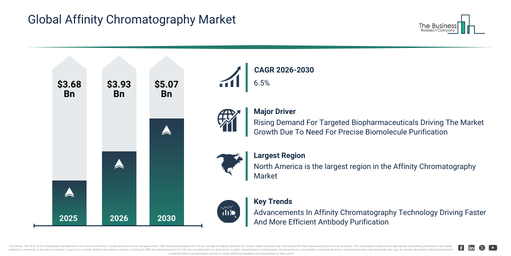
    The market for affinity chromatography has witnessed robust expansion lately, projected to increase from $3.68 billion in 2025 to $3.93 billion in 2026, reflecting a compound annual growth rate of 6.8%. This upward trajectory during the preceding period was bolstered by escalating biopharmaceutical production, a surge in research concerning recombinant proteins, the growing integration of affinity separation techniques, the proliferation of academic and research facilities, and the availability of sophisticated chromatography materials.

    Affinity chromatography’s market value is poised for significant expansion over the coming years, projecting a rise to $5.07 billion by 2030, driven by a compound annual growth rate of 6.5%. This anticipated expansion during the forecast period is underpinned by several key factors: a burgeoning demand for monoclonal antibodies, escalating investments in the development of biologics, a broadened scope in personalized medicine research, an intensified focus on refining downstream processing, and a greater adoption rate of single-use chromatography systems. Key developments shaping the market during this period include a greater reliance on purification methods with high specificity, a surge in the acceptance of protein-based therapeutics, an increased need for pre-packaged chromatography columns, an acceleration in biopharmaceutical research endeavors, and a heightened emphasis on both the scalability and reproducibility of processes.

    Download A Free Sample Report For Comprehensive Market Insights:

    https://www.thebusinessresearchcompany.com/sample.aspx?id=24455&type=smp

    Affinity Chromatography Market Demand Drivers: What Is Fueling Industry Growth?

    The increasing consumption of biopharmaceuticals is anticipated to drive the expansion of the affinity chromatography market. These biopharmaceutical products, which are derived from biological origins like living organisms or cells and are utilized for disease treatment, prevention, or diagnosis, are seeing a surge in demand because they provide exceptionally precise and potent therapies for challenging conditions such as cancer and autoimmune diseases, thereby enhancing patient results where conventional medications are frequently inadequate. Affinity chromatography is a method that facilitates the accurate and effective purification of intricate biomolecules, including antibodies and proteins, which are critical for manufacturing superior biopharmaceutical goods. Illustrating this trend, Sartorius, a prominent international life sciences enterprise headquartered in Germany, reported in July 2025 that global revenues from biopharmaceutical medications climbed by approximately 9% in 2024, reaching USD 458 billion, an increase from the prior year and representing 41% of the overall pharmaceutical market, up from 40% in 2023. Consequently, the escalating need for biopharmaceuticals will undoubtedly stimulate the growth trajectory of the affinity chromatography market.

    Affinity Chromatography Market Categorization By Product Type And Application

    The affinity chromatography market covered in this report is segmented –

    1) By Product: Resins Or Gels, Columns, Magnetic Beads, Reagents And Consumables, Accessories

    2) By Technique: Immobilized Metal Affinity Chromatography, Protein A Or G Or L Affinity Chromatography, Bio-Specific Affinity Chromatography, Other Techniques

    3) By Application: Biomolecule Purification, Chromatographic Separation

    4) By End User: Pharmaceutical And Biotechnology Companies, Research Institutes, Academic Institutions

    Subsegments:

    1) By Resins Or Gels: Agarose-Based resins, Polystyrene-Based resins, Silica-Based resins, Sepharose-Based gels, Dextran-Based resins, Cellulose-Based resins

    2) By Columns: Pre-Packed Columns, Empty Columns, Mini-Spin Columns, Gravity Flow Columns, High-Performance Columns

    3) By Magnetic Beads: Streptavidin-Coated Beads, Protein A Or G Or L-Coated Beads, Ni-NTA Magnetic Beads, Glutathione Magnetic Beads, Custom Ligand-Conjugated Beads

    4) By Reagents And Consumables: Ligands, Elution Buffers, Binding Buffers, Wash Buffers, Coupling Reagents

    5) By Accessories: Tubing And Connectors, Frits And Filters, Column Holders, Sample Loops, Flow Restrictors

    Affinity Chromatography Market Innovation Trends: Which Developments Are Transforming The Industry?

    Leading entities within the affinity chromatography sector are prioritizing the creation of sophisticated purification technologies, specifically next-generation affinity chromatography systems, aimed at accelerating, streamlining, and optimizing antibody purification processes in laboratory environments. These innovative systems signify a significant advancement in purification technology, providing enhanced selectivity, adaptability for scaling, and automated capabilities, frequently integrating novel binding molecules and improved stationary phase materials to address the changing requirements of biopharmaceutical discovery and manufacturing. As an illustration, in October 2024, the German pharmaceutical firm Sartorius introduced the Sartobind Rapid A Lab, a specialized Protein A unit. This affinity chromatography device is equipped with the most rapid Protein A matrix currently on the market, thereby achieving outstanding throughput and fundamentally transforming the landscape of antibody purification. Engineered with the needs of research scientists in mind, it functions as a straightforward, ready-to-use system ideal for bench-scale purification and rapid operational cycles, completely eliminating the necessity for buffer degassing. Furthermore, its specialized membrane exhibits resistance to fouling and consistently maintains stable backpressure, enabling dependable operation with syringes, pumps, or chromatography setups for as many as 100 purification cycles. Throughout its operational lifespan as a consumable, it is capable of yielding up to 17 times the antibody output compared to conventional resin-based columns.

    Affinity Chromatography Market Company Landscape And Strategic Competition

    Major companies operating in the affinity chromatography market are Thermo Fisher Scientific, Merck KGaA, GE Healthcare Life Sciences, MilliporeSigma, Lonza Group Ltd., Agilent Technologies, Cytiva, Sartorius AG, Tosoh Bioscience, Waters Corporation, Bio-Rad Laboratories, Pall Corporation, Promega Corporation, Biotage, KNAUER Wissenschaftliche Geräte GmbH, BioWorks Inc., BIA Separation, JNC Corporation

    Access The Complete Affinity Chromatography Market Report:

    https://www.thebusinessresearchcompany.com/report/affinity-chromatography-global-market-report

    Affinity Chromatography Market Geographic Analysis: Where Is Demand Growing The Fastest?

    North Americawas the largest region in the affinity chromatography market in 2025. The regions covered in the affinity chromatography market report are Asia-Pacific, South East Asia, Western Europe, Eastern Europe, North America, South America, Middle East, Africa.

    Get in touch with us:

    The Business Research Company: https://www.thebusinessresearchcompany.com/

    Americas: +1 310-496-7795

    Asia: +44 7882 955267 & +91 8897263534

    Europe: +44 7882 955267

    Email us at: marketing@tbrc.info

    Follow us on:

    LinkedIn: https://in.linkedin.com/company/the-business-research-company

    YouTube: https://www.youtube.com/channel/UC24_fI0rV8cR5DxlCpgmyFQ

    Global Market Model: https://www.thebusinessresearchcompany.com/global-market-model
  • Aesthetic Services Market Trends Are Creating New Opportunities For Industry Leaders

    Aesthetic Services Market Trends Are Creating New Opportunities For Industry Leaders

    Enhanced with market attractiveness analysis, total addressable market evaluation, company benchmarking matrices, interactive Excel dashboards, expanded supply chain intelligence, emerging startup coverage, and detailed product insights, The Business Research Company’s 2026 market reports deliver more actionable and strategically valuable research.

    Aesthetic Services Market Size Forecast: How Large Could The Market Become By 2030?

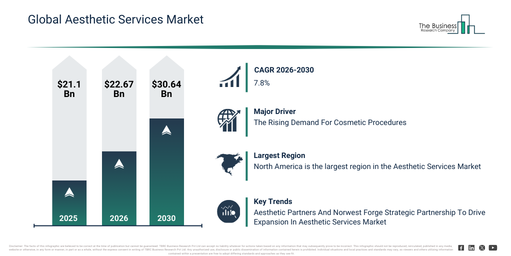
    The market for aesthetic services has experienced robust expansion lately, exhibiting a projected increase from $21.1 billion in 2025 to $22.67 billion by 2026, reflecting a compound annual growth rate of 7.4%. This upswing in the historical timeframe is largely attributable to heightened consciousness surrounding cosmetic treatments, a rise in disposable earnings, the proliferation of dermatology centers and wellness establishments, advancements in aesthetic treatment technologies, and the pervasive influence of beauty and wellness trends.

    The realm of aesthetic services is poised for significant expansion over the forthcoming years, with projections indicating a market valuation of $30.64 billion by the year 2030, driven by a compound annual growth rate (CAGR) of 7.8%. This anticipated surge in the forecast period is largely attributable to the increasing incorporation of sophisticated laser and injection methodologies, a concurrent rise in the preference for less invasive interventions, the proliferation of medical spas and cosmetic surgery facilities, a heightened emphasis on bespoke aesthetic treatments, and the broadening appeal among both adolescent and aging demographics. Key developments anticipated within this timeframe embrace a greater inclination towards non-surgical cosmetic interventions, the escalating popularity of skin brightening therapies, an augmentation in body sculpting offerings, a more widespread adoption of aesthetic implant procedures, and a more concentrated effort towards tailored aesthetic remedies.

    Download A Free Sample Report For Comprehensive Market Insights:

    https://www.thebusinessresearchcompany.com/sample.aspx?id=12584&type=smp

    Aesthetic Services Market Growth Drivers: What Factors Are Accelerating Expansion?

    The increasing popularity of cosmetic alterations is anticipated to be a significant catalyst for the expansion of the aesthetic services sector in the future. Cosmetic procedures encompass medical and surgical interventions aimed at improving or modifying an individual’s outward appearance. Aesthetic services are integral to these cosmetic procedures, offering a range of non-invasive treatments and supplementary care options that elevate the final outcomes and tackle particular aesthetic issues. As an illustration, data from the British Association of Aesthetic Plastic Surgeons, a professional body in the UK, indicated a 5% rise in cosmetic surgical operations between 2023 and 2024, with 27,462 such procedures carried out in 2024. Consequently, this escalating demand for cosmetic procedures directly fuels the growth trajectory of the aesthetic services market.

    Aesthetic Services Market Segment Analysis And Revenue Opportunities

    The aesthetic services market covered in this report is segmented –

    1) By Type: Facial Aesthetic Services, Skin Lightening, Body Contouring, Aesthetic Implantation

    2) By Age Group: Adult, Geriatric

    3) By End-User: Hospitals, Ambulatory Surgical Centers, Beauty Centers And Medical Spas, Dermatology Clinics

    Subsegments:

    1) By Facial Aesthetic Services: Botox Injections, Dermal Fillers, Chemical Peels, Microdermabrasion, Facials

    2) By Skin Lightening: Topical Creams, Chemical Peels, Laser Treatments

    3) By Body Contouring: Non-Surgical Body Contouring, Surgical Body Contouring

    4) By Aesthetic Implantation: Breast Implants, Facial Implants, Body Implants

    Aesthetic Services Market Trends: What Is Shaping Future Industry Growth?

    In the competitive landscape of the aesthetic services industry, leading corporations are prioritizing collaborations to enhance their market standing. These strategic alliances are designed to foster shared advantages and bolster the influence of the participating entities. For example, in November of 2023, Aesthetic Partners, a US-based company managing clinical aesthetics practices, revealed a key alliance with Norwest, an American investment firm, with the goal of expediting expansion into untapped markets. Through this collaboration, Aesthetic Partners intends to channel resources into improving its infrastructure and extending its reach across both current and emerging clinic locations. Furthermore, Aesthetic Partners is uniting with physician-led medical aesthetics, cosmetic dermatology, and plastic surgery practices situated in thriving suburban areas across the United States, positioning itself as an early adopter within the rapidly expanding aesthetics sector.

    Aesthetic Services Market Leading Players Shaping Industry Direction

    Major companies operating in the aesthetic services market are Galderma SA, Merz Aesthetics, Cutera Inc, Cynosure Inc, Alma Lasers Ltd, Lumenis Ltd, Bausch Health Companies, AbbVie Inc, Ipsen SA, Teoxane SA, Sinclair Pharma, Revance Therapeutics Inc, Prollenium Medical Technologies, Hugel Inc, Medytox Inc, GC Aesthetics, Establishment Labs, Sientra Inc, Candela Medical, Jeisys Medical

    Access The Complete Aesthetic Services Market Report:

    https://www.thebusinessresearchcompany.com/report/aesthetic-services-global-market-report

    Aesthetic Services Market Global Footprint: Which Region Holds Market Leadership?

    North Americawas the largest region in the aesthetic services market in 2025. Asia-Pacificis expected to be the fastest-growing region in the forecast period. The regions covered in the aesthetic services market report are Asia-Pacific, South East Asia, Western Europe, Eastern Europe, North America, South America, Middle East, Africa.

    Get in touch with us:

    The Business Research Company: https://www.thebusinessresearchcompany.com/

    Americas: +1 310-496-7795

    Asia: +44 7882 955267 & +91 8897263534

    Europe: +44 7882 955267

    Email us at: marketing@tbrc.info

    Follow us on:

    LinkedIn: https://in.linkedin.com/company/the-business-research-company

    YouTube: https://www.youtube.com/channel/UC24_fI0rV8cR5DxlCpgmyFQ

    Global Market Model: https://www.thebusinessresearchcompany.com/global-market-model
  • Aesthetic Lasers Market Growth Is Reshaping Competitive Advantage Across The Industry

    Aesthetic Lasers Market Growth Is Reshaping Competitive Advantage Across The Industry

    Through market attractiveness analysis, total addressable market evaluation, company benchmarking matrices, interactive Excel dashboards, expanded supply chain intelligence, emerging startup coverage, and detailed product insights, The Business Research Company’s 2026 market reports provide more actionable and strategically valuable research.

    Aesthetic Lasers Market Revenue Outlook: What CAGR Is Expected Through 2030?

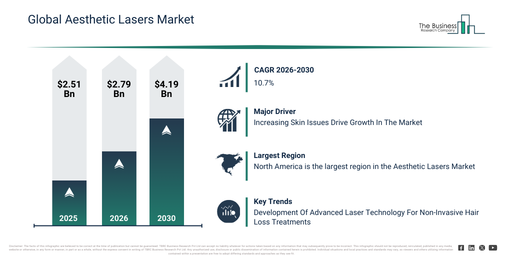
    The aesthetic lasers sector has experienced substantial expansion lately, projecting a rise from $2.51 billion in 2025 to $2.79 billion by 2026, reflecting a compound annual growth rate of 11.0%. This growth during the past period was influenced by factors such as the initial limited access to sophisticated aesthetic laser technologies, escalating consumer fascination with cosmetic treatments, a proliferation of dermatology practices, heightened public consciousness regarding skincare, and the increasing acceptance of laser procedures for hair removal.

    The market for aesthetic lasers is poised for significant expansion over the upcoming years, projected to reach $4.19 billion by 2030 with a compound annual growth rate of 10.7%. This upward trajectory is fueled by several key factors, including ongoing innovations in laser technology, the proliferation of medical spas and beauty clinics, a distinct shift towards less invasive treatments, increased disposable income coupled with higher spending on cosmetic enhancements, and the broadening application of laser therapies for conditions like vascular lesions and acne. During this forecast period, notable trends will include a heightened demand for cosmetic procedures that do not require incisions, a greater uptake of both ablative and non-ablative laser systems, the continued growth of dermatology practices and aesthetic centers, intensified interest in treatments for skin renewal and scar reduction, and the growing popularity of laser-based hair removal and tattoo removal services.

    Download A Free Sample Report For Comprehensive Market Insights:

    https://www.thebusinessresearchcompany.com/sample.aspx?id=20707&type=smp

    Aesthetic Lasers Market Growth Factors Supporting Long-Term Expansion

    The surge in dermatological conditions is anticipated to be a primary catalyst for the expansion of the aesthetic lasers market. These skin concerns, encompassing ailments like acne, eczema, psoriasis, and various infections, manifest as discomfort, inflammation, dryness, and alterations in pigmentation, frequently diminishing the skin’s aesthetic appeal and general well-being. Factors contributing to the heightened prevalence of these skin issues include escalating environmental pollution, extended exposure to ultraviolet rays, detrimental lifestyle habits, inadequate nutrition, elevated stress levels, and inherited genetic factors. Aesthetic lasers offer a solution for diverse dermatological problems by delivering concentrated light energy, which acts upon specific dermal layers to encourage collagen synthesis and skin renewal, thereby enhancing texture, uniformity, and overall appearance with minimal downtime. Illustratively, as reported by Cancer Australia in November 2025, Australia documented 1,527 fatalities from skin melanoma in 2023, comprising 1,038 males and 489 females, with projections for 2025 indicating approximately 1,455 deaths, including 990 males and 465 females. Furthermore, by 2025, the likelihood of succumbing to skin melanoma by age 85 is estimated at 0.40% (1 in 253), with figures of 0.55% (1 in 181) for males and 0.24% (1 in 422) for females. Consequently, the growing number of skin-related health challenges directly fuels the growth trajectory of the aesthetic lasers market.

    Aesthetic Lasers Market Segmentation And Category Breakdown

    The aesthetic lasers market covered in this report is segmented –

    1) By Type: Ablative Laser, Non-Ablative Laser

    2) By Application: Skin Resurfacing Or Skin Rejuvenation, Hair Removal, Acne And Scars, Tattoo Removal, Treatment Of Vascular Lesions, Other Applications

    3) By End User: Dermatology Clinics, Beauty And Wellness Centers, Medical Spas

    Subsegments:

    1) By Ablative Laser: CO2 Lasers, Erbium Lasers, Fractional Lasers

    2) By Non-Ablative Laser: Diode Lasers, Pulsed Dye Lasers, Nd:YAG Lasers, Alexandrite Lasers

    Aesthetic Lasers Market Industry Trends Shaping Future Revenue Growth

    Companies prominent in the aesthetic lasers sector are prioritizing the creation of sophisticated technologies like low-level laser therapy (LLLT) devices, intending to offer non-surgical alternatives for addressing hair loss, thereby encouraging hair regeneration and enhancing the condition of the scalp. LLLT is recognized as a non-invasive method employing low-intensity light to invigorate cellular functions, facilitate recovery, mitigate inflammation, and enhance hair regrowth, pain relief, and skin rejuvenation. As an illustration, in June of 2024, Lumenis Be. Ltd., a medical device firm based in Israel that specializes in energy-based solutions, introduced FoLix, which stands as the inaugural FDA-cleared, proprietary fractional laser engineered specifically for the treatment of hair loss affecting both genders. This groundbreaking technology harnesses meticulously targeted laser pulses to invigorate hair follicles, thereby stimulating hair growth without recourse to pharmaceuticals, invasive procedures, anesthetic agents, or surgical intervention. Individuals undergoing this treatment can anticipate observable enhancements following a series of just 4 to 6 sessions conducted monthly.

    Aesthetic Lasers Market Competitive Analysis Of Major Industry Participants

    Major companies operating in the aesthetic lasers market are Solta Medical Inc., Cynosure, El.En. S.p.A., InMode, Lumenis Be Ltd., Cutera Inc., Alma Lasers Ltd., Candela Medical, Fotona, Sciton Inc., BIOLASE Inc, Jeisys Medical, Quanta System S.p.A., SharpLight Technologies Ltd., Tria Beauty Inc., Aerolase Corp, Energist Ltd., Lynton Lasers, Aesthetics Biomedical, LYMA Life Ltd, DEKA M.E.L.A. S.r.l., Leaflife Technology, BVLASER

    Access The Complete Aesthetic Lasers Market Report:

    https://www.thebusinessresearchcompany.com/report/aesthetic-lasers-global-market-report

    Aesthetic Lasers Market Regional Distribution: Which Areas Drive Market Expansion?

    North Americawas the largest region in the aesthetic lasers market in 2025. Asia-Pacificis expected to be the fastest-growing region in the forecast period. The regions covered in the aesthetic lasers market report are Asia-Pacific, South East Asia, Western Europe, Eastern Europe, North America, South America, Middle East, Africa.

    Get in touch with us:

    The Business Research Company: https://www.thebusinessresearchcompany.com/

    Americas: +1 310-496-7795

    Asia: +44 7882 955267 & +91 8897263534

    Europe: +44 7882 955267

    Email us at: marketing@tbrc.info

    Follow us on:

    LinkedIn: https://in.linkedin.com/company/the-business-research-company

    YouTube: https://www.youtube.com/channel/UC24_fI0rV8cR5DxlCpgmyFQ

    Global Market Model: https://www.thebusinessresearchcompany.com/global-market-model
  • Advanced Wound Care Devices Market Forecast Signals New Revenue Opportunities Through 2030

    Advanced Wound Care Devices Market Forecast Signals New Revenue Opportunities Through 2030

    Delivering more actionable and strategically valuable research, The Business Research Company’s 2026 market reports feature market attractiveness analysis, total addressable market evaluation, company benchmarking matrices, interactive Excel dashboards, expanded supply chain intelligence, emerging startup coverage, and detailed product insights.

    Advanced Wound Care Devices Market Growth Analysis: How Will Revenue Expand During The Forecast Period?

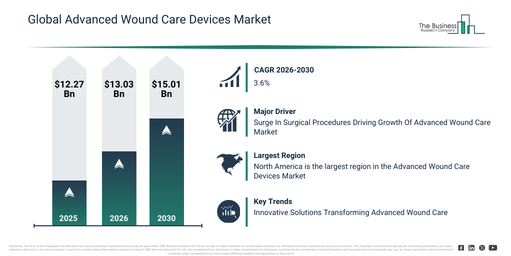
    The domain of advanced wound care devices has experienced robust expansion lately, with projections indicating a rise from an estimated $12.27 billion in 2025 to $13.03 billion by 2026, reflecting a compound annual growth rate (CAGR) of 6.2%. Key drivers underpinning this growth from the past period include the escalating incidence of chronic wounds, heightened awareness regarding the advantages of advanced wound care, the increasing utilization of antimicrobial and hydrogel dressings, improvements in healthcare facility infrastructure, and an expanding population of diabetic and elderly patients.

    The advanced wound care devices market is anticipated to experience robust expansion, reaching an estimated $15.01 billion by 2030, fueled by a compound annual growth rate of 3.6%. This projected increase stems from several key drivers, including significant technological strides in tissue-engineered solutions, a growing preference for smart and bioactive dressings, the increasing prevalence of home healthcare and outpatient wound management services, escalating healthcare expenditures, and the seamless integration of infection prevention alongside skin protection technologies. During this forecast period, several prominent trends are expected to shape the market, such as a heightened demand for hydrogel and bioactive dressings, a more widespread application of antimicrobial gels and powders for chronic wound treatment, the further development and availability of advanced foam and tissue-engineered products, a concentrated emphasis on safeguarding against infections and protecting skin integrity, and the continued growth of at-home and outpatient approaches to wound care.

    Download A Free Sample Report For Comprehensive Market Insights:

    https://www.thebusinessresearchcompany.com/sample.aspx?id=9583&type=smp

    #Advanced Wound Care Devices Market Demand Drivers Creating New Revenue Opportunities

    The escalating volume of surgical interventions is poised to be a significant catalyst for the expansion of the advanced wound care sector in the coming period. Surgical procedures, by definition, involve the incision or penetration of bodily tissues aimed at addressing ailments, health issues, or injuries, as well as modifying physiological functions or enhancing aesthetics. Within the surgical context, advanced wound care solutions play a crucial role in fostering accelerated recovery and mitigating potential adverse outcomes like infections. As a testament to this trend, data from June 2024, compiled by the American Society of Plastic Surgeons, a prominent US professional medical body, revealed that liposuction remained the preeminent plastic surgery in 2023, with approximately 350,000 procedures performed, representing a 7% rise from the preceding year. Consequently, the growing frequency of surgical operations directly fuels the advancement of the wound care market.

    Advanced Wound Care Devices Market Segment Outlook: Which Categories Are Expanding The Fastest?

    The advanced wound care devices market covered in this report is segmented –

    1) By Product Type: Antimicrobial Gels, Antimicrobial Powder, Concentrated Surfactant, Hydrogels Dressings, Skin Protectants, Wound Cleansers, Semi-Permeable Films Dressings, Semi-Permeable Antimicrobial Films Dressings, Semi-Permeable Non Antimicrobial Films Dressings, Other Products

    2) By Wound Type: Surgical And Traumatic Wounds, Diabetic Foot Ulcers, Pressure Ulcers, Venous Leg Ulcers, Burns, Other Wounds

    3) By Application: Chronic Wounds, Acute Wounds

    4) By End User: Hospitals, Clinics, Homecare Settings, Other End Users

    Subsegments:

    1) By Antimicrobial Gels: Silver-Based Gels, Iodine-Based Gels, Honey-Based Gels

    2) By Antimicrobial Powder: Silver Powder, Iodine Powder, Other Antimicrobial Powders

    3) By Concentrated Surfactant: Non-Ionic Surfactants, Anionic Surfactants, Cationic Surfactants

    4) By Hydrogel Dressings: Amorphous Hydrogels, Sheet Hydrogels, Composite Hydrogels

    5) By Skin Protectants: Barrier Creams, Film-Forming Solutions, Other Skin Protectant Products

    6) By Wound Cleansers: Saline Solutions, Antiseptic Solutions, Enzymatic Cleansers

    7) By Semi-Permeable Films Dressings: Transparent Films, Adhesive Films

    8) By Semi-Permeable Antimicrobial Films Dressings: Silver-Infused Films, Iodine-Infused Films

    9) By Semi-Permeable Non Antimicrobial Films Dressings: Standard Transparent Films, Non-Adherent Films

    10) By Other Products: Bioactive Dressings, Tissue-Engineered Products, Advanced Foam Dressings

    Advanced Wound Care Devices Market Trends Driving Strategic Industry Expansion

    Within the competitive landscape of the advanced wound care sector, prominent enterprises are dedicating their efforts to pioneering novel advancements, exemplified by Aquacel Hydrofiber Technology. This groundbreaking material, characterized by its gentle and highly absorbent nature, possesses the remarkable ability to congeal into a gel upon interaction with wound exudate, thereby meeting the evolving demands of medical professionals and those under their care. As a testament to this commitment, Convatec Group PLC, a prominent medical device manufacturer headquartered in the United Kingdom, introduced ConvaFoam in January of 2023. This sophisticated foam dressing was meticulously engineered to combat the pervasive and often underestimated challenge of chronic wounds, conditions that impose considerable financial, clinical, and societal pressures, with an anticipated escalation of these burdens. Notably, ConvaFoam stands alone as a foam dressing incorporating both superabsorbent fibers and the proprietary AQUACEL Hydrofiber technology, engineered to extend its duration of use through the integration of a silicone adhesive that strikes an ideal equilibrium between secure adherence, gentle application to the skin, and adequate ventilation.

    Advanced Wound Care Devices Market Key Companies And Competitive Benchmarking

    Major companies operating in the advanced wound care devices market are 3M Company, Coloplast Corporation, ConvaTec Group plc, Smith & Nephew plc, Integra LifeSciences Corporation, Organogenesis Holdings Inc., Medtronic plc, MiMedx Group Inc., Derma Sciences Inc., Johnson & Johnson Private Limited, Mölnlycke Health Care AB, Cardinal Health Inc., B. Braun Melsungen AG, Baxter International, Acelity L.P. Inc., BSN Medical GmbH, Covidien plc, DeRoyal Industries Inc., Hollister Incorporated, Human Biosciences Inc., Kinetic Concepts Inc., Medline Industries Inc., Triage Meditech Pvt. Ltd., ACell Inc., Acera Surgical Inc., ACI Medical LLC, Advanced Oxygen Therapy Inc., Imbed Biosciences Inc., MolecuLight Inc., NuVision Biotherapies Ltd.

    Access The Complete Advanced Wound Care Devices Market Report:

    https://www.thebusinessresearchcompany.com/report/advanced-wound-care-devices-global-market-report

    Advanced Wound Care Devices Market Leading Geography: Which Region Generates The Most Revenue?

    North Americawas the largest region in the advanced wound care market in 2025. Asia-Pacificis expected to be the fastest-growing region in the advanced wound care market report during the forecast period. The regions covered in the advanced wound care devices market report are Asia-Pacific, South East Asia, Western Europe, Eastern Europe, North America, South America, Middle East, Africa.

    Get in touch with us:

    The Business Research Company: https://www.thebusinessresearchcompany.com/

    Americas: +1 310-496-7795

    Asia: +44 7882 955267 & +91 8897263534

    Europe: +44 7882 955267

    Email us at: marketing@tbrc.info

    Follow us on:

    LinkedIn: https://in.linkedin.com/company/the-business-research-company

    YouTube: https://www.youtube.com/channel/UC24_fI0rV8cR5DxlCpgmyFQ

    Global Market Model: https://www.thebusinessresearchcompany.com/global-market-model
  • Advanced Therapy Medicinal Products Contract Development And Manufacturing Organization (CDMO) Market Growth Is Accelerating As Industry Transformation Continues

    Advanced Therapy Medicinal Products Contract Development And Manufacturing Organization (CDMO) Market Growth Is Accelerating As Industry Transformation Continues

    Enhanced with market attractiveness analysis, total addressable market evaluation, company benchmarking matrices, interactive Excel dashboards, expanded supply chain intelligence, emerging startup coverage, and detailed product insights, The Business Research Company’s 2026 market reports deliver more actionable and strategically valuable research.

    Advanced Therapy Medicinal Products Contract Development And Manufacturing Organization (CDMO) Market Forecast: What Market Value Is Expected By 2030?

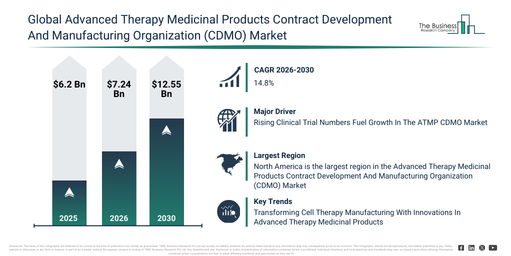
    The market for contract development and manufacturing organizations (CDMOs) specializing in advanced therapy medicinal products has experienced significant expansion recently, poised to escalate from $6.2 billion in 2025 to $7.24 billion in 2026, reflecting a compound annual growth rate (CAGR) of 16.7%. This robust growth trajectory during the historical period was fueled by several key factors, including the constrained supply of dedicated CDMO capabilities, elevated research and development expenditures within the advanced therapies sector, early adoption of gene and cell-based treatments, an increase in the incidence of intricate medical conditions, and the burgeoning presence of small biotechnology firms.

    The market for contract development and manufacturing organizations (CDMOs) specializing in advanced therapy medicinal products is poised for substantial expansion in the upcoming years, projecting a valuation of $12.55 billion by 2030 with a compound annual growth rate (CAGR) of 14.8%. This anticipated growth trajectory is fueled by several key factors, including progress in manufacturing technologies that enable scalability, a rise in partnerships between CDMOs and pharmaceutical companies, the increasing prevalence of both autologous and allogeneic therapies, a growing worldwide need for personalized medical treatments, and the extension of services into developing markets. Significant trends shaping this period involve a heightened requirement for CDMO expertise in advanced therapy development, the broadening scope of gene-, cell-, and tissue-engineered therapies, a greater emphasis on adhering to regulatory requirements and quality benchmarks, an increase in outsourced manufacturing by biopharmaceutical firms, and the adoption of adaptable and scalable production methodologies.

    Download A Free Sample Report For Comprehensive Market Insights:

    https://www.thebusinessresearchcompany.com/sample.aspx?id=15719&type=smp

    Advanced Therapy Medicinal Products Contract Development And Manufacturing Organization (CDMO) Market Expansion Supported By Key Demand Factors

    The expansion of the advanced therapy medicinal products CDMO market is anticipated to be significantly boosted by the growing volume of clinical trials. These trials, essential for evaluating the safety and effectiveness of new medical approaches, are experiencing an upward trend due to the escalating need for novel therapies and the rising prevalence of diseases worldwide. As the utilization of advanced therapy medicinal products increases, so does the demand for specialized CDMO manufacturing capabilities, which offer the necessary expertise and facilities. Furthermore, the insights gained from clinical trial data are instrumental in refining manufacturing processes, enabling efficient scaling, and upholding quality standards to satisfy escalating clinical and commercial requirements. Illustratively, the Royal Pharmaceutical Society reported that in the UK, patient enrollment in clinical trials reached 349,019 during 2023/2024, a rise from the 342,390 individuals participating in 2022/2023, underscoring the dynamic growth in trial activity which, in turn, fuels the advanced therapy medicinal products CDMO market’s expansion.

    Advanced Therapy Medicinal Products Contract Development And Manufacturing Organization (CDMO) Market Segment Landscape: Which Areas Lead Market Development?

    The advanced therapy medicinal products contract development and manufacturing organization (cdmo) market covered in this report is segmented –

    1) By Product: Gene Therapy, Cell Therapy, Tissue Engineered

    2) By Phase: Phase I, Phase II, Phase III, Phase IV

    3) By Indication: Oncology, Cardiology, Central Nervous System And Musculoskeletal, Infectious Disease, Dermatology, Endocrine, Metabolic, Genetic, Immunology And Inflammation, Ophthalmology, Hematology

    Subsegments:

    1) By Gene Therapy: Viral Vectors, Non-Viral Vectors, Dna Or Rna-Based Products

    2) By Cell Therapy: Autologous Cell Therapy, Allogeneic Cell Therapy, Stem Cell Therapy

    3) By Tissue Engineered: Skin Substitutes, Cartilage And Bone Tissue, Vascular Grafts And Organs

    Advanced Therapy Medicinal Products Contract Development And Manufacturing Organization (CDMO) Market Growth Trends Influencing Competitive Dynamics

    Leading entities within the advanced therapy medicinal products CDMO sector are actively enhancing their cell therapy production capabilities to address significant challenges inherent in cell therapy manufacturing and to accelerate the progression of their collaborators’ projects. These cell therapy manufacturing services, provided by contract development and manufacturing organizations, encompass a broad spectrum of support, extending from initial preclinical research through to late-stage clinical investigations and eventual market launch. As an illustration, in January 2024, Pluristem Therapeutics Inc., an Israeli biotechnology firm specializing in cellular solutions, introduced PluriCDMO, a newly established business unit dedicated to cell therapy manufacturing. This division employs an proprietary bioreactor technology designed for three-dimensional cell expansion, enabling the generation of diverse cell populations including stem cells, induced pluripotent stem cells, exosomes, and immune-based therapies. PluriCDMO aims to deliver essential, high-quality therapeutics to patients by ensuring unparalleled batch-to-batch uniformity within a scalable, economically viable, and regulated good manufacturing practice environment.

    Advanced Therapy Medicinal Products Contract Development And Manufacturing Organization (CDMO) Market Industry Leaders And Market Competition

    Major companies operating in the advanced therapy medicinal products contract development and manufacturing organization (cdmo) market are Thermo Fisher Scientific Inc., Merck KGaA, Lonza Group AG, Catalent Inc., Charles River Laboratories International Inc., Recipharm AB, KBI Biopharma, Takara Bio Inc., Rentschler Biopharma SE, Ajinomoto Co. Inc., ElevateBio LLC, Fujifilm Diosynth Biotechnologies, Axplora Group GmbH, WuXi Advanced Therapies Inc., Celonic Group, Batavia Biosciences B.V., BioCentriq, Cytovance Biologics, Andelyn Biosciences, Genezen, AGC Biologics, ABL Manufacturing, Minaris Regenerative Medicine, Porton Advanced Solutions

    Access The Complete Advanced Therapy Medicinal Products Contract Development And Manufacturing Organization (CDMO) Market Report:

    https://www.thebusinessresearchcompany.com/report/advanced-therapy-medicinal-products-contract-development-and-manufacturing-organization-cdmo-global-market-report

    Advanced Therapy Medicinal Products Contract Development And Manufacturing Organization (CDMO) Market Regional Outlook: Where Are The Largest Opportunities Located?

    North Americawas the largest region in the advanced therapy medicinal product contract development and manufacturing organization (CDMO) market in 2025. Asia-Pacificis expected to be the fastest-growing region in the forecast period. The regions covered in the advanced therapy medicinal products contract development and manufacturing organization (cdmo) market report are Asia-Pacific, South East Asia, Western Europe, Eastern Europe, North America, South America, Middle East, Africa.

    Get in touch with us:

    The Business Research Company: https://www.thebusinessresearchcompany.com/

    Americas: +1 310-496-7795

    Asia: +44 7882 955267 & +91 8897263534

    Europe: +44 7882 955267

    Email us at: marketing@tbrc.info

    Follow us on:

    LinkedIn: https://in.linkedin.com/company/the-business-research-company

    YouTube: https://www.youtube.com/channel/UC24_fI0rV8cR5DxlCpgmyFQ

    Global Market Model: https://www.thebusinessresearchcompany.com/global-market-model
  • Advanced Renal Cell Carcinoma Treatment Market Outlook Highlights The Next Major Growth Opportunities

    Advanced Renal Cell Carcinoma Treatment Market Outlook Highlights The Next Major Growth Opportunities

    Through market attractiveness analysis, total addressable market evaluation, company benchmarking matrices, interactive Excel dashboards, expanded supply chain intelligence, emerging startup coverage, and detailed product insights, The Business Research Company’s 2026 market reports provide more actionable and strategically valuable research.

    Advanced Renal Cell Carcinoma Treatment Market Size Outlook: How Fast Will Revenue Grow Through 2030?

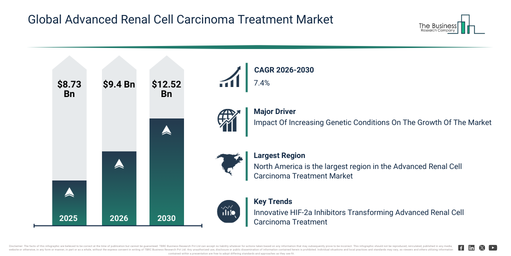
    The market for advanced renal cell carcinoma treatments has experienced robust expansion recently. Projections indicate a rise from $8.73 billion in 2025 to $9.4 billion in 2026, reflecting a compound annual growth rate of 7.7%. Historical growth drivers for this sector included a scarcity of therapeutic alternatives for advanced RCC, a dependency on traditional chemotherapy regimens, the increasing incidence of renal cell carcinoma, the augmentation of oncology services within hospitals, and a rise in clinical research endeavors.

    The market for advanced renal cell carcinoma treatments is poised for substantial expansion in the coming years, projected to reach $12.52 billion by the year 2030 with a compound annual growth rate of 7.4%. This anticipated surge is fueled by several key factors, including the ongoing creation of innovative biologics and targeted inhibitor drugs, increased financial backing for immunotherapy research, a growing embrace of personalized medicine strategies, a greater utilization of minimally invasive surgical techniques, and the wider deployment of cancer vaccine therapies. Within this projected timeframe, significant trends are expected to shape the market, such as a heightened prevalence of targeted therapies for RCC, a greater reliance on immune checkpoint inhibitors, the wider application of combination therapy strategies, an intensified emphasis on bespoke treatment regimens, and accelerated progress in the development of peptide and DNA-based cancer vaccines.

    Download A Free Sample Report For Comprehensive Market Insights:

    https://www.thebusinessresearchcompany.com/sample.aspx?id=21090&type=smp

    #Advanced Renal Cell Carcinoma Treatment Market Growth Drivers And Industry Catalysts

    The escalating prevalence of genetic conditions is poised to significantly boost the advanced renal cell carcinoma (RCC) treatment market in the foreseeable future, as these conditions, stemming from DNA anomalies either inherited or acquired, are increasingly diagnosed. This rise in genetic disorder identification is a consequence of enhanced diagnostic capabilities, heightened public and medical awareness, and the interplay between environmental factors, lifestyle choices, and inherent genetic susceptibilities. Advanced RCC treatments play a crucial role in addressing these genetic conditions by zeroing in on specific molecular targets, thereby enabling tailored therapeutic strategies that combat the genetic underpinnings of tumor formation and advancement. Illustratively, by June 2023, Gene People, a UK charity, reported that approximately 1 in every 25 children suffers from a genetic condition, and over 2.4 million people in the UK live with such disorders, with around 30,000 new cases diagnosed annually among newborns and children, underscoring the direct correlation between the surge in genetic conditions and the expansion of the advanced RCC treatment sector.

    Advanced Renal Cell Carcinoma Treatment Market Segments: Where Are The Largest Growth Opportunities?

    The advanced renal cell carcinoma treatment market covered in this report is segmented –

    1) By Treatment: Biologics, Radiation Therapy

    2) By Route Of Administration: Parental, Oral, Other Routes Of Administration

    3) By End User: Hospitals, Cancer Research Institutes

    Subsegments:

    1) By Biologics: Monoclonal Antibodies, Immune Checkpoint Inhibitors, Targeted Small Molecule Inhibitors

    2) By Radiation Therapy: External Beam Radiation Therapy (EBRT), Stereotactic Body Radiation Therapy (SBRT)

    #Advanced Renal Cell Carcinoma Treatment Market Trends Influencing Long-Term Demand

    Within the marketplace for sophisticated renal cell carcinoma (RCC) treatments, leading pharmaceutical firms are prioritizing the creation of novel therapeutic agents, including hypoxia-inducible factor-2 alpha (HIF-2a) inhibitors, with the ultimate goal of boosting treatment effectiveness and achieving superior results for patients. These HIF-2a inhibitors represent a category of pharmaceuticals engineered to impede the function of HIF-2a, a protein instrumental in controlling how the body reacts to oxygen-deprived conditions. A significant development occurred in December 2023 when Merck & Co. Inc., a prominent American healthcare entity, secured approval from the U.S. Food and Drug Administration (FDA) for WELIREG (belzutifan), an orally administered HIF-2a inhibitor. This groundbreaking therapeutic is specifically indicated for individuals who have previously received treatment with PD-1 or PD-L1 inhibitor therapies, as well as VEGF-TKI treatments. The granting of this approval is particularly noteworthy as it introduces a new therapeutic avenue for a patient demographic facing restricted treatment alternatives, thereby offering promise for enhanced prognoses and more effective control over advanced RCC.

    Advanced Renal Cell Carcinoma Treatment Market Major Participants And Competitive Dynamics

    Major companies operating in the advanced renal cell carcinoma treatment market are Pfizer Inc, Merck & Co Inc, Bristol-Myers Squibb Company, AstraZeneca PLC, Novartis International AG, Exelixis Inc, Ipsen SA, Eisai Co Ltd, Roche Holding AG, Genentech Inc, Bayer AG, Johnson & Johnson, Sanofi SA, Takeda Pharmaceutical Company Limited, Astellas Pharma Inc, BeiGene Ltd, HUTCHMED China Limited, Regeneron Pharmaceuticals Inc, Eli Lilly and Company, Amgen Inc

    Access The Complete Advanced Renal Cell Carcinoma Treatment Market Report:

    https://www.thebusinessresearchcompany.com/report/advanced-renal-cell-carcinoma-treatment-global-market-report

    Advanced Renal Cell Carcinoma Treatment Market Geographic Landscape: Which Region Dominates Industry Growth?

    North Americawas the largest region in the advanced renal cell carcinoma treatment market in 2025. The regions covered in the advanced renal cell carcinoma treatment market report are Asia-Pacific, South East Asia, Western Europe, Eastern Europe, North America, South America, Middle East, Africa.

    Get in touch with us:

    The Business Research Company: https://www.thebusinessresearchcompany.com/

    Americas: +1 310-496-7795

    Asia: +44 7882 955267 & +91 8897263534

    Europe: +44 7882 955267

    Email us at: marketing@tbrc.info

    Follow us on:

    LinkedIn: https://in.linkedin.com/company/the-business-research-company

    YouTube: https://www.youtube.com/channel/UC24_fI0rV8cR5DxlCpgmyFQ

    Global Market Model: https://www.thebusinessresearchcompany.com/global-market-model
  • Advanced Recurrent Ovarian Cancer Market Trends And Growth Drivers Point To Strong Future Potential

    Advanced Recurrent Ovarian Cancer Market Trends And Growth Drivers Point To Strong Future Potential

    Delivering more actionable and strategically valuable research, The Business Research Company’s 2026 market reports feature market attractiveness analysis, total addressable market evaluation, company benchmarking matrices, interactive Excel dashboards, expanded supply chain intelligence, emerging startup coverage, and detailed product insights.

    Advanced Recurrent Ovarian Cancer Market Size, Value And Growth Trends Through 2030

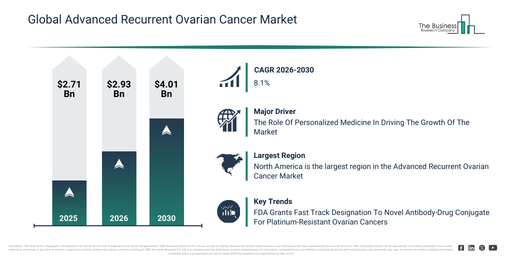
    The market for advanced recurrent ovarian cancer experienced robust expansion historically, and this trend is projected to continue. Estimates indicate a market value progression from $2.71 billion in 2025 to $2.93 billion in 2026, reflecting a compound annual growth rate (CAGR) of 8.4%. Key factors contributing to this historical growth include an increasing incidence of ovarian cancer, a prevailing dependence on conventional chemotherapy, a comparatively lower awareness of more targeted therapeutic approaches, the enhancement of healthcare and oncology facilities, and a heightened commitment to funding cancer research.

    The market for advanced recurrent ovarian cancer is poised for significant expansion over the coming years, projecting a rise to $4.01 billion by 2030, fueled by a compound annual growth rate of 8.1%. This upward trajectory is anticipated due to several key factors, including the ongoing development of innovative targeted therapies, the broadening implementation of personalized medicine strategies, a greater acceptance of biomarker testing, increased financial support from both governmental and private sectors for cancer research, and the growing prevalence of combination therapies and immunotherapies. Key developments anticipated within this timeframe encompass a marked increase in the utilization of targeted treatments for recurrent ovarian cancer, a surge in personalized and biomarker-informed treatment approaches, advancements in diagnostic imaging and patient monitoring, an escalation in clinical trials specifically targeting stages iii and iv ovarian cancer, and a heightened emphasis on multifaceted combination therapy strategies.

    Download A Free Sample Report For Comprehensive Market Insights:

    https://www.thebusinessresearchcompany.com/sample.aspx?id=21089&type=smp

    Advanced Recurrent Ovarian Cancer Market Opportunity Drivers: What Is Creating New Revenue Potential?

    The market for advanced recurrent ovarian cancer is poised for expansion, largely fueled by an increasing emphasis on personalized medicine. This approach involves customizing medical interventions based on an individual’s unique genetic profile, lifestyle, and particular health status, aiming for therapies that are both highly effective and precisely targeted. The surge in personalized medicine is a direct result of progress in fields such as genomics, biotechnology, and data analysis, which now allow for the accurate detection of genetic differences and disease indicators. Conversely, advanced recurrent ovarian cancer plays a crucial role in furthering personalized medicine by underscoring the necessity for treatment strategies designed to address the specific genetic mutations and molecular characteristics of each patient’s cancerous cells, thereby enhancing treatment success and reducing the likelihood of disease return. Illustrating this trend, in February 2024, the Personalized Medicine Coalition reported that the U.S. Food and Drug Administration (FDA) authorized 16 personalized treatments in 2023, a significant increase from six in 2022, with these approvals encompassing seven cancer therapies and three for other conditions. Consequently, the growing dedication to personalized medicine is a key factor propelling the advanced recurrent ovarian cancer market forward.

    Advanced Recurrent Ovarian Cancer Market Segment Analysis: What Are The Major Market Categories?

    The advanced recurrent ovarian cancer market covered in this report is segmented –

    1) By Disease Type: Epithelial Ovarian Cancer, Non-Epithelial Ovarian Cancer

    2) By Treatment Type: Targeted Therapy, Chemo Therapy, Surgery, Biological Therapy

    3) By Patient Age Group: Middle Aged (40-59), Senior (60+), Young Adult (18-39)

    4) By End User: Hospitals, Clinics, Pharmacies

    Subsegments:

    1) By Epithelial Ovarian Cancer: Serous Carcinoma, Endometrioid Carcinoma, Clear Cell Carcinoma, Mucinous Carcinoma

    2) By Non-Epithelial Ovarian Cancer: Germ Cell Tumors, Sex Cord-Stromal Tumors, Metastatic Tumors

    Advanced Recurrent Ovarian Cancer Market Innovation Trends Driving Future Development

    In the competitive landscape of the advanced recurrent ovarian cancer sector, key players are directing their efforts toward the creation of novel therapeutic agents, including antibody-drug conjugates, with the aim of increasing treatment precision, optimizing drug delivery to malignant cells, reducing adverse effects on healthy tissues, and surmounting resistance to established treatments. Antibody-drug conjugates represent a sophisticated form of targeted cancer therapy, integrating a specific monoclonal antibody designed to bind to cancer cells with a potent cytotoxic agent, thereby facilitating accurate drug administration to tumor sites and concurrently limiting harm to normal cells. A notable development occurred in January 2024 when RemeGen Co. Ltd., a biopharmaceutical entity headquartered in China, disclosed that its proprietary mesothelin (MSLN)-targeting antibody-drug conjugate, RC88, was granted FDA Fast Track Designation for managing platinum-resistant recurrent epithelial ovarian cancer, fallopian tube cancers, and primary peritoneal malignancies. This innovative conjugate merges a recombinant humanized monoclonal antibody targeting MSLN with monomethyl auristatin E (MMAE), a powerful inhibitor of microtubule function. This sophisticated ADC design allows for the efficient transport of cytotoxic compounds straight to cancer cells, thereby amplifying the therapeutic outcome while diminishing general systemic toxicity. Furthermore, RemeGen utilizes a proprietary linker technology that expertly joins the antibody component with the drug payload.

    Advanced Recurrent Ovarian Cancer Market Leading Companies Driving Competitive Growth

    Major companies operating in the advanced recurrent ovarian cancer market are Pfizer Inc., Roche Holding AG, Merck & Co. Inc., AbbVie Inc., Sanofi S.A., Bristol Myers Squibb Company, AstraZeneca plc, Novartis International AG, GSK plc, Eli Lilly and Company, Amgen Inc., Regeneron Pharmaceuticals Inc., Exelixis Inc., Takeda Pharmaceutical Company Limited, Bayer AG, Johnson & Johnson, Boehringer Ingelheim GmbH, Eisai Co. Ltd., Daiichi Sankyo Company Limited, Astellas Pharma Inc.

    Access The Complete Advanced Recurrent Ovarian Cancer Market Report:

    https://www.thebusinessresearchcompany.com/report/advanced-recurrent-ovarian-cancer-global-market-report

    #Advanced Recurrent Ovarian Cancer Market Largest Region: Which Geography Holds The Highest Market Share?

    North Americawas the largest region in the advanced recurrent ovarian cancer market in 2025. Asia-Pacificis expected to be the fastest-growing region in the forecast period. The regions covered in the advanced recurrent ovarian cancer market report are Asia-Pacific, South East Asia, Western Europe, Eastern Europe, North America, South America, Middle East, Africa.

    Get in touch with us:

    The Business Research Company: https://www.thebusinessresearchcompany.com/

    Americas: +1 310-496-7795

    Asia: +44 7882 955267 & +91 8897263534

    Europe: +44 7882 955267

    Email us at: marketing@tbrc.info

    Follow us on:

    LinkedIn: https://in.linkedin.com/company/the-business-research-company

    YouTube: https://www.youtube.com/channel/UC24_fI0rV8cR5DxlCpgmyFQ

    Global Market Model: https://www.thebusinessresearchcompany.com/global-market-model
  • Advanced Melanoma Market Expansion Is Reshaping Competitive Dynamics Across The Industry

    Advanced Melanoma Market Expansion Is Reshaping Competitive Dynamics Across The Industry

    Enhanced with market attractiveness analysis, total addressable market evaluation, company benchmarking matrices, interactive Excel dashboards, expanded supply chain intelligence, emerging startup coverage, and detailed product insights, The Business Research Company’s 2026 market reports deliver more actionable and strategically valuable research.

    Advanced Melanoma Market CAGR Analysis And Future Market Development

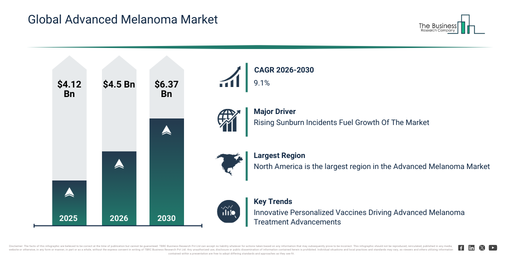
    The market for advanced melanoma treatments has experienced robust expansion lately. Projections indicate a rise from $4.12 billion in 2025 to $4.5 billion in 2026, reflecting a compound annual growth rate of 9.3%. Key factors fueling this historical growth encompass the scarcity of therapeutic choices for late-stage disease, escalating occurrences of melanoma, enhanced infrastructure within hospitals and cancer treatment facilities, heightened public consciousness regarding skin cancer, and the established use of traditional chemotherapy and biological treatments.

    The market for advanced melanoma is poised for significant expansion over the upcoming years, projecting a rise to $6.37 billion by 2030, underpinned by a compound annual growth rate (CAGR) of 9.1%. This projected increase stems from several key factors, including progress in immune checkpoint inhibitors, broader application of targeted treatments such as BRAF and MEK inhibitors, the advancement of personalized medicine, increased funding for melanoma research, and the incorporation of digital health and patient monitoring technologies. Prominent developments anticipated during this forecast period encompass a greater reliance on immunotherapy and targeted therapies, the growing implementation of biomarker-driven treatment choices, enhancements in hospital and oncology center capacities, a heightened emphasis on early detection and diagnostic methods, and an increasing number of clinical trials and research initiatives dedicated to advanced melanoma.

    Download A Free Sample Report For Comprehensive Market Insights:

    https://www.thebusinessresearchcompany.com/sample.aspx?id=21088&type=smp

    Advanced Melanoma Market Growth Momentum: Which Factors Are Influencing Demand?

    The escalating incidence of severe sunburns is anticipated to serve as a primary catalyst for the expansion of the advanced melanoma market in the foreseeable future. These intense skin injuries, stemming from overexposure to ultraviolet radiation, manifest as redness, discomfort, swelling, and occasionally blistering. Factors contributing to this rise include extended periods of UV exposure, insufficient sun protection practices, increased engagement in outdoor pursuits during peak UV intensity, and elevated global temperatures attributed to climate change. Such severe sunburns, particularly when recurrent or experienced during youth, inflict damage upon the DNA within skin cells, potentially inducing genetic alterations that initiate the development of melanoma. Illustratively, data from May 2024, provided by Melanoma Focus, a UK charity supporting the melanoma community, indicated 201 hospital admissions for sunburn in the 2022-23 period, encompassing 89 children and 25 infants under one year of age. Moreover, a significant proportion, 66%, of UK adults aged 16-65 recalled experiencing sunburn during childhood, with 65% reporting at least one instance of severe sunburn accompanied by blistering, a figure escalating to 77% among individuals with lighter skin tones. Consequently, the growing prevalence of severe sunburn incidents is underpinning the growth trajectory of the advanced melanoma market.

    Advanced Melanoma Market Segment Breakdown: Which Categories Generate The Most Revenue?

    The advanced melanoma market covered in this report is segmented –

    1) By Therapeutics: Chemotherapy, Biological Therapy, Targeted Therapy, Immune Therapy

    2) By Distribution Channel: Hospital Pharmacy, Online Pharmacy, Retail Pharmacy

    3) By End-User: Hospitals, Cancer Research Centres, Academic Institutes, Diagnostic Centers, Ambulatory Surgical Centers, Other End Users

    Subsegments:

    1) By Chemotherapy: Alkylating Agents, Antimetabolites, Topoisomerase Inhibitors, Other Chemotherapy Drugs

    2) By Biological Therapy: Monoclonal Antibodies, Interferons, Interleukins

    3) By Targeted Therapy: BRAF Inhibitors, MEK Inhibitors, KIT Inhibitors, Other Targeted Therapies

    4) By Immune Therapy: Immune Checkpoint Inhibitors, Cancer Vaccines, Oncolytic Virus Therapy, Adoptive Cell Transfer

    Advanced Melanoma Market Trends Reshaping Industry Growth

    Leading entities within the advanced melanoma sector are prioritizing the creation of novel therapeutic agents, including tailored vaccines, with the aim of enhancing treatment effectiveness, addressing aspects of resistance, and delivering individualized care plans that can result in improved patient prognoses and extended longevity. A personalized vaccine for advanced melanoma represents a specialized cancer therapy meticulously crafted for each patient, taking into account the distinctive genetic alterations present in their specific tumor. Illustratively, in the month of April 2023, two American corporations, Merck & Co. Inc., a pharmaceutical giant, and Moderna Inc., a biopharmaceutical innovator, were granted the PRIME designation by the European Medicines Agency. This recognition was for their collaborative investigational personalized mRNA cancer vaccine, identified as mRNA-4157/V940, when administered alongside Merck’s anti-PD-1 therapy, KEYTRUDA (pembrolizumab), as an adjuvant treatment for individuals diagnosed with high-risk stage III/IV melanoma subsequent to complete surgical removal. The personalized cancer vaccine, mRNA-4157/V940, is formulated with a single synthetic mRNA that encodes for a maximum of 34 neoantigens and is engineered and manufactured according to the unique mutational profile of the patient’s tumor.

    Advanced Melanoma Market Key Players And Strategic Industry Positioning

    Major companies operating in the advanced melanoma market are Pfizer Inc., F Hoffmann-La Roche Ltd, Merck & Co. Inc., Bristol-Myers Squibb, AstraZeneca AG, Novartis AG, Amgen Inc., BioNTech SE, Regeneron Pharmaceuticals, Genentech Inc., Exelixis Inc., Dynavax Technologies, Replimune Group, Immunocore Holdings plc, Xencor Inc., Agenus Inc., Nektar Therapeutics, Iovance Biotherapeutics, Adaptimmune Therapeutics, Immutep Ltd., Lytix Biopharma

    Access The Complete Advanced Melanoma Market Report:

    https://www.thebusinessresearchcompany.com/report/advanced-melanoma-global-market-report

    Advanced Melanoma Market Regional Analysis: Which Region Leads By Revenue?

    North Americawas the largest region in the advanced melanoma market in 2025. Asia-Pacificis expected to be the fastest-growing region in the forecast period. The regions covered in the advanced melanoma market report are Asia-Pacific, South East Asia, Western Europe, Eastern Europe, North America, South America, Middle East, Africa.

    Get in touch with us:

    The Business Research Company: https://www.thebusinessresearchcompany.com/

    Americas: +1 310-496-7795

    Asia: +44 7882 955267 & +91 8897263534

    Europe: +44 7882 955267

    Email us at: marketing@tbrc.info

    Follow us on:

    LinkedIn: https://in.linkedin.com/company/the-business-research-company

    YouTube: https://www.youtube.com/channel/UC24_fI0rV8cR5DxlCpgmyFQ

    Global Market Model: https://www.thebusinessresearchcompany.com/global-market-model
  • Advanced Liver Cancer Market Forecast Reveals Where Future Industry Value Will Be Created

    Advanced Liver Cancer Market Forecast Reveals Where Future Industry Value Will Be Created

    Through market attractiveness analysis, total addressable market evaluation, company benchmarking matrices, interactive Excel dashboards, expanded supply chain intelligence, emerging startup coverage, and detailed product insights, The Business Research Company’s 2026 market reports provide more actionable and strategically valuable research.

    Advanced Liver Cancer Market Expansion From $2.48 Billion In 2026 To $4.26 Billion In 2030

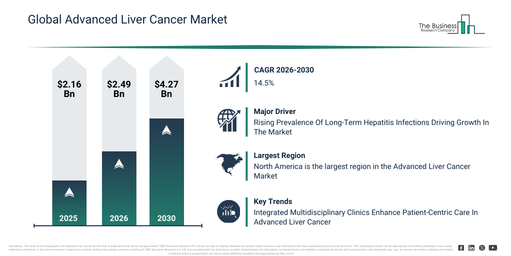
    The market for advanced liver cancer treatments has seen swift expansion lately, with projections indicating a rise from $2.16 billion in 2025 to $2.49 billion in 2026, reflecting a compound annual growth rate of 14.8%. This historical growth trajectory is influenced by factors such as the increasing prevalence of liver cancer, the wider utilization of CT and MRI for diagnosis, a surge in the demand for biopsy procedures, enhanced funding for cancer research, and the proliferation of specialized diagnostic facilities and academic institutions.

    The market for advanced liver cancer treatments is poised for substantial expansion over the coming years, projecting a valuation of $4.27 billion by 2030, driven by a compound annual growth rate of 14.5%. This anticipated surge is underpinned by several key factors, including the ongoing evolution of genomic testing methodologies, a broader embrace of tailored medical interventions, and the proliferation of screening and diagnostic tools for prediction. Furthermore, increased partnerships between healthcare institutions and research facilities, alongside the growth of outpatient surgical centers, will contribute significantly to this market’s upward trajectory. Key developments shaping the forecast period encompass the growing integration of next-generation sequencing alongside genomic testing for hepatocellular carcinoma (HCC), enhanced utilization of imaging and biopsy procedures, advancements in diagnostic capabilities for both prognosis and prediction, amplified efforts in liver cancer research, and a heightened emphasis on early detection coupled with individualized treatment strategies.

    Download A Free Sample Report For Comprehensive Market Insights:

    https://www.thebusinessresearchcompany.com/sample.aspx?id=20706&type=smp

    Advanced Liver Cancer Market Expansion Drivers: What Is Shaping Future Growth?

    The expanding incidence of persistent hepatitis infections is anticipated to stimulate the progression of the advanced liver cancer sector in the future. Such prolonged viral infections, persisting beyond half a year, have the potential to cause hepatic impairment, cirrhosis, or the development of liver cancer. Factors contributing to this surge in long-term hepatitis cases include insufficient surveillance and immunization efforts, alongside delayed medical intervention. Persistent infections with hepatitis B (HBV) or hepatitis C (HCV) stand as primary contributors to hepatic cirrhosis and hepatocellular carcinoma (HCC), which represents the predominant type of liver cancer. Over extended periods, these chronic viral ailments can instigate hepatic inflammation, tissue damage, and ultimately, malignancy; consequently, their continued widespread presence heightens the susceptibility of a greater number of individuals to advanced liver cancer. Illustratively, the Australian Society of Medical Health Professionals (ASHM) reported in April 2025 that, as of 2023, an estimated 219,800 people in Australia were managing chronic hepatitis B (CHB), equating to roughly 0.82% of the nation’s total populace, underscoring the direct correlation between the increasing prevalence of enduring hepatitis infections and the expansion of the advanced liver cancer market.

    Advanced Liver Cancer Market Segmentation: How Is The Market Structured Across Key Categories?

    The advanced liver cancer market covered in this report is segmented –

    1) By Test Type: Imaging Test, Biopsy, Genomic Test, Other Test Types

    2) By Technology: Fluorescent In Situ Hybridization, Next Generation Sequencing, Fluoroimmunoassay, Comparative Genomic Hybridization, Immunohistochemical, Other Technologies

    3) By Distribution Channel: Direct Tenders, Retail Sales, Other Distribution Channel

    4) By Application: Diagnostic And Predictive, Prognostic, Research

    5) By End-User: Hospitals, Cancer Research Centers, Academic Institutes, Diagnostic Centers, Other End-Users

    Subsegments:

    1) By Imaging Test: Ultrasound, CT (Computed Tomography) Scan, MRI (Magnetic Resonance Imaging), PET (Positron Emission Tomography) Scan

    2) By Biopsy: Needle Biopsy, Laparoscopic Biopsy, Surgical Biopsy

    3) By Genomic Test: Next-Generation Sequencing (NGS), PCR (Polymerase Chain Reaction) Testing, Genetic Mutation Profiling

    4) By Other Test Types: Serum Biomarker Testing, Liver Function Tests, Alpha-Fetoprotein (AFP) Test, Elastography Tests

    Advanced Liver Cancer Market Strategic Trends: What Is Defining The Next Phase Of Growth?

    Leading entities within the advanced liver cancer sector are prioritizing the establishment of comprehensive, multidisciplinary clinics. This strategic approach aims to elevate patient-focused services, foster seamless collaboration among treatment teams, and expedite the decision-making process. These integrated clinics convene experts from various fields, including oncology, hepatobiliary surgery, interventional radiology, genetics, pathology, anesthesia, and palliative care. Their collective effort is dedicated to formulating personalized treatment strategies for intricate liver cancer cases, thereby ensuring individualized interventions and minimizing treatment timelines. A notable example is the July 2025 inauguration of an Advanced Liver Cancers Clinic by Apollo Proton Cancer Centre, a prominent cancer treatment facility in India. This new clinic consolidates the management of both primary liver cancers and liver metastases all under one roof, assembling a team of medical oncologists, hepatobiliary surgeons, interventional radiologists, geneticists, pathologists, and palliative care specialists to create uniform treatment protocols. Furthermore, the clinic intends to engage in forward-looking research, investigate innovative therapeutic options, and place a strong emphasis on the holistic patient experience, responding to the increasing demand for specialized liver cancer services in India, which is experiencing a surge in hepatocellular carcinoma cases attributed to hepatitis, fatty liver disease, and delayed diagnoses.

    Advanced Liver Cancer Market Competitive Landscape And Leading Companies

    Major companies operating in the advanced liver cancer market are Pfizer Inc., F. Hoffmann-La Roche AG, Merck Co. Inc., Bayer AG, Sanofi S.A., Bristol-Myers Squibb Company, AstraZeneca plc, Novartis AG, Eli Lilly and Company, Agilent Technologies Inc., Eisai Co. Ltd., Jiangsu Hengrui Pharmaceutical Co. Ltd, Exelixis Inc., Sirtex Medical Limited, Eureka Therapeutics, Abbisko Therapeutics Co. Ltd., Binhui Biopharmaceutical Co. Ltd., Tempest Therapeutics Inc., Auransa Inc., Mina Alpha Limited, Jennerex Inc.

    Access The Complete Advanced Liver Cancer Market Report:

    https://www.thebusinessresearchcompany.com/report/advanced-liver-cancer-global-market-report

    Advanced Liver Cancer Market Geographic Distribution And Regional Opportunities

    North Americawas the largest region in the advanced liver cancer market in 2025. Asia-Pacificis expected to be the fastest-growing region in the forecast period. The regions covered in the advanced liver cancer market report are Asia-Pacific, South East Asia, Western Europe, Eastern Europe, North America, South America, Middle East, Africa.

    Get in touch with us:

    The Business Research Company: https://www.thebusinessresearchcompany.com/

    Americas: +1 310-496-7795

    Asia: +44 7882 955267 & +91 8897263534

    Europe: +44 7882 955267

    Email us at: marketing@tbrc.info

    Follow us on:

    LinkedIn: https://in.linkedin.com/company/the-business-research-company

    YouTube: https://www.youtube.com/channel/UC24_fI0rV8cR5DxlCpgmyFQ

    Global Market Model: https://www.thebusinessresearchcompany.com/global-market-model
  • Adult T-Cell Leukemia/Lymphoma Treatment Market Growth Through 2030 Creates New Strategic Opportunities

    Adult T-Cell Leukemia/Lymphoma Treatment Market Growth Through 2030 Creates New Strategic Opportunities

    Delivering more actionable and strategically valuable research, The Business Research Company’s 2026 market reports feature market attractiveness analysis, total addressable market evaluation, company benchmarking matrices, interactive Excel dashboards, expanded supply chain intelligence, emerging startup coverage, and detailed product insights.

    Adult T-Cell Leukemia/Lymphoma Treatment Market Forecast Highlighting Growth From $2.16 Billion To $2.99 Billion

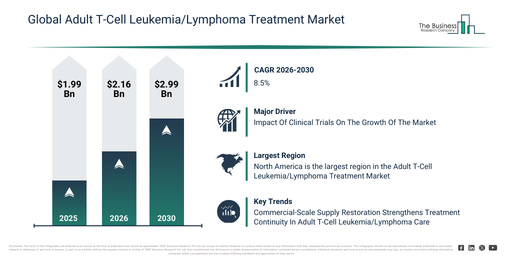
    The market for adult T-cell leukemia/lymphoma treatments has experienced robust expansion lately and is projected to expand from $1.99 billion to $2.16 billion between 2025 and 2026, reflecting a compound annual growth rate of 8.7%. This past growth momentum was fueled by several factors, including a scarcity of targeted therapies, an increase in the incidence of adult T-cell leukemia/lymphoma, enhanced infrastructure in hospitals and dedicated cancer facilities, the widespread use of standard chemotherapy, and heightened awareness surrounding uncommon blood cancers.

    The market for adult T-cell leukemia/lymphoma treatments is poised for significant expansion, projected to reach $2.99 billion by 2030, reflecting a compound annual growth rate of 8.5%. This upward trajectory is fueled by advancements such as the creation of new monoclonal antibodies and tyrosine kinase inhibitors, the broader application of CAR-T and interferon-based treatments, a greater emphasis on personalized medicine, increased funding for clinical studies, and the growth of hospital and specialized cancer care facilities. Key developments anticipated during this period include a greater acceptance of targeted and immunotherapy approaches, a rise in the utilization of combined treatment strategies, an increase in stem cell transplantation procedures, a more concentrated effort on therapies tailored to specific subtypes, and intensified research and clinical trial efforts.

    Download A Free Sample Report For Comprehensive Market Insights:

    https://www.thebusinessresearchcompany.com/sample.aspx?id=21087&type=smp

    Adult T-Cell Leukemia/Lymphoma Treatment Market Development Factors: Which Trends Are Supporting Demand?

    The expansion of the market for adult T-cell leukemia or lymphoma treatments is anticipated to be significantly boosted by a growing volume of ongoing clinical trials. These trials are essentially research endeavors designed to assess the safety, effectiveness, and any adverse reactions of new medical interventions, pharmaceuticals, or devices in human subjects, with the ultimate goal of enhancing patient health. Within the context of adult T-cell leukemia or lymphoma care, clinical trials play a crucial role by investigating novel therapeutic approaches, refining current treatment protocols, and determining the safety and effectiveness of groundbreaking medications. This diligent process contributes to better patient results and broadens the available treatment avenues for this uncommon and difficult-to-manage illness. Illustratively, data from ClinicalTrials.gov, a United States government online database, indicates a substantial rise in published trial findings, escalating from 4,024 in 2022 to 5,063 in 2023. Consequently, the escalating number of clinical trials is recognized as a primary driver for the growth observed in the adult T-cell leukemia or lymphoma treatment sector.

    Adult T-Cell Leukemia/Lymphoma Treatment Market Segmentation Trends And Revenue Drivers

    The adult t-cell leukemia/lymphoma treatment market covered in this report is segmented –

    1) By Treatment Approach: Chemotherapy, Targeted Therapies, Immunotherapies, Combination Therapies, Stem Cell Transplantation

    2) By Disease Subtype: Acute Adult T-Cell Leukemia Or Lymphoma, Lymphomatous Adult T-Cell Leukemia Or Lymphoma, Chronic Adult T-Cell Leukemia Or Lymphoma, Smoldering Adult T-Cell Leukemia Or Lymphoma

    3) By Distribution Channel: Hospital Pharmacies, Retail Pharmacies, Online Pharmacies, Other Channels

    4) By End-User: Hospitals And Clinics, Specialty Cancer Centers, Research Institutes

    Subsegments:

    1) By Chemotherapy: Alkylating Agents, Antimetabolites, Topoisomerase Inhibitors

    2) By Targeted Therapies: Monoclonal Antibodies, Tyrosine Kinase Inhibitors (TKIs), Histone Deacetylase (HDAC) Inhibitors

    3) By Immunotherapies: Immune Checkpoint Inhibitors, CAR-T Cell Therapy, Interferon-Based Therapies

    4) By Combination Therapies: Chemotherapy + Targeted Therapy, Chemotherapy + Immunotherapy, Multi-Drug Regimens

    5) By Stem Cell Transplantation: Autologous Stem Cell Transplantation, Allogeneic Stem Cell Transplantation

    Adult T-Cell Leukemia/Lymphoma Treatment Market Transformation Trends: Which Innovations Are Driving Change?

    Key players within the adult T-cell leukemia and lymphoma treatment landscape are dedicating resources to innovative strategies, specifically commercial-scale supply restoration, with the objective of bolstering treatment accessibility and guaranteeing uninterrupted patient access to critical therapies. This concept of commercial-scale supply restoration involves the concerted effort to re-establish access to vital oncology medications that have experienced significant market deficits, consequently ensuring a more stable continuum of care for individuals dependent on these treatments. As a concrete illustration, in May of 2023, Shorla Oncology, a pharmaceutical firm originating from Ireland specializing in niche treatments, entered into a collaborative agreement with EVERSANA, a company based in the United States that offers commercialization services to the life sciences sector, for the introduction of Nelarabine Injection. This particular formulation, which has received full approval from the FDA, is designated for use in T-cell Acute Lymphoblastic Leukemia (T-ALL) and T-Cell Lymphoblastic Lymphoma (T-LBL). The therapeutic agent is designed to alleviate persistent shortages in supply and caters to both adult and pediatric populations, commencing from one year of age, who are experiencing relapsed or refractory forms of the disease following a minimum of two preceding chemotherapy regimens. The selection of EVERSANA by Shorla was predicated on their capacity to deliver extensive commercialization assistance, encompassing the deployment of sales teams, the provision of medical information, oversight of pharmacovigilance, and the management of trade relationships, thereby facilitating a prosperous market entry and adoption.

    #Adult T-Cell Leukemia/Lymphoma Treatment Market Industry Leaders: Which Organizations Are Driving Competition?

    Major companies operating in the adult t-cell leukemia/lymphoma treatment market are Pfizer Inc, Sanofi SA, Bristol Myers Squibb Company, Novartis AG, Takeda Pharmaceutical Company Limited, Gilead Sciences Inc, Astellas Pharma Inc, Daiichi Sankyo Co Ltd, Kyowa Kirin Co Ltd, Merck KGaA, AstraZeneca plc, Roche Holding AG, Eli Lilly and Company, AbbVie Inc, Johnson and Johnson, Amgen Inc, BeiGene Ltd, Incyte Corporation, Regeneron Pharmaceuticals Inc, Seagen Inc, Adaptive Biotechnologies Corporation

    Access The Complete Adult T-Cell Leukemia/Lymphoma Treatment Market Report:

    https://www.thebusinessresearchcompany.com/report/adult-t-cell-leukemialymphoma-treatment-global-market-report

    Adult T-Cell Leukemia/Lymphoma Treatment Market Largest Region By Revenue And Market Share

    North Americawas the largest region in the adult T-cell leukemia or lymphoma treatment market in 2025. The regions covered in the adult t-cell leukemia/lymphoma treatment market report are Asia-Pacific, South East Asia, Western Europe, Eastern Europe, North America, South America, Middle East, Africa.

    Get in touch with us:

    The Business Research Company: https://www.thebusinessresearchcompany.com/

    Americas: +1 310-496-7795

    Asia: +44 7882 955267 & +91 8897263534

    Europe: +44 7882 955267

    Email us at: marketing@tbrc.info

    Follow us on:

    LinkedIn: https://in.linkedin.com/company/the-business-research-company

    YouTube: https://www.youtube.com/channel/UC24_fI0rV8cR5DxlCpgmyFQ

    Global Market Model: https://www.thebusinessresearchcompany.com/global-market-model