Month: June 2026

  • AI-Enabled X-Ray Imaging Solutions Market Trends And Growth Drivers Point To Strong Future Potential

    AI-Enabled X-Ray Imaging Solutions Market Trends And Growth Drivers Point To Strong Future Potential

    Through market attractiveness analysis, total addressable market evaluation, company benchmarking matrices, interactive Excel dashboards, expanded supply chain intelligence, emerging startup coverage, and detailed product insights, The Business Research Company’s 2026 market reports provide more actionable and strategically valuable research.

    AI-Enabled X-Ray Imaging Solutions Market CAGR Analysis And Future Market Development

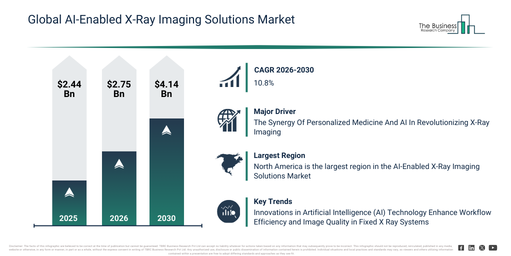
    The market for AI-powered x-ray imaging technologies has experienced substantial expansion. Projections indicate a rise from $2.44 billion in 2025 to $2.75 billion in 2026, reflecting a compound annual growth rate (CAGR) of 12.8%. This growth trajectory in the preceding years can be linked to several key factors, including the escalating utilization of digital imaging devices, the streamlining of radiological processes, a heightened need for precise diagnostic outcomes, the integration of AI algorithms into medical imaging practices, and the broadening of imaging facilities within hospitals.

    The market for artificial intelligence-powered X-ray imaging technology is poised for significant expansion, projected to reach $4.14 billion by 2030. This impressive growth trajectory, estimated at a compound annual growth rate of 10.8%, is fueled by several key advancements. These include the continuous development of sophisticated AI algorithms, a growing trend towards incorporating cloud-based solutions, the expansion of specialized radiology services, increased financial backing for predictive analytics tools, and the wider acceptance of automated reporting and decision-support systems. Throughout this forecast period, key developments are anticipated to shape the industry. We expect to see a greater uptake of AI tools for image analysis, the seamless integration of predictive analytics into daily radiology routines, a broader availability of imaging solutions accessible via cloud and web platforms, escalating application of AI within specialized radiology fields, and ultimately, improvements in both diagnostic accuracy and the speed of reporting.

    Download A Free Sample Report For Comprehensive Market Insights:

    https://www.thebusinessresearchcompany.com/sample.aspx?id=15303&type=smp

    AI-Enabled X-Ray Imaging Solutions Market Growth Factors Supporting Long-Term Expansion

    The increasing need for individualized medical approaches is poised to stimulate expansion within the AI-powered X-ray imaging solutions sector. This trend towards personalized, or precision, medicine focuses on medical interventions and treatments precisely matched to an individual’s unique biological makeup. Factors such as breakthroughs in genetic research, a deeper comprehension of the diverse nature of illnesses, and technological progress are fueling this rise in personalized medicine. AI-enabled X-ray imaging solutions play a crucial role in this domain by enabling the adaptation of healthcare strategies, treatment plans, and imaging procedures to suit the specific profile and requirements of each patient. As an illustration, the Personalized Medicine Coalition reported that in 2023, the US saw 16 new personalized treatments authorized by the USFDA for individuals with rare conditions, a substantial leap from the 6 approvals recorded in 2022. Consequently, the escalating requirement for personalized medicine is acting as a significant catalyst for the growth of AI-enabled X-ray imaging solutions.

    AI-Enabled X-Ray Imaging Solutions Market Segment Outlook: Which Categories Are Expanding The Fastest?

    The ai-enabled x-ray imaging solutions market covered in this report is segmented –

    1) By Product: Software, Hardware

    2) By Mode Of Deployment: Cloud-Based And Web-Based, On-Premises

    3) By Workflow: Detection, Image Acquisition, Image Analysis, Diagnosis And Treatment Decision Support, Triage, Reporting And Communication

    4) By Application: General Radiology, Specialty Radiology

    Subsegments:

    1) By Software: AI-Based X-Ray Image Analysis And Interpretation Software, Computer-Aided Detection Or Diagnosis Software, AI-Driven Workflow Orchestration And Triage Software, Quality Enhancement And Dose Optimization Software, Reporting, Visualization And Clinical Decision Support Software

    2) By Hardware: AI-Integrated Digital X-Ray Systems, AI-Enabled X-Ray Detectors And Flat-Panel Sensors, Edge-AI Processing Units And Embedded AI Modules, AI-Optimized Workstations And Viewing Consoles

    AI-Enabled X-Ray Imaging Solutions Market Industry Trends Shaping Future Revenue Growth

    Vendors in the AI-driven X-ray diagnostics sector are prioritizing the creation of sophisticated fixed X-ray setups, which encompass AI-driven image enhancement and smart automation of operational processes, thereby boosting productivity and ensuring uniform image capture. AI-driven image enhancement involves the utilization of algorithms designed to elevate image clarity, minimize inconsistencies, and facilitate reliable analysis of X-ray visuals, whereas smart automation of operational processes pertains to software solutions that simplify tasks performed within examination rooms, including patient alignment, beam restriction, and protocol selection. As an illustration, in July 2025, GE HealthCare, a prominent US medical device conglomerate, introduced its Definium Pace Select ET, a ground-mounted digital X-ray apparatus equipped with the AI-powered Helix Advanced Image Processing capabilities and an integrated Intelligent Workflow Suite. This apparatus automates routine actions, verifies patient positioning, and guarantees consistent image standards, aiding technical staff in performing their duties with greater speed and security.

    AI-Enabled X-Ray Imaging Solutions Market Key Companies And Competitive Benchmarking

    Major companies operating in the ai-enabled x-ray imaging solutions market are Samsung Electronics Co. Ltd., General Electric Company, International Business Machines Corporation, Siemens Healthineers AG, Koninklijke Philips N.V., Agfa-Gevaert NV, Carestream Health Inc., Fujifilm Healthcare Americas Corporation, Canon Medical Systems Corporation, Lunit Inc., Infervision Medical Technology Co. Ltd., Behold AI Technologies Limited, DeepTek.ai Inc., Quibim S.L., Enlitic Inc., Thirona BV, Arterys Inc., Konica Minolta Inc., Vuno Co. Ltd., Zebra Medical Vision Inc., Radiobotics APS, Imagen Technologies Inc.

    Access The Complete AI-Enabled X-Ray Imaging Solutions Market Report:

    https://www.thebusinessresearchcompany.com/report/ai-enabled-x-ray-imaging-solutions-global-market-report

    AI-Enabled X-Ray Imaging Solutions Market Global Footprint: Which Region Holds Market Leadership?

    North Americawas the largest region in the AI-enabled X-ray imaging solutions market in 2025. It is expected to be the fastest-growing region in the forecast period. The regions covered in the ai-enabled x-ray imaging solutions market report are Asia-Pacific, South East Asia, Western Europe, Eastern Europe, North America, South America, Middle East, Africa.

    Get in touch with us:

    The Business Research Company: https://www.thebusinessresearchcompany.com/

    Americas: +1 310-496-7795

    Asia: +44 7882 955267 & +91 8897263534

    Europe: +44 7882 955267

    Email us at: marketing@tbrc.info

    Follow us on:

    LinkedIn: https://in.linkedin.com/company/the-business-research-company

    YouTube: https://www.youtube.com/channel/UC24_fI0rV8cR5DxlCpgmyFQ

    Global Market Model: https://www.thebusinessresearchcompany.com/global-market-model
  • AI-Enabled Medical Imaging Solutions Market Expansion Is Reshaping Competitive Dynamics Across The Industry

    AI-Enabled Medical Imaging Solutions Market Expansion Is Reshaping Competitive Dynamics Across The Industry

    Delivering more actionable and strategically valuable research, The Business Research Company’s 2026 market reports feature market attractiveness analysis, total addressable market evaluation, company benchmarking matrices, interactive Excel dashboards, expanded supply chain intelligence, emerging startup coverage, and detailed product insights.

    AI-Enabled Medical Imaging Solutions Market Expansion From $3.8 Billion In 2026 To $11.23 Billion In 2030

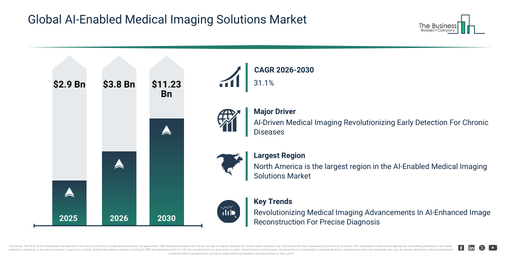
    The market for AI-powered medical imaging solutions has witnessed significant expansion. Projections indicate a surge from $2.9 billion in 2025 to $3.8 billion by 2026, reflecting a compound annual growth rate of 31.2%. Factors contributing to this historical growth trajectory include the initial limited integration of AI within medical imaging, a continued dependence on traditional analysis methods for imaging, a deficit in skilled radiologists, a rising prevalence of chronic health conditions, and early-stage investments in imaging infrastructure.

    The market for AI-powered medical imaging solutions is poised for remarkable expansion in the coming years, projecting a reach of $11.23 billion by 2030 with a compound annual growth rate of 31.1%. This significant expansion is anticipated due to progress in deep learning and computer vision technologies, the increasing prevalence of personalized diagnostic approaches, greater incorporation of AI into hospital information systems, a surge in healthcare digitization efforts, and the broadening application of AI in medical imaging within developing economies. Key developments expected during this forecast period involve a greater acceptance of AI tools for diagnostic assistance, expanded utilization of AI-enhanced imaging equipment within healthcare facilities, the growth of imaging systems capable of handling multiple modalities, a rising need for solutions that streamline workflows and manage operations, and ultimately, improved precision and effectiveness in clinical decision-making processes.

    Download A Free Sample Report For Comprehensive Market Insights:

    https://www.thebusinessresearchcompany.com/sample.aspx?id=13778&type=smp

    #AI-Enabled Medical Imaging Solutions Market Demand Drivers Creating New Revenue Opportunities

    The expanding incidence of long-term health conditions is anticipated to be a significant catalyst for the advancement of the AI-enabled medical imaging solutions sector. These chronic ailments, characterized by their duration exceeding three months, encompass a spectrum of diseases including cancer, diabetes, cardiac issues, arthritis, COPD, asthma, and autoimmune disorders. AI technologies integrated with medical imaging enhance the prompt detection of chronic illnesses by meticulously analyzing intricate imaging datasets. This capability facilitates the more rapid identification of abnormalities, thereby enabling swifter therapeutic interventions and ultimately leading to improved patient prognoses. A stark illustration of this growing burden is provided by the World Health Organization, which reported in September 2023 that noncommunicable diseases (NCDs) are responsible for 41 million deaths each year, accounting for 74% of all fatalities globally. Notably, 17 million individuals succumb to NCDs before reaching the age of 70, with the vast majority of these early deaths, 86%, occurring in nations with lower and middle incomes. Cardiovascular diseases emerge as the leading cause, claiming 17.9 million lives annually, trailed by chronic respiratory illnesses (4.1 million), various forms of cancer (9.3 million), and diabetes (2.0 million, inclusive of deaths attributed to diabetes-related kidney disease). Consequently, the escalating prevalence of these chronic conditions serves as a primary driver for the expansion of the AI-enabled medical imaging solutions market.

    AI-Enabled Medical Imaging Solutions Market Segment Landscape: Which Areas Lead Market Development?

    The ai-enabled medical imaging solutions market covered in this report is segmented –

    1) By Product: Software, Hardware

    2) By Modality: Computed Tomography (CT), Magnetic Resonance (MR), X-Ray, Ultrasound, Mammography, Multimodality Imaging Systems, Other Modalities

    3) By Technology: Deep Learning, Natural Language Processing (NLP), Computer Vision, Other Technologies

    4) By Application: Breast Imaging, Respiratory And Pulmonary, Neurology, Orthopedics, Other Applications

    5) By Industry Vertical: Hospital And Healthcare Providers, Pharmaceuticals And Biotechnology Companies, Healthcare Payers, Other Industry Verticals

    Subsegments:

    1) By Software: Image Analysis And Interpretation Software, Workflow And Management Solutions, Diagnostic Support Tools

    2) By Hardware: AI-Enhanced Imaging Devices, Imaging Sensors And Detectors, Workstations And Displays For Image Processing

    AI-Enabled Medical Imaging Solutions Market Trends Driving Strategic Industry Expansion

    Key players within the AI-driven medical imaging solutions sector are concentrating their efforts on advancing AI-powered image reconstruction methodologies, notably deep learning reconstruction, to introduce pioneering technologies that empower healthcare providers in diagnosing patients while ensuring their well-being. Deep learning reconstruction (DLR) represents a sophisticated approach in medical imaging, designed to enhance image fidelity through the application of deep learning algorithms. As an illustration, in November of 2023, Canon Medical Systems USA Inc., an American provider of imaging technologies, unveiled the Precise IQ Engine. This advanced system offers high-resolution deep learning reconstruction for magnetic resonance imaging, underpinned by Altivity, a forward-thinking AI innovation strategy that leverages intelligent technologies to attain unprecedented levels of quality, diagnostic insight, and overall value. The Precise IQ Engine possesses the capability to expand matrix size, effectively suppress noise, and generate exceptionally clear anatomical renderings, thereby significantly advancing the field of MR imaging. Furthermore, this engine is adept at producing high-spatial-resolution images originating from lower-resolution inputs, all while diligently maintaining image quality and minimizing the occurrence of artifactual ringing.

    AI-Enabled Medical Imaging Solutions Market Industry Leaders And Market Competition

    Major companies operating in the ai-enabled medical imaging solutions market are Siemens AG, GE HealthCare Technologies, Inc, Koninklijke Philips N.V., Fujifilm Holdings Corporation, Agfa-Gevaert N.V., Carestream Health, Aidoc Medical, Arterys Inc., icometrix, Riverain Technologies, iCAD Inc., Butterfly Network Inc, Subtle Medical, ContextVision AB, DiA Imaging Analysis Ltd, MaxQ AI Ltd, Qview Medical Inc, RADLogics Inc, Ziosoft, SyntheticMR, Beijing Infervision Technology Co. Ltd., NVIDIA Corporation, IBM Corporation, Nuance Communications Inc, EnvoyAI

    Access The Complete AI-Enabled Medical Imaging Solutions Market Report:

    https://www.thebusinessresearchcompany.com/report/ai-enabled-medical-imaging-solutions-global-market-report

    AI-Enabled Medical Imaging Solutions Market Regional Distribution: Which Areas Drive Market Expansion?

    North Americawas the largest region in the AI-enabled medical imaging market in 2025. The regions covered in the ai-enabled medical imaging solutions market report are Asia-Pacific, South East Asia, Western Europe, Eastern Europe, North America, South America, Middle East, Africa.

    Get in touch with us:

    The Business Research Company: https://www.thebusinessresearchcompany.com/

    Americas: +1 310-496-7795

    Asia: +44 7882 955267 & +91 8897263534

    Europe: +44 7882 955267

    Email us at: marketing@tbrc.info

    Follow us on:

    LinkedIn: https://in.linkedin.com/company/the-business-research-company

    YouTube: https://www.youtube.com/channel/UC24_fI0rV8cR5DxlCpgmyFQ

    Global Market Model: https://www.thebusinessresearchcompany.com/global-market-model
  • AI-Based Clinical Trial Solution Providers Market Forecast Reveals Where Future Industry Value Will Be Created

    AI-Based Clinical Trial Solution Providers Market Forecast Reveals Where Future Industry Value Will Be Created

    Enhanced with market attractiveness analysis, total addressable market evaluation, company benchmarking matrices, interactive Excel dashboards, expanded supply chain intelligence, emerging startup coverage, and detailed product insights, The Business Research Company’s 2026 market reports deliver more actionable and strategically valuable research.

    AI-Based Clinical Trial Solution Providers Market Forecast Highlighting Growth From $3.72 Billion To $8.52 Billion

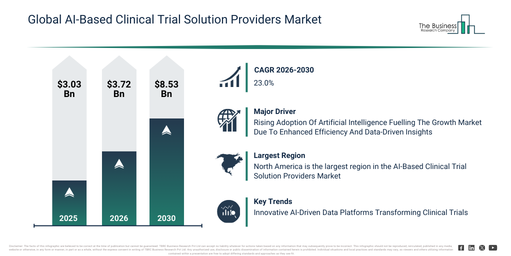
    The market for AI-driven clinical trial solutions has witnessed substantial expansion recently. Projections indicate a significant increase from $3.03 billion in 2025 to $3.72 billion in 2026, representing a compound annual growth rate (CAGR) of 22.9%. Factors contributing to this historical growth trajectory include the inefficiencies of manual patient recruitment, the limited incorporation of AI in clinical trial processes, dependence on outdated data management frameworks, the substantial expenses associated with traditional clinical trial monitoring, and the dispersed nature of trial oversight.

    The market for AI-powered clinical trial solutions is poised for substantial expansion in the approaching years, with projections indicating a significant rise to $8.53 billion by 2030, fueled by a compound annual growth rate of 23.0%. Factors contributing to this robust growth trajectory during the projected timeframe encompass breakthroughs in AI algorithms aimed at enhancing trial efficiency, the proliferation of cloud-based clinical trial platforms, escalating investments in decentralized trial infrastructure, a heightened need for continuous data oversight, and synergistic partnerships between pharmaceutical companies and AI solution developers. Key developments anticipated throughout the forecast period include a greater utilization of AI for optimizing patient recruitment, the widespread adoption of AI-driven data analytics in clinical research, the expansion and acceptance of virtual and decentralized clinical trial models, the integration of real-world evidence with predictive modeling techniques, and an increased demand for automated regulatory compliance processes.

    Download A Free Sample Report For Comprehensive Market Insights:

    https://www.thebusinessresearchcompany.com/sample.aspx?id=13575&type=smp

    AI-Based Clinical Trial Solution Providers Market Expansion Supported By Key Demand Factors

    The expanding utilization of artificial intelligence (AI) is positioned to foster the expansion of the market for AI-driven clinical trial solutions. AI, encompassing technologies like machine learning and deep learning, mirrors human intelligence to inject efficiency, data-backed insights, and automation into intricate operations. Clinical trial solution providers are increasingly leveraging AI to refine patient selection, enhance the accuracy of outcome forecasts, facilitate continuous safety oversight, and shorten study durations, thereby improving the overall clinical trial process. Evidence from the United States Census Bureau in March 2024 highlights this trend, indicating a rapid surge in AI adoption, moving from 3.7% of firms in the autumn of 2023 to 5.4% by February 2024. Consequently, the escalating implementation of AI technology is a primary catalyst for the growth observed in the AI-based clinical trial solution provider sector.

    AI-Based Clinical Trial Solution Providers Market Segments: Where Are The Largest Growth Opportunities?

    The ai-based clinical trial solution providers market covered in this report is segmented –

    1) By Clinical Trial Phase: Phase-I, Phase-II, Phase-III

    2) By Therapeutic Application: Oncology, Cardiovascular Diseases, Neurological Diseases Or Conditions Metabolic Diseases, Infectious Diseases, Other Therapeutic Applications

    3) By End-User: Pharmaceutical Companies, Academia

    Subsegments:

    1) By Phase-I: Safety And Dosage Studies, Early Pharmacokinetics Studies

    2) By Phase-II: Efficacy Studies, Dose-Response Studies

    3) By Phase-III: Confirmatory Studies, Comparative Effectiveness Research

    AI-Based Clinical Trial Solution Providers Market Growth Trends Influencing Competitive Dynamics

    Within the AI-based clinical trial solution providers sector, leading enterprises are actively introducing cutting-edge advancements, exemplified by Saama’s AI-powered data platform, with the dual objectives of expediting clinical development timelines and solidifying their market standing. These AI-driven data platforms represent sophisticated software designed to harness the capabilities of artificial intelligence and machine learning, thereby automating and improving a spectrum of data management and analytical procedures. As a case in point, Saama Technologies, Inc., a software firm headquartered in the United States, launched its AI-driven data platform, branded as Saama, in June 2023. This platform functions by consolidating and harmonizing data within clinical trials, thereby furnishing immediate visibility into operational metrics, financial aspects, and patient information, ultimately enhancing the efficiency of trial execution. Through the application of AI and sophisticated analytical tools, it automates repetitive tasks, boosts overall productivity, and furnishes profound understanding of patient conduct. By offering Software as a Service (SaaS) products such as data hubs, operational intelligence modules, patient analytics tools, S2S integration, and SDQ functionalities, Saama equips AI-based clinical trial solution providers with the means to elevate efficiency, precision, and overall efficacy, while simultaneously endeavoring to eradicate manual and labor-intensive processes to render clinical trials more streamlined and impactful.

    AI-Based Clinical Trial Solution Providers Market Major Participants And Competitive Dynamics

    Major companies operating in the ai-based clinical trial solution providers market are International Business Machines Corporation, IQVIA Holdings Inc., Saama Technologies Inc., AiCure LLC, Deep 6 AI Inc., DEEP LENS AI Inc., Unlearn.AI Inc., Intelligencia Inc., Median Technologies SAS, PathAI Inc., Koneksa Health Inc., GNS Healthcare Inc., CytoReason, Ardigen, BenevolentAI SA, Exscientia, Mendel Health Inc., Concentro Health AI, Antidote Technologies Inc., TriNetX Inc., Phesi

    Access The Complete AI-Based Clinical Trial Solution Providers Market Report:

    https://www.thebusinessresearchcompany.com/report/ai-based-clinical-trial-solution-providers-global-market-report

    AI-Based Clinical Trial Solution Providers Market Leading Geography: Which Region Generates The Most Revenue?

    North Americawas the largest region in the AI-based clinical trial solution providers market in 2025. Asia Pacificis expected to be the fastest-growing region in the forecast period. The regions covered in the ai-based clinical trial solution providers market report are Asia-Pacific, South East Asia, Western Europe, Eastern Europe, North America, South America, Middle East, Africa.

    Get in touch with us:

    The Business Research Company: https://www.thebusinessresearchcompany.com/

    Americas: +1 310-496-7795

    Asia: +44 7882 955267 & +91 8897263534

    Europe: +44 7882 955267

    Email us at: marketing@tbrc.info

    Follow us on:

    LinkedIn: https://in.linkedin.com/company/the-business-research-company

    YouTube: https://www.youtube.com/channel/UC24_fI0rV8cR5DxlCpgmyFQ

    Global Market Model: https://www.thebusinessresearchcompany.com/global-market-model

  • AI In Patient Engagement Market Growth Through 2030 Creates New Strategic Opportunities

    AI In Patient Engagement Market Growth Through 2030 Creates New Strategic Opportunities

    Through market attractiveness analysis, total addressable market evaluation, company benchmarking matrices, interactive Excel dashboards, expanded supply chain intelligence, emerging startup coverage, and detailed product insights, The Business Research Company’s 2026 market reports provide more actionable and strategically valuable research.

    AI In Patient Engagement Market Revenue Growth Supported By A CAGR Of 24.74% Through 2030

    The market for artificial intelligence in patient engagement has experienced substantial expansion, projected to increase from $9.28 billion in 2025 to $11.28 billion in 2026, reflecting a compound annual growth rate of 21.6%. Factors contributing to this remarkable growth during the preceding period include the scarcity of existing patient engagement solutions, a prevailing reliance on manual processes for health management, the escalating integration of electronic health records, heightened recognition of the importance of patient-centered care, and the initial deployment of chatbots specifically for managing appointment scheduling.

    The sector focused on artificial intelligence for patient engagement is poised for substantial expansion over the upcoming years, projecting a market valuation of $24.74 billion by 2030, driven by a compound annual growth rate of 21.7%. This anticipated surge is largely fueled by innovative strides in AI and machine learning, the incorporation of computer vision technology for patient oversight, increased financial backing for digital health frameworks, a heightened emphasis on tailored patient interactions, and the broader adoption of cloud-based healthcare services. Key developments shaping this period include a greater uptake of AI-driven virtual health assistants, the intensified application of natural language processing for deciphering patient information and gauging sentiment, the proliferation of cloud-based patient engagement systems, the advancement of AI-powered programs for managing population health, and improvements in remote and in-hospital care through the use of computer vision.

    Download A Free Sample Report For Comprehensive Market Insights:

    https://www.thebusinessresearchcompany.com/sample.aspx?id=13775&type=smp

    #AI In Patient Engagement Market Growth Drivers And Industry Catalysts

    The increasing need for individualized healthcare approaches is anticipated to fuel the expansion of AI within the patient engagement sector. Such personalized healthcare, also termed personalized medicine, encompasses medical interventions and wellness strategies customized to an individual’s background, test results, situational context, and genetic makeup. Artificial intelligence in patient engagement aids these personalized healthcare initiatives by employing data analytics and machine learning to refine treatments, forecast patient prognoses, and enhance care management routines, all contingent upon unique genetic predispositions, lifestyle choices, and clinical indicators. To illustrate, in February 2024, the Personalized Medicine Coalition, a US-based non-profit, reported that the US Food and Drug Administration (FDA) greenlit 16 novel personalized therapies for individuals with rare conditions during 2023, a notable uptick from the 6 such treatments authorized in 2022. Consequently, the escalating requirement for tailored medical care serves as a primary catalyst for the burgeoning AI in patient engagement market.

    AI In Patient Engagement Market Segment Analysis: What Are The Major Market Categories?

    The ai in patient engagement market covered in this report is segmented –

    1) By Technology: Chatbots, Natural Language Processing (NLP)

    2) By Delivery Type: Cloud-Based, On-premise

    3) By Therapeutic Area: Health And Wellness, Chronic Disease Management, Other Therapeutic Areas

    4) By Application: Outpatient Health Management, Population Health Management, Other Applications

    5) By End-Use: Providers, Payers, Other End-Uses

    Subsegments:

    1) By Chatbots: Virtual Health Assistants, Appointment Scheduling Bots, Symptom Checkers

    2) By Natural Language Processing (NLP): Text Analysis Tools, Sentiment Analysis Applications, Voice Recognition Systems

    #AI In Patient Engagement Market Trends Influencing Long-Term Demand

    Leading entities within the AI patient engagement sector are introducing novel offerings powered by cutting-edge technologies, specifically AI-driven patient engagement solutions, as a strategic move to solidify their market positions. These AI patient engagement tools function as intelligent systems designed to enhance patient-provider interactions, tailor care plans to individual needs, and empower patients to take a more proactive role in managing their well-being. A pertinent example is ZS Associates, a consultancy based in the United States, which in October 2023 unveiled its ZAIDYN Connected Health solution; this platform leverages AI-driven virtual assistants, customized communication, and actionable data analytics to elevate both patient care delivery and the overall patient journey, enabling healthcare providers to extend personalized assistance efficiently across all care touchpoints and ensure patients receive pertinent information exactly when and where they need it.

    AI In Patient Engagement Market Leading Companies Driving Competitive Growth

    Major companies operating in the ai in patient engagement market are ZS Associates, Health Catalyst, Ada Health GmbH, Zocdoc Inc, Kyruus Inc, Memora Health Inc, HealthLoop Inc, Qventus Inc, Lark Health Inc, Your.MD Ltd, Buoy Health Inc, HealthTap Inc, Welltok Inc, Pillo Health Inc, K Health Inc, Mediktor SL, Clarify Health Solutions Inc, Sensely Inc, Orbita Inc, Clinithink Ltd, WiserCare Inc, Catalia Health Inc, Conversa Health Inc, Prevencio Inc

    Access The Complete AI In Patient Engagement Market Report:

    https://www.thebusinessresearchcompany.com/report/ai-in-patient-engagement-global-market-report

    AI In Patient Engagement Market Regional Outlook: Where Are The Largest Opportunities Located?

    North Americawas the largest region in the AI in patient engagement market in 2025. Asia-Pacificis expected to be the fastest-growing region in the forecast period. The regions covered in the ai in patient engagement market report are Asia-Pacific, South East Asia, Western Europe, Eastern Europe, North America, South America, Middle East, Africa.

    Get in touch with us:

    The Business Research Company: https://www.thebusinessresearchcompany.com/

    Americas: +1 310-496-7795

    Asia: +44 7882 955267 & +91 8897263534

    Europe: +44 7882 955267

    Email us at: marketing@tbrc.info

    Follow us on:

    LinkedIn: https://in.linkedin.com/company/the-business-research-company

    YouTube: https://www.youtube.com/channel/UC24_fI0rV8cR5DxlCpgmyFQ

    Global Market Model: https://www.thebusinessresearchcompany.com/global-market-model

  • AI In Oncology For Analytical Solutions Market Size Projected To Increase From $1.93 Billion To $6.26 Billion During The Forecast Period

    AI In Oncology For Analytical Solutions Market Size Projected To Increase From $1.93 Billion To $6.26 Billion During The Forecast Period

    Delivering more actionable and strategically valuable research, The Business Research Company’s 2026 market reports feature market attractiveness analysis, total addressable market evaluation, company benchmarking matrices, interactive Excel dashboards, expanded supply chain intelligence, emerging startup coverage, and detailed product insights.

    AI In Oncology For Analytical Solutions Market Value Expansion And Long-Term Growth Outlook

    The market for AI in oncology focusing on analytical solutions has experienced substantial expansion recently. Projections indicate a significant increase from $1.44 billion in 2025 to $1.93 billion in 2026, reflecting a compound annual growth rate (CAGR) of 34.2%. This growth trajectory in the past can be linked to factors such as early-stage AI integration within oncology practices, continued dependence on traditional diagnostic techniques, an escalating global incidence of cancer, intensified clinical research endeavors, and a heightened demand for tailored medical treatments.

    The market for AI-driven analytical solutions in oncology is poised to experience substantial expansion, projected to reach $6.26 billion by 2030, exhibiting a robust compound annual growth rate of 34.2%. This upward trajectory is fueled by several key factors, including the continuous refinement of artificial intelligence algorithms tailored for oncology applications, the broadening scope of oncology data licensing services, a growing synergy between AI and genomic data analysis, the escalating implementation of clinical decision support software, and strengthened partnerships between healthcare institutions and AI solution providers. Prominent developments anticipated during this forecast period encompass a greater uptake of AI-powered software for medical imaging and diagnostics, intensified utilization of predictive analytics within oncology research, an expanded role for clinical decision support systems in formulating treatment strategies, deeper integration of genomic information with cancer treatment solutions, and a heightened demand for data licensing and analytical services.

    Download A Free Sample Report For Comprehensive Market Insights:

    https://www.thebusinessresearchcompany.com/sample.aspx?id=13569&type=smp

    AI In Oncology For Analytical Solutions Market Opportunity Drivers: What Is Creating New Revenue Potential?

    The increasing incidence of cancer is anticipated to be a significant catalyst for the expansion of the AI in oncology for analytical solutions market. Cancer, a category of illnesses defined by the uncontrolled proliferation and dissemination of aberrant cells, is becoming more widespread. Within oncology, artificial intelligence applied to analytical solutions plays a crucial role in cancer management by facilitating tailored therapies, enabling earlier identification of the disease, and enhancing patient prognoses, all thanks to its capacity for rapid and effective analysis of extensive and intricate datasets. Illustrating this trend, in May of 2024, data from the National Cancer Institute, a governmental body in the United States, indicated that an estimated 2 million new cancer diagnoses are expected within the US in 2024, with projections estimating over 611,000 fatalities. Looking ahead to 2040, global new cancer diagnoses are predicted to surge to 29.9 million, accompanied by an increase in cancer-related mortality to 15.3 million. Consequently, the escalating burden of cancer is directly fueling the growth of the AI in oncology for analytical solutions market.

    AI In Oncology For Analytical Solutions Market Segment Breakdown: Which Categories Generate The Most Revenue?

    The ai in oncology for analytical solutions market covered in this report is segmented –

    1) By Component: Data Licensing Services, Software Solutions, Analytics and Other Services

    2) By Cancer Type: Breast Cancer, Lung Cancer, Prostate Cancer, Colorectal Cancer, Brain Tumor, Kidney Cancer, Non-Hodgkin Lymphoma, Bladder Cancer

    3) By Application: Diagnostic And Screening, Prognostic And Risk Stratification, Treatment Planning And Clinical Decision Support, Biomarker Discovery And Drug Development

    Subsegments:

    1) By Data Licensing Services: Oncology Data Licensing, Genomic Data Licensing

    2) By Software Solutions: AI-Based Imaging Software, Diagnostic Software, Clinical Decision Support Software

    3) By Analytics And Other Services: Predictive Analytics Services, AI Training And Support Services, Data Analysis Services

    AI In Oncology For Analytical Solutions Market Innovation Trends Driving Future Development

    Key players within the AI in oncology for analytical solutions market are concentrating their efforts on pushing the boundaries of AI technology, specifically through the creation of novel real-world data platforms designed to expedite cancer research and refine generative AI applications in the oncology domain. A real-world data platform, in essence, is a sophisticated system dedicated to consolidating and overseeing observational data amassed from a diverse array of sources beyond conventional clinical trials, encompassing elements like electronic health records, insurance claims data, patient-reported outcomes, and dedicated registries for specific diseases. To illustrate this trend, consider the October 2023 unveiling of Vista by the Central Ohio Transit Authority, a US-headquartered firm; this innovative real-world data platform was introduced with the explicit goal of accelerating the pace of cancer research and bolstering generative AI models pertinent to oncology. The overarching aim of this platform is to foster a more comprehensive and standardized methodology for the administration of cancer research data by harmonizing disparate databases, including the company’s data portal and genomic databases. Furthermore, Vista is anticipated to streamline the process of data exchange, elevate the caliber of data utilized, and serve as a valuable asset for a multitude of applications within oncology and broader healthcare sectors.

    AI In Oncology For Analytical Solutions Market Key Players And Strategic Industry Positioning

    Major companies operating in the ai in oncology for analytical solutions market are IBM Watson Health, NVIDIA Corporation, Siemens Healthineers, GE Healthcare, Tempus, DeepMind Health, Paige.AI, PathAI, Aidoc, Nucleai, OWKIN, SOPHiA Genetics, Imagen Technologies, Atomwise, Enlitic, Inspirata, 3Scan, Zebra Medical Vision, Ibex Medical Analytics, Vuno Inc., Proscia, Google Health, Huiying Medical

    Access The Complete AI In Oncology For Analytical Solutions Market Report:

    https://www.thebusinessresearchcompany.com/report/ai-in-oncology-for-analytical-solutions-global-market-report

    AI In Oncology For Analytical Solutions Market Geographic Landscape: Which Region Dominates Industry Growth?

    North Americawas the largest region in the AI In oncology for analytical solutions market in 2025. Asia-Pacificis expected to be the fastest-growing region in the forecast period. The regions covered in the ai in oncology for analytical solutions market report are Asia-Pacific, South East Asia, Western Europe, Eastern Europe, North America, South America, Middle East, Africa.

    Get in touch with us:

    The Business Research Company: https://www.thebusinessresearchcompany.com/

    Americas: +1 310-496-7795

    Asia: +44 7882 955267 & +91 8897263534

    Europe: +44 7882 955267

    Email us at: marketing@tbrc.info

    Follow us on:

    LinkedIn: https://in.linkedin.com/company/the-business-research-company

    YouTube: https://www.youtube.com/channel/UC24_fI0rV8cR5DxlCpgmyFQ

    Global Market Model: https://www.thebusinessresearchcompany.com/global-market-model
  • AI in Mental Health Market Growth Outlook Reveals A CAGR Of 34.8% And A Market Value Of $8.89 Billion By 2030

    AI in Mental Health Market Growth Outlook Reveals A CAGR Of 34.8% And A Market Value Of $8.89 Billion By 2030

    Enhanced with market attractiveness analysis, total addressable market evaluation, company benchmarking matrices, interactive Excel dashboards, expanded supply chain intelligence, emerging startup coverage, and detailed product insights, The Business Research Company’s 2026 market reports deliver more actionable and strategically valuable research.

    AI in Mental Health Market Expected To Reach $8.89 Billion By 2030 At 34.8% CAGR

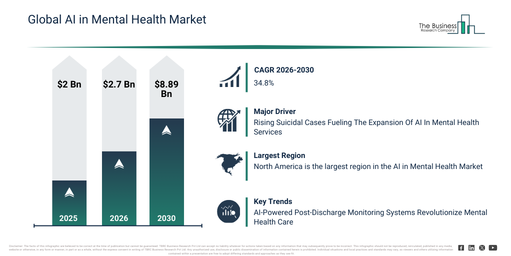
    The market for artificial intelligence in mental health services has experienced substantial expansion, projecting a leap from two billion dollars in 2025 to an estimated two point seven billion dollars in 2026, underscored by a compound annual growth rate of thirty-four point seven percent. This upward trajectory in past performance is largely a consequence of the prior constrained uptake of AI within the broader healthcare sector, a continued dependence on conventional therapeutic approaches, a rising incidence of mental health conditions, the proliferation of digital health endeavors, and initial investments channeled into AI-driven healthcare solutions.

    The AI in mental health sector anticipates a period of significant expansion, projecting a market valuation of $8.89 billion by the year 2030. This substantial increase is underpinned by a compound annual growth rate (CAGR) of 34.8%, a trajectory fueled by several key drivers. Among these are the continuous improvements in machine learning specifically tailored for mental health applications, a rising need for overseeing patients from a distance, the broader availability of virtual therapy options along with software-as-a-service (SaaS) models, the synergy being forged between AI and wearable technology as well as virtual reality systems, and an increasing number of partnerships forming between healthcare institutions and technology firms. Furthermore, prominent developments expected during this projected timeframe encompass the seamless integration of AI-powered chatbots and virtual therapy environments, the increasing reliance on predictive analytics for vigilant patient oversight, the proliferation of wearable devices and brain-computer interfaces, the widening application of context-aware computing in delivering mental health services, and the more pervasive use of AI to identify and understand patient behavioral tendencies.

    Download A Free Sample Report For Comprehensive Market Insights:

    https://www.thebusinessresearchcompany.com/sample.aspx?id=14242&type=smp

    AI in Mental Health Market Growth Momentum: Which Factors Are Influencing Demand?

    The escalating prevalence of suicidal incidents globally is poised to be a significant catalyst for the expansion of AI applications within the mental health sector. Suicidal ideation encompasses a spectrum of thoughts, emotions, and actions directed towards self-inflicted injury with the ultimate aim of ending one’s life, often stemming from underlying mental health conditions like depression, bipolar disorder, schizophrenia, and addiction. Artificial intelligence is instrumental in detecting precursor indicators of suicidal risk through the examination of user data patterns, thereby enabling prompt interventions and assistance. Illustratively, data from April 2025, as reported by the American Foundation for Suicide Prevention, indicate a persistent, largely stable age-adjusted suicide rate in the United States, standing at 14.21 per 100,000 individuals in 2022 and marginally decreasing to 14.12 per 100,000 in 2023. Consequently, the persistent rise in suicide occurrences is a key factor fueling the advancement of AI in the realm of mental health solutions.

    AI in Mental Health Market Segmentation: How Is The Market Structured Across Key Categories?

    The ai in mental health market covered in this report is segmented –

    1) By Component: Software-As-A-Service (SaaS), Hardware

    2) By Technology: Natural Language Processing (NLP), Context-Aware Computing, Computer Vision, Machine learning

    3) By Application: Conversational Interfaces, Patient Behavioral Pattern Recognition

    4) By End-User: Hospitals And Clinics, Mental Health Centers, Research Institutions

    Subsegments:

    1) By Software-As-A-Service (SaaS): AI-Powered Chatbots, Virtual Therapy Platforms, Mental Health Assessment Tools, Predictive Analytics Solutions

    2) By Hardware: Wearable Devices, Brain-Computer Interfaces, Virtual Reality Systems For Therapy

    AI in Mental Health Market Trends Reshaping Industry Growth

    Market leaders within the AI for mental health sector are actively introducing cutting-edge solutions, exemplified by the AI-driven behavioral health system called Discovery365, to broaden their existing portfolios. This platform is designed to track patient advancement for a full twelve months subsequent to their release from a behavioral treatment regimen, a period known for elevated relapse probabilities. Specifically, in September of 2023, Discovery Behavioral Health Inc., a United States-based provider of mental health services, collaborated with Videra Health and Brigham and Women’s Hospital, an American academic medical institution, to introduce Discovery365, an inaugural AI-powered tool intended to bridge the prevalent one-year recovery deficit in behavioral health. Incorporating sophisticated artificial intelligence, this system processes patient information after discharge, leveraging video-based analysis to gauge patient improvement and detect subtle indicators of difficulty or potential relapse. By extending care beyond the confines of formal treatment, Discovery365 endeavors to lower relapse occurrences and provide crucial support to individuals throughout the vital year post-treatment.

    AI in Mental Health Market Competitive Landscape And Leading Companies

    Major companies operating in the ai in mental health market are BetterHelp, Lyra Health, American Well Corporation, Doctor on Demand, Cerebral, MDLive, Talkspace Inc., Ginger, Quartet Health, Meditopia, Mantra Health, Happify Health, Woebot Health, Kintsugi, Marigold Health, SilverCloud Health, Cognoa, BioBeats, MeQuilibrium, Mightier, Nue Life, Mindstrong Health, Oliva Health, Wysa Ltd

    Access The Complete AI in Mental Health Market Report:

    https://www.thebusinessresearchcompany.com/report/ai-in-mental-health-global-market-report

    #AI in Mental Health Market Largest Region: Which Geography Holds The Highest Market Share?

    North Americawas the largest region in the AI in mental health market in 2025. Asia-Pacificis expected to be the fastest-growing region in the forecast period. The regions covered in the ai in mental health market report are Asia-Pacific, South East Asia, Western Europe, Eastern Europe, North America, South America, Middle East, Africa.

    Get in touch with us:

    The Business Research Company: https://www.thebusinessresearchcompany.com/

    Americas: +1 310-496-7795

    Asia: +44 7882 955267 & +91 8897263534

    Europe: +44 7882 955267

    Email us at: marketing@tbrc.info

    Follow us on:

    LinkedIn: https://in.linkedin.com/company/the-business-research-company

    YouTube: https://www.youtube.com/channel/UC24_fI0rV8cR5DxlCpgmyFQ

    Global Market Model: https://www.thebusinessresearchcompany.com/global-market-model
  • AI In Emergency Room And Hospital Management Market Forecast Highlights Expansion From $5.76 Billion To $16.76 Billion Through 2030

    AI In Emergency Room And Hospital Management Market Forecast Highlights Expansion From $5.76 Billion To $16.76 Billion Through 2030

    Through market attractiveness analysis, total addressable market evaluation, company benchmarking matrices, interactive Excel dashboards, expanded supply chain intelligence, emerging startup coverage, and detailed product insights, The Business Research Company’s 2026 market reports provide more actionable and strategically valuable research.

    #AI In Emergency Room And Hospital Management Market Size And Revenue Forecast Through 2030

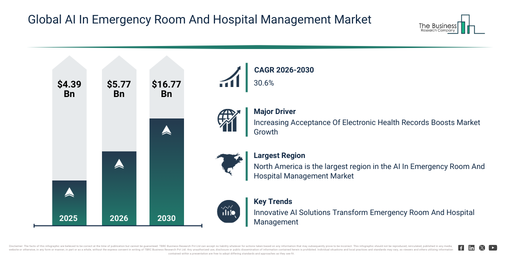
    The artificial intelligence market within emergency room and hospital management has experienced significant expansion, projected to climb from $4.39 billion in 2025 to $5.77 billion in 2026, reflecting a robust compound annual growth rate of 31.2%. This historical upswing is largely attributable to factors such as the initial limited integration of AI in healthcare settings, prevalent reliance on traditional manual hospital operational procedures, an escalating number of patients presenting at emergency rooms and hospitals, augmented investments in hospital information technology infrastructure, and the pioneering stages of employing machine learning for healthcare data analysis.

    Artificial intelligence within emergency departments and hospital administration is poised for remarkable expansion over the coming years, projecting a market value of $16.77 billion by 2030, fueled by a compound annual growth rate of 30.6%. This projected surge is largely attributable to the broader deployment of AI platforms and solutions tailored for the healthcare sector, a rising need for immediate patient data analysis, the increasing acceptance of AI-assisted decision-making tools, advancements in predictive and prescriptive analytical capabilities, and the seamless integration of AI with electronic health record systems. Key developments anticipated during this forecast period involve the incorporation of AI-powered patient monitoring systems, the application of predictive analytics to enhance emergency room operations, the utilization of AI to optimize hospital workflows, the embrace of context-aware computing for improved decision support, and the greater adoption of AI-driven applications aimed at boosting operational effectiveness.

    Download A Free Sample Report For Comprehensive Market Insights:

    https://www.thebusinessresearchcompany.com/sample.aspx?id=20708&type=smp

    AI In Emergency Room And Hospital Management Market Expansion Drivers: What Is Shaping Future Growth?

    The widespread adoption of digital patient records is poised to be a significant catalyst for the expansion of artificial intelligence within emergency room and hospital administration sectors. These electronic health records, essentially digitized patient charts, consolidate a patient’s complete medical history. The growing embrace of EHRs stems from their capacity to elevate patient care via readily accessible medical data, optimized operational processes, enhanced collaboration among medical professionals, and the valuable insights derived from data analysis for informed medical judgments. In the context of emergency departments and hospital oversight, AI enhances EHR functionality by simplifying data input, improving patient prioritization through predictive modeling, automating routine administrative duties, and offering support for clinical choices, ultimately resulting in quicker diagnoses and more individualized patient care strategies. For example, a report from the National Center for Health Statistics, a U.S. federal agency, indicated in April 2024 that 88.2% of physicians in private practice utilized an electronic health record system, with a substantial 77.8% employing a certified version. Consequently, the escalating utilization of electronic health records is expected to propel the growth of the AI market focused on emergency room and hospital management.

    AI In Emergency Room And Hospital Management Market Segmentation Trends And Revenue Drivers

    The ai in emergency room and hospital management market covered in this report is segmented –

    1) By Offering: Hardware, Software, Services

    2) By Technology: Machine Learning, Natural Language Processing, Context-Aware Computing, Computer Vision

    3) By End User: Hospitals and Emergency Departments, Ambulatory and Urgent Care Centers, Other End Users

    Subsegments:

    1) By Hardware: Graphics Processing Units, AI-Optimized Servers and Computing Systems, Medical-Grade Sensors and Monitoring Devices

    2) By Software: Ai Platforms, Ai-Powered Applications, Analytics Solutions, Workflow Management Solutions

    3) By Services: Implementation And Integration Services, Support And Maintenance Services, Training And Consulting Services

    AI In Emergency Room And Hospital Management Market Strategic Trends: What Is Defining The Next Phase Of Growth?

    Within the expansive landscape of the AI in emergency rooms and hospital management sector, key industry players are concentrating their efforts on refining patient throughput and streamlining operations through cutting-edge solutions like Gen AI-powered SaaS platforms, fundamentally driving digital evolution and empowering healthcare facilities to respond adeptly to changing demands and bolster overarching administrative control. These Generative AI-driven SaaS solutions represent sophisticated, cloud-hosted software applications that employ artificial intelligence to produce novel content, extract valuable intelligence, or automate processes, thereby elevating both strategic choices and day-to-day functional performance across a multitude of business domains. As a concrete illustration, in June of 2023, LeanTaaS, a prominent US-based supplier of SaaS services tailored for hospital operations, unveiled iQueue Autopilot, a generative AI instrument engineered to significantly improve patient transit and resource allocation. This innovative offering facilitates interactions akin to human communication, assisting in critical decision-making processes within both inpatient and outpatient environments. iQueue Autopilot deploys a trio of strategic approaches: Lean Forward, providing immediate suggestions; Lean Back, delivering preemptive notifications; and Moment in Time Problem Solving, addressing urgent risks as they arise. By merging sophisticated AI and machine learning capabilities with an extensive archive of hospital operational data, it delivers practical guidance, thereby equipping hospitals to maximize their resources and achieve superior patient care results.

    #AI In Emergency Room And Hospital Management Market Industry Leaders: Which Organizations Are Driving Competition?

    Major companies operating in the ai in emergency room and hospital management market are International Business Machines Corporation, Microsoft Corporation, Oracle Corporation, SAP SE, Salesforce Inc., Palantir Technologies, Accenture plc, Capgemini SE, Deloitte, PricewaterhouseCoopers, NVIDIA Corporation, Intel Corporation, Epic Systems, Koninklijke Philips N.V., Medtronic, Boston Scientific, Baxter International, Johnson & Johnson, Roche, Aidoc, Qure.ai, Health Catalyst, Dascena

    Access The Complete AI In Emergency Room And Hospital Management Market Report:

    https://www.thebusinessresearchcompany.com/report/ai-in-emergency-room-and-hospital-management-global-market-report

    AI In Emergency Room And Hospital Management Market Regional Analysis: Which Region Leads By Revenue?

    North Americawas the largest region in the AI in emergency room and hospital management market in 2025. The regions covered in the ai in emergency room and hospital management market report are Asia-Pacific, South East Asia, Western Europe, Eastern Europe, North America, South America, Middle East, Africa.

    Get in touch with us:

    The Business Research Company: https://www.thebusinessresearchcompany.com/

    Americas: +1 310-496-7795

    Asia: +44 7882 955267 & +91 8897263534

    Europe: +44 7882 955267

    Email us at: marketing@tbrc.info

    Follow us on:

    LinkedIn: https://in.linkedin.com/company/the-business-research-company

    YouTube: https://www.youtube.com/channel/UC24_fI0rV8cR5DxlCpgmyFQ

    Global Market Model: https://www.thebusinessresearchcompany.com/global-market-model
  • AI In Cancer Diagnostics Market Expected To Reach $1.97 Billion By 2030 As Growth Accelerates At 19.9% CAGR

    AI In Cancer Diagnostics Market Expected To Reach $1.97 Billion By 2030 As Growth Accelerates At 19.9% CAGR

    Delivering more actionable and strategically valuable research, The Business Research Company’s 2026 market reports feature market attractiveness analysis, total addressable market evaluation, company benchmarking matrices, interactive Excel dashboards, expanded supply chain intelligence, emerging startup coverage, and detailed product insights.

    AI In Cancer Diagnostics Market Growth From $0.95 Billion In 2026 To $1.97 Billion By 2030 At A CAGR Of 19.9%

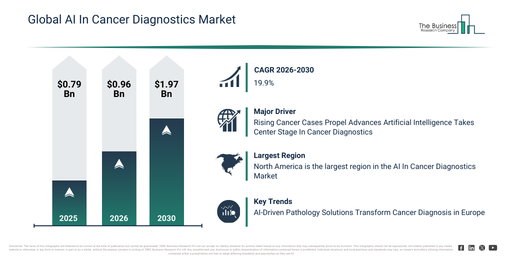
    The market for artificial intelligence in cancer diagnostics has experienced considerable expansion, projecting an increase from $0.79 billion in 2025 to $0.96 billion in 2026, reflecting a compound annual growth rate of 20.2%. This expansion during the historical period is supported by factors such as the gradually increasing integration of AI into initial diagnostic procedures, a continued dependence on established imaging methods, the escalating global incidence of cancer, a growing need for methods that facilitate early detection, and the proliferation of diagnostic facilities.

    The domain of artificial intelligence within cancer diagnostics is poised for substantial expansion over the coming years, with projections indicating a market valuation of $1.97 billion by 2030, driven by a compound annual growth rate of 19.9%. This projected increase is fueled by a confluence of factors, including the maturation of deep learning and machine learning techniques, the proliferation of AI-enhanced imaging solutions, the escalating incorporation of predictive analytics into healthcare practices, augmented investments in digital health innovations, and strengthened partnerships between AI creators and healthcare organizations. Key developments anticipated during this period encompass a broader embrace of AI-driven imaging and diagnostic instruments, the seamless integration of predictive analytics into cancer detection strategies, a heightened application of AI for pinpointing and categorizing tumors, the development of AI-powered systems for patient monitoring and post-treatment follow-up, and a continuous increase in cooperative efforts between healthcare facilities and providers of AI technologies.

    Download A Free Sample Report For Comprehensive Market Insights:

    https://www.thebusinessresearchcompany.com/sample.aspx?id=13567&type=smp

    AI In Cancer Diagnostics Market Development Factors: Which Trends Are Supporting Demand?

    The escalating incidence of cancer is poised to act as a significant impetus for the expansion of artificial intelligence within the cancer diagnostics sector in the foreseeable future. Cancer, characterized by the uncontrolled proliferation of aberrant cells that can infiltrate adjacent tissues or metastasize to distant sites, presents a formidable challenge. The incorporation of AI into cancer management strategies is designed to elevate operational effectiveness, diagnostic precision, and the tailoring of therapeutic interventions, thereby leading to superior results for individuals battling cancer. Illustratively, as reported in May 2024 by the National Cancer Institute, a governmental body within the United States, roughly 2 million new cancer diagnoses are anticipated in the U.S. during 2024, accompanied by an estimated 611,000 fatalities. Projections indicate a further surge, with global new cancer cases expected to reach 29.9 million by the year 2040, while cancer-attributable deaths are forecast to climb to 15.3 million. Consequently, the mounting burden of cancer cases worldwide is directly fueling the advancement and adoption of artificial intelligence in the field of cancer diagnostics.

    AI In Cancer Diagnostics Market Segment Analysis Highlighting Growth Areas

    The ai in cancer diagnostics market covered in this report is segmented –

    1) By Component: Software Solutions, Hardware, Services

    2) By Cancer Type: Breast Cancer, Lung Cancer, Brain Tumor, Skin Cancer And Cervical Cancer, Prostate And Colorectal Cancer, Other Cancer Types

    3) By Application: Screening And Diagnosis, Tumor Identification, Monitoring

    4) By End User: Hospitals, Diagnostic Centers, Medical Research Institutes

    Subsegments:

    1) By Software Solutions: Machine Learning Software, Deep Learning Software, Image Analysis Software

    2) By Hardware: AI-Powered Imaging Systems, Diagnostic Devices

    3) By Services: AI Integration Services, Consulting And Training Services, Support And Maintenance Services

    AI In Cancer Diagnostics Market Transformation Trends: Which Innovations Are Driving Change?

    The AI in cancer diagnostics market is witnessing substantial expansion, primarily driven by innovations in AI-driven digital pathology tools designed for identifying cancer. These sophisticated systems utilize artificial intelligence algorithms to meticulously examine various tissue samples, thereby enabling precise and prompt cancer detection, assisting in prioritizing patient cases, and ensuring consistent diagnostic outcomes. As an illustration of this progress, in November of 2023, Dedalus and Ibex Medical Analytics, a prominent European health software firm, unveiled a comprehensive, end-to-end AI-powered digital pathology solution for cancer diagnosis throughout Europe. The objectives of this newly introduced solution are to elevate diagnostic precision, furnish AI-driven tools to aid clinical decision-making, expedite the creation of reports, boost operational efficiency within laboratories, and foster greater certainty in diagnoses.

    AI In Cancer Diagnostics Market Leading Companies: Who Holds Significant Market Presence?

    Major companies operating in the ai in cancer diagnostics market are Microsoft Corporation, IBM Corporation, Verily Life Sciences LLC, Tempus Labs Inc, Guardant Health Inc, Lunit Inc, Paige AI Inc, Viz.ai Inc, Enlitic Inc, Ibex Medical Analytics Ltd, Kheiron Medical Technologies Limited, CureMetrix Inc, CancerIQ Inc, MultiplAI Health Inc, Freenome Holdings Inc, SkinVision B V, Owkin Inc, Imagen Technologies Inc, Cyrcadia Health Inc, Oncora Medical Inc, Xilis Inc

    Access The Complete AI In Cancer Diagnostics Market Report:

    https://www.thebusinessresearchcompany.com/report/ai-in-cancer-diagnostics-global-market-report

    AI In Cancer Diagnostics Market Geographic Distribution And Regional Opportunities

    North Americawas the largest region in the artificial intelligence in cancer diagnostics market in 2025. The regions covered in the ai in cancer diagnostics market report are Asia-Pacific, South East Asia, Western Europe, Eastern Europe, North America, South America, Middle East, Africa.

    Get in touch with us:

    The Business Research Company: https://www.thebusinessresearchcompany.com/

    Americas: +1 310-496-7795

    Asia: +44 7882 955267 & +91 8897263534

    Europe: +44 7882 955267

    Email us at: marketing@tbrc.info

    Follow us on:

    LinkedIn: https://in.linkedin.com/company/the-business-research-company

    YouTube: https://www.youtube.com/channel/UC24_fI0rV8cR5DxlCpgmyFQ

    Global Market Model: https://www.thebusinessresearchcompany.com/global-market-model
  • Age-Related Macular Degeneration Market Set To Grow From $11.46 Billion In 2026 To $15.42 Billion By 2030 At A CAGR Of 7.7%

    Age-Related Macular Degeneration Market Set To Grow From $11.46 Billion In 2026 To $15.42 Billion By 2030 At A CAGR Of 7.7%

    Enhanced with market attractiveness analysis, total addressable market evaluation, company benchmarking matrices, interactive Excel dashboards, expanded supply chain intelligence, emerging startup coverage, and detailed product insights, The Business Research Company’s 2026 market reports deliver more actionable and strategically valuable research.

    Age-Related Macular Degeneration Market Expansion Outlook: What Revenue Opportunities Lie Ahead?

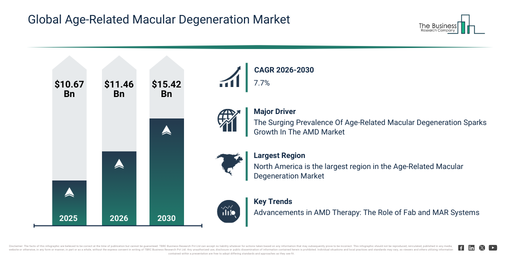
    The market for age-related macular degeneration has experienced robust expansion lately, with projections indicating continued growth from $10.67 billion in 2025 to $11.46 billion in 2026, reflecting a compound annual growth rate of 7.5%. Factors contributing to this historical upward trend include an aging global demographic, the increasing incidence of AMD, a scarcity of treatment alternatives in earlier times, heightened public consciousness regarding eye health, and the enhancement of healthcare facilities, specifically hospitals and ophthalmology clinics.

    The market for age-related macular degeneration is poised for substantial expansion in the coming years, projected to reach $15.42 billion by 2030, driven by a compound annual growth rate of 7.7%. This anticipated growth stems from advancements in next-generation anti-VEGF medications, increased investment in ophthalmology research, the proliferation of specialty and online pharmacies, the growing application of combination therapies, and a rising preference for personalized treatment strategies. Key developments anticipated during this forecast period encompass a greater uptake of anti-VEGF therapies, increased utilization of nutritional supplements and low vision aids, an uptick in photodynamic and laser therapy procedures, the broadening of intravitreal and intravenous administration methods, and a heightened emphasis on public awareness campaigns coupled with routine eye examinations.

    Download A Free Sample Report For Comprehensive Market Insights:

    https://www.thebusinessresearchcompany.com/sample.aspx?id=10845&type=smp

    Age-Related Macular Degeneration Market Industry Drivers: What Is Driving Revenue Growth?

    The increasing incidence of age-related macular degeneration (AMD) is anticipated to be a significant catalyst for the expansion of the AMD market in the coming years. AMD, a condition characterized by gradual deterioration of the macula, the central part of the retina crucial for sharp vision, impacts numerous individuals. Therapies for AMD aim to alleviate the suffering of those with retinal conditions by mitigating the adverse effects of the disease. Evidence from Optimaxa, a UK-based expert in laser eye treatments, indicated in February 2023 that approximately 196 million people worldwide were affected by AMD, with projections suggesting this number could climb to 288 million by 2040, representing 8.7% of the global populace. Consequently, the growing prevalence of AMD is directly fueling the growth of its market.

    Age-Related Macular Degeneration Market Segment Performance And Strategic Opportunities

    The age-related macular degeneration market covered in this report is segmented –

    1) By Type: Wet Age-Related Macular Degeneration (AMD), Dry Age-Related Macular Degeneration (AMD)

    2) By Drug: Eylea, Lucentis, Avastin, Other Drugs

    3) By Distribution Channel: Hospital Pharmacy, Specialty Pharmacy

    Subsegments:

    1) By Wet Age-Related Macular Degeneration (AMD): Anti-VEGF Injections, Photodynamic Therapy, Laser Surgery

    2) By Dry Age-Related Macular Degeneration (AMD): Nutritional Supplements, Low Vision Aids, Therapies For Geographic Atrophy

    #Age-Related Macular Degeneration Market Growth Trends: What Is Influencing The Future Outlook?

    Within the market for age-related macular degeneration (AMD), leading corporations are spearheading the development of pioneering solutions, including recombinant antigen-binding fragments. These engineered proteins, known as recombinant Fab fragments, originate from antibodies designed for precise antigen interaction and are frequently employed therapeutically to impede disease progression. Specifically, in December of 2023, Enzene Biosciences, a biotechnology firm situated in India, introduced ranibizumab. This ranibizumab is a recombinant monoclonal antibody fragment (Fab) meticulously crafted to neutralize vascular endothelial growth factor (VEGF), a critical protein implicated in the aberrant blood vessel formation characteristic of conditions like age-related macular degeneration (AMD) and diabetic macular edema (DME). Through the inhibition of VEGF, ranibizumab effectively mitigates the leakage and growth of these abnormal vessels, thereby safeguarding vision for individuals affected by these retinal afflictions. Administered via intravitreal injection, its effectiveness in managing a spectrum of retinal diseases has led to its broad adoption in clinical settings. The availability of ranibizumab represents a significant advancement in the therapeutic options for individuals confronting these severe visual impairments.

    Age-Related Macular Degeneration Market Key Players: Which Companies Shape Industry Competition?

    Major companies operating in the age-related macular degeneration market are F. Hoffmann-La Roche Ltd., Novartis AG, Bayer AG, Pfizer Inc., Bausch Health Companies Inc., Regeneron Pharmaceuticals Inc., Alimera Sciences Inc., Alkeus Pharmaceuticals Inc., Outlook Therapeutics Inc., Samsung Bioepis Co. Ltd., Biocon Ltd., Bio-Thera Biopharmaceutical Co. Ltd., Acucela Inc., Ophthotech Corporation, Kodiak Sciences Inc., REGENXBIO Inc., Alkahest Inc., Opthea Limited, Apellis Pharmaceuticals Inc., Graybug Vision Inc., IVERIC bio Inc., Santen Pharmaceutical Co. Ltd., Ocular Therapeutix Inc., Chengdu Kanghong Pharmaceutical Group Co. Ltd., pSivida Corp., Clearside Biomedical Inc., SciFluor Life Sciences LLC, Lineage Cell Therapeutics Inc.

    Access The Complete Age-Related Macular Degeneration Market Report:

    https://www.thebusinessresearchcompany.com/report/age-related-macular-degeneration-global-market-report

    Age-Related Macular Degeneration Market Largest Region By Revenue And Market Share

    North Americawas the largest region in the global age-related macular degeneration market in 2025.Asia-Pacificis expected to be the fastest-growing region in the forecast period. The regions covered in the age-related macular degeneration market report are Asia-Pacific, South East Asia, Western Europe, Eastern Europe, North America, South America, Middle East, Africa.

    Get in touch with us:

    The Business Research Company: https://www.thebusinessresearchcompany.com/

    Americas: +1 310-496-7795

    Asia: +44 7882 955267 & +91 8897263534

    Europe: +44 7882 955267

    Email us at: marketing@tbrc.info

    Follow us on:

    LinkedIn: https://in.linkedin.com/company/the-business-research-company

    YouTube: https://www.youtube.com/channel/UC24_fI0rV8cR5DxlCpgmyFQ

    Global Market Model: https://www.thebusinessresearchcompany.com/global-market-model
  • Age-Related Hearing Loss Market Opportunities Are Emerging Beyond Traditional Growth Areas

    Age-Related Hearing Loss Market Opportunities Are Emerging Beyond Traditional Growth Areas

    Through market attractiveness analysis, total addressable market evaluation, company benchmarking matrices, interactive Excel dashboards, expanded supply chain intelligence, emerging startup coverage, and detailed product insights, The Business Research Company’s 2026 market reports provide more actionable and strategically valuable research.

    Age-Related Hearing Loss Market Growth Potential: How Will Market Size Change Through 2030?

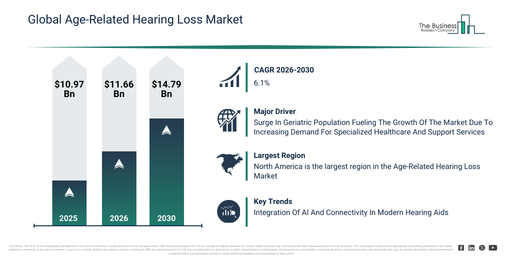
    The market for age-related hearing loss has seen vigorous expansion lately, with projections indicating a rise from $10.97 billion in 2025 to $11.66 billion in 2026, reflecting a compound annual growth rate of 6.3%. This upward trend throughout the historical period is largely attributable to factors such as diminished consciousness surrounding hearing impairment in the elderly population, the substantial expense associated with hearing aids, a scarcity of qualified audiologists, reliance on hospital channels for distribution, and a slower uptake of cochlear implant technology.

    Projections indicate a robust expansion for the age-related hearing loss market, anticipated to reach a value of $14.79 billion by 2030, exhibiting a compound annual growth rate of 6.1%. This anticipated growth trajectory is fueled by several key factors, including innovations in smart and AI-integrated hearing aids, a growing elderly demographic, escalating governmental support for hearing healthcare services, the burgeoning field of tele-audiology coupled with direct-to-consumer sales, and broadened insurance provisions for hearing solutions. Throughout this forecast period, significant trends will likely emerge, such as a heightened embrace of cutting-edge hearing aid technology, a growing inclination towards cochlear implants for individuals with profound hearing impairment, wider deployment of assistive listening devices in communal environments, a greater reliance on online platforms for hearing device procurement, and increased public consciousness and earlier detection of hearing deficits associated with aging.

    Download A Free Sample Report For Comprehensive Market Insights:

    https://www.thebusinessresearchcompany.com/sample.aspx?id=24136&type=smp

    #Age-Related Hearing Loss Market Growth Factors: Which Forces Are Supporting Market Expansion?

    A demographic shift towards an increasing number of elderly individuals is anticipated to be a significant catalyst for the expansion of the market focused on age-related hearing loss. This demographic, typically defined as those aged 65 and above, is expanding due to enhanced longevity, a consequence of medical advancements, superior living environments, and more effective chronic illness care, enabling a greater proportion of the populace to reach advanced years. The management of hearing impairments associated with aging is crucial for this demographic, emphasizing the necessity for tailored hearing devices, effective communication techniques, and dedicated medical support to foster elevated well-being and participation in social activities. For illustration, data from California Health Advocates, a non-profit entity in the United States, indicated that in 2022, individuals aged 65 and older constituted 17.3% of the total population, with projections suggesting this figure will climb to 22% by the year 2040. Consequently, the upward trend in the elderly population is a primary driver fueling the growth observed in the age-related hearing loss market.

    #Age-Related Hearing Loss Market Segment Landscape And Growth Potential

    The age-related hearing loss market covered in this report is segmented –

    1) By Product Type: Hearing Aids, Cochlear Implants, Assistive Listening Devices, Other Product Types

    2) By Distribution Channel: Hospitals, Audiology Clinics, Online Stores, Other Distribution Channel

    3) By End-User: Adults, Geriatric Population

    Subsegments:

    1) By Hearing Aids: Behind-the-Ear (BTE), In-the-Ear (ITE), Receiver-in-the-Ear (RITE), Completely-in-the-Canal (CIC), In-the-Canal (ITC), Invisible-in-the-Canal (IIC), Smart Hearing Aids

    2) By Cochlear Implants: Unilateral Cochlear Implants, Bilateral Cochlear Implants, Wireless Cochlear Implants, Hybrid Cochlear Implants

    3) By Assistive Listening Devices: FM Systems, Infrared Systems, Induction Loop Systems, Personal Amplifiers, TV Streamers and Amplifiers

    4) By Other Product Types: Bone Anchored Hearing Systems, Tinnitus Maskers

    Age-Related Hearing Loss Market Industry Trends: What Changes Are Reshaping Demand?

    Leading players within the market for age-related hearing loss are concentrating their efforts on pioneering cutting-edge innovations, including intelligent hearing devices equipped with AI-driven sound processing and Bluetooth capabilities. These advancements aim to elevate auditory function, diminish the strain associated with listening, and ultimately boost both the overall user experience and their quality of life. Hearing aids that incorporate AI-powered sound processing alongside Bluetooth connectivity possess the capacity to automatically adjust to diverse acoustic settings by fine-tuning audio in the moment, all while facilitating uninterrupted audio streaming and command over devices via smartphone integration. As an illustration, during August of 2024, Phonak, a company based in Switzerland specializing in hearing solutions, introduced the Audéo Sphere Infinio hearing aid. This groundbreaking device is notable for being the first globally to integrate a specialized real-time AI chip designed for separating speech from background noise. Its inclusion of this dedicated AI chip for speech-from-noise separation empowers users with dramatically clearer speech perception, even in loud settings, thereby elevating hearing efficacy and user contentment. The technology facilitates dynamic, immediate speech amplification originating from any direction, effectively confronting the foremost obstacle faced by individuals experiencing hearing impairment.

    Age-Related Hearing Loss Market Competitive Landscape: Who Are The Leading Companies?

    Major companies operating in the age-related hearing loss market are Sonova Holding AG, Bose Corporation, Demant A/S, Amplifon S.p.A., WS Audiology, Cochlear Limited, Starkey Hearing Technologies, MED-EL Elektromedizinische Geräte GmbH, Miracle-Ear Inc., Audina Hearing Instruments Inc., SeboTek Hearing Systems LLC, Sound World Solutions Inc., GN Hearing A/S, Audicus Inc., Lexie Hearing, Nuheara Limited, Audien Hearing, Orka Hearing, Envoy Medical Corporation, Nurotron Biotechnology Co. Ltd.

    Access The Complete Age-Related Hearing Loss Market Report:

    https://www.thebusinessresearchcompany.com/report/age-related-hearing-loss-global-market-report

    Age-Related Hearing Loss Market Regional Analysis And Leading Geography

    North Americawas the largest region in the age-related hearing loss market in 2025. Asia-Pacificis expected to be the fastest-growing region in the forecast period. The regions covered in the age-related hearing loss market report are Asia-Pacific, South East Asia, Western Europe, Eastern Europe, North America, South America, Middle East, Africa.

    Get in touch with us:

    The Business Research Company: https://www.thebusinessresearchcompany.com/

    Americas: +1 310-496-7795

    Asia: +44 7882 955267 & +91 8897263534

    Europe: +44 7882 955267

    Email us at: marketing@tbrc.info

    Follow us on:

    LinkedIn: https://in.linkedin.com/company/the-business-research-company

    YouTube: https://www.youtube.com/channel/UC24_fI0rV8cR5DxlCpgmyFQ

    Global Market Model: https://www.thebusinessresearchcompany.com/global-market-model