Month: June 2026

  • Hereditary Genetic Testing Market Forecast Reveals Where Future Industry Value Will Be Created

    Hereditary Genetic Testing Market Forecast Reveals Where Future Industry Value Will Be Created

    Enhanced with market attractiveness analysis, total addressable market evaluation, company benchmarking matrices, interactive Excel dashboards, expanded supply chain intelligence, emerging startup coverage, and detailed product insights, The Business Research Company’s 2026 market reports deliver more actionable and strategically valuable research.

    The hereditary genetic testing market has seen rapid development recently, driven by advances in technology and growing awareness of genetic disorders. With increasing acceptance of molecular diagnostics and expanding healthcare infrastructure, this sector is set for continued robust growth. Below, we explore the market’s current size, key growth drivers, segmentation, notable industry players, and regional dynamics shaping its future.

    Hereditary Genetic Testing Market Size and Projected Growth

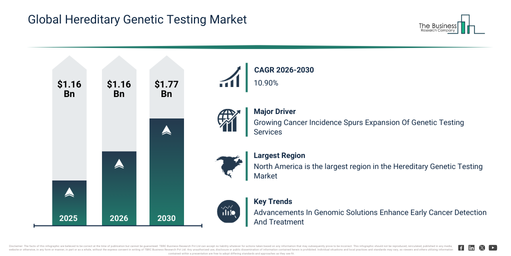
    The hereditary genetic testing market has experienced significant expansion, rising from $23.88 billion in 2025 to $26.56 billion in 2026 at a compound annual growth rate (CAGR) of 11.2%. This upward trend is largely the result of heightened incidence of hereditary diseases, broader clinical use of molecular diagnostic tools, growth in diagnostic labs, increased public awareness about genetic conditions, and improved accessibility of basic genetic testing technologies. Looking ahead, the market is anticipated to grow even faster, reaching $40.12 billion by 2030 with a CAGR of 10.9%. This forecasted surge will be supported by breakthroughs in next-generation sequencing, rising demand for personalized medicine, expansion of pharmacogenomics, growing healthcare investments in preventive care, and wider use of genetic counseling services. Key trends expected to influence this growth include the increasing use of preventive and predictive genetic testing, early cancer risk assessment, the rise of direct-to-consumer testing services, expanded prenatal and newborn screening, and greater recognition of inherited cardiovascular and rare disorders.

    Download A Free Sample Report For Comprehensive Market Insights:

    https://www.thebusinessresearchcompany.com/sample.aspx?id=20559&type=smp

    Factors Driving Growth in the Hereditary Genetic Testing Market

    One major factor boosting the hereditary genetic testing market is the rising prevalence of cancer, a group of diseases characterized by abnormal cell growth that can spread throughout the body. This rise is attributed to an aging population, lifestyle changes, environmental factors, genetic predispositions, and advancements in diagnostic methods. Hereditary genetic testing plays a crucial role in cancer prevention by detecting gene mutations linked to increased risk, which enables early monitoring and targeted prevention strategies. For instance, according to Macmillan Cancer Support in August 2024, over 3 million people in the UK are living with cancer in 2024, with projections estimating this will rise to 3.5 million by 2025, 4 million by 2030, and 5.3 million by 2040. This growing cancer burden is a key impetus for expanding hereditary genetic testing services.

    Segmentation Insights: Key Areas of Opportunity in the Hereditary Genetic Testing Market

    The hereditary genetic testing market is categorized into several segments based on various parameters. By type, it includes predictive and presymptomatic testing, carrier testing, prenatal and newborn testing, diagnostic testing, pharmacogenomic testing, and other types. Technologically, it is divided into cytogenetic testing, biochemical testing, and molecular testing. Clinical applications encompass cancer genetic testing, cardiovascular genetic testing, neurological genetic testing, and rare diseases genetic testing. The market also segments by end users into hospitals and clinics, diagnostic laboratories, research institutes, and direct-to-consumer genetic testing companies. Further subcategories detail various specialized testing services within these broader groups, such as genetic screening for inherited disorders, non-invasive prenatal testing, newborn screening, genetic testing for drug responses, and wellness or ancestry testing.

    Access The Complete Hereditary Genetic Testing Market Report:

    https://www.thebusinessresearchcompany.com/report/hereditary-genetic-testing-global-market-report

    How Innovation and Advanced Genomic Solutions Shape Market Competition

    Leading companies in the hereditary genetic testing market are concentrating on developing sophisticated genomic tools such as multi-cancer multigene panels to improve early detection and enable precision therapies. Multi-cancer multigene panels analyze numerous genes simultaneously to identify mutations linked with different cancer types, helping guide diagnosis and personalized treatment. For example, in February 2024, US-based Exact Sciences Corporation introduced the Riskguard hereditary cancer test. This test provides a personalized report on gene-specific and familial cancer risks for 10 common cancers using a simple blood or saliva sample. It assists in assessing cancer risk, facilitating screening and treatment decisions, and evaluating risks for family members, as well as supporting tailored treatment strategies for diagnosed patients.

    Major Market Players and Their Roles in the Hereditary Genetic Testing Sector

    Key participants shaping the hereditary genetic testing industry include well-established companies such as F. Hoffmann-La Roche Ltd., Abbott Laboratories, Laboratory Corporation of America Holdings, Quest Diagnostics Incorporated, Eurofins Scientific SE, Hologic Inc., Exact Sciences Corporation, Fulgent Genetics Inc., BioReference Laboratories Inc., BGI Group, Invitae Corporation, Color Health Inc., MedGenome Inc., Devyser AB, Mapmygenome India Ltd., Igenomix S.L.P., Myriad Genetics Inc., Natera Inc., Ambry Genetics Corporation, GeneDx LLC, Centogene N.V., CooperSurgical Inc., and Sema4. These firms are driving innovation and expanding access to hereditary genetic testing worldwide.

    Regional Analysis: North America Leads Hereditary Genetic Testing Market

    In 2025, North America held the largest share of the hereditary genetic testing market and is also predicted to be the fastest-growing region during the forecast period. The market report encompasses detailed analyses across various geographies including Asia-Pacific, South East Asia, Western Europe, Eastern Europe, North America, South America, the Middle East, and Africa, providing a comprehensive understanding of regional trends and growth prospects.

    Get in touch with us:

    The Business Research Company: https://www.thebusinessresearchcompany.com/

    Americas: +1 310-496-7795

    Asia: +44 7882 955267 & +91 8897263534

    Europe: +44 7882 955267

    Email us at: marketing@tbrc.info

    Follow us on:

    LinkedIn: https://in.linkedin.com/company/the-business-research-company

    YouTube: https://www.youtube.com/channel/UC24_fI0rV8cR5DxlCpgmyFQ

    Global Market Model: https://www.thebusinessresearchcompany.com/global-market-model
  • Hepato-Pancreatico-Biliary (HPB) Surgeries Surgical Devices Market Growth Through 2030 Creates New Strategic Opportunities

    Hepato-Pancreatico-Biliary (HPB) Surgeries Surgical Devices Market Growth Through 2030 Creates New Strategic Opportunities

    Through market attractiveness analysis, total addressable market evaluation, company benchmarking matrices, interactive Excel dashboards, expanded supply chain intelligence, emerging startup coverage, and detailed product insights, The Business Research Company’s 2026 market reports provide more actionable and strategically valuable research.

    The hepato-pancreatico-biliary (HPB) surgeries surgical devices market has witnessed substantial growth recently, driven by advances in medical technology and increasing cases of related diseases. This sector is poised for continued expansion as innovations in surgical techniques and devices meet the needs of healthcare providers worldwide. This overview explores the current market size, growth drivers, key segments, emerging trends, leading companies, and regional developments shaping the future of the HPB surgical devices market.

    Strong Growth Trajectory in the Hepato-Pancreatico-Biliary Surgeries Surgical Devices Market

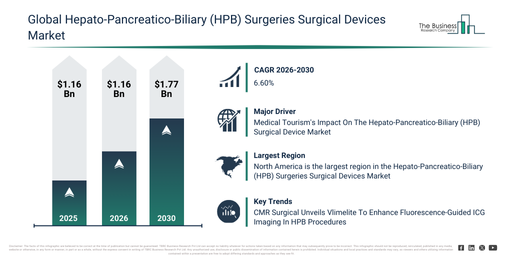
    The HPB surgeries surgical devices market has experienced robust growth and is projected to increase from $5.62 billion in 2025 to $5.99 billion in 2026, registering a compound annual growth rate (CAGR) of 6.6%. The market’s historical growth has been fueled by rising incidences of liver and pancreatic diseases, the expansion of specialized surgical centers, increased use of laparoscopic techniques, availability of advanced surgical instruments, and enhanced surgeon training and expertise. Looking ahead, this market is expected to reach $7.73 billion by 2030, maintaining the same CAGR of 6.6%. Factors contributing to this growth include growing demand for robotic-assisted surgeries, investments in high-definition visualization technologies, a rise in minimally invasive oncology procedures, focus on precision and patient safety during complex operations, and the adoption of integrated surgical platforms.

    Download A Free Sample Report For Comprehensive Market Insights:

    https://www.thebusinessresearchcompany.com/sample.aspx?id=13856&type=smp

    Key Factors Supporting the Expansion of the HPB Surgical Devices Market

    An important factor propelling market growth is the surge in medical tourism, where patients travel internationally seeking high-quality, advanced medical care combined with shorter wait times. This trend is particularly pronounced in HPB surgeries, where minimally invasive and precise surgical interventions are highly valued. Specialized healthcare centers offering state-of-the-art HPB surgical devices are attracting patients worldwide, increasing demand in this sector. For example, the Centers for Medicare and Medicaid Services reported that U.S. healthcare spending rose by 4.1% in 2023, reaching $4.5 trillion, with hospital care services alone increasing by 2.2% to $1.4 trillion, demonstrating the rising demand for advanced surgical care.

    Growing Demand for Medical Tourism is Driving Market Expansion

    With more patients seeking cost-effective and specialized treatments abroad, the HPB surgical devices market benefits from this global shift. These devices facilitate accurate, minimally invasive procedures related to liver, pancreas, and bile duct conditions, making them an essential element in meeting the needs of medical tourists.

    Access The Complete Hepato-Pancreatico-Biliary (HPB) Surgeries Surgical Devices Market Report:

    https://www.thebusinessresearchcompany.com/report/hepato-pancreatico-biliary-hpb-surgeries-surgical-devices-global-market-report

    Comprehensive Market Segmentation in HPB Surgical Devices

    This market is categorized by product, indication, and end user. Product segments include electrosurgery instruments, endoscopes, hand instruments, access instruments, stents, energy and vessel sealing devices, visualization and robotic surgical systems, surgical sutures and staplers, and fluid management systems. Indications cover liver cancer, pancreatic cancer, gallstones, bile duct cancer, cirrhosis, pancreatitis, and cholecystitis. End users comprise hospitals, specialty clinics, trauma centers, and ambulatory surgical centers. Further subcategories detail specific instrument types such as monopolar and bipolar electrosurgical devices, rigid and flexible endoscopes, scissors and forceps, trocar and cannula systems, biliary and pancreatic stents, ultrasonic and radiofrequency devices, robotic surgical platforms, absorbable and non-absorbable sutures, and fluid warming and suction systems.

    Innovative Technologies Shaping the Future of the HPB Surgical Devices Market

    Leading companies are emphasizing technological advancements, particularly the integration of fluorescence-guided Indocyanine Green (ICG) imaging. This technology enhances intraoperative precision by providing real-time visualization of tissue perfusion, vascular structures, and biliary anatomy. Using near-infrared imaging, surgeons can see beyond the visible spectrum to identify critical HPB structures more clearly during minimally invasive procedures. For instance, in February 2024, CMR Surgical launched the vLimeLite fluorescence imaging system integrated with its Versius Plus robotic platform. This system offers flexible viewing modes and customizable ICG color options, improving surgeons’ ability to assess blood flow and tissue integrity during complex HPB surgeries.

    Top Market Players Driving Innovation and Competition

    The competitive landscape of the HPB surgical devices market includes major companies such as Johnson & Johnson Services Ltd., Medtronic Plc, KARL STORZ SE & Co. KG, FUJIFILM Holdings Corporation, BD CooperSurgical Inc., Stryker Corporation, Boston Scientific Corporation, B. Braun Melsungen AG, Olympus Corporation, Terumo Corporation, Smith & Nephew plc, W.L. Gore & Associates Inc., Cook Medical Inc., CONMED Corporation, Richard Wolf GmbH, CooperSurgical Inc., Medi-Globe GmbH, Thompson Surgical Instruments Inc., Lotus Surgicals Pvt. Ltd., Hobbs Medical Inc., and Medorah Meditek Pvt. Ltd. These companies focus on product innovation, expanding surgical capabilities, and addressing diverse clinical needs.

    Regional Market Leadership and Growth Patterns

    In 2025, North America held the largest share of the HPB surgical devices market. However, the Asia-Pacific region is predicted to experience the fastest growth during the forecast period. The report covers key geographic areas including Asia-Pacific, South East Asia, Western Europe, Eastern Europe, North America, South America, the Middle East, and Africa, providing a thorough analysis of regional developments and market potential.

    Get in touch with us:

    The Business Research Company: https://www.thebusinessresearchcompany.com/

    Americas: +1 310-496-7795

    Asia: +44 7882 955267 & +91 8897263534

    Europe: +44 7882 955267

    Email us at: marketing@tbrc.info

    Follow us on:

    LinkedIn: https://in.linkedin.com/company/the-business-research-company

    YouTube: https://www.youtube.com/channel/UC24_fI0rV8cR5DxlCpgmyFQ

    Global Market Model: https://www.thebusinessresearchcompany.com/global-market-model
  • Hemostats And Tissue Sealants Market Size Projected To Increase From $4.64 Billion To $5.97 Billion During The Forecast Period

    Hemostats And Tissue Sealants Market Size Projected To Increase From $4.64 Billion To $5.97 Billion During The Forecast Period

    Delivering more actionable and strategically valuable research, The Business Research Company’s 2026 market reports feature market attractiveness analysis, total addressable market evaluation, company benchmarking matrices, interactive Excel dashboards, expanded supply chain intelligence, emerging startup coverage, and detailed product insights.

    The market for hemostats and tissue sealants has shown impressive growth over recent years, reflecting an increasing demand driven by advancements in surgical techniques and healthcare infrastructure. This overview explores the current market size, growth drivers, key segments, innovation trends, leading players, and regional dynamics shaping the future of this critical medical sector.

    Hemostats and Tissue Sealants Market Size and Projected Growth

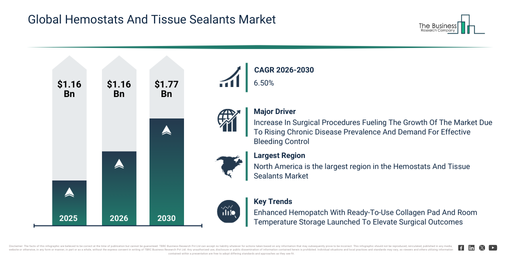
    The hemostats and tissue sealants market has expanded significantly, with its value expected to rise from $4.35 billion in 2025 to $4.64 billion in 2026, marking a compound annual growth rate (CAGR) of 6.7%. This expansion during the historical period stems from a heavy reliance on traditional mechanical hemostats, limited synthetic sealant options, increasing surgical volumes, enhanced hospital infrastructure, and early adoption of fibrin-based sealants. Looking ahead, the market is forecast to grow further, reaching $5.97 billion by 2030 with a CAGR of 6.5%. Driving this future growth are innovations in next-generation tissue adhesives, a rise in minimally invasive and cardiovascular surgeries, expanded research in hemostasis technologies, and broader distribution channels, including direct and online sales. Key market trends include increased use of synthetic and combination sealants, growth in cardiovascular and trauma surgeries, emphasis on faster recovery techniques, and greater research applications in hemostasis.

    Download A Free Sample Report For Comprehensive Market Insights:

    https://www.thebusinessresearchcompany.com/sample.aspx?id=25781&type=smp

    Primary Factors Boosting Hemostats and Tissue Sealants Market Expansion

    A major contributor to the market’s growth is the rising volume of surgical procedures worldwide. These surgeries—encompassing manual and instrumental techniques performed to diagnose, treat, or repair organs and tissues—are becoming more frequent due to the growing prevalence of chronic diseases that often require surgical intervention for effective management. Hemostats and tissue sealants play a crucial role in such procedures by controlling bleeding and sealing tissues, thereby reducing complications and improving outcomes. For instance, according to the International Society of Aesthetic Plastic Surgery (ISAPS), June 2024 data revealed a 5.5% increase in surgical procedures in 2023, with over 15.8 million surgeries and 19.1 million non-surgical treatments performed globally. This trend clearly supports the expanding demand within the hemostats and tissue sealants market.

    Emerging Developments in Surgical Techniques That Propel Market Demand

    The surge in minimally invasive surgeries is another important market driver. These procedures offer faster recovery and fewer complications, creating a higher need for advanced hemostatic and sealing products. Additionally, the rise in cardiovascular and trauma surgeries further fuels the demand for effective hemostats and tissue sealants, as these interventions require precise bleeding control and tissue sealing to ensure patient safety and surgical success.

    Access The Complete Hemostats And Tissue Sealants Market Report:

    https://www.thebusinessresearchcompany.com/report/hemostats-and-tissue-sealants-global-market-report

    Hemostats and Tissue Sealants Market: Breakdown of Leading Product and Application Segments

    This market is segmented across several categories to address diverse clinical needs:

    1) By Product Type: Topical Hemostats, Adhesives and Tissue Sealants, Fibrin Sealants, and Other Products

    2) By Composition: Biological-Based, Synthetic-Based, and Combination Types

    3) By Distribution Channel: Direct Sales, Distributors, and Online Sales

    4) By Application: Surgical Procedures, Trauma Cases, Cardiovascular Surgery, General Surgery, and Others

    5) By End-User: Hospitals, Ambulatory Surgical Centers (ASCs), Specialized Clinics, and Research & Academic Institutes

    Further subdivisions include:

    – Topical Hemostats: Mechanical, Active, Flowable, and Combination Hemostats

    – Adhesives and Tissue Sealants: Synthetic, Biological, and Cyanoacrylate-Based Adhesives

    – Fibrin Sealants: Liquid and Patch-Based Types

    – Other Products: Gelatin-Based, Collagen-Based, and Oxidized Regenerated Cellulose-Based Hemostats

    Innovation Trends Advancing the Hemostats and Tissue Sealants Market

    Key players in the market are focusing on introducing cutting-edge products to enhance surgical efficiency and patient outcomes. A notable innovation is the development of ready-to-use absorbable collagen pads that facilitate quick application without preparation. These pads are bioactive and resorbable, offering effective tissue sealing and hemostasis. For example, in April 2025, Baxter International Inc. launched the Hemopatch Sealing Hemostat at a surgical symposium in Austria. This product stands out for its room temperature storage capabilities and immediate usability without pre-warming, making it suitable for both open and minimally invasive surgeries. Features such as strong adhesive properties, extended shelf life, and rapid hemostatic effect allow surgeons to better manage bleeding and leakage, improving precision and accelerating patient recovery.

    Key Market Players and Their Strategic Roles in the Hemostats and Tissue Sealants Sector

    The competitive landscape of the hemostats and tissue sealants market includes influential companies such as Johnson & Johnson, Medtronic plc, Becton Dickinson and Company (BD), Stryker Corporation, Baxter International Inc., Meril Life Sciences Pvt. Ltd., Teleflex Incorporated, Integra LifeSciences Holdings Corporation, Corza Medical Inc., Artivion Inc., Ethicon Inc., Advanced Medical Solutions Group plc, Marine Polymer Technologies Inc., Samyang Holdings Corporation, 3-D Matrix Medical Technology Co Ltd., GELITA AG, BioCer Entwicklungs-GmbH, AEGIS Lifesciences Pvt. Ltd., Betatech Medical Ltd., and Cohera Medical Inc., among others. These organizations are continuously innovating and expanding their product portfolios to maintain a leading edge in this dynamic healthcare market.

    Regional Perspective on Hemostats and Tissue Sealants Market Growth

    In 2025, North America held the largest share of the hemostats and tissue sealants market, driven by advanced healthcare infrastructure and high surgical procedure volumes. The market analysis also encompasses key regions such as Asia-Pacific, South East Asia, Western Europe, Eastern Europe, South America, the Middle East, and Africa, highlighting diverse growth opportunities and regional demand variations. The Asia-Pacific region, in particular, is expected to demonstrate notable growth potential in the coming years due to increasing healthcare investments and rising surgical rates.

    Get in touch with us:

    The Business Research Company: https://www.thebusinessresearchcompany.com/

    Americas: +1 310-496-7795

    Asia: +44 7882 955267 & +91 8897263534

    Europe: +44 7882 955267

    Email us at: marketing@tbrc.info

    Follow us on:

    LinkedIn: https://in.linkedin.com/company/the-business-research-company

    YouTube: https://www.youtube.com/channel/UC24_fI0rV8cR5DxlCpgmyFQ

    Global Market Model: https://www.thebusinessresearchcompany.com/global-market-model
  • Hemostats Market Growth Outlook Reveals A CAGR Of 7.2% And A Market Value Of $5.01 Billion By 2030

    Hemostats Market Growth Outlook Reveals A CAGR Of 7.2% And A Market Value Of $5.01 Billion By 2030

    Enhanced with market attractiveness analysis, total addressable market evaluation, company benchmarking matrices, interactive Excel dashboards, expanded supply chain intelligence, emerging startup coverage, and detailed product insights, The Business Research Company’s 2026 market reports deliver more actionable and strategically valuable research.

    The hemostats market is experiencing robust growth, driven by expanding surgical procedures and advancements in medical technology. As healthcare systems continue to develop, the demand for effective blood loss control tools is rising steadily. This overview explores the current market size, key growth drivers, emerging trends, leading companies, and regional dynamics shaping the future of the hemostats industry.

    Hemostats Market Size and Expected Growth Through 2030

    The hemostats market has witnessed significant expansion in recent years, with its value projected to rise from $3.56 billion in 2025 to $3.8 billion in 2026, reflecting a healthy compound annual growth rate (CAGR) of 6.7%. This growth owes much to the increasing number of surgical operations, improvements in hospital surgical infrastructure, advancements in biomaterial technologies, and the growing need for efficient blood management techniques during surgery. Additionally, the adoption of minimally invasive surgical approaches is further contributing to market expansion.

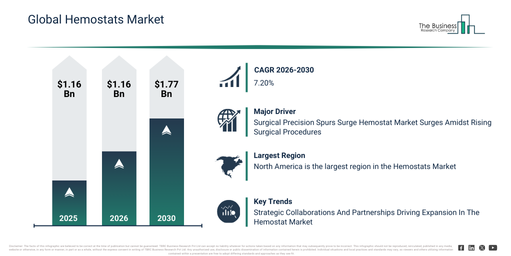
    Looking ahead, the market is forecasted to reach $5.02 billion by 2030, maintaining an even stronger CAGR of 7.2%. Factors propelling this future growth include heightened emphasis on patient safety, increased demand for faster recovery post-surgery, the growth of specialized trauma care centers, ongoing innovations in bioactive hemostatic materials, and the rising use of specialized surgical products. Key trends set to influence the market encompass greater utilization of advanced combination hemostats, growing preference for ready-to-use hemostatic agents, demand for faster bleeding control solutions, expansion of biocompatible and absorbable materials, and a sharpened focus on surgical safety and efficiency.

    Download A Free Sample Report For Comprehensive Market Insights:

    https://www.thebusinessresearchcompany.com/sample.aspx?id=8226&type=smp

    Increasing Volume of Surgical Procedures Promotes Hemostats Market Expansion

    The continued rise in surgical interventions plays a vital role in driving the demand for hemostats. Surgical procedures broadly include all invasive treatments performed to diagnose or address medical conditions. Hemostats are indispensable in these operations, as they help control blood loss and maintain a clear surgical field.

    For instance, data released in June 2024 by the American Society of Plastic Surgeons highlights a 7% increase in minimally invasive procedures in 2023, surpassing the overall growth rate of surgical interventions by 2%. Hand surgeries addressing conditions like carpal tunnel syndrome, arthritis, and trigger finger reached 207,887 procedures—a 2% rise compared to 2022. This upward trend in surgical volume directly stimulates demand for effective hemostatic devices.

    Rising Trauma Cases Due to Road Accidents Fuel Hemostats Market Growth

    Another significant factor propelling the hemostats market is the escalating number of trauma cases, particularly those resulting from road traffic accidents. Trauma refers to injuries caused by external forces that require immediate medical attention and intervention.

    The increase in traffic density and unsafe driving behaviors contribute to more severe injuries, which necessitate rapid bleeding control to stabilize patients. Hemostats are critical in these emergency scenarios, enabling clinicians to quickly manage blood loss and improve survival rates. For example, statistics from October 2024, provided by the Alaska Department of Health, reveal that in 2023 approximately 3,373 individuals in Alaska suffered traumatic brain injuries, including both fatal and non-fatal cases treated in hospitals or emergency departments. Such data underscores how rising trauma incidents are boosting hemostats market demand.

    Access The Complete Hemostats Market Report:

    https://www.thebusinessresearchcompany.com/report/hemostats-global-market-report

    Detailed Segmentation Offers Insight Into the Hemostats Market Structure

    This report segments the hemostats market comprehensively as follows:

    By Composition: Thrombin-Based Hemostats, Oxidized Regenerated Cellulose-Based Hemostats, Combination Hemostats, Gelatin-Based Hemostats, Collagen-Based Hemostats

    By Product Type: Active Hemostats, Passive Hemostats, Combination Hemostats, Other Related Products

    By Formulation: Matrix and Gel Hemostats, Sheet and Pad Hemostats, Sponge Hemostats, Powder Hemostats

    By Application Area: Orthopedic Surgery, General Surgery, Neurological Surgery, Cardiovascular Surgery, Reconstructive Surgery, Gynecological Surgery, and Other Applications

    Further subcategories include topical and lyophilized thrombin within thrombin-based hemostats; pads and granules among oxidized regenerated cellulose varieties; thrombin combined with gelatin or collagen for combination types; gel foam and gelatin sponge for gelatin-based products; and collagen sheets and powders under collagen-based hemostats.

    Collaborations and Partnerships Driving Innovation in the Hemostats Market

    Leading players in the hemostats industry are increasingly forming strategic alliances and partnerships with startups and mid-sized companies to diversify their product ranges and strengthen their market presence. Such collaborations enable companies to expand geographically and introduce innovative solutions faster.

    For example, in May 2023, Olympus, a Japan-based manufacturer specializing in optics and reprography, extended its partnership with US-based medical device company Endoclot to launch new hemostatic agents. This collaboration is geared toward improving patient outcomes during gastrointestinal procedures, raising the overall standard of care through safer treatment options.

    Top Companies Shaping the Hemostats Market Landscape

    The hemostats market is dominated by several prominent firms, including B. Braun Melsungen AG, Baxter International Inc., Integra LifeSciences Corporation, Becton Dickinson and Company, Teleflex Incorporated, Medtronic PLC, Hemostasis LLC, Stryker Corporation, Advanced Medical Solutions Group PLC, Samyang Holdings Corporation, Gelita Medical GmbH, CryoLife Inc., CuraMedical B.V., Meril Life Sciences Pvt. Ltd., Beijing Datsing Bio-Tech Co. Ltd., Zhonghui Shengxi (Beijing) Medical Technology Co. Ltd., Biotemed Inc., Biom’up SA, Shandong Foryou Medical Devices Co. Ltd., Z-Medica LLC, and Anika Therapeutics Inc. These companies collectively drive technological advances and market expansion worldwide.

    Regional Market Insights Highlighting Hemostats Industry Growth

    In 2025, North America accounted for the largest share of the hemostats market, supported by strong healthcare infrastructure and technological advancement. Meanwhile, the Asia-Pacific region is poised to emerge as the fastest-growing market throughout the forecast period, driven by increasing healthcare investments and rising surgical volumes. The analysis covers key geographies such as Asia-Pacific, South East Asia, Western Europe, Eastern Europe, North America, South America, the Middle East, and Africa to provide a global perspective on market trends and opportunities.

    Get in touch with us:

    The Business Research Company: https://www.thebusinessresearchcompany.com/

    Americas: +1 310-496-7795

    Asia: +44 7882 955267 & +91 8897263534

    Europe: +44 7882 955267

    Email us at: marketing@tbrc.info

    Follow us on:

    LinkedIn: https://in.linkedin.com/company/the-business-research-company

    YouTube: https://www.youtube.com/channel/UC24_fI0rV8cR5DxlCpgmyFQ

    Global Market Model: https://www.thebusinessresearchcompany.com/global-market-model
  • Hemostatic Agents Market Forecast Highlights Expansion From $4.66 Billion To $5.71 Billion Through 2030

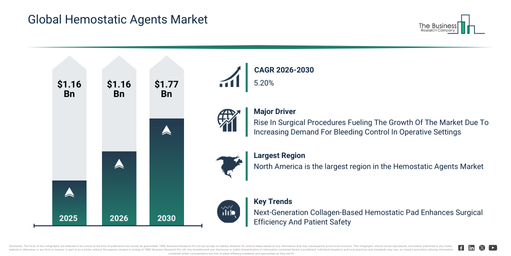
    Hemostatic Agents Market Forecast Highlights Expansion From $4.66 Billion To $5.71 Billion Through 2030

    Through market attractiveness analysis, total addressable market evaluation, company benchmarking matrices, interactive Excel dashboards, expanded supply chain intelligence, emerging startup coverage, and detailed product insights, The Business Research Company’s 2026 market reports provide more actionable and strategically valuable research.

    The market for hemostatic agents has witnessed significant growth recently, driven by evolving medical needs and advancements in surgical techniques. With increasing surgical procedures and rising demand for innovative products, this sector is positioned for continued expansion. Below, we explore the current market size, key growth drivers, segmentation, strategic developments, and regional outlook for hemostatic agents.

    Hemostatic Agents Market Size Projections and Growth Potential

    The hemostatic agents market has experienced robust growth over recent years. It is projected to rise from $4.42 billion in 2025 to $4.66 billion in 2026, growing at a compound annual growth rate (CAGR) of 5.4%. This historical growth is largely due to the limited variety of hemostatic agents available, dependence on traditional thrombin and gelatin products, an increasing volume of surgical procedures, expansion in hospital infrastructure, and heightened awareness regarding the management of blood loss.

    Download A Free Sample Report For Comprehensive Market Insights:

    https://www.thebusinessresearchcompany.com/sample.aspx?id=25780&type=smp

    Looking ahead, the market is forecasted to continue its upward trajectory, reaching $5.71 billion by 2030 with a CAGR of 5.2%. The anticipated growth is driven by innovations such as recombinant and sprayable fibrin sealants, a surge in minimally invasive and orthopedic surgeries, greater demand for combination and multi-agent hemostats, and increased use in plastic and neurosurgical procedures. The market will also be influenced by stricter regulatory requirements focused on sterility and biocompatibility. Key trends expected to shape the market include rising adoption of advanced hemostatic agents during surgeries, growth in fibrin sealants and biologically sourced products, expanded use in trauma and cardiovascular surgeries, and a stronger emphasis on safety and regulatory compliance.

    Growing Number of Surgeries Boosting Hemostatic Agents Demand

    One of the primary factors propelling the hemostatic agents market is the rising volume of surgical procedures worldwide. Surgical operations, which involve specialized techniques to treat, repair, or remove bodily tissues, are increasingly performed to address a growing number of chronic health conditions. These procedures often require effective blood loss control, and hemostatic agents play a crucial role in quickly stopping bleeding, reducing blood loss, and improving surgical visibility for precise interventions.

    Access The Complete Hemostatic Agents Market Report:

    https://www.thebusinessresearchcompany.com/report/hemostatic-agents-global-market-report

    Supporting this trend, data from the UK Health Security Agency (UKHSA) revealed that during the 2023–24 period, there were 135,619 recorded operations with 1,276 surgical site infections identified, marking an 8.4% increase in reported procedures compared to the prior year. This rise in surgeries directly contributes to greater demand for hemostatic agents.

    Detailed Segmentation of the Hemostatic Agents Market

    The market for hemostatic agents is categorized based on type, application, and end-user:

    By Type:

    – Thrombin-Based Hemostats

    – Gelatin-Based Hemostats

    – Collagen-Based Hemostats

    – Oxidized Regenerated Cellulose-Based Hemostats

    – Combination Hemostats

    – Fibrin Sealants

    – Other Types

    By Application:

    – Trauma

    – Cardiovascular Surgery

    – General Surgery

    – Plastic Surgery

    – Orthopedic Surgery

    – Neurosurgery

    – Other Applications

    By End-User:

    – Hospitals

    – Surgery Centers

    – Nursing Homes

    – Other End Users

    Further subcategories include thrombin-based products like bovine and human thrombin, gelatin-based forms such as absorbable sponges and powders, collagen sponges and sheets, oxidized cellulose pads and meshes, combination agents merging various bases, fibrin sealants including recombinant and sprayable types, and other varieties such as polysaccharide- and synthetic polymer-based hemostats.

    Advances in Hemostatic Technology Guiding Market Evolution

    Key players in the hemostatic agents industry are concentrating on innovating more efficient products, especially collagen-based hemostats that enable rapid hemostasis and tissue sealing in both open and minimally invasive surgeries. These collagen-based materials work by supporting the body’s natural clotting response at wound sites.

    For example, in March 2025, Baxter introduced HEMOPATCH Sealing Hemostat, a collagen-based absorbable pad featuring a dual-action system combining a collagen matrix with an NHS-PEG layer that forms a hydrogel upon contact with moisture. This design allows for fast sealing of bleeding areas, strong adhesion to wet tissues, and suitability for diverse surgical approaches. The patch achieves hemostasis in under two minutes without requiring cold storage or special preparation, simplifying surgical workflows. It also biodegrades naturally within 6 to 8 weeks and can be stored at room temperature for up to three years, fulfilling key clinical and logistical needs.

    Prominent Companies Shaping the Hemostatic Agents Industry

    The competitive landscape of the hemostatic agents market includes several leading corporations such as Pfizer Inc., Johnson & Johnson Services Inc., Becton Dickinson & Co., CSL Ltd., Baxter International Inc., Teleflex Inc., Integra LifeSciences Holdings Corp., Gelita Medical, Artivion Inc., B. Braun Melsungen AG, Advanced Medical Solutions Group Plc, Z‑Medica, Marine Polymer Technologies Inc., MedTrade Products Ltd., Samyang Holdings Corp., Vascular Solutions Pc, BioCer Entwicklungs GmbH, Starch Medical Inc., Arch Therapeutics Inc., Medcura Inc., and Biom’Up SAS.

    Regional Perspective and Market Share Insights

    In 2025, North America held the largest share of the hemostatic agents market. The market report further analyzes regions including Asia-Pacific, South East Asia, Western Europe, Eastern Europe, South America, the Middle East, and Africa, providing a comprehensive view of geographic trends and growth opportunities worldwide.

    Get in touch with us:

    The Business Research Company: https://www.thebusinessresearchcompany.com/

    Americas: +1 310-496-7795

    Asia: +44 7882 955267 & +91 8897263534

    Europe: +44 7882 955267

    Email us at: marketing@tbrc.info

    Follow us on:

    LinkedIn: https://in.linkedin.com/company/the-business-research-company

    YouTube: https://www.youtube.com/channel/UC24_fI0rV8cR5DxlCpgmyFQ

    Global Market Model: https://www.thebusinessresearchcompany.com/global-market-model
  • Hemostasis Products Market Expected To Reach $2.52 Billion By 2030 As Growth Accelerates At 7.2% CAGR

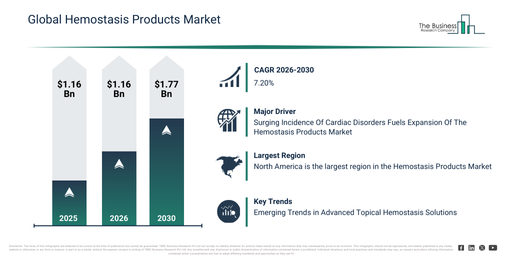
    Hemostasis Products Market Expected To Reach $2.52 Billion By 2030 As Growth Accelerates At 7.2% CAGR

    Delivering more actionable and strategically valuable research, The Business Research Company’s 2026 market reports feature market attractiveness analysis, total addressable market evaluation, company benchmarking matrices, interactive Excel dashboards, expanded supply chain intelligence, emerging startup coverage, and detailed product insights.

    The hemostasis products market has been experiencing noteworthy expansion, driven by a combination of rising healthcare needs and technological advancements. As surgical procedures become more common and trauma cases increase globally, the demand for effective bleeding control solutions continues to grow. This overview explores the market size, key growth drivers, segment breakdowns, innovations, leading companies, and regional trends shaping the future of this industry.

    Current Market Size and Projected Growth of the Hemostasis Products Market

    The market for hemostasis products is on a steady upward trajectory. It is expected to increase from $1.8 billion in 2025 to $1.91 billion in 2026, reflecting a compound annual growth rate (CAGR) of 6.1%. This historical growth has been fueled by a rise in the number of surgical interventions, more trauma incidents, the prevalence of bleeding disorders, expansion in hospital surgical capacities, and the availability of a variety of hemostatic products. Looking ahead, the market is poised to reach $2.52 billion by 2030, with a CAGR of 7.2%, supported by greater adoption of advanced synthetic and biological hemostatic agents, a shift towards minimally invasive surgeries, growth in trauma care infrastructure, increased emphasis on faster wound healing, and innovations in clotting technologies.

    Download A Free Sample Report For Comprehensive Market Insights:

    https://www.thebusinessresearchcompany.com/sample.aspx?id=13244&type=smp

    Key Factors Propelling the Hemostasis Products Market Growth

    One of the primary elements driving market expansion is the growing prevalence of cardiac disorders. These conditions, affecting the heart and blood vessels, often require effective bleeding management during treatment, which relies heavily on hemostasis products. By minimizing blood loss, these products help reduce the necessity for blood transfusions and lower the risk of complications in patients with cardiac issues.

    For instance, data from January 2024 by the American Heart Association highlights an increase in the age-adjusted death rate from cardiovascular disease in the US, rising to 233.3 per 100,000—a 4.0% increase from the previous year’s 224.4 per 100,000. This trend underscores the increasing demand for effective hemostasis solutions in cardiac care, thereby contributing to market growth.

    Segment Overview of the Hemostasis Products Market Highlighting Growth Areas

    The hemostasis products market is categorized into three main segments by product type: topical hemostasis products, infusible hemostasis products, and advanced hemostasis products. The application segment includes trauma, surgery, hemophilia, myocardial infarction, and other uses. End users are classified mainly as hospitals, clinics, and other healthcare providers.

    Further sub-segmentation under topical products includes hemostatic agents, tissue sealants, and fibrin sealants. Infusible products are divided into platelet-rich plasma (PRP), coagulation factors, and prothrombin complex concentrates. Advanced hemostasis products encompass biological adhesives, synthetic agents, and hemostatic dressings.

    Access The Complete Hemostasis Products Market Report:

    https://www.thebusinessresearchcompany.com/report/hemostasis-products-global-market-report

    Innovations Transforming the Hemostasis Products Market

    Leading companies are focusing efforts on next-generation topical hemostatic powders designed to deliver rapid bleeding control in both surgical and emergency settings. These powders work passively by absorbing blood components and expediting the body’s natural clotting process at the site of bleeding.

    For example, in July 2023, Baxter International Inc. introduced its PERCLOT Absorbable Hemostatic Powder in the US. This plant-based, ready-to-use product targets mild bleeding during surgeries and offers features like quick wettability, compatibility with laparoscopic applicators, and versatility across various procedures. Such innovations enhance surgeons’ ability to manage intraoperative bleeding effectively with greater ease and efficiency.

    Key Players Shaping the Hemostasis Products Industry

    The hemostasis products market features several influential companies driving innovation and market presence. These include Pfizer Inc., Medtronic plc, Johnson And Johnson Pvt. Ltd., Stryker Corporation, Baxter International Inc., F. Hoffmann-La Roche Ltd., BBraun Melsungen AG, Fresenius Kabi AG, Grifols S.A., Terumo BCT Inc., Smith And Nephew plc, Ethicon Suture Laboratories, Cook Medical, Teleflex Incorporated, Integra LifeSciences Corporation, Haemonetics Corporation, Z-Medica LLC, Tricol Biomedical, Hem Con Medical Technologies Inc., Hemostasis LLC, and CuraMedical BV.

    Regional Market Insights and Growth Forecasts

    In 2025, North America held the largest share of the hemostasis products market, reflecting its advanced healthcare infrastructure and high adoption rates of innovative treatments. Meanwhile, the Asia-Pacific region is anticipated to experience the fastest growth during the forecast period, driven by increasing healthcare investments, rising awareness, and expanding medical care facilities. The market report covers key regions such as Asia-Pacific, South East Asia, Western Europe, Eastern Europe, North America, South America, the Middle East, and Africa, providing a comprehensive global outlook.

    Get in touch with us:

    The Business Research Company: https://www.thebusinessresearchcompany.com/

    Americas: +1 310-496-7795

    Asia: +44 7882 955267 & +91 8897263534

    Europe: +44 7882 955267

    Email us at: marketing@tbrc.info

    Follow us on:

    LinkedIn: https://in.linkedin.com/company/the-business-research-company

    YouTube: https://www.youtube.com/channel/UC24_fI0rV8cR5DxlCpgmyFQ

    Global Market Model: https://www.thebusinessresearchcompany.com/global-market-model
  • Hemostasis Diagnostic Devices And Equipment Market Set To Grow From $6.42 Billion In 2026 To $10.12 Billion By 2030 At A CAGR Of 12%

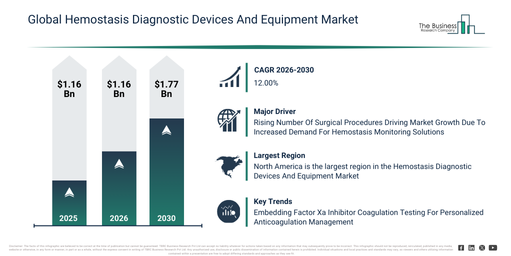
    Hemostasis Diagnostic Devices And Equipment Market Set To Grow From $6.42 Billion In 2026 To $10.12 Billion By 2030 At A CAGR Of 12%

    Enhanced with market attractiveness analysis, total addressable market evaluation, company benchmarking matrices, interactive Excel dashboards, expanded supply chain intelligence, emerging startup coverage, and detailed product insights, The Business Research Company’s 2026 market reports deliver more actionable and strategically valuable research.

    The market for hemostasis diagnostic devices and equipment has experienced swift growth in recent years, driven by several key factors. This report explores the current market size, underlying growth drivers, segment performance, technological trends, leading players, and regional dynamics shaping the future of this important medical sector.

    Hemostasis Diagnostic Devices and Equipment Market Size and Growth Prospects

    The hemostasis diagnostic devices and equipment market is expanding at a significant pace. It is projected to increase from $5.66 billion in 2025 to $6.42 billion in 2026, reflecting a compound annual growth rate (CAGR) of 13.4%. Looking ahead, the market is expected to reach $10.12 billion by 2030, growing at a CAGR of 12.0%. This surge is largely attributed to the rising prevalence of bleeding disorders, a growing number of surgical procedures requiring coagulation monitoring, increased hospital laboratory services, the adoption of standardized clotting tests, and the availability of advanced coagulation reagents. Future growth will also be supported by demand for rapid bedside diagnostic tools, the integration of AI-assisted coagulation analysis, expanded personalized anticoagulant therapy, investments in laboratory infrastructure, and a stronger focus on preventive diagnostics. Key trends predicted include the use of automated coagulation analyzers, point-of-care testing, digital tools for result interpretation, and comprehensive clotting analysis systems that provide quicker diagnostic outcomes.

    Download A Free Sample Report For Comprehensive Market Insights:

    https://www.thebusinessresearchcompany.com/sample.aspx?id=2598&type=smp

    Increasing Surgical Procedures as a Growth Catalyst in the Hemostasis Market

    One of the main factors propelling the hemostasis diagnostic devices and equipment market is the rising volume of surgical procedures worldwide. Surgical interventions, which involve incisions or invasive techniques to treat various medical conditions, are increasing due to an aging population and the corresponding rise in chronic and complex diseases requiring surgery. Effective management of blood clotting during these procedures is critical, and hemostasis diagnostic devices play a vital role in improving surgical safety and outcomes.

    For instance, in April 2025, the British Broadcasting Corporation reported that approximately 27,462 cosmetic surgical procedures were performed in the UK in 2024, marking a 5 percent increase from the previous year, with women accounting for more than 90 percent of these surgeries. This growing number of surgeries continuously drives demand for advanced hemostasis diagnostic equipment that enhances monitoring and management of coagulation during operations.

    Access The Complete Hemostasis Diagnostic Devices And Equipment Market Report:

    https://www.thebusinessresearchcompany.com/report/hemostasis-diagnostic-devices-and-equipment-global-market-report

    Segment Overview and Strategic Opportunities in the Hemostasis Diagnostic Devices and Equipment Market

    The market is segmented by product types, device technologies, and end users to provide a detailed view of its landscape. Product categories include analyzers, coagulation instruments, other hemostasis instruments, and reagents and kits. Device technology is classified into automated, semi-automated, and manual systems. End users encompass hospitals, clinics, independent diagnostic laboratories, and other healthcare facilities.

    Further breakdowns within these categories include analyzers such as hematology analyzers, platelet function analyzers, and thromboelastography (TEG) analyzers. Coagulation instruments are divided into devices for prothrombin time (PT), activated partial thromboplastin time (aPTT), fibrinogen testing, and thrombin time (TT). Other hemostasis instruments cover blood clotting time (BCT) and bleeding time (BT) test devices. Reagents and kits consist of coagulation reagents, blood collection kits, point-of-care testing kits, and thrombosis kits, allowing for comprehensive coverage of diagnostic needs.

    Technological Advancements and Market Trends Shaping the Hemostasis Diagnostic Devices Sector

    Leading companies in this market are focusing on innovative technologies that improve patient safety and treatment outcomes. One notable advancement is inhibitor-specific coagulation testing, which helps in optimizing anticoagulation therapy and reducing risks associated with bleeding or thrombotic events, particularly for patients on direct oral anticoagulants (DOACs). These specialized tests enable clinicians to accurately measure anticoagulant effects, adjust dosages appropriately, and offer personalized therapy management.

    For example, in February 2024, Roche Diagnostics introduced three new Factor Xa inhibitor coagulation tests for its cobas platforms. These tests target apixaban, rivaroxaban, and edoxaban activity in patient plasma and provide rapid, reliable results crucial for clinical decision-making during surgeries, emergency care, or suspected bleeding incidents. This launch exemplifies the market’s trend toward personalized anticoagulation management supported by automated, standardized assay solutions.

    Prominent Companies Defining Competition in the Hemostasis Diagnostic Devices and Equipment Market

    Several major players dominate the hemostasis diagnostic devices and equipment industry, including Baxter International Inc., Johnson & Johnson, Abbott Laboratories, Beckman Coulter Inc., Becton Dickinson and Company, Chrono-Log Corporation, F. Hoffmann-La Roche Ltd., Grifols S.A., Siemens AG, Thermo Fisher Scientific Inc., Trinity Biotech plc., Ethicon Inc., B. Braun Interventional Systems Inc., Bio-Rad Laboratories Inc., CareFusion Corporation, Danaher Corporation, Diagnostica Stago SAS, Haemonetics Corporation, QuidelOrtho Corp, and STAGO. These companies drive innovation, technological development, and market expansion globally.

    Regional Market Leadership and Growth Patterns for Hemostasis Diagnostic Devices

    In 2025, North America accounted for the largest share of the global hemostasis diagnostic devices and equipment market, benefiting from advanced healthcare infrastructure and high adoption of diagnostic technologies. Meanwhile, Asia-Pacific ranked as the second-largest market and is expected to witness substantial growth due to improving healthcare systems and rising demand for advanced diagnostic tools. The market analysis covers key global regions including Asia-Pacific, South East Asia, Western Europe, Eastern Europe, North America, South America, the Middle East, and Africa, presenting a comprehensive view of geographic market dynamics.

    Get in touch with us:

    The Business Research Company: https://www.thebusinessresearchcompany.com/

    Americas: +1 310-496-7795

    Asia: +44 7882 955267 & +91 8897263534

    Europe: +44 7882 955267

    Email us at: marketing@tbrc.info

    Follow us on:

    LinkedIn: https://in.linkedin.com/company/the-business-research-company

    YouTube: https://www.youtube.com/channel/UC24_fI0rV8cR5DxlCpgmyFQ

    Global Market Model: https://www.thebusinessresearchcompany.com/global-market-model
  • Hemostasis Analyzers Market Opportunities Are Emerging Beyond Traditional Growth Areas

    Hemostasis Analyzers Market Opportunities Are Emerging Beyond Traditional Growth Areas

    Through market attractiveness analysis, total addressable market evaluation, company benchmarking matrices, interactive Excel dashboards, expanded supply chain intelligence, emerging startup coverage, and detailed product insights, The Business Research Company’s 2026 market reports provide more actionable and strategically valuable research.

    The hemostasis analyzers market has been on a strong upward trajectory, reflecting growing demand driven by advances in medical diagnostics and increasing awareness of blood-related disorders. This report explores the current market size, key factors steering growth, important industry players, and emerging trends shaping the future of this vital healthcare segment.

    Hemostasis Analyzers Market Size and Projected Growth

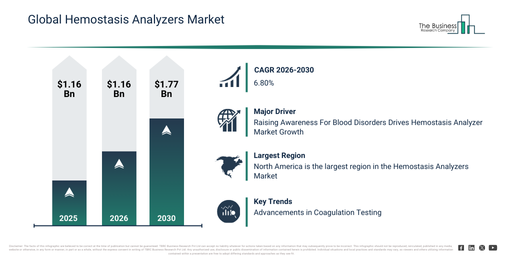
    The market for hemostasis analyzers has experienced significant expansion, expected to increase from $4.05 billion in 2025 to $4.34 billion in 2026, representing a compound annual growth rate (CAGR) of 7.2%. This historical growth is largely attributed to the rising prevalence of bleeding and clotting disorders, higher volumes of hospital-based diagnostic testing, dependence on centralized clinical labs, more surgical interventions, and widespread adoption of standardized coagulation assays. Looking ahead, the market is forecasted to reach $5.66 billion by 2030 with a CAGR of 6.8%, supported by advancements in optical and electrochemical testing technologies, growth in point-of-care diagnostic solutions, an increasing elderly population, and greater investments in diagnostic infrastructure.

    Download A Free Sample Report For Comprehensive Market Insights:

    https://www.thebusinessresearchcompany.com/sample.aspx?id=2545&type=smp

    Key Factors Supporting Hemostasis Analyzers Market Expansion

    Growing awareness about blood disorders is a crucial factor propelling the hemostasis analyzers market forward. Many blood-related diseases such as Hemophilia and Von Willebrand disease (vWD) are genetic and often go undiagnosed due to lack of public knowledge, leading to delayed treatment. For instance, Cancer Research UK reported in July 2024 that new cases of Hodgkin lymphoma in the UK are projected to rise from around 2,400 annually during 2023-2025 to nearly 2,900 cases by 2038-2040. Increased awareness is expected to improve early diagnosis rates, thereby boosting demand for hemostasis analyzers.

    Additional Drivers Fueling Market Growth

    The growing burden of cardiovascular diseases globally also contributes to market expansion, as patients with such conditions require regular coagulation testing for effective management. Furthermore, the shift toward point-of-care testing and automated systems enhances accessibility and efficiency, encouraging healthcare providers to adopt sophisticated hemostasis analyzers. Investments in healthcare infrastructure, particularly in emerging economies, also play a significant role in supporting sustained growth.

    Access The Complete Hemostasis Analyzers Market Report:

    https://www.thebusinessresearchcompany.com/report/hemostasis-analyzers-global-market-report

    The Hemostasis Analyzers Market Segmentation and Opportunities

    This market is segmented into several categories based on product type, test type, technology, and end use. The product categories include Clinical Laboratory Analyzers, Point-of-Care Testing Analyzers, and Consumables. Tests covered in the market include APTT tests, D Dimer tests, Platelet Function tests, Fibrinogen tests, Prothrombin Time tests, and others. Technological classifications comprise Optical, Mechanical, Electrochemical, and other related technologies. End-use sectors range from Hospitals and Clinics, Diagnostic Centers, Research and Development organizations, Ambulatory Surgical Centers, to other healthcare settings. Specific subcategories include automated and semi-automated coagulation analyzers, portable and handheld point-of-care devices, as well as a variety of reagents, test strips, and control solutions.

    Recent Innovations and Trends Reshaping Hemostasis Analyzer Demand

    Leading companies in the hemostasis analyzers market are emphasizing innovation to improve diagnostic precision and streamline laboratory operations. Coagulation tests, which assess blood clotting capability and clotting time, are a major focus. For example, in February 2024, Roche AG introduced three new Factor Xa inhibitor coagulation tests designed for precise measurement of blood levels of anticoagulants like apixaban and rivaroxaban. These ready-to-use liquid reagents deliver fast and standardized results on Roche’s cobas t 711 and cobas t 511 analyzers. This advancement is critical for emergency clinical situations where understanding drug concentration quickly is essential for personalized patient care, marking a significant improvement over traditional PT/INR tests.

    Top Hemostasis Analyzers Market Players Leading Industry Development

    The competitive landscape of the hemostasis analyzers market includes prominent companies such as Thermo Fisher Scientific Inc., Alere Inc., Siemens AG, F-Hoffmann La Roche, Nihon Kohden Corporation, Sysmex Corporation, Helena Laboratories, International Technidyne Corporation, Abbott Laboratories, Diagnostica Stago Inc., Grifols S.A., Beckman Coulter Inc., Diamond Diagnostics, Mindray Medical International Limited, Horiba Ltd., Becton Dickinson and Company, Transasia Bio-Medicals Ltd., Medtronic Inc., Sekisui Diagnostics, Technoclone, Trinity Biotech plc, Werfen S.A., ACON LABS INC., and Accriva Diagnostics. These companies continue to invest in developing innovative products and solutions to stay competitive and meet evolving healthcare demands.

    Regional Market Distribution and Growth Dynamics

    In 2025, North America was the largest market for hemostasis analyzers, reflecting advanced healthcare infrastructure and high adoption rates. Western Europe ranked as the second-largest market region. The market analysis also includes regions such as Asia-Pacific, South East Asia, Eastern Europe, South America, the Middle East, and Africa, providing a comprehensive global outlook on growth opportunities and regional dynamics.

    Get in touch with us:

    The Business Research Company: https://www.thebusinessresearchcompany.com/

    Americas: +1 310-496-7795

    Asia: +44 7882 955267 & +91 8897263534

    Europe: +44 7882 955267

    Email us at: marketing@tbrc.info

    Follow us on:

    LinkedIn: https://in.linkedin.com/company/the-business-research-company

    YouTube: https://www.youtube.com/channel/UC24_fI0rV8cR5DxlCpgmyFQ

    Global Market Model: https://www.thebusinessresearchcompany.com/global-market-model
  • Hemoglobin Testing Market Expansion Is Opening New Pathways For Strategic Investment

    Hemoglobin Testing Market Expansion Is Opening New Pathways For Strategic Investment

    Delivering more actionable and strategically valuable research, The Business Research Company’s 2026 market reports feature market attractiveness analysis, total addressable market evaluation, company benchmarking matrices, interactive Excel dashboards, expanded supply chain intelligence, emerging startup coverage, and detailed product insights.

    The hemoglobin testing market has witnessed significant growth in recent years, reflecting increased awareness and demand for efficient blood diagnostics. This upward trajectory is expected to continue as advancements in technology and healthcare trends drive the industry forward. Let’s explore the current market size, growth drivers, innovations, key players, and regional dynamics shaping this vital sector.

    Market Size and Projected Growth for the Hemoglobin Testing Market

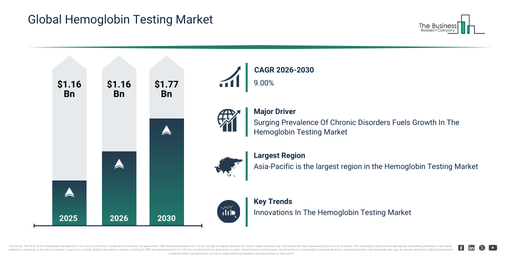
    The hemoglobin testing market has shown strong expansion and is forecasted to increase from $2.79 billion in 2025 to $3.03 billion in 2026, marking a compound annual growth rate (CAGR) of 8.7%. This past growth primarily stems from the wider implementation of routine blood tests, enhanced anemia screening initiatives, increasing diagnostic workloads in hospitals, availability of affordable testing kits, and growing public health campaigns. Looking ahead, the market is expected to reach $4.28 billion by 2030, growing at a CAGR of 9.0%. Factors contributing to this future rise include growing demand for decentralized diagnostic solutions, rising use of home testing devices, expansion in digital health monitoring, increased focus on early disease detection, and ongoing improvements in test accuracy. Key trends for the forecast period involve the adoption of point-of-care hemoglobin tests, portable analyzers, rapid blood screening methods, home-centric diagnostics, and a stronger emphasis on preventive healthcare screening.

    Download A Free Sample Report For Comprehensive Market Insights:

    https://www.thebusinessresearchcompany.com/sample.aspx?id=10059&type=smp

    Key Factors Fueling Growth in the Hemoglobin Testing Market

    The increasing prevalence of chronic diseases such as diabetes is a major growth driver for the hemoglobin testing industry. Diabetes results from insufficient insulin production or ineffective insulin usage by the body. Hemoglobin A1c (HbA1c) tests are widely used to monitor glucose levels among diabetic patients and are endorsed by the American Diabetes Association as an effective alternative to fasting blood glucose tests for diagnosing diabetes. To illustrate, in November 2022, the US Census Bureau reported that over 34 million Americans suffer from diabetes, with an additional 88 million at risk. Similarly, the International Diabetes Federation’s 10th edition of the IDF Diabetes Atlas, published in December 2021, stated that globally, 536,000 people were affected by diabetes in 2021, with projections rising to 642,800 by 2030 and 783,700 by 2045. Besides diabetes, growing incidents of anemia and other chronic conditions also contribute to expanding demand for hemoglobin testing devices.

    Segment Breakdown of the Hemoglobin Testing Market by Product and Application

    The hemoglobin testing market is segmented into various categories for a detailed understanding:

    1) By Product: Reagents and Consumables, Equipment

    2) By Technology: Spectrophotometry, Chromatography, Biosensor-Based, Electrochemical-Based

    3) By End User: Hospitals, Clinics, Laboratories, Home Care Settings, Blood Banks, Other Users

    Access The Complete Hemoglobin Testing Market Report:

    https://www.thebusinessresearchcompany.com/report/hemoglobin-testing-global-market-report

    Further subcategories include:

    – Reagents and Consumables such as hemoglobin testing kits, control solutions, test strips, and quality control products

    – Equipment including hemoglobin meters, analyzers, and point-of-care devices

    Innovations Driving Change in the Hemoglobin Testing Market

    Leading companies in this sector are focusing on developing innovative fingerstick blood testing solutions that empower patients to monitor their hemoglobin levels conveniently at home. These advanced methods allow quick and minimally invasive blood collection through a simple finger prick, facilitating early anemia detection and improving health management. For example, in February 2024, Sanguina Inc., a US-based health tech firm, launched AnemoCheck Home, the first FDA-cleared home hemoglobin test kit. This user-friendly kit provides accurate hemoglobin readings with an easy finger prick and includes all necessary components for self-testing, eliminating the need for laboratory visits. AnemoCheck Home helps individuals regularly track their hemoglobin levels and promptly identify potential health concerns.

    Key Players Competing in the Hemoglobin Testing Market

    The hemoglobin testing market is dominated by several prominent companies including Abbott Laboratories Inc, F Hoffmann La Roche Ltd, Danaher Corporation, Thermo Fisher Scientific Inc, Bio Rad Laboratories Inc, Sysmex Corporation, Siemens Healthineers AG, Mindray Medical International Limited, Nihon Kohden Corporation, EKF Diagnostics Holdings plc, ARKRAY Inc, Nova Biomedical Corporation, Beckman Coulter Inc, Radiometer A S, DiaSys Diagnostic Systems GmbH, Erba Diagnostics Inc, Tosoh Corporation, ACON Laboratories Inc, Diazyme Laboratories Inc, Humasis Co Ltd, BioMedomics Inc, and NanoEntek Inc.

    Regional Insights Highlighting Hemoglobin Testing Market Leadership

    In 2025, Asia-Pacific emerged as the largest regional market for hemoglobin testing and is also expected to be the fastest-growing region over the forecast period. The market report covers critical geographic areas including Asia-Pacific, South East Asia, Western Europe, Eastern Europe, North America, South America, the Middle East, and Africa, providing a broad perspective on global market trends and opportunities.

    Get in touch with us:

    The Business Research Company: https://www.thebusinessresearchcompany.com/

    Americas: +1 310-496-7795

    Asia: +44 7882 955267 & +91 8897263534

    Europe: +44 7882 955267

    Email us at: marketing@tbrc.info

    Follow us on:

    LinkedIn: https://in.linkedin.com/company/the-business-research-company

    YouTube: https://www.youtube.com/channel/UC24_fI0rV8cR5DxlCpgmyFQ

    Global Market Model: https://www.thebusinessresearchcompany.com/global-market-model
  • Hemoglobin Meter Market Trends Are Creating New Opportunities For Industry Leaders

    Hemoglobin Meter Market Trends Are Creating New Opportunities For Industry Leaders

    Enhanced with market attractiveness analysis, total addressable market evaluation, company benchmarking matrices, interactive Excel dashboards, expanded supply chain intelligence, emerging startup coverage, and detailed product insights, The Business Research Company’s 2026 market reports deliver more actionable and strategically valuable research.

    The hemoglobin meter market has witnessed significant expansion in recent years, driven by growing health concerns and advancements in diagnostic technology. As the demand for efficient and accessible blood health monitoring rises, this sector is poised for continued growth. Below is an overview of the market size, key factors propelling this growth, segmentation insights, emerging trends, leading companies, and regional prospects shaping the future of hemoglobin meters.

    Steady Growth and Market Size Projections in the Hemoglobin Meter Market

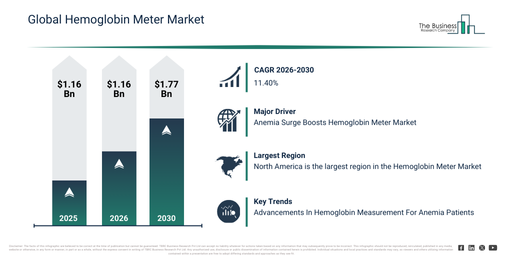
    The hemoglobin meter market has expanded swiftly, with its valuation expected to increase from $2.75 billion in 2025 to $3.07 billion in 2026, marking a compound annual growth rate (CAGR) of 11.8%. This historical growth is largely due to the global rise in anemia cases, increased diagnostic testing in hospitals, dependence on laboratory-based hemoglobin measurement, heightened awareness of blood health, and the growth of clinical laboratory facilities. Looking ahead, the market is projected to reach $4.74 billion by 2030, growing at a CAGR of 11.4%. The anticipated growth is fueled by the rise in home healthcare diagnostics, greater use of portable and handheld devices, expanded anemia screening programs, technological enhancements in sensor precision, and the broader adoption of point-of-care testing, especially in remote and rural areas. Notable trends forecasted include the growing popularity of home-use hemoglobin meters, demand for rapid testing, early anemia detection focus, and improvements in handheld device accuracy and usability.

    Download A Free Sample Report For Comprehensive Market Insights:

    https://www.thebusinessresearchcompany.com/sample.aspx?id=19505&type=smp

    Key Drivers Behind the Expansion of the Hemoglobin Meter Market

    The increasing prevalence of anemia is a primary factor driving market growth. Anemia, which results from a deficiency of red blood cells or hemoglobin, reduces oxygen delivery throughout the body. The rise in anemia cases is attributed to nutrient deficiencies—such as iron, vitamin B12, and folate—largely stemming from poor nutrition and limited access to nutrient-rich foods. Socioeconomic factors like poverty, lack of healthcare access, and hereditary conditions also contribute to chronic anemia by interfering with red blood cell production. Hemoglobin meters play a vital role by measuring hemoglobin concentrations in blood, aiding in diagnosis and monitoring of anemia severity.

    Concrete data highlights the growing impact of anemia worldwide. For example, in July 2023, the Institute for Health Metrics and Evaluation (IHME), a UK-based public health research institute, reported that nearly 2 billion people globally are affected by anemia, with women experiencing a higher prevalence than men. Specifically, 31.2% of women suffer from anemia compared to 17.5% of men, with the gender gap especially pronounced in reproductive-age women (15–49 years), where 33.7% of women have anemia relative to 11.3% of men. This widespread occurrence underscores the market opportunity for hemoglobin meters.

    Access The Complete Hemoglobin Meter Market Report:

    https://www.thebusinessresearchcompany.com/report/hemoglobin-meter-global-market-report

    Detailed Segment Breakdown and Revenue Potential in the Hemoglobin Meter Market

    This report categorizes the hemoglobin meter market into several segments:

    1) By Type: Full Automatic and Semi Automatic devices

    2) By Form Factor: Bench Top and Portable meters

    3) By Application: Hospitals, Laboratories, and Other end uses

    Further subcategories include:

    – Full Automatic: Portable, Desktop, Integrated, and Advanced full automatic hemoglobin meters

    – Semi-Automatic: Basic models, Digital Display variants, Microcuvette-based, and Handheld devices

    These segments reflect the diverse product offerings tailored to different healthcare settings and diagnostic requirements.

    Emerging Trends Shaping the Hemoglobin Meter Industry

    Major players in the hemoglobin meter sector are focusing on innovations such as fingerstick blood tests to lower healthcare costs linked to lab visits. The fingerstick method is a minimally invasive and rapid technique to collect small blood samples via a tiny skin puncture, enabling convenient health monitoring at home.

    For instance, in October 2023, Sanguina Inc., a US-based biotechnology firm, received FDA approval for its AnemoCheck Home kit. This home-use hemoglobin test allows users to monitor their blood hemoglobin levels comfortably and efficiently. It is the only FDA-cleared home hemoglobin test kit in the United States and supports individuals managing anemia due to nutritional deficiencies, thalassemia, or sickle cell disease. The kit’s simple fingerstick collection method ensures minimal discomfort and easy sample acquisition.

    Leading Hemoglobin Meter Manufacturers Influencing Market Direction

    The hemoglobin meter market features several prominent companies, including F Hoffmann-La Roche Ltd, Thermo Fisher Scientific Inc, Abbott Laboratories, Danaher Corporation, Siemens Healthcare GmbH, Terumo Corporation, Shenzhen Mindray Bio-Medical Electronics Co Ltd, Beckman Coulter Inc, Sysmex Corporation, Nihon Kohden Corporation, Nova Biomedical Corporation, Instrumentation Laboratory Company, ACON Laboratories Inc, Erba Diagnostics Mannheim GmbH, Transasia Bio-Medicals Ltd, Trinity Biotech, HemoCue AB, EKF Diagnostics Holdings plc, Boule Diagnostics AB, PTS Diagnostics, HUMAN Diagnostics Worldwide, and PixCell Medical Technologies Ltd.

    Regional Overview of Hemoglobin Meter Market Opportunities

    In 2025, North America was the largest market for hemoglobin meters. The market analysis covers key regions such as Asia-Pacific, Southeast Asia, Western Europe, Eastern Europe, North America, South America, the Middle East, and Africa, providing a comprehensive view of global market trends and opportunities.

    Get in touch with us:

    The Business Research Company: https://www.thebusinessresearchcompany.com/

    Americas: +1 310-496-7795

    Asia: +44 7882 955267 & +91 8897263534

    Europe: +44 7882 955267

    Email us at: marketing@tbrc.info

    Follow us on:

    LinkedIn: https://in.linkedin.com/company/the-business-research-company

    YouTube: https://www.youtube.com/channel/UC24_fI0rV8cR5DxlCpgmyFQ

    Global Market Model: https://www.thebusinessresearchcompany.com/global-market-model