Month: June 2026

  • Artificial Intelligence (AI) Image Upscaling Chip Market Industry Outlook 2026–2030 Highlighting Growth Momentum And Market Trends

    Artificial Intelligence (AI) Image Upscaling Chip Market Industry Outlook 2026–2030 Highlighting Growth Momentum And Market Trends

    The Business Research Company’s 2026 market reports feature advanced enhancements such as market attractiveness analysis, total addressable market evaluation, company benchmarking matrices, interactive Excel dashboards, expanded supply chain intelligence, emerging startup coverage, and detailed product insights, delivering more actionable and strategically valuable research.

    What Is The Expected Market Size Of The Artificial Intelligence (AI) Image Upscaling Chip Market In 2026 And How Much Will It Reach By 2030?

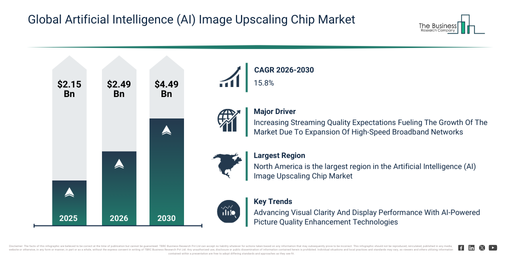
    The artificial intelligence (AI) image upscaling chips market size has experienced rapid growth in recent years. It is projected to expand from $2.15 billion in 2025 to $2.49 billion in 2026, registering a compound annual growth rate (CAGR) of 16.2%. The historical period’s growth can be attributed to the increasing adoption of high-resolution displays, the rising use of AI-enabled smartphones and cameras, the expansion of media and entertainment streaming services, the increasing demand for video surveillance applications, and the growing uptake in the gaming and AR/VR markets.

    The artificial intelligence (AI) image upscaling chips market is projected for significant expansion over the coming years, reaching $4.49 billion by 2030, driven by a compound annual growth rate (CAGR) of 15.8%. This anticipated growth during the forecast period is attributable to several factors, including the increasing integration of SoC-based AI upscaling modules, a rise in edge AI processing adoption, the broadening reach of automotive infotainment and ADAS systems, the emergence of industrial imaging and machine vision applications, and increased investment in semiconductor R&D for AI hardware. Key developments expected within this period encompass advancements in deep learning-based super-resolution algorithms, the incorporation of AI upscaling into SoCs and GPUs, the creation of low-power, high-efficiency chips, novel approaches in multi-modal image enhancement, and continued research into neural network compression and optimization.

    Download A Free Sample Report For Comprehensive Market Insights:

    https://www.thebusinessresearchcompany.com/sample.aspx?id=30507&type=smp

    Which Growth Factors Are Strengthening The Artificial Intelligence (AI) Image Upscaling Chip Market Landscape?

    Growing consumer demands for superior streaming quality are projected to fuel the expansion of the artificial intelligence (AI) image upscaling chip market. These expectations signify consumers’ desire for high-definition, uninterrupted, and engaging video experiences across diverse platforms. Such demands are escalating because viewers are becoming accustomed to large, high-resolution displays and immersive media, prompting a requirement for clearer visuals, fluid playback, and enhanced audio as baseline characteristics. AI image upscaling chips address these quality needs by converting lower-resolution material into nearly native high definition, thereby delivering sharper images on larger displays. Furthermore, they enhance playback stability through real-time reduction of visual imperfections and optimization of frame clarity, culminating in a more seamless and engrossing viewing experience. As an illustration, data from the Office of Communications, a UK communications regulator, reported in September 2023 that in March 2023, a significant 73% of Netflix content was consistently supplied in ultra high definition, an increase from 69% in March 2022, with 22% provided in high definition and a mere 4% in standard definition. Consequently, the heightened streaming quality expectations are fueling the expansion of the artificial intelligence (AI) image upscaling chip market.

    Which Segment Groups Define The Artificial Intelligence (AI) Image Upscaling Chip Market Landscape?

    The artificial intelligence (AI) image upscaling chip market covered in this report is segmented –

    1) By Chip Type: Application-Specific Integrated Circuit, Field-Programmable Gate Array, Graphics Processing Unit, System On Chip, Other Chip Types

    2) By Technology: Super-Resolution, Deep Learning, Edge Artificial Intelligence, Other Technologies

    3) By Application: Consumer Electronics, Automotive, Healthcare, Industrial, Media And Entertainment, Other Applications

    4) By End-User: Original Equipment Manufacturers, Aftermarket, Other End-Users

    Subsegments:

    1) By Application-Specific Integrated Circuit: Neural Network Accelerator, Dedicated Upscaling Processor, Hardware-Based Image Enhancement Engine, Low-Power Upscaling Chip, Integrated Upscaling Module

    2) By Field-Programmable Gate Array: Reconfigurable Neural Processor, Custom Upscaling Accelerator, Edge AI Upscaling Module, Programmable Image Enhancement Chip, Low-Latency Upscaling Processor

    3) By Graphics Processing Unit: Artificial Intelligence-Enhanced Graphics Processor, Deep Learning Upscaling Engine, High-Resolution Video Processor, Real-Time Image Enhancement Graphics Processing Unit, Multi-Core Upscaling Processor

    4) By System On Chip: Integrated Artificial Intelligence Upscaling SoC, Mobile Device Upscaling Chip, Edge Artificial Intelligence System On Chip Module, High-Performance Video Upscaling System On Chip, Low-Power Integrated Upscaling Module

    5) By Other Chip Types: Hybrid Upscaling Processor, Research And Development Prototype Chip, Experimental Neural Upscaling Module, Custom Edge AI Chip, Specialized Imaging Processor

    What Trends Are Driving Changes In The Artificial Intelligence (AI) Image Upscaling Chip Market?

    Major companies in the artificial intelligence (AI) image upscaling chip market are concentrating on developing advanced technologies, such as AI-powered picture quality enhancement technologies, to provide sharper visuals, improved color accuracy, and immersive viewing experiences across consumer electronics. These AI-powered picture quality enhancement technologies refer to artificial intelligence–driven algorithms embedded at the chip level that intelligently upscale resolution, reduce noise, enhance contrast, and optimize brightness in real time based on content and display characteristics. For instance, in January 2025, MediaTek Inc., a Taiwan-based fabless semiconductor company, unveiled MiraVision Pro. This suite of AI-powered technologies, debuting on the Pentonic 800 smart TV chipset, features AI-Super Resolution 3.0 for smooth scaling across resolutions, 500K-zone AI-Contrast 2.0 for precise HDR quality, and AI-based On-Screen-Display upscaling to elevate user interface clarity beyond standard 4K, all driven by an integrated neural processing unit to deliver cinematic-grade visuals. MiraVision Pro integrates AI-powered picture quality enhancement technologies that dynamically analyze video frames to upscale lower-resolution content while preserving fine details and natural textures. The launch enables device manufacturers to deliver premium, high-definition viewing experiences without increasing power consumption or hardware complexity.

    Who Are The Businesses Driving Activity In The Artificial Intelligence (AI) Image Upscaling Chip Market?

    Major companies operating in the artificial intelligence (AI) image upscaling chip market are Apple Inc., Samsung Electronics Co. Ltd., Intel Corporation, Qualcomm Incorporated, NVIDIA Corporation, MediaTek Inc., Realtek Semiconductor Corp., Synopsys Inc., Cadence Design Systems Inc., Novatek Microelectronics Corp., Socionext Inc., Magnachip Semiconductor Corporation, Ambarella Inc., Rockchip Electronics Co. Ltd., CEVA Inc., HiSilicon (Shanghai) Technologies Co. Ltd., Amlogic Inc., Pixelworks Inc., Axera Semiconductor Co. Ltd., Advanced Micro Devices Inc., Black Sesame Technologies Inc., Hailo Technologies Ltd.

    Access The Complete Artificial Intelligence (AI) Image Upscaling Chip Market Report:

    https://www.thebusinessresearchcompany.com/report/artificial-intelligence-ai-image-upscaling-chip-market-report

    Which Region Contributes The Most To The Artificial Intelligence (AI) Image Upscaling Chip Market?

    North America was the largest region in the artificial intelligence (AI) image upscaling chips market in 2025. Asia-Pacific is expected to be the fastest-growing region in the forecast period. The regions covered in the artificial intelligence (AI) image upscaling chip market report are Asia-Pacific, South East Asia, Western Europe, Eastern Europe, North America, South America, Middle East, Africa.

    Access a Customized Artificial Intelligence (AI) Image Upscaling Chip Market Report for Deeper Competitive Insights

    https://www.thebusinessresearchcompany.com/sample.aspx?id=30507&type=smp

    Get in touch with us:

    The Business Research Company: https://www.thebusinessresearchcompany.com/

    Americas: +1 310-496-7795

    Asia: +44 7882 955267 & +91 8897263534

    Europe: +44 7882 955267

    Email us at: marketing@tbrc.info

    Follow us on:

    LinkedIn: https://in.linkedin.com/company/the-business-research-company

    YouTube: https://www.youtube.com/channel/UC24_fI0rV8cR5DxlCpgmyFQ

    Global Market Model: https://www.thebusinessresearchcompany.com/global-market-model
  • Artificial Intelligence (AI) Arrhythmia Burden Analytics Market Growth Forecast With Analysis Of Industry Progress Through 2030

    Artificial Intelligence (AI) Arrhythmia Burden Analytics Market Growth Forecast With Analysis Of Industry Progress Through 2030

    The Business Research Company’s 2026 market reports feature advanced enhancements such as market attractiveness analysis, total addressable market evaluation, company benchmarking matrices, interactive Excel dashboards, expanded supply chain intelligence, emerging startup coverage, and detailed product insights, delivering more actionable and strategically valuable research.

    What Market Size Is Forecasted For The Artificial Intelligence (AI) Arrhythmia Burden Analytics Market By 2030 Based On Its 2026 Value?

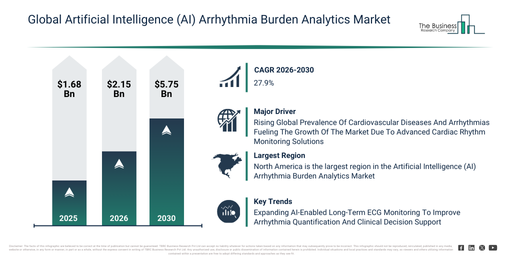
    The artificial intelligence (AI) arrhythmia burden analytics market has experienced rapid growth in its size over recent years. It is projected to increase from $1.68 billion in 2025 to $2.15 billion in 2026, demonstrating a compound annual growth rate (CAGR) of 28.2%. This historical expansion can be attributed to the rising prevalence of cardiovascular diseases, the growing adoption of wearable ECG monitors, increasing demand for early arrhythmia detection, the expansion of remote patient monitoring platforms, and rising investment in digital health infrastructure.

    The artificial intelligence (AI) arrhythmia burden analytics market size is projected to experience substantial growth in the upcoming years. This market is anticipated to reach $5.75 billion by 2030, expanding at a compound annual growth rate (CAGR) of 27.9%. The expansion during this forecast period is attributable to the increasing integration of AI in healthcare IT systems, a heightened focus on predictive and personalized cardiac care, the rising implementation of cloud-based AI, the expansion of AI research and development, and growing regulatory support for AI-driven medical devices. Significant trends expected in this period include innovations in predictive algorithms, advancements in cloud-based deployment, the integration of technology with wearable devices, investments in data analytics platforms, and the development of AI-enabled diagnostic software.

    Download A Free Sample Report For Comprehensive Market Insights:

    https://www.thebusinessresearchcompany.com/sample.aspx?id=30503&type=smp

    What Important Drivers Are Powering The Artificial Intelligence (AI) Arrhythmia Burden Analytics Market Growth?

    The increasing global occurrence of cardiovascular diseases and arrhythmias is projected to propel the expansion of the artificial intelligence (AI) arrhythmia burden analytics market moving forward. Cardiovascular diseases and arrhythmias refer to the rising number of individuals worldwide affected by heart and blood vessel conditions, including irregular heart rhythms like atrial fibrillation, which are major global causes of death and disability. This surge in prevalence is due to aging populations and increased exposure to risk factors such as hypertension, obesity, and diabetes, all of which elevate the risk of arrhythmias. Artificial intelligence (AI) arrhythmia burden analytics assists in managing cardiovascular diseases and arrhythmias by enabling continuous, precise analysis of cardiac rhythm data, thereby enhancing the early detection and management of arrhythmic events. For instance, in August 2025, according to the Centers for Disease Control and Prevention, a Switzerland-based public health agency, 90% of the nation’s 4.9 trillion dollars in annual health care spending is linked to individuals with chronic and mental health conditions, with over 84,000 Americans dying each year from heart disease or stroke and the costs associated with cardiovascular diseases projected to reach roughly 2 trillion dollars by 2050. Consequently, the rising global prevalence of cardiovascular diseases and arrhythmias is driving the growth of the artificial intelligence (AI) arrhythmia burden analytics market.

    What Key Segment Areas Are Included In The Artificial Intelligence (AI) Arrhythmia Burden Analytics Market Assessment?

    The artificial intelligence (AI) arrhythmia burden analytics market covered in this report is segmented –

    1) By Component: Software, Hardware, Services

    2) By Technology: Machine Learning (ML), Deep Learning (DL), Natural Language Processing (NLP)

    3) By Deployment Mode: On-Premises, Cloud-Based

    4) By Application: Arrhythmia Detection, Burden Quantification, Predictive Risk Assessment, Treatment Efficacy Monitoring, Clinical Decision Support

    5) By End-User: Healthcare Providers, Diagnostic Centers, Academic And Research Institutes, Other End-Users

    Subsegments:

    1) By Software: Data Management, Predictive Analytics, Visualization Tools, Reporting Platforms, Algorithm Development

    2) By Hardware: Monitoring Devices, Wearable Sensors, Data Storage Units, Processing Units, Connectivity Modules

    3) By Services: Consulting Services, Implementation Services, Maintenance And Support, Training Services, Cloud Hosting Services

    Which Trends Are Shaping The Artificial Intelligence (AI) Arrhythmia Burden Analytics Market Landscape?

    Leading firms in the artificial intelligence (AI) arrhythmia burden analytics market are concentrating on creating sophisticated offerings, including AI-driven arrhythmia detection systems, to improve diagnostic precision, increase patient adherence, and minimize the chance of incorrect diagnoses and repeat examinations. These AI-driven systems utilize advanced algorithms within cardiac monitors to automatically analyze ongoing electrocardiogram (ECG) data, accurately identifying and categorizing abnormal heart rhythms. As an example, in May 2025, iRhythm Technologies, a digital health company based in the US, introduced its Zio ECG Recording and Analysis System to Japan. This system is a prescription-based, continuous long-term monitoring solution incorporating a deep-learning artificial intelligence (AI) algorithm sanctioned by Japan’s Pharmaceuticals and Medical Devices Agency (PMDA). It comprises a patch monitor worn for up to 14 days and an analytical service delivering thorough reports, facilitating the effortless identification of 13 arrhythmia types with minimal inconvenience to the patient. Furthermore, it integrates certified clinical review, yielding a high diagnostic success rate and low retesting frequency, thereby enhancing clinical efficiency for healthcare practitioners.

    Which Firms Are Competing In The Artificial Intelligence (AI) Arrhythmia Burden Analytics Market?

    Major companies operating in the artificial intelligence (AI) arrhythmia burden analytics market are Medtronic plc, Koninklijke Philips N.V., GE HealthCare Technologies Inc., Boston Scientific Corporation, iRhythm Technologies Inc., Bittium Corporation, Cardiac Rhythm Management, AliveCor Inc., VivaLNK Inc., Biotricity Inc., InfoBionic Inc., Cardiac Insight Inc., Cortrium ApS, Eko Health Inc., CardioComm Solutions Inc., Medi-Lynx Cardiac Monitoring LLC, QT Medical Inc., Wearable Sensors Ltd., HeartVista Inc., iCardiac Technologies Inc.

    Access The Complete Artificial Intelligence (AI) Arrhythmia Burden Analytics Market Report:

    https://www.thebusinessresearchcompany.com/report/artificial-intelligence-ai-arrhythmia-burden-analytics-market-report

    Which Regional Market Leads The Artificial Intelligence (AI) Arrhythmia Burden Analytics Market?

    North America was the largest region in the artificial intelligence (AI) arrhythmia burden analytics market in 2025. Asia-Pacific is expected to be the fastest-growing region in the forecast period. The regions covered in the artificial intelligence (AI) arrhythmia burden analytics market report are Asia-Pacific, South East Asia, Western Europe, Eastern Europe, North America, South America, Middle East, Africa.

    Access a Customized Artificial Intelligence (AI) Arrhythmia Burden Analytics Market Report for Deeper Competitive Insights

    https://www.thebusinessresearchcompany.com/sample.aspx?id=30503&type=smp

    Get in touch with us:

    The Business Research Company: https://www.thebusinessresearchcompany.com/

    Americas: +1 310-496-7795

    Asia: +44 7882 955267 & +91 8897263534

    Europe: +44 7882 955267

    Email us at: marketing@tbrc.info

    Follow us on:

    LinkedIn: https://in.linkedin.com/company/the-business-research-company

    YouTube: https://www.youtube.com/channel/UC24_fI0rV8cR5DxlCpgmyFQ

    Global Market Model: https://www.thebusinessresearchcompany.com/global-market-model

  • Global Application Programming Interface (API) Testing Market Forecast Highlighting Expansion And Competitive Dynamics

    Global Application Programming Interface (API) Testing Market Forecast Highlighting Expansion And Competitive Dynamics

    The Business Research Company’s 2026 market reports feature advanced enhancements such as market attractiveness analysis, total addressable market evaluation, company benchmarking matrices, interactive Excel dashboards, expanded supply chain intelligence, emerging startup coverage, and detailed product insights, delivering more actionable and strategically valuable research.

    How Is The Market Value Of The Application Programming Interface (API) Testing Market Projected To Expand During 2026–2030?

    The application programming interface (API) testing market has seen considerable expansion in recent years. Its valuation is expected to rise from $1.75 billion in 2025 to $2.14 billion in 2026, achieving a compound annual growth rate (CAGR) of 22.2%. This past growth can be attributed to several factors including the growing acceptance of cloud-based applications, the increased demand for automated testing tools, the expansion of software development outsourcing, the proliferation of mobile and web applications, and the requirement for expedited software release cycles.

    The application programming interface (API) testing market is projected to expand significantly in the coming years, predicted to reach $4.72 billion by 2030 with a compound annual growth rate (CAGR) of 21.9%. This anticipated expansion is driven by factors such as the increasing integration of artificial intelligence and machine learning in testing processes, heightened investment in development and operations as well as continuous integration practices, a rising need for application programming interface security testing, the proliferation of Internet of Things and connected devices, and an emphasis on lowering software development life cycle expenditures. Key developments expected during this timeframe involve a move towards continuous and shift-left testing methodologies, the incorporation of AI-powered test automation, greater utilization of cloud-based testing solutions, the implementation of application programming interface monitoring and observability instruments, and a concentration on evaluating microservices and serverless architectural designs.

    Download A Free Sample Report For Comprehensive Market Insights:

    https://www.thebusinessresearchcompany.com/sample.aspx?id=30502&type=smp

    Which Major Factors Are Contributing To The Development Of The Application Programming Interface (API) Testing Market?

    The growing use of automated testing is anticipated to boost the expansion of the application programming interface (API) testing market in the future. Automated testing involves employing software tools to automatically run pre-defined test scripts, confirming API functionality, reliability, and performance without human intervention. The uptake of automated testing is increasing because organizations require quicker and more dependable quality assurance to match swift release cycles, simultaneously cutting down on manual work and reducing flaws in intricate software systems. API testing facilitates automated testing by allowing rapid, repeatable validation of backend services via scriptable requests and responses, aiding in early detection of integration issues and ensuring reliability as applications develop. For example, data from PractiTest Ltd., an Israel-based software testing platform, indicates that by November 2025, the percentage of organizations stating automation had taken over 75% or more of manual testing tasks grew from 18% in 2023 to 19% in 2024, reaching 20% in 2025. Consequently, the rising adoption of software development and integration is fueling the expansion of the application programming interface (API) testing market.

    How Is Segment Classification Applied In The Application Programming Interface (API) Testing Market?

    The application programming interface (api) testing market covered in this report is segmented –

    1) By Component: Software, Services

    2) By Deployment Mode: Cloud-Based, On-Premise

    3) By Test Type: Functional Testing, Security Testing, Performance Testing, Runtime And Error Detection Testing

    4) By Organization Size: Small And Medium Enterprises, Large Enterprises

    5) By End User Industry: Information Technology And Telecommunications, Banking, Financial Services, And Insurance, Healthcare And Life Sciences, Retail And E-Commerce, Manufacturing And Industrial, Government And Public Sector

    Subsegments:

    1) By Software: Development Tools, Integration Platforms, Security Solutions, Monitoring And Analytics

    2) By Services: Consulting Services, Implementation Services, Support And Maintenance Services, Training And Education Services

    What Trends Are Influencing The Application Programming Interface (API) Testing Market Outlook?

    Leading firms within the application programming interface (API) testing sector are concentrating on creating sophisticated technologies, including modular SaaS-based solutions, aimed at boosting testing effectiveness, scalability, and cooperation among development teams. Such a solution is a cloud-hosted platform comprising distinct, compatible modules that users can configure to satisfy particular testing demands, thereby allowing adaptable deployment, swift scaling, and ongoing updates without requiring on-site infrastructure. An illustrative case occurred in April 2025 when SmartBear Software, a US-based vendor of software quality and testing instruments, augmented its API Hub by introducing a modular SaaS-based solution, incorporating automated testing functionalities, improved collaboration tools, and unified control over API tests. This introduction enables development and quality assurance teams to effectively design, perform, and oversee API tests within an adaptable, cloud-native setting, thereby lowering testing costs and expediting the provision of premium applications.

    Who Are The Major Companies Operating In The Application Programming Interface (API) Testing Market?

    Major companies operating in the application programming interface (api) testing market are Google LLC, Microsoft Corporation, International Business Machines Corporation, Oracle Corporation, Broadcom Inc., Postman Inc., Tricentis N.V., SmartBear Software Inc., Sauce Labs Inc., Parasoft Corporation, Katalon Inc., TestSigma Inc., Neotys Co., Akana, BlazeMeter Ltd., RapidAPI, Checkly Inc., Micro Focus Ltd., Assertible Inc., Karate Labs Inc., Loadmill Ltd., Testfully GmbH, Firecamp Analytics

    Access The Complete Application Programming Interface (API) Testing Market Report:

    https://www.thebusinessresearchcompany.com/report/application-programming-interface-api-testing-market-report

    Which Region Holds The Largest Share In The Application Programming Interface (API) Testing Market?

    North America was the largest region in the application programming interface (API) testing market in 2025. Asia-Pacific is expected to be the fastest-growing region in the forecast period. The regions covered in the application programming interface (api) testing market report are Asia-Pacific, South East Asia, Western Europe, Eastern Europe, North America, South America, Middle East, Africa.

    Access a Customized Application Programming Interface (API) Testing Market Report for Deeper Competitive Insights

    https://www.thebusinessresearchcompany.com/sample.aspx?id=30502&type=smp

    Get in touch with us:

    The Business Research Company: https://www.thebusinessresearchcompany.com/

    Americas: +1 310-496-7795

    Asia: +44 7882 955267 & +91 8897263534

    Europe: +44 7882 955267

    Email us at: marketing@tbrc.info

    Follow us on:

    LinkedIn: https://in.linkedin.com/company/the-business-research-company

    YouTube: https://www.youtube.com/channel/UC24_fI0rV8cR5DxlCpgmyFQ

    Global Market Model: https://www.thebusinessresearchcompany.com/global-market-model

  • 4D Radiotherapy Equipment Market Analysis Through 2030 Focusing On Demand Trends And Growth Drivers

    4D Radiotherapy Equipment Market Analysis Through 2030 Focusing On Demand Trends And Growth Drivers

    The Business Research Company’s 2026 market reports feature advanced enhancements such as market attractiveness analysis, total addressable market evaluation, company benchmarking matrices, interactive Excel dashboards, expanded supply chain intelligence, emerging startup coverage, and detailed product insights, delivering more actionable and strategically valuable research.

    What Are The Forecasted Market Size Figures For The 4D Radiotherapy Equipment Market In 2026 And 2030?

    The 4D radiotherapy equipment market size has demonstrated robust growth in recent years. This market is expected to expand from $1.91 billion in 2025 to $2.09 billion in 2026, exhibiting a compound annual growth rate (CAGR) of 9.6%. The historical surge can be attributed to several factors, including the increasing demand for motion-adaptive radiation therapy, the growing adoption of advanced imaging systems, a rising focus on minimizing treatment errors, the expanding use of real-time patient monitoring, and an increasing preference for high-precision radiotherapy.

    The 4D radiotherapy equipment market size is anticipated to experience robust expansion over the coming years, projected to reach $2.99 billion by 2030, demonstrating a compound annual growth rate (CAGR) of 9.3%. This growth during the forecast period is primarily driven by increasing investment in next-generation radiotherapy technologies, the growing adoption of 4D treatment systems, a rising demand for accurate tumor-tracking solutions, the expanding integration of AI-enabled motion management, and the increasing need for personalized radiation therapy. Significant trends in the forecast horizon include technological advancements in motion-synchronized radiotherapy systems, innovations in real-time imaging capabilities, developments in adaptive treatment delivery platforms, ongoing research and development in tumor-tracking technologies, and progress in imaging-guided radiotherapy solutions.

    Download A Free Sample Report For Comprehensive Market Insights:

    https://www.thebusinessresearchcompany.com/sample.aspx?id=30492&type=smp

    What Key Growth Drivers Are Influencing The 4D Radiotherapy Equipment Market?

    An anticipated increase in cancer cases is projected to drive the expansion of the 4D radiotherapy equipment market. Cancer is defined as an illness marked by the unchecked multiplication and dissemination of atypical cells, which, if untreated, can harm nearby tissues and organs. The rise in cancer prevalence is attributed to lifestyle factors like inadequate nutrition, smoking, alcohol consumption, and contact with environmental contaminants, all of which heighten the risk of developing various cancers. 4D radiotherapy equipment assists in managing cancer by delivering highly accurate, motion-adjusted radiation treatments that consider tumor movement during respiration. This technology enhances patient results by optimizing tumor targeting, reducing harm to healthy tissues, and boosting treatment efficacy. For instance, in October 2025, NHS Digital, a UK government organisation, reported 354,820 new cancer diagnoses in England in 2023, averaging 972 diagnoses daily and indicating an 8,605 case increase from 2022, with prostate cancer being the most frequently diagnosed at 58,137 new cases, marking a 6% rise in registrations year-over-year. Consequently, the growing incidence of cancer is propelling the growth of the 4D radiotherapy equipment market. The expansion of the 4D radiotherapy equipment market is anticipated to be driven by increasing healthcare expenditure. In emerging markets, healthcare spending involves investments by governments, private entities, and medical providers aimed at enhancing medical infrastructure, access to cutting-edge treatments, and patient care. This rise in healthcare spending in emerging markets is occurring as growing middle-class populations enjoy higher incomes and extended lifespans, consequently increasing the need for superior medical services, hospital facilities, and insurance coverage. 4D radiotherapy equipment supports this progression by delivering accurate, image-guided radiation therapy that considers tumor movement, thereby improving treatment results while reducing harm to surrounding healthy tissue. For example, in June 2025, Statistics Austria, the national statistical office of Austria, reported that Austria’s total healthcare expenditure reached approximately $61.6 billion (€57 billion) in 2024, funded by both public and private sectors. This represented an increase of about $4.6 billion (€4.25 billion) from the previous year, and the proportion of healthcare spending relative to gross domestic product climbed from 11.2% in 2023 to 11.8% in 2024. Hence, the increasing healthcare spending in emerging markets is fostering the growth of the 4D radiotherapy equipment market.

    What Are The Core Segment Classifications In The 4D Radiotherapy Equipment Market?

    The 4D radiotherapy equipment market covered in this report is segmented –

    1) By Product Type Or Component: 4D Gating/RT Systems, Linear Accelerators (LINACs), 4D Imaging Modalities, SGRT Systems, Treatment Planning Software

    2) By Motion Management Technique: Respiratory Gating, Real-Time Tumor Tracking, Breath-Hold Techniques, Adaptive Radiotherapy (ART)

    3) By Application: Lung Cancer, Liver Cancers, Pancreatic Cancer, Breast Cancer, Lymphoma, Other Cancers

    4) By End User: Hospitals, Cancer Treatment Centers, Specialty Radiotherapy Clinics, Research Institutions

    Subsegments:

    1) By 4D Gating / RT Systems: Respiratory Gating Systems, Real-Time Tumor Tracking Systems, Motion Management Platforms, Adaptive Radiation Delivery Systems

    2) By Linear Accelerators: Standard Linear Accelerators, Image Guided Linear Accelerators, Motion Compensated Linear Accelerators, Stereotactic Body Radiation Therapy Linear Accelerators

    3) By 4D Imaging Modalities: Four Dimensional Computed Tomography, Four Dimensional Magnetic Resonance Imaging, Four Dimensional Positron Emission Tomography, Four Dimensional Cone Beam Computed Tomography

    4) By SGRT Systems: Surface Guided Patient Positioning Systems, Optical Surface Monitoring Systems, Real-Time Surface Tracking Systems, Motion Compensated Surface Imaging Systems

    5) By Treatment Planning Software: Motion Adaptive Planning Software, Dose Calculation Software, Image Fusion Planning Software, Tumor Contouring And Delineation Software

    Which Trends Are Expected To Shape The 4D Radiotherapy Equipment Market?

    Major companies operating in the 4D radiotherapy equipment market are prioritizing the development of advanced high-definition imaging systems, including AI-powered CT-Linac platforms. This focus aims to enhance treatment precision, allow for real-time plan modifications, and improve workflow efficiency. AI-powered CT-Linac platforms are defined as integrated computed tomography-linear accelerator systems that leverage artificial intelligence for high-definition imaging, adaptive treatment planning, and real-time dose adjustments, thereby providing highly precise, personalized radiation therapy for cancer patients. As an example, in May 2024, Elekta AB, a Sweden-based medical technology company, launched Elekta Evo, a CT-Linac featuring AI-enhanced imaging and both online and offline adaptive radiotherapy capabilities. This system empowers clinicians to visualize the target anatomy with clarity and adjust radiation delivery on a per-session basis to accommodate patient motion and anatomical shifts. This launch represents a significant technological leap, integrating high-precision imaging and adaptive therapy into routine clinical practices, bridging traditional radiotherapy with AI-driven adaptive 4D planning, and furnishing clinicians with a scalable, efficient solution designed to improve patient outcomes.

    Which Companies Are Influencing The 4D Radiotherapy Equipment Market?

    Major companies operating in the 4D radiotherapy equipment market are Hitachi Ltd., Siemens Healthineers AG, GE HealthCare Technologies Inc., Koninklijke Philips N.V., Varian Medical Systems Inc., Elekta AB, Shanghai United Imaging Healthcare Co. Ltd., Accuray Incorporated, Brainlab AG, Canon Medical Systems Corporation, RefleXion Medical, Vision RT Ltd., C-Rad AB, MVision AI Ltd., Anzai Medical Co. Ltd., ViewRay Technologies Inc., DYN’R Medical Systems, Ion Beam Applications SA (IBA SA)

    Access The Complete 4D Radiotherapy Equipment Market Report:

    https://www.thebusinessresearchcompany.com/report/4d-radiotherapy-equipment-market-report

    Which Region Is The Dominant Market In The 4D Radiotherapy Equipment Market?

    North America was the largest region in the 4D radiotherapy equipment market in 2025. Asia-Pacific is expected to be the fastest-growing region in the forecast period. The regions covered in the 4D radiotherapy equipment market report are Asia-Pacific, South East Asia, Western Europe, Eastern Europe, North America, South America, Middle East, Africa.

    Access a Customized 4D Radiotherapy Equipment Market Report for Deeper Competitive Insights

    https://www.thebusinessresearchcompany.com/sample.aspx?id=30492&type=smp

    Get in touch with us:

    The Business Research Company: https://www.thebusinessresearchcompany.com/

    Americas: +1 310-496-7795

    Asia: +44 7882 955267 & +91 8897263534

    Europe: +44 7882 955267

    Email us at: marketing@tbrc.info

    Follow us on:

    LinkedIn: https://in.linkedin.com/company/the-business-research-company

    YouTube: https://www.youtube.com/channel/UC24_fI0rV8cR5DxlCpgmyFQ

    Global Market Model: https://www.thebusinessresearchcompany.com/global-market-model
  • 3D Neuroscience Market Projected To Surpass $2.94 Billion By 2030 At 14.5% CAGR

    3D Neuroscience Market Projected To Surpass $2.94 Billion By 2030 At 14.5% CAGR

    The Business Research Company’s 2026 market reports feature advanced enhancements such as market attractiveness analysis, total addressable market evaluation, company benchmarking matrices, interactive Excel dashboards, expanded supply chain intelligence, emerging startup coverage, and detailed product insights, delivering more actionable and strategically valuable research.

    How Much Larger Will The 3D Neuroscience Market Become By 2030 Compared To 2026?

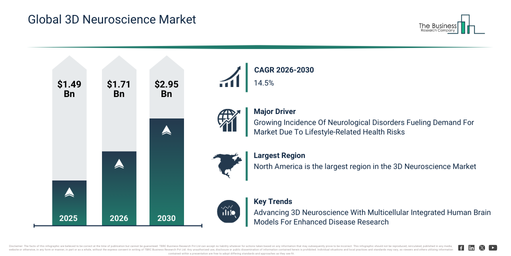
    The three-dimensional (3D) neuroscience market size has witnessed rapid expansion in recent years. It is anticipated to grow from $1.49 billion in 2025 to $1.71 billion in 2026, at a compound annual growth rate (CAGR) of 14.8%. The historical growth can be ascribed to the increasing adoption of three-dimensional (3D) brain modeling techniques, a rising demand for advanced neurological research tools, its expanding application in drug discovery and neuropharmacology, the development of imaging and visualization technologies, and an intensified focus on comprehending complex neural networks.

    The three-dimensional (3D) neuroscience market is projected to experience significant expansion over the next few years, with its size expected to reach $2.95 billion by 2030, demonstrating a compound annual growth rate (CAGR) of 14.5%. This growth during the forecast period is primarily driven by the increasing integration of three-dimensional (3D) models with artificial intelligence (AI) analytics, a rise in investment within personalized neuroscience research, wider adoption in disease modeling and therapeutic development, the expansion of high-resolution imaging and data acquisition platforms, and an elevated demand for predictive and translational neuroscience studies. Concurrently, major developments foreseen include technology-driven innovations in three-dimensional (3D) neural tissue modeling, advancements in artificial intelligence (AI)-enabled data analysis, the evolution of organoid and lab-grown neural systems, increasing research and development in imaging and simulation platforms, and breakthroughs in integrated neuroscience modeling and visualization tools.

    Download A Free Sample Report For Comprehensive Market Insights:

    https://www.thebusinessresearchcompany.com/sample.aspx?id=30491&type=smp

    Which Core Factors Are Supporting The Expansion Of The 3D Neuroscience Market?

    The expanding incidence of neurological ailments is anticipated to drive the advancement of the 3D neuroscience market in the future. These conditions are health issues impacting the brain, spinal cord, and nerves, thereby disturbing typical nervous system operations and resulting in difficulties with movement, thought processes, perception, conduct, or general bodily management. The rising occurrence of neurological disorders is linked to detrimental lifestyle choices, such as inadequate nutrition, lack of exercise, smoking, excessive drinking, and persistent stress. 3D neuroscience offers improved comprehension of brain architecture and function, facilitating more accurate diagnoses and tailored therapies for individuals suffering from neurological conditions. For instance, in April 2024, according to the National Institutes of Health (NIH), a US-based government agency, an estimated 6.9 million Americans aged 65 and older are currently living with Alzheimer’s dementia, and this figure is projected to nearly double to 13.8 million by 2060. Consequently, the growing prevalence of neurological disorders acts as a significant catalyst for the 3D neuroscience market.

    How Is The 3D Neuroscience Market Structured Across Different Market Segments?

    The 3D neuroscience market covered in this report is segmented –

    1) By Component: Instruments And Consumables, Software And Services

    2) By Technology: Brain Imaging, Neuro-Microscopy, Electrophysiology, Neurophotonic Analysis, Other Technologies

    3) By Scale Of Analysis: Macro-Scale Connectomics (MSC), Meso-Scale Connectomics (MeSC), Micro-Scale Connectomics (MiSC), Nanoscale Or Synaptic Analysis (NSA)

    4) By Application: Disease Modeling And Drug Discovery, Brain Mapping And Connectomics, Developmental Neuroscience, Diagnostics And Surgical Planning

    5) By End-User: Hospitals, Diagnostic Laboratories, Research and Academic Institutes, Other End-Users

    Subsegments:

    1) By Instruments And Consumables: Imaging Devices, Microelectrodes, Sensors, Reagents, Laboratory Consumables

    2) By Software And Services: Data Analysis Software, Visualization Software, Modeling And Simulation Software, Technical Support Services, Training And Consultation Services

    What Trends Are Affecting The 3D Neuroscience Market Dynamics?

    Leading companies active in the 3D neuroscience market are directing their attention towards creating sophisticated 3D human brain tissue platforms, including multicellular integrated brain models, with the goal of improving disease modeling, accelerating drug testing, and delivering more physiologically relevant outcomes. Multicellular integrated brain models are characterized as three-dimensional constructs grown in labs from induced pluripotent stem cells, which incorporate multiple significant brain cell types. This design permits an exhaustive investigation into cellular interactions, pathology, and drug responses. As an illustration, in November 2025, Massachusetts Institute of Technology (MIT), a US-based research institution, introduced Multicellular Integrated Brains (miBrains), a flexible 3D human brain tissue system. This platform integrates six major brain cell types, facilitates genetic engineering for individualized disease studies, and can be scaled to support extensive research projects, thereby enhancing the provision and applicability of complex in vitro models for neuroscience research.

    Who Are The Companies Shaping The 3D Neuroscience Market Landscape?

    Major companies operating in the 3D neuroscience market are Siemens Healthineers AG, Merck KGaA, Koninklijke Philips N.V., GE Healthcare Technologies Inc., Corning Incorporated, Bruker Corporation, STEMCELL Technologies Inc., Greiner Bio-One International GmbH, American Type Culture Collection, Cellink AB, Aspect Biosystems Ltd., InSphero AG, Axion BioSystems Inc., Emulate Inc., Mimetas B.V., NeuroNexus Technologies Inc., Tessara Therapeutics Inc., TheWell Bioscience Inc., Kirkstall Ltd., Pelobiotech GmbH, 3D Biotek LLC, Mightex Systems Inc., Advanced BioMatrix Inc.

    Access The Complete 3D Neuroscience Market Report:

    https://www.thebusinessresearchcompany.com/report/3d-neuroscience-market-report

    Which Area Represents The Largest Portion Of The 3D Neuroscience Market?

    North America was the largest region in the three dimensional (3D) neuroscience market in 2025. Asia-Pacific is expected to be the fastest-growing region in the forecast period. The regions covered in the 3D neuroscience market report are Asia-Pacific, South East Asia, Western Europe, Eastern Europe, North America, South America, Middle East, Africa.

    Access a Customized 3D Neuroscience Market Report for Deeper Competitive Insights

    https://www.thebusinessresearchcompany.com/sample.aspx?id=30491&type=smp

    Get in touch with us:

    The Business Research Company: https://www.thebusinessresearchcompany.com/

    Americas: +1 310-496-7795

    Asia: +44 7882 955267 & +91 8897263534

    Europe: +44 7882 955267

    Email us at: marketing@tbrc.info

    Follow us on:

    LinkedIn: https://in.linkedin.com/company/the-business-research-company

    YouTube: https://www.youtube.com/channel/UC24_fI0rV8cR5DxlCpgmyFQ

    Global Market Model: https://www.thebusinessresearchcompany.com/global-market-model
  • 3D Digital X-Ray Systems Market Forecast Through 2030 Featuring Industry Drivers And Opportunities

    3D Digital X-Ray Systems Market Forecast Through 2030 Featuring Industry Drivers And Opportunities

    The Business Research Company’s 2026 market reports feature advanced enhancements such as market attractiveness analysis, total addressable market evaluation, company benchmarking matrices, interactive Excel dashboards, expanded supply chain intelligence, emerging startup coverage, and detailed product insights, delivering more actionable and strategically valuable research.

    What Growth In Market Value Is Anticipated For The 3D Digital X-Ray Systems Market Between 2026 And 2030?

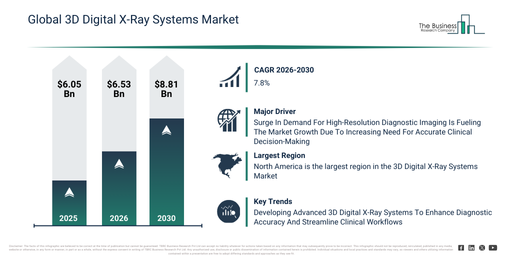
    The 3D digital X-Ray systems market has demonstrated significant expansion in recent years. Its value is anticipated to rise from $6.05 billion in 2025 to $6.53 billion in 2026, achieving a compound annual growth rate (CAGR) of 8.1%. The market’s growth in the past can be attributed to a heightened demand for advanced diagnostic imaging, an increasing prevalence of chronic and orthopedic conditions, the rising adoption of digital radiography, the expanded utilization of 3D imaging in dental care, greater awareness concerning early disease detection, a growing inclination towards minimally invasive diagnosis, increased integration of imaging in outpatient settings, escalating healthcare expenditure, the expanding availability of portable 3D x-ray devices, and a stronger preference for highly accurate diagnostic solutions.

    Significant expansion is anticipated for the 3D digital X-Ray systems market in the coming years. This market is projected to reach $8.81 billion by 2030, exhibiting a compound annual growth rate (CAGR) of 7.8%. Several factors will drive this expansion, including the increasing integration of digital radiography, a greater demand for precise 3D imaging, the rising need for early diagnostic instruments, heightened investment in imaging innovations, ongoing hospital modernization initiatives, the expanded application of imaging in managing chronic diseases, a move towards automated radiology solutions, the growing use of tele-radiology, a preference for low-dose imaging, and the increased availability of portable digital x-ray devices. Key trends during this period are expected to encompass breakthroughs in high-resolution 3D imaging technology, enhancements in low-dose radiation methods, progress in portable 3D x-ray equipment, novel AI-powered diagnostic instruments, advancements in automated image improvement, innovations in digital workflow platforms, integration with cloud-based data storage, incorporation into hospital digital infrastructures, the convergence of 3D imaging with robotics, and the development of more economical digital radiography solutions.

    Download A Free Sample Report For Comprehensive Market Insights:

    https://www.thebusinessresearchcompany.com/sample.aspx?id=30490&type=smp

    What Are The Main Drivers Accelerating The Growth Of The 3D Digital X-Ray Systems Market?

    The increasing need for high-resolution diagnostic imaging is anticipated to drive the expansion of the 3D Digital X-Ray Systems market in the future. High-resolution diagnostic imaging involves medical imaging techniques that produce clear, detailed pictures of internal body parts, facilitating precise diagnosis and effective clinical decisions. The demand for high-resolution diagnostic imaging is growing because healthcare providers are broadening their services to identify complex illnesses sooner, better manage patients, and boost the efficiency of diagnostics. The 3D Digital X-Ray Systems facilitates high-resolution diagnostic imaging through advanced systems that offer excellent image resolution, enhance diagnostic precision, and optimize patient flow in clinical environments. For example, in March 2024, data from the Australian Institute of Health and Welfare (AIHW), an Australia-based government health authority, indicated that nearly 2 in 5 Australians (39%) accessed over 27 million Medicare-subsidised diagnostic imaging services. The number of imaging services per 100 people increased from 103 in 2022–23 to 106 in 2023–24, demonstrating a year-over-year rise and expanded use of advanced imaging technologies. Consequently, the increasing need for high-resolution diagnostic imaging is fueling the expansion of the 3D Digital X-Ray Systems market.

    Which Segment-Based Categories Are Covered In The 3D Digital X-Ray Systems Market?

    The 3D digital x-ray systems market covered in this report is segmented –

    1) By Product Type: Stationary 3D Digital X-Ray Systems, Portable 3D Digital X-Ray Systems, Mobile 3D Digital X-Ray Systems

    2) By Detector Type: Flat Panel Detectors, Charge-Coupled Devices (CCD), Image Intensifier Detectors, Computed Radiography (CR) Systems, Line-Scanning Detectors

    3) By Technology: Computed Tomography (CT) Systems, Digital Radiography (DR) Systems, Fluoroscopy Systems, X-Ray Systems With Dual Energy, Portable X-Ray Systems

    4) By Application: Orthopedics, Dental Imaging, Oncology, Pediatric Imaging, Cardiology

    5) By End-User: Hospitals, Diagnostic Imaging Centers, Outpatient Surgery Centers, Research Institutions, Veterinary Clinics

    Subsegments:

    1) By Stationary 3D Digital X-Ray Systems: Fixed-Room 3D Imaging Systems, Hospital Radiology Department Systems, High-Capacity 3D X-Ray Units, Floor-Mounted 3D X-Ray Systems, Ceiling-Mounted 3D X-Ray Systems, Advanced Diagnostic 3D Systems, Large-Format 3D Orthopedic Imaging Units

    2) By Portable 3D Digital X-Ray Systems: Handheld 3D X-Ray Devices, Backpack-Style Portable 3D Systems, Battery-Powered Portable 3D X-Ray Units, Emergency Or Trauma Portable 3D Systems, Field-Use Portable 3D Devices, Compact Point-Of-Care 3D X-Ray Units

    3) By Mobile 3D Digital X-Ray Systems: Cart-Based Mobile 3D X-Ray Systems, Motorized Mobile 3D Systems, Mobile 3D C-Arm Units, ICU Or Mobile Ward 3D Imaging Systems, Mobile Surgical 3D X-Ray Units, Mobile Diagnostic Screening Units

    Which Trends Are Influencing The Expansion Of The 3D Digital X-Ray Systems Market?

    Leading companies active in the 3D digital X-ray systems market are concentrating on developing clinical imaging solutions, including multi-purpose 3D dental imaging platforms, aimed at boosting diagnostic precision, assisting in treatment planning, and streamlining surgical operations. These multi-purpose 3D dental imaging platforms are technologies employed to acquire volumetric images, strategize interventions, and support accurate clinical decision-making within dental and oral surgery practices. For example, in September 2024, Dental Imaging Technologies Corporation (DEXIS), a US-based dental imaging technology company, introduced the ORTHOPANTOMOGRAPH OP 3D EX. This 3D X-ray platform is equipped with flexible field of view options, advanced imaging software for chairside treatment planning, and integrated utilities to quickly produce surgical guides directly within practice settings. It is specifically engineered for general practitioners who wish to leverage 3D imaging to elevate their diagnostic skills, supporting a wide array of clinical requirements with its extensive range of field of view sizes.

    Which Industry Players Are Present In The 3D Digital X-Ray Systems Market?

    Major companies operating in the 3D digital x-ray systems market are Siemens Healthineers AG, Fujifilm Holdings Corporation, Koninklijke Philips N.V., GE HealthCare Technologies Inc., Mindray Medical International Limited, Dentsply Sirona Inc., Shimadzu Corporation, Canon Medical Systems Corporation, Acteon Group Ltd., United Imaging Healthcare Co. Ltd., Hamamatsu Photonics K.K., Agfa-Gevaert Group, Carestream Health Inc., Samsung Medison Co. Ltd., Analogic Corporation, Planmed Oy, Vatech Co. Ltd., Carestream Dental LLC, Ziehm Imaging GmbH, EOS Imaging S.A.

    Access The Complete 3D Digital X-Ray Systems Market Report:

    https://www.thebusinessresearchcompany.com/report/3d-digital-x-ray-systems-market-report

    Which Region Commands The Largest Share Of The 3D Digital X-Ray Systems Market?

    North America was the largest region in the 3D digital X-Ray systems market in 2025. Asia-Pacific is expected to be the fastest-growing region in the forecast period. The regions covered in the 3D digital x-ray systems market report are Asia-Pacific, South East Asia, Western Europe, Eastern Europe, North America, South America, Middle East, Africa.

    Access a Customized 3D Digital X-Ray Systems Market Report for Deeper Competitive Insights

    https://www.thebusinessresearchcompany.com/sample.aspx?id=30490&type=smp

    Get in touch with us:

    The Business Research Company: https://www.thebusinessresearchcompany.com/

    Americas: +1 310-496-7795

    Asia: +44 7882 955267 & +91 8897263534

    Europe: +44 7882 955267

    Email us at: marketing@tbrc.info

    Follow us on:

    LinkedIn: https://in.linkedin.com/company/the-business-research-company

    YouTube: https://www.youtube.com/channel/UC24_fI0rV8cR5DxlCpgmyFQ

    Global Market Model: https://www.thebusinessresearchcompany.com/global-market-model

  • The Veterinary Dietary Supplements Market Is Advancing With Support From Rising Number Of Pet Owners Fueling Growth In The Veterinary Dietary Supplements Market

    The Veterinary Dietary Supplements Market Is Advancing With Support From Rising Number Of Pet Owners Fueling Growth In The Veterinary Dietary Supplements Market

    The Business Research Company’s 2026 market reports feature advanced enhancements such as market attractiveness analysis, total addressable market evaluation, company benchmarking matrices, interactive Excel dashboards, expanded supply chain intelligence, emerging startup coverage, and detailed product insights, delivering more actionable and strategically valuable research.

    How Is The Market Value Of The Veterinary Dietary Supplements Market Projected To Expand During 2026–2030?

    The veterinary dietary supplements market size has seen rapid expansion in recent years. It is anticipated to increase from $2.62 billion in 2025 to $2.92 billion in 2026, achieving a compound annual growth rate (CAGR) of 11.3%. This historical growth can be linked to factors such as the initial limited availability of veterinary dietary supplements, growing awareness regarding animal health, the early incorporation of vitamins and minerals into animal diets, an increase in companion animal ownership, and the use of traditional protein and peptide supplements.

    The market for veterinary dietary supplements is projected to experience swift expansion over the coming years. This market is predicted to reach $4.55 billion by 2030, demonstrating a compound annual growth rate (CAGR) of 11.7%. Several factors will drive this growth during the forecast period, including progress in cbd and herbal formulations, the expanding application of omega-3 fatty acids for improving joint and skin health, the proliferation of e-commerce distribution channels, a heightened focus on digestive and immunity support, and the creation of functional supplements designed for diverse uses. Key trends anticipated during this period encompass an increasing demand for omega-3 fatty acid supplements, the wider acceptance of cbd-based veterinary items, the surging appeal of probiotics and prebiotics, the broadening of online veterinary supplement sales, and an emphasis on multivitamins and antioxidants for companion animals.

    Download A Free Sample Report For Comprehensive Market Insights:

    https://www.thebusinessresearchcompany.com/sample.aspx?id=8026&type=smp

    Which Drivers Are Advancing The Veterinary Dietary Supplements Market Growth?

    The increasing number of pet owners is expected to propel the growth of the veterinary dietary supplements market going forward. Pet owners are individuals or families who own and care for one or more pets, such as dogs, cats, birds, or other domesticated animals, providing them with food, shelter, medical care, and affection. Pet owners are rising because more people are seeking companionship and emotional support from animals, leading to an increase in pet adoption and ownership globally. Pet owners use veterinary dietary supplements to address specific nutritional deficiencies in a pet’s diet, ensuring they receive essential vitamins, minerals, or nutrients. For instance, in October 2023, according to the American Pet Products Association, a US-based non-profit association, in 2023 there were 86.9 million US households that owned a pet, which is 66% of households, and it was 62% in 2022. Therefore, the increasing number of pet owners is driving the growth of the veterinary dietary supplements market going forward.

    Which Segment Groups Define The Veterinary Dietary Supplements Market Landscape?

    The veterinary dietary supplements market covered in this report is segmented –

    1) By Type: Omega 3 Fatty Acids, Proteins And Peptides, CBD, Multivitamins And Minerals, Probiotics And Prebiotics, Other Types

    2) By Dosage Form: Tablets And Capsules, Gummies And Chewables, Powders, Liquids, Other Dosage Forms

    3) By Distribution Channel: Online Or E-Commerce, Offline

    4) By Application: Joint Health Support, Calming Or Stress Or Anxiety, Digestive Health, Energy And Electrolytes, Immunity Support, Skin And Coat Health, Other Applications

    Subsegments:

    1) By Omega 3 Fatty Acids: Fish Oil, Flaxseed Oil, Algal Oil

    2) By Proteins And Peptides: Whey Protein, Casein Protein, Pea Protein, Collagen Peptides

    3) By CBD: CBD Oil, CBD Treats, CBD Capsules

    4) By Multivitamins And Minerals: Complete Multivitamins, Specific Mineral Supplements, Herbal Blend Formulations

    5) By Probiotics And Prebiotics: Probiotic Powders, Probiotic Chews, Prebiotic Fibers

    6) By Other Types: Vitamin E, Coenzyme Q10, Green Tea Extract, Selenium

    What Trends Are Driving Changes In The Veterinary Dietary Supplements Market?

    Major companies operating in the veterinary dietary supplements market are focusing on launching innovating products to provide reliable services to customers. Innovating products refer to new or improved dietary supplements designed to enhance pet health, nutrition, and overall well-being. For instance, in October 2023, Native Pet, a US-based food and nutrition company launched The Daily. The Daily is all-in-one supplement serving as a science-backed, everyday solution for supporting dog’s health and wellness. The Daily is a powder supplement that can be sprinkled over food to support energy, skin and coat health, mobility and gut health of dog’s. The Daily is a super supplement that provides all of the essential health benefits containing 11 in 1 dog multivitamin with 12 active ingredients.

    Which Key Players Are Active In The Veterinary Dietary Supplements Market?

    Asia-Pacific was the largest region in the veterinary dietary supplements market in 2025. The regions covered in the veterinary dietary supplements market report are Asia-Pacific, South East Asia, Western Europe, Eastern Europe, North America, South America, Middle East, Africa.

    Access The Complete Veterinary Dietary Supplements Market Report:

    https://www.thebusinessresearchcompany.com/report/veterinary-dietary-supplements-global-market-report

    Which Region Commands The Largest Share Of The Veterinary Dietary Supplements Market?

    Asia-Pacific was the largest region in the veterinary dietary supplements market in 2025. The regions covered in the veterinary dietary supplements market report are Asia-Pacific, South East Asia, Western Europe, Eastern Europe, North America, South America, Middle East, Africa.

    Access a Customized Veterinary Dietary Supplements Market Report for Deeper Competitive Insights

    https://www.thebusinessresearchcompany.com/sample.aspx?id=8026&type=smp

    Get in touch with us:

    The Business Research Company: https://www.thebusinessresearchcompany.com/

    Americas: +1 310-496-7795

    Asia: +44 7882 955267 & +91 8897263534

    Europe: +44 7882 955267

    Email us at: marketing@tbrc.info

    Follow us on:

    LinkedIn: https://in.linkedin.com/company/the-business-research-company

    YouTube: https://www.youtube.com/channel/UC24_fI0rV8cR5DxlCpgmyFQ

    Global Market Model: https://www.thebusinessresearchcompany.com/global-market-model

  • Increasing Adoption Of Rising Animal Adoption Drives Growth In Veterinary Diagnostic Services Market Is Influencing The Veterinary Diagnostic Services Market

    Increasing Adoption Of Rising Animal Adoption Drives Growth In Veterinary Diagnostic Services Market Is Influencing The Veterinary Diagnostic Services Market

    The Business Research Company’s 2026 market reports feature advanced enhancements such as market attractiveness analysis, total addressable market evaluation, company benchmarking matrices, interactive Excel dashboards, expanded supply chain intelligence, emerging startup coverage, and detailed product insights, delivering more actionable and strategically valuable research.

    What Are The Forecasted Market Size Figures For The Veterinary Diagnostic Services Market In 2026 And 2030?

    The veterinary diagnostic services market size has demonstrated significant expansion in recent years. It is anticipated to increase from $14.22 billion in 2025 to $15.47 billion in 2026, achieving a compound annual growth rate (CAGR) of 8.8%. The observed growth during the historic period can be attributed to several factors including the heightened prevalence of animal diseases, a growing population of companion animals, the expansion of veterinary hospitals and clinics, the adoption of conventional laboratory-based diagnostic services, and continuous technological advancements in imaging and clinical pathology.

    The veterinary diagnostic services market is projected to experience substantial expansion in the coming years. By 2030, its valuation is anticipated to reach $21.43 billion, demonstrating a compound annual growth rate (CAGR) of 8.5%. This anticipated growth throughout the forecast period stems from factors such as increasing demand for swift point-of-care testing, the integration of AI-powered diagnostic instruments, the broadening of molecular and genetic testing offerings, a heightened emphasis on proactive animal health management, and the proliferation of mobile and remote diagnostic provisions. Key trends foreseen for the forecast period encompass the wider availability of point-of-care (POC) diagnostic solutions, the uptake of molecular and genetic testing in animal care, the fusion of imaging with laboratory diagnostics, initiatives for disease prevention and early detection, and the provision of mobile and on-site veterinary diagnostic services.

    Download A Free Sample Report For Comprehensive Market Insights:

    https://www.thebusinessresearchcompany.com/sample.aspx?id=20684&type=smp

    What Primary Factors Are Fueling The Expansion Of The Veterinary Diagnostic Services Market?

    The rising adoption of animals is expected to propel the growth of the veterinary diagnostic services market. Animal adoption refers to taking in and providing a permanent home for animals, typically from shelters, rescue organizations, or previous owners, to give them care and companionship. The rising adoption of animals is driven by increased awareness of animal welfare, the emotional benefits of pet companionship, and a growing desire to rescue animals from shelters and provide them with permanent, loving homes. Veterinary diagnostic services play a crucial role by ensuring pet and animal health and identifying any underlying medical conditions, enabling informed decisions and proper care for adopted pets. For instance, in April 2024, according to the American Pet Products Association, a US-based not-for-profit industry association, in the 2023-2024 period, 86.9 million households in the U.S. owned a pet, representing 66% of all households, up from 62% in 2022. Therefore, the rising adoption of animals is driving the growth of the veterinary diagnostic services market.

    What Key Segment Areas Are Included In The Veterinary Diagnostic Services Market Assessment?

    The veterinary diagnostic services market covered in this report is segmented –

    1) By Type: Point-Of-Care (PoC), Laboratory-Based

    2) By Test: In Vitro Diagnosis, In Vivo Diagnosis

    3) By Testing Category: Clinical Chemistry, Microbiology, Parasitology, Histopathology, Cytopathology, Hematology, Immunology And Serology, Imaging, Molecular Diagnostics, Other Test Categories

    4) By Animal Type: Companion Animals, Production Animals, Other Animal Types

    5) By Service Provider: Veterinary Hospital Or Clinic Laboratories, Reference Laboratories

    Subsegments:

    1) By Point-Of-Care (PoC): Rapid Test Kits, Portable Diagnostic Devices, Handheld Blood Analyzers, Point-Of-Care Ultrasound, In-Hospital Testing Systems

    2) By Laboratory-Based: Clinical Pathology Services, Histopathology Services, Microbiology Services, Serology Testing, Molecular Diagnostics, Biochemistry Testing, Reference Laboratory Services

    Which Trends Are Shaping The Veterinary Diagnostic Services Market Landscape?

    Major companies operating in the veterinary diagnostic services market are focusing on the utilization of big data and artificial intelligence for data analysis, such as artificial intelligence (AI)-powered veterinary X-ray image diagnosis assistance services, to enhance diagnostic accuracy and operational efficiency in veterinary practices. Artificial intelligence (AI)–powered veterinary X-ray image diagnosis assistance services use advanced algorithms to analyze X-ray images, providing more accurate diagnostic insights for veterinarians to enhance decision-making and improve patient care. For instance, in June 2024, SK Telecom, a South Korea-based telecommunications company, launched its AI-powered veterinary X-ray image diagnosis assistance service, X Caliber, offering advanced diagnostic capabilities for pet healthcare. The X-caliber system uses AI to analyze X-ray images of dogs and cats within 15 seconds and stores data in the cloud for easy access and management. It features a sensitivity range from 86% to 94% that can detect various abnormalities and is now available in over 100 veterinary clinics across Australia, with plans for further expansion globally.

    Who Are The Leading Firms Participating In The Veterinary Diagnostic Services Market?

    North America was the largest region in the veterinary diagnostic services market in 2025. The regions covered in the veterinary diagnostic services market report are Asia-Pacific, South East Asia, Western Europe, Eastern Europe, North America, South America, Middle East, Africa.

    Access The Complete Veterinary Diagnostic Services Market Report:

    https://www.thebusinessresearchcompany.com/report/veterinary-diagnostic-services-global-market-report

    Which Region Accounts For The Highest Share Of The Veterinary Diagnostic Services Market?

    North America was the largest region in the veterinary diagnostic services market in 2025. The regions covered in the veterinary diagnostic services market report are Asia-Pacific, South East Asia, Western Europe, Eastern Europe, North America, South America, Middle East, Africa.

    Access a Customized Veterinary Diagnostic Services Market Report for Deeper Competitive Insights

    https://www.thebusinessresearchcompany.com/sample.aspx?id=20684&type=smp

    Get in touch with us:

    The Business Research Company: https://www.thebusinessresearchcompany.com/

    Americas: +1 310-496-7795

    Asia: +44 7882 955267 & +91 8897263534

    Europe: +44 7882 955267

    Email us at: marketing@tbrc.info

    Follow us on:

    LinkedIn: https://in.linkedin.com/company/the-business-research-company

    YouTube: https://www.youtube.com/channel/UC24_fI0rV8cR5DxlCpgmyFQ

    Global Market Model: https://www.thebusinessresearchcompany.com/global-market-model

  • Elevating The Veterinary Diagnostic Equipment Market Surge In Veterinary Practitioner Numbers Continues To Impact The Growth Of The Veterinary Diagnostic Equipment Market

    Elevating The Veterinary Diagnostic Equipment Market Surge In Veterinary Practitioner Numbers Continues To Impact The Growth Of The Veterinary Diagnostic Equipment Market

    The Business Research Company’s 2026 market reports feature advanced enhancements such as market attractiveness analysis, total addressable market evaluation, company benchmarking matrices, interactive Excel dashboards, expanded supply chain intelligence, emerging startup coverage, and detailed product insights, delivering more actionable and strategically valuable research.

    How Much Larger Will The Veterinary Diagnostic Equipment Market Become By 2030 Compared To 2026?

    Significant growth has been observed in the veterinary diagnostic equipment market size over the past few years. The market is anticipated to expand, reaching $1.58 billion in 2026 from $1.48 billion in 2025, propelled by a compound annual growth rate (CAGR) of 6.7%. Key contributors to this historical growth include an uptick in veterinary healthcare spending, the increasing occurrence of animal illnesses, greater demand for monitoring livestock health, the widening network of veterinary clinics and laboratories, and the readiness of basic diagnostic analyzers.

    The veterinary diagnostic equipment market is anticipated to experience substantial expansion in the coming years. This market is projected to reach $2.09 billion by 2030, exhibiting a compound annual growth rate (CAGR) of 7.2%. Several factors will drive this growth during the forecast period, including a heightened demand for sophisticated diagnostic tools, an increase in companion animal ownership, a growing emphasis on proactive veterinary care, breakthroughs in molecular testing technology, and the broadening of in-house diagnostic capacities. Key trends anticipated for this period encompass the increasing integration of point-of-care diagnostic devices, a greater need for swift and precise test outcomes, an expansion of diagnostic offerings within companion animal healthcare, an uptick in the use of molecular and immunodiagnostic testing, and a stronger emphasis on identifying diseases early and implementing preventive measures.

    Download A Free Sample Report For Comprehensive Market Insights:

    https://www.thebusinessresearchcompany.com/sample.aspx?id=2455&type=smp

    Which Strategic Drivers Are Supporting The Veterinary Diagnostic Equipment Market Development?

    The growing number of veterinary practitioners is expected to propel the growth of the veterinary diagnostic equipment market in the coming years. A veterinary practitioner is a person who works in the field of veterinary medicine, which is the discipline of medicine concerned with the detection, management, treatment, and prevention of illness, disorder, and damage in animals. The growing number of veterinary practitioners is increasing due to a higher demand for professional pet care driven by the rise in pet ownership and spending on pet health. The veterinary diagnostic equipment market supports the growing number of veterinary practitioners by providing advanced tools that enable faster, more accurate diagnoses, helping veterinarians deliver better care to an increasing number of pets. For instance, in December 2023, according to the report published by the American Veterinary Medical Association, a US-based veterinary agency, there were approximately 127,131 veterinarians actively engaged in practice in the U.S. by the end of 2023. Therefore, the growing number of veterinary practitioners is driving the veterinary diagnostic equipment market.

    How Is Segment Classification Applied In The Veterinary Diagnostic Equipment Market?

    The veterinary diagnostic equipment market covered in this report is segmented –

    1) By Product: Hematology, Immunodiagnostics, Clinical Chemistry, Molecular Testing

    2) By Animal: Livestock Cattle, Domestic Pets

    3) By End Users: Hospitals And Clinics, Reference Laboratories, Universities Or Research Centers, Point-Of-Care Or In-House Testing

    Subsegments:

    1) By Hematology: Hematology Analyzers, Hematology Reagents And Kits

    2) By Immunodiagnostics: Immunoassay Analyzers, Immunoassay Reagents And Kits

    3) By Clinical Chemistry: Chemistry Analyzers, Clinical Chemistry Reagents And Kits

    4) By Molecular Testing: Polymerase Chain Reaction (PCR) Machines, Molecular Testing Reagents And Kits

    What Trends Are Influencing The Veterinary Diagnostic Equipment Market Outlook?

    Major companies operating in the veterinary diagnostic equipment market are focusing on innovative products like novel diagnostic tests for kidney injury to better meet the needs of their existing consumers. A ‘Novel Diagnostic Test for Kidney Injury’ is a ground-breaking or revolutionary medical test that identifies and assesses renal damage or injury in a more accurate, sensitive, and specific manner than existing diagnostic approaches. Such a test may use of emerging technology, novel biomarkers, or novel techniques to improve the early diagnosis and accurate evaluation of kidney damage, resulting in better care and outcomes. For instance, in June 2023, IDEXX Laboratories Inc., a US-based company that develops, manufactures, and distributes services and products for the companion animal, poultry, and livestock, testing of water, and dairy markets, launched the IDEXX Cystatin B Test. The IDEXX Cystatin B Test is a newly developed veterinary diagnostic test for identifying kidney damage in cats and dogs, and it is included in renal health test panels, revealing new clinical information for approximately two million patient visits each year. The IDEXX Cystatin B Test is going to enhance the understanding of kidney health by identifying damage and offering more insight when an alteration in kidney function is not obvious.

    Which Companies Are Engaged In The Veterinary Diagnostic Equipment Market Environment?

    North America was the largest region in the veterinary diagnostic equipment market in 2025. Asia-Pacific was the second-largest region in the global veterinary diagnostic equipment market analysis. The regions covered in the veterinary diagnostic equipment market report are Asia-Pacific, South East Asia, Western Europe, Eastern Europe, North America, South America, Middle East, Africa.

    Access The Complete Veterinary Diagnostic Equipment Market Report:

    https://www.thebusinessresearchcompany.com/report/veterinary-diagnostic-equipment-global-market-report

    Which Region Is The Primary Market For The Veterinary Diagnostic Equipment Market?

    North America was the largest region in the veterinary diagnostic equipment market in 2025. Asia-Pacific was the second-largest region in the global veterinary diagnostic equipment market analysis. The regions covered in the veterinary diagnostic equipment market report are Asia-Pacific, South East Asia, Western Europe, Eastern Europe, North America, South America, Middle East, Africa.

    Access a Customized Veterinary Diagnostic Equipment Market Report for Deeper Competitive Insights

    https://www.thebusinessresearchcompany.com/sample.aspx?id=2455&type=smp

    Get in touch with us:

    The Business Research Company: https://www.thebusinessresearchcompany.com/

    Americas: +1 310-496-7795

    Asia: +44 7882 955267 & +91 8897263534

    Europe: +44 7882 955267

    Email us at: marketing@tbrc.info

    Follow us on:

    LinkedIn: https://in.linkedin.com/company/the-business-research-company

    YouTube: https://www.youtube.com/channel/UC24_fI0rV8cR5DxlCpgmyFQ

    Global Market Model: https://www.thebusinessresearchcompany.com/global-market-model

  • Veterinary Dermatology Drugs Market Outlook Through 2030 With Analysis Of Industry Trends And Developments

    Veterinary Dermatology Drugs Market Outlook Through 2030 With Analysis Of Industry Trends And Developments

    The Business Research Company’s 2026 market reports feature advanced enhancements such as market attractiveness analysis, total addressable market evaluation, company benchmarking matrices, interactive Excel dashboards, expanded supply chain intelligence, emerging startup coverage, and detailed product insights, delivering more actionable and strategically valuable research.

    What Growth In Market Value Is Anticipated For The Veterinary Dermatology Drugs Market Between 2026 And 2030?

    The market for veterinary dermatology drugs has experienced substantial expansion recently. This market is projected to expand, reaching $10.64 billion in 2026 from $9.54 billion in 2025, demonstrating a compound annual growth rate (CAGR) of 11.5%. Historically, this expansion has been driven by factors such as a lack of understanding regarding animal dermatology, an increasing occurrence of parasitic infections, the use of conventional antifungal and antibacterial medications, an increase in companion animal ownership, and the introduction of fundamental topical therapies.

    The market for veterinary dermatology drugs is projected to experience substantial expansion over the coming years. This market is anticipated to reach $16.37 billion by 2030, exhibiting a compound annual growth rate (CAGR) of 11.4%. This projected growth during the forecast period is attributable to several factors, including innovations in precision dermatology medications, the expanding adoption of combination therapies, increased spending on companion animal healthcare, the escalating occurrence of allergic skin conditions, and the broadening of hospital and retail pharmacy distribution networks. Key trends identified for the forecast timeframe encompass a higher incidence of skin infections in companion animals, a growing need for topical veterinary medications, the expansion of online veterinary pharmacies, the proliferation of injectable and oral dermatology treatments, and the creation of targeted antiparasitic therapies.

    Download A Free Sample Report For Comprehensive Market Insights:

    https://www.thebusinessresearchcompany.com/sample.aspx?id=8025&type=smp

    What Major Growth Factors Are Impacting The Veterinary Dermatology Drugs Market?

    The increase number of pet owners is expected to propel the growth of the veterinary dermatology drugs market going forward. Pet owners are individuals who own or adopt a pet animal. Pet owners are rising because more people are seeking companionship to cope with busy lifestyles and social isolation, which increases the demand for pets as emotional support and family members. Veterinary dermatology drugs help pet owners by effectively treating skin conditions in their pets, improving their pets’ comfort, health, and overall quality of life. For instance, in 2023, according to the Shelter Animals Count, a US-based non-governmental organization, of the animals in shelters and rescues in 2023, 4.8 million were adopted into loving homes. Therefore, the increasing number of pet owners drives the veterinary dermatology drugs market.

    What Are The Core Segment Classifications In The Veterinary Dermatology Drugs Market?

    The veterinary dermatology drugs market covered in this report is segmented –

    1) By Product Type: Antifungal Drugs, Antibacterial Drugs, Antiparasitic Drugs

    2) By Animal Type: Companion Animal, Livestock Animal

    3) By Drug Indication: Parasitic Infections, Allergic Infections, Other Indications

    4) By Route Of Administration: Topical, Injectable, Oral

    5) By Distribution Channel: Retail, Hospital Pharmacies, Online

    Subsegments:

    1) By Antifungal Drugs: Azoles, Polyenes, Allylamines, Echinocandins

    2) By Antibacterial Drugs: Beta-lactams, Tetracyclines, Macrolides, Lincosamides, Aminoglycosides

    3) By Antiparasitic Drugs: Insecticides, Anthelmintics, Topical Treatments, Systemic Treatments

    Which Trends Are Expected To Shape The Veterinary Dermatology Drugs Market?

    Major companies operating in the veterinary dermatology drugs market are focusing on developing innovative therapies such as Janus kinase (JAK) inhibitors and targeted oral treatments to improve therapeutic efficacy and enhance convenience for canine patients. JAK inhibitors are targeted therapies that block intracellular signaling pathways involved in allergic inflammation and pruritus, thereby disrupting the itch–scratch cycle and reducing disease severity, while once-daily oral therapies provide consistent dosing and ease of administration for long-term management of chronic dermatological conditions. For instance, in September 2024, Elanco Animal Health Incorporated, a US-based global animal health company, announced that the U.S. Food and Drug Administration (FDA) approved Zenrelia (ilunocitinib tablets) for the treatment of allergic and atopic dermatitis in dogs. Zenrelia is a once-daily oral JAK inhibitor that offers a safe, highly effective, and convenient treatment option, demonstrating reduced rebound itch and improved clinical remission rates compared to existing market incumbents, highlighting the growing emphasis on targeted and patient-friendly innovations in veterinary dermatology.

    Who Are The Prominent Players Across The Veterinary Dermatology Drugs Market?

    North America was the largest region in the veterinary dermatology drugs market in 2025. Asia-Pacific is expected to be the fastest-growing region in the veterinary dermatology drugs market report forecast period. The regions covered in the veterinary dermatology drugs market report are Asia-Pacific, South East Asia, Western Europe, Eastern Europe, North America, South America, Middle East, Africa.

    Access The Complete Veterinary Dermatology Drugs Market Report:

    https://www.thebusinessresearchcompany.com/report/veterinary-dermatology-drugs-global-market-report

    Which Geographic Region Represents The Largest Veterinary Dermatology Drugs Market Share?

    North America was the largest region in the veterinary dermatology drugs market in 2025. Asia-Pacific is expected to be the fastest-growing region in the veterinary dermatology drugs market report forecast period. The regions covered in the veterinary dermatology drugs market report are Asia-Pacific, South East Asia, Western Europe, Eastern Europe, North America, South America, Middle East, Africa.

    Access a Customized Veterinary Dermatology Drugs Market Report for Deeper Competitive Insights

    https://www.thebusinessresearchcompany.com/sample.aspx?id=8025&type=smp

    Get in touch with us:

    The Business Research Company: https://www.thebusinessresearchcompany.com/

    Americas: +1 310-496-7795

    Asia: +44 7882 955267 & +91 8897263534

    Europe: +44 7882 955267

    Email us at: marketing@tbrc.info

    Follow us on:

    LinkedIn: https://in.linkedin.com/company/the-business-research-company

    YouTube: https://www.youtube.com/channel/UC24_fI0rV8cR5DxlCpgmyFQ

    Global Market Model: https://www.thebusinessresearchcompany.com/global-market-model