Month: June 2026

  • Veterinary Anti-infectives Market Developments Influencing Industry Expansion Through 2030

    Veterinary Anti-infectives Market Developments Influencing Industry Expansion Through 2030

    The Business Research Company’s 2026 market reports feature advanced enhancements such as market attractiveness analysis, total addressable market evaluation, company benchmarking matrices, interactive Excel dashboards, expanded supply chain intelligence, emerging startup coverage, and detailed product insights, delivering more actionable and strategically valuable research.

    How Does The Forecasted Market Size Of The Veterinary Anti-infectives Market Compare Between 2026 And 2030?

    The veterinary anti-infectives market size has experienced strong growth in recent years. It is anticipated to expand from $6.02 billion in 2025 to $6.59 billion in 2026, at a compound annual growth rate (CAGR) of 9.6%. The growth observed historically can be attributed to the rising prevalence of livestock diseases, a growing companion animal population, traditional reliance on antibiotics, increasing veterinary awareness, and the expansion of veterinary clinics in asia-pacific.

    The market size for veterinary anti-infectives is projected to experience substantial expansion over the upcoming years. This market is predicted to reach $9.53 billion by 2030, exhibiting a compound annual growth rate (CAGR) of 9.7%. Factors contributing to this anticipated growth include an increasing demand for precision veterinary medicines, the growing acceptance of antiviral and antifungal agents, an enhanced emphasis on preventive healthcare, the expansion of veterinary hospitals and pharmacies, and advancements in immune modulators and sophisticated disinfectants. Key trends identified for the forecast period encompass a greater utilization of antibiotics and antimicrobial agents, an increase in the uptake of vaccines and antiviral medications, a heightened awareness regarding animal disease prevention, the growth of the companion animal healthcare market, and an escalating demand for both topical and systemic antifungal treatments.

    Download A Free Sample Report For Comprehensive Market Insights:

    https://www.thebusinessresearchcompany.com/sample.aspx?id=7802&type=smp

    What Influential Factors Are Boosting The Veterinary Anti-infectives Market Demand?

    An increase in pet ownership is expected to propel the growth of the veterinary anti-infectives market going forward. Pet ownership refers to owning a dog, cat, or other domestic pet at home. Pets are being adopted as increasing number of the young population are considering them as part of their family, some owners are adopting them for their compassion, loyalty and the to prevent loneliness. Veterinary anti-infectives help pet ownership by preventing and treating infections in pets, ensuring their health and reducing the risk of illness for both animals and owners. For instance, in 2023, according to the Shelter Animals Count, a US-based non-governmental organization, 177,000 additional dogs and cats were in the animal sheltering system nationwide compared to the same time in 2022. Therefore, an increase in pet ownership is driving the demand for veterinary anti-infectives market.

    Which Segment Groups Define The Veterinary Anti-infectives Market Landscape?

    The veterinary anti-infectives market covered in this report is segmented –

    1) By Drug Class: Antimicrobial Agents, Antiviral Agents, Antifungal Agents, Other Drug Classes

    2) By Species Type: Livestock Animals, Companion Animals

    3) By Mode Of Administration: Oral, Parenteral, Topical

    4) By Distribution Channel: Veterinary Hospitals, Veterinary Clinics, Pharmacies, Other Distribution Channels

    Subsegments:

    1) By Antimicrobial Agents: Antibiotics, Antiseptics

    2) By Antiviral Agents: Vaccines, Antiviral Medications

    3) By Antifungal Agents: Topical Antifungals, Systemic Antifungals

    4) By Other Drug Classes: Parasiticides, Immune Modulators, Disinfectants

    What Trends Are Affecting The Growth Of The Veterinary Anti-infectives Market?

    Major companies operating in the market are using advanced technologies to sustain their position in the veterinary anti-infectives market. Advanced technologies refer to innovative methods and tools that improve the prevention, diagnosis, and treatment of infections in animals, enhancing effectiveness and safety. For instance, in May 2025, Amazon.com Inc., a US based e commerce and pharmacy services provider, launched expanded pet prescription medication offerings in partnership with Strategic Pharmaceutical Solutions Inc. (Vetsource), a US-based leading veterinary technology and pharmacy platform, that allow customers to order veterinarian approved anti infective and other prescriptions online, provide delivery typically within two to six days, and simplify refill approvals through digital checkout integration and veterinarian verification. This innovation broadens access and enhances client engagement but may require careful integration with clinical workflows and adherence to regulatory standards.

    Who Are The Firms Contributing To The Veterinary Anti-infectives Market Ecosystem?

    North America was the largest region in the veterinary anti-infectives market in 2025. Asia-Pacific is expected to be the fastest-growing region in the forecast period. The regions covered in the veterinary anti-infectives market report are Asia-Pacific, South East Asia, Western Europe, Eastern Europe, North America, South America, Middle East, Africa.

    Access The Complete Veterinary Anti-infectives Market Report:

    https://www.thebusinessresearchcompany.com/report/veterinary-anti-infectives-global-market-report

    Which Region Accounts For The Highest Share Of The Veterinary Anti-infectives Market?

    North America was the largest region in the veterinary anti-infectives market in 2025. Asia-Pacific is expected to be the fastest-growing region in the forecast period. The regions covered in the veterinary anti-infectives market report are Asia-Pacific, South East Asia, Western Europe, Eastern Europe, North America, South America, Middle East, Africa.

    Access a Customized Veterinary Anti-infectives Market Report for Deeper Competitive Insights

    https://www.thebusinessresearchcompany.com/sample.aspx?id=7802&type=smp

    Get in touch with us:

    The Business Research Company: https://www.thebusinessresearchcompany.com/

    Americas: +1 310-496-7795

    Asia: +44 7882 955267 & +91 8897263534

    Europe: +44 7882 955267

    Email us at: marketing@tbrc.info

    Follow us on:

    LinkedIn: https://in.linkedin.com/company/the-business-research-company

    YouTube: https://www.youtube.com/channel/UC24_fI0rV8cR5DxlCpgmyFQ

    Global Market Model: https://www.thebusinessresearchcompany.com/global-market-model
  • Veterinary Antibiotics Market Size Forecast To Achieve $3.4 Billion By 2030 With 8.4% CAGR

    Veterinary Antibiotics Market Size Forecast To Achieve $3.4 Billion By 2030 With 8.4% CAGR

    The Business Research Company’s 2026 market reports feature advanced enhancements such as market attractiveness analysis, total addressable market evaluation, company benchmarking matrices, interactive Excel dashboards, expanded supply chain intelligence, emerging startup coverage, and detailed product insights, delivering more actionable and strategically valuable research.

    What Increase In Market Value Is Predicted For The Veterinary Antibiotics Market During The 2026–2030 Period?

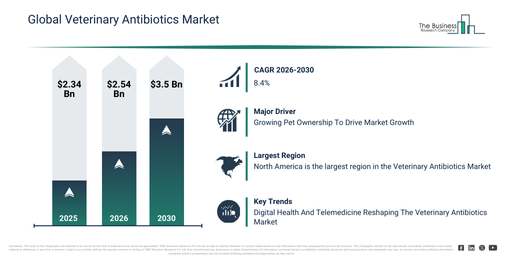
    The veterinary antibiotics market size has shown significant expansion in recent years. This market is expected to expand from $2.34 billion in 2025 to $2.54 billion in 2026, reflecting a compound annual growth rate (CAGR) of 8.3%. Historically, this growth can be ascribed to several factors, including the widespread presence of bacterial infections in livestock, the increasing population of companion animals, restricted access to early veterinary healthcare, the use of traditional injectable antibiotic formulations, and a growing consciousness regarding animal welfare.

    The veterinary antibiotics market is projected to experience substantial expansion in the coming years. This market is set to reach $3.5 billion by 2030, exhibiting a compound annual growth rate (CAGR) of 8.4%. Key factors contributing to this anticipated growth include the increasing adoption of precision medicine in veterinary services, advancements in oral and premix formulations, supportive regulatory frameworks for antibiotic stewardship, a rise in pet ownership and associated expenditures, and the integration of digital monitoring systems for antibiotic administration. Prominent trends expected during the forecast period involve a surging demand for anti-bacterial and anti-parasitic medications, the broadened application of antibiotics in companion animals, a move towards oral solutions and premixes for simpler administration, a heightened emphasis on NSAIDs for managing livestock pain, and the creation of multi-functional veterinary antibiotic formulations.

    Download A Free Sample Report For Comprehensive Market Insights:

    https://www.thebusinessresearchcompany.com/sample.aspx?id=2458&type=smp

    Which Drivers Are Advancing The Veterinary Antibiotics Market Growth?

    The rising pet ownership rate is expected to propel the growth of veterinary antibiotics market going forward. Pet ownership is the legally recognized and responsible act of having and caring for domesticated animals as companions, which involves providing for their physical, emotional, and medical needs. Pet ownership rate is rising due to increasing desire for companionship, as more individuals and families adopt pets to reduce loneliness and improve emotional well-being. Veterinary antibiotics help increase pet ownership rate by ensuring pets remain healthy and disease-free, giving owners confidence in their ability to care for them. For instance, in October 2024, according to the American Veterinary Medical Association, a US-based nonprofit professional association, the total number of dog-owning households in the U.S. is projected to increase by 59.8 million in 2024, which is 45.5%) of all U.S. households, and the number of cat-owning households has increased by 42.1 million in 2024, which is 32.1%) of all U.S. households. Therefore, the rising pet ownership rate is driving the growth of veterinary antibiotics market.

    What Key Segment Areas Are Included In The Veterinary Antibiotics Market Assessment?

    The veterinary antibiotics market covered in this report is segmented –

    1) By Product: Anti-Parasitic, Anti-Bacterial, Non-Steroidal Anti-Inflammatory Drug, Other Products

    2) By Administration: Premixes, Injections, Oral Powders, Oral Solutions, Other Administrations

    3) By End User: Farm Animals, Companion Animals

    Subsegments:

    1) By Anti-Parasitic: Endoparasiticides, Ectoparasiticides

    2) By Anti-Bacterial: Tetracyclines, Penicillins, Macrolides, Aminoglycosides, Sulfonamides

    3) By Non-Steroidal Anti-Inflammatory Drug (NSAID): Carprofen, Meloxicam, Aspirin

    4) By Other Products: Antifungal, Antiviral

    Which Trends Are Influencing The Direction Of The Veterinary Antibiotics Market?

    Major companies operating in the veterinary antibiotics market are developing telemedicine platforms for pet healthcare to gain a competitive edge in the market. Telemedicine is a healthcare practice that involves the remote diagnosis, consultation, treatment, and monitoring of patients using telecommunications technology, such as video conferencing, phone calls, or secure messaging platforms. For instance, in June 2023, Cargill Inc., a US-based food corporation launched Zoonivet, a digital pet-care app. This Telehealth platform simplifies pet healthcare by connecting pet parents with qualified veterinarians through video calls, making primary pet care accessible and convenient. Zoonivet also plans to provide surgery, home diagnostic services, medication, pet food, and pet boarding across key Indian markets.

    Which Key Players Are Active In The Veterinary Antibiotics Market?

    North America was the largest region in the veterinary antibiotics market in 2025. Asia-Pacific was the second-largest region in the global veterinary antibiotics market share. The regions covered in the veterinary antibiotics market report are Asia-Pacific, South East Asia, Western Europe, Eastern Europe, North America, South America, Middle East, Africa.

    Access The Complete Veterinary Antibiotics Market Report:

    https://www.thebusinessresearchcompany.com/report/veterinary-antibiotics-global-market-report

    Which Region Is The Primary Market For The Veterinary Antibiotics Market?

    North America was the largest region in the veterinary antibiotics market in 2025. Asia-Pacific was the second-largest region in the global veterinary antibiotics market share. The regions covered in the veterinary antibiotics market report are Asia-Pacific, South East Asia, Western Europe, Eastern Europe, North America, South America, Middle East, Africa.

    Access a Customized Veterinary Antibiotics Market Report for Deeper Competitive Insights

    https://www.thebusinessresearchcompany.com/sample.aspx?id=2458&type=smp

    Get in touch with us:

    The Business Research Company: https://www.thebusinessresearchcompany.com/

    Americas: +1 310-496-7795

    Asia: +44 7882 955267 & +91 8897263534

    Europe: +44 7882 955267

    Email us at: marketing@tbrc.info

    Follow us on:

    LinkedIn: https://in.linkedin.com/company/the-business-research-company

    YouTube: https://www.youtube.com/channel/UC24_fI0rV8cR5DxlCpgmyFQ

    Global Market Model: https://www.thebusinessresearchcompany.com/global-market-model

  • Veterinary Anesthesia Equipment Market Forecast Covering Industry Demand And Market Evolution

    Veterinary Anesthesia Equipment Market Forecast Covering Industry Demand And Market Evolution

    The Business Research Company’s 2026 market reports feature advanced enhancements such as market attractiveness analysis, total addressable market evaluation, company benchmarking matrices, interactive Excel dashboards, expanded supply chain intelligence, emerging startup coverage, and detailed product insights, delivering more actionable and strategically valuable research.

    How Will The Market Size Of The Veterinary Anesthesia Equipment Market Progress Through 2030?

    The veterinary anesthesia equipment market has experienced substantial expansion in recent years. This market is anticipated to grow from $1.17 billion in 2025 to $1.26 billion in 2026, achieving a compound annual growth rate (CAGR) of 7.4%. The upward trend in the historic period can be ascribed to a rise in veterinary surgical procedures, increasing global pet ownership, the expansion of veterinary hospitals and clinics, growing awareness surrounding animal pain management, and the accessibility of basic inhalation anesthesia systems.

    The veterinary anesthesia equipment market size is projected for substantial expansion over the upcoming years, with an anticipated rise to $1.71 billion by 2030, exhibiting a compound annual growth rate (CAGR) of 7.9%. This projected growth throughout the forecast period stems from factors such as the escalating demand for sophisticated veterinary care, increased spending on the well-being of companion animals, the proliferation of emergency and critical care services, advancements in anesthesia delivery system technology, and the broadening reach of homecare and mobile veterinary services. Key developments expected during this period include a heightened adoption of advanced anesthesia monitoring solutions, a surging preference for portable and compact anesthesia devices, an intensified emphasis on ensuring patient safety and precise anesthesia administration, the broadened application of anesthesia equipment within small animal practices, and an elevated use of inhalation-based anesthesia methodologies.

    Download A Free Sample Report For Comprehensive Market Insights:

    https://www.thebusinessresearchcompany.com/sample.aspx?id=2453&type=smp

    What Primary Factors Are Fueling The Expansion Of The Veterinary Anesthesia Equipment Market?

    Rising pet ownership is expected to propel the growth of the veterinary anesthesia equipment market in the coming years. Pet ownership is the act of keeping a tamed animal, such as a cat, dog, bird, fish, or similar small animal, and providing for its needs. Pet ownership entails obligations such as providing food, water, housing, physical activity, and healthcare for the animal. Veterinary anesthetic equipment is essential to pet ownership since it ensures the security of pets throughout surgical operations. The need for veterinary anesthetic equipment is predicted to rise as the number of pets grows. For instance, in October 2023, according to the World Animal Foundation, a US-based site that promotes animal rights, responsible pet ownership, and compassionate awareness, ownership of dogs was more prevalent, with 65.1 million dogs compared to 46.5 million cats. Horse owners own 2.2 million horses, while 11 million households have saltwater fish tanks. Therefore, rising pet ownership is driving the veterinary anesthesia equipment market.

    How Is Segment Classification Applied In The Veterinary Anesthesia Equipment Market?

    The veterinary anesthesia equipment market covered in this report is segmented –

    1) By Type: Standalone Anaesthesia Machines, Portable Anaesthesia Machines

    2) By Animal Type: Small, Large

    3) By End User: Veterinary Hospitals, Veterinary Clinics, Emergency Service Centres, Veterinary Homecare Settings

    Subsegments:

    1) By Standalone Anesthesia Machines: Conventional Standalone Anesthesia Machines, Advanced Standalone Anesthesia Machines

    2) By Portable Anesthesia Machines: Battery-operated Portable Anesthesia Machines, Lightweight Portable Anesthesia Machines

    What Trends Are Driving Changes In The Veterinary Anesthesia Equipment Market?

    Major companies operating in the veterinary anesthesia equipment market are focusing on developing innovative solutions, such as anaesthetic gas capture systems integrated with existing anesthesia equipment, to meet the rising demand for sustainable veterinary practices, reduced greenhouse gas emissions, and environmentally responsible surgical procedures in veterinary clinics and hospitals. Anaesthetic gas capture systems are designed to safely adsorb and remove exhaled anesthetic agents, such as isoflurane and sevoflurane, before they are released into the environment, representing a significant advancement over traditional anesthesia setups that release these gases into the atmosphere without mitigation. For instance, in April 2024, Mars Veterinary Health, a UK-based provider of veterinary care services, piloted an industry-leading anaesthetic gas capture system in partnership with SageTech Veterinary, an innovative technology provider, to integrate gas capture into veterinary anesthesia workflows; this system features specialized adsorption canisters, compact integration with existing machines, and minimal disruption to clinical procedures. By capturing waste anesthetic gases, the technology reduces environmental impact, supports compliance with sustainability targets, and maintains the precision and safety of anesthesia delivery, offering veterinary practices an eco-friendly alternative to conventional systems.

    Who Are The Leading Firms Participating In The Veterinary Anesthesia Equipment Market?

    North America was the largest region in the veterinary anesthesia equipment market in 2025. Asia-Pacific was the second-largest region in the global veterinary anesthesia equipment market share. The regions covered in the veterinary anesthesia equipment market report are Asia-Pacific, South East Asia, Western Europe, Eastern Europe, North America, South America, Middle East, Africa.

    Access The Complete Veterinary Anesthesia Equipment Market Report:

    https://www.thebusinessresearchcompany.com/report/veterinary-anesthesia-equipment-global-market-report

    Which Geographic Region Represents The Largest Veterinary Anesthesia Equipment Market Share?

    North America was the largest region in the veterinary anesthesia equipment market in 2025. Asia-Pacific was the second-largest region in the global veterinary anesthesia equipment market share. The regions covered in the veterinary anesthesia equipment market report are Asia-Pacific, South East Asia, Western Europe, Eastern Europe, North America, South America, Middle East, Africa.

    Access a Customized Veterinary Anesthesia Equipment Market Report for Deeper Competitive Insights

    https://www.thebusinessresearchcompany.com/sample.aspx?id=2453&type=smp

    Get in touch with us:

    The Business Research Company: https://www.thebusinessresearchcompany.com/

    Americas: +1 310-496-7795

    Asia: +44 7882 955267 & +91 8897263534

    Europe: +44 7882 955267

    Email us at: marketing@tbrc.info

    Follow us on:

    LinkedIn: https://in.linkedin.com/company/the-business-research-company

    YouTube: https://www.youtube.com/channel/UC24_fI0rV8cR5DxlCpgmyFQ

    Global Market Model: https://www.thebusinessresearchcompany.com/global-market-model

  • Veterinary Active Pharmaceutical Ingredients Manufacturing Market Trends And Growth Outlook Across The 2026–2030 Forecast Period

    Veterinary Active Pharmaceutical Ingredients Manufacturing Market Trends And Growth Outlook Across The 2026–2030 Forecast Period

    The Business Research Company’s 2026 market reports feature advanced enhancements such as market attractiveness analysis, total addressable market evaluation, company benchmarking matrices, interactive Excel dashboards, expanded supply chain intelligence, emerging startup coverage, and detailed product insights, delivering more actionable and strategically valuable research.

    What Is The Expected Market Size Of The Veterinary Active Pharmaceutical Ingredients Manufacturing Market In 2026 And How Much Will It Reach By 2030?

    The veterinary active pharmaceutical ingredients manufacturing market has shown substantial growth in recent years. Its size is expected to climb from $8.03 billion in 2025 to $8.71 billion in 2026, exhibiting a compound annual growth rate (CAGR) of 8.5%. Key drivers for this historical expansion include the increasing prevalence of animal diseases, the rising populations of livestock and companion animals, the expanding veterinary pharmaceutical industry, the development of conventional chemical-based APIs, and a growing demand for anti-infective and antiparasitic drugs.

    The veterinary active pharmaceutical ingredients manufacturing market size is set to experience substantial growth over the next few years. It is anticipated to expand to $12.06 billion by 2030, achieving a compound annual growth rate (CAGR) of 8.5%. This projected expansion can be linked to the increased adoption of biological and recombinant APIs, a rise in contract manufacturing services, the surging demand for highly potent APIs, favorable regulatory support for veterinary pharmaceutical production, and an escalating focus on vaccine API innovations. Key trends during the forecast period include the growth of contract manufacturing for veterinary APIs, the development of highly potent APIs, an expansion of in-house API production capabilities, a heightened emphasis on anti-infective and antiparasitic APIs, and ongoing innovation in vaccine API formulations.

    Download A Free Sample Report For Comprehensive Market Insights:

    https://www.thebusinessresearchcompany.com/sample.aspx?id=7942&type=smp

    Which Strategic Drivers Are Supporting The Veterinary Active Pharmaceutical Ingredients Manufacturing Market Development?

    The increasing prevalence of zoonotic diseases is expected to propel the growth of the veterinary active pharmaceutical ingredients manufacturing market going forward. A zoonotic disease, also known as zoonosis, is an infectious disease that can be transmitted naturally from animals to humans or from humans to animals. Zoonotic diseases are rising because increased human–animal interaction creates more opportunities for pathogens to spread from animals to people and establish new infections. Veterinary APIs are used in the development of vaccines that can prevent the spread of zoonotic diseases from animals to humans. The use of veterinary APIs can also help prevent antibiotic resistance, which is a major concern in the treatment of zoonotic diseases. For instance, in February 2023, according to the Council on Foreign Relations (CFR), a US-based independent, nonpartisan member organization, think tank, and publisher, up to 75% of newly discovered or emerging infectious diseases (EIDs) and 60% of recognized infectious diseases had zoonotic origins. Worldwide, zoonoses cause 2.7 million human fatalities and 2.5 billion episodes of disease in people each year. Therefore, the increasing prevalence of zoonotic diseases is driving the growth of the veterinary active pharmaceutical ingredients manufacturing market.

    What Are The Core Segment Classifications In The Veterinary Active Pharmaceutical Ingredients Manufacturing Market?

    The veterinary active pharmaceutical ingredients manufacturing market covered in this report is segmented –

    1) By Product: Antiparasitic, Anti-Infectives, Vaccines, NSAIDs

    2) By Service Type: In House, Contract Outsourcing

    3) By Synthesis Type: Chemical Based API, Biological API, Highly Potent API

    Subsegments:

    1) By Antiparasitic: Endectocides, Anthelmintics, Antiprotozoals

    2) By Anti-Infectives: Antibiotics, Antifungals, Antivirals

    3) By Vaccines: Inactivated Vaccines, Live Attenuated Vaccines, Recombinant Vaccines

    4) By Non-Steroidal Anti-Inflammatory Drugs (NSAIDs): Non-Selective NSAIDs, COX-2 Inhibitors

    Which Trends Are Shaping The Veterinary Active Pharmaceutical Ingredients Manufacturing Market Landscape?

    Major companies operating in the veterinary active pharmaceutical ingredient manufacturing market are focused on introducing manufacturing plants for APIs to gain a competitive edge in the market. Manufacturing plants for veterinary APIs are facilities that produce active pharmaceutical ingredients used in the formulation of veterinary drugs. For instance, in October 2023, Stallen South Asia Private Limited, an India-based animal health company, launched, unveiled, and started operations at a new veterinary API facility for Halquinol, a non-antibiotic growth promoter belonging to a group of hydroxyquinolines. It is a combination of 5-chloro-8-hydroxyquinoline, 5,7-dichloro-8-hydroxyquinoline, and 7-chloro-8-hydroxyquinoline. Produced products include Halquinol 98%, which is manufactured in accordance with British Pharmacopeia 1980 (BP 80) guidelines. In addition to the more typical 60% and 12%, Stallenis is able to sell 98% as a chemical API used in veterinary formulations and feed additives. Stallen wants to lessen the reliance on goods coming from China for the animal health industry by gradually introducing a wide range of APIs from this plant.

    Which Companies Are Engaged In The Veterinary Active Pharmaceutical Ingredients Manufacturing Market Environment?

    North America was the largest region in the veterinary active pharmaceutical ingredients manufacturing market in 2025. The regions covered in the veterinary active pharmaceutical ingredients manufacturing market report are Asia-Pacific, South East Asia, Western Europe, Eastern Europe, North America, South America, Middle East, Africa.

    Access The Complete Veterinary Active Pharmaceutical Ingredients Manufacturing Market Report:

    https://www.thebusinessresearchcompany.com/report/veterinary-active-pharmaceutical-ingredients-manufacturing-global-market-report

    Which Region Leads The Veterinary Active Pharmaceutical Ingredients Manufacturing Market By Size?

    North America was the largest region in the veterinary active pharmaceutical ingredients manufacturing market in 2025. The regions covered in the veterinary active pharmaceutical ingredients manufacturing market report are Asia-Pacific, South East Asia, Western Europe, Eastern Europe, North America, South America, Middle East, Africa.

    Access a Customized Veterinary Active Pharmaceutical Ingredients Manufacturing Market Report for Deeper Competitive Insights

    https://www.thebusinessresearchcompany.com/sample.aspx?id=7942&type=smp

    Get in touch with us:

    The Business Research Company: https://www.thebusinessresearchcompany.com/

    Americas: +1 310-496-7795

    Asia: +44 7882 955267 & +91 8897263534

    Europe: +44 7882 955267

    Email us at: marketing@tbrc.info

    Follow us on:

    LinkedIn: https://in.linkedin.com/company/the-business-research-company

    YouTube: https://www.youtube.com/channel/UC24_fI0rV8cR5DxlCpgmyFQ

    Global Market Model: https://www.thebusinessresearchcompany.com/global-market-model
  • Tick Repellent Market Expansion Outlook Through 2030 With Revenue Growth Insights

    Tick Repellent Market Expansion Outlook Through 2030 With Revenue Growth Insights

    The Business Research Company’s 2026 market reports feature advanced enhancements such as market attractiveness analysis, total addressable market evaluation, company benchmarking matrices, interactive Excel dashboards, expanded supply chain intelligence, emerging startup coverage, and detailed product insights, delivering more actionable and strategically valuable research.

    What Market Size Is Forecasted For The Tick Repellent Market By 2030 Based On Its 2026 Value?

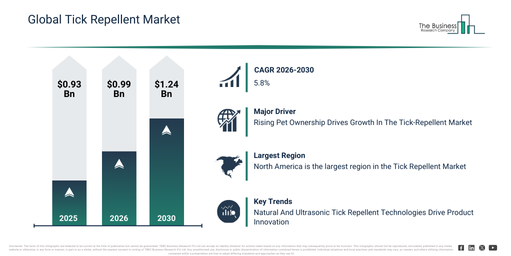
    The tick repellent market has observed substantial growth in recent years. Its valuation is expected to rise from $0.93 billion in 2025 to $0.99 billion in 2026, demonstrating a compound annual growth rate (CAGR) of 6.0%. This growth during the past period can be linked to the high prevalence of tick-borne diseases affecting pets, the restricted availability of convenient oral treatments, the continued use of traditional topical sprays, an increase in pet ownership, and a rise in veterinary consultations.

    The tick repellent market is projected to experience robust expansion over the forthcoming years. By 2030, this market is anticipated to reach $1.24 billion, demonstrating a compound annual growth rate (CAGR) of 5.8%. This anticipated growth during the forecast period stems from factors such as progress in oral chewable formulations, new developments in wearable tick repellent devices, an increase in online and modern trade distribution channels, heightened awareness regarding pet healthcare, and the broadening scope of preventive veterinary care programs. Key trends identified for the forecast period encompass a greater acceptance of oral chewables and pills for companion animals, an uptick in the application of topical spot-on treatments and sprays, the creation of collars and other wearable items for tick deterrence, enhanced understanding of tick-borne illnesses affecting pets, and the broadening of distribution networks through veterinary clinics.

    Download A Free Sample Report For Comprehensive Market Insights:

    https://www.thebusinessresearchcompany.com/sample.aspx?id=18485&type=smp

    What Major Growth Factors Are Impacting The Tick Repellent Market?

    The growth in pet ownership is expected to propel the growth of the tick repellent market going forward. Pet ownership is the responsibility of caring for an animal by providing it with food, shelter, healthcare, safety, and companionship as part of daily life. Pet ownership is rising due to increased emotional companionship needs and the growing recognition of pets’ positive impact on mental health. Tick repellents for pets are used to deter ticks from attaching to animals, protecting against tick-borne diseases such as Lyme disease and Ehrlichiosis. For instance, in April 2025, according to the Canadian Animal Health Institute, a Canada-based trade association, in 2024, Canada was home to an estimated 7.2 million dogs and 8.2 million cats, making pets an integral part of more than half of Canadian households. Therefore, the growth in pet ownership is driving the growth of the tick repellent market.

    How Is The Tick Repellent Market Structured Across Different Market Segments?

    The tick repellent market covered in this report is segmented –

    1) By Type: Pills And Chewables, Topical Treatments, Other Types

    2) By Distribution Channel: Modern Trade, Veterinary Clinics, Convenience Stores, Online Sales

    3) By Application: Dogs, Cats, Other Applications

    Subsegments:

    1) By Pills And Chewables: Oral Tablets, Oral Chewables

    2) By Topical Treatments: Spot-On Treatments, Sprays, Powders

    3) By Other Types: Collars, Shampoos, Wearable Devices

    What Trends Are Influencing The Tick Repellent Market Outlook?

    Major companies operating in the tick repellent market are focusing on developing innovative products such as chemical-free and wearable ultrasonic repellent devices to provide safer, eco-conscious protection for pets. Chemical-free and wearable ultrasonic repellent devices are designed to emit ultrasonic pulses that may help deter ticks and fleas without the use of toxic chemicals, offering pet owners a non-invasive, sustainable, and environmentally friendly solution for parasite prevention. These devices are lightweight, portable, and compatible with pets of various sizes, making them convenient for daily use both indoors and outdoors. For instance, in September–November 2024, ProtectOne Global Ltd, a Germany–Hungary-based pet care technology company, launched the Tickless Mini ultrasonic tick and flea repellent device. This innovative device features rechargeable operation, chemical-free protection, and long-lasting performance, ensuring continuous parasite deterrence. In addition, it incorporates user-friendly design elements such as easy-to-use controls, durable construction, and compact form factor, enabling pet owners to effortlessly integrate tick and flea prevention into their daily routines.

    Who Are The Prominent Players Across The Tick Repellent Market?

    North America was the largest region in the tick-repellent market in 2025. The regions covered in the tick repellent market report are Asia-Pacific, South East Asia, Western Europe, Eastern Europe, North America, South America, Middle East, Africa.

    Access The Complete Tick Repellent Market Report:

    https://www.thebusinessresearchcompany.com/report/tick-repellent-global-market-report

    Which Region Has The Strongest Presence In The Tick Repellent Market?

    North America was the largest region in the tick-repellent market in 2025. The regions covered in the tick repellent market report are Asia-Pacific, South East Asia, Western Europe, Eastern Europe, North America, South America, Middle East, Africa.

    Access a Customized Tick Repellent Market Report for Deeper Competitive Insights

    https://www.thebusinessresearchcompany.com/sample.aspx?id=18485&type=smp

    Get in touch with us:

    The Business Research Company: https://www.thebusinessresearchcompany.com/

    Americas: +1 310-496-7795

    Asia: +44 7882 955267 & +91 8897263534

    Europe: +44 7882 955267

    Email us at: marketing@tbrc.info

    Follow us on:

    LinkedIn: https://in.linkedin.com/company/the-business-research-company

    YouTube: https://www.youtube.com/channel/UC24_fI0rV8cR5DxlCpgmyFQ

    Global Market Model: https://www.thebusinessresearchcompany.com/global-market-model
  • Swine Feed Minerals Market Industry Analysis Covering Trends, Drivers, And Future Outlook

    The Business Research Company’s 2026 market reports feature advanced enhancements such as market attractiveness analysis, total addressable market evaluation, company benchmarking matrices, interactive Excel dashboards, expanded supply chain intelligence, emerging startup coverage, and detailed product insights, delivering more actionable and strategically valuable research.

    How Is The Market Value Of The Swine Feed Minerals Market Projected To Expand During 2026–2030?

    The swine feed minerals market size has experienced strong growth over recent years. It is projected to increase from $163.73 billion in 2025 to $180.07 billion in 2026, demonstrating a compound annual growth rate (CAGR) of 10.0%. The expansion during the historic period can be linked to several factors, including a rise in pork consumption, the traditional use of cereals and oilseed meals in feed, growing awareness regarding swine nutrition, the adoption of vitamins and antioxidants, and an increasing swine population, particularly within the Asia-Pacific region.

    The swine feed minerals market is expected to achieve substantial growth over the next few years, with its size projected to reach $262.58 billion by 2030, reflecting a compound annual growth rate (CAGR) of 9.9%. This anticipated expansion in the forecast period is driven by factors such as the increasing demand for antibiotic-free pork, the adoption of feed enzymes and acidifiers, a rise in the use of amino acids and nutritional supplements, a heightened focus on high-quality starter and grower feed, and the expansion of specialized sow and finisher feed products. Key trends foreseen during this period include a rising demand for nutritionally balanced swine feed, the increasing integration of feed enzymes and acidifiers, a growing emphasis on reducing antibiotic use in swine feed, the proliferation of specialized sow and grower feed products, and the selection of high-quality feed ingredients to promote better growth outcomes.

    Download A Free Sample Report For Comprehensive Market Insights:

    https://www.thebusinessresearchcompany.com/sample_request?id=246598b0-6b49-4c2b-9585-b94e6cc82877&name=Swine%C2%A0Feed%20Minerals%20Market%20Report%202026&type=smp

    What Market Drivers Are Helping Shape The Swine Feed Minerals Market Expansion?

    An increase in consumption of meat is expected to propel the growth of the swine feed mineral market going forward. Meat refers to the flesh of animals, typically livestock and poultry, that is used as a source of food. Consumption of meat is rising due to increasing demand for protein-rich diets, as people seek nutrient-dense foods to support health and active lifestyles. Swine feed minerals help increase meat consumption by improving pig health, growth, and productivity, resulting in a higher and more consistent supply of pork for consumers. For instance, in 2023, according to the Food and Agriculture Organization (FAO), a US-based food policy body, in 2023, global meat production rose to 371 million tonnes, an increase from 365 million tonnes in the prior year, indicating continued growth in global meat demand. Therefore, the increase in consumption of meat is driving the growth of the swine feed minerals market.

    Which Segment-Based Categories Are Covered In The Swine Feed Minerals Market?

    The swine feed minerals market covered in this report is segmented –

    1) By Product: Starter Feed Or Grower Feed, Sow Feed, Pig Grower Feed, Other Products

    2) By Ingredients: Cereal, Oilseed Meal, Oil, Molasses, Other Ingredients

    3) By Additives: Antibiotics, Vitamins, Antioxidants, Amino Acids, Feed Enzymes, Feed Acidifiers, Other Additives

    Subsegments:

    1) By Starter Feed Or Grower Feed: Pre-Starter Feed, Starter Grower Feed

    2) By Sow Feed: Gestation Sow Feed, Lactating Sow Feed

    3) By Pig Grower Feed: Grower Finisher Feed, Finishing Feed

    4) By Other Products: Supplementary Feed, Specialty Feed Additives

    Which Trends Are Expected To Shape The Swine Feed Minerals Market?

    Major companies operating in the swine feed minerals market are focusing on developing advanced solutions, such as data-driven predictive tools, to enhance sow health and performance. A predictive tool refers to a technology that provides actionable insights by analyzing animal health and productivity data, allowing producers to make early interventions and improve outcomes. For instance, in November 2025, Zinpro Corporation, a US-based animal nutrition company, launched the Zinpro Sow Excellence Index, the swine industry’s first data-driven benchmarking system. This innovation uses data from more than 30,000 individual sow assessments to correlate claw lesions with sow productivity, enabling producers to catch issues early before they impact performance. It delivers customized L-Index reports through Zinpro’s Feet First evaluation, allowing producers to adjust nutrition, housing, or management strategies effectively. Integrated with Zinpro’s trace mineral solutions, the index offers a comprehensive approach to improving sow welfare, longevity, and lifetime productivity while supporting sustainability. The Zinpro Sow Excellence Index strengthens producer decision-making, enhances herd health, and drives better performance outcomes.

    Which Companies Form The Competitive Landscape Of The Swine Feed Minerals Market?

    Asia-Pacific was the largest region in the swine feed minerals market in 2025. The regions covered in the swine feed minerals market report are Asia-Pacific, South East Asia, Western Europe, Eastern Europe, North America, South America, Middle East, Africa.

    Access The Complete Swine Feed Minerals Market Report:

    https://www.thebusinessresearchcompany.com/report/swine%C2%A0feed-minerals-global-market-report

    Which Region Stands As The Largest Contributor To The Swine Feed Minerals Market?

    Asia-Pacific was the largest region in the swine feed minerals market in 2025. The regions covered in the swine feed minerals market report are Asia-Pacific, South East Asia, Western Europe, Eastern Europe, North America, South America, Middle East, Africa.

    Access a Customized Swine Feed Minerals Market Report for Deeper Competitive Insights

    https://www.thebusinessresearchcompany.com/sample_request?id=246598b0-6b49-4c2b-9585-b94e6cc82877&name=Swine%C2%A0Feed%20Minerals%20Market%20Report%202026&type=smp

    Get in touch with us:

    The Business Research Company: https://www.thebusinessresearchcompany.com/

    Americas: +1 310-496-7795

    Asia: +44 7882 955267 & +91 8897263534

    Europe: +44 7882 955267

    Email us at: marketing@tbrc.info

    Follow us on:

    LinkedIn: https://in.linkedin.com/company/the-business-research-company

    YouTube: https://www.youtube.com/channel/UC24_fI0rV8cR5DxlCpgmyFQ

    Global Market Model: https://www.thebusinessresearchcompany.com/global-market-model

  • Swine Vaccines Market Forecast Assessing Growth Potential And Industry Direction

    Swine Vaccines Market Forecast Assessing Growth Potential And Industry Direction

    The Business Research Company’s 2026 market reports feature advanced enhancements such as market attractiveness analysis, total addressable market evaluation, company benchmarking matrices, interactive Excel dashboards, expanded supply chain intelligence, emerging startup coverage, and detailed product insights, delivering more actionable and strategically valuable research.

    What Are The Forecasted Market Size Figures For The Swine Vaccines Market In 2026 And 2030?

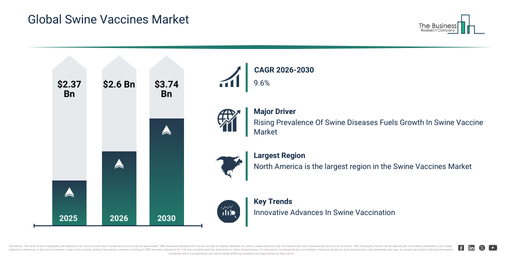
    The swine vaccines market has demonstrated significant growth in recent years. It is projected to expand from $2.37 billion in 2025 to $2.6 billion in 2026, achieving a compound annual growth rate (CAGR) of 9.5%. This historical growth can be attributed to several factors, including a high incidence of viral and bacterial infections in swine, an increasing demand for pork products, the expansion of commercial pig farming, the development of conventional live and inactivated vaccines, and a rising awareness of swine herd health management.

    The swine vaccines market size is projected for significant expansion over the coming years, with an anticipated rise to $3.74 billion by 2030, reflecting a compound annual growth rate (CAGR) of 9.6%.

    This expansion during the forecast period is fueled by several factors, including the adoption of DNA and recombinant vaccines, increased government backing for swine vaccination programs, the advancement of precision livestock farming, a concentrated effort on emerging infectious diseases, and the growing cold-chain infrastructure for vaccine distribution.

    Major trends expected in the forecast period involve the creation of multi-valent swine vaccines, an increased focus on preventive swine healthcare, continued advancements in DNA and recombinant vaccines, the optimization of cold-chain vaccine distribution, and the development of rapid response vaccines for emerging swine diseases.

    Download A Free Sample Report For Comprehensive Market Insights:

    https://www.thebusinessresearchcompany.com/sample.aspx?id=8163&type=smp

    Which Significant Factors Are Encouraging Growth In The Swine Vaccines Market?

    The rising prevalence of diseases in swine is expected to propel the swine vaccine market going forward. Swine disease is any divergence from an organism’s normal structural or functional condition accompanied by a few signs and symptoms of diseases such as pseudorabies, influenza. Diseases in swine are rising because intensive farming practices increase animal density, which accelerates disease transmission and makes outbreaks harder to control. Swine vaccines effectively combat the rising prevalence of diseases in swine by stimulating the immune system to recognize and respond to specific pathogens, thereby reducing infection rates, mitigating disease severity, and promoting overall herd health. For instance, in December 2023, according to the Swine Health Information Center, a US-based non-profit organization, in Poland, there has been a troubling increase in cases of African Swine Fever (ASF) among wild boars. As of early 2023, the country has recorded 2,347 confirmed ASF cases in wild boars, exceeding the total from 2022. Therefore, the rising prevalence of diseases in swine is expected to drive the growth of the market.

    What Are The Major Segment Categories Within The Swine Vaccines Market?

    The swine vaccines market covered in this report is segmented –

    1) By Product: Attenuated Live Vaccines, Inactivated Vaccines, Subunit Vaccines, Deoxyribonucleic Acid (DNA) Vaccines, Recombinant Vaccines

    2) By Disease: Viral Infections, Bacterial Infections, Parasitic Infection, Fungal Infections, Other Diseases

    3) By Distribution Channel: Veterinary Hospitals, Veterinary Pharmacies, Online Pharmacies

    4) By Application: Government Tender, Market Sales

    Subsegments:

    1) By Attenuated Live Vaccines: Live Attenuated Virus Vaccines, Live Attenuated Bacterial Vaccines

    2) By Inactivated Vaccines: Whole Inactivated Virus Vaccines, Inactivated Bacterial Vaccines

    3) By Subunit Vaccines: Protein Subunit Vaccines, Polysaccharide Subunit Vaccines

    4) By Deoxyribonucleic Acid (DNA) Vaccines: Plasmid DNA Vaccines, Nucleic Acid Vaccines

    5) By Recombinant Vaccines: Recombinant Vector Vaccines, Recombinant Protein Vaccines

    What Trends Are Affecting The Swine Vaccines Market Dynamics?

    Major companies operating in the swine vaccine market are increasing their focus on introducing innovative vaccines, such as Circumvent CML, to gain a competitive edge. Circumvent CML is a vaccine designed to protect swine herds against diseases, enhancing overall swine health and productivity. For instance, in June 2023, Merck Animal Health, a US-based pharmaceutical company, launched a new 3-in-one swine vaccine called Circumvent CML, which controls for the diseases Porcine Circovirus Type 2a (PCV-2a), Porcine Circovirus Type 2d (PCV-2d), Mycoplasma hyopneumoniae, and Lawsonia intracellularis. This new vaccine is built on Merck’s foundation of tried-and-true, proven antigens and adjuvant systems that have been available in Circumvent PCV-M G2 and their standalone product, Porcilis Ileitis.

    Who Are The Key Market Participants In The Swine Vaccines Market?

    North America was the largest region in the swine vaccines market in 2025. Asia-Pacific is expected to be the fastest-growing region in the forecast period. The regions covered in the swine vaccines market report are Asia-Pacific, South East Asia, Western Europe, Eastern Europe, North America, South America, Middle East, Africa.

    Access The Complete Swine Vaccines Market Report:

    https://www.thebusinessresearchcompany.com/report/swine-vaccines-global-market-report

    What Is The Largest Regional Market In The Swine Vaccines Market?

    North America was the largest region in the swine vaccines market in 2025. Asia-Pacific is expected to be the fastest-growing region in the forecast period. The regions covered in the swine vaccines market report are Asia-Pacific, South East Asia, Western Europe, Eastern Europe, North America, South America, Middle East, Africa.

    Access a Customized Swine Vaccines Market Report for Deeper Competitive Insights

    https://www.thebusinessresearchcompany.com/sample.aspx?id=8163&type=smp

    Get in touch with us:

    The Business Research Company: https://www.thebusinessresearchcompany.com/

    Americas: +1 310-496-7795

    Asia: +44 7882 955267 & +91 8897263534

    Europe: +44 7882 955267

    Email us at: marketing@tbrc.info

    Follow us on:

    LinkedIn: https://in.linkedin.com/company/the-business-research-company

    YouTube: https://www.youtube.com/channel/UC24_fI0rV8cR5DxlCpgmyFQ

    Global Market Model: https://www.thebusinessresearchcompany.com/global-market-model

  • Swine Feed Probiotic Yeast Market Expected To Witness Revenue Growth Toward $2.1 Billion By 2030

    Swine Feed Probiotic Yeast Market Expected To Witness Revenue Growth Toward $2.1 Billion By 2030

    The Business Research Company’s 2026 market reports feature advanced enhancements such as market attractiveness analysis, total addressable market evaluation, company benchmarking matrices, interactive Excel dashboards, expanded supply chain intelligence, emerging startup coverage, and detailed product insights, delivering more actionable and strategically valuable research.

    How Much Larger Will The Swine Feed Probiotic Yeast Market Become By 2030 Compared To 2026?

    The swine feed probiotic yeast market has experienced strong expansion in recent years. It is anticipated to increase from $1.53 billion in 2025 to $1.64 billion in 2026, at a compound annual growth rate (CAGR) of 6.9%. The historical growth can be attributed to several factors, including the rising demand for pork products, increased awareness concerning swine health, the creation of yeast-based feed additives, a heightened focus on livestock growth performance, and the regulatory acceptance of probiotics in feed.

    The swine feed probiotic yeast market is projected to experience substantial expansion in the coming years. This market is anticipated to reach $2.17 billion by 2030, exhibiting a compound annual growth rate (CAGR) of 7.3%. Key factors driving this growth during the forecast period include the increasing adoption of precision probiotics in swine feed, a growing emphasis on sustainable pig farming, the integration of AI in feed formulation, an expanding probiotic yeast product portfolio, and increased investment in eco-friendly livestock nutrition. Significant trends expected in this period encompass gut microbiota modulation in swine, the use of probiotic feed supplementation for enhanced growth performance, the reduction of antibiotic usage via yeast probiotics, the advancement of yeast-based immunomodulators, and the adoption of eco-friendly swine farming practices.

    Download A Free Sample Report For Comprehensive Market Insights:

    https://www.thebusinessresearchcompany.com/sample.aspx?id=9305&type=smp

    What Core Drivers Are Transforming The Swine Feed Probiotic Yeast Market?

    Growth in livestock consumption is expected to propel the growth of the swine feed probiotic yeast market going forward. Livestock refers to farm animals with the exception of poultry such as cattle, sheep, pigs, goats, horses, donkeys, mules and other animals. Livestock consumption is rising because population growth increases overall food demand, leading to higher production and consumption of animal-based products to meet nutritional needs. Swine feed probiotic yeast is used to improve pig gut intestinal health by lowering pathogen loads and boosting their immune systems which lower the need to use antibiotics in swine feed which mitigates antimicrobial resistance and makes consumption of pork meat safer for the public. For instance, in February 2024, according to the United States Department of Agriculture, a US-based federal agency, in 2023, beef exports comprised 11.3% of production, a projection of 10.6% in 2024. Additionally, the total cattle and calf population is estimated at 87.16 million. Therefore, the growth in livestock consumption is driving the swine feed probiotic yeast market.

    How Is The Swine Feed Probiotic Yeast Market Distributed Across Key Segments?

    The swine feed probiotic yeast market covered in this report is segmented –

    1) By Product Type: Live, Spent, Yeast Derivatives

    2) By Genus: Saccharomyces Spp., Kluyveromyces Spp., Other Genuses

    3) By Form: Dry, Instant, Fresh

    Subsegments:

    1) By Live: Probiotic Live Yeast, Fermented Live Yeast

    2) By Spent: Dried Spent Yeast, Liquid Spent Yeast

    3) By Yeast Derivatives: Yeast Extract, Beta-Glucans, Mannan-Oligosaccharides (MOS)

    Which Trends Are Contributing To Changes In The Swine Feed Probiotic Yeast Market?

    Major companies operating in the swine feed probiotic yeast market are developing new organic yeast strain to gain a competitive edge in the market. Organic yeast strain refers to a specific variety of yeast that is cultivated, processed, and used in a manner compliant with organic farming practices and standards. For instance, in January 2023, Lallemand Health Solutions inc., a Canada-based probiotics manufacturing company, launched an exclusive organic version of Saccharomyces boulardii, a probiotic yeast strain. It is a probiotic yeast strain that has been widely used in animal feed, including in pig production, due to its beneficial effects on animal growth performance and health. The product is positioned to meet the growing demand for natural and organic choices, with 63% of consumers expressing a preference for 100% natural food and drink products. This probiotic yeast is produced with carefully selected organic raw ingredients, emphasizing its alignment with organic agriculture and biodiversity protection. The new organic S. boulardii is available in powder form, suitable for use in organic dietary supplements, with research supporting its stability and viability.

    Which Organizations Are Operating Within The Swine Feed Probiotic Yeast Market?

    Asia-Pacific was the largest region in the swine feed probiotic yeast market in 2025. The regions covered in the swine feed probiotic yeast market report are Asia-Pacific, South East Asia, Western Europe, Eastern Europe, North America, South America, Middle East, Africa.

    Access The Complete Swine Feed Probiotic Yeast Market Report:

    https://www.thebusinessresearchcompany.com/report/swine-feed-probiotic-yeast-global-market-report

    Which Region Contributes The Most To The Swine Feed Probiotic Yeast Market?

    Asia-Pacific was the largest region in the swine feed probiotic yeast market in 2025. The regions covered in the swine feed probiotic yeast market report are Asia-Pacific, South East Asia, Western Europe, Eastern Europe, North America, South America, Middle East, Africa.

    Access a Customized Swine Feed Probiotic Yeast Market Report for Deeper Competitive Insights

    https://www.thebusinessresearchcompany.com/sample.aspx?id=9305&type=smp

    Get in touch with us:

    The Business Research Company: https://www.thebusinessresearchcompany.com/

    Americas: +1 310-496-7795

    Asia: +44 7882 955267 & +91 8897263534

    Europe: +44 7882 955267

    Email us at: marketing@tbrc.info

    Follow us on:

    LinkedIn: https://in.linkedin.com/company/the-business-research-company

    YouTube: https://www.youtube.com/channel/UC24_fI0rV8cR5DxlCpgmyFQ

    Global Market Model: https://www.thebusinessresearchcompany.com/global-market-model

  • Swine Artificial Insemination Market Industry Outlook 2026–2030 Highlighting Growth Momentum And Market Trends

    Swine Artificial Insemination Market Industry Outlook 2026–2030 Highlighting Growth Momentum And Market Trends

    The Business Research Company’s 2026 market reports feature advanced enhancements such as market attractiveness analysis, total addressable market evaluation, company benchmarking matrices, interactive Excel dashboards, expanded supply chain intelligence, emerging startup coverage, and detailed product insights, delivering more actionable and strategically valuable research.

    What Growth In Market Value Is Anticipated For The Swine Artificial Insemination Market Between 2026 And 2030?

    The size of the swine artificial insemination market has seen robust expansion over recent years. This market is projected to expand from $2.01 billion in 2025 to $2.17 billion in 2026, achieving a compound annual growth rate (CAGR) of 7.8%. Several factors contributed to its historical growth, including traditional natural breeding methods, limited access to AI technology, a growing swine population, increasing demand for improved genetics, and a lack of reproductive management expertise.

    The swine artificial insemination market is projected to experience substantial expansion in the coming years. This market is forecast to reach a valuation of $2.89 billion by 2030, exhibiting a compound annual growth rate (CAGR) of 7.5%. Several factors are expected to fuel this growth during the projection period, including enhancements in AI equipment technology, the increasing uptake of post-cervical and deep intrauterine AI methods, the proliferation of swine breeding facilities, greater understanding of reproductive health care, and the incorporation of digital farm management with AI procedures. Key trends anticipated during this period involve the continued rise in the application of post-cervical and deep intrauterine AI techniques, an increased reliance on frozen and extended semen to enhance genetic quality, the expansion of AI training and reproductive consultancy offerings, the incorporation of semen analysis and reproductive health screening within farms, and a heightened emphasis on tools for heat detection and fertility monitoring.

    Download A Free Sample Report For Comprehensive Market Insights:

    https://www.thebusinessresearchcompany.com/sample.aspx?id=20657&type=smp

    Which Growth Factors Are Strengthening The Swine Artificial Insemination Market Landscape?

    The increasing consumption of pork meat is expected to propel the growth of the swine artificial insemination market going forward. Consumption of pork meat is the act of eating or using pork as food, reflecting how much pork people include in their diets over a certain period of time. The increasing consumption of pork meat is driven by its affordability, versatility, and high protein content, making it a popular choice in diverse cuisines worldwide. Swine artificial insemination is used to enhance pork meat production by improving genetic traits, increasing litter sizes, and optimizing herd health, leading to higher-quality and more efficient pork production. For instance, in July 2025, according to the Agriculture and Horticulture Development Board (AHDB), a UK-based farming, global pork consumption is projected to reach 131 Mt cwe by 2033, increasing at an average annual rate of 0.5%. Therefore, increasing consumption of pork meat is driving the growth of the swine artificial insemination market.

    How Does Segment Analysis Break Down The Swine Artificial Insemination Market Structure?

    The swine artificial insemination market covered in this report is segmented –

    1) By Product: Equipment, Semen, Reagent, Kit, Service

    2) By Technique: Post-cervical Artificial Insemination (PCAI), Intracervical Insemination (ICI), Deep Intrauterine Insemination (DIUI)

    3) By Distribution Channel: Private, Public

    4) By End Use: Swine Farms, Swine Breeding Centers, Veterinary Clinics And Hospitals

    Subsegments:

    1) By Equipment: Insemination Guns, Semen Storage Tanks, Heat Detection Devices

    2) By Semen: Fresh Semen, Frozen Semen, Extended Semen

    3) By Reagent: Extenders, Cryoprotectants, Media for Semen Analysis

    4) By Kit: Artificial Insemination Kits, Semen Collection Kits, Reproductive Health Testing Kits

    5) By Service: AI Training Services, Semen Analysis Services, Reproductive Management Consulting

    What Trends Are Shaping The Swine Artificial Insemination Market Structure?

    Major companies operating in the swine artificial insemination market are focusing on strategic partnership approaches to sustain their position in the market. Strategic partnership approaches involve collaborations between breeders, technology providers, and genetic companies to enhance AI practices. For instance, in June 2023, Fast Genetics, a Canada-based swine genetics company, partnered with Acuity, a US-based swine genetics company, to launch AcuFast, creating a new leader in the swine genetics industry. The new AcuFast brand brings together leaders in the swine genetics industry, allowing for a greater product offering, a superior technology platform, and combined technical expertise. The company is dedicated to creating a healthy and more efficient pork supply through the use of disruptive technologies and a commitment to respect, ethics, and accountability.

    Who Are The Businesses Driving Activity In The Swine Artificial Insemination Market?

    Asia-Pacific was the largest region in the swine artificial insemination market in 2025. The regions covered in the swine artificial insemination market report are Asia-Pacific, South East Asia, Western Europe, Eastern Europe, North America, South America, Middle East, Africa.

    Access The Complete Swine Artificial Insemination Market Report:

    https://www.thebusinessresearchcompany.com/report/swine-artificial-insemination-global-market-report

    Which Regional Market Leads The Swine Artificial Insemination Market?

    Asia-Pacific was the largest region in the swine artificial insemination market in 2025. The regions covered in the swine artificial insemination market report are Asia-Pacific, South East Asia, Western Europe, Eastern Europe, North America, South America, Middle East, Africa.

    Access a Customized Swine Artificial Insemination Market Report for Deeper Competitive Insights

    https://www.thebusinessresearchcompany.com/sample.aspx?id=20657&type=smp

    Get in touch with us:

    The Business Research Company: https://www.thebusinessresearchcompany.com/

    Americas: +1 310-496-7795

    Asia: +44 7882 955267 & +91 8897263534

    Europe: +44 7882 955267

    Email us at: marketing@tbrc.info

    Follow us on:

    LinkedIn: https://in.linkedin.com/company/the-business-research-company

    YouTube: https://www.youtube.com/channel/UC24_fI0rV8cR5DxlCpgmyFQ

    Global Market Model: https://www.thebusinessresearchcompany.com/global-market-model

  • Spay And Neuter Market Growth Forecast With Analysis Of Industry Progress Through 2030

    Spay And Neuter Market Growth Forecast With Analysis Of Industry Progress Through 2030

    The Business Research Company’s 2026 market reports feature advanced enhancements such as market attractiveness analysis, total addressable market evaluation, company benchmarking matrices, interactive Excel dashboards, expanded supply chain intelligence, emerging startup coverage, and detailed product insights, delivering more actionable and strategically valuable research.

    What Is The Expected Market Value Outlook For The Spay And Neuter Market Through 2030?

    The spay and neuter market has experienced consistent expansion in recent years. This market is projected to expand from $2.44 billion in 2025 to $2.55 billion in 2026, demonstrating a compound annual growth rate (CAGR) of 4.6%. Historically, factors contributing to this growth include a high stray animal population, increasing pet ownership, historically limited access to veterinary care, greater awareness of zoonotic disease prevention, and the emergence of animal welfare and advocacy organizations.

    The spay and neuter market size is anticipated to undergo significant growth in the upcoming years. Its value is projected to reach $3.15 billion in 2030, progressing at a compound annual growth rate (CAGR) of 5.4%. This expansion over the forecast period is attributable to government and NGO initiatives focused on pet population management, the increasing reach of mobile and community-based veterinary services, enhanced affordability of spay/neuter procedures, a growing emphasis on breed-specific health care, and collaborations between veterinary clinics and animal welfare groups. Key trends identified for the forecast timeframe include heightened awareness concerning pet population control, an increase in low-cost and subsidized spay/neuter programs, the expansion of mobile veterinary clinics offering spay/neuter services, a rise in the adoption of spay/neuter procedures by animal welfare organizations, and the development of specialized services for various breeds.

    Download A Free Sample Report For Comprehensive Market Insights:

    https://www.thebusinessresearchcompany.com/sample.aspx?id=9986&type=smp

    What Important Drivers Are Powering The Spay And Neuter Market Growth?

    The increasing number of stray dogs is expected to propel the growth of the spay and neuter market going forward. A stray dog, also known as a street dog or a free-ranging urban dog, is a dog that is not confined to a specific home or location and lives in public areas, including streets, parks, and other urban or rural environments. The number of stray dogs is rising due to lack of sterilization, as insufficient spaying and neutering allows uncontrolled breeding and steady population growth over time. Spay and neuter helps reduce the number of stray dogs by preventing uncontrolled reproduction, which gradually lowers the stray population over time. For instance, in March 2023, according to a survey conducted by Dogs Trust, a UK-based animal welfare charity and humane society that specializes in the well-being of dogs, there were 35,078 dogs in the 2022-2023 period, which is an increase of over 7,000 dogs compared to the previous year. Therefore, the increasing number of stray dogs is driving the growth of the spay and neuter market.

    What Segment Types Are Included In The Spay And Neuter Market Analysis?

    The spay and neuter market covered in this report is segmented –

    1) By Animal Type: Dogs, Cats, Other Animals

    2) By Provider Type: Veterinary Clinics And Hospitals, Other Providers

    3) By End-User: Animal Welfare Groups, Pet Owners

    Subsegments:

    1) By Dogs: Small Breeds, Medium Breeds, Large Breeds

    2) By Cats: Domestic Short Hair, Domestic Long Hair, Pure Breeds

    3) By Other Animals: Rabbits, Guinea Pigs, Ferrets

    Which Trends Are Affecting The Spay And Neuter Market Framework?

    Major companies and organizations operating in the spay and neuter market are focused on adopting strategic partnerships and collaborations to launch spay and neuter services and gain a competitive edge in the market. Such collaborations involve partnerships between various organizations, including veterinary clinics, animal welfare groups, and government agencies, to provide low-cost or free spaying and neutering services for pet owners. For instance, in October 2023, Santa Clarita, a US-based city, collaborated with the Los Angeles County Department of Animal Care and Control (DACC), a US-based animal care and control agency, and Simi Valley Non-Profit Clinic, a US-based volunteer-based community service organization, to initiate a low-cost mobile spay and neuter service aimed at the Newhall Community Center. With this project, the city aims to enhance the health and well-being of its animal population in compliance with Santa Clarita Municipal Code Chapter 8.20, which mandates that all dogs and cats older than four months must be spayed or neutered. The mobile clinic is going to be parked in the lot of the Newhall Community Center every Monday in an effort to provide individuals in need of financial assistance with access to reasonably priced pet care.

    Which Firms Are Competing In The Spay And Neuter Market?

    North America was the largest region in the spay and neuter market in 2025.Asia-Pacific is expected to be the fastest-growing region in the global spay and neuter market report during the forecast period. The regions covered in the spay and neuter market report are Asia-Pacific, South East Asia, Western Europe, Eastern Europe, North America, South America, Middle East, Africa.

    Access The Complete Spay And Neuter Market Report:

    https://www.thebusinessresearchcompany.com/report/spay-and-neuter-global-market-report

    Which Region Holds The Largest Share In The Spay And Neuter Market?

    North America was the largest region in the spay and neuter market in 2025.Asia-Pacific is expected to be the fastest-growing region in the global spay and neuter market report during the forecast period. The regions covered in the spay and neuter market report are Asia-Pacific, South East Asia, Western Europe, Eastern Europe, North America, South America, Middle East, Africa.

    Access a Customized Spay And Neuter Market Report for Deeper Competitive Insights

    https://www.thebusinessresearchcompany.com/sample.aspx?id=9986&type=smp

    Get in touch with us:

    The Business Research Company: https://www.thebusinessresearchcompany.com/

    Americas: +1 310-496-7795

    Asia: +44 7882 955267 & +91 8897263534

    Europe: +44 7882 955267

    Email us at: marketing@tbrc.info

    Follow us on:

    LinkedIn: https://in.linkedin.com/company/the-business-research-company

    YouTube: https://www.youtube.com/channel/UC24_fI0rV8cR5DxlCpgmyFQ

    Global Market Model: https://www.thebusinessresearchcompany.com/global-market-model