Month: June 2026

  • Ovine And Caprine Artificial Insemination Market Industry Outlook 2026–2030 Highlighting Growth Momentum And Market Trends

    Ovine And Caprine Artificial Insemination Market Industry Outlook 2026–2030 Highlighting Growth Momentum And Market Trends

    The Business Research Company’s 2026 market reports feature advanced enhancements such as market attractiveness analysis, total addressable market evaluation, company benchmarking matrices, interactive Excel dashboards, expanded supply chain intelligence, emerging startup coverage, and detailed product insights, delivering more actionable and strategically valuable research.

    How Does The Forecasted Market Size Of The Ovine And Caprine Artificial Insemination Market Compare Between 2026 And 2030?

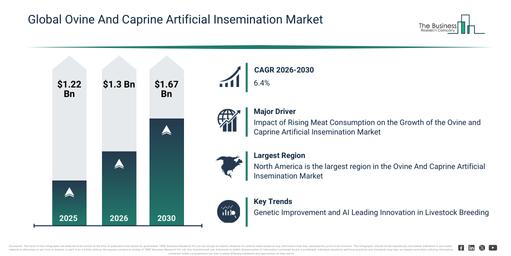
    The ovine and caprine artificial insemination market size has demonstrated robust growth in recent years. It is projected to expand from $1.22 billion in 2025 to reach $1.3 billion by 2026, at a compound annual growth rate (CAGR) of 6.7%. Historically, this expansion has been attributed to the low genetic quality of livestock, prevalent traditional breeding methods, limited access to AI equipment, a rising demand for higher wool and milk yield, and an increasing livestock population.

    The ovine and caprine artificial insemination market size is expected to experience robust expansion over the coming years, with projections indicating a rise to $1.67 billion by 2030, demonstrating a compound annual growth rate (CAGR) of 6.4%. This anticipated growth is primarily fueled by advancements in AI techniques and equipment, a heightened awareness of genetic improvement benefits, increasing demand for high-quality semen, the expansion of veterinary reproductive services, and the adoption of precision livestock breeding technologies. Significant trends shaping the forecast period include the growing adoption of frozen and sexed semen for breeding, the broadening of reproductive health monitoring services, increased usage of automated insemination equipment, a rising demand for hormonal reagents and ovulation induction kits, and the integration of breeding consultancy services aimed at livestock improvement.

    Download A Free Sample Report For Comprehensive Market Insights:

    https://www.thebusinessresearchcompany.com/sample.aspx?id=20586&type=smp

    Which Growth Factors Are Strengthening The Ovine And Caprine Artificial Insemination Market Landscape?

    The rise in meat consumption is expected to propel the growth of the ovine and caprine artificial insemination market going forward. The growing awareness of the importance of protein in a balanced diet and changing preferences towards high-protein diets (such as ketogenic and paleo diets) has led to increased demand for meat as a primary protein source. Ovine and caprine artificial insemination improves sheep and goats’ genetic quality and productivity, leading to higher meat yields, better disease resistance, and more efficient meat production to meet the increasing global demand for meat. For instance, in August 2024, according to an updated report on red meat and poultry production published by the United States Department of Agriculture, a US-based federal agency, between January-July 2023, red meat and poultry production was 31419.8 (million pounds), which rose to 31775.4 (million pounds) in January-July 2024. Therefore, the rise in meat consumption is driving the growth of the ovine and caprine artificial insemination market.

    Which Segment Divisions Form The Structure Of The Ovine And Caprine Artificial Insemination Market?

    The ovine and caprine artificial insemination market covered in this report is segmented –

    1) By Species: Ovine, Caprine

    2) By Technique Or Method: Vaginal AI, Transcervical AI, Laparoscopic AI, Intravaginal Or Advanced AI

    3) By Application: Genetic Improvement, Commercial Meat Production, Dairy Production, Research And Breeding Programs

    4) By End-User: Farms And Livestock Producers, Veterinary Clinics, AI Service Providers Or Cooperatives, Research Institutions

    Subsegments:

    1) By Ovine: Sheep Breeding AI, Sheep Genetic Improvement Programs, Sheep Dairy AI, Sheep Meat Production AI

    2) By Caprine: Goat Breeding AI, Goat Genetic Improvement Programs, Goat Dairy AI, Goat Meat Production AI

    What Trends Are Affecting The Ovine And Caprine Artificial Insemination Market Dynamics?

    Major companies in the ovine and caprine artificial insemination (AI) market are focusing on advanced technologies such as genetic improvement technology and artificial insemination (AI) to enhance food security. Genetic improvement technology involves selectively breeding animals with desirable traits, such as high fertility, milk yield, or growth rate, to improve the genetic quality of future generations. Artificial insemination (AI) is a reproductive technology where semen from a selected male goat is manually inserted into a female to enhance genetic quality. For instance, in June 2024, the International Center for Agricultural Research in the Dry Areas (ICARDA), a Lebanon-based research organization, launched Mali’s first-ever Community-Based Breeding Program (CBBP) for goats. The program aims to improve the genetic potential of small ruminants in Mali, focusing on both meat and milk productivity, and enhancing the livelihoods of small-scale livestock keepers. This program includes the development of low-cost artificial insemination technologies to boost reproductive efficiency in goats.

    Who Are The Businesses Driving Activity In The Ovine And Caprine Artificial Insemination Market?

    North America was the largest region in the ovine and caprine artificial insemination market in 2025. The regions covered in the ovine and caprine artificial insemination market report are Asia-Pacific, South East Asia, Western Europe, Eastern Europe, North America, South America, Middle East, Africa.

    Access The Complete Ovine And Caprine Artificial Insemination Market Report:

    https://www.thebusinessresearchcompany.com/report/ovine-and-caprine-artificial-insemination-global-market-report

    Which Region Commands The Largest Share Of The Ovine And Caprine Artificial Insemination Market?

    North America was the largest region in the ovine and caprine artificial insemination market in 2025. The regions covered in the ovine and caprine artificial insemination market report are Asia-Pacific, South East Asia, Western Europe, Eastern Europe, North America, South America, Middle East, Africa.

    Access a Customized Ovine And Caprine Artificial Insemination Market Report for Deeper Competitive Insights

    https://www.thebusinessresearchcompany.com/sample.aspx?id=20586&type=smp

    Get in touch with us:

    The Business Research Company: https://www.thebusinessresearchcompany.com/

    Americas: +1 310-496-7795

    Asia: +44 7882 955267 & +91 8897263534

    Europe: +44 7882 955267

    Email us at: marketing@tbrc.info

    Follow us on:

    LinkedIn: https://in.linkedin.com/company/the-business-research-company

    YouTube: https://www.youtube.com/channel/UC24_fI0rV8cR5DxlCpgmyFQ

    Global Market Model: https://www.thebusinessresearchcompany.com/global-market-model
  • Nutritional Feed Additives Market Growth Forecast With Analysis Of Industry Progress Through 2030

    Nutritional Feed Additives Market Growth Forecast With Analysis Of Industry Progress Through 2030

    The Business Research Company’s 2026 market reports feature advanced enhancements such as market attractiveness analysis, total addressable market evaluation, company benchmarking matrices, interactive Excel dashboards, expanded supply chain intelligence, emerging startup coverage, and detailed product insights, delivering more actionable and strategically valuable research.

    What Increase In Market Value Is Predicted For The Nutritional Feed Additives Market During The 2026–2030 Period?

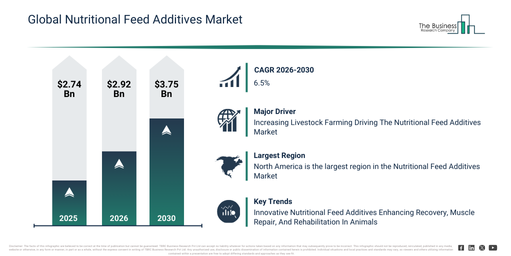
    The nutritional feed additives market has experienced strong growth in recent years. It is projected to expand from $2.74 billion in 2025 to $2.92 billion in 2026, demonstrating a compound annual growth rate (CAGR) of 6.4%. The historical expansion can be attributed to the increase in commercial livestock farming, a greater emphasis on animal productivity, a rising occurrence of nutritional deficiencies in feed, the extensive adoption of compound feeds, and the development of the poultry and swine industries.

    The nutritional feed additives market is projected to experience significant expansion in the coming years. It is anticipated to reach $3.75 billion by 2030, showing a compound annual growth rate (CAGR) of 6.5%. This growth throughout the forecast period stems from regulatory pressures aimed at reducing antibiotic use, an increasing need for high-quality animal protein, greater awareness concerning animal health and nutrition, the expansion of aquaculture production, and advancements in feed formulation technologies. Prominent trends for the forecast period include a developing preference for non-antibiotic nutritional additives, an increased incorporation of vitamins and minerals for comprehensive nutrition, a rising adoption of probiotics and prebiotics in feed, a higher demand for enzymes to enhance feed efficiency, and the broader use of mycotoxin detoxifiers to ensure feed safety.

    Download A Free Sample Report For Comprehensive Market Insights:

    https://www.thebusinessresearchcompany.com/sample.aspx?id=2604&type=smp

    What Important Drivers Are Powering The Nutritional Feed Additives Market Growth?

    Increasing livestock farming is expected to drive the growth of the nutritional feed additives market going forward. The increase in livestock farming is primarily driven by rising global population and growing demand for animal-based products. Nutritional feed additives in livestock farming are dietary supplements that enhance animal health, growth, and productivity by providing essential nutrients, vitamins, and minerals in animal diets. For instance, in May 2024, according to the United States Department of Agriculture, a US-based government agency, the forecast In the 2023 period, livestock production is expected to total 103.66 million metric tons, representing a 2% increase from the 102.09 million metric tons produced in 2022. Therefore, increasing livestock farming will continue to drive the nutritional feed additives market in the forecast period.

    How Are Different Segment Groups Identified Within The Nutritional Feed Additives Market?

    The nutritional feed additives market covered in this report is segmented –

    1) By Form: Dry, Liquid, Other Forms

    2) By Additive Type: Antibiotics, Vitamins, Antioxidants, Amino Acids, Enzymes, Mycotoxin Detoxifiers, Prebiotics, Probiotics, Flavors And Sweeteners, Pigments, Binders, Minerals

    3) By Livestock: Ruminants, Poultry, Swine, Aquatic

    4) By Distribution Channel: Direct, Indirect, Hypermarket Or Supermarket, Specialty Stores, Online Retail

    Subsegments:

    1) By Dry: Powdered, Granules, Pellets

    2) By Liquid: Solution, Suspension

    3) By Other Forms: Paste, Gel

    What Trends Are Influencing The Future Of The Nutritional Feed Additives Market?

    Major companies operating in the nutritional feed additives market are focusing on developing innovative solutions, such as advanced nutritional support products and functional feed supplements, to meet the rising demand for faster recovery, muscle repair, mobility improvement, and overall post-injury and post-surgical rehabilitation in companion and production animals. Advanced nutritional support products are designed to complement physical rehabilitation therapies by supplying targeted amino acids and nutrients that aid muscle regeneration, tissue repair, and metabolic recovery, offering a more specialized approach compared with traditional standard diets that primarily meet basic nutritional needs. For instance, in June 2023, Evonik Industries AG, a Germany-based specialty chemicals and life sciences company, launched the updated Biolys product for animal feeds, an innovative nutritional solution formulated with high-quality L-lysine sulfate that supports protein synthesis, muscle development, and efficient nutrient utilization. The updated Biolys features an optimized composition derived from natural fermentation processes, improved sustainability credentials, and enhanced bioavailability, making it suitable for supporting animals during recovery phases where muscle strength and tissue repair are critical. This product can be integrated into veterinary rehabilitation programs as a dietary intervention to enhance recovery outcomes, improve physical resilience, and support long-term animal health alongside conventional rehabilitation services.

    Which Firms Are Competing In The Nutritional Feed Additives Market?

    North America was the largest region in the nutritional feed additives market in 2025. Asia-Pacific was the second-largest region in the nutritional feed additives market report. The regions covered in the nutritional feed additives market report are Asia-Pacific, South East Asia, Western Europe, Eastern Europe, North America, South America, Middle East, Africa.

    Access The Complete Nutritional Feed Additives Market Report:

    https://www.thebusinessresearchcompany.com/report/nutritional-feed-additives-global-market-report

    Which Region Accounts For The Highest Share Of The Nutritional Feed Additives Market?

    North America was the largest region in the nutritional feed additives market in 2025. Asia-Pacific was the second-largest region in the nutritional feed additives market report. The regions covered in the nutritional feed additives market report are Asia-Pacific, South East Asia, Western Europe, Eastern Europe, North America, South America, Middle East, Africa.

    Access a Customized Nutritional Feed Additives Market Report for Deeper Competitive Insights

    https://www.thebusinessresearchcompany.com/sample.aspx?id=2604&type=smp

    Get in touch with us:

    The Business Research Company: https://www.thebusinessresearchcompany.com/

    Americas: +1 310-496-7795

    Asia: +44 7882 955267 & +91 8897263534

    Europe: +44 7882 955267

    Email us at: marketing@tbrc.info

    Follow us on:

    LinkedIn: https://in.linkedin.com/company/the-business-research-company

    YouTube: https://www.youtube.com/channel/UC24_fI0rV8cR5DxlCpgmyFQ

    Global Market Model: https://www.thebusinessresearchcompany.com/global-market-model
  • Global Mycotoxin Feed Testing Market Forecast Highlighting Expansion And Competitive Dynamics

    Global Mycotoxin Feed Testing Market Forecast Highlighting Expansion And Competitive Dynamics

    The Business Research Company’s 2026 market reports feature advanced enhancements such as market attractiveness analysis, total addressable market evaluation, company benchmarking matrices, interactive Excel dashboards, expanded supply chain intelligence, emerging startup coverage, and detailed product insights, delivering more actionable and strategically valuable research.

    How Will The Market Size Of The Mycotoxin Feed Testing Market Progress Through 2030?

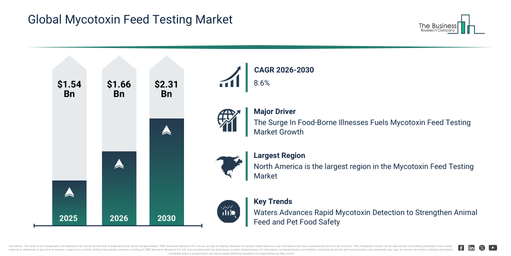
    The mycotoxin feed testing market has experienced significant expansion in recent years, with its valuation expected to rise from $1.54 billion in 2025 to $1.66 billion in 2026, exhibiting a compound annual growth rate (CAGR) of 7.7%. This past growth is largely attributable to factors such as the increasing prevalence of mycotoxin contamination in animal feed, a heightened understanding of feed safety among livestock producers, the necessity to address the limited availability of advanced testing technologies, strict food and feed safety regulations enforced in europe and north america, and the growing output of livestock coupled with a stronger demand for safe feed.

    The mycotoxin feed testing market size is anticipated to undergo significant growth in the coming years, with expectations to reach $2.31 billion by 2030, demonstrating a compound annual growth rate (CAGR) of 8.6%. This expansion during the forecast period is primarily driven by advancements in high-throughput mycotoxin detection technologies, the integration of AI and machine learning into feed testing processes, the broadening of testing services in Asia-Pacific, the increasing uptake of point-of-care testing devices, and growing collaborations between feed producers and testing service providers. Furthermore, key trends for this period include the swift development of high-sensitivity detection kits, a heightened focus on animal health and safety standards, the adoption of portable and on-site testing solutions, the incorporation of automated feed quality monitoring systems, and improved regulatory compliance and reporting.

    Download A Free Sample Report For Comprehensive Market Insights:

    https://www.thebusinessresearchcompany.com/sample.aspx?id=10453&type=smp

    Which Major Factors Are Contributing To The Development Of The Mycotoxin Feed Testing Market?

    The increase in incidences of food-borne illness is expected to propel the growth of mycotoxin feed testing going forward. Food-borne illness refers to a disease or sickness that is caused by the consumption of foods or beverages that are contaminated with pathogens or microorganisms. Food-borne illnesses are increasing due to the increasing use of commercial food services, new methods of producing and distributing food, new or re-emerging infectious foodborne agents, changes in diet, and others. Mycotoxin feed testing will reduce the chances of ingesting contaminated food and hence, reduce food-borne illnesses. For instance, in October 2024, according to the report published by the World Health Organization (WHO), a Switzerland-based government agency responsible for international public health, an estimated 600 million, or almost 1 in 10 people in the world fall ill after eating contaminated food and 420 000 die every year. Therefore, the increase in incidences of food born illness is driving the growth of the mycotoxins feed testing market.

    What Segment Categories Are Evaluated In The Mycotoxin Feed Testing Market Study?

    The mycotoxin feed testing market covered in this report is segmented –

    1) By Type: Aflatoxins, Alternaria, Cyclopiazonic Acid, Citrinin, Fusarium Toxins, Ergot Alkaloids

    2) By Sample: Cereals, Seeds And Seed Products, Forage And Silage, Other Samples

    3) By Technology: Chromatography Based, Immunoassay-Based, Lateral Flow Assay Based, Spectroscopy Based, Other Technologies

    4) By End-User: Food And Beverages, Animal Feed, Pharmaceuticals

    Subsegments:

    1) By Aflatoxins: Aflatoxin B1, Aflatoxin B2, Aflatoxin G1, Aflatoxin G2

    2) By Alternaria: Alternaria Toxins

    3) By Cyclopiazonic Acid: Testing For Cyclopiazonic Acid in Feed

    4) By Citrinin: Citrinin Testing In Feed Products

    5) By Fusarium Toxins: Deoxynivalenol (DON), Zearalenone, Fumonisins, T-2 Toxin

    6) By Ergot Alkaloids: Testing For Ergotamine And Ergocristine

    Which Trends Are Contributing To Changes In The Mycotoxin Feed Testing Market?

    Major companies operating in the mycotoxin feed testing market are focusing on developing innovative products, such as rapid quantitative lateral flow mycotoxin testing strips, to enable faster, on-site detection of harmful mycotoxins and improve food safety decision-making across feed and pet food value chains. A lateral flow mycotoxin testing strip is a portable immunoassay-based diagnostic tool designed to quickly quantify toxic fungal metabolites in feed and food without complex laboratory infrastructure. For instance, in May 2024, Waters Corporation, a US-based provider of analytical instruments, software, and food safety testing solutions, launched the VICAM Fumo-V ONE Strip Test, which delivers quantitative results for key mycotoxins including aflatoxin, fumonisin, and DON directly at production sites in under 10 minutes using simple water extraction. The product enables feed and pet food manufacturers to move quality control upstream, reduce dependence on external laboratories, accelerate release decisions, and lower the risk of contamination-related losses, thereby enhancing overall safety, efficiency, and regulatory compliance in animal nutrition supply chains.

    Who Are The Major Companies Operating In The Mycotoxin Feed Testing Market?

    North America was the largest region in the mycotoxin feed testing market in 2025. Asia-Pacific is expected to be the fastest-growing region in the global mycotoxin feed testing market during the forecast period. The regions covered in the mycotoxin feed testing market report are Asia-Pacific, South East Asia, Western Europe, Eastern Europe, North America, South America, Middle East, Africa.

    Access The Complete Mycotoxin Feed Testing Market Report:

    https://www.thebusinessresearchcompany.com/report/mycotoxin-feed-testing-global-market-report

    Which Region Is The Primary Market For The Mycotoxin Feed Testing Market?

    North America was the largest region in the mycotoxin feed testing market in 2025. Asia-Pacific is expected to be the fastest-growing region in the global mycotoxin feed testing market during the forecast period. The regions covered in the mycotoxin feed testing market report are Asia-Pacific, South East Asia, Western Europe, Eastern Europe, North America, South America, Middle East, Africa.

    Access a Customized Mycotoxin Feed Testing Market Report for Deeper Competitive Insights

    https://www.thebusinessresearchcompany.com/sample.aspx?id=10453&type=smp

    Get in touch with us:

    The Business Research Company: https://www.thebusinessresearchcompany.com/

    Americas: +1 310-496-7795

    Asia: +44 7882 955267 & +91 8897263534

    Europe: +44 7882 955267

    Email us at: marketing@tbrc.info

    Follow us on:

    LinkedIn: https://in.linkedin.com/company/the-business-research-company

    YouTube: https://www.youtube.com/channel/UC24_fI0rV8cR5DxlCpgmyFQ

    Global Market Model: https://www.thebusinessresearchcompany.com/global-market-model
  • Monoclonal Antibodies In Veterinary Health Market Analysis Through 2030 Focusing On Demand Trends And Growth Drivers

    Monoclonal Antibodies In Veterinary Health Market Analysis Through 2030 Focusing On Demand Trends And Growth Drivers

    The Business Research Company’s 2026 market reports feature advanced enhancements such as market attractiveness analysis, total addressable market evaluation, company benchmarking matrices, interactive Excel dashboards, expanded supply chain intelligence, emerging startup coverage, and detailed product insights, delivering more actionable and strategically valuable research.

    What Is The Expected Market Size Of The Monoclonal Antibodies In Veterinary Health Market In 2026 And How Much Will It Reach By 2030?

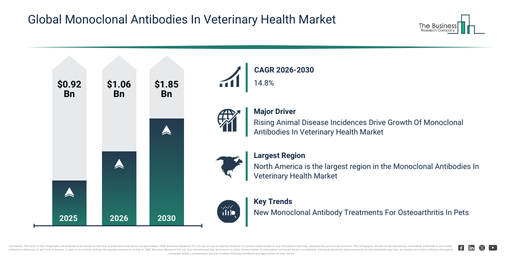
    The monoclonal antibodies in veterinary health market has experienced substantial growth in recent years. It is forecast to rise from $0.92 billion in 2025 to $1.06 billion in 2026, achieving a compound annual growth rate (CAGR) of 15.2%. The expansion observed historically can be ascribed to the rising prevalence of canine cancers, an increasing incidence of autoimmune disorders in pets, the limited availability of targeted therapies, the growth of veterinary hospitals, and a greater awareness of advanced veterinary treatments.

    The monoclonal antibodies in veterinary health market is projected for significant expansion in the coming years, anticipated to reach $1.85 billion by 2030, exhibiting a compound annual growth rate (CAGR) of 14.8%. Several factors will drive this growth during the forecast period, including advancements in mAb engineering technology, a greater uptake of species-specific treatments, increased investment in veterinary oncology and dermatology fields, the evolution of personalized veterinary medicine, and the expansion of the global veterinary healthcare infrastructure. Key trends foreseen for the forecast period encompass an increase in monoclonal antibody-based treatments for canine cancer, a surge in the application of mAbs for autoimmune conditions in dogs, broader use of veterinary dermatology applications, enhanced adoption of targeted pain management solutions, and the creation of species-specific antibody therapies tailored for cats, horses, and livestock.

    Download A Free Sample Report For Comprehensive Market Insights:

    https://www.thebusinessresearchcompany.com/sample.aspx?id=20575&type=smp

    What Key Growth Drivers Are Influencing The Monoclonal Antibodies In Veterinary Health Market?

    The rising animal disease incidences are expected to propel the growth of the monoclonal antibodies in veterinary health market going forward. The rising incidence of animal diseases is driven by intensified farming practices, which increase the risk of infectious disease spread, and climate change, which expands the range of disease vectors such as ticks and mosquitoes. Monoclonal antibodies are highly useful for treating animal diseases as they target specific pathogens or proteins involved in disease processes, offering precise and effective treatments. For instance, in June 2024, according to a report published by the GOV.UK, a UK-based government website, between April 2023 and March 2024, the number of animals slaughtered due to TB incidents rose by 5% in England to 21,298, and by 17% in Wales to 11,197. The rising animal disease incidences are driving the growth of monoclonal antibodies in veterinary health market.

    How Is The Monoclonal Antibodies In Veterinary Health Market Examined Through Segment Analysis?

    The monoclonal antibodies in veterinary health market covered in this report is segmented –

    1) By Product: Monoclonal Antibodies (mAbs), Glucocorticoids, Antihistamines, Immunosuppressants, Other Products

    2) By Animal Type: Dogs, Cats, Horses, Livestock, Other Animals

    3) By Indication: Allergic Skin Disease, Autoimmune Disorders, Infectious Diseases, Cancer Or Tumor Therapy, Other Indications

    4) By Route Of Administration: Injectable, Oral, Topical

    5) By Distribution Channel: Veterinary Clinics, Specialized Animal Hospitals, Retail Pharmacies, Online Pharmacies, Other Distribution Channels

    Subsegments:

    1) By Monoclonal Antibodies: Lokivetmab, Felvetmab, Investigational Monoclonal Antibodies, Equine-specific mAbs

    2) By Glucocorticoids: Prednisone, Prednisolone, Dexamethasone, Methylprednisolone, Hydrocortisone, Triamcinolone

    3) By Antihistamines: Diphenhydramine, Hydroxyzine, Cetirizine, Loratadine, Chlorpheniramine

    4) By Immunosuppressants: Cyclosporine, Tacrolimus, Azathioprine, Mycophenolate Mofetil

    5) By Other Products: Essential Fatty Acid Supplements, Medicated Shampoos And Sprays, Allergen-Specific Immunotherapy (ASIT), Skin Barrier Repair Creams, Nutraceuticals And Probiotics

    What Trends Are Shaping The Monoclonal Antibodies In Veterinary Health Market Structure?

    Major companies operating in the monoclonal antibodies in veterinary health market are focusing on developing innovative veterinary therapeutic solutions, such as anti-NGF monoclonal antibody treatment to address conditions such as chronic pain and inflammation in animals. Anti-NGF monoclonal antibody treatment refers to a therapeutic approach that targets and inhibits nerve growth factor (NGF) to reduce pain and inflammation in animals suffering from chronic pain conditions. For instance, in May 2023, Zoetis, a US-based animal health company, received FDA approvals for Librela (bedinvetmab injection), the first monoclonal antibody treatment for controlling pain associated with osteoarthritis (OA) in dogs, which is administered as a once-monthly injection, and Apoquel Chewable, the first chewable medication specifically for managing allergic itch and inflammation in dogs aged one year or older. Librela is a monoclonal antibody that targets and inhibits nerve growth factor (NGF). By blocking NGF, Librela helps to prevent these pain signals from reaching the brain, thereby reducing the sensation of pain in dogs with osteoarthritis. Librela represents a significant advancement in veterinary pain management, providing a novel approach to treating chronic pain in dogs.

    Which Companies Are Influencing The Monoclonal Antibodies In Veterinary Health Market?

    North America was the largest region in the monoclonal antibodies in veterinary health market in 2025. The regions covered in the monoclonal antibodies in veterinary health market report are Asia-Pacific, South East Asia, Western Europe, Eastern Europe, North America, South America, Middle East, Africa.

    Access The Complete Monoclonal Antibodies In Veterinary Health Market Report:

    https://www.thebusinessresearchcompany.com/report/monoclonal-antibodies-in-veterinary-health-global-market-report

    Which Geographic Region Represents The Largest Monoclonal Antibodies In Veterinary Health Market Share?

    North America was the largest region in the monoclonal antibodies in veterinary health market in 2025. The regions covered in the monoclonal antibodies in veterinary health market report are Asia-Pacific, South East Asia, Western Europe, Eastern Europe, North America, South America, Middle East, Africa.

    Access a Customized Monoclonal Antibodies In Veterinary Health Market Report for Deeper Competitive Insights

    https://www.thebusinessresearchcompany.com/sample.aspx?id=20575&type=smp

    Get in touch with us:

    The Business Research Company: https://www.thebusinessresearchcompany.com/

    Americas: +1 310-496-7795

    Asia: +44 7882 955267 & +91 8897263534

    Europe: +44 7882 955267

    Email us at: marketing@tbrc.info

    Follow us on:

    LinkedIn: https://in.linkedin.com/company/the-business-research-company

    YouTube: https://www.youtube.com/channel/UC24_fI0rV8cR5DxlCpgmyFQ

    Global Market Model: https://www.thebusinessresearchcompany.com/global-market-model

  • Microorganism Feed Carbohydrase Market Projected To Surpass $2.8 Billion By 2030 At 9.3% CAGR

    Microorganism Feed Carbohydrase Market Projected To Surpass $2.8 Billion By 2030 At 9.3% CAGR

    The Business Research Company’s 2026 market reports feature advanced enhancements such as market attractiveness analysis, total addressable market evaluation, company benchmarking matrices, interactive Excel dashboards, expanded supply chain intelligence, emerging startup coverage, and detailed product insights, delivering more actionable and strategically valuable research.

    What Market Size Is Forecasted For The Microorganism Feed Carbohydrase Market By 2030 Based On Its 2026 Value?

    The microorganism feed carbohydrase market size has experienced significant expansion in recent years. This market is anticipated to expand from $1.81 billion in 2025 to $1.97 billion in 2026, at a compound annual growth rate (CAGR) of 8.6%. Historically, this growth has been propelled by several factors, including the increase in compound feed production, a growing livestock population, the demand for improved feed conversion ratios, the availability of microbial fermentation technologies, and rising feed raw material costs.

    The microorganism feed carbohydrase market size is projected to experience substantial growth in the coming years. It is forecast to reach $2.81 billion by 2030, demonstrating a compound annual growth rate (CAGR) of 9.3%. This anticipated growth during the forecast period can be attributed to factors such as a shift toward sustainable feed additives, an increased focus on gut health optimization, the expansion of aquaculture feed demand, wider adoption of enzyme-based nutrition solutions, and regulatory pushes to reduce antibiotic use. Major trends for the forecast period include the rising integration of microbial enzymes in feed formulations, a growing demand for improved feed digestibility, the increasing use of multi-enzyme carbohydrase blends, the expansion of enzyme applications across various livestock species, and a preference for cost-effective feed efficiency enhancers.

    Download A Free Sample Report For Comprehensive Market Insights:

    https://www.thebusinessresearchcompany.com/sample.aspx?id=10452&type=smp

    Which Core Factors Are Supporting The Expansion Of The Microorganism Feed Carbohydrase Market?

    Rising demand for animal protein such as meat is expected to propel the growth of the microorganisms feed carbohydrase market going forward. Meat refers to the flesh of animals that are used for consumption to offer a good source of protein, vitamins, and minerals in a diet. Animal protein such as meat is rising due to population growth, as a larger global population increases overall demand for protein-rich foods to meet basic nutritional needs. Microorganisms feed carbohydrase enzymes are commonly employed in animal feeds to reduce the negative impacts of antinutritional elements in the structure of feed raw materials and improve performance, which helps to supply more meat per animal at a reduced cost while enhancing overall long-term well-being. For instance, in July 2025, according to the Department for Environment, Food and Rural Affairs (Defra), a UK-based government department, total UK meat production in 2024 was 4,166 thousand tonnes, up from 4,059 thousand tonnes in 2023. Therefore, rising demand for animal protein such as meat drives the microorganisms feed carbohydrase market.

    Which Segment Groups Define The Microorganism Feed Carbohydrase Market Landscape?

    The microorganism feed carbohydrase market covered in this report is segmented –

    1) By Type: Amylases, Cellulases, Pectinases, Lactase, Other Types

    2) By Form: Dry, Liquid

    3) By Livestock: Poultry, Swine, Ruminants, Aquatic Animals, Other Livestocks

    4) By Application: Food And Beverage, Animal Feed, Pharmaceuticals, Other Applications

    Subsegments:

    1) By Amylases: Alpha-Amylase, Beta-Amylase, Glucoamylase

    2) By Cellulases: Endocellulase, Exocellulase, Beta-Glucosidase

    3) By Pectinases: Polygalacturonase, Pectin Lyase, Pectinesterase

    4) By Lactase: Beta-Galactosidase

    5) By Other Types: Xylanases, Mannanases, Glucosidases

    What Trends Are Influencing The Microorganism Feed Carbohydrase Market?

    Major companies operating in the microorganism feed carbohydrase market are focusing on developing innovative products such as xylanase to improve the digestibility of fiber-rich feed, thereby enhancing the nutrient absorption and overall performance of livestock. These xylanase products break down non-starch polysaccharides, such as xylans, found in plant cell walls, making nutrients more accessible to animals. For instance, in March 2024, EW Nutrition, a Germany-based animal feed manufacturer, launched its xylanase product, Axxess XY. This new enzyme technology marks a significant advancement in feed efficiency and animal nutrition. The introduction of Axxess XY is expected to transform the enzyme market within the animal nutrition sector, offering feed producers innovative solutions that enhance efficiency and reduce costs. Additionally, the company plans to expand its offerings globally, demonstrating a strong commitment to advancing enzyme technology for animal health and nutrition.

    Who Are The Companies Shaping The Microorganism Feed Carbohydrase Market Landscape?

    North America was the largest region in the microorganism feed carbohydrase market in 2025. The regions covered in the microorganism feed carbohydrase market report are Asia-Pacific, South East Asia, Western Europe, Eastern Europe, North America, South America, Middle East, Africa.

    Access The Complete Microorganism Feed Carbohydrase Market Report:

    https://www.thebusinessresearchcompany.com/report/microorganism-feed-carbohydrase-global-market-report

    Which Region Leads The Microorganism Feed Carbohydrase Market By Size?

    North America was the largest region in the microorganism feed carbohydrase market in 2025. The regions covered in the microorganism feed carbohydrase market report are Asia-Pacific, South East Asia, Western Europe, Eastern Europe, North America, South America, Middle East, Africa.

    Access a Customized Microorganism Feed Carbohydrase Market Report for Deeper Competitive Insights

    https://www.thebusinessresearchcompany.com/sample.aspx?id=10452&type=smp

    Get in touch with us:

    The Business Research Company: https://www.thebusinessresearchcompany.com/

    Americas: +1 310-496-7795

    Asia: +44 7882 955267 & +91 8897263534

    Europe: +44 7882 955267

    Email us at: marketing@tbrc.info

    Follow us on:

    LinkedIn: https://in.linkedin.com/company/the-business-research-company

    YouTube: https://www.youtube.com/channel/UC24_fI0rV8cR5DxlCpgmyFQ

    Global Market Model: https://www.thebusinessresearchcompany.com/global-market-model
  • Wide Format Printers Market Expansion Outlook Through 2030 With Revenue Growth Insights

    Wide Format Printers Market Expansion Outlook Through 2030 With Revenue Growth Insights

    The Business Research Company’s 2026 market reports feature advanced enhancements such as market attractiveness analysis, total addressable market evaluation, company benchmarking matrices, interactive Excel dashboards, expanded supply chain intelligence, emerging startup coverage, and detailed product insights, delivering more actionable and strategically valuable research.

    What Is The Estimated Growth In Market Size Of The Wide Format Printers Market During 2026–2030?

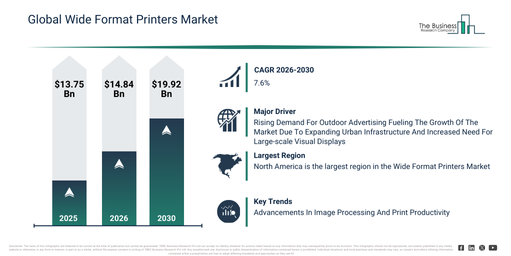
    The wide format printers market size has demonstrated strong growth in recent years. It is forecast to expand from $13.75 billion in 2025 to $14.84 billion in 2026, at a compound annual growth rate (CAGR) of 7.9%. This historical growth can be attributed to an increasing demand for large-scale advertising and outdoor signage, the growing adoption of digital printing for short-run production, the rising use of wide-format printers in architectural and technical drawings, the expansion of textile and apparel printing, and the growing replacement of older solvent-based printers with eco-friendly systems.

    The wide format printers market size is projected for significant expansion in the coming years, reaching $19.92 billion by 2030, driven by a compound annual growth rate (CAGR) of 7.6%. This anticipated growth stems from several factors, including the rising adoption of UV-curable and latex inks, the increasing demand for high-resolution printing in commercial uses, a surge in on-demand and customized print requirements, the broadening scope of interior décor and exhibition graphics applications, and the greater integration of workflow automation and cloud-based print management systems. Key trends expected during this period involve technological progress in high-speed inkjet printing, new developments in digital textile printing, the creation of hybrid roll-to-roll and flatbed printers, ongoing research and development in environmentally friendly inks and sustainable printing methods, and advancements in AI-assisted print quality and predictive maintenance technologies.

    Download A Free Sample Report For Comprehensive Market Insights:

    https://www.thebusinessresearchcompany.com/sample.aspx?id=30786&type=smp

    What Major Growth Factors Are Impacting The Wide Format Printers Market?

    The increasing need for outdoor advertising is anticipated to fuel the expansion of the wide format printers market in the future. Outdoor advertising constitutes a marketing strategy that utilizes physical displays like billboards, transit posters, and street furniture to engage consumers in public environments. This growth in outdoor advertising stems from increasing urbanization, where expanding urban populations and greater commuter volumes generate more chances to connect with extensive audiences in public areas. Wide format printers facilitate outdoor advertising by producing large, high-quality, and weather-resistant visuals, enabling brands to convey impactful and enduring messages in public settings. As an illustration, in March 2025, data from the Out of Home Advertising Association of America, a US-based trade organization, indicated that out-of-home advertising revenue surpassed $9.1 billion in 2024, showing a 4.5% year-on-year increase from the previous year. Consequently, the escalating demand for outdoor advertising is a primary impetus for the wide format printers market.

    How Is Segment Classification Applied In The Wide Format Printers Market?

    The wide format printers market covered in this report is segmented –

    1) By Technology: Inkjet, Laser, Other Ink Types

    2) By Ink Type: Aqueous, Solvent, UV-Curable, Latex, Dye Sublimation

    3) By Print Width: 17″–24″, 24″–36″, 36″–44″, 44″–60″, 60″–72″, Above 72″

    4) By Application: Advertising, Apparel And Textile Printing, CAD And Technical Printing, Signage, Other Applications

    5) By End User: Commercial Print Service Providers, In-House Corporate Print Departments, Textile And Apparel Manufacturers, Engineering And Construction Firms, Retail And Advertising Agencies, Residential And Consumer Users

    Subsegments:

    1) By Inkjet: Thermal Inkjet, Piezoelectric Inkjet, Continuous Inkjet, Drop On Demand Inkjet, Solvent Inkjet, Water Based Inkjet, Ultraviolet Curable Inkjet, Latex Inkjet

    2) By Laser: Monochrome Laser, Color Laser, Single Function Laser, Multifunction Laser, Electrophotographic Laser, Dry Toner Laser, Wet Toner Laser

    What Trends Are Affecting The Wide Format Printers Market Dynamics?

    Leading companies within the wide format printers market are concentrating on technological advancements, including enhanced image processing and productivity optimization technologies, to achieve superior print quality, increased throughput, and operational efficiency, thereby meeting evolving professional and commercial printing requirements. These enhanced image processing and productivity optimization technologies represent innovations designed to refine color reproduction, print speed, media handling intelligence, and workflow efficiency in wide-format printing systems, enabling vivid output with reduced downtime and higher user productivity. For instance, in January 2025, Canon India Pvt. Ltd., an India-based imaging technologies company, introduced the imagePROGRAF TZ-5320 and TX Series wide-format printers. These introduced printers deliver enhanced color vibrancy and sharpness with new image processing and magenta ink for deeper, more vivid prints, increased print speeds and smart paper handling features to boost productivity with minimal downtime, and eco-friendly design elements that reduce energy consumption and support sustainable operation.

    Who Are The Prominent Players Across The Wide Format Printers Market?

    Major companies operating in the wide format printers market are HP Inc., Canon Inc., Fujifilm Holdings Corporation, Ricoh Company Ltd., Konica Minolta Inc., Lexmark International Inc., Brother International Corporation, Epson America Inc., OKI Data Americas Inc., Xerox Holdings Corporation, Kyocera Document Solutions Inc., Durst Phototechnik AG, Océ-Tektronix, Mimaki Engineering Co. Ltd., Electronics For Imaging Inc., Roland DG Corporation, AstroNova Inc., Mutoh America Inc., SwissQprint AG, Seiko Instruments Inc.

    Access The Complete Wide Format Printers Market Report:

    https://www.thebusinessresearchcompany.com/report/wide-format-printers-market-report

    Which Region Accounts For The Highest Share Of The Wide Format Printers Market?

    North America was the largest region in the wide format printers market in 2025. Asia-Pacific is expected to be the fastest-growing region in the forecast period. The regions covered in the wide format printers market report are Asia-Pacific, South East Asia, Western Europe, Eastern Europe, North America, South America, Middle East, Africa.

    Access a Customized Wide Format Printers Market Report for Deeper Competitive Insights

    https://www.thebusinessresearchcompany.com/sample.aspx?id=30786&type=smp

    Get in touch with us:

    The Business Research Company: https://www.thebusinessresearchcompany.com/

    Americas: +1 310-496-7795

    Asia: +44 7882 955267 & +91 8897263534

    Europe: +44 7882 955267

    Email us at: marketing@tbrc.info

    Follow us on:

    LinkedIn: https://in.linkedin.com/company/the-business-research-company

    YouTube: https://www.youtube.com/channel/UC24_fI0rV8cR5DxlCpgmyFQ

    Global Market Model: https://www.thebusinessresearchcompany.com/global-market-model

  • Wearable Technology Market Industry Analysis Covering Trends, Drivers, And Future Outlook

    Wearable Technology Market Industry Analysis Covering Trends, Drivers, And Future Outlook

    The Business Research Company’s 2026 market reports feature advanced enhancements such as market attractiveness analysis, total addressable market evaluation, company benchmarking matrices, interactive Excel dashboards, expanded supply chain intelligence, emerging startup coverage, and detailed product insights, delivering more actionable and strategically valuable research.

    What Market Value Expansion Is Expected For The Wearable Technology Market Over The Forecast Period?

    The wearable technology market size has experienced substantial expansion in recent years. It is anticipated to grow from $97.21 billion in 2025 to $114.96 billion in 2026, exhibiting a compound annual growth rate (CAGR) of 18.3%. The market’s growth during the historic period was driven by factors such as a heightened consumer emphasis on fitness and well-being, the rising uptake of smartwatches and fitness bands, the expanded application of wearables in monitoring sports performance, the proliferation of remote patient monitoring solutions within the healthcare sector, and the enhanced integration of Bluetooth and smartphone capabilities into these devices.

    The wearable technology market is anticipated to experience significant expansion over the coming years. This market is projected to reach $222.63 billion by 2030, achieving a compound annual growth rate (CAGR) of 18.0%. Factors contributing to this growth during the forecast period include an escalating demand for personalized health data and predictive analysis, the increasing uptake of clinical-grade medical wearables, greater corporate spending on employee wellness and safety initiatives, the widening application of augmented reality and virtual reality (AR/VR) wearables across business and entertainment sectors, and the growing subscription earnings from high-end digital coaching and cloud offerings. Key trends foreseen in the same period encompass technological progress in artificial intelligence (AI)-driven health analytics, novelties in smart clothing and e-textiles, advancements in multimodal biometrics and non-invasive medical sensing, ongoing research and development in battery efficiency and ultra-low-power chip technologies, and improvements in AR/VR wearables for captivating metaverse-integrated applications.

    Download A Free Sample Report For Comprehensive Market Insights:

    https://www.thebusinessresearchcompany.com/sample.aspx?id=30783&type=smp

    What Market Drivers Are Helping Shape The Wearable Technology Market Expansion?

    Heightened consumer awareness regarding health and fitness tracking is projected to fuel the expansion of the wearable technology market. This awareness signifies individuals’ active participation in overseeing their physiological and wellness data through technologies that track health metrics such as heart rate, activity, and sleep, thereby increasingly shaping lifestyle and wellness decisions worldwide. The surge in this awareness is attributed to a greater emphasis on preventive health and proactive wellness management, prompting more people to adopt devices for health monitoring. Wearable technology aids health and fitness monitoring by delivering real-time insights into activity, sleep, and vital signs, enabling users to make informed lifestyle and fitness choices. For example, in January 2025, the China Internet Network Information Center, a China-based research organization, indicated that as of December 2024, China had 418 million users of internet healthcare services, marking an increase of 3.72 million from December 2023, and representing 37.7% of the total online population. Thus, the escalating consumer awareness about health and fitness monitoring is a primary driver for the growth of the wearable technology market.

    What Are The Core Segment Classifications In The Wearable Technology Market?

    The wearable technology market covered in this report is segmented –

    1) By Product Type: Smartwatches, Fitness And Activity Trackers, Smart Clothing Or E-Textiles, Augmented Reality And Virtual Reality Headsets Or Smart Glasses, Medical And Clinical Wearables, Hearables Or Smart Earbuds, Other Wearable Accessories

    2) By Connectivity: Bluetooth, Wi-Fi, Cellular Or LTE Or 5G, Near Field Communication (NFC), Other Internet Of Things Low-Power Networks

    3) By Distribution Channel: Online Retail Or E-Commerce, Brand Stores Or OEM Stores, Consumer Electronics Retailers, Healthcare And Medical Distribution Networks, Enterprise Or Institutional Sales

    4) By Application Or Use-Case: Health And Fitness Monitoring, Medical Diagnostics And Remote Patient Monitoring, Sports And Performance Analytics, Gaming, Virtual Reality, Entertainment And Immersive Training, Workplace Safety And Productivity, Lifestyle And Personal Assistance, Defense And Tactical Operations

    5) By End-Users: Individual Consumers, Healthcare Providers And Patients, Enterprise And Industrial Users, Athletes And Sports Organizations

    Subsegments:

    1) By Smartwatches: Fitness Tracking Smartwatches, Health Monitoring Smartwatches, Communication Smartwatches, Kids Smartwatches, Luxury Smartwatches

    2) By Fitness And Activity Trackers: Daily Activity Trackers, Sports Performance Trackers, Sleep Tracking Bands, Heart Rate Monitoring Bands, Posture And Movement Trackers

    3) By Smart Clothing Or E-Textiles: Smart Sportswear, Smart Workwear, Smart Military Apparel, Smart Fashion Wear, Smart Thermal Regulating Clothing

    4) By Augmented Reality And Virtual Reality Headsets Or Smart Glasses: Augmented Reality Smart Glasses, Virtual Reality Headsets, Mixed Reality Wearables, Industrial Smart Glasses, Consumer Entertainment Smart Glasses

    5) By Medical And Clinical Wearables: Remote Patient Monitoring Wearables, Cardiac Monitoring Wearables, Glucose Monitoring Wearables, Vital Signs Tracking Wearables, Rehabilitation And Therapy Wearables

    6) By Hearables Or Smart Earbuds: Health Monitoring Earbuds, Noise Cancellation Earbuds, Language Translation Earbuds, Fitness Tracking Earbuds, Gaming And Entertainment Earbuds

    7) By Other Wearable Accessories: Smart Rings, Smart Belts, Smart Helmets, Smart Jewelry, Smart Insoles

    Which Trends Are Influencing The Expansion Of The Wearable Technology Market?

    Major companies in the wearable technology market are focusing on creating advanced wearables, including AI-enabled neural interface wristbands, to speed up human-computer interaction, expand device utility, and improve accessibility within digital ecosystems. AI-enabled neural interface wristbands are wearable devices designed to read, interpret, or interact with neural signals (brain or nerve activity) and deliver real-time feedback, control, or insights through artificial intelligence. For instance, in January 2025, Wearable Devices Ltd., an Israel-based technology company, launched the Mudra Link neural gesture-control wristband. This product was the first neural wristband compatible with Android, macOS, and Windows platforms, featuring sophisticated gesture recognition through surface nerve conductance sensors, cross-platform compatibility for smooth control of smart devices, and customizable gesture mapping for specific user interaction patterns. This innovation enables intuitive hands-free control across augmented reality systems and smart environments, marking a significant evolution in wearable interaction by replacing traditional input methods with neural gesture-based command execution.

    Which Companies Form The Competitive Landscape Of The Wearable Technology Market?

    Major companies operating in the wearable technology market are Google LLC, Samsung Electronics Co. Ltd., Huawei Technologies Co. Ltd., Sony Corporation, LG Electronics Inc., Nike Inc., Xiaomi Corporation, Adidas AG, ASUSTeK Computer Inc., OPPO Mobile Telecommunications Corp. Ltd., Garmin Ltd., Michael Kors Holdings Limited, Casio America Inc., OnePlus Technology Co. Ltd., Fossil Group Inc., Withings SA, Vuzix Corporation, Fitbit Inc., hDrop Technologies Inc., Bearmind AG

    Access The Complete Wearable Technology Market Report:

    https://www.thebusinessresearchcompany.com/report/wearable-technology-market-report

    Which Region Is The Primary Market For The Wearable Technology Market?

    North America was the largest region in the wearable technology market in 2025. Asia-Pacific is expected to be the fastest-growing region in the forecast period. The regions covered in the wearable technology market report are Asia-Pacific, South East Asia, Western Europe, Eastern Europe, North America, South America, Middle East, Africa.

    Access a Customized Wearable Technology Market Report for Deeper Competitive Insights

    https://www.thebusinessresearchcompany.com/sample.aspx?id=30783&type=smp

    Get in touch with us:

    The Business Research Company: https://www.thebusinessresearchcompany.com/

    Americas: +1 310-496-7795

    Asia: +44 7882 955267 & +91 8897263534

    Europe: +44 7882 955267

    Email us at: marketing@tbrc.info

    Follow us on:

    LinkedIn: https://in.linkedin.com/company/the-business-research-company

    YouTube: https://www.youtube.com/channel/UC24_fI0rV8cR5DxlCpgmyFQ

    Global Market Model: https://www.thebusinessresearchcompany.com/global-market-model

  • Waterproofing Membrane Market Forecast Assessing Growth Potential And Industry Direction

    Waterproofing Membrane Market Forecast Assessing Growth Potential And Industry Direction

    The Business Research Company’s 2026 market reports feature advanced enhancements such as market attractiveness analysis, total addressable market evaluation, company benchmarking matrices, interactive Excel dashboards, expanded supply chain intelligence, emerging startup coverage, and detailed product insights, delivering more actionable and strategically valuable research.

    How Will The Market Value Of The Waterproofing Membrane Market Change Between 2026 And 2030?

    The waterproofing membrane market size has experienced robust expansion in recent years. This market is projected to expand from $34.10 billion in 2025 to $36.84 billion in 2026, demonstrating a compound annual growth rate (CAGR) of 8.0%. Historically, this growth has been driven by factors such as increasing urbanization, growing construction activities, a rising need for moisture protection, expanding industrial infrastructure, and an increasing demand for durable building materials.

    The waterproofing membrane market size is anticipated to demonstrate substantial growth over the next few years, projected to reach $49.61 billion by 2030, expanding at a compound annual growth rate (CAGR) of 7.7%. This expansion during the forecast period can be attributed to several factors: increasing utilization of waterproofing in residential constructions, rising investments in commercial infrastructure, a surge in renovation and remodeling projects, broadening application in transportation and tunneling, and a growing demand for eco-friendly waterproofing solutions. Significant trends emerging in this period include technological progress in membrane performance, the development of innovative self-adhesive and spray-applied products, advancements in products designed for superior durability and chemical resistance, increased research and development into sustainable membranes, and the integration of technology for quicker installation and better monitoring.

    Download A Free Sample Report For Comprehensive Market Insights:

    https://www.thebusinessresearchcompany.com/sample.aspx?id=30780&type=smp

    Which Significant Factors Are Encouraging Growth In The Waterproofing Membrane Market?

    The projected growth of the waterproofing membrane market is anticipated to be fueled by the ongoing expansion in construction and infrastructure. This development encompasses the widening scope of residential, commercial, and industrial buildings, as well as transportation and public infrastructure projects, all of which require enduring structural strength. The surge in construction and infrastructure development is primarily attributed to increased government investment in large-scale infrastructure initiatives. Waterproofing membranes support these developments by providing materials that inhibit water ingress, bolster structural soundness, and prolong the operational life of buildings and infrastructure. As an illustration, in May 2025, data from the Office for National Statistics, a UK government agency, indicated that total construction new orders rose by 26.6% (£2,447 million) in Q1 2025 compared to Q4 2024, largely driven by an uptick in new infrastructure work and private industrial projects. Consequently, the rising construction and infrastructure development is a key factor propelling the growth of the waterproofing membrane market.

    How Is The Waterproofing Membrane Market Structured Across Different Market Segments?

    The waterproofing membrane market covered in this report is segmented –

    1) By Product Type: Liquid-Applied Membrane, Sheet Membrane

    2) By Raw Material: Bitumen, Polymers, Rubber, Other Raw Materials

    3) By Distribution Channel: Direct Sales, Distributors And Dealers, Online Or E-Commerce Supply

    4) By Application: Roofing, Basement And Foundation, Walls And Facades, Landfills And Tunnels, Other Applications

    5) By End Use: Residential, Commercial, Industrial, Infrastructure

    Subsegments:

    1) By Liquid-Applied Membrane: Bituminous, Cementitious, Polyurethane, Polyurea

    2) By Sheet Membrane: Bituminous, Thermoplastic, Rubber, Polyvinyl Chloride

    What Trends Are Impacting The Waterproofing Membrane Market?

    Leading companies in the waterproofing membrane market are concentrating on developing sophisticated products, such as hybrid polymer systems, to improve performance, increase durability, and simplify installation. These hybrid polymer systems are advanced formulations that integrate various polymer-modified bitumen technologies into one sheet, providing a versatile membrane suitable for a wide range of climates and uses. As an illustration, in February 2025, Sika Corporation, a US-based construction materials firm, introduced the SikaShield HB79 membrane. This distinctive “hybrid” modified bitumen membrane boasts a patented blend of APAO and SBS polymer technologies, removing the necessity for multiple membrane varieties and significantly streamlining material choices. Its dual-layer polymer design features an APAO top layer for resistance to heat and longevity, alongside an SBS bottom layer for flexibility in cold conditions and adhesion to substrates, ensuring dependable performance across diverse seasonal changes without compromise. Furthermore, it incorporates reinforcement from both polyester and glass fiber to enhance strength, tear resistance, and dimensional stability, thereby extending roof lifespan and lowering long-term maintenance expenses for property owners.

    Who Are The Key Market Participants In The Waterproofing Membrane Market?

    Major companies operating in the waterproofing membrane market are Sika AG, MAPEI S.p.A., Asian Paints Limited, Johns Manville Corporation, Bostik SA, SOPREMA Group, BMI Group, Tremco CPG Inc., GAF Materials LLC, Fosroc International Limited, ARDEX GmbH, IKO Industries Ltd., Polyglass U.S.A. Inc., CICO Technologies Limited, Paul Bauder GmbH & Co. KG, RENOLIT SE, SCHOMBURG GmbH, KÖSTER Bauchemie AG, Pidilite Industries Limited, ALUJET GmbH

    Access The Complete Waterproofing Membrane Market Report:

    https://www.thebusinessresearchcompany.com/report/waterproofing-membrane-market-report

    Which Geographic Region Represents The Largest Waterproofing Membrane Market Share?

    Asia‑Pacific was the largest region in the waterproofing membrane market in 2025. Asia‑Pacific is expected to be the fastest-growing region in the forecast period. The regions covered in the waterproofing membrane market report are Asia-Pacific, South East Asia, Western Europe, Eastern Europe, North America, South America, Middle East, Africa.

    Access a Customized Waterproofing Membrane Market Report for Deeper Competitive Insights

    https://www.thebusinessresearchcompany.com/sample.aspx?id=30780&type=smp

    Get in touch with us:

    The Business Research Company: https://www.thebusinessresearchcompany.com/

    Americas: +1 310-496-7795

    Asia: +44 7882 955267 & +91 8897263534

    Europe: +44 7882 955267

    Email us at: marketing@tbrc.info

    Follow us on:

    LinkedIn: https://in.linkedin.com/company/the-business-research-company

    YouTube: https://www.youtube.com/channel/UC24_fI0rV8cR5DxlCpgmyFQ

    Global Market Model: https://www.thebusinessresearchcompany.com/global-market-model

  • Upskilling Platforms Market Expected To Witness Revenue Growth Toward $13.34 Billion By 2030

    Upskilling Platforms Market Expected To Witness Revenue Growth Toward $13.34 Billion By 2030

    The Business Research Company’s 2026 market reports feature advanced enhancements such as market attractiveness analysis, total addressable market evaluation, company benchmarking matrices, interactive Excel dashboards, expanded supply chain intelligence, emerging startup coverage, and detailed product insights, delivering more actionable and strategically valuable research.

    What Is The Forecasted Rise In Market Size Of The Upskilling Platforms Market During The Forecast Period?

    The upskilling platforms market size has seen substantial growth recently. It is set to expand from $7.36 billion in 2025 to $8.31 billion in 2026, exhibiting a compound annual growth rate (CAGR) of 12.9%. The market’s past expansion can be ascribed to growing workforce capability requirements, an increase in digital literacy initiatives, enhanced employer investment in staff development, wider access to online learning content, and a heightened focus on employee retention strategies.

    The upskilling platforms market size is projected to experience substantial growth over the upcoming years. It is forecast to expand to $13.35 billion by 2030, demonstrating a compound annual growth rate (CAGR) of 12.6%. This anticipated growth can be linked to the increasing necessity for continuous professional development, a greater focus on competencies tailored to specific roles, a growing need for validated skill credentials, an expanding emphasis on learning outcomes based on performance, and the rising significance of individualized learning journeys. Significant trends expected in the forecast period involve skill assessments enabled by technology, learning personalization driven by artificial intelligence, content recommendations powered by machine learning, training simulations utilizing virtual reality, and hands-on learning facilitated by augmented reality.

    Download A Free Sample Report For Comprehensive Market Insights:

    https://www.thebusinessresearchcompany.com/sample.aspx?id=30775&type=smp

    What Core Drivers Are Transforming The Upskilling Platforms Market?

    The increasing need for ongoing education is anticipated to drive expansion in the upskilling platforms market in the future. Continuous learning signifies professionals consistently refreshing and obtaining new skills over their careers to adapt to changing job demands and technological advancements. This heightened demand stems from rapid technological evolution and dynamic skill needs, rendering conventional, fixed qualifications inadequate and thereby motivating both employees and employers to prioritize sustained training. Upskilling platforms facilitate continuous learning by offering organized, reachable, and adaptable learning solutions, empowering individuals to acquire new capabilities and sustain their competitiveness. As an illustration, in January 2025, data from the World Economic Forum, a Switzerland-based international advocacy non-governmental organization, revealed that the proportion of the global workforce engaging in training, reskilling, or upskilling initiatives grew to 50 % in 2025 from 41 % in 2023, showcasing a greater commitment to continuous learning activities across various sectors. Consequently, the increasing requirement for continuous learning is fueling the expansion of the upskilling platforms market.

    Which Segment-Based Categories Are Covered In The Upskilling Platforms Market?

    The upskilling platforms market covered in this report is segmented –

    1) By Type: Industry-Specific Courses, Professional Certifications, Soft Skills Training, Coding Courses, Leadership Development

    2) By Deployment Mode: Cloud-Based, On-Premise, Hybrid

    3) By Technology Utilized: Learning Management Systems (LMS), Mobile Learning Apps, Gamified Learning Platforms, Artificial Intelligence

    4) By Delivery Mode: Self-Paced Learning, Instructor-Led Training, Blended Learning

    5) By Application: Corporate Employees, Students, Freelancers, Job Seekers, Professionals

    Subsegments:

    1) By Industry-Specific Courses: Healthcare Training, Manufacturing Training, Finance And Banking Training, Information Technology Training, Retail And Customer Service Training

    2) By Professional Certifications: Project Management Certifications, Information Security Certifications, Human Resources Certifications, Marketing Certifications, Finance And Accounting Certifications

    3) By Soft Skills Training: Communication Skills, Teamwork And Collaboration, Time Management, Emotional Intelligence, Conflict Resolution

    4) By Coding Courses: Web Development, Mobile App Development, Data Science And Analytics, Software Engineering, Cybersecurity

    5) By Leadership Development: Executive Leadership, Team Leadership, Change Management, Strategic Thinking, Coaching And Mentoring

    Which Trends Are Affecting The Upskilling Platforms Market Framework?

    Leading companies within the upskilling platforms market are concentrating on developing extensive training packages, such as AI-driven skills enhancement programs, with the aim of providing personalized learning journeys, boosting employee productivity, and bridging rapidly evolving digital skill gaps across organizations. AI-powered skills development programs are defined as training initiatives that leverage artificial intelligence to customize learning paths, identify skill deficiencies, and deliver adaptive content and feedback, thus enabling learners to acquire relevant capabilities more efficiently. For instance, in June 2025, Udemy Inc., a US-based AI-powered skills development platform, introduced new AI Fluency Packages, an AI-powered skills development program. This offering includes an AI Readiness Package, featuring 50 curated courses and structured introductions to core AI concepts, alongside access to the Udemy AI Assistant for real-time coaching. It also provides an AI Growth Package, which contains over 800 specialized courses and more than 30 role-specific learning paths, multilingual support, certification preparation, and AI Skills Mapping designed to personalize workforce learning at scale. These comprehensive packages deliver structured, multi-level AI skill development, real-time AI-assisted coaching, and role-aligned learning paths to support both foundational and advanced competencies, empowering professionals and teams to gain practical AI application skills and achieve measurable business outcomes. This reflects a strategic shift towards integrated, scalable upskilling solutions specifically tailored to meet dynamic workforce demands.

    Which Organizations Are Operating Within The Upskilling Platforms Market?

    Major companies operating in the upskilling platforms market are upGrad Education Private Limited, Udemy Inc., Coursera Inc., Cisco Networking Academy, Simplilearn Solutions Inc., Skillsoft Corporation, MasterClass Inc., HackerRank Inc., Degreed Inc., Codecademy Inc., Udacity Inc., Emeritus Institute of Management, Great Learning Education Services, Thinkific Labs Inc., Edureka Learning Center Pvt. Ltd., SANS Institute, OpenSesame Inc., Khan Academy Inc., DataCamp Inc., Skillshare Inc., Springboard Inc., Alison Technologies Limited, Dataquest Inc., LeetCode Inc.

    Access The Complete Upskilling Platforms Market Report:

    https://www.thebusinessresearchcompany.com/report/upskilling-platforms-market-report

    Which Region Leads The Upskilling Platforms Market By Size?

    North America was the largest region in the upskilling platforms market in 2025. Asia-Pacific is expected to be the fastest-growing region in the forecast period. The regions covered in the upskilling platforms market report are Asia-Pacific, South East Asia, Western Europe, Eastern Europe, North America, South America, Middle East, Africa.

    Access a Customized Upskilling Platforms Market Report for Deeper Competitive Insights

    https://www.thebusinessresearchcompany.com/sample.aspx?id=30775&type=smp

    Get in touch with us:

    The Business Research Company: https://www.thebusinessresearchcompany.com/

    Americas: +1 310-496-7795

    Asia: +44 7882 955267 & +91 8897263534

    Europe: +44 7882 955267

    Email us at: marketing@tbrc.info

    Follow us on:

    LinkedIn: https://in.linkedin.com/company/the-business-research-company

    YouTube: https://www.youtube.com/channel/UC24_fI0rV8cR5DxlCpgmyFQ

    Global Market Model: https://www.thebusinessresearchcompany.com/global-market-model

  • Typing Tutor Software Market Industry Outlook 2026–2030 Highlighting Growth Momentum And Market Trends

    Typing Tutor Software Market Industry Outlook 2026–2030 Highlighting Growth Momentum And Market Trends

    The Business Research Company’s 2026 market reports feature advanced enhancements such as market attractiveness analysis, total addressable market evaluation, company benchmarking matrices, interactive Excel dashboards, expanded supply chain intelligence, emerging startup coverage, and detailed product insights, delivering more actionable and strategically valuable research.

    How Is The Typing Tutor Software Market’s Market Value Anticipated To Evolve From 2026 To 2030?

    The typing tutor software market has experienced substantial expansion in recent years. Forecasts indicate it will expand from $0.72 billion in 2025 to reach $0.80 billion by 2026, exhibiting a compound annual growth rate (CAGR) of 11.7%. Key factors driving this historical growth include the increased implementation of typing software in educational institutions, a surging interest in digital literacy, the expanding utilization of online learning platforms, an intensified emphasis on productivity in the workplace, and a heightened recognition of the importance of keyboarding skills.

    The typing tutor software market size is projected to experience substantial expansion over the coming years, reaching $1.24 billion by 2030, at a compound annual growth rate (CAGR) of 11.4%. This growth in the forecast period can be attributed to factors such as the increasing deployment of cloud-based typing tutors, a rising demand for gamified learning modules, their growing integration into corporate training programs, the expansion of mobile-based typing apps, and an increasing need for multilingual typing tools. Major trends anticipated in this period include advancements in AI personalization, technological integration with cloud and mobile platforms, innovations in gamified and interactive lessons, ongoing research and development in adaptive typing algorithms, and enhanced integration with learning management systems.

    Download A Free Sample Report For Comprehensive Market Insights:

    https://www.thebusinessresearchcompany.com/sample.aspx?id=30773&type=smp

    Which Growth Factors Are Strengthening The Typing Tutor Software Market Landscape?

    The rising prevalence of digital literacy and computer skills training is projected to boost the expansion of the typing tutor software market in the foreseeable future. Such training encompasses initiatives and utilities crafted to improve individuals’ competence in operating computers, various software applications, and digital interfaces efficiently. This surge in the embrace of digital literacy and computer skills training stems from the widespread integration of technology across educational institutions and professional settings. The typing tutor software market facilitates digital literacy and computer skills development by delivering engaging software tools that enhance typing pace, precision, and general computer aptitude for users across all age groups. For instance, in February 2025, according to the Department for Science, Innovation & Technology, a UK-based government agency, in England, 36% of adults who use the internet had taken part in digital skills training in the previous 12 months, up 14 percentage points from 22% in 2022/23. Consequently, the increasing adoption of digital literacy and computer skills training is driving the growth of the typing tutor software market.

    What Are The Major Segment Categories Within The Typing Tutor Software Market?

    The typing tutor software market covered in this report is segmented –

    1) By Type Of Software: Online Typing Tutor, Offline Typing Tutor, Mobile Typing Tutor, Desktop Typing Tutor

    2) By Platform: Desktop-Based Software, Web-Based Software, Mobile-Based Software

    3) By User Demographics: Students, Professionals, Corporates, Institutions, Home Users

    4) By Skill Level: Beginners, Intermediate, Advanced

    5) By Age Group: Children, Adults

    Subsegments:

    1) By Online Typing Tutor: Web-Based Learning Platforms, Cloud-Hosted Typing Programs, Browser-Integrated Typing Modules, Subscription-Based Typing Courses, Interactive Typing Practice Tools

    2) By Offline Typing Tutor: Installable Desktop Programs, Standalone Training Applications, Local Data Storage Typing Tools, One-Time Purchase Software Packages, Keyboard Skill Improvement Modules

    3) By Mobile Typing Tutor: Smartphone Typing Applications, Tablet Typing Training Apps, Touchscreen Typing Practice Tools, Gamified Typing Learning Apps, Skill Tracking And Progress Analytics Apps

    4) By Desktop Typing Tutor: Windows-Based Typing Programs, Mac-Compatible Typing Software, Advanced Keyboard Training Suites, Professional Typing Skill Development Tools, Customizable Typing Curriculum Modules

    What Trends Are Influencing The Typing Tutor Software Market?

    Leading firms within the typing tutor software sector are concentrating on creating sophisticated functionalities, including advanced multi-language custom typing test configuration abilities, aiming to boost user involvement, individual skill development, and learning results that encompass various languages. This advanced multi-language custom typing test configuration capability means the software empowers users to design, modify, and conduct typing assessments in numerous languages, offering customizable difficulty levels, subject matter, and measurement criteria, thereby allowing students to practice typing within varied linguistic environments and aligned with their specific objectives. An illustrative example is TypingMaster Oy, a Finland-based supplier of typing training programs, which launched TypingMaster Version 12 in November 2025, featuring enhanced multi-language custom typing test configuration. This updated version enables learners to tailor typing tests across a broad spectrum of languages and formats, choose particular text subjects, and modify settings like time restrictions and error thresholds. When combined with instant performance feedback, adaptable practice drills, and in-depth progress analysis, this function significantly improves personalized instruction for individuals at every proficiency level. The introduction of this version underscores the increasing necessity for adaptable, multi-language tools for typing education that cater to the requirements of users worldwide.

    Who Are The Businesses Driving Activity In The Typing Tutor Software Market?

    Major companies operating in the typing tutor software market are Typing.com Inc., Ratatype Ltd., TypingClub Inc., KAZ Typing Ltd., Typing Master Finland Oy, SpeedTypingOnline LLC, TypingPal Inc., edclub Inc., Typing Instructor Corporation, Typequick Pty Ltd., TypingDNA Ltd., Keybr.com Inc., AgileFingers Oy, Typesy LLC, TypingBolt LLC, Sense-Lang GmbH, Typing Trainer GmbH, TypingTest.com Inc., The Typing Cat Ltd., RapidTyping Software Ltd.

    Access The Complete Typing Tutor Software Market Report:

    https://www.thebusinessresearchcompany.com/report/typing-tutor-software-market-report

    Which Region Has The Strongest Presence In The Typing Tutor Software Market?

    North America was the largest region in the typing tutor software market in 2025. Asia-Pacific is expected to be the fastest-growing region in the forecast period. The regions covered in the typing tutor software market report are Asia-Pacific, South East Asia, Western Europe, Eastern Europe, North America, South America, Middle East, Africa.

    Access a Customized Typing Tutor Software Market Report for Deeper Competitive Insights

    https://www.thebusinessresearchcompany.com/sample.aspx?id=30773&type=smp

    Get in touch with us:

    The Business Research Company: https://www.thebusinessresearchcompany.com/

    Americas: +1 310-496-7795

    Asia: +44 7882 955267 & +91 8897263534

    Europe: +44 7882 955267

    Email us at: marketing@tbrc.info

    Follow us on:

    LinkedIn: https://in.linkedin.com/company/the-business-research-company

    YouTube: https://www.youtube.com/channel/UC24_fI0rV8cR5DxlCpgmyFQ

    Global Market Model: https://www.thebusinessresearchcompany.com/global-market-model