Month: June 2026

  • Surgical Intelligent Auxiliary Navigation Device Market Growth Forecast With Analysis Of Industry Progress Through 2030

    Surgical Intelligent Auxiliary Navigation Device Market Growth Forecast With Analysis Of Industry Progress Through 2030

    The Business Research Company’s 2026 market reports feature advanced enhancements such as market attractiveness analysis, total addressable market evaluation, company benchmarking matrices, interactive Excel dashboards, expanded supply chain intelligence, emerging startup coverage, and detailed product insights, delivering more actionable and strategically valuable research.

    By 2030, How Much Growth In Market Size Is Expected For The Surgical Intelligent Auxiliary Navigation Device Market?

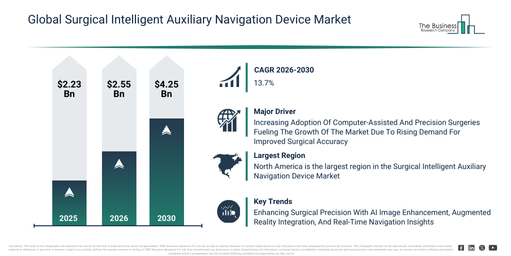
    The market size for surgical intelligent auxiliary navigation devices has experienced substantial growth in recent years. It is projected to expand from $2.23 billion in 2025 to $2.55 billion in 2026, achieving a compound annual growth rate (CAGR) of 14.0%. This expansion during the historic period can be attributed to the increasing adoption of computer-assisted surgical tools, a greater demand for precision in complex surgeries, the rising use of navigation systems in orthopedic and neurosurgical procedures, the expansion of minimally invasive surgical techniques, and an increased focus on reducing surgical errors and improving patient outcomes.

    The market for surgical intelligent auxiliary navigation devices is set for substantial growth over the next few years, projected to achieve a size of $4.25 billion by 2030, with a compound annual growth rate (CAGR) of 13.7%. This forecasted expansion is largely driven by the increasing integration of artificial intelligence (AI) within surgical navigation systems, a heightened demand for real-time imaging and guidance, the rising adoption of robot-assisted surgeries, the advancement of healthcare infrastructure, and an uptick in investment in smart surgical instrumentation. Significant trends anticipated during this period include technology-driven innovations in intelligent navigation algorithms, progress in artificial intelligence (AI)-enabled intraoperative guidance, developments in augmented reality (AR) and three-dimensional (3D) visualization systems, increased research and development efforts in precision surgical devices, and innovation in integrated data and imaging platforms.

    Download A Free Sample Report For Comprehensive Market Insights:

    https://www.thebusinessresearchcompany.com/sample.aspx?id=30767&type=smp

    What Important Drivers Are Powering The Surgical Intelligent Auxiliary Navigation Device Market Growth?

    The increasing adoption of computer-assisted and precision surgeries is expected to propel the surgical intelligent auxiliary navigation device market going forward. Computer-assisted and precision surgeries refer to procedures that employ advanced imaging, navigation, and digital guidance technologies to improve surgical accuracy, reduce invasiveness, and enhance patient outcomes. The uptake of computer-assisted and precision surgeries is escalating as hospitals aim to boost surgical accuracy and results while minimizing complications, leading to shorter recovery times and more efficient utilization of operating room resources. The surgical intelligent auxiliary navigation device supports computer-assisted and precision surgeries by providing real-time navigation, 3D visualization, and data-driven guidance that assist surgeons in accurate instrument positioning and decision-making during operations. For instance, in June 2025, according to the NHS England, a UK-based government department, by 2035, the trailblazing approach is expected to support half a million operations annually, a significant rise from 70,000 in 2023–24, with robotic assistance anticipated to be used in around 90% of keyhole surgeries, including procedures to remove cancer-affected organs. Therefore, the increasing adoption of computer-assisted and precision surgeries is driving the growth of the surgical intelligent auxiliary navigation device market.

    How Is The Surgical Intelligent Auxiliary Navigation Device Market Distributed Across Key Segments?

    The surgical intelligent auxiliary navigation device market covered in this report is segmented –

    1) By Component: Hardware, Software, Services, Other Components

    2) By Invasiveness: Minimally Invasive Surgery (MIS), Open Surgery, Other Surgery Types

    3) By Technology: Optical Navigation Equipment, Electromagnetic Navigation Equipment, Robotic-Assisted Navigation Equipment, Other Navigation Technologies

    4) By Application: Orthopedic Surgeries, Neurosurgery, Spinal Procedures, Ear, Nose, Throat (ENT) And Maxillofacial Surgery, Other Surgical Applications

    5) By End User: Hospitals And Surgical Centers, Ambulatory Surgical Centers, Specialized Institutes, Other End Users

    Subsegments:

    1) By Hardware: Navigation Sensors, Imaging Modules, Processing Units

    2) By Software: Navigation Planning Software, Real Time Guidance Software, Data Integration Software

    3) By Services: Installation And Integration Services, Maintenance And Support Services, Training And Consulting Services

    4) By Other Components: User Interface Components, Connectivity Modules, Accessory Devices

    Which Trends Are Supporting The Evolution Of The Surgical Intelligent Auxiliary Navigation Device Market?

    Key companies in the surgical intelligent auxiliary navigation device market are concentrating on creating advanced offerings, such as artificial intelligence (AI) image enhancement functionality, to enhance visualization, precision, and decision-making during operations. AI image enhancement functionality utilizes machine learning algorithms to autonomously optimize, clarify, and emphasize critical anatomical structures in medical imaging, allowing surgeons to perceive more detail and make more informed choices during procedures. For example, in March 2023, Augmedics Inc., a US-based medical technology firm focused on augmented reality solutions for surgery, rolled out new features and indications within its xvision AR platform. This update incorporates AI image enhancement functionality, which improves the clarity and contrast of real-time imaging overlays, thereby aiding surgeons in navigating intricate anatomy with greater accuracy. By integrating AI-enhanced visualization with augmented reality, xvision facilitates safer, more efficient surgical navigation and contributes to better patient outcomes through improved intraoperative guidance.

    Which Firms Are Competing In The Surgical Intelligent Auxiliary Navigation Device Market?

    Major companies operating in the surgical intelligent auxiliary navigation device market are Stryker Corporation, Renishaw plc, CMR Surgical Ltd., Synaptive Medical Inc., ClearPoint Neuro Inc., Augmedics Ltd., Stereotaxis Inc., Xoran Technologies LLC, Novarad Corp., Intellijoint Surgical Inc., Proprio, Fiagon GmbH, Brainomix Ltd., Surgical Theater LLC, Cascination AG, Medivis Inc., Asensus Surgical Inc., ClaroNav Inc., Centerline Biomedical Inc., Medicaroid Corporation, SpineGuard SA

    Access The Complete Surgical Intelligent Auxiliary Navigation Device Market Report:

    https://www.thebusinessresearchcompany.com/report/surgical-intelligent-auxiliary-navigation-device-market-report

    Which Region Stands As The Largest Contributor To The Surgical Intelligent Auxiliary Navigation Device Market?

    North America was the largest region in the surgical intelligent auxiliary navigation device market in 2025. Asia-Pacific is expected to be the fastest-growing region in the forecast period. The regions covered in the surgical intelligent auxiliary navigation device market report are Asia-Pacific, South East Asia, Western Europe, Eastern Europe, North America, South America, Middle East, Africa.

    Access a Customized Surgical Intelligent Auxiliary Navigation Device Market Report for Deeper Competitive Insights

    https://www.thebusinessresearchcompany.com/sample.aspx?id=30767&type=smp

    Get in touch with us:

    The Business Research Company: https://www.thebusinessresearchcompany.com/

    Americas: +1 310-496-7795

    Asia: +44 7882 955267 & +91 8897263534

    Europe: +44 7882 955267

    Email us at: marketing@tbrc.info

    Follow us on:

    LinkedIn: https://in.linkedin.com/company/the-business-research-company

    YouTube: https://www.youtube.com/channel/UC24_fI0rV8cR5DxlCpgmyFQ

    Global Market Model: https://www.thebusinessresearchcompany.com/global-market-model
  • Global Sugar Beet Pulp Pellets Market Forecast Highlighting Expansion And Competitive Dynamics

    Global Sugar Beet Pulp Pellets Market Forecast Highlighting Expansion And Competitive Dynamics

    The Business Research Company’s 2026 market reports feature advanced enhancements such as market attractiveness analysis, total addressable market evaluation, company benchmarking matrices, interactive Excel dashboards, expanded supply chain intelligence, emerging startup coverage, and detailed product insights, delivering more actionable and strategically valuable research.

    What Market Value Trend Is Expected For The Sugar Beet Pulp Pellets Market From 2026 To 2030?

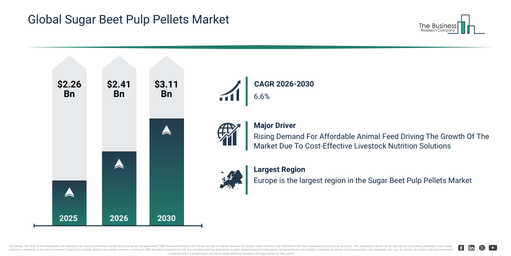
    The sugar beet pulp pellets market has demonstrated robust expansion in recent years. It is projected to increase from $2.26 billion in 2025 to $2.41 billion in 2026, registering a compound annual growth rate (CAGR) of 6.8%. During the historical period, this growth was primarily driven by the increasing demand for livestock feed, the growing adoption of high-fiber animal diets, a rising dairy cattle population, the expansion of sugar beet processing capacity, and the increasing use of low-cost feed ingredients.

    The sugar beet pulp pellets market is projected to experience robust expansion over the coming years, with its valuation set to reach $3.11 billion by 2030, exhibiting a compound annual growth rate (CAGR) of 6.6%. This anticipated growth during the forecast period is primarily driven by factors such as the increasing need for energy-dense animal feed, a heightened emphasis on animal digestive well-being, the wider acceptance of sustainable feed alternatives, the expansion of commercial livestock operations, and the rising use of byproducts from agriculture and industry. Key trends anticipated over the forecast period encompass technological advancements in pellet manufacturing, breakthroughs in creating nutrient-fortified beet pulp mixtures, improvements in techniques for boosting feed quality, ongoing research and development in environmentally friendly animal nutrition, and the growing integration of automation into feed production processes.

    Download A Free Sample Report For Comprehensive Market Insights:

    https://www.thebusinessresearchcompany.com/sample.aspx?id=30766&type=smp

    Which Major Factors Are Contributing To The Development Of The Sugar Beet Pulp Pellets Market?

    The increasing need for animal feed is anticipated to boost the expansion of the sugar beet pulp pellets market in the future. Cost-effective animal feed denotes feed components that provide sufficient nutrition, assisting livestock producers in controlling expenses for feeding while preserving the well-being and output of their animals. An uptick in animal feed demand is occurring because farmers and feed producers are encountering escalating costs for raw materials, prompting them to look for budget-friendly substitutes for conventional feed elements like grains and soybean meal. Sugar beet pulp pellets address animal feed needs by supplying a feed component that is rich in fiber, easily digestible, and economical, thereby improving rumen health and boosting feed efficiency in various livestock including cattle, horses, and other livestock. As an illustration, data from February 2025 by the Institute for Feed Education and Research, a US-based organization focused on animal feed research and education, showed that in 2023, approximately 283.6 million tons of feed were consumed by US livestock, poultry, and farmed aquaculture. This included 61.5 million tons by broilers, 48.7 million tons by dairy cattle, and 17.7 million tons by egg-laying hens, not counting harvested forages and roughages. Consequently, the increasing need for economical animal feed is propelling the expansion of the sugar beet pulp pellets market. The expansion of livestock and dairy farming operations is projected to boost the sugar beet pulp pellets market in the future. These activities encompass the extensive raising of cattle, sheep, and other animals to produce milk, meat, and associated agricultural goods, necessitating a steady supply of well-balanced, nutritious feed. Livestock and dairy farming is increasing because a growing global populace and improved incomes are fueling continuous demand for animal protein and dairy items, thereby prompting farmers to enlarge their herds and implement more intensive farming methods. Sugar beet pulp pellets aid livestock and dairy farming by offering a feed ingredient that is rich in fiber, highly digestible, and provides ample energy, which in turn enhances rumen health and increases milk production in dairy animals. For example, in September 2025, data from the United States Department of Agriculture Economic Research Service, a US-based government agency, indicated that U.S. milk production reached a total of 19.570 billion pounds in July 2025. This averaged 631 million pounds daily, marking a 3.4-percent increase compared to July 2024. The average number of milk cows on farms was 9.485 million head, an increase of 159,000 head from the prior year and 10,000 head more than the preceding month, with average milk production per cow standing at 2,063 pounds, a rise of 34 pounds from July 2024. Thus, the expansion of livestock and dairy farming activities is stimulating the growth of the sugar beet pulp pellets market.

    How Does Segment Analysis Break Down The Sugar Beet Pulp Pellets Market Structure?

    The sugar beet pulp pellets market covered in this report is segmented –

    1) By Type: Conventional, Organic

    2) By Distribution Channel: Direct Sales (B2B), Agricultural Cooperatives, Retail Stores And Online Platforms

    3) By Application: Ruminant Feed (Cattle, Sheep, Goats), Equine Feed, Swine Feed, Other Applications

    4) By End User: Commercial Livestock Farms, Feed Manufacturers And Formulators, Individual Animal Owners (Small Farms, Equine Owners, Pet Owners), Agricultural Cooperatives And Feed Distributors

    Subsegments:

    1) By Conventional: Dried Beet Pulp Pellets, Molassed Beet Pulp Pellets, Unmolassed Beet Pulp Pellets, Blended Pellet Formulations

    2) By Organic: Dried Beet Pulp Pellets, Molassed Beet Pulp Pellets, Unmolassed Beet Pulp Pellets, Blended Pellet Formulations

    Who Are The Major Companies Operating In The Sugar Beet Pulp Pellets Market?

    Major companies operating in the sugar beet pulp pellets market are Archer Daniels Midland Company, Louis Dreyfus Company B.V., Associated British Foods plc, Südzucker AG, Tereos S.A., AGRANA Beteiligungs-AG, Nordzucker AG, Cristal Union S.A.S., Pfeifer & Langen GmbH & Co. KG, Rogers Sugar Inc., Amalgamated Sugar Company LLC, American Crystal Sugar Company, Astarta Holding PLC, Michigan Sugar Company, Western Sugar Cooperative, Damask Investment Ltd., LaBudde Group Inc., Midwest Agri Commodities Inc., United Sugars Corporation, Sucden, Royal Cosun Cooperative U.A.

    Access The Complete Sugar Beet Pulp Pellets Market Report:

    https://www.thebusinessresearchcompany.com/report/sugar-beet-pulp-pellets-market-report

    What Is The Largest Regional Market In The Sugar Beet Pulp Pellets Market?

    Europe was the largest region in the sugar beet pulp pellets market in 2025. Asia-Pacific is expected to be the fastest-growing region in the forecast period. The regions covered in the sugar beet pulp pellets market report are Asia-Pacific, South East Asia, Western Europe, Eastern Europe, North America, South America, Middle East, Africa.

    Access a Customized Sugar Beet Pulp Pellets Market Report for Deeper Competitive Insights

    https://www.thebusinessresearchcompany.com/sample.aspx?id=30766&type=smp

    Get in touch with us:

    The Business Research Company: https://www.thebusinessresearchcompany.com/

    Americas: +1 310-496-7795

    Asia: +44 7882 955267 & +91 8897263534

    Europe: +44 7882 955267

    Email us at: marketing@tbrc.info

    Follow us on:

    LinkedIn: https://in.linkedin.com/company/the-business-research-company

    YouTube: https://www.youtube.com/channel/UC24_fI0rV8cR5DxlCpgmyFQ

    Global Market Model: https://www.thebusinessresearchcompany.com/global-market-model
  • Sports Psychology Services Market Analysis Through 2030 Focusing On Demand Trends And Growth Drivers

    Sports Psychology Services Market Analysis Through 2030 Focusing On Demand Trends And Growth Drivers

    The Business Research Company’s 2026 market reports feature advanced enhancements such as market attractiveness analysis, total addressable market evaluation, company benchmarking matrices, interactive Excel dashboards, expanded supply chain intelligence, emerging startup coverage, and detailed product insights, delivering more actionable and strategically valuable research.

    How Does The Forecasted Market Size Of The Sports Psychology Services Market Compare Between 2026 And 2030?

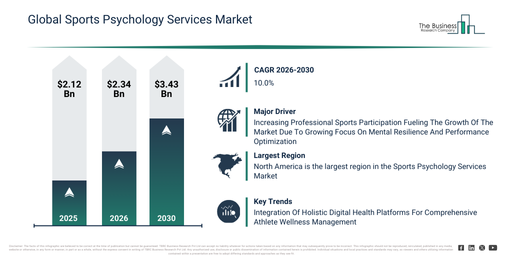
    The sports psychology services market size has experienced rapid growth in recent years. It is anticipated to expand from $2.12 billion in 2025 to $2.34 billion in 2026, registering a compound annual growth rate (CAGR) of 10.3%. This historical growth can be attributed to several factors including increasing awareness of athlete mental health, a growing focus on performance enhancement, rising adoption of sports counseling programs, expanding participation in competitive sports, and increasing demand for stress and anxiety management in athletes.

    The sports psychology services market size is anticipated to experience rapid expansion in the coming years, with projections indicating it will reach $3.43 billion by 2030, exhibiting a compound annual growth rate (CAGR) of 10.0%. This growth during the forecast period is attributed to the increasing integration of digital mental training tools, the rising adoption of personalized psychological coaching, a growing demand for data-driven performance assessment, the expanding use of virtual and remote therapy platforms, and a greater emphasis on the holistic well-being of athletes. Major trends expected in the forecast period include technological advancements in digital mental training platforms, innovations in AI-supported performance psychology tools, developments in biofeedback and neurofeedback systems, ongoing research and development in cognitive performance enhancement methods, and progress in immersive VR-based mental conditioning tools.

    Download A Free Sample Report For Comprehensive Market Insights:

    https://www.thebusinessresearchcompany.com/sample.aspx?id=30762&type=smp

    What Key Growth Drivers Are Influencing The Sports Psychology Services Market?

    The anticipated rise in professional sports participation is projected to drive the expansion of the sports psychology services market moving ahead. This refers to individuals engaging in structured athletic pursuits as their main profession, which includes intensive training and competing at top-tier levels. The increase in professional sports participation stems from enhanced media exposure and profitable sponsorship opportunities that draw in more athletes, providing them with financial security and worldwide recognition. Sports psychology services aid professional sports participation through offering mental conditioning techniques designed to sharpen concentration, handle competition-related stress, and boost overall performance reliability. For example, data from August 2024, provided by the Bureau of Labor Statistics, a US-based federal government agency, indicates that the employment of athletes and sports competitors in the United States is forecasted to expand by 5% between 2024 and 2034. Consequently, the expanding engagement in professional sports is fueling the growth of the sports psychology services market.

    What Segment Types Are Included In The Sports Psychology Services Market Analysis?

    The sports psychology services market covered in this report is segmented –

    1) By Service Type: Performance Enhancement, Counseling, Mental Skills Training, Rehabilitation, Other Service Types

    2) By Delivery Mode: In-Person, Online Or Telehealth

    3) By Provider Type: Independent Sports Psychologists, Sports Psychology Clinics, Sports Performance Centers, University And Institutional Providers, Multidisciplinary Wellness Centers

    4) By Application: Individual Athletes, Teams, Coaches, Other Applications

    5) By End-User: Professional Sports, Amateur Sports, Educational Institutions, Other End-Users

    Subsegments:

    1) By Performance Enhancement: Goal Setting And Achievement Planning, Focus And Concentration Improvement Sessions, Competitive Strategy Development Programs, Reaction Time And Agility Training, Motivation And Confidence Building Programs

    2) By Counseling: Stress And Anxiety Management Counseling, Career Transition And Retirement Counseling, Personal Development And Self Awareness Sessions, Team Dynamics And Interpersonal Counseling, Emotional Resilience Support Programs

    3) By Mental Skills Training: Visualization And Imagery Training Programs, Attention And Concentration Enhancement Sessions, Cognitive Behavioral Techniques For Athletes, Mindfulness And Relaxation Skill Development, Performance Anxiety Reduction Programs

    4) By Rehabilitation: Post Injury Psychological Recovery Sessions, Rehabilitation Motivation And Support Programs, Mental Recovery Planning For Athletes, Coping Strategy Development For Injured Athletes, Resilience And Confidence Restoration Programs

    5) By Other Service Types: Nutritional Psychology Counseling Sessions, Sleep And Recovery Optimization Programs, Stress Management Workshops For Teams, Sports Related Trauma Counseling, Integrative Mental Health Enhancement Programs

    Which Trends Are Contributing To Changes In The Sports Psychology Services Market?

    Leading companies in the sports psychology services market are concentrating on developing advanced solutions, such as integrated digital health platforms, to deliver comprehensive support for athletes’ mental and physical health. These integrated digital health platforms are extensive software systems that merge multiple digital health services and tools into a single, unified interface, enabling the collection, management, analysis, and sharing of health data among patients, providers, and various care settings. For example, in October 2023, CaringWire LLC, a US-based digital health platform provider, collaborated with the U.S. Council for Athletes’ Health (USCAH) to unveil Holistic Athlete Health Solutions (HAHS). This platform connects athletes with telehealth providers and offers self-paced online courses and webinars on subjects concerning sports health, wellness, and mental resilience. The solution is engineered for seamless integration into existing athletic department programs, offering round-the-clock access to care that addresses the physical, mental, and emotional needs of today’s athletes.

    Which Companies Are Influencing The Sports Psychology Services Market?

    Major companies operating in the sports psychology services market are California Baptist University (CBU), United States Olympic & Paralympic Committee, Conscious Mind Solutions, Discovery Sport & Performance Lab, ORKA Performance, Premier Sport Psychology, Performance in Mind, Jo Hopkins Consulting, KPEX Consulting, Flourish & Thrive, Grow Wellness Group, SportPsych Consulting, Athlete Mind Performance (AMP), The Performance Pursuit Consulting, Head In The Game, Pete Jackson Sport Psychology, Focus Perform, Clark Performance Consulting, University of Wisconsin–Green Bay, Nudge Sports, Tacomi Training Solutions Pvt. Ltd.

    Access The Complete Sports Psychology Services Market Report:

    https://www.thebusinessresearchcompany.com/report/sports-psychology-services-market-report

    Which Region Contributes The Most To The Sports Psychology Services Market?

    North America was the largest region in the sports psychology services market in 2025. Asia-Pacific is expected to be the fastest-growing region in the forecast period. The regions covered in the sports psychology services market report are Asia-Pacific, South East Asia, Western Europe, Eastern Europe, North America, South America, Middle East, Africa.

    Access a Customized Sports Psychology Services Market Report for Deeper Competitive Insights

    https://www.thebusinessresearchcompany.com/sample.aspx?id=30762&type=smp

    Get in touch with us:

    The Business Research Company: https://www.thebusinessresearchcompany.com/

    Americas: +1 310-496-7795

    Asia: +44 7882 955267 & +91 8897263534

    Europe: +44 7882 955267

    Email us at: marketing@tbrc.info

    Follow us on:

    LinkedIn: https://in.linkedin.com/company/the-business-research-company

    YouTube: https://www.youtube.com/channel/UC24_fI0rV8cR5DxlCpgmyFQ

    Global Market Model: https://www.thebusinessresearchcompany.com/global-market-model

  • Spinel Cathode Materials Market Projected To Surpass $2.56 Billion By 2030 At 9.8% CAGR

    Spinel Cathode Materials Market Projected To Surpass $2.56 Billion By 2030 At 9.8% CAGR

    The Business Research Company’s 2026 market reports feature advanced enhancements such as market attractiveness analysis, total addressable market evaluation, company benchmarking matrices, interactive Excel dashboards, expanded supply chain intelligence, emerging startup coverage, and detailed product insights, delivering more actionable and strategically valuable research.

    What Increase In Market Value Is Predicted For The Spinel Cathode Materials Market During The 2026–2030 Period?

    The market for spinel cathode materials has seen rapid expansion in its size over recent years. It is projected to expand from $1.61 billion in 2025 to $1.77 billion in 2026, exhibiting a compound annual growth rate (CAGR) of 10.1%. The historical expansion can be linked to several factors, including the surging demand for lithium-ion batteries, the escalating deployment of LMO cathodes in consumer electronics, the increased embrace of cost-effective battery chemistries, the expansion of initial EV production capacities, and a heightened focus on both battery safety and thermal stability.

    The spinel cathode materials market is anticipated to experience significant expansion in the next few years. It is projected to achieve a value of $2.57 billion by 2030, growing at a compound annual growth rate (CAGR) of 9.8%. The projected growth during this period stems from factors such as increasing manufacturing of electric vehicles, greater deployment of energy storage systems, an escalating demand for high-voltage spinel materials, expanding investments in battery gigafactories, and a rising preference for cobalt-free cathode chemistries. Prominent trends expected in the forecast period involve technological advancements in high-voltage spinels, innovations in doped and coated spinel formulations, the development of advanced processing techniques, research and development focused on fast-charging materials, and progress in nanostructured spinel cathodes.

    Download A Free Sample Report For Comprehensive Market Insights:

    https://www.thebusinessresearchcompany.com/sample.aspx?id=30761&type=smp

    Which Core Factors Are Supporting The Expansion Of The Spinel Cathode Materials Market?

    The swift expansion of electric vehicles is anticipated to drive the demand for the spinel cathode materials market in the future. Electric vehicles (EVs) are motor vehicles that run on electric motors, drawing power from rechargeable batteries, thereby providing transportation that is cleaner, quieter, and more efficient compared to conventional fuel-based vehicles. The escalating interest in electric vehicles stems from rising fuel expenses, with EVs presenting a more economical option than traditional gasoline-fueled automobiles. For instance, data from August 2024, released by the U.S. Energy Information Administration (EIA), a US-based Department of Energy’s statistical agency, indicated that during the second quarter of 2024, the proportion of electric and hybrid vehicle sales in the U.S. rose to 18.7% of total new light-duty vehicle sales, which was an increase from 17.8% recorded in the first quarter of 2024. Consequently, the quick expansion in electric vehicle adoption is fueling the growth of the spinel cathode materials market.

    Which Segment Divisions Form The Structure Of The Spinel Cathode Materials Market?

    The spinel cathode materials market covered in this report is segmented –

    1) By Product Type: Lithium Manganese Oxide (LiMn2O4) Spinel Cathodes, High-Voltage Spinel (LiNi0.5Mn1.5O4) Cathodes, Doped Spinel Cathodes, Coated Or Surface-Modified Spinel Materials, High-Purity Spinel Precursor Materials

    2) By Purity Or Grade: Battery-Grade Spinel Cathode Materials, High-Purity Research Grade Spinel Materials, Industrial-Grade Spinel Materials

    3) By Processing Or Manufacturing Method: Solid-State Synthesized Spinel Materials, Co-Precipitation Processed Spinel Materials, Hydrothermal Or Sol-Gel Synthesized Spinel Materials, Spray-Dried Or Advanced Processed Spinel Materials

    4) By Distribution Channel: Direct Sales (Factory Gate), Distributors And Material Suppliers, Custom Formulation And Contract Manufacturing

    5) By End-User Industry: Battery Manufacturers, Automotive Original Equipment Manufacturer (OEMs), Consumer Electronics Manufacturers, Energy Storage Solution Providers, Research And Material Science Laboratories

    Subsegment:

    1) By Lithium Manganese Oxide Spinel Cathodes: High Purity, Low Cost, Long Life, High Power, Standard Grade

    2) By High Voltage Spinel Cathodes: Cobalt Free, Nickel Rich, Manganese Rich, Long Cycle, High Energy

    3) By Doped Spinel Cathodes: Magnesium Doped, Aluminum Doped, Chromium Doped, Titanium Doped, Iron Doped

    4) By Coated or Surface-Modified Spinel Materials: Alumina Coated, Carbon Coated, Phosphate Coated, Oxide Coated, Polymer Coated

    5) By High-Purity Spinel Precursor Materials: Lithium Precursors, Manganese Precursors, Nickel Precursors, Cobalt Precursors, Mixed Metal Precursors

    What Trends Are Shaping The Spinel Cathode Materials Market Structure?

    Leading firms in the Spinel Cathode Materials market are prioritizing the development of sophisticated battery technologies, including high-voltage solid-state battery solutions, to boost energy density and ensure greater safety. Such a high-voltage solid-state solution represents an eco-friendly and safer battery approach, where traditional liquid electrolytes are substituted by solid counterparts, thereby minimizing leakage hazards, enhancing thermal stability, and extending battery longevity. An example is the launch of the LiCl–4Li₂TiF₆ fluoride solid electrolyte by Yonsei University, a research institution located in South Korea, in October 2025. This specific material facilitates the production of all-solid-state batteries capable of reliable operation past 5 volts, thus resolving a significant stability challenge that previously constrained other solid electrolytes. The advancement includes a protective coating mechanism designed to avert interfacial degradation when paired with high-voltage cathodes, leading to an exceptional areal capacity of 35.3 mAh/cm². Furthermore, it is compatible with affordable materials such as Zr-based systems, which is expected to lower production expenses and bolster commercial feasibility for future electric vehicles and grid storage applications, signifying a fundamental change in battery architecture.

    Who Are The Companies Shaping The Spinel Cathode Materials Market Landscape?

    Major companies operating in the spinel cathode materials market are BASF SE, Mitsubishi Chemical Corporation, Umicore N.V., Samsung SDI Co. Ltd., Sumitomo Metal Mining Co. Ltd., POSCO Chemical Co. Ltd., Targray Technology International Inc., L&F Co. Ltd., Tanaka Chemical Corporation, Toda Kogyo Corporation, NEI Corporation, LG Chem Ltd., Advanced Lithium Electrochemistry Co. Ltd., Hitachi Chemical Co. Ltd., American Elements Inc., Nichia Corporation, Altairnano Inc., Gelon LIB Group Co. Ltd., Guangdong Brunp Recycling Technology Co. Ltd., Terui Battery Materials (Chongqing Terui) Co. Ltd.

    Access The Complete Spinel Cathode Materials Market Report:

    https://www.thebusinessresearchcompany.com/report/spinel-cathode-materials-market-report

    Which Regional Market Leads The Spinel Cathode Materials Market?

    North America was the largest region in the spinel cathode materials market in 2025. Asia-Pacific is expected to be the fastest-growing region in the forecast period. The regions covered in the spinel cathode materials market report are Asia-Pacific, South East Asia, Western Europe, Eastern Europe, North America, South America, Middle East, Africa.

    Access a Customized Spinel Cathode Materials Market Report for Deeper Competitive Insights

    https://www.thebusinessresearchcompany.com/sample.aspx?id=30761&type=smp

    Get in touch with us:

    The Business Research Company: https://www.thebusinessresearchcompany.com/

    Americas: +1 310-496-7795

    Asia: +44 7882 955267 & +91 8897263534

    Europe: +44 7882 955267

    Email us at: marketing@tbrc.info

    Follow us on:

    LinkedIn: https://in.linkedin.com/company/the-business-research-company

    YouTube: https://www.youtube.com/channel/UC24_fI0rV8cR5DxlCpgmyFQ

    Global Market Model: https://www.thebusinessresearchcompany.com/global-market-model

  • Space Intelligence Services Market Forecast Through 2030 Featuring Industry Drivers And Opportunities

    Space Intelligence Services Market Forecast Through 2030 Featuring Industry Drivers And Opportunities

    The Business Research Company’s 2026 market reports feature advanced enhancements such as market attractiveness analysis, total addressable market evaluation, company benchmarking matrices, interactive Excel dashboards, expanded supply chain intelligence, emerging startup coverage, and detailed product insights, delivering more actionable and strategically valuable research.

    How Will The Market Size Of The Space Intelligence Services Market Progress Through 2030?

    The space intelligence services market has experienced significant expansion in recent years. It is projected to grow from $9.06 billion in 2025 to $10.32 billion in 2026, achieving a compound annual growth rate (CAGR) of 14.0%. The past growth in this market can be attributed to several factors, including an escalating demand for satellite-based monitoring, the increasing integration of geospatial analytics in defense operations, a rising requirement for environmental and climate surveillance, the proliferation of commercial earth observation constellations, and the expanded application of remote sensing for agricultural insights.

    The space intelligence services market is projected to expand significantly in the coming years, with its size expected to reach $17.26 billion by 2030, exhibiting a compound annual growth rate (CAGR) of 13.7%. This expansion during the forecast period is driven by an increasing demand for high-frequency imaging and rapid revisit capabilities, the growing integration of artificial intelligence into space intelligence workflows, a rising need for precision agriculture and resource optimization, the widening scope of security and border surveillance applications, and the increasing commercial adoption of space-based risk assessment tools. Major developments anticipated in this period include technological progress in high-resolution imaging sensors, innovations in artificial intelligence-driven geospatial analytics, the evolution of cloud-based intelligence delivery platforms, ongoing research and development in multi-sensor fusion techniques, and advancements in hyperspectral and radar satellite systems.

    Download A Free Sample Report For Comprehensive Market Insights:

    https://www.thebusinessresearchcompany.com/sample.aspx?id=30759&type=smp

    What Are The Main Drivers Accelerating The Growth Of The Space Intelligence Services Market?

    The future expansion of the space intelligence services market is projected to be fueled by increasing investments in space exploration. This involves investigating and understanding outer space using crewed and uncrewed spacecraft, satellites, and cutting-edge technologies. A key factor behind this surge in investment is intense geopolitical rivalry, with nations striving for strategic leadership and technological advantage in the cosmos. Such investments bolster space intelligence services through improved satellite capabilities, sophisticated sensors, and advanced data collection methods. This leads to better situational awareness and more informed decision-making, thanks to the delivery of precise, real-time data concerning space operations, orbiting bodies, and ambient conditions. As an illustration, Novaspace, a France-based space governance provider, reported in September 2023 that government expenditure on space exploration hit $27 billion in 2024, with projections indicating a rise to nearly $31 billion by 2034. Consequently, increased financial commitments to space exploration are a significant impetus for the expansion of the space intelligence services market.

    How Are Different Segment Groups Identified Within The Space Intelligence Services Market?

    The space intelligence services market covered in this report is segmented –

    1) By Service Type: Satellite Imaging, Geospatial Analytics, Data Processing, Remote Sensing, Other Service Types

    2) By Platform: Satellites, Unmanned Aerial Vehicles (UAVs), Ground Stations, Other Platforms

    3) By Application: Defense And Security, Agriculture, Environmental Monitoring, Urban Planning, Disaster Management, Other Applications

    4) By End-User: Government, Commercial, Military, Other End-Users

    Subsegments:

    1) By Satellite Imaging: Very High Resolution Optical Imagery, Medium Resolution Multispectral Imagery, Synthetic Aperture Radar Imagery, Hyperspectral and Thermal Imagery, Video from Space

    2) By Geospatial Analytics: Change Detection and Monitoring, Feature Extraction and Classification, Measurements and Modeling, Predictive Analytics and Forecasting, Visualization and Reporting

    3) By Data Processing: Image Correction and Enhancement, Data Fusion and Integration, Cloud Storage and Management, Automated Processing Pipelines, Quality Assurance and Validation

    4) By Remote Sensing: Land Cover and Land Use Mapping, Maritime Domain Awareness, Environmental Parameter Monitoring, Disaster Impact Assessment, Infrastructure Health Monitoring

    5) By Other Service Types: Consulting and Solution Design, Data Acquisition Planning, Training and Capacity Building, Intelligence Report Subscription, Custom Application Development

    Which Trends Are Supporting The Evolution Of The Space Intelligence Services Market?

    Major companies operating in the space intelligence services market are focusing on developing advanced solutions, such as flexible spectrum collection options, to improve the accessibility, accuracy, and versatility of RF signal monitoring and analysis. Flexible spectrum collection options refer to the ability to capture and analyze radio frequency data across multiple bands and configurations, allowing operators to tailor data acquisition to diverse mission needs, maximize coverage, and adapt to changing signal environments. For instance, in September 2023, Hawkeye 360 Inc., a US-based space analytics company, launched the RFIQ product, which provides industry-leading flexible spectrum collection capabilities to deliver deeper insights into RF activity. The product enables users to monitor a wide range of radio spectrum bands with adjustable collection parameters, supporting both tactical and strategic applications in communications, defense, and maritime domains. By leveraging flexible spectrum collection, the solution allows analysts to efficiently capture and interpret RF signals in real time, enhancing situational awareness and decision-making capabilities.

    Which Industry Players Are Present In The Space Intelligence Services Market?

    Major companies operating in the space intelligence services market are Maxar Technologies Inc., ICEYE Ltd., Planet Labs PBC, EarthDaily Analytics Inc., Spire Global Inc., BlackSky Technology Inc., LeoLabs Inc., Capella Space Corp., Synspective Inc., GHGSat Inc., SpaceKnow Inc., HawkEye 360 Inc., Kayrros SAS, Satellogic Inc., Slingshot Aerospace Inc., Albedo Space Inc., Umbra Lab Inc., Kleos Space SA, Unseenlabs SAS, SkyWatch Space Applications Inc., Privateer Space Inc.

    Access The Complete Space Intelligence Services Market Report:

    https://www.thebusinessresearchcompany.com/report/space-intelligence-services-market-report

    Which Region Holds The Largest Share In The Space Intelligence Services Market?

    North America was the largest region in the space intelligence services market in 2025. Asia-Pacific is expected to be the fastest-growing region in the forecast period. The regions covered in the space intelligence services market report are Asia-Pacific, South East Asia, Western Europe, Eastern Europe, North America, South America, Middle East, Africa.

    Access a Customized Space Intelligence Services Market Report for Deeper Competitive Insights

    https://www.thebusinessresearchcompany.com/sample.aspx?id=30759&type=smp

    Get in touch with us:

    The Business Research Company: https://www.thebusinessresearchcompany.com/

    Americas: +1 310-496-7795

    Asia: +44 7882 955267 & +91 8897263534

    Europe: +44 7882 955267

    Email us at: marketing@tbrc.info

    Follow us on:

    LinkedIn: https://in.linkedin.com/company/the-business-research-company

    YouTube: https://www.youtube.com/channel/UC24_fI0rV8cR5DxlCpgmyFQ

    Global Market Model: https://www.thebusinessresearchcompany.com/global-market-model
  • Rising Use Of Remote Patient Monitoring Fueling The Growth Of The Market Due To Increasing Demand For Continuous Health Tracking Is Supporting Development Across The Smart Oximetry Devices Market

    Rising Use Of Remote Patient Monitoring Fueling The Growth Of The Market Due To Increasing Demand For Continuous Health Tracking Is Supporting Development Across The Smart Oximetry Devices Market

    The Business Research Company’s 2026 market reports feature advanced enhancements such as market attractiveness analysis, total addressable market evaluation, company benchmarking matrices, interactive Excel dashboards, expanded supply chain intelligence, emerging startup coverage, and detailed product insights, delivering more actionable and strategically valuable research.

    What Is The Expected Market Size Of The Smart Oximetry Devices Market In 2026 And How Much Will It Reach By 2030?

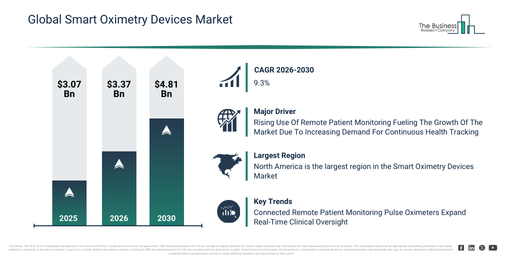
    The smart oximetry devices market has shown strong expansion in recent years. It is projected to expand from $3.07 billion in 2025 to $3.37 billion in 2026, achieving a compound annual growth rate (CAGR) of 9.6%. This historical growth can be linked to several factors including early adoption in hospitals, clinical validation of spo2 monitoring, integration with bedside monitors, regulatory approvals for pulse oximeters, and the expansion of critical care infrastructure.

    The smart oximetry devices market is poised for significant expansion in the coming years. Its valuation is projected to reach $4.81 billion by 2030, exhibiting a compound annual growth rate (CAGR) of 9.3%. This anticipated growth during the forecast period stems from factors such as the rising incidence of respiratory illnesses, the increasing embrace of remote patient monitoring, a heightened need for home healthcare equipment, the broadening scope of telehealth services, and an expanding elderly demographic. Key trends anticipated over the forecast horizon encompass technological progress in sensor precision, novel developments in wearable oximetry solutions, improvements in wireless and Bluetooth connectivity, ongoing research and development in multi-parameter monitoring, and breakthroughs in AI-powered data analytics.

    Download A Free Sample Report For Comprehensive Market Insights:

    https://www.thebusinessresearchcompany.com/sample.aspx?id=30751&type=smp

    Which Growth Drivers Are Expected To Support The Smart Oximetry Devices Market Forward?

    The increasing implementation of remote patient monitoring is anticipated to propel the smart oximetry devices market’s growth moving forward. Remote patient monitoring involves the application of digital technologies to track and gather medical and other health information from individuals, then electronically transmit this data to healthcare providers for assessment and, when necessary, for recommendations and instructions. The adoption of remote patient monitoring is escalating as healthcare providers and payers increasingly depend on continuous at-home data to manage chronic diseases more proactively, minimize hospital readmissions, and reduce overall care costs. Smart oximetry devices facilitate remote patient monitoring by constantly measuring blood oxygen levels and relaying real-time data to healthcare providers. They enhance patient care through early detection of hypoxia, timely interventions, and improved management of chronic respiratory and cardiovascular conditions. For instance, in September 2025, according to the U.S. Department of Health and Human Services Office of Inspector General (OIG), a US-based government agency, payments for remote patient monitoring reached $536 million across Original Medicare also known as Medicare fee for service and Medicare Advantage, representing a 31% increase from 2023, while nearly 1 million Medicare enrollees received remote patient monitoring services, reflecting a 27% increase compared with 2023. Therefore, the expanding use of remote patient monitoring is fueling the growth of the smart oximetry devices market.

    What Segment Categories Are Evaluated In The Smart Oximetry Devices Market Study?

    The smart oximetry devices market covered in this report is segmented –

    1) By Product Type: Fingertip Oximeters, Handheld Oximeters, Wrist-Worn Oximeters, Tabletop Or Bedside Oximeters, Other Produt Types

    2) By Technology: Conventional, Bluetooth-Enabled, Wi-Fi Enabled

    3) By Distribution Channel: Online, Offline

    4) By End-User: Hospitals And Clinics, Homecare Settings, Ambulatory Surgical Centers, Others

    Subsegments:

    1) By Fingertip Oximeters: Basic Fingertip Oximeters, Rechargeable Fingertip Oximeters, Bluetooth-Enabled Fingertip Oximeters

    2) By Handheld Oximeters: Portable Handheld Oximeters, Multi-Parameter Handheld Oximeters, Clinical-Grade Handheld Oximeters

    3) By Wrist-Worn Oximeters: Fitness Wrist-Worn Oximeters, Medical Wrist-Worn Oximeters, Continuous Monitoring Wrist-Worn Oximeters

    4) By Tabletop Or Bedside Oximeters: Standard Bedside Oximeters, Advanced Monitoring Bedside Oximeters, Multi-Parameter Bedside Oximeters

    5) By Other Produt Types: Pediatric Oximeters, Veterinary Oximeters, Specialty Application Oximeters

    What Trends Are Affecting The Growth Of The Smart Oximetry Devices Market?

    Leading companies in the smart oximetry devices market are prioritizing the creation of advanced monitoring solutions, such as cellular-enabled pulse oximeters, to deliver secure, real-time SpO₂ and pulse rate data to clinicians for proactive care. Cellular-enabled pulse oximeters are defined as pulse oximetry devices equipped with integrated cellular connectivity, enabling them to transmit oxygen saturation (SpO₂) and pulse rate data directly to healthcare providers or cloud platforms in real time. For example, in August 2024, Prevounce Health, a US-based remote care management provider, unveiled the Pylo OX1-LTE pulse oximeter. This clinically validated, cellular-enabled device provides roaming 5G/4G LTE connectivity with 2G fallback, offers highly accurate SpO₂ and pulse rate measurements, and features a bright OLED display for clear readings. The Pylo OX1-LTE also facilitates secure data transmission directly to remote monitoring platforms and integrates with third-party health software to support large-scale remote patient monitoring programs.

    Which Organizations Are Involved In The Smart Oximetry Devices Market?

    Major companies operating in the smart oximetry devices market are Medtronic plc, GE HealthCare Technologies Inc., Koninklijke Philips N.V., Shenzhen Mindray Bio-Medical Electronics Co. Ltd., Masimo Corporation, Nihon Kohden Corporation, Lepu Medical Technology Co. Ltd., Contec Medical Systems Co. Ltd., Beurer GmbH, Heal Force Bio-Meditech Holdings Ltd., Edan Instruments Inc., Biolight Meditech Co. Ltd., Omron Healthcare Co. Ltd., Nonin Medical Inc., Viatom Technology Co. Ltd., A&D Company Limited, iHealth Labs Inc., Smiths Medical International Ltd., Wellue Health Inc., Creative Medical Technology Co. Ltd., Berry Global Healthcare, Oxitone Medical Ltd., Movano Health Inc., ChoiceMMed America Corp.

    Access The Complete Smart Oximetry Devices Market Report:

    https://www.thebusinessresearchcompany.com/report/smart-oximetry-devices-market-report

    Which Region Is The Dominant Market In The Smart Oximetry Devices Market?

    North America was the largest region in the smart oximetry devices market in 2025. Asia-Pacific is expected to be the fastest-growing region in the forecast period. The regions covered in the smart oximetry devices market report are Asia-Pacific, South East Asia, Western Europe, Eastern Europe, North America, South America, Middle East, Africa.

    Access a Customized Smart Oximetry Devices Market Report for Deeper Competitive Insights

    https://www.thebusinessresearchcompany.com/sample.aspx?id=30751&type=smp

    Get in touch with us:

    The Business Research Company: https://www.thebusinessresearchcompany.com/

    Americas: +1 310-496-7795

    Asia: +44 7882 955267 & +91 8897263534

    Europe: +44 7882 955267

    Email us at: marketing@tbrc.info

    Follow us on:

    LinkedIn: https://in.linkedin.com/company/the-business-research-company

    YouTube: https://www.youtube.com/channel/UC24_fI0rV8cR5DxlCpgmyFQ

    Global Market Model: https://www.thebusinessresearchcompany.com/global-market-model
  • Integrating AI-Powered Sleep Monitoring Systems To Optimize Sleep Health And Enhance Comfort Is Affecting The Direction Of The Smart Mattress Sensor Market

    Integrating AI-Powered Sleep Monitoring Systems To Optimize Sleep Health And Enhance Comfort Is Affecting The Direction Of The Smart Mattress Sensor Market

    The Business Research Company’s 2026 market reports feature advanced enhancements such as market attractiveness analysis, total addressable market evaluation, company benchmarking matrices, interactive Excel dashboards, expanded supply chain intelligence, emerging startup coverage, and detailed product insights, delivering more actionable and strategically valuable research.

    What Market Size Is Forecasted For The Smart Mattress Sensor Market By 2030 Based On Its 2026 Value?

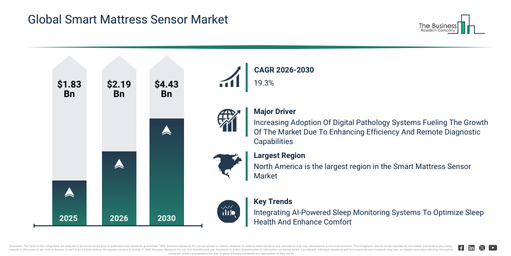
    The smart mattress sensor market has seen rapid expansion in recent years. It is projected to grow from $1.83 billion in 2025 to $2.19 billion in 2026, achieving a compound annual growth rate (CAGR) of 19.5%. The market’s historical growth can be attributed to increasing awareness of sleep health, the growing adoption of wearable and sleep monitoring devices, a rising demand for comfortable and supportive mattresses, the expanding integration of smart home technology, and an increasing focus on personalized sleep solutions.

    The smart mattress sensor market is projected for significant expansion in the coming years, with its size expected to reach $4.43 billion by 2030, exhibiting a compound annual growth rate (CAGR) of 19.3%. This growth during the forecast period is primarily attributed to the increasing adoption of AI-powered sleep tracking, greater integration of IoT-enabled mattress sensors, a rising demand for real-time sleep quality monitoring, the expanding use of cloud-based health data platforms, and a growing emphasis on preventive health and wellness. Key trends anticipated over this period include technological advancements enhancing sensor accuracy and sensitivity, innovations in AI-driven sleep analytics, developments in connected mattress and bedding systems, ongoing research and development into non-intrusive monitoring technologies, and progress in predictive and personalized sleep optimization.

    Download A Free Sample Report For Comprehensive Market Insights:

    https://www.thebusinessresearchcompany.com/sample.aspx?id=30750&type=smp

    What Influential Factors Are Boosting The Smart Mattress Sensor Market Demand?

    The increasing occurrence of sleep disorders is anticipated to boost the expansion of the smart mattress sensor market in the future. These medical conditions, which include insomnia and sleep-related breathing disorders, negatively affect sleep quality, duration, or timing, leading to detrimental physical, cognitive, and cardiovascular consequences. The growing frequency of sleep disorders stems from escalating obesity rates and an aging demographic, factors that contribute to a greater incidence of conditions like sleep-disordered breathing. Smart mattress sensors assist in alleviating sleep disorders by tracking sleep patterns, body movements, and vital signs, thereby offering tailored insights and advice. They enhance sleep quality and overall well-being through prompt identification of disruptions and facilitating specific interventions. As an illustration, data from March 2024 from the National Sleep Foundation, a US-based non-profit sleep health organization, showed that adults reporting substandard sleep quality rose from 35% in 2023 to 38% in 2024. This highlights a significant increase in sleep-related health concerns that necessitate ongoing monitoring. Consequently, the expanding occurrence of sleep disorders is propelling the development of the smart mattress sensor market.

    How Is The Smart Mattress Sensor Market Examined Through Segment Analysis?

    The smart mattress sensor market covered in this report is segmented –

    1) By Product Type: Pressure Sensors, Motion Sensors, Temperature Sensors, Multi-Sensor Systems, Other Product Types

    2) By Connectivity: Wired, Wireless

    3) By Distribution Channel: Online Retail, Specialty Stores, Direct Sales, Other Distribution Channels

    4) By End-User: Individual, Commercial, Healthcare, Hospitality, Other End-Users

    Subsegments:

    1) By Pressure Sensors: Mattress Pressure Mapping Units, Sleep Posture Detection Sensors, Weight Distribution Monitoring Devices, Bed Occupancy Detection Modules, High Sensitivity Pressure Tracking Systems

    2) By Motion Sensors: Sleep Movement Tracking Devices, Restlessness And Activity Monitoring Units, Micro Motion Detection Modules, Body Rotation Tracking Sensors, Nighttime Motion Analysis Systems

    3) By Temperature Sensors: Bed Temperature Monitoring Units, Skin Contact Temperature Detection Sensors, Climate Adjustable Sensor Modules, Thermal Comfort Tracking Devices, Smart Heat Regulation Sensors

    4) By Multi-Sensor Systems: Integrated Sleep Monitoring Modules, Combined Pressure And Motion Detection Units, Multi Parameter Sleep Analysis Systems, Comprehensive Bed Sensor Platforms, Advanced Sleep Behavior Tracking Devices

    5) By Other Product Types: Smart Humidity Monitoring Sensors, Biometric Sleep Tracking Devices, Sound And Vibration Detection Modules, Smart Bedding Integration Sensors, Innovative Sleep Environment Monitoring Units

    Which Trends Are Influencing The Direction Of The Smart Mattress Sensor Market?

    Leading firms within the smart mattress sensor sector are concentrating their efforts on creating sophisticated technologies, specifically multi-sensor sleep monitoring systems. These innovations aim to monitor sleep patterns, physical movements, and crucial health indicators, subsequently offering practical recommendations to enhance sleep quality and promote proactive health management. Such multi-sensor sleep monitoring systems involve integrated technologies designed to continuously gather both physiological and environmental information, encompassing heart rate, respiratory rate, body posture, and pressure distribution on the mattress, all for the purpose of evaluating sleep quality and identifying anomalies. As an example, De Rucci Healthy Sleep Co. Ltd., a Chinese sleep technology firm, introduced the DeRUCCI T11 Pro Smart Mattress in November 2023. This particular product is a multi-sensor sleep monitoring mattress, equipped with 23 AI-powered sensors and 18 adaptive support units. It can perform real-time tracking of body position and physiological data, analyze sleep quality, and dynamically adjust comfort levels. Consequently, these capabilities allow users to gain tailored insights into their sleep, receive early alerts for potential health concerns, and experience enhanced comfort, representing a considerable stride in sleep health management through the integration of precise monitoring, AI-driven analysis, and responsive mattress technology.

    Who Are The Firms Contributing To The Smart Mattress Sensor Market Ecosystem?

    Major companies operating in the smart mattress sensor market are Xiaomi Corporation, Nokia, Koninklijke Philips N.V., Tempur Sealy International Inc., Serta Simmons Bedding LLC, Hilding Anders International AB, Saatva Inc., Sleep Number Corporation, Casper Sleep Inc., Silentnight Group Limited, DeRUCCI International Holdings Limited, Kingsdown Inc., Withings SAS, Bosch Sensortec GmbH, Eight Sleep Inc., Sleepace Technology Co. Ltd., Responsive Surface Technology Inc., Emfit Ltd., RestOn Sleep Technology Pvt. Ltd., Slairzz Inc.

    Access The Complete Smart Mattress Sensor Market Report:

    https://www.thebusinessresearchcompany.com/report/smart-mattress-sensor-market-report

    Which Area Represents The Largest Portion Of The Smart Mattress Sensor Market?

    North America was the largest region in the smart mattress sensor market in 2025. Asia-Pacific is expected to be the fastest-growing region in the forecast period. The regions covered in the smart mattress sensor market report are Asia-Pacific, South East Asia, Western Europe, Eastern Europe, North America, South America, Middle East, Africa.

    Access a Customized Smart Mattress Sensor Market Report for Deeper Competitive Insights

    https://www.thebusinessresearchcompany.com/sample.aspx?id=30750&type=smp

    Get in touch with us:

    The Business Research Company: https://www.thebusinessresearchcompany.com/

    Americas: +1 310-496-7795

    Asia: +44 7882 955267 & +91 8897263534

    Europe: +44 7882 955267

    Email us at: marketing@tbrc.info

    Follow us on:

    LinkedIn: https://in.linkedin.com/company/the-business-research-company

    YouTube: https://www.youtube.com/channel/UC24_fI0rV8cR5DxlCpgmyFQ

    Global Market Model: https://www.thebusinessresearchcompany.com/global-market-model
  • The Smart Hospital Heating, Ventilation, And Air Conditioning (HVAC) Market Is Advancing With Support From Increasing Focus On Infection Control And Air Quality Compliance Driving The Growth Of The Market Due To Enhanced Patient Safety And Regulatory Requirements

    The Smart Hospital Heating, Ventilation, And Air Conditioning (HVAC) Market Is Advancing With Support From Increasing Focus On Infection Control And Air Quality Compliance Driving The Growth Of The Market Due To Enhanced Patient Safety And Regulatory Requirements

    The Business Research Company’s 2026 market reports feature advanced enhancements such as market attractiveness analysis, total addressable market evaluation, company benchmarking matrices, interactive Excel dashboards, expanded supply chain intelligence, emerging startup coverage, and detailed product insights, delivering more actionable and strategically valuable research.

    How Is The Market Value Of The Smart Hospital Heating, Ventilation, And Air Conditioning (HVAC) Market Projected To Expand During 2026–2030?

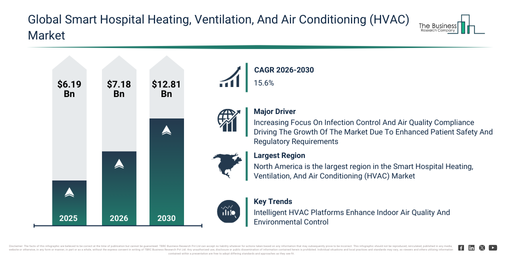
    The smart hospital heating, ventilation, and air conditioning (HVAC) market has experienced significant expansion recently. Projections indicate its size will increase from $6.19 billion in 2025 to reach $7.18 billion by 2026, demonstrating a compound annual growth rate (CAGR) of 15.9%. This historical growth is primarily due to the increased development of new hospitals and healthcare facilities, a surging need for patient-focused care settings, a heightened emphasis on reducing operational expenses within hospitals, greater healthcare investments from both public and private entities, and the escalating requirement for dependable climate regulation in crucial care zones.

    The market size for smart hospital heating, ventilation, and air conditioning (HVAC) is projected to experience swift expansion over the coming years. This market is anticipated to reach $12.81 billion by 2030, demonstrating a compound annual growth rate (CAGR) of 15.6%. This anticipated growth is linked to several factors, including the expanding development of hospital infrastructure, a heightened emphasis on indoor air quality within healthcare settings, the increasing demand for effective infection control environments, rising healthcare spending, and a greater recognition of patient comfort needs. Key trends foreseen for this period encompass progress in smart heating, ventilation, and air conditioning control systems; new developments in sensor-based indoor air quality monitoring; the evolution of artificial intelligence-powered building management systems; ongoing research and development in energy-efficient heating, ventilation, and air conditioning designs; and improvements in predictive maintenance for hospital heating, ventilation, and air conditioning systems.

    Download A Free Sample Report For Comprehensive Market Insights:

    https://www.thebusinessresearchcompany.com/sample.aspx?id=30749&type=smp

    Which Drivers Are Advancing The Smart Hospital Heating, Ventilation, And Air Conditioning (HVAC) Market Growth?

    The smart hospital heating, ventilation, and air conditioning (HVAC) market is anticipated to experience growth due to an escalating emphasis on infection control and air quality compliance. This compliance involves implementing environmental controls such as ventilation, filtration, and air handling standards in healthcare settings, designed to reduce airborne pathogen transmission and meet regulatory safety requirements. The importance of infection control and air quality compliance is rising globally as healthcare systems intensify efforts to prevent healthcare-associated infections and safeguard patients and staff. Smart hospital HVAC systems play a crucial role in supporting these objectives by optimizing ventilation rates, pressure differentials, and filtration efficiency, thus enhancing indoor air quality while also ensuring energy efficiency. For instance, in November 2024, the Center for Infectious Disease Research and Policy, a US-based infectious disease research center, reported that US acute care hospitals observed a 15% decline in central line-associated bloodstream infections and an 11% drop in catheter-associated urinary tract infections in 2023 compared with 2022. This improvement reflects enhanced infection control measures, including advanced environmental controls like HVAC systems. Therefore, the heightened focus on infection control and air quality compliance is a significant factor driving the growth of the smart hospital heating, ventilation, and air conditioning (HVAC) market.

    Which Segment Groups Define The Smart Hospital Heating, Ventilation, And Air Conditioning (HVAC) Market Landscape?

    The smart hospital heating, ventilation, and air conditioning (hvac) market covered in this report is segmented –

    1) By Component: Heating Equipment, Ventilation Equipment, Air Conditioning Equipment, Control Systems, Services

    2) By Technology: Internet Of Things (IoT)-Enabled Heating, Ventilation, And Air Conditioning (HVAC), Artificial Intelligence (AI)-Based Heating, Ventilation, And Air Conditioning (HVAC), Cloud-Based Heating, Ventilation, And Air Conditioning (HVAC), Traditional Heating, Ventilation, And Air Conditioning (HVAC)

    3) By Application: Patient Rooms, Operating Theaters, Intensive Care Units (ICUs), Laboratories, Pharmacies, Administrative Areas, Other Applications

    4) By End User: Public Hospitals, Private Hospitals, Specialty Hospitals

    Subsegments:

    1) By Heating Equipment: Boilers, Heat Pumps, Radiant Heaters, Electric Heaters, Gas Fired Heaters

    2) By Ventilation Equipment: Air Handling Units, Energy Recovery Ventilators, Exhaust Fans, Supply Fans, Terminal Units

    3) By Air Conditioning Equipment: Chiller Systems, Packaged Air Conditioners, Split Air Conditioning Units, Variable Refrigerant Flow Systems, Rooftop Air Conditioning Units

    4) By Control Systems: Building Management Systems, Smart Thermostat Systems, Variable Frequency Drive Controllers, Zonal Control Modules, Automated Monitoring Sensors

    5) By Services: Installation Services, Maintenance Services, Repair Services, System Upgrade Services, Energy Optimization Services

    What Trends Are Driving Changes In The Smart Hospital Heating, Ventilation, And Air Conditioning (HVAC) Market?

    Leading companies in the smart hospital heating, ventilation, and air conditioning (HVAC) market are concentrating on developing advanced systems, such as building automation systems, to enhance energy efficiency, improve indoor air quality, and ensure precise environmental control in critical care areas. A building automation system is defined as an integrated hardware and software platform that monitors and automatically manages building functions like heating, ventilation, air conditioning, lighting, and security, aiming to optimize comfort, energy efficiency, and operational performance. For instance, in September 2024, Johnson Controls Inc., a US-based building technology and controls company, unveiled Metasys 14.0, an updated building automation system offering next-generation analytics dashboards, enhanced network efficiency, support for up to 800 IP devices, and improved energy management tools that assist facility managers in reducing energy waste while maintaining the crucial environmental conditions for healthcare facilities. This Metasys 14.0 release includes turnkey energy-management dashboards and ASHRAE Guideline 36–aligned HVAC applications, providing building operators with quick, ready-to-use tools to visualize consumption, cut energy waste, and boost equipment performance, thereby supporting decarbonization goals.

    Which Key Players Are Active In The Smart Hospital Heating, Ventilation, And Air Conditioning (HVAC) Market?

    Major companies operating in the smart hospital heating, ventilation, and air conditioning (hvac) market are Siemens AG, LG Electronics Inc., Mitsubishi Electric Corporation, Honeywell International Inc., ABB Ltd., Carrier Global Corporation, Trane Technologies, Emerson Electric Co., Taikisha Ltd., Lindab Group AB, Systemair AB, Swegon Group AB, TROX GmbH, Ruskin Company, Johnson Controls International, Delta Controls Inc., KMC Controls, Bosch Thermotechnology, Vibro-Acoustics, Airflow Developments Ltd., Alerton, Kieback&Peter Co.

    Access The Complete Smart Hospital Heating, Ventilation, And Air Conditioning (HVAC) Market Report:

    https://www.thebusinessresearchcompany.com/report/smart-hospital-heating-ventilation-and-air-conditioning-hvac-market-report

    Which Region Commands The Largest Share Of The Smart Hospital Heating, Ventilation, And Air Conditioning (HVAC) Market?

    North America was the largest region in the smart hospital heating, ventilation, and air conditioning (HVAC) market in 2025. Asia-Pacific is expected to be the fastest-growing region in the forecast period. The regions covered in the smart hospital heating, ventilation, and air conditioning (hvac) market report are Asia-Pacific, South East Asia, Western Europe, Eastern Europe, North America, South America, Middle East, Africa.

    Access a Customized Smart Hospital Heating, Ventilation, And Air Conditioning (HVAC) Market Report for Deeper Competitive Insights

    https://www.thebusinessresearchcompany.com/sample.aspx?id=30749&type=smp

    Get in touch with us:

    The Business Research Company: https://www.thebusinessresearchcompany.com/

    Americas: +1 310-496-7795

    Asia: +44 7882 955267 & +91 8897263534

    Europe: +44 7882 955267

    Email us at: marketing@tbrc.info

    Follow us on:

    LinkedIn: https://in.linkedin.com/company/the-business-research-company

    YouTube: https://www.youtube.com/channel/UC24_fI0rV8cR5DxlCpgmyFQ

    Global Market Model: https://www.thebusinessresearchcompany.com/global-market-model
  • Increasing Adoption Of Surge In Adoption Of Artificial Intelligence In Hospital Operations Fueling Growth Due To Rising Need For Centralized And Data-Driven Healthcare Management Is Influencing The Smart Hospital Command Center Market

    Increasing Adoption Of Surge In Adoption Of Artificial Intelligence In Hospital Operations Fueling Growth Due To Rising Need For Centralized And Data-Driven Healthcare Management Is Influencing The Smart Hospital Command Center Market

    The Business Research Company’s 2026 market reports feature advanced enhancements such as market attractiveness analysis, total addressable market evaluation, company benchmarking matrices, interactive Excel dashboards, expanded supply chain intelligence, emerging startup coverage, and detailed product insights, delivering more actionable and strategically valuable research.

    What Are The Forecasted Market Size Figures For The Smart Hospital Command Center Market In 2026 And 2030?

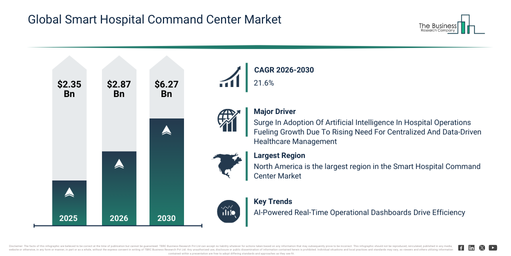
    The smart hospital command center market has experienced substantial expansion in recent years. Its value is projected to rise from $2.35 billion in 2025 to $2.87 billion by 2026, achieving a compound annual growth rate (CAGR) of 21.9%. The market’s growth in previous periods can be linked to increasing hospital digitalization, a growing need for real-time operational visibility, an elevated focus on patient safety and quality enhancement, the expanding adoption of data analytics in healthcare, and the increasing requirement for coordinated emergency responses.

    The smart hospital command center market is set to witness significant expansion in the coming years, with projections indicating it will reach $6.27 billion by 2030, exhibiting a compound annual growth rate (CAGR) of 21.6%. This growth during the forecast period is largely attributable to the increasing incorporation of artificial intelligence into hospital operations, amplified investments in smart healthcare infrastructure, a rising need for predictive analytics to manage patient flow effectively, broader deployment of connected medical devices, and an intensified focus on optimizing operational efficiency and resource allocation. Prominent trends anticipated within this period include technological breakthroughs in real-time monitoring platforms, advancements in artificial intelligence-powered decision support systems, the emergence of integrated hospital automation solutions, continuous research and development in digital health analytics, and innovative applications of digital twin based hospital operations management.

    Download A Free Sample Report For Comprehensive Market Insights:

    https://www.thebusinessresearchcompany.com/sample.aspx?id=30748&type=smp

    What Primary Factors Are Fueling The Expansion Of The Smart Hospital Command Center Market?

    The swift integration of artificial intelligence (AI) in hospital operations is anticipated to drive the expansion of the smart hospital command center market in the future. Artificial intelligence (AI) in hospital operations involves utilizing machine learning algorithms and automation to streamline administrative functions like scheduling, staffing, inventory management, and resource allocation, thereby boosting efficiency and decreasing operational costs. The incorporation of artificial intelligence (AI) into hospital operations is increasing, fueled by a rising need to optimize intricate administrative and operational workflows. Smart hospital command centers facilitate artificial intelligence (AI) in hospital operations by employing real-time data integration and predictive analytics, which improves responsiveness throughout hospital services. For instance, a report from September 2025, attributed to the Assistant Secretary for Technology Policy, a US-based government office, indicated that in 2024, 71% of hospitals stated they used predictive AI integrated with their electronic health record (EHR) systems. This marked an increase from 66% in 2023, with approximately 7 in 10 hospitals reporting the use of predictive AI in 2024. Consequently, the swift integration of artificial intelligence (AI) in hospital operations is propelling the growth of the smart hospital command center market.

    What Key Segment Areas Are Included In The Smart Hospital Command Center Market Assessment?

    The smart hospital command center market covered in this report is segmented –

    1) By Component: Software, Hardware, Services

    2) By Deployment Mode: On-Premises, Cloud-Based

    3) By Application: Patient Flow Management, Resource Allocation, Clinical Operations, Asset Management, Communication And Coordination, Others

    4) By End User: Large Hospitals, Medium Hospitals, Small Hospitals

    Subsegments:

    1) By Software: Real-Time Analytics Platforms, Hospital Workflow Automation Systems, Patient Flow Management Software, Digital Communication And Coordination Tools, Integrated Dashboard And Visualization Software, Clinical Decision Support Solutions, Resource Allocation Optimization Software

    2) By Hardware: Centralized Monitoring Systems, Internet Of Things Enabled Devices, Servers And Data Storage Units, Networking And Connectivity Equipment, Control Room Display Panels, Sensor Based Tracking Devices, Integrated Command Center Consoles

    3) By Services: Implementation And Integration Services, Training And Education Services, Maintenance And Technical Support Services, Consulting And Workflow Optimization Services, System Upgradation And Enhancement Services, Remote Monitoring And Management Services, Customization And Configuration Services

    Which Trends Are Shaping The Smart Hospital Command Center Market Landscape?

    Leading companies active in the smart hospital command center market are prioritizing the development of advanced solutions, such as real-time predictive analytics, with the goal of improving operational efficiency, patient flow, and clinical decision-making across various health systems. Real-time predictive analytics refers to software-driven capabilities that continuously collect and analyze live hospital data to forecast demand, identify bottlenecks, and enable proactive operational interventions. For instance, in October 2024, GE HealthCare Technologies Inc., a US-based medical technology company, unveiled the Hospital Pulse Tile for its Command Center Software. This introduction integrates real-time predictive analytics to provide system-wide visibility into capacity, staffing levels, patient throughput, and the performance of care delivery. The Command Center utilizes advanced analytics and AI to convert complex hospital data into actionable insights, thereby enabling leaders to anticipate surges, optimize resource utilization, and reduce delays in patient care.

    Who Are The Leading Firms Participating In The Smart Hospital Command Center Market?

    Major companies operating in the smart hospital command center market are IBM Corporation, Oracle Corporation, Honeywell International Inc., Siemens Healthineers AG, Koninklijke Philips N.V., GE HealthCare Technologies Inc., Palantir Technologies Inc., Huron Consulting Group Inc., Dedalus Group, Allscripts Healthcare Solutions Inc., Everbridge Inc., Ascom Ltd., Care Logistics LLC, Spok Holdings Inc., TeleTracking Technologies Inc., LeanTaaS Inc., Qventus Inc., Connexall, Pointcore, Epic Systems Corporation

    Access The Complete Smart Hospital Command Center Market Report:

    https://www.thebusinessresearchcompany.com/report/smart-hospital-command-center-market-report

    Which Region Accounts For The Highest Share Of The Smart Hospital Command Center Market?

    North America was the largest region in the smart hospital command center market in 2025. Asia-Pacific is expected to be the fastest-growing region in the forecast period. The regions covered in the smart hospital command center market report are Asia-Pacific, South East Asia, Western Europe, Eastern Europe, North America, South America, Middle East, Africa.

    Access a Customized Smart Hospital Command Center Market Report for Deeper Competitive Insights

    https://www.thebusinessresearchcompany.com/sample.aspx?id=30748&type=smp

    Get in touch with us:

    The Business Research Company: https://www.thebusinessresearchcompany.com/

    Americas: +1 310-496-7795

    Asia: +44 7882 955267 & +91 8897263534

    Europe: +44 7882 955267

    Email us at: marketing@tbrc.info

    Follow us on:

    LinkedIn: https://in.linkedin.com/company/the-business-research-company

    YouTube: https://www.youtube.com/channel/UC24_fI0rV8cR5DxlCpgmyFQ

    Global Market Model: https://www.thebusinessresearchcompany.com/global-market-model
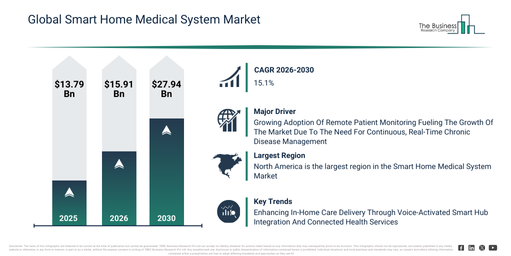
  • Growing Adoption Of Remote Patient Monitoring Fueling The Growth Of The Market Due To The Need For Continuous, Real-Time Chronic Disease Management Continues To Impact The Growth Of The Smart Home Medical System Market

    Growing Adoption Of Remote Patient Monitoring Fueling The Growth Of The Market Due To The Need For Continuous, Real-Time Chronic Disease Management Continues To Impact The Growth Of The Smart Home Medical System Market

    The Business Research Company’s 2026 market reports feature advanced enhancements such as market attractiveness analysis, total addressable market evaluation, company benchmarking matrices, interactive Excel dashboards, expanded supply chain intelligence, emerging startup coverage, and detailed product insights, delivering more actionable and strategically valuable research.

    How Much Larger Will The Smart Home Medical System Market Become By 2030 Compared To 2026?

    The smart home medical system market has experienced rapid expansion recently. Projections indicate it will grow from $13.79 billion in 2025 to $15.91 billion in 2026, demonstrating a compound annual growth rate (CAGR) of 15.4%. Factors contributing to this historic period’s growth include the increasing adoption of wearable health devices, a growing awareness of home healthcare solutions, rising demand for remote patient monitoring, the expansion of IoT connectivity within homes, and the increasing prevalence of chronic diseases.

    The smart home medical system market is anticipated to experience significant expansion over the coming years. This market is projected to reach $27.94 billion by 2030, exhibiting a compound annual growth rate (CAGR) of 15.1%. This anticipated growth is driven by several factors, including increasing investment in smart home healthcare infrastructure, the expanding integration of artificial intelligence (AI) and IoT within medical systems, the broadening of telemedicine services, enhanced government backing for home-based healthcare solutions, and a growing consumer demand for personalized health services. Key developments expected during this period encompass technological improvements in sensor precision, breakthroughs in artificial intelligence (AI)-powered health monitoring, progress in integrating telehealth, advancements in research and development concerning predictive health analytics, and enhancements in wireless and cloud-based health platforms.

    Download A Free Sample Report For Comprehensive Market Insights:

    https://www.thebusinessresearchcompany.com/sample.aspx?id=30747&type=smp

    Which Strategic Drivers Are Supporting The Smart Home Medical System Market Development?

    The increasing integration of remote patient monitoring is anticipated to drive the expansion of the smart home medical system market in the future. Remote patient monitoring involves employing networked medical equipment and digital platforms to gather, send, and examine patient health information beyond conventional hospital environments, thereby aiding in the ongoing management of long-term illnesses. The uptake of remote patient monitoring is escalating because of the rising occurrence of chronic respiratory ailments, given that constant oversight assists in symptom management and averts hospital admissions. Smart home medical systems facilitate remote patient monitoring by incorporating linked devices capable of tracking vital signs, ensuring medication compliance, and monitoring daily health routines. These systems enhance patient care through real-time data sharing, prompt identification of health problems, and swift medical interventions provided by healthcare professionals. For example, data from Intuition Labs, a US-based healthcare technology firm, indicates that by December 2025, close to 50 million Americans are already utilizing a type of remote patient monitoring device, with 80% of Americans expressing support for integrating remote patient monitoring into their medical treatment. Furthermore, by 2025, it is projected that more than 71 million Americans, accounting for 26% of the population, will be using some form of remote patient monitoring service. Consequently, the expanding acceptance of remote patient monitoring is propelling the expansion of the smart home medical system market.

    How Is Segment Classification Applied In The Smart Home Medical System Market?

    The smart home medical system market covered in this report is segmented –

    1) By Component: Hardware, Software, Services

    2) By Technology: Internet Of Things (IoT), Artificial Intelligence (AI), Cloud Computing, Wearable Technology

    3) By Applications: Remote Patient Monitoring, Chronic Disease Management, Elderly Care, Home-Based Recovery, Emergency Assistance, Preventive And Wellness Monitoring

    4) By End User: Patients, Caregivers, Healthcare Providers, Insurance Companies

    Subsegments:

    1) By Hardware: Health Monitoring Devices, Medication Management Devices, Emergency Alert Devices, Diagnostic Equipment, Connectivity Modules

    2) By Software: Data Analytics Platforms, Remote Monitoring Applications, Telehealth Management Software, Visualization And Reporting Tools, Artificial Intelligence Enabled Software

    3) By Services: Installation And Setup Services, Maintenance And Support Services, Remote Patient Monitoring Services, Training And Consultation Services, Data Management Services

    What Trends Are Influencing The Smart Home Medical System Market Outlook?

    Leading firms within the smart home medical system market are concentrating on creating sophisticated solutions, like voice-controlled smart hubs, aiming to elevate ease of access, continuous monitoring, and smooth communication among patients, caregivers, and medical professionals. Such a hub functions as a central, in-home medical management platform, utilizing voice recognition and integrated sensors to facilitate hands-free operations, issue timely alerts, streamline care processes, and cater to everyday health and safety requirements, particularly benefiting the elderly and those with long-term illnesses. As an illustration, Aloe Care Health Inc., a US-headquartered company specializing in connected care and remote oversight tools, established a new unit named Aloe Care Health Solutions in September 2024. This division was formed to deliver an all-encompassing solution designed to meet the growing demands of various healthcare entities, including Medicare Advantage, Medicaid, Home Health, and Senior Living providers. The offering comprises a data-focused platform and a device network that incorporates a proprietary Smart Hub, alongside integrated technologies such as a radar fall detector and the Withings Sleep Tracking Mat, allowing for AI-powered fall forecasting, reducing emergency room visits, and more intelligent triage without continuous input from caregivers. Furthermore, it features an adaptable, tailored platform capable of adjusting to personal requirements, thereby assisting healthcare partners in achieving superior health results, managing expenditures, and enhancing member contentment.

    Which Companies Are Engaged In The Smart Home Medical System Market Environment?

    Major companies operating in the smart home medical system market are Abbott Laboratories, Medtronic plc, Koninklijke Philips N.V., Omron Healthcare Inc., ResMed Inc., Dexcom Inc., Teladoc Health Inc., Masimo Corporation, Tunstall Healthcare Group Ltd., iRhythm Technologies Inc., Athelas Inc., Withings SA, HealthSnap Inc., Current Health Ltd., AliveCor Inc., Cadence Care Inc., Qardio Inc., Empatica Inc., Vivify Health Inc., BioIntelliSense Inc., CarePredict Inc., HealthBeacon plc, Sensara BV, Essence SmartCare Ltd.

    Access The Complete Smart Home Medical System Market Report:

    https://www.thebusinessresearchcompany.com/report/smart-home-medical-system-market-report

    Which Region Is The Primary Market For The Smart Home Medical System Market?

    North America was the largest region in the smart home medical system market in 2025. Asia-Pacific is expected to be the fastest-growing region in the forecast period. The regions covered in the smart home medical system market report are Asia-Pacific, South East Asia, Western Europe, Eastern Europe, North America, South America, Middle East, Africa.

    Access a Customized Smart Home Medical System Market Report for Deeper Competitive Insights

    https://www.thebusinessresearchcompany.com/sample.aspx?id=30747&type=smp

    Get in touch with us:

    The Business Research Company: https://www.thebusinessresearchcompany.com/

    Americas: +1 310-496-7795

    Asia: +44 7882 955267 & +91 8897263534

    Europe: +44 7882 955267

    Email us at: marketing@tbrc.info

    Follow us on:

    LinkedIn: https://in.linkedin.com/company/the-business-research-company

    YouTube: https://www.youtube.com/channel/UC24_fI0rV8cR5DxlCpgmyFQ

    Global Market Model: https://www.thebusinessresearchcompany.com/global-market-model