Month: June 2026

  • Smart Portable Rehabilitation Devices Market Outlook Highlights The Next Major Growth Opportunities

    Smart Portable Rehabilitation Devices Market Outlook Highlights The Next Major Growth Opportunities

    Delivering more actionable and strategically valuable research, The Business Research Company’s 2026 market reports feature market attractiveness analysis, total addressable market evaluation, company benchmarking matrices, interactive Excel dashboards, expanded supply chain intelligence, emerging startup coverage, and detailed product insights.

    Smart Portable Rehabilitation Devices Market Expected To Reach $6.69 Billion By 2030 At 15.1% CAGR

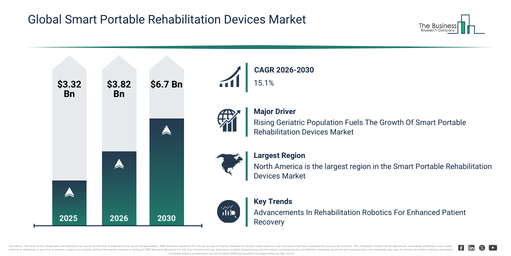
    The market for intelligent, portable rehabilitation equipment has experienced significant expansion recently. Projections indicate a rise from $3.32 billion in 2025 to $3.82 billion in 2026, reflecting a compound annual growth rate of 15.1%. This upward trajectory in the past has been fueled by several factors, including a rise in musculoskeletal injuries, reduced availability of traditional rehabilitation facilities, the increasing healthcare demands of an aging demographic, the proliferation of wearable technology, and a general increase in public awareness regarding rehabilitation therapies.

    The global market for intelligent, portable rehabilitation equipment is poised for substantial expansion in the upcoming years, projecting an increase to $6.7 billion by the year 2030, driven by a compound annual growth rate of 15.1%. This significant growth trajectory in the projected timeframe is fueled by several key factors, including the increasing prevalence of tele-rehabilitation services, a growing demand for more affordable healthcare solutions, continuous improvements in motion sensor technology, a rise in post-operative rehabilitation needs, and the broader adoption of digital therapeutic approaches. Looking ahead, prominent trends shaping this market include the escalating use of sensor-integrated rehabilitation apparatus, the integration of artificial intelligence in guiding therapeutic interventions, the widening scope of home-based physiotherapy regimens, the incorporation of gamification techniques into rehabilitation processes, and a heightened demand for effective post-stroke recovery solutions.

    Download A Free Sample Report For Comprehensive Market Insights:

    https://www.thebusinessresearchcompany.com/sample.aspx?id=13934&type=smp

    Smart Portable Rehabilitation Devices Market Growth Drivers And Industry Catalysts

    The increasing number of elderly individuals is anticipated to significantly boost the market for smart portable rehabilitation devices. This demographic shift, representing a growing segment of senior citizens, benefits from these devices as they offer support for maintaining independence and self-governance. By enabling health monitoring and self-directed rehabilitation exercises, these tools empower older adults to manage their well-being on their own terms. Evidence supporting this trend includes data from January 2024, where the US-based Pew Research Center Organization reported that the geriatric population, currently at 0.2%, is projected to grow by 0.5% by 2054, underscoring the direct correlation between the expanding elderly population and the upward trajectory of the smart portable rehabilitation devices market.

    Smart Portable Rehabilitation Devices Market Segment Landscape: Which Areas Lead Market Development?

    The smart portable rehabilitation devices market covered in this report is segmented –

    1) By Type: Daily Living Aids, Mobility Equipment, Exercise Equipment, Body Support Devices

    2) By Rehabilitation Type: Passive Rehabilitation, Active-Assistive Rehabilitation

    3) By End-User: Hospitals And Clinics, Rehabilitation Centers, Physiotherapy Centers, Other End-Users

    Subsegments:

    1) By Daily Living Aids: Smart Pill Dispensers, Smart Meal Preparation Devices, Smart Home Automation Devices, Assistive Communication Devices

    2) By Mobility Equipment: Smart Wheelchairs, Smart Walkers, Smart Scooters, Smart Canes

    3) By Exercise Equipment: Smart Resistance Bands, Smart Exercise Bikes, Smart Treadmills, Wearable Fitness Trackers

    4) By Body Support Devices: Smart Back Supports, Smart Knee Braces, Smart Ankle Supports, Smart Posture Correctors

    #Smart Portable Rehabilitation Devices Market Trends Influencing Long-Term Demand

    Key players within the smart portable rehabilitation devices sector are prioritizing the innovation of sophisticated robotic and artificial intelligence integrated solutions aimed at optimizing patient recuperation, elevating therapeutic accuracy, and facilitating remote oversight of rehabilitation trajectories. These robotic and AI-driven systems encompass rehabilitation apparatuses that merge mechanical aid with cognitive computational models to direct patient actions, track advancement, and tailor treatment methodologies for superior recovery results. Illustratively, in November of 2023, Syrebo, a medical robotics enterprise situated in China, unveiled a novel collection of groundbreaking rehabilitation robots at the MEDICA 2023 exhibition. Such apparatuses incorporate intelligent motion-assistance frameworks and immediate feedback mechanisms to bolster individuals undergoing physical therapy, thereby cultivating more individually suited and efficacious rehabilitation achievements. This introduction underscores Syrebo’s dedication to revolutionizing rehabilitative healthcare through pioneering, patient-focused robotic technologies.

    Smart Portable Rehabilitation Devices Market Industry Leaders And Market Competition

    Major companies operating in the smart portable rehabilitation devices market are Invacare Corporation, Caremax Rehabilitation Equipment Ltd, Hinge Health, Drive Devilbiss Healthcare, Kinova Robotics, GF Health Products Inc., Dynatronics Corporation, Bioness Inc., Motion Composites, MindMaze, Neofect, Hocoma, Tyromotion, Myomo Inc., Esko Bionics, AlterG, ReWalk Robotics, LiteGait, suitX, Rifton Equipment, InnoMotion, Reha Technology AG, Rex Bionics, Kinestica, DyCare, Bionik Laboratories

    Access The Complete Smart Portable Rehabilitation Devices Market Report:

    https://www.thebusinessresearchcompany.com/report/smart-portable-rehabilitation-devices-global-market-report

    Smart Portable Rehabilitation Devices Market Regional Distribution: Which Areas Drive Market Expansion?

    North Americawas the largest region in the smart portable rehabilitation devices market in 2025. The regions covered in the smart portable rehabilitation devices market report are Asia-Pacific, South East Asia, Western Europe, Eastern Europe, North America, South America, Middle East, Africa.

    Get in touch with us:

    The Business Research Company: https://www.thebusinessresearchcompany.com/

    Americas: +1 310-496-7795

    Asia: +44 7882 955267 & +91 8897263534

    Europe: +44 7882 955267

    Email us at: marketing@tbrc.info

    Follow us on:

    LinkedIn: https://in.linkedin.com/company/the-business-research-company

    YouTube: https://www.youtube.com/channel/UC24_fI0rV8cR5DxlCpgmyFQ

    Global Market Model: https://www.thebusinessresearchcompany.com/global-market-model
  • Smart Inhalers Market Trends And Growth Drivers Point To Strong Future Potential

    Smart Inhalers Market Trends And Growth Drivers Point To Strong Future Potential

    Enhanced with market attractiveness analysis, total addressable market evaluation, company benchmarking matrices, interactive Excel dashboards, expanded supply chain intelligence, emerging startup coverage, and detailed product insights, The Business Research Company’s 2026 market reports deliver more actionable and strategically valuable research.

    Smart Inhalers Market Size And Revenue Forecast Through 2030

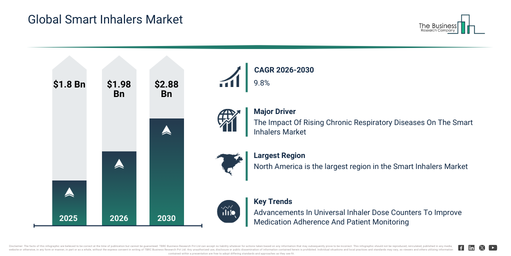
    The smart inhalers market experienced robust expansion recently, projected to advance from a value of $1.8 billion in 2025 to $1.98 billion in 2026, demonstrating a compound annual growth rate (CAGR) of 9.7%. This historical growth trajectory is primarily influenced by escalating asthma occurrences, suboptimal patient adherence to prescribed treatments, an increasing burden of respiratory ailments, advancements in inhaler device technology, and a heightened public consciousness regarding digital health solutions.

    The smart inhalers market is projected to experience significant expansion over the coming years, with an anticipated valuation of $2.88 billion by 2030, reflecting a compound annual growth rate of 9.8%. This upward trajectory during the projected timeframe is fueled by several key factors, including the increasing adoption of remote patient monitoring technologies, the broadening scope of value-based healthcare models, the widespread use of health applications on smartphones, the securing of regulatory approvals, and a heightened emphasis on managing pediatric asthma. Prominent developments anticipated within this forecast period encompass the incorporation of sensors for tracking inhaler usage, the increasing prevalence of inhalers linked to mobile applications, the expansion of comprehensive asthma management platforms, the implementation of real-time alerts for medication adherence, and growing support from insurance providers.

    Download A Free Sample Report For Comprehensive Market Insights:

    https://www.thebusinessresearchcompany.com/sample.aspx?id=14196&type=smp

    Smart Inhalers Market Opportunity Drivers: What Is Creating New Revenue Potential?

    The increasing incidence of chronic respiratory illnesses is poised to fuel the expansion of the smart inhaler sector. These long-term lung conditions, known as CRDs, impact the breathing passages and associated lung components. Smart inhalers contribute to the management of conditions like asthma and COPD by monitoring medication adherence and reminding users about missed administrations, thereby promoting regular treatment for symptom alleviation and the avoidance of serious health events. As an illustration, data from the National Center for Biotechnology Information indicated in December 2023 that the number of COPD diagnoses was projected to increase by 112 million, reaching an estimated 592 million individuals, or 9.5% of the relevant demographic, by the year 2050. Consequently, the escalating rate of chronic respiratory diseases is a significant catalyst for the growth observed in the smart inhaler market.

    Smart Inhalers Market Segments: Where Are The Largest Growth Opportunities?

    The smart inhalers market covered in this report is segmented –

    1) By Type: Dry Powdered Inhalers (DPIs), Metered Dose Inhalers (MDIs)

    2) By Indication: Asthma, Chronic Obstructive Pulmonary Disease (COPD), Other Indications

    3) By Distribution Channel: Hospital Pharmacies, Retail Pharmacies, Online Pharmacies

    4) By End-User: Hospitals, Homecare Settings, Other End-Users

    Subsegments:

    1) By Dry Powdered Inhalers (DPIs): Single-Dose DPIs, Multi-Dose DPIs

    2) By Metered Dose Inhalers (MDIs): Digitally Enabled MDIs, Smart MDIs With Connectivity Features

    Smart Inhalers Market Innovation Trends Driving Future Development

    Within the competitive space of smart inhaler technologies, leading enterprises are actively pursuing innovations like universal dose counters and networked inhaler solutions. Their primary objectives are to bolster patient compliance with treatment regimens, simplify device operation, and enable more effective patient observation. Universal dose counters, specifically, function as accessories applicable to a spectrum of inhaler models, offering precise quantification of administered doses which subsequently aids in better adherence and oversight. Illustrating this trend, Aseptika, a digital health firm headquartered in the United Kingdom, introduced the PUFFClicker3 universal inhaler dose counter in June 2024. This particular device demonstrates adaptability by fitting numerous inhaler designs, thereby facilitating precise dose recording, promoting adherence, and allowing for the distant tracking of inhaler usage by individuals managing pulmonary ailments like asthma and COPD. Through the incorporation of readily legible counters and digital tracking capabilities, the PUFFClicker3 is positioned to improve patient health results and empower medical professionals in their management of persistent respiratory illnesses.

    Smart Inhalers Market Major Participants And Competitive Dynamics

    Major companies operating in the smart inhalers market are Novartis AG, AstraZeneca Plc, GlaxoSmithKline Plc, Boehringer Ingelheim International GmbH, Teva Pharmaceutical Industries Ltd., Lupin Limited, Aptar Group Inc., Nemera France SAS, Vectura Group Limited, Propeller Health, Findair Sp.z o.o., Biocorp Production, Cohero Health Inc., Pneuma Respiratory Inc., Amiko Digital Health Limited, AireHealth Inc., Adherium Ltd., Zeolr Technologies Pvt Ltd., H&T Presspart Manufacturing Ltd., Cognita Labs LLC, Teva Respiratory LLC, AstraZeneca Respiratory Devices

    Access The Complete Smart Inhalers Market Report:

    https://www.thebusinessresearchcompany.com/report/smart-inhalers-global-market-report

    Smart Inhalers Market Leading Geography: Which Region Generates The Most Revenue?

    North Americawas the largest region in the smart inhalers market in 2025. The regions covered in the smart inhalers market report are Asia-Pacific, South East Asia, Western Europe, Eastern Europe, North America, South America, Middle East, Africa.

    Get in touch with us:

    The Business Research Company: https://www.thebusinessresearchcompany.com/

    Americas: +1 310-496-7795

    Asia: +44 7882 955267 & +91 8897263534

    Europe: +44 7882 955267

    Email us at: marketing@tbrc.info

    Follow us on:

    LinkedIn: https://in.linkedin.com/company/the-business-research-company

    YouTube: https://www.youtube.com/channel/UC24_fI0rV8cR5DxlCpgmyFQ

    Global Market Model: https://www.thebusinessresearchcompany.com/global-market-model
  • Smart Hospital Wayfinding Robot Market Expansion Is Reshaping Competitive Dynamics Across The Industry

    Smart Hospital Wayfinding Robot Market Expansion Is Reshaping Competitive Dynamics Across The Industry

    Through market attractiveness analysis, total addressable market evaluation, company benchmarking matrices, interactive Excel dashboards, expanded supply chain intelligence, emerging startup coverage, and detailed product insights, The Business Research Company’s 2026 market reports provide more actionable and strategically valuable research.

    Smart Hospital Wayfinding Robot Market Growth From $1.17 Billion In 2026 To $2.17 Billion By 2030 At A CAGR Of 16.6%

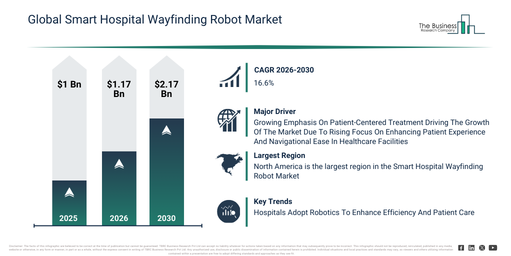
    The market for smart hospital wayfinding robots has experienced substantial expansion lately; it is projected to advance from a valuation of $1 billion in 2025 to $1.17 billion by 2026, reflecting a compound annual growth rate of 16.9%. This upward trajectory during the historical timeframe is a consequence of several key factors, including the escalating complexity found within hospital designs, a surge in the number of patients visiting extensive healthcare institutions, the broader integration of service robots within hospital settings, a heightened emphasis on achieving greater operational efficiency, and advancements in indoor navigation systems.

    The market for smart hospital wayfinding robots is poised for significant expansion, projected to reach $2.17 billion by 2030 with a compound annual growth rate of 16.6%. This upward trajectory is propelled by escalating investments in smart hospital infrastructure, a heightened demand for contactless patient services, the broadening scope of digital patient engagement tools, the increasing application of robotics in healthcare operations, and advancements in indoor positioning technologies. Key developments anticipated during this forecast period involve a greater deployment of autonomous navigation robots, increased implementation of AI-powered wayfinding solutions, enhanced integration with hospital information systems, the growth of voice-activated patient assistance, and a stronger emphasis on improving the overall patient experience.

    Download A Free Sample Report For Comprehensive Market Insights:

    https://www.thebusinessresearchcompany.com/sample.aspx?id=29198&type=smp

    Smart Hospital Wayfinding Robot Market Growth Momentum: Which Factors Are Influencing Demand?

    The burgeoning trend towards patient-centric care is poised to be a significant catalyst for the expansion of the smart hospital wayfinding robot sector. This patient-focused approach in healthcare emphasizes tailoring medical interventions and interactions to align with each patient’s unique requirements, personal choices, and deeply held values. fueling this shift towards patient-centered methodologies is a notable increase in patient autonomy, largely attributed to enhanced accessibility of health information, which consequently enables individuals to take a more active role in medical decision-making. Smart hospital wayfinding robots contribute to this patient-centric model by alleviating the anxiety and disorientation often experienced when navigating intricate healthcare facilities, thereby freeing up patients to concentrate more fully on their recovery and overall health. Illustrating this positive development, a survey by the UK’s National Health Service in July 2023 indicated that a substantial 90.3% of patients felt their involvement in care decisions was adequate, a slight uptick from 89.9% in 2022, and 93.0% reported unwavering confidence and trust in their medical caregivers, mirroring the prior year’s figures. Consequently, the growing prominence of patient-centered treatment directly underpins the market’s advancement in smart hospital wayfinding robots.

    Smart Hospital Wayfinding Robot Market Segment Analysis: What Are The Major Market Categories?

    The smart hospital wayfinding robot market covered in this report is segmented –

    1) By Component: Hardware, Software, Services

    2) By Technology: Artificial Intelligence-Based, Sensor-Based, Radio Frequency Identification, Other Technologies

    3) By Application: Patient Navigation, Visitor Assistance, Asset Tracking, Emergency Response, Other Applications

    4) By End-User: Hospitals, Clinics, Specialty Centers, Other End-Users

    Subsegments:

    1) By Hardware: Display Screens, Sensors, Wheels And Motors, Cameras, Battery Systems

    2) By Software: Navigation Management, Voice Recognition, Mapping And Localization, User Interface, Data Analytics

    3) By Services: Installation Services, Maintenance Services, Training Services, Technical Support, Software Updates

    Smart Hospital Wayfinding Robot Market Trends Reshaping Industry Growth

    Within the smart hospital wayfinding robot sector, prominent enterprises are concentrating on cutting edge advancements like robots designed for medication transportation, with the aim of boosting operational effectiveness, alleviating the burden on personnel, elevating patient treatment, and optimizing the distribution of pharmaceuticals throughout medical establishments. These robots autonomously convey medicines across hospital premises, thereby amplifying efficiency, lessening the demands on staff, and guaranteeing prompt delivery to patient treatment zones. As an illustration, in July of 2023, Changi General Hospital Pte Ltd., located in Singapore, integrated three robotic units: Edi, the Robotic Navigator, tasked with assisting patients in finding their way; MEDi, the innovative ‘Smart’ Medicine-Delivery-on-Wheels, engineered for the efficient movement of pharmaceuticals; and BLANKi, the Blanket Delivery Robot, introduced to improve patient comfort and decrease staff duties within the Emergency Department. Collectively, these robotic solutions are geared towards enhancing productivity, refining workflows, and furnishing an improved comprehensive experience for both patients and visitors. The hospital intends to broaden the implementation of these robots to additional sections of its campus, further refining its healthcare service delivery. Initial reactions from both medical staff and patients have been favorable, underscoring the transformative potential of robotic technology in the realm of patient care.

    Smart Hospital Wayfinding Robot Market Leading Companies Driving Competitive Growth

    Major companies operating in the smart hospital wayfinding robot market are LG Electronics Inc., Panasonic Corporation, Singapore Technologies Engineering Ltd., Keenon Robotics Co. Ltd., Changi General Hospital Pte Ltd., UBTech Robotics Corp., SoftBank Robotics Group Corp., CenTrak Inc., Yujin Robot Co. Ltd., Pudu Robotics Co. Ltd., OrionStar Technology Co. Ltd., Pointr Ltd., Ateago Technology Co. Ltd., Bivocom Co. Ltd., PAL Robotics S.L., Robotlab Ltd., Botzee Inc., RIFE TECHNOLOGIES, PredictML Inc., iHub Robotics.

    Access The Complete Smart Hospital Wayfinding Robot Market Report:

    https://www.thebusinessresearchcompany.com/report/smart-hospital-wayfinding-robot-global-market-report

    Smart Hospital Wayfinding Robot Market Regional Outlook: Where Are The Largest Opportunities Located?

    North Americawas the largest region in the smart hospital wayfinding robot market in 2025. Asia-Pacificis expected to be the fastest-growing region in the forecast period. The regions covered in the smart hospital wayfinding robot market report are Asia-Pacific, South East Asia, Western Europe, Eastern Europe, North America, South America, Middle East, Africa.

    Get in touch with us:

    The Business Research Company: https://www.thebusinessresearchcompany.com/

    Americas: +1 310-496-7795

    Asia: +44 7882 955267 & +91 8897263534

    Europe: +44 7882 955267

    Email us at: marketing@tbrc.info

    Follow us on:

    LinkedIn: https://in.linkedin.com/company/the-business-research-company

    YouTube: https://www.youtube.com/channel/UC24_fI0rV8cR5DxlCpgmyFQ

    Global Market Model: https://www.thebusinessresearchcompany.com/global-market-model
  • Smart Hospital Market Forecast Reveals Where Future Industry Value Will Be Created

    Smart Hospital Market Forecast Reveals Where Future Industry Value Will Be Created

    Delivering more actionable and strategically valuable research, The Business Research Company’s 2026 market reports feature market attractiveness analysis, total addressable market evaluation, company benchmarking matrices, interactive Excel dashboards, expanded supply chain intelligence, emerging startup coverage, and detailed product insights.

    Smart Hospital Market Expansion Outlook: What Revenue Opportunities Lie Ahead?

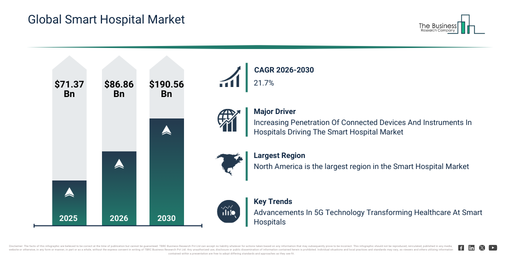
    The smart hospital sector has experienced remarkable expansion historically and is projected to continue its upward trajectory, expanding from an estimated $71.37 billion in 2025 to $86.86 billion by 2026, reflecting a compound annual growth rate (CAGR) of 21.7%. Factors contributing to this historical surge include the persistent issue of hospital overcrowding, an increasing demand for optimized operational processes, the widespread implementation of electronic health records, significant investments in healthcare IT infrastructure, and stringent patient safety regulations.

    The smart hospital sector is poised for remarkable expansion in the coming years, anticipating a substantial surge to $190.56 billion by 2030, underpinned by a compound annual growth rate of 21.7%. This projected escalation in the forecast period is propelled by several key factors, including increased investment in smart infrastructure, the implementation of AI-driven automation for operational processes, the enforcement of interoperability standards, a growing emphasis on value-based healthcare delivery, and the proliferation of digital hospital initiatives. Furthermore, significant trends expected to shape this period involve the broader adoption of hospital management platforms, the seamless integration of real-time location systems for enhanced asset and patient tracking, advancements in AI capabilities for diagnostic purposes, the expansion of intelligent intensive care unit (ICU) solutions, and a heightened focus on cybersecurity measures within healthcare facilities.

    Download A Free Sample Report For Comprehensive Market Insights:

    https://www.thebusinessresearchcompany.com/sample.aspx?id=13734&type=smp

    Smart Hospital Market Expansion Drivers: What Is Shaping Future Growth?

    The widespread adoption of internet-enabled medical equipment within healthcare facilities is poised to fuel the expansion of the smart hospital sector. These interconnected devices and instruments, forming a network that gathers extensive data on various medical and business operations, are instrumental in advancing smart hospital initiatives by facilitating superior patient outcomes, streamlined workflows, and informed choices based on real-time information. A compelling example of this trend comes from October 2023, when the U.S. Food and Drug Administration reported an update to its directory of artificial intelligence (AI) and machine learning (ML) powered medical devices available in the U.S., noting the addition of 171 new devices by that month; this marks a substantial leap from the previous year, with projections indicating a growth rate of at least 30% for such AI/ML-equipped technologies. Consequently, the escalating presence of connected medical technology in hospitals is a key factor driving the smart hospital market forward.

    Smart Hospital Market Segment Breakdown: Which Categories Generate The Most Revenue?

    The smart hospital market covered in this report is segmented –

    1) By Component: Hardware, Software System, Services

    2) By Technology: Cloud Computing, Artificial Intelligence, Wearable Technologies, Radio Frequencies Identification, Other Technologies

    3) By Connectivity: Wired, Wireless

    4) By Application: Remote Medicine Management, Medical Connected Imaging, Medical Assistance, Electronic Health Record, Outpatient Vigilance

    Subsegments:

    1) By Hardware: Medical Devices, Internet Of Things (IoT) Devices, Wearable Health Monitors, Infrastructure Equipment (Sensors, Cameras)

    2) By Software System: Electronic Health Records (EHR), Hospital Management Systems, Patient Engagement Software, Data Analytics And Reporting Tools

    3) By Services: Consulting Services, Implementation And Integration Services, Maintenance And Support Services, Training And Education Services

    Smart Hospital Market Strategic Trends: What Is Defining The Next Phase Of Growth?

    The leading organizations within the smart hospital sector are prioritizing collaborative ventures to advance their smart hospital offerings. Such collaborations, essentially agreements between two or more parties for shared objectives, are becoming a cornerstone strategy. A concrete illustration of this approach occurred in March 2023 when LifeSigns, an American health-technology innovator, joined forces with Amala Hospital, a notable Indian institution specializing in orthopedic care and rehabilitation, to introduce a sophisticated smart ward. This innovative unit integrates LifeSigns’ iMS technology, which employs wearable wireless sensors for uninterrupted patient surveillance, thereby superseding conventional wired setups, enhancing patient comfort, and optimizing the acquisition of vital data.

    Smart Hospital Market Key Players And Strategic Industry Positioning

    Major companies operating in the smart hospital market are Microsoft Corporation, Alphabet Inc, International Business Machines Corporation, Cisco Systems Inc, SAP SE, Siemens Healthineers AG, Koninklijke Philips N.V., GE Healthcare, Medtronic plc, Cerner Corporation, Allscripts Healthcare Solutions, Athenahealth, Honeywell Life Care Solutions, Stanley Healthcare, Qualcomm Life, Nvidia Corporation, Oracle Health, Epic Systems Corporation, Fujitsu Limited, Hitachi Healthcare Systems, Schneider Electric Healthcare, Toshiba Healthcare Systems

    Access The Complete Smart Hospital Market Report:

    https://www.thebusinessresearchcompany.com/report/smart-hospital-global-market-report

    Smart Hospital Market Geographic Landscape: Which Region Dominates Industry Growth?

    North Americawas the largest region in the smart hospital market in 2025. Asia-Pacificis expected to be the fastest-growing region in the forecast period. The regions covered in the smart hospital market report are Asia-Pacific, South East Asia, Western Europe, Eastern Europe, North America, South America, Middle East, Africa.

    Get in touch with us:

    The Business Research Company: https://www.thebusinessresearchcompany.com/

    Americas: +1 310-496-7795

    Asia: +44 7882 955267 & +91 8897263534

    Europe: +44 7882 955267

    Email us at: marketing@tbrc.info

    Follow us on:

    LinkedIn: https://in.linkedin.com/company/the-business-research-company

    YouTube: https://www.youtube.com/channel/UC24_fI0rV8cR5DxlCpgmyFQ

    Global Market Model: https://www.thebusinessresearchcompany.com/global-market-model
  • Smart Home Healthcare Market Growth Through 2030 Creates New Strategic Opportunities

    Smart Home Healthcare Market Growth Through 2030 Creates New Strategic Opportunities

    Enhanced with market attractiveness analysis, total addressable market evaluation, company benchmarking matrices, interactive Excel dashboards, expanded supply chain intelligence, emerging startup coverage, and detailed product insights, The Business Research Company’s 2026 market reports deliver more actionable and strategically valuable research.

    Smart Home Healthcare Market Growth Potential: How Will Market Size Change Through 2030?

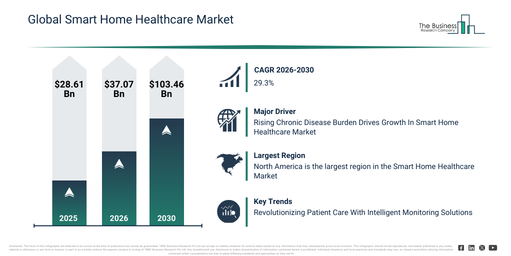
    The market for smart home healthcare has experienced substantial growth, projected to surge from $28.61 billion in 2025 to $37.07 billion in 2026, reflecting a compound annual growth rate (CAGR) of 29.6%. This upward trajectory in the historic period is fueled by several key factors, including the increasing incidence of chronic illnesses, the expanding availability of home-based medical services, a growing trend towards healthcare digitalization, the broader adoption of telemedicine, and the advancement of interconnected medical devices.

    The smart home healthcare sector anticipates a period of significant expansion, projected to reach a valuation of $103.46 billion by the year 2030, reflecting a compound annual growth rate (CAGR) of 29.3%. This anticipated surge is fueled by several key factors, including a growing elderly demographic opting for independent living, substantial investments channeled into smart healthcare infrastructure, the proliferation of AI-powered remote diagnostic tools, a heightened demand for proactive health management solutions, and an increasing emphasis on delivering efficient and economical healthcare. Furthermore, several prominent trends are expected to shape this market during the forecast period, such as the escalating adoption of remote patient monitoring systems, a greater utilization of wearable health sensors, the deepening integration of AI for health data analysis, a broader rollout of connected home care platforms, and a more concentrated effort on managing chronic conditions.

    Download A Free Sample Report For Comprehensive Market Insights:

    https://www.thebusinessresearchcompany.com/sample.aspx?id=19701&type=smp

    Smart Home Healthcare Market Development Factors: Which Trends Are Supporting Demand?

    The escalating prevalence of chronic illnesses is anticipated to be a primary catalyst for the expansion of the smart home healthcare sector. This surge in chronic conditions is attributed to a confluence of factors, including an aging global demographic, increasingly inactive lifestyles, suboptimal dietary habits, and environmental stressors. Smart home healthcare solutions offer substantial benefits to individuals managing chronic diseases by enabling continuous health monitoring and facilitating tailored management strategies, thereby enhancing treatment efficacy and patient compliance. Illustratively, data from GOV.UK revealed that in England, the recorded prevalence of type 2 diabetes among adults aged 17 and above reached 7.0% in March 2024, a rise from the 6.8% observed in March 2023, underscoring the growing need for effective chronic disease management tools. Consequently, the mounting challenge of chronic diseases is directly fueling the growth trajectory of the smart home healthcare market.

    Smart Home Healthcare Market Segmentation: How Is The Market Structured Across Key Categories?

    The smart home healthcare market covered in this report is segmented –

    1) By Product: Smart Glucose Monitoring System, Medical Device Alert Systems, Smart Cardiac Monitoring System, Other Products

    2) By Service: Skilled Nursing Services, Rehabilitation Therapy Services, Hospice And Palliative Care Services, Unskilled Care Services, Respiratory Therapy Services, Infusion Therapy Services, Pregnancy Care Services

    3) By Technology: Wired, Wireless

    4) By Indication: Diabetes, Respiratory Diseases, Pregnancy, Mobility Disorders, Hearing Disorders, Cancer, Wound Care

    5) By Application: Fall Prevention And Detection, Health Status Monitoring, Nutrition Or Diet Monitoring, Memory Aids

    Subsegments:

    1) By Smart Glucose Monitoring System: Continuous Glucose Monitors (CGMs), Smart Glucose Meters, Mobile Apps For Glucose Tracking, Integrated Diabetes Management Systems

    2) By Medical Device Alert Systems: Fall Detection Systems, Medication Reminder Systems, Emergency Alert Systems, Wearable Alert Devices

    3) By Smart Cardiac Monitoring System: Remote Cardiac Monitoring Devices, Smart ECG Monitors, Wearable Heart Rate Monitors, Mobile Cardiac Telemetry Systems

    4) By Other Products: Smart Blood Pressure Monitors, Smart Thermometers, Remote Patient Monitoring Systems, Health Management Apps, Smart Health Hubs

    Smart Home Healthcare Market Transformation Trends: Which Innovations Are Driving Change?

    Key players within the smart home healthcare sector are concentrating on pioneering advancements, exemplified by intelligent monitoring systems, aimed at delivering uninterrupted care and enhancing patient well-being. These systems enable healthcare professionals to remotely and continuously track vital signs, employing sophisticated technologies like artificial intelligence, machine learning, and Internet of Things (IoT) devices for data acquisition and analysis from diverse sensors. A notable development occurred in April 2023 when LifeSigns, an Indian firm renowned for its remote patient monitoring solutions, introduced Continuum Care. This innovative platform facilitates real-time remote patient oversight irrespective of geographical location, integrating wearable biosensors and cloud-based analytics to monitor an extensive range of up to eight vital signs, encompassing ECG, blood pressure, SpO2, and body temperature. The adaptable nature of Continuum Care allows for tailored configurations to meet distinct medical needs, finding application across ambulances, healthcare facilities, and domestic environments to ensure persistent care and better health results.

    Smart Home Healthcare Market Competitive Landscape And Leading Companies

    Major companies operating in the smart home healthcare market are Apple Inc., Samsung Electronics Co. Ltd., AT&T Inc., GE Healthcare, Honeywell International Inc., F. Hoffmann-La Roche Ltd, Medtronic Plc, Koninklijke Philips N.V., Boston Scientific Corp, Fitbit Inc., Companion Medical, Connect America, Tunstall Group, Medical Guardian LLC, Withings, VitalConnect, Nureca Limited, Qure4u Inc., Sunfox Technologies Pvt. Ltd., Agatsa Software Pvt. Ltd., Bay Alarm Medical, Health Care Originals, MariCare, Murata Vios Inc.

    Access The Complete Smart Home Healthcare Market Report:

    https://www.thebusinessresearchcompany.com/report/smart-home-healthcare-global-market-report

    Smart Home Healthcare Market Largest Region: Which Geography Holds The Highest Market Share?

    North Americawas the largest region in the smart home healthcare market in 2025. Asia-Pacificis expected to be the fastest-growing region in the forecast period. The regions covered in the smart home healthcare market report are Asia-Pacific, South East Asia, Western Europe, Eastern Europe, North America, South America, Middle East, Africa.

    Get in touch with us:

    The Business Research Company: https://www.thebusinessresearchcompany.com/

    Americas: +1 310-496-7795

    Asia: +44 7882 955267 & +91 8897263534

    Europe: +44 7882 955267

    Email us at: marketing@tbrc.info

    Follow us on:

    LinkedIn: https://in.linkedin.com/company/the-business-research-company

    YouTube: https://www.youtube.com/channel/UC24_fI0rV8cR5DxlCpgmyFQ

    Global Market Model: https://www.thebusinessresearchcompany.com/global-market-model
  • Smart Healthcare Products Market Size Projected To Increase From $339.78 Billion To $574.47 Billion During The Forecast Period

    Smart Healthcare Products Market Size Projected To Increase From $339.78 Billion To $574.47 Billion During The Forecast Period

    Through market attractiveness analysis, total addressable market evaluation, company benchmarking matrices, interactive Excel dashboards, expanded supply chain intelligence, emerging startup coverage, and detailed product insights, The Business Research Company’s 2026 market reports provide more actionable and strategically valuable research.

    Smart Healthcare Products Market Value Analysis: What Growth Is Expected Over The Forecast Period?

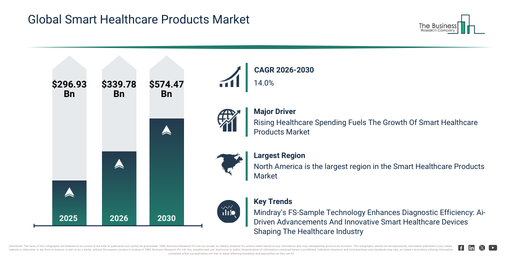
    The market for smart healthcare products has experienced significant expansion lately, projected to increase from $296.93 billion in 2025 to $339.78 billion in 2026, reflecting a compound annual growth rate of 14.4%. This upward trajectory during the past years has been propelled by key factors such as the ongoing digitization of healthcare services, the widespread adoption of smartphones, a growing emphasis on preventive health measures, advancements in wearable technology, and the continuous drive to manage and reduce healthcare expenses.

    The smart healthcare products sector is poised for substantial expansion over the upcoming years, projecting a market value of $574.47 billion by 2030, fueled by a compound annual growth rate (CAGR) of 14.0%. This anticipated growth trajectory is principally driven by demographic shifts such as an aging global population, the increased adoption and availability of telehealth, a growing prevalence of chronic illnesses, sophisticated advancements in AI-driven analytics, and supportive regulatory frameworks for digital health solutions. Key developments anticipated during this forecast period encompass the proliferation of connected diagnostic equipment, deeper integration of AI analytics into healthcare processes, a surge in consumer-focused health wearables, the wider deployment of remote patient monitoring systems, and significant enhancements in data interoperability.

    Download A Free Sample Report For Comprehensive Market Insights:

    https://www.thebusinessresearchcompany.com/sample.aspx?id=7029&type=smp

    Smart Healthcare Products Market Industry Drivers: What Is Driving Revenue Growth?

    The expanding smart healthcare products market is seeing an upward trend fueled by escalating healthcare expenditures. The global health crisis, particularly the COVID-19 pandemic, has significantly amplified the demand for healthcare services. Key factors propelling this rise in healthcare spending include governmental initiatives focused on ensuring widespread healthcare access, upwardly mobile income brackets, a demographic shift towards an older population, enhanced public awareness regarding health matters, a greater uptake of health insurance policies, and the growing prevalence of chronic, non-communicable illnesses. Smart healthcare solutions offer the capability to identify and manage health conditions remotely and conveniently. As an illustration, data from the Centers for Medicare & Medicaid Services indicated that in 2023, healthcare spending in the United States surged by 7.5%, reaching a total of $4.9 trillion, which equates to approximately $14,570 per person. Consequently, the robust increase in healthcare spending is poised to be a significant catalyst for the expansion of the smart healthcare products market.

    Smart Healthcare Products Market Segmentation Trends And Revenue Drivers

    The smart healthcare products market covered in this report is segmented –

    1) By Product Type: Telemedicine, Electronic Health Records, mHealth, Smart Pills And Syringes, Smart RFID Cabinets

    2) By Application: Storage And Inventory Management, Monitoring, Treatment

    3) By End User: Hospitals, Home Care Settings

    Subsegments:

    1) By Telemedicine: Video Consultation Platforms, Remote Patient Monitoring Solutions, Telehealth Software Solutions

    2) By Electronic Health Records: Cloud-Based EHR Systems, On-Premises EHR Solutions, EHR Interoperability Solutions

    3) By mHealth: Mobile Health Applications, Wearable Health Devices, Mobile Health Monitoring Solutions

    4) By Smart Pills And Syringes: Ingestible Sensors, Smart Insulin Pens, Connected Syringe Systems

    5) By Smart RFID Cabinets: RFID Medication Management Systems, RFID Asset Tracking Cabinets, RFID-enabled Supply Chain Solutions

    #Smart Healthcare Products Market Growth Trends: What Is Influencing The Future Outlook?

    Leading entities within the worldwide market for smart healthcare products are concentrating their efforts on pioneering technological advancements, with a particular emphasis on solutions like FS-Sample technology, aimed at elevating the precision of diagnoses, refining patient oversight, and optimizing healthcare workflows, all contributing to superior patient results and a more proficient healthcare system. This FS-Sample technology constitutes a sophisticated approach to examining biological specimens, thereby boosting diagnostic exactitude and effectiveness in medical environments. As an illustration, in April 2024, Mindray, a medical equipment manufacturer headquartered in China, introduced new equipment for mid-volume laboratories. These recent developments from Mindray signify a substantial progression for laboratories handling moderate sample volumes, equipping them with the requisite capabilities to improve their operational effectiveness and ensure dependable diagnostic reports. The emphasis placed on a space-saving design, cutting-edge technology, and adaptable integration designates these offerings as beneficial components in contemporary medical facilities.

    Smart Healthcare Products Market Industry Leaders: Which Organizations Are Driving Competition?

    Major companies operating in the smart healthcare products market are AirStrip Technologies, Samsung Healthcare, Siemens Healthineers AG, Cerner Corporation, Allscripts Healthcare Solutions, Apple Inc., Cisco Systems Inc., GE Healthcare, Given Imaging Inc., International Business Machines Corporation, Abbott Laboratories, Agfa-Gevaert Group, Becton Dickinson and Company, Cognizant Technology Solutions India Private Limited, Fujifilm Holdings Corporation, Honeywell Life Care Solutions, Johnson & Johnson, Koninklijke Philips N.V., Medtronic Plc, Microsoft Corporation, Omron Corporation, Oracle Corporation, ResMed Inc, Epic Systems Corporation, Teladoc Health Inc

    Access The Complete Smart Healthcare Products Market Report:

    https://www.thebusinessresearchcompany.com/report/smart-healthcare-products-global-market-report

    Smart Healthcare Products Market Regional Analysis: Which Region Leads By Revenue?

    North Americawas the largest region in the smart healthcare products market in 2025. Asia-Pacificis expected to be the fastest-growing region in the forecast period. The regions covered in the smart healthcare products market report are Asia-Pacific, South East Asia, Western Europe, Eastern Europe, North America, South America, Middle East, Africa.

    Get in touch with us:

    The Business Research Company: https://www.thebusinessresearchcompany.com/

    Americas: +1 310-496-7795

    Asia: +44 7882 955267 & +91 8897263534

    Europe: +44 7882 955267

    Email us at: marketing@tbrc.info

    Follow us on:

    LinkedIn: https://in.linkedin.com/company/the-business-research-company

    YouTube: https://www.youtube.com/channel/UC24_fI0rV8cR5DxlCpgmyFQ

    Global Market Model: https://www.thebusinessresearchcompany.com/global-market-model
  • Smart Hand Hygiene Compliance Market Growth Outlook Reveals A CAGR Of 15.6% And A Market Value Of $6.77 Billion By 2030

    Smart Hand Hygiene Compliance Market Growth Outlook Reveals A CAGR Of 15.6% And A Market Value Of $6.77 Billion By 2030

    Delivering more actionable and strategically valuable research, The Business Research Company’s 2026 market reports feature market attractiveness analysis, total addressable market evaluation, company benchmarking matrices, interactive Excel dashboards, expanded supply chain intelligence, emerging startup coverage, and detailed product insights.

    Smart Hand Hygiene Compliance Market Size Forecast: How Large Could The Market Become By 2030?

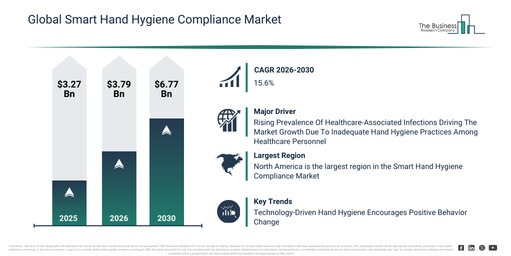
    Augmenting the existing $3.27 billion valuation in 2025, the market for smart hand hygiene compliance is projected to experience significant expansion, reaching an estimated $3.79 billion by 2026. This notable progression represents a compound annual growth rate (CAGR) of 15.9%. The impetus for this growth during the preceding period was largely fueled by heightened awareness of healthcare-associated infections, the broadening scope of hospital quality assurance initiatives, the increasing integration of automated monitoring systems, a heightened emphasis on patient safety protocols, and the accelerating digitalization occurring within healthcare services.

    The global market for smart hand hygiene compliance solutions is poised for substantial expansion in the coming years, projected to reach $6.77 billion by 2030, exhibiting a compound annual growth rate of 15.6%. This upward trajectory is propelled by several key factors, including heightened regulatory scrutiny concerning infection prevention, a growing need for automated systems to track compliance, the continuous development of smart hospital environments, the increasing reliance on data analytics for healthcare administration, and ongoing advancements in hygiene monitoring technology. Within this forecast period, several significant trends are anticipated to shape the market, such as the wider implementation of real-time monitoring for hand hygiene practices, increased deployment of sensor-based systems for compliance verification, greater integration with existing hospital infection control initiatives, the expansion of analytical tools for hygiene data, and a stronger emphasis on automated feedback loops to encourage adherence.

    Download A Free Sample Report For Comprehensive Market Insights:

    https://www.thebusinessresearchcompany.com/sample.aspx?id=29197&type=smp

    Smart Hand Hygiene Compliance Market Growth Factors: Which Forces Are Supporting Market Expansion?

    The escalating incidence of infections contracted within healthcare settings is anticipated to be a primary driver for the expansion of the smart hand hygiene compliance sector in the foreseeable future. These healthcare-associated infections, often referred to as hospital-acquired infections, are conditions that patients develop during their medical care. A significant factor contributing to the increase in these infections is the insufficient adherence to hand hygiene protocols by medical staff, which facilitates the swift transmission of infectious agents between patients via physical contact. Smart hand hygiene systems play a crucial role in curbing healthcare-associated infections by persistently overseeing and encouraging correct handwashing habits among healthcare professionals, thereby interrupting the rapid dissemination of pathogens and bolstering patient safety. To illustrate, data from the Australian Institute of Health and Welfare, a governmental body in Australia, indicated that for the 2023–24 period, approximately 150,000 out of 12.6 million hospital admissions in Australia were associated with at least one hospital-acquired complication. This translated to complication rates of 1.9 per hundred admissions in public healthcare facilities and 0.8 per hundred in private ones. Consequently, the growing number of healthcare-associated infections directly fuels the market for smart hand hygiene compliance solutions.

    Smart Hand Hygiene Compliance Market Segment Analysis Highlighting Growth Areas

    The smart hand hygiene compliance market covered in this report is segmented –

    1) By Product Type: Hand Hygiene Monitoring Systems, Dispensers, Wearable Devices, Sensors, Other Product Types

    2) By Technology: Internet Of Things, Radio Frequency Identification, Bluetooth, Other Technologies

    3) By Distribution Channel: Direct Sales, Distributors, Online Sales, Other Distribution Channels

    4) By End-User: Hospitals And Clinics, Food And Beverage, Hospitality, Corporate Offices, Education, Other End-Users

    Subsegments:

    1) By Hand Hygiene Monitoring Systems: Automated Monitoring Systems, Manual Monitoring Systems, Real Time Monitoring Systems

    2) By Dispensers: Automatic Dispensers, Manual Dispensers, Touchless Dispensers

    3) By Wearable Devices: Smart Wristbands, Smart Badges, Smart Rings

    4) By Sensors: Motion Sensors, Proximity Sensors, Pressure Sensors

    5) By Other Product Types: Data Analytics Software, Mobile Applications, Cloud Platforms

    Smart Hand Hygiene Compliance Market Industry Trends: What Changes Are Reshaping Demand?

    Leading entities within the smart hand hygiene compliance sector are prioritizing the creation of groundbreaking technologies like immediate oversight and subtle nudges to elevate adherence rates among personnel and bolster patient well-being. These technologies, encompassing real-time monitoring and gentle reminders, are designed to observe hand hygiene practices as they occur, delivering discreet notifications prior to patient interactions. This approach aims to promote prompt handwashing, elevate compliance, diminish healthcare-associated infections, and integrate seamlessly into existing workflows without imposing additional burdens. As an illustration, July 2024 witnessed Kontakt.io Inc., an American firm specializing in indoor spatial intelligence, unveil its Smart Hand Hygiene offering, engineered to strengthen infection prevention through continuous observation and intelligent feedback mechanisms. This comprehensive system integrates in-room prompts, engagement-driven compliance tracking via the Kio Nurse mobile application, and automated management of dispensers. By leveraging the Smart Badge 3 wearable, staff movements and opportunities for hand hygiene are continuously monitored, initiating reminders at crucial junctures before patient engagement. Sophisticated analytical tools and user-friendly reporting capabilities equip healthcare facilities with the means to track compliance patterns, generate reports suitable for Joint Commission submissions, and analyze data across various departments, facilities, or individual staff members. Furthermore, the system’s contact tracing functionality, based on interactions, facilitates the rapid identification and containment of potential infection transmission pathways, while gamified elements promote ongoing participation, transforming the adherence to hygiene protocols into an engaging and satisfying endeavor.

    Smart Hand Hygiene Compliance Market Leading Companies: Who Holds Significant Market Presence?

    Major companies operating in the smart hand hygiene compliance market are Sodexo S.A., Ecolab Inc., Halma plc, GOJO Industries Inc., SC Johnson Professional Limited, Ascom Holding AG, Hagleitner Hygiene International GmbH, CenTrak Inc., Ophardt Hygiene GmbH, Kontakt Micro-Location Sp. z o.o., SwipeSense Inc., AiRISTA Flow Inc., Cadi Scientific Inc., SureWash Limited, Vitalacy Inc., Hyginex Inc., PathSpot Technologies Inc., BioVigil Healthcare Systems Inc., Soapy Care Inc., Vizzia Technologies Inc.

    Access The Complete Smart Hand Hygiene Compliance Market Report:

    https://www.thebusinessresearchcompany.com/report/smart-hand-hygiene-compliance-global-market-report

    Smart Hand Hygiene Compliance Market Geographic Distribution And Regional Opportunities

    North Americawas the largest region in the smart hand hygiene compliance market in 2025. Asia-Pacificis expected to be the fastest-growing region in the forecast period. The regions covered in the smart hand hygiene compliance market report are Asia-Pacific, South East Asia, Western Europe, Eastern Europe, North America, South America, Middle East, Africa.

    Get in touch with us:

    The Business Research Company: https://www.thebusinessresearchcompany.com/

    Americas: +1 310-496-7795

    Asia: +44 7882 955267 & +91 8897263534

    Europe: +44 7882 955267

    Email us at: marketing@tbrc.info

    Follow us on:

    LinkedIn: https://in.linkedin.com/company/the-business-research-company

    YouTube: https://www.youtube.com/channel/UC24_fI0rV8cR5DxlCpgmyFQ

    Global Market Model: https://www.thebusinessresearchcompany.com/global-market-model

  • Smart Elderly Fall Detection Rug Market Forecast Highlights Expansion From $2 Billion To $3.58 Billion Through 2030

    Smart Elderly Fall Detection Rug Market Forecast Highlights Expansion From $2 Billion To $3.58 Billion Through 2030

    Enhanced with market attractiveness analysis, total addressable market evaluation, company benchmarking matrices, interactive Excel dashboards, expanded supply chain intelligence, emerging startup coverage, and detailed product insights, The Business Research Company’s 2026 market reports deliver more actionable and strategically valuable research.

    Smart Elderly Fall Detection Rug Market Revenue Outlook: What CAGR Is Expected Through 2030?

    The market for intelligent rugs designed to detect falls among seniors has experienced considerable expansion, projecting a rise from $1.72 billion in 2025 to $2 billion by 2026, reflecting a compound annual growth rate of 16.0%. Factors contributing to this growth during the past period include the increasing number of elderly individuals, a higher frequency of fall-related injuries, the proliferation of in-home care services, greater adoption of remote patient monitoring systems, and the accessibility of cost-effective sensor technology.

    Anticipated to experience substantial expansion over the coming years, the smart elderly fall detection rug market is projected to reach $3.58 billion by 2030, exhibiting a robust compound annual growth rate of 15.7%. This projected surge is underpinned by a confluence of factors, including the escalating preference for aging-in-place arrangements, the growing incorporation of these devices into telehealth frameworks, the proliferation of smart assisted living accommodations, amplified investment in elder care technology, and progress in artificial intelligence for motion sensing. Key developments shaping this market during the forecast horizon involve a greater installation of sensor-reliant fall detection mechanisms, increased acceptance of non-wearable elderly oversight tools, deeper integration with platforms for caregiver notifications, a broader deployment of smart home healthcare apparatus, and a heightened emphasis on privacy-conscious monitoring strategies.

    Download A Free Sample Report For Comprehensive Market Insights:

    https://www.thebusinessresearchcompany.com/sample.aspx?id=29195&type=smp

    Smart Elderly Fall Detection Rug Market Demand Drivers: What Is Fueling Industry Growth?

    The expanding need for immediate oversight solutions is anticipated to fuel the expansion of the smart elderly fall detection rug sector in the future. These real-time monitoring systems are characterized by technologies designed to constantly gather, relay, and process information, thereby offering instantaneous feedback or notifications that permit swift reactions to urgent circumstances. The increasing utilization of these systems stems from the escalating incidence of long-term health issues affecting the elderly population, which consequently heightens the requirement for ongoing, data-informed supervision to guarantee prompt assistance and security. Smart elderly fall detection rugs contribute to this real-time monitoring capability by employing integrated sensors to identify falls without delay and forward alerts for immediate intervention by caregivers. As an illustration, data from the Department of Health and Human Services, a US government entity managing federal health programs, indicated that approximately one million Medicare beneficiaries across the United States utilized remote patient monitoring services in 2024, a significant 27% surge compared to 2023, as reported in August 2025. Consequently, the escalating demand for real-time monitoring systems is acting as a catalyst for the growth of the Smart Elderly Fall Detection Rug market.

    Smart Elderly Fall Detection Rug Market Segment Performance And Strategic Opportunities

    The smart elderly fall detection rug market covered in this report is segmented –

    1) By Product Type: Pressure Sensor Rugs, Infrared Sensor Rugs, Camera-Based Rugs, Other Product Types

    2) By Technology: Wearable Integrated, Non-Wearable, Artificial Intelligence (AI)-Based, Internet Of Things (IoT)-Enabled, Other Technologies

    3) By Distribution Channel: Online Stores, Specialty Stores, Supermarkets Or Hypermarkets, Other Distribution Channels

    4) By Application: Home Care, Hospitals, Assisted Living Facilities, Nursing Homes, Other Applications

    Subsegments:

    1) By Pressure Sensor Rugs: Capacitive Pressure Sensor Rugs, Piezoelectric Pressure Sensor Rugs, Resistive Pressure Sensor Rugs, Fiber Optic Pressure Sensor Rugs

    2) By Infrared Sensor Rugs: Passive Infrared Sensor Rugs, Active Infrared Sensor Rugs, Dual Infrared Sensor Rugs, Multi-Zone Infrared Sensor Rugs

    3) By Camera-Based Rugs: Two-Dimensional Camera Rugs, Three-Dimensional Depth Camera Rugs, Thermal Imaging Camera Rugs, Wide-Angle Camera Rugs

    4) By Other Product Types: Ultrasonic Sensor Rugs, Radar Sensor Rugs, Smart Textile Rugs, Hybrid Sensor Rugs

    Smart Elderly Fall Detection Rug Market Innovation Trends: Which Developments Are Transforming The Industry?

    In the smart elderly fall detection rug sector, leading businesses are prioritizing the integration of sophisticated technologies, notably AI-driven ambient sensing, to elevate the precision of ongoing surveillance and the effectiveness of fall mitigation. This AI-powered ambient sensing employs radar or environmental sensors, coupled with machine learning, to interpret movement, physiological indicators, and surrounding conditions unobtrusively, thus facilitating functionalities like immediate motion tracking, identification of deviations at an early stage, and proactive warnings. As an illustration, March 2025 saw FallCall Solutions, a US entity in digital health technology focused on networked safety solutions, collaborate with RANiX, a South Korean firm renowned for semiconductor and sensor innovation, to introduce an AI-equipped radar system aimed at averting falls from hospital beds through the monitoring of patient activity, cardiac rhythm, and breathing rate. This system, characterized by its small radar unit embedded at the base of the bed, consistent data flow to a cloud-based analytical service, and automated notifications for caregivers, boosts the swiftness of fall prevention measures, bolsters patient security via perpetual oversight, and optimizes care delivery by minimizing the need for constant human observation.

    Smart Elderly Fall Detection Rug Market Key Players: Which Companies Shape Industry Competition?

    Major companies operating in the smart elderly fall detection rug market are Medline Industries LP, Drive DeVilbiss Healthcare Inc., AliMed Inc., Vayyar Imaging Ltd., Dynarex Corporation, Tekscan Inc., MekoPrint Ltd., Skil-Care Corporation, Proactive Medical Products Inc., Alerta Medical Ltd., Smart Caregiver Corporation, Future-Shape GmbH, Personal Safety Corporation, Cura1 Pty Ltd., MariCare Oy, BBC Bircher Smart Access AG, Nanomade Labs, Emfit Ltd., 1800Wheelchair Inc., Pratoline HomeCare Ltd.

    Access The Complete Smart Elderly Fall Detection Rug Market Report:

    https://www.thebusinessresearchcompany.com/report/smart-elderly-fall-detection-rug-global-market-report

    Smart Elderly Fall Detection Rug Market Largest Region By Revenue And Market Share

    North Americawas the largest region in the smart elderly fall detection rug market in 2025. Asia-Pacificis expected to be the fastest-growing region in the forecast period. The regions covered in the smart elderly fall detection rug market report are Asia-Pacific, South East Asia, Western Europe, Eastern Europe, North America, South America, Middle East, Africa.

    Get in touch with us:

    The Business Research Company: https://www.thebusinessresearchcompany.com/

    Americas: +1 310-496-7795

    Asia: +44 7882 955267 & +91 8897263534

    Europe: +44 7882 955267

    Email us at: marketing@tbrc.info

    Follow us on:

    LinkedIn: https://in.linkedin.com/company/the-business-research-company

    YouTube: https://www.youtube.com/channel/UC24_fI0rV8cR5DxlCpgmyFQ

    Global Market Model: https://www.thebusinessresearchcompany.com/global-market-model

  • Smart Drug Delivery Systems Market Expected To Reach $33.14 Billion By 2030 As Growth Accelerates At 16.5% CAGR

    Smart Drug Delivery Systems Market Expected To Reach $33.14 Billion By 2030 As Growth Accelerates At 16.5% CAGR

    Through market attractiveness analysis, total addressable market evaluation, company benchmarking matrices, interactive Excel dashboards, expanded supply chain intelligence, emerging startup coverage, and detailed product insights, The Business Research Company’s 2026 market reports provide more actionable and strategically valuable research.

    Smart Drug Delivery Systems Market Growth Analysis: How Will Revenue Expand During The Forecast Period?

    The market for intelligent drug delivery systems has experienced substantial expansion lately, projected to increase from $15.06 billion in 2025 to $18 billion in 2026, reflecting a compound annual growth rate of 19.5%. This preceding period’s advancement was influenced by factors such as the inadequacies of traditional administration methods, an increase in chronic health conditions, developments in biomaterials, an emphasis on enhancing patient compliance, and ongoing pharmaceutical innovation.

    Anticipate a swift expansion within the smart drug delivery systems sector, projecting a market valuation to reach $33.15 billion by 2030, driven by a compound annual growth rate (CAGR) of 16.5%. This projected upturn during the forecast timeline is largely due to the increasing preference for tailored therapeutic approaches, a broader application of biologic drugs, the growing synergy with digital health solutions, favorable regulatory frameworks for combined medical devices, and advancements in nanotechnology. Key developments shaping this period include the incorporation of artificial intelligence for dosage management, the increasing prevalence of implantable delivery mechanisms, a heightened need for precisely targeted drug administration, the embracing of wireless communication technologies, and the expanding market for products combining multiple therapeutic agents with delivery devices.

    Download A Free Sample Report For Comprehensive Market Insights:

    https://www.thebusinessresearchcompany.com/sample.aspx?id=14796&type=smp

    Smart Drug Delivery Systems Market Growth Drivers: What Factors Are Accelerating Expansion?

    The increasing incidence of chronic illnesses is anticipated to be a significant driver for the expansion of the smart drug delivery systems market in the future. Chronic diseases, characterized by their prolonged development and often multifaceted origins, are becoming more widespread due to factors such as an aging global population, environmental stressors, and inequities in healthcare availability. Smart drug delivery systems present an advantageous solution for managing these long-term conditions by optimizing drug efficacy and improving patient compliance. Illustrating this trend, data from the Centers for Disease Control and Prevention (CDC) in April 2025 revealed that in 2023, a substantial 76.4% of U.S. adults, equating to approximately 194 million individuals, managed at least one chronic condition. This prevalence varied by age group, with 59.5% of young adults, 78.4% of middle-aged adults, and a striking 93.0% of older adults affected. Consequently, the escalating burden of chronic diseases is directly fueling the growth of the smart drug delivery systems market.

    Smart Drug Delivery Systems Market Segment Landscape And Growth Potential

    The smart drug delivery systems market covered in this report is segmented –

    1) By Product: Connected Inhalers, Connected Autoinjectors, Connected Pen Injectors, Connected Wearable Injectors, Add-On Sensors, Other Products

    2) By Therapeutic Area: Metabolic Disorders, Neurological Disorders, Respiratory Disorders, Hormonal Disorders, Other Therapeutic Areas

    3) By Drug Delivery Mode: Injectable, Inhalation, Oral Drug Delivery Systems

    4) By End-User: Hospitals, Clinics, Home Care, Ambulatory Care Settings, Other End-Users

    Subsegments:

    1) By Connected Inhalers: Dry Powder Inhalers (DPIs), Metered Dose Inhalers (MDIs)

    2) By Connected Autoinjectors: Single-Dose Autoinjectors, Multi-Dose Autoinjectors

    3) By Connected Pen Injectors: Insulin Pen Injectors, Biologic Pen Injectors

    4) By Connected Wearable Injectors: Insulin Wearable Injectors, Infusion Pump Wearable Injectors

    5) By Add-On Sensors: Glucose Monitoring Sensors, Medication Adherence Sensors, Temperature Sensors

    6) By Other Products: Smart Syringes, Smart Patches, Smart Implants

    Smart Drug Delivery Systems Market Trends: What Is Shaping Future Industry Growth?

    Leading entities within the Smart Drug Delivery Systems sector are prioritizing the creation of groundbreaking technologies, specifically sophisticated on-body delivery mechanisms, aiming to refine the application of injectable treatments, boost patient ease of use, and guarantee accurate dosage management. These advanced on-body delivery systems function as wearable devices capable of dispensing medication automatically and with high precision over extended periods, thereby elevating convenience, bolstering safety protocols, and encouraging better patient compliance with prescribed regimens. As an illustration, during October 2024, Stevanato Group, a distinguished provider of pharmaceutical solutions headquartered in Italy, introduced its expansive Vertiva 10 mL on-body drug delivery system platform at the CPHI Milan event. This platform has been engineered to accommodate large-volume injectable therapies, offering enhanced user experience, superior safety features, and improved treatment adherence, thereby responding to the escalating need for drug delivery solutions that are centered around the patient’s needs and preferences.

    Smart Drug Delivery Systems Market Competitive Landscape: Who Are The Leading Companies?

    Major companies operating in the smart drug delivery systems market are Johnson & Johnson, Abbott Laboratories, Novartis International AG, Medtronic plc, Eli Lilly and Company, Novo Nordisk, Becton Dickinson and Company, Baxter International Inc, Phillips-Medisize Corporation, ResMed Inc, West Pharmaceutical Services Inc, Insulet Corporation, Owen Mumford Ltd, Sonceboz, H&T Presspart Manufacturing Ltd, E3D Elcam Drug Delivery Devices, CeQur Corporation, Ypsomed Holding AG, Nemera, Gerresheimer AG, Haselmeier AG, SHL Medical, Aptar Pharma

    Access The Complete Smart Drug Delivery Systems Market Report:

    https://www.thebusinessresearchcompany.com/report/smart-drug-delivery-systems-global-market-report

    Smart Drug Delivery Systems Market Regional Analysis And Leading Geography

    North Americawas the largest region in the smart drug delivery systems market in 2025. Asia-Pacificis expected to be the fastest-growing region in the forecast period. The regions covered in the smart drug delivery systems market report are Asia-Pacific, South East Asia, Western Europe, Eastern Europe, North America, South America, Middle East, Africa.

    Get in touch with us:

    The Business Research Company: https://www.thebusinessresearchcompany.com/

    Americas: +1 310-496-7795

    Asia: +44 7882 955267 & +91 8897263534

    Europe: +44 7882 955267

    Email us at: marketing@tbrc.info

    Follow us on:

    LinkedIn: https://in.linkedin.com/company/the-business-research-company

    YouTube: https://www.youtube.com/channel/UC24_fI0rV8cR5DxlCpgmyFQ

    Global Market Model: https://www.thebusinessresearchcompany.com/global-market-model

  • Smart Contact Lenses Market Set To Grow From $6.42 Billion In 2026 To $9.38 Billion By 2030 At A CAGR Of 9.9%

    Smart Contact Lenses Market Set To Grow From $6.42 Billion In 2026 To $9.38 Billion By 2030 At A CAGR Of 9.9%

    Delivering more actionable and strategically valuable research, The Business Research Company’s 2026 market reports feature market attractiveness analysis, total addressable market evaluation, company benchmarking matrices, interactive Excel dashboards, expanded supply chain intelligence, emerging startup coverage, and detailed product insights.

    Smart Contact Lenses Market Forecast: What Market Value Is Expected By 2030?

    The market for smart contact lenses has experienced substantial expansion recently, with projections indicating continued growth. Specifically, the market is anticipated to expand from $5.83 billion in 2025 to $6.42 billion in 2026, reflecting a compound annual growth rate (CAGR) of 10.1%. This upward trend in market value during the preceding period was influenced by several key factors including a rise in the prevalence of vision impairment conditions, innovations in the materials used for contact lenses, augmented investment in healthcare technology, heightened consumer adoption of wearable devices, and increased research within the field of ophthalmology.

    Anticipated to experience robust expansion in the ensuing years, the smart contact lenses market is projected to reach a valuation of $9.38 billion by the year 2030, propelled by a compound annual growth rate (CAGR) of 9.9%. This forecasted expansion is underpinned by several key factors, including an increasing prevalence of diabetes, advancements in sensor miniaturization, a growing consumer desire for non-invasive health monitoring solutions, the attainment of regulatory clearances, and synergistic collaborations between technology and healthcare enterprises. Furthermore, the period ahead is characterized by significant trends such as the ongoing development of lenses capable of glucose sensing, the incorporation of augmented vision functionalities, an uptick in the market for disposable smart lenses, augmented investments in research and development, and a heightened pace of innovation within the ophthalmic sector.

    Download A Free Sample Report For Comprehensive Market Insights:

    https://www.thebusinessresearchcompany.com/sample.aspx?id=13932&type=smp

    Smart Contact Lenses Market Growth Factors Supporting Long-Term Expansion

    The rising incidence of glaucoma is anticipated to be a significant catalyst for the expansion of the smart contact lens market. Glaucoma encompasses a spectrum of ocular ailments defined by elevated intraocular pressure, which can imperil the optic nerve and, if unaddressed, result in diminished vision or even blindness. Smart contact lenses offer a valuable tool in managing glaucoma by constantly tracking intraocular pressure, thereby furnishing continuous physiological data essential for optimized disease control and timely therapeutic actions. Statistical data from the BrightFocus Foundation highlights that, in the year 2023, an estimated 80 million individuals globally were living with glaucoma, with projections indicating this figure will climb to 111 million by the year 2040. Consequently, the growing global burden of glaucoma is set to fuel the demand and advancement of the smart contact lens market.

    Smart Contact Lenses Market Categorization By Product Type And Application

    The smart contact lenses market covered in this report is segmented –

    1) By Type: Daily Wear Soft Lenses, Extended-Wear, Planned Replacement, Rapid Gas Permeable (RGP), Other Types

    2) By Application: Intraocular Pressure Monitoring, Continuous Glucose Monitoring

    3) By End User: Hospitals, Ophthalmology Clinics, Other End Users

    Subsegments:

    1) By Daily Wear Soft Lenses: Daily Disposable Lenses, Weekly Disposable Lenses, Monthly Disposable Lenses

    2) By Extended-Wear: Continuous Wear Lenses, Extended Wear Soft Lenses

    3) By Planned Replacement: Biweekly Lenses, Monthly Lenses

    4) By Rapid Gas Permeable (RGP): Traditional RGP Lenses, Specialty RGP Lenses

    5) By Other Types: Scleral Lenses, Orthokeratology Lenses, Multifocal Lenses

    Smart Contact Lenses Market Industry Trends Shaping Future Revenue Growth

    Companies at the forefront of the smart contact lens sector are prioritizing innovation through the creation of advanced prototypes. These prototypes are engineered with built-in sensors and augmented reality functionalities, designed to elevate vision correction, facilitate health monitoring, and improve the overall user experience. Characterized as wearable technology, smart contact lenses incorporate microelectronics or biosensors capable of monitoring eye health, blood glucose levels, or presenting digital information directly onto the wearer’s eye. As an illustration, XPANCEO, a US-based enterprise specializing in smart wearable optics, revealed its newest smart contact lens prototypes in March 2025. The objective of these prototypes is to merge refractive correction with sophisticated biometric tracking and augmented reality elements, thereby offering immediate health data and engaging digital encounters. Through the incorporation of state-of-the-art microelectronics within a slim, wearable design, XPANCEO aims to spearhead progress and market penetration in the burgeoning smart contact lens industry.

    Smart Contact Lenses Market Company Landscape And Strategic Competition

    Major companies operating in the smart contact lenses market are Google LLC, Johnson & Johnson, Samsung Electronics Co Ltd, Novartis AG, Alcon Vision LLC, Liner Technologies Inc., Innovega Inc., InWith Corporation, Azalea Vision, MediPrint Ophthalmics, Mojo Vision, Sensimed AG, Verily Life Sciences, Sony Semiconductor Solutions, Bosch Sensortec, Abbott Laboratories, Dexcom Inc., Bausch + Lomb, CooperVision, Menicon Co Ltd

    Access The Complete Smart Contact Lenses Market Report:

    https://www.thebusinessresearchcompany.com/report/smart-contact-lenses-global-market-report

    Smart Contact Lenses Market Geographic Analysis: Where Is Demand Growing The Fastest?

    North Americawas the largest region in the smart contact lenses market in 2025. Asia-Pacificis expected to be the fastest-growing region in the forecast period. The regions covered in the smart contact lenses market report are Asia-Pacific, South East Asia, Western Europe, Eastern Europe, North America, South America, Middle East, Africa.

    Get in touch with us:

    The Business Research Company: https://www.thebusinessresearchcompany.com/

    Americas: +1 310-496-7795

    Asia: +44 7882 955267 & +91 8897263534

    Europe: +44 7882 955267

    Email us at: marketing@tbrc.info

    Follow us on:

    LinkedIn: https://in.linkedin.com/company/the-business-research-company

    YouTube: https://www.youtube.com/channel/UC24_fI0rV8cR5DxlCpgmyFQ

    Global Market Model: https://www.thebusinessresearchcompany.com/global-market-model