Month: June 2026

  • Telemedicine Equipment Market Expansion Is Reshaping Competitive Dynamics Across The Industry

    Telemedicine Equipment Market Expansion Is Reshaping Competitive Dynamics Across The Industry

    Through market attractiveness analysis, total addressable market evaluation, company benchmarking matrices, interactive Excel dashboards, expanded supply chain intelligence, emerging startup coverage, and detailed product insights, The Business Research Company’s 2026 market reports provide more actionable and strategically valuable research.

    Telemedicine Equipment Market Growth Analysis: How Will Revenue Expand During The Forecast Period?

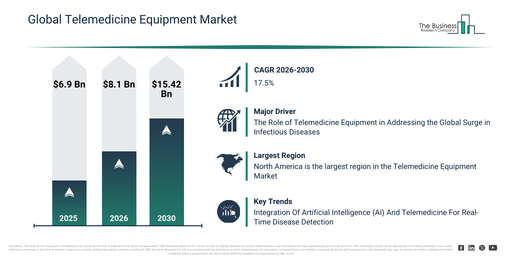
    The telemedicine equipment sector has experienced substantial expansion lately, projected to increase from $6.9 billion in 2025 to $8.1 billion in 2026, reflecting a compound annual growth rate of 17.3%. Factors contributing to this expansion during the past period include the escalating need for remote healthcare services, the proliferation of telemedicine initiatives within hospitals, a greater acceptance of digital diagnostic instruments, the growth of outpatient care environments, and enhanced capabilities in connecting medical devices.

    The telemedicine equipment sector is poised for significant expansion over the coming years, projecting a market valuation of $15.42 billion by 2030, driven by a compound annual growth rate (CAGR) of 17.5%. This anticipated surge in the forecast period is fueled by several key factors: escalating investments in connected medical devices, a discernible shift towards home healthcare models, broader implementation of telemedicine infrastructure in developing areas, heightened demand for portable diagnostic tools, and a greater emphasis on establishing interoperability standards for medical devices. Furthermore, prominent trends expected to shape this market include the increasing embrace of unified telemedicine hardware solutions, a rise in the demand for mobile telemedicine carts, the growing utilization of remote diagnostic peripherals, the proliferation of home-based telemedicine equipment, and a strengthened commitment to ensuring medical devices can seamlessly communicate with each other.

    Download A Free Sample Report For Comprehensive Market Insights:

    https://www.thebusinessresearchcompany.com/sample.aspx?id=14213&type=smp

    Telemedicine Equipment Market Growth Momentum: Which Factors Are Influencing Demand?

    The increasing incidence of communicable diseases is projected to be a significant driver for the expansion of the telemedicine equipment market. These communicable conditions, stemming from infectious agents like bacteria, viruses, parasites, or fungi, possess the capacity to spread between individuals or from animals to humans. Telemedicine facilitates healthcare professionals in carrying out remote consultations, thereby affording patients the opportunity to obtain medical counsel and direction without the necessity of an in-person visit to a healthcare establishment. As an illustration, a report issued by the UK Health Security Agency, a governmental body in the UK, in August of 2024, indicated that during 2023, the West Midlands area recorded the largest volume of measles diagnoses, totaling 160 instances which constituted 44% of the total, trailed by London with 122 diagnosed cases (33%). It is noteworthy that juvenile individuals below the age of 10 years accounted for 63% of all documented cases, reaching a figure of 232 individuals. The occurrence of measles demonstrated a marked escalation towards the culmination of the year, with 157 new reports in December, a considerable increase from the 45 cases observed in November. Consequently, the escalating spread of infectious diseases is propelling the advancement of the telemedicine equipment sector.

    Telemedicine Equipment Market Segment Analysis And Revenue Opportunities

    The telemedicine equipment market covered in this report is segmented –

    1) By Product: Telemedicine Cart, Telemedicine Kit, Telemedicine Kiosk, Peripherals

    2) By Application: Teleradiology, Telepsychiatry, Telepathology, Teledermatology, Telecardiology, Other Applications

    3) By End User: Hospitals, Clinics, Specialty Centers, Home Care Settings, Other End Users

    Subsegments:

    1) By Telemedicine Cart: Mobile Telemedicine Carts, Stationary Telemedicine Carts

    2) By Telemedicine Kit: Basic Telemedicine Kits, Advanced Telemedicine Kits

    3) By Telemedicine Kiosk: Self-Service Kiosks, Staff-Assisted Kiosks

    4) By Peripherals: Diagnostic Cameras, Vital Signs Monitors, Stethoscopes, Otoscopes

    Telemedicine Equipment Market Trends Reshaping Industry Growth

    In the competitive telemedicine equipment sector, leading businesses are prioritizing the creation of novel technologies, specifically AI-integrated devices, to bolster remote healthcare services and elevate patient results. These AI-driven telemedicine apparatuses encompass state-of-the-art medical instruments and platforms that harness artificial intelligence to enable remote patient assessment, ongoing observation, and therapeutic management. Illustratively, in June of 2024, C3 Med-Tech Private Limited, a firm based in India specializing in the production of cost-effective and portable smartphone-based ophthalmic screening instruments, successfully obtained an investment of an unspecified amount from Industrial Metal Powders. This capital infusion is earmarked for the development of pioneering telemedicine and AI-enabled portable equipment specifically engineered for streamlined eye examinations and the immediate identification of ocular conditions. The synergy between telemedicine and artificial intelligence within this context supports prompt and precise diagnoses, thereby amplifying the prospects for timely medical interventions aimed at averting vision loss and blindness. This pivotal financial backing marks a crucial juncture for C3 Med-Tech, empowering the organization to broaden its reach both domestically within India and internationally through intensified promotional activities, workforce expansion, and dedicated research and development initiatives for forthcoming product advancements.

    Telemedicine Equipment Market Leading Players Shaping Industry Direction

    Major companies operating in the telemedicine equipment market are Medtronic plc, Koninklijke Philips N.V., Omron Healthcare Inc., TytoCare Inc., Butterfly Network Inc., AliveCor Inc., AMD Global Telemedicine Inc., iHealth Labs Inc., InTouch Technologies Inc., Visionary Medical Devices Inc., Eko Devices Inc., MedWand Technologies Inc., Welch Allyn Inc., BioIntelliSense Inc., Parsys Medical Inc., BioTel Systems Inc, Cloud DX Inc, GlobalMed, Thinklabs, Nonin Medical, Masimo

    Access The Complete Telemedicine Equipment Market Report:

    https://www.thebusinessresearchcompany.com/report/telemedicine-equipment-global-market-report

    Telemedicine Equipment Market Regional Analysis: Which Region Leads By Revenue?

    North Americawas the largest region in the telemedicine equipment market in 2025. The regions covered in the telemedicine equipment market report are Asia-Pacific, South East Asia, Western Europe, Eastern Europe, North America, South America, Middle East, Africa.

    Get in touch with us:

    The Business Research Company: https://www.thebusinessresearchcompany.com/

    Americas: +1 310-496-7795

    Asia: +44 7882 955267 & +91 8897263534

    Europe: +44 7882 955267

    Email us at: marketing@tbrc.info

    Follow us on:

    LinkedIn: https://in.linkedin.com/company/the-business-research-company

    YouTube: https://www.youtube.com/channel/UC24_fI0rV8cR5DxlCpgmyFQ

    Global Market Model: https://www.thebusinessresearchcompany.com/global-market-model
  • Telemedicine Market Forecast Reveals Where Future Industry Value Will Be Created

    Telemedicine Market Forecast Reveals Where Future Industry Value Will Be Created

    Delivering more actionable and strategically valuable research, The Business Research Company’s 2026 market reports feature market attractiveness analysis, total addressable market evaluation, company benchmarking matrices, interactive Excel dashboards, expanded supply chain intelligence, emerging startup coverage, and detailed product insights.

    Telemedicine Market Forecast: What Market Value Is Expected By 2030?

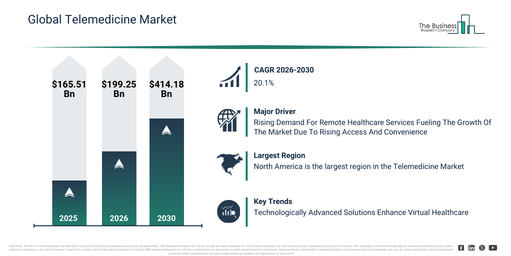
    The telemedicine market has experienced remarkable expansion recently, projected to increase from $165.51 billion in 2025 to $199.25 billion in 2026, reflecting a compound annual growth rate (CAGR) of 20.4%. Key factors driving this historical growth include the wider availability of broadband internet, a growing need to bridge healthcare accessibility disparities in remote regions, greater adoption of virtual health solutions, an increase in long-term health conditions, and advancements in video communication tools.

    Observing significant upward momentum, the telemedicine sector is projected for remarkable expansion, estimating a value of $414.18 billion by the year 2030. This substantial increase is underpinned by a compound annual growth rate (CAGR) of 20.1%, fueled by a confluence of factors including the escalating need for affordable healthcare solutions, burgeoning investments directed towards digital health infrastructure, the broadening reach of value-based care strategies, the increasing incorporation of AI for clinical decision support, and a heightened emphasis on patient-focused care approaches. Key developments anticipated within this timeframe involve a greater embrace of virtual consultations, a surge in the utilization of remote patient monitoring systems, the growing integration of wearable health technology, the proliferation of mobile health applications, and a sharpened focus on bolstering data security and regulatory adherence.

    Download A Free Sample Report For Comprehensive Market Insights:

    https://www.thebusinessresearchcompany.com/sample.aspx?id=24720&type=smp

    Telemedicine Market Expansion Drivers: What Is Shaping Future Growth?

    The escalating demand for healthcare services delivered remotely is anticipated to be a key catalyst for the expansion of the telemedicine market in the future. This concept of remote healthcare encompasses the provision of medical attention, consultations, patient oversight, and assistance from a distance by leveraging digital communication tools, offering services such as virtual appointments, telehealth, electronic prescriptions, mental well-being support, and online health information. The growing acceptance of these remote healthcare solutions is fueled by enhanced accessibility to medical services, empowering individuals in geographically isolated or underserved regions to obtain prompt medical attention without the necessity of physical travel. Telemedicine significantly contributes to remote healthcare by facilitating immediate virtual consultations, thereby diminishing the frequency of in-person visits and improving care accessibility, particularly for those in remote locations. As an illustration, data from FAIR Health Inc., a US-based nonprofit organization, indicated that during 2023, national telehealth utilization saw a 7.3% increase, advancing from 5.5% of medical claim lines in December 2022 to 5.9% as of January 2023. Consequently, the burgeoning need for remote healthcare services is directly fueling the growth trajectory of the telemedicine market.

    Telemedicine Market Segmentation And Category Breakdown

    The telemedicine market covered in this report is segmented –

    1) By Type: Telehospital, Telehome

    2) By Service Type: Real-Time Consultation, Remote Patient Monitoring, Store-And-Forward Telemedicine, Mobile Health Applications

    3) By Technology: Video Conferencing, Mobile Health Applications, Web-based Platforms, Wearable Devices

    4) By Application: Teleradiology, Telepathology, Teledermatology, Telepsychiatry, Telecardiology, Other Applications

    5) By End User: Providers, Payers, Patients, Other End Users

    Subsegments:

    1) By Telehospital: Tele- Intensive Care Unit (ICU), Telepsychiatry, Teleradiology, Telecardiology, Telepathology

    2) By Telehome: Remote Patient Monitoring (RPM), Chronic Disease Management, Mobile Health (mHealth) Applications, Home-Based Tele-Rehabilitation, Virtual Consultations

    Telemedicine Market Strategic Trends: What Is Defining The Next Phase Of Growth?

    In the telemedicine sector, prominent organizations are concentrating their efforts on creating sophisticated technological offerings, exemplified by telemedicine platforms designed to augment virtual healthcare capabilities, encompassing areas like medical consultations, psychological assistance, and continuous patient observation from afar. Such a telemedicine platform serves as a digital framework facilitating remote medical care, empowering individuals to connect with medical professionals, obtain health guidance, and oversee their well-being through online channels. To illustrate, a notable development occurred in June 2024 when VS Digital Health Inc., a Canadian entity, introduced VSDHOne, a telemedicine platform engineered to empower businesses to rapidly establish compliant, nationwide telemedicine brands, thereby ensuring accessible and user-friendly healthcare solutions throughout the United States. This innovation simplifies the processes of virtual appointments, prescription fulfillment, and medical supply delivery, simultaneously boosting patient accessibility and operational effectiveness for healthcare providers.

    Telemedicine Market Competitive Analysis Of Major Industry Participants

    Major companies operating in the telemedicine market are Cisco Systems Inc., Oracle Corporation, Siemens Healthineers AG, Koninklijke Philips NV, GE HealthCare Technologies Inc., Resideo Technologies Inc., Zoom Video Communications Inc., Teladoc Health Inc., Ping An Healthcare and Technology Company Limited, Veradigm LLC, Practo Technologies Private Limited, American Well Corporation, MDlive Inc., Doctor On Demand Inc., AMC Health LLC, SOC Telemed Inc., Eagle Telemedicine LLC, VSee Lab Inc., AMD Global Telemedicine Inc., NXGN Management LLC, Specialist Telemed LLC.

    Access The Complete Telemedicine Market Report:

    https://www.thebusinessresearchcompany.com/report/telemedicine-global-market-report

    Telemedicine Market Geographic Distribution And Regional Opportunities

    North Americawas the largest region in the telemedicine market in 2025. Asia-Pacificis expected to be the fastest-growing region in the forecast period. The regions covered in the telemedicine market report are Asia-Pacific, South East Asia, Western Europe, Eastern Europe, North America, South America, Middle East, Africa.

    Get in touch with us:

    The Business Research Company: https://www.thebusinessresearchcompany.com/

    Americas: +1 310-496-7795

    Asia: +44 7882 955267 & +91 8897263534

    Europe: +44 7882 955267

    Email us at: marketing@tbrc.info

    Follow us on:

    LinkedIn: https://in.linkedin.com/company/the-business-research-company

    YouTube: https://www.youtube.com/channel/UC24_fI0rV8cR5DxlCpgmyFQ

    Global Market Model: https://www.thebusinessresearchcompany.com/global-market-model
  • Tele–Intensive Care Unit (ICU) Command Center Market Growth Through 2030 Creates New Strategic Opportunities

    Tele–Intensive Care Unit (ICU) Command Center Market Growth Through 2030 Creates New Strategic Opportunities

    Enhanced with market attractiveness analysis, total addressable market evaluation, company benchmarking matrices, interactive Excel dashboards, expanded supply chain intelligence, emerging startup coverage, and detailed product insights, The Business Research Company’s 2026 market reports deliver more actionable and strategically valuable research.

    Tele–Intensive Care Unit (ICU) Command Center Market Size Outlook: How Fast Will Revenue Grow Through 2030?

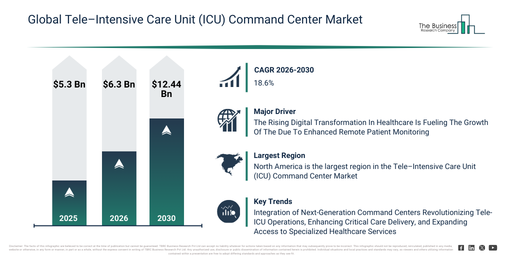
    The market for tele–intensive care unit (ICU) command centers has experienced significant expansion recently, with its value projected to climb from $5.3 billion in 2025 to $6.3 billion in 2026, reflecting a compound annual growth rate (CAGR) of 18.9%. This past growth trend has been fueled by several key factors, including the escalating scarcity of intensivists, a surge in ICU patient admissions, the broader implementation of digital infrastructure within hospitals, an increasing embrace of remote patient monitoring solutions, and a heightened emphasis on delivering high-quality critical care services.

    The tele–intensive care unit (ICU) command center market is expected to witness rapid growth in the coming years, reaching $12.44 billion by 2030 at a compound annual growth rate (CAGR) of 18.6%. This projected growth is being driven by increasing investments in tele-critical care systems, rising demand for scalable ICU management solutions, the expansion of cloud-based clinical platforms, growing integration of AI-powered alert systems, and wider adoption across regional healthcare networks. Key trends shaping the market during the forecast period include the increasing deployment of centralized remote ICU monitoring platforms, greater use of predictive clinical decision support technologies, expanding adoption of real-time multisite patient surveillance, advancements in data-driven ICU workflow optimization, and a stronger emphasis on continuous critical care monitoring.

    Download A Free Sample Report For Comprehensive Market Insights:

    https://www.thebusinessresearchcompany.com/sample.aspx?id=29226&type=smp

    Tele–Intensive Care Unit (ICU) Command Center Market Development Factors: Which Trends Are Supporting Demand?

    The increasing adoption of digital technologies within the healthcare sector is anticipated to be a significant catalyst for the tele-intensive care unit (ICU) command center market’s expansion. This digital evolution in healthcare involves incorporating cutting-edge tools like remote consultations, continuous patient monitoring from a distance, and online healthcare delivery systems to refine how medical services are provided and to improve patient health results. The impetus for greater digital integration stems from the growing demand for more effective patient management, prompting the wider use of digital instruments that simplify operational workflows and elevate the quality of treatments. Tele-ICU command centers benefit from this digital shift by enabling the remote, real-time observation of patients and the sophisticated analysis of vital information, which in turn facilitates better coordinated care, accelerates intervention times, and ultimately enhances patient recovery, while simultaneously offering support to on-site medical personnel through enhanced decision-making capabilities. A compelling illustration of this trend was observed in December 2023, when the National Health Service in the UK reported approximately 33.6 million monthly logins by NHS app users, marking a substantial 54% increase from the previous year’s figures of 16.8 million to 25.8 million. Consequently, the pervasive digital transformation occurring in healthcare is directly contributing to the upward trajectory of the tele-ICU command center market.

    Tele–Intensive Care Unit (ICU) Command Center Market Segment Outlook: Which Categories Are Expanding The Fastest?

    The tele–intensive care unit (icu) command center market covered in this report is segmented –

    1) By Component: Hardware, Software, Services

    2) By Type: Centralized, Decentralized, Hybrid

    3) By Application: Patient Monitoring, Clinical Decision Support, Workflow Management, Other Applications

    4) By End-User: Hospitals, Specialty Clinics, Long-Term Care Facilities, Other End-Users

    Subsegments:

    1) By Hardware: Patient Monitoring Devices, Tele-Intensive Care Unit (ICU) Workstations, Communication Devices, Display Screens, Networking Equipment

    2) By Software: Remote Patient Monitoring Software, Electronic Health Record (EHR) Integration Software, Clinical Decision Support Systems (CDSS), Analytics And Reporting Software, Alarm Management Software

    3) By Services: Remote Monitoring Services, Implementation And Integration Services, Maintenance And Support Services, Training And Consultation Services, Data Management And Security Services

    Tele–Intensive Care Unit (ICU) Command Center Market Transformation Trends: Which Innovations Are Driving Change?

    Leading organizations within the tele-intensive care unit (ICU) command center sector are prioritizing the implementation of sophisticated command centers designed to bolster real-time patient observation, optimize critical care collaboration, and refine clinical judgments utilizing advanced data analysis and remote access capabilities. These cutting-edge command centers function as advanced, technology-centric hubs, consolidating real-time data analysis, artificial intelligence, rapid communication infrastructure, and integrated monitoring platforms to facilitate smooth coordination, swift decision-making, and proactive administration of intricate processes, including the delivery of tele-ICU patient care across diverse geographical sites. A prime illustration is the July 2023 alliance between Medanta, a multifaceted hospital network in India, and GE HealthCare Technologies Inc., a prominent American health technology firm, which resulted in the introduction of Tele-ICU services in India under the Medanta e-ICU initiative. This program endeavors to broaden access to high-level critical care services by offering continuous remote oversight, expert remote consultations, and timely interventions, all facilitated by a state-of-the-art command center powered by GE’s innovative technology. The objective of this service is to mitigate the significant scarcity of specialized intensivists, particularly in underserved rural and smaller urban areas, ultimately leading to enhanced patient outcomes and decreased healthcare expenditures.

    Tele–Intensive Care Unit (ICU) Command Center Market Key Companies And Competitive Benchmarking

    Major companies operating in the tele–intensive care unit (icu) command center market are Koninklijke Philips N.V., GE HealthCare Technologies Inc., Teladoc Health Inc, Access TeleCare Inc., Eagle Telemedicine LLC, iMDsoft Ltd., Etiometry Inc., Ceiba Health, Apollo TeleHealth, American TelePhysicians LLC, Intercept TeleMed Inc., EQUUM Medical, RemoteICU Ltd., VeeOne Health Inc., Teslon Technologies Private Limited, zMed Healthcare Technologies Pvt. Ltd., Masimo Corporation, Medtronic plc, Allscripts Healthcare Solutions, Drägerwerk AG & Co. KGaA

    Access The Complete Tele–Intensive Care Unit (ICU) Command Center Market Report:

    https://www.thebusinessresearchcompany.com/report/tele-intensive-care-unit-icu-command-center-global-market-report

    Tele–Intensive Care Unit (ICU) Command Center Market Largest Region By Revenue And Market Share

    North Americawas the largest region in the tele–intensive care unit (ICU) command center market in 2025. Asia-Pacificis expected to be the fastest-growing region in the forecast period. The regions covered in the tele–intensive care unit (icu) command center market report are Asia-Pacific, South East Asia, Western Europe, Eastern Europe, North America, South America, Middle East, Africa.

    Get in touch with us:

    The Business Research Company: https://www.thebusinessresearchcompany.com/

    Americas: +1 310-496-7795

    Asia: +44 7882 955267 & +91 8897263534

    Europe: +44 7882 955267

    Email us at: marketing@tbrc.info

    Follow us on:

    LinkedIn: https://in.linkedin.com/company/the-business-research-company

    YouTube: https://www.youtube.com/channel/UC24_fI0rV8cR5DxlCpgmyFQ

    Global Market Model: https://www.thebusinessresearchcompany.com/global-market-model
  • Tele-Intensive Care Market Size Projected To Increase From $9.41 Billion To $21.2 Billion During The Forecast Period

    Tele-Intensive Care Market Size Projected To Increase From $9.41 Billion To $21.2 Billion During The Forecast Period

    Through market attractiveness analysis, total addressable market evaluation, company benchmarking matrices, interactive Excel dashboards, expanded supply chain intelligence, emerging startup coverage, and detailed product insights, The Business Research Company’s 2026 market reports provide more actionable and strategically valuable research.

    Tele-Intensive Care Market Size, Value And Growth Trends Through 2030

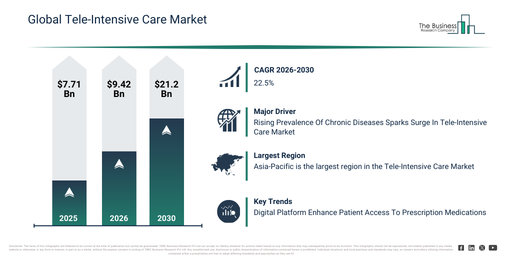
    The market for tele-intensive care has experienced remarkable expansion, projecting an increase from $7.71 billion in 2025 to $9.42 billion in 2026, driven by a compound annual growth rate of 22.1%. This surge in growth during the past period has been fueled by several key factors, including a heightened need for critical care resources, a scarcity of intensivists, the expansion of intensive care unit facilities within hospitals, the integration of electronic clinical monitoring technologies, and a growing emphasis on ensuring patient safety within critical care settings.

    The tele-intensive care sector is poised for substantial expansion in the upcoming years, projecting a market value of $21.2 billion by 2030, driven by a compound annual growth rate of 22.5%. This anticipated surge is fueled by several key factors, including heightened investment in virtual critical care solutions, a growing need for continuous remote ICU monitoring, the broader implementation of tele-ICU services across community healthcare facilities, the increasing application of AI for patient risk assessment, and a stronger focus on managing ICUs more cost-effectively. Furthermore, significant trends shaping this period involve the wider rollout of centralized tele-ICU oversight systems, greater utilization of real-time patient monitoring technology, more extensive incorporation of predictive analytics in critical care settings, the expansion of remote intensivist support frameworks, and a reinforced emphasis on optimizing ICU resources.

    Download A Free Sample Report For Comprehensive Market Insights:

    https://www.thebusinessresearchcompany.com/sample.aspx?id=7081&type=smp

    Tele-Intensive Care Market Industry Drivers: What Is Driving Revenue Growth?

    The expanding incidence of long-term health conditions is a key factor fueling the expansion of the tele-intensive care sector. By definition, chronic diseases encompass a broad spectrum of ailments that can impact any bodily region, subsequently spreading to adjacent areas or metastasizing to distant organs, ultimately contributing to mortality. Tele-intensive care finds application in capacities such as persistent patient observation, remote evaluation and management of medical devices like pacemakers and defibrillators, and ongoing surveillance of individuals with chronic ailments. Illustratively, data released in June 2023 by the Institute for Health Metrics and Evaluation, a prominent US public health research organization, indicated that more than 500 million individuals worldwide were diagnosed with diabetes. Projections suggest this figure will dramatically escalate, potentially exceeding 1.3 billion individuals by the year 2050. Consequently, the burgeoning prevalence of chronic illnesses within the global population is anticipated to be a significant catalyst for the tele-intensive care market’s future advancement.

    Tele-Intensive Care Market Segment Landscape: Which Areas Lead Market Development?

    The tele-intensive care market covered in this report is segmented –

    1) By Type: Centralized Models, Decentralized Models, Other Types

    2) By Component: Hardware System, Software

    3) By Type of Management: Intensivist, Open, Co-Managed, Open with Consultant, Other Management Types

    Subsegments:

    1) By Centralized Models: Remote Monitoring Centers, Integrated Tele-ICU Services, Centralized Decision Support Systems

    2) By Decentralized Models: Bedside Telemedicine Systems, Distributed Tele-ICU Services, Localized Remote Patient Monitoring

    3) By Other Types: Hybrid Models, Mobile Tele-ICU Solutions, Specialized Telemedicine Platforms For Specific Conditions

    #Tele-Intensive Care Market Growth Trends: What Is Influencing The Future Outlook?

    Key players in the tele-intensive care sector are integrating cutting-edge solutions like digital platforms to bolster patient observation, streamline healthcare professional collaboration, and enable prompt medical responses, all contributing to enhanced patient well-being and optimized resource allocation. Essentially, a digital platform serves as an online framework for users to generate, distribute, and swap information, goods, or services. As an illustration, in January of 2024, pharmaceutical giant Eli Lilly, headquartered in the United States, unveiled LillyDirect, a digital platform intended for the direct-to-consumer sale of select prescription medications targeting ailments including diabetes, obesity, and migraines. This innovative system links individuals with independent telehealth practitioners, thereby enabling them to secure prescriptions and receive their medications via a user-friendly home delivery service. The objective of this endeavor is to simplify the patient journey and broaden access to healthcare while simultaneously providing cost-effective options for those who qualify.

    Tele-Intensive Care Market Industry Leaders And Market Competition

    Major companies operating in the tele-intensive care market are Apollo TeleHealth Services Pvt. Ltd., Banner Health System, Ceiba Tele ICU, Cerner Corporation, Eagle Telemedicine, iMDsoft Ltd., Koninklijke Philips N.V., SOC Telemed Inc., University of Pittsburgh Medical Center, Advanced Medical Reviews, Banner iCare, Cambio Healthcare Systems AB, Harris Healthcare Group, Hicuity Health Inc., Honeywell Life Care Solutions, INTeLeICU, Intensive Care On-line Network, InTouch Health, Spacelabs Healthcare, Vivify Health Inc., Vocera Communications Inc., BioTelemetry Inc., Healthcare Business Intelligence Solutions, ICU Medical Inc., LifeWatch AG, Sotera Wireless Inc.

    Access The Complete Tele-Intensive Care Market Report:

    https://www.thebusinessresearchcompany.com/report/tele-intensive-care-global-market-report

    Tele-Intensive Care Market Regional Analysis And Leading Geography

    Asia-Pacificwas the largest region in the tele-intensive care market in 2025. Asia-Pacificis expected to be the fastest growing region in the forecast period. The regions covered in the tele-intensive care market report are Asia-Pacific, South East Asia, Western Europe, Eastern Europe, North America, South America, Middle East, Africa.

    Get in touch with us:

    The Business Research Company: https://www.thebusinessresearchcompany.com/

    Americas: +1 310-496-7795

    Asia: +44 7882 955267 & +91 8897263534

    Europe: +44 7882 955267

    Email us at: marketing@tbrc.info

    Follow us on:

    LinkedIn: https://in.linkedin.com/company/the-business-research-company

    YouTube: https://www.youtube.com/channel/UC24_fI0rV8cR5DxlCpgmyFQ

    Global Market Model: https://www.thebusinessresearchcompany.com/global-market-model
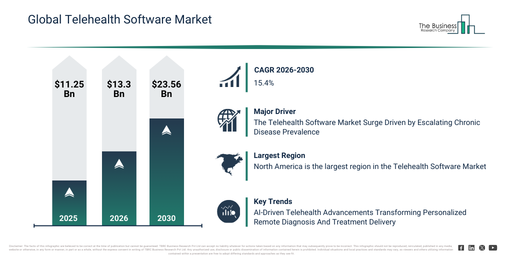
  • Telehealth Software Market Growth Outlook Reveals A CAGR Of 15.4% And A Market Value Of $23.55 Billion By 2030

    Telehealth Software Market Growth Outlook Reveals A CAGR Of 15.4% And A Market Value Of $23.55 Billion By 2030

    Delivering more actionable and strategically valuable research, The Business Research Company’s 2026 market reports feature market attractiveness analysis, total addressable market evaluation, company benchmarking matrices, interactive Excel dashboards, expanded supply chain intelligence, emerging startup coverage, and detailed product insights.

    Telehealth Software Market CAGR Analysis And Future Market Development

    The telehealth software sector has seen remarkable expansion recently, with projections indicating a rise from $11.25 billion in 2025 to $13.3 billion in 2026, reflecting a compound annual growth rate of 18.2%. Factors contributing to this growth during the past period include the increasing integration of digital processes into healthcare operations, a greater uptake of electronic prescribing solutions, the wider application of cloud computing within the medical field, an escalating demand for tools that facilitate care coordination, and advancements in the seamless exchange of healthcare data.

    The telehealth software sector is poised for substantial expansion, projecting a market valuation of $23.56 billion by the year 2030, with an anticipated compound annual growth rate of 15.4%. This forecasted increase is largely fueled by escalating investments in artificial intelligence-powered healthcare solutions, a burgeoning need for remote management of chronic conditions, the wider adoption of value-based care frameworks, an intensified emphasis on cybersecurity adherence, and the increasing incorporation of telehealth functionalities into existing clinical infrastructures. Key developments expected during this period include a greater uptake of unified telehealth software ecosystems, a rise in the utilization of AI for clinical decision support, heightened demand for systems that monitor medication compliance, the proliferation of cloud-native telehealth applications, and a reinforced commitment to safeguarding health data.

    Download A Free Sample Report For Comprehensive Market Insights:

    https://www.thebusinessresearchcompany.com/sample.aspx?id=14809&type=smp

    Telehealth Software Market Growth Factors: Which Forces Are Supporting Market Expansion?

    The increasing incidence of long-term health conditions is anticipated to be a primary driver for the expansion of the telehealth software sector. These chronic illnesses, defined by enduring symptoms necessitating continuous medical attention, are on the rise due to demographic shifts towards older populations, unhealthy lifestyle choices including substance abuse, and limited access to medical facilities. Telehealth solutions play a crucial role in managing these chronic conditions by enabling remote delivery of healthcare, thereby facilitating consistent patient monitoring and consultations without the necessity of physical appointments. This enhanced accessibility aids in the early identification of issues, ensures uninterrupted care, and empowers patients, ultimately leading to improved management and results for those affected by chronic ailments. As an illustration, data from the Institute for Health Metrics and Evaluation indicated in June 2023 that more than 500 million individuals worldwide suffered from diabetes, a figure projected to exceed 1.3 billion by 2050. Consequently, the escalating burden of chronic diseases is fueling the demand for telehealth software.

    Telehealth Software Market Segments: Where Are The Largest Growth Opportunities?

    The telehealth software market covered in this report is segmented –

    1) By Component: Software, Services

    2) By Deployment: Cloud-Based, On-Premises

    3) By End User: Healthcare Providers, Healthcare Payers And Patients

    Subsegments:

    1) By Software: Telemedicine Software, Remote Patient Monitoring Software, Video Conferencing Software, Electronic Health Record (EHR) Integration Software, Clinical Decision Support Software, mHealth Applications, Patient Portals, Appointment Scheduling Software

    2) By Services: Telehealth Consulting Services, Telehealth Integration Services, Managed Services, Training And Support Services, Maintenance Services

    Telehealth Software Market Industry Trends: What Changes Are Reshaping Demand?

    Major telehealth software market participants are concentrating on creating sophisticated, AI-driven solutions engineered for personalized, highly effective medical interventions and frictionless remote diagnostic capabilities. Illustrating this trend, ODDITY Tech Ltd., an Israeli technology firm, unveiled METHODIQ in November 2025. This telehealth platform, developed to revolutionize healthcare delivery, provides individualized, potent treatments facilitated by online diagnostics. Initially implemented within the dermatology sector, the platform addresses prevalent conditions like acne, eczema, and hyperpigmentation, seeking to mitigate the disparity between inadequate over-the-counter remedies and expensive in-person consultations. Developed collaboratively with dermatologists, METHODIQ integrates AI-powered dermatological assessment, computer vision for progress tracking, and an extensive array of prescription, over-the-counter, and cosmetic products, featuring ODDITY Labs’ exclusive formulations. Offering more than 100 customized treatment regimens and continuous oversight from healthcare professionals, METHODIQ represents a data-informed, readily available, and patient-centric healthcare model, supported by extensive research and comprehensive studies involving a large consumer base.

    Telehealth Software Market Major Participants And Competitive Dynamics

    Major companies operating in the telehealth software market are Teladoc Health Inc, American Well Corporation, Cerner Corporation, Allscripts Healthcare LLC, Oracle Corporation, Koninklijke Philips N.V, Zoom Video Communications Inc, Zocdoc Inc, CureMD Healthcare, Vocera Communications Inc, Care Innovations LLC, GlobalMedia Group LLC, Updox LLC, Capsule Technologies Inc, Biotricity Inc, BioTelemetry, Medtronic Inc, Masimo Corporation, Aerotel Medical Systems Ltd, PatientSafe Solutions Inc

    Access The Complete Telehealth Software Market Report:

    https://www.thebusinessresearchcompany.com/report/telehealth-software-global-market-report

    Telehealth Software Market Geographic Analysis: Where Is Demand Growing The Fastest?

    North Americawas the largest region in the telehealth software market in 2025. Asia-Pacificis expected to be the fastest-growing region in the forecast period. The regions covered in the telehealth software market report are Asia-Pacific, South East Asia, Western Europe, Eastern Europe, North America, South America, Middle East, Africa.

    Get in touch with us:

    The Business Research Company: https://www.thebusinessresearchcompany.com/

    Americas: +1 310-496-7795

    Asia: +44 7882 955267 & +91 8897263534

    Europe: +44 7882 955267

    Email us at: marketing@tbrc.info

    Follow us on:

    LinkedIn: https://in.linkedin.com/company/the-business-research-company

    YouTube: https://www.youtube.com/channel/UC24_fI0rV8cR5DxlCpgmyFQ

    Global Market Model: https://www.thebusinessresearchcompany.com/global-market-model
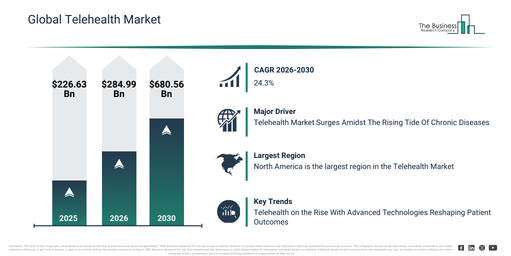
  • Telehealth And Telemedicine Market Forecast Highlights Expansion From $184.53 Billion To $392 Billion Through 2030

    Telehealth And Telemedicine Market Forecast Highlights Expansion From $184.53 Billion To $392 Billion Through 2030

    Enhanced with market attractiveness analysis, total addressable market evaluation, company benchmarking matrices, interactive Excel dashboards, expanded supply chain intelligence, emerging startup coverage, and detailed product insights, The Business Research Company’s 2026 market reports deliver more actionable and strategically valuable research.

    Telehealth And Telemedicine Market Expansion From $184.53 Billion In 2026 To $392 Billion In 2030

    The telehealth and telemedicine sector has experienced remarkable expansion recently. Projections indicate a surge from $152.44 billion in 2025 to $184.53 billion by 2026, reflecting a compound annual growth rate of 21.1%. Factors contributing to this growth during the preceding period include the widespread adoption of digital health infrastructure, enhanced accessibility of smartphones and the internet, a heightened need for remote healthcare services, the proliferation of teleconsultation services, and the implementation of favorable regulatory policies.

    The telehealth and telemedicine sector is poised for substantial expansion over the upcoming years, projecting an impressive market valuation of $392.01 billion by 2030, driven by a compound annual growth rate of 20.7%. This accelerated expansion is anticipated to be fueled by several key factors, including a heightened preference for hybrid healthcare approaches, the increasing incorporation of artificial intelligence for diagnostic purposes within telehealth platforms, the broadening availability of tele-ICU and telepsychiatry services, greater acceptance of telehealth solutions by employers, and a stronger emphasis on delivering care tied to specific outcomes. As for burgeoning trends expected during this forecast period, look for a significant rise in virtual care and remote consultation offerings, the growing implementation of remote patient monitoring systems, a more widespread adoption of cloud-based healthcare infrastructure, a sharpened focus on clinical decision support powered by data analytics, and the expanding utilization of telemedicine services across multiple medical specialties.

    Download A Free Sample Report For Comprehensive Market Insights:

    https://www.thebusinessresearchcompany.com/sample.aspx?id=24719&type=smp

    Telehealth And Telemedicine Market Demand Drivers: What Is Fueling Industry Growth?

    The expanding availability and usage of smartphones are anticipated to be a significant catalyst for the telehealth and telemedicine sector’s advancement. This trend signifies a broad adoption of mobile technology, largely fueled by decreasing costs and enhanced accessibility, thereby bringing smartphones within reach of a larger consumer base. Such devices are instrumental in broadening the scope of telehealth and telemedicine, offering convenient remote access to medical services, facilitating instantaneous consultations, continuous patient monitoring, and expert medical guidance, thereby significantly improving healthcare accessibility and convenience, particularly for those in geographically isolated regions or with physical limitations. Evidence of this widespread adoption was seen in October 2023, when the GSM Association reported that approximately 4.3 billion individuals, representing 53% of the global population, utilized smartphones for internet access, with a substantial 80% of these mobile internet users now employing 4G or 5G capable smartphones, indicating a growth of 330 million users between 2022 and 2023. Consequently, this surge in smartphone penetration acts as a key driver for the telehealth and telemedicine market’s ongoing expansion.

    Telehealth And Telemedicine Market Segment Analysis: What Are The Major Market Categories?

    The telehealth and telemedicine market covered in this report is segmented –

    1) By Component: Hardware, Software, Services

    2) By Mode of Delivery: Cloud-Based, On-Premise, Web-Based

    3) By Application: Teleconsultation, Tele Intensive Care Unit (TeleICU), Telestroke, Teleradiology, Telepsychiatry, Teledermatology

    4) By End-User: Healthcare Providers, Patients, Payers, Employers, Other End Users

    Subsegments:

    1) By Hardware: Telemedicine Carts, Diagnostic Devices, Digital Imaging Devices, Wearable Devices, Video Conferencing Equipment, Peripheral Devices

    2) By Software: Real-time Communication Software, Remote Patient Monitoring (RRM) Software, Electronic Health Record (EHR) Integration Software, Scheduling And Billing Software, Diagnostic Software, Mobile Health Apps

    3) By Services: Teleconsultation Services, Telemonitoring Services, Store-and-forward Services, Support And Maintenance Services, Training And Education Services, Managed Services

    Telehealth And Telemedicine Market Innovation Trends: Which Developments Are Transforming The Industry?

    Leading entities within the telehealth and telemedicine sectors are prioritizing the creation of sophisticated technological offerings, including online platforms, to improve the remote delivery of care, optimize the communication between patients and clinicians, and broaden the availability of healthcare services from a distance. An online platform, within the context of telehealth and telemedicine, represents a digital conduit facilitating remote connections between individuals seeking medical assistance and healthcare professionals for purposes such as consultations, diagnostic assessments, treatment plans, and ongoing health supervision, all conducted over the internet. As an illustration, in August of 2024, the American biopharmaceutical firm Pfizer Inc. introduced PfizerForAll, a complimentary digital health online platform designed to link individuals with telehealth practitioners, facilitate the delivery of prescribed pharmaceuticals, and aid in the arrangement of vaccinations and diagnostic screenings.

    Telehealth And Telemedicine Market Leading Companies Driving Competitive Growth

    Major companies operating in the telehealth and telemedicine market are Cisco Systems Inc, Oracle Corporation, Medtronic plc, Koninklijke Philips NV, Teladoc Health Inc, Monogram Health Inc, GoodRx Holdings Inc, Doximity Inc, Modernizing Medicine Inc, Doctor On Demand Inc, MDLIVE Inc, Azalea Health Innovations Inc, Sesame Inc, Apollo TeleHealth Services, TytoCare Ltd, Azova Inc, Push Doctor Ltd, Avel eCare LLC, CureCompanion Inc, CareClix Inc, Curve Health Inc, Amwell Corporation

    Access The Complete Telehealth And Telemedicine Market Report:

    https://www.thebusinessresearchcompany.com/report/telehealth-and-telemedicine-global-market-report

    Telehealth And Telemedicine Market Global Footprint: Which Region Holds Market Leadership?

    North Americawas the largest region in the telehealth and telemedicine market in 2025. Asia-Pacificis expected to be the fastest-growing region in the forecast period. The regions covered in the telehealth and telemedicine market report are Asia-Pacific, South East Asia, Western Europe, Eastern Europe, North America, South America, Middle East, Africa.

    Get in touch with us:

    The Business Research Company: https://www.thebusinessresearchcompany.com/

    Americas: +1 310-496-7795

    Asia: +44 7882 955267 & +91 8897263534

    Europe: +44 7882 955267

    Email us at: marketing@tbrc.info

    Follow us on:

    LinkedIn: https://in.linkedin.com/company/the-business-research-company

    YouTube: https://www.youtube.com/channel/UC24_fI0rV8cR5DxlCpgmyFQ

    Global Market Model: https://www.thebusinessresearchcompany.com/global-market-model
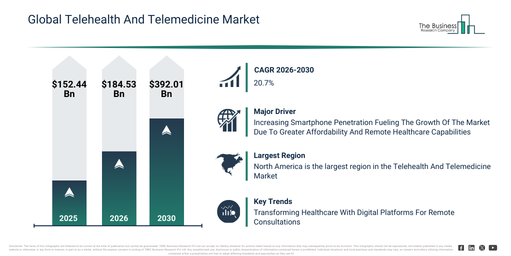
  • Telehealth Market Expected To Reach $680.56 Billion By 2030 As Growth Accelerates At 24.3% CAGR

    Telehealth Market Expected To Reach $680.56 Billion By 2030 As Growth Accelerates At 24.3% CAGR

    Through market attractiveness analysis, total addressable market evaluation, company benchmarking matrices, interactive Excel dashboards, expanded supply chain intelligence, emerging startup coverage, and detailed product insights, The Business Research Company’s 2026 market reports provide more actionable and strategically valuable research.

    Telehealth Market Forecast Highlighting Growth From $284.99 Billion To $680.56 Billion

    The telehealth market is experiencing significant expansion, projected to increase from its $226.63 billion valuation in 2025 to $284.99 billion by 2026, reflecting a compound annual growth rate of 25.8%. This rapid growth trajectory in the recent past has been fueled by several key factors, including advancements in healthcare digitization, a heightened demand for accessible remote healthcare solutions, the widespread availability of broadband internet, increased adoption of electronic health records, and continuous improvements in telecommunication infrastructure.

    The telehealth sector is poised for remarkable expansion, projected to reach a substantial $680.56 billion by the year 2030, demonstrating a robust compound annual growth rate of 24.3%. This surge is underpinned by several key drivers, including the growing prevalence of hybrid care strategies, a significant uptick in investments directed towards digital health infrastructure, the wider availability of tele-specialty care, a sharpened focus on managing the health of entire populations, and heightened regulatory backing for telehealth services. Key developments influencing this growth trajectory are anticipated to involve a greater acceptance of remote medical consultations, increased utilization of technology for monitoring patients outside of traditional clinical settings, the seamless integration of telehealth solutions with electronic health record systems, the proliferation of telehealth services accessible via the cloud, and an intensified commitment to ensuring consistent virtual healthcare delivery.

    Download A Free Sample Report For Comprehensive Market Insights:

    https://www.thebusinessresearchcompany.com/sample.aspx?id=3954&type=smp

    Telehealth Market Growth Drivers: What Factors Are Accelerating Expansion?

    The escalating incidence of conditions like cancer, diabetes, and hypertension is anticipated to be a significant catalyst for the telehealth market’s expansion. Factors such as extended work schedules, insufficient physical activity, and detrimental dietary and beverage choices are contributing to the widespread occurrence of chronic ailments, rendering individuals with these conditions more susceptible, which in turn fuels the demand for telehealth service platforms. Illustratively, the World Health Organization, a United Nations specialized agency headquartered in Switzerland, reported in September 2023 that chronic diseases, also known as non-communicable diseases (NCDs), account for 41 million deaths annually worldwide, representing 74% of all fatalities. Specifically, cardiovascular diseases were responsible for 17.9 million deaths, cancer for 9.3 million, chronic respiratory diseases for 4.1 million, and diabetes for 2.0 million. Consequently, the increase in chronic disease prevalence is projected to stimulate market growth.

    Telehealth Market Segment Breakdown: Which Categories Generate The Most Revenue?

    The telehealth market covered in this report is segmented –

    1) By Offering: Software, Services, Hardware

    2) By Mode Of Delivery: Cloud-based, On-Premise

    3) By Application: Teleradiology, Telepathology, Teledermatology, Telecardiology, Others

    4) By End-User: Healthcare Providers, Patients, Payers, Other End-Users

    Subsegments:

    1) By Software: Telemedicine Software, Remote Patient Monitoring Software, Practice Management Software, Electronic Health Record (EHR) Integration Software

    2) By Services: Telehealth Consultation Services, Remote Monitoring Services, Education and Training Services, Support And Maintenance Services

    3) By Hardware: Mobile Health Devices, Telemedicine Carts, Digital Stethoscopes, Diagnostic And Imaging Devices

    Telehealth Market Trends: What Is Shaping Future Industry Growth?

    Leading entities within the telehealth sector are prioritizing the incorporation of cutting-edge technologies, including remote patient monitoring systems and artificial intelligence-powered diagnostic and disease management capabilities, all with the aim of expanding healthcare availability and elevating patient results for a spectrum of health concerns. Disease management resources encompass a collection of tools and supportive services intended to empower individuals in their journey of effectively handling long-term health issues, featuring educational content, tailored treatment strategies, assistance with medication adherence, and avenues for connecting with medical practitioners. As a case in point, in January of 2024, Eli Lilly and Company, a prominent pharmaceutical firm headquartered in the United States, introduced LillyDirect, an innovative digital health platform engineered to assist patients across the U.S. who are managing conditions such as obesity, migraines, and diabetes. This platform facilitates access to essential disease management resources, connects users with independent healthcare providers, and enables the direct-to-home delivery of certain Lilly medications via partnered pharmacy services.

    Telehealth Market Key Players And Strategic Industry Positioning

    Major companies operating in the telehealth market are Teladoc Health, Amwell (American Well), MDLIVE, Doctor On Demand, 1Life Healthcare, HealthTap, Babylon Health, PlushCare, MeMD, Pager, Lemonaid Health, SteadyMD, InTouch Health, SnapMD, Zipnosis, SOC Telemed, Vsee Lab, Maven Clinic, HeyDoctor, Kareo, Medici, OnCall Health, Qure4u, Spruce Health, GlobalMed, MDBox, Doxy.me, Vida Health

    Access The Complete Telehealth Market Report:

    https://www.thebusinessresearchcompany.com/report/telehealth-global-market-report

    Telehealth Market Regional Distribution: Which Areas Drive Market Expansion?

    North Americawas the largest region in the telehealth market in 2025. The regions covered in the telehealth market report are Asia-Pacific, South East Asia, Western Europe, Eastern Europe, North America, South America, Middle East, Africa.

    Get in touch with us:

    The Business Research Company: https://www.thebusinessresearchcompany.com/

    Americas: +1 310-496-7795

    Asia: +44 7882 955267 & +91 8897263534

    Europe: +44 7882 955267

    Email us at: marketing@tbrc.info

    Follow us on:

    LinkedIn: https://in.linkedin.com/company/the-business-research-company

    YouTube: https://www.youtube.com/channel/UC24_fI0rV8cR5DxlCpgmyFQ

    Global Market Model: https://www.thebusinessresearchcompany.com/global-market-model
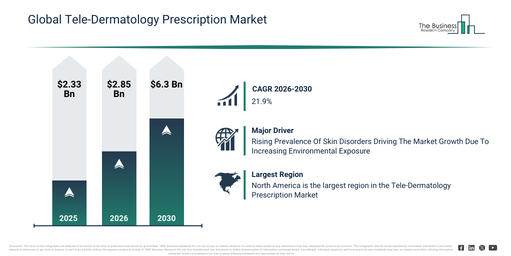
  • Tele-Dermatology Prescription Market Set To Grow From $2.85 Billion In 2026 To $6.29 Billion By 2030 At A CAGR Of 21.9%

    Tele-Dermatology Prescription Market Set To Grow From $2.85 Billion In 2026 To $6.29 Billion By 2030 At A CAGR Of 21.9%

    Delivering more actionable and strategically valuable research, The Business Research Company’s 2026 market reports feature market attractiveness analysis, total addressable market evaluation, company benchmarking matrices, interactive Excel dashboards, expanded supply chain intelligence, emerging startup coverage, and detailed product insights.

    Tele-Dermatology Prescription Market Revenue Growth Supported By A CAGR Of 6.29% Through 2030

    The tele-dermatology prescription market has witnessed substantial expansion lately, projected to climb from $2.33 billion in 2025 to $2.85 billion in 2026, reflecting a compound annual growth rate of 22.2%. This upsurge during the historical period stems from an increased adoption of telehealth services amidst healthcare disruptions, a rising incidence of persistent skin ailments, a scarcity of dermatologists in remote regions, enhanced accessibility to healthcare via smartphones, and a growing acceptance of remote medical consultations.

    The tele-dermatology prescription sector is poised for significant expansion, projected to reach $6.3 billion by 2030, reflecting a compound annual growth rate of 21.9%. This upward trajectory is fueled by a confluence of factors including heightened demand for accessible specialist consultations, augmented investment in digital dermatology solutions, the proliferation of AI-driven diagnostic tools, greater regulatory certainty surrounding remote prescriptions, and sophisticated advancements in image interpretation capabilities. Key developments anticipated during this period encompass a wider embrace of AI for remote skin assessments, increased reliance on store-and-forward consultation methods, deeper integration with e-prescription systems, the burgeoning field of mobile dermatology apps, and a heightened emphasis on secure methods for sharing patient information.

    Download A Free Sample Report For Comprehensive Market Insights:

    https://www.thebusinessresearchcompany.com/sample.aspx?id=28338&type=smp

    Tele-Dermatology Prescription Market Growth Factors Supporting Long-Term Expansion

    A growing incidence of skin ailments is anticipated to spur the expansion of the tele-dermatology prescription sector. These skin conditions, which compromise the integrity, operation, or appearance of the skin and manifest as symptoms like redness, itching, inflammation, or lesions, are becoming more common, largely attributed to escalating environmental pollution that exposes individuals to detrimental chemicals and irritants. The utilization of tele-dermatology prescriptions facilitates more efficient management of these conditions through quicker diagnoses, prompt treatments, and ongoing distant care. By way of illustration, the Skin Health Institute Inc., an Australian non-profit, noted in August 2023 that approximately 2–3% of Australia’s population experiences psoriasis, underscoring its commonality. Consequently, the escalating occurrence of skin disorders is a key factor driving the tele-dermatology prescription market.

    The increasing need for remote patient monitoring is poised to accelerate the tele-dermatology prescription market’s expansion. This technology allows healthcare professionals to electronically gather and observe patient health information from afar using interconnected medical devices. The drive for RPM stems from a heightened focus on continuous patient care, as healthcare entities strive to decrease hospital readmissions and provide more accessible care for individuals with long-term health issues. Tele-dermatology prescriptions align with this need by empowering dermatologists to digitally evaluate, diagnose, and prescribe therapies for dermatological issues via secure channels that monitor patient progress and treatment effectiveness without necessitating physical appointments. For example, the Office of Inspector General, a U.S. Department of Health and Human Services entity, reported in August 2025 that Medicare disbursed over $536 million for remote patient monitoring in 2024, a figure representing a 31% increase from the previous year, with nearly one million beneficiaries receiving such services, a rise of 27% from 2023, and approximately 4,600 medical practices regularly submitting claims for RPM. Thus, the escalating demand for remote patient monitoring is a significant contributor to the growth of the tele-dermatology prescription market.

    Tele-Dermatology Prescription Market Segmentation: How Is The Market Structured Across Key Categories?

    The tele-dermatology prescription market covered in this report is segmented –

    1) By Service Type: Real-Time Tele-Dermatology, Store-And-Forward Tele-Dermatology, Hybrid Tele-Dermatology

    2) By Delivery Mode: Web-Based, Cloud-Based, On-Premises

    3) By Application: Skin Cancer, Psoriasis, Acne, Eczema, Other Applications

    4) By End User: Hospitals And Clinics, Homecare, Pharmacies, Other End-Users

    Subsegments:

    1) By Real-Time Tele-Dermatology: Video Consultation, Live Chat Consultation, Remote Monitoring

    2) By Store-And-Forward Tele-Dermatology: Image-Based Consultation, Asynchronous Messaging, Medical Record Sharing

    3) By Hybrid Tele-Dermatology: Combined Live And Image Consultation, Integrated Remote Monitoring And Messaging, Synchronous And Asynchronous Follow-Up

    Tele-Dermatology Prescription Market Competitive Landscape And Leading Companies

    Major companies operating in the tele-dermatology prescription market are Teladoc Health Inc., PharmEasy Online Services Private Limited, American Well Corporation (Amwell), Hims & Hers Health Inc., Curology Inc., Doctor On Demand Inc., Zocdoc Inc., HealthTap Inc., Maple Corporation, Sesame Care Inc., Medweb Inc., SkyMD Inc., Dermatica Limited, CureSkin Technologies Pvt. Ltd., Nurx Inc., DermatologistOnCall Inc., Clinikally Ltd., MapleDerm Inc., MDLive Inc., eDermConsult GmbH, First Derm ApS, iCliniq Technologies Private Limited, Practo Technologies Private Limited, Babylon Health Services Limited, Push Health Inc., PlushCare Inc., HeyDoctor by GoodRx Inc., K Health Inc.

    Access The Complete Tele-Dermatology Prescription Market Report:

    https://www.thebusinessresearchcompany.com/report/tele-dermatology-prescription-global-market-report

    Tele-Dermatology Prescription Market Leading Geography: Which Region Generates The Most Revenue?

    North Americawas the largest region in the tele-dermatology prescription market in 2025. Asia-Pacific is expected to be the fastest-growing region in the forecast period. The regions covered in the tele-dermatology prescription market report are Asia-Pacific, South East Asia, Western Europe, Eastern Europe, North America, South America, Middle East, Africa.

    Get in touch with us:

    The Business Research Company: https://www.thebusinessresearchcompany.com/

    Americas: +1 310-496-7795

    Asia: +44 7882 955267 & +91 8897263534

    Europe: +44 7882 955267

    Email us at: marketing@tbrc.info

    Follow us on:

    LinkedIn: https://in.linkedin.com/company/the-business-research-company

    YouTube: https://www.youtube.com/channel/UC24_fI0rV8cR5DxlCpgmyFQ

    Global Market Model: https://www.thebusinessresearchcompany.com/global-market-model
  • Zygomatic And Pterygoid Implants Market Growth Is Reshaping Competitive Advantage Across The Industry

    Zygomatic And Pterygoid Implants Market Growth Is Reshaping Competitive Advantage Across The Industry

    Through market attractiveness analysis, total addressable market evaluation, company benchmarking matrices, interactive Excel dashboards, expanded supply chain intelligence, emerging startup coverage, and detailed product insights, The Business Research Company’s 2026 market reports provide more actionable and strategically valuable research.

    Zygomatic And Pterygoid Implants Market Revenue Growth Supported By A CAGR Of 1.64% Through 2030

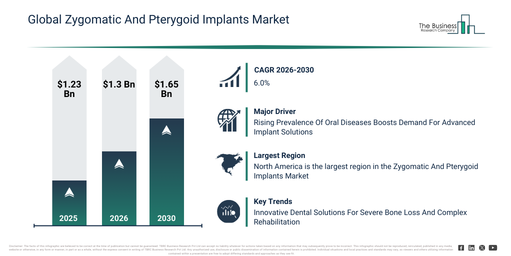
    The market for zygomatic and pterygoid implants has experienced robust expansion lately, projecting a rise from $1.23 billion in 2025 to $1.3 billion in 2026, reflecting a compound annual growth rate (CAGR) of 6.3%. This upward trajectory during the observed period was underpinned by several key factors, including a greater incidence of significant maxillary bone loss, heightened public and professional understanding of alternative implant options, the increasing use of dental implants among elderly individuals, the proliferation of dedicated dental facilities, and advancements in the design of implant materials.

    The global market for zygomatic and pterygoid implants is poised for substantial expansion, projected to reach $1.65 billion by 2030, reflecting a compound annual growth rate of 6.0% over the coming years. This anticipated growth is fueled by several key factors, including a surging demand for comprehensive full-arch rehabilitation, the increasing integration of digital dentistry in practice, augmented investments in cutting-edge dental implant technologies, a growing preference for implant procedures that eliminate the need for bone grafting, and the broader availability of prosthetic solutions anchored by implants. Within this forecasted period, significant market trends are expected to emerge, such as wider adoption of sophisticated implant placement methodologies, heightened utilization of digital tools for surgical strategizing, escalating demand for immediate loading implant options, an expansion of dedicated educational programs for dental implant specialists, and a heightened emphasis on implantology techniques that are minimally invasive.

    Download A Free Sample Report For Comprehensive Market Insights:

    https://www.thebusinessresearchcompany.com/sample.aspx?id=21010&type=smp

    Zygomatic And Pterygoid Implants Market Growth Factors Supporting Long-Term Expansion

    The increasing incidence of oral health issues is anticipated to fuel the expansion of the market for zygomatic and pterygoid implants. Oral diseases encompass various afflictions of the mouth, teeth, gums, and adjacent tissues, such as tooth decay, gum infections, and oral cancers, frequently stemming from inadequate hygiene, dietary habits, or underlying medical conditions; their growing prevalence is attributed to factors including poor dental care practices, consumption of sugary foods, limited access to dental services, and escalating use of tobacco and alcohol. Within this context, zygomatic and pterygoid implants offer a solution by furnishing robust anchorage for dental prosthetics in individuals experiencing significant bone depreciation, thereby enhancing overall oral well-being and functional restoration where conventional implants are impractical. To illustrate, data from the World Health Organization (WHO) in March 2025 indicated that approximately 3.7 billion individuals globally were affected by oral diseases, with over 1 billion suffering from severe gum disease, and complete tooth loss affected roughly 7% of adults aged 20 and older, a figure that escalated to approximately 23% among those aged 60 and above, underscoring the direct correlation between the rising burden of oral diseases and the market’s upward trajectory for zygomatic and pterygoid implants.

    Zygomatic And Pterygoid Implants Market Segment Landscape And Growth Potential

    The zygomatic and pterygoid implants market covered in this report is segmented –

    1) By Type: Zygomatic Implants, Pterygoid Implants, Combined Implants

    2) By Length: Up To 30 Mm, 30–50 Mm, Above 50 Mm

    3) By Application: Maxillary Sinuses, Severe Atrophy Of Maxillary Bone, Other Applications

    4) By End User: Dental Clinics, Hospital Dental Departments, Research Institutions

    Subsegments:

    1) By Zygomatic Implants: Single Zygomatic Implants, Multiple Zygomatic Implants

    2) By Pterygoid Implants: Single Pterygoid Implants, Multiple Pterygoid Implants

    3) By Combined Implants: Zygomatic And Pterygoid Combined Implants, Hybrid Zygomatic And Pterygoid Implant Systems

    Zygomatic And Pterygoid Implants Market Industry Trends Shaping Future Revenue Growth

    Key players within the zygomatic and pterygoid implants sector are prioritizing the development of novel offerings, exemplified by metal-free implant options designed to accommodate individuals with metal sensitivities, boost bodily acceptance of the implant, and elevate the success rates of treatments over time. These metal-free implants are medical devices wholly constructed from materials other than metal, such as ceramic or polymer substances, chosen for their compatibility with biological systems and their capacity to curtail adverse reactions linked to metals, degradation, or disruptions to diagnostic imaging like MRI. A notable development occurred in December 2024 when Pure Dental Health, a leading dental clinic in the United States, unveiled its state-of-the-art All-on-X dental implant methodology, incorporating zygomatic and pterygoid implants to tackle significant bone deterioration and intricate dental challenges. This pioneering method equips patients with stable, aesthetically pleasing smiles, thereby revitalizing both chewing ability and self-assurance, irrespective of the intricacy of their oral health requirements.

    Zygomatic And Pterygoid Implants Market Competitive Landscape: Who Are The Leading Companies?

    Major companies operating in the zygomatic and pterygoid implants market are Straumann Holding AG, Zimmer Biomet Holding Inc., Nobel Biocare, BioHorizons Implant Systems Inc., MIS Implants Technologies Ltd., Southern Implants (Pty) Ltd., Camlog Vertriebs GmbH, Jeil Medical Corporation, Osstem Implant Co Ltd, Megagen Implant Co Ltd, Dentsply Sirona Inc, Bicon Dental Implants, Hiossen Inc, Euroteknika SAS.

    Access The Complete Zygomatic And Pterygoid Implants Market Report:

    https://www.thebusinessresearchcompany.com/report/zygomatic-and-pterygoid-implants-global-market-report

    Zygomatic And Pterygoid Implants Market Geographic Distribution And Regional Opportunities

    North Americawas the largest region in the zygomatic and pterygoid implants market in 2025. Asia-Pacificis expected to be the fastest-growing region in the forecast period. The regions covered in the zygomatic and pterygoid implants market report are Asia-Pacific, South East Asia, Western Europe, Eastern Europe, North America, South America, Middle East, Africa.

    Get in touch with us:

    The Business Research Company: https://www.thebusinessresearchcompany.com/

    Americas: +1 310-496-7795

    Asia: +44 7882 955267 & +91 8897263534

    Europe: +44 7882 955267

    Email us at: marketing@tbrc.info

    Follow us on:

    LinkedIn: https://in.linkedin.com/company/the-business-research-company

    YouTube: https://www.youtube.com/channel/UC24_fI0rV8cR5DxlCpgmyFQ

    Global Market Model: https://www.thebusinessresearchcompany.com/global-market-model
  • Zollinger-Ellison Syndrome Treatment Market Forecast Signals New Revenue Opportunities Through 2030

    Zollinger-Ellison Syndrome Treatment Market Forecast Signals New Revenue Opportunities Through 2030

    Delivering more actionable and strategically valuable research, The Business Research Company’s 2026 market reports feature market attractiveness analysis, total addressable market evaluation, company benchmarking matrices, interactive Excel dashboards, expanded supply chain intelligence, emerging startup coverage, and detailed product insights.

    Zollinger-Ellison Syndrome Treatment Market Value Expansion And Long-Term Growth Outlook

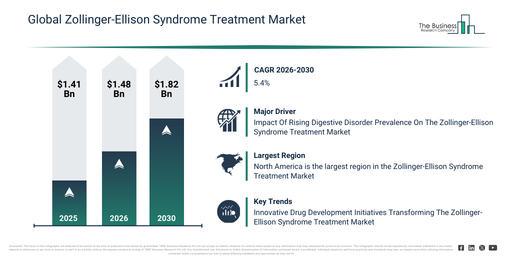
    The market for Zollinger-Ellison syndrome treatments has experienced consistent expansion, with projections indicating a rise from $1.41 billion in 2025 to $1.48 billion in 2026, reflecting a compound annual growth rate of 4.5%. This upward trend in the historical period is largely attributable to a deeper clinical comprehension of gastrinomas, the accessibility of potent acid-reducing medications, advancements in diagnostic imaging technology, the burgeoning number of specialized gastroenterology centers, and the increased implementation of surgical treatment approaches.

    The market dedicated to treating Zollinger-Ellison syndrome is poised for significant expansion in the coming years, projected to reach $1.82 billion by 2030, reflecting a compound annual growth rate of 5.4%. This anticipated growth during the forecast period is largely driven by several key factors, including the increasing implementation of individualized treatment strategies, a greater reliance on sophisticated imaging technologies for diagnosis, the broader adoption of integrated multidisciplinary healthcare approaches, ongoing advancements in the development of targeted therapeutic interventions, and an elevated emphasis on the timely detection and ongoing management of the condition. Key developments anticipated within this timeframe involve the expanded utilization of proton pump inhibitors for managing gastric acid production, a rising acceptance of cutting-edge diagnostic imaging techniques, the proliferation of less invasive surgical procedures, a heightened focus on detecting tumors at their earliest stages, and enhancements in the long-term surveillance of the disease.

    Download A Free Sample Report For Comprehensive Market Insights:

    https://www.thebusinessresearchcompany.com/sample.aspx?id=13003&type=smp

    Zollinger-Ellison Syndrome Treatment Market Demand Drivers Creating New Revenue Opportunities

    The rising incidence of gastrointestinal ailments is anticipated to be a significant driver for the expansion of the Zollinger-Ellison syndrome treatment market. These ailments encompass a range of conditions that disrupt the typical operation of the digestive system, which is the body’s mechanism for processing food and extracting nutrients. Treatments for Zollinger-Ellison syndrome are employed to manage digestive issues such as peptic ulcer disease and GERD by diminishing gastric acid production, thereby aiding in the prevention and treatment of complications stemming from ulcers or acid reflux. A pertinent example is the 27% surge in laboratory-confirmed Campylobacter infections observed in England by September 2025, as reported by the UK Health Security Agency, with infection rates escalating from 96.1 cases per 100,000 individuals in 2022 to 122.0 per 100,000 in 2024, underscoring the growing burden of digestive health challenges and consequently their impact on the Zollinger-Ellison syndrome treatment market’s development.

    Zollinger-Ellison Syndrome Treatment Market Categorization By Product Type And Application

    The zollinger-ellison syndrome treatment market covered in this report is segmented –

    1) By Diagnosis: Blood Test, CT Scan, Ultrasound, X-Ray, Other Diagnosis

    2) By Treatment: Chemotherapy, Surgical Resection, Other Treatments

    3) By Distribution Channel: Hospital Pharmacy, Retail Pharmacy, Online Pharmacies, Other Distribution Channels

    4) By End User: Hospitals, Specialty Clinics, Other End Users

    Subsegments:

    1) By Blood Test: Gastrin Level Measurement, Other Blood Biomarkers

    2) By CT Scan: Contrast-Enhanced CT, Non-Contrast CT

    3) By Ultrasound: Abdominal Ultrasound, Endoscopic Ultrasound

    4) By X-Ray: Standard X-Ray Imaging, Fluoroscopy

    5) By Other Diagnosis: MRI (Magnetic Resonance Imaging), Endoscopy

    Zollinger-Ellison Syndrome Treatment Market Trends Driving Strategic Industry Expansion

    Within the zollinger-ellison syndrome treatment sector, leading entities are prioritizing the development and regulatory approval of novel pharmaceuticals as a strategy to uphold their market standing. Existing therapies for ZES are associated with considerable adverse effects, including impairments to kidney and liver function. Nevertheless, the advent of advanced therapeutic approaches holds the potential to mitigate the detrimental consequences of established treatments and enhance patient prognoses. As an illustration, in May of 2023, Meitheal Pharmaceuticals Inc., an American producer of generic injectable pharmaceuticals, introduced Pantoprazole Sodium for Injection, available at a dosage of 40 mg per vial. This medication, functioning as a proton pump inhibitor (PPI), is indicated for patients afflicted with conditions characterized by pathological hypersecretion, such as Zollinger-Ellison (ZE) Syndrome. By inhibiting the H+/K+ ATPase enzyme within the gastric parietal cells, it effectively curtails excessive gastric acid generation, thereby diminishing both stomach acid output and the symptomatic manifestations of ZE syndrome.

    Zollinger-Ellison Syndrome Treatment Market Company Landscape And Strategic Competition

    Major companies operating in the zollinger-ellison syndrome treatment market are Pfizer Inc., F. Hoffmann-La Roche Ltd., Merck & Co. Inc., Bayer AG, Novartis AG, Sanofi S.A., AstraZeneca PLC, Takeda Pharmaceutical Company Limited, Eli Lilly and Company, Daiichi Sankyo Company Limited, Bristol Myers Squibb Company, Boehringer Ingelheim International GmbH, Amgen Inc., AbbVie Inc., Astellas Pharma Inc., Ipsen S.A., RayzeBio Inc., ITM Isotope Technologies Munich SE, PharmaMar S.A., Crinetics Pharmaceuticals Inc., Gilead Sciences Inc.

    Access The Complete Zollinger-Ellison Syndrome Treatment Market Report:

    https://www.thebusinessresearchcompany.com/report/zollinger-ellison-syndrome-treatment-global-market-report

    Zollinger-Ellison Syndrome Treatment Market Largest Region By Revenue And Market Share

    North Americawas the largest region in the zollinger-ellison syndrome treatment market in 2025. The regions covered in the zollinger-ellison syndrome treatment market report are Asia-Pacific, South East Asia, Western Europe, Eastern Europe, North America, South America, Middle East, Africa.

    Get in touch with us:

    The Business Research Company: https://www.thebusinessresearchcompany.com/

    Americas: +1 310-496-7795

    Asia: +44 7882 955267 & +91 8897263534

    Europe: +44 7882 955267

    Email us at: marketing@tbrc.info

    Follow us on:

    LinkedIn: https://in.linkedin.com/company/the-business-research-company

    YouTube: https://www.youtube.com/channel/UC24_fI0rV8cR5DxlCpgmyFQ

    Global Market Model: https://www.thebusinessresearchcompany.com/global-market-model