Month: June 2026

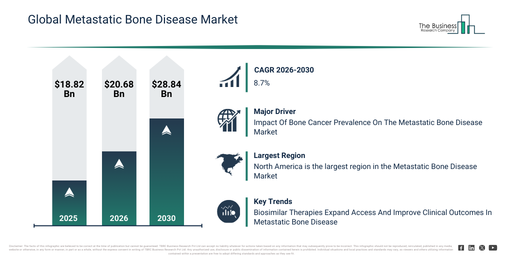
  • Metastatic Bone Disease Market Growth Outlook Reveals A CAGR Of 8.7% And A Market Value Of $28.84 Billion By 2030

    Metastatic Bone Disease Market Growth Outlook Reveals A CAGR Of 8.7% And A Market Value Of $28.84 Billion By 2030

    Delivering more actionable and strategically valuable research, The Business Research Company’s 2026 market reports feature market attractiveness analysis, total addressable market evaluation, company benchmarking matrices, interactive Excel dashboards, expanded supply chain intelligence, emerging startup coverage, and detailed product insights.

    Metastatic Bone Disease Market Value Expansion And Long-Term Growth Outlook

    The market for metastatic bone disease experienced robust expansion recently, projected to advance from $18.82 billion in 2025 to $20.68 billion in 2026, reflecting a compound annual growth rate of 9.8%. This historical growth trajectory is primarily influenced by escalating cancer prevalence, a rise in bone metastasis occurrences, broader application of chemotherapy, advancements in radiation therapy methodologies, and increased adoption of bisphosphonates.

    Anticipating a robust expansion over the forthcoming years, the market for metastatic bone disease is projected to reach a value of $28.84 billion by the year 2030, exhibiting a compound annual growth rate of 8.7%. This anticipated surge in the forecast period stems from multiple contributing factors, including the increasing development of targeted bone agents, a greater utilization of immunotherapy combinations, a heightened demand for minimally invasive tumor ablation techniques, a broader implementation of personalized treatment strategies, and an overall enhancement in oncologic diagnostic capabilities. Key developments anticipated during this forecast period encompass significant progress in targeted therapies for bone metastases, improvements in AI-driven diagnostic imaging, the emergence of digital platforms for remote patient symptom tracking, greater automation within oncology radiology processes, and the use of virtual reality for surgical and treatment training.

    Download A Free Sample Report For Comprehensive Market Insights:

    https://www.thebusinessresearchcompany.com/sample.aspx?id=15859&type=smp

    Metastatic Bone Disease Market Growth Momentum: Which Factors Are Influencing Demand?

    The rising incidence of bone cancer is anticipated to be a key driver for the expansion of the metastatic bone disease market in the future. Bone cancer, defined as a malignant neoplasm originating within bone cells, sees its prevalence influenced by a combination of hereditary predispositions, exposure to radiation, and environmental triggers like contact with specific chemical agents. This condition can directly contribute to the development of metastatic bone disease when malignant cells detach from the initial tumor and disseminate via the circulatory or lymphatic pathways, establishing secondary growths in other skeletal sites. Illustrating this trend, the American Cancer Society, a non-profit entity in the United States, reported 3,970 new diagnoses of bone and joint cancers in 2023, a slight uptick from the 3,910 cases identified in 2022, underscoring how a growing number of bone cancer diagnoses fuels the market for treating metastatic bone disease.

    Metastatic Bone Disease Market Segment Outlook: Which Categories Are Expanding The Fastest?

    The metastatic bone disease market covered in this report is segmented –

    1) By Treatment: Medication, Radiation Therapy, Surgical Intervention, Tumor Ablation Therapy

    2) By Origin: Breast, Lung, Thyroid, Kidney, Prostate, Other Origins

    3) By End-User: Hospitals, Specialty Clinics, Ambulatory Surgical Centers

    Subsegments:

    1) By Medication: Bisphosphonates, Denosumab, Chemotherapy Drugs, Hormonal Therapies, Targeted Therapies, Radiation Therapy

    2) By Radiation Therapy: External Beam Radiation Therapy, Internal Radiation Therapy

    3) By Surgical Intervention: Bone Stabilization Surgery, Bone Resection Surgery, Spinal Decompression Surgery

    4) By Tumor Ablation Therapy: Radiofrequency Ablation, Cryoablation, Microwave Ablation

    Metastatic Bone Disease Market Trends Reshaping Industry Growth

    Within the market for metastatic bone disease treatments, prominent corporations are prioritizing the creation of biosimilar options, aiming to broaden patient accessibility and decrease expenses while preserving therapeutic effectiveness. Biosimilars represent biological medications that bear a close resemblance to existing authorized reference drugs, exhibiting no significant variations in safety or efficacy. As an illustration, Sandoz, a biopharmaceutical firm headquartered in Switzerland, secured FDA authorization in March 2024 for both Wyost (denosumab-bbdz) and Jubbonti (denosumab-bbdz), which are recognized as the initial and sole FDA-approved biosimilars for denosumab, encompassing all therapeutic uses of the originator drug, including the prevention of skeletal-related incidents in individuals experiencing bone metastases from solid tumors. These developments are anticipated to amplify treatment availability and contribute to better clinical results for those afflicted with metastatic bone disease.

    Metastatic Bone Disease Market Key Companies And Competitive Benchmarking

    Major companies operating in the metastatic bone disease market are Pfizer Inc., Johnson & Johnson, Roche Holding AG, Merck & Co. Inc., Bayer AG, Sanofi SA, Bristol-Myers Squibb Company, AstraZeneca plc, Novartis AG, GSK plc, Takeda Pharmaceutical Company Limited, Medtronic plc, Eli Lilly and Company, Amgen Inc., Boston Scientific Corporation, Regeneron Pharmaceuticals Inc., Astellas Pharma Inc., Daiichi Sankyo Company Limited, Jazz Pharmaceuticals Inc., Exelixis Inc., BeiGene Ltd., Mylan N.V., Novocure GmbH, Galapagos NV, Telix Pharmaceuticals Limited

    Access The Complete Metastatic Bone Disease Market Report:

    https://www.thebusinessresearchcompany.com/report/metastatic-bone-disease-global-market-report

    Metastatic Bone Disease Market Regional Outlook: Where Are The Largest Opportunities Located?

    North Americawas the largest region in the metastatic bone disease market in 2025. The regions covered in the metastatic bone disease market report are Asia-Pacific, South East Asia, Western Europe, Eastern Europe, North America, South America, Middle East, Africa.

    Get in touch with us:

    The Business Research Company: https://www.thebusinessresearchcompany.com/

    Americas: +1 310-496-7795

    Asia: +44 7882 955267 & +91 8897263534

    Europe: +44 7882 955267

    Email us at: marketing@tbrc.info

    Follow us on:

    LinkedIn: https://in.linkedin.com/company/the-business-research-company

    YouTube: https://www.youtube.com/channel/UC24_fI0rV8cR5DxlCpgmyFQ

    Global Market Model: https://www.thebusinessresearchcompany.com/global-market-model
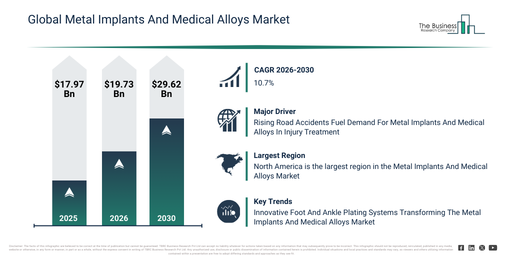
  • Metal Implants And Medical Alloys Market Forecast Highlights Expansion From $19.73 Billion To $29.61 Billion Through 2030

    Metal Implants And Medical Alloys Market Forecast Highlights Expansion From $19.73 Billion To $29.61 Billion Through 2030

    Enhanced with market attractiveness analysis, total addressable market evaluation, company benchmarking matrices, interactive Excel dashboards, expanded supply chain intelligence, emerging startup coverage, and detailed product insights, The Business Research Company’s 2026 market reports deliver more actionable and strategically valuable research.

    Metal Implants And Medical Alloys Market Expected To Reach $29.61 Billion By 2030 At 10.7% CAGR

    The market for metal implants and medical alloys has experienced significant expansion recently, projected to advance from $17.97 billion in 2025 to $19.73 billion in 2026, reflecting a compound annual growth rate of 9.8%. Key factors driving this growth during the historical period include a higher volume of orthopedic surgeries, an increased incidence of joint ailments, greater acceptance of dental implants, advancements in surgical procedures, and the escalating use of titanium alloys.

    The market for metal implants and medical alloys is projected for substantial expansion over the coming years, with an anticipated value of $29.62 billion by 2030, reflecting a compound annual growth rate of 10.7%. This projected growth trajectory is fueled by several key factors including the progression of biodegradable metal implants, an increasing need for less invasive surgical implant procedures, augmented investments in research and development for medical alloys, the broadening scope of orthopedic trauma care, and a growing inclination towards tailored implant solutions. Furthermore, significant trends anticipated within this period involve breakthroughs in the development of biocompatible metal alloys, the incorporation of artificial intelligence to refine implant designs, enhanced automation in the manufacturing of metal implants, the implementation of circular economy principles for recycling medical alloys, and sophisticated digital systems for tracking and monitoring implant functionality.

    Download A Free Sample Report For Comprehensive Market Insights:

    https://www.thebusinessresearchcompany.com/sample.aspx?id=12974&type=smp

    Metal Implants And Medical Alloys Market Expansion Drivers: What Is Shaping Future Growth?

    The escalating frequency of road traffic incidents is anticipated to serve as a significant catalyst for the expansion of the market encompassing metal implants and medical alloys. These accidents, defined by the involvement of a moving vehicle on a public thoroughfare resulting in harm or fatality, are on the rise, attributed to prevalent issues like driver distraction, excessive speed, suboptimal road infrastructure, and a greater prevalence of vehicles. Within the context of surgical interventions following such accidents, metal implants and medical alloys play an indispensable role, offering robust structural reinforcement for fractured bones and facilitating expedited healing processes. Illustrating this trend, Transport Canada, a governmental body in Canada, reported that in May 2025, the year 2023 saw 1,964 fatalities from motor vehicle accidents, a slight upward revision of 1.7% compared to the 1,931 fatalities recorded in 2022. Consequently, the augmentation in road accident occurrences is directly fueling the growth trajectory of the metal implants and medical alloys market.

    Metal Implants And Medical Alloys Market Segment Landscape: Which Areas Lead Market Development?

    The metal implants and medical alloys market covered in this report is segmented –

    1) By Material: Titanium, Stainless Steel, Cobalt Chromium, Other Materials

    2) By Application: Cardiovascular Applications, Dental Applications, Spinal Fusion Applications, Cranio-Facial Surgeries, Orthopedic Reconstruction Surgeries, Other Applications

    3) By End-User: Hospitals And Clinics, Ambulatory Surgical Centers, Other End-Users

    Subsegments:

    1) By Titanium: Titanium Alloys, Titanium Implants

    2) By Stainless Steel: 316L Stainless Steel, 304 Stainless Steel

    3) By Cobalt Chromium: Cobalt Chromium Alloys, Cobalt Chromium Implants

    4) By Other Materials: Zirconium, Nickel Titanium (Nitinol), Magnesium Alloys

    Metal Implants And Medical Alloys Market Strategic Trends: What Is Defining The Next Phase Of Growth?

    Within the metal implants and medical alloys sector, leading enterprises are concentrating their efforts on pioneering advancements, exemplified by the creation of foot and ankle plating systems designed for the remediation of foot and ankle ailments. These plating systems represent surgical implant solutions that are instrumental in stabilizing and reinforcing fractures or malformations of the foot and ankle by employing metal plates affixed with screws. To illustrate, in September 2023, MiRus LLC, a prominent American medical device firm possessing advanced proprietary technologies for both implants and surgical procedures, introduced the ATLAS MoRe Foot and Ankle Plating System. This particular system, brought to market by MiRus, LLC, distinguishes itself through a modular construction, enabling bespoke fixation approaches suited for each patient’s unique requirements. An ingenious locking mechanism contributes to superior stability and robustness, while the plates’ understated profile ensures a more natural contour, thereby reducing irritation to surrounding soft tissues. Furthermore, the system has been engineered to streamline surgical operations, enhancing both procedural efficiency and patient results.

    Metal Implants And Medical Alloys Market Industry Leaders And Market Competition

    Major companies operating in the metal implants and medical alloys market are Medtronic plc, Stryker Corporation, B. Braun Melsungen AG, Aperam S.A., Zimmer Biomet Holdings Inc., Smith and Nephew plc, Dentsply Sirona Inc., ATI Specialty Alloys and Components, Carpenter Technology Corporation, Materion Corporation, Integra LifeSciences Holdings Corporation, NuVasive Inc., CONMED Corporation, Wright Medical Group, Fort Wayne Metals Research Products LLC, Ulbrich Stainless Steels & Special Metals Inc., Lisi Medical Jeropa Inc., Shanghai MicroPort Orthopedics Inc., DJO Global Inc., Ametek Specialty Metal Products Inc., Boston Centerless Inc., Anomet Products Inc., AAP Implantate AG, QuesTek Innovations LLC, Supra Alloys Inc., Syntellix AG

    Access The Complete Metal Implants And Medical Alloys Market Report:

    https://www.thebusinessresearchcompany.com/report/metal-implants-and-medical-alloys-global-market-report

    Metal Implants And Medical Alloys Market Geographic Landscape: Which Region Dominates Industry Growth?

    North Americawas the largest region in the metal implants and medical alloys market in 2025. Asia-Pacificis expected to be the fastest-growing region in the forecast period. The regions covered in the metal implants and medical alloys market report are Asia-Pacific, South East Asia, Western Europe, Eastern Europe, North America, South America, Middle East, Africa.

    Get in touch with us:

    The Business Research Company: https://www.thebusinessresearchcompany.com/

    Americas: +1 310-496-7795

    Asia: +44 7882 955267 & +91 8897263534

    Europe: +44 7882 955267

    Email us at: marketing@tbrc.info

    Follow us on:

    LinkedIn: https://in.linkedin.com/company/the-business-research-company

    YouTube: https://www.youtube.com/channel/UC24_fI0rV8cR5DxlCpgmyFQ

    Global Market Model: https://www.thebusinessresearchcompany.com/global-market-model
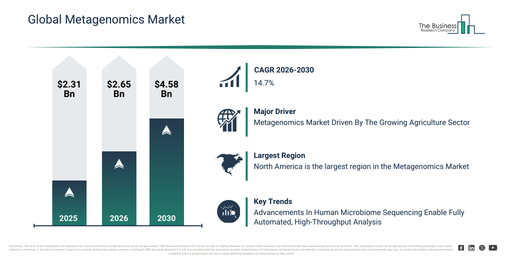
  • Metagenomics In Healthcare Market Expected To Reach $5.46 Billion By 2030 As Growth Accelerates At 17.5% CAGR

    Metagenomics In Healthcare Market Expected To Reach $5.46 Billion By 2030 As Growth Accelerates At 17.5% CAGR

    Through market attractiveness analysis, total addressable market evaluation, company benchmarking matrices, interactive Excel dashboards, expanded supply chain intelligence, emerging startup coverage, and detailed product insights, The Business Research Company’s 2026 market reports provide more actionable and strategically valuable research.

    Metagenomics In Healthcare Market Size And Revenue Forecast Through 2030

    The market for metagenomics in healthcare has experienced substantial expansion recently. Projections indicate a continued upward trend, with the market expected to increase from $2.44 billion in 2025 to $2.87 billion by 2026, demonstrating a compound annual growth rate of 17.8%. This growth during the preceding period can be ascribed to several key factors, including improvements in sequencing technologies, a rise in infectious disease occurrences, the broadening scope of microbiome research initiatives, escalating demand for diagnostic methods that do not require culturing, and the establishment of sequencing workflows suitable for clinical applications.

    The metagenomics in healthcare market is poised for substantial expansion over the coming years, with projections indicating a rise to $5.46 billion by 2030, reflecting a compound annual growth rate (CAGR) of 17.5%. This upward trajectory is anticipated to be fueled by several key factors, including the wider implementation of precision diagnostics for infectious diseases, escalating investments in therapies targeting the microbiome, a broadened scope for genomic epidemiology projects, the increasing integration of artificial intelligence in the analysis of microbial data, and a heightened emphasis on tailoring treatment approaches. Significant trends expected to shape this market during the forecast period encompass the greater adoption of metagenomic diagnostic tools in healthcare environments, the expanding utilization of microbiome analysis for disease characterization, a more integrated approach to infection management using next-generation sequencing (NGS), advancements in research for personalized microbial therapies, and a strengthened focus on expediting pathogen identification.

    Download A Free Sample Report For Comprehensive Market Insights:

    https://www.thebusinessresearchcompany.com/sample.aspx?id=28267&type=smp

    Metagenomics In Healthcare Market Development Factors: Which Trends Are Supporting Demand?

    The expanding incidence of infectious conditions is anticipated to fuel advancements in the metagenomics within healthcare sector in the future, with infectious diseases, defined as ailments stemming from detrimental microbes like bacteria, viruses, fungi, or parasites transmissible person-to-person, directly or indirectly, experiencing a surge attributed to heightened global travel accelerating pathogen dissemination across territories. Metagenomics in the healthcare domain offers a vital tool against these infectious diseases by facilitating swift and accurate pathogen detection, thereby playing a pivotal role in curbing outbreaks, alleviating diagnostic ambiguity through the examination of intricate microbial populations, enhancing patient prognoses, and informing specific therapeutic strategies, as evidenced by the UK Health Security Agency’s report in February 2024, which noted a 10.7% jump in tuberculosis cases in England to 4,850 in 2023 from 4,380 in 2022, underscoring the market’s upward trajectory driven by the escalating rate of infectious diseases.

    Metagenomics In Healthcare Market Segments: Where Are The Largest Growth Opportunities?

    The metagenomics in healthcare market covered in this report is segmented –

    1) By Types: Sample Extraction Kits, Metagenomics Kits

    2) By Technology: Next-Generation Sequencing, Polymerase Chain Reaction, Microarray

    3) By Workflow: Sample Collection, Deoxyribonucleic Acid Extraction, Library Preparation, Sequencing

    4) By Application: Infectious Disease Diagnosis, Genomic Epidemiology, Personalized Medicine, Microbiome Analysis, Drug Discovery

    5) By End User: Hospitals, Diagnostic Laboratories, Research Institutes, Pharmaceutical Companies, Biotechnology Companies

    Subsegments:

    1) By Sample Extraction Kits: Deoxyribonucleic Acid Extraction Kits, Ribonucleic Acid Extraction Kits, Protein Extraction Kits

    2) By Metagenomics Kits: Library Preparation Kits, Sequencing Kits, Target Enrichment Kits

    Metagenomics In Healthcare Market Transformation Trends: Which Innovations Are Driving Change?

    Companies actively participating in the metagenomics within the healthcare sector are concentrating their efforts on pioneering advancements, including the utilization of microbial community profiling, with the objective of improving the accuracy of disease detection, facilitating tailored treatment approaches, and propelling forward the field of precision medicine. This process of microbial community profiling involves a thorough examination and description of the various microorganisms present in a particular setting or specimen, employing sequencing technologies and bioinformatics methodologies to ascertain their components, variety, and functional contributions. As an illustration, in August 2024, MGI Tech Co. Ltd., a biotechnology firm originating from China, introduced a comprehensive Human Microbiome Metagenomics Sequencing Package designed to foster progress in both microbial studies and medical applications. This offering provides a fully automated, integrated workflow for microbial community profiling, enabling the efficient assessment of human microbiome characteristics, such as diversity, functionality, and associations with ailments, by leveraging proven high-throughput systems. This innovation serves to decrease the need for manual intervention, bolster the consistency of results, and lower expenses, thereby making extensive and clinical microbiome investigations more readily achievable. Researchers benefit from swift and accurate microbial identification capabilities, coupled with flexible processing volumes, which aids in the identification of significant biomarkers and the progression of research aimed at translating scientific findings into clinical practice.

    Metagenomics In Healthcare Market Major Participants And Competitive Dynamics

    Major companies operating in the metagenomics in healthcare market are F. Hoffmann-La Roche AG, Eurofins Scientific, Agilent Technologies Inc., Illumina Inc., Bio-Rad Laboratories Inc., QIAGEN N.V., BGI Genomics Co. Ltd., Novogene Corporation, Oxford Nanopore Technologies Limited, Pacific Biosciences of California Inc., MedGenome Labs Limited, Zymo Research Corporation, BaseClear B.V., Psomagen Inc., Karius Inc., Microsynth AG, Macrogen Inc., Norgen Biotek Corp., Tiny Health Inc., CosmosID Inc., Kanvas Biosciences Inc., Phase Genomics Inc., Wobble Genomics Inc.

    Access The Complete Metagenomics In Healthcare Market Report:

    https://www.thebusinessresearchcompany.com/report/metagenomics-in-healthcare-global-market-report

    Metagenomics In Healthcare Market Largest Region: Which Geography Holds The Highest Market Share?

    North Americawas the largest region in the metagenomics in healthcare market in 2025. Asia-Pacific is expected to be the fastest-growing region in the forecast period. The regions covered in the metagenomics in healthcare market report are Asia-Pacific, South East Asia, Western Europe, Eastern Europe, North America, South America, Middle East, Africa.

    Get in touch with us:

    The Business Research Company: https://www.thebusinessresearchcompany.com/

    Americas: +1 310-496-7795

    Asia: +44 7882 955267 & +91 8897263534

    Europe: +44 7882 955267

    Email us at: marketing@tbrc.info

    Follow us on:

    LinkedIn: https://in.linkedin.com/company/the-business-research-company

    YouTube: https://www.youtube.com/channel/UC24_fI0rV8cR5DxlCpgmyFQ

    Global Market Model: https://www.thebusinessresearchcompany.com/global-market-model
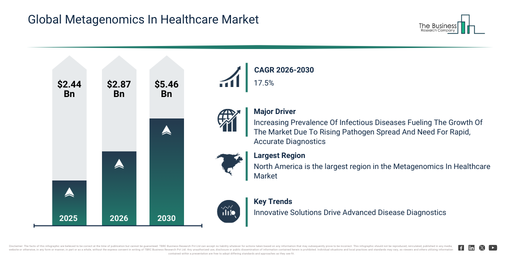
  • Metagenomics Market Set To Grow From $2.64 Billion In 2026 To $4.57 Billion By 2030 At A CAGR Of 14.7%

    Metagenomics Market Set To Grow From $2.64 Billion In 2026 To $4.57 Billion By 2030 At A CAGR Of 14.7%

    Delivering more actionable and strategically valuable research, The Business Research Company’s 2026 market reports feature market attractiveness analysis, total addressable market evaluation, company benchmarking matrices, interactive Excel dashboards, expanded supply chain intelligence, emerging startup coverage, and detailed product insights.

    Metagenomics Market Growth From $2.64 Billion In 2026 To $4.57 Billion By 2030 At A CAGR Of 14.7%

    The metagenomics sector has experienced substantial recent expansion, with its market value projected to increase from $2.31 billion in 2025 to $2.65 billion in 2026, reflecting a compound annual growth rate of 14.5%. This upward trajectory during the historical period is largely attributable to several key factors: the wider adoption of sequencing technologies, a surge in research focused on microbial diversity, advancements in environmental microbiology investigations, greater accessibility to PCR machinery, and an increased utilization in clinical diagnostics.

    Experiencing a surge in expansion, the metagenomics market is projected to reach $4.58 billion by 2030, maintaining a robust compound annual growth rate of 14.7%. This upward trajectory is fueled by several key factors, including innovations in sequencing technology, escalating demand for therapies derived from the microbiome, increased research and development in bioinformatics, mounting investments in environmental surveillance, and the broadening scope of precision medicine. Furthermore, significant trends shaping this period involve the wider adoption of precision genomics for detailed microbial community analysis, the utilization of artificial intelligence to refine the interpretation of metagenomic data, the implementation of automated processes for sample handling, the establishment of cloud-based solutions for managing extensive sequencing datasets, and the integration of the Internet of Things for real-time environmental microbial monitoring.

    Download A Free Sample Report For Comprehensive Market Insights:

    https://www.thebusinessresearchcompany.com/sample.aspx?id=10815&type=smp

    Metagenomics Market Industry Drivers: What Is Driving Revenue Growth?

    The expansion of the agricultural industry is poised to propel the metagenomics market forward. This sector, encompassing crop cultivation, animal husbandry, and the production of food and vital agricultural commodities, plays a crucial role in sustaining economies and global food security. Its growth is fueled by escalating worldwide food requirements, progress in sustainable agricultural practices, and the wider implementation of innovative technologies designed to optimize output and resource utilization. Metagenomics significantly contributes to agricultural enhancement by examining the microbial ecosystems within soil and associated with crops, thus facilitating informed decisions in precision agriculture concerning soil vitality, nutrient strategies, pest and disease mitigation, and ecological stewardship. For example, in December 2023, the U.S. Department of Agriculture Economic Research Service reported that U.S. agricultural exports amounted to $178.7 billion in 2023, a figure that underscores the continued development of the agricultural domain and the increasing integration of sophisticated technologies to bolster productivity. Consequently, the burgeoning agricultural sector is a key driver for the metagenomics market’s upward trajectory.

    Metagenomics Market Segment Analysis: What Are The Major Market Categories?

    The metagenomics market covered in this report is segmented –

    1) By Product: Instruments, Kits And Reagents, Software And Services

    2) By Workflow: Sequencing, Pre-Sequencing, Data Analysis

    3) By Application: Environmental, Clinical Diagnostics, Drug Discovery, Biotechnology, Food And Nutrition, Other Applications

    4) By End User: Pharmaceutical Industries, Research Laboratories, Biotechnology Companies, Pathology Laboratories, Academic And Research Institutes

    Subsegments:

    1) By Instruments: DNA Sequencers, PCR Machines, Microarray Systems, Mass Spectrometers

    2) By Kits And Reagents: DNA Extraction Kits, Library Preparation Kits, Amplification Kits, Sequencing Reagents

    3) By Software And Services: Data Analysis Software, Bioinformatics Services, Cloud-Based Data Storage, Consultation Services

    #Metagenomics Market Growth Trends: What Is Influencing The Future Outlook?

    Metagenomics market leaders are concentrating their efforts on creating sophisticated tools, including high-throughput sequencing systems, aimed at enhancing the precision, speed, and consistency of analyzing microbiomes and microbial populations. These advanced systems are capable of examining countless DNA or RNA sequences concurrently, thus facilitating extensive studies of genomes or metagenomes. Illustrating this trend, MGI Tech Co. Ltd., a company based in China specializing in sequencing, introduced its Human Microbiome Metagenomics Sequencing Package in August 2024. This offering boasts extensive automation throughout the entire process, from sample collection to data delivery, provides adaptable capacity for laboratories of different scales, and has demonstrated reliable results with a variety of biological samples pertinent to human microbiome investigations. The package is engineered to simplify microbiome research by consolidating optimized sample handling, library creation, sequencing, and data interpretation, thereby empowering scientists to gain precise, repeatable, and thorough understanding of microbial communities while minimizing manual labor and operational challenges.

    Metagenomics Market Leading Companies Driving Competitive Growth

    Major companies operating in the metagenomics market are Illumina Inc., Promega Corporation, Qiagen N.V., Thermo Fisher Scientific Inc., Perkin Elmer Inc., Bio-Rad Laboratories Inc., F. Hoffmann-La Roche Ltd., Novogene Co. Ltd., Oxford Nanopore Technologies Limited, BGI Group, Eurofins Scientific SE, Arc Bio LLC, Computomics GmbH, Enterome Bioscience, TAKARA BIO INC., Danaher Corporation, ELITechGroup, Metagenomi, Cosmosid Inc., Pattern Ag, Tiny Health, MATIS OHF, Adapsyn Bioscience, Precidiag Inc., One Codex Inc., MetaBi Inc., Zymo Research Corporation, Bluebee Holding BV, Maverix Biomics Inc., Lucigen Corporation

    Access The Complete Metagenomics Market Report:

    https://www.thebusinessresearchcompany.com/report/metagenomics-global-market-report

    Metagenomics Market Regional Analysis: Which Region Leads By Revenue?

    North Americawas the largest region in the global metagenomics market in 2025. Asia-Pacificis expected to be the fastest-growing region in the forecast period. The regions covered in the metagenomics market report are Asia-Pacific, South East Asia, Western Europe, Eastern Europe, North America, South America, Middle East, Africa.

    Get in touch with us:

    The Business Research Company: https://www.thebusinessresearchcompany.com/

    Americas: +1 310-496-7795

    Asia: +44 7882 955267 & +91 8897263534

    Europe: +44 7882 955267

    Email us at: marketing@tbrc.info

    Follow us on:

    LinkedIn: https://in.linkedin.com/company/the-business-research-company

    YouTube: https://www.youtube.com/channel/UC24_fI0rV8cR5DxlCpgmyFQ

    Global Market Model: https://www.thebusinessresearchcompany.com/global-market-model
  • Metagenomic Sequencing Market Opportunities Are Emerging Beyond Traditional Growth Areas

    Metagenomic Sequencing Market Opportunities Are Emerging Beyond Traditional Growth Areas

    Enhanced with market attractiveness analysis, total addressable market evaluation, company benchmarking matrices, interactive Excel dashboards, expanded supply chain intelligence, emerging startup coverage, and detailed product insights, The Business Research Company’s 2026 market reports deliver more actionable and strategically valuable research.

    Metagenomic Sequencing Market Expansion Outlook: What Revenue Opportunities Lie Ahead?

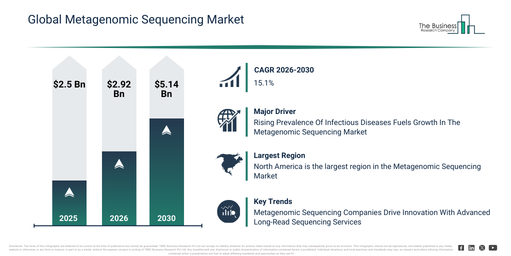
    The market for metagenomic sequencing has experienced considerable expansion lately, projected to increase from $2.5 billion in 2025 to $2.92 billion in 2026, reflecting a compound annual growth rate of 17.1%. This past growth was propelled by several factors, including the expanding utilization of next-generation sequencing technologies, the early embrace of microbial community investigations, a heightened demand for DNA extraction kits, advancements in environmental microbiology research, and the broader utilization in clinical diagnostics.

    The metagenomic sequencing sector is poised for significant expansion in the coming years, projecting a market valuation of $5.14 billion by 2030, driven by a compound annual growth rate (CAGR) of 15.1%. This anticipated surge is fueled by several key factors including technological leaps in sequencing capabilities, a burgeoning field of microbiome-focused therapies, heightened financial commitments to bioinformatics research, a growing need for cloud solutions in genomic data analysis, and the broadening scope of personalized medicine. During this projection period, prominent trends will likely include the extended application of precision genomics through high-throughput sequencing methods, the utilization of artificial intelligence for analyzing metagenomic data, the streamlining of sample preparation and sequencing processes via automation, the emergence of cloud-based bioinformatics platforms adept at managing extensive datasets, and the integration of the Internet of Things for real-time environmental microbiome surveillance.

    Download A Free Sample Report For Comprehensive Market Insights:

    https://www.thebusinessresearchcompany.com/sample.aspx?id=16117&type=smp

    Metagenomic Sequencing Market Growth Factors: Which Forces Are Supporting Market Expansion?

    The increasing prevalence of tuberculosis is poised to stimulate expansion within the metagenomic sequencing market. Tuberculosis, a communicable ailment caused by Mycobacterium tuberculosis, principally impacts the respiratory system and disseminates via airborne particles during coughing or sneezing by infected persons. Escalating TB incidence is attributed to influences like international population movements, compromised immunity, resistance to antibiotics, and deficiencies in public health monitoring. Metagenomic sequencing aids in TB diagnosis by facilitating swift, non-selective pathogen identification, revealing genes associated with drug resistance, and enhancing the tracking of disease outbreaks, all of which are vital for confronting escalating infectious dangers. Specifically, data from the Centers for Disease Control and Prevention indicated that from 2022 to 2023, reported tuberculosis instances climbed from 8,320 to 9,615, marking an increase of 1,295 cases in the United States. Consequently, the mounting challenge posed by tuberculosis is directly fueling the growth of the metagenomic sequencing industry.

    Metagenomic Sequencing Market Segment Breakdown: Which Categories Generate The Most Revenue?

    The metagenomic sequencing market covered in this report is segmented –

    1) By Product And Service: Reagents And Consumables, Instruments, Sequencing Services, Analysis And Data Interpretation Solutions

    2) By Technology: 16S RNA Sequencing, Shotgun Metagenomic Sequencing, Whole-Genome Sequencing And De Novo Assembly, Metatranscriptomics

    3) By Application: Clinical Diagnostic, Environmental Remediation, Gut Microbe Characterization, Drug Discovery, Biofuel, Agriculture, Other Applications

    Subsegments:

    1) By Reagents And Consumables: DNA Or RNA Extraction Kits, Library Preparation Kits, Sequencing Kits, PCR And qPCR Reagents, Other Consumables (Buffers, Probes)

    2) By Instruments: Next-Generation Sequencers (NGS), Third-Party Sequencers, Microarrays, Real-Time PCR Instruments

    3) By Sequencing Services: Whole Genome Sequencing (WGS), 16S rRNA Sequencing, Shotgun Metagenomic Sequencing, Amplicon Sequencing, Metatranscriptomic Sequencing

    4) By Analysis And Data Interpretation Solutions: Bioinformatics Software, Cloud-Based Data Analysis Services, Data Storage Solutions, Custom Analysis Tools, Data Interpretation Platforms

    Metagenomic Sequencing Market Industry Trends: What Changes Are Reshaping Demand?

    The key players within the metagenomic sequencing sector are prioritizing advancements in their service offerings, aiming to enhance accuracy, increase yield, and reduce expenses associated with sequencing. These sequencing services leverage state-of-the-art genomic technologies to analyze extended DNA segments, thereby offering a more complete understanding of genetic compositions than conventional short-read approaches. As an illustration, in April of 2024, the biotechnology firm Clinical Microbiomics A/S, headquartered in Denmark, introduced sophisticated long-read sequencing options, encompassing 16S, ITS, 18S rRNA, bespoke gene sequencing, and all-encompassing genomics and metagenomics. These services deliver exceptional detail and superior quality in microbial examination, facilitating profound comprehension of microbial populations and supporting the development of premium metagenome-assembled genomes.

    Metagenomic Sequencing Market Key Players And Strategic Industry Positioning

    Major companies operating in the metagenomic sequencing market are F. Hoffmann-La Roche Ltd., Thermo Fisher Scientific Inc., Merck Co. & KGaA, Eurofins Scientific SE, PerkinElmer Inc., Illumina Inc., Bio-Rad Laboratories Inc., QIAGEN N.V., Beijing Genomics Institute Group, Azenta Inc., Promega Corporation, Novogene Co. Ltd., Oxford Nanopore Technologies plc, Zymo Research Corporation, Metagenomi Inc., Psamogen Inc., IntegraGen SA, Karius Inc., DNAStar Inc., Macrogen Inc., Takara Bio Inc., Arc Bio LLC, Microsynth AG, Computomics GmbH, COSMOSID Inc., Phase Genomics Inc., Era7 Bioinformatics GmbH

    Access The Complete Metagenomic Sequencing Market Report:

    https://www.thebusinessresearchcompany.com/report/metagenomic-sequencing-global-market-report

    Metagenomic Sequencing Market Geographic Distribution And Regional Opportunities

    North Americawas the largest region in the metagenomic sequencing market in 2025. Asia-Pacificis expected to be the fastest growing region in the market. The regions covered in the metagenomic sequencing market report are Asia-Pacific, South East Asia, Western Europe, Eastern Europe, North America, South America, Middle East, Africa.

    Get in touch with us:

    The Business Research Company: https://www.thebusinessresearchcompany.com/

    Americas: +1 310-496-7795

    Asia: +44 7882 955267 & +91 8897263534

    Europe: +44 7882 955267

    Email us at: marketing@tbrc.info

    Follow us on:

    LinkedIn: https://in.linkedin.com/company/the-business-research-company

    YouTube: https://www.youtube.com/channel/UC24_fI0rV8cR5DxlCpgmyFQ

    Global Market Model: https://www.thebusinessresearchcompany.com/global-market-model
  • Metabolomics Services Market Expansion Is Opening New Pathways For Strategic Investment

    Metabolomics Services Market Expansion Is Opening New Pathways For Strategic Investment

    Through market attractiveness analysis, total addressable market evaluation, company benchmarking matrices, interactive Excel dashboards, expanded supply chain intelligence, emerging startup coverage, and detailed product insights, The Business Research Company’s 2026 market reports provide more actionable and strategically valuable research.

    Metabolomics Services Market Growth Potential: How Will Market Size Change Through 2030?

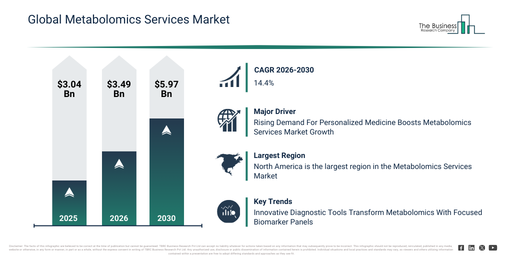
    The metabolomics services sector has experienced substantial expansion lately, with projections indicating a rise from $3.04 billion in 2025 to $3.49 billion in 2026, reflecting a compound annual growth rate of 14.7%. This past growth trajectory was propelled by increased financial backing for life sciences research, the broadening scope of pharmaceutical research and development endeavors, a greater incorporation of metabolomic approaches in academic investigations, the accessibility of sophisticated analytical tools, and an uptick in partnerships between academic and research organizations.

    The global metabolomics services market is poised for substantial expansion over the upcoming years, projecting an increase to $5.97 billion by 2030, driven by a compound annual growth rate (CAGR) of 14.4%. This anticipated growth is largely fueled by the expanding embrace of personalized medicine initiatives, a surging need for efficient, high-volume metabolomic analyses, the broader implementation of precision drug discovery endeavors, a heightened emphasis on systems biology methodologies, and the increasing application of artificial intelligence in data analysis. Key developments anticipated within this forecast period encompass a greater reliance on external providers for metabolomic examinations, a growing preference for untargeted metabolomics approaches, the expansion of programs focused on identifying novel biomarkers, the more extensive incorporation of sophisticated bioinformatics tools, and a strengthened focus on applications within drug development.

    Download A Free Sample Report For Comprehensive Market Insights:

    https://www.thebusinessresearchcompany.com/sample.aspx?id=19584&type=smp

    Metabolomics Services Market Demand Drivers: What Is Fueling Industry Growth?

    The burgeoning need for individualized medical treatments is anticipated to act as a significant catalyst for the expansion of the metabolomics services sector. This patient-specific healthcare paradigm, which involves tailoring medical interventions and therapeutic strategies to an individual’s genetic composition, environmental influences, and daily habits, is experiencing heightened interest. Driving this trend are the considerable leaps in genomic technologies, which facilitate the development of more accurate and customized therapeutic approaches, coupled with an escalating focus on delivering patient-centered care to achieve superior health results. Metabolomics services play a crucial role in advancing personalized medicine by offering in-depth insights into an individual’s metabolic makeup, thereby enabling the customization of therapies to match each patient’s distinct biological condition, culminating in more efficacious and precisely directed treatments. Illustrating this, it was reported in February 2024 by the U.S.-based Personalized Medicine Coalition that the FDA greenlit 16 novel personalized therapies for individuals with rare diseases in 2023, a notable increase from the six approvals in 2022. Consequently, the growing appetite for personalized medicine directly fuels the advancement of metabolomics services.

    Metabolomics Services Market Segmentation: How Is The Market Structured Across Key Categories?

    The metabolomics services market covered in this report is segmented –

    1) By Type: Untargeted Metabolomics Services, Targeted Metabolomics Services

    2) By Analytical Platform And Services: Metabolomics Bioinformatics Services, Chromatography, Mass Spectrometry, Other Analytical Platform And Services

    3) By End-User: Agriculture And Food, Biomedical And Pharmaceutical, Academic And Research Labs, Diagnostic Laboratories, Other End-Users

    Subsegments:

    1) By Untargeted Metabolomics Services: Metabolite Profiling, Comprehensive Metabolomic Analysis, High-Throughput Metabolomics, Non-Targeted Mass Spectrometry Analysis, Data Mining and Interpretation Services

    2) By Targeted Metabolomics Services: Quantitative Metabolite Analysis, Biomarker Discovery and Validation, Pathway Analysis, Specific Metabolite Measurement, Targeted Mass Spectrometry Services

    Metabolomics Services Market Innovation Trends: Which Developments Are Transforming The Industry?

    Within the metabolomics services market, leading entities are actively engaged in creating cutting-edge diagnostic instruments aimed at improving disease identification and tailoring medical treatments. These diagnostic tools, encompassing both the devices and methodologies employed to pinpoint and evaluate health conditions, sicknesses, or ailments, empower medical practitioners in achieving precise diagnoses and directing therapeutic strategies. As an illustration, in October of 2023, Sapient Bioanalytics LLC, a biotechnology firm situated in the United States, introduced specialized panels for target metabolites and lipids, facilitating the exploration of biomarkers and accelerating the achievement of insights. These comprehensive panels provide a concentrated method for identifying and precisely measuring particular metabolites and lipids, thereby elevating the accuracy of biomarker detection. Engineered for expeditious insight generation, these panels ensure a swift delivery of outcomes, a critical factor for timely decision-making in both research endeavors and clinical environments, and are augmented with sophisticated data analysis capabilities to decipher intricate metabolic patterns and furnish practical intelligence.

    Metabolomics Services Market Competitive Landscape And Leading Companies

    Major companies operating in the metabolomics services market are Metabolon Inc., Biocrates Life Sciences AG, Nightingale Health, Human Metabolome Technologies Inc., MS-Omics, Creative Proteomics, Stemina Biomarker Discovery Inc., Metware Biotechnology Co. Ltd., OWL Metabolomics, BGI Metabolomics, MSDIAL Services, Chenomx Inc., BioMark Diagnostics, Microbiome Insights, Phenome Centre Birmingham, Australian National Phenome Centre, Biosfer Teslab, The Metabolomics Innovation Centre, One Way Liver Genomics, Revvity Omics Services

    Access The Complete Metabolomics Services Market Report:

    https://www.thebusinessresearchcompany.com/report/metabolomics-services-global-market-report

    Metabolomics Services Market Largest Region By Revenue And Market Share

    North Americawas the largest region in the metabolomics services market in 2025. Asia-Pacificis expected to be the fastest-growing region in the forecast period. The regions covered in the metabolomics services market report are Asia-Pacific, South East Asia, Western Europe, Eastern Europe, North America, South America, Middle East, Africa.

    Get in touch with us:

    The Business Research Company: https://www.thebusinessresearchcompany.com/

    Americas: +1 310-496-7795

    Asia: +44 7882 955267 & +91 8897263534

    Europe: +44 7882 955267

    Email us at: marketing@tbrc.info

    Follow us on:

    LinkedIn: https://in.linkedin.com/company/the-business-research-company

    YouTube: https://www.youtube.com/channel/UC24_fI0rV8cR5DxlCpgmyFQ

    Global Market Model: https://www.thebusinessresearchcompany.com/global-market-model
  • Metabolomics Market Trends Are Creating New Opportunities For Industry Leaders

    Metabolomics Market Trends Are Creating New Opportunities For Industry Leaders

    Delivering more actionable and strategically valuable research, The Business Research Company’s 2026 market reports feature market attractiveness analysis, total addressable market evaluation, company benchmarking matrices, interactive Excel dashboards, expanded supply chain intelligence, emerging startup coverage, and detailed product insights.

    Metabolomics Market Value Analysis: What Growth Is Expected Over The Forecast Period?

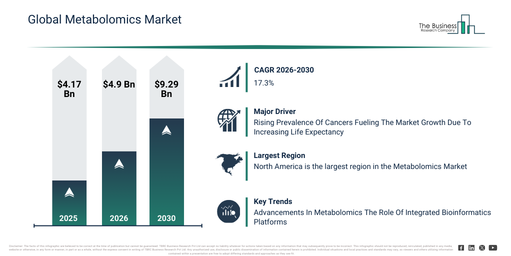
    The metabolomics market experienced significant expansion lately, projected to increase from $4.17 billion in 2025 to $4.9 billion in 2026, reflecting a compound annual growth rate of 17.5%. Key drivers behind this historical expansion include heightened research into biomarker discovery, greater utilization of mass spectrometry, intensified focus on cancer metabolism investigations, broader implementation of chromatography systems, and advancements in metabolite profiling methodologies.

    The metabolomics industry is poised for substantial expansion in the coming years, projecting a market valuation of $9.29 billion by 2030, driven by a compound annual growth rate of 17.3%. This projected surge is underpinned by several key factors, including advancements in bioinformatics technologies, a growing emphasis on tailored medical treatments, escalating interest in nutrigenomics research, increased exploration of metabolic pathways, and the expanding integration of metabolomics within clinical diagnostic procedures. Furthermore, significant trends anticipated during this forecast period encompass the synergy between precision medicine and metabolomic analysis, the proliferation of cloud-based platforms for metabolomic data management, the application of artificial intelligence for identifying metabolic patterns, the automation of high-volume metabolomics processes, and the utilization of the Internet of Things for continuous metabolic monitoring.

    Download A Free Sample Report For Comprehensive Market Insights:

    https://www.thebusinessresearchcompany.com/sample.aspx?id=2497&type=smp

    Metabolomics Market Growth Drivers: What Factors Are Accelerating Expansion?

    The increasing incidence of cancer is anticipated to be a significant catalyst for the expansion of the metabolomics market. Cancer, characterized by the uncontrolled proliferation and potential metastasis of aberrant cells, is becoming more common, particularly among the aging demographic, as age represents the foremost risk factor for the majority of cancer types, with most diagnoses occurring in individuals beyond 65 years of age. Metabolomics plays a crucial role in cancer research by offering a detailed overview of the metabolic alterations within tumor cells, thereby facilitating earlier diagnosis, deeper comprehension of disease progression, and the pinpointing of promising therapeutic avenues. To illustrate, projections from the World Health Organization, a Geneva-based global health authority, indicated in February 2024 that approximately 35 million new cancer cases are forecast for the year 2050, signifying a substantial 77% jump compared to the estimated 20 million cases recorded in 2022. Consequently, the escalating rates of cancer are a direct impetus behind the growth observed in the metabolomics sector.

    Metabolomics Market Segmentation Trends And Revenue Drivers

    The metabolomics market covered in this report is segmented –

    1) By Product And Service: Metabolomics Instruments, Metabolomics Bioinformatics Tools And Services

    2) By Indication: Cancer, Cardiovascular Disorders, Neurological Disorders, Inborn Errors Of Metabolism, Other Indications

    3) By Application: Biomarker Discovery, Drug Discovery, Toxicology Testing, Nutrigenomics, Functional Genomics, Personalized Medicine, Other Applications

    Subsegments:

    1) By Metabolomics Instruments: Chromatography Instruments (Gas Chromatography, Liquid Chromatography), Mass Spectrometry Instruments (LC-MS, GC-MS), NMR Instruments (Nuclear Magnetic Resonance)

    2) By Metabolomics Bioinformatics Tools And Services: Software Tools (Data Analysis, Statistical Tools, Modeling Tools), Database Services (Metabolomic Databases), Consulting Services (Data Interpretation, Analytical Support), Training And Support Services

    Metabolomics Market Trends: What Is Shaping Future Industry Growth?

    Leading entities within the metabolomics sector are prioritizing the development and deployment of Integrated Bioinformatics Platforms, aiming to enhance the analysis of intricate metabolomic datasets and consequently propel progress in areas such as tailored healthcare, the identification of disease indicators, and a deeper comprehension of pathological conditions. An Integrated Bioinformatics Platform constitutes a sophisticated software suite designed to amalgamate diverse bioinformatics utilities and repositories, thereby streamlining the examination and interpretation of biological information. Through the alignment of metabolomics information with Metabolon’s detailed biochemical pathway schematics, scientists gain the ability to elucidate biological functions and the underlying causes of ailments. As an illustration, February 2024 saw the unveiling of Metabolon’s bioinformatics solution by Metabolon, Inc., a firm situated in the United States. The Biomarker Lenses feature within this Integrated Bioinformatics Platform empowers users to employ sophisticated analytical filters, allowing them to concentrate on metabolites associated with particular biological pathways or diseases, thereby fostering a more focused investigation of metabolomic findings. Furthermore, the platform incorporates functionalities for performing statistical assessments, including T-tests and ANOVAs, equipping researchers with the means to construct and evaluate statistical frameworks, manage associated descriptive information, and present outcomes in a visually effective manner.

    Metabolomics Market Industry Leaders: Which Organizations Are Driving Competition?

    Major companies operating in the metabolomics market are Human Metabolome Technologies Inc., Metabolon Inc., Bio-Rad Laboratories Inc., Bruker Corporation, Agilent Technologies Inc., Thermo Fisher Scientific Inc., Waters Corporation, Biocrates Life Sciences AG, Shimadzu Corporation, Danaher Corporation, PerkinElmer Inc., LECO Corporation, Phenomenome Discoveries Inc., AB Sciex, BG Medicine Inc., Chenomx Inc., Creative Proteomics, Evotec A.G, Merck kgaA, Charles River Laboratories International Inc., Metabowerke GmbH, Metabolomic Diagnostics, Phenomenex Inc.

    Access The Complete Metabolomics Market Report:

    https://www.thebusinessresearchcompany.com/report/metabolomics-global-market-report

    Metabolomics Market Regional Analysis And Leading Geography

    North Americawas the largest region in the metabolomics market in 2025. Western Europewas the second largest region in the metabolomics market. The regions covered in the metabolomics market report are Asia-Pacific, South East Asia, Western Europe, Eastern Europe, North America, South America, Middle East, Africa.

    Get in touch with us:

    The Business Research Company: https://www.thebusinessresearchcompany.com/

    Americas: +1 310-496-7795

    Asia: +44 7882 955267 & +91 8897263534

    Europe: +44 7882 955267

    Email us at: marketing@tbrc.info

    Follow us on:

    LinkedIn: https://in.linkedin.com/company/the-business-research-company

    YouTube: https://www.youtube.com/channel/UC24_fI0rV8cR5DxlCpgmyFQ

    Global Market Model: https://www.thebusinessresearchcompany.com/global-market-model
  • Metabolic Testing Market Growth Is Reshaping Competitive Advantage Across The Industry

    Metabolic Testing Market Growth Is Reshaping Competitive Advantage Across The Industry

    Enhanced with market attractiveness analysis, total addressable market evaluation, company benchmarking matrices, interactive Excel dashboards, expanded supply chain intelligence, emerging startup coverage, and detailed product insights, The Business Research Company’s 2026 market reports deliver more actionable and strategically valuable research.

    Metabolic Testing Market Size Forecast: How Large Could The Market Become By 2030?

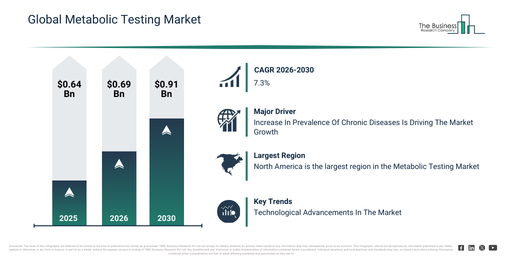
    The market for metabolic testing has experienced robust expansion lately, with projections indicating a surge from $0.64 billion in 2025 to $0.69 billion in 2026, reflecting a compound annual growth rate of 7.5%. This historical growth trend has been propelled by several factors, including an increasing incidence of obesity, wider utilization of indirect calorimetry techniques, greater integration of cardiopulmonary exercise testing (CPETs) within hospital settings, broadening diagnostic capabilities, and heightened public awareness concerning metabolic health conditions.

    The market for metabolic testing is poised for substantial expansion over the coming years, projecting a rise to $0.91 billion by 2030, fueled by a compound annual growth rate of 7.3%. This anticipated surge is underpinned by several key drivers, including the growing popularity of tailored wellness initiatives, the increasing use of advanced analytics for sports performance, a heightened demand for remote health oversight, the proliferation of wearable metabolic sensors, and the expanding incorporation of artificial intelligence in diagnostic processes. Significant trends anticipated within this timeframe involve the increasing embrace of individualized metabolic health plans, the application of AI for assessing and forecasting metabolic rates, the utilization of cloud technology for monitoring metabolic test data, the automation of metabolic testing devices, and the implementation of real-time internet of things (IoT) based bodily analytics.

    Download A Free Sample Report For Comprehensive Market Insights:

    https://www.thebusinessresearchcompany.com/sample.aspx?id=21219&type=smp

    Metabolic Testing Market Growth Factors Supporting Long-Term Expansion

    The escalating incidence of persistent health conditions is anticipated to fuel the growth of the metabolic testing market. These long-term ailments, which generally last a year or more and necessitate continuous medical care or restrict daily activities, are on the rise due to factors like sedentary lifestyles, suboptimal nutritional choices, and an expanding elderly demographic. Metabolic analysis is instrumental in overseeing these chronic conditions by offering crucial information about an individual’s metabolic status. This facilitates the early identification of issues like diabetes, heart conditions, and metabolic syndrome, thereby enabling tailored therapeutic strategies and enhancing patient outcomes. For example, as reported by the World Health Organization (WHO) in September 2023, chronic diseases claim 41 million lives annually on a global scale, representing 74% of all deaths, with cardiovascular diseases accounting for 17.9 million, cancers for 9.3 million, chronic respiratory illnesses for 4.1 million, and diabetes for 2.0 million. Consequently, the growing burden of chronic diseases is a significant driver for the metabolic testing market.

    Metabolic Testing Market Segment Analysis Highlighting Growth Areas

    The metabolic testing market covered in this report is segmented –

    1) By Equipment Type: Body Composition Analyzers, Cardiopulmonary Exercise Testing (CPET) Systems, Electrocardiogram Systems (ECG) Systems, Metabolic Carts, Other Equipment Types

    2) By Technology: VO2 Max Analysis, RMR Analysis, Body Composition Analysis

    3) By Application: Critical Care, Lifestyle Diseases, Other Applications

    4) By End User: Hospitals And Clinics, Sports Training Centers, Other End Users

    Subsegments:

    1) By Body Composition Analyzers: Dual-Energy X-ray Absorptiometry (DXA), Bioelectrical Impedance Analysis (BIA), Air Displacement Plethysmography (ADP)

    2) By Cardiopulmonary Exercise Testing (CPET) Systems: Treadmill Or Cycle Ergometer-based CPET, Oxygen Consumption Measurement Systems, Gas Exchange Measurement Systems

    3) By Electrocardiogram (ECG) Systems: Resting ECG Systems, Stress ECG Systems, Holter Monitors

    4) By Metabolic Carts: Indirect Calorimetry Metabolic Carts, Open-Circuit Spirometry Metabolic Carts

    5) By Other Equipment Types: Continuous Glucose Monitoring Systems, Lactate Testing Devices, Blood Pressure Monitoring Devices

    Metabolic Testing Market Industry Trends Shaping Future Revenue Growth

    Leading enterprises within the metabolic testing sector are concentrating their efforts on the creation of pioneering analytical instruments, specifically metabolic analyzers, with the aim of augmenting real-time metabolic assessments and elevating the precision of research outcomes. A metabolic analyzer functions as a medical instrument designed to quantify an individual’s metabolic pace and evaluate diverse metabolic processes, thereby scrutinizing the body’s efficacy in consuming oxygen and transforming ingested sustenance into usable energy. This analysis furnishes valuable data concerning caloric expenditure, the substrates employed for energy production (distinguishing between carbohydrates and fats), and the overall efficiency of respiration. Illustratively, in September of 2024, PHC Corporation, a Japanese firm renowned for its healthcare product offerings, introduced LiCellMo, a live cell metabolic analyzer engineered to facilitate the real-time visual depiction of cellular metabolic activity, particularly beneficial in the domain of cell and gene therapy investigations. The LiCellMo live cell metabolic analyzer distinguishes itself through its distinct capabilities, including uninterrupted, non-intrusive, and real-time surveillance of glucose and lactate concentrations within cell cultures, thereby presenting a holistic perspective of cellular metabolism without interfering with ongoing experimental procedures. This advanced system empowers researchers to observe metabolic shifts within cell cultures, affording a more thorough understanding of cellular functions and behaviors.

    Metabolic Testing Market Leading Companies: Who Holds Significant Market Presence?

    Major companies operating in the metabolic testing market are Becton Dickinson and Company, Lumen Technologies Inc., Laboratory Corporation of America Holdings LabCorp, Quest Diagnostics Incorporated, Agilent Technologies Inc., Vyaire Medical Inc., Microlife Medical Home Solutions Inc., MGC Diagnostics Corporation, Geratherm Medical AG, Actofit Wearables, COSMED Srl, Levels Health Inc, Cortex Biophysik GmbH, KORR Medical Technologies Inc., iWorx Systems Inc., General Electric Company GE Healthcare, Hologic Inc, Koninklijke Philips NV, Parvo Medics Inc, InBody Co Ltd, Schiller AG, Noraxon USA Inc, Seca GmbH Co KG

    Access The Complete Metabolic Testing Market Report:

    https://www.thebusinessresearchcompany.com/report/metabolic-testing-global-market-report

    Metabolic Testing Market Geographic Analysis: Where Is Demand Growing The Fastest?

    North Americawas the dominant region in the metabolic testing market in 2025. Asia-Pacificis expected to be the exponential growth region in the forecast period. The regions covered in the metabolic testing market report are Asia-Pacific, South East Asia, Western Europe, Eastern Europe, North America, South America, Middle East, Africa.

    Get in touch with us:

    The Business Research Company: https://www.thebusinessresearchcompany.com/

    Americas: +1 310-496-7795

    Asia: +44 7882 955267 & +91 8897263534

    Europe: +44 7882 955267

    Email us at: marketing@tbrc.info

    Follow us on:

    LinkedIn: https://in.linkedin.com/company/the-business-research-company

    YouTube: https://www.youtube.com/channel/UC24_fI0rV8cR5DxlCpgmyFQ

    Global Market Model: https://www.thebusinessresearchcompany.com/global-market-model
  • Metabolic Syndrome Market Forecast Signals New Revenue Opportunities Through 2030

    Metabolic Syndrome Market Forecast Signals New Revenue Opportunities Through 2030

    Through market attractiveness analysis, total addressable market evaluation, company benchmarking matrices, interactive Excel dashboards, expanded supply chain intelligence, emerging startup coverage, and detailed product insights, The Business Research Company’s 2026 market reports provide more actionable and strategically valuable research.

    Metabolic Syndrome Market Revenue Outlook: What CAGR Is Expected Through 2030?

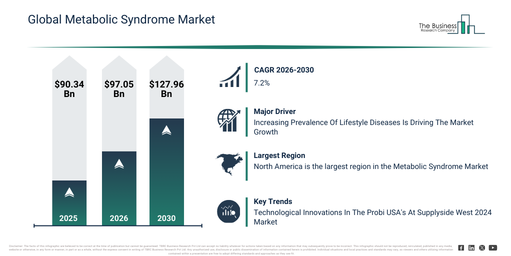
    The metabolic syndrome market size has seen robust growth in recent years. It is anticipated to expand from $90.34 billion in 2025 to $97.05 billion in 2026, exhibiting a compound annual growth rate (CAGR) of 7.4%. This historical expansion can be ascribed to a combination of factors including the increasing global prevalence of obesity, higher rates of insulin resistance diagnoses, greater understanding of metabolic diseases, the expansion of preventive healthcare initiatives, and a rising occurrence of cardiovascular complications.

    The market for metabolic syndrome is projected to experience substantial expansion over the upcoming years. By 2030, this market is anticipated to reach $127.96 billion, demonstrating a compound annual growth rate (CAGR) of 7.2%. This anticipated growth during the forecast period is propelled by factors such as the increasing embrace of digital therapeutics, greater investments in platforms designed for lifestyle modification, the expanding application of remote metabolic monitoring, the proliferation of tailored diet and fitness solutions, and the enhanced integration of AI-powered metabolic assessment tools. Key trends expected within this period encompass the broadening of precision-focused metabolic disorder management, AI-driven algorithms for early risk detection, health monitoring platforms based in the cloud, IoT-integrated solutions for lifestyle tracking, and the rise of sustainable programs for metabolic health.

    Download A Free Sample Report For Comprehensive Market Insights:

    https://www.thebusinessresearchcompany.com/sample.aspx?id=21218&type=smp

    Metabolic Syndrome Market Demand Drivers Creating New Revenue Opportunities

    The rising occurrence of lifestyle diseases is anticipated to propel the metabolic testing market forward. Lifestyle diseases are health conditions primarily resulting from unhealthy habits and behaviors, distinct from genetic or infectious origins. Common forms include obesity, cancer, type 2 diabetes, osteoporosis, and mental health disorders. Their prevalence is linked to sedentary lifestyles, unhealthy diets, increasing stress levels, and widespread tobacco and alcohol use. Metabolic syndrome plays a crucial role in exacerbating lifestyle diseases by fostering chronic inflammation, impaired metabolic functions, and elevated cardiovascular risks throughout the body. For instance, in June 2024, according to the National Health Service England, a UK-based government department, the number of individuals diagnosed with non-diabetic hyperglycemia, also known as pre-diabetes, in 2023 was 3,615,330, marking an 18% increase from the 3,065,825 cases recorded in 2022. Therefore, the increasing prevalence of lifestyle diseases will drive the metabolic testing market.

    Metabolic Syndrome Market Segment Performance And Strategic Opportunities

    The metabolic syndrome market covered in this report is segmented –

    1) By Type: Type 1 Metabolic Syndrome, Type 2 Metabolic Syndrome, Type 3 Metabolic Syndrome

    2) By Risk Factors: Obesity, Insulin Resistance, High Blood Pressure, High Cholesterol

    3) By Treatment: Medication, Lifestyle Changes, Other Treatments

    4) By Route Of Administration: Oral, Parenteral, Other Route Of Administrations

    5) By End User: Hospitals, Homecare, Specialty Centres, Other End Users

    Subsegments:

    1) By Type 1 Metabolic Syndrome: Insulin Resistance Syndrome, Abdominal Obesity Syndrome, Hyperglycemia Syndrome

    2) By Type 2 Metabolic Syndrome: Elevated Blood Pressure Syndrome, Dyslipidemia Syndrome, Low HDL Cholesterol Syndrome

    3) By Type 3 Metabolic Syndrome: Atherosclerotic Cardiovascular Disease Syndrome, Non-Alcoholic Fatty Liver Disease Syndrome, Chronic Inflammation Syndrome

    Metabolic Syndrome Market Trends Driving Strategic Industry Expansion

    Leading companies in the metabolic syndrome market are concentrating on developing innovative solutions, including clinically supported probiotic options, to enhance the condition’s overall management, treatment, and prevention. A clinically supported probiotic solution is defined as a probiotic product that has undergone rigorous clinical trials to verify its health benefits and ensure its safety for human intake. As an illustration, in October 2024, Probi USA, a manufacturer of clinically proven biotics based in the US, launched metabolic health. This particular product incorporates two distinct probiotic strains: Lactiplantibacillus plantarum 299v (LP299V) and Lacticaseibacillus paracasei 8700:2 (L. Paracasei 8700:2). LP299V, with support from over 230 publications and eight clinical trials, promotes cardiovascular health through improvements in cholesterol levels, reduction of inflammation, and better blood vessel function. L. Paracasei 8700:2, referenced in more than 30 publications, aids in blood pressure regulation, cholesterol management, and weight control.

    Metabolic Syndrome Market Key Players: Which Companies Shape Industry Competition?

    Major companies operating in the metabolic syndrome market are Novo Nordisk A/S, Sanofi S.A., Boehringer Ingelheim GmbH, Eli Lilly and Company, AstraZeneca PLC, Biocon Ltd., Bristol-Myers Squibb Company, Cipla Limited, Herbalife International of America Inc., Abbott Laboratories, Johnson & Johnson Private Limited, Medtronic plc, WW International Inc., Jenny Craig, Takeda Pharmaceutical Company Limited, Pfizer Inc., Novartis AG, F. Hoffmann-La Roche AG, Merck & Co. Inc., Gilead Sciences, GlaxoSmithKline plc, AbbVie Inc., Regeneron Pharmaceuticals, Sun Pharmaceutical Industries Ltd., Esperion Therapeutics Inc.

    Access The Complete Metabolic Syndrome Market Report:

    https://www.thebusinessresearchcompany.com/report/metabolic-syndrome-global-market-report

    Metabolic Syndrome Market Global Footprint: Which Region Holds Market Leadership?

    North Americawas the largest region in the metabolic syndrome market in 2025. Asia-Pacificis expected to be the fastest-growing region in the forecast period. The regions covered in the metabolic syndrome market report are Asia-Pacific, South East Asia, Western Europe, Eastern Europe, North America, South America, Middle East, Africa.

    Get in touch with us:

    The Business Research Company: https://www.thebusinessresearchcompany.com/

    Americas: +1 310-496-7795

    Asia: +44 7882 955267 & +91 8897263534

    Europe: +44 7882 955267

    Email us at: marketing@tbrc.info

    Follow us on:

    LinkedIn: https://in.linkedin.com/company/the-business-research-company

    YouTube: https://www.youtube.com/channel/UC24_fI0rV8cR5DxlCpgmyFQ

    Global Market Model: https://www.thebusinessresearchcompany.com/global-market-model
  • Metabolic Dysfunction-Associated Steatohepatitis (MASH) Treatment Market Growth Is Accelerating As Industry Transformation Continues

    Metabolic Dysfunction-Associated Steatohepatitis (MASH) Treatment Market Growth Is Accelerating As Industry Transformation Continues

    Delivering more actionable and strategically valuable research, The Business Research Company’s 2026 market reports feature market attractiveness analysis, total addressable market evaluation, company benchmarking matrices, interactive Excel dashboards, expanded supply chain intelligence, emerging startup coverage, and detailed product insights.

    Metabolic Dysfunction-Associated Steatohepatitis (MASH) Treatment Market Growth Analysis: How Will Revenue Expand During The Forecast Period?

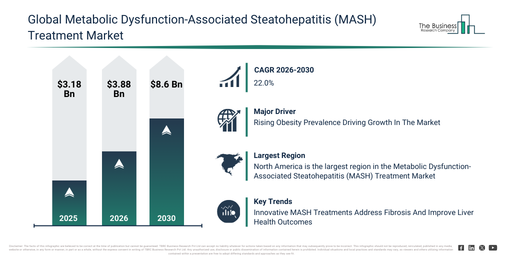
    The market size for metabolic dysfunction-associated steatohepatitis (MASH) treatments has experienced significant growth in recent years. This market is projected to expand from $3.18 billion in 2025 to $3.88 billion in 2026, achieving a compound annual growth rate (CAGR) of 22.2%. Historically, this expansion has been driven by factors such as the increasing prevalence of obesity, a rise in the incidence of type 2 diabetes, heightened awareness regarding liver health disorders, advancements in diagnostic testing capabilities, and the early adoption of lifestyle modification programs.

    The metabolic dysfunction-associated steatohepatitis (mash) treatment market size is projected to experience substantial expansion in the coming years. It is forecast to attain $8.6 billion by 2030, exhibiting a compound annual growth rate (CAGR) of 22.0%. The anticipated growth during this period is primarily driven by the increasing integration of GLP-1 agonists, advancements in antifibrotic drug development, the rising adoption of digital liver monitoring tools, broader application of bariatric surgery, and an increased emphasis on personalized metabolic therapies. Key developments expected in the forecast period include the expansion of precision liver disease therapeutics, AI-enabled capabilities for early detection and risk stratification, cloud-based systems for liver health data management, IoT-integrated solutions for lifestyle and medication monitoring, and the growth of sustainable and preventive metabolic health initiatives.

    Download A Free Sample Report For Comprehensive Market Insights:

    https://www.thebusinessresearchcompany.com/sample.aspx?id=20876&type=smp

    Metabolic Dysfunction-Associated Steatohepatitis (MASH) Treatment Market Expansion Supported By Key Demand Factors

    The rising occurrence of obesity is set to advance the metabolic dysfunction-associated steatohepatitis (MASH) treatment market moving forward. Obesity is a medical state marked by an excessive build-up of body fat that can negatively affect overall well-being, typically measured by a body mass index (BMI) of 30 or above. The global prevalence of obesity is increasing, fueled by inactive lifestyles, poor diets, and metabolic risk factors. Metabolic Dysfunction-Associated Steatohepatitis (MASH) treatment when associated with obesity aims at addressing insulin resistance, lowering liver fat, and improving metabolic health through lifestyle adjustments and specific therapies. For example, in March 2023, the World Heart Foundation, a Switzerland-based non-governmental global cardiovascular community, reported that around 2.3 billion adults and children worldwide are presently obese or overweight, and this figure is anticipated to reach 2.7 billion by 2025, given the ongoing obesity trend. Hence, the growing prevalence of obesity is propelling expansion within the metabolic dysfunction-associated steatohepatitis (MASH) treatment market.

    Metabolic Dysfunction-Associated Steatohepatitis (MASH) Treatment Market Segment Landscape And Growth Potential

    The metabolic dysfunction-associated steatohepatitis (mash) treatment market covered in this report is segmented –

    1) By Treatment: Drug, Therapy

    2) By Distribution Channel: Hospital Pharmacies, Online Pharmacies, Retail Pharmacies

    3) By End-User: Hospitals, Specialty Clinics, Homecare, Other End-User

    Subsegments:

    1) By Drug: Antifibrotic Agents, Antidiabetic Drugs, Lipid-Lowering Agents, Vitamin E, Obeticholic Acid (OCA), GLP-1 Agonists

    2) By Therapy: Pharmacotherapy, Lifestyle Modifications (Dietary Changes, Exercise), Bariatric Surgery, Liver Transplantation

    Metabolic Dysfunction-Associated Steatohepatitis (MASH) Treatment Market Growth Trends Influencing Competitive Dynamics

    Major companies within the metabolic dysfunction-associated steatohepatitis (MASH) treatment market are concentrating on developing innovative products like liver fibrosis treatment solutions to offer therapeutic choices for individuals with metabolic dysfunction-associated steatohepatitis (MASH) and moderate to severe liver fibrosis. These liver fibrosis treatment solutions aim to address the fundamental causes of liver damage through lifestyle adjustments, antiviral medications, and evolving antifibrotic therapies, with the objective of halting or reversing fibrosis progression and enhancing liver function. For instance, in March 2024, Madrigal Pharmaceuticals, Inc., a US-based biopharmaceutical company, announced the FDA approval of Rezdiffra (resmetirom), which is the first-ever treatment for metabolic dysfunction-associated steatohepatitis (MASH) accompanied by moderate to severe liver fibrosis. Rezdiffra, a daily oral tablet, demonstrated effectiveness in resolving MASH without exacerbating fibrosis and in improving liver fibrosis during phase 3 clinical trials. This breakthrough provides a non-invasive treatment option, eliminating the necessity for liver biopsies, and considerably improves patient access and outcomes in the management of fatty liver disease.

    Metabolic Dysfunction-Associated Steatohepatitis (MASH) Treatment Market Competitive Landscape: Who Are The Leading Companies?

    Major companies operating in the metabolic dysfunction-associated steatohepatitis (mash) treatment market are Pfizer Inc., Johnson & Johnson, Merck & Co. Inc., Sanofi SA, AstraZeneca PLC, Novartis AG, Eli Lilly and Company, Gilead Sciences Inc., Boehringer Ingelheim International GmbH, Novo Nordisk A/S, Apollo Health and Lifestyle Limited, Jenny Craig, Nutrisystem, Madrigal Pharmaceuticals, Anoos Clinic, Galectin Therapeutics Inc., Galmed Pharmaceuticals, Hepion Pharmaceuticals, Inventiva, NGM Biopharmaceuticals, Sagimet Biosciences, Viking Therapeutics, Terns Pharma, Genfit SA

    Access The Complete Metabolic Dysfunction-Associated Steatohepatitis (MASH) Treatment Market Report:

    https://www.thebusinessresearchcompany.com/report/metabolic-dysfunction-associated-steatohepatitis-mash-treatment-global-market-report

    Metabolic Dysfunction-Associated Steatohepatitis (MASH) Treatment Market Regional Distribution: Which Areas Drive Market Expansion?

    North Americawas the largest region in the metabolic dysfunction-associated steatohepatitis (MASH) treatment market in 2025. Asia-Pacificis expected to be the fastest-growing region in the forecast period. The regions covered in the metabolic dysfunction-associated steatohepatitis (mash) treatment market report are Asia-Pacific, South East Asia, Western Europe, Eastern Europe, North America, South America, Middle East, Africa.

    Get in touch with us:

    The Business Research Company: https://www.thebusinessresearchcompany.com/

    Americas: +1 310-496-7795

    Asia: +44 7882 955267 & +91 8897263534

    Europe: +44 7882 955267

    Email us at: marketing@tbrc.info

    Follow us on:

    LinkedIn: https://in.linkedin.com/company/the-business-research-company

    YouTube: https://www.youtube.com/channel/UC24_fI0rV8cR5DxlCpgmyFQ

    Global Market Model: https://www.thebusinessresearchcompany.com/global-market-model