Month: June 2026

  • Neem Extract Market Expansion Is Reshaping Competitive Dynamics Across The Industry

    Neem Extract Market Expansion Is Reshaping Competitive Dynamics Across The Industry

    Enhanced with market attractiveness analysis, total addressable market evaluation, company benchmarking matrices, interactive Excel dashboards, expanded supply chain intelligence, emerging startup coverage, and detailed product insights, The Business Research Company’s 2026 market reports deliver more actionable and strategically valuable research.

    Neem Extract Market Size And Revenue Forecast Through 2030

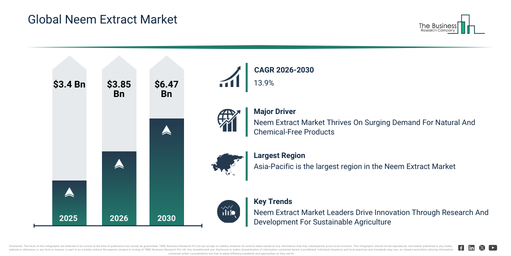
    The global neem extract market experienced substantial expansion, projected to ascend from $3.4 billion in 2025 to $3.85 billion in 2026, demonstrating a compound annual growth rate of 13.4%. This past growth was fueled by several key factors, including the widespread reliance on traditional healing practices, a rising consumer preference for botanical-based goods, the essential role of natural insecticides in agriculture, a nascent understanding of organic cultivation methods, and the protracted timelines associated with regulatory endorsements.

    The neem extract market is poised for substantial expansion, projected to reach $6.47 billion by 2030, exhibiting a robust compound annual growth rate (CAGR) of 13.9%. This anticipated surge is fueled by several key factors, including an increasing consumer preference for clean-label ingredients, the growing embrace of organic farming methodologies, escalating consumption of herbal nutraceuticals, a heightened demand for plant-derived cosmetic products, and ongoing improvements in extraction technologies. Furthermore, the upcoming period will likely witness prominent trends such as a greater inclination towards herbal and natural medicinal solutions, expanded utilization of neem in organic agricultural contexts, a rise in the adoption of neem-infused skincare and haircare items, broader applications of neem within nutraceutical formulations, and a significant uptick in the development of neem-based antimicrobial and antifungal products.

    Download A Free Sample Report For Comprehensive Market Insights:

    https://www.thebusinessresearchcompany.com/sample.aspx?id=10818&type=smp

    Neem Extract Market Demand Drivers Creating New Revenue Opportunities

    The increasing popularity of organic goods is anticipated to stimulate advancements in the neem extract market. Organic goods are defined as items manufactured solely from natural substances, excluding any synthetic chemicals, hormones, antibiotics, or genetically modified organisms. The unique attributes of neem extract, such as its antibacterial and antifungal properties, render it an ideal ingredient for a variety of organic and natural products, leading to its application across numerous sectors including agriculture, personal care, pharmaceuticals, and animal nutrition. For example, the U.S. market for certified organic products saw a substantial increase of 5.2% in 2024, surpassing the overall market growth of 2.5% and achieving a record valuation of USD 71.6 billion, according to information from the Organic Trade Association in April 2025, a trend attributed to heightened consumer interest. Consequently, the escalating demand for organic products is a key factor fueling the expansion of the neem extract market.

    Neem Extract Market Segment Breakdown: Which Categories Generate The Most Revenue?

    The neem extract market covered in this report is segmented –

    1) By Type: Leaf Extract, Fruit And Seed Extract, Bark Extract

    2) By Formulation: Dry, Liquid

    3) By Application: Food And Beverages, Pharmaceutical, Nutraceutical, Personal Care And Cosmetics, Agriculture And Farming, Other Applications

    Subsegments:

    1) By Leaf Extract: Neem Leaf Powder, Neem Leaf Oil, Neem Leaf Extract for Supplements

    2) By Fruit And Seed Extract: Neem Seed Oil, Neem Cake (byproduct of seed extraction), Neem Seed Powder

    3) By Bark Extract: Neem Bark Powder, Neem Bark Extract for Medicinal Use, Neem Bark Extract for Skincare Products

    Neem Extract Market Trends Driving Strategic Industry Expansion

    Leading corporations within the neem extract sector are actively engaged in pioneering sophisticated neem-derived products, including biofertilizers and biopesticides, as a strategic move to bolster their presence and champion environmentally sound farming practices. Their objective is to elevate product performance, boost crop productivity, and minimize ecological footprints, simultaneously creating fresh avenues in international agrarian economies. As an illustration, in the month of October 2023, a Ghanaian public institution, the University of Ghana, hosted an event to share research findings concerning neem-based approaches for cultivating robust vegetables. This dissemination, facilitated by ARPPIS and centered at the University of Ghana, was dedicated to fostering the production of safe vegetables. The event provided a valuable forum for various participants, underscoring the critical role of neem-based solutions in advancing sustainable and secure vegetable cultivation throughout Ghana.

    Neem Extract Market Key Players And Strategic Industry Positioning

    Major companies operating in the neem extract market are Reddy International, Neeming Australia Pty Ltd., Bros India Group, Gramin India Agri BusiNest, Agro Extracts Limited, Fortune Biotech Ltd., The Indian Neem Tree Company, Ozone Biotech, PJ Margo Pvt Ltd., Trifolio-M-GmbH, GreeNeem Agri Pvt Ltd., Neem India Products Pvt Ltd., Phyto Life sciences Pvt Ltd., Green Earth Products Pvt Ltd., Ichimaru Pharcos Co Ltd., Greenchem Biotech, Sunrise Agriland Development & Research Pvt Ltd., Unjha Ayurvedic Pharmacy, Herbo Nutra Extract Private Limited, APEX INTERNATIONAL, MRIDA GREENS & DEVELOPMENT PRIVATE LIMITED, YAXON BIOCARE Pvt Ltd., AYUSH HERBALS & HEALTHCARE PRIVATE LIMITED, Herbal Creations, Cymbio Pharma Pvt Ltd, Truzt Organic

    Access The Complete Neem Extract Market Report:

    https://www.thebusinessresearchcompany.com/report/neem-extract-global-market-report

    Neem Extract Market Leading Geography: Which Region Generates The Most Revenue?

    Asia-Pacificwas the largest region in the global neem extracts market in 2025. Western Europeis expected to be the fastest-growing region in the forecast period. The regions covered in the neem extract market report are Asia-Pacific, South East Asia, Western Europe, Eastern Europe, North America, South America, Middle East, Africa.

    Get in touch with us:

    The Business Research Company: https://www.thebusinessresearchcompany.com/

    Americas: +1 310-496-7795

    Asia: +44 7882 955267 & +91 8897263534

    Europe: +44 7882 955267

    Email us at: marketing@tbrc.info

    Follow us on:

    LinkedIn: https://in.linkedin.com/company/the-business-research-company

    YouTube: https://www.youtube.com/channel/UC24_fI0rV8cR5DxlCpgmyFQ

    Global Market Model: https://www.thebusinessresearchcompany.com/global-market-model

  • Needle-Free Drug Delivery Devices Market Forecast Reveals Where Future Industry Value Will Be Created

    Needle-Free Drug Delivery Devices Market Forecast Reveals Where Future Industry Value Will Be Created

    Through market attractiveness analysis, total addressable market evaluation, company benchmarking matrices, interactive Excel dashboards, expanded supply chain intelligence, emerging startup coverage, and detailed product insights, The Business Research Company’s 2026 market reports provide more actionable and strategically valuable research.

    Needle-Free Drug Delivery Devices Market Growth From $20.64 Billion In 2026 To $29.91 Billion By 2030 At A CAGR Of 9.7%

    The market for needle-free drug delivery devices has experienced a significant surge in expansion, projecting an increase from $18.54 billion in 2025 to $20.65 billion in 2026, reflecting a compound annual growth rate (CAGR) of 11.4%. During the preceding period, this growth dynamic was fueled by several factors, including patient aversion to needles, an increasing preference for secure alternatives to injections, a heightened demand for vaccinations against infectious diseases, the inherent drawbacks associated with conventional needle-dependent approaches, and early innovations in jet injection technologies.

    The market for needle-free drug delivery systems is poised for considerable expansion in the upcoming years, projected to reach $29.91 billion by 2030, reflecting a compound annual growth rate of 9.7%. This anticipated surge is propelled by several key factors including the escalating incidence of chronic illnesses, a heightened willingness to embrace self-administered treatments, the broadened reach of telemedicine and remote healthcare services, a greater preference for less invasive methods of drug administration, and ongoing innovations in microneedle and transdermal technologies. Emerging trends that will shape this market during the forecast period involve an increasing desire for pain-free methods of receiving medication, a wider acceptance of at-home drug delivery options, a greater utilization of needle-free devices for children, a rise in self-managed treatments for individuals with ongoing health conditions, and the development and implementation of needle-free systems for vaccine administration.

    Download A Free Sample Report For Comprehensive Market Insights:

    https://www.thebusinessresearchcompany.com/sample.aspx?id=15615&type=smp

    Needle-Free Drug Delivery Devices Market Expansion Supported By Key Demand Factors

    The expanding global incidence of diabetes is anticipated to be a primary catalyst for the advancement of the needle-free drug delivery device sector. Diabetes, characterized by chronically elevated blood glucose, arises from either insufficient insulin production or the body’s inability to effectively use insulin. Factors such as inactive lifestyles, poor nutritional choices, genetic factors, increased urbanization, and an aging global populace, coupled with restricted healthcare access and escalating obesity, are contributing to its rise. Needle-free systems offer a substitute for traditional insulin injections in diabetes management, employing methods like jet injectors or transdermal patches to administer insulin through the skin without the use of needles, thereby reducing injection-related pain and apprehension and improving patient experience. Illustrating this trend, the UK’s National Health Service reported in June 2024 that in 2023, over 549,000 new cases of individuals at risk for type 2 diabetes were identified in England, increasing the total number of registered pre-diabetes patients with GPs to 3,615,330, a jump of almost 20% from the 3,065,825 recorded in 2022. This surge in diabetes prevalence directly fuels the expansion of the market for needle-free drug delivery solutions.

    Needle-Free Drug Delivery Devices Market Segmentation: How Is The Market Structured Across Key Categories?

    The needle-free drug delivery devices market covered in this report is segmented –

    1) By Device Type: Inhalers, Jet Injectors, Novel Needles, Transdermal Patches

    2) By Application: Pain Management, Vaccine Delivery, Pediatric Injections, Insulin Delivery, Other Applications

    3) By End-User: Hospitals And Clinics, Home Healthcare

    Subsegments:

    1) By Inhalers: Dry Powder Inhalers (DPI), Metered Dose Inhalers (MDI), Nebulizers

    2) By Jet Injectors: High-Pressure Jet Injectors, Spring-Powered Jet Injectors, Battery-Operated Jet Injectors

    3) By Novel Needles: Micro-Needle Arrays, Nano-Needle Arrays

    4) By Transdermal Patches: Microneedle Patches, Conventional Patches

    Needle-Free Drug Delivery Devices Market Growth Trends Influencing Competitive Dynamics

    In the realm of needle-free drug delivery, leading entities within the market are prioritizing sophisticated innovations, exemplified by dual-chamber inhalers, with the aim of boosting therapeutic effectiveness and simplifying administration, thereby addressing the changing demands of both patients and medical professionals. A dual-chamber inhaler is characterized by having two distinct sections capable of housing separate medications, a design facilitating the simultaneous delivery of multiple drugs from a single device, consequently simplifying treatment regimens and augmenting patient convenience. Illustrative of this trend, Berry Global, a prominent American manufacturer of plastic products, unveiled the BerryHaler in April 2024, a state-of-the-art dry powder inhaler (DPI) engineered to transform patient-focused healthcare solutions. This particular dual-chamber inhaler is equipped with a dose counter to guarantee accurate medication delivery, and its entirely plastic composition, free from any metallic components, renders it exceptionally suited for intricate inhalation therapies, simplifying dosage management and effectively combining diverse medications. Furthermore, it incorporates advanced elements such as a dual-direction mouthpiece cover designed for both convenience and sanitation, complemented by audible alerts to guide correct usage, while the built-in dose counter assists in meticulous tracking of medication intake, thereby mitigating the risk of dosing inaccuracies.

    Needle-Free Drug Delivery Devices Market Competitive Landscape And Leading Companies

    Major companies operating in the needle-free drug delivery devices market are 3M Company, Medtronic plc, Novo Nordisk AS, Becton Dickinson and Company, Insulet Corporation, MannKind Corporation, Med-Jet Inc., Portal Instruments, PharmaJet, National Medical Products Inc., Mika Medical Co. Ltd., Medical International Technology Inc. (MTI), NanoPass Technologies Ltd., PenJet Corporation, Akra Dermojet S.A., NuGen Medical Devices Inc., Crossject SA, Injex Pharma AG, Bayer AG, Antares Pharma Inc., Inovio Pharmaceuticals Inc.

    Access The Complete Needle-Free Drug Delivery Devices Market Report:

    https://www.thebusinessresearchcompany.com/report/needle-free-drug-delivery-devices-global-market-report

    Needle-Free Drug Delivery Devices Market Regional Outlook: Where Are The Largest Opportunities Located?

    North Americawas the largest region in the needle-free drug delivery devices market in 2025. Asia-Pacificis expected to be the fastest-growing region in the forecast period. The regions covered in the needle-free drug delivery devices market report are Asia-Pacific, South East Asia, Western Europe, Eastern Europe, North America, South America, Middle East, Africa.

    Get in touch with us:

    The Business Research Company: https://www.thebusinessresearchcompany.com/

    Americas: +1 310-496-7795

    Asia: +44 7882 955267 & +91 8897263534

    Europe: +44 7882 955267

    Email us at: marketing@tbrc.info

    Follow us on:

    LinkedIn: https://in.linkedin.com/company/the-business-research-company

    YouTube: https://www.youtube.com/channel/UC24_fI0rV8cR5DxlCpgmyFQ

    Global Market Model: https://www.thebusinessresearchcompany.com/global-market-model
  • Necrotizing Fasciitis Market Growth Through 2030 Creates New Strategic Opportunities

    Necrotizing Fasciitis Market Growth Through 2030 Creates New Strategic Opportunities

    Delivering more actionable and strategically valuable research, The Business Research Company’s 2026 market reports feature market attractiveness analysis, total addressable market evaluation, company benchmarking matrices, interactive Excel dashboards, expanded supply chain intelligence, emerging startup coverage, and detailed product insights.

    Necrotizing Fasciitis Market Expansion Outlook: What Revenue Opportunities Lie Ahead?

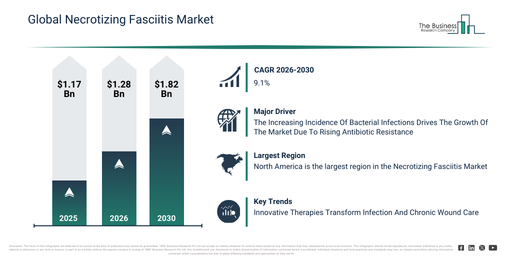
    The market catering to necrotizing fasciitis has experienced robust expansion recently, projecting an increase from $1.17 billion in 2025 to $1.28 billion in 2026, reflecting a compound annual growth rate (CAGR) of 9.4%. Factors contributing to this growth during the historical period include the enhancement of surgical debridement methods, increased access to broad-spectrum antibiotic treatments, bolstered intensive care unit capacities, a heightened clinical recognition of serious soft tissue infections, and progress in wound care management protocols.

    The market for necrotizing fasciitis is poised for significant expansion over the forthcoming years, projected to reach $1.82 billion by 2030, demonstrating a compound annual growth rate of 9.1%. This upward trajectory is anticipated to be fueled by advancements in specialized antimicrobial treatments, the escalating utilization of precise diagnostic tools, the broadening of sophisticated critical care facilities, intensified research into treatments that modulate the immune system, and a heightened emphasis on protocols for swift infection management. Key developments expected during this forecast period involve a greater concentration on early diagnostic interventions, increased uptake of advanced antibiotic treatments, expanded use of supplementary therapies, a wider adoption of integrated multidisciplinary approaches to critical care, and a more pronounced focus on prompt surgical intervention.

    Download A Free Sample Report For Comprehensive Market Insights:

    https://www.thebusinessresearchcompany.com/sample.aspx?id=30334&type=smp

    Necrotizing Fasciitis Market Growth Drivers And Industry Catalysts

    The escalating prevalence of bacterial infections is anticipated to be a significant catalyst for the expansion of the necrotizing fasciitis market. Such infections are characterized by the invasion and proliferation of detrimental bacteria within the body, leading to compromised tissues and subsequent illness. A primary contributor to this rise in bacterial infections is the growing issue of antibiotic resistance, which diminishes the efficacy of conventional treatments, thereby allowing infections to persist and disseminate more readily. Consequently, the heightened occurrence of bacterial infections cultivates an environment with a greater risk of severe soft tissue infections, directly fostering the incidence and aggressive advancement of necrotizing fasciitis as opportunistic microorganisms exploit compromised immune systems to rapidly infiltrate fascial layers. Illustratively, data from the Centers for Disease Control and Prevention, a U.S. governmental body, indicated that as of March 2024, the count of tuberculosis cases climbed from 8,320 in 2022 to 9,615 in 2023, marking an increase of 1,295 cases. Thus, the increasing frequency of bacterial infections is acting as a key driver for the necrotizing fasciitis market.

    Necrotizing Fasciitis Market Driver: Rising Healthcare Expenditure Driving The Market Growth Due To Increasing Demand For Advanced Medical Services And Technological Innovations

    Elevated healthcare spending is projected to fuel the expansion of the necrotizing fasciitis market. This spending encompasses the aggregate financial resources dedicated by various entities, including governments, private insurers, corporations, and individuals, towards medical services, treatments, pharmaceuticals, and associated health initiatives. The upward trend in healthcare expenditure is largely attributable to the increasing burden of chronic diseases, necessitating sustained medical management and ongoing therapeutic interventions. Enhanced financial investment in healthcare directly benefits the management of necrotizing fasciitis by facilitating greater access to state-of-the-art diagnostic tools, cutting-edge treatment modalities, and specialized medical expertise. As an example, the Centers for Medicare & Medicaid Services, a U.S. federal agency, reported in June 2025 that national health expenditures (NHE) saw a 7.5% increase in 2023, reaching $4.9 trillion, which averaged $14,570 per capita and constituted 17.6% of the Gross Domestic Product (GDP). Within this, Medicare disbursements escalated by 8.1% to $1,029.8 billion, representing 21% of the total NHE. Therefore, mounting healthcare expenditure is a significant driver for the growth observed in the necrotizing fasciitis market.

    Necrotizing Fasciitis Market Segmentation Trends And Revenue Drivers

    The necrotizing fasciitis market covered in this report is segmented –

    1) By Treatment Type: Surgical Debridement, Antibiotic Therapy, Hyperbaric Oxygen Therapy, Other Treatment Types

    2) By Type: Type I, Type II, Type III

    3) By Age Group: Pediatric, Adult, Geriatric

    4) By Distribution Channel: Hospital Pharmacies, Retail Pharmacies, Online Pharmacies

    5) By End-User: Hospitals, Specialized Clinics, Emergency Care Centers, Home Healthcare Providers, Pharmaceutical Companies

    Subsegments:

    1) By Surgical Debridement: Early Debridement, Radical Debridement, Serial Debridement, Fasciotomy

    2) By Antibiotic Therapy: Intravenous Antibiotics, Oral Antibiotics, Combination Therapy, Targeted Therapy

    3) By Hyperbaric Oxygen Therapy: Monoplace Chamber Therapy, Multiplace Chamber Therapy, Adjunctive Therapy, Postoperative Therapy

    4) By Other Treatment Types: Immunoglobulin Therapy, Supportive Care, Wound Care Management, Pain Management

    #Necrotizing Fasciitis Market Trends Influencing Long-Term Demand

    Within the necrotizing fasciitis market, key players are concentrating on pioneering new treatments including antibiotics and immunotherapies, alongside biologics and advanced wound care options. Antibiotics function by eradicating or inhibiting bacterial proliferation, whereas immunotherapies serve to augment or adjust the immune system’s capacity to combat infections or illnesses. As an illustration, in March 2025, Altru Health System, a US-based healthcare provider guided by physicians, introduced Hyperbaric Oxygen Therapy (HBO) to accelerate wound recovery and aid patients facing chronic or challenging-to-heal ailments. This therapeutic approach involves administering pure oxygen within a pressurized environment, thereby increasing oxygen levels in tissues and stimulating intrinsic healing mechanisms. Its application extends to conditions like diabetic foot ulcers, radiation-induced tissue damage, compromised skin grafts, and serious infections, presenting a non-surgical complementary strategy to standard medical interventions.

    Necrotizing Fasciitis Market Industry Leaders: Which Organizations Are Driving Competition?

    Major companies operating in the necrotizing fasciitis market are GlaxoSmithKline Public Limited Company, Gilead Sciences Inc., Teva Pharmaceutical Industries Limited, Merck And Co. Inc., bioMérieux S.A., Cipla Limited, Dr. Reddy’s Laboratories Limited, Hikma Pharmaceuticals PLC, Mankind Pharma Limited, Wockhardt Limited, Xellia Pharmaceuticals ApS, Basilea Pharmaceutica International Ltd., Avita Medical Inc., HiMedia Laboratories Pvt. Ltd., CutisCare Pvt. Ltd., NovaBay Pharmaceuticals Inc., TCS Biosciences Ltd., 3i Diagnostics Limited, Antabio S.A.P., Pfizer Inc.

    Access The Complete Necrotizing Fasciitis Market Report:

    https://www.thebusinessresearchcompany.com/report/global-necrotizing-fasciitis-market-report

    Necrotizing Fasciitis Market Geographic Landscape: Which Region Dominates Industry Growth?

    North Americawas the largest region in the necrotizing fasciitis market in 2025. Asia-Pacificis expected to be the fastest-growing region in the forecast period. The regions covered in the necrotizing fasciitis market report are Asia-Pacific, South East Asia, Western Europe, Eastern Europe, North America, South America, Middle East, Africa.

    Get in touch with us:

    The Business Research Company: https://www.thebusinessresearchcompany.com/

    Americas: +1 310-496-7795

    Asia: +44 7882 955267 & +91 8897263534

    Europe: +44 7882 955267

    Email us at: marketing@tbrc.info

    Follow us on:

    LinkedIn: https://in.linkedin.com/company/the-business-research-company

    YouTube: https://www.youtube.com/channel/UC24_fI0rV8cR5DxlCpgmyFQ

    Global Market Model: https://www.thebusinessresearchcompany.com/global-market-model
  • Necrotizing Enterocolitis Market Size Projected To Increase From $5.47 Billion To $6.94 Billion During The Forecast Period

    Necrotizing Enterocolitis Market Size Projected To Increase From $5.47 Billion To $6.94 Billion During The Forecast Period

    Enhanced with market attractiveness analysis, total addressable market evaluation, company benchmarking matrices, interactive Excel dashboards, expanded supply chain intelligence, emerging startup coverage, and detailed product insights, The Business Research Company’s 2026 market reports deliver more actionable and strategically valuable research.

    Necrotizing Enterocolitis Market Growth Potential: How Will Market Size Change Through 2030?

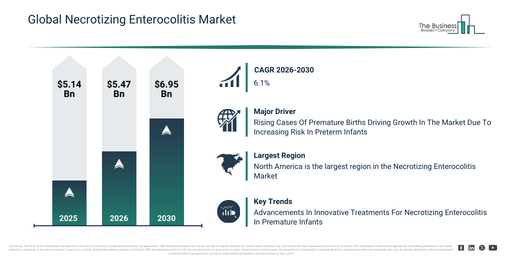
    Witnessing robust expansion, the necrotizing enterocolitis market ascended from an estimated $5.14 billion in 2025 to a projected $5.47 billion by 2026, indicating a compound annual growth rate of 6.4%. This upward trajectory during the historical period was fueled by factors such as the elevated occurrence of premature births, constrained neonatal healthcare facilities, a prevalent use of broad-spectrum antibiotics, diagnostic delays in resource-limited environments, and the early adoption of parenteral nutrition.

    The market for necrotizing enterocolitis is poised for considerable expansion over the coming years, with projections indicating a rise to $6.95 billion by 2030, reflecting a compound annual growth rate of 6.1%. This projected growth is fueled by several key factors including increased funding for neonatal intensive care units, progress in regenerative and stem cell treatments, greater understanding and earlier identification of NEC, the wider use of targeted nutritional approaches, and enhancements in neonatal imaging technologies. Significant trends anticipated within this period encompass a greater uptake of probiotics and prebiotics aimed at preventing NEC, a heightened emphasis on prompt diagnosis and screening for premature infants, escalating use of customized total parenteral nutrition (TPN) regimens, the broader application of less invasive surgical procedures, and ongoing improvements in critical care and monitoring for newborns.

    Download A Free Sample Report For Comprehensive Market Insights:

    https://www.thebusinessresearchcompany.com/sample.aspx?id=22068&type=smp

    Necrotizing Enterocolitis Market Opportunity Drivers: What Is Creating New Revenue Potential?

    The escalating incidence of babies born too early is anticipated to be a significant catalyst for the expansion of the necrotizing enterocolitis market. Premature deliveries, defined as birth prior to 37 weeks of gestation, a deviation from the standard 40-week pregnancy, are on the rise. Factors contributing to this trend include maternal health issues like hypertension, diabetes, and infections, all of which elevate the risk of early labor, alongside lifestyle choices such as smoking, substance use, and inadequate nutrition, which further predispose individuals to preterm birth. Consequently, a greater number of premature infants develop necrotizing enterocolitis (NEC) because their digestive systems are underdeveloped, making them more

    Necrotizing Enterocolitis Market Segment Analysis Highlighting Growth Areas

    The necrotizing enterocolitis market covered in this report is segmented –

    1) By Treatment: Total Parenteral Nutrition (TPN), Gastrointestinal Decompression, Antimicrobial Therapy, Antifungal Treatment, Paracentesis, Other Treatments

    2) By Diagnosis: Laboratory Tests, Imaging Techniques

    3) By Stage: Stage I (Suspected Necrotizing Enterocolitis), Stage II (Definite Necrotizing Enterocolitis), Stage III (Advanced Necrotizing Enterocolitis)

    4) By End-User: Hospitals, Neonatal Intensive Care Units (NICUs), Specialty Clinics

    Subsegments:

    1) By Total Parenteral Nutrition (TPN): Standard TPN Formulations, Customized Or Individualized TPN Solutions, Lipid Emulsions For TPN, Protein And Amino Acid Supplements In TPN, Micronutrient And Electrolyte-Enhanced TPN

    2) By Gastrointestinal Decompression: Nasogastric Tube (NG Tube) Decompression, Orogastric Tube Decompression, Surgical Gastrostomy For Decompression, Non-Surgical Decompression Techniques

    3) By Antimicrobial Therapy: Broad-Spectrum Antibiotics, Gram-Positive Coverage Antibiotics, Gram-Negative Coverage Antibiotics, Combination Antibiotic Therapy, Prophylactic Antibiotic Strategies For High-Risk Neonates

    4) By Antifungal Treatment: Systemic Antifungal Therapy, Prophylactic Antifungal Therapy For Preterm Infants, Combination Antifungal And Antibiotic Therapy For Severe NEC

    5) By Paracentesis: Diagnostic Paracentesis, Therapeutic Paracentesis, Guided Paracentesis using Ultrasound Or Radiological Techniques

    6) By Other Treatments: Probiotics And Prebiotics for NEC Prevention, Surgical Interventions, Stem Cell Therapy And Regenerative Medicine Approaches, Immunomodulatory Therapies, Supportive Care

    Necrotizing Enterocolitis Market Innovation Trends Driving Future Development

    Leading entities within the necrotizing enterocolitis market are concentrating their efforts on pioneering novel therapeutic approaches, exemplified by cell-free sterile biologic solutions, in response to the pressing demand for superior treatments and enhanced prognoses for premature neonates. A cell-free sterile biologic substance constitutes a refined, sterile fluid replete with biologically active components like proteins, growth stimulants, and signaling molecules, all derived from cultivated cells but entirely devoid of cellular structures, engineered to foster tissue repair and temper inflammatory responses. Demonstrating this commitment, Noveome Biotherapeutics, Inc., a biopharmaceutical firm headquartered in the United States, secured clearance in December 2023 from the U.S. Food and Drug Administration (FDA) to commence its Phase 1-2 clinical investigation of ST266, an innovative biologic intended for the management of necrotizing enterocolitis (NEC) in premature infants. This development represents a pivotal achievement, positioning ST266 to potentially become the first substantial therapeutic innovation for NEC to emerge in more than three decades, thereby confronting a significant healthcare gap considering the elevated rates of illness and fatality associated with this condition among susceptible infant populations.

    Necrotizing Enterocolitis Market Leading Companies: Who Holds Significant Market Presence?

    Major companies operating in the necrotizing enterocolitis market are Abbott Laboratories, Astellas Pharma Inc., Mayo Foundation for Medical Education and Research, Cleveland Clinic, Boston Children’s Hospital, Hollister Incorporated, UPMC Children’s Hospital of Pittsburgh, Prolacta Bioscience Inc., Evolve BioSystems, Sigma-Tau Pharmaceuticals, Mead Johnson & Company LLC, Liminal BioSciences Inc., Noveome Biotherapeutics Inc., Infant Bacterial Therapeutics, Prometic Life Sciences Inc., Nexilico, Siolta Therapeutics, ProThera Biologics Inc., Plakous Therapeutics Inc., Chosen Diagnostics Inc.

    Access The Complete Necrotizing Enterocolitis Market Report:

    https://www.thebusinessresearchcompany.com/report/necrotizing-enterocolitis-global-market-report

    Necrotizing Enterocolitis Market Largest Region: Which Geography Holds The Highest Market Share?

    North Americawas the largest region in the necrotizing enterocolitis market in 2025. Asia-Pacificis expected to be the fastest-growing region in the forecast period. The regions covered in the necrotizing enterocolitis market report are Asia-Pacific, South East Asia, Western Europe, Eastern Europe, North America, South America, Middle East, Africa.

    Get in touch with us:

    The Business Research Company: https://www.thebusinessresearchcompany.com/

    Americas: +1 310-496-7795

    Asia: +44 7882 955267 & +91 8897263534

    Europe: +44 7882 955267

    Email us at: marketing@tbrc.info

    Follow us on:

    LinkedIn: https://in.linkedin.com/company/the-business-research-company

    YouTube: https://www.youtube.com/channel/UC24_fI0rV8cR5DxlCpgmyFQ

    Global Market Model: https://www.thebusinessresearchcompany.com/global-market-model

  • Necrobiosis Lipoidica Diabeticorum (NLD) Market Growth Outlook Reveals A CAGR Of 6.5% And A Market Value Of $6.48 Billion By 2030

    Necrobiosis Lipoidica Diabeticorum (NLD) Market Growth Outlook Reveals A CAGR Of 6.5% And A Market Value Of $6.48 Billion By 2030

    Through market attractiveness analysis, total addressable market evaluation, company benchmarking matrices, interactive Excel dashboards, expanded supply chain intelligence, emerging startup coverage, and detailed product insights, The Business Research Company’s 2026 market reports provide more actionable and strategically valuable research.

    Necrobiosis Lipoidica Diabeticorum (NLD) Market Value Analysis: What Growth Is Expected Over The Forecast Period?

    The market for necrobiosis lipoidica diabeticorum (nld) has demonstrated robust expansion over the past few years, and this upward trajectory is projected to continue, increasing from $4.73 billion in 2025 to $5.04 billion in 2026, reflecting a compound annual growth rate of 6.7%. Factors contributing to this historical growth include the escalating incidence of diabetes mellitus, a scarcity of effective treatment alternatives for persistent dermatological issues, delayed detection stemming from insufficient public awareness, reliance on treatments involving corticosteroids, and an increased frequency of vascular complications associated with diabetes.

    The market for necrobiosis lipoidica diabeticorum (nld) is poised for substantial expansion in the coming years, projected to reach a valuation of $6.49 billion by 2030 with a compound annual growth rate of 6.5%. This anticipated expansion is fueled by several key factors, including a greater acceptance of targeted immunotherapies, the proliferation of specialized dermatology clinics, the advancement of combination treatment strategies, a growing need for non-invasive diagnostic methods, and an intensified emphasis on individualized dermatological care. Emerging trends anticipated to shape this market include a heightened utilization of topical anti-inflammatory and immunomodulatory treatments, a rising interest in laser and light-based therapeutic techniques, increased patient and physician awareness regarding the early detection of nld in individuals with diabetes, the broader availability of advanced wound care solutions for managing ulcerated lesions, and a more cohesive integration of dermatological and endocrinological patient care pathways.

    Download A Free Sample Report For Comprehensive Market Insights:

    https://www.thebusinessresearchcompany.com/sample.aspx?id=22067&type=smp

    Necrobiosis Lipoidica Diabeticorum (NLD) Market Growth Momentum: Which Factors Are Influencing Demand?

    The expanding prevalence of diabetes is anticipated to stimulate the expansion of the necrobiosis lipoidica diabeticorum (NLD) market. Diabetes, a condition marked by persistently elevated blood glucose levels, stems from either insufficient insulin production (Type 1) or the body’s resistance to insulin’s effects (Type 2), potentially leading to widespread organ damage. This surge in diabetes cases can be largely attributed to the increasing rates of obesity, which is strongly correlated with insulin resistance and a significant factor in the rising number of diabetes diagnoses, as well as sedentary lifestyles lacking sufficient physical activity, a major risk factor for developing diabetes. Consequently, a higher incidence of diabetes leads to a greater occurrence of necrobiosis lipoidica diabeticorum (NLD), given its close association with diabetes-related microvascular complications and immune system dysregulation. As an illustration, the UK’s National Health Service reported in June 2024 that over half a million individuals (549,000) in England were identified as being at risk of developing type 2 diabetes in 2023, raising the total count of individuals with pre-diabetes to 3,615,330, a near 20% increase from the 3,065,825 recorded in 2022. Thus, the growing number of diabetes cases is fueling the progress of the necrobiosis lipoidica diabeticorum (NLD) market.

    Investments in healthcare are poised to accelerate the trajectory of the necrobiosis lipoidica diabeticorum (NLD) market. Healthcare expenditure encompasses the total financial outflow for medical services, covering preventative measures, treatments, and disease management, funded by public, private, and individual sources. The upward trend in healthcare spending is largely driven by the escalating rates of chronic conditions such as diabetes, heart disease, and obesity, all of which necessitate sustained care and management, thereby increasing medical costs. Enhanced healthcare spending fosters advancements in research and innovation for necrobiosis lipoidica diabeticorum, leading to improved diagnostic tools, more sophisticated treatment modalities, broader access to cutting-edge therapies, and ultimately, better patient outcomes. For example, data from the UK’s Office for National Statistics in April 2025 indicated that total healthcare expenditure saw a 6.5% rise in nominal terms and a 2.4% increase in real terms between 2023 and 2024, with healthcare’s proportion of GDP remaining stable at 11.1% in 2024. Consequently, augmented healthcare spending is a key driver for the necrobiosis lipoidica diabeticorum (NLD) market’s expansion.

    The increasing demand for personalized medicine is expected to propel the necrobiosis lipoidica diabeticorum (NLD) market forward. Personalized medicine represents a healthcare paradigm that customizes treatments and interventions based on an individual’s unique genetic makeup, environmental exposures, and lifestyle choices, aiming for greater precision and efficacy. This growing preference for personalized approaches is fueled by breakthroughs in genomic technologies and molecular diagnostics, which provide detailed insights into individual genetic profiles, enabling highly tailored treatments that align with a patient’s specific biology, as well as the rising incidence of complex chronic diseases that highlight the necessity for more effective, targeted therapies with fewer side effects and improved overall results. The escalating demand for personalized medicine enhances the necrobiosis lipoidica diabeticorum market by facilitating the development of bespoke treatments that address a patient’s specific genetic and environmental factors, thereby improving therapeutic effectiveness and patient outcomes. As an illustration, in February 2024, the Personalized Medicine Coalition reported that the U.S. Food and Drug Administration approved 16 novel personalized treatments for individuals with rare diseases in 2023, an increase from the six approvals in 2022. Therefore, the growing consumer and medical community interest in personalized medicine is a significant factor driving the necrobiosis lipoidica diabeticorum (NLD) market.

    Necrobiosis Lipoidica Diabeticorum (NLD) Market Segment Performance And Strategic Opportunities

    The necrobiosis lipoidica diabeticorum (nld) market covered in this report is segmented –

    1) By Procedure: Treatment, Test Type

    2) By Application: Hospitals, Ambulatory Clinics

    3) By Distribution Channel: Hospital Pharmacies, Retail Pharmacies, E-Commerce

    Subsegments:

    1) By Treatment: Topical Therapies, Systemic Therapies, Laser And Light-Based Therapies, Surgical And Advanced Wound Care Management, Alternative And Supportive Therapies

    2) By Test Type: Histopathological Tests, Imaging Tests, Blood Tests And Laboratory Diagnostics

    Necrobiosis Lipoidica Diabeticorum (NLD) Market Key Players: Which Companies Shape Industry Competition?

    Major companies operating in the necrobiosis lipoidica diabeticorum (nld) market are Mount Sinai Health System, Beaumont Health, Mayo Foundation for Medical Education and Research, Thomas Jefferson University Hospitals, UCLA Health, MedStar Health Wound Healing Institute, Inova Wound Healing Centers, Brigham and Women’s Hospital, UCSF Health, Healogics LLC, Phelps Hospital, Schweiger Dermatology Group, Advanced Dermatology and Skin Cancer Center, Hyperbaric Medical Solutions, Lupton Dermatology, The Primary Care Dermatology Society, Cleveland Clinic, Johns Hopkins Hospital, Massachusetts General Hospital, Stanford Health Care, NYU Langone Health, Kaiser Permanente, Cedars Sinai Medical Center

    Access The Complete Necrobiosis Lipoidica Diabeticorum (NLD) Market Report:

    https://www.thebusinessresearchcompany.com/report/necrobiosis-lipoidica-diabeticorum-nld-global-market-report

    Necrobiosis Lipoidica Diabeticorum (NLD) Market Regional Analysis: Which Region Leads By Revenue?

    North Americawas the largest region in the necrobiosis lipoidica diabeticorum (NLD) market in 2025. The regions covered in the necrobiosis lipoidica diabeticorum (nld) market report are Asia-Pacific, South East Asia, Western Europe, Eastern Europe, North America, South America, Middle East, Africa.

    Get in touch with us:

    The Business Research Company: https://www.thebusinessresearchcompany.com/

    Americas: +1 310-496-7795

    Asia: +44 7882 955267 & +91 8897263534

    Europe: +44 7882 955267

    Email us at: marketing@tbrc.info

    Follow us on:

    LinkedIn: https://in.linkedin.com/company/the-business-research-company

    YouTube: https://www.youtube.com/channel/UC24_fI0rV8cR5DxlCpgmyFQ

    Global Market Model: https://www.thebusinessresearchcompany.com/global-market-model

  • Necrobiosis Lipodica (NL) Market Forecast Highlights Expansion From $4.63 Billion To $5.95 Billion Through 2030

    Necrobiosis Lipodica (NL) Market Forecast Highlights Expansion From $4.63 Billion To $5.95 Billion Through 2030

    Delivering more actionable and strategically valuable research, The Business Research Company’s 2026 market reports feature market attractiveness analysis, total addressable market evaluation, company benchmarking matrices, interactive Excel dashboards, expanded supply chain intelligence, emerging startup coverage, and detailed product insights.

    Necrobiosis Lipodica (NL) Market Size Forecast: How Large Could The Market Become By 2030?

    The necrobiosis lipodica landscape has experienced robust expansion lately, with projections indicating a continued upward trend; the market is anticipated to ascend from $4.35 billion in 2025 to $4.64 billion by 2026, reflecting a compound annual growth rate (CAGR) of 6.7%. Historically, this expansion has been fueled by several key factors including the increasing incidence of diabetes-associated dermatological conditions, enhanced diagnostic capabilities through skin biopsies, a prevailing reliance on corticosteroid treatments, the constrained accessibility of expert dermatological services, and a somewhat hesitant adoption of cutting-edge wound management solutions.

    The global market for necrobiosis lipodica (nl) is projected to experience substantial expansion, reaching an estimated $5.95 billion by the year 2030, with a compound annual growth rate (CAGR) of 6.4% anticipated throughout the forecast period. This upward trajectory is primarily fueled by escalating demand for biologic and immunomodulatory treatments, the broadening scope of regenerative medicine, increased accessibility to phototherapy and laser devices, augmented investments in dermatological clinical research, and the formulation of innovative combination therapeutic strategies. Key developments expected to shape this market moving forward include a greater reliance on phototherapy and laser treatments, wider incorporation of advanced wound care and compression techniques, a stronger inclination towards both topical and systemic immunomodulators, heightened emphasis on prompt skin biopsies and accurate differential diagnoses, and the expanding application of regenerative medicine, encompassing stem cell therapies.

    Download A Free Sample Report For Comprehensive Market Insights:

    https://www.thebusinessresearchcompany.com/sample.aspx?id=22066&type=smp

    Necrobiosis Lipodica (NL) Market Expansion Drivers: What Is Shaping Future Growth?

    The escalating prevalence of diabetes is anticipated to fuel the expansion of the necrobiosis lipoidica (NL) market. Diabetes, a persistent health issue characterized by the body’s inability to manage blood sugar due to inadequate insulin or insulin resistance, can precipitate various health complications. This rise in diabetes cases is attributed to increasingly sedentary lifestyles, suboptimal dietary habits, and inherited predispositions. Contemporary living often involves prolonged periods of sitting, diminished physical activity, and excessive screen time, all of which contribute to the development of obesity and insulin resistance. Elevated blood glucose levels associated with diabetes inflict damage on small blood vessels, a condition known as microangiopathy, resulting in circulatory problems. This compromised circulation diminishes the oxygen and nutrient supply to the skin, rendering it more susceptible to injury and slowing down the healing process. Consequently, skin tissue undergoes degeneration, fostering the development of the yellowish, atrophic patches characteristic of NL. Illustratively, data from March 2024, as reported by the UK’s Office for Health Improvement and Disparities, indicated that between March 2022 and March 2023, the proportion of individuals with type 1 diabetes receiving all eight recommended care processes saw a 22% increase, while for type 2 diabetes, this figure rose by 21%. Furthermore, the percentage achieving target HbA1c levels reached 37.9%, marking the highest recorded value in the National Diabetes Audit (NDA). Thus, the growing number of diabetes cases is a significant driver for the necrobiosis lipoidica (NL) market.

    The increasing occurrence of autoimmune diseases is poised to stimulate the growth of the necrobiosis lipoidica market. Autoimmune diseases arise when the body’s own immune system erroneously targets and attacks its healthy cells and tissues. Factors such as a genetic predisposition, exposure to environmental triggers, and shifts in lifestyle and immune system functioning are contributing to the rise in autoimmune conditions. These conditions play a role in necrobiosis lipoidica (NL) formation by inciting persistent inflammation and disrupting the normal function of the immune system, which in turn leads to the breakdown of collagen and hinders skin repair. For example, by September 2025, it is projected that over 3.5 million individuals in the United Kingdom will be living with an autoimmune disease, according to figures from WeCovr, a UK-based insurance comparison service. Therefore, the heightened incidence of autoimmune diseases is a key factor driving the necrobiosis lipoidica market forward.

    The escalating demand for personalized medicine is predicted to bolster the expansion of the necrobiosis lipoidica (NL) market. Personalized medicine represents a tailored approach to healthcare where diagnostic information, molecular characteristics, and individual patient factors are utilized to select treatment strategies that are specifically designed for optimal safety and effectiveness. This growing preference for individualized treatments stems largely from an increasing awareness that conventional, one-size-fits-all treatment approaches frequently fall short in addressing variations in disease pathways and patient responses, thereby encouraging healthcare professionals and researchers to embrace precision-based methods that yield more consistent and beneficial outcomes. Necrobiosis lipoidica aligns with the trend towards personalized medicine due to its varied clinical presentations and inconsistent responses to treatment, necessitating individualized therapeutic plans in line with precision dermatology principles. As an illustration, in February 2024, the Personalized Medicine Coalition, a non-profit organization in the United States, reported that the USFDA authorized 16 novel personalized treatments for individuals with rare diseases in 2023, a marked increase from the 6 such treatments approved in 2022. Consequently, the expanding demand for personalized medicine is a significant contributor to the growth of the necrobiosis lipoidica (NL) market.

    Necrobiosis Lipodica (NL) Market Segment Landscape And Growth Potential

    The necrobiosis lipodica (nl) market covered in this report is segmented –

    1) By Treatment: Therapy, Drugs, Other Treatments

    2) By Route Of Administration: Oral, Topical, Parenteral, Other Routes Of Administrations

    3) By Diagnosis: Skin Biopsy, Histopathology, Other Diagnosis

    4) By Distribution Channel: Hospital Pharmacy, Online Pharmacy, Retail Pharmacy

    5) By End User: Hospitals, Homecare, Specialty Clinics, Other End-Users

    Subsegments:

    1) By Therapy: Phototherapy, Laser Therapy, Wound Care And Compression Therapy, Physical Therapy And Rehabilitation

    2) By Drugs: Topical Corticosteroids, Intralesional Corticosteroids, Systemic Corticosteroids, Immunomodulators, Biologics, Antiplatelet Agents, Antioxidants And Vasodilators, Antibiotics

    3) By Other Treatments: Surgical Excision And Skin Grafting, Hyperbaric Oxygen Therapy (HBOT), Platelet-Rich Plasma (PRP) Therapy, Stem Cell Therapy And Regenerative Medicine, Alternative And Herbal Treatments

    Necrobiosis Lipodica (NL) Market Competitive Landscape: Who Are The Leading Companies?

    Major companies operating in the necrobiosis lipodica (nl) market are Pfizer Inc., Johnson & Johnson Services Inc., Merck & Co Inc, Novartis AG, Sanofi SA, GlaxoSmithKline plc, Eli Lilly and Company, Regeneron Pharmaceuticals Inc., Bausch Health Companies Inc., Galderma Laboratories LP, Dr. Reddys Laboratories Ltd, Incyte Pharmaceuticals, Celltrion Healthcare Co Ltd, Almirall SA, Samsung Bioepis Co Ltd, HanAll Biopharma Co Ltd, AbbVie Inc, Amgen Inc, UCB Pharma SA, LEO Pharma AS, Bristol Myers Squibb Company, Roche Holding AG, Takeda Pharmaceutical Company Limited, Astellas Pharma Inc

    Access The Complete Necrobiosis Lipodica (NL) Market Report:

    https://www.thebusinessresearchcompany.com/report/necrobiosis-lipodica-nl-global-market-report

    Necrobiosis Lipodica (NL) Market Geographic Distribution And Regional Opportunities

    North Americawas the largest region in the necrobiosis lipoidica market in 2025. Asia-Pacificis expected to be the fastest-growing region in the forecast period. The regions covered in the necrobiosis lipodica (nl) market report are Asia-Pacific, South East Asia, Western Europe, Eastern Europe, North America, South America, Middle East, Africa.

    Get in touch with us:

    The Business Research Company: https://www.thebusinessresearchcompany.com/

    Americas: +1 310-496-7795

    Asia: +44 7882 955267 & +91 8897263534

    Europe: +44 7882 955267

    Email us at: marketing@tbrc.info

    Follow us on:

    LinkedIn: https://in.linkedin.com/company/the-business-research-company

    YouTube: https://www.youtube.com/channel/UC24_fI0rV8cR5DxlCpgmyFQ

    Global Market Model: https://www.thebusinessresearchcompany.com/global-market-model

  • Near-Patient Molecular Solutions Market Expected To Reach $7.17 Billion By 2030 As Growth Accelerates At 9.5% CAGR

    Near-Patient Molecular Solutions Market Expected To Reach $7.17 Billion By 2030 As Growth Accelerates At 9.5% CAGR

    Enhanced with market attractiveness analysis, total addressable market evaluation, company benchmarking matrices, interactive Excel dashboards, expanded supply chain intelligence, emerging startup coverage, and detailed product insights, The Business Research Company’s 2026 market reports deliver more actionable and strategically valuable research.

    Near-Patient Molecular Solutions Market Revenue Outlook: What CAGR Is Expected Through 2030?

    The market for molecular solutions situated close to patients has experienced robust expansion historically and is projected to continue this upward trajectory. Forecasts indicate a rise from $4.54 billion in 2025 to $4.99 billion in 2026, reflecting a compound annual growth rate of 9.8%. Key factors driving this growth in the preceding period include the broader implementation of molecular diagnostic methodologies, an increasing need for swift test result delivery, the shift towards decentralized laboratory operations, a surge in diagnostic procedures performed in outpatient environments, and the uptake of mobile diagnostic devices.

    The market for molecular solutions delivered close to the patient is poised for substantial expansion over the coming years, projecting a market size of $7.17 billion by 2030, driven by a compound annual growth rate of 9.5%. This anticipated growth throughout the forecast period is fueled by several key factors, including a heightened emphasis on personalized medicine approaches, a growing preference for at-home and remote testing options, continuous innovation in compact molecular testing technologies, the broadening scope of infectious disease monitoring, and the seamless incorporation of these solutions into broader digital health frameworks. Key developments on the horizon involve a greater acceptance of point-of-care molecular diagnostic instruments, an escalating need for swift identification of infectious diseases, the increasing use of portable PCR systems, the development of distributed diagnostic networks, and an intensified commitment to ensuring the precision of testing performed near the patient.

    Download A Free Sample Report For Comprehensive Market Insights:

    https://www.thebusinessresearchcompany.com/sample.aspx?id=30333&type=smp

    Near-Patient Molecular Solutions Market Development Factors: Which Trends Are Supporting Demand?

    The burgeoning requirement for diagnostic tools used at home is anticipated to fuel the expansion of the near-patient molecular solutions market. These near-patient molecular solutions play a crucial role in empowering these home-based point-of-care devices by offering precise, swift, and easily transportable molecular diagnostic capabilities that can be dependably employed outside of conventional laboratory environments. Such devices, designed for operation by patients or untrained individuals within their residences, facilitate sample collection, analysis, or result interpretation away from traditional central laboratory facilities and in close proximity to where care is administered. The increasing consumer inclination towards health monitoring that is convenient, fast, and readily available outside of formal medical establishments is contributing to the rising demand for these home-use point-of-care systems. Illustrating this trend, a February 2023 update from the US Food & Drug Administration (FDA) indicated a significant number of Emergency Use Authorizations (EUAs) for at-home testing, encompassing one for a molecular prescription test, two for antigen prescription tests, four for over-the-counter (OTC) molecular tests, and twenty-six for OTC antigen tests, thereby underscoring the expanding market for home-based diagnostic solutions and consequently, the near-patient molecular solutions market.

    Near-Patient Molecular Solutions Market Categorization By Product Type And Application

    The near-patient molecular solutions market covered in this report is segmented –

    1) By Product Type: Infectious Diseases Testing Kits, Urinalysis Testing Kits, Tumor Or Cancer Markers, Pregnancy And Fertility, Hematology Testing Kits, Glucose Monitoring Kits, Drugs-Of-Abuse Testing Kits, Coagulation Monitoring Kits, Cardiometabolic Monitoring Kits, Other Product Types

    2) By Technology: Polymerase Chain Reaction (PCR)-Based, Genetic Sequencing-Based, Hybridization-Based, Microarray-Based

    3) By End-User: Hospitals And Clinics, Ambulatory Care Centers, Research Laboratories, Home Care Settings, Other End-Users

    Subsegments:

    1) By Infectious Diseases Testing Kits: Hepatitis Testing Kits, Human Immunodeficiency Virus Testing Kits, Influenza Testing Kits, COVID-19 Testing Kits

    2) By Urinalysis Testing Kits: Protein Testing Kits, Glucose Testing Kits, Ketone Testing Kits, Nitrite Testing Kits

    3) By Tumor Or Cancer Markers: Prostate-Specific Antigen Testing Kits, Carcinoembryonic Antigen Testing Kits, Cancer Antigen 125 Testing Kits, Alpha-Fetoprotein Testing Kits

    4) By Pregnancy And Fertility: Ovulation Testing Kits, Early Pregnancy Testing Kits, Digital Pregnancy Testing Kits, Home Fertility Monitoring Kits

    5) By Hematology Testing Kits: Complete Blood Count Testing Kits, Hemoglobin Testing Kits, White Blood Cell Count Testing Kits, Platelet Count Testing Kits

    6) By Glucose Monitoring Kits: Self-Monitoring Blood Glucose Kits, Continuous Glucose Monitoring Kits, Non-Invasive Glucose Testing Kits, Disposable Glucose Test Strips

    7) By Drugs-Of-Abuse Testing Kits: Urine Drug Testing Kits, Saliva Drug Testing Kits, Hair Drug Testing Kits, Blood Drug Testing Kits

    8) By Coagulation Monitoring Kits: Prothrombin Time Testing Kits, International Normalized Ratio Testing Kits, Activated Partial Thromboplastin Time Testing Kits, D-Dimer Testing Kits

    9) By Cardiometabolic Monitoring Kits: Cholesterol Testing Kits, Triglyceride Testing Kits, Low-Density Lipoprotein Testing Kits, High-Density Lipoprotein Testing Kits

    10) By Other Product Types: Allergy Testing Kits, Thyroid Function Testing Kits, Vitamin Deficiency Testing Kits, Liver Function Testing Kits

    Near-Patient Molecular Solutions Market Transformation Trends: Which Innovations Are Driving Change?

    Key players in the near-patient molecular solutions sector are prioritizing the integration of innovative technologies, particularly isothermal nucleic acid amplification, to elevate testing speed, mobility, and the precision of diagnoses. This sophisticated molecular diagnostic method amplifies specific DNA or RNA segments at a stable temperature, bypassing the thermal cycling requirement of traditional PCR, which facilitates swift, highly sensitive, and easily transportable molecular analyses. As an illustration, June 2023 saw Cue Health Inc., a US firm devoted to molecular diagnostics, secure FDA clearance for its Cue COVID-19 Molecular Test. This test utilizes isothermal amplification and is engineered for SARS-CoV-2 RNA detection both at home and at the point of care. The device comprises a disposable cartridge, a Bluetooth-linked reader, and a mobile application that provides user instructions and delivers molecular test outcomes in approximately 20 minutes. Consequently, the Cue COVID-19 molecular test expands the availability of precise molecular diagnostics, shortens the time to results, and empowers timely health choices beyond conventional laboratory settings.

    Near-Patient Molecular Solutions Market Company Landscape And Strategic Competition

    Major companies operating in the near-patient molecular solutions market are Bosch Healthcare Solutions GmbH, Roche Holding AG, Thermo Fisher Scientific Inc., Abbott Laboratories, Danaher Corporation, Siemens Healthineers AG, Hologic Inc., bioMérieux SA, Sysmex Corporation, QuidelOrtho Corporation, QIAGEN NV, DiaSorin SpA, OraSure Technologies Inc., Molbio Diagnostics Pvt Ltd, Cue Health Inc., Biocartis Group NV, Vela Diagnostics Pte Ltd, Co-Diagnostics Inc., Hyris Ltd, Genedrive plc.

    Access The Complete Near-Patient Molecular Solutions Market Report:

    https://www.thebusinessresearchcompany.com/report/global-near-patient-molecular-solutions-market-report

    Near-Patient Molecular Solutions Market Largest Region By Revenue And Market Share

    North Americawas the largest region in the near-patient molecular solutions market in 2025. Asia-Pacificis expected to be the fastest-growing region in the forecast period. The regions covered in the near-patient molecular solutions market report are Asia-Pacific, South East Asia, Western Europe, Eastern Europe, North America, South America, Middle East, Africa.

    Get in touch with us:

    The Business Research Company: https://www.thebusinessresearchcompany.com/

    Americas: +1 310-496-7795

    Asia: +44 7882 955267 & +91 8897263534

    Europe: +44 7882 955267

    Email us at: marketing@tbrc.info

    Follow us on:

    LinkedIn: https://in.linkedin.com/company/the-business-research-company

    YouTube: https://www.youtube.com/channel/UC24_fI0rV8cR5DxlCpgmyFQ

    Global Market Model: https://www.thebusinessresearchcompany.com/global-market-model

  • Natural Insect Repellents Market Set To Grow From $2.23 Billion In 2026 To $3.07 Billion By 2030 At A CAGR Of 8.4%

    Natural Insect Repellents Market Set To Grow From $2.23 Billion In 2026 To $3.07 Billion By 2030 At A CAGR Of 8.4%

    Through market attractiveness analysis, total addressable market evaluation, company benchmarking matrices, interactive Excel dashboards, expanded supply chain intelligence, emerging startup coverage, and detailed product insights, The Business Research Company’s 2026 market reports provide more actionable and strategically valuable research.

    Natural Insect Repellents Market Growth Analysis: How Will Revenue Expand During The Forecast Period?

    The market for natural insect repellents has experienced robust expansion recently, with projections indicating continued strong growth. The market value is anticipated to increase from $2.06 billion in 2025 to $2.23 billion in 2026, reflecting a compound annual growth rate (CAGR) of 8.6%. This upward trajectory in the historical period is fueled by several key factors, including heightened public awareness regarding mosquito-borne illnesses, a progressively stronger inclination towards repellents derived from plants, a somewhat limited embrace of chemical-based alternatives, pioneering adoption by environmentally aware consumers, and an expanding retail presence in emerging economies.

    The natural insect repellents industry is poised for significant expansion, projecting a market value of $3.08 billion by the year 2030, driven by a compound annual growth rate of 8.4%. This anticipated growth over the forecast period is underpinned by several key factors, including the burgeoning organic personal care sector, a heightened demand for insect repellents safe for children, advancements in the methodologies for extracting essential oils, an escalation in online sales channels, and supportive governmental regulations favoring natural ingredients. Foremost among the prevailing trends anticipated during this period are the increasing consumer preference for repellents derived from herbs and organic sources, continuous innovation in product formulations incorporating essential oils, a growing need for products that are both non-toxic and gentle on the skin, the proliferation of diverse product formats such as patches, candles, and lotions, and a greater acceptance and utilization by demographic groups with increased sensitivities.

    Download A Free Sample Report For Comprehensive Market Insights:

    https://www.thebusinessresearchcompany.com/sample.aspx?id=20896&type=smp

    Natural Insect Repellents Market Industry Drivers: What Is Driving Revenue Growth?

    The increasing prevalence of illnesses transmitted by insects is anticipated to be a significant catalyst for the expansion of the natural insect repellents market in the future. These vector-borne diseases, stemming from pathogens carried by insects like mosquitoes, ticks, and flies, are on the rise due to multiple contributing factors. Environmental shifts such as climate change, the expansion of urban areas, the clearing of forests, and increased international travel all play a role in broadening the environments where these disease-carrying insects can thrive and spread. Consequently, there is a growing demand for natural insect repellents as they offer a secure, environmentally conscious, and chemical-free option to synthetic alternatives, thereby helping to mitigate the likelihood of insect bites and the subsequent transmission of diseases. A recent example from June 2024, as reported by the European Centre for Disease Prevention and Control, a governmental organization in Sweden, illustrates this trend with the EU/EEA documenting 130 cases of locally contracted dengue fever in 2023, a substantial jump from the 71 cases observed in 2022, alongside a dramatic escalation in imported dengue cases from 1,572 in 2022 to exceeding 4,900 in 2023. This escalating public health concern surrounding insect-borne diseases is therefore fueling the market growth for natural insect repellents.

    Natural Insect Repellents Market Segment Analysis And Revenue Opportunities

    The natural insect repellents market covered in this report is segmented –

    1) By Product Type: Spray Or Aerosols, Creams Or Lotions, Other Product Types

    2) By Distribution: Supermarkets Or Hypermarkets, Online, Other Distributions

    3) By Application: Special Population, General Population

    Subsegments:

    1) By Spray Or Aerosols: Pump Sprays, Aerosol Sprays, Natural Mist Sprays

    2) By Creams Or Lotions: Herbal Creams, Essential Oil-Based Lotions, Organic Insect Repellent Creams, Gel-Based Repellents

    3) By Other Product Types: Insect Repellent Patches, Insect Repellent Bracelets, Insect Repellent Candles, Insect Repellent Oils (Essential Oils), Insect Repellent Powders

    #Natural Insect Repellents Market Growth Trends: What Is Influencing The Future Outlook?

    Leading players within the natural insect repellents sector are prioritizing the creation of novel product designs, exemplified by mosquito-repellent sprays, which aim to offer swift defense against mosquito bites and consequently lower the incidence of diseases transmitted by insects. These mosquito-repellent sprays function as either aerosol or liquid applications intended to dissuade mosquitoes by forming a barrier of active compounds on the skin or in the vicinity. Illustratively, in the month of June in 2023, Diptyque, a well-regarded French high-end fragrance house, introduced a body spray endowed with characteristics that repel mosquitoes. This specially released summer body spray, intended for limited distribution, merges utility with a sensory experience, presenting an uncommon amalgamation of vital oils recognized for their insect-repelling capabilities, such as those derived from lemongrass, geranium, and lemon eucalyptus. A harmonious marriage of these oils with the invigorating, fragrant tones of neroli and orange blossom culminates in a vibrant and floral scent that concurrently serves to guard against mosquito incursions.

    Natural Insect Repellents Market Leading Players Shaping Industry Direction

    Major companies operating in the natural insect repellents market are Earth Corporation, Quantum Health, iHerb LLC, Mamaearth, Babyganics, W S Badger Company, Eco Lips Inc, Thistle Farms Ltd, California Baby, Dabur International Ltd, PARAKITO, Bates Family Farm LLC, Sues Salves, Murphys Naturals Inc, Aunt Fannies, Greenerways LLC, Wondercide LLC, Kinfield Inc, Natpat Ltd, Primally Pure LLC, Badger Balm, Sky Organics, Herbal Strategi, Cedarcide

    Access The Complete Natural Insect Repellents Market Report:

    https://www.thebusinessresearchcompany.com/report/natural-insect-repellents-global-market-report

    Natural Insect Repellents Market Regional Analysis And Leading Geography

    Asia-Pacificwas the largest region in the natural insect repellents market in 2025 and it is expected to be the fastest-growing region in the forecast period. The regions covered in the natural insect repellents market report are Asia-Pacific, South East Asia, Western Europe, Eastern Europe, North America, South America, Middle East, Africa.

    Get in touch with us:

    The Business Research Company: https://www.thebusinessresearchcompany.com/

    Americas: +1 310-496-7795

    Asia: +44 7882 955267 & +91 8897263534

    Europe: +44 7882 955267

    Email us at: marketing@tbrc.info

    Follow us on:

    LinkedIn: https://in.linkedin.com/company/the-business-research-company

    YouTube: https://www.youtube.com/channel/UC24_fI0rV8cR5DxlCpgmyFQ

    Global Market Model: https://www.thebusinessresearchcompany.com/global-market-model
  • Nasopharyngeal Carcinoma Treatment Market Opportunities Are Emerging Beyond Traditional Growth Areas

    Nasopharyngeal Carcinoma Treatment Market Opportunities Are Emerging Beyond Traditional Growth Areas

    Delivering more actionable and strategically valuable research, The Business Research Company’s 2026 market reports feature market attractiveness analysis, total addressable market evaluation, company benchmarking matrices, interactive Excel dashboards, expanded supply chain intelligence, emerging startup coverage, and detailed product insights.

    Nasopharyngeal Carcinoma Treatment Market Forecast: What Market Value Is Expected By 2030?

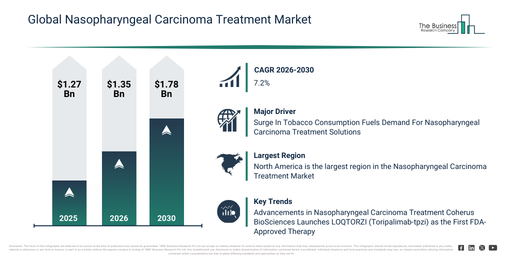
    In recent times, the market for nasopharyngeal carcinoma treatments has experienced robust expansion, projecting a rise from $1.27 billion in 2025 to $1.35 billion in 2026, reflecting a compound annual growth rate of 6.1%. This historical growth trajectory was significantly influenced by factors such as the high incidence of nasopharyngeal carcinoma within Asian-Pacific demographics, the established practice of radiotherapy as the primary treatment modality, the early adoption of chemotherapy in treatment regimens, a general lack of awareness regarding the initial symptoms of the disease, and the increasing availability of treatment centers within hospital settings.

    The nasopharyngeal carcinoma treatment market is poised for substantial expansion, projected to reach $1.78 billion by the year 2030, reflecting a compound annual growth rate of 7.2%. This upward trajectory is fueled by several key factors, including the escalating utilization of immunotherapy agents, augmented investments in NPC research focused on biomarkers, ongoing advancements in radiation technology, a broader availability of targeted therapeutic options, and a rise in oncology-focused clinical trials. Significant trends anticipated during this forecast period encompass a heightened demand for combination chemoradiotherapy regimens, increased application of immunotherapy for advanced stages of NPC, a greater emphasis on Epstein-Barr virus (EBV)-related biomarkers for early identification, the burgeoning research and development pipelines for targeted therapies, and a more widespread adoption of less invasive radiation approaches.

    Download A Free Sample Report For Comprehensive Market Insights:

    https://www.thebusinessresearchcompany.com/sample.aspx?id=13126&type=smp

    Nasopharyngeal Carcinoma Treatment Market Growth Factors: Which Forces Are Supporting Market Expansion?

    Anticipated advancements in the nasopharyngeal carcinoma treatment sector are strongly linked to escalating tobacco usage. Tobacco, derived from the cured leaves of plants like Nicotiana tabacum and Nicotiana rustica, is fundamentally employed for smoking, mastication, or as a cornerstone component in manufacturing diverse tobacco items, such as cigarettes, cigars, pipe tobacco, and smokeless forms like snuff and chewing tobacco. The act of consuming tobacco, particularly smoking, significantly heightens the likelihood of developing nasopharyngeal carcinoma, thereby necessitating a variety of potent therapeutic interventions, encompassing surgical procedures, radiotherapy, chemotherapy, and precisely targeted treatments. Illustrating this trend, data from Statistics Canada in July 2023 indicated a 2.2% increase in Canadian cigarette production from June 2023, complemented by a 2.6% surge in cigarette sales during June, which amounted to 1.4 billion units when contrasted with May. Consequently, the expanding consumption of tobacco is directly fueling the expansion of the market dedicated to treating nasopharyngeal carcinoma.

    Nasopharyngeal Carcinoma Treatment Market Segmentation And Category Breakdown

    The nasopharyngeal carcinoma treatment market covered in this report is segmented –

    1) By Treatment Type: Chemotherapy, Immunotherapy, Radiation Therapy, Other Treatment Types

    2) By Drug: Ellence, Taxotere, Bleomycin, Methotrexate

    3) By End User: Hospitals And Clinics, Ambulatory Surgery Centers, Other End-Users

    Subsegments:

    1) By Chemotherapy: Platinum-Based Chemotherapy, Taxane-Based Chemotherapy, Combination Chemotherapy Regimens, Targeted Chemotherapy Agents

    2) By Immunotherapy: Checkpoint Inhibitors, Monoclonal Antibodies, Adoptive Cell Therapy, Cancer Vaccines

    3) By Radiation Therapy: Intensity-Modulated Radiation Therapy (IMRT), Proton Beam Therapy, Stereotactic Body Radiation Therapy (SBRT), Brachytherapy

    4) By Other Therapies: Supportive Care Treatments, Palliative Care Interventions, Experimental Therapies, Combination Therapy Approaches

    Nasopharyngeal Carcinoma Treatment Market Industry Trends: What Changes Are Reshaping Demand?

    Within the nasopharyngeal carcinoma treatment landscape, leading entities are prioritizing the creation of sophisticated therapeutic options, exemplified by Loqtorzi, to meet significant market needs. This oral medication is designed for chronic lymphocytic leukemia (CLL) and small lymphocytic lymphoma (SLL), aiming to impede tumor proliferation while concurrently reducing adverse effects, and its utility is further amplified through its capacity for co-administration with complementary treatments. A notable development occurred in January 2024 when Coherus BioSciences, a pharmaceutical firm headquartered in the United States, introduced LOQTORZI (toripalimab-tpzi), the inaugural FDA-sanctioned therapy for nasopharyngeal carcinoma (NPC) applicable across all treatment stages. This anti-PD-1 monoclonal antibody is prescribed for initial treatment in conjunction with chemotherapy and as a standalone therapy for individuals whose condition has advanced following platinum-based chemotherapy regimens. Demonstrating considerable efficacy in clinical trials, LOQTORZI has been shown to markedly enhance both progression-free survival and overall survival rates. The medication is presently accessible via selected specialty distributors, and Coherus is actively engaged in improving patient accessibility and awareness through programs such as NPCFacts.com, signifying a substantial leap forward in managing this formidable form of cancer.

    Nasopharyngeal Carcinoma Treatment Market Competitive Analysis Of Major Industry Participants

    Major companies operating in the nasopharyngeal carcinoma treatment market are Sanofi S.A., Pfizer Inc., Merck & Co. Inc., Novartis AG, Bristol Myers Squibb Company, AstraZeneca plc, Eli Lilly and Company, Amgen Inc., C.H. Boehringer Sohn AG & Co. KG., Regeneron Pharmaceuticals Inc., Astellas Pharma Inc., Eisai Co. Ltd., Incyte Corporation, Ipsen S.A., Dr. Reddys Laboratories Ltd., Hikma Pharmaceuticals plc, Exelixis Inc., BeiGene Ltd, Taiho Pharmaceutical Co. Ltd., Simcere Pharmaceutical Group, Daiichi Sankyo Company Limited, BioDiem Ltd, Coherus BioSciences Inc., Shanghai Junshi Bioscience Co Ltd, Genentech Inc., Helsinn Group, Cyclacel Pharmaceuticals Inc., Advenchen Laboratories LLC.

    Access The Complete Nasopharyngeal Carcinoma Treatment Market Report:

    https://www.thebusinessresearchcompany.com/report/nasopharyngeal-carcinoma-treatment-global-market-report

    Nasopharyngeal Carcinoma Treatment Market Geographic Analysis: Where Is Demand Growing The Fastest?

    North Americawas the largest region in the nasopharyngeal carcinoma treatment market in 2025. Asia Pacificis expected to be the fastest-growing region in the forecast period. The regions covered in the nasopharyngeal carcinoma treatment market report are Asia-Pacific, South East Asia, Western Europe, Eastern Europe, North America, South America, Middle East, Africa.

    Get in touch with us:

    The Business Research Company: https://www.thebusinessresearchcompany.com/

    Americas: +1 310-496-7795

    Asia: +44 7882 955267 & +91 8897263534

    Europe: +44 7882 955267

    Email us at: marketing@tbrc.info

    Follow us on:

    LinkedIn: https://in.linkedin.com/company/the-business-research-company

    YouTube: https://www.youtube.com/channel/UC24_fI0rV8cR5DxlCpgmyFQ

    Global Market Model: https://www.thebusinessresearchcompany.com/global-market-model

  • Nasal Spray Influenza Vaccine Market Expansion Is Opening New Pathways For Strategic Investment

    Nasal Spray Influenza Vaccine Market Expansion Is Opening New Pathways For Strategic Investment

    Enhanced with market attractiveness analysis, total addressable market evaluation, company benchmarking matrices, interactive Excel dashboards, expanded supply chain intelligence, emerging startup coverage, and detailed product insights, The Business Research Company’s 2026 market reports deliver more actionable and strategically valuable research.

    Nasal Spray Influenza Vaccine Market Size Outlook: How Fast Will Revenue Grow Through 2030?

    Yearly, the marketplace for nasal spray influenza vaccines has experienced substantial expansion. Projections indicate a rise from a valuation of $1.48 billion in 2025 to $1.66 billion in 2026, reflecting a compound annual growth rate of 12.7%. This upward trajectory observed in past years can be ascribed to heightened public understanding of flu immunizations, a continued dependence on established injectable flu vaccines, proactive government initiatives promoting influenza prevention, recurring seasonal flu epidemics, and the constrained accessibility of non-invasive vaccination alternatives.

    The market for nasal spray influenza vaccines is poised for substantial expansion in the coming years, projected to reach $2.68 billion by 2030, demonstrating a compound annual growth rate of 12.7%. This upward trajectory is largely fueled by an increasing preference for needle-free administration methods, the broadening scope of immunization programs for both children and the elderly, amplified investments in research and development for nasal vaccines, progress in creating sophisticated attenuated vaccine formulas, and a global push towards greater vaccination coverage. Key developments anticipated during this period include a greater acceptance of non-invasive vaccination techniques, a surge in demand for flu vaccines designed for children, wider utilization of quadrivalent live attenuated vaccines, intensified campaigns for seasonal influenza prevention, and the emergence of both multi-dose and single-dose nasal vaccine options.

    Download A Free Sample Report For Comprehensive Market Insights:

    https://www.thebusinessresearchcompany.com/sample.aspx?id=24326&type=smp

    Nasal Spray Influenza Vaccine Market Demand Drivers: What Is Fueling Industry Growth?

    The anticipated rise in influenza cases is poised to be a significant catalyst for the expansion of the nasal spray influenza vaccine market. Influenza, characterized as a highly contagious viral ailment targeting the respiratory system, manifests in symptoms like pyrexia, tussis, pharyngitis, arthralgia, and weariness. Its escalating incidence stems largely from the influenza virus’s propensity for rapid genetic alterations, which allow it to circumvent established immunity and disseminate swiftly through communities. Nasal spray vaccines contribute to influenza prophylaxis by introducing a attenuated viral strain directly to the nasal cavity, thereby initiating an immune reaction at the virus’s primary entry point. For example, as reported by the Centers for Disease Control and Prevention (CDC) in September 2024, initial assessments of the 2023-2024 flu season in the United States indicated an estimated 34 million to 75 million symptomatic infections, leading to 15 million to 33 million medical consultations, 380,000 to 900,000 hospital admissions, and a mortality range of 17,000 to 100,000 deaths. Notably, individuals aged 65 and older constituted 51% of hospitalizations and 68% of fatalities, underscoring the heightened vulnerability of this demographic. Consequently, the escalating impact of influenza is directly fueling the growth trajectory of the nasal spray influenza vaccine sector.

    Nasal Spray Influenza Vaccine Market Segment Outlook: Which Categories Are Expanding The Fastest?

    The nasal spray influenza vaccine market covered in this report is segmented –

    1) By Type: Live Attenuated Influenza Vaccine (LAIV), Inactivated Influenza Vaccine

    2) By Administration Method: Single-Dose Administration, Multi-Dose Administration

    3) By Age Group: Pediatric, Adult, Geriatric

    4) By Distribution Channel: Hospitals, Clinics, Pharmacies, Online Stores, Other Distribution Channels

    5) By End User: Healthcare Providers, Individuals, Government Health Departments, Pharmaceutical Companies

    Subsegments:

    1) By Live Attenuated Influenza Vaccine (LAIV): Trivalent Live Attenuated Influenza Vaccine (Trivalent LAIV), Quadrivalent Live Attenuated Influenza Vaccine (Quadrivalent LAIV)

    2) By Inactivated Influenza Vaccine: Whole Virus Inactivated Vaccine, Split Virus Inactivated Vaccine, Subunit Inactivated Vaccine, Adjuvanted Inactivated Vaccine, High-Dose Inactivated Vaccine

    Nasal Spray Influenza Vaccine Market Innovation Trends: Which Developments Are Transforming The Industry?

    Key players within the nasal spray influenza vaccine sector are concentrating their efforts on pioneering novel vaccine compositions, specifically live attenuated influenza vaccines, with the dual objectives of bolstering immunological defense and elevating patient adherence. This specific type of vaccine, the live attenuated influenza vaccine or LAIV, is formulated using weakened, live influenza viruses; its mechanism involves safely priming the immune system to generate antibodies, thereby conferring protection against influenza illness. It achieves this by inducing both local and systemic immunity, which consequently strengthens the body’s long-term defense capabilities against subsequent flu exposures. Illustrating this trend, AstraZeneca Plc, a prominent participant in the global pharmaceutical landscape, secured U.S. Food and Drug Administration (FDA) authorization in September 2024 for FluMist, a live attenuated influenza vaccine. This approval specifically permits self-administration by adults up to 49 years of age and administration by caregivers for children between 2 and 17 years old, marking a significant milestone as the inaugural and sole influenza vaccine cleared for such user-administered application in the U.S. The basis for this regulatory clearance was extensive usability research confirming that individuals possessed the capability to administer the vaccine to themselves accurately, with all participants successfully delivering the complete prescribed dose.

    Nasal Spray Influenza Vaccine Market Key Companies And Competitive Benchmarking

    Major companies operating in the nasal spray influenza vaccine market are Sanofi Pasteur SA, GSK plc, FluGen Inc., BioDiem Ltd, Codagenix Inc, Altimmune Inc, AstraZeneca PLC, MedImmune LLC, BCHT Biotechnology Co Ltd, Serum Institute of India Pvt Ltd, Vivaldi Biosciences, Vaccitech, Blue Water Vaccines, VaxInnate, INOVIO Pharmaceuticals, Cipla Ltd, Beijing Wantai Biological Pharmacy Enterprise Co Ltd, Bharat Biotech, Novavax Inc, BioNTech SE, Transgene SA, BiondVax Pharmaceuticals Ltd, Adimmune Corporation, Teva Pharmaceutical Industries Ltd

    Access The Complete Nasal Spray Influenza Vaccine Market Report:

    https://www.thebusinessresearchcompany.com/report/nasal-spray-influenza-vaccine-global-market-report

    Nasal Spray Influenza Vaccine Market Global Footprint: Which Region Holds Market Leadership?

    North Americawas the largest region in the nasal spray influenza vaccine market in 2025. Asia-Pacificis expected to be the fastest-growing region in the forecast period. The regions covered in the nasal spray influenza vaccine market report are Asia-Pacific, South East Asia, Western Europe, Eastern Europe, North America, South America, Middle East, Africa.

    Get in touch with us:

    The Business Research Company: https://www.thebusinessresearchcompany.com/

    Americas: +1 310-496-7795

    Asia: +44 7882 955267 & +91 8897263534

    Europe: +44 7882 955267

    Email us at: marketing@tbrc.info

    Follow us on:

    LinkedIn: https://in.linkedin.com/company/the-business-research-company

    YouTube: https://www.youtube.com/channel/UC24_fI0rV8cR5DxlCpgmyFQ

    Global Market Model: https://www.thebusinessresearchcompany.com/global-market-model