Month: June 2026

  • Myocarditis Disease Market Growth Outlook Reveals A CAGR Of 6.3% And A Market Value Of $2.17 Billion By 2030

    Myocarditis Disease Market Growth Outlook Reveals A CAGR Of 6.3% And A Market Value Of $2.17 Billion By 2030

    Delivering more actionable and strategically valuable research, The Business Research Company’s 2026 market reports feature market attractiveness analysis, total addressable market evaluation, company benchmarking matrices, interactive Excel dashboards, expanded supply chain intelligence, emerging startup coverage, and detailed product insights.

    Myocarditis Disease Market Growth Potential: How Will Market Size Change Through 2030?

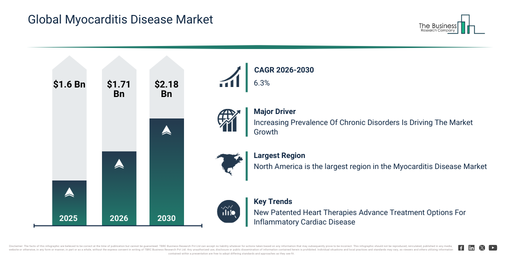
    The market for myocarditis treatments has experienced substantial expansion recently, projecting a rise from $1.6 billion in 2025 to $1.71 billion in 2026, fueled by a compound annual growth rate of 6.5%. This historical growth trajectory has been shaped by an increase in viral infections, diagnostic limitations, reliance on conventional anti-inflammatory therapies, insufficient public understanding, and a growing number of myocarditis cases resulting from medication side effects.

    The market for myocarditis treatments is poised for significant expansion, projected to reach $2.18 billion by the year 2030, reflecting a compound annual growth rate of 6.3%. This anticipated growth over the forecast period is fueled by several key factors, including progress in imaging technologies, heightened investment in cardiac research, a growing need for tailored immunotherapy, enhanced diagnostic screening initiatives, and the broader availability of telecardiology services. Within this same forecast period, prominent trends are expected to emerge, such as the increasing embrace of diagnostic techniques that utilize biomarkers, a greater reliance on sophisticated imaging methods for prompt identification of the condition, heightened demand for therapies that combat inflammation and modulate the immune system, the proliferation of awareness campaigns focused on initial symptoms and preventative measures, and an intensified emphasis on strategies for managing myocarditis linked to infections.

    Download A Free Sample Report For Comprehensive Market Insights:

    https://www.thebusinessresearchcompany.com/sample.aspx?id=21227&type=smp

    Myocarditis Disease Market Growth Factors: Which Forces Are Supporting Market Expansion?

    The expanding incidence of chronic health conditions is poised to invigorate the market for myocarditis, a condition involving inflammation of the heart muscle. These chronic illnesses, defined by their persistence for a year or more and necessitating continuous medical care, intervention, or alterations in daily habits, are becoming more common due to demographic shifts towards older populations, increasingly inactive lifestyles, suboptimal nutrition, escalating obesity levels, and greater exposure to environmental contaminants. Myocarditis, by potentially causing persistent issues like heart failure, irregular heartbeats, and weakened heart muscle, becomes a contributor to these chronic disorders, demanding sustained attention and posing long-term risks to cardiovascular well-being. For illustration, by September 2024, the British Heart Foundation, an organization dedicated to heart health research in the UK, reported that roughly 7.6 million individuals in the United Kingdom suffer from heart and circulatory ailments, with this figure comprising approximately 4 million men and 3.6 million women. These conditions account for approximately 27% of all fatalities in the UK, amounting to over 170,000 deaths annually, or nearly 480 daily, which translates to one death every three minutes. Consequently, the rising tide of chronic disorders is a significant factor fueling the expansion of the myocarditis disease market.

    Myocarditis Disease Market Segment Analysis And Revenue Opportunities

    The myocarditis disease market covered in this report is segmented –

    1) By Type: Acute Myocarditis, Chronic Myocarditis, Lymphocytic Myocarditis

    2) By Treatment: Medication, Surgery, Other Treatments

    3) By Diagnosis: Blood Tests, Imaging Tests, Cardiac Catheterization, Heart Muscle Biopsy, Other Diagnostic Methods

    4) By Distribution Channel: Hospital Pharmacy, Retail Pharmacy, Online Pharmacy, Other Distribution Channels

    5) By End-Users: Hospitals, Specialty Clinics, Homecare, Other End-Users

    Subsegments:

    1) By Acute Myocarditis: Viral Myocarditis, Bacterial Myocarditis, Fungal Myocarditis

    2) By Chronic Myocarditis: Autoimmune Myocarditis, Chronic Active Myocarditis, Chronic Inflammatory Myocarditis

    3) By Lymphocytic Myocarditis: Idiopathic Lymphocytic Myocarditis, Drug-Induced Lymphocytic Myocarditis, Lymphocytic Myocarditis Associated With Viral Infections

    Myocarditis Disease Market Industry Trends: What Changes Are Reshaping Demand?

    Within the myocarditis therapeutic landscape, leading entities are concentrating efforts on pioneering sophisticated anti-inflammatory and anti-fibrotic treatments designed to bolster enduring cardiac well-being and thwart the advancement of the condition. These therapeutic interventions operate by influencing critical cellular processes to diminish cardiac inflammation and scar tissue formation, ultimately safeguarding heart functionality and mitigating the likelihood of developing long-term ailments. As an illustration, in November 2025, Cardiol Therapeutics, a clinical-stage life sciences firm based in Canada, received notification of a U.S. patent allowance for its promising cardiac drug candidates, CardiolRx and CRD-38, thereby extending their intellectual property rights until October 2040. This allowance encompasses their application across a wide spectrum of cardiovascular conditions, such as acute myocarditis, inflammatory cardiomyopathy, heart failure, and pericarditis. CardiolRx, a small-molecule therapeutic, functions by influencing the inflammasome pathway, which plays a significant role in the inflammation and fibrosis associated with myocarditis, whereas CRD-38 represents a novel subcutaneous formulation currently undergoing development. The recently granted patent significantly reinforces Cardiol’s future market standing and provides crucial support for its advanced clinical initiatives, including a Phase II clinical trial of CardiolRx for acute myocarditis (codenamed ARCHER) and the upcoming initial human trials for CRD-38.

    Myocarditis Disease Market Leading Players Shaping Industry Direction

    Major companies operating in the myocarditis disease market are Pfizer Inc., Merck & Co Inc., Bristol‑Myers Squibb Company, AstraZeneca PLC, Novartis AG, Eli Lilly and Company, Gilead Sciences Inc., Teva Pharmaceutical Industries Ltd., Regeneron Pharmaceuticals Inc., Sun Pharmaceutical Industries Ltd., Cipla Limited, Cardiol Therapeutics Inc., Amgen Inc., Sanofi, Bayer AG, Johnson & Johnson, AbbVie Inc., Acticor Biotech, Cardurion Pharmaceuticals, Serca Pharmaceuticals, Verve Therapeutics, Biohaven Pharmaceuticals, Tenaya Therapeutics, Berlin Cures, Acesion Pharma, Apitope, Amarin Corporation

    Access The Complete Myocarditis Disease Market Report:

    https://www.thebusinessresearchcompany.com/report/myocarditis-disease-global-market-report

    Myocarditis Disease Market Global Footprint: Which Region Holds Market Leadership?

    North Americawas the largest region in the myocarditis disease market in 2025. The regions covered in the myocarditis disease market report are Asia-Pacific, South East Asia, Western Europe, Eastern Europe, North America, South America, Middle East, Africa.

    Get in touch with us:

    The Business Research Company: https://www.thebusinessresearchcompany.com/

    Americas: +1 310-496-7795

    Asia: +44 7882 955267 & +91 8897263534

    Europe: +44 7882 955267

    Email us at: marketing@tbrc.info

    Follow us on:

    LinkedIn: https://in.linkedin.com/company/the-business-research-company

    YouTube: https://www.youtube.com/channel/UC24_fI0rV8cR5DxlCpgmyFQ

    Global Market Model: https://www.thebusinessresearchcompany.com/global-market-model
  • Myocardial Ischemia Market Forecast Highlights Expansion From $0.9 Billion To $1.14 Billion Through 2030

    Myocardial Ischemia Market Forecast Highlights Expansion From $0.9 Billion To $1.14 Billion Through 2030

    Enhanced with market attractiveness analysis, total addressable market evaluation, company benchmarking matrices, interactive Excel dashboards, expanded supply chain intelligence, emerging startup coverage, and detailed product insights, The Business Research Company’s 2026 market reports deliver more actionable and strategically valuable research.

    Myocardial Ischemia Market Value Analysis: What Growth Is Expected Over The Forecast Period?

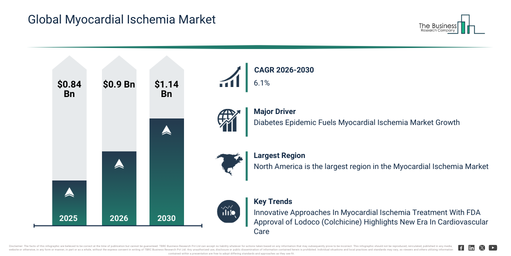
    The market for myocardial ischemia has experienced robust expansion lately, with projections indicating a rise from $0.84 billion in 2025 to $0.9 billion in 2026, reflecting a compound annual growth rate of 6.8%. Contributing factors behind this historical growth trajectory include an escalation in coronary artery disease instances, constraints in early detection initiatives, a growing prevalence of hypertension, reliance on conventional diagnostic techniques, and lifestyle choices linked to increased risk.

    The market for myocardial ischemia is projected for significant expansion over the coming years, anticipating a valuation of $1.14 billion by 2030, driven by a compound annual growth rate of 6.1%. This projected increase during the forecast period is principally fueled by the evolution of diagnostic imaging techniques, the increasing integration of personalized medicine approaches, the broader implementation of cardiac prevention initiatives, augmented investments in cardiovascular research and development, and a heightened need for less invasive therapeutic options. Key developments anticipated within this timeframe encompass the wider embrace of sophisticated cardiac imaging, a growing inclination towards minimally invasive cardiac procedures, a greater utilization of combined pharmaceutical treatments, an intensified emphasis on proactive cardiac care and early risk assessment, and a substantial demand for individually tailored cardiac treatment strategies.

    Download A Free Sample Report For Comprehensive Market Insights:

    https://www.thebusinessresearchcompany.com/sample.aspx?id=16488&type=smp

    Myocardial Ischemia Market Demand Drivers: What Is Fueling Industry Growth?

    The increasing prevalence of diabetes is anticipated to be a significant catalyst for the expansion of the myocardial ischemia market. Essentially, diabetes encompasses a set of metabolic conditions characterized by the body’s impaired capacity to either generate or appropriately utilize insulin, the hormone from the pancreas responsible for blood glucose regulation. Factors such as increasing rates of obesity and severe obesity, insufficient physical activity, and inherited predispositions are contributing to this surge in diabetes cases. Consequently, the heightened occurrence of diabetes directly correlates with a greater incidence of myocardial ischemia, thereby stimulating the demand for diagnostic tools, treatment options, and management strategies related to this cardiac condition. To illustrate, April 2023 saw a report from The British Diabetic Association, a UK charity, indicating that 4.3 million people in the United Kingdom had been diagnosed with diabetes, with the 2021-22 registration data revealing a rise of 148,951 cases over the preceding year. Furthermore, it’s estimated that more than 2.4 million individuals in the UK face a substantial risk of developing type 2 diabetes. This upward trend in diabetes incidence is thus a key driver fueling the growth trajectory of the myocardial ischemia market.

    Myocardial Ischemia Market Segmentation And Category Breakdown

    The myocardial ischemia market covered in this report is segmented –

    1) By Type: Symptomatic, Asymptomatic

    2) By Treatment And Diagnosis: Diagnosis, Treatment

    3) By End User: Hospitals And Clinics, Diagnostic Centers, Ambulatory Surgery Centers

    Subsegments:

    1) By Symptomatic: Acute Myocardial Ischemia, Chronic Myocardial Ischemia, Stable Angina, Unstable Angina

    2) By Asymptomatic: Silent Myocardial Ischemia, Exercise-Induced Asymptomatic Ischemia

    Myocardial Ischemia Market Innovation Trends: Which Developments Are Transforming The Industry?

    A key player in the myocardial ischemia market, Agepha Pharma, has introduced Lodoco, a novel colchicine-based medication designed to combat inflammation and mitigate cardiovascular event risks in individuals with coronary artery disease. This pharmaceutical, given the nod by the Food and Drug Administration in June 2023, represents a groundbreaking FDA-approved therapy focused on addressing cardiovascular inflammation. Its efficacy in significantly lowering the likelihood of myocardial infarction, stroke, coronary revascularization, and cardiovascular mortality among adult patients contending with existing atherosclerotic conditions or multiple cardiovascular risk factors is substantiated by the findings of the LoDoCo2 clinical trial. The trial revealed that administering colchicine at a dosage of 0.5 mg daily resulted in a 31% relative decrease in these adverse cardiovascular outcomes compared to a placebo. Therefore, Lodoco is specifically recommended for patients needing to reduce their susceptibility to myocardial infarction, stroke, procedures to restore coronary blood flow, and ultimately, death from cardiovascular causes, provided they are adults with diagnosed atherosclerotic disease or possess several risk factors for such conditions.

    Myocardial Ischemia Market Competitive Analysis Of Major Industry Participants

    Major companies operating in the myocardial ischemia market are Cardinal Health Inc., Pfizer Inc., Roche Holding AG, Bayer AG, Sanofi SA, Novartis AG, Bristol‑Myers Squibb Company, AstraZeneca Plc, Abbott Laboratories Inc., Eli Lilly and Company, Medtronic Plc, Boehringer Ingelheim International GmbH, Siemens Healthineers AG, Merck KGaA, GE HealthCare Technologies Inc., Fujifilm Holdings Corporation, Boston Scientific Corporation, Daiichi Sankyo Company Limited, Canon Medical Systems Corporation, Johnson & Johnson, Koninklijke Philips NV, Biotronik SE & Co KG, Edwards Lifesciences Corporation, Teva Pharmaceutical Industries Ltd, Schiller AG, AliveCor Inc.

    Access The Complete Myocardial Ischemia Market Report:

    https://www.thebusinessresearchcompany.com/report/myocardial-ischemia-global-market-report

    Myocardial Ischemia Market Regional Distribution: Which Areas Drive Market Expansion?

    North Americawas the largest region in the myocardial ischemia market in 2025. Europeis expected to be the fastest-growing region in the forecast period. The regions covered in the myocardial ischemia market report are Asia-Pacific, South East Asia, Western Europe, Eastern Europe, North America, South America, Middle East, Africa.

    Get in touch with us:

    The Business Research Company: https://www.thebusinessresearchcompany.com/

    Americas: +1 310-496-7795

    Asia: +44 7882 955267 & +91 8897263534

    Europe: +44 7882 955267

    Email us at: marketing@tbrc.info

    Follow us on:

    LinkedIn: https://in.linkedin.com/company/the-business-research-company

    YouTube: https://www.youtube.com/channel/UC24_fI0rV8cR5DxlCpgmyFQ

    Global Market Model: https://www.thebusinessresearchcompany.com/global-market-model
  • Myocardial Infarction Market Expected To Reach $3.15 Billion By 2030 As Growth Accelerates At 7.5% CAGR

    Myocardial Infarction Market Expected To Reach $3.15 Billion By 2030 As Growth Accelerates At 7.5% CAGR

    Through market attractiveness analysis, total addressable market evaluation, company benchmarking matrices, interactive Excel dashboards, expanded supply chain intelligence, emerging startup coverage, and detailed product insights, The Business Research Company’s 2026 market reports provide more actionable and strategically valuable research.

    Myocardial Infarction Market Size Forecast: How Large Could The Market Become By 2030?

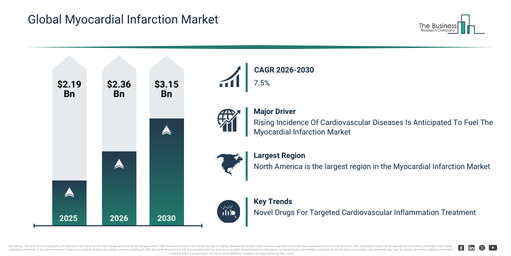
    The market for myocardial infarction treatments experienced robust expansion recently and is projected to continue this upward trajectory, advancing from $2.19 billion in 2025 to an estimated $2.36 billion by 2026, reflecting a compound annual growth rate of 7.3%. Factors contributing to the expansion observed during the historical period include an increase in smoking rates, a growing incidence of hypertension, elevated levels of LDL cholesterol within the population, restricted availability of preemptive cardiac screenings, and prevalent sedentary lifestyles.

    The global market for myocardial infarction is poised for substantial expansion, projected to reach $3.15 billion by 2030, reflecting a compound annual growth rate of 7.5%. This anticipated growth stems from several key drivers including enhancements in cardiac medication development, the increasing integration of telecardiology services, heightened investments in cardiovascular research and development, the growing utilization of artificial intelligence for diagnosing cardiac conditions, and the ongoing expansion of emergency cardiac care facilities. Furthermore, the coming years will witness several significant trends, such as a greater uptake of sophisticated cardiac rehabilitation programs, a rise in the use of combination drug therapies for managing patients post-myocardial infarction, a stronger emphasis on identifying and preventing heart attacks early, the broader application of minimally invasive surgical techniques in the management of acute myocardial infarction, and a heightened focus on lifestyle changes and strategies for long-term risk mitigation.

    Download A Free Sample Report For Comprehensive Market Insights:

    https://www.thebusinessresearchcompany.com/sample.aspx?id=12164&type=smp

    Myocardial Infarction Market Growth Drivers: What Factors Are Accelerating Expansion?

    The increasing prevalence of cardiovascular conditions is anticipated to be a significant catalyst for the expansion of the myocardial infarction market in the coming years. Cardiovascular diseases encompass a spectrum of ailments affecting the heart and the vascular system. Classes of drugs used for myocardial infarction are instrumental in the management and treatment of these cardiovascular ailments, specifically targeting the consequences following a heart attack. To illustrate, data released in September 2024 by the British Heart Foundation, a charitable organization dedicated to cardiovascular research in the UK, indicated that approximately 7.6 million individuals in the UK are impacted by heart and circulatory diseases, with this figure comprising roughly 4 million men and 3.6 million women. These conditions account for approximately 27% of all fatalities within the UK, amounting to over 170,000 deaths annually, or approximately 480 deaths each day, which translates to one death every three minutes. Consequently, the escalating rate of cardiovascular diseases is fueling the growth of the market for myocardial infarction treatments.

    Myocardial Infarction Market Segment Outlook: Which Categories Are Expanding The Fastest?

    The myocardial infarction market covered in this report is segmented –

    1) By Drug Class: Antiplatelet Agents, Glycoprotein IIb Or IIIa Inhibitors, Antithrombotic Agents, Beta-Adrenergic Blockers, Vasodilators, Angiotensin-Converting Enzyme (ACE) Inhibitors, Angiotensin-Receptor Blockers, Analgesics, Thrombolytics

    2) By Route Of Administration: Oral, Injectable

    3) By Distribution Channel: Hospital Pharmacies, Retail Pharmacies, Online Pharmacies

    Subsegments:

    1) By Antiplatelet Agents: Aspirin, Clopidogrel, Ticagrelor

    2) By Glycoprotein IIb Or IIIa Inhibitors: Abciximab, Eptifibatide, Tirofiban

    3) By Antithrombotic Agents: Heparins, Direct Oral Anticoagulants (DOACs)

    4) By Beta-Adrenergic Blockers: Metoprolol, Carvedilol

    5) By Vasodilators: Nitroglycerin, Isosorbide Dinitrate

    6) By Angiotensin-Converting Enzyme (ACE) Inhibitors: Lisinopril, Enalapril

    7) By Angiotensin-Receptor Blockers: Losartan, Valsartan

    8) By Analgesics: Morphine, Non-Steroidal Anti-Inflammatory Drugs (NSAIDs)

    9) By Thrombolytics: Alteplase, Reteplase

    Myocardial Infarction Market Trends: What Is Shaping Future Industry Growth?

    Leading entities within the myocardial infarction sector are concentrating their efforts on pioneering new therapeutic agents, particularly anti-inflammatory drugs, to address cardiovascular inflammation with precision and enhance their market standing. These anti-inflammatory agents function to diminish inflammation, thereby mitigating discomfort and edema by modulating the body’s immunological reactions. A notable development occurred in June 2023 when Agepha Pharma, a medical product producer based in Slovakia, secured FDA authorization for its innovated medication, Lodoco (colchicine), which stands as the inaugural anti-inflammatory therapy designed to tackle the root cause of atherosclerotic cardiovascular conditions. The intended benefit of Lodoco is to decrease the likelihood of experiencing myocardial infarction, stroke, coronary revascularization, and fatal cardiovascular events in adult populations, with the option of concurrent use alongside lipid-lowering treatments. Clinical trials indicated that Lodoco, a reformulated low-dosage colchicine, achieved a statistically significant 31% reduction in the composite risk of cardiovascular mortality, myocardial infarction, stroke, or the need for coronary revascularization.

    Myocardial Infarction Market Key Companies And Competitive Benchmarking

    Major companies operating in the myocardial infarction market are Pfizer Inc, Johnson & Johnson Services Inc, Bayer AG, Novartis AG, Sanofi SA, Bristol Myers Squibb Company, AstraZeneca PLC, Boehringer Ingelheim GmbH, Daiichi Sankyo Co Ltd, Apotex Inc, Par Pharmaceutical Companies Inc, Amgen Inc, Merck & Co Inc, Takeda Pharmaceutical Company Ltd, Gilead Sciences Inc, Eli Lilly and Company, Teva Pharmaceutical Industries Ltd, Sun Pharmaceutical Industries Ltd, Dr Reddy’s Laboratories Ltd, Lupin Ltd, United Therapeutics Corporation, CSPC Pharmaceutical Group Ltd, Zhejiang Huahai Pharmaceutical Co Ltd, Qilu Pharmaceutical Co Ltd, Chia Tai Tianqing Pharmaceutical Group Co Ltd.

    Access The Complete Myocardial Infarction Market Report:

    https://www.thebusinessresearchcompany.com/report/myocardial-infarction-global-market-report

    Myocardial Infarction Market Leading Geography: Which Region Generates The Most Revenue?

    North America was the largest region in the myocardial infarction market in 2025. Europe is expected to be the fastest-growing region in the forecast period. The regions covered in the myocardial infarction market report are Asia-Pacific, South East Asia, Western Europe, Eastern Europe, North America, South America, Middle East, Africa.

    Get in touch with us:

    The Business Research Company: https://www.thebusinessresearchcompany.com/

    Americas: +1 310-496-7795

    Asia: +44 7882 955267 & +91 8897263534

    Europe: +44 7882 955267

    Email us at: marketing@tbrc.info

    Follow us on:

    LinkedIn: https://in.linkedin.com/company/the-business-research-company

    YouTube: https://www.youtube.com/channel/UC24_fI0rV8cR5DxlCpgmyFQ

    Global Market Model: https://www.thebusinessresearchcompany.com/global-market-model
  • Myelofibrosis (MF) Market Set To Grow From $1.59 Billion In 2026 To $1.79 Billion By 2030 At A CAGR Of 3%

    Myelofibrosis (MF) Market Set To Grow From $1.59 Billion In 2026 To $1.79 Billion By 2030 At A CAGR Of 3%

    Delivering more actionable and strategically valuable research, The Business Research Company’s 2026 market reports feature market attractiveness analysis, total addressable market evaluation, company benchmarking matrices, interactive Excel dashboards, expanded supply chain intelligence, emerging startup coverage, and detailed product insights.

    Myelofibrosis (MF) Market Revenue Outlook: What CAGR Is Expected Through 2030?

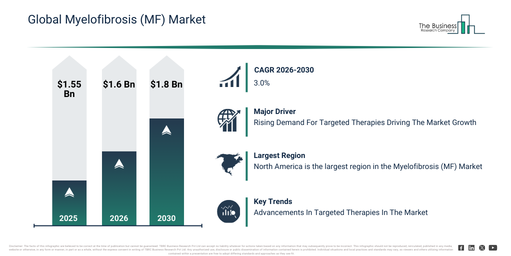
    The market for myelofibrosis has experienced consistent expansion. Projections indicate an increase from $1.55 billion in 2025 to $1.6 billion in 2026, reflecting a compound annual growth rate of 3.2%. Factors contributing to the historical growth trajectory include a scarcity of therapeutic alternatives, the significant incidence of anemia among myelofibrosis patients, an upward trend in autoimmune disorders, escalating diagnostic complexities, and a prevalent reliance on corticosteroid therapies for disease management.

    The market for myelofibrosis is projected for consistent expansion over the upcoming years, reaching an estimated valuation of $1.8 billion by 2030. This growth trajectory represents a compound annual growth rate (CAGR) of 3.0%. Key factors propelling this market forward during the forecast period include progress in the development of JAK inhibitor treatments, the increasing integration of precision medicine strategies, heightened financial investment in research and development within hematology, continued advancements in stem-cell therapy options, and a greater availability of oral targeted therapies. Prominent shifts anticipated within this timeframe involve a broader uptake of therapies centered on JAK inhibitors, a growing inclination towards employing combination treatment regimens, an elevated focus on initiatives for early detection and screening, intensified investigations into stem-cell transplantation and regenerative medicine, and a more frequent utilization of supportive care measures to alleviate the impact of symptoms.

    Download A Free Sample Report For Comprehensive Market Insights:

    https://www.thebusinessresearchcompany.com/sample.aspx?id=21226&type=smp

    Myelofibrosis (MF) Market Growth Factors Supporting Long-Term Expansion

    The expansion of the myelofibrosis (MF) market is anticipated to be fueled by the escalating requirement for personalized treatment strategies. These individualized therapies, designed to match specific genetic, environmental, and lifestyle profiles, are becoming increasingly sought after due to breakthroughs in genomics, biotechnology, and data analysis, which facilitate more accurate and effective care. Myelofibrosis (MF) itself serves as a vital foundation for advancing these targeted treatments by pinpointing crucial molecular pathways, like the JAK-STAT signaling pathway. This understanding allows for the creation of precision medicines, such as JAK inhibitors (including Ruxolitinib, Fedratinib, and Pacritinib), aimed at alleviating symptoms and slowing the advancement of the condition. To illustrate, the American Cancer Society, a non-profit entity in the United States, projected in May 2024 that the nation would see about 81,610 new instances of kidney cancer in 2024 (comprising 52,380 males and 29,230 females), with an estimated 14,390 fatalities (9,450 males and 4,940 females). Consequently, the rising demand for targeted therapies is a primary catalyst for the myelofibrosis (MF) market’s growth.

    Myelofibrosis (MF) Market Segment Landscape: Which Areas Lead Market Development?

    The myelofibrosis (mf) market covered in this report is segmented –

    1) By Drug Type: Jak Inhibitor, Immunomodulators, Hydroxyurea, Other Drug Types

    2) By Treatment Type: Chemotherapy, Targeted Therapy, Other Treatment Types

    3) By Route Of Administration: Oral, Parenteral, Other Routes Of Administration

    4) By Distribution Channel: Hospital Pharmacy, Online Pharmacy, Retail Pharmacy

    5) By End-User: Hospitals, Homecare, Specialty Clinics, Other End-Users

    Subsegments:

    1) By Jak Inhibitor: Ruxolitinib, Fedratinib, Momelotinib, Itacitinib

    2) By Immunomodulators: Thalidomide, Lenalidomide, Pomalidomide

    3) By Hydroxyurea: Oral Hydroxyurea, Injectable Hydroxyurea

    4) By Other Drug Types: Erythropoiesis-Stimulating Agents (ESAs), Danazol, Monoclonal Antibodies, Chemotherapy Agents

    Myelofibrosis (MF) Market Industry Trends Shaping Future Revenue Growth

    The myelofibrosis (MF) market is seeing significant innovation from key players who are concentrating their efforts on developing and expanding targeted therapies, including JAK1/JAK2 and ACVR1 inhibitors, with the goal of boosting treatment effectiveness, mitigating disease advancement, and ultimately improving patient prognoses for those afflicted with myelofibrosis. Specifically, JAK1/JAK2 inhibitors work by interfering with the Janus kinase signaling pathway to curb inflammation and normalize aberrant blood cell production characteristic of MF, whereas ACVR1 inhibitors function by blocking the activin receptor-like kinase 2 (ALK2), thereby influencing bone marrow fibrosis and the disease’s trajectory. A notable development occurred in September 2023 when the US Food and Drug Administration (FDA) granted approval to Ojjaara (momelotinib), developed by the UK-based pharmaceutical firm GSK plc, for the management of intermediate- or high-risk myelofibrosis. This therapeutic agent boasts a combined effect, addressing both JAK1/JAK2 and ACVR1 pathways, which aids in modulating inflammatory responses and concurrently elevates hemoglobin levels, thereby lessening the necessity for blood transfusions. This regulatory milestone not only broadens the spectrum of available treatments but also establishes a new benchmark in the care of MF patients experiencing anemia, a significant challenge that has historically lacked adequate solutions in the disease’s therapeutic arena.

    Myelofibrosis (MF) Market Industry Leaders And Market Competition

    Major companies operating in the myelofibrosis (mf) market are Pfizer Inc, Novartis AG, Incyte Corporation, CTI BioPharma Corp, Karyopharm Therapeutics Inc, Sierra Oncology Inc, Kartos Therapeutics Inc, NS Pharma Inc, Keros Therapeutics Inc, Pharmaxis Ltd, Sumitomo Pharma Oncology, Galecto Biotech AB, Actuate Therapeutics Inc, AbbVie Inc, Bristol‑Myers Squibb Company, Chia Tai Tianqing Pharmaceutical Group Co Ltd, Taiga Biotechnologies Inc, Rigel Pharmaceuticals Inc, Imago BioSciences Inc, Samus Therapeutics Inc.

    Access The Complete Myelofibrosis (MF) Market Report:

    https://www.thebusinessresearchcompany.com/report/myelofibrosis-mf-global-market-report

    Myelofibrosis (MF) Market Regional Outlook: Where Are The Largest Opportunities Located?

    North Americawas the largest region in the myelofibrosis (MF) market in 2025. Asia-Pacificis expected to be the fastest-growing region in the forecast period. The regions covered in the myelofibrosis (mf) market report are Asia-Pacific, South East Asia, Western Europe, Eastern Europe, North America, South America, Middle East, Africa.

    Get in touch with us:

    The Business Research Company: https://www.thebusinessresearchcompany.com/

    Americas: +1 310-496-7795

    Asia: +44 7882 955267 & +91 8897263534

    Europe: +44 7882 955267

    Email us at: marketing@tbrc.info

    Follow us on:

    LinkedIn: https://in.linkedin.com/company/the-business-research-company

    YouTube: https://www.youtube.com/channel/UC24_fI0rV8cR5DxlCpgmyFQ

    Global Market Model: https://www.thebusinessresearchcompany.com/global-market-model
  • Myelodysplastic Syndrome Market Opportunities Are Emerging Beyond Traditional Growth Areas

    Myelodysplastic Syndrome Market Opportunities Are Emerging Beyond Traditional Growth Areas

    Enhanced with market attractiveness analysis, total addressable market evaluation, company benchmarking matrices, interactive Excel dashboards, expanded supply chain intelligence, emerging startup coverage, and detailed product insights, The Business Research Company’s 2026 market reports deliver more actionable and strategically valuable research.

    Myelodysplastic Syndrome Market Growth Analysis: How Will Revenue Expand During The Forecast Period?

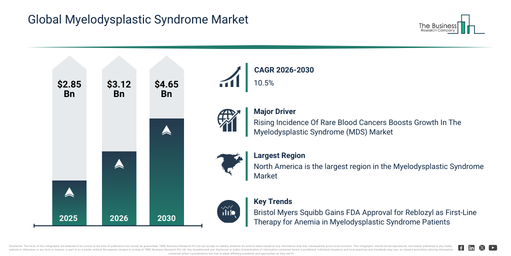
    The market for myelodysplastic syndromes has seen robust expansion recently, projected to increase from $2.85 billion in 2025 to $3.12 billion in 2026, reflecting a compound annual growth rate of 9.8%. Factors contributing to this past growth include a scarcity of therapeutic options, an escalating incidence of blood-related disorders, a higher rate of progression to acute myeloid leukemia, a reliance on palliative treatments, and difficulties associated with early detection.

    The market for myelodysplastic syndromes is poised for substantial expansion in the forthcoming years, projecting a value of $4.65 billion by 2030, driven by a compound annual growth rate (CAGR) of 10.5%. This projected surge is fueled by key factors including the advancement of targeted therapies, the broadening application of precision medicine, augmented investments in cancer research and development, progress in stem cell transplantation techniques, and a greater uptake of oral hypomethylating medications. Dominant trends expected to shape this market during the forecast period encompass the increasing utilization of hypomethylating agents, a rise in the application of combination therapies, a heightened emphasis on early diagnosis and improved accuracy, the expansion of stem cell transplantation and regenerative treatments, and a growing demand for supportive care alongside growth factor therapies.

    Download A Free Sample Report For Comprehensive Market Insights:

    https://www.thebusinessresearchcompany.com/sample.aspx?id=12920&type=smp

    Myelodysplastic Syndrome Market Demand Drivers Creating New Revenue Opportunities

    The expanding prevalence of uncommon blood cancers is poised to foster an upswing in the myelodysplastic syndrome (MDS) market in the upcoming period. Blood cancers, characterized by their low population incidence, are a category of hematologic malignancies that arise from bone marrow cells, lymph nodes, and other elements of the blood and immune system. The primary objective of MDS treatment is to effectively manage this condition by enhancing blood cell generation and mitigating associated symptoms, thereby halting the advancement of bone marrow blood cancer. For illustration, as reported in September 2024 by the Leukemia and Lymphoma Society, a professional organization based in the United States, one individual in the US receives a diagnosis of leukemia, lymphoma, or myeloma every 3 minutes. In the year 2024, an anticipated 187,740 individuals will confront these malignancies, accounting for 9.4% of the projected 2,001,140 new cancer diagnoses in the US. Consequently, the rising occurrence of blood cancer serves as a significant impetus for the growth of the myelodysplastic syndrome (MDS) market.

    Myelodysplastic Syndrome Market Segments: Where Are The Largest Growth Opportunities?

    The myelodysplastic syndrome market covered in this report is segmented –

    1) By Type: Myelodysplastic Syndrome With Unilineage Dysplasia, Myelodysplastic Syndrome With Multilineage Dysplasia, Myelodysplastic Syndrome With Ring Sideroblasts, Other Types

    2) By Drug: Azacitidine, Lenalidomide, Decitabine, Deferasirox

    3) By Treatment: Supportive Therapy, Growth Factors, Chemotherapy, Stem Cell Transplant, Other Treatments

    4) By Route Of Administration: Oral, Injectable, Other Routes Of Administrations

    5) By End-Users: Hospitals, Homecare, Specialty Centers, Other End-Users

    Subsegments:

    1) By Myelodysplastic Syndrome With Unilineage Dysplasia: Type Of Dysplasia, Patient Demographics

    2) By Myelodysplastic Syndrome With Multilineage Dysplasia: Severity Of Dysplasia, Patient Demographics

    3) By Myelodysplastic Syndrome With Ring Sideroblasts: Percentage Of Ring Sideroblasts, Treatment Options

    4) By Other Types: Specific Types, Treatment Options

    Myelodysplastic Syndrome Market Trends Driving Strategic Industry Expansion

    The myelodysplastic syndrome (MDS) sector sees leading firms prioritizing novel developments, specifically pioneering first-line erythroid maturation therapies, to enhance anemia control and decrease the necessity for frequent red blood cell transfusions. These advanced treatments are designed to support the later stages of red blood cell production, facilitating a more prompt and sustained resolution of anemia in individuals not previously treated with erythropoiesis-stimulating agents. Illustrating this trend, Bristol Myers Squibb, a prominent US pharmaceutical entity, secured FDA clearance in August 2023 for Reblozyl (luspatercept-aamt), marking its introduction as a frontline therapy for anemia in adults diagnosed with low- to intermediate-risk myelodysplastic syndromes, who are new to erythropoiesis-stimulating agents and may require regular packed red blood cell transfusions. Data from the Phase 3 COMMANDS study confirmed Reblozyl’s superior performance compared to epoetin alfa, demonstrating greater success in achieving independence from RBC transfusions and elevating hemoglobin levels, thus addressing anemia earlier in a more extensive patient population.

    Myelodysplastic Syndrome Market Major Participants And Competitive Dynamics

    Major companies operating in the myelodysplastic syndrome market are Pfizer Inc., Johnson and Johnson Limited, AbbVie Inc., Bayer AG, Novartis AG, Merck & Co., Sanofi S.A., Bristol-Myers Squibb Company, AstraZeneca Plc., Takeda Pharmaceutical Company Limited, Eli Lilly and Company, Amgen Inc., Boehringer Ingelheim International GmbH, Otsuka Pharmaceutical Co. Ltd., Teva Pharmaceutical Industries Ltd., Astellas Pharma Inc., Daiichi Sankyo Company Ltd., Jazz Pharmaceuticals, Dr. Reddy’s Laboratories Ltd., Lupin Limited, BeiGene, Janssen Biotech, Accord Healthcare, Acceleron Pharma Inc.

    Access The Complete Myelodysplastic Syndrome Market Report:

    https://www.thebusinessresearchcompany.com/report/myelodysplastic-syndrome-global-market-report

    Myelodysplastic Syndrome Market Geographic Landscape: Which Region Dominates Industry Growth?

    North Americawas the largest region in the myelodysplastic syndrome market in 2025. The regions covered in the myelodysplastic syndrome market report are Asia-Pacific, South East Asia, Western Europe, Eastern Europe, North America, South America, Middle East, Africa.

    Get in touch with us:

    The Business Research Company: https://www.thebusinessresearchcompany.com/

    Americas: +1 310-496-7795

    Asia: +44 7882 955267 & +91 8897263534

    Europe: +44 7882 955267

    Email us at: marketing@tbrc.info

    Follow us on:

    LinkedIn: https://in.linkedin.com/company/the-business-research-company

    YouTube: https://www.youtube.com/channel/UC24_fI0rV8cR5DxlCpgmyFQ

    Global Market Model: https://www.thebusinessresearchcompany.com/global-market-model
  • Mycosis Fungoides Treatment Market Expansion Is Opening New Pathways For Strategic Investment

    Mycosis Fungoides Treatment Market Expansion Is Opening New Pathways For Strategic Investment

    Through market attractiveness analysis, total addressable market evaluation, company benchmarking matrices, interactive Excel dashboards, expanded supply chain intelligence, emerging startup coverage, and detailed product insights, The Business Research Company’s 2026 market reports provide more actionable and strategically valuable research.

    Mycosis Fungoides Treatment Market Forecast: What Market Value Is Expected By 2030?

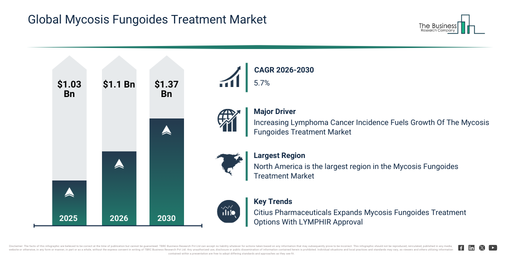
    The market for mycosis fungoides treatments experienced robust expansion recently, projecting a rise from $1.03 billion in 2025 to $1.1 billion in 2026, reflecting a 6.7% compound annual growth rate. Key factors contributing to this past growth trajectory included a scarcity of therapeutic alternatives, a growing incidence of cutaneous t-cell lymphoma, a significant utilization of radiation therapy, instances of late diagnosis, and a notable dependency on topical steroid treatments.

    The market dedicated to treating mycosis fungoides is poised for substantial expansion in the upcoming years, projecting an increase to $1.37 billion by 2030, which translates to a compound annual growth rate of 5.7%. This anticipated growth during the forecast period is largely fueled by advancements in targeted therapies, the expanding application of immunotherapy, the proliferation of dermatology oncology centers, enhancements in diagnostic accuracy, and augmented financial commitment to rare cancer research. Key developments shaping the forecast period comprise the increasing embrace of combination therapy strategies, greater utilization of topical steroids for managing early-stage disease, a heightened inclination towards targeted treatments and immunotherapy, the diversification of photodynamic and radiation therapy modalities, and a growing demand for specialized dermatology and oncology facilities.

    Download A Free Sample Report For Comprehensive Market Insights:

    https://www.thebusinessresearchcompany.com/sample.aspx?id=15613&type=smp

    Mycosis Fungoides Treatment Market Expansion Supported By Key Demand Factors

    An increasing prevalence of lymphoma, a malignancy originating in the lymphatic system encompassing lymph nodes, spleen, thymus, and bone marrow, is anticipated to fuel the expansion of the mycosis fungoides treatment sector. This upward trend in lymphoma diagnoses stems from a confluence of elements, including environmental factors, a higher incidence of viral infections, an aging demographic, and certain lifestyle choices. Treatments for mycosis fungoides, a type of cutaneous T-cell lymphoma, involve interventions like topical corticosteroids, phototherapy, and systemic medications designed to alleviate skin manifestations, mitigate symptoms, and manage the advancement of the disease in affected individuals. Illustrating this, data from the American Cancer Society, a US non-profit entity, indicated in January 2024 that non-Hodgkin lymphoma (NHL) represented a significant portion of cancer diagnoses within the United States, constituting roughly 4% of all cancer cases; projections suggested about 80,620 individuals (44,590 males and 36,030 females) would receive an NHL diagnosis and approximately 20,140 fatalities (11,780 males and 8,360 females) were expected in 2024, underscoring how the escalating rates of lymphoma are a key driver for the mycosis fungoides treatment market.

    Mycosis Fungoides Treatment Market Segment Analysis: What Are The Major Market Categories?

    The mycosis fungoides treatment market covered in this report is segmented –

    1) By Drug Type: Topical Steroids, Mechlorethamine

    2) By Treatment Type: Photodynamic Therapy, Radiation Therapy, Targeted Therapy, Chemotherapy

    3) By End-user: Hospitals, Private Clinics, Specialty Clinics

    Subsegments:

    1) By Topical Steroids: Corticosteroid Creams Or Ointments ( Hydrocortisone, Clobetasol), Topical Steroid Lotions

    2) By Mechlorethamine: Topical Mechlorethamine ( Nitrogen Mustard Cream), Injectable Mechlorethamine

    Mycosis Fungoides Treatment Market Growth Trends Influencing Competitive Dynamics

    Leading entities within the mycosis fungoides treatment sector are prioritizing the creation of cutting-edge therapies, notably targeted immunotherapy, aimed at improving both treatment efficacy and the overall well-being of patients. This specialized form of immunotherapy meticulously targets cancerous T-cells and immune-regulating T-cells, safeguarding healthy cells, thereby facilitating quicker disease management and mitigating side effects. Illustrating this trend, Citius Pharmaceuticals, a biopharmaceutical firm based in the United States, disclosed in August 2024 the U.S. Food and Drug Administration’s (FDA) approval of LYMPHIR (denileukin diftitox-cxdl), an IL-2 receptor-targeted immunotherapy. This therapeutic agent is indicated for adult patients experiencing relapsed or refractory cutaneous T-cell lymphoma, which encompasses mycosis fungoides, subsequent to at least one prior course of systemic treatment. LYMPHIR introduces an innovative therapeutic approach designed to annihilate malignant T-cells directly and reduce regulatory T-cells (Tregs) to bolster the body’s immune defense. Clinical evidence highlighted a 36% objective response rate, with a median response time of merely 1.4 months. Furthermore, the therapy resulted in a reduction of skin manifestations in 84% of participants and alleviated itching without accumulating toxic effects. LYMPHIR presents a distinctive systemic therapeutic avenue for individuals in Stages I-III and addresses the critical demand for effective treatments within a patient demographic that possesses restricted therapeutic choices.

    Mycosis Fungoides Treatment Market Leading Companies Driving Competitive Growth

    Major companies operating in the mycosis fungoides treatment market are Pfizer Inc., Merck & Co. Inc., Bristol Myers Squibb, Abbott Laboratories, Novartis AG, GlaxoSmithKline plc, Tocris Bioscience, Viatris Inc., Astellas Pharma Inc., Daiichi Sankyo Company, Takeda Pharmaceutical Company Limited, Bausch Health, Eisai Co. Ltd., Horizon Therapeutics plc, Varian Medical Systems, Kyowa Kirin Co. Ltd., Seattle Genetics Inc., Azurity Pharmaceuticals Inc., Innate Pharma S.A., Helsinn Therapeutics, Jubilant Cadista Pharmaceuticals Inc., Elorac Inc., Soligenix Inc., Ceptaris Therapeutics Inc.

    Access The Complete Mycosis Fungoides Treatment Market Report:

    https://www.thebusinessresearchcompany.com/report/mycosis-fungoides-treatment-global-market-report

    Mycosis Fungoides Treatment Market Largest Region: Which Geography Holds The Highest Market Share?

    North Americawas the largest region in the mycosis fungoides treatment market in 2025. Asia-Pacificis expected to be the fastest-growing region in the forecast period. The regions covered in the mycosis fungoides treatment market report are Asia-Pacific, South East Asia, Western Europe, Eastern Europe, North America, South America, Middle East, Africa.

    Get in touch with us:

    The Business Research Company: https://www.thebusinessresearchcompany.com/

    Americas: +1 310-496-7795

    Asia: +44 7882 955267 & +91 8897263534

    Europe: +44 7882 955267

    Email us at: marketing@tbrc.info

    Follow us on:

    LinkedIn: https://in.linkedin.com/company/the-business-research-company

    YouTube: https://www.youtube.com/channel/UC24_fI0rV8cR5DxlCpgmyFQ

    Global Market Model: https://www.thebusinessresearchcompany.com/global-market-model
  • Mycoplasma Testing Market Trends Are Creating New Opportunities For Industry Leaders

    Mycoplasma Testing Market Trends Are Creating New Opportunities For Industry Leaders

    Delivering more actionable and strategically valuable research, The Business Research Company’s 2026 market reports feature market attractiveness analysis, total addressable market evaluation, company benchmarking matrices, interactive Excel dashboards, expanded supply chain intelligence, emerging startup coverage, and detailed product insights.

    Mycoplasma Testing Market Size Outlook: How Fast Will Revenue Grow Through 2030?

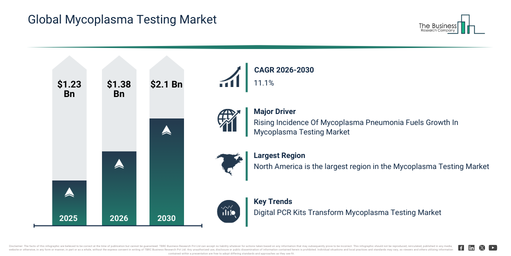
    Exhibit A presents a compelling trajectory for the mycoplasma testing market, projecting an expansion from $1.23 billion in 2025 to $1.38 billion by 2026, reflecting a robust compound annual growth rate (CAGR) of 12.1%. This notable growth during the preceding period was fueled by a confluence of factors, including a high incidence of mycoplasma contamination, a burgeoning dependence on cell culture methodologies, escalating demand for diagnostic procedures, the swift integration of PCR techniques, and the increasing deployment of ELISA methods.

    The mycoplasma testing sector is projected for swift expansion in the upcoming years, anticipating a market valuation of $2.1 billion by 2030 with a compound annual growth rate of 11.1%. This projected uplift is fueled by several key drivers: an increase in biopharmaceutical production activities, an upswing in contract research outsourcing, heightened financial commitment to genomic analysis, a growing focus from regulatory bodies on preventing contamination, and the wider integration of automated testing solutions. Key developments anticipated during this forecast period involve a greater embrace of polymerase chain reaction (PCR) based mycoplasma identification methods, augmented utilization of rapid testing kits for cell culture surveillance, escalating demand for automated mycoplasma detection apparatus, broadened application of assays and reagents within biopharmaceutical manufacturing processes, and an increased necessity for mycoplasma testing in both research and contract research organization environments.

    Download A Free Sample Report For Comprehensive Market Insights:

    https://www.thebusinessresearchcompany.com/sample.aspx?id=4103&type=smp

    Mycoplasma Testing Market Growth Drivers And Industry Catalysts

    The expanding incidence of mycoplasma pneumonia is poised to invigorate the expansion of the mycoplasma testing market in the foreseeable future. Mycoplasma pneumonia is characterized as an infection affecting the respiratory system, stemming from the Mycoplasma pneumoniae bacteria. Within the diagnostic process for Mycoplasma pneumonia, mycoplasma testing serves a vital function by identifying Mycoplasma pneumoniae in samples from the respiratory tract, thereby facilitating prompt and precise detection of the illness for effective medical intervention and care. To illustrate, data from the Centers for Disease Control and Prevention, a governmental body in the United States, indicated in December 2023 that approximately 2 million instances of Mycoplasma pneumoniae infections are reported annually across the United States. Consequently, the heightened occurrence of mycoplasma pneumonia is a key factor fueling the expansion of the mycoplasma testing market.

    Mycoplasma Testing Market Segment Breakdown: Which Categories Generate The Most Revenue?

    The mycoplasma testing market covered in this report is segmented –

    1) By Product: Instruments, Assay, Kits, Reagents

    2) By Technology: PCR, Elisa, Enzymatic Methods, DNA Staining, Other Technologies

    3) By Application: Cell Line Testing, Virus Testing, End- Of- Production Cell Testing

    4) By End User: Pharmaceutical & Biotechnology Companies, Cell Banks And Laboratories, Contract Research Organizations, Academic Research Institutes

    Subsegments:

    1) By Instruments: Mycoplasma Detection Systems, Automated Test Equipment, PCR Equipment

    2) By Assay: Mycoplasma Assays, Qualitative Assays, Quantitative Assays

    3) By Kits: Mycoplasma Detection Kits, Mycoplasma Testing Kits For Cell Cultures, Sample Preparation Kits

    4) By Reagents: Nucleic Acid Reagents, Cell Culture Reagents, Staining Reagents

    #Mycoplasma Testing Market Trends Influencing Long-Term Demand

    Leading players within the mycoplasma testing sector are prioritizing the development and release of digital PCR kits, a strategic move aimed at enhancing their market positioning. Digital PCR kits, essentially advanced molecular biology instruments, facilitate the exact measurement and examination of genetic materials like DNA or RNA through a digital methodology. As an illustration, by November 2023, QIAGEN, a prominent diagnostics firm headquartered in Germany, introduced three novel QIAcuity digital PCR kits alongside enhanced software, broadening the accessibility of digital PCR’s capabilities for biopharmaceutical research and food safety evaluations. These newly developed QIAcuity kits are engineered for superior accuracy in quantification and come in configurations supporting one, four, and eight plates; notably, the single-plate variant possesses the capacity to analyze as many as 384 samples within an eight-hour timeframe. Among the recent introductions is the QIAcuity Mycoplasma Quant Kit, which furnishes researchers with a highly accurate and dependable method for identifying mycoplasma contamination throughout various research phases.

    Mycoplasma Testing Market Key Players And Strategic Industry Positioning

    Major companies operating in the mycoplasma testing market are Merck KGaA, Thermo Fisher Scientific Inc., Agilent Technologies Inc., Lonza Group AG, Roche Diagnostics International AG, Charles River Laboratories International Inc., Nelson Laboratories Fairfield Inc., Creative Bioarray, Biological Industries Israel Beit Haemek Ltd., Biotools B & M Labs S.A, PromoCell GmbH, American Type Culture Collection, Bionique Testing Laboratories Inc., InvivoGen, Clongen Laboratories LLC, Norgen Biotek Corporation, Gen Bio Sciences (P) Ltd., GeneCopoeia Inc., Minerva Biolabs GmbH, Mycoplasma Experience, Savyon Diagnostics, ScienCell Research Laboratories Inc.

    Access The Complete Mycoplasma Testing Market Report:

    https://www.thebusinessresearchcompany.com/report/mycoplasma-testing-global-market-report

    Mycoplasma Testing Market Regional Analysis: Which Region Leads By Revenue?

    North Americawas the largest region in the mycoplasma testing market in 2025. Asia-Pacificis expected to be the fastest growing region in the forecast period. The regions covered in the mycoplasma testing market report are Asia-Pacific, South East Asia, Western Europe, Eastern Europe, North America, South America, Middle East, Africa.

    Get in touch with us:

    The Business Research Company: https://www.thebusinessresearchcompany.com/

    Americas: +1 310-496-7795

    Asia: +44 7882 955267 & +91 8897263534

    Europe: +44 7882 955267

    Email us at: marketing@tbrc.info

    Follow us on:

    LinkedIn: https://in.linkedin.com/company/the-business-research-company

    YouTube: https://www.youtube.com/channel/UC24_fI0rV8cR5DxlCpgmyFQ

    Global Market Model: https://www.thebusinessresearchcompany.com/global-market-model
  • Mycobacterium Tuberculosis Market Growth Is Reshaping Competitive Advantage Across The Industry

    Mycobacterium Tuberculosis Market Growth Is Reshaping Competitive Advantage Across The Industry

    Enhanced with market attractiveness analysis, total addressable market evaluation, company benchmarking matrices, interactive Excel dashboards, expanded supply chain intelligence, emerging startup coverage, and detailed product insights, The Business Research Company’s 2026 market reports deliver more actionable and strategically valuable research.

    Mycobacterium Tuberculosis Market Size, Value And Growth Trends Through 2030

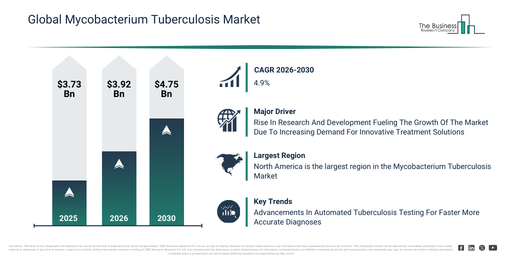
    The global market for tuberculosis treatments experienced robust expansion lately, projected to climb from $3.73 billion in 2025 to $3.92 billion by 2026, reflecting a compound annual growth rate of 5.1%. This upward trajectory in the historical period was fueled by several key factors, including a high prevalence of tuberculosis in emerging economies, the broad utilization of culture-based diagnostic techniques, amplified funding directed towards public health initiatives, enhanced worldwide monitoring of infectious diseases, and the initial progress in developing polymerase chain reaction (PCR) based testing methodologies.

    The global market addressing tuberculosis is projected for consistent expansion over the forthcoming years, anticipating a valuation of $4.75 billion by 2030, driven by a compound annual growth rate of 4.9%. This anticipated growth is fueled by several key factors, including the increased deployment of molecular diagnostic tools, the broader implementation of tuberculosis screening via telemedicine services, a surge in demand for expedited detection kits, augmented governmental investment aimed at eradicating tuberculosis, and advancements in automated detection technologies. Furthermore, prominent trends expected to shape this market during the forecast period encompass the escalating adoption of molecular diagnostic techniques for tuberculosis, a greater reliance on rapid antigen and antibody testing kits, expanded utilization of culture-based testing methodologies in regions with a high tuberculosis burden, a growing need for tuberculosis screening within research initiatives and public health programs, and a heightened consumption of reagents and consumables essential for routine tuberculosis testing.

    Download A Free Sample Report For Comprehensive Market Insights:

    https://www.thebusinessresearchcompany.com/sample.aspx?id=24325&type=smp

    Mycobacterium Tuberculosis Market Opportunity Drivers: What Is Creating New Revenue Potential?

    Anticipated increases in funding allocated to research and development endeavors are poised to be a primary catalyst for the expansion of the mycobacterium tuberculosis market. This critical process of generating new knowledge or refining current offerings through methodical inquiry and testing is experiencing a surge, largely propelled by swift technological progress and the resultant imperative for constant innovation to maintain a competitive edge in dynamic global marketplaces. Such R&D investments are instrumental in advancing mycobacterium tuberculosis treatment by facilitating the identification of promising new drug candidates capable of addressing prevalent resistance to established therapies, thus enhancing therapeutic efficacy and improving patient prognoses. Illustratively, a notable development occurred in March 2024 when the UK government, as reported by the Foreign, Commonwealth, and Development Office, committed an additional $5 million (equivalent to £4 million) to the TB REACH initiative. This funding is specifically earmarked to foster innovative approaches aimed at enhancing tuberculosis diagnosis and treatment protocols within economically developing nations, with projections indicating that this support will enable healthcare access for 500,000 individuals, lead to the detection of TB in 37,000 people, and potentially avert over 15,000 fatalities, underscoring the direct correlation between escalated R&D investment and the projected growth trajectory of the mycobacterium tuberculosis market.

    Mycobacterium Tuberculosis Market Segmentation: How Is The Market Structured Across Key Categories?

    The mycobacterium tuberculosis market covered in this report is segmented –

    1) By Product Type: Instruments, Reagents And Consumables, Software Solutions

    2) By Diagnostic Method: Culture-Based Methods, Molecular Diagnosis, Immunological Tests

    3) By Route Of Administration: Oral, Injectable

    4) By End User: Hospitals, Diagnostic Laboratories, Research Institutions

    Subsegments:

    1) By Instruments: Diagnostic Instruments, Detection Instruments, Molecular Diagnostic Instruments, Tuberculosis Culture Systems

    2) By Reagents And Consumables: Polymerase Chain Reaction Reagents, Tuberculosis Culture Media, Antigen Kits, Test Strips, Tuberculosis Diagnostic Kits

    3) By Software Solutions: Laboratory Information Management Systems (LIMS), Diagnostic Software, Data Management Software, Telemedicine Solutions For TB Diagnosis

    Mycobacterium Tuberculosis Market Innovation Trends Driving Future Development

    Leading entities within the mycobacterium tuberculosis market are prioritizing the creation of sophisticated methodologies, exemplified by the development of automated tuberculosis testing systems designed to yield expedited and precise outcomes. These automated tuberculosis tests function as advanced diagnostic instruments that employ mechanized processes and cutting-edge technology to swiftly and reliably identify Mycobacterium tuberculosis and ascertain drug resistance with significantly reduced human involvement. As an illustration, in April 2025, Revvity Inc., a biotechnology firm based in the United States, disclosed receiving approval from the U.S. Food and Drug Administration (FDA) for its Auto-Pure 2400 liquid handling platform in conjunction with the T-SPOT TB test. The integration of the Auto-Pure 2400 platform with the T-SPOT.TB assay enhances automated tuberculosis testing capabilities by facilitating the processing of larger sample volumes without any detriment to diagnostic accuracy. This system merges liquid handling functionalities with magnetic cell isolation technology, capable of analyzing up to 24 samples concurrently, completing the initial day of testing in less than 3.5 hours and requiring minimal user intervention. The T-SPOT.TB test, acknowledged by the World Health Organization as the sole IGRA based on the ELISPOT principle, guarantees consistent and repeatable results, fewer inconclusive readings, a diminished necessity for retesting, and dependable performance even in individuals with compromised immune systems.

    Mycobacterium Tuberculosis Market Competitive Landscape And Leading Companies

    Major companies operating in the mycobacterium tuberculosis market are F. Hoffmann-La Roche Ltd., Thermo Fisher Scientific Inc., Abbott Laboratories, Novartis AG, Becton Dickinson and Company, Viatris Inc., Macleods Pharmaceuticals Limited, bioMérieux SA, Bio-Rad Laboratories Inc., Bruker Corporation, QIAGEN N.V., Lupin Limited, Zydus Cadila Healthcare Limited, Cepheid Inc., Serum Institute of India Pvt. Ltd., Oxford Immunotec USA Inc., Panacea Biotec Limited, International AIDS Vaccine Initiative Inc., HiMedia Laboratories Private Limited, Akonni Biosystems Inc.

    Access The Complete Mycobacterium Tuberculosis Market Report:

    https://www.thebusinessresearchcompany.com/report/mycobacterium-tuberculosis-global-market-report

    Mycobacterium Tuberculosis Market Geographic Distribution And Regional Opportunities

    North Americawas the largest region in the mycobacterium tuberculosis market in 2025. Asia-Pacificis expected to be the fastest-growing region in the forecast period. The regions covered in the mycobacterium tuberculosis market report are Asia-Pacific, South East Asia, Western Europe, Eastern Europe, North America, South America, Middle East, Africa.

    Get in touch with us:

    The Business Research Company: https://www.thebusinessresearchcompany.com/

    Americas: +1 310-496-7795

    Asia: +44 7882 955267 & +91 8897263534

    Europe: +44 7882 955267

    Email us at: marketing@tbrc.info

    Follow us on:

    LinkedIn: https://in.linkedin.com/company/the-business-research-company

    YouTube: https://www.youtube.com/channel/UC24_fI0rV8cR5DxlCpgmyFQ

    Global Market Model: https://www.thebusinessresearchcompany.com/global-market-model

  • Myasthenia Gravis Treatment Market Forecast Signals New Revenue Opportunities Through 2030

    Myasthenia Gravis Treatment Market Forecast Signals New Revenue Opportunities Through 2030

    Through market attractiveness analysis, total addressable market evaluation, company benchmarking matrices, interactive Excel dashboards, expanded supply chain intelligence, emerging startup coverage, and detailed product insights, The Business Research Company’s 2026 market reports provide more actionable and strategically valuable research.

    Myasthenia Gravis Treatment Market CAGR Analysis And Future Market Development

    The market for myasthenia gravis treatments has experienced robust expansion, projected to increase from $1.66 billion in 2025 to $1.79 billion in 2026, reflecting a compound annual growth rate of 7.8%. Factors contributing to this upward trajectory during the historical period include a rise in autoimmune disease incidence, the early integration of corticosteroid therapies, extensive utilization of cholinesterase inhibitors in clinical practice, the proliferation of hospital-centric treatment initiatives for MG, and heightened awareness surrounding neuromuscular conditions.

    The myasthenia gravis treatment sector is poised for significant expansion, with projections indicating a rise to $2.43 billion by 2030, demonstrating a compound annual growth rate of 8.0%. This anticipated surge is fueled by advancements in monoclonal antibody creation, a growing inclination towards less invasive surgical procedures, the proliferation of specialized treatment centers, expanded utilization of intravenous immunoglobulin (IVIG) and cutting-edge immunotherapies, and the improved diagnostic accuracy offered by AI-driven instruments. Key developments shaping the future landscape include a greater embrace of immunosuppressive treatments, increased application of monoclonal antibodies in managing myasthenia gravis, a preference for minimally invasive thymectomy, heightened requirements for IVIG and plasmapheresis in severe instances, and the broader implementation of supportive and combined therapeutic strategies.

    Download A Free Sample Report For Comprehensive Market Insights:

    https://www.thebusinessresearchcompany.com/sample.aspx?id=11980&type=smp

    Myasthenia Gravis Treatment Market Growth Momentum: Which Factors Are Influencing Demand?

    The escalating incidence of myasthenia gravis is anticipated to be a primary catalyst for the expansion of the myasthenia gravis treatment market. This neuromuscular autoimmune disorder is characterized by debilitating muscle fatigue and weakness. The management of myasthenia gravis encompasses the provision of medical care and supportive services aimed at mitigating its effects. Consequently, the increasing number of individuals diagnosed with myasthenia gravis is directly contributing to heightened demand within the market for its treatments. Evidence from January 2024, provided by Myaware, a UK charity, indicates that within the United Kingdom’s population of roughly 67,817,100, approximately 22,855 people are affected by myasthenia gravis, alongside 204 cases of Lambert-Eaton myasthenic syndrome and 2,103 instances of congenital myopathies. This widespread presence of myasthenia gravis underscores its role in propelling the growth trajectory of the associated treatment market.

    Myasthenia Gravis Treatment Market Segmentation Trends And Revenue Drivers

    The myasthenia gravis treatment market covered in this report is segmented –

    1) By Treatment: Anticholinesterase Agents, Immunosuppressants, Monoclonal Antibodies, Plasmapheresis Or Intravenous Immunoglobulin (IVIg), Thymectomy Or Surgical Options, Other Treatments

    2) By Route Of Administration: Oral, Intravenous, Subcutaneous

    3) By Distribution Channel: Hospital Pharmacies, Retail Pharmacies, Online Pharmacies Or E-commerce

    4) By End User: Hospitals, Clinics, Other End-Users

    Subsegments:

    1) By Anticholinesterase Agents: Pyridostigmine, Neostigmine, Ambenonium

    2) By Immunosuppressants: Corticosteroids, Azathioprine, Mycophenolate Mofetil, Cyclosporine, Tacrolimus

    3) By Monoclonal Antibodies: Eculizumab, Rituximab

    4) By Plasmapheresis Or Intravenous Immunoglobulin (IVIg): Plasma Exchange Therapy, IVIg Infusions

    5) By Thymectomy Or Surgical Options: Transsternal Thymectomy, Minimally Invasive Thymectomy, Robot-Assisted Thymectomy

    6) By Other Treatments: Symptomatic Therapy, Complement Inhibitors, Experimental Therapies

    Myasthenia Gravis Treatment Market Trends Reshaping Industry Growth

    Within the myasthenia gravis treatment arena, prominent corporations are prioritizing the creation of cutting-edge therapeutics

    Myasthenia Gravis Treatment Market Industry Leaders: Which Organizations Are Driving Competition?

    Major companies operating in the myasthenia gravis treatment market are Pfizer Inc., F. Hoffmann-La Roche Ltd., AbbVie Inc., Novartis AG, Takeda Pharmaceutical Company Limited, Baxter International Inc., Biogen Idec, CSL Limited, Chugai Pharmaceutical Co. Ltd., Grifols S.A, UCB Inc., Mitsubishi Tanabe Pharma Corp., Genentech Inc., Horizon Therapeutics plc, Amneal Pharmaceuticals Inc., Argenx SE, Immunovant Inc., Cabaletta Bio Inc., RemeGen Co. Ltd., Kedrion SpA

    Access The Complete Myasthenia Gravis Treatment Market Report:

    https://www.thebusinessresearchcompany.com/report/myasthenia-gravis-treatment-global-market-report

    Myasthenia Gravis Treatment Market Largest Region By Revenue And Market Share

    North America was the largest region in the myasthenia gravis treatment market in 2025. Asia-Pacific is expected to be the fastest-growing region in the forecast period. The regions covered in the myasthenia gravis treatment market report are Asia-Pacific, South East Asia, Western Europe, Eastern Europe, North America, South America, Middle East, Africa.

    Get in touch with us:

    The Business Research Company: https://www.thebusinessresearchcompany.com/

    Americas: +1 310-496-7795

    Asia: +44 7882 955267 & +91 8897263534

    Europe: +44 7882 955267

    Email us at: marketing@tbrc.info

    Follow us on:

    LinkedIn: https://in.linkedin.com/company/the-business-research-company

    YouTube: https://www.youtube.com/channel/UC24_fI0rV8cR5DxlCpgmyFQ

    Global Market Model: https://www.thebusinessresearchcompany.com/global-market-model
  • Muscle Wasting Disorders Market Growth Is Accelerating As Industry Transformation Continues

    Muscle Wasting Disorders Market Growth Is Accelerating As Industry Transformation Continues

    Delivering more actionable and strategically valuable research, The Business Research Company’s 2026 market reports feature market attractiveness analysis, total addressable market evaluation, company benchmarking matrices, interactive Excel dashboards, expanded supply chain intelligence, emerging startup coverage, and detailed product insights.

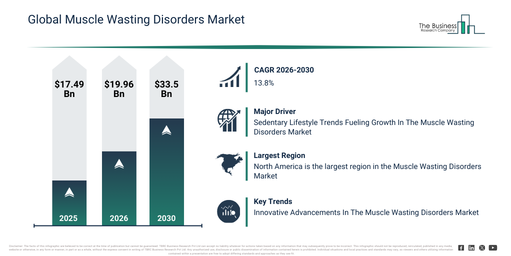
    Muscle Wasting Disorders Market Expansion From $19.96 Billion In 2026 To $33.49 Billion In 2030

    The market for muscle wasting disorders experienced substantial expansion lately, with projections indicating continued growth from $17.49 billion in 2025 to $19.96 billion by 2026, reflecting a compound annual growth rate of 14.2%. This upward trajectory during the past years is largely a consequence of factors such as the increased incidence of conditions like muscular dystrophy and ALS, a greater reliance on physical therapy modalities, heightened consumption of nutritional supplements, the proactive implementation of anti-inflammatory therapies, and an expansion in hospital-based rehabilitation services.

    The market for muscle wasting disorders is poised for substantial expansion in the coming years, projected to reach $33.5 billion by 2030 with a compound annual growth rate of 13.8%. This anticipated growth trajectory is fueled by a confluence of factors, including significant progress in gene therapy, escalating investments in regenerative medicine, the proliferation of specialized rehabilitation facilities, a heightened demand for tailored treatment strategies, and a growing emphasis on dietary interventions. Key developments anticipated during this forecast period encompass the increasing embrace of gene therapy for muscle repair, a surge in the utilization of nutritional supplements and proteins, a greater need for physical rehabilitation programs, the broadening scope of targeted therapies for muscular dystrophy, and a more extensive application of hormonal and anti-inflammatory drug treatments.

    Download A Free Sample Report For Comprehensive Market Insights:

    https://www.thebusinessresearchcompany.com/sample.aspx?id=13706&type=smp

    Muscle Wasting Disorders Market Expansion Drivers: What Is Shaping Future Growth?

    The increasing adoption of inactive lifestyles is anticipated to be a primary driver for the expansion of the muscle wasting disorders market. Such lifestyles are characterized by minimal physical activity and a lack of exercise, which can detrimentally affect muscular capabilities, resulting in diminished strength and endurance. This decline contributes to the development of muscle wasting conditions, making it harder for people to preserve their muscle mass and functionality. Illustratively, data from NHS England revealed that in March 2025, over a quarter of adults were categorized as inactive, and in 2023, nearly a third of children and young people (30.2 percent) managed less than 30 minutes of physical activity each day. Consequently, this growing trend towards sedentary behavior is fueling the growth of the market for muscle wasting disorder treatments and solutions.

    Muscle Wasting Disorders Market Segment Analysis Highlighting Growth Areas

    The muscle wasting disorders market covered in this report is segmented –

    1) By Treatment Type: Medications, Physical Therapy, Nutritional Therapy, Surgery, Gene Therapy, Other Treatment Types

    2) By Disorder Type: Muscular Dystrophy, Amyotrophic Lateral Sclerosis (ALS), Other Disorder Types

    3) By End-User: Hospitals, Rehab Centers, Specialty Clinics, Other End-Users

    Subsegments:

    1) By Medications: Anabolic Steroids, Hormonal Treatments, Anti-Inflammatory Drugs, Immunomodulatory Agents

    2) By Physical Therapy: Resistance Training, Stretching Exercises, Aerobic Conditioning, Rehabilitation Programs

    3) By Nutritional Therapy: Protein Supplements, Nutritional Counseling, Dietary Modifications, Micronutrient Supplements

    4) By Surgery: Surgical Interventions For Muscle Repair, Orthopedic Surgeries, Procedures For Underlying Conditions

    5) By Gene Therapy: Gene Replacement Therapy, CRISPR-Based Approaches, RNA Interference Techniques

    6) By Other Treatment Types: Complementary Therapies, Psychological Support, Assistive Devices

    Muscle Wasting Disorders Market Strategic Trends: What Is Defining The Next Phase Of Growth?

    Within the market for muscle wasting disorders, leading enterprises are actively engaged in pioneering new treatments, including advanced gene therapy solutions, to enhance care for individuals affected by these conditions. This sophisticated gene therapy approach involves employing medical technology focused on modifying gene expression or altering the inherent biological characteristics of live cells to achieve a beneficial therapeutic outcome. A notable development occurred in June 2023 when Sarepta Therapeutics, a biotechnology firm headquartered in the United States, unveiled Elevidys, marking the U.S. Food and Drug Administration’s (FDA) inaugural approval of a gene therapy specifically for treating Duchenne muscular dystrophy (DMD) in children aged 4 to 5 years. Elevidys functions as a recombinant gene therapy, engineered to introduce a gene into the body responsible for producing a truncated protein that encompasses key segments of the dystrophin protein found in healthy muscle cells; this treatment is administered through a single intravenous infusion.

    Muscle Wasting Disorders Market Leading Companies: Who Holds Significant Market Presence?

    Major companies operating in the muscle wasting disorders market are Pfizer Inc., F. Hoffmann-La Roche Ltd., Roche Holding AG, Novartis AG, Sanofi, GlaxoSmithKline (GSK), Regeneron Pharmaceuticals, Acceleron Pharma Inc., Biogen Inc., Santhera Pharmaceuticals Holding AG, Mitsubishi Tanabe Pharma, Sarepta Therapeutics Inc., PTC Therapeutics Inc., Ionis Pharmaceuticals Inc., Cytokinetics Incorporated, Scholar Rock, Akashi Therapeutics, aTyr Pharma, MyoTherix Inc., Pephexia Therapeutics, Biophytis SA, TNF Pharmaceuticals Inc., Rejuvenate Biomed, Edgewise Therapeutics

    Access The Complete Muscle Wasting Disorders Market Report:

    https://www.thebusinessresearchcompany.com/report/muscle-wasting-disorders-global-market-report

    Muscle Wasting Disorders Market Regional Analysis And Leading Geography

    North Americawas the largest region in the muscle wasting disorder market in 2025. Asia-Pacificis expected to be the fastest-growing region in the forecast period. The regions covered in the muscle wasting disorders market report are Asia-Pacific, South East Asia, Western Europe, Eastern Europe, North America, South America, Middle East, Africa.

    Get in touch with us:

    The Business Research Company: https://www.thebusinessresearchcompany.com/

    Americas: +1 310-496-7795

    Asia: +44 7882 955267 & +91 8897263534

    Europe: +44 7882 955267

    Email us at: marketing@tbrc.info

    Follow us on:

    LinkedIn: https://in.linkedin.com/company/the-business-research-company

    YouTube: https://www.youtube.com/channel/UC24_fI0rV8cR5DxlCpgmyFQ

    Global Market Model: https://www.thebusinessresearchcompany.com/global-market-model