Month: July 2026

  • Sleep Supplements Market Size Projected To Increase From $7.93 Billion To $10.07 Billion During The Forecast Period

    Sleep Supplements Market Size Projected To Increase From $7.93 Billion To $10.07 Billion During The Forecast Period

    Delivering more actionable and strategically valuable research, The Business Research Company’s 2026 market reports feature market attractiveness analysis, total addressable market evaluation, company benchmarking matrices, interactive Excel dashboards, expanded supply chain intelligence, emerging startup coverage, and detailed product insights.

    Sleep Supplements Market Size, Value And Growth Trends Through 2030

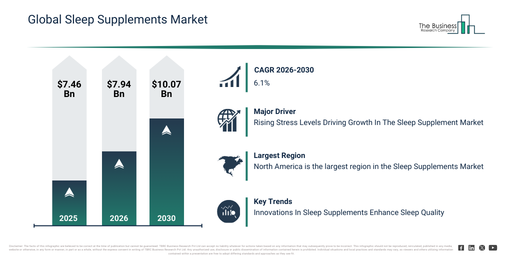
    The sleep supplements market has experienced robust expansion over recent years. Valued at $7.46 billion in 2025, its worth is projected to reach $7.94 billion by 2026, reflecting a compound annual growth rate (CAGR) of 6.5%. Drivers behind this historical growth include the increasing incidence of sleep disorders, heightened public knowledge about sleep health, a broader adoption of dietary supplements, a wider availability of products through retail and e-commerce channels, and greater acceptance of over-the-counter sleep aids.

    The sleep supplements market is projected to experience robust growth over the coming years, reaching an estimated value of $10.07 billion by 2030, with a compound annual growth rate (CAGR) of 6.1%. This expansion in the forecast period is driven by a heightened emphasis on preventive healthcare, a growing appetite for personalized nutrition, the surge in e-commerce supplement sales, the widening prevalence of stress-linked sleep disturbances, and ongoing innovation in ingredients targeting sleep support. Key trends shaping this period include a rising demand for natural and herbal sleep aids, the widespread adoption of melatonin-based formulations, a growing inclination toward customized sleep supplement solutions, the proliferation of combination sleep products, and an amplified focus on clean-label ingredients.

    Download A Free Sample Report For Comprehensive Market Insights:

    https://www.thebusinessresearchcompany.com/sample.aspx?id=20635&type=smp&utm_source=BlogsPR&utm_medium=Paid&utm_campaign=Jul_PR

    Sleep Supplements Market Opportunity Drivers: What Is Creating New Revenue Potential?

    The projected expansion of the sleep supplement market is being significantly fueled by rising work-related stress levels. This type of stress is characterized by physical, emotional, and psychological strain resulting from the demands and conditions of one’s job. Factors such as an increased workload, fears about job security, elevated performance expectations, and a lack of balance between professional and personal life are contributing to its escalation. Sleep supplements aid in stress management and sleep regulation by fostering relaxation and influencing sleep-inducing hormones like melatonin. Supporting this trend, a June 2023 report from Gallup, Inc., cited by the American Institute of Stress (AIS)—a non-profit organization based in the United States—revealed that work-related stress hit an unprecedented high, with 44% of respondents reporting significant stress associated with their jobs. Consequently, the rise in work-related stress is a key driver behind the growth of the sleep supplement market.

    Sleep Supplements Market Categorization By Product Type And Application

    The sleep supplements market covered in this report is segmented –

    1) By Product Type: Minerals, Vitamin, Melatonin, Valerian Root, Other Product Types

    2) By Source: Synthetic, Natural

    3) By Dosage Form: Tablets, Capsules, Powders, Liquid

    4) By Indication: Insomnia, Sleep Apnea, Narcolepsy, Other Sleep Disorders

    5) By Distribution Channel: Retail Pharmacies, Hospital Pharmacies, Online Pharmacies, Specialty Stores

    Subsegments:

    1) By Minerals: Magnesium, Calcium, Zinc, Iron, Potassium

    2) By Vitamin: Vitamin D, Vitamin B6, Vitamin B12, Niacin (Vitamin B3), Folate (Vitamin B9)

    3) By Melatonin: Synthetic Melatonin Supplements, Natural Melatonin Sources, Extended-Release Melatonin Formulations, Melatonin Combinations With Other Ingredients

    4) By Valerian Root: Valerian Root Extracts, Valerian Root Teas, Valerian Supplements With Other Herbal Ingredients, Standardized Valerian Extracts

    5) By Other Product Types: Herbal Supplements, Amino Acids, Adaptogens, CBD Oil And Cannabinoids, Sleep-Promoting Formulations (Combination Products)

    Sleep Supplements Market Innovation Trends Driving Future Development

    Leading players in the sleep supplements market are concentrating on creating novel products like gummies based on clean ingredients to boost both effectiveness and consumer appeal. Clean ingredients-based gummies are defined as sleep supplements formulated with natural, non-toxic components, free from artificial additives and preservatives. For example, in May 2024, Natrol LLC, a US-based producer of nutritional and herbal supplements, introduced time-release melatonin gummies. These gummies are dietary supplements that merge quick-release and extended-release melatonin, crafted to help individuals fall asleep more quickly and maintain sleep for longer periods. They frequently incorporate extra components, such as L-theanine, to foster relaxation. Designed to replicate the body’s inherent melatonin release pattern, these gummies ensure sustained sleep throughout the night.

    Sleep Supplements Market Company Landscape And Strategic Competition

    Major companies operating in the sleep supplements market are Amorepacific Corporation, Pharmavite LLC., Thorne HealthTech, Jarrow Formulas, Life Extension Foundation, Gaia Herbs Inc., Natrol Inc, Douglas Laboratories, SmartyPants Vitamins, Pure Encapsulations LLC, Solgar Inc., Makers Nutrition LLC, Herb Pharm LLC, Nature’s Bounty Inc., Moon Juice, Persona Nutrition, RidgeCrest Herbals, Sandland Sleep, Galventa AG, Wilson Lau, Som Sleep Inc., SMPNutra Inc., Source Naturals

    Access The Complete Sleep Supplements Market Report:

    https://www.thebusinessresearchcompany.com/report/sleep-supplements-global-market-report?utm_source=BlogsPR&utm_medium=Paid&utm_campaign=Jul_PR

    Sleep Supplements Market Largest Region By Revenue And Market Share

    North America was the largest region in the sleep supplements market in 2025. The regions covered in the sleep supplements market report are Asia-Pacific, South East Asia, Western Europe, Eastern Europe, North America, South America, Middle East, Africa.

    Get in touch with us:

    The Business Research Company: https://www.thebusinessresearchcompany.com/?utm_source=BlogsPR&utm_medium=Paid&utm_campaign=home_page_test

    Americas: +1 310-496-7795

    Asia: +44 7882 955267 & +91 8897263534

    Europe: +44 7882 955267

    Email us at: marketing@tbrc.info

    Follow us on:

    LinkedIn: https://in.linkedin.com/company/the-business-research-company

    YouTube: https://www.youtube.com/channel/UC24_fI0rV8cR5DxlCpgmyFQ

    Global Market Model: https://www.thebusinessresearchcompany.com/global-market-model
  • Sleep Patches Market Growth Outlook Reveals A CAGR Of 19.2% And A Market Value Of $184.43 Billion By 2030

    Sleep Patches Market Growth Outlook Reveals A CAGR Of 19.2% And A Market Value Of $184.43 Billion By 2030

    Enhanced with market attractiveness analysis, total addressable market evaluation, company benchmarking matrices, interactive Excel dashboards, expanded supply chain intelligence, emerging startup coverage, and detailed product insights, The Business Research Company’s 2026 market reports deliver more actionable and strategically valuable research.

    Sleep Patches Market CAGR Analysis And Future Market Development

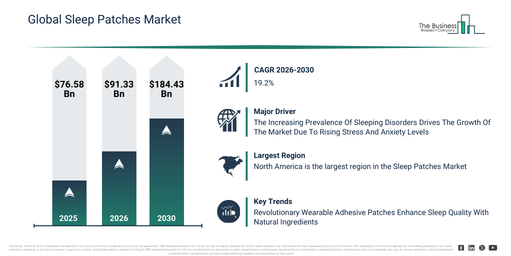
    The sleep patches market has experienced robust growth in recent times, with its valuation climbing from $76.58 billion in 2025 to $91.33 billion in 2026, reflecting a compound annual growth rate (CAGR) of 19.3%. Driving this expansion during the historical period were factors such as a higher incidence of sleep disorders, escalating stress and anxiety, the proliferation of over-the-counter wellness products, shifts in urban living patterns, and restricted availability of prescription sleep aids.

    Over the coming years, the sleep patches market is projected to experience robust expansion. By 2030, its value is anticipated to reach $184.43 billion, reflecting a compound annual growth rate (CAGR) of 19.2%. This upward trajectory during the forecast period is driven by several key factors, including a rising demand for sleep aids that do not rely on medication, advances in transdermal delivery technologies, the growing prevalence of digital health platforms, an increase in home-based wellness products, and a larger aging population. Among the notable trends shaping this period are a heightened consumer preference for non-oral sleep solutions, a growing inclination toward natural ingredient-based products, the broader availability of over-the-counter sleep aids, the expansion of online retail channels, and a general increase in public awareness regarding sleep health.

    Download A Free Sample Report For Comprehensive Market Insights:

    https://www.thebusinessresearchcompany.com/sample.aspx?id=24401&type=smp&utm_source=BlogsPR&utm_medium=Paid&utm_campaign=Jul_PR

    Sleep Patches Market Growth Momentum: Which Factors Are Influencing Demand?

    The growing frequency of sleep disorders is anticipated to drive expansion in the sleep patches market moving forward. These disorders disrupt the natural sleep cycle, leading to challenges with falling asleep, staying asleep, or achieving restorative rest. Their rising prevalence is largely attributed to stress and anxiety, which interfere with sleep patterns and hinder individuals from sleeping soundly. Sleep patches assist those with such conditions by delivering soothing ingredients through the skin, fostering relaxation, and naturally enhancing sleep quality throughout the night. For example, in November 2023, NHS Digital, a UK-based government health data authority, reported that 37.8% of children aged 8 to 16 experienced sleep issues on three or more nights in the prior week. Among young people aged 17 to 23 in 2023, the proportion reporting frequent sleep problems reached 64.9%, with notably higher rates in young women (74.7%) compared to young men (55.7%). Consequently, the increasing prevalence of sleeping disorders is fueling the sleep patch market.

    The increase in healthcare expenditure is expected to drive growth in the sleep patches market going forward. Healthcare spending encompasses total outlays on health services and products, such as medical care, hospital services, preventive care, medications, research, infrastructure, and administrative costs, all aimed at preserving or enhancing individual and population health. This spending rises due to medical technology advancements, as diagnostics, treatments, and equipment often involve high development and implementation expenses that boost overall costs. Healthcare expenditure supports sleep patches by stimulating demand for advanced therapeutic options, enabling investment in novel treatments, and ensuring wider access to essential care products that improve patient outcomes. For instance, in May 2024, the Office for National Statistics, a UK government department, noted that healthcare spending in the UK grew by 5.6% between 2022 and 2023, compared to 0.9% growth in 2022. UK healthcare expenditure reached approximately $317.63 billion (£292 billion) in 2023. Thus, rising healthcare spending is propelling the sleep patches market.

    Sleep Patches Market Segment Analysis And Revenue Opportunities

    The sleep patches market covered in this report is segmented –

    1) By Ingredients: Chemical Ingredients, Natural Ingredients

    2) By Distribution Channel: Supermarkets Or Hypermarkets, Drug Or Pharmacy Stores, Online, Other Distribution Channels

    3) By End User: Household, Commercial

    Subsegments:

    1) By Chemical Ingredients: Synthetic Active Ingredients, Synthetic Adhesives, Synthetic Stabilizers

    2) By Natural Ingredients: Herbal Extracts, Plant-based Oils, Essential Oils, Organic Active Ingredients

    Sleep Patches Market Trends Reshaping Industry Growth

    Leading players in the sleep patches market are prioritizing the creation of cutting-edge products, including wearable adhesive patches, designed to boost sleep quality and increase user ease of use. These wearable adhesive sleep patches deliver sleep-promoting compounds like melatonin or essential oils transdermally, encouraging relaxation and improving sleep quality through a non-invasive and straightforward method. For example, in April 2024, 5Kind, a clinical skincare firm based in the UK, launched their Natural Melatonin Sleep Support Patches. These patches combine melatonin, 5-HTP, and lavender, providing a gradual and sustained release of melatonin that matches the body’s natural hormonal cycle to augment sleep quality. The addition of 5-HTP supports serotonin synthesis, fostering relaxation and enhancing mood, while lavender contributes with its soothing properties and capacity to lower anxiety levels. These hypoallergenic, latex-free patches facilitate deeper, more restorative sleep without adverse effects or morning lethargy.

    Sleep Patches Market Leading Players Shaping Industry Direction

    Major companies operating in the sleep patches market are The Good Patch, Zleep Patches, Wellamoon Ltd., PatchMD Sleep, Kindpatch Sleep, Pure Patch Sleep, RestPatch, Slumber Patch, Snooze Patch, Dreamland Sleep Patch, NightCalm Patch, SomniPatch, Sleepy Time Patch, MoonPatch, DeepSleep Patch, Calm Night Patch, Sleep Aid Patch Co., SnoozeWell Patch, Restful Patch, Dream Patch Labs, NightEase Patch, GoodNight Patch, SlumberWell Patch, SomniCare Patch, SleepFix Patch

    Access The Complete Sleep Patches Market Report:

    https://www.thebusinessresearchcompany.com/report/sleep-patches-global-market-report?utm_source=BlogsPR&utm_medium=Paid&utm_campaign=Jul_PR

    Sleep Patches Market Regional Analysis And Leading Geography

    North America was the largest region in the sleep patches market in 2025. Asia-Pacific is expected to be the fastest-growing region in the forecast period. The regions covered in the sleep patches market report are Asia-Pacific, South East Asia, Western Europe, Eastern Europe, North America, South America, Middle East, Africa.

    Get in touch with us:

    The Business Research Company: https://www.thebusinessresearchcompany.com/?utm_source=BlogsPR&utm_medium=Paid&utm_campaign=home_page_test

    Americas: +1 310-496-7795

    Asia: +44 7882 955267 & +91 8897263534

    Europe: +44 7882 955267

    Email us at: marketing@tbrc.info

    Follow us on:

    LinkedIn: https://in.linkedin.com/company/the-business-research-company

    YouTube: https://www.youtube.com/channel/UC24_fI0rV8cR5DxlCpgmyFQ

    Global Market Model: https://www.thebusinessresearchcompany.com/global-market-model
  • Sleep Medication Market Forecast Highlights Expansion From $28.06 Billion To $38.04 Billion Through 2030

    Sleep Medication Market Forecast Highlights Expansion From $28.06 Billion To $38.04 Billion Through 2030

    Through market attractiveness analysis, total addressable market evaluation, company benchmarking matrices, interactive Excel dashboards, expanded supply chain intelligence, emerging startup coverage, and detailed product insights, The Business Research Company’s 2026 market reports provide more actionable and strategically valuable research.

    Sleep Medication Market Expansion From $28.06 Billion In 2026 To $38.04 Billion In 2030

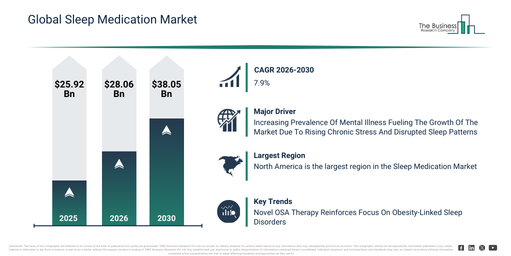
    The sleep medication market has experienced robust expansion in recent years, with projections indicating an increase from $25.92 billion in 2025 to $28.06 billion in 2026, reflecting a compound annual growth rate (CAGR) of 8.2%. This historical growth has been driven by factors such as the restricted access to advanced sleep medications, a rising prevalence of insomnia, a heavy dependence on prescription sleep aids, a growing number of hospital-based treatments for sleep disorders, and the establishment of benzodiazepines as a cornerstone therapy.

    The sleep medication market is projected to experience substantial expansion in the coming years, reaching a value of $38.05 billion by 2030, reflecting a compound annual growth rate (CAGR) of 7.9%. This anticipated growth during the forecast period is driven by factors such as the advancement of orexin receptor antagonists, increased utilization of melatonin receptor agonists, the rising popularity of over-the-counter sleep aids, the growth of homecare and specialized sleep centers, and the expanding adoption of telemedicine and online pharmacies. Key trends shaping this market include the growing worldwide prevalence of sleep disorders, heightened demand for non-benzodiazepine hypnotics, the rise of herbal and dietary sleep supplements, the broadening of online pharmacy distribution networks, and an increased focus on sleep health and wellness.

    Download A Free Sample Report For Comprehensive Market Insights:

    https://www.thebusinessresearchcompany.com/sample.aspx?id=24702&type=smp&utm_source=BlogsPR&utm_medium=Paid&utm_campaign=Jul_PR

    Sleep Medication Market Expansion Drivers: What Is Shaping Future Growth?

    The growing incidence of mental disorders is anticipated to drive the expansion of the sleep medication market in the near future. Mental illness encompasses a diverse array of mental health conditions that influence an individual’s mood, cognition, behavior, and overall capability to function. This rise in mental health issues is largely attributed to escalating levels of chronic stress, as sustained stress alters brain activity and can either initiate or intensify psychological conditions. Sleep medications support the management of mental illness by enhancing sleep quality, a factor frequently compromised in those with mental health problems. These drugs help to stabilize the sleep-wake cycle, alleviating symptoms such as insomnia and anxiety, which in turn fosters improved mental health and daily performance. By way of illustration, data from 2025 provided by the National Alliance on Mental Illness and NextStep Solutions Behavioral Health—both US-based health entities—indicated that the prevalence of serious mental illness (SMI) was approximately 5.44% in 2023 and stayed near that level in 2024 at roughly 5.6% of adults, suggesting a steady rate within that severe classification. Consequently, the uptick in mental illness prevalence is fueling growth within the sleep medication market.

    Sleep Medication Market Segmentation And Category Breakdown

    The sleep medication market covered in this report is segmented –

    1) By Type: Prescription-Based Drugs, Over-The-Counter (OTC) Drugs

    2) By Sleep Disorder Type: Insomnia, Sleep Apnea, Restless Legs Syndrome, Narcolepsy, Sleep Walking, Other Sleep Disorders

    3) By Drug Class: Benzodiazepines, Antidepressants, Antihistamines, Sedating Antipsychotics, Other Drug Classes

    4) By Distribution Channel: Hospital Pharmacy, Online Pharmacy, Retail Pharmacy

    5) By End-Users: Hospitals, Homecare, Speciality Centres, Other End-Users

    Subsegments:

    1) By Prescription-Based Drugs: Benzodiazepines, Non-Benzodiazepine Hypnotics, Melatonin Receptor Agonists, Orexin Receptor Antagonists, Antidepressants, Antipsychotics, Antihistamines

    2) By Over-The-Counter (OTC) Drugs: Antihistamines, Melatonin Supplements, Herbal Supplements, Dietary Supplements

    Sleep Medication Market Strategic Trends: What Is Defining The Next Phase Of Growth?

    Leading pharmaceutical players in the sleep medication space are prioritizing the creation of new therapies, particularly targeting moderate-to-severe obstructive sleep apnea, in order to broaden their treatment offerings and address the increasing need for advanced sleep disorder management solutions. Moderate-to-severe obstructive sleep apnea is a severe sleep condition characterized by repeated airway obstructions during sleep, resulting in frequent breathing pauses that dramatically lower oxygen levels and compromise overall sleep quality. In a notable example, in December 2024, Eli Lilly and Company, a pharmaceutical firm based in the United States, received U.S. FDA approval for Zepbound (tirzepatide) as the first prescribed medication specifically designed for adults suffering from both moderate-to-severe obstructive sleep apnea (OSA) and obesity. Intended to complement dietary calorie reduction and increased physical activity, Zepbound provides a novel pharmacological avenue for enhancing OSA outcomes. This approval underscores the increasing clinical demand for effective OSA treatments, a condition that is frequently undervalued despite its profound effects on sleep quality, daytime alertness, and general health.

    Sleep Medication Market Competitive Analysis Of Major Industry Participants

    Major companies operating in the sleep medication market are Pfizer Inc., Johnson & Johnson, Merck & Co. Inc., Sanofi S.A., Novartis AG, Takeda Pharmaceutical Company Limited, Teva Pharmaceutical Industries Limited, Eisai Co. Ltd., Sun Pharmaceutical Industries Limited, Perrigo Company plc, H. Lundbeck A/S, Aurobindo Pharma Limited, Dr. Reddy’s Laboratories Limited, Cipla Limited, Lupin Limited, Zydus Lifesciences Limited, Torrent Pharmaceuticals Limited, Alembic Pharmaceuticals Limited, Vanda Pharmaceuticals Inc., Natrol LLC

    Access The Complete Sleep Medication Market Report:

    https://www.thebusinessresearchcompany.com/report/sleep-medication-global-market-report?utm_source=BlogsPR&utm_medium=Paid&utm_campaign=Jul_PR

    Sleep Medication Market Geographic Analysis: Where Is Demand Growing The Fastest?

    North America was the largest region in the sleep medication market in 2025. The regions covered in the sleep medication market report are Asia-Pacific, South East Asia, Western Europe, Eastern Europe, North America, South America, Middle East, Africa.

    Get in touch with us:

    The Business Research Company: https://www.thebusinessresearchcompany.com/?utm_source=BlogsPR&utm_medium=Paid&utm_campaign=home_page_test

    Americas: +1 310-496-7795

    Asia: +44 7882 955267 & +91 8897263534

    Europe: +44 7882 955267

    Email us at: marketing@tbrc.info

    Follow us on:

    LinkedIn: https://in.linkedin.com/company/the-business-research-company

    YouTube: https://www.youtube.com/channel/UC24_fI0rV8cR5DxlCpgmyFQ

    Global Market Model: https://www.thebusinessresearchcompany.com/global-market-model
  • Skin Health Supplements And Treatment Market Expected To Reach $9.44 Billion By 2030 As Growth Accelerates At 8.2% CAGR

    Skin Health Supplements And Treatment Market Expected To Reach $9.44 Billion By 2030 As Growth Accelerates At 8.2% CAGR

    Delivering more actionable and strategically valuable research, The Business Research Company’s 2026 market reports feature market attractiveness analysis, total addressable market evaluation, company benchmarking matrices, interactive Excel dashboards, expanded supply chain intelligence, emerging startup coverage, and detailed product insights.

    Skin Health Supplements And Treatment Market Forecast Highlighting Growth From $6.89 Billion To $9.44 Billion

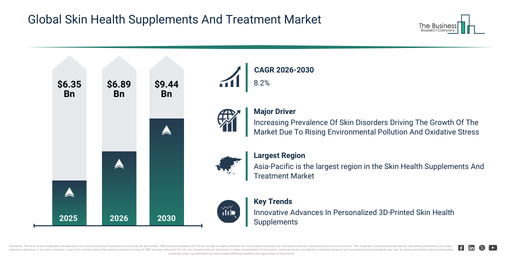
    The skin health supplements and treatment market has experienced notable expansion over the past few years, with projections indicating a rise from $6.35 billion in 2025 to $6.89 billion in 2026, representing a compound annual growth rate (CAGR) of 8.5%. This historical growth has been driven by factors such as limited consumer awareness of oral supplements for skin health, a heavy dependence on conventional topical therapies, a higher incidence of skin-related conditions, an expanding network of retail pharmacies, and increasing disposable incomes among consumers.

    The market for supplements and treatments targeting skin health is projected to witness significant expansion in the coming years. By 2030, its value is anticipated to reach $9.44 billion, reflecting a compound annual growth rate (CAGR) of 8.2%. This anticipated growth in the forecast timeframe is driven by factors such as the emergence of collagen-based and antioxidant-rich supplements, the broadening of personalized skincare solutions, the rise of digital marketing alongside teleconsultation platforms, heightened governmental emphasis on dermatological care, and the proliferation of e-commerce and direct-to-consumer sales channels. Key trends shaping the forecast period encompass a growing appetite for anti-aging and skin-lightening products, an increased uptake of nutritional supplements aimed at enhancing skin health, the expansion of online pharmacies and e-commerce avenues, a heightened consumer shift toward natural and herbal ingredients, as well as the merging of clinical procedures with at-home skincare regimens.

    Download A Free Sample Report For Comprehensive Market Insights:

    https://www.thebusinessresearchcompany.com/sample.aspx?id=25903&type=smp&utm_source=BlogsPR&utm_medium=Paid&utm_campaign=Jul_PR

    Skin Health Supplements And Treatment Market Development Factors: Which Trends Are Supporting Demand?

    The rising frequency of skin conditions is anticipated to fuel expansion in the skin health supplements and treatment market moving forward. Skin disorders encompass medical issues that impact the skin’s structure, look, or functionality, frequently presenting with signs like rashes, dryness, swelling, or changes in pigmentation. Their growing occurrence is driven by heightened environmental pollution, which subjects the skin to dangerous chemicals and irritants that initiate or exacerbate dermatological issues. Skin health supplements and treatments aid in managing these conditions by delivering vital nutrients and focused therapies that repair, shield, and reinforce the skin barrier both internally and externally. As an example, SunSmart, a skin cancer prevention initiative based in Australia, reported in January 2025 that 3,182 Victorians (1,860 men and 1,320 women) were diagnosed with melanoma in 2023, up from 2,884 cases in 2022. Consequently, the growing prevalence of skin disorders is fueling the skin health supplements and treatment market.

    Skin Health Supplements And Treatment Market Segment Outlook: Which Categories Are Expanding The Fastest?

    The skin health supplements and treatment market covered in this report is segmented –

    1) By Product Type: Skin Health Supplements, Skin Health Treatment

    2) By Dosage Form: Tablets, Capsules, Powders, Creams And Lotions, Gummies, Other Dosage Forms

    3) By Distribution Channel: Pharmacies And Drug Stores, Supermarkets And Hypermarkets, Online Pharmacies, Other Distribution Channels

    4) By Application: Anti-Aging, Acne Treatment, Skin Brightening And Hyperpigmentation, Skin Moisturization And Hydration, Ultraviolet (UV) Protection, Other Applications

    Subsegments:

    1) By Skin Health Supplements: Collagen Supplements, Vitamin And Mineral Supplements, Omega-3 Fatty Acids, Probiotic Supplements, Antioxidant Blends, Herbal And Botanical Extracts

    2) By Skin Health Treatment: Anti-Aging Creams And Serums, Acne Treatment Creams, Moisturizers And Hydrating Lotions, Brightening And Pigmentation Correctors, Sunscreens And UV Protection Creams, Exfoliators And Peels

    Skin Health Supplements And Treatment Market Transformation Trends: Which Innovations Are Driving Change?

    Leading players in the skin health supplements and treatment sector are concentrating on creating innovative products, like personalized 3D-printed nutraceuticals, to provide targeted and efficient skincare support. These 3D-printed nutraceuticals are custom dietary supplements produced via 3D printing technology, specifically designed for an individual’s particular health or skin requirements, utilizing personal information such as biomarkers, lifestyle habits, or digital diagnostics. As an example, in January 2023, Neutrogena, a skincare company based in the United States, launched 3D-printed, AI-generated skin supplements that offer personalized skin health solutions adapted to individual needs. This product features custom formulations derived from user skin assessments, is vegan and free from sugar, and supplies a 28-day tailored gummy delivery aimed at achieving skin objectives including hydration, anti-aging support, and clarity. Skin360 SkinStacks marks a new era in ingestible skincare, combining personalization with convenience to address the growing wellness demands of consumers.

    Skin Health Supplements And Treatment Market Key Companies And Competitive Benchmarking

    Major companies operating in the skin health supplements and treatment market are Unilever plc, Bayer AG, Perrigo Company plc, JSHealth Vitamins Pty Ltd., The Nue Co. Inc., Ancient Brands LLC, Moon Juice Ventures LLC, CCA Industries Inc., Sonoma Pharmaceuticals Inc., BioThrive Sciences LLC, Vitl Life Ltd., Versed LLC, Sabbatical Beauty LLC, By Ava Inc., Kinship Skincare Inc., Skinade Ltd.

    Access The Complete Skin Health Supplements And Treatment Market Report:

    https://www.thebusinessresearchcompany.com/report/skin-health-supplements-and-treatment-global-market-report?utm_source=BlogsPR&utm_medium=Paid&utm_campaign=Jul_PR

    Skin Health Supplements And Treatment Market Global Footprint: Which Region Holds Market Leadership?

    Asia-Pacific was the largest region in the skin health supplements and treatments market in 2025. Asia-Pacific is expected to be the fastest-growing region in the forecast period. The regions covered in the skin health supplements and treatment market report are Asia-Pacific, South East Asia, Western Europe, Eastern Europe, North America, South America, Middle East, Africa.

    Get in touch with us:

    The Business Research Company: https://www.thebusinessresearchcompany.com/?utm_source=BlogsPR&utm_medium=Paid&utm_campaign=home_page_test

    Americas: +1 310-496-7795

    Asia: +44 7882 955267 & +91 8897263534

    Europe: +44 7882 955267

    Email us at: marketing@tbrc.info

    Follow us on:

    LinkedIn: https://in.linkedin.com/company/the-business-research-company

    YouTube: https://www.youtube.com/channel/UC24_fI0rV8cR5DxlCpgmyFQ

    Global Market Model: https://www.thebusinessresearchcompany.com/global-market-model
  • Skin Care Supplements Market Set To Grow From $3.28 Billion In 2026 To $4.23 Billion By 2030 At A CAGR Of 6.5%

    Skin Care Supplements Market Set To Grow From $3.28 Billion In 2026 To $4.23 Billion By 2030 At A CAGR Of 6.5%

    Enhanced with market attractiveness analysis, total addressable market evaluation, company benchmarking matrices, interactive Excel dashboards, expanded supply chain intelligence, emerging startup coverage, and detailed product insights, The Business Research Company’s 2026 market reports deliver more actionable and strategically valuable research.

    Skin Care Supplements Market Revenue Growth Supported By A CAGR Of 4.23% Through 2030

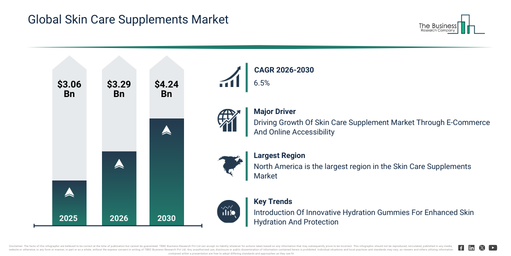
    The market for skin care supplements has experienced robust growth in recent years, with projections indicating an increase from $3.06 billion in 2025 to $3.29 billion in 2026, reflecting a compound annual growth rate (CAGR) of 7.6%. This historic expansion has been driven by heightened awareness of the connection between skin health and nutrition, the ongoing expansion of the global beauty and wellness sector, a growing focus on combating skin aging issues, the impact of dermatologists and beauty influencers, and the rising involvement of female consumers in dedicated skincare regimens.

    The skin care supplements market is projected to experience robust expansion over the coming years, reaching a valuation of $4.24 billion by 2030 with a compound annual growth rate (CAGR) of 6.5%. This upward trajectory in the forecast period is driven by several key factors, including a growing demand for anti-aging products, a heightened emphasis on holistic and preventive skin care approaches, an increasing number of men engaging in skin care supplementation, the rapid growth of e-commerce platforms for skin care, and rising disposable incomes among urban populations. Emerging trends shaping this period include a surging interest in beauty-from-within concepts, the widespread appeal of collagen and antioxidant-based supplements, a heightened consumer priority on preventing premature skin aging, the expanding availability of organic and clean-label options, and a greater acceptance of daily oral skin care routines.

    Download A Free Sample Report For Comprehensive Market Insights:

    https://www.thebusinessresearchcompany.com/sample.aspx?id=15669&type=smp&utm_source=BlogsPR&utm_medium=Paid&utm_campaign=Jul_PR

    Skin Care Supplements Market Industry Drivers: What Is Driving Revenue Growth?

    The anticipated expansion of the skin care supplement market is driven forward by the rise of e-commerce and enhanced online accessibility. E-commerce and online accessibility involve designing digital platforms that are intuitive and navigable for individuals with disabilities, thereby guaranteeing equitable access to internet-based goods and services. The growing prevalence of these digital avenues is fueled by shifting consumer preferences that prioritize convenience, alongside the widespread integration of digital technologies into shopping habits. Through e-commerce, skin care supplement brands can access new markets and connect with niche audiences that traditional retail channels often fail to reach. Online platforms offer brands the chance to boost their visibility using digital marketing tactics like social media promotions, influencer collaborations, and search engine optimization techniques. As an example, the International Trade Administration, a department within the U.S. Department of Commerce, reported in November 2023 that retail e-commerce sales in Canada were expected to surpass $40.3 billion by 2025, a significant increase from $2.34 billion recorded in March 2022. Consequently, the expansion of e-commerce and online accessibility is fueling growth in the skin care supplements market.

    Skin Care Supplements Market Segment Landscape: Which Areas Lead Market Development?

    The skin care supplements market covered in this report is segmented –

    1) By Product Type: Oral Supplements, Topical Supplements

    2) By Content Type: Organic, Chemical

    3) By Gender: Female, Male

    4) By Distribution Channel: Online, Offline

    5) By Application: Skin Aging, Skin Hydration, Acne And Blemishes, Skin Brightening, Other Applications

    Subsegments:

    1) By Oral Supplements: Collagen Supplements, Vitamins And Minerals, Antioxidant Supplements, Omega-3 And Essential Fatty Acids

    2) By Topical Supplements: Collagen Creams And Serums, Vitamin-Based Creams, Hyaluronic Acid Products, Antioxidant Creams And Serums

    Skin Care Supplements Market Growth Trends: What Is Influencing The Future Outlook?

    Leading players in the skincare supplements sector are prioritizing innovative offerings, such as hydration gummies, to maintain their competitive edge. Hydration gummies are chewable products enriched with electrolytes like sodium and potassium, aimed at restoring fluids and essential minerals in the body, particularly during exercise or periods of dehydration. For example, in November 2023, Neutrogena, a US-based cosmetics company, introduced Neutrogena Skin Hydration Gummies. This product combines hydrating hyaluronic acid with potent antioxidants, helping to retain skin moisture and shield against environmental damage. These gummies provide a convenient and tasty way to enhance a skincare regimen, contributing to a moisturized and glowing complexion.

    Skin Care Supplements Market Industry Leaders And Market Competition

    Major companies operating in the skin care supplements market are Nestlé S.A., Amway Corporation, Shaklee Corporation, Nature’s Sunshine Products Inc., Vitabiotics Ltd., LifeVantage Corporation, Mannatech Incorporated, Isagenix International LLC, Modere Inc., Plexus Worldwide LLC, Arbonne International LLC, Nu Skin Enterprises Inc., Jeunesse Global Holdings LLC, Oriflame Holding AG, Meiji Holdings Co. Ltd., LG Household & Health Care Ltd., Blackmores Limited, HUM Nutrition, Swisse Wellness Pty Ltd, The Bountiful Company

    Access The Complete Skin Care Supplements Market Report:

    https://www.thebusinessresearchcompany.com/report/skin-care-supplements-global-market-report?utm_source=BlogsPR&utm_medium=Paid&utm_campaign=Jul_PR

    Skin Care Supplements Market Regional Distribution: Which Areas Drive Market Expansion?

    North America was the largest region in the skin care supplements market in 2025. Asia-Pacific is expected to be the fastest-growing region in the forecast period. The regions covered in the skin care supplements market report are Asia-Pacific, South East Asia, Western Europe, Eastern Europe, North America, South America, Middle East, Africa.

    Get in touch with us:

    The Business Research Company: https://www.thebusinessresearchcompany.com/?utm_source=BlogsPR&utm_medium=Paid&utm_campaign=home_page_test

    Americas: +1 310-496-7795

    Asia: +44 7882 955267 & +91 8897263534

    Europe: +44 7882 955267

    Email us at: marketing@tbrc.info

    Follow us on:

    LinkedIn: https://in.linkedin.com/company/the-business-research-company

    YouTube: https://www.youtube.com/channel/UC24_fI0rV8cR5DxlCpgmyFQ

    Global Market Model: https://www.thebusinessresearchcompany.com/global-market-model
  • Skin Cancer Drugs Market Opportunities Are Emerging Beyond Traditional Growth Areas

    Skin Cancer Drugs Market Opportunities Are Emerging Beyond Traditional Growth Areas

    Through market attractiveness analysis, total addressable market evaluation, company benchmarking matrices, interactive Excel dashboards, expanded supply chain intelligence, emerging startup coverage, and detailed product insights, The Business Research Company’s 2026 market reports provide more actionable and strategically valuable research.

    Skin Cancer Drugs Market Value Expansion And Long-Term Growth Outlook

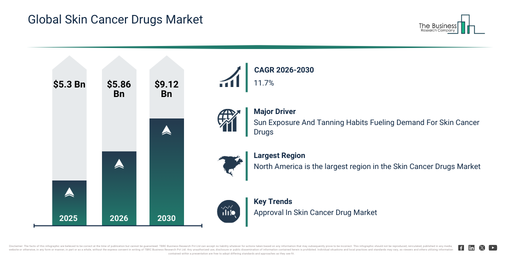
    The market for skin cancer drugs has experienced rapid expansion in recent times. Projected to rise from $5.3 billion in 2025 to $5.86 billion in 2026, this growth corresponds to a compound annual growth rate (CAGR) of 10.7%. Several factors drove the historic period’s progress, including higher levels of UV exposure, a growing number of melanoma cases, wider use of chemotherapy, the development of hospital oncology facilities, and intensified public awareness initiatives.

    The skin cancer drugs market is projected to experience robust expansion over the coming years, reaching a valuation of $9.12 billion by 2030 with a compound annual growth rate (CAGR) of 11.7%. This forecasted growth is driven by advancements in immunotherapy drugs, a rising demand for targeted agents, an aging global population, the expansion of precision medicine, and increased funding for cancer research. Key trends shaping the market during this period include the growing adoption of immunotherapies and targeted drugs, a higher occurrence of non-melanoma skin cancers, a shift toward minimally invasive and topical treatment options, an increased emphasis on early detection and preventive therapies, and the development of combination drug regimens.

    Download A Free Sample Report For Comprehensive Market Insights:

    https://www.thebusinessresearchcompany.com/sample.aspx?id=2564&type=smp&utm_source=BlogsPR&utm_medium=Paid&utm_campaign=Jul_PR

    #Skin Cancer Drugs Market Growth Factors: Which Forces Are Supporting Market Expansion?

    The projected expansion of the skin cancer drug market over the coming years is being driven by rising levels of sun exposure and tanning among individuals. Sun exposure refers to the length of time a person spends under sunlight, which can have both favorable and adverse effects on the skin and overall health. Tanning is the process where the skin darkens or becomes discolored due to extended contact with sunlight or other sources of ultraviolet (UV) radiation. The market for skin cancer drugs is growing, supported by factors such as the prevalence of skin diseases—particularly skin cancer—along with advances in therapeutic options and heightened awareness. For example, in March 2024, data from the Australian Bureau of Statistics, a government agency based in Australia, showed that one in four (24.6%) individuals aged 15 and older reported that they would “just burn and not tan” after 30 minutes of sun exposure. Furthermore, two in five (38.1%) people in the same age group used SPF30 or higher sunscreen on most days during late spring and summer in 2023–24. Consequently, this increased tendency toward sun exposure and tanning is fueling the growth of the skin cancer drug market.

    Skin Cancer Drugs Market Segments: Where Are The Largest Growth Opportunities?

    The skin cancer drugs market covered in this report is segmented –

    1) By Type: Actinic Keratoses (AK), Basal cell carcinoma (BCC), Squamous cell carcinoma (SCC), Melanoma

    2) By Drug Class: Chemotherapy, Immunotherapy, Targeted Agents & Other Drugs

    3) By End Users: Hospitals, Cancer Research Centers, Clinics

    Subsegments:

    1) By Actinic Keratoses (AK): Cryotherapy Treatments, Topical Medications, Photodynamic Therapy (PDT), Laser Therapy

    2) By Basal Cell Carcinoma (BCC): Surgical Excision, Mohs Micrographic Surgery, Radiation Therapy, Topical Therapies

    3) By Squamous Cell Carcinoma (SCC): Surgical Excision, Cryosurgery, Electrosurgery and Curettage, Radiation Therapy

    4) By Melanoma: Surgical Excision, Immunotherapy, Targeted Therapy, Chemotherapy and Radiation

    Skin Cancer Drugs Market Industry Trends: What Changes Are Reshaping Demand?

    Key players within the skin cancer drugs sector are intensifying their emphasis on securing product approvals to more effectively address current demand requirements. The uptick in such approvals stems from a mix of scientific progress, shifts in regulations, market pressures, and patient advocacy efforts. A case in point occurred in March 2023, when Incyte Corporation, a pharmaceutical firm from the United States specializing in skin cancer treatments, disclosed that the FDA had granted approval to Zynyz (Retifanlimab-Dlwr) for managing metastatic or recurrent Merkel cell carcinoma (MCC). This drug, Zynyz (retifanlimab-dlwr), is a human cell-derived monoclonal antibody that targets programmed death receptor-1 (PD-1), and has been sanctioned for use in individuals suffering from metastatic or recurrent locally advanced MCC. The U.S. FDA accepted the Biologics License Application (BLA) for Zynyz concerning this indication via an expedited approval pathway, hinging on tumor response rates and duration of response (DOR). Continued authorization for Zynyz in this context may hinge on the verification and characterization of its clinical advantage in confirmatory trials.

    Skin Cancer Drugs Market Major Participants And Competitive Dynamics

    Major companies operating in the skin cancer drugs market are Pfizer Inc., Meda Pharmaceuticals, Roche Holding AG, Merck & Co. Inc., AbbVie Inc., Novartis International AG, Sanofi SA, Bristol Myers Squibb Company, AstraZeneca PLC, GlaxoSmithKline plc, Takeda Pharmaceutical Company Limited, Eli Lilly and Company, Boehringer Ingelheim International GmbH, Mylan N.V., Daiichi Sankyo Company Limited, Bausch Health Companies Inc., Valeant Pharmaceuticals, Sun Pharmaceutical Industries Ltd., Ipsen Pharma, LEO Pharma A/S, Aqua Pharmaceuticals, AB Science, Cellceutix Corporation, Eisai Co. Ltd., Otsuka Pharmaceutical Co. Ltd., Seattle Genetics Inc.

    Access The Complete Skin Cancer Drugs Market Report:

    https://www.thebusinessresearchcompany.com/report/skin-cancer-drugs-global-market-report?utm_source=BlogsPR&utm_medium=Paid&utm_campaign=Jul_PR

    Skin Cancer Drugs Market Leading Geography: Which Region Generates The Most Revenue?

    North America was the largest region in the skin cancer drugs market in 2025. Middle East is expected to be the fastest-growing region in the global skin cancer drugs market during the forecast period. The regions covered in the skin cancer drugs market report are Asia-Pacific, South East Asia, Western Europe, Eastern Europe, North America, South America, Middle East, Africa.

    Get in touch with us:

    The Business Research Company: https://www.thebusinessresearchcompany.com/?utm_source=BlogsPR&utm_medium=Paid&utm_campaign=home_page_test

    Americas: +1 310-496-7795

    Asia: +44 7882 955267 & +91 8897263534

    Europe: +44 7882 955267

    Email us at: marketing@tbrc.info

    Follow us on:

    LinkedIn: https://in.linkedin.com/company/the-business-research-company

    YouTube: https://www.youtube.com/channel/UC24_fI0rV8cR5DxlCpgmyFQ

    Global Market Model: https://www.thebusinessresearchcompany.com/global-market-model
  • Skin Booster Market Expansion Is Opening New Pathways For Strategic Investment

    Skin Booster Market Expansion Is Opening New Pathways For Strategic Investment

    Delivering more actionable and strategically valuable research, The Business Research Company’s 2026 market reports feature market attractiveness analysis, total addressable market evaluation, company benchmarking matrices, interactive Excel dashboards, expanded supply chain intelligence, emerging startup coverage, and detailed product insights.

    Skin Booster Market Expected To Reach $2.08 Billion By 2030 At 10.7% CAGR

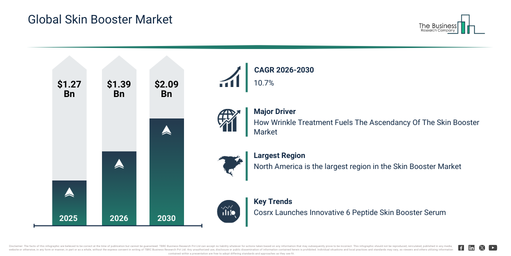
    The skin booster market has experienced robust expansion in recent years. Its value is projected to rise from $1.27 billion in 2025 to $1.39 billion in 2026, reflecting a compound annual growth rate (CAGR) of 10.0%. This historic growth has been driven by greater awareness of aesthetic appearance, the proliferation of dermatology clinics, higher disposable incomes in urban regions, the impact of social media and prevailing beauty ideals, as well as innovations in injectable formulations.

    The skin booster market is projected to experience significant expansion in the coming years, with its value anticipated to reach $2.09 billion by 2030, reflecting a compound annual growth rate (CAGR) of 10.7%. This upward trajectory in the forecast period is driven by an aging demographic actively pursuing anti-aging solutions, a growing acceptance of aesthetic treatments among men, the global proliferation of medspa chains, a rising demand for natural-looking and long-lasting outcomes, and ongoing advancements in hyaluronic acid-based product development. Key trends shaping this period include a heightened preference for minimally invasive aesthetic procedures, an increasing inclination toward hyaluronic acid-based injectables, broader adoption of preventive and maintenance skincare regimens, the expansion of medspa and aesthetic clinic networks, and a notable uptick in male participation in aesthetic treatments.

    Download A Free Sample Report For Comprehensive Market Insights:

    https://www.thebusinessresearchcompany.com/sample.aspx?id=10456&type=smp&utm_source=BlogsPR&utm_medium=Paid&utm_campaign=Jul_PR

    Skin Booster Market Demand Drivers: What Is Fueling Industry Growth?

    The rising interest in wrinkle reduction is anticipated to drive forward the expansion of the skin booster market. Wrinkle reduction involves treating creases, folds, or skin ridges through methods like creams, laser therapy, Botox, and others, aimed at minimizing the visibility of wrinkles to enhance appearance. Skin boosters play a key role in this process, as they deliver hyaluronic acid injections to the skin, improving its texture, elasticity, and moisture by boosting hydration and volume, which contributes to a more youthful look. For example, in April 2025, the British Association of Aesthetic Plastic Surgeons, a UK-based organization, reported that cosmetic surgical procedures experienced a 5% overall increase in 2024, reaching 27,462 interventions, predominantly driven by growth in facial rejuvenation and body contouring treatments. Consequently, the demand for wrinkle reduction is fueling progress in the skin booster market.

    Skin Booster Market Segment Analysis: What Are The Major Market Categories?

    The skin booster market covered in this report is segmented –

    1) By Type: Mesotherapy, Other Types

    2) By Gender: Male, Female

    3) By End-Use: Dermatology Clinics, MedSpa

    Skin Booster Market Innovation Trends: Which Developments Are Transforming The Industry?

    Major industry players within the skin booster sector are concentrating on advanced product offerings, exemplified by The 6 Peptide Skin Booster Serum, as a strategy to align with prevailing market trends, enhance their brand identity, and broaden their consumer reach. This serum, developed with six potent peptides, aims to improve the overall quality of the skin by delivering diverse advantages. A case in point occurred in August 2023, when CosRX, a skincare company based in South Korea, introduced The 6 Peptide Skin Booster Serum to its product lineup. This formulation was introduced as a potent solution for individuals looking to tackle numerous skin issues simultaneously. Engineered to improve multiple skin conditions and enhance general skin health, this product is seen as a flexible and efficient skincare option. Its unique combination of six peptides, along with other skin-beneficial ingredients, allows it to deliver a range of benefits while addressing a wide spectrum of skin concerns.

    Skin Booster Market Leading Companies Driving Competitive Growth

    Major companies operating in the skin booster market are Galderma SA, Merz Pharma GmbH and Co KGaA, IBSA Group, Teoxane Laboratories, Bloomage BioTechnology Corporation Limited, Sinclair Pharma plc, Vivacy Laboratories, Prollenium Medical Technologies Inc, Fidia Farmaceutici SpA, Regenyal Laboratories LLC, Cytocare Laboratories, Skin Tech Pharma Group, Filorga Laboratories, Luminera Derm Ltd, Suneva Medical Inc, Bioxis Pharmaceuticals Inc, Hymagic Corporation, SciVision Biotech Inc, Genyal Laboratories, Cellfill Co Ltd

    Access The Complete Skin Booster Market Report:

    https://www.thebusinessresearchcompany.com/report/skin-booster-global-market-report?utm_source=BlogsPR&utm_medium=Paid&utm_campaign=Jul_PR

    Skin Booster Market Regional Outlook: Where Are The Largest Opportunities Located?

    North America was the largest region in the skin boosters market in 2025. Asia-Pacific is expected to be the fastest-growing region in the global skin booster market during the forecast period. The regions covered in the skin booster market report are Asia-Pacific, South East Asia, Western Europe, Eastern Europe, North America, South America, Middle East, Africa.

    Get in touch with us:

    The Business Research Company: https://www.thebusinessresearchcompany.com/?utm_source=BlogsPR&utm_medium=Paid&utm_campaign=home_page_test

    Americas: +1 310-496-7795

    Asia: +44 7882 955267 & +91 8897263534

    Europe: +44 7882 955267

    Email us at: marketing@tbrc.info

    Follow us on:

    LinkedIn: https://in.linkedin.com/company/the-business-research-company

    YouTube: https://www.youtube.com/channel/UC24_fI0rV8cR5DxlCpgmyFQ

    Global Market Model: https://www.thebusinessresearchcompany.com/global-market-model
  • Skin Antiseptic Products Market Trends Are Creating New Opportunities For Industry Leaders

    Skin Antiseptic Products Market Trends Are Creating New Opportunities For Industry Leaders

    Enhanced with market attractiveness analysis, total addressable market evaluation, company benchmarking matrices, interactive Excel dashboards, expanded supply chain intelligence, emerging startup coverage, and detailed product insights, The Business Research Company’s 2026 market reports deliver more actionable and strategically valuable research.

    Skin Antiseptic Products Market Size And Revenue Forecast Through 2030

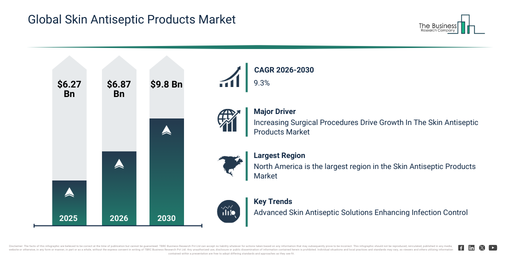
    The market for skin antiseptic products has experienced robust expansion in recent years. Projections indicate it will rise from $6.27 billion in 2025 to $6.87 billion in 2026, reflecting a compound annual growth rate (CAGR) of 9.6%. This historical growth has been driven by factors such as a higher number of surgical procedures, an increase in hospital-acquired infection rates, greater public awareness regarding hygiene and infection prevention, the extensive adoption of alcohol-based antiseptics, and the ongoing development of hospital and outpatient facilities.

    The skin antiseptic products market is anticipated to see robust expansion in the coming years, with projections indicating it will reach $9.8 billion by 2030, driven by a compound annual growth rate (CAGR) of 9.3%. This forecasted growth can be linked to factors such as the rise in outpatient and day-care surgeries, increased adoption of home healthcare, the creation of antiseptic formulations tailored to be gentle on the skin, a stronger regulatory focus on preventing infections, and the broadening of healthcare facilities in emerging economies. Key trends shaping this period encompass a growing demand for disinfection prior to surgeries and at injection sites, a surge in the use of antiseptics containing alcohol and chlorhexidine, a shift toward single-use and disposable alternatives, wider application of antiseptics within home care environments, and an intensified emphasis on infection prevention and control measures.

    Download A Free Sample Report For Comprehensive Market Insights:

    https://www.thebusinessresearchcompany.com/sample.aspx?id=19698&type=smp&utm_source=BlogsPR&utm_medium=Paid&utm_campaign=Jul_PR

    Skin Antiseptic Products Market Growth Drivers: What Factors Are Accelerating Expansion?

    The ongoing increase in surgical procedures is anticipated to drive expansion in the skin antiseptic products market. Surgery, a medical intervention involving the manual manipulation, removal, or repair of tissues and organs through incisions or alternative methods, is typically carried out to diagnose, treat, or improve a patient’s condition. The advent of laparoscopic and robotic techniques has rendered surgeries less invasive, shortening recovery periods and motivating a greater number of individuals to pursue surgical treatment. Skin antiseptic products facilitate and improve the preoperative process by managing infection risks, maintaining hygiene standards, and safeguarding patient safety during medical interventions. As an example, in May 2025, data from the British Association of Aesthetic Plastic Surgeons, a UK-based surgical body, revealed that cosmetic surgery in the United Kingdom reached 27,462 procedures in 2024, marking a 5% rise compared to the prior year and signaling sustained sector growth. Consequently, the growing volume of surgeries is fueling the skin antiseptic product market.

    Skin Antiseptic Products Market Segment Breakdown: Which Categories Generate The Most Revenue?

    The skin antiseptic products market covered in this report is segmented –

    1) By Type: Solutions, Swab Sticks, Wipes

    2) By Formulation: Alcohols, Chlorhexidine, Iodine, Octenidine, Other Formulations

    3) By Application: Surgeries, Injections, Other Applications

    4) By End-Use: Hospitals, Outpatient Facilities, Home Care, Research And Manufacturing

    Subsegments:

    1) By Solutions: Alcohol-Based Solutions, Iodine-Based Solutions, Chlorhexidine Solutions, Hydrogen Peroxide Solutions, Benzalkonium Chloride Solutions

    2) By Swab Sticks: Alcohol Swabs, Iodine Swabs, Chlorhexidine Swabs, Antiseptic-Infused Swabs

    3) By Wipes: Alcohol Wipes, Antimicrobial Wipes, Iodine Wipes, Benzalkonium Chloride Wipes, Disposable Antiseptic Wipes

    Skin Antiseptic Products Market Trends: What Is Shaping Future Industry Growth?

    Major players within the skin antiseptic products industry are actively creating patient preoperative skin preparation solutions, aiming to strengthen infection control protocols and enhance surgical outcomes. These preoperative skin preparations are antiseptic formulations used to cleanse and disinfect the skin prior to surgery by eliminating or suppressing the growth of bacteria, viruses, and fungi. For example, in April 2023, 3M Health Care Company, a US-based provider and producer of healthcare solutions, introduced the 3M SoluPrep S Sterile Antiseptic Solution. This product merges chlorhexidine gluconate (2% w/v) with isopropyl alcohol (70% v/v) for presurgical skin preparation. It provides rapid-acting, broad-spectrum antimicrobial effects, with proven persistence lasting at least 96 hours after application. The solution includes a Brite Green tint to improve visibility across diverse skin tones, guaranteeing thorough application. Additionally, it features an efficient applicator that offers extensive coverage while minimizing drip, and it contains an ingredient that improves adhesion of incise drapes.

    Skin Antiseptic Products Market Key Players And Strategic Industry Positioning

    Major companies operating in the skin antiseptic products market are Cardinal Health Inc., Johnson And Johnson Services Inc., Kimberly-Clark Corporation, Becton Dickinson And Company, Stryker Corporation, EcoLab Inc., Medline Industries LP., B.Braun Melsungen AG, 3M Health Care Ltd., Cintas Corporation, Smith And Nephew Plc, Coloplast A/S, Convatec Group plc, Mölnlycke Health Care AB, Gojo Industries Inc., Schülke And Mayr GmbH, Purell, Dukal LLC, PDI International, Cleanwell, Medique.

    Access The Complete Skin Antiseptic Products Market Report:

    https://www.thebusinessresearchcompany.com/report/skin-antiseptic-products-global-market-report?utm_source=BlogsPR&utm_medium=Paid&utm_campaign=Jul_PR

    Skin Antiseptic Products Market Geographic Landscape: Which Region Dominates Industry Growth?

    North America was the largest region in the skin antiseptic products market in 2025. Asia-Pacific is expected to be the fastest-growing region in the forecast period. The regions covered in the skin antiseptic products market report are Asia-Pacific, South East Asia, Western Europe, Eastern Europe, North America, South America, Middle East, Africa.

    Get in touch with us:

    The Business Research Company: https://www.thebusinessresearchcompany.com/?utm_source=BlogsPR&utm_medium=Paid&utm_campaign=home_page_test

    Americas: +1 310-496-7795

    Asia: +44 7882 955267 & +91 8897263534

    Europe: +44 7882 955267

    Email us at: marketing@tbrc.info

    Follow us on:

    LinkedIn: https://in.linkedin.com/company/the-business-research-company

    YouTube: https://www.youtube.com/channel/UC24_fI0rV8cR5DxlCpgmyFQ

    Global Market Model: https://www.thebusinessresearchcompany.com/global-market-model
  • Skeletal Dysplasia Drugs Market Growth Is Reshaping Competitive Advantage Across The Industry

    Skeletal Dysplasia Drugs Market Growth Is Reshaping Competitive Advantage Across The Industry

    Through market attractiveness analysis, total addressable market evaluation, company benchmarking matrices, interactive Excel dashboards, expanded supply chain intelligence, emerging startup coverage, and detailed product insights, The Business Research Company’s 2026 market reports provide more actionable and strategically valuable research.

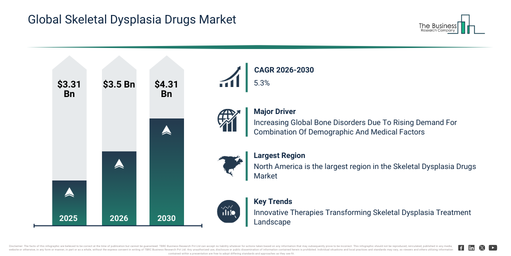
    Skeletal Dysplasia Drugs Market Growth From $3.49 Billion In 2026 To $4.3 Billion By 2030 At A CAGR Of 5.3%

    The market for skeletal dysplasia drugs has experienced robust expansion in recent years. Projections indicate an increase from $3.31 billion in 2025 to $3.5 billion in 2026, reflecting a compound annual growth rate (CAGR) of 5.6%. This historical growth has been driven by factors such as the scarcity of treatment options for skeletal dysplasia, a rising incidence of rare bone disorders, dependence on hospital pharmacy distribution channels, limited public awareness regarding dysplasia therapies, and the continued use of conventional symptomatic and supportive care approaches.

    Strong growth is anticipated for the skeletal dysplasia drugs market in the coming years. By 2030, its value is projected to reach $4.31 billion, expanding at a compound annual growth rate (CAGR) of 5.3%. Several factors are expected to drive this expansion during the forecast period, including the emergence of gene and RNA-based therapies, higher funding dedicated to orphan drug research, intensified partnerships among pharmaceutical and biotechnology firms, the widening reach of hospital and online pharmacy networks, and the implementation of precision medicine strategies. Among the key trends shaping the market’s future are the growing use of enzyme replacement therapies, the increased focus on developing monoclonal antibody drugs, efforts to raise awareness about rare skeletal dysplasias, the expansion of both online and retail pharmacy distribution channels, and a stronger emphasis on personalized and targeted treatment approaches.

    Download A Free Sample Report For Comprehensive Market Insights:

    https://www.thebusinessresearchcompany.com/sample.aspx?id=24699&type=smp&utm_source=BlogsPR&utm_medium=Paid&utm_campaign=Jul_PR

    Skeletal Dysplasia Drugs Market Growth Factors Supporting Long-Term Expansion

    The rising frequency of bone disorders is set to drive the growth of the skeletal dysplasia drugs market in the coming years. Bone disorders encompass medical conditions that compromise bone strength, structure, or function, leading to issues like weakened bones, deformities, pain, fractures, or reduced mobility. This increase in bone disorders largely stems from a sedentary lifestyle, where insufficient physical activity diminishes bone strength and density, heightening the risk of fractures and degenerative diseases. Skeletal dysplasia drugs address these conditions by focusing on the genetic or molecular origins affecting bone growth and development, enhancing bone formation, strength, and structure, and thus alleviating symptoms such as deformities, fractures, and mobility limitations. For example, in February 2023, the National Library of Medicine, a US biomedical library, reported that total hip arthroplasty (THA) and total knee arthroplasty (TKA) procedures are expected to rise by 719,364 and 1,222,988, respectively, by 2040. Additionally, TKAs are projected to reach 2,917,959 by 2060, while THAs are forecasted to total 1,982,099 during that period. Hence, the growing prevalence of bone disorders is fueling demand in the skeletal dysplasia drugs market.

    Skeletal Dysplasia Drugs Market Segmentation: How Is The Market Structured Across Key Categories?

    The skeletal dysplasia drugs market covered in this report is segmented –

    1) By Treatment: Enzyme Replacement Therapy, Human Monoclonal Antibody, Other Treatments

    2) By Dysplasia Type: Morquio A Syndrome, X-Linked Hypophosphatemia, Hypophosphatasia, Achondroplasia, Fibrodysplasia Ossificans Progressive, Multiple Osteochondromas, Other Dysplasia Types

    3) By Distribution Channel: Hospital Pharmacies, Retail Pharmacies, Online Pharmacies

    Subsegments:

    1) By Enzyme Replacement Therapy (ERT): Alglucosidase Alfa, Idursulfase, Laronidase, Eliglustat, Other Enzyme Replacement Therapy (ERT) Drug

    2) By Human Monoclonal Antibody: Anti-FGF Receptor Antibodies, Anti-TNF-Alpha Antibodies, Anti-IL-6 Receptor Antibodies, Other Human Monoclonal Antibody

    3) By Other Treatments: Small Molecule Therapies, Gene Therapy, RNA-Based Therapies, Symptomatic Treatments, Supportive Therapies

    Skeletal Dysplasia Drugs Market Industry Trends Shaping Future Revenue Growth

    Leading players within the skeletal dysplasia drugs sector are concentrating on the creation of advanced approaches, especially through targeted biological therapies that directly influence the specific molecular pathways responsible for irregular bone development. These therapies enable more effective and safer treatment options that are customized based on the underlying genetic abnormalities. Targeted biological therapies make use of naturally derived agents such as proteins, antibodies, or peptides to precisely engage molecular targets involved in the onset or advancement of a disease. Their goal is to correct or halt abnormal biological processes with enhanced accuracy and fewer negative effects compared to conventional treatments. As a case in point, in October 2023, BioMarin Pharmaceutical Inc., a biotechnology firm based in the United States, introduced VOXZOGO (vosoritide) with the aim of supporting normal bone growth and enhancing lasting health results. This drug offers children living with achondroplasia a specific therapy that encourages bone development, assisting in height increase, reducing the risk of complications, and elevating their general well-being.

    Skeletal Dysplasia Drugs Market Competitive Landscape And Leading Companies

    Major companies operating in the skeletal dysplasia drugs market are BridgeBio Pharma Inc., BioMarin Pharmaceutical Inc., Ascendis Pharma A/S, Clementia Pharmaceuticals Inc., QED Therapeutics Inc., InnoSkel SAS, Therachon Holding AG, Pfizer Rare Disease (formerly Pfizer Rare Genetic Diseases), Ipsen Pharma, Chugai Pharmaceutical Co. Ltd., Ultragenyx Pharmaceutical Inc., Takeda Pharmaceutical Company Ltd., PTC Therapeutics Inc., Abeona Therapeutics Inc., Rocket Pharmaceuticals Inc., Sangamo Therapeutics Inc., REGENXBIO Inc., Orchard Therapeutics plc, 4D Molecular Therapeutics Inc., Audentes Therapeutics Inc., LogicBio Therapeutics Inc., Vertex Pharmaceuticals Inc., Anika Therapeutics Inc., Bluebird Bio Inc., Sarepta Therapeutics Inc., Akouos Inc.

    Access The Complete Skeletal Dysplasia Drugs Market Report:

    https://www.thebusinessresearchcompany.com/report/skeletal-dysplasia-drugs-global-market-report?utm_source=BlogsPR&utm_medium=Paid&utm_campaign=Jul_PR

    Skeletal Dysplasia Drugs Market Largest Region: Which Geography Holds The Highest Market Share?

    North America was the largest region in the skeletal dysplasia drugs market in 2025. Asia-Pacific is expected to be the fastest-growing region in the forecast period. The regions covered in the skeletal dysplasia drugs market report are Asia-Pacific, South East Asia, Western Europe, Eastern Europe, North America, South America, Middle East, Africa.

    Get in touch with us:

    The Business Research Company: https://www.thebusinessresearchcompany.com/?utm_source=BlogsPR&utm_medium=Paid&utm_campaign=home_page_test

    Americas: +1 310-496-7795

    Asia: +44 7882 955267 & +91 8897263534

    Europe: +44 7882 955267

    Email us at: marketing@tbrc.info

    Follow us on:

    LinkedIn: https://in.linkedin.com/company/the-business-research-company

    YouTube: https://www.youtube.com/channel/UC24_fI0rV8cR5DxlCpgmyFQ

    Global Market Model: https://www.thebusinessresearchcompany.com/global-market-model
  • Single-Use Chromatography Membrane Market Forecast Signals New Revenue Opportunities Through 2030

    Single-Use Chromatography Membrane Market Forecast Signals New Revenue Opportunities Through 2030

    Delivering more actionable and strategically valuable research, The Business Research Company’s 2026 market reports feature market attractiveness analysis, total addressable market evaluation, company benchmarking matrices, interactive Excel dashboards, expanded supply chain intelligence, emerging startup coverage, and detailed product insights.

    Single-Use Chromatography Membrane Market Expansion Outlook: What Revenue Opportunities Lie Ahead?

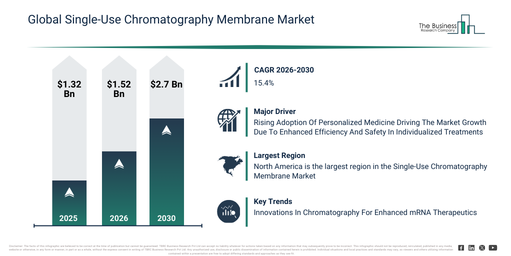
    The market for single-use chromatography membranes has experienced robust expansion over the past few years. Valued at $1.32 billion in 2025, it is projected to reach $1.52 billion by 2026, reflecting a compound annual growth rate of 15.7%. This historical growth has been driven by factors such as the growing prevalence of single-use biomanufacturing processes, higher volumes of biologic production, an increased need for more rapid purification workflows, broader implementation of membrane-based separation methods, and a diminished dependence on reusable columns.

    The single-use chromatography membrane market is projected to experience substantial expansion over the coming years. By 2030, its value is anticipated to reach $2.7 billion, reflecting a compound annual growth rate (CAGR) of 15.4%. This forecasted growth is driven by several factors, including heightened investment in disposable bioprocess solutions, a growing preference for flexible manufacturing platforms, an expanding pipeline of vaccines and biologics, an increased emphasis on operational efficiency, and stricter regulatory requirements for contamination control. Key trends shaping this period involve the broader uptake of disposable chromatography membranes, a heightened need for rapid biomolecule purification, the growing implementation of single-use bioprocessing systems, the development of high-throughput membrane adsorbers, and a stronger focus on minimizing contamination risks.

    Download A Free Sample Report For Comprehensive Market Insights:

    https://www.thebusinessresearchcompany.com/sample.aspx?id=29189&type=smp&utm_source=BlogsPR&utm_medium=Paid&utm_campaign=Jul_PR

    Single-Use Chromatography Membrane Market Demand Drivers Creating New Revenue Opportunities

    The growing adoption of personalized medicine is anticipated to drive expansion in the single-use chromatography membrane market. Personalized medicine refers to the practice of tailoring medical therapies based on an individual’s genetic, molecular, and clinical profiles to achieve more targeted and effective care. This approach is on the rise because of progress in genomics, which facilitates the development of treatments specifically designed for a patient’s unique genetic makeup, enhancing both efficacy and safety. Single-use chromatography membranes contribute to personalized medicine by providing rapid, adaptable, and sterile purification of patient-specific biologics, including customized cell and gene therapies, thereby boosting the effectiveness and security of individualized treatments. In February 2024, the Personalized Medicine Coalition, a nonprofit organization based in the United States, reported that the FDA approved 16 new personalized therapies for rare disease patients in 2023, a significant increase from six approvals in 2022. These newly authorized personalized treatments for 2023 also encompass seven cancer drugs and three aimed at other diseases and conditions. Hence, the increasing prevalence of personalized medicine is fueling growth in the single-use chromatography membrane market.

    Single-Use Chromatography Membrane Market Segmentation Trends And Revenue Drivers

    The single-use chromatography membrane market covered in this report is segmented –

    1) By Product Type: Membrane Adsorbers, Capsules Or Cartridges, Filter Plates, Other Product Types

    2) By Technique: Ion Exchange, Affinity, Hydrophobic Interaction, Other Techniques

    3) By Application: Biopharmaceutical Production, Vaccine Manufacturing, Research And Development, Other Applications

    4) By End-User: Pharmaceutical And Biotechnology Companies, Academic And Research Institutes, Other End Users

    Subsegments:

    1) By Membrane Adsorbers: Ion Exchange, Affinity, Hydrophobic Interaction

    2) By Capsules Or Cartridges: Single Column, Multi Column, Pre Packed

    3) By Filter Plates: Depth Filter, Membrane Filter, Hollow Fiber

    4) By Others Product Types: Tubular Membrane, Spiral Wound, Pleated Membrane

    Single-Use Chromatography Membrane Market Trends Driving Strategic Industry Expansion

    Key players in the single-use chromatography membrane market are prioritizing the development of innovative methods, such as mRNA purification, to boost process efficiency, increase product yield, and improve therapeutic quality. mRNA purification involves separating messenger RNA (mRNA) molecules from a mix of cellular components or reaction byproducts to achieve highly pure mRNA, which is essential for vaccines, therapies, and research. For example, in December 2024, Repligen Corporation, a US-based life sciences firm, introduced AVIPure dsRNA Clear OPUS Columns, designed to streamline and speed up dsRNA removal in biopharmaceutical manufacturing. This product provides a rapid and effective solution for eliminating double-stranded RNA contaminants from mRNA therapeutics in just one minute, thereby enhancing drug purity and minimizing adverse immune reactions. As a single-use, pre-packed chromatography tool, it avoids the use of heat or solvents, simplifying operations while enabling efficient scaling. Its critical role lies in facilitating safer, superior-quality mRNA vaccines and therapies through cost-effective and seamless integration into biomanufacturing workflows.

    Single-Use Chromatography Membrane Market Industry Leaders: Which Organizations Are Driving Competition?

    Major companies operating in the single-use chromatography membrane market are Thermo Fisher Scientific Inc., 3M Company, Danaher Corporation, Merck KGaA, Solventum, Cytiva Life Sciences, W. L. Gore and Associates GORE Membrane Technologies, Sartorius Aktiengesellschaft, AGC Biologics GmbH, Repligen Corporation, GVS Group, i3 Membrane Inc., Cole-Parmer Instrument Company LLC, Restek Corporation, Cobetter Filtration Equipment Company Limited, Membrane Solutions LLC, Izon Science Limited, Sartorius Stedim Biotech S.A., BIA Separations Inc., NATRIX Separations Inc., Purilogics.

    Access The Complete Single-Use Chromatography Membrane Market Report:

    https://www.thebusinessresearchcompany.com/report/single-use-chromatography-membrane-global-market-report?utm_source=BlogsPR&utm_medium=Paid&utm_campaign=Jul_PR

    Single-Use Chromatography Membrane Market Regional Analysis: Which Region Leads By Revenue?

    North America was the largest region in the single-use chromatography membrane market in 2025. Asia-Pacific is expected to be the fastest-growing region in the forecast period. The regions covered in the single-use chromatography membrane market report are Asia-Pacific, South East Asia, Western Europe, Eastern Europe, North America, South America, Middle East, Africa.

    Get in touch with us:

    The Business Research Company: https://www.thebusinessresearchcompany.com/?utm_source=BlogsPR&utm_medium=Paid&utm_campaign=home_page_test

    Americas: +1 310-496-7795

    Asia: +44 7882 955267 & +91 8897263534

    Europe: +44 7882 955267

    Email us at: marketing@tbrc.info

    Follow us on:

    LinkedIn: https://in.linkedin.com/company/the-business-research-company

    YouTube: https://www.youtube.com/channel/UC24_fI0rV8cR5DxlCpgmyFQ

    Global Market Model: https://www.thebusinessresearchcompany.com/global-market-model