Month: July 2026

  • Testosterone Replacement Therapy Market Expected To Reach $2.57 Billion By 2030 As Growth Accelerates At 4% CAGR

    Testosterone Replacement Therapy Market Expected To Reach $2.57 Billion By 2030 As Growth Accelerates At 4% CAGR

    Through market attractiveness analysis, total addressable market evaluation, company benchmarking matrices, interactive Excel dashboards, expanded supply chain intelligence, emerging startup coverage, and detailed product insights, The Business Research Company’s 2026 market reports provide more actionable and strategically valuable research.

    Testosterone Replacement Therapy Market Size And Revenue Forecast Through 2030

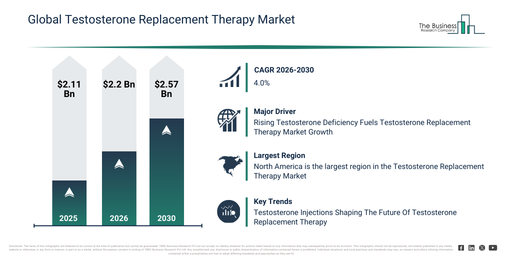
    The market for testosterone replacement therapy has seen consistent expansion in recent times. Valued at $2.11 billion in 2025, it is projected to reach $2.2 billion by 2026, representing a compound annual growth rate (CAGR) of 3.9%. Historical growth was driven by several key factors, including a higher incidence of hypogonadism, the introduction of oral testosterone options, an expanding elderly demographic, increased awareness among specialists such as urologists and endocrinologists, and improvements in injectable testosterone treatments.

    The testosterone replacement therapy market is projected to experience consistent expansion over the coming years, reaching a value of $2.57 billion by 2030, with a compound annual growth rate (CAGR) of 4.0%. This anticipated growth during the forecast period is driven by the creation of innovative transdermal gels and patches, advancements in precision medicine, a greater uptake of therapies administered at home, broader clinical investigations into testosterone deficiency, and heightened public awareness regarding male fertility and overall wellness. Key trends shaping this period include the rise of personalized hormonal treatments, the use of less invasive delivery techniques, increased recognition of male hypogonadism, the proliferation of outpatient clinics and specialized endocrinology centers, and the growing availability of testosterone therapy solutions designed for home use.

    Download A Free Sample Report For Comprehensive Market Insights:

    https://www.thebusinessresearchcompany.com/sample.aspx?id=9235&type=smp&utm_source=BlogsPR&utm_medium=Paid&utm_campaign=Jul_PR

    Testosterone Replacement Therapy Market Growth Drivers And Industry Catalysts

    The expanding incidence of testosterone deficiency is anticipated to propel the market for testosterone replacement therapy forward. This condition, also known as hypogonadism, occurs when the body cannot produce sufficient testosterone. Testosterone replacement therapy aims to restore testosterone levels within a physiological range, counteracting hypogonadism’s effects and addressing symptoms like decreased libido, erectile dysfunction, low mood, anemia, muscle wasting, and others. For example, in March 2024, PharmiWeb, a media and technology firm based in England, reported that the estimated incidence of symptomatic testosterone deficiency in men aged 40 to 70 ranges from 2.1 to 5.73, with a prevalence potentially reaching as high as 38.7%. Consequently, the growing prevalence of testosterone deficiency is fueling expansion in the testosterone replacement therapy market.

    Testosterone Replacement Therapy Market Segment Landscape: Which Areas Lead Market Development?

    The testosterone replacement therapy market covered in this report is segmented –

    1) By Product Type: Oral, Implants, Gel Or Creams, Patches, Buccal Adhesive, Parenteral, Other Products

    2) By Indication: Hypogonadism, Genetic Disorders, Sex Organ Surgeries, Other Indications

    3) By Active Ingredient Type: Testosterone, Methyl Testosterone, Testosterone Undecanoate, Testosterone Enanthate, Testosterone Cypionate

    4) By End User: Hospitals, Clinics, Other End-User

    Testosterone Replacement Therapy Market Trends Influencing Long-Term Demand

    Leading players within the testosterone replacement therapy sector are intensifying their efforts to introduce testosterone cypionate injections as a strategy to secure a market advantage. Testosterone Cypionate Injection (USP) is a pharmaceutical product comprising testosterone cypionate, a synthetic variant of the naturally occurring male hormone testosterone. This injection is commonly prescribed as part of testosterone replacement therapy to manage issues arising from insufficient testosterone levels. A case in point is April 2023, when Xiromed LLC, an American pharmaceutical firm, introduced its Testosterone Cypionate Injection (USP). Delivered as an injectable form of the male hormone, it is intended for men with low testosterone or conditions influenced by such deficiency, such as erectile dysfunction or hypogonadism. Specifically, testosterone cypionate is designed for replacement therapy in males experiencing symptoms tied to a lack or absence of endogenous testosterone. Recognized as one of the most potent testosterone replacement therapy options, it is recommended for men displaying indications of testosterone deficiency. By restoring testosterone to a healthy physiological range, testosterone cypionate injections offer a highly advantageous hormone replacement therapy approach that is generally well-tolerated among patients.

    Testosterone Replacement Therapy Market Industry Leaders And Market Competition

    Major companies operating in the testosterone replacement therapy market are AbbVie Inc., Acerus Pharmaceuticals Corporation, Antares Pharma Inc., Bayer Aktiengesellschaft, BioTE Medical LLC, Clarus Therapeutics Inc., Eli Lilly and Company, Endo International plc, Pfizer Inc., Teva Pharmaceutical Industries Limited, Acrux Limited, Aytu BioPharma Inc., Cipla Limited, Sun Pharmaceutical Industries Limited, Mylan N.V., Bausch Health Companies Inc., Sandoz International GmbH, Besins Healthcare, Coloplast A/S, Recordati S.p.A.

    Access The Complete Testosterone Replacement Therapy Market Report:

    https://www.thebusinessresearchcompany.com/report/testosterone-replacement-therapy-global-market-report?utm_source=BlogsPR&utm_medium=Paid&utm_campaign=Jul_PR

    Testosterone Replacement Therapy Market Leading Geography: Which Region Generates The Most Revenue?

    North America was the largest region in the testosterone replacement therapy market in 2025. Asia-Pacific is expected to be the fastest-growing region in the testosterone replacement therapy market report during the forecast period. The regions covered in the testosterone replacement therapy market report are Asia-Pacific, South East Asia, Western Europe, Eastern Europe, North America, South America, Middle East, Africa.

    Get in touch with us:

    The Business Research Company: https://www.thebusinessresearchcompany.com/?utm_source=BlogsPR&utm_medium=Paid&utm_campaign=home_page_test

    Americas: +1 310-496-7795

    Asia: +44 7882 955267 & +91 8897263534

    Europe: +44 7882 955267

    Email us at: marketing@tbrc.info

    Follow us on:

    LinkedIn: https://in.linkedin.com/company/the-business-research-company

    YouTube: https://www.youtube.com/channel/UC24_fI0rV8cR5DxlCpgmyFQ

    Global Market Model: https://www.thebusinessresearchcompany.com/global-market-model
  • Testosterone Cypionate API Market Set To Grow From $4.21 Billion In 2026 To $6.38 Billion By 2030 At A CAGR Of 10.9%

    Testosterone Cypionate API Market Set To Grow From $4.21 Billion In 2026 To $6.38 Billion By 2030 At A CAGR Of 10.9%

    Delivering more actionable and strategically valuable research, The Business Research Company’s 2026 market reports feature market attractiveness analysis, total addressable market evaluation, company benchmarking matrices, interactive Excel dashboards, expanded supply chain intelligence, emerging startup coverage, and detailed product insights.

    Testosterone Cypionate API Market Growth From $4.21 Billion In 2026 To $6.38 Billion By 2030 At A CAGR Of 10.9%

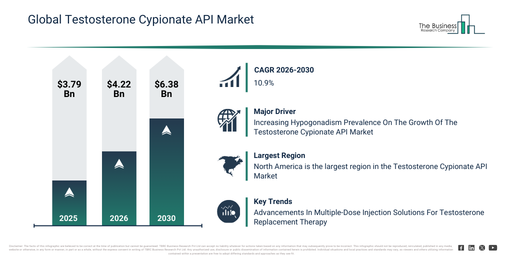
    The market for testosterone cypionate API has experienced swift expansion in recent times. Its value is projected to increase from $3.79 billion in 2025 to $4.22 billion in 2026, representing a compound annual growth rate (CAGR) of 11.2%. This historical growth has been driven by factors such as a higher rate of diagnoses for testosterone deficiency, greater availability of injectable hormone therapies, advancements in specialty pharmaceutical production, growing acceptance of long-term hormone regimens, and the provision of standardized dosing formulations.

    The market for testosterone cypionate API is projected to experience significant expansion over the coming years. By 2030, its value is anticipated to reach $6.38 billion, reflecting a compound annual growth rate (CAGR) of 10.9%. This forecasted growth is driven by several factors, including a rising need for customized hormone therapies, an expanding demographic of older men, increased funding in specialty pharmaceutical APIs, a heightened emphasis on high-purity injectable medications, and stricter regulatory controls surrounding steroid production. Key developments shaping this period involve a growing demand for APIs used in hormone replacement therapy, a greater adoption of high-purity injectable steroids, an intensified focus on treating male hypogonadism, an expansion in the manufacturing of pharmaceutical-grade steroids, and a stronger commitment to meeting regulatory standards.

    Download A Free Sample Report For Comprehensive Market Insights:

    https://www.thebusinessresearchcompany.com/sample.aspx?id=20662&type=smp&utm_source=BlogsPR&utm_medium=Paid&utm_campaign=Jul_PR

    Testosterone Cypionate API Market Opportunity Drivers: What Is Creating New Revenue Potential?

    The projected expansion of the testosterone cypionate API market is being fueled by the increasing incidence of hypogonadism. Hypogonadism is a medical disorder characterized by insufficient or absent hormone production from the sex glands, resulting in testosterone deficiencies in men and estrogen or progesterone deficits in women. The rise in hypogonadism cases is linked to factors like an expanding elderly demographic, elevated obesity rates, and health issues stemming from lifestyle choices. Testosterone cypionate API is employed in treating hypogonadism to normalize testosterone levels via intramuscular shots, alleviating symptoms tied to low testosterone. As an example, PLOS ONE, a US-based nonprofit, reported in August 2025 that 30.3 percent of men with type 2 diabetes mellitus (T2DM) had hypogonadism, versus just 7.2 percent in an age-matched non-diabetic control group. Consequently, the rising prevalence of hypogonadism is catalyzing growth in the testosterone cypionate API market.

    Growth in the testosterone cypionate API market is being driven forward by an expanding geriatric male demographic. The term “geriatric male population” denotes men who are 65 years or older. This segment is enlarging as advancements in life expectancy boost the count of older individuals. For this age group, testosterone cypionate is beneficial as it counters age-associated testosterone decline, which frequently undermines strength, metabolism, and quality of life. By way of illustration, data from the United Nations Department of Economic and Social Affairs (UN DESA), a US-based multilateral entity, indicated in 2023 that around 703 million people globally were aged 65 or above. Thus, a growing geriatric male population amplifies the need for testosterone replacement therapies, thereby encouraging expansion of the testosterone cypionate API market.

    Testosterone Cypionate API Market Segments: Where Are The Largest Growth Opportunities?

    The testosterone cypionate api market covered in this report is segmented –

    1) By Type: Purity = 99%, Purity = 99.5%

    2) By Application: 200 mg/ml Injection Solution, 250 mg/ml Injection Solution, Other Applications

    3) By End-User: Hospitals, Homecare, Specialty Clinics, Other End-Users

    Subsegments:

    1) By Purity = 99%: Testosterone Cypionate For Pharmaceutical Use, Testosterone Cypionate For Research and Development, Testosterone Cypionate For Veterinary Applications

    2) By Purity = 99.5%: High-Purity Testosterone Cypionate For Specialty Pharmaceuticals, High-Purity Testosterone Cypionate For Clinical Trials, High-Purity Testosterone Cypionate for Hormone Replacement Therapy

    Testosterone Cypionate API Market Innovation Trends Driving Future Development

    Leading corporations in the testosterone cypionate API sector are prioritizing the creation of advanced solutions, specifically multi-dose injection formulations, to strengthen their hormone product lines and deliver cost-effective treatment choices for patients. These multi-dose injection solutions are specialized preparations allowing several doses to be drawn from one vial, enhancing ease of use and minimizing product waste during therapy. A notable example occurred in April 2023 when Xiromed LLC, a pharmaceutical firm based in the United States, introduced Testosterone Cypionate Injection, USP, a generic counterpart to Depo-Testosterone. This oil-soluble form of testosterone, specifically the 17-(beta)-cyclopentylpropionate ester, is given by intramuscular injection. It is prescribed for men who have conditions resulting in low or absent natural testosterone, alleviating signs of testosterone insufficiency. This product is indicated for testosterone replacement in males with diminished hormone levels, with standard doses varying from 50 to 400 mg given every two to four weeks, adjusted according to patient-specific requirements and therapeutic outcomes.

    Testosterone Cypionate API Market Major Participants And Competitive Dynamics

    Major companies operating in the testosterone cypionate api market are Pfizer Inc., Sun Pharmaceutical Industries, Dr. Reddy’s Laboratories, Aurobindo Pharma, Cipla Ltd., Aspen Pharmacare Holdings Limited, Curia Global Inc., Marius Pharmaceuticals, Hubei Gedian Humanwell Pharmaceutical, Qinhuangdao Zizhu Pharmaceutical, Symbiotec Pharmalab, Xiromed LLC, Trifarma S.p.A, Manus Aktteva Biopharma LLP, Steroid SpA, LGM Pharma, Samex Overseas, AASraw Biochemical Technology Co. Ltd., Zhejiang Xianju Pharmaceutical Co. Ltd., Rifa Pharma

    Access The Complete Testosterone Cypionate API Market Report:

    https://www.thebusinessresearchcompany.com/report/testosterone-cypionate-api-global-market-report?utm_source=BlogsPR&utm_medium=Paid&utm_campaign=Jul_PR

    Testosterone Cypionate API Market Regional Outlook: Where Are The Largest Opportunities Located?

    North America was the largest region in the testosterone cypionate API market in 2025. The regions covered in the testosterone cypionate api market report are Asia-Pacific, South East Asia, Western Europe, Eastern Europe, North America, South America, Middle East, Africa.

    Get in touch with us:

    The Business Research Company: https://www.thebusinessresearchcompany.com/?utm_source=BlogsPR&utm_medium=Paid&utm_campaign=home_page_test

    Americas: +1 310-496-7795

    Asia: +44 7882 955267 & +91 8897263534

    Europe: +44 7882 955267

    Email us at: marketing@tbrc.info

    Follow us on:

    LinkedIn: https://in.linkedin.com/company/the-business-research-company

    YouTube: https://www.youtube.com/channel/UC24_fI0rV8cR5DxlCpgmyFQ

    Global Market Model: https://www.thebusinessresearchcompany.com/global-market-model
  • Testosterone Booster Market Opportunities Are Emerging Beyond Traditional Growth Areas

    Testosterone Booster Market Opportunities Are Emerging Beyond Traditional Growth Areas

    Enhanced with market attractiveness analysis, total addressable market evaluation, company benchmarking matrices, interactive Excel dashboards, expanded supply chain intelligence, emerging startup coverage, and detailed product insights, The Business Research Company’s 2026 market reports deliver more actionable and strategically valuable research.

    Testosterone Booster Market Expansion Outlook: What Revenue Opportunities Lie Ahead?

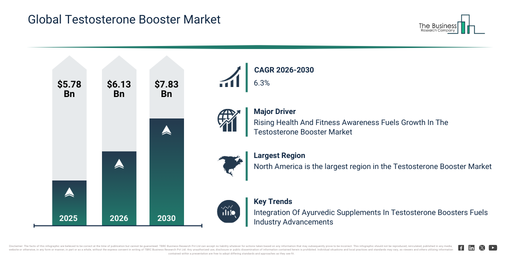
    The market for testosterone boosters has experienced robust expansion in recent times. Its value is projected to rise from $5.78 billion in 2025 to $6.13 billion in 2026, reflecting a compound annual growth rate (CAGR) of 6.1%. Several factors have driven this historical growth, including a heightened focus on men’s health, a growing prevalence of low testosterone conditions, the widespread appeal of fitness supplements, the increasing influence of gym culture, and the broadening reach of retail pharmacy chains.

    Over the next several years, the testosterone booster market is anticipated to witness strong expansion, reaching a value of $7.83 billion by 2030, reflecting a compound annual growth rate (CAGR) of 6.3%. This forecasted growth is largely fueled by increasing consumer demand for herbal and natural alternatives, a growing preference for personalized supplementation, the rapid expansion of e-commerce platforms, a rising health-conscious male demographic, and the broadening of sports nutrition and fitness initiatives. Among the notable trends shaping the sector are the growing prominence of natural and herbal testosterone boosters, an enhanced focus on male health and wellness, the flourishing online supplement retail space, the shift toward personalized nutrition and supplementation, and the increasing availability of products tailored for sports and fitness enthusiasts.

    Download A Free Sample Report For Comprehensive Market Insights:

    https://www.thebusinessresearchcompany.com/sample.aspx?id=13942&type=smp&utm_source=BlogsPR&utm_medium=Paid&utm_campaign=Jul_PR

    Testosterone Booster Market Growth Momentum: Which Factors Are Influencing Demand?

    The increasing focus on health and wellness is anticipated to drive the testosterone booster market forward in the coming period. Health and fitness involve the complete well-being and efficient functioning of both body and mind, covering physical, mental, and social dimensions, with an emphasis on preserving or enhancing one’s physical state. Testosterone boosters can aid in building muscle mass and enhancing strength, offering advantages for athletic performance and general physical capability. For example, a September 2023 survey of 2,271 UK adults carried out by ukactive, a not-for-profit industry association based in the United Kingdom, revealed that over half (54%) identified mental health support as their main motivation for staying physically active, while 49% cited getting in shape as their reason. Moreover, 86% of respondents acknowledged that consistent physical activity can help prevent various illnesses and injuries. Consequently, heightened awareness of health and fitness is fueling expansion in the testosterone booster market.

    Testosterone Booster Market Segment Analysis: What Are The Major Market Categories?

    The testosterone booster market covered in this report is segmented –

    1) By Component: Vitamins, D-Aspartic Acid, Zinc Component

    2) By Source: Mucuna Pruriens, Ginseng, Oyster Extract, Fenugreek

    3) By Application: Hospitals, Retail Pharmacies

    Subsegments:

    1) By Vitamins: Vitamin D, Vitamin B6, Vitamin B12

    2) By D-Aspartic Acid: D-Aspartic Acid Powder, D-Aspartic Acid Capsules

    3) By Zinc Component: Zinc Citrate, Zinc Monomethionine, Zinc Aspartate

    Testosterone Booster Market Trends Reshaping Industry Growth

    Key players in the testosterone booster market are increasingly focusing on the development of innovative product formulations, particularly by incorporating ayurvedic supplements, to enhance their competitive edge in the industry. These ayurvedic components bring distinct advantages to testosterone boosters through a natural, holistic, and long-established approach that strongly appeals to customers looking for alternatives to synthetic options. For example, in November 2023, Jagat Pharma Pvt Ltd., an ayurvedic company based in India, launched a robust testosterone booster aimed at raising energy levels, improving endurance, and increasing muscle strength. This newly released product includes essential Ayurvedic elements such as Ginseng Root Extract, Gokhru, Ashwagandha, Fenugreek, Safed Musli, and Kawach Beej. The ingredients in this formulation are specifically designed to bolster strength, power, and stamina, thereby enhancing overall physical performance and endurance.

    Testosterone Booster Market Leading Companies Driving Competitive Growth

    Major companies operating in the testosterone booster market are GNC Holdings LLC, Optimum Nutrition, MuscleTech, Nutrabolt, JYM Supplement Science, Performance Lab, Evolution Nutrition LLC, Iron Brothers Supplements, Musclepro Nutrition Pvt Ltd., Hybrid Nutraceuticals LLC, Vita Balance Inc., VH Nutrition LLC, SMP Nutra LLC, Roar Ambition Ltd, CrazyBulk NZ, Nugenix, TestoTEK, Invictus Labs, Zenith Nutrition, BL Bio Lab LLC

    Access The Complete Testosterone Booster Market Report:

    https://www.thebusinessresearchcompany.com/report/testosterone-booster-global-market-report?utm_source=BlogsPR&utm_medium=Paid&utm_campaign=Jul_PR

    Testosterone Booster Market Geographic Landscape: Which Region Dominates Industry Growth?

    North America was the largest region in the testosterone booster market in 2025. The regions covered in the testosterone booster market report are Asia-Pacific, South East Asia, Western Europe, Eastern Europe, North America, South America, Middle East, Africa.

    Get in touch with us:

    The Business Research Company: https://www.thebusinessresearchcompany.com/?utm_source=BlogsPR&utm_medium=Paid&utm_campaign=home_page_test

    Americas: +1 310-496-7795

    Asia: +44 7882 955267 & +91 8897263534

    Europe: +44 7882 955267

    Email us at: marketing@tbrc.info

    Follow us on:

    LinkedIn: https://in.linkedin.com/company/the-business-research-company

    YouTube: https://www.youtube.com/channel/UC24_fI0rV8cR5DxlCpgmyFQ

    Global Market Model: https://www.thebusinessresearchcompany.com/global-market-model
  • Tenosynovitis Drugs Market Expansion Is Opening New Pathways For Strategic Investment

    Tenosynovitis Drugs Market Expansion Is Opening New Pathways For Strategic Investment

    Through market attractiveness analysis, total addressable market evaluation, company benchmarking matrices, interactive Excel dashboards, expanded supply chain intelligence, emerging startup coverage, and detailed product insights, The Business Research Company’s 2026 market reports provide more actionable and strategically valuable research.

    Tenosynovitis Drugs Market Growth Potential: How Will Market Size Change Through 2030?

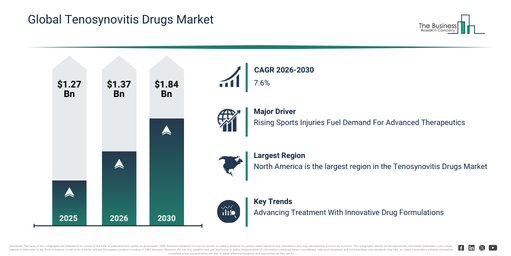
    The tenosynovitis therapeutics market experienced robust expansion over the past few years, with projections indicating an increase from $1.27 billion in 2025 to $1.37 billion in 2026, reflecting a compound annual growth rate (CAGR) of 7.7%. This historical growth has been driven by a rise in workplace-related injuries, the broad use of nonsteroidal anti-inflammatory drugs (NSAIDs), the proliferation of orthopedic healthcare centers, age-related musculoskeletal conditions in the elderly population, and the growing preference for outpatient management strategies.

    The tenosynovitis drugs market is anticipated to experience robust expansion over the coming years. Its value is projected to reach $1.84 billion by 2030, achieving a compound annual growth rate (CAGR) of 7.6%. This forecasted growth is driven by factors such as a rise in workplace-related injuries, higher levels of sports participation, a shift toward minimally invasive procedures, growing demand for pain relief medications, and the expansion of outpatient orthopedic services. Key trends influencing the market during this period include an increasing prevalence of repetitive strain injuries, wider application of anti-inflammatory treatments, greater adoption of injectable corticosteroids, broader availability of conservative musculoskeletal therapies, and a heightened emphasis on early pain management strategies.

    Download A Free Sample Report For Comprehensive Market Insights:

    https://www.thebusinessresearchcompany.com/sample.aspx?id=21297&type=smp&utm_source=BlogsPR&utm_medium=Paid&utm_campaign=Jul_PR

    Tenosynovitis Drugs Market Expansion Drivers: What Is Shaping Future Growth?

    The growing occurrence of sports injuries is anticipated to fuel expansion in the tenosynovitis drugs market in the coming period. Sports injuries encompass physical harm sustained during athletic activities or exercise, ranging from minor sprains and strains to more serious fractures or dislocations. These injuries arise from a variety of causes, including overuse, incorrect technique, insufficient warm-up or stretching, and collisions with other players or objects. Tenosynovitis drugs address sports injuries by reducing inflammation in tendons and relieving pain, thereby promoting faster recovery and enhanced mobility. For example, in November 2023, Howden Group Holdings Ltd, a UK-based insurance intermediary, reported that the severity of ankle injuries in the English Premier League rose by 170% from October 2022 to January 2023, with calf or shin injuries increasing by 200% and hamstring injuries by 130%, following the FIFA World Cup Qatar 2022. Consequently, the rising incidence of sports injuries is propelling the growth of the tenosynovitis drugs market.

    An increase in healthcare expenditure is set to drive the expansion of the tenosynovitis drugs market in the future. Healthcare expenditure denotes the total financial resources allocated to medical goods and services aimed at maintaining and improving population health. This spending is climbing as an aging population demands more frequent medical care and long-term health services. Greater healthcare expenditure enhances the uptake and outcomes of tenosynovitis drugs by broadening access, improving diagnosis and treatment delivery, and supporting research and care services. For instance, in April 2025, the Office for National Statistics, a UK-based government department, noted that total healthcare spending grew by 6.5% in nominal terms and by 2.4% in real terms after adjusting for inflation between 2023 and 2024. Hence, the rising healthcare expenditure is fostering the growth of the tenosynovitis drugs market.

    Tenosynovitis Drugs Market Segment Breakdown: Which Categories Generate The Most Revenue?

    The tenosynovitis drugs market covered in this report is segmented –

    1) By Drug Type: Nonsteroidal Anti-Inflammatory Drugs (NSAIDS), Corticosteroids, Antibiotics, Other Drug Types

    2) By Indication: De Quervain Tenosynovitis, Stenosing Tenosynovitis, Trigger Finger, Other Indications

    3) By Route Of Administration: Oral, Injectable, Topical

    4) By Distribution Channel: Hospital Pharmacies, Retail Pharmacies, Online Pharmacies

    Subsegments:

    1) By Nonsteroidal Anti-Inflammatory Drugs (NSAIDs): Ibuprofen, Naproxen, Diclofenac, Celecoxib

    2) By Corticosteroids: Prednisone, Methylprednisolone, Dexamethasone, Triamcinolone

    3) By Antibiotics: Penicillins, Cephalosporins, Fluoroquinolones, Macrolides

    4) By Other Drug Types: Disease-Modifying Anti-Rheumatic Drugs (DMARDs), Biologics, Analgesics

    Tenosynovitis Drugs Market Strategic Trends: What Is Defining The Next Phase Of Growth?

    Prominent players in the tenosynovitis drugs market are placing significant emphasis on developing advanced drug formulations, including those with delayed-release characteristics for non-steroidal anti-inflammatory drugs (NSAIDs), to improve gastrointestinal tolerance and deliver precise anti-inflammatory effects. This specific type of formulation is engineered so that the active component, such as naproxen, is not released until it reaches a later point within the gastrointestinal system. A notable example occurred in July 2024 when ANI Pharmaceuticals Inc., a pharmaceutical company headquartered in the United States, announced it had obtained approval from the U.S. Food and Drug Administration (FDA) for its abbreviated new drug application (ANDA) and subsequently introduced Naproxen delayed-release tablets, USP, to the market. This newly available medication serves as a more affordable generic alternative to the reference listed drug (RLD), EC-Naprosyn, while offering identical therapeutic advantages. By delaying the release of the medication, this formulation is intended to provide prolonged pain relief and simultaneously minimize gastric irritation, making it a particularly useful option for treating inflammatory conditions like arthritis, tendonitis, and tenosynovitis.

    Tenosynovitis Drugs Market Key Players And Strategic Industry Positioning

    Major companies operating in the tenosynovitis drugs market are Pfizer Inc., Roche Holding AG, Bayer AG, Sanofi S.A., AstraZeneca plc, GSK plc, Takeda Pharmaceutical Company Limited, Eli Lilly and Company, Amgen Inc., Teva Pharmaceutical Industries Ltd., Sun Pharmaceutical Industries Ltd., Perrigo Company plc, Cipla Limited, Dr. Reddy’s Laboratories Ltd., Aurobindo Pharma Limited, Endo International plc, Lupin Limited, Mallinckrodt Pharmaceuticals, Zydus Cadila Healthcare, AdvaCare Pharma.

    Access The Complete Tenosynovitis Drugs Market Report:

    https://www.thebusinessresearchcompany.com/report/tenosynovitis-drugs-global-market-report?utm_source=BlogsPR&utm_medium=Paid&utm_campaign=Jul_PR

    Tenosynovitis Drugs Market Largest Region: Which Geography Holds The Highest Market Share?

    North America was the largest region in the tenosynovitis drugs market in 2025. The regions covered in the tenosynovitis drugs market report are Asia-Pacific, South East Asia, Western Europe, Eastern Europe, North America, South America, Middle East, Africa.

    Get in touch with us:

    The Business Research Company: https://www.thebusinessresearchcompany.com/?utm_source=BlogsPR&utm_medium=Paid&utm_campaign=home_page_test

    Americas: +1 310-496-7795

    Asia: +44 7882 955267 & +91 8897263534

    Europe: +44 7882 955267

    Email us at: marketing@tbrc.info

    Follow us on:

    LinkedIn: https://in.linkedin.com/company/the-business-research-company

    YouTube: https://www.youtube.com/channel/UC24_fI0rV8cR5DxlCpgmyFQ

    Global Market Model: https://www.thebusinessresearchcompany.com/global-market-model
  • Tenofovir Disoproxil Market Trends Are Creating New Opportunities For Industry Leaders

    Tenofovir Disoproxil Market Trends Are Creating New Opportunities For Industry Leaders

    Delivering more actionable and strategically valuable research, The Business Research Company’s 2026 market reports feature market attractiveness analysis, total addressable market evaluation, company benchmarking matrices, interactive Excel dashboards, expanded supply chain intelligence, emerging startup coverage, and detailed product insights.

    Tenofovir Disoproxil Market Value Analysis: What Growth Is Expected Over The Forecast Period?

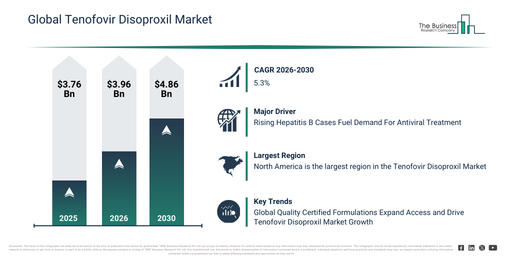
    The tenofovir disoproxil market size has grown strongly in recent years. It will grow from $3.76 billion in 2025 to $3.96 billion in 2026 at a compound annual growth rate (CAGR) of 5.3%. The growth in the historic period can be attributed to high global hiv prevalence, expansion of antiretroviral therapy programs, inclusion in first-line treatment guidelines, growth in hepatitis b diagnosis, donor-funded antiviral access programs.

    The market for tenofovir disoproxil is forecasted to experience robust expansion over the coming years. By 2030, its value is projected to reach $4.86 billion, reflecting a compound annual growth rate (CAGR) of 5.3%. This anticipated growth during the forecast period is driven by several factors, including a heightened need for managing chronic viral infections, the proliferation of generic antiviral drug manufacturing, improved healthcare accessibility in developing regions, a greater emphasis on antiviral prophylaxis, and consistent government health funding. Key developments shaping this period involve a heightened focus on antiviral drug combinations, the growing application of these therapies for both HIV and hepatitis B, a broader uptake of fixed-dose formulations, the lengthening of antiviral treatment regimens, and an intensified effort to achieve viral suppression.

    Download A Free Sample Report For Comprehensive Market Insights:

    https://www.thebusinessresearchcompany.com/sample.aspx?id=21296&type=smp&utm_source=BlogsPR&utm_medium=Paid&utm_campaign=Jul_PR

    Tenofovir Disoproxil Market Development Factors: Which Trends Are Supporting Demand?

    The expected growth of the tenofovir disoproxil market is being driven forward by the increasing incidence of hepatitis B. This viral infection attacks the liver, leading to both acute and chronic conditions, and spreads through contact with contaminated blood or bodily fluids. Factors like transmission from mother to child during birth, unsafe medical procedures, insufficient vaccination rates, and ongoing chronic infections in certain communities are contributing to its rising prevalence. Tenofovir disoproxil plays a key role in managing chronic hepatitis B by suppressing viral replication and preventing further liver damage. As an example, a March 2023 report from the Centers for Disease Control and Prevention, a US public health agency, indicated that between 580,000 and 2.4 million individuals in the United States are living with hepatitis B, with roughly two-thirds potentially unaware of their infection. Consequently, the growing number of hepatitis B cases is fueling expansion in the tenofovir disoproxil market.

    The growth of the tenofovir disoproxil market is anticipated to be driven by an increase in healthcare expenditure. This spending covers all financial resources allocated to medical goods and services aimed at preserving and enhancing population health. A key reason for this rise is the aging demographic, which demands more frequent medical attention and long-term care. Such higher expenditure facilitates broader access to antiviral medications like tenofovir disoproxil, enhances diagnosis and treatment rates for chronic hepatitis B and HIV, and boosts the capacity of healthcare systems to manage these conditions effectively. For instance, in April 2025, the Office for National Statistics, a UK government department, reported that total healthcare spending rose by 6.5% in nominal terms between 2023 and 2024, with a real-term increase of 2.4% after adjusting for inflation. Thus, the upward trend in healthcare spending is set to accelerate the tenofovir disoproxil market’s expansion.

    Tenofovir Disoproxil Market Segmentation: How Is The Market Structured Across Key Categories?

    The tenofovir disoproxil market covered in this report is segmented –

    1) By Type: Tablet, Powder

    2) By Distribution Channel: Online Pharmacies, Retail Pharmacies, Wholesalers Or Distributors

    3) By Application: Hospital, Clinic

    Subsegments:

    1) By Tablet: Single-Drug Tablets, Fixed-Dose Combination Tablets

    2) By Powder: Oral Powder, Reconstitutable Powder

    Tenofovir Disoproxil Market Transformation Trends: Which Innovations Are Driving Change?

    Leading industry players within the tenofovir disoproxil market are intensifying their efforts to broaden patient access through internationally recognized, high-quality formulations like those prequalified by the World Health Organization, specifically targeting the needs of HIV and hepatitis B sufferers worldwide. A tenofovir disoproxil fumarate tablet that has earned WHO prequalification adheres to strict international benchmarks concerning its quality, safety profile, and therapeutic efficacy, which facilitates its wider deployment in settings where resources are scarce. To illustrate, in August 2024, Shijiazhuang Lonzeal Pharmaceuticals Co., Ltd., a pharmaceutical enterprise based in China, secured WHO prequalification for its 300 mg film-coated tenofovir disoproxil fumarate tablet, identified by product code HP030, backed by evidence of bioequivalence, current good manufacturing practice certification, and suitability for managing HIV. Consequently, the availability of globally certified supply is propelling the expansion of this market segment.

    Tenofovir Disoproxil Market Competitive Landscape And Leading Companies

    Major companies operating in the tenofovir disoproxil market are Gilead Sciences Inc., Viatris Inc., Teva Pharmaceutical Industries Ltd., Cipla Ltd., Lupin Limited, Mylan N.V., Qilu Pharmaceutical Co. Ltd., Sun Pharmaceutical Industries Ltd., Dr. Reddy’s Laboratories Ltd., Aurobindo Pharma Limited, Hetero Drugs Limited, Laurus Labs Limited, Zydus Lifesciences Ltd., Blanver, SMS Pharmaceuticals, Bajaj Healthcare, Mangalam Drugs & Organics Ltd., Arene Lifesciences, Aurisco Pharmaceutical Co. Ltd., Sinoway Industrial Co. Ltd.

    Access The Complete Tenofovir Disoproxil Market Report:

    https://www.thebusinessresearchcompany.com/report/tenofovir-disoproxil-global-market-report?utm_source=BlogsPR&utm_medium=Paid&utm_campaign=Jul_PR

    Tenofovir Disoproxil Market Regional Analysis: Which Region Leads By Revenue?

    North America was the largest region in the tenofovir disoproxil market in 2025. Asia-Pacific is expected to be the fastest-growing region in the forecast period. The regions covered in the tenofovir disoproxil market report are Asia-Pacific, South East Asia, Western Europe, Eastern Europe, North America, South America, Middle East, Africa.

    Get in touch with us:

    The Business Research Company: https://www.thebusinessresearchcompany.com/?utm_source=BlogsPR&utm_medium=Paid&utm_campaign=home_page_test

    Americas: +1 310-496-7795

    Asia: +44 7882 955267 & +91 8897263534

    Europe: +44 7882 955267

    Email us at: marketing@tbrc.info

    Follow us on:

    LinkedIn: https://in.linkedin.com/company/the-business-research-company

    YouTube: https://www.youtube.com/channel/UC24_fI0rV8cR5DxlCpgmyFQ

    Global Market Model: https://www.thebusinessresearchcompany.com/global-market-model
  • Temperature-Stable Messenger Ribonucleic Acid (mRNA) Vial Market Growth Is Reshaping Competitive Advantage Across The Industry

    Temperature-Stable Messenger Ribonucleic Acid (mRNA) Vial Market Growth Is Reshaping Competitive Advantage Across The Industry

    Enhanced with market attractiveness analysis, total addressable market evaluation, company benchmarking matrices, interactive Excel dashboards, expanded supply chain intelligence, emerging startup coverage, and detailed product insights, The Business Research Company’s 2026 market reports deliver more actionable and strategically valuable research.

    Temperature-Stable Messenger Ribonucleic Acid (mRNA) Vial Market Size Forecast: How Large Could The Market Become By 2030?

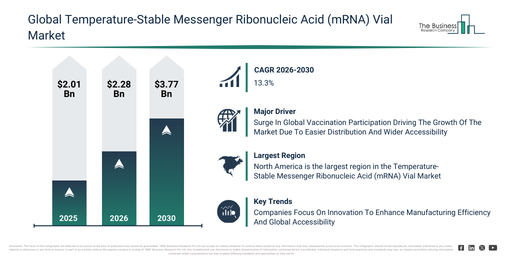
    The market for temperature-stable messenger ribonucleic acid (mRNA) vials has experienced rapid expansion in recent times. By 2025, its value stood at $2.01 billion, and it is projected to reach $2.28 billion in 2026, reflecting a compound annual growth rate (CAGR) of 13.6%. Several factors drove growth during the historical period, including the broadening scope of mRNA vaccine research, heightened investment in lipid nanoparticle technologies, the expansion of worldwide immunization initiatives, the limitations imposed by cold-chain logistics, and the early implementation of stabilized mRNA delivery systems.

    The market for temperature-stable messenger ribonucleic acid (mRNA) vials is projected to experience significant expansion in the coming years, reaching an estimated value of $3.77 billion by 2030 at a compound annual growth rate (CAGR) of 13.3%. This anticipated growth during the forecast period is driven by factors such as a heightened demand for next-generation mRNA therapeutics, a greater emphasis on ensuring worldwide vaccine availability, the broadening of decentralized healthcare services, increased funding directed toward temperature-stable biologics, and a rising number of regulatory approvals for mRNA-based products. Key developments shaping this period include ongoing advancements in thermostable mRNA formulations, a growing preference for lyophilized mRNA vials, rising requirements for storage solutions independent of cold-chain infrastructure, the scaling up of global mRNA distribution efforts, and a stronger focus on packaging integrity and stability.

    Download A Free Sample Report For Comprehensive Market Insights:

    https://www.thebusinessresearchcompany.com/sample.aspx?id=29229&type=smp&utm_source=BlogsPR&utm_medium=Paid&utm_campaign=Jul_PR

    Temperature-Stable Messenger Ribonucleic Acid (mRNA) Vial Market Industry Drivers: What Is Driving Revenue Growth?

    The growing engagement in worldwide immunization initiatives is anticipated to boost demand for temperature-resistant mRNA vial containers in the coming period. A vaccine functions as a preparation that stimulates the body’s immune system, enabling it to develop defenses against specific illnesses. This expansion in global vaccine adoption arises from cooperative international efforts, where joint actions across nations facilitate wider access and fair distribution of immunization products. These specialized vials for temperature-stable mRNA contribute to global vaccination campaigns by simplifying storage, transport, and delivery to various locations without depending on elaborate cold-chain infrastructure, thus promoting broader reach and consistent protection rates across populations. As an illustration, in October 2025, data from Gavi—an American nonprofit focused on supplying vaccines to children in developing nations—showed that DTP3 coverage in lower-income countries receiving Gavi support climbed to 82 percent, compared to 80 percent in 2023, approaching figures seen before the pandemic. Consequently, heightened global vaccination involvement is accelerating the expansion of the market for temperature-stable messenger ribonucleic acid (mRNA) vials.

    Temperature-Stable Messenger Ribonucleic Acid (mRNA) Vial Market Segmentation Trends And Revenue Drivers

    The temperature-stable messenger ribonucleic acid (mrna) vial market covered in this report is segmented –

    1) By Product Type: Lipid Nanoparticle Formulations, Polymer-Based Formulations, Lyophilized Messenger Ribonucleic Acid (mRNA) Vials, Other Product Types

    2) By Distribution Channel: Direct Sales, Distributors, Online Sales, Other Distribution Channels

    3) By Application: Vaccines, Therapeutics, Research, Other Applications

    4) By End User: Hospitals And Clinics, Research Institutes, Pharmaceutical And Biotechnology Companies, Other End Users

    Subsegments:

    1) By Lipid Nanoparticle Formulations: Cationic Lipid Nanoparticles, Ionizable Lipid Nanoparticles, Neutral Lipid Nanoparticles

    2) By Polymer-Based Formulations: Polyethylene Glycol-Based Formulations, Polymeric Micelles, Dendrimer-Based Formulations

    3) By Lyophilized Messenger Ribonucleic Acid Vials: Single-Dose Vials, Multi-Dose Vials

    4) By Others Product Types: Peptide-Based Formulations, Protein-Based Formulations, Hybrid Formulations

    Temperature-Stable Messenger Ribonucleic Acid (mRNA) Vial Market Growth Trends: What Is Influencing The Future Outlook?

    Key industry players in the temperature-stable messenger ribonucleic acid (mRNA) vial market are concentrating on novel strategies, such as technology transfer frameworks, aimed at boosting manufacturing productivity, scaling up global production capabilities, and increasing vaccine availability in low- and middle-income nations. Technology transfer models involve the exchange of knowledge, expertise, and manufacturing processes between entities to facilitate local production and broader dissemination. As an example, in January 2024, SCHOTT Pharma, a pharmaceutical packaging firm headquartered in Germany, introduced the EVERIC freeze vials. These vials can endure temperatures down to -80°C, making them ideal for vaccines and therapeutics like mRNA and gene therapy treatments targeting infectious diseases, cancer, and disorders of the central nervous system. Their design, optimized for strength, minimizes breakage risk, thereby preventing loss of essential medications and expensive operational interruptions.

    Temperature-Stable Messenger Ribonucleic Acid (mRNA) Vial Market Industry Leaders: Which Organizations Are Driving Competition?

    Major companies operating in the temperature-stable messenger ribonucleic acid (mrna) vial market are Arcturus Therapeutics Holdings Inc., CureVac AG, Sanofi S.A., Lonza Group AG, Gerresheimer AG, Stevanato Group, Schott AG, CSafe Global, Gennova Biopharmaceuticals Ltd., TTP Group, Peli BioThermal LLC, SiO2 Materials Science, Shijiazhuang Xinfuda Medical Packaging, Vaxess Technologies, Ethris, Lyophilization Techniques, 20Med Therapeutics BV, EnsiliTech, HDT Bio Corp., Emervax.

    Access The Complete Temperature-Stable Messenger Ribonucleic Acid (mRNA) Vial Market Report:

    https://www.thebusinessresearchcompany.com/report/temperature-stable messenger-ribonucleic-acid-mrna vial-global-market-report?utm_source=BlogsPR&utm_medium=Paid&utm_campaign=Jul_PR

    Temperature-Stable Messenger Ribonucleic Acid (mRNA) Vial Market Geographic Distribution And Regional Opportunities

    North America was the largest region in the temperature-stable messenger ribonucleic acid (mRNA) vial market in 2025. Asia-Pacific is expected to be the fastest-growing region in the forecast period. The regions covered in the temperature-stable messenger ribonucleic acid (mrna) vial market report are Asia-Pacific, South East Asia, Western Europe, Eastern Europe, North America, South America, Middle East, Africa.

    Get in touch with us:

    The Business Research Company: https://www.thebusinessresearchcompany.com/?utm_source=BlogsPR&utm_medium=Paid&utm_campaign=home_page_test

    Americas: +1 310-496-7795

    Asia: +44 7882 955267 & +91 8897263534

    Europe: +44 7882 955267

    Email us at: marketing@tbrc.info

    Follow us on:

    LinkedIn: https://in.linkedin.com/company/the-business-research-company

    YouTube: https://www.youtube.com/channel/UC24_fI0rV8cR5DxlCpgmyFQ

    Global Market Model: https://www.thebusinessresearchcompany.com/global-market-model
  • TCR Therapy Market Forecast Signals New Revenue Opportunities Through 2030

    TCR Therapy Market Forecast Signals New Revenue Opportunities Through 2030

    Through market attractiveness analysis, total addressable market evaluation, company benchmarking matrices, interactive Excel dashboards, expanded supply chain intelligence, emerging startup coverage, and detailed product insights, The Business Research Company’s 2026 market reports provide more actionable and strategically valuable research.

    TCR Therapy Market Revenue Outlook: What CAGR Is Expected Through 2030?

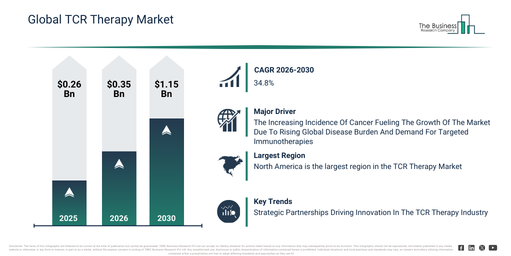
    The tcr therapy market has undergone rapid expansion in recent years, with projections indicating a rise from $0.26 billion in 2025 to $0.35 billion in 2026, reflecting a compound annual growth rate (CAGR) of 35.5%. This historic growth has been driven by early-stage uptake of autologous tcr therapies, progress in gene editing techniques, a growing number of clinical trials focused on cancer immunotherapy, a higher prevalence of hematologic malignancies, and partnerships formed between biotechnology firms and hospitals.

    The TCR therapy market is projected to undergo rapid expansion in the coming years, reaching an estimated value of $1.15 billion by 2030 with a compound annual growth rate (CAGR) of 34.8%. This anticipated growth during the forecast period is driven by factors such as the rise of off-the-shelf allogeneic TCR therapies, the integration of artificial intelligence in TCR design, expansion into emerging markets, new regulatory approvals for additional TCR indications, and progress in combination immunotherapy strategies. Key trends shaping this period include the advancement of personalized TCR therapy development, the increasing availability of off-the-shelf allogeneic TCR options, the use of combined immunotherapy approaches, wider access through hospitals and specialty clinics, and innovations in advanced TCR gene editing techniques.

    Download A Free Sample Report For Comprehensive Market Insights:

    https://www.thebusinessresearchcompany.com/sample.aspx?id=14517&type=smp&utm_source=BlogsPR&utm_medium=Paid&utm_campaign=Jul_PR

    #TCR Therapy Market Growth Factors: Which Forces Are Supporting Market Expansion?

    The anticipated expansion of the T-cell receptor (TCR) therapy market is largely being fueled by the rising prevalence of cancer. As a category of illnesses characterized by the abnormal proliferation and dissemination of malignant cells, cancer is propelled by various influences like an increasingly elderly population, lifestyle hazards, hereditary vulnerabilities, and ecological elements. This surge in cancer occurrences is intensifying the worldwide health burden, accelerating the necessity for cutting-edge treatment options capable of delivering more precise and enduring patient results. By engineering T cells to specifically target and eliminate cancerous cells, TCR therapy meets this escalating medical need, presenting a highly specialized immunotherapy alternative for intricate and hard-to-treat tumors. Data from the American Cancer Society, a nonprofit organization based in the United States, demonstrates this trend, revealing that the projected number of new lymphoma cases rose from 89,010 in 2022 to 89,380 in 2023. Consequently, the escalating incidence of cancer is significantly advancing the TCR therapy market.

    TCR Therapy Market Segment Analysis Highlighting Growth Areas

    The tcr therapy market covered in this report is segmented –

    1) By Product Type: Infusions, Injectables, Other Product Types

    2) By Indication: Leukemia, Lymphoma, Myeloma, Other Indication

    3) By Distribution Channel: Online, Offline

    4) By End-User: Hospital Pharmacy, Specialty Clinics

    Subsegments:

    1) By Infusions: Autologous TCR Infusions, Allogeneic TCR Infusions

    2) By Injectables: TCR-based Injectable Formulations, Injectable TCR Gene Therapies

    3) By Other Product Types: TCR-Engineered Cell Therapies, TCR Combination Therapies with Other Immunotherapies, TCR-Based Biologics

    TCR Therapy Market Industry Trends: What Changes Are Reshaping Demand?

    In the TCR therapy sector, major players are increasingly turning to strategic collaborations as a key method for delivering essential therapeutic options to patients while also securing a stronger market position. Such partnerships function as a mechanism where companies combine their distinct assets and specialized knowledge to foster shared advantages and collective achievement. A concrete illustration of this trend occurred in December 2023, when the American biotechnology firm ImmunoScape entered into an agreement with the Singaporean pharmaceutical entity, the Experimental Drug Development Centre (EDDC). Their joint effort is focused on creating novel bispecific molecules, rooted in TCR technology, for the treatment of solid tumors. The collaboration is designed to merge ImmunoScape’s deep proficiency in systems immunology and computational biology with the capabilities offered by EDDC, thereby forming a synergistic alliance that capitalizes on each party’s unique strengths. This strategic move is intended to speed up the progression of research and ultimately accelerate the creation of cancer therapies that are not only more readily accessible but also hold the promise of greater effectiveness.

    TCR Therapy Market Leading Companies: Who Holds Significant Market Presence?

    Major companies operating in the tcr therapy market are Immunocore Limited, Immatics N.V., Adaptimmune Therapeutics plc, Alaunos Therapeutics Inc., Zelluna Immunotherapy AS, Lion TCR Pte Ltd, TCRCure Biopharma Corp., China Immunotech Inc., Bluebird bio Inc., Poseida Therapeutics Inc., Fate Therapeutics Inc., Atara Biotherapeutics Inc., Precision Biosciences Inc., Cellectis S.A., Cellular Biomedicine Group Inc., Takara Bio Inc., Tessa Therapeutics, Pfizer Inc., Novartis AG, Bristol Myers Squibb Company

    Access The Complete TCR Therapy Market Report:

    https://www.thebusinessresearchcompany.com/report/tcr-therapy-global-market-report?utm_source=BlogsPR&utm_medium=Paid&utm_campaign=Jul_PR

    TCR Therapy Market Largest Region By Revenue And Market Share

    North America was the largest region in the TCR therapy market in 2025. Asia-Pacific is expected to be the fastest-growing region in the forecast period. The regions covered in the tcr therapy market report are Asia-Pacific, South East Asia, Western Europe, Eastern Europe, North America, South America, Middle East, Africa.

    Get in touch with us:

    The Business Research Company: https://www.thebusinessresearchcompany.com/?utm_source=BlogsPR&utm_medium=Paid&utm_campaign=home_page_test

    Americas: +1 310-496-7795

    Asia: +44 7882 955267 & +91 8897263534

    Europe: +44 7882 955267

    Email us at: marketing@tbrc.info

    Follow us on:

    LinkedIn: https://in.linkedin.com/company/the-business-research-company

    YouTube: https://www.youtube.com/channel/UC24_fI0rV8cR5DxlCpgmyFQ

    Global Market Model: https://www.thebusinessresearchcompany.com/global-market-model
  • Tazarotene Market Growth Is Accelerating As Industry Transformation Continues

    Tazarotene Market Growth Is Accelerating As Industry Transformation Continues

    Delivering more actionable and strategically valuable research, The Business Research Company’s 2026 market reports feature market attractiveness analysis, total addressable market evaluation, company benchmarking matrices, interactive Excel dashboards, expanded supply chain intelligence, emerging startup coverage, and detailed product insights.

    Tazarotene Market Growth Analysis: How Will Revenue Expand During The Forecast Period?

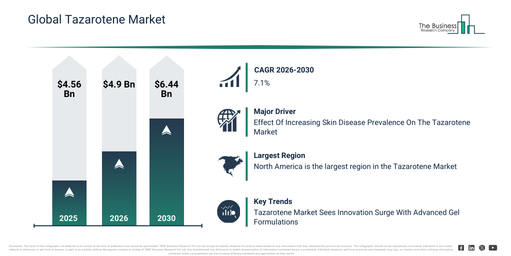
    The tazarotene market has seen robust expansion in recent years, with its value projected to rise from $4.56 billion in 2025 to $4.9 billion in 2026, reflecting a compound annual growth rate (CAGR) of 7.4%. Historically, this growth has been driven by a rising incidence of dermatological conditions, the broader availability of prescription topical therapies, the proliferation of dermatology clinic infrastructures, wider adoption of retinoid-based treatments, and improvements in topical drug formulation technologies.

    The tazarotene market is anticipated to experience robust expansion over the coming years, reaching a value of $6.44 billion by 2030 with a compound annual growth rate (CAGR) of 7.1%. This forecasted growth is driven by factors such as a heightened demand for highly effective dermatological treatments, an uptick in clinical research initiatives, a growing emphasis on customized skincare regimens, the proliferation of pharmaceutical-grade dermatology products, and increased regulatory oversight concerning topical medications. Key developments shaping this market over the projection period include a rising preference for topical retinoid therapies, a greater adoption of high-purity active pharmaceutical ingredients (APIs) for dermatology, an intensified focus on solutions for acne and psoriasis, the evolution of sophisticated topical delivery systems, and a stronger spotlight on proven clinical effectiveness and safety profiles.

    Download A Free Sample Report For Comprehensive Market Insights:

    https://www.thebusinessresearchcompany.com/sample.aspx?id=20658&type=smp&utm_source=BlogsPR&utm_medium=Paid&utm_campaign=Jul_PR

    Tazarotene Market Demand Drivers: What Is Fueling Industry Growth?

    The rising prevalence of skin disorders is anticipated to fuel the expansion of the tazarotene market in the coming period. Skin diseases encompass a wide variety of conditions that alter the skin’s appearance, structure, and function, frequently presenting with signs like rashes, itching, inflammation, or sores. This increase in skin disease cases is influenced by factors such as higher pollution levels, shifting climate patterns, lifestyle choices, genetic risks, and greater exposure to allergens and irritants. Tazarotene is applied to manage skin issues like acne and psoriasis by lowering inflammation and encouraging normal skin cell regeneration. As an example, in December 2023, data from the National Institutes of Health (NIH), a U.S.-based entity serving as the primary medical research arm of the American government, showed that atopic dermatitis had a global prevalence of 2.6%, impacting approximately 204 million individuals worldwide. Consequently, the growing frequency of skin conditions is accelerating demand in the tazarotene market.

    Tazarotene Market Segment Performance And Strategic Opportunities

    The tazarotene market covered in this report is segmented –

    1) By Type: Purity = 98%, Purity = 99%

    2) By Form: Foam, Cream, Gel

    3) By Application: Psoriasis, Acne, Sun-Damaged, Other Applications

    Subsegments:

    1) By Purity = 98%: Tazarotene With 98% Purity For Research And Development, Pharmaceutical-Grade Tazarotene (= 98% Purity), Tazarotene Formulations For Dermatological Use (= 98% Purity)

    2) By Purity = 99%: High-Purity Tazarotene (= 99%) For Pharmaceutical Applications, Cosmetic-Grade Tazarotene (= 99% Purity), Tazarotene For Clinical Trials (= 99% Purity), Specialized Tazarotene Compounds (= 99% Purity)

    Tazarotene Market Innovation Trends: Which Developments Are Transforming The Industry?

    Major players in the tazarotene market are concentrating on developing innovative products like generic topical formulations, which serve as high-quality, cost-effective alternatives designed to broaden access to effective treatments for plaque psoriasis and facial acne. These skin-applied medications are bioequivalent to their brand-name counterparts, delivering identical active ingredients at comparable concentrations but generally offered at a reduced price. In June 2023, for example, Padagis LLC, a U.S.-based pharmaceutical company headquartered in the United States, introduced Tazarotene Gel as a generic equivalent to Tazorac Gel, providing the same therapeutic advantages for managing plaque psoriasis and facial acne vulgaris at a more accessible cost point. By representing the second generic prescription product available in this segment, it strengthens market competition and improves patient access, thereby contributing valuable options to the dermatological treatment landscape.

    Tazarotene Market Key Players: Which Companies Shape Industry Competition?

    Major companies operating in the tazarotene market are Cardinal Health, AbbVie Inc., GSK plc., Sandoz Group AG, Sun Pharmaceutical Industries Ltd., Perrigo Company, Seqens SAS, Glenmark Pharmaceuticals, Taro Pharmaceutical Industries, Olon S.p.A, Piramal Healthcare Ltd., Jiangsu Lianhuan Pharmaceutical Group, Cosette Pharmaceuticals Inc., Padagis US LLC, Ortho Dermatologics, Solaris Pharma Corp, Actavis Inc., Bioindustria L.I.M. Spa, Chongqing Huapont Pharmaceutical Co. Ltd.

    Access The Complete Tazarotene Market Report:

    https://www.thebusinessresearchcompany.com/report/tazarotene-global-market-report?utm_source=BlogsPR&utm_medium=Paid&utm_campaign=Jul_PR

    Tazarotene Market Regional Analysis And Leading Geography

    North America was the largest region in the tazarotene market in 2025. The regions covered in the tazarotene market report are Asia-Pacific, South East Asia, Western Europe, Eastern Europe, North America, South America, Middle East, Africa.

    Get in touch with us:

    The Business Research Company: https://www.thebusinessresearchcompany.com/?utm_source=BlogsPR&utm_medium=Paid&utm_campaign=home_page_test

    Americas: +1 310-496-7795

    Asia: +44 7882 955267 & +91 8897263534

    Europe: +44 7882 955267

    Email us at: marketing@tbrc.info

    Follow us on:

    LinkedIn: https://in.linkedin.com/company/the-business-research-company

    YouTube: https://www.youtube.com/channel/UC24_fI0rV8cR5DxlCpgmyFQ

    Global Market Model: https://www.thebusinessresearchcompany.com/global-market-model
  • Targeted Alpha-Therapy Market Outlook Highlights The Next Major Growth Opportunities

    Targeted Alpha-Therapy Market Outlook Highlights The Next Major Growth Opportunities

    Enhanced with market attractiveness analysis, total addressable market evaluation, company benchmarking matrices, interactive Excel dashboards, expanded supply chain intelligence, emerging startup coverage, and detailed product insights, The Business Research Company’s 2026 market reports deliver more actionable and strategically valuable research.

    Targeted Alpha-Therapy Market Forecast: What Market Value Is Expected By 2030?

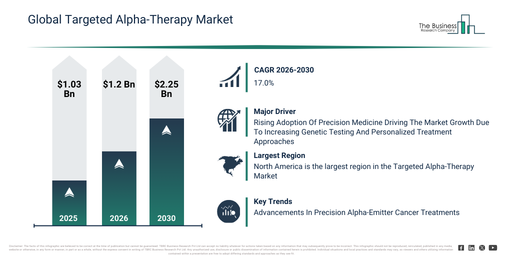
    The market for targeted alpha therapy has experienced swift expansion in recent years. Its value is projected to rise from $1.03 billion in 2025 to $1.2 billion in 2026, reflecting a compound annual growth rate (CAGR) of 17.2%. This historical period of growth has been driven by progress in nuclear medicine research, a growing number of unmet needs related to advanced cancers, the broadening of clinical trials involving radiopharmaceuticals, the availability of medical isotopes, and an increase in the uptake of targeted radiation therapy.

    The market for targeted alpha therapies is projected to experience significant expansion in the coming years. By 2030, it is anticipated to reach a value of $2.25 billion, with a compound annual growth rate (CAGR) of 17.0%. During the forecast period, this growth will be driven by higher funding for isotope production facilities, a growing shift toward personalized radiation oncology, the application of targeted alpha therapies to new disease areas, increased regulatory backing for radiopharmaceuticals, and strengthened partnerships between nuclear medicine and oncology experts. Key trends shaping this future include the accelerated development of alpha-emitting radiopharmaceutical agents, a greater emphasis on targeted radioligand therapies, a stronger focus on precisely delivering radiation, improvements in isotope manufacturing infrastructure, and better integration of molecular targeting components.

    Download A Free Sample Report For Comprehensive Market Insights:

    https://www.thebusinessresearchcompany.com/sample.aspx?id=28337&type=smp&utm_source=BlogsPR&utm_medium=Paid&utm_campaign=Jul_PR

    Targeted Alpha-Therapy Market Growth Drivers: What Factors Are Accelerating Expansion?

    The increasing emphasis on precision medicine is anticipated to accelerate the expansion of the targeted alpha-therapy market in the coming years. Precision medicine is a medical model that tailors prevention, diagnosis, and treatment to an individual’s genetic makeup, lifestyle, and environmental factors, aiming to achieve more effective health outcomes. Its adoption is rising due to the greater availability of genetic testing, which facilitates more accurate diagnoses and targeted therapies, leading to improved patient results. Targeted alpha-therapy supports precision medicine by directing highly potent alpha-emitting isotopes specifically to cancer cells, allowing for individualized and exact treatment while reducing harm to healthy tissues. For example, in March 2024, the American Pharmaceutical Review, a US-based journal, reported that global expenditure on precision medicine therapies was around $32 billion in 2022 and is expected to surpass $124 billion by 2027. Consequently, the heightened interest in precision medicine is fueling growth in the targeted alpha-therapy market.

    Targeted Alpha-Therapy Market Segment Landscape And Growth Potential

    The targeted alpha-therapy market covered in this report is segmented –

    1) By Isotope Type: Actinium-225, Radium-223, Lead-212, Bismuth-213, Other Isotype Types

    2) By Application: Prostate Cancer, Bone Metastases, Pancreatic Cancer, Other Applications

    3) By End-User: Hospitals, Cancer Research Institutes, Specialty Clinics, Lymphoma, Other End Users

    Subsegments:

    1) By Actinium-225: Ac-225 Lintuzumab, Ac-225 PSMA-617, Ac-225 DOTATATE

    2) By Radium-223: Radium-223 Dichloride (Xofigo)

    3) By Lead-212: Pb-212 DOTAMTATE (AlphaMedix), Pb-212 TCMC-Trastuzumab

    4) By Bismuth-213: Bi-213 Lintuzumab, Bi-213 DOTATOC

    5) By Other Isotope Types: Thorium-227, Astatine-211, Terbium-149

    Targeted Alpha-Therapy Market Trends: What Is Shaping Future Industry Growth?

    Key players in the targeted alpha-therapy sector are concentrating on creating advanced solutions like peptide receptor radionuclide therapy to boost the effectiveness of cancer treatments, reduce unintended side effects, and improve patient results. Peptide receptor radionuclide therapy (PRRT) is a precision cancer approach where radioactive isotopes are delivered directly to tumor cells by attaching them to peptides that specifically bind to receptors found in high numbers on cancer cells, thus limiting harm to healthy tissues. For example, in February 2024, RadioMedix Inc., a biotechnology firm based in the US, collaborated with Orano Med, a US pharmaceutical company, and secured the first targeted alpha therapy to receive FDA breakthrough device designation—AlphaMedix (lead-212-Dotamtate)—designed for treating neuroendocrine tumors. This treatment targets advanced gastroenteropancreatic neuroendocrine tumors by delivering potent alpha radiation straight to malignant cells while preserving normal tissue. Its main benefit stems from the high energy and short range of alpha particles, which cause irreparable DNA damage in tumor cells with low toxicity. This therapy presents a hopeful choice for patients who are new to or have had insufficient responses to existing beta-emitter therapies, aiming to enhance both effectiveness and safety in challenging neuroendocrine tumor cases.

    Targeted Alpha-Therapy Market Competitive Landscape: Who Are The Leading Companies?

    Major companies operating in the targeted alpha-therapy market are Bayer Aktiengesellschaft, Novartis AG, Lantheus Holdings Inc., Telix Pharmaceuticals Limited, Eckert & Ziegler Strahlen- und Medizintechnik AG, Actinium Pharmaceuticals Inc., RayzeBio Inc., ITM Isotope Technologies Munich SE, ARTBIO Inc., AdvanCell Pty Ltd., IONETIX Corporation, Abdera Therapeutics Inc., Aktis Oncology Inc., Alpha-9 Oncology Inc., Clarity Pharmaceuticals Pty Ltd., Nucleus RadioPharma, Oncoinvent AS, PanTera, Perspective Therapeutics Inc., RadioMedix Inc.

    Access The Complete Targeted Alpha-Therapy Market Report:

    https://www.thebusinessresearchcompany.com/report/targeted-alpha-therapy-global-market-report?utm_source=BlogsPR&utm_medium=Paid&utm_campaign=Jul_PR

    Targeted Alpha-Therapy Market Geographic Analysis: Where Is Demand Growing The Fastest?

    North America was the largest region in the targeted alpha-therapy market in 2025. Asia Pacific is expected to be the fastest-growing region in the forecast period. The regions covered in the targeted alpha-therapy market report are Asia-Pacific, South East Asia, Western Europe, Eastern Europe, North America, South America, Middle East, Africa.

    Get in touch with us:

    The Business Research Company: https://www.thebusinessresearchcompany.com/?utm_source=BlogsPR&utm_medium=Paid&utm_campaign=home_page_test

    Americas: +1 310-496-7795

    Asia: +44 7882 955267 & +91 8897263534

    Europe: +44 7882 955267

    Email us at: marketing@tbrc.info

    Follow us on:

    LinkedIn: https://in.linkedin.com/company/the-business-research-company

    YouTube: https://www.youtube.com/channel/UC24_fI0rV8cR5DxlCpgmyFQ

    Global Market Model: https://www.thebusinessresearchcompany.com/global-market-model
  • Tardive Dyskinesia Treatment Market Trends And Growth Drivers Point To Strong Future Potential

    Tardive Dyskinesia Treatment Market Trends And Growth Drivers Point To Strong Future Potential

    Through market attractiveness analysis, total addressable market evaluation, company benchmarking matrices, interactive Excel dashboards, expanded supply chain intelligence, emerging startup coverage, and detailed product insights, The Business Research Company’s 2026 market reports provide more actionable and strategically valuable research.

    Tardive Dyskinesia Treatment Market Size Outlook: How Fast Will Revenue Grow Through 2030?

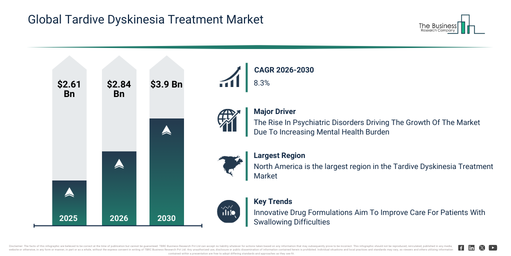
    The market for tardive dyskinesia therapies has seen robust expansion in recent years. Projected to increase from $2.61 billion in 2025 to $2.84 billion in 2026, it reflects a compound annual growth rate (CAGR) of 8.8%. This historic growth is attributed to factors such as extended usage of antipsychotic drugs, heightened recognition of tardive dyskinesia, the scarcity of tailored treatment alternatives, a rising incidence of mental health conditions, and the growth of neurology units within hospitals.

    The tardive dyskinesia treatment market is projected to experience robust expansion over the coming years. By 2030, it is anticipated to reach a value of $3.9 billion, driven by a compound annual growth rate (CAGR) of 8.3%. This forecasted growth is fueled by several key developments: the creation of innovative dopamine-depleting therapies, wider implementation of deep brain stimulation, increased use of botulinum toxin applications, the incorporation of telemedicine into movement disorder care, and greater funding for patient-specific rehabilitation alongside cognitive therapies. Significant trends shaping the forecast period encompass a heightened uptake of dopamine-depleting agents and anticholinergic medications, a growing preference for botulinum toxin injections to address focal dyskinesia, expanded utilization of deep brain stimulation for managing refractory tardive dyskinesia, refinement of customized injection protocols and multi-target deep brain stimulation strategies, along with the integration of cognitive behavioral therapy and supportive rehabilitation programs.

    Download A Free Sample Report For Comprehensive Market Insights:

    https://www.thebusinessresearchcompany.com/sample.aspx?id=27431&type=smp&utm_source=BlogsPR&utm_medium=Paid&utm_campaign=Jul_PR

    Tardive Dyskinesia Treatment Market Growth Factors Supporting Long-Term Expansion

    The anticipated expansion of the tardive dyskinesia treatment market is being driven forward by the rising incidence of psychiatric disorders. These conditions encompass a broad spectrum of mental health issues that influence an individual’s emotions, cognition, behavior, and daily life, frequently necessitating clinical evaluation and therapeutic intervention. The growing frequency of psychiatric disorders is attributed to heightened stress and lifestyle demands caused by intense work schedules, social detachment, and insufficient opportunities for personal care. Treatments for tardive dyskinesia are designed to mitigate involuntary movement symptoms, thereby enhancing therapeutic outcomes and life quality for patients with psychiatric disorders who rely on sustained antipsychotic medication. As an illustration, data released in November 2023 by NHS England, a government health agency in the UK, revealed that approximately 20.3% of children aged 8 to 16, 23.3% of those aged 17 to 19, and 21.7% of individuals aged 20 to 25 were likely experiencing a mental disorder in 2023. Consequently, the escalating prevalence of psychiatric disorders is fueling growth within the tardive dyskinesia treatment market.

    Tardive Dyskinesia Treatment Market Categorization By Product Type And Application

    The tardive dyskinesia treatment market covered in this report is segmented –

    1) By Treatment Type: Medications, Botulinum Toxin Injections, Deep Brain Stimulation, Other Treatment Types

    2) By Drug: Valbenazine, Amantadine, Tetrabenazine, Clonazepam, Other Drugs

    3) By Route Of Administration: Oral Administration, Injection, Transdermal Patches

    4) By Distribution Channel: Hospital Pharmacies, Retail Pharmacies, Other Distribution Channels

    5) By End-Users: Hospitals, Specialty Clinics, Other End-Users

    Subsegments:

    1) By Medications: Antipsychotic Medications, Benzodiazepines, Dopamine-Depleting Agents, Anticholinergic Agents

    2) By Botulinum Toxin Injections: Facial Muscle Injections, Neck Muscle Injections, Limb Muscle Injections, Customized Injection Protocols

    3) By Deep Brain Stimulation: Subthalamic Nucleus Stimulation, Globus Pallidus Interna Stimulation, Thalamic Stimulation, Multi-Target Stimulation

    4) By Other Treatment Types: Supportive Therapies, Cognitive Behavioral Therapy, Physical Rehabilitation, Emerging Experimental Treatments

    Tardive Dyskinesia Treatment Market Industry Trends Shaping Future Revenue Growth

    Leading pharmaceutical firms within the tardive dyskinesia treatment market are placing considerable emphasis on the creation of advanced therapeutics, particularly sprinkle capsule formulations, with the goal of enhancing patient compliance among those who face challenges with swallowing. These sprinkle capsules are specifically designed to be opened and their contents mixed with soft foods, thereby offering a simpler method of ingestion for individuals suffering from dysphagia or those who struggle to consume whole capsules. A notable example of this innovation occurred in July 2024, when Neurocrine Biosciences Inc., a biotechnology company headquartered in the United States, introduced Ingrezza sprinkle (valbenazine) capsules. This product stands as the most frequently prescribed vesicular monoamine transporter 2 (VMAT2) inhibitor for treating tardive dyskinesia in adults, as well as chorea associated with Huntington’s disease. As a VMAT2 inhibitor, it functions by modulating dopamine levels within the brain, a mechanism that helps control involuntary movements. The medication is administered once a day as an oral capsule, with the sprinkle formulation specifically created to simplify the process for patients who have difficulty swallowing pills.

    Tardive Dyskinesia Treatment Market Company Landscape And Strategic Competition

    Major companies operating in the tardive dyskinesia treatment market are AbbVie Inc., Takeda Pharmaceutical Company Limited, Teva Pharmaceutical Industries Limited, Otsuka Pharmaceutical Co. Ltd., Jazz Pharmaceuticals plc, Kyowa Kirin Co Ltd., H. Lundbeck A/S, Neurocrine Biosciences Inc., Acadia Pharmaceuticals Inc., Upsher-Smith Laboratories LLC, Adamas Pharmaceuticals Inc., Sunovion Pharmaceuticals Inc., Mitsubishi Tanabe Pharma Corporation.

    Access The Complete Tardive Dyskinesia Treatment Market Report:

    https://www.thebusinessresearchcompany.com/report/tardive-dyskinesia-treatment-global-market-report?utm_source=BlogsPR&utm_medium=Paid&utm_campaign=Jul_PR

    Tardive Dyskinesia Treatment Market Global Footprint: Which Region Holds Market Leadership?

    North America was the largest region in the tardive dyskinesia treatment market in 2025. Asia-Pacific is expected to be the fastest-growing region in the forecast period. The regions covered in the tardive dyskinesia treatment market report are Asia-Pacific, South East Asia, Western Europe, Eastern Europe, North America, South America, Middle East, Africa.

    Get in touch with us:

    The Business Research Company: https://www.thebusinessresearchcompany.com/?utm_source=BlogsPR&utm_medium=Paid&utm_campaign=home_page_test

    Americas: +1 310-496-7795

    Asia: +44 7882 955267 & +91 8897263534

    Europe: +44 7882 955267

    Email us at: marketing@tbrc.info

    Follow us on:

    LinkedIn: https://in.linkedin.com/company/the-business-research-company

    YouTube: https://www.youtube.com/channel/UC24_fI0rV8cR5DxlCpgmyFQ

    Global Market Model: https://www.thebusinessresearchcompany.com/global-market-model