Month: July 2026

  • Tardive Dyskinesia Therapeutics Market Expansion Is Reshaping Competitive Dynamics Across The Industry

    Tardive Dyskinesia Therapeutics Market Expansion Is Reshaping Competitive Dynamics Across The Industry

    Delivering more actionable and strategically valuable research, The Business Research Company’s 2026 market reports feature market attractiveness analysis, total addressable market evaluation, company benchmarking matrices, interactive Excel dashboards, expanded supply chain intelligence, emerging startup coverage, and detailed product insights.

    Tardive Dyskinesia Therapeutics Market Size, Value And Growth Trends Through 2030

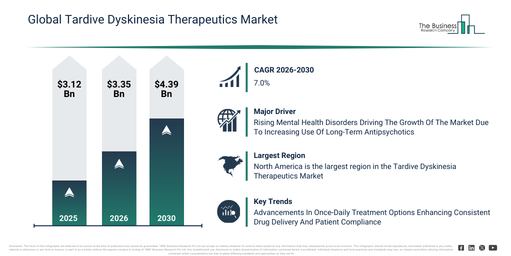
    The tardive dyskinesia therapeutics market has experienced robust expansion over the past few years. Projected to rise from $3.12 billion in 2025 to $3.35 billion in 2026, it reflects a compound annual growth rate (CAGR) of 7.4%. Historical growth has been driven by factors such as scarce treatment alternatives for tardive dyskinesia, dependence on standard antipsychotic management strategies, minimal patient education, an increasing frequency of antipsychotic prescriptions, and limited access to specialized care facilities.

    The market for tardive dyskinesia therapeutics is projected to experience robust expansion over the coming years. By 2030, it is anticipated to reach a value of $4.39 billion, reflecting a compound annual growth rate (CAGR) of 7.0%. This forecasted growth is driven by factors such as the advancement of new treatments for tardive dyskinesia, heightened research and development efforts in neurological conditions, a growing preference for home-based care, the proliferation of specialized treatment centers, and improvements in patient monitoring alongside digital therapeutic solutions. Key trends shaping the upcoming period include the increasing uptake of deutetrabenazine and valbenazine, a stronger emphasis on personalized approaches to neurological care, the growth of homecare services and remote treatment options, heightened public understanding of drug-induced tardive dyskinesia, and a focus on safety and adherence during long-term management.

    Download A Free Sample Report For Comprehensive Market Insights:

    https://www.thebusinessresearchcompany.com/sample.aspx?id=24718&type=smp&utm_source=BlogsPR&utm_medium=Paid&utm_campaign=Jul_PR

    Tardive Dyskinesia Therapeutics Market Demand Drivers Creating New Revenue Opportunities

    The anticipated expansion of the tardive dyskinesia therapeutics market is being driven by the growing frequency of mental health disorders. These conditions, which disrupt an individual’s thoughts, emotions, behavior, or daily functioning, often lead to considerable distress or impairment. Their rise is linked to heightened social isolation, as the move toward digital communication and fast-paced living has diminished meaningful face-to-face interactions, fostering increased loneliness and emotional distress. Tardive dyskinesia therapeutics assist patients with mental disorders by alleviating involuntary movement symptoms resulting from prolonged antipsychotic medication use, thus enhancing treatment compliance and overall well-being. For example, in 2024, the National Alliance On Mental Illness, a U.S.-based organization, reported that among Americans aged 18-44, psychosis spectrum and mood disorders cause nearly 600,000 hospitalizations annually. Consequently, the rising incidence of mental health disorders is fueling growth in the tardive dyskinesia therapeutics market.

    Tardive Dyskinesia Therapeutics Market Segment Analysis And Revenue Opportunities

    The tardive dyskinesia therapeutics market covered in this report is segmented –

    1) By Drug: Deutetrabenazine, Valbenazine, Other Drugs

    2) By Product Type: Solid Dosage Forms, Tablets, Capsules, Liquid Dosage Form

    3) By Application: Antipsychotic-Induced Tardive Dyskinesia, Other Drug-Induced Tardive Dyskinesia, Idiopathic Tardive Dyskinesia

    4) By End-User: Hospitals, Clinics, Specialty Treatment Centers, Homecare Settings

    Subsegments:

    1) By Deutetrabenazine: Dosage Forms, Line Of Therapy, Distribution Channel

    2) By Valbenazine: Dosage Forms, Patient Age Group, Distribution Channel

    3) By Other Drugs: Drug Class Or Type, Dosage Forms, Treatment Duration

    Tardive Dyskinesia Therapeutics Market Trends Driving Strategic Industry Expansion

    Key players in the market for tardive dyskinesia treatments are increasingly concentrating on the creation of advanced therapies, particularly those designed for once-daily administration, to achieve more uniform drug concentrations in the body. Once-daily treatment options are medications or therapies intended for a single daily dose, which streamlines dosing regimens and enhances patient compliance. A notable example occurred in May 2024, when the Israel-based biopharmaceutical company Teva Pharmaceutical Industries Limited received U.S. Food and Drug Administration (FDA) approval for AUSTEDO XR tablets. These tablets are specifically indicated for the management of tardive dyskinesia (TD) and chorea associated with Huntington’s disease (HD) in adults. This newly approved formulation of AUSTEDO XR delivers established efficacy in controlling involuntary movements, accompanied by the ease of a once-daily, single-pill regimen. The clinically effective doses, validated by pivotal trials, are incorporated into this new product. Moreover, it is offered in four distinct tablet strengths: 30 mg, 36 mg, 42 mg, and 48 mg.

    Tardive Dyskinesia Therapeutics Market Leading Players Shaping Industry Direction

    Major companies operating in the tardive dyskinesia therapeutics market are Neurocrine Biosciences Inc., Teva Pharmaceutical Industries Ltd., Otsuka Pharmaceutical Co. Ltd., Lundbeck A/S, Mitsubishi Tanabe Pharma Corporation, AbbVie Inc., Pfizer Inc., Novartis AG, Sun Pharmaceutical Industries Ltd., Dr. Reddy’s Laboratories Ltd., Zydus Lifesciences Ltd., Lupin Limited, Amneal Pharmaceuticals Inc., Lannett Company Inc., Alembic Pharmaceuticals Ltd., Aurobindo Pharma Ltd., Hikma Pharmaceuticals PLC, Accord Healthcare Ltd., Cipla Ltd., Glenmark Pharmaceuticals Ltd., Sunovion Pharmaceuticals Inc., Indivior PLC, Viatris Inc., Alkem Laboratories Ltd., Intas Pharmaceuticals Ltd., Som Biotech Ltd., Addex Therapeutics Ltd., Luye Pharma Group Ltd., Apotex Inc., Sandoz Group AG, Torrent Pharmaceuticals Ltd., Jubilant Pharmova Ltd., Taro Pharmaceutical Industries Ltd., Cadila Pharmaceuticals Ltd.

    Access The Complete Tardive Dyskinesia Therapeutics Market Report:

    https://www.thebusinessresearchcompany.com/report/tardive-dyskinesia-therapeutics-global-market-report?utm_source=BlogsPR&utm_medium=Paid&utm_campaign=Jul_PR

    Tardive Dyskinesia Therapeutics Market Regional Distribution: Which Areas Drive Market Expansion?

    North America was the largest region in the tardive dyskinesia therapeutics market in 2025. Asia-Pacific is expected to be the fastest-growing region in the forecast period. The regions covered in the tardive dyskinesia therapeutics market report are Asia-Pacific, South East Asia, Western Europe, Eastern Europe, North America, South America, Middle East, Africa.

    Get in touch with us:

    The Business Research Company: https://www.thebusinessresearchcompany.com/?utm_source=BlogsPR&utm_medium=Paid&utm_campaign=home_page_test

    Americas: +1 310-496-7795

    Asia: +44 7882 955267 & +91 8897263534

    Europe: +44 7882 955267

    Email us at: marketing@tbrc.info

    Follow us on:

    LinkedIn: https://in.linkedin.com/company/the-business-research-company

    YouTube: https://www.youtube.com/channel/UC24_fI0rV8cR5DxlCpgmyFQ

    Global Market Model: https://www.thebusinessresearchcompany.com/global-market-model
  • Tacrolimus Market Forecast Reveals Where Future Industry Value Will Be Created

    Tacrolimus Market Forecast Reveals Where Future Industry Value Will Be Created

    Enhanced with market attractiveness analysis, total addressable market evaluation, company benchmarking matrices, interactive Excel dashboards, expanded supply chain intelligence, emerging startup coverage, and detailed product insights, The Business Research Company’s 2026 market reports deliver more actionable and strategically valuable research.

    Tacrolimus Market CAGR Analysis And Future Market Development

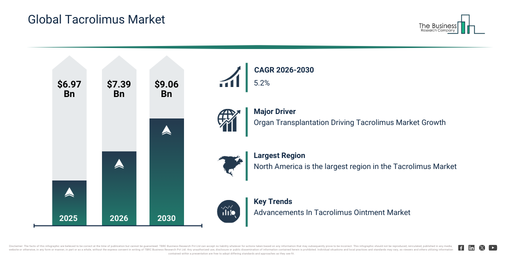
    The tacrolimus market has experienced significant expansion in recent years, advancing from $6.97 billion in 2025 to a projected $7.39 billion by 2026, reflecting a compound annual growth rate (CAGR) of 6.0%. This historical growth is largely driven by rising numbers of organ transplant surgeries, the established clinical effectiveness of tacrolimus, a growing incidence of autoimmune and inflammatory disorders, enhanced rates of transplant success, and the broadening of healthcare facilities dedicated to transplant management.

    The tacrolimus market is forecasted to experience robust expansion over the coming years, reaching a valuation of $9.06 billion by 2030, driven by a compound annual growth rate (CAGR) of 5.2%. This projected growth during the forecast period is fueled by an increase in kidney and liver transplant procedures, a rising preference for affordable generic medications, broader off-label applications in dermatology, enhanced techniques for monitoring immunosuppressive drugs, and the ongoing development of transplant initiatives in emerging markets. Key trends shaping this period include a heightened demand for therapies that support post-transplant immunosuppression, a wider adoption of tacrolimus in treating skin conditions, a shift toward generic immunosuppressant options, improved long-term survival outcomes for organ transplants, and a greater utilization of topical tacrolimus formulations.

    Download A Free Sample Report For Comprehensive Market Insights:

    https://www.thebusinessresearchcompany.com/sample.aspx?id=15679&type=smp&utm_source=BlogsPR&utm_medium=Paid&utm_campaign=Jul_PR

    Tacrolimus Market Expansion Supported By Key Demand Factors

    The tacrolimus market is anticipated to grow as a result of the rising number of organ transplant procedures. This process involves replacing a damaged organ by transferring tissue or an organ from a donor to a recipient. The demand for transplants is increasing due to advancements in medical technology, better surgical techniques, greater public awareness about organ donation, and improved care following transplantation. Tacrolimus functions by blocking T-cell activation and reducing cytokine production, which helps stop the immune system from rejecting the transplanted organ. For example, the Organ Procurement and Transplantation Network, a U.S.-based nonprofit, reported that kidney transplants rose slightly to 27,759 in 2024, marking a 1.6 percent increase from the previous year. Meanwhile, heart transplants remained fairly stable, with 4,572 performed in 2024 compared to 4,545 in 2023. Consequently, the growing number of organ transplant procedures is fueling the expansion of the tacrolimus market.

    The tacrolimus market is expected to be driven forward by the growing geriatric population. This demographic consists of individuals aged 65 and older, who often face distinct healthcare, social, and physiological needs linked to aging. The rise in this population is largely due to higher life expectancy, resulting from improvements in healthcare, better management of diseases, and enhanced living conditions. Tacrolimus helps older adults by regulating immune responses to prevent organ rejection and manage autoimmune conditions, addressing the heightened risk of immune-related issues in this age group. For instance, the UK Parliament’s House of Commons Library reported that in 2022, there were 12.7 million people aged 65 or older in the UK, making up 19 percent of the population. This figure is projected to reach 22.1 million by 2072, representing 27 percent of the population. Thus, the expanding geriatric population is a key factor driving the tacrolimus market.

    Tacrolimus Market Segmentation And Category Breakdown

    The tacrolimus market covered in this report is segmented –

    1) By Product Type: Tacrolimus Capsules And Tablets, Tacrolimus Injection, Tacrolimus Granules

    2) By Application: Immunosuppression, Other Applications

    3) By End User: Organ Transplant Centers, Hospitals, Clinics, Other End Users

    Subsegments:

    1) By Tacrolimus Capsules And Tablets: Oral Capsules, Oral Tablets

    2) By Tacrolimus Injection: Injectable Solution, Injectable Powder

    3) By Tacrolimus Granules: Oral Granules (For Suspension)

    Tacrolimus Market Growth Trends Influencing Competitive Dynamics

    Leading players in the tacrolimus market are focusing on the creation of advanced therapeutic solutions, including tacrolimus ointments, to address the rising need for novel dermatological treatments and improve patient outcomes. Tacrolimus ointment represents a topical formulation that leverages tacrolimus, an immunosuppressant compound, and is mainly utilized for managing inflammatory skin disorders. As an example, in August 2023, Glenmark, a pharmaceutical firm based in India, received approval from the U.S. Food and Drug Administration (FDA) for its Tacrolimus Ointment 0.03%, a generic version of Protopic Ointment 0.03%. Distribution of Tacrolimus Ointment, 0.03%, within the United States will be managed by Glenmark Pharmaceuticals. The drug is indicated for the treatment of moderate-to-severe atopic dermatitis, a condition characterized by skin inflammation, redness, and persistent itching.

    Tacrolimus Market Competitive Analysis Of Major Industry Participants

    Major companies operating in the tacrolimus market are Astellas Pharma Inc, Novartis AG, Abbott Laboratories, Viatris Inc., Teva Pharmaceutical Industries Limited, Sandoz Inc, Sun Pharmaceutical Industries Limited, Dr. Reddy’s Laboratories Ltd., Cipla Limited, Lupin Limited, Hikma Pharmaceuticals, Biocon Ltd., Zydus Lifesciences Limited, Torrent Pharmaceuticals Limited, Alembic Pharmaceuticals Limited, Wockhardt Limited, Zhejiang Hisun Pharmaceutical Co. Ltd., Huadong Medicine Co Ltd, Glenmark Pharmaceuticals Ltd., Panacea Biotec

    Access The Complete Tacrolimus Market Report:

    https://www.thebusinessresearchcompany.com/report/tacrolimus-global-market-report?utm_source=BlogsPR&utm_medium=Paid&utm_campaign=Jul_PR

    Tacrolimus Market Leading Geography: Which Region Generates The Most Revenue?

    North America was the largest region in the tacrolimus market in 2025. The regions covered in the tacrolimus market report are Asia-Pacific, South East Asia, Western Europe, Eastern Europe, North America, South America, Middle East, Africa.

    Get in touch with us:

    The Business Research Company: https://www.thebusinessresearchcompany.com/?utm_source=BlogsPR&utm_medium=Paid&utm_campaign=home_page_test

    Americas: +1 310-496-7795

    Asia: +44 7882 955267 & +91 8897263534

    Europe: +44 7882 955267

    Email us at: marketing@tbrc.info

    Follow us on:

    LinkedIn: https://in.linkedin.com/company/the-business-research-company

    YouTube: https://www.youtube.com/channel/UC24_fI0rV8cR5DxlCpgmyFQ

    Global Market Model: https://www.thebusinessresearchcompany.com/global-market-model
  • T Cell Surface Glycoprotein CD3 Epsilon Chain Market Growth Through 2030 Creates New Strategic Opportunities

    T Cell Surface Glycoprotein CD3 Epsilon Chain Market Growth Through 2030 Creates New Strategic Opportunities

    Through market attractiveness analysis, total addressable market evaluation, company benchmarking matrices, interactive Excel dashboards, expanded supply chain intelligence, emerging startup coverage, and detailed product insights, The Business Research Company’s 2026 market reports provide more actionable and strategically valuable research.

    T Cell Surface Glycoprotein CD3 Epsilon Chain Market Expansion From $1.35 Billion In 2026 To $1.89 Billion In 2030

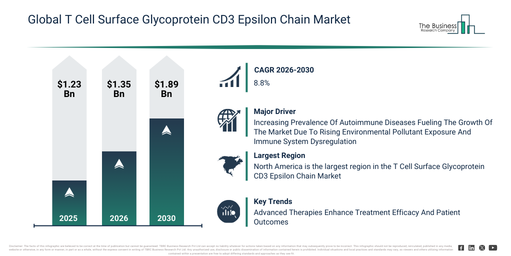
    The market for the T cell surface glycoprotein CD3 epsilon chain has experienced robust expansion in recent years. Projected to climb from $1.23 billion in 2025 to $1.35 billion in 2026, this growth represents a compound annual growth rate (CAGR) of 9.8%. Historically, this upward trend has been fueled by the identification of the CD3 epsilon chain’s role in T-cell signaling, the advancement of fundamental immunology research tools, the emergence of early monoclonal antibody techniques, a heightened emphasis on academic investigations into T-cell functions, and the rising adoption of flow cytometry within laboratory settings.

    The market for the T cell surface glycoprotein CD3 epsilon chain is anticipated to experience robust expansion in the coming years. By 2030, it is projected to reach a value of $1.89 billion, achieving a compound annual growth rate (CAGR) of 8.8%. This forecasted growth is driven by several factors, including progress in translational and clinical research, a broader application of cancer immunotherapies, the creation of recombinant antibodies and kits, higher levels of R&D investment in the pharmaceutical and biotech sectors, and the incorporation of the CD3 epsilon chain into sophisticated disease modeling. Key trends shaping this period involve a heightened focus on cancer immunotherapy research that utilizes the CD3 epsilon chain, a greater reliance on monoclonal and recombinant antibodies for research purposes, an expansion in flow cytometry and cell culture uses, an increased emphasis on translational and clinical studies, and the integration of this chain into investigations of autoimmune and infectious diseases.

    Download A Free Sample Report For Comprehensive Market Insights:

    https://www.thebusinessresearchcompany.com/sample.aspx?id=27430&type=smp&utm_source=BlogsPR&utm_medium=Paid&utm_campaign=Jul_PR

    T Cell Surface Glycoprotein CD3 Epsilon Chain Market Growth Drivers And Industry Catalysts

    The anticipated expansion of the T cell surface glycoprotein CD3 epsilon chain market is being driven by the rising incidence of autoimmune diseases. These conditions occur when the immune system erroneously targets the body’s own healthy cells and tissues. This growing prevalence is largely attributed to heightened exposure to environmental pollutants, which can impair immune regulation and provoke attacks on bodily tissues. The CD3 epsilon chain plays a crucial role in managing autoimmune diseases by modulating T cell activity, positioning it as a vital therapeutic target. It helps curb excessive immune responses, thereby minimizing tissue damage and enhancing patient outcomes. For example, in February 2024, Arthritis Australia, a non-profit organization based in Australia, reported that an estimated 562,378 Australians will have rheumatoid arthritis (RA) in 2025, representing 14% of all arthritis cases that year. By 2040, this figure is projected to increase by 33% to 748,721 individuals, marking an additional 186,343 Australians living with RA compared to 2025. Consequently, the escalating prevalence of autoimmune diseases is fueling growth in the T cell surface glycoprotein CD3 epsilon chain market.

    T Cell Surface Glycoprotein CD3 Epsilon Chain Market Segment Outlook: Which Categories Are Expanding The Fastest?

    The t cell surface glycoprotein cd3 epsilon chain market covered in this report is segmented –

    1) By Product Type: Antibodies, Reagents, Kits, Cell Lines

    2) By Technology: Monoclonal Antibodies Technology, Recombinant Deoxyribonucleic Acid Technology, Cell Culture Technology, Flow Cytometry Technology

    3) By Research Purpose: Basic Research, Translational Research, Clinical Research, Pharmacological Research

    4) By Application: Cancer Immunotherapy, Autoimmune Disease Treatment, Transplant Rejection, Infectious Disease Treatment, Research And Development

    5) By End-User: Pharmaceutical Companies, Biotechnology Firms, Research Institutes, Academic Institutions, Hospitals And Clinics

    Subsegments:

    1) By Antibodies: Monoclonal Antibodies, Polyclonal Antibodies, Recombinant Antibodies

    2) By Reagents: Blocking Reagents, Labeling Reagents, Detection Reagents, Isotype Controls

    3) By Kits: Enzyme Linked Immunosorbent Assay Kits, Flow Cytometry Kits, Western Blot Kits, Immunoprecipitation Kits

    4) By Cell Lines: Human Cell Lines, Mouse Cell Lines, Rat Cell Lines, Hybridoma Cell Lines

    T Cell Surface Glycoprotein CD3 Epsilon Chain Market Trends Influencing Long-Term Demand

    Key players in the T cell surface glycoprotein CD3 epsilon chain market are putting significant effort into creating advanced therapeutic approaches, including bispecific antibodies, with the goal of boosting treatment effectiveness, improving patient results, and tackling difficult-to-treat cancers. Bispecific antibodies are engineered molecules designed to attach to two distinct antigens at the same time, such as CD3 found on T cells alongside a tumor-specific antigen, thereby directing immune cells toward cancerous cells. A relevant example occurred in August 2023, when Janssen Pharmaceutical Companies, a US-based subsidiary of Johnson & Johnson, secured accelerated approval from the US Food and Drug Administration (FDA) for TALVEY (talquetamab-tgvs). This drug is a groundbreaking bispecific T-cell engaging antibody intended for adult patients with relapsed or refractory multiple myeloma who have undergone at least four prior lines of therapy. It combines binding to the CD3 epsilon chain on T cells and GPRC5D on myeloma cells to activate the immune system against cancer cells. Depending on the dosing schedule, TALVEY is given either weekly or every two weeks through subcutaneous injection after a step-up dosing phase, offering flexibility in how treatment is administered.

    T Cell Surface Glycoprotein CD3 Epsilon Chain Market Key Companies And Competitive Benchmarking

    Major companies operating in the t cell surface glycoprotein cd3 epsilon chain market are Merck & Co. Inc., Becton Dickinson and Company, Bio-Techne Corporation, Abcam plc, Sino Biological Inc., MacroGenics Inc., ACROBiosystems Inc., ABclonal Technology Co Ltd., GeneTex Inc., Santa Cruz Biotechnology Inc., Novus Biologicals LLC, Bioss Antibodies Inc., MedChemExpress MCE LLC, Biorbyt Ltd., Boster Biological Technology Co Ltd., Abbexa Limited, Novatein Biosciences LLC, AssayPro LLC, ProteoGenix, Cloud-Clone Corp.

    Access The Complete T Cell Surface Glycoprotein CD3 Epsilon Chain Market Report:

    https://www.thebusinessresearchcompany.com/report/t-cell-surface-glycoprotein-cd3-epsilon-chain-global-market-report?utm_source=BlogsPR&utm_medium=Paid&utm_campaign=Jul_PR

    T Cell Surface Glycoprotein CD3 Epsilon Chain Market Regional Outlook: Where Are The Largest Opportunities Located?

    North America was the largest region in the T cell surface glycoprotein CD3 epsilon chain market in 2025. Asia-Pacific is expected to be the fastest-growing region in the forecast period. The regions covered in the t cell surface glycoprotein cd3 epsilon chain market report are Asia-Pacific, South East Asia, Western Europe, Eastern Europe, North America, South America, Middle East, Africa.

    Get in touch with us:

    The Business Research Company: https://www.thebusinessresearchcompany.com/?utm_source=BlogsPR&utm_medium=Paid&utm_campaign=home_page_test

    Americas: +1 310-496-7795

    Asia: +44 7882 955267 & +91 8897263534

    Europe: +44 7882 955267

    Email us at: marketing@tbrc.info

    Follow us on:

    LinkedIn: https://in.linkedin.com/company/the-business-research-company

    YouTube: https://www.youtube.com/channel/UC24_fI0rV8cR5DxlCpgmyFQ

    Global Market Model: https://www.thebusinessresearchcompany.com/global-market-model
  • T Cell Specific Surface Glycoprotein CD28 Market Size Projected To Increase From $1.78 Billion To $2.57 Billion During The Forecast Period

    T Cell Specific Surface Glycoprotein CD28 Market Size Projected To Increase From $1.78 Billion To $2.57 Billion During The Forecast Period

    Delivering more actionable and strategically valuable research, The Business Research Company’s 2026 market reports feature market attractiveness analysis, total addressable market evaluation, company benchmarking matrices, interactive Excel dashboards, expanded supply chain intelligence, emerging startup coverage, and detailed product insights.

    T Cell Specific Surface Glycoprotein CD28 Market Forecast Highlighting Growth From $1.78 Billion To $2.57 Billion

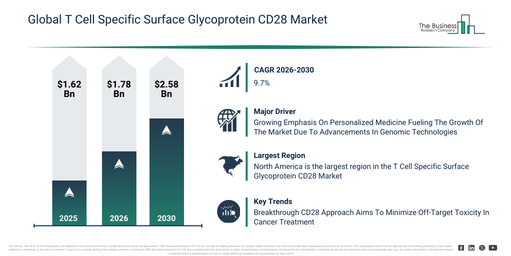
    The market size for T cell-specific surface glycoprotein CD28 has experienced notable expansion in recent years. From $1.62 billion in 2025, it is forecasted to reach $1.78 billion by 2026, achieving a compound annual growth rate (CAGR) of 10.0%. This historic growth has been driven by several factors, including the early recognition of CD28 as a co-stimulatory receptor on T cells, heightened focus on immunology research, a growing incidence of autoimmune diseases, increased investment in cancer research efforts, and constraints in the supply of monoclonal antibody therapies.

    The market for the T cell-specific surface glycoprotein CD28 is projected to experience robust expansion over the coming years. By 2030, its value is anticipated to reach $2.58 billion, reflecting a compound annual growth rate (CAGR) of 9.7%. This forecasted growth is driven by factors such as the development of lulizumab pegol and novel CD28 inhibitors, the broadening of preclinical and clinical trial activities, the incorporation of CD28-targeted therapies into treatments for autoimmune diseases and cancer, heightened investment in biopharmaceutical research, and progress in immunomodulation and monoclonal antibody engineering. Key trends shaping the forecast period include the growing use of flow cytometry and ELISA technologies, an uptick in immunology and cancer research applications, the emergence of new CD28 inhibitors and biobetters, the expansion of research into stem cells and autoimmune disorders, and the inclusion of lulizumab pegol in preclinical and clinical investigations.

    Download A Free Sample Report For Comprehensive Market Insights:

    https://www.thebusinessresearchcompany.com/sample.aspx?id=27429&type=smp&utm_source=BlogsPR&utm_medium=Paid&utm_campaign=Jul_PR

    T Cell Specific Surface Glycoprotein CD28 Market Opportunity Drivers: What Is Creating New Revenue Potential?

    The rising focus on personalized medicine is anticipated to fuel the expansion of the T cell-specific surface glycoprotein CD28 market in the coming period. Defined as a healthcare strategy that customizes treatments for individuals by taking into account their genetic makeup, environmental exposures, and lifestyle habits, personalized medicine aims to enhance outcomes and improve the quality of care. Its adoption is accelerating, driven by progress in genomic technologies that allow for accurate detection of genetic differences and the development of customized therapies. By facilitating targeted immune modulation, the T cell-specific surface glycoprotein CD28 contributes to personalized medicine, increasing the precision and effectiveness of treatments. This approach improves therapeutic results through the promotion of optimal T cell activation, thereby boosting immune responses specific to each patient. As an example, the Personalized Medicine Coalition (PMC), a nonprofit organization based in the United States, reported in February 2024 that the U.S. Food and Drug Administration (FDA) gave approval to 26 new personalized medicines during 2023, a notable rise from the 12 approvals recorded in 2022. Consequently, the growing emphasis on personalized medicine is driving the growth of the T cell-specific surface glycoprotein CD28 market.

    T Cell Specific Surface Glycoprotein CD28 Market Segment Landscape: Which Areas Lead Market Development?

    The t cell specific surface glycoprotein cd28 market covered in this report is segmented –

    1) By Type: FPT 155, FR 104, Lulizumab Pegol, Other Types

    2) By Technology: Flow Cytometry, EnzymeLinked Immunosorbent Assay (ELISA), Polymerase Chain Reaction (PCR), Weste Blotting, Immunohistochemistry

    3) By Distribution Channel: Direct Sales, Distributors, Ecommerce, Retail Pharmacies, Wholesalers

    4) By Application: Immunology Research, Cancer Research, Autoimmune Diseases, Infectious Diseases, Stem Cell Research

    5) By End-User: Hospitals, Research Laboratories, Academic Institutions, Pharmaceutical Companies, Diagnostic Laboratories

    Subsegments:

    1) By FPT 155: Preclinical Studies, Clinical Trials, Oncology Applications, Licensing And Partnerships

    2) By FR 104: Autoimmune Disease Applications, Rheumatoid Arthritis Trials, Transplant Rejection Studies, Research Collaborations

    3) By Lulizumab Pegol: Systemic Lupus Erythematosus (SLE) Studies, Immunomodulation Research, Biopharmaceutical Development, Monoclonal Antibody Engineering

    4) By Other Types: Novel CD28 Inhibitors, Combination Therapies, Biosimilars And Biobetters, Emerging Research Compounds

    T Cell Specific Surface Glycoprotein CD28 Market Innovation Trends Driving Future Development

    Key players in the T cell-specific surface glycoprotein CD28 market are prioritizing the creation of advanced solutions, particularly combination immunotherapies, with the goal of improving T cell activation, anticancer effectiveness, and overall patient outcomes. These combination immunotherapies employ several immune-focused strategies together to strengthen the body’s ability to combat diseases. A notable example occurred in February 2025, when Rondo Therapeutics Inc., a biopharmaceutical firm based in the US, shared preclinical findings for RNDO 564, a pioneering CD28 Nectin-4 costimulatory bispecific antibody designed for advanced bladder cancer. This agent is specifically formulated to trigger CD28 on T cells once it attaches to Nectin-4 on tumor cells, thereby boosting T-cell-mediated destruction of cancer cells and reducing unintended toxic effects. The results showed strong antitumor activity in preclinical models, paving the way for its continued development as a possible treatment for individuals with metastatic urothelial carcinoma.

    T Cell Specific Surface Glycoprotein CD28 Market Industry Leaders And Market Competition

    Major companies operating in the t cell specific surface glycoprotein cd28 market are Gilead Sciences Inc., Johnson & Johnson, Novartis AG, Bristol-Myers Squibb Company, Takeda Pharmaceutical Company Limited, Becton Dickinson and Company, Regeneron Pharmaceuticals Inc., Bio-Techne Corporation, STEMCELL Technologies Inc., Miltenyi Biotec B.V. & Co. KG, Sino Biological Inc., Xencor Inc., ACROBiosystems Co. Ltd., Fate Therapeutics Inc., Medigene AG, Alpine Immune Sciences Inc., Adaptimmune Therapeutics plc, OSE Immunotherapeutics SA, Creative Biolabs Inc., Rondo Therapeutics Inc.

    Access The Complete T Cell Specific Surface Glycoprotein CD28 Market Report:

    https://www.thebusinessresearchcompany.com/report/t-cell-specific-surface-glycoprotein-cd28-global-market-report?utm_source=BlogsPR&utm_medium=Paid&utm_campaign=Jul_PR

    T Cell Specific Surface Glycoprotein CD28 Market Geographic Landscape: Which Region Dominates Industry Growth?

    North America was the largest region in the T cell-specific surface glycoprotein CD28 market in 2025. Asia-Pacific is expected to be the fastest-growing region in the forecast period. The regions covered in the t cell specific surface glycoprotein cd28 market report are Asia-Pacific, South East Asia, Western Europe, Eastern Europe, North America, South America, Middle East, Africa.

    Get in touch with us:

    The Business Research Company: https://www.thebusinessresearchcompany.com/?utm_source=BlogsPR&utm_medium=Paid&utm_campaign=home_page_test

    Americas: +1 310-496-7795

    Asia: +44 7882 955267 & +91 8897263534

    Europe: +44 7882 955267

    Email us at: marketing@tbrc.info

    Follow us on:

    LinkedIn: https://in.linkedin.com/company/the-business-research-company

    YouTube: https://www.youtube.com/channel/UC24_fI0rV8cR5DxlCpgmyFQ

    Global Market Model: https://www.thebusinessresearchcompany.com/global-market-model
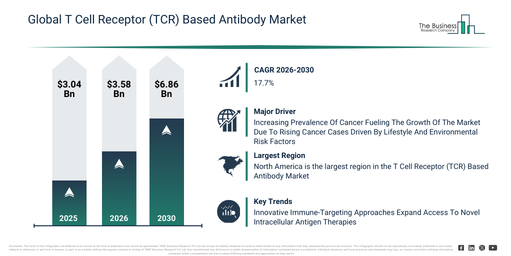
  • T Cell Receptor (TCR) Based Antibody Market Growth Outlook Reveals A CAGR Of 17.7% And A Market Value Of $6.86 Billion By 2030

    T Cell Receptor (TCR) Based Antibody Market Growth Outlook Reveals A CAGR Of 17.7% And A Market Value Of $6.86 Billion By 2030

    Enhanced with market attractiveness analysis, total addressable market evaluation, company benchmarking matrices, interactive Excel dashboards, expanded supply chain intelligence, emerging startup coverage, and detailed product insights, The Business Research Company’s 2026 market reports deliver more actionable and strategically valuable research.

    T Cell Receptor (TCR) Based Antibody Market Revenue Growth Supported By A CAGR Of 6.86% Through 2030

    The market for T cell receptor (TCR)-based antibodies has experienced rapid expansion in recent years. Its value is projected to increase from $3.04 billion in 2025 to $3.58 billion in 2026, reflecting a compound annual growth rate (CAGR) of 17.8%. This historical growth has been driven by factors such as restricted availability of TCR-based antibody technologies, dependence on traditional monoclonal antibody treatments, a rising prevalence of cancer and autoimmune diseases, intensified research into immunotherapy, and regulatory approvals granted for early TCR antibody candidates.

    The market for T cell receptor (TCR)-based antibodies is projected to experience significant expansion over the coming years. By 2030, its value is anticipated to reach $6.86 billion, reflecting a compound annual growth rate (CAGR) of 17.7%. This forecast period growth is driven by factors such as the advancement of bispecific and conjugated antibodies, a growing preference for personalized and dual-targeting treatment approaches, an increase in clinical trials focused on cancer and infectious diseases, heightened collaboration between biotechnology firms and research institutions, and the incorporation of artificial intelligence and digital tools into antibody design and evaluation. Key trends shaping this period include the progression of TCR-derived monoclonal and bispecific antibodies, the broadening of applications in cancer immunotherapy, a surge in dual-targeting and cytotoxic T-cell therapies, increased funding for diagnostics and precision medicine, and the creation of conjugated antibody therapeutics.

    Download A Free Sample Report For Comprehensive Market Insights:

    https://www.thebusinessresearchcompany.com/sample.aspx?id=27428&type=smp&utm_source=BlogsPR&utm_medium=Paid&utm_campaign=Jul_PR

    T Cell Receptor (TCR) Based Antibody Market Growth Momentum: Which Factors Are Influencing Demand?

    The rising incidence of cancer is anticipated to drive the expansion of the T-cell receptor-based antibody market moving forward. Cancer prevalence refers to the overall count of individuals, including both newly and previously diagnosed cases, who are living with a history of the disease at a given moment. This prevalence is climbing due to lifestyle-related factors like poor nutrition, smoking, alcohol use, and exposure to environmental contaminants, all of which heighten the risk of developing various cancers. T-cell receptor-based antibodies boost cancer therapy by precisely targeting tumor cells, thereby enhancing treatment accuracy. By enabling the immune system to more effectively detect and eliminate cancer cells, they increase therapeutic efficacy while minimizing adverse effects. For example, in January 2023, the American Cancer Society (ACS), a U.S.-based non-profit, reported that approximately 1,958,310 new cancer cases and 609,820 cancer deaths were projected in the United States for that year. As a result, the increasing prevalence of cancer is fueling growth in the T-cell receptor-based antibody market.

    T Cell Receptor (TCR) Based Antibody Market Segments: Where Are The Largest Growth Opportunities?

    The t cell receptor (tcr) based antibody market covered in this report is segmented –

    1) By Type Of Antibody: Monoclonal Antibodies, Bispecific Antibodies, Conjugated Antibodies

    2) By Target Antigen: Tumor-Associated Antigens, Viral Antigens, Autoimmune Antigens, Other Target Antigens

    3) By Therapeutic Approach: Cytotoxic T-Cell Therapies, Regulator T-Cell Therapies, Dual-Targeting Therapies

    4) By Application: Cancer Immunotherapy, Infectious Diseases, Autoimmune Diseases, Transplant Rejection

    5) By End-Users: Hospitals, Research Institutes, Specialty Clinics, Other End-Users

    Subsegments:

    1) By Monoclonal Antibodies: Fully Human Antibodies, Humanized Antibodies, Chimeric Antibodies, Murine Antibodies

    2) By Bispecific Antibodies: Tandem Single Chain Variable Fragment Antibodies, Dual Variable Domain Immunoglobulin Antibodies, Bispecific T Cell Engager Antibodies, Dual Affinity Re-Targeting Antibodies

    3) By Conjugated Antibodies: Antibody Drug Conjugates, Radioimmunoconjugates, Immunotoxins, Fluorescent Conjugated Antibodies

    T Cell Receptor (TCR) Based Antibody Market Trends Reshaping Industry Growth

    Key players in the T Cell Receptor (TCR)-Based Antibody market are concentrating on the creation of advanced technologies, particularly fully human TCR-mimic antibodies designed to precisely target intracellular tumor antigens. These mimic antibodies are engineered to imitate T cell receptors, enabling them to identify peptide antigens shown by HLA molecules, thus reaching intracellular tumor markers inaccessible to conventional antibodies and boosting both accuracy and effectiveness in cancer immunotherapies. A notable example occurred in December 2023, when Biocytogen Pharmaceuticals (Beijing) Co., Ltd., a biotechnology firm from China, unveiled a fully human TCR-mimic antibody directed at NY-ESO-1/HLA-A02 during the SITC 2023 conference. Developed on Biocytogen’s proprietary RenTCR-mimic mouse platform, this antibody exhibits strong affinity and specificity for the NY-ESO-1 peptide-HLA complex, facilitating targeted cytotoxicity against HLA-A02-positive tumor cells that express NY-ESO-1. Key characteristics include its entirely human sequence, which lowers the risk of immunogenicity, its capability to reach intracellular tumor antigens—broadening the spectrum of treatable targets—and its versatility for integration into T-cell engagers, bispecifics, or CAR-T formats. Preclinical testing indicated selective elimination of NY-ESO-1+/HLA-A02+ cells, highlighting its potential as a groundbreaking cancer immunotherapy.

    T Cell Receptor (TCR) Based Antibody Market Major Participants And Competitive Dynamics

    Major companies operating in the t cell receptor (tcr) based antibody market are Pfizer Inc., Bristol-Myers Squibb Company, Novartis AG, GSK plc, Amgen Inc., GenScript Biotech Corporation, Biocytogen Pharmaceuticals Co. Ltd., Immunocore Holdings plc, Xencor Inc., Fate Therapeutics Inc., Eureka Therapeutics Inc., TScan Therapeutics Inc., Alloy Therapeutics Inc., Affini-T Therapeutics Inc., Medigene AG, 3T Biosciences Inc., Nona Biosciences, Alithea Biotechnology GmbH, Nextera Therapeutics Inc., TCRCure Biopharma Ltd.

    Access The Complete T Cell Receptor (TCR) Based Antibody Market Report:

    https://www.thebusinessresearchcompany.com/report/t-cell-receptor-tcr-based-antibody-global-market-report?utm_source=BlogsPR&utm_medium=Paid&utm_campaign=Jul_PR

    T Cell Receptor (TCR) Based Antibody Market Largest Region: Which Geography Holds The Highest Market Share?

    North America was the largest region in the T cell receptor (TCR)-based antibody market in 2025. Asia-Pacific is expected to be the fastest-growing region in the forecast period. The regions covered in the t cell receptor (tcr) based antibody market report are Asia-Pacific, South East Asia, Western Europe, Eastern Europe, North America, South America, Middle East, Africa.

    Get in touch with us:

    The Business Research Company: https://www.thebusinessresearchcompany.com/?utm_source=BlogsPR&utm_medium=Paid&utm_campaign=home_page_test

    Americas: +1 310-496-7795

    Asia: +44 7882 955267 & +91 8897263534

    Europe: +44 7882 955267

    Email us at: marketing@tbrc.info

    Follow us on:

    LinkedIn: https://in.linkedin.com/company/the-business-research-company

    YouTube: https://www.youtube.com/channel/UC24_fI0rV8cR5DxlCpgmyFQ

    Global Market Model: https://www.thebusinessresearchcompany.com/global-market-model
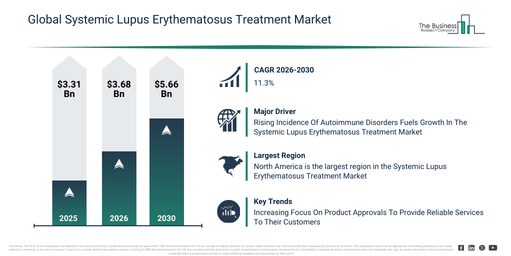
  • Systemic Lupus Erythematosus Treatment Market Forecast Highlights Expansion From $3.68 Billion To $5.65 Billion Through 2030

    Systemic Lupus Erythematosus Treatment Market Forecast Highlights Expansion From $3.68 Billion To $5.65 Billion Through 2030

    Through market attractiveness analysis, total addressable market evaluation, company benchmarking matrices, interactive Excel dashboards, expanded supply chain intelligence, emerging startup coverage, and detailed product insights, The Business Research Company’s 2026 market reports provide more actionable and strategically valuable research.

    Systemic Lupus Erythematosus Treatment Market Value Expansion And Long-Term Growth Outlook

    The market for systemic lupus erythematosus treatments has experienced rapid expansion in recent years. Projected to increase from $3.31 billion in 2025 to $3.68 billion in 2026, this growth reflects a compound annual growth rate (CAGR) of 11.2%. Historical expansion has been driven by factors such as a rising incidence of systemic lupus erythematosus, heightened awareness surrounding autoimmune conditions, progress in immunosuppressive therapies, broader availability of hospital and retail pharmacy networks, and an uptick in chronic disease management initiatives.

    The market for systemic lupus erythematosus treatments is projected to experience substantial expansion over the coming years. By 2030, its value is anticipated to reach $5.66 billion, reflecting an 11.3% compound annual growth rate (CAGR). This anticipated growth during the forecast period is driven by factors such as the increased use of biologics and targeted therapies, the incorporation of artificial intelligence and digital health innovations, greater government and private sector investment in lupus research, the broadening of telemedicine services, and advances in personalized medicine and biomarker-oriented treatments. Key developments shaping this period include the move toward personalized immunosuppressive regimens, the creation of novel biologic drugs for lupus, the growth of telemedicine and remote patient monitoring, initiatives focused on improving patient adherence and medication management, and the emergence of more sophisticated diagnostic and biomarker technologies.

    Download A Free Sample Report For Comprehensive Market Insights:

    https://www.thebusinessresearchcompany.com/sample.aspx?id=9163&type=smp&utm_source=BlogsPR&utm_medium=Paid&utm_campaign=Jul_PR

    Systemic Lupus Erythematosus Treatment Market Expansion Drivers: What Is Shaping Future Growth?

    The systemic lupus erythematosus treatment market is anticipated to be driven forward by the increasing prevalence of autoimmune conditions. An autoimmune disease is defined as a disorder where the patient’s immune system attacks their own body. It arises when the immune system misidentifies parts of the body as foreign invaders, leading to the release of proteins known as autoantibodies that target healthy cells. Specifically, systemic lupus erythematosus is an autoimmune illness characterized by the immune system attacking its own tissues, resulting in widespread inflammation and damage to affected organs such as joints, skin, brain, lungs, kidneys, and blood vessels. For example, a May 2023 report from the University of Oxford, a UK research institution, indicated that autoimmune disorders impact 10% of the global population, with 13% of women and 7% of men affected. Consequently, the growth of the systemic lupus erythematosus treatment market is being fueled by this rising incidence of autoimmune diseases.

    Systemic Lupus Erythematosus Treatment Market Segment Analysis: What Are The Major Market Categories?

    The systemic lupus erythematosus treatment market covered in this report is segmented –

    1) By Drug: Antimalarial Drugs, Non-Steroidal Anti-Inflammatory Drugs (NSAIDS), Corticosteroids, Immunosuppressive Drugs

    2) By Route Of Administration: Sub-Cutaneous, Oral, Intravenous

    3) By Application: Hospital Pharmacies, Retail Pharmacies, Online Sales

    Subsegments:

    1) By Antimalarial Drugs: Hydroxychloroquine, Chloroquine

    2) By Non-Steroidal Anti-Inflammatory Drugs (NSAIDs): Ibuprofen, Naproxen, Aspirin

    3) By Corticosteroids: Prednisone, Methylprednisolone

    4) By Immunosuppressive Drugs: Azathioprine, Mycophenolate Mofetil, Cyclophosphamide, Belimumab

    Systemic Lupus Erythematosus Treatment Market Strategic Trends: What Is Defining The Next Phase Of Growth?

    Leading players in the systemic lupus erythematosus (SLE) treatment sector are prioritizing investments in cutting-edge therapies, such as monoclonal antibodies and oral immunomodulators, to enhance treatment outcomes and tackle the persistent unmet needs of individuals living with this chronic autoimmune condition. These next-generation approaches include biologics, small molecules, and various therapeutic modalities that precisely target pathways involved in immune system dysregulation. As an example, in March 2023, NImmune Biopharma, a U.S.-based biopharmaceutical firm, introduced NIM-1324. This oral therapeutic candidate is specifically engineered to address the fundamental immune dysregulation underlying Systemic Lupus Erythematosus (SLE), with the goal of offering a more potent and precisely targeted solution for patients affected by this autoimmune disorder. Currently ready for Phase 2 trials, NIM-1324 operates by targeting the LANCL2 pathway to strengthen immunoregulatory functions, aiming to deliver a safer and more efficacious treatment alternative for both Systemic Lupus Erythematosus (SLE) and Rheumatoid Arthritis (RA). Its development aligns with NImmune’s overarching approach, which employs sophisticated computational modeling and bioinformatics to expedite processes in drug discovery and development.

    Systemic Lupus Erythematosus Treatment Market Leading Companies Driving Competitive Growth

    Major companies operating in the systemic lupus erythematosus treatment market are GlaxoSmithKline plc, Pfizer Inc, Merck & Co Inc, Bristol-Myers Squibb Company Inc, Sanofi SA, Eli Lilly and Company, Johnson & Johnson Services Inc, Novartis International AG, AbbVie Inc, Viatris Inc, Horizon Therapeutics plc, EMD Serono Inc, Kyowa Kirin Co. Ltd, ImmuPharma plc, Aurinia Pharmaceuticals Inc, UCB Pharma, Amgen Inc, Anthera Pharmaceuticals Inc, Kezar Life Sciences, Vera Therapeutics Inc.

    Access The Complete Systemic Lupus Erythematosus Treatment Market Report:

    https://www.thebusinessresearchcompany.com/report/systemic-lupus-erythematosus-treatment-global-market-report?utm_source=BlogsPR&utm_medium=Paid&utm_campaign=Jul_PR

    Systemic Lupus Erythematosus Treatment Market Regional Analysis: Which Region Leads By Revenue?

    North America was the largest region in the systemic lupus erythematosus treatment market in 2025. The regions covered in the systemic lupus erythematosus treatment market report are Asia-Pacific, South East Asia, Western Europe, Eastern Europe, North America, South America, Middle East, Africa.

    Get in touch with us:

    The Business Research Company: https://www.thebusinessresearchcompany.com/?utm_source=BlogsPR&utm_medium=Paid&utm_campaign=home_page_test

    Americas: +1 310-496-7795

    Asia: +44 7882 955267 & +91 8897263534

    Europe: +44 7882 955267

    Email us at: marketing@tbrc.info

    Follow us on:

    LinkedIn: https://in.linkedin.com/company/the-business-research-company

    YouTube: https://www.youtube.com/channel/UC24_fI0rV8cR5DxlCpgmyFQ

    Global Market Model: https://www.thebusinessresearchcompany.com/global-market-model
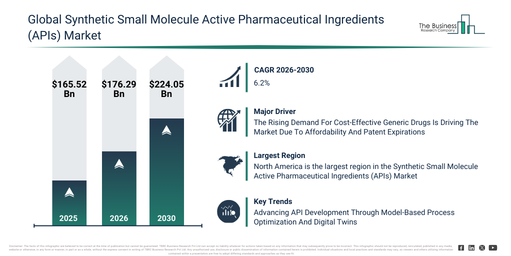
  • Synthetic Small Molecule Active Pharmaceutical Ingredients (APIs) Market Expected To Reach $224.05 Billion By 2030 As Growth Accelerates At 6.2% CAGR

    Synthetic Small Molecule Active Pharmaceutical Ingredients (APIs) Market Expected To Reach $224.05 Billion By 2030 As Growth Accelerates At 6.2% CAGR

    Delivering more actionable and strategically valuable research, The Business Research Company’s 2026 market reports feature market attractiveness analysis, total addressable market evaluation, company benchmarking matrices, interactive Excel dashboards, expanded supply chain intelligence, emerging startup coverage, and detailed product insights.

    Synthetic Small Molecule Active Pharmaceutical Ingredients (APIs) Market Expected To Reach $224.05 Billion By 2030 At 6.2% CAGR

    The market for synthetic small molecule active pharmaceutical ingredients (APIs) has experienced robust expansion in recent years. Projected to rise from $165.52 billion in 2025 to $176.29 billion in 2026, it reflects a compound annual growth rate (CAGR) of 6.5%. This historical growth has been driven by factors such as the increasing use of oral solid dosage forms, the broadening scope of generic medicines, well-developed chemical synthesis technologies, the cost-effectiveness associated with small molecule drugs, and a growing incidence of chronic health conditions.

    Over the coming years, the market for synthetic small molecule active pharmaceutical ingredients (APIs) is projected to experience considerable expansion. By 2030, its value is anticipated to reach $224.05 billion, reflecting a compound annual growth rate (CAGR) of 6.2%. This projected growth during the forecast period is driven by several key factors, including the expansion of oncology and central nervous system drug development pipelines, the implementation of advanced production technologies, an escalating need for high-potency APIs, a rise in the use of outsourced pharmaceutical manufacturing, and an increased regulatory focus on supply chain transparency. Notable developments shaping this period include a heightened demand for synthetic small molecule APIs in managing chronic diseases, a growing shift toward delegating API production to contract manufacturers, wider application of continuous flow chemistry and biocatalytic methods, an uptick in generic drug manufacturing accompanied by patent expirations, and a strengthened regulatory emphasis on ensuring API quality and traceability.

    Download A Free Sample Report For Comprehensive Market Insights:

    https://www.thebusinessresearchcompany.com/sample.aspx?id=25919&type=smp&utm_source=BlogsPR&utm_medium=Paid&utm_campaign=Jul_PR

    Synthetic Small Molecule Active Pharmaceutical Ingredients (APIs) Market Development Factors: Which Trends Are Supporting Demand?

    The increasing need for affordable generic medications is expected to drive the expansion of the synthetic small molecule active pharmaceutical ingredients (APIs) market in the coming period. Affordable generic drugs are low-cost medicines that contain identical active ingredients and provide comparable therapeutic benefits to brand-name drugs. This demand is climbing because of the rising incidence of chronic diseases, which call for ongoing and economical treatment options. By enabling scalable and efficient production methods that lower manufacturing expenses without sacrificing therapeutic effectiveness, synthetic small molecule APIs support the creation of cost-effective generics. As an example, in September 2024, the Association for Accessible Medicines (AAM), a US-based trade organization, reported that savings from biosimilar use increased by more than 30% to $12.4 billion in 2023, and overall savings from generics and biosimilars rose by $37 billion, reaching $445 billion compared to $408 billion in 2022. Consequently, the growing preference for cost-effective generic drugs is fueling the growth of the synthetic small molecule APIs market.

    Synthetic Small Molecule Active Pharmaceutical Ingredients (APIs) Market Segment Breakdown: Which Categories Generate The Most Revenue?

    The synthetic small molecule active pharmaceutical ingredients (apis) market covered in this report is segmented –

    1) By Type: Active Pharmaceutical Ingredients (APIs), Key Starting Materials (KSMs), Intermediates

    2) By Manufacturing Process: Synthetic Processes, Biocatalysis, Continuous Flow Chemistry, Batch Processing

    3) By Manufacturer: In-House, Outsourced

    4) By Application: Cardiovascular Diseases, Oncology, CNS And Neurology, Orthopedic, Endocrinology, Pulmonology, Gastroenterology, Nephrology, Ophthalmology, Other Applications

    Subsegments:

    1) By Active Pharmaceutical Ingredients (APIs): Anti-diabetic APIs, Antihypertensive APIs, Antihistamines, Anticoagulants

    2) By Key Starting Materials (KSMs): Benzene Derivatives, Pyridine Derivatives, Heterocyclic Compounds, Halogenated Compounds

    3) By Intermediates: Chiral Intermediates, Acylation Intermediates, Alkylation Intermediates, Amination Intermediates

    Synthetic Small Molecule Active Pharmaceutical Ingredients (APIs) Market Transformation Trends: Which Innovations Are Driving Change?

    Key players in the synthetic small molecule active pharmaceutical ingredients (APIs) market are prioritizing the creation of cutting-edge solutions, including model-based process optimization platforms, aimed at expediting development and boosting the efficiency of API manufacturing processes. A model-based process optimization platform functions as a digital tool that merges predictive modeling with experimental design tools to simplify and improve chemical process development while reducing the need for extensive physical experimentation. As an example, in May 2025, Lonza Group, a contract development and manufacturing organization (CDMO) based in Switzerland, introduced Design2Optimize, a model-based process optimization platform. This platform leverages a combination of physicochemical and statistical modeling within an optimization framework to minimize the number of physical experiments needed during process development. Through the creation of a digital twin for each process and the facilitation of virtual scenario testing, the platform enables quicker and more efficient development of intricate synthetic pathways for small molecule active pharmaceutical ingredients.

    Synthetic Small Molecule Active Pharmaceutical Ingredients (APIs) Market Key Players And Strategic Industry Positioning

    Major companies operating in the synthetic small molecule active pharmaceutical ingredients (apis) market are Pfizer Inc., Johnson & Johnson, Hoffmann-La Roche Ltd., Merck & Co. Inc., AbbVie Inc., Sanofi S.A., Bristol-Myers Squibb Company, AstraZeneca plc, Novartis AG, Eli Lilly and Company, Boehringer Ingelheim International GmbH, Teva Pharmaceutical Industries Ltd., Daiichi Sankyo Co. Ltd., Dr. Reddy’s Laboratories Ltd., Curia Inc., Nanjing King-Friend Biochemical Pharmaceutical Co. Ltd., Accord Healthcare Ltd.

    Access The Complete Synthetic Small Molecule Active Pharmaceutical Ingredients (APIs) Market Report:

    https://www.thebusinessresearchcompany.com/report/synthetic-small-molecule-active-pharmaceutical-ingredients-apis-global-market-report?utm_source=BlogsPR&utm_medium=Paid&utm_campaign=Jul_PR

    Synthetic Small Molecule Active Pharmaceutical Ingredients (APIs) Market Geographic Distribution And Regional Opportunities

    North America was the largest region in the synthetic small molecule active pharmaceutical ingredients (APIs) market in 2025. Asia-Pacific is expected to be the fastest-growing region in the forecast period. The regions covered in the synthetic small molecule active pharmaceutical ingredients (apis) market report are Asia-Pacific, South East Asia, Western Europe, Eastern Europe, North America, South America, Middle East, Africa.

    Get in touch with us:

    The Business Research Company: https://www.thebusinessresearchcompany.com/?utm_source=BlogsPR&utm_medium=Paid&utm_campaign=home_page_test

    Americas: +1 310-496-7795

    Asia: +44 7882 955267 & +91 8897263534

    Europe: +44 7882 955267

    Email us at: marketing@tbrc.info

    Follow us on:

    LinkedIn: https://in.linkedin.com/company/the-business-research-company

    YouTube: https://www.youtube.com/channel/UC24_fI0rV8cR5DxlCpgmyFQ

    Global Market Model: https://www.thebusinessresearchcompany.com/global-market-model
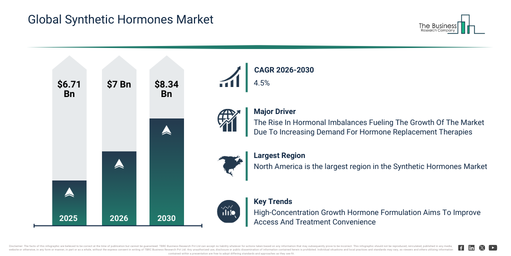
  • Synthetic Hormones Market Set To Grow From $7 Billion In 2026 To $8.33 Billion By 2030 At A CAGR Of 4.5%

    Synthetic Hormones Market Set To Grow From $7 Billion In 2026 To $8.33 Billion By 2030 At A CAGR Of 4.5%

    Enhanced with market attractiveness analysis, total addressable market evaluation, company benchmarking matrices, interactive Excel dashboards, expanded supply chain intelligence, emerging startup coverage, and detailed product insights, The Business Research Company’s 2026 market reports deliver more actionable and strategically valuable research.

    Synthetic Hormones Market Size And Revenue Forecast Through 2030

    The market for synthetic hormones has experienced consistent expansion in recent times. Valued at $6.71 billion in 2025, it is projected to reach $7 billion by 2026, reflecting a compound annual growth rate (CAGR) of 4.4%. This historical growth has been driven by progress in chemical synthesis methods, a growing incidence of hormonal conditions, heightened awareness about hormone replacement therapy, the broadening of hospital and retail pharmacy infrastructures, and the early uptake of insulin and growth hormones.

    The synthetic hormones market is anticipated to experience consistent expansion over the coming years, with projections indicating it will reach a value of $8.34 billion by 2030, driven by a compound annual growth rate (CAGR) of 4.5%. This forecasted growth is primarily fueled by the incorporation of artificial intelligence into hormone therapies, the emergence of oral and non-invasive hormone delivery methods, an increasing emphasis on personalized medicine, the rise of digital pharmacy platforms, and advancements in peptide and amino acid derivative hormones. Key trends shaping the future include the advancement of tailored hormone therapies, the evolution of sophisticated drug delivery mechanisms, breakthroughs in synthetic hormone formulations, a rising uptake of hormone replacement treatments, and a sustained focus on ensuring compliance with regulatory standards and maintaining high-quality benchmarks.

    Download A Free Sample Report For Comprehensive Market Insights:

    https://www.thebusinessresearchcompany.com/sample.aspx?id=14515&type=smp&utm_source=BlogsPR&utm_medium=Paid&utm_campaign=Jul_PR

    Synthetic Hormones Market Industry Drivers: What Is Driving Revenue Growth?

    The anticipated expansion of the synthetic hormones market is being driven by an increasing frequency of hormonal imbalances. Such imbalances arise when the body produces an excess or deficiency of specific hormones, often triggered by aging, stress, lifestyle choices, or underlying health issues. These disruptions commonly call for medical treatment, where synthetic hormones help restore normal bodily functions and ease related symptoms by supplementing or substituting deficient hormones. This trend is supported by rising demand for hormone replacement therapy (HRT), which mirrors the growing prevalence of these disorders. For example, in January 2025, the World Health Organization, an intergovernmental body based in Switzerland, reported that polycystic ovary syndrome represents a significant global health challenge and ranks among the most common hormonal issues for women of reproductive age, impacting an estimated 6–13%, with up to 70% of cases remaining undetected. Consequently, the climb in hormonal imbalance cases is fueling growth in the synthetic hormones market.

    Synthetic Hormones Market Segmentation: How Is The Market Structured Across Key Categories?

    The synthetic hormones market covered in this report is segmented –

    1) By Product Type: Steroid Hormones, Peptide Hormone, Amino Acid Derivatives, Other Product Types

    2) By Route of Administration: Oral, Nasal, Topical, Intravenous

    3) By Application: Growth Hormone Deficiency, Thyroid Hormone Deficiency, Menopause, Male Hypogonadism, Other Applications

    4) By End User: Hospital Pharmacies, Retail Pharmacies, Online Pharmacies

    Subsegments:

    1) By Steroid Hormones: Corticosteroids, Estrogens and Progesterone, Androgens, Progestins

    2) By Peptide Hormones: Insulin, Growth Hormones, Thyroid Stimulating Hormones, Leptin

    3) By Amino Acid Derivatives: Thyroxine (T4), Epinephrine (Adrenaline), Melatonin

    4) By Other Product Types: Vitamin D Derivatives, Prostaglandins, Gonadotropins

    Synthetic Hormones Market Growth Trends: What Is Influencing The Future Outlook?

    Key players in the synthetic hormone industry are increasingly concentrating on the advancement of groundbreaking biosimilar options, specifically high-concentration recombinant human growth hormone (rhGH), in response to the growing need for more affordable and easily accessible treatments for growth-hormone deficiencies and short stature. This high-concentration rhGH represents a manufactured version of growth hormone (commonly somatropin), engineered through recombinant DNA methods, which features a higher medication dosage per milliliter. As a result, it enables smaller injection amounts, improved ease of use, and often enhanced patient adherence compared to earlier, lower-concentration alternatives. A notable example occurred in May 2025, when Sandoz AG, a prominent generics and biosimilars firm headquartered in Switzerland, introduced OMNITROPE in Egypt at a 15 mg / 1.5 mL concentration. This product utilizes somatropin produced via recombinant DNA technology in bacterial cultures, is biologically equivalent to naturally occurring human growth hormone, and is supplied in a more potent formulation aimed at lessening the injection frequency and preventing treatment gaps. Its indications cover pediatric conditions involving short stature, such as Turner syndrome, children born small for gestational age, and Prader–Willi syndrome, as well as adult growth-hormone deficiency. Additionally, it is priced to improve accessibility as part of Egypt’s Vision 2030 public-health initiative.

    Synthetic Hormones Market Competitive Landscape And Leading Companies

    Major companies operating in the synthetic hormones market are Pfizer Inc., Johnson & Johnson, AbbVie Inc., Bristol Myers Squibb Company, Sanofi SA, AstraZeneca PLC, Novartis AG, GlaxoSmithKline PLC, Boehringer Ingelheim International GmbH, Novo Nordisk A/S, Merck & Co. Inc, Teva Pharmaceutical Industries Ltd., Ferring B.V., Endo Pharmaceuticals Inc., Lupin Pharmaceuticals Inc., IBSA Institute Biochimique SA, American Regent Inc., McGuff Pharmaceuticals Inc., Anhui Anke Biotechnology Co.Ltd, Acerus Pharmaceuticals Corporation, Slayback Pharma LLC

    Access The Complete Synthetic Hormones Market Report:

    https://www.thebusinessresearchcompany.com/report/synthetic-hormones-global-market-report?utm_source=BlogsPR&utm_medium=Paid&utm_campaign=Jul_PR

    Synthetic Hormones Market Largest Region By Revenue And Market Share

    North America was the largest region in the synthetic hormones market in 2025. Asia-Pacific is expected to be the fastest-growing region in the forecast period. The regions covered in the synthetic hormones market report are Asia-Pacific, South East Asia, Western Europe, Eastern Europe, North America, South America, Middle East, Africa.

    Get in touch with us:

    The Business Research Company: https://www.thebusinessresearchcompany.com/?utm_source=BlogsPR&utm_medium=Paid&utm_campaign=home_page_test

    Americas: +1 310-496-7795

    Asia: +44 7882 955267 & +91 8897263534

    Europe: +44 7882 955267

    Email us at: marketing@tbrc.info

    Follow us on:

    LinkedIn: https://in.linkedin.com/company/the-business-research-company

    YouTube: https://www.youtube.com/channel/UC24_fI0rV8cR5DxlCpgmyFQ

    Global Market Model: https://www.thebusinessresearchcompany.com/global-market-model
  • Synthetic Cannabinoids Market Opportunities Are Emerging Beyond Traditional Growth Areas

    Synthetic Cannabinoids Market Opportunities Are Emerging Beyond Traditional Growth Areas

    Through market attractiveness analysis, total addressable market evaluation, company benchmarking matrices, interactive Excel dashboards, expanded supply chain intelligence, emerging startup coverage, and detailed product insights, The Business Research Company’s 2026 market reports provide more actionable and strategically valuable research.

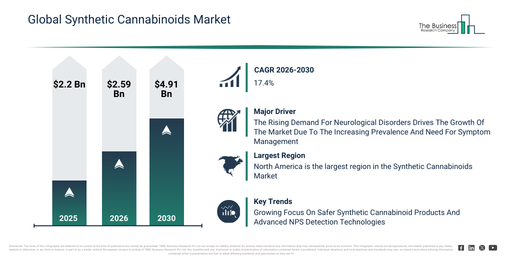
    Synthetic Cannabinoids Market Growth From $2.58 Billion In 2026 To $4.9 Billion By 2030 At A CAGR Of 17.4%

    Between 2025 and 2026, the synthetic cannabinoids market is expected to experience substantial expansion, rising from $2.2 billion to $2.59 billion, marking a compound annual growth rate (CAGR) of 17.6%. This rapid growth in recent years was driven historically by several key factors: the constraints associated with plant-derived cannabinoids, a desire for precise potency control, requirements arising from pharmaceutical research, an increase in pain management treatments, and regulatory approvals granted in specific areas.

    Over the coming years, the synthetic cannabinoids market is anticipated to experience swift expansion, reaching a projected $4.91 billion by 2030 with a compound annual growth rate (CAGR) of 17.4%. This forecasted growth is driven by factors such as the broadening of medical cannabis applications, the rise of regulated cannabinoid-based therapies, the need for precise dosing, the scalability of synthetic active pharmaceutical ingredients (APIs), and increased funding for pharmaceutical research and development. Key trends shaping this period include the growing availability of pharmaceutical-grade cannabinoids, heightened research utilization of synthetic variants, a surge in demand for high-purity products, a transition toward medically regulated uses, and progress in controlled synthesis methods.

    Download A Free Sample Report For Comprehensive Market Insights:

    https://www.thebusinessresearchcompany.com/sample.aspx?id=23536&type=smp&utm_source=BlogsPR&utm_medium=Paid&utm_campaign=Jul_PR

    #Synthetic Cannabinoids Market Growth Factors: Which Forces Are Supporting Market Expansion?

    The growing need for therapies addressing neurological conditions is anticipated to drive forward the expansion of the synthetic cannabinoids market. Neurological disorders involve the brain, spinal cord, and nerves, disrupting movement, sensation, cognition, or overall functioning. Their increasing prevalence stems mainly from an aging worldwide population, as age-related conditions like Alzheimer’s become more frequent due to brain deterioration and cumulative cellular damage over time. Synthetic cannabinoids work by targeting cannabinoid receptors within the brain, thereby modulating neurotransmitter activity and potentially relieving symptoms tied to these disorders. As an illustration, the European Brain Council, a health organization based in Belgium, reported in September 2024 that approximately 7 million individuals across Europe currently have Alzheimer’s disease. This figure is projected to double to 14 million by 2030, driven by demographic aging and presenting a substantial global public health concern. Consequently, the heightened demand for neurological disorder treatments is fueling growth within the synthetic cannabinoids market.

    Synthetic Cannabinoids Market Segmentation Trends And Revenue Drivers

    The synthetic cannabinoids market covered in this report is segmented –

    1) By Product Type: High-Pure Synthetic Cannabinoids, Ultra-Pure Synthetic Cannabinoids

    2) By Formulation: Oil, Capsules, Edibles, Vapes, Topicals

    3) By Indication: Pain Management, Nausea Or Vomiting, Neurological Disorder Management, Other Indications

    4) By Application: Pharmaceuticals, Research, Recreational Use, Agriculture, Nutraceuticals

    5) By Distribution Channel: Hospital Pharmacies, Retail Pharmacies, Online Pharmacies

    Subsegments:

    1) By High-Pure Synthetic Cannabinoids: Pharmaceutical-Grade Cannabinoids, Research-Grade Cannabinoids, Industrial-Use Cannabinoids

    2) By Ultra-Pure Synthetic Cannabinoids: Medical-Grade Cannabinoids, Biotechnology-Grade Cannabinoids, Analytical-Standard Cannabinoids

    Synthetic Cannabinoids Market Industry Trends: What Changes Are Reshaping Demand?

    Leading players in the synthetic cannabinoids market are prioritizing the creation of safer, premium-grade products, including novel psychoactive substances, in order to minimize health hazards and enhance their market position. Novel psychoactive substances are synthetic drugs produced in laboratories that replicate the effects of traditional illegal substances but rely on altered chemical compositions to avoid regulation and detection. For example, in December 2023, Quest Diagnostics Inc., a healthcare firm based in the United States, unveiled an advanced 88-compound Novel Psychoactive Substance (NPS) Test Panel aimed at more precisely detecting a broad spectrum of synthetic cannabinoids and other designer drugs. This mass-spectrometry-based test facilitates clearer identification of emerging synthetic cannabinoids, enabling healthcare professionals to gain a better understanding of patient exposure and to refine treatment strategies. The rollout of such sophisticated testing solutions underscores the escalating demand for dependable monitoring instruments as synthetic cannabinoids keep evolving, thereby fostering enhanced safety, openness, and regulatory adherence throughout the sector.

    Synthetic Cannabinoids Market Industry Leaders: Which Organizations Are Driving Competition?

    Major companies operating in the synthetic cannabinoids market are Cayman Chemical, Cerilliant Corporation, Restek Corporation, Chiron AS, BayMedica, CB Therapeutics Inc., Skye Bioscience, Zynerba Pharmaceuticals Inc., Botanix Pharmaceuticals, Kannalife Sciences Inc., SciSparc Ltd., Tetra Bio-Pharma Inc., Canntab Therapeutics Ltd., BioVectra, Noramco Inc., Purisys LLC, Lygos Inc., Johnson Matthey, Almac Group, Cambrex Corporation

    Access The Complete Synthetic Cannabinoids Market Report:

    https://www.thebusinessresearchcompany.com/report/synthetic-cannabinoids-global-market-report?utm_source=BlogsPR&utm_medium=Paid&utm_campaign=Jul_PR

    Synthetic Cannabinoids Market Regional Analysis And Leading Geography

    North America was the largest region in the synthetic cannabinoids market in 2025. Asia-Pacific is expected to be the fastest-growing region in the forecast period. The regions covered in the synthetic cannabinoids market report are Asia-Pacific, South East Asia, Western Europe, Eastern Europe, North America, South America, Middle East, Africa.

    Get in touch with us:

    The Business Research Company: https://www.thebusinessresearchcompany.com/?utm_source=BlogsPR&utm_medium=Paid&utm_campaign=home_page_test

    Americas: +1 310-496-7795

    Asia: +44 7882 955267 & +91 8897263534

    Europe: +44 7882 955267

    Email us at: marketing@tbrc.info

    Follow us on:

    LinkedIn: https://in.linkedin.com/company/the-business-research-company

    YouTube: https://www.youtube.com/channel/UC24_fI0rV8cR5DxlCpgmyFQ

    Global Market Model: https://www.thebusinessresearchcompany.com/global-market-model
  • Sartans Market Trends And Growth Drivers Point To Strong Future Potential

    Sartans Market Trends And Growth Drivers Point To Strong Future Potential

    Enhanced with market attractiveness analysis, total addressable market evaluation, company benchmarking matrices, interactive Excel dashboards, expanded supply chain intelligence, emerging startup coverage, and detailed product insights, The Business Research Company’s 2026 market reports deliver more actionable and strategically valuable research.

    Sartans Market Value Analysis: What Growth Is Expected Over The Forecast Period?

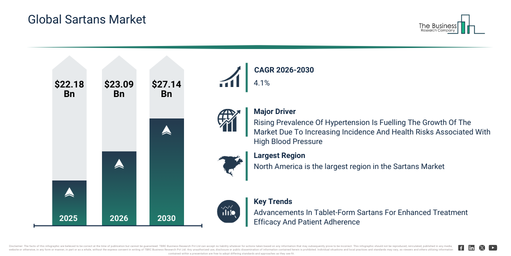
    The sartans market has experienced consistent expansion over recent years. From $22.18 billion in 2025, it is expected to increase to $23.09 billion in 2026, reflecting a compound annual growth rate (CAGR) of 4.1%. This historical rise has been driven by several factors: the widespread prevalence of hypertension worldwide, the significant burden of cardiovascular diseases, growing uptake of generic medications, frequent reliance on hospital-based prescribing practices, and sartans’ established long-term safety record.

    The size of the sartans market is projected to increase steadily in the coming years, reaching a value of $27.14 billion by 2030, with a compound annual growth rate (CAGR) of 4.1%. This anticipated growth during the forecast period is driven by the aging global population, a rising prevalence of kidney disease, the demand for affordable therapeutic options, the expansion of outpatient care services, and the emergence of digital pharmacies. Key developments shaping this period include a growing reliance on sartans for managing hypertension, the proliferation of generic angiotensin receptor blockers, a shift toward combination therapies for cardiovascular health, the broadening reach of online pharmacy channels, and increased emphasis on protecting both renal and cardiovascular functions.

    Download A Free Sample Report For Comprehensive Market Insights:

    https://www.thebusinessresearchcompany.com/sample.aspx?id=24393&type=smp&utm_source=BlogsPR&utm_medium=Paid&utm_campaign=Jul_PR

    Sartans Market Industry Drivers: What Is Driving Revenue Growth?

    The anticipated expansion of the sartans market is being driven forward by the growing frequency of hypertension cases. Hypertension is a medical condition characterized by consistently elevated blood pressure, which increases the risk of heart disease, stroke, and other serious health issues. Its increasing occurrence is associated with diets heavy in salt and processed foods, which cause fluid retention and put extra strain on the heart. Sartans address hypertension by blocking angiotensin II, a hormone responsible for narrowing blood vessels. This action helps relax and widen the vessels, thereby lowering blood pressure and reducing the workload on the heart. According to the World Health Organization, a Switzerland-based international public health agency, an estimated 1.4 billion adults aged 30 to 79 globally were living with hypertension in 2024, accounting for roughly 33% of the world’s population, as reported in September 2025. Consequently, the rising prevalence of hypertension is fueling growth within the sartans market.

    Sartans Market Segmentation And Category Breakdown

    The sartans market covered in this report is segmented –

    1) By Product Type: Valsartan, Telmisartan, Losartan, Irbesartan, Azilsartan, Olmesartan

    2) By Distribution Channel: Hospital Pharmacies, Retail Pharmacies, Online Pharmacies, Other Distribution Channels

    3) By Application: Hypertension, Cardiovascular Diseases, Kidney Diseases, Other Applications

    4) By End-User: Hospitals, Other End-Users

    Subsegments:

    1) By Valsartan: Film-Coated Tablets, Oral Powder Sachets, Triple-Combination Tablets, Ready-To-Use Liquid Formulations

    2) By Telmisartan: Soft Gel Capsules, Mouth-Dissolving Strips, Sustained-Release Tablets, Sachet-Packed Granules

    3) By Losartan: Chewable Tablets, Pediatric Oral Drops, Effervescent Tablets, Dispersible Tablets

    4) By Irbesartan: High-Potency Tablets, Scored Tablets, Hospital Bulk Packs, Blister Strip Packs

    5) By Azilsartan: Nanoparticle-Based Tablets, Rapid-Onset Tablets, Unit-Dose Capsules, Microgranule Sachets

    6) By Olmesartan: Oral Jelly Formulations, Oral Thin Films, Powder-For-Suspension Packs, Dual-Layer Tablets

    Sartans Market Growth Trends: What Is Influencing The Future Outlook?

    Key players in the sartans market are prioritizing the creation of innovative tablet-form sartans aimed at boosting therapeutic effectiveness and improving patient compliance. These oral medications consist of sartan drugs that work by inhibiting angiotensin II, thereby helping blood vessels relax and lowering blood pressure. A notable example occurred in July 2024, when Zydus Lifesciences, a pharmaceutical firm based in India, secured approval from the US Food and Drug Administration (FDA) for its Valsartan Tablets USP, available in 40 mg and 80 mg strengths, with the brand name Diovan. These tablets are indicated for managing hypertension and heart failure, as well as enhancing survival rates following heart attacks in adults, and they are also appropriate for pediatric patients aged one year and older.

    Sartans Market Competitive Analysis Of Major Industry Participants

    Major companies operating in the sartans market are Viatris Inc., Teva Pharmaceutical Industries Ltd., Intas Pharmaceuticals Ltd., Sun Pharmaceutical Industries Ltd., Apotex Inc., Aurobindo Pharma Ltd., Dr. Reddy’s Laboratories Ltd., Cipla Ltd., Cadila Pharmaceuticals Ltd., Lupin Ltd., Zydus Lifesciences Ltd., Torrent Pharmaceuticals Ltd., Alembic Pharmaceuticals Ltd., Unichem Laboratories Ltd., Emcure Pharmaceuticals Ltd., Mylan N.V., Hikma Pharmaceuticals PLC, Glenmark Pharmaceuticals Ltd., Abbott Laboratories, Novartis AG, Pfizer Inc., Sanofi S.A., Takeda Pharmaceutical Company Limited, Bayer AG, Merck & Co. Inc.

    Access The Complete Sartans Market Report:

    https://www.thebusinessresearchcompany.com/report/sartans-global-market-report?utm_source=BlogsPR&utm_medium=Paid&utm_campaign=Jul_PR

    Sartans Market Regional Outlook: Where Are The Largest Opportunities Located?

    North America was the largest region in the sartans market in 2025. Asia-Pacific is expected to be the fastest-growing region in the forecast period. The regions covered in the sartans market report are Asia-Pacific, South East Asia, Western Europe, Eastern Europe, North America, South America, Middle East, Africa.

    Get in touch with us:

    The Business Research Company: https://www.thebusinessresearchcompany.com/?utm_source=BlogsPR&utm_medium=Paid&utm_campaign=home_page_test

    Americas: +1 310-496-7795

    Asia: +44 7882 955267 & +91 8897263534

    Europe: +44 7882 955267

    Email us at: marketing@tbrc.info

    Follow us on:

    LinkedIn: https://in.linkedin.com/company/the-business-research-company

    YouTube: https://www.youtube.com/channel/UC24_fI0rV8cR5DxlCpgmyFQ

    Global Market Model: https://www.thebusinessresearchcompany.com/global-market-model